EP2930167B1 - An indolinone derivative as tyrosine kinase inhibitor - Google Patents
An indolinone derivative as tyrosine kinase inhibitor Download PDFInfo
- Publication number
- EP2930167B1 EP2930167B1 EP13860630.6A EP13860630A EP2930167B1 EP 2930167 B1 EP2930167 B1 EP 2930167B1 EP 13860630 A EP13860630 A EP 13860630A EP 2930167 B1 EP2930167 B1 EP 2930167B1
- Authority
- EP
- European Patent Office
- Prior art keywords
- alkyl
- compound
- amino
- carcinoma
- pharmaceutically acceptable
- Prior art date
- Legal status (The legal status is an assumption and is not a legal conclusion. Google has not performed a legal analysis and makes no representation as to the accuracy of the status listed.)
- Active
Links
- 0 CCC(C)(*1)C1C(CC)(C(C1C2*)[C@@]2*2CCCC2)C(C(C)SCC2C3=CC*3C2)C2C1C(C)C(C)C(C)C2C Chemical compound CCC(C)(*1)C1C(CC)(C(C1C2*)[C@@]2*2CCCC2)C(C(C)SCC2C3=CC*3C2)C2C1C(C)C(C)C(C)C2C 0.000 description 14
- VZXKVNLWOXSIRL-FLWNBWAVSA-N CN1CCN(CC(N(CCc2c3)c2ccc3N/C(/c2ccccc2)=C(/c(c(N2)c3)ccc3C(OC)=O)\C2=O)=O)CC1 Chemical compound CN1CCN(CC(N(CCc2c3)c2ccc3N/C(/c2ccccc2)=C(/c(c(N2)c3)ccc3C(OC)=O)\C2=O)=O)CC1 VZXKVNLWOXSIRL-FLWNBWAVSA-N 0.000 description 2
- XWIXJXNOYNRHJH-VOTSOKGWSA-N CC/C(/N)=C\C(C)(OC)OC Chemical compound CC/C(/N)=C\C(C)(OC)OC XWIXJXNOYNRHJH-VOTSOKGWSA-N 0.000 description 1
- UUAWBXWNSQRIGT-CSKARUKUSA-N CC/C(/NC(CC)=O)=C\C(C)(C)OCOC Chemical compound CC/C(/NC(CC)=O)=C\C(C)(C)OCOC UUAWBXWNSQRIGT-CSKARUKUSA-N 0.000 description 1
- SJUVHNKDAAJCDZ-BQYQJAHWSA-N CC/C=C(\CC)/NC(CC)=O Chemical compound CC/C=C(\CC)/NC(CC)=O SJUVHNKDAAJCDZ-BQYQJAHWSA-N 0.000 description 1
- LRQHAANCMGLAFS-KTMFPKCZSA-N CC1OC(C)CN(CC(N(CC2)c(cc3)c2cc3N/C(/c2ccc(C(F)(F)F)cc2)=C(/c(c(N2)c3)ccc3C(OC)=O)\C2=O)=O)C1 Chemical compound CC1OC(C)CN(CC(N(CC2)c(cc3)c2cc3N/C(/c2ccc(C(F)(F)F)cc2)=C(/c(c(N2)c3)ccc3C(OC)=O)\C2=O)=O)C1 LRQHAANCMGLAFS-KTMFPKCZSA-N 0.000 description 1
- QMXIMYBOMHCQGC-UHFFFAOYSA-N CC1OC(C)CN(CC(N(CCc2c3)c2ccc3N)=O)C1 Chemical compound CC1OC(C)CN(CC(N(CCc2c3)c2ccc3N)=O)C1 QMXIMYBOMHCQGC-UHFFFAOYSA-N 0.000 description 1
- UNTWGPWMDBIDDE-UHFFFAOYSA-N CC1OC(C)CN(CC(N(CCc2c3)c2ccc3NC(c2ccccc2)=C)=O)C1 Chemical compound CC1OC(C)CN(CC(N(CCc2c3)c2ccc3NC(c2ccccc2)=C)=O)C1 UNTWGPWMDBIDDE-UHFFFAOYSA-N 0.000 description 1
- DORGQWKNCRTRII-UHFFFAOYSA-N CC1OC(C)CN(CC(N(CCc2c3)c2ccc3NC)=O)C1 Chemical compound CC1OC(C)CN(CC(N(CCc2c3)c2ccc3NC)=O)C1 DORGQWKNCRTRII-UHFFFAOYSA-N 0.000 description 1
- BXEVKTQBSUHUIB-DQSJHHFOSA-N CN(C)C(CCC(N(CCc1c2)c1ccc2N/C(/c1ccccc1)=C(/c(c(N1)c2)ccc2C(O)=O)\C1=O)=O)=O Chemical compound CN(C)C(CCC(N(CCc1c2)c1ccc2N/C(/c1ccccc1)=C(/c(c(N1)c2)ccc2C(O)=O)\C1=O)=O)=O BXEVKTQBSUHUIB-DQSJHHFOSA-N 0.000 description 1
- QNEXSGXEAUIIHN-ZIADKAODSA-N CN(C)C(CCC(N(CCc1c2)c1ccc2N/C(/c1ccccc1)=C(/c(c(N1)c2)ccc2C(OC)=O)\C1=O)=O)=O Chemical compound CN(C)C(CCC(N(CCc1c2)c1ccc2N/C(/c1ccccc1)=C(/c(c(N1)c2)ccc2C(OC)=O)\C1=O)=O)=O QNEXSGXEAUIIHN-ZIADKAODSA-N 0.000 description 1
- PFGVCUYPVJTYFW-QPLCGJKRSA-N CN(C)CC(N(CCc1c2)c1ccc2N/C(/c1ccccc1)=C(/c(c(N1)c2)ccc2C(O)=O)\C1=O)=O Chemical compound CN(C)CC(N(CCc1c2)c1ccc2N/C(/c1ccccc1)=C(/c(c(N1)c2)ccc2C(O)=O)\C1=O)=O PFGVCUYPVJTYFW-QPLCGJKRSA-N 0.000 description 1
- ZWIUIIGJLTYEBZ-KTMFPKCZSA-N CN(C)CC(N(CCc1c2)c1ccc2N/C(/c1ccccc1)=C(/c(c(N1)c2)ccc2C(OC2CCCC2)=O)\C1=O)=O Chemical compound CN(C)CC(N(CCc1c2)c1ccc2N/C(/c1ccccc1)=C(/c(c(N1)c2)ccc2C(OC2CCCC2)=O)\C1=O)=O ZWIUIIGJLTYEBZ-KTMFPKCZSA-N 0.000 description 1
- LMSHFYYHXBWMPD-KARKAFJISA-N CN1CCN(CC(N(CCc2c3)c2ccc3N(C2CC2)/C(/c2ccccc2)=C(/c(c(N2)c3)ccc3C(OC)=O)\C2=O)=O)CC1 Chemical compound CN1CCN(CC(N(CCc2c3)c2ccc3N(C2CC2)/C(/c2ccccc2)=C(/c(c(N2)c3)ccc3C(OC)=O)\C2=O)=O)CC1 LMSHFYYHXBWMPD-KARKAFJISA-N 0.000 description 1
- RRMPPLZLCDKLSB-ZIADKAODSA-N CN1CCN(CC(N(CCc2c3)c2ccc3N/C(/c(cc2)ccc2F)=C(/c(c(N2)c3)ccc3C(O)=O)\C2=O)=O)CC1 Chemical compound CN1CCN(CC(N(CCc2c3)c2ccc3N/C(/c(cc2)ccc2F)=C(/c(c(N2)c3)ccc3C(O)=O)\C2=O)=O)CC1 RRMPPLZLCDKLSB-ZIADKAODSA-N 0.000 description 1
- NJFKXGFSIKKTGM-FLWNBWAVSA-N CN1CCN(CCC(N(CCc2c3)c2ccc3N/C(/c2ccccc2)=C(/c(c(N2)c3)ccc3C(O)=O)\C2=O)=O)CC1 Chemical compound CN1CCN(CCC(N(CCc2c3)c2ccc3N/C(/c2ccccc2)=C(/c(c(N2)c3)ccc3C(O)=O)\C2=O)=O)CC1 NJFKXGFSIKKTGM-FLWNBWAVSA-N 0.000 description 1
- USGMMLSLDQDDLG-UHFFFAOYSA-N CNC(CC=C)=C Chemical compound CNC(CC=C)=C USGMMLSLDQDDLG-UHFFFAOYSA-N 0.000 description 1
- YPZJPNSEELEUIR-KTMFPKCZSA-N COC(c(cc1NC2=O)ccc1/C2=C(\c(cc1)ccc1OC)/Nc1ccc(CN(C2)C(CN3CCCCC3)=O)c2c1)=O Chemical compound COC(c(cc1NC2=O)ccc1/C2=C(\c(cc1)ccc1OC)/Nc1ccc(CN(C2)C(CN3CCCCC3)=O)c2c1)=O YPZJPNSEELEUIR-KTMFPKCZSA-N 0.000 description 1
- KSCIHGABNACEHK-KTMFPKCZSA-N COC(c(cc1NC2=O)ccc1/C2=C(\c1ccccc1)/Nc(cc1CC2)ccc1N2C(CCN1CCCCC1)=O)=O Chemical compound COC(c(cc1NC2=O)ccc1/C2=C(\c1ccccc1)/Nc(cc1CC2)ccc1N2C(CCN1CCCCC1)=O)=O KSCIHGABNACEHK-KTMFPKCZSA-N 0.000 description 1
- FLLNPYQRRMYMGV-FLWNBWAVSA-N COC(c(cc1NC2=O)ccc1/C2=C(\c1ccccc1)/Nc(cc1CC2)ccc1N2C(CCN1CCOCC1)=O)=O Chemical compound COC(c(cc1NC2=O)ccc1/C2=C(\c1ccccc1)/Nc(cc1CC2)ccc1N2C(CCN1CCOCC1)=O)=O FLLNPYQRRMYMGV-FLWNBWAVSA-N 0.000 description 1
- NBSWTNHPRXLTJJ-DQSJHHFOSA-N N=C(c(cc1NC2=O)ccc1/C2=C(\c1ccccc1)/Nc1ccc(CN(C2)C(CN(CCO3)CC3=O)=O)c2c1)O Chemical compound N=C(c(cc1NC2=O)ccc1/C2=C(\c1ccccc1)/Nc1ccc(CN(C2)C(CN(CCO3)CC3=O)=O)c2c1)O NBSWTNHPRXLTJJ-DQSJHHFOSA-N 0.000 description 1
- QSOVEARCARNCTG-DQSJHHFOSA-N OC(c(cc1NC2=O)ccc1/C2=C(\c1ccccc1)/NC(C=C1)=CC(CC2)C1N2C(CN(CCC1)C1=O)=O)=O Chemical compound OC(c(cc1NC2=O)ccc1/C2=C(\c1ccccc1)/NC(C=C1)=CC(CC2)C1N2C(CN(CCC1)C1=O)=O)=O QSOVEARCARNCTG-DQSJHHFOSA-N 0.000 description 1
- LVPWVOGHEFSZBK-MVJHLKBCSA-N OC(c(cc1NC2=O)ccc1/C2=C(\c1ccccc1)/Nc(cc1CC2)ccc1N2C(CC(NCc1ccccc1)=O)=O)=O Chemical compound OC(c(cc1NC2=O)ccc1/C2=C(\c1ccccc1)/Nc(cc1CC2)ccc1N2C(CC(NCc1ccccc1)=O)=O)=O LVPWVOGHEFSZBK-MVJHLKBCSA-N 0.000 description 1
- SBLDNDKYKFYSMN-KTMFPKCZSA-N OC(c(cc1NC2=O)ccc1/C2=C(\c1ccccc1)/Nc(cc1CC2)ccc1N2C(CC(Nc1ccccc1)=O)=O)=O Chemical compound OC(c(cc1NC2=O)ccc1/C2=C(\c1ccccc1)/Nc(cc1CC2)ccc1N2C(CC(Nc1ccccc1)=O)=O)=O SBLDNDKYKFYSMN-KTMFPKCZSA-N 0.000 description 1
- HCYNJNFOPGZYGB-DQSJHHFOSA-N OC(c(cc1NC2=O)ccc1/C2=C(\c1ccccc1)/Nc(cc1CC2)ccc1N2C(CN(CCC1)C1=O)=O)=O Chemical compound OC(c(cc1NC2=O)ccc1/C2=C(\c1ccccc1)/Nc(cc1CC2)ccc1N2C(CN(CCC1)C1=O)=O)=O HCYNJNFOPGZYGB-DQSJHHFOSA-N 0.000 description 1
- IPKZKDPRYYHKQH-DQSJHHFOSA-N OC(c(cc1NC2=O)ccc1/C2=C(\c1ccccc1)/Nc(cc1CC2)ccc1N2C(CN1CCOCC1)=O)=O Chemical compound OC(c(cc1NC2=O)ccc1/C2=C(\c1ccccc1)/Nc(cc1CC2)ccc1N2C(CN1CCOCC1)=O)=O IPKZKDPRYYHKQH-DQSJHHFOSA-N 0.000 description 1
- XKAMWSLBJPTOBH-RQZHXJHFSA-N OC(c(cc1NC2=O)ccc1/C2=C(\c1ccccc1)/Nc(cc1CC2)ccc1N2C(Cc1ncc[s]1)=O)=O Chemical compound OC(c(cc1NC2=O)ccc1/C2=C(\c1ccccc1)/Nc(cc1CC2)ccc1N2C(Cc1ncc[s]1)=O)=O XKAMWSLBJPTOBH-RQZHXJHFSA-N 0.000 description 1
- XFYCJMHTAWLINC-DQSJHHFOSA-N OC(c(cc1NC2=S)ccc1/C2=C(\c1ccccc1)/Nc1ccc(CN(C2)C(CN3CCOCC3)=O)c2c1)=O Chemical compound OC(c(cc1NC2=S)ccc1/C2=C(\c1ccccc1)/Nc1ccc(CN(C2)C(CN3CCOCC3)=O)c2c1)=O XFYCJMHTAWLINC-DQSJHHFOSA-N 0.000 description 1
Classifications
-
- A—HUMAN NECESSITIES
- A61—MEDICAL OR VETERINARY SCIENCE; HYGIENE
- A61K—PREPARATIONS FOR MEDICAL, DENTAL OR TOILETRY PURPOSES
- A61K31/00—Medicinal preparations containing organic active ingredients
- A61K31/33—Heterocyclic compounds
- A61K31/395—Heterocyclic compounds having nitrogen as a ring hetero atom, e.g. guanethidine or rifamycins
- A61K31/495—Heterocyclic compounds having nitrogen as a ring hetero atom, e.g. guanethidine or rifamycins having six-membered rings with two or more nitrogen atoms as the only ring heteroatoms, e.g. piperazine or tetrazines
- A61K31/496—Non-condensed piperazines containing further heterocyclic rings, e.g. rifampin, thiothixene or sparfloxacin
-
- A—HUMAN NECESSITIES
- A61—MEDICAL OR VETERINARY SCIENCE; HYGIENE
- A61K—PREPARATIONS FOR MEDICAL, DENTAL OR TOILETRY PURPOSES
- A61K31/00—Medicinal preparations containing organic active ingredients
- A61K31/33—Heterocyclic compounds
- A61K31/395—Heterocyclic compounds having nitrogen as a ring hetero atom, e.g. guanethidine or rifamycins
- A61K31/40—Heterocyclic compounds having nitrogen as a ring hetero atom, e.g. guanethidine or rifamycins having five-membered rings with one nitrogen as the only ring hetero atom, e.g. sulpiride, succinimide, tolmetin, buflomedil
- A61K31/403—Heterocyclic compounds having nitrogen as a ring hetero atom, e.g. guanethidine or rifamycins having five-membered rings with one nitrogen as the only ring hetero atom, e.g. sulpiride, succinimide, tolmetin, buflomedil condensed with carbocyclic rings, e.g. carbazole
- A61K31/404—Indoles, e.g. pindolol
- A61K31/4045—Indole-alkylamines; Amides thereof, e.g. serotonin, melatonin
-
- A—HUMAN NECESSITIES
- A61—MEDICAL OR VETERINARY SCIENCE; HYGIENE
- A61K—PREPARATIONS FOR MEDICAL, DENTAL OR TOILETRY PURPOSES
- A61K31/00—Medicinal preparations containing organic active ingredients
- A61K31/33—Heterocyclic compounds
- A61K31/395—Heterocyclic compounds having nitrogen as a ring hetero atom, e.g. guanethidine or rifamycins
- A61K31/41—Heterocyclic compounds having nitrogen as a ring hetero atom, e.g. guanethidine or rifamycins having five-membered rings with two or more ring hetero atoms, at least one of which being nitrogen, e.g. tetrazole
- A61K31/415—1,2-Diazoles
- A61K31/4155—1,2-Diazoles non condensed and containing further heterocyclic rings
-
- A—HUMAN NECESSITIES
- A61—MEDICAL OR VETERINARY SCIENCE; HYGIENE
- A61K—PREPARATIONS FOR MEDICAL, DENTAL OR TOILETRY PURPOSES
- A61K31/00—Medicinal preparations containing organic active ingredients
- A61K31/33—Heterocyclic compounds
- A61K31/395—Heterocyclic compounds having nitrogen as a ring hetero atom, e.g. guanethidine or rifamycins
- A61K31/41—Heterocyclic compounds having nitrogen as a ring hetero atom, e.g. guanethidine or rifamycins having five-membered rings with two or more ring hetero atoms, at least one of which being nitrogen, e.g. tetrazole
- A61K31/4196—1,2,4-Triazoles
-
- A—HUMAN NECESSITIES
- A61—MEDICAL OR VETERINARY SCIENCE; HYGIENE
- A61K—PREPARATIONS FOR MEDICAL, DENTAL OR TOILETRY PURPOSES
- A61K31/00—Medicinal preparations containing organic active ingredients
- A61K31/33—Heterocyclic compounds
- A61K31/395—Heterocyclic compounds having nitrogen as a ring hetero atom, e.g. guanethidine or rifamycins
- A61K31/41—Heterocyclic compounds having nitrogen as a ring hetero atom, e.g. guanethidine or rifamycins having five-membered rings with two or more ring hetero atoms, at least one of which being nitrogen, e.g. tetrazole
- A61K31/433—Thidiazoles
-
- A—HUMAN NECESSITIES
- A61—MEDICAL OR VETERINARY SCIENCE; HYGIENE
- A61K—PREPARATIONS FOR MEDICAL, DENTAL OR TOILETRY PURPOSES
- A61K31/00—Medicinal preparations containing organic active ingredients
- A61K31/33—Heterocyclic compounds
- A61K31/395—Heterocyclic compounds having nitrogen as a ring hetero atom, e.g. guanethidine or rifamycins
- A61K31/435—Heterocyclic compounds having nitrogen as a ring hetero atom, e.g. guanethidine or rifamycins having six-membered rings with one nitrogen as the only ring hetero atom
-
- A—HUMAN NECESSITIES
- A61—MEDICAL OR VETERINARY SCIENCE; HYGIENE
- A61K—PREPARATIONS FOR MEDICAL, DENTAL OR TOILETRY PURPOSES
- A61K31/00—Medicinal preparations containing organic active ingredients
- A61K31/33—Heterocyclic compounds
- A61K31/395—Heterocyclic compounds having nitrogen as a ring hetero atom, e.g. guanethidine or rifamycins
- A61K31/435—Heterocyclic compounds having nitrogen as a ring hetero atom, e.g. guanethidine or rifamycins having six-membered rings with one nitrogen as the only ring hetero atom
- A61K31/438—The ring being spiro-condensed with carbocyclic or heterocyclic ring systems
-
- A—HUMAN NECESSITIES
- A61—MEDICAL OR VETERINARY SCIENCE; HYGIENE
- A61K—PREPARATIONS FOR MEDICAL, DENTAL OR TOILETRY PURPOSES
- A61K31/00—Medicinal preparations containing organic active ingredients
- A61K31/33—Heterocyclic compounds
- A61K31/395—Heterocyclic compounds having nitrogen as a ring hetero atom, e.g. guanethidine or rifamycins
- A61K31/435—Heterocyclic compounds having nitrogen as a ring hetero atom, e.g. guanethidine or rifamycins having six-membered rings with one nitrogen as the only ring hetero atom
- A61K31/439—Heterocyclic compounds having nitrogen as a ring hetero atom, e.g. guanethidine or rifamycins having six-membered rings with one nitrogen as the only ring hetero atom the ring forming part of a bridged ring system, e.g. quinuclidine
-
- A—HUMAN NECESSITIES
- A61—MEDICAL OR VETERINARY SCIENCE; HYGIENE
- A61K—PREPARATIONS FOR MEDICAL, DENTAL OR TOILETRY PURPOSES
- A61K31/00—Medicinal preparations containing organic active ingredients
- A61K31/33—Heterocyclic compounds
- A61K31/395—Heterocyclic compounds having nitrogen as a ring hetero atom, e.g. guanethidine or rifamycins
- A61K31/435—Heterocyclic compounds having nitrogen as a ring hetero atom, e.g. guanethidine or rifamycins having six-membered rings with one nitrogen as the only ring hetero atom
- A61K31/44—Non condensed pyridines; Hydrogenated derivatives thereof
- A61K31/4427—Non condensed pyridines; Hydrogenated derivatives thereof containing further heterocyclic ring systems
- A61K31/4439—Non condensed pyridines; Hydrogenated derivatives thereof containing further heterocyclic ring systems containing a five-membered ring with nitrogen as a ring hetero atom, e.g. omeprazole
-
- A—HUMAN NECESSITIES
- A61—MEDICAL OR VETERINARY SCIENCE; HYGIENE
- A61K—PREPARATIONS FOR MEDICAL, DENTAL OR TOILETRY PURPOSES
- A61K31/00—Medicinal preparations containing organic active ingredients
- A61K31/33—Heterocyclic compounds
- A61K31/395—Heterocyclic compounds having nitrogen as a ring hetero atom, e.g. guanethidine or rifamycins
- A61K31/435—Heterocyclic compounds having nitrogen as a ring hetero atom, e.g. guanethidine or rifamycins having six-membered rings with one nitrogen as the only ring hetero atom
- A61K31/44—Non condensed pyridines; Hydrogenated derivatives thereof
- A61K31/445—Non condensed piperidines, e.g. piperocaine
- A61K31/4523—Non condensed piperidines, e.g. piperocaine containing further heterocyclic ring systems
- A61K31/454—Non condensed piperidines, e.g. piperocaine containing further heterocyclic ring systems containing a five-membered ring with nitrogen as a ring hetero atom, e.g. pimozide, domperidone
-
- A—HUMAN NECESSITIES
- A61—MEDICAL OR VETERINARY SCIENCE; HYGIENE
- A61K—PREPARATIONS FOR MEDICAL, DENTAL OR TOILETRY PURPOSES
- A61K31/00—Medicinal preparations containing organic active ingredients
- A61K31/33—Heterocyclic compounds
- A61K31/395—Heterocyclic compounds having nitrogen as a ring hetero atom, e.g. guanethidine or rifamycins
- A61K31/495—Heterocyclic compounds having nitrogen as a ring hetero atom, e.g. guanethidine or rifamycins having six-membered rings with two or more nitrogen atoms as the only ring heteroatoms, e.g. piperazine or tetrazines
- A61K31/4995—Pyrazines or piperazines forming part of bridged ring systems
-
- A—HUMAN NECESSITIES
- A61—MEDICAL OR VETERINARY SCIENCE; HYGIENE
- A61K—PREPARATIONS FOR MEDICAL, DENTAL OR TOILETRY PURPOSES
- A61K31/00—Medicinal preparations containing organic active ingredients
- A61K31/33—Heterocyclic compounds
- A61K31/395—Heterocyclic compounds having nitrogen as a ring hetero atom, e.g. guanethidine or rifamycins
- A61K31/495—Heterocyclic compounds having nitrogen as a ring hetero atom, e.g. guanethidine or rifamycins having six-membered rings with two or more nitrogen atoms as the only ring heteroatoms, e.g. piperazine or tetrazines
- A61K31/505—Pyrimidines; Hydrogenated pyrimidines, e.g. trimethoprim
- A61K31/506—Pyrimidines; Hydrogenated pyrimidines, e.g. trimethoprim not condensed and containing further heterocyclic rings
-
- A—HUMAN NECESSITIES
- A61—MEDICAL OR VETERINARY SCIENCE; HYGIENE
- A61K—PREPARATIONS FOR MEDICAL, DENTAL OR TOILETRY PURPOSES
- A61K31/00—Medicinal preparations containing organic active ingredients
- A61K31/33—Heterocyclic compounds
- A61K31/395—Heterocyclic compounds having nitrogen as a ring hetero atom, e.g. guanethidine or rifamycins
- A61K31/535—Heterocyclic compounds having nitrogen as a ring hetero atom, e.g. guanethidine or rifamycins having six-membered rings with at least one nitrogen and one oxygen as the ring hetero atoms, e.g. 1,2-oxazines
- A61K31/5375—1,4-Oxazines, e.g. morpholine
- A61K31/5377—1,4-Oxazines, e.g. morpholine not condensed and containing further heterocyclic rings, e.g. timolol
-
- A—HUMAN NECESSITIES
- A61—MEDICAL OR VETERINARY SCIENCE; HYGIENE
- A61K—PREPARATIONS FOR MEDICAL, DENTAL OR TOILETRY PURPOSES
- A61K31/00—Medicinal preparations containing organic active ingredients
- A61K31/33—Heterocyclic compounds
- A61K31/395—Heterocyclic compounds having nitrogen as a ring hetero atom, e.g. guanethidine or rifamycins
- A61K31/535—Heterocyclic compounds having nitrogen as a ring hetero atom, e.g. guanethidine or rifamycins having six-membered rings with at least one nitrogen and one oxygen as the ring hetero atoms, e.g. 1,2-oxazines
- A61K31/5375—1,4-Oxazines, e.g. morpholine
- A61K31/5383—1,4-Oxazines, e.g. morpholine ortho- or peri-condensed with heterocyclic ring systems
-
- A—HUMAN NECESSITIES
- A61—MEDICAL OR VETERINARY SCIENCE; HYGIENE
- A61K—PREPARATIONS FOR MEDICAL, DENTAL OR TOILETRY PURPOSES
- A61K45/00—Medicinal preparations containing active ingredients not provided for in groups A61K31/00 - A61K41/00
- A61K45/06—Mixtures of active ingredients without chemical characterisation, e.g. antiphlogistics and cardiaca
-
- A—HUMAN NECESSITIES
- A61—MEDICAL OR VETERINARY SCIENCE; HYGIENE
- A61P—SPECIFIC THERAPEUTIC ACTIVITY OF CHEMICAL COMPOUNDS OR MEDICINAL PREPARATIONS
- A61P1/00—Drugs for disorders of the alimentary tract or the digestive system
- A61P1/16—Drugs for disorders of the alimentary tract or the digestive system for liver or gallbladder disorders, e.g. hepatoprotective agents, cholagogues, litholytics
-
- A—HUMAN NECESSITIES
- A61—MEDICAL OR VETERINARY SCIENCE; HYGIENE
- A61P—SPECIFIC THERAPEUTIC ACTIVITY OF CHEMICAL COMPOUNDS OR MEDICINAL PREPARATIONS
- A61P11/00—Drugs for disorders of the respiratory system
-
- A—HUMAN NECESSITIES
- A61—MEDICAL OR VETERINARY SCIENCE; HYGIENE
- A61P—SPECIFIC THERAPEUTIC ACTIVITY OF CHEMICAL COMPOUNDS OR MEDICINAL PREPARATIONS
- A61P11/00—Drugs for disorders of the respiratory system
- A61P11/06—Antiasthmatics
-
- A—HUMAN NECESSITIES
- A61—MEDICAL OR VETERINARY SCIENCE; HYGIENE
- A61P—SPECIFIC THERAPEUTIC ACTIVITY OF CHEMICAL COMPOUNDS OR MEDICINAL PREPARATIONS
- A61P13/00—Drugs for disorders of the urinary system
- A61P13/08—Drugs for disorders of the urinary system of the prostate
-
- A—HUMAN NECESSITIES
- A61—MEDICAL OR VETERINARY SCIENCE; HYGIENE
- A61P—SPECIFIC THERAPEUTIC ACTIVITY OF CHEMICAL COMPOUNDS OR MEDICINAL PREPARATIONS
- A61P13/00—Drugs for disorders of the urinary system
- A61P13/12—Drugs for disorders of the urinary system of the kidneys
-
- A—HUMAN NECESSITIES
- A61—MEDICAL OR VETERINARY SCIENCE; HYGIENE
- A61P—SPECIFIC THERAPEUTIC ACTIVITY OF CHEMICAL COMPOUNDS OR MEDICINAL PREPARATIONS
- A61P17/00—Drugs for dermatological disorders
-
- A—HUMAN NECESSITIES
- A61—MEDICAL OR VETERINARY SCIENCE; HYGIENE
- A61P—SPECIFIC THERAPEUTIC ACTIVITY OF CHEMICAL COMPOUNDS OR MEDICINAL PREPARATIONS
- A61P17/00—Drugs for dermatological disorders
- A61P17/02—Drugs for dermatological disorders for treating wounds, ulcers, burns, scars, keloids, or the like
-
- A—HUMAN NECESSITIES
- A61—MEDICAL OR VETERINARY SCIENCE; HYGIENE
- A61P—SPECIFIC THERAPEUTIC ACTIVITY OF CHEMICAL COMPOUNDS OR MEDICINAL PREPARATIONS
- A61P19/00—Drugs for skeletal disorders
- A61P19/02—Drugs for skeletal disorders for joint disorders, e.g. arthritis, arthrosis
-
- A—HUMAN NECESSITIES
- A61—MEDICAL OR VETERINARY SCIENCE; HYGIENE
- A61P—SPECIFIC THERAPEUTIC ACTIVITY OF CHEMICAL COMPOUNDS OR MEDICINAL PREPARATIONS
- A61P35/00—Antineoplastic agents
-
- A—HUMAN NECESSITIES
- A61—MEDICAL OR VETERINARY SCIENCE; HYGIENE
- A61P—SPECIFIC THERAPEUTIC ACTIVITY OF CHEMICAL COMPOUNDS OR MEDICINAL PREPARATIONS
- A61P39/00—General protective or antinoxious agents
-
- A—HUMAN NECESSITIES
- A61—MEDICAL OR VETERINARY SCIENCE; HYGIENE
- A61P—SPECIFIC THERAPEUTIC ACTIVITY OF CHEMICAL COMPOUNDS OR MEDICINAL PREPARATIONS
- A61P43/00—Drugs for specific purposes, not provided for in groups A61P1/00-A61P41/00
-
- C—CHEMISTRY; METALLURGY
- C07—ORGANIC CHEMISTRY
- C07D—HETEROCYCLIC COMPOUNDS
- C07D209/00—Heterocyclic compounds containing five-membered rings, condensed with other rings, with one nitrogen atom as the only ring hetero atom
- C07D209/02—Heterocyclic compounds containing five-membered rings, condensed with other rings, with one nitrogen atom as the only ring hetero atom condensed with one carbocyclic ring
- C07D209/04—Indoles; Hydrogenated indoles
- C07D209/30—Indoles; Hydrogenated indoles with hetero atoms or with carbon atoms having three bonds to hetero atoms with at the most one bond to halogen, directly attached to carbon atoms of the hetero ring
-
- C—CHEMISTRY; METALLURGY
- C07—ORGANIC CHEMISTRY
- C07D—HETEROCYCLIC COMPOUNDS
- C07D209/00—Heterocyclic compounds containing five-membered rings, condensed with other rings, with one nitrogen atom as the only ring hetero atom
- C07D209/02—Heterocyclic compounds containing five-membered rings, condensed with other rings, with one nitrogen atom as the only ring hetero atom condensed with one carbocyclic ring
- C07D209/04—Indoles; Hydrogenated indoles
- C07D209/30—Indoles; Hydrogenated indoles with hetero atoms or with carbon atoms having three bonds to hetero atoms with at the most one bond to halogen, directly attached to carbon atoms of the hetero ring
- C07D209/32—Oxygen atoms
- C07D209/34—Oxygen atoms in position 2
-
- C—CHEMISTRY; METALLURGY
- C07—ORGANIC CHEMISTRY
- C07D—HETEROCYCLIC COMPOUNDS
- C07D401/00—Heterocyclic compounds containing two or more hetero rings, having nitrogen atoms as the only ring hetero atoms, at least one ring being a six-membered ring with only one nitrogen atom
- C07D401/02—Heterocyclic compounds containing two or more hetero rings, having nitrogen atoms as the only ring hetero atoms, at least one ring being a six-membered ring with only one nitrogen atom containing two hetero rings
- C07D401/12—Heterocyclic compounds containing two or more hetero rings, having nitrogen atoms as the only ring hetero atoms, at least one ring being a six-membered ring with only one nitrogen atom containing two hetero rings linked by a chain containing hetero atoms as chain links
-
- C—CHEMISTRY; METALLURGY
- C07—ORGANIC CHEMISTRY
- C07D—HETEROCYCLIC COMPOUNDS
- C07D401/00—Heterocyclic compounds containing two or more hetero rings, having nitrogen atoms as the only ring hetero atoms, at least one ring being a six-membered ring with only one nitrogen atom
- C07D401/14—Heterocyclic compounds containing two or more hetero rings, having nitrogen atoms as the only ring hetero atoms, at least one ring being a six-membered ring with only one nitrogen atom containing three or more hetero rings
-
- C—CHEMISTRY; METALLURGY
- C07—ORGANIC CHEMISTRY
- C07D—HETEROCYCLIC COMPOUNDS
- C07D403/00—Heterocyclic compounds containing two or more hetero rings, having nitrogen atoms as the only ring hetero atoms, not provided for by group C07D401/00
- C07D403/02—Heterocyclic compounds containing two or more hetero rings, having nitrogen atoms as the only ring hetero atoms, not provided for by group C07D401/00 containing two hetero rings
- C07D403/12—Heterocyclic compounds containing two or more hetero rings, having nitrogen atoms as the only ring hetero atoms, not provided for by group C07D401/00 containing two hetero rings linked by a chain containing hetero atoms as chain links
-
- C—CHEMISTRY; METALLURGY
- C07—ORGANIC CHEMISTRY
- C07D—HETEROCYCLIC COMPOUNDS
- C07D403/00—Heterocyclic compounds containing two or more hetero rings, having nitrogen atoms as the only ring hetero atoms, not provided for by group C07D401/00
- C07D403/14—Heterocyclic compounds containing two or more hetero rings, having nitrogen atoms as the only ring hetero atoms, not provided for by group C07D401/00 containing three or more hetero rings
-
- C—CHEMISTRY; METALLURGY
- C07—ORGANIC CHEMISTRY
- C07D—HETEROCYCLIC COMPOUNDS
- C07D405/00—Heterocyclic compounds containing both one or more hetero rings having oxygen atoms as the only ring hetero atoms, and one or more rings having nitrogen as the only ring hetero atom
- C07D405/02—Heterocyclic compounds containing both one or more hetero rings having oxygen atoms as the only ring hetero atoms, and one or more rings having nitrogen as the only ring hetero atom containing two hetero rings
- C07D405/04—Heterocyclic compounds containing both one or more hetero rings having oxygen atoms as the only ring hetero atoms, and one or more rings having nitrogen as the only ring hetero atom containing two hetero rings directly linked by a ring-member-to-ring-member bond
-
- C—CHEMISTRY; METALLURGY
- C07—ORGANIC CHEMISTRY
- C07D—HETEROCYCLIC COMPOUNDS
- C07D405/00—Heterocyclic compounds containing both one or more hetero rings having oxygen atoms as the only ring hetero atoms, and one or more rings having nitrogen as the only ring hetero atom
- C07D405/02—Heterocyclic compounds containing both one or more hetero rings having oxygen atoms as the only ring hetero atoms, and one or more rings having nitrogen as the only ring hetero atom containing two hetero rings
- C07D405/12—Heterocyclic compounds containing both one or more hetero rings having oxygen atoms as the only ring hetero atoms, and one or more rings having nitrogen as the only ring hetero atom containing two hetero rings linked by a chain containing hetero atoms as chain links
-
- C—CHEMISTRY; METALLURGY
- C07—ORGANIC CHEMISTRY
- C07D—HETEROCYCLIC COMPOUNDS
- C07D405/00—Heterocyclic compounds containing both one or more hetero rings having oxygen atoms as the only ring hetero atoms, and one or more rings having nitrogen as the only ring hetero atom
- C07D405/14—Heterocyclic compounds containing both one or more hetero rings having oxygen atoms as the only ring hetero atoms, and one or more rings having nitrogen as the only ring hetero atom containing three or more hetero rings
-
- C—CHEMISTRY; METALLURGY
- C07—ORGANIC CHEMISTRY
- C07D—HETEROCYCLIC COMPOUNDS
- C07D409/00—Heterocyclic compounds containing two or more hetero rings, at least one ring having sulfur atoms as the only ring hetero atoms
- C07D409/14—Heterocyclic compounds containing two or more hetero rings, at least one ring having sulfur atoms as the only ring hetero atoms containing three or more hetero rings
-
- C—CHEMISTRY; METALLURGY
- C07—ORGANIC CHEMISTRY
- C07D—HETEROCYCLIC COMPOUNDS
- C07D413/00—Heterocyclic compounds containing two or more hetero rings, at least one ring having nitrogen and oxygen atoms as the only ring hetero atoms
- C07D413/14—Heterocyclic compounds containing two or more hetero rings, at least one ring having nitrogen and oxygen atoms as the only ring hetero atoms containing three or more hetero rings
-
- C—CHEMISTRY; METALLURGY
- C07—ORGANIC CHEMISTRY
- C07D—HETEROCYCLIC COMPOUNDS
- C07D417/00—Heterocyclic compounds containing two or more hetero rings, at least one ring having nitrogen and sulfur atoms as the only ring hetero atoms, not provided for by group C07D415/00
- C07D417/14—Heterocyclic compounds containing two or more hetero rings, at least one ring having nitrogen and sulfur atoms as the only ring hetero atoms, not provided for by group C07D415/00 containing three or more hetero rings
-
- C—CHEMISTRY; METALLURGY
- C07—ORGANIC CHEMISTRY
- C07D—HETEROCYCLIC COMPOUNDS
- C07D471/00—Heterocyclic compounds containing nitrogen atoms as the only ring hetero atoms in the condensed system, at least one ring being a six-membered ring with one nitrogen atom, not provided for by groups C07D451/00 - C07D463/00
- C07D471/02—Heterocyclic compounds containing nitrogen atoms as the only ring hetero atoms in the condensed system, at least one ring being a six-membered ring with one nitrogen atom, not provided for by groups C07D451/00 - C07D463/00 in which the condensed system contains two hetero rings
- C07D471/04—Ortho-condensed systems
-
- C—CHEMISTRY; METALLURGY
- C07—ORGANIC CHEMISTRY
- C07D—HETEROCYCLIC COMPOUNDS
- C07D471/00—Heterocyclic compounds containing nitrogen atoms as the only ring hetero atoms in the condensed system, at least one ring being a six-membered ring with one nitrogen atom, not provided for by groups C07D451/00 - C07D463/00
- C07D471/02—Heterocyclic compounds containing nitrogen atoms as the only ring hetero atoms in the condensed system, at least one ring being a six-membered ring with one nitrogen atom, not provided for by groups C07D451/00 - C07D463/00 in which the condensed system contains two hetero rings
- C07D471/10—Spiro-condensed systems
-
- C—CHEMISTRY; METALLURGY
- C07—ORGANIC CHEMISTRY
- C07D—HETEROCYCLIC COMPOUNDS
- C07D471/00—Heterocyclic compounds containing nitrogen atoms as the only ring hetero atoms in the condensed system, at least one ring being a six-membered ring with one nitrogen atom, not provided for by groups C07D451/00 - C07D463/00
- C07D471/12—Heterocyclic compounds containing nitrogen atoms as the only ring hetero atoms in the condensed system, at least one ring being a six-membered ring with one nitrogen atom, not provided for by groups C07D451/00 - C07D463/00 in which the condensed system contains three hetero rings
- C07D471/14—Ortho-condensed systems
-
- C—CHEMISTRY; METALLURGY
- C07—ORGANIC CHEMISTRY
- C07D—HETEROCYCLIC COMPOUNDS
- C07D487/00—Heterocyclic compounds containing nitrogen atoms as the only ring hetero atoms in the condensed system, not provided for by groups C07D451/00 - C07D477/00
- C07D487/02—Heterocyclic compounds containing nitrogen atoms as the only ring hetero atoms in the condensed system, not provided for by groups C07D451/00 - C07D477/00 in which the condensed system contains two hetero rings
- C07D487/04—Ortho-condensed systems
-
- C—CHEMISTRY; METALLURGY
- C07—ORGANIC CHEMISTRY
- C07D—HETEROCYCLIC COMPOUNDS
- C07D487/00—Heterocyclic compounds containing nitrogen atoms as the only ring hetero atoms in the condensed system, not provided for by groups C07D451/00 - C07D477/00
- C07D487/02—Heterocyclic compounds containing nitrogen atoms as the only ring hetero atoms in the condensed system, not provided for by groups C07D451/00 - C07D477/00 in which the condensed system contains two hetero rings
- C07D487/08—Bridged systems
-
- C—CHEMISTRY; METALLURGY
- C07—ORGANIC CHEMISTRY
- C07D—HETEROCYCLIC COMPOUNDS
- C07D487/00—Heterocyclic compounds containing nitrogen atoms as the only ring hetero atoms in the condensed system, not provided for by groups C07D451/00 - C07D477/00
- C07D487/02—Heterocyclic compounds containing nitrogen atoms as the only ring hetero atoms in the condensed system, not provided for by groups C07D451/00 - C07D477/00 in which the condensed system contains two hetero rings
- C07D487/10—Spiro-condensed systems
-
- C—CHEMISTRY; METALLURGY
- C07—ORGANIC CHEMISTRY
- C07D—HETEROCYCLIC COMPOUNDS
- C07D491/00—Heterocyclic compounds containing in the condensed ring system both one or more rings having oxygen atoms as the only ring hetero atoms and one or more rings having nitrogen atoms as the only ring hetero atoms, not provided for by groups C07D451/00 - C07D459/00, C07D463/00, C07D477/00 or C07D489/00
- C07D491/02—Heterocyclic compounds containing in the condensed ring system both one or more rings having oxygen atoms as the only ring hetero atoms and one or more rings having nitrogen atoms as the only ring hetero atoms, not provided for by groups C07D451/00 - C07D459/00, C07D463/00, C07D477/00 or C07D489/00 in which the condensed system contains two hetero rings
- C07D491/10—Spiro-condensed systems
- C07D491/107—Spiro-condensed systems with only one oxygen atom as ring hetero atom in the oxygen-containing ring
-
- C—CHEMISTRY; METALLURGY
- C07—ORGANIC CHEMISTRY
- C07D—HETEROCYCLIC COMPOUNDS
- C07D498/00—Heterocyclic compounds containing in the condensed system at least one hetero ring having nitrogen and oxygen atoms as the only ring hetero atoms
- C07D498/02—Heterocyclic compounds containing in the condensed system at least one hetero ring having nitrogen and oxygen atoms as the only ring hetero atoms in which the condensed system contains two hetero rings
- C07D498/04—Ortho-condensed systems
Definitions
- the present invention belongs to the field of pharmaceutical technology, specifically relates to an indolinone derivative as tyrosine kinase inhibitor, or a pharmaceutically acceptable salt, a deuteride or a stereoisomer thereof, a method for preparing the compound, a pharmaceutical composition containing the present compound, a pharmaceutical formulation containing the present compound, and the use of the same in treating or preventing the fibrous degeneration disease and treating the excessive proliferation disease.
- Angiogenesis is the generation of new blood vessels in a tissue or organ. Under normal physiological conditions, humans and animals undergo angiogenesis only in very specific, restricted situations. For example, angiogenesis is normally observed in wound healing, fetal and embryonal development, and formation of the corpus luteum, endometrium and placenta.
- Capillary blood vessels are composed of endothelial cells and pericytes, surrounded by a basement membrane.
- Angiogenesis begins with the erosion of the basement membrane by enzymes released from endothelial cells and leukocytes. Endothelial cells, lining the lumen of blood vessels, then protrude through the basement membrane. Angiogenic stimulants induce the endothelial cells to migrate through the eroded basement membrane. The migrating cells form a "sprout" off the parent blood vessel where the endothelial cells undergo mitosis and proliferate. The endothelial sprouts merge with each other to form capillary loops, creating a new blood vessel.
- Protein tyrosine kinases are a class of enzymes that catalyze the transfer of a phosphate group from ATP to a tyrosine residue located on a protein substrate. Protein tyrosine kinases clearly play a role in normal cell growth. Many of the growth factor receptor proteins function as tyrosine kinases and it is by this process that they effect signaling. The interaction of growth factors with these receptors is a necessary event in normal regulation of cell growth. For example, FGFR (Fibroblast growth factor receptor), VEGFR (Vascular endothelial growth factor receptor) and PDGFR (Platelet-derived growth factor receptor).
- FGFR Fibroblast growth factor receptor
- VEGFR Vascular endothelial growth factor receptor
- PDGFR Platinum-derived growth factor receptor
- the growth factor receptor protein tyrosine kinase inhibitor can inhibit the above phosphorylation process and will have therapeutic value for the treatment of cancer and other diseases characterized by uncontrolled or abnormal cell growth.
- Dr. Judah Folkman proposed that tumor growth is dependent upon angiogenesis. See, e.g., Folkman, New England Journal of Medicine, 285:1182-86 (1971 ). According to Dr. Folkman, a tumor can only grow to a certain size without the growth of additional blood vessels to nourish the tumor.
- Tumor 'take' is currently understood to indicate a prevascular phase of tumor growth in which a population of tumor cells occupying a few cubic millimeters volume, and not exceeding a few million cells, can survive on existing host microvessels.
- Angiogenesis has been associated with a number of different types of cancer, including solid tumors and blood-borne tumors. Solid tumors with which angiogenesis has been associated include, but are not limited to, rhabdomyosarcomas, retinoblastoma, Ewing's sarcoma, neuroblastoma, and osteosarcoma. Angiogenesis also has been linked with breast cancer, prostate cancer, lung cancer, and colon cancer.
- Angiogenesis is also associated with blood-borne tumors, such as leukemias, lymphomas, multiple myelomas, and any of various acute or chronic neoplastic diseases of the bone marrow in which unrestrained proliferation of white blood cells occurs, usually accompanied by anemia, impaired blood clotting, and enlargement of the lymph nodes, liver and spleen. It is believed too that angiogenesis plays a role in the abnormalities in the bone marrow that give rise to leukemia and lymphoma tumors and multiple myeloma diseases.
- Angiogenesis plays a major role in the metastasis of cancer. If this angiogenic activity could be repressed or eliminated, then the tumor, although present, would not grow. In the disease state, prevention of angiogenesis could overt the damage caused by the invasion of the new micro vascular system. Therapies directed at control of angiogenic processes could lead to the abrogation or mitigation of these diseases.
- FGFR Fibroblast growth factor receptor
- VEGFR Vascular endothelial growth factor receptor
- PDGFR Platinum-derived growth factor receptor
- FGF Fibroblast growth factor
- VEGF Vascular endothelial growth factor
- PDGF Platen-derived growth factor
- FGF1/FGF2-deficient mice show dramatically decreased liver fibrosis after chronic carbon tetrachloride (CCl4) exposure ( Yu et al., 2003, Am J Pathol, 163(4): 1653-62 ).
- FGF expression is increased in human renal interstitial fibrosis where it strongly correlates with interstitial scarring ( Strutz et al., 2000, Kidney Intl, 57:1521-38 ) as well as in a model of experimental lung fibrosis ( Barrios et al., 1997, Am J Physiol, 273 (2 Pt 1): L451-8 ), again lending credence to the idea that fibrosis in various tissues has a common basis.
- VEGF/VEGFR is relevant to a great number of microvascular and pulmonary fibrosis ( X.-M Ou et al. International Immunopharmacology 9 (2009): 70-79 ), and the VEGFR-2 inhibitor, SU5416, alleviates the fibrous tissue pathology of the belomycin-induced pulmonary fibrosis in mice.
- TGF ⁇ stimulates production of extracellular matrix proteins including fibronectin and collagens and is believed to play an important role in fibrosis in many tissues ( Leask et al., 2004, FaSEB J 18(7): 816-27 ; Bartram et al., 2004, Chest 125(2): 754-65 ; Strutz et al., 2003, Springer Semin Immunopathol, 24: 459-76 ; Wynn, 2004, Nat Rev Immunol, 4(8): 583-94 ).
- Inhibitors of TGF ⁇ production and signaling pathways are active in a number of fibrosis animal models ( Wang et al., 2002, Exp Lung Res, 28:405-17 ; Laping, 2003, Curr Opin Pharmacol, 3(2): 204-8 ).
- US6043254 discloses indolinones with anti proliferative activity.
- WO 03/027102 discloses 3-(arylamino)methylene-1,3-dihydro-2H-indol-2-ones as kinase inhibitors.
- Pulmonary fibrosis is one of the four largest respiratory diseases. It is caused by several pathogenic factors, and is a severe pathological condition faced or experienced by the pulmonary patient. Since the cause of disease is complex, there is lacking an efficient way to treat it clinically. Besides Pirfenidone, there is no other medicament for treating the pulmonary fibrosis all over the world. Pirfenidone has the following structure and has the anti-fibrosis function by inhibiting the TGF ⁇ signal pathway.
- Intedanib a compound that is now being fastest developed, is in Phase III clinical trial. Its structure is shown as above.
- the object of the present invention is to develop a medicament having both the good anti-tumor activity and the good anti-fibrosis function, and therefore a small molecule tyrosine kinase inhibitor was found.
- the object of the present invention is to provide an indolinone derivative tyrosine kinaase inhibitor, which has a good anti-tumor activity and a good anti-fibrosis function, and is easy to be synthesized, and a method for preparing the same.
- the present invention provides a compound represented by the above general formula (I), or a pharmaceutically acceptable salt, a deuteride or a stereoisomer thereof, wherein:
- the present invention provides a compound represented by the general formula (II), a pharmaceutically acceptable salt, a deuteride or a stereoisomer thereof, wherein:
- the present invention provides a compound represented by the above general formula (II), a pharmaceutically acceptable salt, a deuteride or a stereoisomer thereof, wherein:
- the present invention provides a compound represented by the above general formula (II); a pharmaceutically acceptable salt, a deuteride or a stereoisomer thereof, wherein:
- the particularly preferable compound according to the present invention are: Compound Structure Compound Structure 1 2 3 4 5 6 7 8 9 10 11 12 13 14 15 16 17 18 19 20 21 22 23 24 25 26 27 28 29 30 31 32 33 34 35 36 37 38 39 40 41 42 43 44 45 46 47 48 49 50 51 52 53 54 55 56
- the particularly preferable compound according to the present invention are: Compound Structure Compound Structure 1b 2b 3b 4b 5b 6b 7b 8b 9b 10b 11b 12b 13b 14b 15b 16b 17b 18b 19b 20b 21b 22b 23b 24b 25b 26b 27b 28b 29b 30b 31b 32b 33b 34b 35b 36b 37b 38b
- halogen means fluoro, chloro, bromo or iodo.
- C 1-6 alkyl means a straight or branched alkyl derived from a hydrocarbon containing 1-6 carbon atoms by removing one hydrogen atom. Its example includes methyl, ethyl, n-propyl, iso-propyl, n-butyl, iso-butyl, sec-butyl, tert-butyl, n-pentyl, iso-pentyl, 2-methylbutyl, neo-pentyl, 1-ethylpropyl, n-hexyl, iso-hexyl, 4-methylpentyl, 3-methylpentyl, 2-methylpentyl, 1-methylpentyl, 3,3-dimethylbutyl, 2,2-dimethylbutyl, 1,1-dimethylbutyl, 1,2-dimethylbutyl, 1,3-dimethylbutyl, 2,3-dimethylbutyl, 2-ethylbutyl
- C 1-6 alkyloxycarbonyl means a group that is formed by attaching "C 1-6 alkyl” to an oxygen atom and then attaching the oxygen atom to a carbonyl group and is attached to another group via the carbonyl group. Its example includes methoxycarbonyl, ethyloxycarbonyl, propyloxycarbonyl, iso-propyloxycarbonyl, butyloxycarbonyl, iso-butyloxycarbonyl, tert-butyloxycarbonyl, sec-butyloxycarbonyl, pentyloxycarbonyl, neo-pentyloxycarbonyl, hexyloxycarbonyl and the like.
- C 1-4 alkyloxycarbonyl means the specific examples having 1-4 carbon atoms among the above examples.
- C 1-3 alkyloxy means a group that is formed by attaching "C 1-3 alkyl” to an oxygen atom and is attached to another group via the oxygen atom. Its example includes methoxy, ethyloxy, propyloxy, iso-propyloxy and the like.
- 3-14-membered cycloalkyl means a cyclic group derived from a cyclic hydrocarbon by removing one hydrogen atom, wherein the ring members of the cyclic hydrocarbon are all carbon atoms. Its example includes 3-8-membered monocyclic cycloalkyl and 6-14-membered fused cycloalkyl.
- 3-8-membered monocyclic cycloalkyl includes 3-8-membered saturated monocyclic cycloalkyl and 3-8-membered partially-saturated monocyclic cycloalkyl.
- 3-8-membered saturated monocyclic cycloalkyl means that the monocyclic ring is a completely saturated carbonaceous ring.
- cyclopropyl cyclobutyl, cyclopentyl, cyclohexyl, cycloheptyl, cyclooctanyl, methylcyclopropyl, dimethylcyclopropyl, methylcyclobutyl, dimethylcyclobutyl, methylcyclopentyl, dimethylcyclopentyl, methylcyclohexyl, dimethylcyclohexyl and the like.
- 3-8-membered partially-saturated monocyclic cycloalkyl means that the monocyclic ring is a partially saturated carbonaceous ring.
- cyclopropenyl cyclobutenyl, cyclopentenyl, cyclohexenyl, 1,4-cyclohexadienyl, cycloheptenyl, 1,4-cycloheptadienyl, cyclooctene, 1,5-cyclooctadienyl and the like.
- 3-6-membered monocyclic cycloalkyl means a cycloalkyl having 3-6 carbon atoms.
- 6-14-membered fused cycloalkyl means a fused cycloalkyl group, which is formed by two or more cyclic structures in said fused ring via sharing two adjacent carbon atoms with each other, and includes "6-14-membered saturated fused cycloalkyl” and "6-14-membered partially saturated fused cycloalkyl".
- 6-14-membered saturated fused cycloalkyl means that the fused ring is a completely saturated carbonaceous ring.
- Its example includes but is not limited to biscyclo[3.1.0]hexyl, biscyclo[4.1.0]heptyl, biscyclo[2.2.0]hexyl, biscyclo[3.2.0]heptyl, biscyclo[4.2.0]octanyl, octahydropentalenyl, octahydro-1 H -indenyl, decahydronaphthalenyl, tetradecahydrophenanthrenyl and the like.
- the term "6-14-membered partially saturated fused cycloalkyl" means that at least one ring in the fused ring is a partially saturated carbonaceous ring.
- Its example includes but is not limited to biscyclo[3.1.0]hex-2-enyl, biscyclo[4.1.0]hept-3-enyl, biscyclo[3.2.0]hept-3-enyl, biscyclo[4.2.0]oct-3-enyl, 1,2,3,3 a -tetrahydropentalenyl, 2,3,3 a ,4,7,7 a -hexahydro-1 H -indenyl, 1,2,3,4,4 a ,5,6,8 a -octahydronaphthalenyl, 1,2,4 a ,5,6,8 a -hexahydronaphthalenyl, 1,2,3,4,5,6,7,8,9,10-decahydrophenanthrenyl and the like.
- 6-14-membered aryl means a cyclic aromatic group, whose ring members are all the carbon atoms, and includes 6-8-membered monocyclic aryl and 8-14-membered fused aryl.
- 6-8-membered monocyclic aryl means a completely unsaturated aryl, for example, phenyl, cyclooctatetraeneyl and the like.
- 8-14-membered fused aryl means a cyclic group that is formed by two or more cyclic structures via sharing two adjacent carbon atoms with each other and in which at least one ring is a completely unsaturated aromatic ring, and includes 8-14-membered completely unsaturated fused aryl, e.g. naphthyl, phenanthrenyl and the like, and further includes 8-14-membered partially saturated fused aryl, e.g. benzene-fused 3-8-membered saturated monocyclic cycloalkyl, benzene-fused 3-8-membered partially-saturated monocyclic cycloalkyl.
- 6-10-membered unsaturated aryl means a monocyclic aryl and a fused aryl, both of which are completely unsaturated and have 6-10 carbon atoms.
- the term "7-12-membered bridged ring group” means a structure that is formed by any two rings sharing two indirectly attached atoms and contains 7-12 carbon atoms and/or hetero atoms, wherein said hetero atom includes N, O, S and the like.
- the term "7-12-membered bridged ring” includes "7-12-membered saturated bridged ring", and "7-12-membered partially saturated bridged ring”.
- 7-12-membered saturated bridged ring means that all of the rings in the bridged ring are the saturated cyclic groups, and is preferably "7-8-membered saturated bridged ring". Its specific example includes but is not limited to and the like.
- 7-12-membered partially saturated bridged ring means that at least one ring in the bridged ring is an unsaturated cyclic group, and is preferably "7-8-membered partially saturated bridged ring". Its specific example includes but is not limited to and the like.
- the term "7-12-membered spiro ring” means a structure that is formed by at least two rings sharing the same atom and contains 7-12 carbon atoms and/or hetero atoms, wherein said hetero atom includes N, O, S and the like.
- the term “7-12-membered spiro ring” includes "7-12-membered saturated spiro ring, and "7-12-membered partially saturated spiro ring”.
- 7-12-membered saturated spiro ring means all of the rings in the sprio ring are the saturated cyclic groups. Its specific example includes but is not limited to and the like.
- 7-12-membered partially saturated spiro ring means that at least one ring in the spiro ring is an unsaturated cyclic group. Its specific example includes but is not limited to and the like.
- the term "3-14-membered heterocyclyl” means a cyclic group containing 3-14 ring atoms (and containing at least one hetero atom as the ring atom), and comprises 3-8-membered monocyclic heterocyclyl, 6-14-membered fused heterocyclyl, 4-10-membered heterocyclyl, 5-10-membered heterocyclyl and the like.
- the hetero atom can comprise nitrogen, oxygen, sulfur and the like.
- 3-8-membered monocyclic heterocyclyl means a monocyclic heterocyclyl containing 3-8 ring atoms (and containing at least one hetero atom as the ring atom), and includes 3-8-membered unsaturated monocyclic heterocyclyl, 3-8-membered partially saturated monocyclic heterocyclyl, and 3-8-membered saturated monocyclic heterocyclyl. 5-6-membered monocyclic heterocyclyl is preferable.
- the term "3-8-membered unsaturated monocyclic heterocyclyl” means an aromatic cyclic group containing at least one hetero atom. 5-6-membered unsaturated monocyclic heterocyclyl is preferable.
- 3-8-membered partially saturated monocyclic heterocyclyl mean a cyclic group containing at least one double bond and containing at least one hetero atom. 5-6-membered partially saturated monocyclic heterocyclyl is preferable. Its specific example includes but is not limited to 2,5-dihydrothienyl, 4,5-dihydropyrazolyl, 3,4-dihydro-2 H -pyranyl, 5,6-dihydro-4 H -1,3-oxazinyl and the like.
- 3-8-membered saturated monocyclic heterocyclyl means a cyclic group containing at least one hetero atom and not containing any unsaturated bond.
- 5-6-membered saturated monocyclic heterocyclyl is preferable. Its specific example includes but is not limited to aziridinyl, azetidinyl, thietanyl, tetrahydrofuryl, tetrahydropyrrolyl, imidazolidinyl, pyrazolidinyl, tetrahydrofuryl, 1,4-dioxanyl, 1,3-dioxanyl, 1,3-dithianyl, morpholinyl, piperazinyl and the like.
- 6-14-membered fused heterocyclyl means a fused cyclic structure, which contains 6-14 ring atoms (and containing at least one hetero atom), and which is formed by linking via two or more cyclic structures sharing two adjacent atoms with each other, and includes 6-14-membered unsaturated fused heterocyclyl, 6-14-membered partially saturated fused heterocyclyl, and 6-14-membered saturated fused heterocyclyl.
- 6-14-membered unsaturated fused heterocyclyl means a fused cyclic structure in which all rings are unsaturated, e.g. a structure formed by fusing a benzene ring with 3-8-membered unsaturated monocyclic heterocyclyl, a structure formed by fusing 3-8-membered unsaturated monocyclic heterocyclyl with 3-8-membered unsaturated monocyclic heterocyclyl.
- benzofuryl is of the type in which benzofuryl, benzoisofuryl, benzothienyl, indolyl, benzoxazolyl, benzimidazolyl, indazolyl, benzotriazolyl, quinolinyl, isoquinolinyl, acridinyl, phenanthridinyl, benzopyridazinyl, phthalazinyl, quinazolinyl, quinoxalyl, phenazinyl, pteridinyl, purinyl, naphthyridinyl, and the like.
- 6-14-membered partially saturated fused heterocyclyl means a fused cyclic structure containing at least one partially saturated ring, e.g. a structure formed by fusing a benzene ring with 3-8-membered partially saturated monocyclic heterocyclyl, a structure formed by fusing 3-8-membered partially saturated monocyclic heterocyclyl with 3-8-membered partially saturated monocyclic heterocyclyl, and the like.
- 6-14-membered saturated fused heterocyclyl means a fused cyclic structure, in which all rings are saturated, e.g. a structure formed by fusing 3-8-membered saturated monocyclic heterocyclyl with 3-8-membered saturated monocyclic heterocyclyl. Its specific example includes but is not limited to cyclobutane-fused tetrahydropyrrolyl, cyclopentane-fused tetrahydropyrrolyl, azetidine-fused imidazolidinyl and the like.
- the terms "4-10-membered heterocyclyl” and “5-10-membered heterocyclyl” means the monocyclic heterocyclyl and the fused heterocyclyl containing 4-10 ring atoms and 5-10 ring atoms respectively.
- the term "6-12-membered fused ring group-C 0-3 alkyl", "7-12-membered spiro ring group-C 0-3 alkyl” or "6-12-membered bridged ring group-C 0-3 alkyl” means "6-12-membered fused ring group", “7-12-membered spiro ring group”, and "6-12-membered bridged ring group” are attached to the other structure via C 0-3 alkylene, and includes "6-9-membered fused ring group-C 0-3 alkyl", "7-10-membered spiro ring group-C 0-3 alkyl” or "7-8-membered bridged ring group-C 0-3 alkyl".
- 1-3 carbon atoms in the rings can be replaced with 1-3 same or different groups selected from N(H)m, N(C 1-3 alkyl), O, S(O) m , and C(O), and p represents 0, 1, 2 or 3).
- the above compounds of the present invention can be synthesized according to the methods described in the following reaction scheme and/or other methods well known to those skilled in the art.
- the synthesis method is not limited to the following methods.
- Starting material 2 is a halide; see the specific Examples for Starting material 2; see the specific Examples for Starting material 3.
- R 1 , R 2 , R 3 , R 4 , R 5 , R 6 , R 7 , R 8 , R 9 , R a , R b , R c , R d , R e , X, n, a, b, and Ring A are defined as hereinbefore.
- Rx is methyl, ethyl
- R 1 , R 2 , R 4 , R 5 , R 6 , R 7 , R 8 , R 9 , R a , R b , R c , R d , X, n, a, b, and Ring A are defined as above.
- the starting material can be dissolved in an organic solvent (e.g. methanol, ethanol, THF, dioxane and the like); then an aqueous solution of inorganic base (e.g. sodium hydroxide, potassium hydroxide, and potassium carbonate) is added; the reaction is stirried until the completion of reaction; the resulting mixture is concentrated, washed with water, adjusted to the acidity with hydrochloric acid, and filtered; and the filtrate is washed with water, and dried to produce the product.
- organic solvent e.g. methanol, ethanol, THF, dioxane and the like
- inorganic base e.g. sodium hydroxide, potassium hydroxide, and potassium carbonate
- the pharmaceutically acceptable salt of any of the above compounds according to the present invention refers to a salt formed from a pharmaceutically acceptable, non-toxic base or acid, including a salt of an organic acid, a salt of an inorganic acid, a salt of an organic base, and a salt of an inorganic base.
- the salt of the organic acid comprises a salt of formic acid, acetic acid, benzenesulfonic acid, benzoic acid, para-bi sulfonic acid, camphor sulfonic acid, citric acid, mesylate, ethyl sulfonic acid, propionic acid, fumaric acid, gluconic acid, glutamate, hydroxy ethyl sulfonic acid, lactic acid, maleic acid, malic acid, mandelic acid, viscous acid, pamoic acid, pantothenic acid, succinic acid, tartaric acid, or the like.
- the salt of the inorganic acid comprises a salt of hydrobromic acid, hydrochloric acid, nitric acid, sulfuric acid, phosphoric acid, or the like.
- the salt of the organic base comprises salts of primary, secondary and tertiary amines, substituted amines, including naturally occurring substituted amines, cyclic amines, and alkaline ion-exchange resin, selected from betaine, caffeine, choline, N, N'-dibenzylethylenediamine, diethylamine, 2-diethylaminoethanol, 2-dimethylaminoethanol, ethanolamine, ethylenediamine, N-ethyl-morpholine, N-ethylpiperidine, meglumine, glucosamine, hydrabamine, iso-propylamine, methylglucamine, morpholine, piperazine, piperidine, procaine, purine, theobromine, triethylamine, trimethylamine, tripropylamine, tromethamine and the like, as well as salts of natural amino acids such as glycine, alanine, valine, leucine, isoleucine, nor
- the present invention further relates to a pharmaceutical composition, wherein the pharmaceutical composition contains any of the above compounds, or a pharmaceutically acceptable salt, a deuteride or a stereoisomer thereof, and optionally one or more pharmaceutically acceptable carriers.
- the pharmaceutical composition can further contain a second therapeutical agent selected from an antineoplastic agent and an immunosuppressive agent, wherein the second therapeutical agent is selected from antimetabolites, including but being not limited to capecitabine, gemcitabine and the like; growth factor inhibitors, including but being not limited to gefitinib, lapatinib, pazopanib, imatinib and the like; antibodies, including but being not limited to herceptin, bevacizumab and the like; mitotic inhibitors, including but being not limited to paclitaxel, vinorelbine, docetaxel, doxorubicin and the like; antineoplastic hormones, including but being not limited to letrozole, tamoxifen, fulvestrant and the like; alkyl
- the present invention further relates to a pharmaceutical formulation, which comprises a compound represented by the above general formula (I), or a pharmaceutically acceptable salt, a deuteride or a stereoisomer thereof and one or more pharmaceutically acceptable carriers.
- the present compound can be formulated into any pharmaceutical formulation in a well known manner in the art, and administrated in an oral, parenteral, rectal or pulmonary admininstration or the like to a subject in need thereof.
- the present compound can be formulated into a conventional solid formulation, such as tablet, capsule, pill, granule, or the like; or the oral liquid formulation, such as an oral solution, an oral suspension, a syrup, or the like.
- suitable filler, binder, disintegrant, lubricant, diluent, or the like can be added.
- the present compounds can be formulated into an injectable formulation, including an injection solution, a sterile injection powder and a concentrated injection solution.
- the injectable formulation For preparing the injectable formulation, a conventional method in the pharmaceutical production can be used.
- an additive can be optionally added, depending on the nature of drug.
- the present compounds For the rectal administration, the present compounds can be formulated into a suppository or the like.
- the present compounds For the pulmonary administration, the present compounds can be formulated into an inhalant, a spraying agent, or the like.
- the present invention also provides the compound represented by the above general formula (I), or a pharmaceutically acceptable salt, a deuteride or a stereoisomer thereof for use in treating or preventing a fibrous degeneration disease, wherein said fibrous degeneration disease includes but is not limited to: fibrous degeneration and remodeling of pulmonary tissue in chronic obstructive pulmonary disease, fibrous degeneration and remodeling of pulmonary tissue in chronic bronchitis, fibrous degeneration and remodeling of pulmonary tissue in emphysema, pulmonary fibrous degeneration as well as pulmonary disease with fibrosis components, fibrous degeneration and remodeling in asthma, fibrous degeneration in rheumatoid arthritis, virus-induced hepatic cirrhosis, radiation-induced fibrous degeneration, postangioplasty restenosis, chronic glomerulonephritis, renal fibrous degeneration in a cyclosporin-administrated patient and hypertension-induced renal fibrous degeneration, skin disease having fibrosis components, and over cicatrization.
- the disease is selected from the group consisting of pulmonary fibrous degeneration and the pulmonary disease having fibrous degeneration components, including but not limited to idiopathic pulmonary fibrosis degeneration, giant cell interstitial pneumonia, sarcoidosis, cystic fibrous degeneration, respiratory distress syndrome, drug-induced pulmonary fibrous degeneration, granulomatosis, silicosis, asbestosis, systemic sclerosis, virus-induced hepatic cirrhosis (e.g. C-hepatitis induced hepatic cirrhosis), and skin disease having fibrous degeneration components (e.g. scleroderma, sarcoidosis and the systemic lupus erythematosus).
- fibrous degeneration components including but not limited to idiopathic pulmonary fibrosis degeneration, giant cell interstitial pneumonia, sarcoidosis, cystic fibrous degeneration, respiratory distress syndrome, drug-induced pulmonary fibrous degeneration, granulomatosis, silicos
- the present invention also provides the present compound represented by the above general formula (I), or a pharmaceutically acceptable salt, a deuteride or a stereoisomer thereof for use in treating the excessive proliferation disease, inhibiting the angiogenesis and /or reducing the vascular permeability, wherein the excessive proliferation disease includes a cancer and a non-carcinomatous disease, including but not limited to: cerebroma, pulmonary carcinoma, nonsmall cell pulmonary carcinoma, squamous cell carcinoma, bladder carcinoma, gastric carcinoma, ovarian carcinoma, peritoneal carcinoma, pancreatic carcinoma, breast carcinoma, head and neck carcinoma, uterocervical carcinoma, endometrial carcinoma, rectal carcinoma, hepatoma, renal carcinoma, adenocarcinoma of esophagus, esophageal squamous cell carcinoma, solid tumor, non-Hodgkin lymphoma, central nervous system neuroplasm (glioma, glioblastoma multiforme, glioma sarcomatosum), prostatic
- the present invention relates to a "stereoisomer" of the compound of formula (I).
- the compound of the present invention may contain one or more asymmetric centers and can thus occur as racemates and racemic mixtures, single enantiomers, diastereomeric mixtures and individual diastereomers.
- the compound of the present invention may have at least one asymmetric center. Each such asymmetric center will independently produce two optical isomers and it is intended that all of the possible optical isomers and diastereomers in mixtures and as pure or partially purified compounds are included within the ambit of this invention.
- the present invention is meant to comprehend all such isomeric forms of these compounds.
- the present compound of formula (I) or a pharmaceutically acceptable salt thereof can exist in an optical isomer form due to the presence of at least one asymmetric carbon atom.
- the present invention further comprises these optical isomers and mixture thereof. It is intended that all of isomerism (e.g. enantiomorphism, diastereoisomerism and geometric isomerism (or conformational isomerism)) forms of the structures as described herein are included herein; for example, R and S configurations for each asymmetric center, Z and E isomers for each double bond, and Z and E conformational isomers.
- the individual stereoisomer of the present compound and a mixture of enantiomers, diastereoisomers, or geometric isomers (or confomational isomers) can be in the scope of the present invention.
- all of tautomers of the present compound are in the scope of the present invention.
- the present invention relates to a "deuteride" of the compound of formula (I).
- the present invention also comprises such a compound which is characterized by containing one or more isotope-enriched atoms.
- a compound having the structure of the present invention but being enriched in deuterium or tritium that substitutes hydrogen or being enriched in the 13 C or 14 C atom that substitute the 12 C atom can be in the scope of the present invention.
- This kind of compounds can be for example used as an analysis tool, a probe in the biological analysis, or a therapeutic agent of the present invention.
- the compound of formula (I) can have one or more deuterium atoms.
- the indolinone-containing compound as the tyrosine kinase inhibitor of the present invention contains two or more chiral centers.
- the compound obtained by synthesis is a racemate.
- the desired enantiomerically pure compound can be obtained through a chiral resolution, for example, through a chiral stationary phase chromatography (e.g. high pressure preparation chromatography, supercritical fluid chromatography).
- the chiral filler includes but is not limited to: Chiralcel OJ-H, Chiralpak AD-H, Chiralpak IA, Chiralpak AS-H.
- the present invention also provides a method for preparing a compound represented by formula (I), or a pharmaceutically acceptable salt, a deuteride or a stereoisomer thereof, wherein said method comprises reacting a compound represented by formula (III) with a compound represented by formula (IV) to produce the compound represented by formula (I), wherein R 1 , R 2 , R 3 , R 4 , R 5 , R 6 , R 7 , R 8 , R 9 , a, b, n and ring A are defined as hereinbefore.
- the present compound has the following advantages:
- the beneficial effect of the present compound will be illustrated by the pharmacological experiments. However, it should be noted that the beneficial effect of the present compound is not limited to those as illustrated below.
- VEGFR2 vascular endothelial growth factor 2 Carna FGFR1 fibroblast growth factor 1 Carna FGFR3 fibroblast growth factor 3 Carna PDGFR ⁇ platelet derived growth factor ⁇ BPS EDTA ethylenediamine tetraacetic acid Sigma Peptide FAM-P22 fluorescein labelled peptide 22 GL Biochem ATP adenosine triphosphate Sigma DMSO dimethyl sulfoxide Sigma Staurosporine Staurosporine Sigma
- the calculated inhibition ratio (%) (max. conversion-sample conversion)/(max. conversion-min. conversion) ⁇ 100
- the curve fitting was done with the software Xlfit to obtain the IC 50 value.
- Table 1 In vitro enzymology inhibitor activity of the present compounds Compound enzymology inhibitory activity IC 50 ( ⁇ M) FGFR1 FGFR3 VEGFR2 PDGFR ⁇ Compound 1 0.10 0.23 0.017 0.0076 Compound 2 hydrochloride 0.14 0.28 0.065 0.015 Compound 9 hydrochloride / 9.80 0.77 0.085 Compound 10 hydrochloride 7.96 5.30 0.63 0.065 Compound 12 hydrochloride 1.77 1.72 0.23 0.019 Compound 13 hydrochloride 0.70 0.54 0.10 0.014 Compound 14 hydrochloride 4.67 4.02 0.31 0.024 "/" means no detection.
- the present compounds have the inhibitory activities on FGFR1, FGFR3, VEGFR2, and PDGFR ⁇ kinases.
- the present compounds have stronger inhibitory activties on the PDGFR ⁇ kinase.
- Table 2 In vitro cellular inhibitory activity of the present compounds Compound ED 50 ( ⁇ M) for the HUVEC in vitro cells Compound 1 0.056-0.084 Compound 3 0.18-0.26 Compound 4 0.12-0.17 Compound 5 0.1-0.15 Compound 6 hydrochloride 0.19-0.28 Compound 7 0.07-0.1 Compound 8 0.07-0.1 Compound 9 hydrochloride 0.13-0.19 Compound 10 hydrochloride 0.09-0.14 Compound 11 hydrochloride 0.05-0.08 Compound 12 hydrochloride 0.02-0.03 Compound 13 hydrochloride 0.06-0.09 Compound 14 hydrochloride 0.07-0.10 Table 3: In vitro cellular inhibitory activity of the present compounds Compound ED 50 ( ⁇ M) for the 3T3 in vitro cells Compound 1 0.06-0.08 Compound 3 1.3-1.9 Compound 5 0.82-1.24 Compound 7 hydrochloride 0.05-0.07
- Intedanib (BIBF-1120) was synthesized in laboratory according to WO0127081A1 .
- Table 4 IC 50 values of the compounds for the hERG currents recorded on CHO-K1 stable cell line Sample IC 50 ( ⁇ M) Amitriptyline hydrochloride 2.35 Intedanib (BIBF-1120) 4.90 Compound 7 hydrochloride >30.00 Compound 9 hydrochloride >30.00 Compound 10 hydrochloride >30.00 Compound 11 hydrochloride >30.00 Compound 12 hydrochloride >30.00 Compound 13 hydrochloride >30.00 Compound 14 hydrochloride >30.00
- the IC 50 value of the positive control drug for blocking the hERG current was 2.35 ⁇ M, which was consistent with those reported in the literatures. This showed that the result of the present experiment was convincing.
- the hERG current blocking at the highest testing concentration (30.00 ⁇ M) of for each of Compounds 7, 9, 10, 11, 12, 13 and 14 did not reach the level of IC 50 , which showed that the present compounds had no remarkable blocking of the hERG channel in the tested concentration range.
- the IC 50 value of the control drug (BIBF-1120) for the hERG current was 4.90 ⁇ M, which showed a remarkable blocking of the hERG channel. Therefore, the present compounds were safer in comparison with the control drug BIBF-1120.
- 5-nitroindoline (16.4g, 100mmol) was dissolved in ethyl acetate (200ml), and then chloroacetyl chloride (9.6ml 120mmol) was slowly added at 40 °C. The resulting mixture was heated to 80 °C, and reacted for 0.5 hour. The reaction mixture was cooled and filtered by suction. The filtrate was crystallized to produce 1-(2-chloroacetyl)-5-nitroindoline (22g) as a grey solid in a yield of 92%.
- Methyl (Z)-3-((4-fluorophenyl)(methoxy)methylene)-2-oxoindoline-6-carboxylate 500mg, 1.53mmol
- potassium hydroxide 43mg, 0.76mmol
- 1-(5-aminoindolin-1-yl)-2-morpholineethanone 400mg, 1.53mmol
- methanol 10mL
- the resulting mixture was reacted at room temperature for 10 hours.
- the reaction mixture was cooled to room temperature, and water was added.
- the resulting mixture was extracted with methylene chloride.
- the organic phase was dried, concentrated, and subjected to a preparation separation to obtain a product (100mg) in a yield of 12%.
- Example 13 Preparation of methyl (Z)-3-((1-(2-(1H-1,2,4-triazol-1-yl)acetyl)indolin-5-ylamino)(phenyl)methylene)-2-oxoin doline-6-carboxylate (Compound 13) and its hydrochloride
- the compounds prepared as above can be hydrolyzed into their corresponding free acids with the conventional methods.
- the compounds can be dissolved in an organic solvent (e.g. methanol, ethanol, THF, dioxane and the like); then an aqueous solution of inorganic base (e.g.
Landscapes
- Chemical & Material Sciences (AREA)
- Organic Chemistry (AREA)
- Health & Medical Sciences (AREA)
- Animal Behavior & Ethology (AREA)
- Medicinal Chemistry (AREA)
- Pharmacology & Pharmacy (AREA)
- Life Sciences & Earth Sciences (AREA)
- General Health & Medical Sciences (AREA)
- Public Health (AREA)
- Veterinary Medicine (AREA)
- Epidemiology (AREA)
- Nuclear Medicine, Radiotherapy & Molecular Imaging (AREA)
- General Chemical & Material Sciences (AREA)
- Chemical Kinetics & Catalysis (AREA)
- Engineering & Computer Science (AREA)
- Bioinformatics & Cheminformatics (AREA)
- Pulmonology (AREA)
- Dermatology (AREA)
- Urology & Nephrology (AREA)
- Rheumatology (AREA)
- Gastroenterology & Hepatology (AREA)
- Immunology (AREA)
- Orthopedic Medicine & Surgery (AREA)
- Toxicology (AREA)
- Physical Education & Sports Medicine (AREA)
- Pharmaceuticals Containing Other Organic And Inorganic Compounds (AREA)
- Nitrogen Condensed Heterocyclic Rings (AREA)
- Plural Heterocyclic Compounds (AREA)
- Nitrogen And Oxygen Or Sulfur-Condensed Heterocyclic Ring Systems (AREA)
- Medicines That Contain Protein Lipid Enzymes And Other Medicines (AREA)
- Indole Compounds (AREA)
Description
- The present invention belongs to the field of pharmaceutical technology, specifically relates to an indolinone derivative as tyrosine kinase inhibitor, or a pharmaceutically acceptable salt, a deuteride or a stereoisomer thereof, a method for preparing the compound, a pharmaceutical composition containing the present compound, a pharmaceutical formulation containing the present compound, and the use of the same in treating or preventing the fibrous degeneration disease and treating the excessive proliferation disease.
- Angiogenesis is the generation of new blood vessels in a tissue or organ. Under normal physiological conditions, humans and animals undergo angiogenesis only in very specific, restricted situations. For example, angiogenesis is normally observed in wound healing, fetal and embryonal development, and formation of the corpus luteum, endometrium and placenta.
- Capillary blood vessels are composed of endothelial cells and pericytes, surrounded by a basement membrane. Angiogenesis begins with the erosion of the basement membrane by enzymes released from endothelial cells and leukocytes. Endothelial cells, lining the lumen of blood vessels, then protrude through the basement membrane. Angiogenic stimulants induce the endothelial cells to migrate through the eroded basement membrane. The migrating cells form a "sprout" off the parent blood vessel where the endothelial cells undergo mitosis and proliferate. The endothelial sprouts merge with each other to form capillary loops, creating a new blood vessel.
- Protein tyrosine kinases are a class of enzymes that catalyze the transfer of a phosphate group from ATP to a tyrosine residue located on a protein substrate. Protein tyrosine kinases clearly play a role in normal cell growth. Many of the growth factor receptor proteins function as tyrosine kinases and it is by this process that they effect signaling. The interaction of growth factors with these receptors is a necessary event in normal regulation of cell growth. For example, FGFR (Fibroblast growth factor receptor), VEGFR (Vascular endothelial growth factor receptor) and PDGFR (Platelet-derived growth factor receptor). However, under certain conditions, as a result of either mutation or overexpression, these receptors can become deregulated; the result of which is uncontrolled cell proliferation which can lead to tumor growth and ultimately to the disease known as cancer. The growth factor receptor protein tyrosine kinase inhibitor can inhibit the above phosphorylation process and will have therapeutic value for the treatment of cancer and other diseases characterized by uncontrolled or abnormal cell growth.
- Uncontrolled angiogenesis is a hallmark of cancer. In 1971, Dr. Judah Folkman proposed that tumor growth is dependent upon angiogenesis. See, e.g., Folkman, New England Journal of Medicine, 285:1182-86 (1971). According to Dr. Folkman, a tumor can only grow to a certain size without the growth of additional blood vessels to nourish the tumor. In its simplest terms, this proposition states: that "once tumor 'take' has occurred, every increase in tumor cell population must be preceded by an increase in new capillaries converging on the tumor." Tumor 'take' is currently understood to indicate a prevascular phase of tumor growth in which a population of tumor cells occupying a few cubic millimeters volume, and not exceeding a few million cells, can survive on existing host microvessels.
- It has been shown that tumors can be treated by inhibiting angiogenesis rather than inhibiting proliferation of the tumor cells themselves. Angiogenesis has been associated with a number of different types of cancer, including solid tumors and blood-borne tumors. Solid tumors with which angiogenesis has been associated include, but are not limited to, rhabdomyosarcomas, retinoblastoma, Ewing's sarcoma, neuroblastoma, and osteosarcoma. Angiogenesis also has been linked with breast cancer, prostate cancer, lung cancer, and colon cancer. Angiogenesis is also associated with blood-borne tumors, such as leukemias, lymphomas, multiple myelomas, and any of various acute or chronic neoplastic diseases of the bone marrow in which unrestrained proliferation of white blood cells occurs, usually accompanied by anemia, impaired blood clotting, and enlargement of the lymph nodes, liver and spleen. It is believed too that angiogenesis plays a role in the abnormalities in the bone marrow that give rise to leukemia and lymphoma tumors and multiple myeloma diseases.
- Angiogenesis plays a major role in the metastasis of cancer. If this angiogenic activity could be repressed or eliminated, then the tumor, although present, would not grow. In the disease state, prevention of angiogenesis could overt the damage caused by the invasion of the new micro vascular system. Therapies directed at control of angiogenic processes could lead to the abrogation or mitigation of these diseases.
- Among others, the studies on the inhibition of angiogenesis with the inhibitors for FGFR (Fibroblast growth factor receptor), VEGFR (Vascular endothelial growth factor receptor) and PDGFR (Platelet-derived growth factor receptor) become more and more mature.
- Moreover, a large body of literature implicates FGF (Fibroblast growth factor), VEGF (Vascular endothelial growth factor) and PDGF (Platelet-derived growth factor) in the induction or persistence of fibrosis (Levitzki, Cytokine & Growth Factor Rev, 2004, 15(4): 229-35; Strutz et al., Kidney Int, 2000, 57: 1521-38; Strutz et al., 2003, Springer Semin Immunopathol, 24: 459-76; Rice et al., 1999, Amer J Pathol, 155(1): 213-221; Broekelmann et al., 1991, Proc Nat Acad Sci, 88: 6642-6; Wynn, 2004, Nat Rev Immunol, 4(8): 583-94).
- FGF1/FGF2-deficient mice show dramatically decreased liver fibrosis after chronic carbon tetrachloride (CCl4) exposure (Yu et al., 2003, Am J Pathol, 163(4): 1653-62). FGF expression is increased in human renal interstitial fibrosis where it strongly correlates with interstitial scarring (Strutz et al., 2000, Kidney Intl, 57:1521-38) as well as in a model of experimental lung fibrosis (Barrios et al., 1997, Am J Physiol, 273 (2 Pt 1): L451-8), again lending credence to the idea that fibrosis in various tissues has a common basis.
- The increased expression of VEGF/VEGFR is relevant to a great number of microvascular and pulmonary fibrosis (X.-M Ou et al. International Immunopharmacology 9 (2009): 70-79), and the VEGFR-2 inhibitor, SU5416, alleviates the fibrous tissue pathology of the belomycin-induced pulmonary fibrosis in mice.
- Inhibition of PDGF attenuates both liver fibrosis and lung fibrosis in experimental models, suggesting fibrosis in different organs may have a common origin (Borkham-Kamphorst et al. 2004, Biochem Biophys Res Commun; Rice et al., 1999, Amer J Pathol, 155(1): 213-221).
- Finally, TGFβ stimulates production of extracellular matrix proteins including fibronectin and collagens and is believed to play an important role in fibrosis in many tissues (Leask et al., 2004, FaSEB J 18(7): 816-27; Bartram et al., 2004, Chest 125(2): 754-65; Strutz et al., 2003, Springer Semin Immunopathol, 24: 459-76; Wynn, 2004, Nat Rev Immunol, 4(8): 583-94). Inhibitors of TGFβ production and signaling pathways are active in a number of fibrosis animal models (Wang et al., 2002, Exp Lung Res, 28:405-17; Laping, 2003, Curr Opin Pharmacol, 3(2): 204-8).
-
US6043254 discloses indolinones with anti proliferative activity. -
WO 03/027102 - As summarized above, several growth factors are upregulated in fibrosis and the inhibition of a single factor seems to reduce the severity of fibrosis in the fibrosis models.
- Pulmonary fibrosis is one of the four largest respiratory diseases. It is caused by several pathogenic factors, and is a severe pathological condition faced or experienced by the pulmonary patient. Since the cause of disease is complex, there is lacking an efficient way to treat it clinically. Besides Pirfenidone, there is no other medicament for treating the pulmonary fibrosis all over the world. Pirfenidone has the following structure and has the anti-fibrosis function by inhibiting the TGFβ signal pathway.

- Currently, there is no small molecule tyrosine kinase inhibitor for treating tumor and fibrosis on the market. Intedanib, a compound that is now being fastest developed, is in Phase III clinical trial. Its structure is shown as above.
- The object of the present invention is to develop a medicament having both the good anti-tumor activity and the good anti-fibrosis function, and therefore a small molecule tyrosine kinase inhibitor was found.
- The object of the present invention is to provide an indolinone derivative tyrosine kinaase inhibitor, which has a good anti-tumor activity and a good anti-fibrosis function, and is easy to be synthesized, and a method for preparing the same.
- The technical solutions of the present invention are as follows:
A compound represented by general formula (I), a pharmaceutically acceptable salt, a deuteride or a stereoisomer thereof:
- wherein, X represents O or S;
- R1 represents H;
- R2, R4 and R5 each independently represent H, hydroxy, amino, halogen, C1-6alkyl or C1-6alkyloxy;
- R3 represents H, carboxyl, or C1-6alkyl-OC(O)-, C1-6alkyl-SC(O)-, 3-14-membered cycloalkyl-OC(O)-, carbamoyl, C1-3alkylcarbamoyl, di(C1-3alkyl)carbamoyl, 6-14-membered aryl-OC(O)-, or 6-14-membered aryl(C1-3alkyl)-OC(O)-, which is unsubstituted or substituted by 1-3 groups represented by Q1;
- Q1 represents halogen, hydroxy, amino, 6-14-membered aryl, 3-14-membered cycloalkyl, 3-14-membered heterocyclyl, carboxyl, C1-3alkyloxy, C1-3alkyloxycarbonyl, C1-3alkylamino, di(C1-3alkyl)amino, carbamoyl, C1-3alkylcarbamoyl or di(C1-3alkyl)carbamoyl;
- R6 represents H, or C1-6alkyl, 3-14-membered cycloalkyl, 6-14-membered aryl, 7-12-membered bridged ring group-C0-3alkyl, 7-12-membered spiro ring group-C0-3alkyl or 3-14-membered heterocyclylC0-3alkyl, which is unsubstituted or substituted by 1-3 groups represented by Q2,
- Q2 represents halogen, hydroxy, cyano, carboxyl, amino, nitro, trifluoromethyl, C1-3alkyl, C1-3alkyloxy, hydroxyC1-3alkyl, aminoC1-3alkyl, C1-3alkyloxyC1-3alkyl, carboxylC1-3alkyloxy, C1-3alkylamino, di(C1-3alkyl)amino, C1-3alkyloxycarbonyl, carbamoyl, C1-3alkylcarbamoyl, di(C1-3alkyl)carbamoyl, C1-3alkylcarbonylamino, N-(C1-3alkyl)C1-3alkylcarbonylamino, C1-3alkylsulfonylamino, N-(C1-3alkyl)C1-3alkylsulfonylamino, or 6-14-membered arylC1-3alkylsulfonylamino;
- R7 represents H, or C1-3alkyl, 3-14-membered cycloalkyl, or 3-14-membered heterocyclyl, which is unsubstituted or substituted by 1-3 groups represented by Q3;
- Ring A represents phenyl or 5-7-membered heterocyclyl;
- R8 represents formula (IIa),

- Ra, Rb, Rc and Rd each independently represent H, C1-3alkyl, C1-3alkyloxy, amino, C1-3alkylamino, di(C1-3alkyl)amino, phenylamino, N-(C1-3alkyl)phenylamino, benzylamino, or N-(C1-3alkyl)benzylamino,
- Re represents H, C1-3alkyl, C1-3alkyloxy, amino, C1-3alkylamino, di(C1-3alkyl)amino, phenylamino, N-(C1-3alkyl)phenylamino, benzylamino, N-(C1-3alkyl)benzylamino, phenyl, or 3-8-membered monocyclic heterocyclyl,
- the carbon atom on the 3-8-membered monocyclic heterocyclyl can be replaced with 1-3 same or different groups selected from S(O)m and C(O),
- the C1-3alkyl and the 3-8-membered monocyclic heterocyclyl can be substituted by 1-3 groups as represented by Q3,
- Q3 represents halogen, hydroxy, cyano, carboxyl, amino, nitro, trifluoromethyl, C1-3alkyl, C1-3alkyloxy, di(C1-3alkyl)amino, C1-3alkyloxycarbonyl, carbamoyl, C1-3alkylcarbamoyl, di(C1-3alkyl)carbamoyl or C1-3alkylcarbonylamino;
- R9 represents H, halogen, hydroxy, cyano, carboxyl, amino, nitro, C1-3alkyl, trifluoromethyl, C1-3alkyloxy, C1-3alkyloxycarbonyl, acetamido, C1-3alkylsulfonylamino, carbamoyl, C1-3alkylcarbamoyl, di(C1-3alkyl)carbamoyl, aminosulfonyl, C1-3alkylaminosulfonyl or di(C1-3alkyl)aminosulfonyl;
- a and b each independently represent 0, 1, 2 or 3;
- n represents 0, 1 or 2, when n is 2, the substituents represented by R9 can be identical or different;
- n1 represents 0, 1, 2 or 3;
- n2 represents 0 or 1;
- n3 represents 0, 1, 2 or 3;
- m represents 1 or 2.
- Another preferable embodiment of the present invention is as follows:
A compound represented by general formula (I), or a pharmaceutically acceptable salt, a deuteride or a stereoisomer thereof: - wherein, X represents O or S;
- R1 represents H;
- R2, R4 and R5 each independently represent H;
- R3 represents carboxyl, or C1-3alkyl-OC(O)-, 3-8-membered monocyclic cycloalkylOC(O)-, carbamoyl, or benzyl-OC(O)-, which is unsubstituted or substituted by 1-3 groups represented by Q1,
- Q1 represents halogen, hydroxy, amino, phenyl, 3-6-membered cycloalkyl, C1-3alkyloxy, C1-3alkylamino or di(C1-3alkyl)amino;
- R6 represents the following groups, which are unsubstituted or substituted by 1-3 groups represented by Q2:
- (1) C1-3alkyl, 3-8-membered monocyclic cycloalkyl, aryl, the carbon atom on the cycloalkyl and the aryl can be replaced with 1-3 identical or different groups selected from N, NH, N(C1-3alkyl), O, S(O)m, and C(O),
- (2)




- p represents 0, 1, 2 or 3,
- r represents 0, 1 or 2,
- s represents 0, 1 or 2,
- Q2 represents halogen, hydroxy, cyano, carboxyl, amino, nitro, trifluoromethyl, C1-3alkyl, C1-3alkyloxy, hydroxyC1-3alkyl, aminoC1-3alkyl, C1-3alkyloxyC1-3alkyl, carboxylC1-3alkyloxy, C1-3alkylamino, di(C1-3alkyl)amino, C1-3alkyloxycarbonyl, carbamoyl, C1-3alkylcarbamoyl, di(C1-3alkyl)carbamoyl, C1-3alkylcarbonylamino, N-(C1-3alkyl)C1-3alkylcarbonylamino, C1-3alkylsulfonylamino, N-(C1-3alkyl)C1-3alkylsulfonylamino or phenylC1-3alkylsulfonylamino;
- R7 represents H, or C1-3alkyl, 3-6-membered monocyclic cycloalkyl, or 3-8-membered monocyclic heterocyclyl, which is unsubstituted or substituted by 1-3 groups represented by Q3;
- Ring A represents phenyl, pyrrolyl, pyridyl, pyrimidinyl, pyrrolidinyl, piperidinyl, piperazinyl or morpholinyl;
- R8 represents formula (IIa)

- Ra, Rb, Rc and Rd each independently represent H, C1-3alkyl, C1-3alkyloxy, amino or C1-3alkylamino,
- Re represents H, C1-3alkyl, C1-3alkyloxy, amino, C1-3alkylamino, di(C1-3alkyl)amino, phenylamino, N-(C1-3alkyl)phenylamino, benzylamino, N-(C1-3alkyl)benzylamino, phenyl or 5-7-membered monocyclic heterocyclyl,
- the carbon atom on the 5-7-membered monocyclic heterocyclyl can be replaced with 1-3 same or different groups selected from S(O)m and C(O),
- the C1-3alkyl and the 5-7-membered monocyclic heterocyclyl can be substituted by 1-3 groups represented by Q3,
- Q3 represents halogen, hydroxy, cyano, carboxyl, amino, nitro, trifluoromethyl or C1-3alkyl;
- R9 represents H, halogen, hydroxy, cyano, carboxyl, amino, nitro, C1-3alkyl, trifluoromethyl or C1-3alkyloxy;
- a and b each independently represent 0, 1 or 2;
- n represents 0, 1 or 2, when n is 2, the substituents represented by R9 can be identical or different;
- n1 represents 0, 1 or 2;
- n2 represents 0 or 1;
- n3 represents 0, 1 or 2;
- m represents 1 or 2.
- In a preferable embodiment, the present invention provides a compound represented by the above general formula (I), or a pharmaceutically acceptable salt, a deuteride or a stereoisomer thereof, wherein:
- X represents O;
- R1 represents H;
- R2, R4 and R5 each independently represent H;
- R3 represents C1-3alkylOC(O)- or carbamoyl, which is unsubstituted or substituted by 1-2 groups represented by Q1,
- Q1 represents halogen, hydroxy, amino, C1-3alkyloxy, C1-3alkylamino or di(C1-3alkyl) amino;
- R6 represents the following groups, which are unsubstituted or substituted by 1-3 groups represented by Q2:
- (1) 4-7membered monocyclic cycloalkyl, or phenyl, the carbon atom on the phenyl and the cycloalkyl can be replaced with 1-3 same or different groups selected from N, NH, N(C1-3alkyl), O, S(O)m, and C(O),
- (2)


- p represents 0, 1, 2 or 3,
- r represents 1,
- s represents 1,
- Q2 represents halogen, hydroxy, cyano, carboxyl, amino, nitro, trifluoromethyl, C1-3alkyl, C1-3alkyloxy, hydroxyC1-3alkyl, aminoC1-3alkyl or C1-3alkyloxyC1-3alkyl;
- R7 represents H or 3-5membered monocyclic cycloalkyl;
- Ring A represents phenyl or pyridyl;
- R8 represents formula (IIa)

- Ra, Rb, Rc and Rd each independently represent H, methyl or ethyl,
- Re represents H, C1-3alkyl, C1-3alkyloxy, amino, C1-3alkylamino, di(C1-3alkyl)amino, phenylamino, N-(C1-3alkyl)phenylamino, benzylamino, N-(C1-3alkyl)benzylamino, phenyl or 5-7-membered monocyclic heterocyclyl,
- the carbon atom on the 5-7-membered monocyclic heterocyclyl can be replaced with 1-3 same or different groups selected from S(O)m and C(O),
- the C1-3alkyl and the 5-7-membered monocyclic heterocyclyl can be substituted by 1-3 groups represented by Q3,
- Q3 represents halogen, hydroxy, cyano, carboxyl, amino, nitro, trifluoromethyl or methyl;
- R9 represents H, halogen, hydroxy, cyano, carboxyl, amino or methyl;
- a and b each independently represent 0, 1 or 2;
- n represents 0 or 1;
- n1 represents 0 or 1;
- n2 represents 1;
- n3 represents 0, 1 or 2;
- m represents 1 or 2.
- In another preferable embodiment, the present invention provides a compound represented by the general formula (II), a pharmaceutically acceptable salt, a deuteride or a stereoisomer thereof, wherein:

- X represents O;
- R1 represents H;
- R2, R4 and R5 each independently represent H;
- R3 represents CH3OC(O)-, CH3CH2OC(O)-, (CH3)2CHOC(O)- or NH3C(O)-;
- R6 represents the following groups, which are unsubstituted or substituted by 1-3 groups represented by Q2:
phenyl, tetrahydrofuran, tetrahydropyran,

- Q2 represents halogen, hydroxy, cyano, carboxyl, amino, nitro, trifluoromethyl, methyl, methoxy or methoxymethyl;
- R7 represents H or cyclopropyl;
- R8 represents formula (IIb)

- wherein, Re represents C1-3alkyl, C1-3alkyloxy, di(C1-3alkyl)amino, di(C1-3alkyl)carbamoyl, phenylamino, benzylamino, pyrrolyl, pyrazolyl, imidazolyl, triazolyl, pyridyl, pyrimidinyl, pyrrolidinyl, pyrrolidonyl, piperidinyl, piperazinyl or morpholinyl,
- said pyrrolyl, pyrazolyl, imidazolyl, triazolyl, pyridyl, pyrimidinyl, pyrrolidinyl, pyrrolidonyl, piperidinyl, piperazinyl, and morpholinyl can be substituted by 1-3 groups represented by Q3,
- Q3 represents halogen, hydroxy, amino, trifluoromethyl or methyl;
- R9 represents H;
- a and b each independently represent 0, 1 or 2;
- n represents 0;
- n3 represents 1 or 2.
- In another preferable embodiment, the present invention provides a compound represented by the above general formula (II), a pharmaceutically acceptable salt, a deuteride or a stereoisomer thereof, wherein:
- X represents O;
- R1 represents H;
- R2, R4 and R5 each independently represent H;
- R3 represents CH3OC(O)- or CH3CH2OC(O)-;
- R6 represents the following groups, which are unsubstituted or substituted by 1-3 groups selected from halogen, trifluoromethyl and methoxy:
phenyl, tetrahydrofuryl, tetrahydropyranyl or
- R7 represents H or cyclopropyl;
- Ring A represents phenyl;
- R8 represents formula (IIb)
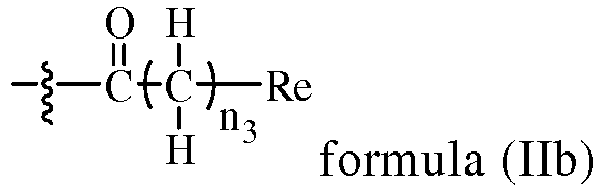
- wherein Re represents dimethylamino, dimethylcarbamoyl, pyrrolyl, pyrazolyl, imidazolyl, triazolyl, pyridyl, pyrimidinyl, pyrrolidinyl, pyrrolidonyl, piperidinyl, piperazinyl or morpholinyl,
- said pyrrolyl, pyrazolyl, imidazolyl, triazolyl, pyridyl, pyrimidinyl, pyrrolidinyl, pyrrolidonyl, piperidinyl, piperazinyl, and morpholinyl can be substituted by 1-2 groups selected from Q3,
- Q3 represents hydroxy, trifluoromethyl or methyl;
- R9 represents H;
- a represents 0;
- b represents 2;
- n represents 0;
- n3 represents 1 or 2.
- In another preferable embodiment, the present invention provides a compound represented by the above general formula (II); a pharmaceutically acceptable salt, a deuteride or a stereoisomer thereof, wherein:
- X represents O;
- R1 represents H;
- R2, R4 and R5 each independently represent H;
- R3 represents CH3OC(O)-, or CH3CH2OC(O)-;
- R6 represents phenyl, 4-fluorophenyl, 4-trifluoromethylphenyl, or 4-methoxyphenyl;
- R7 represents H;
- R8 represents formula (IIb)

- wherein Re represents dimethylamino, dimethylcarbamoyl, pyrazolyl, triazolyl, pyrrolidinyl, pyrrolidonyl, piperidinyl, N-methylpiperidinyl, 4-hydroxypiperidinyl, N-methylpiperazinyl, morpholinyl, or 3,5-dimethylmorpholinyl;
- R9 represents H;
- a represents 0;
- b represents 2;
- n represents 0;
- n3 represents 1 or 2.
- The particularly preferable compound according to the present invention are:
Compound Structure Compound Structure 1 
2 
3 
4 
5 
6 
7 
8 
9 
10 
11 
12 
13 
14 
15 
16 
17 
18 
19 
20 
21 
22 
23 
24 
25 
26 
27 
28 
29 
30 
31 
32 
33 
34 
35 
36 
37 
38 
39 
40 
41 
42 
43 
44 
45 
46 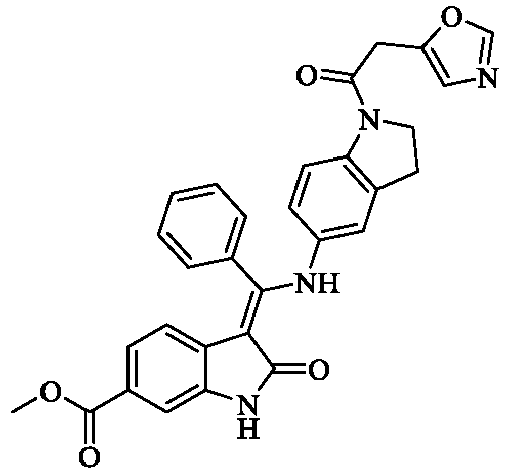
47 
48 
49 
50 
51 
52 
53 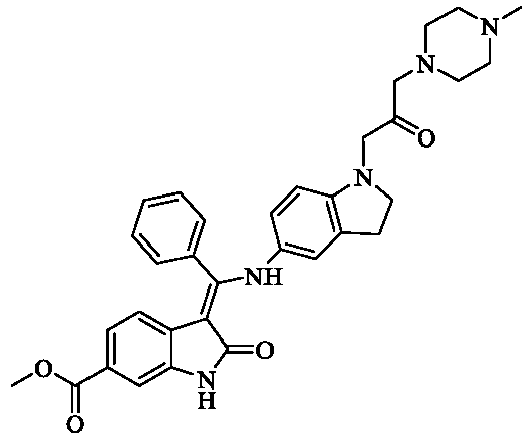
54 
55 
56 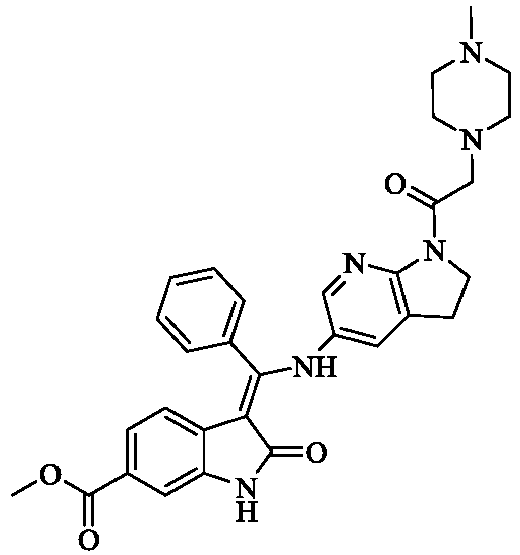
- The particularly preferable compound according to the present invention are:
Compound Structure Compound Structure 1b 
2b 
3b 
4b 
5b 
6b 
7b 
8b 
9b 
10b 
11b 
12b 
13b 
14b 
15b 
16b 
17b 
18b 
19b 
20b 
21b 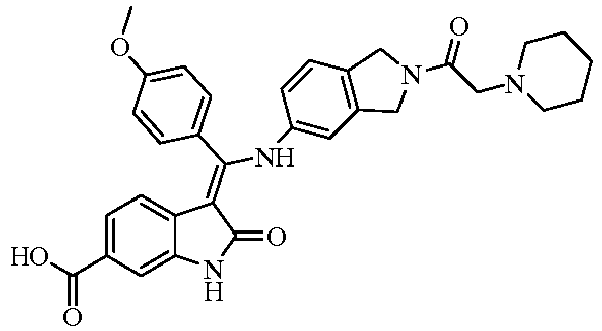
22b 
23b 
24b 
25b 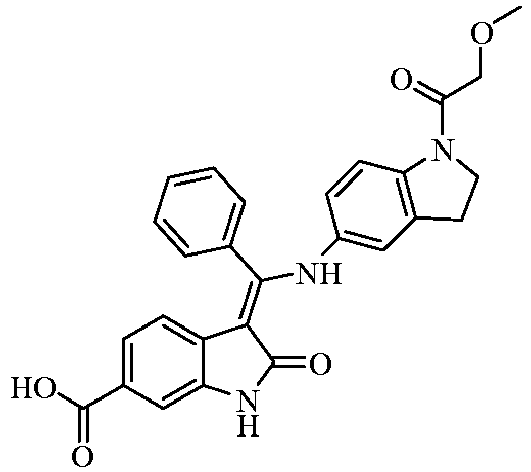
26b 
27b 
28b 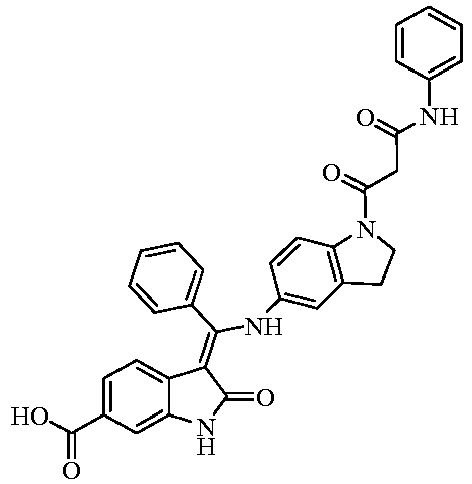
29b 
30b 
31b 
32b 
33b 
34b 
35b 
36b 
37b 
38b 
- Unless other specified in the context, it should be understood that the terms used herein have the following meanings.
- In the present invention, the term "halogen" means fluoro, chloro, bromo or iodo.
- In the present invention, the term "C1-6alkyl" means a straight or branched alkyl derived from a hydrocarbon containing 1-6 carbon atoms by removing one hydrogen atom. Its example includes methyl, ethyl, n-propyl, iso-propyl, n-butyl, iso-butyl, sec-butyl, tert-butyl, n-pentyl, iso-pentyl, 2-methylbutyl, neo-pentyl, 1-ethylpropyl, n-hexyl, iso-hexyl, 4-methylpentyl, 3-methylpentyl, 2-methylpentyl, 1-methylpentyl, 3,3-dimethylbutyl, 2,2-dimethylbutyl, 1,1-dimethylbutyl, 1,2-dimethylbutyl, 1,3-dimethylbutyl, 2,3-dimethylbutyl, 2-ethylbutyl, 1-methyl-2-methylpropyl and the like. In the present invention, the term "C1-6alkyl" means the specific examples having 1-4 carbon atoms among the above examples.
- In the present invention, the term "C1-6alkyloxycarbonyl" means a group that is formed by attaching "C1-6alkyl" to an oxygen atom and then attaching the oxygen atom to a carbonyl group and is attached to another group via the carbonyl group. Its example includes methoxycarbonyl, ethyloxycarbonyl, propyloxycarbonyl, iso-propyloxycarbonyl, butyloxycarbonyl, iso-butyloxycarbonyl, tert-butyloxycarbonyl, sec-butyloxycarbonyl, pentyloxycarbonyl, neo-pentyloxycarbonyl, hexyloxycarbonyl and the like. In the present invention, the term "C1-4alkyloxycarbonyl" means the specific examples having 1-4 carbon atoms among the above examples.
- In the present invention, the term "C1-3alkyloxy" means a group that is formed by attaching "C1-3alkyl" to an oxygen atom and is attached to another group via the oxygen atom. Its example includes methoxy, ethyloxy, propyloxy, iso-propyloxy and the like.
- In the present invention, the term "3-14-membered cycloalkyl" means a cyclic group derived from a cyclic hydrocarbon by removing one hydrogen atom, wherein the ring members of the cyclic hydrocarbon are all carbon atoms. Its example includes 3-8-membered monocyclic cycloalkyl and 6-14-membered fused cycloalkyl.
- The term "3-8-membered monocyclic cycloalkyl" includes 3-8-membered saturated monocyclic cycloalkyl and 3-8-membered partially-saturated monocyclic cycloalkyl. The term "3-8-membered saturated monocyclic cycloalkyl" means that the monocyclic ring is a completely saturated carbonaceous ring. Its example includes but is not limited to: cyclopropyl, cyclobutyl, cyclopentyl, cyclohexyl, cycloheptyl, cyclooctanyl, methylcyclopropyl, dimethylcyclopropyl, methylcyclobutyl, dimethylcyclobutyl, methylcyclopentyl, dimethylcyclopentyl, methylcyclohexyl, dimethylcyclohexyl and the like. The term "3-8-membered partially-saturated monocyclic cycloalkyl" means that the monocyclic ring is a partially saturated carbonaceous ring. Its example includes but is not limited to cyclopropenyl, cyclobutenyl, cyclopentenyl, cyclohexenyl, 1,4-cyclohexadienyl, cycloheptenyl, 1,4-cycloheptadienyl, cyclooctene, 1,5-cyclooctadienyl and the like.
- In the present invention, the term "3-6-membered monocyclic cycloalkyl" means a cycloalkyl having 3-6 carbon atoms.
- The term "6-14-membered fused cycloalkyl" means a fused cycloalkyl group, which is formed by two or more cyclic structures in said fused ring via sharing two adjacent carbon atoms with each other, and includes "6-14-membered saturated fused cycloalkyl" and "6-14-membered partially saturated fused cycloalkyl". The term "6-14-membered saturated fused cycloalkyl" means that the fused ring is a completely saturated carbonaceous ring. Its example includes but is not limited to biscyclo[3.1.0]hexyl, biscyclo[4.1.0]heptyl, biscyclo[2.2.0]hexyl, biscyclo[3.2.0]heptyl, biscyclo[4.2.0]octanyl, octahydropentalenyl, octahydro-1H-indenyl, decahydronaphthalenyl, tetradecahydrophenanthrenyl and the like. The term "6-14-membered partially saturated fused cycloalkyl" means that at least one ring in the fused ring is a partially saturated carbonaceous ring. Its example includes but is not limited to biscyclo[3.1.0]hex-2-enyl, biscyclo[4.1.0]hept-3-enyl, biscyclo[3.2.0]hept-3-enyl, biscyclo[4.2.0]oct-3-enyl, 1,2,3,3a-tetrahydropentalenyl, 2,3,3a,4,7,7a-hexahydro-1H-indenyl, 1,2,3,4,4a,5,6,8a-octahydronaphthalenyl, 1,2,4a,5,6,8a-hexahydronaphthalenyl, 1,2,3,4,5,6,7,8,9,10-decahydrophenanthrenyl and the like.
- In the present invention, the term "6-14-membered aryl" means a cyclic aromatic group, whose ring members are all the carbon atoms, and includes 6-8-membered monocyclic aryl and 8-14-membered fused aryl.
- The term "6-8-membered monocyclic aryl" means a completely unsaturated aryl, for example, phenyl, cyclooctatetraeneyl and the like.
- The term "8-14-membered fused aryl" means a cyclic group that is formed by two or more cyclic structures via sharing two adjacent carbon atoms with each other and in which at least one ring is a completely unsaturated aromatic ring, and includes 8-14-membered completely unsaturated fused aryl, e.g. naphthyl, phenanthrenyl and the like, and further includes 8-14-membered partially saturated fused aryl, e.g. benzene-fused 3-8-membered saturated monocyclic cycloalkyl, benzene-fused 3-8-membered partially-saturated monocyclic cycloalkyl. Its specific example includes, for example, 2,3-dihydro-1H-indenyl, 1H-indenyl, 1,2,3,4-tetrahydronaphthalenyl, 1,4-dihydronaphthalenyl and the like. In the present invention, the term "6-10-membered unsaturated aryl" means a monocyclic aryl and a fused aryl, both of which are completely unsaturated and have 6-10 carbon atoms.
- In the present invention, the term "7-12-membered bridged ring group" means a structure that is formed by any two rings sharing two indirectly attached atoms and contains 7-12 carbon atoms and/or hetero atoms, wherein said hetero atom includes N, O, S and the like. The term "7-12-membered bridged ring" includes "7-12-membered saturated bridged ring", and "7-12-membered partially saturated bridged ring".
- The term "7-12-membered saturated bridged ring" means that all of the rings in the bridged ring are the saturated cyclic groups, and is preferably "7-8-membered saturated bridged ring". Its specific example includes but is not limited to


- The term "7-12-membered partially saturated bridged ring" means that at least one ring in the bridged ring is an unsaturated cyclic group, and is preferably "7-8-membered partially saturated bridged ring". Its specific example includes but is not limited to


- In the present invention, the term "7-12-membered spiro ring" means a structure that is formed by at least two rings sharing the same atom and contains 7-12 carbon atoms and/or hetero atoms, wherein said hetero atom includes N, O, S and the like. The term "7-12-membered spiro ring" includes "7-12-membered saturated spiro ring, and "7-12-membered partially saturated spiro ring".
- The term "7-12-membered saturated spiro ring" means all of the rings in the sprio ring are the saturated cyclic groups. Its specific example includes but is not limited to




- The term "7-12-membered partially saturated spiro ring" means that at least one ring in the spiro ring is an unsaturated cyclic group. Its specific example includes but is not limited to


- In the present invention, the term "3-14-membered heterocyclyl" means a cyclic group containing 3-14 ring atoms (and containing at least one hetero atom as the ring atom), and comprises 3-8-membered monocyclic heterocyclyl, 6-14-membered fused heterocyclyl, 4-10-membered heterocyclyl, 5-10-membered heterocyclyl and the like. The hetero atom can comprise nitrogen, oxygen, sulfur and the like.
- The term "3-8-membered monocyclic heterocyclyl" means a monocyclic heterocyclyl containing 3-8 ring atoms (and containing at least one hetero atom as the ring atom), and includes 3-8-membered unsaturated monocyclic heterocyclyl, 3-8-membered partially saturated monocyclic heterocyclyl, and 3-8-membered saturated monocyclic heterocyclyl. 5-6-membered monocyclic heterocyclyl is preferable. The term "3-8-membered unsaturated monocyclic heterocyclyl" means an aromatic cyclic group containing at least one hetero atom. 5-6-membered unsaturated monocyclic heterocyclyl is preferable. Its specific example includes but is not limited to piperidinyl, furyl, thienyl, pyrrolyl, thiazolyl, thiodiazolyl, oxazolyl, oxdiazolyl, imidazolyl, pyrazolyl, pyridyl, pyrimidinyl, 1,4-dioxinyl, 2H-1,2-oxazinyl, 4H-1,2-oxazinyl, 6H-1,2-oxazinyl, 4H-1,3-oxazinyl, 6H-1,3-oxazinyl, 4H-1,4-oxazinyl, pyridazinyl, pyrazinyl, 1, 2,3-triazinyl, 1,2,4-triazinyl, 1,3,5-triazinyl, 1,2,4,5-tetrazinyl, oxepinyl, thiepinyl, azepinyl, 1,3-diazepinyl, azocinyl and the like. The term "3-8-membered partially saturated monocyclic heterocyclyl" mean a cyclic group containing at least one double bond and containing at least one hetero atom. 5-6-membered partially saturated monocyclic heterocyclyl is preferable. Its specific example includes but is not limited to 2,5-dihydrothienyl, 4,5-dihydropyrazolyl, 3,4-dihydro-2H-pyranyl, 5,6-dihydro-4H-1,3-oxazinyl and the like. The term "3-8-membered saturated monocyclic heterocyclyl" means a cyclic group containing at least one hetero atom and not containing any unsaturated bond. 5-6-membered saturated monocyclic heterocyclyl is preferable. Its specific example includes but is not limited to aziridinyl, azetidinyl, thietanyl, tetrahydrofuryl, tetrahydropyrrolyl, imidazolidinyl, pyrazolidinyl, tetrahydrofuryl, 1,4-dioxanyl, 1,3-dioxanyl, 1,3-dithianyl, morpholinyl, piperazinyl and the like.
- The term "6-14-membered fused heterocyclyl" means a fused cyclic structure, which contains 6-14 ring atoms (and containing at least one hetero atom), and which is formed by linking via two or more cyclic structures sharing two adjacent atoms with each other, and includes 6-14-membered unsaturated fused heterocyclyl, 6-14-membered partially saturated fused heterocyclyl, and 6-14-membered saturated fused heterocyclyl.
- The term "6-14-membered unsaturated fused heterocyclyl" means a fused cyclic structure in which all rings are unsaturated, e.g. a structure formed by fusing a benzene ring with 3-8-membered unsaturated monocyclic heterocyclyl, a structure formed by fusing 3-8-membered unsaturated monocyclic heterocyclyl with 3-8-membered unsaturated monocyclic heterocyclyl. Its specific example includes but is not limited to benzofuryl, benzoisofuryl, benzothienyl, indolyl, benzoxazolyl, benzimidazolyl, indazolyl, benzotriazolyl, quinolinyl, isoquinolinyl, acridinyl, phenanthridinyl, benzopyridazinyl, phthalazinyl, quinazolinyl, quinoxalyl, phenazinyl, pteridinyl, purinyl, naphthyridinyl, and the like.
- The term "6-14-membered partially saturated fused heterocyclyl" means a fused cyclic structure containing at least one partially saturated ring, e.g. a structure formed by fusing a benzene ring with 3-8-membered partially saturated monocyclic heterocyclyl, a structure formed by fusing 3-8-membered partially saturated monocyclic heterocyclyl with 3-8-membered partially saturated monocyclic heterocyclyl, and the like. Its specific example includes but is not limited to 1,3-dihydrobenzofuryl, benzo[d][1,3]dioxolyl, isoindolinyl, chromanyl, 1,2,3,4-tetrahydropyrrolo[3,4-c]pyrrolyl and the like.
- The term "6-14-membered saturated fused heterocyclyl" means a fused cyclic structure, in which all rings are saturated, e.g. a structure formed by fusing 3-8-membered saturated monocyclic heterocyclyl with 3-8-membered saturated monocyclic heterocyclyl. Its specific example includes but is not limited to cyclobutane-fused tetrahydropyrrolyl, cyclopentane-fused tetrahydropyrrolyl, azetidine-fused imidazolidinyl and the like.
- In the present invention, the terms "4-10-membered heterocyclyl" and "5-10-membered heterocyclyl" means the monocyclic heterocyclyl and the fused heterocyclyl containing 4-10 ring atoms and 5-10 ring atoms respectively.
- In the present invention, the term "6-12-membered fused ring group-C0-3alkyl", "7-12-membered spiro ring group-C0-3alkyl" or "6-12-membered bridged ring group-C0-3alkyl" means "6-12-membered fused ring group", "7-12-membered spiro ring group", and "6-12-membered bridged ring group" are attached to the other structure via C0-3alkylene, and includes "6-9-membered fused ring group-C0-3alkyl", "7-10-membered spiro ring group-C0-3alkyl" or "7-8-membered bridged ring group-C0-3alkyl". Its specific example includes but is not limited to


- The above compounds of the present invention can be synthesized according to the methods described in the following reaction scheme and/or other methods well known to those skilled in the art. The synthesis method is not limited to the following methods.
- Intermediate 4 is synthesized according to J. Med. Chem. 2009, 52, 4466-4480.
- Starting material 1 and an organic base are dissolved in DCM. Starting material 2 is added dropwise under an ice-water bath. The reaction mixture is warmed to room temperature and reacted for 0.5 hour. Water is added. The resulting mixture is extracted with DCM. The organic phase is dried and rotary-evaporated to dryness. The resulting solid is dried in vacuum to produce Intermediate 1.
- Intermediate 1 and an organic base are dissolved in DCM. Starting material 3 is added dropwise. The reaction mixture is reacted at room temperature for 12 hours. The resulting mixture is extracted with DCM. The organic layer is dried over anhydrous sodium sulfate, and rotary-evaporated to dryness to produce Intermediate 2.
- Intermediate 2 is dissolved in DCM. TFA is added. The reaction is conducted at room temperature. After the completion of the reaction, the reaction mixture is concentrated to produce Intermediate 3. Alternatively, Intermediate 2 is dissolved in methanol. The mixture is subjected to the hydrogenation reduction with Pd/C overnight, and then filtered. The resulting filtrate is concentrated to produce Intermediate 3. The product is not purified and directly used in the next reaction step.
- Intermediate 4 and Intermediate 3 are dissolved in DMF. The mixture is heated to 80 °C and reacted for 5 hours. The reaction mixture is cooled to room temperature, and the reaction is further conducted for 2 hours. Water is added. The resulting mixture is filtered. The resulting solid is dried in vacuum to produce the compound of formula (I).
- Starting material 2 is a halide; see the specific Examples for Starting material 2; see the specific Examples for Starting material 3.
-

- In the reaction equations, R1, R2, R3, R4, R5, R6, R7, R8, R9, Ra, Rb, Rc, Rd, Re, X, n, a, b, and Ring A are defined as hereinbefore.
- In addition, the above compound can be converted, as follows:

- The starting material can be dissolved in an organic solvent (e.g. methanol, ethanol, THF, dioxane and the like); then an aqueous solution of inorganic base (e.g. sodium hydroxide, potassium hydroxide, and potassium carbonate) is added; the reaction is stirried until the completion of reaction; the resulting mixture is concentrated, washed with water, adjusted to the acidity with hydrochloric acid, and filtered; and the filtrate is washed with water, and dried to produce the product.
- The pharmaceutically acceptable salt of any of the above compounds according to the present invention refers to a salt formed from a pharmaceutically acceptable, non-toxic base or acid, including a salt of an organic acid, a salt of an inorganic acid, a salt of an organic base, and a salt of an inorganic base.
- The salt of the organic acid comprises a salt of formic acid, acetic acid, benzenesulfonic acid, benzoic acid, para-bi sulfonic acid, camphor sulfonic acid, citric acid, mesylate, ethyl sulfonic acid, propionic acid, fumaric acid, gluconic acid, glutamate, hydroxy ethyl sulfonic acid, lactic acid, maleic acid, malic acid, mandelic acid, viscous acid, pamoic acid, pantothenic acid, succinic acid, tartaric acid, or the like. The salt of the inorganic acid comprises a salt of hydrobromic acid, hydrochloric acid, nitric acid, sulfuric acid, phosphoric acid, or the like.
- The salt of the organic base comprises salts of primary, secondary and tertiary amines, substituted amines, including naturally occurring substituted amines, cyclic amines, and alkaline ion-exchange resin, selected from betaine, caffeine, choline, N, N'-dibenzylethylenediamine, diethylamine, 2-diethylaminoethanol, 2-dimethylaminoethanol, ethanolamine, ethylenediamine, N-ethyl-morpholine, N-ethylpiperidine, meglumine, glucosamine, hydrabamine, iso-propylamine, methylglucamine, morpholine, piperazine, piperidine, procaine, purine, theobromine, triethylamine, trimethylamine, tripropylamine, tromethamine and the like, as well as salts of natural amino acids such as glycine, alanine, valine, leucine, isoleucine, norleucine, tyrosine, cystine, cysteine, methionine, proline, hydroxyproline, histidine, ornithine, lysine, arginine and serine. The salt of the inorganic base comprises ammonium salts, as well as salts of Li, Na, K, Ca, Mg, Zn, Ba, Al, Fe, Cu, Fe2+, Mn, Mn2+ and the like.
- The present invention further relates to a pharmaceutical composition, wherein the pharmaceutical composition contains any of the above compounds, or a pharmaceutically acceptable salt, a deuteride or a stereoisomer thereof, and optionally one or more pharmaceutically acceptable carriers. The pharmaceutical composition can further contain a second therapeutical agent selected from an antineoplastic agent and an immunosuppressive agent, wherein the second therapeutical agent is selected from antimetabolites, including but being not limited to capecitabine, gemcitabine and the like; growth factor inhibitors, including but being not limited to gefitinib, lapatinib, pazopanib, imatinib and the like; antibodies, including but being not limited to herceptin, bevacizumab and the like; mitotic inhibitors, including but being not limited to paclitaxel, vinorelbine, docetaxel, doxorubicin and the like; antineoplastic hormones, including but being not limited to letrozole, tamoxifen, fulvestrant and the like; alkylating agents, including but being not limited to cyclophosphamide, carmustine and the like; metallic platinums, including but being not limited to carboplatin, cisplatin, oxaliplatin and the like; topoismerase inhibitors, including but being not limited to topotecan and the like; immunosuppressive agents, including but being not limited to everolimus and the like.
- The present invention further relates to a pharmaceutical formulation, which comprises a compound represented by the above general formula (I), or a pharmaceutically acceptable salt, a deuteride or a stereoisomer thereof and one or more pharmaceutically acceptable carriers.
- The present compound can be formulated into any pharmaceutical formulation in a well known manner in the art, and administrated in an oral, parenteral, rectal or pulmonary admininstration or the like to a subject in need thereof. For the oral administration, the present compound can be formulated into a conventional solid formulation, such as tablet, capsule, pill, granule, or the like; or the oral liquid formulation, such as an oral solution, an oral suspension, a syrup, or the like. For preparing the oral formulation, suitable filler, binder, disintegrant, lubricant, diluent, or the like can be added. For the parenteral administration, the present compounds can be formulated into an injectable formulation, including an injection solution, a sterile injection powder and a concentrated injection solution. For preparing the injectable formulation, a conventional method in the pharmaceutical production can be used. For preparing the injectable formulation, an additive can be optionally added, depending on the nature of drug. For the rectal administration, the present compounds can be formulated into a suppository or the like. For the pulmonary administration, the present compounds can be formulated into an inhalant, a spraying agent, or the like.
- The present invention also provides the compound represented by the above general formula (I), or a pharmaceutically acceptable salt, a deuteride or a stereoisomer thereof for use in treating or preventing a fibrous degeneration disease, wherein said fibrous degeneration disease includes but is not limited to: fibrous degeneration and remodeling of pulmonary tissue in chronic obstructive pulmonary disease, fibrous degeneration and remodeling of pulmonary tissue in chronic bronchitis, fibrous degeneration and remodeling of pulmonary tissue in emphysema, pulmonary fibrous degeneration as well as pulmonary disease with fibrosis components, fibrous degeneration and remodeling in asthma, fibrous degeneration in rheumatoid arthritis, virus-induced hepatic cirrhosis, radiation-induced fibrous degeneration, postangioplasty restenosis, chronic glomerulonephritis, renal fibrous degeneration in a cyclosporin-administrated patient and hypertension-induced renal fibrous degeneration, skin disease having fibrosis components, and over cicatrization.
- The disease is selected from the group consisting of pulmonary fibrous degeneration and the pulmonary disease having fibrous degeneration components, including but not limited to idiopathic pulmonary fibrosis degeneration, giant cell interstitial pneumonia, sarcoidosis, cystic fibrous degeneration, respiratory distress syndrome, drug-induced pulmonary fibrous degeneration, granulomatosis, silicosis, asbestosis, systemic sclerosis, virus-induced hepatic cirrhosis (e.g. C-hepatitis induced hepatic cirrhosis), and skin disease having fibrous degeneration components (e.g. scleroderma, sarcoidosis and the systemic lupus erythematosus).
- The present invention also provides the present compound represented by the above general formula (I), or a pharmaceutically acceptable salt, a deuteride or a stereoisomer thereof for use in treating the excessive proliferation disease, inhibiting the angiogenesis and /or reducing the vascular permeability, wherein the excessive proliferation disease includes a cancer and a non-carcinomatous disease, including but not limited to: cerebroma, pulmonary carcinoma, nonsmall cell pulmonary carcinoma, squamous cell carcinoma, bladder carcinoma, gastric carcinoma, ovarian carcinoma, peritoneal carcinoma, pancreatic carcinoma, breast carcinoma, head and neck carcinoma, uterocervical carcinoma, endometrial carcinoma, rectal carcinoma, hepatoma, renal carcinoma, adenocarcinoma of esophagus, esophageal squamous cell carcinoma, solid tumor, non-Hodgkin lymphoma, central nervous system neuroplasm (glioma, glioblastoma multiforme, glioma sarcomatosum), prostatic carcinoma, thyroid carcinoma, female genital tract carcinoma, carcinoma in situ, lymphoma, histocytic lymphoma, neurofibromatosis, thyroid carcinoma, osteocarcinoma, skin cancer, brain carcinoma, colon carcinoma, carcinoma of testis, small cell pulmonary carcinoma, gastrointestinal stromal tumor, prostate tumor, mast cell tumor, multiple myeloma, melanoma, glioma, glioblastoma multiforme, astrocytoma, neuroblastoma, sarcoma, or the like. The non-carcinomatous disease includes but is not limited to the benign skin or prostate hyperplasia or the like.
- The present invention relates to a "stereoisomer" of the compound of formula (I). The compound of the present invention may contain one or more asymmetric centers and can thus occur as racemates and racemic mixtures, single enantiomers, diastereomeric mixtures and individual diastereomers. The compound of the present invention may have at least one asymmetric center. Each such asymmetric center will independently produce two optical isomers and it is intended that all of the possible optical isomers and diastereomers in mixtures and as pure or partially purified compounds are included within the ambit of this invention. The present invention is meant to comprehend all such isomeric forms of these compounds. The present compound of formula (I) or a pharmaceutically acceptable salt thereof can exist in an optical isomer form due to the presence of at least one asymmetric carbon atom. Thus, the present invention further comprises these optical isomers and mixture thereof. It is intended that all of isomerism (e.g. enantiomorphism, diastereoisomerism and geometric isomerism (or conformational isomerism)) forms of the structures as described herein are included herein; for example, R and S configurations for each asymmetric center, Z and E isomers for each double bond, and Z and E conformational isomers. Therefore, the individual stereoisomer of the present compound and a mixture of enantiomers, diastereoisomers, or geometric isomers (or confomational isomers) can be in the scope of the present invention. Unless stated to the contrary, all of tautomers of the present compound are in the scope of the present invention.
- The present invention relates to a "deuteride" of the compound of formula (I). The present invention also comprises such a compound which is characterized by containing one or more isotope-enriched atoms. For example, a compound having the structure of the present invention but being enriched in deuterium or tritium that substitutes hydrogen or being enriched in the 13C or 14C atom that substitute the 12C atom can be in the scope of the present invention. This kind of compounds can be for example used as an analysis tool, a probe in the biological analysis, or a therapeutic agent of the present invention. In some embodiments, the compound of formula (I) can have one or more deuterium atoms.
- The indolinone-containing compound as the tyrosine kinase inhibitor of the present invention contains two or more chiral centers. The compound obtained by synthesis is a racemate. The desired enantiomerically pure compound can be obtained through a chiral resolution, for example, through a chiral stationary phase chromatography (e.g. high pressure preparation chromatography, supercritical fluid chromatography). The chiral filler includes but is not limited to: Chiralcel OJ-H, Chiralpak AD-H, Chiralpak IA, Chiralpak AS-H.
- The present invention also provides a method for preparing a compound represented by formula (I), or a pharmaceutically acceptable salt, a deuteride or a stereoisomer thereof, wherein said method comprises reacting a compound represented by formula (III) with a compound represented by formula (IV) to produce the compound represented by formula (I),

- In comparison to the closest prior art, the present compound has the following advantages:
- (1) As a small molecule tyrosine kinase inhibitor, the present compound can prevent or treat the fibrous degeneration disease, inhibit the cell proliferation and the angiogenesis, have a good antineoplastic activity, and have good effect in treating and/or preventing various fibrosis diseases and/or neoplastic diseases of mammals (including human).
- (2) The present compound has a low toxicty and a low side-effect, and has a large safety window.
- (3) The preparation process for the present compound is simple, and the present compound has a good physochemcial property and a stable quality, which makes the present compound be easily produced on a large industrial scale.
- Hereinafter, the beneficial effect of the present compound will be illustrated by the pharmacological experiments. However, it should be noted that the beneficial effect of the present compound is not limited to those as illustrated below.
-
Materials: Material Chinese Name Source VEGFR2 vascular endothelial growth factor 2 Carna FGFR1 fibroblast growth factor 1 Carna FGFR3 fibroblast growth factor 3 Carna PDGFRβ platelet derived growth factor β BPS EDTA ethylenediamine tetraacetic acid Sigma Peptide FAM-P22 fluorescein labelled peptide 22 GL Biochem ATP adenosine triphosphate Sigma DMSO dimethyl sulfoxide Sigma Staurosporine Staurosporine Sigma - The present compounds were synthesized in laboratory. Chemical names, structures, and preparation methods were shown in their examples respectively.
-
- (1) Preparation of agents and compounds
- ① 1-fold kinase buffer without MnCl2 (50 mM HEPES, pH= 7.5, 0.0015% Brij-35, 10 mM MgCl2, 2 mM DTT)
- ② 1-fold kinase buffer with MnCl2 (50 mM HEPES, pH= 7.5, 0.0015% Brij-35, 10 mM MgCl2, 10 mM MnCl2, 2 mM DTT);
- ③ Termination solution (100 mM HEPES, pH=7.5, 0.015% Brij-35, 0.2% Coating Reagent #3, 50 mM EDTA);
- ④ 2.5-fold kinase solution (the VEGFR2, FGFR1, FGFR3, PDGFRβ kinases were added to the 1-fold kinase buffer respectively to prepare the correponding 2.5-fold kinase solutions);
- ⑤ 2.5-fold substrate solution: FAM-labelled peptide and ATP were added to the 1-fold kinase buffer to prepare a peptide solution;
- ⑥ 4-fold dilution of the compound solution: the compound was accurately weighed, and dissolved in DMSO. The mixture was mixed sufficiently and evenly to prepare a 10 mM solution. Then the solution was diluted with DMSO to 500 µM, and 4-fold serial dilutions were done at 10 concentrations with a highest concentration of 50µM. The resulting diluted solutions were kept for use.
- (2) 5µL of a 5-fold compound solution was added to a 384-well plate.
- (3) 10 µL of the 2.5-fold kinase solution was added and incubated for 10min.
- (4) Then 10µL of the 2.5-fold substrate solution was added at 28°C and the reaction was conducted for 1 hour (except for the PGDFRβ kinase, for which the reaction was conducted for 5 hour).
- (5) Finally, 25µL of termination solution was added to terminate the reaction, and the data was read from the Caliper.
- (6) IC50 was obtained by the curve fitting.
- The calculated inhibition ratio (%)=(max. conversion-sample conversion)/(max. conversion-min. conversion)×100
- The curve fitting was done with the software Xlfit to obtain the IC50 value.
- The experiment result was shown in the below table.
Table 1: In vitro enzymology inhibitor activity of the present compounds Compound enzymology inhibitory activity IC50(µM) FGFR1 FGFR3 VEGFR2 PDGFRβ Compound 1 0.10 0.23 0.017 0.0076 Compound 2 hydrochloride 0.14 0.28 0.065 0.015 Compound 9 hydrochloride / 9.80 0.77 0.085 Compound 10 hydrochloride 7.96 5.30 0.63 0.065 Compound 12 hydrochloride 1.77 1.72 0.23 0.019 Compound 13 hydrochloride 0.70 0.54 0.10 0.014 Compound 14 hydrochloride 4.67 4.02 0.31 0.024 "/" means no detection. - It can be seen from Table 1 that the present compounds have the inhibitory activities on FGFR1, FGFR3, VEGFR2, and PDGFRβ kinases. Among others, the present compounds have stronger inhibitory activties on the PDGFRβ kinase.
-
Materials: Materials Source Human VEGF-A HumanZyme Human PDGF-BB PeproTech HI-FBS Gibco Calf serum Gibco - The present compounds were synthesized in laboratory. Chemical names, structures, and preparation methodsmethods were shown in their examples respectively.
-
- (1) Thawing cells and Passing cells.
- (2) Plating Cells:
The 3T3 cells were resuspended in a culture medium containing 10% fetal bovine serum, wherein the cell concentration was 5×10⁴/ml. The cell suspension was added to a 96-well plate with 100 µL per well, and incubated overnight; the HUVEC cells were resuspended in a culture medium containing 10% heat-inactivated fetal bovine serum, wherein the cell concentration was 7.5×10⁴/ml. The cell suspension was added to a 96-well plate with 100 µL per well. - (3) Treating with drugs: the compounds were diluted to different concentrations, and 60µLh-PDGF-BB (3T3 cells) and 40 ng/ml h-VEGF-A (HUVEC cells) were added and incubated for 1 hour.
- (4) 100 µL of a solution containing the compound and h-PDGF-BB (h-VEGF-A, for the HUVEC cells) was added to a cell culture plate, wherein the final concentration of h-PDGF-BB was 10 ng/ml, the final concentration of h-VEGF-A was 10ng/ml, and the final concentration for the compounds were 10, 3.3333, 1.1111, 0.3704, 0.1235, 0.0412, 0.0137, 0.0046, and 0.0015µM. The plate was incubated for 40 hours, and the HUVEC cells were incubated for 89 hours. To each well was added 20µL Promega Substrate, and the plate was incubated at 37 °C for 7.5 hours, and the HUVEC cells were incubated for 11.5 hours. Then the plate was placed in a microplate reader to read the absorbance at 490 nm.
- (5) Data processing
The curve of the compound concentration vs. Net OD was plotted, wherein Net OD=Compound OD -min. OD. ED50 was calculated according to the following equation: Conc. ED50(x)=(y-b)/a, y=Calculated Net OD for IC50, a=slope, b=intercept. - The experiment result was shown in the below tables.
Table 2: In vitro cellular inhibitory activity of the present compounds Compound ED50(µM) for the HUVEC in vitro cells Compound 1 0.056-0.084 Compound 3 0.18-0.26 Compound 4 0.12-0.17 Compound 5 0.1-0.15 Compound 6 hydrochloride 0.19-0.28 Compound 7 0.07-0.1 Compound 8 0.07-0.1 Compound 9 hydrochloride 0.13-0.19 Compound 10 hydrochloride 0.09-0.14 Compound 11 hydrochloride 0.05-0.08 Compound 12 hydrochloride 0.02-0.03 Compound 13 hydrochloride 0.06-0.09 Compound 14 hydrochloride 0.07-0.10 Table 3: In vitro cellular inhibitory activity of the present compounds Compound ED50(µM) for the 3T3 in vitro cells Compound 1 0.06-0.08 Compound 3 1.3-1.9 Compound 5 0.82-1.24 Compound 7 hydrochloride 0.05-0.07 - It can be seen from Tables 2 and 3 that the present compounds had the inhibitory effect on the proliferation of the HUVEC cells and the 3T3 cells.
-
Materials: Material Source Amitriptyline hydrochloride Sigma-Aldrich DMSO Merck CHO-hERG AVIVA - The present compounds were synthesized in laboratory. Chemical names, structures, and preparation methods were shown in their examples respectively.
- The control drug, Intedanib (BIBF-1120), was synthesized in laboratory according to
WO0127081A1 -
- 1. Preparations of the solutions and the compounds
Extracellular fluid (mM): N-2-hydroxyethylpiperazine-N'-2-ethanesulfonic acid (HEPES) 10, NaCl 145, KCl 4, CaCl2 2, MgCl2 1, Glucose 10, adjusted with 1N sodium hydroxide to pH = 7.4; the osmotic pressure was adjusted to 290-300 mOsm; filtered and preserved at 4°C.
Intracellular solution (mM): KCl 120, KOH 31.25, CaCl2 5.374, MgCl2 1.75, Ethylene glycol-bis(β-aminoethyl ether)-N, N, N', N'-tetraacetic acid (EGTA) 10, HEPES 10, Na2-ATP 4, adjusted with 1N potassium hydroxide to pH = 7.2; the osmotic pressure was adjusted to 280-290mOsm; filtered and preserved at -20 °C.
Preparation of the compounds: The positive control drug, amitriptyline hydrochloride, two samples, Intedanib, and the compounds were firstly dissolved in 100% DMSO (Merck, 61850125001730) to prepare 10 or 30 mM of stock solutions (see the below table). Before the experiments, the above stock solutions were diluted with DMSO to the levels that were 333 or 1000 times higher than the experiment concentrations, and then diluted by 333 or 1000 folds with the extracellular fluid to the desired concentrations. The final concentration of DMSO in the extracellular fulid was 0.3% or 0.1%. - 2. Electrophysiological experiment. The hERG current was recorded with whole cell patch clamp technique. A cell suspension was added to a 35mm petri dish, and placed on the object stage of an inverted microscope. After the adherence of cells, the perfusion with the extracellular fluid was done in a perfusion rate of 1-2ml/min. The glass microelectrode was made by a two-step pulling with a pipette puller, and had an electric resistance of 2-5MΩ upon coming into solution. After establishing a whole-cell record, the holding potential was kept at -80 mV. In the voltage stimulation, the depolarization was made at the potential of +60 mV. Then, the repolarization was made at the potential of -50 mV and the hERG tail current was recorded. All of the recordings were conducted after the currents became stable. The extracellular perfusion administration started from the lower concentration, and the administration at each concentration was conducted for 5-10 mines until the current became stable and then the administration at the next concentration was conducted.
- 3. The experiment included the following aspects:
The hERG current was recoded on the CHO-K1 cell line stably expressing the hERG channel with the manual patch clamp technology; the inhibition ratio at each concentration was calculated according to the hERG tail current; each of the compounds was measured at five concentrations to deduce the IC50 value; two cells were measured at each concentration; and one positive control drug was used. - 4. Data collection and processing
The stimulation and the signal collection were accomplished through A/D-D/A digital-analog conversions with Digidata 1440 (Molecular Devices) and pCLAMP software (Version 10.2, Molecular Devices); the signal was amplified with a patch clamp amplifier (Multiclamp 700B, Molecular Devices), and filtered at 1 KHz. The data were further analyzed and subjected to the curve fitting with Clampfit (Version 10.2, Molecular Devices) and Prism. The data were expressed as mean value ± standard deviation. The IC50 value was obtained by the fitting based on the Logistic equation:
-
Table 4: IC50 values of the compounds for the hERG currents recorded on CHO-K1 stable cell line Sample IC 50 (µM) Amitriptyline hydrochloride 2.35 Intedanib (BIBF-1120) 4.90 Compound 7 hydrochloride >30.00 Compound 9 hydrochloride >30.00 Compound 10 hydrochloride >30.00 Compound 11 hydrochloride >30.00 Compound 12 hydrochloride >30.00 Compound 13 hydrochloride >30.00 Compound 14 hydrochloride >30.00 - The positive control drug, amitriptyline, was one of the widely used drugs for blocking the hERG current. In the present experiment, the IC50 value of the positive control drug for blocking the hERG current was 2.35µM, which was consistent with those reported in the literatures. This showed that the result of the present experiment was convincing. In the present experiment, the hERG current blocking at the highest testing concentration (30.00µM) of for each of Compounds 7, 9, 10, 11, 12, 13 and 14 did not reach the level of IC50, which showed that the present compounds had no remarkable blocking of the hERG channel in the tested concentration range. The IC50 value of the control drug (BIBF-1120) for the hERG current was 4.90 µM, which showed a remarkable blocking of the hERG channel. Therefore, the present compounds were safer in comparison with the control drug BIBF-1120.
- Reference: Blockade of the HERG human cardiac K+ channel by the antidepressant drug amitriptyline. British Journal of Pharmacology, (2000) 129:1474-1480.
- Hereinafter, the present invention will be further illustrated in details by the following specific examples. It should be understood that the scope of the present invention is not limited by the following examples.
-

-

- 5-nitroindoline (16.4g, 100mmol) was dissolved in ethyl acetate (200ml), and then chloroacetyl chloride (9.6ml 120mmol) was slowly added at 40 °C. The resulting mixture was heated to 80 °C, and reacted for 0.5 hour. The reaction mixture was cooled and filtered by suction. The filtrate was crystallized to produce 1-(2-chloroacetyl)-5-nitroindoline (22g) as a grey solid in a yield of 92%.
-
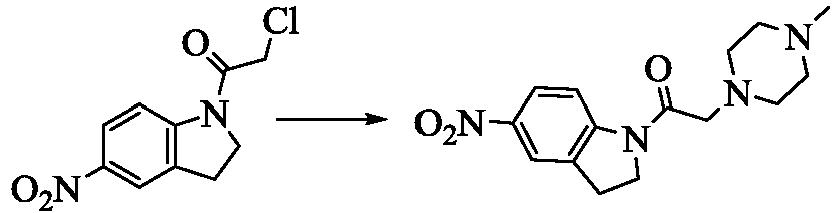
- 2-chloro-1-(5-nitroindol-1-yl)ethanone (22g, 92mmol) was dissolved in toluene (200ml). The mixture was heated to 70 °C, and then N-methylpiperazine was slowly added dropwise. The reaction was conducted overnight, and the solvent was dried by rotary evaporation. The residue was purified with a column chromatography to produce 2-(4-methylpiperazin-1-yl)-1-(5-nitroindol-1-yl)ethanone as a white floccular solid (15.8g) in a yield of 56%.
-

- 2-(4-methylpiperazin-1-yl)-1-(5-nitroindol-1-yl)ethanone (500mg, 1.64mmol) was added to methanol (100ml), and then Pd/C (50mg, 10%) was carefully added. The resulting mixture was subjected to a reduction reaction under hydrogen for 4 hours at room temperature. After the completion of the reaction, the Pd/C was filtered. The filtrate was concentrated to produce 1-(5-aminoindol-1-yl)-2-(4-methylpiperazin-1-yl)ethanone (300mg) in a yield of 66%.
-

- To methanol (50mL) were added 1-(5-aminoindol-1-yl)-2-(4-methylpiperazin-1-yl)ethanone (300mg, 1.09mmol), methyl (Z)-methyl-1-acetyl-3-(methoxy(phenyl)methylene)-2-oxoindoline-6-carboxylate (338mg, 1.09mmol) and KOH (30mg, 0.54mmol). The mixture was stirred into dissolution, and reacted under reflux for 7 hours. Then the reaction was concentrated to produce a crude product, which was purified with a column chromatography (MeOH/DCM=1:30) to produce methyl (Z)-methyl-3-((1-(2-(4-methylpiperazin-1-yl)acetyl)indol-5-ylamino)(phenyl)methylene)-2-oxoindoline-6-carboxylate (150mg) in a yield of 24.8%.
Formula: C32H33N5O4; MW: 552; Mass Spectrum (m/e): 552.3 (M+1)
1H NMR (400M, DMSO-d6 , δppm): 12.16 (s, 1H), 10.93 (s, 1H), 7.77 (d, 1H), 7.56 (m, 3H), 7.48 (d, 2H), 7.40 (s, 1H), 7.17 (d, 1H), 6.79 (s, 1H), 6.66 (d, 1H), 5.79 (d, 1H), 4.09 (t, 2H), 3.75 (s, 3H), 3.16 (t, 2H), 2.95 (t, 2H), 2.30 (m, 4H), 2.29 (m, 4H), 2.12 (s, 3H). -

-

- 1-(2-chloroacetyl)-5-nitroindoline (22g, 92mmol), dimethylamine hydrochloride (22g, 276mmol), and potassium carbonate (32.5g, 276mmol) were respectively added to toluene (200ml). The resulting mixture was added to 70 °C, and reacted overnight. The solvent was removed by concentration. The residue was purified with a silica gel column chromatography (methanol/methylene chloride=0-1/10) to produce 1-(2-(dimethylamino) acetyl)-5-nitroindoline as a white solid (11.5g) in a yield of 50%.
-

- 1-(2-(dimethylamino) acetyl)-5-nitroindoline (5g, 16.4mmol) and Pd/C (1g) were added to methanol (200ml). Hydrogen gas was introduced to the reaction system overnight. After the completion of the reaction, the solvent was removed by rotary-evaporation to produce 1-(2-(dimethylamino) acetyl)-5-aminoindoline as a white solid (5g, 99%).
-

- 1-(2-(dimethylamino) acetyl)-5-aminoindoline (0.082g, 0.3mmol) and methyl (E)-3-(methoxy(phenyl)methylene)-2-oxoindoline-6-carboxylate (0.086g, 0.28mmol) was added to MeOH (2ml). The resulting mixture was heated to 70 °C and kept for 7 hours. After being cooled naturally, the mixture was filtered by suction. The filtrate was dried to produce a yellow solid (61mg) in a yield of 35.4%.
- Methanol (10ml) was added to a concentrated hydrochloric acid (1ml). The above crude product was added to the resulting solution. The mixture was stirred at room temperature for 2 hours, and filtered by suction. The filtrate was dried in vacuum to produce methyl (Z)-3-((1-(2-(dimethylamino) acetyl)indolin-5-ylamino)(phenyl)methylene)-2oxoindoline-6-carboxylate hydrochloride (68mg) as a yellow solid.
Formula: C29H28N4O4; MW: 496.2; Mass Spectrum (m/e): 497.3 (M+1)
1H NMR (400MHz; hydrochloride, DMSO-d6 , δppm) □: 12.16 (s, 1H), 10.96 (s, 1H), 9.77 (br. s., 1H), 7.79 (d, J = 8.8 1H), 7.56 (m, 3H), 7.45 (m, 2H), 7.26 (s, 1H), 7.17(m, 1H), 6.88 (s, 1H), 6.74 (s, 1H), 5.81(d, J = 8.4, 1H), 4.25 (m, 2H), 3.96(m, 2H), 3.76 (s, 3H), 3.04 (m, 2H), 2.83 (m, 6H). -

- The preparation method was identical to those of Examples 1 and 2, and the yield was 24%.
Formula: C32H32FN5O4; Mass Spectrum (m/e): 569.8 (M+1)
1H NMR (hydrochloride, DMSO-d6 , 400MHz, δppm): 12.10 (s, 1H), 11.5(br s, 1H), 10.97 (s, 1H), 7.80 (d, 1H), 7.51-7.55 (m, 2H), 7.36-7.42 (m, 3H), 7.22-7.25 (m, 1H), 6.89 (s, 1H), 6.73 (d, 1H), 5.89 (d, 1H), 4.39-4.05 (m, 2H), 3.76 (s, 3H), 3.25-3.27 (m, 10H), 3.04 (t, 2H), 2.79 (s, 3H). -

- The preparation method was identical to those of Examples 1 and 2, and the yield was 7%. Formula: C33H35N5O4; Mass Spectrum (m/e): 565.8 (M+1)
1HNMR (hydrochloride, DMSO-d6 , 400MHz, δppm): 1.25(m, 3H), 2.80(s, 3H), 3.02(m, 2H), 3.45(m, 8H), 4.01(m, 2H), 4.25(m, 4H), 5.80(d, 1H), 6.73(d, 1H), 6.87(s, 1H), 7.16 (m, 1H), 7.44 (m, 3H), 7.55 (m, 3H), 7.77 (d, 1H), 10.94 (s, 1H), 11.5(br s, 1H), 12.13 (s, 1H). -

- The preparation method was identical to those of Examples 1 and 2, and the yield was 21.7%.
Formula: C33H34N4O4; Mass Spectrum (m/e): 551.3 (M+1)
1H NMR (hydrochloride, DMSO-d6 , 400MHz, δppm): 12.14 (s, 1H), 10.94 (s, 1H), 10.2(br m, 1H), 7.79 (d, 1H), 7.51-7.66 (m, 3H), 7.40-7.45 (m, 3H), 7.16 (d, 1H), 6.80 (s, 1H), 6.65 (d, 1H), 5.79 (d, 1H), 3.98-4.05 (m, 2H), 3.75 (s, 3H), 2.86-2.97 (m, 4H), 2.67-2.71(m, 4H), 2.34 (d, 2H), 1.84-2.01 (m, 4H), 1.44-1.51 (m, 2H). -

- The preparation method was identical to those of Examples 1 and 2, and the yield was 64%.
Formula: C31H30N4O5; Mass Spectrum (m/e): 539.3 (M+1)
1H NMR (DMSO-d6 , 400MHz, δppm): 12.15 (s, 1H), 10.91 (s, 1H), 7.76 (d, 1H), 7.53-7.55 (m, 3H), 7.40-7.46 (m, 3H), 7.17 (d, 1H), 6.80 (s, 1H), 6.64 (d, 1H), 5.80 (d, 1H), 4.06 (t, 2H), 3.75 (s, 3H), 2.97 (m, 5H), 2.78 (s, 3H), 2.56(s, 4H). -

- The title compound was synthesized with reference to Examples 1 and 2 in a yield of 57.4%.
Formula: C31H30N4O5; Mass Spectrum (m/e): 538.8 (M+1)
1H NMR (hydrochloride, DMSO-d6 , 400MHz, δppm): 3.15(s, 2H), 3.20(t, 4H), 3.75(s, 3H), 3.80(t, 2H), 4.00(t, 4H), 4.35(m, 2H), 5.80(d, 1H), 6.75(d, 1H), 6.87(s, 1H), 7.18(d, 1H), 7.44 (s, 1H), 7.46 (d, 2H), 7.59 (m, 3H), 7.79 (d, 1H), 10.49 (s, 1H), 10.97 (s, 1H), 12.16 (s, 1H). -

- The title compound was synthesized with reference to Examples 1 and 2 in a yield of 56%.
Formula: C32H32N4O5; Mass Spectrum (m/e): 553.3 (M+1)
1H NMR (hydrochloride, DMSO-d6 , 400MHz, δppm): 1.72(m, 2H), 1.94(m, 2H), 3.03(m, 4H), 3.25(m, 2H), 3.45(m, 1H), 3.75(s, 3H), 3.99(s, 2H), 4.29(m, 2H), 5.05(d, 1H), 5.80(d, 1H), 6.75(d, 1H), 6.87(s, 1H), 7.18(d, 1H), 7.44 (s, 1H), 7.46 (d, 2H), 7.59 (m, 3H), 7.79 (d, 1H), 10.49 (s, 1H), 10.97 (s, 1H), 12.16 (s, 1H). -

- Methyl (Z)-3-((4-fluorophenyl)(methoxy)methylene)-2-oxoindoline-6-carboxylate (500mg, 1.53mmol), potassium hydroxide (43mg, 0.76mmol) and 1-(5-aminoindolin-1-yl)-2-morpholineethanone (400mg, 1.53mmol) were dissolved in methanol (10mL). The resulting mixture was reacted at room temperature for 10 hours. The reaction mixture was cooled to room temperature, and water was added. The resulting mixture was extracted with methylene chloride. The organic phase was dried, concentrated, and subjected to a preparation separation to obtain a product (100mg) in a yield of 12%.
Formula: C31H29FN4O5; MW: 556; Mass Spectrum (m/e): 556.5 (M+1).
1H NMR (400MHz, hydrochloride, DMSO-d6 , δppm): 12.10 (s, 1H), 10.97 (s, 1H), 10.45(br s, 1H), 7.81 (d, 1H), 7.51-7.55 (m, 2H), 7.39 (t, 3H), 7.22 (d, 1H), 6.90 (s, 1H), 6.75 (d, 1H), 5.89 (d, 1H), 4.37 (s, 2H), 3.93-4.02 (m, 5H), 3.76-3.83 (m, 5H), 3.15-3.19 (m, 3H), 3.07 (t, 2H). -

- The title compound was synthesized with reference to Example 1 and Example 2 in a yield of 33%.
Formula: C32H32N4O5; MW: 552; Mass Spectrum (m/e): 552.7 (M+1).
1H NMR (400MHz, hydrochloride, DMSO-d6 , δppm): 12.11 (s, 1H), 10.93 (s, 1H), 10.25(br s, 1H), 7.78 (d, 1H), 7.51-7.57 (m, 3H), 7.41-7.45(m, 3H), 7.17(d, 1H), 6.87 (s, 1H), 6.72-6.75 (m, 1H), 5.79 (d, 1H), 4.35 (s, 2H), 4.17-4.23 (m, 2H), 3.96-4.00 (m, 2H), 3.76-3.79 (br, 6H), 3.14-3.19 (br, 2H), 3.03 (t, 2H), 1.24 (t, 3H). -

-

- 2-chloro-N-methyl-N-(4-nitrophenyl)acetamide (1.0g, 4.2mmol), 2,6-dimethylmorpholine (1.15g, 10mmol) and triethylamine (1mL, 7mmol) were dissolved in DCM (50mL). The resulting mixture was reacted under stirring at room temperature for 1 hour. The reaction product was washed with water, extracted with methylene chloride, dried, concentrated, and directly used in the next reaction step.
-

- The above crude 2-(2,6-dimethylmorpholine)-1-(5-nitroindolin-1-yl)ethanone was dissolved in methanol (50mL). Pd/C (200mg, 10%) was added. The resulting mixture was subjected to a hydrogenation reduction for 2 hours, and filtered. The filtrate was concentrated and directly used in the next step.
-

- Methyl (Z)-3-((4-fluorophenyl)(methoxy)methylene)-2-oxoindoline-6-carboxylate (1.0g, 3.2mmol), potassium hydroxide (57mg, 1mmol) and the product from the previous step, 1-(5-aminoindolin-1-yl)-2-(2,6-dimethylmorpholine)ethanone were dissolved in methanol (50mL). The resulting mixture was reacted at 60 °C for 2 hours. After cooling, water was added to the cooled mixture. The resulting mixture was extracted with methylene chloride, and the resulting organic phase was dried, concentrated, and purified with a silica gel column chromatography (methylene chloride:methanol=100:1) to obtain a product. The resulting product was dissolved in methylene chloride (20mL). To the resulting solution was added hydrochloric acid (1mL, 2N). After concentration, the target hydrochloride (130mg) was obtained in a yield of 7.2%.
Formula: C33H34N4O5; MW: 566; Mass Spectrum (m/e): 567.1 (M+H)+.
1HNMR(400MHz, DMSO, hydrochloride, δppm): 12.13(s, 1H), 10.95(s 1H), 10.50(s, 1H), 7.79(s, 1H), 7.51(m, 6H), 7.18(s, 1H), 6.89(s, 1H), 6.74(s, 1H), 5.81(s, 1H), 4.29(s, 2H), 3.98(s, 4H), 3.76(m, 3H), 3.16(s, 2H), 3.06(t, 2H), 2.74(d, 2H), 1.09(d, 6H). -

- The title compound was synthesized with reference to Example 11 in a yield of 43%.
Formula: C31H28N4O5; MW: 536; Mass Spectrum (m/e): 537 (M+1).
1H NMR (400MHz, DMSO-d6 , δppm): 12.15 (s, 1H), 10.93(s, 1H), 7.73 (d, 1H), 7.55 (m, 3H), 7.43-7.40 (m, 2H), 7.41 (d, 1H), 7.17 (d, 1H), 6.83 (d, 1H), 6.67 (d, 1H), 5.81 (d, 1H), 4.10 (s, 2H), 4.04(t, 2H), 3.75(s, 3H), 3.00 (t, 2H), 2.24 (m, 2H), 1.95(m, 2H), 1.22(m, 2H). -

- The title compound was synthesized with reference to Example 11 in a yield of 8%.
Formula: C29H24N6O4; MW: 520; Mass Spectrum (m/e): 521 (M+1).
1H NMR (400MHz, hydrochloride, DMSO-d6 , δppm): 12.17(s, 1H), 10.93(s, 1H), 7.80(d, 1H), 7.50(m, 6H), 7.19(m, 1H), 6.83(s, 1H), 6.69(m, 1H), 5.83(d, 1H), 4.09(s, 2H), 3.92(t, 3H), 3.76(s, 3H), 2.96(t, 2H) (All of active hydrogens were not shown). -

- The title compound was synthesized with reference to Example 11 in a yield of 65%.
Formula: C30H25N5O4; MW: 519; Mass Spectrum (m/e): 520 (M+1).
1H NMR (400MHz, DMSO-d6 , δppm): 12.09 (s, 1H), 10.93 (s, 1H), 7.69 (d, 1H), 7.64 (d, 1H), 7.52-7.54 (m, 3H), 7.42 (d, 4H), 7.14-7.18 (m, 1H), 6.83 (s, 1H), 6.65 (d, 1H), 6.26 (t, 1H), 5.80 (d, 1H), 5.14 (s, 2H), 4.09 (t, 2H), 3.74 (s, 3H), 3.01 (t, 2H). - The following compounds were prepared according to the methods similar to those for preparing the above compounds:
15 
16 
17 
18 
19 
20 
21 
22 
23 
24 
25 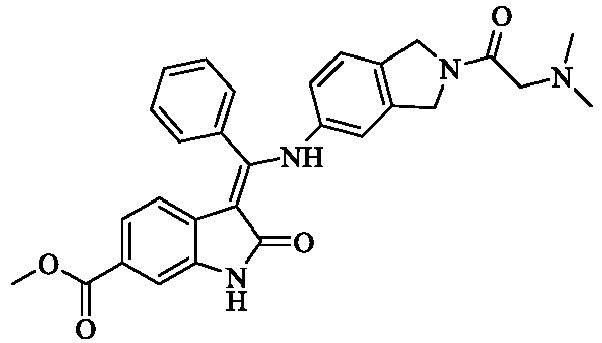
26 
27 
28 
29 
30 
31 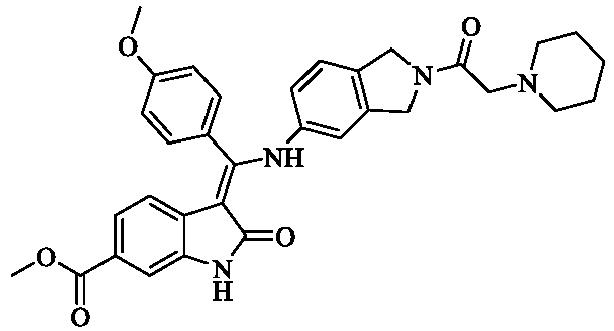
32 
33 
34 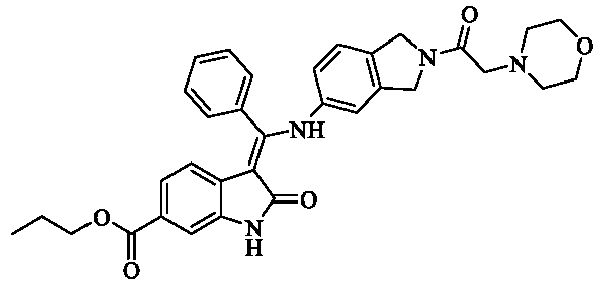
35 
36 
37 
38 
39 
40 
41 
42 
43 
44 
45 
46 
47 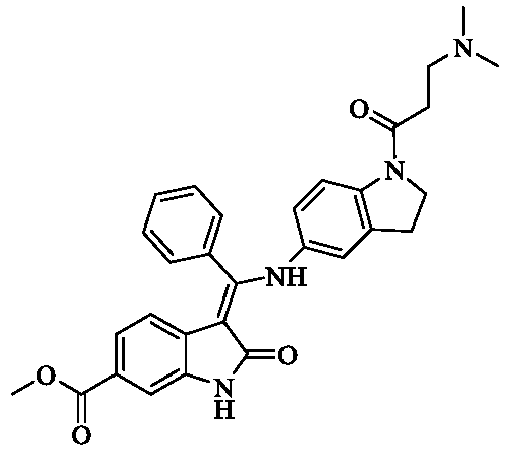
48 
49 
50 
51 
52 
53 
54 
55 
56 
57 
58 
59 
60 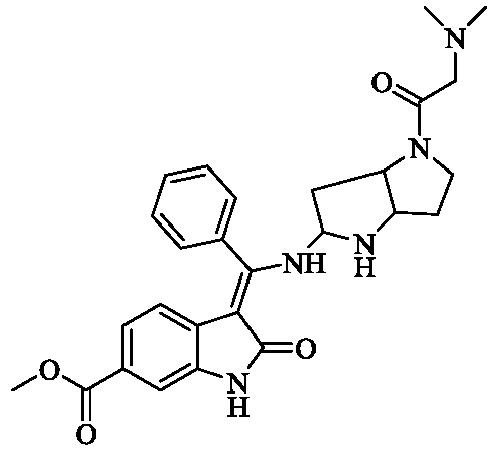
61 
62 
63 
64 
65 
66 
67 
68 
69 
70 
71 
15a 
27a 
16a 
28a 
17a 
29a 
18a 
30a 
19a 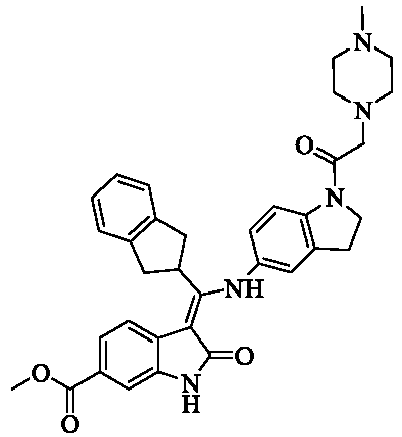
31a 
20a 
32a 
21a 
33a 
22a 
34a 
23a 
35a 
24a 
36a 
25a 
37a 
26a 
38a 
- The compounds prepared as above can be hydrolyzed into their corresponding free acids with the conventional methods. For example, the compounds can be dissolved in an organic solvent (e.g. methanol, ethanol, THF, dioxane and the like); then an aqueous solution of inorganic base (e.g. sodium hydroxide, potassium hydroxide, and potassium carbonate) is added; the reaction is stirried until the completion of reaction; the resulting mixture is concentrated, washed with water, adjusted to the acidity with hydrochloric acid, and filtered; and the filtrate is washed with water, and dried to produce the following acids:
Compound Structure Compound Structure 1b 
2b 
3b 
4b 
5b 
6b 
7b 
8b 
9b 
10b 
11b 
12b 
13b 
14b 
15b 
16b 
17b 
18b 
19b 
20b 
21b 
22b 
23b 
24b 
25b 
26b 
27b 
28b 
29b 
30b 
31b 
32b 
33b 
34b 
35b 
36b 
Claims (14)
- A compound represented by general formula (I), a pharmaceutically acceptable salt, a deuteride or a stereoisomer thereof:
 wherein, X represents O or S;R1 represents H;R2, R4 and R5 each independently represent H;R3 represents carboxyl, or C1-3alkyl-OC(O)-, 3-8-membered monocyclic cycloalkylOC(O)-, carbamoyl, or benzyl-OC(O)-, which is unsubstituted or substituted by 1-3 groups represented by Q1,Q1 represents halogen, hydroxy, amino, phenyl, 3-6-membered cycloalkyl, C1-3alkyloxy, C1-3alkylamino or di(C1-3alkyl)amino;R6 represents the following groups, which are unsubstituted or substituted by 1-3 groups represented by Q2:(1) C1-3alkyl, 3-8-membered monocyclic cycloalkyl, aryl, the carbon atom on the cycloalkyl and the aryl can be replaced with 1-3 identical or different groups selected from N, NH, N(C1-3alkyl), O, S(O)m, and C(O),(2)


 p represents 0, 1, 2 or 3,r represents 0, 1 or 2,s represents 0, 1 or 2,Q2 represents halogen, hydroxy, cyano, carboxyl, amino, nitro, trifluoromethyl, C1-3alkyl, C1-3alkyloxy, hydroxyC1-3alkyl, aminoC1-3alkyl, C1-3alkyloxyC1-3alkyl, carboxylC1-3alkyloxy, C1-3alkylamino, di(C1-3alkyl)amino, C1-3alkyloxycarbonyl, carbamoyl, C1-3alkylcarbamoyl, di(C1-3alkyl)carbamoyl, C1-3alkylcarbonylamino, N-(C1-3alkyl)C1-3alkylcarbonylamino, C1-3alkylsulfonylamino, N-(C1-3alkyl)C1-3alkylsulfonylamino or phenylC1-3alkylsulfonylamino;R7 represents H, or C1-3alkyl, 3-6-membered monocyclic cycloalkyl, or 3-8-membered monocyclic heterocyclyl, which is unsubstituted or substituted by 1-3 groups represented by Q3;Ring A represents phenyl, pyrrolyl, pyridyl, pyrimidinyl, pyrrolidinyl, piperidinyl, piperazinyl or morpholinyl;R8 represents formula (IIa)
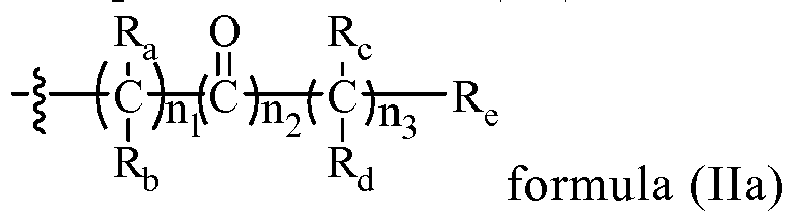 Ra, Rb, Rc and Rd each independently represent H, C1-3alkyl, C1-3alkyloxy, amino or C1-3alkylamino,Re represents H, C1-3alkyl, C1-3alkyloxy, amino, C1-3alkylamino, di(C1-3alkyl)amino, phenylamino, N-(C1-3alkyl)phenylamino, benzylamino, N-(C1-3alkyl)benzylamino, phenyl or 5-7-membered monocyclic heterocyclyl,the carbon atom on the 5-7-membered monocyclic heterocyclyl can be replaced with 1-3 same or different groups selected from S(O)m and C(O),the C1-3alkyl and the 5-7-membered monocyclic heterocyclyl can be substituted by 1-3 groups represented by Q3,Q3 represents halogen, hydroxy, cyano, carboxyl, amino, nitro, trifluoromethyl or C1-3alkyl;R9 represents H, halogen, hydroxy, cyano, carboxyl, amino, nitro, C1-3alkyl, trifluoromethyl or C1-3alkyloxy;a and b each independently represent 0, 1 or 2;n represents 0, 1 or 2, when n is 2, the substituents represented by R9 can be identical or different;n1 represents 0, 1 or 2;n2 represents 0 or 1;n3 represents 0, 1 or 2;m represents 1 or 2.
 - The compound of claim 1, a pharmaceutically acceptable salt, a deuteride or a stereoisomer thereof:wherein, X represents O;R1 represents H;R2, R4 and R5 each independently represent H;R3 represents C1-3alkylOC(O)-or carbamoyl, which is unsubstituted or substituted by 1-2 groups represented by Q1,Q1 represents halogen, hydroxy, amino, C1-3alkyloxy, C1-3alkylamino or di(C1-3alkyl)amino;R6 represents the following groups, which are unsubstituted or substituted by 1-3 groups represented by Q2:(1) 4-7membered monocyclic cycloalkyl, or phenyl, the carbon atom on the phenyl and the cycloalkyl can be replaced with 1-3 same or different groups selected from N, NH, N(C1-3alkyl), O, S(O)m, and C(O),(2)


 p represents 0, 1, 2 or 3,r represents 1,s represents 1,Q2 represents halogen, hydroxy, cyano, carboxyl, amino, nitro, trifluoromethyl, C1-3alkyl, C1-3alkyloxy, hydroxyC1-3alkyl, aminoC1-3alkyl or C1-3alkyloxyC1-3alkyl;R7 represents H or 3-5membered monocyclic cycloalkyl;Ring A represents phenyl or pyridyl;R8 represents formula (IIa)
 Ra, Rb, Rc and Rd each independently represent H, methyl or ethyl,Re represents H, C1-3alkyl, C1-3alkyloxy, amino, C1-3alkylamino, di(C1-3alkyl)amino, phenylamino, N-(C1-3alkyl)phenylamino, benzylamino, N-(C1-3alkyl)benzylamino, phenyl or 5-7-membered monocyclic heterocyclyl,the carbon atom on the 5-7-membered monocyclic heterocyclyl can be replaced with 1-3 same or different groups selected from S(O)m and C(O),the C1-3alkyl and the 5-7-membered monocyclic heterocyclyl can be substituted by 1-3 groups represented by Q3,Q3 represents halogen, hydroxy, cyano, carboxyl, amino, nitro, trifluoromethyl or methyl; R9 represents H, halogen, hydroxy, cyano, carboxyl, amino or methyl;a and b each independently represent 0, 1 or 2;n represents 0 or 1;n1 represents 0 or 1;n2 represents 1;n3 represents 0, 1 or 2;m represents 1 or 2.
 - The compound of claim 1, a pharmaceutically acceptable salt, a deuteride or a stereoisomer thereof, the compound has a structure represented by the below general formula (II):
 wherein, X represents O;R1 represents H;R2, R4 and R5 each independently represent H;R3 represents CH3OC(O)-, CH3CH2OC(O)-, (CH3)2CHOC(O);R6 represents the following groups, which are unsubstituted or substituted by 1-3 groups represented by Q2:
phenyl, tetrahydrofuryl, tetrahydropyranyl,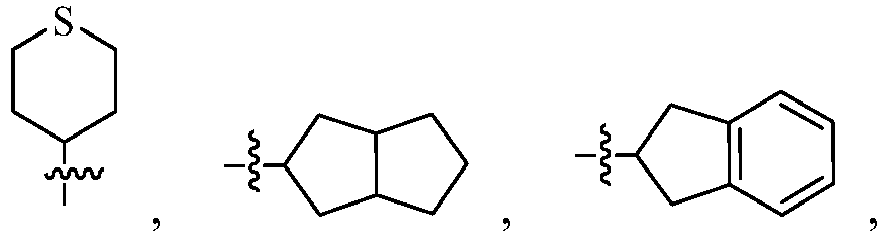
 Q2 represents halogen, hydroxy, cyano, carboxyl, amino, nitro, trifluoromethyl, methyl, methoxy or methoxymethyl;R7 represents H or cyclopropyl;R8 represents formula (IIb)
 wherein, Re represents C1-3alkyl, C1-3alkyloxy, di(C1-3alkyl)amino, di(C1-3alkyl)carbamoyl, phenylamino, benzylamino, pyrrolyl, pyrazolyl, imidazolyl, triazolyl, pyridyl, pyrimidinyl, pyrrolidinyl, pyrrolidonyl, piperidinyl, piperazinyl or morpholinyl,said pyrrolyl, pyrazolyl, imidazolyl, triazolyl, pyridyl, pyrimidinyl, pyrrolidinyl, pyrrolidonyl, piperidinyl, piperazinyl, and morpholinyl can be substituted by 1-3 groups represented by Q3,Q3 represents halogen, hydroxy, amino, trifluoromethyl or methyl;R9 represents H;a and b each independently represent 0, 1 or 2;n represents 0;n3 represents 1 or 2.
 - The compound of claim 3, a pharmaceutically acceptable salt, a deuteride or a stereoisomer thereof:wherein, X represents O;R1 represents H;R2, R4 and R5 each independently represent H;R3 represents CH3OC(O)-, or CH3CH2OC(O)-;R6 represents the following groups, which are unsubstittued or substituted by 1-3 groups selected from halogen, trifluoromethyl and methoxy: phenyl, tetrahydrofuryl, tetrahydropyranyl or
 R7 represents H or cyclopropyl;R8 represents formula (IIb)
 wherein Re represents dimethylamino, dimethylcarbamoyl, pyrrolyl, pyrazolyl, imidazolyl, triazolyl, pyridyl, pyrimidinyl, pyrrolidinyl, pyrrolidonyl, piperidinyl, piperazinyl or morpholinyl,said pyrrolyl, pyrazolyl, imidazolyl, triazolyl, pyridyl, pyrimidinyl, pyrrolidinyl, pyrrolidonyl, piperidinyl, piperazinyl, and morpholinyl can be substituted by 1-2 groups selected from Q3,Q3 represents hydroxy, trifluoromethyl or methyl;R9 represents H;a represents 0;b represents 2;n represents 0;n3 represents 1 or 2.
 - The compound of claim 4, a pharmaceutically acceptable salt, a deuteride or a stereoisomer thereof:wherein, X represents O;R1 represents H;R2, R4 and R5 each independently represent H;R3 represents CH3OC(O)-, or CH3CH2OC(O)-;R6 represents phenyl, 4-fluorophenyl, 4-trifluoromethylphenyl, or 4-methoxyphenyl;R7 represents H;R8 represents formula (IIb)
 wherein Re represents dimethylamino, dimethylcarbamoyl, pyrazolyl, triazolyl, pyrrolidinyl, pyrrolidonyl, piperidinyl, N-methylpiperidinyl, 4-hydroxypiperidinyl, N-methylpiperazinyl, morpholinyl, or 3,5-dimethylmorpholinyl;R9 represents H;a represents 0;b represents 2;n represents 0;n3 represents 1 or 2.
 - The compound, or a pharmaceutically acceptable salt, a deuteride or a stereoisomer thereof according to claim 1, wherein the compound is selected from the group consisting of:

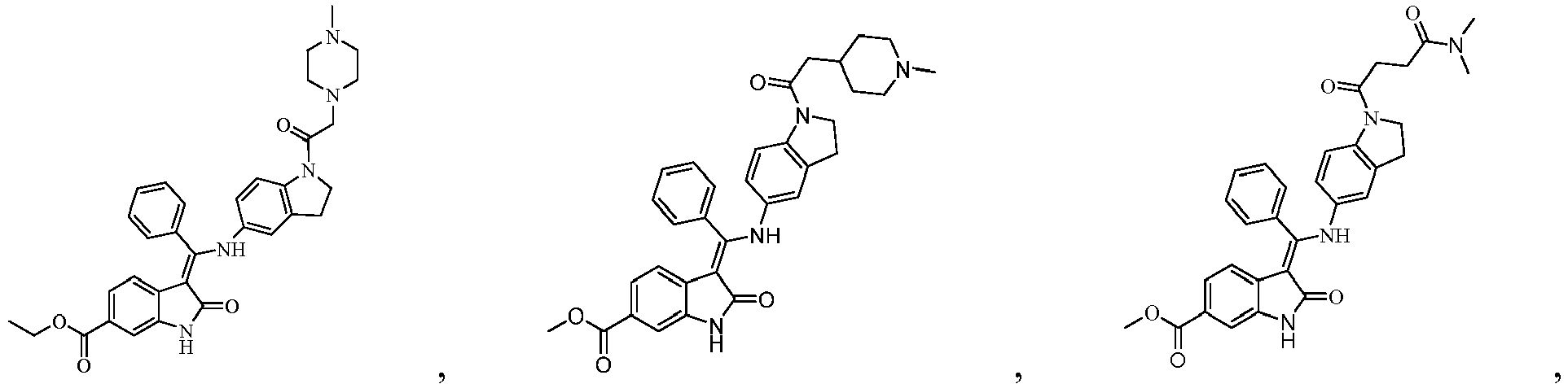


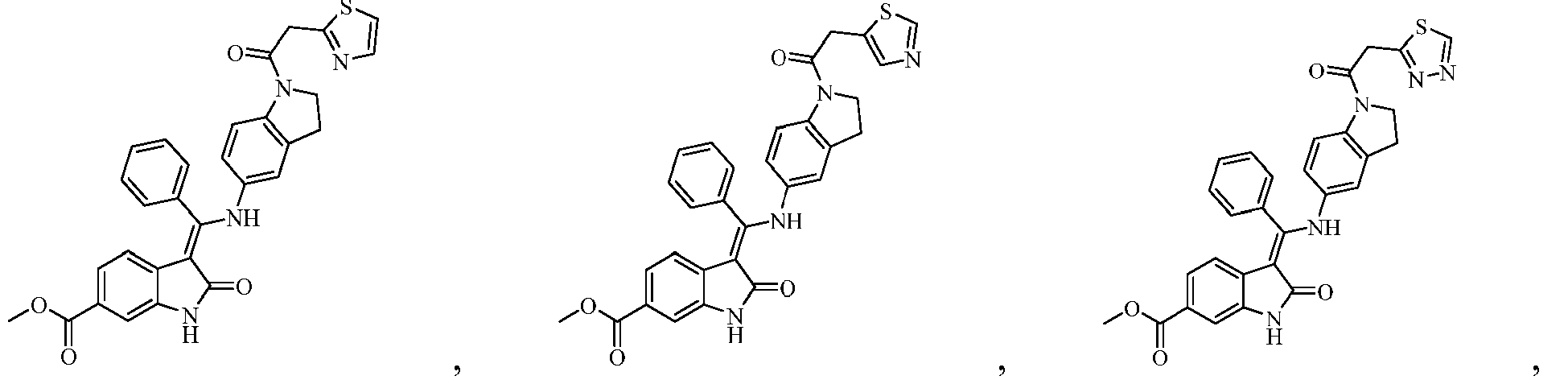

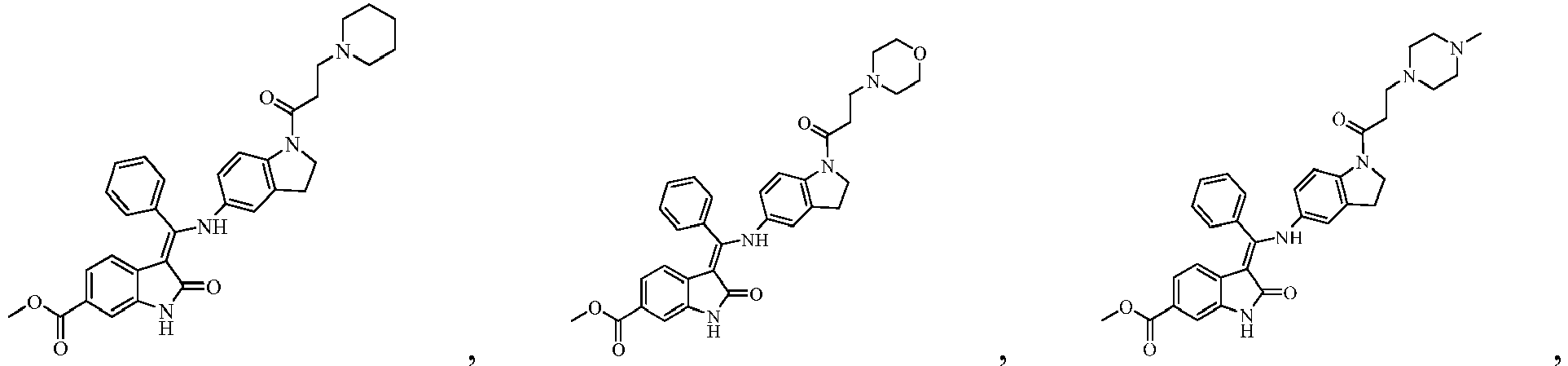


- The compound, or a pharmaceutically acceptable salt, a deuteride or a stereoisomer thereof according to claim 1,, wherein the compound is selected from the group consisting of:


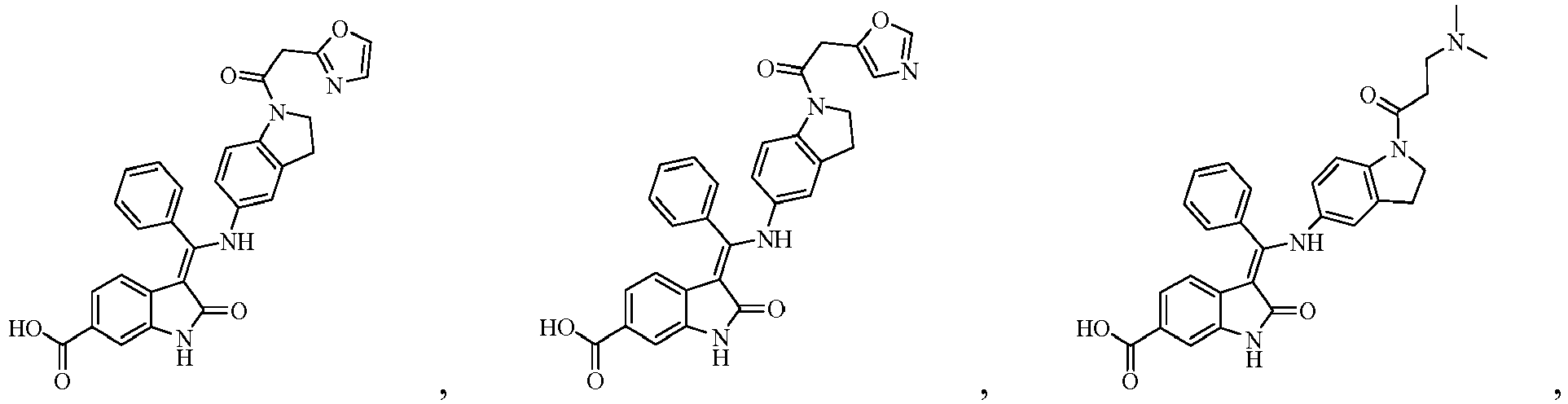


- A method for preparing a compound according to any of claims 1-7, or a pharmaceutically acceptable salt, a deuteride or a stereoisomer thereof, wherein said method comprises reacting a compound represented by formula (III) with a compound represented by formula (IV) to produce the compound represented by formula (I),

- The compound according to any of claims 1-7, or a pharmaceutically acceptable salt, a deuteride or a stereoisomer thereof, wherein said salt is selected from the group consisting of hydrochloride, sulfate, esilate, mesilate, maleate, tosilate, benzenesulfonate, oxalate.
- A pharmaceutical composition, wherein said pharmaceutical composition contains the compound according to any of claims 1-7, or a pharmaceutically acceptable salt, a deuteride or a stereoisomer thereof, and optionally one or more pharmaceutically acceptable carriers.
- The pharmaceutical composition of claim 10, wherein the pharmaceutical composition further contains a second therapeutical agent selected from an antineoplastic agent and an immunosuppressive agent, the second therapeutical agent is selected from antimetabolites, including capecitabine, gemcitabine; growth factor inhibitors, including gefitinib, lapatinib, pazopanib, imatinib; antibodys, including herceptin, bevacizumab; mitotic inhibitors, including paclitaxel, vinorelbine, docetaxel, doxorubicin; antineoplastic hormones, including letrozole, tamoxifen, fulvestrant; alkylating agents, including cyclophosphamide, carmustine; metallic platinums, including carboplatin, cisplatin, oxaliplatin; topoismerase inhibitors, including topotecan; immunosuppressive agentss, including everolimus, anticholinergic agents, β-choline mimetics, steroids, PDE-IV inhibitors, p38 MAP kinase inhibitors, NK1 antagonists, LTD4 antagonists, EGFR inhibitors and endothelin antagonists.
- A pharmaceutical formulation, wherein said pharmaceutical formulation comprises the compound according to any of claims 1-7, or a pharmaceutically acceptable salt, a deuteride or a stereoisomer thereof, and one or more pharmaceutically acceptable carriers, wherein said pharmaceutical formulation is in any pharmaceutically acceptable dosage.
- Compound according to any of claims 1-7, or a pharmaceutically acceptable salt, a deuteride or a stereoisomer thereof for use in preventing or treating the fibrous degeneration disease, treating the excessive proliferation disease, inhibiting the angiogenesis and/or reducing the vascular permeability, wherein the fibrous degeneration disease comprises: fibrous degeneration and remodeling of pulmonary tissue in chronic obstructive pulmonary disease; fibrous degeneration and remodeling of pulmonary tissue in chronic bronchitis; fibrous degeneration and remodeling of pulmonary tissue in emphysema; pulmonary fibrous degeneration as well as pulmonary disease with fibrosis components; fibrous degeneration and remodeling in asthma; fibrous degeneration in rheumatoid arthritis, virus-induced hepatic cirrhosis; radiation-induced fibrous degeneration; postangioplasty restenosis; chronic glomerulonephritis; renal fibrous degeneration in a cyclosporin-administrated patient and hypertension-induced renal fibrous degeneration; skin disease having fibrosis components and over cicatrization; wherein said excessive proliferation disease comprises cancer and non-carcinomatous disease, the cancer is selected from: cerebroma; pulmonary carcinoma; nonsmall cell pulmonary carcinoma; squamous cell carcinoma; bladder carcinoma; gastric carcinoma; ovarian carcinoma; peritoneal carcinoma; pancreatic carcinoma; breast carcinoma; head and neck carcinoma; uterocervical carcinoma; endometrial carcinoma; colorectal carcinoma; hepatoma; renal carcinoma; adenocarcinoma of esophagus; esophageal squamous cell carcinoma; solid tumor; non-Hodgkin lymphoma; central nervous system neuroplasm, selected from glioma, glioblastoma multiforme, glioma sarcomatosum; prostatic carcinoma or thyroid carcinoma; non-carcinomatous disease, selected from benign skin or prostate hyperplasia.
- Compound for use according to claim 13, wherein pulmonary fibrous degeneration and the pulmonary disease having fibrous degeneration components comprise idiopathic pulmonary fibrosis degeneration; giant cell interstitial pneumonia; sarcoidosis; cystic fibrous degeneration; respiratory distress syndrome; drug-induced pulmonary fibrous degeneration; granulomatosis; silicosis; asbestosis; systemic sclerosis; virus-induced hepatic cirrhosis, selected from C-hepatitis induced hepatic cirrhosis; skin disease having fibrous degeneration components, selected from scleroderma and systemic lupus erythematosus.
Applications Claiming Priority (2)
| Application Number | Priority Date | Filing Date | Title |
|---|---|---|---|
| CN201210519315 | 2012-12-06 | ||
| PCT/CN2013/001512 WO2014086102A1 (en) | 2012-12-06 | 2013-12-06 | Indole full ketone derivative used as tyrosine-kinase inhibitor |
Publications (3)
| Publication Number | Publication Date |
|---|---|
| EP2930167A1 EP2930167A1 (en) | 2015-10-14 |
| EP2930167A4 EP2930167A4 (en) | 2016-08-03 |
| EP2930167B1 true EP2930167B1 (en) | 2018-11-21 |
Family
ID=50882805
Family Applications (1)
| Application Number | Title | Priority Date | Filing Date |
|---|---|---|---|
| EP13860630.6A Active EP2930167B1 (en) | 2012-12-06 | 2013-12-06 | An indolinone derivative as tyrosine kinase inhibitor |
Country Status (7)
| Country | Link |
|---|---|
| US (1) | US9642851B2 (en) |
| EP (1) | EP2930167B1 (en) |
| JP (1) | JP6207625B2 (en) |
| CN (1) | CN104936944B (en) |
| DK (1) | DK2930167T3 (en) |
| ES (1) | ES2711453T3 (en) |
| WO (1) | WO2014086102A1 (en) |
Families Citing this family (10)
| Publication number | Priority date | Publication date | Assignee | Title |
|---|---|---|---|---|
| CN108367165B (en) * | 2015-10-07 | 2022-03-04 | 艾葳生物科技有限公司 | Compositions and methods for treating skin fibrotic disorders |
| AU2017324718B2 (en) | 2016-09-09 | 2022-09-29 | Irisys, Inc. | Lipsomal anticancer compositions |
| US20190388407A1 (en) | 2017-02-12 | 2019-12-26 | Aiviva Biopharma, Inc. | Multikinase inhibitors of vegf and tfg beta and uses thereof |
| CA3109703C (en) | 2018-08-15 | 2023-10-17 | Aiviva Biopharma, Inc. | Multi-kinase inhibitors of vegf and tgf beta and uses thereof |
| EP3966207B1 (en) | 2019-05-10 | 2023-11-01 | Deciphera Pharmaceuticals, LLC | Phenylaminopyrimidine amide autophagy inhibitors and methods of use thereof |
| EP3966206B1 (en) | 2019-05-10 | 2023-08-09 | Deciphera Pharmaceuticals, LLC | Heteroarylaminopyrimidine amide autophagy inhibitors and methods of use thereof |
| JP7626722B2 (en) | 2019-06-17 | 2025-02-04 | デシフェラ・ファーマシューティカルズ,エルエルシー | AMINOPYRIMIDINE AMIDE AUTOPHAGY INHIBITORS AND METHODS OF USE THEREOF - Patent application |
| EP4581014A1 (en) * | 2022-09-02 | 2025-07-09 | Deciphera Pharmaceuticals, LLC | Ulk inhibitors and methods of use thereof |
| CN117624014A (en) * | 2022-11-02 | 2024-03-01 | 徐诺药业(南京)有限公司 | 3-(Indolylamino)methylene indoline derivatives and their preparation methods and applications |
| CN117624179A (en) * | 2022-11-02 | 2024-03-01 | 徐诺药业(南京)有限公司 | 3-(amino)methylene indoline derivatives and their preparation methods and applications |
Family Cites Families (9)
| Publication number | Priority date | Publication date | Assignee | Title |
|---|---|---|---|---|
| US6043254A (en) * | 1998-04-03 | 2000-03-28 | Boehringer Ingelheim Pharma Kg | Indolinones having kinase-inhibiting activity |
| JP3952369B2 (en) | 1999-08-27 | 2007-08-01 | ベーリンガー インゲルハイム ファルマ ゲゼルシャフト ミット ベシュレンクテル ハフツング ウント コンパニー コマンディトゲゼルシャフト | Novel substituted indolinones, their production and their use as pharmaceuticals |
| UA75054C2 (en) | 1999-10-13 | 2006-03-15 | Бьорінгер Інгельхайм Фарма Гмбх & Ко. Кг | Substituted in position 6 indolinones, producing and use thereof as medicament |
| US20030225152A1 (en) | 2001-09-27 | 2003-12-04 | Andrews Steven W. | 3-(Arylamino)methylene-1, 3-dihydro-2h-indol-2-ones as kinase inhibitors |
| PE20040701A1 (en) | 2002-07-23 | 2004-11-30 | Boehringer Ingelheim Pharma | INDOLINONE DERIVATIVES SUBSTITUTED IN POSITION 6 AND THEIR PREPARATION AS MEDICINES |
| US7148249B2 (en) * | 2002-09-12 | 2006-12-12 | Boehringer Ingelheim Pharma Gmbh & Co. Kg | Indolinones substituted by heterocycles, the preparation thereof and their use as medicaments |
| US20120190009A1 (en) | 2010-12-14 | 2012-07-26 | Fatah Kashanchi | Viral Modulators and Processes Thereof |
| CN103102352B (en) * | 2011-11-15 | 2015-08-12 | 山东亨利医药科技有限责任公司 | Tyrosine kinase inhibitor indolinone derivative |
| CN103130775B (en) | 2011-11-22 | 2015-09-30 | 山东亨利医药科技有限责任公司 | As the dihydroindole ketone derivate of tyrosine kinase inhibitor |
-
2013
- 2013-12-06 US US14/650,270 patent/US9642851B2/en active Active
- 2013-12-06 CN CN201380063936.2A patent/CN104936944B/en active Active
- 2013-12-06 EP EP13860630.6A patent/EP2930167B1/en active Active
- 2013-12-06 DK DK13860630.6T patent/DK2930167T3/en active
- 2013-12-06 JP JP2015545634A patent/JP6207625B2/en active Active
- 2013-12-06 WO PCT/CN2013/001512 patent/WO2014086102A1/en not_active Ceased
- 2013-12-06 ES ES13860630T patent/ES2711453T3/en active Active
Non-Patent Citations (1)
| Title |
|---|
| None * |
Also Published As
| Publication number | Publication date |
|---|---|
| US9642851B2 (en) | 2017-05-09 |
| EP2930167A4 (en) | 2016-08-03 |
| WO2014086102A1 (en) | 2014-06-12 |
| DK2930167T3 (en) | 2019-02-25 |
| CN104936944A (en) | 2015-09-23 |
| EP2930167A1 (en) | 2015-10-14 |
| JP6207625B2 (en) | 2017-10-04 |
| US20150306095A1 (en) | 2015-10-29 |
| ES2711453T3 (en) | 2019-05-03 |
| CN104936944B (en) | 2017-09-12 |
| JP2016505549A (en) | 2016-02-25 |
Similar Documents
| Publication | Publication Date | Title |
|---|---|---|
| US9642851B2 (en) | Indolinone derivative as tyrosine kinase inhibitor | |
| EP2271341B1 (en) | Specific inhibitors for vascular endothelial growth factor receptors | |
| AU2006233535B2 (en) | (LH-indol-7-YL)-( (pyrimidin-2 -YL-amino) methanone derivatives and related compounds as IGF-RL inhibitors for treating cancer | |
| TW202100515A (en) | Protein tyrosine phosphatase inhibitors and methods of use thereof | |
| IL298300B1 (en) | 4-oxo-3,4-dihydroquinazolinon compounds for the treatment of braf-associated diseases and disorders | |
| KR20130095806A (en) | Substituted quinoline compounds and methods of use | |
| EP3749646B1 (en) | Heteroaryl compounds as kinase inhibitor | |
| AU2017220738A1 (en) | Carboxamide derivatives useful as RSK inhibitors | |
| KR102282794B1 (en) | Uses of Indolinone Compounds | |
| EA015779B1 (en) | Compounds for inhibiting mitotic progression | |
| JP2018517672A (en) | Isoxazolyl-substituted imidazopyridines | |
| BR112015001528B1 (en) | compound, pharmaceutical composition, and, use of a compound or pharmaceutical composition | |
| CN103102352B (en) | Tyrosine kinase inhibitor indolinone derivative | |
| JP2022547294A (en) | 3,5-disubstituted pyrazole compounds as kinase inhibitors and their applications | |
| US12115152B2 (en) | Pan-RAF kinase inhibitor and use thereof | |
| CN103848814B (en) | The full ketone derivatives of substituted indole as tyrosine kinase inhibitor | |
| KR20060071812A (en) | Novel 3- (2-amino-6-pyridinyl) -4-hydroxyphenyl amine derivatives | |
| KR102778078B1 (en) | Pyrazole derivatives and uses thereof | |
| WO2022197913A1 (en) | Bicyclic derivatives which can be used to treat cancer | |
| EP3878841B1 (en) | Indazole kinase inhibitor and use thereof | |
| JP7738335B2 (en) | Novel uses of multikinase inhibitors | |
| CA3186343C (en) | 4-oxo-3,4-dihydroquinazolinon compounds for the treatment of braf-associated diseases and disorders | |
| RU2792626C1 (en) | New pan-raf kinase inhibitor and applications thereof | |
| OA21023A (en) | 4-oxo-3,4-dihydroquinazolinon compounds for the treatment of BRAF-associated diseases and disorders. | |
| WO2024235106A1 (en) | Fused pyrrole ring or fused pyridine ring compound |
Legal Events
| Date | Code | Title | Description |
|---|---|---|---|
| PUAI | Public reference made under article 153(3) epc to a published international application that has entered the european phase |
Free format text: ORIGINAL CODE: 0009012 |
|
| 17P | Request for examination filed |
Effective date: 20150706 |
|
| AK | Designated contracting states |
Kind code of ref document: A1 Designated state(s): AL AT BE BG CH CY CZ DE DK EE ES FI FR GB GR HR HU IE IS IT LI LT LU LV MC MK MT NL NO PL PT RO RS SE SI SK SM TR |
|
| AX | Request for extension of the european patent |
Extension state: BA ME |
|
| DAX | Request for extension of the european patent (deleted) | ||
| RA4 | Supplementary search report drawn up and despatched (corrected) |
Effective date: 20160706 |
|
| RIC1 | Information provided on ipc code assigned before grant |
Ipc: A61K 31/4995 20060101ALI20160630BHEP Ipc: C07D 401/14 20060101ALI20160630BHEP Ipc: C07D 491/107 20060101ALI20160630BHEP Ipc: C07D 405/14 20060101ALI20160630BHEP Ipc: C07D 403/14 20060101ALI20160630BHEP Ipc: C07D 405/12 20060101ALI20160630BHEP Ipc: A61K 31/438 20060101ALI20160630BHEP Ipc: C07D 471/14 20060101ALI20160630BHEP Ipc: A61K 31/435 20060101ALI20160630BHEP Ipc: C07D 471/10 20060101ALI20160630BHEP Ipc: C07D 487/08 20060101ALI20160630BHEP Ipc: A61K 31/404 20060101ALI20160630BHEP Ipc: C07D 487/10 20060101ALI20160630BHEP Ipc: A61K 31/4439 20060101ALI20160630BHEP Ipc: C07D 209/34 20060101AFI20160630BHEP Ipc: C07D 401/12 20060101ALI20160630BHEP Ipc: A61K 31/439 20060101ALI20160630BHEP Ipc: A61K 31/506 20060101ALI20160630BHEP Ipc: C07D 417/14 20060101ALI20160630BHEP Ipc: C07D 403/12 20060101ALI20160630BHEP |
|
| RAP1 | Party data changed (applicant data changed or rights of an application transferred) |
Owner name: KBP BIOSCIENCES CO., LTD. |
|
| 17Q | First examination report despatched |
Effective date: 20171120 |
|
| REG | Reference to a national code |
Ref country code: DE Ref legal event code: R079 Ref document number: 602013047273 Country of ref document: DE Free format text: PREVIOUS MAIN CLASS: C07D0209340000 Ipc: A61K0031404500 |
|
| GRAP | Despatch of communication of intention to grant a patent |
Free format text: ORIGINAL CODE: EPIDOSNIGR1 |
|
| RIC1 | Information provided on ipc code assigned before grant |
Ipc: C07D 471/04 20060101ALI20180425BHEP Ipc: A61K 31/5377 20060101ALI20180425BHEP Ipc: A61K 31/454 20060101ALI20180425BHEP Ipc: C07D 403/14 20060101ALI20180425BHEP Ipc: C07D 498/04 20060101ALI20180425BHEP Ipc: A61K 31/496 20060101ALI20180425BHEP Ipc: C07D 403/12 20060101ALI20180425BHEP Ipc: A61K 31/4045 20060101AFI20180425BHEP Ipc: A61K 31/4196 20060101ALI20180425BHEP Ipc: A61K 31/5383 20060101ALI20180425BHEP Ipc: C07D 405/04 20060101ALI20180425BHEP Ipc: C07D 409/14 20060101ALI20180425BHEP Ipc: C07D 487/04 20060101ALI20180425BHEP Ipc: A61K 31/433 20060101ALI20180425BHEP Ipc: C07D 401/14 20060101ALI20180425BHEP Ipc: C07D 413/14 20060101ALI20180425BHEP Ipc: C07D 405/12 20060101ALI20180425BHEP Ipc: C07D 209/30 20060101ALI20180425BHEP Ipc: A61K 45/06 20060101ALI20180425BHEP Ipc: A61K 31/4155 20060101ALI20180425BHEP |
|
| INTG | Intention to grant announced |
Effective date: 20180530 |
|
| GRAS | Grant fee paid |
Free format text: ORIGINAL CODE: EPIDOSNIGR3 |
|
| GRAA | (expected) grant |
Free format text: ORIGINAL CODE: 0009210 |
|
| AK | Designated contracting states |
Kind code of ref document: B1 Designated state(s): AL AT BE BG CH CY CZ DE DK EE ES FI FR GB GR HR HU IE IS IT LI LT LU LV MC MK MT NL NO PL PT RO RS SE SI SK SM TR |
|
| REG | Reference to a national code |
Ref country code: CH Ref legal event code: EP |
|
| REG | Reference to a national code |
Ref country code: IE Ref legal event code: FG4D |
|
| REG | Reference to a national code |
Ref country code: DE Ref legal event code: R096 Ref document number: 602013047273 Country of ref document: DE |
|
| REG | Reference to a national code |
Ref country code: AT Ref legal event code: REF Ref document number: 1066739 Country of ref document: AT Kind code of ref document: T Effective date: 20181215 |
|
| REG | Reference to a national code |
Ref country code: CH Ref legal event code: NV Representative=s name: VALIPAT S.A. GEVERS SA, CH |
|
| REG | Reference to a national code |
Ref country code: DK Ref legal event code: T3 Effective date: 20190218 |
|
| REG | Reference to a national code |
Ref country code: NL Ref legal event code: MP Effective date: 20181121 |
|
| REG | Reference to a national code |
Ref country code: CH Ref legal event code: PCAR Free format text: NEW ADDRESS: RUE DES NOYERS 11, 2000 NEUCHATEL (CH) |
|
| REG | Reference to a national code |
Ref country code: AT Ref legal event code: MK05 Ref document number: 1066739 Country of ref document: AT Kind code of ref document: T Effective date: 20181121 |
|
| PG25 | Lapsed in a contracting state [announced via postgrant information from national office to epo] |
Ref country code: IS Free format text: LAPSE BECAUSE OF FAILURE TO SUBMIT A TRANSLATION OF THE DESCRIPTION OR TO PAY THE FEE WITHIN THE PRESCRIBED TIME-LIMIT Effective date: 20190321 Ref country code: FI Free format text: LAPSE BECAUSE OF FAILURE TO SUBMIT A TRANSLATION OF THE DESCRIPTION OR TO PAY THE FEE WITHIN THE PRESCRIBED TIME-LIMIT Effective date: 20181121 Ref country code: NO Free format text: LAPSE BECAUSE OF FAILURE TO SUBMIT A TRANSLATION OF THE DESCRIPTION OR TO PAY THE FEE WITHIN THE PRESCRIBED TIME-LIMIT Effective date: 20190221 Ref country code: LT Free format text: LAPSE BECAUSE OF FAILURE TO SUBMIT A TRANSLATION OF THE DESCRIPTION OR TO PAY THE FEE WITHIN THE PRESCRIBED TIME-LIMIT Effective date: 20181121 Ref country code: HR Free format text: LAPSE BECAUSE OF FAILURE TO SUBMIT A TRANSLATION OF THE DESCRIPTION OR TO PAY THE FEE WITHIN THE PRESCRIBED TIME-LIMIT Effective date: 20181121 Ref country code: BG Free format text: LAPSE BECAUSE OF FAILURE TO SUBMIT A TRANSLATION OF THE DESCRIPTION OR TO PAY THE FEE WITHIN THE PRESCRIBED TIME-LIMIT Effective date: 20190221 Ref country code: AT Free format text: LAPSE BECAUSE OF FAILURE TO SUBMIT A TRANSLATION OF THE DESCRIPTION OR TO PAY THE FEE WITHIN THE PRESCRIBED TIME-LIMIT Effective date: 20181121 Ref country code: LV Free format text: LAPSE BECAUSE OF FAILURE TO SUBMIT A TRANSLATION OF THE DESCRIPTION OR TO PAY THE FEE WITHIN THE PRESCRIBED TIME-LIMIT Effective date: 20181121 |
|
| REG | Reference to a national code |
Ref country code: ES Ref legal event code: FG2A Ref document number: 2711453 Country of ref document: ES Kind code of ref document: T3 Effective date: 20190503 |
|
| PG25 | Lapsed in a contracting state [announced via postgrant information from national office to epo] |
Ref country code: PT Free format text: LAPSE BECAUSE OF FAILURE TO SUBMIT A TRANSLATION OF THE DESCRIPTION OR TO PAY THE FEE WITHIN THE PRESCRIBED TIME-LIMIT Effective date: 20190321 Ref country code: AL Free format text: LAPSE BECAUSE OF FAILURE TO SUBMIT A TRANSLATION OF THE DESCRIPTION OR TO PAY THE FEE WITHIN THE PRESCRIBED TIME-LIMIT Effective date: 20181121 Ref country code: RS Free format text: LAPSE BECAUSE OF FAILURE TO SUBMIT A TRANSLATION OF THE DESCRIPTION OR TO PAY THE FEE WITHIN THE PRESCRIBED TIME-LIMIT Effective date: 20181121 Ref country code: NL Free format text: LAPSE BECAUSE OF FAILURE TO SUBMIT A TRANSLATION OF THE DESCRIPTION OR TO PAY THE FEE WITHIN THE PRESCRIBED TIME-LIMIT Effective date: 20181121 Ref country code: SE Free format text: LAPSE BECAUSE OF FAILURE TO SUBMIT A TRANSLATION OF THE DESCRIPTION OR TO PAY THE FEE WITHIN THE PRESCRIBED TIME-LIMIT Effective date: 20181121 Ref country code: GR Free format text: LAPSE BECAUSE OF FAILURE TO SUBMIT A TRANSLATION OF THE DESCRIPTION OR TO PAY THE FEE WITHIN THE PRESCRIBED TIME-LIMIT Effective date: 20190222 |
|
| PG25 | Lapsed in a contracting state [announced via postgrant information from national office to epo] |
Ref country code: PL Free format text: LAPSE BECAUSE OF FAILURE TO SUBMIT A TRANSLATION OF THE DESCRIPTION OR TO PAY THE FEE WITHIN THE PRESCRIBED TIME-LIMIT Effective date: 20181121 Ref country code: CZ Free format text: LAPSE BECAUSE OF FAILURE TO SUBMIT A TRANSLATION OF THE DESCRIPTION OR TO PAY THE FEE WITHIN THE PRESCRIBED TIME-LIMIT Effective date: 20181121 |
|
| REG | Reference to a national code |
Ref country code: DE Ref legal event code: R097 Ref document number: 602013047273 Country of ref document: DE |
|
| PG25 | Lapsed in a contracting state [announced via postgrant information from national office to epo] |
Ref country code: MC Free format text: LAPSE BECAUSE OF FAILURE TO SUBMIT A TRANSLATION OF THE DESCRIPTION OR TO PAY THE FEE WITHIN THE PRESCRIBED TIME-LIMIT Effective date: 20181121 Ref country code: LU Free format text: LAPSE BECAUSE OF NON-PAYMENT OF DUE FEES Effective date: 20181206 Ref country code: RO Free format text: LAPSE BECAUSE OF FAILURE TO SUBMIT A TRANSLATION OF THE DESCRIPTION OR TO PAY THE FEE WITHIN THE PRESCRIBED TIME-LIMIT Effective date: 20181121 Ref country code: SK Free format text: LAPSE BECAUSE OF FAILURE TO SUBMIT A TRANSLATION OF THE DESCRIPTION OR TO PAY THE FEE WITHIN THE PRESCRIBED TIME-LIMIT Effective date: 20181121 Ref country code: SM Free format text: LAPSE BECAUSE OF FAILURE TO SUBMIT A TRANSLATION OF THE DESCRIPTION OR TO PAY THE FEE WITHIN THE PRESCRIBED TIME-LIMIT Effective date: 20181121 Ref country code: EE Free format text: LAPSE BECAUSE OF FAILURE TO SUBMIT A TRANSLATION OF THE DESCRIPTION OR TO PAY THE FEE WITHIN THE PRESCRIBED TIME-LIMIT Effective date: 20181121 |
|
| PLBE | No opposition filed within time limit |
Free format text: ORIGINAL CODE: 0009261 |
|
| STAA | Information on the status of an ep patent application or granted ep patent |
Free format text: STATUS: NO OPPOSITION FILED WITHIN TIME LIMIT |
|
| REG | Reference to a national code |
Ref country code: BE Ref legal event code: MM Effective date: 20181231 |
|
| 26N | No opposition filed |
Effective date: 20190822 |
|
| PG25 | Lapsed in a contracting state [announced via postgrant information from national office to epo] |
Ref country code: SI Free format text: LAPSE BECAUSE OF FAILURE TO SUBMIT A TRANSLATION OF THE DESCRIPTION OR TO PAY THE FEE WITHIN THE PRESCRIBED TIME-LIMIT Effective date: 20181121 |
|
| PG25 | Lapsed in a contracting state [announced via postgrant information from national office to epo] |
Ref country code: BE Free format text: LAPSE BECAUSE OF NON-PAYMENT OF DUE FEES Effective date: 20181231 |
|
| PG25 | Lapsed in a contracting state [announced via postgrant information from national office to epo] |
Ref country code: MT Free format text: LAPSE BECAUSE OF NON-PAYMENT OF DUE FEES Effective date: 20181206 |
|
| PG25 | Lapsed in a contracting state [announced via postgrant information from national office to epo] |
Ref country code: TR Free format text: LAPSE BECAUSE OF FAILURE TO SUBMIT A TRANSLATION OF THE DESCRIPTION OR TO PAY THE FEE WITHIN THE PRESCRIBED TIME-LIMIT Effective date: 20181121 |
|
| PG25 | Lapsed in a contracting state [announced via postgrant information from national office to epo] |
Ref country code: CY Free format text: LAPSE BECAUSE OF FAILURE TO SUBMIT A TRANSLATION OF THE DESCRIPTION OR TO PAY THE FEE WITHIN THE PRESCRIBED TIME-LIMIT Effective date: 20181121 Ref country code: HU Free format text: LAPSE BECAUSE OF FAILURE TO SUBMIT A TRANSLATION OF THE DESCRIPTION OR TO PAY THE FEE WITHIN THE PRESCRIBED TIME-LIMIT; INVALID AB INITIO Effective date: 20131206 Ref country code: MK Free format text: LAPSE BECAUSE OF NON-PAYMENT OF DUE FEES Effective date: 20181121 |
|
| P01 | Opt-out of the competence of the unified patent court (upc) registered |
Effective date: 20230526 |
|
| PGFP | Annual fee paid to national office [announced via postgrant information from national office to epo] |
Ref country code: FR Payment date: 20250930 Year of fee payment: 13 |
|
| REG | Reference to a national code |
Ref country code: CH Ref legal event code: U11 Free format text: ST27 STATUS EVENT CODE: U-0-0-U10-U11 (AS PROVIDED BY THE NATIONAL OFFICE) Effective date: 20260101 |
|
| PGFP | Annual fee paid to national office [announced via postgrant information from national office to epo] |
Ref country code: DE Payment date: 20250930 Year of fee payment: 13 |
|
| PGFP | Annual fee paid to national office [announced via postgrant information from national office to epo] |
Ref country code: GB Payment date: 20251001 Year of fee payment: 13 |
|
| PGFP | Annual fee paid to national office [announced via postgrant information from national office to epo] |
Ref country code: DK Payment date: 20251212 Year of fee payment: 13 Ref country code: IT Payment date: 20251121 Year of fee payment: 13 |
|
| PGFP | Annual fee paid to national office [announced via postgrant information from national office to epo] |
Ref country code: IE Payment date: 20251001 Year of fee payment: 13 |
|
| PGFP | Annual fee paid to national office [announced via postgrant information from national office to epo] |
Ref country code: ES Payment date: 20260119 Year of fee payment: 13 |
|
| PGFP | Annual fee paid to national office [announced via postgrant information from national office to epo] |
Ref country code: CH Payment date: 20260101 Year of fee payment: 13 |