EP2927306B2 - Hitzestabile, selbstschmierende beschichtungen - Google Patents
Hitzestabile, selbstschmierende beschichtungen Download PDFInfo
- Publication number
- EP2927306B2 EP2927306B2 EP15161328.8A EP15161328A EP2927306B2 EP 2927306 B2 EP2927306 B2 EP 2927306B2 EP 15161328 A EP15161328 A EP 15161328A EP 2927306 B2 EP2927306 B2 EP 2927306B2
- Authority
- EP
- European Patent Office
- Prior art keywords
- coating
- article
- magnéli
- friction
- coefficient
- Prior art date
- Legal status (The legal status is an assumption and is not a legal conclusion. Google has not performed a legal analysis and makes no representation as to the accuracy of the status listed.)
- Active
Links
Images


Classifications
-
- C—CHEMISTRY; METALLURGY
- C10—PETROLEUM, GAS OR COKE INDUSTRIES; TECHNICAL GASES CONTAINING CARBON MONOXIDE; FUELS; LUBRICANTS; PEAT
- C10M—LUBRICATING COMPOSITIONS; USE OF CHEMICAL SUBSTANCES EITHER ALONE OR AS LUBRICATING INGREDIENTS IN A LUBRICATING COMPOSITION
- C10M103/00—Lubricating compositions characterised by the base-material being an inorganic material
- C10M103/06—Metal compounds
-
- C—CHEMISTRY; METALLURGY
- C10—PETROLEUM, GAS OR COKE INDUSTRIES; TECHNICAL GASES CONTAINING CARBON MONOXIDE; FUELS; LUBRICANTS; PEAT
- C10M—LUBRICATING COMPOSITIONS; USE OF CHEMICAL SUBSTANCES EITHER ALONE OR AS LUBRICATING INGREDIENTS IN A LUBRICATING COMPOSITION
- C10M125/00—Lubricating compositions characterised by the additive being an inorganic material
- C10M125/10—Metal oxides, hydroxides, carbonates or bicarbonates
-
- C—CHEMISTRY; METALLURGY
- C23—COATING METALLIC MATERIAL; COATING MATERIAL WITH METALLIC MATERIAL; CHEMICAL SURFACE TREATMENT; DIFFUSION TREATMENT OF METALLIC MATERIAL; COATING BY VACUUM EVAPORATION, BY SPUTTERING, BY ION IMPLANTATION OR BY CHEMICAL VAPOUR DEPOSITION, IN GENERAL; INHIBITING CORROSION OF METALLIC MATERIAL OR INCRUSTATION IN GENERAL
- C23C—COATING METALLIC MATERIAL; COATING MATERIAL WITH METALLIC MATERIAL; SURFACE TREATMENT OF METALLIC MATERIAL BY DIFFUSION INTO THE SURFACE, BY CHEMICAL CONVERSION OR SUBSTITUTION; COATING BY VACUUM EVAPORATION, BY SPUTTERING, BY ION IMPLANTATION OR BY CHEMICAL VAPOUR DEPOSITION, IN GENERAL
- C23C14/00—Coating by vacuum evaporation, by sputtering or by ion implantation of the coating forming material
- C23C14/06—Coating by vacuum evaporation, by sputtering or by ion implantation of the coating forming material characterised by the coating material
- C23C14/08—Oxides
- C23C14/083—Oxides of refractory metals or yttrium
-
- C—CHEMISTRY; METALLURGY
- C23—COATING METALLIC MATERIAL; COATING MATERIAL WITH METALLIC MATERIAL; CHEMICAL SURFACE TREATMENT; DIFFUSION TREATMENT OF METALLIC MATERIAL; COATING BY VACUUM EVAPORATION, BY SPUTTERING, BY ION IMPLANTATION OR BY CHEMICAL VAPOUR DEPOSITION, IN GENERAL; INHIBITING CORROSION OF METALLIC MATERIAL OR INCRUSTATION IN GENERAL
- C23C—COATING METALLIC MATERIAL; COATING MATERIAL WITH METALLIC MATERIAL; SURFACE TREATMENT OF METALLIC MATERIAL BY DIFFUSION INTO THE SURFACE, BY CHEMICAL CONVERSION OR SUBSTITUTION; COATING BY VACUUM EVAPORATION, BY SPUTTERING, BY ION IMPLANTATION OR BY CHEMICAL VAPOUR DEPOSITION, IN GENERAL
- C23C14/00—Coating by vacuum evaporation, by sputtering or by ion implantation of the coating forming material
- C23C14/58—After-treatment
- C23C14/5806—Thermal treatment
-
- C—CHEMISTRY; METALLURGY
- C23—COATING METALLIC MATERIAL; COATING MATERIAL WITH METALLIC MATERIAL; CHEMICAL SURFACE TREATMENT; DIFFUSION TREATMENT OF METALLIC MATERIAL; COATING BY VACUUM EVAPORATION, BY SPUTTERING, BY ION IMPLANTATION OR BY CHEMICAL VAPOUR DEPOSITION, IN GENERAL; INHIBITING CORROSION OF METALLIC MATERIAL OR INCRUSTATION IN GENERAL
- C23C—COATING METALLIC MATERIAL; COATING MATERIAL WITH METALLIC MATERIAL; SURFACE TREATMENT OF METALLIC MATERIAL BY DIFFUSION INTO THE SURFACE, BY CHEMICAL CONVERSION OR SUBSTITUTION; COATING BY VACUUM EVAPORATION, BY SPUTTERING, BY ION IMPLANTATION OR BY CHEMICAL VAPOUR DEPOSITION, IN GENERAL
- C23C16/00—Chemical coating by decomposition of gaseous compounds, without leaving reaction products of surface material in the coating, i.e. chemical vapour deposition [CVD] processes
- C23C16/22—Chemical coating by decomposition of gaseous compounds, without leaving reaction products of surface material in the coating, i.e. chemical vapour deposition [CVD] processes characterised by the deposition of inorganic material, other than metallic material
- C23C16/30—Deposition of compounds, mixtures or solid solutions, e.g. borides, carbides, nitrides
- C23C16/40—Oxides
- C23C16/405—Oxides of refractory metals or yttrium
-
- C—CHEMISTRY; METALLURGY
- C23—COATING METALLIC MATERIAL; COATING MATERIAL WITH METALLIC MATERIAL; CHEMICAL SURFACE TREATMENT; DIFFUSION TREATMENT OF METALLIC MATERIAL; COATING BY VACUUM EVAPORATION, BY SPUTTERING, BY ION IMPLANTATION OR BY CHEMICAL VAPOUR DEPOSITION, IN GENERAL; INHIBITING CORROSION OF METALLIC MATERIAL OR INCRUSTATION IN GENERAL
- C23C—COATING METALLIC MATERIAL; COATING MATERIAL WITH METALLIC MATERIAL; SURFACE TREATMENT OF METALLIC MATERIAL BY DIFFUSION INTO THE SURFACE, BY CHEMICAL CONVERSION OR SUBSTITUTION; COATING BY VACUUM EVAPORATION, BY SPUTTERING, BY ION IMPLANTATION OR BY CHEMICAL VAPOUR DEPOSITION, IN GENERAL
- C23C16/00—Chemical coating by decomposition of gaseous compounds, without leaving reaction products of surface material in the coating, i.e. chemical vapour deposition [CVD] processes
- C23C16/56—After-treatment
-
- C—CHEMISTRY; METALLURGY
- C23—COATING METALLIC MATERIAL; COATING MATERIAL WITH METALLIC MATERIAL; CHEMICAL SURFACE TREATMENT; DIFFUSION TREATMENT OF METALLIC MATERIAL; COATING BY VACUUM EVAPORATION, BY SPUTTERING, BY ION IMPLANTATION OR BY CHEMICAL VAPOUR DEPOSITION, IN GENERAL; INHIBITING CORROSION OF METALLIC MATERIAL OR INCRUSTATION IN GENERAL
- C23C—COATING METALLIC MATERIAL; COATING MATERIAL WITH METALLIC MATERIAL; SURFACE TREATMENT OF METALLIC MATERIAL BY DIFFUSION INTO THE SURFACE, BY CHEMICAL CONVERSION OR SUBSTITUTION; COATING BY VACUUM EVAPORATION, BY SPUTTERING, BY ION IMPLANTATION OR BY CHEMICAL VAPOUR DEPOSITION, IN GENERAL
- C23C30/00—Coating with metallic material characterised only by the composition of the metallic material, i.e. not characterised by the coating process
-
- C—CHEMISTRY; METALLURGY
- C10—PETROLEUM, GAS OR COKE INDUSTRIES; TECHNICAL GASES CONTAINING CARBON MONOXIDE; FUELS; LUBRICANTS; PEAT
- C10M—LUBRICATING COMPOSITIONS; USE OF CHEMICAL SUBSTANCES EITHER ALONE OR AS LUBRICATING INGREDIENTS IN A LUBRICATING COMPOSITION
- C10M2201/00—Inorganic compounds or elements as ingredients in lubricant compositions
- C10M2201/06—Metal compounds
- C10M2201/062—Oxides; Hydroxides; Carbonates or bicarbonates
- C10M2201/0623—Oxides; Hydroxides; Carbonates or bicarbonates used as base material
-
- C—CHEMISTRY; METALLURGY
- C10—PETROLEUM, GAS OR COKE INDUSTRIES; TECHNICAL GASES CONTAINING CARBON MONOXIDE; FUELS; LUBRICANTS; PEAT
- C10M—LUBRICATING COMPOSITIONS; USE OF CHEMICAL SUBSTANCES EITHER ALONE OR AS LUBRICATING INGREDIENTS IN A LUBRICATING COMPOSITION
- C10M2201/00—Inorganic compounds or elements as ingredients in lubricant compositions
- C10M2201/06—Metal compounds
- C10M2201/065—Sulfides; Selenides; Tellurides
- C10M2201/0653—Sulfides; Selenides; Tellurides used as base material
-
- C—CHEMISTRY; METALLURGY
- C10—PETROLEUM, GAS OR COKE INDUSTRIES; TECHNICAL GASES CONTAINING CARBON MONOXIDE; FUELS; LUBRICANTS; PEAT
- C10N—INDEXING SCHEME ASSOCIATED WITH SUBCLASS C10M RELATING TO LUBRICATING COMPOSITIONS
- C10N2010/00—Metal present as such or in compounds
- C10N2010/12—Groups 6 or 16
-
- C—CHEMISTRY; METALLURGY
- C10—PETROLEUM, GAS OR COKE INDUSTRIES; TECHNICAL GASES CONTAINING CARBON MONOXIDE; FUELS; LUBRICANTS; PEAT
- C10N—INDEXING SCHEME ASSOCIATED WITH SUBCLASS C10M RELATING TO LUBRICATING COMPOSITIONS
- C10N2030/00—Specified physical or chemical properties which is improved by the additive characterising the lubricating composition, e.g. multifunctional additives
- C10N2030/06—Oiliness; Film-strength; Anti-wear; Resistance to extreme pressure
-
- C—CHEMISTRY; METALLURGY
- C10—PETROLEUM, GAS OR COKE INDUSTRIES; TECHNICAL GASES CONTAINING CARBON MONOXIDE; FUELS; LUBRICANTS; PEAT
- C10N—INDEXING SCHEME ASSOCIATED WITH SUBCLASS C10M RELATING TO LUBRICATING COMPOSITIONS
- C10N2030/00—Specified physical or chemical properties which is improved by the additive characterising the lubricating composition, e.g. multifunctional additives
- C10N2030/08—Resistance to extreme temperature
-
- C—CHEMISTRY; METALLURGY
- C10—PETROLEUM, GAS OR COKE INDUSTRIES; TECHNICAL GASES CONTAINING CARBON MONOXIDE; FUELS; LUBRICANTS; PEAT
- C10N—INDEXING SCHEME ASSOCIATED WITH SUBCLASS C10M RELATING TO LUBRICATING COMPOSITIONS
- C10N2050/00—Form in which the lubricant is applied to the material being lubricated
- C10N2050/023—Multi-layer lubricant coatings
-
- C—CHEMISTRY; METALLURGY
- C10—PETROLEUM, GAS OR COKE INDUSTRIES; TECHNICAL GASES CONTAINING CARBON MONOXIDE; FUELS; LUBRICANTS; PEAT
- C10N—INDEXING SCHEME ASSOCIATED WITH SUBCLASS C10M RELATING TO LUBRICATING COMPOSITIONS
- C10N2070/00—Specific manufacturing methods for lubricant compositions
-
- C—CHEMISTRY; METALLURGY
- C10—PETROLEUM, GAS OR COKE INDUSTRIES; TECHNICAL GASES CONTAINING CARBON MONOXIDE; FUELS; LUBRICANTS; PEAT
- C10N—INDEXING SCHEME ASSOCIATED WITH SUBCLASS C10M RELATING TO LUBRICATING COMPOSITIONS
- C10N2080/00—Special pretreatment of the material to be lubricated, e.g. phosphatising or chromatising of a metal
Definitions
- the disclosure relates to self-lubricating coatings.
- Lubricants are used to reduce friction and associated wear where two components contact each other.
- liquid lubricants may be used.
- use temperatures may result in degradation of the liquid lubricant, so a dry film coating may be used as a lubricant.
- dry film coatings may include constituents that result in a chemical change in the coating as the temperature of the coating changes. This may result in the coating displaying lubricating properties over a range of temperatures. However, because the lubricating properties are based on the chemical changes in the coating, the lubricating properties may not be stable over multiple thermal cycles (e.g., from low temperature to a high temperature and back to a low temperature).
- the disclosure describes self-lubricating coatings whose lubricating properties are substantially stable under thermal cycling.
- the coefficient of friction of the coating may be substantially stable over multiple thermal cycles.
- substantially stable under thermal cycling means that the coefficient of friction does not appreciably change during thermal cycling over a temperature range from at least about 0°C to about 700°C.
- the self-lubricating coating includes a stabilized microstructure including Magnéli oxide phase.
- the metal in the Magnéli oxide phase includes an oxide of tungsten (W).
- the metal in the Magnéli oxide phase may additionally include an oxide of a refractory metal such as Mo, Nb, Ta, or Re.
- the coating additionally may include at least one of N, P, S, or O.
- the self-lubricating coating may further include at least one transition metal, such as Ti, V, Cr, Zr, Ru, Rb, Hf, Y, Mn, Fe, Co, Ni, Ag, Au, or Pt.
- the stabilized microstructure including Magnéli oxide phase is formed by heat treating and/or thermomechanically treating a coating including the at least one refractory metal and any other coating constituents.
- the coating is heat-treated, the heat treatment may be performed at a temperature below about 800°C, e.g., below about 700°C.
- the heat treatment may be performed at a temperature between about 500°C and about 550°C.
- Heat treating and/or thermomechanically treating the coating forms stabilized microstructure including Magnéli oxide phase in the coating, and may reduce the coefficient of friction of the coating compared to the as-deposited coating.
- heat treating and/or thermomechanically treating the coating and forming the stabilized microstructure including Magnéli oxide phase may reduce the coefficient of friction by at least about 25% compared to the as-deposited coating.
- the coefficient of friction may be substantially stable over multiple thermal cycles within a range.
- the range may be about 0°C to about 700°C.
- the coating including the stabilized microstructure including Magnéli oxide phase may be used as a dry film lubricant coating in applications where the components undergo thermal cycling during use, such has high temperature mechanical systems.
- the disclosure describes an article including a substrate and a coating on the substrate.
- the coating includes a stabilized microstructure including Magnéli oxide phase including an oxide of W.
- the disclosure describes a system including a first article and a second article.
- the first article includes a substrate and a coating on the substrate.
- the coating includes a stabilized microstructure including Magnéli oxide phase and defines a first surface.
- the second article defines a second surface, and the first article and second article are positioned during use such that the first surface contacts the second surface.
- the disclosure describes a method including forming a coating including a refractory metal on a surface of a substrate.
- the method also includes heat treating the coating at a temperature between about 500°C and about 700°C to form a coating including a stabilized microstructure including Magnéli oxide phase.
- the stabilized microstructure including Magnéli oxide phase includes an oxide of W.
- the coating including the stabilized microstructure including Magnéli oxide phase exhibits a coefficient of friction that is at least 25% less than the coefficient of friction exhibited by the as-deposited coating under similar conditions.
- the disclosure describes self-lubricating coatings whose lubricating properties are substantially stable under thermal cycling.
- the coefficient of friction of the coating may be substantially stable over multiple thermal cycles.
- substantially stable under thermal cycling means that the coefficient of friction does not appreciably change during thermal cycling over a temperature range from at least about 0°C to about 700°C.
- the self-lubricating coating includes a stabilized microstructure including Magnéli oxide phase.
- the metal in the Magnéli oxide phase includes W, and may additionally include other refractory metals such as Mo, Nb, Ta, or Re.
- the coating additionally may include at least one of N, P, S, or O.
- the self-lubricating coating may further include at least one transition metal, such as Ti, V, Cr, Zr, Ru, Rb, Hf, Y, Mn, Fe, Co, Ni, Ag, Au, or Pt.
- the stabilized microstructure including Magnéli oxide phase is formed by heat treating a coating including W and any optional coating constituents.
- the heat treatment may be performed at a temperature of below about 800°C, e.g. below about 700°C.
- the heat treatment may be performed at a temperature between about 500°C and about 550°C.
- Heat treating the coating forms stabilized microstructure including Magnéli oxide phase in the coating, and may reduce the coefficient of friction of the coating.
- heat treating the coating and forming the stabilized microstructure including Magnéli oxide phase may reduce the coefficient of friction by at least about 25% compared to the as-deposited coating.
- the coefficient of friction of the coating may be substantially stable over multiple thermal cycles within a range.
- the range may be about 0°C to about 700°C.
- the coating including the stabilized microstructure including Magnéli oxide phase may be used as a dry film lubricant coating in applications where the components undergo thermal cycling during use, such has high temperature mechanical systems.
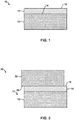
- FIG. 1 is a conceptual and schematic diagram illustrating an example article 10 including a substrate 12 and a coating 14 including a stabilized microstructure including Magnéli oxide phase on the substrate 12.
- coating 14 is formed by depositing a coating including tungsten (32) on surface 18 of substrate 12, followed by exposing the coating to a heat treatment and/or thermomechanical treatment to form the stabilized microstructure including Magnéli oxide phase.
- Substrate 12 may be a substrate of an article 10 that, during use, is positioned to contact or intermittently contact a surface of another article.
- FIG. 2 is a conceptual and schematic diagram illustrating an example system 20 including a first article 10 and a second article 22.
- First article 10 may be substantially the same as article 10 shown in FIG. 1
- second article 22 includes a surface 24 that may contact surface 16 of the coating 14 including the stabilized microstructure including Magnéli oxide phase. In this way, surface 16 of coating 14 forms a contact surface or bearing surface for article 10 with second article 22.
- article 10 may be used in a high temperature mechanical system, and may be exposed to elevated temperatures during at least some portions of the use of article 10.
- article 10 may be used in a gas turbine engine.
- article 10 may be exposed to temperatures as high as about 700°C during use.
- Substrate 12 comprises a superalloy metal.
- substrate 12 may comprise a Ni-, Co-, or Ti-based superalloy, or the like.
- Coating 14 is on surface 18 of substrate 12.
- Coating 14 includes a stabilized microstructure including Magnéli phase oxide.
- a Magnéli oxide phase forms has an atomic structure similar to graphite, where there are multiple thin sheets of Magneli oxide with low bond forces between the sheets. Because of this, the sheets may move relative to each other relatively easily, which may provide a relatively low coefficient of friction.
- the metal in the Magnéli oxide phase includes W.
- the metal in the Magnéli oxide phase additionally includes a refractory metal such as Mo, Nb, Ta, or Re.
- coating 14 may include at least one of Mo, Nb, Ta, or Re.
- Coating 14 additionally may include at least one non-metal, such as N, P, S, or O.
- coating 14 may further include at least one transition metal, such as Ti, V, Cr, Zr, Ru, Rb, Hf, Y, Mn, Fe, Co, Ni, Ag, Au, or Pt.
- At least some of the refractory metal in coating 14 is oxidized to form the stabilized microstructure including Magnéli oxide phase.
- at least some of the at least one transition metal, if present in coating 14, also may be oxidized to form the stabilized microstructure including Magnéli oxide phase.
- coating 14 may include stabilized microstructure including Magnéli oxide phase dispersed within a matrix of other material, such as non-oxidized refractory metal, non-metal, and/or transition metal.
- coating 14 may comprise a chemical composition and phase composition that is substantially unchanging under changes in temperature.
- the amount of stabilized microstructure including Magnéli oxide phase and the composition of the Magnéli oxide phase and the other phases present in coating 14 may not appreciably change under changes in temperature.
- coating 14 may be relatively thin.
- coating 14 may define a thickness, measured in the direction substantially normal to surface 18, on the order of several micrometers.
- coating 14 may define a thickness, measured in the direction substantially normal to surface 18, of less than about 25.4 micrometers (less than about 0.001 inch).
- FIG. 3 is a flow diagram illustrating an example technique for forming a coating including a stabilized microstructure including Magnéli oxide phase on a substrate. The technique of FIG. 3 will be described with concurrent reference to article 10 of FIG. 1 for purposes of illustration only.
- the technique of FIG. 3 includes depositing a coating including at least one refractory metal (32).
- the as-deposited coating includes a metastable microstructure comprising an amorphous structure or a nanocrystalline structure.
- a metastable structure in the as-deposited coating may facilitate transformation of at least some of the as-deposited coating form Magnéli oxide phase by oxidation.
- the metastable structure may allow formation of the stabilized microstructure including Magnéli oxide phase by heating to temperatures below about 800°C (such as below about 700°C or between about 500°C and about 550°C), rather than the temperature greater than 1000°C used to convert coarse crystalline structures to Magnéli oxide phase.
- the as-deposited coating additional may include at least one non-metal, such as N, S, P, or O; at least one transition metal, such as Ti, V, Cr, Zr, Ru, Rb, Hf, Y, Mn, Fe, Co, Ni, Ag, Au, or Pt; or both.
- the as-deposited coating may include tungsten (IV) sulfide (WS 2 ).
- the as-deposited coating may be deposited using, for example, physical vapor deposition (PVD), sputtering, evaporation, cathodic arc deposition, chemical vapor deposition, painting, slurry coating, or paste application of nano-powders.
- PVD physical vapor deposition
- sputtering evaporation
- cathodic arc deposition cathodic arc deposition
- chemical vapor deposition evaporation
- painting evapor deposition
- slurry coating e.g., paint, slurry coating, or paste application of nano-powders.
- the coating is exposed to a heat treatment and/or thermomechanical treatment to form the stabilized microstructure including Magnéli oxide phase (34).
- the heat treatment and/or thermomechanical treatment oxidizes at least some of the at least one refractory oxide in the as-deposited coating to form Magnéli oxide phase. Additionally, if at least one transition metal is present in the as-deposited coating, the heat treatment may oxidize at least some of the at least one transition metal to form Magnéli oxide phase.
- the heat treatment may be performed at a temperature of less than about 800°C.
- the amorphous structure or a nanocrystalline structure may more readily convert into stabilized microstructure including Magnéli oxide phase than a bulk crystalline structure.
- the temperatures used to convert the at least one refractory metal into stabilized microstructure including Magnéli oxide phase may be lower than would be used if the at least one refractory metal were deposited with a bulk crystalline microstructure.
- the heat treatment to form the stabilized microstructure including Magnéli oxide phase may be performed at a temperature of less than about 700°C, such as between about 500°C and about 700°C, or between about 500°C and about 550°C.
- FIG. 4 is a diagram illustrating the coefficient of friction as a function of time for the WS 2 coating.
- Curve 42 illustrates the coefficient of friction during a first test at room temperature (about 25°C). As shown by curve 42, the coefficient of friction was initially low, increased abruptly, than began to level off at about 0.7.
- Curve 44 illustrates the coefficient of friction for the sample during a second test at about 540°C. As shown by curve 44, the coefficient of friction was substantially the same for the duration of the test at about 540°C, at a value of about 0.5.
- Curve 46 illustrates the coefficient of friction during a third test at room temperature (about 25°C). As shown by curve 46, the coefficient of friction was initially about 0.5, increased, than began to level off at about 0.95. The coefficient of friction during the third test (second at room temperature) was greater than the coefficient of friction during the first test at room temperature, indicating that the coefficient of friction for the coating consisting essentially of WS 2 was not stable under thermal cycling.
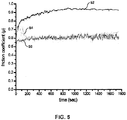
- FIG. 5 is a diagram illustrating a coefficient of friction as a function of time for an example coating including a stabilized microstructure including Magnéli oxide phase when tested at room temperature, an elevated temperature, and again at room temperature.
- Curve 52 illustrates the coefficient of friction during a test at room temperature (about 25°C). The friction test producing the curve 52 was performed after triblogical testing at 540°C without a stabilization heat treatment. As shown by curve 52, the coefficient of friction was initially about 0.6 then increased to about 0.95 during the testing.
- Curve 54 illustrates the coefficient of friction during a test at room temperature (about 25°C) after a stabilization heat treatment. As shown by curve 54, the coefficient of friction was about 0.6 for the duration of the test at room temperature after the stabilization heat treatment, after an initial spike in the coefficient of friction. Additionally, the coefficient of friction after stabilization was about 30% lower than the coefficient of friction without stabilization and after heating to 540°C (curve 52).
- Curve 56 illustrates the coefficient of friction during a test at about 540°C, after the stabilization heat treatment. As shown by curve 56, the coefficient of friction was substantially stable for the duration of the test, with a value of about 0.6. Additionally, the coefficient of friction at 540°C was substantially the same as the coefficient of friction at room temperature, after the coating was stabilized. This indicates that the coefficient of friction was stable under thermal cycling.
Landscapes
- Chemical & Material Sciences (AREA)
- Organic Chemistry (AREA)
- Chemical Kinetics & Catalysis (AREA)
- General Chemical & Material Sciences (AREA)
- Mechanical Engineering (AREA)
- Materials Engineering (AREA)
- Engineering & Computer Science (AREA)
- Metallurgy (AREA)
- Oil, Petroleum & Natural Gas (AREA)
- Inorganic Chemistry (AREA)
- Physics & Mathematics (AREA)
- Thermal Sciences (AREA)
- Physical Vapour Deposition (AREA)
- Chemical Vapour Deposition (AREA)
Claims (13)
- Artikel, umfassend:ein Substrat, das ein Superlegierungsmetall umfasst; undeine Beschichtung auf dem Substrat, wobei die Beschichtung eine stabilisierte Mikrostruktur umfasst, die eine Magneli-Oxidphase beinhaltet, die Wärmebehandlung bei einer Temperatur zwischen 500 °C und 700 °C unterzogen worden ist, wobei die Magneli-Oxidphase ein Oxid von Wolfram (W) beinhaltet; undwobei vor der Wärmebehandlung die Beschichtung eine metastabile Mikrostruktur umfasst, die eine amorphe Struktur oder eine nanokristalline Struktur umfasst.
- Artikel nach Anspruch 1, wobei die Beschichtung ferner zumindest ein Nichtmetall umfasst, das aus der Gruppe ausgewählt ist, die aus N, S, P und Kombinationen davon besteht.
- Artikel nach einem der Ansprüche 1 bis 2, wobei die Beschichtung ferner zumindest ein Element umfasst, das aus der Gruppe ausgewählt ist, die aus Ti, V, Cr, Zr, Ru, Rb, Hf, Y, Mn, Fe, Co, Ni, Pd, Ag, Au, Pt und Kombinationen davon besteht.
- Artikel nach einem der Ansprüche 1 bis3, wobei der Reibungskoeffizient der Beschichtung über einen Bereich von Temperaturen zwischen 0 °C und 700 °C im Wesentlichen gleich bleibt.
- Artikel nach einem der Ansprüche 1 bis 4, wobei der Reibungskoeffizient der Beschichtung, welche die stabilisierte Mikrostruktur beinhaltet, welche die Magneli-Oxidphase beinhaltet, um zumindest 25 % geringer als ein Reibungskoeffizient für eine Beschichtung wie abgeschieden ist, die keiner Wärmebehandlung unterzogen worden ist.
- Artikel nach einem der Ansprüche 1 bis 5, wobei die Beschichtung ferner Schwefel, S, umfasst.
- System, umfassend:den Artikel nach einem der Ansprüche 1 bis 6, wobei der Artikel einen ersten Artikel umfasst und wobei die Beschichtung eine erste Fläche definiert; undeinen zweiten Artikel, der eine zweite Fläche definiert, wobei der erste Artikel und der zweite Artikel während Verwendung positioniert sind, sodass die erste Fläche die zweite Fläche kontaktiert.
- Verfahren, umfassend:Bilden einer Beschichtung, die ein hitzebeständiges Metall umfasst, auf einer Fläche eines Substrats, wobei das Substrat ein Superlegierungsmetall umfasst, wobei die Beschichtung eine metastabile Mikrostruktur umfasst, die eine amorphe Struktur oder eine nanokristalline Struktur umfasst; undWärmebehandeln der Beschichtung bei einer Temperatur zwischen 500 °C und 700 °C, um eine Beschichtung zu bilden, die eine stabilisierte Mikrostruktur beinhaltet, die eine Magneli-Oxidphase beinhaltet, wobei die stabilisierte Mikrostruktur, welche die Magneli-Oxidphase beinhaltet, ein Oxid von Wolfram (W) umfasst und wobei die Beschichtung, welche die stabilisierte Mikrostruktur beinhaltet, welche die Magneli-Oxidphase beinhaltet, einen Reibungskoeffizienten aufweist, der um zumindest 25 % geringer als ein Reibungskoeffizient für eine Beschichtung wie abgeschieden ist, die keiner Wärmebehandlung unterzogen worden ist.
- Verfahren nach Anspruch 8, wobei das Wärmebehandeln der Beschichtung bei der Temperatur zwischen 500 °C und 700 °C das Wärmebehandeln der Beschichtung bei einer Temperatur zwischen 500 °C und 550 °C umfasst.
- Verfahren nach Anspruch 8 oder 9, wobei die Beschichtung ferner zumindest ein Nichtmetall umfasst, das aus der Gruppe ausgewählt ist, die aus N, S, P und Kombinationen davon besteht.
- Verfahren nach einem der Ansprüche 8 bis 10, wobei die Beschichtung ferner zumindest ein Element umfasst, das aus der Gruppe ausgewählt ist, die aus Ti, V, Cr, Zr, Ru, Rb, Hf, Y, Mn, Fe, Co, Ni, Pd, Ag, Au, Pt und Kombinationen davon besteht.
- Verfahren nach einem der Ansprüche 8 bis 11, wobei der Reibungskoeffizient der Beschichtung über einen Bereich von Temperaturen zwischen 0 °C und 700 °C im Wesentlichen gleich bleibt.
- Verfahren nach einem der Ansprüche 8 bis 12, wobei die Beschichtung ferner Schwefel, S, umfasst.
Applications Claiming Priority (1)
| Application Number | Priority Date | Filing Date | Title |
|---|---|---|---|
| US201461974220P | 2014-04-02 | 2014-04-02 |
Publications (3)
| Publication Number | Publication Date |
|---|---|
| EP2927306A1 EP2927306A1 (de) | 2015-10-07 |
| EP2927306B1 EP2927306B1 (de) | 2018-08-01 |
| EP2927306B2 true EP2927306B2 (de) | 2021-12-15 |
Family
ID=52779553
Family Applications (1)
| Application Number | Title | Priority Date | Filing Date |
|---|---|---|---|
| EP15161328.8A Active EP2927306B2 (de) | 2014-04-02 | 2015-03-27 | Hitzestabile, selbstschmierende beschichtungen |
Country Status (2)
| Country | Link |
|---|---|
| US (1) | US9994785B2 (de) |
| EP (1) | EP2927306B2 (de) |
Families Citing this family (4)
| Publication number | Priority date | Publication date | Assignee | Title |
|---|---|---|---|---|
| US9902414B2 (en) * | 2016-02-18 | 2018-02-27 | Electro-Motive Diesel, Inc | Locomotive including operator fatigue monitoring system |
| US20180291815A1 (en) * | 2017-04-10 | 2018-10-11 | Rolls-Royce Corporation | Reduced friction intershaft seal assembly |
| US20200056483A1 (en) * | 2018-08-17 | 2020-02-20 | United Technologies Corporation | Turbine blades and vanes for gas turbine engine |
| US11149651B2 (en) | 2019-08-07 | 2021-10-19 | Raytheon Technologies Corporation | Seal ring assembly for a gas turbine engine |
Family Cites Families (16)
| Publication number | Priority date | Publication date | Assignee | Title |
|---|---|---|---|---|
| US4647386A (en) | 1983-10-03 | 1987-03-03 | Jamison Warren E | Intercalated transition metal based solid lubricating composition and method of so forming |
| US5282985A (en) | 1993-06-24 | 1994-02-01 | The United States Of America As Represented By The Secretary Of The Air Force | Lubricant coatings |
| US5470494A (en) | 1994-09-07 | 1995-11-28 | Agency Of Industrial Science & Technology | Oxide type solid lubricant |
| US5843533A (en) | 1995-03-23 | 1998-12-01 | Lockheed Martin Energy Systems, Inc. | CVD method of forming self-lubricating composites |
| DE19651094C2 (de) | 1996-12-09 | 2002-01-31 | Man Technologie Gmbh | Tribosystem |
| DE10110448A1 (de) | 2001-03-05 | 2002-09-19 | Fraunhofer Ges Forschung | Beschichtungspulver auf der Basis von chemisch modifizierten Titansuboxiden |
| US7553564B2 (en) | 2004-05-26 | 2009-06-30 | Honeywell International Inc. | Ternary carbide and nitride materials having tribological applications and methods of making same |
| US7543992B2 (en) | 2005-04-28 | 2009-06-09 | General Electric Company | High temperature rod end bearings |
| FR2886487B1 (fr) | 2005-05-31 | 2007-07-13 | Sagem Defense Securite | Perfectionnements aux rotors de moteurs hautes puissances |
| US20100087346A1 (en) | 2006-03-31 | 2010-04-08 | Honeywell International, Inc. | Solid film lubricated high oxidation temperature rhenium material |
| US7939172B2 (en) | 2006-05-17 | 2011-05-10 | G & H Technologies, Llc | Wear resistant vapor deposited coating, method of coating deposition and applications therefor |
| US20090074522A1 (en) | 2007-09-17 | 2009-03-19 | Northwestern University | Reduced-friction coatings |
| US7998572B2 (en) | 2008-08-12 | 2011-08-16 | Caterpillar Inc. | Self-lubricating coatings |
| US8158205B2 (en) | 2009-06-05 | 2012-04-17 | Honeywell International Inc. | Methods of forming solid lubricant coatings on substrates |
| US20110312860A1 (en) | 2010-06-17 | 2011-12-22 | General Electric Company | Wear-resistant and low-friction coatings and articles coated therewith |
| AR092945A1 (es) * | 2012-10-10 | 2015-05-06 | Oerlikon Trading Ag Trübbach | Recubrimiento para usos a altas temperaturas con solicitacion tribologica |
-
2015
- 2015-03-26 US US14/669,819 patent/US9994785B2/en active Active
- 2015-03-27 EP EP15161328.8A patent/EP2927306B2/de active Active
Also Published As
| Publication number | Publication date |
|---|---|
| EP2927306A1 (de) | 2015-10-07 |
| US20150284653A1 (en) | 2015-10-08 |
| US9994785B2 (en) | 2018-06-12 |
| EP2927306B1 (de) | 2018-08-01 |
Similar Documents
| Publication | Publication Date | Title |
|---|---|---|
| EP2927306B2 (de) | Hitzestabile, selbstschmierende beschichtungen | |
| Liu et al. | Morphology and size evolution of interlamellar two-dimensional pores in plasma-sprayed La2Zr2O7 coatings during thermal exposure at 1300° C | |
| Li et al. | Surface microstructures and corrosion resistance of Ni-Ti-Nb shape memory thin films | |
| Motemani et al. | High‐Temperature Shape Memory Effect in Ti‐Ta Thin Films Sputter Deposited at Room Temperature | |
| Guo et al. | Oxygen pressure induced structure, morphology and phase-transition for VO2/c-sapphire films by PLD | |
| WO2014037104A1 (en) | Ti-al-ta-based coating exhibiting enhanced thermal stability | |
| Behera et al. | Characterisation and properties of magnetron sputtered nanoscale bi‐layered Ni/Ti thin films and effect of annealing | |
| Zarnetta et al. | Combinatorial study of phase transformation characteristics of a Ti–Ni–Pd shape memory thin film composition spread in view of microactuator applications | |
| Rupp et al. | Time–temperature–transformation (TTT) diagrams for crystallization of metal oxide thin films | |
| Slobozeanu et al. | A review on differential scanning calorimetry as a tool for thermal assessment of nanostructured coatings | |
| Özkan et al. | Wear and friction behavior of TiB2 thin film–coated AISI 52100 steels under the lubricated condition | |
| Kiahosseini et al. | Effects of nitrogen gas ratio on the structural and corrosion properties of ZrN thin films grown on biodegradable magnesium alloy by ion-beam sputtering | |
| McCluskey et al. | Precipitation and thermal fatigue in Ni–Ti–Zr shape memory alloy thin films by combinatorial nanocalorimetry | |
| Rao et al. | Impact of sputtering gas on the microstructural, mechanical and wetting properties of vanadium nitride coatings | |
| Motemani et al. | Recent developments in high-temperature shape memory thin films | |
| Craciunescu et al. | Constrained martensitic transformations in TiNiCu films | |
| JP2019192740A (ja) | 歪抵抗膜および歪センサ、ならびにそれらの製造方法 | |
| Novak et al. | Tribological properties of heat-treated electroless Ni–P coatings on AZ91 alloy | |
| Andreev et al. | Thermal Stability of Ti-C-Ni-Cr and Ti-C-Ni-Cr-Al-Si Nanocomposite Coatings | |
| Cicek et al. | Tribological properties of TiNi/MoS2 functional coatings | |
| Buenconsejo et al. | The effects of grain size on the phase transformation properties of annealed (Ti/Ni/W) shape memory alloy multilayers | |
| Phuong et al. | Effect of chromium concentration on the electrical properties of NiCr thin films resistor deposited at room temperature by magnetron cosputtering technique | |
| Meng et al. | Structure of martensite in Ti-rich Ti–Ni–Cu thin films annealed at different temperatures | |
| Cremer et al. | Experimental determination of the metastable(Ti, Al) N phase diagram up to 700 deg C | |
| JP6441318B2 (ja) | ターボチャージャー用バリア層 |
Legal Events
| Date | Code | Title | Description |
|---|---|---|---|
| PUAI | Public reference made under article 153(3) epc to a published international application that has entered the european phase |
Free format text: ORIGINAL CODE: 0009012 |
|
| 17P | Request for examination filed |
Effective date: 20150327 |
|
| AK | Designated contracting states |
Kind code of ref document: A1 Designated state(s): AL AT BE BG CH CY CZ DE DK EE ES FI FR GB GR HR HU IE IS IT LI LT LU LV MC MK MT NL NO PL PT RO RS SE SI SK SM TR |
|
| AX | Request for extension of the european patent |
Extension state: BA ME |
|
| 17Q | First examination report despatched |
Effective date: 20160801 |
|
| STAA | Information on the status of an ep patent application or granted ep patent |
Free format text: STATUS: EXAMINATION IS IN PROGRESS |
|
| GRAP | Despatch of communication of intention to grant a patent |
Free format text: ORIGINAL CODE: EPIDOSNIGR1 |
|
| STAA | Information on the status of an ep patent application or granted ep patent |
Free format text: STATUS: GRANT OF PATENT IS INTENDED |
|
| INTG | Intention to grant announced |
Effective date: 20180320 |
|
| GRAS | Grant fee paid |
Free format text: ORIGINAL CODE: EPIDOSNIGR3 |
|
| GRAA | (expected) grant |
Free format text: ORIGINAL CODE: 0009210 |
|
| STAA | Information on the status of an ep patent application or granted ep patent |
Free format text: STATUS: THE PATENT HAS BEEN GRANTED |
|
| AK | Designated contracting states |
Kind code of ref document: B1 Designated state(s): AL AT BE BG CH CY CZ DE DK EE ES FI FR GB GR HR HU IE IS IT LI LT LU LV MC MK MT NL NO PL PT RO RS SE SI SK SM TR |
|
| REG | Reference to a national code |
Ref country code: GB Ref legal event code: FG4D |
|
| REG | Reference to a national code |
Ref country code: CH Ref legal event code: EP Ref country code: AT Ref legal event code: REF Ref document number: 1024303 Country of ref document: AT Kind code of ref document: T Effective date: 20180815 |
|
| REG | Reference to a national code |
Ref country code: IE Ref legal event code: FG4D |
|
| REG | Reference to a national code |
Ref country code: DE Ref legal event code: R096 Ref document number: 602015014170 Country of ref document: DE |
|
| REG | Reference to a national code |
Ref country code: NL Ref legal event code: MP Effective date: 20180801 |
|
| REG | Reference to a national code |
Ref country code: LT Ref legal event code: MG4D |
|
| REG | Reference to a national code |
Ref country code: AT Ref legal event code: MK05 Ref document number: 1024303 Country of ref document: AT Kind code of ref document: T Effective date: 20180801 |
|
| PG25 | Lapsed in a contracting state [announced via postgrant information from national office to epo] |
Ref country code: NO Free format text: LAPSE BECAUSE OF FAILURE TO SUBMIT A TRANSLATION OF THE DESCRIPTION OR TO PAY THE FEE WITHIN THE PRESCRIBED TIME-LIMIT Effective date: 20181101 Ref country code: AT Free format text: LAPSE BECAUSE OF FAILURE TO SUBMIT A TRANSLATION OF THE DESCRIPTION OR TO PAY THE FEE WITHIN THE PRESCRIBED TIME-LIMIT Effective date: 20180801 Ref country code: NL Free format text: LAPSE BECAUSE OF FAILURE TO SUBMIT A TRANSLATION OF THE DESCRIPTION OR TO PAY THE FEE WITHIN THE PRESCRIBED TIME-LIMIT Effective date: 20180801 Ref country code: PL Free format text: LAPSE BECAUSE OF FAILURE TO SUBMIT A TRANSLATION OF THE DESCRIPTION OR TO PAY THE FEE WITHIN THE PRESCRIBED TIME-LIMIT Effective date: 20180801 Ref country code: BG Free format text: LAPSE BECAUSE OF FAILURE TO SUBMIT A TRANSLATION OF THE DESCRIPTION OR TO PAY THE FEE WITHIN THE PRESCRIBED TIME-LIMIT Effective date: 20181101 Ref country code: LT Free format text: LAPSE BECAUSE OF FAILURE TO SUBMIT A TRANSLATION OF THE DESCRIPTION OR TO PAY THE FEE WITHIN THE PRESCRIBED TIME-LIMIT Effective date: 20180801 Ref country code: IS Free format text: LAPSE BECAUSE OF FAILURE TO SUBMIT A TRANSLATION OF THE DESCRIPTION OR TO PAY THE FEE WITHIN THE PRESCRIBED TIME-LIMIT Effective date: 20181201 Ref country code: RS Free format text: LAPSE BECAUSE OF FAILURE TO SUBMIT A TRANSLATION OF THE DESCRIPTION OR TO PAY THE FEE WITHIN THE PRESCRIBED TIME-LIMIT Effective date: 20180801 Ref country code: SE Free format text: LAPSE BECAUSE OF FAILURE TO SUBMIT A TRANSLATION OF THE DESCRIPTION OR TO PAY THE FEE WITHIN THE PRESCRIBED TIME-LIMIT Effective date: 20180801 Ref country code: GR Free format text: LAPSE BECAUSE OF FAILURE TO SUBMIT A TRANSLATION OF THE DESCRIPTION OR TO PAY THE FEE WITHIN THE PRESCRIBED TIME-LIMIT Effective date: 20181102 Ref country code: FI Free format text: LAPSE BECAUSE OF FAILURE TO SUBMIT A TRANSLATION OF THE DESCRIPTION OR TO PAY THE FEE WITHIN THE PRESCRIBED TIME-LIMIT Effective date: 20180801 |
|
| PG25 | Lapsed in a contracting state [announced via postgrant information from national office to epo] |
Ref country code: AL Free format text: LAPSE BECAUSE OF FAILURE TO SUBMIT A TRANSLATION OF THE DESCRIPTION OR TO PAY THE FEE WITHIN THE PRESCRIBED TIME-LIMIT Effective date: 20180801 Ref country code: HR Free format text: LAPSE BECAUSE OF FAILURE TO SUBMIT A TRANSLATION OF THE DESCRIPTION OR TO PAY THE FEE WITHIN THE PRESCRIBED TIME-LIMIT Effective date: 20180801 Ref country code: LV Free format text: LAPSE BECAUSE OF FAILURE TO SUBMIT A TRANSLATION OF THE DESCRIPTION OR TO PAY THE FEE WITHIN THE PRESCRIBED TIME-LIMIT Effective date: 20180801 |
|
| REG | Reference to a national code |
Ref country code: DE Ref legal event code: R026 Ref document number: 602015014170 Country of ref document: DE |
|
| PLBI | Opposition filed |
Free format text: ORIGINAL CODE: 0009260 |
|
| PG25 | Lapsed in a contracting state [announced via postgrant information from national office to epo] |
Ref country code: EE Free format text: LAPSE BECAUSE OF FAILURE TO SUBMIT A TRANSLATION OF THE DESCRIPTION OR TO PAY THE FEE WITHIN THE PRESCRIBED TIME-LIMIT Effective date: 20180801 Ref country code: IT Free format text: LAPSE BECAUSE OF FAILURE TO SUBMIT A TRANSLATION OF THE DESCRIPTION OR TO PAY THE FEE WITHIN THE PRESCRIBED TIME-LIMIT Effective date: 20180801 Ref country code: RO Free format text: LAPSE BECAUSE OF FAILURE TO SUBMIT A TRANSLATION OF THE DESCRIPTION OR TO PAY THE FEE WITHIN THE PRESCRIBED TIME-LIMIT Effective date: 20180801 Ref country code: CZ Free format text: LAPSE BECAUSE OF FAILURE TO SUBMIT A TRANSLATION OF THE DESCRIPTION OR TO PAY THE FEE WITHIN THE PRESCRIBED TIME-LIMIT Effective date: 20180801 Ref country code: ES Free format text: LAPSE BECAUSE OF FAILURE TO SUBMIT A TRANSLATION OF THE DESCRIPTION OR TO PAY THE FEE WITHIN THE PRESCRIBED TIME-LIMIT Effective date: 20180801 |
|
| PLAX | Notice of opposition and request to file observation + time limit sent |
Free format text: ORIGINAL CODE: EPIDOSNOBS2 |
|
| 26 | Opposition filed |
Opponent name: UNITED TECHNOLOGIES CORPORATION Effective date: 20190404 |
|
| PG25 | Lapsed in a contracting state [announced via postgrant information from national office to epo] |
Ref country code: SK Free format text: LAPSE BECAUSE OF FAILURE TO SUBMIT A TRANSLATION OF THE DESCRIPTION OR TO PAY THE FEE WITHIN THE PRESCRIBED TIME-LIMIT Effective date: 20180801 Ref country code: SM Free format text: LAPSE BECAUSE OF FAILURE TO SUBMIT A TRANSLATION OF THE DESCRIPTION OR TO PAY THE FEE WITHIN THE PRESCRIBED TIME-LIMIT Effective date: 20180801 Ref country code: DK Free format text: LAPSE BECAUSE OF FAILURE TO SUBMIT A TRANSLATION OF THE DESCRIPTION OR TO PAY THE FEE WITHIN THE PRESCRIBED TIME-LIMIT Effective date: 20180801 |
|
| PG25 | Lapsed in a contracting state [announced via postgrant information from national office to epo] |
Ref country code: SI Free format text: LAPSE BECAUSE OF FAILURE TO SUBMIT A TRANSLATION OF THE DESCRIPTION OR TO PAY THE FEE WITHIN THE PRESCRIBED TIME-LIMIT Effective date: 20180801 |
|
| PLBB | Reply of patent proprietor to notice(s) of opposition received |
Free format text: ORIGINAL CODE: EPIDOSNOBS3 |
|
| PG25 | Lapsed in a contracting state [announced via postgrant information from national office to epo] |
Ref country code: MC Free format text: LAPSE BECAUSE OF FAILURE TO SUBMIT A TRANSLATION OF THE DESCRIPTION OR TO PAY THE FEE WITHIN THE PRESCRIBED TIME-LIMIT Effective date: 20180801 |
|
| REG | Reference to a national code |
Ref country code: CH Ref legal event code: PL |
|
| GBPC | Gb: european patent ceased through non-payment of renewal fee |
Effective date: 20190327 |
|
| PG25 | Lapsed in a contracting state [announced via postgrant information from national office to epo] |
Ref country code: LU Free format text: LAPSE BECAUSE OF NON-PAYMENT OF DUE FEES Effective date: 20190327 |
|
| REG | Reference to a national code |
Ref country code: BE Ref legal event code: MM Effective date: 20190331 |
|
| PG25 | Lapsed in a contracting state [announced via postgrant information from national office to epo] |
Ref country code: CH Free format text: LAPSE BECAUSE OF NON-PAYMENT OF DUE FEES Effective date: 20190331 Ref country code: LI Free format text: LAPSE BECAUSE OF NON-PAYMENT OF DUE FEES Effective date: 20190331 Ref country code: GB Free format text: LAPSE BECAUSE OF NON-PAYMENT OF DUE FEES Effective date: 20190327 Ref country code: IE Free format text: LAPSE BECAUSE OF NON-PAYMENT OF DUE FEES Effective date: 20190327 |
|
| PG25 | Lapsed in a contracting state [announced via postgrant information from national office to epo] |
Ref country code: BE Free format text: LAPSE BECAUSE OF NON-PAYMENT OF DUE FEES Effective date: 20190331 |
|
| PG25 | Lapsed in a contracting state [announced via postgrant information from national office to epo] |
Ref country code: TR Free format text: LAPSE BECAUSE OF FAILURE TO SUBMIT A TRANSLATION OF THE DESCRIPTION OR TO PAY THE FEE WITHIN THE PRESCRIBED TIME-LIMIT Effective date: 20180801 |
|
| PGFP | Annual fee paid to national office [announced via postgrant information from national office to epo] |
Ref country code: DE Payment date: 20200327 Year of fee payment: 6 |
|
| PG25 | Lapsed in a contracting state [announced via postgrant information from national office to epo] |
Ref country code: MT Free format text: LAPSE BECAUSE OF NON-PAYMENT OF DUE FEES Effective date: 20190327 Ref country code: PT Free format text: LAPSE BECAUSE OF FAILURE TO SUBMIT A TRANSLATION OF THE DESCRIPTION OR TO PAY THE FEE WITHIN THE PRESCRIBED TIME-LIMIT Effective date: 20181201 |
|
| PLAB | Opposition data, opponent's data or that of the opponent's representative modified |
Free format text: ORIGINAL CODE: 0009299OPPO |
|
| R26 | Opposition filed (corrected) |
Opponent name: RAYTHEON TECHNOLOGIES CORPORATION Effective date: 20190404 |
|
| PG25 | Lapsed in a contracting state [announced via postgrant information from national office to epo] |
Ref country code: CY Free format text: LAPSE BECAUSE OF FAILURE TO SUBMIT A TRANSLATION OF THE DESCRIPTION OR TO PAY THE FEE WITHIN THE PRESCRIBED TIME-LIMIT Effective date: 20180801 |
|
| RIC2 | Information provided on ipc code assigned after grant |
Ipc: C23C 30/00 20060101AFI20210525BHEP Ipc: C23C 14/58 20060101ALI20210525BHEP Ipc: C23C 14/08 20060101ALI20210525BHEP Ipc: C23C 16/40 20060101ALI20210525BHEP Ipc: C23C 16/56 20060101ALI20210525BHEP Ipc: C10M 103/06 20060101ALI20210525BHEP Ipc: C10M 125/10 20060101ALI20210525BHEP |
|
| PG25 | Lapsed in a contracting state [announced via postgrant information from national office to epo] |
Ref country code: HU Free format text: LAPSE BECAUSE OF FAILURE TO SUBMIT A TRANSLATION OF THE DESCRIPTION OR TO PAY THE FEE WITHIN THE PRESCRIBED TIME-LIMIT; INVALID AB INITIO Effective date: 20150327 |
|
| REG | Reference to a national code |
Ref country code: DE Ref legal event code: R119 Ref document number: 602015014170 Country of ref document: DE |
|
| PUAH | Patent maintained in amended form |
Free format text: ORIGINAL CODE: 0009272 |
|
| STAA | Information on the status of an ep patent application or granted ep patent |
Free format text: STATUS: PATENT MAINTAINED AS AMENDED |
|
| 27A | Patent maintained in amended form |
Effective date: 20211215 |
|
| AK | Designated contracting states |
Kind code of ref document: B2 Designated state(s): AL AT BE BG CH CY CZ DE DK EE ES FI FR GB GR HR HU IE IS IT LI LT LU LV MC MK MT NL NO PL PT RO RS SE SI SK SM TR |
|
| REG | Reference to a national code |
Ref country code: DE Ref legal event code: R102 Ref document number: 602015014170 Country of ref document: DE |
|
| PG25 | Lapsed in a contracting state [announced via postgrant information from national office to epo] |
Ref country code: DE Free format text: LAPSE BECAUSE OF NON-PAYMENT OF DUE FEES Effective date: 20211001 |
|
| PG25 | Lapsed in a contracting state [announced via postgrant information from national office to epo] |
Ref country code: MK Free format text: LAPSE BECAUSE OF FAILURE TO SUBMIT A TRANSLATION OF THE DESCRIPTION OR TO PAY THE FEE WITHIN THE PRESCRIBED TIME-LIMIT Effective date: 20180801 |
|
| P01 | Opt-out of the competence of the unified patent court (upc) registered |
Effective date: 20230528 |
|
| PGFP | Annual fee paid to national office [announced via postgrant information from national office to epo] |
Ref country code: FR Payment date: 20260323 Year of fee payment: 12 |