EP2925317B1 - A cftr corrector for the teatment of genetic disorders affecting striated muscle - Google Patents
A cftr corrector for the teatment of genetic disorders affecting striated muscle Download PDFInfo
- Publication number
- EP2925317B1 EP2925317B1 EP13801517.7A EP13801517A EP2925317B1 EP 2925317 B1 EP2925317 B1 EP 2925317B1 EP 13801517 A EP13801517 A EP 13801517A EP 2925317 B1 EP2925317 B1 EP 2925317B1
- Authority
- EP
- European Patent Office
- Prior art keywords
- compound
- methyl
- chloro
- sarcoglycan
- bithiazol
- Prior art date
- Legal status (The legal status is an assumption and is not a legal conclusion. Google has not performed a legal analysis and makes no representation as to the accuracy of the status listed.)
- Active
Links
- NKHBKSNSNVGJOE-UHFFFAOYSA-N CC(c1nc(N2CCCCC2)c(cccc2)c2n1)N(CC1)CCN1S(c(cc1)ccc1Cl)(=O)=O Chemical compound CC(c1nc(N2CCCCC2)c(cccc2)c2n1)N(CC1)CCN1S(c(cc1)ccc1Cl)(=O)=O NKHBKSNSNVGJOE-UHFFFAOYSA-N 0.000 description 1
- JXZCUTPQSYPHMT-UHFFFAOYSA-N Cc1cc(Nc(cc2)ccc2Br)nc2ccccc12 Chemical compound Cc1cc(Nc(cc2)ccc2Br)nc2ccccc12 JXZCUTPQSYPHMT-UHFFFAOYSA-N 0.000 description 1
Images


Classifications
-
- A—HUMAN NECESSITIES
- A61—MEDICAL OR VETERINARY SCIENCE; HYGIENE
- A61K—PREPARATIONS FOR MEDICAL, DENTAL OR TOILETRY PURPOSES
- A61K31/00—Medicinal preparations containing organic active ingredients
- A61K31/33—Heterocyclic compounds
- A61K31/395—Heterocyclic compounds having nitrogen as a ring hetero atom, e.g. guanethidine or rifamycins
- A61K31/41—Heterocyclic compounds having nitrogen as a ring hetero atom, e.g. guanethidine or rifamycins having five-membered rings with two or more ring hetero atoms, at least one of which being nitrogen, e.g. tetrazole
- A61K31/425—Thiazoles
- A61K31/426—1,3-Thiazoles
-
- A—HUMAN NECESSITIES
- A61—MEDICAL OR VETERINARY SCIENCE; HYGIENE
- A61K—PREPARATIONS FOR MEDICAL, DENTAL OR TOILETRY PURPOSES
- A61K31/00—Medicinal preparations containing organic active ingredients
- A61K31/33—Heterocyclic compounds
- A61K31/395—Heterocyclic compounds having nitrogen as a ring hetero atom, e.g. guanethidine or rifamycins
- A61K31/40—Heterocyclic compounds having nitrogen as a ring hetero atom, e.g. guanethidine or rifamycins having five-membered rings with one nitrogen as the only ring hetero atom, e.g. sulpiride, succinimide, tolmetin, buflomedil
- A61K31/403—Heterocyclic compounds having nitrogen as a ring hetero atom, e.g. guanethidine or rifamycins having five-membered rings with one nitrogen as the only ring hetero atom, e.g. sulpiride, succinimide, tolmetin, buflomedil condensed with carbocyclic rings, e.g. carbazole
- A61K31/404—Indoles, e.g. pindolol
-
- A—HUMAN NECESSITIES
- A61—MEDICAL OR VETERINARY SCIENCE; HYGIENE
- A61K—PREPARATIONS FOR MEDICAL, DENTAL OR TOILETRY PURPOSES
- A61K31/00—Medicinal preparations containing organic active ingredients
- A61K31/33—Heterocyclic compounds
- A61K31/395—Heterocyclic compounds having nitrogen as a ring hetero atom, e.g. guanethidine or rifamycins
- A61K31/41—Heterocyclic compounds having nitrogen as a ring hetero atom, e.g. guanethidine or rifamycins having five-membered rings with two or more ring hetero atoms, at least one of which being nitrogen, e.g. tetrazole
- A61K31/425—Thiazoles
- A61K31/427—Thiazoles not condensed and containing further heterocyclic rings
-
- A—HUMAN NECESSITIES
- A61—MEDICAL OR VETERINARY SCIENCE; HYGIENE
- A61K—PREPARATIONS FOR MEDICAL, DENTAL OR TOILETRY PURPOSES
- A61K31/00—Medicinal preparations containing organic active ingredients
- A61K31/33—Heterocyclic compounds
- A61K31/395—Heterocyclic compounds having nitrogen as a ring hetero atom, e.g. guanethidine or rifamycins
- A61K31/435—Heterocyclic compounds having nitrogen as a ring hetero atom, e.g. guanethidine or rifamycins having six-membered rings with one nitrogen as the only ring hetero atom
- A61K31/44—Non condensed pyridines; Hydrogenated derivatives thereof
- A61K31/4427—Non condensed pyridines; Hydrogenated derivatives thereof containing further heterocyclic ring systems
- A61K31/443—Non condensed pyridines; Hydrogenated derivatives thereof containing further heterocyclic ring systems containing a five-membered ring with oxygen as a ring hetero atom
-
- A—HUMAN NECESSITIES
- A61—MEDICAL OR VETERINARY SCIENCE; HYGIENE
- A61K—PREPARATIONS FOR MEDICAL, DENTAL OR TOILETRY PURPOSES
- A61K31/00—Medicinal preparations containing organic active ingredients
- A61K31/33—Heterocyclic compounds
- A61K31/395—Heterocyclic compounds having nitrogen as a ring hetero atom, e.g. guanethidine or rifamycins
- A61K31/435—Heterocyclic compounds having nitrogen as a ring hetero atom, e.g. guanethidine or rifamycins having six-membered rings with one nitrogen as the only ring hetero atom
- A61K31/47—Quinolines; Isoquinolines
-
- A—HUMAN NECESSITIES
- A61—MEDICAL OR VETERINARY SCIENCE; HYGIENE
- A61K—PREPARATIONS FOR MEDICAL, DENTAL OR TOILETRY PURPOSES
- A61K31/00—Medicinal preparations containing organic active ingredients
- A61K31/33—Heterocyclic compounds
- A61K31/395—Heterocyclic compounds having nitrogen as a ring hetero atom, e.g. guanethidine or rifamycins
- A61K31/435—Heterocyclic compounds having nitrogen as a ring hetero atom, e.g. guanethidine or rifamycins having six-membered rings with one nitrogen as the only ring hetero atom
- A61K31/47—Quinolines; Isoquinolines
- A61K31/4709—Non-condensed quinolines and containing further heterocyclic rings
-
- A—HUMAN NECESSITIES
- A61—MEDICAL OR VETERINARY SCIENCE; HYGIENE
- A61K—PREPARATIONS FOR MEDICAL, DENTAL OR TOILETRY PURPOSES
- A61K31/00—Medicinal preparations containing organic active ingredients
- A61K31/33—Heterocyclic compounds
- A61K31/395—Heterocyclic compounds having nitrogen as a ring hetero atom, e.g. guanethidine or rifamycins
- A61K31/435—Heterocyclic compounds having nitrogen as a ring hetero atom, e.g. guanethidine or rifamycins having six-membered rings with one nitrogen as the only ring hetero atom
- A61K31/47—Quinolines; Isoquinolines
- A61K31/472—Non-condensed isoquinolines, e.g. papaverine
-
- A—HUMAN NECESSITIES
- A61—MEDICAL OR VETERINARY SCIENCE; HYGIENE
- A61K—PREPARATIONS FOR MEDICAL, DENTAL OR TOILETRY PURPOSES
- A61K31/00—Medicinal preparations containing organic active ingredients
- A61K31/33—Heterocyclic compounds
- A61K31/395—Heterocyclic compounds having nitrogen as a ring hetero atom, e.g. guanethidine or rifamycins
- A61K31/495—Heterocyclic compounds having nitrogen as a ring hetero atom, e.g. guanethidine or rifamycins having six-membered rings with two or more nitrogen atoms as the only ring heteroatoms, e.g. piperazine or tetrazines
- A61K31/496—Non-condensed piperazines containing further heterocyclic rings, e.g. rifampin, thiothixene or sparfloxacin
-
- A—HUMAN NECESSITIES
- A61—MEDICAL OR VETERINARY SCIENCE; HYGIENE
- A61K—PREPARATIONS FOR MEDICAL, DENTAL OR TOILETRY PURPOSES
- A61K31/00—Medicinal preparations containing organic active ingredients
- A61K31/33—Heterocyclic compounds
- A61K31/395—Heterocyclic compounds having nitrogen as a ring hetero atom, e.g. guanethidine or rifamycins
- A61K31/495—Heterocyclic compounds having nitrogen as a ring hetero atom, e.g. guanethidine or rifamycins having six-membered rings with two or more nitrogen atoms as the only ring heteroatoms, e.g. piperazine or tetrazines
- A61K31/505—Pyrimidines; Hydrogenated pyrimidines, e.g. trimethoprim
- A61K31/506—Pyrimidines; Hydrogenated pyrimidines, e.g. trimethoprim not condensed and containing further heterocyclic rings
-
- A—HUMAN NECESSITIES
- A61—MEDICAL OR VETERINARY SCIENCE; HYGIENE
- A61K—PREPARATIONS FOR MEDICAL, DENTAL OR TOILETRY PURPOSES
- A61K31/00—Medicinal preparations containing organic active ingredients
- A61K31/33—Heterocyclic compounds
- A61K31/395—Heterocyclic compounds having nitrogen as a ring hetero atom, e.g. guanethidine or rifamycins
- A61K31/495—Heterocyclic compounds having nitrogen as a ring hetero atom, e.g. guanethidine or rifamycins having six-membered rings with two or more nitrogen atoms as the only ring heteroatoms, e.g. piperazine or tetrazines
- A61K31/505—Pyrimidines; Hydrogenated pyrimidines, e.g. trimethoprim
- A61K31/517—Pyrimidines; Hydrogenated pyrimidines, e.g. trimethoprim ortho- or peri-condensed with carbocyclic ring systems, e.g. quinazoline, perimidine
-
- A—HUMAN NECESSITIES
- A61—MEDICAL OR VETERINARY SCIENCE; HYGIENE
- A61P—SPECIFIC THERAPEUTIC ACTIVITY OF CHEMICAL COMPOUNDS OR MEDICINAL PREPARATIONS
- A61P21/00—Drugs for disorders of the muscular or neuromuscular system
Definitions
- the present invention is directed to compounds and pharmaceutically acceptable salts thereof which are correctors of the cellular processing of cystic fibrosis transmembrane conductance regulator protein (hereinafter CFTR), for use in the treatment of genetic disorders affecting striated muscle selected from sarcoglycanopathies or Brody's disease (BD).
- CFTR cystic fibrosis transmembrane conductance regulator protein
- Genetic disorders are pathologies caused by macroscopic alteration in chromosomes or microscopic lesions (point mutations, deletions or insertion) in genes.
- a genetic disorder is heritable when the genomic alteration is present in progenitors and can be transferred to the progeny.
- a genetic disorder is autosomal dominant when only one mutated copy of the gene (inherited by one progenitor) is necessary and sufficient for an organism to be affected.
- a genetic disorder is autosomal recessive when two copies of the gene (inherited by both progenitors) must be mutated for an organism to be affected.
- Over 4000 human diseases are due to single gene mutations, many of them affecting striated muscle tissues.
- sarcoglycanopathies are severe muscular dystrophies caused mainly by missense mutations in either ⁇ -, ⁇ -, ⁇ - or ⁇ sarcoglycan coding genes and are identified as Limb Girdle Muscular Dystrophy type 2D, 2E, 2C and 2F, respectively (Laval and Bushby 2004).
- Sarcoglycans (SGs) form a tetrameric complex linked to the dystrophin-associated protein complex and, in addition to the main structural role, they are involved in signaling [Barton 2006, Yoshida et al 1998].
- ⁇ -SG is an ecto-ATPase enzyme [Sandonà et al 2004] possibly implicated in the extracellular ATP-dependent modulation of skeletal muscle contractility [Sandonà et al 2005].
- Gene defects in a single sarcoglycan result in the absence or reduced expression of all SG subunits, with impaired tetramer formation and plasma membrane localization [Sandonà and Betto 2009].
- About 75% of ⁇ -SG, 59% of ⁇ -SG, 40% of ⁇ -SG and 57% of ⁇ -SG genetic defects are missense mutations, known to generate full length proteins with single aminoacid substitution [Leiden Open Variation database].
- ⁇ -SG missense mutants are substrates of the ER quality control and are prematurely disposed of by the ubiquitin-proteasome system [Gastaldello et al 2008, Bartoli et al 2008].
- Brody In 1969, Brody first described in a human patient a muscular disorder characterized by an "exercise-induced impairment of muscle relaxation”: muscle contraction was normal but relaxation appeared delayed after repetitive contractions [Brody 1969]. So far, Brody's disease (BD) is known as a rare inherited disorder of skeletal muscle due to a sarco(endo)plasmic reticulum Ca 2+ -ATPase (SERCA) deficiency, resulting from missense, non sense mutations and in frame deletions of ATP2A1 gene, coding for SERCA1 isoform [Bertchtold et al 2000]. Three isoforms of SERCA proteins are differentially expressed by three genes.
- SERCA sarco(endo)plasmic reticulum Ca 2+ -ATPase
- the SERCA1 isoform is expressed in fast-twitch (type 2) skeletal muscle.
- SERCA1 deficiency results in delayed muscle relaxation due to prolonged increase of calcium concentration in skeletal muscle fibres cytoplasm.
- a muscular disorder defined as "congenital pseudomyotonia” (PMT) [Testoni et al 2008] has been described in bovine species. Clinical symptoms are exercise-induced muscle stiffness.
- DNA sequencing provided evidence of a missense mutations (R164H) in bovine ATP2A1 gene [Drögemüller et al 2008].
- biochemical results clearly demonstrated that cattle pathological muscles are characterized by a selective reduction in the expression level of SERCA1 protein, which accounts for the reduced Ca 2+ -ATPase activity.
- Sarcoglycanopathies and BD are very different genetic disorders both for symptoms and etiology. However, it is possible to recognize as common trait of these disorders the posttranscriptional removal of the mutated gene product because of folding problems, that leads to a de facto loss of function.
- BD patients are usually treated with dantrolene [Vattemi et al. 2010], a muscle relaxant (blocker of the dihydro-pyridine receptor-RyR complex), but due to liver toxicity, dantrolene is unsuitable for long-term treatment.
- dantrolene a muscle relaxant (blocker of the dihydro-pyridine receptor-RyR complex)
- Both gene and cell therapy strategies are under evaluation for the cure of sarcoglycanopathies, but are far from being amenable of clinical trial [Daniel et al 2007].
- Exon skipping strategy very promising in Duchenne Muscular Dystrophy [Hoffman et al 2011] is not appropriate for sarcoglycanopathies, and BD since mutant proteins don't have dispensable sequence that could be skipped away.
- CFTR correctors small molecules known as "CFTR correctors” are able to reverse the pathological phenotype of sarcoglycanopathies or BD by promoting folding and proper targeting of the mutated misfolded proteins and thus can be used in the treatment of genetic disorders affecting striated muscle selected from sarcoglycanopathies or Brody's disease (BD).
- the solution provided by the present invention is the use of CFTR correctors that promote folding and trafficking of CFTR, in the treatment of genetic disorders affecting striated muscle selected from sarcoglycanopathies or Brody's disease (BD).
- the present invention provides a CFTR corrector for use in the treatment of genetic disorders affecting striated muscle selected from sarcoglycanopathies or Brody's disease (BD).
- the present invention provides a method of treatment of genetic disorders affecting striated muscle selected from sarcoglycanopathies or Brody's disease (BD) comprising administering a safe and effective amount of a CFTR corrector to a patient in need thereof.
- sarcoglycanopathies or Brody's disease (BD)
- BD Brody's disease
- the present invention provides pharmaceutical compositions comprising a CFTR corrector and one or more pharmaceutically acceptable excipients for use in the treatment of genetic disorders affecting striated muscle selected from sarcoglycanopathies or Brody's disease (BD).
- a CFTR corrector for use in the treatment of genetic disorders affecting striated muscle selected from sarcoglycanopathies or Brody's disease (BD).
- BD Brody's disease
- CFTR cystic fibrosis transmembrane regulator or a mutation thereof capable of regulator activity, including, but not limited, to ⁇ F508 CFTR.
- CFTR correctors means a molecule, correcting the defective cellular processing, able to increase the number of CFTR in a cellular membrane.
- SERCA1 as used herein is the acronym of sarco(endo)plasmic reticulum Ca 2+ -ATPase isoform 1.
- Protein folding as used herein means the process by which a polypeptide chain folds to a specific three-dimensional protein structure assuming its functional shape or conformation.
- Protein trafficking is the mechanism by which proteins destined either to the plasma membrane or secretion transit through Endoplasmic Reticulum, Golgi apparatus and by transport vesicles reach the final destination.
- Misfoded protein as used herein means a protein unable to reach its functional shape or conformation because of the presence of missing or incorrect amino acids.
- missense mutation means a point mutation in which a single nucleotide is changed, resulting in a codon that codes for a different amino acid, thus for example:
- R98H mutant of ⁇ -sarcoglycan means that at position 98 of ⁇ -sarcoglycan sequence the amino acid R (Arginine) has been changed in H (Histidine);
- V247M mutant of ⁇ -sarcoglycan means that at position 247 of ⁇ -sarcoglycan sequence the amino acid V (Valine) has been changed in M (Methionine);
- R164H mutant of SERCA1 means that at position 164 of SERCA1 sequence the amino acid R (Arginine) has been changed in H (Histidine).
- non sense mutation means a point mutation in which a single nucleotide is changed, resulting in a stop codon.
- in frame deletion means a genetic mutation caused by deletions of three or multiple of three nucleotides from a DNA sequence leading to the loss of one of more amino acids with no other consequence on protein sequence.
- ubiquitin refers to a small regulatory protein that can be attached to proteins and label them for destruction through proteasome.
- proteasome refers to a macromolecular protein complex responsible of the ATP dependent degradation of ubiquitin tagged proteins.
- primary culture means cells either of human or animal origin prepared by mechanical or enzymatic dissociation of a specific tissue or bioptic fragment of tissue.
- muscle biopsy means a fragment of skeletal muscle tissue removed from either a human or animal subject that can be used to diagnose a diseases involving muscle tissue and that can be also used, after acquisition of informed consent, for research experiments.
- disease animal model means a living, non-human animal that, because of naturally occurring variation of its genome or because its genome has been artificially modified, develops a disease similar to a human condition.
- Knock out (KO) mouse means a genetically engineered mouse in which an existing gene has been inactivated, or “knocked out,” by replacing it or disrupting it with an artificial piece of DNA.
- the loss of gene activity often causes changes in mouse's phenotype and can lead to the development of a disease similar to a human condition.
- Knock in (KI) mouse means a genetically engineered mouse in which the protein coding region of a gene has been replaced by the same coding region containing point mutations.
- the expression of the mutated gene can cause changes in mouse's phenotype and can lead to the development of a disease similar to a human condition.
- LGMD-2D means Limb Girdle Muscular Dystrophy type 2D (sarcoglycanopathy) caused by mutations of the SGCA gene coding for alpha-sarcoglycan.
- LGMD-2E means Limb Girdle Muscular Dystrophy type 2E (sarcoglycanopathy) caused by mutations of the SGCB gene coding for beta-sarcoglycan.
- LGMD-2C means Limb Girdle Muscular Dystrophy type 2C (sarcoglycanopathy) caused by mutations of the SGCG gene coding for gamma-sarcgoglycan.
- LGMD-2F means Limb Girdle Muscular Dystrophy type 2F (sarcoglycanopathy) caused by mutations of the SGCD gene coding for delta-sarcoglycan.
- treat in reference to a disorder means: (1) to ameliorate the disorder or one or more of the biological manifestations of the disorder, (2) to interfere with (a) one or more points in the biological cascade that leads to or is responsible for the disorder or (b) one or more of the biological manifestations of the disorder, (3) to alleviate one or more of the symptoms or effects associated with the disorder, or (4) to slow the progression of the disorder or one or more of the biological manifestations of the disorder.
- Treatment covers any treatment of a condition or disease in a mammal, particularly in a human, and includes: (a) preventing the condition or disease, disorder or symptom thereof from occurring in a subject which may be predisposed to the condition or disease or disorder but has not yet been diagnosed as having it; (b) inhibiting the condition or disease, disorder or symptom thereof, such as, arresting its development; and (c) relieving, alleviating or ameliorating the condition or disease or disorder or symptom thereof, such as, for example, causing regression of the condition or disease or disorder or symptom thereof.
- safe and effective amount in reference to CFTR correctors or a pharmaceutically acceptable salt thereof, or other pharmaceutically-active agent, means an amount of the compound sufficient to treat the patient's condition but low enough to avoid serious side effects (at a reasonable benefit/risk ratio) within the scope of sound medical judgment.
- a safe and effective amount of a compound will vary with the particular compound chosen (e.g. consider the potency, efficacy, and half-life of the compound); the route of administration chosen; the disorder being treated; the severity of the disorder being treated; the age, size, weight, and physical condition of the patient being treated; the medical history of the patient to be treated; the duration of the treatment; the nature of concurrent therapy; the desired therapeutic effect.
- patient refers to a human (including adults and children) or other animal affected by a disease. In one embodiment, “patient” refers to a human.
- pharmaceutically acceptable excipient means a pharmaceutically acceptable material, composition or vehicle involved in giving form or consistency to the pharmaceutical composition.
- Each excipient must be compatible with the other ingredients of the pharmaceutical composition when commingled such that interactions which would substantially reduce the efficacy of a compound of use according to the invention or a pharmaceutically acceptable salt thereof when administered to a patient and interactions which would result in pharmaceutical compositions that are not pharmaceutically acceptable are avoided.
- each excipient must of course be pharmaceutically-acceptable e.g. of sufficiently high purity.
- the term "pharmaceutically acceptable salt” refers to a salt that retains the desired biological activity of the compound and exhibits minimal undesired toxicological effects.
- Pharmaceutically acceptable salts of compounds may be used to impart greater stability or solubility to a molecule thereby facilitating formulation into a dosage form.
- the present invention provides correctors of the cellular processing of cystic fibrosis transmembrane conductance regulator protein (hereinafter CFTR), in the treatment of genetic disorder affecting striated muscle selected from sarcoglycanopathies or Brody's disease (BD) selected from .
- CFTR cystic fibrosis transmembrane conductance regulator protein
- Compound B 4-Cyclohexyloxy-2- ⁇ 1-[4-(4-methoxy-benzensulfonyl)-piperazin-1-yl]-ethyl ⁇ -quinazoline (hereinafter Compound B), individual stereoisomers thereof or a pharmaceutically acceptable salt thereof.
- Compound H 4,5,7-trimethyl-N-phenylquinolin-2-amine (hereinafter Compound H); or a pharmaceutically acceptable salt thereof.
- the present invention provide CFTR correctors for the use in the treatment of genetic disorders affecting striated muscle selected from sarcoglycanopathies, or Brody's disease (BD) which are selected from:
- Compounds of the invention may be administered as a pharmaceutically acceptable salt.
- These pharmaceutically acceptable salts may be prepared in situ during the final isolation and purification of the compound, or by separately reacting the purified compound, or a non-pharmaceutically acceptable salt thereof, with a suitable base or acid.
- suitable salts see Berge et al., J. Pharm. Sci., 1977, 66, 1-19 .
- Such salts include: (1) acid addition salts, formed with inorganic acids such as hydrochloric acid, hydrobromic acid, sulfuric acid, nitric acid, phosphoric acid, and the like; or formed with organic acids such as acetic acid, propionic acid, hexanoic acid, cyclopentanepropionic acid, glycolic acid, pyruvic acid, lactic acid, malonic acid, succinic acid, malic acid, maleic acid, fumaric acid, tartaric acid, citric acid, benzoic acid, 3-(4- hydroxybenzoyl)benzoic acid, cinnamic acid, mandelic acid, methanesulfonic acid, ethanesulfonic acid, 1,2-ethanedisulfonic acid, 2-hydroxyethanesulfonic acid, benzenesulfonic acid, 4-chlorobenzenesulfonic acid, 2-naphthalenesulfonic acid, 4-toluenesulfonic acid, cam
- the compounds for use according to the invention may be made by a variety of methods, including standard chemistry. Certain of the compounds for use according to the invention are well known and readily available from chemical supply houses. Thus for example, Compound A may be prepared according to the procedure as described in WO 2009051909 .
- Compound B and C may be prepared according to the procedure as described in WO200411104 .
- Compound D may be prepared according to the procedure as described in WO 2007021982 .
- the methods of treatment of the invention comprise administering a safe and effective amount of a corrector of CFTR to a patient in need thereof.
- a corrector of CFTR according to the invention may be administered by any suitable route of administration, in particular oral administration.
- a corrector of CFTR according to the invention may be administered according to a dosing regimen wherein a number of doses are administered at varying intervals of time for a given period of time. For example, doses may be administered one, two, three, or four times per day.
- Doses may be administered until the desired therapeutic effect is achieved or indefinitely to maintain the desired therapeutic effect.
- Suitable dosing regimens including the duration such regimens are administered, may depend on the severity of the disorder being treated, the age and physical condition of the patient being treated, the medical history of the patient to be treated, the nature of concurrent therapy, the desired therapeutic effect, and like factors within the knowledge and expertise of the skilled artisan. It will be further understood by such skilled artisans that suitable dosing regimens may require adjustment given an individual patient's response to the dosing regimen or over time as individual patient needs change.
- the invention provides a CFTR corrector for use in the treatment of sarcoglycanopathies.
- the invention provides a CFTR corrector for use in the treatment of, Brody's disease (BD).
- BD Brody's disease
- the invention provides a CFTR corrector selected from:
- the invention provides a CFTR corrector selected from:
- the invention provides a CFTR corrector selected from:
- the invention provides a CFTR corrector selected from:
- the invention provides the use of a CFTR corrector selected from:
- the invention provides the use of a CFTR corrector selected from:
- the invention provides the use of a CFTR corrector selected from:
- the invention provides the use of a CFTR corrector selected from:
- the invention provides the use of a CFTR corrector selected from:
- CFTR correctors may be formulated into a pharmaceutical composition prior to administration to a patient.
- compositions comprising a CFTR corrector selected from:
- compositions comprising a CFTR corrector selected from:
- compositions comprising a CFTR corrector selected from:
- compositions comprising a CFTR corrector selected from:
- CFTR correctors according to the invention are capable of existing in stereoisomeric forms. It will be understood that the compounds of use according to the invention encompasses all geometric and optical isomers of these compounds and the mixtures thereof including racemates.
- CFTR correctors according to the invention and the pharmaceutically acceptable excipient or excipients will typically be formulated into a dosage form adapted for administration to the patient by the desired route of administration.
- dosage forms include those adapted for oral administration such as tablets, capsules, caplets, pills, troches, powders, syrups, elixirs, suspensions, solutions, emulsions, sachets, and cachets), or those adapted for inhalation such as aerosols, solutions, and dry powders.
- Suitable pharmaceutically acceptable excipients will vary depending upon the particular dosage form chosen.
- suitable pharmaceutically acceptable excipients may be chosen for a particular function that they may serve in the composition.
- certain pharmaceutically acceptable excipients may be chosen for their ability to facilitate the production of uniform dosage forms.
- Certain pharmaceutically acceptable excipients may be chosen for their ability to facilitate the production of stable dosage forms.
- Certain pharmaceutically acceptable excipients may be chosen for their ability to facilitate the carrying or transporting of a CFTR corrector thereof once administered to the patient from one organ, or portion of the body, to another organ, or portion of the body.
- Certain pharmaceutically acceptable excipients may be chosen for their ability to enhance patient compliance.
- Suitable pharmaceutically acceptable excipients include the following types of excipients: diluents, fillers, binders, disintegrants, lubricants, glidants, granulating agents, coating agents, wetting agents, solvents, co-solvents, suspending agents, emulsifiers, sweetners, flavoring agents, flavour masking agents, colouring agents, anticaking agents, humectants, chelating agents, plasticizers, viscosity increasing agents, antioxidants, preservatives, stabilizers, surfactants, and buffering agents.
- excipients include the following types of excipients: diluents, fillers, binders, disintegrants, lubricants, glidants, granulating agents, coating agents, wetting agents, solvents, co-solvents, suspending agents, emulsifiers, sweetners, flavoring agents, flavour masking agents, colouring agents, anticaking agents, humectants, chel
- Skilled artisans possess the knowledge and skill in the art to enable them to select suitable pharmaceutically-acceptable excipients in appropriate amounts for use in the invention.
- resources that are available to the skilled artisan which describe pharmaceutically acceptable excipients and may be useful in selecting suitable pharmaceutically acceptable excipients. Examples include Remington's Pharmaceutical Sciences (Mack Publishing Company ), The Handbook of Pharmaceutical Additives (Gower Publishing Limited ), and The Handbook of Pharmaceutical Excipients (the American Pharmaceutical Association and the Pharmaceutical Press ).
- compositions for use according to the invention are prepared using techniques and methods known to those skilled in the art. Some of the methods commonly used in the art are described in Remington's Pharmaceutical Sciences (Mack Publishing Company ).
- a pharmaceutical composition comprising a CFTR corrector may be prepared by, for example, admixture at ambient temperature and atmospheric pressure.
- the composition for use according to the invention is a solid oral dosage form such as a tablet or capsule comprising a safe and effective amount of a CFTR corrector and a diluent or filler.
- Suitable diluents and fillers include lactose, sucrose, dextrose, mannitol, sorbitol, starch (e.g. corn starch, potato starch, and pre-gelatinized starch), cellulose and its derivatives (e.g. microcrystalline cellulose), calcium sulfate, and dibasic calcium phosphate.
- the oral solid dosage form may further comprise a binder. Suitable binders include starch (e.g.
- the oral solid dosage form may further comprise a disintegrant. Suitable disintegrants include crospovidone, sodium starch glycolate, croscarmelose, alginic acid, and sodium carboxymethyl cellulose.
- the oral solid dosage form may further comprise a lubricant. Suitable lubricants include stearic acid, magnesuim stearate, calcium stearate, and talc. Where appropriate, dosage unit formulations for oral administration can be microencapsulated.
- the composition can also be prepared to prolong or sustain the release as for example by coating or embedding particulate material in polymers, wax or the like.
- CFTR correctors may also be coupled with soluble polymers as targetable drug carriers.
- soluble polymers can include polyvinylpyrrolidone, pyran copolymer, polyhydroxypropylmethacrylamide -phenol, polyhydroxyethylaspartamidephenol, or polyethyleneoxidepolylysine substituted with palmitoyl residues.
- the compounds of use according to the invention or a pharmaceutically acceptable salt thereof may be coupled to a class of biodegradable polymers useful in achieving controlled release of a drug, for example, polylactic acid, polepsilon caprolactone, polyhydroxy butyric acid, polyorthoesters, polyacetals, polydihydropyrans, polycyanoacrylates and cross-linked or amphipathic block copolymers of hydrogels.
- a drug for example, polylactic acid, polepsilon caprolactone, polyhydroxy butyric acid, polyorthoesters, polyacetals, polydihydropyrans, polycyanoacrylates and cross-linked or amphipathic block copolymers of hydrogels.
- CFTR correctors may be formulated for parenteral administration by bolus injection or continuous infusion.
- Formulations for injection may be presented in unit dosage form e.g. in ampoules or in multi-dose containers, with an added preservative.
- the compositions may take such forms as suspensions, solutions or emulsions in oily or aqueous vehicles, and may contain formulatory agents such as suspending, stabilising and/or dispersing agents.
- the active ingredient may be in powder form for constitution with a suitable vehicle, e.g. sterile pyrogen-free water, before use.
- the composition for use according to the invention is a liquid oral dosage form.
- Oral liquids such as solution, syrups and elixirs can be prepared in dosage unit form so that a given quantity contains a predetermined amount of a CFTR corrector.
- Syrups can be prepared by dissolving a compound of use according to the invention or a pharmaceutically acceptable salt thereof in a suitably flavored aqueous solution, while elixirs are prepared through the use of a non-toxic alcoholic vehicle.
- Suspensions can be formulated by dispersing a compound of use according to the invention or a pharmaceutically acceptable salt thereof in a non-toxic vehicle.
- Solubilizers and emulsifiers such as ethoxylated isostearyl alcohols and polyoxy ethylene sorbitol ethers, preservatives, flavor additive such as peppermint oil or natural sweeteners or saccharin or other artificial sweeteners, and the like can also be added.
- the compound of use according to the invention or its pharmaceutically acceptable salts may be formulated for parenteral administration by bolus injection or continuous infusion. Formulations for injection may be presented in unit dosage form e.g. in ampoules or in multi-dose containers, with an added preservative.
- compositions may take such forms as suspensions, solutions or emulsions in oily or aqueous vehicles, and may contain formulatory agents such as suspending, stabilising and/or dispersing agents.
- the active ingredient may be in powder form for constitution with a suitable vehicle, e.g. sterile pyrogen-free water, before use.
- the invention is directed to a dosage form adapted for administration to a patient by inhalation, for example as a dry powder, an aerosol, a suspension, or a solution composition.
- the invention is directed to a dosage form adapted for administration to a patient by inhalation as a dry powder.
- the invention is directed to a dosage form adapted for administration to a patient by inhalation via a nebulizer.
- the dry powder may be presented in capsules (e.g. gelatin or plastic), cartridges, or blister packs for use in a multi-dose dry powder inhaler (MDPI).
- MDPIs are inhalers wherein the medicament is comprised within a multi-dose pack containing (or otherwise carrying) multiple defined doses (or parts thereof) of medicament.
- the dry powder is presented as a blister pack, it comprises multiple blisters for containment of the medicament in dry powder form.
- the blisters are typically arranged in regular fashion for ease of release of the medicament therefrom.
- the blisters may be arranged in a generally circular fashion on a disc-form blister pack, or the blisters may be elongate in form, for example comprising a strip or a tape.
- Each capsule, cartridge, or blister may, for example, contain between 20 ⁇ g-10mg of the compound of use according to the invention or a pharmaceutically acceptable salt thereof.
- a CFTR corrector may be used in combination with one or more other therapeutic agents, in the treatment of genetic disorders affecting striated muscle selected from sarcoglycanopathies or Brody's disease (BD).
- BD Brody's disease
- HEK293 cells expressing different ⁇ -SG mutants have been treated with the Compounds A, B, C, D, E, F, H, I, Q, R, S and T according to protocols developed in CF studies [Loo and Clarke 2011; Becq et al 2011, Pedemonte et al 2005; Wang et al 2006]. Concentration and time-dependent recovery of treated mutants have been evaluated by Western blotting.
- the proteasome inhibitor MG132, at the concentration of 10 ⁇ M, or DMSO at 1 ⁇ concentration, have been used as positive and negative control, respectively.
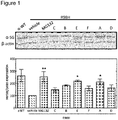
- FIG 1 the result obtained by treating cells expressing the R98H mutant of ⁇ -SG for 24 hours with Compound C 5 ⁇ M, Compound B 10 ⁇ M, Compound E 10 ⁇ M, Compound F 10 ⁇ M, Compound A 2 ⁇ M, Compound D 10 ⁇ M are shown.
- cells were lysed and total proteins resolved by SDS-PAGE.
- Western blotting has been performed by using ⁇ -SG specific antibody and ⁇ -actin specific antibody, used to normalize loaded proteins (in Fig. 1 , upper panel, a representative experiment is shown).
- ⁇ -SG The expression of ⁇ -SG in different samples has been determined by densitometric analysis of the western blotting experiments and indicated as percentage of the protein present in cells expressing the R98H mutant treated with DMSO (negative control).
- the graph in the lower part of Fig.1 shows the average values (+/- standard error) of three independent experiments. All the compounds tested induce the recovery of the mutant to an extent comparable to that obtained by proteasomal inhibition (MG132 treated D98H expressing cells).
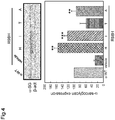
- FIG 4 the result obtained by treating cells expressing the R98H mutant of ⁇ -SG for 24 hours with either Compound H 15 ⁇ M, Compound I 10 ⁇ M, Compound T 15 ⁇ M, Compound A 2 ⁇ M, or DMSO at 1 ⁇ concentration, used as negative control, are shown.
- Cells expressing the wild type form of ⁇ -sarcoglycan have been used for comparison.
- cells were lysed and total proteins resolved by SDS-PAGE.
- Western blotting has been performed by using ⁇ -SG specific antibody and ⁇ -actin specific antibody, used to normalize loaded proteins (in upper panel of Fig. 4 , a representative experiment is shown).
- ⁇ -SG The expression of ⁇ -SG in different samples has been determined by densitometric analysis of the western blotting experiments and indicated as percentage of the protein present in cells expressing the wild type form of ⁇ -sarcoglycan.
- the graph in the lower part of Fig.4 shows the average values (+/- standard error) of at least three independent experiments. The compounds tested induced the recovery of the R98H mutant to levels that in some cases were even greater than those present in HEK cells expressing the wild type protein.
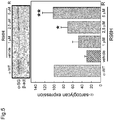
- FIG 5 the result obtained by treating cells expressing the R98H mutant of ⁇ -SG for 24 hours with either increasing concentration of Compound R (1, 2,5, 5 ⁇ M) or DMSO at 1 ⁇ concentration, used as negative control, are shown.
- Cells expressing the wild type form of ⁇ -sarcoglycan have been used for comparison.
- cells were lysed and total proteins resolved by SDS-PAGE.
- Western blotting has been performed by using ⁇ -SG specific antibody and ⁇ -actin specific antibody, used to normalize loaded proteins (in upper panel of Fig. 5 , a representative experiment is shown).
- ⁇ -SG The expression of ⁇ -SG in different samples has been determined by densitometric analysis of western blotting experiments and indicated as percentage of the protein present in cells expressing the wild type form of ⁇ -sarcoglycan.
- the graph in the lower part of Fig. 5 shows the average values (+/standard error) of at least three independent experiments.
- the R compound induced a dose dependent recovery of the R98H mutant that, at the highest concentration (5 ⁇ M), reached the level of the wild type protein.
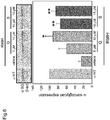
- FIG 6 the result obtained by treating cells expressing the R98H mutant of ⁇ -SG for 24 hours with either increasing concentration of Compound Q (5, 10 ⁇ M), increasing concentration of Compound S (10, 15 ⁇ M) or DMSO at 1 ⁇ concentration, used as negative control, are shown.
- Cells expressing the wild type form of ⁇ -sarcoglycan have been used for comparison.
- cells were lysed and total proteins resolved by SDS-PAGE.
- Western blotting has been performed by using ⁇ -SG specific antibody and ⁇ -actin specific antibody, used to normalize loaded proteins (in upper panel of Fig. 6 , a representative experiment is shown).
- ⁇ -SG The expression of ⁇ -SG in different samples has been determined by densitometric analysis of western blotting experiments and indicated as percentage of the protein present in cells expressing the wild type form of ⁇ -sarcoglycan.
- the graph in the lower part of Fig. 6 shows the average values (+/- standard error) of at least three independent experiments. Both Q and S compounds induced a dose dependent recovery of the R98H mutant that, at the highest concentrations, reached the level of the wild type protein.
- FIG 7 is shown the content of ⁇ -sarcoglycan protein present in HEK cells transfected with the D97G mutant of ⁇ -SG treated for 24 hours with either Compound E 10 ⁇ M, Compound H 15 ⁇ M, Compound I 10 ⁇ M, Compound Q 10 ⁇ M, Compound F 10 ⁇ M, Compound R 5 ⁇ M, Compound S 15 ⁇ M, Compound T 15 ⁇ M, Compound A 2 ⁇ M, or DMSO at 1 ⁇ concentration, used as negative control, are shown.
- Cells expressing the wild type form of ⁇ -sarcoglycan have been used for comparison. At the end of treatments, cells were lysed and total proteins resolved by SDS-PAGE.
- Western blotting has been performed by using ⁇ -SG specific antibody and ⁇ -actin specific antibody, used to normalize loaded proteins.
- the expression of ⁇ -SG in different samples has been determined by densitometric analysis of western blotting experiments and indicated as percentage of the protein present in cells expressing the wild type form of ⁇ -sarcoglycan.
- the graph of Fig. 7 shows the average values (+/- standard error) of at least three independent experiments. The compounds tested induce the recovery of the D97G mutant that in some cases reached the level present in HEK cells expressing the wild type protein.
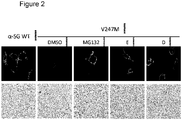
- HEK 293 cells expressing the V247M mutant have been treated for 24 hours with either Compound E (10 ⁇ M) or Compound D (10 ⁇ M), MG132 (positive control) or DMSO at 1 ⁇ concentration (negative control).
- Compound E 10 ⁇ M
- Compound D 10 ⁇ M
- MG132 positive control
- DMSO DMSO
- not permeabilized cells were incubated with a monoclonal antibody specific for an extracellular epitope of ⁇ -sarcoglycan in order to mark only the membrane resident ⁇ -sarcoglycan.
- cells expressing the wild type form of ⁇ -sarcoglycan have also been used.
- HEK 293 cells expressing the R98H mutant have been treated for 24 hours with either Compound H (15 ⁇ M), Compound I (10 ⁇ M), Compound Q (10 ⁇ M), Compound A (2 ⁇ M) or the vehicle DMSO at 1 ⁇ concentration used as negative control.
- Compound H 15 ⁇ M
- Compound I 10 ⁇ M
- Compound Q 10 ⁇ M
- Compound A 2 ⁇ M
- vehicle DMSO vehicle DMSO
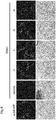
- HEK 293 cells expressing the R98H mutant have been treated for 24 hours with either two different concentration of Compound R (2,5 and 5 ⁇ M), or the vehicle DMSO at 1 ⁇ concentration used as negative control.
- cells expressing the wild type form of ⁇ -sarcoglycan have also been used.
- not permeabilized cells were incubated with a monoclonal antibody specific for an extracellular epitope of ⁇ -sarcoglycan in order to mark only the membrane resident ⁇ -sarcoglycan.
- Laser scanning microscopy analysis shows that, the wild type form of ⁇ -sarcoglycan correctly localized at the plasma-membrane.
- In the absence of treatment (vehicle) only traces of the R98H mutant protein were visible on the cell surface whereas, treatments with the compound R promoted the correct plasma-membrane localization of the mutant protein.
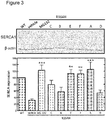
- SERCA1 The expression of SERCA1 in different samples has been determined by densitometric analysis and indicated as percentage of SERCA 1 content present in wild type expressing cells treated with DMSO.
- the densitometric analyses show that the Compounds tested were able to promote R164H mutant rescue to an extent comparable to that of wild type SERCA1.
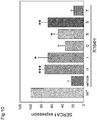
- FIG 10 is reported the content of SERCA1 protein present in HEK 293 cells transfected with the R164H mutant of SERCA1 and treated for 24 hours with either Compound H 15 ⁇ M, Compound I 10 ⁇ M, compound Q 10 ⁇ M, Compound R 5 ⁇ M, Compound S 15 ⁇ M, Compound T 15 ⁇ M or the vehicle DMSO at 1 ⁇ concentration, used as negative control.
- Cells expressing the wild type form of SERCA1 have also been used for comparison.
- cells were lysed and total protein resolved by SDS-PAGE. Western blotting analysis has been performed by using SERCA1 specific antibody and ⁇ -actin specific antibody, to normalize loaded proteins.
- SERCA1 The expression of SERCA1 in different samples has been determined by densitometric analysis and indicated as percentage of SERCA 1 content present in wild type expressing cells.
- the graph of Fig. 10 reports the average values (+/standard error) of at least three independent experiments. The compounds tested were able to promote R164H mutant rescue to an extent that in some cases is comparable to that of wild type SERCA1.
- the preclinical effect of a CFTR correctors according to the invention in sarcoglycanopathies can be assessed, for example, in one or more animal models of the diseases as described here below.
- LGMD2D As animal model for LGMD2D is available the KO ⁇ -SG mice (Liu and Engvall 1999), for LGMD2E the KO ⁇ -SG mice (Araishi et al. 1999), for LGMD2C the KO ⁇ -SG mice (Hack et al. 2000) for LGMD2F the KO ⁇ - SG mice (Hack et al. 2000).
- these animal models are unsuitable for studying the preclinical effect of the invention as they don't produce the sarcoglycan proteins at all.
- Knock In (KI) mice, expressing the mutated forms of each sarcoglycan should be necessary.
- AAVs Adeno Associated Viruses
- Ex vivo experiments are performend on explanted gastrocnemious muscles from sarcoglycanopathy animal models as described above. As described in Assereto et al. 2005, the explanted muscles are quickly cleaned from fat, connective tissue, and blood; divided bundles of about 5-10 muscle fibers and incubated with either a suitable dosage of a CFTR correctors according to the invention, the proteasome inhibitor bortezomib (Velcade) (Gastaldello et al 2008, Bonuccelli et al 2007) used as positive control or drugs vehicle used as negative control.
- a suitable dosage of a CFTR correctors according to the invention, the proteasome inhibitor bortezomib (Velcade) (Gastaldello et al 2008, Bonuccelli et al 2007) used as positive control or drugs vehicle used as negative control.
- explants are rapidly homogenized and the expression of sarcoglycans is tested by western blotting analyses.
- In vivo experiments are performed by localized injection in gastrocnemious muscles of sarcoglycanopathy animal models of either a CFTR corrector or Velcade used as positive control, the contralateral muscles, injected with the drug vehicles, represent the negative control.
- animals are sacrificed and muscles are either rapidly frozen to further immunofluorescent analysis concerning the localization of the rescued sarcoglycans or homogenized and analyzed by western blotting to verify the expression of the mutated proteins.
- BD Brody's disease
- Myoblasts either from healty and affected patients will be incubated with either CFTR correctors, the proteasome inhibitor Velcade used as positive control or the drug vehicles used as negative control.
- Quantitative, topological and functional rescue of sarcoglycans and SERCA1 will be determined by western blotting, immunofluorescence analyses and functional assays.
Landscapes
- Health & Medical Sciences (AREA)
- Pharmacology & Pharmacy (AREA)
- Veterinary Medicine (AREA)
- Public Health (AREA)
- General Health & Medical Sciences (AREA)
- Chemical & Material Sciences (AREA)
- Animal Behavior & Ethology (AREA)
- Life Sciences & Earth Sciences (AREA)
- Medicinal Chemistry (AREA)
- Epidemiology (AREA)
- Physical Education & Sports Medicine (AREA)
- Organic Chemistry (AREA)
- Nuclear Medicine, Radiotherapy & Molecular Imaging (AREA)
- General Chemical & Material Sciences (AREA)
- Chemical Kinetics & Catalysis (AREA)
- Orthopedic Medicine & Surgery (AREA)
- Neurology (AREA)
- Bioinformatics & Cheminformatics (AREA)
- Engineering & Computer Science (AREA)
- Medicines That Contain Protein Lipid Enzymes And Other Medicines (AREA)
- Pharmaceuticals Containing Other Organic And Inorganic Compounds (AREA)
- Electrotherapy Devices (AREA)
- Orthopedics, Nursing, And Contraception (AREA)
Description
- The present invention is directed to compounds and pharmaceutically acceptable salts thereof which are correctors of the cellular processing of cystic fibrosis transmembrane conductance regulator protein (hereinafter CFTR), for use in the treatment of genetic disorders affecting striated muscle selected from sarcoglycanopathies or Brody's disease (BD).
- Genetic disorders are pathologies caused by macroscopic alteration in chromosomes or microscopic lesions (point mutations, deletions or insertion) in genes. A genetic disorder is heritable when the genomic alteration is present in progenitors and can be transferred to the progeny. A genetic disorder is autosomal dominant when only one mutated copy of the gene (inherited by one progenitor) is necessary and sufficient for an organism to be affected. A genetic disorder is autosomal recessive when two copies of the gene (inherited by both progenitors) must be mutated for an organism to be affected. Over 4000 human diseases are due to single gene mutations, many of them affecting striated muscle tissues. Among these, sarcoglycanopathies are severe muscular dystrophies caused mainly by missense mutations in either α-, β-, γ- or δ sarcoglycan coding genes and are identified as Limb Girdle Muscular Dystrophy type 2D, 2E, 2C and 2F, respectively (Laval and Bushby 2004). Sarcoglycans (SGs) form a tetrameric complex linked to the dystrophin-associated protein complex and, in addition to the main structural role, they are involved in signaling [Barton 2006, Yoshida et al 1998]. In particular, α-SG is an ecto-ATPase enzyme [Sandonà et al 2004] possibly implicated in the extracellular ATP-dependent modulation of skeletal muscle contractility [Sandonà et al 2005]. Gene defects in a single sarcoglycan result in the absence or reduced expression of all SG subunits, with impaired tetramer formation and plasma membrane localization [Sandonà and Betto 2009]. About 75% of α-SG, 59% of β-SG, 40% of γ-SG and 57% of δ-SG genetic defects are missense mutations, known to generate full length proteins with single aminoacid substitution [Leiden Open Variation database]. Recently, it has been demonstrated that α-SG missense mutants are substrates of the ER quality control and are prematurely disposed of by the ubiquitin-proteasome system [Gastaldello et al 2008, Bartoli et al 2008].
- In 1969, Brody first described in a human patient a muscular disorder characterized by an "exercise-induced impairment of muscle relaxation": muscle contraction was normal but relaxation appeared delayed after repetitive contractions [Brody 1969]. So far, Brody's disease (BD) is known as a rare inherited disorder of skeletal muscle due to a sarco(endo)plasmic reticulum Ca2+-ATPase (SERCA) deficiency, resulting from missense, non sense mutations and in frame deletions of ATP2A1 gene, coding for SERCA1 isoform [Bertchtold et al 2000].
Three isoforms of SERCA proteins are differentially expressed by three genes. The SERCA1 isoform is expressed in fast-twitch (type 2) skeletal muscle. SERCA1 deficiency results in delayed muscle relaxation due to prolonged increase of calcium concentration in skeletal muscle fibres cytoplasm.
A muscular disorder defined as "congenital pseudomyotonia" (PMT) [Testoni et al 2008] has been described in bovine species. Clinical symptoms are exercise-induced muscle stiffness. DNA sequencing provided evidence of a missense mutations (R164H) in bovine ATP2A1 gene [Drögemüller et al 2008]. Moreover, biochemical results clearly demonstrated that cattle pathological muscles are characterized by a selective reduction in the expression level of SERCA1 protein, which accounts for the reduced Ca2+-ATPase activity. By contrast, SERCA1 mRNA levels found in all affected animals were comparable with mRNA expression in normal samples [Sacchetto et al 2009].
For both Brody disease and cattle PMT a defect of ATP2A1 gene, resulting in selective reduction in SERCA1expression level, has been indicated as causative of the disease and cattle PMT has been defined as the true counterpart of human Brody disease.
Since the mutations of ATP2A1 gene do not affect the transcription [Sacchetto et al 2009], it has been hypothesized that the resulting protein could be corrupted and could have an enhanced susceptibility to the protein degradation via ubiquitin-proteasomal pathway before being embedded into Sarcoplasmic Reticulum (SR) bilayer. This hypothesis turned out to be correct: results have demonstrated that SERCA1 R164H mutant is substrate of the quality control system and prematurely disposed of by the ubiquitin-proteasome pathway (Bianchini et al submitted for publication). - Sarcoglycanopathies and BD, even though affecting striated muscle, are very different genetic disorders both for symptoms and etiology. However, it is possible to recognize as common trait of these disorders the posttranscriptional removal of the mutated gene product because of folding problems, that leads to a de facto loss of function.
- At present, there are no effective treatments for sarcoglycanopathies or Brody's disease (BD).
- BD patients are usually treated with dantrolene [Vattemi et al. 2010], a muscle relaxant (blocker of the dihydro-pyridine receptor-RyR complex), but due to liver toxicity, dantrolene is unsuitable for long-term treatment. Both gene and cell therapy strategies are under evaluation for the cure of sarcoglycanopathies, but are far from being amenable of clinical trial [Daniel et al 2007]. Exon skipping strategy, very promising in Duchenne Muscular Dystrophy [Hoffman et al 2011] is not appropriate for sarcoglycanopathies, and BD since mutant proteins don't have dispensable sequence that could be skipped away. The use of molecules able to promote stop-codon-read-through is potentially applicable in these disorders when a nonsense mutation is present. However, in sarcoglycanopathies, for example, the percentage of missense mutations is considerably higher than that of other gene defects.
There are no drugs currently approved to treat sarcoglycanopathies, or Brody's disease (BD) and therefore there is a great unmet need for the treatment of such diseases.
We have now found that small molecules known as "CFTR correctors" are able to reverse the pathological phenotype of sarcoglycanopathies or BD by promoting folding and proper targeting of the mutated misfolded proteins and thus can be used in the treatment of genetic disorders affecting striated muscle selected from sarcoglycanopathies or Brody's disease (BD). -
- Bartoli M, Gicquel E, Barrault L, Soheili T, Malissen M, Malissen B, Vincent-Lacaze N, Perez N, Udd B, Danos O, Richard I. Mannosidase I inhibition rescues the human α-sarcoglycan R77C recurrent mutation. Hum Mol Genet 2008,17:1214-21.
- Barton ER. Impact of sarcoglycan complex on mechanical signal transduction in murine skeletal muscle. Am. J. Physiol. 2006, 290:C411-419.
- Berchtold MW, Brinkmeier H, Müntener M. Calcium ion in skeletal muscle: its crucial role for muscle function, plasticity, and disease. Physiol Rev 2000, 80:1215-65.
- Brody IA. Muscle contracture induced by exercise: a syndrome attributable to decreased relaxing factor. New Eng. J Med 1969, 281:187-92.
- Daniel N, Richard I, Bartoli M. Ins and outs of therapy in limb girdle muscular dystrophies. Int. J. Biochem. Cell Biol. 2007, 39, 1608-24.
- Drögemüller C, Drögemüller M, Leeb T, Mascarello F, Testoni S, Rossi M, Gentile A, Damiani E, Sacchetto R. Identification of a missense mutation in the bovine ATP2A1 gene in congenital pseudomyotonia of Chianina cattle: an animal model of human Brody disease. Genomics 2008, 92: 474-77.
- Gastaldello S, D'Angelo S, Franzoso S, Fanin M, Angelini C, Betto R, Sandonà D. Inhibition of proteasome activity promotes the correct localization of disease-causing α-sarcoglycan mutants in HEK-293 cells constitutively expressing β, γ-, and δ-sarcoglycan. Am J Pathol 2008, 173:170-81.
- Hoffman EP, Bronson A, Levin AA, Takeda S, Yokota T, Baudy AR, Connor EM. Restoring dystrophin expression in duchenne muscular dystrophy muscle progress in exon skipping and stop codon read through. Am J Pathol. 2011, 179:12-22.
- Laval SH and Bushby KMD. Limb-girdle muscular dystrophies - from genetics to molecular pathology. Neuropathology and Applied Neurobiology 2004, 30: 91-105. Sacchetto R, Testoni S. Gentile A. Damiani E, Rossi M, Liguori R, Drögemüller C, Mascarello F. A defective SERCA1 protein is responsible for congenital pseudomyotonia in Chianina cattle. Am J Pathol 2009, 174:565-73.
- Sandonà D, Gastaldello S, Martinello T, Betto R. Characterization of the ATP-hydrolyzing activity of α-sarcoglycan. Biochem J 2004, 381:105-12.
- Sandonà D, Danieli-Betto D, Germinario E, Biral D, Martinello T, Lioy A, Tarricone E, Gastaldello S, Betto R. The T-tubule membrane ATP-operated P2X4 receptor influences contractility of skeletal muscle. FASEB Journal 2005, 19:1184-1186.
- Sandonà D, Betto R. Sarcoglycanopathies: molecular pathogenesis and therapeutic prospects. Expert Rev Mol Med 2009, 11:e28.
- Testoni S, Boni P, Gentile A. Congenital pseudomyotonia in Chianina cattle. Vet Rec 2008, 163:252.
- Vattemi G, Gualandi F, Oosterhof A, Marini M, Tonin P, Rimessi P, Neri M, Guglielmi V, Russignan A, Poli C, van Kuppevelt TH, Ferlini A, Tomelleri G. Brody Disease: Insights Into Biochemical Features of SERCA1 and Identification of a Novel Mutation. J Neuropathol Exp Neurol 2010, 69:246-52.
- Yoshida T, Pan Y, Hanada H, Iwata Y, Shigekawa M. Bidirectional signaling between sarcoglycans and the integrin adhesion system in cultured L6 myocytes. J. Biol. Chem. 1998, 273: 1583-1590.
- The solution provided by the present invention is the use of CFTR correctors that promote folding and trafficking of CFTR, in the treatment of genetic disorders affecting striated muscle selected from sarcoglycanopathies or Brody's disease (BD). Thus, the present invention provides a CFTR corrector for use in the treatment of genetic disorders affecting striated muscle selected from sarcoglycanopathies or Brody's disease (BD).
- In another aspect, the present invention provides a method of treatment of genetic disorders affecting striated muscle selected from sarcoglycanopathies or Brody's disease (BD) comprising administering a safe and effective amount of a CFTR corrector to a patient in need thereof.
- In another aspect, the present invention provides pharmaceutical compositions comprising a CFTR corrector and one or more pharmaceutically acceptable excipients for use in the treatment of genetic disorders affecting striated muscle selected from sarcoglycanopathies or Brody's disease (BD).
-
-
Figure 1 CFTR correctors (Compounds A to F) promote the rescue of R98H mutant of alpha-sarcoglycan in HEK293 cell model. Alpha-sarcoglycan (a-SG) protein level has been determined by western blot (a representative experiment is shown in the top panel) on total protein content purified from cells expressing the R98H mutant treated with either CFTR correctors (compound A, B, C, D, E and F as indicated), MG132 (proteasome inhibitor) used as positive control, or correctors vehicle (DMSO) used as negative control. Cells expressing the wild type form of alpha-sarcoglycan have also been analyzed, for comparison. To normalize protein content, the expression of β-actin has been used as an internal marker. The graph in the lower part of the figure shows the average values (+/- standard error) of alpha-sarcoglycan expression determined by densitometric analyses of at least three independent experiments. Values are expressed as percentage of the alpha-sarcoglycan protein content present in cells expressing the R98H mutant treated with vehicle. **, P≤ 0.01; *, P≤ 0.05. -
Figure 2 CFTR correctors (Compounds E and D) promote the correct membrane localization of V247M alpha-sarcoglycan in HEK293 cells. Cells expressing the V247M mutant of alpha-sarcoglycan cultivated on glass coverslips have been treated with either correctors vehicle (DMSO) used as negative control, MG132 used as positive control, compound E and compound D. Cells expressing the wild type form of alpha-sarcoglycan have also been utilized (a-SG WT) for comparison. After treatments, intact cells have been immunodecorated with an antibody specific for an extracellular epitope of alpha-sarcoglycan in order to mark only the membrane resident protein. The bounded antibody has been visualized by a secondary antibody conjugated with the fluorescence dye TRITC. Images have been recorder with a Leica laser scanning confocal microscope. Behind each fluorescence image, the same field collected in transmission light, is reported. -
Figure 3 CFTR correctors (Compounds A to F) promote the rescue of R164H mutant of SERCA1 in HEK293 cells. SERCA1 protein level has been determined by western blot (a representative experiment is shown in the top panel) on total protein of lysates from HEK 293 cells expressing the R164H mutant treated with either CFTR correctors (compound A, B, C, D, E and F as indicated), MG132 or correctors vehicle (DMSO). Cells expressing the wild type form of SERCA1 have also been utilized, for comparison. To normalized protein loading, the expression of β-actin has been used as an internal marker. The graph in the lower part of the figure shows the average values (+/- standard error) of SERCA1 expression determined by densitometric analyses of at least three independent experiments. Values are expressed as percentage of the SERCA protein content present in cells expressing the wild type form. ***, P≤ 0.001; **, P≤ 0.01. -
Figure 4 CFTR correctors (Compounds H, I, T and A) promote the rescue of R98H mutant of alpha-sarcoglycan in HEK293 cell model. Alpha-sarcoglycan protein level has been determined by western blot (a representative experiment is shown in the top panel) on total protein content purified from cells expressing the R98H mutant treated with eithercompound H 15 µM, I 10 µM,T 15 µM, and A 2 µM (as indicated), or DMSO (vehicle), used as negative control. Cells expressing the wild type form of alpha-sarcoglycan (a-WT) have been analyzed for comparison. Blot has been probed with α-sarcoglycan (a-SG) specific antibody. To normalize protein content, the expression of β-actin (β-act) has been used as an internal marker. The graph in the lower part of the figure shows the average values (+/- standard error) of alpha-sarcoglycan expression determined by densitometric analyses of at least three independent experiments. Values are expressed as percentage of the alpha-sarcoglycan protein content present in untreated cells expressing the WT protein. ***, P≤ 0.001; **, P≤ 0.01. -
Figure 5 The Compound R promotes the rescue of R98H mutant of alpha-sarcoglycan in HEK293 cell model in dose dependent manner. Alpha-sarcoglycan protein level has been determined by western blot (a representative experiment is shown in the top panel) on total protein content purified from cells expressing the R98H mutant treated with either increasing concentrations (as indicated) of compound R, or DMSO (vehicle) used as negative control. Cells expressing the wild type form of alpha-sarcoglycan (a-WT) have been analyzed, for comparison. Blot has been probed with α-sarcoglycan (a-SG) specific antibody. To normalize protein content, the expression of β-actin (β-act) has been used as an internal marker. The graph in the lower part of the figure shows the average values (+/- standard error) of alpha-sarcoglycan expression determined by densitometric analyses of at least three independent experiments. Values are expressed as percentage of the alpha-sarcoglycan protein content present in untreated cells expressing the WT protein. **, P≤ 0.01; *, P≤ 0.05. -
Figure 6 Compounds Q and S promote the rescue of R98H mutant of alpha-sarcoglycan in HEK293 cell model in dose dependent manner. Alpha-sarcoglycan protein level has been determined by western blot (a representative experiment is shown in the top panel) on total protein content purified from cells expressing the R98H mutant treated with either increasing concentrations (as indicated) of compounds Q and S, or DMSO (vehicle) used as negative control. Cells expressing the wild type form of alpha-sarcoglycan (a-WT) have been analyzed, for comparison. Blot has been probed with α-sarcoglycan (a-SG) specific antibody. To normalize protein content, the expression of β-actin (β-act) has been used as an internal marker. The graph in the lower part of the figure shows the average values (+/- standard error) of alpha-sarcoglycan expression determined by densitometric analyses of at least three independent experiments. Values are expressed as percentage of the alpha-sarcoglycan protein content present in untreated cells expressing the WT protein. **, P≤ 0.01; *, P≤ 0.05. -
Figure 7 CFTR correctors (Compounds E, H, I, Q, F, R, S, T and A) promote the rescue of D97G mutant of alpha-sarcoglycan in HEK293 cell model. Alpha-sarcoglycan protein level has been determined by western blot on total protein content purified from cells expressing the D97G mutant treated with eithercompound E 10 µM,H 15 µM, I 10 µM,Q 10 µM,F 10 µM, R 5 µM,S 15 µM,T 15 µM, and A 2 µM (as indicated), or DMSO (vehicle) used as negative control. Cells expressing the wild type form of alpha-sarcoglycan (a-WT) have been analyzed for comparison. The graph shows the average values (+/- standard error) of alpha-sarcoglycan expression determined by densitometric analyses of at least three independent experiments. Values are expressed as percentage of the alpha-sarcoglycan protein content present in untreated cells expressing the WT protein. ***, P≤ 0.001; **, P≤ 0.01; *, P≤ 0.05. -
Figure 8 Compounds H, I, Q, and A promote the correct membrane localization of R98H alpha-sarcoglycan in HEK293 cells. Cells expressing the R98H mutant of alpha-sarcoglycan cultivated on glass coverslips have been treated with either DMSO (vehicle) used as negative control, orcompound H 15 µM, I 10 µM,Q 10 µM and A 2 µM, for 24 hours. Cells expressing the wild type form of alpha-sarcoglycan (a-SG WT) have been utilized for comparison. After treatments, intact cells have been immunodecorated with an antibody specific for an extracellular epitope of alpha-sarcoglycan in order to mark only the membrane resident protein. Membrane-bound antibodies have been visualized by a secondary antibody conjugated with the fluorescence dye TRITC. Images have been recorded, at the same magnification, with a Leica laser scanning confocal microscope. Behind each fluorescence image, the same field collected in transmission light, is reported to estimate the number of cells present. -
Figure 9 Compound R promote the correct membrane localization of R98H alpha-sarcoglycan in HEK293 cells. Cells expressing the R98H mutant of alpha-sarcoglycan cultivated on glass coverslips have been treated with either DMSO (vehicle), used as negative control, or compound R at different concentrations (as indicated), for 24 hours. Cells expressing the wild type form of alpha-sarcoglycan (a-SG WT) have been utilized for comparison. After treatments, intact cells have been immunodecorated with an antibody specific for an extracellular epitope of alpha-sarcoglycan in order to mark only the membrane resident protein. Membrane-bound antibodies have been visualized by a secondary antibody conjugated with the fluorescence dye TRITC. All images have been recorded, at the same magnification, with a Leica laser scanning confocal microscope. Behind each fluorescence image, the same field collected in transmission light, is reported to estimate the number of cells present.. -
Figure 10 CFTR correctors (compounds H, I, Q, R, S and T) promote the rescue of R164H mutant of SERCA1 in HEK293 cell model. SERCA1 protein level has been determined by western blot on total protein content purified from cells expressing the R164H mutant treated with eithercompound H 15 µM, 110 µM,Q 10 µM, R 5 µM,S 15 µM andT 15 µM (as indicated), or DMSO (vehicle) used as negative control. Cells expressing the wild type form of SERCA1 (WT) have been analyzed for comparison. The graph shows the average values (+/- standard error) of SERCA1 expression determined by densitometric analyses of at least three independent experiments. Values are expressed as percentage of the SERCA1 protein content present in untreated cells expressing the WT protein. ***, P≤ 0.001; **, P≤ 0.01; *, P≤ 0.05. - The term "CFTR" as used herein means cystic fibrosis transmembrane regulator or a mutation thereof capable of regulator activity, including, but not limited, to ΔF508 CFTR.
- The term "CFTR correctors" as used herein means a molecule, correcting the defective cellular processing, able to increase the number of CFTR in a cellular membrane.
- The term "SERCA1" as used herein is the acronym of sarco(endo)plasmic reticulum Ca2+-ATPase isoform 1.
- "Protein folding" as used herein means the process by which a polypeptide chain folds to a specific three-dimensional protein structure assuming its functional shape or conformation.
- Protein trafficking is the mechanism by which proteins destined either to the plasma membrane or secretion transit through Endoplasmic Reticulum, Golgi apparatus and by transport vesicles reach the final destination.
- Misfoded protein as used herein means a protein unable to reach its functional shape or conformation because of the presence of missing or incorrect amino acids.
- The term "missense mutation" as used herein means a point mutation in which a single nucleotide is changed, resulting in a codon that codes for a different amino acid, thus for example: R98H mutant of α-sarcoglycan means that at position 98 of α-sarcoglycan sequence the amino acid R (Arginine) has been changed in H (Histidine); V247M mutant of α-sarcoglycan means that at position 247 of α-sarcoglycan sequence the amino acid V (Valine) has been changed in M (Methionine); R164H mutant of SERCA1 means that at position 164 of SERCA1 sequence the amino acid R (Arginine) has been changed in H (Histidine).
- The term "non sense mutation" as used herein means a point mutation in which a single nucleotide is changed, resulting in a stop codon.
- The term "in frame deletion" as used herein means a genetic mutation caused by deletions of three or multiple of three nucleotides from a DNA sequence leading to the loss of one of more amino acids with no other consequence on protein sequence.
- The term "ubiquitin" refers to a small regulatory protein that can be attached to proteins and label them for destruction through proteasome.
- The term "proteasome" refers to a macromolecular protein complex responsible of the ATP dependent degradation of ubiquitin tagged proteins.
- The term "primary culture" as used herein means cells either of human or animal origin prepared by mechanical or enzymatic dissociation of a specific tissue or bioptic fragment of tissue.
- The term "muscular biopsy" as used herein means a fragment of skeletal muscle tissue removed from either a human or animal subject that can be used to diagnose a diseases involving muscle tissue and that can be also used, after acquisition of informed consent, for research experiments.
- The term "disease animal model" means a living, non-human animal that, because of naturally occurring variation of its genome or because its genome has been artificially modified, develops a disease similar to a human condition.
- The term "Knock out (KO) mouse" means a genetically engineered mouse in which an existing gene has been inactivated, or "knocked out," by replacing it or disrupting it with an artificial piece of DNA. The loss of gene activity often causes changes in mouse's phenotype and can lead to the development of a disease similar to a human condition.
- The term "Knock in (KI) mouse" as used herein means a genetically engineered mouse in which the protein coding region of a gene has been replaced by the same coding region containing point mutations. The expression of the mutated gene can cause changes in mouse's phenotype and can lead to the development of a disease similar to a human condition.
- The term LGMD-2D means Limb Girdle Muscular Dystrophy type 2D (sarcoglycanopathy) caused by mutations of the SGCA gene coding for alpha-sarcoglycan.
- The term LGMD-2E means Limb Girdle Muscular Dystrophy type 2E (sarcoglycanopathy) caused by mutations of the SGCB gene coding for beta-sarcoglycan.
- The term LGMD-2C means Limb Girdle Muscular Dystrophy type 2C (sarcoglycanopathy) caused by mutations of the SGCG gene coding for gamma-sarcgoglycan.
- The term LGMD-2F means Limb Girdle Muscular Dystrophy type 2F (sarcoglycanopathy) caused by mutations of the SGCD gene coding for delta-sarcoglycan.
- As used herein, "treat" in reference to a disorder means: (1) to ameliorate the disorder or one or more of the biological manifestations of the disorder, (2) to interfere with (a) one or more points in the biological cascade that leads to or is responsible for the disorder or (b) one or more of the biological manifestations of the disorder, (3) to alleviate one or more of the symptoms or effects associated with the disorder, or (4) to slow the progression of the disorder or one or more of the biological manifestations of the disorder.
- "Treatment," thus, for example, covers any treatment of a condition or disease in a mammal, particularly in a human, and includes: (a) preventing the condition or disease, disorder or symptom thereof from occurring in a subject which may be predisposed to the condition or disease or disorder but has not yet been diagnosed as having it; (b) inhibiting the condition or disease, disorder or symptom thereof, such as, arresting its development; and (c) relieving, alleviating or ameliorating the condition or disease or disorder or symptom thereof, such as, for example, causing regression of the condition or disease or disorder or symptom thereof.
- As used herein, "safe and effective amount" in reference to CFTR correctors or a pharmaceutically acceptable salt thereof, or other pharmaceutically-active agent, means an amount of the compound sufficient to treat the patient's condition but low enough to avoid serious side effects (at a reasonable benefit/risk ratio) within the scope of sound medical judgment. A safe and effective amount of a compound will vary with the particular compound chosen (e.g. consider the potency, efficacy, and half-life of the compound); the route of administration chosen; the disorder being treated; the severity of the disorder being treated; the age, size, weight, and physical condition of the patient being treated; the medical history of the patient to be treated; the duration of the treatment; the nature of concurrent therapy; the desired therapeutic effect.
- As used herein, "patient" refers to a human (including adults and children) or other animal affected by a disease. In one embodiment, "patient" refers to a human.
- As used herein, "pharmaceutically acceptable excipient" means a pharmaceutically acceptable material, composition or vehicle involved in giving form or consistency to the pharmaceutical composition. Each excipient must be compatible with the other ingredients of the pharmaceutical composition when commingled such that interactions which would substantially reduce the efficacy of a compound of use according to the invention or a pharmaceutically acceptable salt thereof when administered to a patient and interactions which would result in pharmaceutical compositions that are not pharmaceutically acceptable are avoided. In addition, each excipient must of course be pharmaceutically-acceptable e.g. of sufficiently high purity.
- As used herein, the term "pharmaceutically acceptable salt" refers to a salt that retains the desired biological activity of the compound and exhibits minimal undesired toxicological effects. Pharmaceutically acceptable salts of compounds may be used to impart greater stability or solubility to a molecule thereby facilitating formulation into a dosage form.
- The present invention is defined in the appended claims.
- In one embodiment, the present invention provides correctors of the cellular processing of cystic fibrosis transmembrane conductance regulator protein (hereinafter CFTR), in the treatment of genetic disorder affecting striated muscle selected from sarcoglycanopathies or Brody's disease (BD) selected from .

- N-(2-(5-chloro-2-methoxyphenylamino)-4'-methyl-4,5'-bithiazol-2'-yl)pivalamide. (hereinafter Compound A).

- 4-Cyclohexyloxy-2-{1-[4-(4-methoxy-benzensulfonyl)-piperazin-1-yl]-ethyl}-quinazoline (hereinafter Compound B), individual stereoisomers thereof or a pharmaceutically acceptable salt thereof.

- 2-{1-[4-(4-Chloro-benzensulfonyl)-piperazin-1-yl]-ethyl}-4-piperidin-1-yl-quinazoline (hereinafter Compound C), individual stereoisomers thereof or a pharmaceutically acceptable salt thereof.

- 1-(benzo[d][1,3]dioxol-5-yl)-N-(5-((S)-(2-chlorophenyl)((R)-3-hydroxypyrrolidin-1-yl)methyl)thiazol-2-yl)cyclopropanecarboxamide (hereinafter Compound D) or a pharmaceutically acceptable salt thereof.

- N-phenyl-4-(4-vinylphenyl)thiazol-2-amine (hereinafter Compound S) or a pharmaceutically acceptable salt thereof.


- N-[2-(5-Chloro-2-methoxy-phenylamino)-4'-methyl-[4,5']bithiazolyl-2'-yl]-benzamide (hereinafter Compound E);

- N-(2-(3-acetylphenylamino)-4'-methyl-4,5'-bithiazol-2'-yl)-benzamide (hereinafter compound Q);

- N-(2-(2-methoxyphenylamino)-4'-methyl-4,5'-bithiazol-2'-yl)-benzamide (hereinafter Compound R);
or a pharmaceutically acceptable salt thereof.
or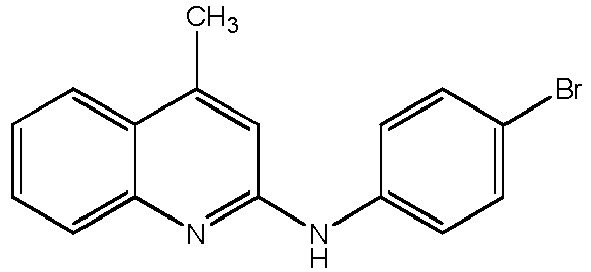
- N-(4-bromophenyl)-4-methylquinolin-2-amine (hereinafter Compound I);
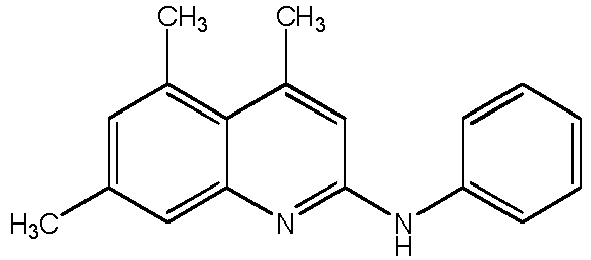
- 4,5,7-trimethyl-N-phenylquinolin-2-amine (hereinafter Compound H); or a pharmaceutically acceptable salt thereof.

- 3-(6-(1-(2,2-difluorobenzo[d][1,3]dioxo)-5-yl)cyclopropanecarboxamido)-3-methylpyridin-2-yl)benzoic acid (hereinafter Compound U) or a pharmaceutically acceptable salt thereof.
- In another embodiment, the present invention provide CFTR correctors for the use in the treatment of genetic disorders affecting striated muscle selected from sarcoglycanopathies, or Brody's disease (BD) which are selected from:

- 7-chloro-4-(4-(4-chlorophenylsulfonyl)piperazin-1-yl)quinoline (hereinafter Compound F);

- (R)-1-(2,2-difluorobenzo[d][1,3]dioxol-S-yl)-N-(1-(2,3-dihydroxypropyl)-6-fluoro-2-(1-hydroxy-2-methylpropan-2-yl)-1H-indol-5-yl)cyclopropanecarboxamide (hereinafter Compound V);or a pharmaceutically acceptable salt thereof.
- Compounds of the invention may be administered as a pharmaceutically acceptable salt. These pharmaceutically acceptable salts may be prepared in situ during the final isolation and purification of the compound, or by separately reacting the purified compound, or a non-pharmaceutically acceptable salt thereof, with a suitable base or acid. For a review on suitable salts see Berge et al., J. Pharm. Sci., 1977, 66, 1-19.
- Such salts include: (1) acid addition salts, formed with inorganic acids such as hydrochloric acid, hydrobromic acid, sulfuric acid, nitric acid, phosphoric acid, and the like; or formed with organic acids such as acetic acid, propionic acid, hexanoic acid, cyclopentanepropionic acid, glycolic acid, pyruvic acid, lactic acid, malonic acid, succinic acid, malic acid, maleic acid, fumaric acid, tartaric acid, citric acid, benzoic acid, 3-(4- hydroxybenzoyl)benzoic acid, cinnamic acid, mandelic acid, methanesulfonic acid, ethanesulfonic acid, 1,2-ethanedisulfonic acid, 2-hydroxyethanesulfonic acid, benzenesulfonic acid, 4-chlorobenzenesulfonic acid, 2-naphthalenesulfonic acid, 4-toluenesulfonic acid, camphorsulfonic acid, glucoheptonic acid, 4,4'-methylenebis-(3-hydroxy-2-ene-1-carboxylic acid), 3-phenylpropionic acid, trimethylacetic acid, tertiary butylacetic acid, lauryl sulfuric acid, gluconic acid, glutamic acid, hydroxynaphthoic acid, salicylic acid, stearic acid, muconic acid, and the like; or (2) salts formed when an acidic proton present in the parent compound either is replaced by a metal ion, e.g., an alkali metal ion, an alkaline earth ion, or an aluminum ion; or coordinates with an organic base such as ethanolamine, diethanolamine, triethanolamine, tromethamine, N-methylglucamine, and the like.
- The compounds for use according to the invention may be made by a variety of methods, including standard chemistry. Certain of the compounds for use according to the invention are well known and readily available from chemical supply houses. Thus for example, Compound A may be prepared according to the procedure as described in
WO 2009051909 . - Compound B and C and may be prepared according to the procedure as described in
WO200411104 - Compound D may be prepared according to the procedure as described in
WO 2007021982 . - Compounds E, H, I,, Q, R, S and T may be prepared according to the procedure as described in
WO2006101740 . - Compounds U and V may be prepared according to the procedures as described in
WO2007056341 andWO2007117715 respectively. - Alternatively certain compounds for use according to the invention are commercially available such as for example Compounds F, H, I, O,, Q, R, S, T, U and V are available from Exclusive Chemistry Ltd, Selleckchem or Medchem Express LLC
- The methods of treatment of the invention comprise administering a safe and effective amount of a corrector of CFTR to a patient in need thereof.
- A corrector of CFTR according to the invention may be administered by any suitable route of administration, in particular oral administration.
- A corrector of CFTR according to the invention may be administered according to a dosing regimen wherein a number of doses are administered at varying intervals of time for a given period of time. For example, doses may be administered one, two, three, or four times per day.
- Doses may be administered until the desired therapeutic effect is achieved or indefinitely to maintain the desired therapeutic effect. Suitable dosing regimens, including the duration such regimens are administered, may depend on the severity of the disorder being treated, the age and physical condition of the patient being treated, the medical history of the patient to be treated, the nature of concurrent therapy, the desired therapeutic effect, and like factors within the knowledge and expertise of the skilled artisan. It will be further understood by such skilled artisans that suitable dosing regimens may require adjustment given an individual patient's response to the dosing regimen or over time as individual patient needs change.
In one aspect, the invention provides a CFTR corrector for use in the treatment of sarcoglycanopathies. - In one aspect, the invention provides a CFTR corrector for use in the treatment of, Brody's disease (BD).
In one embodiment, the invention provides a CFTR corrector selected from: - N-(2-(5-chloro-2-methoxyphenylamino)-4'-methyl-4,5'-bithiazol-2'-yl)pivalamide (Compound A);
- 4-Cyclohexyloxy-2-{1-[4-(4-methoxy-benzensulfonyl)-piperazin-1-yl]-ethyl}-quinazoline (Compound B);
- 2-{1-[4-(4-Chloro-benzensulfonyl)-piperazin-1-yl]-ethyl}-4-piperidin-1-yl-quinazoline (Compound C);
- 1-(benzo[d][1,3]dioxol-5-yl)-N-(5-((S)-(2-chlorophenyl)((R)-3-hydroxypyrrolidin-1-yl)methyl)thiazol-2-yl)cyclopropanecarboxamide (Compound D);
- N-[2-(5-Chloro-2-methoxy-phenylamino)-4'-methyl-[4,5']bithiazolyl-2'-yl]-benzamide (Compound E);
- 7-chloro-4-(4-(4-chlorophenylsulfonyl)piperazin-1-yl)quinoline (Compound F); 4,5,7-trimethyl-N-phenylquinolin-2-amine (Compound H);
- N-(4-bromophenyl)-4-methylquinolin-2-amine (Compound I);
- N-(2-(3-acetylphenylamino)-4'-methyl-4,5'-bithiazol-2'-yl)benzamide(Compound Q);
- N-(2-(2-methoxyphenylamino)-4'-methyl-4,5'-bithiazol-2'-yl)benzamide(Compound R);
- N-phenyl-4-(4-vinylphenyl)thiazol-2-amine (Compound S);
- 2-(6-methoxy-4-methylquinazolin-2-ylamino)-5,6-dimethylpyrimidin-4(1H)-one (Compound T);
- 3 -(6-(1-(2,2- difluorobenzo[d][1,3]dioxo)-5-yl)cyclopropanecarboxamido)-3-methylpyridin-2-yl)benzoic acid (Compound U);
- (R)-1-(2,2-difluorobenzo[d][1,3]dioxol-5-yl)-N-(1-(2,3-dihydroxypropyl)-6-fluoro-2-(1-hydroxy-2-methylpropan-2-yl)-1H-indol-5-yl)cyclopropanecarboxamide (Compound V);
- for use in the treatment of genetic disorders affecting striated muscle selected from sarcoglycanopathies or Brody's disease (BD)
- In one embodiment, the invention provides a CFTR corrector selected from:
- N-(2-(5-chloro-2-methoxyphenylamino)-4'-methyl-4,5'-bithiazol-2'-yl)pivalamide (Compound A);
- 4-Cyclohexyloxy-2-{1-[4-(4-methoxy-benzensulfonyl)-piperazin-1-yl]-ethyl}-quinazoline (Compound B);
- 2-{1-[4-(4-Chloro-benzensulfonyl)-piperazin-1-yl]-ethyl}-4-piperidin-1-yl-quinazoline (Compound C);
- 1-(benzo[d][1,3]dioxol-5-yl)-N-(5-((S)-(2-chlorophenyl)((R)-3-hydroxypyrrolidin-1-yl)methyl)thiazol-2-yl)cyclopropanecarboxamide (Compound D);
- N-[2-(5-Chloro-2-methoxy-phenylamino)-4'-methyl-[4,5']bithiazolyl-2'-yl]-benzamide (Compound E);
- 7-chloro-4-(4-(4-chlorophenylsulfonyl)piperazin-1-yl)quinoline (Compound F); 4,5,7-trimethyl-N-phenylquinolin-2-amine (Compound H);
- N-(4-bromophenyl)-4-methylquinolin-2-amine (Compound I);
- N-(2-(3-acetylphenylamino)-4'-methyl-4,5'-bithiazol-2'-yl)-benzamide (Compound Q);
- N-(2-(2-methoxyphenylamino)-4'-methyl-4,5'-bithiazol-2'-yl)-benzamide (Compound R);
- N-phenyl-4-(4-vinylphenyl)thiazol-2-amine (Compound S);
- 2-(6-methoxy-4-methylquinazolin-2-ylamino)-5,6-dimethylpyrimidin-4(1H)-one (Compound T);
- 3 -(6-(1-(2,2-difluorobenzo[d][1,3]dioxol-5-yl)cyclopropanecarboxamido)-3-methylpyridin-2-yl)benzoic acid (Compound U);
- (R)-1-(2,2-difluorobenzo[d][1,3]dioxol-5-yl)-N-(1-(2,3-dihydroxypropyl)-6-fluoro-2-(1-hydroxy-2-methylpropan-2-yl)-1H-indol-5-yl)cyclopropanecarboxamide (Compound V);
- or pharmaceutically acceptable salt thereof for use in the treatment of genetic disorders affecting striated muscle selected from sarcoglycanopathies orBrody's disease (BD).
- In one embodiment, the invention provides a CFTR corrector selected from:
- N-(2-(5-chloro-2-methoxyphenylamino)-4'-methyl-4,5'-bithiazol-2'-yl)pivalamide (Compound A);
- 4-Cyclohexyloxy-2-{1-[4-(4-methoxy-benzensulfonyl)-piperazin-1-yl]-ethyl}-quinazoline (Compound B);
- 2-{1-[4-(4-Chloro-benzensulfonyl)-piperazin-1-yl]-ethyl}-4-piperidin-1-yl-quinazoline (Compound C);
- 1-(benzo[d][1,3]dioxol-5-yl)-N-(5-((S)-(2-chlorophenyl)((R)-3-hydroxypyrrolidin-1-yl)methyl)thiazol-2-yl)cyclopropanecarboxamide (Compound D);
- N-[2-(5-Chloro-2-methoxy-phenylamino)-4'-methyl-[4,5']bithiazolyl-2'-yl]-benzamide (Compound E);
- 7-chloro-4-(4-(4-chlorophenylsulfonyl)piperazin-1-yl)quinoline (Compound F); 4,5,7-trimethyl-N-phenylquinolin-2-amine (Compound H);
- N-(4-bromophenyl)-4-methylquinolin-2-amine (Compound I);
- N-(2-(3-acetylphenylamino)-4'-methyl-4,5'-bithiazol-2'-yl)benzamide (Compound Q);
- N-(2-(2-methoxyphenylamino)-4'-methyl-4,5'-bithiazol-2'-yl)benzamide (Compound R);
- N-phenyl-4-(4-vinylphenyl)thiazol-2-amine (Compound S);
- 2-(6-methoxy-4-methylquinazolin-2-ylamino)-5,6-dimethylpyrimidin-4(1H)-one (Compound T); for use in the treatment of genetic disorders affecting striated muscle selected from sarcoglycanopathies or Brody's disease (BD)
- In one embodiment, the invention provides a CFTR corrector selected from:
- N-(2-(5-chloro-2-methoxyphenylamino)-4'-methyl-4,5'-bithiazol-2'-yl)pivalamide (Compound A);
- 4-Cyclohexyloxy-2-{1-[4-(4-methoxy-benzensulfonyl)-piperazin-1-yl]-ethyl}-quinazoline (Compound B);
- 2-{1-[4-(4-Chloro-benzensulfonyl)-piperazin-1-yl]-ethyl}-4-piperidin-1-yl-quinazoline (Compound C);
- 1-(benzo[d][1,3]dioxol-5-yl)-N-(5-((S)-(2-chlorophenyl)((R)-3-hydroxypyrrolidin-1-yl)methyl)thiazol-2-yl)cyclopropanecarboxamide (Compound D);
- N-[2-(5-Chloro-2-methoxy-phenylamino)-4'-methyl-[4,5']bithiazolyl-2'-yl]-benzamide (Compound E);
- 7-chloro-4-(4-(4-chlorophenylsulfonyl)piperazin-1-yl)quinoline (Compound F); 4,5,7-trimethyl-N-phenylquinolin-2-amine (Compound H);
- N-(4-bromophenyl)-4-methylquinolin-2-amine (Compound I);
- N-(2-(3-acetylphenylamino)-4'-methyl-4,5'-bithiazol-2'-yl)benzamide (Compound Q);
- N-(2-(2-methoxyphenylamino)-4'-methyl-4,5'-bithiazol-2'-yl)benzamide (Compound R);
- N-phenyl-4-(4-vinylphenyl)thiazol-2-amine (Compound S);
- 2-(6-methoxy-4-methylquinazolin-2-ylamino)-5,6-dimethylpyrimidin-4(1H)-one (Compound T);
- or pharmaceutically acceptable salt thereof for use in the treatment of genetic disorders affecting striated muscle selected from sarcoglycanopathies and Brody's disease (BD).
- In one embodiment, the invention provides the use of a CFTR corrector selected from:
- N-(2-(5-chloro-2-methoxyphenylamino)-4'-methyl-4,5'-bithiazol-2'-yl)pivalamide (Compound A);
- 4-Cyclohexyloxy-2-{1-[4-(4-methoxy-benzensulfonyl)-piperazin-1-yl]-ethyl}-quinazoline (Compound B);
- 2-{1-[4-(4-Chloro-benzensulfonyl)-piperazin-1-yl]-ethyl}-4-piperidin-1-yl-quinazoline (Compound C);
- 1-(benzo[d][1,3]dioxol-5-yl)-N-(5-((S)-(2-chlorophenyl)((R)-3-hydroxypyrrolidin-1-yl)methyl)thiazol-2-yl)cyclopropanecarboxamide (Compound D);
- N-[2-(5-Chloro-2-methoxy-phenylamino)-4'-methyl-[4,5']bithiazolyl-2'-yl]-benzamide (Compound E);
- 7-chloro-4-(4-(4-chlorophenylsulfonyl)piperazin-1-yl)quinoline (Compound F) in the manufacture of a medicament in the treatment of genetic disorders affecting striated muscle selected from sarcoglycanopathies or Brody's disease (BD).
- In one embodiment, the invention provides the use of a CFTR corrector selected from:
- N-(2-(5-chloro-2-methoxyphenylamino)-4'-methyl-4,5'-bithiazol-2'-yl)pivalamide (Compound A);
- 4-Cyclohexyloxy-2-{1-[4-(4-methoxy-benzensulfonyl)-piperazin-1-yl]-ethyl}-quinazoline (Compound B);
- 2-{1-[4-(4-Chloro-benzensulfonyl)-piperazin-1-yl]-ethyl}-4-piperidin-1-yl-quinazoline (Compound C);
- 1-(benzo[d][1,3]dioxol-5-yl)-N-(5-((S)-(2-chlorophenyl)((R)-3-hydroxypyrrolidin-1-yl)methyl)thiazol-2-yl)cyclopropanecarboxamide (Compound D);
- N-[2-(5-Chloro-2-methoxy-phenylamino)-4'-methyl-[4,5']bithiazolyl-2'-yl]-benzamide (Compound E);
- 7-chloro-4-(4-(4-chlorophenylsulfonyl)piperazin-1-yl)quinoline (Compound F);
- 4,5,7-trimethyl-N-phenylquinolin-2-amine (Compound H);
- N-(4-bromophenyl)-4-methylquinolin-2-amine (Compound I);
- N-(2-(3-acetylphenylamino)-4'-methyl-4,5'-bithiazol-2'-yl)-benzamide (Compound Q);
- N-(2-(2-methoxyphenylamino)-4'-methyl-4,5'-bithiazol-2'-yl)-benzamide (Compound R);
- N-phenyl-4-(4-vinylphenyl)thiazol-2-amine (Compound S);
- 2-(6-methoxy-4-methylquinazolin-2-ylamino)-5,6-dimethylpyrimidin-4(1H)-one (Compound T);
- 3 -(6-(1-(2,2- difluorobenzo[d][1,3]dioxo)-5-yl)cyclopropanecarboxamido)-3-methylpyridin-2-yl)benzoic acid (Compound U);
- (R)-1-(2,2-difluorobenzo[d][1,3]dioxol-5-yl)-N-(1-(2,3-dihydroxypropyl)-6-fluoro-2-(1-hydroxy-2-methylpropan-2-yl)-1H-indol-5-yl)cyclopropanecarboxamide (Compound V);
- or a pharmaceutically acceptable salt thereof in the manufacture of a medicament in the treatment of genetic disorders affecting striated muscle selected from sarcoglycanopathies or Brody's disease (BD).
- In one embodiment, the invention provides the use of a CFTR corrector selected from:
- N-(2-(5-chloro-2-methoxyphenylamino)-4'-methyl-4,5'-bithiazol-2'-yl)pivalamide (Compound A);
- 4-Cyclohexyloxy-2-{1-[4-(4-methoxy-benzensulfonyl)-piperazin-1-yl]-ethyl}-quinazoline (Compound B);
- 2-{1-[4-(4-Chloro-benzensulfonyl)-piperazin-1-yl]-ethyl}-4-piperidin-1-yl-quinazoline (Compound C);
- 1-(benzo[d][1,3]dioxol-5-yl)-N-(5-((S)-(2-chlorophenyl)((R)-3-hydroxypyrrolidin-1-yl)methyl)thiazol-2-yl)cyclopropanecarboxamide (Compound D);
- N-[2-(5-Chloro-2-methoxy-phenylamino)-4'-methyl-[4,5']bithiazolyl-2'-yl]-benzamide (Compound E);
- 7-chloro-4-(4-(4-chlorophenylsulfonyl)piperazin-1-yl)quinoline (Compound F); 4,5,7-trimethyl-N-phenylquinolin-2-amine (Compound H);
- N-(4-bromophenyl)-4-methylquinolin-2-amine (Compound I);
- N-(2-(3-acetylphenylamino)-4'-methyl-4,5'-bithiazol-2'-yl)-benzamide (Compound Q);
- N-(2-(2-methoxyphenylamino)-4'-methyl-4,5'-bithiazol-2'-yl)-benzamide (Compound R);
- N-phenyl-4-(4-vinylphenyl)thiazol-2-amine (Compound S);
- 2-(6-methoxy-4-methylquinazolin-2-ylamino)-5,6-dimethylpyrimidin-4(1H)-one (Compound T);
- 3-(6-(1-(2,2-difluorobenzo[d][1,3]dioxol-5-yl)cyclopropanecarboxamido)-3-methylpyridin-2-yl)benzoic acid (Compound U);
- (R)-1-(2,2-difluorobenzo[d][1,3]dioxol-5-yl)-N-(1-(2,3-dihydroxypropyl)-6-fluoro-2-(1-hydroxy-2-methylpropan-2-yl)-1H-indol-5-yl)cyclopropanecarboxamide (Compound V)
- in the manufacture of a medicament in the treatment of genetic disorders affecting striated muscle selected from sarcoglycanopathies and Brody's disease (BD).
- In one embodiment, the invention provides the use of a CFTR corrector selected from:
- N-(2-(5-chloro-2-methoxyphenylamino)-4'-methyl-4,5'-bithiazol-2'-yl)pivalamide (Compound A);
- 4-Cyclohexyloxy-2-{1-[4-(4-methoxy-benzensulfonyl)-piperazin-1-yl]-ethyl}-quinazoline (Compound B);
- 2-{1-[4-(4-Chloro-benzensulfonyl)-piperazin-1-yl]-ethyl}-4-piperidin-1-yl-quinazoline (Compound C);
- 1-(benzo[d][1,3]dioxol-5-yl)-N-(5-((S)-(2-chlorophenyl)((R)-3-hydroxypyrrolidin-1-yl)methyl)thiazol-2-yl)cyclopropanecarboxamide (Compound D);
- N-[2-(5-Chloro-2-methoxy-phenylamino)-4'-methyl-[4,5']bithiazolyl-2'-yl]-benzamide (Compound E);
- 7-chloro-4-(4-(4-chlorophenylsulfonyl)piperazin-1-yl)quinoline (Compound F); 4,5,7-trimethyl-N-phenylquinolin-2-amine (Compound H);
- N-(4-bromophenyl)-4-methylquinolin-2-amine (Compound I);
- N-(2-(3-acetylphenylamino)-4'-methyl-4,5'-bithiazol-2'-yl)benzamide (Compound Q);
- N-(2-(2-methoxyphenylamino)-4'-methyl-4,5'-bithiazol-2'-yl)benzamide (Compound R);
- N-phenyl-4-(4-vinylphenyl)thiazol-2-amine (Compound S);
- 2-(6-methoxy-4-methylquinazolin-2-ylamino)-5,6-dimethylpyrimidin-4(1H)-one (Compound T);
- in the manufacture of a medicament in the treatment of genetic disorders affecting striated muscle selected from sarcoglycanopathies and Brody's disease (BD).
- In one embodiment, the invention provides the use of a CFTR corrector selected from:
- N-(2-(5-chloro-2-methoxyphenylamino)-4'-methyl-4,5'-bithiazol-2'-yl)pivalamide (Compound A);
- 4-Cyclohexyloxy-2-{1-[4-(4-methoxy-benzensulfonyl)-piperazin-1-yl]-ethyl}-quinazoline (Compound B);
- 2-{1-[4-(4-Chloro-benzensulfonyl)-piperazin-1-yl]-ethyl}-4-piperidin-1-yl-quinazoline (Compound C);
- 1-(benzo[d][1,3]dioxol-5-yl)-N-(5-((S)-(2-chlorophenyl)((R)-3-hydroxypyrrolidin-1-yl)methyl)thiazol-2-yl)cyclopropanecarboxamide (Compound D);
- N-[2-(5-Chloro-2-methoxy-phenylamino)-4'-methyl-[4,5']bithiazolyl-2'-yl]-benzamide (Compound E);
- 7-chloro-4-(4-(4-chlorophenylsulfonyl)piperazin-1-yl)quinoline (Compound F); 4,5,7-trimethyl-N-phenylquinolin-2-amine (Compound H);
- N-(4-bromophenyl)-4-methylquinolin-2-amine (Compound I);
- N-(2-(3-acetylphenylamino)-4'-methyl-4,5'-bithiazol-2'-yl)benzamide (Compound Q);
- N-(2-(2-methoxyphenylamino)-4'-methyl-4,5'-bithiazol-2'-yl)benzamide (Compound R);
- N-phenyl-4-(4-vinylphenyl)thiazol-2-amine (Compound S);
- 2-(6-methoxy-4-methylquinazolin-2-ylamino)-5,6-dimethylpyrimidin-4(1H)-one (Compound T);
- or a salt thereof in the manufacture of a medicament in the treatment of genetic disorders affecting striated muscle selected from sarcoglycanopathies and Brody's disease (BD).
- CFTR correctors may be formulated into a pharmaceutical composition prior to administration to a patient.
- Accordingly, in one aspect the invention is directed to pharmaceutical compositions comprising a CFTR corrector
selected from: - N-(2-(5-chloro-2-methoxyphenylamino)-4'-methyl-4,5'-bithiazol-2'-yl)pivalamide (Compound A);
- 4-Cyclohexyloxy-2-{1-[4-(4-methoxy-benzensulfonyl)-piperazin-1-yl]-ethyl}-quinazoline (Compound B);
- 2-{1-[4-(4-Chloro-benzensulfonyl)-piperazin-1-yl]-ethyl}-4-piperidin-1-yl-quinazoline (Compound C);
- 1-(benzo[d][1,3]dioxol-5-yl)-N-(5-((S)-(2-chlorophenyl)((R)-3-hydroxypyrrolidin-1-yl)methyl)thiazol-2-yl)cyclopropanecarboxamide (Compound D);
- N-[2-(5-Chloro-2-methoxy-phenylamino)-4'-methyl-[4,5']bithiazolyl-2'-yl]-benzamide (Compound E);
- 7-chloro-4-(4-(4-chlorophenylsulfonyl)piperazin-1-yl)quinoline (Compound F) 4,5,7-trimethyl-N-phenylquinolin-2-amine (Compound H);
- N-(4-bromophenyl)-4-methylquinolin-2-amine (Compound I);
- N-(2-(3-acetylphenylamino)-4'-methyl-4,5'-bithiazol-2'-yl)benzamide (Compound Q);
- N-(2-(2-methoxyphenylamino)-4'-methyl-4,5'-bithiazol-2'-yl)benzamide (Compound R);
- N-phenyl-4-(4-vinylphenyl)thiazol-2-amine (Compound S);
- 2-(6-methoxy-4-methylquinazolin-2-ylamino)-5,6-dimethylpyrimidin-4(1H)-one (Compound T);
- 3 -(6-(1-(2,2- difluorobenzo[d][1,3]dioxo)-5-yl)cyclopropanecarboxamido)-3-methylpyridin-2-yl)benzoic acid (Compound U);
- (R)-1-(2,2-difluorobenzo[d][1,3]dioxol-5-yl)-N-(1-(2,3-dihydroxypropyl)-6-fluoro-2-(1-hydroxy-2-methylpropan-2-yl)-1H-indol-5-yl)cyclopropanecarboxamide (Compound V) and one or more pharmaceutically acceptable excipients for use in the treatment of genetic disorders affecting striated muscle selected from sarcoglycanopathies or Brody's disease (BD).
- In another embodiment, the invention is directed to pharmaceutical compositions comprising a CFTR corrector selected from:
- N-(2-(5-chloro-2-methoxyphenylamino)-4'-methyl-4,5'-bithiazol-2'-yl)pivalamide (Compound A);
- 4-Cyclohexyloxy-2-{1-[4-(4-methoxy-benzensulfonyl)-piperazin-1-yl]-ethyl}-quinazoline (Compound B);
- 2-{1-[4-(4-Chloro-benzensulfonyl)-piperazin-1-yl]-ethyl}-4-piperidin-1-yl-quinazoline (Compound C);
- 1-(benzo[d][1,3]dioxol-5-yl)-N-(5-((S)-(2-chlorophenyl)((R)-3-hydroxypyrrolidin-1-yl)methyl)thiazol-2-yl)cyclopropanecarboxamide (Compound D);
- N-[2-(5-Chloro-2-methoxy-phenylamino)-4'-methyl-[4,5']bithiazolyl-2'-yl]-benzamide (Compound E);
- 7-chloro-4-(4-(4-chlorophenylsulfonyl)piperazin-1-yl)quinoline (Compound F) 4,5,7-trimethyl-N-phenylquinolin-2-amine (Compound H);
- N-(4-bromophenyl)-4-methylquinolin-2-amine (Compound I);
- N-(2-(3-acetylphenylamino)-4'-methyl-4,5'-bithiazol-2'-yl)benzamide (Compound Q);
- N-(2-(2-methoxyphenylamino)-4'-methyl-4,5'-bithiazol-2'-yl)benzamide (Compound R);
- N-phenyl-4-(4-vinylphenyl)thiazol-2-amine (Compound S);
- 2-(6-methoxy-4-methylquinazolin-2-ylamino)-5,6-dimethylpyrimidin-4(1H)-one (Compound T);
- 3-(6-(1-(2,2- difluorobenzo[d][1,3]dioxo)-5-yl)cyclopropanecarboxamido)-3-methylpyridin-2-yl)benzoic acid (Compound U);
- (R)-1-(2,2-difluorobenzo[d][1,3]dioxol-5-yl)-N-(1-(2,3-dihydroxypropyl)-6-fluoro-2-(1-hydroxy-2-methylpropan-2-yl)-1H-indol-5-yl)cyclopropanecarboxamide (Compound V); or a pharmaceutically acceptable salt thereof and one or more pharmaceutically acceptable excipients for use in the treatment of genetic disorders affecting striated muscle selected from sarcoglycanopathies orBrody's disease (BD).
- In another embodiment, the invention is directed to pharmaceutical compositions comprising a CFTR corrector selected from:
- N-(2-(5-chloro-2-methoxyphenylamino)-4'-methyl-4,5'-bithiazol-2'-yl)pivalamide (Compound A);
- 4-Cyclohexyloxy-2-{1-[4-(4-methoxy-benzensulfonyl)-piperazin-1-yl]-ethyl}-quinazoline (Compound B);
- 2-{1-[4-(4-Chloro-benzensulfonyl)-piperazin-1-yl]-ethyl}-4-piperidin-1-yl-quinazoline (Compound C);
- 1-(benzo[d][1,3]dioxol-5-yl)-N-(5-((S)-(2-chlorophenyl)((R)-3-hydroxypyrrolidin-1-yl)methyl)thiazol-2-yl)cyclopropanecarboxamide (Compound D);
- N-[2-(5-Chloro-2-methoxy-phenylamino)-4'-methyl-[4,5']bithiazolyl-2'-yl]-benzamide (Compound E);
- 7-chloro-4-(4-(4-chlorophenylsulfonyl)piperazin-1-yl)quinoline (Compound F) and one or more pharmaceutically acceptable excipients for use in the treatment of genetic disorders affecting striated muscle selected from sarcoglycanopathies or Brody's disease (BD).
- In another embodiment, the invention is directed to pharmaceutical compositions comprising a CFTR corrector selected from:
- N-(2-(5-chloro-2-methoxyphenylamino)-4'-methyl-4,5'-bithiazol-2'-yl)pivalamide (Compound A);
- 4-Cyclohexyloxy-2-{1-[4-(4-methoxy-benzensulfonyl)-piperazin-1-yl]-ethyl}-quinazoline (Compound B);
- 2-{1-[4-(4-Chloro-benzensulfonyl)-piperazin-1-yl]-ethyl}-4-piperidin-1-yl-quinazoline (Compound C);
- 1-(benzo[d][1,3]dioxol-5-yl)-N-(5-((S)-(2-chlorophenyl)((R)-3-hydroxypyrrolidin-1-yl)methyl)thiazol-2-yl)cyclopropanecarboxamide (Compound D);
- N-[2-(5-Chloro-2-methoxy-phenylamino)-4'-methyl-[4,5']bithiazolyl-2'-yl]-benzamide (Compound E);
- 7-chloro-4-(4-(4-chlorophenylsulfonyl)piperazin-1-yl)quinoline (Compound F) or a pharmaceutically acceptable salt thereof and one or more pharmaceutically acceptable excipients for use in the treatment of genetic disorders affecting striated muscle selected from sarcoglycanopathies or Brody's disease (BD).
- CFTR correctors according to the invention are capable of existing in stereoisomeric forms. It will be understood that the compounds of use according to the invention encompasses all geometric and optical isomers of these compounds and the mixtures thereof including racemates.
- CFTR correctors according to the invention and the pharmaceutically acceptable excipient or excipients will typically be formulated into a dosage form adapted for administration to the patient by the desired route of administration. For example, dosage forms include those adapted for oral administration such as tablets, capsules, caplets, pills, troches, powders, syrups, elixirs, suspensions, solutions, emulsions, sachets, and cachets), or those adapted for inhalation such as aerosols, solutions, and dry powders.
- Suitable pharmaceutically acceptable excipients will vary depending upon the particular dosage form chosen. In addition, suitable pharmaceutically acceptable excipients may be chosen for a particular function that they may serve in the composition. For example, certain pharmaceutically acceptable excipients may be chosen for their ability to facilitate the production of uniform dosage forms. Certain pharmaceutically acceptable excipients may be chosen for their ability to facilitate the production of stable dosage forms. Certain pharmaceutically acceptable excipients may be chosen for their ability to facilitate the carrying or transporting of a CFTR corrector thereof once administered to the patient from one organ, or portion of the body, to another organ, or portion of the body. Certain pharmaceutically acceptable excipients may be chosen for their ability to enhance patient compliance.
- Suitable pharmaceutically acceptable excipients include the following types of excipients: diluents, fillers, binders, disintegrants, lubricants, glidants, granulating agents, coating agents, wetting agents, solvents, co-solvents, suspending agents, emulsifiers, sweetners, flavoring agents, flavour masking agents, colouring agents, anticaking agents, humectants, chelating agents, plasticizers, viscosity increasing agents, antioxidants, preservatives, stabilizers, surfactants, and buffering agents. The skilled artisan will appreciate that certain pharmaceutically acceptable excipients may serve more than one function and may serve alternative functions depending on how much of the excipient is present in the formulation and what other excipients are present in the formulation.
- Skilled artisans possess the knowledge and skill in the art to enable them to select suitable pharmaceutically-acceptable excipients in appropriate amounts for use in the invention. In addition, there are a number of resources that are available to the skilled artisan which describe pharmaceutically acceptable excipients and may be useful in selecting suitable pharmaceutically acceptable excipients. Examples include Remington's Pharmaceutical Sciences (Mack Publishing Company), The Handbook of Pharmaceutical Additives (Gower Publishing Limited), and The Handbook of Pharmaceutical Excipients (the American Pharmaceutical Association and the Pharmaceutical Press).
- The pharmaceutical compositions for use according to the invention are prepared using techniques and methods known to those skilled in the art. Some of the methods commonly used in the art are described in Remington's Pharmaceutical Sciences (Mack Publishing Company).
- A pharmaceutical composition comprising a CFTR corrector may be prepared by, for example, admixture at ambient temperature and atmospheric pressure.
- In one aspect, the composition for use according to the invention is a solid oral dosage form such as a tablet or capsule comprising a safe and effective amount of a CFTR corrector and a diluent or filler. Suitable diluents and fillers include lactose, sucrose, dextrose, mannitol, sorbitol, starch (e.g. corn starch, potato starch, and pre-gelatinized starch), cellulose and its derivatives (e.g. microcrystalline cellulose), calcium sulfate, and dibasic calcium phosphate. The oral solid dosage form may further comprise a binder. Suitable binders include starch (e.g. corn starch, potato starch, and pre-gelatinized starch), gelatin, acacia, sodium alginate, alginic acid, tragacanth, guar gum, povidone, and cellulose and its derivatives (e.g. microcrystalline cellulose). The oral solid dosage form may further comprise a disintegrant. Suitable disintegrants include crospovidone, sodium starch glycolate, croscarmelose, alginic acid, and sodium carboxymethyl cellulose. The oral solid dosage form may further comprise a lubricant. Suitable lubricants include stearic acid, magnesuim stearate, calcium stearate, and talc.
Where appropriate, dosage unit formulations for oral administration can be microencapsulated. The composition can also be prepared to prolong or sustain the release as for example by coating or embedding particulate material in polymers, wax or the like. - CFTR correctors may also be coupled with soluble polymers as targetable drug carriers. Such polymers can include polyvinylpyrrolidone, pyran copolymer, polyhydroxypropylmethacrylamide -phenol, polyhydroxyethylaspartamidephenol, or polyethyleneoxidepolylysine substituted with palmitoyl residues. Furthermore, the compounds of use according to the invention or a pharmaceutically acceptable salt thereof may be coupled to a class of biodegradable polymers useful in achieving controlled release of a drug, for example, polylactic acid, polepsilon caprolactone, polyhydroxy butyric acid, polyorthoesters, polyacetals, polydihydropyrans, polycyanoacrylates and cross-linked or amphipathic block copolymers of hydrogels.
- CFTR correctors according to the invention may be formulated for parenteral administration by bolus injection or continuous infusion. Formulations for injection may be presented in unit dosage form e.g. in ampoules or in multi-dose containers, with an added preservative. The compositions may take such forms as suspensions, solutions or emulsions in oily or aqueous vehicles, and may contain formulatory agents such as suspending, stabilising and/or dispersing agents. Alternatively, the active ingredient may be in powder form for constitution with a suitable vehicle, e.g. sterile pyrogen-free water, before use.
- In another aspect, the composition for use according to the invention is a liquid oral dosage form. Oral liquids such as solution, syrups and elixirs can be prepared in dosage unit form so that a given quantity contains a predetermined amount of a CFTR corrector. Syrups can be prepared by dissolving a compound of use according to the invention or a pharmaceutically acceptable salt thereof in a suitably flavored aqueous solution, while elixirs are prepared through the use of a non-toxic alcoholic vehicle. Suspensions can be formulated by dispersing a compound of use according to the invention or a pharmaceutically acceptable salt thereof in a non-toxic vehicle. Solubilizers and emulsifiers such as ethoxylated isostearyl alcohols and polyoxy ethylene sorbitol ethers, preservatives, flavor additive such as peppermint oil or natural sweeteners or saccharin or other artificial sweeteners, and the like can also be added. The compound of use according to the invention or its pharmaceutically acceptable salts may be formulated for parenteral administration by bolus injection or continuous infusion. Formulations for injection may be presented in unit dosage form e.g. in ampoules or in multi-dose containers, with an added preservative. The compositions may take such forms as suspensions, solutions or emulsions in oily or aqueous vehicles, and may contain formulatory agents such as suspending, stabilising and/or dispersing agents. Alternatively, the active ingredient may be in powder form for constitution with a suitable vehicle, e.g. sterile pyrogen-free water, before use.
- In another aspect, the invention is directed to a dosage form adapted for administration to a patient by inhalation, for example as a dry powder, an aerosol, a suspension, or a solution composition. In one embodiment, the invention is directed to a dosage form adapted for administration to a patient by inhalation as a dry powder. In a further embodiment, the invention is directed to a dosage form adapted for administration to a patient by inhalation via a nebulizer.
- Alternatively, the dry powder may be presented in capsules (e.g. gelatin or plastic), cartridges, or blister packs for use in a multi-dose dry powder inhaler (MDPI). MDPIs are inhalers wherein the medicament is comprised within a multi-dose pack containing (or otherwise carrying) multiple defined doses (or parts thereof) of medicament. When the dry powder is presented as a blister pack, it comprises multiple blisters for containment of the medicament in dry powder form. The blisters are typically arranged in regular fashion for ease of release of the medicament therefrom. For example, the blisters may be arranged in a generally circular fashion on a disc-form blister pack, or the blisters may be elongate in form, for example comprising a strip or a tape. Each capsule, cartridge, or blister may, for example, contain between 20µg-10mg of the compound of use according to the invention or a pharmaceutically acceptable salt thereof.
- According to the invention, a CFTR corrector may be used in combination with one or more other therapeutic agents, in the treatment of genetic disorders affecting striated muscle selected from sarcoglycanopathies or Brody's disease (BD).
- The following examples illustrate the invention without limiting the scope thereof.
- HEK293 cells expressing different α-SG mutants have been treated with the Compounds A, B, C, D, E, F, H, I, Q, R, S and T according to protocols developed in CF studies [Loo and Clarke 2011; Becq et al 2011, Pedemonte et al 2005; Wang et al 2006]. Concentration and time-dependent recovery of treated mutants have been evaluated by Western blotting. The proteasome inhibitor MG132, at the concentration of 10 µM, or DMSO at 1 ‰ concentration, have been used as positive and negative control, respectively.
- In
figure 1 the result obtained by treating cells expressing the R98H mutant of α-SG for 24 hours with Compound C 5 µM,Compound B 10 µM,Compound E 10 µM,Compound F 10 µM, Compound A 2 µM,Compound D 10 µM are shown. At the end of treatments, cells were lysed and total proteins resolved by SDS-PAGE. Western blotting has been performed by using α-SG specific antibody and β-actin specific antibody, used to normalize loaded proteins (inFig. 1 , upper panel, a representative experiment is shown). The expression of α-SG in different samples has been determined by densitometric analysis of the western blotting experiments and indicated as percentage of the protein present in cells expressing the R98H mutant treated with DMSO (negative control). The graph in the lower part ofFig.1 shows the average values (+/- standard error) of three independent experiments. All the compounds tested induce the recovery of the mutant to an extent comparable to that obtained by proteasomal inhibition (MG132 treated D98H expressing cells). - In
figure 4 the result obtained by treating cells expressing the R98H mutant of α-SG for 24 hours with eitherCompound H 15 µM, Compound I 10 µM,Compound T 15 µM, Compound A 2 µM, or DMSO at 1 ‰ concentration, used as negative control, are shown. Cells expressing the wild type form of α-sarcoglycan have been used for comparison. At the end of treatments, cells were lysed and total proteins resolved by SDS-PAGE. Western blotting has been performed by using α-SG specific antibody and β-actin specific antibody, used to normalize loaded proteins (in upper panel ofFig. 4 , a representative experiment is shown). The expression of α-SG in different samples has been determined by densitometric analysis of the western blotting experiments and indicated as percentage of the protein present in cells expressing the wild type form of α-sarcoglycan. The graph in the lower part ofFig.4 shows the average values (+/- standard error) of at least three independent experiments. The compounds tested induced the recovery of the R98H mutant to levels that in some cases were even greater than those present in HEK cells expressing the wild type protein. - In
figure 5 the result obtained by treating cells expressing the R98H mutant of α-SG for 24 hours with either increasing concentration of Compound R (1, 2,5, 5 µM) or DMSO at 1 ‰ concentration, used as negative control, are shown. Cells expressing the wild type form of α-sarcoglycan have been used for comparison. At the end of treatments, cells were lysed and total proteins resolved by SDS-PAGE. Western blotting has been performed by using α-SG specific antibody and β-actin specific antibody, used to normalize loaded proteins (in upper panel ofFig. 5 , a representative experiment is shown). The expression of α-SG in different samples has been determined by densitometric analysis of western blotting experiments and indicated as percentage of the protein present in cells expressing the wild type form of α-sarcoglycan. The graph in the lower part ofFig. 5 shows the average values (+/standard error) of at least three independent experiments. The R compound induced a dose dependent recovery of the R98H mutant that, at the highest concentration (5 µM), reached the level of the wild type protein. - In
figure 6 the result obtained by treating cells expressing the R98H mutant of α-SG for 24 hours with either increasing concentration of Compound Q (5, 10 µM), increasing concentration of Compound S (10, 15 µM) or DMSO at 1 ‰ concentration, used as negative control, are shown. Cells expressing the wild type form of α-sarcoglycan have been used for comparison. At the end of treatments, cells were lysed and total proteins resolved by SDS-PAGE. Western blotting has been performed by using α-SG specific antibody and β-actin specific antibody, used to normalize loaded proteins (in upper panel ofFig. 6 , a representative experiment is shown). The expression of α-SG in different samples has been determined by densitometric analysis of western blotting experiments and indicated as percentage of the protein present in cells expressing the wild type form of α-sarcoglycan. The graph in the lower part ofFig. 6 shows the average values (+/- standard error) of at least three independent experiments. Both Q and S compounds induced a dose dependent recovery of the R98H mutant that, at the highest concentrations, reached the level of the wild type protein. - In
figure 7 is shown the content of α-sarcoglycan protein present in HEK cells transfected with the D97G mutant of α-SG treated for 24 hours with eitherCompound E 10 µM,Compound H 15 µM, Compound I 10 µM,Compound Q 10 µM,Compound F 10 µM, Compound R 5 µM,Compound S 15 µM,Compound T 15 µM, Compound A 2 µM, or DMSO at 1 ‰ concentration, used as negative control, are shown. Cells expressing the wild type form of α-sarcoglycan have been used for comparison. At the end of treatments, cells were lysed and total proteins resolved by SDS-PAGE. Western blotting has been performed by using α-SG specific antibody and β-actin specific antibody, used to normalize loaded proteins. The expression of α-SG in different samples has been determined by densitometric analysis of western blotting experiments and indicated as percentage of the protein present in cells expressing the wild type form of α-sarcoglycan. The graph ofFig. 7 shows the average values (+/- standard error) of at least three independent experiments. The compounds tested induce the recovery of the D97G mutant that in some cases reached the level present in HEK cells expressing the wild type protein. - The cellular localization of either the V247M or R98H mutants, upon corrector treatments, has been verified by confocal immunofluorescence.
- In the experiment reported in
Fig. 2 , HEK 293 cells expressing the V247M mutant have been treated for 24 hours with either Compound E (10 µM) or Compound D (10 µM), MG132 (positive control) or DMSO at 1 ‰ concentration (negative control). At the end of treatments, not permeabilized cells were incubated with a monoclonal antibody specific for an extracellular epitope of α-sarcoglycan in order to mark only the membrane resident α-sarcoglycan. By comparison, cells expressing the wild type form of α-sarcoglycan have also been used. Laser scanning microscopy analysis shows that, in the absence of drug treatment (DMSO) the wild type form of α-sarcoglycan correctly localized at the plasmamembrane, whereas only traces of the mutant protein were visible on the cell surface. As previously demonstrated, proteasomal inhibition (MG132), by reducing the degradation of mutant protein, promoted V247M membrane localization (Gastaldello et al 2008). Treatments with compound E and D promoted the correct plasma membrane localization of the V247M mutant as well. - In the experiment reported in
Fig. 8 , HEK 293 cells expressing the R98H mutant have been treated for 24 hours with either Compound H (15 µM), Compound I (10 µM), Compound Q (10 µM), Compound A (2 µM) or the vehicle DMSO at 1 ‰ concentration used as negative control. By comparison, cells expressing the wild type form of α-sarcoglycan have also been used. At the end of treatments, not permeabilized cells were incubated with a monoclonal antibody specific for an extracellular epitope of α-sarcoglycan in order to mark only the membrane resident α-sarcoglycan. Laser scanning microscopy analysis shows that, the wild type form of α-sarcoglycan correctly localized at the plasma-membrane. In the absence of treatment (vehicle) only traces of the R98H mutant protein were visible on the cell surface whereas, treatments with the indicated compounds promoted the correct plasma-membrane localization of the mutant protein. - In the experiment reported in
Fig. 9 , HEK 293 cells expressing the R98H mutant have been treated for 24 hours with either two different concentration of Compound R (2,5 and 5 µM), or the vehicle DMSO at 1 ‰ concentration used as negative control. By comparison, cells expressing the wild type form of α-sarcoglycan have also been used. At the end of treatments, not permeabilized cells were incubated with a monoclonal antibody specific for an extracellular epitope of α-sarcoglycan in order to mark only the membrane resident α-sarcoglycan. Laser scanning microscopy analysis shows that, the wild type form of α-sarcoglycan correctly localized at the plasma-membrane. In the absence of treatment (vehicle) only traces of the R98H mutant protein were visible on the cell surface whereas, treatments with the compound R promoted the correct plasma-membrane localization of the mutant protein. - Recently, a muscular disorder defined congenital pseudomyotonia (PMT), has been described in Chianina cattle. In affected animals, PMT is due to a missense mutation in ATP2A1 gene (R164H) that causes a drastic reduction of SERCA1 protein [Sacchetto et al. 2009]. Genetic and biochemical data have indicated that Chianina PMT is the true counterpart of human BD and it could represent a suitable, nonconventional, animal model for the investigation of the pathogenesis of BD.
- In
figure 3 are reported the results obtained with HEK 293 cells expressing the R164H mutant of SERCA1 treated for 24 hours with either Compound C 5 µM,Compound B 10 µM,Compound E 10 µM,compound F 10 µM, Compound A 2 µM,compound D 10 µM, MG132 (proteasome inhibitor) 10 µM, used as positive control or the vehicle DMSO at 1 ‰ concentration, used as negative control. At the end of treatments, cells were lysed and total protein resolved by SDS-PAGE. Western blotting analysis has been performed by using SERCA1 specific antibody and β-actin specific antibody, to normalize loaded proteins. In the upper panel ofFig. 3 is reported a representative Western blotting experiment. The expression of SERCA1 in different samples has been determined by densitometric analysis and indicated as percentage of SERCA 1 content present in wild type expressing cells treated with DMSO. The densitometric analyses (reported inFig. 3 lower panel) show that the Compounds tested were able to promote R164H mutant rescue to an extent comparable to that of wild type SERCA1. - In
figure 10 is reported the content of SERCA1 protein present in HEK 293 cells transfected with the R164H mutant of SERCA1 and treated for 24 hours with eitherCompound H 15 µM, Compound I 10 µM,compound Q 10 µM, Compound R 5 µM,Compound S 15 µM,Compound T 15 µM or the vehicle DMSO at 1 ‰ concentration, used as negative control. Cells expressing the wild type form of SERCA1 have also been used for comparison. At the end of treatments, cells were lysed and total protein resolved by SDS-PAGE. Western blotting analysis has been performed by using SERCA1 specific antibody and β-actin specific antibody, to normalize loaded proteins. The expression of SERCA1 in different samples has been determined by densitometric analysis and indicated as percentage of SERCA 1 content present in wild type expressing cells. The graph ofFig. 10 reports the average values (+/standard error) of at least three independent experiments. The compounds tested were able to promote R164H mutant rescue to an extent that in some cases is comparable to that of wild type SERCA1. - The preclinical effect of a CFTR correctors according to the invention in sarcoglycanopathies can be assessed, for example, in one or more animal models of the diseases as described here below.
- As animal model for LGMD2D is available the KO α-SG mice (Liu and Engvall 1999), for LGMD2E the KO β-SG mice (Araishi et al. 1999), for LGMD2C the KO γ-SG mice (Hack et al. 2000) for LGMD2F the KO δ- SG mice (Hack et al. 2000). However these animal models are unsuitable for studying the preclinical effect of the invention as they don't produce the sarcoglycan proteins at all. Knock In (KI) mice, expressing the mutated forms of each sarcoglycan should be necessary. To overcome time consuming and management problems of transgenic mouse production, and, importantly, to easily obtain animals expressing as many different sarcoglycan missense mutations as those necessary for the study, we intend to transduce specific sarcoglycan KO mice with Adeno Associated Viruses (AAVs) expressing either the wild type or the mutant forms of α-SG, β-SG γ-SG and δ-SG. The procedure for AAV production is described in [McClure et al 2011; Shin et al 2012] however virus production is committed to a specialized company, whereas animal transduction is accomplish like described in [Cordier et al 2000; Vitiello et al 2009]. Thus, for example:
Ex vivo experiments are performend on explanted gastrocnemious muscles from sarcoglycanopathy animal models as described above. As described in Assereto et al. 2005, the explanted muscles are quickly cleaned from fat, connective tissue, and blood; divided bundles of about 5-10 muscle fibers and incubated with either a suitable dosage of a CFTR correctors according to the invention, the proteasome inhibitor bortezomib (Velcade) (Gastaldello et al 2008, Bonuccelli et al 2007) used as positive control or drugs vehicle used as negative control. After 24 to 48 hours of treatments, explants are rapidly homogenized and the expression of sarcoglycans is tested by western blotting analyses.
In vivo experiments are performed by localized injection in gastrocnemious muscles of sarcoglycanopathy animal models of either a CFTR corrector or Velcade used as positive control, the contralateral muscles, injected with the drug vehicles, represent the negative control. After treatments, animals are sacrificed and muscles are either rapidly frozen to further immunofluorescent analysis concerning the localization of the rescued sarcoglycans or homogenized and analyzed by western blotting to verify the expression of the mutated proteins. - In vivo experiments are performed by systemic administration of drugs in sarcoglycanopathy animal models thanks to the use of subcutaneously implanted Alzet Minipumps as described in [Bonucelli et al. 2007]. In this case, animals of matched age and sex are treated with either the CFTR correctors, the proteasome inhibitor Velcade (positive control) or the vehicle (negative control). After treatments, animal are sacrificed, limb girdle muscles are rapidly frozen or homogenized and the expression of sarcoglycans are analyzed by western blotting whereas their localization are tested by immunofluorescent analysis. The wild type animals are always used for comparison.
- The preclinical effect of a CFTR correctors according to the invention in Brody's disease (BD) can be assessed, for example in the PMT affected Chianina cattle representing the animal model of the disease (housed at the Veterinary Hospital of the University of Padova) [Sacchetto et al. 2009].
- Thus, for example:
Ex vivo experiments are performed on freshly isolated biopsies from the semimembranosus muscle of the PMT affected cow. As described in Assereto et al. 2005 bundles of 5-10 muscle fibers are incubated with either a suitable dosage of CFTR correctors according to the invention, the proteasome inhibitor bortezomib (Velcade) used as positive control or the drugs vehicle used as negative controls. After treatments, explants are rapidly homogenized the expression of the different proteins are tested by western blotting analysis whereas the functional recovery of SERCA1 is determined accordingly to (Sacchetto et al 2009). - Propedeutic to plan clinical trials, the effects of CFTR correctors according to the invention in sarcoglycanopathies and Brody's disease can be assessed in primary culture of myoblasts obtained from sarcoglycanopathy and BD affected patients. This possibility is based on the collaborations stated with Prof. G.P. Comi, responsible of the collection of sarcoglycanopathy biopsies stored at the Department of Neurological Sciences, University of Milan and with Dr, G. Vattemi of the Department of Neurological Sciences and Vision, Section of Clinical Neurology, University of Verona. Myoblasts obtained from biopsies of healthy subjects are already available in our laboratory. Myoblasts either from healty and affected patients will be incubated with either CFTR correctors, the proteasome inhibitor Velcade used as positive control or the drug vehicles used as negative control. Quantitative, topological and functional rescue of sarcoglycans and SERCA1 will be determined by western blotting, immunofluorescence analyses and functional assays.
-
- 1. local treatments: patients with sarcoglycanopathies or BD selected according to the clinical phenotype and the type of missense mutations of which they are carriers, are monitored for 30 days before the beginning of the treatment. The conditions of the anterior tibialis muscle receiving treatment, are determined by electromyography and magnetic resonance imaging and a muscle biopsy planned just before the beginning of treatment. Patients are then locally injected in the anterior tibialis muscle with suitable dosage of CFTR correctors according to the invention. At the end of the treatment a biopsy is carried out and muscle samples are used to determine the quantitative recovery and the localization of the rescued of either sarcoglycan, SERCA1, proteins.
- 2. systemic treatments: patients with sarcoglycanopathies or BD are selected and monitored as above described, a suitable dosage of a CFTR correctors according to the invention will be administered. Dose formulation and length of treatments are determined according to the results obtained by local treatments and to the information present in the literature regarding cystic fibrosis treatments. The phenotype improvement are evaluated by clinical investigations (MRI, EMG, ECG, enzyme assays).
-
- Araishi K, Sasaoka T, Imamura M, Noguchi S, Hama H, Wakabayashi E, Yoshida M, Hori T, Ozawa E. Loss of the sarcoglycan complex and sarcospan leads to muscular dystrophy in beta-sarcoglycan-deficient mice. Hum Mol Genet. 1999, 8:1589-98.
- Assereto S, Stringara S, Sotgia F, Bonuccelli G, Broccolini A, Pedemonte M, Traverso M, Biancheri R, Zara F, Bruno C, Lisanti MP, Minetti C. Pharmacological rescue of the dystrophin-glycoprotein complex in Duchenne and Becker skeletal muscle explants by proteasome inhibitor treatment. Am J Physiol Cell Physio 2005, 1290:C577-82.
- Becq F, Mall MA, Sheppard DN, Conese M, Zegarra-Moran O. Pharmacological therapy for cystic fibrosis: from bench to bedside. . Review.
- Bonuccelli G, Sotgia F, Capozza F, Gazzerro E, Minetti C, Lisanti MP. Localized treatment with a novel FDA-approved proteasome inhibitor blocks the degradation of dystrophin and dystrophin-associated proteins in mdx mice. Cell Cycle. 2007, 6:1242-8.
- Cordier L, Hack AA, Scott MO, Barton-Davis ER, Gao G, Wilson JM, McNally EM, Sweeney HL. Rescue of skeletal muscles of gamma-sarcoglycan-deficient mice with adeno-associated virus-mediated gene transfer. Mol Ther. 2000, 1:119-29.
- Gastaldello S, D'Angelo S, Franzoso S, Fanin M, Angelini C, Betto R, Sandonà D. Inhibition of proteasome activity promotes the correct localization of disease-causing α-sarcoglycan mutants in HEK-293 cells constitutively expressing β, γ-, and δ-sarcoglycan. Am J Pathol 2008, 173:170-81.
- Hack AA, Lam MY, Cordier L, Shoturma DI, Ly CT, Hadhazy MA, Hadhazy MR, Sweeney HL, McNally EM. Differential requirement for individual sarcoglycans and dystrophin in the assembly and function of the dystrophin-glycoprotein complex. J Cell Sci. 2000, 113 (Pt 14):2535-44.
- Liu LA, Engvall E. Sarcoglycan isoforms in skeletal muscle. J Biol Chem 1999, 274:38171-6.
- Loo TW, Clarke DM. Repair of CFTR Folding Defects with Correctors that Function as Pharmacological Chaperones. Methods Mol Biol 2011, 741:23-37.
- McClure C, Cole KL, Wulff P, Klugmann M, Murray AJ. Production and titering of recombinant adeno-associated viral vectors. J Vis Exp. 2011, 57:e3348.
- Pedemonte N, Lukacs GL, Du K, Caci E, Zegarra-Moran O, Galietta LJ, Verkman AS. Small-molecule correctors of defective DeltaF508-CFTR cellular processing identified by high-throughput screening. J.Clin.Invest. 2005, 115(9):2564-2571
- Sacchetto R, Testoni S. Gentile A. Damiani E, Rossi M, Liguori R, Drögemüller C, Mascarello F. A defective SERCA1 protein is responsible for congenital pseudomyotonia in Chianina cattle. Am J Pathol 2009, 174:565-73.
- Shin JH, Yue Y, Duan D. Recombinant adeno-associated viral vector production and purification. Methods Mol Biol. 2012, 798:267-84.
- Vitiello C, Faraso S, Sorrentino NC, Di Salvo G, Nusco E, Nigro G, Cutillo L, Calabrò R, Auricchio A, Nigro V. Disease rescue and increased lifespan in a model of cardiomyopathy and muscular dystrophy by combined AAV treatments. PLoS One. 2009, 4:e5051.
- Wang Y, Bartlett MC, Loo TW, Clarke DM. Specific rescue of cystic fibrosis transmembrane conductance regulator processing mutants using pharmacological chaperones. Mol Pharmacol. 2006, 70(1): 297-302 .
Claims (6)
- A CFTR corrector selected fromN-(2-(5-chloro-2-methoxyphenylamino)-4'-methyl-4,5'-bithiazol-2'-yl)pivalamide (Compound A);4-Cyclohexyloxy-2-{1-[4-(4-methoxy-benzensulfonyl)-piperazin-1-yl]-ethyl}-quinazoline (Compound B);2-{1-[4-(4-Chloro-benzensulfonyl)-piperazin-1-yl]-ethyl}-4-piperidin-1-yl-quinazoline (Compound C);1-(benzo[d][1,3]dioxol-5-yl)-N-(5-((S)-(2-chlorophenyl)((R)-3-hydroxypyrrolidin-1-yl)methyl)thiazol-2-yl)cyclopropanecarboxamide (Compound D);N-[2-(5-Chloro-2-methoxy-phenylamino)-4'-methyl-[4,5']bithiazolyl-2'-yl]-benzamide (Compound E);7-chloro-4-(4-(4-chlorophenylsulfonyl)piperazin-1-yl)quinoline (Compound F); 4,5,7-trimethyl-N-phenylquinolin-2-amine (Compound H);N-(4-bromophenyl)-4-methylquinolin-2-amine (Compound I);N-(2-(3-acetylphenylamino)-4'-methyl-4,5'-bithiazol-2'-yl)benzamide (Compound Q);N-(2-(2-methoxyphenylamino)-4'-methyl-4,5'-bithiazol-2'-yl)benzamide (Compound R);N-phenyl-4-(4-vinylphenyl) thiazol-2-amine (Compound S);2-(6-methoxy-4-methylquinazolin-2-ylamino)-5,6-dimethylpyrimidin-4(1H)-one (Compound T);3-(6-(-1-(2,2-difluorobenzo[d][1,3]dioxo]-5-yl)cyclopropanecarboxamido)-3-methylpyridin-2-yl)benzoic acid (Compound U);(R)-1-(2,2-difluorobenzo[d][1,3]dioxol-5-yl)-N-(1-(2,3-dihydroxypropyl)-6-fluoro-2-(1-hydroxy-2-methylpropan-2-yl)-1H-indol-5-yl)cyclopropanecarboxamide (Compound V) or a pharmaceutically acceptable salt thereof, for use in the treatment of genetic disorders affecting striated muscle selected from sarcoglycanopathies and Brody's disease (BD).
- The compound for use according to claim 1, wherein the genetic disorders affecting striated muscle are sarcoglycanopathies.
- The compound for use according to claim 1, wherein the genetic disorder affecting striated muscle is Brody's disease (BD).
- The compound for use according to any one of claims 1 to 3, wherein the CFTR corrector is selected from:N-(2-(5-chloro-2-methoxyphenylamino)-4'-methyl-4,5'-bithiazol-2'-yl)pivalamide (Compound A);1N-[2-(5-Chloro-2-methoxy-phenylamino)-4'-methyl-[4,5']bithiazolyl-2'-yl]-benzamide (Compound E);7-chloro-4-(4-(4-chlorophenylsulfonyl)piperazin-1-yl)quinoline (Compound F); 4,5,7-trimethyl-N-phenylquinolin-2-amine (Compound H);N-(4-bromophenyl)-4-methylquinolin-2-amine (Compound I);N-(2-(3-acetylphenylamino)-4'-methyl-4,5'-bithiazol-2'-yl)benzamide (Compound Q);N-(2-(2-methoxyphenylamino)-4'-methyl-4,5'-bithiazol-2'-yl)benzamide (Compound R);N-phenyl-4-(4-vinylphenyl)thiazol-2-amine (Compound S); or a pharmaceutically acceptable salt thereof.
- A pharmaceutical composition comprising a CFTR corrector as defined in any one of claims 1-4 and one or more pharmaceutically acceptable excipients for use in the treatment of genetic disorders affecting striated muscle selected from sarcoglycanopathies or Brody's disease (BD).
- A pharmaceutical composition as claimed in claim 5, for use in the treatment of sarcoglycanopathies.
Applications Claiming Priority (2)
| Application Number | Priority Date | Filing Date | Title |
|---|---|---|---|
| IT002065A ITMI20122065A1 (en) | 2012-12-03 | 2012-12-03 | USE OF CFTR CORRECTORS IN THE TREATMENT OF STRUCTURAL MUSCLE PATHOLOGIES |
| PCT/EP2013/075158 WO2014086687A1 (en) | 2012-12-03 | 2013-11-29 | A cftr corrector for the teatment of genetic disorders affecting striated muscle |
Publications (2)
| Publication Number | Publication Date |
|---|---|
| EP2925317A1 EP2925317A1 (en) | 2015-10-07 |
| EP2925317B1 true EP2925317B1 (en) | 2019-09-04 |
Family
ID=47561727
Family Applications (1)
| Application Number | Title | Priority Date | Filing Date |
|---|---|---|---|
| EP13801517.7A Active EP2925317B1 (en) | 2012-12-03 | 2013-11-29 | A cftr corrector for the teatment of genetic disorders affecting striated muscle |
Country Status (5)
| Country | Link |
|---|---|
| US (2) | US9987256B2 (en) |
| EP (1) | EP2925317B1 (en) |
| DK (1) | DK2925317T3 (en) |
| IT (1) | ITMI20122065A1 (en) |
| WO (1) | WO2014086687A1 (en) |
Families Citing this family (8)
| Publication number | Priority date | Publication date | Assignee | Title |
|---|---|---|---|---|
| US8563573B2 (en) | 2007-11-02 | 2013-10-22 | Vertex Pharmaceuticals Incorporated | Azaindole derivatives as CFTR modulators |
| US8802868B2 (en) | 2010-03-25 | 2014-08-12 | Vertex Pharmaceuticals Incorporated | Solid forms of (R)-1(2,2-difluorobenzo[D][1,3]dioxo1-5-yl)-N-(1-(2,3-dihydroxypropyl-6-fluoro-2-(1-hydroxy-2-methylpropan2-yl)-1H-Indol-5-yl)-Cyclopropanecarboxamide |
| JP2013525371A (en) | 2010-04-22 | 2013-06-20 | バーテックス ファーマシューティカルズ インコーポレイテッド | Method for producing cycloalkylcarboxamide-indole compound |
| CA2903082C (en) * | 2013-03-04 | 2021-06-22 | Advanced Medical Research Institute Of Canada | Quinoline sulfonyl derivatives and uses thereof |
| HUE039062T2 (en) | 2014-04-15 | 2018-12-28 | Vertex Pharma | Pharmaceutical compositions for the treatment of cystic fibrosis transmembrane conductance regulator mediated diseases |
| MX2017004543A (en) | 2014-10-06 | 2017-10-04 | Vertex Pharma | Modulators of cystic fibrosis transmembrane conductance regulator. |
| BR112017014213A2 (en) | 2014-12-31 | 2018-04-10 | Auspex Pharmaceuticals Inc | cystic fibrosis transmembrane conductance regulator cyclopropanecarboxamide modulators. |
| CA3088229A1 (en) * | 2018-01-11 | 2019-07-18 | Genethon | Combination treatment of sarcoglycanopathies |
Citations (1)
| Publication number | Priority date | Publication date | Assignee | Title |
|---|---|---|---|---|
| WO2009023509A2 (en) * | 2007-08-09 | 2009-02-19 | Vertex Pharmaceuticals Incorporated | Therapeutic combinations useful in treating cftr related diseases |
Family Cites Families (45)
| Publication number | Priority date | Publication date | Assignee | Title |
|---|---|---|---|---|
| WO2002053161A1 (en) | 2000-12-29 | 2002-07-11 | Alteon, Inc. | Method for treating fibrotic diseases or other indications |
| GB0217280D0 (en) | 2002-07-25 | 2002-09-04 | Modrec Internat Holdings Ltd | Golf trolley |
| EP1601657A1 (en) | 2003-03-12 | 2005-12-07 | Vertex Pharmaceuticals Incorporated | Pyrazole modulators of atp-binding cassette transporters |
| DE602004022819D1 (en) | 2003-06-06 | 2009-10-08 | Vertex Pharma | TRANSPORTER OF ATP-BINDING CASSETTE |
| US7541466B2 (en) | 2003-12-23 | 2009-06-02 | Genzyme Corporation | Tetrahydroisoquinoline derivatives for treating protein trafficking diseases |
| WO2005075435A1 (en) | 2004-01-30 | 2005-08-18 | Vertex Pharmaceuticals Incorporated | Modulators of atp-binding cassette transporters |
| US7977322B2 (en) | 2004-08-20 | 2011-07-12 | Vertex Pharmaceuticals Incorporated | Modulators of ATP-binding cassette transporters |
| US7939558B2 (en) | 2004-06-04 | 2011-05-10 | The Regents Of The University Of California | Compounds having activity in increasing ion transport by mutant-CFTR and uses thereof |
| US20080227700A1 (en) | 2004-11-04 | 2008-09-18 | Ghosh Joy G | Compositions and Methods for Treatment of Protein Misfolding and Protein Aggregation Diseases |
| HN2005035605A (en) * | 2004-12-20 | 2010-08-05 | Wyeth Corp | RAPAMYCIN ANALOGS AND USES OF THE SAME IN THE TREATMENT OF NEUROLOGICAL, PROLIFERATIVE AND INFLAMMATORY DISORDERS |
| EP2363128B1 (en) | 2005-03-11 | 2016-02-17 | Vertex Pharmaceuticals Incorporated | Indole modulators of ATP-binding cassette transporters |
| BRPI0608453A2 (en) | 2005-03-18 | 2009-12-29 | Univ California | compounds having activity in the correction of mutant cftr processing and uses of these |
| MX2008002019A (en) | 2005-08-11 | 2008-04-16 | Vertex Pharma | Modulators of cystic fibrosis transmembrane conductance regulator. |
| KR101561482B1 (en) | 2005-11-08 | 2015-10-20 | 버텍스 파마슈티칼스 인코포레이티드 | Heterocyclic modulators of ATP-binding cassette transporters |
| CA2635214A1 (en) | 2005-12-27 | 2007-07-05 | Vertex Pharmaceuticals Incorporated | Compounds useful in cftr assays and methods therewith |
| JP5376956B2 (en) * | 2006-02-10 | 2013-12-25 | スムミト コーポレーション ピーエルシー | Treatment of Duchenne muscular dystrophy |
| US7645789B2 (en) | 2006-04-07 | 2010-01-12 | Vertex Pharmaceuticals Incorporated | Indole derivatives as CFTR modulators |
| PT2674428T (en) | 2006-04-07 | 2016-07-14 | Vertex Pharma | Modulators of atp-binding cassette transporters |
| FR2903905B1 (en) * | 2006-07-18 | 2009-03-06 | Genethon Ass Loi De 1901 | DRUGS FOR THE TREATMENT OF SARCOGLYCANOPATHIES |
| US8563573B2 (en) | 2007-11-02 | 2013-10-22 | Vertex Pharmaceuticals Incorporated | Azaindole derivatives as CFTR modulators |
| RU2009120976A (en) | 2006-11-03 | 2010-12-10 | Вертекс Фармасьютикалз Инкорпорейтед (Us) | Azindole Derivatives as CFTR Modulators |
| NZ581259A (en) | 2007-05-09 | 2012-07-27 | Vertex Pharma | Modulators of cystic fibrosis transmembrane conductance regulator |
| JP5283962B2 (en) | 2007-08-06 | 2013-09-04 | 国立大学法人 岡山大学 | Pharmaceutical composition |
| US8282930B2 (en) | 2007-09-24 | 2012-10-09 | The University Of Queensland | Molecular delivery vehicle |
| US8389736B2 (en) | 2007-10-16 | 2013-03-05 | The Regents Of The University Of California | Compounds having activity in correcting mutant-CFTR processing and uses thereof |
| WO2009051910A1 (en) | 2007-10-16 | 2009-04-23 | The Regents Of The University Of California | Compounds having activity in increasing ion transport by mutant-cftr and uses thereof |
| BRPI0820342A2 (en) | 2007-11-07 | 2015-05-26 | Foldrx Pharmaceuticals Inc | Protein Traffic Modulation |
| WO2009105234A2 (en) | 2008-02-19 | 2009-08-27 | Combinatorx, Incorporated | Methods and compositions for the treatment of disorders associated with defects of the cystic fibrosis transmembrane conductance regulator gene or protein |
| ES2647531T3 (en) | 2008-02-28 | 2017-12-22 | Vertex Pharmaceuticals Incorporated | Heteroaryl derivatives as CFTR modulators |
| CN101981011B (en) | 2008-03-31 | 2014-05-07 | 沃泰克斯药物股份有限公司 | Pyridyl derivatives as CFTR modulators |
| US8765376B2 (en) | 2008-09-11 | 2014-07-01 | Galapagos Nv | Methods for identifying and compounds useful for increasing the functional activity and cell surface expression of CF-associated mutant cystic fibrosis transmembrane conductance regulator |
| WO2010048125A2 (en) | 2008-10-22 | 2010-04-29 | Trustees Of Dartmouth College | Compositions and methods for inhibiting the interaction between cftr and cal |
| US20110257223A1 (en) | 2008-10-23 | 2011-10-20 | Vertex Pharmaceuticals Incorporated | Modulators of Cystic Fibrosis Transmembrane Conductance Regulator |
| UA104876C2 (en) | 2008-11-06 | 2014-03-25 | Вертекс Фармасьютікалз Інкорпорейтед | Modulators of atp-binding cassette transporters |
| AU2009326976A1 (en) | 2008-12-12 | 2010-06-17 | Universitatsklinikum Munster | Compounds having activity in correcting mutant CFTR cellular processing |
| WO2010068863A2 (en) | 2008-12-12 | 2010-06-17 | Cystic Fibrosis Foundation Therapeutics, Inc. | Pyrimidine compounds and methods of making and using same |
| WO2010151747A1 (en) | 2009-06-26 | 2010-12-29 | Cystic Fibrosis Foundation Therapeutics, Inc. | Pyrimine compounds and methods of making and using same |
| WO2011008931A2 (en) | 2009-07-15 | 2011-01-20 | Cystic Fibrosis Foundation Therapeutics, Inc. | Arylpyrimidine compounds and combination therapy comprising same for treating cystic fibrosis & related disorders |
| WO2011047173A2 (en) * | 2009-10-14 | 2011-04-21 | Xenon Pharmaceuticals Inc. | Pharmaceutical compositions for oral administration |
| EP2560650A1 (en) | 2010-04-22 | 2013-02-27 | Vertex Pharmaceuticals Incorporated | Pharmaceutical compositions and administrations thereof |
| CA2796646A1 (en) | 2010-04-22 | 2011-10-27 | Vertex Pharmaceuticals Incorporated | Pharmaceutical compositions and administrations thereof |
| EP3138563A1 (en) | 2010-04-22 | 2017-03-08 | Vertex Pharmaceuticals Inc. | Pharmaceutical compositions and administrations thereof |
| US20130131146A1 (en) | 2010-04-30 | 2013-05-23 | The Johns Hopkins University | Compositions and Methods for Treating Pulmonary Conditions |
| CA2808866A1 (en) | 2010-08-20 | 2012-02-23 | The Hospital For Sick Children | Compositions and methods for treatment of cystic fibrosis and diseases associated with aberrant protein cellular processing |
| JP5926731B2 (en) | 2010-09-14 | 2016-05-25 | インスティト ビオ ハイミ イ ビオフィスキ パン | Compounds as mutated CFTR protein modulators and their use in the treatment of diseases associated with CFTR protein abnormalities |
-
2012
- 2012-12-03 IT IT002065A patent/ITMI20122065A1/en unknown
-
2013
- 2013-11-29 DK DK13801517T patent/DK2925317T3/en active
- 2013-11-29 EP EP13801517.7A patent/EP2925317B1/en active Active
- 2013-11-29 WO PCT/EP2013/075158 patent/WO2014086687A1/en not_active Ceased
- 2013-11-29 US US14/647,773 patent/US9987256B2/en active Active
-
2018
- 2018-04-05 US US15/945,854 patent/US20180221347A1/en not_active Abandoned
Patent Citations (1)
| Publication number | Priority date | Publication date | Assignee | Title |
|---|---|---|---|---|
| WO2009023509A2 (en) * | 2007-08-09 | 2009-02-19 | Vertex Pharmaceuticals Incorporated | Therapeutic combinations useful in treating cftr related diseases |
Non-Patent Citations (1)
| Title |
|---|
| DORIANNA SANDONÀ ET AL: "Sarcoglycanopathies: molecular pathogenesis and therapeutic prospects", EXPERT REVIEWS IN MOLECULAR MEDICINE, vol. 11, 1 September 2009 (2009-09-01), XP055271504, DOI: 10.1017/S1462399409001203 * |
Also Published As
| Publication number | Publication date |
|---|---|
| WO2014086687A1 (en) | 2014-06-12 |
| US20180221347A1 (en) | 2018-08-09 |
| EP2925317A1 (en) | 2015-10-07 |
| ITMI20122065A1 (en) | 2014-06-04 |
| US9987256B2 (en) | 2018-06-05 |
| US20150328217A1 (en) | 2015-11-19 |
| DK2925317T3 (en) | 2019-11-18 |
Similar Documents
| Publication | Publication Date | Title |
|---|---|---|
| EP2925317B1 (en) | A cftr corrector for the teatment of genetic disorders affecting striated muscle | |
| CN111529481B (en) | Compositions and methods for treating visual impairment | |
| JP6209791B2 (en) | Inhibitors of α-crystallin aggregation for the treatment of cataracts | |
| EP3085367A2 (en) | Compositions for the diagnosis, treatment, and prevention of amyotrophic lateral sclerosis and related | |
| JP2020530847A (en) | How to treat amyotrophic lateral sclerosis with pridopidin | |
| WO2014179303A1 (en) | Amyloid precursor protein mrna blockers for treating down syndrome and alzheimer's disease | |
| EP3937937A1 (en) | Treatment of mitochondrial associated diseases and disorders, including symptoms thereof using pridopidine | |
| US20220193053A1 (en) | Cystic fibrosis transmembrane conductance regulator modulators for treating autosomal dominant polycystic kidney disease | |
| US20240390333A1 (en) | Neuroprotective compositions and methods of using the same | |
| US20210145802A1 (en) | Therapy for ophthalmological conditions | |
| Nwosu et al. | 4-phenylbutyrate restored GABA uptake and reduced seizures in SLC6A1 variants-mediated disorders | |
| CN119700734B (en) | Application of BL-918 in the preparation of 2K drugs for the treatment of peroneal muscular dystrophy | |
| AU2020375441A1 (en) | Treatment of renal cystic disease | |
| Shin et al. | Fetal and maternal tissue distribution of the new fluoroquinolone DW-116 in pregnant rats | |
| Robertson | BAG3 myofibrillar myopathy: model creation and characterization of a defect in mechanotransduction | |
| JP2024520391A (en) | Methods of treating erythroproliferative protoporphyria, x-linked protoporphyria or congenital erythroproliferative porphyria with solid forms of bitopertin - Patents.com | |
| HK40108227A (en) | Methods of treating erythropoietic protoporphyria, x-linked protoporphyria, or congenital erythropoietic porphyria with glycine transport inhibitors | |
| Goddard | The effects of gene replacement therapy on respiratory and gait function in a canine model of X-linked myotubular myopathy |
Legal Events
| Date | Code | Title | Description |
|---|---|---|---|
| PUAI | Public reference made under article 153(3) epc to a published international application that has entered the european phase |
Free format text: ORIGINAL CODE: 0009012 |
|
| 17P | Request for examination filed |
Effective date: 20150529 |
|
| AK | Designated contracting states |
Kind code of ref document: A1 Designated state(s): AL AT BE BG CH CY CZ DE DK EE ES FI FR GB GR HR HU IE IS IT LI LT LU LV MC MK MT NL NO PL PT RO RS SE SI SK SM TR |
|
| AX | Request for extension of the european patent |
Extension state: BA ME |
|
| DAX | Request for extension of the european patent (deleted) | ||
| STAA | Information on the status of an ep patent application or granted ep patent |
Free format text: STATUS: EXAMINATION IS IN PROGRESS |
|
| 17Q | First examination report despatched |
Effective date: 20170808 |
|
| GRAP | Despatch of communication of intention to grant a patent |
Free format text: ORIGINAL CODE: EPIDOSNIGR1 |
|
| STAA | Information on the status of an ep patent application or granted ep patent |
Free format text: STATUS: GRANT OF PATENT IS INTENDED |
|
| INTG | Intention to grant announced |
Effective date: 20190322 |
|
| RIN1 | Information on inventor provided before grant (corrected) |
Inventor name: MASCARELLO, FRANCESCO Inventor name: SANDONA', DORIANNA Inventor name: SACCHETTO, ROBERTA Inventor name: VOLPE, POMPEO Inventor name: BIANCHINI, ELISA Inventor name: BETTO, ROMEO |
|
| GRAS | Grant fee paid |
Free format text: ORIGINAL CODE: EPIDOSNIGR3 |
|
| GRAA | (expected) grant |
Free format text: ORIGINAL CODE: 0009210 |
|
| STAA | Information on the status of an ep patent application or granted ep patent |
Free format text: STATUS: THE PATENT HAS BEEN GRANTED |
|
| AK | Designated contracting states |
Kind code of ref document: B1 Designated state(s): AL AT BE BG CH CY CZ DE DK EE ES FI FR GB GR HR HU IE IS IT LI LT LU LV MC MK MT NL NO PL PT RO RS SE SI SK SM TR |
|
| REG | Reference to a national code |
Ref country code: GB Ref legal event code: FG4D |
|
| REG | Reference to a national code |
Ref country code: CH Ref legal event code: EP |
|
| REG | Reference to a national code |
Ref country code: AT Ref legal event code: REF Ref document number: 1174375 Country of ref document: AT Kind code of ref document: T Effective date: 20190915 |
|
| REG | Reference to a national code |
Ref country code: DE Ref legal event code: R096 Ref document number: 602013060095 Country of ref document: DE |
|
| REG | Reference to a national code |
Ref country code: IE Ref legal event code: FG4D |
|
| REG | Reference to a national code |
Ref country code: DK Ref legal event code: T3 Effective date: 20191114 |
|
| REG | Reference to a national code |
Ref country code: SE Ref legal event code: TRGR |
|
| REG | Reference to a national code |
Ref country code: NL Ref legal event code: FP |
|
| REG | Reference to a national code |
Ref country code: CH Ref legal event code: NV Representative=s name: MURGITROYD AND COMPANY, CH |
|
| REG | Reference to a national code |
Ref country code: LT Ref legal event code: MG4D |
|
| PG25 | Lapsed in a contracting state [announced via postgrant information from national office to epo] |
Ref country code: FI Free format text: LAPSE BECAUSE OF FAILURE TO SUBMIT A TRANSLATION OF THE DESCRIPTION OR TO PAY THE FEE WITHIN THE PRESCRIBED TIME-LIMIT Effective date: 20190904 Ref country code: NO Free format text: LAPSE BECAUSE OF FAILURE TO SUBMIT A TRANSLATION OF THE DESCRIPTION OR TO PAY THE FEE WITHIN THE PRESCRIBED TIME-LIMIT Effective date: 20191204 Ref country code: HR Free format text: LAPSE BECAUSE OF FAILURE TO SUBMIT A TRANSLATION OF THE DESCRIPTION OR TO PAY THE FEE WITHIN THE PRESCRIBED TIME-LIMIT Effective date: 20190904 Ref country code: LT Free format text: LAPSE BECAUSE OF FAILURE TO SUBMIT A TRANSLATION OF THE DESCRIPTION OR TO PAY THE FEE WITHIN THE PRESCRIBED TIME-LIMIT Effective date: 20190904 Ref country code: BG Free format text: LAPSE BECAUSE OF FAILURE TO SUBMIT A TRANSLATION OF THE DESCRIPTION OR TO PAY THE FEE WITHIN THE PRESCRIBED TIME-LIMIT Effective date: 20191204 |
|
| PG25 | Lapsed in a contracting state [announced via postgrant information from national office to epo] |
Ref country code: GR Free format text: LAPSE BECAUSE OF FAILURE TO SUBMIT A TRANSLATION OF THE DESCRIPTION OR TO PAY THE FEE WITHIN THE PRESCRIBED TIME-LIMIT Effective date: 20191205 Ref country code: AL Free format text: LAPSE BECAUSE OF FAILURE TO SUBMIT A TRANSLATION OF THE DESCRIPTION OR TO PAY THE FEE WITHIN THE PRESCRIBED TIME-LIMIT Effective date: 20190904 Ref country code: RS Free format text: LAPSE BECAUSE OF FAILURE TO SUBMIT A TRANSLATION OF THE DESCRIPTION OR TO PAY THE FEE WITHIN THE PRESCRIBED TIME-LIMIT Effective date: 20190904 Ref country code: LV Free format text: LAPSE BECAUSE OF FAILURE TO SUBMIT A TRANSLATION OF THE DESCRIPTION OR TO PAY THE FEE WITHIN THE PRESCRIBED TIME-LIMIT Effective date: 20190904 Ref country code: ES Free format text: LAPSE BECAUSE OF FAILURE TO SUBMIT A TRANSLATION OF THE DESCRIPTION OR TO PAY THE FEE WITHIN THE PRESCRIBED TIME-LIMIT Effective date: 20190904 |
|
| REG | Reference to a national code |
Ref country code: AT Ref legal event code: MK05 Ref document number: 1174375 Country of ref document: AT Kind code of ref document: T Effective date: 20190904 |
|
| PG25 | Lapsed in a contracting state [announced via postgrant information from national office to epo] |
Ref country code: RO Free format text: LAPSE BECAUSE OF FAILURE TO SUBMIT A TRANSLATION OF THE DESCRIPTION OR TO PAY THE FEE WITHIN THE PRESCRIBED TIME-LIMIT Effective date: 20190904 Ref country code: PT Free format text: LAPSE BECAUSE OF FAILURE TO SUBMIT A TRANSLATION OF THE DESCRIPTION OR TO PAY THE FEE WITHIN THE PRESCRIBED TIME-LIMIT Effective date: 20200106 Ref country code: AT Free format text: LAPSE BECAUSE OF FAILURE TO SUBMIT A TRANSLATION OF THE DESCRIPTION OR TO PAY THE FEE WITHIN THE PRESCRIBED TIME-LIMIT Effective date: 20190904 Ref country code: PL Free format text: LAPSE BECAUSE OF FAILURE TO SUBMIT A TRANSLATION OF THE DESCRIPTION OR TO PAY THE FEE WITHIN THE PRESCRIBED TIME-LIMIT Effective date: 20190904 Ref country code: EE Free format text: LAPSE BECAUSE OF FAILURE TO SUBMIT A TRANSLATION OF THE DESCRIPTION OR TO PAY THE FEE WITHIN THE PRESCRIBED TIME-LIMIT Effective date: 20190904 |
|
| PG25 | Lapsed in a contracting state [announced via postgrant information from national office to epo] |
Ref country code: CZ Free format text: LAPSE BECAUSE OF FAILURE TO SUBMIT A TRANSLATION OF THE DESCRIPTION OR TO PAY THE FEE WITHIN THE PRESCRIBED TIME-LIMIT Effective date: 20190904 Ref country code: SM Free format text: LAPSE BECAUSE OF FAILURE TO SUBMIT A TRANSLATION OF THE DESCRIPTION OR TO PAY THE FEE WITHIN THE PRESCRIBED TIME-LIMIT Effective date: 20190904 Ref country code: IS Free format text: LAPSE BECAUSE OF FAILURE TO SUBMIT A TRANSLATION OF THE DESCRIPTION OR TO PAY THE FEE WITHIN THE PRESCRIBED TIME-LIMIT Effective date: 20200224 Ref country code: SK Free format text: LAPSE BECAUSE OF FAILURE TO SUBMIT A TRANSLATION OF THE DESCRIPTION OR TO PAY THE FEE WITHIN THE PRESCRIBED TIME-LIMIT Effective date: 20190904 |
|
| REG | Reference to a national code |
Ref country code: DE Ref legal event code: R097 Ref document number: 602013060095 Country of ref document: DE |
|
| PLBE | No opposition filed within time limit |
Free format text: ORIGINAL CODE: 0009261 |
|
| STAA | Information on the status of an ep patent application or granted ep patent |
Free format text: STATUS: NO OPPOSITION FILED WITHIN TIME LIMIT |
|
| PG2D | Information on lapse in contracting state deleted |
Ref country code: IS |
|
| PG25 | Lapsed in a contracting state [announced via postgrant information from national office to epo] |
Ref country code: LU Free format text: LAPSE BECAUSE OF NON-PAYMENT OF DUE FEES Effective date: 20191129 Ref country code: MC Free format text: LAPSE BECAUSE OF FAILURE TO SUBMIT A TRANSLATION OF THE DESCRIPTION OR TO PAY THE FEE WITHIN THE PRESCRIBED TIME-LIMIT Effective date: 20190904 Ref country code: IS Free format text: LAPSE BECAUSE OF FAILURE TO SUBMIT A TRANSLATION OF THE DESCRIPTION OR TO PAY THE FEE WITHIN THE PRESCRIBED TIME-LIMIT Effective date: 20200105 |
|
| 26N | No opposition filed |
Effective date: 20200605 |
|
| PG25 | Lapsed in a contracting state [announced via postgrant information from national office to epo] |
Ref country code: SI Free format text: LAPSE BECAUSE OF FAILURE TO SUBMIT A TRANSLATION OF THE DESCRIPTION OR TO PAY THE FEE WITHIN THE PRESCRIBED TIME-LIMIT Effective date: 20190904 |
|
| PG25 | Lapsed in a contracting state [announced via postgrant information from national office to epo] |
Ref country code: CY Free format text: LAPSE BECAUSE OF FAILURE TO SUBMIT A TRANSLATION OF THE DESCRIPTION OR TO PAY THE FEE WITHIN THE PRESCRIBED TIME-LIMIT Effective date: 20190904 |
|
| PG25 | Lapsed in a contracting state [announced via postgrant information from national office to epo] |
Ref country code: HU Free format text: LAPSE BECAUSE OF FAILURE TO SUBMIT A TRANSLATION OF THE DESCRIPTION OR TO PAY THE FEE WITHIN THE PRESCRIBED TIME-LIMIT; INVALID AB INITIO Effective date: 20131129 Ref country code: MT Free format text: LAPSE BECAUSE OF FAILURE TO SUBMIT A TRANSLATION OF THE DESCRIPTION OR TO PAY THE FEE WITHIN THE PRESCRIBED TIME-LIMIT Effective date: 20190904 |
|
| PG25 | Lapsed in a contracting state [announced via postgrant information from national office to epo] |
Ref country code: TR Free format text: LAPSE BECAUSE OF FAILURE TO SUBMIT A TRANSLATION OF THE DESCRIPTION OR TO PAY THE FEE WITHIN THE PRESCRIBED TIME-LIMIT Effective date: 20190904 |
|
| PG25 | Lapsed in a contracting state [announced via postgrant information from national office to epo] |
Ref country code: MK Free format text: LAPSE BECAUSE OF FAILURE TO SUBMIT A TRANSLATION OF THE DESCRIPTION OR TO PAY THE FEE WITHIN THE PRESCRIBED TIME-LIMIT Effective date: 20190904 |
|
| PGFP | Annual fee paid to national office [announced via postgrant information from national office to epo] |
Ref country code: SE Payment date: 20231124 Year of fee payment: 11 Ref country code: FR Payment date: 20231123 Year of fee payment: 11 Ref country code: DK Payment date: 20231127 Year of fee payment: 11 |
|
| REG | Reference to a national code |
Ref country code: DK Ref legal event code: EBP Effective date: 20241130 |
|
| REG | Reference to a national code |
Ref country code: SE Ref legal event code: EUG |
|
| PG25 | Lapsed in a contracting state [announced via postgrant information from national office to epo] |
Ref country code: DK Free format text: LAPSE BECAUSE OF NON-PAYMENT OF DUE FEES Effective date: 20241130 |
|
| PG25 | Lapsed in a contracting state [announced via postgrant information from national office to epo] |
Ref country code: SE Free format text: LAPSE BECAUSE OF NON-PAYMENT OF DUE FEES Effective date: 20241130 |
|
| PG25 | Lapsed in a contracting state [announced via postgrant information from national office to epo] |
Ref country code: FR Free format text: LAPSE BECAUSE OF NON-PAYMENT OF DUE FEES Effective date: 20241130 |
|
| REG | Reference to a national code |
Ref country code: CH Ref legal event code: U11 Free format text: ST27 STATUS EVENT CODE: U-0-0-U10-U11 (AS PROVIDED BY THE NATIONAL OFFICE) Effective date: 20251201 |
|
| PGFP | Annual fee paid to national office [announced via postgrant information from national office to epo] |
Ref country code: NL Payment date: 20251125 Year of fee payment: 13 |
|
| PGFP | Annual fee paid to national office [announced via postgrant information from national office to epo] |
Ref country code: DE Payment date: 20251127 Year of fee payment: 13 |
|
| PGFP | Annual fee paid to national office [announced via postgrant information from national office to epo] |
Ref country code: GB Payment date: 20251128 Year of fee payment: 13 |
|
| PGFP | Annual fee paid to national office [announced via postgrant information from national office to epo] |
Ref country code: IT Payment date: 20251127 Year of fee payment: 13 |
|
| PGFP | Annual fee paid to national office [announced via postgrant information from national office to epo] |
Ref country code: BE Payment date: 20251126 Year of fee payment: 13 |
|
| PGFP | Annual fee paid to national office [announced via postgrant information from national office to epo] |
Ref country code: CH Payment date: 20251201 Year of fee payment: 13 |
|
| PGFP | Annual fee paid to national office [announced via postgrant information from national office to epo] |
Ref country code: IE Payment date: 20251127 Year of fee payment: 13 |