EP2920359B1 - Method for leaching recovery-boiler ash - Google Patents
Method for leaching recovery-boiler ash Download PDFInfo
- Publication number
- EP2920359B1 EP2920359B1 EP13808059.3A EP13808059A EP2920359B1 EP 2920359 B1 EP2920359 B1 EP 2920359B1 EP 13808059 A EP13808059 A EP 13808059A EP 2920359 B1 EP2920359 B1 EP 2920359B1
- Authority
- EP
- European Patent Office
- Prior art keywords
- calcium
- ash
- pulp mill
- leaching
- fraction
- Prior art date
- Legal status (The legal status is an assumption and is not a legal conclusion. Google has not performed a legal analysis and makes no representation as to the accuracy of the status listed.)
- Active
Links
Images
Classifications
-
- D—TEXTILES; PAPER
- D21—PAPER-MAKING; PRODUCTION OF CELLULOSE
- D21C—PRODUCTION OF CELLULOSE BY REMOVING NON-CELLULOSE SUBSTANCES FROM CELLULOSE-CONTAINING MATERIALS; REGENERATION OF PULPING LIQUORS; APPARATUS THEREFOR
- D21C11/00—Regeneration of pulp liquors or effluent waste waters
- D21C11/0064—Aspects concerning the production and the treatment of green and white liquors, e.g. causticizing green liquor
- D21C11/0078—Treatment of green or white liquors with other means or other compounds than gases, e.g. in order to separate solid compounds such as sodium chloride and carbonate from these liquors; Further treatment of these compounds
-
- D—TEXTILES; PAPER
- D21—PAPER-MAKING; PRODUCTION OF CELLULOSE
- D21C—PRODUCTION OF CELLULOSE BY REMOVING NON-CELLULOSE SUBSTANCES FROM CELLULOSE-CONTAINING MATERIALS; REGENERATION OF PULPING LIQUORS; APPARATUS THEREFOR
- D21C11/00—Regeneration of pulp liquors or effluent waste waters
- D21C11/06—Treatment of pulp gases; Recovery of the heat content of the gases; Treatment of gases arising from various sources in pulp and paper mills; Regeneration of gaseous SO2, e.g. arising from liquors containing sulfur compounds
- D21C11/063—Treatment of gas streams comprising solid matter, e.g. the ashes resulting from the combustion of black liquor
- D21C11/066—Separation of solid compounds from these gases; further treatment of recovered products
-
- C—CHEMISTRY; METALLURGY
- C22—METALLURGY; FERROUS OR NON-FERROUS ALLOYS; TREATMENT OF ALLOYS OR NON-FERROUS METALS
- C22B—PRODUCTION AND REFINING OF METALS; PRETREATMENT OF RAW MATERIALS
- C22B26/00—Obtaining alkali, alkaline earth metals or magnesium
- C22B26/10—Obtaining alkali metals
-
- C—CHEMISTRY; METALLURGY
- C22—METALLURGY; FERROUS OR NON-FERROUS ALLOYS; TREATMENT OF ALLOYS OR NON-FERROUS METALS
- C22B—PRODUCTION AND REFINING OF METALS; PRETREATMENT OF RAW MATERIALS
- C22B7/00—Working up raw materials other than ores, e.g. scrap, to produce non-ferrous metals and compounds thereof; Methods of a general interest or applied to the winning of more than two metals
- C22B7/006—Wet processes
- C22B7/007—Wet processes by acid leaching
-
- D—TEXTILES; PAPER
- D21—PAPER-MAKING; PRODUCTION OF CELLULOSE
- D21C—PRODUCTION OF CELLULOSE BY REMOVING NON-CELLULOSE SUBSTANCES FROM CELLULOSE-CONTAINING MATERIALS; REGENERATION OF PULPING LIQUORS; APPARATUS THEREFOR
- D21C11/00—Regeneration of pulp liquors or effluent waste waters
- D21C11/0007—Recovery of by-products, i.e. compounds other than those necessary for pulping, for multiple uses or not otherwise provided for
-
- D—TEXTILES; PAPER
- D21—PAPER-MAKING; PRODUCTION OF CELLULOSE
- D21C—PRODUCTION OF CELLULOSE BY REMOVING NON-CELLULOSE SUBSTANCES FROM CELLULOSE-CONTAINING MATERIALS; REGENERATION OF PULPING LIQUORS; APPARATUS THEREFOR
- D21C11/00—Regeneration of pulp liquors or effluent waste waters
- D21C11/0064—Aspects concerning the production and the treatment of green and white liquors, e.g. causticizing green liquor
-
- D—TEXTILES; PAPER
- D21—PAPER-MAKING; PRODUCTION OF CELLULOSE
- D21C—PRODUCTION OF CELLULOSE BY REMOVING NON-CELLULOSE SUBSTANCES FROM CELLULOSE-CONTAINING MATERIALS; REGENERATION OF PULPING LIQUORS; APPARATUS THEREFOR
- D21C11/00—Regeneration of pulp liquors or effluent waste waters
- D21C11/12—Combustion of pulp liquors
-
- Y—GENERAL TAGGING OF NEW TECHNOLOGICAL DEVELOPMENTS; GENERAL TAGGING OF CROSS-SECTIONAL TECHNOLOGIES SPANNING OVER SEVERAL SECTIONS OF THE IPC; TECHNICAL SUBJECTS COVERED BY FORMER USPC CROSS-REFERENCE ART COLLECTIONS [XRACs] AND DIGESTS
- Y02—TECHNOLOGIES OR APPLICATIONS FOR MITIGATION OR ADAPTATION AGAINST CLIMATE CHANGE
- Y02P—CLIMATE CHANGE MITIGATION TECHNOLOGIES IN THE PRODUCTION OR PROCESSING OF GOODS
- Y02P40/00—Technologies relating to the processing of minerals
- Y02P40/40—Production or processing of lime, e.g. limestone regeneration of lime in pulp and sugar mills
-
- Y—GENERAL TAGGING OF NEW TECHNOLOGICAL DEVELOPMENTS; GENERAL TAGGING OF CROSS-SECTIONAL TECHNOLOGIES SPANNING OVER SEVERAL SECTIONS OF THE IPC; TECHNICAL SUBJECTS COVERED BY FORMER USPC CROSS-REFERENCE ART COLLECTIONS [XRACs] AND DIGESTS
- Y02—TECHNOLOGIES OR APPLICATIONS FOR MITIGATION OR ADAPTATION AGAINST CLIMATE CHANGE
- Y02P—CLIMATE CHANGE MITIGATION TECHNOLOGIES IN THE PRODUCTION OR PROCESSING OF GOODS
- Y02P70/00—Climate change mitigation technologies in the production process for final industrial or consumer products
- Y02P70/10—Greenhouse gas [GHG] capture, material saving, heat recovery or other energy efficient measures, e.g. motor control, characterised by manufacturing processes, e.g. for rolling metal or metal working
Definitions
- the present method deals with the leaching of ash originating from the recovery boiler of a pulp mill, particularly when the ash contains a significant amount of carbonate.
- the objective of the ash-leaching process is to purge chlorine and potassium, two of the so-called non-process elements, from the chemical recovery cycle of the pulp mill.
- the fly-ash mainly contains sodium sulphate, but it also contains carbonate, potassium and chlorides.
- Leaching of recovery-boiler fly-ash e.g. ash separated by an electrostatic precipitator
- recovery-boiler fly-ash is a known method of purging chlorine and potassium from the chemical recovery process of pulp mills employing alkaline pulping processes. Without purging, these elements would, in general, accumulate to levels which would lead to unacceptable extents of fouling and corrosion in the recovery boiler of the pulp mill.
- a limited amount of water is added to the ash so that the ash is only partially dissolved.
- Chlorine (CI) and potassium (K) are enriched in the solution; i.e., compared to the other elements, their contents are higher in the solution than they are in the ash.
- a major part of the sodium salts in the original ash material remains as solids in the slurry.
- the solids are separated from the solution using, for example, a decanter centrifuge and the solids are returned to the recovery cycle by adding them to the spent pulping liquor (black liquor). Part of the solution is usually recycled to the leaching tank and part is purged to the sewer.
- Carbonate (CO 3 ) in the ash has a detrimental effect on the performance of the separation step when its content in the ash exceeds about 5 %.
- sulphuric acid (H 2 SO 4 ) is usually added in the leaching stage to convert part of the carbonate to sulphate (SO 4 ).
- H 2 SO 4 sulphuric acid
- SO 4 sulphate
- the conventional ash-leaching process is described in more detail in, for example, the article: Honkanen, R. & Kaila, J., Experiences in Various Chloride Removal Technologies, Proc. 2010 International Chemical Recovery Conference, Williamsburg, USA, Tappi Press, Vol 2, pp. 259-267 .
- An example of a variation on this process is a two-stage process disclosed in the patent application document WO2011/002354A1 .
- the separation step does not, in general, lead to a perfect separation of solids from a solution.
- the stream comprised primarily of solid material contains entrained solution, while the other stream, comprised primarily of solution, may contain some residual solids.
- the former stream is herein defined as the solids fraction and the latter stream is herein defined as the liquid fraction.
- a multistage leaching process will include more than one solids-fraction stream and more than one liquid-fraction stream.
- H 2 SO 4 as an additive in the leaching process is becoming more and more problematic.
- the "natural" purging of sulphur from the chemical recovery cycle is nowadays at a much lower level than it was earlier. This means that even a relatively small extra addition of sulphur to the cycle has a measurable impact on the sodium-sulphur balance of the mill.
- sulphur is added in the form of H 2 SO 4 , the end result is an increase in the requirement for sodium make-up in the form of sodium hydroxide (NaOH) or sodium carbonate (Na 2 CO 3 ). In this way, the effective price of the H 2 SO 4 becomes much higher than its purchase price.
- WO 95/06775 A1 describes how effluents are minimized from a cellulose pulp mill having a recovery boiler by concentrating liquid effluents from the bleach plant and/or liquid spills from process streams, incinerating the concentrated effluents in the recovery boiler, removing particles present in the flue gases from the recovery boiler to produce an ash including salts containing potassium and chloride, and sulfur compounds, and removing the potassium and chloride from the ash while returning the sulfur containing compounds to the recovery loop, so as to balance the sulfur, chloride and potassium levels in the mill.
- the sulfur is typically returned directly to a stream of black liquor just before entry into the recovery boiler.
- Green liquor is produced from the melt, which preferably is treated to remove metals from it prior to caustization (e.g. by sedimentation and/or filtration), and prior to green liquor crystallization to produce sodium hydroxide.
- US 2011/067829 A1 describes a method and apparatus for maintaining sulfur concentration in the chemical recovery cycle of a Kraft pulping process.
- a portion of the recovery boiler ash is dissolved, treated to remove solids, and combined with an acid to provide a solution.
- the recovery boiler ash may be dissolved directly in the acid.
- the acid may be effluent from a chlorine dioxide generator.
- the resulting solution is maintained in a fully dissolved state and subjected to an acid separation step to provide a sodium sulfate enriched phase, which may be used to maintain sulfur concentration in the Kraft pulping process, and a sulfuric acid phase.
- Chlorine ions can be separated with the sulfuric acid phase.
- the sulfuric acid phase can be recycled to the chlorine dioxide generator.
- US 3 746 612 A describes how a white liquor for a pulping process having a reduced sodium chloride-content is prepared by subjecting dilute white liquor to concentration to deposit sodium chloride therefrom.
- EP 2 025 807 A1 describes a method to recover chemicals in mechanical pulping by evaporating mechanical pulping or recycled fibre plant effluent and burning the received concentrate under oxidative atmosphere to yield sodium carbonate.
- said sodium carbonate is dissolved into water together with CaO in order to convert said sodium carbonate into sodium hydroxide at least partly.
- the present invention is a new method to be used in conjunction with a single-stage or multi-stage process for leaching ash of the recovery boiler of a pulp mill utilizing an alkaline cooking process.
- at least one calcium compound, at least calcium oxide (CaO) and/or calcium hydroxide (Ca(OH) 2 ) is employed as an additive in one or more leaching stages.
- the additive may contain other calcium compounds, such as calcium carbonate (CaCO 3 ), in addition to CaO and Ca(OH) 2 , and/or compounds of other alkaline earth metals, such as magnesium (Mg), and/or impurities.
- the additive may be introduced in the form of water-based slurry.
- the new type of additive disclosed herein may be used together with other types of additive, such as H 2 SO 4 .
- the liquid fraction or fractions produced in the new process contain most of the hydroxide ion formed in the above causticizing reaction.
- the leaching conditions applied in conjunction with the new method e.g. ash-water ratio, CO 3 -CaO ratio, temperature, residence time
- the mass ratio of ash to added water is preferably in the range 0.5 - 2.
- the ratio of the moles of Ca added to the moles of CO 3 in the ash to be treated is preferably in the range of 0.5 - 3, more preferably in the range of 0.5-1.5.
- the temperature may typically be in the range of 50-100 °C.
- the hydroxide ion contained in the liquid fraction(s) formed in the new method may be exploited outside the main chemical recovery cycle of the pulp mill.
- pulp mills that incorporate a bleaching line utilization of the liquid fraction(s) to substitute purchased NaOH in the bleaching line is a preferred option.
- the liquid fraction(s) is/are utilized outside the main chemical recovery cycle, the main function of the ash-leaching process - the purging of chlorine from the main cycle, usually together with the purging of potassium - is accomplished.
- the new method offers a novel and elegant solution for reducing or eliminating addition of H 2 SO 4 during leaching of recovery-boiler ash.
- substitution of hydroxide - on site but outside the main chemical recovery cycle - is possible and is taken into account, the net sodium loss at a given extent of chlorine removal may even be lower than that of the corresponding conventional ash-leaching process.
- the main - and very significant - advantage of the new method is the substitution of relatively expensive H 2 SO 4 (having a high effective price because of its impact on the sodium-sulphur balance of the mill as described above) by relatively cheap calcium compounds.
- Another potential advantage is a lower level of net sodium loss compared to that typically encountered in the corresponding conventional ash-leaching process at the same extent of chlorine purging.
- one or more solids-fraction streams exiting the leaching process is/are led to a dissolving stage, in which the main part of those compounds that are readily dissolvable in water, such as sodium and potassium compounds, are dissolved in water or an aqueous solution.
- solid material comprised mainly of calcium compounds, such as CaCO 3 and Ca(OH) 2 , is separated and led to the calcium cycle of the pulp mill, and the liquid fraction remaining is added to a black-liquor stream of the pulp mill.
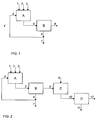
- FIG. 1 and FIG. 2 each depicting one embodiment of the invention.
- the numbers and letters in FIG. 1 and FIG. 2 refer to the following streams and processing stages:
- ash (1) from the recovery boiler of the pulp mill, water or aqueous solution (2) and at least CaO and/or Ca(OH) 2 (3), together with recycled liquid fraction (4) are introduced into the leaching stage (A), which is typically carried out in a mixing tank.
- the slurry (5) exiting the leaching stage is led to the separation stage (B), which can be carried out using an applicable separation device, such as a decanter centrifuge or a filter.
- Part (4) of the liquid fraction (6) exiting the separation stage is recycled to the leaching stage (A).
- the remaining liquid fraction (7) is preferably utilized in the bleaching line of the pulp mill.
- the liquid fraction contains hydroxide ions and can be used to substitute NaOH.
- the solids-fraction stream (8) which includes calcium compounds in addition to the un-dissolved ash compounds and which exits the separation stage (B) is preferably mixed with a black-liquor stream of the pulp mill and is thereby eventually led to the recovery boiler of the pulp mill.
- the embodiment depicted in FIG. 2 differs from that of FIG. 1 only in the further processing of the solids-fraction stream (8) exiting the separation stage (B).
- this stream (8) is led to a dissolving stage (C), in which the compounds readily dissolvable in water, such as sodium and potassium compounds, are dissolved in water or aqueous solution (9).
- the slurry (10) exiting the dissolving stage (C) is led to a separation stage (D).
- the liquid fraction (11) exiting the separation stage (D) is added to a black-liquor stream of the pulp mill and is thereby eventually led to the recovery boiler of the pulp mill.
- the solids-fraction stream (12) exiting the separation stage (D) is comprised mainly of calcium compounds and is led to the calcium cycle of the pulp mill.
- the effective price of added H 2 SO 4 (allowing for impact on the sodium-sulphur balance of the mill) is about 300 €/t of H 2 SO 4
- the effective marginal price of CaO (mainly due to the cost of lime-kiln fuel and allowing for an increased evaporation duty) is about 100 €/t of CaO.
- the effective cost of the additive (CaO) amounts to about 0.5 €/ADt, which is significantly lower than the effective cost of the additive (H 2 SO 4 ) in the corresponding conventional ash-leaching process: about 1.3 €/ADt.
Landscapes
- Engineering & Computer Science (AREA)
- Chemical & Material Sciences (AREA)
- Life Sciences & Earth Sciences (AREA)
- Geology (AREA)
- General Life Sciences & Earth Sciences (AREA)
- Manufacturing & Machinery (AREA)
- Environmental & Geological Engineering (AREA)
- Materials Engineering (AREA)
- Mechanical Engineering (AREA)
- Metallurgy (AREA)
- Organic Chemistry (AREA)
- Paper (AREA)
- Processing Of Solid Wastes (AREA)
- Wood Science & Technology (AREA)
Priority Applications (1)
| Application Number | Priority Date | Filing Date | Title |
|---|---|---|---|
| PL13808059T PL2920359T3 (pl) | 2012-11-16 | 2013-11-15 | Sposób ługowania popiołu z kotła odzysknicowego |
Applications Claiming Priority (2)
| Application Number | Priority Date | Filing Date | Title |
|---|---|---|---|
| FI20126204A FI126767B (en) | 2012-11-16 | 2012-11-16 | Method for extracting the ash from a recovery boiler |
| PCT/FI2013/000043 WO2014076361A1 (en) | 2012-11-16 | 2013-11-15 | Method for leaching recovery-boiler ash |
Publications (2)
| Publication Number | Publication Date |
|---|---|
| EP2920359A1 EP2920359A1 (en) | 2015-09-23 |
| EP2920359B1 true EP2920359B1 (en) | 2016-09-14 |
Family
ID=49779932
Family Applications (1)
| Application Number | Title | Priority Date | Filing Date |
|---|---|---|---|
| EP13808059.3A Active EP2920359B1 (en) | 2012-11-16 | 2013-11-15 | Method for leaching recovery-boiler ash |
Country Status (12)
| Country | Link |
|---|---|
| US (1) | US9719209B2 (pl) |
| EP (1) | EP2920359B1 (pl) |
| JP (1) | JP6192183B2 (pl) |
| CN (1) | CN104838066B (pl) |
| BR (1) | BR112015010090B1 (pl) |
| CL (1) | CL2015001292A1 (pl) |
| ES (1) | ES2607202T3 (pl) |
| FI (1) | FI126767B (pl) |
| PL (1) | PL2920359T3 (pl) |
| PT (1) | PT2920359T (pl) |
| RU (1) | RU2601925C1 (pl) |
| WO (1) | WO2014076361A1 (pl) |
Families Citing this family (4)
| Publication number | Priority date | Publication date | Assignee | Title |
|---|---|---|---|---|
| EP3228743A1 (en) | 2016-04-05 | 2017-10-11 | L'AIR LIQUIDE, Société Anonyme pour l'Etude et l'Exploitation des Procédés Georges Claude | Selective removal of k+ and cl- from recovery boiler electrostatic precipitator ashes in a kraft process |
| FR3072396B1 (fr) | 2017-10-12 | 2019-11-08 | L'air Liquide Societe Anonyme Pour L'etude Et L'exploitation Des Procedes Georges Claude | Methode de traitement des cendres d'electrofiltres de la chaudiere de recuperation dans un procede kraft |
| FI130066B (en) | 2019-02-13 | 2023-01-31 | Andritz Oy | A method for replacing sodium losses in a pulp mill and a method for producing bleached cellulose pulp |
| US12365962B2 (en) | 2019-04-29 | 2025-07-22 | Fpinnovations | Process to recover alkali from a metal oxide/hydroxide containing material |
Family Cites Families (16)
| Publication number | Priority date | Publication date | Assignee | Title |
|---|---|---|---|---|
| US3746612A (en) * | 1969-12-30 | 1973-07-17 | Erco Envirotech Ltd | Removal of sodium chloride from white pulping liquor |
| US3996097A (en) * | 1975-08-15 | 1976-12-07 | Hooker Chemicals & Plastics Corporation | Kraft mill recovery system |
| US5352332A (en) * | 1991-01-28 | 1994-10-04 | Maples Gerald E | Process for recycling bleach plant filtrate |
| FI914586A7 (fi) * | 1991-09-27 | 1993-03-28 | A Ahlstrom Corp | Menetelmä sellutehtaan kattilalaitoksen tuhkakuorman pienentämiseksi |
| US5374333A (en) * | 1992-07-30 | 1994-12-20 | Kamyr, Inc. | Method for minimizing pulp mill effluents |
| US5549788A (en) * | 1992-07-30 | 1996-08-27 | A. Ahlstrom Corporation | Minimal effluents discharge pulp mill with chemical recovery |
| SE9202419D0 (sv) * | 1992-08-24 | 1992-08-24 | Eka Nobel Ab | Reduction of chloride in pulping chemical recovery systems |
| JPH0929201A (ja) * | 1995-07-20 | 1997-02-04 | Mitsubishi Heavy Ind Ltd | ソーダ回収ボイラの捕集灰からの食塩及びカリウム塩の除去方法 |
| JP3811674B2 (ja) * | 2002-11-05 | 2006-08-23 | 日本錬水株式会社 | クラフトパルプの製造方法 |
| EP2025807A1 (en) * | 2007-07-25 | 2009-02-18 | Rinheat OY | Method to recover chemicals in mechanical pulping |
| FI20085416A7 (fi) * | 2008-05-06 | 2009-11-07 | Valmet Technologies Oy | Menetelmä ja laitteisto sellutehtaan mustalipeän käsittelemiseksi |
| US20090288790A1 (en) * | 2008-05-22 | 2009-11-26 | Flanagan Peter J | Process and apparatus for treating green liquor |
| BRPI0924612B1 (pt) | 2009-05-06 | 2018-08-07 | Metso Power Ab | Processo aperfeiçoado para lixiviação de cinza de precipitador eletrostático proveniente de caldeira de recuperação |
| FI124685B (fi) * | 2009-08-18 | 2014-12-15 | Metsä Board Oyj | Menetelmä natriumhydroksidin tuottamiseksi kuitumassan valmistuksen jätevirrasta |
| US8246779B2 (en) * | 2009-09-24 | 2012-08-21 | Noram Engineering And Constructors Ltd. | Maintenance of sulfur concentration in Kraft pulp processes |
| CN102092804B (zh) * | 2009-12-11 | 2012-08-22 | 山东太阳纸业股份有限公司 | 化学机械浆废水零排放处理方法 |
-
2012
- 2012-11-16 FI FI20126204A patent/FI126767B/en active IP Right Grant
-
2013
- 2013-11-15 WO PCT/FI2013/000043 patent/WO2014076361A1/en not_active Ceased
- 2013-11-15 JP JP2015542323A patent/JP6192183B2/ja active Active
- 2013-11-15 PL PL13808059T patent/PL2920359T3/pl unknown
- 2013-11-15 PT PT138080593T patent/PT2920359T/pt unknown
- 2013-11-15 EP EP13808059.3A patent/EP2920359B1/en active Active
- 2013-11-15 RU RU2015122932/12A patent/RU2601925C1/ru active
- 2013-11-15 US US14/442,165 patent/US9719209B2/en active Active
- 2013-11-15 CN CN201380059998.6A patent/CN104838066B/zh active Active
- 2013-11-15 BR BR112015010090-2A patent/BR112015010090B1/pt active IP Right Grant
- 2013-11-15 ES ES13808059.3T patent/ES2607202T3/es active Active
-
2015
- 2015-05-13 CL CL2015001292A patent/CL2015001292A1/es unknown
Also Published As
| Publication number | Publication date |
|---|---|
| WO2014076361A1 (en) | 2014-05-22 |
| PT2920359T (pt) | 2016-12-19 |
| JP2016501319A (ja) | 2016-01-18 |
| US9719209B2 (en) | 2017-08-01 |
| US20160289793A1 (en) | 2016-10-06 |
| FI126767B (en) | 2017-05-15 |
| CN104838066A (zh) | 2015-08-12 |
| JP6192183B2 (ja) | 2017-09-06 |
| CN104838066B (zh) | 2017-09-29 |
| FI20126204L (fi) | 2014-05-17 |
| BR112015010090A2 (pt) | 2017-07-11 |
| RU2601925C1 (ru) | 2016-11-10 |
| PL2920359T3 (pl) | 2017-06-30 |
| CL2015001292A1 (es) | 2016-01-04 |
| ES2607202T3 (es) | 2017-03-29 |
| EP2920359A1 (en) | 2015-09-23 |
| BR112015010090B1 (pt) | 2021-07-06 |
Similar Documents
| Publication | Publication Date | Title |
|---|---|---|
| US4039372A (en) | Bleach plant filtrate recovery | |
| FI126767B (en) | Method for extracting the ash from a recovery boiler | |
| SE502172C2 (sv) | Förfarande för framställning av blekt cellulosamassa med en klorfri bleksekvens i närvaro av karbonat | |
| RU2675454C2 (ru) | Способ обработки использованного промывочного раствора в процессе извлечения лигнина | |
| EP3924549B1 (en) | A method of replacing sodium losses in a pulp mill, a method of producing bleached cellulosic pulp, and a system | |
| EP2951346B1 (en) | Method for recovering chemicals and by-products from high-sulphidity pulping liquors | |
| US4329199A (en) | Process for digesting and bleaching cellulosic material with reduced emissions | |
| RU2677946C2 (ru) | Способ для использования лигнина, выделяемого из черного щелока, в качестве топлива для известерегенерационной печи | |
| EP1566480B1 (en) | Process for producing kraft pulp | |
| US20190112759A1 (en) | Selective removal of k+ and cl- from recovery boiler electrostatic precipitator ashes in a kraft process | |
| FI127615B (en) | A method for treating recovery boiler ash | |
| RU2803238C2 (ru) | Способ компенсации потерь натрия на целлюлозном заводе, способ получения беленой целлюлозной массы и система |
Legal Events
| Date | Code | Title | Description |
|---|---|---|---|
| PUAI | Public reference made under article 153(3) epc to a published international application that has entered the european phase |
Free format text: ORIGINAL CODE: 0009012 |
|
| 17P | Request for examination filed |
Effective date: 20150507 |
|
| AK | Designated contracting states |
Kind code of ref document: A1 Designated state(s): AL AT BE BG CH CY CZ DE DK EE ES FI FR GB GR HR HU IE IS IT LI LT LU LV MC MK MT NL NO PL PT RO RS SE SI SK SM TR |
|
| AX | Request for extension of the european patent |
Extension state: BA ME |
|
| DAX | Request for extension of the european patent (deleted) | ||
| GRAP | Despatch of communication of intention to grant a patent |
Free format text: ORIGINAL CODE: EPIDOSNIGR1 |
|
| INTG | Intention to grant announced |
Effective date: 20160406 |
|
| GRAS | Grant fee paid |
Free format text: ORIGINAL CODE: EPIDOSNIGR3 |
|
| GRAA | (expected) grant |
Free format text: ORIGINAL CODE: 0009210 |
|
| AK | Designated contracting states |
Kind code of ref document: B1 Designated state(s): AL AT BE BG CH CY CZ DE DK EE ES FI FR GB GR HR HU IE IS IT LI LT LU LV MC MK MT NL NO PL PT RO RS SE SI SK SM TR |
|
| REG | Reference to a national code |
Ref country code: GB Ref legal event code: FG4D |
|
| REG | Reference to a national code |
Ref country code: CH Ref legal event code: EP |
|
| REG | Reference to a national code |
Ref country code: IE Ref legal event code: FG4D |
|
| REG | Reference to a national code |
Ref country code: AT Ref legal event code: REF Ref document number: 829135 Country of ref document: AT Kind code of ref document: T Effective date: 20161015 |
|
| REG | Reference to a national code |
Ref country code: DE Ref legal event code: R096 Ref document number: 602013011729 Country of ref document: DE |
|
| REG | Reference to a national code |
Ref country code: PT Ref legal event code: SC4A Ref document number: 2920359 Country of ref document: PT Date of ref document: 20161219 Kind code of ref document: T Free format text: AVAILABILITY OF NATIONAL TRANSLATION Effective date: 20161212 |
|
| REG | Reference to a national code |
Ref country code: SE Ref legal event code: TRGR |
|
| REG | Reference to a national code |
Ref country code: LT Ref legal event code: MG4D |
|
| REG | Reference to a national code |
Ref country code: NL Ref legal event code: MP Effective date: 20160914 |
|
| PG25 | Lapsed in a contracting state [announced via postgrant information from national office to epo] |
Ref country code: LT Free format text: LAPSE BECAUSE OF FAILURE TO SUBMIT A TRANSLATION OF THE DESCRIPTION OR TO PAY THE FEE WITHIN THE PRESCRIBED TIME-LIMIT Effective date: 20160914 Ref country code: NO Free format text: LAPSE BECAUSE OF FAILURE TO SUBMIT A TRANSLATION OF THE DESCRIPTION OR TO PAY THE FEE WITHIN THE PRESCRIBED TIME-LIMIT Effective date: 20161214 Ref country code: HR Free format text: LAPSE BECAUSE OF FAILURE TO SUBMIT A TRANSLATION OF THE DESCRIPTION OR TO PAY THE FEE WITHIN THE PRESCRIBED TIME-LIMIT Effective date: 20160914 Ref country code: RS Free format text: LAPSE BECAUSE OF FAILURE TO SUBMIT A TRANSLATION OF THE DESCRIPTION OR TO PAY THE FEE WITHIN THE PRESCRIBED TIME-LIMIT Effective date: 20160914 |
|
| PG25 | Lapsed in a contracting state [announced via postgrant information from national office to epo] |
Ref country code: BE Free format text: LAPSE BECAUSE OF NON-PAYMENT OF DUE FEES Effective date: 20161130 Ref country code: NL Free format text: LAPSE BECAUSE OF FAILURE TO SUBMIT A TRANSLATION OF THE DESCRIPTION OR TO PAY THE FEE WITHIN THE PRESCRIBED TIME-LIMIT Effective date: 20160914 Ref country code: LV Free format text: LAPSE BECAUSE OF FAILURE TO SUBMIT A TRANSLATION OF THE DESCRIPTION OR TO PAY THE FEE WITHIN THE PRESCRIBED TIME-LIMIT Effective date: 20160914 Ref country code: GR Free format text: LAPSE BECAUSE OF FAILURE TO SUBMIT A TRANSLATION OF THE DESCRIPTION OR TO PAY THE FEE WITHIN THE PRESCRIBED TIME-LIMIT Effective date: 20161215 |
|
| PG25 | Lapsed in a contracting state [announced via postgrant information from national office to epo] |
Ref country code: EE Free format text: LAPSE BECAUSE OF FAILURE TO SUBMIT A TRANSLATION OF THE DESCRIPTION OR TO PAY THE FEE WITHIN THE PRESCRIBED TIME-LIMIT Effective date: 20160914 Ref country code: RO Free format text: LAPSE BECAUSE OF FAILURE TO SUBMIT A TRANSLATION OF THE DESCRIPTION OR TO PAY THE FEE WITHIN THE PRESCRIBED TIME-LIMIT Effective date: 20160914 |
|
| PG25 | Lapsed in a contracting state [announced via postgrant information from national office to epo] |
Ref country code: BE Free format text: LAPSE BECAUSE OF FAILURE TO SUBMIT A TRANSLATION OF THE DESCRIPTION OR TO PAY THE FEE WITHIN THE PRESCRIBED TIME-LIMIT Effective date: 20160914 Ref country code: BG Free format text: LAPSE BECAUSE OF FAILURE TO SUBMIT A TRANSLATION OF THE DESCRIPTION OR TO PAY THE FEE WITHIN THE PRESCRIBED TIME-LIMIT Effective date: 20161214 Ref country code: SM Free format text: LAPSE BECAUSE OF FAILURE TO SUBMIT A TRANSLATION OF THE DESCRIPTION OR TO PAY THE FEE WITHIN THE PRESCRIBED TIME-LIMIT Effective date: 20160914 Ref country code: IS Free format text: LAPSE BECAUSE OF FAILURE TO SUBMIT A TRANSLATION OF THE DESCRIPTION OR TO PAY THE FEE WITHIN THE PRESCRIBED TIME-LIMIT Effective date: 20170114 Ref country code: CZ Free format text: LAPSE BECAUSE OF FAILURE TO SUBMIT A TRANSLATION OF THE DESCRIPTION OR TO PAY THE FEE WITHIN THE PRESCRIBED TIME-LIMIT Effective date: 20160914 Ref country code: SK Free format text: LAPSE BECAUSE OF FAILURE TO SUBMIT A TRANSLATION OF THE DESCRIPTION OR TO PAY THE FEE WITHIN THE PRESCRIBED TIME-LIMIT Effective date: 20160914 |
|
| REG | Reference to a national code |
Ref country code: DE Ref legal event code: R097 Ref document number: 602013011729 Country of ref document: DE |
|
| PG25 | Lapsed in a contracting state [announced via postgrant information from national office to epo] |
Ref country code: IT Free format text: LAPSE BECAUSE OF FAILURE TO SUBMIT A TRANSLATION OF THE DESCRIPTION OR TO PAY THE FEE WITHIN THE PRESCRIBED TIME-LIMIT Effective date: 20160914 |
|
| REG | Reference to a national code |
Ref country code: CH Ref legal event code: PL |
|
| PLBE | No opposition filed within time limit |
Free format text: ORIGINAL CODE: 0009261 |
|
| STAA | Information on the status of an ep patent application or granted ep patent |
Free format text: STATUS: NO OPPOSITION FILED WITHIN TIME LIMIT |
|
| PG25 | Lapsed in a contracting state [announced via postgrant information from national office to epo] |
Ref country code: DK Free format text: LAPSE BECAUSE OF FAILURE TO SUBMIT A TRANSLATION OF THE DESCRIPTION OR TO PAY THE FEE WITHIN THE PRESCRIBED TIME-LIMIT Effective date: 20160914 Ref country code: CH Free format text: LAPSE BECAUSE OF NON-PAYMENT OF DUE FEES Effective date: 20161130 Ref country code: LI Free format text: LAPSE BECAUSE OF NON-PAYMENT OF DUE FEES Effective date: 20161130 |
|
| 26N | No opposition filed |
Effective date: 20170615 |
|
| REG | Reference to a national code |
Ref country code: IE Ref legal event code: MM4A |
|
| REG | Reference to a national code |
Ref country code: FR Ref legal event code: ST Effective date: 20170731 |
|
| PG25 | Lapsed in a contracting state [announced via postgrant information from national office to epo] |
Ref country code: LU Free format text: LAPSE BECAUSE OF NON-PAYMENT OF DUE FEES Effective date: 20161130 |
|
| PG25 | Lapsed in a contracting state [announced via postgrant information from national office to epo] |
Ref country code: FR Free format text: LAPSE BECAUSE OF NON-PAYMENT OF DUE FEES Effective date: 20161130 |
|
| PG25 | Lapsed in a contracting state [announced via postgrant information from national office to epo] |
Ref country code: IE Free format text: LAPSE BECAUSE OF NON-PAYMENT OF DUE FEES Effective date: 20161115 Ref country code: SI Free format text: LAPSE BECAUSE OF FAILURE TO SUBMIT A TRANSLATION OF THE DESCRIPTION OR TO PAY THE FEE WITHIN THE PRESCRIBED TIME-LIMIT Effective date: 20160914 |
|
| PG25 | Lapsed in a contracting state [announced via postgrant information from national office to epo] |
Ref country code: HU Free format text: LAPSE BECAUSE OF FAILURE TO SUBMIT A TRANSLATION OF THE DESCRIPTION OR TO PAY THE FEE WITHIN THE PRESCRIBED TIME-LIMIT; INVALID AB INITIO Effective date: 20131115 |
|
| PG25 | Lapsed in a contracting state [announced via postgrant information from national office to epo] |
Ref country code: MC Free format text: LAPSE BECAUSE OF FAILURE TO SUBMIT A TRANSLATION OF THE DESCRIPTION OR TO PAY THE FEE WITHIN THE PRESCRIBED TIME-LIMIT Effective date: 20160914 Ref country code: MK Free format text: LAPSE BECAUSE OF FAILURE TO SUBMIT A TRANSLATION OF THE DESCRIPTION OR TO PAY THE FEE WITHIN THE PRESCRIBED TIME-LIMIT Effective date: 20160914 Ref country code: CY Free format text: LAPSE BECAUSE OF FAILURE TO SUBMIT A TRANSLATION OF THE DESCRIPTION OR TO PAY THE FEE WITHIN THE PRESCRIBED TIME-LIMIT Effective date: 20160914 |
|
| GBPC | Gb: european patent ceased through non-payment of renewal fee |
Effective date: 20171115 |
|
| PG25 | Lapsed in a contracting state [announced via postgrant information from national office to epo] |
Ref country code: MT Free format text: LAPSE BECAUSE OF NON-PAYMENT OF DUE FEES Effective date: 20161115 |
|
| PG25 | Lapsed in a contracting state [announced via postgrant information from national office to epo] |
Ref country code: AL Free format text: LAPSE BECAUSE OF FAILURE TO SUBMIT A TRANSLATION OF THE DESCRIPTION OR TO PAY THE FEE WITHIN THE PRESCRIBED TIME-LIMIT Effective date: 20160914 Ref country code: TR Free format text: LAPSE BECAUSE OF FAILURE TO SUBMIT A TRANSLATION OF THE DESCRIPTION OR TO PAY THE FEE WITHIN THE PRESCRIBED TIME-LIMIT Effective date: 20160914 |
|
| PG25 | Lapsed in a contracting state [announced via postgrant information from national office to epo] |
Ref country code: GB Free format text: LAPSE BECAUSE OF NON-PAYMENT OF DUE FEES Effective date: 20171115 |
|
| REG | Reference to a national code |
Ref country code: AT Ref legal event code: UEP Ref document number: 829135 Country of ref document: AT Kind code of ref document: T Effective date: 20160914 |
|
| PGFP | Annual fee paid to national office [announced via postgrant information from national office to epo] |
Ref country code: ES Payment date: 20241230 Year of fee payment: 12 |
|
| PGFP | Annual fee paid to national office [announced via postgrant information from national office to epo] |
Ref country code: PT Payment date: 20251106 Year of fee payment: 13 |
|
| PGFP | Annual fee paid to national office [announced via postgrant information from national office to epo] |
Ref country code: DE Payment date: 20251119 Year of fee payment: 13 |
|
| PGFP | Annual fee paid to national office [announced via postgrant information from national office to epo] |
Ref country code: AT Payment date: 20251120 Year of fee payment: 13 |
|
| PGFP | Annual fee paid to national office [announced via postgrant information from national office to epo] |
Ref country code: FI Payment date: 20251125 Year of fee payment: 13 |
|
| PGFP | Annual fee paid to national office [announced via postgrant information from national office to epo] |
Ref country code: SE Payment date: 20251119 Year of fee payment: 13 |
|
| PGFP | Annual fee paid to national office [announced via postgrant information from national office to epo] |
Ref country code: PL Payment date: 20251107 Year of fee payment: 13 |