EP2920196B1 - Tethering von cysteinresten mittels cyclischer disulfide - Google Patents
Tethering von cysteinresten mittels cyclischer disulfide Download PDFInfo
- Publication number
- EP2920196B1 EP2920196B1 EP13854478.8A EP13854478A EP2920196B1 EP 2920196 B1 EP2920196 B1 EP 2920196B1 EP 13854478 A EP13854478 A EP 13854478A EP 2920196 B1 EP2920196 B1 EP 2920196B1
- Authority
- EP
- European Patent Office
- Prior art keywords
- protein
- alkyl
- compound
- cysteine residue
- imine
- Prior art date
- Legal status (The legal status is an assumption and is not a legal conclusion. Google has not performed a legal analysis and makes no representation as to the accuracy of the status listed.)
- Active
Links
- YPGMOWHXEQDBBV-UHFFFAOYSA-N OC(CSSC1)C1O Chemical compound OC(CSSC1)C1O YPGMOWHXEQDBBV-UHFFFAOYSA-N 0.000 description 2
- LUEOEVCITGWCHA-UHFFFAOYSA-N C=C(CCCCC1SSCC1)O Chemical compound C=C(CCCCC1SSCC1)O LUEOEVCITGWCHA-UHFFFAOYSA-N 0.000 description 1
- ZBQZGIZULLRIKY-UHFFFAOYSA-N Cc(cc1)ccc1S(OC(CSS(C1)=O)C1OS(c1ccc(C)cc1)(=O)=O)(=O)=O Chemical compound Cc(cc1)ccc1S(OC(CSS(C1)=O)C1OS(c1ccc(C)cc1)(=O)=O)(=O)=O ZBQZGIZULLRIKY-UHFFFAOYSA-N 0.000 description 1
- FMXJRGKDBHQFDW-UHFFFAOYSA-N NC1(CSSC1)C(O)=O Chemical compound NC1(CSSC1)C(O)=O FMXJRGKDBHQFDW-UHFFFAOYSA-N 0.000 description 1
- AGBQKNBQESQNJD-UHFFFAOYSA-N OC(CCCCC1SSCC1)=O Chemical compound OC(CCCCC1SSCC1)=O AGBQKNBQESQNJD-UHFFFAOYSA-N 0.000 description 1
Images



Classifications
-
- C—CHEMISTRY; METALLURGY
- C12—BIOCHEMISTRY; BEER; SPIRITS; WINE; VINEGAR; MICROBIOLOGY; ENZYMOLOGY; MUTATION OR GENETIC ENGINEERING
- C12N—MICROORGANISMS OR ENZYMES; COMPOSITIONS THEREOF; PROPAGATING, PRESERVING, OR MAINTAINING MICROORGANISMS; MUTATION OR GENETIC ENGINEERING; CULTURE MEDIA
- C12N9/00—Enzymes; Proenzymes; Compositions thereof; Processes for preparing, activating, inhibiting, separating or purifying enzymes
- C12N9/96—Stabilising an enzyme by forming an adduct or a composition; Forming enzyme conjugates
-
- A—HUMAN NECESSITIES
- A61—MEDICAL OR VETERINARY SCIENCE; HYGIENE
- A61K—PREPARATIONS FOR MEDICAL, DENTAL OR TOILETRY PURPOSES
- A61K31/00—Medicinal preparations containing organic active ingredients
- A61K31/095—Sulfur, selenium, or tellurium compounds, e.g. thiols
-
- A—HUMAN NECESSITIES
- A61—MEDICAL OR VETERINARY SCIENCE; HYGIENE
- A61K—PREPARATIONS FOR MEDICAL, DENTAL OR TOILETRY PURPOSES
- A61K31/00—Medicinal preparations containing organic active ingredients
- A61K31/33—Heterocyclic compounds
- A61K31/38—Heterocyclic compounds having sulfur as a ring hetero atom
- A61K31/385—Heterocyclic compounds having sulfur as a ring hetero atom having two or more sulfur atoms in the same ring
-
- A—HUMAN NECESSITIES
- A61—MEDICAL OR VETERINARY SCIENCE; HYGIENE
- A61P—SPECIFIC THERAPEUTIC ACTIVITY OF CHEMICAL COMPOUNDS OR MEDICINAL PREPARATIONS
- A61P21/00—Drugs for disorders of the muscular or neuromuscular system
-
- A—HUMAN NECESSITIES
- A61—MEDICAL OR VETERINARY SCIENCE; HYGIENE
- A61P—SPECIFIC THERAPEUTIC ACTIVITY OF CHEMICAL COMPOUNDS OR MEDICINAL PREPARATIONS
- A61P25/00—Drugs for disorders of the nervous system
-
- A—HUMAN NECESSITIES
- A61—MEDICAL OR VETERINARY SCIENCE; HYGIENE
- A61P—SPECIFIC THERAPEUTIC ACTIVITY OF CHEMICAL COMPOUNDS OR MEDICINAL PREPARATIONS
- A61P25/00—Drugs for disorders of the nervous system
- A61P25/14—Drugs for disorders of the nervous system for treating abnormal movements, e.g. chorea, dyskinesia
- A61P25/16—Anti-Parkinson drugs
-
- A—HUMAN NECESSITIES
- A61—MEDICAL OR VETERINARY SCIENCE; HYGIENE
- A61P—SPECIFIC THERAPEUTIC ACTIVITY OF CHEMICAL COMPOUNDS OR MEDICINAL PREPARATIONS
- A61P25/00—Drugs for disorders of the nervous system
- A61P25/28—Drugs for disorders of the nervous system for treating neurodegenerative disorders of the central nervous system, e.g. nootropic agents, cognition enhancers, drugs for treating Alzheimer's disease or other forms of dementia
-
- C—CHEMISTRY; METALLURGY
- C07—ORGANIC CHEMISTRY
- C07K—PEPTIDES
- C07K19/00—Hybrid peptides, i.e. peptides covalently bound to nucleic acids, or non-covalently bound protein-protein complexes
-
- C—CHEMISTRY; METALLURGY
- C12—BIOCHEMISTRY; BEER; SPIRITS; WINE; VINEGAR; MICROBIOLOGY; ENZYMOLOGY; MUTATION OR GENETIC ENGINEERING
- C12N—MICROORGANISMS OR ENZYMES; COMPOSITIONS THEREOF; PROPAGATING, PRESERVING, OR MAINTAINING MICROORGANISMS; MUTATION OR GENETIC ENGINEERING; CULTURE MEDIA
- C12N9/00—Enzymes; Proenzymes; Compositions thereof; Processes for preparing, activating, inhibiting, separating or purifying enzymes
- C12N9/0004—Oxidoreductases (1.)
- C12N9/0089—Oxidoreductases (1.) acting on superoxide as acceptor (1.15)
-
- C—CHEMISTRY; METALLURGY
- C12—BIOCHEMISTRY; BEER; SPIRITS; WINE; VINEGAR; MICROBIOLOGY; ENZYMOLOGY; MUTATION OR GENETIC ENGINEERING
- C12Y—ENZYMES
- C12Y115/00—Oxidoreductases acting on superoxide as acceptor (1.15)
- C12Y115/01—Oxidoreductases acting on superoxide as acceptor (1.15) with NAD or NADP as acceptor (1.15.1)
- C12Y115/01001—Superoxide dismutase (1.15.1.1)
-
- C—CHEMISTRY; METALLURGY
- C07—ORGANIC CHEMISTRY
- C07K—PEPTIDES
- C07K2319/00—Fusion polypeptide
Definitions
- One third of therapeutic molecules form covalent bonds with their targets.
- These electrophilic drugs generally bond to a nucleophilic amino acid, often serine or cysteine, on a target protein.
- Aspirin and penicillin (and their many derivatives) acylate serines and numerous drugs form covalent bonds with specific cysteines.
- These therapeutic agents are effective despite the potential for off-target reactions with hundreds of highly reactive, nucleophilic residues, which are often required for the function of essential proteins.
- a worst case scenario for reaction with the "wrong" nucleophile is nerve gases (e.g., Sarin, intravenous LD 50 ⁇ 30 ⁇ g/kg), which covalently modify the active site serine of acetylcholine esterase.
- GSD gastroesophageal reflux disease drugs
- omeprazole/PrilosecTM e.g., omeprazole/PrilosecTM, lansoprazole/PrevacidTM, etc .
- GFD gastroesophageal reflux disease drugs
- lansoprazole/PrevacidTM e.g., lansoprazole/PrevacidTM
- benzolamide-derivative prodrugs require protonation of a low pKa pyridine nitrogen (pKa ⁇ 4.5) for activation and sequestration.
- the antithrombosis factors clopidogrel/PlavixTM, ticlopide/Ticlid, etc. are also prodrugs. Activation by cytochrome P450 enzymes results in the scission of a ring carbon-sulfur bond, creating a sulfhydryl group that can then form a disulfide bond with its target cysteine on the adenosine diphosphate (ADP) chemoreceptor P2Y 12 . In addition to increased specificity for its target, which it permanently inactivates, the active metabolite has improved plasma protein binding characteristics.
- the thrombosis drugs had their beginnings in functional assays, and inevitably animal studies, because the active metabolite is not produced in most cell-based assays. Both their mechanism of action and target were unknown at the time of discovery.
- Dacomitinib, afatinib, and neratinib are EGFR kinase inhibitors with a high-affinity, nucleotide-analogue moiety that reversibly binds the ATP-binding pockets of numerous kinases and a second moiety designed to covalently bond with a non-conserved cysteine (present in EGFR but not its homologues).
- the electrophilic moiety is purposefully a low-reactivity acrylamide to minimize off-target reactions.
- the invention relates to a method comprising the step of contacting a compound of Formula I with a first protein and a second protein under conditions suitable for cross-linking the first protein to the second protein, thereby cross-linking the first protein to the second protein, wherein the first protein comprises a first cysteine residue; the second protein comprises a second cysteine residue; the compound of Formula I is wherein
- the invention relates to a compound of Formula I , for use in treating or preventing ALS, Parkinson's disease or Alzheimer's disease, wherein the compound of Formula I is wherein
- One aspect of the invention is a stabilized superoxide dismutase analogue, wherein said analogue has a tertiary structure and comprises a first SOD1 monomer and a second SOD1 monomer; wherein the first SOD1 monomer comprises a first cysteine residue; the second SOD1 monomer comprises a second cysteine residue; the first cysteine residue is connected to the second cysteine residue by a connection; and the connection is a connection of Formula III : wherein
- One aspect of the invention is a stabilized DJ-1 analogue, wherein said analogue has a tertiary structure and comprises a first DJ-1 monomer and a second DJ-1 monomer; wherein the first DJ-1 monomer comprises a first cysteine residue; the second DJ-1 monomer comprises a second cysteine residue; the first cysteine residue is connected to the second cysteine residue by a connection; and the connection is a connection of Formula III: wherein
- the covalent attachment of molecules can be used to affect protein structure and function. Covalently attached molecules can be used to inhibit, promote activity, stabilize, and destabilize proteins and peptides.
- One problem is encoding adequate specificity in covalent binders for the intended target.
- the invention relates to chemical tools, cyclic disulfides, that target pairs of cysteine residues and significantly enhance the specificity for pairs of cysteine over lone cysteine residues.
- cyclic disulfides offer a launching point for compound optimization for novel targets. Whereas previous approaches to covalent modification tended to be devoted to inactivation of an enzyme, cyclic disulfides are also amenable to protein (including enzyme) stabilization.
- cyclic-disulfides to the stabilization of two proteins involved in neurodegenerative disease, Cu/Zn-SOD1, which is involved in amyotrophic lateral sclerosis and potentially Parkinson's and Alzheimer's, and DJ-1, which is involved in Parkinson's.
- Amyotrophic lateral sclerosis is a progressive neurodegenerative disease caused by death of motor neurons in the brain and spinal cord.
- the overall median survival from onset of symptoms ranges between 2-3 years for cases with bulbar onset to 3-5 years for cases with limb onset.
- Lifetime risk of ALS is 1/400 to 1/1000 with a median annual incidence of 1.89 and a median prevalence of 5.2 per 100,000 each year.
- riluzole riluzole (Rilutek) prolongs median survival by a mere 2-3 months when taken for an eighteen month duration.
- novel therapeutic strategies for ALS continue to be crucial.
- ALS familial
- SOD1 ubiquitously expressed protein
- ALS-associated variants of SOD1 are found as monomers in ALS patients and a number of modifications, including loss of Cu or Zn, cleavage of the native, intramolecular disulfide, oxidation, glutathionylation, and fALS-associated mutation, predispose the SOD1 dimer to dissociate.
- SOD1 dimers contain two cysteine residues at the dimer interface whose sulfhydryl groups are approximately nine angstroms apart. These sulfhydryl groups can be targeted by maleimide cross-linkers which lead to strong stabilization of ALS-associated SOD1 dimers.
- the invention relates to the discovery of molecules that can cross-link SOD1 dimers in order to fully assess small molecule-mediated covalent dimer formation of SOD1 as a therapeutic strategy for ALS.
- the progressive neurodegenerative disorder PD is characterized by the loss of dopaminergic neurons in the substania nigra pars compacta and ⁇ -synuclein-rich protein deposits known as Lewy bodies.
- Biochemical and cell culture analysis of PD-linked variants of DJ-1 suggest a number of mechanisms through which structural defects, including loss of stability and dimer formation, may lead to a loss-of-function that is associated with PD pathogenicity, such as reduced ability to prevent ⁇ -synuclein aggregation, deficiency in oxidative stress-dependent RNA-binding activity, reduced ability to act as a neuroprotective transcriptional co-activator, and increased sensitivity to oxidative stress-induced cell death related to mitochondrial defects.
- DJ-1 In additional to recessive PD-related mutants of DJ-1 being implicated in disease, analysis of DJ-1 in the frontal cortex of patients with sporadic PD and Alzheimer's disease reveal that acidic isoforms of monomeric DJ-1 and basic isoforms of SDS-resistant dimeric DJ-1 selectively accumulate in these diseases, with DJ-1 irreversibly oxidized by carbonylation as well as by methionine oxidation to methionine sulfone. Over-oxidation of DJ-1 has been found to produce structural destabilization similar to PD-related mutations, suggesting that dysfunctional DJ-1 due to aberrant modifications could be a cause of sporadic neurodegenerative cases.
- DJ-1 protects against degeneration of nigral dopaminergic neurons in PD rat models involving both 6-hydroxydopamine and rotenone treatment. Viral-mediated DJ-1 overexpression in the MPTP mouse model has also proved efficacious in reducing nigral dopamine neuron loss.
- DJ-1 histone deacetylase inhibitor
- phenylbutyrate rescues cells from oxidative stress and mutant ⁇ -synuclein toxicity, as well as protects dopaminergic neurons from MPTP-induced neurotoxicity and prevents age-related motor and cognitive decline in mice with diffuse Lewy body disease.
- enhancement of DJ-1 activity could serve as a therapeutic strategy in a possibly wide variety of PD cases.
- in silico methods have been used to identify potential small molecule binding sites on DJ-1 and for identifying small molecules capable of interacting with DJ-1 and modulating its oxidation state that have neuroprotective effects in vivo.
- DJ-1 dimers have a set of cysteines, Cys53's, spaced closely together around the dimer interface similar to SOD1, suggesting covalent dimerization at these cysteines might also be possible. Enhancing dimer formation of DJ-1 at these cysteines has been conceptually demonstrated via an engineered disulfide bond produced by a V51C mutation in DJ-1, which rescues structural and functional defects due to modification and mutations. Interestingly, highly reactive dopamine quinones have been observed to form covalent dimers of DJ-1 via Cys53, a putative natural mechanism of covalent dimer stabilization of DJ-1. However, Cys53s in DJ-1 are more closely spaced than Cys111s in SOD1, hindering previous attempts to covalently dimerize DJ-1 using maleimide crosslinkers.
- cyclic disulfides may provide an alternative for covalently dimerizing both SOD1 and DJ-1 through their respective closely spaced dimer interface cysteines.
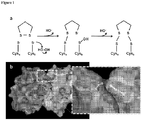
- a cyclic disulfide could undergo thiol-disulfide exchange with the cysteine of one SOD1/DJ-1 monomer, leaving a free thiolate to react with the remaining monomer ( Figure 1 ).
- Dithiols might also be capable of forming covalent dimers if the thiol groups are properly spaced and appropriately reactive.
- the invention relates to a method comprising the step of contacting a compound of Formula I with a first protein and a second protein under conditions suitable for cross-linking the first protein to the second protein, thereby cross-linking the first protein to the second protein, wherein the first protein comprises a first cysteine residue; the second protein comprises a second cysteine residue; the compound of Formula I is wherein
- the invention relates to any one of the aforementioned methods, wherein Y is S.
- the invention relates to any one of the aforementioned methods, wherein n is 1 or 2.
- the invention relates to any one of the aforementioned methods, wherein n is 1.
- the invention relates to any one of the aforementioned methods, wherein n is 2.
- the invention relates to any one of the aforementioned methods, wherein the compound is selected from the group consisting of
- the invention relates to any one of the aforementioned methods, wherein the first protein and the second protein have at least 95% sequence homology.
- the invention relates to any one of the aforementioned methods, wherein the first protein and the second protein have at least 98% sequence homology.
- the invention relates to any one of the aforementioned methods, wherein the first protein and the second protein have at least 99% sequence homology.
- the invention relates to any one of the aforementioned methods, wherein the first protein and the second protein are wild type SOD-1.
- the invention relates to any one of the aforementioned methods, wherein the first protein and the second protein are wild type DJ-1.
- the invention relates to any one of the aforementioned methods, wherein the method is in vitro. In certain embodiments, the invention relates to any one of the aforementioned methods, wherein the first protein and the second protein are in a cell.
- the invention relates to any one of the aforementioned methods, wherein the method is a method of inhibiting the activity of the first protein or the second protein.
- the invention relates to any one of the aforementioned methods, wherein the method is a method of increasing the activity of the first protein or a second protein.
- the invention relates to any one of the aforementioned methods, wherein the method is a method of stabilizing the first protein or the second protein.
- the invention relates to any one of the aforementioned methods, wherein the method is a method of destabilizing the first protein or the second protein.
- the invention relates to a method of treating or preventing a condition, comprising the step of administering to a subject in need thereof a therapeutically effective amount of a compound of Formula I , wherein the compound of Formula I is wherein
- the invention relates to any one of the aforementioned methods, wherein the compound is a compound of Formula I ; and Y is S.
- the invention relates to any one of the aforementioned methods, wherein the compound is a compound of Formula I ; and n is 1 or 2.
- the invention relates to any one of the aforementioned methods, wherein the compound is a compound of Formula I ; and n is 1.
- the invention relates to any one of the aforementioned methods, wherein the compound is a compound of Formula I ; and n is 2.
- the invention relates to any one of the aforementioned methods, wherein the compound is the compound is a compound of Formula I ; and the compound is selected from the group consisting of
- the invention relates to any one of the aforementioned methods, wherein the condition is ALS, Parkinson's disease, or Alzheimer's disease.
- the invention relates to a compound of Formula I wherein
- the invention relates to any one of the aforementioned compounds, wherein Y is S.
- the invention relates to any one of the aforementioned compounds, wherein n is 1 or 2.
- the invention relates to any one of the aforementioned compounds, wherein n is 1.
- the invention relates to any one of the aforementioned compounds, wherein n is 2.
- the invention relates to any one of the aforementioned compounds, wherein the proviso that the compound is not selected from the group consisting of
- One aspect of the invention is a stabilized superoxide dismutase analogue, wherein said analogue has a tertiary structure and comprises a first SOD1 monomer and a second SOD1 monomer; wherein the first SOD1 monomer comprises a first cysteine residue; the second SOD1 monomer comprises a second cysteine residue; the first cysteine residue is connected to the second cysteine residue by a connection; and the connection is a connection of Formula III: wherein
- the present invention relates to any one of the aforementioned analogues, wherein the tertiary structure is substantially the same as the wild-type superoxide dismutase enzyme.
- the present invention relates to any one of the aforementioned analogues, wherein the sequence homology of said first SOD1 monomer and said second SOD1 monomer is greater than or equal to about 85%.
- the present invention relates to any one of the aforementioned analogues, wherein said first SOD1 monomer and said second SOD1 monomer have substantially the same amino acid sequence.
- the present invention relates to any one of the aforementioned analogues, wherein the first SOD1 monomer of said analogue is the wild-type sequence or comprises a mutation selected from the group consisting of G93A, G85R, D90A, A4V, E100G, H46R, C6G, and I113T.
- the present invention relates to any one of the aforementioned analogues, wherein the second SOD1 monomer of said analogue is the wild-type sequence or comprises a mutation selected from the group consisting of G93A, G85R, D90A, A4V, E100G, H46R, C6G, and I113T.
- the present invention relates to any one of the aforementioned analogues, wherein said analogue retains at least 90% activity of the wild-type superoxide dismutase enzyme up to a temperature of about 75 °C.
- One aspect of the invention is a stabilized DJ-1 analogue, wherein said analogue has a tertiary structure and comprises a first DJ-1 monomer and a second DJ-1 monomer; wherein the first DJ-1 monomer comprises a first cysteine residue; the second DJ-1 monomer comprises a second cysteine residue; the first cysteine residue is connected to the second cysteine residue by a connection; and the connection is a connection of Formula III: wherein
- the present invention relates to any one of the aforementioned analogues, wherein the tertiary structure is substantially the same as the wild-type DJ-1.
- the present invention relates to any one of the aforementioned analogues, wherein the sequence homology of said first DJ-1 monomer and said second DJ-1 monomer is greater than or equal to about 85%.
- the present invention relates to any one of the aforementioned analogues, wherein said first DJ-1 monomer and said second DJ-1 monomer have substantially the same amino acid sequence.
- the present invention relates to any one of the aforementioned analogues, wherein said analogue retains at least 90% activity of the wild-type DJ-1 up to a temperature of about 75 °C.
- the present invention relates to any one of the aforementioned analogues, wherein said analogue is increased in stabilization from about 10 °C to about 60 °C.
- the present invention relates to any one of the aforementioned analogues, wherein said analogue is increased in stabilization from about 20 °C to about 40 °C.
- the present invention relates to any one of the aforementioned analogues, wherein said analogue is increased in stabilization from about 15 °C to about 25 °C.
- the present invention relates to any one of the aforementioned analogues, wherein said analogue is increased in stabilization from about 30 °C to about 50 °C.
- the present invention relates to any one of the aforementioned analogues, wherein said analogue is increased in stabilization about 20 °C.
- the present invention relates to any one of the aforementioned analogues, wherein said analogue is increased in stabilization about 40 °C.
- analogue refers to a molecule substantially similar in function to SOD1 protein or a fragment thereof.
- percent (%) amino acid sequence identity or “percent amino acid sequence homology” or “percent (%) identical” as used herein with respect to a reference polypeptide is defined as the percentage of amino acid residues in a candidate polypeptide sequence that are identical with the amino acid residues in the reference polypeptide sequence after aligning the sequences and introducing gaps, if necessary, to achieve the maximum percent sequence identity, without considering any conservative substitutions as part of the sequence identity. Alignment for the purpose of determining percent amino acid sequence identity can be achieved by various techniques known in the art, for instance, using publicly available computer software such as ALIGN or Megalign (DNASTAR).
- an analogue of SOD1 is said to share "substantial homology" with SOD1 if the amino acid sequence of said analogue is at least about 85%, at least about 90%, at least about 95%, or at least about 99% identical to wild-type.
- phrases "pharmaceutically acceptable” is employed herein to refer to those ligands, materials, compositions, and/or dosage forms which are, within the scope of sound medical judgment, suitable for use in contact with the tissues of human beings and animals, substantially non-pyrogenic, without excessive toxicity, irritation, allergic response, or other problem or complication, commensurate with a reasonable benefit/risk ratio.
- pharmaceutically acceptable carrier means a pharmaceutically acceptable material, composition or vehicle, such as a liquid or solid filler, diluent, excipient, solvent or encapsulating material, involved in carrying or transporting the subject chemical from one organ or portion of the body, to another organ or portion of the body.
- a pharmaceutically acceptable material, composition or vehicle such as a liquid or solid filler, diluent, excipient, solvent or encapsulating material, involved in carrying or transporting the subject chemical from one organ or portion of the body, to another organ or portion of the body.
- Each carrier must be “acceptable” in the sense of being compatible with the other ingredients of the formulation, not injurious to the patient, and substantially non-pyrogenic.
- materials which can serve as pharmaceutically acceptable carriers include: (1) sugars, such as lactose, glucose, and sucrose; (2) starches, such as corn starch and potato starch; (3) cellulose, and its derivatives, such as sodium carboxymethyl cellulose, ethyl cellulose, and cellulose acetate; (4) powdered tragacanth; (5) malt; (6) gelatin; (7) talc; (8) excipients, such as cocoa butter and suppository waxes; (9) oils, such as peanut oil, cottonseed oil, safflower oil, sesame oil, olive oil, corn oil, and soybean oil; (10) glycols, such as propylene glycol; (11) polyols, such as glycerin, sorbitol, mannitol, and polyethylene glycol; (12) esters, such as ethyl oleate and ethyl laurate; (13) agar; (14) buffering agents, such as magnesium hydroxide and aluminum
- preventing is art-recognized, and when used in relation to a condition, such as a local recurrence (e.g., pain), a disease such as cancer, a syndrome complex such as heart failure or any other medical condition, is well understood in the art, and includes administration of a composition which reduces the frequency of, or delays the onset of, symptoms of a medical condition in a subject relative to a subject which does not receive the composition.
- a condition such as a local recurrence (e.g., pain)
- a disease such as cancer
- a syndrome complex such as heart failure or any other medical condition
- prevention of cancer includes, for example, reducing the number of detectable cancerous growths in a population of patients receiving a prophylactic treatment relative to an untreated control population, and/or delaying the appearance of detectable cancerous growths in a treated population versus an untreated control population, e.g., by a statistically and/or clinically significant amount.
- Prevention of an infection includes, for example, reducing the number of diagnoses of the infection in a treated population versus an untreated control population, and/or delaying the onset of symptoms of the infection in a treated population versus an untreated control population.
- Prevention of pain includes, for example, reducing the magnitude of, or alternatively delaying, pain sensations experienced by subjects in a treated population versus an untreated control population.
- a "therapeutically effective amount" of a compound, e.g., such as a polypeptide or peptide analogue of the present invention, with respect to use in treatment refers to an amount of the polypeptide or peptide in a preparation which, when administered as part of a desired dosage regimen (to a mammal, preferably a human) alleviates a symptom, ameliorates a condition, or slows the onset of disease conditions according to clinically acceptable standards for the disorder or condition to be treated or the cosmetic purpose, e.g., at a reasonable benefit/risk ratio applicable to any medical treatment.
- prophylactic or therapeutic treatment are art-recognized and includes administration to the host of one or more of the subject compositions. If it is administered prior to clinical manifestation of the unwanted condition (e.g., disease or other unwanted state of the host animal) then the treatment is prophylactic, (i.e., it protects the host against developing the unwanted condition), whereas if it is administered after manifestation of the unwanted condition, the treatment is therapeutic, (i.e., it is intended to diminish, ameliorate, or stabilize the existing unwanted condition or side effects thereof).
- the unwanted condition e.g., disease or other unwanted state of the host animal
- WtSOD1 or wtDJ-1 was incubated with 5-25 mM DTT for approximately 20 minutes and either buffer exchanged using Amicon Ultra-4 centrifugal spin concentrators (MWCo 10K) or using reversed phase chromatography (ZIPTIP, Millipore, Inc). Samples cleaned by ZIPTIPs were also subjected to incubation with 5 mM EDTA. SOD1 samples that were buffer exchanged using Amicon concentrators were exchanged into in HPLC water, whereas ZIPTIP samples were further exchanged after ZIPTIP into PBS, pH 7.4 or HPLC water.
- DTT-reduced SOD1 or DJ-1 was incubated at a 1:1 (20 ⁇ M:20 ⁇ M or 10 ⁇ M:10 ⁇ M) or 1:3 (20 ⁇ M:60 ⁇ M or 10 ⁇ M:30 ⁇ M) ratio of protein to cross-linker.
- cross-linkers were used. Cross-linking was achieved by incubating the reaction in either PBS pH 7.4 or water at room temperature for 1 hour. After an hour the reactions were analyzed on a 15% SDS-PAGE gel with a non-cross-linked control, transferred to nitrocellulose membrane and western blotted using a polyclonal antibody to SOD1 or DJ-1. Repeated in triplicate.
- DTME is a cleavable sulfhydryl-sulfhydryl cross-linking agent. Therefore, a cross-linking reaction containing 1:1 molar ration of wtSOD1 or wtDJ-1 to DTME was performed at room temperature for one hour. After cross-linking, the reaction was split in half and half of the sample was run in a sample buffer containing DTT (reducing) and the other half in one containing no DTT (non-reducing). These samples along with non-cross-linked controls were then analyzed on a 15% SDS PAGE gel and western blotted as above.
- MALDI Matrix Assisted Laser Desorption Ionization
- TOF time of flight
- wtSOD1 or wtDJ-1 was cross-linked as below. After cross-linking, 1 ⁇ L of sample was spotted on a MALDI target containing 1 ⁇ l of matrix, 20 mg/mL sinipic acid, and analyzed on a Bruker Daltonics Microflex. The MALDI was calibrated each time using a high molecular weight protein calibration standard, Protein Calibration Standard I (Bruker Daltonics). The MALDI-TOF was operated in linear mode using a laser power of between 72-90%. MALDI-TOF spectra were of cross-linked and non-cross-linked samples were analyzed using FlexAnalysis software (Bruker Daltonics). Repeated in triplicate.
- LC-MS screen of cyclic disulfides with SOD1 reveals small molecules that covalently link SOD1 dimers.
- Compounds being evaluated were dissolved and incubated with recombinant human WT SOD1. Reactions were analyzed by LC-ESI-IonTrap-MS on a HCT Ultra ion trap (Bruker Daltonics, Billerica, MA, USA). The resulting data was examined using DataAnalysis 3.4 (Bruker Daltonics Inc., Billerica, MA, USA).
- Mass spectra were averaged across the retention times corresponding to when SOD1 was found to be eluting and Maximum Entropy Deconvolution was applied to the resulting average mass spectrum in order to determine the molecular weight of the uncharged species detected.
- Significant dithiol- and cyclic disulfide-mediated covalent dimer formation has been observed with multiple different compounds.
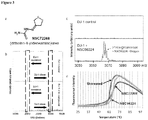
- the changes in mass of the covalently linked SOD1 dimers observed suggest both 1,2-dithiolane-4,4-dimethanol and 1-oxo-1,2-dithiane ( Figure 2a ) are capable of covalently dimerizing SOD1.
- 1-oxo-1,2-dithiane was able to cross-link the majority of SOD1 monomers in the sample ( Figure 2b ) and the mass of the cross-linked SOD1 dimer corresponds to the loss of one water molecule after the addition of 1-oxo-1,2-dithiane to a SOD1 dimer.
- 1-oxo-1,2-dithiane (NSC56224) and its analogues have been partially characterized previously for their ability to attack retroviral zinc fingers. Identified compounds can be found in Figure 4 .
- LC-MS screen of cyclic disulfides with DJ-1 reveals molecules that covalently link DJ-1 dimers.
- compounds were screened against WT DJ-1.
- NSC56224 again being identified as a covalent dimerizer of DJ-1
- NSC72268 was identified as a specific DJ-1 covalent dimerizer ( Figure 3a ,b ).
- Digesting NSC56224-linked DJ-1 with trypsin following by MALDI-TOF-MS confirmed NSC56224 covalently linked DJ-1 dimers at Cys53 ( Figure 3c ).
- NSC56224 and NSC72268 were found to increase the denaturation temperature of DJ-1 measured with differential scanning fluorimetry ( Figure 3d ) (Niesen et al., 2007), suggesting covalent dimerization increased DJ-1 thermal stability. NSC72268 and NSC56224 are shown in Figure 5 .
Landscapes
- Health & Medical Sciences (AREA)
- Chemical & Material Sciences (AREA)
- Life Sciences & Earth Sciences (AREA)
- Organic Chemistry (AREA)
- Bioinformatics & Cheminformatics (AREA)
- Engineering & Computer Science (AREA)
- General Health & Medical Sciences (AREA)
- Medicinal Chemistry (AREA)
- Genetics & Genomics (AREA)
- Zoology (AREA)
- Wood Science & Technology (AREA)
- Biochemistry (AREA)
- Biomedical Technology (AREA)
- Pharmacology & Pharmacy (AREA)
- Veterinary Medicine (AREA)
- Public Health (AREA)
- Animal Behavior & Ethology (AREA)
- General Engineering & Computer Science (AREA)
- Molecular Biology (AREA)
- Neurology (AREA)
- Neurosurgery (AREA)
- Microbiology (AREA)
- Biotechnology (AREA)
- Epidemiology (AREA)
- Nuclear Medicine, Radiotherapy & Molecular Imaging (AREA)
- Chemical Kinetics & Catalysis (AREA)
- General Chemical & Material Sciences (AREA)
- Biophysics (AREA)
- Proteomics, Peptides & Aminoacids (AREA)
- Orthopedic Medicine & Surgery (AREA)
- Hospice & Palliative Care (AREA)
- Psychiatry (AREA)
- Psychology (AREA)
- Physical Education & Sports Medicine (AREA)
- Peptides Or Proteins (AREA)
- Medicines That Contain Protein Lipid Enzymes And Other Medicines (AREA)
- Enzymes And Modification Thereof (AREA)
- Pharmaceuticals Containing Other Organic And Inorganic Compounds (AREA)
Claims (11)
- Verfahren zum Inhibieren oder Fördern der Aktivität von Proteinen oder Peptiden oder zum Stabilisieren oder Destabilisieren von Proteinen oder Peptiden, welches den folgenden Schritt umfasst:das Inkontaktbringen einer Verbindung der Formel I mit einem ersten Protein und einem zweiten Protein unter für das Quervernetzen des ersten Proteins mit dem zweiten Protein geeigneten Bedingungen, wodurch das erste Protein mit dem zweiten Protein quervernetzt wird,wobeidas erste Protein einen ersten Cysteinrest umfasst,das zweite Protein einen zweiten Cysteinrest umfasst,es sich bei der Verbindung der Formel I um
 Y für S, S=O oder S(=O)2 steht,n für 0,1, 2, 3 oder 4 steht undR unabhängig aus der aus -H, -OH, -NH2, -NHR', -N(R')2, Alkyl, -OMs, -OTs, -OTf und -CO2H bestehenden Gruppe ausgewählt ist oder zwei geminale R-Gruppen zusammen ein Imin bilden oder zwei vicinale R-Gruppen zusammen einen Ring bilden, wobei ein Alkyl oder Imin durch ein Carbamid, ein Carboxylat oder ein Hydroxyl substituiert sein kann, undR' für Alkyl oder Aryl steht.
 - Verfahren zum Inhibieren oder Fördern der Aktivität von Proteinen oder Peptiden oder zum Stabilisieren oder Destabilisieren von Proteinen oder Peptiden, welches den folgenden Schritt umfasst:das Inkontaktbringen einer Verbindung mit einem ersten Protein und einem zweiten Protein unter für das Quervernetzen des ersten Proteins mit dem zweiten Protein geeigneten Bedingungen, wodurch das erste Protein mit dem zweiten Protein quervernetzt wird,wobeidas erste Protein einen ersten Cysteinrest umfasst,das zweite Protein einen zweiten Cysteinrest umfasst,das erste Protein und das zweite Protein mindestens 90% Sequenzidentität haben,das erste Protein und das zweite Protein SOD-1 oder DJ-1 sind undes sich bei der Verbindung um eine Verbindung der Formel I
 Y für S, S=O oder S(=O)2 steht,n für 0,1, 2, 3 oder 4 steht undR unabhängig aus der aus -H, -OH, -NH2, -NHR', -N(R')2, Alkyl, -OMs, -OTs, -OTf und -CO2H bestehenden Gruppe ausgewählt ist oder zwei geminale R-Gruppen zusammen ein Imin bilden oder zwei vicinale R-Gruppen zusammen einen Ring bilden, wobei ein Alkyl oder Imin durch ein Carbamid, ein Carboxylat oder ein Hydroxyl substituiert sein kann, undR' für Alkyl oder Aryl steht.
 - Verfahren nach Anspruch 1 oder 2, wobei die Verbindung aus der aus


- Verfahren nach einem der Ansprüche 1-3, wobei es sich bei dem Verfahren um ein Verfahren zum Inhibieren der Aktivität des ersten Proteins oder des zweiten Proteins handelt.
- Verfahren nach einem der Ansprüche 1-3, wobei es sich bei dem Verfahren um ein Verfahren zum Erhöhen der Aktivität des ersten Proteins oder des zweiten Proteins handelt.
- Verfahren nach einem der Ansprüche 1-3, wobei es sich bei dem Verfahren um ein Verfahren zum Stabilisieren des ersten Proteins oder des zweiten Proteins handelt.
- Verfahren nach einem der Ansprüche 1-3, wobei es sich bei dem Verfahren um ein Verfahren zum Destabilisieren des ersten Proteins oder des zweiten Proteins handelt.
- Verbindung der Formel I zur Verwendung bei der Behandlung oder Prävention von ALS, Parkinson-Krankheit oder Alzheimer-Krankheit,
wobei
es sich bei der Verbindung der Formel I um Y für S, S=O oder S(=O)2 steht,n für 0,1, 2, 3 oder 4 steht undR unabhängig aus der aus -H, -OH, -NH2, -NHR', -N(R')2, Alkyl, -OMs, -OTs, -OTf und -CO2H bestehenden Gruppe ausgewählt ist oder zwei geminale R-Gruppen zusammen ein Imin bilden oder zwei vicinale R-Gruppen zusammen einen Ring bilden, wobei ein Alkyl oder Imin durch ein Carbamid, ein Carboxylat oder ein Hydroxyl substituiert sein kann, undR' für Alkyl oder Aryl steht.
 - Verbindung der Formel I zur Verwendung nach Anspruch 8, wobei es sich bei der Verbindung um eine Verbindung der Formel I handelt und die Verbindung aus der aus


- Stabilisiertes Superoxiddismutase-Analogon, wobei das Analogon eine tertiäre Struktur aufweist und ein erstes SOD1-Monomer und ein zweites SOD1-Monomer umfasst, wobei das erste SOD1-Monomer einen ersten Cysteinrest umfasst, das zweite SOD1-Monomer einen zweiten Cysteinrest umfasst, der erste Cysteinrest über eine Verbindung mit dem zweiten Cysteinrest verbunden ist und es sich bei der Verbindung um eine Verbindung der Formel III:
 Y für S, S=O oder S(=O)2 steht,n für 0,1, 2, 3 oder 4 steht undR unabhängig aus der aus -H, -OH, -NH2, -NHR', -N(R1)2, Alkyl, -OMs, -OTs, -OTf und -CO2H bestehenden Gruppe ausgewählt ist oder zwei geminale R-Gruppen zusammen ein Imin bilden oder zwei vicinale R-Gruppen zusammen einen Ring bilden, wobei ein Alkyl oder Imin durch ein Carbamid, ein Carboxylat oder ein Hydroxyl substituiert sein kann, undR' für Alkyl oder Aryl steht.
 - Stabilisiertes DJ-1-Analogon, wobei das Analogon eine tertiäre Struktur aufweist und ein erstes DJ-1-Monomer und ein zweites DJ-1-Monomer umfasst, wobei das erste DJ-1-Monomer einen ersten Cysteinrest umfasst, das zweite DJ-1-Monomer einen zweiten Cysteinrest umfasst, der erste Cysteinrest über eine Verbindung mit dem zweiten Cysteinrest verbunden ist und es sich bei der Verbindung um eine Verbindung der Formel III:
 Y für S, S=O oder S(=O)2 steht,n für 0,1, 2, 3 oder 4 steht undR unabhängig aus der aus -H, -OH, -NH2, -NHR', -N(R')2, Alkyl, -OMs, -OTs, -OTf und -CO2H bestehenden Gruppe ausgewählt ist oder zwei geminale R-Gruppen zusammen ein Imin bilden oder zwei vicinale R-Gruppen zusammen einen Ring bilden, wobei ein Alkyl oder Imin durch ein Carbamid, ein Carboxylat oder ein Hydroxyl substituiert sein kann, undR' für Alkyl oder Aryl steht.
Applications Claiming Priority (2)
| Application Number | Priority Date | Filing Date | Title |
|---|---|---|---|
| US201261726776P | 2012-11-15 | 2012-11-15 | |
| PCT/US2013/070239 WO2014078623A2 (en) | 2012-11-15 | 2013-11-15 | Tethering cysteine residues using cyclic disulfides |
Publications (3)
| Publication Number | Publication Date |
|---|---|
| EP2920196A2 EP2920196A2 (de) | 2015-09-23 |
| EP2920196A4 EP2920196A4 (de) | 2016-06-01 |
| EP2920196B1 true EP2920196B1 (de) | 2021-03-31 |
Family
ID=50731827
Family Applications (1)
| Application Number | Title | Priority Date | Filing Date |
|---|---|---|---|
| EP13854478.8A Active EP2920196B1 (de) | 2012-11-15 | 2013-11-15 | Tethering von cysteinresten mittels cyclischer disulfide |
Country Status (6)
| Country | Link |
|---|---|
| US (6) | US9428589B2 (de) |
| EP (1) | EP2920196B1 (de) |
| JP (2) | JP6480340B2 (de) |
| CA (1) | CA2891261C (de) |
| DK (1) | DK2920196T3 (de) |
| WO (1) | WO2014078623A2 (de) |
Cited By (1)
| Publication number | Priority date | Publication date | Assignee | Title |
|---|---|---|---|---|
| US11987827B2 (en) | 2012-11-15 | 2024-05-21 | Brandeis University | Tethering cysteine residues using cyclic disulfides |
Families Citing this family (12)
| Publication number | Priority date | Publication date | Assignee | Title |
|---|---|---|---|---|
| ES2732574T3 (es) | 2012-11-30 | 2019-11-25 | Novartis Ag | Métodos para preparar conjugados a partir de proteínas que contienen disulfuro |
| EA201691075A1 (ru) | 2013-11-26 | 2016-09-30 | Новартис Аг | Способы оксимной конъюгации с кетон-модифицированными полипептидами |
| CN104031248B (zh) * | 2014-05-28 | 2016-09-07 | 博瑞生物医药(苏州)股份有限公司 | 侧链含双硫五元环功能基团的碳酸酯聚合物及其应用 |
| CN104004001B (zh) * | 2014-05-28 | 2016-03-30 | 苏州大学 | 含双硫五元环功能基团的环状碳酸酯单体及其制备方法 |
| CA2994298A1 (en) | 2015-08-18 | 2017-02-23 | Brandeis University | Tethering cysteine residues using cyclic disulfides |
| JP7201586B6 (ja) * | 2016-09-08 | 2024-02-08 | サビラ バイオサイエンシズ エルエルシー | 神経保護作用、自己免疫性ならびに癌の疾患および病状において有用な1,2-ジチオラン化合物 |
| IT201600101413A1 (it) | 2016-10-10 | 2018-04-10 | Sofar Swiss S A | Composizione liquida per uso nel trattamento del reflusso gastroesofageo |
| US20210161789A1 (en) | 2017-07-11 | 2021-06-03 | Northeastern University | Heterocyclic-dithiol click chemistry |
| IT201700124424A1 (it) | 2017-10-31 | 2019-05-01 | Sofar Swiss Sa | Compressa da succhiare e/o sciogliere in bocca a base di acido ialuronico e condroitina solfato e loro sali |
| WO2019203645A1 (en) | 2018-04-19 | 2019-10-24 | Stichting Vu | Protein macrocyclization |
| AU2019275071B2 (en) * | 2018-05-24 | 2022-12-15 | Sirnaomics, Inc. | Composition and methods of controllable co-coupling polypeptide nanoparticle delivery system for nucleic acid therapeutics |
| CN121002048A (zh) * | 2023-02-21 | 2025-11-21 | 自由大学基金会 | 与支化分子缀合的稳定的天然蛋白质复合物 |
Family Cites Families (7)
| Publication number | Priority date | Publication date | Assignee | Title |
|---|---|---|---|---|
| AU737038B2 (en) * | 1996-07-05 | 2001-08-09 | Government Of The United States Of America, As Represented By The Secretary Of The Department Of Health And Human Services, The | Anti-viral pharmaceutical compositions containing saturated 1,2-dithiaheterocyclic compounds and uses thereof |
| CZ96798A3 (cs) * | 1997-04-02 | 1998-10-14 | Sankyo Company Limited | Deriváty dithiolanu, jejich příprava a jejich terapeutické účinky |
| WO2005075513A1 (ja) * | 2004-02-04 | 2005-08-18 | National Institute Of Advanced Industrial Science And Technology | システイン残基が酸化されたdj-1誘導体 |
| GB0619291D0 (en) | 2006-09-29 | 2006-11-08 | Ucb Sa | Altered antibodies |
| WO2010141613A1 (en) * | 2009-06-02 | 2010-12-09 | Brandeis University | Cross-linking of superoxide dismutase monomers |
| EP3069612A3 (de) | 2009-06-15 | 2016-10-19 | Encore Health, LLC | Dithiolverbindungen, derivate davon und verwendungen davon |
| JP6480340B2 (ja) | 2012-11-15 | 2019-03-06 | ブランデイズ ユニバーシティー | 環状ジスルフィドを用いるシステイン残基のテザリング |
-
2013
- 2013-11-15 JP JP2015542801A patent/JP6480340B2/ja active Active
- 2013-11-15 EP EP13854478.8A patent/EP2920196B1/de active Active
- 2013-11-15 US US14/440,978 patent/US9428589B2/en active Active
- 2013-11-15 DK DK13854478.8T patent/DK2920196T3/da active
- 2013-11-15 CA CA2891261A patent/CA2891261C/en active Active
- 2013-11-15 WO PCT/US2013/070239 patent/WO2014078623A2/en not_active Ceased
-
2016
- 2016-07-26 US US15/219,807 patent/US9944919B2/en active Active
-
2018
- 2018-03-05 US US15/912,197 patent/US10689639B2/en active Active
-
2019
- 2019-02-07 JP JP2019020738A patent/JP2019104743A/ja active Pending
-
2020
- 2020-05-22 US US16/882,035 patent/US11254923B2/en active Active
-
2022
- 2022-01-13 US US17/574,742 patent/US11987827B2/en active Active
-
2024
- 2024-05-16 US US18/665,737 patent/US20240368576A1/en active Pending
Non-Patent Citations (1)
| Title |
|---|
| None * |
Cited By (1)
| Publication number | Priority date | Publication date | Assignee | Title |
|---|---|---|---|---|
| US11987827B2 (en) | 2012-11-15 | 2024-05-21 | Brandeis University | Tethering cysteine residues using cyclic disulfides |
Also Published As
| Publication number | Publication date |
|---|---|
| US9944919B2 (en) | 2018-04-17 |
| US11987827B2 (en) | 2024-05-21 |
| US20150284478A1 (en) | 2015-10-08 |
| JP6480340B2 (ja) | 2019-03-06 |
| CA2891261C (en) | 2023-04-04 |
| US20180245063A1 (en) | 2018-08-30 |
| JP2019104743A (ja) | 2019-06-27 |
| WO2014078623A3 (en) | 2014-07-10 |
| US9428589B2 (en) | 2016-08-30 |
| US20200283753A1 (en) | 2020-09-10 |
| JP2015536346A (ja) | 2015-12-21 |
| WO2014078623A2 (en) | 2014-05-22 |
| US20220135961A1 (en) | 2022-05-05 |
| DK2920196T3 (da) | 2021-06-14 |
| EP2920196A4 (de) | 2016-06-01 |
| US11254923B2 (en) | 2022-02-22 |
| US10689639B2 (en) | 2020-06-23 |
| US20240368576A1 (en) | 2024-11-07 |
| US20160333336A1 (en) | 2016-11-17 |
| CA2891261A1 (en) | 2014-05-22 |
| EP2920196A2 (de) | 2015-09-23 |
Similar Documents
| Publication | Publication Date | Title |
|---|---|---|
| US11987827B2 (en) | Tethering cysteine residues using cyclic disulfides | |
| US20250075198A1 (en) | Tethering cysteine residues using cyclic disulfides | |
| EP2440568B1 (de) | Vernetzung von superoxid-dismutase-monomeren | |
| AU2017299131B2 (en) | Antisecretory Factor 17 | |
| Kim | Minor structural changes, major functional impacts: posttranslational modifications and drug targets | |
| EP3020725B1 (de) | Verfahren zur herstellung hypometallisiertem, redoxaktivem metallothionein-protein und pharmazeutische zusammensetzung damit | |
| Burgoyne et al. | Cysteine-based redox sensors in the cardiovascular system: from identification to physiology and drug discovery | |
| US20210171607A1 (en) | Method for producing hypo-metallated redox-active metallothionein protein and pharmaceutical composition containing the same | |
| KR101147006B1 (ko) | C 말단이 절단된 퍼옥시레독신 ⅱ 및 이를 함유한 세포 사멸 예방 및 치료용 조성물 | |
| WO2016198687A1 (en) | Methods and compositions for treating metabolic disorders resulting in sulfite accumulation | |
| Class et al. | Patent application title: METHOD FOR PRODUCING HYPO-METALLATED REDOX-ACTIVE METALLOTHIONEIN PROTEIN AND PHARMACEUTICAL COMPOSITION CONTAINING THE SAME Inventors: Christoph Melcher Christoph Melcher (Taipei City 114, TW) Tony Raoul Henry Chun-Hung Kuo | |
| US20210024593A1 (en) | Modified heat shock proteins | |
| WO2021247882A2 (en) | Compounds and methods for treating, ameliorating, or preventing herpes ocular keratitis | |
| Salisbury | Cyclic disulfide-mediated stabilization of neurodegenerative disease-associated proteins SOD1 and DJ-1 | |
| WO2007046538A1 (ja) | Rnaポリメラーゼの共通サブユニットをユビキチン化する方法 |
Legal Events
| Date | Code | Title | Description |
|---|---|---|---|
| PUAI | Public reference made under article 153(3) epc to a published international application that has entered the european phase |
Free format text: ORIGINAL CODE: 0009012 |
|
| 17P | Request for examination filed |
Effective date: 20150611 |
|
| AK | Designated contracting states |
Kind code of ref document: A2 Designated state(s): AL AT BE BG CH CY CZ DE DK EE ES FI FR GB GR HR HU IE IS IT LI LT LU LV MC MK MT NL NO PL PT RO RS SE SI SK SM TR |
|
| AX | Request for extension of the european patent |
Extension state: BA ME |
|
| DAX | Request for extension of the european patent (deleted) | ||
| A4 | Supplementary search report drawn up and despatched |
Effective date: 20160504 |
|
| RIC1 | Information provided on ipc code assigned before grant |
Ipc: C07K 1/10 20060101AFI20160428BHEP |
|
| STAA | Information on the status of an ep patent application or granted ep patent |
Free format text: STATUS: EXAMINATION IS IN PROGRESS |
|
| 17Q | First examination report despatched |
Effective date: 20180413 |
|
| GRAP | Despatch of communication of intention to grant a patent |
Free format text: ORIGINAL CODE: EPIDOSNIGR1 |
|
| STAA | Information on the status of an ep patent application or granted ep patent |
Free format text: STATUS: GRANT OF PATENT IS INTENDED |
|
| INTG | Intention to grant announced |
Effective date: 20201021 |
|
| GRAS | Grant fee paid |
Free format text: ORIGINAL CODE: EPIDOSNIGR3 |
|
| GRAA | (expected) grant |
Free format text: ORIGINAL CODE: 0009210 |
|
| STAA | Information on the status of an ep patent application or granted ep patent |
Free format text: STATUS: THE PATENT HAS BEEN GRANTED |
|
| AK | Designated contracting states |
Kind code of ref document: B1 Designated state(s): AL AT BE BG CH CY CZ DE DK EE ES FI FR GB GR HR HU IE IS IT LI LT LU LV MC MK MT NL NO PL PT RO RS SE SI SK SM TR |
|
| REG | Reference to a national code |
Ref country code: GB Ref legal event code: FG4D Ref country code: CH Ref legal event code: EP |
|
| REG | Reference to a national code |
Ref country code: AT Ref legal event code: REF Ref document number: 1376832 Country of ref document: AT Kind code of ref document: T Effective date: 20210415 |
|
| REG | Reference to a national code |
Ref country code: DE Ref legal event code: R096 Ref document number: 602013076647 Country of ref document: DE |
|
| REG | Reference to a national code |
Ref country code: IE Ref legal event code: FG4D |
|
| REG | Reference to a national code |
Ref country code: DK Ref legal event code: T3 Effective date: 20210607 |
|
| REG | Reference to a national code |
Ref country code: LT Ref legal event code: MG9D |
|
| PG25 | Lapsed in a contracting state [announced via postgrant information from national office to epo] |
Ref country code: NO Free format text: LAPSE BECAUSE OF FAILURE TO SUBMIT A TRANSLATION OF THE DESCRIPTION OR TO PAY THE FEE WITHIN THE PRESCRIBED TIME-LIMIT Effective date: 20210630 Ref country code: BG Free format text: LAPSE BECAUSE OF FAILURE TO SUBMIT A TRANSLATION OF THE DESCRIPTION OR TO PAY THE FEE WITHIN THE PRESCRIBED TIME-LIMIT Effective date: 20210630 Ref country code: HR Free format text: LAPSE BECAUSE OF FAILURE TO SUBMIT A TRANSLATION OF THE DESCRIPTION OR TO PAY THE FEE WITHIN THE PRESCRIBED TIME-LIMIT Effective date: 20210331 Ref country code: FI Free format text: LAPSE BECAUSE OF FAILURE TO SUBMIT A TRANSLATION OF THE DESCRIPTION OR TO PAY THE FEE WITHIN THE PRESCRIBED TIME-LIMIT Effective date: 20210331 |
|
| PG25 | Lapsed in a contracting state [announced via postgrant information from national office to epo] |
Ref country code: RS Free format text: LAPSE BECAUSE OF FAILURE TO SUBMIT A TRANSLATION OF THE DESCRIPTION OR TO PAY THE FEE WITHIN THE PRESCRIBED TIME-LIMIT Effective date: 20210331 Ref country code: LV Free format text: LAPSE BECAUSE OF FAILURE TO SUBMIT A TRANSLATION OF THE DESCRIPTION OR TO PAY THE FEE WITHIN THE PRESCRIBED TIME-LIMIT Effective date: 20210331 Ref country code: SE Free format text: LAPSE BECAUSE OF FAILURE TO SUBMIT A TRANSLATION OF THE DESCRIPTION OR TO PAY THE FEE WITHIN THE PRESCRIBED TIME-LIMIT Effective date: 20210331 |
|
| REG | Reference to a national code |
Ref country code: NL Ref legal event code: MP Effective date: 20210331 |
|
| REG | Reference to a national code |
Ref country code: AT Ref legal event code: MK05 Ref document number: 1376832 Country of ref document: AT Kind code of ref document: T Effective date: 20210331 |
|
| PG25 | Lapsed in a contracting state [announced via postgrant information from national office to epo] |
Ref country code: SM Free format text: LAPSE BECAUSE OF FAILURE TO SUBMIT A TRANSLATION OF THE DESCRIPTION OR TO PAY THE FEE WITHIN THE PRESCRIBED TIME-LIMIT Effective date: 20210331 Ref country code: CZ Free format text: LAPSE BECAUSE OF FAILURE TO SUBMIT A TRANSLATION OF THE DESCRIPTION OR TO PAY THE FEE WITHIN THE PRESCRIBED TIME-LIMIT Effective date: 20210331 Ref country code: EE Free format text: LAPSE BECAUSE OF FAILURE TO SUBMIT A TRANSLATION OF THE DESCRIPTION OR TO PAY THE FEE WITHIN THE PRESCRIBED TIME-LIMIT Effective date: 20210331 Ref country code: LT Free format text: LAPSE BECAUSE OF FAILURE TO SUBMIT A TRANSLATION OF THE DESCRIPTION OR TO PAY THE FEE WITHIN THE PRESCRIBED TIME-LIMIT Effective date: 20210331 Ref country code: NL Free format text: LAPSE BECAUSE OF FAILURE TO SUBMIT A TRANSLATION OF THE DESCRIPTION OR TO PAY THE FEE WITHIN THE PRESCRIBED TIME-LIMIT Effective date: 20210331 Ref country code: AT Free format text: LAPSE BECAUSE OF FAILURE TO SUBMIT A TRANSLATION OF THE DESCRIPTION OR TO PAY THE FEE WITHIN THE PRESCRIBED TIME-LIMIT Effective date: 20210331 |
|
| PG25 | Lapsed in a contracting state [announced via postgrant information from national office to epo] |
Ref country code: PL Free format text: LAPSE BECAUSE OF FAILURE TO SUBMIT A TRANSLATION OF THE DESCRIPTION OR TO PAY THE FEE WITHIN THE PRESCRIBED TIME-LIMIT Effective date: 20210331 Ref country code: PT Free format text: LAPSE BECAUSE OF FAILURE TO SUBMIT A TRANSLATION OF THE DESCRIPTION OR TO PAY THE FEE WITHIN THE PRESCRIBED TIME-LIMIT Effective date: 20210802 Ref country code: ES Free format text: LAPSE BECAUSE OF FAILURE TO SUBMIT A TRANSLATION OF THE DESCRIPTION OR TO PAY THE FEE WITHIN THE PRESCRIBED TIME-LIMIT Effective date: 20210331 Ref country code: RO Free format text: LAPSE BECAUSE OF FAILURE TO SUBMIT A TRANSLATION OF THE DESCRIPTION OR TO PAY THE FEE WITHIN THE PRESCRIBED TIME-LIMIT Effective date: 20210331 Ref country code: SK Free format text: LAPSE BECAUSE OF FAILURE TO SUBMIT A TRANSLATION OF THE DESCRIPTION OR TO PAY THE FEE WITHIN THE PRESCRIBED TIME-LIMIT Effective date: 20210331 Ref country code: IS Free format text: LAPSE BECAUSE OF FAILURE TO SUBMIT A TRANSLATION OF THE DESCRIPTION OR TO PAY THE FEE WITHIN THE PRESCRIBED TIME-LIMIT Effective date: 20210731 |
|
| REG | Reference to a national code |
Ref country code: DE Ref legal event code: R097 Ref document number: 602013076647 Country of ref document: DE |
|
| PG25 | Lapsed in a contracting state [announced via postgrant information from national office to epo] |
Ref country code: AL Free format text: LAPSE BECAUSE OF FAILURE TO SUBMIT A TRANSLATION OF THE DESCRIPTION OR TO PAY THE FEE WITHIN THE PRESCRIBED TIME-LIMIT Effective date: 20210331 |
|
| PLBE | No opposition filed within time limit |
Free format text: ORIGINAL CODE: 0009261 |
|
| STAA | Information on the status of an ep patent application or granted ep patent |
Free format text: STATUS: NO OPPOSITION FILED WITHIN TIME LIMIT |
|
| 26N | No opposition filed |
Effective date: 20220104 |
|
| PG25 | Lapsed in a contracting state [announced via postgrant information from national office to epo] |
Ref country code: IS Free format text: LAPSE BECAUSE OF FAILURE TO SUBMIT A TRANSLATION OF THE DESCRIPTION OR TO PAY THE FEE WITHIN THE PRESCRIBED TIME-LIMIT Effective date: 20210731 |
|
| PG25 | Lapsed in a contracting state [announced via postgrant information from national office to epo] |
Ref country code: MC Free format text: LAPSE BECAUSE OF FAILURE TO SUBMIT A TRANSLATION OF THE DESCRIPTION OR TO PAY THE FEE WITHIN THE PRESCRIBED TIME-LIMIT Effective date: 20210331 |
|
| PG25 | Lapsed in a contracting state [announced via postgrant information from national office to epo] |
Ref country code: LU Free format text: LAPSE BECAUSE OF NON-PAYMENT OF DUE FEES Effective date: 20211115 Ref country code: IT Free format text: LAPSE BECAUSE OF FAILURE TO SUBMIT A TRANSLATION OF THE DESCRIPTION OR TO PAY THE FEE WITHIN THE PRESCRIBED TIME-LIMIT Effective date: 20210331 |
|
| PG25 | Lapsed in a contracting state [announced via postgrant information from national office to epo] |
Ref country code: IE Free format text: LAPSE BECAUSE OF NON-PAYMENT OF DUE FEES Effective date: 20211115 |
|
| REG | Reference to a national code |
Ref country code: FR Ref legal event code: PLFP Year of fee payment: 10 |
|
| PG25 | Lapsed in a contracting state [announced via postgrant information from national office to epo] |
Ref country code: HU Free format text: LAPSE BECAUSE OF FAILURE TO SUBMIT A TRANSLATION OF THE DESCRIPTION OR TO PAY THE FEE WITHIN THE PRESCRIBED TIME-LIMIT; INVALID AB INITIO Effective date: 20131115 |
|
| PG25 | Lapsed in a contracting state [announced via postgrant information from national office to epo] |
Ref country code: CY Free format text: LAPSE BECAUSE OF FAILURE TO SUBMIT A TRANSLATION OF THE DESCRIPTION OR TO PAY THE FEE WITHIN THE PRESCRIBED TIME-LIMIT Effective date: 20210331 |
|
| PG25 | Lapsed in a contracting state [announced via postgrant information from national office to epo] |
Ref country code: GR Free format text: LAPSE BECAUSE OF FAILURE TO SUBMIT A TRANSLATION OF THE DESCRIPTION OR TO PAY THE FEE WITHIN THE PRESCRIBED TIME-LIMIT Effective date: 20210331 |
|
| PG25 | Lapsed in a contracting state [announced via postgrant information from national office to epo] |
Ref country code: MK Free format text: LAPSE BECAUSE OF FAILURE TO SUBMIT A TRANSLATION OF THE DESCRIPTION OR TO PAY THE FEE WITHIN THE PRESCRIBED TIME-LIMIT Effective date: 20210331 |
|
| PG25 | Lapsed in a contracting state [announced via postgrant information from national office to epo] |
Ref country code: MT Free format text: LAPSE BECAUSE OF FAILURE TO SUBMIT A TRANSLATION OF THE DESCRIPTION OR TO PAY THE FEE WITHIN THE PRESCRIBED TIME-LIMIT Effective date: 20210331 |
|
| REG | Reference to a national code |
Ref country code: CH Ref legal event code: U11 Free format text: ST27 STATUS EVENT CODE: U-0-0-U10-U11 (AS PROVIDED BY THE NATIONAL OFFICE) Effective date: 20251201 |
|
| PG25 | Lapsed in a contracting state [announced via postgrant information from national office to epo] |
Ref country code: TR Free format text: LAPSE BECAUSE OF FAILURE TO SUBMIT A TRANSLATION OF THE DESCRIPTION OR TO PAY THE FEE WITHIN THE PRESCRIBED TIME-LIMIT Effective date: 20210331 |
|
| PGFP | Annual fee paid to national office [announced via postgrant information from national office to epo] |
Ref country code: DE Payment date: 20251128 Year of fee payment: 13 |
|
| PGFP | Annual fee paid to national office [announced via postgrant information from national office to epo] |
Ref country code: GB Payment date: 20251127 Year of fee payment: 13 |
|
| PGFP | Annual fee paid to national office [announced via postgrant information from national office to epo] |
Ref country code: DK Payment date: 20251125 Year of fee payment: 13 |
|
| PGFP | Annual fee paid to national office [announced via postgrant information from national office to epo] |
Ref country code: FR Payment date: 20251125 Year of fee payment: 13 |
|
| PGFP | Annual fee paid to national office [announced via postgrant information from national office to epo] |
Ref country code: BE Payment date: 20251127 Year of fee payment: 13 |
|
| PGFP | Annual fee paid to national office [announced via postgrant information from national office to epo] |
Ref country code: CH Payment date: 20251201 Year of fee payment: 13 |