EP2917232B1 - Factor viii-derived peptides for use in the treatment of haemophilia a - Google Patents
Factor viii-derived peptides for use in the treatment of haemophilia a Download PDFInfo
- Publication number
- EP2917232B1 EP2917232B1 EP13795002.8A EP13795002A EP2917232B1 EP 2917232 B1 EP2917232 B1 EP 2917232B1 EP 13795002 A EP13795002 A EP 13795002A EP 2917232 B1 EP2917232 B1 EP 2917232B1
- Authority
- EP
- European Patent Office
- Prior art keywords
- seq
- peptide
- fviii
- glu
- lys
- Prior art date
- Legal status (The legal status is an assumption and is not a legal conclusion. Google has not performed a legal analysis and makes no representation as to the accuracy of the status listed.)
- Active
Links
Images


Classifications
-
- A—HUMAN NECESSITIES
- A61—MEDICAL OR VETERINARY SCIENCE; HYGIENE
- A61K—PREPARATIONS FOR MEDICAL, DENTAL OR TOILETRY PURPOSES
- A61K39/00—Medicinal preparations containing antigens or antibodies
- A61K39/0005—Vertebrate antigens
- A61K39/0008—Antigens related to auto-immune diseases; Preparations to induce self-tolerance
-
- A—HUMAN NECESSITIES
- A61—MEDICAL OR VETERINARY SCIENCE; HYGIENE
- A61K—PREPARATIONS FOR MEDICAL, DENTAL OR TOILETRY PURPOSES
- A61K39/00—Medicinal preparations containing antigens or antibodies
- A61K39/0005—Vertebrate antigens
-
- A—HUMAN NECESSITIES
- A61—MEDICAL OR VETERINARY SCIENCE; HYGIENE
- A61P—SPECIFIC THERAPEUTIC ACTIVITY OF CHEMICAL COMPOUNDS OR MEDICINAL PREPARATIONS
- A61P7/00—Drugs for disorders of the blood or the extracellular fluid
- A61P7/04—Antihaemorrhagics; Procoagulants; Haemostatic agents; Antifibrinolytic agents
-
- C—CHEMISTRY; METALLURGY
- C07—ORGANIC CHEMISTRY
- C07K—PEPTIDES
- C07K14/00—Peptides having more than 20 amino acids; Gastrins; Somatostatins; Melanotropins; Derivatives thereof
- C07K14/435—Peptides having more than 20 amino acids; Gastrins; Somatostatins; Melanotropins; Derivatives thereof from animals; from humans
- C07K14/745—Blood coagulation or fibrinolysis factors
- C07K14/755—Factors VIII, e.g. factor VIII C (AHF), factor VIII Ag (VWF)
-
- A—HUMAN NECESSITIES
- A61—MEDICAL OR VETERINARY SCIENCE; HYGIENE
- A61K—PREPARATIONS FOR MEDICAL, DENTAL OR TOILETRY PURPOSES
- A61K39/00—Medicinal preparations containing antigens or antibodies
- A61K2039/55—Medicinal preparations containing antigens or antibodies characterised by the host/recipient, e.g. newborn with maternal antibodies
-
- A—HUMAN NECESSITIES
- A61—MEDICAL OR VETERINARY SCIENCE; HYGIENE
- A61K—PREPARATIONS FOR MEDICAL, DENTAL OR TOILETRY PURPOSES
- A61K39/00—Medicinal preparations containing antigens or antibodies
- A61K2039/57—Medicinal preparations containing antigens or antibodies characterised by the type of response, e.g. Th1, Th2
- A61K2039/577—Medicinal preparations containing antigens or antibodies characterised by the type of response, e.g. Th1, Th2 tolerising response
-
- A—HUMAN NECESSITIES
- A61—MEDICAL OR VETERINARY SCIENCE; HYGIENE
- A61K—PREPARATIONS FOR MEDICAL, DENTAL OR TOILETRY PURPOSES
- A61K38/00—Medicinal preparations containing peptides
Definitions
- the present invention relates to peptides, at least part of which is derivable from factor VIII (FVIII).
- the peptides can be used to reduce or prevent factor VIII inhibitor antibody formation, for example in haemophilia A treatment and acquired haemophilia.
- Haemophilia belongs to a group of inheritable blood disorders that includes haemophilia A, haemophilia B (Christmas disease) and Von Willebrand's disease.
- Haemophilia A is a deficiency of the clotting factor VIII, whereas Haemophilia B is a deficiency of clotting factor IX. In both diseases, the faulty gene is found on the X chromosome, so the conditions are X-linked. Haemophilia A is five times more common than haemophilia B.
- Haemophilia is a lifelong inherited genetic condition, which affects females as carriers and males who inherit the condition. About a third of new diagnoses are where there is no previous family history. It appears world-wide and occurs in all racial groups. About 6,000 people are affected with haemophilia in the UK.
- Haemophiliacs bleed for a prolonged period following injury. External injuries such as cuts and grazes do not usually pose serious problems: it is often possible to stop bleeding by applying a degree of pressure and covering the affected area (e.g with a plaster).
- the main problem is internal bleeding into joints, muscles and soft tissues, which can occur spontaneously. Internal bleeding, such are haemorrhages into the brain, is very difficult to manage and can be fatal. Repeated bleeding in the joints causes acute pain and can cause arthritis and/or long-term joint damage leading to disability.
- haemophilia Treatment for haemophilia is usually by replacement of the missing clotting factor. In mild or moderate haemophilia injections may be given at the time a bleed occurs (on-demand therapy). However, in severe haemophilia regular prophylactic injections are given to help the blood to clot and minimise the likelihood of long term joint damage.
- a potentially serious complication of coagulation factor replacement therapy for haemophilia A is the development of antibodies that neutralise the procoagulant function of factor VIII.
- Factor VIII inhibitors occur in approximately 25% of those with severe haemophilia A. Since patients with congenital haemophilia A can be genetically deficient in FVIII, the synthesis of inhibitors is an alloimmune response to the foreign protein administered to prevent or treat bleeding episodes.
- CD4+ T cells play a central role in the immune response to FVIII. After being taken up by antigen-presenting cells (APCs), FVIII undergoes proteolytic degradation into peptide fragments ( Reding et al (2006) Haemophilia 12(supp 6) 30-36 ). These peptides are then presented on the surface of the APC in association with MHC class II molecules. This complex is then recognised by the T cell receptor of a CD4+ cell specific for FVIII. In the presence of the appropriate costimulatory signals, this recognition ultimately causes the CD4+ cell to direct the synthesis of antibodies by B cells.
- APCs antigen-presenting cells
- inhibitor formation initially increases with the number of factor VIII treatments, but appears to plateau after 50-100 exposure days. Inhibitor formation is much more common in severe haemophilia than in moderate or mild disease and some molecular defects, most clearly large deletions and nonsense mutations in the factor VIII light chain, appear to predispose to inhibitor formation. Parameters such as the concentration, type (purified or recombinant) of replacement factor, and treatment history may also affect the likelihood of antibody production.
- ITI Immune tolerance induction
- ITI Invasive thrombosis
- a significant proportion about 30% of patients fails to respond to ITI.
- Patients with high inhibitor titres are much less likely to respond to treatment.
- Another significant contributing factor is age at the start of commencing ITI, with greatly decreased success rates when the patient is older than 20 ( Hay et al (2005) Seminars in Thrombosis and Hemostasis 32:15-21 )
- FVIII bypassing products such as activated prothombin complex concentrates (FEIBATM), and recombinant-activated FVII.
- FVIII bypassing products such as activated prothombin complex concentrates (FEIBATM)
- FEIBATM activated prothombin complex concentrates
- recombinant-activated FVII recombinant-activated FVII.
- adverse events such as disseminated intravascular coagulation, acute myocardial infarction, pulmonary embolus and thromboses ( Acharya and Di Michele (2006) Best Practice & Research Clinical Haematology 19:51-66 ).
- Immunosuppressive therapy is sometimes used for patients who fail to response to ITI.
- Treatment includes administration of immunosuppressive drugs such as cyclophosphamide, prednisone, azathioprine and cyclosporine which non-specifically target the immune system. These treatments can have side-effects associated with general immunosuppression.
- RituximabTM a humanised monoclonal antibody to B cell CD20 antigen.
- infusion reactions, serum sickness and opportunistic infections have occurred in some children treated with this drug ( Di Michele (2007) J Thromb Haemost 5:143-50 ).
- Acquired haemophilia is a rare autoimmune condition which affects between 1 and 4 people in every million. In this condition, subjects who are not born with haemophilia develop antibodies against one of the clotting factors such as factor VIII. It is thought that pregnancy and autoimmune diseases such as rheumatoid arthritis and cancer may increase the risk of developing acquired haemophilia. Although there are differences in the underlying immune mechanisms leading to their production, the clinical manifestations of FVIII inhibitors produced in response to coagulation factor replacement therapy and those produced in acquired haemophilia are similar.
- Acquired haemophiliac patients have a mortality rate that approaches 25%, partly because of the association of acquired inhibitors with severe bleeding complications.
- the therapy of acquired autoantibody inhibitors is based primarily on the need to control or prevent acute hemorrhagic complications, which frequently are life and limb threatening and secondarily to eradicate the autoantibody to restore normal coagulation.
- Some bleeds associated with low titre autoantibody inhibitors may be treated effectively with FVIII concentrates administered at high doses.
- Porcine FVIII concentrate was formerly considered a critical first-line therapy for acquired haemophilia-related bleeding since it was the only replacement therapy that provided an opportunity to actually measure post-infusion FVIII coagulation activity levels in the laboratory.
- the product was removed from the marketplace in 2004 because of contamination of the porcine plasma pools by porcine parvovirus.
- "bypassing" agents are most commonly used, but potential risks of thrombogenicity exist and there is only about 80% efficacy for each product. Plasma exchange via plasmapheresis and extracorporeal immunoadsorption may be necessary to temporarily reduce the inhibitor titer enough for bypassing agents or FVIII replacement to provide adequate hemostasis.
- Eradication of autoantibody inhibitors depends on immunosuppressive measures, such as: (1) administration of corticosteroids with 30%-50% efficacy in 3-6 weeks; (2) use of cytotoxic and myelosuppressive chemotherapeutic agents, e.g., cyclophosphamide, cyclosporine, 2-chlorodeoxyadenosine; (3) immunomodulation with intravenous immunoglobulin; and (4) selective B-lymphocyte depletion with rituximab.
- RituximabTM responders may require concurrent use of steroids and relapses may respond to retreatment.
- the present inventors have found that it is possible to prevent FVIII inhibitor antibody formation by pre-tolerising the patient with FVIII-derived peptides and to treat conditions such as haemophilia by administration of FVIII-derived peptides in order to reduce FVIII inhibitor antibodies.
- the first aspect of the present invention therefore, relates to a peptide, at least part of the sequence of which is derivable from FVIII, which is capable of inducing or restoring tolerance to FVIII.
- the invention provides a peptide comprising the FVIII-derived sequence DNIMVTFRNQASRPY which has one of the following sequences:
- the present invention provides a peptide comprising the FVIII-derived sequence PRCLTRYYSSFVNME which has one of the following sequences:
- the present invention provides a composition comprising a plurality of peptides, including one or more peptide(s) according to the first aspect the invention.
- composition may comprise at least one peptide according to the first embodiment and at least one peptide according to the second embodiment of the first aspect of the invention.
- composition may comprise a peptide having SEQ ID No. 1 and a peptide having SEQ ID No. 17.
- composition may be in the form of a kit, in which the plurality of peptides are provided separately for separate, subsequent, sequential or simultaneous administration.
- the peptide or a composition of the invention may be for use in suppressing, reducing, or preventing the development of factor VIII inhibitor antibodies.
- Described herein is also the use of such a peptide or composition in the manufacture of a medicament to suppress, reduce or prevent the development of factor VIII inhibitor antibodies.
- Described herein is also a method for suppressing, preventing or reducing the development of Factor VIII inhibitor antibodies in a subject, which comprises the step of administration of such a peptide or composition to the subject.
- the subject may be deficient in FVIII.
- the subject may have haemophilia A, and may be, or be about to, undergo factor VIII replacement therapy.
- the subject may have, or be at risk from contracting, acquired haemophilia.
- Factor VIII inhibitors are found more frequently in individuals expressing HLA-DR2.
- the subject treated by the method of the invention may therefore be HLA-DR2 positive.
- the present invention relates to a peptide.
- peptide is used in the normal sense to mean a series of residues, typically L-amino acids, connected one to the other typically by peptide bonds between the ⁇ -amino and carboxyl groups of adjacent amino acids.
- the term includes modified peptides and synthetic peptide analogues.
- the peptide of the present invention may be made using chemical methods (Peptide Chemistry, A practical Textbook. Mikos Bodansky, Springer-Verlag, Berlin.). For example, peptides can be synthesized by solid phase techniques ( Roberge JY et al (1995) Science 269: 202-204 ), cleaved from the resin, and purified by preparative high performance liquid chromatography (e.g., Creighton (1983) Proteins Structures And Molecular Principles, WH Freeman and Co, New York NY ). Automated synthesis may be achieved, for example, using the ABI 43 1 A Peptide Synthesizer (Perkin Elmer) in accordance with the instructions provided by the manufacturer.
- the peptide may alternatively be made by recombinant means, or by cleavage of a peptide from factor VIII followed by modification of one or both ends.
- the composition of a peptide may be confirmed by amino acid analysis or sequencing (e.g., the Edman degradation procedure).
- the peptide may show various other characteristics which the peptide may show. For example, it is important that the peptide is sufficiently stable in vivo to be therapeutically useful.
- the half-life of the peptide in vivo may be at least 10 minutes, 30 minutes, 4 hours, or 24 hours.
- the peptide may also demonstrate good bioavailability in vivo.
- the peptide may maintain a conformation in vivo which enables it to bind to an MHC molecule at the cell surface without due hindrance.
- T lymphocytes are capable of recognising internal epitopes of a protein antigen.
- Antigen presenting cells APC take up protein antigens and degrade them into short peptide fragments.
- a peptide may bind to a major histocompatibility complex (MHC) class I or II molecule inside the cell and be carried to the cell surface.
- MHC major histocompatibility complex
- the peptide When presented at the cell surface in conjunction with an MHC molecule, the peptide may be recognised by a T cell (via the T cell receptor (TCR)), in which case the peptide is a T cell epitope.
- TCR T cell receptor
- An epitope is thus a peptide derivable from an antigen which is capable of binding to the peptide-binding groove of a MHC class I or II molecule and be recognised by a T cell.
- the minimal epitope is the shortest fragment derivable from an epitope, which is capable of binding to the peptide-binding groove of a MHC class I or II molecule and being recognised by a T cell.
- an epitope For a given immunogenic region, it is typically possible to generate a "nested set" of overlapping peptides which act as epitopes, all of which contain the minimal epitope but differ in their flanking regions.
- the minimal epitope for a particular MHC molecule:T cell combination by measuring the response to truncated peptides. For example if a response is obtained to the peptide comprising residues 1-15 in the overlapping library, sets which are truncated at both ends (i.e. 1-14, 1-13, 1-12 etc. and 2-15, 3-15, 4-15 etc.) can be used to identify the minimal epitope.
- the present inventors have previously determined that there is a link between the capacity of a peptide to bind to an MHC class I or II molecule and be presented to a T cell without further antigen processing, and the peptide's capacity to induce tolerance in vivo ( WO 02/16410 ). If a peptide is too long to bind the peptide binding groove of an MHC molecule without further processing (e.g. trimming), or binds in an inappropriate conformation then it will not be tolerogenic in vivo. If, on the other hand, the peptide is of an appropriate size and conformation to bind directly to the MHC peptide binding groove and be presented to a T cell, then this peptide can be predicted to be useful for tolerance induction.
- the peptides of the present invention are apitopes (Antigen Processing-Independent epiTOPES) in that they are capable of binding to an MHC class II molecule and stimulating a response from factor VIII specific T cells without further antigen processing.
- apitopes can be predicted to cause tolerance to FVIII, following the rule-based method described in WO 02/16410 .
- a peptide of the present invention may be any length that is capable of binding to an MHC class I or II molecule without further processing. Typically, the peptide of the present invention is capable of binding MHC class II.
- Peptides that bind to MHC class I molecules are typically 7 to 13, more usually 8 to 10 amino acids in length.
- the binding of the peptide is stabilised at its two ends by contacts between atoms in the main chain of the peptide and invariant sites in the peptide-binding groove of all MHC class I molecules. There are invariant sites at both ends of the groove which bind the amino and carboxy termini of the peptide. Variations is peptide length are accommodated by a kinking in the peptide backbone, often at proline or glycine residues that allow the required flexibility.
- Peptides which bind to MHC class II molecules are typically between 8 and 20 amino acids in length, more usually between 10 and 17 amino acids in length, and can be longer (for example up to 40 amino acids). These peptides lie in an extended conformation along the MHC II peptide-binding groove which (unlike the MHC class I peptide-binding groove) is open at both ends. The peptide is held in place mainly by main-chain atom contacts with conserved residues that line the peptide-binding groove.
- the first embodiment of the invention relates to a peptide comprising a FVIII-derived sequence.
- FVIII-derived sequences which were investigated in the Examples have the following sequences
- the present invention provides a peptide which comprises the sequence DNIMVTFRNQASRPY and has one of the following sequences: SEQ ID No. 17, 18, 19, 25, 26, 27, 29, 30 or 31.
- the peptide may have one of the following sequences: SEQ ID No. 17, 18, 25 or 26.
- the peptide may have SEQ ID No. 17 or 18.
- the peptide may have SEQ ID No.17.
- the present invention also provides a peptide which comprises the sequence PRCLTRYYSSFVNME and has one of the following sequences: SEQ ID No. 1, 2, 3, 5, 7, 9, 10, 11 or 13.
- the peptide may have one of the following sequences: SEQ ID No. 1, 2, 9 or 10.
- the peptide may have SEQ ID No. 1 or 2.
- the peptide may have SEQ ID No.1.
- Factor VIII participates in the intrinsic pathway of blood coagulation; factor VIII is a cofactor for factor IXa which, in the presence of Ca+2 and phospholipids, converts factor X to the activated form Xa.
- Transcript variant 1 encodes a large glycoprotein, isoform a, which circulates in plasma and associates with von Willebrand factor in a noncovalent complex. This protein undergoes multiple cleavage events.
- Transcript variant 2 encodes a putative small protein, isoform b, which consists primarily of the phospholipid binding domain of factor Vlllc. This binding domain is essential for coagulant activity.
- the peptide of the first embodiment of the invention is a modified form of one of the following peptides: DNIMVTFRNQASRPY PRCLTRYYSSFVNME
- solubility may be improved by incorporation of a Glycine spacer at both ends, followed by combinations of two additional amino acids which may be Lysine (K) and/or Glutamic acid (E) at both N and C termini.
- K Lysine
- E Glutamic acid
- the possible combination at a given terminus is therefore KK, KE, EK or EE.
- the modified peptides of the present invention therefore have 6 additional amino acids (3 at each end) than the parent DNIVM and PRCLT peptides.
- the peptides of the present invention have the general formula:
- the modified peptide may be more soluble that the parent (unmodified) peptide.
- the modified peptide may have 2, 3, 4, or 5-fold greater solubility than the parent peptide.
- the peptide may be soluble at concentrations of up to 0.5 mg/ml, 1 mg/ml, or 5 mg/ml.
- T cell epitopes play a central role in the adaptive immune response to any antigen, whether self or foreign.
- the central role played by T cell epitopes in hypersensitivity diseases (which include allergy, autoimmune diseases and transplant rejection) has been demonstrated through the use of experimental models. It is possible to induce inflammatory or allergic diseases by injection of synthetic peptides (based on the structure of T cell epitopes) in combination with adjuvant.
- Tolerance is the failure to respond to an antigen. Tolerance to self-antigens is an essential feature of the immune system, when this is lost, autoimmune disease can result.
- the adaptive immune system must maintain the capacity to respond to an enormous variety of infectious agents while avoiding autoimmune attack of the self-antigens contained within its own tissues. This is controlled to a large extent by the sensitivity of immature T lymphocytes to apoptotic cell death in the thymus (central tolerance). However, not all self-antigens are detected in the thymus, so death of self-reactive thymocytes remains incomplete. There are thus also mechanisms by which tolerance may be acquired by mature self-reactive T lymphocytes in the peripheral tissues (peripheral tolerance). A review of the mechanisms of central and peripheral tolerance is given in Anderton et al (1999) (Immunological Reviews 169:123-137 ).
- factor VIII In haemophilia A, patients have a defect in the factor VIII gene. This means that factor VIII is not recognised as a "self" antigen by the immune system. When factor VIII is administered during coagulation factor replacement therapy, therefore, an alloimmune response is generated to the foreign protein, leading to the production of FVIII inhibitor antibodies.
- the peptides of the present invention are capable of inducing tolerance to factor VIII such that when FVIII is administered prophylactically, it does not induce an immune response and FVIII inhibitors do not develop; and when it is administered therapeutically, ongoing FVIII inhibitor production is reduced or inhibited.
- Acquired haemophilia is an autoimmune disease in which tolerance to factor VIII breaks down.
- peptides of the present invention may be administered to reinstate tolerance to this self-protein and curtail the pathogenic immune response.
- Tolerance may result from or be characterised by the induction of anergy in at least a portion of CD4+ T cells.
- a peptide In order to activate a T cell, a peptide must associate with a "professional" APC capable of delivering two signals to T cells.
- the first signal (signal 1) is delivered by the MHC-peptide complex on the cell surface of the APC and is received by the T cell via the TCR.
- the second signal (signal 2) is delivered by costimulatory molecules on the surface of the APC, such as CD80 and CD86, and received by CD28 on the surface of the T cell. It is thought that when a T cell receives signal 1 in the absence of signal 2, it is not activated and, in fact, becomes anergic.
- Anergic T cells are refractory to subsequent antigenic challenge, and may be capable of suppressing other immune responses.
- Anergic T cells are thought to be involved in mediating T cell tolerance.
- Mature antigen presenting cells such as macrophages, B cells and dendritic cells
- Apitopes will be able to bind class II MHC on immature APC. Thus they will be presented to T cells without costimulation, leading to T cell anergy and tolerance.
- apitopes are also capable of binding to MHC molecules at the cell surface of mature APC.
- the immune system contains a greater abundance of immature than mature APC (it has been suggested that less than 10% of dendritic cells are activated, Summers et al. (2001) Am. J. Pathol. 159: 285-295 ).
- the default position to an apitope will therefore be anergy/tolerance, rather than activation.
- the induction of tolerance to FVIII can be monitored in vivo by looking for a reduction in the level of:
- the induction of tolerance can therefore also be monitored by various techniques including:
- tolerogenic means capable of inducing tolerance.
- the present invention also relates to a composition, such as a pharmaceutical composition comprising one or more peptide(s) according to the invention.
- composition may comprise a modified form of the peptide DNIMVTFRNQASRPY and a modified form of the peptide PRCLTRYYSSFVNME.
- the peptide may comprise a plurality of peptides, for example, two, three, four, five or six peptides.
- composition of the present invention may be for prophylactic or therapeutic use.
- the composition When administered for prophylactic use, the composition may reduce or prevent the generation of an immune response to FVIII.
- the level of immune response is less than would have been obtained in the patient had not been treated with the composition.
- reduce indicates that a partial reduction in immune response is observed, such as a 50%, 70%, 80% or 90% reduction in the response that would have been observed in the patient had not been treated with the composition (or in the response observed in an untreated patient over the same time-frame).
- prevent indicates that no appreciable immune response to FVIII is observed.
- the composition When administered for therapeutic use, the composition may suppress an already ongoing immune response to FVIII.
- suppress indicates a reduction in the level of an on-going immune response, compared to the level before peptide treatment, or the level which would have been observed at the same time point had the treatment not been given.
- Treatment with the composition of the present invention may cause a reduction in levels of any or all of the following:
- Detection of all these factors can be carried out by techniques known in the art, such as ELISA, Flow cytometry, chromogenic clotting assay etc.
- Treatment with the composition of the present invention may also or alternatively cause anergy in CD4+ T cells specific for FVIII.
- Anergy can be detected by for example subsequent challenge with FVIII in vitro.
- Non-inhibitory anti-FVIII antibodies may be found in haemophilia patients without inhibitors ( Moreau et al (2000) Blood 95:3435-41 ) and approximately 15% of healthy blood donors (Algiman et al (1992) 89:3795-9).
- FVIII inhibitors may be detected by the Nijmegen modification of the clotting Bethesda assay, in which the ability of the patient's plasma to inactivate FVIII in normal plasma is tested.
- a Bethesda unit is defined as the amount of antibody that neutralizes 50% of plasma FVIII activity, and titres of 0.6BU or greater suggest the presence of antibody.
- Inhibitors are generally classified as low titre if the level is ⁇ 5 BU and high titre if ⁇ 5 BU.
- the level of circulating FVIII inhibitory antibodies may be reduced to 90%, 75%, 50%, 20%, 10% 5% of the level of antibodies which would have been observed had the patient not received treatment.
- the level of circulating FVIII inhibitory antibodies may be reduced to 5, 4, 3, 2, 1 or 0.5 BU.
- the peptides and composition of the invention may increase the amount or proportion of therapeutically administered FVIII which is available to aid clotting in a patient. This is due to the reduction in FVIII inhibitors which may effectively remove a proportion of FVIII from exerting its therapeutic function.
- the peptide or composition of the invention may increase the amount of available FVIII by, for example, 10%, 25%, 50% 75% or 100%.
- the peptides and composition of the invention may thus reduce the amount of FVIII which needs to be administered to aid clotting in a patient.
- the composition may by prepared as an injectable, either as liquid solution or suspension; solid form suitable for solution in, or suspension in, liquid prior to injection may also be prepared.
- the preparation may also be emulsified, or the peptides encapsulated in liposomes.
- the active ingredients may be mixed with excipients which are pharmaceutically acceptable and compatible with the active ingredient. Suitable excipients are, for example, water, saline (for example, phosphate-buffered saline), dextrose, glycerol, ethanol, or the like and combinations thereof.
- the composition may contain minor amounts of auxiliary substances such as wetting or emulsifying agents and/or pH buffering agents.
- Buffering salts include phosphate, citrate, acetate, hydrochloric acid and/or sodium hydroxide may be used for pH adjustment.
- disaccharides may be used such as sucrose or trehalose.
- the relative ratio of the peptides may be approximately equal.
- the relative ratios of each peptide may be altered, for example, to focus the tolerogenic response on a particular sub-set of autoreactive T-cells or if it is found that one peptide works better than the others in particular HLA types.
- the composition may be incorporated into a sterile container which is then sealed and stored at a low temperature, for example 4°C, or it may be freeze-dried.
- composition is prepared as a lyophilized (freeze dried) powder.
- Lyophilisation permits long-term storage in a stabilised form. Lyophilisation procedures are well known in the art, see for example http://www.devicelink.com/ivdt/archive/97/01/006.html .
- Bulking agents are commonly used prior to freeze-drying, such as mannitol, dextran or glycine.
- composition may be administered in a convenient manner such as by the oral, intravenous (where water soluble), intramuscular, subcutaneous, sublingual, intranasal, intradermal or suppository routes or implanting (e.g. using slow release molecules).
- composition may advantageously be administered via intranasal, subcutaneous or intradermal routes.
- the peptide and composition of the invention may be used to treat a human subject.
- the subject may have haemophilia A, in particular severe haemophilia A.
- the subject may be genetically deficient in FVIII.
- the subject may have acquired haemophilia.
- the subject may have inhibitory anti-FVIII antibodies.
- the subject may be undergoing or about to undergo coagulant replacement therapy with FVIII.
- the subject may be undergoing or about to undergo therapy with by-passing agents [with or without coagulant replacement therapy with FVIII].
- the subject may be undergoing or about to undergo gene therapy with the FVIII gene.
- the subject may be an HLA-haplotype which is associated with a predisposition to develop inhibitory anti-FVIII alloantibodies or autoantibodies.
- the subject may express HLA-DR2. Methods for determining the HLA haplotype of an individual are known in the art.
- a physician will determine the actual dosage which will be most suitable for an individual subject and it will vary with the age, weight and response of the particular patient.
- a "dose escalation" protocol may be followed, where a plurality of doses is given to the patient in ascending concentrations.
- a "dose escalation" protocol may be followed, where a plurality of doses is given to the patient in ascending concentrations.
- Such an approach has been used, for example, for phospholipase A2 peptides in immunotherapeutic applications against bee venom allergy ( Müller et al (1998) J. Allergy Clin Immunol. 101:747-754 and Akdis et al (1998) J. Clin. Invest. 102:98-106 ).
- the composition comprises a plurality of peptides
- they may be administered together, in the form of a mixed composition or cocktail.
- a mixed composition or cocktail there may be circumstances in which it is preferable to provide the peptides separately in the form of a kit, for simultaneous, separate, sequential or combined administration.
- the kit may also comprise mixing and/or administration means (for example a vapouriser for intranasal administration; or a syringe and needle for subcutaneous/intradermal dosing).
- administration means for example a vapouriser for intranasal administration; or a syringe and needle for subcutaneous/intradermal dosing.
- the kit may also comprise instructions for use.
- the pharmaceutical composition or kit of the invention may be used to treat and/or prevent a disease.
- composition/kit may be used to treat and/or prevent anti-FVIII inhibitor formation in haemophilia A or acquired haemophilia patients.
- the composition/kit may be used to treat haemophilia impaired by the presence of neutralising FVIII antibodies.
- Haemophilia A (classic haemophilia), is caused by the deficiency of Factor FVIII.
- Haemophilia A has an estimated incidence of 1 in 10,000 males, while haemophilia B is estimated to occur in one in 40,000 males. Approximately 1 woman in 5,000 is a carrier for haemophilia A, and 1 in 20,000 is a carrier of haemophilia B.
- Haemophilia is typically divided into three classes: severe, moderate and mild, based on the level of clotting factor in the blood. In severe haemophilia, there is less than 1 percent of normal clotting factor. The degree of severity tends to be consistent from generation to generation.
- Haemophilia A is usually diagnosed with a blood test to determine the effectiveness of clotting and to investigate whether the levels of clotting factors are abnormal.
- haemophiliacs The development of purified clotting factors in the 1970s, isolated from donated blood, significantly improved the long-term outlook for haemophiliacs. Mild to moderate haemophiliacs can use treatment with FVII on an ad hoc basis, whereas severe haemophiliacs may require regular, indefinite treatment.
- Recombinant DNA technology has now provided a series of synthetic products, such as RecombinateTM and KogenateTM.
- Kogenate is made using baby hamster kidney cells expressing human factor VIII.
- the resulting factor is highly purified, eliminating any possibility of transmission of virus from plasma.
- the peptide or composition of the present invention may be administered before and/or during factor VIII replacement therapy.
- Haemophilia A is an ideal disease target for gene therapy since i) it is caused by a mutations in a single identified gene, ii) a slight increase in clotting factor levels in vivo can convert severe haemophilia into milder disease, and iii) current replacement therapies are considered suboptimal. Also, there is a wide range of safety if there is an "overshoot" of desired level of coagulation activity.
- the peptides of the present invention is also suitable for tolerising a subject prior to gene therapy with factor VIII and/or managing FVIII inhibitor formation in a patient following gene therapy.
- Acquired haemophilia is characterised by the presence of autoantibody inhibitors against FVIII in individuals with previously normal coagulation. It is a rare condition, with an estimated incidence of 1-3 per million population per year. The mortality rate associated with acquired autoantibody inhibitors approaches 25% versus the substantially lower risk of death in those with alloantibodies.
- acquired haemophilia is characterized by: (1) a more severe bleeding pattern; (2) higher incidence in older population; (3) occurrence in conjunction with identifiable underlying autoimmune diseases, lymphoproliferative or solid tumor malignancies, pregnancy, and use of certain antibiotics such as penicillin and sulfonamides in approximately 50% of cases; and (4) in vitro inhibitor activity that follow a type II pharmacokinetic pattern with incomplete neutralization of the targeted clotting factor activity by the autoantibody, typically resulting in residual factor VIII levels ranging between 2%-18% in patient plasma.
- the peptide or composition of the present invention may be administered to a patient with acquired haemophilia, or to a patient believed to be at risk of developing acquired haemophilia due to, for example:
- a stock solution of each test peptide of 20mg/mL was prepared in DMSO.
- a stock solution of the control peptide, an MBP-derived peptide known as 4Y was also prepared in DMSO.
- Peptide 4Y has the sequence Ac-ASQYRPSQR. It is structurally dissimilar to the test peptides but is known to be sufficiently soluble for application as a tolerising antigen.
- the plates were left at room temperature for 1 hour to allow any precipitate to form and then centrifuged at 14,800rpm for 10 minutes to separate precipitated/colloidal peptide from truly dissolved solute.
- Example 2 Direct dissolution of tagged peptides in aqueous solvent at clinically relevant concentration
- test peptide and the parent peptides were prepared at 4mg/mL in either DMSO (control) or PBS.
- Each tube was spun at full speed in a mini-centrifuge for 5 minutes. A 10 ⁇ L sample was removed from the top of each solution and the molecular weight and coefficient of absorption was recorded for each peptide.
- the tagged peptides SEQ ID No. 1, 2, 9, 10, 17, 18, 25 and 26 all had improved solubility in PBS compared to the parent peptides.
- Example 3 The tagged peptides act as apitopes
- HLA-DR2 transgenic mice were primed with the parent peptides PRCLT or DNIMV. Spleen and lymph nodes were then harvested, and after CD4 purification, cells were restimulated with 1ug/ml human recombinant FVIII. After fusion with BW5147 cells, the resulting clones were expanded and 'screened' for specificity to DNIMV or PRCLT. This is performed by incubating hybridoma cells with 5x10 4 DR2-positive antigen presenting cells (MGAR cell line) and 10ug/ml PRCLT/DNIMV or media for 48 hours. The supernatants were then analysed for IL-2 production by ELISA.
- Clones which produced IL-2 specifically when incubated with peptide were expanded and screened again with FVIII (at 1ug/ml).
- Clones which produced IL-2 in response to both FVIII and peptide were then used to assess whether the modified DNIMV and PRCLT peptides are apitopes i.e. whether they are capable of binding to an MHC molecule and being presented to a T cell by both fixed and fresh APC.
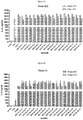
- 5x10 4 hybridoma cells were incubated with 5x10 4 fresh or fixed MGAR cells, and 10ug/ml of peptide, 1ug/ml FVIII or media for 48 hours. Supernatants were then analysed for IL-2 using ELISA. The results are shown for PRCLT in Figure 3a and for DNIMV in Figure 3b .
- All of the tagged peptides were capable of being presented by fixed antigen presenting cells, indicating that they are all apitopes like the parent peptides PRCLT and DNIMV.
- modified apitopes were capable of regulating T cell responses to parent peptides
- male HLA-DR2 transgenic mice were treated with 3x100 ⁇ g peptide (peptides SEQ ID No. 1, 2, 17 or 18) or PBS as a control, and then immunised with 100 ⁇ g of each of the parent peptides (PRCLT and DNIMV) in complete Freund's Adjuvant.
- PRCLT and DNIMV complete Freund's Adjuvant.
- Draining lymph nodes and spleens were collected and stimulated in vitro with either PRCLT or DNIMV.
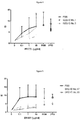
- the results are shown in Figures 4 (PRCLT) and 5 (DNIMV).
- modified peptides SEQ ID No. 17 or SEQ ID No. 18 reduces T cell responses to DNIMV.
- the modified peptides are able to reduce an immune response from mice immunised with the parent peptide.
- Example 5 Ex vivo T cell tolerance
- Peptide SEQ ID No.1 regulated responses to PRCLT and peptide SEQ ID No.17 regulated responses to DNIMV. There was also some reduction, which was non-significant, in response to FVIII with individual peptides. To enhance efficacy of the peptides against FVIII immune responses a combination of modified DNIMV and modified PRCLT were used in further experiments.
- Example 6 Antibody generation prevention with a dose escalation of a combination of PRCLT and DNIMV modified peptides
- mice Male HLA-DR2 transgenic mice were treated with the combination of peptide SEQ ID No. 1 and peptide SEQ ID No. 17 following a dose escalation protocol. Six injections of the combination were given at the following dose: 0.1; 1.0; 10 and 3x100 ⁇ g (for each peptide in the combination).
- FVIII neutralizing antibodies were measured on day 56.
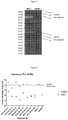
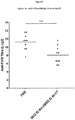
- FVIII neutralizing antibodies were determined using a chromogenic method. Briefly, samples were mixed with 1 IU/ml FVIII and coagulation was initiated by addition of FIX, FX, Trombin, CaCl 2 and phospholipids. After incubation the amount of generated FXa was determined by addition of the chromogenic substrate S-2760 and the OD signal was measured. The OD signal is proportional to the FVIII activity in the samples and is compared to samples containing a known amount of FVIII and no neutralizing antibodies. The % remaining activity of the test sample was calculated compared to the reference samples and expressed in Bethesda like units and shown in Figure 8 . Mice treated with peptides SEQ ID1 and SEQ ID17 had a significantly lower level of neutralizing anti-FVIII antibodies than mice treated with PBS.
- Example 7 Ex vivo T cell tolerance using a dose escalation of a combination of PRCLT and DNIMV modified peptides
- mice Male/female DR2 mice were treated with the combination of peptides SEQ ID No1/SEQ ID No17 following a dose escalation protocol as described in Example 6.
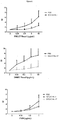
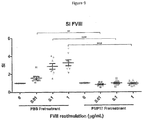
- T cell responses were assessed by proliferation assays ( Figure 9 ). A significant reduction of T cell responses to FVIII were seen across all concentrations of FVIII tested when the mice were treated with the combination of peptides SEQ ID No1 and SEQ ID No17.
- Example 8 Suppression of neutralising antibody generation with a dose escalation of a combination of PRCLT and DNIMV modified peptides in a therapeutic animal model
- HLA-DR2 transgenic mice were primed with 3 ⁇ g rFVIII in CFA and three weeks after the immunisation treated with the combination of peptide SEQ ID No. 1 and peptide SEQ ID No. 17 following a dose escalation protocol.
- Six injections of the combination were given at the following dose: 0.1; 1.0; 10 and 3x100 ⁇ g (for each peptide in the combination).
- Control animals were treated with a non-related FVIII DR2-binding prostatic acid phosphatase (PAP) 133-152 peptide (sequence as described in patent PCT/US2006/031961 , SEQ ID No. 15) using the same dose-escalation protocol.
- PAP prostatic acid phosphatase
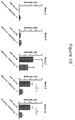
- Results in figure 10 show that treatment with peptides SEQ ID No. 1 and SEQ ID No. 17 three weeks after immunisation with FVIII (Week 3) suppress the formation of neutralizing anti-FVIII antibodies significantly after the boost immunization (Week 5) compared to treatment with control peptide.
Landscapes
- Health & Medical Sciences (AREA)
- Life Sciences & Earth Sciences (AREA)
- Chemical & Material Sciences (AREA)
- Medicinal Chemistry (AREA)
- General Health & Medical Sciences (AREA)
- Organic Chemistry (AREA)
- Veterinary Medicine (AREA)
- Pharmacology & Pharmacy (AREA)
- Public Health (AREA)
- Animal Behavior & Ethology (AREA)
- Immunology (AREA)
- Epidemiology (AREA)
- Hematology (AREA)
- Mycology (AREA)
- Microbiology (AREA)
- Zoology (AREA)
- Proteomics, Peptides & Aminoacids (AREA)
- Gastroenterology & Hepatology (AREA)
- Biophysics (AREA)
- Biochemistry (AREA)
- Genetics & Genomics (AREA)
- Molecular Biology (AREA)
- Toxicology (AREA)
- Rheumatology (AREA)
- Bioinformatics & Cheminformatics (AREA)
- Engineering & Computer Science (AREA)
- General Chemical & Material Sciences (AREA)
- Nuclear Medicine, Radiotherapy & Molecular Imaging (AREA)
- Diabetes (AREA)
- Chemical Kinetics & Catalysis (AREA)
- Peptides Or Proteins (AREA)
- Medicines That Contain Protein Lipid Enzymes And Other Medicines (AREA)
Priority Applications (3)
| Application Number | Priority Date | Filing Date | Title |
|---|---|---|---|
| SI201330663A SI2917232T1 (sl) | 2012-11-12 | 2013-11-11 | Peptidi pridobljeni iz faktorja VIII za uporabo v zdravljenju hemofilije |
| HRP20170794TT HRP20170794T1 (hr) | 2012-11-12 | 2013-11-11 | Izvedeni peptidi faktora viii za upotrebu u liječenju hemofilije a |
| RS20170542A RS56069B1 (sr) | 2012-11-12 | 2013-11-11 | Faktor viii-izvedenih peptida za upotrebu u lečenju hemofilije a |
Applications Claiming Priority (3)
| Application Number | Priority Date | Filing Date | Title |
|---|---|---|---|
| GBGB1220328.7A GB201220328D0 (en) | 2012-11-12 | 2012-11-12 | Peptides |
| GBGB1316660.8A GB201316660D0 (en) | 2013-09-19 | 2013-09-19 | Peptides |
| PCT/IB2013/060060 WO2014072958A1 (en) | 2012-11-12 | 2013-11-11 | Peptides |
Publications (2)
| Publication Number | Publication Date |
|---|---|
| EP2917232A1 EP2917232A1 (en) | 2015-09-16 |
| EP2917232B1 true EP2917232B1 (en) | 2017-03-01 |
Family
ID=49627013
Family Applications (1)
| Application Number | Title | Priority Date | Filing Date |
|---|---|---|---|
| EP13795002.8A Active EP2917232B1 (en) | 2012-11-12 | 2013-11-11 | Factor viii-derived peptides for use in the treatment of haemophilia a |
Country Status (28)
| Country | Link |
|---|---|
| US (2) | US20150306192A1 (pl) |
| EP (1) | EP2917232B1 (pl) |
| JP (1) | JP6247696B2 (pl) |
| KR (1) | KR102165486B1 (pl) |
| CN (1) | CN104903347B (pl) |
| AU (1) | AU2013343024B2 (pl) |
| BR (1) | BR112015010625B1 (pl) |
| CA (1) | CA2890835C (pl) |
| CY (1) | CY1119164T1 (pl) |
| DK (1) | DK2917232T3 (pl) |
| EA (1) | EA036483B1 (pl) |
| ES (1) | ES2626881T3 (pl) |
| HR (1) | HRP20170794T1 (pl) |
| HU (1) | HUE033586T2 (pl) |
| IL (1) | IL238627B (pl) |
| IN (1) | IN2015DN03814A (pl) |
| LT (1) | LT2917232T (pl) |
| MX (1) | MX350777B (pl) |
| MY (1) | MY176708A (pl) |
| NZ (1) | NZ708812A (pl) |
| PH (1) | PH12015501033A1 (pl) |
| PL (1) | PL2917232T3 (pl) |
| PT (1) | PT2917232T (pl) |
| RS (1) | RS56069B1 (pl) |
| SG (1) | SG11201503657UA (pl) |
| SI (1) | SI2917232T1 (pl) |
| WO (1) | WO2014072958A1 (pl) |
| ZA (1) | ZA201503127B (pl) |
Families Citing this family (5)
| Publication number | Priority date | Publication date | Assignee | Title |
|---|---|---|---|---|
| US11542316B2 (en) | 2017-01-04 | 2023-01-03 | Worg Pharmaceuticals (Zhejiang) Co., Ltd. | S-Arrestin peptides and therapeutic uses thereof |
| EP3715374A1 (en) | 2019-03-23 | 2020-09-30 | Ablevia biotech GmbH | Compound for the sequestration of undesirable antibodies in a patient |
| US11986536B2 (en) | 2019-03-23 | 2024-05-21 | Ablevia Biotech Gmbh | Compound for the sequestration of undesirable antibodies in a patient |
| GB201909774D0 (en) | 2019-07-08 | 2019-08-21 | Apitope Tech Bristol Limited | Method |
| IL301329A (en) | 2020-09-23 | 2023-05-01 | Ablevia Biotech Gmbh | Compound for increasing the efficacy of factor viii replacement therapy |
Family Cites Families (10)
| Publication number | Priority date | Publication date | Assignee | Title |
|---|---|---|---|---|
| AU2001278637B2 (en) | 2000-08-21 | 2006-05-25 | Apitope Technology (Bristol) Limited | Peptide selection method |
| WO2002060917A2 (en) * | 2000-12-01 | 2002-08-08 | Regents Of The University Of Minnesota | Method to treat hemophilia |
| FR2842812A1 (fr) * | 2002-07-26 | 2004-01-30 | Pf Medicament | Procede de solubilisation de peptides hydrophobes et leur utilisation pour generer une reponse de type ctl antitumorale ou anti-infectueuse |
| JP2006188507A (ja) * | 2004-12-10 | 2006-07-20 | Tokyo Univ Of Agriculture & Technology | 蛋白質の溶解度向上方法 |
| ES2386462T3 (es) * | 2005-10-28 | 2012-08-21 | Boehringer Ingelheim International Gmbh | Ensayo de la actividad NS2/3 del virus de la hepatitis C |
| GB0723712D0 (en) * | 2007-12-04 | 2008-01-16 | Apitope Technology Bristol Ltd | Peptides |
| GB0801513D0 (en) * | 2008-01-28 | 2008-03-05 | Circassia Ltd | Peptides from factor VIII |
| GB0908515D0 (en) * | 2009-05-18 | 2009-06-24 | Apitope Technology Bristol Ltd | Peptide |
| CA2780763A1 (en) * | 2009-11-13 | 2011-05-19 | Puget Sound Blood Center | Factor viii b cell epitope variants having reduced immunogenicity |
| SG189914A1 (en) * | 2010-10-27 | 2013-06-28 | Baxter Int | Fviii peptides for immune tolerance induction and immunodiagnostics |
-
2013
- 2013-11-11 ES ES13795002.8T patent/ES2626881T3/es active Active
- 2013-11-11 IN IN3814DEN2015 patent/IN2015DN03814A/en unknown
- 2013-11-11 CN CN201380069078.2A patent/CN104903347B/zh not_active Expired - Fee Related
- 2013-11-11 EA EA201590927A patent/EA036483B1/ru unknown
- 2013-11-11 KR KR1020157012787A patent/KR102165486B1/ko not_active Expired - Fee Related
- 2013-11-11 DK DK13795002.8T patent/DK2917232T3/en active
- 2013-11-11 LT LTEP13795002.8T patent/LT2917232T/lt unknown
- 2013-11-11 BR BR112015010625-0A patent/BR112015010625B1/pt not_active IP Right Cessation
- 2013-11-11 HU HUE13795002A patent/HUE033586T2/hu unknown
- 2013-11-11 HR HRP20170794TT patent/HRP20170794T1/hr unknown
- 2013-11-11 NZ NZ708812A patent/NZ708812A/en not_active IP Right Cessation
- 2013-11-11 US US14/441,923 patent/US20150306192A1/en not_active Abandoned
- 2013-11-11 AU AU2013343024A patent/AU2013343024B2/en not_active Ceased
- 2013-11-11 CA CA2890835A patent/CA2890835C/en active Active
- 2013-11-11 SI SI201330663A patent/SI2917232T1/sl unknown
- 2013-11-11 MY MYPI2015001224A patent/MY176708A/en unknown
- 2013-11-11 PL PL13795002T patent/PL2917232T3/pl unknown
- 2013-11-11 JP JP2015541291A patent/JP6247696B2/ja not_active Expired - Fee Related
- 2013-11-11 WO PCT/IB2013/060060 patent/WO2014072958A1/en not_active Ceased
- 2013-11-11 MX MX2015005973A patent/MX350777B/es active IP Right Grant
- 2013-11-11 EP EP13795002.8A patent/EP2917232B1/en active Active
- 2013-11-11 PT PT137950028T patent/PT2917232T/pt unknown
- 2013-11-11 SG SG11201503657UA patent/SG11201503657UA/en unknown
- 2013-11-11 RS RS20170542A patent/RS56069B1/sr unknown
-
2015
- 2015-05-04 IL IL238627A patent/IL238627B/en active IP Right Grant
- 2015-05-07 ZA ZA2015/03127A patent/ZA201503127B/en unknown
- 2015-05-08 PH PH12015501033A patent/PH12015501033A1/en unknown
-
2017
- 2017-05-31 CY CY20171100568T patent/CY1119164T1/el unknown
-
2021
- 2021-04-23 US US17/239,251 patent/US20210346476A1/en not_active Abandoned
Also Published As
Similar Documents
| Publication | Publication Date | Title |
|---|---|---|
| EP2227488B1 (en) | Fviii peptides and their use in tolerising haemophiliacs | |
| US20210346476A1 (en) | Modified FVIII Apitope Peptides | |
| EP2465523B1 (en) | FVIII-derived peptides and their use in tolerising haemophiliacs | |
| HK1209138B (en) | Factor viii-derived peptides for use in the treatment of haemophilia a | |
| HK1144292B (en) | Fviii peptides and their use in tolerising haemophiliacs | |
| HK1172240A (en) | Fviii-derived peptides and their use in tolerising haemophiliacs | |
| HK1172240B (en) | Fviii-derived peptides and their use in tolerising haemophiliacs | |
| HK1173358B (en) | Fviii-derived peptides |
Legal Events
| Date | Code | Title | Description |
|---|---|---|---|
| PUAI | Public reference made under article 153(3) epc to a published international application that has entered the european phase |
Free format text: ORIGINAL CODE: 0009012 |
|
| 17P | Request for examination filed |
Effective date: 20150612 |
|
| AK | Designated contracting states |
Kind code of ref document: A1 Designated state(s): AL AT BE BG CH CY CZ DE DK EE ES FI FR GB GR HR HU IE IS IT LI LT LU LV MC MK MT NL NO PL PT RO RS SE SI SK SM TR |
|
| AX | Request for extension of the european patent |
Extension state: BA ME |
|
| DAX | Request for extension of the european patent (deleted) | ||
| REG | Reference to a national code |
Ref country code: HK Ref legal event code: DE Ref document number: 1209138 Country of ref document: HK |
|
| GRAP | Despatch of communication of intention to grant a patent |
Free format text: ORIGINAL CODE: EPIDOSNIGR1 |
|
| INTG | Intention to grant announced |
Effective date: 20160915 |
|
| STAA | Information on the status of an ep patent application or granted ep patent |
Free format text: STATUS: GRANT OF PATENT IS INTENDED |
|
| GRAS | Grant fee paid |
Free format text: ORIGINAL CODE: EPIDOSNIGR3 |
|
| GRAA | (expected) grant |
Free format text: ORIGINAL CODE: 0009210 |
|
| STAA | Information on the status of an ep patent application or granted ep patent |
Free format text: STATUS: THE PATENT HAS BEEN GRANTED |
|
| AK | Designated contracting states |
Kind code of ref document: B1 Designated state(s): AL AT BE BG CH CY CZ DE DK EE ES FI FR GB GR HR HU IE IS IT LI LT LU LV MC MK MT NL NO PL PT RO RS SE SI SK SM TR |
|
| REG | Reference to a national code |
Ref country code: GB Ref legal event code: FG4D |
|
| REG | Reference to a national code |
Ref country code: CH Ref legal event code: EP Ref country code: AT Ref legal event code: REF Ref document number: 871219 Country of ref document: AT Kind code of ref document: T Effective date: 20170315 |
|
| REG | Reference to a national code |
Ref country code: IE Ref legal event code: FG4D |
|
| REG | Reference to a national code |
Ref country code: DE Ref legal event code: R096 Ref document number: 602013018068 Country of ref document: DE |
|
| REG | Reference to a national code |
Ref country code: RO Ref legal event code: EPE |
|
| REG | Reference to a national code |
Ref country code: HR Ref legal event code: TUEP Ref document number: P20170794 Country of ref document: HR |
|
| REG | Reference to a national code |
Ref country code: NL Ref legal event code: FP |
|
| REG | Reference to a national code |
Ref country code: PT Ref legal event code: SC4A Ref document number: 2917232 Country of ref document: PT Date of ref document: 20170609 Kind code of ref document: T Free format text: AVAILABILITY OF NATIONAL TRANSLATION Effective date: 20170530 |
|
| REG | Reference to a national code |
Ref country code: DK Ref legal event code: T3 Effective date: 20170606 |
|
| REG | Reference to a national code |
Ref country code: SE Ref legal event code: TRGR |
|
| REG | Reference to a national code |
Ref country code: EE Ref legal event code: FG4A Ref document number: E013774 Country of ref document: EE Effective date: 20170531 Ref country code: NO Ref legal event code: T2 Effective date: 20170301 |
|
| REG | Reference to a national code |
Ref country code: ES Ref legal event code: FG2A Ref document number: 2626881 Country of ref document: ES Kind code of ref document: T3 Effective date: 20170726 |
|
| REG | Reference to a national code |
Ref country code: HR Ref legal event code: T1PR Ref document number: P20170794 Country of ref document: HR |
|
| REG | Reference to a national code |
Ref country code: SK Ref legal event code: T3 Ref document number: E 24249 Country of ref document: SK |
|
| REG | Reference to a national code |
Ref country code: FR Ref legal event code: PLFP Year of fee payment: 5 |
|
| REG | Reference to a national code |
Ref country code: GR Ref legal event code: EP Ref document number: 20170401506 Country of ref document: GR Effective date: 20171023 |
|
| PG25 | Lapsed in a contracting state [announced via postgrant information from national office to epo] |
Ref country code: SM Free format text: LAPSE BECAUSE OF FAILURE TO SUBMIT A TRANSLATION OF THE DESCRIPTION OR TO PAY THE FEE WITHIN THE PRESCRIBED TIME-LIMIT Effective date: 20170301 |
|
| REG | Reference to a national code |
Ref country code: DE Ref legal event code: R097 Ref document number: 602013018068 Country of ref document: DE |
|
| REG | Reference to a national code |
Ref country code: HU Ref legal event code: AG4A Ref document number: E033586 Country of ref document: HU |
|
| PLBE | No opposition filed within time limit |
Free format text: ORIGINAL CODE: 0009261 |
|
| STAA | Information on the status of an ep patent application or granted ep patent |
Free format text: STATUS: NO OPPOSITION FILED WITHIN TIME LIMIT |
|
| 26N | No opposition filed |
Effective date: 20171204 |
|
| REG | Reference to a national code |
Ref country code: HK Ref legal event code: GR Ref document number: 1209138 Country of ref document: HK |
|
| PGFP | Annual fee paid to national office [announced via postgrant information from national office to epo] |
Ref country code: MT Payment date: 20171114 Year of fee payment: 5 |
|
| REG | Reference to a national code |
Ref country code: FR Ref legal event code: PLFP Year of fee payment: 6 |
|
| REG | Reference to a national code |
Ref country code: HR Ref legal event code: ODRP Ref document number: P20170794 Country of ref document: HR Payment date: 20181015 Year of fee payment: 6 |
|
| PGFP | Annual fee paid to national office [announced via postgrant information from national office to epo] |
Ref country code: LU Payment date: 20181024 Year of fee payment: 6 |
|
| PGFP | Annual fee paid to national office [announced via postgrant information from national office to epo] |
Ref country code: MC Payment date: 20181109 Year of fee payment: 6 |
|
| PGFP | Annual fee paid to national office [announced via postgrant information from national office to epo] |
Ref country code: BE Payment date: 20181121 Year of fee payment: 16 Ref country code: HR Payment date: 20181015 Year of fee payment: 6 Ref country code: LV Payment date: 20181106 Year of fee payment: 6 |
|
| PGFP | Annual fee paid to national office [announced via postgrant information from national office to epo] |
Ref country code: CY Payment date: 20181101 Year of fee payment: 6 |
|
| REG | Reference to a national code |
Ref country code: AT Ref legal event code: UEP Ref document number: 871219 Country of ref document: AT Kind code of ref document: T Effective date: 20170301 |
|
| REG | Reference to a national code |
Ref country code: HR Ref legal event code: PBON Ref document number: P20170794 Country of ref document: HR Effective date: 20191111 |
|
| REG | Reference to a national code |
Ref country code: EE Ref legal event code: MM4A Ref document number: E013774 Country of ref document: EE Effective date: 20191130 |
|
| PG25 | Lapsed in a contracting state [announced via postgrant information from national office to epo] |
Ref country code: RS Free format text: LAPSE BECAUSE OF NON-PAYMENT OF DUE FEES Effective date: 20191111 Ref country code: RO Free format text: LAPSE BECAUSE OF NON-PAYMENT OF DUE FEES Effective date: 20191111 Ref country code: EE Free format text: LAPSE BECAUSE OF NON-PAYMENT OF DUE FEES Effective date: 20191130 Ref country code: MC Free format text: LAPSE BECAUSE OF NON-PAYMENT OF DUE FEES Effective date: 20191202 Ref country code: CY Free format text: LAPSE BECAUSE OF NON-PAYMENT OF DUE FEES Effective date: 20191111 Ref country code: LU Free format text: LAPSE BECAUSE OF NON-PAYMENT OF DUE FEES Effective date: 20191111 |
|
| REG | Reference to a national code |
Ref country code: LT Ref legal event code: MM4D Effective date: 20191111 |
|
| PG25 | Lapsed in a contracting state [announced via postgrant information from national office to epo] |
Ref country code: HU Free format text: LAPSE BECAUSE OF NON-PAYMENT OF DUE FEES Effective date: 20191112 Ref country code: BG Free format text: LAPSE BECAUSE OF NON-PAYMENT OF DUE FEES Effective date: 20200531 Ref country code: SI Free format text: LAPSE BECAUSE OF NON-PAYMENT OF DUE FEES Effective date: 20191112 Ref country code: MT Free format text: LAPSE BECAUSE OF NON-PAYMENT OF DUE FEES Effective date: 20181111 Ref country code: HR Free format text: LAPSE BECAUSE OF NON-PAYMENT OF DUE FEES Effective date: 20191111 Ref country code: LV Free format text: LAPSE BECAUSE OF NON-PAYMENT OF DUE FEES Effective date: 20191111 |
|
| REG | Reference to a national code |
Ref country code: SI Ref legal event code: KO00 Effective date: 20200724 |
|
| REG | Reference to a national code |
Ref country code: DE Ref legal event code: R082 Ref document number: 602013018068 Country of ref document: DE Representative=s name: D YOUNG & CO LLP, DE |
|
| PG25 | Lapsed in a contracting state [announced via postgrant information from national office to epo] |
Ref country code: LT Free format text: LAPSE BECAUSE OF NON-PAYMENT OF DUE FEES Effective date: 20191111 |
|
| PG25 | Lapsed in a contracting state [announced via postgrant information from national office to epo] |
Ref country code: IS Free format text: LAPSE BECAUSE OF NON-PAYMENT OF DUE FEES Effective date: 20191201 |
|
| PG25 | Lapsed in a contracting state [announced via postgrant information from national office to epo] |
Ref country code: AL Free format text: LAPSE BECAUSE OF NON-PAYMENT OF DUE FEES Effective date: 20191111 |
|
| P01 | Opt-out of the competence of the unified patent court (upc) registered |
Effective date: 20230517 |
|
| REG | Reference to a national code |
Ref country code: DE Ref legal event code: R081 Ref document number: 602013018068 Country of ref document: DE Owner name: WORG PHARMACEUTICALS (ZHEJIANG) CO., LTD., HUZ, CN Free format text: FORMER OWNER: APITOPE INTERNATIONAL NV, DIEPENBEEK, BE |
|
| REG | Reference to a national code |
Ref country code: GB Ref legal event code: 732E Free format text: REGISTERED BETWEEN 20230817 AND 20230823 |
|
| REG | Reference to a national code |
Ref country code: FI Ref legal event code: PCE Owner name: WORG PHARMACEUTICALS (ZHEJIANG) CO., LTD. |
|
| REG | Reference to a national code |
Ref country code: NL Ref legal event code: PD Owner name: WORG PHARMACEUTICALS (ZHEJIANG) CO., LTD.; CN Free format text: DETAILS ASSIGNMENT: CHANGE OF OWNER(S), ASSIGNMENT; FORMER OWNER NAME: APITOPE INTERNATIONAL NV Effective date: 20231121 |
|
| REG | Reference to a national code |
Ref country code: NO Ref legal event code: CREP Representative=s name: RWS, EUROPA HOUSE, CHILTERN PARK, CHILTERN HILL, SL99FG Ref country code: NO Ref legal event code: CHAD Owner name: WORG PHARMACEUTICALS (ZHEJIANG) CO., CN |
|
| REG | Reference to a national code |
Ref country code: SK Ref legal event code: PC4A Ref document number: E 24249 Country of ref document: SK Owner name: 41 VESTNIK URADU PRIEMYSELNEHO VLASTNICTVA SR , # Free format text: FORMER OWNER: APITOPE INTERNATIONAL NV, DIEPENBEEK, BE Effective date: 20231205 Ref country code: SK Ref legal event code: PC4A Ref document number: E 24249 Country of ref document: SK Owner name: WORG PHARMACEUTICALS (ZHEJIANG) CO., LTD., HUZ, CN Free format text: FORMER OWNER: APITOPE INTERNATIONAL NV, DIEPENBEEK, BE Effective date: 20231205 |
|
| PGFP | Annual fee paid to national office [announced via postgrant information from national office to epo] |
Ref country code: NL Payment date: 20231120 Year of fee payment: 11 |
|
| REG | Reference to a national code |
Ref country code: BE Ref legal event code: PD Owner name: WORG PHARMACEUTICALS (ZHEJIANG) CO., LTD.; CN Free format text: DETAILS ASSIGNMENT: CHANGE OF OWNER(S), ASSIGNMENT; FORMER OWNER NAME: APITOPE INTERNATIONAL NV Effective date: 20231115 |
|
| PGFP | Annual fee paid to national office [announced via postgrant information from national office to epo] |
Ref country code: SK Payment date: 20231107 Year of fee payment: 11 |
|
| PGFP | Annual fee paid to national office [announced via postgrant information from national office to epo] |
Ref country code: GR Payment date: 20231121 Year of fee payment: 11 Ref country code: GB Payment date: 20231123 Year of fee payment: 11 |
|
| PGFP | Annual fee paid to national office [announced via postgrant information from national office to epo] |
Ref country code: TR Payment date: 20231110 Year of fee payment: 11 Ref country code: SE Payment date: 20231120 Year of fee payment: 11 Ref country code: PT Payment date: 20231102 Year of fee payment: 11 Ref country code: NO Payment date: 20231124 Year of fee payment: 11 Ref country code: IT Payment date: 20231124 Year of fee payment: 11 Ref country code: IE Payment date: 20231121 Year of fee payment: 11 Ref country code: FR Payment date: 20231120 Year of fee payment: 11 Ref country code: FI Payment date: 20231121 Year of fee payment: 11 Ref country code: DK Payment date: 20231124 Year of fee payment: 11 Ref country code: DE Payment date: 20231121 Year of fee payment: 11 Ref country code: CZ Payment date: 20231103 Year of fee payment: 11 Ref country code: CH Payment date: 20231201 Year of fee payment: 11 Ref country code: AT Payment date: 20231121 Year of fee payment: 11 |
|
| PGFP | Annual fee paid to national office [announced via postgrant information from national office to epo] |
Ref country code: PL Payment date: 20231103 Year of fee payment: 11 |
|
| REG | Reference to a national code |
Ref country code: AT Ref legal event code: PC Ref document number: 871219 Country of ref document: AT Kind code of ref document: T Owner name: WORG PHARMACEUTICALS (ZHEJIANG) CO., LTD., CN Effective date: 20240115 |
|
| PGFP | Annual fee paid to national office [announced via postgrant information from national office to epo] |
Ref country code: ES Payment date: 20240129 Year of fee payment: 11 |
|
| REG | Reference to a national code |
Ref country code: ES Ref legal event code: PC2A Owner name: WORG PHARMACEUTICALS (ZHEJIANG) CO., LTD. Effective date: 20240617 |
|
| REG | Reference to a national code |
Ref country code: DE Ref legal event code: R119 Ref document number: 602013018068 Country of ref document: DE |
|
| REG | Reference to a national code |
Ref country code: DK Ref legal event code: EBP Effective date: 20241130 |
|
| REG | Reference to a national code |
Ref country code: SK Ref legal event code: MM4A Ref document number: E 24249 Country of ref document: SK Effective date: 20241111 |
|
| REG | Reference to a national code |
Ref country code: CH Ref legal event code: PL |
|
| REG | Reference to a national code |
Ref country code: SE Ref legal event code: EUG |
|
| PG25 | Lapsed in a contracting state [announced via postgrant information from national office to epo] |
Ref country code: FI Free format text: LAPSE BECAUSE OF NON-PAYMENT OF DUE FEES Effective date: 20241111 |
|
| REG | Reference to a national code |
Ref country code: NL Ref legal event code: MM Effective date: 20241201 |
|
| PG25 | Lapsed in a contracting state [announced via postgrant information from national office to epo] |
Ref country code: NO Free format text: LAPSE BECAUSE OF NON-PAYMENT OF DUE FEES Effective date: 20241130 |
|
| REG | Reference to a national code |
Ref country code: AT Ref legal event code: MM01 Ref document number: 871219 Country of ref document: AT Kind code of ref document: T Effective date: 20241111 Ref country code: CH Ref legal event code: PL |
|
| PG25 | Lapsed in a contracting state [announced via postgrant information from national office to epo] |
Ref country code: PT Free format text: LAPSE BECAUSE OF NON-PAYMENT OF DUE FEES Effective date: 20250512 |
|
| PG25 | Lapsed in a contracting state [announced via postgrant information from national office to epo] |
Ref country code: GR Free format text: LAPSE BECAUSE OF NON-PAYMENT OF DUE FEES Effective date: 20250610 |
|
| GBPC | Gb: european patent ceased through non-payment of renewal fee |
Effective date: 20241111 |
|
| PG25 | Lapsed in a contracting state [announced via postgrant information from national office to epo] |
Ref country code: CH Free format text: LAPSE BECAUSE OF NON-PAYMENT OF DUE FEES Effective date: 20241130 |
|
| PG25 | Lapsed in a contracting state [announced via postgrant information from national office to epo] |
Ref country code: AT Free format text: LAPSE BECAUSE OF NON-PAYMENT OF DUE FEES Effective date: 20241111 |
|
| PG25 | Lapsed in a contracting state [announced via postgrant information from national office to epo] |
Ref country code: SK Free format text: LAPSE BECAUSE OF NON-PAYMENT OF DUE FEES Effective date: 20241111 |
|
| PG25 | Lapsed in a contracting state [announced via postgrant information from national office to epo] |
Ref country code: CZ Free format text: LAPSE BECAUSE OF NON-PAYMENT OF DUE FEES Effective date: 20241111 |
|
| PG25 | Lapsed in a contracting state [announced via postgrant information from national office to epo] |
Ref country code: NL Free format text: LAPSE BECAUSE OF NON-PAYMENT OF DUE FEES Effective date: 20241201 |
|
| REG | Reference to a national code |
Ref country code: BE Ref legal event code: MM Effective date: 20241130 |
|
| PG25 | Lapsed in a contracting state [announced via postgrant information from national office to epo] |
Ref country code: DE Free format text: LAPSE BECAUSE OF NON-PAYMENT OF DUE FEES Effective date: 20250603 Ref country code: DK Free format text: LAPSE BECAUSE OF NON-PAYMENT OF DUE FEES Effective date: 20241130 |
|
| PG25 | Lapsed in a contracting state [announced via postgrant information from national office to epo] |
Ref country code: SE Free format text: LAPSE BECAUSE OF NON-PAYMENT OF DUE FEES Effective date: 20241112 Ref country code: IT Free format text: LAPSE BECAUSE OF NON-PAYMENT OF DUE FEES Effective date: 20241111 |
|
| PG25 | Lapsed in a contracting state [announced via postgrant information from national office to epo] |
Ref country code: BE Free format text: LAPSE BECAUSE OF NON-PAYMENT OF DUE FEES Effective date: 20241130 Ref country code: GB Free format text: LAPSE BECAUSE OF NON-PAYMENT OF DUE FEES Effective date: 20241111 |
|
| PG25 | Lapsed in a contracting state [announced via postgrant information from national office to epo] |
Ref country code: FR Free format text: LAPSE BECAUSE OF NON-PAYMENT OF DUE FEES Effective date: 20241130 |
|
| PG25 | Lapsed in a contracting state [announced via postgrant information from national office to epo] |
Ref country code: IE Free format text: LAPSE BECAUSE OF NON-PAYMENT OF DUE FEES Effective date: 20241111 |