EP2907402A1 - Helm mit Aufprallverfolgung - Google Patents
Helm mit Aufprallverfolgung Download PDFInfo
- Publication number
- EP2907402A1 EP2907402A1 EP15153888.1A EP15153888A EP2907402A1 EP 2907402 A1 EP2907402 A1 EP 2907402A1 EP 15153888 A EP15153888 A EP 15153888A EP 2907402 A1 EP2907402 A1 EP 2907402A1
- Authority
- EP
- European Patent Office
- Prior art keywords
- helmet
- force
- injury
- processor
- impact
- Prior art date
- Legal status (The legal status is an assumption and is not a legal conclusion. Google has not performed a legal analysis and makes no representation as to the accuracy of the status listed.)
- Granted
Links
- OHFHDPMRUQHQOD-UHFFFAOYSA-N CCCCCCC1=C(CC)CCC1 Chemical compound CCCCCCC1=C(CC)CCC1 OHFHDPMRUQHQOD-UHFFFAOYSA-N 0.000 description 1
Images






Classifications
-
- A—HUMAN NECESSITIES
- A42—HEADWEAR
- A42B—HATS; HEAD COVERINGS
- A42B3/00—Helmets; Helmet covers ; Other protective head coverings
- A42B3/04—Parts, details or accessories of helmets
- A42B3/0406—Accessories for helmets
- A42B3/0433—Detecting, signalling or lighting devices
- A42B3/046—Means for detecting hazards or accidents
-
- A—HUMAN NECESSITIES
- A42—HEADWEAR
- A42B—HATS; HEAD COVERINGS
- A42B3/00—Helmets; Helmet covers ; Other protective head coverings
- A42B3/04—Parts, details or accessories of helmets
- A42B3/10—Linings
- A42B3/12—Cushioning devices
- A42B3/125—Cushioning devices with a padded structure, e.g. foam
- A42B3/128—Cushioning devices with a padded structure, e.g. foam with zones of different density
-
- G—PHYSICS
- G01—MEASURING; TESTING
- G01L—MEASURING FORCE, STRESS, TORQUE, WORK, MECHANICAL POWER, MECHANICAL EFFICIENCY, OR FLUID PRESSURE
- G01L5/00—Apparatus for, or methods of, measuring force, work, mechanical power, or torque, specially adapted for specific purposes
- G01L5/0052—Apparatus for, or methods of, measuring force, work, mechanical power, or torque, specially adapted for specific purposes measuring forces due to impact
-
- A—HUMAN NECESSITIES
- A42—HEADWEAR
- A42B—HATS; HEAD COVERINGS
- A42B3/00—Helmets; Helmet covers ; Other protective head coverings
- A42B3/04—Parts, details or accessories of helmets
- A42B3/10—Linings
- A42B3/12—Cushioning devices
- A42B3/125—Cushioning devices with a padded structure, e.g. foam
-
- A—HUMAN NECESSITIES
- A61—MEDICAL OR VETERINARY SCIENCE; HYGIENE
- A61B—DIAGNOSIS; SURGERY; IDENTIFICATION
- A61B5/00—Measuring for diagnostic purposes; Identification of persons
- A61B5/16—Devices for psychotechnics; Testing reaction times ; Devices for evaluating the psychological state
- A61B5/163—Devices for psychotechnics; Testing reaction times ; Devices for evaluating the psychological state by tracking eye movement, gaze, or pupil change
-
- A—HUMAN NECESSITIES
- A61—MEDICAL OR VETERINARY SCIENCE; HYGIENE
- A61B—DIAGNOSIS; SURGERY; IDENTIFICATION
- A61B5/00—Measuring for diagnostic purposes; Identification of persons
- A61B5/74—Details of notification to user or communication with user or patient; User input means
- A61B5/7465—Arrangements for interactive communication between patient and care services, e.g. by using a telephone network
-
- G—PHYSICS
- G08—SIGNALLING
- G08B—SIGNALLING SYSTEMS, e.g. PERSONAL CALLING SYSTEMS; ORDER TELEGRAPHS; ALARM SYSTEMS
- G08B21/00—Alarms responsive to a single specified undesired or abnormal condition and not otherwise provided for
- G08B21/18—Status alarms
- G08B21/182—Level alarms, e.g. alarms responsive to variables exceeding a threshold
Definitions
- This application relates to a helmet and more particularly to a helmet having built in capabilities to track impact history and/or built in capabilities to test for brain injury.
- the helmet can also have varying shock absorption capabilities.
- Head injuries in sports are becoming more prevalent. Part of the reason for such increase in incidence of injuries is that helmets provide a false sense of security and are therefore used offensively in contact sports such as football. When two helmets crash together, full force transmission occurs, leading to concussions and more severe head injuries.
- a helmet for tracking impact comprising at least one sensor, a processor in communication with the sensor and a storage file in communication with the processor.
- the at least one sensor measures a force applied to the helmet and sends a signal to the processor indicative of the measured force, the processor receiving the signal indicative of the measured force and compares the measured force to a predetermined value, wherein if the measured force exceeds the predetermined value data is sent to the storage file to record the measured force.
- the measured force does not exceed the predetermined value, it is considered a non-event and data is not sent from the processor to the storage file.
- the data sent to the storage file includes one or more of a type of injury, a location of injury and a time of injury.
- the measured force can be a rotational force applied to a head of a wearer of the helmet and/or an impact force applied to the head of the wearer and the data can include a force value of the measured force.
- the storage file updates a register to include the data in the register.
- the register is repeatedly updated as additional data is received in response to subsequent measured forces detected which exceed a predetermined value, the data being retrievable for evaluation.
- the impact force does not exceed the predetermined value data is sent to the storage file containing details of the force applied to the helmet.
- the data sent to the storage file includes one or more of a type of injury, a location of injury, and a time of injury.
- the measured force can be a rotational force and/or an impact force applied to a head of a wearer of the helmet and the data can include a force value of the measured force.
- the storage file updates a register and the data is stored in the register.
- the register is repeatedly updated as additional data is received in response to subsequent measured forces detected which exceed a predetermined value, the data being retrievable for evaluation.
- the measured force is initially compared by the processor to a threshold value less than the predetermined value, and if the measured force is less than the threshold value it is computed as a non-event and no data is sent to the storage file by the processor.
- a helmet for tracking impact comprising at least one sensor, a processor in communication with the sensor, a storage file in communication with the processor, and an injury tracking system in communication with the processor.
- the at least one sensor measures a force applied to the helmet and sends a first signal to the processor indicative of the measured force.
- the processor receives the first signal indicative of the measured force and compares the measured force to a predetermined value, wherein if the measured force exceeds the predetermined value a second signal is sent to the injury tracking system to activate the injury tracking system.
- a signal is sent by a processor to an alarm system to trigger an alarm and if input of the wearer to the processor satisfies the set of parameters, a signal is not sent to the alarm system and the injury tracking system is reset for later activation if necessary.
- the storage file updates a register and the data is stored in the register.
- the register is repeatedly updated as additional data is received in response to subsequent measured forces detected which exceed a predetermined value, the data being retrievable for evaluation.
- An algorithm can be provided in the processor which computes cumulative values indicative of impact history and the cumulative values are compared to threshold values, and if the cumulative values exceed the threshold values, a third signal is sent to the alarm to trigger the alarm.
- the helmets described above can in some embodiments include varying shock absorption.
- the shock absorbers are composed of a compressible foam material.
- the shock absorbers comprise air cells forming an air pocket.
- the air cells can include a relief valve to allow force deceleration and pressure release when a pressure threshold is exceeded.
- the shock absorbers of a first set have a first height and the shock absorbers of the second set have a second height, the first height being greater than the second height.
- the foregoing helmets can have an outer shell that spins or rotates with respect to the helmet body to release energy to a side.
- the outer shell can have a low friction outer surface to deflect impact to the helmet.
- the foregoing helmets can include a third set of shock absorbers having a gradient of stress absorption different than the gradient of the first set of shock absorbers and the gradient of the second set of shock absorbers thereby providing successive loading based on severity of force impact to the helmet.
- FIG 1 illustrates a football helmet of the prior art.
- the helmet 10 has a hard outer shell 12 and soft padding inside the shell 12.
- the helmet 10 is relatively heavy and relies on the soft padding inside to cushion the head in an attempt to reduce brain injuries.
- the weight of the helmet makes the helmet cumbersome and uncomfortable to wear. The heavy weight can also adversely affect athletic performance.
- the padding inside the helmet does not provide adequate protection to the head, especially since the heavy helmet provides the wearer with a false sense of protection. This false sense of protection oftentimes lead to more head injuries since the helmet is used offensively as the wearer uses the helmet as a direct force against an opponent, and the wearer will incur direct impacts on the helmet.
- the amount of padding that can be provided in the helmet of the prior art is limited by the size of the helmet since if thicker padding is utilized it will take up more internal space, leading to even larger and more cumbersome helmet. Additionally, if such additional padding/cushioning is added, it would need to be sufficient to handle all impacts, regardless of the force. Therefore, the helmet would need to be designed with thicker cushioning throughout, even if not necessary to handle small impact forces. Also, if the helmet is designed solely to accommodate maximum impact, it will be stiffer and "bumpier" on the user's head.
- the present invention advantageously in some aspects provides a lightweight helmet without sacrificing effectiveness in injury prevention. This is achieved through the varying shock absorbers (shock absorbing members) lining the helmet. Additionally, the helmet is designed in certain embodiments so that upon certain impact forces, the outer shell spins with respect to the helmet body, thus further dispersing the force of the impact.
- FIG. 2A-3 illustrate a first embodiment of the helmet of the present invention.
- the helmet is designated generally by reference number 20 and has a conventional face guard 22.
- Inside the outer shell 24 of the helmet 20 is an inner liner 30 which forms the shock absorbing feature of the present invention.
- Inner liner 30 has an upper surface 32 which is attached to the inner surface of the outer shell 24 and a lower surface 34 from which the shock absorbers 40 extend.
- Shock absorbers in the embodiment of Figures 2A-3 are composed of a compressible foam material with sufficient flexibility and rigidity to receive and disperse a force applied thereto.
- the shock absorbers 40 are of varying height and of varying compressibility thereby providing different shock absorbing characteristics with different activation thresholds.
- Height h2 is greater than height h1 and less than height h3.
- shock absorbers 40 can be arranged in a pattern or grouping different than that the alternating pattern shown in Figures 2A-3 .
- shock absorbers 40 can be formed of a compressible foam material which compresses upon sufficient impact.
- other cushioning materials are also contemplated.
- the shock absorbers 50 of inner liner 48 include shock absorbers 50a of the smallest height g1, shock absorbers 50c of the largest height g3 and shock absorbers 50b of an intermediate height g2 which is greater than height g1 and less than height g3.
- the shock absorbers 50a, 50b and 50c are collectively referred to as shock absorbers 50.
- the shock absorbers comprise air cells rather than a foam material as in Figure 2A , and the air cells can include a relief valve.
- shock absorbers 50 are shown impacted, however depending on the impact, only certain shock absorbers 50a, 50b, and 50c would be affected. For example, in certain instances, only the shock absorbers in the region of impact would be affected/activated. On sufficient impact, it is also possible that all shock absorbers of the liner 48 would be affected/activated. This is also applicable to liner 30 and shock absorbers 40 as well as the other shock absorbers disclosed herein, e.g., shock absorbers 60 and 70 described below.
- the shock absorbers 60 of inner liner 61 are of the same height but varying shock absorption is achieved by providing different materials.
- the embodiment of Figure 5A can have the same advantages of reduced bulk as in the previously described embodiments achieved by varying the lightness of the material. It also has the advantage of varying shock absorption, wherein only a fraction of the shock absorbing elements are activated upon application of a relatively low force, i.e., the shock absorbers with the greatest flexibility/compressibility, and more shock absorbers are activated with application of a higher force i.e., including the shock absorbers having less flexibility/compressibility.
- the shock absorbers of the various embodiments described herein can contain material such as foam.
- the shock absorbers can contain a fluid with a relief valve for releasing pressure when the pressure is greater than a pressure threshold to reduce the effects of impact to the head.
- the relief valves allow for force deceleration and would have different thresholds for release to provide shock absorbers of varying shock absorption characteristics.
- some of the shock absorbers can contain compressible surfaces such as foam and other shock absorbers can contain fluid with a relief valve.
- the shock absorbers in accordance with the present disclosure can have different configurations, different heights and/or different materials to accommodate different forces, thus providing differential protection. They can be arranged in an alternating arrangement or grouped together in a different pattern. They can be arranged in two or more sets of varying shock absorption characteristics and can be evenly or unevenly distributed. The number of shock absorbers for each set can be the same or alternately a different number in each set.
- the outer shell of the helmet of the present invention in some embodiments can be rotatable with respect to the helmet body. This helps to deflect the force to minimize direct hit impact. This is shown for example in Figures 4B and 4C , represented by the directional arrow showing for example a front impact causing rotation of the outer body 84 with respect to the inner liner 86 and Figure 4C illustrating rotation of the outer body 84 upon a rear impact force.
- the outer shells of the helmets of the other embodiments disclosed herein (with associated shock absorbers) can likewise in some embodiments be rotatably mounted to the helmet body so they can rotate as in Figures 4B and 4C .
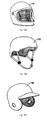
- FIGS 10A-10C show examples of different helmets which can contain any of the inner liners and shock absorbers of the present invention described herein, either permanently attached or as an attachable (mountable) insert as in Figure 9 .
- Figure 10A illustrates a motorcycle helmet 100
- Figure 10B illustrates a bicycle helmet 110
- Figure 10C illustrates a baseball batter's helmet 130.
- Other helmets are also contemplated including for example helmets for lacrosse, field hockey, etc.
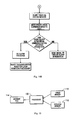
- the system provided in the helmet is illustrated in the schematic block diagram of Figure 15 and in the flow chart of Figure 11 .
- the helmet wearer's history is tracked and stored within the helmet. That is, information relating to helmet impact can be tied to the player's career and tag coded to the individual.
- a force is applied to the helmet, which can be in the form of an external impact, e.g., a direct blow to the head, or in the form of a rotational force, e.g., a jerking motion to the head
- a sensor(s) within the helmet detects and measures such force.
- One or more sensors can be provided and located in various locations in or on the helmet.
- the measured force value R2 exceeds the predetermined value R1
- the data is sent to the storage file 114 to record one or more, and preferably all, of the following data: a) the type of injury; 2) the exact location of the injury; 3) the date and time of injury; and 4) the force value.
- the storage file is updated to add this information, i.e., type, location, date/time of injury and force, to the existing register so a cumulative record can be maintained, thereby tracking the wearer's history.
- the sensor 110 sends a signal to the processor 100 indicative of the measured impact force F2.
- the processor 100 receives the signal indicative of the measured force F2 where it is compared to a predetermined or threshold force value F1. If the force F2 does not exceed such predetermined value F1, then it is determined (computed) a "non-event" and no data is transferred to the storage file 114. This ensures that minor impact to the head which have no actual or cumulative effect on the wearer are not added to memory and skew future comparative analysis.
- the measured force value F2 exceeds the predetermined value F1
- the data is transferred to the storage file to record one or more, and preferably all, of the following data: a) the type of injury; 2) the exact location of the injury; 3) the date and time of injury; and 4) the force value.
- the storage file 114 is updated to add this information, i.e., type, location, date/time of injury and force, to the existing register so a cumulative record can be maintained.
- Such recordation and storage has the advantages identified above with evaluation of rotational force R2. In this manner, at any given time, the player's injury history can be retrieved from memory, reviewed and evaluated and necessary steps can be taken to prevent further injury.
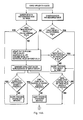
- FIG. 12 An alternate embodiment of the helmet and impact tracking system contained therein is depicted in the flow chart of Figure 12 and schematic block diagram of Figure 16 .
- the system and method includes an alarm system 124 provided in the helmet so that the wearer and others are alerted to the danger or potential danger of brain injury.
- cumulative calculations are performed to compute cumulative effect of impact and injury.
- the alarm of this system can be triggered by a single impact incident or triggered by a cumulative calculation of one or more measured incidents/impacts.
- a beeping sound, or visual, e.g., a light or LED can be illuminated in the helmet.
- the sensor 110 detects an external impact force F4 to the helmet, the sensor 110 measures the force and sends a first signal to the processor 120 indicative of the measured external force F4 where it is compared to a predetermined or threshold value F3.
- F4 can be the same as F2 of Figure 11 or alternatively another value.
- the threshold value F3 can be the same or different than threshold value F1 of the embodiment of Figure 11 . If the measured force F4 exceeds the threshold value F3, a second signal is sent to the alarm system 124 to trigger the alarm.
- the data is transferred to the storage file 122 to enable cumulative calculations.
- the data storage file 122 in the helmet is updated to record one or more, and preferably all, of the following data (parameters): 1) the type of injury; 2) the location of the injury; 3) the date and time of injury; and 4) the force value, and then a cumulative total of each of these parameters is calculated and stored in the file. Once the cumulative value of each of these incidents/parameters is generated, which is representative of the wearer's personal history of injury incidents, it is compared to a predetermined or threshold value correlating to a safe cumulative value.
- the processor can evaluate the combination of the parameters (data) in accordance with the algorithm to evaluate whether the combination of two or more of the cumulative values will trigger an "event” thereby activating the alarm system 124.
- the system of Figure 12 can be configured in alternate embodiments that if the head rotation R4 or impact force F4 exceeds the values R3 and F4, and the alarm system 114 is triggered, these values are transmitted to the storage file 122 and considered in the cumulative calculations generated. This ensures that the forces which trigger the alarm remain part of the impact history.
- the flow chart of Figure 12 would include an arrow that in addition to sending a signal to trigger an alarm (in response to the first decision box), would also show data being sent to the storage file to update the record.
- FIG. 13 and 14 provide an injury tracking system where the helmet wearer's injury can be assessed right on site. That is, the helmet contains software to assess brain injury patterns by various methods such as an eye tracking system to assess the focusing/concentration ability of the wearer, a motion tracking system to determine if the user can follow a set of verbal commands to move parts of his body, a hearing testing system to determine the wearer's response to commands, a verbal testing system to determine the wearer's verbal response to questions and/or commands, as well as other forms of testing the wearer, including a smell test emitter of a stimulant gas or liquid. As can be appreciated, such systems can utilize for example, visual, verbal, olfactory and/or auditory testing.
- one or more sensors detects and measures head rotation and/or external force applied to the helmet.
- the measured rotational force is sent by the sensor 134 ( Figure 17 ) to a processor 130.
- the processor 130 receives the signal from the sensor 134 indicative of the measured rotational force R6 where it is compared to a predetermined or threshold value R5. If the measured rotational force R6 does not exceed a threshold value R5, then it is considered a "non-event" and the injury tracking system 138 is not initiated.
- the measured external force F6 received from force sensor 132 by processor 130 does not exceed a threshold value F5, then it is considered a "non-event" and the injury tracking system 138 is not initiated.
- the values R6 and F6 can be the same as R4 and F4 of the embodiment of Figure 12 or alternatively other values.
- the threshold values R5 and F5 can be the same or different than values R3 and F3 of Figure 12 .
- the command or prompt is given to the wearer (user) such as a visual command for the user to move his hand or foot, or the user is instructed to focus his vision on various screens, such as display screen 154. If the wearer can follow the commands and satisfy the testing parameters, no alarm is triggered and the injury tracking system 138 is reset for later initiation if necessary. However, if the user cannot follow the commands within the acceptable parameters, a signal is sent to the alarm system 140 to trigger the alarm or other indicator.
- the alarm can be of various forms such as audible or visual, e.g., a beeping sound can be heard or a light or LED can be illuminated in the helmet.
- this embodiment of Figure 14A , 14B differs from that of Figure 12 in that the cumulative calculations alone are not sufficient to trigger the alarm, but instead, a test of the wearer's motor skills, focus, hearing, etc. is utilized to detect the severity of the injury, and only if the wearer's responses to the testing are determined deficient, is the alarm triggered.
- This provides on site assessment of injuries and can avoid premature initiation of an alarm since the trigger is not based solely on cumulative history but on a measurement of the wearer's functional abilities which are representative of the severity of the injury.
- a signal is sent to initiate the injury tracking system, and the system runs as in the embodiment of Figure 13 and Figure 17 described above, triggering an alarm or indicator if the wearer does not pass the test, i.e., does not satisfy the prompts or commands transmitted to the wearer, which is indicative of sufficient brain injury. If the cumulative values or combination values does not exceed the threshold value, then the injury tracking system is not triggered but the storage file remains updated with the new data for later addition to subsequent force impacts so the values can be recalculated to assess if activation of the tracking system is warranted at a later date.
- the measured rotational force from the sensor exceeds a threshold or predetermined value (see first decision box of Figure 14A )
- a signal is sent from the processor to the injury tracking system to activate the test for the wearer as described above in conjunction with Figure 13 .
- the measured force from the sensor exceeds a threshold or predetermined value ( Figure 14A )
- a signal is sent from the processor to the injury tracking system to activate the test for the wearer.
- the tracking system tests the wearer's motion, force/concentration, hearing, etc. in the manner described above to determine if it conforms to acceptable parameters, and if not, an alarm is triggered or other indicator is activated to alert the wearer and others that sufficient injury has occurred.
- data e.g., type, location, and date of injury and force value
- data is sent to the storage file to record the history for later retrieval from memory and evaluation.
- the foregoing helmets thus contain the wearer's information/history which is easily accessible from memory.
- the tracking system can advantageously replace the on field physician.
- the tracking system can be placed for example on Plexiglas face protector on the helmet or integrated into google type glasses on the front of the helmet.
- Figure 18 illustrates an example where the tracking system is placed on the face protector of the helmet.
- the force sensors/transducers can be placed at various regions of the helmet so as to monitor impact at any portion of the helmet.
- processor can be implemented utilizing a microprocessor, micro-computer, central processing unit or any other device that manipulates analog and/or digital signals.
- the memory module e.g., storage file, performs a storage function while the processor executes operational instructions.
- the systems disclosed herein can be wireless.
- the foregoing helmets can also include one or more cameras so that the wearer's reaction can be viewed during activation of the injury tracking system. Cameras can be aligned with the wearer to view what the wearer is visualizing, aligned with the wearer's eyes and/or additional cameras viewing from behind the wearer or to either side of the wearer.
- the helmets with impact tracking and/or injury tracking systems of Figures 11-18 can also optionally include structure to vary shock absorption and/or to diffuse and disperse the impact as in the helmets of Figures 1-10 .
- a plurality of air cells with relief valves are positioned within the helmet as described above.
- the cells can be of different characteristics so their shock absorption function is initiated depending on the extent of impact.
- the shock absorbers can alternatively be composed of compressible foam with differing flexibility/compressibility as described above.
- the outer shell can also optionally include a low friction surface to reduce the force impact by diffusing the force of a direct hit to the helmet.
- the outer shell can also optionally spin with respect to the outer body.
- the helmets of Figures 1-10 with varying shock absorption can optionally be provided with any of the systems of Figures 11-18 .
- Helmets for various sports and activities are contemplated, such as, without limitation, football, hockey, lacrosse, bicycle, motorcycle, etc. as shown for example in Figures 10A, 10B, 10C .
Landscapes
- Physics & Mathematics (AREA)
- General Physics & Mathematics (AREA)
- Helmets And Other Head Coverings (AREA)
- Force Measurement Appropriate To Specific Purposes (AREA)
Applications Claiming Priority (3)
| Application Number | Priority Date | Filing Date | Title |
|---|---|---|---|
| US201461940407P | 2014-02-15 | 2014-02-15 | |
| US201461991463P | 2014-05-10 | 2014-05-10 | |
| US14/604,557 US10413009B2 (en) | 2014-02-15 | 2015-01-23 | Helmet with impact tracking |
Publications (2)
| Publication Number | Publication Date |
|---|---|
| EP2907402A1 true EP2907402A1 (de) | 2015-08-19 |
| EP2907402B1 EP2907402B1 (de) | 2019-06-12 |
Family
ID=52446283
Family Applications (1)
| Application Number | Title | Priority Date | Filing Date |
|---|---|---|---|
| EP15153888.1A Active EP2907402B1 (de) | 2014-02-15 | 2015-02-05 | Helm mit Aufprallverfolgung |
Country Status (3)
| Country | Link |
|---|---|
| US (2) | US10413009B2 (de) |
| EP (1) | EP2907402B1 (de) |
| JP (1) | JP2015152602A (de) |
Families Citing this family (19)
| Publication number | Priority date | Publication date | Assignee | Title |
|---|---|---|---|---|
| CA2910699A1 (en) * | 2013-04-30 | 2014-11-06 | Chester WHITE | Body impact bracing apparatus |
| US20160157545A1 (en) * | 2014-12-05 | 2016-06-09 | Michael R. Bowman | Collapsible safety helmet |
| US9552747B1 (en) * | 2015-03-13 | 2017-01-24 | Protective Sports Equipment International Inc | Helmet impact simulator and method |
| US12133566B2 (en) | 2015-10-13 | 2024-11-05 | Sports Medicine Sciences, LLC | Fluid-based exoskeletal body armor with climate control |
| US11247115B2 (en) * | 2015-10-13 | 2022-02-15 | Sports Medicine Sciences, LLC | Fluid-based exoskeletal body armor with climate control |
| GB2550411B (en) * | 2016-05-20 | 2019-04-03 | Hp1 Tech Ltd | Device for detecting a force |
| WO2018017867A1 (en) | 2016-07-20 | 2018-01-25 | Riddell, Inc. | System and methods for designing and manufacturing a bespoke protective sports helmet |
| WO2018122847A1 (en) * | 2016-12-29 | 2018-07-05 | Finkelstein Elliot Steven | A portable system and method for monitoring brain trauma |
| US11160322B2 (en) | 2017-05-04 | 2021-11-02 | John Plain | Anti-concussive helmet and alarm system therefor |
| KR102379504B1 (ko) * | 2017-08-29 | 2022-03-28 | 삼성전자 주식회사 | 충돌 분석 방법 및 장치 |
| GB2573545B (en) * | 2018-05-09 | 2022-09-07 | Rheon Labs Ltd | Impact detection |
| WO2020037279A1 (en) | 2018-08-16 | 2020-02-20 | Riddell, Inc. | System and method for designing and manufacturing a protective helmet |
| US20200093435A1 (en) * | 2018-09-25 | 2020-03-26 | University Of Maryland, Baltimore | System and method for athlete physiology monitoring |
| US11167198B2 (en) | 2018-11-21 | 2021-11-09 | Riddell, Inc. | Football helmet with components additively manufactured to manage impact forces |
| USD927084S1 (en) | 2018-11-22 | 2021-08-03 | Riddell, Inc. | Pad member of an internal padding assembly of a protective sports helmet |
| WO2020123873A1 (en) * | 2018-12-12 | 2020-06-18 | Riddell, Inc. | Systems and methods for providing training opportunities based on physiological parameter of persons engaged in physical activity |
| US20210227916A1 (en) * | 2020-01-27 | 2021-07-29 | The United States Of America, As Represented By The Secretary, Department Of Health And Human Servic | Headgear systems with air-bubble cushioning liner for improved shock absorption performance |
| CN111594572B (zh) * | 2020-05-11 | 2021-08-03 | 安徽朗巴智能科技有限公司 | 一种ar装置用防撞设备及其控制系统 |
| CA3177316A1 (en) | 2020-05-12 | 2021-11-18 | Joseph R. WORPLE | Hard hat with impact protection material |
Citations (7)
| Publication number | Priority date | Publication date | Assignee | Title |
|---|---|---|---|---|
| US5950244A (en) * | 1998-01-23 | 1999-09-14 | Sport Maska Inc. | Protective device for impact management |
| US20020060633A1 (en) * | 2000-10-11 | 2002-05-23 | Joseph J. Crisco | System and method for measuring the linear and rotational acceleration of a body part |
| US20080256687A1 (en) * | 2007-04-23 | 2008-10-23 | Spencer Brycen L | Helmet |
| US20130060168A1 (en) * | 2011-09-01 | 2013-03-07 | Riddell, Inc. | Systems and methods for monitoring a physiological parameter of persons engaged in physical activity |
| US20130074248A1 (en) * | 2010-11-23 | 2013-03-28 | Battle Sports Science, Llc | Impact sensing device and helmet incorporating the same |
| US20130110415A1 (en) * | 2011-10-27 | 2013-05-02 | Paul M. Davis | Body Mounted Monitoring System And Method |
| US20130282308A1 (en) * | 2010-01-22 | 2013-10-24 | X2 Biosystems, Inc. | Head impact event reporting system |
Family Cites Families (44)
| Publication number | Priority date | Publication date | Assignee | Title |
|---|---|---|---|---|
| US3713640A (en) | 1970-07-27 | 1973-01-30 | Riddell | Energy absorbing and sizing means for helmets |
| US4012794A (en) | 1975-08-13 | 1977-03-22 | Tetsuo Nomiyama | Impact-absorbing helmet |
| GB9423113D0 (en) | 1994-11-16 | 1995-01-04 | Phillips Kenneth D | Protective headgear |
| US5669079A (en) | 1995-10-31 | 1997-09-23 | Morgan; Don E. | Safety enhanced motorcycle helmet |
| US5713082A (en) | 1996-03-13 | 1998-02-03 | A.V.E. | Sports helmet |
| US5978972A (en) | 1996-06-14 | 1999-11-09 | Johns Hopkins University | Helmet system including at least three accelerometers and mass memory and method for recording in real-time orthogonal acceleration data of a head |
| IES72949B2 (en) | 1996-11-06 | 1997-05-07 | John Francis Shortall | Safety crash helmet with automatic inflatable air bag |
| US7526389B2 (en) * | 2000-10-11 | 2009-04-28 | Riddell, Inc. | Power management of a system for measuring the acceleration of a body part |
| US6592849B2 (en) * | 2001-06-21 | 2003-07-15 | Colgate Palmolive Company | Chewing gum to control malodorous breath |
| US6978162B2 (en) | 2001-08-17 | 2005-12-20 | Hewlett-Packard Development Company, L.P. | Integrated portable entertainment, information and communication system linked to a wireless helmet |
| DE10147045B4 (de) | 2001-09-25 | 2005-03-17 | Dräger Safety AG & Co. KGaA | Datenkommumikationssystem für Masken- oder Helmträger |
| US6798392B2 (en) | 2001-10-16 | 2004-09-28 | Hewlett-Packard Development Company, L.P. | Smart helmet |
| US6681408B2 (en) | 2002-01-25 | 2004-01-27 | Tun-Jen Ku | Impact resistant structure of safety helmet |
| US20040117896A1 (en) | 2002-10-04 | 2004-06-24 | Madey Steven M. | Load diversion method and apparatus for head protective devices |
| US20040250340A1 (en) | 2003-02-05 | 2004-12-16 | Dennis Piper | Protective headguard |
| US7093305B2 (en) | 2003-06-27 | 2006-08-22 | Morning Pride Manufacturing, L.L.C. | Protective helmet with card displaying or recording data unique to authorized wearer and readable through helmet pocket window |
| US7089602B2 (en) | 2003-06-30 | 2006-08-15 | Srikrishna Talluri | Multi-layered, impact absorbing, modular helmet |
| GB2404328A (en) | 2003-07-31 | 2005-02-02 | Scott Michael Bonnar | Helmet with inflatable lining of cells interconnected by passageways which can deform to limit pressure rise on impact |
| WO2005058083A2 (en) | 2003-12-12 | 2005-06-30 | Beck Gregory S | Safety helmet with shock detector, helmet attachement device with shock detector & methods |
| US8382685B2 (en) | 2004-02-05 | 2013-02-26 | Ggf Sports Solutions Inc. | Electronic safety device for sport-helmets |
| US20060038694A1 (en) * | 2004-08-19 | 2006-02-23 | Washington University | Electronic and microsphere-based impact detection and measurement apparatus |
| CA2590034C (en) * | 2005-01-07 | 2016-03-22 | Riddell, Inc. | System and method for evaluating and providing treatment to sports participants |
| US7570170B2 (en) | 2005-06-08 | 2009-08-04 | Delphi Technologies, Inc. | Monitoring apparatus for a helmet |
| US20070209098A1 (en) | 2006-03-10 | 2007-09-13 | Stephen Peart | Helmet having interior ventilation channels |
| US7401365B2 (en) | 2006-04-05 | 2008-07-22 | Gary Neal | Emergency information system for safety helmets |
| AU2008331393B2 (en) * | 2007-12-07 | 2014-01-23 | Med-Eng, Llc | Apparatus and method for measuring and recording data from violent events |
| AU2008331392B9 (en) * | 2007-12-07 | 2014-06-12 | Med-Eng, Llc | Apparatus and method for measuring data for injury analysis |
| WO2010151631A1 (en) | 2009-06-25 | 2010-12-29 | Wayne State University | Omni-directional angular acceration reduction for protective headgear |
| US8524338B2 (en) * | 2009-11-16 | 2013-09-03 | 9Lives Llc | Impact energy attenuation system |
| US20120304367A1 (en) | 2010-02-26 | 2012-12-06 | Thl Holding Company, Llc | Protective helmet |
| US8702516B2 (en) * | 2010-08-26 | 2014-04-22 | Blast Motion Inc. | Motion event recognition system and method |
| CA2820641C (en) | 2010-11-23 | 2019-01-15 | Battle Sports Science, Llc | Impact sensing device and helmet incorporating the same |
| WO2012100053A1 (en) * | 2011-01-19 | 2012-07-26 | X2Impact, Inc. | Headgear position and impact sensor |
| US8860570B2 (en) * | 2011-02-03 | 2014-10-14 | SenseTech, LLC | Portable wireless personal head impact reporting system |
| US8955169B2 (en) | 2011-02-09 | 2015-02-17 | 6D Helmets, Llc | Helmet omnidirectional energy management systems |
| US9089180B2 (en) | 2011-09-08 | 2015-07-28 | Emerson Spalding Phipps | Protective helmet |
| US8814150B2 (en) | 2011-12-14 | 2014-08-26 | Xenith, Llc | Shock absorbers for protective body gear |
| DE102012022760A1 (de) * | 2012-01-15 | 2013-07-18 | Birdy Company Gmbh | Schutzhelm und Trägerabschnitt dafür |
| US9451915B1 (en) * | 2012-02-29 | 2016-09-27 | Google Inc. | Performance of a diagnostic procedure using a wearable computing device |
| US9795178B2 (en) | 2012-03-06 | 2017-10-24 | Loubert S. Suddaby | Helmet with multiple protective zones |
| US9247780B2 (en) * | 2012-11-27 | 2016-02-02 | Gerardo Iuliano | Accessory with integrated impact detection device for a head-worn member |
| US20150040685A1 (en) * | 2013-08-08 | 2015-02-12 | Headcase Llc | Impact sensing, evaluation & tracking system |
| WO2015058135A1 (en) * | 2013-10-18 | 2015-04-23 | Brain Sentry Llc | System and method for measuring bodily impact events |
| US20150375083A1 (en) * | 2014-06-05 | 2015-12-31 | Zih Corp. | Method, Apparatus, And Computer Program Product For Enhancement Of Event Visualizations Based On Location Data |
-
2015
- 2015-01-23 US US14/604,557 patent/US10413009B2/en not_active Expired - Fee Related
- 2015-02-05 EP EP15153888.1A patent/EP2907402B1/de active Active
- 2015-02-16 JP JP2015027262A patent/JP2015152602A/ja active Pending
-
2019
- 2019-08-30 US US16/558,007 patent/US11375763B2/en active Active
Patent Citations (7)
| Publication number | Priority date | Publication date | Assignee | Title |
|---|---|---|---|---|
| US5950244A (en) * | 1998-01-23 | 1999-09-14 | Sport Maska Inc. | Protective device for impact management |
| US20020060633A1 (en) * | 2000-10-11 | 2002-05-23 | Joseph J. Crisco | System and method for measuring the linear and rotational acceleration of a body part |
| US20080256687A1 (en) * | 2007-04-23 | 2008-10-23 | Spencer Brycen L | Helmet |
| US20130282308A1 (en) * | 2010-01-22 | 2013-10-24 | X2 Biosystems, Inc. | Head impact event reporting system |
| US20130074248A1 (en) * | 2010-11-23 | 2013-03-28 | Battle Sports Science, Llc | Impact sensing device and helmet incorporating the same |
| US20130060168A1 (en) * | 2011-09-01 | 2013-03-07 | Riddell, Inc. | Systems and methods for monitoring a physiological parameter of persons engaged in physical activity |
| US20130110415A1 (en) * | 2011-10-27 | 2013-05-02 | Paul M. Davis | Body Mounted Monitoring System And Method |
Also Published As
| Publication number | Publication date |
|---|---|
| US10413009B2 (en) | 2019-09-17 |
| JP2015152602A (ja) | 2015-08-24 |
| EP2907402B1 (de) | 2019-06-12 |
| US20150230534A1 (en) | 2015-08-20 |
| US11375763B2 (en) | 2022-07-05 |
| US20200008509A1 (en) | 2020-01-09 |
Similar Documents
| Publication | Publication Date | Title |
|---|---|---|
| US11375763B2 (en) | Helmet with impact tracking | |
| US11064752B2 (en) | Protective helmet cap | |
| US9314061B2 (en) | Protective helmet cap | |
| US9026396B2 (en) | Impact sensing device and helmet incorporating the same | |
| US9247780B2 (en) | Accessory with integrated impact detection device for a head-worn member | |
| US10729200B2 (en) | Protective helmets having energy absorbing tethers | |
| US9070269B2 (en) | Impact sensing device and helmet incorporating the same | |
| US20130174329A1 (en) | Protective Helmet Cap | |
| US8713716B2 (en) | Impact reduction system | |
| US20140000011A1 (en) | Electronically controlled impact attenuating fluid containing cells for helmets | |
| US20150173676A1 (en) | System for monitoring a physiological parameter of players engaged in a sporting activity | |
| US20170303623A1 (en) | Protective helmets having energy absorbing liners | |
| US9241528B2 (en) | Sport safety headgear with bracing system and warning system | |
| US20150196252A1 (en) | Sensor,system and method for measuring and tracking impacts sustained by wearer | |
| US20180317589A1 (en) | Helmet Apparatus | |
| Rowson et al. | A review of on-field investigations into the biomechanics of concussion in football and translation to head injury mitigation strategies | |
| US10779600B2 (en) | Protective helmets having energy absorbing shells | |
| US20180027895A1 (en) | Interactive Helmet System and Method | |
| Lemair et al. | Evaluation of impact attenuation of facial protectors in ice hockey helmets | |
| CA2915372C (en) | Sensor, system and method for measuring and tracking impacts sustained by wearer | |
| Seidi et al. | Injury mitigation performance of a head protection wear with polyurethane honeycomb | |
| CN210169152U (zh) | 一种自适应安全帽 | |
| Wikarna | A Kinematic Rating System for evaluating helmet performance | |
| KR20090120197A (ko) | 헤드 기어 및 이를 이용한 선수 보호 시스템 |
Legal Events
| Date | Code | Title | Description |
|---|---|---|---|
| PUAI | Public reference made under article 153(3) epc to a published international application that has entered the european phase |
Free format text: ORIGINAL CODE: 0009012 |
|
| AK | Designated contracting states |
Kind code of ref document: A1 Designated state(s): AL AT BE BG CH CY CZ DE DK EE ES FI FR GB GR HR HU IE IS IT LI LT LU LV MC MK MT NL NO PL PT RO RS SE SI SK SM TR |
|
| AX | Request for extension of the european patent |
Extension state: BA ME |
|
| 17P | Request for examination filed |
Effective date: 20160216 |
|
| RBV | Designated contracting states (corrected) |
Designated state(s): AL AT BE BG CH CY CZ DE DK EE ES FI FR GB GR HR HU IE IS IT LI LT LU LV MC MK MT NL NO PL PT RO RS SE SI SK SM TR |
|
| 17Q | First examination report despatched |
Effective date: 20160727 |
|
| STAA | Information on the status of an ep patent application or granted ep patent |
Free format text: STATUS: EXAMINATION IS IN PROGRESS |
|
| GRAP | Despatch of communication of intention to grant a patent |
Free format text: ORIGINAL CODE: EPIDOSNIGR1 |
|
| STAA | Information on the status of an ep patent application or granted ep patent |
Free format text: STATUS: GRANT OF PATENT IS INTENDED |
|
| INTG | Intention to grant announced |
Effective date: 20190108 |
|
| GRAS | Grant fee paid |
Free format text: ORIGINAL CODE: EPIDOSNIGR3 |
|
| GRAA | (expected) grant |
Free format text: ORIGINAL CODE: 0009210 |
|
| STAA | Information on the status of an ep patent application or granted ep patent |
Free format text: STATUS: THE PATENT HAS BEEN GRANTED |
|
| AK | Designated contracting states |
Kind code of ref document: B1 Designated state(s): AL AT BE BG CH CY CZ DE DK EE ES FI FR GB GR HR HU IE IS IT LI LT LU LV MC MK MT NL NO PL PT RO RS SE SI SK SM TR |
|
| REG | Reference to a national code |
Ref country code: GB Ref legal event code: FG4D |
|
| REG | Reference to a national code |
Ref country code: CH Ref legal event code: EP |
|
| REG | Reference to a national code |
Ref country code: AT Ref legal event code: REF Ref document number: 1141404 Country of ref document: AT Kind code of ref document: T Effective date: 20190615 |
|
| REG | Reference to a national code |
Ref country code: DE Ref legal event code: R096 Ref document number: 602015031616 Country of ref document: DE |
|
| REG | Reference to a national code |
Ref country code: IE Ref legal event code: FG4D |
|
| REG | Reference to a national code |
Ref country code: NL Ref legal event code: MP Effective date: 20190612 |
|
| REG | Reference to a national code |
Ref country code: LT Ref legal event code: MG4D |
|
| PG25 | Lapsed in a contracting state [announced via postgrant information from national office to epo] |
Ref country code: AL Free format text: LAPSE BECAUSE OF FAILURE TO SUBMIT A TRANSLATION OF THE DESCRIPTION OR TO PAY THE FEE WITHIN THE PRESCRIBED TIME-LIMIT Effective date: 20190612 Ref country code: HR Free format text: LAPSE BECAUSE OF FAILURE TO SUBMIT A TRANSLATION OF THE DESCRIPTION OR TO PAY THE FEE WITHIN THE PRESCRIBED TIME-LIMIT Effective date: 20190612 Ref country code: SE Free format text: LAPSE BECAUSE OF FAILURE TO SUBMIT A TRANSLATION OF THE DESCRIPTION OR TO PAY THE FEE WITHIN THE PRESCRIBED TIME-LIMIT Effective date: 20190612 Ref country code: NO Free format text: LAPSE BECAUSE OF FAILURE TO SUBMIT A TRANSLATION OF THE DESCRIPTION OR TO PAY THE FEE WITHIN THE PRESCRIBED TIME-LIMIT Effective date: 20190912 Ref country code: FI Free format text: LAPSE BECAUSE OF FAILURE TO SUBMIT A TRANSLATION OF THE DESCRIPTION OR TO PAY THE FEE WITHIN THE PRESCRIBED TIME-LIMIT Effective date: 20190612 Ref country code: LT Free format text: LAPSE BECAUSE OF FAILURE TO SUBMIT A TRANSLATION OF THE DESCRIPTION OR TO PAY THE FEE WITHIN THE PRESCRIBED TIME-LIMIT Effective date: 20190612 |
|
| PG25 | Lapsed in a contracting state [announced via postgrant information from national office to epo] |
Ref country code: RS Free format text: LAPSE BECAUSE OF FAILURE TO SUBMIT A TRANSLATION OF THE DESCRIPTION OR TO PAY THE FEE WITHIN THE PRESCRIBED TIME-LIMIT Effective date: 20190612 Ref country code: LV Free format text: LAPSE BECAUSE OF FAILURE TO SUBMIT A TRANSLATION OF THE DESCRIPTION OR TO PAY THE FEE WITHIN THE PRESCRIBED TIME-LIMIT Effective date: 20190612 Ref country code: BG Free format text: LAPSE BECAUSE OF FAILURE TO SUBMIT A TRANSLATION OF THE DESCRIPTION OR TO PAY THE FEE WITHIN THE PRESCRIBED TIME-LIMIT Effective date: 20190912 Ref country code: GR Free format text: LAPSE BECAUSE OF FAILURE TO SUBMIT A TRANSLATION OF THE DESCRIPTION OR TO PAY THE FEE WITHIN THE PRESCRIBED TIME-LIMIT Effective date: 20190913 |
|
| REG | Reference to a national code |
Ref country code: AT Ref legal event code: MK05 Ref document number: 1141404 Country of ref document: AT Kind code of ref document: T Effective date: 20190612 |
|
| PG25 | Lapsed in a contracting state [announced via postgrant information from national office to epo] |
Ref country code: AT Free format text: LAPSE BECAUSE OF FAILURE TO SUBMIT A TRANSLATION OF THE DESCRIPTION OR TO PAY THE FEE WITHIN THE PRESCRIBED TIME-LIMIT Effective date: 20190612 Ref country code: PT Free format text: LAPSE BECAUSE OF FAILURE TO SUBMIT A TRANSLATION OF THE DESCRIPTION OR TO PAY THE FEE WITHIN THE PRESCRIBED TIME-LIMIT Effective date: 20191014 Ref country code: SK Free format text: LAPSE BECAUSE OF FAILURE TO SUBMIT A TRANSLATION OF THE DESCRIPTION OR TO PAY THE FEE WITHIN THE PRESCRIBED TIME-LIMIT Effective date: 20190612 Ref country code: EE Free format text: LAPSE BECAUSE OF FAILURE TO SUBMIT A TRANSLATION OF THE DESCRIPTION OR TO PAY THE FEE WITHIN THE PRESCRIBED TIME-LIMIT Effective date: 20190612 Ref country code: NL Free format text: LAPSE BECAUSE OF FAILURE TO SUBMIT A TRANSLATION OF THE DESCRIPTION OR TO PAY THE FEE WITHIN THE PRESCRIBED TIME-LIMIT Effective date: 20190612 Ref country code: RO Free format text: LAPSE BECAUSE OF FAILURE TO SUBMIT A TRANSLATION OF THE DESCRIPTION OR TO PAY THE FEE WITHIN THE PRESCRIBED TIME-LIMIT Effective date: 20190612 Ref country code: CZ Free format text: LAPSE BECAUSE OF FAILURE TO SUBMIT A TRANSLATION OF THE DESCRIPTION OR TO PAY THE FEE WITHIN THE PRESCRIBED TIME-LIMIT Effective date: 20190612 |
|
| PG25 | Lapsed in a contracting state [announced via postgrant information from national office to epo] |
Ref country code: ES Free format text: LAPSE BECAUSE OF FAILURE TO SUBMIT A TRANSLATION OF THE DESCRIPTION OR TO PAY THE FEE WITHIN THE PRESCRIBED TIME-LIMIT Effective date: 20190612 Ref country code: IT Free format text: LAPSE BECAUSE OF FAILURE TO SUBMIT A TRANSLATION OF THE DESCRIPTION OR TO PAY THE FEE WITHIN THE PRESCRIBED TIME-LIMIT Effective date: 20190612 Ref country code: IS Free format text: LAPSE BECAUSE OF FAILURE TO SUBMIT A TRANSLATION OF THE DESCRIPTION OR TO PAY THE FEE WITHIN THE PRESCRIBED TIME-LIMIT Effective date: 20191012 Ref country code: SM Free format text: LAPSE BECAUSE OF FAILURE TO SUBMIT A TRANSLATION OF THE DESCRIPTION OR TO PAY THE FEE WITHIN THE PRESCRIBED TIME-LIMIT Effective date: 20190612 |
|
| REG | Reference to a national code |
Ref country code: DE Ref legal event code: R097 Ref document number: 602015031616 Country of ref document: DE |
|
| PG25 | Lapsed in a contracting state [announced via postgrant information from national office to epo] |
Ref country code: TR Free format text: LAPSE BECAUSE OF FAILURE TO SUBMIT A TRANSLATION OF THE DESCRIPTION OR TO PAY THE FEE WITHIN THE PRESCRIBED TIME-LIMIT Effective date: 20190612 |
|
| PLBE | No opposition filed within time limit |
Free format text: ORIGINAL CODE: 0009261 |
|
| STAA | Information on the status of an ep patent application or granted ep patent |
Free format text: STATUS: NO OPPOSITION FILED WITHIN TIME LIMIT |
|
| PG25 | Lapsed in a contracting state [announced via postgrant information from national office to epo] |
Ref country code: PL Free format text: LAPSE BECAUSE OF FAILURE TO SUBMIT A TRANSLATION OF THE DESCRIPTION OR TO PAY THE FEE WITHIN THE PRESCRIBED TIME-LIMIT Effective date: 20190612 Ref country code: DK Free format text: LAPSE BECAUSE OF FAILURE TO SUBMIT A TRANSLATION OF THE DESCRIPTION OR TO PAY THE FEE WITHIN THE PRESCRIBED TIME-LIMIT Effective date: 20190612 |
|
| 26N | No opposition filed |
Effective date: 20200313 |
|
| PG25 | Lapsed in a contracting state [announced via postgrant information from national office to epo] |
Ref country code: IS Free format text: LAPSE BECAUSE OF FAILURE TO SUBMIT A TRANSLATION OF THE DESCRIPTION OR TO PAY THE FEE WITHIN THE PRESCRIBED TIME-LIMIT Effective date: 20200224 Ref country code: SI Free format text: LAPSE BECAUSE OF FAILURE TO SUBMIT A TRANSLATION OF THE DESCRIPTION OR TO PAY THE FEE WITHIN THE PRESCRIBED TIME-LIMIT Effective date: 20190612 |
|
| PG2D | Information on lapse in contracting state deleted |
Ref country code: IS |
|
| REG | Reference to a national code |
Ref country code: DE Ref legal event code: R119 Ref document number: 602015031616 Country of ref document: DE |
|
| REG | Reference to a national code |
Ref country code: DE Ref legal event code: R073 Ref document number: 602015031616 Country of ref document: DE |
|
| REG | Reference to a national code |
Ref country code: CH Ref legal event code: PL |
|
| GBPC | Gb: european patent ceased through non-payment of renewal fee |
Effective date: 20200205 |
|
| REG | Reference to a national code |
Ref country code: GB Ref legal event code: S28 Free format text: APPLICATION FILED Ref country code: BE Ref legal event code: MM Effective date: 20200229 |
|
| PG25 | Lapsed in a contracting state [announced via postgrant information from national office to epo] |
Ref country code: MC Free format text: LAPSE BECAUSE OF FAILURE TO SUBMIT A TRANSLATION OF THE DESCRIPTION OR TO PAY THE FEE WITHIN THE PRESCRIBED TIME-LIMIT Effective date: 20190612 Ref country code: LU Free format text: LAPSE BECAUSE OF NON-PAYMENT OF DUE FEES Effective date: 20200205 |
|
| PG25 | Lapsed in a contracting state [announced via postgrant information from national office to epo] |
Ref country code: LI Free format text: LAPSE BECAUSE OF NON-PAYMENT OF DUE FEES Effective date: 20200229 Ref country code: CH Free format text: LAPSE BECAUSE OF NON-PAYMENT OF DUE FEES Effective date: 20200229 |
|
| REG | Reference to a national code |
Ref country code: GB Ref legal event code: S28 Free format text: RESTORATION ALLOWED Effective date: 20201230 |
|
| PG25 | Lapsed in a contracting state [announced via postgrant information from national office to epo] |
Ref country code: FR Free format text: LAPSE BECAUSE OF NON-PAYMENT OF DUE FEES Effective date: 20200229 Ref country code: GB Free format text: LAPSE BECAUSE OF NON-PAYMENT OF DUE FEES Effective date: 20200205 Ref country code: IE Free format text: LAPSE BECAUSE OF NON-PAYMENT OF DUE FEES Effective date: 20200205 Ref country code: DE Free format text: LAPSE BECAUSE OF NON-PAYMENT OF DUE FEES Effective date: 20200901 |
|
| PG25 | Lapsed in a contracting state [announced via postgrant information from national office to epo] |
Ref country code: BE Free format text: LAPSE BECAUSE OF NON-PAYMENT OF DUE FEES Effective date: 20200229 |
|
| REG | Reference to a national code |
Ref country code: DE Ref legal event code: R074 Ref document number: 602015031616 Country of ref document: DE |
|
| PG25 | Lapsed in a contracting state [announced via postgrant information from national office to epo] |
Ref country code: DE Free format text: LAPSE BECAUSE OF NON-PAYMENT OF DUE FEES Effective date: 20200901 |
|
| PGRI | Patent reinstated in contracting state [announced from national office to epo] |
Ref country code: DE Effective date: 20210402 |
|
| PGFP | Annual fee paid to national office [announced via postgrant information from national office to epo] |
Ref country code: GB Payment date: 20220216 Year of fee payment: 8 Ref country code: DE Payment date: 20220216 Year of fee payment: 8 |
|
| PG25 | Lapsed in a contracting state [announced via postgrant information from national office to epo] |
Ref country code: MT Free format text: LAPSE BECAUSE OF FAILURE TO SUBMIT A TRANSLATION OF THE DESCRIPTION OR TO PAY THE FEE WITHIN THE PRESCRIBED TIME-LIMIT Effective date: 20190612 Ref country code: CY Free format text: LAPSE BECAUSE OF FAILURE TO SUBMIT A TRANSLATION OF THE DESCRIPTION OR TO PAY THE FEE WITHIN THE PRESCRIBED TIME-LIMIT Effective date: 20190612 |
|
| PG25 | Lapsed in a contracting state [announced via postgrant information from national office to epo] |
Ref country code: MK Free format text: LAPSE BECAUSE OF FAILURE TO SUBMIT A TRANSLATION OF THE DESCRIPTION OR TO PAY THE FEE WITHIN THE PRESCRIBED TIME-LIMIT Effective date: 20190612 |
|
| REG | Reference to a national code |
Ref country code: DE Ref legal event code: R119 Ref document number: 602015031616 Country of ref document: DE |
|
| GBPC | Gb: european patent ceased through non-payment of renewal fee |
Effective date: 20230205 |
|
| PG25 | Lapsed in a contracting state [announced via postgrant information from national office to epo] |
Ref country code: GB Free format text: LAPSE BECAUSE OF NON-PAYMENT OF DUE FEES Effective date: 20230205 |
|
| PG25 | Lapsed in a contracting state [announced via postgrant information from national office to epo] |
Ref country code: GB Free format text: LAPSE BECAUSE OF NON-PAYMENT OF DUE FEES Effective date: 20230205 Ref country code: DE Free format text: LAPSE BECAUSE OF NON-PAYMENT OF DUE FEES Effective date: 20230901 |