EP2901162B1 - Verfahren zur diagnose von muskeldystrophie - Google Patents
Verfahren zur diagnose von muskeldystrophie Download PDFInfo
- Publication number
- EP2901162B1 EP2901162B1 EP13786523.4A EP13786523A EP2901162B1 EP 2901162 B1 EP2901162 B1 EP 2901162B1 EP 13786523 A EP13786523 A EP 13786523A EP 2901162 B1 EP2901162 B1 EP 2901162B1
- Authority
- EP
- European Patent Office
- Prior art keywords
- seq
- titin
- fragment
- muscular dystrophy
- fragments
- Prior art date
- Legal status (The legal status is an assumption and is not a legal conclusion. Google has not performed a legal analysis and makes no representation as to the accuracy of the status listed.)
- Active
Links
Images




Classifications
-
- G—PHYSICS
- G01—MEASURING; TESTING
- G01N—INVESTIGATING OR ANALYSING MATERIALS BY DETERMINING THEIR CHEMICAL OR PHYSICAL PROPERTIES
- G01N33/00—Investigating or analysing materials by specific methods not covered by groups G01N1/00 - G01N31/00
- G01N33/48—Biological material, e.g. blood, urine; Haemocytometers
- G01N33/50—Chemical analysis of biological material, e.g. blood, urine; Testing involving biospecific ligand binding methods; Immunological testing
- G01N33/68—Chemical analysis of biological material, e.g. blood, urine; Testing involving biospecific ligand binding methods; Immunological testing involving proteins, peptides or amino acids
- G01N33/6893—Chemical analysis of biological material, e.g. blood, urine; Testing involving biospecific ligand binding methods; Immunological testing involving proteins, peptides or amino acids related to diseases not provided for elsewhere
-
- G—PHYSICS
- G01—MEASURING; TESTING
- G01N—INVESTIGATING OR ANALYSING MATERIALS BY DETERMINING THEIR CHEMICAL OR PHYSICAL PROPERTIES
- G01N33/00—Investigating or analysing materials by specific methods not covered by groups G01N1/00 - G01N31/00
- G01N33/48—Biological material, e.g. blood, urine; Haemocytometers
- G01N33/50—Chemical analysis of biological material, e.g. blood, urine; Testing involving biospecific ligand binding methods; Immunological testing
- G01N33/68—Chemical analysis of biological material, e.g. blood, urine; Testing involving biospecific ligand binding methods; Immunological testing involving proteins, peptides or amino acids
- G01N33/6887—Chemical analysis of biological material, e.g. blood, urine; Testing involving biospecific ligand binding methods; Immunological testing involving proteins, peptides or amino acids from muscle, cartilage or connective tissue
-
- G—PHYSICS
- G01—MEASURING; TESTING
- G01N—INVESTIGATING OR ANALYSING MATERIALS BY DETERMINING THEIR CHEMICAL OR PHYSICAL PROPERTIES
- G01N27/00—Investigating or analysing materials by the use of electric, electrochemical, or magnetic means
- G01N27/26—Investigating or analysing materials by the use of electric, electrochemical, or magnetic means by investigating electrochemical variables; by using electrolysis or electrophoresis
- G01N27/416—Systems
- G01N27/447—Systems using electrophoresis
-
- H—ELECTRICITY
- H01—ELECTRIC ELEMENTS
- H01J—ELECTRIC DISCHARGE TUBES OR DISCHARGE LAMPS
- H01J49/00—Particle spectrometers or separator tubes
- H01J49/02—Details
- H01J49/10—Ion sources; Ion guns
- H01J49/16—Ion sources; Ion guns using surface ionisation, e.g. field-, thermionic- or photo-emission
- H01J49/161—Ion sources; Ion guns using surface ionisation, e.g. field-, thermionic- or photo-emission using photoionisation, e.g. by laser
- H01J49/164—Laser desorption/ionisation, e.g. matrix-assisted laser desorption/ionisation [MALDI]
-
- G—PHYSICS
- G01—MEASURING; TESTING
- G01N—INVESTIGATING OR ANALYSING MATERIALS BY DETERMINING THEIR CHEMICAL OR PHYSICAL PROPERTIES
- G01N2333/00—Assays involving biological materials from specific organisms or of a specific nature
- G01N2333/435—Assays involving biological materials from specific organisms or of a specific nature from animals; from humans
- G01N2333/46—Assays involving biological materials from specific organisms or of a specific nature from animals; from humans from vertebrates
- G01N2333/47—Assays involving proteins of known structure or function as defined in the subgroups
- G01N2333/4701—Details
- G01N2333/4712—Muscle proteins, e.g. myosin, actin, protein
-
- G—PHYSICS
- G01—MEASURING; TESTING
- G01N—INVESTIGATING OR ANALYSING MATERIALS BY DETERMINING THEIR CHEMICAL OR PHYSICAL PROPERTIES
- G01N2800/00—Detection or diagnosis of diseases
- G01N2800/10—Musculoskeletal or connective tissue disorders
-
- G—PHYSICS
- G01—MEASURING; TESTING
- G01N—INVESTIGATING OR ANALYSING MATERIALS BY DETERMINING THEIR CHEMICAL OR PHYSICAL PROPERTIES
- G01N2800/00—Detection or diagnosis of diseases
- G01N2800/28—Neurological disorders
- G01N2800/2878—Muscular dystrophy
-
- G—PHYSICS
- G01—MEASURING; TESTING
- G01N—INVESTIGATING OR ANALYSING MATERIALS BY DETERMINING THEIR CHEMICAL OR PHYSICAL PROPERTIES
- G01N2800/00—Detection or diagnosis of diseases
- G01N2800/52—Predicting or monitoring the response to treatment, e.g. for selection of therapy based on assay results in personalised medicine; Prognosis
Definitions
- the invention relates to a method for diagnosis, prognosis and therapeutic monitoring of muscular dystrophy, by detecting titin, or one or more fragments of the titin in a body fluid of a subject, preferably in urine or in the blood.
- Duchenne muscular dystrophy or Becker muscular dystrophy (BMD) is caused by mutations or deletions of the gene encoding dystrophin (Muntoni, Torelli et al., 2003). In the first case, where the phenotype is the most severe, dystrophin is completely absent.
- the DAPC complex (Dystrophin Associated Protein Complex), which links intracellular actin filaments to the extracellular matrix (Rumor, Winder et al.), Is also missing. This complex usually protects the membrane of muscle fibers that are subject to contractions and relaxations. In its absence, the fibers are no longer protected, muscle cells are seen to be degenerating and new cells are showing regeneration tending to counterbalance the phenomenon (Batchelor and Winder 2006). In the long term, the regeneration is insufficient and the fibers are replaced by adipose tissue.
- the muscle biopsy analysis allows to observe the damaged fibers, smaller fibers testifying to the muscular regeneration, as well as areas of necrosis replaced by adipose tissue.
- This method has the disadvantage of being very invasive for the patient.
- CK creatine kinase
- This enzyme is linked to energy metabolism present in several types of cells.
- the increase of its concentration in the blood test ifies to the state of degradation of the muscular fibers.
- this biomarker is not completely reliable because its level also depends on stress such as physical activity (Nicholson, Morgan et al., 1986).
- its detection requires invasive methods (blood tests). Its level is generally measured after the appearance of the first clinical signs around 3 years old. Progressive muscle breakdown in DMD patients decreases the reliability of this marker with age.
- Vassiliadis et al. describe the detection of titin in the sera of patients with cardiovascular diseases.
- Matsumura et al. describe the degradation of titin in the muscles of patients with duchenne muscular dystrophy.
- the inventors have been able to identify the presence of a particular protein in body fluids of patients with muscular dystrophy and absent in liquids of healthy subjects.
- the exploitation of this major advance is the subject of the present disclosure.
- the inventors have studied body fluid samples from patients with muscular dystrophies to determine if specific biomarkers of these diseases could be identified. This work has highlighted the presence of titin in sick patients compared to healthy donors.
- the finding of the presence of this marker in a sick individual compared to a healthy individual finds an application in the field of diagnosis.
- the present disclosure thus relates to the use of titin or one or more fragments thereof, for the implementation of a method for diagnosing muscular dystrophy, in particular Duchenne muscular dystrophy.
- the method for the diagnosis, prognosis or monitoring of the efficacy of a treatment of muscular dystrophy in a subject includes the detection of the presence or absence of the titin or a or more fragments of the titin, in a body fluid sample of said subject.
- the presence of titin or a fragment of titin is indicative of muscular dystrophy, particularly Duchenne muscular dystrophy.
- the invention relates to a method for diagnosing muscular dystrophy, comprising determining in a biological sample of a subject the amount of titin or one or more fragments thereof, said biological sample being a sample of 'urine.
- a higher level of titin or one or more fragments of titin in the sample taken from the test subject relative to a healthy subject will be indicative of muscular dystrophy.
- the present disclosure also relates to a method of monitoring the course of a muscular dystrophy (or method of prognosis).
- the present invention also relates to a method for evaluating the efficacy of a therapeutic treatment of a dystrophy muscular.
- the method comprises detecting the titin or one or more fragments thereof in a second body fluid sample of a subject, which level in the sample of the subject is compared at said titin level. or said one or more fragments in a first reference sample which corresponds to a sample taken previously on the same subject.
- the first sample may have been taken before the administration of the therapeutic treatment to the subject, and the second sample will be taken after administration of the therapeutic treatment (for example several days / weeks / month after administration of the therapeutic treatment).
- the first and second samples can be taken both after administration of the therapeutic treatment (for example, the first sample is taken after treatment, the same day as this treatment, or several days / weeks / month after the treatment, and the second sample is taken several days / weeks / month after the first sample).
- the samples can be compared to so-called "standard" samples of other patients with the same disease.
- the invention also relates to a kit useful for the diagnosis of a muscular dystrophy.
- a “reference sample”, or “standard sample” when reference is made to a “healthy sample” corresponds to a body fluid sample obtained from one or more subjects, preferably two or more, who do not suffer from muscular dystrophy.
- the reference sample may also be a sample obtained from one or more patients with muscular dystrophy.
- the reference sample may include a sample taken from the subject that will be monitored, but before the follow-up started.
- muscle dystrophy in particular Duchenne muscular dystrophy, Becker muscular dystrophy, muscular muscular dystrophies such as, for example, alpha- and gamma-sarcoglycanopathies.
- the invention relates more particularly to the study of Duchenne muscular dystrophy.
- the biological sample of the subject studied is a urine sample.
- the term "subject” means a mammal, human or non-human, preferably human.
- the subject may have a predisposition for muscular dystrophy (revealed for example by genetic analysis, or suspicion that may result from family history) or suffer from a reported muscular dystrophy.
- the invention can also be applied in screening, the subject having no known symptoms or predisposition.
- the method according to the invention can be applied to mass screening in young children or in newborns.
- the invention can also be applied to the prenatal diagnosis of muscular dystrophy.
- the invention can also be applied to the monitoring of animal models, including canine models, in particular GRMD dogs (Golden Retriever Muscular Dystrophy), and murine (including mdx mice) during the preclinical development of treatments.
- the titin or one or more fragments thereof is particularly useful for detecting or monitoring dystrophy in infancy since it is detectable at least as early as 3 years of age, and probably before.
- the subject is an adult, a teenager or a child, in particular a child under 10, under 5, under 4, or the subject is a child of 3 years or under 3 years, or the subject is a newborn.
- the detection of the disease can be done at a very early stage.
- the present disclosure is also directed to a method of diagnosing muscular dystrophy, comprising detecting the presence or absence of the titin, or a fragment of the titin, in a body fluid sample of a subject, the presence of said titin or said fragment being indicative of muscular dystrophy.
- the invention aims in particular the detection of titin in a urine sample of a subject. At present, there is no way to diagnose muscular dystrophies from urine.
- the present invention relates to a method for the early diagnosis of muscular dystrophy, in particular Duchenne muscular dystrophy.
- the detected fragments of the titin include fragments containing the peptides represented in the table of the present invention. figure 4 or from figure 6 or from Figure 10, B .
- the fragments detected according to the invention comprise fragments of titin comprising amino acids 42-62 (SEQ ID NO: 12), 82-98 (SEQ ID NO: 13), 99-109 (SEQ ID NO: 14), 110-116 (SEQ ID NO: 15), 127-136 (SEQ ID NO: 16), 932-950 (SEQ ID NO: 17), 1004-1012 (SEQ ID NO: 18), 11784-11797 (SEQ ID NO: 19), 14245-14257 (SEQ ID NO: 20) 34253-34271 (SEQ ID NO: 21), 34258-34271 (SEQ ID NO: 22), 34272-34295 (SEQ ID NO.
- the fragments according to the invention are fragments corresponding to the N-terminal part of the titin, notably comprising the first 300 amino acids of the protein.
- the fragments according to the invention are fragments corresponding to the C-terminal part of the titin, in particular comprising the 150 last amino acids of the protein.
- the fragments according to the invention are intermediate fragments between the N-terminal and C-terminal parts of the titin, in particular a fragment between amino acids 12132 and 15880 of SEQ ID NO: 1.
- the detected fragment may comprise, in the sequence of the titin in the mouse, the amino acids 12994-13002 (SEQ ID NO: 31), 13352-13362 (SEQ ID NO: 32), 13542-13558 (SEQ ID NO: 33), 14512-14524 (SEQ ID NO: 34), 14867-14883 (SEQ ID NO: 35), 14975-14993 (SEQ ID NO: 36), 15034-15053 (SEQ ID NO: 37), 15203 -15214 (SEQ ID NO: 38), 15234-15248 (SEQ ID NO: 39), 15636-15645 (SEQ ID NO: 40), 15746-15759 (SEQ ID NO: 41), 15968-15987 (SEQ ID NO.
- the invention also includes detecting corresponding titin fragments in the sequence of human titin at the amino acid positions of SEQ ID NO: 31 to SEQ ID NO: 45.
- the method according to the invention comprises measuring the level of at least one of the sequences SEQ ID NO: 1 to SEQ ID NO: 45, or a sequence having an identity of at least 90. %, in particular at least 95%, more particularly at least 98% or at least 99%, in one of the sequences SEQ ID NO: 1 to SEQ ID NO: 45.
- the ELISA and western-blotting techniques are well known to those skilled in the art and involve the use of antibodies specific for the protein to be detected.
- Any antibody capable of specifically binding the titin, one or more fragments thereof, and more particularly an N-terminal or C-terminal fragment of the titin, comprising in particular about 300 N-terminal amino acids or 150 C amino acids Terminals of titin can be used in the context of the present invention.
- the skilled person is able to produce specific antibodies of a protein such as titin or a fragment thereof on the basis of his general knowledge.
- several commercial antibodies are available, in particular directed against the N-terminal part of the titin.
- monoclonal IgG anti-Titin mice # H00007273-M07 clone 2F12, from Ab-nova
- the diluted anti-titinate rabbit monoclonal IgG used in the examples below directed against the C-ter portion (recognizing the sequence: NEFGSDSATVNINIRS TM (SEQ ID NO: 46); amino acids 35197 to 35213 at the mouse corresponding to amino acids: 34334 to 34349 in humans).
- the mass spectrometry technique is well known to those skilled in the art and consists in the identification of proteins by measuring the mass- to- charge (m / z) ratios of the peptides derived from enzymatic digestion (MS) or from their fragments (MS / MS). The masses of the peptides generated are then compared with those of the protein sequences present in the databases for the identification of the protein.
- the identification of one or more peptides of the titin, and more particularly a peptide derived from an N-terminal or C-terminal fragment of the titin, comprising in particular about 300 N-terminal amino acids or 150 C amino acids Terminals of titin can be used in the context of the present invention.
- the MRM (multiple reaction monitoring) mode is used to allow the quantitative and / or qualitative detection of the peptides throughout the protein.
- the present disclosure relates to a method of monitoring a muscular dystrophy as described above.
- the method comprises the quantification of the level of titin, or one or more fragments of titin at a time T1 in the subject studied, the upper expression of said titin, or said fragments of titin at a time T2 following T1 being indicative of a progression of dystrophy and the same expression or the lower expression of said titin, said one or more titin fragments at a time T2 following T1 respectively being indicative of stabilization or remission.
- This evolution of the level of the titin can also be compared to a standard sample of a corresponding age patient with muscular dystrophy.
- the invention in another aspect, relates to a method of monitoring the effectiveness of a treatment of muscular dystrophy.
- the method comprises quantifying the level of titin, a fragment or fragments of titin at a time T1 in the subject under study, the expression lower of said titin, said one or more titin fragments at a time T2 following T1 being indicative of an effective treatment of dystrophy.
- the level of the titin or one or more of its fragments at a time T is compared to the level detected in a standard sample of a patient with muscular dystrophy. A lower level in the subject studied will be indicative of an effective treatment of dystrophy.
- “higher expression level” or “lower expression level” is meant a level of expression whose variation is significant, according to procedures well known to those skilled in the art.
- a method for assaying the titin or one or more fragments thereof will be employed, including an ELISA assay or MRM mass spectrometry.
- the first sample and the second sample of body fluid are taken off-line in time (for example several days / weeks / month after administration of the therapeutic treatment).
- the first and second samples can be taken both after administration of the therapeutic treatment (for example, the first sample is taken after treatment, the same day as this treatment, or several days / weeks / month after the treatment, and the second sample is taken several days / weeks / month after the first sample).
- the diagnosis, the follow-up of the evolution of the disease or the efficacy of the treatment may moreover be confirmed in procedures according to the methods described in the present application, comprising known stages of evaluation of muscular dystrophy (for example , determination of the level of creatine kinase, search for specific markers in muscle biopsies, etc.)
- the invention also relates to a kit for diagnosing muscular dystrophy, this kit comprising the means for detecting or measuring the titin or a fragment thereof.
- the diagnostic kit is a kit comprising the means for implementing an ELISA test or a Western-blot.
- the diagnostic kit contains a means for detecting the titin or one or more fragment thereof, in particular an N-terminal or C-terminal fragment of the titin, the detection means corresponding in particular to one or more polyclonal antibodies or monoclonal.
- the kit may also include instructions for carrying out the method according to the invention.
- Proteins from the urine of three DMD patients and three healthy subjects were compared by two-dimensional electrophoresis.
- the isoelectric focusing is carried out on a pH gradient immobilized on gel (IPG Strip pH 3-10, Biorad, called “strip”).
- Passive rehydration of the gel is carried out in the presence of the sample solubilized in denaturation buffer (7M Urea, 2M Thiourec, 20mM DTT, 2% CHAPS, 1% ASB14, 1% Triton).
- the migration is carried out according to the following program: 50V for 5h, linear increase at 4000V for 6h, then 8000V for a total of 30000Vh.
- the strip is then equilibrated with 3 ml of buffer (0.375M Tris-HCl pH 8.8, 6M Urea, 20% Glycerol, 2% SDS, 20mM DTT) for 10 minutes.
- the equilibration step is repeated 2 times.
- the strips are transferred to linear gradient acrylamide gel (Precast Gel 4-20% Criterion TGX, Biorad). Electrophoresis was carried out at 50V for 30 minutes then 140V for 1h30 in TGS1x buffer (25mM Tris, 192mM glycine, 0.1% SDS,).
- the proteins are then stained for 1 hour in a solution of Coomassie Blue (Instant Blue, Expedeon) and discolored by successive baths of water.
- the spots of interest were manually extracted and placed in 1.5 ml Eppendorf tubes. They were washed successively with 500 .mu.l of ethanol for 10 minutes, 500 .mu.l of water for 5 minutes and 500 .mu.l of ethanol for 10 minutes. After removal of the ethanol, the digestion was performed overnight at 37 ° C in the presence of 30ng of porcine trypsin (Promega) per spot in 10 .mu.l of NH4CO3 buffer pH 7.9. The peptides were desalted / concentrated on ZipTip ⁇ C18 cones (Millipore) and then washed with 1% formic acid.
- the system used is a MALDI-TOF-TOF ABI 4800+ system (Applied Biosystems, Foster City, CA) coupled with a 200Hz YAG (355nm) laster. Spectrum acquisition and data processing were performed using the 4000 Series Explorer software (version 3.5.1, Applied Biosystems). All MS and MS / MS spectra were submitted to an "in house” Mascott server (Matrix Science, Boston, MA) using the Swissprot database. The mass tolerance of fragment ions was set at 100 ppm for precursor ions and 0.3 Dalton for fragment ions.
- the proteins are digested with 5 ⁇ l of endoproteinase Lys-C (1 ⁇ g) for 3h at room temperature in the dark.
- the mixture is diluted 4 times with 3 volumes of water mQ (195 ⁇ l for a final volume of 260 ⁇ l, final concentration in Urea / Thiourea 1.5 M / 0.5 M) and the proteins are digested with 10 ⁇ l of Trypsin. (1 ⁇ g) for 16h at room temperature and in the dark.
- the digestion is completed by the addition of 8.4 ⁇ l of 100% formic acid (final concentration: 3%).
- the peptides are analyzed by liquid chromatography coupled to a tandem mass spectrometer (LC-MS / MS).
- the system used is an LTQ Orbitrap Velos Mass Spectrometer (Thermo Fisher Scientific, San Jose, CA) coupled with an Easy nano-LC Proxeon chromatography system (Thermo Fisher Scientific, San Jose, CA).
- the peptides in solution were desalted / concentrated on ZipTip ⁇ C18 cones (Millipore) and then washed with 1% formic acid. Then, they were eluted with a solution of 50% acetonitrile 0.1% formic acid, dried and then taken up in 0.1% formic acid.
- the chromatographic separation of the peptides was performed with the following parameters: Proxeon Easy Column C18 column (10 cm, 75 ⁇ m id, 120 A), with a flow rate of 300 nl / min passing from 95% solvent A (water - 0.1% formic acid) 25% solvent B (100% acetonitrile, 0.1% formic acid) in 20 minutes, then 45% B in 40 min and finally 80% B in 10 min.
- the peptides were analyzed in the Orbitrap in full ion scanning mode with a resolution of 30000 and a mass range of 300 to 2000 m / z.
- the fragments were obtained by collision induced dissociation (CID) with a collisional activation energy of 40% and analyzed in the LTQ.
- CID collision induced dissociation
- MS-MS data was acquired in a mode in which the most intense precursor ions were isolated, with a dynamic exclusion of 15 seconds.
- the data was processed with Proteome Discoverer 1.3 software (Thermo Fisher Scientific, San Jose, CA) coupled to a Mascot 'in house search server (Matrix Science, Boston, MA, version 2.3.2).
- the mass tolerance of fragment ions was set at 10 ppm for precursor ions and 0.6 Dalton for fragments.
- Oxidation (M) and carbamidomethylation (C) were considered as possible variable modifications.
- the maximum number of cleavage errors was limited to two for trypsin digestion.
- mice Two groups of 6 male mice (healthy and mdx) were placed on a treadmill inclined downward (15 °) to perform a 30-minute running session (8m / min for 5 minutes then 12m / min for 25 minutes). minutes). The urine and sera of the mice were collected 7 days before exercise as well as 3h, 24h and 48h after exercise.
- mice can not perform a physical exercise greater than 30 min, a group of 6 healthy male mice underwent the same exercise but for 1:30 (8m / min for 5 minutes and 12m / min for lh25 minutes). The urine and sera of the mice were collected 7 days before exercise as well as 3h, 24h and 48h after exercise.
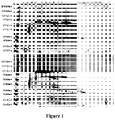
- the figure 1 corresponds to a gel representative of the experiment.
- the top gel shows the protein separation results of a healthy subject, and the bottom gel - an individual DMD's protein.
- the framed spot was identified by MALDI-ToF-ToF mass spectrometry as an N-terminal fragment of titin. This fragment was only detected in the urine of DMD patients.
- the results are representative for three DMD patients and three different healthy subjects.
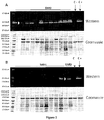
- the figure 2 corresponds to a representative result in which: the panel (A) corresponds to the results of the analysis of the DMD patients and (B) to the results of the healthy subjects.
- the N-terminal fragment of titin (reported as: "Titin" on Western) was detected in 11 out of 12 DMD patients, and was undetectable in the 10 healthy subjects analyzed.
- C- negative control urine of the healthy subject previously analyzed by three-dimensional electrophoresis
- C + positive control patient's urine DMD analyzed by two-dimensional electrophoresis.
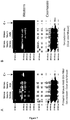
- the figure 3 presents the results of urine analysis of patients with the following muscular dystrophies: Duchenne Muscular Dystrophy (DMD); A special case of DMD (patient walking at the age of 21) (DMD sscher); Alpha-sarcoglycanopathy (Alpha-Sarco); Becker's dystrophy (Becker). The N-terminal fragment of titin (reported as "Titin" on Western) was detected in the particular case of DMD, in patients with Alpha-sarcoglycanopathy (2 of 2) and in one patient with Becker's dystrophy (1 of 2).
- C- negative control urine sample of the healthy subject analyzed by two-dimensional electrophoresis
- C + positive control patient's urine sample DMD analyzed by two-dimensional electrophoresis.
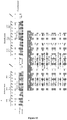
- the 30 min physical exercise mdx mouse proteins were separated on 1D SDS-PAGE gel as described in Materials and Methods.
- the bands of interest (framed bands on the figure 10, A ) were manually extracted and were identified by MALDI-ToF-ToF mass spectrometry as an intermediate fragment of the titin (amino acid: 12994 to 16442, which corresponds to amino acids 12132 to 15580 of the human sequence) .
- This fragment was detected only in the sera of mdx mice exercised for 30 min and was not detected in healthy mice undergoing physical exercise of 30 min or even 1:30 min. (data not shown).
- Peptides sequenced by MALDI-TOF-TOF are presented in the figure 10 , B with the identification score for each mdx mouse.
- the size of this intermediate fragment ( ⁇ 3000 amino acids, ⁇ 300 kDa) identified by MALDI-TOF-TOF mass spectrometry corresponds to the size observed on SDS-PAGE gels ( ⁇ 300 kDa).
Landscapes
- Life Sciences & Earth Sciences (AREA)
- Health & Medical Sciences (AREA)
- Engineering & Computer Science (AREA)
- Chemical & Material Sciences (AREA)
- Molecular Biology (AREA)
- Biomedical Technology (AREA)
- Physics & Mathematics (AREA)
- Immunology (AREA)
- Urology & Nephrology (AREA)
- Hematology (AREA)
- Analytical Chemistry (AREA)
- General Health & Medical Sciences (AREA)
- Biochemistry (AREA)
- Pathology (AREA)
- General Physics & Mathematics (AREA)
- Proteomics, Peptides & Aminoacids (AREA)
- Biotechnology (AREA)
- Cell Biology (AREA)
- Microbiology (AREA)
- Medicinal Chemistry (AREA)
- Food Science & Technology (AREA)
- Optics & Photonics (AREA)
- Chemical Kinetics & Catalysis (AREA)
- Electrochemistry (AREA)
- Plasma & Fusion (AREA)
- Investigating Or Analysing Biological Materials (AREA)
- Measuring Or Testing Involving Enzymes Or Micro-Organisms (AREA)
Claims (8)
- Verfahren zur Diagnose einer Muskeldystrophie bei einer Person, umfassend den Nachweis in einer Urinprobe besagter Person der Menge an Titin oder der Menge eines oder mehrerer Titin-Fragmente, wobei ein erhöhtes Niveau von Titin oder einem oder mehreren Titin-Fragmenten in einer von der Person erhaltenen Probe bezogen auf eine gesunde Person ein Hinweis auf eine Muskeldystrophie ist.
- Verfahren zur Bestimmung der Wirksamkeit einer therapeutischen Behandlung einer Muskeldystrophie bei einer Person, umfassenda) Messung des Expressionsniveaus von Titin oder einem oder mehreren seiner Fragmente in einer Urinprobe, wodurch ein Referenzniveau bestimmt wird; dannb) Messung des Expressionsniveaus von besagtem Titin, besagtem oder besagten Fragmenten in einer zweiten Urinprobe, die von derselben Person zu einer gegebenen Zeit nach Verabreichung der therapeutischen Behandlung erhalten wird, wodurch ein Testniveau bestimmt wird; undc) Vergleich von Kontrollniveau mit Testniveau, wobei die Verringerung des Expressionsniveaus von Titin, einem oder ausgewählten Fragmenten ein Hinweis auf eine wirksame Behandlung der Dystrophie ist.
- Verfahren gemäß Anspruch 1 oder 2, wobei das Titin-Fragment ein Titin-Fragment ist, umfassend die Aminosäuren 42-62 (SEQ ID NO: 12), 82-98 (SEQ ID NO: 13), 99-109 (SEQ ID NO: 14), 110-116 (SEQ ID NO: 15), 127-136 (SEQ ID NO: 16), 932-950 (SEQ ID NO: 17), 1004-1012 (SEQ ID NO: 18), 11784-11797 (SEQ ID NO: 19), 14245-14257 (SEQ ID NO: 20), 34253-34271 (SEQ ID NO: 21), 34258-34271 (SEQ ID NO: 22), 34272-34295 (SEQ ID NO: 23), 185-202 (SEQ ID NO: 24), 11958-11982 (SEQ ID NO: 25), 16783-16809 (SEQ ID NO: 26), 33320-33333 (SEQ ID NO: 27), 34097-34111 (SEQ ID NO: 28), 34272-34294 (SEQ ID NO: 29) oder 34304-34322 (SEQ ID NO: 30) von Titin.
- Verfahren gemäß Anspruch 1 oder 2, wobei das Titin-Fragment ein murines Titin-Fragment ist, umfassend die Aminosäuren 12994-13002 (SEQ ID NO: 31), 13352-13362 (SEQ ID NO: 32), 13542-13558 (SEQ ID NO: 33), 14512-14524 (SEQ ID NO: 34), 14867-14883 (SEQ ID NO: 35), 14975-14993 (SEQ ID NO: 36), 15034-15053 (SEQ ID NO: 37), 15203-15214 (SEQ ID NO: 38), 15234-15248 (SEQ ID NO: 39), 15636-15645 (SEQ ID NO: 40), 15746-15759 (SEQ ID NO: 41), 15968-15987 (SEQ ID NO: 42), 16034-16048 (SEQ ID NO: 43), 16133-16148 (SEQ ID NO: 44) und/oder 16432-16442 (SEQ ID NO: 45) von Titin.
- Verfahren gemäß Anspruch 1 oder 2, wobei das Titin-Fragment insbesondere ein N-terminales oder ein C-terminales Titin-Fragment ist.
- Verfahren gemäß einem der Ansprüche 1 oder 2, wobei das Titin-Fragment insbesondere ein N-terminales Titin-Fragment mit ungefähr 300 Aminosäuren oder ein C-terminales Titin-Fragment mit ungefähr 150 Aminosäuren ist.
- Verfahren gemäß einem der Ansprüche 1 bis 6 für die Diagnose der Duchenne-Muskeldystrophie, der Becker-Muskeldystrophie oder einer alpha-Sarcoglykanopathie.
- Verwendung eines Diagnosekits, umfassend die Mittel zur Detektion von Titin oder einem oder mehreren seiner Fragmente, für die Durchführung eines Verfahrens gemäß einem der Ansprüche 1 bis 7.
Applications Claiming Priority (2)
| Application Number | Priority Date | Filing Date | Title |
|---|---|---|---|
| FR1259023A FR2996004B1 (fr) | 2012-09-26 | 2012-09-26 | Procede pour le diagnostic de dystrophies musculaires |
| PCT/FR2013/052280 WO2014049282A1 (fr) | 2012-09-26 | 2013-09-26 | Procede pour le diagnostic de dystrophies musculaires |
Publications (2)
| Publication Number | Publication Date |
|---|---|
| EP2901162A1 EP2901162A1 (de) | 2015-08-05 |
| EP2901162B1 true EP2901162B1 (de) | 2019-05-22 |
Family
ID=47356118
Family Applications (1)
| Application Number | Title | Priority Date | Filing Date |
|---|---|---|---|
| EP13786523.4A Active EP2901162B1 (de) | 2012-09-26 | 2013-09-26 | Verfahren zur diagnose von muskeldystrophie |
Country Status (6)
| Country | Link |
|---|---|
| US (1) | US9933438B2 (de) |
| EP (1) | EP2901162B1 (de) |
| CA (1) | CA2884356C (de) |
| DK (1) | DK2901162T3 (de) |
| FR (1) | FR2996004B1 (de) |
| WO (1) | WO2014049282A1 (de) |
Families Citing this family (5)
| Publication number | Priority date | Publication date | Assignee | Title |
|---|---|---|---|---|
| EP3092493B1 (de) * | 2014-01-09 | 2019-04-17 | Genethon | Verfahren zur diagnose oder überwachung von muskeldystrophien |
| US10920263B2 (en) | 2016-03-01 | 2021-02-16 | Sani-Marc Inc. | Methods, compositions and kits for determining cleanness of a surface |
| JP7074981B2 (ja) * | 2017-11-29 | 2022-05-25 | 株式会社TKResearch | 抗横紋筋抗体の測定方法及び測定試薬 |
| EP4516927A1 (de) | 2023-08-31 | 2025-03-05 | Genethon | Galectin-3, ein biomarker für lysosomale schädigung bei muskeldystrophie |
| WO2026080823A1 (en) * | 2024-10-10 | 2026-04-16 | Research Institute At Nationwide Children's Hospital | Methods for diagnosing and treating muscular dystrophy diseases |
Family Cites Families (3)
| Publication number | Priority date | Publication date | Assignee | Title |
|---|---|---|---|---|
| US4444879A (en) * | 1981-01-29 | 1984-04-24 | Science Research Center, Inc. | Immunoassay with article having support film and immunological counterpart of analyte |
| US6103466A (en) * | 1997-07-14 | 2000-08-15 | University Of Liege | Double-muscling in mammals |
| US8658390B2 (en) * | 2009-03-09 | 2014-02-25 | Osaka Bioscience Institute | Method for detecting muscle degenerative diseases, and method for determining therapeutic efficacy on the diseases |
-
2012
- 2012-09-26 FR FR1259023A patent/FR2996004B1/fr active Active
-
2013
- 2013-09-26 WO PCT/FR2013/052280 patent/WO2014049282A1/fr not_active Ceased
- 2013-09-26 CA CA2884356A patent/CA2884356C/fr active Active
- 2013-09-26 US US14/431,030 patent/US9933438B2/en active Active
- 2013-09-26 DK DK13786523.4T patent/DK2901162T3/da active
- 2013-09-26 EP EP13786523.4A patent/EP2901162B1/de active Active
Non-Patent Citations (1)
| Title |
|---|
| EFSTATHIOS VASSILIADIS ET AL: "Clinical evaluation of a matrix metalloproteinase-12 cleaved fragment of titin as a cardiovascular serological biomarker", JOURNAL OF TRANSLATIONAL MEDICINE, BIOMED CENTRAL, vol. 10, no. 1, 6 July 2012 (2012-07-06), pages 140, XP021121805, ISSN: 1479-5876, DOI: 10.1186/1479-5876-10-140 * |
Also Published As
| Publication number | Publication date |
|---|---|
| FR2996004B1 (fr) | 2017-11-03 |
| CA2884356A1 (fr) | 2014-04-03 |
| FR2996004A1 (fr) | 2014-03-28 |
| EP2901162A1 (de) | 2015-08-05 |
| CA2884356C (fr) | 2021-09-28 |
| DK2901162T3 (da) | 2019-06-24 |
| US9933438B2 (en) | 2018-04-03 |
| US20150241452A1 (en) | 2015-08-27 |
| WO2014049282A1 (fr) | 2014-04-03 |
Similar Documents
| Publication | Publication Date | Title |
|---|---|---|
| JP5775568B2 (ja) | 診断方法 | |
| EP2901162B1 (de) | Verfahren zur diagnose von muskeldystrophie | |
| US8354236B2 (en) | Detection of neurodegenerative disease | |
| Adav et al. | ITRAQ quantitative clinical proteomics revealed role of Na+ K+-ATPase and its correlation with deamidation in vascular dementia | |
| JP2014522643A (ja) | 神経変性状態の生化学的マーカー | |
| CN101611317B (zh) | 肝脏炎症的生物标志物 | |
| US12306191B2 (en) | Composition for diagnosis of degenerative neurological diseases | |
| JP5701994B2 (ja) | シトルリン化タンパク質:生理学的および病理学的疾患のマーカーとしての心筋タンパク質の翻訳後修飾 | |
| JP2012515915A (ja) | 方法 | |
| Duran-Ortiz et al. | The impact of growth hormone on proteomic profiles: a review of mouse and adult human studies | |
| Snipsøyr et al. | Towards identification of novel putative biomarkers for infective endocarditis by serum proteomic analysis | |
| US20150247180A1 (en) | Glutaminyl cyclase as a diagnostic/prognostic indicator for neurodegenerative diseases | |
| WO2008112424A1 (en) | Assessing heart failure | |
| WO2013106851A2 (en) | Syncollin, pancreatic triacylglycerol lipase, and other biomarkers for diabetes | |
| EP2870481A1 (de) | Tropomyosin-isoformen im zusammenhang mit morbus alzheimer und leichter kognitiver beeinträchtigung | |
| US20250314665A1 (en) | Biomarkers for cerebral metabolic disorders, and diagnostic methods using thereof | |
| Abid | Quantitative Peptidomics and Proteomics Analysis by LC-MS for Biomarker and Hibernation Investigations | |
| EP3115784A1 (de) | Polypeptidmarker zur analyse, diagnose und therapie von augenbezogenen erkrankungen | |
| Volke et al. | Characterization of bovine tau-preparations by two-dimensional gel electrophoresis | |
| Wijasa | Quantitative proteome analysis of S-nitrosylation on synaptosomal proteins in Alzheimer's disease | |
| KR20120060051A (ko) | 지방 조직의 비만 바이오마커 검출용 조성물 및 키트 | |
| Bhonsle | Regulation of glycation in diabetes: identification and characterization of glycated proteins | |
| WO2017121974A1 (fr) | Procédé de diagnostic in vitro d'atteintes hépatiques | |
| HK1135184B (en) | Biomarkers for inflammation of the liver |
Legal Events
| Date | Code | Title | Description |
|---|---|---|---|
| PUAI | Public reference made under article 153(3) epc to a published international application that has entered the european phase |
Free format text: ORIGINAL CODE: 0009012 |
|
| 17P | Request for examination filed |
Effective date: 20150310 |
|
| AK | Designated contracting states |
Kind code of ref document: A1 Designated state(s): AL AT BE BG CH CY CZ DE DK EE ES FI FR GB GR HR HU IE IS IT LI LT LU LV MC MK MT NL NO PL PT RO RS SE SI SK SM TR |
|
| AX | Request for extension of the european patent |
Extension state: BA ME |
|
| DAX | Request for extension of the european patent (deleted) | ||
| STAA | Information on the status of an ep patent application or granted ep patent |
Free format text: STATUS: EXAMINATION IS IN PROGRESS |
|
| 17Q | First examination report despatched |
Effective date: 20170407 |
|
| GRAP | Despatch of communication of intention to grant a patent |
Free format text: ORIGINAL CODE: EPIDOSNIGR1 |
|
| STAA | Information on the status of an ep patent application or granted ep patent |
Free format text: STATUS: GRANT OF PATENT IS INTENDED |
|
| INTG | Intention to grant announced |
Effective date: 20181213 |
|
| GRAS | Grant fee paid |
Free format text: ORIGINAL CODE: EPIDOSNIGR3 |
|
| GRAA | (expected) grant |
Free format text: ORIGINAL CODE: 0009210 |
|
| STAA | Information on the status of an ep patent application or granted ep patent |
Free format text: STATUS: THE PATENT HAS BEEN GRANTED |
|
| AK | Designated contracting states |
Kind code of ref document: B1 Designated state(s): AL AT BE BG CH CY CZ DE DK EE ES FI FR GB GR HR HU IE IS IT LI LT LU LV MC MK MT NL NO PL PT RO RS SE SI SK SM TR |
|
| REG | Reference to a national code |
Ref country code: GB Ref legal event code: FG4D Free format text: NOT ENGLISH |
|
| REG | Reference to a national code |
Ref country code: CH Ref legal event code: EP |
|
| REG | Reference to a national code |
Ref country code: IE Ref legal event code: FG4D Free format text: LANGUAGE OF EP DOCUMENT: FRENCH |
|
| REG | Reference to a national code |
Ref country code: DE Ref legal event code: R096 Ref document number: 602013055809 Country of ref document: DE |
|
| REG | Reference to a national code |
Ref country code: CH Ref legal event code: NV Representative=s name: VALIPAT S.A. C/O BOVARD SA NEUCHATEL, CH |
|
| REG | Reference to a national code |
Ref country code: AT Ref legal event code: REF Ref document number: 1136743 Country of ref document: AT Kind code of ref document: T Effective date: 20190615 |
|
| REG | Reference to a national code |
Ref country code: DK Ref legal event code: T3 Effective date: 20190621 |
|
| REG | Reference to a national code |
Ref country code: NL Ref legal event code: MP Effective date: 20190522 |
|
| REG | Reference to a national code |
Ref country code: LT Ref legal event code: MG4D |
|
| PG25 | Lapsed in a contracting state [announced via postgrant information from national office to epo] |
Ref country code: ES Free format text: LAPSE BECAUSE OF FAILURE TO SUBMIT A TRANSLATION OF THE DESCRIPTION OR TO PAY THE FEE WITHIN THE PRESCRIBED TIME-LIMIT Effective date: 20190522 Ref country code: FI Free format text: LAPSE BECAUSE OF FAILURE TO SUBMIT A TRANSLATION OF THE DESCRIPTION OR TO PAY THE FEE WITHIN THE PRESCRIBED TIME-LIMIT Effective date: 20190522 Ref country code: NO Free format text: LAPSE BECAUSE OF FAILURE TO SUBMIT A TRANSLATION OF THE DESCRIPTION OR TO PAY THE FEE WITHIN THE PRESCRIBED TIME-LIMIT Effective date: 20190822 Ref country code: AL Free format text: LAPSE BECAUSE OF FAILURE TO SUBMIT A TRANSLATION OF THE DESCRIPTION OR TO PAY THE FEE WITHIN THE PRESCRIBED TIME-LIMIT Effective date: 20190522 Ref country code: SE Free format text: LAPSE BECAUSE OF FAILURE TO SUBMIT A TRANSLATION OF THE DESCRIPTION OR TO PAY THE FEE WITHIN THE PRESCRIBED TIME-LIMIT Effective date: 20190522 Ref country code: PT Free format text: LAPSE BECAUSE OF FAILURE TO SUBMIT A TRANSLATION OF THE DESCRIPTION OR TO PAY THE FEE WITHIN THE PRESCRIBED TIME-LIMIT Effective date: 20190922 Ref country code: LT Free format text: LAPSE BECAUSE OF FAILURE TO SUBMIT A TRANSLATION OF THE DESCRIPTION OR TO PAY THE FEE WITHIN THE PRESCRIBED TIME-LIMIT Effective date: 20190522 Ref country code: HR Free format text: LAPSE BECAUSE OF FAILURE TO SUBMIT A TRANSLATION OF THE DESCRIPTION OR TO PAY THE FEE WITHIN THE PRESCRIBED TIME-LIMIT Effective date: 20190522 Ref country code: NL Free format text: LAPSE BECAUSE OF FAILURE TO SUBMIT A TRANSLATION OF THE DESCRIPTION OR TO PAY THE FEE WITHIN THE PRESCRIBED TIME-LIMIT Effective date: 20190522 |
|
| PG25 | Lapsed in a contracting state [announced via postgrant information from national office to epo] |
Ref country code: LV Free format text: LAPSE BECAUSE OF FAILURE TO SUBMIT A TRANSLATION OF THE DESCRIPTION OR TO PAY THE FEE WITHIN THE PRESCRIBED TIME-LIMIT Effective date: 20190522 Ref country code: RS Free format text: LAPSE BECAUSE OF FAILURE TO SUBMIT A TRANSLATION OF THE DESCRIPTION OR TO PAY THE FEE WITHIN THE PRESCRIBED TIME-LIMIT Effective date: 20190522 Ref country code: BG Free format text: LAPSE BECAUSE OF FAILURE TO SUBMIT A TRANSLATION OF THE DESCRIPTION OR TO PAY THE FEE WITHIN THE PRESCRIBED TIME-LIMIT Effective date: 20190822 Ref country code: GR Free format text: LAPSE BECAUSE OF FAILURE TO SUBMIT A TRANSLATION OF THE DESCRIPTION OR TO PAY THE FEE WITHIN THE PRESCRIBED TIME-LIMIT Effective date: 20190823 |
|
| REG | Reference to a national code |
Ref country code: AT Ref legal event code: MK05 Ref document number: 1136743 Country of ref document: AT Kind code of ref document: T Effective date: 20190522 |
|
| PG25 | Lapsed in a contracting state [announced via postgrant information from national office to epo] |
Ref country code: AT Free format text: LAPSE BECAUSE OF FAILURE TO SUBMIT A TRANSLATION OF THE DESCRIPTION OR TO PAY THE FEE WITHIN THE PRESCRIBED TIME-LIMIT Effective date: 20190522 Ref country code: EE Free format text: LAPSE BECAUSE OF FAILURE TO SUBMIT A TRANSLATION OF THE DESCRIPTION OR TO PAY THE FEE WITHIN THE PRESCRIBED TIME-LIMIT Effective date: 20190522 Ref country code: SK Free format text: LAPSE BECAUSE OF FAILURE TO SUBMIT A TRANSLATION OF THE DESCRIPTION OR TO PAY THE FEE WITHIN THE PRESCRIBED TIME-LIMIT Effective date: 20190522 Ref country code: CZ Free format text: LAPSE BECAUSE OF FAILURE TO SUBMIT A TRANSLATION OF THE DESCRIPTION OR TO PAY THE FEE WITHIN THE PRESCRIBED TIME-LIMIT Effective date: 20190522 Ref country code: RO Free format text: LAPSE BECAUSE OF FAILURE TO SUBMIT A TRANSLATION OF THE DESCRIPTION OR TO PAY THE FEE WITHIN THE PRESCRIBED TIME-LIMIT Effective date: 20190522 |
|
| REG | Reference to a national code |
Ref country code: DE Ref legal event code: R097 Ref document number: 602013055809 Country of ref document: DE |
|
| PG25 | Lapsed in a contracting state [announced via postgrant information from national office to epo] |
Ref country code: SM Free format text: LAPSE BECAUSE OF FAILURE TO SUBMIT A TRANSLATION OF THE DESCRIPTION OR TO PAY THE FEE WITHIN THE PRESCRIBED TIME-LIMIT Effective date: 20190522 |
|
| PLBE | No opposition filed within time limit |
Free format text: ORIGINAL CODE: 0009261 |
|
| STAA | Information on the status of an ep patent application or granted ep patent |
Free format text: STATUS: NO OPPOSITION FILED WITHIN TIME LIMIT |
|
| PG25 | Lapsed in a contracting state [announced via postgrant information from national office to epo] |
Ref country code: TR Free format text: LAPSE BECAUSE OF FAILURE TO SUBMIT A TRANSLATION OF THE DESCRIPTION OR TO PAY THE FEE WITHIN THE PRESCRIBED TIME-LIMIT Effective date: 20190522 |
|
| 26N | No opposition filed |
Effective date: 20200225 |
|
| PG25 | Lapsed in a contracting state [announced via postgrant information from national office to epo] |
Ref country code: PL Free format text: LAPSE BECAUSE OF FAILURE TO SUBMIT A TRANSLATION OF THE DESCRIPTION OR TO PAY THE FEE WITHIN THE PRESCRIBED TIME-LIMIT Effective date: 20190522 |
|
| PG25 | Lapsed in a contracting state [announced via postgrant information from national office to epo] |
Ref country code: SI Free format text: LAPSE BECAUSE OF FAILURE TO SUBMIT A TRANSLATION OF THE DESCRIPTION OR TO PAY THE FEE WITHIN THE PRESCRIBED TIME-LIMIT Effective date: 20190522 Ref country code: MC Free format text: LAPSE BECAUSE OF FAILURE TO SUBMIT A TRANSLATION OF THE DESCRIPTION OR TO PAY THE FEE WITHIN THE PRESCRIBED TIME-LIMIT Effective date: 20190522 |
|
| PG25 | Lapsed in a contracting state [announced via postgrant information from national office to epo] |
Ref country code: IE Free format text: LAPSE BECAUSE OF NON-PAYMENT OF DUE FEES Effective date: 20190926 Ref country code: LU Free format text: LAPSE BECAUSE OF NON-PAYMENT OF DUE FEES Effective date: 20190926 |
|
| PG25 | Lapsed in a contracting state [announced via postgrant information from national office to epo] |
Ref country code: CY Free format text: LAPSE BECAUSE OF FAILURE TO SUBMIT A TRANSLATION OF THE DESCRIPTION OR TO PAY THE FEE WITHIN THE PRESCRIBED TIME-LIMIT Effective date: 20190522 |
|
| PG25 | Lapsed in a contracting state [announced via postgrant information from national office to epo] |
Ref country code: IS Free format text: LAPSE BECAUSE OF FAILURE TO SUBMIT A TRANSLATION OF THE DESCRIPTION OR TO PAY THE FEE WITHIN THE PRESCRIBED TIME-LIMIT Effective date: 20190922 |
|
| PG25 | Lapsed in a contracting state [announced via postgrant information from national office to epo] |
Ref country code: MT Free format text: LAPSE BECAUSE OF FAILURE TO SUBMIT A TRANSLATION OF THE DESCRIPTION OR TO PAY THE FEE WITHIN THE PRESCRIBED TIME-LIMIT Effective date: 20190522 Ref country code: HU Free format text: LAPSE BECAUSE OF FAILURE TO SUBMIT A TRANSLATION OF THE DESCRIPTION OR TO PAY THE FEE WITHIN THE PRESCRIBED TIME-LIMIT; INVALID AB INITIO Effective date: 20130926 |
|
| PG25 | Lapsed in a contracting state [announced via postgrant information from national office to epo] |
Ref country code: MK Free format text: LAPSE BECAUSE OF FAILURE TO SUBMIT A TRANSLATION OF THE DESCRIPTION OR TO PAY THE FEE WITHIN THE PRESCRIBED TIME-LIMIT Effective date: 20190522 |
|
| P01 | Opt-out of the competence of the unified patent court (upc) registered |
Effective date: 20230518 |
|
| REG | Reference to a national code |
Ref country code: CH Ref legal event code: U11 Free format text: ST27 STATUS EVENT CODE: U-0-0-U10-U11 (AS PROVIDED BY THE NATIONAL OFFICE) Effective date: 20251001 |
|
| PGFP | Annual fee paid to national office [announced via postgrant information from national office to epo] |
Ref country code: DK Payment date: 20250923 Year of fee payment: 13 Ref country code: DE Payment date: 20250919 Year of fee payment: 13 |
|
| PGFP | Annual fee paid to national office [announced via postgrant information from national office to epo] |
Ref country code: IT Payment date: 20250923 Year of fee payment: 13 |
|
| PGFP | Annual fee paid to national office [announced via postgrant information from national office to epo] |
Ref country code: BE Payment date: 20250918 Year of fee payment: 13 Ref country code: GB Payment date: 20250918 Year of fee payment: 13 |
|
| PGFP | Annual fee paid to national office [announced via postgrant information from national office to epo] |
Ref country code: FR Payment date: 20250922 Year of fee payment: 13 |
|
| PGFP | Annual fee paid to national office [announced via postgrant information from national office to epo] |
Ref country code: CH Payment date: 20251001 Year of fee payment: 13 |