EP2900097B1 - Thermal liner for protective garments - Google Patents
Thermal liner for protective garments Download PDFInfo
- Publication number
- EP2900097B1 EP2900097B1 EP13840310.0A EP13840310A EP2900097B1 EP 2900097 B1 EP2900097 B1 EP 2900097B1 EP 13840310 A EP13840310 A EP 13840310A EP 2900097 B1 EP2900097 B1 EP 2900097B1
- Authority
- EP
- European Patent Office
- Prior art keywords
- nonwoven
- gsm
- aramid
- thermal liner
- fiber
- Prior art date
- Legal status (The legal status is an assumption and is not a legal conclusion. Google has not performed a legal analysis and makes no representation as to the accuracy of the status listed.)
- Active
Links
- 230000001681 protective effect Effects 0.000 title claims description 19
- 239000000835 fiber Substances 0.000 claims description 46
- 239000004693 Polybenzimidazole Substances 0.000 claims description 34
- 239000012210 heat-resistant fiber Substances 0.000 claims description 12
- 229920002577 polybenzoxazole Polymers 0.000 claims description 11
- 229920000877 Melamine resin Polymers 0.000 claims description 8
- 239000004744 fabric Substances 0.000 claims description 7
- 229920006376 polybenzimidazole fiber Polymers 0.000 claims description 5
- 210000002268 wool Anatomy 0.000 claims description 5
- 150000007974 melamines Chemical class 0.000 claims description 4
- 239000004745 nonwoven fabric Substances 0.000 claims description 3
- 239000004962 Polyamide-imide Substances 0.000 claims description 2
- 125000003118 aryl group Chemical group 0.000 claims description 2
- 229920001643 poly(ether ketone) Polymers 0.000 claims description 2
- 229920002492 poly(sulfone) Polymers 0.000 claims description 2
- 229920000058 polyacrylate Polymers 0.000 claims description 2
- 229920002239 polyacrylonitrile Polymers 0.000 claims description 2
- 229920002312 polyamide-imide Polymers 0.000 claims description 2
- 229920006393 polyether sulfone Polymers 0.000 claims description 2
- 229920001601 polyetherimide Polymers 0.000 claims description 2
- 229920003235 aromatic polyamide Polymers 0.000 description 66
- 239000004760 aramid Substances 0.000 description 49
- 239000010410 layer Substances 0.000 description 39
- 239000000463 material Substances 0.000 description 32
- 229920002480 polybenzimidazole Polymers 0.000 description 30
- 230000004888 barrier function Effects 0.000 description 24
- 239000000203 mixture Substances 0.000 description 20
- 238000009413 insulation Methods 0.000 description 16
- 239000011257 shell material Substances 0.000 description 14
- XLYOFNOQVPJJNP-UHFFFAOYSA-N water Substances O XLYOFNOQVPJJNP-UHFFFAOYSA-N 0.000 description 9
- 239000002131 composite material Substances 0.000 description 6
- 229920000784 Nomex Polymers 0.000 description 5
- 230000008642 heat stress Effects 0.000 description 5
- -1 i.e. Substances 0.000 description 5
- 239000004763 nomex Substances 0.000 description 5
- AYEKOFBPNLCAJY-UHFFFAOYSA-O thiamine pyrophosphate Chemical compound CC1=C(CCOP(O)(=O)OP(O)(O)=O)SC=[N+]1CC1=CN=C(C)N=C1N AYEKOFBPNLCAJY-UHFFFAOYSA-O 0.000 description 5
- 230000002209 hydrophobic effect Effects 0.000 description 4
- JDSHMPZPIAZGSV-UHFFFAOYSA-N melamine Chemical compound NC1=NC(N)=NC(N)=N1 JDSHMPZPIAZGSV-UHFFFAOYSA-N 0.000 description 4
- 229920001343 polytetrafluoroethylene Polymers 0.000 description 4
- 239000004810 polytetrafluoroethylene Substances 0.000 description 4
- 229920000271 Kevlar® Polymers 0.000 description 3
- 206010019345 Heat stroke Diseases 0.000 description 2
- 238000010276 construction Methods 0.000 description 2
- 239000004761 kevlar Substances 0.000 description 2
- 239000011159 matrix material Substances 0.000 description 2
- 238000000034 method Methods 0.000 description 2
- 239000010421 standard material Substances 0.000 description 2
- 229920002994 synthetic fiber Polymers 0.000 description 2
- 239000012209 synthetic fiber Substances 0.000 description 2
- 239000004753 textile Substances 0.000 description 2
- OKTJSMMVPCPJKN-UHFFFAOYSA-N Carbon Chemical compound [C] OKTJSMMVPCPJKN-UHFFFAOYSA-N 0.000 description 1
- 206010019332 Heat exhaustion Diseases 0.000 description 1
- 206010020772 Hypertension Diseases 0.000 description 1
- 229920002821 Modacrylic Polymers 0.000 description 1
- 238000005299 abrasion Methods 0.000 description 1
- 238000010521 absorption reaction Methods 0.000 description 1
- 229920006231 aramid fiber Polymers 0.000 description 1
- 229920006232 basofil Polymers 0.000 description 1
- 229910052799 carbon Inorganic materials 0.000 description 1
- 238000009960 carding Methods 0.000 description 1
- 238000006243 chemical reaction Methods 0.000 description 1
- 230000034994 death Effects 0.000 description 1
- 231100000517 death Toxicity 0.000 description 1
- 230000007123 defense Effects 0.000 description 1
- 238000001035 drying Methods 0.000 description 1
- 230000000694 effects Effects 0.000 description 1
- 238000009950 felting Methods 0.000 description 1
- 238000009472 formulation Methods 0.000 description 1
- 239000000383 hazardous chemical Substances 0.000 description 1
- 239000011810 insulating material Substances 0.000 description 1
- 239000007788 liquid Substances 0.000 description 1
- 238000004519 manufacturing process Methods 0.000 description 1
- 229920006277 melamine fiber Polymers 0.000 description 1
- 208000010125 myocardial infarction Diseases 0.000 description 1
- 230000000149 penetrating effect Effects 0.000 description 1
- 239000004814 polyurethane Substances 0.000 description 1
- 238000009738 saturating Methods 0.000 description 1
- 239000002356 single layer Substances 0.000 description 1
- 239000002759 woven fabric Substances 0.000 description 1
Images
Classifications
-
- A—HUMAN NECESSITIES
- A41—WEARING APPAREL
- A41D—OUTERWEAR; PROTECTIVE GARMENTS; ACCESSORIES
- A41D31/00—Materials specially adapted for outerwear
- A41D31/04—Materials specially adapted for outerwear characterised by special function or use
- A41D31/06—Thermally protective, e.g. insulating
-
- A—HUMAN NECESSITIES
- A41—WEARING APPAREL
- A41D—OUTERWEAR; PROTECTIVE GARMENTS; ACCESSORIES
- A41D13/00—Professional, industrial or sporting protective garments, e.g. surgeons' gowns or garments protecting against blows or punches
-
- A—HUMAN NECESSITIES
- A41—WEARING APPAREL
- A41D—OUTERWEAR; PROTECTIVE GARMENTS; ACCESSORIES
- A41D27/00—Details of garments or of their making
- A41D27/02—Linings
-
- A—HUMAN NECESSITIES
- A41—WEARING APPAREL
- A41D—OUTERWEAR; PROTECTIVE GARMENTS; ACCESSORIES
- A41D31/00—Materials specially adapted for outerwear
- A41D31/04—Materials specially adapted for outerwear characterised by special function or use
- A41D31/06—Thermally protective, e.g. insulating
- A41D31/065—Thermally protective, e.g. insulating using layered materials
-
- A—HUMAN NECESSITIES
- A41—WEARING APPAREL
- A41D—OUTERWEAR; PROTECTIVE GARMENTS; ACCESSORIES
- A41D31/00—Materials specially adapted for outerwear
- A41D31/04—Materials specially adapted for outerwear characterised by special function or use
- A41D31/08—Heat resistant; Fire retardant
- A41D31/085—Heat resistant; Fire retardant using layered materials
-
- A—HUMAN NECESSITIES
- A41—WEARING APPAREL
- A41D—OUTERWEAR; PROTECTIVE GARMENTS; ACCESSORIES
- A41D31/00—Materials specially adapted for outerwear
- A41D31/04—Materials specially adapted for outerwear characterised by special function or use
- A41D31/12—Hygroscopic; Water retaining
- A41D31/125—Moisture handling or wicking function through layered materials
-
- B—PERFORMING OPERATIONS; TRANSPORTING
- B32—LAYERED PRODUCTS
- B32B—LAYERED PRODUCTS, i.e. PRODUCTS BUILT-UP OF STRATA OF FLAT OR NON-FLAT, e.g. CELLULAR OR HONEYCOMB, FORM
- B32B3/00—Layered products comprising a layer with external or internal discontinuities or unevennesses, or a layer of non-planar shape; Layered products comprising a layer having particular features of form
- B32B3/26—Layered products comprising a layer with external or internal discontinuities or unevennesses, or a layer of non-planar shape; Layered products comprising a layer having particular features of form characterised by a particular shape of the outline of the cross-section of a continuous layer; characterised by a layer with cavities or internal voids ; characterised by an apertured layer
- B32B3/266—Layered products comprising a layer with external or internal discontinuities or unevennesses, or a layer of non-planar shape; Layered products comprising a layer having particular features of form characterised by a particular shape of the outline of the cross-section of a continuous layer; characterised by a layer with cavities or internal voids ; characterised by an apertured layer characterised by an apertured layer, the apertures going through the whole thickness of the layer, e.g. expanded metal, perforated layer, slit layer regular cells B32B3/12
-
- B—PERFORMING OPERATIONS; TRANSPORTING
- B32—LAYERED PRODUCTS
- B32B—LAYERED PRODUCTS, i.e. PRODUCTS BUILT-UP OF STRATA OF FLAT OR NON-FLAT, e.g. CELLULAR OR HONEYCOMB, FORM
- B32B5/00—Layered products characterised by the non- homogeneity or physical structure, i.e. comprising a fibrous, filamentary, particulate or foam layer; Layered products characterised by having a layer differing constitutionally or physically in different parts
- B32B5/02—Layered products characterised by the non- homogeneity or physical structure, i.e. comprising a fibrous, filamentary, particulate or foam layer; Layered products characterised by having a layer differing constitutionally or physically in different parts characterised by structural features of a fibrous or filamentary layer
- B32B5/022—Non-woven fabric
-
- B—PERFORMING OPERATIONS; TRANSPORTING
- B32—LAYERED PRODUCTS
- B32B—LAYERED PRODUCTS, i.e. PRODUCTS BUILT-UP OF STRATA OF FLAT OR NON-FLAT, e.g. CELLULAR OR HONEYCOMB, FORM
- B32B5/00—Layered products characterised by the non- homogeneity or physical structure, i.e. comprising a fibrous, filamentary, particulate or foam layer; Layered products characterised by having a layer differing constitutionally or physically in different parts
- B32B5/02—Layered products characterised by the non- homogeneity or physical structure, i.e. comprising a fibrous, filamentary, particulate or foam layer; Layered products characterised by having a layer differing constitutionally or physically in different parts characterised by structural features of a fibrous or filamentary layer
- B32B5/08—Layered products characterised by the non- homogeneity or physical structure, i.e. comprising a fibrous, filamentary, particulate or foam layer; Layered products characterised by having a layer differing constitutionally or physically in different parts characterised by structural features of a fibrous or filamentary layer the fibres or filaments of a layer being of different substances, e.g. conjugate fibres, mixture of different fibres
-
- B—PERFORMING OPERATIONS; TRANSPORTING
- B32—LAYERED PRODUCTS
- B32B—LAYERED PRODUCTS, i.e. PRODUCTS BUILT-UP OF STRATA OF FLAT OR NON-FLAT, e.g. CELLULAR OR HONEYCOMB, FORM
- B32B5/00—Layered products characterised by the non- homogeneity or physical structure, i.e. comprising a fibrous, filamentary, particulate or foam layer; Layered products characterised by having a layer differing constitutionally or physically in different parts
- B32B5/22—Layered products characterised by the non- homogeneity or physical structure, i.e. comprising a fibrous, filamentary, particulate or foam layer; Layered products characterised by having a layer differing constitutionally or physically in different parts characterised by the presence of two or more layers which are next to each other and are fibrous, filamentary, formed of particles or foamed
- B32B5/24—Layered products characterised by the non- homogeneity or physical structure, i.e. comprising a fibrous, filamentary, particulate or foam layer; Layered products characterised by having a layer differing constitutionally or physically in different parts characterised by the presence of two or more layers which are next to each other and are fibrous, filamentary, formed of particles or foamed one layer being a fibrous or filamentary layer
- B32B5/26—Layered products characterised by the non- homogeneity or physical structure, i.e. comprising a fibrous, filamentary, particulate or foam layer; Layered products characterised by having a layer differing constitutionally or physically in different parts characterised by the presence of two or more layers which are next to each other and are fibrous, filamentary, formed of particles or foamed one layer being a fibrous or filamentary layer another layer next to it also being fibrous or filamentary
-
- D—TEXTILES; PAPER
- D04—BRAIDING; LACE-MAKING; KNITTING; TRIMMINGS; NON-WOVEN FABRICS
- D04H—MAKING TEXTILE FABRICS, e.g. FROM FIBRES OR FILAMENTARY MATERIAL; FABRICS MADE BY SUCH PROCESSES OR APPARATUS, e.g. FELTS, NON-WOVEN FABRICS; COTTON-WOOL; WADDING ; NON-WOVEN FABRICS FROM STAPLE FIBRES, FILAMENTS OR YARNS, BONDED WITH AT LEAST ONE WEB-LIKE MATERIAL DURING THEIR CONSOLIDATION
- D04H1/00—Non-woven fabrics formed wholly or mainly of staple fibres or like relatively short fibres
- D04H1/40—Non-woven fabrics formed wholly or mainly of staple fibres or like relatively short fibres from fleeces or layers composed of fibres without existing or potential cohesive properties
- D04H1/42—Non-woven fabrics formed wholly or mainly of staple fibres or like relatively short fibres from fleeces or layers composed of fibres without existing or potential cohesive properties characterised by the use of certain kinds of fibres insofar as this use has no preponderant influence on the consolidation of the fleece
- D04H1/4326—Condensation or reaction polymers
-
- D—TEXTILES; PAPER
- D04—BRAIDING; LACE-MAKING; KNITTING; TRIMMINGS; NON-WOVEN FABRICS
- D04H—MAKING TEXTILE FABRICS, e.g. FROM FIBRES OR FILAMENTARY MATERIAL; FABRICS MADE BY SUCH PROCESSES OR APPARATUS, e.g. FELTS, NON-WOVEN FABRICS; COTTON-WOOL; WADDING ; NON-WOVEN FABRICS FROM STAPLE FIBRES, FILAMENTS OR YARNS, BONDED WITH AT LEAST ONE WEB-LIKE MATERIAL DURING THEIR CONSOLIDATION
- D04H1/00—Non-woven fabrics formed wholly or mainly of staple fibres or like relatively short fibres
- D04H1/40—Non-woven fabrics formed wholly or mainly of staple fibres or like relatively short fibres from fleeces or layers composed of fibres without existing or potential cohesive properties
- D04H1/42—Non-woven fabrics formed wholly or mainly of staple fibres or like relatively short fibres from fleeces or layers composed of fibres without existing or potential cohesive properties characterised by the use of certain kinds of fibres insofar as this use has no preponderant influence on the consolidation of the fleece
- D04H1/4326—Condensation or reaction polymers
- D04H1/4334—Polyamides
- D04H1/4342—Aromatic polyamides
-
- D—TEXTILES; PAPER
- D04—BRAIDING; LACE-MAKING; KNITTING; TRIMMINGS; NON-WOVEN FABRICS
- D04H—MAKING TEXTILE FABRICS, e.g. FROM FIBRES OR FILAMENTARY MATERIAL; FABRICS MADE BY SUCH PROCESSES OR APPARATUS, e.g. FELTS, NON-WOVEN FABRICS; COTTON-WOOL; WADDING ; NON-WOVEN FABRICS FROM STAPLE FIBRES, FILAMENTS OR YARNS, BONDED WITH AT LEAST ONE WEB-LIKE MATERIAL DURING THEIR CONSOLIDATION
- D04H1/00—Non-woven fabrics formed wholly or mainly of staple fibres or like relatively short fibres
- D04H1/40—Non-woven fabrics formed wholly or mainly of staple fibres or like relatively short fibres from fleeces or layers composed of fibres without existing or potential cohesive properties
- D04H1/44—Non-woven fabrics formed wholly or mainly of staple fibres or like relatively short fibres from fleeces or layers composed of fibres without existing or potential cohesive properties the fleeces or layers being consolidated by mechanical means, e.g. by rolling
- D04H1/46—Non-woven fabrics formed wholly or mainly of staple fibres or like relatively short fibres from fleeces or layers composed of fibres without existing or potential cohesive properties the fleeces or layers being consolidated by mechanical means, e.g. by rolling by needling or like operations to cause entanglement of fibres
- D04H1/492—Non-woven fabrics formed wholly or mainly of staple fibres or like relatively short fibres from fleeces or layers composed of fibres without existing or potential cohesive properties the fleeces or layers being consolidated by mechanical means, e.g. by rolling by needling or like operations to cause entanglement of fibres by fluid jet
-
- D—TEXTILES; PAPER
- D04—BRAIDING; LACE-MAKING; KNITTING; TRIMMINGS; NON-WOVEN FABRICS
- D04H—MAKING TEXTILE FABRICS, e.g. FROM FIBRES OR FILAMENTARY MATERIAL; FABRICS MADE BY SUCH PROCESSES OR APPARATUS, e.g. FELTS, NON-WOVEN FABRICS; COTTON-WOOL; WADDING ; NON-WOVEN FABRICS FROM STAPLE FIBRES, FILAMENTS OR YARNS, BONDED WITH AT LEAST ONE WEB-LIKE MATERIAL DURING THEIR CONSOLIDATION
- D04H1/00—Non-woven fabrics formed wholly or mainly of staple fibres or like relatively short fibres
- D04H1/40—Non-woven fabrics formed wholly or mainly of staple fibres or like relatively short fibres from fleeces or layers composed of fibres without existing or potential cohesive properties
- D04H1/44—Non-woven fabrics formed wholly or mainly of staple fibres or like relatively short fibres from fleeces or layers composed of fibres without existing or potential cohesive properties the fleeces or layers being consolidated by mechanical means, e.g. by rolling
- D04H1/46—Non-woven fabrics formed wholly or mainly of staple fibres or like relatively short fibres from fleeces or layers composed of fibres without existing or potential cohesive properties the fleeces or layers being consolidated by mechanical means, e.g. by rolling by needling or like operations to cause entanglement of fibres
- D04H1/492—Non-woven fabrics formed wholly or mainly of staple fibres or like relatively short fibres from fleeces or layers composed of fibres without existing or potential cohesive properties the fleeces or layers being consolidated by mechanical means, e.g. by rolling by needling or like operations to cause entanglement of fibres by fluid jet
- D04H1/495—Non-woven fabrics formed wholly or mainly of staple fibres or like relatively short fibres from fleeces or layers composed of fibres without existing or potential cohesive properties the fleeces or layers being consolidated by mechanical means, e.g. by rolling by needling or like operations to cause entanglement of fibres by fluid jet for formation of patterns, e.g. drilling or rearrangement
-
- D—TEXTILES; PAPER
- D04—BRAIDING; LACE-MAKING; KNITTING; TRIMMINGS; NON-WOVEN FABRICS
- D04H—MAKING TEXTILE FABRICS, e.g. FROM FIBRES OR FILAMENTARY MATERIAL; FABRICS MADE BY SUCH PROCESSES OR APPARATUS, e.g. FELTS, NON-WOVEN FABRICS; COTTON-WOOL; WADDING ; NON-WOVEN FABRICS FROM STAPLE FIBRES, FILAMENTS OR YARNS, BONDED WITH AT LEAST ONE WEB-LIKE MATERIAL DURING THEIR CONSOLIDATION
- D04H3/00—Non-woven fabrics formed wholly or mainly of yarns or like filamentary material of substantial length
- D04H3/08—Non-woven fabrics formed wholly or mainly of yarns or like filamentary material of substantial length characterised by the method of strengthening or consolidating
- D04H3/10—Non-woven fabrics formed wholly or mainly of yarns or like filamentary material of substantial length characterised by the method of strengthening or consolidating with bonds between yarns or filaments made mechanically
- D04H3/11—Non-woven fabrics formed wholly or mainly of yarns or like filamentary material of substantial length characterised by the method of strengthening or consolidating with bonds between yarns or filaments made mechanically by fluid jet
-
- D—TEXTILES; PAPER
- D04—BRAIDING; LACE-MAKING; KNITTING; TRIMMINGS; NON-WOVEN FABRICS
- D04H—MAKING TEXTILE FABRICS, e.g. FROM FIBRES OR FILAMENTARY MATERIAL; FABRICS MADE BY SUCH PROCESSES OR APPARATUS, e.g. FELTS, NON-WOVEN FABRICS; COTTON-WOOL; WADDING ; NON-WOVEN FABRICS FROM STAPLE FIBRES, FILAMENTS OR YARNS, BONDED WITH AT LEAST ONE WEB-LIKE MATERIAL DURING THEIR CONSOLIDATION
- D04H3/00—Non-woven fabrics formed wholly or mainly of yarns or like filamentary material of substantial length
- D04H3/08—Non-woven fabrics formed wholly or mainly of yarns or like filamentary material of substantial length characterised by the method of strengthening or consolidating
- D04H3/16—Non-woven fabrics formed wholly or mainly of yarns or like filamentary material of substantial length characterised by the method of strengthening or consolidating with bonds between thermoplastic filaments produced in association with filament formation, e.g. immediately following extrusion
-
- A—HUMAN NECESSITIES
- A41—WEARING APPAREL
- A41D—OUTERWEAR; PROTECTIVE GARMENTS; ACCESSORIES
- A41D2400/00—Functions or special features of garments
- A41D2400/10—Heat retention or warming
-
- A—HUMAN NECESSITIES
- A62—LIFE-SAVING; FIRE-FIGHTING
- A62B—DEVICES, APPARATUS OR METHODS FOR LIFE-SAVING
- A62B17/00—Protective clothing affording protection against heat or harmful chemical agents or for use at high altitudes
- A62B17/003—Fire-resistant or fire-fighters' clothes
-
- B—PERFORMING OPERATIONS; TRANSPORTING
- B32—LAYERED PRODUCTS
- B32B—LAYERED PRODUCTS, i.e. PRODUCTS BUILT-UP OF STRATA OF FLAT OR NON-FLAT, e.g. CELLULAR OR HONEYCOMB, FORM
- B32B2250/00—Layers arrangement
- B32B2250/20—All layers being fibrous or filamentary
-
- B—PERFORMING OPERATIONS; TRANSPORTING
- B32—LAYERED PRODUCTS
- B32B—LAYERED PRODUCTS, i.e. PRODUCTS BUILT-UP OF STRATA OF FLAT OR NON-FLAT, e.g. CELLULAR OR HONEYCOMB, FORM
- B32B2262/00—Composition or structural features of fibres which form a fibrous or filamentary layer or are present as additives
- B32B2262/02—Synthetic macromolecular fibres
-
- B—PERFORMING OPERATIONS; TRANSPORTING
- B32—LAYERED PRODUCTS
- B32B—LAYERED PRODUCTS, i.e. PRODUCTS BUILT-UP OF STRATA OF FLAT OR NON-FLAT, e.g. CELLULAR OR HONEYCOMB, FORM
- B32B2262/00—Composition or structural features of fibres which form a fibrous or filamentary layer or are present as additives
- B32B2262/02—Synthetic macromolecular fibres
- B32B2262/0246—Acrylic resin fibres
-
- B—PERFORMING OPERATIONS; TRANSPORTING
- B32—LAYERED PRODUCTS
- B32B—LAYERED PRODUCTS, i.e. PRODUCTS BUILT-UP OF STRATA OF FLAT OR NON-FLAT, e.g. CELLULAR OR HONEYCOMB, FORM
- B32B2262/00—Composition or structural features of fibres which form a fibrous or filamentary layer or are present as additives
- B32B2262/04—Cellulosic plastic fibres, e.g. rayon
-
- B—PERFORMING OPERATIONS; TRANSPORTING
- B32—LAYERED PRODUCTS
- B32B—LAYERED PRODUCTS, i.e. PRODUCTS BUILT-UP OF STRATA OF FLAT OR NON-FLAT, e.g. CELLULAR OR HONEYCOMB, FORM
- B32B2262/00—Composition or structural features of fibres which form a fibrous or filamentary layer or are present as additives
- B32B2262/06—Vegetal fibres
- B32B2262/062—Cellulose fibres, e.g. cotton
-
- B—PERFORMING OPERATIONS; TRANSPORTING
- B32—LAYERED PRODUCTS
- B32B—LAYERED PRODUCTS, i.e. PRODUCTS BUILT-UP OF STRATA OF FLAT OR NON-FLAT, e.g. CELLULAR OR HONEYCOMB, FORM
- B32B2262/00—Composition or structural features of fibres which form a fibrous or filamentary layer or are present as additives
- B32B2262/08—Animal fibres, e.g. hair, wool, silk
-
- B—PERFORMING OPERATIONS; TRANSPORTING
- B32—LAYERED PRODUCTS
- B32B—LAYERED PRODUCTS, i.e. PRODUCTS BUILT-UP OF STRATA OF FLAT OR NON-FLAT, e.g. CELLULAR OR HONEYCOMB, FORM
- B32B2307/00—Properties of the layers or laminate
- B32B2307/30—Properties of the layers or laminate having particular thermal properties
- B32B2307/304—Insulating
-
- B—PERFORMING OPERATIONS; TRANSPORTING
- B32—LAYERED PRODUCTS
- B32B—LAYERED PRODUCTS, i.e. PRODUCTS BUILT-UP OF STRATA OF FLAT OR NON-FLAT, e.g. CELLULAR OR HONEYCOMB, FORM
- B32B2307/00—Properties of the layers or laminate
- B32B2307/30—Properties of the layers or laminate having particular thermal properties
- B32B2307/306—Resistant to heat
-
- B—PERFORMING OPERATIONS; TRANSPORTING
- B32—LAYERED PRODUCTS
- B32B—LAYERED PRODUCTS, i.e. PRODUCTS BUILT-UP OF STRATA OF FLAT OR NON-FLAT, e.g. CELLULAR OR HONEYCOMB, FORM
- B32B2307/00—Properties of the layers or laminate
- B32B2307/30—Properties of the layers or laminate having particular thermal properties
- B32B2307/306—Resistant to heat
- B32B2307/3065—Flame resistant or retardant, fire resistant or retardant
-
- B—PERFORMING OPERATIONS; TRANSPORTING
- B32—LAYERED PRODUCTS
- B32B—LAYERED PRODUCTS, i.e. PRODUCTS BUILT-UP OF STRATA OF FLAT OR NON-FLAT, e.g. CELLULAR OR HONEYCOMB, FORM
- B32B2307/00—Properties of the layers or laminate
- B32B2307/70—Other properties
- B32B2307/726—Permeability to liquids, absorption
- B32B2307/7265—Non-permeable
-
- B—PERFORMING OPERATIONS; TRANSPORTING
- B32—LAYERED PRODUCTS
- B32B—LAYERED PRODUCTS, i.e. PRODUCTS BUILT-UP OF STRATA OF FLAT OR NON-FLAT, e.g. CELLULAR OR HONEYCOMB, FORM
- B32B2437/00—Clothing
-
- B—PERFORMING OPERATIONS; TRANSPORTING
- B32—LAYERED PRODUCTS
- B32B—LAYERED PRODUCTS, i.e. PRODUCTS BUILT-UP OF STRATA OF FLAT OR NON-FLAT, e.g. CELLULAR OR HONEYCOMB, FORM
- B32B2571/00—Protective equipment
-
- Y—GENERAL TAGGING OF NEW TECHNOLOGICAL DEVELOPMENTS; GENERAL TAGGING OF CROSS-SECTIONAL TECHNOLOGIES SPANNING OVER SEVERAL SECTIONS OF THE IPC; TECHNICAL SUBJECTS COVERED BY FORMER USPC CROSS-REFERENCE ART COLLECTIONS [XRACs] AND DIGESTS
- Y10—TECHNICAL SUBJECTS COVERED BY FORMER USPC
- Y10T—TECHNICAL SUBJECTS COVERED BY FORMER US CLASSIFICATION
- Y10T428/00—Stock material or miscellaneous articles
- Y10T428/24—Structurally defined web or sheet [e.g., overall dimension, etc.]
- Y10T428/24273—Structurally defined web or sheet [e.g., overall dimension, etc.] including aperture
-
- Y—GENERAL TAGGING OF NEW TECHNOLOGICAL DEVELOPMENTS; GENERAL TAGGING OF CROSS-SECTIONAL TECHNOLOGIES SPANNING OVER SEVERAL SECTIONS OF THE IPC; TECHNICAL SUBJECTS COVERED BY FORMER USPC CROSS-REFERENCE ART COLLECTIONS [XRACs] AND DIGESTS
- Y10—TECHNICAL SUBJECTS COVERED BY FORMER USPC
- Y10T—TECHNICAL SUBJECTS COVERED BY FORMER US CLASSIFICATION
- Y10T442/00—Fabric [woven, knitted, or nonwoven textile or cloth, etc.]
- Y10T442/60—Nonwoven fabric [i.e., nonwoven strand or fiber material]
- Y10T442/659—Including an additional nonwoven fabric
-
- Y—GENERAL TAGGING OF NEW TECHNOLOGICAL DEVELOPMENTS; GENERAL TAGGING OF CROSS-SECTIONAL TECHNOLOGIES SPANNING OVER SEVERAL SECTIONS OF THE IPC; TECHNICAL SUBJECTS COVERED BY FORMER USPC CROSS-REFERENCE ART COLLECTIONS [XRACs] AND DIGESTS
- Y10—TECHNICAL SUBJECTS COVERED BY FORMER USPC
- Y10T—TECHNICAL SUBJECTS COVERED BY FORMER US CLASSIFICATION
- Y10T442/00—Fabric [woven, knitted, or nonwoven textile or cloth, etc.]
- Y10T442/60—Nonwoven fabric [i.e., nonwoven strand or fiber material]
- Y10T442/696—Including strand or fiber material which is stated to have specific attributes [e.g., heat or fire resistance, chemical or solvent resistance, high absorption for aqueous compositions, water solubility, heat shrinkability, etc.]
Definitions
- the instant invention is directed to a thermal liner for use in, for example, protective garments.
- Protective garments are now well known for many and varied uses, such as suits for industrial workers, firefighters, wildlands firefighters, race car drivers, airplane pilots, and military personnel. Garments include not only complete, full body suits, but also individual garments such as trousers, jackets, gloves, boots, hats, head coverings, masks, etc. Generally, protective garments are designed to shield a wearer from a variety of environmental hazards. Firefighter garments are representative of such protective garments.
- Firefighter garments are designed primarily to prevent the firefighter from sustaining serious burns.
- a second significant threat to firefighters is heat stress. More firefighter deaths occur in the United States each year due to heat stress related conditions than due to burns. Heat stress related conditions include elevated body core temperature leading to heat prostration, increased blood pressure, heatstroke, and sometimes heart attack. As this second threat has become recognized, the fire service community has attempted to modify and improve turnout gear to minimize its contribution to heat stress.
- turnout gear includes a coat and overalls.
- Turnout gear typically comprises three layers: an outer shell, a moisture barrier, and a thermal barrier.
- the outer shell layer is usually a woven fabric made from flame resistant fibers and is considered the firefighter's first line of defense. Not only should it resist flame, but it needs to be tough and durable so as not to be torn, unduly abraded, or snagged during normal firefighting activities.
- the moisture barrier layer while also flame resistant, is provided to prevent water from penetrating and saturating the turnout gear. Excess moisture from the environment would laden the firefighter with extra weight and therefore increase their load. Such an increase in load is likely to increase the possibility of heat stress.
- the thermal barrier liner is also flame resistant and offers the bulk of the thermal protection afforded by the ensemble.
- a traditional thermal barrier liner includes an insulation layer of flame resistant fibers quilted to a lightweight woven face cloth also made of flame resistant fibers.
- a material commonly used as a component in the thermal barrier, and often regarded as an industry standard, is known as E89® from DuPont of Richmond, VA.
- E89 is a spunlaced nonwoven material consisting of NOMEX® (meta-aramid) staple or KEVLAR® (para-aramid) staple or a combination of both, Technical Guide for NOMEX ® Brand Fiber, H-52720 Revised July 2001 by DuPont, Richmond, VA, page 3.
- Nonwovens used in thermal layers have been suggested and they are disclosed in US Patents 4937136 , 5136723 , 5236769 , 6430754 , 6743498 , 7676855 , and US Publication 2002/0069453 .
- US4937136 teaches an inner thermal liner made with a nonwoven fabric of a blend of wool and a synthetic fiber capable of high temperature performance.
- the synthetic fibers include, among others, NOMEX, KEVLAR, and polybenzimidazole (PBI).
- US5136723 teaches an inner thermal barrier made with a mesh (apertured) fabric of NOMEX or KEVLAR having a basis weight of about 2 osy (ounces per square yard) or 67.8 gsm (grams per square meter). This mesh fabric is believed to be E89.
- US5236769 teaches textile layer of a nonwoven made with 100% aramids, mixtures of 30-50% wool and heat stable fiber, such as PBI. This nonwoven has a basis weight of 200 gsm (5.9 osy) at a thickness of 4 mm.
- US2007/0137012 is directed to a thermally protective fabric including a composition of inherently flame resistant fibers, and interstices having insulating pockets of air.
- US6407019 is directed to, among other things, an insulating lining made of at least a two ply nonwoven where each nonwoven ply has a basis weight of 80 gsm.
- WO 01/66193 discloses, among other things, a thermal liner made of a nonwoven of aramid of PBI material.
- US6430754 teaches a second layer of insulating material of 50.8 gsm (1.5 osy) E89 or a spunlaced nonwoven of a blend of aramid and PBI fibers. US6430754 also teaches an alternate embodiment where the thermal barrier has a first layer of 78.0 gsm (2.3 osy) E89 (spunlaced nonwoven) and a second layer of 50.8 gsm (1.5 osy) E89 (spunlaced nonwoven).
- US6743498 teaches an insulating barrier of a perforated nonwoven having a basis weight in the range of 100-200 gsm and made from a variety of thermostable fiber including, among others, aramids and PBI.
- US767855 teaches an insulation layer of a nonwoven made of, among other things, aramids or melamines (but no PBI), the nonwoven maybe hydroentangled, and the basis weight of the nonwoven may be in the range of 25.4-271.2 gsm (0.75-8 osy). In the exemplary examples, the nonwoven is 84.8 gsm (2.5 osy) and made of 50% BASOFIL® melamine/25% meta-aramid/25% para-aramid.
- US Publication 2002/0069453 teaches the insulation layer comprising a blend of inherently hydrophobic fibers and non-hydrophobic, flame resistant fibers.
- the hydrophobic fibers include polytetrafluoroethylene (PTFE) fibers.
- the non-hydrophobic fibers include aramid fibers, PBI fibers, polybenzoxazole (PBO) fibers, melamine fibers, and blends thereof.
- a thermal liner for protective apparel comprising: a nonwoven having 1-45 wt % of polybenzimidazole fiber, and the remaining balance being a second heat resistant fiber.
- the nonwoven excluding wool and cellulosic fibers, and having a thickness less than 3 mm and a basis weight of less than 100 gsm (2.9 osy).
- the nonwoven has an equivalent or better thermal protective performance (TPP) and a lower basis weight than an industry standard nonwoven consisting of a nonwoven of para-aramids or meta-aramids or a blend of both.
- TPP thermal protective performance
- protective garment 10 is the jacket of a firefigther's turnout suit. It is understood, however, that the invention is not limited to firefighter's turnout gear. The invention may be used in other types of protective gear, as will be apparent to those of ordinary skill.
- Such other types of protective suits include, but are not limited to, suits for industrial workers (including, for example, arc flash apparel), wildlands firefighters, race car drivers, airplane pilots, military personnel, and the like.
- the protective garment 10 may have a multi-layer construction that includes an outer shell 20, a moisture barrier 40, and a thermal liner 60.
- the outer shell 20 is typically constructed of a flame and abrasion resistant material that comprises flame resistant fibers made of, for example, aramid (meta- and/or para-aramid), polybenzimidazole (PBI), polybenzoxazole (PBO), melamine, or the like, and blends thereof.
- the outer shell 20 may be treated with a water-resistant finish (for example, a perfluorohydrocarbon) to prevent or reduce water absorption from the outside environment.
- the weight of the outer shell material may be within the range of about 203.4-271.2 gsm, i.e. 6-8 ounces per square yard (osy).
- the moisture barrier 40 may be constructed of a non-woven or woven flame resistant fabric 42 comprising flame resistant fibers made of, for example, aramid (meta- and/or para-aramid), polybenzimidazole (PBI), polybenzoxazole (PBO), melamine, or the like, and blends thereof.
- the moisture barrier 40 may be laminated with a water-impermeable layer 44 of material such as, for instance, a layer of polytetrafluoroethylene (PTFE) or polyurethane (PU). When such an impermeable layer 44 is provided, it usually is provided on the moisture barrier 40, so as to face the thermal liner 60.
- the weight of the moisture barrier material is typically within the range about 135.6-203.4 gsm (4-6 osy).
- the thermal liner 60 may, optionally, include both an insulation layer 62 and a facecloth layer 64, which may be quilted together. In alternative embodiments, however, the insulation layer 62 alone may be used.
- the insulation layer 62 is discussed in greater detail below.
- the facecloth layer 64 may be constructed of woven material comprising flame resistant fibers made of, for example, aramid (meta-aramid or para-aramid), polybenzimidazole (PBI), polybenzoxazole (PBO), melamine, flame resistant (FR) cellulosics, modacrylic, carbon, or the like, and blends thereof.
- the facecloth layer 64 may be, optionally, finished with a hydrophilic finish that draws perspiration off of the firefighter's body, if desired.
- the weight of the facecloth layer material is normally in the range of about 33.9-203.4 gsm (1-6 osy).
- the insulation layer 62 comprises a nonwoven material that comprises a plurality of flame resistant fibers, discussed in greater detail below.
- the insulation layer 62 may comprise a single layer of nonwoven, or two layers of nonwoven, or multiple layers of nonwoven. In one embodiment, the insulation layer has two layers of nonwoven material, and each of these layers may have a different basis weight.
- the nonwoven material may be a weight range of about 25.4-271.2 gsm (0.75-8 osy). In one embodiment, the nonwoven material may be in a weight range of about 39.9-101.7 gsm (1.0-3.0 osy). In another embodiment, the nonwoven material may be in a weight range of 40.7-84.8 gsm (1.2-2.5 osy).
- the nonwoven material may be in a weight range of 40.7-67.8 gsm (1.2-2.0 osy).
- the insulation layer may comprise two nonwoven layer, one layer having a basis weight of about 47.5 gsm (1.4 osy) and the other layer having a basis weight of about 61.0 gsm (1.8 osy).
- the nonwoven material may have a thickness of less than 3 mm.
- the nonwoven material may have a thickness of less than 2 mm.
- the nonwoven material may have a thickness of less than 1 mm.
- the nonwoven material in all embodiments, should have a minimum thickness of 0.25 mm.
- the nonwoven material may have a thickness in the range of about 0.75-1.25 mm.
- the nonwoven material may be made by any nonwoven process. Such processes include, but are not limited to, wet laid, air laid, carding, felting, needlepunching, and hydroentangling (spunlaced).
- the nonwoven may be spunlaced.
- the nonwoven material may be flat (i.e., without apertures), apertured (see US5136723 ), dimpled (see US7676855 ), or a combination of any of the foregoing.
- the nonwoven may comprise a plurality of flame resistant fibers.
- the nonwoven may exclude any wool and/or cellulosic fibers and/or natural fibers (i.e., any non-synthetic or non-man-made fibers).
- the nonwoven may be characterized has having an equivalent or better thermal protective performance (TPP per NFPA 1971 (2007)) and a lower basis weight than an industry standard nonwoven consisting of a nonwoven of para-aramids or meta-aramids or a blend of both, for example - E89.
- the flame resistant fibers may also be characterized as non-water absorbing fibers.
- Non-water absorbing fiber does not refer to the moisture regain of the fiber.
- Moisture regain refers to percentage of atmospheric moisture in a textile material brought into equilibrium with a standard atmosphere after partial drying, calculated as a percentage of the moisture-free weight.
- non-water absorbing fiber refers to the fibers ability, when placed in contact with liquid water, to swell, absorb, and retain that water.
- the water absorbency of fibers may be measured according to ASTM D2402 (2012 ).
- the maximum water retention that may be tolerated is about 15%, preferably about 10% or below.
- the nonwoven material comprises a first inherently heat resistant fiber and a second heat resistant fiber.
- the first fiber may be different from the second fiber.
- the first heat resistant fiber may comprise 1-45 wt% of the nonwoven and the balance may be the second fiber.
- the first heat resistant fiber may comprise 10-40 wt% of the nonwoven and the balance may be the second fiber.
- the first heat resistant fiber may comprise 15-30 wt% of the nonwoven and the balance may be the second fiber.
- the first inherently heat resistant fiber of the nonwoven material consists of polybenzimidazole.
- the second heat resistant fiber of the nonwoven material may be selected from the group of aramids (meta- and/or para-aramids), polybenzimidazoles, polyamideimides, polyetherimides, polyacrylates, aromatic copolyimides, polyacrylonitriles, polyetherketones, polysulfones, polyethersulfones, melamines, polybenzoxazole, and combinations thereof.
- the second heat resistant fiber of the nonwoven material may be selected from the group of aramids (meta- and/or para-aramids), melamines, polybenzoxazole, and combinations thereof.
- the second heat resistant fiber of the nonwoven material may be selected from the group of meta-aramids, para-aramids, and combinations thereof.
- the second fiber excludes FR cellulosics.
- the full composite refers turnout gear with an outer shell, moisture barrier, and a thermal liner.
- the outer shell was PBI MATRIX® available from Safety Components, Inc of Greenville, SC.
- the moisture barrier was CROSSTECH 2C available from W.L. Gore & Associates of Elkton, MD.
- the thermal barrier was unquilted and made with a NOMEX face cloth and the insulation layers set forth in TABLE 2. The first two listed materials are existing industry standard constructions and the remaining are examples of the instant invention.
- TABLE 3A-D there is shown several full composite comparisons of the instant invention to various industry standard full composites.
- the full composite refers turnout gear with an outer shell, moisture barrier, and a thermal liner.
- the outer shell was varied as indicated.
- the moisture barrier was varied as indicated.
- the thermal barrier was quilted and varied as indicated.
- TABLE 3A Outer Shell PBI MATRIX - Safety Components, Inc, Greenville, SC. Moisture barrier - CROSSTECH Black, W.L. Gore & Associates, Elkton, MD.
- Thermal Liner Fiber Blend Insulation Layers TPP 3 TPP gsm / osy Glide Araflo 1 33 wt%p-aramid/ 50.9 gsm, 1.5osy apertured 38.9 65.4 / 1.93 67% m-aramid 78.0 gsm, 2.3osy flat Glide E89 1 33 wt%p-aramid/ 50.9 gsm, 1.5osy flat 37.6 63.4 / 1.87 67% m-aramid 78.0 gsm, 2.3osy flat Caldura SL2 2 33 wt%p-aramid/ 50.9 gsm, 1.5osy flat 37.6 64.4 / 1.90 67% m-aramid 78.0 gsm, 2.3osy flat Quantum 3D 2 33 wt%p-aramid/ 50.9 gsm, 1.5osy flat 41.8 71.2/2.10 67% m-aramid 78.0 gsm, 2.3osy di
- Thermal Liner Fiber Blend Insulation Layers TPP 3 TPP gsm / osy Glide Araflo 1 33 wt%p-aramid/67% m-aramid 50.9 gsm, 1.5osy apertured 39.2 71.2/2.10 78.0 gsm, 2.3osy flat Glide E89 1 33 wt%p-aramid/67% m-aramid 50.9 gsm, 1.5osy flat 39.7 70.2 / 2.07 78.0 gsm, 2.3osy flat Quantum 3D 2 33 wt%p-aramid/67% m-aramid 50.9 gsm, 1.5osy flat 42.2 73.2/2.16 78.0 gsm, 2.3osy dimpled Glide 1 20 wt% PBI/80% m-aramid 47.5 gsm, 1.4osy apertured 43.4 74.6 / 2.20 w/invention 61.0 gsm, 1.8osy apertured A
- Thermal Liner Fiber Blend Insulation Layers TPP 3 TPP gsm / osy Caldura SL2 1 33 wt%p-aramid/67% m-aramid 50.9 gsm, 1.5osy flat 36.4 65.5 /1.93 78.0 gsm, 2.3osy flat Glide 2 20 wt% PBI/80% m-aramid 47.5 gsm, 1.4osy apertured 39.7 68.8 / 2.03 w/invention 61.0 gsm, 1.8osy apertured Apertured: spunlaced nonwoven with apertures, US513723 . Flat: spunlaced nonwoven without apertures. 1 Available from TenCate, Union City, GA.
- Thermal Liner Fiber Blend Insulation Layers TPP 3 TPP gsm / osy Caldura SL2 1 33 wt%p-aramid/67% m-aramid 50.0 gsm, 1.5osy flat 38.2 66.8 / 1.97 78.0 gsm, 2.3osy flat Quantum 3D 1 33 wt%p-aramid/67% m-aramid 50.0 gsm, 1.5osy flat 41.3 67.8 / 2.00 78.0 gsm, 2.3osy dimpled Glide 2 w/invention 20 wt% PBI/80% m-aramid 47.5 gsm, 1.4osy apertured 40.3 68.8 / 2.03 61.0 gsm, 1.8osy apertured Apertured: spunlaced nonwoven with apertures, US513723 .
Landscapes
- Engineering & Computer Science (AREA)
- Textile Engineering (AREA)
- Mechanical Engineering (AREA)
- Thermal Sciences (AREA)
- Chemical Kinetics & Catalysis (AREA)
- Physics & Mathematics (AREA)
- Chemical & Material Sciences (AREA)
- Health & Medical Sciences (AREA)
- General Health & Medical Sciences (AREA)
- Physical Education & Sports Medicine (AREA)
- Professional, Industrial, Or Sporting Protective Garments (AREA)
- Laminated Bodies (AREA)
- Nonwoven Fabrics (AREA)
Description
- The instant invention is directed to a thermal liner for use in, for example, protective garments.
- Protective garments are now well known for many and varied uses, such as suits for industrial workers, firefighters, wildlands firefighters, race car drivers, airplane pilots, and military personnel. Garments include not only complete, full body suits, but also individual garments such as trousers, jackets, gloves, boots, hats, head coverings, masks, etc. Generally, protective garments are designed to shield a wearer from a variety of environmental hazards. Firefighter garments are representative of such protective garments.
- Firefighter garments, generally known as turnout gear, are designed primarily to prevent the firefighter from sustaining serious burns. A second significant threat to firefighters is heat stress. More firefighter deaths occur in the United States each year due to heat stress related conditions than due to burns. Heat stress related conditions include elevated body core temperature leading to heat prostration, increased blood pressure, heatstroke, and sometimes heart attack. As this second threat has become recognized, the fire service community has attempted to modify and improve turnout gear to minimize its contribution to heat stress.
- Generally, turnout gear includes a coat and overalls. Turnout gear typically comprises three layers: an outer shell, a moisture barrier, and a thermal barrier. The outer shell layer is usually a woven fabric made from flame resistant fibers and is considered the firefighter's first line of defense. Not only should it resist flame, but it needs to be tough and durable so as not to be torn, unduly abraded, or snagged during normal firefighting activities.
- The moisture barrier layer, while also flame resistant, is provided to prevent water from penetrating and saturating the turnout gear. Excess moisture from the environment would laden the firefighter with extra weight and therefore increase their load. Such an increase in load is likely to increase the possibility of heat stress.
- The thermal barrier liner is also flame resistant and offers the bulk of the thermal protection afforded by the ensemble. A traditional thermal barrier liner includes an insulation layer of flame resistant fibers quilted to a lightweight woven face cloth also made of flame resistant fibers. A material commonly used as a component in the thermal barrier, and often regarded as an industry standard, is known as E89® from DuPont of Richmond, VA. E89 is a spunlaced nonwoven material consisting of NOMEX® (meta-aramid) staple or KEVLAR® (para-aramid) staple or a combination of both, Technical Guide for NOMEX® Brand Fiber, H-52720 Revised July 2001 by DuPont, Richmond, VA, page 3.
- While E89 is an excellent material, there is a need to find better materials, i.e., materials with the same or better thermal protection and lower weights.
- Nonwovens used in thermal layers have been suggested and they are disclosed in
US Patents 4937136 ,5136723 ,5236769 ,6430754 ,6743498 ,7676855 , andUS Publication 2002/0069453 . -
US4937136 teaches an inner thermal liner made with a nonwoven fabric of a blend of wool and a synthetic fiber capable of high temperature performance. The synthetic fibers include, among others, NOMEX, KEVLAR, and polybenzimidazole (PBI). -
US5136723 teaches an inner thermal barrier made with a mesh (apertured) fabric of NOMEX or KEVLAR having a basis weight of about 2 osy (ounces per square yard) or 67.8 gsm (grams per square meter). This mesh fabric is believed to be E89. -
US5236769 teaches textile layer of a nonwoven made with 100% aramids, mixtures of 30-50% wool and heat stable fiber, such as PBI. This nonwoven has a basis weight of 200 gsm (5.9 osy) at a thickness of 4 mm. -
US2007/0137012 is directed to a thermally protective fabric including a composition of inherently flame resistant fibers, and interstices having insulating pockets of air. -
US6407019 is directed to, among other things, an insulating lining made of at least a two ply nonwoven where each nonwoven ply has a basis weight of 80 gsm. -
WO 01/66193 -
US6430754 teaches a second layer of insulating material of 50.8 gsm (1.5 osy) E89 or a spunlaced nonwoven of a blend of aramid and PBI fibers.US6430754 also teaches an alternate embodiment where the thermal barrier has a first layer of 78.0 gsm (2.3 osy) E89 (spunlaced nonwoven) and a second layer of 50.8 gsm (1.5 osy) E89 (spunlaced nonwoven). -
US6743498 teaches an insulating barrier of a perforated nonwoven having a basis weight in the range of 100-200 gsm and made from a variety of thermostable fiber including, among others, aramids and PBI. -
US767855 teaches an insulation layer of a nonwoven made of, among other things, aramids or melamines (but no PBI), the nonwoven maybe hydroentangled, and the basis weight of the nonwoven may be in the range of 25.4-271.2 gsm (0.75-8 osy). In the exemplary examples, the nonwoven is 84.8 gsm (2.5 osy) and made of 50% BASOFIL® melamine/25% meta-aramid/25% para-aramid. -
US Publication 2002/0069453 teaches the insulation layer comprising a blend of inherently hydrophobic fibers and non-hydrophobic, flame resistant fibers. The hydrophobic fibers include polytetrafluoroethylene (PTFE) fibers. The non-hydrophobic fibers include aramid fibers, PBI fibers, polybenzoxazole (PBO) fibers, melamine fibers, and blends thereof. - A thermal liner for protective apparel according to claim 1 comprising: a nonwoven having 1-45 wt % of polybenzimidazole fiber, and the remaining balance being a second heat resistant fiber. The nonwoven excluding wool and cellulosic fibers, and having a thickness less than 3 mm and a basis weight of less than 100 gsm (2.9 osy).
- The nonwoven has an equivalent or better thermal protective performance (TPP) and a lower basis weight than an industry standard nonwoven consisting of a nonwoven of para-aramids or meta-aramids or a blend of both.
- For the purpose of illustrating the invention, there is represented in the figures data from various embodiments of the invention; it being understood, however, that this invention is not limited to the data shown and that this data is not necessarily been optimized, but instead only indicates the possibilities for the inventive materials.
-
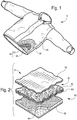
Figure 1 is an illustration of a protective garment, parts broken away. -
Figure 2 is an exploded view of the layers of the protective garment shown inFigure 1 . - Referring to the Figures, wherein like numerals refer to like elements, there is shown in
Figure 1 , aprotective garment 10. Specifically,protective garment 10 is the jacket of a firefigther's turnout suit. It is understood, however, that the invention is not limited to firefighter's turnout gear. The invention may be used in other types of protective gear, as will be apparent to those of ordinary skill. Such other types of protective suits include, but are not limited to, suits for industrial workers (including, for example, arc flash apparel), wildlands firefighters, race car drivers, airplane pilots, military personnel, and the like. - As indicated in
Figures 1 and 2 , theprotective garment 10 may have a multi-layer construction that includes anouter shell 20, amoisture barrier 40, and athermal liner 60. Theouter shell 20 is typically constructed of a flame and abrasion resistant material that comprises flame resistant fibers made of, for example, aramid (meta- and/or para-aramid), polybenzimidazole (PBI), polybenzoxazole (PBO), melamine, or the like, and blends thereof. Theouter shell 20 may be treated with a water-resistant finish (for example, a perfluorohydrocarbon) to prevent or reduce water absorption from the outside environment. The weight of the outer shell material may be within the range of about 203.4-271.2 gsm, i.e. 6-8 ounces per square yard (osy). - The
moisture barrier 40 may be constructed of a non-woven or woven flameresistant fabric 42 comprising flame resistant fibers made of, for example, aramid (meta- and/or para-aramid), polybenzimidazole (PBI), polybenzoxazole (PBO), melamine, or the like, and blends thereof. Themoisture barrier 40 may be laminated with a water-impermeable layer 44 of material such as, for instance, a layer of polytetrafluoroethylene (PTFE) or polyurethane (PU). When such animpermeable layer 44 is provided, it usually is provided on themoisture barrier 40, so as to face thethermal liner 60. The weight of the moisture barrier material is typically within the range about 135.6-203.4 gsm (4-6 osy). - The
thermal liner 60 may, optionally, include both aninsulation layer 62 and afacecloth layer 64, which may be quilted together. In alternative embodiments, however, theinsulation layer 62 alone may be used. Theinsulation layer 62 is discussed in greater detail below. When it is used, thefacecloth layer 64 may be constructed of woven material comprising flame resistant fibers made of, for example, aramid (meta-aramid or para-aramid), polybenzimidazole (PBI), polybenzoxazole (PBO), melamine, flame resistant (FR) cellulosics, modacrylic, carbon, or the like, and blends thereof. Thefacecloth layer 64 may be, optionally, finished with a hydrophilic finish that draws perspiration off of the firefighter's body, if desired. The weight of the facecloth layer material is normally in the range of about 33.9-203.4 gsm (1-6 osy). - The
insulation layer 62 comprises a nonwoven material that comprises a plurality of flame resistant fibers, discussed in greater detail below. Theinsulation layer 62 may comprise a single layer of nonwoven, or two layers of nonwoven, or multiple layers of nonwoven. In one embodiment, the insulation layer has two layers of nonwoven material, and each of these layers may have a different basis weight. The nonwoven material may be a weight range of about 25.4-271.2 gsm (0.75-8 osy). In one embodiment, the nonwoven material may be in a weight range of about 39.9-101.7 gsm (1.0-3.0 osy). In another embodiment, the nonwoven material may be in a weight range of 40.7-84.8 gsm (1.2-2.5 osy). In yet another embodiment, the nonwoven material may be in a weight range of 40.7-67.8 gsm (1.2-2.0 osy). In still another embodiment, the insulation layer may comprise two nonwoven layer, one layer having a basis weight of about 47.5 gsm (1.4 osy) and the other layer having a basis weight of about 61.0 gsm (1.8 osy). In one embodiment, the nonwoven material may have a thickness of less than 3 mm. In another embodiment, the nonwoven material may have a thickness of less than 2 mm. In yet another embodiment, the nonwoven material may have a thickness of less than 1 mm. The nonwoven material, in all embodiments, should have a minimum thickness of 0.25 mm. In still another embodiment, the nonwoven material may have a thickness in the range of about 0.75-1.25 mm. The nonwoven material may be made by any nonwoven process. Such processes include, but are not limited to, wet laid, air laid, carding, felting, needlepunching, and hydroentangling (spunlaced). In one embodiment, the nonwoven may be spunlaced. The nonwoven material may be flat (i.e., without apertures), apertured (seeUS5136723 ), dimpled (seeUS7676855 ), or a combination of any of the foregoing. - The nonwoven may comprise a plurality of flame resistant fibers. The nonwoven may exclude any wool and/or cellulosic fibers and/or natural fibers (i.e., any non-synthetic or non-man-made fibers). The nonwoven may be characterized has having an equivalent or better thermal protective performance (TPP per NFPA 1971 (2007)) and a lower basis weight than an industry standard nonwoven consisting of a nonwoven of para-aramids or meta-aramids or a blend of both, for example - E89.
- In one embodiment, the flame resistant fibers may also be characterized as non-water absorbing fibers. Non-water absorbing fiber does not refer to the moisture regain of the fiber. Moisture regain, as used herein, refers to percentage of atmospheric moisture in a textile material brought into equilibrium with a standard atmosphere after partial drying, calculated as a percentage of the moisture-free weight. Instead, non-water absorbing fiber refers to the fibers ability, when placed in contact with liquid water, to swell, absorb, and retain that water. The water absorbency of fibers may be measured according to ASTM D2402 (2012). The maximum water retention that may be tolerated is about 15%, preferably about 10% or below.
- In one embodiment, the nonwoven material comprises a first inherently heat resistant fiber and a second heat resistant fiber. The first fiber may be different from the second fiber. The first heat resistant fiber may comprise 1-45 wt% of the nonwoven and the balance may be the second fiber. The first heat resistant fiber may comprise 10-40 wt% of the nonwoven and the balance may be the second fiber. The first heat resistant fiber may comprise 15-30 wt% of the nonwoven and the balance may be the second fiber.
- The first inherently heat resistant fiber of the nonwoven material consists of polybenzimidazole.
- The second heat resistant fiber of the nonwoven material may be selected from the group of aramids (meta- and/or para-aramids), polybenzimidazoles, polyamideimides, polyetherimides, polyacrylates, aromatic copolyimides, polyacrylonitriles, polyetherketones, polysulfones, polyethersulfones, melamines, polybenzoxazole, and combinations thereof. The second heat resistant fiber of the nonwoven material may be selected from the group of aramids (meta- and/or para-aramids), melamines, polybenzoxazole, and combinations thereof. The second heat resistant fiber of the nonwoven material may be selected from the group of meta-aramids, para-aramids, and combinations thereof. The second fiber excludes FR cellulosics.
- The following examples further illustrate the invention; it being understood, however, that this invention is not limited to the precise formulations set forth.
- In Table 1, there are shown several representative embodiments of the instant invention compared to the certain industry standard materials. These embodiments illustrate a range of thickness and basis weights that may be useful in the manufacture of turnout gear. Fiber blends A-B represent the inventive embodiments and fiber blend C represents an industry standard material.
TABLE 1 Fiber Blend Structure Basis Weight Thickness (mm) (mm/gsm)·100 (gsm) [osy] A Apertured 56.9 [1.68] 0.89 1.56 A Apertured 66.5 [1.96] 0.97 1.46 A Apertured 84.6 [2.50] 1.10 1.30 B1 Apertured 48.1 [1.42] 0.74 1.54 B1 Apertured 62.0 [1.83] 0.93 1.50 B Apertured 77.7 [2.29] 1.07 1.38 B Apertured 85.0 [2.50] 1.19 1.40 C2 Flat 50.0 [1.47] 0.70 1.40 C3 Flat 80.0 [2.36] 0.87 1.09 C Dimpled 80.0 [2.36] 1.22 1.53 A: 47 wt% m-aramid/33% p-aramid/20% PBI
B: 80 wt% m-aramid/20% PBI
C: 67 wt% m-aramid/33% p-aramid
Apertured: spunlaced nonwoven with apertures,US513723 .
Flat: spunlaced nonwoven without apertures.
Dimples: spunlaced nonwoven without apertures but having dimples,US7676855 . Also referred to in the industry as '3D.'
Conversion: (gsm/33.9)=osy.
1 Exemplary embodiment.
2 Industry standard - 50.1.gsm (5osy) spunlace.
3 Industry standard - 78.0 gsm (2.3osy) spunlace. - In TABLE 2, there are shown several full composite comparisons of the instant invention industry standards. The full composite refers turnout gear with an outer shell, moisture barrier, and a thermal liner. The outer shell was PBI MATRIX® available from Safety Components, Inc of Greenville, SC. The moisture barrier was CROSSTECH 2C available from W.L. Gore & Associates of Elkton, MD. The thermal barrier was unquilted and made with a NOMEX face cloth and the insulation layers set forth in TABLE 2. The first two listed materials are existing industry standard constructions and the remaining are examples of the instant invention.
TABLE 2 Fiber Blend Insulation Layers Full Composite basis Weight TPP4 TPP gsm/osy gsm (osy) 33 wt%p-aramid/ 67% m-aramid1 50.9 gsm, 1.5osy flat 677.7 (19.99) 35.5 60.3/1.78 78.0 gsm, 2.3osy flat 33 wt%p-aramid/ 67% m-aramid2 50.9 gsm, 1.5osy flat 661.0 (19.55) 36.4 63.0/1.86 78.0 gsm, 2.3osy dimpled 20 wt% PBI/ 80% m-aramid3 47.5 gsm, 1.4osy apertured 640.4 (18.89) 36.2 65.0/1.92 61.0 gsm, 1.8osy apertured 47wt% m-aramid/ 33% p-aramid/20% PBI 57.6 gsm, 1.7osy apertured 642.4 (18.95) 34.7 62.0/1.83 57.6 gsm, 1.7osy apertured 47wt% m-aramid/ 33% p-aramid/20% PBI 67.8 gsm, 2.0osy apertured 653.2 (19.27) 36.7 64.4/1.90 57.6 gsm, 1.7osy apertured 20 wt% PBI/ 80% m-aramid 47.5 gsm, 1.4osy apertured 657.3 (19.39) 37.2 65.0/1.92 78.0 gsm, 2.3osy apertured 20 wt% PBI/ 80% m-aramid 61.0 gsm, 1.8osy apertured 658.0 (19.41) 36.6 64.0/1.89 61.0 gsm, 1.8osy apertured Apertured: spunlaced nonwoven with apertures, US513723 .
Flat: spunlaced nonwoven without apertures.
Dimples: spunlaced nonwoven without apertures but having dimples,US7676855 .
1 Industry standard
2 Industry standard
3 Exemplary embodiment
4 TPP - Thermal Protection Performance per NFPA1971 (2007). - In TABLE 3A-D, there is shown several full composite comparisons of the instant invention to various industry standard full composites. The full composite refers turnout gear with an outer shell, moisture barrier, and a thermal liner. The outer shell was varied as indicated. The moisture barrier was varied as indicated. The thermal barrier was quilted and varied as indicated.
TABLE 3A Outer Shell: PBI MATRIX - Safety Components, Inc, Greenville, SC. Moisture barrier - CROSSTECH Black, W.L. Gore & Associates, Elkton, MD. Thermal Liner Fiber Blend Insulation Layers TPP3 TPP gsm / osy Glide Araflo1 33 wt%p-aramid/ 50.9 gsm, 1.5osy apertured 38.9 65.4 / 1.93 67% m-aramid 78.0 gsm, 2.3osy flat Glide E891 33 wt%p-aramid/ 50.9 gsm, 1.5osy flat 37.6 63.4 / 1.87 67% m-aramid 78.0 gsm, 2.3osy flat Caldura SL22 33 wt%p-aramid/ 50.9 gsm, 1.5osy flat 37.6 64.4 / 1.90 67% m-aramid 78.0 gsm, 2.3osy flat Quantum 3D2 33 wt%p-aramid/ 50.9 gsm, 1.5osy flat 41.8 71.2/2.10 67% m-aramid 78.0 gsm, 2.3osy dimpled Glide 120 wt% PBI/ 47.5 gsm, 1.4osy apertured 39.3 64.4 / 1.90 w/invention 80% m-aramid 61.0 gsm, 1.8osy apertured Apertured: spunlaced nonwoven with apertures, US513723 .
Flat: spunlaced nonwoven without apertures.
Dimples: spunlaced nonwoven without apertures but having dimples,US7676855
1 Available from Safety Components, Inc, Greenville, SC.
2 Available from TenCate, Union City, GA.
3 TPP - Thermal Protection Performance per NFPA1971 (2007).TABLE 3B Outer Shell: PBI MAX - Safety Components, Inc, Greenville, SC. Moisture barrier - CROSSTECH Black, W.L. Gore & Associates, Elkton, MD. Thermal Liner Fiber Blend Insulation Layers TPP3 TPP gsm / osy Glide Araflo1 33 wt%p-aramid/67% m-aramid 50.9 gsm, 1.5osy apertured 39.2 71.2/2.10 78.0 gsm, 2.3osy flat Glide E891 33 wt%p-aramid/67% m-aramid 50.9 gsm, 1.5osy flat 39.7 70.2 / 2.07 78.0 gsm, 2.3osy flat Quantum 3D2 33 wt%p-aramid/67% m-aramid 50.9 gsm, 1.5osy flat 42.2 73.2/2.16 78.0 gsm, 2.3osy dimpled Glide 120 wt% PBI/80% m-aramid 47.5 gsm, 1.4osy apertured 43.4 74.6 / 2.20 w/invention 61.0 gsm, 1.8osy apertured Apertured: spunlaced nonwoven with apertures, US513723 .
Flat: spunlaced nonwoven without apertures.
Dimples: spunlaced nonwoven without apertures but having dimples,US7676855 .
1 Available from Safety Components, Inc, Greenville, SC.
2 Available from TenCate, Union City, GA.
3 TPP -Thermal Protection Performance per NFPA1971 (2007).TABLE 3C Outer Shell: GEMINI - TenCate, Union City, GA. Moisture barrier - CROSSTECH Black, W.L. Gore & Associates, Elkton, MD. Thermal Liner Fiber Blend Insulation Layers TPP3 TPP gsm / osy Caldura SL21 33 wt%p-aramid/67% m-aramid 50.9 gsm, 1.5osy flat 36.4 65.5 /1.93 78.0 gsm, 2.3osy flat Glide 2 20 wt% PBI/80% m-aramid 47.5 gsm, 1.4osy apertured 39.7 68.8 / 2.03 w/invention 61.0 gsm, 1.8osy apertured Apertured: spunlaced nonwoven with apertures, US513723 .
Flat: spunlaced nonwoven without apertures.
1 Available from TenCate, Union City, GA.
2 Available from Safety Components, Inc, Greenville, SC.
3 TPP -Thermal Protection Performance per NFPA1971 (2007).TABLE 3D Outer Shell: GEMINI XT - TenCate, Union City, GA. Moisture barrier - CROSSTECH Black, W.L. Gore & Associates, Elkton, MD. Thermal Liner Fiber Blend Insulation Layers TPP3 TPP gsm / osy Caldura SL21 33 wt%p-aramid/67% m-aramid 50.0 gsm, 1.5osy flat 38.2 66.8 / 1.97 78.0 gsm, 2.3osy flat Quantum 3D1 33 wt%p-aramid/67% m-aramid 50.0 gsm, 1.5osy flat 41.3 67.8 / 2.00 78.0 gsm, 2.3osy dimpled Glide2 w/ invention 20 wt% PBI/80% m-aramid 47.5 gsm, 1.4osy apertured 40.3 68.8 / 2.03 61.0 gsm, 1.8osy apertured Apertured: spunlaced nonwoven with apertures, US513723 .
Flat: spunlaced nonwoven without apertures.
Dimples: spunlaced nonwoven without apertures but having dimples,US7676855 .
1 Available from TenCate, Union City, GA.
2 Available from Safety Components, Inc, Greenville, SC.
3 TPP - Thermal Protection Performance per NFPA1971 (2007).
Claims (10)
- A thermal liner for protective apparel comprising: a nonwoven having
1-45 wt % of polybenzimidazole fiber, and
the remaining balance being a second heat resistant fiber, said second fiber being selected from the group consisting of polyamideimides, polyetherimides, polyacrylates, aromatic copolyimides, polyacrylonitriles, polyetherketones, polysulfones, polyethersulfones, melamines, polybenzoxazole, and combinations thereof,
the nonwoven excluding wool and cellulosic fibers, and having a thickness less than 3 mm and a basis weight of less than 100 gsm (2.9 osy). - The thermal liner of claim 1 wherein the polybenzimidazole fiber and the second heat resistant fiber have a water retention, as measured by ASTM D2402 (2012), of less
than 15%. - The thermal liner of claim 1 wherein the protective apparel being a firefighter's turnout gear.
- The thermal liner of claim 1 wherein said nonwoven being a spunlaced nonwoven.
- The thermal liner of claim 1 wherein said nonwoven being an apertured nonwoven.
- The thermal liner of claim 1 wherein said nonwoven comprises 10-40 wt% of said polybenzimidazole fiber.
- The thermal liner of claim 1 wherein said nonwoven comprises 15-30 wt% of said polybenzimidazole fiber.
- The thermal liner of claim 1 further comprising a facing fabric affixed to said nonwoven.
- The thermal liner of claim 1 further comprising multiple nonwovens.
- A protective garment comprising the thermal liner of claim 1.
Priority Applications (3)
| Application Number | Priority Date | Filing Date | Title |
|---|---|---|---|
| PL18201602T PL3479712T3 (en) | 2012-09-25 | 2013-09-03 | Thermal liner for protective garments |
| PL13840310T PL2900097T3 (en) | 2012-09-25 | 2013-09-03 | Thermal liner for protective garments |
| EP18201602.2A EP3479712B1 (en) | 2012-09-25 | 2013-09-03 | Thermal liner for protective garments |
Applications Claiming Priority (2)
| Application Number | Priority Date | Filing Date | Title |
|---|---|---|---|
| US13/626,179 US9409378B2 (en) | 2012-09-25 | 2012-09-25 | Thermal liner for protective garments |
| PCT/US2013/057773 WO2014051936A1 (en) | 2012-09-25 | 2013-09-03 | Thermal liner for protective garments |
Related Child Applications (1)
| Application Number | Title | Priority Date | Filing Date |
|---|---|---|---|
| EP18201602.2A Division EP3479712B1 (en) | 2012-09-25 | 2013-09-03 | Thermal liner for protective garments |
Publications (3)
| Publication Number | Publication Date |
|---|---|
| EP2900097A1 EP2900097A1 (en) | 2015-08-05 |
| EP2900097A4 EP2900097A4 (en) | 2016-06-01 |
| EP2900097B1 true EP2900097B1 (en) | 2018-10-24 |
Family
ID=50339128
Family Applications (2)
| Application Number | Title | Priority Date | Filing Date |
|---|---|---|---|
| EP18201602.2A Active EP3479712B1 (en) | 2012-09-25 | 2013-09-03 | Thermal liner for protective garments |
| EP13840310.0A Active EP2900097B1 (en) | 2012-09-25 | 2013-09-03 | Thermal liner for protective garments |
Family Applications Before (1)
| Application Number | Title | Priority Date | Filing Date |
|---|---|---|---|
| EP18201602.2A Active EP3479712B1 (en) | 2012-09-25 | 2013-09-03 | Thermal liner for protective garments |
Country Status (5)
| Country | Link |
|---|---|
| US (3) | US9409378B2 (en) |
| EP (2) | EP3479712B1 (en) |
| ES (2) | ES2705528T3 (en) |
| PL (2) | PL2900097T3 (en) |
| WO (1) | WO2014051936A1 (en) |
Families Citing this family (11)
| Publication number | Priority date | Publication date | Assignee | Title |
|---|---|---|---|---|
| DE102015004841A1 (en) * | 2015-04-15 | 2016-10-20 | Norafin Industries (Germany) Gmbh | Nonwoven fabric layer for heat protection textiles |
| GB2538533A (en) * | 2015-05-20 | 2016-11-23 | Magnet Mouse Ltd | Improvements in shirts |
| USD812857S1 (en) * | 2015-05-26 | 2018-03-20 | Clothing Arts, Ltd. | Jacket with safety pockets |
| CN108601410B (en) * | 2016-01-13 | 2021-06-29 | 杜邦安全与建筑公司 | Improved thermal protective clothing |
| EP3402355A4 (en) * | 2016-01-14 | 2019-11-13 | Southern Mills, Inc. | Improved flame resistant thermal liners and garments made with same |
| US20170361567A1 (en) * | 2016-06-16 | 2017-12-21 | Honeywell International Inc. | Light weight textile structure for arc flash protection with minimum arc rating |
| CN105962494B (en) * | 2016-06-30 | 2018-01-23 | 温州庄吉服饰有限公司 | The manufacture craft of Western-style clothes full hemp liner |
| US20180214719A1 (en) * | 2017-02-02 | 2018-08-02 | Innotex Inc. | Protective interfaces for firefighter garments |
| US20230085498A1 (en) * | 2021-09-01 | 2023-03-16 | Fire-Dex, Llc | Thermal liner |
| US12146244B1 (en) | 2022-07-21 | 2024-11-19 | Milliken & Company | Fire-resistant textile |
| US20250143388A1 (en) * | 2023-11-08 | 2025-05-08 | Innotex Inc. | Outer shell with spacer pads for firefighter protective garments and firefighter protective garments including the same |
Family Cites Families (29)
| Publication number | Priority date | Publication date | Assignee | Title |
|---|---|---|---|---|
| US513723A (en) | 1894-01-30 | Hazen h | ||
| US767855A (en) | 1904-05-26 | 1904-08-16 | James E Watters | Wire-fastener. |
| JPS6037202B2 (en) | 1981-08-10 | 1985-08-24 | 日本エクスラン工業株式会社 | water absorbent acrylic fiber |
| US4937136A (en) | 1987-10-13 | 1990-06-26 | Cairns & Brother, Inc. | Laminate for fire protective gear |
| US4849280A (en) | 1987-10-13 | 1989-07-18 | Cairns & Brother Inc. | Laminate for fire protective gear |
| US5007112A (en) | 1989-11-30 | 1991-04-16 | E. I. Du Pont De Nemours And Company | Protective coveralls with improved ventilation |
| US5136723A (en) | 1991-02-15 | 1992-08-11 | Lion Apparel, Inc. | Firefighter garment with mesh liner |
| FR2673207B1 (en) | 1991-02-25 | 1994-07-22 | Picardie Lainiere | COMPOSITE FIRE PROTECTION LINING. |
| US5727401A (en) | 1995-08-09 | 1998-03-17 | Southern Mills, Inc. | Fire resistant fleece fabric and garment |
| US5624738A (en) | 1995-12-18 | 1997-04-29 | Marcanada Inc. | Nonslipping laminate multifilament outer shell for firefighter garment |
| US5860163A (en) | 1996-05-21 | 1999-01-19 | Lion Apparel, Inc. | Garment thermal liner having insulating beads |
| US6489256B1 (en) * | 1997-09-26 | 2002-12-03 | George M. Kent | Fire escape blanket and other melamine resin containing compositions and products with fire blocking properties |
| ES2229545T3 (en) | 1997-10-31 | 2005-04-16 | Kimberly-Clark Worldwide, Inc. | MATERIALS NON-FABRICED, RIPPED AND COATING. |
| US5996122A (en) | 1998-01-29 | 1999-12-07 | Lion Apparel, Inc. | Lightweight firefighter garment |
| US6192520B1 (en) | 1998-01-30 | 2001-02-27 | Safety Components Fabric Technologies, Inc. | Water resistant protective garment for fire fighters |
| DE19839758C1 (en) | 1998-09-01 | 2000-02-17 | Freudenberg Carl Fa | Semifinished material for manufacturing protective clothing for firefighters has a water jet-consolidated 2-layer nonwoven, a lining and a semipermeable membrane |
| US6430754B1 (en) * | 2000-03-03 | 2002-08-13 | Lion Apparel, Inc. | Firefighting garment |
| FR2805718A1 (en) | 2000-03-03 | 2001-09-07 | Duflot Ind Sa | FIREPROOF THERMAL INSULATING BARRIER, METHOD FOR MANUFACTURING SUCH A BARRIER, GARMENT COMPRISING AT LEAST SUCH A BARRIER AS INTERNAL INSULATION |
| US6562741B1 (en) | 2000-05-17 | 2003-05-13 | Norfab Corporation | Firefighter garment outer shell fabric utilizing stock dyed melamine fiber and ring-spun yarn for making the same |
| US20020069453A1 (en) | 2000-07-31 | 2002-06-13 | Kelleher Karen A. | Firefighter garment thermal liner material including hydrophobic fibers |
| EP1454005A2 (en) * | 2001-05-14 | 2004-09-08 | Precision Fabrics Group, Inc. | Thermally protective flame retardant fabric |
| US8796162B2 (en) | 2001-05-14 | 2014-08-05 | Precision Fabrics Group, Inc. | Thermally protective flame retardant fabric |
| US8071492B2 (en) | 2001-08-20 | 2011-12-06 | Pbi Performance Products, Inc. | Textile fabric for the outer shell of a firefighter's garment |
| US7013496B2 (en) * | 2003-09-05 | 2006-03-21 | Southern Mills, Inc. | Patterned thermal liner for protective garments |
| CN101198732B (en) | 2005-06-17 | 2011-06-29 | 林捻丝株式会社 | Heat resistant cloth and clothing and heat resistant glove employing it |
| JP5346586B2 (en) | 2005-12-16 | 2013-11-20 | サザンミルズ インコーポレイテッド | Protective clothing that provides heat resistance |
| KR101593529B1 (en) | 2009-01-06 | 2016-02-16 | 블루 큐브 아이피 엘엘씨 | Metallic compounds in non-brominated flame retardant epoxy resins |
| US9212434B2 (en) | 2009-05-22 | 2015-12-15 | Pbi Performance Products, Inc. | Blend of lyocell and flame resistant fibers for protective garments |
| US20110214218A1 (en) | 2010-03-03 | 2011-09-08 | Fire-Dex, Llc | Garment with an inspection port |
-
2012
- 2012-09-25 US US13/626,179 patent/US9409378B2/en active Active
-
2013
- 2013-09-03 WO PCT/US2013/057773 patent/WO2014051936A1/en not_active Ceased
- 2013-09-03 ES ES13840310T patent/ES2705528T3/en active Active
- 2013-09-03 EP EP18201602.2A patent/EP3479712B1/en active Active
- 2013-09-03 PL PL13840310T patent/PL2900097T3/en unknown
- 2013-09-03 ES ES18201602T patent/ES2860455T3/en active Active
- 2013-09-03 PL PL18201602T patent/PL3479712T3/en unknown
- 2013-09-03 EP EP13840310.0A patent/EP2900097B1/en active Active
-
2016
- 2016-04-21 US US15/134,448 patent/US20160227858A1/en not_active Abandoned
-
2021
- 2021-10-13 US US17/500,812 patent/US20220053859A1/en not_active Abandoned
Non-Patent Citations (1)
| Title |
|---|
| None * |
Also Published As
| Publication number | Publication date |
|---|---|
| ES2705528T3 (en) | 2019-03-25 |
| WO2014051936A1 (en) | 2014-04-03 |
| US20220053859A1 (en) | 2022-02-24 |
| US20140087129A1 (en) | 2014-03-27 |
| ES2860455T3 (en) | 2021-10-05 |
| EP3479712A1 (en) | 2019-05-08 |
| PL2900097T3 (en) | 2019-03-29 |
| EP2900097A4 (en) | 2016-06-01 |
| US9409378B2 (en) | 2016-08-09 |
| EP3479712B1 (en) | 2020-10-21 |
| EP2900097A1 (en) | 2015-08-05 |
| PL3479712T3 (en) | 2021-06-28 |
| US20160227858A1 (en) | 2016-08-11 |
Similar Documents
| Publication | Publication Date | Title |
|---|---|---|
| EP3479712B1 (en) | Thermal liner for protective garments | |
| EP3186421B1 (en) | Flame resistant fabrics having cellulosic filament yarns | |
| AU2001241491B2 (en) | Firefighting garment | |
| US12544602B2 (en) | Firefighter protective hood and gloves with regenerated cellulose fiber | |
| US20020069453A1 (en) | Firefighter garment thermal liner material including hydrophobic fibers | |
| AU2006325488B2 (en) | Protective garments that provide thermal protection | |
| AU2001241491A1 (en) | Firefighting garment | |
| US20210086004A1 (en) | Flame resistant, breathable protective garments for fire fighters and first responders | |
| JP2008266841A (en) | Firefighting clothing material | |
| US7284398B2 (en) | Multilayered, breathable textile fabric | |
| EP1555902B1 (en) | Multilayered, breathable textile fabric | |
| US20070284558A1 (en) | Fire insulating barrier material for a firefighter protective garment | |
| CN209426317U (en) | A kind of fire-retardant impermeable warming protective garment fabric | |
| EP3582859B1 (en) | Fire resistant textile | |
| CN207062481U (en) | A kind of inflaming retarding fabric and put out a fire protective garment using fireman made of the fabric | |
| US12616260B2 (en) | Flame resistant material for a protective garment | |
| US20230068746A1 (en) | Flame resistant material having traction and enhanced thermal properties | |
| AU2005200963B2 (en) | Firefighting garment | |
| US20230085498A1 (en) | Thermal liner | |
| RU2640991C1 (en) | Fire-fighting clothes of fire-rescuer for integrated protection from dangerous fire factors, ballistic and dynamic exposures | |
| US20230066532A1 (en) | Protective garment having enhanced evaporative heat transfer | |
| KR20260015692A (en) | Heat resistant structure and fire fighting glove using the same |
Legal Events
| Date | Code | Title | Description |
|---|---|---|---|
| PUAI | Public reference made under article 153(3) epc to a published international application that has entered the european phase |
Free format text: ORIGINAL CODE: 0009012 |
|
| 17P | Request for examination filed |
Effective date: 20150428 |
|
| AK | Designated contracting states |
Kind code of ref document: A1 Designated state(s): AL AT BE BG CH CY CZ DE DK EE ES FI FR GB GR HR HU IE IS IT LI LT LU LV MC MK MT NL NO PL PT RO RS SE SI SK SM TR |
|
| AX | Request for extension of the european patent |
Extension state: BA ME |
|
| DAX | Request for extension of the european patent (deleted) | ||
| RA4 | Supplementary search report drawn up and despatched (corrected) |
Effective date: 20160504 |
|
| RIC1 | Information provided on ipc code assigned before grant |
Ipc: B32B 5/02 20060101ALI20160428BHEP Ipc: D04H 3/16 20060101ALI20160428BHEP Ipc: A41D 31/00 20060101ALI20160428BHEP Ipc: A41D 27/02 20060101AFI20160428BHEP Ipc: D04H 1/4334 20120101ALI20160428BHEP Ipc: B32B 5/26 20060101ALI20160428BHEP Ipc: B32B 5/08 20060101ALI20160428BHEP Ipc: D04H 1/70 20120101ALI20160428BHEP Ipc: B32B 3/26 20060101ALI20160428BHEP Ipc: D04H 1/495 20120101ALI20160428BHEP Ipc: A62B 17/00 20060101ALI20160428BHEP Ipc: D04H 1/4342 20120101ALI20160428BHEP Ipc: D04H 3/11 20120101ALI20160428BHEP Ipc: D04H 1/492 20120101ALI20160428BHEP |
|
| STAA | Information on the status of an ep patent application or granted ep patent |
Free format text: STATUS: EXAMINATION IS IN PROGRESS |
|
| 17Q | First examination report despatched |
Effective date: 20170404 |
|
| GRAP | Despatch of communication of intention to grant a patent |
Free format text: ORIGINAL CODE: EPIDOSNIGR1 |
|
| STAA | Information on the status of an ep patent application or granted ep patent |
Free format text: STATUS: GRANT OF PATENT IS INTENDED |
|
| INTG | Intention to grant announced |
Effective date: 20180403 |
|
| GRAS | Grant fee paid |
Free format text: ORIGINAL CODE: EPIDOSNIGR3 |
|
| GRAA | (expected) grant |
Free format text: ORIGINAL CODE: 0009210 |
|
| STAA | Information on the status of an ep patent application or granted ep patent |
Free format text: STATUS: THE PATENT HAS BEEN GRANTED |
|
| AK | Designated contracting states |
Kind code of ref document: B1 Designated state(s): AL AT BE BG CH CY CZ DE DK EE ES FI FR GB GR HR HU IE IS IT LI LT LU LV MC MK MT NL NO PL PT RO RS SE SI SK SM TR |
|
| REG | Reference to a national code |
Ref country code: CH Ref legal event code: EP |
|
| REG | Reference to a national code |
Ref country code: IE Ref legal event code: FG4D |
|
| REG | Reference to a national code |
Ref country code: AT Ref legal event code: REF Ref document number: 1055635 Country of ref document: AT Kind code of ref document: T Effective date: 20181115 |
|
| REG | Reference to a national code |
Ref country code: DE Ref legal event code: R096 Ref document number: 602013045712 Country of ref document: DE |
|
| REG | Reference to a national code |
Ref country code: NL Ref legal event code: MP Effective date: 20181024 |
|
| REG | Reference to a national code |
Ref country code: LT Ref legal event code: MG4D |
|
| REG | Reference to a national code |
Ref country code: AT Ref legal event code: MK05 Ref document number: 1055635 Country of ref document: AT Kind code of ref document: T Effective date: 20181024 |
|
| REG | Reference to a national code |
Ref country code: ES Ref legal event code: FG2A Ref document number: 2705528 Country of ref document: ES Kind code of ref document: T3 Effective date: 20190325 |
|
| PG25 | Lapsed in a contracting state [announced via postgrant information from national office to epo] |
Ref country code: NL Free format text: LAPSE BECAUSE OF FAILURE TO SUBMIT A TRANSLATION OF THE DESCRIPTION OR TO PAY THE FEE WITHIN THE PRESCRIBED TIME-LIMIT Effective date: 20181024 |
|
| PG25 | Lapsed in a contracting state [announced via postgrant information from national office to epo] |
Ref country code: BG Free format text: LAPSE BECAUSE OF FAILURE TO SUBMIT A TRANSLATION OF THE DESCRIPTION OR TO PAY THE FEE WITHIN THE PRESCRIBED TIME-LIMIT Effective date: 20190124 Ref country code: NO Free format text: LAPSE BECAUSE OF FAILURE TO SUBMIT A TRANSLATION OF THE DESCRIPTION OR TO PAY THE FEE WITHIN THE PRESCRIBED TIME-LIMIT Effective date: 20190124 Ref country code: LT Free format text: LAPSE BECAUSE OF FAILURE TO SUBMIT A TRANSLATION OF THE DESCRIPTION OR TO PAY THE FEE WITHIN THE PRESCRIBED TIME-LIMIT Effective date: 20181024 Ref country code: IS Free format text: LAPSE BECAUSE OF FAILURE TO SUBMIT A TRANSLATION OF THE DESCRIPTION OR TO PAY THE FEE WITHIN THE PRESCRIBED TIME-LIMIT Effective date: 20190224 Ref country code: LV Free format text: LAPSE BECAUSE OF FAILURE TO SUBMIT A TRANSLATION OF THE DESCRIPTION OR TO PAY THE FEE WITHIN THE PRESCRIBED TIME-LIMIT Effective date: 20181024 Ref country code: AT Free format text: LAPSE BECAUSE OF FAILURE TO SUBMIT A TRANSLATION OF THE DESCRIPTION OR TO PAY THE FEE WITHIN THE PRESCRIBED TIME-LIMIT Effective date: 20181024 Ref country code: HR Free format text: LAPSE BECAUSE OF FAILURE TO SUBMIT A TRANSLATION OF THE DESCRIPTION OR TO PAY THE FEE WITHIN THE PRESCRIBED TIME-LIMIT Effective date: 20181024 Ref country code: FI Free format text: LAPSE BECAUSE OF FAILURE TO SUBMIT A TRANSLATION OF THE DESCRIPTION OR TO PAY THE FEE WITHIN THE PRESCRIBED TIME-LIMIT Effective date: 20181024 |
|
| PG25 | Lapsed in a contracting state [announced via postgrant information from national office to epo] |
Ref country code: AL Free format text: LAPSE BECAUSE OF FAILURE TO SUBMIT A TRANSLATION OF THE DESCRIPTION OR TO PAY THE FEE WITHIN THE PRESCRIBED TIME-LIMIT Effective date: 20181024 Ref country code: SE Free format text: LAPSE BECAUSE OF FAILURE TO SUBMIT A TRANSLATION OF THE DESCRIPTION OR TO PAY THE FEE WITHIN THE PRESCRIBED TIME-LIMIT Effective date: 20181024 Ref country code: RS Free format text: LAPSE BECAUSE OF FAILURE TO SUBMIT A TRANSLATION OF THE DESCRIPTION OR TO PAY THE FEE WITHIN THE PRESCRIBED TIME-LIMIT Effective date: 20181024 Ref country code: GR Free format text: LAPSE BECAUSE OF FAILURE TO SUBMIT A TRANSLATION OF THE DESCRIPTION OR TO PAY THE FEE WITHIN THE PRESCRIBED TIME-LIMIT Effective date: 20190125 Ref country code: PT Free format text: LAPSE BECAUSE OF FAILURE TO SUBMIT A TRANSLATION OF THE DESCRIPTION OR TO PAY THE FEE WITHIN THE PRESCRIBED TIME-LIMIT Effective date: 20190224 |
|
| REG | Reference to a national code |
Ref country code: DE Ref legal event code: R097 Ref document number: 602013045712 Country of ref document: DE |
|
| PG25 | Lapsed in a contracting state [announced via postgrant information from national office to epo] |
Ref country code: IT Free format text: LAPSE BECAUSE OF FAILURE TO SUBMIT A TRANSLATION OF THE DESCRIPTION OR TO PAY THE FEE WITHIN THE PRESCRIBED TIME-LIMIT Effective date: 20181024 Ref country code: DK Free format text: LAPSE BECAUSE OF FAILURE TO SUBMIT A TRANSLATION OF THE DESCRIPTION OR TO PAY THE FEE WITHIN THE PRESCRIBED TIME-LIMIT Effective date: 20181024 Ref country code: CZ Free format text: LAPSE BECAUSE OF FAILURE TO SUBMIT A TRANSLATION OF THE DESCRIPTION OR TO PAY THE FEE WITHIN THE PRESCRIBED TIME-LIMIT Effective date: 20181024 |
|
| PG25 | Lapsed in a contracting state [announced via postgrant information from national office to epo] |
Ref country code: EE Free format text: LAPSE BECAUSE OF FAILURE TO SUBMIT A TRANSLATION OF THE DESCRIPTION OR TO PAY THE FEE WITHIN THE PRESCRIBED TIME-LIMIT Effective date: 20181024 Ref country code: SM Free format text: LAPSE BECAUSE OF FAILURE TO SUBMIT A TRANSLATION OF THE DESCRIPTION OR TO PAY THE FEE WITHIN THE PRESCRIBED TIME-LIMIT Effective date: 20181024 Ref country code: RO Free format text: LAPSE BECAUSE OF FAILURE TO SUBMIT A TRANSLATION OF THE DESCRIPTION OR TO PAY THE FEE WITHIN THE PRESCRIBED TIME-LIMIT Effective date: 20181024 Ref country code: SK Free format text: LAPSE BECAUSE OF FAILURE TO SUBMIT A TRANSLATION OF THE DESCRIPTION OR TO PAY THE FEE WITHIN THE PRESCRIBED TIME-LIMIT Effective date: 20181024 |
|
| PLBE | No opposition filed within time limit |
Free format text: ORIGINAL CODE: 0009261 |
|
| STAA | Information on the status of an ep patent application or granted ep patent |
Free format text: STATUS: NO OPPOSITION FILED WITHIN TIME LIMIT |
|
| 26N | No opposition filed |
Effective date: 20190725 |
|
| PG25 | Lapsed in a contracting state [announced via postgrant information from national office to epo] |
Ref country code: SI Free format text: LAPSE BECAUSE OF FAILURE TO SUBMIT A TRANSLATION OF THE DESCRIPTION OR TO PAY THE FEE WITHIN THE PRESCRIBED TIME-LIMIT Effective date: 20181024 |
|
| PG25 | Lapsed in a contracting state [announced via postgrant information from national office to epo] |
Ref country code: TR Free format text: LAPSE BECAUSE OF FAILURE TO SUBMIT A TRANSLATION OF THE DESCRIPTION OR TO PAY THE FEE WITHIN THE PRESCRIBED TIME-LIMIT Effective date: 20181024 |
|
| PG25 | Lapsed in a contracting state [announced via postgrant information from national office to epo] |
Ref country code: MC Free format text: LAPSE BECAUSE OF FAILURE TO SUBMIT A TRANSLATION OF THE DESCRIPTION OR TO PAY THE FEE WITHIN THE PRESCRIBED TIME-LIMIT Effective date: 20181024 |
|
| REG | Reference to a national code |
Ref country code: CH Ref legal event code: PL |
|
| PG25 | Lapsed in a contracting state [announced via postgrant information from national office to epo] |
Ref country code: IE Free format text: LAPSE BECAUSE OF NON-PAYMENT OF DUE FEES Effective date: 20190903 Ref country code: LI Free format text: LAPSE BECAUSE OF NON-PAYMENT OF DUE FEES Effective date: 20190930 Ref country code: CH Free format text: LAPSE BECAUSE OF NON-PAYMENT OF DUE FEES Effective date: 20190930 Ref country code: LU Free format text: LAPSE BECAUSE OF NON-PAYMENT OF DUE FEES Effective date: 20190903 |
|
| REG | Reference to a national code |
Ref country code: BE Ref legal event code: MM Effective date: 20190930 |
|
| PG25 | Lapsed in a contracting state [announced via postgrant information from national office to epo] |
Ref country code: BE Free format text: LAPSE BECAUSE OF NON-PAYMENT OF DUE FEES Effective date: 20190930 |
|
| PG25 | Lapsed in a contracting state [announced via postgrant information from national office to epo] |
Ref country code: CY Free format text: LAPSE BECAUSE OF FAILURE TO SUBMIT A TRANSLATION OF THE DESCRIPTION OR TO PAY THE FEE WITHIN THE PRESCRIBED TIME-LIMIT Effective date: 20181024 |
|
| PG25 | Lapsed in a contracting state [announced via postgrant information from national office to epo] |
Ref country code: MT Free format text: LAPSE BECAUSE OF FAILURE TO SUBMIT A TRANSLATION OF THE DESCRIPTION OR TO PAY THE FEE WITHIN THE PRESCRIBED TIME-LIMIT Effective date: 20181024 Ref country code: HU Free format text: LAPSE BECAUSE OF FAILURE TO SUBMIT A TRANSLATION OF THE DESCRIPTION OR TO PAY THE FEE WITHIN THE PRESCRIBED TIME-LIMIT; INVALID AB INITIO Effective date: 20130903 |
|
| PG25 | Lapsed in a contracting state [announced via postgrant information from national office to epo] |
Ref country code: MK Free format text: LAPSE BECAUSE OF FAILURE TO SUBMIT A TRANSLATION OF THE DESCRIPTION OR TO PAY THE FEE WITHIN THE PRESCRIBED TIME-LIMIT Effective date: 20181024 |
|
| PGFP | Annual fee paid to national office [announced via postgrant information from national office to epo] |
Ref country code: PL Payment date: 20240617 Year of fee payment: 12 |
|
| PGFP | Annual fee paid to national office [announced via postgrant information from national office to epo] |
Ref country code: DE Payment date: 20240808 Year of fee payment: 12 |
|
| PGFP | Annual fee paid to national office [announced via postgrant information from national office to epo] |
Ref country code: GB Payment date: 20240808 Year of fee payment: 12 |
|
| PGFP | Annual fee paid to national office [announced via postgrant information from national office to epo] |
Ref country code: FR Payment date: 20240808 Year of fee payment: 12 |
|
| PGFP | Annual fee paid to national office [announced via postgrant information from national office to epo] |
Ref country code: ES Payment date: 20241014 Year of fee payment: 12 |