EP2898938A1 - Mercury re-emission control - Google Patents
Mercury re-emission control Download PDFInfo
- Publication number
- EP2898938A1 EP2898938A1 EP14199490.5A EP14199490A EP2898938A1 EP 2898938 A1 EP2898938 A1 EP 2898938A1 EP 14199490 A EP14199490 A EP 14199490A EP 2898938 A1 EP2898938 A1 EP 2898938A1
- Authority
- EP
- European Patent Office
- Prior art keywords
- mercury
- cyclodextrin
- concentration
- flue gas
- emission
- Prior art date
- Legal status (The legal status is an assumption and is not a legal conclusion. Google has not performed a legal analysis and makes no representation as to the accuracy of the status listed.)
- Granted
Links
Images
Classifications
-
- B—PERFORMING OPERATIONS; TRANSPORTING
- B01—PHYSICAL OR CHEMICAL PROCESSES OR APPARATUS IN GENERAL
- B01D—SEPARATION
- B01D47/00—Separating dispersed particles from gases, air or vapours by liquid as separating agent
- B01D47/06—Spray cleaning
-
- B—PERFORMING OPERATIONS; TRANSPORTING
- B01—PHYSICAL OR CHEMICAL PROCESSES OR APPARATUS IN GENERAL
- B01D—SEPARATION
- B01D53/00—Separation of gases or vapours; Recovering vapours of volatile solvents from gases; Chemical or biological purification of waste gases, e.g. engine exhaust gases, smoke, fumes, flue gases, aerosols
- B01D53/30—Controlling by gas-analysis apparatus
-
- B—PERFORMING OPERATIONS; TRANSPORTING
- B01—PHYSICAL OR CHEMICAL PROCESSES OR APPARATUS IN GENERAL
- B01D—SEPARATION
- B01D53/00—Separation of gases or vapours; Recovering vapours of volatile solvents from gases; Chemical or biological purification of waste gases, e.g. engine exhaust gases, smoke, fumes, flue gases, aerosols
- B01D53/34—Chemical or biological purification of waste gases
- B01D53/346—Controlling the process
-
- B—PERFORMING OPERATIONS; TRANSPORTING
- B01—PHYSICAL OR CHEMICAL PROCESSES OR APPARATUS IN GENERAL
- B01D—SEPARATION
- B01D53/00—Separation of gases or vapours; Recovering vapours of volatile solvents from gases; Chemical or biological purification of waste gases, e.g. engine exhaust gases, smoke, fumes, flue gases, aerosols
- B01D53/34—Chemical or biological purification of waste gases
- B01D53/46—Removing components of defined structure
- B01D53/48—Sulfur compounds
-
- B—PERFORMING OPERATIONS; TRANSPORTING
- B01—PHYSICAL OR CHEMICAL PROCESSES OR APPARATUS IN GENERAL
- B01D—SEPARATION
- B01D53/00—Separation of gases or vapours; Recovering vapours of volatile solvents from gases; Chemical or biological purification of waste gases, e.g. engine exhaust gases, smoke, fumes, flue gases, aerosols
- B01D53/34—Chemical or biological purification of waste gases
- B01D53/46—Removing components of defined structure
- B01D53/48—Sulfur compounds
- B01D53/50—Sulfur oxides
- B01D53/501—Sulfur oxides by treating the gases with a solution or a suspension of an alkali or earth-alkali or ammonium compound
-
- B—PERFORMING OPERATIONS; TRANSPORTING
- B01—PHYSICAL OR CHEMICAL PROCESSES OR APPARATUS IN GENERAL
- B01D—SEPARATION
- B01D53/00—Separation of gases or vapours; Recovering vapours of volatile solvents from gases; Chemical or biological purification of waste gases, e.g. engine exhaust gases, smoke, fumes, flue gases, aerosols
- B01D53/34—Chemical or biological purification of waste gases
- B01D53/46—Removing components of defined structure
- B01D53/64—Heavy metals or compounds thereof, e.g. mercury
-
- B—PERFORMING OPERATIONS; TRANSPORTING
- B01—PHYSICAL OR CHEMICAL PROCESSES OR APPARATUS IN GENERAL
- B01D—SEPARATION
- B01D53/00—Separation of gases or vapours; Recovering vapours of volatile solvents from gases; Chemical or biological purification of waste gases, e.g. engine exhaust gases, smoke, fumes, flue gases, aerosols
- B01D53/34—Chemical or biological purification of waste gases
- B01D53/74—General processes for purification of waste gases; Apparatus or devices specially adapted therefor
- B01D53/77—Liquid phase processes
- B01D53/78—Liquid phase processes with gas-liquid contact
-
- C—CHEMISTRY; METALLURGY
- C08—ORGANIC MACROMOLECULAR COMPOUNDS; THEIR PREPARATION OR CHEMICAL WORKING-UP; COMPOSITIONS BASED THEREON
- C08B—POLYSACCHARIDES; DERIVATIVES THEREOF
- C08B37/00—Preparation of polysaccharides not provided for in groups C08B1/00 - C08B35/00; Derivatives thereof
- C08B37/0006—Homoglycans, i.e. polysaccharides having a main chain consisting of one single sugar, e.g. colominic acid
- C08B37/0009—Homoglycans, i.e. polysaccharides having a main chain consisting of one single sugar, e.g. colominic acid alpha-D-Glucans, e.g. polydextrose, alternan, glycogen; (alpha-1,4)(alpha-1,6)-D-Glucans; (alpha-1,3)(alpha-1,4)-D-Glucans, e.g. isolichenan or nigeran; (alpha-1,4)-D-Glucans; (alpha-1,3)-D-Glucans, e.g. pseudonigeran; Derivatives thereof
- C08B37/0012—Cyclodextrin [CD], e.g. cycle with 6 units (alpha), with 7 units (beta) and with 8 units (gamma), large-ring cyclodextrin or cycloamylose with 9 units or more; Derivatives thereof
- C08B37/0015—Inclusion compounds, i.e. host-guest compounds, e.g. polyrotaxanes
-
- F—MECHANICAL ENGINEERING; LIGHTING; HEATING; WEAPONS; BLASTING
- F23—COMBUSTION APPARATUS; COMBUSTION PROCESSES
- F23J—REMOVAL OR TREATMENT OF COMBUSTION PRODUCTS OR COMBUSTION RESIDUES; FLUES
- F23J15/00—Arrangements of devices for treating smoke or fumes
- F23J15/003—Arrangements of devices for treating smoke or fumes for supplying chemicals to fumes, e.g. using injection devices
-
- F—MECHANICAL ENGINEERING; LIGHTING; HEATING; WEAPONS; BLASTING
- F23—COMBUSTION APPARATUS; COMBUSTION PROCESSES
- F23J—REMOVAL OR TREATMENT OF COMBUSTION PRODUCTS OR COMBUSTION RESIDUES; FLUES
- F23J15/00—Arrangements of devices for treating smoke or fumes
- F23J15/02—Arrangements of devices for treating smoke or fumes of purifiers, e.g. for removing noxious material
- F23J15/04—Arrangements of devices for treating smoke or fumes of purifiers, e.g. for removing noxious material using washing fluids
-
- B—PERFORMING OPERATIONS; TRANSPORTING
- B01—PHYSICAL OR CHEMICAL PROCESSES OR APPARATUS IN GENERAL
- B01D—SEPARATION
- B01D2251/00—Reactants
- B01D2251/40—Alkaline earth metal or magnesium compounds
- B01D2251/404—Alkaline earth metal or magnesium compounds of calcium
-
- B—PERFORMING OPERATIONS; TRANSPORTING
- B01—PHYSICAL OR CHEMICAL PROCESSES OR APPARATUS IN GENERAL
- B01D—SEPARATION
- B01D2252/00—Absorbents, i.e. solvents and liquid materials for gas absorption
- B01D2252/60—Additives
-
- B—PERFORMING OPERATIONS; TRANSPORTING
- B01—PHYSICAL OR CHEMICAL PROCESSES OR APPARATUS IN GENERAL
- B01D—SEPARATION
- B01D2257/00—Components to be removed
- B01D2257/60—Heavy metals or heavy metal compounds
- B01D2257/602—Mercury or mercury compounds
-
- B—PERFORMING OPERATIONS; TRANSPORTING
- B01—PHYSICAL OR CHEMICAL PROCESSES OR APPARATUS IN GENERAL
- B01D—SEPARATION
- B01D2258/00—Sources of waste gases
- B01D2258/02—Other waste gases
- B01D2258/0283—Flue gases
-
- F—MECHANICAL ENGINEERING; LIGHTING; HEATING; WEAPONS; BLASTING
- F23—COMBUSTION APPARATUS; COMBUSTION PROCESSES
- F23J—REMOVAL OR TREATMENT OF COMBUSTION PRODUCTS OR COMBUSTION RESIDUES; FLUES
- F23J2215/00—Preventing emissions
- F23J2215/50—Carbon dioxide
-
- F—MECHANICAL ENGINEERING; LIGHTING; HEATING; WEAPONS; BLASTING
- F23—COMBUSTION APPARATUS; COMBUSTION PROCESSES
- F23J—REMOVAL OR TREATMENT OF COMBUSTION PRODUCTS OR COMBUSTION RESIDUES; FLUES
- F23J2215/00—Preventing emissions
- F23J2215/60—Heavy metals; Compounds thereof
-
- F—MECHANICAL ENGINEERING; LIGHTING; HEATING; WEAPONS; BLASTING
- F23—COMBUSTION APPARATUS; COMBUSTION PROCESSES
- F23J—REMOVAL OR TREATMENT OF COMBUSTION PRODUCTS OR COMBUSTION RESIDUES; FLUES
- F23J2219/00—Treatment devices
- F23J2219/20—Non-catalytic reduction devices
-
- F—MECHANICAL ENGINEERING; LIGHTING; HEATING; WEAPONS; BLASTING
- F23—COMBUSTION APPARATUS; COMBUSTION PROCESSES
- F23J—REMOVAL OR TREATMENT OF COMBUSTION PRODUCTS OR COMBUSTION RESIDUES; FLUES
- F23J2219/00—Treatment devices
- F23J2219/40—Sorption with wet devices, e.g. scrubbers
-
- F—MECHANICAL ENGINEERING; LIGHTING; HEATING; WEAPONS; BLASTING
- F23—COMBUSTION APPARATUS; COMBUSTION PROCESSES
- F23J—REMOVAL OR TREATMENT OF COMBUSTION PRODUCTS OR COMBUSTION RESIDUES; FLUES
- F23J2219/00—Treatment devices
- F23J2219/50—Sorption with semi-dry devices, e.g. with slurries
-
- Y—GENERAL TAGGING OF NEW TECHNOLOGICAL DEVELOPMENTS; GENERAL TAGGING OF CROSS-SECTIONAL TECHNOLOGIES SPANNING OVER SEVERAL SECTIONS OF THE IPC; TECHNICAL SUBJECTS COVERED BY FORMER USPC CROSS-REFERENCE ART COLLECTIONS [XRACs] AND DIGESTS
- Y02—TECHNOLOGIES OR APPLICATIONS FOR MITIGATION OR ADAPTATION AGAINST CLIMATE CHANGE
- Y02E—REDUCTION OF GREENHOUSE GAS [GHG] EMISSIONS, RELATED TO ENERGY GENERATION, TRANSMISSION OR DISTRIBUTION
- Y02E20/00—Combustion technologies with mitigation potential
- Y02E20/32—Direct CO2 mitigation
Definitions
- the subject matter disclosed herein generally relates to controlling or preventing an amount of mercury discharged to an environment incident to combustion of a fuel source containing mercury or mercury compounds, and more specifically to controlling or preventing mercury emission and/or re-emission in a combustion flue gas subjected to a wet scrubbing operation.
- Fuel sources such as coal produces a waste gas, referred to as "flue gas" that is to be emitted into an environment, such as the atmosphere.
- the fuel sources typically contain sulfur and sulfur compounds which are converted in the combustion process to gaseous species, including sulfur oxides, which then exist as such in the resulting flue gas.
- the fuel sources typically also contain elemental mercury or mercury compounds which are converted in the combustion process to, and exist in the flue gas as, gaseous elemental mercury or gaseous ionic mercury species.
- flue gas contains particles, noxious substances and other impurities considered to be environmental contaminants.
- a smoke stack Prior to emission into the atmosphere via a smoke stack, hereinafter a "stack", the flue gas undergoes a cleansing or purification process.
- a desulfurization system such as a wet scrubbing operation commonly known as a wet flue gas desulfurization (WFGD) system.
- WFGD wet flue gas desulfurization
- Sulfur oxides are removed from flue gas using a WFGD system by introducing an aqueous alkaline slurry to a scrubber tower of the WFGD system.
- the aqueous alkaline slurry typically includes a basic material that will interact with contaminants to remove them from the flue gas. Examples of basic materials that are useful in the aqueous alkaline slurry include lime, limestone, magnesium, combinations thereof and the like.
- a number of generally known methods of mercury removal are effective to produce mercury salts, which can be dissolved and removed by the aqueous alkaline slurry used in the wet scrubbing operation. Some of these methods include the addition of a halogen or halogen compounds, such as bromine, to the coal or to the flue gas upstream of the wet scrubbing operation to provide oxidation of elemental mercury to ionic mercury and formation of mercury salts, which are then dissolved in the aqueous alkaline slurry incident to the sulfur oxide removal processes.
- a halogen or halogen compounds such as bromine
- One aspect of the subject matter disclosed herein relates to a method for removing an amount of mercury from a flue gas generated by combustion of a fuel source to reduce mercury emission and/or re-emission to an environment such as the atmosphere.
- the method includes subjecting the flue gas to a wet scrubbing operation to decrease an amount of sulfur oxides present in the flue gas.
- the wet scrubbing operation comprises contacting the flue gas with an aqueous alkaline slurry to absorb the sulfur oxides from the flue gas, dissolving at least a portion of gaseous ionic mercury species present in the flue gas in the aqueous alkaline slurry to remove the gaseous ionic mercury species from the flue gas to produce cleaned flue gas, and including a cyclodextrin additive to the aqueous alkaline slurry to complex with the dissolved mercury species to form chemically stable complexes to prevent mercury re-emission into the cleaned flue gas and releasing the cleaned flue gas to the environment.
- the problem overcome by this method is that once oxidized by the aqueous alkaline slurry, the mercury can under some conditions be reduced to elemental mercury. Elemental mercury has a high vapor pressure and thus can be re-emitted into the "cleaned" flue gas.
- the present method controls mercury re-emission by using cyclodextrin to complex with the dissolved mercury species to form chemically stable complexes that do not reduce to form elemental mercury. As such, elemental mercury re-emission into the cleaned flue gas is prevented.
- the subject invention as disclosed herein is an improvement over known methods of preventing mercury re-emissions such as by adding sulfur containing chemicals such as sodium hydrosulfide, sodium sulfides, trimercaptotriazine, polydithiocarbamate, didethyl dithiocarbamate, or the like, to the aqueous alkaline slurry.
- sulfur containing chemicals such as sodium hydrosulfide, sodium sulfides, trimercaptotriazine, polydithiocarbamate, didethyl dithiocarbamate, or the like.
- a method for controlling, reducing or preventing mercury emission or re-emission levels in a cleaned combustion flue gas comprising supplying a combustion flue gas to a WFGD system for direct contact with an aqueous alkaline slurry for removal of contaminants from the flue gas to produce a cleaned flue gas, measuring a dissolved mercury species concentration, a mercury concentration, or both to obtain a measured concentration value in the WFGD system for comparison to a predetermined concentration value, and adjusting an amount of cyclodextrin additive supplied to the WFGD system to increase or decrease the measured concentration value to reduce levels of mercury emission and/or re-emission in the produced cleaned flue gas.
- the dissolved mercury species concentration is measured in the aqueous alkaline slurry of the WFGD system, such as a spray tower type WFGD system.
- the mercury concentration is measured in the cleaned flue gas from the WFGD system, such as a spray tower type WFGD system.
- the cyclodextrin additive supplied to the WFGD system is one or more complexing agents selected from the group consisting of ⁇ -cyclodextrin, ⁇ -cyclodextrin, ⁇ -cyclodextrin, derivatives of ⁇ -cyclodextrin, derivatives of ⁇ -cyclodextrin, derivatives of ⁇ -cyclodextrin, derivatives of cyclodextrin prepared by condensation of ⁇ -, ⁇ -, or ⁇ -cyclodextrins with epoxides, and mixtures thereof.
- the cyclodextrin additive is supplied to the aqueous alkaline slurry of the WFGD system as a solid or a solution. An agitator may be used to distribute the cyclodextrin additive throughout the aqueous alkaline slurry.
- a system for reducing mercury emission or re-emission levels in a cleaned combustion flue gas comprising a WFGD system with an aqueous alkaline slurry for direct contact with a combustion flue gas flowing therethrough, a collection tank for collecting the aqueous alkaline slurry following direct contact with the combustion flue gas with one or more dissolved mercury species sensors arranged therein for measuring a dissolved mercury species concentration in the collected aqueous alkaline slurry to obtain a measured dissolved mercury species concentration, a control device to compare the measured dissolved mercury species concentration to a predetermined dissolved mercury species concentration and based thereon control a device, and a device controlled by the control device is operative for adjusting an amount of a cyclodextrin additive supplied to the aqueous alkaline slurry to increase or decrease dissolved mercury species concentration to reduce levels of mercury emission and/or re-emission in a produced cleaned flue gas.
- the subject system may further comprise one or more mercury sensors in an outlet of the WFGD system for measuring a mercury concentration in a cleaned flue gas flowing therethrough to obtain a measured mercury concentration, the control device operative to compare the measured mercury concentration to a predetermined mercury concentration and based thereon control the device operative for adjusting an amount of a cyclodextrin additive supplied to the aqueous alkaline slurry to increase or decrease dissolved mercury species concentration to reduce levels of mercury emission and/or re-emission in a produced cleaned flue gas.
- the system may further comprise an agitator to distribute cyclodextrin additive throughout aqueous alkaline slurry wherein the cyclodextrin additive is one or more complexing agents selected from the group consisting of ⁇ -cyclodextrin, ⁇ -cyclodextrin, ⁇ -cyclodextrin, derivatives of ⁇ -cyclodextrin, derivatives of ⁇ -cyclodextrin, derivatives of ⁇ -cyclodextrin, derivatives of cyclodextrin prepared by condensation of ⁇ -, ⁇ -, or ⁇ -cyclodextrins with epoxides, and mixtures thereof.
- the cyclodextrin additive is one or more complexing agents selected from the group consisting of ⁇ -cyclodextrin, ⁇ -cyclodextrin, ⁇ -cyclodextrin, derivatives of ⁇ -cyclodextrin, derivatives of ⁇ -cyclodextrin prepared by condensation of
- a system for reducing mercury emission or re-emission levels in a cleaned combustion flue gas comprising a WFGD system with an aqueous alkaline slurry for direct contact with a combustion flue gas flowing therethrough, a collection tank for collecting the aqueous alkaline slurry following direct contact with the combustion flue gas with one or more mercury sensors arranged therein for measuring a mercury concentration in the cleaned flue gas to obtain a measured mercury concentration, a control device to compare the measured mercury concentration to a predetermined mercury concentration and based thereon control a device, and a device controlled by the control device operative for adjusting an amount of a cyclodextrin additive supplied to the aqueous alkaline slurry to increase or decrease dissolved mercury species concentration therein to reduce levels of mercury emission and/or re-emission in a produced cleaned flue gas.
- the subject system may further comprise one or more dissolved mercury species sensors in the aqueous alkaline slurry of the WFGD system for measuring a dissolved mercury species concentration to obtain a measured dissolved mercury species concentration, the control device operative to compare the measured dissolved mercury species concentration to a predetermined dissolved mercury species concentration and based thereon control the device operative for adjusting an amount of a cyclodextrin additive supplied to the aqueous alkaline slurry to increase or decrease dissolved mercury species concentration to reduce levels of mercury emission and/or re-emission in a produced cleaned flue gas.
- the system may further comprise an agitator to distribute cyclodextrin additive throughout aqueous alkaline slurry wherein the cyclodextrin additive is one or more complexing agents selected from the group consisting of ⁇ -cyclodextrin, ⁇ -cyclodextrin, ⁇ -cyclodextrin, derivatives of ⁇ -cyclodextrin, derivatives of ⁇ -cyclodextrin, derivatives of ⁇ -cyclodextrin, derivatives of cyclodextrin prepared by condensation of ⁇ -, ⁇ -, or ⁇ -cyclodextrins with epoxides, and mixtures thereof.
- the cyclodextrin additive is one or more complexing agents selected from the group consisting of ⁇ -cyclodextrin, ⁇ -cyclodextrin, ⁇ -cyclodextrin, derivatives of ⁇ -cyclodextrin, derivatives of ⁇ -cyclodextrin prepared by condensation of
- cyclodextrins one or more derivatives of cyclodextrin, such as for example derivatives prepared by condensation of ⁇ -, ⁇ -, or ⁇ -cyclodextrins with epoxides such as for example propylene oxide, isobutylene oxide, epichlorohydrin or 1,4-butanediol diglycidyl ether, as known to those in the pharmaceutical sciences, or a mixture thereof as an additive in the aqueous alkaline slurry of a WFGD system can control dissolved mercury species by complexing therewith, thereby controlling and reducing mercury emissions and/or re-emissions of cleaned flue gas.
- epoxides such as for example propylene oxide, isobutylene oxide, epichlorohydrin or 1,4-butanediol diglycidyl ether, as known to those in the pharmaceutical sciences, or a mixture thereof as an additive in the aqueous alkaline slurry of a WFGD
- a cyclodextrin additive as used herein meaning one or more cyclodextrins, one or more derivatives of cyclodextrin or a mixture thereof, controls mercury emissions and/or re-emissions without compromising the quality of the gypsum by-product for other uses, such as for use in construction dry wall.
- System 10 comprises a boiler 12 for the combustion of a carbonaceous fuel 14, such as but not limited to coal. Combustion of the carbonaceous fuel 14 produces a flue gas "FG" comprising acid gases, gaseous heavy metals, particulates and the like, hereafter referred to collectively as contaminants.
- FG flue gas
- the flue gas FG flows from outlet 20 of boiler 12 through fluidly connected duct 16 and into inlet 22 of fluidly connected WFGD system 18.
- additional equipment systems known to those skilled in the art may be arranged between boiler 12 and WFGD system 18, but are not described herein for purposes of clarity.
- aqueous alkaline slurry 24 is introduced into the WFGD system 18 through one or more nozzles 26 in an upper portion 28 of a scrubber tower 30.
- aqueous alkaline slurry 24 removes contaminants such as sulfur oxides from flue gas FG. Removal of mercury salts is incident to this sulfur oxide removal process. Removal of such contaminants from flue gas FG produces cleaned flue gas "CFG”.
- Cleaned flue gas CFG flows out from WFGD system 18 through outlet 32. From outlet 32, cleaned flue gas CFG may flow to a fluidly connected stack (not shown) or other emissions control apparatus (not shown).
- Aqueous alkaline slurry 24 is transported to nozzles 26 from fluidly connected collecting tank 34 via one or more pumps 36 and fluidly connected piping 36a.
- the amount of aqueous alkaline slurry 24 transported to nozzles 26 depends upon several factors such as but not limited to the amount of flue gas FG present in the scrubber tower 30, the amount of contaminants in the flue gas FG, and/or the design of the WFGD system 18.
- the aqueous alkaline slurry 24 is collected in collecting tank 34 for recirculation to nozzles 26 by pumps 36 via piping 36a.
- mercury sensors 38 may be arranged in the aqueous alkaline slurry 24 in collecting tank 34.
- Mercury sensors 38 are commercially available sensors, such as for example a Mercury Process Analyzer PA-2 available from Mercury Instruments USA, Littleton, Colorado, USA.
- Mercury sensors 38 may be used to measure the concentration of dissolved mercury species present in the aqueous alkaline slurry 24 in collecting tank 34.
- Mercury sensors 38 may measure dissolved mercury species concentrations either continuously or at predetermined intervals. For example, predetermined intervals for dissolved mercury species concentration measurement may be determined automatically by a control device 40 in communication with the mercury sensors 38, or manually by a user.
- mercury sensor could be used for off-line analysis.
- a sample of the slurry is obtained.
- the dissolved mercury content of the sample is measured using an analytical device present where the sample is taken or located in a separate facility.
- Such mercury analytical devices are commercially available.
- An example of such a mercury analytical device is the DMA-80 available from Milestone, Inc., Shelton, Connecticut, USA.
- Control device 40 may include for example but not limited to a computer, a microprocessor, an application specific integrated circuit, circuitry, or any other device capable of transmitting and receiving electrical signals from various sources, at least temporarily storing data indicated by such signals 42, and perform mathematical and/or logical operations on the data indicated by such signals 42.
- Control device 40 may include or be connected to a monitor, a keyboard, or other user interface, and includes an associated memory device 44.
- Control device 40 compares the measured dissolved mercury species concentration(s) to one or more predetermined dissolved mercury species concentration values as a set point, which may be stored in memory device 44. It is contemplated that the one or more predetermined dissolved mercury species concentration potential values may comprise a single value or a range of values.
- the predetermined value(s) may be a user-input parameter.
- the predetermined dissolved mercury species concentration values may be from about 0.01 parts per billion (ppb) to about 2500 ppb.
- predetermined it is simply meant that the value is determined before the comparison is made with the actual measured dissolved mercury species concentration(s) as measured by the mercury sensors 38.
- a mercury measurement device 48 may be used in the subject system in addition to or instead of mercury sensors 38, to measure mercury emission/re-emission levels.
- Mercury measurement device 48 is any device suitable to measure elemental mercury emitted from scrubber tower 30. Examples include but are not limited to continuous emission monitors (CEMs), such as cold-vapor atomic absorption spectrometry (CVAAS), cold-vapor atomic fluorescence spectrometry (CVAFS), in-situ ultraviolet differential optical absorption spectroscopy (UVDOAS), and atomic emission spectrometry (AES).
- CEMs continuous emission monitors
- CVAAS cold-vapor atomic absorption spectrometry
- CVAFS cold-vapor atomic fluorescence spectrometry
- UVDOAS in-situ ultraviolet differential optical absorption spectroscopy
- AES atomic emission spectrometry
- Mercury measurement device 48 may measure mercury concentrations either continuously or at predetermined intervals.
- predetermined intervals for mercury concentration measurement may be determined automatically by a control device 40 in communication with the mercury measurement device 48, or manually by a user.
- control device 40 compares the measured mercury concentration(s) to one or more predetermined mercury concentration values as a set point, which may be stored in memory device 44.
- the one or more predetermined mercury concentration potential values may comprise a single value or a range of values.
- the predetermined value(s) may be a user-input parameter.
- the predetermined mercury concentration values may be from about 0.1 micrograms per cubic meter to about 100 micrograms per cubic meter.
- predetermined it is simply meant that the value is determined before the comparison is made with the actual measured mercury concentration(s) as measured by the mercury measurement device 48.
- Comparison of the measured dissolved mercury species concentration and/or mercury concentration to the one or more predetermined concentration values causes control device 40 to provide a control signal 50 to an automated cyclodextrin additive supply source 52.
- Cyclodextrin additive supply source 52 adjusts an amount of cyclodextrin additive 54, which is introduced via fluidly connected piping 52a into the aqueous alkaline slurry 24 collected in fluidly connected collection tank 34 in response to control signal 50.
- Adjustments in the amount of cyclodextrin additive 54 introduced to fluidly connected collecting tank 34 are based on the dissolved mercury species concentration of the aqueous alkaline slurry 24 present in collecting tank 34 and/or the mercury concentration measured in the cleaned flue gas CFG, for control of mercury emissions and/or re-emissions.
- control device 40 may provide a control signal 50 to the cyclodextrin additive supply source 52 to cause the cyclodextrin additive supply source 52 to increase the amount of cyclodextrin additive 54 introduced into collecting tank 34 through input 58. Conversely, if the comparison reveals that the measured mercury concentration is lower than the predetermined mercury concentration values, control device 40 may provide a control signal 50 to the cyclodextrin additive supply source 52 to cause the cyclodextrin additive supply source 52 to decrease the amount of cyclodextrin additive 54 introduced into collecting tank 34 through input 58.
- control device 40 may employ known control algorithms, e.g., proportional, integral, and/or derivative control algorithms, to adjust control signal 50 in response to the comparison of the measured mercury concentration and the predetermined mercury concentration values.
- control algorithms e.g., proportional, integral, and/or derivative control algorithms
- a 6:1 cyclodextrin additive to mercury molar ratio may be used for efficiently limiting levels of mercury emissions and/or re-emissions.
- Cyclodextrin additive supply source 52 may be of any suitable type capable of introducing varying amounts of cyclodextrin additive 54 to aqueous alkaline slurry 24 in collecting tank 34. Additionally, collecting tank 34 may include an agitator 56 to distribute cyclodextrin additive 54 throughout aqueous alkaline slurry 24.
- One method for using system 10 illustrated in Figure 1 is to supply combustion flue gas FG to a WFGD system 10 for direct contact with an aqueous alkaline slurry 24 for removal of contaminants from the flue gas FG.
- This method comprises measuring a dissolved mercury species concentration in the WFGD system 10 aqueous alkaline slurry 24 for comparison to a predetermined dissolved mercury species concentration value, and adjusting an amount of cyclodextrin additive 54 supplied to the WFGD system 10 aqueous alkaline slurry 24 to increase or decrease dissolved mercury species concentration to maintain a set point for mercury emission and/or re-emission reduction in produced cleaned flue gas CFG.
- FIG. 1 Another method for using system 10 illustrated in Figure 1 is to supply combustion flue gas FG to a WFGD system 10 for direct contact with an aqueous alkaline slurry 24 for removal of contaminants from the flue gas FG, measuring a mercury concentration in the cleaned flue gas CFG of the WFGD system 10 for comparison to a predetermined mercury concentration value, and adjusting an amount of cyclodextrin additive 54 supplied to the WFGD system 10 aqueous alkaline slurry 24 to increase or decrease dissolved mercury species concentration to maintain a set point for mercury emission and/or re-emission reduction in produced cleaned flue gas CFG.
- system 10 illustrated in Figure 1 includes an automated cyclodextrin additive supply source 52 for a supply of cyclodextrin additive 54 to aqueous alkaline slurry 24 of WFGD system 10 supplied with combustion flue gas FG for direct contact with the aqueous alkaline slurry 24 and cyclodextrin additive 54 to control, reduce and/or prevent mercury emission and/or re-emission in produced cleaned flue gas.
- an automated cyclodextrin additive supply source 52 for a supply of cyclodextrin additive 54 to aqueous alkaline slurry 24 of WFGD system 10 supplied with combustion flue gas FG for direct contact with the aqueous alkaline slurry 24 and cyclodextrin additive 54 to control, reduce and/or prevent mercury emission and/or re-emission in produced cleaned flue gas.
- the dissolved mercury species concentration is measured in the aqueous alkaline slurry 24 of the WFGD system 10, such as a spray tower type WFGD system.
- the mercury concentration is measured in the cleaned flue gas CFG from the WFGD system 10, such as a spray tower type WFGD system.
- the cyclodextrin additive 54 supplied to the WFGD system 10 is one or more complexing agents selected from the group consisting of ⁇ -cyclodextrin, ⁇ -cyclodextrin, ⁇ -cyclodextrin, derivatives of ⁇ -cyclodextrin, derivatives of ⁇ -cyclodextrin, derivatives of ⁇ -cyclodextrin, derivatives of cyclodextrin prepared by condensation of ⁇ -, ⁇ -, or ⁇ -cyclodextrins with epoxides, and mixtures thereof.
- the cyclodextrin additive 54 is supplied to the aqueous alkaline slurry 24 of the WFGD system 10 as a solid or a solution.
- An agitator 56 may be used to distribute the cyclodextrin additive 54 throughout the aqueous alkaline slurry 24.
- a system 10 for reducing mercury emission or re-emission levels in a cleaned combustion flue gas CFG comprising a WFGD system 10 with an aqueous alkaline slurry 24 for direct contact with a combustion flue gas FG flowing therethrough, a collection tank 34 for collecting the aqueous alkaline slurry 24 following direct contact with the combustion flue gas FG with one or more dissolved mercury species sensors 38 arranged therein for measuring a dissolved mercury species concentration in the collected aqueous alkaline slurry 24 to obtain a measured dissolved mercury species concentration, a control device 40 to compare the measured dissolved mercury species concentration to a predetermined dissolved mercury species concentration and based thereon control a device 52, and a device 52 being a cyclodextrin additive supply source controlled by the control device 40 is operative for adjusting an amount of a cyclodextrin additive 54 supplied to the aqueous alkaline slurry 24 to increase or decrease dissolved mercury species concentration to reduce levels of mercury emission and/or
- the subject system 10 may further comprise one or more mercury sensors 48 in an outlet 32 of the WFGD system 10 for measuring a mercury concentration in a cleaned flue gas CFG flowing therethrough to obtain a measured mercury concentration, the control device 40 operative to compare the measured mercury concentration to a predetermined mercury concentration and based thereon control the device 52 being a cyclodextrin additive supply source operative for adjusting an amount of a cyclodextrin additive 54 supplied to the aqueous alkaline slurry 24 to increase or decrease dissolved mercury species concentration to reduce levels of mercury emission and/or re-emission in a produced cleaned flue gas CFG.
- the control device 40 operative to compare the measured mercury concentration to a predetermined mercury concentration and based thereon control the device 52 being a cyclodextrin additive supply source operative for adjusting an amount of a cyclodextrin additive 54 supplied to the aqueous alkaline slurry 24 to increase or decrease dissolved mercury species concentration to reduce levels of mercury emission and/or re
- the system 10 may further comprise an agitator 56 to distribute cyclodextrin additive 54 throughout aqueous alkaline slurry 24 wherein the cyclodextrin additive 54 is one or more complexing agents selected from the group consisting of ⁇ -cyclodextrin, ⁇ -cyclodextrin, ⁇ -cyclodextrin, derivatives of ⁇ -cyclodextrin, derivatives of ⁇ -cyclodextrin, derivatives of ⁇ -cyclodextrin, derivatives of cyclodextrin prepared by condensation of ⁇ -, ⁇ -, or ⁇ -cyclodextrins with epoxides, and mixtures thereof.
- the cyclodextrin additive 54 is one or more complexing agents selected from the group consisting of ⁇ -cyclodextrin, ⁇ -cyclodextrin, ⁇ -cyclodextrin, derivatives of ⁇ -cyclodextrin, derivatives of ⁇ -cyclodext
- a system 10 for reducing mercury emission or re-emission levels in a cleaned combustion flue gas CFG comprising a WFGD system 10 with an aqueous alkaline slurry 24 for direct contact with a combustion flue gas FG flowing therethrough, a collection tank 34 for collecting the aqueous alkaline slurry 24 following direct contact with the combustion flue gas FG with one or more mercury sensors 48 arranged therein for measuring a mercury concentration in the cleaned flue gas CFG to obtain a measured mercury concentration, a control device 40 to compare the measured mercury concentration to a predetermined mercury concentration and based thereon control a device 52 being a cyclodextrin additive supply source operative for adjusting an amount of a cyclodextrin additive 54 supplied to the aqueous alkaline slurry 24 to increase or decrease dissolved mercury species concentration therein to reduce levels of mercury emission and/or re-emission in a produced cleaned flue gas CFG.
- the subject system 10 may further comprise one or more dissolved mercury species sensors 38 in the aqueous alkaline slurry 24 of the WFGD system 10 for measuring a dissolved mercury species concentration to obtain a measured dissolved mercury species concentration, the control device 40 operative to compare the measured dissolved mercury species concentration to a predetermined dissolved mercury species concentration and based thereon control the device 52 being a cyclodextrin additive supply source operative for adjusting an amount of a cyclodextrin additive 54 supplied to the aqueous alkaline slurry 24 to increase or decrease dissolved mercury species concentration to reduce levels of mercury emission and/or re-emission in a produced cleaned flue gas CFG.
- one or more dissolved mercury species sensors 38 in the aqueous alkaline slurry 24 of the WFGD system 10 for measuring a dissolved mercury species concentration to obtain a measured dissolved mercury species concentration
- the control device 40 operative to compare the measured dissolved mercury species concentration to a predetermined dissolved mercury species concentration and based thereon control the
- the system 10 may further comprise an agitator 56 to distribute cyclodextrin additive 54 throughout aqueous alkaline slurry 24, wherein the cyclodextrin additive 54 is one or more complexing agents selected from the group consisting of ⁇ -cyclodextrin, ⁇ -cyclodextrin, ⁇ -cyclodextrin, derivatives of ⁇ -cyclodextrin, derivatives of ⁇ -cyclodextrin, derivatives of ⁇ -cyclodextrin, derivatives of cyclodextrin prepared by condensation of ⁇ -, ⁇ -, or ⁇ -cyclodextrins with epoxides, and mixtures thereof.
- the cyclodextrin additive 54 is one or more complexing agents selected from the group consisting of ⁇ -cyclodextrin, ⁇ -cyclodextrin, ⁇ -cyclodextrin, derivatives of ⁇ -cyclodextrin, derivatives of ⁇ -cyclodext
Landscapes
- Chemical & Material Sciences (AREA)
- Engineering & Computer Science (AREA)
- Chemical Kinetics & Catalysis (AREA)
- Analytical Chemistry (AREA)
- General Chemical & Material Sciences (AREA)
- Health & Medical Sciences (AREA)
- Environmental & Geological Engineering (AREA)
- Oil, Petroleum & Natural Gas (AREA)
- Biomedical Technology (AREA)
- Mechanical Engineering (AREA)
- Life Sciences & Earth Sciences (AREA)
- General Engineering & Computer Science (AREA)
- General Health & Medical Sciences (AREA)
- Materials Engineering (AREA)
- Medicinal Chemistry (AREA)
- Polymers & Plastics (AREA)
- Organic Chemistry (AREA)
- Biochemistry (AREA)
- Molecular Biology (AREA)
- Treating Waste Gases (AREA)
- Gas Separation By Absorption (AREA)
Abstract
Description
- The subject matter disclosed herein generally relates to controlling or preventing an amount of mercury discharged to an environment incident to combustion of a fuel source containing mercury or mercury compounds, and more specifically to controlling or preventing mercury emission and/or re-emission in a combustion flue gas subjected to a wet scrubbing operation.
- Combustion of fuel sources such as coal produces a waste gas, referred to as "flue gas" that is to be emitted into an environment, such as the atmosphere. The fuel sources typically contain sulfur and sulfur compounds which are converted in the combustion process to gaseous species, including sulfur oxides, which then exist as such in the resulting flue gas. The fuel sources typically also contain elemental mercury or mercury compounds which are converted in the combustion process to, and exist in the flue gas as, gaseous elemental mercury or gaseous ionic mercury species.
- As such, flue gas contains particles, noxious substances and other impurities considered to be environmental contaminants. Prior to emission into the atmosphere via a smoke stack, hereinafter a "stack", the flue gas undergoes a cleansing or purification process. In coal combustion, one aspect of this purification process is normally a desulfurization system, such as a wet scrubbing operation commonly known as a wet flue gas desulfurization (WFGD) system.
- Sulfur oxides are removed from flue gas using a WFGD system by introducing an aqueous alkaline slurry to a scrubber tower of the WFGD system. The aqueous alkaline slurry typically includes a basic material that will interact with contaminants to remove them from the flue gas. Examples of basic materials that are useful in the aqueous alkaline slurry include lime, limestone, magnesium, combinations thereof and the like.
- Recently, there has been an increased focus on the removal of mercury. Presently, there are various methods for removing mercury from flue gas. Those methods include addition of oxidizing agents in a boiler upstream of the flue gas emission control system and then removing the same with scrubbers, addition of reactants to bind mercury and removing the same from the flue gas, and utilization of particular coal or fuel to minimize the amount of mercury released when the coal or fuel is burned.
- A number of generally known methods of mercury removal are effective to produce mercury salts, which can be dissolved and removed by the aqueous alkaline slurry used in the wet scrubbing operation. Some of these methods include the addition of a halogen or halogen compounds, such as bromine, to the coal or to the flue gas upstream of the wet scrubbing operation to provide oxidation of elemental mercury to ionic mercury and formation of mercury salts, which are then dissolved in the aqueous alkaline slurry incident to the sulfur oxide removal processes. However, the removal of mercury in the aqueous alkaline slurry of a wet scrubber has proven to be difficult to control when designing a flue gas cleaning system with respect to mercury removal. The desired emission guarantee levels are often as low as 0.3 µg/Nm3 of mercury, which corresponds to a very high mercury removal efficiency in the wet scrubber.
- One aspect of the subject matter disclosed herein relates to a method for removing an amount of mercury from a flue gas generated by combustion of a fuel source to reduce mercury emission and/or re-emission to an environment such as the atmosphere. The method includes subjecting the flue gas to a wet scrubbing operation to decrease an amount of sulfur oxides present in the flue gas. The wet scrubbing operation comprises contacting the flue gas with an aqueous alkaline slurry to absorb the sulfur oxides from the flue gas, dissolving at least a portion of gaseous ionic mercury species present in the flue gas in the aqueous alkaline slurry to remove the gaseous ionic mercury species from the flue gas to produce cleaned flue gas, and including a cyclodextrin additive to the aqueous alkaline slurry to complex with the dissolved mercury species to form chemically stable complexes to prevent mercury re-emission into the cleaned flue gas and releasing the cleaned flue gas to the environment. The problem overcome by this method is that once oxidized by the aqueous alkaline slurry, the mercury can under some conditions be reduced to elemental mercury. Elemental mercury has a high vapor pressure and thus can be re-emitted into the "cleaned" flue gas. The present method controls mercury re-emission by using cyclodextrin to complex with the dissolved mercury species to form chemically stable complexes that do not reduce to form elemental mercury. As such, elemental mercury re-emission into the cleaned flue gas is prevented. The subject invention as disclosed herein is an improvement over known methods of preventing mercury re-emissions such as by adding sulfur containing chemicals such as sodium hydrosulfide, sodium sulfides, trimercaptotriazine, polydithiocarbamate, didethyl dithiocarbamate, or the like, to the aqueous alkaline slurry. Such sulfur containing chemicals have questionable health, odor, handling, and like issues associated therewith.
- In summary, a method is provided herein for controlling, reducing or preventing mercury emission or re-emission levels in a cleaned combustion flue gas comprising supplying a combustion flue gas to a WFGD system for direct contact with an aqueous alkaline slurry for removal of contaminants from the flue gas to produce a cleaned flue gas, measuring a dissolved mercury species concentration, a mercury concentration, or both to obtain a measured concentration value in the WFGD system for comparison to a predetermined concentration value, and adjusting an amount of cyclodextrin additive supplied to the WFGD system to increase or decrease the measured concentration value to reduce levels of mercury emission and/or re-emission in the produced cleaned flue gas. According to the method, the dissolved mercury species concentration is measured in the aqueous alkaline slurry of the WFGD system, such as a spray tower type WFGD system. The mercury concentration is measured in the cleaned flue gas from the WFGD system, such as a spray tower type WFGD system. The cyclodextrin additive supplied to the WFGD system is one or more complexing agents selected from the group consisting of α-cyclodextrin, β-cyclodextrin, γ-cyclodextrin, derivatives of α-cyclodextrin, derivatives of β-cyclodextrin, derivatives of γ-cyclodextrin, derivatives of cyclodextrin prepared by condensation of α-, β-, or γ-cyclodextrins with epoxides, and mixtures thereof. The cyclodextrin additive is supplied to the aqueous alkaline slurry of the WFGD system as a solid or a solution. An agitator may be used to distribute the cyclodextrin additive throughout the aqueous alkaline slurry.
- A system for reducing mercury emission or re-emission levels in a cleaned combustion flue gas is also provided comprising a WFGD system with an aqueous alkaline slurry for direct contact with a combustion flue gas flowing therethrough, a collection tank for collecting the aqueous alkaline slurry following direct contact with the combustion flue gas with one or more dissolved mercury species sensors arranged therein for measuring a dissolved mercury species concentration in the collected aqueous alkaline slurry to obtain a measured dissolved mercury species concentration, a control device to compare the measured dissolved mercury species concentration to a predetermined dissolved mercury species concentration and based thereon control a device, and a device controlled by the control device is operative for adjusting an amount of a cyclodextrin additive supplied to the aqueous alkaline slurry to increase or decrease dissolved mercury species concentration to reduce levels of mercury emission and/or re-emission in a produced cleaned flue gas. The subject system may further comprise one or more mercury sensors in an outlet of the WFGD system for measuring a mercury concentration in a cleaned flue gas flowing therethrough to obtain a measured mercury concentration, the control device operative to compare the measured mercury concentration to a predetermined mercury concentration and based thereon control the device operative for adjusting an amount of a cyclodextrin additive supplied to the aqueous alkaline slurry to increase or decrease dissolved mercury species concentration to reduce levels of mercury emission and/or re-emission in a produced cleaned flue gas. The system may further comprise an agitator to distribute cyclodextrin additive throughout aqueous alkaline slurry wherein the cyclodextrin additive is one or more complexing agents selected from the group consisting of α-cyclodextrin, β-cyclodextrin, γ-cyclodextrin, derivatives of α-cyclodextrin, derivatives of β-cyclodextrin, derivatives of γ-cyclodextrin, derivatives of cyclodextrin prepared by condensation of α-, β-, or γ-cyclodextrins with epoxides, and mixtures thereof.
- A system for reducing mercury emission or re-emission levels in a cleaned combustion flue gas is also provided comprising a WFGD system with an aqueous alkaline slurry for direct contact with a combustion flue gas flowing therethrough, a collection tank for collecting the aqueous alkaline slurry following direct contact with the combustion flue gas with one or more mercury sensors arranged therein for measuring a mercury concentration in the cleaned flue gas to obtain a measured mercury concentration, a control device to compare the measured mercury concentration to a predetermined mercury concentration and based thereon control a device, and a device controlled by the control device operative for adjusting an amount of a cyclodextrin additive supplied to the aqueous alkaline slurry to increase or decrease dissolved mercury species concentration therein to reduce levels of mercury emission and/or re-emission in a produced cleaned flue gas. The subject system may further comprise one or more dissolved mercury species sensors in the aqueous alkaline slurry of the WFGD system for measuring a dissolved mercury species concentration to obtain a measured dissolved mercury species concentration, the control device operative to compare the measured dissolved mercury species concentration to a predetermined dissolved mercury species concentration and based thereon control the device operative for adjusting an amount of a cyclodextrin additive supplied to the aqueous alkaline slurry to increase or decrease dissolved mercury species concentration to reduce levels of mercury emission and/or re-emission in a produced cleaned flue gas. The system may further comprise an agitator to distribute cyclodextrin additive throughout aqueous alkaline slurry wherein the cyclodextrin additive is one or more complexing agents selected from the group consisting of α-cyclodextrin, β-cyclodextrin, γ-cyclodextrin, derivatives of α-cyclodextrin, derivatives of β-cyclodextrin, derivatives of γ-cyclodextrin, derivatives of cyclodextrin prepared by condensation of α-, β-, or γ-cyclodextrins with epoxides, and mixtures thereof.
- For the purpose of illustrating the subject matter disclosed herein, the drawing shows a form of the embodiment that is presently preferred. However, it should be understood that the disclosed subject matter is not limited to the precise arrangements and instrumentalities shown in the drawing, wherein:
-
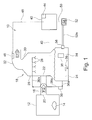
Figure 1 is a schematic representation of a system for reducing an amount of gaseous elemental mercury emitted in a flue gas, which is practiced using a WFGD system. - The present inventor has discovered that using one or more cyclodextrins, one or more derivatives of cyclodextrin, such as for example derivatives prepared by condensation of α-, β-, or γ-cyclodextrins with epoxides such as for example propylene oxide, isobutylene oxide, epichlorohydrin or 1,4-butanediol diglycidyl ether, as known to those in the pharmaceutical sciences, or a mixture thereof as an additive in the aqueous alkaline slurry of a WFGD system can control dissolved mercury species by complexing therewith, thereby controlling and reducing mercury emissions and/or re-emissions of cleaned flue gas. In WFGD systems using limestone for absorption of acid gases and where a gypsum slurry is circulated, the use of a cyclodextrin additive, as used herein meaning one or more cyclodextrins, one or more derivatives of cyclodextrin or a mixture thereof, controls mercury emissions and/or re-emissions without compromising the quality of the gypsum by-product for other uses, such as for use in construction dry wall. Such is not necessarily true of chemical additives such as sodium hydrosulfide, sodium sulfides, trimercaptotriazine, polydithiodcarbamate, didethyldithiocarbamate, and the like, having questionable health, odor, handling, and similar undesirable considerations.
- The present method and system for reducing mercury emissions and/or re-emissions in cleaned flue gas by complexing dissolved mercury species with a cyclodextrin additive are described in detail below.
- Referring now to
Figure 1 , one embodiment of thesubject system 10 is illustrated.System 10 comprises aboiler 12 for the combustion of acarbonaceous fuel 14, such as but not limited to coal. Combustion of thecarbonaceous fuel 14 produces a flue gas "FG" comprising acid gases, gaseous heavy metals, particulates and the like, hereafter referred to collectively as contaminants. The flue gas FG flows fromoutlet 20 ofboiler 12 through fluidly connectedduct 16 and intoinlet 22 of fluidly connectedWFGD system 18. Optionally, additional equipment systems known to those skilled in the art may be arranged betweenboiler 12 andWFGD system 18, but are not described herein for purposes of clarity. - Once inside
WFGD system 18, flue gas FG comes into direct contact with an aqueousalkaline slurry 24 to remove contaminants from the flue gas FG. WhileWFGD system 18 is described herein as a spray tower for purposes of clarity, other types of WFGD systems known to those skilled in the art are equally suitable. Within WFGDsystem 18, aqueousalkaline slurry 24 is introduced into theWFGD system 18 through one ormore nozzles 26 in anupper portion 28 of ascrubber tower 30. As noted above, aqueousalkaline slurry 24 removes contaminants such as sulfur oxides from flue gas FG. Removal of mercury salts is incident to this sulfur oxide removal process. Removal of such contaminants from flue gas FG produces cleaned flue gas "CFG". Cleaned flue gas CFG flows out fromWFGD system 18 throughoutlet 32. Fromoutlet 32, cleaned flue gas CFG may flow to a fluidly connected stack (not shown) or other emissions control apparatus (not shown). - Aqueous
alkaline slurry 24 is transported tonozzles 26 from fluidly connected collectingtank 34 via one ormore pumps 36 and fluidly connectedpiping 36a. The amount of aqueousalkaline slurry 24 transported tonozzles 26 depends upon several factors such as but not limited to the amount of flue gas FG present in thescrubber tower 30, the amount of contaminants in the flue gas FG, and/or the design of theWFGD system 18. After the aqueousalkaline slurry 24 directly contacts the flue gas FG and removes contaminants therefrom, the aqueousalkaline slurry 24 is collected in collectingtank 34 for recirculation tonozzles 26 bypumps 36 viapiping 36a. - To reduce mercury emission and/or re-emission from the
scrubber tower 30, one ormore mercury sensors 38 may be arranged in the aqueousalkaline slurry 24 in collectingtank 34.Mercury sensors 38 are commercially available sensors, such as for example a Mercury Process Analyzer PA-2 available from Mercury Instruments USA, Littleton, Colorado, USA.Mercury sensors 38 may be used to measure the concentration of dissolved mercury species present in the aqueousalkaline slurry 24 in collectingtank 34.Mercury sensors 38 may measure dissolved mercury species concentrations either continuously or at predetermined intervals. For example, predetermined intervals for dissolved mercury species concentration measurement may be determined automatically by acontrol device 40 in communication with themercury sensors 38, or manually by a user. As another option, another form of mercury sensor could be used for off-line analysis. As such, first a sample of the slurry is obtained. Secondly, the dissolved mercury content of the sample is measured using an analytical device present where the sample is taken or located in a separate facility. Such mercury analytical devices are commercially available. An example of such a mercury analytical device is the DMA-80 available from Milestone, Inc., Shelton, Connecticut, USA. - Dissolved mercury species concentration measurements measured by
mercury sensors 38 are sent as asignal 42 indicative of the measured dissolved mercury species concentration(s) to controldevice 40.Control device 40 may include for example but not limited to a computer, a microprocessor, an application specific integrated circuit, circuitry, or any other device capable of transmitting and receiving electrical signals from various sources, at least temporarily storing data indicated bysuch signals 42, and perform mathematical and/or logical operations on the data indicated bysuch signals 42.Control device 40 may include or be connected to a monitor, a keyboard, or other user interface, and includes an associatedmemory device 44. -
Control device 40 compares the measured dissolved mercury species concentration(s) to one or more predetermined dissolved mercury species concentration values as a set point, which may be stored inmemory device 44. It is contemplated that the one or more predetermined dissolved mercury species concentration potential values may comprise a single value or a range of values. The predetermined value(s) may be a user-input parameter. For example, the predetermined dissolved mercury species concentration values may be from about 0.01 parts per billion (ppb) to about 2500 ppb. By "predetermined" it is simply meant that the value is determined before the comparison is made with the actual measured dissolved mercury species concentration(s) as measured by themercury sensors 38. - Optionally, a
mercury measurement device 48 may be used in the subject system in addition to or instead ofmercury sensors 38, to measure mercury emission/re-emission levels.Mercury measurement device 48 is any device suitable to measure elemental mercury emitted fromscrubber tower 30. Examples include but are not limited to continuous emission monitors (CEMs), such as cold-vapor atomic absorption spectrometry (CVAAS), cold-vapor atomic fluorescence spectrometry (CVAFS), in-situ ultraviolet differential optical absorption spectroscopy (UVDOAS), and atomic emission spectrometry (AES).Mercury measurement device 48 may measure mercury concentrations either continuously or at predetermined intervals. For example, predetermined intervals for mercury concentration measurement may be determined automatically by acontrol device 40 in communication with themercury measurement device 48, or manually by a user. As such,control device 40 compares the measured mercury concentration(s) to one or more predetermined mercury concentration values as a set point, which may be stored inmemory device 44. It is contemplated that the one or more predetermined mercury concentration potential values may comprise a single value or a range of values. The predetermined value(s) may be a user-input parameter. For example, the predetermined mercury concentration values may be from about 0.1 micrograms per cubic meter to about 100 micrograms per cubic meter. By "predetermined" it is simply meant that the value is determined before the comparison is made with the actual measured mercury concentration(s) as measured by themercury measurement device 48. - Comparison of the measured dissolved mercury species concentration and/or mercury concentration to the one or more predetermined concentration values causes
control device 40 to provide acontrol signal 50 to an automated cyclodextrinadditive supply source 52. Cyclodextrinadditive supply source 52 adjusts an amount ofcyclodextrin additive 54, which is introduced via fluidly connected piping 52a into the aqueousalkaline slurry 24 collected in fluidly connectedcollection tank 34 in response to controlsignal 50. Adjustments in the amount ofcyclodextrin additive 54 introduced to fluidly connected collectingtank 34 are based on the dissolved mercury species concentration of the aqueousalkaline slurry 24 present in collectingtank 34 and/or the mercury concentration measured in the cleaned flue gas CFG, for control of mercury emissions and/or re-emissions. - For example, if the comparison of the measured mercury concentration and the predetermined mercury concentration values reveals that the measured mercury concentration is greater than the predetermined mercury concentration values,
control device 40 may provide acontrol signal 50 to the cyclodextrinadditive supply source 52 to cause the cyclodextrinadditive supply source 52 to increase the amount ofcyclodextrin additive 54 introduced into collectingtank 34 throughinput 58. Conversely, if the comparison reveals that the measured mercury concentration is lower than the predetermined mercury concentration values,control device 40 may provide acontrol signal 50 to the cyclodextrinadditive supply source 52 to cause the cyclodextrinadditive supply source 52 to decrease the amount ofcyclodextrin additive 54 introduced into collectingtank 34 throughinput 58. As such, it is possible to limit levels of emission and/or re-emission of mercury atoutlet 32, while minimizingcyclodextrin additive 54 consumption. It is contemplated thatcontrol device 40 may employ known control algorithms, e.g., proportional, integral, and/or derivative control algorithms, to adjustcontrol signal 50 in response to the comparison of the measured mercury concentration and the predetermined mercury concentration values. For example, a 6:1 cyclodextrin additive to mercury molar ratio may be used for efficiently limiting levels of mercury emissions and/or re-emissions. - Cyclodextrin
additive supply source 52 may be of any suitable type capable of introducing varying amounts ofcyclodextrin additive 54 to aqueousalkaline slurry 24 in collectingtank 34. Additionally, collectingtank 34 may include anagitator 56 to distributecyclodextrin additive 54 throughout aqueousalkaline slurry 24. - One method for using
system 10 illustrated inFigure 1 is to supply combustion flue gas FG to aWFGD system 10 for direct contact with an aqueousalkaline slurry 24 for removal of contaminants from the flue gas FG. This method comprises measuring a dissolved mercury species concentration in theWFGD system 10 aqueousalkaline slurry 24 for comparison to a predetermined dissolved mercury species concentration value, and adjusting an amount ofcyclodextrin additive 54 supplied to theWFGD system 10 aqueousalkaline slurry 24 to increase or decrease dissolved mercury species concentration to maintain a set point for mercury emission and/or re-emission reduction in produced cleaned flue gas CFG. - Another method for using
system 10 illustrated inFigure 1 is to supply combustion flue gas FG to aWFGD system 10 for direct contact with an aqueousalkaline slurry 24 for removal of contaminants from the flue gas FG, measuring a mercury concentration in the cleaned flue gas CFG of theWFGD system 10 for comparison to a predetermined mercury concentration value, and adjusting an amount ofcyclodextrin additive 54 supplied to theWFGD system 10 aqueousalkaline slurry 24 to increase or decrease dissolved mercury species concentration to maintain a set point for mercury emission and/or re-emission reduction in produced cleaned flue gas CFG. - For the methods described herein,
system 10 illustrated inFigure 1 includes an automated cyclodextrinadditive supply source 52 for a supply ofcyclodextrin additive 54 to aqueousalkaline slurry 24 ofWFGD system 10 supplied with combustion flue gas FG for direct contact with the aqueousalkaline slurry 24 andcyclodextrin additive 54 to control, reduce and/or prevent mercury emission and/or re-emission in produced cleaned flue gas. - In summary, a method is provided herein for controlling, reducing or preventing mercury emission or re-emission levels in a cleaned combustion flue gas FG comprising supplying a combustion flue gas FG to a
WFGD system 10 for direct contact with an aqueousalkaline slurry 24 for removal of contaminants from the flue gas FG to produce a cleaned flue gas CFG, measuring a dissolved mercury species concentration, a mercury concentration, or both to obtain a measured concentration value in theWFGD system 10 for comparison to a predetermined concentration value, and adjusting an amount of cyclodextrin additive54 supplied to theWFGD system 10 to increase or decrease the measured concentration value to reduce levels of mercury emission and/or re-emission in the produced cleaned flue gas CFG. According to the method, the dissolved mercury species concentration is measured in the aqueousalkaline slurry 24 of theWFGD system 10, such as a spray tower type WFGD system. The mercury concentration is measured in the cleaned flue gas CFG from theWFGD system 10, such as a spray tower type WFGD system. Thecyclodextrin additive 54 supplied to theWFGD system 10 is one or more complexing agents selected from the group consisting of α-cyclodextrin, β-cyclodextrin, γ-cyclodextrin, derivatives of α-cyclodextrin, derivatives of β-cyclodextrin, derivatives of γ-cyclodextrin, derivatives of cyclodextrin prepared by condensation of α-, β-, or γ-cyclodextrins with epoxides, and mixtures thereof. Thecyclodextrin additive 54 is supplied to the aqueousalkaline slurry 24 of theWFGD system 10 as a solid or a solution. Anagitator 56 may be used to distribute thecyclodextrin additive 54 throughout the aqueousalkaline slurry 24. - A
system 10 for reducing mercury emission or re-emission levels in a cleaned combustion flue gas CFG is also provided comprising aWFGD system 10 with an aqueousalkaline slurry 24 for direct contact with a combustion flue gas FG flowing therethrough, acollection tank 34 for collecting the aqueousalkaline slurry 24 following direct contact with the combustion flue gas FG with one or more dissolvedmercury species sensors 38 arranged therein for measuring a dissolved mercury species concentration in the collected aqueousalkaline slurry 24 to obtain a measured dissolved mercury species concentration, acontrol device 40 to compare the measured dissolved mercury species concentration to a predetermined dissolved mercury species concentration and based thereon control adevice 52, and adevice 52 being a cyclodextrin additive supply source controlled by thecontrol device 40 is operative for adjusting an amount of acyclodextrin additive 54 supplied to the aqueousalkaline slurry 24 to increase or decrease dissolved mercury species concentration to reduce levels of mercury emission and/or re-emission in a produced cleaned flue gas CFG. Thesubject system 10 may further comprise one ormore mercury sensors 48 in anoutlet 32 of theWFGD system 10 for measuring a mercury concentration in a cleaned flue gas CFG flowing therethrough to obtain a measured mercury concentration, thecontrol device 40 operative to compare the measured mercury concentration to a predetermined mercury concentration and based thereon control thedevice 52 being a cyclodextrin additive supply source operative for adjusting an amount of acyclodextrin additive 54 supplied to the aqueousalkaline slurry 24 to increase or decrease dissolved mercury species concentration to reduce levels of mercury emission and/or re-emission in a produced cleaned flue gas CFG. Thesystem 10 may further comprise anagitator 56 to distributecyclodextrin additive 54 throughout aqueousalkaline slurry 24 wherein thecyclodextrin additive 54 is one or more complexing agents selected from the group consisting of α-cyclodextrin, β-cyclodextrin, γ-cyclodextrin, derivatives of α-cyclodextrin, derivatives of β-cyclodextrin, derivatives of γ-cyclodextrin, derivatives of cyclodextrin prepared by condensation of α-, β-, or γ-cyclodextrins with epoxides, and mixtures thereof. - A
system 10 for reducing mercury emission or re-emission levels in a cleaned combustion flue gas CFG is also provided comprising aWFGD system 10 with an aqueousalkaline slurry 24 for direct contact with a combustion flue gas FG flowing therethrough, acollection tank 34 for collecting the aqueousalkaline slurry 24 following direct contact with the combustion flue gas FG with one ormore mercury sensors 48 arranged therein for measuring a mercury concentration in the cleaned flue gas CFG to obtain a measured mercury concentration, acontrol device 40 to compare the measured mercury concentration to a predetermined mercury concentration and based thereon control adevice 52 being a cyclodextrin additive supply source operative for adjusting an amount of acyclodextrin additive 54 supplied to the aqueousalkaline slurry 24 to increase or decrease dissolved mercury species concentration therein to reduce levels of mercury emission and/or re-emission in a produced cleaned flue gas CFG. Thesubject system 10 may further comprise one or more dissolvedmercury species sensors 38 in the aqueousalkaline slurry 24 of theWFGD system 10 for measuring a dissolved mercury species concentration to obtain a measured dissolved mercury species concentration, thecontrol device 40 operative to compare the measured dissolved mercury species concentration to a predetermined dissolved mercury species concentration and based thereon control thedevice 52 being a cyclodextrin additive supply source operative for adjusting an amount of acyclodextrin additive 54 supplied to the aqueousalkaline slurry 24 to increase or decrease dissolved mercury species concentration to reduce levels of mercury emission and/or re-emission in a produced cleaned flue gas CFG. Thesystem 10 may further comprise anagitator 56 to distributecyclodextrin additive 54 throughout aqueousalkaline slurry 24, wherein thecyclodextrin additive 54 is one or more complexing agents selected from the group consisting of α-cyclodextrin, β-cyclodextrin, γ-cyclodextrin, derivatives of α-cyclodextrin, derivatives of β-cyclodextrin, derivatives of γ-cyclodextrin, derivatives of cyclodextrin prepared by condensation of α-, β-, or γ-cyclodextrins with epoxides, and mixtures thereof. - Although the subject matter has been described and illustrated with respect to exemplary embodiments thereof, it is understood by those skilled in the art that the foregoing and various other changes, omissions and additions may be made therein and thereto, without parting from the spirit and scope of the disclosed method and system. Accordingly, other embodiments are within the scope of the following appended claims.
Claims (15)
- A method for controlling, reducing or preventing mercury emission or re-emission levels in a cleaned combustion flue gas CHARACTERIZED by
supplying a combustion flue gas to a WFGD system (18) for direct contact with an aqueous alkaline slurry (24) for removal of contaminants from the flue gas to produce a cleaned flue gas,
measuring a dissolved mercury species concentration or mercury concentration to obtain a measured concentration value in the WFGD system (18) for comparison to a predetermined concentration value, and
adjusting an amount of cyclodextrin additive (54) supplied to the WFGD system (18) to increase or decrease the measured concentration value to reduce levels of mercury emission and/or re-emission in the produced cleaned flue gas. - The method according to claim 1, wherein the dissolved mercury species concentration is measured in the aqueous alkaline slurry (24) of the WFGD system (18).
- The method according to claim 1, wherein the dissolved mercury species concentration is measured in the aqueous alkaline slurry (24) of a spray tower type WFGD system (18).
- The method according to claim 1, wherein the mercury concentration is measured in the cleaned flue gas from the WFGD system (18).
- The method according to claim 1, wherein the mercury concentration is measured in the cleaned flue gas from a spray tower type WFGD system (18).
- The method according to claim 1 wherein the cyclodextrin additive (54) is one or more complexing agents selected from the group consisting of α-cyclodextrin, β-cyclodextrin, γ-cyclodextrin, derivatives of α-cyclodextrin, derivatives of β-cyclodextrin, derivatives of γ-cyclodextrin, derivatives of cyclodextrin prepared by condensation of α-, β-, or γ-cyclodextrins with epoxides, and mixtures thereof.
- The method according to claim 1, further CHARACTERIZED by using an agitator (56) to distribute cyclodextrin additive (54) throughout aqueous alkaline slurry (24).
- A system (10) for reducing mercury emission or re-emission levels in a cleaned combustion flue gas CHARACTERIZED by
a WFGD system (18) with an aqueous alkaline slurry (24) for direct contact with a combustion flue gas flowing therethrough,
a collection tank (34) for collecting the aqueous alkaline slurry (24) following direct contact with the combustion flue gas with one or more dissolved mercury species sensors (38) arranged therein for measuring a dissolved mercury species concentration in the collected aqueous alkaline slurry (24) to obtain a measured dissolved mercury species concentration,
a control device (40) to compare the measured dissolved mercury species concentration to a predetermined dissolved mercury species concentration and based thereon control a device, and
a device (52) controlled by the control device (40) for adjusting an amount of a cyclodextrin additive (54) supplied to the aqueous alkaline slurry (24) to increase or decrease dissolved mercury species concentration to reduce levels of mercury emission and/or re-emission in a produced cleaned flue gas. - The system (10) of claim 8, further CHARACTERIZED by one or more mercury sensors (38) in an outlet (32) of the WFGD system (18) for measuring a mercury concentration in a cleaned flue gas flowing therethrough to obtain a measured mercury concentration.
- The system (10) of claim 8, further CHARACTERIZED by one or more mercury sensors (38) in an outlet (32) of the WFGD system (18) for measuring a mercury concentration in a cleaned flue gas flowing therethrough to obtain a measured mercury concentration, wherein the control device (40) is operative to compare the measured mercury concentration to a predetermined mercury concentration and based thereon control the device (52) operative for adjusting an amount of a cyclodextrin additive (54) supplied to the aqueous alkaline slurry (24) to increase or decrease dissolved mercury species concentration to reduce levels of mercury emission and/or re-emission in a produced cleaned flue gas.
- The system (10) according to claim 8, further CHARACTERIZED by an agitator (56) to distribute cyclodextrin additive (54) throughout aqueous alkaline slurry (24).
- The system (10) according to claim 8, wherein cyclodextrin additive (54) is one or more complexing agents selected from the group consisting of α-cyclodextrin, β-cyclodextrin, γ-cyclodextrin, derivatives of α-cyclodextrin, derivatives of β-cyclodextrin, derivatives of γ-cyclodextrin, derivatives of cyclodextrin prepared by condensation of α-, β-, or γ-cyclodextrins with epoxides, and mixtures thereof.
- A system (10) for reducing mercury emission or re-emission levels in a cleaned combustion flue gas CHARACTERIZED by
a WFGD system (18) with an aqueous alkaline slurry (24) for direct contact with a combustion flue gas flowing therethrough,
a collection tank (34) for collecting the aqueous alkaline slurry (24) following direct contact with the combustion flue gas with one or more mercury sensors (38) arranged therein for measuring mercury concentration in a produced cleaned flue gas to obtain a measured mercury concentration,
a control device (40) to compare the measured mercury concentration to a predetermined mercury concentration and based thereon control a device (52), and
a device (52) controlled by the control device (40) for adjusting an amount of a cyclodextrin additive (54) supplied to the aqueous alkaline slurry (24) to increase or decrease dissolved mercury species concentration in the aqueous alkaline slurry (24) to reduce levels of mercury emission and/or re-emission in the produced cleaned flue gas. - The system of claim 13, further CHARACTERIZED by
one or more dissolved mercury species sensors (48) in the aqueous alkaline slurry (24) for measuring a dissolved mercury species concentration to obtain a measured dissolved mercury species concentration, wherein the control device (40) is operative to compare the measured dissolved mercury species concentration to a predetermined dissolved mercury species concentration and based thereon control the device (52) operative for adjusting an amount of a cyclodextrin additive (54) supplied to the aqueous alkaline slurry (24) to increase or decrease dissolved mercury species concentration to reduce levels of mercury emission and/or re-emission in the produced cleaned flue gas. - The system (10) according to claim 13 wherein cyclodextrin additive (54) is one or more complexing agents selected from the group consisting of α-cyclodextrin, β-cyclodextrin, γ-cyclodextrin, derivatives of α-cyclodextrin, derivatives of β-cyclodextrin, derivatives of γ-cyclodextrin, derivatives of cyclodextrin prepared by condensation of α-, β-, or γ-cyclodextrins with epoxides, and mixtures thereof.
Priority Applications (1)
| Application Number | Priority Date | Filing Date | Title |
|---|---|---|---|
| PL14199490T PL2898938T3 (en) | 2014-01-27 | 2014-12-19 | Mercury re-emission control |
Applications Claiming Priority (1)
| Application Number | Priority Date | Filing Date | Title |
|---|---|---|---|
| US14/164,863 US9120055B2 (en) | 2014-01-27 | 2014-01-27 | Mercury re-emission control |
Publications (2)
| Publication Number | Publication Date |
|---|---|
| EP2898938A1 true EP2898938A1 (en) | 2015-07-29 |
| EP2898938B1 EP2898938B1 (en) | 2016-11-09 |
Family
ID=52692325
Family Applications (1)
| Application Number | Title | Priority Date | Filing Date |
|---|---|---|---|
| EP14199490.5A Not-in-force EP2898938B1 (en) | 2014-01-27 | 2014-12-19 | Mercury re-emission control |
Country Status (6)
| Country | Link |
|---|---|
| US (1) | US9120055B2 (en) |
| EP (1) | EP2898938B1 (en) |
| JP (1) | JP2015139775A (en) |
| KR (1) | KR20150089944A (en) |
| CN (1) | CN104801152A (en) |
| PL (1) | PL2898938T3 (en) |
Cited By (1)
| Publication number | Priority date | Publication date | Assignee | Title |
|---|---|---|---|---|
| CN112755764A (en) * | 2020-12-16 | 2021-05-07 | 中南大学 | Stable suspension system for removing mercury in flue gas and recovery method thereof |
Families Citing this family (8)
| Publication number | Priority date | Publication date | Assignee | Title |
|---|---|---|---|---|
| WO2015156787A1 (en) * | 2014-04-09 | 2015-10-15 | Empire Technology Development Llc | Removal of target compounds from gases |
| CN107249717A (en) * | 2015-02-24 | 2017-10-13 | 日立造船株式会社 | The processing unit of burning and gas-exhausting |
| US20170326498A1 (en) * | 2016-05-11 | 2017-11-16 | General Electric Company | Sulfite Preconditioning Systems And Methods To Reduce Mercury Concentrations In Waste Water |
| EP3507257B1 (en) | 2016-09-01 | 2021-09-22 | Ecolab USA Inc. | Gypsum additive to control mercury |
| JP7175835B2 (en) * | 2019-04-16 | 2022-11-21 | 荏原環境プラント株式会社 | Incineration system with stoker type incinerator |
| JP7324159B2 (en) * | 2020-02-13 | 2023-08-09 | 株式会社東芝 | Acid gas removal device and removal method |
| CN111925848B (en) * | 2020-07-10 | 2021-10-15 | 中国石油集团工程股份有限公司 | Efficient carbonyl sulfide removal solvent and preparation method thereof |
| KR102919362B1 (en) * | 2023-05-25 | 2026-01-29 | 한국생산기술연구원 | Device for reducing pollutants and plume in flue gas |
Citations (5)
| Publication number | Priority date | Publication date | Assignee | Title |
|---|---|---|---|---|
| KR20020004126A (en) * | 2000-07-03 | 2002-01-16 | 김효근 | Polycondensates of cyclodextrins or their derivatives and bi- or multifunctional hydroxy compounds, and process of preparing same |
| US20110014104A1 (en) * | 2009-07-16 | 2011-01-20 | Ghorishi S Behrooz | Redox method for capture of total gaseous mercury by wet fgd |
| CN102807680A (en) * | 2012-07-16 | 2012-12-05 | 大连理工大学 | Preparation method and application of mono-(6-oxy-ethylenediamine tetraacetyl)-cyclodextrin cross-linked polymer |
| US20120321539A1 (en) * | 2009-10-22 | 2012-12-20 | Urs Corporation | Method for preventing re-emission of mercury from a flue gas desulfurization system |
| US20130180923A1 (en) * | 2007-12-07 | 2013-07-18 | Nalco Company | Methods of controlling mercury emission |
Family Cites Families (39)
| Publication number | Priority date | Publication date | Assignee | Title |
|---|---|---|---|---|
| US3961020A (en) | 1972-10-09 | 1976-06-01 | Hitachi, Ltd. | Process for removing sulfur oxides and nitrogen oxides from flue gases using halogen-impregnated actuated carbon with simultaneous injection of ammonia |
| US4502872A (en) | 1983-03-31 | 1985-03-05 | Combustion Engineering, Inc. | Discharge electrode wire assembly for electrostatic precipitator |
| DK158376C (en) | 1986-07-16 | 1990-10-08 | Niro Atomizer As | METHOD OF REDUCING THE CONTENT OF MERCURY Vapor AND / OR VAPORS OF Harmful Organic Compounds And / Or Nitrogen Oxides In Combustion Plant |
| JPH02191526A (en) * | 1988-10-11 | 1990-07-27 | Nkk Corp | Method for controlling mercury concentration in exhaust gas |
| US5435980A (en) | 1991-11-04 | 1995-07-25 | Niro A/S | Method of improving the Hg-removing capability of a flue gas cleaning process |
| SE501158C2 (en) | 1992-04-16 | 1994-11-28 | Flaekt Ab | Ways to clean flue gases with a deficit of oxygen and formed soot |
| CA2114331C (en) | 1993-06-10 | 2000-03-28 | Bernard J. Lerner | Removal of mercury and cadmium and their compounds from incinerator flue gases |
| US5505766A (en) | 1994-07-12 | 1996-04-09 | Electric Power Research, Inc. | Method for removing pollutants from a combustor flue gas and system for same |
| US5556447A (en) | 1995-01-23 | 1996-09-17 | Physical Sciences, Inc. | Process for treating metal-contaminated materials |
| US5672323A (en) | 1995-01-26 | 1997-09-30 | The Babcock & Wilcox Company | Activated carbon flue gas desulfurization systems for mercury removal |
| US5527496A (en) | 1995-04-18 | 1996-06-18 | The Babcock & Wilcox Company | Spray header integrated tray |
| US5854173A (en) | 1996-05-31 | 1998-12-29 | Electric Power Research Institute, Inc. | Flake shaped sorbent particle for removing vapor phase contaminants from a gas stream and method for manufacturing same |
| US6103205A (en) | 1997-07-11 | 2000-08-15 | Advanced Fuel Research, Inc. | Simultaneous mercury, SO2, and NOx control by adsorption on activated carbon |
| AU8600298A (en) | 1997-08-19 | 1999-03-08 | Electric Power Research Institute, Inc. | Apparatus and method for removal of vapor phase contaminants from a gas stream by in-situ activation of carbon-based sorbents |
| US6558454B1 (en) | 1997-08-19 | 2003-05-06 | Electric Power Research Institute, Inc. | Method for removal of vapor phase contaminants from a gas stream by in-situ activation of carbon-based sorbents |
| JPH1190394A (en) * | 1997-09-24 | 1999-04-06 | Nippon Kayaku Co Ltd | Treatment agent for heavy metal-containing waste and stabilization method for heavy metal-containing waste |
| US6027551A (en) | 1998-10-07 | 2000-02-22 | Board Of Control For Michigan Technological University | Control of mercury emissions using unburned carbon from combustion by-products |
| MXPA00003024A (en) * | 1999-03-31 | 2002-03-08 | Mcdermott Technology Inc | Enhanced control of mercury in a wet scrubber through reduced oxidation air flow. |
| US6328939B1 (en) * | 1999-03-31 | 2001-12-11 | Mcdermott Technology, Inc. | Mercury removal in utility wet scrubber using a chelating agent |
| US6610263B2 (en) | 2000-08-01 | 2003-08-26 | Enviroscrub Technologies Corporation | System and process for removal of pollutants from a gas stream |
| NL1017206C2 (en) | 2001-01-26 | 2002-07-29 | Cdem Holland Bv | Method for removing mercury from a gas stream. |
| US6719828B1 (en) | 2001-04-30 | 2004-04-13 | John S. Lovell | High capacity regenerable sorbent for removal of mercury from flue gas |
| DE10133991B4 (en) | 2001-07-12 | 2012-08-02 | Doosan Lentjes Gmbh | Apparatus for purifying combustion exhaust gases |
| US6521021B1 (en) | 2002-01-09 | 2003-02-18 | The United States Of America As Represented By The United States Department Of Energy | Thief process for the removal of mercury from flue gas |
| DE60328489D1 (en) | 2002-05-06 | 2009-09-03 | Sorbent Technologies Corp | METHOD FOR REMOVING MERCURY FROM COMBUSTION GASES |
| US6878358B2 (en) | 2002-07-22 | 2005-04-12 | Bayer Aktiengesellschaft | Process for removing mercury from flue gases |
| US6818043B1 (en) | 2003-01-23 | 2004-11-16 | Electric Power Research Institute, Inc. | Vapor-phase contaminant removal by injection of fine sorbent slurries |
| US7361209B1 (en) | 2003-04-03 | 2008-04-22 | Ada Environmental Solutions, Llc | Apparatus and process for preparing sorbents for mercury control at the point of use |
| US8069797B2 (en) | 2003-06-03 | 2011-12-06 | Alstom Technology Ltd. | Control of mercury emissions from solid fuel combustion |
| US6848374B2 (en) | 2003-06-03 | 2005-02-01 | Alstom Technology Ltd | Control of mercury emissions from solid fuel combustion |
| SE525344C2 (en) | 2003-06-26 | 2005-02-08 | Alstom Technology Ltd | Methods and apparatus for separating sulfur dioxide from a gas |
| DE102004044291B4 (en) | 2004-09-10 | 2007-10-11 | Margot Bittig | Process for purifying flue gas from an incineration plant containing HCI, SO2 and Hg and flue gas purification plant |
| JP2006273735A (en) * | 2005-03-29 | 2006-10-12 | Ebs Kk | Harmful metal excretion promoting active composition and method for producing the same |
| US8110163B2 (en) * | 2007-12-07 | 2012-02-07 | Nalco Company | Complexation and removal of heavy metals from flue gas desulfurization systems |
| CN101342448A (en) * | 2007-07-12 | 2009-01-14 | 天津宝成机械集团有限公司 | Method for reducing hydrargyrum and chromium in flue gas discharged from coal-fired boiler |
| US8110029B2 (en) * | 2009-05-08 | 2012-02-07 | Alstom Technology Ltd | Integrated mercury control system |
| JP5129872B2 (en) * | 2011-05-10 | 2013-01-30 | 三菱重工業株式会社 | Mercury fixing method and gypsum production method using the same, mercury fixing device and flue gas desulfurization system using the same |
| PL2579032T3 (en) | 2011-10-07 | 2015-10-30 | General Electric Technology Gmbh | Sulphite sensor and method for measuring sulphite concentration in a substance |
| US8828341B1 (en) * | 2013-07-18 | 2014-09-09 | Alstom Technology Ltd | Sulfite control to reduce mercury re-emission |
-
2014
- 2014-01-27 US US14/164,863 patent/US9120055B2/en active Active
- 2014-12-19 EP EP14199490.5A patent/EP2898938B1/en not_active Not-in-force
- 2014-12-19 PL PL14199490T patent/PL2898938T3/en unknown
-
2015
- 2015-01-23 KR KR1020150011098A patent/KR20150089944A/en not_active Withdrawn
- 2015-01-27 CN CN201510039911.XA patent/CN104801152A/en active Pending
- 2015-01-27 JP JP2015013270A patent/JP2015139775A/en active Pending
Patent Citations (5)
| Publication number | Priority date | Publication date | Assignee | Title |
|---|---|---|---|---|
| KR20020004126A (en) * | 2000-07-03 | 2002-01-16 | 김효근 | Polycondensates of cyclodextrins or their derivatives and bi- or multifunctional hydroxy compounds, and process of preparing same |
| US20130180923A1 (en) * | 2007-12-07 | 2013-07-18 | Nalco Company | Methods of controlling mercury emission |
| US20110014104A1 (en) * | 2009-07-16 | 2011-01-20 | Ghorishi S Behrooz | Redox method for capture of total gaseous mercury by wet fgd |
| US20120321539A1 (en) * | 2009-10-22 | 2012-12-20 | Urs Corporation | Method for preventing re-emission of mercury from a flue gas desulfurization system |
| CN102807680A (en) * | 2012-07-16 | 2012-12-05 | 大连理工大学 | Preparation method and application of mono-(6-oxy-ethylenediamine tetraacetyl)-cyclodextrin cross-linked polymer |
Cited By (2)
| Publication number | Priority date | Publication date | Assignee | Title |
|---|---|---|---|---|
| CN112755764A (en) * | 2020-12-16 | 2021-05-07 | 中南大学 | Stable suspension system for removing mercury in flue gas and recovery method thereof |
| CN112755764B (en) * | 2020-12-16 | 2021-10-19 | 中南大学 | A kind of stable suspension system for removing mercury in flue gas and its recovery method |
Also Published As
| Publication number | Publication date |
|---|---|
| JP2015139775A (en) | 2015-08-03 |
| KR20150089944A (en) | 2015-08-05 |
| US20150209725A1 (en) | 2015-07-30 |
| PL2898938T3 (en) | 2017-05-31 |
| US9120055B2 (en) | 2015-09-01 |
| EP2898938B1 (en) | 2016-11-09 |
| CN104801152A (en) | 2015-07-29 |
Similar Documents
| Publication | Publication Date | Title |
|---|---|---|
| EP2898938B1 (en) | Mercury re-emission control | |
| US7524473B2 (en) | Method of mercury removal in a wet flue gas desulfurization system | |
| US8828341B1 (en) | Sulfite control to reduce mercury re-emission | |
| US20170326498A1 (en) | Sulfite Preconditioning Systems And Methods To Reduce Mercury Concentrations In Waste Water | |
| CN102959386B (en) | Mercury removing method in the removing of gas analyzing apparatus, mercury system, analysis method for gases and waste gas | |
| BR112018003029B1 (en) | METHOD TO REDUCE MERCURY EMISSIONS | |
| MXPA00003024A (en) | Enhanced control of mercury in a wet scrubber through reduced oxidation air flow. | |
| US10449487B2 (en) | Mercury control in a seawater flue gas desulfurization system | |
| US10603629B2 (en) | Mercury emission control from a wet flue gas scrubber | |
| JP2006263700A (en) | Method and system for removing mercury in exhaust gas | |
| BR112018003122B1 (en) | METHOD AND USE OF HYPOBROMITE TO REDUCE MERCURY EMISSIONS | |
| WO2017035003A1 (en) | Complexation and removal of mercury from flue gas desulfurization systems | |
| US11091378B2 (en) | Systems and methods of reducing selenium contamination in waste water | |
| JP7164344B2 (en) | Oxidation-reduction potential determination device, desulfurization device provided with the same, and oxidation-reduction potential determination method |
Legal Events
| Date | Code | Title | Description |
|---|---|---|---|
| PUAI | Public reference made under article 153(3) epc to a published international application that has entered the european phase |
Free format text: ORIGINAL CODE: 0009012 |
|
| 17P | Request for examination filed |
Effective date: 20141219 |
|
| AK | Designated contracting states |
Kind code of ref document: A1 Designated state(s): AL AT BE BG CH CY CZ DE DK EE ES FI FR GB GR HR HU IE IS IT LI LT LU LV MC MK MT NL NO PL PT RO RS SE SI SK SM TR |
|
| AX | Request for extension of the european patent |
Extension state: BA ME |
|
| 17P | Request for examination filed |
Effective date: 20151029 |
|
| RBV | Designated contracting states (corrected) |
Designated state(s): AL AT BE BG CH CY CZ DE DK EE ES FI FR GB GR HR HU IE IS IT LI LT LU LV MC MK MT NL NO PL PT RO RS SE SI SK SM TR |
|
| GRAP | Despatch of communication of intention to grant a patent |
Free format text: ORIGINAL CODE: EPIDOSNIGR1 |
|
| RIC1 | Information provided on ipc code assigned before grant |
Ipc: F23J 15/04 20060101ALI20160425BHEP Ipc: B01D 53/50 20060101ALI20160425BHEP Ipc: B01D 53/30 20060101AFI20160425BHEP Ipc: B01D 53/34 20060101ALI20160425BHEP Ipc: B01D 53/64 20060101ALI20160425BHEP Ipc: F23J 15/00 20060101ALI20160425BHEP Ipc: B01D 53/78 20060101ALI20160425BHEP Ipc: C08B 37/16 20060101ALI20160425BHEP Ipc: B01D 53/48 20060101ALI20160425BHEP |
|
| INTG | Intention to grant announced |
Effective date: 20160601 |
|
| RAP1 | Party data changed (applicant data changed or rights of an application transferred) |
Owner name: GENERAL ELECTRIC TECHNOLOGY GMBH |
|
| GRAS | Grant fee paid |
Free format text: ORIGINAL CODE: EPIDOSNIGR3 |
|
| GRAA | (expected) grant |
Free format text: ORIGINAL CODE: 0009210 |
|
| AK | Designated contracting states |
Kind code of ref document: B1 Designated state(s): AL AT BE BG CH CY CZ DE DK EE ES FI FR GB GR HR HU IE IS IT LI LT LU LV MC MK MT NL NO PL PT RO RS SE SI SK SM TR |
|
| REG | Reference to a national code |
Ref country code: GB Ref legal event code: FG4D |
|
| REG | Reference to a national code |
Ref country code: AT Ref legal event code: REF Ref document number: 843360 Country of ref document: AT Kind code of ref document: T Effective date: 20161115 Ref country code: CH Ref legal event code: EP |
|
| REG | Reference to a national code |
Ref country code: IE Ref legal event code: FG4D |
|
| REG | Reference to a national code |
Ref country code: DE Ref legal event code: R096 Ref document number: 602014004749 Country of ref document: DE |
|
| REG | Reference to a national code |
Ref country code: FR Ref legal event code: PLFP Year of fee payment: 3 |
|
| PG25 | Lapsed in a contracting state [announced via postgrant information from national office to epo] |
Ref country code: LV Free format text: LAPSE BECAUSE OF FAILURE TO SUBMIT A TRANSLATION OF THE DESCRIPTION OR TO PAY THE FEE WITHIN THE PRESCRIBED TIME-LIMIT Effective date: 20161109 |
|
| PGFP | Annual fee paid to national office [announced via postgrant information from national office to epo] |
Ref country code: FR Payment date: 20161227 Year of fee payment: 3 |
|
| REG | Reference to a national code |
Ref country code: LT Ref legal event code: MG4D |
|
| REG | Reference to a national code |
Ref country code: NL Ref legal event code: MP Effective date: 20161109 |
|
| PG25 | Lapsed in a contracting state [announced via postgrant information from national office to epo] |
Ref country code: LT Free format text: LAPSE BECAUSE OF FAILURE TO SUBMIT A TRANSLATION OF THE DESCRIPTION OR TO PAY THE FEE WITHIN THE PRESCRIBED TIME-LIMIT Effective date: 20161109 Ref country code: GR Free format text: LAPSE BECAUSE OF FAILURE TO SUBMIT A TRANSLATION OF THE DESCRIPTION OR TO PAY THE FEE WITHIN THE PRESCRIBED TIME-LIMIT Effective date: 20170210 Ref country code: NO Free format text: LAPSE BECAUSE OF FAILURE TO SUBMIT A TRANSLATION OF THE DESCRIPTION OR TO PAY THE FEE WITHIN THE PRESCRIBED TIME-LIMIT Effective date: 20170209 Ref country code: NL Free format text: LAPSE BECAUSE OF FAILURE TO SUBMIT A TRANSLATION OF THE DESCRIPTION OR TO PAY THE FEE WITHIN THE PRESCRIBED TIME-LIMIT Effective date: 20161109 Ref country code: SE Free format text: LAPSE BECAUSE OF FAILURE TO SUBMIT A TRANSLATION OF THE DESCRIPTION OR TO PAY THE FEE WITHIN THE PRESCRIBED TIME-LIMIT Effective date: 20161109 |
|
| PG25 | Lapsed in a contracting state [announced via postgrant information from national office to epo] |
Ref country code: HR Free format text: LAPSE BECAUSE OF FAILURE TO SUBMIT A TRANSLATION OF THE DESCRIPTION OR TO PAY THE FEE WITHIN THE PRESCRIBED TIME-LIMIT Effective date: 20161109 Ref country code: IS Free format text: LAPSE BECAUSE OF FAILURE TO SUBMIT A TRANSLATION OF THE DESCRIPTION OR TO PAY THE FEE WITHIN THE PRESCRIBED TIME-LIMIT Effective date: 20170309 Ref country code: PT Free format text: LAPSE BECAUSE OF FAILURE TO SUBMIT A TRANSLATION OF THE DESCRIPTION OR TO PAY THE FEE WITHIN THE PRESCRIBED TIME-LIMIT Effective date: 20170309 Ref country code: FI Free format text: LAPSE BECAUSE OF FAILURE TO SUBMIT A TRANSLATION OF THE DESCRIPTION OR TO PAY THE FEE WITHIN THE PRESCRIBED TIME-LIMIT Effective date: 20161109 Ref country code: RS Free format text: LAPSE BECAUSE OF FAILURE TO SUBMIT A TRANSLATION OF THE DESCRIPTION OR TO PAY THE FEE WITHIN THE PRESCRIBED TIME-LIMIT Effective date: 20161109 Ref country code: ES Free format text: LAPSE BECAUSE OF FAILURE TO SUBMIT A TRANSLATION OF THE DESCRIPTION OR TO PAY THE FEE WITHIN THE PRESCRIBED TIME-LIMIT Effective date: 20161109 |
|
| PGFP | Annual fee paid to national office [announced via postgrant information from national office to epo] |
Ref country code: BE Payment date: 20161227 Year of fee payment: 3 |
|
| PG25 | Lapsed in a contracting state [announced via postgrant information from national office to epo] |
Ref country code: CZ Free format text: LAPSE BECAUSE OF FAILURE TO SUBMIT A TRANSLATION OF THE DESCRIPTION OR TO PAY THE FEE WITHIN THE PRESCRIBED TIME-LIMIT Effective date: 20161109 Ref country code: RO Free format text: LAPSE BECAUSE OF FAILURE TO SUBMIT A TRANSLATION OF THE DESCRIPTION OR TO PAY THE FEE WITHIN THE PRESCRIBED TIME-LIMIT Effective date: 20161109 Ref country code: EE Free format text: LAPSE BECAUSE OF FAILURE TO SUBMIT A TRANSLATION OF THE DESCRIPTION OR TO PAY THE FEE WITHIN THE PRESCRIBED TIME-LIMIT Effective date: 20161109 Ref country code: SK Free format text: LAPSE BECAUSE OF FAILURE TO SUBMIT A TRANSLATION OF THE DESCRIPTION OR TO PAY THE FEE WITHIN THE PRESCRIBED TIME-LIMIT Effective date: 20161109 Ref country code: DK Free format text: LAPSE BECAUSE OF FAILURE TO SUBMIT A TRANSLATION OF THE DESCRIPTION OR TO PAY THE FEE WITHIN THE PRESCRIBED TIME-LIMIT Effective date: 20161109 |
|
| REG | Reference to a national code |
Ref country code: DE Ref legal event code: R097 Ref document number: 602014004749 Country of ref document: DE |
|
| PG25 | Lapsed in a contracting state [announced via postgrant information from national office to epo] |
Ref country code: SM Free format text: LAPSE BECAUSE OF FAILURE TO SUBMIT A TRANSLATION OF THE DESCRIPTION OR TO PAY THE FEE WITHIN THE PRESCRIBED TIME-LIMIT Effective date: 20161109 Ref country code: BG Free format text: LAPSE BECAUSE OF FAILURE TO SUBMIT A TRANSLATION OF THE DESCRIPTION OR TO PAY THE FEE WITHIN THE PRESCRIBED TIME-LIMIT Effective date: 20170209 |
|
| PLBE | No opposition filed within time limit |
Free format text: ORIGINAL CODE: 0009261 |
|
| STAA | Information on the status of an ep patent application or granted ep patent |
Free format text: STATUS: NO OPPOSITION FILED WITHIN TIME LIMIT |
|
| PG25 | Lapsed in a contracting state [announced via postgrant information from national office to epo] |
Ref country code: MC Free format text: LAPSE BECAUSE OF FAILURE TO SUBMIT A TRANSLATION OF THE DESCRIPTION OR TO PAY THE FEE WITHIN THE PRESCRIBED TIME-LIMIT Effective date: 20161109 |
|
| REG | Reference to a national code |
Ref country code: IE Ref legal event code: MM4A |
|
| 26N | No opposition filed |
Effective date: 20170810 |
|
| PG25 | Lapsed in a contracting state [announced via postgrant information from national office to epo] |
Ref country code: LU Free format text: LAPSE BECAUSE OF NON-PAYMENT OF DUE FEES Effective date: 20161219 |
|
| PG25 | Lapsed in a contracting state [announced via postgrant information from national office to epo] |
Ref country code: SI Free format text: LAPSE BECAUSE OF FAILURE TO SUBMIT A TRANSLATION OF THE DESCRIPTION OR TO PAY THE FEE WITHIN THE PRESCRIBED TIME-LIMIT Effective date: 20161109 Ref country code: IE Free format text: LAPSE BECAUSE OF NON-PAYMENT OF DUE FEES Effective date: 20161219 |
|
| PGFP | Annual fee paid to national office [announced via postgrant information from national office to epo] |
Ref country code: IT Payment date: 20171231 Year of fee payment: 4 |
|
| PG25 | Lapsed in a contracting state [announced via postgrant information from national office to epo] |
Ref country code: HU Free format text: LAPSE BECAUSE OF FAILURE TO SUBMIT A TRANSLATION OF THE DESCRIPTION OR TO PAY THE FEE WITHIN THE PRESCRIBED TIME-LIMIT; INVALID AB INITIO Effective date: 20141219 |
|
| PG25 | Lapsed in a contracting state [announced via postgrant information from national office to epo] |
Ref country code: CY Free format text: LAPSE BECAUSE OF FAILURE TO SUBMIT A TRANSLATION OF THE DESCRIPTION OR TO PAY THE FEE WITHIN THE PRESCRIBED TIME-LIMIT Effective date: 20161109 Ref country code: MK Free format text: LAPSE BECAUSE OF FAILURE TO SUBMIT A TRANSLATION OF THE DESCRIPTION OR TO PAY THE FEE WITHIN THE PRESCRIBED TIME-LIMIT Effective date: 20161109 |
|
| REG | Reference to a national code |
Ref country code: CH Ref legal event code: PL |
|
| PG25 | Lapsed in a contracting state [announced via postgrant information from national office to epo] |
Ref country code: MT Free format text: LAPSE BECAUSE OF NON-PAYMENT OF DUE FEES Effective date: 20161219 |
|
| REG | Reference to a national code |
Ref country code: FR Ref legal event code: ST Effective date: 20180831 |
|
| REG | Reference to a national code |
Ref country code: BE Ref legal event code: FP Effective date: 20170131 Ref country code: BE Ref legal event code: MM Effective date: 20171231 |
|
| PG25 | Lapsed in a contracting state [announced via postgrant information from national office to epo] |
Ref country code: FR Free format text: LAPSE BECAUSE OF NON-PAYMENT OF DUE FEES Effective date: 20180102 Ref country code: TR Free format text: LAPSE BECAUSE OF FAILURE TO SUBMIT A TRANSLATION OF THE DESCRIPTION OR TO PAY THE FEE WITHIN THE PRESCRIBED TIME-LIMIT Effective date: 20161109 |
|
| PG25 | Lapsed in a contracting state [announced via postgrant information from national office to epo] |
Ref country code: LI Free format text: LAPSE BECAUSE OF NON-PAYMENT OF DUE FEES Effective date: 20171231 Ref country code: BE Free format text: LAPSE BECAUSE OF NON-PAYMENT OF DUE FEES Effective date: 20171231 Ref country code: CH Free format text: LAPSE BECAUSE OF NON-PAYMENT OF DUE FEES Effective date: 20171231 |
|
| REG | Reference to a national code |
Ref country code: AT Ref legal event code: UEP Ref document number: 843360 Country of ref document: AT Kind code of ref document: T Effective date: 20161109 |
|
| GBPC | Gb: european patent ceased through non-payment of renewal fee |
Effective date: 20181219 |
|
| PG25 | Lapsed in a contracting state [announced via postgrant information from national office to epo] |
Ref country code: IT Free format text: LAPSE BECAUSE OF NON-PAYMENT OF DUE FEES Effective date: 20181219 |
|
| PG25 | Lapsed in a contracting state [announced via postgrant information from national office to epo] |
Ref country code: GB Free format text: LAPSE BECAUSE OF NON-PAYMENT OF DUE FEES Effective date: 20181219 |
|
| PGFP | Annual fee paid to national office [announced via postgrant information from national office to epo] |
Ref country code: DE Payment date: 20191119 Year of fee payment: 6 |
|
| PGFP | Annual fee paid to national office [announced via postgrant information from national office to epo] |
Ref country code: PL Payment date: 20191120 Year of fee payment: 6 |
|
| PG25 | Lapsed in a contracting state [announced via postgrant information from national office to epo] |
Ref country code: AL Free format text: LAPSE BECAUSE OF FAILURE TO SUBMIT A TRANSLATION OF THE DESCRIPTION OR TO PAY THE FEE WITHIN THE PRESCRIBED TIME-LIMIT Effective date: 20161109 |
|
| REG | Reference to a national code |
Ref country code: AT Ref legal event code: MM01 Ref document number: 843360 Country of ref document: AT Kind code of ref document: T Effective date: 20191219 |
|
| PG25 | Lapsed in a contracting state [announced via postgrant information from national office to epo] |
Ref country code: AT Free format text: LAPSE BECAUSE OF NON-PAYMENT OF DUE FEES Effective date: 20191219 |
|
| REG | Reference to a national code |
Ref country code: DE Ref legal event code: R119 Ref document number: 602014004749 Country of ref document: DE |
|
| PG25 | Lapsed in a contracting state [announced via postgrant information from national office to epo] |
Ref country code: DE Free format text: LAPSE BECAUSE OF NON-PAYMENT OF DUE FEES Effective date: 20210701 |
|
| PG25 | Lapsed in a contracting state [announced via postgrant information from national office to epo] |
Ref country code: PL Free format text: LAPSE BECAUSE OF NON-PAYMENT OF DUE FEES Effective date: 20201219 |
|
| P01 | Opt-out of the competence of the unified patent court (upc) registered |
Effective date: 20230523 |