EP2890708B1 - Parathyroidhormon, insulin und verwandte mit knochenanzielenden einheiten verbundene peptide sowie verfahren zur herstellung und verwendung davon - Google Patents
Parathyroidhormon, insulin und verwandte mit knochenanzielenden einheiten verbundene peptide sowie verfahren zur herstellung und verwendung davon Download PDFInfo
- Publication number
- EP2890708B1 EP2890708B1 EP13832369.6A EP13832369A EP2890708B1 EP 2890708 B1 EP2890708 B1 EP 2890708B1 EP 13832369 A EP13832369 A EP 13832369A EP 2890708 B1 EP2890708 B1 EP 2890708B1
- Authority
- EP
- European Patent Office
- Prior art keywords
- group
- bone
- compound
- acid
- insulin
- Prior art date
- Legal status (The legal status is an assumption and is not a legal conclusion. Google has not performed a legal analysis and makes no representation as to the accuracy of the status listed.)
- Not-in-force
Links
Images


Classifications
-
- C—CHEMISTRY; METALLURGY
- C07—ORGANIC CHEMISTRY
- C07K—PEPTIDES
- C07K14/00—Peptides having more than 20 amino acids; Gastrins; Somatostatins; Melanotropins; Derivatives thereof
- C07K14/435—Peptides having more than 20 amino acids; Gastrins; Somatostatins; Melanotropins; Derivatives thereof from animals; from humans
- C07K14/575—Hormones
- C07K14/62—Insulins
-
- A—HUMAN NECESSITIES
- A61—MEDICAL OR VETERINARY SCIENCE; HYGIENE
- A61K—PREPARATIONS FOR MEDICAL, DENTAL OR TOILETRY PURPOSES
- A61K31/00—Medicinal preparations containing organic active ingredients
- A61K31/66—Phosphorus compounds
- A61K31/662—Phosphorus acids or esters thereof having P—C bonds, e.g. foscarnet, trichlorfon
- A61K31/663—Compounds having two or more phosphorus acid groups or esters thereof, e.g. clodronic acid, pamidronic acid
-
- A—HUMAN NECESSITIES
- A61—MEDICAL OR VETERINARY SCIENCE; HYGIENE
- A61K—PREPARATIONS FOR MEDICAL, DENTAL OR TOILETRY PURPOSES
- A61K38/00—Medicinal preparations containing peptides
- A61K38/16—Peptides having more than 20 amino acids; Gastrins; Somatostatins; Melanotropins; Derivatives thereof
- A61K38/17—Peptides having more than 20 amino acids; Gastrins; Somatostatins; Melanotropins; Derivatives thereof from animals; from humans
- A61K38/22—Hormones
- A61K38/29—Parathyroid hormone, i.e. parathormone; Parathyroid hormone-related peptides
-
- A—HUMAN NECESSITIES
- A61—MEDICAL OR VETERINARY SCIENCE; HYGIENE
- A61K—PREPARATIONS FOR MEDICAL, DENTAL OR TOILETRY PURPOSES
- A61K47/00—Medicinal preparations characterised by the non-active ingredients used, e.g. carriers or inert additives; Targeting or modifying agents chemically bound to the active ingredient
- A61K47/50—Medicinal preparations characterised by the non-active ingredients used, e.g. carriers or inert additives; Targeting or modifying agents chemically bound to the active ingredient the non-active ingredient being chemically bound to the active ingredient, e.g. polymer-drug conjugates
- A61K47/51—Medicinal preparations characterised by the non-active ingredients used, e.g. carriers or inert additives; Targeting or modifying agents chemically bound to the active ingredient the non-active ingredient being chemically bound to the active ingredient, e.g. polymer-drug conjugates the non-active ingredient being a modifying agent
- A61K47/54—Medicinal preparations characterised by the non-active ingredients used, e.g. carriers or inert additives; Targeting or modifying agents chemically bound to the active ingredient the non-active ingredient being chemically bound to the active ingredient, e.g. polymer-drug conjugates the non-active ingredient being a modifying agent the modifying agent being an organic compound
- A61K47/548—Phosphates or phosphonates, e.g. bone-seeking
-
- A—HUMAN NECESSITIES
- A61—MEDICAL OR VETERINARY SCIENCE; HYGIENE
- A61K—PREPARATIONS FOR MEDICAL, DENTAL OR TOILETRY PURPOSES
- A61K47/00—Medicinal preparations characterised by the non-active ingredients used, e.g. carriers or inert additives; Targeting or modifying agents chemically bound to the active ingredient
- A61K47/50—Medicinal preparations characterised by the non-active ingredients used, e.g. carriers or inert additives; Targeting or modifying agents chemically bound to the active ingredient the non-active ingredient being chemically bound to the active ingredient, e.g. polymer-drug conjugates
- A61K47/51—Medicinal preparations characterised by the non-active ingredients used, e.g. carriers or inert additives; Targeting or modifying agents chemically bound to the active ingredient the non-active ingredient being chemically bound to the active ingredient, e.g. polymer-drug conjugates the non-active ingredient being a modifying agent
- A61K47/56—Medicinal preparations characterised by the non-active ingredients used, e.g. carriers or inert additives; Targeting or modifying agents chemically bound to the active ingredient the non-active ingredient being chemically bound to the active ingredient, e.g. polymer-drug conjugates the non-active ingredient being a modifying agent the modifying agent being an organic macromolecular compound, e.g. an oligomeric, polymeric or dendrimeric molecule
- A61K47/59—Medicinal preparations characterised by the non-active ingredients used, e.g. carriers or inert additives; Targeting or modifying agents chemically bound to the active ingredient the non-active ingredient being chemically bound to the active ingredient, e.g. polymer-drug conjugates the non-active ingredient being a modifying agent the modifying agent being an organic macromolecular compound, e.g. an oligomeric, polymeric or dendrimeric molecule obtained otherwise than by reactions only involving carbon-to-carbon unsaturated bonds, e.g. polyureas or polyurethanes
- A61K47/60—Medicinal preparations characterised by the non-active ingredients used, e.g. carriers or inert additives; Targeting or modifying agents chemically bound to the active ingredient the non-active ingredient being chemically bound to the active ingredient, e.g. polymer-drug conjugates the non-active ingredient being a modifying agent the modifying agent being an organic macromolecular compound, e.g. an oligomeric, polymeric or dendrimeric molecule obtained otherwise than by reactions only involving carbon-to-carbon unsaturated bonds, e.g. polyureas or polyurethanes the organic macromolecular compound being a polyoxyalkylene oligomer, polymer or dendrimer, e.g. PEG, PPG, PEO or polyglycerol
-
- A—HUMAN NECESSITIES
- A61—MEDICAL OR VETERINARY SCIENCE; HYGIENE
- A61P—SPECIFIC THERAPEUTIC ACTIVITY OF CHEMICAL COMPOUNDS OR MEDICINAL PREPARATIONS
- A61P19/00—Drugs for skeletal disorders
- A61P19/02—Drugs for skeletal disorders for joint disorders, e.g. arthritis, arthrosis
-
- A—HUMAN NECESSITIES
- A61—MEDICAL OR VETERINARY SCIENCE; HYGIENE
- A61P—SPECIFIC THERAPEUTIC ACTIVITY OF CHEMICAL COMPOUNDS OR MEDICINAL PREPARATIONS
- A61P19/00—Drugs for skeletal disorders
- A61P19/08—Drugs for skeletal disorders for bone diseases, e.g. rachitism, Paget's disease
-
- C—CHEMISTRY; METALLURGY
- C07—ORGANIC CHEMISTRY
- C07K—PEPTIDES
- C07K14/00—Peptides having more than 20 amino acids; Gastrins; Somatostatins; Melanotropins; Derivatives thereof
- C07K14/435—Peptides having more than 20 amino acids; Gastrins; Somatostatins; Melanotropins; Derivatives thereof from animals; from humans
- C07K14/575—Hormones
- C07K14/635—Parathyroid hormone, i.e. parathormone; Parathyroid hormone-related peptides
-
- C—CHEMISTRY; METALLURGY
- C07—ORGANIC CHEMISTRY
- C07K—PEPTIDES
- C07K14/00—Peptides having more than 20 amino acids; Gastrins; Somatostatins; Melanotropins; Derivatives thereof
- C07K14/435—Peptides having more than 20 amino acids; Gastrins; Somatostatins; Melanotropins; Derivatives thereof from animals; from humans
- C07K14/575—Hormones
- C07K14/65—Insulin-like growth factors, i.e. somatomedins, e.g. IGF-1, IGF-2
-
- C—CHEMISTRY; METALLURGY
- C08—ORGANIC MACROMOLECULAR COMPOUNDS; THEIR PREPARATION OR CHEMICAL WORKING-UP; COMPOSITIONS BASED THEREON
- C08F—MACROMOLECULAR COMPOUNDS OBTAINED BY REACTIONS ONLY INVOLVING CARBON-TO-CARBON UNSATURATED BONDS
- C08F299/00—Macromolecular compounds obtained by interreacting polymers involving only carbon-to-carbon unsaturated bond reactions, in the absence of non-macromolecular monomers
- C08F299/02—Macromolecular compounds obtained by interreacting polymers involving only carbon-to-carbon unsaturated bond reactions, in the absence of non-macromolecular monomers from unsaturated polycondensates
Definitions
- sequence identifier number corresponds numerically to the sequence identifiers ⁇ 400>1, ⁇ 400>2, etc.
- Conditions that cause loss of bone mass and micro-architectural deterioration of bone structure affect many worldwide. For example, 44 million people age 50 or older are affected by osteoporosis in the United States alone. In addition, other conditions including, but not limited to, Paget's disease, osteolytic tumors, Rheumatoid Arthritis, Psoriatic Arthritis, Ankylosing Spondylitis, Osteoarthritis, osteopenia including drug induced osteopenia, and hypercalcemia also cause loss of bone mass and affect hundreds of millions of people worldwide.
- osteoporosis alone has at least three etiologies.
- the etiologies for osteoporosis have been established based on predisposing factors and clinical presentation, namely: postmenopausal (type I), senile (type II), and secondary (type III) osteoporosis. In all types, the declining ability of the bone remodeling machinery results in bone fragility.
- WO 2011/045688 describes peptide compositions, such as calcitonin, in which a bone targeting moiety is conjugated to a peptide via a linker and the use of such compositions in the treatment of conditions associated with bone loss.
- hPTH (1-34) is a N-terminal fragment of PTH, and it is composed of 34 amino acid, expressing complete biological activity of PTH.
- hPTH (1-34)/PTH can demonstrate exactly the opposite two bio-functions that high and sustained doses lead to bone resorption, but low doses lead to bone formation, therefore, hPTH (1-34)/PTH could be applied for treatment of bone-disease such as osteoporosis.
- Described herein is insulin, an insulin-like growth factor, parathyroid hormone, a fragment of parathyroid hormone, or a parathyroid hormone related protein that includes at least one bone targeting moiety, wherein the bone targeting moiety is covalently bonded to the peptide. Also described herein are the methods of making these compositions that prevent or treat conditions associated with bone loss and the use of said compositions for preventing bone fractures.
- the invention provides a compound comprising a peptide sequence, wherein only one amino proton in the peptide sequence is substituted with a group having the formula I:
- the invention also provides a pharmaceutical composition
- a pharmaceutical composition comprising the compound above and a pharmaceutically acceptable carrier.
- the invention provides the above composition or compound (i) for use in treating or preventing loss of bone mass in a subject having a condition that causes loss of bone mass, (ii) for use in reducing bone loss in a subject, or (iii) for use in preventing bone fractures in a subject.
- X and Y are present at a weight ratio of 2:5, and are present in such ratio regardless of whether additional components are contained in the compound.
- a weight percent of a component is based on the total weight of the formulation or composition in which the component is included.
- Subject refers to mammals including, but not limited to, humans, non-human primates, sheep, dogs, rodents (e.g., mouse, rat, etc.), guinea pigs, cats, rabbits, cows, and non-mammals including chickens, amphibians, and reptiles, who are at risk for or have been diagnosed with a condition that causes bone loss and benefits from the compositions described herein.
- rodents e.g., mouse, rat, etc.
- guinea pigs e.g., cats, rabbits, cows, and non-mammals including chickens, amphibians, and reptiles
- variants refers to an amino acid or peptide sequence having conservative amino acid substitutions, non-conservative amino acid substitutions (i.e. a degenerate variant), substitutions within the wobble position of each codon (i.e. DNA and RNA) encoding an amino acid, amino acids added to the C-terminus of a peptide, or a peptide having 60%, 65%, 70%, 75%, 80%, 85%, 90%, 95%, 96%, 97%, 98%, or 99% homology to a reference sequence.
- homology refers to the degree of sequence similarity between two peptides or between two optimally aligned nucleic acid molecules. Homology and identity can each be determined by comparing a position in each sequence which can be aligned for purposes of comparison. For example, it is based upon using a standard homology software in the default position, such as BLAST, version 2.2.14.
- a residue of a chemical species refers to the moiety that is the resulting product of the chemical species in a particular reaction scheme or subsequent formulation or chemical product, regardless of whether the moiety is actually obtained from the chemical species.
- a targeting moiety that contains at least one -SH group can be represented by the formula W-SH, where W is the remainder (i.e., residue) of the targeting moiety.
- Bone targeting moiety refers to any chemical compound, peptide, or nucleic acid that has an affinity for bone mineral, matrix and/or cells, including bone hydroxyapatite, osteocytes, osteoblasts, osteoclasts or any combination thereof and is capable of selectively targeting bone mineral, matrix and/or cells including hydroxyapatite, osteocytes, osteoblasts, osteoclasts, or any combination thereof over other cells and tissues. Structural information regarding the bone targeting moieties used herein is provided below.
- polyether group as used herein is a group having the formula -[(CHR) n O]-, where R is hydrogen or a lower alkyl group, and n is an integer of from 1 to 20.
- the molecular weight can vary and may be from 500 to 20,000, or from 2,000 to 10,000.
- polyether groups include polyethylene oxide, polypropylene oxide, and polybutylene oxide.
- a polyether group can also be a block copolymer such as, for example, a polyethylene/polypropylene block copolymer.
- alkyl group as used herein is a branched or unbranched saturated hydrocarbon group of 1 to 24 carbon atoms, such as methyl, ethyl, n -propyl, isopropyl, n -butyl, isobutyl, t -butyl, pentyl, hexyl, heptyl, octyl, decyl, tetradecyl, hexadecyl, eicosyl, tetracosyl and the like.
- a "lower alkyl” group is an alkyl group containing from one to six carbon atoms.
- alkylene group as used herein is a branched or unbranched unsaturated hydrocarbon group of 1 to 24 carbon atoms such as methylene, ethylene, propene, butylene, isobutylene and the like.
- cycloalkyl group is a non-aromatic carbon-based ring composed of at least three carbon atoms.
- examples of cycloalkyl groups include, but are not limited to, cyclopropyl, cyclobutyl, cyclopentyl, cyclohexyl, etc.
- heterocycloalkyl group is a cycloalkyl group as defined above where at least one of the carbon atoms of the ring is substituted with a heteroatom such as, but not limited to, nitrogen, oxygen, sulphur, or phosphorus.
- aryl group as used herein is any carbon-based aromatic group including, but not limited to, benzene, naphthalene, etc.
- aromatic also includes “heteroaryl group,” which is defined as an aromatic group that has at least one heteroatom incorporated within the ring of the aromatic group. Examples of heteroatoms include, but are not limited to, nitrogen, oxygen, sulfur, and phosphorus.
- the aryl group can be substituted or unsubstituted.
- the aryl group can be substituted with one or more groups including, but not limited to, halo, hydroxy, alkylthio, arylthio, alkoxy, aryloxy, amino, mono- or di-substituted amino, ammonio or substituted ammonio, nitroso, cyano, sulfonato, mercapto, nitro, oxo, alkyl, alkenyl, cycloalkyl, benzyl, phenyl, substituted benzyl, substituted phenyl, benzylcarbonyl, phenylcarbonyl, saccharides, substituted benzylcarbonyl, substituted phenylcarbonyl and phosphorus derivatives.
- the aryl group can include two or more fused rings, where at least one of the rings is an aromatic ring. Examples include naphthalene, anthracene, and other fused aromatic compounds.
- parathyroid hormone or insulin that include at least one bone targeting moiety, wherein the targeting moiety is covalently bonded to the peptide sequence, and wherein the composition is neutral or a pharmaceutically acceptable salt or ester thereof.
- the invention provides a compound comprising a peptide sequence, wherein only one amino proton in the peptide sequence that is substituted with a group having the formula I:
- Parathyroid hormone (SEQ ID NO. 2), also called parathormone or parathyrin, is a 84-residue peptide hormone secreted by chief cells of the parathyroid glands.
- PTH plays an important role on regulating extracellular calcium homeostasis, by acting upon the parathyroid hormone receptors in bone, kidney, central nervous system, pancreas, testis and placenta.
- RTKL nuclear factor kappa-B ligand
- OPG osteoprotegin
- hPTH (1-34) (SEQ ID NO. 1) is a N-terminal fragment of PTH, and it is composed of 34 amino acid, expressing complete biological activity of PTH.
- hPTH (1-34) (SEQ ID NO. 1), (PTH) (SEQ ID NO. 2), as well as PTHrP (1-141) (SEQ ID NO 3) are disclosed herein.
- a polyether group may impart several benefits when linked to parathyroid hormone or insulin.
- a polyether group can increase the molecular weight of the compound, which can increase the half-life of the compound and decrease the immunogenicity of the compound.
- a polyether group can also increase the solubility of the compounds.
- a polyether group can increase the stability of parathyroid hormone and insulin while decreasing the tendency of parathyroid hormone and insulin to aggregate.
- Polyether groups can also decrease immunogenicity of parathyroid hormone and insulin.
- a polyether group may be a polyethylene group, which may have a molecular weight from 1,000 to 10,000.
- compositions described herein include a bone targeting compound (Z), which is a bisphosphonate containing compound.
- Z a bone targeting compound
- the bisphosphonate containing compound has the formula II
- R 1 is hydrogen
- X 1 and X 2 are S
- m is 1
- o is 3 [ ⁇ 2-[(3-mercaptopropyl)thio] ethane-1,1-diyl ⁇ bis(phosphonic acid)].
- the bisphosphonate containing compound includes, but is not limited to, a residue of etidronic acid, clodronic acid, tiludronic acid, pamidronic acid, neridronic acid, olpadronic acid, alendronic acid, ibandronic acid, zolendronic acid, risedronic acid, or a combination thereof.
- the bone targeting moiety is a residue of ⁇ 2-[(3-mercaptopropyl)thio]ethane-1,1-diyl ⁇ bis(phosphonic acid).
- the targeting moiety is covalently attached to the molecule via the sulfur atom.
- any of the compounds described herein can be the pharmaceutically- acceptable salt or ester thereof.
- pharmaceutically-acceptable salts are prepared by treating the free acid with an appropriate amount of a pharmaceutically- acceptable base.
- Representative pharmaceutically-acceptable bases are ammonium hydroxide, sodium hydroxide, potassium hydroxide, lithium hydroxide, calcium hydroxide, magnesium hydroxide, ferrous hydroxide, zinc hydroxide, copper hydroxide, aluminum hydroxide, ferric hydroxide, isopropylamine, trimethylamine, diethylamine, triethylamine, tripropylamine, ethanolamine, 2-dimethylaminoethanol, 2-diethylaminoethanol, lysine, arginine, histidine, and the like.
- the reaction is conducted in water, alone or in combination with an inert, water-miscible organic solvent, at a temperature of from about 0 °C to about 100 °C such as at room temperature.
- the molar ratio of the compounds described herein to base used are chosen to provide the ratio desired for any particular salts.
- the starting material can be treated with approximately one equivalent of pharmaceutically-acceptable base to yield a neutral salt.
- the compound if it possesses a basic group, it can be protonated with an acid such as, for example, HCl, HBr, or H 2 SO 4 , to produce the cationic salt.
- an acid such as, for example, HCl, HBr, or H 2 SO 4
- the reaction of the compound with the acid or base is conducted in water, alone or in combination with an inert, water-miscible organic solvent, at a temperature of from about 0 °C to about 100 °C such as at room temperature.
- the molar ratio of the compounds described herein to base used are chosen to provide the ratio desired for any particular salts.
- the starting material can be treated with approximately one equivalent of pharmaceutically-acceptable base to yield a neutral salt.
- Ester derivatives are typically prepared as precursors to the acid form of the compounds. Generally, these derivatives will be lower alkyl esters such as methyl, ethyl, and the like.
- Amide derivatives -(CO)NH 2 , -(CO)NHR and -(CO)NR 2 , where R is an alkyl group defined above, can be prepared by reaction of the carboxylic acid-containing compound with ammonia or a substituted amine.
- compositions can be prepared with the complexes. It will be appreciated that the actual preferred amounts of the complex in a specified case will vary according to the specific compound being utilized, the particular compositions formulated, the mode of application, and the particular sites and subject being treated. Dosages for a given host can be determined using conventional considerations, e.g., by customary comparison of the differential activities of the subject compounds and of a known agent, e.g., by means of an appropriate conventional pharmacological protocol. Physicians and formulators, skilled in the art of determining doses of pharmaceutical compounds, will have no problems determining dose according to standard recommendations ( Physicians Desk Reference, Barnhart Publishing (1999 ).
- compositions described herein can be formulated in any excipient the biological system or entity can tolerate.
- excipients include, but are not limited to, water, saline, Ringer's solution, dextrose solution, Hank's solution, and other aqueous physiologically balanced salt solutions.
- Nonaqueous vehicles such as fixed oils, vegetable oils such as olive oil and sesame oil, triglycerides, propylene glycol, polyethylene glycol, and injectable organic esters such as ethyl oleate can also be used.
- Other useful formulations include suspensions containing viscosity enhancing agents, such as sodium carboxymethylcellulose, sorbitol, or dextran.
- Excipients can also contain minor amounts of additives, such as substances that enhance isotonicity and chemical stability.
- buffers include phosphate buffer, bicarbonate buffer and Tris buffer, while examples of preservatives include thimerosol, cresols, formalin and benzyl alcohol.
- Pharmaceutical carriers are known to those skilled in the art. These most typically would be standard carriers for administration to humans, including solutions such as sterile water, saline, and buffered solutions at physiological pH.
- Molecules intended for pharmaceutical delivery can be formulated in a pharmaceutical composition.
- Pharmaceutical compositions can include carriers, thickeners, diluents, buffers, preservatives, surface active agents and the like in addition to the molecule of choice.
- the pharmaceutical composition can be administered in a number of ways depending on whether local or systemic treatment is desired, and on the area to be treated. Administration can be topical, including ophthalmic and intranasal, or administration may be sub-cutaneous, transdermal, transcutaneous, intravenous or intraperitoneal.
- Preparations for administration include sterile aqueous or non-aqueous solutions, suspensions, and emulsions.
- non-aqueous carriers include water, alcoholic/aqueous solutions, emulsions or suspensions, including saline and buffered media.
- Parenteral vehicles if needed for collateral use of the disclosed compositions, include sodium chloride solution, Ringer's dextrose, dextrose and sodium chloride, lactated Ringer's, or fixed oils.
- Intravenous vehicles if needed for collateral use of the disclosed compositions, include fluid and nutrient replenishers, electrolyte replenishers (such as those based on Ringer's dextrose), and the like. Preservatives and other additives can also be present such as, for example, antimicrobials, anti-oxidants, chelating agents, and inert gases and the like.
- Formulations for topical administration can include ointments, lotions, creams, gels, drops, suppositories, sprays, liquids and powders.
- Conventional pharmaceutical carriers, aqueous, powder or oily bases, thickeners and the like can be necessary or desirable.
- Dosing is dependent on severity and responsiveness of the condition to be treated, but will normally be one or more doses per day, with course of treatment lasting from several days to several months or until one of ordinary skill in the art determines the delivery should cease. Persons of ordinary skill can easily determine optimum dosages, dosing methodologies and repetition rates.
- compositions described herein having parathyroid hormone or insulin covalently bonded to a bone targeting moiety generally involves (1) reacting at least one amine group present in parathyroid hormone or insulin sequence with a compound having the formula III, where LG is a leaving group, to produce a first intermediate; and (2) reacting the first intermediate with a bisphosphonate containing compound.
- the compound having the formula III may be NHS-PEG-MAL ( Figure 1 ) manufactured by JenKem Technology.
- the bone targeting moiety can include any of the bisphosphonate compounds described above.
- the bisphosphonate compound can include a thiol containing bisphosphonate compound.
- the amount of compound having the formula III used relative to parathyroid hormone or insulin will determine the number of groups having the formula I that will be attached to the peptide.
- a particular ratio, for example a mol/mol ratio, of parathyroid hormone or insulin to the compound having the formula III can vary.
- reaction times can be adjusted to form various intermediates that can include mono-substituted, bi-substituted, and tri-substituted intermediates as shown in Figures 1 and 2 .
- the ratio of parathyroid hormone or insulin to compound having the formula III can include but is not limited to a 1:3, a 1:5, a 1:7, or a 1:10 mol/ mol ratio.
- the parathyroid hormone or insulin and compound having the formula III may be reacted for a period of time including, but not limited to, 1, 2, 3, 4, 5, 10, 15, 20, 25, 35, 40, 45, 50, 60, 65, 70, 75, 80, 85, or 90 minutes at about room temperature.
- Organic solvents can include, but are not limited to, dimethyl sulfoxide (DMSO), trimethylformamide (TMF), dimethylformamide (DMF), chloroform, triethylamine (TEA), and alcohols.
- DMSO dimethyl sulfoxide
- TMF trimethylformamide
- DMF dimethylformamide
- TAA triethylamine
- the organic solvent can be added to the reaction at a 0.01 % v/v, 0.02 % v/v, 0.03 % v/v, 0.04 % v/v, 0.05 % v/v, 0.1 % v/v, 0.2 % v/v, 0.3 % v/v, 0.4 % v/v, 0.5 % v/v, 0.6 % v/v, 0.7 % v/v, 0.8 % v/v, 0.9 % v/v, 1.0 % v/v, 1.5 % v/v, 2.0% v/v or more final concentration of the organic solvent.
- Aqueous solvents and buffers can include, but are not limited to, water, phosphate buffers, carbonate buffers, and acetate buffers.
- Triethylamine (TEA) can be used.
- the overall final concentration of TEA can include but is not limited to 0.1 % v/v.
- TEA in dimethylformamide can be used.
- the pH can be adjusted.
- the pH may be alkaline, wherein the pH ranges from 6.0 to 14.0, 7.0 to 14.0, from 7.0 to 12.0, from 7.0 to 10.0, from 7.0 to 9, from 7.0 to 8.0, or from 7.5 to 8.0.
- the pH may be from 7.0 to 9.
- TEA acts as an organic pH modifier to make the pH more alkaline.
- the intermediate is reacted with a bone targeting moiety, which includes a thiol containing bisphosphonate compound, to form at least one of the compositions described herein.
- a bone targeting moiety which includes a thiol containing bisphosphonate compound
- a particular ratio, for example a mol/mol ratio, of the intermediate to bone targeting moiety can be utilized to form one of the compositions described herein.
- reaction times can be adjusted to form various compositions that can include mono-substituted, bi-substituted, and tri-substituted compositions.
- the pH can be adjusted. Buffers including, but not limited to, phosphate buffers, acetate buffers, or a combination thereof can be added.
- the pH can be adjusted to a pH ranging from 6.0 to 8.5, from 6.5 to 7.5, from 6.5 to 7.5, or from 6.5 to 7.0.
- the pH can be adjusted to pH 6.8.
- the condition may be linked to congenital conditions or improper diet.
- an osteoclast may remove bone tissue (i.e., bone resorption) more quickly than new bone cells and tissue can be produced.
- an osteoblast may not deposit or mineralize adequate bone tissue (i.e., bone formation). The overall effect leads to imbalanced bone turnover that may result in osteopenia and/or focal osteosclerosis.
- the condition includes, but is not limited to, osteoporosis, Paget's disease, osteolytic tumors, Rheumatoid Arthritis, Psoriatic Arthritis, Ankylosing Spondylitis, Osteoarthritis, osteoporosis, osteosclerotic tumors, hypercalcemia, osteopenia including drug induced osteopenia, or a combination thereof.
- the condition causes osteoclast mediated resorptive bone loss.
- bone loss can be reduced by contacting the bone with the compositions described herein.
- the compositions described herein can be administered to a subject to prevent bone fractures and to strengthen bones.
- the compositions described herein can be administered to a subject to stimulate de novo bone turnover and to improve bone balance.
- the compounds described herein can enhance the ability of insulin to treat a subject with diabetes, by utilizing the mineralized skeleton as a drug depot-scaffold from which to effect the controlled and/or sustained release of Insulin to the systemic circulation, thereby increasing the circulating half-life and terminal residence of Insulin after the initial dose.
- Mono-substituted PTH-PEG-BP was HPLC purified. Identity of the isolated compound was confirmed using MALDI-TOF. The mass of interest was 8107 Da ( Figure 5 ).
- OVX ovariectomy procedure
- Rats were left untreated for 8 weeks after surgery to allow for osteopenia to develop. After 8 weeks, rats in the OVX-PTH group received daily subcutaneous injections of PTH (60 ⁇ g/kg/day) for 8 weeks. Rats in the OVX-BP group received daily doses of bisphosphonate. Rats in the OVX-BP-PEG-PTH daily group received daily subcutaneous injections of BP-PEG-PTH (60 ⁇ g/kg/day). Rats in the OVX-BP-PEG-PTH weekly group received weekly subcutaneous injections of BP-PEG-PTH (60 ⁇ g/kg/week).
Landscapes
- Health & Medical Sciences (AREA)
- Chemical & Material Sciences (AREA)
- Life Sciences & Earth Sciences (AREA)
- Medicinal Chemistry (AREA)
- Organic Chemistry (AREA)
- General Health & Medical Sciences (AREA)
- Endocrinology (AREA)
- Animal Behavior & Ethology (AREA)
- Public Health (AREA)
- Veterinary Medicine (AREA)
- Pharmacology & Pharmacy (AREA)
- Proteomics, Peptides & Aminoacids (AREA)
- Gastroenterology & Hepatology (AREA)
- Zoology (AREA)
- Biophysics (AREA)
- Molecular Biology (AREA)
- Engineering & Computer Science (AREA)
- Bioinformatics & Cheminformatics (AREA)
- Epidemiology (AREA)
- Biochemistry (AREA)
- Toxicology (AREA)
- Genetics & Genomics (AREA)
- Diabetes (AREA)
- Chemical Kinetics & Catalysis (AREA)
- Immunology (AREA)
- Physical Education & Sports Medicine (AREA)
- Orthopedic Medicine & Surgery (AREA)
- Rheumatology (AREA)
- General Chemical & Material Sciences (AREA)
- Nuclear Medicine, Radiotherapy & Molecular Imaging (AREA)
- Polymers & Plastics (AREA)
- Medicines That Contain Protein Lipid Enzymes And Other Medicines (AREA)
- Peptides Or Proteins (AREA)
Claims (10)
- Verbindung, umfassend eine Peptidsequenz, wobei nur ein Aminoproton in der Peptidsequenz mit einer Gruppe substituiert ist, die die Formel I aufweist:
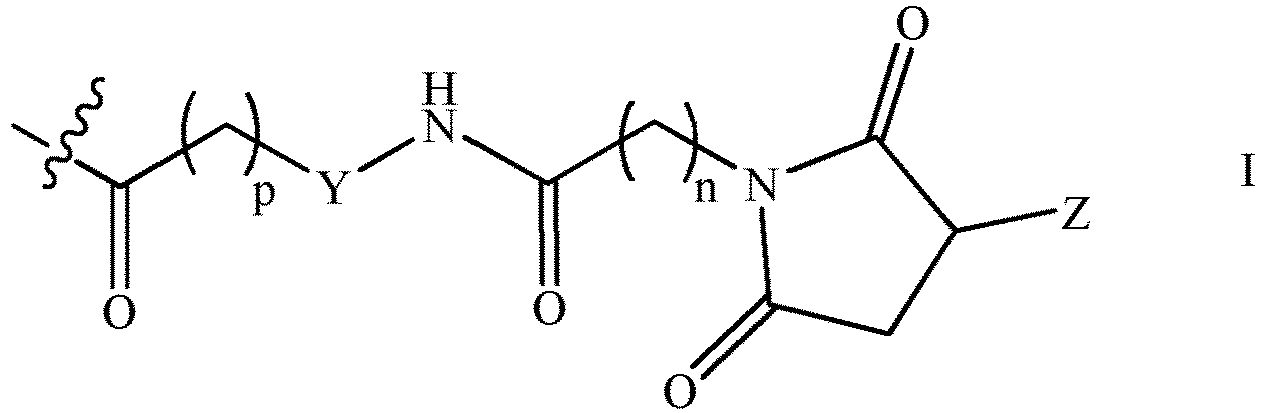 wobei die Peptidsequenz SEQ ID NO 1 ist, worin ein Aminoproton von Lys13 mit der Gruppe substituiert ist, die Formel I aufweist;Y -(OCH2CH2)q- ist, worin q von 20 bis 200 ist;Z ein Rest einer Bisphosphonat enthaltenden Gruppe ist;n von 1 bis 10 ist; undp von 1 bis 10 ist,oder das pharmazeutisch verträgliche Salz oder Ester davon.
 - Verbindung nach Anspruch 1, wobei die Bisphosphonat enthaltende Gruppe Formel II umfasst:
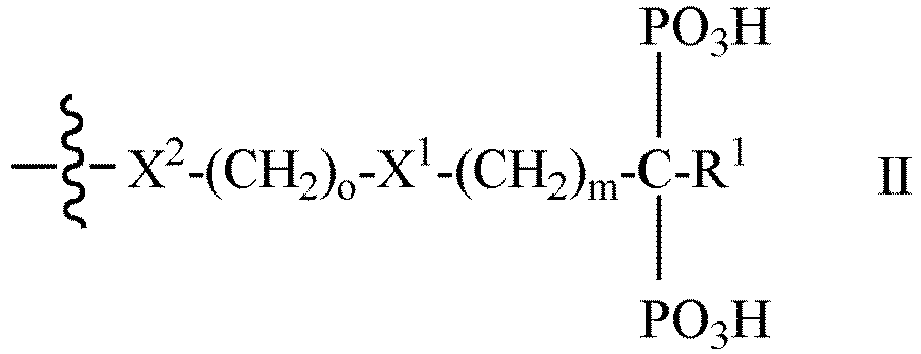 wobei R1 Wasserstoff, eine Hydroxylgruppe, eine Alkylgruppe, eine Alkylengruppe, eine Amingruppe, eine Thiolgruppe oder eine Arylgruppe ist;X1 und X2 unabhängig voneinander O, S oder NR3 sind, worin R3 Wasserstoff, eine Alkylgruppe, eine Arylgruppe oder eine Cycloalkylgruppe ist; undm und o unabhängig voneinander von 1 bis 8 betragen.
 - Verbindung nach Anspruch 2, wobei R1 Wasserstoff ist, X1 und X2 S sind, m 1 ist und o 3 [{2-[(3-Mercaptopropyl)thio]ethan-1,1-diyl}bis(phosphonsäure)] ist.
- Verbindung nach Anspruch 1, wobei die Bisphosphonat enthaltende Gruppe Rest von Etidronsäure, Clodronsäure, Tiludronsäure, Pamidronsäure, Neridronsäure, Olpadronsäure, Alendronsäure, Ibandronsäure, Zolendronsäure, Risedronsäure oder eine Kombination davon ist.
- Verbindung nach Anspruch 1, wobei n 2 ist und p 1 ist.
- Verbindung nach Anspruch 1, wobei n 2 ist und p 1 ist und die Bisphosphonat enthaltende Gruppe die Formel II aufweist,

- Pharmazeutische Zusammensetzung, umfassend die Zusammensetzung nach Anspruch 1 und einen pharmazeutisch verträglichen Träger.
- Verbindung oder Zusammensetzung nach einem der Ansprüche 1 bis 7 zur Verwendung beim Behandeln oder Verhüten des Verlusts von Knochenmasse in einem Subjekt, umfassend Verabreichen an das Subjekt, das eine Erkrankung aufweist, die Verlust von Knochenmasse hervorruft.
- Verbindung oder Zusammensetzung zur Verwendung nach Anspruch 8, wobei die Erkrankung Osteoporose, Morbus Paget, osteolytische Tumoren, rheumatoide Arthritis, psoriatische Arthritis, ankylosierende Spondylitis, Osteoarthritis, Hyperkalzämie, Osteopenie oder eine Kombination davon umfasst.
- Verbindung oder Zusammensetzung nach einem der Ansprüche 1 bis 7:(i) zur Verwendung beim Vermindern von Knochenverlust in einem Subjekt; oder(ii) zur Verwendung beim Verhüten von Knochenbrüchen in einem Subjekt.
Applications Claiming Priority (2)
| Application Number | Priority Date | Filing Date | Title |
|---|---|---|---|
| US201261693818P | 2012-08-28 | 2012-08-28 | |
| PCT/IB2013/002349 WO2014033540A2 (en) | 2012-08-28 | 2013-08-28 | Parathyroid hormone, insulin, and related peptides conjugated to bone targeting moieties and methods of making and using thereof |
Publications (3)
| Publication Number | Publication Date |
|---|---|
| EP2890708A2 EP2890708A2 (de) | 2015-07-08 |
| EP2890708A4 EP2890708A4 (de) | 2016-06-08 |
| EP2890708B1 true EP2890708B1 (de) | 2019-08-07 |
Family
ID=50184509
Family Applications (1)
| Application Number | Title | Priority Date | Filing Date |
|---|---|---|---|
| EP13832369.6A Not-in-force EP2890708B1 (de) | 2012-08-28 | 2013-08-28 | Parathyroidhormon, insulin und verwandte mit knochenanzielenden einheiten verbundene peptide sowie verfahren zur herstellung und verwendung davon |
Country Status (4)
| Country | Link |
|---|---|
| US (1) | US9718868B2 (de) |
| EP (1) | EP2890708B1 (de) |
| CA (1) | CA2883707A1 (de) |
| WO (1) | WO2014033540A2 (de) |
Families Citing this family (11)
| Publication number | Priority date | Publication date | Assignee | Title |
|---|---|---|---|---|
| US9585934B2 (en) | 2014-10-22 | 2017-03-07 | Extend Biosciences, Inc. | Therapeutic vitamin D conjugates |
| IL317744A (en) * | 2016-03-01 | 2025-02-01 | Ascendis Pharma Bone Diseases As | PTH drug agonists |
| EP3454913A4 (de) * | 2016-03-15 | 2019-11-27 | The Regents of the University of California | Auf knochen abzielendes antikörperkonjugat und verfahren zur herstellung und verwendung davon |
| PL3518961T3 (pl) | 2016-09-29 | 2023-08-14 | Ascendis Pharma Bone Diseases A/S | Związki pth o niskim stosunku wartości maksymalnej do minimalnej |
| FI3518982T3 (fi) | 2016-09-29 | 2025-02-11 | Ascendis Pharma Bone Diseases As | Säädellysti vapautuvia PTH-yhdisteitä |
| RS64440B1 (sr) | 2016-09-29 | 2023-09-29 | Ascendis Pharma Bone Diseases As | Režim doziranja za pth jedinjenje sa kontrolisanim oslobađanjem |
| BR112019011070A2 (pt) * | 2016-11-30 | 2019-10-01 | Purdue Research Foundation | regeneração óssea direcionada à fratura através da estimulação do receptor de hormônio da paratireoide |
| EP3790574A4 (de) * | 2018-05-30 | 2022-07-13 | Purdue Research Foundation | Targeting von anabolika für beschleunigte frakturreparatur |
| US12403182B2 (en) | 2019-02-11 | 2025-09-02 | Ascendis Pharma Bone Diseases A/S | Liquid pharmaceutical formulations of PTH conjugates |
| MX2023004796A (es) * | 2020-10-26 | 2023-07-18 | Purdue Research Foundation | Compuestos, composiciones y metodos de uso para tratar fracturas oseas. |
| EP4593867A2 (de) | 2022-09-30 | 2025-08-06 | Extend Biosciences, Inc. | Langwirkendes parathormon |
Family Cites Families (4)
| Publication number | Priority date | Publication date | Assignee | Title |
|---|---|---|---|---|
| CA2499075A1 (en) * | 2002-09-16 | 2004-03-25 | Elusys Therapeutics, Inc. | Production of bispecific molecules using polyethylene glycol linkers |
| AR056806A1 (es) * | 2005-11-14 | 2007-10-24 | Amgen Inc | Moleculas quimericas de anticuerpo rankl- pth/ pthrp |
| US9527256B2 (en) | 2009-10-13 | 2016-12-27 | Pirelli Tyre S.P.A. | Process and apparatus for building tyres for vehicle wheels |
| EP2488208B1 (de) * | 2009-10-14 | 2018-11-21 | The Governors of the University of Alberta | Verbindungen mit peptiden, die an knochen bindenden einheiten konjugiert sind und verfahren zur herstellung und verwendung davon |
-
2013
- 2013-08-28 CA CA2883707A patent/CA2883707A1/en not_active Abandoned
- 2013-08-28 US US14/424,493 patent/US9718868B2/en active Active
- 2013-08-28 EP EP13832369.6A patent/EP2890708B1/de not_active Not-in-force
- 2013-08-28 WO PCT/IB2013/002349 patent/WO2014033540A2/en not_active Ceased
Non-Patent Citations (1)
| Title |
|---|
| None * |
Also Published As
| Publication number | Publication date |
|---|---|
| US9718868B2 (en) | 2017-08-01 |
| EP2890708A2 (de) | 2015-07-08 |
| WO2014033540A3 (en) | 2014-04-17 |
| EP2890708A4 (de) | 2016-06-08 |
| US20150246957A1 (en) | 2015-09-03 |
| WO2014033540A2 (en) | 2014-03-06 |
| CA2883707A1 (en) | 2014-03-06 |
Similar Documents
| Publication | Publication Date | Title |
|---|---|---|
| US9718868B2 (en) | Parathyroid hormone, insulin, and related peptides conjugated to bone targeting moieties and methods and making and using thereof | |
| JP7418527B2 (ja) | 制御放出pth化合物の投薬レジメン | |
| JP7434419B2 (ja) | ピーク対トラフ比が小さいpth化合物 | |
| JP7059195B2 (ja) | Pthプロドラッグ | |
| US11167035B2 (en) | Insulin compositions and method of making a composition | |
| EP2488208B1 (de) | Verbindungen mit peptiden, die an knochen bindenden einheiten konjugiert sind und verfahren zur herstellung und verwendung davon | |
| JP2024037994A (ja) | 放出制御pth化合物の漸増用量設定 | |
| AU2017367699B2 (en) | Fracture targeted bone regeneration through parathyroid hormone receptor stimulation | |
| KR102797223B1 (ko) | Pth 접합체의 개시 용량 | |
| HRP20120397T1 (hr) | Pegilirani inzulinski lispro spojevi | |
| KR102891411B1 (ko) | Pth 접합체의 액체 약학 제제 | |
| US20230399374A1 (en) | Compounds, Compositions and Methods of Use to Treat Bone Fractures | |
| CN114376970A (zh) | Etelcalcetide (AMG 416)的稳定的液体制剂 | |
| Wang et al. | A forskolin-conjugated insulin analog targeting endogenous glucose-transporter for glucose-responsive insulin delivery | |
| Loghman-Adham | Use of phosphonocarboxylic acids as inhibitors of sodium-phosphate cotransport | |
| CN114423447A (zh) | 用于延释组合物的疏水性肽盐 | |
| H Bhandari et al. | Evaluation of bone targeting salmon calcitonin analogues in rats developing osteoporosis and adjuvant arthritis | |
| RU2777357C2 (ru) | Режим дозирования соединения pth контролируемого высвобождения | |
| HK40007776A (en) | Dosage regimen for a controlled-release pth compound |
Legal Events
| Date | Code | Title | Description |
|---|---|---|---|
| PUAI | Public reference made under article 153(3) epc to a published international application that has entered the european phase |
Free format text: ORIGINAL CODE: 0009012 |
|
| 17P | Request for examination filed |
Effective date: 20150326 |
|
| AK | Designated contracting states |
Kind code of ref document: A2 Designated state(s): AL AT BE BG CH CY CZ DE DK EE ES FI FR GB GR HR HU IE IS IT LI LT LU LV MC MK MT NL NO PL PT RO RS SE SI SK SM TR |
|
| AX | Request for extension of the european patent |
Extension state: BA ME |
|
| DAX | Request for extension of the european patent (deleted) | ||
| RIC1 | Information provided on ipc code assigned before grant |
Ipc: A61K 38/28 20060101ALI20160201BHEP Ipc: C07K 14/62 20060101ALI20160201BHEP Ipc: A61P 19/08 20060101ALI20160201BHEP Ipc: C07K 14/635 20060101ALI20160201BHEP Ipc: C07K 17/08 20060101ALI20160201BHEP Ipc: C08F 299/02 20060101ALI20160201BHEP Ipc: A61K 47/48 20060101ALI20160201BHEP Ipc: C07K 14/65 20060101AFI20160201BHEP |
|
| A4 | Supplementary search report drawn up and despatched |
Effective date: 20160506 |
|
| RIC1 | Information provided on ipc code assigned before grant |
Ipc: A61P 19/08 20060101ALI20160429BHEP Ipc: A61K 38/28 20060101ALI20160429BHEP Ipc: C07K 14/65 20060101AFI20160429BHEP Ipc: C08F 299/02 20060101ALI20160429BHEP Ipc: A61K 47/48 20060101ALI20160429BHEP Ipc: C07K 14/635 20060101ALI20160429BHEP Ipc: C07K 14/62 20060101ALI20160429BHEP Ipc: C07K 17/08 20060101ALI20160429BHEP |
|
| STAA | Information on the status of an ep patent application or granted ep patent |
Free format text: STATUS: REQUEST FOR EXAMINATION WAS MADE |
|
| STAA | Information on the status of an ep patent application or granted ep patent |
Free format text: STATUS: EXAMINATION IS IN PROGRESS |
|
| 17Q | First examination report despatched |
Effective date: 20170406 |
|
| REG | Reference to a national code |
Ref country code: DE Ref legal event code: R079 Ref document number: 602013058921 Country of ref document: DE Free format text: PREVIOUS MAIN CLASS: C07K0014650000 Ipc: A61K0031663000 |
|
| GRAP | Despatch of communication of intention to grant a patent |
Free format text: ORIGINAL CODE: EPIDOSNIGR1 |
|
| STAA | Information on the status of an ep patent application or granted ep patent |
Free format text: STATUS: GRANT OF PATENT IS INTENDED |
|
| RIC1 | Information provided on ipc code assigned before grant |
Ipc: A61K 31/663 20060101AFI20190117BHEP Ipc: C07K 14/62 20060101ALI20190117BHEP Ipc: A61K 38/29 20060101ALI20190117BHEP Ipc: C07K 14/65 20060101ALI20190117BHEP Ipc: C08F 299/02 20060101ALI20190117BHEP Ipc: C07K 14/635 20060101ALI20190117BHEP Ipc: A61K 47/60 20170101ALI20190117BHEP Ipc: A61K 47/54 20170101ALI20190117BHEP |
|
| INTG | Intention to grant announced |
Effective date: 20190215 |
|
| GRAS | Grant fee paid |
Free format text: ORIGINAL CODE: EPIDOSNIGR3 |
|
| GRAA | (expected) grant |
Free format text: ORIGINAL CODE: 0009210 |
|
| STAA | Information on the status of an ep patent application or granted ep patent |
Free format text: STATUS: THE PATENT HAS BEEN GRANTED |
|
| AK | Designated contracting states |
Kind code of ref document: B1 Designated state(s): AL AT BE BG CH CY CZ DE DK EE ES FI FR GB GR HR HU IE IS IT LI LT LU LV MC MK MT NL NO PL PT RO RS SE SI SK SM TR |
|
| REG | Reference to a national code |
Ref country code: GB Ref legal event code: FG4D |
|
| REG | Reference to a national code |
Ref country code: CH Ref legal event code: EP Ref country code: AT Ref legal event code: REF Ref document number: 1162772 Country of ref document: AT Kind code of ref document: T Effective date: 20190815 |
|
| REG | Reference to a national code |
Ref country code: DE Ref legal event code: R096 Ref document number: 602013058921 Country of ref document: DE |
|
| REG | Reference to a national code |
Ref country code: IE Ref legal event code: FG4D |
|
| REG | Reference to a national code |
Ref country code: NL Ref legal event code: MP Effective date: 20190807 |
|
| REG | Reference to a national code |
Ref country code: LT Ref legal event code: MG4D |
|
| PG25 | Lapsed in a contracting state [announced via postgrant information from national office to epo] |
Ref country code: PT Free format text: LAPSE BECAUSE OF FAILURE TO SUBMIT A TRANSLATION OF THE DESCRIPTION OR TO PAY THE FEE WITHIN THE PRESCRIBED TIME-LIMIT Effective date: 20191209 Ref country code: NO Free format text: LAPSE BECAUSE OF FAILURE TO SUBMIT A TRANSLATION OF THE DESCRIPTION OR TO PAY THE FEE WITHIN THE PRESCRIBED TIME-LIMIT Effective date: 20191107 Ref country code: LT Free format text: LAPSE BECAUSE OF FAILURE TO SUBMIT A TRANSLATION OF THE DESCRIPTION OR TO PAY THE FEE WITHIN THE PRESCRIBED TIME-LIMIT Effective date: 20190807 Ref country code: BG Free format text: LAPSE BECAUSE OF FAILURE TO SUBMIT A TRANSLATION OF THE DESCRIPTION OR TO PAY THE FEE WITHIN THE PRESCRIBED TIME-LIMIT Effective date: 20191107 Ref country code: NL Free format text: LAPSE BECAUSE OF FAILURE TO SUBMIT A TRANSLATION OF THE DESCRIPTION OR TO PAY THE FEE WITHIN THE PRESCRIBED TIME-LIMIT Effective date: 20190807 Ref country code: FI Free format text: LAPSE BECAUSE OF FAILURE TO SUBMIT A TRANSLATION OF THE DESCRIPTION OR TO PAY THE FEE WITHIN THE PRESCRIBED TIME-LIMIT Effective date: 20190807 Ref country code: HR Free format text: LAPSE BECAUSE OF FAILURE TO SUBMIT A TRANSLATION OF THE DESCRIPTION OR TO PAY THE FEE WITHIN THE PRESCRIBED TIME-LIMIT Effective date: 20190807 Ref country code: SE Free format text: LAPSE BECAUSE OF FAILURE TO SUBMIT A TRANSLATION OF THE DESCRIPTION OR TO PAY THE FEE WITHIN THE PRESCRIBED TIME-LIMIT Effective date: 20190807 |
|
| REG | Reference to a national code |
Ref country code: AT Ref legal event code: MK05 Ref document number: 1162772 Country of ref document: AT Kind code of ref document: T Effective date: 20190807 |
|
| PG25 | Lapsed in a contracting state [announced via postgrant information from national office to epo] |
Ref country code: AL Free format text: LAPSE BECAUSE OF FAILURE TO SUBMIT A TRANSLATION OF THE DESCRIPTION OR TO PAY THE FEE WITHIN THE PRESCRIBED TIME-LIMIT Effective date: 20190807 Ref country code: GR Free format text: LAPSE BECAUSE OF FAILURE TO SUBMIT A TRANSLATION OF THE DESCRIPTION OR TO PAY THE FEE WITHIN THE PRESCRIBED TIME-LIMIT Effective date: 20191108 Ref country code: ES Free format text: LAPSE BECAUSE OF FAILURE TO SUBMIT A TRANSLATION OF THE DESCRIPTION OR TO PAY THE FEE WITHIN THE PRESCRIBED TIME-LIMIT Effective date: 20190807 Ref country code: IS Free format text: LAPSE BECAUSE OF FAILURE TO SUBMIT A TRANSLATION OF THE DESCRIPTION OR TO PAY THE FEE WITHIN THE PRESCRIBED TIME-LIMIT Effective date: 20191207 Ref country code: RS Free format text: LAPSE BECAUSE OF FAILURE TO SUBMIT A TRANSLATION OF THE DESCRIPTION OR TO PAY THE FEE WITHIN THE PRESCRIBED TIME-LIMIT Effective date: 20190807 Ref country code: LV Free format text: LAPSE BECAUSE OF FAILURE TO SUBMIT A TRANSLATION OF THE DESCRIPTION OR TO PAY THE FEE WITHIN THE PRESCRIBED TIME-LIMIT Effective date: 20190807 |
|
| PG25 | Lapsed in a contracting state [announced via postgrant information from national office to epo] |
Ref country code: TR Free format text: LAPSE BECAUSE OF FAILURE TO SUBMIT A TRANSLATION OF THE DESCRIPTION OR TO PAY THE FEE WITHIN THE PRESCRIBED TIME-LIMIT Effective date: 20190807 |
|
| PG25 | Lapsed in a contracting state [announced via postgrant information from national office to epo] |
Ref country code: IT Free format text: LAPSE BECAUSE OF FAILURE TO SUBMIT A TRANSLATION OF THE DESCRIPTION OR TO PAY THE FEE WITHIN THE PRESCRIBED TIME-LIMIT Effective date: 20190807 Ref country code: AT Free format text: LAPSE BECAUSE OF FAILURE TO SUBMIT A TRANSLATION OF THE DESCRIPTION OR TO PAY THE FEE WITHIN THE PRESCRIBED TIME-LIMIT Effective date: 20190807 Ref country code: DK Free format text: LAPSE BECAUSE OF FAILURE TO SUBMIT A TRANSLATION OF THE DESCRIPTION OR TO PAY THE FEE WITHIN THE PRESCRIBED TIME-LIMIT Effective date: 20190807 Ref country code: EE Free format text: LAPSE BECAUSE OF FAILURE TO SUBMIT A TRANSLATION OF THE DESCRIPTION OR TO PAY THE FEE WITHIN THE PRESCRIBED TIME-LIMIT Effective date: 20190807 Ref country code: PL Free format text: LAPSE BECAUSE OF FAILURE TO SUBMIT A TRANSLATION OF THE DESCRIPTION OR TO PAY THE FEE WITHIN THE PRESCRIBED TIME-LIMIT Effective date: 20190807 Ref country code: RO Free format text: LAPSE BECAUSE OF FAILURE TO SUBMIT A TRANSLATION OF THE DESCRIPTION OR TO PAY THE FEE WITHIN THE PRESCRIBED TIME-LIMIT Effective date: 20190807 |
|
| PGFP | Annual fee paid to national office [announced via postgrant information from national office to epo] |
Ref country code: GB Payment date: 20191127 Year of fee payment: 7 Ref country code: DE Payment date: 20200301 Year of fee payment: 7 |
|
| PG25 | Lapsed in a contracting state [announced via postgrant information from national office to epo] |
Ref country code: CH Free format text: LAPSE BECAUSE OF NON-PAYMENT OF DUE FEES Effective date: 20190831 Ref country code: MC Free format text: LAPSE BECAUSE OF FAILURE TO SUBMIT A TRANSLATION OF THE DESCRIPTION OR TO PAY THE FEE WITHIN THE PRESCRIBED TIME-LIMIT Effective date: 20190807 Ref country code: SK Free format text: LAPSE BECAUSE OF FAILURE TO SUBMIT A TRANSLATION OF THE DESCRIPTION OR TO PAY THE FEE WITHIN THE PRESCRIBED TIME-LIMIT Effective date: 20190807 Ref country code: CZ Free format text: LAPSE BECAUSE OF FAILURE TO SUBMIT A TRANSLATION OF THE DESCRIPTION OR TO PAY THE FEE WITHIN THE PRESCRIBED TIME-LIMIT Effective date: 20190807 Ref country code: LU Free format text: LAPSE BECAUSE OF NON-PAYMENT OF DUE FEES Effective date: 20190828 Ref country code: LI Free format text: LAPSE BECAUSE OF NON-PAYMENT OF DUE FEES Effective date: 20190831 Ref country code: SM Free format text: LAPSE BECAUSE OF FAILURE TO SUBMIT A TRANSLATION OF THE DESCRIPTION OR TO PAY THE FEE WITHIN THE PRESCRIBED TIME-LIMIT Effective date: 20190807 Ref country code: IS Free format text: LAPSE BECAUSE OF FAILURE TO SUBMIT A TRANSLATION OF THE DESCRIPTION OR TO PAY THE FEE WITHIN THE PRESCRIBED TIME-LIMIT Effective date: 20200224 |
|
| REG | Reference to a national code |
Ref country code: BE Ref legal event code: MM Effective date: 20190831 |
|
| REG | Reference to a national code |
Ref country code: DE Ref legal event code: R097 Ref document number: 602013058921 Country of ref document: DE |
|
| PGFP | Annual fee paid to national office [announced via postgrant information from national office to epo] |
Ref country code: FR Payment date: 20200226 Year of fee payment: 7 |
|
| PLBE | No opposition filed within time limit |
Free format text: ORIGINAL CODE: 0009261 |
|
| STAA | Information on the status of an ep patent application or granted ep patent |
Free format text: STATUS: NO OPPOSITION FILED WITHIN TIME LIMIT |
|
| PG2D | Information on lapse in contracting state deleted |
Ref country code: IS |
|
| PG25 | Lapsed in a contracting state [announced via postgrant information from national office to epo] |
Ref country code: IE Free format text: LAPSE BECAUSE OF NON-PAYMENT OF DUE FEES Effective date: 20190828 |
|
| 26N | No opposition filed |
Effective date: 20200603 |
|
| PG25 | Lapsed in a contracting state [announced via postgrant information from national office to epo] |
Ref country code: SI Free format text: LAPSE BECAUSE OF FAILURE TO SUBMIT A TRANSLATION OF THE DESCRIPTION OR TO PAY THE FEE WITHIN THE PRESCRIBED TIME-LIMIT Effective date: 20190807 Ref country code: BE Free format text: LAPSE BECAUSE OF NON-PAYMENT OF DUE FEES Effective date: 20190831 |
|
| REG | Reference to a national code |
Ref country code: DE Ref legal event code: R119 Ref document number: 602013058921 Country of ref document: DE |
|
| GBPC | Gb: european patent ceased through non-payment of renewal fee |
Effective date: 20200828 |
|
| PG25 | Lapsed in a contracting state [announced via postgrant information from national office to epo] |
Ref country code: CY Free format text: LAPSE BECAUSE OF FAILURE TO SUBMIT A TRANSLATION OF THE DESCRIPTION OR TO PAY THE FEE WITHIN THE PRESCRIBED TIME-LIMIT Effective date: 20190807 |
|
| PG25 | Lapsed in a contracting state [announced via postgrant information from national office to epo] |
Ref country code: FR Free format text: LAPSE BECAUSE OF NON-PAYMENT OF DUE FEES Effective date: 20200831 Ref country code: DE Free format text: LAPSE BECAUSE OF NON-PAYMENT OF DUE FEES Effective date: 20210302 Ref country code: HU Free format text: LAPSE BECAUSE OF FAILURE TO SUBMIT A TRANSLATION OF THE DESCRIPTION OR TO PAY THE FEE WITHIN THE PRESCRIBED TIME-LIMIT; INVALID AB INITIO Effective date: 20130828 Ref country code: MT Free format text: LAPSE BECAUSE OF FAILURE TO SUBMIT A TRANSLATION OF THE DESCRIPTION OR TO PAY THE FEE WITHIN THE PRESCRIBED TIME-LIMIT Effective date: 20190807 |
|
| PG25 | Lapsed in a contracting state [announced via postgrant information from national office to epo] |
Ref country code: GB Free format text: LAPSE BECAUSE OF NON-PAYMENT OF DUE FEES Effective date: 20200828 |
|
| PG25 | Lapsed in a contracting state [announced via postgrant information from national office to epo] |
Ref country code: MK Free format text: LAPSE BECAUSE OF FAILURE TO SUBMIT A TRANSLATION OF THE DESCRIPTION OR TO PAY THE FEE WITHIN THE PRESCRIBED TIME-LIMIT Effective date: 20190807 |