EP2889580A1 - Navigationssystem und in diesem System verwendetes Verfahren - Google Patents
Navigationssystem und in diesem System verwendetes Verfahren Download PDFInfo
- Publication number
- EP2889580A1 EP2889580A1 EP14307081.1A EP14307081A EP2889580A1 EP 2889580 A1 EP2889580 A1 EP 2889580A1 EP 14307081 A EP14307081 A EP 14307081A EP 2889580 A1 EP2889580 A1 EP 2889580A1
- Authority
- EP
- European Patent Office
- Prior art keywords
- mod
- module
- operating mode
- indicator
- certified
- Prior art date
- Legal status (The legal status is an assumption and is not a legal conclusion. Google has not performed a legal analysis and makes no representation as to the accuracy of the status listed.)
- Granted
Links
Images


Classifications
-
- G—PHYSICS
- G01—MEASURING; TESTING
- G01S—RADIO DIRECTION-FINDING; RADIO NAVIGATION; DETERMINING DISTANCE OR VELOCITY BY USE OF RADIO WAVES; LOCATING OR PRESENCE-DETECTING BY USE OF THE REFLECTION OR RERADIATION OF RADIO WAVES; ANALOGOUS ARRANGEMENTS USING OTHER WAVES
- G01S7/00—Details of systems according to groups G01S13/00, G01S15/00, G01S17/00
- G01S7/02—Details of systems according to groups G01S13/00, G01S15/00, G01S17/00 of systems according to group G01S13/00
- G01S7/04—Display arrangements
-
- G—PHYSICS
- G01—MEASURING; TESTING
- G01C—MEASURING DISTANCES, LEVELS OR BEARINGS; SURVEYING; NAVIGATION; GYROSCOPIC INSTRUMENTS; PHOTOGRAMMETRY OR VIDEOGRAMMETRY
- G01C21/00—Navigation; Navigational instruments not provided for in groups G01C1/00 - G01C19/00
- G01C21/20—Instruments for performing navigational calculations
-
- G—PHYSICS
- G06—COMPUTING OR CALCULATING; COUNTING
- G06F—ELECTRIC DIGITAL DATA PROCESSING
- G06F21/00—Security arrangements for protecting computers, components thereof, programs or data against unauthorised activity
- G06F21/50—Monitoring users, programs or devices to maintain the integrity of platforms, e.g. of processors, firmware or operating systems
- G06F21/57—Certifying or maintaining trusted computer platforms, e.g. secure boots or power-downs, version controls, system software checks, secure updates or assessing vulnerabilities
Definitions
- the present invention relates generally to navigation aids, particularly for maritime navigation.
- It relates more particularly to a navigation aid system, designed to switch between a certified operating mode according to a standard and a non-certified operating mode.
- the present invention also relates to a method implemented in such a system.
- Certain maritime navigation aid systems are designed in accordance with performance standards defined by the International Maritime Organization's SOLAS (" Safety of Life at Sea” ) convention and identified as ECDIS (for "Electronic Chart Display”). and Information System " ) .
- the present invention provides a navigation aid system, designed to switch between a certified operating mode according to a standard and a non-certified operating mode (with respect to this standard), characterized in that it is based on a modular architecture, in that it is implemented by the execution of modules compatible with the standard having a compatibility attribute and modules without compatibility attribute, in that it comprises an indicator representative of the current mode of operation, and that the compatible modules are designed to call a function of another module only when the indicator is representative of the non-certified operating mode or when the other module has a compatibility attribute.
- the switching from one mode of operation to another can also be done dynamically, by simply changing the aforementioned indicator (for example in response to a user command) and without stopping the system, since the different modules do not need to be modified to take into account the change of operating mode.
- At least one compatible module is designed to consult the indicator and to adapt its operation according to the mode of operation designated by the indicator.
- the system (for example by means of a management element of the operating mode) is designed to send, to at least one compatible module, a notification specifying that the indicator has a value determined; the compatible module can then be designed to adapt its operation according to the operating mode designated by said determined value.
- At least one compatible module may be designed to determine if another module has a query compatibility attribute of said other module.
- the compatible module it would be possible for the compatible module to consult a table listing the compatibility attributes of the different modules.
- a GUI management element is for example designed to call a tracing function on a system screen, implemented by a graphics module, only when the indicator is representative of the non-certified operating mode or when the module graph has a compatibility attribute.
- This GUI management element may be a main module or another module, which will for example be called by the main module, or in a component / container architecture, the container (also called a kernel or structure of a module). Home).
- an operating mode management element is designed to interrogate a given module on the availability of a command of the given module when the indicator is representative of the non-certified operating mode or when the given module has a compatibility attribute, and to disable said command in other cases.
- the operating mode management element may be the aforementioned main module or another module, which will for example be called by the main module, or, in an architecture of type components / container, the container.
- the indicator can take a value representative of an alternative certified mode of operation, in which for example only the cartography and the mobiles (here the boats) are displayed on the screen.
- At least one compatible module can then be designed to adapt its operation to the alternative certified mode when the indicator has the value representative of the alternative certified operating mode.
- This compatible module can for example consult the indicator for this purpose or receive a notification signaling the (new) value of the indicator, for example from the management element of the operating mode.
- the method may also include a step of interrogating another module with a compatible module to determine whether the other module has a compatibility attribute.
- the method comprises a step of calling, by a graphical interface management element, a tracing function on a screen of the system, implemented by a graphic module, only when the The indicator is representative of the non-certified operating mode or when the graphics module has a compatibility attribute.
- the indicator may in some embodiments additionally assume a value representative of an alternative certified mode of operation.
- the figure 1 schematically represents an example of a maritime navigation system: this is a microprocessor-based system, which notably comprises a processor (in this case a microprocessor) P, a memory M associated with the processor P, a user interface I (typically a keyboard or a mouse), an ECR screen and a storage means S, for example a hard disk.
- a processor in this case a microprocessor
- memory M associated with the processor P
- user interface I typically a keyboard or a mouse
- ECR screen electronic book reader
- storage means S for example a hard disk.
- the system also includes a sensor C for measuring a parameter useful for navigation.
- a sensor C for measuring a parameter useful for navigation.
- the present description mentions a single sensor C, but the navigation aid system described could naturally include other sensors.
- the memory M stores in particular computer programs, made in the form of modules, whose execution by the processor P allows the implementation of a navigation aid method, which notably comprises display stages of information (typically graphical representations or graphic objects as described below) on the ECR screen, steps of capturing information from the sensor C, and steps of receiving instructions from the user through the user interface I.
- a navigation aid method which notably comprises display stages of information (typically graphical representations or graphic objects as described below) on the ECR screen, steps of capturing information from the sensor C, and steps of receiving instructions from the user through the user interface I.
- each module mentioned below is executed (that is to say implemented) by means of a dedicated integrated circuit, for example a specific application integrated circuit (or ASIC according to the appellation Anglo-Saxon).
- the memory also stores data and parameters useful for implementing the navigation aid method.
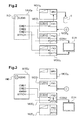
- the figure 2 represents various modules MOD P , MOD 1 , MOD 2 , MOD 3 , MOD 4 involved in the implementation of the marine navigation aid system.
- These modules comprise a main module MOD P , the execution of which is started at the initialization of the system, MOD 1 modules, MOD 2 compatible with a standard, here the ECDIS standard, and thus having a compatibility attribute, and MOD 3 , MOD 4 modules without compatibility attribute, designed without taking into account the design rules dictated by the relevant standard.
- the compatible modules are designed so that their implementation within the navigation aid system complies with the relevant standard, here the ECDIS standard, and that the navigation aid system can thus claim the certification to the relevant standard.
- This specification is intended to refer to the ECDIS standard as an example of a certification standard; other types of certification are however conceivable in the context of the present invention, for example according to the ARPA (for "Automatic Radar Plotting Aid ”) standard .
- Each module is for example designed to receive an interrogation request for the presence of a compatibility attribute and to respond positively in the case where the module concerned actually has a compatibility attribute, as explained below.
- the main module MOD P is also compatible with the standard but does not have a compatibility attribute (because it is not itself called by another module and it therefore, it is not necessary to determine if this module is compatible with the ECDIS standard prior to its call).
- the main module MOD P manages an IND indicator of the operating mode.
- This indicator is for example stored in the memory M associated with the processor P and can take a value representative of the operation in non-certified mode (here a non-ECDIS mode) or a representative value of the operation in certified mode (here an ECDIS mode) .
- This indicator IND is only modifiable by the module (or more generally the element) responsible for the management of the certified operating mode, here the main module MOD P ; the indicator is modified for example because of a choice of the user, typically by interactive selection (by means of the user interface I) of the desired operating mode in a menu displayed on the ECR screen.
- the IND indicator can however be consulted by the other modules MOD 1 , MOD 2 , MOD 3 , MOD 4 , in particular by the compatible modules MOD 1 , MOD 2 in order to determine the active mode of operation and to possibly adapt their active mode operation, as explained below.
- certification is considered in relation to a particular standard, here the ECDIS standard.
- the non-certified mode of operation does not aim at compliance with the relevant standard; this mode of operation could however be compatible with another certification standard without departing from the scope of the invention.
- the non-certified mode is active and the IND indicator is therefore representative of the non-certified operating mode (here non-ECDIS).
- the main module MOD P can control the execution of a plurality of CMD 1 , CM 2 , CMD 3 commands by calling a function associated with the command concerned within a module that includes this function.
- the main module MOD P is able to control the execution of the command CMD 1 by calling an FN function 1 of the module MOD 1 ; similarly, the main module MOD P can control the execution of a CMD command 2 by calling on a function FN 2 of the module MOD 2 ; finally, the main module MOD P can command the execution of a command CMD 3 by calling on a function FN 3 of the module MOD 3 .
- the execution of one of the aforementioned commands CMD 1 , CMD 2 , CMD 3 is for example performed on the user's command, by interactive selection of the command in a menu displayed on the ECR screen.
- the main module MOD P also manages the display on the ECR screen, in particular the display of the menus mentioned above and the display of representations or graphic objects (for example icons) related the operation of the other modules.
- the main module MOD P uses in particular AFF 2 , AFF 3 tracing functions (implemented respectively by associated modules MOD 2 , MOD 3 ) which cause the drawing of graphical representations on the ECR screen, when they receive a call for this from the main module MOD P , as explained in more detail below.
- the module MOD 1 is designed to receive measurement information from the sensor C and, when operating in non-certified mode, to use an SRV function of the module MOD 4 , for example so that the module MOD 4 processes the data. measured by the sensor C and stores the processed data in the storage means S.
- the MOD 2 module contains, as already indicated, an FN 2 function, which corresponds to a user-triggerable CMD 2 command, and an AFF 2 function for tracing a plurality of ICON 1 icons that are not compatible with the certified operating mode ( here not compatible with ECDIS standards).
- the module MOD 3 contains a function FN 3 triggered by the user and a tracking function AFF 3 which generates on the ECR screen a graphical representation associated with the operation of the command CMD 3 .
- the figure 3 schematically represents the operation of the system after switching to certified operating mode (here the ECDIS mode).
- the transition from non-certified mode to certified mode is for example performed when the user selects the certified mode in a menu displayed on the ECR screen, which has the consequence of modifying the IND indicator of the mode of operation. current operation.
- the main module MOD P sends a notification to all MOD 1 , MOD 2 , MOD 3 , SRV modules (or possibly only MOD compatible modules). 1 , MOD 2 ).
- This notification contains, for example, the IND indicator to specify the new current mode of operation.
- Modules compatible MOD 1 , MOD 2 then adapt their operation to the new operating mode (here ECDIS mode), as explained below.
- the main module MOD P inhibits the operation of the modules without compatibility attribute MOD 3 , SRV, for example by sending a request for termination (that is to say, end of execution) to each of these MOD modules 3 , SRV.
- the list of commands accessible to the user is also updated, for example due to the periodic implementation of the method described below with reference to the figure 5 .
- the main module MOD P disables in particular the commands using a function of a module without compatibility attribute, as described with reference to the figure 5 , and displays an updated menu, which includes the updated list of available commands, as well as the unavailable commands with a different graphic representation, for example grayed out to indicate to the user that these commands are inactive.
- the user can thus trigger only commands that are implemented by the execution of a function of a module compatible with the relevant standard (here the ECDIS standard), which guarantees the certified operation of the device, despite the presence of modules without compatibility attribute MOD 3 , MOD 4 .
- a module compatible with the relevant standard here the ECDIS standard
- the compatible modules must respond to specific requests, which can be issued by the main module MOD P , such as a request to change color mode (day mode, night mode, twilight mode) for the display or a request for verification of danger.
- specific requests which can be issued by the main module MOD P , such as a request to change color mode (day mode, night mode, twilight mode) for the display or a request for verification of danger.
- the MOD 1- compatible module is designed to test the value of the IND indicator of the current operating mode during its execution and to operate in accordance with the required standard (here the ECDIS standard) when the IND indicator is representative. operation in certified mode.
- the MOD 1 module no longer uses the MOD 4 module (which has no compatibility attribute) as was the case in the non-certified operating mode represented in FIG. figure 1 .
- the module MOD 1 interrogates, for example, the module MOD 4 about the presence in this module of a compatibility attribute and, in the absence of a positive response, inhibits all its calls to the module concerned MOD 4 .
- the function FN 2 of the module MOD 2 is executed in a manner adapted to the certified mode, here for example by providing for the display ICON 2 certified icons (ie compliant with the standard, here ECDIS), different from the ICON 1 icons displayed in the non-certified operating mode.
- the main module MOD P Since the MOD 3 module has no compatibility attribute, the main module MOD P does not use its functions (the function FN 3 implementing the command CMD 3 ).
- the main module MOD P also manages the display, for example in accordance with the method described later with reference to FIG. figure 4 .
- the MOD P main module uses the AFF 2 , AFF 3 tracing functions only for the tracing functions for compatible modules (in this case the MOD 2 module), as indicated by the compatibility attribute of the module concerned. for example, in response to a request from the main module MOD P for this purpose.
- the main module MOD P thus calls in particular the AFF 2 tracing function of the module MOD 2 , which causes the tracing on the ECR screen of the ICON 2 certified icons, generated during the execution of the function FN 2 as indicated above. above.
- the main module MOD P Since the AFF 3 tracing function is contained in a module without compatibility attribute, the main module MOD P will not use this tracing function AFF 3 when the IND indicator of the current operating mode is representative of the operating mode. certified.
- modules without compatibility attributes may instead be designed independently of any certification: because of the proposed design, they may be called in non-certified operating mode (here non-ECDIS), but will not be called in certified operating mode (here ECDIS) and therefore will not risk disrupting the operation of this certified mode.
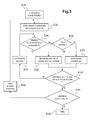
- the figure 4 is an example of a method of displaying graphical representations on the ECR screen.
- the display is formed of the superposition of several graphic layers, each module being able to draw one or more graphic objects (such as icons) in each graphic layer.
- graphic objects such as icons
- step E2 The process of figure 4 begins at step E2 by initializing the graphic layer, that is to say by taking into account a first graphic layer as the current graphic layer.
- step E4 cleaning the current graphics layer to be able to update all the graphics of this layer.
- step E6 we then proceed to step E6 at the initialization of the processed module, that is to say, to take into account a first module as the current module.
- step E8 It is then determined in step E8 whether the current module is a compatible module, here to the ECDIS standard, for example by querying the current module on the presence of a compatibility attribute for this module.
- step E12 If the module is determined to be compatible (for example because of the presence of a compatibility attribute for this module), proceed directly to step E12 described below.
- step E10 when the module is not compatible with the operation in certified mode, that is to say for example when the current module does not return a positive response to a request for the presence of compatibility attribute, we proceed to step E10 to which is checked whether the current operating mode, as represented by the IND indicator, is the certified operating mode.
- step E12 which is called the trace function of the current module.
- step E10 If the indicator of the operating mode IND is on the contrary representative of the certified operating mode (test of step E10), proceed directly to step E14 without using the tracing function (as provided in step E12).
- step E8 if it was determined in step E8 that the module was not compatible with operation in certified mode and that the certified mode is active, the tracing function of the module concerned is not used. .
- step E14 It is determined in step E14 whether the current module is the last module to be considered.
- step E16 If not, consider the following module (step E16) and the operation of the loop program in step E8 for processing the next module.
- step E14 If it is determined in step E14 that the current module is the last module to be processed, proceed to step E18.
- step E18 it is determined whether the current layer is the last layer to be treated.
- step Ee20 If not, consider the next layer (in step Ee20) and the operation loop in step E4 for processing the new current graphic layer.
- step E18 If, on the contrary, it is determined in step E18 that the previously processed graphic layer is the last layer to be treated, the method of managing the display ends in step E22.
- the figure 5 represents the main steps of a method of updating an interactive menu, formed of a plurality of toolbars, each of which comprises a list of commands such as those mentioned above.
- the method starts at step E30 at which the processed toolbar is initialized, that is to say at which one considers the first toolbar as the current toolbar.
- step E32 the current command is initialized within the current toolbar, that is to say during which we consider the first command to be processed among the various commands of the bar. of current tools.
- step E34 determines if the module that contains the function implementing the current command is compatible with operation in certified mode (here compatible with ECDIS).
- the main module MOD P for example sends a request to query the presence of a compatibility attribute to the module that contains the function implementing the current command.
- step E38 If it is determined that this module is compatible (that is to say here if the main module MOD P receives from this module a confirmation of the presence of a compatibility attribute in this module containing the function associated with the current command), proceed directly to step E38 described below.
- step E34 If, on the contrary, it is determined in step E34 that the module containing the function implementing the current command is not compatible with the certified operating mode, proceed to step E36 to determine whether the current operating mode is certified, for example by consulting the IND indicator representative of the operating mode current.
- step E38 If not, proceed to step E38 at which the main module MOD P sends a request for status of the command to the module containing the function implementing the current command.
- the command is activated or deactivated according to the response sent by the module concerned: it is up to the module concerned to determine whether or not the user can request the execution of the command concerned in the current mode.
- the module concerned when the module concerned is compatible (positive test response of step E34), the module concerned consults the IND indicator of the current operating mode and determines, depending on the current operating mode, if the command concerned must or not to be activated.
- the toolbar is then updated according to the response received from the module concerned: for example, the command is presented as triggerable when the module concerned indicates an activated state of the command concerned, and as inactive (for example in form grayed out) when the module concerned indicates that the command is inactive.
- step E36 If it is determined in step E36 that the current operating mode is the certified operating mode (by reading the indicator of the current operating mode IND), proceeding to step E40 at which the current command is disabled.
- the toolbar is then updated to indicate that the current command is no longer active, for example by displaying this command in gray and preventing the selection of the user-associated functionality.
- the control is systematically deactivated by the main module MOD P , which makes it possible to inhibit any execution of a function in a module which would not work according to the ECDIS standard.
- Step E38 as step E40 are followed by step E42 to determine whether the current command is the last command to be processed in the current toolbar. In the negative, consider the following command in the toolbar for its processing (step E43) and for this purpose loop to the previously described step E34.
- step E42 is followed by step E44 to which it is determined whether the previously processed toolbar is the last toolbar to be processed. treat.
- step E46 If not, consider the following toolbar (step E46) for its processing, by completing the operation in step E32 already described.
- step E44 If the previously processed toolbar is the last toolbar to treat as determined in step E44, the method of updating the toolbars is completed in step E48.
- toolbars are an example of usable interactive menus and the icons are an example of possible graphical elements to help the user as part of his navigation (here maritime).
- Other types of interactive menus and graphic elements, or graphic representations, are conceivable without departing from the scope of the invention.
- an alternative certified mode of operation for example a mode of operation of the "cards and mobile only" type in which all graphic objects, navigation tools and other information separate from the cartography and mobiles (here the boats) are not displayed.
- the indicator of the current operating mode can then take (on the control of the user by means of the interface I) a value representative of this alternative certified mode of operation.
- This alternative certified operating mode is then managed as the certified operating mode described above: the compatible modules are designed to call a function of another module only when the indicator is representative of the non-certified operating mode or when the other module has a compatibility attribute.
- certified or alternative certified mode only compatible modules, designed to consult the IND indicator and to operate if necessary in an alternative certified operating mode, are executed.
- the main module MOD P is designed to manage the certified mode and the display, as described above, in particular in the context of the processes represented in FIGS. figures 4 and 5 .
- the management of the certified mode and / or the management of the display could be implemented at the level of the container (sometimes called the core or structure of the container). Home).
Landscapes
- Engineering & Computer Science (AREA)
- Remote Sensing (AREA)
- Radar, Positioning & Navigation (AREA)
- Physics & Mathematics (AREA)
- General Physics & Mathematics (AREA)
- Computer Security & Cryptography (AREA)
- Computer Hardware Design (AREA)
- General Engineering & Computer Science (AREA)
- Software Systems (AREA)
- Theoretical Computer Science (AREA)
- Automation & Control Theory (AREA)
- Computer Networks & Wireless Communication (AREA)
- User Interface Of Digital Computer (AREA)
- Navigation (AREA)
Applications Claiming Priority (1)
| Application Number | Priority Date | Filing Date | Title |
|---|---|---|---|
| FR1363314A FR3015663B1 (fr) | 2013-12-20 | 2013-12-20 | Systeme d'aide a la navigation et procede mis en œuvre dans un tel systeme |
Publications (2)
| Publication Number | Publication Date |
|---|---|
| EP2889580A1 true EP2889580A1 (de) | 2015-07-01 |
| EP2889580B1 EP2889580B1 (de) | 2018-07-11 |
Family
ID=50137940
Family Applications (1)
| Application Number | Title | Priority Date | Filing Date |
|---|---|---|---|
| EP14307081.1A Active EP2889580B1 (de) | 2013-12-20 | 2014-12-18 | Navigationssystem und in diesem System verwendetes Verfahren |
Country Status (4)
| Country | Link |
|---|---|
| US (1) | US20150176999A1 (de) |
| EP (1) | EP2889580B1 (de) |
| JP (1) | JP6849301B2 (de) |
| FR (1) | FR3015663B1 (de) |
Families Citing this family (1)
| Publication number | Priority date | Publication date | Assignee | Title |
|---|---|---|---|---|
| US12586511B2 (en) * | 2024-06-18 | 2026-03-24 | Winmate Inc. | Adjusting system for electronic chart display and information system and setup method of monitor |
Citations (3)
| Publication number | Priority date | Publication date | Assignee | Title |
|---|---|---|---|---|
| WO2011027032A1 (en) * | 2009-09-03 | 2011-03-10 | Valtion Teknillinen Tutkimuskeskus | Arrangement and method for providing navigational information to electronic chart systems for visualization |
| US20110254863A1 (en) * | 2010-04-14 | 2011-10-20 | Denso Corporation | In-vehicle display device |
| EP2518611A2 (de) * | 2011-04-27 | 2012-10-31 | Furuno Electric Company Limited | Informationsanzeigevorrichtung und Informationsanzeigeverfahren |
Family Cites Families (13)
| Publication number | Priority date | Publication date | Assignee | Title |
|---|---|---|---|---|
| JPH0933635A (ja) * | 1995-07-24 | 1997-02-07 | Tokimec Inc | 電子海図表示情報装置 |
| US6671809B1 (en) * | 2000-05-10 | 2003-12-30 | General Dynamics Decision Systems, Inc. | Software-defined communications system execution control |
| US7130665B2 (en) * | 2003-08-26 | 2006-10-31 | Motorola, Inc. | Method and apparatus to ensure intrinsically safe operation of a communication device |
| US7178015B2 (en) * | 2004-01-12 | 2007-02-13 | Hewlett-Packard Development Company, L.P. | Security measures in a partitionable computing system |
| US8353046B2 (en) * | 2005-06-08 | 2013-01-08 | Microsoft Corporation | System and method for delivery of a modular operating system |
| US8286219B2 (en) * | 2008-02-16 | 2012-10-09 | Xencare Software Inc. | Safe and secure program execution framework |
| JP5207177B2 (ja) * | 2008-06-23 | 2013-06-12 | 独立行政法人海上技術安全研究所 | 目視認識支援装置及び目視認識支援方法 |
| JP2012021947A (ja) * | 2010-07-16 | 2012-02-02 | Japan Radio Co Ltd | 航行援助装置 |
| US8375221B1 (en) * | 2011-07-29 | 2013-02-12 | Microsoft Corporation | Firmware-based trusted platform module for arm processor architectures and trustzone security extensions |
| JP2013089175A (ja) * | 2011-10-21 | 2013-05-13 | Furuno Electric Co Ltd | 画像表示装置、画像表示プログラム、及び画像表示方法 |
| US9182486B2 (en) * | 2011-12-07 | 2015-11-10 | Navico Holding As | Sonar rendering systems and associated methods |
| JP5881518B2 (ja) * | 2012-04-17 | 2016-03-09 | 古野電気株式会社 | 自船周囲情報表示装置及び自船周囲情報表示方法 |
| US8884903B2 (en) * | 2012-09-10 | 2014-11-11 | Furuno Electric Co., Ltd. | Remote controller for multiple navigation devices |
-
2013
- 2013-12-20 FR FR1363314A patent/FR3015663B1/fr active Active
-
2014
- 2014-12-18 EP EP14307081.1A patent/EP2889580B1/de active Active
- 2014-12-19 JP JP2014256878A patent/JP6849301B2/ja active Active
- 2014-12-19 US US14/577,366 patent/US20150176999A1/en not_active Abandoned
Patent Citations (3)
| Publication number | Priority date | Publication date | Assignee | Title |
|---|---|---|---|---|
| WO2011027032A1 (en) * | 2009-09-03 | 2011-03-10 | Valtion Teknillinen Tutkimuskeskus | Arrangement and method for providing navigational information to electronic chart systems for visualization |
| US20110254863A1 (en) * | 2010-04-14 | 2011-10-20 | Denso Corporation | In-vehicle display device |
| EP2518611A2 (de) * | 2011-04-27 | 2012-10-31 | Furuno Electric Company Limited | Informationsanzeigevorrichtung und Informationsanzeigeverfahren |
Non-Patent Citations (1)
| Title |
|---|
| IAIN BATE ET AL: "Architectural considerations in the certification of modular systems", RELIABILITY ENGINEERING & SYSTEM SAFETY, vol. 81, no. 3, 1 September 2003 (2003-09-01), pages 303 - 324, XP055139931, ISSN: 0951-8320, DOI: 10.1016/S0951-8320(03)00094-2 * |
Also Published As
| Publication number | Publication date |
|---|---|
| EP2889580B1 (de) | 2018-07-11 |
| FR3015663A1 (fr) | 2015-06-26 |
| FR3015663B1 (fr) | 2020-01-24 |
| JP6849301B2 (ja) | 2021-03-24 |
| US20150176999A1 (en) | 2015-06-25 |
| JP2015120508A (ja) | 2015-07-02 |
Similar Documents
| Publication | Publication Date | Title |
|---|---|---|
| CN107690620B (zh) | 基于检测到的触发事件的应用程序建议 | |
| FR3037164B1 (fr) | Terminal mobile et methode de controle associee | |
| CN107209781B (zh) | 使用自然语言的上下文搜索 | |
| KR101639539B1 (ko) | 응용 프로그램의 삭제 프롬프팅 방법, 장치, 프로그램 및 기록매체 | |
| EP2742498B1 (de) | Verfahren zur unterstützung eines benutzers eines motorfahrzeugs, multimediasystem und motorfahrzeug | |
| US20130235044A1 (en) | Multi-purpose progress bar | |
| WO2016044118A1 (en) | Task completion across devices using a shared work space | |
| US20120221840A1 (en) | Electronic device and method for starting applications in the electronic device | |
| FR3003364A1 (fr) | Procede de traitement d'un geste compose, dispositif et terminal d'utilisateur associes | |
| FR2964779A1 (fr) | Terminal mobile, et procede, programme d'ordinateur et moyens de stockage correspondants | |
| WO2016133711A1 (en) | Optimized visibility for sleep sessions over time | |
| WO2013016380A1 (en) | Mode notifications | |
| EP2889580B1 (de) | Navigationssystem und in diesem System verwendetes Verfahren | |
| CN109725816A (zh) | 一种角标清除方法及终端、存储介质 | |
| WO2009071779A1 (fr) | Procede et dispositif pour commander l'affichage d'une zone d'informations sur l'ecran d'accueil d'un terminal mobile | |
| CN112306598A (zh) | 对话管理方法和设备 | |
| CN115130062B (zh) | 一种光线传感器数据处理方法、装置、终端设备及介质 | |
| EP3073361A1 (de) | Schnellzugangsverfahren zu app-funktionen | |
| US11804231B2 (en) | Information exchange on mobile devices using audio | |
| EP4364057A1 (de) | Verfahren zum trainieren eines vorhersagealgorithmus und zugehörige vorrichtungen | |
| CN116088943B (zh) | 背光模组的控制方法和终端设备 | |
| US12373266B2 (en) | Application relaunch optimization | |
| CN114201057B (zh) | 管理输入法的方法、介质及电子设备 | |
| CN110750742A (zh) | 页面优化方法、系统、介质和电子设备 | |
| FR3044785B1 (fr) | Procede de configuration optimisee d'un systeme executant une pluralite d'applications, notamment dans un vehicule |
Legal Events
| Date | Code | Title | Description |
|---|---|---|---|
| PUAI | Public reference made under article 153(3) epc to a published international application that has entered the european phase |
Free format text: ORIGINAL CODE: 0009012 |
|
| 17P | Request for examination filed |
Effective date: 20141218 |
|
| AK | Designated contracting states |
Kind code of ref document: A1 Designated state(s): AL AT BE BG CH CY CZ DE DK EE ES FI FR GB GR HR HU IE IS IT LI LT LU LV MC MK MT NL NO PL PT RO RS SE SI SK SM TR |
|
| AX | Request for extension of the european patent |
Extension state: BA ME |
|
| R17P | Request for examination filed (corrected) |
Effective date: 20151109 |
|
| RBV | Designated contracting states (corrected) |
Designated state(s): AL AT BE BG CH CY CZ DE DK EE ES FI FR GB GR HR HU IE IS IT LI LT LU LV MC MK MT NL NO PL PT RO RS SE SI SK SM TR |
|
| GRAP | Despatch of communication of intention to grant a patent |
Free format text: ORIGINAL CODE: EPIDOSNIGR1 |
|
| STAA | Information on the status of an ep patent application or granted ep patent |
Free format text: STATUS: GRANT OF PATENT IS INTENDED |
|
| INTG | Intention to grant announced |
Effective date: 20180323 |
|
| GRAS | Grant fee paid |
Free format text: ORIGINAL CODE: EPIDOSNIGR3 |
|
| GRAA | (expected) grant |
Free format text: ORIGINAL CODE: 0009210 |
|
| STAA | Information on the status of an ep patent application or granted ep patent |
Free format text: STATUS: THE PATENT HAS BEEN GRANTED |
|
| AK | Designated contracting states |
Kind code of ref document: B1 Designated state(s): AL AT BE BG CH CY CZ DE DK EE ES FI FR GB GR HR HU IE IS IT LI LT LU LV MC MK MT NL NO PL PT RO RS SE SI SK SM TR |
|
| RAP1 | Party data changed (applicant data changed or rights of an application transferred) |
Owner name: IXBLUE |
|
| REG | Reference to a national code |
Ref country code: GB Ref legal event code: FG4D Free format text: NOT ENGLISH |
|
| REG | Reference to a national code |
Ref country code: CH Ref legal event code: EP |
|
| REG | Reference to a national code |
Ref country code: AT Ref legal event code: REF Ref document number: 1017337 Country of ref document: AT Kind code of ref document: T Effective date: 20180715 |
|
| REG | Reference to a national code |
Ref country code: IE Ref legal event code: FG4D Free format text: LANGUAGE OF EP DOCUMENT: FRENCH |
|
| REG | Reference to a national code |
Ref country code: DE Ref legal event code: R096 Ref document number: 602014028224 Country of ref document: DE |
|
| REG | Reference to a national code |
Ref country code: NO Ref legal event code: T2 Effective date: 20180711 |
|
| REG | Reference to a national code |
Ref country code: NL Ref legal event code: MP Effective date: 20180711 |
|
| REG | Reference to a national code |
Ref country code: LT Ref legal event code: MG4D |
|
| REG | Reference to a national code |
Ref country code: AT Ref legal event code: MK05 Ref document number: 1017337 Country of ref document: AT Kind code of ref document: T Effective date: 20180711 |
|
| PG25 | Lapsed in a contracting state [announced via postgrant information from national office to epo] |
Ref country code: NL Free format text: LAPSE BECAUSE OF FAILURE TO SUBMIT A TRANSLATION OF THE DESCRIPTION OR TO PAY THE FEE WITHIN THE PRESCRIBED TIME-LIMIT Effective date: 20180711 |
|
| PG25 | Lapsed in a contracting state [announced via postgrant information from national office to epo] |
Ref country code: GR Free format text: LAPSE BECAUSE OF FAILURE TO SUBMIT A TRANSLATION OF THE DESCRIPTION OR TO PAY THE FEE WITHIN THE PRESCRIBED TIME-LIMIT Effective date: 20181012 Ref country code: BG Free format text: LAPSE BECAUSE OF FAILURE TO SUBMIT A TRANSLATION OF THE DESCRIPTION OR TO PAY THE FEE WITHIN THE PRESCRIBED TIME-LIMIT Effective date: 20181011 Ref country code: SE Free format text: LAPSE BECAUSE OF FAILURE TO SUBMIT A TRANSLATION OF THE DESCRIPTION OR TO PAY THE FEE WITHIN THE PRESCRIBED TIME-LIMIT Effective date: 20180711 Ref country code: RS Free format text: LAPSE BECAUSE OF FAILURE TO SUBMIT A TRANSLATION OF THE DESCRIPTION OR TO PAY THE FEE WITHIN THE PRESCRIBED TIME-LIMIT Effective date: 20180711 Ref country code: AT Free format text: LAPSE BECAUSE OF FAILURE TO SUBMIT A TRANSLATION OF THE DESCRIPTION OR TO PAY THE FEE WITHIN THE PRESCRIBED TIME-LIMIT Effective date: 20180711 Ref country code: IS Free format text: LAPSE BECAUSE OF FAILURE TO SUBMIT A TRANSLATION OF THE DESCRIPTION OR TO PAY THE FEE WITHIN THE PRESCRIBED TIME-LIMIT Effective date: 20181111 Ref country code: LT Free format text: LAPSE BECAUSE OF FAILURE TO SUBMIT A TRANSLATION OF THE DESCRIPTION OR TO PAY THE FEE WITHIN THE PRESCRIBED TIME-LIMIT Effective date: 20180711 Ref country code: PL Free format text: LAPSE BECAUSE OF FAILURE TO SUBMIT A TRANSLATION OF THE DESCRIPTION OR TO PAY THE FEE WITHIN THE PRESCRIBED TIME-LIMIT Effective date: 20180711 |
|
| PG25 | Lapsed in a contracting state [announced via postgrant information from national office to epo] |
Ref country code: AL Free format text: LAPSE BECAUSE OF FAILURE TO SUBMIT A TRANSLATION OF THE DESCRIPTION OR TO PAY THE FEE WITHIN THE PRESCRIBED TIME-LIMIT Effective date: 20180711 Ref country code: LV Free format text: LAPSE BECAUSE OF FAILURE TO SUBMIT A TRANSLATION OF THE DESCRIPTION OR TO PAY THE FEE WITHIN THE PRESCRIBED TIME-LIMIT Effective date: 20180711 Ref country code: HR Free format text: LAPSE BECAUSE OF FAILURE TO SUBMIT A TRANSLATION OF THE DESCRIPTION OR TO PAY THE FEE WITHIN THE PRESCRIBED TIME-LIMIT Effective date: 20180711 Ref country code: ES Free format text: LAPSE BECAUSE OF FAILURE TO SUBMIT A TRANSLATION OF THE DESCRIPTION OR TO PAY THE FEE WITHIN THE PRESCRIBED TIME-LIMIT Effective date: 20180711 |
|
| REG | Reference to a national code |
Ref country code: DE Ref legal event code: R097 Ref document number: 602014028224 Country of ref document: DE |
|
| PG25 | Lapsed in a contracting state [announced via postgrant information from national office to epo] |
Ref country code: EE Free format text: LAPSE BECAUSE OF FAILURE TO SUBMIT A TRANSLATION OF THE DESCRIPTION OR TO PAY THE FEE WITHIN THE PRESCRIBED TIME-LIMIT Effective date: 20180711 Ref country code: CZ Free format text: LAPSE BECAUSE OF FAILURE TO SUBMIT A TRANSLATION OF THE DESCRIPTION OR TO PAY THE FEE WITHIN THE PRESCRIBED TIME-LIMIT Effective date: 20180711 Ref country code: IT Free format text: LAPSE BECAUSE OF FAILURE TO SUBMIT A TRANSLATION OF THE DESCRIPTION OR TO PAY THE FEE WITHIN THE PRESCRIBED TIME-LIMIT Effective date: 20180711 Ref country code: RO Free format text: LAPSE BECAUSE OF FAILURE TO SUBMIT A TRANSLATION OF THE DESCRIPTION OR TO PAY THE FEE WITHIN THE PRESCRIBED TIME-LIMIT Effective date: 20180711 |
|
| PLBE | No opposition filed within time limit |
Free format text: ORIGINAL CODE: 0009261 |
|
| STAA | Information on the status of an ep patent application or granted ep patent |
Free format text: STATUS: NO OPPOSITION FILED WITHIN TIME LIMIT |
|
| PG25 | Lapsed in a contracting state [announced via postgrant information from national office to epo] |
Ref country code: SK Free format text: LAPSE BECAUSE OF FAILURE TO SUBMIT A TRANSLATION OF THE DESCRIPTION OR TO PAY THE FEE WITHIN THE PRESCRIBED TIME-LIMIT Effective date: 20180711 Ref country code: SM Free format text: LAPSE BECAUSE OF FAILURE TO SUBMIT A TRANSLATION OF THE DESCRIPTION OR TO PAY THE FEE WITHIN THE PRESCRIBED TIME-LIMIT Effective date: 20180711 Ref country code: DK Free format text: LAPSE BECAUSE OF FAILURE TO SUBMIT A TRANSLATION OF THE DESCRIPTION OR TO PAY THE FEE WITHIN THE PRESCRIBED TIME-LIMIT Effective date: 20180711 |
|
| 26N | No opposition filed |
Effective date: 20190412 |
|
| REG | Reference to a national code |
Ref country code: CH Ref legal event code: PL |
|
| PG25 | Lapsed in a contracting state [announced via postgrant information from national office to epo] |
Ref country code: MC Free format text: LAPSE BECAUSE OF FAILURE TO SUBMIT A TRANSLATION OF THE DESCRIPTION OR TO PAY THE FEE WITHIN THE PRESCRIBED TIME-LIMIT Effective date: 20180711 Ref country code: SI Free format text: LAPSE BECAUSE OF FAILURE TO SUBMIT A TRANSLATION OF THE DESCRIPTION OR TO PAY THE FEE WITHIN THE PRESCRIBED TIME-LIMIT Effective date: 20180711 Ref country code: LU Free format text: LAPSE BECAUSE OF NON-PAYMENT OF DUE FEES Effective date: 20181218 |
|
| REG | Reference to a national code |
Ref country code: IE Ref legal event code: MM4A |
|
| REG | Reference to a national code |
Ref country code: BE Ref legal event code: MM Effective date: 20181231 |
|
| PG25 | Lapsed in a contracting state [announced via postgrant information from national office to epo] |
Ref country code: IE Free format text: LAPSE BECAUSE OF NON-PAYMENT OF DUE FEES Effective date: 20181218 |
|
| PG25 | Lapsed in a contracting state [announced via postgrant information from national office to epo] |
Ref country code: BE Free format text: LAPSE BECAUSE OF NON-PAYMENT OF DUE FEES Effective date: 20181231 |
|
| PG25 | Lapsed in a contracting state [announced via postgrant information from national office to epo] |
Ref country code: LI Free format text: LAPSE BECAUSE OF NON-PAYMENT OF DUE FEES Effective date: 20181231 Ref country code: CH Free format text: LAPSE BECAUSE OF NON-PAYMENT OF DUE FEES Effective date: 20181231 |
|
| PG25 | Lapsed in a contracting state [announced via postgrant information from national office to epo] |
Ref country code: MT Free format text: LAPSE BECAUSE OF FAILURE TO SUBMIT A TRANSLATION OF THE DESCRIPTION OR TO PAY THE FEE WITHIN THE PRESCRIBED TIME-LIMIT Effective date: 20180711 |
|
| PG25 | Lapsed in a contracting state [announced via postgrant information from national office to epo] |
Ref country code: TR Free format text: LAPSE BECAUSE OF FAILURE TO SUBMIT A TRANSLATION OF THE DESCRIPTION OR TO PAY THE FEE WITHIN THE PRESCRIBED TIME-LIMIT Effective date: 20180711 |
|
| PG25 | Lapsed in a contracting state [announced via postgrant information from national office to epo] |
Ref country code: PT Free format text: LAPSE BECAUSE OF FAILURE TO SUBMIT A TRANSLATION OF THE DESCRIPTION OR TO PAY THE FEE WITHIN THE PRESCRIBED TIME-LIMIT Effective date: 20180711 |
|
| PG25 | Lapsed in a contracting state [announced via postgrant information from national office to epo] |
Ref country code: CY Free format text: LAPSE BECAUSE OF FAILURE TO SUBMIT A TRANSLATION OF THE DESCRIPTION OR TO PAY THE FEE WITHIN THE PRESCRIBED TIME-LIMIT Effective date: 20180711 Ref country code: HU Free format text: LAPSE BECAUSE OF FAILURE TO SUBMIT A TRANSLATION OF THE DESCRIPTION OR TO PAY THE FEE WITHIN THE PRESCRIBED TIME-LIMIT; INVALID AB INITIO Effective date: 20141218 Ref country code: MK Free format text: LAPSE BECAUSE OF NON-PAYMENT OF DUE FEES Effective date: 20180711 |
|
| REG | Reference to a national code |
Ref country code: FR Ref legal event code: PLFP Year of fee payment: 9 |
|
| REG | Reference to a national code |
Ref country code: NO Ref legal event code: CHAD Owner name: EXAIL, FR |
|
| REG | Reference to a national code |
Ref country code: DE Ref legal event code: R081 Ref document number: 602014028224 Country of ref document: DE Owner name: EXAIL SAS, FR Free format text: FORMER OWNER: IXBLUE, SAINT-GERMAIN-EN-LAYE, FR |
|
| P01 | Opt-out of the competence of the unified patent court (upc) registered |
Effective date: 20240301 |
|
| PGFP | Annual fee paid to national office [announced via postgrant information from national office to epo] |
Ref country code: FI Payment date: 20250904 Year of fee payment: 12 |
|
| PGFP | Annual fee paid to national office [announced via postgrant information from national office to epo] |
Ref country code: FR Payment date: 20250901 Year of fee payment: 12 |
|
| PGFP | Annual fee paid to national office [announced via postgrant information from national office to epo] |
Ref country code: DE Payment date: 20250904 Year of fee payment: 12 |
|
| PGFP | Annual fee paid to national office [announced via postgrant information from national office to epo] |
Ref country code: GB Payment date: 20251007 Year of fee payment: 12 |
|
| PGFP | Annual fee paid to national office [announced via postgrant information from national office to epo] |
Ref country code: NO Payment date: 20251230 Year of fee payment: 12 |