EP2885401B1 - A system for in-situ management of ph of culture - Google Patents
A system for in-situ management of ph of culture Download PDFInfo
- Publication number
- EP2885401B1 EP2885401B1 EP13766719.2A EP13766719A EP2885401B1 EP 2885401 B1 EP2885401 B1 EP 2885401B1 EP 13766719 A EP13766719 A EP 13766719A EP 2885401 B1 EP2885401 B1 EP 2885401B1
- Authority
- EP
- European Patent Office
- Prior art keywords
- phmh
- culture
- cells
- base
- glucose
- Prior art date
- Legal status (The legal status is an assumption and is not a legal conclusion. Google has not performed a legal analysis and makes no representation as to the accuracy of the status listed.)
- Active
Links
Images



Classifications
-
- C—CHEMISTRY; METALLURGY
- C12—BIOCHEMISTRY; BEER; SPIRITS; WINE; VINEGAR; MICROBIOLOGY; ENZYMOLOGY; MUTATION OR GENETIC ENGINEERING
- C12N—MICROORGANISMS OR ENZYMES; COMPOSITIONS THEREOF; PROPAGATING, PRESERVING, OR MAINTAINING MICROORGANISMS; MUTATION OR GENETIC ENGINEERING; CULTURE MEDIA
- C12N5/00—Undifferentiated human, animal or plant cells, e.g. cell lines; Tissues; Cultivation or maintenance thereof; Culture media therefor
- C12N5/0068—General culture methods using substrates
-
- C—CHEMISTRY; METALLURGY
- C12—BIOCHEMISTRY; BEER; SPIRITS; WINE; VINEGAR; MICROBIOLOGY; ENZYMOLOGY; MUTATION OR GENETIC ENGINEERING
- C12N—MICROORGANISMS OR ENZYMES; COMPOSITIONS THEREOF; PROPAGATING, PRESERVING, OR MAINTAINING MICROORGANISMS; MUTATION OR GENETIC ENGINEERING; CULTURE MEDIA
- C12N1/00—Microorganisms; Compositions thereof; Processes of propagating, maintaining or preserving microorganisms or compositions thereof; Processes of preparing or isolating a composition containing a microorganism; Culture media therefor
- C12N1/20—Bacteria; Culture media therefor
-
- C—CHEMISTRY; METALLURGY
- C12—BIOCHEMISTRY; BEER; SPIRITS; WINE; VINEGAR; MICROBIOLOGY; ENZYMOLOGY; MUTATION OR GENETIC ENGINEERING
- C12N—MICROORGANISMS OR ENZYMES; COMPOSITIONS THEREOF; PROPAGATING, PRESERVING, OR MAINTAINING MICROORGANISMS; MUTATION OR GENETIC ENGINEERING; CULTURE MEDIA
- C12N2500/00—Specific components of cell culture medium
- C12N2500/05—Inorganic components
- C12N2500/10—Metals; Metal chelators
- C12N2500/12—Light metals, i.e. alkali, alkaline earth, Be, Al, Mg
- C12N2500/16—Magnesium; Mg chelators
-
- C—CHEMISTRY; METALLURGY
- C12—BIOCHEMISTRY; BEER; SPIRITS; WINE; VINEGAR; MICROBIOLOGY; ENZYMOLOGY; MUTATION OR GENETIC ENGINEERING
- C12N—MICROORGANISMS OR ENZYMES; COMPOSITIONS THEREOF; PROPAGATING, PRESERVING, OR MAINTAINING MICROORGANISMS; MUTATION OR GENETIC ENGINEERING; CULTURE MEDIA
- C12N2500/00—Specific components of cell culture medium
- C12N2500/30—Organic components
- C12N2500/34—Sugars
-
- C—CHEMISTRY; METALLURGY
- C12—BIOCHEMISTRY; BEER; SPIRITS; WINE; VINEGAR; MICROBIOLOGY; ENZYMOLOGY; MUTATION OR GENETIC ENGINEERING
- C12N—MICROORGANISMS OR ENZYMES; COMPOSITIONS THEREOF; PROPAGATING, PRESERVING, OR MAINTAINING MICROORGANISMS; MUTATION OR GENETIC ENGINEERING; CULTURE MEDIA
- C12N2500/00—Specific components of cell culture medium
- C12N2500/60—Buffer, e.g. pH regulation, osmotic pressure
-
- C—CHEMISTRY; METALLURGY
- C12—BIOCHEMISTRY; BEER; SPIRITS; WINE; VINEGAR; MICROBIOLOGY; ENZYMOLOGY; MUTATION OR GENETIC ENGINEERING
- C12N—MICROORGANISMS OR ENZYMES; COMPOSITIONS THEREOF; PROPAGATING, PRESERVING, OR MAINTAINING MICROORGANISMS; MUTATION OR GENETIC ENGINEERING; CULTURE MEDIA
- C12N2533/00—Supports or coatings for cell culture, characterised by material
- C12N2533/30—Synthetic polymers
-
- C—CHEMISTRY; METALLURGY
- C12—BIOCHEMISTRY; BEER; SPIRITS; WINE; VINEGAR; MICROBIOLOGY; ENZYMOLOGY; MUTATION OR GENETIC ENGINEERING
- C12N—MICROORGANISMS OR ENZYMES; COMPOSITIONS THEREOF; PROPAGATING, PRESERVING, OR MAINTAINING MICROORGANISMS; MUTATION OR GENETIC ENGINEERING; CULTURE MEDIA
- C12N2539/00—Supports and/or coatings for cell culture characterised by properties
Definitions
- the present invention relates to a system for in-situ management of pH of culture comprising a carrier and a base.
- the present invention relates to a hydrogel loaded with base that manages and maintains pH in a cell culture media without any additional infrastructure for pH measurement.
- the invention particularly discloses in situ pH managing hydrogels (pHmH) loaded with base for pH control in small scale cell culture formats comprising adherent mammalian cells, suspended mammalian cells, microorganisms, a microorganism with plasmids, insect cells and like thereof.
- Extracellular pH has been shown to affect cell physiology, though its effect is not as widely studied as other physical parameters like temperature. Unless controlled, pH of a cell culture process can vary during the course of culture, and usually decreases due to formation of waste metabolites like organic acids.
- pH is typically controlled in bioreactors cultivating animal cell cultures between 6.8 to 7.15 via measurement and subsequent base/CO 2 addition, and has been automated in commercially available scale down micro bioreactors (e.g Simcell, Seahorse Bioscience, MA, USA).
- pH is not controlled in widely used small scale culture platforms like shake flasks for suspension cultures due to lack of simple methods, though robotic instrumentation is available commercially for the same (e.g. DASGIP (Germany) and TAP (UK)).
- pH can decrease significantly during culture in the presence of carbon sources like glucose due to overflow metabolism and a change in pH beyond the permissive range of the organism affects cell growth. It is estimated that more than 90% of all cultures in biotechnology are carried out in shake flasks which traditionally have no control over pH. Decrease in pH of the culture can thus contribute to limited cell densities achieved in shake flasks.
- culture medium can be supplemented with high buffer concentrations. However, high buffer concentrations result in increased osmolarity of the culture medium and may be inhibitory to the growth of the micro-organism. Moreover when the amount of protons produced exceeds the capacity of the buffer, the buffer will no longer be able to prevent changes in pH.
- US 2009/190135 A1 discloses a method for maintaining an optimal cell culture pH, comprising providing a pH-sensitive hydrogel comprising a pH-regulating agent or buffer to the cell culture that comprises mouse embryonic stem cells under conditions, such that the regulating agent or buffer is released into the cell culture in response to a change in the pH of the cell culture, such that the optimal cell culture pH is maintained. Also it discloses the autoregulatory nature of the hydrogels' activity which leads to the periodic release of base, maintaining the pH within or very close to the optimal pH range for the cell culture for up to 4 days at maximum, refer Fig 9 . However there is no teaching about microbial pH control.
- Hydrogels are hydrophilic polymers that absorb water and are insoluble in water under physiologic conditions due to the existence of a three-dimensional network. Also the application of hydrogels has been widely reported for controlled drug release and tissue engineering.
- the non-maintenance of pH in the desired narrow range also prevents shake flasks to precisely and accurately mimic bioreactor based operation for initial screening during cell line and process development for recombinant protein production in mammalian cells and other such similar operations.
- hydrogels can also be suitably modified with reduced cross-linking and increased surface area for application to faster growing microbial cultures.
- the main object of the invention is to provide a system for in-situ management of pH of culture comprising a carrier and a base.
- Another object of the present invention is to provide in-situ pH management system that maintains pH, without the need to measure the pH on a periodic basis.
- Another object of the present invention is to provide pH managing hydrogel (pHmH) loaded with base for in-situ pH maintenance for small scale culture formats without the need for any additional infrastructure.
- Yet another objective of the invention is to provide an in situ pH maintenance system that allows increase in biomass and/or product yield when compared with a control.
- the present invention provides a system for in-situ management of pH of culture comprising a carrier and a base wherein said base is selected from Mg(OH) 2 or Ca(OH) 2 , said carrier is a hydrogel, said carrier is loaded with base and is non-responsive to pH change of culture.
- the hydrogel comprises 2-hydroxyethyl methacrylate (HEMA) as monomer; Azoisobutyronitrile, (AIBN) as initiator and optionally ethylene glycol dimethacrylate (EGDMA) as cross linker.
- HEMA 2-hydroxyethyl methacrylate
- AIBN Azoisobutyronitrile,
- EGDMA ethylene glycol dimethacrylate
- said culture comprises medium and cells selected from unmodified or genetically modified animal cells, microbial cells, insect cells, stem cells and mesenchymal stem cells.
- said culture is grown in a medium comprising glucose, and optionally a buffer.
- the pH of the culture is managed between 5-9.
- the pH of the culture is managed for a period of up to 15 days.
- the release of Mg(OH) 2 or Ca(OH) 2 is dependent on pH of culture.
- pH dependence of release of base is independent of carrier composition.
- the in-situ management does not require periodic measurement of pH.
- the inventors provide a system comprising a carrier and a base for in-situ management of pH.
- the invention provides a hydrogel as carrier, wherein the carrier is loaded with base which manages/maintains pH of cell culture media without the need of any additional infrastructure.
- the additional infrastructure includes monitoring pH or measuring pH through, mathematical model, robotic instruments, Optical Transmittance, dye indicator and like thereof.
- the invention provides base loaded hydrogel composition for in-situ regulation and maintenance of the pH in small scale culture formats without pH measurements, comprising a monomer, an initiator, a base and optionally a cross linker.
- the monomer is 2-hydroxyethyl methacrylate (HEMA);
- the cross-linker is ethylene glycoldimethacrylate, (EGDMA);
- the initiator is Azoisobutyronitrile, (AIBN) and the base is Mg(OH) 2 .
- the base is Mg(OH) 2 .
- the base is dispersed in the hydrogel, or the base is within the hydrogel as a reservoir. Further the base is included as a layer between two layers of the hydrogel. It may be further evident that the release of the base from the carrier is dependent on the pH of the culture.
- the culture is grown in a medium comprising glucose.
- the culture is grown in a medium comprising buffer.
- a medium comprising buffer.
- the preparation of base loaded hydrogels may comprise the steps of;
- the pHmH may be prepared and then sterilized by means well known in the art such as autoclaving, gamma irradiation and such like.
- the monomer 2-hydroxyethyl methacrylate (HEMA) and a cross-linker, ethylene glycol dimethacrylate, (EGDMA) are mixed, wherein the molar ratio of (HEMA:EGDMA) is present in the range of 80:20 to 100:0; preferably 85:15 to 93:7 mol/mol of (HEMA:EGDMA) in the presence of an initiator i.e. Azoisobutyronitrile, (AIBN) in the concentration ranging from 0.1% to 0.8%; preferably 0.5%.
- an initiator i.e. Azoisobutyronitrile, (AIBN) in the concentration ranging from 0.1% to 0.8%; preferably 0.5%.
- the solution containing HEMA, EGDMA with dissolved AIBN is sterilized by filtering through a 0.22 ⁇ m filter, subsequently the sterilized Mg(OH) 2 , is added to the above solution and the mixture is allowed to polymerize in a glass disc at temperature in the range of 60° to 90°C for 2-3 hours under aseptic conditions to obtain pH managing hydrogels (pHmH) discs, which are washed in water for 2-4 days to remove unreacted/unpolymerized monomer.
- pH managing hydrogels pH managing hydrogels
- the instant pHmH discs may be prepared preferably in molar ratio of 93:7 mol/mol of HEMA:EGDMA.
- the invention provides in-situ pH managing hydrogel (pHmH) loaded with Mg(OH) 2 that maintains pH of cell culture at least between ⁇ 0.3 units of desired pH, without the need for measurement of pH.
- pHmH in-situ pH managing hydrogel
- the small-scale culture formats are not limited to tissue-culture flasks, shake flasks or spinner flasks.
- the mammalian cell in suspension is selected from the group of unmodified or genetically modified Chinese Hamster Ovary (CHO) cell line, human bone marrow-derived mesenchymal stem cells, (hBMMSCs), mouse hybridoma cell line, mouse myeloma cell line, Baby Hamster Kidney (BHK) cell line, human embryonic kidney (HEK) cells, HEK 293, PER.C6 and human retinal cells,
- CHO Chinese Hamster Ovary
- hBMMSCs human bone marrow-derived mesenchymal stem cells
- mouse hybridoma cell line mouse myeloma cell line
- Baby Hamster Kidney (BHK) cell line Baby Hamster Kidney (BHK) cell line
- HEK human embryonic kidney
- HEK 293, PER.C6 human retinal cells
- the adherent mammalian cell is selected from the group of unmodified or genetically modified A549 cells, CHO, BHK, HEK 293, PER.C6, mouse myeloma cells, stem cells and primary cells derived from human tissue .
- the microbial cell is selected from the group consisting of unmodified or genetically modified Pseudomonas, Salmonella, Geobacter, Bacillus, Pichia, Saccharomyces, Hansenula and Escherichia coli cells.
- the mammalian cells in suspension is particularly 'culture of a suspension Chinese Hamster Ovary (CHO) cell line in CD CHO medium', whereas the adherent mammalian cells are 'A549 cells in DMEM:F12 containing 10% FBS', the microbial cell is 'E. coli K12 cells' and the microbial cells expressing plasmids are ' E . coli TOP10 cultures transformed with plasmid DNA'.
- CHO Chinese Hamster Ovary
- the pHmH of the invention maintains the pH of medium within ⁇ 0.3 units of the set point.
- the pH of suspension cells is maintained at ⁇ 0.2 units of desired pH; wherein the desired pH is in the range of 7 to 7.5.
- pHmH hydrogel maintain the pH in between 6.8 and 7.2 for suspension Chinese Hamster Ovary (CHO) cell line in CD CHO medium.
- the pHmH of the invention maintains the pH of adherent cells at ⁇ 0.1 units of desired pH,; wherein the desired pH is in the range of 7 to 7.5.
- the instant hydrogel maintain the pH between 7.3 and 7.5 for adherent A549 cells in DMEM:F12 containing 10% FBS in tissue culture flasks.
- the pHmH may preferably be used to increase biomass yields for microbial culture as exemplified in herein below.
- the pHmH manages and maintains the pH of the medium without the need for periodic requirement of measurement of the pH of the medium.
- the pH is maintained within the desirable range for a period of up to 15 days.
- the base loaded hydrogel maintains the pH of microbial cell culture comprising of bacterial cells particularly Escherichia coli.
- the invention provides magnesium hydroxide loaded hydrogels for pH management to maintain pH in permissive range for optimal growth of E. coli K12 cell cultures.
- E. coli cells produce acetic acid under conditions of excess glucose due to overflow metabolism resulting in a decrease in culture pH.
- the inventors demonstrate the use of magnesium hydroxide loaded hydrogels to increase the biomass yield for E. coli K12 and volumetric plasmid yield in an E. coli TOP10 strain transformed with a plasmid.
- HEMA Hydroxy ethyl methacrylate
- Ethylene glycol dimethylacrylate Ethylene glycol dimethylacrylate
- Dichlorodimethylsilane the thermal initiator was purchased from Spectrochem (India).
- E. coli K12 and a clone of TOP10 E. coli (Invitrogen Corporation, CA, USA) transformed with a 5 kb plasmid cells were used.
- GOD/POD glucose assay kit was purchased from Beacon diagnostics, India.
- QIAprep Spin Miniprep Kit from QIAGEN (Hilden, Germany) was used for plasmid DNA purification.
- LB broth consists of 10 g/L tryptone, 5 g/L yeast extract and 10 g/L NaCl. 20 g/L glucose was added to LB broth after autoclaving to serve as carbon source.
- culture medium was supplemented with 100 ⁇ g/ml ampicillin.
- the modified Willms and Reuss medium was prepared as described by (Scheidle et al., 2011) and consists of 20 g/L glucose; 5 g/L (NH 4 ) 2 SO 4 ; 0.5 g/L NH 4 Cl; 3 g/L K 2 HPO 4 ; 2 g/L Na 2 SO 4 ; 0.5 g/L MgSO 4 ⁇ 7H 2 O; 0.01 g/L thiamine hydrochloride; 1 mL/L trace element solution (0.54 g/L ZnSO 4 ⁇ 7H 2 O; 0.48 g/L CuSO 4 ⁇ 5H 2 O; 0.3 g/L MnSO 4 ⁇ H 2 O; 0.54 g/L CoCl 2 ⁇ 6H 2 O; 41.76 g/L FeCl 3 ⁇ 6H 2 O; 1.98 g/L CaCl 2 ⁇ 2H 2 O; 33.39 g/L Na 2 EDTA (Titriplex III).
- Swelling ratio W s ⁇ W d / W d , where W d is the weight of the dry pHmH and W s is the weight of the swollen pHmH.
- a pHmH xerogel was added to water, and the increase in weight of the pHmH was measured as a function of time to estimate swelling kinetics. Empty pHmH reached equilibrium swelling in approximately 4 hours. The pHmH reached an equilibrium swelling ratio of 67%.
- Poly-HEMA hydrogels were synthesized using monomer, 2-hydroxyethyl methacrylate [HEMA, 97% pure] and a cross-linker, ethylene glycol dimethacrylate, EGDMA (Sigma-Aldrich Corp, USA) at 93:7 mol/mol HEMA: EGDMA in the presence of an initiator Azoisobutyronitrile, AIBN (0.5%, Sigma Aldrich Corp, USA). The solution containing HEMA, EGDMA with dissolved AIBN was sterilized by filtering through a 0.22 ⁇ m filter.
- pH managing hydrogels-1 pH managing hydrogels-1
- pHmH-1 was added to 100 mL of 200 mM HEPES solution at pH 6, 7 or 8 respectively, and incubated under shaking conditions at 37°C. Experiment at each pH was performed in triplicates. Samples were taken once every day for the measurement of Mg +2 concentrations as described below. The pH of the solution was measured everyday to ensure no change. For the experiment at pH 6, pH was adjusted on days 8 by addition of H 2 SO 4 .
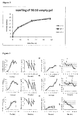
- Figure 1 shows the cumulative Mg +2 released from the pHmH-1 at different pH values.
- the release rate of [OH - ] is calculated from this data based on stoichiometry.
- the total amount of Mg +2 released over typical culture duration is thus a small fraction of the initial loading of magnesium hydroxide in the pHmH-1.
- the slope of the graph of Mg+2 released vs. time in Figure 1a provide estimates of the release rate of Mg+2 at the different pH.
- the release rate can be seen increasing with decreasing pH ( Figure 1b ). Since HEMA:EGDMA hydrogels are not known to be pH responsive, this pH responsive behavior of the release rate is probably observed due to the phenomenon of increasing solubility of a base with decreasing pH.
- pHmH-3 hydrogels were added to phosphate buffers at different pH to evaluate release of magnesium at different pH values.
- Phosphate buffer comprised NaH 2 PO 4 and Na 2 HPO 4 in the following amounts, dissolved in 500 ml water: for pH 8- 1.4 g and 24.97 g respectively , pH 7 - 7.836g and 15.466 g respectively, pH 6- 12.143 g and 3.217 g respectively, pH 5 - 13.614 g and 0.45 g
- the Figures 1a and 1c clearly shows that the release rate of the base may be tailored by varying the composition of the carrier.
- a suspension CHO cell line (Inbiopro) was used to evaluate the ability of the pHmH-1 discs as exemplified in example 1 to maintain pH in suspension cells during a fed batch culture.
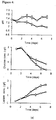
- Cells were inoculated at a density of 0.3x10 6 cells/ml in 20 ml CD CHO medium (Invitrogen Corporation, CA, USA) containing 8mM glutamine, without antibiotics in shake flasks (37°C, 10% CO2, 110 rpm) and fed with glucose and protein hydrolysate at indicated times. 4 g/l hydrolysate was added at the first feed, and 2 g/l at subsequent feed additions. Glucose concentrations are shown in Figure 3 .
- Hydrogels were added on two schedules (a) Single pHmH-1 added on day 3 (b) Staggered addition: The first pHmH-1 disc was added on day 3, the second pHmH-1 disc was added at the time of the second feed. Samples were taken every day for measuring cell density, viability, glucose and lactate concentrations (the cells make lactate which affects pH) and pH. Cell density was quantified using a haemocytometer. Viability was assessed using a tryptan blue dye exclusion assay. Glucose and lactate concentrations were measured on a YSI Biochemistry analyzer. 100-150 ⁇ l of the cell supernatant after centrifugation of the sample was allowed to reequilibrate with 10% CO 2 in the incubator.
- pHmH-1 discs were also evaluated for pH maintenance for adherent cells using A549 as a model system.
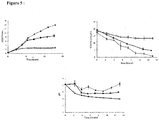
- A549 cells were seeded in 8ml DMEM:F12 medium with 2 g/l sodium bicarbonate and 10% FBS without antibiotics in 25cm 2 tissue culture flasks with two pHmH-1 discs. Control cultures were likewise seeded in triplicate without the addition of pHmH-1 disc. All flasks were incubated at 37°C under 5% CO 2 . 150 ⁇ l samples were withdrawn everyday for measuring pH. Cells were observed under an inverted phase contrast microscope to visually confirm cell growth.
- Gels made were the polymers of 0.5% Azobisisobutyronitrile (AIBN- as initiator) solution (w/v) in Hydroxyethylmethacrylate (HEMA) with 5%v/v Ethylene glycol dimethylacrylate (EGDMA as cross linker).
- Inner surfaces of glass tubes (with flat bottom) of 1.4 mm inner diameter were coated with Silanization solution (5% dichlorodimethylsilane (v/v) in heptane), to make the surface hydrophobic. These were then dried in oven for 15 minutes at 50°C. These were then filled with 625 mg glucose and 50 mg Mg(OH) 2 .
- HEMA+EGDMA+AIBM mixture 600 ⁇ l of HEMA+EGDMA+AIBM mixture was added to 625 mg glucose +50mg Mg(OH) 2 and allowed to polymerize in water bath for 1 hour at 75°C. The gels formed were then removed off the tube by breaking the tube, washed for half an hour in RO water. Before addition to media, they were surface sterilised with 70% ethanol, rinsed well in sterile water and used.
- Ecoli K12 was cultured in 20 ml Modified Willms and Reuss medium containing 200 mM MOPS and glucose as the carbon source.
- the modified Willms and Reuss medium was prepared as described by (Scheidle et al., 2011) consists of 20 g/L glucose; 5 g/L (NH 4 ) 2 SO 4 ; 0.5 g/L NH 4 Cl; 3 g/L K 2 HPO 4 ; 2 g/L Na 2 SO 4 ; 0.5 g/L MgSO 4 ⁇ 7H 2 O; 0.01 g/L thiamine hydrochloride; 1 mL/L trace element solution (0.54 g/L ZnSO 4 ⁇ 7H 2 O; 0.48 g/L CuSO 4 ⁇ 5H 2 O; 0.3 g/L MnSO 4 ⁇ H 2 O; 0.54 g/L CoCl 2 ⁇ 6H 2 O; 41.76 g/L FeCl 3 ⁇ 6H 2 O; 1.98 g/L CaCl 2 ⁇ 2H 2 O; 33.39 g/L Na 2 EDTA.
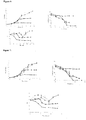
- the pHmH-2 hydrogels used in the study were autoclaved at 15 psi and 121°C for 20 minutes before their addition in E. coli K12 cultures. The cultures were maintained in a shaker incubator at 37 °C with a shaking speed of 250 rpm. Hydrogel was not added to control cultures. Hydrogels were added at (a) Single pHmH-2 at beginning of culture, (b) One at the beginning and one 4 hours after inoculation and (c) Two pHmH-2 at the beginning of the culture. All the culture flasks were sampled at regular intervals for the measurement of optical density at 600 nm.
- Figure 7 is with 50 mM MOPS. It may be concluded that while the hydrogels promote better cell growth in all cases, addition of buffer further improves pH management of culture. Also, it may be concluded that staggered addition of pHmH as described herein may be resorted to for better culture performance and retains the pH management efficiency of the system.
- Luria Bertani broth consists of 10 g/L tryptone, 5 g/L yeast extract and 10 g/L NaCl. 20g/L glucose was added to LB broth to serve as carbon source.
- This strain was grown in 20 ml LB medium containing 20 g/l glucose and 100 ⁇ g/ml ampicillin.
- pHmH-2 was added at the beginning of the culture and another one was added 2 hours after inoculation. After 8 hours of inoculation, 1 ml of sample was taken from control flasks and from the flasks containing hydrogels. These samples were harvested by centrifugation at 10,000 rpm for 5 min, the medium was decanted and the pellet was stored at -80°C for further processing for plasmid DNA purification.
- Plasmid DNA was purified using QIAprep Spin Miniprep Kit from QIAGEN, Hilden, Germany.
- Figure 9 shows the plasmid yields from control cultures and pHmH-2 added cultures. The purified Plasmid DNA was quantified by measuring the absorbance at 260 nm using a NanoDrop 2000 Spectrophotometer.
- E coli TOP 10 transformed with plasmid was cultured in LB with addition of both glucose loaded hydrogels and pHmH-3. Control cultures were cultured in LB with no hydrogels added and harvested after 14 hours.
- E. coli TOP10 50 ml cultures of E. coli TOP10 were cultured in LB supplemented with 100 ⁇ g/ml ampicillin in 250 ml shake flasks. Cultures were inoculated at an OD of 0.1 and were incubated at 250 rpm at 37°C. When the culture OD reached approximately 2, only the glucose loaded hydrogel or the glucose loaded hydrogels and pHmH-3 were added respectively. Cultures were incubated for a further 15 hours. Control cultures with no hydrogel addition were inoculated from an overnight culture in LB + ampicillin by a 500-fold dilution and cultured further for 14 hours. 1 ml of sample was taken at harvest.
- Table 1 lists the final OD 550 , pH and plasmid yields in the three conditions.
- the cultures with both the glucose loaded hydrogels and pHmH-3 showed a 348% increase in OD and a 394% increase in plasmid yields compared to the control cultures.
- the pH at the end of the culture was similar to the control.
- Table 1 Effect of hydrogel addition on volumetric plasmid yield. OD 550 , final culture pH and volumetric plasmid yield in control cultures in LB, and cultures in LB with glucose loaded hydrogels with pHmH-1. 95% confidence intervals are reported.
Landscapes
- Life Sciences & Earth Sciences (AREA)
- Engineering & Computer Science (AREA)
- Health & Medical Sciences (AREA)
- Chemical & Material Sciences (AREA)
- Organic Chemistry (AREA)
- Biotechnology (AREA)
- Bioinformatics & Cheminformatics (AREA)
- Genetics & Genomics (AREA)
- Wood Science & Technology (AREA)
- Zoology (AREA)
- Biomedical Technology (AREA)
- Microbiology (AREA)
- Biochemistry (AREA)
- General Engineering & Computer Science (AREA)
- General Health & Medical Sciences (AREA)
- Cell Biology (AREA)
- Medicinal Chemistry (AREA)
- Tropical Medicine & Parasitology (AREA)
- Virology (AREA)
- Micro-Organisms Or Cultivation Processes Thereof (AREA)
Applications Claiming Priority (2)
| Application Number | Priority Date | Filing Date | Title |
|---|---|---|---|
| IN2302DE2012 IN2012DE02302A (OSRAM) | 2012-07-31 | 2012-07-31 | |
| PCT/IN2013/000475 WO2014020617A1 (en) | 2012-07-31 | 2013-07-31 | A system for in-situ management of ph of culture |
Publications (2)
| Publication Number | Publication Date |
|---|---|
| EP2885401A1 EP2885401A1 (en) | 2015-06-24 |
| EP2885401B1 true EP2885401B1 (en) | 2018-10-24 |
Family
ID=49237573
Family Applications (1)
| Application Number | Title | Priority Date | Filing Date |
|---|---|---|---|
| EP13766719.2A Active EP2885401B1 (en) | 2012-07-31 | 2013-07-31 | A system for in-situ management of ph of culture |
Country Status (4)
| Country | Link |
|---|---|
| US (1) | US9677046B2 (OSRAM) |
| EP (1) | EP2885401B1 (OSRAM) |
| IN (1) | IN2012DE02302A (OSRAM) |
| WO (1) | WO2014020617A1 (OSRAM) |
Citations (2)
| Publication number | Priority date | Publication date | Assignee | Title |
|---|---|---|---|---|
| US20090070722A1 (en) * | 2007-09-06 | 2009-03-12 | Jeanne Bickford | Method for generating device model overrides through the use of on-chip parametric measurement macros |
| US20090190135A1 (en) * | 2007-11-28 | 2009-07-30 | University Of Massachusetts Lowell | CELL CULTURE HYDROGEL WITH pH INDICATOR |
Family Cites Families (5)
| Publication number | Priority date | Publication date | Assignee | Title |
|---|---|---|---|---|
| JPS62151155A (ja) * | 1985-09-17 | 1987-07-06 | Ajinomoto Co Inc | チ−ズホエ−を原料とする調味料の製造方法 |
| US6180688B1 (en) * | 1997-12-15 | 2001-01-30 | Ivoclar Ag | Ion-releasing composite material |
| CN1301285C (zh) | 2002-06-19 | 2007-02-21 | 昭和电工株式会社 | 水凝胶、水凝胶的制备方法及其用途 |
| MX2008012248A (es) * | 2006-03-28 | 2009-02-20 | Gelesis Inc | Uso de materiales polimericos con otras sustancias para rendimiento mejorado. |
| US9506029B2 (en) * | 2010-12-30 | 2016-11-29 | University Of Massachusetts Lowell | Responsive cell culture hydrogel |
-
2012
- 2012-07-31 IN IN2302DE2012 patent/IN2012DE02302A/en unknown
-
2013
- 2013-07-31 WO PCT/IN2013/000475 patent/WO2014020617A1/en not_active Ceased
- 2013-07-31 EP EP13766719.2A patent/EP2885401B1/en active Active
- 2013-07-31 US US14/418,880 patent/US9677046B2/en active Active
Patent Citations (2)
| Publication number | Priority date | Publication date | Assignee | Title |
|---|---|---|---|---|
| US20090070722A1 (en) * | 2007-09-06 | 2009-03-12 | Jeanne Bickford | Method for generating device model overrides through the use of on-chip parametric measurement macros |
| US20090190135A1 (en) * | 2007-11-28 | 2009-07-30 | University Of Massachusetts Lowell | CELL CULTURE HYDROGEL WITH pH INDICATOR |
Also Published As
| Publication number | Publication date |
|---|---|
| US9677046B2 (en) | 2017-06-13 |
| WO2014020617A1 (en) | 2014-02-06 |
| EP2885401A1 (en) | 2015-06-24 |
| US20150210980A1 (en) | 2015-07-30 |
| IN2012DE02302A (OSRAM) | 2015-10-16 |
Similar Documents
| Publication | Publication Date | Title |
|---|---|---|
| Seidel et al. | Green bioprinting: extrusion-based fabrication of plant cell-laden biopolymer hydrogel scaffolds | |
| Johnston et al. | Cell‐Laden Hydrogels for Multikingdom 3D Printing | |
| Qi et al. | Behavior of microbial growth and metabolism in alginate–chitosan–alginate (ACA) microcapsules | |
| CN104316475B (zh) | 一种基于分光光度法的活芽孢含量高通量检测方法 | |
| Oda et al. | Efficient differentiation of stem cells encapsulated in a cytocompatible phospholipid polymer hydrogel with tunable physical properties | |
| Butelmann et al. | Metabolism control in 3D-printed living materials improves fermentation | |
| AU2019273006B2 (en) | System for cell culture in a bioreactor | |
| Cao et al. | Control strategy of pH, dissolved oxygen concentration and stirring speed for enhancing β‐poly (malic acid) production by Aureobasidium pullulans ipe‐1 | |
| CN110170071A (zh) | 促进海藻酸盐基3d打印生物墨水体内外降解和细胞伸展黏附的方法 | |
| Jaeger et al. | Beyond agar: gel substrates with improved optical clarity and drug efficiency and reduced autofluorescence for microbial growth experiments | |
| CN102516473B (zh) | 细胞片智能分离用共聚纳米复合水凝胶及其制备方法与应用 | |
| Rahmatnejad et al. | A novel approach to noninvasive monitoring of dissolved carbon dioxide in small-scale cell culture processes | |
| CN1238495C (zh) | 动物细胞多孔微载体固定化高效培养方法及其培养基 | |
| US9677046B2 (en) | System for in-situ management of pH of culture | |
| CN104328083A (zh) | 温度和糖双重敏感的水凝胶基材的制备方法及其应用 | |
| Zhang et al. | The incorporation of 70s bioactive glass to the osteogenic differentiation of murine embryonic stem cells in 3D bioreactors | |
| Mishra et al. | Entrapment of Saccharomyces cerevisiae and 3T3 fibroblast cells into blue light cured hydrogels | |
| CN105441350A (zh) | 产具有多种酶活性的枯草芽孢杆菌及其应用 | |
| CN112972712B (zh) | 一种用于处理生物墨水的热压灭菌程序及其在人肝类器官3d模型构建中的应用 | |
| Sanil et al. | In situ pH management for microbial culture in shake flasks and its application to increase plasmid yield | |
| Charlet et al. | Immobilisation of Solanum chrysotrichum plant cells withinCa-alginate gel beads to produce an antimycotic spirostanol saponin | |
| SK9652000A3 (en) | Preparation of cells for production of biologicals | |
| Mei et al. | Cultivation and modelling of encapsulated Saccharomyces cerevisiae in NaCS-PDMDAAC polyelectrolyte complexes | |
| Previtera et al. | Preparation of DNA-crosslinked polyacrylamide hydrogels | |
| Yang et al. | In vitro study of the interactions of galactosylated thermo-responsive hydrogels with cells |
Legal Events
| Date | Code | Title | Description |
|---|---|---|---|
| PUAI | Public reference made under article 153(3) epc to a published international application that has entered the european phase |
Free format text: ORIGINAL CODE: 0009012 |
|
| 17P | Request for examination filed |
Effective date: 20150206 |
|
| AK | Designated contracting states |
Kind code of ref document: A1 Designated state(s): AL AT BE BG CH CY CZ DE DK EE ES FI FR GB GR HR HU IE IS IT LI LT LU LV MC MK MT NL NO PL PT RO RS SE SI SK SM TR |
|
| AX | Request for extension of the european patent |
Extension state: BA ME |
|
| DAX | Request for extension of the european patent (deleted) | ||
| 17Q | First examination report despatched |
Effective date: 20160126 |
|
| STAA | Information on the status of an ep patent application or granted ep patent |
Free format text: STATUS: EXAMINATION IS IN PROGRESS |
|
| REG | Reference to a national code |
Ref country code: DE Ref legal event code: R079 Ref document number: 602013045601 Country of ref document: DE Free format text: PREVIOUS MAIN CLASS: C12N0005000000 Ipc: C12N0001200000 |
|
| GRAP | Despatch of communication of intention to grant a patent |
Free format text: ORIGINAL CODE: EPIDOSNIGR1 |
|
| STAA | Information on the status of an ep patent application or granted ep patent |
Free format text: STATUS: GRANT OF PATENT IS INTENDED |
|
| RIC1 | Information provided on ipc code assigned before grant |
Ipc: C12N 5/00 20060101ALI20180522BHEP Ipc: C12N 1/20 20060101AFI20180522BHEP |
|
| INTG | Intention to grant announced |
Effective date: 20180619 |
|
| GRAS | Grant fee paid |
Free format text: ORIGINAL CODE: EPIDOSNIGR3 |
|
| GRAA | (expected) grant |
Free format text: ORIGINAL CODE: 0009210 |
|
| STAA | Information on the status of an ep patent application or granted ep patent |
Free format text: STATUS: THE PATENT HAS BEEN GRANTED |
|
| AK | Designated contracting states |
Kind code of ref document: B1 Designated state(s): AL AT BE BG CH CY CZ DE DK EE ES FI FR GB GR HR HU IE IS IT LI LT LU LV MC MK MT NL NO PL PT RO RS SE SI SK SM TR |
|
| REG | Reference to a national code |
Ref country code: CH Ref legal event code: EP |
|
| REG | Reference to a national code |
Ref country code: IE Ref legal event code: FG4D |
|
| REG | Reference to a national code |
Ref country code: AT Ref legal event code: REF Ref document number: 1056687 Country of ref document: AT Kind code of ref document: T Effective date: 20181115 |
|
| REG | Reference to a national code |
Ref country code: DE Ref legal event code: R096 Ref document number: 602013045601 Country of ref document: DE |
|
| REG | Reference to a national code |
Ref country code: NL Ref legal event code: MP Effective date: 20181024 |
|
| REG | Reference to a national code |
Ref country code: LT Ref legal event code: MG4D |
|
| REG | Reference to a national code |
Ref country code: AT Ref legal event code: MK05 Ref document number: 1056687 Country of ref document: AT Kind code of ref document: T Effective date: 20181024 |
|
| PG25 | Lapsed in a contracting state [announced via postgrant information from national office to epo] |
Ref country code: NL Free format text: LAPSE BECAUSE OF FAILURE TO SUBMIT A TRANSLATION OF THE DESCRIPTION OR TO PAY THE FEE WITHIN THE PRESCRIBED TIME-LIMIT Effective date: 20181024 |
|
| PG25 | Lapsed in a contracting state [announced via postgrant information from national office to epo] |
Ref country code: LV Free format text: LAPSE BECAUSE OF FAILURE TO SUBMIT A TRANSLATION OF THE DESCRIPTION OR TO PAY THE FEE WITHIN THE PRESCRIBED TIME-LIMIT Effective date: 20181024 Ref country code: LT Free format text: LAPSE BECAUSE OF FAILURE TO SUBMIT A TRANSLATION OF THE DESCRIPTION OR TO PAY THE FEE WITHIN THE PRESCRIBED TIME-LIMIT Effective date: 20181024 Ref country code: ES Free format text: LAPSE BECAUSE OF FAILURE TO SUBMIT A TRANSLATION OF THE DESCRIPTION OR TO PAY THE FEE WITHIN THE PRESCRIBED TIME-LIMIT Effective date: 20181024 Ref country code: BG Free format text: LAPSE BECAUSE OF FAILURE TO SUBMIT A TRANSLATION OF THE DESCRIPTION OR TO PAY THE FEE WITHIN THE PRESCRIBED TIME-LIMIT Effective date: 20190124 Ref country code: HR Free format text: LAPSE BECAUSE OF FAILURE TO SUBMIT A TRANSLATION OF THE DESCRIPTION OR TO PAY THE FEE WITHIN THE PRESCRIBED TIME-LIMIT Effective date: 20181024 Ref country code: PL Free format text: LAPSE BECAUSE OF FAILURE TO SUBMIT A TRANSLATION OF THE DESCRIPTION OR TO PAY THE FEE WITHIN THE PRESCRIBED TIME-LIMIT Effective date: 20181024 Ref country code: IS Free format text: LAPSE BECAUSE OF FAILURE TO SUBMIT A TRANSLATION OF THE DESCRIPTION OR TO PAY THE FEE WITHIN THE PRESCRIBED TIME-LIMIT Effective date: 20190224 Ref country code: FI Free format text: LAPSE BECAUSE OF FAILURE TO SUBMIT A TRANSLATION OF THE DESCRIPTION OR TO PAY THE FEE WITHIN THE PRESCRIBED TIME-LIMIT Effective date: 20181024 Ref country code: NO Free format text: LAPSE BECAUSE OF FAILURE TO SUBMIT A TRANSLATION OF THE DESCRIPTION OR TO PAY THE FEE WITHIN THE PRESCRIBED TIME-LIMIT Effective date: 20190124 Ref country code: AT Free format text: LAPSE BECAUSE OF FAILURE TO SUBMIT A TRANSLATION OF THE DESCRIPTION OR TO PAY THE FEE WITHIN THE PRESCRIBED TIME-LIMIT Effective date: 20181024 |
|
| PG25 | Lapsed in a contracting state [announced via postgrant information from national office to epo] |
Ref country code: GR Free format text: LAPSE BECAUSE OF FAILURE TO SUBMIT A TRANSLATION OF THE DESCRIPTION OR TO PAY THE FEE WITHIN THE PRESCRIBED TIME-LIMIT Effective date: 20190125 Ref country code: RS Free format text: LAPSE BECAUSE OF FAILURE TO SUBMIT A TRANSLATION OF THE DESCRIPTION OR TO PAY THE FEE WITHIN THE PRESCRIBED TIME-LIMIT Effective date: 20181024 Ref country code: PT Free format text: LAPSE BECAUSE OF FAILURE TO SUBMIT A TRANSLATION OF THE DESCRIPTION OR TO PAY THE FEE WITHIN THE PRESCRIBED TIME-LIMIT Effective date: 20190224 Ref country code: AL Free format text: LAPSE BECAUSE OF FAILURE TO SUBMIT A TRANSLATION OF THE DESCRIPTION OR TO PAY THE FEE WITHIN THE PRESCRIBED TIME-LIMIT Effective date: 20181024 Ref country code: SE Free format text: LAPSE BECAUSE OF FAILURE TO SUBMIT A TRANSLATION OF THE DESCRIPTION OR TO PAY THE FEE WITHIN THE PRESCRIBED TIME-LIMIT Effective date: 20181024 |
|
| REG | Reference to a national code |
Ref country code: DE Ref legal event code: R097 Ref document number: 602013045601 Country of ref document: DE |
|
| PG25 | Lapsed in a contracting state [announced via postgrant information from national office to epo] |
Ref country code: DK Free format text: LAPSE BECAUSE OF FAILURE TO SUBMIT A TRANSLATION OF THE DESCRIPTION OR TO PAY THE FEE WITHIN THE PRESCRIBED TIME-LIMIT Effective date: 20181024 Ref country code: IT Free format text: LAPSE BECAUSE OF FAILURE TO SUBMIT A TRANSLATION OF THE DESCRIPTION OR TO PAY THE FEE WITHIN THE PRESCRIBED TIME-LIMIT Effective date: 20181024 Ref country code: CZ Free format text: LAPSE BECAUSE OF FAILURE TO SUBMIT A TRANSLATION OF THE DESCRIPTION OR TO PAY THE FEE WITHIN THE PRESCRIBED TIME-LIMIT Effective date: 20181024 |
|
| PG25 | Lapsed in a contracting state [announced via postgrant information from national office to epo] |
Ref country code: SK Free format text: LAPSE BECAUSE OF FAILURE TO SUBMIT A TRANSLATION OF THE DESCRIPTION OR TO PAY THE FEE WITHIN THE PRESCRIBED TIME-LIMIT Effective date: 20181024 Ref country code: EE Free format text: LAPSE BECAUSE OF FAILURE TO SUBMIT A TRANSLATION OF THE DESCRIPTION OR TO PAY THE FEE WITHIN THE PRESCRIBED TIME-LIMIT Effective date: 20181024 Ref country code: SM Free format text: LAPSE BECAUSE OF FAILURE TO SUBMIT A TRANSLATION OF THE DESCRIPTION OR TO PAY THE FEE WITHIN THE PRESCRIBED TIME-LIMIT Effective date: 20181024 Ref country code: RO Free format text: LAPSE BECAUSE OF FAILURE TO SUBMIT A TRANSLATION OF THE DESCRIPTION OR TO PAY THE FEE WITHIN THE PRESCRIBED TIME-LIMIT Effective date: 20181024 |
|
| PLBE | No opposition filed within time limit |
Free format text: ORIGINAL CODE: 0009261 |
|
| STAA | Information on the status of an ep patent application or granted ep patent |
Free format text: STATUS: NO OPPOSITION FILED WITHIN TIME LIMIT |
|
| 26N | No opposition filed |
Effective date: 20190725 |
|
| PG25 | Lapsed in a contracting state [announced via postgrant information from national office to epo] |
Ref country code: SI Free format text: LAPSE BECAUSE OF FAILURE TO SUBMIT A TRANSLATION OF THE DESCRIPTION OR TO PAY THE FEE WITHIN THE PRESCRIBED TIME-LIMIT Effective date: 20181024 |
|
| PG25 | Lapsed in a contracting state [announced via postgrant information from national office to epo] |
Ref country code: MC Free format text: LAPSE BECAUSE OF FAILURE TO SUBMIT A TRANSLATION OF THE DESCRIPTION OR TO PAY THE FEE WITHIN THE PRESCRIBED TIME-LIMIT Effective date: 20181024 |
|
| REG | Reference to a national code |
Ref country code: CH Ref legal event code: PL |
|
| PG25 | Lapsed in a contracting state [announced via postgrant information from national office to epo] |
Ref country code: TR Free format text: LAPSE BECAUSE OF FAILURE TO SUBMIT A TRANSLATION OF THE DESCRIPTION OR TO PAY THE FEE WITHIN THE PRESCRIBED TIME-LIMIT Effective date: 20181024 |
|
| REG | Reference to a national code |
Ref country code: BE Ref legal event code: MM Effective date: 20190731 |
|
| PG25 | Lapsed in a contracting state [announced via postgrant information from national office to epo] |
Ref country code: BE Free format text: LAPSE BECAUSE OF NON-PAYMENT OF DUE FEES Effective date: 20190731 Ref country code: CH Free format text: LAPSE BECAUSE OF NON-PAYMENT OF DUE FEES Effective date: 20190731 Ref country code: LI Free format text: LAPSE BECAUSE OF NON-PAYMENT OF DUE FEES Effective date: 20190731 Ref country code: LU Free format text: LAPSE BECAUSE OF NON-PAYMENT OF DUE FEES Effective date: 20190731 |
|
| PG25 | Lapsed in a contracting state [announced via postgrant information from national office to epo] |
Ref country code: FR Free format text: LAPSE BECAUSE OF NON-PAYMENT OF DUE FEES Effective date: 20190731 |
|
| PG25 | Lapsed in a contracting state [announced via postgrant information from national office to epo] |
Ref country code: IE Free format text: LAPSE BECAUSE OF NON-PAYMENT OF DUE FEES Effective date: 20190731 |
|
| PG25 | Lapsed in a contracting state [announced via postgrant information from national office to epo] |
Ref country code: CY Free format text: LAPSE BECAUSE OF FAILURE TO SUBMIT A TRANSLATION OF THE DESCRIPTION OR TO PAY THE FEE WITHIN THE PRESCRIBED TIME-LIMIT Effective date: 20181024 |
|
| PG25 | Lapsed in a contracting state [announced via postgrant information from national office to epo] |
Ref country code: MT Free format text: LAPSE BECAUSE OF FAILURE TO SUBMIT A TRANSLATION OF THE DESCRIPTION OR TO PAY THE FEE WITHIN THE PRESCRIBED TIME-LIMIT Effective date: 20181024 Ref country code: HU Free format text: LAPSE BECAUSE OF FAILURE TO SUBMIT A TRANSLATION OF THE DESCRIPTION OR TO PAY THE FEE WITHIN THE PRESCRIBED TIME-LIMIT; INVALID AB INITIO Effective date: 20130731 |
|
| PG25 | Lapsed in a contracting state [announced via postgrant information from national office to epo] |
Ref country code: MK Free format text: LAPSE BECAUSE OF FAILURE TO SUBMIT A TRANSLATION OF THE DESCRIPTION OR TO PAY THE FEE WITHIN THE PRESCRIBED TIME-LIMIT Effective date: 20181024 |
|
| P01 | Opt-out of the competence of the unified patent court (upc) registered |
Effective date: 20230529 |
|
| PGFP | Annual fee paid to national office [announced via postgrant information from national office to epo] |
Ref country code: DE Payment date: 20250825 Year of fee payment: 13 |
|
| PGFP | Annual fee paid to national office [announced via postgrant information from national office to epo] |
Ref country code: GB Payment date: 20250721 Year of fee payment: 13 |