EP2861492B1 - Verfahren und passagierinformationssystem zur bereitstellung von fluginformationsdaten - Google Patents
Verfahren und passagierinformationssystem zur bereitstellung von fluginformationsdaten Download PDFInfo
- Publication number
- EP2861492B1 EP2861492B1 EP13728676.1A EP13728676A EP2861492B1 EP 2861492 B1 EP2861492 B1 EP 2861492B1 EP 13728676 A EP13728676 A EP 13728676A EP 2861492 B1 EP2861492 B1 EP 2861492B1
- Authority
- EP
- European Patent Office
- Prior art keywords
- aircraft
- information system
- signal
- passenger
- passenger information
- Prior art date
- Legal status (The legal status is an assumption and is not a legal conclusion. Google has not performed a legal analysis and makes no representation as to the accuracy of the status listed.)
- Revoked
Links
Images
Classifications
-
- G—PHYSICS
- G01—MEASURING; TESTING
- G01S—RADIO DIRECTION-FINDING; RADIO NAVIGATION; DETERMINING DISTANCE OR VELOCITY BY USE OF RADIO WAVES; LOCATING OR PRESENCE-DETECTING BY USE OF THE REFLECTION OR RERADIATION OF RADIO WAVES; ANALOGOUS ARRANGEMENTS USING OTHER WAVES
- G01S13/00—Systems using the reflection or reradiation of radio waves, e.g. radar systems; Analogous systems using reflection or reradiation of waves whose nature or wavelength is irrelevant or unspecified
- G01S13/74—Systems using reradiation of radio waves, e.g. secondary radar systems; Analogous systems
-
- B—PERFORMING OPERATIONS; TRANSPORTING
- B64—AIRCRAFT; AVIATION; COSMONAUTICS
- B64D—EQUIPMENT FOR FITTING IN OR TO AIRCRAFT; FLIGHT SUITS; PARACHUTES; ARRANGEMENT OR MOUNTING OF POWER PLANTS OR PROPULSION TRANSMISSIONS IN AIRCRAFT
- B64D11/00—Passenger or crew accommodation; Flight-deck installations not otherwise provided for
- B64D11/0015—Arrangements for entertainment or communications, e.g. radio, television
-
- H—ELECTRICITY
- H04—ELECTRIC COMMUNICATION TECHNIQUE
- H04N—PICTORIAL COMMUNICATION, e.g. TELEVISION
- H04N7/00—Television systems
- H04N7/18—Closed-circuit television [CCTV] systems, i.e. systems in which the video signal is not broadcast
Definitions
- the invention relates to a method for providing flight information data for a passenger in an aircraft, having the features of the preamble of claim 1, and to a corresponding passenger information system for providing flight information data having the features of the preamble of claim 9.
- passenger information systems such as on-board entertainment systems.
- the altitude, aircraft position, speed, destination, etc. are displayed so that the passenger has accurate information about where the aircraft is currently and how long it is still, for example, to the destination.
- US4975696A describes such a passenger information system for providing flight information data.
- flight information data are transmitted by means of wired interfaces from the cockpit systems to the cabin systems, which also include the passenger information systems.
- standard interfaces e.g. the data bus standard ARINC-429.
- network connections such as Ethernet connections, can be used for this purpose.
- the interfaces and the procedures for providing flight information data shall be designed and interpreted in such a way that an unintended influence on the cockpit systems is technically excluded by the cabin systems. Only with appropriate proof is the use of such a data connection or a correspondingly connected passenger information system permitted under aviation law.
- the invention is thus based on the object to provide a method and a corresponding passenger information system for providing flight information data, in which the described problems are reduced.
- a method for providing flight information data for a passenger in an aircraft wherein the flight information data is transmitted from a cockpit system of the aircraft to at least one passenger information system in the same aircraft, and wherein the flight information data sent as a secondary radar signal and / or monitoring signal and are received by the at least one passenger information system.
- a corresponding passenger information system for providing flight information data for a passenger in an aircraft comprising a receiving module which is configured to receive a secondary radar signal emitted by the aircraft and / or a monitoring signal radiated by the aircraft. and which is adapted to process and output the flight information data contained therein.
- the flight information data can also be decoded.
- the monitoring signal is preferably an automatic, continuously transmitted signal, which may be, for example, an air traffic control system for displaying the flight movements in the airspace.
- an air traffic control system for displaying the flight movements in the airspace.
- the aircraft continuously transmits flight information that can be received and evaluated by ground stations.
- Aircraft also send certain flight information as a secondary radar signal.
- the secondary radar differs from a primary radar in that no passive reflection takes place at the target, but a request with a response signal is answered by the secondary radar signal.
- aircraft respond to a request sent by the ground with relevant flight information, such as flight number or flight altitude, through a transponder present in the aircraft.
- the aircraft to be monitored actively respond to a received radar signal by transmitting a response on the same or a different frequency.
- At the system used in civil aviation polling is transferred, as a rule, on frequency 1030 MHz and the answer on frequency 1090 MHz.
- the secondary radar and / or monitoring signal is received and evaluated in its own aircraft without detours by the passenger information system.
- the flight information data are transmitted via the standard transmitted monitoring signal and / or the secondary radar signal transmitted by radio from the cockpit to the passenger information system in their own aircraft and can be evaluated there.
- the flight information data are transmitted as a secondary radar signal and / or monitoring signal and also received by the at least one passenger information system as a secondary radar signal and / or monitoring signal.
- the installation and the aviation law approval of the passenger information system can be considerably simplified. Because the proof required for the aviation law approval that the cockpit systems are not influenced can be provided very simply.
- the cockpit systems, such as the avionics flight instruments, must not be adversely affected by the passenger information system or the information transmission to the passenger information system.
- the flight information data are preferably transmitted from the cockpit system to the at least one passenger information system in accordance with the "Mode Selective" standard, also referred to as Mode S.
- Mode S standard is a standard defined by the International Civil Aviation Organization (ICAO).
- IAO International Civil Aviation Organization
- each aircraft has a transponder with a permanently programmed individual address. In this way, predetermined transponders are addressed in a query only by their address, so that not too many unwanted response signals are generated.
- the mode S is advantageous for the invention since comparatively many flight information data can be transmitted from the cockpit system to the passenger information system via it.
- the monitoring signal used is preferably the ADS-B signal continuously emitted by the aircraft.
- the ADS-B signal is the so-called "Automatic Dependent Surveillance" signal, also known as ADS Broadcast or ADS-B for short.
- Aircraft automatically transmit, for example, once per second, an undirected signal containing flight information data, such as flight number, aircraft type, speed, flight altitude and planned flight direction, in the ADS-B method.
- This flight information data is transmitted via the continuously radiated from the aircraft ADS-B signal from the cockpit system to at least one passenger information system and subsequently received, decoded, processed and output by the passenger information system for the passenger.
- the receiving module of the passenger information system preferably has a "Mode Selective" receiver and / or an ADS-B receiver. Both receivers are preferably realized in a receiving module.
- further flight information data from the at least one passenger information system and / or an additional data connection are used for the processing.
- the further flight information data can be stored, for example, in databases of the flight information system or retrieved via an Internet connection. In this way, the passenger can also be displayed such flight information data, which are not transmitted by default by the Sekundärradar- and / or monitoring signal.
- the passenger information system is thus preferably configured to process additional data from a database for processing the received flight information data of the passenger information system and / or from an additional data connection.
- the at least one passenger information system evaluates and co-processes signals from a traffic information service transmitted from the ground.
- a traffic information service transmitted from the ground.
- TIS Traffic Information Service
- This information can also be read and evaluated by the passenger information system in order to present the passenger even more extensive flight information.
- the at least one passenger information system receives the flight information data from a secondary radar signal and / or an ADS-B signal of another aircraft, processes these flight information data and outputs them to the passenger.
- a secondary radar signal and / or an ADS-B signal of another aircraft processes these flight information data and outputs them to the passenger.
- other aircraft also send their flight information via secondary radar and / or ADS-B.
- the passenger can be displayed in this way on a screen exactly where a plane flies, which he can, for example, just watching from the window.
- the flight information data of other aircraft can in principle just as the data of your own aircraft evaluated and preferably displayed on a map display in the cabin.
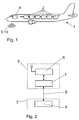
- FIG. 1 an aircraft 1 is shown, which emits both a secondary radar signal 3 and a monitoring signal 10.
- the secondary radar signal 3 is a signal generated in the mode Selective (Mode S), wherein the monitoring signal 10 is a continuously radiated in the ADS-B method (at regular intervals) signal.
- the secondary radar signal 3 and the monitoring signal 10 include flight information data such as the tail sign, the flight number, the aircraft position, altitude, heading, climb rates, tilt and / or speed of the aircraft. This flight information data is emitted by the aircraft 1 in accordance with appropriate specifications at specific intervals or sent as a response signal.
- passenger information systems 2 are provided in the aircraft 1. These passenger information systems 2 may be, for example, on-board entertainment and / or onboard information systems that provide passengers with flight information data.
- this flight information data is transmitted from a cockpit system 4 by the secondary radar and / or monitoring signal 3, 10 to at least one passenger information system 2.
- a signal is not generated especially for the passenger information system 2, but the passenger information system 2 receives such secondary radar and / or monitoring signals 3, 10, which are sent out anyway by the aircraft 1.
- the cockpit system 4 may be, for example, an aviation avionics flying instrument.
- At least one passenger information system 2 has a reception module 5, which in the Fig. 2 is shown in more detail.
- the Fig. 2 shows a passenger information system 2, which is connected via a data link 8 with the receiving module 5 in connection. It may be, for example, a receiving module 5, which includes a "Mode Selective" receiver and / or ADS-B receiver.
- the ADS-B receiver is therefore preferably realized together with the "Mode Selective" receiver in a receiving module 5.
- the receiving module 5 has a high-frequency module 6 and a data preprocessing unit 7. After the secondary radar signal 3 and / or the monitoring signal 10 has been received by the RF module 6, it is decoded and preprocessed in the data pre-processing unit. Subsequently, it is connected via the data connection 8, preferably as a USB data connection is executed, transferred to a processing unit 9 in the passenger information system.
- the flight information data contained in the secondary radar or monitoring signal 3, 10 are evaluated by the data processing unit 9 and preferably supplemented by further flight information data.
- This further flight information data can be retrieved, for example, from an Internet connection. It is also possible and preferable to retrieve it from a database provided in the passenger information system 2.
- the destination can be determined by the flight number.
- an output device for example a screen, is provided, on which the flight information data are displayed.
- a map representation is generated on which the own aircraft 1 and surrounded aircraft 1 are represented, whose flight information data can be received, for example, via the ADS-B receiver.
Landscapes
- Engineering & Computer Science (AREA)
- Radar, Positioning & Navigation (AREA)
- Remote Sensing (AREA)
- Computer Networks & Wireless Communication (AREA)
- Physics & Mathematics (AREA)
- General Physics & Mathematics (AREA)
- Aviation & Aerospace Engineering (AREA)
- Radar Systems Or Details Thereof (AREA)
- Traffic Control Systems (AREA)
Description
- Die Erfindung betrifft ein Verfahren zur Bereitstellung von Fluginformationsdaten für einen Passagier in einem Flugzeug mit den Merkmalen des Oberbegriffs von Anspruch 1 und ein entsprechendes Passagierinformationssystem zur Bereitstellung von Fluginformationsdaten mit den Merkmalen des Oberbegriffs von Anspruch 9.
- In Flugzeugen ist es üblich, den Passagieren über Passagierinformationssysteme, wie beispielsweise Bordinformations- bzw. Bordunterhaltungssysteme, Fluginformationen bereitzustellen. Auf einem Bildschirm werden beispielsweise die Flughöhe, Flugzeugposition, Geschwindigkeit, Reiseziel, usw. angezeigt, so dass der Passagier genaue Informationen darüber hat, wo sich das Flugzeug gerade befindet und wie lange es beispielsweise noch bis zum Reiseziel ist.
-
US4975696A beschreibt ein solches Passagierinformationssystem zur Bereitstellung von Fluginformationsdaten. - Diese Fluginformationsdaten werden mittels kabelgebundener Schnittstellen von den Cockpitsystemen an die Kabinensysteme, zu denen auch die Passagierinformationssysteme zählen, übermittelt. Zu diesem Zweck sind Standardschnittstellen, wie z.B. der Datenbusstandard ARINC-429, definiert. Alternativ können zu diesem Zweck auch Netzwerkverbindungen, wie beispielsweise Ethernetverbindungen, genutzt werden.
- In jedem Fall sind die Schnittstellen und die Verfahren zur Bereitstellung von Fluginformationsdaten so zu gestalten und auszulegen, dass eine unbeabsichtigte Beeinflussung der Cockpitsysteme durch die Kabinensysteme technisch ausgeschlossen ist. Nur mit entsprechendem Nachweis ist die Nutzung einer solchen Datenverbindung bzw. eines entsprechend angeschlossenen Passagierinformationssystems luftrechtlich zulässig.
- Diese spezielle vorgeschriebene Auslegung und Nachweisführung ist bei der Entwicklung, Produktion und Installation von Kabinensystemen mit einem erheblichen technischen und administrativen Aufwand verbunden.
- Der Erfindung liegt somit die Aufgabe zugrunde, ein Verfahren und ein entsprechendes Passagierinformationssystem zur Bereitstellung von Fluginformationsdaten zu schaffen, bei dem die beschriebenen Probleme reduziert sind.
- Die Erfindung löst diese Aufgabe mit den Merkmalen der unabhängigen Ansprüche. Somit wird zur Lösung der Aufgabe ein Verfahren zur Bereitstellung von Fluginformationsdaten für einen Passagier in einem Flugzeug vorgeschlagen, wobei die Fluginformationsdaten von einem Cockpitsystem des Flugzeugs zu mindestens einem Passagierinformationssystem in demselben Flugzeug übermittelt werden, und wobei die Fluginformationsdaten als Sekundärradarsignal und/oder Überwachungssignal ausgesendet und von dem mindestens einen Passagierinformationssystem empfangen werden.
- Erfindungsgemäß wird zur Lösung der Aufgabe auch ein entsprechendes Passagierinformationssystem zur Bereitstellung von Fluginformationsdaten für einen Passagier in einem Flugzeug vorgeschlagen, wobei das Passagierinformationssystem ein Empfangsmodul umfasst, welches dazu eingerichtet ist, ein vom Flugzeug ausgestrahltes Sekundärradarsignal und/oder ein vom Flugzeug ausgestrahltes Überwachungssignal zu empfangen, und welches dazu eingerichtet ist, die darin enthaltenen Fluginformationsdaten zu verarbeiten und auszugeben. Zusätzlich können die Fluginformationsdaten dabei auch dekodiert werden.
- Bei dem Überwachungssignal handelt es sich vorzugsweise um ein automatisches, kontinuierlich ausgesendetes Signal, welches beispielsweise ein System der Flugsicherung zur Anzeige der Flugbewegungen im Luftraum sein kann. Mit einem solchen Überwachungssignal sendet das Flugzeug kontinuierlich Fluginformationen aus, die von Bodenstationen empfangen und ausgewertet werden können.
- Flugzeuge senden zudem gewisse Fluginformationen als Sekundärradarsignal aus. Das Sekundärradar unterscheidet sich von einem Primärradar dadurch, dass am Ziel keine passive Reflexion stattfindet, sondern durch das Sekundärradarsignal eine Anfrage mit einem Antwortsignal beantwortet wird. Flugzeuge antworten somit beispielsweise auf eine vom Boden ausgesendete Anfrage mit relevanten Fluginformationen, wie Flugnummer oder Flughöhe, durch einen im Flugzeug vorhandenen Transponder. Die zu überwachenden Flugzeuge antworten aktiv auf ein empfangenes Radarsignal mit dem Aussenden einer Antwort auf der gleichen oder einer anderen Frequenz. Bei dem in der Zivilluftfahrt verwendeten System wird die Abfrage in der Regel auf der Frequenz 1030 MHz und die Antwort auf der Frequenz 1090 MHz übertragen.
- Das Sekundärradar- und/oder Überwachungssignal wird im eigenen Flugzeug ohne Umwege durch das Passagierinformationssystem empfangen und ausgewertet. Es wird somit keine extra kabelgebundene Datenverbindung zwischen Cockpitsystem und Passagierinformationssystem vorgesehen, sondern die Fluginformationsdaten werden über das standardmäßig ausgesendete Überwachungssignal und/oder das Sekundärradarsignal per Funk vom Cockpitsystem auf das Passagierinformationssystem im eigenen Flugzeug übertragen und können dort ausgewertet werden. Die Fluginformationsdaten werden als Sekundärradarsignal und/oder Überwachungssignal ausgesendet und von dem mindestens einen Passagierinformationssystem auch als Sekundärradarsignal und/oder Überwachungssignal empfangen.
- Durch diese Nutzung der vom Flugzeug ohnehin ausgesendeten Signale, deren eigentlicher Zweck nicht der Empfang im eigenen ausstrahlenden Flugzeug ist, kann die üblicherweise vorgesehene Kabelverbindung entfallen. Dadurch wird das Flugzeug insgesamt leichter und der Installationsaufwand ist gering.
- Durch die Nutzung des Sekundärradar- und/oder Überwachungssignals im eigenen Flugzeug kann zudem die Installation und die luftfahrtrechtliche Zulassung des Passagierinformationssystems erheblich vereinfacht werden. Denn der für die luftfahrtrechtliche Zulassung benötigte Nachweis, dass die Cockpitsysteme nicht beeinflusst werden, kann sehr einfach erbracht werden. Die Cockpitsysteme, wie beispielsweise die Fluginstrumente der Avionik, dürfen durch das Passagierinformationssystem bzw. der Informationsübermittlung an das Passagierinformationssystem nicht negativ beeinträchtigt werden.
- Wenn eine neue Datenverbindung von einem Cockpitsystem zur Kabine vorgesehen wird, muss dieser Nachweis aufwendig erbracht werden. Hingegen wird bei dem erfindungsgemäßen Verfahren bzw. beim erfindungsgemäßen Passagierinformationssystem ein ohnehin ausgesendetes Signal genutzt und ein in der Kabine vorgesehener passiver Empfänger stört die Cockpitsysteme nicht.
- Bei dem erfindungsgemäßen Verfahren bzw. dem erfindungsgemäßen Passagierinformationssystem ist eine Reihe von Aspekten vorteilhaft, die im Folgenden erläutert werden.
- Vorzugsweise werden die Fluginformationsdaten gemäß des "Mode Selektive" Standards, auch Mode S genannt, vom Cockpitsystem zum mindestens einen Passagierinformationssystem übermittelt.
- Bei dem Mode S Standard handelt es sich um einen durch die Internationale Zivilluftfahrtorganisation (ICAO) definierten Standard. Beim Mode S weist jedes Flugzeug einen Transponder mit einer fest einprogrammierten individuellen Adresse auf. Auf diese Weise werden bei einer Abfrage nur durch ihre Adresse vorbestimmte Transponder angesprochen, so dass nicht zu viele ungewünschte Antwortsignale erzeugt werden.
- Zudem ist der Mode S für die Erfindung vorteilhaft, da über ihn vergleichsweise viele Fluginformationsdaten vom Cockpitsystem zum Passagierinformationssystem übermittelbar sind.
- Vorzugsweise wird als Überwachungssignal das vom Flugzeug kontinuierlich ausgestrahlte ADS-B Signal genutzt. Bei dem ADS-B Signal handelt es sich um das sogenannte "Automatic Dependent Surveillance" Signal, auch ADS-Broadcast bzw. kurz ADS-B genannt.
- Flugzeuge senden beim ADS-B Verfahren selbständig, beispielsweise einmal pro Sekunde, ein ungerichtetes Signal, welches Fluginformationsdaten, wie beispielsweise Flugnummer, Flugzeugtyp, Geschwindigkeit, Flughöhe und geplante Flugrichtung, enthält. Diese Fluginformationsdaten werden über das vom Flugzeug kontinuierlich ausgestrahlte ADS-B Signal vom Cockpitsystem zum mindestens einen Passagierinformationssystem übermittelt und von dem Passagierinformationssystem anschließend empfangen, dekodiert, verarbeitet und für den Passagier ausgegeben.
- Zum Empfang der vom Flugzeug ausgesendeten Fluginformationsdaten weist das Empfangsmodul des Passagierinformationssystems entsprechend vorzugsweise einen "Mode Selektive" Empfänger und/oder einen ADS-B Empfänger auf. Beide Empfänger sind dabei vorzugsweise in einem Empfangsmodul realisiert.
- In einer bevorzugten Ausführungsform der Erfindung werden zur Verarbeitung weitere Fluginformationsdaten aus dem mindestens einen Passagierinformationssystem und/oder einer zusätzlichen Datenverbindung genutzt.
- Die weiteren Fluginformationsdaten können beispielsweise in Datenbanken des Fluginformationssystems hinterlegt sein oder durch eine Internetverbindung abgerufen werden. Auf diese Weise können dem Passagier auch solche Fluginformationsdaten angezeigt werden, die durch das Sekundärradar- und/oder Überwachungssignal standardmäßig nicht übermittelt werden.
- Es ist beispielsweise bevorzugt, den Abflugs- und/oder Ankunftsort des Flugzeugs von dem mindestens einen Passagierinformationssystem anhand der über das Sekundärradarsignal und/oder des Überwachungssignals empfangenen Flugnummer des Flugzeugs zu ermitteln. Dies kann durch Abgleich der Flugnummer mit einem Eintrag in einer Datenbank des Fluginformationssystems geschehen oder beispielsweise über eine Internetverbindung abgerufen werden. Das Passagierinformationssystem ist somit vorzugsweise dazu eingerichtet, zur Verarbeitung der empfangenen Fluginformationsdaten Zusatzdaten aus einer Datenbank des Passagierinformationssystems und/oder aus einer zusätzlichen Datenverbindung zu nutzen.
- In einer Ausführungsform der Erfindung ist es bevorzugt, dass das mindestens eine Passagierinformationssystem Signale von einem vom Boden ausgesendeten Verkehrsinformationsdienst auswertet und mitverarbeitet. Ein dafür bevorzugtes System ist der "Traffic Information Service" (TIS), über den beispielsweise Wetterdaten, Informationen über sich annähernde Flugzeuge und Flugfreigaben an das Flugzeug übermittelt werden. Diese Informationen können durch das Passagierinformationssystem auch mitgelesen und ausgewertet werden, um dem Passagier noch umfangreichere Fluginformationen darzustellen.
- In einer weiteren bevorzugten Ausführungsform der Erfindung empfängt das mindestens eine Passagierinformationssystem die Fluginformationsdaten aus einem Sekundärradarsignal und/oder einem ADS-B Signal eines weiteren Flugzeugs, verarbeitet diese Fluginformationsdaten und gibt sie dem Passagier aus. Genauso wie das Flugzeug, in dem sich das erfindungsgemäße Passagierinformationssystem befindet, senden auch andere Flugzeuge über Sekundärradar und/oder ADS-B ihre Fluginformationen aus.
- Wenn sich diese weiteren Flugzeuge in dem Umfeld des Passagierinformationssystems befinden, kann dieses auch diese Daten auswerten. Weiterhin ist es möglich, dass das Passagierinformationssystem diese Daten über eine zusätzliche Datenverbindung ergänzt bzw. vollständig abruft.
- Dem Passagier kann auf diese Weise auf einem Bildschirm genau angezeigt werden wohin ein Flugzeug fliegt, welches er beispielsweise aus dem Fenster gerade beobachten kann. Die Fluginformationsdaten weiterer Flugzeuge können dabei prinzipiell genauso wie die Daten des eigenen Flugzeugs ausgewertet und bevorzugt auf einer Kartendarstellung in der Kabine angezeigt werden.
- Die Erfindung wird im Folgenden anhand bevorzugter Ausführungsformen unter Bezugnahme auf die beigefügten Figuren erläutert. Dabei zeigt:
- Fig. 1
- eine Seitensicht eines Flugzeugs mit mehreren Passagierinformationssystemen; und
- Fig. 2
- eine schematische Ansicht eines erfindungsgemäßen Passagierinformationssystems.
- In der
Fig. 1 ist ein Flugzeug 1 dargestellt, welches sowohl ein Sekundärradarsignal 3 als auch ein Überwachungssignal 10 aussendet. - Das Sekundärradarsignal 3 ist ein im Mode Selektive (Mode S) erzeugtes Signal, bei dem Überwachungssignal 10 handelt es sich um ein im ADS-B Verfahren kontinuierlich (in regelmäßigen Abständen) ausgestrahltes Signal.
- Das Sekundärradarsignal 3 und das Überwachungssignal 10 enthalten Fluginformationsdaten, wie beispielsweise die Flugzeugkennung (tail sign), die Flugnummer, die Flugzeugposition, Flughöhe, Kurs, Steig- bzw. Senkraten, Neigung und/oder Geschwindigkeit des Flugzeugs. Diese Fluginformationsdaten werden vom Flugzeug 1 gemäß entsprechender Vorgaben in bestimmten Abständen ausgestrahlt bzw. als Antwortsignal gesendet.
- Für die Passagiere des Flugzeugs 1 sind mehrere Passagierinformationssysteme 2 im Flugzeug 1 vorgesehen. Diese Passagierinformationssysteme 2 können beispielsweise Bordunterhaltungs- und/oder Bordinformationssysteme sein, durch die den Passagieren Fluginformationsdaten bereitgestellt werden.
- Erfindungsgemäß werden diese Fluginformationsdaten von einem Cockpitsystem 4 durch das Sekundärradar- und/oder Überwachungssignal 3, 10 an mindestens ein Passagierinformationssystem 2 übermittelt. Dabei wird nicht extra für das Passagierinformationssystem 2 ein Signal erzeugt, sondern das Passagierinformationssystem 2 empfängt solche Sekundärradar- und/oder Überwachungssignale 3, 10, die ohnehin vom Flugzeug 1 ausgesendet werden. Das Cockpitsystem 4 kann beispielsweise ein Fluginstrument der Flugzeugavionik sein.
- Dazu weist mindestens ein Passagierinformationssystem 2 ein Empfangsmodul 5 auf, welches in der
Fig. 2 näher dargestellt ist. - Die
Fig. 2 zeigt ein Passagierinformationssystem 2, welches über eine Datenverbindung 8 mit dem Empfangsmodul 5 in Verbindung steht. Es kann sich dabei beispielsweise um ein Empfangsmodul 5 handeln, welches einen "Mode Selektive" Empfänger und/oder ADS-B Empfänger umfasst. Der ADS-B Empfänger ist demnach bevorzugt zusammen mit dem "Mode Selektive" Empfänger in einem Empfangsmodul 5 verwirklicht. - Das Empfangsmodul 5 weist ein Hochfrequenzmodul 6 und eine Datenvorverarbeitungseinheit 7 auf. Nachdem das Sekundärradarsignal 3 und/oder das Überwachungssignal 10 von dem Hochfrequenzmodul 6 empfangen worden ist, wird es in der Datenvorverarbeitungseinheit dekodiert und vorverarbeitet. Anschließend wird es über die Datenverbindung 8, die vorzugsweise als USB-Datenverbindung ausgeführt ist, auf eine Verarbeitungseinheit 9 im Passagierinformationssystem übertragen.
- Die im Sekundärradar- bzw. Überwachungssignal 3, 10 enthaltenen Fluginformationsdaten werden durch die Datenverarbeitungseinheit 9 ausgewertet und vorzugweise durch weitere Fluginformationsdaten ergänzt. Diese weiteren Fluginformationsdaten können beispielsweise aus einer Internetverbindung abgerufen werden. Es ist auch möglich und bevorzugt, sie aus einer in dem Passagierinformationssystem 2 vorgesehenen Datenbank abzurufen.
- Auf diese Weise kann beispielsweise das Reiseziel anhand der Flugnummer ermittelt werden. Zur Darstellung für den Passagier ist vorzugsweise eine Ausgabeeinrichtung, beispielsweise ein Bildschirm, vorgesehen, auf dem die Fluginformationsdaten dargestellt werden. Vorzugsweise wird eine Kartendarstellung erzeugt, auf der das eigene Flugzeug 1 und umgebene Flugzeuge 1 dargestellt werden, deren Fluginformationsdaten beispielsweise über den ADS-B Empfänger empfangen werden können.
-
- 1
- Flugzeug
- 2
- Passagierinformationssystem
- 3
- Sekundärradarsignal
- 4
- Cockpitsystem
- 5
- Empfangsmodul
- 6
- Hochfrequenzmodul
- 7
- Datenvorverarbeitungseinheit
- 8
- Datenverbindung
- 9
- Verarbeitungseinheit
- 10
- Überwachungssignal
Claims (11)
- Verfahren zur Bereitstellung von Fluginformationsdaten für einen Passagier in einem Flugzeug (1), wobei die Fluginformationsdaten von einem Cockpitsystem (4) des Flugzeugs (1) zu mindestens einem Passagierinformationssystem (2) in demselben Flugzeug (1) übermittelt werden, dadurch gekennzeichnet, dass die Fluginformationsdaten als Sekundärradarsignal (3) und/oder Überwachungssignal (10) ausgesendet und von dem mindestens einen Passagierinformationssystem (2) empfangen werden, wobei es sich bei dem Sekundärradarsignal (3) und/oder Überwachungssignal (10) um ein vom Flugzeug ohnehin ausgesendetes Signal handelt, dessen eigentlicher Zweck nicht der Empfang im eigenen ausstrahlenden Flugzeug ist, und wobei es sich bei dem Überwachungssignal (10) um ein automatisches, kontinuierlich ausgesendetes Signal, welches Teil eines Systems einer Flugsicherung zur Anzeige der Flugbewegungen im Luftraum ist, handelt.
- Verfahren nach Anspruch 1, dadurch gekennzeichnet, dass die Fluginformationsdaten gemäß des "Mode Selektive" Standards vom Cockpitsystem (4) zum mindestens einen Passagierinformationssystem (2) übermittelt werden.
- Verfahren nach Anspruch 1 oder 2, dadurch gekennzeichnet, dass als Überwachungssignal (10) das vom Flugzeug (1) kontinuierlich ausgestrahlte ADS-B Signal genutzt wird.
- Verfahren nach einem der vorangegangenen Ansprüche, dadurch gekennzeichnet, dass die an das mindestens eine Passagierinformationssystem (2) übermittelten Fluginformationsdaten von dem mindestens einen Passagierinformationssystem (2) dekodiert, verarbeitet und ausgegeben werden.
- Verfahren nach Anspruch 4, dadurch gekennzeichnet, dass zur Verarbeitung weitere Fluginformationsdaten aus dem mindestens einen Passagierinformationssystem (2) und/oder einer zusätzlichen Datenverbindung genutzt werden.
- Verfahren nach Anspruch 5, dadurch gekennzeichnet, dass der Abflugs- und Ankunftsort des Flugzeugs (1) von dem mindestens einen Passagierinformationssystem (2) anhand der über das Sekundärradarsignal (3) und/oder des Überwachungssignals (10) empfangenen Flugnummer des Flugzeugs (1) ermittelt wird.
- Verfahren nach einem der Ansprüche 4 bis 6, dadurch gekennzeichnet, dass das mindestens eine Passagierinformationssystem (2) Signale von einem vom Boden ausgesendeten Verkehrsinformationsdienst auswertet und mitverarbeitet.
- Verfahren nach einem der Ansprüche 4 bis 7, dadurch gekennzeichnet, dass das mindestens eine Passagierinformationssystem (2) die Fluginformationsdaten aus einem Sekundärradarsignal (3) und/oder einem ADS-B Signal eines weiteren Flugzeugs (1) empfängt, verarbeitet und ausgibt.
- Passagierinformationssystem (2) zur Bereitstellung von Fluginformationsdaten für einen Passagier in einem Flugzeug (1), dadurch gekennzeichnet, dass das Passagierinformationssystem ein Empfangsmodul (5) umfasst, welches dazu eingerichtet ist, ein vom Flugzeug (1) ausgestrahltes Sekundärradarsignal (3) und/oder ein vom Flugzeug (1) ausgestrahltes Überwachungssignal (10) zu empfangen und die darin enthaltenen Fluginformationsdaten zu verarbeiten und auszugeben, wobei es sich bei dem Sekundärradarsignal (3) und/oder Überwachungssignal (10) um ein vom Flugzeug ohnehin ausgesendetes Signal handelt, dessen eigentlicher Zweck nicht der Empfang im eigenen ausstrahlenden Flugzeug ist, und wobei es sich bei dem Überwachungssignal (10) um ein automatisches, kontinuierlich ausgesendetes Signal, welches Teil eines Systems einer Flugsicherung zur Anzeige der Flugbewegungen im Luftraum ist, handelt.
- Passagierinformationssystem (2) nach Anspruch 9, dadurch gekennzeichnet, dass das Empfangsmodul (5) einen "Mode Selektive" Empfänger und/oder einen ADS-B Empfänger aufweist.
- Passagierinformationssystem (2) nach Anspruch 9 oder 10, dadurch gekennzeichnet, dass es dazu eingerichtet ist, zur Verarbeitung der empfangenen Fluginformationsdaten Zusatzdaten aus einer Datenbank des Passagierinformationssystems (2) und/oder aus einer zusätzlichen Datenverbindung zu nutzen.
Applications Claiming Priority (2)
| Application Number | Priority Date | Filing Date | Title |
|---|---|---|---|
| DE201210210149 DE102012210149A1 (de) | 2012-06-15 | 2012-06-15 | Verfahren und Passagierinformationssystem zur Bereitstellung von Fluginformationsdaten |
| PCT/EP2013/001587 WO2013185886A1 (de) | 2012-06-15 | 2013-05-29 | Verfahren und passagierinformationssystem zur bereitstellung von fluginformationsdaten |
Publications (2)
| Publication Number | Publication Date |
|---|---|
| EP2861492A1 EP2861492A1 (de) | 2015-04-22 |
| EP2861492B1 true EP2861492B1 (de) | 2016-05-04 |
Family
ID=48625984
Family Applications (1)
| Application Number | Title | Priority Date | Filing Date |
|---|---|---|---|
| EP13728676.1A Revoked EP2861492B1 (de) | 2012-06-15 | 2013-05-29 | Verfahren und passagierinformationssystem zur bereitstellung von fluginformationsdaten |
Country Status (6)
| Country | Link |
|---|---|
| US (1) | US9964638B2 (de) |
| EP (1) | EP2861492B1 (de) |
| CN (1) | CN104379448A (de) |
| CA (1) | CA2872702A1 (de) |
| DE (1) | DE102012210149A1 (de) |
| WO (1) | WO2013185886A1 (de) |
Families Citing this family (3)
| Publication number | Priority date | Publication date | Assignee | Title |
|---|---|---|---|---|
| CN104122536B (zh) * | 2014-08-04 | 2016-08-24 | 四川九洲空管科技有限责任公司 | 一种基于目标牵引系统的低空域多路径反射抑制方法 |
| NL2016556B1 (nl) | 2016-04-05 | 2018-02-09 | Mi Group B V | Vliegtuiginformatiesysteem en werkwijze. |
| DE102017206593A1 (de) * | 2017-04-19 | 2018-10-25 | Lufthansa Technik Ag | Verfahren und System zur Zustandsüberwachung einer Bremse eines Luftfahrzeugs |
Family Cites Families (32)
| Publication number | Priority date | Publication date | Assignee | Title |
|---|---|---|---|---|
| US3660847A (en) * | 1968-08-30 | 1972-05-02 | Superior Oil Co | Aircraft position display |
| US4584603A (en) * | 1984-10-19 | 1986-04-22 | Harrison Elden D | Amusement and information system for use on a passenger carrier |
| US4647980A (en) * | 1986-01-21 | 1987-03-03 | Aviation Entertainment Corporation | Aircraft passenger television system |
| US4975696A (en) * | 1987-03-23 | 1990-12-04 | Asinc, Inc. | Real-time flight and destination display for aircraft passengers |
| US5077673A (en) * | 1990-01-09 | 1991-12-31 | Ryan International Corp. | Aircraft traffic alert and collision avoidance device |
| US5574648A (en) * | 1990-10-09 | 1996-11-12 | Pilley; Harold R. | Airport control/management system using GNSS-based methods and equipment for the control of surface and airborne traffic |
| US5596326A (en) * | 1995-07-17 | 1997-01-21 | Northrop Grumman Corporation | Secondary surveillance radar interrogation system using dual frequencies |
| US5835127A (en) * | 1996-04-25 | 1998-11-10 | Sony Corporation | Integrated electronic system utilizing a universal interface to support telephony and other communication services |
| US5884219A (en) * | 1996-10-10 | 1999-03-16 | Ames Maps L.L.C. | Moving map navigation system |
| US5929895A (en) * | 1996-11-27 | 1999-07-27 | Rockwell International Corporation | Low cost hybrid video distribution system for aircraft in-flight entertainment systems |
| IL120684A (en) * | 1997-04-16 | 2009-08-03 | Handelman Doron | Entertainment system |
| US5999882A (en) * | 1997-06-04 | 1999-12-07 | Sterling Software, Inc. | Method and system of providing weather information along a travel route |
| US6384783B1 (en) * | 1998-07-14 | 2002-05-07 | Rannoch Corporation | Method and apparatus for correlating flight identification data with secondary surveillance |
| US6477152B1 (en) * | 1998-12-30 | 2002-11-05 | Honeywell Inc. | Apparatus and method for data communications |
| US6885340B2 (en) * | 2000-02-29 | 2005-04-26 | Rannoch Corporation | Correlation of flight track data with other data sources |
| US7612716B2 (en) * | 1999-03-05 | 2009-11-03 | Era Systems Corporation | Correlation of flight track data with other data sources |
| US6313783B1 (en) * | 1999-03-24 | 2001-11-06 | Honeywell International, Inc. | Transponder having directional antennas |
| US7587733B2 (en) * | 2000-04-07 | 2009-09-08 | Livetv, Llc | Aircraft in-flight entertainment system providing weather information and associated methods |
| US6748597B1 (en) * | 2000-04-07 | 2004-06-08 | Live Tv, Inc. | Upgradable aircraft in-flight entertainment system and associated upgrading methods |
| US7707612B2 (en) * | 2000-04-07 | 2010-04-27 | Live Tv, Inc. | Aircraft in-flight entertainment system with soft fail and flight information features and associated methods |
| US6661353B1 (en) * | 2001-03-15 | 2003-12-09 | Matsushita Avionics Systems Corporation | Method for displaying interactive flight map information |
| US6792340B2 (en) * | 2001-05-01 | 2004-09-14 | Ronald Dunsky | Apparatus and method for providing live display of aircraft flight information |
| US6694249B1 (en) * | 2002-01-11 | 2004-02-17 | Rockwell Collins | Integrated surface moving map advisory system |
| US7769398B2 (en) * | 2002-11-15 | 2010-08-03 | The Boeing Company | Broadband wireless distribution system for mobile platform interior |
| US7786899B2 (en) * | 2006-10-17 | 2010-08-31 | Flightaware, Llc | System and method for displaying air traffic information |
| WO2009036362A1 (en) * | 2007-09-14 | 2009-03-19 | Panasonic Avionics Corporation | System and method for interfacing a portable media device with a vehicle information system |
| JP5386492B2 (ja) * | 2007-09-24 | 2014-01-15 | パナソニック・アビオニクス・コーポレイション | 移動中のモバイルプラットフォームにおけるブロードバンドコンテンツの受信システムおよび方法 |
| US8072374B2 (en) * | 2007-11-27 | 2011-12-06 | Zane Hovey | Automatic dependant surveillance systems and methods |
| US20090187640A1 (en) * | 2008-01-23 | 2009-07-23 | International Business Machines Corporation | In-flight information system |
| US8353006B2 (en) * | 2008-05-07 | 2013-01-08 | Livetv, Llc | Aircraft communications system using whitelists to control access and associated methods |
| US9016627B2 (en) * | 2009-10-02 | 2015-04-28 | Panasonic Avionics Corporation | System and method for providing an integrated user interface system at a seat |
| US8762047B2 (en) * | 2011-03-09 | 2014-06-24 | Window Seat, Inc. | Location-based in-route entertainment and information |
-
2012
- 2012-06-15 DE DE201210210149 patent/DE102012210149A1/de not_active Ceased
-
2013
- 2013-05-29 WO PCT/EP2013/001587 patent/WO2013185886A1/de not_active Ceased
- 2013-05-29 CN CN201380030831.7A patent/CN104379448A/zh active Pending
- 2013-05-29 CA CA 2872702 patent/CA2872702A1/en not_active Abandoned
- 2013-05-29 EP EP13728676.1A patent/EP2861492B1/de not_active Revoked
- 2013-05-29 US US14/408,156 patent/US9964638B2/en active Active
Non-Patent Citations (5)
| Title |
|---|
| "AirNav RadarBox 2008 Manual", AIRNAV SYSTEMS LLC, 2008, pages 1 - 84, XP055353315 |
| "AirNav RadarBox Discussion", AIRNAV SYSTEMS, 18 February 2008 (2008-02-18), XP055353308, Retrieved from the Internet <URL:https://web.archive.org/web/20080218153457/http://www.airnavsystems.com/forum/index.php?board=4.40> |
| "AirNav Systems Forum", AIRNAV SYSTEMS, 2008, XP055353307, Retrieved from the Internet <URL:http://www.airnavsystems.com/forum/index.php?topic=428.msg,3029#ms3029> |
| "light and low", AIRCRAFT INTERIORS INTERNATIONAL, March 2012 (2012-03-01), pages 165, XP055353327 |
| MIKE RICHARDS: "AirNav RadarBox Preview", RADIOUSER, September 2007 (2007-09-01), pages 8 - 9, XP055353322 |
Also Published As
| Publication number | Publication date |
|---|---|
| US20150123837A1 (en) | 2015-05-07 |
| DE102012210149A1 (de) | 2013-12-19 |
| US9964638B2 (en) | 2018-05-08 |
| CA2872702A1 (en) | 2013-12-19 |
| EP2861492A1 (de) | 2015-04-22 |
| CN104379448A (zh) | 2015-02-25 |
| WO2013185886A1 (de) | 2013-12-19 |
Similar Documents
| Publication | Publication Date | Title |
|---|---|---|
| EP3129971B1 (de) | Verfahren zur luftraumüberwachung | |
| DE102008013357B4 (de) | Anordnung und Verfahren zur Flugsicherung und/oder Flugleitung von Luftfahrzeugen | |
| DE602004007133T2 (de) | Integriertes system zum ausweichen vor hindernissen während des freien fluges | |
| DE102017114533A1 (de) | Umsetzung von Flugzeugdaten über drahtlose Netze für Besatzungsraum- und Kabinen-Fluggesellschaftsanwendungen | |
| EP3762913B1 (de) | Luftlageinformations- und verkehrsmanagementsystem für unbemannte und bemannte luftfahrzeuge | |
| DE69911260T2 (de) | Tcas system zur kontrolle einer flugzeugformation | |
| EP1444131B1 (de) | Überwachungs- und steuersystem für bemannte fahrzeuge | |
| EP2568460A2 (de) | Bodenbasiertes System und Verfahren zur Identifizierung des Eindringens entlang der Flugroute eines fliegenden Flugzeugs | |
| DE102019135280A1 (de) | Sicheres drahtloses Fahrzeugparameterstreaming | |
| US11046450B1 (en) | Aviation situation awareness and decision information system | |
| AT16013U1 (de) | Unbemanntes Luftfahrzeug mit einer modularen Schwarmsteuereinheit | |
| EP3648081A1 (de) | Verfahren zum betrieb eines zumindest zeitweise unbemannten luftfahrzeugs sowie ein derartiges luftfahrzeug | |
| DE102012018637A1 (de) | Vorrichtung zur Warnung vor aerologischen Phänomenen für ein Flugzeug | |
| DE102008022130A1 (de) | Übertragung von Informationen an ein Luftfahrzeug | |
| DE102008026415A1 (de) | System zur Überwachung von Bewegungen von Flugkörpern im Luftraum | |
| EP1109032B1 (de) | Verfahren und System zum Warnen vor Kollisionen zwischen Fluggeräten | |
| EP3269052A1 (de) | Funkübertragung zwischen einem flugzeug und seiner umgebung durch die fenster des flugzeugs | |
| EP0514826A1 (de) | Verfahren zur Erfassung der Verkehrslage und Anordnung zur Durchführung des Verfahrens | |
| WO2013185886A1 (de) | Verfahren und passagierinformationssystem zur bereitstellung von fluginformationsdaten | |
| EP2965304A1 (de) | Verfahren und vorrichtungsanordnung zur individuellen automatisierten verkehrsführung von verkehrsteilnehmern an einem flughafen | |
| DE102019003553B4 (de) | Ansageeinrichtung, Passagierflugzeug, Verfahren zur Ausgabe einer Ansage in einem Passagierflugzeug und Verwendung eines CMS | |
| EP2329293A1 (de) | Flugzeuggestütztes detektionssystem | |
| EP2422333B1 (de) | System zur lagedarstellung und zur simulation von luftverkehrsaufkommen | |
| DE2146498A1 (de) | Verfahren zur ermittlung von positionen von luftfahrzeugen und zu deren uebermittlung an mindestens ein luftfahrzeug |
Legal Events
| Date | Code | Title | Description |
|---|---|---|---|
| PUAI | Public reference made under article 153(3) epc to a published international application that has entered the european phase |
Free format text: ORIGINAL CODE: 0009012 |
|
| 17P | Request for examination filed |
Effective date: 20141217 |
|
| AK | Designated contracting states |
Kind code of ref document: A1 Designated state(s): AL AT BE BG CH CY CZ DE DK EE ES FI FR GB GR HR HU IE IS IT LI LT LU LV MC MK MT NL NO PL PT RO RS SE SI SK SM TR |
|
| AX | Request for extension of the european patent |
Extension state: BA ME |
|
| DAX | Request for extension of the european patent (deleted) | ||
| GRAP | Despatch of communication of intention to grant a patent |
Free format text: ORIGINAL CODE: EPIDOSNIGR1 |
|
| INTG | Intention to grant announced |
Effective date: 20151217 |
|
| GRAS | Grant fee paid |
Free format text: ORIGINAL CODE: EPIDOSNIGR3 |
|
| GRAA | (expected) grant |
Free format text: ORIGINAL CODE: 0009210 |
|
| AK | Designated contracting states |
Kind code of ref document: B1 Designated state(s): AL AT BE BG CH CY CZ DE DK EE ES FI FR GB GR HR HU IE IS IT LI LT LU LV MC MK MT NL NO PL PT RO RS SE SI SK SM TR |
|
| REG | Reference to a national code |
Ref country code: GB Ref legal event code: FG4D Free format text: NOT ENGLISH |
|
| REG | Reference to a national code |
Ref country code: CH Ref legal event code: EP |
|
| REG | Reference to a national code |
Ref country code: AT Ref legal event code: REF Ref document number: 796671 Country of ref document: AT Kind code of ref document: T Effective date: 20160515 |
|
| REG | Reference to a national code |
Ref country code: IE Ref legal event code: FG4D Free format text: LANGUAGE OF EP DOCUMENT: GERMAN |
|
| REG | Reference to a national code |
Ref country code: DE Ref legal event code: R096 Ref document number: 502013002919 Country of ref document: DE |
|
| REG | Reference to a national code |
Ref country code: FR Ref legal event code: PLFP Year of fee payment: 4 |
|
| REG | Reference to a national code |
Ref country code: NL Ref legal event code: FP |
|
| REG | Reference to a national code |
Ref country code: LT Ref legal event code: MG4D |
|
| PG25 | Lapsed in a contracting state [announced via postgrant information from national office to epo] |
Ref country code: NO Free format text: LAPSE BECAUSE OF FAILURE TO SUBMIT A TRANSLATION OF THE DESCRIPTION OR TO PAY THE FEE WITHIN THE PRESCRIBED TIME-LIMIT Effective date: 20160804 Ref country code: LT Free format text: LAPSE BECAUSE OF FAILURE TO SUBMIT A TRANSLATION OF THE DESCRIPTION OR TO PAY THE FEE WITHIN THE PRESCRIBED TIME-LIMIT Effective date: 20160504 Ref country code: FI Free format text: LAPSE BECAUSE OF FAILURE TO SUBMIT A TRANSLATION OF THE DESCRIPTION OR TO PAY THE FEE WITHIN THE PRESCRIBED TIME-LIMIT Effective date: 20160504 |
|
| PG25 | Lapsed in a contracting state [announced via postgrant information from national office to epo] |
Ref country code: RS Free format text: LAPSE BECAUSE OF FAILURE TO SUBMIT A TRANSLATION OF THE DESCRIPTION OR TO PAY THE FEE WITHIN THE PRESCRIBED TIME-LIMIT Effective date: 20160504 Ref country code: GR Free format text: LAPSE BECAUSE OF FAILURE TO SUBMIT A TRANSLATION OF THE DESCRIPTION OR TO PAY THE FEE WITHIN THE PRESCRIBED TIME-LIMIT Effective date: 20160805 Ref country code: SE Free format text: LAPSE BECAUSE OF FAILURE TO SUBMIT A TRANSLATION OF THE DESCRIPTION OR TO PAY THE FEE WITHIN THE PRESCRIBED TIME-LIMIT Effective date: 20160504 Ref country code: ES Free format text: LAPSE BECAUSE OF FAILURE TO SUBMIT A TRANSLATION OF THE DESCRIPTION OR TO PAY THE FEE WITHIN THE PRESCRIBED TIME-LIMIT Effective date: 20160504 Ref country code: LV Free format text: LAPSE BECAUSE OF FAILURE TO SUBMIT A TRANSLATION OF THE DESCRIPTION OR TO PAY THE FEE WITHIN THE PRESCRIBED TIME-LIMIT Effective date: 20160504 Ref country code: PT Free format text: LAPSE BECAUSE OF FAILURE TO SUBMIT A TRANSLATION OF THE DESCRIPTION OR TO PAY THE FEE WITHIN THE PRESCRIBED TIME-LIMIT Effective date: 20160905 Ref country code: HR Free format text: LAPSE BECAUSE OF FAILURE TO SUBMIT A TRANSLATION OF THE DESCRIPTION OR TO PAY THE FEE WITHIN THE PRESCRIBED TIME-LIMIT Effective date: 20160504 |
|
| PG25 | Lapsed in a contracting state [announced via postgrant information from national office to epo] |
Ref country code: IT Free format text: LAPSE BECAUSE OF FAILURE TO SUBMIT A TRANSLATION OF THE DESCRIPTION OR TO PAY THE FEE WITHIN THE PRESCRIBED TIME-LIMIT Effective date: 20160504 Ref country code: BE Free format text: LAPSE BECAUSE OF NON-PAYMENT OF DUE FEES Effective date: 20160531 |
|
| REG | Reference to a national code |
Ref country code: CH Ref legal event code: PL |
|
| PG25 | Lapsed in a contracting state [announced via postgrant information from national office to epo] |
Ref country code: DK Free format text: LAPSE BECAUSE OF FAILURE TO SUBMIT A TRANSLATION OF THE DESCRIPTION OR TO PAY THE FEE WITHIN THE PRESCRIBED TIME-LIMIT Effective date: 20160504 Ref country code: EE Free format text: LAPSE BECAUSE OF FAILURE TO SUBMIT A TRANSLATION OF THE DESCRIPTION OR TO PAY THE FEE WITHIN THE PRESCRIBED TIME-LIMIT Effective date: 20160504 Ref country code: SK Free format text: LAPSE BECAUSE OF FAILURE TO SUBMIT A TRANSLATION OF THE DESCRIPTION OR TO PAY THE FEE WITHIN THE PRESCRIBED TIME-LIMIT Effective date: 20160504 Ref country code: RO Free format text: LAPSE BECAUSE OF FAILURE TO SUBMIT A TRANSLATION OF THE DESCRIPTION OR TO PAY THE FEE WITHIN THE PRESCRIBED TIME-LIMIT Effective date: 20160504 Ref country code: CH Free format text: LAPSE BECAUSE OF NON-PAYMENT OF DUE FEES Effective date: 20160531 Ref country code: LI Free format text: LAPSE BECAUSE OF NON-PAYMENT OF DUE FEES Effective date: 20160531 Ref country code: CZ Free format text: LAPSE BECAUSE OF FAILURE TO SUBMIT A TRANSLATION OF THE DESCRIPTION OR TO PAY THE FEE WITHIN THE PRESCRIBED TIME-LIMIT Effective date: 20160504 |
|
| REG | Reference to a national code |
Ref country code: DE Ref legal event code: R026 Ref document number: 502013002919 Country of ref document: DE |
|
| PLBI | Opposition filed |
Free format text: ORIGINAL CODE: 0009260 |
|
| REG | Reference to a national code |
Ref country code: IE Ref legal event code: MM4A |
|
| PG25 | Lapsed in a contracting state [announced via postgrant information from national office to epo] |
Ref country code: SM Free format text: LAPSE BECAUSE OF FAILURE TO SUBMIT A TRANSLATION OF THE DESCRIPTION OR TO PAY THE FEE WITHIN THE PRESCRIBED TIME-LIMIT Effective date: 20160504 Ref country code: PL Free format text: LAPSE BECAUSE OF FAILURE TO SUBMIT A TRANSLATION OF THE DESCRIPTION OR TO PAY THE FEE WITHIN THE PRESCRIBED TIME-LIMIT Effective date: 20160504 |
|
| PLAX | Notice of opposition and request to file observation + time limit sent |
Free format text: ORIGINAL CODE: EPIDOSNOBS2 |
|
| 26 | Opposition filed |
Opponent name: AIRBUS OPERATIONS GMBH Effective date: 20170206 |
|
| PG25 | Lapsed in a contracting state [announced via postgrant information from national office to epo] |
Ref country code: MC Free format text: LAPSE BECAUSE OF FAILURE TO SUBMIT A TRANSLATION OF THE DESCRIPTION OR TO PAY THE FEE WITHIN THE PRESCRIBED TIME-LIMIT Effective date: 20160504 |
|
| REG | Reference to a national code |
Ref country code: FR Ref legal event code: PLFP Year of fee payment: 5 |
|
| PG25 | Lapsed in a contracting state [announced via postgrant information from national office to epo] |
Ref country code: SI Free format text: LAPSE BECAUSE OF FAILURE TO SUBMIT A TRANSLATION OF THE DESCRIPTION OR TO PAY THE FEE WITHIN THE PRESCRIBED TIME-LIMIT Effective date: 20160504 Ref country code: IE Free format text: LAPSE BECAUSE OF NON-PAYMENT OF DUE FEES Effective date: 20160529 |
|
| PLBB | Reply of patent proprietor to notice(s) of opposition received |
Free format text: ORIGINAL CODE: EPIDOSNOBS3 |
|
| REG | Reference to a national code |
Ref country code: FR Ref legal event code: PLFP Year of fee payment: 6 |
|
| PG25 | Lapsed in a contracting state [announced via postgrant information from national office to epo] |
Ref country code: HU Free format text: LAPSE BECAUSE OF FAILURE TO SUBMIT A TRANSLATION OF THE DESCRIPTION OR TO PAY THE FEE WITHIN THE PRESCRIBED TIME-LIMIT; INVALID AB INITIO Effective date: 20130529 |
|
| PG25 | Lapsed in a contracting state [announced via postgrant information from national office to epo] |
Ref country code: CY Free format text: LAPSE BECAUSE OF FAILURE TO SUBMIT A TRANSLATION OF THE DESCRIPTION OR TO PAY THE FEE WITHIN THE PRESCRIBED TIME-LIMIT Effective date: 20160504 Ref country code: LU Free format text: LAPSE BECAUSE OF NON-PAYMENT OF DUE FEES Effective date: 20160529 Ref country code: MK Free format text: LAPSE BECAUSE OF FAILURE TO SUBMIT A TRANSLATION OF THE DESCRIPTION OR TO PAY THE FEE WITHIN THE PRESCRIBED TIME-LIMIT Effective date: 20160504 Ref country code: IS Free format text: LAPSE BECAUSE OF FAILURE TO SUBMIT A TRANSLATION OF THE DESCRIPTION OR TO PAY THE FEE WITHIN THE PRESCRIBED TIME-LIMIT Effective date: 20160504 Ref country code: MT Free format text: LAPSE BECAUSE OF FAILURE TO SUBMIT A TRANSLATION OF THE DESCRIPTION OR TO PAY THE FEE WITHIN THE PRESCRIBED TIME-LIMIT Effective date: 20160504 |
|
| PG25 | Lapsed in a contracting state [announced via postgrant information from national office to epo] |
Ref country code: BG Free format text: LAPSE BECAUSE OF FAILURE TO SUBMIT A TRANSLATION OF THE DESCRIPTION OR TO PAY THE FEE WITHIN THE PRESCRIBED TIME-LIMIT Effective date: 20160504 |
|
| PGFP | Annual fee paid to national office [announced via postgrant information from national office to epo] |
Ref country code: DE Payment date: 20180524 Year of fee payment: 6 |
|
| PGFP | Annual fee paid to national office [announced via postgrant information from national office to epo] |
Ref country code: FR Payment date: 20180522 Year of fee payment: 6 Ref country code: NL Payment date: 20180523 Year of fee payment: 6 |
|
| REG | Reference to a national code |
Ref country code: DE Ref legal event code: R064 Ref document number: 502013002919 Country of ref document: DE Ref country code: DE Ref legal event code: R103 Ref document number: 502013002919 Country of ref document: DE |
|
| PG25 | Lapsed in a contracting state [announced via postgrant information from national office to epo] |
Ref country code: AL Free format text: LAPSE BECAUSE OF FAILURE TO SUBMIT A TRANSLATION OF THE DESCRIPTION OR TO PAY THE FEE WITHIN THE PRESCRIBED TIME-LIMIT Effective date: 20160504 Ref country code: TR Free format text: LAPSE BECAUSE OF FAILURE TO SUBMIT A TRANSLATION OF THE DESCRIPTION OR TO PAY THE FEE WITHIN THE PRESCRIBED TIME-LIMIT Effective date: 20160504 |
|
| PGFP | Annual fee paid to national office [announced via postgrant information from national office to epo] |
Ref country code: GB Payment date: 20180523 Year of fee payment: 6 |
|
| RDAF | Communication despatched that patent is revoked |
Free format text: ORIGINAL CODE: EPIDOSNREV1 |
|
| RDAG | Patent revoked |
Free format text: ORIGINAL CODE: 0009271 |
|
| STAA | Information on the status of an ep patent application or granted ep patent |
Free format text: STATUS: PATENT REVOKED |
|
| 27W | Patent revoked |
Effective date: 20181022 |
|
| GBPR | Gb: patent revoked under art. 102 of the ep convention designating the uk as contracting state |
Effective date: 20181022 |
|
| REG | Reference to a national code |
Ref country code: BE Ref legal event code: MM Effective date: 20160531 |
|
| REG | Reference to a national code |
Ref country code: AT Ref legal event code: MA03 Ref document number: 796671 Country of ref document: AT Kind code of ref document: T Effective date: 20181022 |