EP2860383A1 - Carburetor for feeding internal combustion engines - Google Patents
Carburetor for feeding internal combustion engines Download PDFInfo
- Publication number
- EP2860383A1 EP2860383A1 EP20140186241 EP14186241A EP2860383A1 EP 2860383 A1 EP2860383 A1 EP 2860383A1 EP 20140186241 EP20140186241 EP 20140186241 EP 14186241 A EP14186241 A EP 14186241A EP 2860383 A1 EP2860383 A1 EP 2860383A1
- Authority
- EP
- European Patent Office
- Prior art keywords
- stem
- air
- duct
- carburetor
- internal combustion
- Prior art date
- Legal status (The legal status is an assumption and is not a legal conclusion. Google has not performed a legal analysis and makes no representation as to the accuracy of the status listed.)
- Granted
Links
Images


Classifications
-
- F—MECHANICAL ENGINEERING; LIGHTING; HEATING; WEAPONS; BLASTING
- F02—COMBUSTION ENGINES; HOT-GAS OR COMBUSTION-PRODUCT ENGINE PLANTS
- F02M—SUPPLYING COMBUSTION ENGINES IN GENERAL WITH COMBUSTIBLE MIXTURES OR CONSTITUENTS THEREOF
- F02M21/00—Apparatus for supplying engines with non-liquid fuels, e.g. gaseous fuels stored in liquid form
- F02M21/02—Apparatus for supplying engines with non-liquid fuels, e.g. gaseous fuels stored in liquid form for gaseous fuels
- F02M21/04—Gas-air mixing apparatus
- F02M21/042—Mixer comprising a plurality of bores or flow passages
-
- F—MECHANICAL ENGINEERING; LIGHTING; HEATING; WEAPONS; BLASTING
- F02—COMBUSTION ENGINES; HOT-GAS OR COMBUSTION-PRODUCT ENGINE PLANTS
- F02M—SUPPLYING COMBUSTION ENGINES IN GENERAL WITH COMBUSTIBLE MIXTURES OR CONSTITUENTS THEREOF
- F02M19/00—Details, component parts, or accessories of carburettors, not provided for in, or of interest apart from, the apparatus of groups F02M1/00 - F02M17/00
- F02M19/03—Fuel atomising nozzles; Arrangement of emulsifying air conduits
-
- F—MECHANICAL ENGINEERING; LIGHTING; HEATING; WEAPONS; BLASTING
- F02—COMBUSTION ENGINES; HOT-GAS OR COMBUSTION-PRODUCT ENGINE PLANTS
- F02M—SUPPLYING COMBUSTION ENGINES IN GENERAL WITH COMBUSTIBLE MIXTURES OR CONSTITUENTS THEREOF
- F02M9/00—Carburettors having air or fuel-air mixture passage throttling valves other than of butterfly type; Carburettors having fuel-air mixing chambers of variable shape or position
- F02M9/08—Carburettors having air or fuel-air mixture passage throttling valves other than of butterfly type; Carburettors having fuel-air mixing chambers of variable shape or position having throttling valves rotatably mounted in the passage
-
- Y—GENERAL TAGGING OF NEW TECHNOLOGICAL DEVELOPMENTS; GENERAL TAGGING OF CROSS-SECTIONAL TECHNOLOGIES SPANNING OVER SEVERAL SECTIONS OF THE IPC; TECHNICAL SUBJECTS COVERED BY FORMER USPC CROSS-REFERENCE ART COLLECTIONS [XRACs] AND DIGESTS
- Y02—TECHNOLOGIES OR APPLICATIONS FOR MITIGATION OR ADAPTATION AGAINST CLIMATE CHANGE
- Y02T—CLIMATE CHANGE MITIGATION TECHNOLOGIES RELATED TO TRANSPORTATION
- Y02T10/00—Road transport of goods or passengers
- Y02T10/10—Internal combustion engine [ICE] based vehicles
- Y02T10/30—Use of alternative fuels, e.g. biofuels
Definitions
- the present invention relates to a carburetor for feeding internal combustion engines.
- vehicles such as campers, caravans, truck campers and the like are usually provided with electric power generating sets, i.e., devices capable for example of recharging electric batteries in order to ensure the correct operation of the many user devices (lighting, heating, TV, refrigerator, et cetera) with which such vehicles are equipped.
- electric power generating sets i.e., devices capable for example of recharging electric batteries in order to ensure the correct operation of the many user devices (lighting, heating, TV, refrigerator, et cetera) with which such vehicles are equipped.
- such sets use an internal combustion engine and an electric power generator (for example an alternator), arranged downstream of the engine, to convert the mechanical energy supplied by the engine into the desired electric power.
- an electric power generator for example an alternator
- typically internal combustion engines are used which are provided with a carburetor capable of mixing air and fuel in the desired stoichiometric ratio, i.e., chosen so as to give the engine a specific rotation rate, at which the engine, and the electric power generating set with it, has optimum efficiency.
- carburetors which comprise a box-like shell connected to the combustion chamber of the engine.
- the air is struck by the fuel, introduced in the shell through a respective nozzle, which nebulizes it and thus allows to mix it with the air.
- the combustion chamber, and the engine proper are thus fed with a mix of air and fuel, in proportions defined by the number and size of the openings that allow, as mentioned, the inflow of the air into the shell.
- the aim of the present invention is to solve the problems described above, by providing a carburetor that is capable of ensuring optimum operation of the internal combustion engine with which it is associated.
- an object of the invention is to provide a carburetor that allows to perform optimum trimming and tuning, during installation of the engine with which it is associated, without resorting to elements that move continuously during operation.
- a further object of the invention is to provide a carburetor that is structurally simple and easy to provide in practice.
- a further object of the invention is to provide a carburetor that ensures high reliability in operation.
- Another object of the invention is to provide a carburetor that can be obtained easily starting from commonly commercially available elements and materials.
- Another object of the invention is to provide a carburetor that has low costs and is safe in application.
- a carburetor for feeding internal combustion engines comprising an outer shell, which defines internally at least one air and fuel mixing duct, said duct being interposed between at least one opening for the inflow of air, and an outlet, which can be connected to a combustion chamber of an internal combustion engine, said duct being affected by at least one nozzle, for introducing the fuel to be mixed with the air, prior to sending to the combustion chamber of the internal combustion engine, characterized in that it comprises at least one trimming element, which is constituted substantially by a stem that can move selectively between at least one first configuration, for free passage of the air through said at least one opening, and at least one adjustment configuration, in which said stem is arranged so as to at least partially obstruct said at least one opening, with consequent reduction of the overall passage section available for the inflow of the air.
- the reference numeral 1 generally designates a carburetor for feeding internal combustion engines, which comprises an outer shell 2, which defines internally at least one air and fuel mixing duct 3.
- the duct 3 is interposed between at least one opening 4a, 4b, for the inflow of air, and an outlet 5, which can be connected to a combustion chamber of an internal combustion engine.
- the duct 3 is affected by at least one nozzle 6, intended to introduce (and simultaneously nebulize) the fuel to be mixed with the air, prior to sending to the combustion chamber of the internal combustion engine.
- the internal combustion engine (and the carburetor 1 according to the invention with it) is intended to be part of an electric power generating set, i.e., of an apparatus that comprises, in addition to the internal combustion engine, an electric power generator (for example an alternator), arranged downstream of the engine, for converting the mechanical energy supplied by the latter into electric power.
- an electric power generator for example an alternator
- the electric power generating set can thus be applied preferably but not exclusively in vehicles such as campers, caravans, truck campers and the like, for example to recharge the electric batteries with which such vehicles are equipped, in order to ensure the correct operation of the many user devices (lighting, heating, TV, refrigerator, et cetera) with which they are provided.
- vehicles such as campers, caravans, truck campers and the like, for example to recharge the electric batteries with which such vehicles are equipped, in order to ensure the correct operation of the many user devices (lighting, heating, TV, refrigerator, et cetera) with which they are provided.
- the internal combustion engine (also, for example, of a substantially known type) can be fed with any type of fuel, be it gasoline, diesel fuel, methane, LPG or other liquid or gaseous fuel, optionally already used for the propulsion of the vehicle on which the electric power generating set will be installed and intended to be mixed with air prior to its introduction in the combustion chamber.
- any type of fuel be it gasoline, diesel fuel, methane, LPG or other liquid or gaseous fuel, optionally already used for the propulsion of the vehicle on which the electric power generating set will be installed and intended to be mixed with air prior to its introduction in the combustion chamber.
- the carburetor 1 can be used favorably in association with any internal combustion engine that operates at constant power.
- the carburetor 1 comprises at least one trimming element 7, which is constituted substantially by a stem 8 that can move selectively between at least one first configuration, for free passage of the air through the at least one opening 4a, 4b, and at least one adjustment configuration, in which the stem 8 is arranged so as to obstruct at least partially the at least one opening 4a, 4b.
- the shell 2 has a plurality of openings 4a, 4b and the stem 8 therefore can move selectively between the first configuration and a plurality of adjustment configurations, in each of which the stem 8 is arranged correspondingly so as to obstruct partially one or more of the openings 4a, 4b, with consequent reduction of the overall passage section available for air inflow.
- the stem 8 can thus be moved by the user into one, selectively, of the possible adjustment configurations, each of which identifies a different value of the passage section available for air inflow (of course as a function of the number of openings 4a, 4b that in each instance are not affected by the stem 8), and this allows to perform extremely accurate calibrations, leaving the user with the possibility to vary at will the stoichiometric ratio of the mix that is sent to the combustion chamber.
- some openings 4a face internally a guiding interspace 9, in which the stem 8 can be accommodated slidingly.
- the openings 4a which face internally the interspace 9, are located opposite respective holes 10 that are provided along the interspace 9 and are directed toward the duct 3.
- the duct 3 and the interspace 9 are connected to the outside both through the openings 4b and through each opening 4a and each hole 10.
- the air can flow in the duct 3 both directly, through the openings 4b, and after entering the interspace 9 through the openings 4a and exiting from it through the holes 10, which are indeed directed toward the duct 3.
- the carburetor 1 comprises means for blocking the stem 8, so as to hinder and prevent its accidental sliding (for example due to vibrations) in the interspace 9 after the user has placed it in the desired configuration, following the trimming operation.
- the blocking means can comprise at least one O-ring 11 wrapped around the stem 8: in this manner, the O-ring 11 can contrast by friction the accidental sliding of the stem 8 in the interspace 9.
- the locking means can comprise at least one grub 12a, which can be inserted in a recess 12b provided along the stem 8: thus, upon reaching the desired configuration, the grub 12a can contrast by interference the accidental sliding of the stem 8 in the interspace 9.
- the stem 8 has a first end 8a and a second end 8b that is opposite the first end 8a: at the first end 8a, the stem 8 is inserted in the interspace 9, while conveniently the second end 8b has a knurling 13 to allow easier grip by the user.
- the openings 4a, 4b and the holes 10 lead to a first portion of the duct 3, which is constituted substantially by a labyrinth 14 that is contoured appropriately.
- the air stream that flows through the duct 3 is subjected to sudden decelerations and accelerations, which impose a turbulent condition to the motion of the air, which arrives from the openings 4a, 4b and is directed toward the combustion chamber through the outlet 5.
- the already cited nozzle 6 faces a second portion of the duct 3, which is arranged downstream of the labyrinth 14 and is constituted substantially by a compartment 15 for mixing the air with the fuel before sending to the combustion chamber of the internal combustion engine.
- the shell 2 is substantially box-like and is constituted substantially by a tray 2a that is closed in an upward region by a respective cover 2b (for example by means of screws or the like that can be inserted in seats 2c that can be mutually aligned and are provided along the cover 2b and the tray 2a).
- the labyrinth 14 and the compartment 15 are thus comprised between the tray 2a and the cover 2b and are conveniently shaped by internal partitions 2d (in a number chosen at will, as a function of the requirements), which protrude internally from the side walls of the tray 2a.
- the carburetor 1 comprises a connection sleeve 16, which faces the outlet 5 and can be associated with the combustion chamber of the internal combustion engine: along the sleeve 16 there is a dispenser 17 of lubricant (for example oil).
- lubricant for example oil
- the air is aspirated into the duct 3 through the openings 4a, 4b.
- the air then passes through the labyrinth 14, which imposes a turbulent motion condition to the air in order to facilitate its mixing with the fuel, which is introduced in the duct 3 at the compartment 15 arranged downstream of the labyrinth 14 and connected, through the outlet 5, to the sleeve 16 and therefore to the combustion chamber of the internal combustion engine.
- the dispenser 17 disperses in the air and fuel mix obtained in the compartment 15 also the lubricant needed for the optimum operation of the engine.
- the air can be conveyed into the labyrinth 14 through the openings 4b, which face the latter directly. Moreover, in the first configuration, the air can be introduced in the labyrinth 14 after passing in series through one of the openings 4a, the interspace 9 and one of the holes 10.
- all the openings 4a, 4b can be arranged for the inflow of air, which is aspirated into the duct 3, allowing to use the maximum available passage section (which is equivalent to the sum of the passage sections defined by each opening 4a, 4b).
- the user can use the trimming element 7, constituted by the stem 8.
- the stem 8 moves gradually to obstruct one or more of the openings 4a (and of the holes 10 that are opposite thereto), thereby defining respective adjustment configurations (such as indeed the one of Figures 2 to 4 ).
- Each one of these adjustment configurations is matched, therefore, by a respective overall passage section available to the air that is reduced with respect to the one that corresponds to the first configuration (of course as a function of the position of the stem 8 in the interspace 9 and therefore of the number of openings 4a that are obstructed).
- the user by way of the stem 8 and the selective variation of the quantity of air that enters in the unit time (due to the variation of the intake section), the user (the installation technician) can make changes, even small ones, to the stoichiometric ratio of the air-fuel mix defined by design, in order to adapt it to the application requirements (optionally dictated by particular operating conditions) of the specific vehicle for which the carburetor 1, and the electric power generating set on which it is installed, is intended.
- the locking means it is possible to avoid the danger that vibrations or other factors might cause an accidental and unwanted movement of the stem 8 after it has been moved into the desired configuration.
- the choice to resort to partitions 2d that protrude exclusively from the side walls of the tray 2a allows to simplify significantly the process for the production of the shell 2: the cover 2b in fact can be obtained from a simple shape of metal plate that is laser-cut (or by blanking or punching), while a single mold is sufficient to provide the tray 2a with the partitions 2d (in a number chosen at will as a function of the specific requirements) and therefore the labyrinth 14 and the compartment 15 formed by them.
- the carburetor according to the invention achieves fully the intended aim, since the use of a trimming element constituted by a stem that can move between at least one first configuration, for free air passage, and at least one adjustment configuration, in which the stem is arranged so as to obstruct at least partially the at least one opening through which air can enter the duct that leads to the combustion chamber, with consequent reduction of the overall passage section, allows to provide a carburetor that is capable of ensuring optimum operation of the internal combustion engine with which it is associated.
- the materials used, as well as the dimensions, may be any according to requirements and to the state of the art.
Landscapes
- Engineering & Computer Science (AREA)
- Chemical & Material Sciences (AREA)
- Combustion & Propulsion (AREA)
- Mechanical Engineering (AREA)
- General Engineering & Computer Science (AREA)
- Chemical Kinetics & Catalysis (AREA)
- General Chemical & Material Sciences (AREA)
- Oil, Petroleum & Natural Gas (AREA)
- Control Of The Air-Fuel Ratio Of Carburetors (AREA)
- Means For Warming Up And Starting Carburetors (AREA)
Abstract
Description
- The present invention relates to a carburetor for feeding internal combustion engines.
- Currently, vehicles such as campers, caravans, truck campers and the like are usually provided with electric power generating sets, i.e., devices capable for example of recharging electric batteries in order to ensure the correct operation of the many user devices (lighting, heating, TV, refrigerator, et cetera) with which such vehicles are equipped.
- As is known, such sets use an internal combustion engine and an electric power generator (for example an alternator), arranged downstream of the engine, to convert the mechanical energy supplied by the engine into the desired electric power.
- For the specific application mentioned above, therefore, typically internal combustion engines are used which are provided with a carburetor capable of mixing air and fuel in the desired stoichiometric ratio, i.e., chosen so as to give the engine a specific rotation rate, at which the engine, and the electric power generating set with it, has optimum efficiency.
- For this purpose, carburetors are therefore known which comprise a box-like shell connected to the combustion chamber of the engine.
- Inside the shell, and by way of the partial vacuum generated downstream, air is drawn into the combustion chamber through respective openings that lead to a channel, along which the air is thus forced to travel.
- Before reaching the chamber, the air is struck by the fuel, introduced in the shell through a respective nozzle, which nebulizes it and thus allows to mix it with the air.
- The combustion chamber, and the engine proper, are thus fed with a mix of air and fuel, in proportions defined by the number and size of the openings that allow, as mentioned, the inflow of the air into the shell.
- However, this constructive solution is not devoid of drawbacks.
- It is in fact evident, from what has been described above, that the amount of aspirated air, and therefore the stoichiometric ratio with which the air-fuel mix is sent to the combustion chamber, depends directly on parameters (number and size of the openings) that are substantially geometric and therefore fixed.
- For the type of carburetor and application described here, therefore, intended to operate at constant power and without the possibility to resort to movable elements (throttle valves, for example) operated continuously by the user, the stoichiometric ratio is in practice impossible to change, even to a minimal extent.
- This limitation is often unpleasant or even unacceptable, especially when, during preliminary trimming and tuning of the power generating set, it would be necessary to introduce even small changes in the design stoichiometric ratio in order to adapt it to the application requirements (possibly dictated by particular operating conditions) of the specific vehicle for which the set is intended.
- The aim of the present invention is to solve the problems described above, by providing a carburetor that is capable of ensuring optimum operation of the internal combustion engine with which it is associated.
- Within this aim, an object of the invention is to provide a carburetor that allows to perform optimum trimming and tuning, during installation of the engine with which it is associated, without resorting to elements that move continuously during operation.
- A further object of the invention is to provide a carburetor that is structurally simple and easy to provide in practice.
- A further object of the invention is to provide a carburetor that ensures high reliability in operation.
- Another object of the invention is to provide a carburetor that can be obtained easily starting from commonly commercially available elements and materials.
- Another object of the invention is to provide a carburetor that has low costs and is safe in application.
- This aim and these and other objects are achieved by a carburetor for feeding internal combustion engines, comprising an outer shell, which defines internally at least one air and fuel mixing duct, said duct being interposed between at least one opening for the inflow of air, and an outlet, which can be connected to a combustion chamber of an internal combustion engine, said duct being affected by at least one nozzle, for introducing the fuel to be mixed with the air, prior to sending to the combustion chamber of the internal combustion engine, characterized in that it comprises at least one trimming element, which is constituted substantially by a stem that can move selectively between at least one first configuration, for free passage of the air through said at least one opening, and at least one adjustment configuration, in which said stem is arranged so as to at least partially obstruct said at least one opening, with consequent reduction of the overall passage section available for the inflow of the air.
- Further characteristics and advantages of the invention will become better apparent from the description of a preferred but not exclusive embodiment of the carburetor according to the invention, illustrated by way of nonlimiting example in the accompanying drawings, wherein:
-
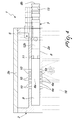
Figure 1 is an exploded perspective view of the carburetor according to the invention; -
Figure 2 is a partially sectional top view of the carburetor according to the invention, in an adjustment configuration; -
Figure 3 is a partially sectional side elevation view of the carburetor according to the invention, in the configuration ofFigure 2 ; -
Figure 4 is a sectional view ofFigure 2 , taken along a plane that is parallel to the trimming element and is perpendicular to the shell. - With reference to the figures, the
reference numeral 1 generally designates a carburetor for feeding internal combustion engines, which comprises anouter shell 2, which defines internally at least one air andfuel mixing duct 3. - The
duct 3 is interposed between at least one opening 4a, 4b, for the inflow of air, and anoutlet 5, which can be connected to a combustion chamber of an internal combustion engine. - Moreover, the
duct 3 is affected by at least onenozzle 6, intended to introduce (and simultaneously nebulize) the fuel to be mixed with the air, prior to sending to the combustion chamber of the internal combustion engine. - It should be noted from the outset that in the preferred application, to which reference shall be made constantly in the continuation of the present description, the internal combustion engine (and the
carburetor 1 according to the invention with it) is intended to be part of an electric power generating set, i.e., of an apparatus that comprises, in addition to the internal combustion engine, an electric power generator (for example an alternator), arranged downstream of the engine, for converting the mechanical energy supplied by the latter into electric power. - The electric power generating set can thus be applied preferably but not exclusively in vehicles such as campers, caravans, truck campers and the like, for example to recharge the electric batteries with which such vehicles are equipped, in order to ensure the correct operation of the many user devices (lighting, heating, TV, refrigerator, et cetera) with which they are provided.
- In turn, the internal combustion engine (also, for example, of a substantially known type) can be fed with any type of fuel, be it gasoline, diesel fuel, methane, LPG or other liquid or gaseous fuel, optionally already used for the propulsion of the vehicle on which the electric power generating set will be installed and intended to be mixed with air prior to its introduction in the combustion chamber.
- In substantially known manners, therefore, due to the partial vacuum generated in the combustion chamber of the engine, which in turn is connected directly to the
duct 3 of thecarburetor 1 through theoutlet 5, the air is aspirated by theopenings duct 3 by way of thenozzle 6. - Although, as already noted, the feeding of internal combustion engines of electric power generating sets is a preferred application of the
carburetor 1, it is useful to specify that the use of thecarburetor 1 in different fields of application, as a function of the specific requirements, without thereby abandoning the protective scope claimed herein, is not ruled out. - For example, the
carburetor 1 can be used favorably in association with any internal combustion engine that operates at constant power. - According to the invention, the
carburetor 1 comprises at least onetrimming element 7, which is constituted substantially by astem 8 that can move selectively between at least one first configuration, for free passage of the air through the at least one opening 4a, 4b, and at least one adjustment configuration, in which thestem 8 is arranged so as to obstruct at least partially the at least one opening 4a, 4b. - It is immediate to note that at this adjustment configuration there is, as a consequence, a reduction of the overall passage section available for air inflow. It is therefore possible to vary the quantity of air which, in the unit time, enters the
duct 3 and mixes with the fuel, and therefore the stoichiometric ratio between the two components. This allows to perform excellent trimming and tuning, during the installation of the engine and of the electric power generating set to which thecarburetor 1 is connected: the use of the latter therefore ensures optimum operation of the internal combustion engine, with which it is associated, in practice achieving from the outset the intended aim. - In particular, the
shell 2 has a plurality ofopenings stem 8 therefore can move selectively between the first configuration and a plurality of adjustment configurations, in each of which thestem 8 is arranged correspondingly so as to obstruct partially one or more of theopenings - The
stem 8 can thus be moved by the user into one, selectively, of the possible adjustment configurations, each of which identifies a different value of the passage section available for air inflow (of course as a function of the number ofopenings - More particularly, according to a constructive solution of considerable practical interest, shown in the accompanying figures by way of non-limiting example of the application of the invention, some
openings 4a face internally a guidinginterspace 9, in which thestem 8 can be accommodated slidingly. - It should also be noted that in the solution shown in the accompanying figures
other openings 4b are instead oriented directly toward theduct 3, without the interposition of other elements. - The
openings 4a, which face internally theinterspace 9, are located oppositerespective holes 10 that are provided along theinterspace 9 and are directed toward theduct 3. - In this manner, at the first configuration (and/or when the
stem 8 is completely extracted from theinterspace 9, as inFigure 1 for example), theduct 3 and theinterspace 9 are connected to the outside both through theopenings 4b and through eachopening 4a and eachhole 10. In particular, the air can flow in theduct 3 both directly, through theopenings 4b, and after entering theinterspace 9 through theopenings 4a and exiting from it through theholes 10, which are indeed directed toward theduct 3. - Vice versa, upon the progressive sliding insertion of the
stem 8 in theinterspace 9, theholes 10 and theopenings 4a are obstructed gradually, so as to reduce the overall passage section available for the inflow of air into theduct 3, and thus define several adjustment configurations, such as for example those ofFigures 2 to 4 . - Conveniently, the
carburetor 1 comprises means for blocking thestem 8, so as to hinder and prevent its accidental sliding (for example due to vibrations) in theinterspace 9 after the user has placed it in the desired configuration, following the trimming operation. - In particular, the blocking means can comprise at least one O-
ring 11 wrapped around the stem 8: in this manner, the O-ring 11 can contrast by friction the accidental sliding of thestem 8 in theinterspace 9. - As an alternative to the O-
ring 11, or in addition to it (as in the accompanying figures), the locking means can comprise at least onegrub 12a, which can be inserted in arecess 12b provided along the stem 8: thus, upon reaching the desired configuration, thegrub 12a can contrast by interference the accidental sliding of thestem 8 in theinterspace 9. - The
stem 8 has afirst end 8a and asecond end 8b that is opposite thefirst end 8a: at thefirst end 8a, thestem 8 is inserted in theinterspace 9, while conveniently thesecond end 8b has a knurling 13 to allow easier grip by the user. - In the preferred constructive solution, proposed in the accompanying figures by way of nonlimiting example of the application of the invention, the
openings holes 10 lead to a first portion of theduct 3, which is constituted substantially by alabyrinth 14 that is contoured appropriately. In thelabyrinth 14, due to the redirections and turns to which it is forced, the air stream that flows through theduct 3 is subjected to sudden decelerations and accelerations, which impose a turbulent condition to the motion of the air, which arrives from theopenings outlet 5. - Furthermore, the already cited
nozzle 6 faces a second portion of theduct 3, which is arranged downstream of thelabyrinth 14 and is constituted substantially by acompartment 15 for mixing the air with the fuel before sending to the combustion chamber of the internal combustion engine. - It should be noted that the mixing of the air with the fuel is facilitated by the choice, described earlier, of imposing beforehand a turbulent motion condition to the air, thereby allowing optimum carburation.
- Positively, the
shell 2 is substantially box-like and is constituted substantially by atray 2a that is closed in an upward region by arespective cover 2b (for example by means of screws or the like that can be inserted inseats 2c that can be mutually aligned and are provided along thecover 2b and thetray 2a). Thelabyrinth 14 and the compartment 15 (and more generally the duct 3) are thus comprised between thetray 2a and thecover 2b and are conveniently shaped byinternal partitions 2d (in a number chosen at will, as a function of the requirements), which protrude internally from the side walls of thetray 2a. - Advantageously, the
carburetor 1 according to the invention comprises aconnection sleeve 16, which faces theoutlet 5 and can be associated with the combustion chamber of the internal combustion engine: along thesleeve 16 there is adispenser 17 of lubricant (for example oil). - Operation of the carburetor according to the invention is as follows.
- As noted, due to the partial vacuum created in the combustion chamber of the engine, the air is aspirated into the
duct 3 through theopenings - The air then passes through the
labyrinth 14, which imposes a turbulent motion condition to the air in order to facilitate its mixing with the fuel, which is introduced in theduct 3 at thecompartment 15 arranged downstream of thelabyrinth 14 and connected, through theoutlet 5, to thesleeve 16 and therefore to the combustion chamber of the internal combustion engine. - In the
sleeve 16, thedispenser 17 disperses in the air and fuel mix obtained in thecompartment 15 also the lubricant needed for the optimum operation of the engine. - As shown, the air can be conveyed into the
labyrinth 14 through theopenings 4b, which face the latter directly. Moreover, in the first configuration, the air can be introduced in thelabyrinth 14 after passing in series through one of theopenings 4a, theinterspace 9 and one of theholes 10. - Therefore, in the first configuration, all the
openings duct 3, allowing to use the maximum available passage section (which is equivalent to the sum of the passage sections defined by eachopening - In order to vary and reduce the overall available passage section, the user can use the
trimming element 7, constituted by thestem 8. - In fact, by inserting it progressively in the guiding
interspace 9, thestem 8 moves gradually to obstruct one or more of theopenings 4a (and of theholes 10 that are opposite thereto), thereby defining respective adjustment configurations (such as indeed the one ofFigures 2 to 4 ). Each one of these adjustment configurations is matched, therefore, by a respective overall passage section available to the air that is reduced with respect to the one that corresponds to the first configuration (of course as a function of the position of thestem 8 in theinterspace 9 and therefore of the number ofopenings 4a that are obstructed). - Therefore, by way of the
stem 8 and the selective variation of the quantity of air that enters in the unit time (due to the variation of the intake section), the user (the installation technician) can make changes, even small ones, to the stoichiometric ratio of the air-fuel mix defined by design, in order to adapt it to the application requirements (optionally dictated by particular operating conditions) of the specific vehicle for which thecarburetor 1, and the electric power generating set on which it is installed, is intended. - It is thus possible to obtain, in a practical and easy manner, an optimum trimming and tuning of the
carburetor 1 during the installation of the engine to which thecarburetor 1 is connected, thereby ensuring optimum operation without resorting to elements that can move continuously during operation and therefore with a structurally simple solution. - Furthermore, by way of the locking means it is possible to avoid the danger that vibrations or other factors might cause an accidental and unwanted movement of the
stem 8 after it has been moved into the desired configuration. - Finally, it should be noted that the choice to resort to
partitions 2d that protrude exclusively from the side walls of thetray 2a allows to simplify significantly the process for the production of the shell 2: thecover 2b in fact can be obtained from a simple shape of metal plate that is laser-cut (or by blanking or punching), while a single mold is sufficient to provide thetray 2a with thepartitions 2d (in a number chosen at will as a function of the specific requirements) and therefore thelabyrinth 14 and thecompartment 15 formed by them. - In practice it has been found that the carburetor according to the invention achieves fully the intended aim, since the use of a trimming element constituted by a stem that can move between at least one first configuration, for free air passage, and at least one adjustment configuration, in which the stem is arranged so as to obstruct at least partially the at least one opening through which air can enter the duct that leads to the combustion chamber, with consequent reduction of the overall passage section, allows to provide a carburetor that is capable of ensuring optimum operation of the internal combustion engine with which it is associated.
- The invention thus conceived is susceptible of numerous modifications and variations, all of which are within the scope of the appended claims; all the details may further be replaced with other technically equivalent elements.
- In the examples of embodiment shown, individual characteristics, given in relation to specific examples, may actually be interchanged with other different characteristics that exist in other examples of embodiment.
- In practice, the materials used, as well as the dimensions, may be any according to requirements and to the state of the art.
- The disclosures in Italian Patent Application No.
BO2013A000554 - Where technical features mentioned in any claim are followed by reference signs, those reference signs have been included for the sole purpose of increasing the intelligibility of the claims and accordingly such reference signs do not have any limiting effect on the interpretation of each element identified by way of example by such reference signs.
Claims (10)
- A carburetor for feeding internal combustion engines, comprising an outer shell (2), which defines internally at least one air and fuel mixing duct (3), said duct (3) being interposed between at least one opening (4a, 4b) for the inflow of air, and an outlet (5), which can be connected to a combustion chamber of an internal combustion engine, said duct (3) being affected by at least one nozzle (6), for introducing the fuel to be mixed with the air, prior to sending to the combustion chamber of the internal combustion engine, characterized in that it comprises at least one trimming element (7), which is constituted substantially by a stem (8) that can move selectively between at least one first configuration, for free passage of the air through said at least one opening (4a, 4b), and at least one adjustment configuration, in which said stem (8) is arranged so as to at least partially obstruct said at least one opening (4a, 4b), with consequent reduction of the overall passage section available for the inflow of the air.
- The carburetor according to claim 1, characterized in that said shell (2) is provided with a plurality of said openings (4a, 4b), said stem (8) being movable selectively between said at least one first configuration and a plurality of said adjustment configurations, in each one of said adjustment configurations said stem (8) being arranged correspondingly so as to partially obstruct at least one of said openings (4a, 4b), with consequent reduction of the overall passage section available for the inflow of the air.
- The carburetor according to one or more of claims 1 and 2, characterized in that at least some of said openings (4a) face internally a guiding interspace (9), for the sliding accommodation of said stem (8), and are arranged opposite respective holes (10) that are provided along said interspace (9) and are directed toward said duct (3), at at least said first configuration said duct (3) being connected to the outside through each one of said openings (4a, 4b) and each one of said holes (10), upon the progressive sliding insertion of said stem (8) in said interspace (9) said holes (10) and said openings (4a) being obstructed progressively in order to define said adjustment configurations.
- The carburetor according to one or more of the preceding claims, characterized in that it comprises means for locking said stem (8), for hindering the accidental sliding of said stem (8) in said interspace (9).
- The carburetor according to claim 4, characterized in that said locking means comprise at least one O-ring (11), which is wrapped around said stem (8), said O-ring (11) contrasting by friction the accidental sliding of said stem (8) in said interspace (9).
- The carburetor according to claim 4, characterized in that said locking means comprise at least one grub (12a), which can be inserted in a recess (12b) provided along said stem (8), upon reaching the desired configuration, said grub (12a) contrasting by interference the accidental sliding of said stem (8) in said interspace (9).
- The carburetor according to one or more of the preceding claims, characterized in that said stem (8) has a first end (8a) and a second end (8b) arranged opposite said first end (8a), said stem (8) being insertable in said interspace (9) at said first end (8a), said second end (8b) having a knurling (13) for easier grip by a user.
- The carburetor according to one or more of the preceding claims, characterized in that said openings (4a, 4b) and said holes (10) lead to a first portion of said duct (3), which is constituted substantially by an appropriately contoured labyrinth (14) for imposing a turbulent condition to the motion of the air that arrives from said openings (4a, 4b) and is directed toward the combustion chamber, said nozzle (6) facing a second portion of said duct (3), which is arranged downstream of said labyrinth (14) and is constituted substantially by a compartment (15) for mixing the air with the fuel, prior to sending to the combustion chamber of the internal combustion engine.
- The carburetor according to one or more of the preceding claims, characterized in that said shell (2) has a substantially boxlike shape and is constituted substantially by a tray (2a) that is closed in an upward region by a respective cover (2b), said labyrinth (14) and said compartment (15) being comprised between said tray (2a) and said cover (2b) and being appropriately shaped by internal partitions (2d), which protrude internally from the side walls of said tray (2a).
- The carburetor according to one or more of the preceding claims, characterized in that it comprises a connection sleeve (16), which faces said outlet (5) and can be associated with the combustion chamber of the internal combustion engine, a lubricant dispenser (17) being arranged along said sleeve (16).
Applications Claiming Priority (1)
| Application Number | Priority Date | Filing Date | Title |
|---|---|---|---|
| IT000554A ITBO20130554A1 (en) | 2013-10-09 | 2013-10-09 | CARBURETOR, FOR THE SUPPLY OF BURNING MOTORS. |
Publications (2)
| Publication Number | Publication Date |
|---|---|
| EP2860383A1 true EP2860383A1 (en) | 2015-04-15 |
| EP2860383B1 EP2860383B1 (en) | 2018-08-22 |
Family
ID=49725187
Family Applications (1)
| Application Number | Title | Priority Date | Filing Date |
|---|---|---|---|
| EP14186241.7A Active EP2860383B1 (en) | 2013-10-09 | 2014-09-24 | Carburetor for feeding internal combustion engines |
Country Status (3)
| Country | Link |
|---|---|
| EP (1) | EP2860383B1 (en) |
| CN (1) | CN104564427A (en) |
| IT (1) | ITBO20130554A1 (en) |
Cited By (1)
| Publication number | Priority date | Publication date | Assignee | Title |
|---|---|---|---|---|
| US20180023514A1 (en) * | 2015-02-04 | 2018-01-25 | Walbro Llc | Carburetor fuel control |
Citations (5)
| Publication number | Priority date | Publication date | Assignee | Title |
|---|---|---|---|---|
| GB191025685A (en) * | 1910-11-04 | 1911-11-02 | Gurth Lumley Hale | Improvements in the Carburetters of Internal-combustion Engines. |
| GB327953A (en) * | 1928-12-13 | 1930-04-14 | Graflich Schaffgotsch Sche Wer | Improvements in or relating to carburettors |
| GB481139A (en) * | 1935-10-25 | 1938-03-07 | Bailey Pollard Dawes | Improvements in or relating to carburettors for internal combustion engines |
| US5806490A (en) * | 1996-05-07 | 1998-09-15 | Hitachi America, Ltd., Research And Development Division | Fuel control system for a gaseous fuel internal combustion engine with improved fuel metering and mixing means |
| JP2009180463A (en) * | 2008-01-31 | 2009-08-13 | Corona Corp | Vaporizing oil combustion equipment |
Family Cites Families (3)
| Publication number | Priority date | Publication date | Assignee | Title |
|---|---|---|---|---|
| FR2456219A1 (en) * | 1979-05-11 | 1980-12-05 | Sibe | IMPROVEMENTS ON CARBURETORS FOR INTERNAL COMBUSTION ENGINES |
| US4524034A (en) * | 1982-04-13 | 1985-06-18 | Ellison Benjamin L | Carburetor |
| CN101377177B (en) * | 2008-09-19 | 2010-07-28 | 海南嘉润动力有限公司 | Gas positive-pressure spraying mixed apparatus of gas engine |
-
2013
- 2013-10-09 IT IT000554A patent/ITBO20130554A1/en unknown
-
2014
- 2014-09-24 EP EP14186241.7A patent/EP2860383B1/en active Active
- 2014-10-09 CN CN201410528630.6A patent/CN104564427A/en active Pending
Patent Citations (5)
| Publication number | Priority date | Publication date | Assignee | Title |
|---|---|---|---|---|
| GB191025685A (en) * | 1910-11-04 | 1911-11-02 | Gurth Lumley Hale | Improvements in the Carburetters of Internal-combustion Engines. |
| GB327953A (en) * | 1928-12-13 | 1930-04-14 | Graflich Schaffgotsch Sche Wer | Improvements in or relating to carburettors |
| GB481139A (en) * | 1935-10-25 | 1938-03-07 | Bailey Pollard Dawes | Improvements in or relating to carburettors for internal combustion engines |
| US5806490A (en) * | 1996-05-07 | 1998-09-15 | Hitachi America, Ltd., Research And Development Division | Fuel control system for a gaseous fuel internal combustion engine with improved fuel metering and mixing means |
| JP2009180463A (en) * | 2008-01-31 | 2009-08-13 | Corona Corp | Vaporizing oil combustion equipment |
Cited By (2)
| Publication number | Priority date | Publication date | Assignee | Title |
|---|---|---|---|---|
| US20180023514A1 (en) * | 2015-02-04 | 2018-01-25 | Walbro Llc | Carburetor fuel control |
| US10890140B2 (en) * | 2015-02-04 | 2021-01-12 | Walbro Llc | Carburetor fuel control |
Also Published As
| Publication number | Publication date |
|---|---|
| EP2860383B1 (en) | 2018-08-22 |
| CN104564427A (en) | 2015-04-29 |
| ITBO20130554A1 (en) | 2015-04-10 |
Similar Documents
| Publication | Publication Date | Title |
|---|---|---|
| US11143145B2 (en) | Batteryless dual fuel engine with liquid fuel cut-off | |
| DE4109548C3 (en) | Electrically operated air pump | |
| US7591257B2 (en) | Fuel selection device | |
| US20100269931A1 (en) | Fan with integrated regulation valve | |
| ITRM960063A1 (en) | CARBURETOR FOR SMALL ENGINES AND PROCEDURE AND DEVICE TO CHECK THE AIR FUEL RATIO | |
| EP2860383B1 (en) | Carburetor for feeding internal combustion engines | |
| US10167789B2 (en) | Dual fuel engine with liquid fuel cut-off | |
| CN104832330A (en) | Slide-in type mountable fuel pump assembly | |
| US7334663B2 (en) | Variable resonator | |
| US10495301B2 (en) | Premixing apparatus | |
| US4787356A (en) | Carburetor arrangement for changing the ratio of the air/fuel mixture in handheld motor-driven apparatus | |
| KR20190097253A (en) | Engine gear | |
| DE102006000352A1 (en) | Air control device with a motor operated air switching valve | |
| EP2484888A1 (en) | Ptc heater unit and pressure reducing valve for lpg fuel | |
| AT510758B1 (en) | POWER GENERATOR BOX WITH HOUSING | |
| US20140261311A1 (en) | Fuel mixer | |
| EP1359314B1 (en) | Calibrated injector assembly for feeding an internal-combustion engine, particularly for electric power generators | |
| US1855275A (en) | Mixer | |
| JP2017115737A (en) | Carburetor | |
| JP2014509717A (en) | Mixing block | |
| JP5118527B2 (en) | Engine fuel supply system | |
| WO2009119429A1 (en) | Fuel supply device for engine | |
| JP2017141772A (en) | Vaporizer | |
| EP3567985B1 (en) | Heating means for heating a fluid | |
| CN101994619A (en) | Intake manifold with vacuum chamber |
Legal Events
| Date | Code | Title | Description |
|---|---|---|---|
| PUAI | Public reference made under article 153(3) epc to a published international application that has entered the european phase |
Free format text: ORIGINAL CODE: 0009012 |
|
| 17P | Request for examination filed |
Effective date: 20140924 |
|
| AK | Designated contracting states |
Kind code of ref document: A1 Designated state(s): AL AT BE BG CH CY CZ DE DK EE ES FI FR GB GR HR HU IE IS IT LI LT LU LV MC MK MT NL NO PL PT RO RS SE SI SK SM TR |
|
| AX | Request for extension of the european patent |
Extension state: BA ME |
|
| R17P | Request for examination filed (corrected) |
Effective date: 20150619 |
|
| RBV | Designated contracting states (corrected) |
Designated state(s): AL AT BE BG CH CY CZ DE DK EE ES FI FR GB GR HR HU IE IS IT LI LT LU LV MC MK MT NL NO PL PT RO RS SE SI SK SM TR |
|
| GRAP | Despatch of communication of intention to grant a patent |
Free format text: ORIGINAL CODE: EPIDOSNIGR1 |
|
| INTG | Intention to grant announced |
Effective date: 20180307 |
|
| GRAS | Grant fee paid |
Free format text: ORIGINAL CODE: EPIDOSNIGR3 |
|
| GRAA | (expected) grant |
Free format text: ORIGINAL CODE: 0009210 |
|
| AK | Designated contracting states |
Kind code of ref document: B1 Designated state(s): AL AT BE BG CH CY CZ DE DK EE ES FI FR GB GR HR HU IE IS IT LI LT LU LV MC MK MT NL NO PL PT RO RS SE SI SK SM TR |
|
| REG | Reference to a national code |
Ref country code: GB Ref legal event code: FG4D |
|
| REG | Reference to a national code |
Ref country code: CH Ref legal event code: EP |
|
| REG | Reference to a national code |
Ref country code: AT Ref legal event code: REF Ref document number: 1032815 Country of ref document: AT Kind code of ref document: T Effective date: 20180915 |
|
| REG | Reference to a national code |
Ref country code: IE Ref legal event code: FG4D |
|
| REG | Reference to a national code |
Ref country code: DE Ref legal event code: R096 Ref document number: 602014030760 Country of ref document: DE |
|
| REG | Reference to a national code |
Ref country code: FR Ref legal event code: PLFP Year of fee payment: 5 |
|
| REG | Reference to a national code |
Ref country code: NL Ref legal event code: MP Effective date: 20180822 |
|
| REG | Reference to a national code |
Ref country code: LT Ref legal event code: MG4D |
|
| PG25 | Lapsed in a contracting state [announced via postgrant information from national office to epo] |
Ref country code: NL Free format text: LAPSE BECAUSE OF FAILURE TO SUBMIT A TRANSLATION OF THE DESCRIPTION OR TO PAY THE FEE WITHIN THE PRESCRIBED TIME-LIMIT Effective date: 20180822 Ref country code: BG Free format text: LAPSE BECAUSE OF FAILURE TO SUBMIT A TRANSLATION OF THE DESCRIPTION OR TO PAY THE FEE WITHIN THE PRESCRIBED TIME-LIMIT Effective date: 20181122 Ref country code: NO Free format text: LAPSE BECAUSE OF FAILURE TO SUBMIT A TRANSLATION OF THE DESCRIPTION OR TO PAY THE FEE WITHIN THE PRESCRIBED TIME-LIMIT Effective date: 20181122 Ref country code: SE Free format text: LAPSE BECAUSE OF FAILURE TO SUBMIT A TRANSLATION OF THE DESCRIPTION OR TO PAY THE FEE WITHIN THE PRESCRIBED TIME-LIMIT Effective date: 20180822 Ref country code: LT Free format text: LAPSE BECAUSE OF FAILURE TO SUBMIT A TRANSLATION OF THE DESCRIPTION OR TO PAY THE FEE WITHIN THE PRESCRIBED TIME-LIMIT Effective date: 20180822 Ref country code: GR Free format text: LAPSE BECAUSE OF FAILURE TO SUBMIT A TRANSLATION OF THE DESCRIPTION OR TO PAY THE FEE WITHIN THE PRESCRIBED TIME-LIMIT Effective date: 20181123 Ref country code: RS Free format text: LAPSE BECAUSE OF FAILURE TO SUBMIT A TRANSLATION OF THE DESCRIPTION OR TO PAY THE FEE WITHIN THE PRESCRIBED TIME-LIMIT Effective date: 20180822 Ref country code: IS Free format text: LAPSE BECAUSE OF FAILURE TO SUBMIT A TRANSLATION OF THE DESCRIPTION OR TO PAY THE FEE WITHIN THE PRESCRIBED TIME-LIMIT Effective date: 20181222 Ref country code: FI Free format text: LAPSE BECAUSE OF FAILURE TO SUBMIT A TRANSLATION OF THE DESCRIPTION OR TO PAY THE FEE WITHIN THE PRESCRIBED TIME-LIMIT Effective date: 20180822 |
|
| REG | Reference to a national code |
Ref country code: AT Ref legal event code: MK05 Ref document number: 1032815 Country of ref document: AT Kind code of ref document: T Effective date: 20180822 |
|
| PG25 | Lapsed in a contracting state [announced via postgrant information from national office to epo] |
Ref country code: LV Free format text: LAPSE BECAUSE OF FAILURE TO SUBMIT A TRANSLATION OF THE DESCRIPTION OR TO PAY THE FEE WITHIN THE PRESCRIBED TIME-LIMIT Effective date: 20180822 Ref country code: HR Free format text: LAPSE BECAUSE OF FAILURE TO SUBMIT A TRANSLATION OF THE DESCRIPTION OR TO PAY THE FEE WITHIN THE PRESCRIBED TIME-LIMIT Effective date: 20180822 Ref country code: AL Free format text: LAPSE BECAUSE OF FAILURE TO SUBMIT A TRANSLATION OF THE DESCRIPTION OR TO PAY THE FEE WITHIN THE PRESCRIBED TIME-LIMIT Effective date: 20180822 |
|
| PG25 | Lapsed in a contracting state [announced via postgrant information from national office to epo] |
Ref country code: PL Free format text: LAPSE BECAUSE OF FAILURE TO SUBMIT A TRANSLATION OF THE DESCRIPTION OR TO PAY THE FEE WITHIN THE PRESCRIBED TIME-LIMIT Effective date: 20180822 Ref country code: ES Free format text: LAPSE BECAUSE OF FAILURE TO SUBMIT A TRANSLATION OF THE DESCRIPTION OR TO PAY THE FEE WITHIN THE PRESCRIBED TIME-LIMIT Effective date: 20180822 Ref country code: CZ Free format text: LAPSE BECAUSE OF FAILURE TO SUBMIT A TRANSLATION OF THE DESCRIPTION OR TO PAY THE FEE WITHIN THE PRESCRIBED TIME-LIMIT Effective date: 20180822 Ref country code: EE Free format text: LAPSE BECAUSE OF FAILURE TO SUBMIT A TRANSLATION OF THE DESCRIPTION OR TO PAY THE FEE WITHIN THE PRESCRIBED TIME-LIMIT Effective date: 20180822 Ref country code: RO Free format text: LAPSE BECAUSE OF FAILURE TO SUBMIT A TRANSLATION OF THE DESCRIPTION OR TO PAY THE FEE WITHIN THE PRESCRIBED TIME-LIMIT Effective date: 20180822 Ref country code: AT Free format text: LAPSE BECAUSE OF FAILURE TO SUBMIT A TRANSLATION OF THE DESCRIPTION OR TO PAY THE FEE WITHIN THE PRESCRIBED TIME-LIMIT Effective date: 20180822 |
|
| REG | Reference to a national code |
Ref country code: CH Ref legal event code: PL |
|
| REG | Reference to a national code |
Ref country code: DE Ref legal event code: R097 Ref document number: 602014030760 Country of ref document: DE |
|
| PG25 | Lapsed in a contracting state [announced via postgrant information from national office to epo] |
Ref country code: SM Free format text: LAPSE BECAUSE OF FAILURE TO SUBMIT A TRANSLATION OF THE DESCRIPTION OR TO PAY THE FEE WITHIN THE PRESCRIBED TIME-LIMIT Effective date: 20180822 Ref country code: DK Free format text: LAPSE BECAUSE OF FAILURE TO SUBMIT A TRANSLATION OF THE DESCRIPTION OR TO PAY THE FEE WITHIN THE PRESCRIBED TIME-LIMIT Effective date: 20180822 Ref country code: SK Free format text: LAPSE BECAUSE OF FAILURE TO SUBMIT A TRANSLATION OF THE DESCRIPTION OR TO PAY THE FEE WITHIN THE PRESCRIBED TIME-LIMIT Effective date: 20180822 |
|
| REG | Reference to a national code |
Ref country code: BE Ref legal event code: MM Effective date: 20180930 |
|
| REG | Reference to a national code |
Ref country code: IE Ref legal event code: MM4A |
|
| PG25 | Lapsed in a contracting state [announced via postgrant information from national office to epo] |
Ref country code: LU Free format text: LAPSE BECAUSE OF NON-PAYMENT OF DUE FEES Effective date: 20180924 Ref country code: MC Free format text: LAPSE BECAUSE OF FAILURE TO SUBMIT A TRANSLATION OF THE DESCRIPTION OR TO PAY THE FEE WITHIN THE PRESCRIBED TIME-LIMIT Effective date: 20180822 |
|
| PLBE | No opposition filed within time limit |
Free format text: ORIGINAL CODE: 0009261 |
|
| STAA | Information on the status of an ep patent application or granted ep patent |
Free format text: STATUS: NO OPPOSITION FILED WITHIN TIME LIMIT |
|
| 26N | No opposition filed |
Effective date: 20190523 |
|
| PG25 | Lapsed in a contracting state [announced via postgrant information from national office to epo] |
Ref country code: IE Free format text: LAPSE BECAUSE OF NON-PAYMENT OF DUE FEES Effective date: 20180924 |
|
| PG25 | Lapsed in a contracting state [announced via postgrant information from national office to epo] |
Ref country code: BE Free format text: LAPSE BECAUSE OF NON-PAYMENT OF DUE FEES Effective date: 20180930 Ref country code: LI Free format text: LAPSE BECAUSE OF NON-PAYMENT OF DUE FEES Effective date: 20180930 Ref country code: SI Free format text: LAPSE BECAUSE OF FAILURE TO SUBMIT A TRANSLATION OF THE DESCRIPTION OR TO PAY THE FEE WITHIN THE PRESCRIBED TIME-LIMIT Effective date: 20180822 Ref country code: CH Free format text: LAPSE BECAUSE OF NON-PAYMENT OF DUE FEES Effective date: 20180930 |
|
| PG25 | Lapsed in a contracting state [announced via postgrant information from national office to epo] |
Ref country code: MT Free format text: LAPSE BECAUSE OF NON-PAYMENT OF DUE FEES Effective date: 20180924 |
|
| PG25 | Lapsed in a contracting state [announced via postgrant information from national office to epo] |
Ref country code: TR Free format text: LAPSE BECAUSE OF FAILURE TO SUBMIT A TRANSLATION OF THE DESCRIPTION OR TO PAY THE FEE WITHIN THE PRESCRIBED TIME-LIMIT Effective date: 20180822 |
|
| PG25 | Lapsed in a contracting state [announced via postgrant information from national office to epo] |
Ref country code: HU Free format text: LAPSE BECAUSE OF FAILURE TO SUBMIT A TRANSLATION OF THE DESCRIPTION OR TO PAY THE FEE WITHIN THE PRESCRIBED TIME-LIMIT; INVALID AB INITIO Effective date: 20140924 Ref country code: PT Free format text: LAPSE BECAUSE OF FAILURE TO SUBMIT A TRANSLATION OF THE DESCRIPTION OR TO PAY THE FEE WITHIN THE PRESCRIBED TIME-LIMIT Effective date: 20180822 |
|
| PG25 | Lapsed in a contracting state [announced via postgrant information from national office to epo] |
Ref country code: MK Free format text: LAPSE BECAUSE OF NON-PAYMENT OF DUE FEES Effective date: 20180822 Ref country code: CY Free format text: LAPSE BECAUSE OF FAILURE TO SUBMIT A TRANSLATION OF THE DESCRIPTION OR TO PAY THE FEE WITHIN THE PRESCRIBED TIME-LIMIT Effective date: 20180822 |
|
| REG | Reference to a national code |
Ref country code: DE Ref legal event code: R082 Ref document number: 602014030760 Country of ref document: DE Representative=s name: SCHIEBER - FARAGO PATENTANWAELTE, DE Ref country code: DE Ref legal event code: R082 Ref document number: 602014030760 Country of ref document: DE Representative=s name: FARAGO PATENTANWALTSGESELLSCHAFT MBH, DE |
|
| REG | Reference to a national code |
Ref country code: DE Ref legal event code: R082 Ref document number: 602014030760 Country of ref document: DE Representative=s name: SCHIEBER - FARAGO PATENTANWAELTE, DE |
|
| P01 | Opt-out of the competence of the unified patent court (upc) registered |
Effective date: 20230527 |
|
| PGFP | Annual fee paid to national office [announced via postgrant information from national office to epo] |
Ref country code: DE Payment date: 20250918 Year of fee payment: 12 |
|
| PGFP | Annual fee paid to national office [announced via postgrant information from national office to epo] |
Ref country code: IT Payment date: 20250721 Year of fee payment: 12 |
|
| PGFP | Annual fee paid to national office [announced via postgrant information from national office to epo] |
Ref country code: GB Payment date: 20250818 Year of fee payment: 12 |
|
| PGFP | Annual fee paid to national office [announced via postgrant information from national office to epo] |
Ref country code: FR Payment date: 20250918 Year of fee payment: 12 |
|
| REG | Reference to a national code |
Ref country code: DE Ref legal event code: R081 Ref document number: 602014030760 Country of ref document: DE Owner name: TELECO S.P.A., LUGO, IT Free format text: FORMER OWNER: TELAIR S.R.L., LUGO, IT |