EP2854827B1 - Xyloglucan-oligosaccharid-zusammensetzung aus der moosbeere - Google Patents
Xyloglucan-oligosaccharid-zusammensetzung aus der moosbeere Download PDFInfo
- Publication number
- EP2854827B1 EP2854827B1 EP13794333.8A EP13794333A EP2854827B1 EP 2854827 B1 EP2854827 B1 EP 2854827B1 EP 13794333 A EP13794333 A EP 13794333A EP 2854827 B1 EP2854827 B1 EP 2854827B1
- Authority
- EP
- European Patent Office
- Prior art keywords
- approximately
- composition
- fraction
- cranberry
- xyloglucan
- Prior art date
- Legal status (The legal status is an assumption and is not a legal conclusion. Google has not performed a legal analysis and makes no representation as to the accuracy of the status listed.)
- Active
Links
Images




Classifications
-
- A—HUMAN NECESSITIES
- A61—MEDICAL OR VETERINARY SCIENCE; HYGIENE
- A61K—PREPARATIONS FOR MEDICAL, DENTAL OR TOILETRY PURPOSES
- A61K36/00—Medicinal preparations of undetermined constitution containing material from algae, lichens, fungi or plants, or derivatives thereof, e.g. traditional herbal medicines
- A61K36/18—Magnoliophyta (angiosperms)
- A61K36/185—Magnoliopsida (dicotyledons)
- A61K36/45—Ericaceae or Vacciniaceae (Heath or Blueberry family), e.g. blueberry, cranberry or bilberry
-
- A—HUMAN NECESSITIES
- A23—FOODS OR FOODSTUFFS; TREATMENT THEREOF, NOT COVERED BY OTHER CLASSES
- A23L—FOODS, FOODSTUFFS OR NON-ALCOHOLIC BEVERAGES, NOT OTHERWISE PROVIDED FOR; PREPARATION OR TREATMENT THEREOF
- A23L33/00—Modifying nutritive qualities of foods; Dietetic products; Preparation or treatment thereof
- A23L33/10—Modifying nutritive qualities of foods; Dietetic products; Preparation or treatment thereof using additives
- A23L33/105—Plant extracts, their artificial duplicates or their derivatives
-
- A—HUMAN NECESSITIES
- A61—MEDICAL OR VETERINARY SCIENCE; HYGIENE
- A61K—PREPARATIONS FOR MEDICAL, DENTAL OR TOILETRY PURPOSES
- A61K31/00—Medicinal preparations containing organic active ingredients
- A61K31/70—Carbohydrates; Sugars; Derivatives thereof
- A61K31/715—Polysaccharides, i.e. having more than five saccharide radicals attached to each other by glycosidic linkages; Derivatives thereof, e.g. ethers, esters
- A61K31/716—Glucans
-
- A—HUMAN NECESSITIES
- A61—MEDICAL OR VETERINARY SCIENCE; HYGIENE
- A61P—SPECIFIC THERAPEUTIC ACTIVITY OF CHEMICAL COMPOUNDS OR MEDICINAL PREPARATIONS
- A61P13/00—Drugs for disorders of the urinary system
-
- A—HUMAN NECESSITIES
- A61—MEDICAL OR VETERINARY SCIENCE; HYGIENE
- A61P—SPECIFIC THERAPEUTIC ACTIVITY OF CHEMICAL COMPOUNDS OR MEDICINAL PREPARATIONS
- A61P31/00—Antiinfectives, i.e. antibiotics, antiseptics, chemotherapeutics
- A61P31/04—Antibacterial agents
-
- A—HUMAN NECESSITIES
- A61—MEDICAL OR VETERINARY SCIENCE; HYGIENE
- A61K—PREPARATIONS FOR MEDICAL, DENTAL OR TOILETRY PURPOSES
- A61K2236/00—Isolation or extraction methods of medicinal preparations of undetermined constitution containing material from algae, lichens, fungi or plants, or derivatives thereof, e.g. traditional herbal medicine
- A61K2236/30—Extraction of the material
- A61K2236/39—Complex extraction schemes, e.g. fractionation or repeated extraction steps
-
- Y—GENERAL TAGGING OF NEW TECHNOLOGICAL DEVELOPMENTS; GENERAL TAGGING OF CROSS-SECTIONAL TECHNOLOGIES SPANNING OVER SEVERAL SECTIONS OF THE IPC; TECHNICAL SUBJECTS COVERED BY FORMER USPC CROSS-REFERENCE ART COLLECTIONS [XRACs] AND DIGESTS
- Y02—TECHNOLOGIES OR APPLICATIONS FOR MITIGATION OR ADAPTATION AGAINST CLIMATE CHANGE
- Y02A—TECHNOLOGIES FOR ADAPTATION TO CLIMATE CHANGE
- Y02A50/00—TECHNOLOGIES FOR ADAPTATION TO CLIMATE CHANGE in human health protection, e.g. against extreme weather
- Y02A50/30—Against vector-borne diseases, e.g. mosquito-borne, fly-borne, tick-borne or waterborne diseases whose impact is exacerbated by climate change
Definitions
- the present invention relates to a novel xyloglucan oligosaccharide composition designated anti-microbial adhesion inhibitory fraction A6 , a composition containing said oligosaccharide composition containing anti-microbial adhesion inhibitory fraction A6, and methods of using said composition to at least reduce the adhesion of pathogens to animal cells, especially human and mammalian cells.
- Xyloglucan is well known as a major cross-linking polysaccharide in type 1 plant cell walls found in dicotyledonous and non-commelinoid monocotyledonous plants ( Carpita and Gibeaut, Plant Journal, Volume 3, 1-30, 1993 ). With a ⁇ -(1-4)-glucan backbone, xyloglucan hydrogen bonds to the surface of cellulose microfibrils and forms a network that connects adjacent microfibrils in cell walls. The xyloglucan network is intermeshed with the pectin network of cell wall matrix polysaccharides (Carpita and Gibeaut, 1993 supra ).
- xyloglucan an important polysaccharide in the growth and development of primary cell walls ( Carpita and McCann, "Biochemistry and Molecular Biology of Plants, Buchanan B.B., Gruissem, W., Jones, R.L., Eds.; American Society of Plant Physiologists, Rockville, MD., 52-108, 2000 ). There is a block-like structure in xyloglucan where a 6-11 sugar sequence is repeated throughout the polysaccharide.
- carbohydrate structures are specific for plant taxonomic groups ( Sims et al., Carbohydrate Research, Volume 293, 147-172, 1996 ; Vierhuis et al., Carbohydrate Research, Volume 332, 285-297, 2001 ; Ray et al., Carbohydrate Research, Volume 339, 201-208, 2004 ; Hoffman et al., Carbohydrate Research, Volume 340, 1826-1840, 2005 ).
- xyloglucan structures Three types have been described with fucogalacto-xyloglucan the most commonly distributed in about half of the monocot taxonomic orders and all dicot orders except for the Solanales, Laminales, Gentianales and Ericales (Carpita and McCann 2000, supra; Hoffman et al., 2005, supra ).
- Xyloglucan from these later orders contains arabino-xyloglucan structure.
- Small amounts of a third xyloglucan structure are also present in commelinoid monocots (grasses, bromeliads, palms, and cypresses) as randomly distributed single xylose substituents on a cellulosic backbone (Carpita and McCann, 2000, supra ).
- a single letter nomenclature was developed to describe the sequence of xyloglucan substituents ( Fry et al., Physiol. Plant., Volume 89, 1-3, 1993 ).
- Cranberry juice is acidic (pH approximately 2.6 or lower) and rich in anthocyanins and tannins giving it an astringent taste ( Holmes and Starr, Fruit Juice Processing Technology, Nagy, S., Chen, C.S., Shaw, P.E. (Eds.), AGSCIENCE, Auburndale, FL, 515-531, 1993 ).
- the juice is prepared by milling and pressing after a hot (approximately 50 degree C. for about 1 hour) commercial pectinase maceration of the berries.
- Cranberry pectin has very high methoxy content, which requires a second hot commercial pectinase treatment following pressing and prior to juice filtration and concentration. Cranberry juice is considered a healthy juice.
- the proanthocyanidins have antioxidant properties ( Uri-Sarda et al., Anal. Bioanal. Chem, Volume 394, 1545-1556,2009 ) and were reported to inhibit adhesion of p-fimbriated Escherichia coli to uroepithelial cells ( Howell et al., Phytochem., Volume 66, 2281-2291,2005 ).
- P-fimbriated E. coli is the major cause of urinary tract infections which result in 8.3 million doctor office visits per year ( Zopf and Roth, Lancet, Volume 347, 1017-1021, 1996 ).
- Cranberry juice was also reported to have prebiotic properties ( Clifford et al., U.S. Patent Application No. 20090022849, 2009 ).
- UTIs urinary tract infections
- UTIs are commonly caused by Gram-negative bacteria, particularly Escherichia coli ( E. coli ), and infect primarily women. This infection is enabled by the adherence and colonization of bacteria to urinary tract epithelial cells. Adherence by E . coli is performed by proteinaceous fibers (fimbriae) on the bacteria cell wall, which attach to specific oligosaccharide receptors on uroepithelial cells. Antibiotics are commonly prescribed for treatment, but often promote bacterial resistance. One in four women also encounter recurrence of the infection and are often found to be prone to such infections. Natural substances which could treat and prevent UTIs could be useful for those suffering this condition since antibiotic treatment, in many cases causes, as secondary vaginal yeast infection requiring a subsequent antifungal treatment.
- Cranberry products can prevent adhesion of certain bacteria fimbriae to uroepithelial cells in the urinary tract, thereby reducing the ability of the bacteria to create an infection ( DiMartino et al., World Journal of Urology, 2006 ); ( Liu et al., Biotechnology Bioengineering, 2006 ).
- Proanthocyanidins which are condensed tannins, found in the cranberry juice have been shown to inhibit E. coli adherence ( Howell et al., Journal of Medicine, 1998 ).
- United States Patent Application 2009/0226548, published in 2009 states that some E.
- D-mannose bind specifically to D-mannose, unlike sucrose or fructose, which is metabolized very slowly in humans, therefore once consumed, D-mannose will enter the blood stream and quickly moves to excretion via the kidneys followed by entry into the bladder in urine. D-mannose once in urine will cause the bacterial fimbriae sensitive to D-mannose binding to attach to the D-mannose, rather than epithelial cells. This allows the body to flush the D-mannose bound E . coli bacteria from the body. In addition, D-mannose can reverse epithelial bound E. coli competitively interrupting the initial phases of urinary tract infection.
- cinnamon Cinnamonmum cassia extracts.
- the antimicrobial action of cinnamon can be partly attributed to the presence of cinnamaldehyde, eugenol, borneol, linool, and thymol, mainly antibacterial, and o-methylcinnamaldehyde, mainly antifungal.
- compositions and methods for at least reducing inhibition of bacterial adhesion to human and mammalian cells and for reducing or inhibiting the invasion and infection of human and mammalian cells by pathogenic bacteria.
- present invention described below includes such compositions and methods which are different from related art compositions and methods.
- composition consisting of an effective amount of an isolated anti-microbial adhesion inhibitory fraction A6 from cranberry as an active ingredient wherein said isolated fraction has an acetylated, neutral sugar-rich polysaccharide having a weight average molar mass of approximately 10.2 X 10 3 ⁇ 2.0 Da, a Z-average hydrodynamic radius of approximately 2.0 ⁇ 0.2 nm, a weight-average intrinsic viscosity of approximately 0.048 ⁇ 0.0001 dL/g, has been prepared by a process comprising the steps of:
- composition prepared from enzyme treated cranberry hull from Viccinium macrocarpon wherein in said composition comprises an acetylated, neutral-sugar-rich polysaccharide having a weight -average molar mass of approximately 10.2 X10 3 ⁇ 2 Da, a Z-average hydrodynamic radius of approximately 2.0 ⁇ 0.2 nm, and a weight -average intrinsic viscosity of approximately 0.048 ⁇ 0.001 dL/g is disclosed.
- Another object of the present invention is to provide a use of the composition consisting of an effective amount of an isolated anti-microbial adhesion inhibitory fraction A6 from cranberry as described above, wherein said isolated anti-microbial adhesion inhibitory fraction A6 comprises a tablet, capsule or a powder
- a method for preventing adhesion of bacteria to cells having ⁇ -Gal-(1-4)-Gal terminal oligosaccharide receptors for adhesion wherein a composition having an acetylated, neutral-sugar-rich polysaccharide having a weight -average molar mass of approximately 10.2 X10 3 ⁇ 2 Da, a Z-average hydrodynamic radius of approximately 2.0 ⁇ 0.2 nm, and a weight -average intrinsic viscosity of approximately 0.048 ⁇ 0.001 dL/g is administered to cells having ⁇ -Gal-(1-4)-Gal terminal oligosaccharide receptors for adhesion is disclosed.
- the present disclosure provides a composition prepared from a cranberry hull enzyme-treated composition using the cranberry Viccinium macrocarpon.
- the composition of the present invention comprises a suitable carrier and an effective amount of the isolated anti-microbial adhesion inhibitory fraction as the active ingredient for use an agent to reduce or inhibit the adhesion of microorganisms to cells having ⁇ -Gal-(1-4)-Gal terminal oligosaccharide receptors for adhesion .
- the isolated adhesion inhibitory fraction is designated as A6 and is characterized by: A6 contains an acetylated, neutral-sugar-rich polysaccharide having a weight -average molar mass of approximately 10.2 X10 3 ⁇ 2 Da, a Z-average hydrodynamic radius of approximately 2.0 ⁇ 0.2 nm, and a weight -average intrinsic viscosity of approximately 0.048 ⁇ 0.001 dL/g.
- the monosacchride composition of A6 was dominated by glucose, arabinose, and xylose with very little galacturonic acid and rhamnose present, which indicates that the polysaccharide fragment is a hemicellulose and possibly a xyloglucan.
- composition of the present invention can be administered to a patient orally.
- concentration of the isolated anti-microbial adhesion inhibitory fraction is that amount which reduces the adhesion of bacterial cells to mammalian cells, especially human cells, determination of which is well within the ordinary skill in the art.
- a cell includes a plurality of cells, including mixtures thereof.
- cranberry is understood to be Viccinium macrocarpon.
- xyloglucan is used to describe a group of polysaccharides referred to as hemicelluloses. Xyloglucans contain a backbone of 1,4-linked ⁇ -D-glucopyranosyl residues in which 04 is in the equatorial orientation.
- isolated, purified, or biologically pure refer to material that is substantially or essentially free from components that normally accompany it as found in its native state.
- purity and homogeneity are determined using analytical chemistry techniques such as polyacrylamide gel, electrophoresis, or high performance liquid chromatography.
- pathogen refers to non-beneficial bacteria, virus, fungi, monocellular or multicellular parasites, , for example E. coli, e.g. verocytotoxic E . coli (VTEC), enteropathogenic E. coli (EPEC), enterotoxigenic E. coli (ETEC), or enteroaggregative E. coli (EAggEC), Staphylococcus aureus, methicilin-resistant Staphylococcus aureus (MRSA), Clostridium difficle, Sulphate Reducing bacteria, e.g. Desulfovibrio sp., eg. Desulfovibrio desulfuricans or Desulfovibrio piger.
- VTEC verocytotoxic E . coli
- EPEC enteropathogenic E. coli
- ETEC enterotoxigenic E. coli
- EAggEC enteroaggregative E. coli
- Staphylococcus aureus e.g. Desulfovibri
- control refers to any means for preventing infection or infestation, reducing or diminishing the population of already infected areas or organisms, or elimination of the population of E. coli or other species whose control is desired.
- Controlling refers to any indication of success in prevention, elimination, reduction, or amelioration of E. coli, an E. coli infection, or a population of E. coli.
- a medicament, nutritional or pharmaceutical composition of the invention is defined as a composition having at least one active ingredient of the present invention and a suitable carrier.
- a suitable carrier is defined as any substance that does not cause significant irritation to a living cell or organism and does not abrogate the biological activity and properties of the administered active ingredient of the present invention.
- a therapeutically effective amount refers to the amount necessary to elicit the desired biological response.
- the effective amount of a bioactive agent may vary depending on such factors as the desired biological endpoint, the bioactive agent to be delivered, the composition of the encapsulating matrix, the target tissue, etc.
- fraction means as used herein refers to any HPLC eluted fraction from a cranberry hull enzyme-treated concentrate that is capable of controlling E . coli populations in a living organism or a population of living cells.
- UTI urinary tract infection
- bladder infection which is also called cystitis
- adhesion refers to the general aggregation of bacteria to each other, to other cell surfaces, and to non-cell surfaces through adhesion molecules on the surface of the bacteria.
- P-fimbrial adhesion molecules bind specifically to a group of receptors identified as P-blood group antigens.
- the receptors are present on the surface of various types of human cells such as urinary tract epithelium and red blood cells, that mediate the attachment of bacteria and subsequent colonization of the epithelium of the urinary tract.
- P-fimbriated E. coli cause agglutination (HA) of human red blood cells (RBC) ( Ofeck and Doyle, Bacterial Adhesion to Cells and Tissues, Chapman and Hall, Ltd., London, 357-365, 1994 ).
- HA human red blood cells
- the present disclosure provides a medicament, nutritional or pharmaceutical composition and method for at least reducing the adhesion of bacteria by treating with a bacterial adhesion reducing amount of the isolated adhesion inhibitory fraction designated as A6 in a suitable carrier.
- This composition can be administered in various ways suitable for therapy.
- the active ingredient, A6 can be administered alone or as an active ingredient in combination with pharmaceutically acceptable carriers, diluents, adjuvants, and vehicles.
- the composition will generally be administered orally. Conventional methods such as administering the compounds as tablets, suspensions, solutions, emulsions, capsules, powders, syrups, and the like are usable. Known techniques to deliver the anti-adhesion composition orally or intravenously and retain biological activity are preferred.
- Formulations that can be administered subcutaneously, topically, or parenterally or intrathecal and infusion techniques are also contemplated by the present invention as well as suppositories and implants.
- the pharmaceutically acceptable carriers, diluents, adjuvants and vehicles as well as implant carriers generally refer to inert, non-toxic solid or liquid fillers, diluents, or encapsulating material not reacting with the active ingredients of the invention.
- the pharmaceutical formulations suitable for injection include sterile aqueous solutions or dispersions and sterile powders for reconstituition into sterile injectable solutions or dispersions.
- the carrier can be a solvent or dispersing medium containing for example, water, ethanol, polyol such as glycerol propylene glycol, liquid polyethylene glycol, etc., and suitable mixtures thereof and vegetable oils.
- Proper fluidity can be maintained by the use of a coating such as lecithin, by the maintenance of the required particle size in the case of dispersion and by the use of surfactants.
- Nonaqueous vehicles such as cottonseed oil, sesame oil, olive oil, soybean oil, corn oil, sunflower oil, or peanut oil and esters, such as isopropyl myristate, may also be used as solvents for compound compositions.
- various additives which enhance the stability, sterility, and isotonicity of the compositons including antimicrobial preservatives, antioxidants, chelating agents, and buffers, can be added.
- antibacterial and antifungal agents for example, parabens, chlorobutanol, phenol, sorbic acid, etc. It may be desirable to include isotonic agents, for example sugars, sodium chloride, etc. Prolonged absorption of the injectable pharmaceutical form can be brought about by the use of agents delaying absorption, for example, aluminum monosterate, gelatin, etc. Any vehicle, diluents or additive used would have to be compatiable with the anti-microbial adhesion fraction A6 of the invention. The choice of delivery system is well within the ordinary skill in the art.
- anti-microbial adhesion inhibitory fraction A6 of the present invention was carried out using carbohydrate analysis, high performance size exclusion chromatography, MALDI-TOF/ TOF MS, and nuclear magnetic resonance spectroscopy.
- the active xyloglucan preparation of the present invention is designated anti-microbial adhesion fraction A6 which includes an arabino-xyloglucan with SSGG structure as the predominant block sequence. This is the first member of the Ericales with this type of xyloglucan structure, but only the second plant in the order to have the xyloglucan characterized.
- a new xyloglucan heptasaccharide was characterized as SSG and GSS oligosaccharide structure.
- the SSG/GSS xyloglucan heptasaccharide and SSGG xyloglucan octasaccharides were the most abundant ions in the cranberry MALDI-TOF MS spectra. NMR confirmed the cranberry xyloglucan structure elucidated with mass spectrometry. The cranberry xyloglucan oligosaccharides were active in blocking the adhesion of uropathogenic and verotoxigenic strains of E. coli to human epithelial cells.
- a method for isolating the anti-microbial adhesion fraction A6 from cranberry includes the steps of treating cranberry hulls with Klerzyme 150 pectinase (DSM Food Specialities) or other equivalent pectinase in this family of enzymes. Treatment typically is in the range of 100-140° F for fruit depectinization. The dose for a 30 - 45 minute depectinization is about 0.035 to 0.055 percent by weight (so 0.035 - 0.055 pounds enzyme per 100 pounds fruit) and this can be adjusted for changes is in time or amount of enzyme during cranberry depectinization. Debris and other particulate matter is removed by decantation, centrigfugation or other similar methods.
- fraction A1 Fractionation of A1 was accomplished by utilizing a Biotage FLASH-40 system, converted to accept Biotage SNAP KP-C18-HS 120 g cartridges, fitted with a SNAP KP-C18-HS 12 g samples. Approximately 20 grams of fraction A1 was dissolved in about 200 ml of deionized water (DI). About 50 ml ( ⁇ 5 g) of the solution was loaded to the pre-conditioned (eluted with about 300 ml methanol followed by about 300 ml DI water) C18-column. Fractionation was initiated by eluting column first with about 500 ml of DI water, following with about 500 ml of an about 15% methanol/water (V/V) mixture
- fraction A2 (flow rate: approximately 35 ml/min), to produce fraction A2.
- the remaining phenolic content was washed from the column with about 500 ml of methanol.
- the column was re-conditioned by washing it with about 500 ml of DI water before loading it again with more of the A1 solution (about 50 ml). This process was repeated a total of 4 times and the approximately 15% methanol/water parts were combined to produce fraction A2.
- Fraction A2 was dried; first by the removal of the methanol under vacuum (Buchi Laboratory Equipment), followed by the freeze drying of the aqueous solution to yield about 4.97 g of a pink colored powder. Analysis of A2 observed an unknown peak that eluted at approximately 6.7 min from a HPX-87C HPLC column, using refractive index detection.
- Fraction A2 was further purified by Sephadex LH 20 chromatography to eliminate the remainder of the phenolic pigments. Therefore, fraction A2 (approximately 4.8 g) was dissolved in approximately 60 ml of DI water and the mixture was loaded on a 45 x 300 mm Sephadex LH20 column (pre-condition by about 500 ml of DI water). The column was eluted with about 500 ml of DI water (using a Masterflex L/S pump - model 7014-52 at a flow rate of about 2.5 ml/min) to produce the purified fraction A6. The remaining phenolic content was washed from the column with an approximately 75% acetone/water solution (about 500 ml). Fraction A6 was freeze dried to produce approximately 4.32 g of an off-white (pinkish tint) crystalline powder.
- Xyloglucan-oligosaccharides with a degree of polymerization (DP) of approximately 7 to 9 were purchased from Megazyme (Bray, Ireland).
- a cranberry hull enzyme-treated concentrate fraction designated A1 was produced using Klerzyme 150 pectinase (DSM Food Specialties) during cranberry depectinization.
- An unknown peak that eluted at approximately 6.7 min from a HPX-87C HPLC column using refractive index detection was observed in the A2 fraction.
- cranberry hulls were treated with Klerzyme 150 pectinase (DSM Food Specialities) or other equivalent pectinase in this family of enzymes. Treatment typically was in the range of approximately 100-140° F for fruit depectinization. The dose for about a 30 - 45 minute depectinization was about 0.035 to 0.055 percent by weight (so approximately 0.035 - 0.055 pounds enzyme per approximately 100 pounds fruit) and this can be adjusted for changes in time or amount of enzyme by one knowledgeable about the method.
- A1 (approximately 20 grams) was dissolved in 200 ml of deionized water. Approximately 50 ml ( ⁇ 5 g) of the solution was loaded to the pre-conditioned (eluted with about 300 ml methanol followed by about 300 ml DI water) C18-column.
- Fractionation was initiated by eluting column first with about 500 ml of DI water, following with about 500 ml of an approximately 15% methanol/water mixture (flow rate: 35 ml/min), to produce fraction A2.
- the remaining phenolic content was washed from the column with about 500 ml of methanol.
- the column was re-conditioned by washing it with about 500 ml of DI water before loading it again with more of the A1 solution (approximately 50 ml). This process was repeated a total of 4 times and the approximately 15% methanol/water parts were combined to produce fraction A2.
- Fraction A2 was dried; first by the removal of the methanol under vacuum (Buchi Laboratory Equipment), followed by the freeze drying of the aqueous solution to yield approximately 4.97 g of a pink colored powder. Analysis of A2 observed an unknown peak that eluted at approximately 6.7 min from a HPX-87C HPLC column, using refractive index detection. Fraction A2 was further purified by Sephadex LH 20 chromatography to eliminate the remainder of the phenolic pigments. Therefore, fraction A2 (approximately 4.8 g) was dissolved in 60 ml of DI water and the mixture was loaded on a 45 x 300 mm Sephadex LH20 column (pre-condition by about 500 ml of DI water).
- the column was eluted with about 500 ml of DI water (using a Masterflex L/S pump - model 7014-52 at a flow rate of approximately 2.5 ml/min) to produce the purified fraction A6.
- the remaining phenolic content was washed from the column with an approximately 75% acetone/water solution (about 500 ml).
- Fraction A6 was freeze dried to produce approximately 4.32 g of an off-white (pinkish tint) crystalline powder.
- NS Neutral sugar content
- GA galacturonic acid content
- DE degree of esterification
- DA degree of acetylation
- High performance size exclusion chromatography was used to perform carbohydrate analysis of the A1 fraction produced by commercial pectinase treatment of cranberry hulls.
- Cranberry samples of approximately 10-20 mg/ml were dissolved in a mobile phase containing approximately 0.05 M NaNO 3 and approximately 0.01% NaN 3 , stirred overnight in a cold room, centrifuged at approximately 50,000 g for about ten minutes and filtered through an approximately 0.22 or 0.45 micrometer Millex HV filter (Millipore Corp., Bedford, MA).
- the flow rate for the solvent delivery system, model 1100 series degasser, auto sampler and pump (Agilent Corp.) was set at approximately 0.7 mL/minute.
- the injection volume was approximately 200 ⁇ L.
- Carbohydrate analysis of the A1 fraction produced by commercial pectinase treatment of cranberry hulls contained high-methoxy pectin fragments and significant amounts of neutral sugar-rich material (Table 1).
- the A2 fraction was derived from A1 by methanol elution from a reversed-phase HPLC column. Apparently, the methanol was not completely removed from this fraction since A6 had significantly more methanol than was theoretically possible as pectic methyl-esters (Table 1).
- the most purified of the cranberry fractions (A6) consisted of an acetylated, neutral-sugar-rich polysaccharide with a weight-average molar mass of approximately 10,200 Da (Table 2).
- the monosaccharide composition of A2 and A6 cranberry fractions was dominated by glucose, arabinose and xylose with very little galacturonic acid and rhamnose present in these fractions (Table 3). This indicated that the polysaccharide fragment was a hemicellulose and possibly xyloglucan.
- the A1 fraction contained a significant amount of homogalacturonan, but the low levels of rhamnose detected indicated that the neutral sugars present were not pectic side-chains.
- Table 3 Monosaccharide Composition of Cranberry Fractions (Mole %).
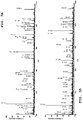
- a series of oligosaccharide peaks were present in A2 and A6 cranberry fraction HPAEC-PAD chromatograms ( Figure 1 ).
- Xyloglucan standard oligosaccharides were consistent with the retention times of some of these peaks.
- the structure of the Megazyme xyloglucan oligosaccharides was galacto-xyloglucan.
- the DP 7 xyloglucan consisted of a cellotetraose backbone and three single xylose substituents attached to three of the glucose residues.
- the DP 8 and DP 9 xyloglucan standards had one or two of the xylose residues substituted with a galactose residue, respectively.
- This xyloglucan structure is typical of fucogalacto-xyloglucan without fucose. However, relatively low amounts of galactose were detected in the A2 and A6 monosaccharide composition. This indicated that the cranberry xyloglucan structure might differ from fucogalacto-xyloglucan since the majority of the A2 and A6 oligosaccharide peaks did not agree with the xyloglucan standard retention times.
- MALDI-TOF/TOF MS Matrix-assisted laser desorption ionization mass spectrometry with automated tandem time of flight mass spectrometry
- MALDI-TOF/TOF MS fragmentation of selected ions of oligosaccharides were acquired with a 4700 Proteomics Analyzer mass spectrometer (Applied Biosystems, Framingham, MA) in the positive reflectron mode. Spectra were obtained by averaging approximately 100 and approximately 2500 acquired spectra in the MS and MS/MS modes, respectively.
- the cartridges were first conditioned by passing approximately 3 mL acetonitrile:water (approximately 50:50 V/V) and then washed about 4 times with approximately 3 mL water. After conditioning, the oligosaccharide solution was passed through the graphitized carbon cartridge, washed about 3 times with approximately 3 mL of water and the water wash was discarded. The oligosaccharides were eluted with about 1 ml of acetonitrile:water (approximately 30:70 V/V), approximately 0.1% trifluoroacetic acid (TFA).
- TFA trifluoroacetic acid
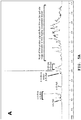
- MALDI-TOF mass spectrometry of the A6 fraction produced a series of pseudomolecular ions ( Figure 2 ) that were consistent with xyloglucan structure (Table 4).
- the ions at approximately m/z 791 and 923 were previously reported in tobacco suspension culture xyloglucan with SGG and/or XXG, and SXG and/or XSG structure, respectively (Sims et al., 1996).
- the ions at approximately 1085, 1217, 1379, and 1525 were reported for Argan (Ericlaes) tree xyloglucan with Hex 4 Pent 3 , Hex 4 Pent 4 , Hex 5 Pent 4 , and Hex 5 Pent 4 dHex composition, respectively (Ray et al., 2004, supra).
- the 1525 ion had XUFG xyloglucan structure (Ray et al., 2004, supra ) . Otherwise the Argan tree xyloglucan was reported to consist of fucogalacto-xyloglucan structure.
- the 1217 ion was very abundant in the cranberry MALDI-TOF MS spectrum and has been reported to have XXSG structure previously for Oleander and olive fruit xyloglucan (Vierhuis et al., 2001, supra; Hoffman et al., 2005, supra ) . However, the diagnostic ions for XXSG structure (Vierhuis et al., 2001, supra ) were not present in the cranberry MALDI-TOF/TOF spectrum for m/z approximately 1217.37 ( Figure 3B ).
- the SSGG xyloglucan structure appeared to be the predominant cranberry xyloglucan structure as was reported for m/z approximately 1217 in tobacco (Sims et al., 1996).
- the approximately 1127, 1259, 1289, 1331, and 1421 ions were previously reported as the acetylated xyloglucan oligosaccharide compositions in tobacco (Table 4).
- XLXG and/or XXLG, and UXGGG and/or XUGGG structure, respectively was assigned as reported previously (Sims et al., 1996).
- Oligosaccharide analysis by MALDI-TOF/TOF MS produced a set of ions that provides the essential information for carbohydrate structural characterization ( Mechref and Novotony, Anal. Chem., Volume 75, 4895-4903, 2003 ).
- the MS/MS spectrum presents two types of ions due to cross-ring fragmentation that usually involves two bonds on the same sugar residue and the glycosidic bond cleavage between two sugar residues.
- the ions are designated as X ions for cross-ring fragmentation, and Y and Z ions for glycosidic bond fragments.
- the ions are designated as A for cross-ring fragmentation, and B and C for the glycosidic bond fragments.
- the fragmented bond site is indicated with the corresponding letter, a subscript number, and a Greek letter to designate the branched chain involved.
- Superscript numbers preceding the ions X or A indicates the cleaved bonds in the sugar ring.
- the MS/MS spectrum shown in Figure 3A corresponds to the sodiated oligosaccharide, [M+Na] + , with a m/z at approximately 1055.32 ( Figure 2 ).
- This precursor ion is consistent with an oligosaccharide structure formed by 4 pentoses and 3 hexoses.
- the ion at m/z approximately 305.3 in the MS/MS spectrum ( Figure 3A ) suggests that two pentoses are present as side chains. No ion corresponding to a side antenna with 1, 3 or 4 pentoses is observed in the spectrum.
- the ion at m/z approximately 893 indicates the loss of a hexose from the precursor ion (1055-162).
- Some of the ions are generated from subsequent fragmentation of the approximately 951 fragment, such as the ion at m/z approximately 891 (951-60).
- NMRPipe Delaglio et al., 1994
- Sparky Goddard et al.
- All spectra were referenced to the internal 1 H and 13 C resonances of 4,4-dimethyl-4-silapentan-1-sulfonic acid (DSS).
- One dimensional 1 H NMR spectra were acquired using a spectral width of approximately 5,000 Hz, approximately 32,768 points, approximately 70° pulse width, and a recycle time of approximately 2.5 seconds.
- One dimensional 13 C NMR spectra were acquired at approximately 176 MHz using approximately 65,536 data points, approximately a 70 degree pulse width, and a relaxation time of approximately 2.5 seconds.
- the peak at 5.08 has a shoulder that is also 3.5 Hz from the main peak. This is indicative of the pyranoses rhamnose, fucose and xylose, although others may exist.
- Several peaks in the region of approximately 5.1-5.2 ppm have very small, or indiscernible coupling in the 1D- 1 H spectrum. These characteristics support an assignment of ⁇ -L-Ara f . Furanoses such as these undergo rapidly repuckering of their rings, resulting in an averaging of the J values.
- ⁇ -D-Glc p resonances are commonly found in S G or G S substructure environments (CCRC Xyloglucan NMR Database). Likewise, the ⁇ -D-Gal p resonances are typically found in L substructures in sequences such as XLF (CCRC NMR Database).
- the 1D- 1 H and the HSQC spectra reveal ⁇ -doublets in the approximate range of 4.49-4.65 ppm and 98.4-99.5 ppm ( 1 H and 13 C, respectively). These resonances probably arise from ⁇ -D-GlcA, and/or ⁇ -D-Gal in an F substructure with an environment such as X F G or L F G (CCRC NMR Database).
- HMBC and HSQC experiments indicate the presence of aromatic components having 1 H resonances between approximately 7.5-9.7 ppm and 13 C resonances in the range of approximately 90-180 ppm. These resonances are consistent with polyphenolic anthocyanins or proanthocyanidin compounds, although the actual structures have not been established. The spectra do suggest that they are linked to several sugars, however, this has not yet been proven. Similar chemical species have been identified by others ( Yan et al., J. Agric. Food Chem., Volume 50, 5844-5849, 2002 ). Table 5.
- human bladder epithelial cells T24 (ATCC #HTB-4) and Escherichia coli 1161 (ATCC #BAA-1161) were seeded in a 24-well plate and set to grow to confluence at about 37 degrees in an about 5% CO 2 incubator. The cells were then treated with ultraviolet light. Approximately 1 mL of LB medium (Muler Hinton II Broth) was added to each well. Fraction A6 samples were dissolved in DMSO, centrifuged at approximately 3,000 rpm for about 15 minutes at approximately 4 degrees C, approximately 50 ⁇ L of supernatant was added to the wells.
- PBS Phosphate Buffer Solution
- DMSO DMSO
- E. coli solution was added to each well. After about three hours of incubation, the solution in a plate was aspirated off. Wells were washed twice with PBS. Bacteria bound to the cell membrane were lysed with microbial viability buffer. The ATP level, an indicator of viable cells, was read optically by a plate reader. The per cent inhibition of bacterial adhesion was calculated as: (ATP negative control-ATP sample)/ATP negative control) X 100%.
- anti-microbial adhesion inhibitory fraction A6 The biological activity of anti-microbial adhesion inhibitory fraction A6 was determined with bacterial adhesion assays using the uropathogenic E. coli 1161 and the verotoxigenic E. coli O157.H7 strains. The lowest concentration of A6, approximately 1.25-10 mg/ml, blocked adhesion on E. coli 1161 to T24 human bladder epithelial cells with approximately 20 mg/ml or above concentrations no different from the PBS control (Table 6),
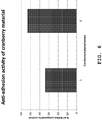
- the A6 fraction had much higher anti-adhesion activity compared to A1 ( Figure 6 ).
- the cranberry concentrate powder (A1) was much more enriched in pectic oligosaccharides compared to the xyloglucan oligosaccharide enriched A6 fraction.
- the higher levels of xyloglucan oligosaccharides correlated with the higher anti-adhesion activity.
- this second bacterial adhesion assay confirms that the A6 xyloglucan oligosaccharide fraction blocks the specific interaction required for adhesion of these pathogens to two different human epithelial cells.
- Table 6 E. coli 1161 adhesion assay using fraction A6 (dry weight mg/ml) Reading PBS 0.5% DMSO A6, 1.25 mg/ml A6, 2.5mg/ml A6, 5.0 mg/ml A6, 10 mg/ml A6, 20 mg/ml A6, 40 mg/ml 1 1394 809 685 900 887 866 1401 1315 2 1465 869 732 973 942 946 1359 1512 3 1363 680 860 740 854 1294 1434 Average 1407 839 699 911 856 889 1351 1420 Stdev 52.29 42.43 28.69 57.30 104.43 50.01 53.91 99.21 CV% 3.72 5.06 4.10 6.29 12.20 5.63 3.99 6.99 Table 7.
Landscapes
- Health & Medical Sciences (AREA)
- Life Sciences & Earth Sciences (AREA)
- Natural Medicines & Medicinal Plants (AREA)
- Chemical & Material Sciences (AREA)
- General Health & Medical Sciences (AREA)
- Veterinary Medicine (AREA)
- Medicinal Chemistry (AREA)
- Public Health (AREA)
- Animal Behavior & Ethology (AREA)
- Pharmacology & Pharmacy (AREA)
- Epidemiology (AREA)
- Engineering & Computer Science (AREA)
- Mycology (AREA)
- Botany (AREA)
- Microbiology (AREA)
- Medical Informatics (AREA)
- Biotechnology (AREA)
- Alternative & Traditional Medicine (AREA)
- Molecular Biology (AREA)
- Organic Chemistry (AREA)
- Nutrition Science (AREA)
- Food Science & Technology (AREA)
- Polymers & Plastics (AREA)
- Nuclear Medicine, Radiotherapy & Molecular Imaging (AREA)
- General Chemical & Material Sciences (AREA)
- Chemical Kinetics & Catalysis (AREA)
- Urology & Nephrology (AREA)
- Bioinformatics & Cheminformatics (AREA)
- Oncology (AREA)
- Communicable Diseases (AREA)
- Medicines Containing Plant Substances (AREA)
- Pharmaceuticals Containing Other Organic And Inorganic Compounds (AREA)
Claims (6)
- Zusammensetzung bestehend aus einer wirksamen Menge einer isolierten antimikrobiellen adhäsionshemmenden Fraktion A6 aus der Moosbeere als Wirkstoff, wobei die isolierte Fraktion ein acetyliertes, neutralzuckerreiches Polysaccharid mit einer gewichtsmittleren Molmasse von ungefähr 10,2 x 10³ ± 2,0 Da, einem z-gemittelten hydrodynamischen Radius von ungefähr 2,0 ± 0,2 nm und einer gewichtsmittleren Grenzviskositätszahl von ungefähr 0,048 ± 0,0001 dL/g aufweist, hergestellt durch ein Verfahren, das folgende Schritte umfasst:(a) Bereitstellen von Fruchtschalen der Moosbeere,(b) Behandeln der Fruchtschalen der Moosbeere mit einer der Familie der Klerzyme-150-Pektinase äquivalenten Pektinase in Mengen, die für die Entpektinisierung der Fruchtschalen ausreichen, um eine enzymbehandelte Zusammensetzung zu bilden,(c) Entfernen von Bruchstücken aus der enzymbehandelten Zusammensetzung unter Anwendung eines Verfahrens wie beispielsweise Dekantation oder Zentrifugation, um eine erste Flüssigkeit zu bilden,(d) Sprühtrocknen der ersten Flüssigkeit, um eine Zusammensetzung A1 zu bilden,(e) Lösen der Zusammensetzung A1 mit deionisiertem Wasser und ihr Laden in eine Säule eines chromatographischen Biotage-FLASH-40-Systems, das für die Annahme von 120-g-Kartuschen von Biotage SNAP KP-C18-HS umgewandelt, mit 12-g-Proben von SNAP KP-C18-HS ausgestattet und mit Methanol und Wasser vorbehandelt ist,(f) Fraktionieren der Zusammensetzung A1 durch Eluieren der Säule zuerst mit deionisiertem Wasser und anschließend mit einem Methanol-Wasser-Gemisch, um eine Zusammensetzung A2 zu bilden,(g) vierfaches Wiederholen von Schritt (f),(h) Gefriertrocknen der Zusammensetzung A2, indem zuerst das Methanol unter Vakuum entfernt wird,(i) Analysieren des in der A2-Fraktion festgestellten Maximums, das bei ungefähr 6,7 min aus einer HPX-87C-HPLC-Säule eluiert wurde, unter Anwendung von Brechungsindexdetektion,(j) Reinigen der Zusammensetzung A2 unter Anwendung von Säulenchromatographie mit LH-20-Gel, indem zuerst die Fraktion in deionisiertem Wasser gelöst wird, um die antimikrobielle adhäsionshemmende Fraktion A6 nach der Elution der Säule mit deionisiertem Wasser unter Verwendung einer Masterflex-L/S-Pumpe, Modell 7014-52, bei einem Durchfluss von ungefähr 2,5 ml/min zu bilden,(k) Gefriertrocknen der antimikrobiellen adhäsionshemmenden Fraktion A6, um ein Kristallpulver zu bilden,(l) Mischen des Kristallpulvers mit einem Träger, um eine antimikrobielle adhäsionshemmende Zusammensetzung zu bilden.
- Zusammensetzung nach Anspruch 1 zur Verwendung bei einer Behandlung bakterieller Infektionen durch Verringern der Adhäsion von Bakterien an Zellen mit α-Gal-(1-4)-Gal-terminalen Oligosaccharidrezeptoren für die Adhäsion.
- Zusammensetzung zur Verwendung nach Anspruch 2, wobei die bakterielle Infektion eine Harnwegsinfektion ist.
- Zusammensetzung zur Verwendung nach Anspruch 2, wobei die Bakterien uropathogene und verotoxigene Bakterien sind.
- Zusammensetzung nach Anspruch 1, wobei die antimikrobielle Zusammensetzung eine Tablette, eine Kapsel oder ein Pulver umfasst.
- Zusammensetzung zur Verwendung nach Anspruch 2, bestehend aus einer wirksamen Menge einer isolierten antimikrobiellen adhäsionshemmenden Fraktion A6 aus der Moosbeere nach Anspruch 1, wobei die isolierte antimikrobielle adhäsionshemmende Fraktion A6 eine Tablette, eine Kapsel oder ein Pulver umfasst.
Applications Claiming Priority (2)
| Application Number | Priority Date | Filing Date | Title |
|---|---|---|---|
| US13/480,903 US9314494B2 (en) | 2012-05-25 | 2012-05-25 | Cranberry xyloglucan oligosaccharide composition |
| PCT/US2013/042217 WO2013177275A1 (en) | 2012-05-25 | 2013-05-22 | Cranberry xyloglucan oligosaccharide composition |
Publications (3)
| Publication Number | Publication Date |
|---|---|
| EP2854827A1 EP2854827A1 (de) | 2015-04-08 |
| EP2854827A4 EP2854827A4 (de) | 2015-11-18 |
| EP2854827B1 true EP2854827B1 (de) | 2019-05-08 |
Family
ID=49621805
Family Applications (1)
| Application Number | Title | Priority Date | Filing Date |
|---|---|---|---|
| EP13794333.8A Active EP2854827B1 (de) | 2012-05-25 | 2013-05-22 | Xyloglucan-oligosaccharid-zusammensetzung aus der moosbeere |
Country Status (6)
| Country | Link |
|---|---|
| US (1) | US9314494B2 (de) |
| EP (1) | EP2854827B1 (de) |
| CN (1) | CN104507485B (de) |
| AU (1) | AU2013266351B2 (de) |
| CL (1) | CL2014003194A1 (de) |
| WO (1) | WO2013177275A1 (de) |
Families Citing this family (7)
| Publication number | Priority date | Publication date | Assignee | Title |
|---|---|---|---|---|
| WO2012135702A1 (en) * | 2011-04-01 | 2012-10-04 | Ocean Spray Cranberries, Inc. | Inflammation and immunity treatments |
| GB201519088D0 (en) * | 2015-10-28 | 2015-12-09 | Metabogen Ab | The use of bacteria formulations |
| WO2018183369A1 (en) * | 2017-03-27 | 2018-10-04 | Rhode Island Council On Postsecondary Education | Cranberry-derived compositions for potentiating antibiotic efficacy against bacterial persistence |
| CA3093384A1 (en) * | 2018-03-08 | 2019-09-12 | Plexus Worldwide Llc | Compositions and methods for skin renewal |
| GR1009632B (el) * | 2018-07-09 | 2019-10-25 | Ιουλια Κλεωνος Τσετη | Διατροφικο συμπληρωμα για την απο του στοματος χορηγηση συνδυασμου λακτοφερινης, ξυλογλυκανης, προανθοκυανιδινων και σιμεθικονης, χρησιμων για την προληψη λοιμωξεων του γαστρεντερικου και ουροποιητικου συστηματος |
| CN109187940A (zh) * | 2018-07-27 | 2019-01-11 | 南京谱利健生物技术有限公司 | 用于多糖分析的一种同位素标签试剂的制备和应用 |
| CN119530062B (zh) * | 2024-11-18 | 2025-08-12 | 微康益生菌(苏州)股份有限公司 | 一种适应阴道环境且强黏附阴道上皮细胞的乳酸菌的培养方法 |
Family Cites Families (17)
| Publication number | Priority date | Publication date | Assignee | Title |
|---|---|---|---|---|
| US6303125B1 (en) | 1996-12-19 | 2001-10-16 | Ramot-University Authority For Applied Research And Industrial Development Ltd. | Anti-microbial-adhesion fraction derived from vaccinium |
| US6210681B1 (en) * | 1999-09-07 | 2001-04-03 | Jlb, Inc. | Plant proanthocyanidin extracts |
| DE10006989A1 (de) | 2000-02-16 | 2001-08-23 | Nutricia Nv | Antiadhäsive Kohlenhydratmischung |
| US7306815B2 (en) * | 2000-08-31 | 2007-12-11 | Phenolics, Llc | Compositions enriched in phenolic compounds and methods for producing the same |
| US6960360B2 (en) * | 2000-08-31 | 2005-11-01 | Phenolics, Llc | Efficient method for producing compositions enriched in total phenols |
| JP3837497B2 (ja) | 2002-03-25 | 2006-10-25 | 独立行政法人産業技術総合研究所 | 新規なキシログルカンオリゴ糖分解酵素、それをコードする遺伝子、ならびに該酵素の製造方法 |
| GB0321996D0 (en) | 2003-09-19 | 2003-10-22 | Novartis Nutrition Ag | Organic compounds |
| US20050175762A1 (en) * | 2003-10-23 | 2005-08-11 | Richards Mark P. | Methods and compositions to inhibit lipid oxidation |
| US7270837B2 (en) * | 2003-11-10 | 2007-09-18 | Rutgers, The State University Of New Jersey | Anti-inflammatory cranberry flavonol extract preparations |
| GB0405540D0 (en) | 2004-03-11 | 2004-04-21 | Glaxo Group Ltd | Novel use |
| JP2007291322A (ja) | 2006-03-31 | 2007-11-08 | Maruha Corp | 新規多糖およびオリゴ糖 |
| GB2453671B (en) | 2007-10-11 | 2009-09-16 | Fayrefield Foods Ltd | Preparation for use in the treatment of Clostridium difficile and Salmonella |
| US20090226548A1 (en) | 2008-01-11 | 2009-09-10 | U.S. Nutraceuticals, Llc D/B/A Valensa International | Method of preventing, controlling and ameliorating urinary tract infections using a synergistic cranberry derivative and d-mannose composition |
| FR2930730B1 (fr) | 2008-05-05 | 2011-03-04 | Tournay Biotechnologies | Procede d'obtention d'un extrait de marc de canneberge utilisable notamment dans la prevention et le traitement d'affections telles que caries, gingivites, maux de gorge |
| US20100028469A1 (en) | 2008-06-04 | 2010-02-04 | Herbalscience Group, Llc | Extracts of Cranberry and Methods of Using Thereof |
| WO2010078660A1 (en) | 2009-01-12 | 2010-07-15 | The Royal Institution For The Advancement Of Learning/Mcgill University | Use of proanthocyanidins as an anti-apoptotic agent and anti-adhesive bacterial agent |
| CA2795266C (en) | 2010-04-06 | 2020-01-07 | Ocean Spray Cranberries, Inc. | Infusion methods and products |
-
2012
- 2012-05-25 US US13/480,903 patent/US9314494B2/en active Active
-
2013
- 2013-05-22 EP EP13794333.8A patent/EP2854827B1/de active Active
- 2013-05-22 WO PCT/US2013/042217 patent/WO2013177275A1/en not_active Ceased
- 2013-05-22 AU AU2013266351A patent/AU2013266351B2/en active Active
- 2013-05-22 CN CN201380032460.6A patent/CN104507485B/zh active Active
-
2014
- 2014-11-24 CL CL2014003194A patent/CL2014003194A1/es unknown
Non-Patent Citations (1)
| Title |
|---|
| None * |
Also Published As
| Publication number | Publication date |
|---|---|
| AU2013266351B2 (en) | 2018-03-01 |
| CL2014003194A1 (es) | 2015-07-10 |
| CN104507485B (zh) | 2018-10-09 |
| EP2854827A1 (de) | 2015-04-08 |
| EP2854827A4 (de) | 2015-11-18 |
| WO2013177275A1 (en) | 2013-11-28 |
| US9314494B2 (en) | 2016-04-19 |
| AU2013266351A1 (en) | 2015-01-29 |
| CN104507485A (zh) | 2015-04-08 |
| US20130316025A1 (en) | 2013-11-28 |
Similar Documents
| Publication | Publication Date | Title |
|---|---|---|
| EP2854827B1 (de) | Xyloglucan-oligosaccharid-zusammensetzung aus der moosbeere | |
| Sheng et al. | Structure identification of a polysaccharide in mushroom Lingzhi spore and its immunomodulatory activity | |
| Deseo et al. | Antioxidant activity and polyphenol composition of sugarcane molasses extract | |
| Malunga et al. | Antioxidant capacity of arabinoxylan oligosaccharide fractions prepared from wheat aleurone using Trichoderma viride or Neocallimastix patriciarum xylanase | |
| Yun et al. | Ultrasound-assisted enzymatic extraction of Scutellaria baicalensis root polysaccharide and its hypoglycemic and immunomodulatory activities | |
| Xie et al. | Fractionation and characterization of biologically-active polysaccharides from Artemisia tripartita | |
| Xie et al. | Immunomodulatory activity of acidic polysaccharides isolated from Tanacetum vulgare L. | |
| Synytsya et al. | Structural features and anti-coagulant activity of the sulphated polysaccharide SPS-CF from a green alga Capsosiphon fulvescens | |
| US6482942B1 (en) | Method of isolating mucilaginous polysaccharides and uses thereof | |
| Habibi et al. | An arabinogalactan from the skin of Opuntia ficus-indica prickly pear fruits | |
| TWI488636B (zh) | 藥用植物霍山石斛〈dendrobium huoshanense〉多醣體及寡聚物之結構及生物活性 | |
| Kim et al. | Structure elucidation of an immunostimulatory arabinoxylan-type polysaccharide prepared from young barley leaves (Hordeum vulgare L.) | |
| Capek et al. | Chlorella vulgaris α-L-arabino-α-L-rhamno-α, β-D-galactan structure and mechanisms of its anti-inflammatory and anti-remodelling effects | |
| Shi et al. | Purification, structural characterization and immunostimulatory activity of polysaccharides from Umbilicaria esculenta | |
| Tsujita et al. | Preparation and characterisation of peanut seed skin polyphenols | |
| Schepetkin et al. | Immunomodulatory and hemagglutinating activities of acidic polysaccharides isolated from Combretum racemosum | |
| Wang et al. | The homogenous polysaccharide SY01-23 purified from leaf of Morus alba L. has bioactivity on human gut Bacteroides ovatus and Bacteroides cellulosilyticus | |
| Zhou et al. | Ultrafiltration isolation, structure and effects on H1N1-induced acute lung injury of a heteropolysaccharide from Houttuynia cordata | |
| Dong et al. | Structural characterization of a pectic polysaccharide from Nerium indicum flowers | |
| Liu et al. | Ultrasonic extraction, structural characterization, and antioxidant activity of oligosaccharides from red yeast rice | |
| Sivignon et al. | Heteropolysaccharides from S. cerevisiae show anti-adhesive properties against E. coli associated with Crohn's disease | |
| Nergard et al. | Structure-immunomodulating activity relationships of a pectic arabinogalactan from Vernonia kotschyana Sch. Bip. ex Walp. | |
| EP2167674B1 (de) | Ernährungszusammensetzung | |
| Zhu et al. | Characterization and lymphocyte proliferation activity of an oligosaccharide degraded from Astragalus polysaccharide | |
| Hu et al. | Structural characterization and prebiotic activity of oligo-galacturonic acids from Osmunda japonica Thunb |
Legal Events
| Date | Code | Title | Description |
|---|---|---|---|
| PUAI | Public reference made under article 153(3) epc to a published international application that has entered the european phase |
Free format text: ORIGINAL CODE: 0009012 |
|
| 17P | Request for examination filed |
Effective date: 20141223 |
|
| AK | Designated contracting states |
Kind code of ref document: A1 Designated state(s): AL AT BE BG CH CY CZ DE DK EE ES FI FR GB GR HR HU IE IS IT LI LT LU LV MC MK MT NL NO PL PT RO RS SE SI SK SM TR |
|
| AX | Request for extension of the european patent |
Extension state: BA ME |
|
| DAX | Request for extension of the european patent (deleted) | ||
| RA4 | Supplementary search report drawn up and despatched (corrected) |
Effective date: 20151019 |
|
| RIC1 | Information provided on ipc code assigned before grant |
Ipc: A61P 13/00 20060101ALI20151013BHEP Ipc: A23L 1/30 20060101ALI20151013BHEP Ipc: A61P 31/04 20060101ALI20151013BHEP Ipc: A61K 31/716 20060101AFI20151013BHEP Ipc: A61K 36/45 20060101ALI20151013BHEP |
|
| STAA | Information on the status of an ep patent application or granted ep patent |
Free format text: STATUS: EXAMINATION IS IN PROGRESS |
|
| 17Q | First examination report despatched |
Effective date: 20170102 |
|
| REG | Reference to a national code |
Ref country code: DE Ref legal event code: R079 Ref document number: 602013055128 Country of ref document: DE Free format text: PREVIOUS MAIN CLASS: A61K0036180000 Ipc: A61K0036450000 |
|
| RIC1 | Information provided on ipc code assigned before grant |
Ipc: A23L 33/105 20160101ALI20181004BHEP Ipc: A61P 13/00 20060101ALI20181004BHEP Ipc: A61K 36/45 20060101AFI20181004BHEP Ipc: A61K 31/716 20060101ALI20181004BHEP |
|
| GRAP | Despatch of communication of intention to grant a patent |
Free format text: ORIGINAL CODE: EPIDOSNIGR1 |
|
| STAA | Information on the status of an ep patent application or granted ep patent |
Free format text: STATUS: GRANT OF PATENT IS INTENDED |
|
| INTG | Intention to grant announced |
Effective date: 20181205 |
|
| RIC1 | Information provided on ipc code assigned before grant |
Ipc: A61K 36/45 20060101AFI20181004BHEP Ipc: A61K 31/716 20060101ALI20181004BHEP Ipc: A61P 13/00 20060101ALI20181004BHEP Ipc: A23L 33/105 20160101ALI20181004BHEP |
|
| GRAS | Grant fee paid |
Free format text: ORIGINAL CODE: EPIDOSNIGR3 |
|
| GRAA | (expected) grant |
Free format text: ORIGINAL CODE: 0009210 |
|
| STAA | Information on the status of an ep patent application or granted ep patent |
Free format text: STATUS: THE PATENT HAS BEEN GRANTED |
|
| AK | Designated contracting states |
Kind code of ref document: B1 Designated state(s): AL AT BE BG CH CY CZ DE DK EE ES FI FR GB GR HR HU IE IS IT LI LT LU LV MC MK MT NL NO PL PT RO RS SE SI SK SM TR |
|
| REG | Reference to a national code |
Ref country code: GB Ref legal event code: FG4D |
|
| REG | Reference to a national code |
Ref country code: CH Ref legal event code: EP Ref country code: AT Ref legal event code: REF Ref document number: 1129127 Country of ref document: AT Kind code of ref document: T Effective date: 20190515 |
|
| REG | Reference to a national code |
Ref country code: DE Ref legal event code: R096 Ref document number: 602013055128 Country of ref document: DE Ref country code: IE Ref legal event code: FG4D |
|
| REG | Reference to a national code |
Ref country code: NL Ref legal event code: MP Effective date: 20190508 |
|
| REG | Reference to a national code |
Ref country code: LT Ref legal event code: MG4D |
|
| PG25 | Lapsed in a contracting state [announced via postgrant information from national office to epo] |
Ref country code: AL Free format text: LAPSE BECAUSE OF FAILURE TO SUBMIT A TRANSLATION OF THE DESCRIPTION OR TO PAY THE FEE WITHIN THE PRESCRIBED TIME-LIMIT Effective date: 20190508 Ref country code: PT Free format text: LAPSE BECAUSE OF FAILURE TO SUBMIT A TRANSLATION OF THE DESCRIPTION OR TO PAY THE FEE WITHIN THE PRESCRIBED TIME-LIMIT Effective date: 20190908 Ref country code: FI Free format text: LAPSE BECAUSE OF FAILURE TO SUBMIT A TRANSLATION OF THE DESCRIPTION OR TO PAY THE FEE WITHIN THE PRESCRIBED TIME-LIMIT Effective date: 20190508 Ref country code: HR Free format text: LAPSE BECAUSE OF FAILURE TO SUBMIT A TRANSLATION OF THE DESCRIPTION OR TO PAY THE FEE WITHIN THE PRESCRIBED TIME-LIMIT Effective date: 20190508 Ref country code: LT Free format text: LAPSE BECAUSE OF FAILURE TO SUBMIT A TRANSLATION OF THE DESCRIPTION OR TO PAY THE FEE WITHIN THE PRESCRIBED TIME-LIMIT Effective date: 20190508 Ref country code: NL Free format text: LAPSE BECAUSE OF FAILURE TO SUBMIT A TRANSLATION OF THE DESCRIPTION OR TO PAY THE FEE WITHIN THE PRESCRIBED TIME-LIMIT Effective date: 20190508 Ref country code: SE Free format text: LAPSE BECAUSE OF FAILURE TO SUBMIT A TRANSLATION OF THE DESCRIPTION OR TO PAY THE FEE WITHIN THE PRESCRIBED TIME-LIMIT Effective date: 20190508 Ref country code: NO Free format text: LAPSE BECAUSE OF FAILURE TO SUBMIT A TRANSLATION OF THE DESCRIPTION OR TO PAY THE FEE WITHIN THE PRESCRIBED TIME-LIMIT Effective date: 20190808 Ref country code: ES Free format text: LAPSE BECAUSE OF FAILURE TO SUBMIT A TRANSLATION OF THE DESCRIPTION OR TO PAY THE FEE WITHIN THE PRESCRIBED TIME-LIMIT Effective date: 20190508 |
|
| PG25 | Lapsed in a contracting state [announced via postgrant information from national office to epo] |
Ref country code: RS Free format text: LAPSE BECAUSE OF FAILURE TO SUBMIT A TRANSLATION OF THE DESCRIPTION OR TO PAY THE FEE WITHIN THE PRESCRIBED TIME-LIMIT Effective date: 20190508 Ref country code: BG Free format text: LAPSE BECAUSE OF FAILURE TO SUBMIT A TRANSLATION OF THE DESCRIPTION OR TO PAY THE FEE WITHIN THE PRESCRIBED TIME-LIMIT Effective date: 20190808 Ref country code: GR Free format text: LAPSE BECAUSE OF FAILURE TO SUBMIT A TRANSLATION OF THE DESCRIPTION OR TO PAY THE FEE WITHIN THE PRESCRIBED TIME-LIMIT Effective date: 20190809 Ref country code: LV Free format text: LAPSE BECAUSE OF FAILURE TO SUBMIT A TRANSLATION OF THE DESCRIPTION OR TO PAY THE FEE WITHIN THE PRESCRIBED TIME-LIMIT Effective date: 20190508 |
|
| REG | Reference to a national code |
Ref country code: AT Ref legal event code: MK05 Ref document number: 1129127 Country of ref document: AT Kind code of ref document: T Effective date: 20190508 |
|
| REG | Reference to a national code |
Ref country code: CH Ref legal event code: PL |
|
| PG25 | Lapsed in a contracting state [announced via postgrant information from national office to epo] |
Ref country code: CZ Free format text: LAPSE BECAUSE OF FAILURE TO SUBMIT A TRANSLATION OF THE DESCRIPTION OR TO PAY THE FEE WITHIN THE PRESCRIBED TIME-LIMIT Effective date: 20190508 Ref country code: RO Free format text: LAPSE BECAUSE OF FAILURE TO SUBMIT A TRANSLATION OF THE DESCRIPTION OR TO PAY THE FEE WITHIN THE PRESCRIBED TIME-LIMIT Effective date: 20190508 Ref country code: CH Free format text: LAPSE BECAUSE OF NON-PAYMENT OF DUE FEES Effective date: 20190531 Ref country code: AT Free format text: LAPSE BECAUSE OF FAILURE TO SUBMIT A TRANSLATION OF THE DESCRIPTION OR TO PAY THE FEE WITHIN THE PRESCRIBED TIME-LIMIT Effective date: 20190508 Ref country code: EE Free format text: LAPSE BECAUSE OF FAILURE TO SUBMIT A TRANSLATION OF THE DESCRIPTION OR TO PAY THE FEE WITHIN THE PRESCRIBED TIME-LIMIT Effective date: 20190508 Ref country code: LI Free format text: LAPSE BECAUSE OF NON-PAYMENT OF DUE FEES Effective date: 20190531 Ref country code: DK Free format text: LAPSE BECAUSE OF FAILURE TO SUBMIT A TRANSLATION OF THE DESCRIPTION OR TO PAY THE FEE WITHIN THE PRESCRIBED TIME-LIMIT Effective date: 20190508 Ref country code: SK Free format text: LAPSE BECAUSE OF FAILURE TO SUBMIT A TRANSLATION OF THE DESCRIPTION OR TO PAY THE FEE WITHIN THE PRESCRIBED TIME-LIMIT Effective date: 20190508 |
|
| REG | Reference to a national code |
Ref country code: BE Ref legal event code: MM Effective date: 20190531 |
|
| REG | Reference to a national code |
Ref country code: DE Ref legal event code: R097 Ref document number: 602013055128 Country of ref document: DE |
|
| PG25 | Lapsed in a contracting state [announced via postgrant information from national office to epo] |
Ref country code: MC Free format text: LAPSE BECAUSE OF FAILURE TO SUBMIT A TRANSLATION OF THE DESCRIPTION OR TO PAY THE FEE WITHIN THE PRESCRIBED TIME-LIMIT Effective date: 20190508 Ref country code: IT Free format text: LAPSE BECAUSE OF FAILURE TO SUBMIT A TRANSLATION OF THE DESCRIPTION OR TO PAY THE FEE WITHIN THE PRESCRIBED TIME-LIMIT Effective date: 20190508 Ref country code: LU Free format text: LAPSE BECAUSE OF NON-PAYMENT OF DUE FEES Effective date: 20190522 Ref country code: SM Free format text: LAPSE BECAUSE OF FAILURE TO SUBMIT A TRANSLATION OF THE DESCRIPTION OR TO PAY THE FEE WITHIN THE PRESCRIBED TIME-LIMIT Effective date: 20190508 |
|
| PLBE | No opposition filed within time limit |
Free format text: ORIGINAL CODE: 0009261 |
|
| STAA | Information on the status of an ep patent application or granted ep patent |
Free format text: STATUS: NO OPPOSITION FILED WITHIN TIME LIMIT |
|
| PG25 | Lapsed in a contracting state [announced via postgrant information from national office to epo] |
Ref country code: TR Free format text: LAPSE BECAUSE OF FAILURE TO SUBMIT A TRANSLATION OF THE DESCRIPTION OR TO PAY THE FEE WITHIN THE PRESCRIBED TIME-LIMIT Effective date: 20190508 |
|
| 26N | No opposition filed |
Effective date: 20200211 |
|
| PG25 | Lapsed in a contracting state [announced via postgrant information from national office to epo] |
Ref country code: IE Free format text: LAPSE BECAUSE OF NON-PAYMENT OF DUE FEES Effective date: 20190522 Ref country code: PL Free format text: LAPSE BECAUSE OF FAILURE TO SUBMIT A TRANSLATION OF THE DESCRIPTION OR TO PAY THE FEE WITHIN THE PRESCRIBED TIME-LIMIT Effective date: 20190508 |
|
| PG25 | Lapsed in a contracting state [announced via postgrant information from national office to epo] |
Ref country code: BE Free format text: LAPSE BECAUSE OF NON-PAYMENT OF DUE FEES Effective date: 20190531 Ref country code: SI Free format text: LAPSE BECAUSE OF FAILURE TO SUBMIT A TRANSLATION OF THE DESCRIPTION OR TO PAY THE FEE WITHIN THE PRESCRIBED TIME-LIMIT Effective date: 20190508 |
|
| PG25 | Lapsed in a contracting state [announced via postgrant information from national office to epo] |
Ref country code: CY Free format text: LAPSE BECAUSE OF FAILURE TO SUBMIT A TRANSLATION OF THE DESCRIPTION OR TO PAY THE FEE WITHIN THE PRESCRIBED TIME-LIMIT Effective date: 20190508 |
|
| PG25 | Lapsed in a contracting state [announced via postgrant information from national office to epo] |
Ref country code: IS Free format text: LAPSE BECAUSE OF FAILURE TO SUBMIT A TRANSLATION OF THE DESCRIPTION OR TO PAY THE FEE WITHIN THE PRESCRIBED TIME-LIMIT Effective date: 20190908 |
|
| PG25 | Lapsed in a contracting state [announced via postgrant information from national office to epo] |
Ref country code: MT Free format text: LAPSE BECAUSE OF FAILURE TO SUBMIT A TRANSLATION OF THE DESCRIPTION OR TO PAY THE FEE WITHIN THE PRESCRIBED TIME-LIMIT Effective date: 20190508 Ref country code: HU Free format text: LAPSE BECAUSE OF FAILURE TO SUBMIT A TRANSLATION OF THE DESCRIPTION OR TO PAY THE FEE WITHIN THE PRESCRIBED TIME-LIMIT; INVALID AB INITIO Effective date: 20130522 |
|
| PG25 | Lapsed in a contracting state [announced via postgrant information from national office to epo] |
Ref country code: MK Free format text: LAPSE BECAUSE OF FAILURE TO SUBMIT A TRANSLATION OF THE DESCRIPTION OR TO PAY THE FEE WITHIN THE PRESCRIBED TIME-LIMIT Effective date: 20190508 |
|
| PGFP | Annual fee paid to national office [announced via postgrant information from national office to epo] |
Ref country code: FR Payment date: 20230525 Year of fee payment: 11 |
|
| PG25 | Lapsed in a contracting state [announced via postgrant information from national office to epo] |
Ref country code: FR Free format text: LAPSE BECAUSE OF NON-PAYMENT OF DUE FEES Effective date: 20240531 |
|
| PGFP | Annual fee paid to national office [announced via postgrant information from national office to epo] |
Ref country code: DE Payment date: 20250529 Year of fee payment: 13 |
|
| PGFP | Annual fee paid to national office [announced via postgrant information from national office to epo] |
Ref country code: GB Payment date: 20250527 Year of fee payment: 13 |