EP2848323A1 - Tea leaves sieving apparatus - Google Patents
Tea leaves sieving apparatus Download PDFInfo
- Publication number
- EP2848323A1 EP2848323A1 EP13184234.6A EP13184234A EP2848323A1 EP 2848323 A1 EP2848323 A1 EP 2848323A1 EP 13184234 A EP13184234 A EP 13184234A EP 2848323 A1 EP2848323 A1 EP 2848323A1
- Authority
- EP
- European Patent Office
- Prior art keywords
- tea leaves
- sieving
- perforated plate
- perforated
- plate
- Prior art date
- Legal status (The legal status is an assumption and is not a legal conclusion. Google has not performed a legal analysis and makes no representation as to the accuracy of the status listed.)
- Withdrawn
Links
Images

Classifications
-
- B—PERFORMING OPERATIONS; TRANSPORTING
- B07—SEPARATING SOLIDS FROM SOLIDS; SORTING
- B07B—SEPARATING SOLIDS FROM SOLIDS BY SIEVING, SCREENING, SIFTING OR BY USING GAS CURRENTS; SEPARATING BY OTHER DRY METHODS APPLICABLE TO BULK MATERIAL, e.g. LOOSE ARTICLES FIT TO BE HANDLED LIKE BULK MATERIAL
- B07B1/00—Sieving, screening, sifting, or sorting solid materials using networks, gratings, grids, or the like
- B07B1/46—Constructional details of screens in general; Cleaning or heating of screens
- B07B1/4609—Constructional details of screens in general; Cleaning or heating of screens constructional details of screening surfaces or meshes
- B07B1/4636—Regulation of screen apertures
-
- B—PERFORMING OPERATIONS; TRANSPORTING
- B07—SEPARATING SOLIDS FROM SOLIDS; SORTING
- B07B—SEPARATING SOLIDS FROM SOLIDS BY SIEVING, SCREENING, SIFTING OR BY USING GAS CURRENTS; SEPARATING BY OTHER DRY METHODS APPLICABLE TO BULK MATERIAL, e.g. LOOSE ARTICLES FIT TO BE HANDLED LIKE BULK MATERIAL
- B07B1/00—Sieving, screening, sifting, or sorting solid materials using networks, gratings, grids, or the like
- B07B1/28—Moving screens not otherwise provided for, e.g. swinging, reciprocating, rocking, tilting or wobbling screens
- B07B1/30—Moving screens not otherwise provided for, e.g. swinging, reciprocating, rocking, tilting or wobbling screens jigging or moving to-and-fro within their own plane in or approximately in or transverse to the direction of conveyance
-
- B—PERFORMING OPERATIONS; TRANSPORTING
- B07—SEPARATING SOLIDS FROM SOLIDS; SORTING
- B07B—SEPARATING SOLIDS FROM SOLIDS BY SIEVING, SCREENING, SIFTING OR BY USING GAS CURRENTS; SEPARATING BY OTHER DRY METHODS APPLICABLE TO BULK MATERIAL, e.g. LOOSE ARTICLES FIT TO BE HANDLED LIKE BULK MATERIAL
- B07B1/00—Sieving, screening, sifting, or sorting solid materials using networks, gratings, grids, or the like
- B07B1/46—Constructional details of screens in general; Cleaning or heating of screens
- B07B1/4609—Constructional details of screens in general; Cleaning or heating of screens constructional details of screening surfaces or meshes
- B07B1/4663—Multi-layer screening surfaces
-
- B—PERFORMING OPERATIONS; TRANSPORTING
- B07—SEPARATING SOLIDS FROM SOLIDS; SORTING
- B07B—SEPARATING SOLIDS FROM SOLIDS BY SIEVING, SCREENING, SIFTING OR BY USING GAS CURRENTS; SEPARATING BY OTHER DRY METHODS APPLICABLE TO BULK MATERIAL, e.g. LOOSE ARTICLES FIT TO BE HANDLED LIKE BULK MATERIAL
- B07B1/00—Sieving, screening, sifting, or sorting solid materials using networks, gratings, grids, or the like
- B07B1/46—Constructional details of screens in general; Cleaning or heating of screens
- B07B1/50—Cleaning
Definitions
- the present invention relates to devices for sieving leaves, in particular tea leaves.
- beverage capsules usually comprise powders like roast and ground coffee, instant coffee, milk powder, soluble chocolate powder.
- the manufacture and in particular the filling of such capsules is easy to industrialise since a dose of powder has simply to be introduced in an opened side of the capsule before closing said side/opening with a lid.
- a solution to this problem can be to cut the tea leaves raw material so that tea leaves do not oversize a certain length that is less than the size of the capsule opening. Yet such a solution can affect the sensorial quality of the final tea beverage. For example high quality tea should not be cut. It is known that the handling of such leaves must remain gentle and non-intrusive e.g. throughout the packaging process to avoid breaking of the cell structure. This is needed because once the cell walls are physically broken, oxidation of the leaves quickens and the quality will be compromised. Moreover cutting influences the optimal extraction of tea leaves. Finally cutting action on the tea leaves raw material creates fines by cutting small leaves that have not to be cut leading to property issue in the manufacturing line and loss of raw material.
- Another solution is to sieve the tea leaves raw material with a mesh presenting a size such that longest tea leaves are retained by the mesh. Yet for retaining tea leaves presenting a length of at least 15 mm is not efficient. Actually it has been observed that during their transport along the mesh tea leaves are never fully positioned in parallel to the mesh. Long leaves are often obliquely positioned and if one end of one long tea leaf enters in a hole of the mesh then the whole leaf slides in the hole and is not eliminated by the sieving operation. Then such a sieving is not efficient. Yet the presence of one long tea leaf in a tea leaves production batch is not acceptable for filling capsules because it creates a risk of blocking the capsule manufacturing line.
- the object of the present invention is to propose a solution for gently sieving tea leaves in order to remove the longest tea leaves.
- Another object of the present invention is to propose a solution for gently sieving tea leaves in order to remove the longest tea leaves with the highest efficiency.
- Another object of the present invention is to propose a solution for gently sieving tea leaves in order to remove the longest tea leaves with such an efficiency that tea leaves can then used for filling tea leaves capsules at an industrial scale.
- the invention concerns a tea leaves sieving apparatus comprising a sieving member for treating tea leaves conveyed according to one direction (D) on the sieving member said sieving member comprising two perforated plates positioned one on the other and so that :
- meshes and grids are nettings made of fine metallic wires. They do not enable the implementation of the invention, in particular the formation of steps by superposing the holes of two meshes or grids.
- both perforated plates are closely positioned one on the other so that there is no space in between in which a tea leaf could enter. Meanwhile the perforated plates should not be stuck one to the other so that at least one of the perforated can be made movable relative to the other without clipping each other.
- all the holes of a same perforated plate present the same shape and size.
- plates with holes presenting increasing or decreasing sizes according to the conveying direction can be implemented.
- the perforated plates of the sieving member comprise circular holes.
- the holes are positioned in staggered rows in the perforated plates. Staggered rows avoid the possibility for a tea leave to not be sieved.
- each hole of the upper perforated plate is positioned above a hole of the lower perforated plate.
- the lower perforated plate is out of line with the upper perforated plate so that the superposing of said two perforated plates creates a step in each space defined by the superposed holes.
- the step is positioned in said space on the downwards side according to the conveying direction (D).
- the size of the holes in the lower perforated plate and the spacing between said holes can present any size provided that when it is placed under the top perforated plate an ascending step is present.
- the two perforated plates of the sieving member are identical. They present the same size of holes and the same spacing between the holes.
- the size of the holes in the upper perforated plate and the length of the ascending step are defined according to the properties of the tea leaves raw material (e.g. mean size, nature of the leaves) to be treated and the length of the tea leaves to be eliminated. For example starting from a raw material tea comprising tea leaves with length up to 60 mm and searching to eliminate tea leaves presenting a length greater than 15 mm then the following conditions can be applied :
- the sieving member comprises a collecting plate under the two perforated plates.
- the collecting plate aims at gathering the sieved tea leaves and conveying them to the end of the sieving member.
- the collecting plate is generally positioned at a distance (d) from the lower perforated plate.
- the apparatus of the present invention comprises means for adjusting said distance (d) on the tea leaves raw material properties and/or the length of the tea leaves that have to be eliminated from the raw material. For example for the tea leaves exemplified hereabove a distance d of at most 6 mm can be fixed.
- the apparatus comprises a translation device for translating at least one of the two perforated plates of the sieving member according to a back and forth translation movement relatively to the other perforated plate and along the conveying direction (D).
- a translation device for translating at least one of the two perforated plates of the sieving member according to a back and forth translation movement relatively to the other perforated plate and along the conveying direction (D).
- D conveying direction
- the translation device translates the lowest perforated plate.
- the translation movement is configured so that the translated perforated plate totally closes the holes of the other perforated plate during its translation movement. Due to this closure of the holes the long tea leaves blocked in the holes can be cut to a smallest size.
- the length of the translation movement can be determined according to the size of the holes and the space between the holes in the perforated plates in particular for getting a full closure of the holes during the translation.
- the translation movement can be implemented periodically.
- the frequency can depend on the properties of the tea leaves raw material.
- the translation movement can happen between every 10 seconds and every 30 seconds.
- the tea leaves sieving apparatus comprises a vibrator for vibrating the perforated plates so that tea leaves are conveyed according to the conveying direction (D).
- the vibrator also vibrates the collecting plate. Then the vibrator enables simultaneously :
- the vibrator for vibrating the perforated plates is a linear vibrator.
- the apparatus of the present invention can also comprise a conveyor upstream to the sieving member in order to introduce tea leaves on the sieving member according to the conveying direction (D).
- the upstream conveyor aims also at spreading tea leaves on the upper perforated plate of the sieving member according to a homogeneous height.
- the upstream conveyor is a linear vibrator in general. For example a height of at most 0,5 cm can be preferred so that leaves can be homogeneously sieved with perforated plates presenting circular of about 6 mm diameter.
- the conditions are chosen generally so that the height is homogeneous and the flow of tea leaves on the sieving member is regular.
- the sieving apparatus can comprise a plurality of sieving members positioned next to the other perpendicularly to the conveying direction (D).
- the invention concerns a process for sieving a raw material of tea leaves with an apparatus such as described hereabove comprising the steps of :
- At least one of the perforated plates of the sieving member is translated according to a back and forth translation movement relatively to the other sieve and along the conveying direction (D).
- the frequency of the translation movement depends on the nature of the tea leaves to be sieved.
- the lowest sieve is translated.
- the translation movement closes the hole of the upper perforated plate totally.
- the invention concerns a manufacturing line for producing beverage capsules said capsules comprising tea leaves wherein the manufacturing line comprises an apparatus such as described hereabove for sieving the tea leaves material before dosing and filling the capsules with sieved tea leaves.
- the invention concerns a process for manufacturing beverage capsules said capsules comprising tea leaves wherein said process comprises the steps of :
- tea leaves refer to loose leaf tea generally. Although the invention was described in relation to tea leaves sieving it could be applied to the sieving of any material comprising comparable long leaves like herbals.
- tea leaves are sieved.
- the longest tea leaves stay on the upper part of the sieving members. They are collected through a hopper 26 at the outlet of the sieving apparatus. The other leaves are collected on a collecting plate 24 on the lower part of the sieving members.
- Figure 2b is a side view of the sieving member of a tea leaves sieving apparatus such as described in Figure 2a . It illustrates how the vibration conveyor 3 is positioned a little bit above the sieving member 2 in order to separate the vibration movements of the conveyor 3 and the sieving member 2.
- the tea leaves fall from the vibration conveyor 3 onto the upper plate of the sieving member 2 where they are sieved.
- the longest tea leaves stay on the upper plate and are conveyed to the end of the sieving member 2 according to direction D where an inclined plate 25 direct then to a collecting pot 27.
- the other tea leaves are collected on the collecting plate of the sieving member and directed through another inclined plate 28 and a tube 29 to a sack 30.
- the sack 30 and the collecting pot 27 can be supported by a trolley so as to move the sieved tea leaves to the manufacturing line easily.
- Figures 3a to 3d are schematic views of the perforated plates of one sieving member during the sieving process.
- the sieving member comprises two perforated plates 21, 22, each plate presenting holes 21a, 22a.
- the lower perforated plate 21 is out of line with the upper perforated plate 22 so that the superposing of said two perforated plates creates for each superposed holes 21a, 22a a step 23, said step ascending according to the conveying direction D.
- the both plates present holes of same size and presenting the same space between each hole (in particular according to direction D), yet as illustrated in Figure 5 , the both plates can present holes of different sizes and spaces between holes of one same plate of different sizes with the condition that their superposition creates a step such as described hereabove.
- tea leaves 5 are moved according to direction D above the perforated plates.
- the shorter tea leaves 52 presenting a size inferior to the holes obtained by the superposition of the plates fall though said holes and are collected on the collecting plate 24.
- the longest tea leaves 51 presenting a size superior to the holes obtained by the superposition of the plates usually stay on the upper plate 22 since their dimension does not enable them to fall in the holes.
- an extremity 51a of such a long tea leaf can engage in a hole 22a of the upper plate.
- a mesh of the prior art such a long tea leaf completely falls in the hole of the perforated plate and is collected and mixed with the short tea leaves 52.
- the lower perforated plate creates a step 23 and the extremity 51a of long tea leaf entering in a hole 22a of the upper perforated plate remains blocked in the corner 23a of the step. Due to the continuous movement of tea leaves according to direction D, the new coming tea leaves 5 push the blocked long tea leaf 51 and force it to go out of the step.
- the length L of the hole 22a in the upper perforated plate, the length I of the step 23 and the distance d between the collecting plate 24 and perforated plates 21 can be adjusted according to the length of tea leaves 51 that must be sieved from the tea leaves raw material.
- an apparatus can comprise :
- one sample tea leaves could be treated so that 100 % tea leaves presenting a length greater than 20 mm were eliminated from the raw material and 85 % of the tea leaves presenting a length greater between 15 mm were eliminated. Then the sieved raw material could be used safely in a manufacturing line for producing tea beverage capsules wherein the capsules present an opening greater than 20 mm.
- FIG 6 is a magnified view of the sieving member 2 of Figure 2b .
- the sieving member 2 has an assembly of plates 200 comprising the two perforated plates and the collecting plate.
- the sieving member 2 comprises a translation device 7 that is configured for imparting a translation movement to the lowest perforated plate of the assembly 200.
- translation device 7 is connected to said lowest perforated plate and imparts a back and forth translation movement to said plate according to directions D b and D f .
- the assembly of plates 200 and the translation device 7 are supported by a vibrator 8.
- the vibrator 8 vibrates in order to impart a conveying movement according to direction D simultaneously:
- the vibrator is a conveying vibrator according to the state of the art.
- the speed of displacement of tea leaves depends on the vibration frequency and amplitude. Said features can vary depending on the nature of the tea leaves to be sorted.
- Figure 7 is a partially exploded view of the assembly of plates 200 and the translation and vibrator devices of the sieving member of Figure 6 .
- the view is made from the end of the sieving member.
- the assembly 200 comprises the collecting plate 24 on which is freely positioned the lowest perforated plate 21 so that said plate 21 can slide on the collector plate 24.
- the assembly also comprises the upper perforated plate 22 which is fixed an attached to the collecting plate 24 through corresponding holes 221 and screws 241.
- the collecting plate is attached to the translation device 7 but is not made movable as will be further explained in relationship with Figure 11 .
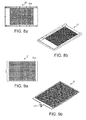
- Figures 8a and 8b are views of the upper perforated plate 22.
- the plate comprises circular holes 22a in staggered rows.
- Figures 9a and 9b are views of the lowest perforated plate 21.
- the plate comprises circular holes 21a in staggered rows.
- the lowest perforated plates 21 is identical to the upper perforated plate 22 of Figures 8a, 8b in terms of size of the holes and position of the holes on the plate surface. Then when the both plates are superposed each hole 21a in the lowest plate faces a hole 22a in the upper plate.
- the plates 21, 22 are positioned so that the holes are slightly out of line and so that for each superposed holes 21a, 22a an ascending step 23 according to the conveying direction D is created as illustrated in Figure 3a .
- the lower plate 22 presents an excrescence with a stud 211 perpendicular to main plane of the plate and configured for cooperating with the translation device.
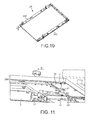
- Figure 10 is a view of the collecting plate 24 of the sieving member. It presents bars 242 on its lateral sides on which the perforated plate 21 rests. The bars presents a height d, consequently when the lowest perforated plate 21 is positioned on the collecting plate 24 a distance d separates the holes 21a from the collecting plate 24.
- Figure 11 is a magnified view of Figures 2b and 6 showing the cooperation between the translation device 7 and the lowest perforated plate 21 of the sieving member of Figure 6 .
- the lowest perforated plate 21 is positioned between the upper perforated plate 22 and the collecting plate 24 so that its excrescence with the stud 211 bypasses the end of the other plates 22, 24.
- the stud is connected to an arm 71 of the translation device that is submitted to back and forth translation according to directions D b and D f . Consequently the movement described in Figures 3d and 4 can be implemented.
- the translation device 7 comprises a jack 72 on which the arm 71 is raised. Any other translation device known from the state of the art can be implemented.
- the illustrated embodiment describes a sieving member in which the lower perforated plate is translated
- the invention also covers embodiments wherein the upper perforated plate is translated compared to the lower plate.
- the apparatus of the present invention presents the advantage of guaranteeing the efficient sieving of tea leaves presenting a length such that it could block a capsule manufacturing line. It provides a higher rate for sorting tea leaves compared to usual technologies.
- the apparatus present also the advantage of gently treating the tea leaves and limiting the cutting of tea leaves which would affect their sensory profile in the cup.
Landscapes
- Tea And Coffee (AREA)
Abstract
- a sieving member (2) for treating tea leaves conveyed according to one direction (D) on the sieving member said sieving member comprising two perforated plates (21, 22) positioned one on the other and so that :
- each hole (22a) of the upper perforated plate (22) is positioned above a hole (21a) of the lower perforated plate (21),
- the lower perforated plate (21) is out of line with the upper perforated plate (22) so that the superposing of said two perforated plates creates for each superposed holes (21 a, 22a) a step (23), said step ascending according to the conveying direction (D).
Description
- The present invention relates to devices for sieving leaves, in particular tea leaves.
- Nowadays it is known to prepare beverages like coffee, tea, hot chocolate drink, or the like by means of beverage preparation machines in which beverage capsules can be introduced. The beverage capsules usually comprise powders like roast and ground coffee, instant coffee, milk powder, soluble chocolate powder. The manufacture and in particular the filling of such capsules is easy to industrialise since a dose of powder has simply to be introduced in an opened side of the capsule before closing said side/opening with a lid.
- Concerning the production of tea beverages with capsules, two types of tea raw material can be introduced in the capsules. First it is possible to prepare the beverage from instant tea powder. The manufacturing of such capsules is similar to capsules for other beverage powders like coffee, milk or chocolate and does not present any issue. Secondly it is possible to prepare the beverage from loose leaf tea. During the manufacturing of loose leaf tea capsules the filling of capsules can present issues different from powders. In particular some long tea leaves can present a length greater than the opened side/opening of the capsule : these leaves can overflow the internal volume of the capsule and prevent the correct placement of a lid on the opened side and consequently the correct closure of the capsule. At the industrialisation stage such an issue creates regular stops of the capsule manufacturing line. This problem is all the most important with particular high quality teas like Pai Mu Tan tea or Sencha Zhejiang tea which can comprise tea leaves of a size reaching 5 to 6 cm.
- A solution to this problem can be to cut the tea leaves raw material so that tea leaves do not oversize a certain length that is less than the size of the capsule opening. Yet such a solution can affect the sensorial quality of the final tea beverage. For example high quality tea should not be cut. It is known that the handling of such leaves must remain gentle and non-intrusive e.g. throughout the packaging process to avoid breaking of the cell structure. This is needed because once the cell walls are physically broken, oxidation of the leaves quickens and the quality will be compromised. Moreover cutting influences the optimal extraction of tea leaves. Finally cutting action on the tea leaves raw material creates fines by cutting small leaves that have not to be cut leading to property issue in the manufacturing line and loss of raw material.
- Another solution is to sieve the tea leaves raw material with a mesh presenting a size such that longest tea leaves are retained by the mesh. Yet for retaining tea leaves presenting a length of at least 15 mm is not efficient. Actually it has been observed that during their transport along the mesh tea leaves are never fully positioned in parallel to the mesh. Long leaves are often obliquely positioned and if one end of one long tea leaf enters in a hole of the mesh then the whole leaf slides in the hole and is not eliminated by the sieving operation. Then such a sieving is not efficient. Yet the presence of one long tea leaf in a tea leaves production batch is not acceptable for filling capsules because it creates a risk of blocking the capsule manufacturing line.
- The object of the present invention is to propose a solution for gently sieving tea leaves in order to remove the longest tea leaves.
- Another object of the present invention is to propose a solution for gently sieving tea leaves in order to remove the longest tea leaves with the highest efficiency.
- Another object of the present invention is to propose a solution for gently sieving tea leaves in order to remove the longest tea leaves with such an efficiency that tea leaves can then used for filling tea leaves capsules at an industrial scale.
- According to a first aspect, the invention concerns a tea leaves sieving apparatus comprising a sieving member for treating tea leaves conveyed according to one direction (D) on the sieving member said sieving member comprising two perforated plates positioned one on the other and so that :
- each hole of the upper perforated plate is positioned above a hole of the lower perforated plate,
- the lower perforated plate is out of line with the upper perforated plate so that the superposing of said two perforated plates creates for each superposed holes a step, said step ascending according to the conveying direction (D).
- Contrary to the practice in the tea leaves industry the present apparatus implements perforated plates rather than meshes or grids. Meshes and grids are nettings made of fine metallic wires. They do not enable the implementation of the invention, in particular the formation of steps by superposing the holes of two meshes or grids.
- According to the invention the both perforated plates are closely positioned one on the other so that there is no space in between in which a tea leaf could enter. Meanwhile the perforated plates should not be stuck one to the other so that at least one of the perforated can be made movable relative to the other without clipping each other.
- Preferably all the holes of a same perforated plate present the same shape and size. Yet according to a variant, plates with holes presenting increasing or decreasing sizes according to the conveying direction can be implemented.
- Generally the perforated plates of the sieving member comprise circular holes.
- Preferably the holes are positioned in staggered rows in the perforated plates. Staggered rows avoid the possibility for a tea leave to not be sieved.
- Globally each hole of the upper perforated plate is positioned above a hole of the lower perforated plate.
- According to the invention the lower perforated plate is out of line with the upper perforated plate so that the superposing of said two perforated plates creates a step in each space defined by the superposed holes. The step is positioned in said space on the downwards side according to the conveying direction (D).
- Generally the size of the holes in the lower perforated plate and the spacing between said holes can present any size provided that when it is placed under the top perforated plate an ascending step is present.
- According to the preferred embodiment of the present invention the two perforated plates of the sieving member are identical. They present the same size of holes and the same spacing between the holes.
- The size of the holes in the upper perforated plate and the length of the ascending step are defined according to the properties of the tea leaves raw material (e.g. mean size, nature of the leaves) to be treated and the length of the tea leaves to be eliminated. For example starting from a raw material tea comprising tea leaves with length up to 60 mm and searching to eliminate tea leaves presenting a length greater than 15 mm then the following conditions can be applied :
- the diameter of the circular holes in the plates according to the conveying direction (D) can be comprised between 5 and 8 mm,
- the holes in the plates can be spaced by a distance comprised between 0,5 and 3mm, and
- the lower perforated plate is out of line with the upper perforated plate so that the length of the ascending step is of at least 1 mm.
- In general the sieving member comprises a collecting plate under the two perforated plates. The collecting plate aims at gathering the sieved tea leaves and conveying them to the end of the sieving member. The collecting plate is generally positioned at a distance (d) from the lower perforated plate. According to the preferred embodiment the apparatus of the present invention comprises means for adjusting said distance (d) on the tea leaves raw material properties and/or the length of the tea leaves that have to be eliminated from the raw material. For example for the tea leaves exemplified hereabove a distance d of at most 6 mm can be fixed.
- According to one preferred embodiment the apparatus comprises a translation device for translating at least one of the two perforated plates of the sieving member according to a back and forth translation movement relatively to the other perforated plate and along the conveying direction (D). Preferably only one perforated plate is translated and the other one remains fixed.
- Preferably the translation device translates the lowest perforated plate.
- Preferably the translation movement is configured so that the translated perforated plate totally closes the holes of the other perforated plate during its translation movement. Due to this closure of the holes the long tea leaves blocked in the holes can be cut to a smallest size.
- The length of the translation movement can be determined according to the size of the holes and the space between the holes in the perforated plates in particular for getting a full closure of the holes during the translation.
- Preferably the translation movement can be implemented periodically. The frequency can depend on the properties of the tea leaves raw material. For example for the tea leaves exemplified hereabove the translation movement can happen between every 10 seconds and every 30 seconds.
- Generally the tea leaves sieving apparatus comprises a vibrator for vibrating the perforated plates so that tea leaves are conveyed according to the conveying direction (D). Generally the vibrator also vibrates the collecting plate. Then the vibrator enables simultaneously :
- the displacement of the tea leaves raw material on the upper perforated plate of the sieving member,
- the displacement of the longest tea leaves that have not been sorted to the end of the upper perforated plate, and
- the displacement of the sorted tea leaves on the collecting plate to the end of said collecting plate. These displacements are all made according to the conveying direction (D).
- In general the vibrator for vibrating the perforated plates is a linear vibrator.
- The apparatus of the present invention can also comprise a conveyor upstream to the sieving member in order to introduce tea leaves on the sieving member according to the conveying direction (D). The upstream conveyor aims also at spreading tea leaves on the upper perforated plate of the sieving member according to a homogeneous height. The upstream conveyor is a linear vibrator in general. For example a height of at most 0,5 cm can be preferred so that leaves can be homogeneously sieved with perforated plates presenting circular of about 6 mm diameter. The conditions are chosen generally so that the height is homogeneous and the flow of tea leaves on the sieving member is regular.
- According to a particular embodiment the sieving apparatus can comprise a plurality of sieving members positioned next to the other perpendicularly to the conveying direction (D).
- According to a second aspect the invention concerns a process for sieving a raw material of tea leaves with an apparatus such as described hereabove comprising the steps of :
- conveying the tea leaves raw material on the sieving device,
- recovering the longest tea leaves at the end of the upper sieve according to the conveying direction (D),
- recovering the rest of the tea leaves under the sieving member.
- It is preferred that at least one of the perforated plates of the sieving member is translated according to a back and forth translation movement relatively to the other sieve and along the conveying direction (D). The frequency of the translation movement depends on the nature of the tea leaves to be sieved. Preferably the lowest sieve is translated. Preferably the translation movement closes the hole of the upper perforated plate totally.
- According to a third aspect the invention concerns a manufacturing line for producing beverage capsules said capsules comprising tea leaves wherein the manufacturing line comprises an apparatus such as described hereabove for sieving the tea leaves material before dosing and filling the capsules with sieved tea leaves.
- According to a fourth aspect the invention concerns a process for manufacturing beverage capsules said capsules comprising tea leaves wherein said process comprises the steps of :
- sieving tea leaves raw material according to the process such as described hereabove, and
- filling the capsules with sieved tea leaves.
- In the present application the terms "tea leaves" refer to loose leaf tea generally. Although the invention was described in relation to tea leaves sieving it could be applied to the sieving of any material comprising comparable long leaves like herbals.
- The characteristics and advantages of the invention will be better understood in relation to the following figures in which :
-
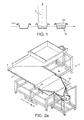
Figure 1 is a schematic diagram of a tea leaves capsule manufacturing line, -
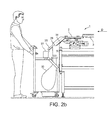
Figure 2a is a perspective view of a tea leaves sieving apparatus according to the invention, -
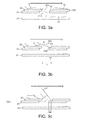
Figure 2b is a side view of the sieving member of a tea leaves sieving apparatus such as described inFigure 2a , -
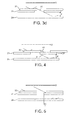
Figures 3a to 3d are schematic views of the perforated plates of the sieving member of the tea leaves sieving apparatus according to the invention during the sieving process, -
Figures 4 and 5 illustrate alternatives of the bottom perforated plate, -
Figure 6 is a magnified view of the sieving member ofFigure 2b , -
Figure 7 is a partially exploded view of the perforated plates, the collecting plate and the translation device of the sieving member ofFigure 6 , -
Figures 8a and 8b are views of the upper perforated plate of the sieving member ofFigure 6 , -
Figures 9a and 9b are views of the lowest perforated plate of the sieving member ofFigure 6 , -
Figure 10 is a view of the collecting plate of the sieving member ofFigure 6 , -
Figure 11 is a magnified view of the cooperation between the translation device and the lowest perforated plate of the sieving member ofFigure 6 . -
-
Figure 1 illustrates the different steps of the manufacture of tea leaves capsules. Eachcapsule 100 comprises anenclosure 101 configured for receiving tea leaves and then being closed by acover 102. During the manufacturing tea leaves 6 are introduced in the opened enclosure and then thecover 102 is attached to the edge of theenclosure 101. If a tea leaf presents a length longer than the size of the enclosure, then this leaf tea protrudes out of the edge of the enclosure and prevents the positioning and the sealing of the cover on the enclosure. This leads to the stop of the manufacturing line which is not acceptable at an industrial scale. -
Figure 2a illustrates a tealeaves sieving apparatus 1 according to the invention. The apparatus comprises aconveyor 3 for conveying tea leaves raw material from a starting end part 4 of the tea leaves sieving apparatus to two sievingmembers sieving members conveyor 3. The conveyor enables the tea leaves to be homogeneously and regularly fed on thesieving members - The presence of
several sieving members - On the
sieving members hopper 26 at the outlet of the sieving apparatus. The other leaves are collected on a collectingplate 24 on the lower part of the sieving members. -
Figure 2b is a side view of the sieving member of a tea leaves sieving apparatus such as described inFigure 2a . It illustrates how thevibration conveyor 3 is positioned a little bit above the sievingmember 2 in order to separate the vibration movements of theconveyor 3 and the sievingmember 2. The tea leaves fall from thevibration conveyor 3 onto the upper plate of the sievingmember 2 where they are sieved. The longest tea leaves stay on the upper plate and are conveyed to the end of the sievingmember 2 according to direction D where aninclined plate 25 direct then to a collectingpot 27. The other tea leaves are collected on the collecting plate of the sieving member and directed through anotherinclined plate 28 and atube 29 to asack 30. Thesack 30 and the collectingpot 27 can be supported by a trolley so as to move the sieved tea leaves to the manufacturing line easily. -
Figures 3a to 3d are schematic views of the perforated plates of one sieving member during the sieving process. The sieving member comprises twoperforated plates plate presenting holes perforated plate 21 is out of line with the upperperforated plate 22 so that the superposing of said two perforated plates creates for eachsuperposed holes step 23, said step ascending according to the conveying direction D. InFigures 3a to 3c the both plates present holes of same size and presenting the same space between each hole (in particular according to direction D), yet as illustrated inFigure 5 , the both plates can present holes of different sizes and spaces between holes of one same plate of different sizes with the condition that their superposition creates a step such as described hereabove. Of course the holes must be of sufficient size so as to enable a sieve to pass through. As illustrated inFigure 3c tea leaves 5 are moved according to direction D above the perforated plates. Theshorter tea leaves 52 presenting a size inferior to the holes obtained by the superposition of the plates fall though said holes and are collected on the collectingplate 24. The longest tea leaves 51 presenting a size superior to the holes obtained by the superposition of the plates usually stay on theupper plate 22 since their dimension does not enable them to fall in the holes. - Yet as illustrated in
Figure 3b anextremity 51a of such a long tea leaf can engage in ahole 22a of the upper plate. With a mesh of the prior art such a long tea leaf completely falls in the hole of the perforated plate and is collected and mixed with the short tea leaves 52. In the present invention the lower perforated plate creates astep 23 and theextremity 51a of long tea leaf entering in ahole 22a of the upper perforated plate remains blocked in thecorner 23a of the step. Due to the continuous movement of tea leaves according to direction D, the new comingtea leaves 5 push the blockedlong tea leaf 51 and force it to go out of the step. This movement is amplified if the lowestperforated plate 21 is vibrated according to a back and forth translation movement relatively to the other perforated plate and along the conveying direction D. Said translation movement is configured for increasing the length I of the ascending step when the lowestperforated plate 21 moves according to the back direction Db.Figure 3c illustrate the relative positions of theperforated plates long tea leaf 51 is lifted up by the combination of the movement of its lower end according to the translation movement of thelower plate 21 according to the direction Db and the movement of the other tea leaves according to direction D. Then this long tea leaf is moved forward according to direction D on top ofperforated plate 22. Consequently the rate of sieving long tea leaves of the apparatus of the present invention is considerably improved compared to a simple perforated plate of the state of the art. It becomes rare that along tea leaf 51 can enter in the hole obtained by the superposition of theholes Figure 3d . In that case the distance d between the collectingplate 24 and theperforated plates 21 can be adjusted so that thelong tea leaf 51 remains blocked in the hole. According to a preferred embodiment illustrated inFigure 4 when the lowestperforated plate 21 reaches the end of its translation movement according to direction Db thehole 22a becomes completely closed and the blocked tea leaves 51 is cut in two pieces. So the long tea leaves 51 that remain blocked in the hole can be cut. Due to the selection of the height d, the length of the cut pieces left on the collectingplate 24 can be controlled. After having reached the end of the translation movement the lowest plate is translated forward according to direction Df. - The length L of the
hole 22a in the upper perforated plate, the length I of thestep 23 and the distance d between the collectingplate 24 andperforated plates 21 can be adjusted according to the length oftea leaves 51 that must be sieved from the tea leaves raw material. For example for eliminating tea leaves presenting a length above 15 mm an apparatus can comprise : -
perforated plates - a collecting
plate 24 placed at 6 mm from the perforated plates. - With such an apparatus one sample tea leaves could be treated so that 100 % tea leaves presenting a length greater than 20 mm were eliminated from the raw material and 85 % of the tea leaves presenting a length greater between 15 mm were eliminated. Then the sieved raw material could be used safely in a manufacturing line for producing tea beverage capsules wherein the capsules present an opening greater than 20 mm.
-
Figure 6 is a magnified view of the sievingmember 2 ofFigure 2b . The sievingmember 2 has an assembly ofplates 200 comprising the two perforated plates and the collecting plate. The sievingmember 2 comprises atranslation device 7 that is configured for imparting a translation movement to the lowest perforated plate of theassembly 200. Thentranslation device 7 is connected to said lowest perforated plate and imparts a back and forth translation movement to said plate according to directions Db and Df. The assembly ofplates 200 and thetranslation device 7 are supported by a vibrator 8. The vibrator 8 vibrates in order to impart a conveying movement according to direction D simultaneously: - to the tea leaves dispensed on the upper perforated plate so that tea leaves are distributed on said plate and sieved and so that long tea leaves are conveyed to the end of the upper perforated plate and collected in the collecting pot, and
- and to the tea leaves collected on the collecting plate so that these tea leaves are conveyed to the end of the collecting plate and collected in the sack.
- The vibrator is a conveying vibrator according to the state of the art. The speed of displacement of tea leaves depends on the vibration frequency and amplitude. Said features can vary depending on the nature of the tea leaves to be sorted.
-
Figure 7 is a partially exploded view of the assembly ofplates 200 and the translation and vibrator devices of the sieving member ofFigure 6 . The view is made from the end of the sieving member. Theassembly 200 comprises the collectingplate 24 on which is freely positioned the lowestperforated plate 21 so that saidplate 21 can slide on thecollector plate 24. The assembly also comprises the upperperforated plate 22 which is fixed an attached to the collectingplate 24 through correspondingholes 221 and screws 241. The collecting plate is attached to thetranslation device 7 but is not made movable as will be further explained in relationship withFigure 11 . -
Figures 8a and 8b are views of the upperperforated plate 22. The plate comprisescircular holes 22a in staggered rows. -
Figures 9a and 9b are views of the lowestperforated plate 21. The plate comprisescircular holes 21a in staggered rows. The lowestperforated plates 21 is identical to the upperperforated plate 22 ofFigures 8a, 8b in terms of size of the holes and position of the holes on the plate surface. Then when the both plates are superposed eachhole 21a in the lowest plate faces ahole 22a in the upper plate. When assembled in the assembly ofplates 200 theplates superposed holes step 23 according to the conveying direction D is created as illustrated inFigure 3a . At one of its ends thelower plate 22 presents an excrescence with astud 211 perpendicular to main plane of the plate and configured for cooperating with the translation device. -
Figure 10 is a view of the collectingplate 24 of the sieving member. It presentsbars 242 on its lateral sides on which theperforated plate 21 rests. The bars presents a height d, consequently when the lowestperforated plate 21 is positioned on the collecting plate 24 a distance d separates theholes 21a from the collectingplate 24. -
Figure 11 is a magnified view ofFigures 2b and6 showing the cooperation between thetranslation device 7 and the lowestperforated plate 21 of the sieving member ofFigure 6 . In theassembly 200 of the plates, the lowestperforated plate 21 is positioned between the upperperforated plate 22 and the collectingplate 24 so that its excrescence with thestud 211 bypasses the end of theother plates arm 71 of the translation device that is submitted to back and forth translation according to directions Db and Df. Consequently the movement described inFigures 3d and 4 can be implemented. Thetranslation device 7 comprises ajack 72 on which thearm 71 is raised. Any other translation device known from the state of the art can be implemented. - Although the illustrated embodiment describes a sieving member in which the lower perforated plate is translated, the invention also covers embodiments wherein the upper perforated plate is translated compared to the lower plate.
- The apparatus of the present invention presents the advantage of guaranteeing the efficient sieving of tea leaves presenting a length such that it could block a capsule manufacturing line. It provides a higher rate for sorting tea leaves compared to usual technologies.
- The apparatus present also the advantage of gently treating the tea leaves and limiting the cutting of tea leaves which would affect their sensory profile in the cup.
Claims (17)
- A tea leaves sieving apparatus (1) comprising a sieving member (2) for treating tea leaves conveyed according to one conveying direction (D) on the sieving member said sieving member comprising two perforated plates (21, 22) positioned one on the other and so that :- each hole (22a) of the upper perforated plate (22) is positioned above a hole (21a) of the lower perforated plate (21),- the lower perforated plate (21) is out of line with the upper perforated plate (22) so that the superposing of said two perforated plates creates for each superposed holes (21a, 22a) a step (23), said step ascending according to the conveying direction (D).
- A tea leaves sieving apparatus according to Claim 1 wherein the two perforated plates (21, 22) of the sieving member are identical.
- A tea leaves sieving apparatus according to Claim 1 or 2 wherein the perforated plates (21, 22) of the sieving member comprise circular holes.
- A tea leaves sieving apparatus according to any one of precedent claims wherein the holes are positioned in staggered rows in the perforated plates.
- A tea leaves sieving apparatus according to any one of the precedent claims wherein the sieving member (2) comprises a collecting plate (24) under the two perforated plates (21, 22).
- A tea leaves sieving apparatus according to any one of the precedent claims wherein it comprises a translation device (7) for translating at least one of the two perforated plates of the sieving member according to a back and forth translation movement relatively to the other perforated plate.
- A tea leaves sieving apparatus according to Claim 6 wherein the translation device (7) translates at least one of the two perforated plates of the sieving member along the conveying direction (D).
- A tea leaves sieving apparatus according to Claim 6 or 7 wherein the translation device (7) translates the lowest perforated plate (21).
- A tea leaves sieving apparatus according to any one of Claims 6 to 8 wherein the translation movement is configured so that the translated perforated plate (21) closes the holes (22a) of the other perforated plate (22) during its translation movement.
- A tea leaves sieving apparatus according to any one of Claims 6 to 9 wherein the translation movement is implemented periodically.
- A tea leaves sieving apparatus according to any one of the precedent claims wherein it comprises a vibrator (8) for vibrating the perforated plates (21, 22) so that tea leaves are conveyed according to the conveying direction (D).
- A tea leaves sieving apparatus according to Claims 5 and 11 wherein the vibrator (8) vibrates the collecting plate (24).
- A tea leaves sieving apparatus according to any one of the precedent claims wherein it comprises a plurality of sieving members (2a, 2b) positioned next to the other perpendicularly to the conveying direction (D).
- A process for sieving a raw material of tea leaves (5) with an apparatus according to any one of Claims 1 to 13 comprising the steps of :- conveying the tea leaves raw material (5) on the sieving member (2),- recovering the longest tea leaves (51) at the end (22c) of the upper perforated plate according to the conveying direction (D),- recovering the rest of the tea leaves (52) under the sieving member.
- A process according to the precedent claim wherein at least one of the two perforated plates of the sieving member is periodically translated according to a back and forth translation movement relatively to the other perforated plate and along the conveying direction (D)
- Manufacturing line for producing beverage capsules said capsules comprising tea leaves wherein the manufacturing line comprises an apparatus according to any one of Claims 1 to 13 for sieving the tea leaves material before filling the capsules with sieved tea leaves.
- Process for manufacturing beverage capsules said capsules comprising tea leaves wherein said process comprises the steps of :- sieving tea leaves raw material according to any one of Claims 14 or 15,- filling the capsules with sieved tea leaves.
Priority Applications (1)
| Application Number | Priority Date | Filing Date | Title |
|---|---|---|---|
| EP13184234.6A EP2848323A1 (en) | 2013-09-13 | 2013-09-13 | Tea leaves sieving apparatus |
Applications Claiming Priority (1)
| Application Number | Priority Date | Filing Date | Title |
|---|---|---|---|
| EP13184234.6A EP2848323A1 (en) | 2013-09-13 | 2013-09-13 | Tea leaves sieving apparatus |
Publications (1)
| Publication Number | Publication Date |
|---|---|
| EP2848323A1 true EP2848323A1 (en) | 2015-03-18 |
Family
ID=49150862
Family Applications (1)
| Application Number | Title | Priority Date | Filing Date |
|---|---|---|---|
| EP13184234.6A Withdrawn EP2848323A1 (en) | 2013-09-13 | 2013-09-13 | Tea leaves sieving apparatus |
Country Status (1)
| Country | Link |
|---|---|
| EP (1) | EP2848323A1 (en) |
Cited By (8)
| Publication number | Priority date | Publication date | Assignee | Title |
|---|---|---|---|---|
| CN106179971A (en) * | 2016-08-31 | 2016-12-07 | 陈玛炎 | Stalk machine chosen by the Folium Camelliae sinensis of stalk end good separating effect |
| CN106269527A (en) * | 2016-08-31 | 2017-01-04 | 陈玛炎 | What Folium Camelliae sinensis, tea dust, stalky tea were independently collected chooses stalk machine |
| CN112264294A (en) * | 2020-10-26 | 2021-01-26 | 贵州晴隆五月茶业有限公司 | High-efficient white tea processing is with sorting stalk machine |
| CN113198730A (en) * | 2021-04-20 | 2021-08-03 | 浙江力征建设有限公司 | Impact-resistant and pressure-resistant material processing device and processing method thereof |
| CN113231295A (en) * | 2021-03-17 | 2021-08-10 | 江苏振强机械科技股份有限公司 | Easily-communicated and blocked type vibrating screen mesh for mining machinery |
| CN114226247A (en) * | 2021-12-16 | 2022-03-25 | 杭州艺福堂茶业有限公司 | Impurity removal and sorting equipment for tea leaves |
| CN114711302A (en) * | 2022-03-02 | 2022-07-08 | 湖南河西走廊茶业有限公司 | Tea processing equipment |
| CN115121368A (en) * | 2022-08-31 | 2022-09-30 | 泉州海关综合技术服务中心 | Bulk material separating device for tea detection |
Citations (7)
| Publication number | Priority date | Publication date | Assignee | Title |
|---|---|---|---|---|
| GB756971A (en) * | 1954-01-18 | 1956-09-12 | Ici Ltd | Improvements in and relating to the screening of granular or particulate materials |
| FR1140961A (en) * | 1956-01-04 | 1957-08-22 | Screening surface with adjustable passage dimensions | |
| GB863433A (en) * | 1958-05-08 | 1961-03-22 | William Derrick Wadsworth Smit | Improvements in or relating to tea sifting apparatus |
| FR1405330A (en) * | 1964-05-26 | 1965-07-09 | Howes Co S | Granular material cleaning machine |
| DE20211860U1 (en) * | 2002-03-28 | 2003-07-31 | Huning Umwelttechnik GmbH & Co.KG, 49326 Melle | Sieving device has sieve consisting of at least two elements installed one on top of other and with sieving perforations, whereby to change degree of sieving the elements are movable in relation to each other |
| EP1767283A2 (en) * | 2005-09-26 | 2007-03-28 | General Kinematics Corporation | Separator system and method of separating materials |
| EP2484605A1 (en) * | 2011-02-03 | 2012-08-08 | Samar Technologies Ltd. | Pre-filled infusion capsule, manufacturing method, associated device and adapted infusion chamber |
-
2013
- 2013-09-13 EP EP13184234.6A patent/EP2848323A1/en not_active Withdrawn
Patent Citations (7)
| Publication number | Priority date | Publication date | Assignee | Title |
|---|---|---|---|---|
| GB756971A (en) * | 1954-01-18 | 1956-09-12 | Ici Ltd | Improvements in and relating to the screening of granular or particulate materials |
| FR1140961A (en) * | 1956-01-04 | 1957-08-22 | Screening surface with adjustable passage dimensions | |
| GB863433A (en) * | 1958-05-08 | 1961-03-22 | William Derrick Wadsworth Smit | Improvements in or relating to tea sifting apparatus |
| FR1405330A (en) * | 1964-05-26 | 1965-07-09 | Howes Co S | Granular material cleaning machine |
| DE20211860U1 (en) * | 2002-03-28 | 2003-07-31 | Huning Umwelttechnik GmbH & Co.KG, 49326 Melle | Sieving device has sieve consisting of at least two elements installed one on top of other and with sieving perforations, whereby to change degree of sieving the elements are movable in relation to each other |
| EP1767283A2 (en) * | 2005-09-26 | 2007-03-28 | General Kinematics Corporation | Separator system and method of separating materials |
| EP2484605A1 (en) * | 2011-02-03 | 2012-08-08 | Samar Technologies Ltd. | Pre-filled infusion capsule, manufacturing method, associated device and adapted infusion chamber |
Cited By (10)
| Publication number | Priority date | Publication date | Assignee | Title |
|---|---|---|---|---|
| CN106179971A (en) * | 2016-08-31 | 2016-12-07 | 陈玛炎 | Stalk machine chosen by the Folium Camelliae sinensis of stalk end good separating effect |
| CN106269527A (en) * | 2016-08-31 | 2017-01-04 | 陈玛炎 | What Folium Camelliae sinensis, tea dust, stalky tea were independently collected chooses stalk machine |
| CN112264294A (en) * | 2020-10-26 | 2021-01-26 | 贵州晴隆五月茶业有限公司 | High-efficient white tea processing is with sorting stalk machine |
| CN113231295A (en) * | 2021-03-17 | 2021-08-10 | 江苏振强机械科技股份有限公司 | Easily-communicated and blocked type vibrating screen mesh for mining machinery |
| CN113198730A (en) * | 2021-04-20 | 2021-08-03 | 浙江力征建设有限公司 | Impact-resistant and pressure-resistant material processing device and processing method thereof |
| CN114226247A (en) * | 2021-12-16 | 2022-03-25 | 杭州艺福堂茶业有限公司 | Impurity removal and sorting equipment for tea leaves |
| CN114711302A (en) * | 2022-03-02 | 2022-07-08 | 湖南河西走廊茶业有限公司 | Tea processing equipment |
| CN114711302B (en) * | 2022-03-02 | 2023-12-05 | 湖南河西走廊茶业有限公司 | Tea processing equipment |
| CN115121368A (en) * | 2022-08-31 | 2022-09-30 | 泉州海关综合技术服务中心 | Bulk material separating device for tea detection |
| CN115121368B (en) * | 2022-08-31 | 2022-11-04 | 泉州海关综合技术服务中心 | Bulk material separating device for tea detection |
Similar Documents
| Publication | Publication Date | Title |
|---|---|---|
| EP2848323A1 (en) | Tea leaves sieving apparatus | |
| CN102069932B (en) | Device and method for unpacking cartons for the tobacco industry | |
| CN203044333U (en) | Tea screening machine | |
| HUE025751T2 (en) | Apparatus for filling a cavity, filling station and method of filling a cavity | |
| CN209152216U (en) | A kind of scenting jasmine tea cellar control equipment | |
| CN107511330A (en) | A kind of wheat grain knot screen for agricultural machining | |
| CN217141168U (en) | A multilayer screening plant for tea processing | |
| CN210585816U (en) | Automatic feed divider of hardware | |
| CN204937621U (en) | Tea leaf packaging device | |
| KR100940818B1 (en) | Apparatus for supplying wallnut | |
| CN207188179U (en) | A kind of new-type tealeaves stir-frying screening installation | |
| CN204769509U (en) | Automatic screening of tealeaves and tea device that falls | |
| EP2692491A1 (en) | Slicing machine | |
| CN204937586U (en) | A kind of Pu'er compressed tea tea in bag packaging line equipment | |
| EP1807331B1 (en) | A device for feeding an infusion product to a packaging machine | |
| CN204769511U (en) | Automatic screening of tealeaves and tea device that falls | |
| CN108128486A (en) | A kind of quantitative sealing machine of tea processing | |
| CN211569489U (en) | Tea subpackaging, shaping and packaging integrated machine | |
| CN105107721A (en) | Powder filtering device | |
| CN203776060U (en) | Automatic discharging and screening type gunpowder tea frying unit | |
| CN211190897U (en) | A conveyer for producing tealeaves | |
| CN203842796U (en) | Tea leaf screening device | |
| CN221068520U (en) | Automatic bagging equipment for teabags | |
| CN220289149U (en) | Tealeaves heavy metal detection device | |
| CN204108469U (en) | A kind of pop can is de-lid arrangement automatically |
Legal Events
| Date | Code | Title | Description |
|---|---|---|---|
| PUAI | Public reference made under article 153(3) epc to a published international application that has entered the european phase |
Free format text: ORIGINAL CODE: 0009012 |
|
| 17P | Request for examination filed |
Effective date: 20130913 |
|
| AK | Designated contracting states |
Kind code of ref document: A1 Designated state(s): AL AT BE BG CH CY CZ DE DK EE ES FI FR GB GR HR HU IE IS IT LI LT LU LV MC MK MT NL NO PL PT RO RS SE SI SK SM TR |
|
| AX | Request for extension of the european patent |
Extension state: BA ME |
|
| R17P | Request for examination filed (corrected) |
Effective date: 20150918 |
|
| RBV | Designated contracting states (corrected) |
Designated state(s): AL AT BE BG CH CY CZ DE DK EE ES FI FR GB GR HR HU IE IS IT LI LT LU LV MC MK MT NL NO PL PT RO RS SE SI SK SM TR |
|
| RAP1 | Party data changed (applicant data changed or rights of an application transferred) |
Owner name: NESTEC S.A. |
|
| STAA | Information on the status of an ep patent application or granted ep patent |
Free format text: STATUS: EXAMINATION IS IN PROGRESS |
|
| 17Q | First examination report despatched |
Effective date: 20180327 |
|
| STAA | Information on the status of an ep patent application or granted ep patent |
Free format text: STATUS: THE APPLICATION IS DEEMED TO BE WITHDRAWN |
|
| 18D | Application deemed to be withdrawn |
Effective date: 20210401 |