EP2845580A1 - Composition for bath agent - Google Patents
Composition for bath agent Download PDFInfo
- Publication number
- EP2845580A1 EP2845580A1 EP20130781614 EP13781614A EP2845580A1 EP 2845580 A1 EP2845580 A1 EP 2845580A1 EP 20130781614 EP20130781614 EP 20130781614 EP 13781614 A EP13781614 A EP 13781614A EP 2845580 A1 EP2845580 A1 EP 2845580A1
- Authority
- EP
- European Patent Office
- Prior art keywords
- component
- bath agent
- carbonate
- agent composition
- mass
- Prior art date
- Legal status (The legal status is an assumption and is not a legal conclusion. Google has not performed a legal analysis and makes no representation as to the accuracy of the status listed.)
- Withdrawn
Links
- 239000013040 bath agent Substances 0.000 title claims abstract description 97
- 239000000203 mixture Substances 0.000 title claims abstract description 92
- BVKZGUZCCUSVTD-UHFFFAOYSA-L Carbonate Chemical compound [O-]C([O-])=O BVKZGUZCCUSVTD-UHFFFAOYSA-L 0.000 claims abstract description 72
- 108090000932 Calcitonin Gene-Related Peptide Proteins 0.000 claims abstract description 28
- 102100025588 Calcitonin gene-related peptide 1 Human genes 0.000 claims abstract description 28
- 230000004044 response Effects 0.000 claims abstract description 24
- 229910052751 metal Inorganic materials 0.000 claims abstract description 23
- 239000002184 metal Substances 0.000 claims abstract description 23
- 150000007524 organic acids Chemical class 0.000 claims abstract description 23
- 239000000284 extract Substances 0.000 claims description 48
- UIIMBOGNXHQVGW-UHFFFAOYSA-M Sodium bicarbonate Chemical group [Na+].OC([O-])=O UIIMBOGNXHQVGW-UHFFFAOYSA-M 0.000 claims description 22
- 240000008067 Cucumis sativus Species 0.000 claims description 19
- 241000736892 Thujopsis dolabrata Species 0.000 claims description 19
- 235000010799 Cucumis sativus var sativus Nutrition 0.000 claims description 17
- 235000008434 ginseng Nutrition 0.000 claims description 12
- 235000018185 Betula X alpestris Nutrition 0.000 claims description 11
- 235000018212 Betula X uliginosa Nutrition 0.000 claims description 11
- 229910000030 sodium bicarbonate Inorganic materials 0.000 claims description 11
- 235000017557 sodium bicarbonate Nutrition 0.000 claims description 11
- 235000005035 Panax pseudoginseng ssp. pseudoginseng Nutrition 0.000 claims description 10
- 235000003140 Panax quinquefolius Nutrition 0.000 claims description 10
- 229910000028 potassium bicarbonate Inorganic materials 0.000 claims description 4
- 235000015497 potassium bicarbonate Nutrition 0.000 claims description 4
- 239000011736 potassium bicarbonate Substances 0.000 claims description 4
- TYJJADVDDVDEDZ-UHFFFAOYSA-M potassium hydrogencarbonate Chemical compound [K+].OC([O-])=O TYJJADVDDVDEDZ-UHFFFAOYSA-M 0.000 claims description 4
- 229940086066 potassium hydrogencarbonate Drugs 0.000 claims description 4
- 244000131316 Panax pseudoginseng Species 0.000 claims 1
- CURLTUGMZLYLDI-UHFFFAOYSA-N Carbon dioxide Chemical compound O=C=O CURLTUGMZLYLDI-UHFFFAOYSA-N 0.000 abstract description 42
- 230000017531 blood circulation Effects 0.000 abstract description 38
- 239000001569 carbon dioxide Substances 0.000 abstract description 21
- 229910002092 carbon dioxide Inorganic materials 0.000 abstract description 21
- 230000001737 promoting effect Effects 0.000 abstract description 20
- 238000004321 preservation Methods 0.000 abstract description 14
- 230000002730 additional effect Effects 0.000 abstract description 4
- 230000001747 exhibiting effect Effects 0.000 abstract description 4
- 230000000694 effects Effects 0.000 description 51
- 238000003287 bathing Methods 0.000 description 50
- XLYOFNOQVPJJNP-UHFFFAOYSA-N water Substances O XLYOFNOQVPJJNP-UHFFFAOYSA-N 0.000 description 38
- KRKNYBCHXYNGOX-UHFFFAOYSA-N citric acid Chemical compound OC(=O)CC(O)(C(O)=O)CC(O)=O KRKNYBCHXYNGOX-UHFFFAOYSA-N 0.000 description 33
- LFQSCWFLJHTTHZ-UHFFFAOYSA-N Ethanol Chemical compound CCO LFQSCWFLJHTTHZ-UHFFFAOYSA-N 0.000 description 31
- 210000002683 foot Anatomy 0.000 description 31
- 210000003491 skin Anatomy 0.000 description 30
- 230000004043 responsiveness Effects 0.000 description 27
- 230000002792 vascular Effects 0.000 description 24
- 238000000605 extraction Methods 0.000 description 20
- 239000003921 oil Substances 0.000 description 20
- 235000019198 oils Nutrition 0.000 description 20
- -1 other oils Chemical compound 0.000 description 19
- VZCYOOQTPOCHFL-OWOJBTEDSA-N Fumaric acid Chemical compound OC(=O)\C=C\C(O)=O VZCYOOQTPOCHFL-OWOJBTEDSA-N 0.000 description 18
- CDBYLPFSWZWCQE-UHFFFAOYSA-L Sodium Carbonate Chemical compound [Na+].[Na+].[O-]C([O-])=O CDBYLPFSWZWCQE-UHFFFAOYSA-L 0.000 description 18
- 235000020710 ginseng extract Nutrition 0.000 description 18
- 239000007789 gas Substances 0.000 description 17
- 238000011156 evaluation Methods 0.000 description 15
- 238000012360 testing method Methods 0.000 description 15
- MUBZPKHOEPUJKR-UHFFFAOYSA-N Oxalic acid Chemical compound OC(=O)C(O)=O MUBZPKHOEPUJKR-UHFFFAOYSA-N 0.000 description 14
- OYACROKNLOSFPA-UHFFFAOYSA-N calcium;dioxido(oxo)silane Chemical compound [Ca+2].[O-][Si]([O-])=O OYACROKNLOSFPA-UHFFFAOYSA-N 0.000 description 14
- 208000024891 symptom Diseases 0.000 description 13
- 241000196324 Embryophyta Species 0.000 description 12
- 238000004519 manufacturing process Methods 0.000 description 12
- 240000004371 Panax ginseng Species 0.000 description 11
- VYPSYNLAJGMNEJ-UHFFFAOYSA-N Silicium dioxide Chemical compound O=[Si]=O VYPSYNLAJGMNEJ-UHFFFAOYSA-N 0.000 description 11
- 235000015165 citric acid Nutrition 0.000 description 11
- 239000000546 pharmaceutical excipient Substances 0.000 description 11
- VZCYOOQTPOCHFL-UHFFFAOYSA-N trans-butenedioic acid Natural products OC(=O)C=CC(O)=O VZCYOOQTPOCHFL-UHFFFAOYSA-N 0.000 description 11
- 230000000052 comparative effect Effects 0.000 description 10
- 235000013399 edible fruits Nutrition 0.000 description 10
- 238000002156 mixing Methods 0.000 description 10
- 239000001530 fumaric acid Substances 0.000 description 9
- 235000011087 fumaric acid Nutrition 0.000 description 9
- 229910000029 sodium carbonate Inorganic materials 0.000 description 9
- 241000209094 Oryza Species 0.000 description 8
- 229940073665 octyldodecyl myristate Drugs 0.000 description 8
- 239000002904 solvent Substances 0.000 description 8
- FBPFZTCFMRRESA-FSIIMWSLSA-N D-Glucitol Natural products OC[C@H](O)[C@H](O)[C@@H](O)[C@H](O)CO FBPFZTCFMRRESA-FSIIMWSLSA-N 0.000 description 7
- 235000007164 Oryza sativa Nutrition 0.000 description 7
- 229920003171 Poly (ethylene oxide) Polymers 0.000 description 7
- KDYFGRWQOYBRFD-UHFFFAOYSA-N Succinic acid Natural products OC(=O)CCC(O)=O KDYFGRWQOYBRFD-UHFFFAOYSA-N 0.000 description 7
- 239000000395 magnesium oxide Substances 0.000 description 7
- CPLXHLVBOLITMK-UHFFFAOYSA-N magnesium oxide Inorganic materials [Mg]=O CPLXHLVBOLITMK-UHFFFAOYSA-N 0.000 description 7
- 235000009566 rice Nutrition 0.000 description 7
- 239000000600 sorbitol Substances 0.000 description 7
- BGRXBNZMPMGLQI-UHFFFAOYSA-N 2-octyldodecyl tetradecanoate Chemical compound CCCCCCCCCCCCCC(=O)OCC(CCCCCCCC)CCCCCCCCCC BGRXBNZMPMGLQI-UHFFFAOYSA-N 0.000 description 6
- 235000003500 Ruscus aculeatus Nutrition 0.000 description 6
- 240000000353 Ruscus aculeatus Species 0.000 description 6
- FEWJPZIEWOKRBE-UHFFFAOYSA-N Tartaric acid Natural products [H+].[H+].[O-]C(=O)C(O)C(O)C([O-])=O FEWJPZIEWOKRBE-UHFFFAOYSA-N 0.000 description 6
- 239000004615 ingredient Substances 0.000 description 6
- XUGNVMKQXJXZCD-UHFFFAOYSA-N isopropyl palmitate Chemical compound CCCCCCCCCCCCCCCC(=O)OC(C)C XUGNVMKQXJXZCD-UHFFFAOYSA-N 0.000 description 6
- 238000000034 method Methods 0.000 description 6
- 238000002791 soaking Methods 0.000 description 6
- 239000011975 tartaric acid Substances 0.000 description 6
- 235000002906 tartaric acid Nutrition 0.000 description 6
- 244000144927 Aloe barbadensis Species 0.000 description 5
- 235000002961 Aloe barbadensis Nutrition 0.000 description 5
- 235000010082 Averrhoa carambola Nutrition 0.000 description 5
- 240000006063 Averrhoa carambola Species 0.000 description 5
- 235000005940 Centaurea cyanus Nutrition 0.000 description 5
- 240000004385 Centaurea cyanus Species 0.000 description 5
- 235000005979 Citrus limon Nutrition 0.000 description 5
- 244000131522 Citrus pyriformis Species 0.000 description 5
- 240000004784 Cymbopogon citratus Species 0.000 description 5
- 235000017897 Cymbopogon citratus Nutrition 0.000 description 5
- RTZKZFJDLAIYFH-UHFFFAOYSA-N Diethyl ether Chemical compound CCOCC RTZKZFJDLAIYFH-UHFFFAOYSA-N 0.000 description 5
- 206010013786 Dry skin Diseases 0.000 description 5
- 241000227647 Fucus vesiculosus Species 0.000 description 5
- 235000002941 Hemerocallis fulva Nutrition 0.000 description 5
- 240000009206 Hemerocallis fulva Species 0.000 description 5
- 244000018716 Impatiens biflora Species 0.000 description 5
- 235000015912 Impatiens biflora Nutrition 0.000 description 5
- 241001466453 Laminaria Species 0.000 description 5
- 240000000783 Origanum majorana Species 0.000 description 5
- 235000006297 Origanum majorana Nutrition 0.000 description 5
- 241000972673 Phellodendron amurense Species 0.000 description 5
- 238000010521 absorption reaction Methods 0.000 description 5
- 235000011399 aloe vera Nutrition 0.000 description 5
- BJEPYKJPYRNKOW-UHFFFAOYSA-N alpha-hydroxysuccinic acid Natural products OC(=O)C(O)CC(O)=O BJEPYKJPYRNKOW-UHFFFAOYSA-N 0.000 description 5
- WPYMKLBDIGXBTP-UHFFFAOYSA-N benzoic acid Chemical compound OC(=O)C1=CC=CC=C1 WPYMKLBDIGXBTP-UHFFFAOYSA-N 0.000 description 5
- 235000014113 dietary fatty acids Nutrition 0.000 description 5
- 229940079593 drug Drugs 0.000 description 5
- 239000003814 drug Substances 0.000 description 5
- 230000037336 dry skin Effects 0.000 description 5
- 239000000194 fatty acid Substances 0.000 description 5
- 229930195729 fatty acid Natural products 0.000 description 5
- 235000010181 horse chestnut Nutrition 0.000 description 5
- AXZKOIWUVFPNLO-UHFFFAOYSA-N magnesium;oxygen(2-) Chemical compound [O-2].[Mg+2] AXZKOIWUVFPNLO-UHFFFAOYSA-N 0.000 description 5
- 239000001630 malic acid Substances 0.000 description 5
- 235000011090 malic acid Nutrition 0.000 description 5
- 235000006408 oxalic acid Nutrition 0.000 description 5
- PRAKJMSDJKAYCZ-UHFFFAOYSA-N squalane Chemical compound CC(C)CCCC(C)CCCC(C)CCCCC(C)CCCC(C)CCCC(C)C PRAKJMSDJKAYCZ-UHFFFAOYSA-N 0.000 description 5
- BJEPYKJPYRNKOW-REOHCLBHSA-N (S)-malic acid Chemical compound OC(=O)[C@@H](O)CC(O)=O BJEPYKJPYRNKOW-REOHCLBHSA-N 0.000 description 4
- 241000157282 Aesculus Species 0.000 description 4
- FEWJPZIEWOKRBE-JCYAYHJZSA-N Dextrotartaric acid Chemical compound OC(=O)[C@H](O)[C@@H](O)C(O)=O FEWJPZIEWOKRBE-JCYAYHJZSA-N 0.000 description 4
- 235000009827 Prunus armeniaca Nutrition 0.000 description 4
- 244000018633 Prunus armeniaca Species 0.000 description 4
- 241000220317 Rosa Species 0.000 description 4
- 241001558929 Sclerotium <basidiomycota> Species 0.000 description 4
- 230000004913 activation Effects 0.000 description 4
- WNLRTRBMVRJNCN-UHFFFAOYSA-N adipic acid Chemical compound OC(=O)CCCCC(O)=O WNLRTRBMVRJNCN-UHFFFAOYSA-N 0.000 description 4
- 239000007864 aqueous solution Substances 0.000 description 4
- 230000004087 circulation Effects 0.000 description 4
- 238000001704 evaporation Methods 0.000 description 4
- 230000008020 evaporation Effects 0.000 description 4
- 238000001914 filtration Methods 0.000 description 4
- 230000001965 increasing effect Effects 0.000 description 4
- 239000001780 majorana hortensis moench (origanum majorana l.) Substances 0.000 description 4
- 230000004060 metabolic process Effects 0.000 description 4
- XNGIFLGASWRNHJ-UHFFFAOYSA-N phthalic acid Chemical compound OC(=O)C1=CC=CC=C1C(O)=O XNGIFLGASWRNHJ-UHFFFAOYSA-N 0.000 description 4
- 238000002360 preparation method Methods 0.000 description 4
- 239000011347 resin Substances 0.000 description 4
- 229920005989 resin Polymers 0.000 description 4
- YGSDEFSMJLZEOE-UHFFFAOYSA-N salicylic acid Chemical compound OC(=O)C1=CC=CC=C1O YGSDEFSMJLZEOE-UHFFFAOYSA-N 0.000 description 4
- 239000000243 solution Substances 0.000 description 4
- 239000000126 substance Substances 0.000 description 4
- XDOFQFKRPWOURC-UHFFFAOYSA-N 16-methylheptadecanoic acid Chemical compound CC(C)CCCCCCCCCCCCCCC(O)=O XDOFQFKRPWOURC-UHFFFAOYSA-N 0.000 description 3
- ZWEHNKRNPOVVGH-UHFFFAOYSA-N 2-Butanone Chemical compound CCC(C)=O ZWEHNKRNPOVVGH-UHFFFAOYSA-N 0.000 description 3
- CSCPPACGZOOCGX-UHFFFAOYSA-N Acetone Chemical compound CC(C)=O CSCPPACGZOOCGX-UHFFFAOYSA-N 0.000 description 3
- 108010078311 Calcitonin Gene-Related Peptide Receptors Proteins 0.000 description 3
- YMWUJEATGCHHMB-UHFFFAOYSA-N Dichloromethane Chemical compound ClCCl YMWUJEATGCHHMB-UHFFFAOYSA-N 0.000 description 3
- XEKOWRVHYACXOJ-UHFFFAOYSA-N Ethyl acetate Chemical compound CCOC(C)=O XEKOWRVHYACXOJ-UHFFFAOYSA-N 0.000 description 3
- OKKJLVBELUTLKV-UHFFFAOYSA-N Methanol Chemical compound OC OKKJLVBELUTLKV-UHFFFAOYSA-N 0.000 description 3
- DNIAPMSPPWPWGF-UHFFFAOYSA-N Propylene glycol Chemical compound CC(O)CO DNIAPMSPPWPWGF-UHFFFAOYSA-N 0.000 description 3
- YXFVVABEGXRONW-UHFFFAOYSA-N Toluene Chemical compound CC1=CC=CC=C1 YXFVVABEGXRONW-UHFFFAOYSA-N 0.000 description 3
- 210000003423 ankle Anatomy 0.000 description 3
- 102000008323 calcitonin gene-related peptide receptor activity proteins Human genes 0.000 description 3
- 210000004027 cell Anatomy 0.000 description 3
- 229910002026 crystalline silica Inorganic materials 0.000 description 3
- 235000019197 fats Nutrition 0.000 description 3
- 210000004907 gland Anatomy 0.000 description 3
- 239000000463 material Substances 0.000 description 3
- VLKZOEOYAKHREP-UHFFFAOYSA-N n-Hexane Chemical compound CCCCCC VLKZOEOYAKHREP-UHFFFAOYSA-N 0.000 description 3
- 239000000843 powder Substances 0.000 description 3
- 230000000750 progressive effect Effects 0.000 description 3
- 102000004169 proteins and genes Human genes 0.000 description 3
- 108090000623 proteins and genes Proteins 0.000 description 3
- 229940109850 royal jelly Drugs 0.000 description 3
- 239000000523 sample Substances 0.000 description 3
- 239000000377 silicon dioxide Substances 0.000 description 3
- 235000012239 silicon dioxide Nutrition 0.000 description 3
- 238000000956 solid--liquid extraction Methods 0.000 description 3
- 238000003756 stirring Methods 0.000 description 3
- 239000001384 succinic acid Substances 0.000 description 3
- 235000011044 succinic acid Nutrition 0.000 description 3
- RTBFRGCFXZNCOE-UHFFFAOYSA-N 1-methylsulfonylpiperidin-4-one Chemical compound CS(=O)(=O)N1CCC(=O)CC1 RTBFRGCFXZNCOE-UHFFFAOYSA-N 0.000 description 2
- 239000005711 Benzoic acid Substances 0.000 description 2
- 241001313086 Betula platyphylla Species 0.000 description 2
- 235000001553 Betula platyphylla Nutrition 0.000 description 2
- VTYYLEPIZMXCLO-UHFFFAOYSA-L Calcium carbonate Chemical compound [Ca+2].[O-]C([O-])=O VTYYLEPIZMXCLO-UHFFFAOYSA-L 0.000 description 2
- OKTJSMMVPCPJKN-UHFFFAOYSA-N Carbon Chemical compound [C] OKTJSMMVPCPJKN-UHFFFAOYSA-N 0.000 description 2
- HEDRZPFGACZZDS-UHFFFAOYSA-N Chloroform Chemical compound ClC(Cl)Cl HEDRZPFGACZZDS-UHFFFAOYSA-N 0.000 description 2
- 235000009849 Cucumis sativus Nutrition 0.000 description 2
- 241000218691 Cupressaceae Species 0.000 description 2
- 102000008130 Cyclic AMP-Dependent Protein Kinases Human genes 0.000 description 2
- 108010049894 Cyclic AMP-Dependent Protein Kinases Proteins 0.000 description 2
- GLZPCOQZEFWAFX-UHFFFAOYSA-N Geraniol Chemical compound CC(C)=CCCC(C)=CCO GLZPCOQZEFWAFX-UHFFFAOYSA-N 0.000 description 2
- PEDCQBHIVMGVHV-UHFFFAOYSA-N Glycerine Chemical compound OCC(O)CO PEDCQBHIVMGVHV-UHFFFAOYSA-N 0.000 description 2
- 241000234280 Liliaceae Species 0.000 description 2
- LRHPLDYGYMQRHN-UHFFFAOYSA-N N-Butanol Chemical compound CCCCO LRHPLDYGYMQRHN-UHFFFAOYSA-N 0.000 description 2
- 235000002789 Panax ginseng Nutrition 0.000 description 2
- 241000209504 Poaceae Species 0.000 description 2
- OFOBLEOULBTSOW-UHFFFAOYSA-N Propanedioic acid Natural products OC(=O)CC(O)=O OFOBLEOULBTSOW-UHFFFAOYSA-N 0.000 description 2
- JUJWROOIHBZHMG-UHFFFAOYSA-N Pyridine Chemical compound C1=CC=NC=C1 JUJWROOIHBZHMG-UHFFFAOYSA-N 0.000 description 2
- 235000004789 Rosa xanthina Nutrition 0.000 description 2
- 241000220222 Rosaceae Species 0.000 description 2
- 241001093501 Rutaceae Species 0.000 description 2
- WYURNTSHIVDZCO-UHFFFAOYSA-N Tetrahydrofuran Chemical compound C1CCOC1 WYURNTSHIVDZCO-UHFFFAOYSA-N 0.000 description 2
- 241000736890 Thujopsis Species 0.000 description 2
- 239000001361 adipic acid Substances 0.000 description 2
- 235000011037 adipic acid Nutrition 0.000 description 2
- 229910052782 aluminium Inorganic materials 0.000 description 2
- XAGFODPZIPBFFR-UHFFFAOYSA-N aluminium Chemical compound [Al] XAGFODPZIPBFFR-UHFFFAOYSA-N 0.000 description 2
- 229910000323 aluminium silicate Inorganic materials 0.000 description 2
- JFCQEDHGNNZCLN-UHFFFAOYSA-N anhydrous glutaric acid Natural products OC(=O)CCCC(O)=O JFCQEDHGNNZCLN-UHFFFAOYSA-N 0.000 description 2
- 210000000544 articulatio talocruralis Anatomy 0.000 description 2
- 235000010233 benzoic acid Nutrition 0.000 description 2
- 238000009835 boiling Methods 0.000 description 2
- KDYFGRWQOYBRFD-NUQCWPJISA-N butanedioic acid Chemical compound O[14C](=O)CC[14C](O)=O KDYFGRWQOYBRFD-NUQCWPJISA-N 0.000 description 2
- 239000003795 chemical substances by application Substances 0.000 description 2
- HVYWMOMLDIMFJA-DPAQBDIFSA-N cholesterol Chemical compound C1C=C2C[C@@H](O)CC[C@]2(C)[C@@H]2[C@@H]1[C@@H]1CC[C@H]([C@H](C)CCCC(C)C)[C@@]1(C)CC2 HVYWMOMLDIMFJA-DPAQBDIFSA-N 0.000 description 2
- NEHNMFOYXAPHSD-UHFFFAOYSA-N citronellal Chemical compound O=CCC(C)CCC=C(C)C NEHNMFOYXAPHSD-UHFFFAOYSA-N 0.000 description 2
- 238000007906 compression Methods 0.000 description 2
- 230000006835 compression Effects 0.000 description 2
- 230000003247 decreasing effect Effects 0.000 description 2
- HNPSIPDUKPIQMN-UHFFFAOYSA-N dioxosilane;oxo(oxoalumanyloxy)alumane Chemical compound O=[Si]=O.O=[Al]O[Al]=O HNPSIPDUKPIQMN-UHFFFAOYSA-N 0.000 description 2
- UKMSUNONTOPOIO-UHFFFAOYSA-N docosanoic acid Chemical compound CCCCCCCCCCCCCCCCCCCCCC(O)=O UKMSUNONTOPOIO-UHFFFAOYSA-N 0.000 description 2
- POULHZVOKOAJMA-UHFFFAOYSA-N dodecanoic acid Chemical compound CCCCCCCCCCCC(O)=O POULHZVOKOAJMA-UHFFFAOYSA-N 0.000 description 2
- 230000002708 enhancing effect Effects 0.000 description 2
- MMKRHZKQPFCLLS-UHFFFAOYSA-N ethyl myristate Chemical compound CCCCCCCCCCCCCC(=O)OCC MMKRHZKQPFCLLS-UHFFFAOYSA-N 0.000 description 2
- MVLVMROFTAUDAG-UHFFFAOYSA-N ethyl octadecanoate Chemical compound CCCCCCCCCCCCCCCCCC(=O)OCC MVLVMROFTAUDAG-UHFFFAOYSA-N 0.000 description 2
- RRAFCDWBNXTKKO-UHFFFAOYSA-N eugenol Chemical compound COC1=CC(CC=C)=CC=C1O RRAFCDWBNXTKKO-UHFFFAOYSA-N 0.000 description 2
- 150000004665 fatty acids Chemical class 0.000 description 2
- 238000005187 foaming Methods 0.000 description 2
- 238000005469 granulation Methods 0.000 description 2
- 230000003179 granulation Effects 0.000 description 2
- BXWNKGSJHAJOGX-UHFFFAOYSA-N hexadecan-1-ol Chemical compound CCCCCCCCCCCCCCCCO BXWNKGSJHAJOGX-UHFFFAOYSA-N 0.000 description 2
- IPCSVZSSVZVIGE-UHFFFAOYSA-N hexadecanoic acid Chemical compound CCCCCCCCCCCCCCCC(O)=O IPCSVZSSVZVIGE-UHFFFAOYSA-N 0.000 description 2
- 229930195733 hydrocarbon Natural products 0.000 description 2
- 150000002430 hydrocarbons Chemical class 0.000 description 2
- 230000003834 intracellular effect Effects 0.000 description 2
- 125000001449 isopropyl group Chemical group [H]C([H])([H])C([H])(*)C([H])([H])[H] 0.000 description 2
- 239000005001 laminate film Substances 0.000 description 2
- 210000002414 leg Anatomy 0.000 description 2
- XMGQYMWWDOXHJM-UHFFFAOYSA-N limonene Chemical compound CC(=C)C1CCC(C)=CC1 XMGQYMWWDOXHJM-UHFFFAOYSA-N 0.000 description 2
- CDOSHBSSFJOMGT-UHFFFAOYSA-N linalool Chemical compound CC(C)=CCCC(C)(O)C=C CDOSHBSSFJOMGT-UHFFFAOYSA-N 0.000 description 2
- VZCYOOQTPOCHFL-UPHRSURJSA-N maleic acid Chemical compound OC(=O)\C=C/C(O)=O VZCYOOQTPOCHFL-UPHRSURJSA-N 0.000 description 2
- 239000011976 maleic acid Substances 0.000 description 2
- ZAZKJZBWRNNLDS-UHFFFAOYSA-N methyl tetradecanoate Chemical compound CCCCCCCCCCCCCC(=O)OC ZAZKJZBWRNNLDS-UHFFFAOYSA-N 0.000 description 2
- 238000000465 moulding Methods 0.000 description 2
- JXTPJDDICSTXJX-UHFFFAOYSA-N n-Triacontane Natural products CCCCCCCCCCCCCCCCCCCCCCCCCCCCCC JXTPJDDICSTXJX-UHFFFAOYSA-N 0.000 description 2
- GLDOVTGHNKAZLK-UHFFFAOYSA-N octadecan-1-ol Chemical compound CCCCCCCCCCCCCCCCCCO GLDOVTGHNKAZLK-UHFFFAOYSA-N 0.000 description 2
- FJKROLUGYXJWQN-UHFFFAOYSA-N papa-hydroxy-benzoic acid Natural products OC(=O)C1=CC=C(O)C=C1 FJKROLUGYXJWQN-UHFFFAOYSA-N 0.000 description 2
- 230000035699 permeability Effects 0.000 description 2
- 229920000139 polyethylene terephthalate Polymers 0.000 description 2
- 239000005020 polyethylene terephthalate Substances 0.000 description 2
- BWHMMNNQKKPAPP-UHFFFAOYSA-L potassium carbonate Chemical compound [K+].[K+].[O-]C([O-])=O BWHMMNNQKKPAPP-UHFFFAOYSA-L 0.000 description 2
- XOJVVFBFDXDTEG-UHFFFAOYSA-N pristane Chemical compound CC(C)CCCC(C)CCCC(C)CCCC(C)C XOJVVFBFDXDTEG-UHFFFAOYSA-N 0.000 description 2
- 229960004889 salicylic acid Drugs 0.000 description 2
- 239000007787 solid Substances 0.000 description 2
- BXOCHUWSGYYSFW-HVWOQQCMSA-N spilanthol Chemical compound C\C=C\C=C/CC\C=C\C(=O)NCC(C)C BXOCHUWSGYYSFW-HVWOQQCMSA-N 0.000 description 2
- 229940032094 squalane Drugs 0.000 description 2
- 230000004936 stimulating effect Effects 0.000 description 2
- 230000002195 synergetic effect Effects 0.000 description 2
- MGSRCZKZVOBKFT-UHFFFAOYSA-N thymol Chemical compound CC(C)C1=CC=C(C)C=C1O MGSRCZKZVOBKFT-UHFFFAOYSA-N 0.000 description 2
- 210000004509 vascular smooth muscle cell Anatomy 0.000 description 2
- NOOLISFMXDJSKH-UTLUCORTSA-N (+)-Neomenthol Chemical compound CC(C)[C@@H]1CC[C@@H](C)C[C@@H]1O NOOLISFMXDJSKH-UTLUCORTSA-N 0.000 description 1
- DTGKSKDOIYIVQL-WEDXCCLWSA-N (+)-borneol Chemical compound C1C[C@@]2(C)[C@@H](O)C[C@@H]1C2(C)C DTGKSKDOIYIVQL-WEDXCCLWSA-N 0.000 description 1
- PUPZLCDOIYMWBV-UHFFFAOYSA-N (+/-)-1,3-Butanediol Chemical compound CC(O)CCO PUPZLCDOIYMWBV-UHFFFAOYSA-N 0.000 description 1
- REPVLJRCJUVQFA-UHFFFAOYSA-N (-)-isopinocampheol Natural products C1C(O)C(C)C2C(C)(C)C1C2 REPVLJRCJUVQFA-UHFFFAOYSA-N 0.000 description 1
- DSEKYWAQQVUQTP-XEWMWGOFSA-N (2r,4r,4as,6as,6as,6br,8ar,12ar,14as,14bs)-2-hydroxy-4,4a,6a,6b,8a,11,11,14a-octamethyl-2,4,5,6,6a,7,8,9,10,12,12a,13,14,14b-tetradecahydro-1h-picen-3-one Chemical compound C([C@H]1[C@]2(C)CC[C@@]34C)C(C)(C)CC[C@]1(C)CC[C@]2(C)[C@H]4CC[C@@]1(C)[C@H]3C[C@@H](O)C(=O)[C@@H]1C DSEKYWAQQVUQTP-XEWMWGOFSA-N 0.000 description 1
- 239000001490 (3R)-3,7-dimethylocta-1,6-dien-3-ol Substances 0.000 description 1
- YYGNTYWPHWGJRM-UHFFFAOYSA-N (6E,10E,14E,18E)-2,6,10,15,19,23-hexamethyltetracosa-2,6,10,14,18,22-hexaene Chemical compound CC(C)=CCCC(C)=CCCC(C)=CCCC=C(C)CCC=C(C)CCC=C(C)C YYGNTYWPHWGJRM-UHFFFAOYSA-N 0.000 description 1
- ALSTYHKOOCGGFT-KTKRTIGZSA-N (9Z)-octadecen-1-ol Chemical compound CCCCCCCC\C=C/CCCCCCCCO ALSTYHKOOCGGFT-KTKRTIGZSA-N 0.000 description 1
- OYHQOLUKZRVURQ-NTGFUMLPSA-N (9Z,12Z)-9,10,12,13-tetratritiooctadeca-9,12-dienoic acid Chemical compound C(CCCCCCC\C(=C(/C\C(=C(/CCCCC)\[3H])\[3H])\[3H])\[3H])(=O)O OYHQOLUKZRVURQ-NTGFUMLPSA-N 0.000 description 1
- WRIDQFICGBMAFQ-UHFFFAOYSA-N (E)-8-Octadecenoic acid Natural products CCCCCCCCCC=CCCCCCCC(O)=O WRIDQFICGBMAFQ-UHFFFAOYSA-N 0.000 description 1
- DSSYKIVIOFKYAU-XCBNKYQSSA-N (R)-camphor Chemical compound C1C[C@@]2(C)C(=O)C[C@@H]1C2(C)C DSSYKIVIOFKYAU-XCBNKYQSSA-N 0.000 description 1
- CDOSHBSSFJOMGT-JTQLQIEISA-N (R)-linalool Natural products CC(C)=CCC[C@@](C)(O)C=C CDOSHBSSFJOMGT-JTQLQIEISA-N 0.000 description 1
- SCYULBFZEHDVBN-UHFFFAOYSA-N 1,1-Dichloroethane Chemical compound CC(Cl)Cl SCYULBFZEHDVBN-UHFFFAOYSA-N 0.000 description 1
- BODMYPYTCKYRSP-UHFFFAOYSA-N 1,1-dioctylcyclohexane Chemical compound CCCCCCCCC1(CCCCCCCC)CCCCC1 BODMYPYTCKYRSP-UHFFFAOYSA-N 0.000 description 1
- QMMJWQMCMRUYTG-UHFFFAOYSA-N 1,2,4,5-tetrachloro-3-(trifluoromethyl)benzene Chemical compound FC(F)(F)C1=C(Cl)C(Cl)=CC(Cl)=C1Cl QMMJWQMCMRUYTG-UHFFFAOYSA-N 0.000 description 1
- WAYINTBTZWQNSN-UHFFFAOYSA-N 11-methyldodecyl 3,5,5-trimethylhexanoate Chemical compound CC(C)CCCCCCCCCCOC(=O)CC(C)CC(C)(C)C WAYINTBTZWQNSN-UHFFFAOYSA-N 0.000 description 1
- ABEXEQSGABRUHS-UHFFFAOYSA-N 16-methylheptadecyl 16-methylheptadecanoate Chemical compound CC(C)CCCCCCCCCCCCCCCOC(=O)CCCCCCCCCCCCCCC(C)C ABEXEQSGABRUHS-UHFFFAOYSA-N 0.000 description 1
- JPWUIQIFCDAWQX-UHFFFAOYSA-N 2,3-dihydroxypropyl 2-ethylhexanoate Chemical compound CCCCC(CC)C(=O)OCC(O)CO JPWUIQIFCDAWQX-UHFFFAOYSA-N 0.000 description 1
- XULHFMYCBKQGEE-UHFFFAOYSA-N 2-hexyl-1-Decanol Chemical compound CCCCCCCCC(CO)CCCCCC XULHFMYCBKQGEE-UHFFFAOYSA-N 0.000 description 1
- LQJBNNIYVWPHFW-UHFFFAOYSA-N 20:1omega9c fatty acid Natural products CCCCCCCCCCC=CCCCCCCCC(O)=O LQJBNNIYVWPHFW-UHFFFAOYSA-N 0.000 description 1
- ZOOGRGPOEVQQDX-UUOKFMHZSA-N 3',5'-cyclic GMP Chemical compound C([C@H]1O2)OP(O)(=O)O[C@H]1[C@@H](O)[C@@H]2N1C(N=C(NC2=O)N)=C2N=C1 ZOOGRGPOEVQQDX-UUOKFMHZSA-N 0.000 description 1
- UIVPNOBLHXUKDX-UHFFFAOYSA-N 3,5,5-trimethylhexyl 3,5,5-trimethylhexanoate Chemical compound CC(C)(C)CC(C)CCOC(=O)CC(C)CC(C)(C)C UIVPNOBLHXUKDX-UHFFFAOYSA-N 0.000 description 1
- FVKRIDSRWFEQME-UHFFFAOYSA-N 3-methylbutyl dodecanoate Chemical compound CCCCCCCCCCCC(=O)OCCC(C)C FVKRIDSRWFEQME-UHFFFAOYSA-N 0.000 description 1
- HIQIXEFWDLTDED-UHFFFAOYSA-N 4-hydroxy-1-piperidin-4-ylpyrrolidin-2-one Chemical compound O=C1CC(O)CN1C1CCNCC1 HIQIXEFWDLTDED-UHFFFAOYSA-N 0.000 description 1
- QSBYPNXLFMSGKH-UHFFFAOYSA-N 9-Heptadecensaeure Natural products CCCCCCCC=CCCCCCCCC(O)=O QSBYPNXLFMSGKH-UHFFFAOYSA-N 0.000 description 1
- 244000205574 Acorus calamus Species 0.000 description 1
- 235000006480 Acorus calamus Nutrition 0.000 description 1
- 241000157280 Aesculus hippocastanum Species 0.000 description 1
- 235000019489 Almond oil Nutrition 0.000 description 1
- 235000003840 Amygdalus nana Nutrition 0.000 description 1
- 244000099147 Ananas comosus Species 0.000 description 1
- 235000007119 Ananas comosus Nutrition 0.000 description 1
- 241000208340 Araliaceae Species 0.000 description 1
- 241000208838 Asteraceae Species 0.000 description 1
- IJGRMHOSHXDMSA-UHFFFAOYSA-N Atomic nitrogen Chemical compound N#N IJGRMHOSHXDMSA-UHFFFAOYSA-N 0.000 description 1
- 241001116272 Balsaminaceae Species 0.000 description 1
- 235000021357 Behenic acid Nutrition 0.000 description 1
- 235000003932 Betula Nutrition 0.000 description 1
- 241000219429 Betula Species 0.000 description 1
- 235000009109 Betula pendula Nutrition 0.000 description 1
- 241000219430 Betula pendula Species 0.000 description 1
- 241000219495 Betulaceae Species 0.000 description 1
- 239000004484 Briquette Substances 0.000 description 1
- NDKYEUQMPZIGFN-UHFFFAOYSA-N Butyl dodecanoate Chemical compound CCCCCCCCCCCC(=O)OCCCC NDKYEUQMPZIGFN-UHFFFAOYSA-N 0.000 description 1
- 239000004215 Carbon black (E152) Substances 0.000 description 1
- NPBVQXIMTZKSBA-UHFFFAOYSA-N Chavibetol Natural products COC1=CC=C(CC=C)C=C1O NPBVQXIMTZKSBA-UHFFFAOYSA-N 0.000 description 1
- 241000723346 Cinnamomum camphora Species 0.000 description 1
- WTEVQBCEXWBHNA-UHFFFAOYSA-N Citral Natural products CC(C)=CCCC(C)=CC=O WTEVQBCEXWBHNA-UHFFFAOYSA-N 0.000 description 1
- 244000183685 Citrus aurantium Species 0.000 description 1
- 235000007716 Citrus aurantium Nutrition 0.000 description 1
- 235000009088 Citrus pyriformis Nutrition 0.000 description 1
- 241000219112 Cucumis Species 0.000 description 1
- 235000010071 Cucumis prophetarum Nutrition 0.000 description 1
- 241000219104 Cucurbitaceae Species 0.000 description 1
- XDTMQSROBMDMFD-UHFFFAOYSA-N Cyclohexane Chemical compound C1CCCCC1 XDTMQSROBMDMFD-UHFFFAOYSA-N 0.000 description 1
- NOOLISFMXDJSKH-UHFFFAOYSA-N DL-menthol Natural products CC(C)C1CCC(C)CC1O NOOLISFMXDJSKH-UHFFFAOYSA-N 0.000 description 1
- LVGKNOAMLMIIKO-UHFFFAOYSA-N Elaidinsaeure-aethylester Natural products CCCCCCCCC=CCCCCCCCC(=O)OCC LVGKNOAMLMIIKO-UHFFFAOYSA-N 0.000 description 1
- WEEGYLXZBRQIMU-UHFFFAOYSA-N Eucalyptol Chemical compound C1CC2CCC1(C)OC2(C)C WEEGYLXZBRQIMU-UHFFFAOYSA-N 0.000 description 1
- 239000005770 Eugenol Substances 0.000 description 1
- 239000001293 FEMA 3089 Substances 0.000 description 1
- 241000195482 Fucaceae Species 0.000 description 1
- 108091006027 G proteins Proteins 0.000 description 1
- 102000030782 GTP binding Human genes 0.000 description 1
- 108091000058 GTP-Binding Proteins 0.000 description 1
- 239000005792 Geraniol Substances 0.000 description 1
- GLZPCOQZEFWAFX-YFHOEESVSA-N Geraniol Natural products CC(C)=CCC\C(C)=C/CO GLZPCOQZEFWAFX-YFHOEESVSA-N 0.000 description 1
- WQZGKKKJIJFFOK-GASJEMHNSA-N Glucose Natural products OC[C@H]1OC(O)[C@H](O)[C@@H](O)[C@@H]1O WQZGKKKJIJFFOK-GASJEMHNSA-N 0.000 description 1
- 241001143502 Hippocastanaceae Species 0.000 description 1
- 241000207923 Lamiaceae Species 0.000 description 1
- 239000004166 Lanolin Substances 0.000 description 1
- 239000005639 Lauric acid Substances 0.000 description 1
- 235000006679 Mentha X verticillata Nutrition 0.000 description 1
- 235000002899 Mentha suaveolens Nutrition 0.000 description 1
- 235000001636 Mentha x rotundifolia Nutrition 0.000 description 1
- 241000772415 Neovison vison Species 0.000 description 1
- 239000005642 Oleic acid Substances 0.000 description 1
- ZQPPMHVWECSIRJ-UHFFFAOYSA-N Oleic acid Natural products CCCCCCCCC=CCCCCCCCC(O)=O ZQPPMHVWECSIRJ-UHFFFAOYSA-N 0.000 description 1
- 235000019502 Orange oil Nutrition 0.000 description 1
- 241000208165 Oxalidaceae Species 0.000 description 1
- 235000003889 Paeonia suffruticosa Nutrition 0.000 description 1
- 240000005001 Paeonia suffruticosa Species 0.000 description 1
- 241001106477 Paeoniaceae Species 0.000 description 1
- 208000002193 Pain Diseases 0.000 description 1
- 235000021314 Palmitic acid Nutrition 0.000 description 1
- 235000002791 Panax Nutrition 0.000 description 1
- 241000208343 Panax Species 0.000 description 1
- 108091005804 Peptidases Proteins 0.000 description 1
- 239000002202 Polyethylene glycol Substances 0.000 description 1
- XBDQKXXYIPTUBI-UHFFFAOYSA-M Propionate Chemical compound CCC([O-])=O XBDQKXXYIPTUBI-UHFFFAOYSA-M 0.000 description 1
- 239000004365 Protease Substances 0.000 description 1
- 235000011432 Prunus Nutrition 0.000 description 1
- 241000220299 Prunus Species 0.000 description 1
- UVMRYBDEERADNV-UHFFFAOYSA-N Pseudoeugenol Natural products COC1=CC(C(C)=C)=CC=C1O UVMRYBDEERADNV-UHFFFAOYSA-N 0.000 description 1
- 102100037486 Reverse transcriptase/ribonuclease H Human genes 0.000 description 1
- 235000011449 Rosa Nutrition 0.000 description 1
- 235000000539 Rosa canina Nutrition 0.000 description 1
- 240000008530 Rosa canina Species 0.000 description 1
- 239000004115 Sodium Silicate Substances 0.000 description 1
- 235000021355 Stearic acid Nutrition 0.000 description 1
- BHEOSNUKNHRBNM-UHFFFAOYSA-N Tetramethylsqualene Natural products CC(=C)C(C)CCC(=C)C(C)CCC(C)=CCCC=C(C)CCC(C)C(=C)CCC(C)C(C)=C BHEOSNUKNHRBNM-UHFFFAOYSA-N 0.000 description 1
- 244000299461 Theobroma cacao Species 0.000 description 1
- 235000005764 Theobroma cacao ssp. cacao Nutrition 0.000 description 1
- 235000005767 Theobroma cacao ssp. sphaerocarpum Nutrition 0.000 description 1
- 239000005844 Thymol Substances 0.000 description 1
- 235000010724 Wisteria floribunda Nutrition 0.000 description 1
- KXKVLQRXCPHEJC-UHFFFAOYSA-N acetic acid trimethyl ester Natural products COC(C)=O KXKVLQRXCPHEJC-UHFFFAOYSA-N 0.000 description 1
- 239000002253 acid Substances 0.000 description 1
- 102000030621 adenylate cyclase Human genes 0.000 description 1
- 108060000200 adenylate cyclase Proteins 0.000 description 1
- 150000001298 alcohols Chemical class 0.000 description 1
- BXOCHUWSGYYSFW-UHFFFAOYSA-N all-trans spilanthol Natural products CC=CC=CCCC=CC(=O)NCC(C)C BXOCHUWSGYYSFW-UHFFFAOYSA-N 0.000 description 1
- 239000008168 almond oil Substances 0.000 description 1
- DTOSIQBPPRVQHS-PDBXOOCHSA-N alpha-linolenic acid Chemical compound CC\C=C/C\C=C/C\C=C/CCCCCCCC(O)=O DTOSIQBPPRVQHS-PDBXOOCHSA-N 0.000 description 1
- 235000020661 alpha-linolenic acid Nutrition 0.000 description 1
- 230000001668 ameliorated effect Effects 0.000 description 1
- 230000000844 anti-bacterial effect Effects 0.000 description 1
- 239000004599 antimicrobial Substances 0.000 description 1
- 150000004945 aromatic hydrocarbons Chemical class 0.000 description 1
- 239000012298 atmosphere Substances 0.000 description 1
- QVGXLLKOCUKJST-UHFFFAOYSA-N atomic oxygen Chemical compound [O] QVGXLLKOCUKJST-UHFFFAOYSA-N 0.000 description 1
- 235000021302 avocado oil Nutrition 0.000 description 1
- 239000008163 avocado oil Substances 0.000 description 1
- 210000001142 back Anatomy 0.000 description 1
- 239000003899 bactericide agent Substances 0.000 description 1
- 229940116226 behenic acid Drugs 0.000 description 1
- 210000004204 blood vessel Anatomy 0.000 description 1
- CKDOCTFBFTVPSN-UHFFFAOYSA-N borneol Natural products C1CC2(C)C(C)CC1C2(C)C CKDOCTFBFTVPSN-UHFFFAOYSA-N 0.000 description 1
- 229940116229 borneol Drugs 0.000 description 1
- 235000014121 butter Nutrition 0.000 description 1
- 235000001046 cacaotero Nutrition 0.000 description 1
- 229910000019 calcium carbonate Inorganic materials 0.000 description 1
- 239000000378 calcium silicate Substances 0.000 description 1
- 229910052918 calcium silicate Inorganic materials 0.000 description 1
- 229960000846 camphor Drugs 0.000 description 1
- 229930008380 camphor Natural products 0.000 description 1
- 239000010624 camphor oil Substances 0.000 description 1
- 229960000411 camphor oil Drugs 0.000 description 1
- 150000001720 carbohydrates Chemical class 0.000 description 1
- 150000004649 carbonic acid derivatives Chemical class 0.000 description 1
- 239000004359 castor oil Substances 0.000 description 1
- 235000019438 castor oil Nutrition 0.000 description 1
- 229960000541 cetyl alcohol Drugs 0.000 description 1
- 235000012000 cholesterol Nutrition 0.000 description 1
- 229940107161 cholesterol Drugs 0.000 description 1
- 229930007050 cineol Natural products 0.000 description 1
- 229960005233 cineole Drugs 0.000 description 1
- 239000010630 cinnamon oil Substances 0.000 description 1
- 229940043350 citral Drugs 0.000 description 1
- 229930003633 citronellal Natural products 0.000 description 1
- 235000000983 citronellal Nutrition 0.000 description 1
- 239000001926 citrus aurantium l. subsp. bergamia wright et arn. oil Substances 0.000 description 1
- 239000010634 clove oil Substances 0.000 description 1
- 239000003240 coconut oil Substances 0.000 description 1
- 235000019864 coconut oil Nutrition 0.000 description 1
- 150000001875 compounds Chemical class 0.000 description 1
- 238000000748 compression moulding Methods 0.000 description 1
- 238000007796 conventional method Methods 0.000 description 1
- 238000005520 cutting process Methods 0.000 description 1
- 150000004292 cyclic ethers Chemical class 0.000 description 1
- GHVNFZFCNZKVNT-UHFFFAOYSA-M decanoate Chemical compound CCCCCCCCCC([O-])=O GHVNFZFCNZKVNT-UHFFFAOYSA-M 0.000 description 1
- 230000010339 dilation Effects 0.000 description 1
- 229910001873 dinitrogen Inorganic materials 0.000 description 1
- DTGKSKDOIYIVQL-UHFFFAOYSA-N dl-isoborneol Natural products C1CC2(C)C(O)CC1C2(C)C DTGKSKDOIYIVQL-UHFFFAOYSA-N 0.000 description 1
- LQZZUXJYWNFBMV-UHFFFAOYSA-N dodecan-1-ol Chemical compound CCCCCCCCCCCCO LQZZUXJYWNFBMV-UHFFFAOYSA-N 0.000 description 1
- 238000001035 drying Methods 0.000 description 1
- QYDYPVFESGNLHU-UHFFFAOYSA-N elaidic acid methyl ester Natural products CCCCCCCCC=CCCCCCCCC(=O)OC QYDYPVFESGNLHU-UHFFFAOYSA-N 0.000 description 1
- 150000002148 esters Chemical class 0.000 description 1
- LVGKNOAMLMIIKO-QXMHVHEDSA-N ethyl oleate Chemical compound CCCCCCCC\C=C/CCCCCCCC(=O)OCC LVGKNOAMLMIIKO-QXMHVHEDSA-N 0.000 description 1
- 229940093471 ethyl oleate Drugs 0.000 description 1
- 239000010642 eucalyptus oil Substances 0.000 description 1
- 229940044949 eucalyptus oil Drugs 0.000 description 1
- 229960002217 eugenol Drugs 0.000 description 1
- 230000003203 everyday effect Effects 0.000 description 1
- 238000001125 extrusion Methods 0.000 description 1
- 239000000796 flavoring agent Substances 0.000 description 1
- 235000019634 flavors Nutrition 0.000 description 1
- WTEVQBCEXWBHNA-JXMROGBWSA-N geranial Chemical compound CC(C)=CCC\C(C)=C\C=O WTEVQBCEXWBHNA-JXMROGBWSA-N 0.000 description 1
- 229940113087 geraniol Drugs 0.000 description 1
- 239000011521 glass Substances 0.000 description 1
- 239000008103 glucose Substances 0.000 description 1
- 125000005456 glyceride group Chemical group 0.000 description 1
- 235000011187 glycerol Nutrition 0.000 description 1
- ZEMPKEQAKRGZGQ-XOQCFJPHSA-N glycerol triricinoleate Natural products CCCCCC[C@@H](O)CC=CCCCCCCCC(=O)OC[C@@H](COC(=O)CCCCCCCC=CC[C@@H](O)CCCCCC)OC(=O)CCCCCCCC=CC[C@H](O)CCCCCC ZEMPKEQAKRGZGQ-XOQCFJPHSA-N 0.000 description 1
- 229940074050 glyceryl myristate Drugs 0.000 description 1
- 239000008187 granular material Substances 0.000 description 1
- 150000008282 halocarbons Chemical class 0.000 description 1
- 230000008642 heat stress Effects 0.000 description 1
- 238000010438 heat treatment Methods 0.000 description 1
- OIKBVOIOVNEVJR-UHFFFAOYSA-N hexadecyl 6-methylheptanoate Chemical compound CCCCCCCCCCCCCCCCOC(=O)CCCCC(C)C OIKBVOIOVNEVJR-UHFFFAOYSA-N 0.000 description 1
- DWMMZQMXUWUJME-UHFFFAOYSA-N hexadecyl octanoate Chemical compound CCCCCCCCCCCCCCCCOC(=O)CCCCCCC DWMMZQMXUWUJME-UHFFFAOYSA-N 0.000 description 1
- 239000011261 inert gas Substances 0.000 description 1
- 229910017053 inorganic salt Inorganic materials 0.000 description 1
- 229940078565 isoamyl laurate Drugs 0.000 description 1
- 229940100554 isononyl isononanoate Drugs 0.000 description 1
- QXJSBBXBKPUZAA-UHFFFAOYSA-N isooleic acid Natural products CCCCCCCC=CCCCCCCCCC(O)=O QXJSBBXBKPUZAA-UHFFFAOYSA-N 0.000 description 1
- 229940093629 isopropyl isostearate Drugs 0.000 description 1
- 229940074928 isopropyl myristate Drugs 0.000 description 1
- 229940075495 isopropyl palmitate Drugs 0.000 description 1
- 229940060384 isostearyl isostearate Drugs 0.000 description 1
- 239000010656 jasmine oil Substances 0.000 description 1
- 229940119170 jojoba wax Drugs 0.000 description 1
- 150000002576 ketones Chemical class 0.000 description 1
- 210000003127 knee Anatomy 0.000 description 1
- 235000019388 lanolin Nutrition 0.000 description 1
- 229940039717 lanolin Drugs 0.000 description 1
- 239000000171 lavandula angustifolia l. flower oil Substances 0.000 description 1
- 238000002386 leaching Methods 0.000 description 1
- 235000001510 limonene Nutrition 0.000 description 1
- 229940087305 limonene Drugs 0.000 description 1
- 229930007744 linalool Natural products 0.000 description 1
- 229960004488 linolenic acid Drugs 0.000 description 1
- KQQKGWQCNNTQJW-UHFFFAOYSA-N linolenic acid Natural products CC=CCCC=CCC=CCCCCCCCC(O)=O KQQKGWQCNNTQJW-UHFFFAOYSA-N 0.000 description 1
- 229940057995 liquid paraffin Drugs 0.000 description 1
- 238000000622 liquid--liquid extraction Methods 0.000 description 1
- 238000005259 measurement Methods 0.000 description 1
- 239000001525 mentha piperita l. herb oil Substances 0.000 description 1
- 229940041616 menthol Drugs 0.000 description 1
- QYDYPVFESGNLHU-KHPPLWFESA-N methyl oleate Chemical compound CCCCCCCC\C=C/CCCCCCCC(=O)OC QYDYPVFESGNLHU-KHPPLWFESA-N 0.000 description 1
- 229940073769 methyl oleate Drugs 0.000 description 1
- 239000004200 microcrystalline wax Substances 0.000 description 1
- 235000019808 microcrystalline wax Nutrition 0.000 description 1
- 229940114937 microcrystalline wax Drugs 0.000 description 1
- 238000000874 microwave-assisted extraction Methods 0.000 description 1
- 210000002464 muscle smooth vascular Anatomy 0.000 description 1
- WQEPLUUGTLDZJY-UHFFFAOYSA-N n-Pentadecanoic acid Natural products CCCCCCCCCCCCCCC(O)=O WQEPLUUGTLDZJY-UHFFFAOYSA-N 0.000 description 1
- GOQYKNQRPGWPLP-UHFFFAOYSA-N n-heptadecyl alcohol Natural products CCCCCCCCCCCCCCCCCO GOQYKNQRPGWPLP-UHFFFAOYSA-N 0.000 description 1
- 239000012454 non-polar solvent Substances 0.000 description 1
- 239000002736 nonionic surfactant Substances 0.000 description 1
- QIQXTHQIDYTFRH-UHFFFAOYSA-N octadecanoic acid Chemical compound CCCCCCCCCCCCCCCCCC(O)=O QIQXTHQIDYTFRH-UHFFFAOYSA-N 0.000 description 1
- OQCDKBAXFALNLD-UHFFFAOYSA-N octadecanoic acid Natural products CCCCCCCC(C)CCCCCCCCC(O)=O OQCDKBAXFALNLD-UHFFFAOYSA-N 0.000 description 1
- WWZKQHOCKIZLMA-UHFFFAOYSA-M octanoate Chemical compound CCCCCCCC([O-])=O WWZKQHOCKIZLMA-UHFFFAOYSA-M 0.000 description 1
- ZQPPMHVWECSIRJ-KTKRTIGZSA-N oleic acid Chemical compound CCCCCCCC\C=C/CCCCCCCC(O)=O ZQPPMHVWECSIRJ-KTKRTIGZSA-N 0.000 description 1
- 235000021313 oleic acid Nutrition 0.000 description 1
- 229940055577 oleyl alcohol Drugs 0.000 description 1
- XMLQWXUVTXCDDL-UHFFFAOYSA-N oleyl alcohol Natural products CCCCCCC=CCCCCCCCCCCO XMLQWXUVTXCDDL-UHFFFAOYSA-N 0.000 description 1
- 239000004006 olive oil Substances 0.000 description 1
- 235000008390 olive oil Nutrition 0.000 description 1
- 239000010502 orange oil Substances 0.000 description 1
- 235000005985 organic acids Nutrition 0.000 description 1
- 239000003960 organic solvent Substances 0.000 description 1
- 230000003647 oxidation Effects 0.000 description 1
- 238000007254 oxidation reaction Methods 0.000 description 1
- 230000001590 oxidative effect Effects 0.000 description 1
- 239000001301 oxygen Substances 0.000 description 1
- 229910052760 oxygen Inorganic materials 0.000 description 1
- 229940056211 paraffin Drugs 0.000 description 1
- 239000012188 paraffin wax Substances 0.000 description 1
- 239000002245 particle Substances 0.000 description 1
- 235000019477 peppermint oil Nutrition 0.000 description 1
- 239000003208 petroleum Substances 0.000 description 1
- 239000002798 polar solvent Substances 0.000 description 1
- 229920000570 polyether Polymers 0.000 description 1
- 229920001223 polyethylene glycol Polymers 0.000 description 1
- 229940062000 polyglyceryl-2 triisostearate Drugs 0.000 description 1
- 229910000027 potassium carbonate Inorganic materials 0.000 description 1
- 235000011181 potassium carbonates Nutrition 0.000 description 1
- BDERNNFJNOPAEC-UHFFFAOYSA-N propan-1-ol Chemical compound CCCO BDERNNFJNOPAEC-UHFFFAOYSA-N 0.000 description 1
- XEIOPEQGDSYOIH-MURFETPASA-N propan-2-yl (9z,12z)-octadeca-9,12-dienoate Chemical compound CCCCC\C=C/C\C=C/CCCCCCCC(=O)OC(C)C XEIOPEQGDSYOIH-MURFETPASA-N 0.000 description 1
- NEOZOXKVMDBOSG-UHFFFAOYSA-N propan-2-yl 16-methylheptadecanoate Chemical compound CC(C)CCCCCCCCCCCCCCC(=O)OC(C)C NEOZOXKVMDBOSG-UHFFFAOYSA-N 0.000 description 1
- 235000014774 prunus Nutrition 0.000 description 1
- 238000010298 pulverizing process Methods 0.000 description 1
- UMJSCPRVCHMLSP-UHFFFAOYSA-N pyridine Natural products COC1=CC=CN=C1 UMJSCPRVCHMLSP-UHFFFAOYSA-N 0.000 description 1
- DCBSHORRWZKAKO-UHFFFAOYSA-N rac-1-monomyristoylglycerol Chemical compound CCCCCCCCCCCCCC(=O)OCC(O)CO DCBSHORRWZKAKO-UHFFFAOYSA-N 0.000 description 1
- 238000010992 reflux Methods 0.000 description 1
- 239000010670 sage oil Substances 0.000 description 1
- 230000028327 secretion Effects 0.000 description 1
- 239000008159 sesame oil Substances 0.000 description 1
- 235000011803 sesame oil Nutrition 0.000 description 1
- 229920002545 silicone oil Polymers 0.000 description 1
- NTHWMYGWWRZVTN-UHFFFAOYSA-N sodium silicate Chemical compound [Na+].[Na+].[O-][Si]([O-])=O NTHWMYGWWRZVTN-UHFFFAOYSA-N 0.000 description 1
- 229910052911 sodium silicate Inorganic materials 0.000 description 1
- 238000000638 solvent extraction Methods 0.000 description 1
- 239000003549 soybean oil Substances 0.000 description 1
- 235000012424 soybean oil Nutrition 0.000 description 1
- 229940031439 squalene Drugs 0.000 description 1
- TUHBEKDERLKLEC-UHFFFAOYSA-N squalene Natural products CC(=CCCC(=CCCC(=CCCC=C(/C)CCC=C(/C)CC=C(C)C)C)C)C TUHBEKDERLKLEC-UHFFFAOYSA-N 0.000 description 1
- 239000008117 stearic acid Substances 0.000 description 1
- 229940012831 stearyl alcohol Drugs 0.000 description 1
- 150000005846 sugar alcohols Polymers 0.000 description 1
- 239000003760 tallow Substances 0.000 description 1
- 150000003505 terpenes Chemical class 0.000 description 1
- 235000007586 terpenes Nutrition 0.000 description 1
- TUNFSRHWOTWDNC-HKGQFRNVSA-N tetradecanoic acid Chemical compound CCCCCCCCCCCCC[14C](O)=O TUNFSRHWOTWDNC-HKGQFRNVSA-N 0.000 description 1
- YLQBMQCUIZJEEH-UHFFFAOYSA-N tetrahydrofuran Natural products C=1C=COC=1 YLQBMQCUIZJEEH-UHFFFAOYSA-N 0.000 description 1
- 239000010678 thyme oil Substances 0.000 description 1
- 229960000790 thymol Drugs 0.000 description 1
- 239000012780 transparent material Substances 0.000 description 1
- VLPFTAMPNXLGLX-UHFFFAOYSA-N trioctanoin Chemical compound CCCCCCCC(=O)OCC(OC(=O)CCCCCCC)COC(=O)CCCCCCC VLPFTAMPNXLGLX-UHFFFAOYSA-N 0.000 description 1
- 238000002137 ultrasound extraction Methods 0.000 description 1
- 238000007740 vapor deposition Methods 0.000 description 1
- 210000003556 vascular endothelial cell Anatomy 0.000 description 1
- 229940099259 vaseline Drugs 0.000 description 1
- 239000011782 vitamin Substances 0.000 description 1
- 229940088594 vitamin Drugs 0.000 description 1
- 229930003231 vitamin Natural products 0.000 description 1
- 235000013343 vitamin Nutrition 0.000 description 1
- 150000003722 vitamin derivatives Chemical class 0.000 description 1
- 239000000341 volatile oil Substances 0.000 description 1
- 229920003169 water-soluble polymer Polymers 0.000 description 1
- 239000001993 wax Substances 0.000 description 1
Images

Classifications
-
- A—HUMAN NECESSITIES
- A61—MEDICAL OR VETERINARY SCIENCE; HYGIENE
- A61K—PREPARATIONS FOR MEDICAL, DENTAL OR TOILETRY PURPOSES
- A61K8/00—Cosmetics or similar toiletry preparations
- A61K8/18—Cosmetics or similar toiletry preparations characterised by the composition
- A61K8/19—Cosmetics or similar toiletry preparations characterised by the composition containing inorganic ingredients
-
- A—HUMAN NECESSITIES
- A61—MEDICAL OR VETERINARY SCIENCE; HYGIENE
- A61K—PREPARATIONS FOR MEDICAL, DENTAL OR TOILETRY PURPOSES
- A61K8/00—Cosmetics or similar toiletry preparations
- A61K8/18—Cosmetics or similar toiletry preparations characterised by the composition
- A61K8/96—Cosmetics or similar toiletry preparations characterised by the composition containing materials, or derivatives thereof of undetermined constitution
- A61K8/97—Cosmetics or similar toiletry preparations characterised by the composition containing materials, or derivatives thereof of undetermined constitution from algae, fungi, lichens or plants; from derivatives thereof
- A61K8/9755—Gymnosperms [Coniferophyta]
- A61K8/9761—Cupressaceae [Cypress family], e.g. juniper or cypress
-
- A—HUMAN NECESSITIES
- A61—MEDICAL OR VETERINARY SCIENCE; HYGIENE
- A61K—PREPARATIONS FOR MEDICAL, DENTAL OR TOILETRY PURPOSES
- A61K8/00—Cosmetics or similar toiletry preparations
- A61K8/18—Cosmetics or similar toiletry preparations characterised by the composition
- A61K8/96—Cosmetics or similar toiletry preparations characterised by the composition containing materials, or derivatives thereof of undetermined constitution
- A61K8/97—Cosmetics or similar toiletry preparations characterised by the composition containing materials, or derivatives thereof of undetermined constitution from algae, fungi, lichens or plants; from derivatives thereof
- A61K8/9783—Angiosperms [Magnoliophyta]
- A61K8/9789—Magnoliopsida [dicotyledons]
-
- A—HUMAN NECESSITIES
- A61—MEDICAL OR VETERINARY SCIENCE; HYGIENE
- A61Q—SPECIFIC USE OF COSMETICS OR SIMILAR TOILETRY PREPARATIONS
- A61Q19/00—Preparations for care of the skin
- A61Q19/10—Washing or bathing preparations
Definitions
- the present invention relates to a bath agent composition.
- a bath agent obtained by blending a carbonate and an organic acid has been widely known as an excellent bath agent because the agent generates bubbles of carbon dioxide gas in bath water, and the carbon dioxide gas provides a blood circulation promoting effect. Further, a study for providing an additional effect or a synergistic effect by further blending various components in the bath agent has been made.
- a crude drug such as ginseng has been known as a component capable of being blended in a so-called foaming bath agent obtained by blending a carbonate and an organic acid (see Patent Documents 1 and 2), and a foaming bath agent that includes such component and thus can synergistically enhance a blood circulation promoting effect and moist feeling of skin after bathing has been developed (see Patent Document 3).
- a bath agent having a throbbing pain alleviating effect provided by using an extract obtained from a plant of the Cupressaceae family has also been developed (Patent Document 4).
- the present invention provides a bath agent composition, comprising the following components (A) to (C):
- the present invention provides a bath agent composition capable of satisfactorily exhibiting a blood circulation promoting effect due to the generation of carbon dioxide gas, wherein the composition comprises a carbonate and an organic acid and is capable of satisfactorily exhibiting an additional effect by imparting high preservation stability.
- the inventors of the present invention made various studies, and found that, when a carbonate comprising a specific amount of a dialkali metal carbonate and an organic acid were combined with a CGRP response promoter, good dispersibility of the composition was maintained to provide excellent preservation stability, and the inventors surprisingly found that continuous use of the composition enhanced vascular responsiveness to heat load. Thus, the present invention was completed.
- the bath agent composition of the present invention is possible not only to favorably generate carbon dioxide gas to enhance the blood circulation promoting effect but also to satisfactorily enhance the CGRP response promoter's effect over time because of the high preservation stability provided even when the composition further contains the CGRP response promoter.
- the composition when the composition is continuously used, the composition can provide excellent vascular responsiveness to heat load.
- FIG. 1 are graphs each showing a comparison of changes in the cutaneous blood flow between the day before the start of 4-week continuous bathing (foot bathing) (initial) and the day after the continuous use (4 weeks later).
- the vertical axis represents cutaneous blood flow (mL/min/100 g), and the horizontal axis represents time (min).
- FIG. 1(a) shows the case of normal hot water (Comparative Example 5), and
- FIG. 1(b) shows the case of using the bath agent composition of the present invention (Example 1). Both graphs show observation results of blood flow where initial skin temperature was adjusted to 30°C, the skin was acclimated well and subjected to heat load, the skin temperature was increased to 42°C, kept at 42°C for 5 minutes and returned to 30°C again. It should be noted that the cutaneous blood flow was measured in the same manner as the method for evaluation of vascular responsiveness improving effect to heat load in Test Example 3.
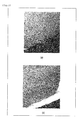
- FIG. 2 are photographs each showing the horny layer of the heel in the case of 4-week continuous bathing (foot bathing) using the bath agent composition of the present invention (Example 1).
- FIG. 2(a) shows the heel before bathing (foot bathing)
- FIG. 2 (b) shows the heel after 4-week continuous bathing (foot bathing) .
- the bath agent composition of the present invention comprises a carbonate (A) including 30 mass% or more of a dialkali metal carbonate (A1).
- the carbonate (A) can generate carbon dioxide gas together with an organic acid (B) to be described later to provide a blood circulation promoting effect, resulting in imparting good warm feeling to the skin.
- the component (A) comprises 30 mass% or more of the dialkali metal carbonate (A1) in the component (A). That is, 30 mass% or more of the dialkali metal carbonate (A1) is comprised in the total amount of the component (A).
- dialkali metal carbonate (A1) examples include dialkali metal carbonates such as sodium carbonate and potassium carbonate, and from the viewpoint of blood circulation promoting effect, sodium carbonate is preferred.
- the amount of the dialkali metal carbonate (A1) in the component (A) is 30 mass% or more, preferably from 40 to 100 mass%, more preferably from 50 to 100 mass%, even more preferably from 60 to 100 mass%, from the viewpoint of ensuring the amount of carbon dioxide gas generated and the viewpoint of maintaining good preservation stability.
- the bath agent composition of the present invention may include a carbonate (A2) excluding the dialkali metal carbonate (A1) in the component (A).
- the component (A2) include: a monoalkali metal carbonate such as sodium hydrogen carbonate or potassium hydrogen carbonate; and a carbonate of a divalent or higher-valent metal such as calcium carbonate.
- a monoalkali metal carbonate such as sodium hydrogen carbonate or potassium hydrogen carbonate
- a carbonate of a divalent or higher-valent metal such as calcium carbonate.
- a monoalkali metal carbonate is preferred, and sodium hydrogen carbonate or potassium hydrogen carbonate is more preferred.
- the amount of the monoalkali metal carbonate in 100 mass% of the component (A) is preferably 60 mass% or less, more preferably 50 mass% or less, even more preferably from 0 to 40 mass%. Further, the component (A) preferably includes no monoalkali metal carbonate except when monoalkali metal carbonate is inevitably contained within another component.
- the amount of the carbonate as the component (A) in the bath agent composition of the present invention is preferably from 20 to 70 mass%, more preferably from 25 to 65 mass%, even more preferably from 30 to 60 mass%, from the viewpoint of ensuring an amount of carbon dioxide gas generated to provide a satisfactory blood circulation promoting effect.
- the bath agent composition of the present invention comprises an organic acid (B).
- the component (B) is preferably an organic acid that is solid at room temperature (25°C) such as malic acid, tartaric acid, citric acid, maleic acid, succinic acid, phthalic acid, fumaric acid, glutaric acid, adipic acid, benzoic acid, salicylic acid and oxalic acid.
- One kind may be used alone, or two or more kinds may be used in combination. Of those, one or more kinds selected from citric acid, fumaric acid, malic acid, tartaric acid, succinic acid and oxalic acid are more preferred, and citric acid or fumaric acid is even more preferred.
- the amount of the component (B) in the bath agent composition of the present invention is preferably from 20 to 70 mass%, more preferably from 25 to 65 mass%, even more preferably from 30 to 60 mass%, from the viewpoint of ensuring an amount of carbon dioxide gas generated to provide a satisfactory blood circulation promoting effect.
- the bath agent composition of the present invention comprises a CGRP response promoter (C).
- the component (C) is an agent capable of promoting CGRP responsiveness of a cell.
- CGRP responsiveness is CGRP receptor expression or any kind of activity that takes place in a cell that has a CGRP receptor.
- intracellular cAMP increases through activation of adenylate cyclase via G-protein.
- K + channel is opened via activation of protein kinase A.
- eNOS is activated via activation of protein kinase A to promote production of NO. Further, the NO produced acts on the vascular smooth muscle cell to open the K + channel through activation of intracellular cGMP via NO.
- the bath agent composition of the present invention comprises both the carbon dioxide gas-generating substances and the CGRP response promoter (C). Therefore, the composition can relax the vascular smooth muscle and, together with carbon dioxide gas, can promote dilation of the blood vessel to provide an excellent blood circulation promoting effect and to improve skin circulation or skin metabolism, resulting in enhancing vascular responsiveness. Specifically, for example, when the bath agent composition of the present invention is used for bathing, the vascular responsiveness to heat load can be enhanced.
- the composition can suppress an additional decrease in the water amount to provide soft skin. Further, when the composition contains another component such as an oily component or the like to be described later, the composition can promote absorption of the component to the skin.
- component (C) examples include ginseng, hiba arborvitae, cucumber, butcher's broom, Amur cork tree, Hemerocallis fulva, rose balsam, bladderwrack, birch, rice protein, rice oil, Aloe vera, moutan bark, laminaria, star fruit, cornflower, lemongrass, apricot kernel, lemon, sweet marjoram, horse chestnut, royal jelly, rose hip, and extracts thereof.
- One kind may be used alone, or two or more kinds may be used in combination.
- the "ginseng” refers to Panax ginseng belonging to the genus Panax of the Araliaceae family
- the “ginseng extract” refers to an extract obtained from the ginseng.
- the ginseng extract may be an extract obtained from any part of the ginseng, for example, the whole plant, leaf, stem, germ, flower, bud, xylem, bark, thallus, root, rhizome, pseudobulb, corm, tuber, seed, fruit, sclerotium or resin, or an extract obtained from a combination thereof. Of those, an extract from the root is preferred.
- the "hiba arborvitae” refers to Thujopsis dolabrata belonging to the genus Thujopsis of the Cupressaceae family
- the "hiba arborvitae extract” refers to an extract obtained from the hiba arborvitae.
- the hiba arborvitae extract may be an extract obtained from any part of the hiba arborvitae, for example, the whole plant, leaf, stem, germ, flower, bud, xylem, bark, thallus, root, rhizome, pseudobulb, corm, tuber, seed, fruit, sclerotium or resin, or an extract obtained from a combination thereof. Of those, an extract from the leaf or branch is preferred.
- the "cucumber” refers to Cucumis sativus belonging to the genus Cucumis of the Cucurbitaceae family
- the “cucumber extract” refers to an extract obtained from the cucumber.
- the cucumber extract may be an extract obtained from any part of the cucumber, for example, the whole plant, leaf, stem, germ, flower, bud, xylem, bark, thallus, root, rhizome, pseudobulb, corm, tuber, seed, fruit, sclerotium or resin, or an extract obtained from a combination thereof. Of those, an extract from the fruit is preferred.
- the "butcher's broom” refers to Ruscus aculeatus of the Liliaceae family
- the "Amur cork tree” refers to Phellodendron amurense of the Rutaceae family
- the "Hemerocallis fulva” refers to Hemerocallis fulva of the Liliaceae family
- the "rose balsam” refers to Impatiens balsamina of the Balsaminaceae family
- the "bladderwrack” refers to Fucus vesiculosus of the Fucaceae family
- the "birch” refers to a plant belonging to the genus Betula of the Betulaceae family, preferably Betula pendula
- the "Aloe vera” refers to Aloe vera of the Aloaceae family
- the "moutan bark” refers to a root bark of Paeonia moutan of the Paeoniaceae family
- the "laminaria”
- the "rice” from which the "rice protein” and “rice oil” are derived refers to a seed of a plant belonging to the genus Oryza of the Poaceae family
- the "royal jelly” refers to a substance secreted from secretion glands (mandibular gland, hypopharyngeal gland) at the head of a worker bee.
- the extract thereof may be an extract obtained from any part of the plant, for example, the whole plant, leaf, stem, germ, flower, bud, xylem, bark, thallus, root, rhizome, pseudobulb, corm, tuber, seed, fruit, sclerotium or resin, or a combination thereof.
- preferred parts for preparing the extract are the rhizome for butcher's broom, the bark for Amur cork tree, the flower for Hemerocallis fulva, the flower or aerial part for rose balsam, the alga body for bladderwrack, the bark for birch, the leaf for Aloe vera, the root bark for moutan bark, the whole plant for laminaria, the leaf for star fruit, the flower for cornflower, the leaf for lemongrass, the seed for apricot kernel, the fruit for lemon, the leaf for sweet marjoram, the fruit for horse chestnut and the fruit for rose hip.
- the parts listed above may be subjected to an extraction step directly, or may be subjected to the extraction step after pulverization, cutting, or drying.
- the extract may be a commercially available one, or any solvent extracts obtained by an ordinary method, or diluted solutions thereof, concentrated solutions thereof, dried powders thereof, or pastes, or activated carbon-treated products thereof.
- the extracts can be obtained by extraction of parts to be extracted at room temperature or under heating, or by extraction using extraction tools such as a Soxhlet extractor.
- the solvent to be used for extraction may be a polar solvent or a non-polar solvent.
- the solvent include: water; alcohols such as methanol, ethanol, propanol and butanol; polyhydric alcohols such as propylene glycol and butylene glycol; ketones such as acetone and methyl ethyl ketone; esters such as methyl acetate and ethyl acetate; linear and cyclic ethers such as tetrahydrofuran and diethyl ether; polyethers such as polyethylene glycol; hydrocarbons such as squalane, hexane, cyclohexane and petroleum ether; aromatic hydrocarbons such as toluene; halogenated hydrocarbons such as dichloromethane, chloroform and dichloroethane; supercritical carbon dioxide; pyridine; organic solvents such as other oils, e.g., an oil or fat and a wax; and mixtures thereof. It should be noted that one or
- the blending ratio (volume ratio) of alcohol and water is preferably 0.001 to 100:99.999 to 0, more preferably 5 to 95:95 to 5, more preferably 20 to 80:80 to 20, more preferably 30 to 70:70 to 30, even more preferably 40 to 60:60 to 40.
- concentration of ethanol is preferably from 40 to 60 vol%.
- the amount of the solvent used is preferably from 1 to 100 mL with respect to 1 g of the part (in terms of dry mass) to be extracted. Extraction conditions are not particularly limited as long as the extraction can be carried out satisfactorily.
- the extraction time is preferably from 3 minutes to 30 days, more preferably from 60 minutes to 14 days, and the extraction temperature is preferably from 0°C to the boiling point of the solvent, more preferably from 5 to 70°C. Usually, the extraction is carried out at a low temperature for a long period of time, or at high temperature for a short period of time.
- extraction means for preparing the extract may include solid-liquid extraction, liquid-liquid extraction, soaking, decoction, leaching, reflux extraction, ultrasonic extraction, microwave extraction and stirring.
- Examples of the extraction conditions include from 15 to 25°C for from 7 days to 14 days, 70°C for 5 hours and the like.
- the solid-liquid extraction including stirring is desirably performed.
- Preferred examples of conditions of the solid-liquid extraction include stirring at from 40 to 100°C (preferably from 50 to 70°C) and from 100 to 1,000 rpm for from 30 to 300 minutes.
- ginseng, hiba arborvitae, cucumber, birch and extracts thereof are preferred, and ginseng, hiba arborvitae and extracts thereof are more preferred, from the viewpoint of a blood circulation promoting effect and the viewpoint of an effect of improving skin circulation or skin metabolism.
- the amount of the component (C) in the bath agent composition of the present invention is preferably from 2.0 ⁇ 10 -5 to 0.6 mass%, more preferably from 2.0 ⁇ 10 -4 to 0.3 mass%, even more preferably from 2.0 ⁇ 10 -3 to 0.1 mass% in terms of dry weight, from the viewpoint of a blood circulation promoting effect and the viewpoint of an effect of improving skin circulation or skin metabolism.
- the bath agent composition of the present invention may include a water insoluble excipient (D) from the viewpoint of more stably maintaining dispersibility of the component (C).
- the component (C) may be mixed with the water insoluble excipient (D) in advance to favorably disperse the component (C) in the composition, resulting in easily enhancing preservation stability.
- the component (D) is preferably porous powder from the viewpoint of favorably dispersing the component (C) in the composition, and for example, the oil absorption of the component (D) is preferably from 100 to 700 mL/100 g, more preferably from 200 to 600 mL/100 g.
- Examples of the component (D) include crystalline silica, amorphous silica and amorphous aluminosilicate, and there may be preferably used, for example, a commercially available product such as FLORITE (manufactured by Tokuyama Corporation) (the name was changed into FLORITE R (Tomita Pharmaceutical Co. , Ltd.)), Sylopure (manufactured by Fuji Silysia Chemical Ltd.), Tokusil NR (manufactured by Tokuyama Corporation ⁇ manufactured by Oriental Silica Corporation), Tokusil NP (manufactured by Oriental Silica Corporation), TIXOLEX 25 (manufactured by Kofran Chemical Co. Ltd.), or Nipsil NA (manufactured by Tosoh Silica Corporation).
- FLORITE manufactured by Tokuyama Corporation
- Sylopure manufactured by Fuji Silysia Chemical Ltd.
- Tokusil NR manufactured by Tokuyama Corporation ⁇ manufactured by Oriental Silica Corporation
- the amount of the component (D) in the bath agent composition of the present invention is preferably from 0.01 to 10 mass%, more preferably from 0.05 to 5 mass%, from the viewpoint of more stably maintaining dispersibility of the component (C).
- the bath agent composition of the present invention may further include an oily component from the viewpoint of increasing a good warm feeling and skin care effect together with CGRP responsiveness provided by the component (C).
- oily component include: a fatty acid ester such as cetyl octanoate, cetyl isooctanoate, butyl laurate, isoamyl laurate, methyl myristate, ethyl myristate, isopropyl myristate, octyldodecyl myristate, isopropyl palmitate, ethyl stearate, butyl stearate, isotridecyl isononanoate, isononyl isononanoate, isopropyl linoleate, isopropyl isostearate, isostearyl isostearate, methyl oleate or ethyl oleate; a glyceride such as g
- the amount of the oily component in the bath agent composition of the present invention is preferably from 0.05 to 10 mass%, more preferably from 0.1 to 5 mass%, even more preferably from 0.2 to 3.5 mass%, from the viewpoint of suppressing an additional decrease in the water amount to provide soft skin even for skin having a decreased water amount in the horny layer to cause progressive hardening, the viewpoint of imparting warm feeling, and the viewpoint of maintaining good dispersibility to enhance preservation stability.
- the bath agent composition of the present invention may appropriately include, as a component other than the above-mentioned components, a component that is usually used for a bath agent, for example, a non-ionic surfactant, a water soluble polymer, a saccharide, an inorganic salt other than carbonate, a vitamin, a protease, a bactericidal and antiseptic agent, a flavor, a dye or the like.
- a component that is usually used for a bath agent for example, a non-ionic surfactant, a water soluble polymer, a saccharide, an inorganic salt other than carbonate, a vitamin, a protease, a bactericidal and antiseptic agent, a flavor, a dye or the like.
- the bath agent composition of the present invention can be produced in accordance with a conventional method such as a compression granulation method such as extrusion granulation or a compression molding method using a compression tableting machine or a briquetting machine.
- the form of the composition may be any of powder, granule, particle, briquette tablet, tablet and the like.
- the composition may have a form obtained by granulating or molding part of the components in advance, mixing the resultant product with the other components, and molding the mixture.
- the component (C) is preferably mixed with the water insoluble excipient (D) in advance from the viewpoint of favorably dispersing the component (C).
- the bath agent composition of the present invention is used as follows: the composition is dissolved in bath water to generate bubbles of carbon dioxide gas, and at least part of the body is soaked in the bath water.
- the body part to be soaked is not particularly limited, and the whole body may be soaked (whole-body bathing) or only a part of the body such as the neck, shoulder, hand, arm or leg may be soaked.
- the composition is preferably applied to so-called foot bathing for soaking the leg, in particular, the part below the knee or the part below the ankle in bath water, from the viewpoint of satisfactorily giving the effect of the present invention by continuously using the composition.
- the bath agent composition of the present invention is capable of adjusting the pH of the bath water to preferably from 4 to 7, more preferably from 4.5 to 6.5.
- the bath agent composition of the present invention is capable of adjusting the concentration of carbon dioxide gas in bath water to preferably from 30 to 1, 300 ppm, more preferably from 60 to 1,300 ppm, more preferably from 100 to 1,300 ppm, even more preferably from 800 to 1,300 ppm.
- continuous use of the bath agent composition of the present invention can provide a more excellent blood circulation promoting effect and vascular responsiveness improving effect to heat load.
- a satisfactory effect is provided.
- the bathing is carried out for preferably 7 days or more, more preferably 10 days or more, even more preferably 14 days or more (continuous bathing).
- Such continuous bathing can satisfactorily exhibit the effect of the present invention, that is, the blood circulation promoting effect to provide good warm feeling and vascular responsiveness improving effect to heat load to improve skin circulation or skin metabolism and to suppress a decrease in the water amount of the horny layer, resulting in providing soft skin.
- FIG. 1(a) in the case of 4-week continuous bathing (foot bathing) using normal hot water (Comparative Example 6 to be described later), there is no significant difference between the initial stage and that after continuous bathing ( FIG. 1(a) ), while in the case of 4-week continuous bathing (foot bathing) using the bath agent composition of the present invention (bath agent composition of Example 1 to be described later), the blood flow can be significantly increased after continuous bathing as compared to that at the initial stage ( FIG. 1(b) ).
- FIG. 2 when the skin hardened due to a progressive dry state before bathing (foot bathing) ( FIG. 2 (a) ) is subjected to 4-week continuous bathing using the bath agent composition of the present invention (bath agent composition of Example 1 to be described later), the skin can be changed into soft skin with increased moisture ( FIG. 2(b) ).
- the bathing temperature is preferably from 30 to 45°C
- the bathing time is preferably 3 minutes or more and 30 minutes or less, more preferably 5 minutes or more and 20 minutes or less, even more preferably 10 minutes or more and 15 minutes or less for each time of bathing.
- the bath agent composition of the present invention is appropriately wrapped and preserved in a bag-like wrapping.
- the water vapor permeability of the material of the bag-like wrapping to be used in the present invention is 0.6 g/m 2 ⁇ day or less, preferably 0.3 g/m 2 ⁇ day or less under conditions of 40 °C and 90%RH, and even more preferably, the bag-like wrapping does not substantially transmit water vapor.
- An example of the material of the bag-like wrapping having such water vapor permeability is a laminate film made of aluminum having a thickness of from 5 to 10 ⁇ m, and a preferred example of the material of the bag-like wrapping is a transparent material such as a polyethylene terephthalate (PET) film subjected to glass vapor deposition treatment.
- PET polyethylene terephthalate
- hiba arborvitae (Thujopsis dolabrate ) (source from Japan)
- 1,000 mL of ethanol was added, and extraction was carried out by soaking at room temperature (25°C) for 7 days, followed by filtration, to thereby obtain 900 mL of a hiba arborvitae extract (evaporation residue: 0.8 w/v%, determined by Japanese Standards of Quasi-drug Ingredients (10 mL, 105°C, 6 hours))
- Bath agents were prepared by mixing the ingredient according to the formulae shown in Table 1, using the ginseng extract obtained in Production Example 1. It should be noted that the ginseng extract was mixed with sodium silicate (FLORITE) in advance, and the resultant was mixed with the other components to prepare the bath agents.
- FLORITE sodium silicate
- Each bath agent was wrapped with an aluminum (7 ⁇ m) laminate film and preserved for 6 months at a temperature of 40°C and a relative humidity of 75%RH, and then expandability of the wrapping pack was visually evaluated.
- Bath agents were prepared by mixing the ingredients according to the formulae shown in Table 2, using the ginseng extract obtained in Production Example 1. It should be noted that, in Comparative Example 5, the following test was carried out in normal hot water without using any bath agent. In addition, the ginseng extract was mixed with calcium silicate (FLORITE) in advance, and then mixed with the other components to prepare bath agents.
- FLORITE calcium silicate
- Table 2 shows the results including the result of Example 1.
- Each bath agent was put in 6 L of 40°C hot water in the amount shown in Table 2, to prepare hot bath water having a carbon dioxide gas concentration of from 800 to 1,300 ppm and a pH of from 4.5 to 6.5, and five test subjects soaked their feet below their ankles for 15 minutes for foot bathing. Then, cutaneous blood flows (mL/min) were measured before and immediately after the foot bathing. The blood flow of each subject before the start of the foot bathing was defined as 100, the blood flow of each subject 15 minutes after the start of the foot bathing was represented as an index, and then the results of the five subjects were averaged. It should be noted that the cutaneous blood flow was measured at the dorsum of the foot by attaching an electrode using a laser Doppler blood-flowmeter (ALF21, manufactured by ADVANCE Co., Ltd.).
- ALF21 laser Doppler blood-flowmeter
- Each bath agent was put in 6 L of 40°C hot water in the amount shown in Table 2 to prepare hot bath water with carbon dioxide gas concentration of from 800 to 1, 300 ppm and a pH of from 4.5 to 6.5, and five test subjects soaked their feet below their ankles for 10 minutes once a day for 4-week continuous foot bathing. Evaluation was carried out on the vascular responsiveness improving effect to heat load and cutaneous symptom ameliorating effect according to the following methods and criteria.
- the heat load on the skin was carried out by controlling the temperature of a heat load probe which embeds a Peltier device using a hot and cold stimulating device (manufactured by Physio-Tech Co. , Ltd.).
- the probe for measuring the blood flow was fixed at the center of the heat load probe, and cutaneous blood flow was measured using a laser Doppler blood-flowmeter (ALF21, manufactured by ADVANCE Co., Ltd.).
- ALF21 laser Doppler blood-flowmeter
- the cutaneous blood flow under the heat-stress was measured using the device for measurement of the cutaneous blood flow (laser Doppler blood-flowmeter).
- the blood flow before the continuous foot bathing was defined as 100, and evaluation was carried out according to the following criteria to calculate an average value of the results of the five test subjects.
- Score 3 Amelioration of dry skin and improvement of softness were clearly observed as compared to before the continuous foot bathing.
- Score 2 Amelioration of dry skin and improvement of softness were observed as compared to before the continuous foot bathing.
- Score 1 Amelioration of dry skin and improvement of softness were hardly observed as compared to before the continuous foot bathing.
- Score 0 Amelioration of dry skin and improvement of softness were not observed as compared to before the continuous foot bathing.
- AA Average was 2.5 or more.
- Tables 1 and 2 reveal that the bath agents of Examples have excellent preservation stability, and usage of the bath agents for bathing can increase the cutaneous blood flow immediately after foot bathing. Further, the results reveal that the continuous bathing can significantly improve the vascular responsiveness to heat load and can ameliorate the symptom of the skin.
- Bath agents were prepared according to the formulae shown in Table 3 using the hiba arborvitae extract and cucumber extract obtained in Production Examples 2 and 3. Usage of either one of the bath agents, the vascular responsiveness improving effect to heat load was observed, and the dry skin of the heel was significantly ameliorated and was changed to soft skin.
- Bath agents were prepared according to the formulae shown in Table 4 using the ginseng extract obtained in Production Example 1 and using different kinds or different amount of the organic acids as the component (B).
- the resultant bath agents were used to evaluate the vascular responsiveness improving effect and the cutaneous symptom ameliorating effect in the same manner as above and to evaluate a joint flexibilizing effect according to the following method and criteria.
- Plantarflexion and dorsiflexion angles of the ankle joints were measured in a supine position.
- the position at which the sole of the foot is vertical to the floor was defined as 0°.
- the angle of the maximum plantarflexion provided by the subject himself or herself was defined as plantarflexion angle, while the angle of the maximum dorsiflexion provided by the subject himself or herself was defined as dorsiflexion angle.
- the sum of the angles was defined as a value (°) representing a range of plantarflexion-dorsiflexion movement of the ankle joint.
- An increase (°) in the value after foot bathing compared to the value before foot bathing was determined and was used as an evaluation index for the joint flexibilizing effect.
- Bath agents were prepared according to the formulae shown in Table 5 using the ginseng extract obtained in Production Example 1 and using different amount of the carbonate as the component (A) and different amount of the dialkali carbonate in the component (A).
- the resultant bath agents were used to evaluate the vascular responsiveness improving effect, the cutaneous symptom ameliorating effect and the joint flexibilizing effect in the same manner as above.
- Example 21 (A) Carbonate (A1) Sodium carbonate 22.00 12.00 15.00 14.00 8.50 22.50 (A2) Sodium hydrogen carbonate 11.00 28.00 34.00 7.00 18.00 12.00 (B) Organic acid Fumaric acid 60.50 53.50 44.50 48.50 42.00 34.00 (C) CGRP response promoter Ginseng extract 1.00 1.00 1.00 0.10 0.10 0.10 (D) Water insoluble excipient FLORITE *1 3.00 3.00 3.00 6.00 6.00 6.00 Glucose - - - 20.40 20.40 20.40 Isopropyl palmitate 0.27 0.27 0.27 0.53 0.53 0.53 Octyl dodecyl myristate 0.08 0.08 0.08 0.15 0.15 0.15 Polyoxyethylene sorbitol tetraoleate 0.12 0.12 0.12 0.23 0.23 0.23 Polyoxyethylene stearyl ether 0.05 0.05 0.05 0.10 0.
- Bath agents were prepared according to the formulae shown in Table 6 using the ginseng extract, hiba arborvitae extract, cucumber extract and birch extract obtained in Production Examples 1 to 4.
- the resultant bath agents were used to evaluate the vascular responsiveness improving effect, the cutaneous symptom ameliorating effect and the joint flexibilizing effect in the same manner as above.
- Bath agents were prepared according to the formulae shown in Table 7 using the ginseng extract obtained in Production Example 1.
- the resultant bath agents were used to evaluate the vascular responsiveness improving effect, the cutaneous symptom ameliorating effect and the joint flexibilizing effect in the same manner as above.
Landscapes
- Life Sciences & Earth Sciences (AREA)
- Health & Medical Sciences (AREA)
- Public Health (AREA)
- Veterinary Medicine (AREA)
- General Health & Medical Sciences (AREA)
- Animal Behavior & Ethology (AREA)
- Epidemiology (AREA)
- Birds (AREA)
- Engineering & Computer Science (AREA)
- Biotechnology (AREA)
- Botany (AREA)
- Microbiology (AREA)
- Mycology (AREA)
- Inorganic Chemistry (AREA)
- Chemical & Material Sciences (AREA)
- Dermatology (AREA)
- Cosmetics (AREA)
Abstract
Description
- The present invention relates to a bath agent composition.
- Heretofore, a bath agent obtained by blending a carbonate and an organic acid has been widely known as an excellent bath agent because the agent generates bubbles of carbon dioxide gas in bath water, and the carbon dioxide gas provides a blood circulation promoting effect. Further, a study for providing an additional effect or a synergistic effect by further blending various components in the bath agent has been made.
- For example, a crude drug such as ginseng has been known as a component capable of being blended in a so-called foaming bath agent obtained by blending a carbonate and an organic acid (see Patent Documents 1 and 2), and a foaming bath agent that includes such component and thus can synergistically enhance a blood circulation promoting effect and moist feeling of skin after bathing has been developed (see Patent Document 3). In addition, a bath agent having a throbbing pain alleviating effect provided by using an extract obtained from a plant of the Cupressaceae family has also been developed (Patent Document 4).
-
- [Patent Document 1]
JP-A-62-234015 - [Patent Document 2]
JP-B-7-546 - [Patent Document 3]
JP-A-60-215618 - [Patent Document 4]
JP-A-11-158058 - The present invention provides a bath agent composition, comprising the following components (A) to (C):
- (A) a carbonate comprising 30 mass% or more of a dialkali metal carbonate (A1);
- (B) an organic acid; and
- (C) a CGRP response promoter.
- In a conventional bath agent obtained by blending a carbonate and an organic acid, only blending the components described above may deteriorate preservation stability due to the generation of carbon dioxide gas and may not satisfactorily provide an additional effect or a synergistic effect which is expected.
- Therefore, the present invention provides a bath agent composition capable of satisfactorily exhibiting a blood circulation promoting effect due to the generation of carbon dioxide gas, wherein the composition comprises a carbonate and an organic acid and is capable of satisfactorily exhibiting an additional effect by imparting high preservation stability.
- Further, the inventors of the present invention made various studies, and found that, when a carbonate comprising a specific amount of a dialkali metal carbonate and an organic acid were combined with a CGRP response promoter, good dispersibility of the composition was maintained to provide excellent preservation stability, and the inventors surprisingly found that continuous use of the composition enhanced vascular responsiveness to heat load. Thus, the present invention was completed.
- The bath agent composition of the present invention is possible not only to favorably generate carbon dioxide gas to enhance the blood circulation promoting effect but also to satisfactorily enhance the CGRP response promoter's effect over time because of the high preservation stability provided even when the composition further contains the CGRP response promoter. In particular, when the composition is continuously used, the composition can provide excellent vascular responsiveness to heat load.
-
FIG. 1 are graphs each showing a comparison of changes in the cutaneous blood flow between the day before the start of 4-week continuous bathing (foot bathing) (initial) and the day after the continuous use (4 weeks later). The vertical axis represents cutaneous blood flow (mL/min/100 g), and the horizontal axis represents time (min).FIG. 1(a) shows the case of normal hot water (Comparative Example 5), andFIG. 1(b) shows the case of using the bath agent composition of the present invention (Example 1). Both graphs show observation results of blood flow where initial skin temperature was adjusted to 30°C, the skin was acclimated well and subjected to heat load, the skin temperature was increased to 42°C, kept at 42°C for 5 minutes and returned to 30°C again. It should be noted that the cutaneous blood flow was measured in the same manner as the method for evaluation of vascular responsiveness improving effect to heat load in Test Example 3. -
FIG. 2 are photographs each showing the horny layer of the heel in the case of 4-week continuous bathing (foot bathing) using the bath agent composition of the present invention (Example 1).FIG. 2(a) shows the heel before bathing (foot bathing), andFIG. 2 (b) shows the heel after 4-week continuous bathing (foot bathing) . - Hereinafter, the present invention is described in detail.
- The bath agent composition of the present invention comprises a carbonate (A) including 30 mass% or more of a dialkali metal carbonate (A1). When the bath agent composition of the present invention is put in bath water, the carbonate (A) can generate carbon dioxide gas together with an organic acid (B) to be described later to provide a blood circulation promoting effect, resulting in imparting good warm feeling to the skin. The component (A) comprises 30 mass% or more of the dialkali metal carbonate (A1) in the component (A). That is, 30 mass% or more of the dialkali metal carbonate (A1) is comprised in the total amount of the component (A). This can maintain high preservation stability, can ensure a satisfactory amount of carbon dioxide gas generated to provide an excellent blood circulation promoting effect, and can provide a satisfactory effect provided by a CGRP response promoter (C) to be described later. Examples of the dialkali metal carbonate (A1) include dialkali metal carbonates such as sodium carbonate and potassium carbonate, and from the viewpoint of blood circulation promoting effect, sodium carbonate is preferred. The amount of the dialkali metal carbonate (A1) in the component (A) is 30 mass% or more, preferably from 40 to 100 mass%, more preferably from 50 to 100 mass%, even more preferably from 60 to 100 mass%, from the viewpoint of ensuring the amount of carbon dioxide gas generated and the viewpoint of maintaining good preservation stability.
- The bath agent composition of the present invention may include a carbonate (A2) excluding the dialkali metal carbonate (A1) in the component (A). Examples of the component (A2) include: a monoalkali metal carbonate such as sodium hydrogen carbonate or potassium hydrogen carbonate; and a carbonate of a divalent or higher-valent metal such as calcium carbonate. One kind may be used alone, or two or more kinds may be used in combination. Of those, from the viewpoint of ensuring high preservation stability, a monoalkali metal carbonate is preferred, and sodium hydrogen carbonate or potassium hydrogen carbonate is more preferred. From the viewpoint of ensuring high preservation stability, the amount of the monoalkali metal carbonate in 100 mass% of the component (A) is preferably 60 mass% or less, more preferably 50 mass% or less, even more preferably from 0 to 40 mass%. Further, the component (A) preferably includes no monoalkali metal carbonate except when monoalkali metal carbonate is inevitably contained within another component.
- The amount of the carbonate as the component (A) in the bath agent composition of the present invention is preferably from 20 to 70 mass%, more preferably from 25 to 65 mass%, even more preferably from 30 to 60 mass%, from the viewpoint of ensuring an amount of carbon dioxide gas generated to provide a satisfactory blood circulation promoting effect.
- The bath agent composition of the present invention comprises an organic acid (B). The component (B) is preferably an organic acid that is solid at room temperature (25°C) such as malic acid, tartaric acid, citric acid, maleic acid, succinic acid, phthalic acid, fumaric acid, glutaric acid, adipic acid, benzoic acid, salicylic acid and oxalic acid. One kind may be used alone, or two or more kinds may be used in combination. Of those, one or more kinds selected from citric acid, fumaric acid, malic acid, tartaric acid, succinic acid and oxalic acid are more preferred, and citric acid or fumaric acid is even more preferred.
- The amount of the component (B) in the bath agent composition of the present invention is preferably from 20 to 70 mass%, more preferably from 25 to 65 mass%, even more preferably from 30 to 60 mass%, from the viewpoint of ensuring an amount of carbon dioxide gas generated to provide a satisfactory blood circulation promoting effect.
- The bath agent composition of the present invention comprises a CGRP response promoter (C). The component (C) is an agent capable of promoting CGRP responsiveness of a cell. CGRP responsiveness is CGRP receptor expression or any kind of activity that takes place in a cell that has a CGRP receptor. Specifically, for example, when the CGRP is bound to a CGRP receptor of a cell, intracellular cAMP increases through activation of adenylate cyclase via G-protein. As a result, for example, in a vascular smooth muscle cell, K+ channel is opened via activation of protein kinase A. Alternatively, in a vascular endothelial cell, eNOS is activated via activation of protein kinase A to promote production of NO. Further, the NO produced acts on the vascular smooth muscle cell to open the K+ channel through activation of intracellular cGMP via NO.
- Heretofore, carbon dioxide gas-generating substances such as the carbonate (A) and the organic acid (B) have been used for many bath agent compositions as components capable of generating carbon dioxide gas that provides an excellent blood circulation promoting effect. On the other hand, the bath agent composition of the present invention comprises both the carbon dioxide gas-generating substances and the CGRP response promoter (C). Therefore, the composition can relax the vascular smooth muscle and, together with carbon dioxide gas, can promote dilation of the blood vessel to provide an excellent blood circulation promoting effect and to improve skin circulation or skin metabolism, resulting in enhancing vascular responsiveness. Specifically, for example, when the bath agent composition of the present invention is used for bathing, the vascular responsiveness to heat load can be enhanced. Further, for skin having a decreased water amount in the horny layer to cause progressive hardening, the composition can suppress an additional decrease in the water amount to provide soft skin. Further, when the composition contains another component such as an oily component or the like to be described later, the composition can promote absorption of the component to the skin.
- Examples of the component (C) include ginseng, hiba arborvitae, cucumber, butcher's broom, Amur cork tree, Hemerocallis fulva, rose balsam, bladderwrack, birch, rice protein, rice oil, Aloe vera, moutan bark, laminaria, star fruit, cornflower, lemongrass, apricot kernel, lemon, sweet marjoram, horse chestnut, royal jelly, rose hip, and extracts thereof. One kind may be used alone, or two or more kinds may be used in combination.
- The "ginseng" refers to Panax ginseng belonging to the genus Panax of the Araliaceae family, and the "ginseng extract" refers to an extract obtained from the ginseng. The ginseng extract may be an extract obtained from any part of the ginseng, for example, the whole plant, leaf, stem, germ, flower, bud, xylem, bark, thallus, root, rhizome, pseudobulb, corm, tuber, seed, fruit, sclerotium or resin, or an extract obtained from a combination thereof. Of those, an extract from the root is preferred.
- The "hiba arborvitae" refers to Thujopsis dolabrata belonging to the genus Thujopsis of the Cupressaceae family, and the "hiba arborvitae extract" refers to an extract obtained from the hiba arborvitae. The hiba arborvitae extract may be an extract obtained from any part of the hiba arborvitae, for example, the whole plant, leaf, stem, germ, flower, bud, xylem, bark, thallus, root, rhizome, pseudobulb, corm, tuber, seed, fruit, sclerotium or resin, or an extract obtained from a combination thereof. Of those, an extract from the leaf or branch is preferred.
- The "cucumber" refers to Cucumis sativus belonging to the genus Cucumis of the Cucurbitaceae family, and the "cucumber extract" refers to an extract obtained from the cucumber. The cucumber extract may be an extract obtained from any part of the cucumber, for example, the whole plant, leaf, stem, germ, flower, bud, xylem, bark, thallus, root, rhizome, pseudobulb, corm, tuber, seed, fruit, sclerotium or resin, or an extract obtained from a combination thereof. Of those, an extract from the fruit is preferred.
- Further, the "butcher's broom" refers to Ruscus aculeatus of the Liliaceae family, the "Amur cork tree" refers to Phellodendron amurense of the Rutaceae family, the "Hemerocallis fulva" refers to Hemerocallis fulva of the Liliaceae family, the "rose balsam" refers to Impatiens balsamina of the Balsaminaceae family, the "bladderwrack" refers to Fucus vesiculosus of the Fucaceae family, the "birch" refers to a plant belonging to the genus Betula of the Betulaceae family, preferably Betula pendula, the "Aloe vera" refers to Aloe vera of the Aloaceae family, the "moutan bark" refers to a root bark of Paeonia moutan of the Paeoniaceae family, the "laminaria" refers to an alga of the genus Laminaria, the "star fruit" refers to Averrhoa carambola of the Oxalidaceae family, the "cornflower" refers to Centaurea cyanus of the Asteraceae family, the "lemongrass" refers to Cymbopogon citratus of the Poaceae family, the "apricot kernel" refers to a seed of a plant belonging to the genus Prunus of the Rosaceae family, the "lemon" refers to Citrus limon of the Rutaceae family, the "sweet marjoram" refers to Origanum majorana of the Lamiaceae family, the "horse chestnut" refers to Aesculus hippocastanum of the Hippocastanaceae family, and the "rose hip" refers to a fruit of a plant belonging to the genus Rosa of the Rosaceae family, preferably Rosa canina. In addition the "rice" from which the "rice protein" and "rice oil" are derived refers to a seed of a plant belonging to the genus Oryza of the Poaceae family, and the "royal jelly" refers to a substance secreted from secretion glands (mandibular gland, hypopharyngeal gland) at the head of a worker bee.
- In the case where the above-mentioned butcher's broom or the like is derived from a plant, the extract thereof may be an extract obtained from any part of the plant, for example, the whole plant, leaf, stem, germ, flower, bud, xylem, bark, thallus, root, rhizome, pseudobulb, corm, tuber, seed, fruit, sclerotium or resin, or a combination thereof. Specifically, preferred parts for preparing the extract are the rhizome for butcher's broom, the bark for Amur cork tree, the flower for Hemerocallis fulva, the flower or aerial part for rose balsam, the alga body for bladderwrack, the bark for birch, the leaf for Aloe vera, the root bark for moutan bark, the whole plant for laminaria, the leaf for star fruit, the flower for cornflower, the leaf for lemongrass, the seed for apricot kernel, the fruit for lemon, the leaf for sweet marjoram, the fruit for horse chestnut and the fruit for rose hip.
- The parts listed above may be subjected to an extraction step directly, or may be subjected to the extraction step after pulverization, cutting, or drying.
- The extract may be a commercially available one, or any solvent extracts obtained by an ordinary method, or diluted solutions thereof, concentrated solutions thereof, dried powders thereof, or pastes, or activated carbon-treated products thereof. The extracts can be obtained by extraction of parts to be extracted at room temperature or under heating, or by extraction using extraction tools such as a Soxhlet extractor.
- The solvent to be used for extraction may be a polar solvent or a non-polar solvent. Specific examples of the solvent include: water; alcohols such as methanol, ethanol, propanol and butanol; polyhydric alcohols such as propylene glycol and butylene glycol; ketones such as acetone and methyl ethyl ketone; esters such as methyl acetate and ethyl acetate; linear and cyclic ethers such as tetrahydrofuran and diethyl ether; polyethers such as polyethylene glycol; hydrocarbons such as squalane, hexane, cyclohexane and petroleum ether; aromatic hydrocarbons such as toluene; halogenated hydrocarbons such as dichloromethane, chloroform and dichloroethane; supercritical carbon dioxide; pyridine; organic solvents such as other oils, e.g., an oil or fat and a wax; and mixtures thereof. It should be noted that one or more kinds selected from those solvents are preferably used. The solvent preferably includes water, an alcohol and an aqueous solution thereof, and the alcohol is preferably ethanol. More preferred solvents are water and an aqueous ethanol solution.
- The blending ratio (volume ratio) of alcohol and water is preferably 0.001 to 100:99.999 to 0, more preferably 5 to 95:95 to 5, more preferably 20 to 80:80 to 20, more preferably 30 to 70:70 to 30, even more preferably 40 to 60:60 to 40. In the case of aqueous ethanol solution, the concentration of ethanol is preferably from 40 to 60 vol%.
- The amount of the solvent used is preferably from 1 to 100 mL with respect to 1 g of the part (in terms of dry mass) to be extracted. Extraction conditions are not particularly limited as long as the extraction can be carried out satisfactorily. The extraction time is preferably from 3 minutes to 30 days, more preferably from 60 minutes to 14 days, and the extraction temperature is preferably from 0°C to the boiling point of the solvent, more preferably from 5 to 70°C. Usually, the extraction is carried out at a low temperature for a long period of time, or at high temperature for a short period of time.
- Specific examples of extraction means for preparing the extract may include solid-liquid extraction, liquid-liquid extraction, soaking, decoction, leaching, reflux extraction, ultrasonic extraction, microwave extraction and stirring.
- Examples of the extraction conditions include from 15 to 25°C for from 7 days to 14 days, 70°C for 5 hours and the like.
- In addition, in the case where the extraction is performed in a shorter time, the solid-liquid extraction including stirring is desirably performed. Preferred examples of conditions of the solid-liquid extraction include stirring at from 40 to 100°C (preferably from 50 to 70°C) and from 100 to 1,000 rpm for from 30 to 300 minutes.
- In order to prevent oxidation of the extract, there may further be used means for performing extraction under a so-called non-oxidative atmosphere while dissolved oxygen is removed by deaeration by boiling or passing of an inert gas such as nitrogen gas.
- Of the extracts and the like, ginseng, hiba arborvitae, cucumber, birch and extracts thereof are preferred, and ginseng, hiba arborvitae and extracts thereof are more preferred, from the viewpoint of a blood circulation promoting effect and the viewpoint of an effect of improving skin circulation or skin metabolism.
- The amount of the component (C) in the bath agent composition of the present invention is preferably from 2.0×10⁻⁵ to 0.6 mass%, more preferably from 2.0×10⁻⁴ to 0.3 mass%, even more preferably from 2.0×10⁻³ to 0.1 mass% in terms of dry weight, from the viewpoint of a blood circulation promoting effect and the viewpoint of an effect of improving skin circulation or skin metabolism.
- It should be noted that the bath agent composition of the present invention may include a water insoluble excipient (D) from the viewpoint of more stably maintaining dispersibility of the component (C). With this, for example, the component (C) may be mixed with the water insoluble excipient (D) in advance to favorably disperse the component (C) in the composition, resulting in easily enhancing preservation stability. The component (D) is preferably porous powder from the viewpoint of favorably dispersing the component (C) in the composition, and for example, the oil absorption of the component (D) is preferably from 100 to 700 mL/100 g, more preferably from 200 to 600 mL/100 g.
- Examples of the component (D) include crystalline silica, amorphous silica and amorphous aluminosilicate, and there may be preferably used, for example, a commercially available product such as FLORITE (manufactured by Tokuyama Corporation) (the name was changed into FLORITE R (Tomita Pharmaceutical Co. , Ltd.)), Sylopure (manufactured by Fuji Silysia Chemical Ltd.), Tokusil NR (manufactured by Tokuyama Corporation→manufactured by Oriental Silica Corporation), Tokusil NP (manufactured by Oriental Silica Corporation), TIXOLEX 25 (manufactured by Kofran Chemical Co. Ltd.), or Nipsil NA (manufactured by Tosoh Silica Corporation). Of those, crystalline silica such as FLORITE is preferred.
- The amount of the component (D) in the bath agent composition of the present invention is preferably from 0.01 to 10 mass%, more preferably from 0.05 to 5 mass%, from the viewpoint of more stably maintaining dispersibility of the component (C).
- The bath agent composition of the present invention may further include an oily component from the viewpoint of increasing a good warm feeling and skin care effect together with CGRP responsiveness provided by the component (C). Examples of the oily component include: a fatty acid ester such as cetyl octanoate, cetyl isooctanoate, butyl laurate, isoamyl laurate, methyl myristate, ethyl myristate, isopropyl myristate, octyldodecyl myristate, isopropyl palmitate, ethyl stearate, butyl stearate, isotridecyl isononanoate, isononyl isononanoate, isopropyl linoleate, isopropyl isostearate, isostearyl isostearate, methyl oleate or ethyl oleate; a glyceride such as glyceryl myristate or glyceryl 2-ethylhexanoate; a fatty acid glyceride such as glycerin tri(caprylate/caprate) or glyceryl tricaprylate; a fatty acid polyglyceride such as polyglyceryl-2 isostearate or polyglyceryl-2 triisostearate; a higher fatty acid such as lauric acid, myristic acid, palmitic acid, stearic acid, behenic acid, oleic acid, linoleic acid, linolenic acid, lanolin acid or isostearic acid; a higher alcohol such as lauryl alcohol, cetyl alcohol, stearyl alcohol, oleyl alcohol, cholesterol or 2-hexyldecanol; a hydrocarbon oil such as liquid paraffin, vaseline, paraffin, microcrystalline wax, ceresin, squalane, squalene, dioctylcyclohexane, or pristane; a natural oil or fat such as soybean oil, jojoba oil, avocado oil, almond oil, olive oil, cacao butter, sesame oil, persic oil, castor oil, coconut oil, mink oil, tallow or lard, or a hydrogenated oil obtained by hydrogenating the natural oil or fat; an essential oil such as mint oil, jasmine oil, camphor oil, bitter orange peel oil, rhyuno oil, turpentine oil, cinnamon oil, bergamot oil, orange oil, sweet flag oil, pineapple oil, lavender oil, clove oil, eucalyptus oil, thyme oil, peppermint oil, sage oil, menthol, cineol, eugenol, citral, citronellal, borneol, linalool, geraniol, camphor, thymol, spilanthol, pinene, limonene or terpene-based compound; and silicone oil. One kind may be used alone, or two or more kinds may be used in combination. Of those, one or more kinds selected from fatty acid esters are more preferred from the viewpoint of skin care effect.
- The amount of the oily component in the bath agent composition of the present invention is preferably from 0.05 to 10 mass%, more preferably from 0.1 to 5 mass%, even more preferably from 0.2 to 3.5 mass%, from the viewpoint of suppressing an additional decrease in the water amount to provide soft skin even for skin having a decreased water amount in the horny layer to cause progressive hardening, the viewpoint of imparting warm feeling, and the viewpoint of maintaining good dispersibility to enhance preservation stability.
- The bath agent composition of the present invention may appropriately include, as a component other than the above-mentioned components, a component that is usually used for a bath agent, for example, a non-ionic surfactant, a water soluble polymer, a saccharide, an inorganic salt other than carbonate, a vitamin, a protease, a bactericidal and antiseptic agent, a flavor, a dye or the like.
- The bath agent composition of the present invention can be produced in accordance with a conventional method such as a compression granulation method such as extrusion granulation or a compression molding method using a compression tableting machine or a briquetting machine. The form of the composition may be any of powder, granule, particle, briquette tablet, tablet and the like. In addition, the composition may have a form obtained by granulating or molding part of the components in advance, mixing the resultant product with the other components, and molding the mixture. It should be noted that, when the component (C) is used, the component (C) is preferably mixed with the water insoluble excipient (D) in advance from the viewpoint of favorably dispersing the component (C).
- The bath agent composition of the present invention is used as follows: the composition is dissolved in bath water to generate bubbles of carbon dioxide gas, and at least part of the body is soaked in the bath water. The body part to be soaked is not particularly limited, and the whole body may be soaked (whole-body bathing) or only a part of the body such as the neck, shoulder, hand, arm or leg may be soaked. Of those, the composition is preferably applied to so-called foot bathing for soaking the leg, in particular, the part below the knee or the part below the ankle in bath water, from the viewpoint of satisfactorily giving the effect of the present invention by continuously using the composition.
- In order to further improve the blood circulation promoting effect and the vascular responsiveness improving effect to the heat load provided by the bath agent composition of the present invention, the bath agent composition of the present invention is capable of adjusting the pH of the bath water to preferably from 4 to 7, more preferably from 4.5 to 6.5.
- In order to further improve the blood circulation promoting effect and the vascular responsiveness improving effect to the heat load provided by the bath agent composition of the present invention, the bath agent composition of the present invention is capable of adjusting the concentration of carbon dioxide gas in bath water to preferably from 30 to 1, 300 ppm, more preferably from 60 to 1,300 ppm, more preferably from 100 to 1,300 ppm, even more preferably from 800 to 1,300 ppm.
- In addition, continuous use of the bath agent composition of the present invention can provide a more excellent blood circulation promoting effect and vascular responsiveness improving effect to heat load. Preferably, when the composition is used for bathing every day for continuous 4 days or more, a satisfactory effect is provided. The bathing is carried out for preferably 7 days or more, more preferably 10 days or more, even more preferably 14 days or more (continuous bathing). Such continuous bathing can satisfactorily exhibit the effect of the present invention, that is, the blood circulation promoting effect to provide good warm feeling and vascular responsiveness improving effect to heat load to improve skin circulation or skin metabolism and to suppress a decrease in the water amount of the horny layer, resulting in providing soft skin.
- For example, as shown in
FIG. 1(a) , in the case of 4-week continuous bathing (foot bathing) using normal hot water (Comparative Example 6 to be described later), there is no significant difference between the initial stage and that after continuous bathing (FIG. 1(a) ), while in the case of 4-week continuous bathing (foot bathing) using the bath agent composition of the present invention (bath agent composition of Example 1 to be described later), the blood flow can be significantly increased after continuous bathing as compared to that at the initial stage (FIG. 1(b) ). In addition, as shown inFIG. 2 , when the skin hardened due to a progressive dry state before bathing (foot bathing) (FIG. 2 (a) ) is subjected to 4-week continuous bathing using the bath agent composition of the present invention (bath agent composition of Example 1 to be described later), the skin can be changed into soft skin with increased moisture (FIG. 2(b) ). - In addition, in order to further improve the blood circulation promoting effect and vascular responsiveness improving effect to heat load provided by the bath agent composition of the present invention, the bathing temperature is preferably from 30 to 45°C, and the bathing time is preferably 3 minutes or more and 30 minutes or less, more preferably 5 minutes or more and 20 minutes or less, even more preferably 10 minutes or more and 15 minutes or less for each time of bathing.
- The bath agent composition of the present invention is appropriately wrapped and preserved in a bag-like wrapping. In this case, the water vapor permeability of the material of the bag-like wrapping to be used in the present invention is 0.6 g/m2·day or less, preferably 0.3 g/m2·day or less under conditions of 40 °C and 90%RH, and even more preferably, the bag-like wrapping does not substantially transmit water vapor. An example of the material of the bag-like wrapping having such water vapor permeability is a laminate film made of aluminum having a thickness of from 5 to 10 µm, and a preferred example of the material of the bag-like wrapping is a transparent material such as a polyethylene terephthalate (PET) film subjected to glass vapor deposition treatment.
- With regard to the embodiments of the present invention described above, the following bath agent composition is further disclosed.
- [1] A bath agent composition, comprising the following components (A) to (C):
- (A) a carbonate comprising 30 mass% or more of a dialkali metal carbonate (A1);
- (B) an organic acid; and
- (C) a CGRP response promoter.
- [2] The bath agent composition according to Item [1], in which the amount of the component (A) is preferably from 20 to 70 mass%, more preferably from 25 to 65 mass%, even more preferably from 30 to 60 mass%.
- [3] The bath agent composition according to Item [1] or [2], further comprising a carbonate as a carbonate (A2), other than the component (A1) in the component (A), in which the component (A2) comprises preferably a monoalkali metal carbonate, more preferably sodium hydrogen carbonate or potassium hydrogen carbonate.
- [4] The bath agent composition according to Items [1] to [3], in which the amount of the monoalkali metal carbonate in the component (A) is preferably 60 mass% or less, more preferably 50 mass% or less, even more preferably from 0 to 40 mass%.
- [5] The bath agent composition according to Items [1] to [4], in which the component (B) is preferably an organic acid that is solid at room temperature (25°C), more preferably one or more kinds selected from the group consisting of malic acid, tartaric acid, citric acid, maleic acid, succinic acid, phthalic acid, fumaric acid, glutaric acid, adipic acid, benzoic acid, salicylic acid and oxalic acid, more preferably one or more kinds selected from the group consisting of citric acid, fumaric acid, malic acid, tartaric acid, succinic acid and oxalic acid, even more preferably citric acid or fumaric acid.
- [6] The bath agent composition according to Items [1] to [5], in which the amount of the component (B) is preferably from 20 to 70 mass%, more preferably from 25 to 65 mass%, even more preferably from 30 to 60 mass%.
- [7] The bath agent composition according to Items [1] to [6], in which the amount of the component (C) is preferably from 2.0×10⁻⁵ to 0.6 mass%, more preferably from 2.0×10⁻⁴ to 0.3 mass%, even more preferably from 2.0×10⁻³ to 0.1 mass% in terms of dry weight.
- [8] The bath agent composition according to Items [1] to [7], in which the component (C) is preferably one or more kinds selected from the group consisting of ginseng, hiba arborvitae, cucumber butcher's broom, Amur cork tree, Hemerocallis fulva, rose balsam, bladderwrack, birch, rice protein, rice oil, Aloe vera, moutan bark, laminaria, star fruit, cornflower, lemongrass, apricot kernel, lemon, sweet marjoram, horse chestnut, royal jelly, rose hip and extracts thereof, more preferably one or more kinds selected from the group consisting of ginseng, hiba arborvitae, cucumber, birch and extracts thereof.
- [9] The bath agent composition according to Items [1] to [8], further comprising an insoluble excipient (D).
- [10] The bath agent composition according to Items [1] to [9], in which the component (D) has an oil absorption of preferably from 100 to 700 mL/100 g, more preferably from 200 to 600 mL/100 g.
- [11] The bath agent composition according to Items [1] to [10], in which the component (D) is preferably crystalline silica, amorphous silica or amorphous aluminosilicate.
- [12] The bath agent composition according to Items [9] to [11], in which the amount of the component (D) is preferably from 0.01 to 10 mass%, more preferably from 0.05 to 5 mass%.
- [13] The bath agent composition according to Items [9] to [12], in which the composition is obtained by mixing the component (C) and the component (D), in advance.
- [14] The bath agent composition according to Items [1] to [13], further comprising preferably from 0. 05 to 10 mass%, more preferably from 0.1 to 5 mass% of an oily component.
- [15] The bath agent composition according to Items [1] to [14], in which the composition is capable of adjusting the pH of bath water to preferably from 4 to 7, more preferably from 4.5 to 6.5.
- [16] The bath agent composition according to Items [1] to [15], in which the composition is capable of adjusting the concentration of carbon dioxide gas in bath water to preferably from 30 to 1,300 ppm, more preferably from 60 to 1,300 ppm.
- [17] The bath agent composition according to Items [1] to [16], in which the composition is preferably continuously used, more preferably continuously used for 4 days or more, more preferably continuously used for 7 days or more, even more preferably continuously used for 10 days or more.
- [18] The bath agent composition according to Items [1] to [17], in which the composition is preferably used for foot bathing.
- Hereinafter, the present invention is specifically described by way of Examples. It should be noted that the amount of each component is represented in a mass% unit unless otherwise specifically stated in tables.
- To 100 g of the root of Panax ginseng (source from China), 1,000 mL of an aqueous solution of 50% ethanol was added, and extraction was carried out by soaking at room temperature (25°C) for 7 days, followed by filtration, to thereby obtain 840 mL of a ginseng extract (evaporation residue: 2.8 w/v%, determined by Japanese Standards of Quasi-drug Ingredients (10 mL, 105°C, 6 hours))
- To 100 g of the leaf and small branch of hiba arborvitae (Thujopsis dolabrate) (source from Japan), 1,000 mL of ethanol was added, and extraction was carried out by soaking at room temperature (25°C) for 7 days, followed by filtration, to thereby obtain 900 mL of a hiba arborvitae extract (evaporation residue: 0.8 w/v%, determined by Japanese Standards of Quasi-drug Ingredients (10 mL, 105°C, 6 hours))
- To 100 g of the fruit of cucumber (Cucumis sativus) (source from Japan), 1,000 mL of an aqueous solution of 50% ethanol was added, and extraction was carried out by soaking at room temperature (25°C) for 7 days, followed by filtration, to thereby obtain 1000 mL of a cucumber extract (evaporation residue: 0.2w/v%, determined by Japanese Standards of Quasi-drug Ingredients (10 mL, 105°C, 6 hours))
- [Production Example 4: Preparation of birch extract] To 100 g of the bark and xylem of Japanese white birch (Betula platyphylla) (source from Japan), 1,000 mL of an aqueous solution of 50% ethanol was added, and extraction was carried out by soaking at room temperature (25°C) for 7 days, followed by filtration, to thereby obtain 1,000 mL of a birch extract (evaporation residue: 0.1 w/v%, determined by Japanese Standards of Quasi-drug Ingredients (10 mL, 105°C, 6 hours))
- Bath agents were prepared by mixing the ingredient according to the formulae shown in Table 1, using the ginseng extract obtained in Production Example 1. It should be noted that the ginseng extract was mixed with sodium silicate (FLORITE) in advance, and the resultant was mixed with the other components to prepare the bath agents.
- The resultant bath agents were subjected to the following tests. Table 1 shows the results.
- Each bath agent was wrapped with an aluminum (7 µm) laminate film and preserved for 6 months at a temperature of 40°C and a relative humidity of 75%RH, and then expandability of the wrapping pack was visually evaluated.
- AA: No expansion was observed in the wrapping pack at all.
- A: No expansion was observed in the wrapping pack, or only a little expansion was observed in the wrapping pack, and there was still an enough space left to swell in the wrapping pack.
- C: Wrapping pack bursted or clearly expanded, and there was no space left to swell in the wrapping pack.
[Table 1] Component Example 1 Example 2 Example 3 Comparative Example 1 (A) Carbonate (A1) Sodium carbonate 31.3 31.3 16.0 5.0 (A2) Sodium hydrogen carbonate - - 15.3 26.0 (B) Organic acid Citric acid 58.8 58.8 58.8 59.1 (C) CGRP response promoter Ginseng extract 5.0 5.0 5.0 5.0 (D) Water insoluble excipient FLORITE*1 2.5 - 2.5 2.5 Tokusil NR*2 - 2.5 - - Isopropyl palmitate 0.21 0.21 0.21 0.21 Octyl dodecyl myristate 0.06 0.06 0.06 0.06 Polyoxyethylene sorbitol tetraoleate 0.09 0.09 0.09 0.09 Polyoxyethylene stearyl ether 0.04 0.04 0.04 0.04 Magnesium oxide 2.0 2.0 2.0 2.0 Total 100.0 100.0 100.0 100.0 Amount (mass%) of dialkali carbonate in component (A) 100.0 100.0 51.1 16.1 Amount (mass%) of (C) CGRP response promoter in terms of dry weight 0.14 0.14 0.14 0.14 Amount (g) per use 45.0 45.0 45.0 45.0 Evaluation Preservation test AA AA A C *1: manufactured by Tokuyama Corporation, equivalent of FLORITE R (manufactured by Tomita Pharmaceutical Co., Ltd.), oil absorption: from 400 to 600 mL/100 g
*2: manufactured by Oriental Silicas Corporation, oil absorption: 250 mL/100 g - Bath agents were prepared by mixing the ingredients according to the formulae shown in Table 2, using the ginseng extract obtained in Production Example 1. It should be noted that, in Comparative Example 5, the following test was carried out in normal hot water without using any bath agent. In addition, the ginseng extract was mixed with calcium silicate (FLORITE) in advance, and then mixed with the other components to prepare bath agents.
- The resultant bath agents were subjected to the following tests. Table 2 shows the results including the result of Example 1.
- Each bath agent was put in 6 L of 40°C hot water in the amount shown in Table 2, to prepare hot bath water having a carbon dioxide gas concentration of from 800 to 1,300 ppm and a pH of from 4.5 to 6.5, and five test subjects soaked their feet below their ankles for 15 minutes for foot bathing. Then, cutaneous blood flows (mL/min) were measured before and immediately after the foot bathing. The blood flow of each subject before the start of the foot bathing was defined as 100, the blood flow of each subject 15 minutes after the start of the foot bathing was represented as an index, and then the results of the five subjects were averaged. It should be noted that the cutaneous blood flow was measured at the dorsum of the foot by attaching an electrode using a laser Doppler blood-flowmeter (ALF21, manufactured by ADVANCE Co., Ltd.).
- Each bath agent was put in 6 L of 40°C hot water in the amount shown in Table 2 to prepare hot bath water with carbon dioxide gas concentration of from 800 to 1, 300 ppm and a pH of from 4.5 to 6.5, and five test subjects soaked their feet below their ankles for 10 minutes once a day for 4-week continuous foot bathing. Evaluation was carried out on the vascular responsiveness improving effect to heat load and cutaneous symptom ameliorating effect according to the following methods and criteria.
- The heat load on the skin was carried out by controlling the temperature of a heat load probe which embeds a Peltier device using a hot and cold stimulating device (manufactured by Physio-Tech Co. , Ltd.). The probe for measuring the blood flow was fixed at the center of the heat load probe, and cutaneous blood flow was measured using a laser Doppler blood-flowmeter (ALF21, manufactured by ADVANCE Co., Ltd.). Specifically, first, the initial skin temperature of each of the five test subjects at rest was adjusted to 30°C and acclimated well, and then a heat was loaded using the hot and cold stimulating device to raise the skin temperature to 42°C. The temperature was kept at 42°C for 5 minutes and then returned to 30°C again. The cutaneous blood flow under the heat-stress was measured using the device for measurement of the cutaneous blood flow (laser Doppler blood-flowmeter). The blood flow before the continuous foot bathing was defined as 100, and evaluation was carried out according to the following criteria to calculate an average value of the results of the five test subjects.
- A: Blood flow after continuous foot bathing was 115 or more.
- B: Blood flow after continuous foot bathing was 105 or more and less than 115.
- C: Blood flow after continuous foot bathing was less than 105.
- Five expert panelists visually observed changes in the horny layers of the heels of the five test subjects between before and after the continuous foot bathing, and carried out evaluation according to the following criteria.
- Score 3: Amelioration of dry skin and improvement of softness were clearly observed as compared to before the continuous foot bathing.
- Score 2: Amelioration of dry skin and improvement of softness were observed as compared to before the continuous foot bathing.
- Score 1: Amelioration of dry skin and improvement of softness were hardly observed as compared to before the continuous foot bathing.
- Score 0: Amelioration of dry skin and improvement of softness were not observed as compared to before the continuous foot bathing.
- An average of the scores for the respective test subjects was calculated, and evaluation was carried out according to the following criteria.
- AA: Average was 2.5 or more.
- A: Average was 1.5 or more and less than 2.5.
- B: Average was 0.5 or more and less than 1.5.
- C: Average was less than 0.5.
- The results of Tables 1 and 2 reveal that the bath agents of Examples have excellent preservation stability, and usage of the bath agents for bathing can increase the cutaneous blood flow immediately after foot bathing. Further, the results reveal that the continuous bathing can significantly improve the vascular responsiveness to heat load and can ameliorate the symptom of the skin.
- Bath agents were prepared according to the formulae shown in Table 3 using the hiba arborvitae extract and cucumber extract obtained in Production Examples 2 and 3. Usage of either one of the bath agents, the vascular responsiveness improving effect to heat load was observed, and the dry skin of the heel was significantly ameliorated and was changed to soft skin.
[Table 3] Component Example 6 Example 7 Example 8 Example 9 (A) Carbonate (A1) Sodium carbonate 31.30 31.40 31.30 31.40 (A2) Sodium hydrogen carbonate - - - - (B) Organic acid Citric acid 58.80 59.10 58.80 59.10 (C) CGRP response promoter Hiba arborvitae extract 5.00 5.00 - - Cucumber extract - - 5.00 5.00 (D) Water insoluble excipient FLORITE*1 2.50 2.50 2.50 2.50 Isopropyl palmitate 0.21 - 0.21 - Octyl dodecyl myristate 0.06 - 0.06 - Polyoxyethylene sorbitol tetraoleate 0.09 - 0.09 - Polyoxyethylene stearyl ether 0.04 - 0.04 - Magnesium oxide 2.00 2.00 2.00 2.00 Total 100.00 100.00 100.00 100.00 Amount (mass%) of dialkali carbonate in component (A) 100 100 100 100 Amount (mass%) of (C) CGRP response promoter in terms of dry weight 4.00E-03 4.00E-03 1.00E-03 1.00E-03 Amount (g) per use 45.00 45.00 45.00 45.00 *1: The same as that in Table 1. - Bath agents were prepared according to the formulae shown in Table 4 using the ginseng extract obtained in Production Example 1 and using different kinds or different amount of the organic acids as the component (B).
- The resultant bath agents were used to evaluate the vascular responsiveness improving effect and the cutaneous symptom ameliorating effect in the same manner as above and to evaluate a joint flexibilizing effect according to the following method and criteria.
- The results including the results of Example 1 are shown in table 4.
- Plantarflexion and dorsiflexion angles of the ankle joints were measured in a supine position. The position at which the sole of the foot is vertical to the floor was defined as 0°. The angle of the maximum plantarflexion provided by the subject himself or herself was defined as plantarflexion angle, while the angle of the maximum dorsiflexion provided by the subject himself or herself was defined as dorsiflexion angle. The sum of the angles was defined as a value (°) representing a range of plantarflexion-dorsiflexion movement of the ankle joint. An increase (°) in the value after foot bathing compared to the value before foot bathing was determined and was used as an evaluation index for the joint flexibilizing effect.
[Table 4] Component Example 1 Example 10 Example 11 Example 12 Example 13 Example 14 Example 15 (A) Carbonate (A1) Sodium carbonate 31.30 12.00 31.30 31.30 31.30 31.30 31.30 (A2) Sodium hydrogen carbonate 0.00 23.00 - - - - - (B) Organic acid Citric acid 58.80 50.00 - - - - 30.00 Fumaric acid - - 58.80 - - - - Malic acid - - - 58.80 - - 28.80 Tartaric acid - - - - 58.80 - - Succinic acid - - - - - 30.00 - Oxalic acid - - - - - 28.80 - (C) CGRP response promoter Ginseng extract 5.00 5.00 5.00 5.00 5.00 5.00 5.00 (D) Water insoluble excipient FLORITE*1 2.50 4.00 2.50 2.50 2.50 2.50 2.50 Isopropyl palmitate 0.21 0.53 0.21 0.21 0.21 0.21 0.21 Octyl dodecyl myristate 0.06 0.15 0.06 0.06 0.06 0.06 0.06 Polyoxyethylene sorbitol tetraoleate 0.09 0.23 0.09 0.09 0.09 0.09 0.09 Polyoxyethylene stearyl ether 0.04 0.10 0.04 0.04 0.04 0.04 0.04 Magnesium oxide 2.00 5.00 2.00 2.00 2.00 2.00 2.00 Total 100.0 100.0 100.0 100.0 100.0 100.0 100.0 Amount (mass%) of dialkali carbonate in component (A) 100.0 34.3 100.0 100.0 100.0 100.0 100.0 Amount (mass%) of (C) CGRP response promoter in terms of dry weight 0.14 0.14 0.14 0.14 0.14 0.14 0.14 Amount (g) per use 45.00 45.00 45.00 45.00 45.00 45.00 45.00 Evaluation Vascular responsiveness improving effect A A A A A A A Cutaneous symptom ameliorating effect AA AA AA AA AA AA AA Joint flexibilizing effect (°) 7.5 7.5 7.5 7.5 7.5 7.5 7.5 *1: The same as that in Table 1. - Bath agents were prepared according to the formulae shown in Table 5 using the ginseng extract obtained in Production Example 1 and using different amount of the carbonate as the component (A) and different amount of the dialkali carbonate in the component (A).
- The resultant bath agents were used to evaluate the vascular responsiveness improving effect, the cutaneous symptom ameliorating effect and the joint flexibilizing effect in the same manner as above.
- The results are shown in table 5.
[Table 5] Component Example 16 Example 17 Example 18 Example 19 Example 20 Example 21 (A) Carbonate (A1) Sodium carbonate 22.00 12.00 15.00 14.00 8.50 22.50 (A2) Sodium hydrogen carbonate 11.00 28.00 34.00 7.00 18.00 12.00 (B) Organic acid Fumaric acid 60.50 53.50 44.50 48.50 42.00 34.00 (C) CGRP response promoter Ginseng extract 1.00 1.00 1.00 0.10 0.10 0.10 (D) Water insoluble excipient FLORITE*1 3.00 3.00 3.00 6.00 6.00 6.00 Glucose - - - 20.40 20.40 20.40 Isopropyl palmitate 0.27 0.27 0.27 0.53 0.53 0.53 Octyl dodecyl myristate 0.08 0.08 0.08 0.15 0.15 0.15 Polyoxyethylene sorbitol tetraoleate 0.12 0.12 0.12 0.23 0.23 0.23 Polyoxyethylene stearyl ether 0.05 0.05 0.05 0.10 0.10 0.10 Magnesium oxide 2.00 2.00 2.00 4.00 4.00 4.00 Total 100.0 100.0 100.0 101.0 100.0 100.0 Amount (mass%) of dialkali carbonate in component (A) 0.67 0.30 0.31 0.67 0.32 0.65 Amount (mass%) of (C) CGRP response promoter in terms of dry weight 2.80E-02 2.80E-02 2.80E-02 2.80E-03 2.80E-03 2.80E-03 Amount (g) per use 45.00 45.00 45.00 45.00 45.00 45.00 Evaluation Vascular responsiveness improving effect A A A A A A Cutaneous symptom ameliorating effect AA AA AA AA AA AA Joint flexibilizing effect (°) 7.5 7.5 7.5 7.5 7.5 7.5 *1: The same as that in Table 1. - Bath agents were prepared according to the formulae shown in Table 6 using the ginseng extract, hiba arborvitae extract, cucumber extract and birch extract obtained in Production Examples 1 to 4.
- The resultant bath agents were used to evaluate the vascular responsiveness improving effect, the cutaneous symptom ameliorating effect and the joint flexibilizing effect in the same manner as above.
- The results are shown in table 6.
[Table 6] Component Example 22 Example 23 Example 24 Example 25 Example 26 Example 27 Example 28 Example 29 Example 30 (A) Carbonate (A1) Sodium carbonate 31.30 31.30 31.30 31.30 25.00 25.00 25.00 25.00 25.00 (A2) Sodium hydrogen carbonate 0.00 0.00 0.00 0.00 8.00 8.00 8.00 8.00 8.00 (B) Organic acid Citric acid - - - - 58.00 58.00 58.00 58.00 58.00 Fumaric acid 58.80 58.80 58.80 58.80 - - - - - (C) CGRP response promoter Ginseng extract 5.00 - - - 1.00 0.50 0.10 0.05 0.008 Hiba arborvitae extract - 5.00 - - - - - - - Cucumber extract - - 5.00 - - - - - - Birch extract - - - 5.00 - - - - - (D) Water insoluble excipient FLORITE*1 2.50 2.50 2.50 2.50 5.00 5.50 5.90 5.95 5.992 Oily component 0.40 0.40 0.40 0.40 1.00 1.00 1.00 1.00 1.00 Isopropyl palmitate 0.21 0.21 0.21 0.21 0.53 0.53 0.53 0.53 0.53 Octyl dodecyl myristate 0.06 0.06 0.06 0.06 0.15 0.15 0.15 0.15 0.15 Polyoxyethylene sorbitol tetraoleate 0.09 0.09 0.09 0.09 0.23 0.23 0.23 0.23 0.23 Polyoxyethylene stearyl ether 0.04 0.04 0.09 0.09 0.10 0.10 0.10 0.10 0.10 Magnesium oxide 2.00 2.00 2.00 2.00 2.00 2.00 2.00 2.00 2.00 Total 100.40 100.40 100.40 100.40 101.00 101.00 101.00 101.00 101.000 Amount (mass%) of dialkali carbonate in component (A) 100.00 100.00 100.00 100.00 0.76 0.76 0.76 0.76 0.76 Amount (mass%) of (C) CGRP response promoter in terms of dry weight 0.14 4.00E-03 1.00E-03 6.50E-04 2.80E-02 1.40E-02 2.80E-03 1.40E-03 2.24E-04 Amount (g) per use 45.00 45.00 45.00 45.00 45.00 45.00 45.00 45.00 45.00 Evaluation Vascular responsiveness improving effect A A A B A B B B B Cutaneous symptom ameliorating effect AA AA AA A AA A A A A Joint flexibilizing effect (°) 7.3 7.3 7.1 6.8 7.5 7.1 6.8 6.1 5.5 *1: The same as that in Table 1. - Bath agents were prepared according to the formulae shown in Table 7 using the ginseng extract obtained in Production Example 1.
- The resultant bath agents were used to evaluate the vascular responsiveness improving effect, the cutaneous symptom ameliorating effect and the joint flexibilizing effect in the same manner as above.
- Table 7 shows the results.
[Table 7] Component Example 31 Example 32 Example 33 Example 34 (A) Carbonate (A1) Sodium carbonate 10.00 10.00 10.00 10.00 (A2) Sodium hydrogen carbonate 22.00 22.00 22.00 22.00 (B) Organic acid Tartaric acid 50.00 50.00 50.00 50.00 (C) CGRP response promoter Ginseng extract 1.00 1.00 1.00 1.00 (D) Water insoluble excipient FLORITE*1 14.70 14.00 12.00 10.00 Isopropyl palmitate 0.16 0.53 1.59 2.65 Octyl dodecyl myristate 0.05 0.15 0.45 0.75 Polyoxyethylene sorbitol tetraoleate 0.07 0.23 0.69 1.15 Polyoxyethylene stearyl ether 0.03 0.10 0.30 0.50 Magnesium oxide 2.00 2.00 2.00 2.00 Total 100.0 100.0 100.0 100.1 Amount (mass%) of dialkali carbonate in component (A) 0.31 0.31 0.31 0.31 Amount (mass%) of (C) CGRP response promoter in terms of dry weight 0.14 0.14 2.80E-02 1.40E-01 Amount (g) per use 45.00 45.00 45.00 45.00 Evaluation Vascular responsiveness improving effect A A A A Cutaneous symptom ameliorating effect AA AA AA AA Joint flexibilizing effect (°) 7.5 7.5 7.5 7.5 *1: The same as that in Table 1. - The results of Tables 4 to 7 reveal that, in the case of using any one of the bath agents, the continuous bathing can significantly improve the vascular responsiveness to heat load, can effectively ameliorate the skin symptom and can provide an effect of flexibilizing the joint.
| Component | Example 1 | Example 4 | Example 5 | Comparative Example 2 | Comparative Example 3 | Comparative Example 4 | Comparative Example 5 | |
| (A) Carbonate | (A1) Sodium carbonate | 31.3 | 31.4 | 10.0 | 34.0 | 33.6 | - | - |
| (A2) Sodium hydrogen carbonate | - | - | 21.4 | - | - | - | - | |
| (B) Organic acid | Citric acid | 58.8 | 59.1 | 59.1 | 64.0 | 64.0 | - | - |
| (C) CGRP response promoter | Ginseng extract | 5.0 | 5.0 | 5.0 | - | - | 100.0 | - |
| (D) Water insoluble excipient | FLORITE*1 | 2.5 | 2.5 | 2.5 | - | - | - | - |
| Isopropyl palmitate | 0.21 | - | - | - | 0.21 | - | - | |
| Octyl dodecyl myristate | 0.06 | - | - | - | 0.06 | - | - | |
| Polyoxyethylene sorbitol tetraoleate | 0.09 | - | - | - | 0.09 | - | - | |
| Polyoxyethylene stearyl ether | 0.04 | - | - | - | 0.04 | - | - | |
| Magnesium oxide | 2.0 | 2.0 | 2.0 | 2.0 | 2.0 | - | - | |
| Total | 100.0 | 100.0 | 100.0 | 100.0 | 100.0 | 100.0 | - | |
| Amount (mass%) of dialkali carbonate in component (A) | 100.0 | 100.0 | 31.8 | 100.0 | 100.0 | - | - | |
| Amount (mass%) of (C) CGRP response promoter in terms of dry weight | 0.14 | 0.14 | 0.14 | - | - | 2.80 | - | |
| Amount (g) per use | 45.0 | 45.0 | 45.0 | 45.0 | 45.0 | 2.5 | - | |
| Evaluation | ||||||||
| Cutaneous blood flow (represented as index relative to that before foot bathing defined as 100) | 400 | 400 | 400 | 240 | 240 | 200 | 190 | |
| Vascular responsiveness improving effect | A | A | A | B | B | B | C | |
| Cutaneous symptom ameliorating effect | AA | A | A | B | B | C | C | |
| *1: The same as that in Table 1. |
Claims (9)
- A bath agent composition, comprising the following components (A) to (C):(A) a carbonate comprising 30 mass% or more of a dialkali metal carbonate (A1);(B) an organic acid; and(C) a CGRP response promoter.
- The bath agent composition according to claim 1, wherein an amount of the component (A) is from 20 to 70 mass%.
- The bath agent composition according to claim 1 or 2, further comprising a carbonate as a carbonate (A2), other than the component (A1) in the component (A), wherein the component (A2) comprises a monoalkali metal carbonate.
- The bath agent composition according to claim 3, wherein an amount of the monoalkali metal carbonate is 60 mass% or less in the component (A).
- The bath agent composition according to claim 4, wherein the monoalkali metal carbonate is sodium hydrogen carbonate or potassium hydrogen carbonate.
- The bath agent composition according to any one of claims 1 to 5, wherein an amount of the component (B) is from 20 to 70 mass%.
- The bath agent composition according to any one of claims 1 to 6, wherein an amount of the component (C) is from 2.0×10⁻⁵ to 0.6 mass% in terms of dry weight.
- The bath agent composition according to any one of claims 1 to 7, wherein the component (C) is one or more kinds selected from the group consisting of ginseng, hiba arborvitae, cucumber, birch and extracts thereof.
- The bath agent composition according to any one of claims 1 to 8, wherein the composition is continuously used.
Applications Claiming Priority (2)
| Application Number | Priority Date | Filing Date | Title |
|---|---|---|---|
| JP2012103534 | 2012-04-27 | ||
| PCT/JP2013/062440 WO2013162013A1 (en) | 2012-04-27 | 2013-04-26 | Composition for bath agent |
Publications (2)
| Publication Number | Publication Date |
|---|---|
| EP2845580A1 true EP2845580A1 (en) | 2015-03-11 |
| EP2845580A4 EP2845580A4 (en) | 2015-12-09 |
Family
ID=49483309
Family Applications (1)
| Application Number | Title | Priority Date | Filing Date |
|---|---|---|---|
| EP13781614.6A Withdrawn EP2845580A4 (en) | 2012-04-27 | 2013-04-26 | Composition for bath agent |
Country Status (6)
| Country | Link |
|---|---|
| EP (1) | EP2845580A4 (en) |
| JP (1) | JP6207873B2 (en) |
| CN (1) | CN104271107A (en) |
| RU (1) | RU2014147746A (en) |
| TW (1) | TW201345559A (en) |
| WO (1) | WO2013162013A1 (en) |
Families Citing this family (4)
| Publication number | Priority date | Publication date | Assignee | Title |
|---|---|---|---|---|
| CN104771328A (en) * | 2015-04-02 | 2015-07-15 | 芜湖美的厨卫电器制造有限公司 | Carbonate spring tablet and preparation method thereof |
| JP7249036B2 (en) * | 2017-10-15 | 2023-03-30 | 株式会社パークフォレスト | Antiallergic agent containing Korean ginseng extract extracted using silicate |
| JP7254557B2 (en) * | 2019-02-19 | 2023-04-10 | 花王株式会社 | bath agent |
| JP7648374B2 (en) * | 2020-12-15 | 2025-03-18 | 花王株式会社 | Solid bath additives |
Family Cites Families (14)
| Publication number | Priority date | Publication date | Assignee | Title |
|---|---|---|---|---|
| JPS60215618A (en) | 1984-04-12 | 1985-10-29 | Kao Corp | Weak-acidity bath preparation |
| JPH07546B2 (en) | 1985-12-05 | 1995-01-11 | ライオン株式会社 | Effervescent bath agent |
| JPS62234015A (en) * | 1986-04-02 | 1987-10-14 | Lion Corp | Foamable bathing agent |
| JPH07116017B2 (en) * | 1986-05-17 | 1995-12-13 | アース製薬株式会社 | Bath additive |
| JPH11158058A (en) * | 1997-11-26 | 1999-06-15 | Kao Corp | Bath composition |
| JP2000319164A (en) * | 1999-05-12 | 2000-11-21 | Kao Corp | Bath agent |
| JP4191360B2 (en) * | 2000-03-30 | 2008-12-03 | アース製薬株式会社 | Granular bath salt |
| JP4504729B2 (en) * | 2004-04-27 | 2010-07-14 | 花王株式会社 | Two-component bath agent |
| JP5089887B2 (en) * | 2006-01-23 | 2012-12-05 | 日本精化株式会社 | Bioactive substance-containing complex |
| KR101074102B1 (en) * | 2008-12-31 | 2011-10-17 | 주식회사 엔에이치한삼인 | The bathing composition for red ginseng marc and the producing method thereof |
| JP5670653B2 (en) * | 2009-06-16 | 2015-02-18 | 花王株式会社 | Foaming powder bath composition |
| JP5441529B2 (en) * | 2009-07-08 | 2014-03-12 | 花王株式会社 | Granular foam bath agent |
| JP5534988B2 (en) * | 2010-07-13 | 2014-07-02 | 花王株式会社 | Granular bath agent composition |
| JP2012072126A (en) * | 2010-08-30 | 2012-04-12 | Kao Corp | Thermoregulatory function improving agent |
-
2013
- 2013-04-25 JP JP2013091881A patent/JP6207873B2/en active Active
- 2013-04-26 RU RU2014147746A patent/RU2014147746A/en not_active Application Discontinuation
- 2013-04-26 EP EP13781614.6A patent/EP2845580A4/en not_active Withdrawn
- 2013-04-26 WO PCT/JP2013/062440 patent/WO2013162013A1/en not_active Ceased
- 2013-04-26 TW TW102115145A patent/TW201345559A/en unknown
- 2013-04-26 CN CN201380022305.6A patent/CN104271107A/en active Pending
Also Published As
| Publication number | Publication date |
|---|---|
| EP2845580A4 (en) | 2015-12-09 |
| WO2013162013A1 (en) | 2013-10-31 |
| TW201345559A (en) | 2013-11-16 |
| CN104271107A (en) | 2015-01-07 |
| JP2013241405A (en) | 2013-12-05 |
| JP6207873B2 (en) | 2017-10-04 |
| RU2014147746A (en) | 2016-06-20 |
Similar Documents
| Publication | Publication Date | Title |
|---|---|---|
| CN105853326B (en) | Infant's lip gloss and preparation method thereof | |
| CN107184506A (en) | It is for baby to prevent chapped antifreeze frost and preparation method thereof | |
| JP2023138656A (en) | Foaming skin topical preparation | |
| CN104983647A (en) | Deep restoration mask and making method thereof | |
| CN112137917A (en) | Double-layer bath essence composition | |
| CN105687035B (en) | A kind of compound ginkgo quintessence oil with antioxidation, delaying skin aging effect | |
| CN107184448A (en) | A kind of acne eliminating cream that there is prevention pockmark to generate | |
| CN105125433A (en) | Rose hydrosol toning lotion and preparation method thereof | |
| JP6207873B2 (en) | Bath agent composition | |
| CN104434643A (en) | Camellia soothing oil and preparation method thereof | |
| KR101498609B1 (en) | Manufacturing method of bodylotion using herb and bodylotion made by that manufacturing method | |
| CN106344458A (en) | Whitening cream containing ginseng and cornu cervi pantotrichum | |
| CN101966130A (en) | Silybin nano crystal cosmetics and preparation method thereof | |
| KR20130088311A (en) | External composition for skin containing nelumbo nucifera seed extract | |
| CN102872240A (en) | Compound essential oil for relaxing and activating collaterals | |
| Ghortale et al. | Design and evaluation of lemongrass lotion for skin nourishment | |
| JP6538421B2 (en) | Bath agent | |
| KR102801487B1 (en) | Cosmetic compositions | |
| CN108888533A (en) | A kind of natural plants fluid composition and its preparation method and application for alleviating ichthyosis | |
| KR101074102B1 (en) | The bathing composition for red ginseng marc and the producing method thereof | |
| CN102743506A (en) | Camellia japonica oil acne lotion and preparation method thereof | |
| KR102315700B1 (en) | Composition for treating or preventing acne comprising elaeagnus umbellata leaves extract | |
| JP5455634B2 (en) | Skin preparations and moisturizers | |
| JP2007063135A (en) | Ameliorating agent for muscle fatigue | |
| CN105055239A (en) | Peppermint hydrolat lotion and preparation method thereof |
Legal Events
| Date | Code | Title | Description |
|---|---|---|---|
| PUAI | Public reference made under article 153(3) epc to a published international application that has entered the european phase |
Free format text: ORIGINAL CODE: 0009012 |
|
| 17P | Request for examination filed |
Effective date: 20141124 |
|
| AK | Designated contracting states |
Kind code of ref document: A1 Designated state(s): AL AT BE BG CH CY CZ DE DK EE ES FI FR GB GR HR HU IE IS IT LI LT LU LV MC MK MT NL NO PL PT RO RS SE SI SK SM TR |
|
| AX | Request for extension of the european patent |
Extension state: BA ME |
|
| DAX | Request for extension of the european patent (deleted) | ||
| RIC1 | Information provided on ipc code assigned before grant |
Ipc: A61K 8/36 20060101ALI20151022BHEP Ipc: A61Q 19/10 20060101ALI20151022BHEP Ipc: A61K 8/19 20060101AFI20151022BHEP Ipc: A61K 8/97 20060101ALI20151022BHEP |
|
| RA4 | Supplementary search report drawn up and despatched (corrected) |
Effective date: 20151110 |
|
| RIC1 | Information provided on ipc code assigned before grant |
Ipc: A61K 8/36 20060101ALI20151103BHEP Ipc: A61K 8/97 20060101ALI20151103BHEP Ipc: A61K 8/19 20060101AFI20151103BHEP Ipc: A61Q 19/10 20060101ALI20151103BHEP |
|
| STAA | Information on the status of an ep patent application or granted ep patent |
Free format text: STATUS: THE APPLICATION IS DEEMED TO BE WITHDRAWN |
|
| 18D | Application deemed to be withdrawn |
Effective date: 20160608 |