EP2845386B1 - System und verfahren zur erkennung der entfernung einer steuerungsvorrichtung - Google Patents
System und verfahren zur erkennung der entfernung einer steuerungsvorrichtung Download PDFInfo
- Publication number
- EP2845386B1 EP2845386B1 EP13784675.4A EP13784675A EP2845386B1 EP 2845386 B1 EP2845386 B1 EP 2845386B1 EP 13784675 A EP13784675 A EP 13784675A EP 2845386 B1 EP2845386 B1 EP 2845386B1
- Authority
- EP
- European Patent Office
- Prior art keywords
- controlling device
- controllable appliance
- status
- appliance
- issue
- Prior art date
- Legal status (The legal status is an assumption and is not a legal conclusion. Google has not performed a legal analysis and makes no representation as to the accuracy of the status listed.)
- Active
Links
Images



Classifications
-
- H—ELECTRICITY
- H04—ELECTRIC COMMUNICATION TECHNIQUE
- H04N—PICTORIAL COMMUNICATION, e.g. TELEVISION
- H04N21/00—Selective content distribution, e.g. interactive television or video on demand [VOD]
- H04N21/20—Servers specifically adapted for the distribution of content, e.g. VOD servers; Operations thereof
- H04N21/21—Server components or server architectures
- H04N21/214—Specialised server platform, e.g. server located in an airplane, hotel, hospital
- H04N21/2143—Specialised server platform, e.g. server located in an airplane, hotel, hospital located in a single building, e.g. hotel, hospital or museum
-
- H—ELECTRICITY
- H04—ELECTRIC COMMUNICATION TECHNIQUE
- H04N—PICTORIAL COMMUNICATION, e.g. TELEVISION
- H04N21/00—Selective content distribution, e.g. interactive television or video on demand [VOD]
- H04N21/40—Client devices specifically adapted for the reception of or interaction with content, e.g. set-top-box [STB]; Operations thereof
- H04N21/41—Structure of client; Structure of client peripherals
- H04N21/422—Input-only peripherals, i.e. input devices connected to specially adapted client devices, e.g. global positioning system [GPS]
- H04N21/42204—User interfaces specially adapted for controlling a client device through a remote control device; Remote control devices therefor
- H04N21/42206—User interfaces specially adapted for controlling a client device through a remote control device; Remote control devices therefor characterized by hardware details
- H04N21/42221—Transmission circuitry, e.g. infrared [IR] or radio frequency [RF]
-
- H—ELECTRICITY
- H04—ELECTRIC COMMUNICATION TECHNIQUE
- H04N—PICTORIAL COMMUNICATION, e.g. TELEVISION
- H04N21/00—Selective content distribution, e.g. interactive television or video on demand [VOD]
- H04N21/40—Client devices specifically adapted for the reception of or interaction with content, e.g. set-top-box [STB]; Operations thereof
- H04N21/43—Processing of content or additional data, e.g. demultiplexing additional data from a digital video stream; Elementary client operations, e.g. monitoring of home network or synchronising decoder's clock; Client middleware
- H04N21/436—Interfacing a local distribution network, e.g. communicating with another STB or one or more peripheral devices inside the home
- H04N21/4363—Adapting the video stream to a specific local network, e.g. a Bluetooth® network
- H04N21/43637—Adapting the video stream to a specific local network, e.g. a Bluetooth® network involving a wireless protocol, e.g. Bluetooth®, RF or wireless LAN [IEEE 802.11]
-
- H—ELECTRICITY
- H04—ELECTRIC COMMUNICATION TECHNIQUE
- H04N—PICTORIAL COMMUNICATION, e.g. TELEVISION
- H04N21/00—Selective content distribution, e.g. interactive television or video on demand [VOD]
- H04N21/40—Client devices specifically adapted for the reception of or interaction with content, e.g. set-top-box [STB]; Operations thereof
- H04N21/43—Processing of content or additional data, e.g. demultiplexing additional data from a digital video stream; Elementary client operations, e.g. monitoring of home network or synchronising decoder's clock; Client middleware
- H04N21/442—Monitoring of processes or resources, e.g. detecting the failure of a recording device, monitoring the downstream bandwidth, the number of times a movie has been viewed, the storage space available from the internal hard disk
-
- H—ELECTRICITY
- H04—ELECTRIC COMMUNICATION TECHNIQUE
- H04N—PICTORIAL COMMUNICATION, e.g. TELEVISION
- H04N21/00—Selective content distribution, e.g. interactive television or video on demand [VOD]
- H04N21/40—Client devices specifically adapted for the reception of or interaction with content, e.g. set-top-box [STB]; Operations thereof
- H04N21/43—Processing of content or additional data, e.g. demultiplexing additional data from a digital video stream; Elementary client operations, e.g. monitoring of home network or synchronising decoder's clock; Client middleware
- H04N21/442—Monitoring of processes or resources, e.g. detecting the failure of a recording device, monitoring the downstream bandwidth, the number of times a movie has been viewed, the storage space available from the internal hard disk
- H04N21/44227—Monitoring of local network, e.g. connection or bandwidth variations; Detecting new devices in the local network
-
- H—ELECTRICITY
- H04—ELECTRIC COMMUNICATION TECHNIQUE
- H04N—PICTORIAL COMMUNICATION, e.g. TELEVISION
- H04N21/00—Selective content distribution, e.g. interactive television or video on demand [VOD]
- H04N21/40—Client devices specifically adapted for the reception of or interaction with content, e.g. set-top-box [STB]; Operations thereof
- H04N21/43—Processing of content or additional data, e.g. demultiplexing additional data from a digital video stream; Elementary client operations, e.g. monitoring of home network or synchronising decoder's clock; Client middleware
- H04N21/443—OS processes, e.g. booting an STB, implementing a Java virtual machine in an STB or power management in an STB
- H04N21/4436—Power management, e.g. shutting down unused components of the receiver
-
- H—ELECTRICITY
- H04—ELECTRIC COMMUNICATION TECHNIQUE
- H04N—PICTORIAL COMMUNICATION, e.g. TELEVISION
- H04N21/00—Selective content distribution, e.g. interactive television or video on demand [VOD]
- H04N21/80—Generation or processing of content or additional data by content creator independently of the distribution process; Content per se
- H04N21/81—Monomedia components thereof
- H04N21/8126—Monomedia components thereof involving additional data, e.g. news, sports, stocks, weather forecasts
Definitions
- Controlling devices for example remote controls, for use in issuing commands to entertainment and other appliances, and the features and functionality provided by such controlling devices are well known in the art.
- Such controlling devices may be universal, that is, capable of controlling multiple appliance types of different manufacture; unified, that is, capable of controlling multiple appliance types of the same manufacture; or dedicated, that is, capable only of controlling a single appliance of a specific manufacture. Descriptions of such controlling devices may be found, for example, in U.S. Patent Nos. 4,959,810 , 5,455,570 , 7,046,185 , or 7,154,428 . The majority of such devices are hand held and battery powered, i.e., portable.
- US 2006/220834 discloses a wireless enabled notification system which includes a wireless informer operably associated with an environmental element having more than one operating state and operable to determine a current operating state of the environmental element and to communicate the current operating state via a wireless communication module.
- US 550 6572 discloses a low battery detection system for detecting the battery voltage level in a remote control unit of a hotel entertainment system. Information regarding the battery voltage status is transmitted to a guest television terminal.
- EP 1015977 discloses a wireless keyboard, for providing user inputs to a receiver unit via a communications medium which intermittently transmits diagnostic messages in the communications medium such that a diagnostic message is transmitted after a predetermined interval following transmission of a preceding diagnostic message has expired.
- This invention provides a method and system for using a controllable appliance to determine an inoperable state of a controlling device as described in the accompanying claims.
- This invention relates generally to controlling devices, and more particularly to systems and methods for detecting the removal of a controlling device from a specific area.
- an area may comprise the general vicinity of a particular hotel room TV service decoder set top box (STB) with which the controlling device has been paired.
- the controlling device may be adapted to periodically transmit a status signal to the decoder box.
- the decoder box may communicate this fact to the facility's central distribution server, resulting in the generation of an alert message to the front desk or other designated location.
- the periodic status message transmitted by the controlling device may comprise an indication of battery level, performance metrics, or error conditions which may be further utilized at the central distribution server to create alerts to hotel maintenance staff in the event servicing of the controlling device is required.
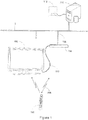
- a controlling device 100 is configured to control various controllable appliances, such as a television 102 and a TV service decoder set top box (STB) 104.
- the controlling device 100 is capable of transmitting commands to the appliances, using any convenient IR, RF, Point-to-Point, or networked protocol 106, to cause the appliances to perform operational functions.
- controllable appliances may include, but need not be limited to, televisions, wired or wireless converter set-top boxes (“STBs”), DVD players, audio systems game consoles, lighting, drapery, fans, HVAC systems, thermostats, etc.
- STB 104 serves as TV service decoder box in a hospitality environment, for example by receiving and decoding an on-demand digital media stream from an in-house network 108 and outputting the decoded signal via a suitable interface 118 to TV set 102.
- the exemplary media stream may originate from a media server or head end 110.
- the controlling device 100 may include, as needed for a particular application, a processor 200 coupled to a ROM memory 204, a RAM memory 205, a key matrix 216 (e.g., hard keys, soft keys such as a touch sensitive surface overlaid on a liquid crystal (LCD), and/or an electroluminescent (EL) display), transmission circuit(s) and/or transceiver circuit(s) 210 (e.g., IR and/or RF), a non-volatile read/write memory 206, a means 202 to provide feedback to the user (e.g., one or more LEDs, illuminable keys, display, speaker, and/or the like), an input/output port 218 such as a serial interface, USB port, modem, Zigbee, WiFi, or Bluetooth transceiver, etc., a power source 220 such as a battery, and clock and timer logic 212 with associated crystal or re
- non-transitory memories 204, 206 may include executable instructions that are intended to be executed by the processor 200 to control the operation of the controlling device 100 (collectively, the program memory), as well as data which serves to define the necessary control protocols and command values for use in transmitting command signals to controllable appliances (collectively, the command data).
- the processor 200 may be programmed to control the various electronic components within the controlling device 100, e.g., to monitor the key matrix 216, to cause the transmission of signals, etc.
- the non-volatile read/write memory 206 for example an EEPROM, battery-backed up RAM, FLASH, Smart Card, memory stick, or the like, may additionally be provided to store setup data and parameters as necessary.
- memory 204 is illustrated and described as a ROM memory, memory 204 can also be comprised of any type of readable media, such as ROM, FLASH, EEPROM, or the like.
- the memories 204 and 206 are non-volatile or battery-backed such that data is not required to be reloaded after battery changes.
- the memories 204, 205 and 206 may take the form of a chip, a hard disk, a magnetic disk, an optical disk, and/or the like.
- some or all of the illustrated memory devices may be physically combined (for example, a single FLASH memory may be logically partitioned into different portions to support the functionality of memories 204 and 206 respectively), and/or may be physically incorporated within the same IC chip as the microprocessor 200 (a so called "microcontroller") and, as such, they are shown separately in Fig. 2 only for the sake of clarity.
- the controlling device 100 may be adapted to be responsive to events, such as a sensed user interaction with the key matrix 216, expiry of a timer, etc.
- appropriate instructions within the program memory hereafter the "controlling device operating program” may be executed.
- the controlling device 100 may retrieve from the command data stored in memory 204, 205, 206 a command value and control protocol corresponding to the actuated function key and, where necessary, current device mode and transmit that command to an intended target appliance, e.g. TV service decoder STB 104, in a format recognizable by that appliance to thereby control one or more functional operations of that appliance.
- an intended target appliance e.g. TV service decoder STB 104
- controlling device operating program can be used not only to cause the transmission of commands and/or data to the appliances, but also to perform local operations. While not limiting, local operations that may be performed by the controlling device 100 may include displaying information/data, favorite channel access, macro keys, function key reassignment, etc. Examples of local operations can be found in U.S. Patent Nos. 5,481,256 , 5,959,751 , and 6,014,092 .
- controlling device 100 may be of the universal type, that is provisioned with a library comprising a multiplicity of command codes and protocols suitable for controlling various appliances.
- a library comprising a multiplicity of command codes and protocols suitable for controlling various appliances.
- for selecting sets of command data to be associated with the specific appliances to be controlled data may be provided to the controlling device 100 that serves to identify each intended target appliance by its make, and/or model, and/or type.
- the data may be entered via activation of those keys that are also used to cause the transmission of commands to an appliance; may be loaded into controlling device via input/output means 218; may be configured using internal switches or jumpers; etc., as appropriate for a particular embodiment.
- Such data may be utilized by the controlling device operating program to identify the appropriate command data set within the library of command data that is to be used to transmit recognizable commands in formats appropriate for such identified appliances.
- the library of command data may represent a plurality of controllable appliances of different types and manufacture, a plurality of controllable appliances of the same type but different manufacture, a plurality of appliances of the same manufacture but different type or model, etc., or any combination thereof as appropriate for a given embodiment. Since such methods for setting up a controlling device to command the operation of specific home appliances are well-known, these will not be described in greater detail herein. Nevertheless, for additional information pertaining to setup procedures, the reader may turn, for example, to U.S. Patent Nos. 4,959,810 , 5,614,906 , or 6,225,938 or 7,907,222 .
- microcontroller 200 may be placed into a quiescent or "stop" mode by the controlling device operating software. When in such a state, the current drawn from power source 220 may be substantially reduced.
- the aforementioned MAXQ610 microcontroller may draw a nominal 3.75 mA when active (running at a full clock speed of 12MHz, as determined by crystal 214) but only 0.2
- Resumption of processor activity from such a stop mode may be triggered by an external event such as for example user actuation of key matrix 216, a change in state of input/output port 218, etc., and in the case of the exemplary MAXQ610 and similar microcontrollers also by an internal event initiated by a low-speed, low-power, interval timer 222 which may be configured to continue running while the main microcontroller CPU is in stop mode.
- a low-power interval timers typically operate at a much lower speed than the primary microprocessor clock, via a secondary crystal or resonator or, as in the case of the exemplary MAXQ610, an internal ring oscillator.
- the MAXQ610 internal "nanopower" ring oscillator operates at a nominal 8KHz (as contrasted to the primary clock rate of 12MHz) and consumes only a nominal 40nA.
- such low-power interval timers may be used to maintain a time-of-day clock; to enable reduced energy consumption during transmission of appliance commands by a controlling device as described in U.S. 8,788,857 ; to implement a keypad backlight time-out, etc.; or as disclosed hereafter in an exemplary embodiment of the instant invention to provide wake-up signals for the purpose of issuing periodic status reports to an associated set top box.
- an exemplary hospitality industry TV service decoder, STB 104 may include, as needed for a particular application, a processor 300 coupled to a memory 302 which may comprise RAM, ROM, and/or Flash memory; a power supply 304; distribution network interface 306 for coupling TV service decoder STB 104 to an in-house media distribution network, for example 108 as illustrated in Figure 1 ; a remote control receiver or transceiver 306 for reception of signal from a controlling device, for example 100 as illustrated in Figure 1 ; a digital audio/video output interface 310 such as an HDMI port; and optional analog video and audio outputs 312, 314.
- TV service decoder components and functionality may be integrated into the TV itself. Accordingly the description of this functionality as embodied in a physically separate STB 104 is provided herein by way of illustration only, and is not intended to be limiting.
- programming instructions may be stored in a non-transitory readable memory 302 ("STB programming") which when executed by processor 400 may enable the STB appliance 104 to receive and decode digital media and data streams from distribution network 118 and to output the received media content to one or more of output ports 310,312,314; to receive, decode, and act upon user commands received from controlling device 100; to display program guide information, listings of available content, or setup and configuration menus at user request and act upon any resulting user input; etc.
- STB programming non-transitory readable memory 302
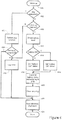
- the steps performed by the operating program of an exemplary controlling device 100 in accordance with the teachings of this invention upon awakening of microcontroller 200 from a quiescent or "stop" state at step 400 may comprise: First, at step 402 the controlling device operating program may determine if the event which triggered awakening of the microcontroller was activation of a function key by a user, i.e., a "key wake up" event as well known in the art. If so, the desired operation, e.g., transmitting a command to one of appliances 102 or 104, may be performed at step 406. At step 408, if the requested operation was determined to be successfully completed, processing continues, else if not, an error status is logged for future reporting to central server 110.
- the appliance can report back to the controlling device that a command or other communication was successfully received and/or acted upon.
- the controlling device may be adapted to monitor itself to determine if a communication was transmitted and/or if an action requested of the controlling device was performed by the controlling device.
- an idle timer is started, for example by initializing a count-down timer associated with a nanopower ring oscillator as may be found in the above referenced Maxim MAXQ610, and the microcontroller returned to the stop state.
- this timer is to ensure that during periods of inactivity TV service decoder STB 104 will receive at least a periodic status message transmission from the controlling device to indicate that controlling device is still present in the local environment.
- the duration of this timer may be selected to be relatively long, in a preferred embodiment of the order of minutes, though the exact duration of this timeout is not critical provided it is proportionate to the corresponding timeout value utilized in the associated TV decoder SRB 104, as described hereafter in conjunction with Figure 5 .
- multiple intermediate timeouts may utilized in a countdown algorithm.
- the controlling device operating program may next determine if the triggering event was expiry of the idle timer set in step 424 above. If not, an erroneous awakening trigger occurred and this condition may be logged as an error at step 410 as previously described. If, however, the triggering event was an idle timer expiry, at step 412 the battery level of power source 220 may be checked using conventional techniques with a "low” or "OK" battery status being thereby set at steps 414, 416 and 418 as appropriate. Thereafter, at step 420, the resulting battery status and any errors previously logged at step 410 may be transmitted to an associated TV service decoder STB, e.g. 104. Upon completion of the transmission, the error log is cleared at step 422, and the idle timer restarted and microcontroller 200 returned to "stop" mode at step 424.
- the STB programming may first determine if the controlling device had previously been reported as absent, i.e., had not communicated with STB 104 within a required time interval as will be described in further detail hereafter. If so, at steps 504 and 506 an internal "controller absent status" may be cleared and the restoration of controlling device communication reported to media server head end 110. Next, at step 508 the STB programming may determine if the received transmission constitutes a command to perform an operational function.
- the requested function (e.g., tuning to a channel, selecting a menu item, etc.) may be performed, after which at step 526 an interval timer is restarted and the operation is complete.
- the purpose of the interval timer set at step 526 is to detect lack of timely status messages and/or other communications from controlling device 100. Accordingly it will be appreciated that this interval should be somewhat longer than the controlling device idle time set at step 424 of Figure 4 .
- the time out value for the timer step 526 may be selected to be approximately three times that of the controlling device timer value set at step 424.
- step 510 it may be next determined if the received message constituted a controlling device status message. If not, an undefined or corrupted message may have been received and at step 524 this condition may be reported to media server head end 110 for action as appropriate. If, however, a valid controlling device status was received, then at steps 512 through 518 any abnormal controlling device status may be reported to media server head end 110 for action as appropriate. By way of example, a "low battery” or “controlling device error" report may be forwarded to the facility's maintenance or housekeeping staff for action the next time a room is serviced. Once any abnormalities have been reported, the STB programming continues at step 526 to restart the interval timer as described previously.
- the STB programming may report a "controller absent” status to media server head end 110, after which an internal (to STB 104) "controller absent” status may be set at step 554, for interrogation at step 502 as previously described.
- Receipt of such a "controller" absent status by media server headend 110 may result, for example without limitation, in display of a message on a front desk terminal 112 during guest checkout, posting of a voice message or TV display to the guest room querying status of the controlling device, transmission of a report to the facility maintenance department, etc., or any combination thereof.
Landscapes
- Engineering & Computer Science (AREA)
- Multimedia (AREA)
- Signal Processing (AREA)
- Computer Networks & Wireless Communication (AREA)
- Databases & Information Systems (AREA)
- General Engineering & Computer Science (AREA)
- Software Systems (AREA)
- Human Computer Interaction (AREA)
- Selective Calling Equipment (AREA)
- Alarm Systems (AREA)
- Telephonic Communication Services (AREA)
- Air Conditioning Control Device (AREA)
Claims (10)
- Verfahren zum Verwenden einer steuerbaren Vorrichtung (102, 104), um einen funktionsunfähigen Zustand einer Steuerungseinrichtung (100) zu bestimmen, wobei die Steuerungseinrichtung (100) die steuerbare Vorrichtung (102, 104) steuert, indem sie Befehlssignale dorthin übermittelt, wobei das Verfahren umfasst:das Veranlassen der Steuerungseinrichtung (100), wiederholt Statusnachrichten (420) zum Empfang durch die steuerbare Vorrichtung (102, 104) in einem vorbestimmten Zeitintervall zu übermitteln,und gekennzeichnet durchdas Veranlassen der steuerbaren Vorrichtung (102, 104), einen Timer beim Empfang eines Befehlssignals (508) oder einer Statusnachricht (510) von der Steuerungseinrichtung (100) zurückzusetzen; undfalls kein Befehlssignal oder keine Statusnachricht von der steuerbaren Vorrichtung (102, 104) beim Ablauf des Timers empfangen wurde, das Veranlassen der steuerbaren Vorrichtung, eine Statusbenachrichtung (552) abzusetzen, die anzeigt, dass die Steuerungseinrichtung (100) in einem funktionsunfähigen Zustand ist.
- Verfahren nach Anspruch 1, umfassend das Veranlassen der steuerbaren Vorrichtung (102, 104), die Statusbenachrichtung (552), die anzeigt, dass die Steuerungseinrichtung (100) in einem funktionsunfähigen Zustand ist, an einen Kopfstellen-Server (110) in Kommunikation mit der steuerbaren Vorrichtung (102, 104) abzusetzen.
- Verfahren nach Anspruch 1, wobei der Timer ein Time-Out-Intervall hat, das größer als ein Zeitintervall zwischen Übertragungen von aufeinanderfolgenden Statusnachrichten ist.
- Verfahren nach Anspruch 1, wobei die Statusnachricht Daten umfasst, die einen Batteriezustand (416) für die Steuerungseinrichtung (100) anzeigen, und, wenn die Daten in der Statusnachricht einen Batteriezustand mit niedriger oder keiner Energie für die Steuerungseinrichtung (100) anzeigen, das Veranlassen der steuerbaren Vorrichtung (102, 104), eine Statusbenachrichtigung abzusetzen, die anzeigt, dass die Steuerungseinrichtung (100) in einem Schlechter-Batterie-Zustand (516) ist, oder die Statusnachricht Daten umfasst, die einen Fehlerzustand für die Steuerungseinrichtung (100) anzeigen, und, wenn die Daten in der Statusnachricht einen Fehler anzeigen, der in der Steuerungseinrichtung aufgetreten ist, das Veranlassen der Vorrichtung, eine Statusbenachrichtigung abzusetzen, die anzeigt, dass die Steuerungseinrichtung in einem Fehlerzustand (524) ist.
- System, umfassend:eine steuerbare Vorrichtung (102, 104); undeine Steuerungseinrichtung (100), die Codedaten zur Verwendung beim Steuern von funktionalen Vorgängen der steuerbaren Vorrichtung hat, wobei die Steuerungseinrichtung (100) die steuerbare Vorrichtung steuert, indem sie dorthin Befehlssignale übermittelt, wobei die Steuerungseinrichtung (100) dazu programmiert ist, wiederholt an die steuerbare Vorrichtung Statusnachrichten in einem vorbestimmten Zeitintervall zu übermitteln; und gekennzeichnet durchwobei die steuerbare Vorrichtung (102, 104) zu folgendem programmiert ist:das Zurückzusetzen eines Timers beim Empfang eines Befehlssignals oder einer Statusnachricht von der Steuerungseinrichtung (100),das Bestimmen (508, 510), ob entweder ein Befehlssignal oder eine Statusnachricht von der Steuerungseinrichtung (100) vor dem Ablaufen des Timers empfangen wurde, undfalls kein Befehlssignal oder keine Statusnachricht vor Ablauf des Timers empfangen wurde, das Absetzen einer Statusbenachrichtigung, die anzeigt, dass die Steuerungseinrichtung (100) in einem funktionsunfähigen Zustand ist.
- System nach Anspruch 5, wobei die steuerbare Vorrichtung (102, 104) dazu veranlasst wird, die Statusbenachrichtigung, die anzeigt, dass die Steuerungseinrichtung (100) in einem funktionsunfähigen Zustand ist, an einen Kopfstellen-Server (110) in Kommunikation mit der steuerbaren Vorrichtung abzusetzen.
- System nach Anspruch 5, wobei die Statusnachricht Daten umfasst, die einen Batteriezustand für die Steuerungseinrichtung (100) anzeigen, und, wenn die Daten in der Statusnachricht einen Batteriezustand mit niedriger oder keiner Energie für die Steuerungseinrichtung (100) anzeigen, die steuerbare Vorrichtung (102, 104) dazu veranlasst wird, eine Statusbenachrichtigung abzusetzen, die anzeigt, dass die Steuerungseinrichtung (100) in einem Schlechter-Batterie-Zustand ist.
- System nach Anspruch 7, wobei die steuerbare Vorrichtung (102, 104) dazu veranlasst wird, die Statusbenachrichtigung, die anzeigt, dass die Steuerungseinrichtung in einem Schlechter-Batterie-Zustand ist, an einen Kopfstellen-Server (110) in Kommunikation mit der steuerbaren Vorrichtung (102, 104) abzusetzen.
- System nach Anspruch 5, wobei die Statusnachricht Daten umfasst, die einen Fehlerzustand für die Steuerungseinrichtung (100) anzeigen, und, wenn die Daten in der Statusnachricht einen Fehler anzeigen, der in der Steuerungseinrichtung (100) aufgetreten ist, die steuerbare Vorrichtung (102, 104) veranlasst wird, eine Statusbenachrichtigung abzusetzen, die anzeigt, dass die Steuerungseinrichtung (100) in einem Fehlerzustand ist.
- System nach Anspruch 9, wobei die steuerbare Vorrichtung (102, 104) dazu veranlasst wird, die Statusbenachrichtigung, die anzeigt, dass die Steuerungseinrichtung in einem Fehlerzustand ist, an einen Kopfstellen-Server (110) in Kommunikation mit der steuerbaren Vorrichtung abzusetzen.
Applications Claiming Priority (2)
| Application Number | Priority Date | Filing Date | Title |
|---|---|---|---|
| US13/460,267 US9654824B2 (en) | 2012-04-30 | 2012-04-30 | System and method for detecting the removal of a controlling device |
| PCT/US2013/037553 WO2013165721A2 (en) | 2012-04-30 | 2013-04-22 | System and method for detecting the removal of a controlling device |
Publications (3)
| Publication Number | Publication Date |
|---|---|
| EP2845386A2 EP2845386A2 (de) | 2015-03-11 |
| EP2845386A4 EP2845386A4 (de) | 2015-08-05 |
| EP2845386B1 true EP2845386B1 (de) | 2017-08-16 |
Family
ID=49478543
Family Applications (1)
| Application Number | Title | Priority Date | Filing Date |
|---|---|---|---|
| EP13784675.4A Active EP2845386B1 (de) | 2012-04-30 | 2013-04-22 | System und verfahren zur erkennung der entfernung einer steuerungsvorrichtung |
Country Status (5)
| Country | Link |
|---|---|
| US (5) | US9654824B2 (de) |
| EP (1) | EP2845386B1 (de) |
| CN (1) | CN104995920B (de) |
| BR (1) | BR112014026311B1 (de) |
| WO (1) | WO2013165721A2 (de) |
Cited By (1)
| Publication number | Priority date | Publication date | Assignee | Title |
|---|---|---|---|---|
| US10228928B2 (en) * | 2012-12-14 | 2019-03-12 | Interdigital Ce Patent Holdings | Method for activating a service mode in an electronic device and associated device |
Families Citing this family (1)
| Publication number | Priority date | Publication date | Assignee | Title |
|---|---|---|---|---|
| JP6231327B2 (ja) * | 2012-09-28 | 2017-11-15 | パナソニック インテレクチュアル プロパティ コーポレーション オブ アメリカPanasonic Intellectual Property Corporation of America | 端末制御方法、端末制御システム、及び、サーバ装置 |
Family Cites Families (16)
| Publication number | Priority date | Publication date | Assignee | Title |
|---|---|---|---|---|
| US4959810A (en) | 1987-10-14 | 1990-09-25 | Universal Electronics, Inc. | Universal remote control device |
| US5282028A (en) | 1990-11-27 | 1994-01-25 | Scientific-Atlanta, Inc. | Remote control for digital music terminal with synchronized communications |
| US5406260A (en) | 1992-12-18 | 1995-04-11 | Chrimar Systems, Inc. | Network security system for detecting removal of electronic equipment |
| US5506572A (en) | 1993-06-23 | 1996-04-09 | Lodgenet Entertainment Corporation | Low battery detection system |
| NL9500011A (nl) | 1995-01-03 | 1996-08-01 | Techniku B V | Afstandsbedieningsstelsel. |
| US5999799A (en) | 1996-04-26 | 1999-12-07 | Samsung Electronics Co., Ltd. | Auto-finder and distance warning method and apparatus for a remote control input device |
| US6178527B1 (en) * | 1997-09-24 | 2001-01-23 | Ericsson Inc. | Systems and methods for intermittently communicating diagnostic information from user input devices |
| JP2004336723A (ja) * | 2003-04-17 | 2004-11-25 | Sharp Corp | 端末装置、センタ装置、通信システム、端末装置の制御方法、センタ装置の制御方法、端末装置制御プログラム、センタ装置制御プログラム、および該プログラムを記録した記録媒体 |
| US7046185B2 (en) | 2003-06-19 | 2006-05-16 | Contec Corporation | Programmable universal remote control unit and method of programming same |
| US7154428B2 (en) | 2003-06-25 | 2006-12-26 | Universal Electronics Inc. | Remote control with selective key illumination |
| TWI245592B (en) * | 2004-01-12 | 2005-12-11 | Advanced Semiconductor Eng | Circuit substrate |
| US7498936B2 (en) | 2005-04-01 | 2009-03-03 | Strauss Acquisitions, L.L.C. | Wireless event status communication system, device and method |
| JP5233289B2 (ja) * | 2008-01-18 | 2013-07-10 | ソニー株式会社 | 遠隔操作装置、電気機器及び通信システム |
| JP4572936B2 (ja) * | 2008-01-18 | 2010-11-04 | ソニー株式会社 | 遠隔操作装置及び通信システム |
| US7890816B2 (en) | 2008-05-08 | 2011-02-15 | Echostar Technologies L.L.C. | Systems, methods and apparatus for detecting remote control errors |
| US7907060B2 (en) * | 2008-05-08 | 2011-03-15 | Echostar Technologies L.L.C. | Systems, methods and apparatus for detecting replacement of a battery in a remote control |
-
2012
- 2012-04-30 US US13/460,267 patent/US9654824B2/en active Active
-
2013
- 2013-04-22 CN CN201380022555.XA patent/CN104995920B/zh active Active
- 2013-04-22 BR BR112014026311-6A patent/BR112014026311B1/pt active IP Right Grant
- 2013-04-22 WO PCT/US2013/037553 patent/WO2013165721A2/en not_active Ceased
- 2013-04-22 EP EP13784675.4A patent/EP2845386B1/de active Active
-
2017
- 2017-02-14 US US15/431,930 patent/US10154307B2/en active Active
-
2018
- 2018-10-18 US US16/164,424 patent/US10820046B2/en active Active
-
2020
- 2020-09-10 US US17/017,207 patent/US11936943B2/en active Active
-
2024
- 2024-02-16 US US18/443,536 patent/US12425685B2/en active Active
Non-Patent Citations (1)
| Title |
|---|
| None * |
Cited By (1)
| Publication number | Priority date | Publication date | Assignee | Title |
|---|---|---|---|---|
| US10228928B2 (en) * | 2012-12-14 | 2019-03-12 | Interdigital Ce Patent Holdings | Method for activating a service mode in an electronic device and associated device |
Also Published As
| Publication number | Publication date |
|---|---|
| US12425685B2 (en) | 2025-09-23 |
| US20200413129A1 (en) | 2020-12-31 |
| WO2013165721A3 (en) | 2015-04-23 |
| CN104995920B (zh) | 2019-04-16 |
| US20240196051A1 (en) | 2024-06-13 |
| CN104995920A (zh) | 2015-10-21 |
| BR112014026311A2 (pt) | 2017-06-27 |
| US20130290997A1 (en) | 2013-10-31 |
| US11936943B2 (en) | 2024-03-19 |
| WO2013165721A2 (en) | 2013-11-07 |
| US20190052929A1 (en) | 2019-02-14 |
| US10820046B2 (en) | 2020-10-27 |
| US9654824B2 (en) | 2017-05-16 |
| EP2845386A2 (de) | 2015-03-11 |
| US10154307B2 (en) | 2018-12-11 |
| EP2845386A4 (de) | 2015-08-05 |
| US20170155954A1 (en) | 2017-06-01 |
| BR112014026311B1 (pt) | 2022-09-20 |
Similar Documents
| Publication | Publication Date | Title |
|---|---|---|
| US12192559B2 (en) | System and method for configuring controlling device functionality | |
| US12425685B2 (en) | System and method for detecting the removal of a controlling device | |
| CN103731703A (zh) | 遥控器搜寻系统及方法 | |
| CN102057572A (zh) | 用于改变遥控器的操作模式的系统、方法及设备 | |
| WO2014039248A1 (en) | Appliance control functionality of smart device system | |
| US9123237B2 (en) | Controlling a remote electronic device in a control state | |
| US9886308B2 (en) | Device having an embedded system including state, and a method for controlling standby of an embedded system | |
| EP2614416B1 (de) | System und verfahren für eine fernbedienung mit niedrigem stromverbrauch | |
| JP2013207308A (ja) | 表示装置及びソース機器 | |
| KR102088958B1 (ko) | 네트워크와 연동하는 셋톱 박스가 수행하는 상태 전환 방법 | |
| JP2009104431A (ja) | 遠隔制御のセキュリティー監視方法 |
Legal Events
| Date | Code | Title | Description |
|---|---|---|---|
| PUAI | Public reference made under article 153(3) epc to a published international application that has entered the european phase |
Free format text: ORIGINAL CODE: 0009012 |
|
| 17P | Request for examination filed |
Effective date: 20140923 |
|
| AK | Designated contracting states |
Kind code of ref document: A2 Designated state(s): AL AT BE BG CH CY CZ DE DK EE ES FI FR GB GR HR HU IE IS IT LI LT LU LV MC MK MT NL NO PL PT RO RS SE SI SK SM TR |
|
| AX | Request for extension of the european patent |
Extension state: BA ME |
|
| RIC1 | Information provided on ipc code assigned before grant |
Ipc: H04N 21/40 20110101AFI20150414BHEP |
|
| R17D | Deferred search report published (corrected) |
Effective date: 20150423 |
|
| REG | Reference to a national code |
Ref country code: DE Ref legal event code: R079 Ref document number: 602013025177 Country of ref document: DE Free format text: PREVIOUS MAIN CLASS: H04N0021442000 Ipc: H04N0021214000 |
|
| A4 | Supplementary search report drawn up and despatched |
Effective date: 20150702 |
|
| RIC1 | Information provided on ipc code assigned before grant |
Ipc: H04N 21/214 20110101AFI20150626BHEP Ipc: H04N 21/4363 20110101ALI20150626BHEP Ipc: H04N 21/443 20110101ALI20150626BHEP Ipc: H04N 21/442 20110101ALI20150626BHEP Ipc: H04N 21/81 20110101ALI20150626BHEP |
|
| 17Q | First examination report despatched |
Effective date: 20160216 |
|
| DAX | Request for extension of the european patent (deleted) | ||
| GRAP | Despatch of communication of intention to grant a patent |
Free format text: ORIGINAL CODE: EPIDOSNIGR1 |
|
| INTG | Intention to grant announced |
Effective date: 20170303 |
|
| GRAJ | Information related to disapproval of communication of intention to grant by the applicant or resumption of examination proceedings by the epo deleted |
Free format text: ORIGINAL CODE: EPIDOSDIGR1 |
|
| GRAS | Grant fee paid |
Free format text: ORIGINAL CODE: EPIDOSNIGR3 |
|
| GRAA | (expected) grant |
Free format text: ORIGINAL CODE: 0009210 |
|
| INTG | Intention to grant announced |
Effective date: 20170303 |
|
| AK | Designated contracting states |
Kind code of ref document: B1 Designated state(s): AL AT BE BG CH CY CZ DE DK EE ES FI FR GB GR HR HU IE IS IT LI LT LU LV MC MK MT NL NO PL PT RO RS SE SI SK SM TR |
|
| REG | Reference to a national code |
Ref country code: GB Ref legal event code: FG4D |
|
| REG | Reference to a national code |
Ref country code: CH Ref legal event code: EP |
|
| REG | Reference to a national code |
Ref country code: IE Ref legal event code: FG4D |
|
| REG | Reference to a national code |
Ref country code: AT Ref legal event code: REF Ref document number: 920147 Country of ref document: AT Kind code of ref document: T Effective date: 20170915 |
|
| REG | Reference to a national code |
Ref country code: DE Ref legal event code: R096 Ref document number: 602013025177 Country of ref document: DE |
|
| REG | Reference to a national code |
Ref country code: NL Ref legal event code: MP Effective date: 20170816 |
|
| REG | Reference to a national code |
Ref country code: LT Ref legal event code: MG4D |
|
| REG | Reference to a national code |
Ref country code: AT Ref legal event code: MK05 Ref document number: 920147 Country of ref document: AT Kind code of ref document: T Effective date: 20170816 |
|
| PG25 | Lapsed in a contracting state [announced via postgrant information from national office to epo] |
Ref country code: LT Free format text: LAPSE BECAUSE OF FAILURE TO SUBMIT A TRANSLATION OF THE DESCRIPTION OR TO PAY THE FEE WITHIN THE PRESCRIBED TIME-LIMIT Effective date: 20170816 Ref country code: AT Free format text: LAPSE BECAUSE OF FAILURE TO SUBMIT A TRANSLATION OF THE DESCRIPTION OR TO PAY THE FEE WITHIN THE PRESCRIBED TIME-LIMIT Effective date: 20170816 Ref country code: NO Free format text: LAPSE BECAUSE OF FAILURE TO SUBMIT A TRANSLATION OF THE DESCRIPTION OR TO PAY THE FEE WITHIN THE PRESCRIBED TIME-LIMIT Effective date: 20171116 Ref country code: NL Free format text: LAPSE BECAUSE OF FAILURE TO SUBMIT A TRANSLATION OF THE DESCRIPTION OR TO PAY THE FEE WITHIN THE PRESCRIBED TIME-LIMIT Effective date: 20170816 Ref country code: SE Free format text: LAPSE BECAUSE OF FAILURE TO SUBMIT A TRANSLATION OF THE DESCRIPTION OR TO PAY THE FEE WITHIN THE PRESCRIBED TIME-LIMIT Effective date: 20170816 Ref country code: HR Free format text: LAPSE BECAUSE OF FAILURE TO SUBMIT A TRANSLATION OF THE DESCRIPTION OR TO PAY THE FEE WITHIN THE PRESCRIBED TIME-LIMIT Effective date: 20170816 Ref country code: FI Free format text: LAPSE BECAUSE OF FAILURE TO SUBMIT A TRANSLATION OF THE DESCRIPTION OR TO PAY THE FEE WITHIN THE PRESCRIBED TIME-LIMIT Effective date: 20170816 |
|
| PG25 | Lapsed in a contracting state [announced via postgrant information from national office to epo] |
Ref country code: ES Free format text: LAPSE BECAUSE OF FAILURE TO SUBMIT A TRANSLATION OF THE DESCRIPTION OR TO PAY THE FEE WITHIN THE PRESCRIBED TIME-LIMIT Effective date: 20170816 Ref country code: PL Free format text: LAPSE BECAUSE OF FAILURE TO SUBMIT A TRANSLATION OF THE DESCRIPTION OR TO PAY THE FEE WITHIN THE PRESCRIBED TIME-LIMIT Effective date: 20170816 Ref country code: IS Free format text: LAPSE BECAUSE OF FAILURE TO SUBMIT A TRANSLATION OF THE DESCRIPTION OR TO PAY THE FEE WITHIN THE PRESCRIBED TIME-LIMIT Effective date: 20171216 Ref country code: BG Free format text: LAPSE BECAUSE OF FAILURE TO SUBMIT A TRANSLATION OF THE DESCRIPTION OR TO PAY THE FEE WITHIN THE PRESCRIBED TIME-LIMIT Effective date: 20171116 Ref country code: RS Free format text: LAPSE BECAUSE OF FAILURE TO SUBMIT A TRANSLATION OF THE DESCRIPTION OR TO PAY THE FEE WITHIN THE PRESCRIBED TIME-LIMIT Effective date: 20170816 Ref country code: GR Free format text: LAPSE BECAUSE OF FAILURE TO SUBMIT A TRANSLATION OF THE DESCRIPTION OR TO PAY THE FEE WITHIN THE PRESCRIBED TIME-LIMIT Effective date: 20171117 Ref country code: LV Free format text: LAPSE BECAUSE OF FAILURE TO SUBMIT A TRANSLATION OF THE DESCRIPTION OR TO PAY THE FEE WITHIN THE PRESCRIBED TIME-LIMIT Effective date: 20170816 |
|
| REG | Reference to a national code |
Ref country code: FR Ref legal event code: PLFP Year of fee payment: 6 |
|
| PG25 | Lapsed in a contracting state [announced via postgrant information from national office to epo] |
Ref country code: DK Free format text: LAPSE BECAUSE OF FAILURE TO SUBMIT A TRANSLATION OF THE DESCRIPTION OR TO PAY THE FEE WITHIN THE PRESCRIBED TIME-LIMIT Effective date: 20170816 Ref country code: RO Free format text: LAPSE BECAUSE OF FAILURE TO SUBMIT A TRANSLATION OF THE DESCRIPTION OR TO PAY THE FEE WITHIN THE PRESCRIBED TIME-LIMIT Effective date: 20170816 Ref country code: CZ Free format text: LAPSE BECAUSE OF FAILURE TO SUBMIT A TRANSLATION OF THE DESCRIPTION OR TO PAY THE FEE WITHIN THE PRESCRIBED TIME-LIMIT Effective date: 20170816 |
|
| REG | Reference to a national code |
Ref country code: DE Ref legal event code: R097 Ref document number: 602013025177 Country of ref document: DE |
|
| PG25 | Lapsed in a contracting state [announced via postgrant information from national office to epo] |
Ref country code: EE Free format text: LAPSE BECAUSE OF FAILURE TO SUBMIT A TRANSLATION OF THE DESCRIPTION OR TO PAY THE FEE WITHIN THE PRESCRIBED TIME-LIMIT Effective date: 20170816 Ref country code: SK Free format text: LAPSE BECAUSE OF FAILURE TO SUBMIT A TRANSLATION OF THE DESCRIPTION OR TO PAY THE FEE WITHIN THE PRESCRIBED TIME-LIMIT Effective date: 20170816 Ref country code: IT Free format text: LAPSE BECAUSE OF FAILURE TO SUBMIT A TRANSLATION OF THE DESCRIPTION OR TO PAY THE FEE WITHIN THE PRESCRIBED TIME-LIMIT Effective date: 20170816 Ref country code: SM Free format text: LAPSE BECAUSE OF FAILURE TO SUBMIT A TRANSLATION OF THE DESCRIPTION OR TO PAY THE FEE WITHIN THE PRESCRIBED TIME-LIMIT Effective date: 20170816 |
|
| PLBE | No opposition filed within time limit |
Free format text: ORIGINAL CODE: 0009261 |
|
| STAA | Information on the status of an ep patent application or granted ep patent |
Free format text: STATUS: NO OPPOSITION FILED WITHIN TIME LIMIT |
|
| 26N | No opposition filed |
Effective date: 20180517 |
|
| PG25 | Lapsed in a contracting state [announced via postgrant information from national office to epo] |
Ref country code: SI Free format text: LAPSE BECAUSE OF FAILURE TO SUBMIT A TRANSLATION OF THE DESCRIPTION OR TO PAY THE FEE WITHIN THE PRESCRIBED TIME-LIMIT Effective date: 20170816 |
|
| PG25 | Lapsed in a contracting state [announced via postgrant information from national office to epo] |
Ref country code: MC Free format text: LAPSE BECAUSE OF FAILURE TO SUBMIT A TRANSLATION OF THE DESCRIPTION OR TO PAY THE FEE WITHIN THE PRESCRIBED TIME-LIMIT Effective date: 20170816 |
|
| REG | Reference to a national code |
Ref country code: CH Ref legal event code: PL |
|
| REG | Reference to a national code |
Ref country code: BE Ref legal event code: MM Effective date: 20180430 |
|
| REG | Reference to a national code |
Ref country code: IE Ref legal event code: MM4A |
|
| PG25 | Lapsed in a contracting state [announced via postgrant information from national office to epo] |
Ref country code: LU Free format text: LAPSE BECAUSE OF NON-PAYMENT OF DUE FEES Effective date: 20180422 |
|
| PG25 | Lapsed in a contracting state [announced via postgrant information from national office to epo] |
Ref country code: CH Free format text: LAPSE BECAUSE OF NON-PAYMENT OF DUE FEES Effective date: 20180430 Ref country code: LI Free format text: LAPSE BECAUSE OF NON-PAYMENT OF DUE FEES Effective date: 20180430 Ref country code: BE Free format text: LAPSE BECAUSE OF NON-PAYMENT OF DUE FEES Effective date: 20180430 |
|
| PG25 | Lapsed in a contracting state [announced via postgrant information from national office to epo] |
Ref country code: IE Free format text: LAPSE BECAUSE OF NON-PAYMENT OF DUE FEES Effective date: 20180422 |
|
| REG | Reference to a national code |
Ref country code: DE Ref legal event code: R082 Ref document number: 602013025177 Country of ref document: DE |
|
| PG25 | Lapsed in a contracting state [announced via postgrant information from national office to epo] |
Ref country code: MT Free format text: LAPSE BECAUSE OF NON-PAYMENT OF DUE FEES Effective date: 20180422 |
|
| PG25 | Lapsed in a contracting state [announced via postgrant information from national office to epo] |
Ref country code: TR Free format text: LAPSE BECAUSE OF FAILURE TO SUBMIT A TRANSLATION OF THE DESCRIPTION OR TO PAY THE FEE WITHIN THE PRESCRIBED TIME-LIMIT Effective date: 20170816 |
|
| PG25 | Lapsed in a contracting state [announced via postgrant information from national office to epo] |
Ref country code: PT Free format text: LAPSE BECAUSE OF FAILURE TO SUBMIT A TRANSLATION OF THE DESCRIPTION OR TO PAY THE FEE WITHIN THE PRESCRIBED TIME-LIMIT Effective date: 20170816 Ref country code: HU Free format text: LAPSE BECAUSE OF FAILURE TO SUBMIT A TRANSLATION OF THE DESCRIPTION OR TO PAY THE FEE WITHIN THE PRESCRIBED TIME-LIMIT; INVALID AB INITIO Effective date: 20130422 |
|
| PG25 | Lapsed in a contracting state [announced via postgrant information from national office to epo] |
Ref country code: MK Free format text: LAPSE BECAUSE OF NON-PAYMENT OF DUE FEES Effective date: 20170816 Ref country code: CY Free format text: LAPSE BECAUSE OF FAILURE TO SUBMIT A TRANSLATION OF THE DESCRIPTION OR TO PAY THE FEE WITHIN THE PRESCRIBED TIME-LIMIT Effective date: 20170816 |
|
| PG25 | Lapsed in a contracting state [announced via postgrant information from national office to epo] |
Ref country code: AL Free format text: LAPSE BECAUSE OF FAILURE TO SUBMIT A TRANSLATION OF THE DESCRIPTION OR TO PAY THE FEE WITHIN THE PRESCRIBED TIME-LIMIT Effective date: 20170816 |
|
| P01 | Opt-out of the competence of the unified patent court (upc) registered |
Effective date: 20230530 |
|
| PGFP | Annual fee paid to national office [announced via postgrant information from national office to epo] |
Ref country code: DE Payment date: 20250429 Year of fee payment: 13 |
|
| PGFP | Annual fee paid to national office [announced via postgrant information from national office to epo] |
Ref country code: GB Payment date: 20250428 Year of fee payment: 13 |
|
| PGFP | Annual fee paid to national office [announced via postgrant information from national office to epo] |
Ref country code: FR Payment date: 20250425 Year of fee payment: 13 |