EP2837953A1 - Geologic quality factor inversion method - Google Patents
Geologic quality factor inversion method Download PDFInfo
- Publication number
- EP2837953A1 EP2837953A1 EP20120874053 EP12874053A EP2837953A1 EP 2837953 A1 EP2837953 A1 EP 2837953A1 EP 20120874053 EP20120874053 EP 20120874053 EP 12874053 A EP12874053 A EP 12874053A EP 2837953 A1 EP2837953 A1 EP 2837953A1
- Authority
- EP
- European Patent Office
- Prior art keywords
- trace
- wave
- frequency
- amplitude spectrum
- obtaining
- Prior art date
- Legal status (The legal status is an assumption and is not a legal conclusion. Google has not performed a legal analysis and makes no representation as to the accuracy of the status listed.)
- Withdrawn
Links
Images

Classifications
-
- G—PHYSICS
- G01—MEASURING; TESTING
- G01V—GEOPHYSICS; GRAVITATIONAL MEASUREMENTS; DETECTING MASSES OR OBJECTS; TAGS
- G01V1/00—Seismology; Seismic or acoustic prospecting or detecting
- G01V1/28—Processing seismic data, e.g. for interpretation or for event detection
- G01V1/30—Analysis
-
- G—PHYSICS
- G01—MEASURING; TESTING
- G01V—GEOPHYSICS; GRAVITATIONAL MEASUREMENTS; DETECTING MASSES OR OBJECTS; TAGS
- G01V1/00—Seismology; Seismic or acoustic prospecting or detecting
- G01V1/28—Processing seismic data, e.g. for interpretation or for event detection
- G01V1/30—Analysis
- G01V1/307—Analysis for determining seismic attributes, e.g. amplitude, instantaneous phase or frequency, reflection strength or polarity
-
- G—PHYSICS
- G01—MEASURING; TESTING
- G01V—GEOPHYSICS; GRAVITATIONAL MEASUREMENTS; DETECTING MASSES OR OBJECTS; TAGS
- G01V1/00—Seismology; Seismic or acoustic prospecting or detecting
- G01V1/40—Seismology; Seismic or acoustic prospecting or detecting specially adapted for well-logging
- G01V1/42—Seismology; Seismic or acoustic prospecting or detecting specially adapted for well-logging using generators in one well and receivers elsewhere or vice versa
-
- G—PHYSICS
- G01—MEASURING; TESTING
- G01V—GEOPHYSICS; GRAVITATIONAL MEASUREMENTS; DETECTING MASSES OR OBJECTS; TAGS
- G01V2200/00—Details of seismic or acoustic prospecting or detecting in general
- G01V2200/10—Miscellaneous details
- G01V2200/14—Quality control
-
- G—PHYSICS
- G01—MEASURING; TESTING
- G01V—GEOPHYSICS; GRAVITATIONAL MEASUREMENTS; DETECTING MASSES OR OBJECTS; TAGS
- G01V2210/00—Details of seismic processing or analysis
- G01V2210/60—Analysis
-
- G—PHYSICS
- G01—MEASURING; TESTING
- G01V—GEOPHYSICS; GRAVITATIONAL MEASUREMENTS; DETECTING MASSES OR OBJECTS; TAGS
- G01V2210/00—Details of seismic processing or analysis
- G01V2210/60—Analysis
- G01V2210/63—Seismic attributes, e.g. amplitude, polarity, instant phase
-
- G—PHYSICS
- G01—MEASURING; TESTING
- G01V—GEOPHYSICS; GRAVITATIONAL MEASUREMENTS; DETECTING MASSES OR OBJECTS; TAGS
- G01V2210/00—Details of seismic processing or analysis
- G01V2210/60—Analysis
- G01V2210/67—Wave propagation modeling
- G01V2210/677—Spectral; Pseudo-spectral
Definitions
- the present invention relates to a seismic exploration data processing technology, which is a geologic quality factor inversion method by using an amplitude spectrum attribute of a downlink wave of vertical seismic profile (VSP) data, with a desirable stability.
- VSP vertical seismic profile
- the attenuation due to the geologic absorption mainly expresses as an amplitude attenuation, a phase distortion, and a frequency reduction (moreover, the attenuation in a high-frequency portion is faster than that in a low-frequency portion, and the attenuation in a shallow layer is faster than that in a deep layer) during propagation of a seismic wave, which seriously reduces the resolution of the seismic data.
- a geologic quality factor (Q factor) value is estimated accurately, and then an effective inverse Q filtering compensation is performed on a prestack or post-stack seismic record, which may make waveforms of reflection waves in shallow, medium and deep layers of seismic profile substantially consistent, the make high-frequency portion of the medium and deep layers strengthen, and make the frequency spectrum widen, so as to recovery original seismic waveform and eliminate effects of a sub-wave time varying, thereby meeting a hypothesis required for deconvolution and sub-wave estimation that the sub-wave is time-invariant.
- the seismic profile quality can be effectively improved so as to facilitate the processing and explanation of the seismic data.
- VSP vertical seismic profile
- a shot point is very close to a pit head, so that downlink direct waves received in different depths have the same propagation path. Therefore, the downlink direct waves in the seismic records with different depths can be directly used for inverting the geologic quality factor (Q factor), and performing the inverse Q filtering, so as to increase the resolution of the VSP data and drive the surface-seismic processing to increase the resolution. Therefore, how to perform a precise Q extraction by using the zero-offset VSP data has a great important practical application value.
- Q factor geologic quality factor
- the geologic quality factor Q inversion method is mainly to apply a logarithmic spectrum comparison method, a central frequency offset method and a peak frequency offset method, a scanning analysis technology and a time-frequency analysis combining method, and a multi-window analysis method on the amplitude spectrum of the seismic sub-wave.
- a logarithmic spectrum comparison method it is assumed in the central frequency offset method and the peak frequency offset method that the amplitude spectrum of the seismic wave can be represented by a Gaussian spectrum; and it is assumed in the time-frequency analysis method that the seismic sub-wave has a zero phase.
- Mathneey and Nowack proposed an instantaneous frequency matching method, which is to use an iteration process to modify a causal attenuation operator, so as to make weighted instantaneous frequencies by the operator acting on an envelope peak after a reference pulse and on an envelope peak of a target pulse closest, thereby inversing a quality factor of a medium.
- Mathneey and Nowack estimated the attenuation of the seismic data on earth crust diffraction.
- Dasios et al. estimated the attenuation of a full-wave train acoustic logging record by adopting an instantaneous frequency matching method.
- Such method overcomes some shortcomings of the logarithmic spectrum comparison method, for example, it is not necessary to select a variable frequency band range and so on.
- this method needs to use a Hilbert transform method to calculate the instantaneous frequency, and to use a complicated iteration process to match the instantaneous frequency.
- the Hilbert transform is sensitive to noise; therefore, the use of the instantaneous frequency matching method in a seismic signal with noise is limited.
- An object of the present invention is to provide a geologic quality factor inversion method by using an amplitude spectrum attribute of a downlink wave of vertical seismic profile (VSP) data, with a desirable stability.
- VSP vertical seismic profile
- the present invention comprises the specific steps:
- the present invention provides a geologic quality factor inversion method by using an amplitude spectrum attribute of a downlink wave of vertical seismic profile (VSP) data, with a desirable stability.
- VSP vertical seismic profile
- the present invention has a strong capability of resisting random disturbance, and is capable of removing a difference of the shocked sub-waves.
- the algorithm is simple and may greatly save workload; moreover, the layer Q value obtained through the inversion has a desirable stability and high precision.
Landscapes
- Engineering & Computer Science (AREA)
- Remote Sensing (AREA)
- Physics & Mathematics (AREA)
- Life Sciences & Earth Sciences (AREA)
- Acoustics & Sound (AREA)
- Environmental & Geological Engineering (AREA)
- Geology (AREA)
- General Life Sciences & Earth Sciences (AREA)
- General Physics & Mathematics (AREA)
- Geophysics (AREA)
- Geophysics And Detection Of Objects (AREA)
Abstract
Description
- The present invention relates to a seismic exploration data processing technology, which is a geologic quality factor inversion method by using an amplitude spectrum attribute of a downlink wave of vertical seismic profile (VSP) data, with a desirable stability.
- With an increase in a demand of seismic exploration precision, seismic data with high resolution is needed to describe in detail oil and gas reservoir, but attenuation due to geologic absorption is a major factor for affecting the resolution of the seismic data. The attenuation due to the geologic absorption mainly expresses as an amplitude attenuation, a phase distortion, and a frequency reduction (moreover, the attenuation in a high-frequency portion is faster than that in a low-frequency portion, and the attenuation in a shallow layer is faster than that in a deep layer) during propagation of a seismic wave, which seriously reduces the resolution of the seismic data. A geologic quality factor (Q factor) value is estimated accurately, and then an effective inverse Q filtering compensation is performed on a prestack or post-stack seismic record, which may make waveforms of reflection waves in shallow, medium and deep layers of seismic profile substantially consistent, the make high-frequency portion of the medium and deep layers strengthen, and make the frequency spectrum widen, so as to recovery original seismic waveform and eliminate effects of a sub-wave time varying, thereby meeting a hypothesis required for deconvolution and sub-wave estimation that the sub-wave is time-invariant. Thus, the seismic profile quality can be effectively improved so as to facilitate the processing and explanation of the seismic data.
- During zero-offset VSP (vertical seismic profile) data acquisition, a shot point is very close to a pit head, so that downlink direct waves received in different depths have the same propagation path. Therefore, the downlink direct waves in the seismic records with different depths can be directly used for inverting the geologic quality factor (Q factor), and performing the inverse Q filtering, so as to increase the resolution of the VSP data and drive the surface-seismic processing to increase the resolution. Therefore, how to perform a precise Q extraction by using the zero-offset VSP data has a great important practical application value.
- The geologic quality factor Q inversion method is mainly to apply a logarithmic spectrum comparison method, a central frequency offset method and a peak frequency offset method, a scanning analysis technology and a time-frequency analysis combining method, and a multi-window analysis method on the amplitude spectrum of the seismic sub-wave. Among these, it is assumed in the central frequency offset method and the peak frequency offset method that the amplitude spectrum of the seismic wave can be represented by a Gaussian spectrum; and it is assumed in the time-frequency analysis method that the seismic sub-wave has a zero phase.
- Mathneey and Nowack proposed an instantaneous frequency matching method, which is to use an iteration process to modify a causal attenuation operator, so as to make weighted instantaneous frequencies by the operator acting on an envelope peak after a reference pulse and on an envelope peak of a target pulse closest, thereby inversing a quality factor of a medium. Adopting this method, Mathneey and Nowack estimated the attenuation of the seismic data on earth crust diffraction. Dasios et al. estimated the attenuation of a full-wave train acoustic logging record by adopting an instantaneous frequency matching method. Such method overcomes some shortcomings of the logarithmic spectrum comparison method, for example, it is not necessary to select a variable frequency band range and so on. However, this method needs to use a Hilbert transform method to calculate the instantaneous frequency, and to use a complicated iteration process to match the instantaneous frequency. As is well-known, the Hilbert transform is sensitive to noise; therefore, the use of the instantaneous frequency matching method in a seismic signal with noise is limited. Barnes assumed that a seismic source sub-wave is an ideal band-pass sub-wave, and gave a relationship between the instantaneous frequency and the Q value as well as the transmission time, but the practical seismic source sub-wave is greatly different from the ideal band-pass sub-wave.
- All the methods above are hardly applied to the practical data, and do not disclose how to use the downlink wave of the VSP data. Moreover, in all the methods above, a Q value obtained through inversion and a geologic velocity value hardly have correspondence, and it is impossible to estimate the reasonability of the Q value obtained through inversion. In addition, none of the methods above considers an excitation sub-wave difference caused by an excitation environment during collection, which hardly has applicability and generalization performance, and certainly will influence the stability of the quality factor Q.
- An object of the present invention is to provide a geologic quality factor inversion method by using an amplitude spectrum attribute of a downlink wave of vertical seismic profile (VSP) data, with a desirable stability.
- The present invention comprises the specific steps:
- 1) shocking a surface seismic source, receiving vertical seismic profile data by geophone in underground, and receiving, by a geophone near the seismic source, a monitoring sub-wave signal corresponding to each trace of vertical seismic profile record;
- 2) picking up a
first arrival 1 of each trace of the vertical seismic profile record, and a first arrival 2 of the monitoring sub-wave signal corresponding to each trace of the vertical seismic profile record; - 3) flattening downlink waves by subtracting the
first arrival time 1 of each trace of the vertical seismic profile record from time of each sampling point of the said trace, so as to obtain a first wave field; - 4) obtaining a frequency-wave number (F-K) spectrum of the first wave field by firstly applying Fourier transform to the first wave field in time direction so as to transform into frequency domain, thereby obtaining an amplitude spectrum of all of the vertical seismic profile record, and then applying Fourier transform to the amplitude spectrum in a direction of a trace number so as to transform into a wave number domain;
- 5) multiplying the frequency-wave number (F-K) spectrum corresponding to uplink wave in the frequency-wave number (F-K) spectrum obtained in step (4) by zero; then performing an inverse Fourier transform in a direction of wave number to obtain an amplitude spectrum; applying an inverse Fourier transform in the frequency direction to the obtained amplitude spectrum so as to obtain a wave filed 2 in the time domain;
- 6) applying Fourier transform to signal in a time window opening backwards from a first sampling point in each trace of the downlink wave in the wave field 2, so as to obtain an
amplitude spectrum 1 on every frequency; and dividing the amplitude spectrum corresponding to every frequency by a square of a value of the corresponding frequency so as to obtain an amplitude spectrum 2 in an exponential form; - 7) obtaining the amplitude spectrum 2 of every frequency in the exponential form in each trace of the downlink wave by repeating the step 6);
- 8) obtaining a monomial coefficient and a quadratic term coefficient corresponding to a trace of downlink sub-wave by taking a natural logarithm of the amplitude spectrum 2 of the trace obtained in the step 7) and then performing quadratic function fitting related to frequency by using a least square method;
- 9) obtaining the monomial coefficient and the quadratic term coefficient corresponding to each trace of the downlink sub-wave in the vertical seismic profile record by repeating the step 8);
- 10) picking up the first arrival 2 of the monitoring sub-wave recorded in the step 1), obtaining an amplitude spectrum 3 of the monitoring sub-wave on each frequency by performing Fourier transform on the monitoring sub-wave signal corresponding to each trace of the vertical seismic profile record inside a time window opening backwards from the first arrival 2 of the monitoring sub-wave signal; and obtaining an amplitude spectrum 4 of each trace of the monitoring sub-wave in the exponential form by dividing the amplitude spectrum corresponding to every frequency by the square of value of the corresponding frequency;
- 11) obtaining a monomial coefficient and a quadratic term coefficient of the frequency spectrum of a trace of the monitoring sub-wave by taking a natural logarithm of the amplitude spectrum 4 obtained in the step 10) and then performing quadratic function fitting related to frequency by using the least square method;
- 12) obtaining the monomial coefficient and the quadratic term coefficient corresponding to each trace of the monitoring sub-waves of the vertical seismic profile record by repeating step 11);
- 13) solving, for each trace of the vertical seismic profile record, an average value between the quadratic term coefficient of the trace and the quadratic term coefficient of the corresponding monitoring sub-wave obtained in step 12);
- 14) obtaining a monomial coefficient and a quadratic term coefficient by taking a natural logarithm of the amplitude spectrum 2 obtained in the step 7), subtracting a product of the average value of the quadratic term coefficients of the seismic trace obtained in the step 13) and the square of the frequency, and then performing quadratic function fitting related to frequency by using the square method;
- 15) obtaining an equivalent Q (geologic quality factor)
value 1 by dividing thefirst arrival time 1 of each trace of vertical seismic profile record by the monomial coefficient of the trace obtained in the step 14); - 16) obtaining the equivalent
geologic quality factor 1 of each trace of the vertical seismic profile record by repeating the step 15), and obtain an equivalent Q (geologic quality factor) value 2 by performing statistic smoothing on the equivalentgeologic quality factors 1 of all traces of the vertical seismic profile record; - 17) obtaining an absorption coefficient of each trace of the vertical seismic profile record by dividing the
first arrival time 1 of the trace by the equivalent Q (geologic quality factor) value 2 corresponding to the trace of the record; - 18) obtaining the layer Q (geologic quality factor) value corresponding to a trace of the vertical seismic profile record by dividing a difference value between the
first arrival 1 of adjacent traces of the vertical seismic profile record by a difference value between the absorption coefficients of the adjacent traces; - 19) repeating the step 18), until the layer Q (geologic quality factor) value corresponding to each trace of the vertical seismic profile record are inversed.
-
-
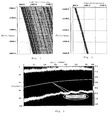
Fig.1 is a schematic diagram of the downlink wave; -
Fig.2 is a schematic diagram of a cut-out downlink wave; -
Fig.3 is an amplitude spectrum of the cut-out downlink wave; -
Fig. 4 is a layer Q value obtained through the inversion according to the present invention. - Hereinafter, a detail of the present invention will be described.
- The present invention provides a geologic quality factor inversion method by using an amplitude spectrum attribute of a downlink wave of vertical seismic profile (VSP) data, with a desirable stability. The specific implementation steps are as follows:
- 1) shocking a surface seismic source, receiving vertical seismic profile data by geophone in underground, and receiving, by a geophone near the seismic source, a monitoring sub-wave signal corresponding to each trace of vertical seismic profile record;
- 2) picking up a
first arrival 1 of each trace of the vertical seismic profile record, and a first arrival 2 of the monitoring sub-wave signal corresponding to each trace of the vertical seismic profile record; - 3) flattening downlink waves by subtracting the
first arrival time 1 of each trace of the vertical seismic profile record from time of each sampling point of the said trace, so as to obtain a first wave field; - 4) obtaining a frequency-wave number (F-K) spectrum of the first wave field by firstly applying Fourier transform to the first wave field in time direction so as to transform into frequency domain, thereby obtaining an amplitude spectrum of the entire vertical seismic profile record, and then applying Fourier transform to the amplitude spectrum in a direction of a trace number so as to transform into a wave number domain;
- 5) multiplying the frequency-wave number (F-K) spectrum corresponding to uplink waves in the frequency-wave number (F-K) spectrum obtained in step (4) by zero; then performing an inverse Fourier transform in a direction of wave number to obtain an amplitude spectrum; applying an inverse Fourier transform to the obtained amplitude spectrum in the frequency direction so as to obtain a wave filed 2 in the time domain;
- 6) in the wave field 2, as shown in
Fig. 1 , opening a time window backwards from a first sampling point in each trace of the downlink wave, and, as shown inFig. 2 , applying Fourier transform to signal in the time window, so as to obtain anamplitude spectrum 1 on every frequency; and, as shown inFig. 3 , dividing the amplitude spectrum corresponding to every frequency by a square of a value of the corresponding frequency so as to obtain an amplitude spectrum 2 in an exponential form; - 7) obtaining the amplitude spectrum 2 of every frequency in the exponential form in each trace of the downlink wave by repeating the step 6);
- 8) obtaining a monomial coefficient and a quadratic term coefficient corresponding to a trace of downlink sub-wave by taking a natural logarithm of the amplitude spectrum 2 of the trace obtained in the step 7) and then performing quadratic function fitting related to frequency by using a least square method;
- 9) obtaining the monomial coefficient and the quadratic term coefficient corresponding to each trace of the downlink sub-wave in the vertical seismic profile record by repeating the step 8);
- 10) picking up the first arrival 2 of the monitoring sub-wave recorded in the step 1), obtaining an amplitude spectrum 3 of the monitoring sub-wave on each frequency by applying Fourier transform to the monitoring sub-wave signal corresponding to each trace of the vertical seismic profile record inside a time window opening backwards from the first arrival 2 of the monitoring sub-wave signal; and obtaining an amplitude spectrum 4 of each trace of the monitoring sub-wave in the exponential form by dividing the amplitude spectrum corresponding to every frequency by the square of value of the corresponding frequency;
- 11) obtaining a monomial coefficient and a quadratic term coefficient of the frequency spectrum of a trace of the monitoring sub-wave by taking a natural logarithm of the amplitude spectrum 4 obtained in the step 10) and then performing quadratic function fitting related to frequency by using the least square method by repeating step 11);
- 12) obtaining the monomial coefficient and the quadratic term coefficient corresponding to each trace of the monitoring sub-waves of the vertical seismic profile record;
- 13) solving, for each trace of the vertical seismic profile record, an average value between the quadratic term coefficient of the trace and the quadratic term coefficient of the corresponding monitoring sub-wave obtained in step 12);
- 14) obtaining a monomial coefficient and a quadratic term coefficient by taking a natural logarithm of the amplitude spectrum 2 obtained in the step 7), subtracting a product of the average value of the quadratic term coefficients of the seismic trace obtained in the step 13) and the square of the frequency, and then performing quadratic function fitting related to frequency by using the square method;
- 15) obtaining an equivalent Q (geologic quality factor)
value 1 by dividing thefirst arrival time 1 of each trace of vertical seismic profile record by the monomial coefficient of the trace obtained in the step 14); - 16) obtaining the equivalent
geologic quality factor 1 of each trace of the vertical seismic profile record by repeating the step 15), and obtain an equivalent Q (geologic quality factor) value 2 by performing statistic smoothing on the equivalentgeologic quality factors 1 of all traces of the vertical seismic profile record; - 17) obtaining an absorption coefficient of each trace of the vertical seismic profile record by dividing the
first arrival time 1 of the trace by the equivalent Q (geologic quality factor) value 2 corresponding to the trace of the record; - 18) obtaining the layer Q (geologic quality factor) value corresponding to a trace of the vertical seismic profile record by dividing a difference value between the
first arrival 1 of adjacent traces of the vertical seismic profile record by a difference value between the absorption coefficients of the adjacent traces; - 19) repeating the step 18), until the layer Q (geologic quality factor) value corresponding to each trace of the vertical seismic profile record are inversed.
- The present invention has a strong capability of resisting random disturbance, and is capable of removing a difference of the shocked sub-waves. The algorithm is simple and may greatly save workload; moreover, the layer Q value obtained through the inversion has a desirable stability and high precision.
Claims (1)
- A geologic quality factor inversion method, characterized in comprising:1) shocking a surface seismic source, receiving vertical seismic profile data by geophone in underground, and receiving, by a geophone near the seismic source, a monitoring sub-wave signal corresponding to each trace of vertical seismic profile record;2) picking up a first arrival 1 of each trace of the vertical seismic profile record, and a first arrival 2 of the monitoring sub-wave signal corresponding to each trace of the vertical seismic profile record;3) flattening downlink waves by subtracting the first arrival time 1 of each trace of the vertical seismic profile record from time of each sampling point of the said trace, so as to obtain a first wave field;4) obtaining a frequency-wave number (F-K) spectrum of the first wave field by firstly applying Fourier transform to the first wave field in time direction so as to transform into frequency domain, thereby obtaining an amplitude spectrum of all of the vertical seismic profile record, and then applying Fourier transform to the amplitude spectrum in a direction of a trace number so as to transform into a wave number domain;5) multiplying the frequency-wave number (F-K) spectrum corresponding to uplink wave in the frequency-wave number (F-K) spectrum obtained in step (4) by zero; then performing an inverse Fourier transform in a direction of wave number to obtain an amplitude spectrum; applying an inverse Fourier transform in the frequency direction to the obtained amplitude spectrum so as to obtain a wave filed 2 in the time domain;6) applying Fourier transform to signal in a time window opening backwards from a first sampling point in each trace of the downlink wave in the wave field 2, so as to obtain an amplitude spectrum 1 on every frequency; and dividing the amplitude spectrum corresponding to every frequency by a square of a value of the corresponding frequency so as to obtain an amplitude spectrum 2 in an exponential form;7) obtaining the amplitude spectrum 2 of every frequency in the exponential form in each trace of the downlink wave by repeating the step 6);8) obtaining a monomial coefficient and a quadratic term coefficient corresponding to a trace of downlink sub-wave by taking a natural logarithm of the amplitude spectrum 2 of the trace obtained in the step 7) and then performing quadratic function fitting related to frequency by using a least square method;9) obtaining the monomial coefficient and the quadratic term coefficient corresponding to each trace of the downlink sub-wave in the vertical seismic profile record by repeating the step 8);10) picking up the first arrival 2 of the monitoring sub-wave recorded in the step 1), obtaining an amplitude spectrum 3 of the monitoring sub-wave on each frequency by applying Fourier transform to the monitoring sub-wave signal corresponding to each trace of the vertical seismic profile record inside a time window opening backwards from the first arrival 2 of the monitoring sub-wave signal; and obtaining an amplitude spectrum 4 of each trace of the monitoring sub-wave in the exponential form by dividing the amplitude spectrum corresponding to every frequency by the square of value of the corresponding frequency;11) obtaining a monomial coefficient and a quadratic term coefficient of the frequency spectrum of a trace of the monitoring sub-wave by taking a natural logarithm of the amplitude spectrum 4 obtained in the step 10) and then performing quadratic function fitting related to frequency by using the least square method;12) obtaining the monomial coefficient and the quadratic term coefficient corresponding to each trace of the monitoring sub-waves of the vertical seismic profile record by repeating step 11);13) solving, for each trace of the vertical seismic profile record, an average value between the quadratic term coefficient of the trace and the quadratic term coefficient of the corresponding monitoring sub-wave obtained in step 12);14) obtaining a monomial coefficient and a quadratic term coefficient by taking a natural logarithm of the amplitude spectrum 2 obtained in the step 7), subtracting a product of the average value of the quadratic term coefficients of the seismic trace obtained in the step 13) and the square of the frequency, and then performing quadratic function fitting related to frequency by using the square method;15) obtaining an equivalent geologic quality factor value 1 by dividing the first arrival time 1 of each trace of vertical seismic profile record by the monomial coefficient of the trace obtained in the step 14);16) obtaining the equivalent geologic quality factor 1 of each trace of the vertical seismic profile record by repeating the step 15), and obtain an equivalent geologic quality factor value 2 by performing statistic smoothing on the equivalent geologic quality factors 1 of all traces of the vertical seismic profile record;17) obtaining an absorption coefficient of each trace of the vertical seismic profile record by dividing the first arrival time 1 of the trace by the equivalent geologic quality factor value 2 corresponding to the trace of the record;18) obtaining the geologic quality factor value corresponding to a trace of the vertical seismic profile record by dividing a difference value between the first arrival 1 of adjacent traces of the vertical seismic profile record by a difference value between the absorption coefficients of the adjacent traces;19) repeating the step 18), until the geologic quality factor value corresponding to each trace of the vertical seismic profile record are inversed.
Applications Claiming Priority (2)
| Application Number | Priority Date | Filing Date | Title |
|---|---|---|---|
| CN201210109416.8A CN103376464B (en) | 2012-04-13 | 2012-04-13 | A kind of inversion method for stratigraphic quality factor |
| PCT/CN2012/001686 WO2013152468A1 (en) | 2012-04-13 | 2012-12-11 | Geologic quality factor inversion method |
Publications (2)
| Publication Number | Publication Date |
|---|---|
| EP2837953A1 true EP2837953A1 (en) | 2015-02-18 |
| EP2837953A4 EP2837953A4 (en) | 2016-04-06 |
Family
ID=49326985
Family Applications (1)
| Application Number | Title | Priority Date | Filing Date |
|---|---|---|---|
| EP12874053.7A Withdrawn EP2837953A4 (en) | 2012-04-13 | 2012-12-11 | METHOD FOR INVERTING A GEOLOGICAL QUALITY FACTOR |
Country Status (5)
| Country | Link |
|---|---|
| US (1) | US20150168573A1 (en) |
| EP (1) | EP2837953A4 (en) |
| CN (1) | CN103376464B (en) |
| RU (1) | RU2579164C1 (en) |
| WO (1) | WO2013152468A1 (en) |
Cited By (6)
| Publication number | Priority date | Publication date | Assignee | Title |
|---|---|---|---|---|
| CN107219553A (en) * | 2017-06-06 | 2017-09-29 | 中国石油化工股份有限公司 | Underground river filling Forecasting Methodology based on GR weighted band_wises |
| CN107340538A (en) * | 2016-05-03 | 2017-11-10 | 中国石油化工股份有限公司 | Method for predicting reservoir and device based on Frequency mixing processing |
| CN107544087A (en) * | 2016-06-23 | 2018-01-05 | 中国石油天然气股份有限公司 | A method and device for measuring the quality factor of near-surface formations |
| CN109425903A (en) * | 2017-08-21 | 2019-03-05 | 中国石油天然气股份有限公司 | A method for obtaining the quality factor of near-surface formations |
| CN110456415A (en) * | 2019-07-17 | 2019-11-15 | 中国石油大港油田勘探开发研究院 | A kind of thin RESERVOIR INTERPRETATION method and system of terrestrial facies based on local peaking's frequency |
| EP4095566A4 (en) * | 2020-01-20 | 2023-06-21 | China National Petroleum Corporation | METHOD AND APPARATUS FOR EXTRACTING DOWNWARD WAVELET AND ATTENUATION PARAMETERS USING VERTICAL SEISMIC DATA |
Families Citing this family (52)
| Publication number | Priority date | Publication date | Assignee | Title |
|---|---|---|---|---|
| CN103698812B (en) * | 2013-12-26 | 2016-06-29 | 中国石油天然气集团公司 | Pre-stack seismic road collection is utilized to calculate method and the device of formation quality factor |
| CN105095559A (en) * | 2014-05-09 | 2015-11-25 | 中央大学 | Method and system for implementing holographic Hilbert spectrum analysis |
| CN104769458A (en) * | 2014-07-15 | 2015-07-08 | 杨顺伟 | Cauchy distribution-based poststack wave impedance retrieval method |
| CN105388523A (en) * | 2014-09-04 | 2016-03-09 | 中国石油化工股份有限公司 | High-precision quality factor extraction method |
| CN104502965B (en) * | 2014-12-22 | 2017-04-05 | 中国石油天然气集团公司 | A kind of inversion method of the amplitude compensation factor |
| CN105182416A (en) * | 2015-09-06 | 2015-12-23 | 中国石油天然气股份有限公司 | Seismic inversion method and device based on frequency division data |
| CN106814393B (en) * | 2015-11-27 | 2019-07-12 | 中国石油化工股份有限公司 | A kind of evaluation method of stratum quality factor q |
| CN107300718B (en) * | 2016-04-14 | 2019-11-12 | 中国石油天然气股份有限公司 | Method for establishing quality factor three-dimensional attenuation model |
| US10481287B2 (en) | 2016-08-05 | 2019-11-19 | Saudi Arabian Oil Company | Surface consistent statics solution and amplification correction |
| CN107807390B (en) * | 2016-09-09 | 2019-08-23 | 中国石油化工股份有限公司 | Seismic data processing method and system |
| WO2018101850A1 (en) * | 2016-12-01 | 2018-06-07 | Шлюмберже Текнолоджи Корпорейшн | Method of determining the physical characteristics of a homogeneous medium and its boundaries |
| CN107356964B (en) * | 2017-07-05 | 2018-10-30 | 西安交通大学 | Q value estimation and compensation method of the S-transformation domain based on variation principle |
| CN107179544B (en) * | 2017-07-11 | 2019-03-26 | 中国石油集团东方地球物理勘探有限责任公司 | The continuation of converted wave wideband and the method for improving converted waves data resolution ratio |
| CN108469633B (en) * | 2018-02-07 | 2019-10-11 | 中国石油天然气集团有限公司 | The calculation method and device of a kind of ground interval quality factors |
| CN108845357B (en) * | 2018-06-13 | 2020-12-22 | 成都信息工程大学 | A Method for Estimating Equivalent Quality Factor of Formation Based on Synchro-Squeeze Wavelet Transform |
| CN108919354B (en) * | 2018-09-27 | 2019-09-27 | 中国科学院地质与地球物理研究所 | Near-surface Q migration method and device |
| CN109471162A (en) * | 2018-10-08 | 2019-03-15 | 中国石油天然气集团有限公司 | Interbed multiple processing method, system, electronic equipment and readable medium |
| CN109765615A (en) * | 2019-01-10 | 2019-05-17 | 中国石油天然气股份有限公司 | A kind of formation quality factor inversion method and device |
| CN112305587A (en) * | 2019-08-02 | 2021-02-02 | 中国石油化工股份有限公司 | Method for restoring seismic data resolution, storage medium and computer equipment |
| CN112578436B (en) * | 2019-09-27 | 2024-06-18 | 中国石油化工股份有限公司 | A wavelet extraction method and system |
| CN110988986B (en) * | 2019-12-25 | 2021-01-01 | 成都理工大学 | Seismic data low-frequency enhancement method for improving deep carbonate reservoir description precision |
| CN113341457A (en) * | 2020-02-18 | 2021-09-03 | 中国石油天然气集团有限公司 | Method and device for acquiring time-frequency domain equivalent Q field |
| US11391855B2 (en) | 2020-03-13 | 2022-07-19 | Saudi Arabian Oil Company | Developing a three-dimensional quality factor model of a subterranean formation based on vertical seismic profiles |
| CN111596350B (en) * | 2020-04-20 | 2023-03-24 | 江苏省地震局 | Seismic station network waveform data quality monitoring method and device |
| US11703607B2 (en) | 2020-06-15 | 2023-07-18 | Saudi Arabian Oil Company | Determining a seismic quality factor for subsurface formations from a seismic source to a first VSP downhole receiver |
| CN111965695B (en) * | 2020-08-17 | 2023-04-25 | 山西潞安环保能源开发股份有限公司五阳煤矿 | Small fault fall detection method based on reflection groove wave |
| CN112099083B (en) * | 2020-08-26 | 2023-10-13 | 中化地质矿山总局地质研究院 | A quality factor estimation method and system based on bispectral spectral ratio logarithm |
| CN114152983B (en) * | 2020-09-08 | 2024-05-07 | 中国石油化工股份有限公司 | Seismic wavelet extraction method, system, storage medium and electronic device |
| CN112099088B (en) * | 2020-09-16 | 2022-04-12 | 中油奥博(成都)科技有限公司 | Oil-gas indication and characterization method based on high-density optical fiber seismic data |
| CN112162314B (en) * | 2020-09-25 | 2024-01-02 | 武汉市工程科学技术研究院 | Two-dimensional interpolation method of artificial seismic signal section |
| CN114428276B (en) * | 2020-10-14 | 2025-07-22 | 中国石油化工股份有限公司 | Method and system for extracting attenuation travel time based on optimal wavelet |
| US11859472B2 (en) | 2021-03-22 | 2024-01-02 | Saudi Arabian Oil Company | Apparatus and method for milling openings in an uncemented blank pipe |
| US11573346B2 (en) | 2021-04-15 | 2023-02-07 | Saudi Arabian Oil Company | Determining a seismic quality factor for subsurface formations for marine vertical seismic profiles |
| CN113589381B (en) * | 2021-08-09 | 2023-06-27 | 成都理工大学 | Phase and reflection coefficient simultaneous inversion method based on compressed sensing |
| CN113777650B (en) * | 2021-08-12 | 2022-10-25 | 西安交通大学 | Sparse time-frequency spectrum decomposition method, device and equipment based on mixed norm and wavelet transform and storage medium |
| US11788377B2 (en) | 2021-11-08 | 2023-10-17 | Saudi Arabian Oil Company | Downhole inflow control |
| US12049807B2 (en) | 2021-12-02 | 2024-07-30 | Saudi Arabian Oil Company | Removing wellbore water |
| CN116520397B (en) * | 2022-01-21 | 2026-04-14 | 中国石油化工股份有限公司 | Frequency-dependent solid-liquid decoupling viscoelastic fluid factor pre-stack seismic inversion method |
| CN116643315B (en) * | 2022-02-16 | 2025-08-26 | 中国石油化工股份有限公司 | High-resolution time-varying spectrum simulation method, device, electronic equipment and medium |
| US12024985B2 (en) | 2022-03-24 | 2024-07-02 | Saudi Arabian Oil Company | Selective inflow control device, system, and method |
| CN116931056A (en) * | 2022-04-06 | 2023-10-24 | 中国石油天然气股份有限公司 | Method and system for predicting quality factor by weight coefficient constrained spectral decomposition |
| CN114861563B (en) * | 2022-04-27 | 2022-12-13 | 中国石油大学(华东) | Method, device, medium and equipment for predicting formation pressure in physical embedding deep learning |
| CN117452476A (en) * | 2022-07-18 | 2024-01-26 | 中国石油天然气集团有限公司 | A concatenated processing method for seismic data |
| CN115902528B (en) * | 2023-02-21 | 2023-05-26 | 华东交通大学 | Method for identifying oscillation and short-circuit faults of direct-current traction network |
| CN116299681B (en) * | 2023-03-27 | 2025-09-09 | 中国矿业大学(北京) | Curvelet domain high-pass filtering diffraction separation method |
| CN116794723B (en) * | 2023-05-26 | 2026-01-02 | 成都理工大学 | A Data-Driven Intelligent Separation Method for Uplink and Downlink Waves on Vertical Seismic Profiles |
| CN116840916B (en) * | 2023-07-04 | 2024-03-26 | 成都理工大学 | Method for extracting earthquake velocity signal and acceleration signal combined wavelet |
| CN117908101B (en) * | 2023-11-28 | 2026-05-01 | 中国海洋石油集团有限公司 | Q value extraction method based on far-field wavelet constraint |
| CN120161526B (en) * | 2023-12-14 | 2025-11-21 | 中国石油天然气股份有限公司 | A method, apparatus, equipment and storage medium for extracting formation quality factors |
| CN119471801B (en) * | 2024-10-15 | 2025-10-24 | 南方科技大学 | Viscoelastic prestack depth migration method and system based on path-dependent equivalent Q value |
| CN119717006B (en) * | 2024-12-10 | 2025-10-10 | 中海石油(中国)有限公司海南分公司 | A method for matching longitudinal and shear wave data based on wavelet compression |
| CN120559731A (en) * | 2025-05-27 | 2025-08-29 | 中海石油(中国)有限公司深圳分公司 | Q-value estimation method, system, medium and device based on attenuation function integral |
Family Cites Families (15)
| Publication number | Priority date | Publication date | Assignee | Title |
|---|---|---|---|---|
| US5067112A (en) * | 1991-01-04 | 1991-11-19 | Mobil Oil Corporation | Method for removing coherent noise from seismic data through f-x filtering |
| RU2153182C1 (en) * | 1998-12-30 | 2000-07-20 | Московский государственный университет леса | Method of evaluation of gas and oil field |
| GB0018480D0 (en) * | 2000-07-27 | 2000-09-13 | Geco Prakla Uk Ltd | A method of processing surface seismic data |
| FR2831961B1 (en) * | 2001-11-07 | 2004-07-23 | Inst Francais Du Petrole | METHOD FOR PROCESSING SEISMIC DATA OF WELLS IN ABSOLUTE PRESERVED AMPLITUDE |
| US20040122596A1 (en) * | 2002-12-19 | 2004-06-24 | Core Laboratories, Inc. | Method for high frequency restoration of seismic data |
| GB2405473B (en) * | 2003-08-23 | 2005-10-05 | Westerngeco Ltd | Multiple attenuation method |
| US6931324B2 (en) * | 2003-10-16 | 2005-08-16 | Rdspi, L.P. | Method for determining formation quality factor from seismic data |
| US7376517B2 (en) * | 2005-05-13 | 2008-05-20 | Chevron U.S.A. Inc. | Method for estimation of interval seismic quality factor |
| CN100487488C (en) * | 2006-05-11 | 2009-05-13 | 中国石油集团东方地球物理勘探有限责任公司 | Zero hypocentral distance vertical seismic section compressional-shear wave data depth field corridor stacked section processing method |
| CN100552472C (en) * | 2007-04-22 | 2009-10-21 | 罗仁泽 | Method for compensating seismic signal by using vertical seismic profile and micro-logging |
| CN101630017B (en) * | 2008-07-16 | 2011-12-07 | 中国石油天然气集团公司 | Method for separating seismic wave fields of different types in two-dimensional vertical seismic profile |
| SG184797A1 (en) * | 2010-05-05 | 2012-11-29 | Exxonmobil Upstream Res Co | Q tomography method |
| CN102269822B (en) * | 2010-06-02 | 2013-07-31 | 中国石油天然气集团公司 | Mixed stratigraphic absorption compensation method |
| CN102023311A (en) * | 2010-08-10 | 2011-04-20 | 中国石油大学(华东) | Quality factor spectrum of stratum and solving method thereof |
| US9291733B2 (en) * | 2011-01-31 | 2016-03-22 | Cggveritas Services Sa | Device and method for determining S-wave attenuation in near-surface condition |
-
2012
- 2012-04-13 CN CN201210109416.8A patent/CN103376464B/en active Active
- 2012-12-11 EP EP12874053.7A patent/EP2837953A4/en not_active Withdrawn
- 2012-12-11 US US14/394,100 patent/US20150168573A1/en not_active Abandoned
- 2012-12-11 RU RU2014145635/28A patent/RU2579164C1/en active
- 2012-12-11 WO PCT/CN2012/001686 patent/WO2013152468A1/en not_active Ceased
Cited By (9)
| Publication number | Priority date | Publication date | Assignee | Title |
|---|---|---|---|---|
| CN107340538A (en) * | 2016-05-03 | 2017-11-10 | 中国石油化工股份有限公司 | Method for predicting reservoir and device based on Frequency mixing processing |
| CN107340538B (en) * | 2016-05-03 | 2019-02-01 | 中国石油化工股份有限公司 | Method for predicting reservoir and device based on Frequency mixing processing |
| CN107544087A (en) * | 2016-06-23 | 2018-01-05 | 中国石油天然气股份有限公司 | A method and device for measuring the quality factor of near-surface formations |
| CN107544087B (en) * | 2016-06-23 | 2019-02-15 | 中国石油天然气股份有限公司 | A method and device for measuring quality factor of near-surface formations |
| CN107219553A (en) * | 2017-06-06 | 2017-09-29 | 中国石油化工股份有限公司 | Underground river filling Forecasting Methodology based on GR weighted band_wises |
| CN107219553B (en) * | 2017-06-06 | 2019-11-08 | 中国石油化工股份有限公司 | Underground river based on GR weighted band_wise fills prediction technique |
| CN109425903A (en) * | 2017-08-21 | 2019-03-05 | 中国石油天然气股份有限公司 | A method for obtaining the quality factor of near-surface formations |
| CN110456415A (en) * | 2019-07-17 | 2019-11-15 | 中国石油大港油田勘探开发研究院 | A kind of thin RESERVOIR INTERPRETATION method and system of terrestrial facies based on local peaking's frequency |
| EP4095566A4 (en) * | 2020-01-20 | 2023-06-21 | China National Petroleum Corporation | METHOD AND APPARATUS FOR EXTRACTING DOWNWARD WAVELET AND ATTENUATION PARAMETERS USING VERTICAL SEISMIC DATA |
Also Published As
| Publication number | Publication date |
|---|---|
| US20150168573A1 (en) | 2015-06-18 |
| RU2579164C1 (en) | 2016-04-10 |
| WO2013152468A1 (en) | 2013-10-17 |
| CN103376464A (en) | 2013-10-30 |
| EP2837953A4 (en) | 2016-04-06 |
| CN103376464B (en) | 2016-04-06 |
Similar Documents
| Publication | Publication Date | Title |
|---|---|---|
| US20150168573A1 (en) | Geologic quality factor inversion method | |
| EP3193193B1 (en) | Ava-compliant enhancement of pre-stack frequency spectrum of seismic data | |
| CN110879416B (en) | Method for suppressing multiple between layers | |
| CN109669212B (en) | Seismic data processing method, stratum quality factor estimation method and device | |
| CN108614295B (en) | Stratum Q value calculation method based on generalized seismic wavelets | |
| CN110568491B (en) | Quality factor Q estimation method | |
| CN101598809A (en) | A kind of self-adaptation is eliminated the method for linear programming noise and multiple reflection interference | |
| CN102305941A (en) | Method for determining stratum stack quality factor by direct scanning of prestack time migration | |
| CN109143345B (en) | Quality factor Q nonlinear inversion method and system based on simulated annealing | |
| Wang et al. | Improving the resolution of seismic traces based on the secondary time–frequency spectrum | |
| CN103728662A (en) | Method for estimating stratum medium quality factors based on seismic signal envelope peak | |
| CN111722275B (en) | A Broadband Scanning Signal Design Method Based on Absorption Attenuation Compensation | |
| CN105093282A (en) | Energy replacement surface wave suppressing method based on frequency constraint | |
| CN102323618B (en) | Coherent Noise Suppression Method Based on Fractional Fourier Transform | |
| CN106019376A (en) | Seismic wave compensation method constructed through frequency driving space-variant Q value model | |
| CN105092343B (en) | Remove the method and the method for the thin reservoir of identification prediction and gas-bearing formation of thin layer tuning effect | |
| Yao et al. | Microseismic signal denoising using simple bandpass filtering based on normal time–frequency transform | |
| CN112415601A (en) | Method and device for determining surface quality factor Q value | |
| Cheng et al. | Q estimation by a match-filter method | |
| CN112526611A (en) | Method and device for extracting surface seismic wave quality factor | |
| CN103984013B (en) | A kind of wavelet field prestack seismic gather attenuation by absorption parameter estimation algorithm | |
| Zhang et al. | Interval Q inversion based on zero-offset VSP data and applications | |
| CN103698812B (en) | Pre-stack seismic road collection is utilized to calculate method and the device of formation quality factor | |
| CN103760599B (en) | A kind of miniature fault detection method and fault detection device | |
| CN103869361B (en) | The method of self adaptation low-frequency anomaly amplitude compacting |
Legal Events
| Date | Code | Title | Description |
|---|---|---|---|
| PUAI | Public reference made under article 153(3) epc to a published international application that has entered the european phase |
Free format text: ORIGINAL CODE: 0009012 |
|
| 17P | Request for examination filed |
Effective date: 20141112 |
|
| AK | Designated contracting states |
Kind code of ref document: A1 Designated state(s): AL AT BE BG CH CY CZ DE DK EE ES FI FR GB GR HR HU IE IS IT LI LT LU LV MC MK MT NL NO PL PT RO RS SE SI SK SM TR |
|
| AX | Request for extension of the european patent |
Extension state: BA ME |
|
| DAX | Request for extension of the european patent (deleted) | ||
| RA4 | Supplementary search report drawn up and despatched (corrected) |
Effective date: 20160309 |
|
| RIC1 | Information provided on ipc code assigned before grant |
Ipc: G01V 1/30 20060101AFI20160303BHEP Ipc: G01V 1/28 20060101ALI20160303BHEP Ipc: G01V 1/42 20060101ALI20160303BHEP |
|
| 17Q | First examination report despatched |
Effective date: 20210218 |
|
| STAA | Information on the status of an ep patent application or granted ep patent |
Free format text: STATUS: THE APPLICATION HAS BEEN WITHDRAWN |
|
| 18W | Application withdrawn |
Effective date: 20210322 |