EP2837730B1 - Operating method for laundry machine and laundry machine for carrying out said operation method - Google Patents
Operating method for laundry machine and laundry machine for carrying out said operation method Download PDFInfo
- Publication number
- EP2837730B1 EP2837730B1 EP14180829.5A EP14180829A EP2837730B1 EP 2837730 B1 EP2837730 B1 EP 2837730B1 EP 14180829 A EP14180829 A EP 14180829A EP 2837730 B1 EP2837730 B1 EP 2837730B1
- Authority
- EP
- European Patent Office
- Prior art keywords
- course
- selection
- washing
- selection part
- option
- Prior art date
- Legal status (The legal status is an assumption and is not a legal conclusion. Google has not performed a legal analysis and makes no representation as to the accuracy of the status listed.)
- Active
Links
Images


Classifications
-
- D—TEXTILES; PAPER
- D06—TREATMENT OF TEXTILES OR THE LIKE; LAUNDERING; FLEXIBLE MATERIALS NOT OTHERWISE PROVIDED FOR
- D06F—LAUNDERING, DRYING, IRONING, PRESSING OR FOLDING TEXTILE ARTICLES
- D06F25/00—Washing machines with receptacles, e.g. perforated, having a rotary movement, e.g. oscillatory movement, the receptacle serving both for washing and for centrifugally separating water from the laundry and having further drying means, e.g. using hot air
-
- D—TEXTILES; PAPER
- D06—TREATMENT OF TEXTILES OR THE LIKE; LAUNDERING; FLEXIBLE MATERIALS NOT OTHERWISE PROVIDED FOR
- D06F—LAUNDERING, DRYING, IRONING, PRESSING OR FOLDING TEXTILE ARTICLES
- D06F34/00—Details of control systems for washing machines, washer-dryers or laundry dryers
- D06F34/28—Arrangements for program selection, e.g. control panels therefor; Arrangements for indicating program parameters, e.g. the selected program or its progress
-
- D—TEXTILES; PAPER
- D06—TREATMENT OF TEXTILES OR THE LIKE; LAUNDERING; FLEXIBLE MATERIALS NOT OTHERWISE PROVIDED FOR
- D06F—LAUNDERING, DRYING, IRONING, PRESSING OR FOLDING TEXTILE ARTICLES
- D06F35/00—Washing machines, apparatus, or methods not otherwise provided for
- D06F35/005—Methods for washing, rinsing or spin-drying
-
- D—TEXTILES; PAPER
- D06—TREATMENT OF TEXTILES OR THE LIKE; LAUNDERING; FLEXIBLE MATERIALS NOT OTHERWISE PROVIDED FOR
- D06F—LAUNDERING, DRYING, IRONING, PRESSING OR FOLDING TEXTILE ARTICLES
- D06F2101/00—User input for the control of domestic laundry washing machines, washer-dryers or laundry dryers
- D06F2101/20—Operation modes, e.g. delicate laundry washing programs, service modes or refreshment cycles
-
- D—TEXTILES; PAPER
- D06—TREATMENT OF TEXTILES OR THE LIKE; LAUNDERING; FLEXIBLE MATERIALS NOT OTHERWISE PROVIDED FOR
- D06F—LAUNDERING, DRYING, IRONING, PRESSING OR FOLDING TEXTILE ARTICLES
- D06F39/00—Details of washing machines not specific to a single type of machines covered by groups D06F9/00 - D06F27/00
- D06F39/40—Steam generating arrangements
-
- D—TEXTILES; PAPER
- D06—TREATMENT OF TEXTILES OR THE LIKE; LAUNDERING; FLEXIBLE MATERIALS NOT OTHERWISE PROVIDED FOR
- D06F—LAUNDERING, DRYING, IRONING, PRESSING OR FOLDING TEXTILE ARTICLES
- D06F58/00—Domestic laundry dryers
- D06F58/20—General details of domestic laundry dryers
- D06F58/203—Laundry conditioning arrangements
-
- D—TEXTILES; PAPER
- D06—TREATMENT OF TEXTILES OR THE LIKE; LAUNDERING; FLEXIBLE MATERIALS NOT OTHERWISE PROVIDED FOR
- D06F—LAUNDERING, DRYING, IRONING, PRESSING OR FOLDING TEXTILE ARTICLES
- D06F58/00—Domestic laundry dryers
- D06F58/30—Drying processes
Definitions
- the present invention relates to an operating method for a laundry machine and, more particularly, to a method of providing user convenience via implementation of washing, drying and refreshing when a specific course is selected upon selection of an operating course.
- This invention is also related to a laundry machine for carrying out said operation method.
- a laundry machine refers to an apparatus that may perform washing and/or drying of clothes and the like.
- a single laundry machine may perform only washing or drying, or may perform both washing and drying.
- laundry machines which include a steam supply device and function to refresh clothes and the like for removal of wrinkles, deodorization, elimination of static cling and the like, have become popular.
- conventional laundry machines are divided into a front loading type or a top loading type according to a withdrawal direction of clothes.
- a vertical shaft type in which a pulsator or a wash tub is rotated
- a horizontal type in which a drum is rotated, according to a washing method.
- a representative example of the horizontal type is a drum washing machine or a drum drying machine.
- a laundry machine includes a control panel provided for interfacing with a user.
- a user inputs or acquires information to or from the laundry machine via the control panel.
- the control panel is generally provided with a course selection part to select a course and an option selection part to select an option.
- washing may be a main function and drying may be an auxiliary function.
- the combo washing machine is provided with various types of washing courses, and any one of the washing courses may be selected via the course selection part. In addition, drying may be selected via the option selection part.
- a course refers to a course programmed to complete clothes treatment via sequential and automated implementation of a plurality of cycles (strokes).
- a general washing course is programmed to complete washing by sequentially performing a washing cycle, a rinsing cycle after completion of the washing cycle and a dehydration cycle after completion of the rinsing cycle.
- Completely washed clothes are generally subjected to natural drying.
- forced drying may be performed as a drying option is additionally selected after completion of washing. Since drying is generally not a main function even in the combo washing machine, drying may not be performed as a course, but be performed via selection of an option.
- washing courses There are various washing courses according to the kind of laundry and the like, and the respective washing courses may be programmed with different parameters.
- a temperature of wash water, a drum's RPM upon dehydration, a washing time, a drum's RPM upon washing and the like may mean parameters of cycles constituting a washing course, and these parameters may be changed or corrected via selection of options. For example, when a specific washing course having specific parameters is selected, a washing course changed or corrected via selection of options may be performed.
- the conventional combo washing machine causes seriously wrinkled laundry when washing and drying are completed or when only drying is completed. Therefore, to remove wrinkles and odor remaining on dried clothes, it is necessary to additionally select a refreshing option to refresh the clothes. That is, many selections including selection of a washing course, selection of a drying option and selection of a refreshing option are required.
- a dress shirt that is worn one time may be saturated with slight pollution and odor.
- the dress shirt may be wrinkled.
- a refreshing course or option to refresh e.g., a shirt that is worn one time using steam, hot air or cold air may be used without washing of the shirt.
- using only the refreshing course causes limited washing effects.
- clothes formed of an easily damageable delicate material such as a dress shirt, have a high risk of damage and may confuse the user when refreshing is additionally performed after completion of washing and drying.
- the user has to inconveniently adjust some options, such as a temperature of wash water and a temperature of hot air upon each of a washing course step, a drying step and a refreshing step.
- an ordinary user has difficulty in knowing a reference value to balance removal of wrinkles with a drying degree, which makes it impossible to effectively remove wrinkles or causes the user to be unable to wear clothes because the clothes are not yet dried.
- EP 1 852 452 A1 is concerned with a dryer with modified drying program and discloses also a washing machine having a dryer function, which provides a washing course as well as a drying sequence or course.
- the washing machine performs the drying function as an option.
- the user can select only a washing course or only a drying course or both, a washing course and a drying course performed after the washing course.
- each course needs to be selected separately.
- the user wants to perform a washing course and a drying course, he/she has to select both, the washing course and the drying course, separately.
- KR 2013 0080105 A discloses a washing machine equipped with a drying device.
- a washing course according to the type of the laundry is selected by using a first selection part while intensified dewatering of the laundry can be selected by using a second selection part.
- WO 2006/087735 A1 is concerned with an appliance to provide an optimum washing and drying with minimum external inputs and discloses a laundry washing machine as a program-control appliance for washing a fabric.
- a laundry washing machine as a program-control appliance for washing a fabric.
- an appliance that provides both, a laundry washing and a laundry drying function is not described.
- JP 2002-119788 A discloses a washing and drying machine which can be controlled to perform a first and a second washing method in which a drying course is performed after the washing course.
- first and second separate input setting means are provided.
- a third input setting means has to be used while a fourth setting means enables a user to start a drying course only.
- EP 2 080 832 A1 is concerned with a textile treatment apparatus having a rotatable drum, for example a refreshment machine implemented in a washing machine having a dryer function and discloses a control unit adapted to control at least one treatment program, in particular, at least one treatment program comprising at least one drying, refreshment and/or anti-crease program sequence.
- a control unit adapted to control at least one treatment program, in particular, at least one treatment program comprising at least one drying, refreshment and/or anti-crease program sequence.
- an input unit is provided for selecting and/or initiating the at least one treatment program by a user.
- WO2006098571 discloses a method and a washing machine according to the preamble of claims 1 and 17. It discloses a laundry machine and a method for controlling the same.
- a user may select courses which he/she wishes to be performed.
- the courses may include a standard, a kind of fabric, a tub/drum wash and a sanitary course.
- a course for freshing up the laundry by using steam is also described.
- the present invention is directed to an operating method for a laundry machine that substantially obviates one or more problems due to limitations and disadvantages of the related art, and to a laundry machine for carrying out said operation method.
- One object of the present invention is to provide an operating method for a laundry machine in which washing, drying and refreshing of clothes are successively implemented as a user selects a single course.
- Another object of the present invention is to provide an operating method for a laundry machine in which washing, drying and refreshing of delicate clothes that tend to be easily damaged may be successively performed while preventing damage to the clothes to the maximum extent.
- Another object of the present invention is to provide an operating method for a laundry machine, which may ensure successive implementation of washing, drying and refreshing, may prevent damage to clothes, and may achieve removal of wrinkles to a given level or more as well as a given drying degree or more.
- Another object of the present invention is to provide an operating method for a laundry machine, which may allow a user to wear clothes immediately after retrieving the clothes from the laundry machine without consuming additional time or cost after a single course selected by the user ends.
- Another object of the present invention is to provide a laundry machine and an operating method thereof, which may be convenient in use and be suitable for the lifestyle of modern people.
- a further object of the present invention is to provide a laundry machine and an operating method thereof, which may enable one stop treatment of a small quantity of laundry, such as slightly contaminated dress shirts, from washing to refreshing, and may achieve maximum effects in terms of washing, damage to laundry, wrinkles, use convenience and treatment time.
- an operating method for a laundry machine including a tub configured to receive wash water therein, a drum rotatably placed in the tub, the drum being configured to receive clothes therein, a control panel provided for interfacing with a user, a course selection part provided at the control panel to assist the user in selecting any one operating course among a plurality of operating courses and one or more option selection parts provided at the control panel to assist the user in selecting one or more options based on the operating course selected by the user, includes selecting a specific course via the course selection part by receiving an operating course selection signal, cleaning the clothes by supplying wash water into the drum, the cleaning including washing, drying the clothes by supplying hot air into the drum and refreshing the clothes to remove wrinkles and odor of the clothes by supplying steam into the drum, wherein, as the specific course is selected upon the selecting, the washing, the drying and the refreshing are sequentially performed to end the specific course regardless of selection of the option selection parts which would increase a specific course implementation time.
- the present invention solves user inconvenience that the user has to additionally select a drying course or a refreshing course after end of the cleaning.
- selection of an option selection part associated with the cleaning may be limited.
- the cleaning may include washing the clothes using only wash water. That is, the cleaning may include washing the clothes by supplying wash water into the drum without detergent and rotating the drum. In this case, the cleaning may not include rinsing. Dehydrating may be performed immediately after the washing using only the wash water is performed.
- the cleaning may include washing the clothes using wash water and detergent. That is, the cleaning may include washing the clothes by supplying detergent and wash water into the drum and rotating the drum. In this case, the cleaning may further include rinsing and dehydrating.
- selection of an option selection part associated with the dehydrating may be limited.
- selection of an option selection part associated with the drying may be limited.
- a temperature of wash water and an actual operating rate of a motor in the washing respectively have predetermined values and change of these values is limited and a temperature of hot air and an actual operating rate of the motor in the drying respectively have predetermined values and change of these values is limited, whereby a wrinkle removal score may be 3.5 or more on the basis of two or three dress shirts via successive implementation of the washing, the drying and the refreshing.
- the user can retrieve the dress shirts from the drum to immediately wear the dress shirts after end of the specific course. That is, it is possible to prevent the user from inconveniently consuming an additional time and cost in order to wear the clothes after a single course selected by the user ends.
- a laundry machine in another embodiment, includes a tub configured to receive wash water therein, a drum rotatably placed in the tub, the drum being configured to receive clothes therein, a control panel provided for interfacing with a user, a course selection part provided at the control panel to assist a user in selecting any one operating course among a plurality of operating courses, one or more option selection parts provided at the control panel to assist the user in selecting one or more options with respect to at least one of washing, rinsing, dehydrating and drying based on the operating course selected by the user and a controller configured to control driving of the laundry machine based on the operating course and the option selected via the course selection part and the option selection parts, wherein, when a specific course for successive implementation of washing, drying and refreshing using steam is input via the course selection part, the controller limits selection of the option selection part and controls driving of the laundry machine such that the specific course is performed and ended based on a predetermined program.
- the option selection parts may be provided to select options associated with washing, rinsing and drying.
- selection of options via the option selection parts may be limited. That is, parameters for implementation of a plurality of cycles constituting a specific course may be unchangeable by selection of the option selection parts.
- parameters previously programmed in a specific course may not be changeable by selection of the option selection parts.
- selection of specific options may be possible so long as it does not increase a course implementation time. For example, at least one of an option to reduce a predetermined washing degree, an option to reduce a predetermined dehydration RPM, an option to reduce a predetermined rinsing frequency and an option to reduce a temperature of wash water may be selected.
- a laundry machine is a washing machine having both washing and drying functions.
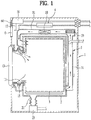
- FIG. 1 is a perspective view showing one embodiment of a laundry machine according to the present invention.
- the laundry machine of this shape is given by way of one embodiment and the shape of the laundry machine is not limited thereto.
- the laundry machine may basically include a main body 1, a tub 2, a drum 3, a steam generating device 4 and an air supply device 5.
- the main body 1 forms an external appearance of the laundry machine and has an input opening 11 perforated in a front surface thereof.
- a door 13 to open or close the input opening 11 is coupled to a region of the main body 1 around the inlet opening 11.
- a gasket 15 is attached to an inner periphery of the input opening 11 to form a hermetic seal between the door 13 and the input opening 1.1
- a wash water supply pipe 17 is mounted in the main body 1 to supply wash water into the tub 2.
- a detergent box 19 may be mounted in the main body 1, and the wash water supply pipe 17 may be connected to the tub 2 by way of the detergent box 19 so as to communicate with the interior of the tub 2.
- the tub 2 is placed in the main body 1 and supported by internal support components.
- the tub 2 is provided at a lower end thereof with a drain passage 21 for drainage of wash water.
- a drain pump 23 is located in the drain passage 21 and driven to forcibly drain wash water.
- the drum 3 is rotatably installed in the tub 2 such that an opening of the drum 3 faces the input opening 11 of the main body 1.
- a drive unit 31 to rotate the drum 3 may be coupled to the back of the drum 3.
- the drive unit 31 may be a motor.
- the drum 3 may be rotated by rotation of the motor.
- the steam generating device 4 is configured to supply a prescribed amount of steam into the drum 3 (or the tub 2).
- the air supply device 5 is used to dry clothes and configured to supply hot air or cold air into the drum 3.
- the air supply device 5 may be comprised of an air duct 51, a drying heater 53 and a blowing fan 55.
- the drying heater 53 may be located in the air duct 51 and configured to generate hot air by heating air moving in the air duct 51.
- the blowing fan 55 may also be located in the air duct 51 and configured to blow air such that the air in the air duct 51 is supplied into the drum 3 after passing through the drying heater 53.
- a control panel 6 is preferably installed to the main body 1 and serves as a user interface.
- the control panel 6 may be attached to the front surface of the main body 1 at a position above the input opening 11.
- a controller 60 is provided in the laundry machine to control the operation thereof.
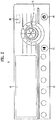
- FIG. 2 is a view schematically showing one embodiment of the control panel 6.
- the control panel 6 may include a course selection part 61, one or more option selection parts 63 and a display part 65.
- the control panel 6 may further include a power input part 64, a start/pause input part 66, and the controller 60.
- the course selection part 61 is provided to assist a user in selecting any one operating course among a plurality of operating courses.
- the operating courses may refer to courses programmed to include a plurality of cycles (strokes). That is, the operating courses may refer to courses previously programmed according to clothes treatment purposes.
- a general washing course includes washing, rinsing and dehydration cycles. Upon selection of the washing course, the laundry machine is operated in a predetermined sequence of washing, rinsing and dehydration to complete clothes treatment.
- the option selection parts 63 are provided to assist the user in selecting options based on an operating course selected via the course selection part 61.
- the option selection parts 63 are additionally selected by the user as needed and, therefore, an operating method may be performed regardless of selection of the option selection parts 63.
- the display part 65 may indicate an operating course or options selected by the user and also indicate a residual time or current state of progress for user notification.
- the user first operates the power input part 64 to apply power to the laundry machine. Then, the user selects a specific operating course via the course selection part 61 and selects the start/pause input part 66. Of course, in addition to the specific operating course, various options may be selected via the option selection parts 63.
- the laundry machine starts and ends an operation based on the input operating course and the input options.
- FIG. 3 is a flowchart showing an operating method for the laundry machine according to an exemplary embodiment of the present invention.
- the exemplary embodiment of the present invention may provide a laundry machine and a washing method, which may provide automated implementation of a specific course including washing, drying and refreshing as well as a general washing course. That is, the exemplary embodiment of the present invention may provide a laundry machine and a washing method, which may provide rapid treatment of clothes that have a high risk of damage and a high frequency of wearing, such as dress shirts, thereby allowing the user to wear the clothes immediately after completion of treatment. In this way, the exemplary embodiment of the present invention may provide a laundry machine and a washing method, which are suitable for the lifestyle of busy modern people.
- the user inputs clothes that require washing, drying and wrinkle removal into the drum 3 (S10).
- This input of clothes may be performed before or after power is applied to the laundry machine.
- the user closes the door and operates the control panel for clothes treatment.
- the controller 60 When the user selects a desired course among a plurality of operating courses, the controller 60 undergoes a course selection step of receiving an operating course selection signal via the course selection part 61 (S30).
- all-in-one course is a single course of performing at least three clothes treatment functions including washing, drying and refreshing. That is, the present embodiment may provide a laundry machine and a washing method, which provide such an all-in-one course and automated treatment of clothes by the laundry machine based on the all-in-one course.
- the laundry machine is operated in an operating method corresponding to a course selected by the user, i.e. according to whether the user selects an all-in-one course or any one of other courses.
- a cleaning step is performed (S50).
- the controller supplies water received in the tub 2 into the drum 3 and, along with the wash water, also supplies detergent received in the detergent box 19 into the drum 3. That is, the cleaning step S50 may be a step of removing contaminants from clothes using detergent and wash water while driving the drum 3.
- the controller controls the drum drive unit 31 to rotate the drum 3. Thereby, as the clothes are rotated in the drum 3 along with the wash water and the detergent, spots, impurities or the like are removed from the clothes.
- the cleaning step S50 may be a general washing step, and may include a rinsing step and a dehydration step.
- the washing step contaminants are removed from clothes using wash water and detergent during driving of the drum.
- the contaminants removed in the washing step may be understood as being dissolved in wash water or transferred to wash water.
- the wash water is drained after the washing step. That is, the washing step may include driving of the drum and drainage of wash water after completion of driving of the drum.
- the rinsing step a procedure of transferring the detergent and the contaminants remaining on the clothes to the wash water while driving the drum is performed. This may be referred to as the rinsing step.
- the wash water is drained after the rinsing step. That is, the rinsing step may include driving of the drum and drainage of wash water after completion of driving of the drum.
- the drum is rotated to remove moisture from the clothes using centrifugal force. This may be referred to as the dehydration step.
- the cleaning step S50 may be a step of performing a series of the washing step, the rinsing step and the dehydration step.
- a drying step is performed after end of the cleaning step S50 (S70).
- the controller controls driving of the air supply device 5 to supply hot air to the clothes in the drum 3.
- the controller controls the drum drive unit 31 to rotate the drum 3.
- the drum drive unit 31 controls the drum drive unit 31 to rotate the drum 3.
- hot air is evenly supplied to the clothes and the clothes, which are wet due to the moisture absorbed in the washing step, are dried. That is, the moisture remaining after the dehydration step may be removed by the hot air.
- laundry is repeatedly lifted and dropped through driving of the drum 3 and, simultaneously, hot air is supplied to the laundry.
- particles, such as dust and the like, contained in the laundry may be separated from the laundry. This enables easy removal of dust and the like containing various bacteria.
- a refreshing step S90 is performed after end of the drying step S70.
- the controller supplies steam into the drum 3.
- One method of supplying steam may be steam injection. Steam injection may achieve the effect of evenly supplying steam to the laundry. Of course, a steam supply method is not limited thereto.
- the drum 3 is preferably driven during the refreshing step.
- non-volatile odor particles not removed in the above-described cleaning step S50 and drying step S70 maybe removed. That is, steam is supplied to the laundry, more particularly, odor particles contained in the laundry, thereby dissolving the odor particles. This causes the non-volatile odor particles to be easily removable.
- the steam serves to relieve or remove wrinkles of the laundry by deeply permeating the laundry. That is, as the steam permeates between finely entangled wrinkled meshes, wrinkles are relieved or removed.
- steam supply is preferably controlled to prevent supply of an excessive amount of steam. That is, since an excessive amount of steam causes the steam to be changed into water due to temperature drop, thus resulting in unwanted wetting of the laundry, considerable consumption of time and energy for re-drying may be needed. Therefore, it is necessary to appropriately control the supply amount of steam.
- One method of controlling the supply amount of steam is to check an increase in the interior temperature of the drum or the tub due to steam.
- an excessive temperature increase means supply of an excessive amount of steam
- the supply amount of steam may be controlled by checking the temperature increase.
- the supply amount of steam may be controlled by checking an injection time of steam that is continuously injected. That is, since the injection amount of steam per hour is given, the supply amount of steam may be appropriately controlled by setting a steam injection time.
- Another method of controlling the supply amount of steam is to check the amount of water supplied for steam generation.
- the cleaning step S50 is first performed and, after end of the cleaning step S50, the drying step S70 is sequentially performed even if the user does not additionally select a drying option.
- the refreshing step S90 is performed sequentially after end of the drying step S70.
- the cleaning step S50, the drying step S70 and the refreshing step S90 are sequentially performed via selection of a single course, i.e. the all-in-one course (S30), clothes, from which wrinkles and odor as well as impurities and spots have been removed, may be provided to the user.
- the laundry machine may treat clothes to allow the user to wear the clothes immediately after completion of the course.
- the user who retrieves the clothes from the drum 3 after end of the all-in-one course may wear the clothes without an additional procedure, which may eliminate additional treatment time and cost and provide user convenience.
- the cleaning step S50 may be a step of removing contaminants using only wash water without detergent. In this case, reduction of contaminant removal efficiency as compared to the case of using detergent is inevitable. However, washing using only water may cause greater wrinkle removal efficiency or odor removal efficiency than that in the case of performing only refreshing.
- the rinsing step may be omitted because washing is performed using only wash water without detergent. This may reduce a course implementation time.
- the cleaning step S50 of the present embodiment may a washing step using only wash water without detergent.
- the cleaning step may be a step including all of the washing step using both wash water and detergent, the rinsing step and the dehydration step as described above.
- the aforementioned respective sub-steps are performed based on predetermined values and, therefore, are preferably not affected by options selected via the option selection parts 63.
- the cleaning step S50, the drying step S70 and the refreshing step S90 are sequentially performed and ended based on predetermined values regardless of options selected via the option selection parts 63. This will be described below in detail.
- FIG. 4 is a flowchart showing another embodiment of an operating method for the laundry machine according to the present invention.
- the operating method for the laundry machine may further include a dehydration step S60 after end of the cleaning step S50 and before implementation of the drying step S70.
- drying efficiency may be low and a great amount of time may be needed to completely dry the clothes.
- the operating method may further include the dehydration step S60 after the cleaning step S50 ends and before the drying step S70 is performed.
- the controller drives the drum drive unit 31 to rotate the drum 3 at high speeds so as to dehydrate the clothes by centrifugal force.
- the clothes, from which the absorbed moisture has been discharged to some extent by the dehydration step S60, are subjected to the drying step S70, which allows the moisture, not yet removed in the dehydration step S60, to be completely removed by hot air.
- the drying step S70 which allows the moisture, not yet removed in the dehydration step S60, to be completely removed by hot air.
- the cleaning step S50 is first performed and, sequentially, after end of the cleaning step S50, the dehydration step S60 may be performed.
- the drying step S70 is performed regardless of selection of options.
- the refreshing step S90 is performed regardless of whether or not the user further selects a refreshing course. As the refreshing step S90 ends, operation of the laundry machine based on the all-in-one course ends.
- the operating method for the laundry machine based on the all-in-one course includes the dehydration step S60.
- FIG. 5 is a flowchart showing a further embodiment of an operating method for the laundry machine according to the present invention.
- the refreshing step S90 may include a re-drying step S93.
- the refreshing step S90 may include supplying steam (S91) and, thereafter, resupplying hot air into the drum (S93) to dry clothes or laundry.
- the re-drying step S93 may be included in the refreshing step S90 to allow the user to retrieve and wear the laundry immediately after the all-in-one course ends.
- FIG. 6 is a detailed view showing the control panel 6.
- control panel 6 includes the course selection part 61 to assist the user in selecting any one operating course among a plurality of operating courses.
- the operating courses may include composite, rapid, power saving boiling, boiling, normal, tub washing, refreshing, all-in-one courses and the like. These operating courses are given in one embodiment related to the course selection part, without being limited thereto.
- the drawing shows the course selection part 61 as having a rotary knob shape, the shape of the course selection part is not limited thereto.
- the operating courses may be divided into steam usable courses 611, steam courses 613 and steam omission courses 615 according to whether or not steam is supplied.
- the steam usable courses 611 are courses in which steam may be supplied or may not be supplied according to user intention. That is, in the steam usable courses, the user may operate the laundry machine by supplying steam when the user wishes to remove wrinkles or odor of clothes or laundry or by not supplying steam when the user wishes rapid washing or does not require removal of wrinkles or odor.
- the steam usable courses 611 may include the normal course and the tub washing course, for example.
- the steam courses 613 are courses in which steam is unconditionally supplied regardless of user intention. That is, when a course selected by the user has a purpose of removing wrinkles or odor, steam is supplied regardless of whether or not the user wishes to supply steam.
- the steam courses 613 may include the refreshing course in which steam is always supplied, for example.
- the steam omission courses 615 are courses in which steam is not supplied regardless of user intention. That is, in the case of a washing course having no purpose of removing wrinkles or odor or a course requiring implementation thereof within a short time, supply of steam is omitted regardless of whether or not the user wishes to supply steam.
- the steam omission courses 615 may include the composite course, the rapid course, the power saving boiling course, the boiling course and a bedding course, for example.
- the course selection part 61 included in the control panel 6 may be indicated such that the respective courses are differently indicated according to whether or not steam is supplied, for easy user discrimination.
- One method for discrimination of the course selection part 61 is to indicate the steam usable courses 611, the steam courses 613 and the steam omission courses 615 by different colors. As the courses displayed on the control panel 6 are indicated by different colors according to whether or not steam is supplied, it is possible to allow the user to easily discriminate between and select the courses.
- the all-in-one course which is an operating course selected in the present invention, requires sequential implementation of the cleaning step S50, the dehydration step S60, the drying step S70 and the refreshing step S90 and, therefore, the operating method essentially includes a steam supply step corresponding to the refreshing step S90.
- the all-in-one course of the present invention is preferably included in the steam course 613 in which steam is always supplied regardless of user intention.
- control panel 6 may include the option selection parts 63 for selection of a plurality of options to assist the user in selecting options based on an operating course selected by the course selection part 61.
- the option selection parts 63 may include options that the user may additionally select after selecting an operating course.
- the option selection parts 63 may include a washing degree selection part, a rinsing frequency selection part, a dehydration RPM selection part, a wash water temperature selection part, a drying temperature selection part and the like, without being limited thereto.
- the option selection parts 63 may be divided according to option implementation steps. That is, the option selection parts 63 may be divided into option selection parts 631 associated with the washing step, an option selection part 632 associated with the rinsing step, an option selection part 633 associated with the dehydration step and an option selection part 635 associated with the drying step.
- the laundry machine of the present invention may include any one of the option selection parts 631 associated with the washing step, the option selection part 632 associated with the drying step, the option selection part 633 associated with the dehydration step and the option selection part 635 associated with the drying step, or may include two or more ones of the aforementioned option selection parts.
- the option selection parts 631 associated with the washing step may be provided to assist the user in selecting one or more options upon implementation of the cleaning step S50 by the laundry machine.
- the option selection parts 631 may be used to select an option in the washing step using wash water.
- the option selection parts 631 associated with the washing step may include at least one of a steam selection part (631a), a wash water temperature selection part (631b) and a washing degree selection part (631c).
- a steam selection part (631a) may be included in the washing step.
- a wash water temperature selection part (631b) may be included in the washing step.
- a washing degree selection part (631c) may be included in the washing step.
- an option associated with each option selection part may include a plurality of conditions and the option selection part may be used to select any one of the conditions.
- the washing degree selection part may be used to select a plurality of washing degrees based on a contamination degree.
- FIG. 6 shows selection of any one of soaking, rough washing, main washing, small quantity washing and time saving washing.
- the steam selection part relates to an option to select whether or not to supply steam to clothes in the cleaning step S50.
- the wash water temperature selection part relates to an option to select a temperature of wash water in consideration of a contamination degree of laundry, delicateness of laundry and the like.
- the rinsing frequency selection part may relate to an option to select the frequency of rinsing in consideration of a contamination degree of laundry, delicateness of laundry and the like.
- FIG. 6 shows an example in which the frequency of rinsing is selected from one time to five times.
- the frequency of rinsing means the number of repeating a series of procedures of inputting wash water without detergent and draining the wash water after implementation of rinsing.
- selection of the option selection part 631 associated with the washing step is preferably limited when the all-in-one course according to the present invention is selected by the user.
- Limited option selection may mean that, even if the user habitually and unconsciously selects an option or makes a selection mistake due to ignorance about a use method, the selected option is not reflected in a washing course under control of the controller.
- limited option selection may mean that, when the user selects an option associated with, e.g., the washing step, selection impossibility of the corresponding option is notified to the user via an alarm sound.
- limited option selection may mean deactivation of an option selection part to make it impossible for the user to select a corresponding option, or may mean that the controller ignores selection even if the selection is possible.
- the limited option selection serves to prevent meaningless change of an optimally programmed all-in-one course. That is, this serves to prevent meaningless change of a program optimized with regard to an implementation time, a contamination removal degree, a wrinkle removal degree and a clothes damage degree.
- the all-in-one course is an operating method in which the cleaning step S50, the dehydration step S60, the drying step S70 and the refreshing step S90 are sequentially performed in a single procedure, and the cleaning step S50 is preferably performed based on predetermined reference values with regard to whether or not to supply steam, a steam supply degree, the frequency of rinsing, a temperature of wash water and a washing degree.
- Deactivation of selection means that the user selection is impossible in principle.
- One method of deactivating selection causes the steam selection part in the form of a button to be not pushed.
- the all-in-one course corresponds to the steam course 613 in which steam is always supplied regardless of user intention. Accordingly, selection of the steam selection part is unnecessary and, therefore, the steam selection part may be deactivated so as not to be selected.
- the option selection part 633 associated with the dehydration step relates to an option which may be selectively provided upon implementation of the dehydration step S60 by the laundry machine of the present invention.
- the option selection part 633 associated with the dehydration step may include a dehydration RPM selection part and, of course, include any one of other options associated with the dehydration step.
- the dehydration RPM selection part relates to an option to allow the user to select revolutions per minute (RPM) of the drum while the drum is rotated for 1 minute upon the dehydration step S60.
- RPM revolutions per minute
- the user may select a dehydration RPM in consideration of a contamination degree of laundry or delicateness of laundry.
- selection of the option selection part 633 associated with the dehydration step may be limited.
- laundry may be excessively wrinkled upon selection of a high dehydration RPM.
- selection of the option selection part 633 associated with the dehydration step may be limited to achieve a purpose of wrinkle removal.
- the option selection part 635 associated with the drying step relates to an option that may be selectively provided upon implementation of the drying step S70 by the laundry machine of the present invention.
- the option selection part 635 associated with the drying step may include at least one of a hot air temperature selection part and a drying degree selection part and, of course, may include any one of other option selection parts associated with the drying step.
- the hot air temperature selection part although not shown in the drawing, relates to an option to allow the user to select a temperature of hot air supplied for drying of laundry in the drying step S70.
- the user may select a temperature of hot air in consideration of a desired drying degree of laundry, delicateness of laundry and the like.
- the drying degree selection part may allow the user to select any one of strong, average and ironing options based on user intention.
- selection of the option selection part 635 associated with the drying step may be limited.
- selection of the option selection part 635 associated with the drying step may be limited to achieve a desired purpose of sufficient drying of clothes without damage to the clothes.
- selection of all of the option selection parts 63 may be limited.
- predetermined reference values related to options of each step which are provided to prevent damage to laundry, to remove wrinkles of laundry and to optimize dryness of laundry upon selection of the all-in-one course according to the present invention, will be described.
- wash water having a limited temperature of about 40 degrees Celsius may be supplied in the cleaning step S50. This serves to prevent damage to delicate laundry using such a lower temperature of wash water than that in the case in which the washing step is performed alone.
- an actual operating rate of the motor in the cleaning step S50 may be set to a limited value of about 1/3.
- the actual operating rate of the motor may be a ratio of a total time to a time for which the motor is driven and may be represented by a motor driving time/total time. That is, a higher actual operating rate of the motor means a longer motor driving time.
- the actual operating rate of the motor in the cleaning step S50 according to the all-in-one course is less than that in a usual case in which the washing step is performed alone, thus serving to prevent damage to delicate laundry and generation of excessive wrinkles in laundry.
- a temperature of wash water or an actual operating rate of the motor has a predetermined reference value and change of the predetermined reference value by the user is limited.
- a dehydration RPM value may have a predetermined reference value of 600 RPM. This value means 600 rotations per minute and is less than a dehydration RPM value of a usual dehydration step that is performed alone, which may prevent damage to delicate laundry and generation of excessive wrinkles in laundry.
- a dehydration RPM value has a predetermined reference value and change of the predetermined reference value by the user is limited.
- a temperature of hot air to be supplied may be limited to about 45 degrees Celsius, which may prevent damage to delicate laundry and generation of excessive wrinkles in laundry.
- an actual operating rate of the motor in the drying step S70 may be set to a limited value of about 1/16.
- the meaning of the actual operating rate of the motor has been described above and that the actual operating rate of the motor is about 1/16 means that assuming that total time is 16, the motor is driven for a time of 1.
- the actual operating rate of the motor in the drying step S70 according to the all-in-one course is less than that in a usual case in which a drying step is performed alone, which may prevent damage to delicate laundry and generation of excessive wrinkles in laundry.
- a temperature of hot air or an actual operating rate of the motor has a predetermined reference value and change of the predetermined reference value by the user is limited.
- the present invention provides the user with clothes having high dryness and washing degrees and no wrinkles as the user selects a single course.
- the present invention allows the user to attain desired effects while preventing damage to the clothes.
- the user may input two or three dress shirts, which are usually formed of delicate materials and require careful management, into the drum and then select the all-in-one course according to the present invention (S30).
- the cleaning step S50, the dehydration step S60, the drying step S70 and the refreshing step S90 are sequentially performed.
- the all-in-one course ends simultaneously with end of the refreshing step S90.
- a temperature of wash water and an actual operating rate of the motor in the cleaning step S50 and a temperature of hot air and an actual operating rate of the motor in the drying step S70 preferably remain at predetermined values without change.
- a wrinkle removal score of the two or three dress shirts may be 3.5 or more.
- the wrinkle removal score is set by evaluating a wrinkle removal degree based on wrinkle removal force evaluation certified by the Korean Apparel Testing & Research Institute (KATRI).
- a wrinkle removal score of 1 means that excessive wrinkles are present
- a wrinkle removal score of 3 means that some wrinkles are present
- a wrinkle removal score of 5 means that substantially no wrinkles are present.
- the wrinkle removal score of 1 may be a wrinkle removal score acquired immediately after dehydration following washing is performed
- the wrinkle removal score of 5 may be a wrinkle removal score acquired immediately after ironing is performed.
- a wrinkle removal score of two or three dress shirts is 3.5 or more, which means that most wrinkles of the dress shirts are removed.
- the amount of moisture i.e. the percentage of water contained in the clothes is 5% or less, which means that the clothes have sufficient dryness to allow the user to immediately wear the clothes.
- the clothes subjected to the all-in-one course have substantially no wrinkles and also have sufficiently wearable dryness, thus allowing the user to wear the clothes immediately after retrieving the clothes from the drum.
- the cleaning step S50, the dehydration step S60, the drying step S70 and the refreshing step S90 are successively performed.
- a time taken to perform the cleaning step S50 and the dehydration step S60 may be about 32 minutes. This time means a time taken until the cleaning step S50 is performed and ended and, thereafter, the dehydration step S60 is performed and ended.
- a time taken to perform the drying step S70 is preferably about 20 ⁇ 25 minutes. More preferably, the drying step S70 is performed for an optimized time in consideration of wrinkle removal and dryness of clothes.
- a time taken to perform the refreshing step S90 is preferably about 25 minutes.
- the time taken to perform the cleaning step S50 and the dehydration step S60, the time taken to perform the drying step S70 and the time taken to perform the refreshing step S90 are respectively preferably about 32 minutes, about 20 ⁇ 25 minutes and about 25 minutes.
- two or three dress shirts may have a wrinkle removal score of 3.5 or more and the percentage of water of 5% or less after end of the all-in-one course.
- the user who retrieves dress shirts after completion of the all-in-one course from the drum may immediately wear the dress shirts without additional time or cost, which may provide user convenience.
- one embodiment of the present invention may provide an operating method for a laundry machine in which washing, drying and refreshing of clothes may be successively performed as a user selects a single course.
- One embodiment of the present invention may provide an operating method for a laundry machine in which washing, drying and refreshing of delicate clothes that tend to be easily damaged may be successively performed while preventing damage to the clothes to the maximum extent.
- One embodiment of the present invention may provide an operating method for a laundry machine, which may ensure successive implementation of washing, drying and refreshing, may prevent damage to clothes, and may achieve removal of wrinkles to a given level or more as well as a given drying degree or more.
- One embodiment of the present invention may provide an operating method for a laundry machine which may allow a user to wear clothes immediately after retrieving the clothes from the laundry machine without consuming additional time or cost after a single course selected by the user ends. That is, the embodiment of the present invention may provide a laundry machine and an operating method thereof, which may provide clothes treatment to allow a user to immediately wear clothes without drying or ironing.
- One embodiment of the present invention may provide a laundry machine and an operating method thereof, which may be convenient in use and be suitable for the lifestyle of modern people.
- One embodiment of the present invention may provide a laundry machine and an operating method thereof, which may enable one stop treatment of a small quantity of laundry, such as slightly contaminated dress shirts, from washing to refreshing, and may achieve maximum effects in terms of washing, damage to laundry, wrinkles, use convenience and treatment time.
Landscapes
- Engineering & Computer Science (AREA)
- Textile Engineering (AREA)
- Control Of Washing Machine And Dryer (AREA)
- Main Body Construction Of Washing Machines And Laundry Dryers (AREA)
- Accessory Of Washing/Drying Machine, Commercial Washing/Drying Machine, Other Washing/Drying Machine (AREA)
Description
- This application claims the benefit of Korean Patent Application No.
10-2013-0096850, filed on, August 14, 2013 - The present invention relates to an operating method for a laundry machine and, more particularly, to a method of providing user convenience via implementation of washing, drying and refreshing when a specific course is selected upon selection of an operating course. This invention is also related to a laundry machine for carrying out said operation method.
- In general, a laundry machine refers to an apparatus that may perform washing and/or drying of clothes and the like. Here, a single laundry machine may perform only washing or drying, or may perform both washing and drying. In addition, in recent years, laundry machines, which include a steam supply device and function to refresh clothes and the like for removal of wrinkles, deodorization, elimination of static cling and the like, have become popular.
- Meanwhile, conventional laundry machines are divided into a front loading type or a top loading type according to a withdrawal direction of clothes. In addition, there is a vertical shaft type in which a pulsator or a wash tub is rotated, or a horizontal type in which a drum is rotated, according to a washing method. A representative example of the horizontal type is a drum washing machine or a drum drying machine.
- Usually, a laundry machine includes a control panel provided for interfacing with a user. A user inputs or acquires information to or from the laundry machine via the control panel. The control panel is generally provided with a course selection part to select a course and an option selection part to select an option.
- In one type of laundry machine having both washing and drying functions (hereinafter referred to as a "combo washing machine" for convenience of description), washing may be a main function and drying may be an auxiliary function. Hence, the combo washing machine is provided with various types of washing courses, and any one of the washing courses may be selected via the course selection part. In addition, drying may be selected via the option selection part.
- Herein, a course refers to a course programmed to complete clothes treatment via sequential and automated implementation of a plurality of cycles (strokes). A general washing course is programmed to complete washing by sequentially performing a washing cycle, a rinsing cycle after completion of the washing cycle and a dehydration cycle after completion of the rinsing cycle. Completely washed clothes are generally subjected to natural drying. Of course, in the combo washing machine capable of implementing drying, forced drying may be performed as a drying option is additionally selected after completion of washing. Since drying is generally not a main function even in the combo washing machine, drying may not be performed as a course, but be performed via selection of an option.
- There are various washing courses according to the kind of laundry and the like, and the respective washing courses may be programmed with different parameters.
- A temperature of wash water, a drum's RPM upon dehydration, a washing time, a drum's RPM upon washing and the like may mean parameters of cycles constituting a washing course, and these parameters may be changed or corrected via selection of options. For example, when a specific washing course having specific parameters is selected, a washing course changed or corrected via selection of options may be performed.
- However, such selection of options requires further user labor although it provides various courses.
- In a conventional combo washing machine, when a user wishes to perform drying as well as washing of clothes, the user has to inconveniently select a drying option after implementation of a washing course ends. Of course, to enable automated implementation of washing and drying, a washing course and a drying option may be selected together to cause sequential implementation of washing and drying. However, in this case, there is a great amount of information to be input by the user, which causes difficult and inconvenient use.
- Meanwhile, the conventional combo washing machine causes seriously wrinkled laundry when washing and drying are completed or when only drying is completed. Therefore, to remove wrinkles and odor remaining on dried clothes, it is necessary to additionally select a refreshing option to refresh the clothes. That is, many selections including selection of a washing course, selection of a drying option and selection of a refreshing option are required.
- For example, a dress shirt that is worn one time may be saturated with slight pollution and odor. In addition, the dress shirt may be wrinkled. In recent years, a refreshing course or option to refresh, e.g., a shirt that is worn one time using steam, hot air or cold air may be used without washing of the shirt. However, using only the refreshing course causes limited washing effects.
- In addition, clothes formed of an easily damageable delicate material, such as a dress shirt, have a high risk of damage and may confuse the user when refreshing is additionally performed after completion of washing and drying.
- To prevent damage to the clothes as described above, the user has to inconveniently adjust some options, such as a temperature of wash water and a temperature of hot air upon each of a washing course step, a drying step and a refreshing step.
- In addition, an ordinary user has difficulty in knowing a reference value to balance removal of wrinkles with a drying degree, which makes it impossible to effectively remove wrinkles or causes the user to be unable to wear clothes because the clothes are not yet dried.
-
EP 1 852 452 A1 -
KR 2013 0080105 A -
WO 2006/087735 A1 is concerned with an appliance to provide an optimum washing and drying with minimum external inputs and discloses a laundry washing machine as a program-control appliance for washing a fabric. However, an appliance that provides both, a laundry washing and a laundry drying function is not described. -
JP 2002-119788 A -
EP 2 080 832 A1 -
WO2006098571 discloses a method and a washing machine according to the preamble ofclaims - Accordingly, the present invention is directed to an operating method for a laundry machine that substantially obviates one or more problems due to limitations and disadvantages of the related art, and to a laundry machine for carrying out said operation method.
- One object of the present invention is to provide an operating method for a laundry machine in which washing, drying and refreshing of clothes are successively implemented as a user selects a single course.
- Another object of the present invention is to provide an operating method for a laundry machine in which washing, drying and refreshing of delicate clothes that tend to be easily damaged may be successively performed while preventing damage to the clothes to the maximum extent.
- Another object of the present invention is to provide an operating method for a laundry machine, which may ensure successive implementation of washing, drying and refreshing, may prevent damage to clothes, and may achieve removal of wrinkles to a given level or more as well as a given drying degree or more.
- Another object of the present invention is to provide an operating method for a laundry machine, which may allow a user to wear clothes immediately after retrieving the clothes from the laundry machine without consuming additional time or cost after a single course selected by the user ends.
- Another object of the present invention is to provide a laundry machine and an operating method thereof, which may be convenient in use and be suitable for the lifestyle of modern people.
- A further object of the present invention is to provide a laundry machine and an operating method thereof, which may enable one stop treatment of a small quantity of laundry, such as slightly contaminated dress shirts, from washing to refreshing, and may achieve maximum effects in terms of washing, damage to laundry, wrinkles, use convenience and treatment time.
- Additional advantages, objects, and features will be set forth in part in the description which follows and in part will become apparent to those having ordinary skill in the art upon examination of the following or may be learned from practice. The objectives and other advantages may be realized and attained by the structure particularly pointed out in the written description and claims hereof as well as the appended drawings.
- In accordance with one embodiment of the present invention, an operating method for a laundry machine, the laundry machine including a tub configured to receive wash water therein, a drum rotatably placed in the tub, the drum being configured to receive clothes therein, a control panel provided for interfacing with a user, a course selection part provided at the control panel to assist the user in selecting any one operating course among a plurality of operating courses and one or more option selection parts provided at the control panel to assist the user in selecting one or more options based on the operating course selected by the user, includes selecting a specific course via the course selection part by receiving an operating course selection signal, cleaning the clothes by supplying wash water into the drum, the cleaning including washing, drying the clothes by supplying hot air into the drum and refreshing the clothes to remove wrinkles and odor of the clothes by supplying steam into the drum, wherein, as the specific course is selected upon the selecting, the washing, the drying and the refreshing are sequentially performed to end the specific course regardless of selection of the option selection parts which would increase a specific course implementation time.
- As a result of successively operating the laundry machine in the sequence of the cleaning, the drying and the refreshing, the present invention solves user inconvenience that the user has to additionally select a drying course or a refreshing course after end of the cleaning.
- Upon selection of the specific course, selection of an option selection part associated with the cleaning may be limited.
- The cleaning may include washing the clothes using only wash water. That is, the cleaning may include washing the clothes by supplying wash water into the drum without detergent and rotating the drum. In this case, the cleaning may not include rinsing. Dehydrating may be performed immediately after the washing using only the wash water is performed.
- The cleaning may include washing the clothes using wash water and detergent. That is, the cleaning may include washing the clothes by supplying detergent and wash water into the drum and rotating the drum. In this case, the cleaning may further include rinsing and dehydrating.
- Upon selection of the specific course, selection of an option selection part associated with the dehydrating may be limited.
- Upon selection of the specific course, selection of an option selection part associated with the drying may be limited.
- Accordingly, in the present embodiment, as a result of selection of the option selection part being limited upon selection of the specific course, it is possible to prevent damage to delicate clothes and to prevent a risk of reduction in washing and drying efficiencies.
- Upon selection of the specific course, a temperature of wash water and an actual operating rate of a motor in the washing respectively have predetermined values and change of these values is limited and a temperature of hot air and an actual operating rate of the motor in the drying respectively have predetermined values and change of these values is limited, whereby a wrinkle removal score may be 3.5 or more on the basis of two or three dress shirts via successive implementation of the washing, the drying and the refreshing. Thus, the user can retrieve the dress shirts from the drum to immediately wear the dress shirts after end of the specific course. That is, it is possible to prevent the user from inconveniently consuming an additional time and cost in order to wear the clothes after a single course selected by the user ends.
- To achieve the above-described objects, in another embodiment of the present invention, a laundry machine includes a tub configured to receive wash water therein, a drum rotatably placed in the tub, the drum being configured to receive clothes therein, a control panel provided for interfacing with a user, a course selection part provided at the control panel to assist a user in selecting any one operating course among a plurality of operating courses, one or more option selection parts provided at the control panel to assist the user in selecting one or more options with respect to at least one of washing, rinsing, dehydrating and drying based on the operating course selected by the user and a controller configured to control driving of the laundry machine based on the operating course and the option selected via the course selection part and the option selection parts, wherein, when a specific course for successive implementation of washing, drying and refreshing using steam is input via the course selection part, the controller limits selection of the option selection part and controls driving of the laundry machine such that the specific course is performed and ended based on a predetermined program.
- The option selection parts may be provided to select options associated with washing, rinsing and drying. When the specific course is selected, selection of options via the option selection parts may be limited. That is, parameters for implementation of a plurality of cycles constituting a specific course may be unchangeable by selection of the option selection parts.
- That is, parameters previously programmed in a specific course may not be changeable by selection of the option selection parts.
- However, selection of specific options may be possible so long as it does not increase a course implementation time. For example, at least one of an option to reduce a predetermined washing degree, an option to reduce a predetermined dehydration RPM, an option to reduce a predetermined rinsing frequency and an option to reduce a temperature of wash water may be selected.
- It is to be understood that both the foregoing general description and the following detailed description of the present invention are exemplary and explanatory and are intended to provide further explanation of the present invention as claimed.
- The accompanying drawings, which are included to provide a further understanding of the present invention and are incorporated in and constitute a part of this application, illustrate embodiment(s) of the present invention and together with the description serve to explain the principle of the present invention. In the drawings:
-
FIG. 1 is a perspective view showing one embodiment of a laundry machine according to the present invention; -
FIG. 2 is a view schematically showing one embodiment of a control panel according to the present invention; -
FIG. 3 is a flowchart showing one embodiment of an operating method according to the present invention; -
FIG. 4 is a flowchart showing another embodiment of an operating method according to the present invention; -
FIG. 5 is a flowchart showing a further embodiment of an operating method according to the present invention; and -
FIG. 6 is a detailed view showing one embodiment of a control panel according to the present invention. - Hereinafter, exemplary embodiments of the present invention will be described in detail with reference to the accompanying drawings.
- All terms provided in this specification have the same meanings as generally understood by a person having ordinary skill in the art unless mentioned otherwise. When terms provided in this specification conflict with generic meaning of the corresponding terms, the terms should be construed based on definitions provided in this specification.
- Meanwhile, a configuration and control method of a laundry machine that will be described below are given to explain embodiments of the present invention and are not intended to limit the scope of the present invention. The same reference numerals used throughout the specification designate the same components.
- The embodiments of the present invention propose that a laundry machine is a washing machine having both washing and drying functions.
-
FIG. 1 is a perspective view showing one embodiment of a laundry machine according to the present invention. The laundry machine of this shape is given by way of one embodiment and the shape of the laundry machine is not limited thereto. - The laundry machine according to one embodiment of the present invention may basically include a
main body 1, atub 2, adrum 3, a steam generating device 4 and an air supply device 5. - The
main body 1 forms an external appearance of the laundry machine and has aninput opening 11 perforated in a front surface thereof. In this case, adoor 13 to open or close the input opening 11 is coupled to a region of themain body 1 around theinlet opening 11. Agasket 15 is attached to an inner periphery of the input opening 11 to form a hermetic seal between thedoor 13 and the input opening 1.1 - In addition, a wash
water supply pipe 17 is mounted in themain body 1 to supply wash water into thetub 2. - In this case, a
detergent box 19 may be mounted in themain body 1, and the washwater supply pipe 17 may be connected to thetub 2 by way of thedetergent box 19 so as to communicate with the interior of thetub 2. - The
tub 2 is placed in themain body 1 and supported by internal support components. Thetub 2 is provided at a lower end thereof with adrain passage 21 for drainage of wash water. - A
drain pump 23 is located in thedrain passage 21 and driven to forcibly drain wash water. - The
drum 3 is rotatably installed in thetub 2 such that an opening of thedrum 3 faces the input opening 11 of themain body 1. - In this case, a
drive unit 31 to rotate thedrum 3 may be coupled to the back of thedrum 3. Thedrive unit 31 may be a motor. As such, thedrum 3 may be rotated by rotation of the motor. - The steam generating device 4 is configured to supply a prescribed amount of steam into the drum 3 (or the tub 2).
- The air supply device 5 is used to dry clothes and configured to supply hot air or cold air into the
drum 3. - The air supply device 5 may be comprised of an
air duct 51, a dryingheater 53 and a blowingfan 55. - The drying
heater 53 may be located in theair duct 51 and configured to generate hot air by heating air moving in theair duct 51. - The blowing
fan 55 may also be located in theair duct 51 and configured to blow air such that the air in theair duct 51 is supplied into thedrum 3 after passing through the dryingheater 53. - A
control panel 6 is preferably installed to themain body 1 and serves as a user interface. Thecontrol panel 6 may be attached to the front surface of themain body 1 at a position above theinput opening 11. Acontroller 60 is provided in the laundry machine to control the operation thereof. -
FIG. 2 is a view schematically showing one embodiment of thecontrol panel 6. - The
control panel 6 may include acourse selection part 61, one or moreoption selection parts 63 and a display part 65. In addition, thecontrol panel 6 may further include a power input part 64, a start/pause input part 66, and thecontroller 60. - The
course selection part 61 is provided to assist a user in selecting any one operating course among a plurality of operating courses. A detailed description related to the selectable operating courses will follow. Here, the operating courses may refer to courses programmed to include a plurality of cycles (strokes). That is, the operating courses may refer to courses previously programmed according to clothes treatment purposes. A general washing course includes washing, rinsing and dehydration cycles. Upon selection of the washing course, the laundry machine is operated in a predetermined sequence of washing, rinsing and dehydration to complete clothes treatment. - The
option selection parts 63 are provided to assist the user in selecting options based on an operating course selected via thecourse selection part 61. - The
option selection parts 63 are additionally selected by the user as needed and, therefore, an operating method may be performed regardless of selection of theoption selection parts 63. - A detailed description related to options included in the
option selection parts 63 will follow. - The display part 65 may indicate an operating course or options selected by the user and also indicate a residual time or current state of progress for user notification.
- The user first operates the power input part 64 to apply power to the laundry machine. Then, the user selects a specific operating course via the
course selection part 61 and selects the start/pause input part 66. Of course, in addition to the specific operating course, various options may be selected via theoption selection parts 63. - Once the start/
pause input part 66 is operated, the laundry machine starts and ends an operation based on the input operating course and the input options. -
FIG. 3 is a flowchart showing an operating method for the laundry machine according to an exemplary embodiment of the present invention. - Hereinafter, the operating method for the above-described laundry machine according to the exemplary embodiment of the present invention will be described with reference to
FIG. 3 . - The exemplary embodiment of the present invention may provide a laundry machine and a washing method, which may provide automated implementation of a specific course including washing, drying and refreshing as well as a general washing course. That is, the exemplary embodiment of the present invention may provide a laundry machine and a washing method, which may provide rapid treatment of clothes that have a high risk of damage and a high frequency of wearing, such as dress shirts, thereby allowing the user to wear the clothes immediately after completion of treatment. In this way, the exemplary embodiment of the present invention may provide a laundry machine and a washing method, which are suitable for the lifestyle of busy modern people.
- First, the user inputs clothes that require washing, drying and wrinkle removal into the drum 3 (S10). This input of clothes may be performed before or after power is applied to the laundry machine. Once the input of clothes has been completed, the user closes the door and operates the control panel for clothes treatment.
- When the user selects a desired course among a plurality of operating courses, the
controller 60 undergoes a course selection step of receiving an operating course selection signal via the course selection part 61 (S30). - In the case in which the user wishes to perform washing, drying and wrinkle or odor removal at once, the user may select a specific operating course (hereinafter referred to as "all-in-one course") according to one embodiment of the present invention. The all-in-one course is a single course of performing at least three clothes treatment functions including washing, drying and refreshing. That is, the present embodiment may provide a laundry machine and a washing method, which provide such an all-in-one course and automated treatment of clothes by the laundry machine based on the all-in-one course.
- According to the present embodiment, preferably, the laundry machine is operated in an operating method corresponding to a course selected by the user, i.e. according to whether the user selects an all-in-one course or any one of other courses.
- Upon selection of the all-in-one course among the operating courses in the course selection step S30, first, a cleaning step is performed (S50).
- In the cleaning step S50, the controller supplies water received in the
tub 2 into thedrum 3 and, along with the wash water, also supplies detergent received in thedetergent box 19 into thedrum 3. That is, the cleaning step S50 may be a step of removing contaminants from clothes using detergent and wash water while driving thedrum 3. - The controller controls the
drum drive unit 31 to rotate thedrum 3. Thereby, as the clothes are rotated in thedrum 3 along with the wash water and the detergent, spots, impurities or the like are removed from the clothes. - The cleaning step S50 may be a general washing step, and may include a rinsing step and a dehydration step.
- In the washing step, contaminants are removed from clothes using wash water and detergent during driving of the drum. Thus, the contaminants removed in the washing step may be understood as being dissolved in wash water or transferred to wash water. The wash water is drained after the washing step. That is, the washing step may include driving of the drum and drainage of wash water after completion of driving of the drum.
- Thereafter, new wash water is supplied without detergent. Then, a procedure of transferring the detergent and the contaminants remaining on the clothes to the wash water while driving the drum is performed. This may be referred to as the rinsing step. The wash water is drained after the rinsing step. That is, the rinsing step may include driving of the drum and drainage of wash water after completion of driving of the drum.
- Thereafter, the drum is rotated to remove moisture from the clothes using centrifugal force. This may be referred to as the dehydration step.
- Accordingly, the cleaning step S50 may be a step of performing a series of the washing step, the rinsing step and the dehydration step.
- A drying step is performed after end of the cleaning step S50 (S70).
- In the drying step S70, the controller controls driving of the air supply device 5 to supply hot air to the clothes in the
drum 3. - In addition, the controller controls the
drum drive unit 31 to rotate thedrum 3. Through driving of thedrum 3, hot air is evenly supplied to the clothes and the clothes, which are wet due to the moisture absorbed in the washing step, are dried. That is, the moisture remaining after the dehydration step may be removed by the hot air. - In addition, in the drying step S70, laundry is repeatedly lifted and dropped through driving of the
drum 3 and, simultaneously, hot air is supplied to the laundry. As such, particles, such as dust and the like, contained in the laundry may be separated from the laundry. This enables easy removal of dust and the like containing various bacteria. - A refreshing step S90 is performed after end of the drying step S70.
- In the refreshing step S90, the controller supplies steam into the
drum 3. One method of supplying steam may be steam injection. Steam injection may achieve the effect of evenly supplying steam to the laundry. Of course, a steam supply method is not limited thereto. In addition, thedrum 3 is preferably driven during the refreshing step. - In the refreshing step S90, non-volatile odor particles not removed in the above-described cleaning step S50 and drying step S70 maybe removed. That is, steam is supplied to the laundry, more particularly, odor particles contained in the laundry, thereby dissolving the odor particles. This causes the non-volatile odor particles to be easily removable.
- Meanwhile, the steam serves to relieve or remove wrinkles of the laundry by deeply permeating the laundry. That is, as the steam permeates between finely entangled wrinkled meshes, wrinkles are relieved or removed.
- In the refreshing step S90, steam supply is preferably controlled to prevent supply of an excessive amount of steam. That is, since an excessive amount of steam causes the steam to be changed into water due to temperature drop, thus resulting in unwanted wetting of the laundry, considerable consumption of time and energy for re-drying may be needed. Therefore, it is necessary to appropriately control the supply amount of steam.
- One method of controlling the supply amount of steam is to check an increase in the interior temperature of the drum or the tub due to steam. Thus, since an excessive temperature increase means supply of an excessive amount of steam, the supply amount of steam may be controlled by checking the temperature increase. Of course, the supply amount of steam may be controlled by checking an injection time of steam that is continuously injected. That is, since the injection amount of steam per hour is given, the supply amount of steam may be appropriately controlled by setting a steam injection time.
- Another method of controlling the supply amount of steam is to check the amount of water supplied for steam generation.
- As the refreshing step S90 ends, operation of the laundry machine based on the selected all-in-one course ends.
- That is, when the all-in-one course is selected (S30), the cleaning step S50 is first performed and, after end of the cleaning step S50, the drying step S70 is sequentially performed even if the user does not additionally select a drying option.
- In addition, even if the user does not additionally select a refreshing course after selecting the all-in-one course, the refreshing step S90 is performed sequentially after end of the drying step S70.
- That is, as the cleaning step S50, the drying step S70 and the refreshing step S90 are sequentially performed via selection of a single course, i.e. the all-in-one course (S30), clothes, from which wrinkles and odor as well as impurities and spots have been removed, may be provided to the user. In other words, the laundry machine may treat clothes to allow the user to wear the clothes immediately after completion of the course.
- In this way, the user who retrieves the clothes from the
drum 3 after end of the all-in-one course may wear the clothes without an additional procedure, which may eliminate additional treatment time and cost and provide user convenience. - Meanwhile, the cleaning step S50 may be a step of removing contaminants using only wash water without detergent. In this case, reduction of contaminant removal efficiency as compared to the case of using detergent is inevitable. However, washing using only water may cause greater wrinkle removal efficiency or odor removal efficiency than that in the case of performing only refreshing. In addition, the rinsing step may be omitted because washing is performed using only wash water without detergent. This may reduce a course implementation time. As such, the cleaning step S50 of the present embodiment may a washing step using only wash water without detergent. Of course, the cleaning step may be a step including all of the washing step using both wash water and detergent, the rinsing step and the dehydration step as described above.
- In addition, when the all-in-one course is selected in the course selection step S30, the aforementioned respective sub-steps are performed based on predetermined values and, therefore, are preferably not affected by options selected via the
option selection parts 63. - That is, the cleaning step S50, the drying step S70 and the refreshing step S90 are sequentially performed and ended based on predetermined values regardless of options selected via the
option selection parts 63. This will be described below in detail. -
FIG. 4 is a flowchart showing another embodiment of an operating method for the laundry machine according to the present invention. - According to another embodiment of the present invention, upon selection of the all-in-one course (S30), the operating method for the laundry machine may further include a dehydration step S60 after end of the cleaning step S50 and before implementation of the drying step S70.
- Most clothes in the drum are wet due to a great amount of absorbed water after end of the cleaning step S50 using wash water. When the drying step S70 is directly performed on the wet clothes, drying efficiency may be low and a great amount of time may be needed to completely dry the clothes.
- Therefore, the operating method may further include the dehydration step S60 after the cleaning step S50 ends and before the drying step S70 is performed.
- In the dehydration step S60, the controller drives the
drum drive unit 31 to rotate thedrum 3 at high speeds so as to dehydrate the clothes by centrifugal force. - After the dehydration step S60 ends, the clothes, from which the absorbed moisture has been discharged to some extent by the dehydration step S60, are subjected to the drying step S70, which allows the moisture, not yet removed in the dehydration step S60, to be completely removed by hot air. As a result of performing the dehydration step S60 immediately before the drying step S70, an overall time required to completely remove the moisture from the clothes may be reduced.
- According to the present embodiment, when the user selects the all-in-one course in the course selection step (S30), the cleaning step S50 is first performed and, sequentially, after end of the cleaning step S50, the dehydration step S60 may be performed.
- After end of the dehydration step S60, the drying step S70 is performed regardless of selection of options. After end of the drying step S70, sequentially, the refreshing step S90 is performed regardless of whether or not the user further selects a refreshing course. As the refreshing step S90 ends, operation of the laundry machine based on the all-in-one course ends.
- Hereinafter, for convenience of description, assume that the operating method for the laundry machine based on the all-in-one course includes the dehydration step S60.
-
FIG. 5 is a flowchart showing a further embodiment of an operating method for the laundry machine according to the present invention. - In a further embodiment of the present invention, as exemplarily shown in
FIG. 5 , the refreshing step S90 may include a re-drying step S93. - That is, the refreshing step S90 may include supplying steam (S91) and, thereafter, resupplying hot air into the drum (S93) to dry clothes or laundry.
- Since there is a risk of the steam supply step S91 causing the laundry to be again wet, the re-drying step S93 may be included in the refreshing step S90 to allow the user to retrieve and wear the laundry immediately after the all-in-one course ends.
-
FIG. 6 is a detailed view showing thecontrol panel 6. - As described above, the
control panel 6 includes thecourse selection part 61 to assist the user in selecting any one operating course among a plurality of operating courses. - As exemplarily shown in the drawing, the operating courses may include composite, rapid, power saving boiling, boiling, normal, tub washing, refreshing, all-in-one courses and the like. These operating courses are given in one embodiment related to the course selection part, without being limited thereto.
- In addition, although the drawing shows the
course selection part 61 as having a rotary knob shape, the shape of the course selection part is not limited thereto. - The operating courses may be divided into steam
usable courses 611,steam courses 613 andsteam omission courses 615 according to whether or not steam is supplied. - The steam
usable courses 611 are courses in which steam may be supplied or may not be supplied according to user intention. That is, in the steam usable courses, the user may operate the laundry machine by supplying steam when the user wishes to remove wrinkles or odor of clothes or laundry or by not supplying steam when the user wishes rapid washing or does not require removal of wrinkles or odor. - The steam
usable courses 611 may include the normal course and the tub washing course, for example. - Meanwhile, the
steam courses 613 are courses in which steam is unconditionally supplied regardless of user intention. That is, when a course selected by the user has a purpose of removing wrinkles or odor, steam is supplied regardless of whether or not the user wishes to supply steam. - Accordingly, when the user selects the
steam courses 613, supply of steam cannot be omitted during operation of the laundry machine even if the user does not wish to supply steam. Thesteam courses 613 may include the refreshing course in which steam is always supplied, for example. - On the other hand, the
steam omission courses 615 are courses in which steam is not supplied regardless of user intention. That is, in the case of a washing course having no purpose of removing wrinkles or odor or a course requiring implementation thereof within a short time, supply of steam is omitted regardless of whether or not the user wishes to supply steam. - Accordingly, when the user selects the
steam omission courses 615, steam cannot be supplied during operation of the laundry machine even if the user wishes to supply steam. Thesteam omission courses 615 may include the composite course, the rapid course, the power saving boiling course, the boiling course and a bedding course, for example. - The
course selection part 61 included in thecontrol panel 6 may be indicated such that the respective courses are differently indicated according to whether or not steam is supplied, for easy user discrimination. - One method for discrimination of the
course selection part 61 is to indicate the steamusable courses 611, thesteam courses 613 and thesteam omission courses 615 by different colors. As the courses displayed on thecontrol panel 6 are indicated by different colors according to whether or not steam is supplied, it is possible to allow the user to easily discriminate between and select the courses. - The all-in-one course, which is an operating course selected in the present invention, requires sequential implementation of the cleaning step S50, the dehydration step S60, the drying step S70 and the refreshing step S90 and, therefore, the operating method essentially includes a steam supply step corresponding to the refreshing step S90.
- Accordingly, the all-in-one course of the present invention is preferably included in the
steam course 613 in which steam is always supplied regardless of user intention. - Meanwhile, as described above, in addition to the
course selection part 61, thecontrol panel 6 may include theoption selection parts 63 for selection of a plurality of options to assist the user in selecting options based on an operating course selected by thecourse selection part 61. - The
option selection parts 63 may include options that the user may additionally select after selecting an operating course. - As exemplarily shown in
FIG. 6 , theoption selection parts 63 according to one embodiment may include a washing degree selection part, a rinsing frequency selection part, a dehydration RPM selection part, a wash water temperature selection part, a drying temperature selection part and the like, without being limited thereto. - The
option selection parts 63 may be divided according to option implementation steps. That is, theoption selection parts 63 may be divided intooption selection parts 631 associated with the washing step, anoption selection part 632 associated with the rinsing step, anoption selection part 633 associated with the dehydration step and anoption selection part 635 associated with the drying step. - The laundry machine of the present invention may include any one of the
option selection parts 631 associated with the washing step, theoption selection part 632 associated with the drying step, theoption selection part 633 associated with the dehydration step and theoption selection part 635 associated with the drying step, or may include two or more ones of the aforementioned option selection parts. - The
option selection parts 631 associated with the washing step may be provided to assist the user in selecting one or more options upon implementation of the cleaning step S50 by the laundry machine. In particular, theoption selection parts 631 may be used to select an option in the washing step using wash water. - That is, the
option selection parts 631 associated with the washing step may include at least one of a steam selection part (631a), a wash water temperature selection part (631b) and a washing degree selection part (631c). Of course, in addition to the aforementioned option selection parts, any one of other option selection parts associated with the washing step may be included. In this case, an option associated with each option selection part may include a plurality of conditions and the option selection part may be used to select any one of the conditions. - For example, the washing degree selection part may be used to select a plurality of washing degrees based on a contamination degree.
FIG. 6 shows selection of any one of soaking, rough washing, main washing, small quantity washing and time saving washing. - The steam selection part relates to an option to select whether or not to supply steam to clothes in the cleaning step S50. The wash water temperature selection part relates to an option to select a temperature of wash water in consideration of a contamination degree of laundry, delicateness of laundry and the like.
- In addition, the rinsing frequency selection part may relate to an option to select the frequency of rinsing in consideration of a contamination degree of laundry, delicateness of laundry and the like.
FIG. 6 shows an example in which the frequency of rinsing is selected from one time to five times. The frequency of rinsing means the number of repeating a series of procedures of inputting wash water without detergent and draining the wash water after implementation of rinsing. - Note that selection of the
option selection part 631 associated with the washing step is preferably limited when the all-in-one course according to the present invention is selected by the user. - Limited option selection may mean that, even if the user habitually and unconsciously selects an option or makes a selection mistake due to ignorance about a use method, the selected option is not reflected in a washing course under control of the controller.
- In addition, limited option selection may mean that, when the user selects an option associated with, e.g., the washing step, selection impossibility of the corresponding option is notified to the user via an alarm sound. In addition, limited option selection may mean deactivation of an option selection part to make it impossible for the user to select a corresponding option, or may mean that the controller ignores selection even if the selection is possible.
- The limited option selection serves to prevent meaningless change of an optimally programmed all-in-one course. That is, this serves to prevent meaningless change of a program optimized with regard to an implementation time, a contamination removal degree, a wrinkle removal degree and a clothes damage degree.
- The all-in-one course is an operating method in which the cleaning step S50, the dehydration step S60, the drying step S70 and the refreshing step S90 are sequentially performed in a single procedure, and the cleaning step S50 is preferably performed based on predetermined reference values with regard to whether or not to supply steam, a steam supply degree, the frequency of rinsing, a temperature of wash water and a washing degree.
- This is because, in the cleaning step S50 performed by selection of the all-in-one course, reference values optimized to achieve removal of wrinkles and enhanced dryness in consideration of the overall procedure are already set and, therefore, it is preferable to prevent the user from selecting options associated with the cleaning step.
- That is, when options related to whether or not to supply steam, a steam supply degree, the frequency of rinsing, a temperature of wash water and a washing degree are selected by the user, this may cause a problem of insufficient removal of wrinkles from laundry or insufficiently dried laundry.
- Therefore, upon selection of the all-in-one course, it is preferable to prevent the user from selecting options associated with the cleaning step.
- More particularly, upon selection of the all-in-one course, it is preferable to deactivate the steam selection part among the option selection parts such that the user cannot select the steam selection part.
- Deactivation of selection means that the user selection is impossible in principle. One method of deactivating selection causes the steam selection part in the form of a button to be not pushed.
- The all-in-one course, as described above, corresponds to the
steam course 613 in which steam is always supplied regardless of user intention. Accordingly, selection of the steam selection part is unnecessary and, therefore, the steam selection part may be deactivated so as not to be selected. - The
option selection part 633 associated with the dehydration step relates to an option which may be selectively provided upon implementation of the dehydration step S60 by the laundry machine of the present invention. - That is, the
option selection part 633 associated with the dehydration step may include a dehydration RPM selection part and, of course, include any one of other options associated with the dehydration step. - The dehydration RPM selection part relates to an option to allow the user to select revolutions per minute (RPM) of the drum while the drum is rotated for 1 minute upon the dehydration step S60. The user may select a dehydration RPM in consideration of a contamination degree of laundry or delicateness of laundry.
- Note that it is preferable to limit selection of the
option selection part 633 associated with the dehydration step when the all-in-one course according to the present invention is selected by the user. - Since the all-in-one course has reference values already optimally set to achieve removal of wrinkles and enhanced dryness in consideration of the overall procedure as described above, selection of the
option selection part 633 associated with the dehydration step may be limited. - That is, when a dehydration RPM option is freely selectable by the user, laundry may be excessively wrinkled upon selection of a high dehydration RPM.
- Accordingly, upon selection of the all-in-one course, selection of the
option selection part 633 associated with the dehydration step may be limited to achieve a purpose of wrinkle removal. - The
option selection part 635 associated with the drying step relates to an option that may be selectively provided upon implementation of the drying step S70 by the laundry machine of the present invention. - More specifically, the
option selection part 635 associated with the drying step may include at least one of a hot air temperature selection part and a drying degree selection part and, of course, may include any one of other option selection parts associated with the drying step. - The hot air temperature selection part, although not shown in the drawing, relates to an option to allow the user to select a temperature of hot air supplied for drying of laundry in the drying step S70. The user may select a temperature of hot air in consideration of a desired drying degree of laundry, delicateness of laundry and the like.
- The drying degree selection part, as exemplarily shown in the drawing, may allow the user to select any one of strong, average and ironing options based on user intention.
- Note that it is preferable to limit selection of the
option selection part 635 associated with the drying step when the all-in-one course according to the present invention is selected by the user. - Since the all-in-one course has reference values already optimally set to achieve removal of wrinkles and enhanced dryness in consideration of the overall procedure as described above, selection of the
option selection part 635 associated with the drying step may be limited. - That is, when the user selects an excessively high temperature of hot air in order to increase a drying degree, there is a risk of damaging delicate clothes. Conversely, when the user selects an excessively low temperature of hot air in order to prevent damage to clothes, there is a risk of insufficient drying of clothes.
- Accordingly, upon selection of the all-in-one course, selection of the
option selection part 635 associated with the drying step may be limited to achieve a desired purpose of sufficient drying of clothes without damage to the clothes. - In addition to limiting selection of each of the
option selection part 631 associated with the washing step, theoption selection part 633 associated with the dehydration step and theoption selection part 635 associated with the drying step as described above, in one embodiment of the present invention, selection of all of theoption selection parts 63 may be limited. - Upon selection of the all-in-one course according to the present invention, since all reference values related to options of the washing step, the dehydration step and the drying step are determined in consideration of prevention of damage to laundry, removal of wrinkles of laundry and dryness of laundry, it is preferable to limit selection of all of the
option selection parts 63. - Hereinafter, one embodiment of predetermined reference values related to options of each step, which are provided to prevent damage to laundry, to remove wrinkles of laundry and to optimize dryness of laundry upon selection of the all-in-one course according to the present invention, will be described.
- Of course, note that these reference values are values optimized to achieve desired purposes of the all-in-one course according to the present invention without being limited thereto, and other predetermined reference values may be used.
- In one embodiment of the present invention, when the all-in-one course is selected, wash water having a limited temperature of about 40 degrees Celsius may be supplied in the cleaning step S50. This serves to prevent damage to delicate laundry using such a lower temperature of wash water than that in the case in which the washing step is performed alone.
- In addition, although not an option included in the above-described option selection parts, an actual operating rate of the motor in the cleaning step S50 may be set to a limited value of about 1/3.
- The actual operating rate of the motor may be a ratio of a total time to a time for which the motor is driven and may be represented by a motor driving time/total time. That is, a higher actual operating rate of the motor means a longer motor driving time.
- That is, that the actual operating rate of the motor is about 1/3 means that assuming that total time is 3, the motor is driven for a time of 1.
- The actual operating rate of the motor in the cleaning step S50 according to the all-in-one course is less than that in a usual case in which the washing step is performed alone, thus serving to prevent damage to delicate laundry and generation of excessive wrinkles in laundry.
- In the cleaning step S50 as described above, preferably, a temperature of wash water or an actual operating rate of the motor has a predetermined reference value and change of the predetermined reference value by the user is limited.
- In the dehydration step S60 as described above, a dehydration RPM value may have a predetermined reference value of 600 RPM. This value means 600 rotations per minute and is less than a dehydration RPM value of a usual dehydration step that is performed alone, which may prevent damage to delicate laundry and generation of excessive wrinkles in laundry.
- In the dehydration step S60 as described above, preferably, a dehydration RPM value has a predetermined reference value and change of the predetermined reference value by the user is limited.
- In the drying step S70, a temperature of hot air to be supplied may be limited to about 45 degrees Celsius, which may prevent damage to delicate laundry and generation of excessive wrinkles in laundry.
- In addition, although not included in the above-described option selection parts, an actual operating rate of the motor in the drying step S70 may be set to a limited value of about 1/16. The meaning of the actual operating rate of the motor has been described above and that the actual operating rate of the motor is about 1/16 means that assuming that total time is 16, the motor is driven for a time of 1.
- The actual operating rate of the motor in the drying step S70 according to the all-in-one course is less than that in a usual case in which a drying step is performed alone, which may prevent damage to delicate laundry and generation of excessive wrinkles in laundry.
- In the drying step S70 as described above, preferably, a temperature of hot air or an actual operating rate of the motor has a predetermined reference value and change of the predetermined reference value by the user is limited.
- As described above, the present invention provides the user with clothes having high dryness and washing degrees and no wrinkles as the user selects a single course. In addition, even with regard to delicate clothes that are greatly affected by a temperature of wash water, dehydration RPM or the like, the present invention allows the user to attain desired effects while preventing damage to the clothes.
- Hereinafter, the best embodiment of the present invention will be described.
- The user may input two or three dress shirts, which are usually formed of delicate materials and require careful management, into the drum and then select the all-in-one course according to the present invention (S30).
- In this case, upon selection of the all-in-one course, the cleaning step S50, the dehydration step S60, the drying step S70 and the refreshing step S90 are sequentially performed. The all-in-one course ends simultaneously with end of the refreshing step S90.
- In particular, in order to prevent damage to clothes, as described above, a temperature of wash water and an actual operating rate of the motor in the cleaning step S50 and a temperature of hot air and an actual operating rate of the motor in the drying step S70 preferably remain at predetermined values without change.
- In this case, in the present embodiment, a wrinkle removal score of the two or three dress shirts may be 3.5 or more.
- The wrinkle removal score is set by evaluating a wrinkle removal degree based on wrinkle removal force evaluation certified by the Korean Apparel Testing & Research Institute (KATRI).
- As represented in wrinkle evaluation standards, a wrinkle removal score of 1 means that excessive wrinkles are present, a wrinkle removal score of 3 means that some wrinkles are present and a wrinkle removal score of 5 means that substantially no wrinkles are present. Basically, the wrinkle removal score of 1 may be a wrinkle removal score acquired immediately after dehydration following washing is performed, and the wrinkle removal score of 5 may be a wrinkle removal score acquired immediately after ironing is performed.
- Upon implementation of the all-in-one course according to the present invention, a wrinkle removal score of two or three dress shirts is 3.5 or more, which means that most wrinkles of the dress shirts are removed.
- In addition to the excellent wrinkle removal state, the amount of moisture, i.e. the percentage of water contained in the clothes is 5% or less, which means that the clothes have sufficient dryness to allow the user to immediately wear the clothes.
- Accordingly, the clothes subjected to the all-in-one course have substantially no wrinkles and also have sufficiently wearable dryness, thus allowing the user to wear the clothes immediately after retrieving the clothes from the drum.
- The above-described embodiment may be described as follows on the basis of an implementation time of the operating method.
- When the user selects the all-in-one course after inputting two or three dress shirts into the drum, the cleaning step S50, the dehydration step S60, the drying step S70 and the refreshing step S90 are successively performed.
- In this case, a time taken to perform the cleaning step S50 and the dehydration step S60 may be about 32 minutes. This time means a time taken until the cleaning step S50 is performed and ended and, thereafter, the dehydration step S60 is performed and ended.
- Next, a time taken to perform the drying step S70 is preferably about 20∼25 minutes. More preferably, the drying step S70 is performed for an optimized time in consideration of wrinkle removal and dryness of clothes.
- Finally, a time taken to perform the refreshing step S90 is preferably about 25 minutes.
- In brief, the time taken to perform the cleaning step S50 and the dehydration step S60, the time taken to perform the drying step S70 and the time taken to perform the refreshing step S90 are respectively preferably about 32 minutes, about 20∼25 minutes and about 25 minutes.
- In the present embodiment, two or three dress shirts may have a wrinkle removal score of 3.5 or more and the percentage of water of 5% or less after end of the all-in-one course.
- Accordingly, when the user retrieves the dress shirts from the drum after end of the all-in-one course according to the present invention, wrinkles of the dress shirts are considerably removed and the dress shirts are sufficiently dried to allow the user to immediately wear the dress shirts.
- Usually, when the user retrieves dress shirts from the laundry machine after completion of all strokes, ironing to remove wrinkles from the dress shirts is necessary or the dress shirts are not sufficiently dried.
- However, according to the present embodiment, the user who retrieves dress shirts after completion of the all-in-one course from the drum may immediately wear the dress shirts without additional time or cost, which may provide user convenience.
- As is apparent from the above-described embodiments, one embodiment of the present invention may provide an operating method for a laundry machine in which washing, drying and refreshing of clothes may be successively performed as a user selects a single course.
- One embodiment of the present invention may provide an operating method for a laundry machine in which washing, drying and refreshing of delicate clothes that tend to be easily damaged may be successively performed while preventing damage to the clothes to the maximum extent.
- One embodiment of the present invention may provide an operating method for a laundry machine, which may ensure successive implementation of washing, drying and refreshing, may prevent damage to clothes, and may achieve removal of wrinkles to a given level or more as well as a given drying degree or more.
- One embodiment of the present invention may provide an operating method for a laundry machine which may allow a user to wear clothes immediately after retrieving the clothes from the laundry machine without consuming additional time or cost after a single course selected by the user ends. That is, the embodiment of the present invention may provide a laundry machine and an operating method thereof, which may provide clothes treatment to allow a user to immediately wear clothes without drying or ironing.
- One embodiment of the present invention may provide a laundry machine and an operating method thereof, which may be convenient in use and be suitable for the lifestyle of modern people.
- One embodiment of the present invention may provide a laundry machine and an operating method thereof, which may enable one stop treatment of a small quantity of laundry, such as slightly contaminated dress shirts, from washing to refreshing, and may achieve maximum effects in terms of washing, damage to laundry, wrinkles, use convenience and treatment time.
- Although the exemplary embodiments have been illustrated and described as above, of course, it will be apparent to those skilled in the art that the present invention is not limited to the above described particular embodiments, and various modifications and variations can be made in the present invention without departing from the spirit or scope of the present invention, and the modifications and variations should not be understood individually from the viewpoint or scope of the present invention.
Claims (17)
- An operating method for a laundry machine, the laundry machine comprising a tub (2) configured to receive wash water therein, a drum (3) rotatably placed in the tub (2), the drum (3) being configured to receive clothes therein, a control panel (6) provided for interfacing with a user, a course selection part (61) provided at the control panel (6) to assist the user in selecting any one operating course (611, 613, 615) among a plurality of operating courses and one or more option selection parts (63) provided at the control panel (6) to assist the user in selecting one or more options (631, 632, 633, 635) based on the operating course selected by the user, the operating method comprising:selecting a specific course via the course selection part (61) by receiving an operating course selection signal; characterized in that the specific course comprisescleaning the clothes by supplying wash water into the drum (3), the cleaning including washing;drying the clothes by supplying hot air into the drum (3); andrefreshing the clothes to remove wrinkles and odor of the clothes by supplying steam into the drum (3),wherein, as the specific course is selected upon the selecting, the washing, the drying and the refreshing are sequentially performed to end the specific course regardless of selection of the option selection parts (63) which would increase a specific course implementation time.
- The operating method according to claim 1, wherein the operating courses (611, 613, 615) include at least one of a steam usable course (611) enabling a steam stroke for supply of steam into the drum (3), a steam course (613) including the steam stroke and a steam omission course (615) for omission of the steam stroke, and
wherein the steam course (613) includes the specific course. - The operating method according to claim 1, wherein the cleaning includes:washing the clothes to remove contaminants of the clothes using detergent and wash water by rotating the drum (3);rinsing the clothes to remove the contaminants and the detergent remaining on the clothes using newly supplied wash water by rotating the drum (3) after draining the detergent and the wash water; anddehydrating the clothes using centrifugal force by rotating the drum (3) at high speeds.
- The operating method according to claim 3, wherein the option selection parts (63) include at least one of an option selection part (631) associated with the washing, an option selection part (632) associated with the rinsing, an option selection part (633) associated with the dehydrating, and an option selection part (635) associated with the drying.
- The operating method according to claim 4, wherein the option selection part (631) associated with the washing among the option selection parts (63) includes at least one of a steam selection part (631a), a wash water temperature selection part (631b) and a washing degree selection part (631c).
- The operating method according to claim 5, wherein selection of the option selection part (631) associated with the washing is limited upon selection of the specific course.
- The operating method according to claim 5, wherein the steam selection part (631a) is deactivated so as not to be selected upon selection of the specific course.
- The operating method according to claim 4, wherein the option selection part (632) associated with the rinsing among the option selection parts (63) includes a rinsing frequency selection part.
- The operating method according to claim 8, wherein the rinsing frequency selection part is deactivated so as not to be selected upon selection of the specific course.
- The operating method according to claim 4, wherein the option selection part (633) associated with the dehydrating among the option selection parts (63) includes a dehydration RPM selection part, and
wherein selection of the option selection part (633) associated with the dehydrating is limited upon selection of the specific course. - The operating method according to claim 4, wherein the option selection part (635) associated with the drying among the option selection parts (63) includes at least one of a hot air temperature selection part and a drying degree selection part.
- The operating method according to claim 11, wherein selection of the option selection part (635) associated with the drying is limited upon selection of the specific course.
- The operating method according to claim 6, wherein, upon selection of the specific course, a temperature of wash water has a predetermined value of 40 degrees Celsius and an actual operating rate of a motor (motor driving time/total time) has a predetermined value of 1/3 in the washing and change of these values is limited.
- The operating method according to claim 10, wherein, upon selection of the specific course, a dehydration RPM has a predetermined value of 600 in the dehydrating and change of the value is limited.
- The operating method according to any one of the claims 1 to 14, wherein, up-on selection of the specific course, a temperature of hot air has a predetermined value of 45 degrees Celsius and an actual operating rate of a motor has a predetermined value of 1/16 in the drying and change of these values is limited.
- The operating method according to any one of the claims 1 to 1 5, wherein the refreshing further includes re-drying the clothes by resupplying hot air into the drum (3) after supply of steam.
- A laundry machine comprising:a tub (2) configured to receive wash water therein;a drum (3) rotatably placed in the tub (2), the drum (3) being configured to receive clothes therein;a control panel (6) provided for interfacing with a user;a course selection part (61) provided at the control panel (6) to assist a user in selecting any one operating course (611, 613, 615) among a plurality of operating courses;an option selection part (63) provided at the control panel (6) to assist the user in selecting an option (631, 632, 633, 635) with respect to at least one of washing, rinsing, dehydrating and drying based on the operating course selected by the user; anda controller (6a) configured to control driving of the laundry machine based on the operating course and the option selected via the course selection part (61) and the option selection part (63), characterized in that, when a specific course for successive implementation of washing, drying and refreshing using steam is input via the course selection part (61), the controller (6a) controls driving of the laundry machine such that selection of the option selection part (63), which would increase a specific course implementation time, is disregarded.
Applications Claiming Priority (1)
| Application Number | Priority Date | Filing Date | Title |
|---|---|---|---|
| KR1020130096850A KR102127385B1 (en) | 2013-08-14 | 2013-08-14 | Operating method for laundry machine |
Publications (2)
| Publication Number | Publication Date |
|---|---|
| EP2837730A1 EP2837730A1 (en) | 2015-02-18 |
| EP2837730B1 true EP2837730B1 (en) | 2018-10-10 |
Family
ID=51389875
Family Applications (1)
| Application Number | Title | Priority Date | Filing Date |
|---|---|---|---|
| EP14180829.5A Active EP2837730B1 (en) | 2013-08-14 | 2014-08-13 | Operating method for laundry machine and laundry machine for carrying out said operation method |
Country Status (4)
| Country | Link |
|---|---|
| US (2) | US10233581B2 (en) |
| EP (1) | EP2837730B1 (en) |
| KR (1) | KR102127385B1 (en) |
| CN (1) | CN104372567B (en) |
Families Citing this family (14)
| Publication number | Priority date | Publication date | Assignee | Title |
|---|---|---|---|---|
| CN105671917B (en) * | 2016-03-21 | 2021-07-20 | 无锡小天鹅电器有限公司 | Control method and device of clothes dryer |
| CN108930124B (en) * | 2017-05-22 | 2022-01-04 | 青岛海尔洗衣机有限公司 | Control method of washing machine and washing machine |
| CN109576944A (en) * | 2017-09-28 | 2019-04-05 | 无锡小天鹅股份有限公司 | Device for clothing processing and its control method |
| MY203857A (en) | 2017-12-22 | 2024-07-22 | Nissan Chemical Corp | Composition for polishing for use in eliminating protrusion in periphery of laser mark |
| CN108315945B (en) * | 2018-01-15 | 2022-02-11 | 青岛海尔洗涤电器有限公司 | Clothes treatment method and clothes treatment device for clothes treatment equipment |
| CN110042619B (en) * | 2018-01-15 | 2022-04-12 | 青岛海尔洗涤电器有限公司 | Clothes treatment method for clothes treatment equipment and clothes treatment equipment |
| US10851487B2 (en) * | 2018-06-28 | 2020-12-01 | Midea Group Co., Ltd. | Appliance with context-sensitive fixed-position user interface |
| KR102695860B1 (en) * | 2018-12-13 | 2024-08-19 | 엘지전자 주식회사 | laundry machine having an induction heater and the control method of the same |
| CN111334977A (en) * | 2018-12-19 | 2020-06-26 | 青岛海尔滚筒洗衣机有限公司 | Control method for laundry treatment apparatus and laundry treatment apparatus |
| WO2021107600A1 (en) * | 2019-11-29 | 2021-06-03 | 삼성전자주식회사 | Washing machine and control method thereof |
| CN112853672A (en) * | 2020-12-31 | 2021-05-28 | 长沙中联消防机械有限公司 | Whole vehicle intelligent control system of washing vehicle and washing vehicle |
| CN112941805B (en) * | 2021-01-26 | 2023-03-28 | 珠海格力电器股份有限公司 | Washing machine control method and washing machine |
| KR20230004053A (en) * | 2021-06-30 | 2023-01-06 | 엘지전자 주식회사 | Interface and Laundry Treatment Apparatus having the Same |
| KR102835852B1 (en) | 2023-08-25 | 2025-08-11 | 스피드세탁 주식회사 | Bulk laundry washing machine |
Citations (1)
| Publication number | Priority date | Publication date | Assignee | Title |
|---|---|---|---|---|
| WO2006098571A1 (en) * | 2005-03-16 | 2006-09-21 | Lg Electronics Inc. | Washing machine using steam and method for controlling the same |
Family Cites Families (22)
| Publication number | Priority date | Publication date | Assignee | Title |
|---|---|---|---|---|
| US3616472A (en) * | 1970-03-03 | 1971-11-02 | Whirlpool Co | Combination washer-dryer control circuit |
| JP2002119788A (en) | 2000-10-13 | 2002-04-23 | Matsushita Electric Ind Co Ltd | Washing and drying machine |
| JP2004097645A (en) | 2002-09-11 | 2004-04-02 | Matsushita Electric Ind Co Ltd | Washing machines, dishwashers and their control systems |
| KR100672515B1 (en) * | 2004-11-30 | 2007-01-24 | 엘지전자 주식회사 | How to operate the laundry device |
| TW200636112A (en) * | 2005-02-15 | 2006-10-16 | Ifb Ind Ltd | An appliance to provide an optimum washing and drying with minimum external inputs |
| JP5243238B2 (en) * | 2005-03-25 | 2013-07-24 | エルジー エレクトロニクス インコーポレイティド | Washing apparatus and control method thereof |
| EP1852539B1 (en) * | 2006-05-02 | 2010-07-14 | Electrolux Home Products Corporation N.V. | Drying program with anti-crease phase and dryer |
| ES2362902T3 (en) | 2006-05-02 | 2011-07-14 | Electrolux Home Products Corporation N.V. | DRYING MACHINE WITH MODIFIED DRYING PROGRAM. |
| KR20090030269A (en) | 2006-06-01 | 2009-03-24 | 일렉트로룩스 홈 프로덕츠 코오포레이션 엔.브이. | Steam supply method and processing device |
| KR20080022962A (en) | 2006-09-08 | 2008-03-12 | 엘지전자 주식회사 | How to operate the washing machine |
| KR100964695B1 (en) * | 2008-01-03 | 2010-06-21 | 엘지전자 주식회사 | Dryer |
| ATE549448T1 (en) | 2008-01-16 | 2012-03-15 | Electrolux Home Prod Corp | TEXTILE TREATMENT DEVICE WITH ROTATING DRUM |
| KR20090131826A (en) * | 2008-06-19 | 2009-12-30 | 엘지전자 주식회사 | Input device of washing machine |
| KR101520665B1 (en) * | 2008-07-14 | 2015-05-15 | 엘지전자 주식회사 | A method to control for cloth treating apparutus |
| CA2723051C (en) * | 2008-09-15 | 2016-12-06 | General Electric Company | Energy management of dishwasher appliance |
| KR101594362B1 (en) * | 2009-05-04 | 2016-02-16 | 엘지전자 주식회사 | Washing device and control method |
| US20120209444A1 (en) * | 2009-10-26 | 2012-08-16 | Daegeun Seo | Device and method for controlling electric product |
| CN103080410B (en) * | 2010-08-19 | 2015-10-14 | Lg电子株式会社 | There is device for clothing processing and the control method thereof of functions/drying |
| EP2436827B1 (en) | 2010-09-30 | 2015-06-10 | Electrolux Home Products Corporation N.V. | Home appliance having a control field and method for selecting and setting a program and program options |
| US8881330B2 (en) * | 2010-12-14 | 2014-11-11 | Whirlpool Corporation | Method of operating a laundry treating appliance |
| KR20130080105A (en) | 2012-01-04 | 2013-07-12 | 삼성전자주식회사 | Washing machine with drying apparatus and method to control spin-drying thereof |
| US9702074B2 (en) * | 2013-03-15 | 2017-07-11 | Whirlpool Corporation | Methods and compositions for treating laundry items |
-
2013
- 2013-08-14 KR KR1020130096850A patent/KR102127385B1/en active Active
-
2014
- 2014-08-13 EP EP14180829.5A patent/EP2837730B1/en active Active
- 2014-08-13 US US14/458,470 patent/US10233581B2/en active Active
- 2014-08-14 CN CN201410400035.4A patent/CN104372567B/en active Active
-
2019
- 2019-02-25 US US16/284,695 patent/US10577737B2/en active Active
Patent Citations (1)
| Publication number | Priority date | Publication date | Assignee | Title |
|---|---|---|---|---|
| WO2006098571A1 (en) * | 2005-03-16 | 2006-09-21 | Lg Electronics Inc. | Washing machine using steam and method for controlling the same |
Also Published As
| Publication number | Publication date |
|---|---|
| US10233581B2 (en) | 2019-03-19 |
| EP2837730A1 (en) | 2015-02-18 |
| KR102127385B1 (en) | 2020-06-26 |
| CN104372567A (en) | 2015-02-25 |
| US10577737B2 (en) | 2020-03-03 |
| US20150047129A1 (en) | 2015-02-19 |
| KR20150019706A (en) | 2015-02-25 |
| CN104372567B (en) | 2017-04-12 |
| US20190186063A1 (en) | 2019-06-20 |
Similar Documents
| Publication | Publication Date | Title |
|---|---|---|
| US10577737B2 (en) | Operating method for laundry machine | |
| US10060063B2 (en) | Laundry machine and controlling method of the same | |
| EP2767629B1 (en) | Laundry machine and control method of the same | |
| AU2006225458B2 (en) | Laundry machine and method for controlling the same | |
| KR102650103B1 (en) | Washing machine and Controlling method for the same | |
| JP6910771B2 (en) | Clothes dryer | |
| CN101636534B (en) | Controlling method of washing machine for delicate colthes and washing machine with the same | |
| KR100917827B1 (en) | Steam washer | |
| KR20190014867A (en) | A laundry treating apparatus | |
| KR20090017232A (en) | Steam washer | |
| CN1969080B (en) | Washing machine and control method thereof | |
| JP2005334346A (en) | Washing machine with drying function | |
| KR102157648B1 (en) | Laundry machine and controlling method thereof | |
| JP2003062385A (en) | Washing and drying machine | |
| EP4741560A1 (en) | Laundry treatment apparatus | |
| EP4741559A1 (en) | Laundry treatment apparatus | |
| KR20140140849A (en) | Method for displaying washing cycle | |
| KR20090114085A (en) | Washing machine with speed wash course | |
| JPH09182887A (en) | Drum type washing machine | |
| JP2002119788A (en) | Washing and drying machine | |
| KR20110062459A (en) | Laundry treatment equipment | |
| JP2021069535A (en) | Washing machine and washing and drying machine | |
| KR20110061114A (en) | Washing machine control method | |
| KR20110016191A (en) | Laundry apparatus and washing method using the same |
Legal Events
| Date | Code | Title | Description |
|---|---|---|---|
| 17P | Request for examination filed |
Effective date: 20140813 |
|
| AK | Designated contracting states |
Kind code of ref document: A1 Designated state(s): AL AT BE BG CH CY CZ DE DK EE ES FI FR GB GR HR HU IE IS IT LI LT LU LV MC MK MT NL NO PL PT RO RS SE SI SK SM TR |
|
| AX | Request for extension of the european patent |
Extension state: BA ME |
|
| PUAI | Public reference made under article 153(3) epc to a published international application that has entered the european phase |
Free format text: ORIGINAL CODE: 0009012 |
|
| R17P | Request for examination filed (corrected) |
Effective date: 20150814 |
|
| RBV | Designated contracting states (corrected) |
Designated state(s): AL AT BE BG CH CY CZ DE DK EE ES FI FR GB GR HR HU IE IS IT LI LT LU LV MC MK MT NL NO PL PT RO RS SE SI SK SM TR |
|
| REG | Reference to a national code |
Ref country code: DE Ref legal event code: R079 Ref document number: 602014033692 Country of ref document: DE Free format text: PREVIOUS MAIN CLASS: D06F0039000000 Ipc: D06F0058200000 |
|
| GRAP | Despatch of communication of intention to grant a patent |
Free format text: ORIGINAL CODE: EPIDOSNIGR1 |
|
| STAA | Information on the status of an ep patent application or granted ep patent |
Free format text: STATUS: GRANT OF PATENT IS INTENDED |
|
| RIC1 | Information provided on ipc code assigned before grant |
Ipc: D06F 25/00 20060101ALI20180222BHEP Ipc: D06F 58/20 20060101AFI20180222BHEP Ipc: D06F 58/28 20060101ALI20180222BHEP |
|
| INTG | Intention to grant announced |
Effective date: 20180321 |
|
| RAP1 | Party data changed (applicant data changed or rights of an application transferred) |
Owner name: LG ELECTRONICS INC. |
|
| GRAS | Grant fee paid |
Free format text: ORIGINAL CODE: EPIDOSNIGR3 |
|
| GRAA | (expected) grant |
Free format text: ORIGINAL CODE: 0009210 |
|
| STAA | Information on the status of an ep patent application or granted ep patent |
Free format text: STATUS: THE PATENT HAS BEEN GRANTED |
|
| AK | Designated contracting states |
Kind code of ref document: B1 Designated state(s): AL AT BE BG CH CY CZ DE DK EE ES FI FR GB GR HR HU IE IS IT LI LT LU LV MC MK MT NL NO PL PT RO RS SE SI SK SM TR |
|
| REG | Reference to a national code |
Ref country code: GB Ref legal event code: FG4D |
|
| REG | Reference to a national code |
Ref country code: CH Ref legal event code: EP Ref country code: AT Ref legal event code: REF Ref document number: 1051383 Country of ref document: AT Kind code of ref document: T Effective date: 20181015 |
|
| REG | Reference to a national code |
Ref country code: IE Ref legal event code: FG4D Ref country code: DE Ref legal event code: R096 Ref document number: 602014033692 Country of ref document: DE |
|
| REG | Reference to a national code |
Ref country code: NL Ref legal event code: FP |
|
| REG | Reference to a national code |
Ref country code: LT Ref legal event code: MG4D |
|
| REG | Reference to a national code |
Ref country code: AT Ref legal event code: MK05 Ref document number: 1051383 Country of ref document: AT Kind code of ref document: T Effective date: 20181010 |
|
| PG25 | Lapsed in a contracting state [announced via postgrant information from national office to epo] |
Ref country code: NO Free format text: LAPSE BECAUSE OF FAILURE TO SUBMIT A TRANSLATION OF THE DESCRIPTION OR TO PAY THE FEE WITHIN THE PRESCRIBED TIME-LIMIT Effective date: 20190110 Ref country code: BG Free format text: LAPSE BECAUSE OF FAILURE TO SUBMIT A TRANSLATION OF THE DESCRIPTION OR TO PAY THE FEE WITHIN THE PRESCRIBED TIME-LIMIT Effective date: 20190110 Ref country code: PL Free format text: LAPSE BECAUSE OF FAILURE TO SUBMIT A TRANSLATION OF THE DESCRIPTION OR TO PAY THE FEE WITHIN THE PRESCRIBED TIME-LIMIT Effective date: 20181010 Ref country code: FI Free format text: LAPSE BECAUSE OF FAILURE TO SUBMIT A TRANSLATION OF THE DESCRIPTION OR TO PAY THE FEE WITHIN THE PRESCRIBED TIME-LIMIT Effective date: 20181010 Ref country code: LT Free format text: LAPSE BECAUSE OF FAILURE TO SUBMIT A TRANSLATION OF THE DESCRIPTION OR TO PAY THE FEE WITHIN THE PRESCRIBED TIME-LIMIT Effective date: 20181010 Ref country code: LV Free format text: LAPSE BECAUSE OF FAILURE TO SUBMIT A TRANSLATION OF THE DESCRIPTION OR TO PAY THE FEE WITHIN THE PRESCRIBED TIME-LIMIT Effective date: 20181010 Ref country code: HR Free format text: LAPSE BECAUSE OF FAILURE TO SUBMIT A TRANSLATION OF THE DESCRIPTION OR TO PAY THE FEE WITHIN THE PRESCRIBED TIME-LIMIT Effective date: 20181010 Ref country code: ES Free format text: LAPSE BECAUSE OF FAILURE TO SUBMIT A TRANSLATION OF THE DESCRIPTION OR TO PAY THE FEE WITHIN THE PRESCRIBED TIME-LIMIT Effective date: 20181010 Ref country code: IS Free format text: LAPSE BECAUSE OF FAILURE TO SUBMIT A TRANSLATION OF THE DESCRIPTION OR TO PAY THE FEE WITHIN THE PRESCRIBED TIME-LIMIT Effective date: 20190210 Ref country code: AT Free format text: LAPSE BECAUSE OF FAILURE TO SUBMIT A TRANSLATION OF THE DESCRIPTION OR TO PAY THE FEE WITHIN THE PRESCRIBED TIME-LIMIT Effective date: 20181010 |
|
| PG25 | Lapsed in a contracting state [announced via postgrant information from national office to epo] |
Ref country code: GR Free format text: LAPSE BECAUSE OF FAILURE TO SUBMIT A TRANSLATION OF THE DESCRIPTION OR TO PAY THE FEE WITHIN THE PRESCRIBED TIME-LIMIT Effective date: 20190111 Ref country code: PT Free format text: LAPSE BECAUSE OF FAILURE TO SUBMIT A TRANSLATION OF THE DESCRIPTION OR TO PAY THE FEE WITHIN THE PRESCRIBED TIME-LIMIT Effective date: 20190210 Ref country code: SE Free format text: LAPSE BECAUSE OF FAILURE TO SUBMIT A TRANSLATION OF THE DESCRIPTION OR TO PAY THE FEE WITHIN THE PRESCRIBED TIME-LIMIT Effective date: 20181010 Ref country code: AL Free format text: LAPSE BECAUSE OF FAILURE TO SUBMIT A TRANSLATION OF THE DESCRIPTION OR TO PAY THE FEE WITHIN THE PRESCRIBED TIME-LIMIT Effective date: 20181010 Ref country code: RS Free format text: LAPSE BECAUSE OF FAILURE TO SUBMIT A TRANSLATION OF THE DESCRIPTION OR TO PAY THE FEE WITHIN THE PRESCRIBED TIME-LIMIT Effective date: 20181010 |
|
| REG | Reference to a national code |
Ref country code: DE Ref legal event code: R097 Ref document number: 602014033692 Country of ref document: DE |
|
| PG25 | Lapsed in a contracting state [announced via postgrant information from national office to epo] |
Ref country code: DK Free format text: LAPSE BECAUSE OF FAILURE TO SUBMIT A TRANSLATION OF THE DESCRIPTION OR TO PAY THE FEE WITHIN THE PRESCRIBED TIME-LIMIT Effective date: 20181010 Ref country code: CZ Free format text: LAPSE BECAUSE OF FAILURE TO SUBMIT A TRANSLATION OF THE DESCRIPTION OR TO PAY THE FEE WITHIN THE PRESCRIBED TIME-LIMIT Effective date: 20181010 |
|
| PLBE | No opposition filed within time limit |
Free format text: ORIGINAL CODE: 0009261 |
|
| STAA | Information on the status of an ep patent application or granted ep patent |
Free format text: STATUS: NO OPPOSITION FILED WITHIN TIME LIMIT |
|
| PG25 | Lapsed in a contracting state [announced via postgrant information from national office to epo] |
Ref country code: SK Free format text: LAPSE BECAUSE OF FAILURE TO SUBMIT A TRANSLATION OF THE DESCRIPTION OR TO PAY THE FEE WITHIN THE PRESCRIBED TIME-LIMIT Effective date: 20181010 Ref country code: SM Free format text: LAPSE BECAUSE OF FAILURE TO SUBMIT A TRANSLATION OF THE DESCRIPTION OR TO PAY THE FEE WITHIN THE PRESCRIBED TIME-LIMIT Effective date: 20181010 Ref country code: RO Free format text: LAPSE BECAUSE OF FAILURE TO SUBMIT A TRANSLATION OF THE DESCRIPTION OR TO PAY THE FEE WITHIN THE PRESCRIBED TIME-LIMIT Effective date: 20181010 Ref country code: EE Free format text: LAPSE BECAUSE OF FAILURE TO SUBMIT A TRANSLATION OF THE DESCRIPTION OR TO PAY THE FEE WITHIN THE PRESCRIBED TIME-LIMIT Effective date: 20181010 |
|
| 26N | No opposition filed |
Effective date: 20190711 |
|
| PG25 | Lapsed in a contracting state [announced via postgrant information from national office to epo] |
Ref country code: SI Free format text: LAPSE BECAUSE OF FAILURE TO SUBMIT A TRANSLATION OF THE DESCRIPTION OR TO PAY THE FEE WITHIN THE PRESCRIBED TIME-LIMIT Effective date: 20181010 |
|
| PG25 | Lapsed in a contracting state [announced via postgrant information from national office to epo] |
Ref country code: TR Free format text: LAPSE BECAUSE OF FAILURE TO SUBMIT A TRANSLATION OF THE DESCRIPTION OR TO PAY THE FEE WITHIN THE PRESCRIBED TIME-LIMIT Effective date: 20181010 |
|
| GBPC | Gb: european patent ceased through non-payment of renewal fee |
Effective date: 20190813 |
|
| PG25 | Lapsed in a contracting state [announced via postgrant information from national office to epo] |
Ref country code: MC Free format text: LAPSE BECAUSE OF FAILURE TO SUBMIT A TRANSLATION OF THE DESCRIPTION OR TO PAY THE FEE WITHIN THE PRESCRIBED TIME-LIMIT Effective date: 20181010 Ref country code: LU Free format text: LAPSE BECAUSE OF NON-PAYMENT OF DUE FEES Effective date: 20190813 Ref country code: CH Free format text: LAPSE BECAUSE OF NON-PAYMENT OF DUE FEES Effective date: 20190831 Ref country code: LI Free format text: LAPSE BECAUSE OF NON-PAYMENT OF DUE FEES Effective date: 20190831 |
|
| REG | Reference to a national code |
Ref country code: BE Ref legal event code: MM Effective date: 20190831 |
|
| PG25 | Lapsed in a contracting state [announced via postgrant information from national office to epo] |
Ref country code: IE Free format text: LAPSE BECAUSE OF NON-PAYMENT OF DUE FEES Effective date: 20190813 Ref country code: FR Free format text: LAPSE BECAUSE OF NON-PAYMENT OF DUE FEES Effective date: 20190831 |
|
| PG25 | Lapsed in a contracting state [announced via postgrant information from national office to epo] |
Ref country code: GB Free format text: LAPSE BECAUSE OF NON-PAYMENT OF DUE FEES Effective date: 20190813 Ref country code: BE Free format text: LAPSE BECAUSE OF NON-PAYMENT OF DUE FEES Effective date: 20190831 |
|
| PG25 | Lapsed in a contracting state [announced via postgrant information from national office to epo] |
Ref country code: CY Free format text: LAPSE BECAUSE OF FAILURE TO SUBMIT A TRANSLATION OF THE DESCRIPTION OR TO PAY THE FEE WITHIN THE PRESCRIBED TIME-LIMIT Effective date: 20181010 |
|
| PG25 | Lapsed in a contracting state [announced via postgrant information from national office to epo] |
Ref country code: HU Free format text: LAPSE BECAUSE OF FAILURE TO SUBMIT A TRANSLATION OF THE DESCRIPTION OR TO PAY THE FEE WITHIN THE PRESCRIBED TIME-LIMIT; INVALID AB INITIO Effective date: 20140813 Ref country code: MT Free format text: LAPSE BECAUSE OF FAILURE TO SUBMIT A TRANSLATION OF THE DESCRIPTION OR TO PAY THE FEE WITHIN THE PRESCRIBED TIME-LIMIT Effective date: 20181010 |
|
| PG25 | Lapsed in a contracting state [announced via postgrant information from national office to epo] |
Ref country code: MK Free format text: LAPSE BECAUSE OF FAILURE TO SUBMIT A TRANSLATION OF THE DESCRIPTION OR TO PAY THE FEE WITHIN THE PRESCRIBED TIME-LIMIT Effective date: 20181010 |
|
| PGFP | Annual fee paid to national office [announced via postgrant information from national office to epo] |
Ref country code: NL Payment date: 20230706 Year of fee payment: 10 |
|
| REG | Reference to a national code |
Ref country code: NL Ref legal event code: MM Effective date: 20240901 |
|
| PG25 | Lapsed in a contracting state [announced via postgrant information from national office to epo] |
Ref country code: NL Free format text: LAPSE BECAUSE OF NON-PAYMENT OF DUE FEES Effective date: 20240901 |
|
| PGFP | Annual fee paid to national office [announced via postgrant information from national office to epo] |
Ref country code: DE Payment date: 20250707 Year of fee payment: 12 |
|
| PGFP | Annual fee paid to national office [announced via postgrant information from national office to epo] |
Ref country code: IT Payment date: 20250710 Year of fee payment: 12 |