EP2833867B2 - Solid oral pharmaceutical compositions for isoxazoline compounds - Google Patents
Solid oral pharmaceutical compositions for isoxazoline compounds Download PDFInfo
- Publication number
- EP2833867B2 EP2833867B2 EP13717212.8A EP13717212A EP2833867B2 EP 2833867 B2 EP2833867 B2 EP 2833867B2 EP 13717212 A EP13717212 A EP 13717212A EP 2833867 B2 EP2833867 B2 EP 2833867B2
- Authority
- EP
- European Patent Office
- Prior art keywords
- pharmaceutical composition
- formula
- compound
- methyl
- isoxazoline compound
- Prior art date
- Legal status (The legal status is an assumption and is not a legal conclusion. Google has not performed a legal analysis and makes no representation as to the accuracy of the status listed.)
- Active
Links
Images


Classifications
-
- A—HUMAN NECESSITIES
- A61—MEDICAL OR VETERINARY SCIENCE; HYGIENE
- A61K—PREPARATIONS FOR MEDICAL, DENTAL OR TOILETRY PURPOSES
- A61K9/00—Medicinal preparations characterised by special physical form
- A61K9/0012—Galenical forms characterised by the site of application
- A61K9/0053—Mouth and digestive tract, i.e. intraoral and peroral administration
- A61K9/0056—Mouth soluble or dispersible forms; Suckable, eatable, chewable coherent forms; Forms rapidly disintegrating in the mouth; Lozenges; Lollipops; Bite capsules; Baked products; Baits or other oral forms for animals
-
- A—HUMAN NECESSITIES
- A61—MEDICAL OR VETERINARY SCIENCE; HYGIENE
- A61K—PREPARATIONS FOR MEDICAL, DENTAL OR TOILETRY PURPOSES
- A61K31/00—Medicinal preparations containing organic active ingredients
- A61K31/33—Heterocyclic compounds
- A61K31/335—Heterocyclic compounds having oxygen as the only ring hetero atom, e.g. fungichromin
- A61K31/35—Heterocyclic compounds having oxygen as the only ring hetero atom, e.g. fungichromin having six-membered rings with one oxygen as the only ring hetero atom
-
- A—HUMAN NECESSITIES
- A61—MEDICAL OR VETERINARY SCIENCE; HYGIENE
- A61K—PREPARATIONS FOR MEDICAL, DENTAL OR TOILETRY PURPOSES
- A61K31/00—Medicinal preparations containing organic active ingredients
- A61K31/33—Heterocyclic compounds
- A61K31/335—Heterocyclic compounds having oxygen as the only ring hetero atom, e.g. fungichromin
- A61K31/365—Lactones
-
- A—HUMAN NECESSITIES
- A61—MEDICAL OR VETERINARY SCIENCE; HYGIENE
- A61K—PREPARATIONS FOR MEDICAL, DENTAL OR TOILETRY PURPOSES
- A61K31/00—Medicinal preparations containing organic active ingredients
- A61K31/33—Heterocyclic compounds
- A61K31/395—Heterocyclic compounds having nitrogen as a ring hetero atom, e.g. guanethidine or rifamycins
- A61K31/41—Heterocyclic compounds having nitrogen as a ring hetero atom, e.g. guanethidine or rifamycins having five-membered rings with two or more ring hetero atoms, at least one of which being nitrogen, e.g. tetrazole
- A61K31/42—Oxazoles
-
- A—HUMAN NECESSITIES
- A61—MEDICAL OR VETERINARY SCIENCE; HYGIENE
- A61K—PREPARATIONS FOR MEDICAL, DENTAL OR TOILETRY PURPOSES
- A61K31/00—Medicinal preparations containing organic active ingredients
- A61K31/33—Heterocyclic compounds
- A61K31/395—Heterocyclic compounds having nitrogen as a ring hetero atom, e.g. guanethidine or rifamycins
- A61K31/41—Heterocyclic compounds having nitrogen as a ring hetero atom, e.g. guanethidine or rifamycins having five-membered rings with two or more ring hetero atoms, at least one of which being nitrogen, e.g. tetrazole
- A61K31/42—Oxazoles
- A61K31/422—Oxazoles not condensed and containing further heterocyclic rings
-
- A—HUMAN NECESSITIES
- A61—MEDICAL OR VETERINARY SCIENCE; HYGIENE
- A61K—PREPARATIONS FOR MEDICAL, DENTAL OR TOILETRY PURPOSES
- A61K31/00—Medicinal preparations containing organic active ingredients
- A61K31/70—Carbohydrates; Sugars; Derivatives thereof
- A61K31/7042—Compounds having saccharide radicals and heterocyclic rings
- A61K31/7048—Compounds having saccharide radicals and heterocyclic rings having oxygen as a ring hetero atom, e.g. leucoglucosan, hesperidin, erythromycin, nystatin, digitoxin or digoxin
-
- A—HUMAN NECESSITIES
- A61—MEDICAL OR VETERINARY SCIENCE; HYGIENE
- A61K—PREPARATIONS FOR MEDICAL, DENTAL OR TOILETRY PURPOSES
- A61K33/00—Medicinal preparations containing inorganic active ingredients
-
- A—HUMAN NECESSITIES
- A61—MEDICAL OR VETERINARY SCIENCE; HYGIENE
- A61K—PREPARATIONS FOR MEDICAL, DENTAL OR TOILETRY PURPOSES
- A61K45/00—Medicinal preparations containing active ingredients not provided for in groups A61K31/00 - A61K41/00
- A61K45/06—Mixtures of active ingredients without chemical characterisation, e.g. antiphlogistics and cardiaca
-
- A—HUMAN NECESSITIES
- A61—MEDICAL OR VETERINARY SCIENCE; HYGIENE
- A61K—PREPARATIONS FOR MEDICAL, DENTAL OR TOILETRY PURPOSES
- A61K47/00—Medicinal preparations characterised by the non-active ingredients used, e.g. carriers or inert additives; Targeting or modifying agents chemically bound to the active ingredient
- A61K47/06—Organic compounds, e.g. natural or synthetic hydrocarbons, polyolefins, mineral oil, petrolatum or ozokerite
- A61K47/08—Organic compounds, e.g. natural or synthetic hydrocarbons, polyolefins, mineral oil, petrolatum or ozokerite containing oxygen, e.g. ethers, acetals, ketones, quinones, aldehydes, peroxides
- A61K47/10—Alcohols; Phenols; Salts thereof, e.g. glycerol; Polyethylene glycols [PEG]; Poloxamers; PEG/POE alkyl ethers
-
- A—HUMAN NECESSITIES
- A61—MEDICAL OR VETERINARY SCIENCE; HYGIENE
- A61K—PREPARATIONS FOR MEDICAL, DENTAL OR TOILETRY PURPOSES
- A61K47/00—Medicinal preparations characterised by the non-active ingredients used, e.g. carriers or inert additives; Targeting or modifying agents chemically bound to the active ingredient
- A61K47/06—Organic compounds, e.g. natural or synthetic hydrocarbons, polyolefins, mineral oil, petrolatum or ozokerite
- A61K47/08—Organic compounds, e.g. natural or synthetic hydrocarbons, polyolefins, mineral oil, petrolatum or ozokerite containing oxygen, e.g. ethers, acetals, ketones, quinones, aldehydes, peroxides
- A61K47/12—Carboxylic acids; Salts or anhydrides thereof
-
- A—HUMAN NECESSITIES
- A61—MEDICAL OR VETERINARY SCIENCE; HYGIENE
- A61K—PREPARATIONS FOR MEDICAL, DENTAL OR TOILETRY PURPOSES
- A61K47/00—Medicinal preparations characterised by the non-active ingredients used, e.g. carriers or inert additives; Targeting or modifying agents chemically bound to the active ingredient
- A61K47/06—Organic compounds, e.g. natural or synthetic hydrocarbons, polyolefins, mineral oil, petrolatum or ozokerite
- A61K47/16—Organic compounds, e.g. natural or synthetic hydrocarbons, polyolefins, mineral oil, petrolatum or ozokerite containing nitrogen, e.g. nitro-, nitroso-, azo-compounds, nitriles, cyanates
-
- A—HUMAN NECESSITIES
- A61—MEDICAL OR VETERINARY SCIENCE; HYGIENE
- A61K—PREPARATIONS FOR MEDICAL, DENTAL OR TOILETRY PURPOSES
- A61K47/00—Medicinal preparations characterised by the non-active ingredients used, e.g. carriers or inert additives; Targeting or modifying agents chemically bound to the active ingredient
- A61K47/06—Organic compounds, e.g. natural or synthetic hydrocarbons, polyolefins, mineral oil, petrolatum or ozokerite
- A61K47/16—Organic compounds, e.g. natural or synthetic hydrocarbons, polyolefins, mineral oil, petrolatum or ozokerite containing nitrogen, e.g. nitro-, nitroso-, azo-compounds, nitriles, cyanates
- A61K47/18—Amines; Amides; Ureas; Quaternary ammonium compounds; Amino acids; Oligopeptides having up to five amino acids
-
- A—HUMAN NECESSITIES
- A61—MEDICAL OR VETERINARY SCIENCE; HYGIENE
- A61K—PREPARATIONS FOR MEDICAL, DENTAL OR TOILETRY PURPOSES
- A61K47/00—Medicinal preparations characterised by the non-active ingredients used, e.g. carriers or inert additives; Targeting or modifying agents chemically bound to the active ingredient
- A61K47/06—Organic compounds, e.g. natural or synthetic hydrocarbons, polyolefins, mineral oil, petrolatum or ozokerite
- A61K47/20—Organic compounds, e.g. natural or synthetic hydrocarbons, polyolefins, mineral oil, petrolatum or ozokerite containing sulfur, e.g. dimethyl sulfoxide [DMSO], docusate, sodium lauryl sulfate or aminosulfonic acids
-
- A—HUMAN NECESSITIES
- A61—MEDICAL OR VETERINARY SCIENCE; HYGIENE
- A61K—PREPARATIONS FOR MEDICAL, DENTAL OR TOILETRY PURPOSES
- A61K47/00—Medicinal preparations characterised by the non-active ingredients used, e.g. carriers or inert additives; Targeting or modifying agents chemically bound to the active ingredient
- A61K47/06—Organic compounds, e.g. natural or synthetic hydrocarbons, polyolefins, mineral oil, petrolatum or ozokerite
- A61K47/22—Heterocyclic compounds, e.g. ascorbic acid, tocopherol or pyrrolidones
-
- A—HUMAN NECESSITIES
- A61—MEDICAL OR VETERINARY SCIENCE; HYGIENE
- A61K—PREPARATIONS FOR MEDICAL, DENTAL OR TOILETRY PURPOSES
- A61K47/00—Medicinal preparations characterised by the non-active ingredients used, e.g. carriers or inert additives; Targeting or modifying agents chemically bound to the active ingredient
- A61K47/06—Organic compounds, e.g. natural or synthetic hydrocarbons, polyolefins, mineral oil, petrolatum or ozokerite
- A61K47/26—Carbohydrates, e.g. sugar alcohols, amino sugars, nucleic acids, mono-, di- or oligo-saccharides; Derivatives thereof, e.g. polysorbates, sorbitan fatty acid esters or glycyrrhizin
-
- A—HUMAN NECESSITIES
- A61—MEDICAL OR VETERINARY SCIENCE; HYGIENE
- A61K—PREPARATIONS FOR MEDICAL, DENTAL OR TOILETRY PURPOSES
- A61K47/00—Medicinal preparations characterised by the non-active ingredients used, e.g. carriers or inert additives; Targeting or modifying agents chemically bound to the active ingredient
- A61K47/30—Macromolecular organic or inorganic compounds, e.g. inorganic polyphosphates
- A61K47/36—Polysaccharides; Derivatives thereof, e.g. gums, starch, alginate, dextrin, hyaluronic acid, chitosan, inulin, agar or pectin
-
- A—HUMAN NECESSITIES
- A61—MEDICAL OR VETERINARY SCIENCE; HYGIENE
- A61K—PREPARATIONS FOR MEDICAL, DENTAL OR TOILETRY PURPOSES
- A61K47/00—Medicinal preparations characterised by the non-active ingredients used, e.g. carriers or inert additives; Targeting or modifying agents chemically bound to the active ingredient
- A61K47/30—Macromolecular organic or inorganic compounds, e.g. inorganic polyphosphates
- A61K47/36—Polysaccharides; Derivatives thereof, e.g. gums, starch, alginate, dextrin, hyaluronic acid, chitosan, inulin, agar or pectin
- A61K47/38—Cellulose; Derivatives thereof
-
- A—HUMAN NECESSITIES
- A61—MEDICAL OR VETERINARY SCIENCE; HYGIENE
- A61K—PREPARATIONS FOR MEDICAL, DENTAL OR TOILETRY PURPOSES
- A61K47/00—Medicinal preparations characterised by the non-active ingredients used, e.g. carriers or inert additives; Targeting or modifying agents chemically bound to the active ingredient
- A61K47/30—Macromolecular organic or inorganic compounds, e.g. inorganic polyphosphates
- A61K47/42—Proteins; Polypeptides; Degradation products thereof; Derivatives thereof, e.g. albumin, gelatin or zein
-
- A—HUMAN NECESSITIES
- A61—MEDICAL OR VETERINARY SCIENCE; HYGIENE
- A61K—PREPARATIONS FOR MEDICAL, DENTAL OR TOILETRY PURPOSES
- A61K47/00—Medicinal preparations characterised by the non-active ingredients used, e.g. carriers or inert additives; Targeting or modifying agents chemically bound to the active ingredient
- A61K47/44—Oils, fats or waxes according to two or more groups of A61K47/02-A61K47/42; Natural or modified natural oils, fats or waxes, e.g. castor oil, polyethoxylated castor oil, montan wax, lignite, shellac, rosin, beeswax or lanolin
-
- A—HUMAN NECESSITIES
- A61—MEDICAL OR VETERINARY SCIENCE; HYGIENE
- A61K—PREPARATIONS FOR MEDICAL, DENTAL OR TOILETRY PURPOSES
- A61K9/00—Medicinal preparations characterised by special physical form
- A61K9/14—Particulate form, e.g. powders, Processes for size reducing of pure drugs or the resulting products, Pure drug nanoparticles
- A61K9/141—Intimate drug-carrier mixtures characterised by the carrier, e.g. ordered mixtures, adsorbates, solid solutions, eutectica, co-dried, co-solubilised, co-kneaded, co-milled, co-ground products, co-precipitates, co-evaporates, co-extrudates, co-melts; Drug nanoparticles with adsorbed surface modifiers
- A61K9/145—Intimate drug-carrier mixtures characterised by the carrier, e.g. ordered mixtures, adsorbates, solid solutions, eutectica, co-dried, co-solubilised, co-kneaded, co-milled, co-ground products, co-precipitates, co-evaporates, co-extrudates, co-melts; Drug nanoparticles with adsorbed surface modifiers with organic compounds
-
- A—HUMAN NECESSITIES
- A61—MEDICAL OR VETERINARY SCIENCE; HYGIENE
- A61K—PREPARATIONS FOR MEDICAL, DENTAL OR TOILETRY PURPOSES
- A61K9/00—Medicinal preparations characterised by special physical form
- A61K9/14—Particulate form, e.g. powders, Processes for size reducing of pure drugs or the resulting products, Pure drug nanoparticles
- A61K9/16—Agglomerates; Granulates; Microbeadlets ; Microspheres; Pellets; Solid products obtained by spray drying, spray freeze drying, spray congealing,(multiple) emulsion solvent evaporation or extraction
- A61K9/1605—Excipients; Inactive ingredients
- A61K9/1617—Organic compounds, e.g. phospholipids, fats
-
- A—HUMAN NECESSITIES
- A61—MEDICAL OR VETERINARY SCIENCE; HYGIENE
- A61K—PREPARATIONS FOR MEDICAL, DENTAL OR TOILETRY PURPOSES
- A61K9/00—Medicinal preparations characterised by special physical form
- A61K9/20—Pills, tablets, discs, rods
- A61K9/2004—Excipients; Inactive ingredients
- A61K9/2013—Organic compounds, e.g. phospholipids, fats
-
- A—HUMAN NECESSITIES
- A61—MEDICAL OR VETERINARY SCIENCE; HYGIENE
- A61K—PREPARATIONS FOR MEDICAL, DENTAL OR TOILETRY PURPOSES
- A61K9/00—Medicinal preparations characterised by special physical form
- A61K9/20—Pills, tablets, discs, rods
- A61K9/28—Dragees; Coated pills or tablets, e.g. with film or compression coating
- A61K9/2806—Coating materials
- A61K9/282—Organic compounds, e.g. fats
-
- A—HUMAN NECESSITIES
- A61—MEDICAL OR VETERINARY SCIENCE; HYGIENE
- A61K—PREPARATIONS FOR MEDICAL, DENTAL OR TOILETRY PURPOSES
- A61K9/00—Medicinal preparations characterised by special physical form
- A61K9/48—Preparations in capsules, e.g. of gelatin, of chocolate
- A61K9/4841—Filling excipients; Inactive ingredients
- A61K9/4858—Organic compounds
-
- A—HUMAN NECESSITIES
- A61—MEDICAL OR VETERINARY SCIENCE; HYGIENE
- A61K—PREPARATIONS FOR MEDICAL, DENTAL OR TOILETRY PURPOSES
- A61K9/00—Medicinal preparations characterised by special physical form
- A61K9/48—Preparations in capsules, e.g. of gelatin, of chocolate
- A61K9/50—Microcapsules having a gas, liquid or semi-solid filling; Solid microparticles or pellets surrounded by a distinct coating layer, e.g. coated microspheres, coated drug crystals
- A61K9/5005—Wall or coating material
- A61K9/5015—Organic compounds, e.g. fats, sugars
-
- A—HUMAN NECESSITIES
- A61—MEDICAL OR VETERINARY SCIENCE; HYGIENE
- A61K—PREPARATIONS FOR MEDICAL, DENTAL OR TOILETRY PURPOSES
- A61K9/00—Medicinal preparations characterised by special physical form
- A61K9/48—Preparations in capsules, e.g. of gelatin, of chocolate
- A61K9/50—Microcapsules having a gas, liquid or semi-solid filling; Solid microparticles or pellets surrounded by a distinct coating layer, e.g. coated microspheres, coated drug crystals
- A61K9/51—Nanocapsules; Nanoparticles
- A61K9/5107—Excipients; Inactive ingredients
- A61K9/5123—Organic compounds, e.g. fats, sugars
-
- A—HUMAN NECESSITIES
- A61—MEDICAL OR VETERINARY SCIENCE; HYGIENE
- A61P—SPECIFIC THERAPEUTIC ACTIVITY OF CHEMICAL COMPOUNDS OR MEDICINAL PREPARATIONS
- A61P17/00—Drugs for dermatological disorders
-
- A—HUMAN NECESSITIES
- A61—MEDICAL OR VETERINARY SCIENCE; HYGIENE
- A61P—SPECIFIC THERAPEUTIC ACTIVITY OF CHEMICAL COMPOUNDS OR MEDICINAL PREPARATIONS
- A61P33/00—Antiparasitic agents
-
- A—HUMAN NECESSITIES
- A61—MEDICAL OR VETERINARY SCIENCE; HYGIENE
- A61P—SPECIFIC THERAPEUTIC ACTIVITY OF CHEMICAL COMPOUNDS OR MEDICINAL PREPARATIONS
- A61P33/00—Antiparasitic agents
- A61P33/10—Anthelmintics
-
- A—HUMAN NECESSITIES
- A61—MEDICAL OR VETERINARY SCIENCE; HYGIENE
- A61P—SPECIFIC THERAPEUTIC ACTIVITY OF CHEMICAL COMPOUNDS OR MEDICINAL PREPARATIONS
- A61P33/00—Antiparasitic agents
- A61P33/10—Anthelmintics
- A61P33/12—Schistosomicides
-
- A—HUMAN NECESSITIES
- A61—MEDICAL OR VETERINARY SCIENCE; HYGIENE
- A61P—SPECIFIC THERAPEUTIC ACTIVITY OF CHEMICAL COMPOUNDS OR MEDICINAL PREPARATIONS
- A61P33/00—Antiparasitic agents
- A61P33/14—Ectoparasiticides, e.g. scabicides
-
- A—HUMAN NECESSITIES
- A61—MEDICAL OR VETERINARY SCIENCE; HYGIENE
- A61P—SPECIFIC THERAPEUTIC ACTIVITY OF CHEMICAL COMPOUNDS OR MEDICINAL PREPARATIONS
- A61P43/00—Drugs for specific purposes, not provided for in groups A61P1/00-A61P41/00
Definitions
- a number of parasites can infest or infect domestic animals especially also companion animals such as cats and dogs. These pests and parasites are of great nuisance to both the animals and their owners.
- Isoxazoline compounds are known in the art and these compounds and their use as antiparasitic are described, for example, in US patent application US 2007/0066617 , and International Patent applications WO 2005/085216 , WO 2007/079162 , WO 2009/002809 , WO 2009/024541 , WO 2009/003075 , WO 2009/080250 , WO 2010/070068 and WO 2010/079077 , the disclosures of which, as well as the references cited herein, are incorporated by reference.
- This class of compounds is known to possess excellent activity against ectoparasites, i.e. parasitic insect and acarids, such as ticks and fleas and endoparasites such as nematodes.
- isoxazoline compounds are carbamoyl benzamide phenyl isoxazoline (CBPI) compounds.
- CBPI carbamoyl benzamide phenyl isoxazoline
- a specific example of a CBPI compound is 4-[5-(3,5-Dichlorophenyl)-5-trifluoromethyl-4,5-dihydroisoxazol-3-yl]-2-methyl-N-[(2,2,2-trifluoro-ethylcarbamoyl)-methyl]-benzamide ( CAS RN [864731-61-3 ]) - USAN fluralaner.
- the CBPI compound fluralaner is disclosed in patent application WO 2005/085216 .
- One known and convenient way of administering an ectoparasiticide compound to an animal is oral administration, e.g. as solid oral formulation such as tablets or soft chews that have a high bioavailability to allow the control of parasites with a low dosage of the ectoparasticide compound orally administered to the animal.
- the current invention is directed to a soft chewable veterinary pharmaceutical composition for oral administration comprising an effective amount of at least one isoxazoline compound of the Formula (I) Formula (I), wherein
- the solid carrier is microcrystalline cellulose.
- composition further comprises pamoic acid or a pharmaceutically acceptable salt thereof.
- the isoxazoline compound is fluralaner.
- the isoxazoline compound is 4-[5-(3,5-dichlorophenyl)-4,5-dihydro-5-(trifluoromethyl)-3-isoxazolyl]-N-[(Z)-(methoxyimino)methyl]-2-methyl-benzamide.
- the isoxazoline compound is afoxolaner.
- the isoxazoline compound is 4-[5-(3,5-dichlorophenyl)-5-(trifluoromethyl)-4H-isoxazol-3-yl]-2-methyl-N-(thietan-3-yl)benzamide.
- the isoxazoline compound is 5-[5-(3,5-Dichlorophenyl)-4,5-dihydro-5-(trifluoromethyl)-3-isoxazolyl]-3-methyl-N-[2-oxo-2-[(2,2,2-trifluoroethyl)amino]ethyl]-2-thiophenecarboxamide.
- the soft chewable pharmaceutical composition comprises an additional pharmaceutically active compound.
- the additional pharmaceutically active compound is a macrocyclic lactone selected from the group of ivermectin, milbemycin, and moxidectin.
- the soft chewable pharmaceutical composition comprises an isoxazoline compound of Formula (I) or a salt or solvate thereof, 2-pyrrolidone, microcrystalline cellulose, sodium starch glycolate, sodium lauryl sulfate, sodium pamoate, magnesium stearate, aspartame, glycerol, soybean oil, and polyethylene glycol
- the solid oral pharmaceutical composition comprises an isoxazoline compound of Formula (I) or a salt or solvate thereof, dimethyl acetamide, microcrystalline cellulose, sodium starch glycolate, sodium lauryl sulfate, sodium pamoate, magnesium stearate, aspartame, glycerol, soybean oil, and polyethylene glycol.
- Another aspect of the invention is a method of preparing a soft chewable pharmaceutical composition comprising dissolving the isoxazoline compound as above in the solvent and then adsorbing the resulting solution on to the solid carrier excipient.
- the solid carrier is microcrystalline cellulose.
- the solvent is 2-pyrrolidone or dimethyl acetamide.
- Another aspect of the current invention is a method of controlling parasite infestation in an animal comprising administering to the animal a therapeutically effective amount of the composition as described above.
- Another aspect of the current invention is a solid oral pharmaceutical composition
- a solid oral pharmaceutical composition comprising an isoxazoline compound of Formula (I) or a salt or solvate thereof, and 2-pyrrolidone.
- the isoxazoline compound is fluralaner.
- the isoxazoline compound is 4-[5-(3,5-dichlorophenyl)-4,5-dihydro-5-(trifluoromethyl)-3-isoxazolyl]-N-[(Z)-(methoxyimino)methyl]-2-methyl-benzamide.
- the isoxazoline compound is afoxolaner.
- the isoxazoline compound is 4-[5-(3,5-dichlorophenyl)-5-(trifluoromethyl)-4H-isoxazol-3-yl]-2-methyl-N-(thietan-3-yl)benzamide.
- the isoxazoline compound is 5-[5-(3,5-Dichlorophenyl)-4,5-dihydro-5-(trifluoromethyl)-3-isoxazolyl]-3-methyl-N-[2-oxo-2-[(2,2,2-trifluoroethyl)amino]ethyl]-2-thiophenecarboxamide.
- Another aspect of the current invention is a method of controlling parasite infestation in an animal comprising administering to the animal a therapeutically effective amount of the composition as described above.
- the present invention relates to the formulation of a soft chewable form (sometimes referred to as solid pharmaceutical composition or formulation) containing an isoxazoline compound of Formula (I) (as described below), that provides significantly improved bioavailability of such isoxazoline compound after administration to an animal.
- a soft chewable form sometimes referred to as solid pharmaceutical composition or formulation
- an isoxazoline compound of Formula (I) as described below
- the isoxazoline compound of Formula (I) is dissolved in a solvent. This drug solution is then adsorbed onto a solid carrier which is incorporated into a traditional solid oral dosage form. Utilizing pre-dissolved isoxazoline compounds of Formula (I) in the formulation significantly improves the bioavailability of the active drug substance compared to traditional solid oral dosage forms containing the active drug substance incorporated as a solid.
- DMAC dimethylacetamide
- This formulation approach provides unexpectedly significant improvement in bioavailability, enabling a significantly lower dosage required to achieve similar or superior pharmakokinetic profiles. Hence, similar blood levels can be achieved that lead to similar effectiveness to control parasites but with a reduced dosage of the isoxazoline compound.
- the solid oral dosage form according to the invention comprises an isoxazoline compound of the Formula (I) Formula (I), wherein
- T is selected from wherein in T-1, T-3 and T-4 the radical Y is hydrogen, halogen, methyl, halomethyl, ethyl, haloethyl.
- Q is selected from Wherein R 3 , R 4 , X and Z A are as defined above.
- Preferred compounds of Formula (I) are: (R 1 ) n R 2 R 3 R 4 T Y Q Z X 3-Cl, 5Cl CF 3 CH 2 CF 3 H T-2 - Q-1 - C(O) 3-Cl, 5Cl CF 3 CH 2 CH 3 H T-2 - Q-1 - C(O) 3-Cl, 5Cl CF 3 CH 2 CH 2 OCH 3 H T-2 - Q-1 - C(O) 3-Cl, 5Cl CF 3 CH 2 C(O)NHCH 2 CF 3 H T-2 - Q-1 - C(O) 3-Cl, 5Cl CF 3 CH 2 C(O)NHCH 2 CH 3 H T-2 - Q-1 - C(O) 3-CF 3 , 5-CF 3 CF 3 CH 2 C(O)NHCH 2 CF 3 H T-2 - Q-1 - C(O) 3-CF 3 , 5-CF 3 CF 3 CH 2 C(O)NHCH 2 CF 3 H T-2 - Q-1 - C(
- Especially preferred compounds of Formula (I) are (R 1 ) n R 2 R 3 R 4 T Y Q Z X 3-Cl, 5Cl CF 3 CH 2 CF 3 H T-2 - Q-1 - C(O) 3-Cl, 5Cl CF 3 CH 2 CH 3 H T-2 - Q-1 - C(O) 3-Cl, 5Cl CF 3 CH 2 CH 2 OCH 3 H T-2 - Q-1 - C(O) 3-Cl, 5Cl CF 3 CH 2 C(O)NHCH 2 CF 3 H T-2 - Q-1 - C(O) 3-CF 3 , 5-CF 3 CF 3 CH 2 C(O)NHCH 2 CF 3 H T-2 - Q-1 - C(O) 3-CF 3 , 5-Cl CF 3 CH 2 C(O)NHCH 2 CF 3 H T-2 - Q-1 - C(O) 3-CF 3 , 5-Cl CF 3 CH 2 C(O)NHCH 2 CF 3 H T-2 - Q-1 -
- a more preferred compound has the Formula (II), wherein
- R 3 is H and R 4 is -CH 2 -C(O)-NH-CH 2 -CF 3 , -CH 2 -C(O)-NH-CH 2 -CH 3 , -CH 2 -CH 2 -CF 3 or -CH 2 -CF 3 .
- the compound of Formula (I) is 4-[5-(3,5-Dichlorophenyl)-5-trifluoromethyl-4,5-dihydroisoxazol-3-yl]-2-methyl- N -[(2,2,2-trifluoro-ethylcarbamoyl)-methyl]-benzamide ( CAS RN 864731-61-3 - USAN fluralaner).
- the compound of Formula (I) is (Z)-4-[5-(3,5-Dichlorophenyl)-5-trifluoromethyl-4,5-dihydroisoxazol-3-yl]-N-[(methoxyimino)methyl]-2-methylbenzamide ( CAS RN 928789-76-8 ).
- the compound of Formula (I) is 4-[5-(3,5-dichlorophenyl)-5-(trifluoromethyl)-4H-isoxazol-3-yl]-2-methyl-N-(thietan-3-yl)benzamide ( CAS RN 1164267-94-0 ) that was disclosed in WO2009/0080250 .
- the compound of Formula (I) is 4-[5-[3-Chloro-5-(trifluoromethyl)phenyl]-4,5-dihydro-5-(trifluoromethyl)-3-isoxazolyl]-N-[2-oxo-2-[(2,2,2-trifluoroethyl)amino]ethyl]-1-naphthalenecarboxamide ( CAS RN 1093861-60-9 , USAN - afoxolaner) that was disclosed in WO2007/079162 -.
- the compound of Formula (I) is 5-[5-(3,5-Dichlorophenyl)-4,5-dihydro-5-(trifluoromethyl)-3-isoxazolyl]-3-methyl-N-[2-oxo-2-[(2,2,2-trifluoroethyl)amino]ethyl]-2-thiophenecarboxamide ( CAS RN 1231754-09-8 ) that was disclosed in WO2010/070068 .
- Especially preferred compounds of Formula (II) are: (R 1 ) n R 2 R 3 R 4 T Y Q Z X 3-Cl, 5Cl CF 3 CH 2 CF 3 H T-2 - Q-1 - C(O) 3-Cl, 5Cl CF 3 CH 2 C(O)NHCH 2 CF 3 H T-2 - Q-1 - C(O) 3-CF 3 , 5-CF 3 CF 3 CH 2 C(O)NHCH 2 CF 3 H T-2 - Q-1 - C(O) 3-CF 3 , 5-Cl CF 3 CH 2 C(O)NHCH 2 CF 3 H T-2 - Q-1 - C(O) 3-Cl, 5Cl CF 3 - T-2 - Q-6 Z B -7 3-Cl, 5Cl CF 3 - - T-2 - Q-7 Z B -7 3-Cl, 5Cl CF 3 - - T-2 - Q-5 Z B -7 3-Cl, 5Cl CF 3 - - T-2
- Isoxazoline compounds are known in the art and these compounds and their use as parasiticide are described, for example, in US patent application No. US 2007/0066617 , and International Patent applications WO 2007/079162 , WO 2009/002809 , WO 2009/024541 , WO 2009/003075 , WO2009/080250 , WO 2010/070068 , WO 2010/079077 , WO 2011/075591 and WO 2011/124998 , the disclosures of which, as well as the references cited herein, are incorporated by reference.
- This class of compounds is known to possess excellent activity against ectoparasites such as ticks and fleas.
- the isoxazoline compounds may exist in various isomeric forms.
- a reference to an isoxazoline compound always includes all possible isomeric forms of such compound.
- a compound structure that does not indicate a particular conformation is intended to encompass compositions of all the possible conformational isomers of the compound, as well as compositions comprising fewer than all the possible conformational isomers.
- the compound is a chiral compound. In some embodiments, the compound is a non-chiral compound.
- Isoxazoline compounds of Formula (I) can be prepared according to one or other of the processes described e.g. in Patent Applications US 2007/0066617 , WO 2007/079162 , WO 2009/002809 , WO 2009/080250 , WO 2010/070068 , WO 2010/079077 , 2011/075591 and WO 2011/124998 or any other process coming within the competence of a person skilled in the art who is an expert in chemical synthesis.
- a person skilled in the art is regarded as having at his disposal, inter alia, the entire contents of "Chemical Abstracts" and of the documents which are cited therein.
- formulations according to the invention are effective for long durations of time in the treatment of ectoparasites of mammals and, in particular, of fleas and ticks in small mammals such as dogs and cats.
- the amount of the isoxazoline compound of Formula (I) in the formulation may be in the range of 1-15% w/w. In an alternative embodiment the amount of such compound may be in the range of 2.0-7.5% w/w. The preferred range is 3.0-4.5% w/w.
- the composition comprises a solid carrier, e.g. microcrystalline cellulose, colloidal silicone dioxide, polyvinyl pyrrolidone or other solid carrier excipient with appropriate characteristic behaviours.
- a solid carrier e.g. microcrystalline cellulose, colloidal silicone dioxide, polyvinyl pyrrolidone or other solid carrier excipient with appropriate characteristic behaviours.
- the solid carrier is microcrystalline cellulose (10.0-50.0% w/w, preferred 15.0-25.0%w/w).
- one preferred solvent is a pyrrolidone solvent, especially 2-pyrrolidone.
- pyrrolidone solvents such as N-methylpyrrolidone can be used.
- dimethyl acetamide Another preferred solvent is dimethyl acetamide (DMAC).
- DMAC dimethyl acetamide
- DMAC dimethyl acetamide
- Alternative solvents for use in the current invention dimethyl sulfoxide, dimethyl formamide, diethylene glycol monoethyl ether, ethyl lactate, ethylene monomethyl ether, glycofurol, N,N-diethyl-m-toluamide (DEET) or other solvent with suitable solubility for the compound of Formula (I). Solvent combinations may also be utilized in the formulation according to the invention. The preferred range of such other solvents is 2.0-35.0%w/w.
- the amount of the pyrrolidone solvent, especially 2-pyrrolidone in the formulation may be in the range of 2.5-30.0%w/w.
- the preferred range is 7.0-12.0%w/w.
- the preferred range of other dimethyl acetamide is 2.0-35.0%w/w.
- Soft chew or “Soft chewable veterinary pharmaceutical product” is intended to mean a product which is solid at room temperature and that is soft to chew and which is functionally chewy because the product has some plastic texture during the process of mastication in the mouth. Such soft chews have a softness that is similar to a cooked ground meat patty.
- the forming agent is important for the texture of the soft chew and the possibility to form single soft chews from the dough that stay intact and separate.
- Forming agents are agents providing texture to the soft chew product, like for example polyethylene glycol (PEG), microcrystalline wax, cetyl alcohol or polyvinylpyrrolidone (PVP).
- the forming agent is polyethylene glycol (PEG).
- PEG polyethylene glycol
- different molecular weight PEG may be utilized.
- PEG 8000 is utilized. However, the PEG chosen is a matter of choice and the molecular weight may be higher or lower than 8000, but preferably higher than 600. Alternatively PEG 3500 might be used.
- the forming agent comprises about 3.0 % to about 35 % w/w of the pharmaceutical composition. In an alternate embodiment, a forming agent comprises about 4.5 %to about 30 % w/w% of the pharmaceutical composition. In an alternate embodiment, a forming agent comprises about 10 % to about 20 %w/w of the pharmaceutical composition. In case the forming agent is polyvinylpyrrolidone e.g. 2, 4, 5, 6 or 9 % w/w are present in the soft chew.
- a preferred formulation for the solid oral pharmaceutical composition includes:
- the amount of glycerol in the formulation may range from 0-12.0% with the preferred range of 0.5-10.0%.
- Soybean oil amounts may range from 5.0-25.0% with the preferred range of 10.0-22.0%. Desired ranges of the other excipients include sodium starch glycolate (2.0-15.0%), flavor (5-25%), sodium lauryl sulfate (0.05-5.0%), sodium pamoate (0.01-5.0%), aspartame (0.01-2.0%), and magnesium stearate (0.01-2.0%).
- the formulation according to the current invention conventionally further comprise physiologically acceptable formulation excipients known in the art e.g. as described in " Gennaro, Remington: The Science and Practice of Pharmacy” (20th Edition, 2000 ) incorporated by reference herein. All such ingredients, carriers and excipients must be substantially pharmaceutically or veterinary pure and non-toxic in the amounts employed and must be compatible with the pharmaceutically active ingredients.
- excipients that can be present in the formulation are e.g. one or more fillers, one or more flavours, or sugar components, surfactants, stabilizers, flow agents, disintegration agents, preservatives and/or lubricating agents.
- This invention is also directed to formulations as described above with combinations comprising more than one pharmaceutically active ingredient, e.g. in addition to the compound of Formula (I) another compound of Formula (I) or a pharmaceutically active ingredient with a different structure.
- Preferred combinations comprising active ingredients selected from the group consisting of isoxazoline compounds of Formula (I) or (II) and avermectins and milbemycins.
- the formulation, especially soft chew comprises a combination of an isoxazoline compound of Formula (I), especially fluralaner or afoxolaner, with ivermectin.
- the soft chew comprises a combination of an isoxazoline compound of Formula (I), especially fluralaner por afoxolaner, with milbemycin or with moxidectin.
- AGRs or IGRs insect or acarid rrowth regulators
- fenoxycarb e.g. fenoxycarb, lufenuron, diflubenzuron, novaluron, triflumuron, fluazuron, cyromazine, methoprene, pyriproxyfen etc.
- fenoxycarb e.g. fenoxycarb, lufenuron, diflubenzuron, novaluron, triflumuron, fluazuron, cyromazine, methoprene, pyriproxyfen etc.
- the inventors discovered that oral solid dosage forms of isoxazoline compounds of Formula (I) as described above, especially of fluralaner, afoxoloaner can be produced that result in a higher bioavailability of the isoxazoline compound after administration to animals.
- the isoxazoline compound of Formula (I) is first dissolved in a suitable solvent (e.g. 2-pyrol or DMAC) and then adhered to a solid carrier (e.g. microcrystalline cellulose).
- a suitable solvent e.g. 2-pyrol or DMAC
- a solid carrier e.g. microcrystalline cellulose
- a general method for preparing a solid oral dosage form, which is a soft chewable tablet formulation comprises the steps of:
- the tablets may be formed from the final bulk mass utilizing a forming machine.
- the tablets may be formed by other means known in the art.
- the tablets may be formed by hand.
- the product of the invention is intended for use for controlling a parasitic insect- , acarid and/or helminth, especially parasitic insect and/ or acarid infestation.
- controlling a parasitic insect- and/or acarid infestation refers to preventing, reducing or eliminating an infestation by such parasites on animals preferably by killing the insects and/ or acarids or nematode parasites within hours or days.
- parasitic insect- and acarid refers to ectoparasites e.g. insect and acarine pests that commonly infest or infect animals.
- ectoparasites include the egg, larval, pupal, nymphal and adult stages of lice, fleas, mosquitoes, mites, ticks, and biting or nuisance fly species. Especially important are fleas and ticks, especially their adult stages.
- invertebrate parasitic pests controlled by administering the solid oral formulation of this invention to an animal to be protected include ectoparasites (arthropods, acarines, etc) and endoparasites (helminths, e.g., nematodes, trematodes, cestodes, acanthocephalans, etc.).
- ectoparasites arthropods, acarines, etc
- endoparasites helminths, e.g., nematodes, trematodes, cestodes, acanthocephalans, etc.
- the formulations of this invention are effective against ectoparasites including: flies such as Haematobia (Lyperosia) irritans (horn fly), Stomoxys calcitrans (stable fly), Simulium spp. (blackfly), Glossina spp. (tsetse flies), Hydrotaea irritans (head fly), Musca autumnalis (face fly), Musca domestica (house fly), Morellia simplex (sweat fly), Tabanus spp. (horse fly), Hypoderma bovis, Hypoderma lineatum, Lucilia sericata, Lucilia cuprina (green blowfly), Calliphora spp.
- flies such as Haematobia (Lyperosia) irritans (horn fly), Stomoxys calcitrans (stable fly), Simulium spp. (blackfly), Glossina spp. (tsetse flies),
- cyanotis ear mites
- ticks such as Ixodes spp., Boophilus spp., Rhipicephalus spp., Amblyomma spp., Dermacentor spp., Hyalomma spp. and Haemaphysalis spp.
- fleas such as Ctenocephalides felis (cat flea) and Ctenocephalides canis (dog flea).
- the formulations according to the invention will contain an effective amount of the isoxazoline compounds of Formula (I) as defined above, meaning a non-toxic but sufficient amount to provide the desired control effect.
- an appropriate "effective" amount in any individual case. Such an amount will depend on the age, condition, weight and type of the target animal.
- the solid oral dosage forms may be formulated to contain an amount of the isoxazoline compound of Formula (I) that is adjusted to animals in a specific weight range.
- the animals may receive a dosage of the solid oral formulation according to the invention every 2, 3, 4, 5 or 6 months or receives a monthly, weekly or daily dosage.
- the treatment can, for example, be continuing or seasonal. The time period between treatments depends upon factors such as the parasite(s) being treated, the degree of infestation, the type of mammal or bird and the environment where it resides. It is well within the skill level of the practitioner to determine a specific administration period for a particular situation.
- the solid oral formulations of the present invention are especially suitable for combating parasites that infest mammals (including humans).
- Mammalian subjects include primates (e.g., monkeys), bovine (e.g., cattle or dairy cows), porcine (e.g., hogs or pigs), ovine (e.g., goats or sheep), equine (e.g., horses), canine (e.g., dogs), feline (e.g., house cats), camels, deer, donkeys, buffalos, antelopes, rabbits, and rodents (e.g., guinea pigs, squirrels, rats, mice, gerbils, and hamsters).
- the animals to be protected are domesticated dogs (i.e. Canis lupus familiaris) and domestic house cats (i.e. Felis catus).
- the solid oral formulation of an isoxazoline of Formula (I) is administered to treat parasitoses of an animal (or make a medicament to treat parasitoses of an animal).
- parasitoses includes pathologic conditions and diseases associated with or caused by one or more ectoparasites directly, such as, for example, anemia and flea allergy dermatitis. It also includes pathologic conditions or diseases associated with caused by one or more vector-transmitted pathogens, such as, for example, Lyme disease, Ehrlichiosis (particularly Canine Ehrlichiosis), and Rocky Mountain spotted fever from vector ticks.
- This invention also relates to treatment methods wherein at least an ancillary goal of controlling ectoparasites in and/or on an animal is to control an ectoparasitic infestation in an environment that is occupied (periodically or continuously) by the animal.
- the animal is a companion animal (e.g., a cat or dog).
- the environment may be, for example, a house or other shelter; a room; a pen, a stall, or other confinement means; bedding; etc.
- kits that are, for example, suitable for use in performing the treatment methods described above.
- a kit will comprise an oral solid formulation according to the invention comprising a therapeutically effective amount of a isoxazoline of Formula (I), and an additional component(s).
- the additional component(s) may be, for example, one or more of the following: a diagnostic tool, instructions for administering the composition, an apparatus for administering the composition, a container comprising an excipient or other active ingredient to be mixed or administered in combination with the composition, or a memory aid (e.g., a stamp to adhere to a calendar to remind an animal owner of a time to administer a subsequent dose of the composition).
- w/w designates weight/weight
- w/v designates weight/volume
- mg/kg designates milligrams per kilogram of body weight.
- %w/w represents the percentage by weight of an ingredient in the recipe of the product.
- DMAC Dimethylacetamide
- the objective of this study is to compare the blood plasma pharmacokinetic profile of three different isoxazoline compounds in two different chewable formulations after a single oral (PO) administration of in dogs.
- the following compounds were formulated according to the invention. Specifically, the isoxazoline compound was first dissolved in a solvent, i.e. 2-pyrrolidone. This drug solution was then adsorbed onto the solid carrier, i.e. microcrystalline cellulose, which was incorporated into a solid oral dosage form as described in the specification with excipients as described in Table 3.
- a solvent i.e. 2-pyrrolidone.
- This drug solution was then adsorbed onto the solid carrier, i.e. microcrystalline cellulose, which was incorporated into a solid oral dosage form as described in the specification with excipients as described in Table 3.
- Comparative example formulation ID No. 13-009, 13-011 and 13-013 contain the active drug substance incorporated as a solid that was manufactured as described in general in the specification without prior pre-dissolving the active ingredient and adsorption to the solid carrier.
- test compounds were administered orally to four beagle dogs per dose group for a total of twenty-four dogs.
- Each animal was administered the tablet or chew by placing it in the back of the oral cavity over the tongue to initiate swallowing.
- Excipient Composition (% w/w) Fluralaner 4.27% 2-pyrrolidone 10.19% microcrystalline cellulose 24.27% sodium starch glycolate 4.95% flavor 14.56% sodium lauryl sulfate 3.40% sodium pamoate 2.43% aspartame 0.49% magnesium stearate 0.49% glycerol 2.91% soybean oil 16.75% Polyethylene Glycol 8000 15.29%
- Dogs were randomly assigned to 4 treatment groups of 8 animals each, and one untreated control group of 8 animals.
- the dogs in the treatment groups were treated with the composition as described above on Day Zero as shown in Table 6: Table 6 Treatment Groups Group Treatment A Untreated control B 4.27% fluralaner chewable tablet 8 mg/kg bw C 4.27% fluralaner chewable tablet 10 mg/kg bw D 4.27% fluralaner chewable tablet 12 mg/kg bw E 4.27% fluralaner chewable tablet 20 mg/kg bw
- the dogs were infested on Day -2 with approximately 50 adult unfed ticks ( R. sanguineus ) and on Day 28 and 56. Ticks were counted approximately 48 h post infestation and on Days 30 and 58 (approximately 48 hour after each post-treatment re-infestation) to evaluate the acaricidal activity in the treated groups.
- Table 7 shows the observed tick counts: Table 7 Brown Dog Ticks (R. sanguineus ) on dogs- Tick counts - Group Day 2 Day 30 Day 58 A 21.25 23 25.9 B 0 0 0 C 0.125 0 0 D 0 0 1.13 E 0 0 0
Landscapes
- Health & Medical Sciences (AREA)
- Chemical & Material Sciences (AREA)
- Life Sciences & Earth Sciences (AREA)
- Veterinary Medicine (AREA)
- Pharmacology & Pharmacy (AREA)
- Public Health (AREA)
- General Health & Medical Sciences (AREA)
- Medicinal Chemistry (AREA)
- Animal Behavior & Ethology (AREA)
- Epidemiology (AREA)
- Engineering & Computer Science (AREA)
- General Chemical & Material Sciences (AREA)
- Chemical Kinetics & Catalysis (AREA)
- Bioinformatics & Cheminformatics (AREA)
- Oil, Petroleum & Natural Gas (AREA)
- Organic Chemistry (AREA)
- Nuclear Medicine, Radiotherapy & Molecular Imaging (AREA)
- Molecular Biology (AREA)
- Tropical Medicine & Parasitology (AREA)
- Inorganic Chemistry (AREA)
- Biophysics (AREA)
- Proteomics, Peptides & Aminoacids (AREA)
- Zoology (AREA)
- Nutrition Science (AREA)
- Physiology (AREA)
- Biomedical Technology (AREA)
- Nanotechnology (AREA)
- Optics & Photonics (AREA)
- Physics & Mathematics (AREA)
- Biochemistry (AREA)
- Dermatology (AREA)
- Pharmaceuticals Containing Other Organic And Inorganic Compounds (AREA)
- Medicinal Preparation (AREA)
- Mechanical Engineering (AREA)
- Botany (AREA)
- Heterocyclic Carbon Compounds Containing A Hetero Ring Having Nitrogen And Oxygen As The Only Ring Hetero Atoms (AREA)
Description
- A number of parasites can infest or infect domestic animals especially also companion animals such as cats and dogs. These pests and parasites are of great nuisance to both the animals and their owners.
- Isoxazoline compounds are known in the art and these compounds and their use as antiparasitic are described, for example, in US patent application
US 2007/0066617 , and International Patent applicationsWO 2005/085216 ,WO 2007/079162 ,WO 2009/002809 ,WO 2009/024541 ,WO 2009/003075 ,WO 2009/080250 ,WO 2010/070068 andWO 2010/079077 , the disclosures of which, as well as the references cited herein, are incorporated by reference. - This class of compounds is known to possess excellent activity against ectoparasites, i.e. parasitic insect and acarids, such as ticks and fleas and endoparasites such as nematodes.
- Examples of isoxazoline compounds are carbamoyl benzamide phenyl isoxazoline (CBPI) compounds. A specific example of a CBPI compound is 4-[5-(3,5-Dichlorophenyl)-5-trifluoromethyl-4,5-dihydroisoxazol-3-yl]-2-methyl-N-[(2,2,2-trifluoro-ethylcarbamoyl)-methyl]-benzamide (CAS RN [864731-61-3]) - USAN fluralaner.

- The CBPI compound fluralaner is disclosed in patent application
WO 2005/085216 . - As these isoxazoline compounds have been originally investigated for their use in the agricultural area it is necessary to identify specific formulations that allow their veterinary use, i.e. safe administration to control parasites in animals effectively.
- One known and convenient way of administering an ectoparasiticide compound to an animal is oral administration, e.g. as solid oral formulation such as tablets or soft chews that have a high bioavailability to allow the control of parasites with a low dosage of the ectoparasticide compound orally administered to the animal.
- In one aspect the current invention is directed to a soft chewable veterinary pharmaceutical composition for oral administration comprising an effective amount of at least one isoxazoline compound of the Formula (I)
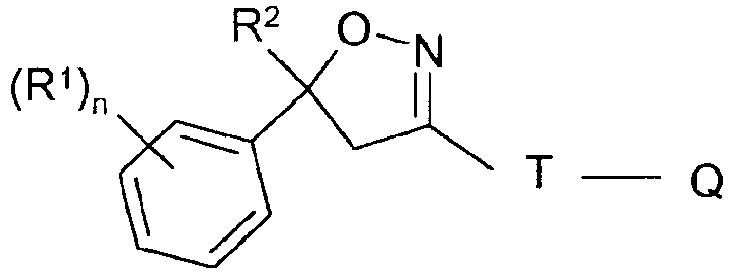
- R1 = halogen, CF3, OCF3, CN,
- n = integer from 0 to 3, preferably 1, 2 or 3,
- R2 = C1-C3-haloalkyl, preferably CF3 or CF2Cl,
- T = 5- or 6-membered ring, which is optionally substituted by one or more radicals Y,
- Y = methyl, halomethyl, halogen, CN, NO2, NH2-C=S, or two adjacent radicals Y form together a chain, especially a three or four membered chain;
- Q = X-NR3R4 or a 5-membered N-heteroaryl ring, which is optionally substituted by one or more radicals;
- X = CH2, CH(CH3), CH(CN), CO, CS,
- R3 = hydrogen, methyl, haloethyl, halopropyl, halobutyl, methoxymethyl,methoxyethyl, halomethoxymethyl, ethoxymethyl, haloethoxymethyl, propoxymethyl, ethylaminocarbonylmethyl, ethylaminocarbonylethyl, dimethoxyethyl, propynylaminocarbonylmethyl, N-phenyl-N-methyl-amino, haloethylaminocarbonylmethyl, haloethylaminocarbonylethyl, tetrahydrofuryl, methylaminocarbonylmethyl, (N,N-dimethylamino)-carbonylmethyl, propylaminocarbonylmethyl, cyclopropylaminocarbonylmethyl, propenylaminocarbonylmethyl, haloethylaminocarbonylcyclopropyl,
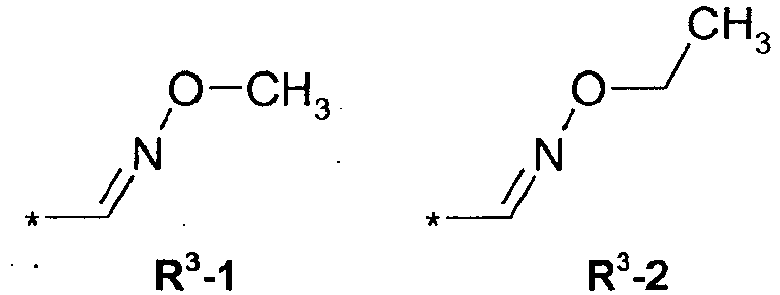


- wherein ZA = hydrogen, halogen, cyano, halomethyl (CF3);
- R4 = hydrogen, ethyl, methoxymethyl, halomethoxymethyl, ethoxymethyl, haloethoxymethyl, propoxymethyl, methylcarbonyl, ethylcarbonyl, propylcarbonyl, cyclopropylcarbonyl, methoxycarbonyl, methoxymethylcarbonyl, aminocarbonyl, ethylaminocarbonylmethyl, ethylaminocarbonylethyl, dimethoxyethyl, propynylaminocarbonylmethyl, haloethylaminocarbonylmethyl, cyanomethylaminocarbonylmethyl, or haloethylaminocarbonylethyl;
- or R3 and R4 together form a substituent selected from the group consisting of:

- In a preferred embodiment the solid carrier is microcrystalline cellulose.
- In one embodiment the composition further comprises pamoic acid or a pharmaceutically acceptable salt thereof.
- In one embodiment the isoxazoline compound is fluralaner.
- In one embodiment the isoxazoline compound is 4-[5-(3,5-dichlorophenyl)-4,5-dihydro-5-(trifluoromethyl)-3-isoxazolyl]-N-[(Z)-(methoxyimino)methyl]-2-methyl-benzamide.
- In one embodiment the isoxazoline compound is afoxolaner.
- In one embodiment the isoxazoline compound is 4-[5-(3,5-dichlorophenyl)-5-(trifluoromethyl)-4H-isoxazol-3-yl]-2-methyl-N-(thietan-3-yl)benzamide.
- In one embodiment the isoxazoline compound is 5-[5-(3,5-Dichlorophenyl)-4,5-dihydro-5-(trifluoromethyl)-3-isoxazolyl]-3-methyl-N-[2-oxo-2-[(2,2,2-trifluoroethyl)amino]ethyl]-2-thiophenecarboxamide.
- In one embodiment the soft chewable pharmaceutical composition comprises an additional pharmaceutically active compound.
- In one embodiment the additional pharmaceutically active compound is a macrocyclic lactone selected from the group of ivermectin, milbemycin, and moxidectin.
- In one embodiment the soft chewable pharmaceutical composition comprises an isoxazoline compound of Formula (I) or a salt or solvate thereof, 2-pyrrolidone, microcrystalline cellulose, sodium starch glycolate, sodium lauryl sulfate, sodium pamoate, magnesium stearate, aspartame, glycerol, soybean oil, and polyethylene glycol
- In another embodiment the solid oral pharmaceutical composition comprises an isoxazoline compound of Formula (I) or a salt or solvate thereof, dimethyl acetamide, microcrystalline cellulose, sodium starch glycolate, sodium lauryl sulfate, sodium pamoate, magnesium stearate, aspartame, glycerol, soybean oil, and polyethylene glycol.
- Another aspect of the invention is a method of preparing a soft chewable pharmaceutical composition comprising dissolving the isoxazoline compound as above in the solvent and then adsorbing the resulting solution on to the solid carrier excipient.
- In one embodiment of this method the solid carrier is microcrystalline cellulose.
- In another embodiment of this method the solvent is 2-pyrrolidone or dimethyl acetamide.
- Another aspect of the current invention is a method of controlling parasite infestation in an animal comprising administering to the animal a therapeutically effective amount of the composition as described above.
- Another aspect of the current invention is a solid oral pharmaceutical composition comprising an isoxazoline compound of Formula (I) or a salt or solvate thereof, and 2-pyrrolidone.
- In one embodiment the isoxazoline compound is fluralaner.
- In one embodiment the isoxazoline compound is 4-[5-(3,5-dichlorophenyl)-4,5-dihydro-5-(trifluoromethyl)-3-isoxazolyl]-N-[(Z)-(methoxyimino)methyl]-2-methyl-benzamide.
- In one embodiment the isoxazoline compound is afoxolaner.
- In one embodiment the isoxazoline compound is 4-[5-(3,5-dichlorophenyl)-5-(trifluoromethyl)-4H-isoxazol-3-yl]-2-methyl-N-(thietan-3-yl)benzamide.
- In one embodiment the isoxazoline compound is 5-[5-(3,5-Dichlorophenyl)-4,5-dihydro-5-(trifluoromethyl)-3-isoxazolyl]-3-methyl-N-[2-oxo-2-[(2,2,2-trifluoroethyl)amino]ethyl]-2-thiophenecarboxamide.
- Another aspect of the current invention is a method of controlling parasite infestation in an animal comprising administering to the animal a therapeutically effective amount of the composition as described above.
-
-
Figure 1 - mean plasma concentration of the CPBI compound fluralaner administered orally to dogs. -
Figure 2 - mean plasma concentration of the isoxaoline compounds afoxolaner and -[5-(3,5-Dichlorophenyl)-4,5-dihydro-5-(trifluoromethyl)-3-isoxazolyl]-3-methyl-N-[2-oxo-2-[(2,2,2-trifluoroethyl)amino]ethyl]-2-thiophenecarboxamide administered orally to dogs. - The present invention relates to the formulation of a soft chewable form (sometimes referred to as solid pharmaceutical composition or formulation) containing an isoxazoline compound of Formula (I) (as described below), that provides significantly improved bioavailability of such isoxazoline compound after administration to an animal.
- Specifically, in this formulation the isoxazoline compound of Formula (I) is dissolved in a solvent. This drug solution is then adsorbed onto a solid carrier which is incorporated into a traditional solid oral dosage form. Utilizing pre-dissolved isoxazoline compounds of Formula (I) in the formulation significantly improves the bioavailability of the active drug substance compared to traditional solid oral dosage forms containing the active drug substance incorporated as a solid.
- As indicated in the example the inventors discovered, that with dimethylacetamide (DMAC) as solvent for isoxazoline compounds in a solid oral dosage form similar pharmacokinetic profiles were obtained when it was s dosed at a lower dose compared to dosage forms with the active incorporated in higher dosage as a solid.
- When 2-pyrrolidone (2-pyrol) was utilized as the solvent in the formulation, significantly higher plasma levels were observed compared to the control, even with the formulation comprising an isoxazoline compound dosed at a lower dose.
- This formulation approach provides unexpectedly significant improvement in bioavailability, enabling a significantly lower dosage required to achieve similar or superior pharmakokinetic profiles. Hence, similar blood levels can be achieved that lead to similar effectiveness to control parasites but with a reduced dosage of the isoxazoline compound.
- The solid oral dosage form according to the invention comprises an isoxazoline compound of the Formula (I)

- R1 = halogen, CF3, OCF3, CN,
- n = integer from 0 to 3, preferably 1, 2 or 3,
- R2 = C1-C3-haloalkyl, preferably CF3 or CF2Cl,
- T = 5- or 6-membered ring, which is optionally substituted by one or more radicals Y,
- Y = methyl, halomethyl, halogen, CN, NO2, NH2-C=S, or two adjacent radicals Y form together a chain CH-CH=CH-CH, N-CH=CH-CH, CH-N=CH-CH, CH-CH=N-CH, or CH-CH=CH-N, HC=HC-CH, CH-CH=CH, CH=CH-N, N-CH=CH;
- Q = X-NR3R4 or a 5-membered N-heteroaryl ring, which is optionally substituted by one or more radicals ZA, ZB ZD;
- X = CH2, CH(CH3), CH(CN), CO, CS,
- R3 = hydrogen, methyl, haloethyl, halopropyl, halobutyl, methoxymethyl,methoxyethyl, halomethoxymethyl, ethoxymethyl, haloethoxymethyl, propoxymethyl, ethylaminocarbonylmethyl, ethylaminocarbonylethyl, dimethoxyethyl, propynylaminocarbonylmethyl, N-phenyl-N-methyl-amino, haloethylaminocarbonylmethyl, haloethylaminocarbonylethyl, tetrahydrofuryl, methylaminocarbonylmethyl, (N,N-dimethylamino)-carbonylmethyl, propylaminocarbonylmethyl, cyclopropylaminocarbonylmethyl, propenylaminocarbonylmethyl, haloethylaminocarbonylcyclopropyl,


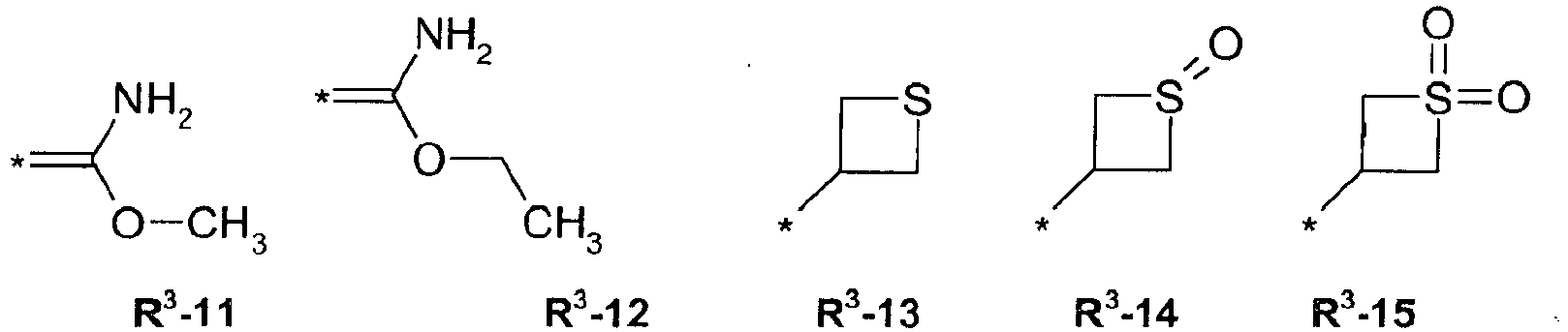
- R4 = hydrogen, ethyl, methoxymethyl, halomethoxymethyl, ethoxymethyl, haloethoxymethyl, propoxymethyl, methylcarbonyl, ethylcarbonyl, propylcarbonyl, cyclopropylcarbonyl, methoxycarbonyl, methoxymethylcarbonyl, aminocarbonyl, ethylaminocarbonylmethyl, ethylaminocarbonylethyl, dimethoxyethyl, propynylaminocarbonylmethyl, haloethylaminocarbonylmethyl, cyanomethylaminocarbonylmethyl, or haloethylaminocarbonylethyl; or
- R3 and R4 together form a substituent selected from the group consisting of:

- In one preferred embodiment in Formula (I) T is selected from


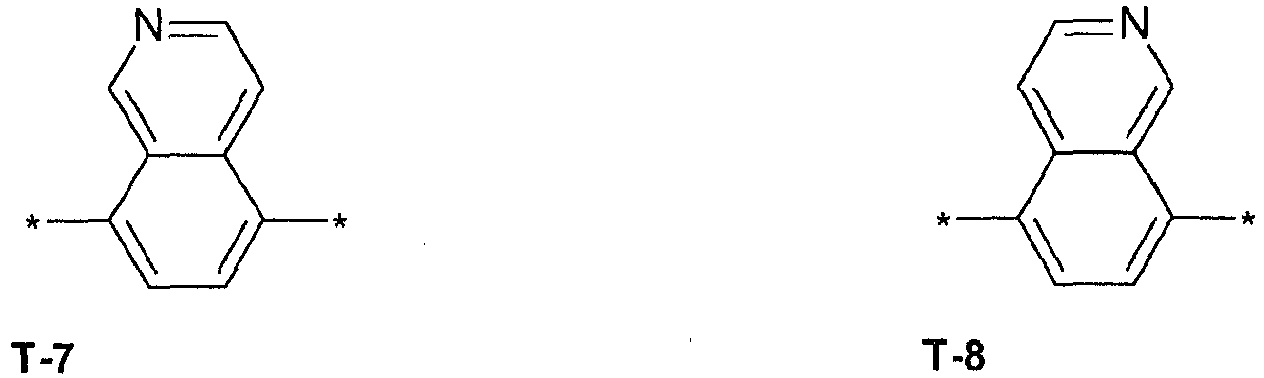
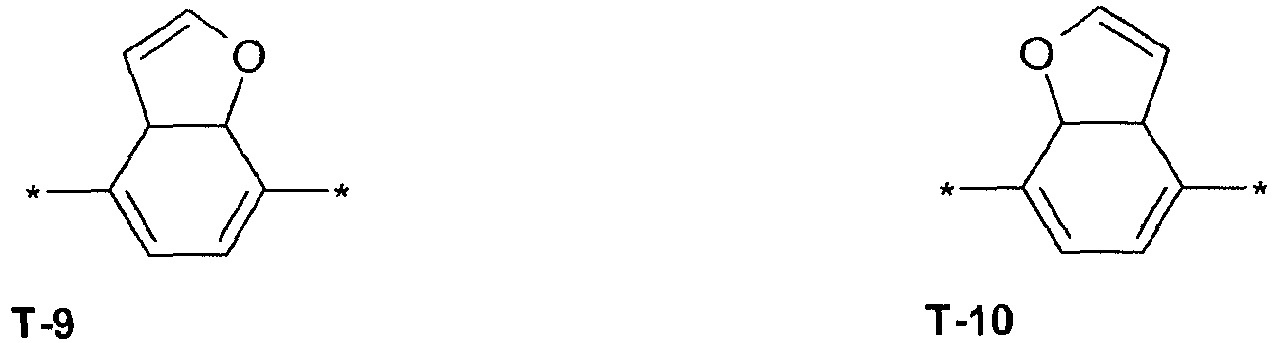

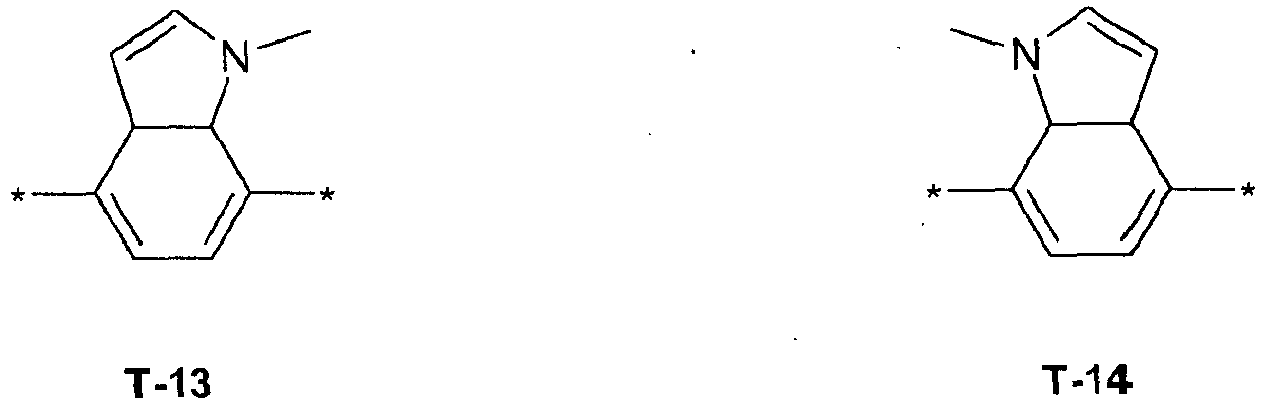

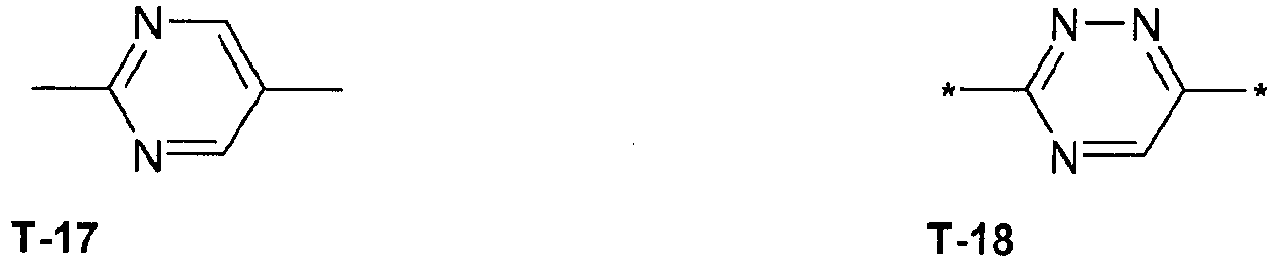


- In an preferred embodiment in Formula (I) Q is selected from
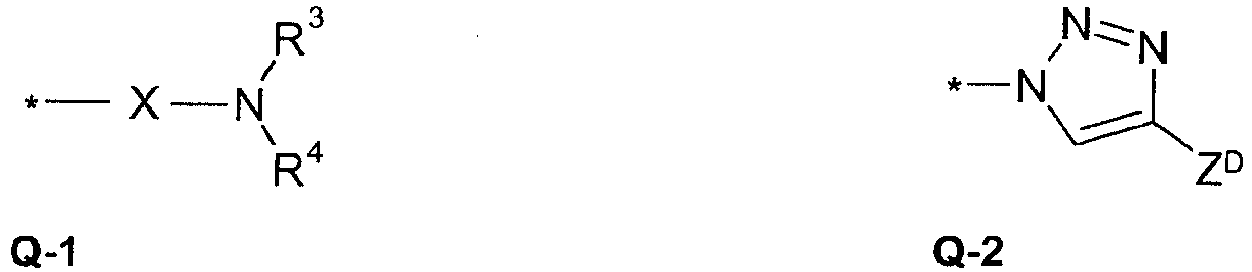


- ZB =


- ZD =
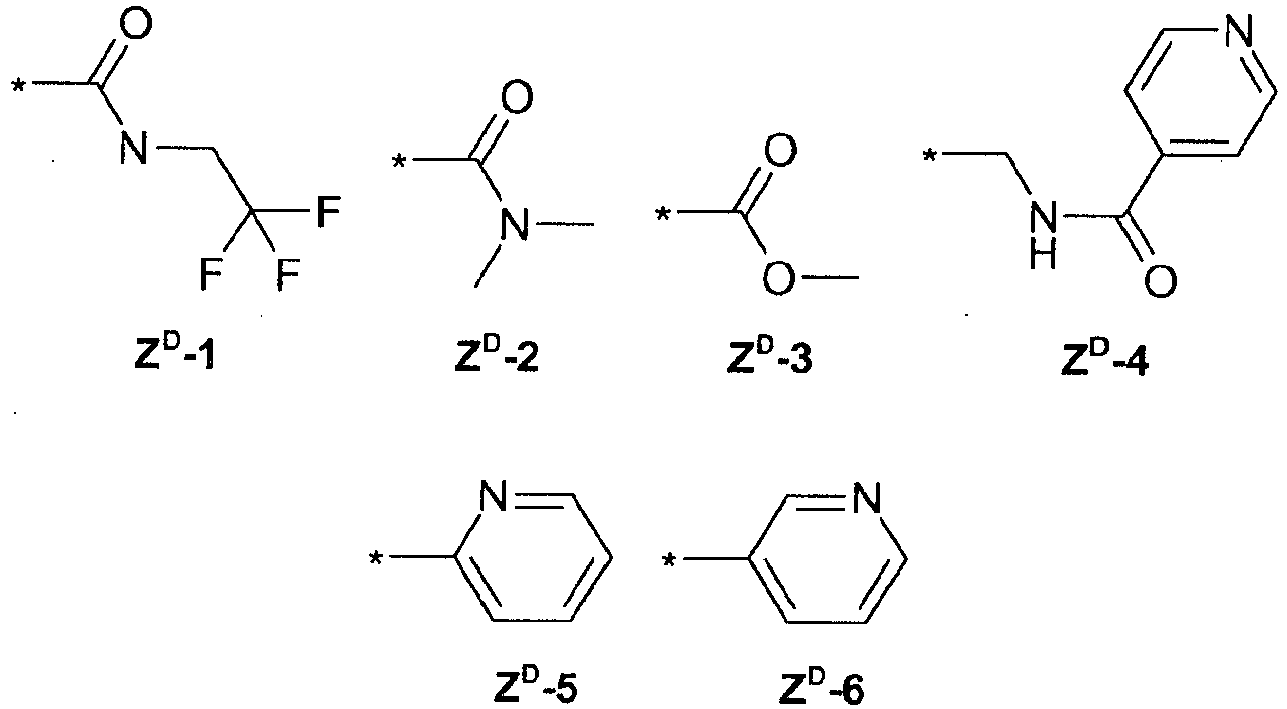
- Preferred compounds of Formula (I) are:
(R1)n R2 R3 R4 T Y Q Z X 3-Cl, 5Cl CF3 CH2CF3 H T-2 - Q-1 - C(O) 3-Cl, 5Cl CF3 CH2CH3 H T-2 - Q-1 - C(O) 3-Cl, 5Cl CF3 CH2CH2OCH3 H T-2 - Q-1 - C(O) 3-Cl, 5Cl CF3 CH2C(O)NHCH2CF3 H T-2 - Q-1 - C(O) 3-Cl, 5Cl CF3 CH2C(O)NHCH2CH3 H T-2 - Q-1 - C(O) 3-CF3, 5-CF3 CF3 CH2C(O)NHCH2CF3 H T-2 - Q-1 - C(O) 3-CF3, 5-CF3 CF3 CH2C(O)NHCH2CH3 H T-2 - Q-1 - C(O) 3-CF3, 5-Cl CF3 CH2C(O)NHCH2CF3 H T-2 - Q-1 - C(O) 3-CF3, 5-Cl CF3 CH2C(O)NHCH2CH3 H T-2 - Q-1 - C(O) 3-Cl, 5Cl CF3 - T-2 - Q-6 ZB-7 3-Cl, 5Cl CF3 - - T-2 - Q-7 ZB-7 3-Cl, 5Cl CF3 - - T-2 - Q-5 ZB-7 3-Cl, 5Cl CF3 - - T-2 - Q-2 ZD-1 3-Cl, 5Cl CF3 CH2C(O)NHCH2CF3 H T-3 CH3 Q-1 - C(O) 3-Cl, 5Cl CF3 CH2C(O)NHCH2CC H T-3 CH3 Q-1 - C(O) 3-Cl, 5Cl CF3 CH2C(O)NHCH2CN H T-3 CH3 Q-1 - C(O) 3-Cl, 5Cl CF3 CH2C(O)NHCH2CH3 H T-3 CH3 Q-1 - C(O) 3-CF3, 5-CF3 CF3 CH2C(O)NHCH2CF3 H T-3 CH3 Q-1 - C(O) 3-CF3, 5-CF3 CF3 CH2C(O)NHCH2CH3 H T-3 CH3 Q-1 - C(O) 3-Cl, 4-Cl, 5-Cl CF3 CH2C(O)NHCH2CF3 H T-3 CH3 Q-1 - C(O) 3-Cl, 4-Cl, 5-Cl CF3 CH2C(O)NHCH2CH3 H T-3 CH3 Q-1 - C(O) 3-Cl, 4-F, 5-Cl CF3 CH2C(O)NHCH2CF3 H T-3 CH3 Q-1 - C(O) 3-Cl, 4-F, 5-Cl CF3 CH2C(O)NHCH2CH3 H T-3 CH3 Q-1 - C(O) 3-Cl, 5-CI CF3 CH2C(O)NHCH2CF3 H T-20 - Q-1 - C(O) 3-Cl, 5-Cl CF3 CH2C(O)NHCH2CH3 H T-20 - Q-1 - C(O) 3-CF3, 5-CF3 CF3 CH2C(O)NHCH2CF3 CH3 T-20 - Q-1 - C(O) 3-CF3, 5-CF3 CF3 CH2C(O)NHCH2CH3 CH3 T-20 - Q-1 - C(O) 3-CF3, 5-CF3 CF3 CH2C(O)NHCH2CF3 H T-20 - Q-1 - C(O) 3-CF3, 5-CF3 CF3 CH2C(O)NHCH2CH3 H T-20 - Q-1 - C(O) 3-CF3, 5-CF3 CF3 CH2C(O)NHCH2CF3 H T-21 - Q-1 - C(O) 3-CF3, 5-CF3 CF3 CH2C(O)NHCH2CH3 H T-21 - Q-1 - C(O) 3-Cl, 5-Cl CF3 CH2C(O)NHCH2CF3 H T-21 - Q-1 - C(O) 3-Cl, 5-Cl CF3 CH2C(O)NHCH2CH3 H T-21 - Q-1 - C(O) 3-Cl, 5-Cl CF3 CH2CH2SCH3 H T-21 - Q-1 - C(O) 3-Cl, 4-Cl, 5-Cl CF3 C(O)CH3 H T-22 F Q-1 - CH2 3-Cl, 4-Cl, 5-Cl CF3 C(O)CH(CH3)2 H T-22 F Q-1 - CH2 3-Cl, 4-Cl, 5-Cl CF3 C(O)-cyclo-propyl H T-22 F Q-1 - CH2 3-Cl, 4-F, 5-Cl CF3 C(O)CH3 H T-22 F Q-1 - CH2 3-Cl, 4-Cl, 5-Cl CF3 C(O)CH2CH3 H T-22 F Q-1 - CH2 3-Cl, 4-F, 5-Cl CF3 C(O)CH3 H T-22 Cl Q-1 - CH2 3-Cl, 5-Cl CF3 CH2C(O)NHCH2CF3 H T-1 CH3 Q-1 - C(O) 3-Cl, 5-CI CF3 CH2C(O)NHCH2CH3 H T-1 CH3 Q-1 - C(O) 3-Cl, 5-Cl CF3 R3-1 (Z) H T-1 CH3 Q-1 - C(O) 3-Cl, 5-Cl CF3 R3-1 (E) H T-1 CH3 Q-1 - C(O) - Especially preferred compounds of Formula (I) are
(R1)n R2 R3 R4 T Y Q Z X 3-Cl, 5Cl CF3 CH2CF3 H T-2 - Q-1 - C(O) 3-Cl, 5Cl CF3 CH2CH3 H T-2 - Q-1 - C(O) 3-Cl, 5Cl CF3 CH2CH2OCH3 H T-2 - Q-1 - C(O) 3-Cl, 5Cl CF3 CH2C(O)NHCH2CF3 H T-2 - Q-1 - C(O) 3-CF3, 5-CF3 CF3 CH2C(O)NHCH2CF3 H T-2 - Q-1 - C(O) 3-CF3, 5-Cl CF3 CH2C(O)NHCH2CF3 H T-2 - Q-1 - C(O) 3-Cl, 5Cl CF3 - T-2 - Q-6 ZB-7 3-Cl, 5Cl CF3 - - T-2 - Q-7 ZB-7 3-Cl, 5Cl CF3 - - T-2 - Q-5 ZB-7 3-Cl, 5Cl CF3 - - T-2 - Q-2 ZD-1 3-Cl, 5Cl CF3 CH2C(O)NHCH2CF3 H T-3 CH3 Q-1 - C(O) 3-Cl, 5Cl CF3 CH2C(O)NHCH2CC H T-3 CH3 Q-1 - C(O) 3-Cl, 5Cl CF3 CH2C(O)NHCH2CN H T-3 CH3 Q-1 - C(O) 3-CF3, 5-CF3 CF3 CH2C(O)NHCH2CF3 H T-3 CH3 Q-1 - C(O) 3-Cl, 4-Cl, 5-Cl CF3 CH2C(O)NHCH2CF3 H T-3 CH3 Q-1 - C(O) 3-Cl, 4-F, 5-Cl CF3 CH2C(O)NHCH2CF3 H T-3 CH3 Q-1 - C(O) 3-Cl, 5-Cl CF3 CH2C(O)NHCH2CF3 H T-20 Q-1 - C(O) 3-CF3, 5-CF3 CF3 CH2C(O)NHCH2CF3 CH 3 T-20 Q-1 - C(O) 3-CF3, 5-CF3 CF3 CH2C(O)NHCH2CF3 H T-20 Q-1 - C(O) 3-CF3, 5-CF3 CF3 CH2C(O)NHCH2CF3 H T-21 Q-1 - C(O) 3-Cl, 5-Cl CF3 CH2C(O)NHCH2CF3 H T-21 Q-1 - C(O) 3-Cl, 5-Cl CF3 CH2CH2SCH3 H T-21 Q-1 - C(O) 3-Cl, 4-Cl, 5-Cl CF3 C(O)CH3 H T-22 F Q-1 - CH2 3-Cl, 4-Cl, 5-Cl CF3 C(O)CH(CH3)2 H T-22 F Q-1 - CH2 3-Cl, 4-Cl, 5-Cl CF3 C(O)-cyclo-propyl H T-22 F Q-1 - CH2 3-Cl, 4-F, 5-Cl CF3 C(O)CH3 H T-22 F Q-1 - CH2 3-Cl, 4-Cl, 5-Cl CF3 C(O)CH2CH3 H T-22 F Q-1 - CH2 3-Cl, 4-F, 5-Cl CF3 C(O)CH3 H T-22 Cl Q-1 - CH2 3-Cl, 5-Cl CF3 CH2C(O)NHCH2CF3 H T-1 CH3 Q-1 - C(O) 3-Cl, 5-Cl CF3 R3-1 (Z) H T-1 CH3 Q-1 - C(O) 3-Cl, 5-Cl CF3 R3-1 (E) H T-1 CH3 Q-1 - C(O) - A more preferred compound has the Formula (II),

- R1a, R1b, R1c are independently from each other hydrogen, Cl or CF3, preferably R1a and R1c are Cl or CF3 and R1b is hydrogen,
- T is


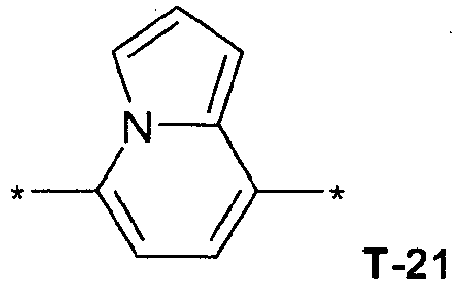
- wherein Y is methyl, bromine, Cl, F, CN or C(S)NH2, and
- Q is as described above.
- In another preferred embodiment in R3 is H and R4 is -CH2-C(O)-NH-CH2-CF3, -CH2-C(O)-NH-CH2-CH3, -CH2-CH2-CF3 or -CH2-CF3..
- In one embodiment the compound of Formula (I) is 4-[5-(3,5-Dichlorophenyl)-5-trifluoromethyl-4,5-dihydroisoxazol-3-yl]-2-methyl-N-[(2,2,2-trifluoro-ethylcarbamoyl)-methyl]-benzamide (CAS RN 864731-61-3 - USAN fluralaner).
- In another embodiment the compound of Formula (I) is (Z)-4-[5-(3,5-Dichlorophenyl)-5-trifluoromethyl-4,5-dihydroisoxazol-3-yl]-N-[(methoxyimino)methyl]-2-methylbenzamide (CAS RN 928789-76-8).
- In another embodiment the compound of Formula (I) is 4-[5-(3,5-dichlorophenyl)-5-(trifluoromethyl)-4H-isoxazol-3-yl]-2-methyl-N-(thietan-3-yl)benzamide (CAS RN 1164267-94-0) that was disclosed in
WO2009/0080250 - In another embodiment the compound of Formula (I) is 4-[5-[3-Chloro-5-(trifluoromethyl)phenyl]-4,5-dihydro-5-(trifluoromethyl)-3-isoxazolyl]-N-[2-oxo-2-[(2,2,2-trifluoroethyl)amino]ethyl]-1-naphthalenecarboxamide (CAS RN 1093861-60-9, USAN - afoxolaner) that was disclosed in
WO2007/079162 -. - In another embodiment the compound of Formula (I) is 5-[5-(3,5-Dichlorophenyl)-4,5-dihydro-5-(trifluoromethyl)-3-isoxazolyl]-3-methyl-N-[2-oxo-2-[(2,2,2-trifluoroethyl)amino]ethyl]-2-thiophenecarboxamide (CAS RN 1231754-09-8) that was disclosed in
WO2010/070068 . - An especially preferred compound is
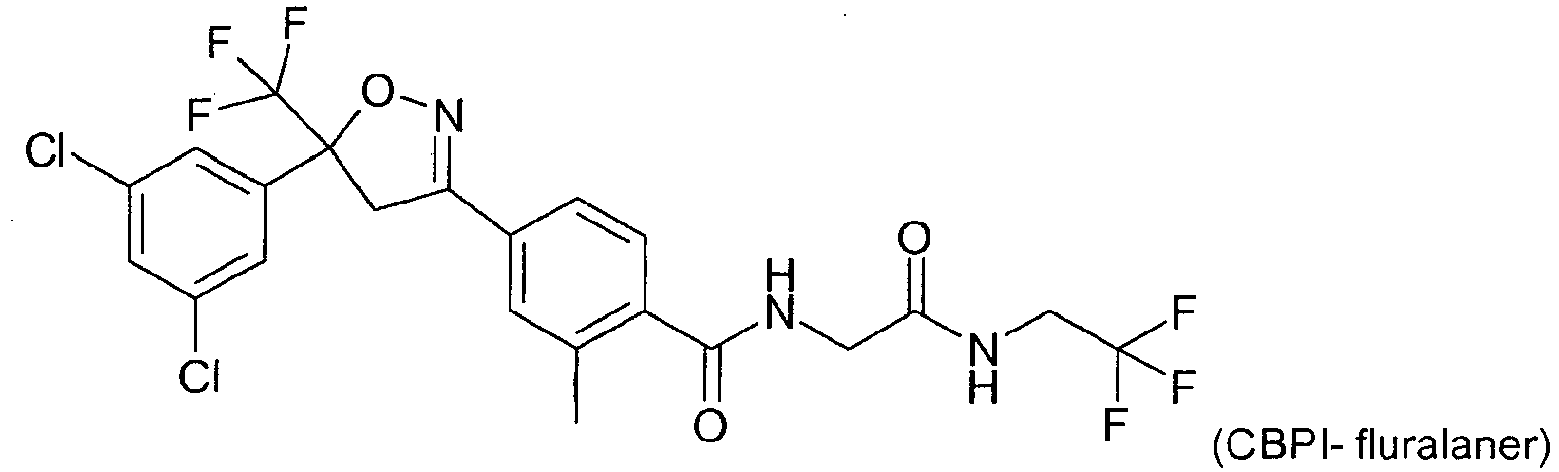
- Especially preferred compounds of Formula (II) are:
(R1)n R2 R3 R4 T Y Q Z X 3-Cl, 5Cl CF3 CH2CF3 H T-2 - Q-1 - C(O) 3-Cl, 5Cl CF3 CH2C(O)NHCH2CF3 H T-2 - Q-1 - C(O) 3-CF3, 5-CF3 CF3 CH2C(O)NHCH2CF3 H T-2 - Q-1 - C(O) 3-CF3, 5-Cl CF3 CH2C(O)NHCH2CF3 H T-2 - Q-1 - C(O) 3-Cl, 5Cl CF3 - T-2 - Q-6 ZB-7 3-Cl, 5Cl CF3 - - T-2 - Q-7 ZB-7 3-Cl, 5Cl CF3 - - T-2 - Q-5 ZB-7 3-Cl, 5Cl CF3 - - T-2 - Q-2 ZD-1 3-Cl, 5Cl CF3 CH2C(O)NHCH2CF3 H T-3 CH3 Q-1 - C(O) 3-CF3, 5-CF3 CF3 CH2C(O)NHCH2CF3 H T-3 CH3 Q-1 - C(O) 3-Cl, 4-Cl, 5-Cl CF3 CH2C(O)NHCH2CF3 H T-3 CH3 Q-1 - C(O) 3-Cl, 4-F, 5-Cl CF3 CH2C(O)NHCH2CF3 H T-3 CH3 Q-1 - C(O) 3-Cl, 5-Cl CF3 CH2C(O)NHCH2CF3 H T-20 - Q-1 - C(O) 3-CF3, 5-CF3 CF3 CH2C(O)NHCH2CF3 CH3 T-20 - Q-1 - C(O) 3-CF3, 5-CF3 CF3 CH2C(O)NHCH2CF3 H T-20 - Q-1 - C(O) 3-CF3, 5-CF3 CF3 CH2C(O)NHCH2CF3 H T-21 - Q-1 - C(O) 3-Cl, 5-Cl CF3 CH2C(O)NHCH2CF3 H T-21 - Q-1 - C(O) 3-Cl, 5-Cl CF3 CH2C(O)NHCH2CF3 H T-1 CH3 Q-1 - C(O) 3-Cl, 5-Cl CF3 R3-1 (Z) H T-1 CH3 Q-1 - C(O) 3-Cl, 5-Cl CF3 R3-1 (E) H T-1 CH3 Q-1 - C(O) - Isoxazoline compounds are known in the art and these compounds and their use as parasiticide are described, for example, in US patent application No.
US 2007/0066617 , and International Patent applicationsWO 2007/079162 ,WO 2009/002809 ,WO 2009/024541 ,WO 2009/003075 ,WO2009/080250 ,WO 2010/070068 ,WO 2010/079077 ,WO 2011/075591 andWO 2011/124998 , the disclosures of which, as well as the references cited herein, are incorporated by reference. This class of compounds is known to possess excellent activity against ectoparasites such as ticks and fleas. - The isoxazoline compounds may exist in various isomeric forms. A reference to an isoxazoline compound always includes all possible isomeric forms of such compound. Unless otherwise stated, a compound structure that does not indicate a particular conformation is intended to encompass compositions of all the possible conformational isomers of the compound, as well as compositions comprising fewer than all the possible conformational isomers. In some embodiments, the compound is a chiral compound. In some embodiments, the compound is a non-chiral compound.
- Isoxazoline compounds of Formula (I) can be prepared according to one or other of the processes described e.g. in Patent Applications
US 2007/0066617 ,WO 2007/079162 ,WO 2009/002809 ,WO 2009/080250 ,WO 2010/070068 ,WO 2010/079077 ,2011/075591 andWO 2011/124998 or any other process coming within the competence of a person skilled in the art who is an expert in chemical synthesis. For the chemical preparation of the products of the invention, a person skilled in the art is regarded as having at his disposal, inter alia, the entire contents of "Chemical Abstracts" and of the documents which are cited therein. - The formulations according to the invention are effective for long durations of time in the treatment of ectoparasites of mammals and, in particular, of fleas and ticks in small mammals such as dogs and cats.
- The amount of the isoxazoline compound of Formula (I) in the formulation may be in the range of 1-15% w/w. In an alternative embodiment the amount of such compound may be in the range of 2.0-7.5% w/w. The preferred range is 3.0-4.5% w/w.
- In one embodiment, the composition comprises a solid carrier, e.g. microcrystalline cellulose, colloidal silicone dioxide, polyvinyl pyrrolidone or other solid carrier excipient with appropriate characteristic behaviours.
- In one embodiment the solid carrier is microcrystalline cellulose (10.0-50.0% w/w, preferred 15.0-25.0%w/w).
- In the formulation according to the invention one preferred solvent is a pyrrolidone solvent, especially 2-pyrrolidone. Alternatively other pyrrolidone solvents such as N-methylpyrrolidone can be used.
- Another preferred solvent is dimethyl acetamide (DMAC). The preferred range of dimethyl acetamide (DMAC) is 2.0-35.0%w/w. Alternative solvents for use in the current invention dimethyl sulfoxide, dimethyl formamide, diethylene glycol monoethyl ether, ethyl lactate, ethylene monomethyl ether, glycofurol, N,N-diethyl-m-toluamide (DEET) or other solvent with suitable solubility for the compound of Formula (I). Solvent combinations may also be utilized in the formulation according to the invention. The preferred range of such other solvents is 2.0-35.0%w/w.
- The amount of the pyrrolidone solvent, especially 2-pyrrolidone in the formulation may be in the range of 2.5-30.0%w/w. The preferred range is 7.0-12.0%w/w. The preferred range of other dimethyl acetamide is 2.0-35.0%w/w.
- "Soft chew" or "Soft chewable veterinary pharmaceutical product" is intended to mean a product which is solid at room temperature and that is soft to chew and which is functionally chewy because the product has some plastic texture during the process of mastication in the mouth. Such soft chews have a softness that is similar to a cooked ground meat patty.
- In soft chew formulations the forming agent is important for the texture of the soft chew and the possibility to form single soft chews from the dough that stay intact and separate. Forming agents are agents providing texture to the soft chew product, like for example polyethylene glycol (PEG), microcrystalline wax, cetyl alcohol or polyvinylpyrrolidone (PVP). In an embodiment, the forming agent is polyethylene glycol (PEG). Moreover, depending upon the desired consistency of the soft chew, different molecular weight PEG may be utilized. In an embodiment, PEG 8000 is utilized. However, the PEG chosen is a matter of choice and the molecular weight may be higher or lower than 8000, but preferably higher than 600. Alternatively
PEG 3500 might be used. - In an embodiment, the forming agent comprises about 3.0 % to about 35 % w/w of the pharmaceutical composition. In an alternate embodiment, a forming agent comprises about 4.5 %to about 30 % w/w% of the pharmaceutical composition. In an alternate embodiment, a forming agent comprises about 10 % to about 20 %w/w of the pharmaceutical composition. In case the forming agent is polyvinylpyrrolidone e.g. 2, 4, 5, 6 or 9 % w/w are present in the soft chew.
- A preferred formulation for the solid oral pharmaceutical composition includes:
- 4.4% w/w compound of Formula (I), especially fluralaner
- 10.5% w/w 2-pyrrolidone
- 25.0% w/w microcrystalline cellulose
- 5.1% w/w sodium starch glycolate
- 15.0% w/w flavour
- 2.0% w/w sodium lauryl sulphate
- 2.5% w/w sodium pamoate
- 0.5% w/w aspartame
- 0.5% w/w magnesium stearate
- 1.5% w/w glycerol
- 17.25% w/w soybean oil
- 15.75% w/w PEG8000
- The amount of glycerol in the formulation may range from 0-12.0% with the preferred range of 0.5-10.0%. Soybean oil amounts may range from 5.0-25.0% with the preferred range of 10.0-22.0%. Desired ranges of the other excipients include sodium starch glycolate (2.0-15.0%), flavor (5-25%), sodium lauryl sulfate (0.05-5.0%), sodium pamoate (0.01-5.0%), aspartame (0.01-2.0%), and magnesium stearate (0.01-2.0%).
- The formulation according to the current invention conventionally further comprise physiologically acceptable formulation excipients known in the art e.g. as described in "Gennaro, Remington: The Science and Practice of Pharmacy" (20th Edition, 2000) incorporated by reference herein. All such ingredients, carriers and excipients must be substantially pharmaceutically or veterinary pure and non-toxic in the amounts employed and must be compatible with the pharmaceutically active ingredients.
- Additional excipients that can be present in the formulation are e.g. one or more fillers, one or more flavours, or sugar components, surfactants, stabilizers, flow agents, disintegration agents, preservatives and/or lubricating agents.
- This invention is also directed to formulations as described above with combinations comprising more than one pharmaceutically active ingredient, e.g. in addition to the compound of Formula (I) another compound of Formula (I) or a pharmaceutically active ingredient with a different structure.
- Preferred combinations comprising active ingredients selected from the group consisting of isoxazoline compounds of Formula (I) or (II) and avermectins and milbemycins. In one embodiment the formulation, especially soft chew comprises a combination of an isoxazoline compound of Formula (I), especially fluralaner or afoxolaner, with ivermectin. In another embodiment the soft chew comprises a combination of an isoxazoline compound of Formula (I), especially fluralaner por afoxolaner, with milbemycin or with moxidectin.
- Other combinations of the present invention can include insect or acarid rrowth regulators (AGRs or IGRs) such as e.g. fenoxycarb, lufenuron, diflubenzuron, novaluron, triflumuron, fluazuron, cyromazine, methoprene, pyriproxyfen etc., thereby providing both initial and sustained control of parasites (at all stages of insect development, including eggs) on the animal subject, as well as within the environment of the animal subject.
- The inventors discovered that oral solid dosage forms of isoxazoline compounds of Formula (I) as described above, especially of fluralaner, afoxoloaner can be produced that result in a higher bioavailability of the isoxazoline compound after administration to animals. In such methods the isoxazoline compound of Formula (I) is first dissolved in a suitable solvent (e.g. 2-pyrol or DMAC) and then adhered to a solid carrier (e.g. microcrystalline cellulose). Such process is used in general for soft chews (soft chewable tablets).
- A general method for preparing a solid oral dosage form, which is a soft chewable tablet formulation comprises the steps of:
- 1. Dissolve the isoxazoline compound (e.g. fluralaner or afoxolaner) in the solvent (e.g. 2-pyrrolidone) to form a solution.
- 2. Add the isoxazoline solution to the solid carrier (e.g. microcrystalline cellulose) and mix to form a first dry mixture.
- 3. Add all other dry excipients to the first dry mixture and mix to form a second dry mixture.
- 4. Add liquid ingredients, glycerol and soybean oil, to the second dry mixture. Mix to form wet mass.
- 5. Melt a wax (e.g. polyethylene glycol 8000) and add to the wet mass. Mix well to form the final bulk mass.
- 6. Form appropriately sized chewable tablets
- In an embodiment the tablets may be formed from the final bulk mass utilizing a forming machine. Alternatively, the tablets may be formed by other means known in the art. For example, the tablets may be formed by hand.
- In one embodiment the product of the invention is intended for use for controlling a parasitic insect- , acarid and/or helminth, especially parasitic insect and/ or acarid infestation. The term "controlling a parasitic insect- and/or acarid infestation" refers to preventing, reducing or eliminating an infestation by such parasites on animals preferably by killing the insects and/ or acarids or nematode parasites within hours or days.
- The term "parasitic insect- and acarid" refers to ectoparasites e.g. insect and acarine pests that commonly infest or infect animals. Examples of such ectoparasites include the egg, larval, pupal, nymphal and adult stages of lice, fleas, mosquitoes, mites, ticks, and biting or nuisance fly species. Especially important are fleas and ticks, especially their adult stages. Examples of invertebrate parasitic pests controlled by administering the solid oral formulation of this invention to an animal to be protected include ectoparasites (arthropods, acarines, etc) and endoparasites (helminths, e.g., nematodes, trematodes, cestodes, acanthocephalans, etc.).
- In particular, the formulations of this invention are effective against ectoparasites including: flies such as Haematobia (Lyperosia) irritans (horn fly), Stomoxys calcitrans (stable fly), Simulium spp. (blackfly), Glossina spp. (tsetse flies), Hydrotaea irritans (head fly), Musca autumnalis (face fly), Musca domestica (house fly), Morellia simplex (sweat fly), Tabanus spp. (horse fly), Hypoderma bovis, Hypoderma lineatum, Lucilia sericata, Lucilia cuprina (green blowfly), Calliphora spp. (blowfly), Protophormia spp., Oestrus ovis (nasal botfly), Culicoides spp. (midges), Hippobosca equine, Gastrophilus instestinalis, Gastrophilus haemorrhoidalis and Gastrophilus naslis; lice such as Bovicola (Damalinia) bovis, Bovicola equi, Haematopinus asini, Felicola subrostratus, Heterodoxus spiniger, Lignonathus setosus and Trichodectes canis; keds such as Melophagus ovinus; mites such as Psoroptes spp., Sarcoptes scabei, Chorioptes bovis, Demodex equi, Cheyletiella spp., Notoedres cati, Trombicula spp. and Otodectes cyanotis (ear mites); ticks such as Ixodes spp., Boophilus spp., Rhipicephalus spp., Amblyomma spp., Dermacentor spp., Hyalomma spp. and Haemaphysalis spp.; and fleas such as Ctenocephalides felis (cat flea) and Ctenocephalides canis (dog flea).
- In general, the formulations according to the invention will contain an effective amount of the isoxazoline compounds of Formula (I) as defined above, meaning a non-toxic but sufficient amount to provide the desired control effect. A person skilled in the art using routine experimentation may determine an appropriate "effective" amount in any individual case. Such an amount will depend on the age, condition, weight and type of the target animal.
- The solid oral dosage forms may be formulated to contain an amount of the isoxazoline compound of Formula (I) that is adjusted to animals in a specific weight range. The animals may receive a dosage of the solid oral formulation according to the invention every 2, 3, 4, 5 or 6 months or receives a monthly, weekly or daily dosage. The treatment can, for example, be continuing or seasonal. The time period between treatments depends upon factors such as the parasite(s) being treated, the degree of infestation, the type of mammal or bird and the environment where it resides. It is well within the skill level of the practitioner to determine a specific administration period for a particular situation.
- The solid oral formulations of the present invention are especially suitable for combating parasites that infest mammals (including humans). Mammalian subjects include primates (e.g., monkeys), bovine (e.g., cattle or dairy cows), porcine (e.g., hogs or pigs), ovine (e.g., goats or sheep), equine (e.g., horses), canine (e.g., dogs), feline (e.g., house cats), camels, deer, donkeys, buffalos, antelopes, rabbits, and rodents (e.g., guinea pigs, squirrels, rats, mice, gerbils, and hamsters). Of particular note is the embodiment wherein the animals to be protected are domesticated dogs (i.e. Canis lupus familiaris) and domestic house cats (i.e. Felis catus).
- In some embodiments of this invention, the solid oral formulation of an isoxazoline of Formula (I) is administered to treat parasitoses of an animal (or make a medicament to treat parasitoses of an animal). The term "parasitoses" includes pathologic conditions and diseases associated with or caused by one or more ectoparasites directly, such as, for example, anemia and flea allergy dermatitis. It also includes pathologic conditions or diseases associated with caused by one or more vector-transmitted pathogens, such as, for example, Lyme disease, Ehrlichiosis (particularly Canine Ehrlichiosis), and Rocky Mountain spotted fever from vector ticks.
- This invention also relates to treatment methods wherein at least an ancillary goal of controlling ectoparasites in and/or on an animal is to control an ectoparasitic infestation in an environment that is occupied (periodically or continuously) by the animal. In some such embodiments, for example, the animal is a companion animal (e.g., a cat or dog). The environment may be, for example, a house or other shelter; a room; a pen, a stall, or other confinement means; bedding; etc.
- This invention also is directed to kits that are, for example, suitable for use in performing the treatment methods described above. In general, such a kit will comprise an oral solid formulation according to the invention comprising a therapeutically effective amount of a isoxazoline of Formula (I), and an additional component(s). The additional component(s) may be, for example, one or more of the following: a diagnostic tool, instructions for administering the composition, an apparatus for administering the composition, a container comprising an excipient or other active ingredient to be mixed or administered in combination with the composition, or a memory aid (e.g., a stamp to adhere to a calendar to remind an animal owner of a time to administer a subsequent dose of the composition).
- As used herein, the term "w/w" designates weight/weight, the term "w/v" designates weight/volume, and the term "mg/kg" designates milligrams per kilogram of body weight. As used herein, %w/w represents the percentage by weight of an ingredient in the recipe of the product.
- The invention having been fully described, its practice is illustrated by the examples provided below. The examples do not limit the scope of the invention, which is defined entirely by the appended claims.
- An embodiment for a direct compression tablet containing two active ingredients includes:
- 0.015% w/w ivermectin
- 2.5% w/w fluralaner
- 0.1 % w/w citric acid
- 0.5% w/w Cremaphor RH40
- 4.5% w/w 2-pyrrolidone
- 50.0% w/w microcrystalline cellulose
- 33.735% w/w corn starch
- 8.0% w/w flavor
- 0.5% magnesium stearate
- 0.1 % w/w aspartame
- 0.05% w/w red iron oxide
- An embodiment for soft chewable tablets containing two active ingedients includes:
- 0.42% w/w moxidectin
- 1.67% w/w fluralaner
- 0.2% w/w citric acid
- 4.0% w/w 2-pyrol
- 10.0% w/w microcrystalline cellulose
- 3.0% w/w flavor
- 0.2% w/w aspartame
- 4.0% w/w Klucel
- 30.51 % w/w soy grits
- 4.0% w/w propylene glycol
- 4.0% w/w Miglyol 812
- 8.0% w/w cetyl alcohol
- 10.0% w/w Cremaphor RH40
- 20.0% w/w sodium starch glycolate
- Additional embodiments for the soft chewable tablets include:
- 5.333% w/w fluralaner
- 9.0% w/w 2-pyrrolidone
- 11.0% w/w microcrystalline cellulose
- 5.0% w/w Pluronic 127
- 5.0% w/w sodium lauryl sulfate
- 10.0% w/w flavor
- 5.0% w/w sodium starch glycolate
- 16.667% soy grits
- 2.0% w/w Labrasol
- 13.0% w/w Labrafac PG
- 18.0% w/w PEG3350
-
- 7.25% w/w fluralaner
- 10.5% w/w 2-pyrrolidone
- 22.75% microcrystalline cellulose
- 2.0% colloidal silicone dioxide
- 3.5% w/w Lutrol Micro 127
- 3.5% w/w sodium lauryl sulfate
- 15.0% w/w flavor
- 0.5% w/w aspartame
- 0.5% w/w magnesium stearate
- 2.0% w/w Labrasol
- 14.75% w/w soybean oil
- 15.25% w/w PEG8000
-
- 7.5 % w/w fluralaner
- 7.0% w/w dimethyl acetamide
- 23.5% microcrystalline cellulose
- 15.0% w/w flavor
- 7.5% w/w sodium starch glycolate
- 3.5% w/w sodium lauryl sulfate
- 2.0% w/w sodium pamoate
- 0.5% w/w magnesium stearate
- 0.5% w/w aspartame
- 7.0% w/w glycerol
- 10.0% w/w soybean oil
- 16.0% w/w PEG8000
-
- 4.4 % w/w fluralaner
- 10.5% w/w 2-pyrrolidone
- 25.0% microcrystalline cellulose
- 15.0% w/w flavor
- 5.1% w/w sodium starch glycolate
- 3.5% w/w sodium lauryl sulfate
- 2.5% w/w sodium pamoate
- 0.5% w/w magnesium stearate
- 0.5% w/w aspartame
- 3.0% w/w glycerol
- 14.25% w/w soybean oil
- 15.75% w/w PEG8000
- Multiple formulations were evaluated for their impact on bioavailability of Fluralaner when formulated in a soft chewable tablet.
- The descriptions of selected formulations are listed below.
Table 1 Excipient Control Formulation 2-Pyrol Formulation DMAC Formulation fluralaner 13.64% 4.4% 7.5% 2-pyrrollidone 10.5% dimethylacetamide 7.0% Avicel PH102 25.0% 23.5% flavor 20.0% 15.0% 15.0% corn starch 16.06% sodium starch glycolate 5.1% 7.5% sucrose 7.0% sodium lauryl sulfate 2.0% 3.5% 3.5% sodium pamoate 2.0% 2.5% 2.0% magnesium stearate 0.75% 0.5% 0.5% aspartame 0.25% 0.5% 0.5% glycerol 7.5% 3.0% 7.0% soybean oil 12.3% 14.25% 10.0% Polyethylene Glycol 3350 18.5% Polyethylene Glycol 8000 15.75% 16.0% - Dimethylacetamide (DMAC) is a good solvent for the active (A-1443) with a solubility of 791.5 mg/mL. However, when utilized in this type of formulation approach, similar pharmacokinetic profiles were obtained compared to chewable tablets with the active incorporated as a solid (control). Given that the DMAC formulation was dosed at a lower dose (15 mg/kg compared to 25 mg/kg for the control), these results are improvements in dose adjusted pharmacokinetic measurements (Cmax and AUC) over the control (see Table 2 and
Figure 1 ). - When 2-pyrrolidone (2-pyrol) was utilized as the solvent in the formulation (solubility 775.41 mg/mL), significantly higher plasma levels were observed compared to the control, even with the formulation dosed at a lower dose (15 mg/kg compared to 25 mg/kg for the control). Dose normalized pharmacokinetic measurements (Cmax and AUC) for the 2-pyrol formulation are more than double that of the DMAC formulation and more than triple that of the control (see Table 2 and
Figure 1 ). These results were unexpected. - This formulation approach provides significant improvement in bioavailability, enabling a significantly lower dosage required to achieve similar to superior pharmacokinetic profiles.
Table 2 Pharmacokinetic Parameter Control Formulation 2-Pyrol Formulation DMAC Formulation T1/2 (days) 20.3 21.6 21.3 Tmax (hours) 40.8 55.2 48.8 Cmax (ng/mL) 2832 5973 2511 Dose (mg/kg) 25 15 15 Cmax/Dose (kg*ng/mL/mg) 113 398 167 AUC0-inf (h*ng/mL) 1501420 3562496 1531455 AUC0-inf/Dose (h*kg*ng/mL/mg) 60057 237500 102097 Bioavailability 27.8% 109.8% 47.2% - The objective of this study is to compare the blood plasma pharmacokinetic profile of three different isoxazoline compounds in two different chewable formulations after a single oral (PO) administration of in dogs.
- The following compounds were formulated according to the invention. Specifically, the isoxazoline compound was first dissolved in a solvent, i.e. 2-pyrrolidone. This drug solution was then adsorbed onto the solid carrier, i.e. microcrystalline cellulose, which was incorporated into a solid oral dosage form as described in the specification with excipients as described in Table 3. Comparative example formulation ID No. 13-009, 13-011 and 13-013 contain the active drug substance incorporated as a solid that was manufactured as described in general in the specification without prior pre-dissolving the active ingredient and adsorption to the solid carrier.


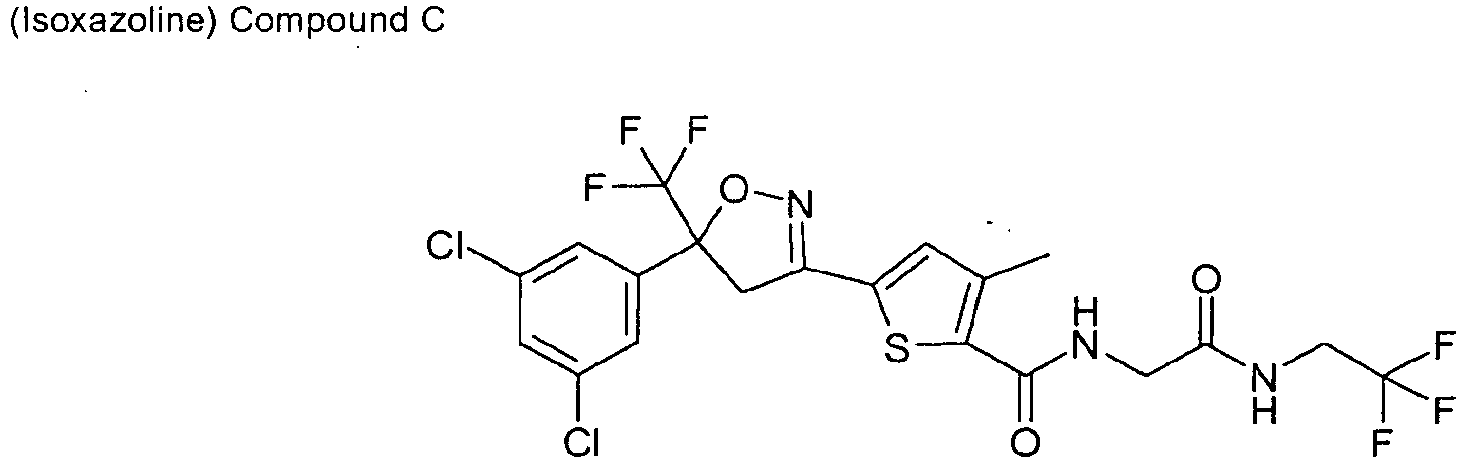
Table 3: Test formulations Excipient 13-009 13-010 13-011 13-012 13-013 13-014 Compound A 13.64% 4.27% Compound B 13.64% 4.27% Compound C 13.64% 4.27% 2-pyrrolidone 10.19% 10.19% 10.19% microcrystalline cellulose 24.27% 24.27% 24.27% sodium starch glycolate 4.95% 4.95% 4.95% flavor 20.0% 14.56% 20.0% 14.56% 20.0% 14.56% sucrose 7.0% 7.0% 7.0% corn starch 16.06% 16.06% 16.06% sodium lauryl sulfate 2.0% 3.4% 2.0% 3.4% 2.0% 3.4% sodium pamoate 2.0% 2.43% 2.0% 2.43% 2.0% 2.43% magnesium stearate 0.75% 0.49% 0.75% 0.49% 0.75% 0.49% aspartame 0.25% 0.49% 0.25% 0.49% 0.25% 0.49% glycerin 7.5% 2.91% 7.5% 2.91% 7.5% 2.91% soybean oil 12.3% 16.75% 12.3% 16.75% 12.3% 16.75% PEG 3350 18.5% 18.5% 18.5% PEG 8000 15.29% 15.29% 15.29% - The test compounds were administered orally to four beagle dogs per dose group for a total of twenty-four dogs.
- Experimental Design: Randomized complete block design
Table 4 Study Design Treatment ID No. of dogs Formulation ID Compoud ID Dose (mg/kg) Formulation Type2,3 1 4 13-009 A 25 Control Chew 2 4 13-010 A 10 Alternate Chew 3 4 13-011 B 25 Control Chew 4 4 13-012 B 10 Alternate Chew 5 4 13-013 C 25 Control Chew 6 4 13-014 C 10 Alternate Chew 2 Control Chew - compound is not dissolved when formulated into chew (comparative example). 3 Alternate Chew - compound is dissolved when formulated into chew - Each animal was administered the tablet or chew by placing it in the back of the oral cavity over the tongue to initiate swallowing.
- Plasma was obtained from the collected blood samples and analyzed for concentrations of the test compounds. Individual blood samples (approximately 4.5 mL per sample) were taken via jugular venipuncture into sodium-citrate tubes from all dogs for drug analysis. Blood samples were collected at the following time points: pretreatment (within 2 h prior to dosing) and approximately 1, 2, 4, 6, 8, 24, 48, 72 hours after dosing (± 15 min). A final blood sample was taken from each dog on Day 7 (± 2 h after the time of dosing on Day 0).
- When 2-pyrrolidone (2-pyrol) was utilized as the solvent in the formulation (alternate chew), similar or even higher plasma levels were observed compared to the control chew, even with the formulation dosed at a lower dose (10 mg/kg compared to 25 mg/kg for the control)- see
Figure 2 . - Pharmacokinetic analysis was performed on the plasma concentration data with the computer program Pharsight WinNonlin Enterprise, Version 4.0.1, or more recent update (Model 200: plasma data, extravascular input).
- Dose normalized pharmacokinetic measurements (Cmax and AUC) for the 2-pyrol formulation (alternate chew) are much higher, in some cases more than double to five times that of the control formulation (see Table 5).
- This formulation approach provides significant improvement in the bioavailability relative to the control formulation, enabling a significantly lower dosage required to achieve similar to superior pharmacokinetic profiles. These results were unexpected.
Table 5 Pharmacokinetic Parameter Control Dissolved Control Dissolved Control Dissolved Compound A Compound B Compound C Dose (mg/kg) 25 10 25 10 25 10 Tmax (h) 5.0 15.5 27.5 15.5 Cmax (ng/mL) 19.2 17.1 4340 3213 1589 2538 Cmax/Dose (kg*ng/mL/mg) 0.768 1.71 174 321 63.5 254 AUC(0-168h) (h*ng/mL) ND ND 416522 334163 164332 326601 AUC(0.168h)/Dose (h*kg*ng/mL/mg) ND ND 16661 33416 6573 32660 - A solid pharmaceutical composition according to the invention with the following excipients was prepared.
Excipient Composition (% w/w) Fluralaner 4.27% 2-pyrrolidone 10.19% microcrystalline cellulose 24.27% sodium starch glycolate 4.95% flavor 14.56% sodium lauryl sulfate 3.40% sodium pamoate 2.43% aspartame 0.49% magnesium stearate 0.49% glycerol 2.91% soybean oil 16.75% Polyethylene Glycol 8000 15.29% - Dogs were randomly assigned to 4 treatment groups of 8 animals each, and one untreated control group of 8 animals. The dogs in the treatment groups were treated with the composition as described above on Day Zero as shown in Table 6:
Table 6 Treatment Groups Group Treatment A Untreated control B 4.27% fluralaner chewable tablet 8 mg/kg bw C 4.27% fluralaner chewable tablet 10 mg/kg bwD 4.27% fluralaner chewable tablet 12 mg/kg bw E 4.27% fluralaner chewable tablet 20 mg/kg bw - The dogs were infested on Day -2 with approximately 50 adult unfed ticks (R. sanguineus) and on Day 28 and 56. Ticks were counted approximately 48 h post infestation and on
Days 30 and 58 (approximately 48 hour after each post-treatment re-infestation) to evaluate the acaricidal activity in the treated groups. - Table 7 shows the observed tick counts:
Table 7 Brown Dog Ticks (R. sanguineus) on dogs- Tick counts - Group Day 2 Day 30Day 58 A 21.25 23 25.9 B 0 0 0 C 0.125 0 0 D 0 0 1.13 E 0 0 0
Claims (16)
- A soft chewable veterinary pharmaceutical composition for oral administration comprising an isoxazoline compound of Formula (I)
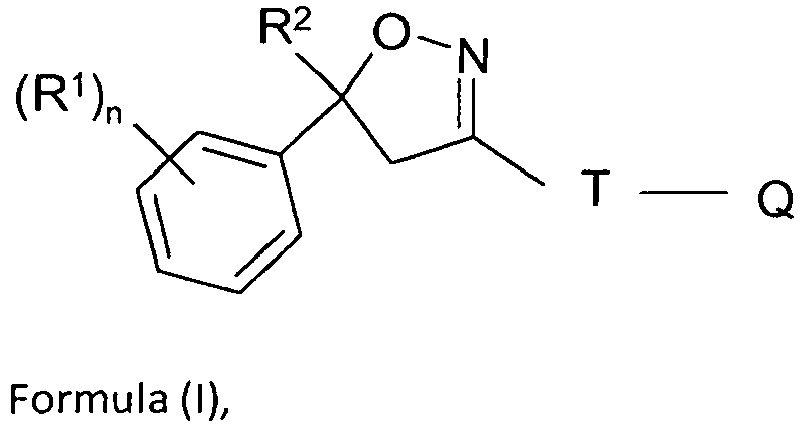 R1 = halogen, CF3, OCF3, CN,n = integer from 0 to 3, preferably 1, 2 or 3,R2 = C1-C3-haloalkyl, preferably CF3 or CF2Cl,T = 5- or 6-membered ring, which is optionally substituted by one or more radicals Y,Y = methyl, halomethyl, halogen, CN, NO2, NH2-C=S, or two adjacent radicals Y form together a chain, especially a three or four membered chain;Q = X-NR3R4 ora 5-membered N-heteroaryl ring, which is optionally substituted by one or more radicals;X = CH2, CH(CH3), CH(CN), CO, CS,R3 = hydrogen, methyl, haloethyl, halopropyl, halobutyl, methoxymethyl,methoxyethyl, halomethoxymethyl, ethoxymethyl, haloethoxymethyl, propoxymethyl, ethylaminocarbonylmethyl, ethylaminocarbonylethyl, dimethoxyethyl, propynylaminocarbonylmethyl, N-phenyl-N-methyl-amino, haloethylaminocarbonylmethyl, haloethylaminocarbonylethyl, tetrahydrofuryl, methylaminocarbonylmethyl, (N,N-dimethylamino)-carbonylmethyl, propylaminocarbonylmethyl, cyclopropylaminocarbonylmethyl, propenylaminocarbonylmethyl, haloethylaminocarbonylcyclopropyl,


 wherein ZA = hydrogen, halogen, cyano, halomethyl (CF3);R4 = hydrogen, ethyl, methoxymethyl, halomethoxymethyl, ethoxymethyl, haloethoxymethyl, propoxymethyl, methylcarbonyl, ethylcarbonyl, propylcarbonyl, cyclopropylcarbonyl, methoxycarbonyl, methoxymethylcarbonyl, aminocarbonyl, ethylaminocarbonylmethyl, ethylaminocarbonylethyl, dimethoxyethyl, propynylaminocarbonylmethyl, haloethylaminocarbonylmethyl, cyanomethylaminocarbonylmethyl, or haloethylaminocarbonylethyl;Or R3 and R4 together form a substituent selected from the group consisting of:
- The pharmaceutical composition of claim 1 wherein the solid carrier is microcrystalline cellulose.
- The pharmaceutical composition of claims 1 or 2 wherein the solvent is 2-pyrrolidone.
- The soft chewable veterinary pharmaceutical composition of claims 1 or 2 wherein the solvent is dimethyl acetamide.
- The pharmaceutical composition of any of the preceding claims wherein the isoxazoline compound of formula (I) is fluralaner.
- The pharmaceutical composition of any of the preceding claims wherein the isoxazoline compound of formula (I) is 4-[5-(3,5-dichlorophenyl)-4,5-dihydro-5-(trifluoromethyl)-3- isoxazolyl]-N-[(Z)-(methoxyimino)methyl]-2-methyl-benzamide.
- The pharmaceutical composition of any of the preceding claims wherein the isoxazoline compound of formula (I) is afoxolaner.
- The pharmaceutical composition of any of the preceding claims wherein the isoxazoline compound of formula (I) is 5-[5-(3,5-Dichlorophenyl)-4,5-dihydro-5-(trifluoromethyl)-3-isoxazolyl]-3-methyl-N-[2-oxo-2-[(2,2,2-trifluoroethyl)amino]ethyl]- 2-thiophenecarboxamide .
- The pharmaceutical composition of any of the preceding claims wherein the isoxazoline compound of formula (I) is 4-[5-(3,5-dichlorophenyl)-5-(trifluoromethyl)-4H-isoxazol-3-yl]-2-methyl-N-(thietan-3-yl)benzamide.
- The pharmaceutical composition of any of the preceding claims wherein the composition comprises an additional pharmaceutically active compound.
- The pharmaceutical composition according to claim 10 wherein the additional pharmaceutically active compound is a macrocyclic lactone selected from the group of ivermectin, milbemycin, and moxidectin.
- A pharmaceutical composition according to claims 1, 2, 3, 5, 6, 7, 8, 9, 10 or 11 wherein the composition comprises an isoxazoline compound of Formula (I) or a salt or solvate thereof, 2-pyrrolidone, microcrystalline cellulose, sodium starch glycolate, sodium lauryl sulfate, sodium pamoate, magnesium stearate, aspartame, glycerol, soybean oil, and polyethylene glycol.
- A pharmaceutical composition according to claims, 1, 2, 4, 5, 6, 7, 8, 9, 10 or 11 wherein the composition comprises an isoxazoline compound of Formula (I) or a salt or solvate thereof, dimethyl acetamide, microcrystalline cellulose, sodium starch glycolate, sodium lauryl sulfate, sodium pamoate, magnesium stearate, aspartame, glycerol, soybean oil, and polyethylene glycol.
- A method of preparing the composition of any of claims 1 to 13 comprising dissolving the isoxazoline compound as defined in claim 1, 5, 6, 7, 8, or 9 in the solvent and then adsorbing the resulting solution on to the solid carrier excipient.
- The method of claim 14, where the solid carrier excipient is microcrystalline cellulose.
- Use of the he composition of any of claims 1 to 13 for the manufacture of a medicament for controlling parasite infestation in an animal.
Priority Applications (1)
| Application Number | Priority Date | Filing Date | Title |
|---|---|---|---|
| EP13717212.8A EP2833867B2 (en) | 2012-04-04 | 2013-04-03 | Solid oral pharmaceutical compositions for isoxazoline compounds |
Applications Claiming Priority (4)
| Application Number | Priority Date | Filing Date | Title |
|---|---|---|---|
| EP12163198 | 2012-04-04 | ||
| US201361782028P | 2013-03-14 | 2013-03-14 | |
| EP13717212.8A EP2833867B2 (en) | 2012-04-04 | 2013-04-03 | Solid oral pharmaceutical compositions for isoxazoline compounds |
| PCT/EP2013/056992 WO2013150055A1 (en) | 2012-04-04 | 2013-04-03 | Solid oral pharmaceutical compositions for isoxazoline compounds |
Publications (3)
| Publication Number | Publication Date |
|---|---|
| EP2833867A1 EP2833867A1 (en) | 2015-02-11 |
| EP2833867B1 EP2833867B1 (en) | 2017-05-17 |
| EP2833867B2 true EP2833867B2 (en) | 2023-05-10 |
Family
ID=49300034
Family Applications (2)
| Application Number | Title | Priority Date | Filing Date |
|---|---|---|---|
| EP13717212.8A Active EP2833867B2 (en) | 2012-04-04 | 2013-04-03 | Solid oral pharmaceutical compositions for isoxazoline compounds |
| EP13715654.3A Active EP2833866B2 (en) | 2012-04-04 | 2013-04-03 | Soft chewable pharmaceutical products |
Family Applications After (1)
| Application Number | Title | Priority Date | Filing Date |
|---|---|---|---|
| EP13715654.3A Active EP2833866B2 (en) | 2012-04-04 | 2013-04-03 | Soft chewable pharmaceutical products |
Country Status (14)
| Country | Link |
|---|---|
| US (15) | US20150057321A1 (en) |
| EP (2) | EP2833867B2 (en) |
| JP (2) | JP6148724B2 (en) |
| KR (1) | KR102077874B1 (en) |
| CN (4) | CN108685894B (en) |
| AU (7) | AU2013245011B2 (en) |
| BR (3) | BR112014024833B1 (en) |
| CA (2) | CA2869242C (en) |
| ES (1) | ES2633611T5 (en) |
| FI (1) | FI2833866T4 (en) |
| NZ (1) | NZ631100A (en) |
| RU (3) | RU2632965C2 (en) |
| WO (2) | WO2013150055A1 (en) |
| ZA (2) | ZA201406968B (en) |
Families Citing this family (37)
| Publication number | Priority date | Publication date | Assignee | Title |
|---|---|---|---|---|
| AP2014007874A0 (en) | 2012-02-06 | 2014-08-31 | Merial Ltd | Parasiticidal oral veterinary compositions comprising systemetically- acting active agents, methods and uses thereof |
| CN108685894B (en) | 2012-04-04 | 2022-04-26 | 英特维特国际股份有限公司 | Soft chewable pharmaceutical product |
| US9532946B2 (en) | 2012-11-20 | 2017-01-03 | Intervet Inc. | Manufacturing of semi-plastic pharmaceutical dosage units |
| PT3079474T (en) | 2013-12-10 | 2019-09-10 | Intervet Int Bv | Antiparasitic use of isoxazoline compounds |
| MX373872B (en) | 2013-12-20 | 2020-03-26 | Intervet Int Bv | Isoxazoline compositions and use thereof in the prevention or treatment of parasite infestations in animals |
| ES2874054T3 (en) | 2013-12-20 | 2021-11-04 | Intervet Int Bv | Use of isoxazoline derivatives for the treatment or prevention of arthropod infestation in poultry |
| JP2017533959A (en) * | 2014-11-03 | 2017-11-16 | ゾエティス・サービシーズ・エルエルシー | Veterinary composition with high palatability and chewability |
| DK4008329T3 (en) | 2014-12-22 | 2025-08-18 | Intervet Int Bv | ISOXAZOLINE COMPOUNDS FOR USE IN THE TREATMENT OF DEMODICOSE |
| UY36570A (en) | 2015-02-26 | 2016-10-31 | Merial Inc | INJECTABLE FORMULATIONS OF PROLONGED ACTION THAT INCLUDE AN ISOXAZOLINE ACTIVE AGENT, METHODS AND USES OF THE SAME |
| CA2981797C (en) | 2015-04-08 | 2023-11-21 | Merial, Inc. | Extended release injectable formulations comprising an isoxazoline active agent, methods and uses thereof |
| UY37137A (en) | 2016-02-24 | 2017-09-29 | Merial Inc | ANTIPARASITARY COMPOUNDS OF ISOXAZOLINE, INJECTABLE FORMULATIONS OF PROLONGED ACTION THAT INCLUDE THEM, METHODS AND USES OF THE SAME |
| WO2018039508A1 (en) | 2016-08-25 | 2018-03-01 | Merial, Inc. | Method for reducing unwanted effects in parasiticidal treatments |
| CN110167540A (en) * | 2016-10-31 | 2019-08-23 | 斯克利普斯研究所 | For preventing the method and composition of the propagation of vector-borne disease |
| CN110996920A (en) | 2017-07-26 | 2020-04-10 | 太杰先软嚼有限责任公司 | Starch-Free Soft Chews for Veterinary Applications |
| AR113997A1 (en) | 2017-12-21 | 2020-07-08 | Intervet Int Bv | ANTIPARASITIC COMPOSITIONS FOR CONTINUOUS DORSAL ANOINTING |
| WO2020051106A1 (en) * | 2018-09-05 | 2020-03-12 | Zoetis Services Llc | Palatable antiparasitic formulations |
| CN113784702B (en) * | 2019-05-03 | 2024-11-05 | 英特维特国际股份有限公司 | Injectable pharmaceutical composition and use thereof |
| BR112022000982A2 (en) * | 2019-07-22 | 2022-03-08 | Intervet Int Bv | Soft chewable veterinary dosage form |
| EP4075981A1 (en) * | 2019-12-16 | 2022-10-26 | Intervet International B.V. | Composition for lice control |
| US12497370B2 (en) | 2019-12-18 | 2025-12-16 | Elanco Tiergesundheit Ag | Isoxazoline derivatives |
| US12655138B2 (en) | 2020-07-24 | 2026-06-16 | Elanco Us Inc. | Process for making an isoxazoline compound and intermediate thereof |
| AU2021335500A1 (en) * | 2020-09-04 | 2023-05-04 | Elanco Us Inc. | Palatable formulations |
| WO2022192631A1 (en) * | 2021-03-11 | 2022-09-15 | In The Bowl Animal Health, Inc. | Oral canine feed and methods for controlling tick infestations in a canine |
| WO2022192623A1 (en) * | 2021-03-11 | 2022-09-15 | In The Bowl Animal Health, Inc. | Oral canine feed and methods for controlling flea infestations in a canine |
| WO2022271961A1 (en) * | 2021-06-25 | 2022-12-29 | In The Bowl Animal Health, Inc. | Oral feline feed and methods for controlling tick infestations in a feline |
| AU2022300356A1 (en) * | 2021-06-25 | 2023-11-30 | In The Bowl Animal Health, Inc. | Oral feline feed and methods for controlling flea infestations in a feline |
| CN113476419A (en) * | 2021-08-17 | 2021-10-08 | 江苏恒丰强生物技术有限公司 | Flurana chewable tablet for pets and preparation method thereof |
| CA3237113A1 (en) * | 2021-11-11 | 2023-05-19 | David Griffin | Soft chew |
| CN116407513A (en) * | 2021-12-30 | 2023-07-11 | 瑞普(天津)生物药业有限公司 | A method for preparing soft chewable pharmaceutical preparations by hot-melt extrusion |
| CN116637078A (en) * | 2022-02-15 | 2023-08-25 | 洛阳惠中兽药有限公司 | Freilaner soft chewable composition, soft chewable tablet, preparation method and application thereof |
| EP4507694A1 (en) | 2022-04-15 | 2025-02-19 | KRKA, d.d., Novo mesto | Soft chewable veterinary dosage form |
| CN117122571A (en) * | 2022-05-20 | 2023-11-28 | 天津瑞普生物技术股份有限公司 | An oral pharmaceutical preparation against parasitic infection and its preparation method and application |
| FR3138315A1 (en) | 2022-07-27 | 2024-02-02 | Virbac | Product for veterinary use and process for its manufacture |
| EP4680043A2 (en) * | 2023-03-17 | 2026-01-21 | Bimini, LLC | Gastrointestinal health supplements |
| PE20251232A1 (en) * | 2023-12-21 | 2025-04-29 | Agrovet Market S A | ORAL COMPOSITION IN THE FORM OF A BIOADHESIVE GEL BASED ON ISOXAZOLINE |
| CN119174733B (en) * | 2024-11-22 | 2025-03-25 | 济南广盛源生物科技有限公司 | Flurellana chewable tablet and preparation method and use thereof |
| CN120346171A (en) * | 2025-03-13 | 2025-07-22 | 湖南尚成生物科技有限公司 | Fu Lei Lana chewable tablet and preparation method thereof |
Citations (2)
| Publication number | Priority date | Publication date | Assignee | Title |
|---|---|---|---|---|
| US20110059986A1 (en) † | 2004-04-09 | 2011-03-10 | Marc Alois Celine Maria Engelen | Intermittent dosing regimen for overweight and obese subjects |
| WO2011075591A1 (en) † | 2009-12-17 | 2011-06-23 | Merial Limited | Anti parasitic dihydroazole compounds and compositions comprising same |
Family Cites Families (160)
| Publication number | Priority date | Publication date | Assignee | Title |
|---|---|---|---|---|
| GB819681A (en) * | 1957-01-24 | 1959-09-09 | Wellcome Found | Improvements in and relating to quaternary ammonium compounds and the preparation thereof |
| US3486186A (en) | 1967-05-08 | 1969-12-30 | Hollymatic Corp | Molding apparatus |
| US3887964A (en) | 1972-01-24 | 1975-06-10 | Formax Inc | Food patty molding machine |
| US3952478A (en) | 1974-10-10 | 1976-04-27 | Formax, Inc. | Vacuum sheet applicator |
| US4054967A (en) | 1975-10-20 | 1977-10-25 | Formax, Inc. | Food patty molding machine |
| US4284652A (en) | 1977-01-24 | 1981-08-18 | The Quaker Oats Company | Matrix, product therewith, and process |
| US4182003A (en) | 1978-02-28 | 1980-01-08 | Formax, Inc. | Food patty molding machine |
| US4338702A (en) | 1979-03-29 | 1982-07-13 | Holly Harry H | Apparatus for making a ground food patty |
| US4334339A (en) | 1980-05-12 | 1982-06-15 | Hollymatic Corporation | Mold device with movable compression insert |
| US4356595A (en) | 1980-11-07 | 1982-11-02 | Formax, Inc. | Method and apparatus for molding food patties |
| US4327076A (en) | 1980-11-17 | 1982-04-27 | Life Savers, Inc. | Compressed chewable antacid tablet and method for forming same |
| US4343068A (en) | 1981-01-19 | 1982-08-10 | Holly James A | Method and apparatus for unidirectional formation of a plug-formed patty with cleanout feature |
| US4372008A (en) | 1981-04-23 | 1983-02-08 | Formax, Inc. | Food patty molding machine with multi-orifice fill passage and stripper plate |
| US4393085A (en) | 1981-08-13 | 1983-07-12 | General Foods Corporation | Enzyme digestion for a dog food of improved palatability |
| IE53474B1 (en) | 1981-09-17 | 1988-11-23 | Warner Lambert Co | A chewable comestible product and process for its production |
| CH657506A5 (en) | 1981-12-10 | 1986-09-15 | Hollymatic Ag | PORTIONING MACHINE FOR FILLING CAVES WITH DEFORMABLE MATERIAL AND USE THEREOF. |
| US4535505A (en) | 1982-11-23 | 1985-08-20 | Holly Systems, Inc. | Method and apparatus for forming a patty to accommodate tissue fiber flow |
| US4608731A (en) | 1983-01-11 | 1986-09-02 | Holly Systems, Inc. | Food patty with improved void structure, shape, and strength and method and apparatus for forming said patty |
| US4609543A (en) | 1983-11-14 | 1986-09-02 | Nabisco Brands, Inc. | Soft homogeneous antacid tablet |
| US4597135A (en) | 1984-02-21 | 1986-07-01 | Holly Systems, Inc. | Food patty forming method and apparatus employing two or more agitator bars |
| DE3406497A1 (en) | 1984-02-23 | 1985-09-05 | Mueller Bernhard Willi Werner | HIGHLY DISPERSAL PHARMACEUTICAL MULTI-COMPONENT SYSTEMS AND METHOD FOR THEIR PRODUCTION |
| US4768941A (en) | 1986-06-16 | 1988-09-06 | Hollymatic Corporation | Food patty and machine and method for making thereof |
| US4697308A (en) | 1986-10-29 | 1987-10-06 | Formax, Inc. | Patty molding mechanism for whole fiber food product |
| DE3636882C1 (en) | 1986-10-30 | 1988-05-19 | Schreiber Berthold | Device for the fine-bubble introduction of a gas into a liquid |
| US4714620A (en) | 1986-12-12 | 1987-12-22 | Warner-Lambert Company | Soft, sugarless aerated confectionery composition |
| US4780931A (en) | 1987-02-13 | 1988-11-01 | Marlen Research Corporation | Feeding device for patty forming machine |
| US4821376A (en) | 1988-06-02 | 1989-04-18 | Formax, Inc. | Seal-off for food patty molding machine with multi-orifice fill passage and stripper plate |
| US4997671A (en) | 1988-09-09 | 1991-03-05 | Nabisco Brands, Inc. | Chewy dog snacks |
| US4872241A (en) | 1988-10-31 | 1989-10-10 | Formax, Inc. | Patty molding mechanism for fibrous food product |
| US4935243A (en) | 1988-12-19 | 1990-06-19 | Pharmacaps, Inc. | Chewable, edible soft gelatin capsule |
| US5021025A (en) | 1989-09-12 | 1991-06-04 | Wagner Richard C | Method and machine for making food patties |
| US4975039A (en) | 1989-09-18 | 1990-12-04 | Dare Gary L | Food molding and portioning apparatus |
| US4996743A (en) | 1990-01-29 | 1991-03-05 | Formax, Inc. | Mold plate drive linkage |
| US5022888A (en) | 1990-05-03 | 1991-06-11 | Formax, Inc. | Co-forming apparatus for food patty molding machine |
| US5262167A (en) | 1990-12-20 | 1993-11-16 | Basf Corporation | Edible, non-baked low moisture cholestyramine composition |
| US5380535A (en) | 1991-05-28 | 1995-01-10 | Geyer; Robert P. | Chewable drug-delivery compositions and methods for preparing the same |
| JP2575325B2 (en) | 1991-06-18 | 1997-01-22 | サクマ製菓株式会社 | candy |
| US5439924A (en) | 1991-12-23 | 1995-08-08 | Virbac, Inc. | Systemic control of parasites |
| TW376319B (en) | 1993-04-28 | 1999-12-11 | Janssen Pharmaceutica Nv | Pharmaceutical composition containing risperidone pamoate and having a long acting activity for treating psychoses induced by the release of dopamine |
| PT760648E (en) | 1994-05-20 | 2002-04-29 | Janssen Pharmaceutica Nv | TABLETS OF FLUBENDAZOLE OF MASTIGATION FOR DOMESTIC ANIMALS |
| US5637313A (en) | 1994-12-16 | 1997-06-10 | Watson Laboratories, Inc. | Chewable dosage forms |
| GB9508443D0 (en) | 1995-04-26 | 1995-06-14 | Gilbertson & Page | Biscuit for working racing or sporting dogs |
| AUPN290395A0 (en) | 1995-05-10 | 1995-06-01 | Virbac (Australia) Pty Limited | Canine anthelmintic preparation |
| US5578336A (en) | 1995-06-07 | 1996-11-26 | Monte; Woodrow C. | Confection carrier for vitamins, enzymes, phytochemicals and ailmentary vegetable compositions and method of making |
| SK74396A3 (en) | 1995-06-13 | 1997-04-09 | American Home Prod | Organoleptically acceptable oral pharmaceutical compositions |
| US5606889A (en) | 1995-09-19 | 1997-03-04 | G & H Technology, Inc. | Reusable initiator for use in triggering high-load actuators |
| DE19628776A1 (en) | 1996-07-17 | 1998-01-22 | Bayer Ag | Oral granules of hexahydropyrazine derivatives |
| US5730650A (en) | 1996-08-29 | 1998-03-24 | Progressive Technology Of Wisconsin, Inc. | Food patty molding machine |
| US5655436A (en) | 1996-08-29 | 1997-08-12 | Progressive Technology Of Manitowoc, Inc. | Food patty molding machine |
| US6110521A (en) | 1996-10-25 | 2000-08-29 | T.F.H. Publications, Inc. | Wheat and casein dog chew with modifiable texture |
| US5827565A (en) | 1996-10-25 | 1998-10-27 | T.F.H. Publications, Inc. | Process for making an edible dog chew |
| US6093427A (en) | 1997-09-03 | 2000-07-25 | T.F.H.Publications, Inc. | Vegetable-based dog chew |
| US6086940A (en) | 1996-10-25 | 2000-07-11 | T.F.H. Publications, Inc. | High starch content dog chew |
| US5753255A (en) | 1997-02-11 | 1998-05-19 | Chavkin; Leonard | Chewable molded tablet containing medicinally active substances |
| WO1999048372A1 (en) | 1998-03-23 | 1999-09-30 | General Mills, Inc. | Encapsulation of components into edible products |
| US6093441A (en) | 1998-07-15 | 2000-07-25 | Tfh Publications, Inc. | Heat modifiable peanut dog chew |
| US6270790B1 (en) | 1998-08-18 | 2001-08-07 | Mxneil-Ppc, Inc. | Soft, convex shaped chewable tablets having reduced friability |
| US6387381B2 (en) | 1998-09-24 | 2002-05-14 | Ez-Med Company | Semi-moist oral delivery system |
| US6060078A (en) | 1998-09-28 | 2000-05-09 | Sae Han Pharm Co., Ltd. | Chewable tablet and process for preparation thereof |
| CA2349700A1 (en) * | 1998-11-12 | 2000-05-18 | Merck & Co., Inc. | Therapeutic polymorphs of a gaba-a alpha-5 inverse agonist and pamoate formulations of the same |
| US6159516A (en) | 1999-01-08 | 2000-12-12 | Tfh Publication, Inc. | Method of molding edible starch |
| GB9902073D0 (en) | 1999-01-29 | 1999-03-24 | Nestle Sa | Chewy confectionery product |
| US6500463B1 (en) | 1999-10-01 | 2002-12-31 | General Mills, Inc. | Encapsulation of sensitive components into a matrix to obtain discrete shelf-stable particles |
| EP1103181A1 (en) * | 1999-11-25 | 2001-05-30 | Novartis AG | Combination of N-phenyl-N'-benzoyl urea derivatives and avermectine compounds for parasite control |
| US6787342B2 (en) | 2000-02-16 | 2004-09-07 | Merial Limited | Paste formulations |
| US6340672B1 (en) * | 2000-02-16 | 2002-01-22 | Phoenix Scientific, Inc. | Parasiticidal formulation and a method of making this formulation |
| IT1317048B1 (en) | 2000-06-23 | 2003-05-26 | Sigma Tau Ind Farmaceuti | USE OF PAMOIC ACID OR ITS DERIVATIVE, OR ANALOGUE, FOR THE PREPARATION OF A MEDICATION FOR THE TREATMENT OF DISEASES |
| DE10031044A1 (en) | 2000-06-26 | 2002-01-03 | Bayer Ag | Endoparasiticidal agents for voluntary oral ingestion by animals |
| US20040106518A1 (en) | 2001-01-31 | 2004-06-03 | Frank Ziemer | Herbicide-safener combination based on isoxozoline carboxylate safeners |
| EP1247456A3 (en) | 2001-02-28 | 2003-12-10 | Pfizer Products Inc. | Palatable pharmaceutical compositions for companion animals |
| GB0108485D0 (en) | 2001-04-04 | 2001-05-23 | Pfizer Ltd | Combination therapy |
| ES2439725T3 (en) | 2001-10-05 | 2014-01-24 | Rubicon Scientific Llc | Feed for animals that include active ingredients |
| WO2004014143A1 (en) * | 2002-08-13 | 2004-02-19 | Akzo Nobel | Compositions and process for delivering an additive |
| US20040037869A1 (en) | 2002-08-16 | 2004-02-26 | Douglas Cleverly | Non-animal product containing veterinary formulations |
| US20040151759A1 (en) | 2002-08-16 | 2004-08-05 | Douglas Cleverly | Non-animal product containing veterinary formulations |
| GB0219639D0 (en) | 2002-08-22 | 2002-10-02 | Prestwick Scient Capital Inc | Novel piperidin-2,6-dione salts and their use for the treatment of stress-related affective disorders |
| US20040234579A1 (en) | 2003-05-22 | 2004-11-25 | Mark D. Finke, Inc. | Dietary supplements and methods of preparing and administering dietary supplements |
| AR045142A1 (en) | 2003-07-30 | 2005-10-19 | Novartis Ag | BUEN SABOR DUCTILE MASTICABLE VETERINARY COMPOSITION |
| AU2008201605B2 (en) | 2003-07-30 | 2010-04-29 | Novartis Ag | Palatable ductile chewable veterinary composition |
| US6987111B2 (en) | 2003-08-06 | 2006-01-17 | Alkermes Controlled Therapeutics, Ii | Aripiprazole, olanzapine and haloperidol pamoate salts |
| WO2005016356A1 (en) | 2003-08-08 | 2005-02-24 | The Hartz Mountain Corporation | Improved anthelmintic formulations |
| US7396819B2 (en) | 2003-08-08 | 2008-07-08 | Virbac Corporation | Anthelmintic formulations |
| UA79571C2 (en) * | 2003-12-04 | 2007-06-25 | Basf Ag | Metod for the protection of seeds from soil pests comprising |
| MY144177A (en) | 2004-02-04 | 2011-08-15 | Novartis Ag | Salt forms of 4-(4-methylpiperazin-1-ylmethyl)-n-[4-methyl-3-(4-pyridin-3-yl)pyrimidin-2-ylamino)phenyl]-benzamide. |
| BRPI0508140B1 (en) | 2004-03-05 | 2015-03-17 | Nissan Chemical Ind Ltd | Isoxazoline substituted benzamide compound of formula (1); of formula (2) substituted by 3,5-bis (substituted aryl); of formula (4) substituted by alkynibenzene or a salt thereof; "pesticide, agrochemical, insecticide, parasiticide containing as active ingredient one or more isoxazoline-substituted benzamide compound and salt thereof" |
| BRPI0509673A (en) | 2004-04-07 | 2007-10-09 | Intervet Int Bv | parasite treatment composition, pharmaceutical dosage form, method for treating an organism, and processes for introducing at least one additive into an organism, for making a composition, for releasing an additive in an organism, and for forming a product soft chewy |
| US20050234119A1 (en) | 2004-04-16 | 2005-10-20 | Soll Mark D | Antiparasitical agents and methods for treating, preventing and controlling external parasites in animals |
| DE102004034043A1 (en) | 2004-07-13 | 2006-02-09 | Krka Tovarna Zdravil, D.D. | Solid pharmaceutical composition containing mirtazapine |
| US7348027B2 (en) * | 2005-04-08 | 2008-03-25 | Bayer Healthcare Llc | Taste masked veterinary formulation |
| US7838532B2 (en) | 2005-05-18 | 2010-11-23 | Mpex Pharmaceuticals, Inc. | Aerosolized fluoroquinolones and uses thereof |
| BRPI0610316A2 (en) * | 2005-05-20 | 2010-06-15 | Pfizer Ltd | Synergistic combinations of non-steroidal anti-inflammatory drugs with alpha-delta ligands |
| BRPI0617076B1 (en) | 2005-09-02 | 2021-07-06 | Nissan Chemical Corporation | BENZAMIDE COMPOUND REPLACED BY ISOXAZOLINE OF FORMULA (1) OR SALT THEREOF; BENZAMIDE COMPOUND REPLACED BY 4-HYDROXYIMINAMETHIL OF FORMULA (2) OR SALT THEREOF; PESTICIDE; AGROCHEMICAL AGENT; INTERNAL OR EXTERNAL PARASITICIDE FOR MAMMALS OR BIRDS; INSECTICIDE OR ACARICIDES |
| US20070128251A1 (en) | 2005-12-07 | 2007-06-07 | Piedmont Pharmaceuticals, Inc. | Process for manufacturing chewable dosage forms for drug delivery and products thereof |
| US7955632B2 (en) | 2005-12-07 | 2011-06-07 | Bayer B.V. | Process for manufacturing chewable dosage forms for drug delivery and products thereof |
| EP1965645A2 (en) | 2005-12-14 | 2008-09-10 | E.I. Du Pont De Nemours And Company | Isoxazolines for controlling invertebrate pests |
| TW200803740A (en) | 2005-12-16 | 2008-01-16 | Du Pont | 5-aryl isoxazolines for controlling invertebrate pests |
| TWI412322B (en) * | 2005-12-30 | 2013-10-21 | 杜邦股份有限公司 | Isoxazoline controlling invertebrate pests |
| EP1997813B1 (en) | 2006-03-10 | 2010-05-05 | Nissan Chemical Industries, Ltd. | Substituted isoxazoline compound and pest control agent |
| WO2007123855A2 (en) | 2006-04-20 | 2007-11-01 | E. I. Du Pont De Nemours And Company | Pyrazolines for controlling invertebrate pests |
| TWI342532B (en) * | 2006-07-10 | 2011-05-21 | Himax Tech Inc | Method for generating a gamma table |
| JP2008044880A (en) * | 2006-08-15 | 2008-02-28 | Bayer Cropscience Ag | Insecticidal isooxazolines |
| MX2009002552A (en) | 2006-09-07 | 2009-03-30 | Merial Ltd | Novel soft chewable, tablet, and long-acting injectable veterinary antibiotic formulations. |
| CN101190223A (en) * | 2006-11-29 | 2008-06-04 | 天津市润拓生物技术有限公司 | Pyrantel pamoate chewable tablet for dog or cat |
| US20090281059A1 (en) | 2007-02-21 | 2009-11-12 | Robert Falotico | Coating for a medical device having an anti-thrombotic conjugate |
| EP2151437A4 (en) | 2007-03-07 | 2012-05-02 | Nissan Chemical Ind Ltd | Isoxazoline-substituted benzamide compound and pest control agent |
| JP2008260691A (en) * | 2007-04-10 | 2008-10-30 | Bayer Cropscience Ag | Insecticidal arylisoxazoline derivative |
| NZ580241A (en) | 2007-04-10 | 2011-02-25 | Bayer Cropscience Ag | Insecticidal aryl isoxazoline derivatives |
| CA2684926C (en) | 2007-05-03 | 2014-09-30 | Merial Limited | Compositions comprising c-13 alkoxyether macrolide compounds and phenylpyrazole compounds |
| AU2008247327B2 (en) * | 2007-05-07 | 2013-08-22 | Jurox Pty Ltd | Improved dosage form and process |
| PT3088384T (en) | 2007-05-15 | 2019-03-22 | Aventis Agriculture | Aryloazol-2-yl cyanoethylamino compounds, method of making and method of using thereof |
| US20080293645A1 (en) * | 2007-05-25 | 2008-11-27 | Schneider Lawrence F | Antiparasitic combination and method for treating domestic animals |
| WO2008154528A2 (en) | 2007-06-13 | 2008-12-18 | E. I. Du Pont De Nemours And Company | Isoxazoline insecticides |
| TWI430995B (en) | 2007-06-26 | 2014-03-21 | Du Pont | Naphthalene isoxazoline invertebrate pest control agents |
| DK2182945T3 (en) * | 2007-06-27 | 2015-11-16 | Du Pont | PROCEDURE TO COMBAT PESTS WITH ANIMALS |
| EP2172448A4 (en) | 2007-06-29 | 2012-01-11 | Nissan Chemical Ind Ltd | Substituted isoxazoline or enone oxime compound, and pest control agent |
| ITCL20070039A1 (en) | 2007-07-10 | 2009-01-11 | Michele Neri | CONSTANT PRESSURE CYLINDER WITH EXTRUDED PROBOSCIDE TUBE AND DOSING VALVE, ATTACHED TO A STRUCTURE ON WHICH ROLLS, ACTIVATED BY A SOURCE OF CONTROLLED PRESSURE, USED IN PARTICULAR FOR THE EXTRUSION AND PROCESSING OF ALL PASTA: |
| TWI556741B (en) * | 2007-08-17 | 2016-11-11 | 英特威特國際股份有限公司 | Isoxazoline compositions and their use as antiparasitics |
| JP5365806B2 (en) | 2007-09-10 | 2013-12-11 | 日産化学工業株式会社 | Substituted isoxazoline compounds and pest control agents |
| HRP20191104T1 (en) | 2007-09-25 | 2019-09-20 | Solubest Ltd. | Compositions comprising lipophilic active compounds and method for their preparation |
| US8367584B2 (en) | 2007-10-03 | 2013-02-05 | E.I. Du Pont De Nemours And Company | Naphthalene isoxazoline compounds for control of invertebrate pests |
| TWI411395B (en) | 2007-12-24 | 2013-10-11 | Syngenta Participations Ag | Insecticidal compounds |
| ES2582575T3 (en) | 2008-07-09 | 2016-09-13 | Nissan Chemical Industries, Ltd. | Process for the production of isoxazoline-substituted benzoic acid amide compound |
| CN102088857A (en) * | 2008-07-09 | 2011-06-08 | 巴斯夫欧洲公司 | Pesticidal mixtures comprising isoxazoline compounds ii |
| BRPI0915665B1 (en) | 2008-07-09 | 2018-01-02 | Basf Se | PESTICIDATED MIXTURES, METHODS FOR PROTECTING PLANTS FROM ATTACK OR INSECTS, ACARIDES OR NEMATOES, TO CONTROL INSECTS, ARACNIDS OR NEMATOIDS, USE OF PESTICIDES OR PARASITICIDES |
| JP2010026724A (en) * | 2008-07-17 | 2010-02-04 | Fujitsu Ltd | Web page providing apparatus, method for interlocking web page with ranking and program thereof |
| JP2012501989A (en) | 2008-09-04 | 2012-01-26 | シンジェンタ パーティシペーションズ アクチェンゲゼルシャフト | Insecticidal compound |
| US9820977B2 (en) * | 2008-10-03 | 2017-11-21 | Bayer Healthcare Llc | Systemic treatment of blood-sucking and blood-consuming parasites by oral administration of a parasiticidal agent |
| AR074024A1 (en) | 2008-11-14 | 2010-12-15 | Merial Ltd | COMPOSITE OF ARILAZOL-2-IL-CYANOETHYLAMIN ENANTIOMERICALLY ENRICHED, PESTICIATED COMPOSITION AND ITS USE TO PREVENT PARASITARY INFECTION |
| WO2010059529A2 (en) | 2008-11-19 | 2010-05-27 | Merial Limited | Compositions comprising an aryl pyrazole and/or a formamidine, methods and uses thereof |
| TWI457347B (en) | 2008-12-04 | 2014-10-21 | Merial Ltd | Dimeric avermectin and milbemycin derivatives |
| ES2442342T3 (en) | 2008-12-18 | 2014-02-11 | Novartis Ag | Isoxazoline derivatives and their use as a pesticide |
| AR074790A1 (en) * | 2008-12-19 | 2011-02-09 | Novartis Ag | ISOOXAZOL DERIVATIVES SUBSTITUTED, PHARMACEUTICAL COMPOSITIONS AND FOR THE CONTROL OF PARASITES THAT INCLUDE THEM AND THEIR USE IN METHODS TO CONTROL PARASITES IN AND ON HOT BLOOD ANIMALS. |
| CN102325759A (en) * | 2008-12-23 | 2012-01-18 | 巴斯夫欧洲公司 | Substituted amidine compounds for controlling animal pests |
| US20110288089A1 (en) | 2009-01-22 | 2011-11-24 | Syngenta Crop Protection Llc | Insecticidal compounds |
| EP2414353A1 (en) | 2009-04-01 | 2012-02-08 | Basf Se | Isoxazoline compounds for combating invertebrate pests |
| AU2010201490C1 (en) * | 2009-04-15 | 2014-07-24 | Zoetis Services Llc | Anthelmintic formulation |
| US9040583B2 (en) | 2009-07-22 | 2015-05-26 | Temple University-Of The Commonwealth System Of Higher Education | Treatment of disorders associated with G protein-coupled receptor 35 (GPR35) |
| TWI487486B (en) * | 2009-12-01 | 2015-06-11 | Syngenta Participations Ag | Insecticidal compound based on isoxazoline derivatives |
| KR20120125332A (en) | 2010-02-01 | 2012-11-14 | 바스프 에스이 | Substituted ketonic isoxazoline compounds and derivatives for combating animal pests |
| MX2012009429A (en) | 2010-02-25 | 2012-09-07 | Syngenta Participations Ag | PESTICIDE MIXTURES CONTAINING DERIVATIVES OF ISOXAZOLINE AND AN INSECTICIATED OR NEMATICIATED BIOLOGICAL AGENT. |
| WO2011124998A1 (en) | 2010-04-08 | 2011-10-13 | Pfizer Inc. | Substituted 3,5- di phenyl - isoxazoline derivatives as insecticides and acaricides |
| CN101919857B (en) † | 2010-05-05 | 2012-05-30 | 四川宝盛康药业有限公司 | Novel compound albendazole preparation, application thereof and preparation method thereof |
| EP2576523B1 (en) | 2010-05-27 | 2016-01-13 | E. I. du Pont de Nemours and Company | Crystalline form of 4-[5 - [3 -chloro-5 -(trifluoromethyl)phenyl] -4,5 -dihydro-5 -(trifluoromethyl)-3 - isoxazolyl]-n-[2-oxo-2-[(2,2,2-trifluoroethyl)amino]ethyl]-1- naphthalenecarboxamide |
| AR081843A1 (en) | 2010-06-09 | 2012-10-24 | Syngenta Participations Ag | PESTICIDE MIXING INCLUDING ISOXAZOLINE DERIVATIVES |
| US20130210623A1 (en) | 2010-06-09 | 2013-08-15 | Syngenta Crop Protection Llc | Pesticidal mixtures including isoxazoline derivatives |
| BR112012031277A2 (en) | 2010-06-09 | 2016-09-27 | Syngenta Participations Ag | "pesticide mixtures comprising isoxazoline derivatives" |
| UY33403A (en) | 2010-06-17 | 2011-12-30 | Novartis Ag | ORGANIC COMPOUNDS WITH NEW ISOXAZOLINES, THEIR N-OXIDES, S-OXIDES AND SALTS |
| DK178277B1 (en) | 2010-06-18 | 2015-10-26 | Novartis Tiergesundheit Ag | Diaryloxazoline compounds for the control of fish lice |
| CA2804147A1 (en) | 2010-06-30 | 2012-01-05 | Upsher-Smith Laboratories, Inc. | Sustained release composition comprising an amine as active agent and a salt of a cyclic organic acid |
| WO2012007426A1 (en) | 2010-07-13 | 2012-01-19 | Basf Se | Azoline substituted isoxazoline benzamide compounds for combating animal pests |
| JP2012046486A (en) * | 2010-07-30 | 2012-03-08 | Sumitomo Chemical Co Ltd | Animal ectoparasite-controlling agent |
| ES2682303T3 (en) | 2010-08-05 | 2018-09-19 | Zoetis Services Llc | Isoxazoline derivatives as antiparasitic agents |
| WO2012038851A1 (en) | 2010-09-24 | 2012-03-29 | Pfizer Inc. | Isoxazoline oximes as antiparasitic agents |
| JP2013539772A (en) | 2010-10-12 | 2013-10-28 | バイエル・インテレクチュアル・プロパティ・ゲゼルシャフト・ミット・ベシュレンクテル・ハフツング | Non-starch based soft chewable |
| JP6002148B2 (en) * | 2010-12-27 | 2016-10-05 | インターベット インターナショナル ベー. フェー. | Transsurface topical isoxazoline formulation |
| HUE042360T2 (en) | 2011-09-12 | 2019-06-28 | Merial Inc | Anti-parasitic preparations containing the active ingredient isoxazoline, their preparation and use |
| US20140343085A1 (en) * | 2011-11-29 | 2014-11-20 | Novartis Ag | Use of aryl derivatives for controlling ectoparasites |
| AP2014007874A0 (en) * | 2012-02-06 | 2014-08-31 | Merial Ltd | Parasiticidal oral veterinary compositions comprising systemetically- acting active agents, methods and uses thereof |
| CN108685894B (en) | 2012-04-04 | 2022-04-26 | 英特维特国际股份有限公司 | Soft chewable pharmaceutical product |
| US9532946B2 (en) | 2012-11-20 | 2017-01-03 | Intervet Inc. | Manufacturing of semi-plastic pharmaceutical dosage units |
-
2013
- 2013-04-03 CN CN201810385736.3A patent/CN108685894B/en active Active
- 2013-04-03 NZ NZ631100A patent/NZ631100A/en unknown
- 2013-04-03 EP EP13717212.8A patent/EP2833867B2/en active Active
- 2013-04-03 BR BR112014024833-8A patent/BR112014024833B1/en active IP Right Grant
- 2013-04-03 CA CA2869242A patent/CA2869242C/en active Active
- 2013-04-03 RU RU2014144001A patent/RU2632965C2/en active
- 2013-04-03 US US14/390,040 patent/US20150057321A1/en not_active Abandoned
- 2013-04-03 AU AU2013245011A patent/AU2013245011B2/en active Active
- 2013-04-03 KR KR1020147027827A patent/KR102077874B1/en active Active
- 2013-04-03 CN CN201380017735.9A patent/CN104203214B/en active Active
- 2013-04-03 RU RU2014144360A patent/RU2646483C2/en active
- 2013-04-03 BR BR112014024832-0A patent/BR112014024832B1/en active IP Right Grant
- 2013-04-03 BR BR122022008957-7A patent/BR122022008957B1/en active IP Right Grant
- 2013-04-03 RU RU2017133665A patent/RU2765231C2/en active
- 2013-04-03 CN CN201811130374.XA patent/CN109010296A/en active Pending
- 2013-04-03 JP JP2015503865A patent/JP6148724B2/en active Active
- 2013-04-03 FI FIEP13715654.3T patent/FI2833866T4/en active
- 2013-04-03 US US14/390,052 patent/US9770440B2/en active Active
- 2013-04-03 ES ES13717212T patent/ES2633611T5/en active Active
- 2013-04-03 CN CN201380029186.7A patent/CN104334159A/en active Pending
- 2013-04-03 JP JP2015503867A patent/JP6088637B2/en active Active
- 2013-04-03 EP EP13715654.3A patent/EP2833866B2/en active Active
- 2013-04-03 WO PCT/EP2013/056992 patent/WO2013150055A1/en not_active Ceased
- 2013-04-03 WO PCT/EP2013/056987 patent/WO2013150052A1/en not_active Ceased
- 2013-04-03 AU AU2013245008A patent/AU2013245008B2/en active Active
- 2013-04-03 CA CA2868381A patent/CA2868381C/en active Active
-
2014
- 2014-09-23 ZA ZA2014/06968A patent/ZA201406968B/en unknown
-
2016
- 2016-11-29 ZA ZA2016/08614A patent/ZA201608614B/en unknown
- 2016-12-21 US US15/386,100 patent/US20170100377A1/en not_active Abandoned
- 2016-12-23 US US15/390,244 patent/US20170105972A1/en not_active Abandoned
-
2017
- 2017-02-15 US US15/433,901 patent/US20170172918A1/en not_active Abandoned
- 2017-02-15 US US15/433,840 patent/US20170172986A1/en not_active Abandoned
- 2017-06-05 US US15/613,848 patent/US20170266165A1/en not_active Abandoned
- 2017-06-22 AU AU2017204246A patent/AU2017204246A1/en not_active Abandoned
- 2017-06-27 US US15/634,924 patent/US11337917B2/en active Active
- 2017-11-27 AU AU2017268487A patent/AU2017268487A1/en not_active Abandoned
-
2018
- 2018-05-17 US US15/982,904 patent/US20190117565A1/en not_active Abandoned
- 2018-05-17 US US15/982,879 patent/US20190117564A1/en not_active Abandoned
-
2019
- 2019-03-08 US US16/296,490 patent/US11285101B2/en active Active
- 2019-07-11 US US16/508,758 patent/US20200000718A1/en not_active Abandoned
- 2019-08-07 AU AU2019213359A patent/AU2019213359A1/en not_active Abandoned
- 2019-10-09 AU AU2019246812A patent/AU2019246812B2/en active Active
-
2021
- 2021-03-02 US US17/189,939 patent/US11712416B2/en active Active
- 2021-11-11 AU AU2021266292A patent/AU2021266292B2/en active Active
-
2022
- 2022-01-25 US US17/648,841 patent/US12396945B2/en active Active
-
2023
- 2023-06-15 US US18/335,415 patent/US20230320981A1/en active Pending
Patent Citations (2)
| Publication number | Priority date | Publication date | Assignee | Title |
|---|---|---|---|---|
| US20110059986A1 (en) † | 2004-04-09 | 2011-03-10 | Marc Alois Celine Maria Engelen | Intermittent dosing regimen for overweight and obese subjects |
| WO2011075591A1 (en) † | 2009-12-17 | 2011-06-23 | Merial Limited | Anti parasitic dihydroazole compounds and compositions comprising same |
Also Published As
Similar Documents
| Publication | Publication Date | Title |
|---|---|---|
| US11712416B2 (en) | Solid oral pharmaceutical compositions for isoxazoline compounds | |
| US10864195B2 (en) | Topical localized isoxazoline formulation | |
| RU2602189C2 (en) | Topical localized isoxazoline formulation comprising glycofurol | |
| US20200390688A1 (en) | Long-acting topical formulation and method of use thereof | |
| RU2772279C2 (en) | Solid pharmaceutical compositions for oral administration based on isooxazoline compounds | |
| KR20190112825A (en) | Topical localized isoxazoline formulation |
Legal Events
| Date | Code | Title | Description |
|---|---|---|---|
| PUAI | Public reference made under article 153(3) epc to a published international application that has entered the european phase |
Free format text: ORIGINAL CODE: 0009012 |
|
| 17P | Request for examination filed |
Effective date: 20141104 |
|
| AK | Designated contracting states |
Kind code of ref document: A1 Designated state(s): AL AT BE BG CH CY CZ DE DK EE ES FI FR GB GR HR HU IE IS IT LI LT LU LV MC MK MT NL NO PL PT RO RS SE SI SK SM TR |
|
| AX | Request for extension of the european patent |
Extension state: BA ME |
|
| DAX | Request for extension of the european patent (deleted) | ||
| GRAP | Despatch of communication of intention to grant a patent |
Free format text: ORIGINAL CODE: EPIDOSNIGR1 |
|
| STAA | Information on the status of an ep patent application or granted ep patent |
Free format text: STATUS: GRANT OF PATENT IS INTENDED |
|
| INTG | Intention to grant announced |
Effective date: 20161219 |
|
| GRAS | Grant fee paid |
Free format text: ORIGINAL CODE: EPIDOSNIGR3 |
|
| GRAA | (expected) grant |
Free format text: ORIGINAL CODE: 0009210 |
|
| STAA | Information on the status of an ep patent application or granted ep patent |
Free format text: STATUS: THE PATENT HAS BEEN GRANTED |
|
| AK | Designated contracting states |
Kind code of ref document: B1 Designated state(s): AL AT BE BG CH CY CZ DE DK EE ES FI FR GB GR HR HU IE IS IT LI LT LU LV MC MK MT NL NO PL PT RO RS SE SI SK SM TR |
|
| REG | Reference to a national code |
Ref country code: GB Ref legal event code: FG4D |
|
| REG | Reference to a national code |
Ref country code: CH Ref legal event code: EP |
|
| REG | Reference to a national code |
Ref country code: IE Ref legal event code: FG4D |
|
| REG | Reference to a national code |
Ref country code: AT Ref legal event code: REF Ref document number: 893816 Country of ref document: AT Kind code of ref document: T Effective date: 20170615 |
|
| REG | Reference to a national code |
Ref country code: DE Ref legal event code: R096 Ref document number: 602013021237 Country of ref document: DE |
|
| REG | Reference to a national code |
Ref country code: NL Ref legal event code: FP |
|
| REG | Reference to a national code |
Ref country code: ES Ref legal event code: FG2A Ref document number: 2633611 Country of ref document: ES Kind code of ref document: T3 Effective date: 20170922 |
|
| REG | Reference to a national code |
Ref country code: LT Ref legal event code: MG4D |
|
| REG | Reference to a national code |
Ref country code: AT Ref legal event code: MK05 Ref document number: 893816 Country of ref document: AT Kind code of ref document: T Effective date: 20170517 |
|
| PG25 | Lapsed in a contracting state [announced via postgrant information from national office to epo] |
Ref country code: NO Free format text: LAPSE BECAUSE OF FAILURE TO SUBMIT A TRANSLATION OF THE DESCRIPTION OR TO PAY THE FEE WITHIN THE PRESCRIBED TIME-LIMIT Effective date: 20170817 Ref country code: HR Free format text: LAPSE BECAUSE OF FAILURE TO SUBMIT A TRANSLATION OF THE DESCRIPTION OR TO PAY THE FEE WITHIN THE PRESCRIBED TIME-LIMIT Effective date: 20170517 Ref country code: AT Free format text: LAPSE BECAUSE OF FAILURE TO SUBMIT A TRANSLATION OF THE DESCRIPTION OR TO PAY THE FEE WITHIN THE PRESCRIBED TIME-LIMIT Effective date: 20170517 Ref country code: FI Free format text: LAPSE BECAUSE OF FAILURE TO SUBMIT A TRANSLATION OF THE DESCRIPTION OR TO PAY THE FEE WITHIN THE PRESCRIBED TIME-LIMIT Effective date: 20170517 Ref country code: GR Free format text: LAPSE BECAUSE OF FAILURE TO SUBMIT A TRANSLATION OF THE DESCRIPTION OR TO PAY THE FEE WITHIN THE PRESCRIBED TIME-LIMIT Effective date: 20170818 Ref country code: LT Free format text: LAPSE BECAUSE OF FAILURE TO SUBMIT A TRANSLATION OF THE DESCRIPTION OR TO PAY THE FEE WITHIN THE PRESCRIBED TIME-LIMIT Effective date: 20170517 |
|
| PG25 | Lapsed in a contracting state [announced via postgrant information from national office to epo] |
Ref country code: RS Free format text: LAPSE BECAUSE OF FAILURE TO SUBMIT A TRANSLATION OF THE DESCRIPTION OR TO PAY THE FEE WITHIN THE PRESCRIBED TIME-LIMIT Effective date: 20170517 Ref country code: BG Free format text: LAPSE BECAUSE OF FAILURE TO SUBMIT A TRANSLATION OF THE DESCRIPTION OR TO PAY THE FEE WITHIN THE PRESCRIBED TIME-LIMIT Effective date: 20170817 Ref country code: SE Free format text: LAPSE BECAUSE OF FAILURE TO SUBMIT A TRANSLATION OF THE DESCRIPTION OR TO PAY THE FEE WITHIN THE PRESCRIBED TIME-LIMIT Effective date: 20170517 Ref country code: IS Free format text: LAPSE BECAUSE OF FAILURE TO SUBMIT A TRANSLATION OF THE DESCRIPTION OR TO PAY THE FEE WITHIN THE PRESCRIBED TIME-LIMIT Effective date: 20170917 Ref country code: PL Free format text: LAPSE BECAUSE OF FAILURE TO SUBMIT A TRANSLATION OF THE DESCRIPTION OR TO PAY THE FEE WITHIN THE PRESCRIBED TIME-LIMIT Effective date: 20170517 Ref country code: LV Free format text: LAPSE BECAUSE OF FAILURE TO SUBMIT A TRANSLATION OF THE DESCRIPTION OR TO PAY THE FEE WITHIN THE PRESCRIBED TIME-LIMIT Effective date: 20170517 |
|
| PG25 | Lapsed in a contracting state [announced via postgrant information from national office to epo] |
Ref country code: RO Free format text: LAPSE BECAUSE OF FAILURE TO SUBMIT A TRANSLATION OF THE DESCRIPTION OR TO PAY THE FEE WITHIN THE PRESCRIBED TIME-LIMIT Effective date: 20170517 Ref country code: EE Free format text: LAPSE BECAUSE OF FAILURE TO SUBMIT A TRANSLATION OF THE DESCRIPTION OR TO PAY THE FEE WITHIN THE PRESCRIBED TIME-LIMIT Effective date: 20170517 Ref country code: SK Free format text: LAPSE BECAUSE OF FAILURE TO SUBMIT A TRANSLATION OF THE DESCRIPTION OR TO PAY THE FEE WITHIN THE PRESCRIBED TIME-LIMIT Effective date: 20170517 Ref country code: DK Free format text: LAPSE BECAUSE OF FAILURE TO SUBMIT A TRANSLATION OF THE DESCRIPTION OR TO PAY THE FEE WITHIN THE PRESCRIBED TIME-LIMIT Effective date: 20170517 Ref country code: CZ Free format text: LAPSE BECAUSE OF FAILURE TO SUBMIT A TRANSLATION OF THE DESCRIPTION OR TO PAY THE FEE WITHIN THE PRESCRIBED TIME-LIMIT Effective date: 20170517 |
|
| REG | Reference to a national code |
Ref country code: DE Ref legal event code: R026 Ref document number: 602013021237 Country of ref document: DE |
|
| PLBI | Opposition filed |
Free format text: ORIGINAL CODE: 0009260 |
|
| PG25 | Lapsed in a contracting state [announced via postgrant information from national office to epo] |
Ref country code: SM Free format text: LAPSE BECAUSE OF FAILURE TO SUBMIT A TRANSLATION OF THE DESCRIPTION OR TO PAY THE FEE WITHIN THE PRESCRIBED TIME-LIMIT Effective date: 20170517 |
|
| PLAX | Notice of opposition and request to file observation + time limit sent |
Free format text: ORIGINAL CODE: EPIDOSNOBS2 |
|
| REG | Reference to a national code |
Ref country code: FR Ref legal event code: PLFP Year of fee payment: 6 |
|
| 26 | Opposition filed |
Opponent name: VIRBAC Effective date: 20180216 Opponent name: MERIAL LIMITED Effective date: 20180216 |
|
| PG25 | Lapsed in a contracting state [announced via postgrant information from national office to epo] |
Ref country code: SI Free format text: LAPSE BECAUSE OF FAILURE TO SUBMIT A TRANSLATION OF THE DESCRIPTION OR TO PAY THE FEE WITHIN THE PRESCRIBED TIME-LIMIT Effective date: 20170517 |
|
| PLBB | Reply of patent proprietor to notice(s) of opposition received |
Free format text: ORIGINAL CODE: EPIDOSNOBS3 |
|
| PG25 | Lapsed in a contracting state [announced via postgrant information from national office to epo] |
Ref country code: MC Free format text: LAPSE BECAUSE OF FAILURE TO SUBMIT A TRANSLATION OF THE DESCRIPTION OR TO PAY THE FEE WITHIN THE PRESCRIBED TIME-LIMIT Effective date: 20170517 |
|
| REG | Reference to a national code |
Ref country code: CH Ref legal event code: PL |
|
| REG | Reference to a national code |
Ref country code: BE Ref legal event code: MM Effective date: 20180430 |
|
| REG | Reference to a national code |
Ref country code: IE Ref legal event code: MM4A |
|
| PG25 | Lapsed in a contracting state [announced via postgrant information from national office to epo] |
Ref country code: LU Free format text: LAPSE BECAUSE OF NON-PAYMENT OF DUE FEES Effective date: 20180403 |
|
| PG25 | Lapsed in a contracting state [announced via postgrant information from national office to epo] |
Ref country code: LI Free format text: LAPSE BECAUSE OF NON-PAYMENT OF DUE FEES Effective date: 20180430 Ref country code: BE Free format text: LAPSE BECAUSE OF NON-PAYMENT OF DUE FEES Effective date: 20180430 Ref country code: CH Free format text: LAPSE BECAUSE OF NON-PAYMENT OF DUE FEES Effective date: 20180430 |
|
| PLAB | Opposition data, opponent's data or that of the opponent's representative modified |
Free format text: ORIGINAL CODE: 0009299OPPO |
|
| PG25 | Lapsed in a contracting state [announced via postgrant information from national office to epo] |
Ref country code: IE Free format text: LAPSE BECAUSE OF NON-PAYMENT OF DUE FEES Effective date: 20180403 Ref country code: IT Free format text: LAPSE BECAUSE OF NON-PAYMENT OF DUE FEES Effective date: 20180403 |
|
| R26 | Opposition filed (corrected) |
Opponent name: BOEHRINGER INGELHEIM ANIMAL HEALTH USA INC. Effective date: 20180216 |
|
| PLBP | Opposition withdrawn |
Free format text: ORIGINAL CODE: 0009264 |
|
| PG25 | Lapsed in a contracting state [announced via postgrant information from national office to epo] |
Ref country code: MT Free format text: LAPSE BECAUSE OF NON-PAYMENT OF DUE FEES Effective date: 20180403 |
|
| PG25 | Lapsed in a contracting state [announced via postgrant information from national office to epo] |
Ref country code: IT Free format text: LAPSE BECAUSE OF NON-PAYMENT OF DUE FEES Effective date: 20180403 |
|
| PGRI | Patent reinstated in contracting state [announced from national office to epo] |
Ref country code: IT Effective date: 20200108 |
|
| APBM | Appeal reference recorded |
Free format text: ORIGINAL CODE: EPIDOSNREFNO |
|
| APBP | Date of receipt of notice of appeal recorded |
Free format text: ORIGINAL CODE: EPIDOSNNOA2O |
|
| APAH | Appeal reference modified |
Free format text: ORIGINAL CODE: EPIDOSCREFNO |
|
| PG25 | Lapsed in a contracting state [announced via postgrant information from national office to epo] |
Ref country code: TR Free format text: LAPSE BECAUSE OF FAILURE TO SUBMIT A TRANSLATION OF THE DESCRIPTION OR TO PAY THE FEE WITHIN THE PRESCRIBED TIME-LIMIT Effective date: 20170517 |
|
| APBQ | Date of receipt of statement of grounds of appeal recorded |
Free format text: ORIGINAL CODE: EPIDOSNNOA3O |
|
| PG25 | Lapsed in a contracting state [announced via postgrant information from national office to epo] |
Ref country code: PT Free format text: LAPSE BECAUSE OF FAILURE TO SUBMIT A TRANSLATION OF THE DESCRIPTION OR TO PAY THE FEE WITHIN THE PRESCRIBED TIME-LIMIT Effective date: 20170517 Ref country code: HU Free format text: LAPSE BECAUSE OF FAILURE TO SUBMIT A TRANSLATION OF THE DESCRIPTION OR TO PAY THE FEE WITHIN THE PRESCRIBED TIME-LIMIT; INVALID AB INITIO Effective date: 20130403 |
|
| PG25 | Lapsed in a contracting state [announced via postgrant information from national office to epo] |
Ref country code: MK Free format text: LAPSE BECAUSE OF NON-PAYMENT OF DUE FEES Effective date: 20170517 Ref country code: CY Free format text: LAPSE BECAUSE OF FAILURE TO SUBMIT A TRANSLATION OF THE DESCRIPTION OR TO PAY THE FEE WITHIN THE PRESCRIBED TIME-LIMIT Effective date: 20170517 |
|
| PG25 | Lapsed in a contracting state [announced via postgrant information from national office to epo] |
Ref country code: AL Free format text: LAPSE BECAUSE OF FAILURE TO SUBMIT A TRANSLATION OF THE DESCRIPTION OR TO PAY THE FEE WITHIN THE PRESCRIBED TIME-LIMIT Effective date: 20170517 |
|
| APBU | Appeal procedure closed |
Free format text: ORIGINAL CODE: EPIDOSNNOA9O |
|
| REG | Reference to a national code |
Ref country code: FR Ref legal event code: PLFP Year of fee payment: 11 |
|
| PUAH | Patent maintained in amended form |
Free format text: ORIGINAL CODE: 0009272 |
|
| STAA | Information on the status of an ep patent application or granted ep patent |
Free format text: STATUS: PATENT MAINTAINED AS AMENDED |
|
| 27A | Patent maintained in amended form |
Effective date: 20230510 |
|
| AK | Designated contracting states |
Kind code of ref document: B2 Designated state(s): AL AT BE BG CH CY CZ DE DK EE ES FI FR GB GR HR HU IE IS IT LI LT LU LV MC MK MT NL NO PL PT RO RS SE SI SK SM TR |
|
| REG | Reference to a national code |
Ref country code: DE Ref legal event code: R102 Ref document number: 602013021237 Country of ref document: DE |
|
| P01 | Opt-out of the competence of the unified patent court (upc) registered |
Effective date: 20230525 |
|
| REG | Reference to a national code |
Ref country code: NL Ref legal event code: FP |
|
| REG | Reference to a national code |
Ref country code: ES Ref legal event code: DC2A Ref document number: 2633611 Country of ref document: ES Kind code of ref document: T5 Effective date: 20230926 |
|
| PGFP | Annual fee paid to national office [announced via postgrant information from national office to epo] |
Ref country code: GB Payment date: 20260320 Year of fee payment: 14 |
|
| PGFP | Annual fee paid to national office [announced via postgrant information from national office to epo] |
Ref country code: NL Payment date: 20260323 Year of fee payment: 14 |
|
| PGFP | Annual fee paid to national office [announced via postgrant information from national office to epo] |
Ref country code: FR Payment date: 20260317 Year of fee payment: 14 |
|
| PGFP | Annual fee paid to national office [announced via postgrant information from national office to epo] |
Ref country code: ES Payment date: 20260513 Year of fee payment: 14 |
|
| PGFP | Annual fee paid to national office [announced via postgrant information from national office to epo] |
Ref country code: IT Payment date: 20260414 Year of fee payment: 14 |
|
| PGFP | Annual fee paid to national office [announced via postgrant information from national office to epo] |
Ref country code: DE Payment date: 20260319 Year of fee payment: 14 |