EP2830175A2 - Inverter control apparatus and control method thereof - Google Patents
Inverter control apparatus and control method thereof Download PDFInfo
- Publication number
- EP2830175A2 EP2830175A2 EP20140175507 EP14175507A EP2830175A2 EP 2830175 A2 EP2830175 A2 EP 2830175A2 EP 20140175507 EP20140175507 EP 20140175507 EP 14175507 A EP14175507 A EP 14175507A EP 2830175 A2 EP2830175 A2 EP 2830175A2
- Authority
- EP
- European Patent Office
- Prior art keywords
- inverter
- fault
- type
- driving
- controller
- Prior art date
- Legal status (The legal status is an assumption and is not a legal conclusion. Google has not performed a legal analysis and makes no representation as to the accuracy of the status listed.)
- Withdrawn
Links
- 238000000034 method Methods 0.000 title claims abstract description 8
- 230000000903 blocking effect Effects 0.000 claims description 9
- 238000003745 diagnosis Methods 0.000 description 8
- 238000012986 modification Methods 0.000 description 4
- 230000004048 modification Effects 0.000 description 4
- 238000001514 detection method Methods 0.000 description 3
- 238000010606 normalization Methods 0.000 description 2
- 238000011084 recovery Methods 0.000 description 2
- 230000002159 abnormal effect Effects 0.000 description 1
- 230000002411 adverse Effects 0.000 description 1
- 238000006243 chemical reaction Methods 0.000 description 1
- 238000004891 communication Methods 0.000 description 1
- 239000002131 composite material Substances 0.000 description 1
- 230000000694 effects Effects 0.000 description 1
- 238000005516 engineering process Methods 0.000 description 1
- 230000007274 generation of a signal involved in cell-cell signaling Effects 0.000 description 1
- 235000015096 spirit Nutrition 0.000 description 1
- 238000010792 warming Methods 0.000 description 1
Images


Classifications
-
- H—ELECTRICITY
- H02—GENERATION; CONVERSION OR DISTRIBUTION OF ELECTRIC POWER
- H02M—APPARATUS FOR CONVERSION BETWEEN AC AND AC, BETWEEN AC AND DC, OR BETWEEN DC AND DC, AND FOR USE WITH MAINS OR SIMILAR POWER SUPPLY SYSTEMS; CONVERSION OF DC OR AC INPUT POWER INTO SURGE OUTPUT POWER; CONTROL OR REGULATION THEREOF
- H02M1/00—Details of apparatus for conversion
- H02M1/32—Means for protecting converters other than automatic disconnection
-
- H—ELECTRICITY
- H02—GENERATION; CONVERSION OR DISTRIBUTION OF ELECTRIC POWER
- H02H—EMERGENCY PROTECTIVE CIRCUIT ARRANGEMENTS
- H02H7/00—Emergency protective circuit arrangements specially adapted for specific types of electric machines or apparatus or for sectionalised protection of cable or line systems, and effecting automatic switching in the event of an undesired change from normal working conditions
- H02H7/10—Emergency protective circuit arrangements specially adapted for specific types of electric machines or apparatus or for sectionalised protection of cable or line systems, and effecting automatic switching in the event of an undesired change from normal working conditions for converters; for rectifiers
- H02H7/12—Emergency protective circuit arrangements specially adapted for specific types of electric machines or apparatus or for sectionalised protection of cable or line systems, and effecting automatic switching in the event of an undesired change from normal working conditions for converters; for rectifiers for static converters or rectifiers
- H02H7/122—Emergency protective circuit arrangements specially adapted for specific types of electric machines or apparatus or for sectionalised protection of cable or line systems, and effecting automatic switching in the event of an undesired change from normal working conditions for converters; for rectifiers for static converters or rectifiers for inverters, i.e. DC/AC converters
-
- H—ELECTRICITY
- H02—GENERATION; CONVERSION OR DISTRIBUTION OF ELECTRIC POWER
- H02M—APPARATUS FOR CONVERSION BETWEEN AC AND AC, BETWEEN AC AND DC, OR BETWEEN DC AND DC, AND FOR USE WITH MAINS OR SIMILAR POWER SUPPLY SYSTEMS; CONVERSION OF DC OR AC INPUT POWER INTO SURGE OUTPUT POWER; CONTROL OR REGULATION THEREOF
- H02M7/00—Conversion of AC power input into DC power output; Conversion of DC power input into AC power output
- H02M7/02—Conversion of AC power input into DC power output without possibility of reversal
- H02M7/04—Conversion of AC power input into DC power output without possibility of reversal by static converters
- H02M7/06—Conversion of AC power input into DC power output without possibility of reversal by static converters using discharge tubes without control electrode or semiconductor devices without control electrode
-
- H—ELECTRICITY
- H02—GENERATION; CONVERSION OR DISTRIBUTION OF ELECTRIC POWER
- H02M—APPARATUS FOR CONVERSION BETWEEN AC AND AC, BETWEEN AC AND DC, OR BETWEEN DC AND DC, AND FOR USE WITH MAINS OR SIMILAR POWER SUPPLY SYSTEMS; CONVERSION OF DC OR AC INPUT POWER INTO SURGE OUTPUT POWER; CONTROL OR REGULATION THEREOF
- H02M7/00—Conversion of AC power input into DC power output; Conversion of DC power input into AC power output
- H02M7/42—Conversion of DC power input into AC power output without possibility of reversal
- H02M7/44—Conversion of DC power input into AC power output without possibility of reversal by static converters
- H02M7/48—Conversion of DC power input into AC power output without possibility of reversal by static converters using discharge tubes with control electrode or semiconductor devices with control electrode
-
- H—ELECTRICITY
- H02—GENERATION; CONVERSION OR DISTRIBUTION OF ELECTRIC POWER
- H02M—APPARATUS FOR CONVERSION BETWEEN AC AND AC, BETWEEN AC AND DC, OR BETWEEN DC AND DC, AND FOR USE WITH MAINS OR SIMILAR POWER SUPPLY SYSTEMS; CONVERSION OF DC OR AC INPUT POWER INTO SURGE OUTPUT POWER; CONTROL OR REGULATION THEREOF
- H02M7/00—Conversion of AC power input into DC power output; Conversion of DC power input into AC power output
- H02M7/42—Conversion of DC power input into AC power output without possibility of reversal
- H02M7/44—Conversion of DC power input into AC power output without possibility of reversal by static converters
- H02M7/48—Conversion of DC power input into AC power output without possibility of reversal by static converters using discharge tubes with control electrode or semiconductor devices with control electrode
- H02M7/53—Conversion of DC power input into AC power output without possibility of reversal by static converters using discharge tubes with control electrode or semiconductor devices with control electrode using devices of a triode or transistor type requiring continuous application of a control signal
- H02M7/537—Conversion of DC power input into AC power output without possibility of reversal by static converters using discharge tubes with control electrode or semiconductor devices with control electrode using devices of a triode or transistor type requiring continuous application of a control signal using semiconductor devices only, e.g. single switched pulse inverters
- H02M7/5387—Conversion of DC power input into AC power output without possibility of reversal by static converters using discharge tubes with control electrode or semiconductor devices with control electrode using devices of a triode or transistor type requiring continuous application of a control signal using semiconductor devices only, e.g. single switched pulse inverters in a bridge configuration
- H02M7/53871—Conversion of DC power input into AC power output without possibility of reversal by static converters using discharge tubes with control electrode or semiconductor devices with control electrode using devices of a triode or transistor type requiring continuous application of a control signal using semiconductor devices only, e.g. single switched pulse inverters in a bridge configuration with automatic control of output voltage or current
- H02M7/53875—Conversion of DC power input into AC power output without possibility of reversal by static converters using discharge tubes with control electrode or semiconductor devices with control electrode using devices of a triode or transistor type requiring continuous application of a control signal using semiconductor devices only, e.g. single switched pulse inverters in a bridge configuration with automatic control of output voltage or current with analogue control of three-phase output
-
- H—ELECTRICITY
- H02—GENERATION; CONVERSION OR DISTRIBUTION OF ELECTRIC POWER
- H02P—CONTROL OR REGULATION OF ELECTRIC MOTORS, ELECTRIC GENERATORS OR DYNAMO-ELECTRIC CONVERTERS; CONTROLLING TRANSFORMERS, REACTORS OR CHOKE COILS
- H02P27/00—Arrangements or methods for the control of AC motors characterised by the kind of supply voltage
- H02P27/04—Arrangements or methods for the control of AC motors characterised by the kind of supply voltage using variable-frequency supply voltage, e.g. inverter or converter supply voltage
- H02P27/06—Arrangements or methods for the control of AC motors characterised by the kind of supply voltage using variable-frequency supply voltage, e.g. inverter or converter supply voltage using DC to AC converters or inverters
-
- H—ELECTRICITY
- H02—GENERATION; CONVERSION OR DISTRIBUTION OF ELECTRIC POWER
- H02M—APPARATUS FOR CONVERSION BETWEEN AC AND AC, BETWEEN AC AND DC, OR BETWEEN DC AND DC, AND FOR USE WITH MAINS OR SIMILAR POWER SUPPLY SYSTEMS; CONVERSION OF DC OR AC INPUT POWER INTO SURGE OUTPUT POWER; CONTROL OR REGULATION THEREOF
- H02M1/00—Details of apparatus for conversion
- H02M1/32—Means for protecting converters other than automatic disconnection
- H02M1/325—Means for protecting converters other than automatic disconnection with means for allowing continuous operation despite a fault, i.e. fault tolerant converters
-
- H—ELECTRICITY
- H02—GENERATION; CONVERSION OR DISTRIBUTION OF ELECTRIC POWER
- H02M—APPARATUS FOR CONVERSION BETWEEN AC AND AC, BETWEEN AC AND DC, OR BETWEEN DC AND DC, AND FOR USE WITH MAINS OR SIMILAR POWER SUPPLY SYSTEMS; CONVERSION OF DC OR AC INPUT POWER INTO SURGE OUTPUT POWER; CONTROL OR REGULATION THEREOF
- H02M1/00—Details of apparatus for conversion
- H02M1/32—Means for protecting converters other than automatic disconnection
- H02M1/327—Means for protecting converters other than automatic disconnection against abnormal temperatures
Definitions
- the present disclosure relates to an inverter, and particularly, to an apparatus and method for controlling an operation of an inverter.
- PWM pulse width modulation
- fault determination of the inverter system is typically performed by analyzing and controlling each inverter according to each fault type in order to minimize various damages on the inverter system due to operation and fault of the inverter system.
- an inverter control method includes: confirming whether there is a fault of an inverter on the basis of a current signal of each phase of the inverter; when the fault of the inverter occurs, confirming a type of the occurred fault; and controlling driving of the inverter according to the confirmed fault type.
- an inverter system to which an embodiment is applied includes a pulse width modulation (PWM) inverter 10, a motor 20, and an inverter fault diagnosis detecting unit 100.
- PWM pulse width modulation
- the inverter fault diagnosis detecting unit 100 receives a current of each phase A, B, and C output from the PWM inverter 10 and may diagnose a fault of an open circuit of the three-phase PWM inverter 10 on the basis of the received current signal.
- a configuration of the inverter fault diagnosis detecting unit 100 is described in detail with reference to Fig. 2 .
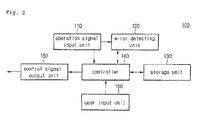
- Fig. 2 is a block configuration of the inverter fault diagnosis detecting unit to which an embodiment is applied.
- the fourth type there is a retry type fault (hereinafter referred as to the fourth type).
- the fourth type may include overcurrent, a motor sensor fault, or an arm short-circuited fault, etc.
- the fourth type fault may be a fault that may be falsely detected due to an external noise source. Accordingly, in order to prevent false detection, a control is made to stop driving the inverter in a set period or for the set number of times. Then the inverter is normally driven and, when the driving and stopping of the inverter is repeated for the set number of times, the driving of the inverter may be finally stopped.
- the controller 140 may confirm a type of the detected fault (operation S306).
- a sequence of confirming the fault type may be flexible.
- the controller 140 determines whether the fault type is the second type (operation S312).
- the controller 140 may generate an inverter control signal according to the second type. That is, the controller 140 may generate and output a control signal for blocking the driving of the inverter according to the fault cause (operation S314).
- the controller 140 determines the fault type is the fourth type (operation S322).
- the controller 140 may generate an inverter control signal according to the fourth type. That is, the controller 140 may generate and output a control signal for blocking the driving of the inverter according to the fault cause (operation S324). Then, for the fourth fault type, since the fault may occur due to an external noise source, the inverter may be turned on/off for the predetermined number of times or in a predetermined period in order to prevent false detection of the faults. The controller 140 may determine whether the number of times or the period of the turning on/off of the inverter is greater than a preset count number (operation S326).
- the controller 140 may turn on/off the inverter for the preset number of times after a predetermined waiting time. In addition, when the inverter is turned on/off for the number of times exceeding the preset count number, the controller 140 re-determines the fault cause, and re-drives the inverter or maintains blocking the inverter.
- Fig. 4 is a flowchart of an inverter control operation according to another embodiment.
Landscapes
- Engineering & Computer Science (AREA)
- Power Engineering (AREA)
- Inverter Devices (AREA)
Abstract
Description
- The present disclosure relates to an inverter, and particularly, to an apparatus and method for controlling an operation of an inverter.
- A three-phase pulse width modulation (PWM) inverter among inverters, which invert DC into AC, is used in a new renewable energy conversion system and a hybrid vehicle including various industrial application fields such as an motor drive, uninterruptible power supply, or active power filter.
- A design and control technology for an inverter system becomes generalized, but various kinds of unexpected inverter faults frequently occur in industrial fields. In particular, since the inverter fault affects an operation of an overall system, fault detection and diagnosis is necessary for increasing reliability of the system and removing adverse effects due to the fault.
- In addition, fault determination of the inverter system is typically performed by analyzing and controlling each inverter according to each fault type in order to minimize various damages on the inverter system due to operation and fault of the inverter system.
- That is, each case of various faults possibly occurring in the inverter system is determined, and fault recovery for normalization and driving of the inverter system is executed according to the determined case (a cause of accident). However, schemes for controlling the operation of the inverter system are different according to a kind of fault of the inverter system. Accordingly, in the case where a plurality of faults occur, an abnormal inverter system may be re-driven before operation for fault recovery.
- In this case, a secondary fault and various losses may occur therefrom.
- Embodiments provide an inverter control apparatus and method for easily determining whether to recover according to an inverter fault, and accordingly executing driving for normalization.
- In one embodiment, an inverter control apparatus includes: an operation signal input unit detecting a current of each phase output from an inverter; an error detecting unit detecting whether there is a fault of the inverter on the basis of the current detected by the operation signal input unit; a controller controlling driving of the inverter according to a type of the fault detected by the error detecting unit; and a storage unit storing a kind of fault of the inverter and a corresponding fault type on the basis of the current detected in the operation signal detecting unit.
- In another embodiment, an inverter control method includes: confirming whether there is a fault of an inverter on the basis of a current signal of each phase of the inverter; when the fault of the inverter occurs, confirming a type of the occurred fault; and controlling driving of the inverter according to the confirmed fault type.
- The details of one or more embodiments are set forth in the accompanying drawings and the description below. Other features will be apparent from the description and drawings, and from the claims.
-
-
Fig. 1 is a block configuration of an inverter system to which an embodiment is applied. -
Fig. 2 is a block configuration of an inverter fault diagnosing and detecting unit to which an embodiment is applied. -
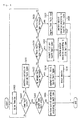
Fig. 3 is a flowchart of an inverter control operation according to an embodiment. -
Fig. 4 is a flowchart of an inverter control operation according to another embodiment. - Reference will now be made in detail to the embodiments of the present disclosure, examples of which are illustrated in the accompanying drawings.
- Terms and words used herein should not be construed limitedly by the common and dictionary meanings, but should be interpreted by meaning and concepts conforming to the technical idea of this invention based on the principle that the concept of terms and words can be defined properly by the inventor in order to describe this invention in the best ways. Therefore, it should be understood that since the configurations of the embodiments and drawings described herein are merely exemplary embodiments of the present invention, but do not include all the technical spirits of the present invention, there may be provided various equivalents and modifications which can be substituted for the above configurations.
-
Fig. 1 is a block configuration of an inverter system to which an embodiment is applied. - Referring to
Fig. 1 , an inverter system to which an embodiment is applied includes a pulse width modulation (PWM) inverter 10, a motor 20, and an inverter faultdiagnosis detecting unit 100. - The inverter fault
diagnosis detecting unit 100 receives a current of each phase A, B, and C output from thePWM inverter 10 and may diagnose a fault of an open circuit of the three-phase PWM inverter 10 on the basis of the received current signal. - A configuration of the inverter fault
diagnosis detecting unit 100 is described in detail with reference toFig. 2 . -
Fig. 2 is a block configuration of the inverter fault diagnosis detecting unit to which an embodiment is applied. - Referring to
Fig. 2 , the inverter faultdiagnosis detecting unit 100 includes an operationsignal input unit 110, anerror detecting unit 120, astorage unit 130, acontroller 140, a controlsignal output unit 150, and auser input unit 160. - The operation
signal input unit 110 may detect a current for each phase A, B, and C output from thePWM inverter 10, and output the detected current signals to theerror detecting unit 120. Besides, the operationsignal input unit 110 may receive signals of whether operations of theinverter 10 and the motor 20 are normal. - The
error detecting unit 120 may check the current signal of each phase A, B, and C of the inverter output from the operationsignal input unit 110, and accordingly detect a fault (error) of the inverter. In an embodiment, four fault types of the inverter are exemplarily described. - As a first type, there is a warming type fault (hereinafter referred to as a first type). The first type may include over-temperature of a motor or an inverter, or a fault of a temperature sensor. An inverter control operation according to the first type fault may prevent an input torque command value of a preset specific value or greater from being input or derate a command value with a preset slope to drive the inverter. For the above-described case of the first type fault, since damage on the inverter from a fire is prevented by limiting an input command value and driving the inverter, there is no need to stop driving the inverter by blocking a PWM signal.
- As a second type, there is a latch type fault (hereinafter referred as to the second type). The second type may include a reception error of controller area network (CAN) communication, over-voltage, a current sensor fault, or a power module fault, etc. An inverter control operation according to the second type fault may stop driving the inverter by blocking a PWM signal when a fault is detected.
- As a third type, there is a level type fault (hereinafter referred as to the third type). The third type may occur due to low voltages of a control power supply and a driving power supply. In addition, for the third type fault, in the case where there is no or short of power-supplying from outside due to the fault, the driving of the inverter may be normalized when the driving of the inverter is temporarily stopped and then the power supply is normally recovered.
- As a fourth type, there is a retry type fault (hereinafter referred as to the fourth type). The fourth type may include overcurrent, a motor sensor fault, or an arm short-circuited fault, etc. The fourth type fault may be a fault that may be falsely detected due to an external noise source. Accordingly, in order to prevent false detection, a control is made to stop driving the inverter in a set period or for the set number of times. Then the inverter is normally driven and, when the driving and stopping of the inverter is repeated for the set number of times, the driving of the inverter may be finally stopped.
- The
storage unit 130 may match and store a fault state of the inverter with a fault type according to the fault state. -
Fig. 3 is a flowchart of an inverter control operation according to an embodiment. - Referring
Fig. 3 , thecontroller 140 of the inverter faultdiagnosis detecting unit 100 according to an embodiment may continuously determine (operation S304) fault causes according to the various fault types described in relation toFig. 2 in an inverter driving mode (operation S302). - When occurrence of the fault is detected, the
controller 140 may confirm a type of the detected fault (operation S306). - A sequence of confirming the fault type may be flexible. In an embodiment, it is exemplarily described that a first type fault to an nth type fault are sequentially confirmed.
- The
controller 140 may determine that the confirmed fault type is the first type (operation S308). - When the fault type is determined as the first type, the
controller 140 may generate an inverter control signal according to the first type. That is, thecontroller 140 may prevent an input torque command value of a preset specific value or greater from being input or allow an inverter control signal reducing the present command value to be generated and output through the controlsignal output unit 150. - On the contrary, when the fault type is not the first type, the
controller 140 determines whether the fault type is the second type (operation S312). - When the fault type is confirmed as the second type, the
controller 140 may generate an inverter control signal according to the second type. That is, thecontroller 140 may generate and output a control signal for blocking the driving of the inverter according to the fault cause (operation S314). - On the contrary, when the fault type is not the confirmed second fault type, the
controller 140 determines whether the fault type is the third type (operation S316). - When the fault type is confirmed as the third type, the
controller 140 may generate an inverter control signal according to the third type. That is, thecontroller 140 may generate and output a control signal for blocking the driving of the inverter according to the fault cause. Then, thecontroller 140 determines whether a return condition to drive the inverter (the above-described normal power supply inFig. 2 ) is met (operation S320). Thecontroller 140 may re-drive the inverter according to the determination result. - Furthermore, when the fault type is not determined as the third type, the
controller 140 determines the fault type is the fourth type (operation S322). - When the fault type is confirmed as the fourth type, the
controller 140 may generate an inverter control signal according to the fourth type. That is, thecontroller 140 may generate and output a control signal for blocking the driving of the inverter according to the fault cause (operation S324). Then, for the fourth fault type, since the fault may occur due to an external noise source, the inverter may be turned on/off for the predetermined number of times or in a predetermined period in order to prevent false detection of the faults. Thecontroller 140 may determine whether the number of times or the period of the turning on/off of the inverter is greater than a preset count number (operation S326). - When the number of times or the period of the turning the inverter on/off is not greater than the preset count number, the
controller 140 may turn on/off the inverter for the preset number of times after a predetermined waiting time. In addition, when the inverter is turned on/off for the number of times exceeding the preset count number, thecontroller 140 re-determines the fault cause, and re-drives the inverter or maintains blocking the inverter. -
Fig. 4 is a flowchart of an inverter control operation according to another embodiment. - Referring to
Fig. 4 , thecontroller 140 of the inverter faultdiagnosis detecting unit 100 according to an embodiment may continuously determine fault causes according to the various fault types described in relation toFig. 2 (operation S404). - When the fault is detected, the
controller 140 may determine whether the detected fault is a single type fault (operation S406). - When the detected fault is the single type fault including only any one of the various fault types described in relation to
Fig. 2 , thecontroller 140 may perform operation according to the fault type. The control operation according to the fault type is described in relation toFigs. 2 and3 , and omitted here. - On the contrary, when the detected fault is confirmed as a composite fault type including a plurality of fault types among the various fault types described in relation to
Fig. 2 , thecontroller 140 preferentially determines whether the fault type includes the second type (operation S412). - As described in relation to
Figs. 2 and3 , when the second type fault is detected, thecontroller 140 generates a controls signal for stopping the driving of the inverter. On the contrary, when the detected fault is the first, third, or fourth fault type, thecontroller 140 may generate a control signal not for stopping the driving of the inverter or for re-driving the inverter when a predetermined condition is met. - Accordingly, since, for the second fault type, the driving of the inverter is required to be stopped, a fault type having a priority in the inverter control according to the fault may be the second type.
- When the plurality of fault types are confirmed and the second type is included, the
controller 140 neglects other fault types (the first, third, and fourth types) and generates a control signal for blocking the driving of the inverter. However, when the fault is neglected, a fault state according to the control signal generation for driving the inverter may be neglected, but notification for the fault or information on the state may be detected and output to a user. - On the contrary, when a fault including the plurality of fault types occurs but the second type fault is not included, the
controller 140 determines whether the third type fault is included (operation S418). - For the third type fault, similar to the second type fault, the driving of the inverter is stopped when the fault occurs. However, when the return condition to drive the inverter is met, the inverter may be re-driven. Accordingly, the third type fault may have a higher priority than the fourth type in confirming the fault type.
- Accordingly, when the third type fault is detected, the
controller 140 may neglect the first and fourth faults (operation S420) and perform a control operation of the inverter according to the third type fault (operation S422). - When a fault including the plurality of fault types occurs but the second and third type faults are not included, the
controller 140 may determines whether the fourth type fault is included (operation S424). - When the fourth type fault is detected, similarly to the second and third type faults, the
controller 140 stops driving the inverter when the fault occurs. However, since a fault cause may be various, thecontroller 140 may drive the inverter so that the inverter is turned on/off in a designated period or for the designated number of times. Accordingly, since the operation of the inverter is preferentially turned off for the second and third fault types, a priority of the fourth type fault that the driving of inverter is not unconditionally turned off may be designated to be low. - The
controller 140 may neglect the first fault type for which the driving of the inverter is not turned off according to a fault including the fourth type fault among the plurality of fault types and perform control operation according to the fourth fault type. - In an embodiment, it is exemplarily described that, when a fault including a plurality of fault types occurs, a sequence of confirming the fault types is that a fault type requiring an inverter to be stopped is preferentially confirmed. However, the priority of the fault types may be determined by user inputs according to importance of the fault
- Although embodiments have been described with reference to a number of illustrative embodiments thereof, it should be understood that numerous other modifications and embodiments can be devised by those skilled in the art that will fall within the spirit and scope of the principles of this disclosure. More particularly, various variations and modifications are possible in the component parts and/or arrangements of the subject combination arrangement within the scope of the disclosure, the drawings and the appended claims. In addition to variations and modifications in the component parts and/or arrangements, alternative uses will also be apparent to those skilled in the art.
Claims (12)
- An inverter control apparatus comprising:an operation signal input unit(110) detecting a current of each phase output from an inverter(10);an error detecting unit(120) detecting whether there is a fault of the inverter on the basis of the current detected by the operation signal input unit(150);a controller(140) controlling driving of the inverter according to a type of the fault detected by the error detecting unit(120); anda storage unit(130) storing a kind of fault of the inverter and a corresponding fault type on the basis of the current detected in the operation signal detecting unit.
- The inverter control apparatus according to claim 1, wherein the controller classifies the fault into a first type limiting an input command value according to the fault detected based on the current, a second type blocking the driving of the inverter, a third type temporarily stopping the driving of the inverter and then re-operating the driving of the inverter according to a return condition to drive the inverter, and a fourth type turning on/off the driving of the inverter.
- The inverter control apparatus according to claim 2, wherein, when the fourth type fault is detected, the controller turns on/off the driving of the inverter in a predetermined period or for the predetermined number of times, and, when the fault is detected for the reference number of times or in the predetermined period, the controller blocks the driving of the inverter.
- The inverter control apparatus according to claim 2, wherein, when the detected fault type is the first type, the controller prevents an input torque command value of a specific value or greater from being input or reduces a preset command value.
- The inverter control apparatus according to claim 2, wherein, when the detected fault type is the third type, the controller blocks the driving of the inverter, detects whether a power state is returned to a normal state, and re-drives the inverter when the power state is returned.
- The inverter control apparatus according to claim 2, wherein, when the confirmed fault type is included in a plurality of fault types, the controller outputs an inverter driving control signal corresponding to the fault type according to a preset priority.
- The inverter control apparatus according to claim 6, wherein the controller sets a fault type, which blocks the driving of the inverter, to have a highest priority when the priority is determined according to the fault type.
- The inverter control apparatus according to claim 7, wherein the priority according to the fault type is set in order of a second, third, fourth, and first type.
- The inverter control apparatus according to claim 7, wherein the controller controls to drive the inverter according to the fault type having the priority and neglects a fault type having a secondary priority.
- An inverter control method comprising:confirming whether there is a fault of an inverter on the basis of a current signal of each phase of the inverter;when the fault of the inverter occurs, confirming a type of the occurred fault; andcontrolling driving of the inverter according to the confirmed fault type.
- The inverter control method according to claim 10, wherein, when the confirmed fault includes a plurality of fault types, an inverter driving control signal corresponding to the fault type is output according to a preset priority.
- The inverter control method according to claim 11, wherein, when the fault of the inverter include the plurality of fault types, a fault type for which a control blocking the driving of the inverter is made has the highest priority.
Applications Claiming Priority (1)
| Application Number | Priority Date | Filing Date | Title |
|---|---|---|---|
| KR20130083612A KR20150009301A (en) | 2013-07-16 | 2013-07-16 | Apparatus and method for controlling of inverter system |
Publications (2)
| Publication Number | Publication Date |
|---|---|
| EP2830175A2 true EP2830175A2 (en) | 2015-01-28 |
| EP2830175A3 EP2830175A3 (en) | 2015-04-08 |
Family
ID=51033053
Family Applications (1)
| Application Number | Title | Priority Date | Filing Date |
|---|---|---|---|
| EP20140175507 Withdrawn EP2830175A3 (en) | 2013-07-16 | 2014-07-03 | Inverter control apparatus and control method thereof |
Country Status (5)
| Country | Link |
|---|---|
| US (1) | US9520768B2 (en) |
| EP (1) | EP2830175A3 (en) |
| JP (1) | JP5856234B2 (en) |
| KR (1) | KR20150009301A (en) |
| CN (1) | CN104300504A (en) |
Cited By (1)
| Publication number | Priority date | Publication date | Assignee | Title |
|---|---|---|---|---|
| WO2021144234A1 (en) | 2020-01-13 | 2021-07-22 | Convertertec Deutschland Gmbh | Method for phase-separated overcurrent protection of a three-phase bridge circuit |
Families Citing this family (14)
| Publication number | Priority date | Publication date | Assignee | Title |
|---|---|---|---|---|
| WO2015126182A1 (en) * | 2014-02-21 | 2015-08-27 | 삼성전자 주식회사 | Method for displaying content and electronic device therefor |
| KR101566621B1 (en) * | 2014-06-16 | 2015-11-05 | 엘에스산전 주식회사 | system for operation control of inverter in emergency situation |
| JP6470067B2 (en) * | 2015-02-23 | 2019-02-13 | 東芝シュネデール・インバータ株式会社 | Inverter device and program for inverter device |
| KR102367739B1 (en) * | 2015-09-02 | 2022-02-28 | 한온시스템 주식회사 | Method and apparatus for protecting an electric compressor on over current error |
| KR20170121622A (en) | 2016-04-25 | 2017-11-02 | 엘에스산전 주식회사 | Apparatus for controlling inverter |
| CN106771777B (en) * | 2017-01-20 | 2023-02-24 | 江苏恒力化纤股份有限公司 | Inverter driving signal detection device of frequency converter |
| CN111034000B (en) * | 2017-09-06 | 2023-04-18 | 株式会社日立产机系统 | Power conversion device |
| CN109901003B (en) * | 2017-12-11 | 2022-08-09 | 中国电力科学研究院有限公司 | Inverter power fault detection method and system |
| CN111145529B (en) * | 2019-12-31 | 2023-10-13 | 深圳库马克科技有限公司 | Communication method of cascade power unit of high-voltage frequency converter |
| CN111145530B (en) * | 2019-12-31 | 2023-10-13 | 深圳库马克科技有限公司 | Communication method of high-voltage frequency converter power unit |
| JP2023530952A (en) * | 2020-06-15 | 2023-07-20 | エンフェーズ エナジー インコーポレイテッド | Method and Apparatus for Fast Shutdown of Islanding Capable Inverters Using Open Circuit Detection |
| US12341419B2 (en) * | 2021-12-17 | 2025-06-24 | BorgWarner US Technologies LLC | Configurable fault and control safety architecture for inverter system |
| US11860239B2 (en) * | 2022-03-29 | 2024-01-02 | GM Global Technology Operations LLC | Systems and methods for detecting and isolating faults within a power inverter |
| CN116620163B (en) * | 2023-05-29 | 2026-04-07 | 长城汽车股份有限公司 | Inverter alarm methods, devices, storage media and vehicles |
Family Cites Families (13)
| Publication number | Priority date | Publication date | Assignee | Title |
|---|---|---|---|---|
| JPH07308074A (en) | 1994-05-10 | 1995-11-21 | Toshiba Corp | Inverter device |
| JP3529530B2 (en) | 1996-01-19 | 2004-05-24 | 株式会社東芝 | Inverter protection device for grid connection |
| JP3430773B2 (en) | 1996-02-21 | 2003-07-28 | 株式会社明電舎 | Overheating protection method of switching element in inverter device |
| JP3425835B2 (en) | 1996-03-01 | 2003-07-14 | 富士電機株式会社 | Abnormality detection and protection circuit of semiconductor element of power bridge circuit device |
| US6064172A (en) | 1997-02-11 | 2000-05-16 | Power Superconductor Applications Corporation | Method and apparatus for detection, classification and reduction of internal electrical faults in alternating current propulsion machinery using synchronous detection scheme |
| JPH11262270A (en) | 1998-03-13 | 1999-09-24 | Toshiba Corp | Intelligent power module and power converter using the same |
| JP4441981B2 (en) | 2000-05-12 | 2010-03-31 | パナソニック株式会社 | Inverter device |
| JP4089367B2 (en) | 2002-09-17 | 2008-05-28 | 株式会社ジェイテクト | Electric power steering device |
| KR20070021573A (en) * | 2005-08-18 | 2007-02-23 | 삼성전자주식회사 | Motor control device, its control method and fault detection device of inverter part |
| JP4730420B2 (en) * | 2008-10-09 | 2011-07-20 | トヨタ自動車株式会社 | Motor drive device and control method of motor drive device |
| JP5350034B2 (en) * | 2009-03-25 | 2013-11-27 | 日本ムーグ株式会社 | Electric motor system |
| JP5547559B2 (en) | 2010-06-16 | 2014-07-16 | 日立オートモティブシステムズ株式会社 | Power converter |
| JP2012070573A (en) | 2010-09-27 | 2012-04-05 | Fuji Electric Co Ltd | Overvoltage protection method of inverter device |
-
2013
- 2013-07-16 KR KR20130083612A patent/KR20150009301A/en not_active Ceased
-
2014
- 2014-05-23 US US14/286,682 patent/US9520768B2/en not_active Expired - Fee Related
- 2014-06-12 JP JP2014121296A patent/JP5856234B2/en not_active Expired - Fee Related
- 2014-07-03 EP EP20140175507 patent/EP2830175A3/en not_active Withdrawn
- 2014-07-16 CN CN201410339012.7A patent/CN104300504A/en active Pending
Non-Patent Citations (1)
| Title |
|---|
| None |
Cited By (2)
| Publication number | Priority date | Publication date | Assignee | Title |
|---|---|---|---|---|
| WO2021144234A1 (en) | 2020-01-13 | 2021-07-22 | Convertertec Deutschland Gmbh | Method for phase-separated overcurrent protection of a three-phase bridge circuit |
| US11990834B2 (en) | 2020-01-13 | 2024-05-21 | Kk Wind Solutions A/S | Method for phase-separated overcurrent protection of a three-phase bridge circuit |
Also Published As
| Publication number | Publication date |
|---|---|
| EP2830175A3 (en) | 2015-04-08 |
| CN104300504A (en) | 2015-01-21 |
| KR20150009301A (en) | 2015-01-26 |
| JP5856234B2 (en) | 2016-02-09 |
| JP2015023791A (en) | 2015-02-02 |
| US9520768B2 (en) | 2016-12-13 |
| US20150023075A1 (en) | 2015-01-22 |
Similar Documents
| Publication | Publication Date | Title |
|---|---|---|
| EP2830175A2 (en) | Inverter control apparatus and control method thereof | |
| CN102431549B (en) | For the control electronics of vehicle | |
| US9608534B2 (en) | Power conversion system, and voltage detection device thereof | |
| US20140361722A1 (en) | Diagnosis of Over-Current Conditions in Bipolar Motor Controllers | |
| CN101267956A (en) | Multiple inverter system with single controller and related method of operation | |
| JP5441481B2 (en) | Inverter device failure diagnosis method | |
| EP2950444A1 (en) | Motor control system | |
| US11979095B2 (en) | Discharge control circuit and power conversion device | |
| US12525782B2 (en) | Motor drive device provided with charging control unit | |
| JP6420381B2 (en) | Motor drive device | |
| CN104950238A (en) | Fault detection method and fault detection device for current converter and IGBT drive circuit thereof | |
| JP2009189214A (en) | Drive device and capacitor abnormality determination method | |
| CN113659617A (en) | Auxiliary power supply management system, method and rail vehicle | |
| US10948960B2 (en) | Control device and control method | |
| JP5071322B2 (en) | Power control system | |
| JP2015100250A (en) | Power Conditioner | |
| US10573909B2 (en) | Fuel cell system | |
| EP4471510A1 (en) | Control device and processing equipment | |
| CN117999734A (en) | Power conversion system and control method | |
| US11165278B2 (en) | Uninterruptible power supply system and uninterruptible power supply | |
| JP2008005660A (en) | Power supply device provided with regenerative energy consumption circuit | |
| JP4761117B2 (en) | AC / AC converter error detection method | |
| JP6726121B2 (en) | Power conversion system | |
| EP4574520A1 (en) | Safety apparatus and method for operating the safety apparatus | |
| JP2012080669A (en) | Abnormality detection system |
Legal Events
| Date | Code | Title | Description |
|---|---|---|---|
| 17P | Request for examination filed |
Effective date: 20140703 |
|
| AK | Designated contracting states |
Kind code of ref document: A2 Designated state(s): AL AT BE BG CH CY CZ DE DK EE ES FI FR GB GR HR HU IE IS IT LI LT LU LV MC MK MT NL NO PL PT RO RS SE SI SK SM TR |
|
| AX | Request for extension of the european patent |
Extension state: BA ME |
|
| PUAI | Public reference made under article 153(3) epc to a published international application that has entered the european phase |
Free format text: ORIGINAL CODE: 0009012 |
|
| PUAL | Search report despatched |
Free format text: ORIGINAL CODE: 0009013 |
|
| AK | Designated contracting states |
Kind code of ref document: A3 Designated state(s): AL AT BE BG CH CY CZ DE DK EE ES FI FR GB GR HR HU IE IS IT LI LT LU LV MC MK MT NL NO PL PT RO RS SE SI SK SM TR |
|
| AX | Request for extension of the european patent |
Extension state: BA ME |
|
| RIC1 | Information provided on ipc code assigned before grant |
Ipc: H02M 7/5387 20070101ALI20150303BHEP Ipc: H02H 7/122 20060101ALI20150303BHEP Ipc: H02H 3/00 20060101AFI20150303BHEP Ipc: H02M 1/32 20070101ALN20150303BHEP Ipc: H02M 7/797 20060101ALI20150303BHEP |
|
| R17P | Request for examination filed (corrected) |
Effective date: 20151008 |
|
| RBV | Designated contracting states (corrected) |
Designated state(s): AL AT BE BG CH CY CZ DE DK EE ES FI FR GB GR HR HU IE IS IT LI LT LU LV MC MK MT NL NO PL PT RO RS SE SI SK SM TR |
|
| STAA | Information on the status of an ep patent application or granted ep patent |
Free format text: STATUS: THE APPLICATION HAS BEEN WITHDRAWN |
|
| 18W | Application withdrawn |
Effective date: 20170725 |