EP2827329A2 - Anrufvorrichtung und Stimmenmodifizierungsverfahren - Google Patents
Anrufvorrichtung und Stimmenmodifizierungsverfahren Download PDFInfo
- Publication number
- EP2827329A2 EP2827329A2 EP14164030.0A EP14164030A EP2827329A2 EP 2827329 A2 EP2827329 A2 EP 2827329A2 EP 14164030 A EP14164030 A EP 14164030A EP 2827329 A2 EP2827329 A2 EP 2827329A2
- Authority
- EP
- European Patent Office
- Prior art keywords
- voice
- frequency characteristic
- intended party
- modification
- correction data
- Prior art date
- Legal status (The legal status is an assumption and is not a legal conclusion. Google has not performed a legal analysis and makes no representation as to the accuracy of the status listed.)
- Withdrawn
Links
Images


Classifications
-
- H—ELECTRICITY
- H04—ELECTRIC COMMUNICATION TECHNIQUE
- H04W—WIRELESS COMMUNICATION NETWORKS
- H04W4/00—Services specially adapted for wireless communication networks; Facilities therefor
- H04W4/16—Communication-related supplementary services, e.g. call-transfer or call-hold
-
- G—PHYSICS
- G10—MUSICAL INSTRUMENTS; ACOUSTICS
- G10L—SPEECH ANALYSIS TECHNIQUES OR SPEECH SYNTHESIS; SPEECH RECOGNITION; SPEECH OR VOICE PROCESSING TECHNIQUES; SPEECH OR AUDIO CODING OR DECODING
- G10L21/00—Speech or voice signal processing techniques to produce another audible or non-audible signal, e.g. visual or tactile, in order to modify its quality or its intelligibility
- G10L21/003—Changing voice quality, e.g. pitch or formants
-
- G—PHYSICS
- G10—MUSICAL INSTRUMENTS; ACOUSTICS
- G10L—SPEECH ANALYSIS TECHNIQUES OR SPEECH SYNTHESIS; SPEECH RECOGNITION; SPEECH OR VOICE PROCESSING TECHNIQUES; SPEECH OR AUDIO CODING OR DECODING
- G10L21/00—Speech or voice signal processing techniques to produce another audible or non-audible signal, e.g. visual or tactile, in order to modify its quality or its intelligibility
- G10L21/02—Speech enhancement, e.g. noise reduction or echo cancellation
- G10L21/0316—Speech enhancement, e.g. noise reduction or echo cancellation by changing the amplitude
- G10L21/0364—Speech enhancement, e.g. noise reduction or echo cancellation by changing the amplitude for improving intelligibility
-
- G—PHYSICS
- G10—MUSICAL INSTRUMENTS; ACOUSTICS
- G10L—SPEECH ANALYSIS TECHNIQUES OR SPEECH SYNTHESIS; SPEECH RECOGNITION; SPEECH OR VOICE PROCESSING TECHNIQUES; SPEECH OR AUDIO CODING OR DECODING
- G10L15/00—Speech recognition
- G10L15/08—Speech classification or search
- G10L2015/088—Word spotting
-
- H—ELECTRICITY
- H04—ELECTRIC COMMUNICATION TECHNIQUE
- H04M—TELEPHONIC COMMUNICATION
- H04M2203/00—Aspects of automatic or semi-automatic exchanges
- H04M2203/20—Aspects of automatic or semi-automatic exchanges related to features of supplementary services
- H04M2203/2061—Language aspects
-
- H—ELECTRICITY
- H04—ELECTRIC COMMUNICATION TECHNIQUE
- H04M—TELEPHONIC COMMUNICATION
- H04M2242/00—Special services or facilities
- H04M2242/12—Language recognition, selection or translation arrangements
-
- H—ELECTRICITY
- H04—ELECTRIC COMMUNICATION TECHNIQUE
- H04M—TELEPHONIC COMMUNICATION
- H04M3/00—Automatic or semi-automatic exchanges
- H04M3/22—Arrangements for supervision, monitoring or testing
- H04M3/2236—Quality of speech transmission monitoring
Definitions
- FIG. 1 is a diagram illustrating an example of a hardware configuration of a mobile phone device in an embodiment of the present embodiment.
- a mobile phone device 10 includes a control part 101, a voice signal processor part 102, a speaker 103, a microphone 104, a radio transmission part 105, an antenna 106, an input operation part 107, a calling part 108, and the like.
- the control part 101 includes, for example, a CPU, a ROM, a RAM, a flash memory, and the like.
- the RAM reads from the ROM, the flash memory, or the like and stores therein, a program in accordance with an instruction for starting the program.
- the CPU realizes a function relating to the mobile phone device 10 in accordance with the program stored in the RAM.
- the control part 101 executes a process or control associated with a call in each part.
- the voice signal processor part 102 includes a D/A converter, a digital signal processor (DSP), an A/D converter, a transmission signal amplifier, a receiving signal amplifier, and the like.
- the voice signal processor part 102 executes a process for correcting or modifying a frequency characteristic of a voice of an intended party.
- a frequency characteristic of a voice refers to a distribution of frequency components (a frequency spectrum) of a voice.
- a frequency characteristic of a voice it is possible for a frequency characteristic of a voice to be represented by a graph wherein a transverse axis is a frequency and a longitudinal axis is an intensity of each frequency component.
- the speaker 103 outputs the voice of an intended party.
- the microphone 104 converts the voice of a user for the mobile phone device 10 into an electric signal.
- the radio transmission part 105 executes transmission or reception of a radio signal to or from a base station.
- the input operation part 107 includes a button, a touch panel, or the like, for accepting an operational instruction from a user.
- the calling part 108 includes an LED for notifying of an incoming call by flashing thereof, a ringer for notifying of it by a sound output therefrom, a vibrator for notifiying of it by vibration thereof, or the like.
- the speech of a user for the mobile phone device 10 (that will be referred to as a "subject user", below) in a call is input into the microphone 104 and converted into an electric signal.
- the electric signal is encoded by the voice signal processor part 102 and ultimately transmitted as a modulated signal from the radio transmission part 105 through the antenna 106 to a base station.
- the radio transmission part 105 receives a modulated signal from a base station through the antenna 106.
- the modulated signal is decoded by the voice signal processor part 102 and output as a voice from the speaker 103.
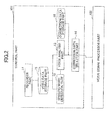
- FIG. 2 is a diagram illustrating an example of a functional configuration of a control part.
- the control part 101 includes a recorder part 11, a specific word detection part 12, a voice analysis part 13, a correction data selection part 14, and the like. Each of these parts is realized by a process to be executed by a program in a CPU that constitutes the control part 101.
- the control part 101 further includes a voice data storage part 15, a correction data storage part 16, and the like.
- the voice data storage part 15 is capable of being realized by using a RAM ,a flash memory, or the like, that constitutes the control part 101.
- the correction data storage part 16 is capable of being realized by using a ROM, a flash memory, or the like, that constitutes the control part 101.
- the recorder part 11 produces voice data wherein the speech content of each of a subject user and another user during a call is recorded.
- a format of the voice data is not limited to a particular one.
- the voice data storage part 15 stores voice data produced by the recorder part 11.
- voice data to be stored are not necessarily the entire contents of a call from the start of a call but may be limited to a predetermined period of time before the present time.
- the specific word detection part 12 monitors the speech of a subject user in voice data or the speech of a subject user being input from the microphone 104 and detects the speech of a specific word.
- a specific word refers to a word to be uttered for repeating the content of the speech of another user in a case where it was not possible to catch the content of a speech (that is referred to as a "repeating word", below).
- a word for listening gain it is possible to provide "Eh?", "Yay-ess?", "What?", "I beg your pardon?", or the like.
- Detection of a repeating word may be executed by, for example, comparing character string data sampled in voice recognition with a listing of repeating words stored in the control part 101.
- the voice analysis part 13 executes spectral analysis on a voice from another user immediately before the repeating word and samples a frequency characteristic thereof.
- the correction data selection part 14 selects correction data for correcting or modifying a voice of another user from a plurality of correction data stored in the correction data storage part 16 based on a frequency characteristic sampled by the voice analysis part 13.
- the correction data selection part 14 sets selected correction data in the voice signal processor part 102.
- the voice signal processor part 102 corrects or modifies a frequency characteristic of a voice of another user based on set correction data.
- a procedure of a process to be executed by the mobile phone device 10 will be described below.
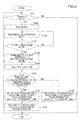
- FIG. 3 is a flowchart for illustrating one example of a procedure of a process to be executed by a control part in a mobile phone device.
- the recorder part 11 records the content of the call (S102) during the call ("YES" at S101). Specifically, the recorder part 11 produces voice data with the recorded content of the speech of each of a subject user and another user in a call, and stores the voice data in the voice data storage part 15.
- the specific word detection part 12 refers to voice data sequentially during recording and determines the presence or absence of a repeating word in a speech of a subject user by using, for example, voice recognition or the like (S104). For example, the specific detection part periodically processes an object voice in voice data during the last second at one-second intervals. As the specific word detection part 12 detects a repeating word in a speech ("YES" at S104), voice data for a predetermined period of time before a start of the repeating word in the speech are sampled from the voice data storage part 15 (S105).
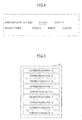
- FIG. 4 is a diagram for illustrating voice data before a repeating word in a speech.
- a conversation between a subject user and another user is expressed by symbols.
- time proceeds from left to right.
- another user says "OXOX”
- a subject user responds like "What?".
- the repeating word in the speech is detected.
- voice data are sampled in a period of time that includes "OXOX" in a speech of another user immediately before the repeating word.
- a predetermined period of time at step S105 is a period of time with a high probability of including the content of a speech of another user.
- voice data may be sampled in a period of time that includes a last speech of another user before the repeating word in a speech.
- voice data to be sampled may not be limited to those in a period of time immediately before a repeating word.
- voice data relating to an entirety or a part that includes a speech of another person may be sampled from voice data stored in the voice data storage part 15 at the present time.
- recorded data immediately before a repeating word are sampled, so that it is possible to facilitate the specifying of a frequency characteristic of a voice that is hard to be heard by a subject user.
- the voice analysis part 13 executes spectral analysis of sampled voice data (S106). As a result, a frequency characteristic of the voice data is sampled or produced.
- the correction data selection part 14 determines whether or not a rate of a high frequency component in a sampled frequency characteristic is equal to or greater than a predetermined value ⁇ (S107).
- An essence of the determination corresponds to a determination as to whether or not a voice of another user is a high voice in a general sense.
- determination may not be made in a general sense but may be made based on a sense of a subject user.
- a high frequency component refers to, for example, a component with a frequency equal to or higher than a certain threshold value but it may also be possible to modify the setting of the threshold.
- correction data selection part 14 selects correction data that are one level lower than correction data at the present time (S108).
- Correction data at the present time refers to correction data that are applied to the voice signal processor part 102 at the present time.
- FIG. 5 is a diagram illustrating an example of a configuration of a correction data storage part 16.
- the correction data storage part 16 includes correction data 0, correction data +1 to +4, correction data -1 to -4, and the like.
- Respective correction data are data that include information for indicating a difference between frequency characteristics before and after a correction or before and after a modification, wherein a numerical value at an end of a name of correction data is different depending on information of such a difference. That is, correction data 0 are correction data for executing no correction.
- correction data 0 may be set in the voice signal processor part 102 for an initial setting at a time of shipment, a time of an initial call, or the like, of the mobile phone device 10.
- Correction data +1 to +4 are correction data for increasing a high frequency component (making a voice of another user higher), wherein when a plus value of an end thereof is large, an amount of an increase of a high frequency component is increased.
- Correction data +1 to +4 will be referred to as "plus correction data” below.
- plus correction data may be to decrease a low frequency component.
- correction data -1 to -4 are correction data for increasing a low frequency component (making a voice of another user lower), wherein when a minus value at an end thereof is large, an amount of an increase of a low frequency component is increased.
- Correction data -1 to -4 will be referred to as "minus correction data” below.
- minus correction data may be to decrease a high frequency component.
- FIG. 6 is a diagram illustrating one example of a content of correction data.
- a transverse axis is a frequency
- a + direction of a longitudinal axis is an increase of an intensity at a frequency
- a - direction of the longitudinal axis is a decrease of an intensity at a frequency.
- (1) is an example of plus correction data. That is, (1) is correction data for increasing a high frequency component and decreasing a low frequency component. A tendency thereof increases in order of correction data +1, +2, +3, and +4.
- (2) is an example of minus correction data. That is, (2) is correction data for increasing a low frequency component and decreasing a high frequency component. A tendency thereof increases in order of correction data -1, -2, -3, and -4.
- correction data 0 are ⁇ 0 over an entire frequency.
- correction data that are one level lower than correction data at the present time refer to correction data wherein a value at an end of the correction data is smaller than that at the present time. Therefore, for example, in a case where correction data at the present time are correction data 0, correction data -1 are selected. In a case where correction data at the present time are correction data +2, correction data +1 are selected. In a case where correction data at the present time are correction data -2, correction data -3 are selected.
- correction data selection part 14 selects correction data that are one level higher than correction data at the present time (S109).
- Correction data that are one level higher than correction data at the present time refer to correction data wherein a value at an end of the correction data is one larger than that at the present time. Therefore, for example, in a case where correction data at the present time are correction data 0, correction data +1 are selected. In a case where correction data at the present time are correction data +2, correction data +3 are selected. In a case where correction data at the present time are correction data -2, correction data -1 are selected.
- the correction data selection part 14 stores in the RAM, for example, information for indicating what is selected correction data.
- steps S108 and S109 are processes for selecting one correction pattern or modification pattern from a plurality of correction patterns or modification patterns.
- the correction data selection part 14 sets selected correction data in the voice signal processor part 102 (S110).
- the voice signal processor part 102 corrects or modifies a frequency characteristic of a subsequent voice of another user based on a correction pattern or modification pattern that is indicated by set correction data. For example, in a case where correction data as illustrated in (1) of FIG. 6 are set, the voice signal processor part 102 increases a frequency component in a high frequency domain and decreases a frequency component in a low frequency domain, for a voice of another user. On the other hand, in a case where correction data as illustrated in (2) of FIG. 6 are set, the voice signal processor part 102 decreases a frequency component in a high frequency domain and increases a frequency component in a low frequency domain, for a voice of another user.
- the voice of another user is made lower. Furthermore, in a case where a voice of another user is so low that it is difficult to be heard, the voice of another user is made higher.
- the process in FIG. 3 is repeated during a call. Therefore, as a subject user again pronounces a repeating word, selection of correction data is executed again. Accordingly, it is expected that listening of a subject user to a voice of another user is facilitated gradually.
- the correction data selection part 14 may relate to an incoming call number or an outgoing call number and store in a flash memory, correction data selected at an end of the call.
- the correction data selection part 14 may set the correction data in the voice signal processor part 102 at, for example, a time of the start of a call. Accordingly, it is possible to increase a probability of being able to output a voice corrected or modified to have a frequency characteristic that is readily be heard by a subject user from a time of the start of a call.
- a frequency characteristic of a voice of another user is automatically modified depending on a repeating word in a speech. Therefore, it is possible to increase a probability of correcting or modifying a voice quality of another user to a voice quality that is readily heard by a subject user, while the subject user does not conduct a special operation. As a result, it is possible to prevent a repeating word from being uttered frequently and it is possible to expect smoothing of a call.
- correction data may be absolute values.
- correction data for indicating frequency characteristics with N patterns from a low voice to a high voice are prepared, and when correction to a high voice is desired, correction data are selected that correspond to one level higher voice.
- a difference between the correction data and a frequency component sampled at step S106 may be calculated and the difference may be set in the voice signal processor part 102. Correction or modification of a frequency characteristic may be executed by another method.
- the present embodiment may be applied to a call device other than the mobile phone device 10, such as a land line phone or a transceiver.
- the mobile phone device 10 in the present embodiment is one example of a call device.
- the specific word detection part 12 is one example of a detection part.
- the voice analysis part 13 is one example of a sampling part.
- the voice signal processor part 102 is one example of a modification part.
- the correction data selection part 14 is one example of a selection part.
Landscapes
- Engineering & Computer Science (AREA)
- Signal Processing (AREA)
- Quality & Reliability (AREA)
- Audiology, Speech & Language Pathology (AREA)
- Computational Linguistics (AREA)
- Health & Medical Sciences (AREA)
- Human Computer Interaction (AREA)
- Physics & Mathematics (AREA)
- Acoustics & Sound (AREA)
- Multimedia (AREA)
- Computer Networks & Wireless Communication (AREA)
- Telephone Function (AREA)
- Machine Translation (AREA)
Applications Claiming Priority (1)
| Application Number | Priority Date | Filing Date | Title |
|---|---|---|---|
| JP2013124990A JP2015002386A (ja) | 2013-06-13 | 2013-06-13 | 通話装置、音声変更方法、及び音声変更プログラム |
Publications (2)
| Publication Number | Publication Date |
|---|---|
| EP2827329A2 true EP2827329A2 (de) | 2015-01-21 |
| EP2827329A3 EP2827329A3 (de) | 2015-03-11 |
Family
ID=50543428
Family Applications (1)
| Application Number | Title | Priority Date | Filing Date |
|---|---|---|---|
| EP14164030.0A Withdrawn EP2827329A3 (de) | 2013-06-13 | 2014-04-09 | Anrufvorrichtung und Stimmenmodifizierungsverfahren |
Country Status (3)
| Country | Link |
|---|---|
| US (1) | US20140370858A1 (de) |
| EP (1) | EP2827329A3 (de) |
| JP (1) | JP2015002386A (de) |
Families Citing this family (2)
| Publication number | Priority date | Publication date | Assignee | Title |
|---|---|---|---|---|
| JP6849054B2 (ja) * | 2017-03-17 | 2021-03-24 | ヤマハ株式会社 | 会話装置、音声処理システム、音声処理方法、および音声処理プログラム |
| JP7180127B2 (ja) * | 2018-06-01 | 2022-11-30 | 凸版印刷株式会社 | 情報提示システム、情報提示方法及びプログラム |
Citations (1)
| Publication number | Priority date | Publication date | Assignee | Title |
|---|---|---|---|---|
| JPH10326176A (ja) | 1997-05-23 | 1998-12-08 | Oki Hokuriku Syst Kaihatsu:Kk | 音声対話制御方法 |
Family Cites Families (4)
| Publication number | Priority date | Publication date | Assignee | Title |
|---|---|---|---|---|
| US5539806A (en) * | 1994-09-23 | 1996-07-23 | At&T Corp. | Method for customer selection of telephone sound enhancement |
| ATE456845T1 (de) * | 2006-06-02 | 2010-02-15 | Koninkl Philips Electronics Nv | Sprachdifferenzierung |
| JP5716595B2 (ja) * | 2011-01-28 | 2015-05-13 | 富士通株式会社 | 音声補正装置、音声補正方法及び音声補正プログラム |
| CN102291496B (zh) * | 2011-09-06 | 2013-08-07 | 华为终端有限公司 | 终端的通话方法及使用该通话方法的终端 |
-
2013
- 2013-06-13 JP JP2013124990A patent/JP2015002386A/ja not_active Withdrawn
-
2014
- 2014-04-09 EP EP14164030.0A patent/EP2827329A3/de not_active Withdrawn
- 2014-04-11 US US14/250,669 patent/US20140370858A1/en not_active Abandoned
Patent Citations (1)
| Publication number | Priority date | Publication date | Assignee | Title |
|---|---|---|---|---|
| JPH10326176A (ja) | 1997-05-23 | 1998-12-08 | Oki Hokuriku Syst Kaihatsu:Kk | 音声対話制御方法 |
Also Published As
| Publication number | Publication date |
|---|---|
| US20140370858A1 (en) | 2014-12-18 |
| JP2015002386A (ja) | 2015-01-05 |
| EP2827329A3 (de) | 2015-03-11 |
Similar Documents
| Publication | Publication Date | Title |
|---|---|---|
| US8775172B2 (en) | Machine for enabling and disabling noise reduction (MEDNR) based on a threshold | |
| US8369549B2 (en) | Hearing aid system adapted to selectively amplify audio signals | |
| CN104160443B (zh) | 用于音频数据处理的方法、设备和系统 | |
| KR101010852B1 (ko) | 음성 프로세서 및 통신 단말 장치 | |
| JP4968147B2 (ja) | 通信端末、通信端末の音声出力調整方法 | |
| CN107172256B (zh) | 耳机通话自适应调整方法、装置、移动终端及存储介质 | |
| EP2811485A1 (de) | Schallkorrekturvorrichtung, Programm zur Schallkorrektur, und Schallkorrekturverfahren | |
| EP1994529B1 (de) | Kommunikationsgerät mit lautsprecherunabhängiger spracherkennung | |
| EP2631907A1 (de) | Verfahren und Vorrichtung zur Audioverständlichkeitssteigerung | |
| US20080228473A1 (en) | Method and apparatus for adjusting hearing intelligibility in mobile phones | |
| JP2010062663A (ja) | 音声信号処理装置、音声信号処理方法、及び、通信端末 | |
| US20140365212A1 (en) | Receiver Intelligibility Enhancement System | |
| JP2008170554A (ja) | オーディオデータ処理装置及び端末装置 | |
| US10320967B2 (en) | Signal processing device, non-transitory computer-readable storage medium, signal processing method, and telephone apparatus | |
| EP2743923B1 (de) | Sprachverarbeitungsvorrichtung, Sprachverarbeitungsverfahren | |
| WO2014194273A2 (en) | Systems and methods for enhancing targeted audibility | |
| CN110610702B (zh) | 以自然语言声控均衡器的方法及计算器可读存储介质 | |
| US8165872B2 (en) | Method and system for improving speech quality | |
| EP2827329A2 (de) | Anrufvorrichtung und Stimmenmodifizierungsverfahren | |
| US9972338B2 (en) | Noise suppression device and noise suppression method | |
| JP2012095047A (ja) | 音声処理装置 | |
| EP1804237A1 (de) | Verfahren und System zur Personalisierung von Text-zu-Sprache Umsetzung | |
| JP6197367B2 (ja) | 通話装置及びマスキング音生成プログラム | |
| CN109511040B (zh) | 一种耳语放大方法、装置及耳机 | |
| JP2013157924A (ja) | 通信装置、通信プログラム及び通信方法 |
Legal Events
| Date | Code | Title | Description |
|---|---|---|---|
| 17P | Request for examination filed |
Effective date: 20140409 |
|
| AK | Designated contracting states |
Kind code of ref document: A2 Designated state(s): AL AT BE BG CH CY CZ DE DK EE ES FI FR GB GR HR HU IE IS IT LI LT LU LV MC MK MT NL NO PL PT RO RS SE SI SK SM TR |
|
| AX | Request for extension of the european patent |
Extension state: BA ME |
|
| PUAI | Public reference made under article 153(3) epc to a published international application that has entered the european phase |
Free format text: ORIGINAL CODE: 0009012 |
|
| PUAL | Search report despatched |
Free format text: ORIGINAL CODE: 0009013 |
|
| AK | Designated contracting states |
Kind code of ref document: A3 Designated state(s): AL AT BE BG CH CY CZ DE DK EE ES FI FR GB GR HR HU IE IS IT LI LT LU LV MC MK MT NL NO PL PT RO RS SE SI SK SM TR |
|
| AX | Request for extension of the european patent |
Extension state: BA ME |
|
| RIC1 | Information provided on ipc code assigned before grant |
Ipc: G10L 21/003 20130101AFI20150130BHEP Ipc: G10L 21/0364 20130101ALI20150130BHEP Ipc: G10L 15/08 20060101ALN20150130BHEP Ipc: H04M 3/42 20060101ALI20150130BHEP |
|
| R17P | Request for examination filed (corrected) |
Effective date: 20150523 |
|
| RBV | Designated contracting states (corrected) |
Designated state(s): AL AT BE BG CH CY CZ DE DK EE ES FI FR GB GR HR HU IE IS IT LI LT LU LV MC MK MT NL NO PL PT RO RS SE SI SK SM TR |
|
| 17Q | First examination report despatched |
Effective date: 20160517 |
|
| STAA | Information on the status of an ep patent application or granted ep patent |
Free format text: STATUS: THE APPLICATION IS DEEMED TO BE WITHDRAWN |
|
| 18D | Application deemed to be withdrawn |
Effective date: 20160928 |