EP2817970B1 - Automatically recommending content - Google Patents
Automatically recommending content Download PDFInfo
- Publication number
- EP2817970B1 EP2817970B1 EP13752354.4A EP13752354A EP2817970B1 EP 2817970 B1 EP2817970 B1 EP 2817970B1 EP 13752354 A EP13752354 A EP 13752354A EP 2817970 B1 EP2817970 B1 EP 2817970B1
- Authority
- EP
- European Patent Office
- Prior art keywords
- video
- score
- metrics
- user
- pair
- Prior art date
- Legal status (The legal status is an assumption and is not a legal conclusion. Google has not performed a legal analysis and makes no representation as to the accuracy of the status listed.)
- Active
Links
Images



Classifications
-
- H—ELECTRICITY
- H04—ELECTRIC COMMUNICATION TECHNIQUE
- H04N—PICTORIAL COMMUNICATION, e.g. TELEVISION
- H04N21/00—Selective content distribution, e.g. interactive television or video on demand [VOD]
- H04N21/40—Client devices specifically adapted for the reception of or interaction with content, e.g. set-top-box [STB]; Operations thereof
- H04N21/45—Management operations performed by the client for facilitating the reception of or the interaction with the content or administrating data related to the end-user or to the client device itself, e.g. learning user preferences for recommending movies, resolving scheduling conflicts
- H04N21/466—Learning process for intelligent management, e.g. learning user preferences for recommending movies
- H04N21/4668—Learning process for intelligent management, e.g. learning user preferences for recommending movies for recommending content, e.g. movies
-
- H—ELECTRICITY
- H04—ELECTRIC COMMUNICATION TECHNIQUE
- H04N—PICTORIAL COMMUNICATION, e.g. TELEVISION
- H04N21/00—Selective content distribution, e.g. interactive television or video on demand [VOD]
- H04N21/20—Servers specifically adapted for the distribution of content, e.g. VOD servers; Operations thereof
- H04N21/25—Management operations performed by the server for facilitating the content distribution or administrating data related to end-users or client devices, e.g. end-user or client device authentication, learning user preferences for recommending movies
-
- H—ELECTRICITY
- H04—ELECTRIC COMMUNICATION TECHNIQUE
- H04N—PICTORIAL COMMUNICATION, e.g. TELEVISION
- H04N21/00—Selective content distribution, e.g. interactive television or video on demand [VOD]
- H04N21/20—Servers specifically adapted for the distribution of content, e.g. VOD servers; Operations thereof
- H04N21/25—Management operations performed by the server for facilitating the content distribution or administrating data related to end-users or client devices, e.g. end-user or client device authentication, learning user preferences for recommending movies
- H04N21/251—Learning process for intelligent management, e.g. learning user preferences for recommending movies
-
- H—ELECTRICITY
- H04—ELECTRIC COMMUNICATION TECHNIQUE
- H04N—PICTORIAL COMMUNICATION, e.g. TELEVISION
- H04N21/00—Selective content distribution, e.g. interactive television or video on demand [VOD]
- H04N21/40—Client devices specifically adapted for the reception of or interaction with content, e.g. set-top-box [STB]; Operations thereof
- H04N21/43—Processing of content or additional data, e.g. demultiplexing additional data from a digital video stream; Elementary client operations, e.g. monitoring of home network or synchronising decoder's clock; Client middleware
- H04N21/442—Monitoring of processes or resources, e.g. detecting the failure of a recording device, monitoring the downstream bandwidth, the number of times a movie has been viewed, the storage space available from the internal hard disk
- H04N21/44204—Monitoring of content usage, e.g. the number of times a movie has been viewed, copied or the amount which has been watched
-
- H—ELECTRICITY
- H04—ELECTRIC COMMUNICATION TECHNIQUE
- H04N—PICTORIAL COMMUNICATION, e.g. TELEVISION
- H04N21/00—Selective content distribution, e.g. interactive television or video on demand [VOD]
- H04N21/40—Client devices specifically adapted for the reception of or interaction with content, e.g. set-top-box [STB]; Operations thereof
- H04N21/45—Management operations performed by the client for facilitating the reception of or the interaction with the content or administrating data related to the end-user or to the client device itself, e.g. learning user preferences for recommending movies, resolving scheduling conflicts
-
- H—ELECTRICITY
- H04—ELECTRIC COMMUNICATION TECHNIQUE
- H04N—PICTORIAL COMMUNICATION, e.g. TELEVISION
- H04N21/00—Selective content distribution, e.g. interactive television or video on demand [VOD]
- H04N21/40—Client devices specifically adapted for the reception of or interaction with content, e.g. set-top-box [STB]; Operations thereof
- H04N21/45—Management operations performed by the client for facilitating the reception of or the interaction with the content or administrating data related to the end-user or to the client device itself, e.g. learning user preferences for recommending movies, resolving scheduling conflicts
- H04N21/4508—Management of client data or end-user data
- H04N21/4532—Management of client data or end-user data involving end-user characteristics, e.g. viewer profile, preferences
-
- H—ELECTRICITY
- H04—ELECTRIC COMMUNICATION TECHNIQUE
- H04N—PICTORIAL COMMUNICATION, e.g. TELEVISION
- H04N21/00—Selective content distribution, e.g. interactive television or video on demand [VOD]
- H04N21/40—Client devices specifically adapted for the reception of or interaction with content, e.g. set-top-box [STB]; Operations thereof
- H04N21/45—Management operations performed by the client for facilitating the reception of or the interaction with the content or administrating data related to the end-user or to the client device itself, e.g. learning user preferences for recommending movies, resolving scheduling conflicts
- H04N21/466—Learning process for intelligent management, e.g. learning user preferences for recommending movies
-
- H—ELECTRICITY
- H04—ELECTRIC COMMUNICATION TECHNIQUE
- H04N—PICTORIAL COMMUNICATION, e.g. TELEVISION
- H04N21/00—Selective content distribution, e.g. interactive television or video on demand [VOD]
- H04N21/40—Client devices specifically adapted for the reception of or interaction with content, e.g. set-top-box [STB]; Operations thereof
- H04N21/45—Management operations performed by the client for facilitating the reception of or the interaction with the content or administrating data related to the end-user or to the client device itself, e.g. learning user preferences for recommending movies, resolving scheduling conflicts
- H04N21/466—Learning process for intelligent management, e.g. learning user preferences for recommending movies
- H04N21/4667—Processing of monitored end-user data, e.g. trend analysis based on the log file of viewer selections
-
- H—ELECTRICITY
- H04—ELECTRIC COMMUNICATION TECHNIQUE
- H04N—PICTORIAL COMMUNICATION, e.g. TELEVISION
- H04N21/00—Selective content distribution, e.g. interactive television or video on demand [VOD]
- H04N21/40—Client devices specifically adapted for the reception of or interaction with content, e.g. set-top-box [STB]; Operations thereof
- H04N21/47—End-user applications
- H04N21/475—End-user interface for inputting end-user data, e.g. personal identification number [PIN], preference data
- H04N21/4755—End-user interface for inputting end-user data, e.g. personal identification number [PIN], preference data for defining user preferences, e.g. favourite actors or genre
-
- H—ELECTRICITY
- H04—ELECTRIC COMMUNICATION TECHNIQUE
- H04N—PICTORIAL COMMUNICATION, e.g. TELEVISION
- H04N21/00—Selective content distribution, e.g. interactive television or video on demand [VOD]
- H04N21/40—Client devices specifically adapted for the reception of or interaction with content, e.g. set-top-box [STB]; Operations thereof
- H04N21/47—End-user applications
- H04N21/482—End-user interface for programme selection
- H04N21/4826—End-user interface for programme selection using recommendation lists, e.g. of programmes or channels sorted out according to their score
Definitions
- the present invention relates to automated recommendations and, more specifically, to a system for automatically recommending content to users.
- Video assets that are obtained over a network can be played after the entire video assets have been downloaded, or as the video assets are being delivered (streamed).
- a "video-to-video” approach is to recommend, to each user, video assets that have something in common with a video asset that has just been consumed by that user. For example, after a user has consumed a movie X, the user may be presented with recommendations for movies that are in the same genre as movie X, have the same main actors as movie X, have the same director as movie X, come from the same time period as movie X, etc.
- the video-to-video approach works well when the user has a narrow range of interests, but does not work so well when the user's appetite for a particular type of video has become satiated and the user now wants to consume something different.
- a "user-to-video" approach for recommending video assets involves monitoring the asset consumption behavior of users over time. Based on a user's history of video consumption, the general interests of the user may be derived. Those derived interests may then be used to identify other videos in which the user may be interested, which may be offered as recommendations.
- the user-to-video approach works well as long as the user's consumption history accurately reflects the user's current interests. However, if the user has insufficient history, or the user is currently interested in something different than what the user has consumed in the past, user-to-video based recommendations are not particularly helpful.
- WO 01/15449 A1 discloses a system for generating program recommendations for a plurality of users based on program metadata and user profiles.
- the system uses a central profiling server unit that includes a program agent system, a user agent system, and a recommendation engine.
- the program agent system has means for importing program metadata from a content management system and for storing the program metadata into a program metadata database.
- the user agent system includes (i) means for collecting explicit and/or implicit information on program metadata and users; (ii) means for storing the explicit and/or implicit information into a user profile database; and (iii) means for transmitting a list of program recommendations for users to user terminals.
- the recommendation engine includes a (i) means for building program recommendations for users based on program metadata and user profiles, through use of a plurality of filtering engines for evaluating user profiles, with a schedule of available programs; (ii) means for gathering and weighting the built program recommendations in order to generate a list of program recommendations per user; and (iii) means for storing said list of program recommendations in a user profile database.
- a trained machine learning engine is fed both collaborative filtering (CF) parameter values and content-based filtering (CBF) parameter values. Based on the input parameter values, the machine learning engine generates a machine-learning score (an "ML score") that reflects the extent to which recommending the particular video to the user will satisfy a particular goal. In the case where the goal is to satisfy the viewing interests of the user, the ML score is a prediction of how interested the particular user would be in viewing the video.
- CF collaborative filtering
- CBF content-based filtering
- the user for whom an ML score is generated is referred to herein as the "target user”
- the video for which the ML score is generated is referred to herein as the "target video”.
- the ML score that is generated for each video in a set of candidate videos is used as a basis for selecting which videos, from among the candidate videos, to recommended to the target user.
- the degree to which each input parameter affects the ML score may vary. For example, a video that was recently added to a collection may not have a significant amount of consumption history. Therefore, the parameters related to consumption history may have less effect on the ML score than the features of the video itself (e.g. length, genre, tags). On the other hand, for a video that has a long consumption history, the parameters related to consumption history may have a more significant effect on the ML score.
- the machine learning engine generates, along with a ML score, an indication of which features had the greatest positive effect on the ML score. Based on this information, with each video recommendation, users may be provided an explanation of why that particular video is being recommended to them.
- Video-to-video recommendations refer to video recommendations that are based on a user's indication of interest in a particular video. For example, if a user has watched, browsed to, or highly rated a particular video, it may be assumed that particular video is of interest to the user. Based on that interest, a recommendation system may recommend other videos to the user. For the purpose of explanation, the video in which the user has indicated an interest is referred to herein as the "compared" video.
- FIG. 1 it illustrates a system for using a trained machine learning engine 102 to generate ML scores 150 for candidate video assets.
- the machine learning engine 102 generates the ML scores 150 based on a input feed 106 that is specific to a particular user/video combination.
- the input feed 106 includes several types of input parameters.
- the input feed 106 includes collaborative filtering (CF) inputs 108, content-based filtering (CBF) inputs 110, as well as other inputs 112. Each of these inputs shall be described in greater detail hereafter.
- CF collaborative filtering
- CBF content-based filtering
- Collaborative filtering inputs 108 are any inputs that relate to user opinions or behavior. Collaborative filtering is based on the assumption that two people that have similar opinions about one thing are likely to have similar opinions about another thing. In the context of predicting user interest in video assets, collaborative filtering assumes that if a target user has enjoyed viewing several of the same videos as another user, then the target user is likely to enjoy viewing a video that the other user enjoyed, but that the target user has not yet seen.
- collaborative filtering inputs 108 may include data about the video viewing history of the target user, the viewing history of users that are similar to the target user, and/or the viewing history of the entire population of viewers.
- Collaborative filtering inputs 108 may also include demographic information, based on the assumption that users with similar demographic characteristics will have similar video viewing interests. Such demographic information may include, for example, the age, gender, geographic location, income bracket, etc. of users.
- the collaborative filtering inputs 108 may also include interests that users have explicitly identified by, for example, filling out a video preference survey or rating previously-viewed videos.
- the CF inputs 108 may specifically indicate user behavior as it relates to the compared video/target video pair (the "video pair"). Examples of various types of CF metrics that may be maintained for a video pair are described hereafter in detail.
- machine learning engine 102 is fed both raw CF features 120 and a CF score 124 produced by a CF analyzer 118 based on the raw CF features.
- the CF score is a prediction, by the CF analyzer 118 that implements an collaboration filtering algorithm, of the degree to which providing the target video to the target user will satisfy a goal.
- the goal is satisfying the viewing interest of the target viewer.
- the target goal may something other than satisfying the interest of the viewer, or may be a combination of satisfying the viewer's interest and one or more other goals.
- the CF score 124 is simply one of the several inputs that is fed into the machine learning engine 102 to generate the ML score 150.
- the machine learning engine 102 determines how heavily the CF score 124 should be weighted in generating the ML score 150, which is used as the basis for selecting which videos to recommend.
- Content-based filtering inputs 110 are any inputs that relate to how similar the content of the target video is to the content of other videos. For the purpose of explanation, an embodiment shall be described in which video-to-video recommendations are generated. Thus, the content-based filtering inputs focus on the similarity between a video pair comprising the target video and the compared video. However, in alternative embodiments, the content-based filtering inputs 110 may include feature information for any number of other videos, such as the set of videos that the target user has recently viewed, browsed, or rated.
- the compared video is typically a video in which the target user has already indicated an interest.
- the compared video may be a video that the target user has recently viewed, or to which the target user has recently given a high rating.
- the content-based inputs 110 also include a score that is derived from the raw inputs.
- the content-based filtering inputs 110 include raw CBF features 126, and a CBF score 130 that is generated by a CBF analyzer 128 based on the raw CBF features 126.
- the raw CBF features 126 may include any number of features related to the target video and the compared video.
- the raw CBF features 126 may include features, such as title, genre, duration, actors, keywords, tags, etc.
- the CBF score 130 is an estimate of how similar the target video is to the compared video. Presumably, the higher the CBF score 130, the greater the similarity between the target video and the compared video. While some systems use CBF scores as the sole basis for selecting videos to recommend, in the embodiment illustrated in FIG. 1 , CBF score 130 is merely one of the many input parameters fed to the machine learning engine 102. The actual weight given to the CBF score 130 in deriving the ML score 150 will vary based on the other inputs to the machine learning engine 102, and the training set by with which the machine learning engine 102 was trained.
- the other inputs 112 may include the time of day at which the recommendation is to be given, the day of week at which the recommendation is to be given, the connection speed of the target user, etc.
- the machine learning engine 102 Based on the collaborative filtering inputs 108, the content-based filtering inputs 110, and any number of other inputs 112, the machine learning engine 102 generates a ML score 150.
- the value of the ML score 150 is a prediction of how well providing the target video to the target user will satisfy a particular goal or set of goals. In an embodiment where the goal is user engagement, the ML score 150 is a predication of how much interest the target user will have in viewing the target video.
- the process of generating a ML score is repeated for each video in a set of candidate videos. Based on their respective ML scores, the candidate videos in which the target user is likely to have the most interest are selected to be presented to the target user as recommended videos.
- CF collaborative filtering
- CBF content-based filtering
- the ML system provides the raw features to the ML system, along with the CF/CBF scores, allows the ML system to combine the scores based on the signal strength from CF and CBF, respectively. That is, the relative weights given to the CF/CBF scores will vary from iteration to iteration based on the other inputs fed to the ML system. For example, for new movies which do not have enough behavior data, the signal strength of CF is weak. Therefore, the ML system will give less weight to the CF score when generating the ML score. Consequently, the content-based features are emphasized in the ML score. As the video is viewed by more people, the behavior data will increase, as will the weight given to the CF score by the ML system when generating the ML score.
- exposing raw CBF features allows the ML system to effectively address the new content problem based on the historical CF and CBF learnings in their entirety.
- the ML system can learn that videos that share keyword such as 'a', 'the' are not necessarily related, whereas other shared keywords such as 'football', '49ers', may indicate stronger relation. Consequently, CBF scores that are high because of weak non-specific words will be given less weight by the machine learning engine 102 when generating ML scores, while CBF scores that are high because of highly-specific words will be given more weight by the ML system when generating ML scores.
- the recommendation system in addition to presenting a target user with a set of one or more recommended videos, the recommendation system also presents that user with information about why each of the videos is being recommended.
- machine learning engine 102 provides output 152 that indicates the features that most positively affected each ML score 150.
- the output 152 may indicate that the target video received a high ML score 150 because the CF score 124 was high and, based on the other inputs, the CF score 124 was heavily weighted in the generation of the ML score 150.
- the output 152 for a target video may indicate that the CBF score was high and, based on the other inputs, the CBF score was heavily weighted in the generation of the ML score 150.
- the recommendation system may select a "explanation" for why the corresponding video was recommended to the target user (i.e. why the ML score 150 was sufficiently high to justify recommending the target video). For example:
- collaborative filtering inputs 108 may include information about the viewing behavior of video consumers.
- the viewing behavior is reflected in the raw CF features 120 that are fed to both the CF analyzer 118 and the machine learning engine 102.
- the recommendation system may process user-centric metrics from player logs (with rich behavior information) to ultimately produce video-pair-centric metrics that are included in the input feed 106 to the machine learning engine 102.
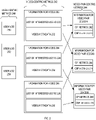
- the metrics may include user-centric metrics 240, video-centric metrics 242, and video-pair-centric metrics 244.
- the recommendation system maintains a user log for each user.
- the user log of a user indicates which videos the user has viewed or otherwise expressed an interest in.
- FIG. 2 illustrates three user logs 250, 252 and 254.
- the user logs in addition to listing the videos in which a user has expressed an interest, the user logs also indicate the amount of interest that was indicated by the user's action, and a timestamp that indicates when the interest was expressed.
- the amount of interest that a user expresses in a video is represented by an "intensity" value that is stored along with the video listing within the user log.
- the intensity value may be determined by a variety of factors, such as the type of interaction the user had with the video. For example, a user that viewed a video expresses more interest in the video than a user that merely browses the video. Within each type of interaction, the intensity value may be affected by other factors. For example, a user that gives a video a five star rating has a more intense interest in the video than a user that gives the video a three star rating. As another example, a user that views an entire video has a more intense interest than a user that merely watches the first half of the video. Thus, "percentage of video viewed" may be a factor in determining a user's intensity of interest. As yet another example, a user that watches a video repeatedly has a more intense interest than a user that watches the video once.
- the recommendation system processes the user logs, and makes corresponding updates to the video-centric metrics 242 maintained for each video.
- the recommendation system maintains information for each of three videos 202, 204 and 206.
- the information maintained by the recommendation system includes a list of the users that have expressed an interest in the video.
- the "interested user lists" of videos 202, 204 and 206 are illustrated as lists 222, 224 and 226, respectively.
- these lists include entries, each of which identifies a user, a timestamp, and an intensity value that indicates how intensely the user expressed an interest in the video at the time indicated by the timestamp.
- video metadata is maintained for each of the videos.
- the video metadata maintained for each video may include any number and type of information about the video, such as duration, creation date, tags, title, keywords, language, etc.
- the initial video metadata for a given video is provided by the producer of the video (e.g. title, actors, language) or derivable from the video itself (e.g. duration, encoding format).
- the metadata for the video may be changed or augmented over time. For example, user tags may be added to the video as more users view the video. As another example, the number of views and the rating of the video may be continuously changing as users view and rate the video.
- the video metadata for videos 202, 204 and 206 is illustrated as video metadata 232, 234 and 236, respectively.
- Video-pair-centric metrics 244 are metrics that relate to a pair of videos.
- FIG. 2 illustrates metrics for the pair of videos 202 and 204, metrics for the pair of videos 202 and 206, and metrics for the pair of videos 204 and 206.
- the metrics include CF metrics and CBF metrics.
- the CF metrics for a video pair are metrics for predicting the likelihood that users that watch one video in the pair will also watch the other video in the pair.
- CF metrics 262 are metrics for predicting the likelihood that users that watch one of video 202 and 204 will watch the other of video 202 and 204.
- CF metrics 264 are metrics for predicting the likelihood that users that watch one of video 202 and 206 will watch the other of video 202 and 206.
- CF metrics 266 are metrics for predicting the likelihood that users that watch one of video 204 and 206 will watch the other of video 204 and 206.
- the CF metrics for each video pair includes at least:
- the CF metrics for a video pair may be derived from the interested user lists that are maintained for each video in the pair. For example, the total time spent by all users on each video in the 202/204 video pair may be determined based on the information in lists 222 and 224. Similarly, CF metrics 264 may be derived from lists 222 and 226. Likewise, CF metrics 266 may be derived from lists 224 and 226.
- the CF metrics for the video pair may be included in the raw CF features 120 used to generate an ML score.
- the CF metrics for the video X/Y pair may be fed to both the CF analyzer 118 and the machine learning engine 102.
- the CF analyzer 118 would produce a CF score 124 based on those CF metrics.
- the CF score 124 would be fed to the machine learning engine 102, and the machine learning engine 102 would determine how much weight to give the CF score 124 based, at least in part, on those CF metrics.
- the video-pair-centric metrics for each video pair include CBF metrics.
- the CBF metrics of a video pair are metrics that generally indicate how similar the content of the videos in the video pair are.
- the CBF metrics of a video pair may indicate how may tags the videos have in common, which metadata (e.g. actors, directors, keywords) the videos have in common, etc.
- the CBF metadata for the video pairs 202/204, 202/206 and 204/206 are respectively shown as CBF metrics 272, 274 and 276.
- the CBF metrics for the video pair may be included in the raw CBF features 126 used to generate an ML score.
- the CBF metrics for the video X/Y pair may be fed to both the CBF analyzer 128 and the machine learning engine 102.
- the CBF analyzer 128 would produce a CBF score 130 based on those CBF metrics.
- the CBF score 130 would be fed to the machine learning engine 102, and the machine learning engine 102 would determine how much weight to give the CBF score 130 based, at least in part, on those CBF metrics.
- the raw CF features 120 that are used to generate the ML score 150 should be as current as possible.
- the recommendation system incrementally folds new user behavior data into a user history that summarizes all historical watching behavior in the form of a (user, video, intensity) tuple.
- the recommendation system distinguishes new information from old information, and only updates the video-pair-centric metrics 244 of video pairs that have new user activities.
- the video-centric CF metrics for a particular video are only updated in response to an new expression of interest in the particular video.
- the video-pair-centric metrics for a particular video pair are only updated in response to a new expression of interest in at least one of the videos that belong to the video pair. Because many videos may experience long periods during which no user expresses an interest, the percentage of video-centric metrics that need to recalculated is reduced, thereby lowering the processing required to maintain the video-centric metrics 242 and video-pair-centric metrics 244 up to date in real time.
- the content-based pipeline used by the recommendation system is also maintained incrementally. For example, in one embodiment, as soon as new videos get ingested into the recommendation system and metadata about a video becomes available, the video becomes recommendable immediately.
- the content-based pipeline is implemented such that new videos are compared to new videos and existing videos only when they share common metadata.
- the recommendation maintains a (feature name, feature value) to (timestamp, video, video metadata) mapping.
- the content-based pipeline may include the following logical steps:
- This pairwise distance may be the CBF score that is fed to the machine learning engine 102 when one of the videos in the video pair is the target video and the other video in the video pair is the compared video.
- the recommendation system may look at the timestamps, and only compare new videos with new videos, and new videos with old videos (but not old videos with old videos).
- the raw CBF features 126 that are fed to machine learning engine 102 for a target video reflect the current video-centric metrics 242 for that target video, and the current CBF metrics for the video pair comprising that video and the compared video. This is particularly important in environments where the video metadata associated with any given video can change significantly over time (e.g. as new tags are added to video).
- the CBF metrics for a video pair are created when the second video in the pair is added to the collection, and are only updated in response to a change in the video metadata of either of the videos in the video pair. For example, assume that video 202 exists in a video collection at the time the video 204 is added to the collection. In response to the addition of video 204 to the collection, the CBF metrics 272 for the video pair 202/204 may be initially created based on the video metadata 232 for video 202 and the video metadata 234 for video 204.
- CBF metrics 272 remains unchanged until the video metadata for either video 202 or video 204 is changed.
- a change e.g. the addition of a tag to one of the videos in the video pair
- the update to the video metadata for one video may trigger the recalculation of the CBF metrics for many video pairs.
- an update to the video metadata 232 of video 202 would trigger the recalculation of the CBF metrics 272 of video pair 202/204, and the recalculation of the CBF metrics 274 of video pair 202/206.
- the video-pair-centric metrics 244 for each video pair may also include a pre-computed CF score and a pre-computed CBF score.
- those scores may be pre-computed at the time the underlying video pair metrics are updated. Consequently, at the time a video recommendation is needed, the pre-computed scores may simply be read from storage and fed into the machine learning engine 102.
- the pre-computed scores may simply be read from storage and fed into the machine learning engine 102.
- a general guiding principle is to take advantage of their relative frequency, and how to do the computation as infrequently as possible.
- the CF score 124 for the video pair 202/204 is based on CF metrics 262.
- CF metrics 262 is updated in response to an indication of user interest in video 202 or video 204.
- CF metrics 262 may be updated and a CF score 124 may be generated for the video pair 202/204 by feeding the updated CF metrics 262 into the CF analyzer 118.
- This pre-computed CF score may then simply be read, rather than recomputed, when using machine learning engine 102 to generate an ML score 150 based on the video pair 202/204.
- CBF score 130 for the video pair 202/204 is based on CBF metrics 272.
- CBF metrics 272 is updated in response to an update to the video metadata for video 202 or video 204.
- CBF metrics 272 may be updated and a CBF score 130 may be generated for the video pair 202/204 by feeding the updated CBF metrics 272 into the CBF analyzer 128.
- This pre-computed CBF score 130 may then simply be read, rather than recomputed, when using machine learning engine 102 to generate an ML score 150 based on the video pair 202/204.
- video-pair-centric metrics 244 may be maintained for every combination of two videos in a collection. Maintaining a video-pair-centric metrics for every possible video pair in a collection would result in Nx(N-1) distinct sets of video-pair-centric metrics, where N is the number of videos in the collection. While maintaining that many sets of video-pair-centric metrics is easily achieved for small collection, it becomes impractical for extremely large collections.
- a video must pass a "pairing test" with a given video before the video is deemed sufficiently similar to the given video to justify maintaining video-pair-centric-metrics for the video pair of the video and the given video.
- the videos that pass the pairing test relative to a particular video are referred to herein as the "paired video set" for that particular video.
- video-pair-centric metrics 244 is maintained for any given video pair (video X/video Y) if and only if video Y is in the paired video set of video X.
- the pairing test may be, for example, that the videos must share any one of the following characteristics: genre, actors, director. This is merely one example of the virtually unlimited types of pairing tests that may be applied to determine whether to maintain video-pair-centric metrics for a particular video pair. The more restrictive the pairing test, the fewer the video pairs for which video-pair-centric metrics 244 are maintained, and therefore the lower the overhead of maintaining video-pair-centric metrics 244.
- the recommendation system may fail to make some recommendations that would be useful. For example, if video X is not in the paired video set of video Y, then video X is not likely to be recommended by the recommendation system when video Y is the compared video, even if most viewers of video Y would really enjoyed viewing video X.
- the pairing test may be arbitrarily complex.
- the test may have rules such as:
- the rating of a video determines what conditions must be satisfied to pass the pairing test.
- the action conditions for pairing may vary based on other factors.
- the pairing test may be used to determine whether a particular type of video-pair-centric-metrics should be maintained for a video pair. For example, CF metrics may be maintained for all video pairs in a collection, whereas CBF metrics are only maintained for video pairs that pass the pairing test. Alternatively, CBF metrics may be maintained for all video pairs in a collection, whereas CF metrics are only maintained for video pairs that pass the pairing test.
- the recommendation system may store CF metrics for a video pair if both videos in the pair have a rating that exceeds a certain threshold.
- the recommendation system may store CBF metrics for a video pair if the video pairs have at least one significant feature (e.g. genre, actors, director) in common.
- the video-pair-centric metrics 244 for some video pairs may include both CF metrics, and CBF metrics, and for other video pairs may only have CF metrics or CBF metrics, but not both.
- the recommendation system when giving a video-to-video recommendation, only generates ML scores for the videos that are in the paired video set of the video in which the user has already expressed an interest. For example, assume that a user has just finished viewing a video X. To recommend the next video for the user to watch, machine learning engine 102 is used to generate ML scores 150 for each video in the paired video set of video X.
- the raw CF features 120 for each video in the paired video set of video X would include the CF metrics for the video pair that includes the video and video X. These raw CF features 120 would be fed to CF analyzer 118 to generate a CF score 124 that predicts how much interest a viewer of video X would have in viewing the target video.
- the raw CBF features 126 would include the CBF metrics for the video pair that includes the video and video X. These raw CBF features 126 would be fed to CBF analyzer 128 to generate a CBF score 128 that predicts how similar video X is to the target video.
- the raw features 120 and 126 and other inputs 112 are fed to the machine learning engine 102, along with the scores 124 and 130, to enable machine learning engine 102 to determine how much weight to give to each of the scores 124 and 130. Based on the determined weights, machine learning engine 102 generates the ML score 150 for the target video.
- the ML scores generated for the videos are used as the basis for determining which of the videos to recommend.
- CF analyzer 118 may apply a "decay" factor that adjusts the weight given to user behavior metrics based on how recently the behavior occurred.
- the CF analyzer 118 may give data that indicates that a user viewed both videos of a video pair 100% weight immediately after the user views both videos, 80% a week later, and 60% two weeks later.
- the recency of user behavior may be determined by the timestamps captured in the user logs.
- An example of a high decay factor would be, for example, giving 100% weight to current behavior, 10% weight to behavior that is a week old, and no weight to behavior more than two weeks old.
- CF score 124 Changing the decay factor used by CF analyzer 118 affects the CF score 124 produced by the CF analyzer 118. For example, assume that many users have watched a particular video pair two weeks ago, but few users have watched the same video pair in the last week. Under these conditions, use of a high decay factor would result in a low CF score 124, because little weight would be given to the older viewing information. On the other hand, use of a low decay factor would result in a high CF score 124, because the old usage information would have a significant effect on the CF score 124.
- a low decay factor may yield more accurate CF scores 124 for videos from publishers whose videos are watch much less frequently. Using a low decay factor under such circumstances may be needed to ensure that the CF score 124 is based on sufficient behavior data to be useful.
- an input parameter (video publisher) that is independent of the decay factor may give an indication to machine learning engine 102 which decay factor would be more appropriate to use in any given situation.
- an embodiment is provided in which multiple CF scores are fed into the machine learning engine 102 for each video pair, where each CF score is produced by using a different decay factor. Such an embodiment is illustrated in FIG. 3 .
- FIG. 3 it illustrates a recommendation system in which the machine learning engine 102 is fed CF inputs 308 that include three distinct CF scores 324, 326, 328.
- CF scores 324, 326 and 328 are based on the same raw CF features 120, but are produced by using three different decay factors 314, 31 and 318.
- machine learning engine 102 determines which of the CF scores should have more effect on the ML score 150.
- machine learning engine 102 may give more weight to the CF score that is based on a high decay factor.
- machine learning engine 102 may give more weight to the DV score that is based on a low decay factor.
- model tuning parameters When models are used to generate predictions, the models user certain "model tuning parameters" that are based on assumptions.
- the decay factor discussed above, is an example of such a model tuning parameter. For example, a model that uses a decay factor that decreases the weight given to an action by 50% after one week assumes that a past action's ability to predict future action decreases by 50% after one week.
- the decay factor is merely one example of a model tuning parameter that may be used by the models that are implemented in CF and CBF analyzers.
- the models employed by CF analyzers may, for example, use a odds-ratio cut-off threshold to reduce the number of false-positives caused by highly popular videos when predicting whether two videos are actually related to each other.
- An odds-ratio cut off may be used to address the problem that extremely popular videos may be watched by so many users, that the fact that those users watch some other video in addition to the extremely popular video is not an accurate indication that the other video is related to the extremely popular video.
- the model used by CF analyzer 118 may determine whether two videos are related by computing the odds that the two videos co-occur independently in a user's viewing log (as opposed to co-occuring dependently). If the odds that the two videos co-occur independently are greater than the odds-ratio cut off that is used by the model (e.g. 50%), then it is assumed that the two videos are not actually related to each other.
- the odds-ratio cut off that is used by a model affects the predictions, and (b) is based on assumptions that may not always hold true. For example, in some cases, two videos may be highly related even though the statistics indicate that there is a 55% chance that they co-occur independently in user logs. In this situation, use of a 60% odds-ratio cut off would have caused the model to predict that the videos are in fact related.
- a normalization factor is another example of a model tuning parameter that may be used by some models.
- a normalization factor generally tries to normalize scores based on users' overall viewing behavior. For example, user A and user B both watched video pair (v1, v2) for 50 minutes. However, user A only watched videos v1 and v2, whereas user B watched hundreds of other videos. User B has more divided attention relative to the video pair. The endorsement from user A for the relatedness of video v1 and v2 should be more important than that from user B. This is in the same spirit of PageRank used in Web page ranking, where the weight given to an out-going link depends in part on the number of out-going links each web page may have.
- model tuning parameters e.g. decay factors, normalization factors, odds-ratio cut off, etc.
- FIG. 3 illustrates feeding to machine learning engine 102 three CF scores 324, 326 and 328 in parallel, each of which is associated with a different decay factor value.
- one CF score could be generated for each of several (decay factor, odds-ratio cut off) value combinations.
- an embodiment may use three different values for the decay factor (X, Y, Z), and two different odds-ratio cut off thresholds (A, B).
- machine learning engine 102 would be fed, in parallel, six CF scores - one for each of the model tuning parameter value combinations (X, A), (X, B), (Y, A), (Y, B), (Z, A), (Z, B).
- the same parallel-score-generation technique may be used for any type and number of model tuning parameters.
- a particular CF analyzer may use a model that employs four different model tuning parameters. For each model tuning parameter, there may be three viable values to test. In such an embodiment, there are 81 distinct combinations of model tuning parameter values. Thus, 81 CF scores (one for each model tuning parameter value combination) may be fed in parallel into the machine learning engine 102.
- the weight that is given to each of the CF scores in generating the ML score is based, at least in part, on the other inputs received by machine learning engine 102. As indicated in FIG. 3 , those other inputs include the raw CF features 120, the raw CBF features 126, the CBF score 130 and any number of other inputs 112.
- machine learning engine 102 When used in the context of video-to-video recommendations, machine learning engine 102 generates ML scores that predict the probability that a user will watch video B (the target video) given he/she already watched video A (the compared video).
- goals include, but are not limited to:
- the components may include, for example:
- the component scores may then be combined, based on a particular set of goals, to produce the composite ML score that is used as the basis for selecting which candidate videos to recommend.
- FIG. 4 is a block diagram of a machine learning engine 402 that has been trained to generate ML component scores 404, 406 and 408 that are combined by a goal-based component combiner 410 to produce a composite ML score 440 based on specified goals 430.
- ML component scores 404, 406 and 408 may correspond to the objective functions P(B
- the weight that each of the component scores is given by goal-based component combiner 410 when generating the composite ML score 440 is based on the goal information 430 fed to the goal-based component combiner 410.
- goal-based combiner 410 may weight component scores 404, 406 and 408 by 0.6, 0.25 and 0.15, respectively.
- machine learning engine 402 is illustrated as a single engine, machine learning engine 402 may be implemented as three distinct engines, each of which is trained to generate a different ML component score.
- the actual number of component scores, and how goal-based component combiner 410 assigns weights to those scores when generating the composite ML score 440, may vary from implementation to implementation.
- a single recommendation system may generate dozens of ML component scores, each of which reflects a prediction based on a different objective function.
- Goal-based component combiner 410 may combine those ML component scores in a variety of ways based on the goal information 430.
- the goal-based component combiner 410 is fed multiple sets of goals, and therefore generates multiple composite ML scores.
- each video pair combination would have multiple composite ML scores, and the actual ML score used to determine whether to recommend a video would be based on the goals that are in effect at the time a recommendation is to be given.
- component scores may be combined into a composite ML score 440 that is used as the basis for determining which candidate videos to recommend.
- a composite ML score 440 is not generated. Instead, when giving recommendations, the recommendation system alternates between which of the component scores to use as the basis for determining a video to recommend.
- the recommendation system may give recommendations based on ML component score 404 60% of the time, based on ML component score 406 25% of the time, and component score 408 15% of the time.
- embodiments that alternate between ML component scores do so based on the goals that are in effect at the time a recommendation is being given.
- the pattern of alternating between the ML component scores need not be uniform.
- a recommendation system may perform alternation on a user-centric basis, where a user is initially provided recommendations based on an ML component score that predicts user engagement. Only after the user has been presented with several recommendations that focus on user engagement, the recommendation system may begin providing some recommendations based on other objective functions, such as revenue maximization. If a user's behavior when presented with revenue maximizing recommendations indicates that user engagement has fallen below a particular threshold, the recommendation system may switch back to providing recommendations that are primarily or exclusively based on component scores that relate to user engagement.
- user behavior is captured as videos are recommended to users, and that user behavior is used to update the metadata used by the recommendation system, as described above.
- “optimal" video recommendations e.g. the videos with the highest ML scores
- no behavior data will be gathered about how users would have reacted to "non-optimal” recommendations.
- the recommendation system will have difficulty correcting itself when videos that were not recommended should have been recommended.
- the machine learning engine 102 generated a low ML score for the video pair A and B. Due to the low ML score, video A would not be recommended to viewers of video B, so few viewers of video B would what video A. Consequently, the ML score for the video pair A and B would remain low.
- behavior data may be collected for non-optimal recommendations by periodically presenting non-optimal recommendations to users.
- Presenting a non-optimal recommendation is referred to as "exploring", because it presents the user with a recommendation that is outside the set of videos that the user would normally be presented.
- Exploring because it presents the user with a recommendation that is outside the set of videos that the user would normally be presented.
- too much exploration, or exploration under the wrong circumstances may degrade the user experience to an unacceptable degree.
- the recommendation system puts constraints on exploration. Specifically, exploration is performed in a manner that constrains the negative impact the exploration has on the video recommendation goals. For example, the recommendation system may periodically randomize the selection of videos to recommend to a user. However, the random selection may be constrained by excluding from the pool from which the random selection is made any videos whose negative impact is predicted to be above a certain threshold.
- the pool of videos from which a random selection is made may include only videos that have, relative to the compared video, a CF score above some threshold X, or a CBF score above some threshold Y, or an MF score above some threshold Z.
- the specific constraint rules place on the selection pool of videos may be arbitrarily complex.
- a video may qualify for the selection pool if ((the CF score for any decay factor > X) or (any one of the ML component scores >Y) and (the composite ML score > Z)).
- multi-armed bandit techniques are used by the video recommendation to learn the effect that each variable in the exploration selection process has on the achievement of the current goals, and the variables that are predicted to have the least negative impact are adjusted.
- the videos recommended by the ML system (best lever) is selected for a proportion 1 - ⁇ of the trials, and videos that belong to other pools (random, trending, CBF score above certain threshold) are selected (with uniform probability) for a proportion ⁇ .
- Various run-time performance enhancements may when providing video recommendations using the techniques described herein.
- some embodiments may use a bloomfilter when joining the user click data (very small) with the features (relatively huge) to generate training input to the machine learning system.
- a bloomfilter is built using the user click data, and the filter is used to filter out all irrelevant CF and CBF features that do not have click data associated with them. This is particular useful for data processing systems such as hadoop, where no indices were built for the various tables.
- an asymmetric join may be used to take advantage of the fact that there is limited behavior data for new content.
- the features are organized in different buckets depending the time they were generated.
- the recommendation system only joins CBF features with CF features that were generated in the last few hours. This significantly cuts down time needed to generate training and test data for the machine learning system.
- the techniques described herein are implemented by one or more special-purpose computing devices.
- the special-purpose computing devices may be hard-wired to perform the techniques, or may include digital electronic devices such as one or more application-specific integrated circuits (ASICs) or field programmable gate arrays (FPGAs) that are persistently programmed to perform the techniques, or may include one or more general purpose hardware processors programmed to perform the techniques pursuant to program instructions in firmware, memory, other storage, or a combination.
- ASICs application-specific integrated circuits
- FPGAs field programmable gate arrays
- Such special-purpose computing devices may also combine custom hard-wired logic, ASICs, or FPGAs with custom programming to accomplish the techniques.
- the special-purpose computing devices may be desktop computer systems, portable computer systems, handheld devices, networking devices or any other device that incorporates hard-wired and/or program logic to implement the techniques.
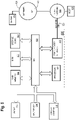
- FIG. 5 is a block diagram that illustrates a computer system 500 upon which an embodiment of the invention may be implemented.
- Computer system 500 includes a bus 502 or other communication mechanism for communicating information, and a hardware processor 504 coupled with bus 502 for processing information.
- Hardware processor 504 may be, for example, a general purpose microprocessor.
- Computer system 500 also includes a main memory 506, such as a random access memory (RAM) or other dynamic storage device, coupled to bus 502 for storing information and instructions to be executed by processor 504.
- Main memory 506 also may be used for storing temporary variables or other intermediate information during execution of instructions to be executed by processor 504.
- Such instructions when stored in non-transitory storage media accessible to processor 504, render computer system 500 into a special-purpose machine that is customized to perform the operations specified in the instructions.
- Computer system 500 further includes a read only memory (ROM) 508 or other static storage device coupled to bus 502 for storing static information and instructions for processor 504.
- ROM read only memory
- a storage device 510 such as a magnetic disk or optical disk, is provided and coupled to bus 502 for storing information and instructions.
- Computer system 500 may be coupled via bus 502 to a display 512, such as a cathode ray tube (CRT), for displaying information to a computer user.
- a display 512 such as a cathode ray tube (CRT)
- An input device 514 is coupled to bus 502 for communicating information and command selections to processor 504.
- cursor control 516 is Another type of user input device
- cursor control 516 such as a mouse, a trackball, or cursor direction keys for communicating direction information and command selections to processor 504 and for controlling cursor movement on display 512.
- This input device typically has two degrees of freedom in two axes, a first axis (e.g., x) and a second axis (e.g., y), that allows the device to specify positions in a plane.
- Computer system 500 may implement the techniques described herein using customized hard-wired logic, one or more ASICs or FPGAs, firmware and/or program logic which in combination with the computer system causes or programs computer system 500 to be a special-purpose machine. According to one embodiment, the techniques herein are performed by computer system 500 in response to processor 504 executing one or more sequences of one or more instructions contained in main memory 506. Such instructions may be read into main memory 506 from another storage medium, such as storage device 510. Execution of the sequences of instructions contained in main memory 506 causes processor 504 to perform the process steps described herein. In alternative embodiments, hard-wired circuitry may be used in place of or in combination with software instructions.
- Non-volatile media includes, for example, optical or magnetic disks, such as storage device 510.
- Volatile media includes dynamic memory, such as main memory 506.
- Common forms of storage media include, for example, a floppy disk, a flexible disk, hard disk, solid state drive, magnetic tape, or any other magnetic data storage medium, a CD-ROM, any other optical data storage medium, any physical medium with patterns of holes, a RAM, a PROM, and EPROM, a FLASH-EPROM, NVRAM, any other memory chip or cartridge.
- Storage media is distinct from but may be used in conjunction with transmission media.
- Transmission media participates in transferring information between storage media.
- transmission media includes coaxial cables, copper wire and fiber optics, including the wires that comprise bus 502.
- transmission media can also take the form of acoustic or light waves, such as those generated during radio-wave and infra-red data communications.
- Various forms of media may be involved in carrying one or more sequences of one or more instructions to processor 504 for execution.
- the instructions may initially be carried on a magnetic disk or solid state drive of a remote computer.
- the remote computer can load the instructions into its dynamic memory and send the instructions over a telephone line using a modem.
- a modem local to computer system 500 can receive the data on the telephone line and use an infra-red transmitter to convert the data to an infra-red signal.
- An infra-red detector can receive the data carried in the infra-red signal and appropriate circuitry can place the data on bus 502.
- Bus 502 carries the data to main memory 506, from which processor 504 retrieves and executes the instructions.
- the instructions received by main memory 506 may optionally be stored on storage device 510 either before or after execution by processor 504.
- Computer system 500 also includes a communication interface 518 coupled to bus 502.
- Communication interface 518 provides a two-way data communication coupling to a network link 520 that is connected to a local network 522.
- communication interface 518 may be an integrated services digital network (ISDN) card, cable modem, satellite modem, or a modem to provide a data communication connection to a corresponding type of telephone line.
- ISDN integrated services digital network
- communication interface 518 may be a local area network (LAN) card to provide a data communication connection to a compatible LAN.
- LAN local area network
- Wireless links may also be implemented.
- communication interface 518 sends and receives electrical, electromagnetic or optical signals that carry digital data streams representing various types of information.
- Network link 520 typically provides data communication through one or more networks to other data devices.
- network link 520 may provide a connection through local network 522 to a host computer 524 or to data equipment operated by an Internet Service Provider (ISP) 526.
- ISP 526 in turn provides data communication services through the world wide packet data communication network now commonly referred to as the "Internet" 528.
- Internet 528 uses electrical, electromagnetic or optical signals that carry digital data streams.
- the signals through the various networks and the signals on network link 520 and through communication interface 518, which carry the digital data to and from computer system 500, are example forms of transmission media.
- Computer system 500 can send messages and receive data, including program code, through the network(s), network link 520 and communication interface 518.
- a server 530 might transmit a requested code for an application program through Internet 528, ISP 526, local network 522 and communication interface 518.
- the received code may be executed by processor 504 as it is received, and/or stored in storage device 510, or other non-volatile storage for later execution.
Landscapes
- Engineering & Computer Science (AREA)
- Databases & Information Systems (AREA)
- Multimedia (AREA)
- Signal Processing (AREA)
- Human Computer Interaction (AREA)
- Computing Systems (AREA)
- Computer Networks & Wireless Communication (AREA)
- Software Systems (AREA)
- Two-Way Televisions, Distribution Of Moving Picture Or The Like (AREA)
- Information Retrieval, Db Structures And Fs Structures Therefor (AREA)
Applications Claiming Priority (2)
| Application Number | Priority Date | Filing Date | Title |
|---|---|---|---|
| US13/401,098 US8260117B1 (en) | 2011-07-26 | 2012-02-21 | Automatically recommending content |
| PCT/US2013/027162 WO2013126589A1 (en) | 2012-02-21 | 2013-02-21 | Automatically recommending content |
Publications (3)
| Publication Number | Publication Date |
|---|---|
| EP2817970A1 EP2817970A1 (en) | 2014-12-31 |
| EP2817970A4 EP2817970A4 (en) | 2015-04-29 |
| EP2817970B1 true EP2817970B1 (en) | 2022-12-21 |
Family
ID=49006205
Family Applications (1)
| Application Number | Title | Priority Date | Filing Date |
|---|---|---|---|
| EP13752354.4A Active EP2817970B1 (en) | 2012-02-21 | 2013-02-21 | Automatically recommending content |
Country Status (12)
| Country | Link |
|---|---|
| EP (1) | EP2817970B1 (enExample) |
| JP (2) | JP5926823B2 (enExample) |
| KR (2) | KR101624246B1 (enExample) |
| CN (2) | CN104247441B (enExample) |
| AU (2) | AU2013222416B2 (enExample) |
| BR (1) | BR112014020459B1 (enExample) |
| CA (1) | CA2865079C (enExample) |
| CO (1) | CO7071100A2 (enExample) |
| IN (1) | IN2014DN07244A (enExample) |
| MX (1) | MX353434B (enExample) |
| SG (2) | SG11201405084SA (enExample) |
| WO (1) | WO2013126589A1 (enExample) |
Cited By (3)
| Publication number | Priority date | Publication date | Assignee | Title |
|---|---|---|---|---|
| US12563270B2 (en) | 2022-08-05 | 2026-02-24 | Roku, Inc. | Rendering a dynamic endemic banner on streaming platforms using content recommendation systems and content modeling for user exploration and awareness |
| US12598353B2 (en) | 2022-08-17 | 2026-04-07 | Roku, Inc. | Rendering a dynamic endemic banner on streaming platforms using content recommendation systems and advanced banner personalization |
| US12705503B2 (en) | 2022-10-03 | 2026-08-11 | Roku, Inc. | Stochastic content candidate selection for content recommendation |
Families Citing this family (40)
| Publication number | Priority date | Publication date | Assignee | Title |
|---|---|---|---|---|
| JP5832502B2 (ja) * | 2013-10-15 | 2015-12-16 | Necパーソナルコンピュータ株式会社 | 情報処理装置、方法及びプログラム |
| CN105898423A (zh) * | 2015-12-08 | 2016-08-24 | 乐视网信息技术(北京)股份有限公司 | 视频推送方法、系统及服务器 |
| US10270839B2 (en) * | 2016-03-29 | 2019-04-23 | Snap Inc. | Content collection navigation and autoforwarding |
| US10390082B2 (en) | 2016-04-01 | 2019-08-20 | Oath Inc. | Computerized system and method for automatically detecting and rendering highlights from streaming videos |
| US10003847B2 (en) * | 2016-04-22 | 2018-06-19 | Google Llc | Watch-time clustering for improving video searches, selection and provision |
| US11531925B2 (en) | 2016-06-15 | 2022-12-20 | Google Llc | Optimizing content distribution using a model |
| US10430661B2 (en) * | 2016-12-20 | 2019-10-01 | Adobe Inc. | Generating a compact video feature representation in a digital medium environment |
| US20180336645A1 (en) * | 2017-05-22 | 2018-11-22 | Google Inc. | Using machine learning to recommend live-stream content |
| KR102384215B1 (ko) * | 2017-08-01 | 2022-04-07 | 삼성전자주식회사 | 전자 장치 및 그의 제어방법 |
| US11972327B2 (en) | 2017-08-25 | 2024-04-30 | Samsung Electronics Co., Ltd. | Method for automating actions for an electronic device |
| CN108769730B (zh) * | 2018-05-21 | 2021-09-03 | 腾讯科技(深圳)有限公司 | 视频的播放方法、装置、计算设备以及存储介质 |
| US10896620B2 (en) * | 2018-06-07 | 2021-01-19 | Microsoft Technology Licensing, Llc | Programmable interface for automated learning refreshers |
| US11301513B2 (en) | 2018-07-06 | 2022-04-12 | Spotify Ab | Personalizing explainable recommendations with bandits |
| CN109218801B (zh) * | 2018-08-15 | 2021-12-03 | 咪咕视讯科技有限公司 | 一种信息处理方法、装置及存储介质 |
| CN109168044B (zh) * | 2018-10-11 | 2021-07-23 | 北京奇艺世纪科技有限公司 | 一种视频特征的确定方法及装置 |
| US10812853B2 (en) | 2018-10-23 | 2020-10-20 | At&T Intellecutal Property I, L.P. | User classification using a remote control detail record |
| KR102768382B1 (ko) * | 2019-02-05 | 2025-02-13 | 구글 엘엘씨 | 다중의 콘텐츠 유형 중 교육용 콘텐츠의 이해력 기반 식별 |
| CN111666484B (zh) * | 2019-03-07 | 2023-10-13 | 腾讯科技(深圳)有限公司 | 内容推送方法、推送装置及计算机可读存储介质 |
| US11100560B2 (en) * | 2019-03-19 | 2021-08-24 | Stitch Fix, Inc. | Extending machine learning training data to generate an artificial intelligence recommendation engine |
| CN121743576A (zh) * | 2019-09-20 | 2026-03-27 | 抖音视界有限公司 | 一种列表流的实现方法、装置、电子设备及存储介质 |
| CN110996177B (zh) * | 2019-11-27 | 2022-04-22 | 北京爱奇艺智慧娱乐科技有限公司 | 面向点播影院的视频推荐方法、装置及设备 |
| CN113038283B (zh) * | 2019-12-25 | 2022-11-18 | 北京达佳互联信息技术有限公司 | 视频推荐方法、装置和存储介质 |
| KR102357360B1 (ko) * | 2020-04-07 | 2022-01-27 | 주식회사 엘지유플러스 | 심층 학습에 기반한 실시간 프로그램 추천 방법 및 장치 |
| KR102361593B1 (ko) * | 2020-05-07 | 2022-02-09 | 주식회사 엘지유플러스 | 심층 학습에 기반한 추천 컨텐츠의 자동 재생 여부 판단 방법 및 장치 |
| CN111708964B (zh) * | 2020-05-27 | 2023-06-20 | 北京百度网讯科技有限公司 | 多媒体资源的推荐方法、装置、电子设备和存储介质 |
| CN114079826B (zh) * | 2020-08-14 | 2023-11-28 | 北京达佳互联信息技术有限公司 | 视频推荐列表生成方法、装置、服务器及存储介质 |
| KR102391644B1 (ko) * | 2020-09-10 | 2022-04-27 | 주식회사 엘지유플러스 | Vod 컨텐츠 추천 방법 및 장치 |
| CN115244941B (zh) | 2020-09-16 | 2024-10-15 | 谷歌有限责任公司 | 用于改进视频组包的用户界面 |
| CN115299069B (zh) * | 2020-09-16 | 2025-12-26 | 谷歌有限责任公司 | 数字视频分析 |
| CN112949703B (zh) * | 2021-02-23 | 2024-08-23 | 广州市百果园信息技术有限公司 | 视频召回方法、装置及电子设备 |
| CN113015010B (zh) * | 2021-03-16 | 2022-07-26 | 杭州网易云音乐科技有限公司 | 推送参数确定方法、装置、设备及计算机可读存储介质 |
| CN113239230B (zh) * | 2021-03-19 | 2024-05-17 | 北京达佳互联信息技术有限公司 | 业务推荐方法、行为数据增量预测模型生成方法和装置 |
| US12579450B2 (en) | 2021-06-30 | 2026-03-17 | On24, Inc. | Methods, systems, and apparatuses for model selection and content recommendations |
| US12614088B2 (en) | 2021-06-30 | 2026-04-28 | On24, Inc. | Methods, systems, and apparatuses for improved content recommendations |
| WO2023015483A1 (en) * | 2021-08-11 | 2023-02-16 | Robert Bosch Gmbh | Method and apparatus for prerequisite relation discovery for concepts of a plurality of courses |
| CN113987260A (zh) * | 2021-09-14 | 2022-01-28 | 北京百度网讯科技有限公司 | 一种视频推送方法、装置、电子设备及存储介质 |
| US11962857B2 (en) | 2021-12-10 | 2024-04-16 | On24, Inc. | Methods, systems, and apparatuses for content recommendations based on user activity |
| CN114363660B (zh) * | 2021-12-24 | 2023-09-08 | 腾讯科技(武汉)有限公司 | 视频合集确定方法、装置、电子设备及存储介质 |
| CN115187326B (zh) * | 2022-06-21 | 2025-11-11 | 北京达佳互联信息技术有限公司 | 资源相似度更新方法、资源推荐方法及装置、电子设备 |
| US12445698B2 (en) | 2023-10-24 | 2025-10-14 | On24, Inc. | Methods, systems, and apparatuses for generating personalized content |
Family Cites Families (26)
| Publication number | Priority date | Publication date | Assignee | Title |
|---|---|---|---|---|
| US6438579B1 (en) * | 1999-07-16 | 2002-08-20 | Agent Arts, Inc. | Automated content and collaboration-based system and methods for determining and providing content recommendations |
| WO2001015449A1 (en) * | 1999-08-20 | 2001-03-01 | Singularis S.A. | Method and apparatus for creating recommendations from users profile built interactively |
| AUPQ246899A0 (en) * | 1999-08-26 | 1999-09-16 | Memetrics | An automated communications management agent |
| US7840986B2 (en) * | 1999-12-21 | 2010-11-23 | Tivo Inc. | Intelligent system and methods of recommending media content items based on user preferences |
| JP2001282838A (ja) * | 2000-03-31 | 2001-10-12 | Kyocera Communication Systems Co Ltd | コンテンツ推奨システム |
| US7441260B1 (en) * | 2000-09-20 | 2008-10-21 | Koninklijke Philips Electronics, N.V. | Television program recommender with automatic identification of changing viewer preferences |
| DE60209947T2 (de) * | 2001-01-09 | 2007-02-22 | Metabyte Networks, Inc., Fremont | System, Verfahren und Software für die Bereitstellung einer gezielten Werbung durch Benutzerprofildatenstruktur basierend auf Benutzerpräferenzen |
| US20020174429A1 (en) * | 2001-03-29 | 2002-11-21 | Srinivas Gutta | Methods and apparatus for generating recommendation scores |
| JP2002342375A (ja) * | 2001-05-21 | 2002-11-29 | Nippon Telegr & Teleph Corp <Ntt> | 情報間関係定義方法及び監視サーバ及び情報間関係定義プログラム及び情報間関係定義プログラムを格納した記憶媒体 |
| JP4098539B2 (ja) * | 2002-03-15 | 2008-06-11 | 富士通株式会社 | プロファイル情報の推薦方法、プログラム及び装置 |
| US7171620B2 (en) * | 2002-07-24 | 2007-01-30 | Xerox Corporation | System and method for managing document retention of shared documents |
| KR20060063779A (ko) * | 2003-04-03 | 2006-06-12 | 세드나 페이턴트 서비시즈, 엘엘씨 | 컨텐츠 통보 및 전달 |
| JP4305862B2 (ja) * | 2004-07-09 | 2009-07-29 | 日本ビクター株式会社 | 番組順位付け装置、番組順位付け方法、及び番組順位付けプログラム |
| US9201979B2 (en) * | 2005-09-14 | 2015-12-01 | Millennial Media, Inc. | Syndication of a behavioral profile associated with an availability condition using a monetization platform |
| JP2008167019A (ja) * | 2006-12-27 | 2008-07-17 | Toshiba Corp | 録画再生装置 |
| KR100925511B1 (ko) * | 2008-03-24 | 2009-11-06 | 에스케이커뮤니케이션즈 주식회사 | 협업필터링을 이용한 컨텐츠 분류 방법 및 시스템 |
| CN101271559A (zh) * | 2008-05-16 | 2008-09-24 | 华东师范大学 | 一种基于用户局部兴趣挖掘的协作推荐系统 |
| JP2009284103A (ja) * | 2008-05-20 | 2009-12-03 | Nippon Telegr & Teleph Corp <Ntt> | 映像視聴履歴取得装置及び方法及びプログラム |
| KR100997028B1 (ko) * | 2008-05-30 | 2010-11-25 | 성균관대학교산학협력단 | 컨텐츠의 최대 재생 시간과 사용자의 시청시간 혹은청취시간을 고려하는 관심 정보 추천 시스템 및 그 방법 |
| JP2010067175A (ja) * | 2008-09-12 | 2010-03-25 | Toshiba Corp | ハイブリッド型コンテンツ推薦サーバ、推薦システムおよび推薦方法 |
| JP5173856B2 (ja) * | 2009-01-13 | 2013-04-03 | 株式会社東芝 | コンテンツ推薦装置およびコンテンツ推薦方法 |
| US9215423B2 (en) * | 2009-03-30 | 2015-12-15 | Time Warner Cable Enterprises Llc | Recommendation engine apparatus and methods |
| GB2472224A (en) * | 2009-07-29 | 2011-02-02 | Amino Holdings Ltd | Analysing consumption of transmitted audio visual content via weighted tags |
| JP2011175362A (ja) * | 2010-02-23 | 2011-09-08 | Sony Corp | 情報処理装置、重要度算出方法及びプログラム |
| JP5440394B2 (ja) * | 2010-05-31 | 2014-03-12 | ソニー株式会社 | 評価予測装置、評価予測方法、及びプログラム |
| CN102263992A (zh) * | 2011-08-08 | 2011-11-30 | 上海文广互动电视有限公司 | 基于用户收视记录的节目推荐度估计方法 |
-
2013
- 2013-02-21 IN IN7244DEN2014 patent/IN2014DN07244A/en unknown
- 2013-02-21 EP EP13752354.4A patent/EP2817970B1/en active Active
- 2013-02-21 WO PCT/US2013/027162 patent/WO2013126589A1/en not_active Ceased
- 2013-02-21 CN CN201380017911.9A patent/CN104247441B/zh active Active
- 2013-02-21 CA CA2865079A patent/CA2865079C/en active Active
- 2013-02-21 CN CN201711277280.0A patent/CN108040294B/zh active Active
- 2013-02-21 KR KR1020147026127A patent/KR101624246B1/ko active Active
- 2013-02-21 JP JP2014558828A patent/JP5926823B2/ja active Active
- 2013-02-21 KR KR1020167013256A patent/KR101941757B1/ko active Active
- 2013-02-21 SG SG11201405084SA patent/SG11201405084SA/en unknown
- 2013-02-21 BR BR112014020459-4A patent/BR112014020459B1/pt active IP Right Grant
- 2013-02-21 MX MX2014010107A patent/MX353434B/es active IP Right Grant
- 2013-02-21 SG SG10201601514XA patent/SG10201601514XA/en unknown
- 2013-02-21 AU AU2013222416A patent/AU2013222416B2/en active Active
-
2014
- 2014-09-22 CO CO14209547A patent/CO7071100A2/es unknown
-
2016
- 2016-04-17 AU AU2016202425A patent/AU2016202425B2/en active Active
- 2016-04-22 JP JP2016086298A patent/JP6227704B2/ja active Active
Cited By (3)
| Publication number | Priority date | Publication date | Assignee | Title |
|---|---|---|---|---|
| US12563270B2 (en) | 2022-08-05 | 2026-02-24 | Roku, Inc. | Rendering a dynamic endemic banner on streaming platforms using content recommendation systems and content modeling for user exploration and awareness |
| US12598353B2 (en) | 2022-08-17 | 2026-04-07 | Roku, Inc. | Rendering a dynamic endemic banner on streaming platforms using content recommendation systems and advanced banner personalization |
| US12705503B2 (en) | 2022-10-03 | 2026-08-11 | Roku, Inc. | Stochastic content candidate selection for content recommendation |
Also Published As
| Publication number | Publication date |
|---|---|
| WO2013126589A1 (en) | 2013-08-29 |
| SG10201601514XA (en) | 2016-04-28 |
| KR101941757B1 (ko) | 2019-01-23 |
| JP6227704B2 (ja) | 2017-11-08 |
| CN104247441A (zh) | 2014-12-24 |
| AU2013222416A1 (en) | 2014-09-11 |
| CN108040294B (zh) | 2020-10-23 |
| CN104247441B (zh) | 2018-01-09 |
| BR112014020459B1 (pt) | 2022-12-27 |
| EP2817970A4 (en) | 2015-04-29 |
| SG11201405084SA (en) | 2014-10-30 |
| CA2865079A1 (en) | 2013-08-29 |
| IN2014DN07244A (enExample) | 2015-04-24 |
| KR101624246B1 (ko) | 2016-05-25 |
| EP2817970A1 (en) | 2014-12-31 |
| JP2015513736A (ja) | 2015-05-14 |
| BR112014020459A2 (pt) | 2017-06-20 |
| CN108040294A (zh) | 2018-05-15 |
| AU2016202425A1 (en) | 2016-05-12 |
| AU2013222416B2 (en) | 2016-02-04 |
| KR20140135207A (ko) | 2014-11-25 |
| JP5926823B2 (ja) | 2016-05-25 |
| MX2014010107A (es) | 2016-09-06 |
| AU2016202425B2 (en) | 2018-04-05 |
| HK1205391A1 (en) | 2015-12-11 |
| JP2016167290A (ja) | 2016-09-15 |
| KR20160064234A (ko) | 2016-06-07 |
| CA2865079C (en) | 2017-02-28 |
| MX353434B (es) | 2018-01-12 |
| CO7071100A2 (es) | 2014-09-30 |
Similar Documents
| Publication | Publication Date | Title |
|---|---|---|
| AU2016202425B2 (en) | Automatically recommending content | |
| US8260117B1 (en) | Automatically recommending content | |
| US20230252048A1 (en) | Feedback loop content recommendation | |
| US10405016B2 (en) | Recommending media items based on take rate signals | |
| US8065619B2 (en) | Customized today module | |
| US10387513B2 (en) | Method and apparatus for generating a recommended content list | |
| US20140150005A1 (en) | Content recommendation pre-filtering | |
| WO2011112982A2 (en) | Systems and methods for organizing and displaying electronic media content | |
| US20140149326A1 (en) | Post-processed content recommendation | |
| CN119782636A (zh) | 基于大模型的话题内容推荐方法、电子设备和存储介质 | |
| CN105898421A (zh) | 一种网络影视节目智能推荐方法及系统 | |
| CN120238705A (zh) | 推荐信息展示方法、装置、电子设备、介质及程序产品 | |
| CN116910378B (zh) | 视频推荐系统、方法及计算机存储介质 | |
| HK1205391B (en) | Automatically recommending content | |
| Jafari et al. | Social Recommendation through Heterogeneous Graph Modeling of the Long-term and Short-term Preference Defined by Dynamic Time Spans |
Legal Events
| Date | Code | Title | Description |
|---|---|---|---|
| PUAI | Public reference made under article 153(3) epc to a published international application that has entered the european phase |
Free format text: ORIGINAL CODE: 0009012 |
|
| 17P | Request for examination filed |
Effective date: 20140922 |
|
| AK | Designated contracting states |
Kind code of ref document: A1 Designated state(s): AL AT BE BG CH CY CZ DE DK EE ES FI FR GB GR HR HU IE IS IT LI LT LU LV MC MK MT NL NO PL PT RO RS SE SI SK SM TR |
|
| AX | Request for extension of the european patent |
Extension state: BA ME |
|
| RA4 | Supplementary search report drawn up and despatched (corrected) |
Effective date: 20150327 |
|
| RIC1 | Information provided on ipc code assigned before grant |
Ipc: H04N 21/482 20110101ALI20150323BHEP Ipc: H04N 21/466 20110101AFI20150323BHEP |
|
| RIN1 | Information on inventor provided before grant (corrected) |
Inventor name: HUANG, LEI Inventor name: ABU-EL-HAIJA, SAMI Inventor name: XU, ZHICHEN Inventor name: HOOFIEN, NIMROD |
|
| DAX | Request for extension of the european patent (deleted) | ||
| STAA | Information on the status of an ep patent application or granted ep patent |
Free format text: STATUS: EXAMINATION IS IN PROGRESS |
|
| 17Q | First examination report despatched |
Effective date: 20180220 |
|
| GRAP | Despatch of communication of intention to grant a patent |
Free format text: ORIGINAL CODE: EPIDOSNIGR1 |
|
| STAA | Information on the status of an ep patent application or granted ep patent |
Free format text: STATUS: GRANT OF PATENT IS INTENDED |
|
| INTG | Intention to grant announced |
Effective date: 20220209 |
|
| GRAJ | Information related to disapproval of communication of intention to grant by the applicant or resumption of examination proceedings by the epo deleted |
Free format text: ORIGINAL CODE: EPIDOSDIGR1 |
|
| STAA | Information on the status of an ep patent application or granted ep patent |
Free format text: STATUS: EXAMINATION IS IN PROGRESS |
|
| GRAP | Despatch of communication of intention to grant a patent |
Free format text: ORIGINAL CODE: EPIDOSNIGR1 |
|
| STAA | Information on the status of an ep patent application or granted ep patent |
Free format text: STATUS: GRANT OF PATENT IS INTENDED |
|
| INTC | Intention to grant announced (deleted) | ||
| INTG | Intention to grant announced |
Effective date: 20220628 |
|
| GRAS | Grant fee paid |
Free format text: ORIGINAL CODE: EPIDOSNIGR3 |
|
| GRAA | (expected) grant |
Free format text: ORIGINAL CODE: 0009210 |
|
| STAA | Information on the status of an ep patent application or granted ep patent |
Free format text: STATUS: THE PATENT HAS BEEN GRANTED |
|
| AK | Designated contracting states |
Kind code of ref document: B1 Designated state(s): AL AT BE BG CH CY CZ DE DK EE ES FI FR GB GR HR HU IE IS IT LI LT LU LV MC MK MT NL NO PL PT RO RS SE SI SK SM TR |
|
| REG | Reference to a national code |
Ref country code: GB Ref legal event code: FG4D |
|
| REG | Reference to a national code |
Ref country code: CH Ref legal event code: EP |
|
| REG | Reference to a national code |
Ref country code: DE Ref legal event code: R096 Ref document number: 602013083106 Country of ref document: DE |
|
| REG | Reference to a national code |
Ref country code: AT Ref legal event code: REF Ref document number: 1539756 Country of ref document: AT Kind code of ref document: T Effective date: 20230115 |
|
| REG | Reference to a national code |
Ref country code: IE Ref legal event code: FG4D |
|
| REG | Reference to a national code |
Ref country code: LT Ref legal event code: MG9D |
|
| REG | Reference to a national code |
Ref country code: NL Ref legal event code: MP Effective date: 20221221 |
|
| PG25 | Lapsed in a contracting state [announced via postgrant information from national office to epo] |
Ref country code: SE Free format text: LAPSE BECAUSE OF FAILURE TO SUBMIT A TRANSLATION OF THE DESCRIPTION OR TO PAY THE FEE WITHIN THE PRESCRIBED TIME-LIMIT Effective date: 20221221 Ref country code: NO Free format text: LAPSE BECAUSE OF FAILURE TO SUBMIT A TRANSLATION OF THE DESCRIPTION OR TO PAY THE FEE WITHIN THE PRESCRIBED TIME-LIMIT Effective date: 20230321 Ref country code: LT Free format text: LAPSE BECAUSE OF FAILURE TO SUBMIT A TRANSLATION OF THE DESCRIPTION OR TO PAY THE FEE WITHIN THE PRESCRIBED TIME-LIMIT Effective date: 20221221 Ref country code: FI Free format text: LAPSE BECAUSE OF FAILURE TO SUBMIT A TRANSLATION OF THE DESCRIPTION OR TO PAY THE FEE WITHIN THE PRESCRIBED TIME-LIMIT Effective date: 20221221 |
|
| REG | Reference to a national code |
Ref country code: AT Ref legal event code: MK05 Ref document number: 1539756 Country of ref document: AT Kind code of ref document: T Effective date: 20221221 |
|
| PG25 | Lapsed in a contracting state [announced via postgrant information from national office to epo] |
Ref country code: RS Free format text: LAPSE BECAUSE OF FAILURE TO SUBMIT A TRANSLATION OF THE DESCRIPTION OR TO PAY THE FEE WITHIN THE PRESCRIBED TIME-LIMIT Effective date: 20221221 Ref country code: LV Free format text: LAPSE BECAUSE OF FAILURE TO SUBMIT A TRANSLATION OF THE DESCRIPTION OR TO PAY THE FEE WITHIN THE PRESCRIBED TIME-LIMIT Effective date: 20221221 Ref country code: HR Free format text: LAPSE BECAUSE OF FAILURE TO SUBMIT A TRANSLATION OF THE DESCRIPTION OR TO PAY THE FEE WITHIN THE PRESCRIBED TIME-LIMIT Effective date: 20221221 Ref country code: GR Free format text: LAPSE BECAUSE OF FAILURE TO SUBMIT A TRANSLATION OF THE DESCRIPTION OR TO PAY THE FEE WITHIN THE PRESCRIBED TIME-LIMIT Effective date: 20230322 |
|
| PG25 | Lapsed in a contracting state [announced via postgrant information from national office to epo] |
Ref country code: NL Free format text: LAPSE BECAUSE OF FAILURE TO SUBMIT A TRANSLATION OF THE DESCRIPTION OR TO PAY THE FEE WITHIN THE PRESCRIBED TIME-LIMIT Effective date: 20221221 |
|
| PG25 | Lapsed in a contracting state [announced via postgrant information from national office to epo] |
Ref country code: SM Free format text: LAPSE BECAUSE OF FAILURE TO SUBMIT A TRANSLATION OF THE DESCRIPTION OR TO PAY THE FEE WITHIN THE PRESCRIBED TIME-LIMIT Effective date: 20221221 Ref country code: RO Free format text: LAPSE BECAUSE OF FAILURE TO SUBMIT A TRANSLATION OF THE DESCRIPTION OR TO PAY THE FEE WITHIN THE PRESCRIBED TIME-LIMIT Effective date: 20221221 Ref country code: PT Free format text: LAPSE BECAUSE OF FAILURE TO SUBMIT A TRANSLATION OF THE DESCRIPTION OR TO PAY THE FEE WITHIN THE PRESCRIBED TIME-LIMIT Effective date: 20230421 Ref country code: ES Free format text: LAPSE BECAUSE OF FAILURE TO SUBMIT A TRANSLATION OF THE DESCRIPTION OR TO PAY THE FEE WITHIN THE PRESCRIBED TIME-LIMIT Effective date: 20221221 Ref country code: EE Free format text: LAPSE BECAUSE OF FAILURE TO SUBMIT A TRANSLATION OF THE DESCRIPTION OR TO PAY THE FEE WITHIN THE PRESCRIBED TIME-LIMIT Effective date: 20221221 Ref country code: CZ Free format text: LAPSE BECAUSE OF FAILURE TO SUBMIT A TRANSLATION OF THE DESCRIPTION OR TO PAY THE FEE WITHIN THE PRESCRIBED TIME-LIMIT Effective date: 20221221 Ref country code: AT Free format text: LAPSE BECAUSE OF FAILURE TO SUBMIT A TRANSLATION OF THE DESCRIPTION OR TO PAY THE FEE WITHIN THE PRESCRIBED TIME-LIMIT Effective date: 20221221 |
|
| PG25 | Lapsed in a contracting state [announced via postgrant information from national office to epo] |
Ref country code: SK Free format text: LAPSE BECAUSE OF FAILURE TO SUBMIT A TRANSLATION OF THE DESCRIPTION OR TO PAY THE FEE WITHIN THE PRESCRIBED TIME-LIMIT Effective date: 20221221 Ref country code: PL Free format text: LAPSE BECAUSE OF FAILURE TO SUBMIT A TRANSLATION OF THE DESCRIPTION OR TO PAY THE FEE WITHIN THE PRESCRIBED TIME-LIMIT Effective date: 20221221 Ref country code: IS Free format text: LAPSE BECAUSE OF FAILURE TO SUBMIT A TRANSLATION OF THE DESCRIPTION OR TO PAY THE FEE WITHIN THE PRESCRIBED TIME-LIMIT Effective date: 20230421 Ref country code: AL Free format text: LAPSE BECAUSE OF FAILURE TO SUBMIT A TRANSLATION OF THE DESCRIPTION OR TO PAY THE FEE WITHIN THE PRESCRIBED TIME-LIMIT Effective date: 20221221 |
|
| REG | Reference to a national code |
Ref country code: DE Ref legal event code: R097 Ref document number: 602013083106 Country of ref document: DE |
|
| PG25 | Lapsed in a contracting state [announced via postgrant information from national office to epo] |
Ref country code: MC Free format text: LAPSE BECAUSE OF FAILURE TO SUBMIT A TRANSLATION OF THE DESCRIPTION OR TO PAY THE FEE WITHIN THE PRESCRIBED TIME-LIMIT Effective date: 20221221 |
|
| REG | Reference to a national code |
Ref country code: CH Ref legal event code: PL |
|
| REG | Reference to a national code |
Ref country code: BE Ref legal event code: MM Effective date: 20230228 |
|
| PLBE | No opposition filed within time limit |
Free format text: ORIGINAL CODE: 0009261 |
|
| STAA | Information on the status of an ep patent application or granted ep patent |
Free format text: STATUS: NO OPPOSITION FILED WITHIN TIME LIMIT |
|
| PG25 | Lapsed in a contracting state [announced via postgrant information from national office to epo] |
Ref country code: LU Free format text: LAPSE BECAUSE OF NON-PAYMENT OF DUE FEES Effective date: 20230221 Ref country code: LI Free format text: LAPSE BECAUSE OF NON-PAYMENT OF DUE FEES Effective date: 20230228 Ref country code: DK Free format text: LAPSE BECAUSE OF FAILURE TO SUBMIT A TRANSLATION OF THE DESCRIPTION OR TO PAY THE FEE WITHIN THE PRESCRIBED TIME-LIMIT Effective date: 20221221 Ref country code: CH Free format text: LAPSE BECAUSE OF NON-PAYMENT OF DUE FEES Effective date: 20230228 |
|
| 26N | No opposition filed |
Effective date: 20230922 |
|
| REG | Reference to a national code |
Ref country code: IE Ref legal event code: MM4A |
|
| PG25 | Lapsed in a contracting state [announced via postgrant information from national office to epo] |
Ref country code: SI Free format text: LAPSE BECAUSE OF FAILURE TO SUBMIT A TRANSLATION OF THE DESCRIPTION OR TO PAY THE FEE WITHIN THE PRESCRIBED TIME-LIMIT Effective date: 20221221 Ref country code: IE Free format text: LAPSE BECAUSE OF NON-PAYMENT OF DUE FEES Effective date: 20230221 |
|
| PG25 | Lapsed in a contracting state [announced via postgrant information from national office to epo] |
Ref country code: BE Free format text: LAPSE BECAUSE OF NON-PAYMENT OF DUE FEES Effective date: 20230228 |
|
| PG25 | Lapsed in a contracting state [announced via postgrant information from national office to epo] |
Ref country code: IT Free format text: LAPSE BECAUSE OF FAILURE TO SUBMIT A TRANSLATION OF THE DESCRIPTION OR TO PAY THE FEE WITHIN THE PRESCRIBED TIME-LIMIT Effective date: 20221221 |
|
| PG25 | Lapsed in a contracting state [announced via postgrant information from national office to epo] |
Ref country code: BG Free format text: LAPSE BECAUSE OF FAILURE TO SUBMIT A TRANSLATION OF THE DESCRIPTION OR TO PAY THE FEE WITHIN THE PRESCRIBED TIME-LIMIT Effective date: 20221221 |
|
| PG25 | Lapsed in a contracting state [announced via postgrant information from national office to epo] |
Ref country code: BG Free format text: LAPSE BECAUSE OF FAILURE TO SUBMIT A TRANSLATION OF THE DESCRIPTION OR TO PAY THE FEE WITHIN THE PRESCRIBED TIME-LIMIT Effective date: 20221221 |
|
| REG | Reference to a national code |
Ref country code: GB Ref legal event code: 732E Free format text: REGISTERED BETWEEN 20250213 AND 20250219 |
|
| PG25 | Lapsed in a contracting state [announced via postgrant information from national office to epo] |
Ref country code: CY Free format text: LAPSE BECAUSE OF FAILURE TO SUBMIT A TRANSLATION OF THE DESCRIPTION OR TO PAY THE FEE WITHIN THE PRESCRIBED TIME-LIMIT; INVALID AB INITIO Effective date: 20130221 |
|
| PG25 | Lapsed in a contracting state [announced via postgrant information from national office to epo] |
Ref country code: HU Free format text: LAPSE BECAUSE OF FAILURE TO SUBMIT A TRANSLATION OF THE DESCRIPTION OR TO PAY THE FEE WITHIN THE PRESCRIBED TIME-LIMIT; INVALID AB INITIO Effective date: 20130221 |
|
| REG | Reference to a national code |
Ref country code: DE Ref legal event code: R081 Ref document number: 602013083106 Country of ref document: DE Owner name: BRIGHTCOVE INC., BOSTON, US Free format text: FORMER OWNER: OOYALA, INC., MOUNTAIN VIEW, CA, US Ref country code: DE Ref legal event code: R082 Ref document number: 602013083106 Country of ref document: DE Representative=s name: KELLER SCHNEIDER PATENTANWALTS GMBH, DE |
|
| PG25 | Lapsed in a contracting state [announced via postgrant information from national office to epo] |
Ref country code: TR Free format text: LAPSE BECAUSE OF FAILURE TO SUBMIT A TRANSLATION OF THE DESCRIPTION OR TO PAY THE FEE WITHIN THE PRESCRIBED TIME-LIMIT Effective date: 20221221 |
|
| PGFP | Annual fee paid to national office [announced via postgrant information from national office to epo] |
Ref country code: GB Payment date: 20260213 Year of fee payment: 14 |
|
| PGFP | Annual fee paid to national office [announced via postgrant information from national office to epo] |
Ref country code: DE Payment date: 20260206 Year of fee payment: 14 |
|
| PGFP | Annual fee paid to national office [announced via postgrant information from national office to epo] |
Ref country code: FR Payment date: 20260213 Year of fee payment: 14 |