EP2808305A1 - Verfahren zur biologischen Wasserbehandlung - Google Patents
Verfahren zur biologischen Wasserbehandlung Download PDFInfo
- Publication number
- EP2808305A1 EP2808305A1 EP20140162523 EP14162523A EP2808305A1 EP 2808305 A1 EP2808305 A1 EP 2808305A1 EP 20140162523 EP20140162523 EP 20140162523 EP 14162523 A EP14162523 A EP 14162523A EP 2808305 A1 EP2808305 A1 EP 2808305A1
- Authority
- EP
- European Patent Office
- Prior art keywords
- zone
- wastewater
- settling tank
- sludge
- secondary settling
- Prior art date
- Legal status (The legal status is an assumption and is not a legal conclusion. Google has not performed a legal analysis and makes no representation as to the accuracy of the status listed.)
- Granted
Links
Images

Classifications
-
- C—CHEMISTRY; METALLURGY
- C02—TREATMENT OF WATER, WASTE WATER, SEWAGE, OR SLUDGE
- C02F—TREATMENT OF WATER, WASTE WATER, SEWAGE, OR SLUDGE
- C02F3/00—Biological treatment of water, waste water, or sewage
- C02F3/30—Aerobic and anaerobic processes
- C02F3/302—Nitrification and denitrification treatment
-
- C—CHEMISTRY; METALLURGY
- C02—TREATMENT OF WATER, WASTE WATER, SEWAGE, OR SLUDGE
- C02F—TREATMENT OF WATER, WASTE WATER, SEWAGE, OR SLUDGE
- C02F3/00—Biological treatment of water, waste water, or sewage
- C02F3/30—Aerobic and anaerobic processes
- C02F3/308—Biological phosphorus removal
-
- C—CHEMISTRY; METALLURGY
- C02—TREATMENT OF WATER, WASTE WATER, SEWAGE, OR SLUDGE
- C02F—TREATMENT OF WATER, WASTE WATER, SEWAGE, OR SLUDGE
- C02F2101/00—Nature of the contaminant
- C02F2101/10—Inorganic compounds
- C02F2101/105—Phosphorus compounds
-
- C—CHEMISTRY; METALLURGY
- C02—TREATMENT OF WATER, WASTE WATER, SEWAGE, OR SLUDGE
- C02F—TREATMENT OF WATER, WASTE WATER, SEWAGE, OR SLUDGE
- C02F2101/00—Nature of the contaminant
- C02F2101/10—Inorganic compounds
- C02F2101/16—Nitrogen compounds, e.g. ammonia
-
- C—CHEMISTRY; METALLURGY
- C02—TREATMENT OF WATER, WASTE WATER, SEWAGE, OR SLUDGE
- C02F—TREATMENT OF WATER, WASTE WATER, SEWAGE, OR SLUDGE
- C02F2209/00—Controlling or monitoring parameters in water treatment
- C02F2209/22—O2
-
- C—CHEMISTRY; METALLURGY
- C02—TREATMENT OF WATER, WASTE WATER, SEWAGE, OR SLUDGE
- C02F—TREATMENT OF WATER, WASTE WATER, SEWAGE, OR SLUDGE
- C02F2209/00—Controlling or monitoring parameters in water treatment
- C02F2209/44—Time
-
- C—CHEMISTRY; METALLURGY
- C02—TREATMENT OF WATER, WASTE WATER, SEWAGE, OR SLUDGE
- C02F—TREATMENT OF WATER, WASTE WATER, SEWAGE, OR SLUDGE
- C02F2301/00—General aspects of water treatment
- C02F2301/04—Flow arrangements
- C02F2301/046—Recirculation with an external loop
Definitions
- the object of the invention is a method of biological wastewater treatment which can be used in municipal management as well as in various branches of industry and agriculture for treating sanitary and industrial wastewaters, and their derivatives in terms of composition, comprising biodegradable substances.
- Bardenpho and UCT methods are the most widespread in Poland as well as in other countries among the known methods. There are also extensions and improvements thereof, such as MUCT or modified and 5-chamber Bardenpho. Bardenpho method and three-stage method of biological wastewater treatment, referred to as UCT, define a reference point for the invention applied.
- raw wastewater is brought to an anaerobic zone located at the beginning of zone sequence of the reactor, or to to devices which precede it. Then, this wastewater is directed to an anoxic zone, and afterwards to an aerobic zone which constitutes an outflow of the biological reactor.
- the wastewater together with sludge are directed to a secondary settling tank where the treated wastewater is separated from the sludge which sediments on the bottom of the secondary settling tank. The treated wastewater is discharged outside the system, and an excess sludge located on the bottom of the secondary settling tank is also discharged outside the system.
- the process requires an external recirculation which consists in passing the undischarged part of the wastewater together with the sludge, which accumulated in the secondary settling tank, to the anaerobic zone, as recirculated sludge.
- An internal recirculation is also conducted, and it consists in returning a part of the aerobic zone content to the anoxic zone.
- oxygen concentration in the anaerobic zone is maintained in the range of 0.0 - 0.1 mg/l, and the time of wastewater retention is maintained in the range of 1.0 - 2.0 h, and in the anoxic zone, oxygen concentration is maintained in the range of 0.1 - 0.5 mg/l, and the time of wastewater retention is maintained in the range of 2.0 - 4.0 h, and in the aerobic zone, oxygen concentration is maintained in the range of 2.0 - 3.0 mg/l, and the time of wastewater retention is maintained in the range of 4.0 - 12.0 h.
- a biological reactor comprising three zones, in the system, which are an anaerobic zone, an anoxic zone and an aerobic zone, is used.
- the UCT method differs from the previous one (Bardenpho) in the recirculation process.
- the wastewater is brought to the anaerobic zone located at the beginning of the reactor.
- sludge from the secondary settling tank is brought at the beginning of the anoxic zone, whereas, during the internal recirculation, the content of the anoxic zone is passed into the anaerobic zone.
- oxygen concentration in the anaerobic zone is maintained in the range of 0.0 - 0.1 mg/l, and the time of wastewater retention is maintained in the range of 1.0 - 2.0 h, and in the anoxic zone, oxygen concentration is maintained in the range of 0.1 - 0.5 mg/l, and the time of wastewater retention is maintained in the range of 2.0 - 4.0 h, and in the aerobic zone, oxygen concentration is maintained in the range of 2.0 - 3.0 mg/l, and the time of wastewater retention is maintained in the range of 4.0 - 12.0 h.
- Treated wastewater and excess sludge are the products of the known methods of biological wastewater treatment.
- Biogenic elements such as nitrogen and phosphorus
- discharged with the treated wastewater cause pollution and degradation of biological environment, therefore, their discharge to the aquatic ecosystem is standardised and strictly limited by relevant national and EU provisions.
- These provisions become more and more restrictive, in particular for large agglomerations. Their strict observance constitutes a large challenge for wastewater treatment plants.
- excess sludge constitutes a heavy burden for environment, due to the high concentration of harmful chemical substances, and especially biological substances. Its storage leads to a secondary pollution of the environment and the need to use additional land.
- Treatment and disposal of excess sludge requires the use of devices for its processing, storage, use of reagents applied in the processing of wastewater sludge, and reconstruction of land for sludge storage areas. Storage and possible use of the excess sludge formed in the process of wastewater treatment are governed by more and more restrictive national and EU provisions. This sludge becomes a big technical and economic problem because its treatment, storage and disposal entail high costs.
- the object of the invention is a significant reduction in the discharge of biogenic elements (nitrogen, phosphorus) into the environment, a significant reduction or complete elimination of chemical reagents used in the process of wastewater treatment, and a reduction of the amount of wastewater sludge generated and disposed of.
- the method of biological wastewater treatment in which a biological reactor comprising anaerobic, anoxic and aerobic zones sequentially connected to each other is used, wherein raw wastewater is brought to the anaerobic zone located at the beginning of the said zone sequence of the reactor, or in part or in its entirety to the zone preceding it, then, the wastewater is directed to the anoxic zone and eventually to the aerobic zone, afterwards, in the process of internal recirculation, a part of the aerobic zone content is returned to the anoxic zone, and the rest of the wastewater from the aerobic zone is directed together with the sludge, directly or through additional zones, to a secondary settling tank where the treated wastewater is separated from the sludge which sediments on the bottom of the secondary settling tank, and the treated wastewater and excess sludge located on the bottom of the secondary settling tank are discharged outside the secondary settling tank, and the rest of the sludge accumulated in the secondary settling tank is passed to the anoxic zone in the process of external recirculation, characterised
- residence time of wastewater in the aerobic zone is selected from 1.0 to 4.0 hours.
- oxygen concentration in the aerobic zone is maintained in the range of 1.7 to 4.0 mg O 2 /litre.
- oxygen concentration in the anoxic zone is maintained in the range of 0.1 to 0.6 mg O 2 /litre.
- the flow of the sludge recirculated from the secondary settling tank is controlled in an appropriate proportion to the layer of sludge suspended above the bottom of the secondary settling tank, this layer being maintained above 30% of the useful volume of this settling tank.
- density of the active sludge in the bioreactor is maintained in the range of 4.0 to 9.0 g/l.
- the first group includes a significant reduction in environmental burden of toxic and burdensome substances and a reduction in the need for land surface used for the storage and disposal of excess sludge.
- the reduction in environmental burden is achieved not only by reducing the amount of nitrogen and phosphorus in the treated wastewater by about 30 - 60 %, reducing the amount of the removed excess sludge by 30 - 50 %, but also by abandoning the use of chemical additives, insoluble ingredients oh which, such as for example heavy metals, increase the toxic load in the removed sludge.
- 1 kg of PIX preparation contains about 300 mg of manganese, 0.5 mg of lead, 0.5 mg of cadmium, 1 mg of copper, 5 mg of chromium, 25 mg of nickel, 20 mg of zinc (data from "Oczyszczanie scieksammlung naturalnymi zeolitami w systemie SBR" ( eng. "wastewater treatment by means of natural zeolite in the SBR system” ) - Koszalin University of Technology).
- the preparations added also increase the overall weight of the excess sludge, and a certain amount of them or of their decomposition products can be raised together with the treated wastewater and thereby pollute the environment.
- the second group includes measurable economic savings on the cost of chemical reagents consumed and on the costs of treatment, disposal, transport and storage of significantly reduced amount of excess sludge. Savings on the electrical energy consumed are also possible.
- the invention can be used in a newly built facility - wastewater treatment plant, and already existing facilities can be adapted In particular, they can be facilities built for the commonly used methods: BARDENPHO, UCT, and others not mentioned herein.
- the only condition for using the invention is a physical possibility of its implementation in the facility. This comes down to the possibility of providing the required zones in the biological reactor. For this, in turn, possibility of aeration (oxygenation) of the zones is required, which, in any case, is present in all biological reactors operated with the Bardenpho, UCT methods and those derived thereof. Other zones and devices present before or after the said zone sequence do not limit or interfere with the invention. Other, additional recirculation possibilities present in the facility do not limit or interfere with the invention.
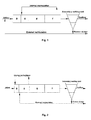
- raw wastewater is brought to an anaerobic zone B, located at the beginning of the said zone sequence of the reactor, and then the wastewater is directed to an anoxic zone A and a medium-aerobic zone S sequentially, and eventually the wastewater is directed to an aerobic zone T constituting an outflow of the biological reactor - bioreactor.
- the wastewater together with sludge flow to a secondary settling tank where the treated wastewater is separated from the sludge which sediments on the bottom of the secondary settling tank.
- the treated wastewater and excess sludge, located on the bottom of the secondary settling tank are discharged outside the secondary settling tank.
- an external recirculation is conducted, which consists in passing the undischarged part of the wastewater together with the sludge, which accumulates in the secondary settling tank, to the anaerobic zone B , and an internal recirculation is also conducted, which consists in returning a part of the content of the aerobic zone T to the anoxic zone A.
- residence time of wastewater in the medium-aerobic zone S is set to about 2.0 hours, and oxygenation is maintained in the range of 0.6 - 0.8 mg of O 2 /litre, whereas residence time of wastewater in the aerobic zone T is set to about 3.5 - 4.0 hours, and oxygenation in the range of 3.5 - 4.0 mg of O 2 /litre.
- oxygenation resulting from natural biological processes and from recirculation rate (in this zone, there is not any forced oxygenation), which is maintained in the range of 0.1 - 0.6 mg of O 2 /litre, is used.
- the selection of specific values of operating parameters for the zones, in particular for the medium-aerobic zone S, is made based on the characteristics of the wastewater brought. Internal and external recirculations are selected so that scheduled residence times in each zone can be obtained depending on the amount of wastewater incoming to the wastewater treatment plant.
- Level of the sludge maintained in the secondary settling tank should be 30 % or more of its active volume. Density of the active sludge is set depending on the amount of BOD 5 load brought together with the wastewater, within 4.0 and 9.0 g/l.
- raw wastewater is brought to an anaerobic zone B, located at the beginning of the said zone sequence of the reactor, and then the wastewater is directed to an anoxic zone A and a medium-aerobic zone S sequentially, and eventually the wastewater is directed to an aerobic zone T constituting an outflow of the biological reactor - bioreactor.
- the wastewater together with sludge flow to a secondary settling tank where the treated wastewater is separated from the sludge which sediments on the bottom of the secondary settling tank.
- the treated wastewater and excess sludge, located on the bottom of the secondary settling tank are discharged outside the secondary settling tank.
- an external recirculation is conducted, which consists in passing the undischarged part of the wastewater together with the sludge, which accumulates in the secondary settling tank, to the anaerobic zone B , and an internal recirculation is also conducted, which consists in returning a part of the content of the aerobic zone T to the anoxic zone A.
- residence time of wastewater in the medium-aerobic zone S is set to about 7.0 hours, and oxygenation is maintained in the range of 1.1 - 1.3 mg of O 2 /litre, whereas residence time of wastewater in the aerobic zone T is set to about 3.5 - 4.0 hours, and oxygenation in the range of 3.0 - 3.5 mg of O 2 /litre.
- oxygenation resulting from natural biological processes and from recirculation rate (in this zone, there is not any forced oxygenation), which is maintained in the range of 0.1 - 0.6 mg O 2 /litre, is used.
- the selection of specific values of operating parameters for the zones, in particular for the medium-aerobic zone S, is made based on the characteristics of the wastewater brought. Internal and external recirculations are selected so that scheduled residence times in each zone can be obtained depending on the amount of wastewater incoming to the wastewater treatment plant.
- Level of the sludge maintained in the secondary settling tank should be 30 % or more of its active volume. Density of the active sludge is set depending on the amount of BOD 5 load brought together with the wastewater, within 4.0 and 9.0 g/l.
- raw wastewater is brought to an anaerobic zone B, located at the beginning of the said zone sequence of the reactor, and then the wastewater is directed to an anoxic zone A and a medium-aerobic zone S sequentially, and eventually the wastewater is directed to an aerobic zone T constituting an outflow of the biological reactor - bioreactor.
- the wastewater together with sludge are brought to a secondary settling tank where the treated wastewater is separated from the sludge which sediments on the bottom of the secondary settling tank.
- the treated wastewater and excess sludge, located on the bottom of the secondary settling tank, are discharged outside the secondary settling tank.
- an external recirculation is conducted, which consists in passing the undischarged part of the wastewater together with the sludge, which build up in the secondary settling tank, to the anoxic zone A, and farther, through the latter, in the process of internal recirculation, to the anaerobic zone ( B ).
- residence time of wastewater in the medium-aerobic zone S is set to about 2 hours, and oxygenation is maintained in the range of 0.6-0.8 mg of O 2 /litre, whereas residence time of wastewater in the aerobic zone T is set to about 1.5 - 2.5 hours, and oxygenation in the range of 3.0 - 3.5 mg O 2 /litre.
- oxygenation is maintained in the range of 0.1 - 0.6 mg O 2 /litre.
- the selection of specific values of operating parameters for the zones, in particular for the medium-aerobic zone S, is made based on the characteristics of the wastewater brought. Internal and external recirculations are selected so that scheduled residence times in each zone can be obtained depending on the amount of wastewater incoming to the wastewater treatment plant. Level of the sludge maintained in the secondary settling tank should be 30 % or more of its active volume. Density of the active sludge is set depending on the amount of BOD 5 load brought together with the wastewater, within 4.0 and 9.0 g/l.
- raw wastewater is brought to an anaerobic zone B, located at the beginning of the said zone sequence of the reactor. Then, the wastewater flows to an anoxic zone A and a medium-aerobic zone S sequentially, and eventually the wastewater flows to an aerobic zone T . Before leaving the biological reactor, two additional zones were added: an anoxic one A1 and an aerobic one T1 , the task of which is to support the process of wastewater treatment to eliminate nitrogen compounds from it. Once left the bioreactor, the wastewater together with sludge flow to a secondary settling tank where the treated wastewater is separated from the sludge which sediments on the bottom of the secondary settling tank.
- the treated wastewater and excess sludge, located on the bottom of the secondary settling tank, are discharged outside the secondary settling tank.
- an external recirculation is conducted, which consists in passing the undischarged part of the wastewater together with the sludge, which accumulates in the secondary settling tank, to the anaerobic zone B , and an internal recirculation is also conducted, which consists in returning a part of the content of the aerobic zone T to the anoxic zone A.
- residence time of wastewater in the medium-aerobic zone S is set to about 6.0 hours, and oxygenation is maintained in the range of 1.1 - 1.3 mg of O 2 /litre, whereas residence time of wastewater in the aerobic zone T is set to about 3.5 - 4.0 hours, and oxygenation in the range of 3.0 - 3.5 mg O 2 /litre.
- oxygenation is maintained in the range of 0.1 - 0.6 mg O 2 /litre.
- Internal and external recirculations are selected so that scheduled residence times in each zone can be obtained depending on the amount of wastewater incoming to the wastewater treatment plant.
- Level of the sludge maintained in the secondary settling tank should be 30 % or more of its active volume. Density of the active sludge is set depending on the amount of BOD 5 load brought together with the wastewater, within 4.0 and 9.0 g/l.
- raw wastewater is brought in part to an anaerobic zone B, located at the beginning of the said zone sequence of the reactor, and the rest of it is directed to an additional anoxic zone A1 preceding it.
- Introduction of this additional zone aims at reducing the amount of nitrates in the wastewater returning in the process of external recirculation to the anaerobic zone B, and then it is directed to an anoxic zone A, and a medium-aerobic zone S sequentially, and eventually the wastewater is directed to an aerobic zone T constituting an outflow of the biological reactor.
- the wastewater together with sludge flow to a secondary settling tank where the treated wastewater is separated from the sludge which sediments on the bottom of the secondary settling tank.
- the treated wastewater and excess sludge, located on the bottom of the secondary settling tank, are discharged outside the secondary settling tank.
- an external recirculation is conducted, which consists in passing the undischarged part of the wastewater together with the sludge, which build up in the secondary settling tank, to the anaerobic zone B , via the additional anoxic zone A1 placed at the beginning of the reactor.
- An internal recirculation is also conducted, and it consists in returning a part of the content from the aerobic zone T to the anoxic zone A.
- residence time of wastewater in the medium-aerobic zone S is set to about 2.0 - 3.0 hours, and oxygenation is maintained in the range of 0.6 - 0.8 mg O 2 /litre, whereas residence time of wastewater in the aerobic zone T is set to about 1.5 - 2.0 hours, and oxygenation in the range of 2.0 - 2.5 mg O 2 /litre.
- oxygenation is maintained in the range of 0.1 - 0.6 mg O 2 /litre.
- Level of the sludge maintained in the secondary settling tank should be 30 % or more of its active volume. Density of the active sludge is set depending on the amount of BOD 5 load brought together with the wastewater, within 4.0 and 9.0 g/l.
- the invention is also applicable in bioreactors of carrousel-like structure and in sequential bioreactors, where the change of operating parameters in time takes place in one chamber by cyclical changes in oxygenation.
Landscapes
- Life Sciences & Earth Sciences (AREA)
- Biodiversity & Conservation Biology (AREA)
- Microbiology (AREA)
- Hydrology & Water Resources (AREA)
- Engineering & Computer Science (AREA)
- Environmental & Geological Engineering (AREA)
- Water Supply & Treatment (AREA)
- Chemical & Material Sciences (AREA)
- Organic Chemistry (AREA)
- Health & Medical Sciences (AREA)
- Molecular Biology (AREA)
- Purification Treatments By Anaerobic Or Anaerobic And Aerobic Bacteria Or Animals (AREA)
- Biological Treatment Of Waste Water (AREA)
- Activated Sludge Processes (AREA)
Priority Applications (1)
| Application Number | Priority Date | Filing Date | Title |
|---|---|---|---|
| PL14162523T PL2808305T3 (pl) | 2013-05-27 | 2014-03-31 | Sposób biologicznego oczyszczania ścieków |
Applications Claiming Priority (1)
| Application Number | Priority Date | Filing Date | Title |
|---|---|---|---|
| PL40408713A PL404087A1 (pl) | 2013-05-27 | 2013-05-27 | Sposób biologicznego oczyszczania ścieków |
Publications (2)
| Publication Number | Publication Date |
|---|---|
| EP2808305A1 true EP2808305A1 (de) | 2014-12-03 |
| EP2808305B1 EP2808305B1 (de) | 2018-01-03 |
Family
ID=50486762
Family Applications (1)
| Application Number | Title | Priority Date | Filing Date |
|---|---|---|---|
| EP14162523.6A Active EP2808305B1 (de) | 2013-05-27 | 2014-03-31 | Verfahren zur biologischen Wasserbehandlung |
Country Status (10)
| Country | Link |
|---|---|
| US (1) | US20160096755A1 (de) |
| EP (1) | EP2808305B1 (de) |
| AU (1) | AU2014273259B2 (de) |
| CA (1) | CA2913515A1 (de) |
| CL (1) | CL2015003487A1 (de) |
| ES (1) | ES2669608T3 (de) |
| MX (1) | MX2015016325A (de) |
| PL (2) | PL404087A1 (de) |
| PT (1) | PT2808305T (de) |
| WO (1) | WO2014191345A1 (de) |
Cited By (2)
| Publication number | Priority date | Publication date | Assignee | Title |
|---|---|---|---|---|
| CN104944705A (zh) * | 2015-06-24 | 2015-09-30 | 佛山市新泰隆环保设备制造有限公司 | 改良Bardenpho工艺处理生活污水的装置及方法 |
| CN110304727A (zh) * | 2019-08-12 | 2019-10-08 | 鹏鹞环保股份有限公司 | 一种套装结构超大型装配式环流反应器 |
Families Citing this family (1)
| Publication number | Priority date | Publication date | Assignee | Title |
|---|---|---|---|---|
| CN109879426B (zh) * | 2019-03-29 | 2023-01-17 | 云南合续环境科技股份有限公司 | 一种污水处理深度除磷脱氮的方法 |
Citations (4)
| Publication number | Priority date | Publication date | Assignee | Title |
|---|---|---|---|---|
| US4162153A (en) * | 1976-04-12 | 1979-07-24 | Air Products And Chemicals, Inc. | High nitrogen and phosphorous content biomass produced by treatment of a BOD-containing material |
| WO1988008410A1 (en) * | 1987-04-21 | 1988-11-03 | Hampton Roads Sanitation District | High-rate biological waste water treatment process using activated sludge recycle |
| CN101279793A (zh) * | 2008-04-16 | 2008-10-08 | 中国市政工程西南设计研究院 | 一种高浓度活性污泥污水处理工艺 |
| US20100163482A1 (en) * | 2008-12-29 | 2010-07-01 | Industrial Technology Research Institute | System and method for treating ammonia-based wastewater |
Family Cites Families (7)
| Publication number | Priority date | Publication date | Assignee | Title |
|---|---|---|---|---|
| US4867883A (en) * | 1987-04-21 | 1989-09-19 | Hampton Roads Sanitation District Of The Commonwealth Of Virginia | High-rate biological waste water treatment process using activated sludge recycle |
| US5480548A (en) * | 1993-12-28 | 1996-01-02 | Ch2M Hill, Inc. | Wastewater biological phosphorus removal process |
| US7699986B2 (en) * | 2007-08-24 | 2010-04-20 | Praxair Technology, Inc. | Method for activated sludge wastewater treatment with high dissolved oxygen levels |
| EP2479147B1 (de) * | 2009-09-14 | 2016-03-09 | Obschestvo S Ogranichennoi Otvetstvennostyu "Ural Protsess Inzhiniring Kompania (UPEK)" | Verfahren zur biologischen aufbereitung von abwasser |
| AU2010304545B2 (en) * | 2009-10-09 | 2013-05-16 | Chiyoda Corporation | Method and system for treating plant wastewater |
| US8721887B2 (en) * | 2009-12-07 | 2014-05-13 | Ch2M Hill, Inc. | Method and system for treating wastewater |
| PL391606A1 (pl) * | 2010-06-24 | 2012-01-02 | Jerzy Robert Ślusarczyk | Sposób biologicznego oczyszczania ścieków |
-
2013
- 2013-05-27 PL PL40408713A patent/PL404087A1/pl unknown
-
2014
- 2014-03-31 PL PL14162523T patent/PL2808305T3/pl unknown
- 2014-03-31 PT PT141625236T patent/PT2808305T/pt unknown
- 2014-03-31 EP EP14162523.6A patent/EP2808305B1/de active Active
- 2014-03-31 ES ES14162523.6T patent/ES2669608T3/es active Active
- 2014-05-26 CA CA2913515A patent/CA2913515A1/en not_active Abandoned
- 2014-05-26 AU AU2014273259A patent/AU2014273259B2/en not_active Ceased
- 2014-05-26 US US14/894,307 patent/US20160096755A1/en not_active Abandoned
- 2014-05-26 WO PCT/EP2014/060809 patent/WO2014191345A1/en not_active Ceased
- 2014-05-26 MX MX2015016325A patent/MX2015016325A/es unknown
-
2015
- 2015-11-27 CL CL2015003487A patent/CL2015003487A1/es unknown
Patent Citations (4)
| Publication number | Priority date | Publication date | Assignee | Title |
|---|---|---|---|---|
| US4162153A (en) * | 1976-04-12 | 1979-07-24 | Air Products And Chemicals, Inc. | High nitrogen and phosphorous content biomass produced by treatment of a BOD-containing material |
| WO1988008410A1 (en) * | 1987-04-21 | 1988-11-03 | Hampton Roads Sanitation District | High-rate biological waste water treatment process using activated sludge recycle |
| CN101279793A (zh) * | 2008-04-16 | 2008-10-08 | 中国市政工程西南设计研究院 | 一种高浓度活性污泥污水处理工艺 |
| US20100163482A1 (en) * | 2008-12-29 | 2010-07-01 | Industrial Technology Research Institute | System and method for treating ammonia-based wastewater |
Cited By (3)
| Publication number | Priority date | Publication date | Assignee | Title |
|---|---|---|---|---|
| CN104944705A (zh) * | 2015-06-24 | 2015-09-30 | 佛山市新泰隆环保设备制造有限公司 | 改良Bardenpho工艺处理生活污水的装置及方法 |
| CN110304727A (zh) * | 2019-08-12 | 2019-10-08 | 鹏鹞环保股份有限公司 | 一种套装结构超大型装配式环流反应器 |
| CN110304727B (zh) * | 2019-08-12 | 2024-06-04 | 鹏鹞环保股份有限公司 | 一种套装结构超大型装配式环流反应器 |
Also Published As
| Publication number | Publication date |
|---|---|
| PL404087A1 (pl) | 2014-12-08 |
| MX2015016325A (es) | 2016-09-16 |
| AU2014273259B2 (en) | 2018-11-08 |
| AU2014273259A1 (en) | 2016-01-21 |
| EP2808305B1 (de) | 2018-01-03 |
| ES2669608T3 (es) | 2018-05-28 |
| CA2913515A1 (en) | 2014-12-04 |
| PT2808305T (pt) | 2018-05-09 |
| PL2808305T3 (pl) | 2018-07-31 |
| US20160096755A1 (en) | 2016-04-07 |
| WO2014191345A1 (en) | 2014-12-04 |
| CL2015003487A1 (es) | 2016-08-05 |
Similar Documents
| Publication | Publication Date | Title |
|---|---|---|
| Moawad et al. | Coupling of sequencing batch reactor and UASB reactor for domestic wastewater treatment | |
| Chen et al. | Effect of nitrate recycling ratio on simultaneous biological nutrient removal in a novel anaerobic/anoxic/oxic (A2/O)-biological aerated filter (BAF) system | |
| Cao et al. | Achieving partial denitrification with sludge fermentation liquid as carbon source: the effect of seeding sludge | |
| Ayaz et al. | Effect of recirculation on nitrogen removal in a hybrid constructed wetland system | |
| Nelson et al. | Analysis of the activated sludge model (number 1) | |
| Li et al. | Aerobic treatment of dairy wastewater with sequencing batch reactor systems | |
| Botheju et al. | Digestate nitrification for nutrient recovery | |
| EP2808305B1 (de) | Verfahren zur biologischen Wasserbehandlung | |
| Tian et al. | Simultaneous nitrification and denitrification process in a new Tubificidae-reactor for minimizing nutrient release during sludge reduction | |
| Rashed et al. | Application of contact stabilization activated sludge for enhancing biological phosphorus removal (EBPR) in domestic wastewater | |
| CN112047468A (zh) | 一种垃圾渗滤液的生化处理方法 | |
| Zhou et al. | Improved integrated anaerobic–anoxic–oxic system for landfill leachate treatment using domestic wastewater as carbon source: Performance study and optimization | |
| Urbinati et al. | Anaerobic-aerobic treatment of swine wastewater in uasb and batch reactors in series | |
| Pan et al. | Effects of loading rate and aeration on nitrogen removal and N2O emissions in intermittently aerated sequencing batch reactors treating slaughterhouse wastewater at 11 C | |
| Mirel et al. | Simulation of wastewater depolution processes by advanced biological methods | |
| Hoffmann et al. | The potential of denitrification for the stabilization of activated sludge processes affected by low alkalinity problems | |
| Williams | Treatment of poultry slaughterhouse wastewater using an expanded granular sludge bed anaerobic digester coupled with anoxic/aerobic hybrid side stream ultrafiltration membrane bioreactor | |
| Wang et al. | Evaluation of biological removal efficiency in an UCT process treating municipal wastewater during start-up stage | |
| Le et al. | Linking the characteristics of leachate resulting from the transition to circular MSW management with strategies for biological leachate treatment | |
| Jwara et al. | Biological nutrient removal efficiencies for hydraulically overloaded wastewater works | |
| CN105731658A (zh) | 一种用于畜禽养殖废水处理的生物强化剂及其制备方法 | |
| Menniti et al. | Combining mesophilic anaerobic digestion with post-aerobic digestion to enhance volatile solids reduction and reduce sidestream Ammonia | |
| EP2407434A1 (de) | Verfahren zur biologischen Behandlung von Abwasser | |
| Popadiuk et al. | Innovative method of nitrification and denitrification on the example of wastewater treatment plant of Kolomyia | |
| Van Chien | Factors that Affect the Removal of Nitrogen and Phosphorous from Piggery Wastewater Using Microalgae–Bacteria Consortium |
Legal Events
| Date | Code | Title | Description |
|---|---|---|---|
| PUAI | Public reference made under article 153(3) epc to a published international application that has entered the european phase |
Free format text: ORIGINAL CODE: 0009012 |
|
| 17P | Request for examination filed |
Effective date: 20140331 |
|
| AK | Designated contracting states |
Kind code of ref document: A1 Designated state(s): AL AT BE BG CH CY CZ DE DK EE ES FI FR GB GR HR HU IE IS IT LI LT LU LV MC MK MT NL NO PL PT RO RS SE SI SK SM TR |
|
| AX | Request for extension of the european patent |
Extension state: BA ME |
|
| R17P | Request for examination filed (corrected) |
Effective date: 20150602 |
|
| RBV | Designated contracting states (corrected) |
Designated state(s): AL AT BE BG CH CY CZ DE DK EE ES FI FR GB GR HR HU IE IS IT LI LT LU LV MC MK MT NL NO PL PT RO RS SE SI SK SM TR |
|
| 17Q | First examination report despatched |
Effective date: 20160125 |
|
| GRAP | Despatch of communication of intention to grant a patent |
Free format text: ORIGINAL CODE: EPIDOSNIGR1 |
|
| STAA | Information on the status of an ep patent application or granted ep patent |
Free format text: STATUS: GRANT OF PATENT IS INTENDED |
|
| INTG | Intention to grant announced |
Effective date: 20170726 |
|
| GRAS | Grant fee paid |
Free format text: ORIGINAL CODE: EPIDOSNIGR3 |
|
| GRAA | (expected) grant |
Free format text: ORIGINAL CODE: 0009210 |
|
| STAA | Information on the status of an ep patent application or granted ep patent |
Free format text: STATUS: THE PATENT HAS BEEN GRANTED |
|
| AK | Designated contracting states |
Kind code of ref document: B1 Designated state(s): AL AT BE BG CH CY CZ DE DK EE ES FI FR GB GR HR HU IE IS IT LI LT LU LV MC MK MT NL NO PL PT RO RS SE SI SK SM TR |
|
| REG | Reference to a national code |
Ref country code: GB Ref legal event code: FG4D |
|
| REG | Reference to a national code |
Ref country code: CH Ref legal event code: EP Ref country code: AT Ref legal event code: REF Ref document number: 960077 Country of ref document: AT Kind code of ref document: T Effective date: 20180115 |
|
| REG | Reference to a national code |
Ref country code: IE Ref legal event code: FG4D |
|
| REG | Reference to a national code |
Ref country code: DE Ref legal event code: R096 Ref document number: 602014019273 Country of ref document: DE |
|
| REG | Reference to a national code |
Ref country code: FR Ref legal event code: PLFP Year of fee payment: 5 |
|
| REG | Reference to a national code |
Ref country code: NL Ref legal event code: MP Effective date: 20180103 Ref country code: PT Ref legal event code: SC4A Ref document number: 2808305 Country of ref document: PT Date of ref document: 20180509 Kind code of ref document: T Free format text: AVAILABILITY OF NATIONAL TRANSLATION Effective date: 20180502 |
|
| REG | Reference to a national code |
Ref country code: LT Ref legal event code: MG4D |
|
| REG | Reference to a national code |
Ref country code: ES Ref legal event code: FG2A Ref document number: 2669608 Country of ref document: ES Kind code of ref document: T3 Effective date: 20180528 |
|
| REG | Reference to a national code |
Ref country code: AT Ref legal event code: MK05 Ref document number: 960077 Country of ref document: AT Kind code of ref document: T Effective date: 20180103 |
|
| PG25 | Lapsed in a contracting state [announced via postgrant information from national office to epo] |
Ref country code: NL Free format text: LAPSE BECAUSE OF FAILURE TO SUBMIT A TRANSLATION OF THE DESCRIPTION OR TO PAY THE FEE WITHIN THE PRESCRIBED TIME-LIMIT Effective date: 20180103 |
|
| PG25 | Lapsed in a contracting state [announced via postgrant information from national office to epo] |
Ref country code: FI Free format text: LAPSE BECAUSE OF FAILURE TO SUBMIT A TRANSLATION OF THE DESCRIPTION OR TO PAY THE FEE WITHIN THE PRESCRIBED TIME-LIMIT Effective date: 20180103 Ref country code: NO Free format text: LAPSE BECAUSE OF FAILURE TO SUBMIT A TRANSLATION OF THE DESCRIPTION OR TO PAY THE FEE WITHIN THE PRESCRIBED TIME-LIMIT Effective date: 20180403 Ref country code: HR Free format text: LAPSE BECAUSE OF FAILURE TO SUBMIT A TRANSLATION OF THE DESCRIPTION OR TO PAY THE FEE WITHIN THE PRESCRIBED TIME-LIMIT Effective date: 20180103 Ref country code: LT Free format text: LAPSE BECAUSE OF FAILURE TO SUBMIT A TRANSLATION OF THE DESCRIPTION OR TO PAY THE FEE WITHIN THE PRESCRIBED TIME-LIMIT Effective date: 20180103 Ref country code: CY Free format text: LAPSE BECAUSE OF FAILURE TO SUBMIT A TRANSLATION OF THE DESCRIPTION OR TO PAY THE FEE WITHIN THE PRESCRIBED TIME-LIMIT Effective date: 20180103 |
|
| PGFP | Annual fee paid to national office [announced via postgrant information from national office to epo] |
Ref country code: DE Payment date: 20180329 Year of fee payment: 5 Ref country code: CH Payment date: 20180403 Year of fee payment: 5 |
|
| PG25 | Lapsed in a contracting state [announced via postgrant information from national office to epo] |
Ref country code: BG Free format text: LAPSE BECAUSE OF FAILURE TO SUBMIT A TRANSLATION OF THE DESCRIPTION OR TO PAY THE FEE WITHIN THE PRESCRIBED TIME-LIMIT Effective date: 20180403 Ref country code: IS Free format text: LAPSE BECAUSE OF FAILURE TO SUBMIT A TRANSLATION OF THE DESCRIPTION OR TO PAY THE FEE WITHIN THE PRESCRIBED TIME-LIMIT Effective date: 20180503 Ref country code: SE Free format text: LAPSE BECAUSE OF FAILURE TO SUBMIT A TRANSLATION OF THE DESCRIPTION OR TO PAY THE FEE WITHIN THE PRESCRIBED TIME-LIMIT Effective date: 20180103 Ref country code: RS Free format text: LAPSE BECAUSE OF FAILURE TO SUBMIT A TRANSLATION OF THE DESCRIPTION OR TO PAY THE FEE WITHIN THE PRESCRIBED TIME-LIMIT Effective date: 20180103 Ref country code: LV Free format text: LAPSE BECAUSE OF FAILURE TO SUBMIT A TRANSLATION OF THE DESCRIPTION OR TO PAY THE FEE WITHIN THE PRESCRIBED TIME-LIMIT Effective date: 20180103 Ref country code: AT Free format text: LAPSE BECAUSE OF FAILURE TO SUBMIT A TRANSLATION OF THE DESCRIPTION OR TO PAY THE FEE WITHIN THE PRESCRIBED TIME-LIMIT Effective date: 20180103 |
|
| PGFP | Annual fee paid to national office [announced via postgrant information from national office to epo] |
Ref country code: BG Payment date: 20180531 Year of fee payment: 12 Ref country code: IT Payment date: 20180327 Year of fee payment: 5 |
|
| REG | Reference to a national code |
Ref country code: GR Ref legal event code: EP Ref document number: 20180401008 Country of ref document: GR Effective date: 20180829 |
|
| REG | Reference to a national code |
Ref country code: DE Ref legal event code: R097 Ref document number: 602014019273 Country of ref document: DE |
|
| PG25 | Lapsed in a contracting state [announced via postgrant information from national office to epo] |
Ref country code: EE Free format text: LAPSE BECAUSE OF FAILURE TO SUBMIT A TRANSLATION OF THE DESCRIPTION OR TO PAY THE FEE WITHIN THE PRESCRIBED TIME-LIMIT Effective date: 20180103 Ref country code: RO Free format text: LAPSE BECAUSE OF FAILURE TO SUBMIT A TRANSLATION OF THE DESCRIPTION OR TO PAY THE FEE WITHIN THE PRESCRIBED TIME-LIMIT Effective date: 20180103 Ref country code: AL Free format text: LAPSE BECAUSE OF FAILURE TO SUBMIT A TRANSLATION OF THE DESCRIPTION OR TO PAY THE FEE WITHIN THE PRESCRIBED TIME-LIMIT Effective date: 20180103 |
|
| PLBE | No opposition filed within time limit |
Free format text: ORIGINAL CODE: 0009261 |
|
| STAA | Information on the status of an ep patent application or granted ep patent |
Free format text: STATUS: NO OPPOSITION FILED WITHIN TIME LIMIT |
|
| PG25 | Lapsed in a contracting state [announced via postgrant information from national office to epo] |
Ref country code: CZ Free format text: LAPSE BECAUSE OF FAILURE TO SUBMIT A TRANSLATION OF THE DESCRIPTION OR TO PAY THE FEE WITHIN THE PRESCRIBED TIME-LIMIT Effective date: 20180103 Ref country code: MC Free format text: LAPSE BECAUSE OF FAILURE TO SUBMIT A TRANSLATION OF THE DESCRIPTION OR TO PAY THE FEE WITHIN THE PRESCRIBED TIME-LIMIT Effective date: 20180103 Ref country code: SK Free format text: LAPSE BECAUSE OF FAILURE TO SUBMIT A TRANSLATION OF THE DESCRIPTION OR TO PAY THE FEE WITHIN THE PRESCRIBED TIME-LIMIT Effective date: 20180103 Ref country code: DK Free format text: LAPSE BECAUSE OF FAILURE TO SUBMIT A TRANSLATION OF THE DESCRIPTION OR TO PAY THE FEE WITHIN THE PRESCRIBED TIME-LIMIT Effective date: 20180103 Ref country code: SM Free format text: LAPSE BECAUSE OF FAILURE TO SUBMIT A TRANSLATION OF THE DESCRIPTION OR TO PAY THE FEE WITHIN THE PRESCRIBED TIME-LIMIT Effective date: 20180103 |
|
| REG | Reference to a national code |
Ref country code: BE Ref legal event code: MM Effective date: 20180331 |
|
| 26N | No opposition filed |
Effective date: 20181005 |
|
| REG | Reference to a national code |
Ref country code: IE Ref legal event code: MM4A |
|
| PG25 | Lapsed in a contracting state [announced via postgrant information from national office to epo] |
Ref country code: LU Free format text: LAPSE BECAUSE OF NON-PAYMENT OF DUE FEES Effective date: 20180331 |
|
| PG25 | Lapsed in a contracting state [announced via postgrant information from national office to epo] |
Ref country code: IE Free format text: LAPSE BECAUSE OF NON-PAYMENT OF DUE FEES Effective date: 20180331 |
|
| PG25 | Lapsed in a contracting state [announced via postgrant information from national office to epo] |
Ref country code: SI Free format text: LAPSE BECAUSE OF FAILURE TO SUBMIT A TRANSLATION OF THE DESCRIPTION OR TO PAY THE FEE WITHIN THE PRESCRIBED TIME-LIMIT Effective date: 20180103 Ref country code: BE Free format text: LAPSE BECAUSE OF NON-PAYMENT OF DUE FEES Effective date: 20180331 |
|
| REG | Reference to a national code |
Ref country code: ES Ref legal event code: FD2A Effective date: 20190830 |
|
| REG | Reference to a national code |
Ref country code: DE Ref legal event code: R119 Ref document number: 602014019273 Country of ref document: DE |
|
| PG25 | Lapsed in a contracting state [announced via postgrant information from national office to epo] |
Ref country code: ES Free format text: LAPSE BECAUSE OF NON-PAYMENT OF DUE FEES Effective date: 20180401 |
|
| REG | Reference to a national code |
Ref country code: CH Ref legal event code: PL |
|
| PG25 | Lapsed in a contracting state [announced via postgrant information from national office to epo] |
Ref country code: LI Free format text: LAPSE BECAUSE OF NON-PAYMENT OF DUE FEES Effective date: 20190331 Ref country code: DE Free format text: LAPSE BECAUSE OF NON-PAYMENT OF DUE FEES Effective date: 20191001 Ref country code: CH Free format text: LAPSE BECAUSE OF NON-PAYMENT OF DUE FEES Effective date: 20190331 Ref country code: MT Free format text: LAPSE BECAUSE OF NON-PAYMENT OF DUE FEES Effective date: 20180331 |
|
| PG25 | Lapsed in a contracting state [announced via postgrant information from national office to epo] |
Ref country code: FR Free format text: LAPSE BECAUSE OF NON-PAYMENT OF DUE FEES Effective date: 20190331 |
|
| PG25 | Lapsed in a contracting state [announced via postgrant information from national office to epo] |
Ref country code: TR Free format text: LAPSE BECAUSE OF FAILURE TO SUBMIT A TRANSLATION OF THE DESCRIPTION OR TO PAY THE FEE WITHIN THE PRESCRIBED TIME-LIMIT Effective date: 20180103 |
|
| PGFP | Annual fee paid to national office [announced via postgrant information from national office to epo] |
Ref country code: PL Payment date: 20200331 Year of fee payment: 7 |
|
| PG25 | Lapsed in a contracting state [announced via postgrant information from national office to epo] |
Ref country code: HU Free format text: LAPSE BECAUSE OF FAILURE TO SUBMIT A TRANSLATION OF THE DESCRIPTION OR TO PAY THE FEE WITHIN THE PRESCRIBED TIME-LIMIT; INVALID AB INITIO Effective date: 20140331 |
|
| PG25 | Lapsed in a contracting state [announced via postgrant information from national office to epo] |
Ref country code: MK Free format text: LAPSE BECAUSE OF NON-PAYMENT OF DUE FEES Effective date: 20180103 |
|
| PG25 | Lapsed in a contracting state [announced via postgrant information from national office to epo] |
Ref country code: PT Free format text: LAPSE BECAUSE OF NON-PAYMENT OF DUE FEES Effective date: 20200930 |
|
| PGFP | Annual fee paid to national office [announced via postgrant information from national office to epo] |
Ref country code: GB Payment date: 20200930 Year of fee payment: 7 |
|
| PG25 | Lapsed in a contracting state [announced via postgrant information from national office to epo] |
Ref country code: PT Free format text: LAPSE BECAUSE OF NON-PAYMENT OF DUE FEES Effective date: 20200930 |
|
| PGFP | Annual fee paid to national office [announced via postgrant information from national office to epo] |
Ref country code: PT Payment date: 20201028 Year of fee payment: 7 |
|
| PGRI | Patent reinstated in contracting state [announced from national office to epo] |
Ref country code: PT Effective date: 20201030 |
|
| PG25 | Lapsed in a contracting state [announced via postgrant information from national office to epo] |
Ref country code: IT Free format text: LAPSE BECAUSE OF NON-PAYMENT OF DUE FEES Effective date: 20200331 |
|
| GBPC | Gb: european patent ceased through non-payment of renewal fee |
Effective date: 20210331 |
|
| PG25 | Lapsed in a contracting state [announced via postgrant information from national office to epo] |
Ref country code: PT Free format text: LAPSE BECAUSE OF NON-PAYMENT OF DUE FEES Effective date: 20210930 |
|
| PG25 | Lapsed in a contracting state [announced via postgrant information from national office to epo] |
Ref country code: GB Free format text: LAPSE BECAUSE OF NON-PAYMENT OF DUE FEES Effective date: 20210331 |
|
| PG25 | Lapsed in a contracting state [announced via postgrant information from national office to epo] |
Ref country code: PL Free format text: LAPSE BECAUSE OF NON-PAYMENT OF DUE FEES Effective date: 20210331 |
|
| PGFP | Annual fee paid to national office [announced via postgrant information from national office to epo] |
Ref country code: GR Payment date: 20260319 Year of fee payment: 13 |