EP2806882B1 - Sandalwood oil and its uses related to clostridium infections - Google Patents
Sandalwood oil and its uses related to clostridium infections Download PDFInfo
- Publication number
- EP2806882B1 EP2806882B1 EP13741240.9A EP13741240A EP2806882B1 EP 2806882 B1 EP2806882 B1 EP 2806882B1 EP 13741240 A EP13741240 A EP 13741240A EP 2806882 B1 EP2806882 B1 EP 2806882B1
- Authority
- EP
- European Patent Office
- Prior art keywords
- composition
- clostridium
- infection
- sandalwood oil
- subject
- Prior art date
- Legal status (The legal status is an assumption and is not a legal conclusion. Google has not performed a legal analysis and makes no representation as to the accuracy of the status listed.)
- Not-in-force
Links
Images
Classifications
-
- A—HUMAN NECESSITIES
- A61—MEDICAL OR VETERINARY SCIENCE; HYGIENE
- A61K—PREPARATIONS FOR MEDICAL, DENTAL OR TOILETRY PURPOSES
- A61K36/00—Medicinal preparations of undetermined constitution containing material from algae, lichens, fungi or plants, or derivatives thereof, e.g. traditional herbal medicines
- A61K36/18—Magnoliophyta (angiosperms)
- A61K36/185—Magnoliopsida (dicotyledons)
-
- A—HUMAN NECESSITIES
- A01—AGRICULTURE; FORESTRY; ANIMAL HUSBANDRY; HUNTING; TRAPPING; FISHING
- A01N—PRESERVATION OF BODIES OF HUMANS OR ANIMALS OR PLANTS OR PARTS THEREOF; BIOCIDES, e.g. AS DISINFECTANTS, AS PESTICIDES OR AS HERBICIDES; PEST REPELLANTS OR ATTRACTANTS; PLANT GROWTH REGULATORS
- A01N65/00—Biocides, pest repellants or attractants, or plant growth regulators containing material from algae, lichens, bryophyta, multi-cellular fungi or plants, or extracts thereof
- A01N65/08—Magnoliopsida [dicotyledons]
-
- A—HUMAN NECESSITIES
- A61—MEDICAL OR VETERINARY SCIENCE; HYGIENE
- A61K—PREPARATIONS FOR MEDICAL, DENTAL OR TOILETRY PURPOSES
- A61K45/00—Medicinal preparations containing active ingredients not provided for in groups A61K31/00 - A61K41/00
- A61K45/06—Mixtures of active ingredients without chemical characterisation, e.g. antiphlogistics and cardiaca
-
- A—HUMAN NECESSITIES
- A61—MEDICAL OR VETERINARY SCIENCE; HYGIENE
- A61P—SPECIFIC THERAPEUTIC ACTIVITY OF CHEMICAL COMPOUNDS OR MEDICINAL PREPARATIONS
- A61P1/00—Drugs for disorders of the alimentary tract or the digestive system
-
- A—HUMAN NECESSITIES
- A61—MEDICAL OR VETERINARY SCIENCE; HYGIENE
- A61P—SPECIFIC THERAPEUTIC ACTIVITY OF CHEMICAL COMPOUNDS OR MEDICINAL PREPARATIONS
- A61P1/00—Drugs for disorders of the alimentary tract or the digestive system
- A61P1/04—Drugs for disorders of the alimentary tract or the digestive system for ulcers, gastritis or reflux esophagitis, e.g. antacids, inhibitors of acid secretion, mucosal protectants
-
- A—HUMAN NECESSITIES
- A61—MEDICAL OR VETERINARY SCIENCE; HYGIENE
- A61P—SPECIFIC THERAPEUTIC ACTIVITY OF CHEMICAL COMPOUNDS OR MEDICINAL PREPARATIONS
- A61P31/00—Antiinfectives, i.e. antibiotics, antiseptics, chemotherapeutics
- A61P31/04—Antibacterial agents
-
- A—HUMAN NECESSITIES
- A61—MEDICAL OR VETERINARY SCIENCE; HYGIENE
- A61P—SPECIFIC THERAPEUTIC ACTIVITY OF CHEMICAL COMPOUNDS OR MEDICINAL PREPARATIONS
- A61P43/00—Drugs for specific purposes, not provided for in groups A61P1/00-A61P41/00
-
- Y—GENERAL TAGGING OF NEW TECHNOLOGICAL DEVELOPMENTS; GENERAL TAGGING OF CROSS-SECTIONAL TECHNOLOGIES SPANNING OVER SEVERAL SECTIONS OF THE IPC; TECHNICAL SUBJECTS COVERED BY FORMER USPC CROSS-REFERENCE ART COLLECTIONS [XRACs] AND DIGESTS
- Y02—TECHNOLOGIES OR APPLICATIONS FOR MITIGATION OR ADAPTATION AGAINST CLIMATE CHANGE
- Y02A—TECHNOLOGIES FOR ADAPTATION TO CLIMATE CHANGE
- Y02A50/00—TECHNOLOGIES FOR ADAPTATION TO CLIMATE CHANGE in human health protection, e.g. against extreme weather
- Y02A50/30—Against vector-borne diseases, e.g. mosquito-borne, fly-borne, tick-borne or waterborne diseases whose impact is exacerbated by climate change
Definitions
- compositions of sandalwood oil as defined in the claims for use in a method to treat Clostridium infections. More specifically, provided herein is a composition as defined in the claims for use in a method of treating or preventing a Clostridium infection in a subject. The method comprises administering to the subject a composition including a therapeutically effective amount of sandalwood oil, wherein the subject has a Clostridium infection or is at risk of developing a Clostridium infection.
- composition as defined in the claims for use in a method of reducing the recurrence of a Clostridium infection in a subject.
- the method comprises administering to the subject a composition including a therapeutically effective amount of sandalwood oil, wherein the subject is at risk for recurrence of a Clostridium infection.
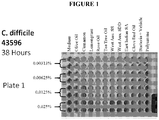
- Figure 1 is a comparison of Clostridium difficile ( C. difficile ) inhibiting activity of sandalwood oils as compared to other oils. Light gray wells indicate bacterial growth. Dark gray wells indicate no bacterial growth. Figure 1 shows that West Australian sandalwood oil and East Indian sandalwood oil are effective inhibitors of C . difficile.
- oil from any member of the genus Santalum can be used.
- East Indian sandalwood Santalum album
- West A ustralian sandalwood Santalum spicatum
- S everal other species of the genus also have fragrant wood and are found across India, A ustralia, Indonesia, and the Pacific Islands.
- Santalum ellipticum, S. freycinetianum, and S. paniculatum, the Hawaiian sandalwoods can also be used.
- Santalum spicatum West A ustralian sandalwood
- Other species produced in A ustralia that can be utilized in the composition for use in the methods set forth herein include, but are not limited to. S. acuminatum, S. lanceolatum, S. murrayanum, S. obtusiffolium and S. album.
- the compositions for use set forth herein can comprise one or more sandalwood oils.
- the oil(s) can be from one or more members of the genus Santalum.
- the sandalwood oil can be a sandalwood heartwood oil, a sandalwood nut oil, or a combination of both.
- S. spicatum and S. album species are different.
- a comparison of the components of steam distilled Australian and Indian sandalwood heartwood oils is presented in Table 1. The components and their percentages can vary with the extraction method.
- Table 1 Typical Sandalwood Heartwood Oil Profiles Compound S. spicatum % S.
- the sandalwood heartwood oil can be prepared by steam distillation, supercritical CO 2 extraction, solvent extraction, hydro-distillation and combinations thereof.
- the sandalwood heartwood oil can also be double distilled. It is also possible to synthesize one or more of the active ingredients of sandalwood heartwood oil, as identified in Table 1 and thereafter combine individual active ingredients together.
- a sandalwood heartwood oil can be a sandalwood heartwood oil that conforms with International Organization for Standardization (ISO) specifications for the oil and therefore comprises 20-45% santalols, when derived from S. spicatum, and 57-79% santalols when derived from S. album.
- ISO International Organization for Standardization
- the 20-45% santalols from S. spicatum and the 57-79% santalols from S. album are determined against the pure oil and before such oil is combined with any other solvents, excipients or active ingredients.
- an efficacious preparation of sandalwood heartwood oil may have a concentration of santalols lower (or higher) than the sandalwood heartwood oil it is prepared from and that the efficacious concentrations may be derived from sandalwood heartwood oils that are outside of the ISO specification prior to formulation.
- a santalol can be an ⁇ -santalol (shown below), a ⁇ -santalol (shown below), or any other active isomers or derivatives (such as esters) thereof.
- a sandalwood heartwood oil can comprise at least about 20%, 25%, 30%, 35%, 40%, 45%, 50%, 55%, 60%, 65%, 70%, 75%, 80%, 85%, 90%, 95%, 99% santalols or any percentage in between the percentages set forth herein, when derived from S. spicatum.
- the sandalwood heartwood oil can comprise at least 45%, 50%, 55%, 60%, 65%, 70%, 75%, 80%, 85%, 90%, 95%, 99% santalols or any percentage in between the percentages set forth herein, when derived from S. album.
- the oil can be extracted from cultivated trees or from cell culture of tree cells.
- the sandalwood heartwood oil can comprise the ingredients in the amounts listed in Table 1 plus or minus about 20%, and more preferably plus or minus about 10%, 5%, 2%, 1% or any percentage in between the percentages set forth herein.
- compositions comprising purified or synthetic versions of an active component or derivative thereof can also be utilized in the methods set forth herein. For example, a composition comprising alpha-santalol (shown below) or beta-santalol (shown below) can be utilized to treat, prevent or reduce the recurrence of a Clostridium infection.
- sandalwood nut oil can be from the nut of any member of the genus Santalum.
- East Indian sandalwood (Santalum album) or West Australian sandalwood (Santalum spicatum) nut oil can be utilized in the methods and compositions set forth herein.
- Nut oil from Santalum ellipticum, S. freycinetianum, and S. paniculatum, the Hawaiian sandalwoods, can also be used.
- Typical analytical values for sandalwood nut oil are as follows: Fatty Acid % concentration Palmitic (C16.0) 3.5% Stearic (C18.0) 1.6% Oleic (C18.1 c-9) 50.7% Linoleic (C18.2 c-9 12) 1.1% Linolenic (C18.3 c-9, 12, 15) 4.6% Gondoic (C20.1 c-11) 3% Ximenynic 35.8%
- the therapeutically effective amount of sandalwood oil utilized in the compositions set forth herein can be, for example, a concentration greater of about 0.2% (w/w) and up to about 100% (w/w).
- the therapeutically effective amount can be about 0.2%, 0.3%, 0.4%, 0.5%,0.6%, 0.7%, 0.8%, 0.9%, 1.0%, 1.1%, 1.2%, 1.3%, 1.4%, 1.5%, 1.6%, 1.7%, 1.8%, 1.9%, 2.0%, 2.1%, 2.2%, 2.3%, 2.4%, 2.5%, 2.6%, 2.7%, 2.8%, 2.9%, 3.0%, 3.1%, 3.2%, 3.3%, 3.4%, 3.5%, 3.6%, 3.7%, 3.8%, 3.9%, 4.0%, 4.1%, 4.2%, 4.3%, 4.4%, 4.5%, 4.6%, 4.7%, 4.8%, 4.9%, 5.0%, 5.1%, 5.2%, 5.3%, 5.4%, 5.5%, 5.6%, 5.7%, 5.8%, 5.9%, 6.0%, 6.1%, 6.2%, 6.3%, 6.4%, 6.5%, 6.6%, 6.7%
- compositions set forth herein can comprise sandalwood heartwood oil, sandalwood nut oil or a combination of both. Therefore, the sandalwood oil can comprise only sandalwood heartwood oil, wherein the concentration of the sandalwood heartwood oil is from about 0.2% to about 100% (w/w).
- the concentration of sandalwood heartwood oil can be about 0.2%, 0.3%, 0.4%, 0.5%,0.6%, 0.7%, 0.8%, 0.9%, 1.0%, 1.1%, 1.2%, 1.3%, 1.4%, 1.5%, 1.6%, 1.7%, 1.8%, 1.9%, 2.0%, 2.1%, 2.2%, 2.3%, 2.4%, 2.5%, 2.6%, 2.7%, 2.8%, 2.9%, 3.0%, 3.1%, 3.2%, 3.3%, 3.4%, 3.5%, 3.6%, 3.7%, 3.8%, 3.9%, 4.0%, 4.1%, 4.2%, 4.3%, 4.4%, 4.5%, 4.6%, 4.7%, 4.8%, 4.9%, 5.0%, 5.1%, 5.2%, 5.3%, 5.4%, 5.5%, 5.6%, 5.7%, 5.8%, 5.9%, 6.0%, 6.1%, 6.2%, 6.3%, 6.4%, 6.5%, 6.6%, 6.7%, 6.8%, 6.9%, 7.0%, 7.1%, 7.2%, 7.3%, 7.4%, 7.5%, 7.6%, 7.7%, 7.8%, 7.9%, 8.0%, 8.1%, 8.1%,
- the sandalwood oil can also comprise only sandalwood nut oil, wherein the concentration of the sandalwood nut oil is from about 0.2% to about 100% (w/w).
- the concentration is sandalwood nut oil can be about 0.3%, 0.4%, 0.5%,0.6%, 0.7%, 0.8%, 0.9%, 1.0%, 1.1%, 1.2%, 1.3%, 1.4%, 1.5%, 1.6%, 1.7%, 1.8%, 1.9%, 2.0%, 2.1%, 2.2%, 2.3%, 2.4%, 2.5%, 2.6%, 2.7%, 2.8%, 2.9%, 3.0%, 3.1%, 3.2%, 3.3%, 3.4%, 3.5%, 3.6%, 3.7%, 3.8%, 3.9%, 4.0%, 4.1%, 4.2%, 4.3%, 4.4%, 4.5%, 4.6%, 4.7%, 4.8%, 4.9%, 5.0%, 5.1%, 5.2%, 5.3%, 5.4%, 5.5%, 5.6%, 5.7%, 5.8%, 5.9%, 6.0%, 6.1%, 6.2%, 6.3%, 6.4%, 6.5%, 6.6%, 6.7%, 6.8%, 6.9%, 7.0%
- the sandalwood oil can also comprise a combination of sandalwood heartwood oil and sandalwood nut oil, wherein the concentration of the sandalwood heartwood oil and the concentration of the sandalwood nut oil can each range from about 0.2% to about 99.8%, and the combined concentrations do not exceed 100% (w/w).
- compositions for use in a method of treating or preventing a Clostridium infection in a subject comprises administering to the subject a composition with a therapeutically effective amount of sandalwood oil, wherein the subject has a Clostridium infection or is at risk of developing a Clostridium infection
- compositions for use in a method of reducing the recurrence of a Clostridium infection in a subject comprises administering to the subject a composition including a therapeutically effective amount of sandalwood oil, wherein the subject is at risk for recurrence of a Clostridium infection
- Clostridium is a genus of rod-shaped Gram-positive bacteria capable of producing endospores.
- the composition for use in the methods set forth herein can be used to treat the vegetative as well as the spore form of any Clostridium infection.
- Clostridium species are responsible for disease in humans. These include, but are not limited to, Clostridium difficile ( C . difficile ), Clostridium botulinum ( C . botulinum ), Clostridium perfingens ( C. perfingens ) , Clostridium tetani ( C. tetani ) and Clostridium sordelli ( C. sordelli ).
- C. difficile is the most serious cause of antibiotic-associated diarrhea and can lead to pseudomembranous colitis, a severe inflammation of the colon, often resulting from eradication of the normal gut flora by antibiotics.
- C . difficile bacteria naturally reside in the gut.
- the gut becomes overrun with C. difficile. This overpopulation is harmful because the bacteria release toxins that can cause bloating, diarrhea and abdominal pain.
- botulinum produces neurotoxins that cause the flaccid muscular paralysis seen in botulism.
- C. perfringens is a common cause of food-borne illness, with poorly prepared meat and poultry the main culprits in harboring the bacterium.
- the clostridium perfingens enterotoxin (CPE) mediating the disease is heat-labile (inactivated at 74°C) and can be detected in contaminated food, if not heated properly, and feces. Incubation time is between 6 and 24 (commonly 10-12) hours after ingestion of contaminated food. Often, meat is well prepared, but too far in advance of consumption. Since C . perfringens forms spores that can withstand cooking temperatures, if let stand for long enough, germination ensues and infective bacterial colonies develop. Symptoms typically include abdominal cramping and diarrhea; vomiting and fever are unusual.
- C. tetani usually enters a host through a wound to the skin and then it replicates. Once an infection is established, C . tetani produces two exotoxins, tetanolysin and tetanospasmin. Tetanospasmin released in the wound is absorbed into the circulation and reaches motor nerves all over the body.
- the toxin acts at several sites within the central nervous system including nerve terminals in the spinal cord, brain, peripheral nerves and autonomic nervous system.
- the clinical manifestations of tetanus are caused when tetanus toxin blocks inhibitory impulses, by interfering with the release of neurotransmitters. These inhibitory neurotransmitters inhibit the alpha motor neurons.
- Clostridium infection to be treated prevented by the composition of the present invention is in the digestive tract, for example, in the stomach, small intestine, lower intestine or colon of a subject. infection can also be in the urinary tract of a subject. All strains are contemplated herein. A decrease or reduction of infection can occur in vitro, ex vivo or in vivo.
- infection encompasses all phases of the Clostridium life cycle including, but not limited to, replication, spore formation, transition from a spore form of the bacteria to a vegetative form of the bacteria, toxin production and receptor-mediated cell entry of toxins.
- the term subject can be a vertebrate, more specifically a mammal (e.g., a human, horse, pig, rabbit, dog, sheep, goat, non-human primate, cow, cat, guinea pig or rodent), a bird, a reptile or an amphibian.
- a mammal e.g., a human, horse, pig, rabbit, dog, sheep, goat, non-human primate, cow, cat, guinea pig or rodent
- the term does not denote a particular age or sex. Thus, adult and newborn subjects, whether male or female, are intended to be covered.
- patient or subject may be used interchangeably and can refer to a subject with a disease or disorder.
- patient or subject includes human and veterinary subjects.
- treatment refers to a method of reducing one or more signs or symptoms of the disease or condition.
- treatment can refer to a 10%, 20%, 30%, 40%, 50%, 60%, 70%, 80%, 90%, or 100% reduction or amelioration in the severity of an established disease or condition, as evidenced by a reduction in one or more signs or symptoms of the disease or condition.
- a method for treating a Clostridium infection is considered to be a treatment if there is a 10% reduction in one or more signs or symptoms of the infection in a subject as compared to control.
- the method for treating a Clostridium infection is considered to be a treatment if there is a 10% reduction in one or more signs or symptoms of the Clostridium infection in a subject as compared to a control subject that did not receive a composition comprising sandalwood oil described herein.
- the reduction can be a 10, 20, 30, 40, 50, 60, 70, 80, 90, 100%, or any percent reduction in between 10 and 100 as compared to control levels. It is understood that treatment does not necessarily refer to a cure or complete ablation of the disease, condition, or symptoms of the disease or condition.
- a subject can also harbor Clostridium resulting in carriage of the bacteria, which can be asymptomatic.
- the subject can harbor Clostridium spores that can germinate to become active, vegetative cells.
- a method of reducing Clostridium carriage comprising administering to the subject a composition comprising a therapeutically effective amount of sandalwood oil, wherein the subject is a carrier or is at risk of becoming a carrier for Clostridium.
- a reduction in spore formation, a reduction in the number of spores and/or a reduction in the number of spores that germinate to become active, vegetative cells can occur.
- the reduction can be a 10%, 20%, 30%, 40%, 50%, 60%, 70%, 80%, 90%, or 100% reduction as compared to a control.
- compositions for use in a method of reducing the infectivity of Clostridium spores comprising contacting a population of Clostridium spores with an effective amount of sandalwood oil.
- the number of spores and/or the number of spores that germinate to become active, vegetative cells can be reduced.
- the reduction can be a 10%, 20%, 30%, 40%, 50%, 60%, 70%, 80%, 90%, or 100% reduction as compared to a control.
- the population of spores can be an in vivo population or an in vitro population.
- reducing the recurrence of a Clostridium infection is meant a method of preventing, precluding, delaying, averting, obviating, forestalling, stopping, or hindering the onset, incidence or severity of the reappearance of a Clostridium infection in a subject.
- reappearance of a Clostridium infection is meant the reappearance of one or more signs or clinical symptoms of a Clostridium infection after a period devoid of one or more clinical symptoms of a Clostridium infection.
- the recurrence of a Clostridium infection can be after treatment for a Clostridium infection, for example, after treatment of C .
- Clostridium infection can also be after a remission.
- a recurrence can occur days, weeks, months or years after treatment or after a remission.
- the disclosed composition for use in a method is considered to reduce the occurrence of a Clostridium infection if there is a reduction or delay in onset, incidence or severity of the reappearance of a Clostridium infection, or one or more symptoms of a Clostridium infection in a subject at risk for a recurrence of a Clostridium infection compared to control subjects at risk for a recurrence of a Clostridium infection that did not receive a composition comprising sandalwood oil disclosed herein.
- the disclosed composition for use in a method is also considered to reduce the recurrence of a Clostridium infection if there is a reduction or delay in onset, incidence or severity of the reappearance of a Clostridium infection, or one or more symptoms of a Clostridium infection in a subject at risk for recurrence of a Clostridium infection after receiving a composition comprising sandalwood oil disclosed herein as compared to the subject's progression prior to receiving treatment.
- the reduction or delay in onset, incidence or severity of recurrence of a Clostridium infection can be about a 10, 20, 30, 40, 50, 60, 70, 80, 90, 100%, or any amount of reduction in between.
- composition for use in the methods set forth herein comprising a therapeutically effective amount of sandalwood oil can selectively inhibit Clostridium infection in the subject.
- selective inhibition is meant that inhibition of Clostridium infection occurs while maintaining substantial survival of the natural flora in the digestive tract of the subject.
- each method can optionally comprise the step of diagnosing a subject with a Clostridium infection or at risk of developing a Clostridium infection.
- the method can also include assessing the effectiveness of the sandalwood oil composition and modifying the treatment regimen.
- compositions set forth herein can be provided in a pharmaceutical composition.
- the compositions include a therapeutically effective amount of the sandalwood oil in combination with a pharmaceutically acceptable carrier and, in addition, may include other medicinal agents, pharmaceutical agents, carriers, or diluents.
- the pharmaceutical composition can be in the form of solid, semisolid or liquid dosage forms, such as, for example, tablets, suppositories, pills, capsules, powders, liquids, or suspensions, preferably in unit dosage form suitable for single administration of a precise dosage.
- pharmaceutically acceptable is meant a material that is not biologically or otherwise undesirable, which can be administered to an individual along with sandalwood oil without causing unacceptable biological effects or interacting in a deleterious manner with the other components of the pharmaceutical composition in which it is contained.
- compositions comprising a therapeutically effective amount of sandalwood oil can be concurrently administered with another pharmaceutical agent or agents.
- the pharmaceutical agent can be formulated with the therapeutically effective amount of sandalwood in a single composition or can be formulated in a separate composition.
- the compositions comprising a therapeutically effective amount of sandalwood oil can also be administered subsequent to or prior to treatment with another pharmaceutical agent.
- a composition comprising a therapeutically effective amount of sandalwood oil can be administered concurrently with, subsequent to, or prior to administration of vancomycin, metronidazole and/or fidaxomicin in order to treat, prevent or reducing the recurrence of C . difficile.
- administration can be systemic or local.
- Systemic administration includes administration via injection or infusion.
- Other routes of administration such as intranasal, dermal, aerosol, vaginal, rectal or oral administration are also contemplated.
- pharmaceutically acceptable carrier is meant a material that is not biologically or otherwise undesirable, which can be administered to an individual along with the selected compound without causing unacceptable biological effects or interacting in a deleterious manner with the other components of the pharmaceutical composition in which it is contained.
- Administration can be carried out using therapeutically effective amounts of the compositions described herein for periods of time effective to treat or reduce recurrence of a Clostridium infection.
- the effective amount may be determined by one of ordinary skill in the art and includes exemplary dosage amounts for a mammal of from about 0.5 to about 200mg/kg of body weight of active composition per day, which may be administered in a single dose or in the form of individual divided doses, such as from 1 to 4 times per day.
- Such a dosing schedule can continue for days, weeks or months, depending on the subject and the type of infection.
- the dosage amount can be from about 0.5 to about 150mg/kg of body weight of active composition per day, about 0.5 to 100mg/kg of body weight of active composition per day, about 0.5 to about 75mg/kg of body weight of active composition per day, about 0.5 to about 50mg/kg of body weight of active composition per day, about 0.5 to about 25mg/kg of body weight of active composition per day, about 1 to about 20mg/kg of body weight of active composition per day, about 1 to about 10mg/kg of body weight of active composition per day, about 20mg/kg of body weight of active composition per day, about 10mg/kg of body weight of active composition per day, or about 5mg/kg of body weight of active composition per day.
- the subject is administered an effective amount of sandalwood oil.
- effective amount and effective dosage are used interchangeably.
- the term effective amount is defined as any amount necessary to produce a desired physiologic response. Effective amounts and schedules for administering the agent may be determined empirically, and making such determinations is within the skill in the art.
- the dosage ranges for administration are those large enough to produce the desired effect in which one or more symptoms of the disease or disorder are affected (e.g., reduced or delayed). The dosage should not be so large as to cause substantial adverse side effects, such as unwanted cross-reactions, anaphylactic reactions, and the like.
- the dosage will vary with the activity of the specific compound employed, the metabolic stability and length of action of that compound, the species, age, body weight, general health, sex and diet of the subject, the mode and time of administration, rate of excretion, drug combination, and severity of the particular condition and can be determined by one of skill in the art.
- the dosage can be adjusted by the individual physician in the event of any contraindications. Dosages can vary, and can be administered in one or more dose administrations daily, for one or several days. Guidance can be found in the literature for appropriate dosages for given classes of pharmaceutical products.
- the term carrier encompasses any excipient, diluent, filler, salt, buffer, stabilizer, solubilizer, lipid, stabilizer, or other material well known in the art for use in pharmaceutical formulations.
- a carrier for use in a composition will depend upon the intended route of administration for the composition.
- the preparation of pharmaceutically acceptable carriers and formulations containing these materials is described in, e.g., Remington's Pharmaceutical Sciences, 21st Edition, ed. University of the Sciences in Philadelphia, Lippincott, Williams & Wilkins, Philadelphia Pa., 2005 .
- physiologically acceptable carriers include buffers such as phosphate buffers, citrate buffer, and buffers with other organic acids; antioxidants including ascorbic acid; low molecular weight (less than about 10 residues) polypeptides; proteins, such as serum albumin, gelatin, or immunoglobulins; hydrophilic polymers such as polyvinylpyrrolidone; amino acids such as glycine, glutamine, asparagine, arginine or lysine; monosaccharides, disaccharides, and other carbohydrates including glucose, mannose, or dextrins; chelating agents such as EDTA; sugar alcohols such as mannitol or sorbitol; salt-forming counterions such as sodium; and/or nonionic surfactants such as TWEEN® (ICI, Inc.; Bridgewater, New Jersey), polyethylene glycol (PEG), and PLURONICSTM (BASF; Florham Park, NJ).
- buffers such as phosphate buffers, citrate buffer, and buffers with other organic acids
- compositions suitable for parenteral injection may comprise physiologically acceptable sterile aqueous or nonaqueous solutions, dispersions, suspensions or emulsions, and sterile powders for reconstitution into sterile injectable solutions or dispersions.
- suitable aqueous and nonaqueous carriers, diluents, solvents or vehicles include water, ethanol, polyols (propyleneglycol, polyethyleneglycol, glycerol, and the like), suitable mixtures thereof, vegetable oils (such as olive oil) and injectable organic esters such as ethyl oleate.
- Proper fluidity can be maintained, for example, by the use of a coating such as lecithin, by the maintenance of the required particle size in the case of dispersions and by the use of surfactants.
- compositions may also contain adjuvants such as preserving, wetting, emulsifying, and dispensing agents.
- adjuvants such as preserving, wetting, emulsifying, and dispensing agents.
- Prevention of the action of microorganisms can be promoted by various antibacterial and antifungal agents, for example, parabens, chlorobutanol, phenol, sorbic acid, and the like.
- Isotonic agents for example, sugars, sodium chloride, and the like may also be included.
- Prolonged absorption of the injectable pharmaceutical form can be brought about by the use of agents delaying absorption, for example, aluminum monostearate and gelatin.
- Solid dosage forms for oral administration of the compounds described herein or derivatives thereof include capsules, tablets, pills, powders, and granules.
- the compounds described herein or derivatives thereof is admixed with at least one inert customary excipient (or carrier) such as sodium citrate or dicalcium phosphate or
- fillers or extenders as for example, starches, lactose, sucrose, glucose, mannitol, and silicic acid
- binders as for example, carboxymethylcellulose, alignates, gelatin, polyvinylpyrrolidone, sucrose, and acacia
- humectants as for example, glycerol
- disintegrating agents as for example, agar-agar, calcium carbonate, potato or tapioca starch, alginic acid, certain complex silicates, and sodium carbonate
- solution retarders as for example, paraffin
- absorption accelerators as for example, paraffin
- Solid compositions of a similar type may also be employed as fillers in soft and hard-filled gelatin capsules using such excipients as lactose or milk sugar as well as high molecular weight polyethyleneglycols, and the like.
- sandalwood oil can be formulated with, for example, polyethylene glycol 8000.
- This formulation can further comprise hydroxypropyl methylcellulose acetate succinate (HPMCAS-LF).
- HPMCAS-LF hydroxypropyl methylcellulose acetate succinate
- a formulation can comprise from about 40% to about 60% sandalwood oil, polyethylene glycol 8000 and HPMCAS-LF, wherein the polyethylene glycol 8000 and the HPMCAS-LF are present in the formulation in about a 2:1 ratio to about a 10:1 ratio.
- the percentage of sandalwood oil in a formulation can be about 40, 41, 42, 43, 44, 45, 46, 47, 48, 49, 50, 51, 52, 53, 54, 55, 56, 57, 58, 59 or 60 %.
- the formulation can further comprise polyethylene glycol 8000 and HPMCAS-LF wherein the ration of polyethylene glycol 8000 to HPMCAS-LF is about a 2:1, 2.5:1, 3:1, 3.5:1, 4:1, 4.5:1, 5:1, 5.5:1, 6:1, 6.5:1, 7:1, 7.5:1, 8:1, 8.5:1, 9:1, 9.5:1 or a 10:1 ratio.
- Solid dosage forms such as tablets, dragees, capsules, pills, and granules can be prepared with coatings and shells, such as enteric coatings and others known in the art. They may contain opacifying agents and can also be of such composition that they release the active compound or compounds in a certain part of the intestinal tract in a delayed manner. Examples of embedding compositions that can be used are polymeric substances and waxes. The active compounds can also be in micro-encapsulated form, if appropriate, with one or more of the above-mentioned excipients.
- Liquid dosage forms for oral administration of the compounds described herein or derivatives thereof include pharmaceutically acceptable emulsions, solutions, suspensions, syrups, and elixirs.
- the liquid dosage forms may contain inert diluents commonly used in the art, such as water or other solvents, solubilizing agents, and emulsifiers, as for example, ethyl alcohol, isopropyl alcohol, ethyl carbonate, ethyl acetate, benzyl alcohol, benzyl benzoate, propyleneglycol, 1,3-butyleneglycol, dimethylformamide, oils, in particular, cottonseed oil, groundnut oil, corn germ oil, olive oil, castor oil, sesame oil, glycerol, tetrahydrofurfuryl alcohol, polyethyleneglycols, and fatty acid esters of sorbitan, or mixtures of these substances, and the like.
- inert diluents commonly used in the art
- Ranges may be expressed herein as from about one particular value, and/or to about another particular value. When such a range is expressed, this includes from the one particular value and/or to the other particular value. Similarly, when values are expressed as approximations, by use of the antecedent about, it will be understood that the particular value is disclosed.
- Bacterial C . difficile culture strains (BAA-1875, 43594, 43596) were obtained from the American Type Culture Collection (ATCC; Manassas, VA). The C . difficile cultures were maintained in a liquid complete growth medium composed of Reinforced Clostridial Medium (RCM) with 0.1% 2-mercaptoethanol (Beta-ME; BME) as a supplement. Cultures were grown in a 37°C incubator under anaerobic conditions (tightly sealed gas jars with a gas mixture: 80% N 2 , 10% CO 2 , 10% H 2 ). For this study, cultures of the indicated organisms were grown for 48 hr in 14 ml snap-cap tubes containing 10 ml complete growth medium. Cultures were still actively growing in log phase and were triturated (in anaerobic gas) until homogeneous cell suspensions were obtained.
- RCM Reinforced Clostridial Medium
- Beta-ME 2-mercaptoethanol
- Cell suspensions were diluted 1/10 into RCM in polystyrene cuvettes and OD 600 readings were measured compared to the RCM blank. For each bacterial strain, a 40 ml suspension of a 0.02 OD 600 was then made in complete growth medium.
- test oils Serial dilutions of test oils were prepared in sterile 15 ml tubes to final 2X concentrations as described in Table 2. Each oil was mixed with 50% glycerol plus 0.1% Tween 80 to a final volume of 1.0 ml at 20X final concentration, then vortexed to create an emulsion. To make a final volume of 10 ml at 2X final concentration, 9 ml of complete growth medium was added.
- the experiment was started by inoculating each of the 96 tubes as follows: 1.0 ml of each stock culture was distributed to the appropriate tubes as indicated (Tables 2-4). Tubes were monitored by visualization of individual tubes for growth, and pictures were taken of each individual tube after 4 days of incubation in complete growth medium alone, or in growth medium containing the test oils as described.
- Test oils were prepared at 2X final concentration. Briefly, each oil was diluted 1:00 in a sterile solution of 50% glycerol and 0.1% Tween 80 (1% final concentration of oil). This suspension was vortexed vigorously for 10 seconds and then further diluted 1:20 with Proteose Fructose Neutral Red (PFNR) growth indicating medium (0.05% final oil concentration). This working stock was then diluted 2X with PFNR three more times to generate the 4 working concentrations at 2X the final concentration. The glycerol:Tween 80 solution was diluted 1:20 with PFNR followed by 3 more 2X dilutions to be inoculated as vehicle controls. All samples were vortexed between dilutions to ensure homogeneity of the suspension. All work was performed within the anaerobic glovebox to ensure exclusion of oxygen in the test samples and growth medium.
- PFNR Proteose Fructose Neutral Red
- each plate 100 ul of 0.02 OD 600 cell suspension was plated on top of the wells preloaded with test suspensions. The final volume was 200 ul, with a cell concentration 0.01 OD 600 , and each test suspension at 1X concentration. The first column of each plate contained 200ul of PFNR only as a negative control.
- Clostridium difficile NCTC 13366 Ribotype 27 (vegetative bacteria and spores) was used. Vegetative cells of this strain were grown in Brain-Heart Infusion (BHIS) broth and agar and and 0.1% taurocholate. As explained below, the spore form of this strain was grown in BHIS broth and agar without 0.1% taurocholate.
- BHIS Brain-Heart Infusion
- test compound The MIC of the test compound was determined according to CLSI guidelines for the microdilution method. Briefly, the test compound dissolved in appropriate broth growth medium was assayed in triplicate in a 2-fold dilution range from 2% to 0.0001%. A fresh working stock of organism was thawed and diluted to a concentration of approximately 5 x 10 5 CFU/mL and then added to all test and negative control wells and incubated for the appropriate time period and conditions. At the end of the incubation period, the test wells were visually scored for the lowest concentration of test or control compound to inhibit growth of the organism.
- Taurocholate is necessary for C . difficile spores to transition (germinate) into vegetative bacteria.
- the compound is inhibitory across the entire concentration range assayed with the organism in its vegetative state. This made it necessary to exclude taurocholate from the compound exposure portion of the assay.
- exposure was carried out in BHIS broth without taurocholate to eliminate the possibility of spore germination. After a 24 hour exposure, an aliquot from each test well was transferred to BHIS agar plates containing taurocholate to allow the spores to germinate and then produce colonies.
- Challenge preparation was performed inside an anaerobe glove box in IW 305 in order to minimize oxygen exposure.
- a seed stock of the challenge organism ( C . difficile ) was thawed and added to the appropriate growth medium on Day -1.
- the organism was incubated anaerobically overnight (18-24 hrs) at 37°C.
- the culture was diluted in DPBS to achieve a target concentration of 10 4 CFU/dose.
- Syringes with attached gavage needles were loaded with challenge material and placed on ice for transfer to the animal group.
- Challenge Formulation Storage, Stability, and Handling The challenge doses were kept on ice or refrigerated until dosing and considered stable throughout the dosing period.
- Challenge concentration was determined spectrophotometrically on the day of challenge and confirmed by retrospective plate count.
- the polymer carrier used in these studies was a composition comprising polyethylene glycol 8000 (PEG8000) and hydroxypropyl methylcellulose acetate succinate (HPMCAS-LF). HPMCAS-LF was used to make the polymer insoluble at low pH.
- the formulation comprising a polymer carrier and sandalwood oil comprised about 50% PEG8000, about 41.67% sandalwood oil and about 8.33% HPMCAS-LF.
- C57BL ⁇ 6 mice 60 female C57BL ⁇ 6 mice that weighed approximately 26-30 grams and were approximately 7-11 weeks old on Day 0 were used.
- the C57BL/6 mouse is susceptible to C. difficile and used extensively as a good animal model for the evaluation of antibacterial therapeutics.
- Treatments were administered via oral gavage and/or intraperitoneally in order to mimic treatment in humans.
- the challenge was administered via oral gavage as this is both an effective and minimally invasive route of administration that mimics the natural route of infection.
- Animals were housed in an environmentally monitored, well-ventilated room maintained at a temperature of 68-79 °F (approximately 20-26 °C) and a relative humidity of 30%-70%. Fluorescent lighting provided illumination, approximately 12 hours per day.
- mice were fed certified rodent chow #2016C (Harlan, Inc.; Madison, WI) during the pre-study and study periods. Feed was provided ad libitum. Analyses of the feed, provided by the manufacturer, were reviewed by Southern Research's Veterinarian, or designee, to ensure that no known contaminants were present that would be expected to interfere with or affect the outcome of the study.
- Water (Birmingham public water supply) was supplied ad libitum during the pre-study and study periods. Samples of water from the animal facility were periodically analyzed, and the analysis was reviewed by Southern Research's Veterinarian, or designee, to assure that no known contaminants are present that would be expected to interfere with or affect the outcome of the study.
- mice Upon arrival, mice were housed in the AIBSL2 facility. Prior to the start of the study, the animals were observed for general health and acceptability for use in this study.
- each mouse was uniquely identified by ear punch and an implantable micro-identification device (chip) (IPTT-300 Chip; Biomedic Data Systems Inc.; Seaford, DE) inserted subcutaneously on the back.
- the microidentification chip also provided body temperature data. Body temperature was taken rectally if chip or transponder was not available.
- the Provantis application (Instem Life Sciences Systems, Ltd.; Staffordshire, United Kingdom) was used for the direct on-line capture of most in-life data.
- Environmental monitoring of animal rooms i.e., temperature/humidity and light/dark cycles
- mice were assigned to their respective treatment groups using a computer-generated randomization procedure. The body weights required for randomization were determined in Week -1 (the lowest body weights were excluded from randomization). After randomization, mice were assigned to one of six groups as indicated below in Table 6: Table 6 Pre-Challenge Treatments Clostridium difficile Challenge Post-Challenge Treatments Dose Group Control Article Dose Volume (mL) Control Article Dose Volume (mL) Pathogenic Concentration Dose Volume (mL) Test/Control Articles Dose Volume (mL) Dose concentration No.
- Treatment Procedure All treatment doses were vortexed before administration to animals. On Days -6, -5 and -4, animals were administered the antibiotic cocktail via oral gavage at a volume of 0.3 mL. Treatments were administered ⁇ 1 hour from the initial day of dosing. On Day -1, animals were administered Clindamycin (10 mg/kg) via intraperitoneal (IP) at a volume of 0.4 mL. Post-challenge on Days 0 -4, animals were administered the appropriate test article as listed in the table above via oral gavage at a volume of 0.3 mL. Treatments were administered ⁇ 1 hour from the initial day of dosing.
- mice were challenged via oral gavage with Clostridium difficile at a volume of 0.2mL.
- the bacterial suspension was supplied (and maintained) on ice in pre filled syringes and inverted prior to administration to each group.
- the challenge of mice was performed in the A/BSL2 laboratory within a primary containment device. All unused challenge material was placed on ice and given to the bacteriology group for subsequent disposal by addition of bleach and subsequent autoclaving.
- Clinical signs include, but are not be limited to, hypoactive, hunched posture, poor grooming, diarrhea, squinting, neurological signs, or other abnormalities.
- Body Weights Body weights for all animals were obtained during Week -1 (randomization), then daily on Days -6 through Day 11 (or more often as warranted).
- Body Temperatures were obtained daily on Days -6 through Day 11 (or more often as warranted).
- Fecal Samples Fecal samples for each animal were collected on Days 1 -4 (or more often as warranted) for microbiology analysis (Section 11.10). An attempt was made to collect a minimum of 2 fecal pellets from each animal; if unable to collect a sample, a culture swab was used and the sample was placed in DPBS. Collected fecal samples were divided into to two sterile polypropylene vials and stored at -70 °C ( ⁇ 10 °C). In cases where solid pellets could not be collected, external swabs of the rectum were done.
- C. difficile toxin fecal pellets were qualitatively assayed by enzyme inununoassay.
- the tissues were manually homogenized, serially diluted in sterile saline, plated in duplicate on Clostridium difficile Selective Agar (CDSA) and incubated for colony formation. The plates were counted to determine the number of CFU/tissue.
Landscapes
- Health & Medical Sciences (AREA)
- Life Sciences & Earth Sciences (AREA)
- General Health & Medical Sciences (AREA)
- Natural Medicines & Medicinal Plants (AREA)
- Engineering & Computer Science (AREA)
- Animal Behavior & Ethology (AREA)
- Chemical & Material Sciences (AREA)
- Veterinary Medicine (AREA)
- Medicinal Chemistry (AREA)
- Public Health (AREA)
- Pharmacology & Pharmacy (AREA)
- General Chemical & Material Sciences (AREA)
- Organic Chemistry (AREA)
- Nuclear Medicine, Radiotherapy & Molecular Imaging (AREA)
- Chemical Kinetics & Catalysis (AREA)
- Biotechnology (AREA)
- Microbiology (AREA)
- Mycology (AREA)
- Epidemiology (AREA)
- Bioinformatics & Cheminformatics (AREA)
- Medical Informatics (AREA)
- Botany (AREA)
- Alternative & Traditional Medicine (AREA)
- Wood Science & Technology (AREA)
- Dentistry (AREA)
- Zoology (AREA)
- Environmental Sciences (AREA)
- Plant Pathology (AREA)
- Agronomy & Crop Science (AREA)
- Oncology (AREA)
- Communicable Diseases (AREA)
- Medicines Containing Plant Substances (AREA)
- Pharmaceuticals Containing Other Organic And Inorganic Compounds (AREA)
- Medicinal Preparation (AREA)
- Medicines That Contain Protein Lipid Enzymes And Other Medicines (AREA)
Applications Claiming Priority (2)
| Application Number | Priority Date | Filing Date | Title |
|---|---|---|---|
| US201261589601P | 2012-01-23 | 2012-01-23 | |
| PCT/US2013/022743 WO2013112582A1 (en) | 2012-01-23 | 2013-01-23 | Sandalwood oil and its uses related to clostridium infections |
Publications (3)
| Publication Number | Publication Date |
|---|---|
| EP2806882A1 EP2806882A1 (en) | 2014-12-03 |
| EP2806882A4 EP2806882A4 (en) | 2015-08-05 |
| EP2806882B1 true EP2806882B1 (en) | 2018-11-14 |
Family
ID=48873861
Family Applications (1)
| Application Number | Title | Priority Date | Filing Date |
|---|---|---|---|
| EP13741240.9A Not-in-force EP2806882B1 (en) | 2012-01-23 | 2013-01-23 | Sandalwood oil and its uses related to clostridium infections |
Country Status (6)
| Country | Link |
|---|---|
| US (2) | US9579354B2 (https=) |
| EP (1) | EP2806882B1 (https=) |
| JP (1) | JP6134739B2 (https=) |
| AU (1) | AU2013212264B2 (https=) |
| CA (1) | CA2862483A1 (https=) |
| WO (1) | WO2013112582A1 (https=) |
Families Citing this family (7)
| Publication number | Priority date | Publication date | Assignee | Title |
|---|---|---|---|---|
| US20140154342A1 (en) * | 2011-07-28 | 2014-06-05 | Santalis Pharmaceuticals Inc. | Sandalwood oil and its uses related to skin disorders |
| US9861670B2 (en) | 2013-03-13 | 2018-01-09 | Santalis Healthcare Corporation | Stabilized cream formulations comprising sandalwood oil |
| JP2018529752A (ja) | 2015-10-07 | 2018-10-11 | サンタリス ファーマシューティカルズ インコーポレイテッド | サンダルウッド油及び口腔粘膜炎に関連するその用途 |
| BR112019018861A2 (pt) | 2017-03-08 | 2023-10-10 | Hope Medical Entpr Inc Dba Hope Pharmaceuticals | Uso de nitrito de sódio, método para manter os níveis fisiológicos de nitrito, prevenir enfarte do miocárdio, prevenir morte súbita cardíaca, prevenir acidente vascular cerebral, doenças cardiovasculares, pressão alta, solução aquosa |
| IL268883B (en) | 2017-03-08 | 2022-09-01 | Hope Medical Entpr Inc Dba Hope Pharmaceuticals | Intradialytic use of sodium thiosulfate |
| EP3836947A4 (en) * | 2018-08-17 | 2022-04-20 | Universidad Andres Bello | METHOD AND PHARMACOLOGICAL COMPOSITION FOR THE PREVENTION OF RECURRING INFECTIONS CAUSED BY CLOSTRIDIUM DIFFICILE |
| CN111544353A (zh) * | 2020-05-21 | 2020-08-18 | 天津芸熙生物技术有限公司 | 一种抑菌口腔喷雾剂及其制备方法 |
Family Cites Families (9)
| Publication number | Priority date | Publication date | Assignee | Title |
|---|---|---|---|---|
| EP0779819A1 (en) | 1994-09-06 | 1997-06-25 | Galagen Inc. | Therapeutic treatment of clostridium difficile associated diseases |
| GB0414886D0 (en) | 2004-07-02 | 2004-08-04 | Neutec Pharma Plc | Treatment of bacterial infections |
| JP2006124296A (ja) | 2004-10-27 | 2006-05-18 | Tomihiko Higuchi | ヘリコバクター・ピロリ菌感染症治療のための医薬組成物 |
| US7858126B2 (en) * | 2006-08-31 | 2010-12-28 | Trinity Laboratories Inc. | Derivatives of sandalwood oil and santalols for treating cold sores and herpes |
| WO2009014781A2 (en) | 2007-05-02 | 2009-01-29 | Nucryst Pharmaceuticals Corp. | Metal-containing materials for treatment of bacterial conditions |
| WO2011109411A2 (en) | 2010-03-01 | 2011-09-09 | Santalis Pharmaceuticals Inc. | Sandalwood oil and its uses |
| US8986697B2 (en) | 2010-04-15 | 2015-03-24 | Progenics Pharmaceuticals, Inc. | Antibodies for the treatment of Clostridium difficile-associated infection and disease |
| MX2012013372A (es) | 2010-05-18 | 2013-05-01 | Optimer Pharmaceuticals Inc | Metodos para tratar infecciones bacterianas recurrentes. |
| EP2613802A4 (en) * | 2010-09-10 | 2014-03-26 | Viropharma Inc | ENVIRONMENTAL CLOSTRIDAL BACTERIOTHERAPY AND ASSOCIATED FORMULATIONS AND METHODS OF MAKING AND USING SAME |
-
2013
- 2013-01-23 WO PCT/US2013/022743 patent/WO2013112582A1/en not_active Ceased
- 2013-01-23 JP JP2014553530A patent/JP6134739B2/ja not_active Expired - Fee Related
- 2013-01-23 CA CA2862483A patent/CA2862483A1/en not_active Abandoned
- 2013-01-23 EP EP13741240.9A patent/EP2806882B1/en not_active Not-in-force
- 2013-01-23 US US14/373,810 patent/US9579354B2/en not_active Expired - Fee Related
- 2013-01-23 AU AU2013212264A patent/AU2013212264B2/en not_active Ceased
-
2017
- 2017-01-13 US US15/405,921 patent/US10322154B2/en not_active Expired - Fee Related
Non-Patent Citations (1)
| Title |
|---|
| None * |
Also Published As
| Publication number | Publication date |
|---|---|
| JP6134739B2 (ja) | 2017-05-24 |
| EP2806882A4 (en) | 2015-08-05 |
| WO2013112582A1 (en) | 2013-08-01 |
| AU2013212264B2 (en) | 2017-05-18 |
| US20170128509A1 (en) | 2017-05-11 |
| US10322154B2 (en) | 2019-06-18 |
| AU2013212264A1 (en) | 2014-08-07 |
| US20150238551A1 (en) | 2015-08-27 |
| EP2806882A1 (en) | 2014-12-03 |
| JP2015505540A (ja) | 2015-02-23 |
| CA2862483A1 (en) | 2013-08-01 |
| US9579354B2 (en) | 2017-02-28 |
Similar Documents
| Publication | Publication Date | Title |
|---|---|---|
| US10322154B2 (en) | Sandalwood oil and its uses related to clostridium infections | |
| Ahmed et al. | Evaluation of Lactobacillus and Bacillus-based probiotics as alternatives to antibiotics in enteric microbial challenged weaned piglets | |
| Bolder et al. | The effect of flavophospholipol (Flavomycin) and salinomycin sodium (Sacox) on the excretion of Clostridium perfringens, Salmonella enteritidis, and Campylobacter jejuni in broilers after experimental infection | |
| Tactacan et al. | A Bacillus subtilis (QST 713) spore-based probiotic for necrotic enteritis control in broiler chickens | |
| WO2012009712A2 (en) | Methods and compositions including spore-forming bacteria for increasing the health of animals | |
| AU2019229354B2 (en) | Volatile organic compound formulations having antimicrobial activity | |
| Heres et al. | Effect of fermented feed on the susceptibility for Campylobacter jejuni colonisation in broiler chickens with and without concurrent inoculation of Salmonella enteritidis | |
| KR20210004221A (ko) | 알파-망고스틴, 감마-망고스틴 또는 셀라스트롤을 포함하는 항균활성을 가진 조성물 | |
| KR100923226B1 (ko) | 항균효과가 강화된 사료첨가용 유산균제제 와 그 제조방법 | |
| JP2014133736A (ja) | 腸絨毛伸長組成物及び抗コクシジウム組成物 | |
| Moore et al. | The effect of an experimental chlorate product on Salmonella recovery of turkeys when administered prior to feed and water withdrawal | |
| Paraud et al. | Evaluation of oral tilmicosin efficacy against severe cryptosporidiosis in neonatal kids under field conditions | |
| Mohammed et al. | Lactobacillus salivarius bacteriocin and supernatant activity against Entamoeba histolytica in vitro and in vivo | |
| US20220218637A1 (en) | Volatile Organic Compound Formulations Having Antimicrobial Activity | |
| KR102208837B1 (ko) | 메틸 갈레이트 및 플로로퀴놀론 계열 항균제를 포함하는 박테리아의 장 부착, 침입 억제, 또는 항생제 내성 억제용 조성물 | |
| JP2023172408A (ja) | バンコマイシン耐性腸球菌の感染症を予防又は治療するための医薬及び腸内細菌叢のα-多様性向上剤 | |
| EA043409B1 (ru) | Ветеринарное пробиотическое средство | |
| HK40025284A (en) | Volatile organic compound formulations having antimicrobial activity | |
| Kantas et al. | A feed additive containing Bacillus toyonensis in weaning piglets | |
| JP2010126472A (ja) | クロストリジウム症の予防及び/又は治療用飼料 | |
| NZ715859B2 (en) | Volatile organic compound formulations having antimicrobial activity |
Legal Events
| Date | Code | Title | Description |
|---|---|---|---|
| PUAI | Public reference made under article 153(3) epc to a published international application that has entered the european phase |
Free format text: ORIGINAL CODE: 0009012 |
|
| 17P | Request for examination filed |
Effective date: 20140818 |
|
| AK | Designated contracting states |
Kind code of ref document: A1 Designated state(s): AL AT BE BG CH CY CZ DE DK EE ES FI FR GB GR HR HU IE IS IT LI LT LU LV MC MK MT NL NO PL PT RO RS SE SI SK SM TR |
|
| DAX | Request for extension of the european patent (deleted) | ||
| RIC1 | Information provided on ipc code assigned before grant |
Ipc: A61P 31/04 20060101ALI20150625BHEP Ipc: A61P 1/00 20060101ALI20150625BHEP Ipc: A61K 36/48 20060101AFI20150625BHEP |
|
| RA4 | Supplementary search report drawn up and despatched (corrected) |
Effective date: 20150703 |
|
| STAA | Information on the status of an ep patent application or granted ep patent |
Free format text: STATUS: EXAMINATION IS IN PROGRESS |
|
| 17Q | First examination report despatched |
Effective date: 20170308 |
|
| GRAP | Despatch of communication of intention to grant a patent |
Free format text: ORIGINAL CODE: EPIDOSNIGR1 |
|
| STAA | Information on the status of an ep patent application or granted ep patent |
Free format text: STATUS: GRANT OF PATENT IS INTENDED |
|
| RIC1 | Information provided on ipc code assigned before grant |
Ipc: A61K 36/48 20060101AFI20180329BHEP Ipc: A61P 1/00 20060101ALI20180329BHEP Ipc: A61P 31/04 20060101ALI20180329BHEP |
|
| INTG | Intention to grant announced |
Effective date: 20180430 |
|
| GRAS | Grant fee paid |
Free format text: ORIGINAL CODE: EPIDOSNIGR3 |
|
| GRAJ | Information related to disapproval of communication of intention to grant by the applicant or resumption of examination proceedings by the epo deleted |
Free format text: ORIGINAL CODE: EPIDOSDIGR1 |
|
| GRAL | Information related to payment of fee for publishing/printing deleted |
Free format text: ORIGINAL CODE: EPIDOSDIGR3 |
|
| STAA | Information on the status of an ep patent application or granted ep patent |
Free format text: STATUS: EXAMINATION IS IN PROGRESS |
|
| GRAR | Information related to intention to grant a patent recorded |
Free format text: ORIGINAL CODE: EPIDOSNIGR71 |
|
| STAA | Information on the status of an ep patent application or granted ep patent |
Free format text: STATUS: GRANT OF PATENT IS INTENDED |
|
| GRAA | (expected) grant |
Free format text: ORIGINAL CODE: 0009210 |
|
| STAA | Information on the status of an ep patent application or granted ep patent |
Free format text: STATUS: THE PATENT HAS BEEN GRANTED |
|
| INTC | Intention to grant announced (deleted) | ||
| INTG | Intention to grant announced |
Effective date: 20181002 |
|
| AK | Designated contracting states |
Kind code of ref document: B1 Designated state(s): AL AT BE BG CH CY CZ DE DK EE ES FI FR GB GR HR HU IE IS IT LI LT LU LV MC MK MT NL NO PL PT RO RS SE SI SK SM TR |
|
| REG | Reference to a national code |
Ref country code: CH Ref legal event code: EP Ref country code: AT Ref legal event code: REF Ref document number: 1064004 Country of ref document: AT Kind code of ref document: T Effective date: 20181115 |
|
| REG | Reference to a national code |
Ref country code: DE Ref legal event code: R096 Ref document number: 602013046683 Country of ref document: DE |
|
| REG | Reference to a national code |
Ref country code: IE Ref legal event code: FG4D |
|
| REG | Reference to a national code |
Ref country code: NL Ref legal event code: MP Effective date: 20181114 |
|
| REG | Reference to a national code |
Ref country code: LT Ref legal event code: MG4D |
|
| REG | Reference to a national code |
Ref country code: AT Ref legal event code: MK05 Ref document number: 1064004 Country of ref document: AT Kind code of ref document: T Effective date: 20181114 |
|
| PG25 | Lapsed in a contracting state [announced via postgrant information from national office to epo] |
Ref country code: LT Free format text: LAPSE BECAUSE OF FAILURE TO SUBMIT A TRANSLATION OF THE DESCRIPTION OR TO PAY THE FEE WITHIN THE PRESCRIBED TIME-LIMIT Effective date: 20181114 Ref country code: HR Free format text: LAPSE BECAUSE OF FAILURE TO SUBMIT A TRANSLATION OF THE DESCRIPTION OR TO PAY THE FEE WITHIN THE PRESCRIBED TIME-LIMIT Effective date: 20181114 Ref country code: AT Free format text: LAPSE BECAUSE OF FAILURE TO SUBMIT A TRANSLATION OF THE DESCRIPTION OR TO PAY THE FEE WITHIN THE PRESCRIBED TIME-LIMIT Effective date: 20181114 Ref country code: LV Free format text: LAPSE BECAUSE OF FAILURE TO SUBMIT A TRANSLATION OF THE DESCRIPTION OR TO PAY THE FEE WITHIN THE PRESCRIBED TIME-LIMIT Effective date: 20181114 Ref country code: NO Free format text: LAPSE BECAUSE OF FAILURE TO SUBMIT A TRANSLATION OF THE DESCRIPTION OR TO PAY THE FEE WITHIN THE PRESCRIBED TIME-LIMIT Effective date: 20190214 Ref country code: FI Free format text: LAPSE BECAUSE OF FAILURE TO SUBMIT A TRANSLATION OF THE DESCRIPTION OR TO PAY THE FEE WITHIN THE PRESCRIBED TIME-LIMIT Effective date: 20181114 Ref country code: ES Free format text: LAPSE BECAUSE OF FAILURE TO SUBMIT A TRANSLATION OF THE DESCRIPTION OR TO PAY THE FEE WITHIN THE PRESCRIBED TIME-LIMIT Effective date: 20181114 Ref country code: IS Free format text: LAPSE BECAUSE OF FAILURE TO SUBMIT A TRANSLATION OF THE DESCRIPTION OR TO PAY THE FEE WITHIN THE PRESCRIBED TIME-LIMIT Effective date: 20190314 Ref country code: BG Free format text: LAPSE BECAUSE OF FAILURE TO SUBMIT A TRANSLATION OF THE DESCRIPTION OR TO PAY THE FEE WITHIN THE PRESCRIBED TIME-LIMIT Effective date: 20190214 |
|
| PG25 | Lapsed in a contracting state [announced via postgrant information from national office to epo] |
Ref country code: GR Free format text: LAPSE BECAUSE OF FAILURE TO SUBMIT A TRANSLATION OF THE DESCRIPTION OR TO PAY THE FEE WITHIN THE PRESCRIBED TIME-LIMIT Effective date: 20190215 Ref country code: PT Free format text: LAPSE BECAUSE OF FAILURE TO SUBMIT A TRANSLATION OF THE DESCRIPTION OR TO PAY THE FEE WITHIN THE PRESCRIBED TIME-LIMIT Effective date: 20190314 Ref country code: NL Free format text: LAPSE BECAUSE OF FAILURE TO SUBMIT A TRANSLATION OF THE DESCRIPTION OR TO PAY THE FEE WITHIN THE PRESCRIBED TIME-LIMIT Effective date: 20181114 Ref country code: AL Free format text: LAPSE BECAUSE OF FAILURE TO SUBMIT A TRANSLATION OF THE DESCRIPTION OR TO PAY THE FEE WITHIN THE PRESCRIBED TIME-LIMIT Effective date: 20181114 Ref country code: SE Free format text: LAPSE BECAUSE OF FAILURE TO SUBMIT A TRANSLATION OF THE DESCRIPTION OR TO PAY THE FEE WITHIN THE PRESCRIBED TIME-LIMIT Effective date: 20181114 Ref country code: RS Free format text: LAPSE BECAUSE OF FAILURE TO SUBMIT A TRANSLATION OF THE DESCRIPTION OR TO PAY THE FEE WITHIN THE PRESCRIBED TIME-LIMIT Effective date: 20181114 |
|
| PG25 | Lapsed in a contracting state [announced via postgrant information from national office to epo] |
Ref country code: PL Free format text: LAPSE BECAUSE OF FAILURE TO SUBMIT A TRANSLATION OF THE DESCRIPTION OR TO PAY THE FEE WITHIN THE PRESCRIBED TIME-LIMIT Effective date: 20181114 Ref country code: CZ Free format text: LAPSE BECAUSE OF FAILURE TO SUBMIT A TRANSLATION OF THE DESCRIPTION OR TO PAY THE FEE WITHIN THE PRESCRIBED TIME-LIMIT Effective date: 20181114 Ref country code: IT Free format text: LAPSE BECAUSE OF FAILURE TO SUBMIT A TRANSLATION OF THE DESCRIPTION OR TO PAY THE FEE WITHIN THE PRESCRIBED TIME-LIMIT Effective date: 20181114 Ref country code: DK Free format text: LAPSE BECAUSE OF FAILURE TO SUBMIT A TRANSLATION OF THE DESCRIPTION OR TO PAY THE FEE WITHIN THE PRESCRIBED TIME-LIMIT Effective date: 20181114 |
|
| REG | Reference to a national code |
Ref country code: DE Ref legal event code: R097 Ref document number: 602013046683 Country of ref document: DE |
|
| PG25 | Lapsed in a contracting state [announced via postgrant information from national office to epo] |
Ref country code: MC Free format text: LAPSE BECAUSE OF FAILURE TO SUBMIT A TRANSLATION OF THE DESCRIPTION OR TO PAY THE FEE WITHIN THE PRESCRIBED TIME-LIMIT Effective date: 20181114 Ref country code: SM Free format text: LAPSE BECAUSE OF FAILURE TO SUBMIT A TRANSLATION OF THE DESCRIPTION OR TO PAY THE FEE WITHIN THE PRESCRIBED TIME-LIMIT Effective date: 20181114 Ref country code: EE Free format text: LAPSE BECAUSE OF FAILURE TO SUBMIT A TRANSLATION OF THE DESCRIPTION OR TO PAY THE FEE WITHIN THE PRESCRIBED TIME-LIMIT Effective date: 20181114 Ref country code: RO Free format text: LAPSE BECAUSE OF FAILURE TO SUBMIT A TRANSLATION OF THE DESCRIPTION OR TO PAY THE FEE WITHIN THE PRESCRIBED TIME-LIMIT Effective date: 20181114 Ref country code: SK Free format text: LAPSE BECAUSE OF FAILURE TO SUBMIT A TRANSLATION OF THE DESCRIPTION OR TO PAY THE FEE WITHIN THE PRESCRIBED TIME-LIMIT Effective date: 20181114 |
|
| REG | Reference to a national code |
Ref country code: CH Ref legal event code: PL |
|
| PLBE | No opposition filed within time limit |
Free format text: ORIGINAL CODE: 0009261 |
|
| STAA | Information on the status of an ep patent application or granted ep patent |
Free format text: STATUS: NO OPPOSITION FILED WITHIN TIME LIMIT |
|
| PG25 | Lapsed in a contracting state [announced via postgrant information from national office to epo] |
Ref country code: LU Free format text: LAPSE BECAUSE OF NON-PAYMENT OF DUE FEES Effective date: 20190123 |
|
| REG | Reference to a national code |
Ref country code: BE Ref legal event code: MM Effective date: 20190131 |
|
| 26N | No opposition filed |
Effective date: 20190815 |
|
| REG | Reference to a national code |
Ref country code: IE Ref legal event code: MM4A |
|
| PG25 | Lapsed in a contracting state [announced via postgrant information from national office to epo] |
Ref country code: SI Free format text: LAPSE BECAUSE OF FAILURE TO SUBMIT A TRANSLATION OF THE DESCRIPTION OR TO PAY THE FEE WITHIN THE PRESCRIBED TIME-LIMIT Effective date: 20181114 |
|
| PG25 | Lapsed in a contracting state [announced via postgrant information from national office to epo] |
Ref country code: BE Free format text: LAPSE BECAUSE OF NON-PAYMENT OF DUE FEES Effective date: 20190131 |
|
| PG25 | Lapsed in a contracting state [announced via postgrant information from national office to epo] |
Ref country code: LI Free format text: LAPSE BECAUSE OF NON-PAYMENT OF DUE FEES Effective date: 20190131 Ref country code: CH Free format text: LAPSE BECAUSE OF NON-PAYMENT OF DUE FEES Effective date: 20190131 |
|
| PG25 | Lapsed in a contracting state [announced via postgrant information from national office to epo] |
Ref country code: IE Free format text: LAPSE BECAUSE OF NON-PAYMENT OF DUE FEES Effective date: 20190123 |
|
| PG25 | Lapsed in a contracting state [announced via postgrant information from national office to epo] |
Ref country code: TR Free format text: LAPSE BECAUSE OF FAILURE TO SUBMIT A TRANSLATION OF THE DESCRIPTION OR TO PAY THE FEE WITHIN THE PRESCRIBED TIME-LIMIT Effective date: 20181114 |
|
| PG25 | Lapsed in a contracting state [announced via postgrant information from national office to epo] |
Ref country code: MT Free format text: LAPSE BECAUSE OF NON-PAYMENT OF DUE FEES Effective date: 20190123 |
|
| PG25 | Lapsed in a contracting state [announced via postgrant information from national office to epo] |
Ref country code: CY Free format text: LAPSE BECAUSE OF FAILURE TO SUBMIT A TRANSLATION OF THE DESCRIPTION OR TO PAY THE FEE WITHIN THE PRESCRIBED TIME-LIMIT Effective date: 20181114 |
|
| PG25 | Lapsed in a contracting state [announced via postgrant information from national office to epo] |
Ref country code: HU Free format text: LAPSE BECAUSE OF FAILURE TO SUBMIT A TRANSLATION OF THE DESCRIPTION OR TO PAY THE FEE WITHIN THE PRESCRIBED TIME-LIMIT; INVALID AB INITIO Effective date: 20130123 |
|
| PGFP | Annual fee paid to national office [announced via postgrant information from national office to epo] |
Ref country code: GB Payment date: 20211203 Year of fee payment: 10 Ref country code: FR Payment date: 20211217 Year of fee payment: 10 |
|
| PGFP | Annual fee paid to national office [announced via postgrant information from national office to epo] |
Ref country code: DE Payment date: 20211130 Year of fee payment: 10 |
|
| PG25 | Lapsed in a contracting state [announced via postgrant information from national office to epo] |
Ref country code: MK Free format text: LAPSE BECAUSE OF FAILURE TO SUBMIT A TRANSLATION OF THE DESCRIPTION OR TO PAY THE FEE WITHIN THE PRESCRIBED TIME-LIMIT Effective date: 20181114 |
|
| REG | Reference to a national code |
Ref country code: DE Ref legal event code: R119 Ref document number: 602013046683 Country of ref document: DE |
|
| GBPC | Gb: european patent ceased through non-payment of renewal fee |
Effective date: 20230123 |
|
| PG25 | Lapsed in a contracting state [announced via postgrant information from national office to epo] |
Ref country code: GB Free format text: LAPSE BECAUSE OF NON-PAYMENT OF DUE FEES Effective date: 20230123 Ref country code: DE Free format text: LAPSE BECAUSE OF NON-PAYMENT OF DUE FEES Effective date: 20230801 |
|
| PG25 | Lapsed in a contracting state [announced via postgrant information from national office to epo] |
Ref country code: FR Free format text: LAPSE BECAUSE OF NON-PAYMENT OF DUE FEES Effective date: 20230131 |