EP2805559B1 - Verfahren und system zur dynamischen anpassung von tdd-konfigurationen - Google Patents
Verfahren und system zur dynamischen anpassung von tdd-konfigurationen Download PDFInfo
- Publication number
- EP2805559B1 EP2805559B1 EP14740544.3A EP14740544A EP2805559B1 EP 2805559 B1 EP2805559 B1 EP 2805559B1 EP 14740544 A EP14740544 A EP 14740544A EP 2805559 B1 EP2805559 B1 EP 2805559B1
- Authority
- EP
- European Patent Office
- Prior art keywords
- tdd
- configuration
- subframe
- group
- legacy
- Prior art date
- Legal status (The legal status is an assumption and is not a legal conclusion. Google has not performed a legal analysis and makes no representation as to the accuracy of the status listed.)
- Active
Links
Images



Classifications
-
- H—ELECTRICITY
- H04—ELECTRIC COMMUNICATION TECHNIQUE
- H04W—WIRELESS COMMUNICATION NETWORKS
- H04W24/00—Supervisory, monitoring or testing arrangements
- H04W24/02—Arrangements for optimising operational condition
-
- H—ELECTRICITY
- H04—ELECTRIC COMMUNICATION TECHNIQUE
- H04L—TRANSMISSION OF DIGITAL INFORMATION, e.g. TELEGRAPHIC COMMUNICATION
- H04L1/00—Arrangements for detecting or preventing errors in the information received
- H04L1/12—Arrangements for detecting or preventing errors in the information received by using return channel
- H04L1/16—Arrangements for detecting or preventing errors in the information received by using return channel in which the return channel carries supervisory signals, e.g. repetition request signals
- H04L1/18—Automatic repetition systems, e.g. Van Duuren systems
- H04L1/1829—Arrangements specially adapted for the receiver end
- H04L1/1854—Scheduling and prioritising arrangements
-
- H—ELECTRICITY
- H04—ELECTRIC COMMUNICATION TECHNIQUE
- H04L—TRANSMISSION OF DIGITAL INFORMATION, e.g. TELEGRAPHIC COMMUNICATION
- H04L5/00—Arrangements affording multiple use of the transmission path
- H04L5/14—Two-way operation using the same type of signal, i.e. duplex
- H04L5/1438—Negotiation of transmission parameters prior to communication
-
- H—ELECTRICITY
- H04—ELECTRIC COMMUNICATION TECHNIQUE
- H04L—TRANSMISSION OF DIGITAL INFORMATION, e.g. TELEGRAPHIC COMMUNICATION
- H04L5/00—Arrangements affording multiple use of the transmission path
- H04L5/14—Two-way operation using the same type of signal, i.e. duplex
- H04L5/1469—Two-way operation using the same type of signal, i.e. duplex using time-sharing
-
- H—ELECTRICITY
- H04—ELECTRIC COMMUNICATION TECHNIQUE
- H04W—WIRELESS COMMUNICATION NETWORKS
- H04W72/00—Local resource management
- H04W72/50—Allocation or scheduling criteria for wireless resources
- H04W72/51—Allocation or scheduling criteria for wireless resources based on terminal or device properties
-
- H—ELECTRICITY
- H04—ELECTRIC COMMUNICATION TECHNIQUE
- H04L—TRANSMISSION OF DIGITAL INFORMATION, e.g. TELEGRAPHIC COMMUNICATION
- H04L1/00—Arrangements for detecting or preventing errors in the information received
- H04L1/12—Arrangements for detecting or preventing errors in the information received by using return channel
- H04L1/16—Arrangements for detecting or preventing errors in the information received by using return channel in which the return channel carries supervisory signals, e.g. repetition request signals
- H04L1/18—Automatic repetition systems, e.g. Van Duuren systems
- H04L1/1825—Adaptation of specific ARQ protocol parameters according to transmission conditions
-
- H—ELECTRICITY
- H04—ELECTRIC COMMUNICATION TECHNIQUE
- H04W—WIRELESS COMMUNICATION NETWORKS
- H04W48/00—Access restriction; Network selection; Access point selection
- H04W48/08—Access restriction or access information delivery, e.g. discovery data delivery
- H04W48/12—Access restriction or access information delivery, e.g. discovery data delivery using downlink control channel
-
- H—ELECTRICITY
- H04—ELECTRIC COMMUNICATION TECHNIQUE
- H04W—WIRELESS COMMUNICATION NETWORKS
- H04W72/00—Local resource management
- H04W72/20—Control channels or signalling for resource management
- H04W72/23—Control channels or signalling for resource management in the downlink direction of a wireless link, i.e. towards a terminal
-
- H—ELECTRICITY
- H04—ELECTRIC COMMUNICATION TECHNIQUE
- H04W—WIRELESS COMMUNICATION NETWORKS
- H04W74/00—Wireless channel access
- H04W74/002—Transmission of channel access control information
- H04W74/006—Transmission of channel access control information in the downlink, i.e. towards the terminal
Definitions
- the present invention relates generally to wireless communication systems and, more particularly, to dynamic Time Division Duplex (TDD) configurations in LTE systems.
- TDD Time Division Duplex
- LTE/LTE-A 3GPP Long Term Evolution
- UE user equipments
- eNodeB base stations
- the radio frame format contains a sequence of radio frames, each radio frame having the same frame length with the same number of subframes.
- the subframes are configures to perform uplink (UL) transmission or downlink (DL) reception in different Duplexing methods.
- Time-division duplex (TDD) is the application of time-division multiplexing to separate transmitting and receiving radio signals.
- TDD has a strong advantage in the case where there is asymmetry of the uplink and downlink data rates. Seven different TDD configurations are provided in LTE/LTE-A systems to support different DL/UL traffic ratios for different frequency bands.
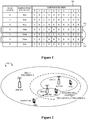
- Figure 1 illustrates the TDD mode UL-DL configurations in an LTE/LTE-A system.
- Table 100 shows that each radio frame contains ten subframes, D indicates a DL subframe, U indicates an UL subframe, and S indicates a Special subframe/Switch point (SP).
- SP Special subframe/Switch point
- Each SP contains a DwPTS (Downlink pilot time slot), a GP (Guard Period), and an UpPTS (Uplink pilot time slot).
- DwPTS is used for normal downlink transmission and UpPTS is used for uplink channel sounding and random access.
- DwPTS and UpPTS are separated by GP, which is used for switching from DL to UL transmission.
- the length of GP needs to be large enough to allow the UE to switch to the timing advanced uplink transmission.
- These allocations can provide 40% to 90% DL subframes.
- Current UL-DL configuration is broadcasted in the system information block, i.e. SIB 1.
- SIB1 system information block
- the semi-static allocation via SIB1 may or may not match the instantaneous traffic situation.
- the mechanism for adapting UL-DL allocation is based on the system information change procedure.
- the system can dynamically adjust its parameters to further utilize the radio resource and to save the energy.
- One example is the support of dynamic TDD configuration, where the TDD configuration in the system may dynamically change according to the DL-UL traffic ratio. When the change better matches the instantaneous traffic situation, the system throughput will be enhanced. For example, in one scenario, multiple indoor Femto cells deployed on the same carrier frequency and multiple Macro cells deployed on an adjacent carrier frequency where all Macro cells have the same UL-DL configuration and the indoor Femto cells can adjust UL-DL configuration. In another scenario, multiple outdoor Pico cells deployed on the same carrier frequency and multiple Macro cells deployed on an adjacent carrier frequency where all Macro cells have the same UL-DL configuration and the outdoor Pico cells can adjust UL-DL configuration.
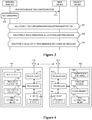
- FIG. 2 illustrates an LTE/LTE-A mobile communication system 200 with adaptive TDD configuration.
- Mobile communication system 200 comprises a Macro base station eNB 201 serving Macro cell 1, base station eNB 202 serving small cell 2, and base station eNB 203 serving small cell 3.
- Cell 1 is a Macro cell and its TDD configuration is more static. Small Cells 2-3 are within the macro cell's coverage.
- Cell 2 and Cell 3 form an isolated cell cluster 1, where TDD configuration can be independently adjusted. All cells in an isolated cell cluster should apply the TDD configuration change together.
- TDD configuration 5 which is configured semi-statically
- the isolated cell cluster i.e. cell 2 and cell 3
- the isolated cell cluster i.e. cell 2 and cell 3
- As more UL traffic is demanded in the isolated cluster it changes the TDD configuration to TDD configuration 3.
- the notification of TDD change in an adaptive TDD system may be sent through a dedicated signaling, i.e., RRC (Radio Resource Control), MAC (Media Access Control), or PDCCH (Physical Downlink Control Channel) signaling.
- a dedicated signaling i.e., RRC (Radio Resource Control), MAC (Media Access Control), or PDCCH (Physical Downlink Control Channel) signaling.
- RRC Radio Resource Control
- MAC Media Access Control
- PDCCH Physical Downlink Control Channel
- an eNB configures TDD groups and broadcasts TDD group information and a TDD reference configuration to UEs.
- a TDD group contains multiple TDD configurations that have common subframes no less than subframes #0, #1, #2 and #5.
- the TDD reference configuration belongs to the TDD group and has the most common uplink (UL) subframes as compared to other TDD configurations in the TDD group.
- the PRACH resource configuration and the random access procedure for the legacy UEs are proposed.
- PRACH resource allocation is restricted to subframes that are commonly used as UL operation in a TDD group.
- TDD configuration and PRACH resource configuration are extended in SIB1 and SIB2 to serve both legacy UEs and new released UEs so that PRACH resource allocation is not limited.
- eNB should schedule DL transmission or retransmission in a DL subframe where its corresponding HARQ feedback should be transmitted in a common UL subframe.
- eNB should allocate UL grant in a DL subframe where the UL data should be transmitted in a common UL subframe.
- the DL subframes used to transmit the HARQ feedback should be common DL subframes.
- eNB can suppress UL retransmission so that it does not happen in inconsistent subframes.
- FIG. 3 illustrates a Long Term Evolution LTE/LTE-A mobile communication system 300 with adaptive TDD configuration in accordance with one novel aspect.
- Mobile communication system 300 comprises a serving base station eNB 301, a new released UE 302, and a legacy UE 303.
- UE 302 is a UE released in/after LTE Rel-12
- UE 303 is a UE released before LTE Rel-12.
- LTE Rel-12 Starting from LTE Rel-12, adaptive Time Division Duplex (TDD) transmission mode is supported, where the TDD configuration in the system may dynamically change according to the downlink-uplink traffic ratio to better match the instantaneous traffic situation and thereby enhancing the system throughput.
- TDD Time Division Duplex
- the notification of TDD change in an adaptive TDD system may be sent through dedicated signaling, i.e., RRC (Radio Resource Control), MAC (Media Access Control), or PDCCH (Physical Downlink Control Channel) signaling.
- dedicated signaling i.e., RRC (Radio Resource Control), MAC (Media Access Control), or PDCCH (Physical Downlink Control Channel) signaling.
- RRC Radio Resource Control
- MAC Media Access Control
- PDCCH Physical Downlink Control Channel
- the serving eNB 301 sends an instantaneous TDD configuration to new released UE 302 via dedicated signaling. Based on the instantaneous TDD configuration, UE 302 knows the exact DL/UL operation in each subframe, so that all subframes can be used to serve UE 302. On the other hand, legacy UE 303's knowledge on the DL/UL operation in each subframe may be different from the real DL/UL operation, thus only the common subframes can be used to serve UE 303. To observe the TDD configurations, some subframes are common in certain TDD configurations, which may be possible to be used to serve the legacy UEs.
- a common subframe or a fixed subframe means no matter how TDD configuration changes, the DL, SP, or UL operation in such subframe will not be changed.
- subframes SF#0, #1, #2, and #5 are common in all TDD configurations.
- TDD configurations are partitioned into different TDD groups.
- eNB 301 determines TDD grouping. Based on the TDD grouping, various solutions are provided to facilitate the coexistence of new released UE 302 and legacy UE 303.
- a first solution (step 321), different TDD grouping methods, TDD adaptation within a TDD group, and TDD adaptation across TDD groups for the operation of a dynamic TDD system are proposed.
- a second solution since the legacy UEs' cognition on DL/UL operation in a subframe may be different from real operation in a dynamic TDD system, the PRACH resource configuration and the random access procedure for the legacy UEs are proposed.
- a third solution (step 323), methods of DL/UL data transmission scheduling and the associated HARQ for DL/UL data transmission scheduling for the legacy UEs are proposed.
- both legacy UEs and new released UEs can be served in the adaptive TDD systems and data transmission from the legacy UEs would not interfere that of the data reception of the new released UEs.
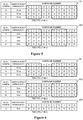
- FIG. 4 is a simplified block diagram of a base station eNB 401 and a user equipment UE 402 with adaptive TDD in accordance with one novel aspect.
- Base station eNB 401 comprises memory 411, a processor 412, an RF transceiver 413, and an antenna 419.
- RF transceiver 413 coupled with antenna 419, receives RF signals from antenna 419, converts them to baseband signals and sends them to processor 412.
- RF transceiver 413 also converts received baseband signals from processor 412, converts them to RF signals, and sends out to antenna 419.
- Processor 412 processes the received baseband signals and invokes different functional modules to perform features in eNB 401.
- Memory 411 stores program instructions and data 414 to control the operations of eNB 401.
- the program instructions and data 414 when executed by processor 412, enables eNB 401 to providing TDD information and performing various functions accordingly.
- UE 402 comprises memory 421, a processor 422, an RF transceiver 423, and an antenna 429.
- RF transceiver 423 coupled with antenna 429, receives RF signals from antenna 429, converts them to baseband signals and sends them to processor 422.
- RF transceiver 413 also converts received baseband signals from processor 422, converts them to RF signals, and sends out to antenna 429.
- Processor 422 processes the received baseband signals and invokes different functional modules to perform features in UE 402.
- Memory 421 stores program instructions and data 424 to control the operations of UE 402.
- the program instructions and data 424 when executed by processor 422, enables UE 402 to access a mobile communication network for receiving TDD configuration information and performing various functions accordingly.
- FIG. 4 also illustrates various function modules in eNB 401 and UE 402.
- the different components and modules may be implemented in a combination of hardware circuits and firmware/software codes being executable by processors 412 and 422 to perform the desired functions.
- eNB 401 includes a scheduler 415 that schedules DL and UL transmissions for UE, a resource allocation module 416 that allocates radio resource for UE, a TDD configuration module 417 that determines TDD grouping and configuration, and an RRC connection management module 418 that manages and configures RRC connections.
- UE 402 includes a transmission and HARQ module 425 that performs DL and UL transmission and provides HARQ feedback, a random access module 426 that performs random access procedure, a measurement module 427 that performs radio signal measurements, and an RRC connection management module 428 that performs cell (re)selection and RRC (re)establishment procedures.
- a transmission and HARQ module 425 that performs DL and UL transmission and provides HARQ feedback
- a random access module 426 that performs random access procedure
- a measurement module 427 that performs radio signal measurements
- an RRC connection management module 428 that performs cell (re)selection and RRC (re)establishment procedures.
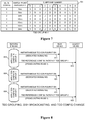
- FIG. 5 illustrates a first embodiment of TDD grouping in an adaptive TDD system.
- downlink-to-uplink switch-point periodicity with 10ms form a TDD group (TDD Group #1-1 as depicted by table 501), where subframes SF#0, 1, 2, 5, 6, 7, 8, and 9 are common subframes.
- Downlink-to-uplink switch-point periodicity with 5ms form another TDD group (TDD Group #1-2 as depicted by table 502), where subframes SF#0, 1, 2, 5, 6, and 7 are common subframes.
- FIG. 6 illustrates a second embodiment of TDD grouping in an adaptive TDD system.
- downlink-to-uplink switch-point periodicity with 10ms form a TDD group (TDD Group #2-1 as depicted by table 601), where subframes SF#0, 1, 2, 5, 6, 7, 8, and 9 are common subframes.
- Downlink-to-uplink switch-point periodicity with 5ms, excluding TDD configuration #0 form another TDD group (TDD Group #2-2 as depicted by table 602), where subframes SF#0, 1, 2, 5, 6, 7, 8, and 9 are common subframes.
- TDD configuration #0 forms its own TDD group (TDD Group#2-3 as depicted by table 603), where all subframes can be used to serve legacy UEs and new released UEs. It can be seen that, by separating TDD configuration #0, more common-subframes are obtained for TDD Group #2-2 as compared to TDD Group #1-2.
- FIG. 7 illustrates a third embodiment of TDD grouping in an adaptive TDD system.
- all seven TDD configurations #0 to #6 are grouped into one single TDD group (TDD Group #3-1 as depicted by table 701), where subframes SF#0, 1, 2 and 5 are common subframes. This is an extreme case where the common subframes of the TDD group are the same with or without TDD grouping.
- TDD grouping In general, with TDD grouping, more common-subframes can be obtained in a TDD group as compared to without TDD grouping. As a result, more subframes can be used to serve legacy UEs. In addition, fewer subframes may change when TDD configurations are adapted within the same TDD group, which may be beneficial to HARQ process continuation during the TDD adaptation. Furthermore, TDD operations in TDD groups may help interference coordination among neighboring cells. In order to achieve the above benefits, the TDD grouping information needs to be communicated from the network to the UEs.
- FIG. 8 illustrates a solution of broadcasting TDD grouping and TDD configuration change procedure.
- a serving base station eNB 801 first determines TDD grouping, which contains two TDD groups - TDD group #1 and TDD group #2.
- eNB 801 applies a first TDD configuration that belongs to TDD group #1.
- eNB 801 sends the first instantaneous TDD configuration to a new released UE 802 via dedicated signaling.
- eNB 801 sends a TDD reference configuration of TDD group #1 via broadcasting in System Information Block (SIB1).
- SIB1 System Information Block
- the TDD reference configuration belongs to TDD group #1, and contains the most common uplink subframes as compared to all other TDD configurations in TDD group #1.
- a cell in TDD Group #1-1 should broadcast TDD configuration #3 as its TDD reference configuration
- a cell in TDD Group# 1-2 should broadcast TDD configuration #0 as its TDD reference configuration
- a cell in TDD Group #2-1, #2-2, or #2-3 can broadcast TDD reference configuration #3, #6, or #0 respectively as its TDD reference configuration.
- eNB 801 applies a second TDD configuration that belongs to TDD group #1.
- eNB 801 sends the second instantaneous TDD configuration to the new released UE 802 via dedicated signaling. Because the second TDD configuration belongs to the same TDD group #1 broadcasted in SIB1, eNB 801 is able to adaptively change TDD configuration within the same TDD group without changing the reference TDD configuration of TDD group #1 broadcasted in SIB1. Later on, eNB 801 decides to change TDD configuration across TDD groups. If TDD configuration changes across TDD groups, then the TDD reference configuration in SIB1 should first be changed to be the predefined TDD reference configuration of the new TDD group. In other words, system information change procedure should be applied, and then the new TDD configuration across TDD groups can be applied.
- eNB 801 decides to apply a third TDD configuration that belongs to a different TDD group #2.
- eNB 801 sends the third instantaneous TDD configuration to the new released UE 802 via dedicated signaling.
- eNB 801 sends a TDD reference configuration of TDD group #2 via broadcasting in SIB 1.
- the TDD reference configuration belongs to TDD group #2, and contains the most common uplink subframes as compared to all other TDD configurations in TDD group #2.
- a cell originally operates in TDD Group #2-1 and broadcasts TDD reference configuration #3 for TDD Group #2-1 in its SIB 1.
- the cell decides to change to TDD configuration #2 that belongs to TDD Group #2-2, then the cell should first apply system information change procedure to broadcast TDD reference configuration #6 for the new TDD Group #2-2 in its SIB1, and then change to the new TDD configuration #2 accordingly.
- a legacy UE does not know the UL/DL change in the network, it may happen that the legacy UE performs random access in an operating DL subframe because the cognition on DL/UL of a subframe for the legacy UE may be different from the real operation.
- various solutions are proposed. Note that in LTE, TDD configuration is broadcasted in SIB1 and common PRACH resource configuration is broadcasted in SIB2.
- Figure 9 illustrates one embodiment of RACH resource allocation in an adaptive TDD system.
- the random access resource allocation should be restricted to the subframes that are commonly used as UL operation in a TDD group.
- random access resource can be configured in subframe SF#2 and/or UpPTS in subframe SF#1.
- random access resource can be configured in subframes SF#2, SF#7, and/or UpPTS in subframes SF#1 and SF#6.
- the TDD reference configuration broadcasted in SIB1 should be the TDD configurations containing the least common UL subframes in a TDD group. This is to guarantee that random access would not be performed in DL subframes when TDD configuration is changed.
- the common PRACH resource is configured in the UL subframes of the TDD reference configuration broadcasted in SIB1, and UE performs preamble transmission in theses configured PRACH resource.
- a cell in TDD Group #1-1 should broadcast TDD configuration #5 in its SIB1 because TDD configuration #5 is with the least common subframes in TDD Group #1-1
- a cell in TDD Group #1-2 should broadcast TDD configuration #2 in its SIB1 because TDD configuration #2 is with the least common subframes in TDD Group #1-2.
- FIG. 10 illustrates TDD and RACH resource configuration extension in system information.
- a serving base station eNB 1001 broadcasts a TDD configuration with the least common UL subframe in the legacy information element (IE) in SIB1 for a legacy UE 1003, and broadcasts another TDD configuration in an extended IE in SIB1 for a new released UE 1002.
- eNB 1001 broadcasts PRACH resource configuration in the legacy PRACH-config IE in SIB2 for legacy UE 1003, and broadcasts PRACH resource configuration in an extended PRACH-config IE in SIB2 for new released UE 1002.
- a cell in TDD Group #1-1 may broadcast TDD configuration #5 in the legacy IE and may broadcast TDD configuration #3 in an extended IE in SIB 1.
- the PRACH resource configuration can be extended in SIB2 accordingly.
- the PRACH resource configuration in SIB2 should indicate the PRACH resource for TDD configuration #5 in the legacy IE and indicate the PRACH resource for TDD configuration #3 in the extended IE.
- new released UE 1002 performs random access in the PRACH resource allocated according to the PRACH configuration in the extended PRACH-config IE.
- legacy UE 1003 performs random access in the PRACH resource allocated according to the PRACH configuration in the legacy PRACH-config IE.
- an RRC connection between the UE and its serving eNB is established.
- the knowledge of TDD configuration for a legacy UE may not be the same as the exact TDD operation in an adaptive TDD system.
- a legacy UE may reply HARQ for DL data transmission in an operating DL subframe, while the eNB will not expect HARQ for DL data transmission in a DL subframe and will not receive this HARQ message so that DL retransmissions may happen.
- UL transmission a legacy UE may perform UL data transmission in an operating DL subframe, while the eNB will not expect to receive the UL data so UL retransmission may happen.
- a UE may expect HARQ for UL data transmission in a DL subframe.
- the original DL subframe which is expected to transmit the HARQ for UL data transmission may become a UL subframe.
- the HARQ message will not be transmitted by the eNB and will not be received by the UE so UL retransmission may happen.
- the UL transmission or retransmission may also interfere the DL reception of nearby UEs. Therefore, DL/UL Data transmission and the associated HARQ should be considered for the operation of legacy UEs without changing any specification.
- the eNB can enquiry UE capability to know the UE's release. If the UE's release version is known by the eNB, then the eNB can prevent scheduling DL/UL data transmission and/or HARQ for DL/UL data transmission in the inconsistent subframes (flexible subframes), where the inconsistent subframe means the legacy UE's cognition on DL/UL operation in a subframe is different from the real operation.
- SIB1 broadcasts predefined TDD reference configuration with the MOST COMMON UL subframes in a TDD group, and the TDD reference configuration is recognized by legacy UEs as the operating TDD configuration.
- Figure 11A illustrates Downlink data transmission scheduling and HARQ for DL transmission.
- an eNB first schedules DL data transmission or retransmission in a DL subframe 1101 to a UE.
- the UE should response with HARQ for the DL data transmission in a corresponding UL subframe 1102.
- the HARQ timing is depicted by Table 1110 (e.g., 10.1.3.1-1 in TS 36.213) in Figure 11B .
- Table 1110 lists, for each TDD configuration, a specific UL subframe is used for HARQ for corresponding DL data transmission that is K subframes ahead of the specific UL subframe.
- HARQ timing for DL data transmission it can be determined that the HARQ ACK/NACK for a DL subframe should be replied in which corresponding UL subframe(s) for each TDD configuration.
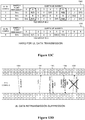
- FIG 11C illustrates one embodiment of DL data transmission in an adaptive TDD system.
- the knowledge of TDD configuration for a legacy UE should be TDD configuration #3.
- the eNB may operate in TDD configurations #3, 4, or 5.
- the eNB should schedule DL data transmission/retransmission in a DL subframe where its HARQ feedback for DL data transmission should be transmitted in a common UL subframe.
- the DL data can be scheduled in any DL subframe. Note that common UL subframes for all TDD configurations in each TDD group are indicated by bold text and dashed lines.
- the TDD configuration for legacy UEs is TDD configuration #3.
- eNB should prevent DL data transmission or retransmission scheduling in subframes SF#0, 7, 8, and 9 (e.g., crossed out in Table 1120) for a legacy UE. Instead, the eNB can schedule DL data transmission or retransmission in subframes SF #1, 5, 6 for the legacy UE and the legacy UE should response the corresponding HARQ in common UL subframes SF#2.
- the TDD configuration for legacy UEs is TDD configuration #0.
- eNB should prevent DL data transmission or retransmission scheduling in subframes SF#0 and 5 (e.g., crossed out in Table 1130) for a legacy UE. Instead, the eNB can schedule DL data transmission or retransmission in subframes SF#1 and 6 for the legacy UE and the legacy UE should response the corresponding HARQ in common UL subframes SF#7 and 2, respectively.
- FIG 11D illustrates another embodiment of DL data transmission in an adaptive TDD system. Similar concept can be applied in the TDD Groups #2-2 and #2-3.
- the TDD configuration to legacy UEs is TDD configuration #6.
- eNB should prevent DL data transmission or retransmission scheduled in subframes SF#1, 6, and 9 (e.g., crossed out in Table 1140) for a legacy UE. Instead, the eNB can schedule DL data transmission or retransmission in subframes SF#0 and 5 for the legacy and the legacy UE should response the corresponding HARQ in UL subframes SF#7 and 2, respectively.
- Table 1150 in Figure 11D in TDD Group #2-3, since there is only one TDD configuration in this group, the operation for legacy UEs and new released UEs should be the same for DL transmission/retransmission.
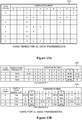
- Figure 12A illustrates Uplink data transmission scheduling and HARQ for UL transmission.
- an eNB first assigns a UL grant in a DL subframe 1201 to a UE.
- the UE performs UL data transmission in the assigned UL resource in UL subframe 1202, and then the eNB replies HARQ feedback for the UL data transmission in a corresponding DL subframe 1203.
- the UL grant timing is listed in Table 1210 in Figure 12B (e.g., Table 8-2 in 36.213).
- Table 1210 lists, for each TDD configuration, if a UE receives a UL grant in DL subframe n , then the UL resource should be in subframe n + k.
- TDD configuration #0 if a UE receives a UL grant in subframe SF#0, then the associated UL resource is in subframe SF#4.
- TDD configuration #3 DL subframe SF#9 may assign UL grant for UL transmission in uplink SF#3.
- eNB should allocate UL grant in a DL subframe where the UL data should be transmitted in a common UL subframe.
- the UL grant can be allocated in any DL subframe.
- Figure 12C illustrates one embodiment of UL data transmission scheduling in an adaptive TDD system.
- an eNB should prevent allocating UL grant in DL subframes SF#0 and 9 for a legacy UE, where the corresponding UL transmissions are in subframes SF#4 and 3, respectively. Instead, the eNB can allocate UL grant in subframe SF#8 for the legacy UE, where the corresponding UL transmission should be transmitted in UL subframe SF#2, as depicted by Table 1220.
- the eNB should prevent UL grant in DL subframes SF#0 and 5 for a legacy UE, where the corresponding UL transmissions are in subframes SF#4 and 9, respectively. Instead, the eNB can allocate UL grant in DL subframes SF#1 and 6 for the legacy UE, where the corresponding UL transmission should be transmitted in UL subframes SF#7 and 2, respectively, as depicted by Table 1230.
- FIG. 12D illustrates another embodiment of UL data transmission scheduling in an adaptive TDD system. Similar concept can be applied in TDD Groups #2-2 and 2-3.
- TDD Group #2-2 the TDD configuration for legacy UEs is TDD configuration #6.
- An eNB should prevent UL grant in DL subframes SF#1, 6 and 9 for a legacy UE, where the corresponding UL transmissions are in subframes SF#8, 3 and 4, respectively. Instead, the eNB can allocate UL grant in DL subframes SF#0 and 5 for the legacy UE, where the corresponding UL transmission should be transmitted in UL subframes SF#7 and 2, respectively, as depicted by Table 1240.
- TDD Group #2-3 since there is only one TDD configuration in this group, the operation for legacy UEs and new released UEs should be the same, as depicted by Table 1250.
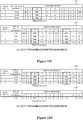
- Figure 13A illustrates the timing of HARQ for UL data transmission, as indicated in table 1310 (Table 9.1.2-1 in TS 36.213).
- HARQ feedback for UL data transmission should be transmitted in DL subframes.
- eNB should prevent the DL subframes used to transmit HARQ for UL data transmission may become operating UL subframes.
- the legacy UEs operated in the TDD reference configuration with less common DL subframes in a TDD group.
- These common DL subframes which may use transmit HARQ for UL data transmission for legacy UEs, will not be operated as UL subframes.
- Table 1310 lists the HARQ timing for UL data transmission.
- the HARQ associated to the UL data transmission should be in subframe n + k, where k is the number indicated in the table.
- k is the number indicated in the table.
- FIG. 13B illustrates a first embodiment of HARQ scheduling for UL data transmission in an adaptive TDD system.
- the HARQ feedback for UL data transmission for UL subframe SF#2 should be transmitted in DL subframe SF#8, which is a common DL in the TDD Group and will not be changed to UL operation, as shown in Table 1320.
- the HARQ feedback for UL data transmission for UL subframes SF#2 and 7 should be transmitted in the DwPTS in SF#6 and 1, which is a common special subframe in the TDD Group and will not be changed as a UL subframe, as shown in Table 1330.
- the common DL subframes or common special subframes for all TDD configurations in each TDD group are indicated by bold text and dashed lines.
- FIG. 13C illustrates a second embodiment of HARQ scheduling for UL data transmission in an adaptive TDD system.
- TDD Group #2-2 the HARQ feedback for UL data transmission for UL subframes SF#2 and 7 should be transmitted in the DwPTS in SF#6 and 1, which is a common special subframe in the TDD Group and will not be changed as a UL subframe, as shown in Table 1340.
- TDD Group #2-3 since there is only one TDD configuration in this group, the HARQ feedback operation for legacy UEs and new released UEs should be the same, as shown in Table 1350.
- UL data retransmission is expected.
- the UL data retransmission should be transmitted in a common UL subframe.
- PHICH Physical Hybrid-ARQ Indicator Channel
- the UL data retransmission timing should follow the UL grant table, which is listed by Table 1210 (Table 8-2 in 36.213) in Figure 12B .
- TDD Group #2-3 the TDD configuration will not change, the procedure keeps the same as current process.
- the UL data retransmission subframe is not aligned with the first UL data transmission subframe due to the HARQ RTT is not 10msec. In this case, the UL data retransmission may happen in an inconsistent subframe.
- an eNB may suppress the UL data retransmission.
- Figure 13D illustrates UL data retransmission in an adaptive TDD system in accordance with one novel aspect.
- a legacy UE applying TDD configuration #6 in Group #2-2, and its eNB assigns a UL grant in DL subframe SF#5 (1361).
- the HARQ feedback for the UL data transmission should be replied in a subsequent DL subframe SF#6 (1363) from eNB to the UE. If a NACK is indicated in PHICH in this case, then the UL retransmission should be carried in UL subframe SF#3 (1365).
- SF#3 is not a common UL subframe and may be changed to be DL operation.
- a legacy UE may not be allowed to do the UL transmission in this subframe if the current TDD configuration #6 is adapted to a different TDD configuration in TDD Group #2-2.
- eNB can suppress the UL retransmission in SF#3 (1365) by sending an ACK in the previous SF#6 (1363), and assign a UL grant with unchanged NDI (new data indicator) in the next available assignment, for example, assign UL grant in subframe SF#0 (1364) with unchanged NDI for UL retransmission.
- NDI new data indicator
- FIG 14 is a flow chart of a method of adaptive TDD configuration in a mobile communication network from eNB perspective in accordance with one novel aspect.
- an eNB determines a TDD group that contains multiple TDD configuration.
- the eNB broadcasts TDD group information to a first legacy UE via a system information block (SIB).
- SIB system information block
- the eNB broadcasts a TDD reference configuration to the first UE via the SIB, where the TDD reference configuration belongs to the TDD group.
- the eNB transmits an instantaneous TDD configuration to a second new released UE, where the instantaneous TDD configuration belongs to the TDD group.
- the multiple TDD configurations in the TDD group have common subframes no less than subframes #0, #1, #2 and #5, and the TDD reference configuration has the most common uplink (UL) subframes as compared to other TDD configurations in the TDD group.
- UL uplink
- FIG. 15 is a flow chart of a method of adaptive TDD configuration in a mobile communication network from UE perspective in accordance with one novel aspect.
- a UE receives TDD group information that contains one or more TDD groups having multiple TDD configuration.
- the UE receives a TDD reference configuration that belongs to one of the TDD groups.
- the UE performs measurements on DL subframes based on the TDD reference configuration if the UE is a legacy UE, and performs measurements on DL subframes based on an instantaneous TDD configuration if the UE is a new release UE.
- the multiple TDD configurations in the TDD group have common subframes no less than subframes #0, #1, #2 and #5, and the TDD reference configuration has less common downlink (DL) subframes as compared to other TDD configurations in the TDD group.
- DL downlink
Landscapes
- Engineering & Computer Science (AREA)
- Signal Processing (AREA)
- Computer Networks & Wireless Communication (AREA)
- Quality & Reliability (AREA)
- Mobile Radio Communication Systems (AREA)
Claims (16)
- Verfahren aufweisend:Bestimmen (1401) einer Time Division-Duplex-"TDD"-Gruppe durch eine Basisstation (301) in einem mobilen Kommunikationsnetzwerk, wobei die TDD-Gruppe mehrere TDD-UL-DL-Konfigurationen enthält, bezeichnet als TDD-Konfigurationen, und wobei jede Konfiguration angibt, welcher Subframe jeweils ein Uplink-"UL" Subframe, ein Downlink-"DL" Subframe und ein spezifischer Subframe ist;Aussenden (1403) einer TDD-Konfiguration, die aus der TDD-Gruppe ausgewählt ist, bezeichnet als TDD-Referenzkonfiguration, zu einem ersten UE (303) über einen Systeminformationsblock "SIB", und wobei das erste UE ein Vorgänger-UE (303) ist, das keine dynamische TDD-Adaption unterstützt, und wobei ein Vorgänger-UE ein UE ist, das vor dem LTE Release 12 bestand;Übertragen (1404) einer TDD-Konfiguration, die aus der TDD-Gruppe ausgewählt ist, bezeichnet als momentane TDD-Konfiguration, zu einem zweiten UE (302), wobei das zweite UE ein UE (302) einer neuen Version ist, das eine dynamische TDD-Adaption unterstützt, und wobei das UE der neuen Version ein UE ist, das während oder nach dem LTE Release 12 bestand; zeitliches Festlegen einer Downlink- "DL" Datenübertragung in einem DL-Subframe für das Vorgänger-UE (303), wobei ein entsprechendes Hybrid Automatic Repeat Request "HARQ"- Feedback für die DL-Datenübertragung in einem gemeinsamen UL-Subframe der TDD-Gruppe übertragen wird; und/oderZuweisen eines UL-Grants für das Vorgänger-UE (303) in einem DL-Subframe für eine UL-Datenübertragung, wobei die UL-Daten in einem gemeinsamen UL-Subframe der TDD-Gruppe übertragen werden; und/oder zeitliches Festlegen einer UL-Datenübertragung in einem UL-Subframe für das Vorgänger-UE (303), wobei ein entsprechendes Hybrid Automatic Repeat Request "HARQ"- Feedback für die UL-Datenübertragung in einem gemeinsamen DL-Subframe der TDD-Gruppe übertragen wird, dadurch gekennzeichnet, dassdie mehrfachen TDD-UL-DL-Konfigurationen in der TDD-Gruppe bestimmt werden, bevor die TDD-Referenzkonfiguration aus der TDD-Gruppe ausgewählt wird.
- Verfahren nach Anspruch 1, bei welchem ein Funkframe zehn Downlink- und Uplink-Subframes 0# bis #9 enthält, und wobei die mehrfachen TDD-Konfigurationen in der gleichen TDD-Gruppe gemeinsame Subframes besitzen, die nicht weniger als die Subframes #0, #1, #2 und #5 umfassen.
- Verfahren nach Anspruch 1, bei welchem die TDD-Referenzkonfiguration ausgewählt wird derart, dass diese die meisten gemeinsamen Uplink- "UL" Subframes im Vergleich zu anderen TDD-Konfigurationen aus der TDD-Gruppe besitzt.
- Verfahren nach Anspruch 1, weiter aufweisend:Wechseln zu einer zweiten momentanen TDD-Konfiguration innerhalb der gleichen TDD-Gruppe, ohne dass die TDD-Referenzkonfiguration gewechselt wird.
- Verfahren nach Anspruch 1, weiter aufweisend:Aussenden einer zweiten TDD-Referenzkonfiguration zu dem ersten UE (303) über das SIB, wobei die zweite TDD-Referenzkonfiguration zu einer zweiten TDD-Gruppe gehört; undWechseln zu einer zweiten momentanen TDD-Konfiguration, die zu der zweiten TDD-Gruppe gehört.
- Verfahren nach Anspruch 1, weiter aufweisend:Zuordnen einer Direktzugriffsquelle in einem spezifischen UL-Subframe für das erste UE (303) wobei das spezifische UL-Subframe ein für alle multiplen TDD-Konfigurationen in der TDD- Gruppe gemeinsames UL-Subframe ist.
- Verfahren nach Anspruch 1, bei welchem ein Vorgänger-Informationselement "IE", das vor der LTE Release 12 bestand, in dem SIB verwendet wird, um die TDD-Referenzkonfiguration für die Vorgänger-UEs (303) zu übersenden, und wobei ein erweitertes IE, das während oder nach der LTE Release 12 bestand, in dem SIB verwendet wird, um die momentane TDD-Konfiguration für UEs (302) einer neuen Version herauszusenden.
- Verfahren nach Anspruch 1, wobei ein Vorgänger-Direktzugriffsquellen-Konfigurationsinformationselement "IE", das vor dem LTE Release 12 bestand, für die Vorgänger-UEs (303) verwendet wird, und wobei ein erweitertes Direktzugriffs-Konfigurations-IE, das während oder nach der LTE Release 12 bestand, für die UEs (302) der neuen Version verwendet wird.
- Verfahren nach Anspruch 1, weiter aufweisend:Empfangen (1502) der TDD-Referenzkonfiguration durch ein Benutzergerät "UE" (302, 303) in dem mobilen Kommunikationsnetzwerk; undAusführen von Messungen basierend auf der TDD-Referenzkonfiguration, wenn das UE (302, 303) ein Vorgänger-UE (303) ist, das vor dem LTE Release 12 bestand, wobei das UE Messungen basierend auf der momentanen TDD-Konfiguration durchführt, wenn das UE (302, 303) ein UE (302) einer neuen Version ist, das während oder nach LTE Release 12 bestand und das eine dynamische TDD-Adaption unterstützt.
- Verfahren nach Anspruch 9, bei welchem ein Funkframe zehn Downlink- und Uplink-Subframes #0 bis #9 enthält, und wobei die mehrfachen TDD-Konfigurationen in der gleichen TDD-Gruppe gemeinsame Subframes besitzen, die nicht weniger als die Subframes #0, #1, #2 und #5 umfassen.
- Verfahren nach Anspruch 9, bei welchem das UE (302, 303) die TDD-Referenzkonfiguration von dem Vorgänger-Informationselement "IE", das vor dem LTE Release 12 bestand, in einem Systeminformationsblock "SIB" erhält, wenn das UE ein Vorgänger-UE (303) ist, und wobei das UE die momentane TDD-Referenzkonfiguration von einem erweiterten IE, das während oder nach dem LTE Release 12 bestand, in der SIB erhält, wenn das UE ein UE (302) einer neuen Version ist.
- Verfahren nach Anspruch 9, bei welchem das UE (302, 303) ein Vorgänger-Direktzugriffsquellen-Konfigurations-IE, das vor dem LTE Release 12 bestand, für einen Direktzugriff liest, wenn das UE ein Vorgänger-UE (303) ist, und wobei das UE ein erweitertes Direktzugriffs-Zugangs-Konfigurations-IE, das während oder nach dem LTE Release 12 bestand, für einen Direktzugriff liest, wenn das UE ein UE (302) einer neuen Version ist.
- System in einem mobilen Kommunikationsnetzwerk, aufweisend eine Basisstation "eNB" (401) und zumindest ein erstes Benutzergerät "UE" (303; 402) und zumindest ein zweites UE (302; 402), wobei das zumindest erste UE (303; 402) ein Vorgänger-UE ist, das nicht ausgestaltet ist, um eine dynamische TDD-Adaption zu unterstützen, wobei dieses Vorgänger-UE ein UE ist, das vor dem LTE Release 12 bestand, und wobei das zumindest eine zweite UE (302; 402) ein UE einer neuen Version ist, das eine TDD-Adaption unterstützt, wobei das UE der neuen Version während oder nach dem LTE Release 12 bestand;
wobei die Basisstation (401) aufweist:ein TDD-Konfigurationsmodul (417), das ausgestaltet ist, um eine Time Division-Duplex-"TDD"-Gruppe zu bestimmen, wobei die TDD-Gruppe mehrere TDD-UL-DL-Konfigurationen, bezeichnet als TDD-Konfigurationen, enthält, und wobei jede Konfiguration angibt, welches Subframe jeweils ein Uplink- "UL" Subframe, ein Downlink- "DL" Subframe und ein spezielles Subframe ist;einen Transceiver (413), der ausgestaltet ist, um eine TDD-Konfiguration, die aus der TDD-Gruppe ausgewählt ist, bezeichnet als TDD-Referenzkonfiguration, zu dem zumindest einen ersten UE (303; 402) über einem Systeminformationsblock, SIB, zu übersenden und um eine TDD-Konfiguration, die von der TDD-Gruppe ausgewählt ist, bezeichnet als eine momentane TDD-Konfiguration bezeichnet, zu den zumindest einen zweiten UE (302;402) zu übertragen;einen Scheduler (415) der ausgestaltet ist, einen Downlink- "DL" Datenübertragung in einem DL-Subframe für ein Vorgänger-UE (303; 402) zeitlich festzulegen, wobei ein entsprechendes Hybrid Automatic Repeat Request "HARQ"- Feedback für die DL-Datenübertragung in einem gemeinsamen UL-Subframe der TDD-Gruppe übertragen wird, und/oder zeitliches Festlegen einer UL-Datenübertragung in einem UL-Subframe für das Vorgänger-UE (303; 402), wobei ein entsprechendes Hybrid Automatic Repeat Request "HARQ"- Feedback für die UL-Datenübertragung in einem gemeinsamen DL-Subframe der TDD-Gruppe übertragen wird; undein Quellenzuordnungsmodul (416), das ausgestaltet ist, um einen UL-Grant für das Vorgänger-UE (303; 402) in einem DL-Subframe für die UL-Datenübertragung zuzuordnen, wobei die UL-Daten in einem gemeinsamen UL-Subframe der TDD-Gruppe übertragen werden;wobei das zumindest eine erste UE (303; 402) aufweist:einen Empfänger (423), der ausgestaltet ist, um die TDD-Referenzkonfiguration zu empfangen; undein Messmodul (427), das ausgestaltet ist, um Messungen basierend auf der TDD-Referenzkonfiguration durchzuführen; undwobei das zumindest eine zweite UE (302; 402) aufweist:einen Empfänger (423), der ausgestaltet ist, um die momentane TDD-Konfiguration zu empfangen; und wobei das Messmodul (427) ausgestaltet ist, um Messungen basierend auf der momentanen TDD-Referenzkonfiguration durchzuführen,dadurch gekennzeichnet, dassdie Basisstation (401) des Weiteren aufweist:ein TDD-Konfigurationsmodul (417), das ausgestaltet ist, um mehrere TDD-UL-DL-Konfigurationen in der TDD-Gruppe zu bestimmen, bevor die TDD-Referenzkonfiguration von der TDD-Gruppe ausgewählt wird. - System nach Anspruch 13, bei welchem ein Radioframe zehn Downlink- und Uplink-Subframes #0 bis #9 enthält, und wobei die mehreren TDD-Konfigurationen in der gleichen TDD-Gruppe gemeinsame Subframes besitzen, die nicht weniger als die Subframes #0, #1, #2 und #5 umfassen.
- System nach Anspruch 13, bei welchem das zumindest eine erste UE (303; 402) ausgestaltet ist, um die TDD-Referenzkonfiguration von einem Vorgänger-Informationselement "IE", das vordem LTE Release 12 bestand, in einem Systeminformationsblock SIB zu erhalten, und wobei das zumindest eine zweite UE (302; 402) ausgestaltet ist, um die momentane TDD-Referenzkonfiguration von einem erweiterten IE, das während oder nach dem LTE Release 12 bestand, in dem SIB zu erhalten.
- System nach Anspruch 13, wobei das zumindest eine erste UE (303; 402) ausgestaltet ist, um ein Vorgänger-Direktzugriffs-Konfigurationsinformationselement "IE", das vor dem LTE Release 12 bestand, für einen Direktzugriff zu lesen, und wobei das zumindest eine zweite UE (302; 304) ausgestaltet ist, um ein erweitertes Direktzugriffs-Konfigurations-IE, das während oder nach dem LTE Release 12 bestand, für einen Direktzugriff zu lesen.
Applications Claiming Priority (3)
| Application Number | Priority Date | Filing Date | Title |
|---|---|---|---|
| US201361754201P | 2013-01-18 | 2013-01-18 | |
| US14/157,212 US9794803B2 (en) | 2013-01-18 | 2014-01-16 | System and methods of dynamic TDD configurations |
| PCT/CN2014/070797 WO2014111042A1 (en) | 2013-01-18 | 2014-01-17 | System and methods of dynamic tdd configurations |
Publications (3)
| Publication Number | Publication Date |
|---|---|
| EP2805559A1 EP2805559A1 (de) | 2014-11-26 |
| EP2805559A4 EP2805559A4 (de) | 2015-12-02 |
| EP2805559B1 true EP2805559B1 (de) | 2017-02-22 |
Family
ID=51207593
Family Applications (1)
| Application Number | Title | Priority Date | Filing Date |
|---|---|---|---|
| EP14740544.3A Active EP2805559B1 (de) | 2013-01-18 | 2014-01-17 | Verfahren und system zur dynamischen anpassung von tdd-konfigurationen |
Country Status (4)
| Country | Link |
|---|---|
| US (1) | US9794803B2 (de) |
| EP (1) | EP2805559B1 (de) |
| CN (1) | CN105122917B (de) |
| WO (1) | WO2014111042A1 (de) |
Cited By (1)
| Publication number | Priority date | Publication date | Assignee | Title |
|---|---|---|---|---|
| TWI805764B (zh) * | 2018-05-22 | 2023-06-21 | 美商高通公司 | 用於到不同的無線電存取網路的雙連接的分時雙工技術 |
Families Citing this family (18)
| Publication number | Priority date | Publication date | Assignee | Title |
|---|---|---|---|---|
| CN102843771B (zh) * | 2011-06-20 | 2015-04-22 | 华为技术有限公司 | 时分双工系统中传输信息的方法、用户设备和基站 |
| CN105075159B (zh) * | 2013-03-22 | 2018-04-10 | Lg电子株式会社 | 在无线通信系统中执行干扰协调的方法和设备 |
| US9179445B2 (en) * | 2013-04-02 | 2015-11-03 | Blackberry Limited | Communication in the presence of uplink-downlink configuration change |
| US9084275B2 (en) * | 2013-04-12 | 2015-07-14 | Blackberry Limited | Selecting an uplink-downlink configuration for a cluster of cells |
| US9167449B2 (en) * | 2013-08-08 | 2015-10-20 | Blackberry Limited | Dynamic cell clustering |
| WO2015018044A1 (en) * | 2013-08-08 | 2015-02-12 | Telefonaktiebolaget L M Ericsson (Publ) | Methods and devices for random access |
| US10075970B2 (en) | 2015-03-15 | 2018-09-11 | Qualcomm Incorporated | Mission critical data support in self-contained time division duplex (TDD) subframe structure |
| US9936519B2 (en) | 2015-03-15 | 2018-04-03 | Qualcomm Incorporated | Self-contained time division duplex (TDD) subframe structure for wireless communications |
| US10342012B2 (en) | 2015-03-15 | 2019-07-02 | Qualcomm Incorporated | Self-contained time division duplex (TDD) subframe structure |
| US9814058B2 (en) | 2015-05-15 | 2017-11-07 | Qualcomm Incorporated | Scaled symbols for a self-contained time division duplex (TDD) subframe structure |
| CN106507701B (zh) * | 2015-06-01 | 2019-11-29 | 华为技术有限公司 | 一种资源调度方法及装置 |
| US9992790B2 (en) | 2015-07-20 | 2018-06-05 | Qualcomm Incorporated | Time division duplex (TDD) subframe structure supporting single and multiple interlace modes |
| US10476637B2 (en) * | 2015-07-31 | 2019-11-12 | Lg Electronics Inc. | Method for performing communication by using terminal-specific dynamic TDD frame, and device therefor |
| US20180220465A1 (en) * | 2015-11-24 | 2018-08-02 | Lei Zhang | Method for reporting transmission mode and ue |
| WO2018058583A1 (en) * | 2016-09-30 | 2018-04-05 | Mediatek Singapore Pte. Ltd. | Methods and apparatus for indicating and implementing of new ue category |
| EP3524015B1 (de) * | 2016-10-05 | 2021-07-14 | Telefonaktiebolaget LM Ericsson (publ) | Verfahren, netzwerkknoten und drahtlosvorrichtung zur kommunikation und gewinnung von systeminformationen in einem fembms-system |
| CN108076514B (zh) * | 2016-11-07 | 2020-10-27 | 中国移动通信有限公司研究院 | 一种上下行时隙调整方法、集中管理设备和基站 |
| KR102198579B1 (ko) * | 2016-12-23 | 2021-01-06 | 후지쯔 가부시끼가이샤 | 업링크 송신 제어 방법 및 장치, 및 통신 시스템 |
Family Cites Families (12)
| Publication number | Priority date | Publication date | Assignee | Title |
|---|---|---|---|---|
| CN102204154B (zh) * | 2008-10-31 | 2014-05-21 | 诺基亚公司 | 在基于分组的无线通信系统中用于时分双工操作的子帧调度的动态分配 |
| WO2012106840A1 (en) | 2011-02-10 | 2012-08-16 | Renesas Mobile Corporation | Resource allocation for flexible tdd configuration |
| CN102685872B (zh) | 2011-03-11 | 2015-01-21 | 华为技术有限公司 | 用于时分双工系统的通信方法和装置 |
| WO2012171465A1 (zh) | 2011-06-14 | 2012-12-20 | 华为技术有限公司 | 时分双工系统中的通信方法和设备 |
| CN102843732B (zh) | 2011-06-20 | 2015-11-25 | 华为技术有限公司 | 一种时分双工tdd通信方法、基站和用户设备 |
| KR102031031B1 (ko) | 2011-06-20 | 2019-10-15 | 삼성전자 주식회사 | 무선 통신 시스템에서 시분할 복식 프레임 구성 정보 송수신 방법 및 장치 |
| US8923274B2 (en) * | 2011-08-15 | 2014-12-30 | Blackberry Limited | Notifying a UL/DL configuration in LTE TDD systems |
| MX355343B (es) * | 2011-11-04 | 2018-04-16 | Intel Corp | Selección de sincronización de reconocimiento en comunicaciones inalámbricas. |
| KR20130069284A (ko) * | 2011-12-16 | 2013-06-26 | 주식회사 팬택 | 송수신 포인트, 송수신 포인트의 타이밍 설정 방법, 단말, 및 단말의 pdsch a/n 전송 방법 |
| WO2014052645A1 (en) * | 2012-09-26 | 2014-04-03 | Interdigital Patent Holdings, Inc. | Methods for dynamic tdd uplink/downlink configuration |
| US8958349B2 (en) * | 2012-10-25 | 2015-02-17 | Blackberry Limited | Method and apparatus for dynamic change of the TDD UL/DL configuration in LTE systems |
| CN104798321B (zh) * | 2012-11-25 | 2018-01-30 | Lg 电子株式会社 | 用于在无线通信系统中发送和接收数据的方法和装置 |
-
2014
- 2014-01-16 US US14/157,212 patent/US9794803B2/en active Active
- 2014-01-17 EP EP14740544.3A patent/EP2805559B1/de active Active
- 2014-01-17 WO PCT/CN2014/070797 patent/WO2014111042A1/en not_active Ceased
- 2014-01-17 CN CN201480004896.9A patent/CN105122917B/zh active Active
Non-Patent Citations (1)
| Title |
|---|
| None * |
Cited By (1)
| Publication number | Priority date | Publication date | Assignee | Title |
|---|---|---|---|---|
| TWI805764B (zh) * | 2018-05-22 | 2023-06-21 | 美商高通公司 | 用於到不同的無線電存取網路的雙連接的分時雙工技術 |
Also Published As
| Publication number | Publication date |
|---|---|
| EP2805559A1 (de) | 2014-11-26 |
| CN105122917B (zh) | 2020-02-14 |
| CN105122917A (zh) | 2015-12-02 |
| WO2014111042A1 (en) | 2014-07-24 |
| EP2805559A4 (de) | 2015-12-02 |
| US9794803B2 (en) | 2017-10-17 |
| US20140204783A1 (en) | 2014-07-24 |
Similar Documents
| Publication | Publication Date | Title |
|---|---|---|
| EP2805559B1 (de) | Verfahren und system zur dynamischen anpassung von tdd-konfigurationen | |
| US10736101B2 (en) | Flexible frame structure for OFDM systems | |
| US11044038B2 (en) | Data transmission method, base station, user equipment, and system | |
| US20250266980A1 (en) | User equipment, base stations and wireless communications system for ultra-reliable communications | |
| CN104125610B (zh) | D2d通信中的数据发送方法和设备 | |
| KR101750843B1 (ko) | 정보 송신 방법, 사용자 장비, 및 기지국 | |
| US9572139B2 (en) | Contention based transmission and collision avoidance | |
| US9854600B2 (en) | Method for controlling transmission of uplink control information on plurality of serving cells, and apparatus therefor | |
| CN107925986B (zh) | 无线通信系统中用于设备对设备通信的资源分配方法及其装置 | |
| KR102295821B1 (ko) | 무선 통신 시스템에서 단말 간 직접 통신을 이용하여 신호를 송신하는 방법 및 이를 위한 장치 | |
| US20220046564A1 (en) | Communication system and receiver | |
| US11956780B2 (en) | Method and device for transmitting and receiving HARQ-ACK information in wireless communication system | |
| KR20140141575A (ko) | 이동통신 시스템에서 반이중(half duplex)전송을 지원하는 단말과 관련된 채널 송수신 방법 및 장치 | |
| WO2013020508A1 (zh) | Tdd无线帧中传输数据的方法、系统和设备 | |
| US11057913B2 (en) | Method and apparatus for reducing latency based on pre-configured physical uplink shared channel in wireless communication system | |
| US9184893B2 (en) | Backhaul link subframe structure in mobile communication system and method for transmitting information thereof | |
| US11601960B2 (en) | Methods and arrangements for resource allocation | |
| JP5711065B2 (ja) | 無線基地局及び通信制御方法 | |
| WO2012046403A1 (ja) | 基地局、端末、送信方法、及び受信方法 | |
| KR20200111665A (ko) | Nr v2x에서 사이드링크 프레임 및 물리계층 구조 | |
| CN107046719B (zh) | 用于减少时分双工的传输时延的方法、装置和系统 | |
| US20250088334A1 (en) | Method and apparatus for transmitting and receiving uplink control information in a wireless communication system | |
| US20250008549A1 (en) | Method and device for transmitting sidelink resource coordination information | |
| EP4383614A1 (de) | Verfahren und vorrichtung zum senden und empfangen von pucch in einem drahtloskommunikationssystem | |
| CN103516490A (zh) | Tdd上下行配置的传输反馈方法及装置 |
Legal Events
| Date | Code | Title | Description |
|---|---|---|---|
| PUAI | Public reference made under article 153(3) epc to a published international application that has entered the european phase |
Free format text: ORIGINAL CODE: 0009012 |
|
| 17P | Request for examination filed |
Effective date: 20140815 |
|
| AK | Designated contracting states |
Kind code of ref document: A1 Designated state(s): AL AT BE BG CH CY CZ DE DK EE ES FI FR GB GR HR HU IE IS IT LI LT LU LV MC MK MT NL NO PL PT RO RS SE SI SK SM TR |
|
| RIN1 | Information on inventor provided before grant (corrected) |
Inventor name: LIN, SHIANG-JIUN Inventor name: ZHUANG, XIANGYANG Inventor name: HWANG, CHIEN-HWA |
|
| RA4 | Supplementary search report drawn up and despatched (corrected) |
Effective date: 20151029 |
|
| RIC1 | Information provided on ipc code assigned before grant |
Ipc: H04L 5/14 20060101ALN20151023BHEP Ipc: H04L 1/18 20060101ALN20151023BHEP Ipc: H04W 74/00 20090101ALN20151023BHEP Ipc: H04W 72/04 20090101AFI20151023BHEP Ipc: H04W 48/12 20090101ALN20151023BHEP Ipc: H04W 72/12 20090101ALN20151023BHEP |
|
| DAX | Request for extension of the european patent (deleted) | ||
| 17Q | First examination report despatched |
Effective date: 20160510 |
|
| GRAP | Despatch of communication of intention to grant a patent |
Free format text: ORIGINAL CODE: EPIDOSNIGR1 |
|
| RIC1 | Information provided on ipc code assigned before grant |
Ipc: H04W 72/04 20090101AFI20161006BHEP Ipc: H04W 72/12 20090101ALN20161006BHEP Ipc: H04W 74/00 20090101ALN20161006BHEP Ipc: H04L 5/14 20060101ALN20161006BHEP Ipc: H04W 48/12 20090101ALN20161006BHEP Ipc: H04L 1/18 20060101ALN20161006BHEP |
|
| RIC1 | Information provided on ipc code assigned before grant |
Ipc: H04L 5/14 20060101ALN20161013BHEP Ipc: H04W 48/12 20090101ALN20161013BHEP Ipc: H04L 1/18 20060101ALN20161013BHEP Ipc: H04W 72/12 20090101ALN20161013BHEP Ipc: H04W 72/04 20090101AFI20161013BHEP Ipc: H04W 74/00 20090101ALN20161013BHEP |
|
| INTG | Intention to grant announced |
Effective date: 20161024 |
|
| RAP1 | Party data changed (applicant data changed or rights of an application transferred) |
Owner name: MEDIATEK INC. |
|
| GRAS | Grant fee paid |
Free format text: ORIGINAL CODE: EPIDOSNIGR3 |
|
| GRAA | (expected) grant |
Free format text: ORIGINAL CODE: 0009210 |
|
| AK | Designated contracting states |
Kind code of ref document: B1 Designated state(s): AL AT BE BG CH CY CZ DE DK EE ES FI FR GB GR HR HU IE IS IT LI LT LU LV MC MK MT NL NO PL PT RO RS SE SI SK SM TR |
|
| REG | Reference to a national code |
Ref country code: GB Ref legal event code: FG4D |
|
| REG | Reference to a national code |
Ref country code: CH Ref legal event code: EP |
|
| REG | Reference to a national code |
Ref country code: AT Ref legal event code: REF Ref document number: 870155 Country of ref document: AT Kind code of ref document: T Effective date: 20170315 |
|
| REG | Reference to a national code |
Ref country code: IE Ref legal event code: FG4D |
|
| REG | Reference to a national code |
Ref country code: DE Ref legal event code: R096 Ref document number: 602014006962 Country of ref document: DE |
|
| REG | Reference to a national code |
Ref country code: LT Ref legal event code: MG4D |
|
| REG | Reference to a national code |
Ref country code: NL Ref legal event code: MP Effective date: 20170222 |
|
| REG | Reference to a national code |
Ref country code: AT Ref legal event code: MK05 Ref document number: 870155 Country of ref document: AT Kind code of ref document: T Effective date: 20170222 |
|
| PG25 | Lapsed in a contracting state [announced via postgrant information from national office to epo] |
Ref country code: HR Free format text: LAPSE BECAUSE OF FAILURE TO SUBMIT A TRANSLATION OF THE DESCRIPTION OR TO PAY THE FEE WITHIN THE PRESCRIBED TIME-LIMIT Effective date: 20170222 Ref country code: NO Free format text: LAPSE BECAUSE OF FAILURE TO SUBMIT A TRANSLATION OF THE DESCRIPTION OR TO PAY THE FEE WITHIN THE PRESCRIBED TIME-LIMIT Effective date: 20170522 Ref country code: LT Free format text: LAPSE BECAUSE OF FAILURE TO SUBMIT A TRANSLATION OF THE DESCRIPTION OR TO PAY THE FEE WITHIN THE PRESCRIBED TIME-LIMIT Effective date: 20170222 Ref country code: GR Free format text: LAPSE BECAUSE OF FAILURE TO SUBMIT A TRANSLATION OF THE DESCRIPTION OR TO PAY THE FEE WITHIN THE PRESCRIBED TIME-LIMIT Effective date: 20170523 Ref country code: FI Free format text: LAPSE BECAUSE OF FAILURE TO SUBMIT A TRANSLATION OF THE DESCRIPTION OR TO PAY THE FEE WITHIN THE PRESCRIBED TIME-LIMIT Effective date: 20170222 |
|
| PG25 | Lapsed in a contracting state [announced via postgrant information from national office to epo] |
Ref country code: LV Free format text: LAPSE BECAUSE OF FAILURE TO SUBMIT A TRANSLATION OF THE DESCRIPTION OR TO PAY THE FEE WITHIN THE PRESCRIBED TIME-LIMIT Effective date: 20170222 Ref country code: RS Free format text: LAPSE BECAUSE OF FAILURE TO SUBMIT A TRANSLATION OF THE DESCRIPTION OR TO PAY THE FEE WITHIN THE PRESCRIBED TIME-LIMIT Effective date: 20170222 Ref country code: AT Free format text: LAPSE BECAUSE OF FAILURE TO SUBMIT A TRANSLATION OF THE DESCRIPTION OR TO PAY THE FEE WITHIN THE PRESCRIBED TIME-LIMIT Effective date: 20170222 Ref country code: PT Free format text: LAPSE BECAUSE OF FAILURE TO SUBMIT A TRANSLATION OF THE DESCRIPTION OR TO PAY THE FEE WITHIN THE PRESCRIBED TIME-LIMIT Effective date: 20170622 Ref country code: NL Free format text: LAPSE BECAUSE OF FAILURE TO SUBMIT A TRANSLATION OF THE DESCRIPTION OR TO PAY THE FEE WITHIN THE PRESCRIBED TIME-LIMIT Effective date: 20170222 Ref country code: BG Free format text: LAPSE BECAUSE OF FAILURE TO SUBMIT A TRANSLATION OF THE DESCRIPTION OR TO PAY THE FEE WITHIN THE PRESCRIBED TIME-LIMIT Effective date: 20170522 Ref country code: SE Free format text: LAPSE BECAUSE OF FAILURE TO SUBMIT A TRANSLATION OF THE DESCRIPTION OR TO PAY THE FEE WITHIN THE PRESCRIBED TIME-LIMIT Effective date: 20170222 Ref country code: ES Free format text: LAPSE BECAUSE OF FAILURE TO SUBMIT A TRANSLATION OF THE DESCRIPTION OR TO PAY THE FEE WITHIN THE PRESCRIBED TIME-LIMIT Effective date: 20170222 |
|
| PG25 | Lapsed in a contracting state [announced via postgrant information from national office to epo] |
Ref country code: SK Free format text: LAPSE BECAUSE OF FAILURE TO SUBMIT A TRANSLATION OF THE DESCRIPTION OR TO PAY THE FEE WITHIN THE PRESCRIBED TIME-LIMIT Effective date: 20170222 Ref country code: RO Free format text: LAPSE BECAUSE OF FAILURE TO SUBMIT A TRANSLATION OF THE DESCRIPTION OR TO PAY THE FEE WITHIN THE PRESCRIBED TIME-LIMIT Effective date: 20170222 Ref country code: CZ Free format text: LAPSE BECAUSE OF FAILURE TO SUBMIT A TRANSLATION OF THE DESCRIPTION OR TO PAY THE FEE WITHIN THE PRESCRIBED TIME-LIMIT Effective date: 20170222 Ref country code: EE Free format text: LAPSE BECAUSE OF FAILURE TO SUBMIT A TRANSLATION OF THE DESCRIPTION OR TO PAY THE FEE WITHIN THE PRESCRIBED TIME-LIMIT Effective date: 20170222 |
|
| REG | Reference to a national code |
Ref country code: DE Ref legal event code: R097 Ref document number: 602014006962 Country of ref document: DE |
|
| PG25 | Lapsed in a contracting state [announced via postgrant information from national office to epo] |
Ref country code: PL Free format text: LAPSE BECAUSE OF FAILURE TO SUBMIT A TRANSLATION OF THE DESCRIPTION OR TO PAY THE FEE WITHIN THE PRESCRIBED TIME-LIMIT Effective date: 20170222 Ref country code: DK Free format text: LAPSE BECAUSE OF FAILURE TO SUBMIT A TRANSLATION OF THE DESCRIPTION OR TO PAY THE FEE WITHIN THE PRESCRIBED TIME-LIMIT Effective date: 20170222 Ref country code: SM Free format text: LAPSE BECAUSE OF FAILURE TO SUBMIT A TRANSLATION OF THE DESCRIPTION OR TO PAY THE FEE WITHIN THE PRESCRIBED TIME-LIMIT Effective date: 20170222 |
|
| PLBE | No opposition filed within time limit |
Free format text: ORIGINAL CODE: 0009261 |
|
| STAA | Information on the status of an ep patent application or granted ep patent |
Free format text: STATUS: NO OPPOSITION FILED WITHIN TIME LIMIT |
|
| REG | Reference to a national code |
Ref country code: FR Ref legal event code: PLFP Year of fee payment: 5 |
|
| 26N | No opposition filed |
Effective date: 20171123 |
|
| PG25 | Lapsed in a contracting state [announced via postgrant information from national office to epo] |
Ref country code: IT Free format text: LAPSE BECAUSE OF FAILURE TO SUBMIT A TRANSLATION OF THE DESCRIPTION OR TO PAY THE FEE WITHIN THE PRESCRIBED TIME-LIMIT Effective date: 20170222 Ref country code: SI Free format text: LAPSE BECAUSE OF FAILURE TO SUBMIT A TRANSLATION OF THE DESCRIPTION OR TO PAY THE FEE WITHIN THE PRESCRIBED TIME-LIMIT Effective date: 20170222 |
|
| REG | Reference to a national code |
Ref country code: CH Ref legal event code: PL |
|
| PG25 | Lapsed in a contracting state [announced via postgrant information from national office to epo] |
Ref country code: LU Free format text: LAPSE BECAUSE OF NON-PAYMENT OF DUE FEES Effective date: 20180117 |
|
| REG | Reference to a national code |
Ref country code: IE Ref legal event code: MM4A |
|
| REG | Reference to a national code |
Ref country code: BE Ref legal event code: MM Effective date: 20180131 |
|
| PG25 | Lapsed in a contracting state [announced via postgrant information from national office to epo] |
Ref country code: LI Free format text: LAPSE BECAUSE OF NON-PAYMENT OF DUE FEES Effective date: 20180131 Ref country code: CH Free format text: LAPSE BECAUSE OF NON-PAYMENT OF DUE FEES Effective date: 20180131 Ref country code: BE Free format text: LAPSE BECAUSE OF NON-PAYMENT OF DUE FEES Effective date: 20180131 |
|
| PG25 | Lapsed in a contracting state [announced via postgrant information from national office to epo] |
Ref country code: IE Free format text: LAPSE BECAUSE OF NON-PAYMENT OF DUE FEES Effective date: 20180117 |
|
| PG25 | Lapsed in a contracting state [announced via postgrant information from national office to epo] |
Ref country code: MC Free format text: LAPSE BECAUSE OF FAILURE TO SUBMIT A TRANSLATION OF THE DESCRIPTION OR TO PAY THE FEE WITHIN THE PRESCRIBED TIME-LIMIT Effective date: 20170222 |
|
| REG | Reference to a national code |
Ref country code: DE Ref legal event code: R082 Ref document number: 602014006962 Country of ref document: DE Representative=s name: PATENTANWAELTE HABERMANN, HRUSCHKA & SCHNABEL, DE Ref country code: DE Ref legal event code: R081 Ref document number: 602014006962 Country of ref document: DE Owner name: HFI INNOVATION INC., ZHUBEI CITY, TW Free format text: FORMER OWNER: MEDIATEK INC., HSIN-CHU, TW |
|
| PG25 | Lapsed in a contracting state [announced via postgrant information from national office to epo] |
Ref country code: MT Free format text: LAPSE BECAUSE OF NON-PAYMENT OF DUE FEES Effective date: 20180117 |
|
| PG25 | Lapsed in a contracting state [announced via postgrant information from national office to epo] |
Ref country code: TR Free format text: LAPSE BECAUSE OF FAILURE TO SUBMIT A TRANSLATION OF THE DESCRIPTION OR TO PAY THE FEE WITHIN THE PRESCRIBED TIME-LIMIT Effective date: 20170222 |
|
| PG25 | Lapsed in a contracting state [announced via postgrant information from national office to epo] |
Ref country code: HU Free format text: LAPSE BECAUSE OF FAILURE TO SUBMIT A TRANSLATION OF THE DESCRIPTION OR TO PAY THE FEE WITHIN THE PRESCRIBED TIME-LIMIT; INVALID AB INITIO Effective date: 20140117 |
|
| PG25 | Lapsed in a contracting state [announced via postgrant information from national office to epo] |
Ref country code: MK Free format text: LAPSE BECAUSE OF NON-PAYMENT OF DUE FEES Effective date: 20170222 Ref country code: CY Free format text: LAPSE BECAUSE OF FAILURE TO SUBMIT A TRANSLATION OF THE DESCRIPTION OR TO PAY THE FEE WITHIN THE PRESCRIBED TIME-LIMIT Effective date: 20170222 |
|
| PG25 | Lapsed in a contracting state [announced via postgrant information from national office to epo] |
Ref country code: AL Free format text: LAPSE BECAUSE OF FAILURE TO SUBMIT A TRANSLATION OF THE DESCRIPTION OR TO PAY THE FEE WITHIN THE PRESCRIBED TIME-LIMIT Effective date: 20170222 Ref country code: IS Free format text: LAPSE BECAUSE OF FAILURE TO SUBMIT A TRANSLATION OF THE DESCRIPTION OR TO PAY THE FEE WITHIN THE PRESCRIBED TIME-LIMIT Effective date: 20170622 |
|
| REG | Reference to a national code |
Ref country code: GB Ref legal event code: 732E Free format text: REGISTERED BETWEEN 20200820 AND 20200826 |
|
| P01 | Opt-out of the competence of the unified patent court (upc) registered |
Effective date: 20230607 |
|
| PGFP | Annual fee paid to national office [announced via postgrant information from national office to epo] |
Ref country code: DE Payment date: 20250129 Year of fee payment: 12 |
|
| PGFP | Annual fee paid to national office [announced via postgrant information from national office to epo] |
Ref country code: GB Payment date: 20251127 Year of fee payment: 13 |
|
| PGFP | Annual fee paid to national office [announced via postgrant information from national office to epo] |
Ref country code: FR Payment date: 20251110 Year of fee payment: 13 |