EP2804281A1 - Verfahren und Vorrichtung zur automatischen Stabilisierung in einem Stromnetz - Google Patents
Verfahren und Vorrichtung zur automatischen Stabilisierung in einem Stromnetz Download PDFInfo
- Publication number
- EP2804281A1 EP2804281A1 EP13305622.6A EP13305622A EP2804281A1 EP 2804281 A1 EP2804281 A1 EP 2804281A1 EP 13305622 A EP13305622 A EP 13305622A EP 2804281 A1 EP2804281 A1 EP 2804281A1
- Authority
- EP
- European Patent Office
- Prior art keywords
- threshold
- information
- consumer device
- voltage
- depending
- Prior art date
- Legal status (The legal status is an assumption and is not a legal conclusion. Google has not performed a legal analysis and makes no representation as to the accuracy of the status listed.)
- Withdrawn
Links
Images

Classifications
-
- H—ELECTRICITY
- H02—GENERATION; CONVERSION OR DISTRIBUTION OF ELECTRIC POWER
- H02J—ELECTRIC POWER NETWORKS; CIRCUIT ARRANGEMENTS OR SYSTEMS FOR SUPPLYING OR DISTRIBUTING ELECTRIC POWER; SYSTEMS FOR STORING ELECTRIC ENERGY
- H02J3/00—Circuit arrangements for AC mains or AC distribution networks
- H02J3/003—Load forecast, e.g. methods or systems for forecasting future load demand
-
- H—ELECTRICITY
- H02—GENERATION; CONVERSION OR DISTRIBUTION OF ELECTRIC POWER
- H02J—ELECTRIC POWER NETWORKS; CIRCUIT ARRANGEMENTS OR SYSTEMS FOR SUPPLYING OR DISTRIBUTING ELECTRIC POWER; SYSTEMS FOR STORING ELECTRIC ENERGY
- H02J3/00—Circuit arrangements for AC mains or AC distribution networks
- H02J3/12—Arrangements for adjusting voltage in AC networks by changing a characteristic of the network load
- H02J3/14—Arrangements for adjusting voltage in AC networks by changing a characteristic of the network load by switching loads on to, or off from, the networks, e.g. progressively balanced loading
-
- H—ELECTRICITY
- H02—GENERATION; CONVERSION OR DISTRIBUTION OF ELECTRIC POWER
- H02J—ELECTRIC POWER NETWORKS; CIRCUIT ARRANGEMENTS OR SYSTEMS FOR SUPPLYING OR DISTRIBUTING ELECTRIC POWER; SYSTEMS FOR STORING ELECTRIC ENERGY
- H02J2103/00—Details of circuit arrangements for mains or AC distribution networks
- H02J2103/30—Simulating, planning, modelling, reliability check or computer assisted design [CAD] of electric power networks
-
- H—ELECTRICITY
- H02—GENERATION; CONVERSION OR DISTRIBUTION OF ELECTRIC POWER
- H02J—ELECTRIC POWER NETWORKS; CIRCUIT ARRANGEMENTS OR SYSTEMS FOR SUPPLYING OR DISTRIBUTING ELECTRIC POWER; SYSTEMS FOR STORING ELECTRIC ENERGY
- H02J2105/00—Networks for supplying or distributing electric power characterised by their spatial reach or by the load
- H02J2105/40—Networks for supplying or distributing electric power characterised by their spatial reach or by the load characterised by the loads connecting to the networks or being supplied by the networks
- H02J2105/42—Home appliances
-
- Y—GENERAL TAGGING OF NEW TECHNOLOGICAL DEVELOPMENTS; GENERAL TAGGING OF CROSS-SECTIONAL TECHNOLOGIES SPANNING OVER SEVERAL SECTIONS OF THE IPC; TECHNICAL SUBJECTS COVERED BY FORMER USPC CROSS-REFERENCE ART COLLECTIONS [XRACs] AND DIGESTS
- Y02—TECHNOLOGIES OR APPLICATIONS FOR MITIGATION OR ADAPTATION AGAINST CLIMATE CHANGE
- Y02B—CLIMATE CHANGE MITIGATION TECHNOLOGIES RELATED TO BUILDINGS, e.g. HOUSING, HOUSE APPLIANCES OR RELATED END-USER APPLICATIONS
- Y02B70/00—Technologies for an efficient end-user side electric power management and consumption
- Y02B70/30—Systems integrating technologies related to power network operation and communication or information technologies for improving the carbon footprint of the management of residential or tertiary loads, i.e. smart grids as climate change mitigation technology in the buildings sector, including also the last stages of power distribution and the control, monitoring or operating management systems at local level
-
- Y—GENERAL TAGGING OF NEW TECHNOLOGICAL DEVELOPMENTS; GENERAL TAGGING OF CROSS-SECTIONAL TECHNOLOGIES SPANNING OVER SEVERAL SECTIONS OF THE IPC; TECHNICAL SUBJECTS COVERED BY FORMER USPC CROSS-REFERENCE ART COLLECTIONS [XRACs] AND DIGESTS
- Y02—TECHNOLOGIES OR APPLICATIONS FOR MITIGATION OR ADAPTATION AGAINST CLIMATE CHANGE
- Y02B—CLIMATE CHANGE MITIGATION TECHNOLOGIES RELATED TO BUILDINGS, e.g. HOUSING, HOUSE APPLIANCES OR RELATED END-USER APPLICATIONS
- Y02B70/00—Technologies for an efficient end-user side electric power management and consumption
- Y02B70/30—Systems integrating technologies related to power network operation and communication or information technologies for improving the carbon footprint of the management of residential or tertiary loads, i.e. smart grids as climate change mitigation technology in the buildings sector, including also the last stages of power distribution and the control, monitoring or operating management systems at local level
- Y02B70/3225—Demand response systems, e.g. load shedding, peak shaving
-
- Y—GENERAL TAGGING OF NEW TECHNOLOGICAL DEVELOPMENTS; GENERAL TAGGING OF CROSS-SECTIONAL TECHNOLOGIES SPANNING OVER SEVERAL SECTIONS OF THE IPC; TECHNICAL SUBJECTS COVERED BY FORMER USPC CROSS-REFERENCE ART COLLECTIONS [XRACs] AND DIGESTS
- Y04—INFORMATION OR COMMUNICATION TECHNOLOGIES HAVING AN IMPACT ON OTHER TECHNOLOGY AREAS
- Y04S—SYSTEMS INTEGRATING TECHNOLOGIES RELATED TO POWER NETWORK OPERATION, COMMUNICATION OR INFORMATION TECHNOLOGIES FOR IMPROVING THE ELECTRICAL POWER GENERATION, TRANSMISSION, DISTRIBUTION, MANAGEMENT OR USAGE, i.e. SMART GRIDS
- Y04S20/00—Management or operation of end-user stationary applications or the last stages of power distribution; Controlling, monitoring or operating thereof
- Y04S20/20—End-user application control systems
- Y04S20/222—Demand response systems, e.g. load shedding, peak shaving
-
- Y—GENERAL TAGGING OF NEW TECHNOLOGICAL DEVELOPMENTS; GENERAL TAGGING OF CROSS-SECTIONAL TECHNOLOGIES SPANNING OVER SEVERAL SECTIONS OF THE IPC; TECHNICAL SUBJECTS COVERED BY FORMER USPC CROSS-REFERENCE ART COLLECTIONS [XRACs] AND DIGESTS
- Y04—INFORMATION OR COMMUNICATION TECHNOLOGIES HAVING AN IMPACT ON OTHER TECHNOLOGY AREAS
- Y04S—SYSTEMS INTEGRATING TECHNOLOGIES RELATED TO POWER NETWORK OPERATION, COMMUNICATION OR INFORMATION TECHNOLOGIES FOR IMPROVING THE ELECTRICAL POWER GENERATION, TRANSMISSION, DISTRIBUTION, MANAGEMENT OR USAGE, i.e. SMART GRIDS
- Y04S20/00—Management or operation of end-user stationary applications or the last stages of power distribution; Controlling, monitoring or operating thereof
- Y04S20/20—End-user application control systems
- Y04S20/242—Home appliances
Definitions
- the invention relates to a method and a device for automatically stabilizing in an electrical power grid.
- Known methods and devices for automatically stabilizing an electrical power grid include reactive power insertion to control the voltage level, switchable transformer at the secondary substation, solid-state transformer at the secondary substation and renewal insertion control.
- the object of the invention is thus to improve stabilization of power grids while reducing cost.
- the main idea of the invention is a method for automatically stabilizing an electrical power grid, comprising
- the threshold is determined depending on information about a voltage level at the consumer device measured over time. This increases robustness.
- a histogram of behavioral or ambience parameters is recorded, and the threshold is determined depending on the recorded histogram. This allows considering long term historic data to further improve robustness. For example battery charge level, room temperature, filling status, water temperature level of consumer devices can be considered this way by depending on the histograms that reflect most likely needs derived from the history.
- the voltage level at the consumer device is predicted. This allows better responsiveness and further increases robustness.
- the output voltage is controlled depending on a power limit. This mitigates adverse affects and increases user acceptance.
- the invention also concerns a respective device and computer program for automatically stabilizing in an electrical power grid.
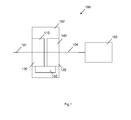
- Figure 1 shows a first part of a power grid 100.
- Said power grid 100 comprises a device 102, a power supply line 101 connecting to the device 102, a consumer device 103 and a power line 104, connecting the device 102 and the consumer device 103.
- the power line 101 connects to a power source not depicted in figure 1 .
- the device 102 is hence connected to the power source via the power line 101 on the one hand and to the consumer device 103 on the other hand.
- the device 102 comprises an input 110 adapted to determine information about a received voltage.
- the input 110 for example comprises a voltage meter to measure the voltage at the power line 101.
- the device 102 comprises another input 120 adapted to determine information about an energy demand of the consumer device 103.
- the other input 120 is for example adapted to receive information indicative of behavioral or ambience parameters indicative of the energy demand of the consumer device 103. This information is for example a battery charge level, room temperature, filling status or water temperature level.
- the other input 120 may comprise respective sensors or a data input for communicating with a respective sender installed in the consumer device 103.
- the consumer device 103 is a water boiler e.g. for generating hot water, e.g. for heating or washing.
- the water boiler may in this example be connected to an insulated water reservoir and adapted to keep the water in the water reservoir at a predetermined standard temperature, e.g. 40°C.
- the device 102 is adapted to receive the current predetermined temperature via the data input as behavioral parameter. Additionally in this case the outside temperature may be received as additional ambience parameter from a sensor outside of the water reservoir.
- the device 102 comprises a processor 130 adapted to determine a threshold for comparing to the received voltage.
- the threshold is for example determined by the processor 130 depending on information about a voltage level at the consumer device 103 measured by the other input 120 over time.
- the other input comprises a sensor for measuring the voltage level at the power line 104, or to receive current voltage levels from a sensor in the consumer device 103, adapted to perform the measurement and send the voltage level.
- the threshold in the example of the water boiler is for example set to a value triggering the water boiler to heat the water to a higher than the standard temperature, e.g. 41° C in case the voltage level at the power line 104 is higher than a standard value, e.g. of 230 V. This way the water boiler consumes more energy and helps stabilizing the power supply grid without directly advert effect on the user of the water boiler.
- the threshold in this example is set to a value triggering the water boiler to heat the water to a lower than standard temperature , e.g. 39° C in case the voltage level at the power line 104 is less than the standard value, e.g. of 230 V. This way the water boiler consumes less energy and helps stabilizing the power grid without directly affecting the user of the water boiler.
- any other type of behavioral or ambience parameter may be considered as well.
- the outside temperature may be used to keep the threshold at the standard value or increase or reduce the threshold when required.
- Time depending changes to the threshold may be implemented as well, e.g. for night time or day time.
- the threshold is set to prevent the water boiler from heating, and even trigger an alert to the user of the water boiler.
- a tolerance band e.g. 10 V around the standard value, e.g. 230 V is used, in which the threshold is set to a value that allows the water boiler to heat the temperature to 40°C.
- the threshold is set depending on ambience or behavioral parameters of the consumer device 103.
- the power consumption could be controlled according to a packet control depending on the voltage.
- the consumer device 103 e.g. the water boiler
- 100% of it's standard voltage supply e.g. 240 V.
- 70% e.g. 189 V
- the device 103 in a preferred embodiment furthermore comprises a storage 150 adapted to record a histogram of behavioral or ambience parameters.
- the processor 130 is adapted to determine the threshold depending on the recorded histogram.
- the processor 130 may be adapted to predict the voltage level at the consumer device 103, in particular from the recorded histogram. To that end repeatedly appearing periods of time with high or low voltage demands are recognized in the histogram and used as prediction for the current day of the week and/or time of day.
- the device 102 comprises an output 140 adapted to control a voltage output for the consumer device 103 via the power line 104.
- the output 140 is adapted to control this output voltage for the consumer device 103 depending on the determined information and threshold information and the threshold determined by the processor 130.
- the output 140 may be adapted to control the output voltage depending on a power limit. To that end the output 140 may comprise of a power meter to determine the power currently consumed by the consumer device 103 and control the voltage to not exceed or drop below the power limit.
- the power limit is for example a predetermined value stored in or derived from the histogram.
- the output 140 is for example a switch, adapted to switch a connector for connecting and disconnecting the power supply line 101 to the power line 104.
- the output 140 is adapted to perform pulse width modulation.
- the output 140 may be adapted as dimmer instead for dimming the voltage on the power line 104 as well or switch it on or off.
- Figure 3 and 4 depict histograms. The explanation of figure 3 extends to figure 4 for elements having the same reference signs.
- Each histogram shows a time period of one day, i.e. 24 hours on the horizontal axis.
- the voltage is depicted along the vertical axis.
- the upper and lower limits are depicted as dash-dotted lines labeled as max value and min value respectively.
- the standard value is depicted as dashed line and labeled standard value.
- the threshold is depicted as solid line and labeled threshold.
- All lines in the example are depicted parallel to the horizontal axis. They may be any other lines, e.g. curved or step functions increasing or decreasing over time.
- the histogram shows the history for the voltage consumption of the consumer device 103 as solid curve labeled history diagram. This may be an average of the daily curves of many days, month or years.
- the histogram shows the actual voltage consumption as dash-dotted line labeled actual voltage.
- the difference between the histogram of figure 3 and 4 is the position of the threshold. In figure 3 it is below the standard value and in figure 4 it is above.
- the threshold in figure 3 is set lower than the standard value to initiate a higher than standard consumption. This is for example triggered in case of low battery or low temperature that is far from target to ensure proper functionality of the consumer device 103.
- the threshold is set above the standard value to trigger consumption of the consumer device 102 only if the power supplied by the power grid is above the standard value. This helps stabilizing the power grid.
- the threshold level is varied depending e.g. on battery charge level, room temperature, filling status, water temperature level and depending on the histograms that reflect most likely needs derived from the history.
- the upper limit would be exceeded where the arrow indicates that the actual value exceeds the max value. In this case regardless of the demand the voltage supply to the consumer device 103 would not be provided more than the max value. In this case the max value would be selected prevent destruction of the consumer device 103 or to prevent the power supply grid from a blackout from too high power demand.
- the lower limit would be undercut where the arrow indicates that the actual value is below the min value. In this case regardless of the demand the voltage supply to the consumer device 103 would not be provided less than the min value.
- the min value in this case would be selected to not destroy the consumer device 103. It would be applicable, for example in competing control when the consumer device 103 would be in a rest state but could still charge its battery.
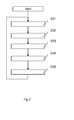
- a method of automatically stabilizing in an electrical power grid is described below, making reference to figure 2 . It is in this example assumed that a histogram according to figure 3 or 4 is already available, e.g. stored, from previously captured data. For the first run of the method, a default histogram may be used. In the example the default histogram covers a time period of 24 hours and contains as history diagram a constant value matching the standard value. The current time of day is measured in the device 102 and the method for example in Coordinated Universal Time, well known as UTC. Any other time such as Greenwich Mean Time may be used as well.
- the method for example starts, whenever the device is switched on. After the start a step 201 is executed.
- step 201 information about the voltage received from the power supply line 101 is determined. For example the input voltage is measured. Afterwards a step 302 is executed.
- step 202 information about the energy demand of the consumer device 103 is determined.
- the voltage level at the consumer device 103 at the current time is determined by measurement.
- this steps comprises predicting the voltage level at the consumer device from the histogram, e.g. by extrapolation or interpolation of the historic data to find the value e.g. for the current time of day and day of week.
- the voltage level in this example is indicative of a behavioral parameter of the consumer device 103.
- the step 202 may comprise receiving information indicative of the behavioral or ambience parameters of the consumer device or predicting the demand depending on these parameters.
- the predetermined standard temperature e.g. 40° C is may also be received.
- a step 203 is executed.
- step 203 the histogram of voltage level or the behavioral or ambience parameters is recorded.
- the predetermined standard temperature e.g. 40° C may also be recorded.
- the histogram contains an indication of predetermined standard temperature.
- the histogram of figure 3 or 4 is populated with new data for the current time of day, e.g. by averaging the existing history diagram value of the current time with the voltage level at the consumer device 103 of step 202 and storing the result in the histogram as replacement of the history diagram data point for the current time.
- a threshold is determined for comparing to information about the voltage level at the consumer device 103 received in step 202.
- the threshold is in the example determined depending on information about the voltage received from the power supply line 101 in step 201. Additionally or alternatively the behavioral or ambiance parameters at the consumer device 103 measured over time may be used.
- the threshold is either set as in figure 3 to a value lower than the standard value to initiate higher than standard consumption, in case the voltage received from the power supply line 101 is higher than the standard value.
- the threshold is set as in figure 4 to a value higher than the standard value to initiate lower than standard consumption, in case the voltage received from the power supply line 101 is lower than the standard value.
- the threshold may be set as described above depending on the predetermined standard temperature, e.g. 40 °.
- step 205 is executed.
- step 205 the output voltage for the consumer device 103 is controlled depending on the determined information and threshold.
- the output voltage is set to exceed the standard value by a predetermined offset, e.g. 2 volts, or to fall below the standard value by the predetermined offset, e.g. 2 volts.
- the offset may depend on time of day, day of week, behavioral or ambience parameters as well.
- this step comprises controlling the output voltage depending on the power limit, e.g. the max value or min value. For example the output voltage may not exceed the max value or drop below the min value.
- step 201 is executed.
- the method ends for example when the device 102 or the consumer device 103 is switched off.
- any functional blocks labelled as 'processors' may be provided through the use of dedicated hardware as well as hardware capable of executing software in association with appropriate software.
- the functions may be provided by a single dedicated processor, by a single shared processor, or by a plurality of individual processors, some of which may be shared.
- explicit use of the term 'processor' or 'controller' should not be construed to refer exclusively to hardware capable of executing software, and may implicitly include, without limitation, digital signal processor (DSP) hardware, network processor, application specific integrated circuit (ASIC), field programmable gate array (FPGA), read only memory (ROM) for storing software, random access memory (RAM), and non volatile storage.
- DSP digital signal processor
- ASIC application specific integrated circuit
- FPGA field programmable gate array
- ROM read only memory
- RAM random access memory
- any switches shown in the figures are conceptual only. Their function may be carried out through the operation of program logic, through dedicated logic, through the interaction of program control and dedicated logic, or even manually, the particular technique being selectable by the implementer as more specifically understood from the context.
- program storage devices e.g., digital data storage media, which are machine or computer readable and encode machine-executable or computer-executable programs of instructions, wherein said instructions perform some or all of the steps of said above-described methods.
- the program storage devices may be, e.g., digital memories, magnetic storage media such as a magnetic disks and magnetic tapes, hard drives, or optically readable digital data storage media.
- the embodiments are also intended to cover computers programmed to perform said steps of the above-described methods.
Landscapes
- Engineering & Computer Science (AREA)
- Power Engineering (AREA)
- Management, Administration, Business Operations System, And Electronic Commerce (AREA)
Priority Applications (1)
| Application Number | Priority Date | Filing Date | Title |
|---|---|---|---|
| EP13305622.6A EP2804281A1 (de) | 2013-05-16 | 2013-05-16 | Verfahren und Vorrichtung zur automatischen Stabilisierung in einem Stromnetz |
Applications Claiming Priority (1)
| Application Number | Priority Date | Filing Date | Title |
|---|---|---|---|
| EP13305622.6A EP2804281A1 (de) | 2013-05-16 | 2013-05-16 | Verfahren und Vorrichtung zur automatischen Stabilisierung in einem Stromnetz |
Publications (1)
| Publication Number | Publication Date |
|---|---|
| EP2804281A1 true EP2804281A1 (de) | 2014-11-19 |
Family
ID=48607178
Family Applications (1)
| Application Number | Title | Priority Date | Filing Date |
|---|---|---|---|
| EP13305622.6A Withdrawn EP2804281A1 (de) | 2013-05-16 | 2013-05-16 | Verfahren und Vorrichtung zur automatischen Stabilisierung in einem Stromnetz |
Country Status (1)
| Country | Link |
|---|---|
| EP (1) | EP2804281A1 (de) |
Citations (5)
| Publication number | Priority date | Publication date | Assignee | Title |
|---|---|---|---|---|
| US20040254688A1 (en) * | 2003-06-13 | 2004-12-16 | Chassin David P. | Electrical power distribution control methods, electrical energy demand monitoring methods, and power management devices |
| US20070120538A1 (en) * | 2003-12-03 | 2007-05-31 | Keihin Corporation | Cooperative control apparatus |
| US20110118890A1 (en) * | 2009-11-13 | 2011-05-19 | Leviton Manufacturing Co., Inc. | Intelligent metering demand response |
| US20120022709A1 (en) * | 2009-02-02 | 2012-01-26 | Taylor Steven M | Energy delivery control systems and methods |
| US20120323390A1 (en) * | 2010-02-05 | 2012-12-20 | Panasonic Corporation | Energy supply/demand control system |
-
2013
- 2013-05-16 EP EP13305622.6A patent/EP2804281A1/de not_active Withdrawn
Patent Citations (5)
| Publication number | Priority date | Publication date | Assignee | Title |
|---|---|---|---|---|
| US20040254688A1 (en) * | 2003-06-13 | 2004-12-16 | Chassin David P. | Electrical power distribution control methods, electrical energy demand monitoring methods, and power management devices |
| US20070120538A1 (en) * | 2003-12-03 | 2007-05-31 | Keihin Corporation | Cooperative control apparatus |
| US20120022709A1 (en) * | 2009-02-02 | 2012-01-26 | Taylor Steven M | Energy delivery control systems and methods |
| US20110118890A1 (en) * | 2009-11-13 | 2011-05-19 | Leviton Manufacturing Co., Inc. | Intelligent metering demand response |
| US20120323390A1 (en) * | 2010-02-05 | 2012-12-20 | Panasonic Corporation | Energy supply/demand control system |
Similar Documents
| Publication | Publication Date | Title |
|---|---|---|
| CA2683249C (en) | Apparatus and method for control of a thermostat | |
| CN110783970B (zh) | 一种充电方法、装置、充电终端及计算机可读存储介质 | |
| EP2887085B1 (de) | Verfahren und Vorrichtung zur Anzeige eines niedrigen Batteriestands | |
| CA2923930C (en) | Primary frequency control through simulated droop control with electric loads | |
| KR20140016131A (ko) | 배터리의 충전 파라메터 제어 방법 및 배터리 충전 시스템 | |
| EP2365605B1 (de) | Ladevorrichtung, Programm | |
| US20130007473A1 (en) | Adaptive Power Management | |
| CN109982600B (zh) | 用于与包括温度控制容器系统的制冷设备一起使用的设备和方法 | |
| CN111953065B (zh) | 基于传感器数据改善电池寿命 | |
| KR20170055184A (ko) | 스마트 홈 에너지 관리 시스템 및 방법 | |
| CN105509325A (zh) | 热水器及其用水数据采集方法 | |
| JP6003684B2 (ja) | 電力使用量監視方法、プログラムおよび装置 | |
| US20190371551A1 (en) | Method and device for diagnosing wear of an electrical switching unit, and electrical unit comprising such a device | |
| EP2804281A1 (de) | Verfahren und Vorrichtung zur automatischen Stabilisierung in einem Stromnetz | |
| US10038330B2 (en) | Method for controlling the battery capacity of a secondary battery and battery-driven household electrical appliance | |
| US20140358314A1 (en) | Power control unit and program | |
| CN113606762A (zh) | 电量数据存储装置、方法、控制器及多联机系统 | |
| US9529021B2 (en) | Determining current | |
| CN105093978A (zh) | 传感器装置和关联方法 | |
| CN216481510U (zh) | 电量数据存储装置、控制器及多联机系统 | |
| JP2002095250A (ja) | 電源回路、制御システム及びそれを用いた冷蔵庫 | |
| JP2018057209A (ja) | 発電量予測装置、及び発電量予測方法 | |
| KR20220057228A (ko) | 가상 센서 데이터를 이용한 에너지저장장치(ess)의 공조 시스템 제어 방법. | |
| GB2557600B (en) | Device for monitoring an electrical apparatus | |
| KR20060121328A (ko) | 충방전 제어장치 및 충방전 제어방법 |
Legal Events
| Date | Code | Title | Description |
|---|---|---|---|
| PUAI | Public reference made under article 153(3) epc to a published international application that has entered the european phase |
Free format text: ORIGINAL CODE: 0009012 |
|
| 17P | Request for examination filed |
Effective date: 20131104 |
|
| AK | Designated contracting states |
Kind code of ref document: A1 Designated state(s): AL AT BE BG CH CY CZ DE DK EE ES FI FR GB GR HR HU IE IS IT LI LT LU LV MC MK MT NL NO PL PT RO RS SE SI SK SM TR |
|
| AX | Request for extension of the european patent |
Extension state: BA ME |
|
| RBV | Designated contracting states (corrected) |
Designated state(s): AL AT BE BG CH CY CZ DE DK EE ES FI FR GB GR HR HU IE IS IT LI LT LU LV MC MK MT NL NO PL PT RO RS SE SI SK SM TR |
|
| 17Q | First examination report despatched |
Effective date: 20160226 |
|
| STAA | Information on the status of an ep patent application or granted ep patent |
Free format text: STATUS: THE APPLICATION IS DEEMED TO BE WITHDRAWN |
|
| 18D | Application deemed to be withdrawn |
Effective date: 20160708 |