EP2804087A2 - Endgerät und Verfahren zur Bearbeitung von Text damit - Google Patents
Endgerät und Verfahren zur Bearbeitung von Text damit Download PDFInfo
- Publication number
- EP2804087A2 EP2804087A2 EP14153136.8A EP14153136A EP2804087A2 EP 2804087 A2 EP2804087 A2 EP 2804087A2 EP 14153136 A EP14153136 A EP 14153136A EP 2804087 A2 EP2804087 A2 EP 2804087A2
- Authority
- EP
- European Patent Office
- Prior art keywords
- text
- touch input
- block
- input
- controller
- Prior art date
- Legal status (The legal status is an assumption and is not a legal conclusion. Google has not performed a legal analysis and makes no representation as to the accuracy of the status listed.)
- Withdrawn
Links
Images












Classifications
-
- G—PHYSICS
- G06—COMPUTING OR CALCULATING; COUNTING
- G06F—ELECTRIC DIGITAL DATA PROCESSING
- G06F40/00—Handling natural language data
- G06F40/10—Text processing
- G06F40/166—Editing, e.g. inserting or deleting
-
- H—ELECTRICITY
- H04—ELECTRIC COMMUNICATION TECHNIQUE
- H04B—TRANSMISSION
- H04B1/00—Details of transmission systems, not covered by a single one of groups H04B3/00 - H04B13/00; Details of transmission systems not characterised by the medium used for transmission
- H04B1/38—Transceivers, i.e. devices in which transmitter and receiver form a structural unit and in which at least one part is used for functions of transmitting and receiving
- H04B1/40—Circuits
-
- G—PHYSICS
- G06—COMPUTING OR CALCULATING; COUNTING
- G06F—ELECTRIC DIGITAL DATA PROCESSING
- G06F3/00—Input arrangements for transferring data to be processed into a form capable of being handled by the computer; Output arrangements for transferring data from processing unit to output unit, e.g. interface arrangements
- G06F3/01—Input arrangements or combined input and output arrangements for interaction between user and computer
-
- G—PHYSICS
- G06—COMPUTING OR CALCULATING; COUNTING
- G06F—ELECTRIC DIGITAL DATA PROCESSING
- G06F3/00—Input arrangements for transferring data to be processed into a form capable of being handled by the computer; Output arrangements for transferring data from processing unit to output unit, e.g. interface arrangements
- G06F3/01—Input arrangements or combined input and output arrangements for interaction between user and computer
- G06F3/02—Input arrangements using manually operated switches, e.g. using keyboards or dials
- G06F3/023—Arrangements for converting discrete items of information into a coded form, e.g. arrangements for interpreting keyboard generated codes as alphanumeric codes, operand codes or instruction codes
- G06F3/0233—Character input methods
- G06F3/0236—Character input methods using selection techniques to select from displayed items
-
- G—PHYSICS
- G06—COMPUTING OR CALCULATING; COUNTING
- G06F—ELECTRIC DIGITAL DATA PROCESSING
- G06F3/00—Input arrangements for transferring data to be processed into a form capable of being handled by the computer; Output arrangements for transferring data from processing unit to output unit, e.g. interface arrangements
- G06F3/01—Input arrangements or combined input and output arrangements for interaction between user and computer
- G06F3/03—Arrangements for converting the position or the displacement of a member into a coded form
- G06F3/041—Digitisers, e.g. for touch screens or touch pads, characterised by the transducing means
-
- G—PHYSICS
- G06—COMPUTING OR CALCULATING; COUNTING
- G06F—ELECTRIC DIGITAL DATA PROCESSING
- G06F3/00—Input arrangements for transferring data to be processed into a form capable of being handled by the computer; Output arrangements for transferring data from processing unit to output unit, e.g. interface arrangements
- G06F3/01—Input arrangements or combined input and output arrangements for interaction between user and computer
- G06F3/048—Interaction techniques based on graphical user interfaces [GUI]
- G06F3/0484—Interaction techniques based on graphical user interfaces [GUI] for the control of specific functions or operations, e.g. selecting or manipulating an object, an image or a displayed text element, setting a parameter value or selecting a range
-
- G—PHYSICS
- G06—COMPUTING OR CALCULATING; COUNTING
- G06F—ELECTRIC DIGITAL DATA PROCESSING
- G06F3/00—Input arrangements for transferring data to be processed into a form capable of being handled by the computer; Output arrangements for transferring data from processing unit to output unit, e.g. interface arrangements
- G06F3/01—Input arrangements or combined input and output arrangements for interaction between user and computer
- G06F3/048—Interaction techniques based on graphical user interfaces [GUI]
- G06F3/0487—Interaction techniques based on graphical user interfaces [GUI] using specific features provided by the input device, e.g. functions controlled by the rotation of a mouse with dual sensing arrangements, or of the nature of the input device, e.g. tap gestures based on pressure sensed by a digitiser
- G06F3/0488—Interaction techniques based on graphical user interfaces [GUI] using specific features provided by the input device, e.g. functions controlled by the rotation of a mouse with dual sensing arrangements, or of the nature of the input device, e.g. tap gestures based on pressure sensed by a digitiser using a touch-screen or digitiser, e.g. input of commands through traced gestures
-
- G—PHYSICS
- G06—COMPUTING OR CALCULATING; COUNTING
- G06F—ELECTRIC DIGITAL DATA PROCESSING
- G06F3/00—Input arrangements for transferring data to be processed into a form capable of being handled by the computer; Output arrangements for transferring data from processing unit to output unit, e.g. interface arrangements
- G06F3/01—Input arrangements or combined input and output arrangements for interaction between user and computer
- G06F3/048—Interaction techniques based on graphical user interfaces [GUI]
- G06F3/0487—Interaction techniques based on graphical user interfaces [GUI] using specific features provided by the input device, e.g. functions controlled by the rotation of a mouse with dual sensing arrangements, or of the nature of the input device, e.g. tap gestures based on pressure sensed by a digitiser
- G06F3/0488—Interaction techniques based on graphical user interfaces [GUI] using specific features provided by the input device, e.g. functions controlled by the rotation of a mouse with dual sensing arrangements, or of the nature of the input device, e.g. tap gestures based on pressure sensed by a digitiser using a touch-screen or digitiser, e.g. input of commands through traced gestures
- G06F3/04886—Interaction techniques based on graphical user interfaces [GUI] using specific features provided by the input device, e.g. functions controlled by the rotation of a mouse with dual sensing arrangements, or of the nature of the input device, e.g. tap gestures based on pressure sensed by a digitiser using a touch-screen or digitiser, e.g. input of commands through traced gestures by partitioning the display area of the touch-screen or the surface of the digitising tablet into independently controllable areas, e.g. virtual keyboards or menus
-
- G—PHYSICS
- G06—COMPUTING OR CALCULATING; COUNTING
- G06F—ELECTRIC DIGITAL DATA PROCESSING
- G06F3/00—Input arrangements for transferring data to be processed into a form capable of being handled by the computer; Output arrangements for transferring data from processing unit to output unit, e.g. interface arrangements
- G06F3/14—Digital output to display device ; Cooperation and interconnection of the display device with other functional units
Definitions
- Example embodiments of the present invention relate to a terminal and a method for editing text using the same.
- a device such as a smart phone may have touch screen functionality that allows for entry of text through a virtual keyboard. For better portability, the screen size of the device is reduced, but this may cause more errors in typing.
- An example embodiment of the present invention provides a method for editing text using a terminal.
- a first touch input is sensed.
- the first touch input occurs on the text.
- the text is displayed on a text display area of the terminal.
- a first part of the text corresponds to the first touch input.
- the first part of the text is enlarged and displayed on the display unit.
- a terminal in an example embodiment of the present invention, includes a display unit and a controller.
- the display unit displays text.
- the display unit includes a touch panel.
- the controller divides a first part of the text into sub-parts.
- the first part of the text corresponds to a first touch input.
- the first part is enlarged and displayed on the display unit in response to the first touch input.
- the first touch input occurs on the text.
- the text is displayed on the display unit and is sensed through the touch panel.
- a first touch is performed on a first part of the text message.
- the first part includes one or more characters.
- the characters are enlarged.
- a second touch is performed on one of the characters.
- the second-touched character is replaced by another character.
- a terminal may include a mobile terminal, such as a portable phone, a smart phone, a notebook computer, a terminal for digital broadcasting, a PDA (Personal Digital Assistant), a PMP (Portable Multimedia Player), or navigation, and a stationary terminal, such as a digital TV or a desktop computer, and may be implemented in diverse forms.
- a mobile terminal such as a portable phone, a smart phone, a notebook computer, a terminal for digital broadcasting, a PDA (Personal Digital Assistant), a PMP (Portable Multimedia Player), or navigation
- a stationary terminal such as a digital TV or a desktop computer
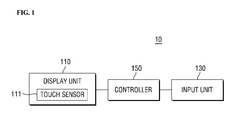
- FIG. 1 is a block diagram illustrating a configuration of a terminal according to an example embodiment of the present invention.
- a terminal 10 may include a display unit 110 and a controller 150.
- the terminal 10 may further include an input unit 130.
- the display unit 110 displays information that is processed in the terminal 10. For example, when the terminal 10 is in a phone call mode, the display unit 110 may display a UI (User Interface) or a GUI (Graphic User Interface) related to the phone call. When a user prepares text, the display unit 110 may display the text prepared by the user.
- UI User Interface
- GUI Graphic User Interface
- the display unit 110 may include various display devices.
- the display unit 110 may include a liquid crystal display, a thin film transistor-liquid crystal display, an organic light emitting diode display, a flexible display, and/or a 3D (three-dimensional) display.
- Some transparent display devices may be used allowing an outside to be seen therethrough.
- the transparent displays may include, e.g., a TOLED (Transparent Organic Light Emitting Diode) display.
- two or more display units 110 may be provided.
- the display unit 110 may include a touch sensor 111.
- a display device and the touch sensor 111 may form a mutual layer structure.
- the display unit 110 may include a touch screen.
- the display unit 110 may function as an output device and/or an input device.
- the touch sensor 111 may convert pressure that is applied to a specific region of the display unit 110 or a change in capacitance that occurs on the specific region of the display unit 110 into an electrical input signal.
- the touch sensor 111 may detect the position, area, and pressure of a touch. When the touch sensor 111 has a touch input, a corresponding signal may be sent to a touch controller.
- the touch controller may process the signal into corresponding data and may transmit the corresponding data to the controller 150. Accordingly, the controller 150 can recognize the area where the touch has occurred in the display unit 110.
- the touch input may include a real touch and a proximity touch by hovering.
- the touch input may also include a single touch and a multi-touch (a double touch, touch and drag, and a long touch).
- the input unit 130 may generate input data for a user to control the operation of the terminal 10.
- the input unit 130 may include a keypad, a dome switch, a touch pad, a touch panel, a jog wheel, and/or a jog switch.
- the input unit 130 is a keypad that is displayed on a keypad display area of the display unit 110.
- the input unit 130 may be implemented by the touch sensor 111 of the display unit 110.
- example embodiments of the present invention are not limited thereto.
- the controller 150 controls the whole operation of the terminal 10. For example, when the terminal 10 is a mobile communication terminal, the controller 150 performs control and processing related to voice communication, data communication, and a video call. For example, the controller 150 may divide the text selected by user's touch input into syllables, numerals, symbols, or letters depending on the type of the text.
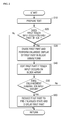
- FIG. 2 is a flowchart illustrating a method for editing text using a terminal according to an example embodiment of the present invention.
- text is prepared in a text preparation mode of the terminal (S10).
- a first touch input occurring on the prepared text is sensed (S20).
- a first part of the text corresponding to the first touch input is divided, and the first part is enlarged in the form of a block array (S30).
- the enlarged first part may be edited when a touch input occurs on the block array (S40).
- an enlargement termination input occurs (S50)
- the enlarged first part returns to its pre-enlarged state, and the first part of the pre-enlarged state is displayed (S60).
- the terminal After displaying the first part of the pre-enlarged state, the terminal returns to the text preparation state in the text preparation mode unless an event occurs, such as an occurrence of a separate input to terminate the text preparation mode.
- editing the enlarged first part (S40) may be performed in various ways.
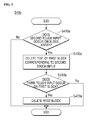
- FIG. 3 is a flowchart illustrating a method for editing a first part in a method for editing text according to an example embodiment of the present invention.
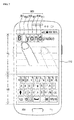
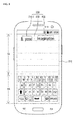
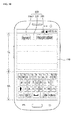
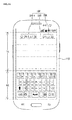
- FIGS. 4 to 16 are views illustrating processes of editing text using a terminal according to example embodiments of the present invention.
- FIGS. 4 to 10 illustrate a process of editing English text
- FIGS. 11 to 16 illustrate a process of editing Korean text.
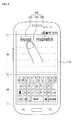
- the controller 150 may display text 200 on the text display area TA of the display unit 110 in response to the user's keypad operation.
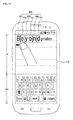
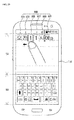
- the controller 150 may divide a first part of the text 200 corresponding to the first touch input into a plurality of pieces and may enlarge the first part in response to the first touch input as illustrated in FIG. 5 .
- the first part of the text 200 may be a word that corresponds to where the first touch input occurs.
- the first part of the text 200 may be divided into syllables, numerals, symbols, and letters in an alphabet depending on the type of the text 200.
- the text 200 is a phrase "Beyond Imagination” that includes one English word “Beyond” 210, a spacing 230, and one English word “Imagination” 250
- the word “Beyond” 210 corresponds to the user's first touch input as illustrated in FIG. 4 , and thus, "Beyond” 210 may correspond to the first part 210.
- the controller 150 may divide the word "Beyond” that corresponds to the first part 210 of the text 200 into alphabetical letters "B", “e”, “y”, “o”, “n”, and “d”, may allocate the respective letters to a plurality of blocks 901, 903, 905, 907, 909, and 911, and may display the enlarged first part on the display unit 110 in the form of a block array 900.
- the additional numerals or symbols may be divided in substantially the same manner as the letters, and the divided numerals or symbols may be allocated to their respective blocks.
- the divided pieces of the first part 210 may be displayed in the blocks 901, 903, 905, 907, 909, and 911, respectively, of the block array 900, and the number of the blocks 901, 903, 905, 907, 909, and 911 may be substantially equal to the number of the divided pieces of the first part 210.
- the shape of the blocks 901, 903, 905, 907, 909, and 911 are not limited as shown in the drawings. As shown in FIG. 5 , the blocks 901, 903, 905, 907, 909, and 911 have a rectangular shape. However, the blocks 901, 903, 905, 907, 909, and 911 may have other shapes, such as a circle, an ellipse, or a polygon. As shown in FIG. 5 , the blocks 901, 903, 905, 907, 909, and 911 are spaced apart from each other. However, example embodiments of the present invention are not limited thereto. For example, the blocks 901, 903, 905, 907, 909, and 911 may contact each other.
- the controller 150 may return the first part 210 to its pre-enlarged state, displaying the reduced first part 210.
- a user's touch input hereinafter referred to as a "fourth touch input”
- the controller 110 may recognize the fourth touch input as the enlargement termination input and may return the first part 210 to its pre-enlarged state as illustrated in FIG. 4 , displaying the reduced first part 210 on the display unit 110.
- the terminal 10 may return to the text preparation mode for receiving text from the user.
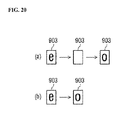
- the controller 150 may delete part (e.g., "e") of the text that is displayed on the first block 903 corresponding to the second touch input as illustrated in FIG. 7 .
- the controller 150 may display text that corresponds to the user's separate text input on the first block 903.
- the first block refers to a block of the block array 900 on which the user's touch input occurs. The first block may be changed depending on the position where the touch input occurs. For example, the term "first block” may be used to discriminate the block on which the user's touch input occurs from other blocks.
- the controller 150 may return the edited first part 210-1 to its pre-enlarged state and may display the reduced first part 210-1 on the display unit 110 as illustrated in FIG. 8 .
- the edited first part 210-1 may include a blank where "e" used to be displayed.
- the controller 150 may delete the first block (903 in FIG. 6 ) that is positioned between the two blocks 901 and 905 as illustrated in FIG. 9 .
- the controller 150 may return the edited first part 210-2 to its pre-enlarged state and may display the reduced first part on the display unit 110 as illustrated in FIG. 10 .
- the edited first part 210-2 does not include the blank where "e" used to be displayed, unlike that illustrated in FIG. 8 .
- example in which the text is English text has been described by way of example. However, example embodiments of the present invention are not limited thereto. For example, example embodiments of the present invention may be also applied to any Roman alphabet-based, non-English text.
- the controller 150 may divide a first part of the text 300 corresponding to the first touch input into a plurality of pieces and may enlarge the first part in response to the first touch input as illustrated in FIG. 12 .
- the first part of the text 300 may be a word or eojeol that corresponds to where the first touch input occurs.
- eojeol refers to each part of a sentence which is separated by spaces from its preceding and succeeding ones.
- the first part of the text 300 may be divided into syllables, numerals, symbols, and letters depending on the type of the text 300.
- the respective syllables and numerals included in the first part 310 may be displayed in the respective blocks 901, 903, 905, 907, 909, and 911 of the block array 900.
- the number of the blocks 901, 903, 905, 907, 909, and 911 may be substantially equal to the number of the syllables and numerals included in the first part 310.
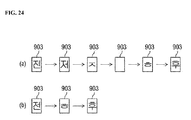
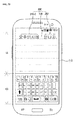
- the controller 150 may return the edited first part to its pre-enlarged state and may display the reduced first part on the display unit 110.
- the edited first part may be " ", and a blank is positioned between “ " and " "
- whether a second touch input occurs on the block array may be sensed (S410a), and when the second touch input occurs, one of blocks (e.g., first block) that corresponds to the second touch input and that is included in the block array is activated to an edition state (S430b).
- a user's edition input may be received, and the text displayed on the first block may be edited (S450b).
- the text input e.g., input of "
- the text displayed on the first block 903 can be directly changed to other text (e.g., " ") that corresponds to the text input.
- the text inputs " " and " " are sequentially caused by the user while the first block 903 is activated to the edition state
- the text (e.g., " ") that is previously displayed on the first block 903 may be sequentially replaced by " " and " ".
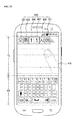
- a drag touch input that occurs on the block array is sensed (S410c), and when the drag touch input is sensed, a blank block is added to the block array corresponding to the drag touch input (S430c).
- the blank block means a block where a separate text is not displayed.
Landscapes
- Engineering & Computer Science (AREA)
- Theoretical Computer Science (AREA)
- General Engineering & Computer Science (AREA)
- Physics & Mathematics (AREA)
- General Physics & Mathematics (AREA)
- Human Computer Interaction (AREA)
- Computer Networks & Wireless Communication (AREA)
- Signal Processing (AREA)
- Health & Medical Sciences (AREA)
- Artificial Intelligence (AREA)
- Audiology, Speech & Language Pathology (AREA)
- Computational Linguistics (AREA)
- General Health & Medical Sciences (AREA)
- User Interface Of Digital Computer (AREA)
Applications Claiming Priority (1)
| Application Number | Priority Date | Filing Date | Title |
|---|---|---|---|
| KR1020130054471A KR102072049B1 (ko) | 2013-05-14 | 2013-05-14 | 단말 및 이를 이용한 텍스트 편집방법 |
Publications (2)
| Publication Number | Publication Date |
|---|---|
| EP2804087A2 true EP2804087A2 (de) | 2014-11-19 |
| EP2804087A3 EP2804087A3 (de) | 2015-02-25 |
Family
ID=50112693
Family Applications (1)
| Application Number | Title | Priority Date | Filing Date |
|---|---|---|---|
| EP14153136.8A Withdrawn EP2804087A3 (de) | 2013-05-14 | 2014-01-29 | Endgerät und Verfahren zur Bearbeitung von Text damit |
Country Status (4)
| Country | Link |
|---|---|
| US (1) | US9547634B2 (de) |
| EP (1) | EP2804087A3 (de) |
| KR (1) | KR102072049B1 (de) |
| CN (1) | CN104156164B (de) |
Families Citing this family (8)
| Publication number | Priority date | Publication date | Assignee | Title |
|---|---|---|---|---|
| US20150338945A1 (en) * | 2013-01-04 | 2015-11-26 | Ubiquitous Entertainment Inc. | Information processing device and information updating program |
| KR102138515B1 (ko) | 2013-10-01 | 2020-07-28 | 엘지전자 주식회사 | 이동단말기 및 그 제어방법 |
| WO2016104876A1 (ko) * | 2014-12-23 | 2016-06-30 | 김규리 | 문자 편집 장치 및 방법 |
| CN106406687A (zh) * | 2015-07-31 | 2017-02-15 | 东莞酷派软件技术有限公司 | 输入控制方法及装置 |
| CN108664201B (zh) * | 2017-03-29 | 2021-12-28 | 北京搜狗科技发展有限公司 | 一种文本编辑方法、装置及电子设备 |
| CN109189303B (zh) * | 2018-08-30 | 2021-02-09 | 维沃移动通信有限公司 | 文本编辑方法及移动终端 |
| TWI811789B (zh) * | 2021-09-10 | 2023-08-11 | 宏碁股份有限公司 | 智能放大方法及應用其之電子裝置 |
| CN114518827B (zh) * | 2022-02-21 | 2025-09-05 | 维沃移动通信有限公司 | 文本处理方法及其装置 |
Citations (1)
| Publication number | Priority date | Publication date | Assignee | Title |
|---|---|---|---|---|
| US5953735A (en) * | 1991-03-20 | 1999-09-14 | Forcier; Mitchell D. | Script character processing method and system with bit-mapped document editing |
Family Cites Families (13)
| Publication number | Priority date | Publication date | Assignee | Title |
|---|---|---|---|---|
| JPH04238525A (ja) * | 1991-01-22 | 1992-08-26 | Sony Corp | 文字入力制御装置および方法 |
| US7526737B2 (en) * | 2005-11-14 | 2009-04-28 | Microsoft Corporation | Free form wiper |
| KR100813062B1 (ko) * | 2006-05-03 | 2008-03-14 | 엘지전자 주식회사 | 휴대용 단말기 및 이를 이용한 텍스트 표시 방법 |
| EP2053497A1 (de) * | 2007-10-26 | 2009-04-29 | Research In Motion Limited | Textauswahl über einen berührungsempfindlichen Bildschirm einer tragbaren Mobilkommunikationsvorrichtung |
| US8116569B2 (en) * | 2007-12-21 | 2012-02-14 | Microsoft Corporation | Inline handwriting recognition and correction |
| US20110035209A1 (en) * | 2009-07-06 | 2011-02-10 | Macfarlane Scott | Entry of text and selections into computing devices |
| KR20110104620A (ko) * | 2010-03-17 | 2011-09-23 | 삼성전자주식회사 | 휴대용 단말기에서 문자 입력 방법 및 장치 |
| KR101169424B1 (ko) | 2010-08-26 | 2012-07-27 | 동명대학교산학협력단 | 스마트폰에서의 애플리케이션 프로그램 잠금/해제 장치 및 방법 |
| KR101677636B1 (ko) * | 2010-08-30 | 2016-11-18 | 엘지전자 주식회사 | 이동단말기 및 그의 텍스트 편집 방법 |
| KR20120020730A (ko) * | 2010-08-31 | 2012-03-08 | 삼성전자주식회사 | 휴대용 단말기에서 문자 입력 방법 및 장치 |
| US8640026B2 (en) | 2011-07-11 | 2014-01-28 | International Business Machines Corporation | Word correction in a multi-touch environment |
| US10838513B2 (en) * | 2012-08-06 | 2020-11-17 | Nokia Technologies Oy | Responding to selection of a displayed character string |
| US8656296B1 (en) * | 2012-09-27 | 2014-02-18 | Google Inc. | Selection of characters in a string of characters |
-
2013
- 2013-05-14 KR KR1020130054471A patent/KR102072049B1/ko not_active Expired - Fee Related
- 2013-09-18 US US14/030,635 patent/US9547634B2/en not_active Expired - Fee Related
- 2013-12-23 CN CN201310715079.1A patent/CN104156164B/zh not_active Expired - Fee Related
-
2014
- 2014-01-29 EP EP14153136.8A patent/EP2804087A3/de not_active Withdrawn
Patent Citations (1)
| Publication number | Priority date | Publication date | Assignee | Title |
|---|---|---|---|---|
| US5953735A (en) * | 1991-03-20 | 1999-09-14 | Forcier; Mitchell D. | Script character processing method and system with bit-mapped document editing |
Also Published As
| Publication number | Publication date |
|---|---|
| US9547634B2 (en) | 2017-01-17 |
| KR102072049B1 (ko) | 2020-02-03 |
| EP2804087A3 (de) | 2015-02-25 |
| CN104156164A (zh) | 2014-11-19 |
| US20140344678A1 (en) | 2014-11-20 |
| KR20140134810A (ko) | 2014-11-25 |
| CN104156164B (zh) | 2019-01-18 |
Similar Documents
| Publication | Publication Date | Title |
|---|---|---|
| EP2804087A2 (de) | Endgerät und Verfahren zur Bearbeitung von Text damit | |
| KR102091235B1 (ko) | 휴대 단말기에서 메시지를 편집하는 장치 및 방법 | |
| US9256366B2 (en) | Systems and methods for touch-based two-stage text input | |
| CN101630226B (zh) | 电子设备显示内容的快速定位方法及装置 | |
| US20160077602A1 (en) | Method and Handheld Electronic Device for Displaying and Selecting Diacritics | |
| DE112007000122T5 (de) | Tastaturen für tragbare elektronische Vorrichtungen | |
| KR20120006503A (ko) | 개선된 텍스트 입력 | |
| US20120326988A1 (en) | Multilingual key input apparatus and method thereof | |
| US8816966B2 (en) | Touchscreen japanese character selection through sliding input | |
| KR101846238B1 (ko) | 한자 입력 장치 및 제어 방법 | |
| US9507516B2 (en) | Method for presenting different keypad configurations for data input and a portable device utilizing same | |
| US8812973B1 (en) | Mobile device text-formatting | |
| US9606727B2 (en) | Apparatus and method for providing user interface providing keyboard layout | |
| US9069391B2 (en) | Method and medium for inputting Korean characters using a touch screen | |
| KR102126831B1 (ko) | 처음입력문자에 기반한 한자 입력 장치 및 그 제어 방법 | |
| US20200104043A1 (en) | Head mounted display device and content input method thereof | |
| US20140331160A1 (en) | Apparatus and method for generating message in portable terminal | |
| US20150082234A1 (en) | Electronic device and text-input interface displaying method thereof | |
| US20130021260A1 (en) | Method for inputting korean character on touch screen | |
| US20160292140A1 (en) | Associative input method and terminal | |
| EP2942704A1 (de) | Tragbare vorrichtung und eingabeverfahren dafür | |
| CN104699409A (zh) | 一种触摸屏移动终端信息输入的方法及系统 | |
| KR20140139702A (ko) | 텍스트 수정 방법 및 장치 | |
| US8902179B1 (en) | Method and device for inputting text using a touch screen | |
| EP3229108A1 (de) | Vorrichtung zur unterstützung von zeicheneingabe |
Legal Events
| Date | Code | Title | Description |
|---|---|---|---|
| PUAI | Public reference made under article 153(3) epc to a published international application that has entered the european phase |
Free format text: ORIGINAL CODE: 0009012 |
|
| 17P | Request for examination filed |
Effective date: 20140331 |
|
| AK | Designated contracting states |
Kind code of ref document: A2 Designated state(s): AL AT BE BG CH CY CZ DE DK EE ES FI FR GB GR HR HU IE IS IT LI LT LU LV MC MK MT NL NO PL PT RO RS SE SI SK SM TR |
|
| AX | Request for extension of the european patent |
Extension state: BA ME |
|
| PUAL | Search report despatched |
Free format text: ORIGINAL CODE: 0009013 |
|
| AK | Designated contracting states |
Kind code of ref document: A3 Designated state(s): AL AT BE BG CH CY CZ DE DK EE ES FI FR GB GR HR HU IE IS IT LI LT LU LV MC MK MT NL NO PL PT RO RS SE SI SK SM TR |
|
| AX | Request for extension of the european patent |
Extension state: BA ME |
|
| RIC1 | Information provided on ipc code assigned before grant |
Ipc: G06F 17/24 20060101ALI20150120BHEP Ipc: G06F 3/0488 20130101AFI20150120BHEP Ipc: G06F 3/023 20060101ALI20150120BHEP |
|
| RAP1 | Party data changed (applicant data changed or rights of an application transferred) |
Owner name: SAMSUNG DISPLAY CO., LTD. |
|
| STAA | Information on the status of an ep patent application or granted ep patent |
Free format text: STATUS: EXAMINATION IS IN PROGRESS |
|
| 17Q | First examination report despatched |
Effective date: 20171020 |
|
| RIC1 | Information provided on ipc code assigned before grant |
Ipc: G06F 3/023 20060101ALI20220922BHEP Ipc: G06F 3/0488 20130101AFI20220922BHEP |
|
| GRAP | Despatch of communication of intention to grant a patent |
Free format text: ORIGINAL CODE: EPIDOSNIGR1 |
|
| STAA | Information on the status of an ep patent application or granted ep patent |
Free format text: STATUS: GRANT OF PATENT IS INTENDED |
|
| INTG | Intention to grant announced |
Effective date: 20221031 |
|
| STAA | Information on the status of an ep patent application or granted ep patent |
Free format text: STATUS: THE APPLICATION IS DEEMED TO BE WITHDRAWN |
|
| 18D | Application deemed to be withdrawn |
Effective date: 20230311 |