EP2789577A1 - Method and apparatus for adjusting the pressure of a mattress - Google Patents
Method and apparatus for adjusting the pressure of a mattress Download PDFInfo
- Publication number
- EP2789577A1 EP2789577A1 EP12855267.6A EP12855267A EP2789577A1 EP 2789577 A1 EP2789577 A1 EP 2789577A1 EP 12855267 A EP12855267 A EP 12855267A EP 2789577 A1 EP2789577 A1 EP 2789577A1
- Authority
- EP
- European Patent Office
- Prior art keywords
- pressure
- user
- value
- mattress
- cells
- Prior art date
- Legal status (The legal status is an assumption and is not a legal conclusion. Google has not performed a legal analysis and makes no representation as to the accuracy of the status listed.)
- Withdrawn
Links
Images




Classifications
-
- A—HUMAN NECESSITIES
- A47—FURNITURE; DOMESTIC ARTICLES OR APPLIANCES; COFFEE MILLS; SPICE MILLS; SUCTION CLEANERS IN GENERAL
- A47C—CHAIRS; SOFAS; BEDS
- A47C27/00—Spring, stuffed or fluid mattresses or cushions specially adapted for chairs, beds or sofas
- A47C27/08—Fluid mattresses
- A47C27/081—Fluid mattresses of pneumatic type
- A47C27/083—Fluid mattresses of pneumatic type with pressure control, e.g. with pressure sensors
-
- B—PERFORMING OPERATIONS; TRANSPORTING
- B68—SADDLERY; UPHOLSTERY
- B68G—METHODS, EQUIPMENT, OR MACHINES FOR USE IN UPHOLSTERING; UPHOLSTERY NOT OTHERWISE PROVIDED FOR
- B68G7/00—Making upholstery
- B68G7/06—Filling of cushions, mattresses, or the like
-
- A—HUMAN NECESSITIES
- A47—FURNITURE; DOMESTIC ARTICLES OR APPLIANCES; COFFEE MILLS; SPICE MILLS; SUCTION CLEANERS IN GENERAL
- A47C—CHAIRS; SOFAS; BEDS
- A47C27/00—Spring, stuffed or fluid mattresses or cushions specially adapted for chairs, beds or sofas
- A47C27/08—Fluid mattresses
- A47C27/10—Fluid mattresses with two or more independently-fillable chambers
-
- B—PERFORMING OPERATIONS; TRANSPORTING
- B60—VEHICLES IN GENERAL
- B60C—VEHICLE TYRES; TYRE INFLATION; TYRE CHANGING; CONNECTING VALVES TO INFLATABLE ELASTIC BODIES IN GENERAL; DEVICES OR ARRANGEMENTS RELATED TO TYRES
- B60C29/00—Arrangements of tyre-inflating valves to tyres or rims; Accessories for tyre-inflating valves, not otherwise provided for
Definitions
- the present invention relates generally to a method and apparatus for adjusting the pressure of a mattress and, more particularly, to a method and apparatus for adjusting the pressure of a mattress, which detect a change in pressure before and after a user lies on the mattress so as to be able to adjust the pressure of the mattress.
- a sleeping apparatus includes all things associated with sleep such as a mattress, a pocket spring, a foundation unit, a bed frame, a pillow, a mattress pad, and linen. That is, the sleeping apparatus generally includes any types of sleeping products having an influence on the sleep of a human being. Such a sleeping apparatus is suitable for some persons but not others. The sleeping apparatus suitable for many persons is dependent on various factors such as physical attributes (weight, height, physique dimensions, and weight distribution), a preferred sleeping pose, and a sleeping habit.
- the factors having a great influence on the sleep of a person are bearing pressure and comfort.
- the sleeping apparatus maintains the person in a proper pose so as to support the person, and uniformly distributes the weight of the person throughout a wide range again, thereby relieving interface pressure.
- the mattress provides a bearing pressure based on a resistance force of an internal spring which resists a force applied downward by the weight of the person.
- the sleeping apparatus is configured so that a soft material is disposed in a region that comes into contact with the body of the person, thereby offering comfort to the body.
- the sleeping apparatus may be manufactured in such a manner that, for example, a firm pad and a firmer high-density form are placed on the internal spring so as to provide various levels of firmness or hardness to the mattress.
- the sleeping apparatus may be manufactured in such a manner that a corrugated form or a low-density form, and a tender fabric material such as wool, silk, or cassimere are placed on the internal spring so as to provide various levels of softness or a more comfortable feeling to the mattress.
- the present invention has been made keeping in mind the above problems occurring in the related art, and the present invention is directed to providing a method and apparatus for adjusting the pressure of a mattress, which are capable of adjusting pressure suitable for a user to increase proper bearing force and comfort.
- the present invention is directed to providing a method and apparatus for adjusting the pressure of a mattress, in which cells made up of a plurality of air pockets are adjusted so as to have different pressures for respective zones, thereby allowing a user to increase satisfaction.
- the present invention is directed to providing a method and apparatus for adjusting the pressure of a mattress, which measure internal pressure before a user lies on the mattress in which closed cells are formed in respective zones and increased internal pressure after the user lies on the mattress, estimate weight of the user based on the measured pressures, and adjust average pressure and partial pressure, thereby allowing the user to increase satisfaction.
- a method for adjusting the pressure of a mattress which includes a first process of measuring internal pressure before a user lies on the mattress having at least two zones in which cells having a closed inner space filled with fluid are formed, a second process of measuring an increase in the internal pressure of each cell occurring when the user lies on the mattress, and an average pressure adjusting process of adjusting an amount of the fluid introduced into each cell of the mattress based on a pressure variation caused by a difference between the internal pressure measured for each cell in the first process and the internal pressure measured for each cell in the second process.
- the average pressure adjusting process may include obtaining an average pressure variation of the pressure variations generated from the cells in the first process and in the second process, and adjusting the internal pressures of the cells having a structure in which a plurality of closed air pockets communicate with narrow connecting passages.
- the average pressure variation may be calculated by adding a value of the pressure increased in each cell in a closed state after the user lies on the mattress in the second process, and dividing the added pressure value by a number of the zones in which the cells are formed.
- the average pressure variation may be calculated by subtracting a value of the pressure, which is obtained in the first process in which the internal pressure is measured before the user lies with the cells closed, from a value of the pressure measured in the second process in which the internal pressure is measured after the user lies with the cells communicating spatially.
- the method may further include a partial pressure adjusting process of additionally adjusting the pressure for some of the cells after the average pressure adjusting process.
- classes may be divided according to a category in which a numerical value obtained by subtracting the pressure value before the user lies and the average pressure variation from the value of the internal pressure of the cell supporting the buttocks of the user is included, and the buttock partial pressure characteristic value may be determined by the numerical value of the corresponding class.
- the method may further include a feedback pressure adjusting process of additionally adjusting the pressures by request of the user after the partial pressure adjusting process.
- the feedback pressure adjusting process may include adjusting en bloc the pressures of all the cells of the mattress.
- the feedback pressure adjusting process may include adjusting the cells supporting the shoulders and buttocks of the user of the mattress.
- the feedback pressure adjusting process may include detecting a voice signal of the user.
- the method may further include a bed adjustment completion and bed adjusting value guiding process of additionally adjusting the pressure to complete bed adjustment of the mattress having bearing pressure per zone suitable for the user based on a value of the pressure or to guide bed adjusting values.
- an apparatus for adjusting the pressure of a mattress which includes a mattress having at least two cells, each of which forms a closed space filled with fluid, so as to support shoulders and buttocks of the user, a hydraulic pump supplying the fluid into the cells, a valve controlling the fluid supplied to each cell, and a pressure sensor detecting pressure of the fluid filled in each cell.
- the pressures before and after the user lies on the mattress are detected by the pressure sensor, and the pressure of the fluid supplied to each cell by the hydraulic pump is adjusted according to a difference between the detected pressures.
- the hydraulic pump and the cells of the mattress may be connected by connecting pipes, and the valve may be connected to the connecting pipes so as to control a flow.
- a damper may be disposed between the connecting pipes and the hydraulic pump.
- the pressure sensor may be installed in a feed pipe connecting the damper and the hydraulic pump.
- the pressure sensor may be installed in each cell of the mattress.
- the apparatus may further include a controller that receives a value of the pressure measured by the pressure sensor and controls an operation of the hydraulic pump according to the received pressure value.
- the controller may control an operation of the valve.
- valve may include a solenoid valve that is opened/closed by initial drive voltage and that is kept opened/closed by sustain voltage lower than the initial drive voltage.
- the apparatus may further include a display unit that causes the pressure of the fluid, which is adjusted for each cell of the mattress so as to be suitable for the user, to be recognized by the user.
- the display unit may enable the user to select a bed in which the pressure of each cell is adjusted so as to be fitted to physical characteristics of the user.
- partial pressure suitable for each body part is obtained so as to be suitable for the user, and the user gets some help to select a bed proper to the user based on the partial pressure. As such, the user's satisfaction can increase.
- a feedback pressure adjusting process of additionally adjusting pressure after partial pressure of a mattress which is suitable for the user is adjusted is performed, so that the user's satisfaction can increase.
- adjusted pressure of each zone of a mattress is adjusted according to characteristics of a pillow top placed on the mattress, so that the user's satisfaction can increase.
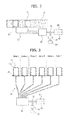
- FIG. 1 is a perspective view showing an apparatus for adjusting the pressure of a mattress which is an exemplary embodiment of the present invention.
- FIG. 2 is a schematic view showing a state of an apparatus for adjusting the pressure of a mattress which is a first embodiment of the present invention.
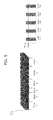
- FIG. 3 is a schematic view showing a state of an apparatus for adjusting the pressure of a mattress which is a second embodiment of the present invention.
- FIG. 4 is a cross-sectional view showing the apparatus shown in FIG. 3 .
- FIG. 5 is a view showing a state before a user lies on a mattress.
- FIG. 6 is a view showing a state when the user lies on the mattress.
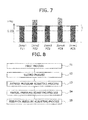
- FIG. 7 is a graph showing a change in pressure of the mattress.
- FIG. 5 is a view showing a state before a user lies on a mattress.
- FIG. 6 is a view showing a state when the user lies on the mattress.
- FIG. 7 is a graph showing a change in pressure of the mattress.
- an apparatus for adjusting the pressure of a mattress which is an exemplary embodiment of the present invention includes a mattress 10 having at least two cells 11, each of which forms a closed space filled with fluid, a hydraulic pump 40 supplying the fluid to the mattress 10, a valve 22 controlling the fluid supplied to each cell 11, a pressure sensor 23 detecting pressure of the fluid filled in each cell 11, a damper 30 in which the fluid supplied by the hydraulic pump 40 is stored under high pressure, a connecting pipe 20 connecting each cell 11 and each valve 22, and a feed pipe 21 connecting the valves 22 and the hydraulic pump 40.
- the valves 22 are installed so as to be connected to the connecting pipes 20 connected to the cells 11 installed in zones, respectively.
- the cells 11 are made up of a plurality of air pockets 11a forming separate closed inner spaces and connecting passages 11b connecting the air pockets 11a.
- the pressure sensors 23 are connected to the damper 30.
- the damper 30 is connected between the valves 22 and the hydraulic pump 40, and is connected to the pressure sensors 23.
- the pressure sensors 23 may be configured so as to be mounted in the respective cells 11 without being connected to the damper 30.
- each pressure sensor 23 detects pressure of the fluid filled in each cell 11.
- the apparatus includes a controller 50 that receives a pressure value measured by each pressure sensor 23 and controls an operation of the hydraulic pump 40 based on the pressure value. Further, the controller 50 controls an operation of each valve 22 to adjust an amount of the fluid supplied to each cell 11.
- Each valve 22 may employ one of flow control valves, each of which controls a flow rate.
- Each valve 22 preferably employs a solenoid valve that can be opened/closed by initial drive voltage and that can be kept opened/closed by sustain voltage lower than the initial drive voltage.
- the mattress 10 may include a typical spring mattress or a mattress formed of a cushion material, and have a structure in which the cell 11 is formed in two or more zones thereof.
- each cell 11 preferably supports one of the shoulders and buttocks of a user.
- the mattress 10 may be formed in a structure in which a plurality of cells 11 are provided in respective zones (Zone1 to Zone5).
- the number of zones is not limited to five as shown, but may be at least two according to a taste of the user.
- the cells 11 are arranged such that Zone1 located at one end of the mattress supports the head of the user, Zone1 located at the other end of the mattress supports the feet of the user, Zone2 supports the shoulders of the user, Zone3 supports the waist of the user, Zone4 supports the buttocks of the user, and Zone4 supports the legs of the user.
- the number of cells 11 arranged for the zones can be adjusted.
- a method for adjusting the pressure of a mattress includes a first process S1, a second process S2, an average pressure adjusting process S3, a partial pressure adjusting process S4, and a feedback pressure adjusting process S5 which are sequentially carried out.
- the first process S1 is a process of measuring internal pressure in a state in which a user does not lie on the cells 11 filled with fluid.
- all the valves 22 are kept closed.
- pressure in each cell 11 is measured.
- the pressure sensors 23 are mounted in the respective cells 11, a method of operating the pressure sensors 23 to measure the pressures in the cells 11 in the state in which the valves 22 are closed is used.
- valves 22 are operated to measure the pressures in the cells 11 so that connecting pipes 20 connected to the cells 11 can be sequentially connected to the pressure sensors 23, and then are closed.
- the pressures measured for the respective zones in the first process S1 are the same internal pressures as shown in the graph.
- the second process S2 is a process of measuring the internal pressure of each cell 11 in a state in which a user lies on the mattress 10.
- the valves 22 installed on the respective connecting pipes 20 are all kept closed.
- method of operating the pressure sensors 23 to measure the pressures in the cells 11 in the state in which the valves 22 are closed is used.
- the valves 22 connected to the respective zones are sequentially opened one by one.
- pressure of each zone is transmitted to the pressure sensor 23 via the feed pipe 21 and the damper 30, the pressure is measured.
- the valve 22 of the opened zone is closed, and then the valve 22 connected to the next zone is opened. In this way, the internal pressures Pz1, Pz2, Pz3, Pz4, and Pz5 of all the zones are measured.
- a pressure variation ⁇ P caused by a difference between the internal pressure measured for each cell 11 in the first process S1 and the internal pressure measured for each cell 11 in the second process S2 can be obtained.
- Two methods of obtaining an average pressure variation ⁇ Pave based on the pressure variation ⁇ P of each zone are as follows.
- the user lies on the mattress 10, and the pressures are measured in the zones in which the cells 11 are installed. All the measured pressures areadded, and are divided by the number of zones in which the cells 11 are installed. As shown in FIG. 2 , if the number of zones is two, the sum of pressures is divided by two. As shown in FIG. 3 , if the number of zones is five, the sum of pressures is divided by five. Thereby, the average pressure variation ⁇ Pave is calculated.
- the second method in a state in which the cells 11 are closed, internal pressures of the cells 11 before the user lies are measured in the first process S1. In a state in which all the valves 22 are opened to cause the cells 11 installed in the respective zones to communicate with one another, internal pressures of the cells 11 after the user lies are measured in the second process S2. The sum of the pressures measured in the first process S1 is subtracted from the sum of the pressures measured in the second process S2. Thereby, the average pressure variation ⁇ Pave is calculated.
- the second method is preferably used. This results from the structure of the mattress in which the plurality of air pockets 11a for the cells 11 are interconnected by the connecting passages 11b.
- Each air pocket 11a has a repulsive force against pressure applied by weight of a user according to its own elastic force or material characteristics. Further, in the plurality of air pockets 11a connected by the narrow connecting passages 11b, there is a possibility of a minute pressure difference occurring between the air pocket that comes into contact with the user and the air pocket that does not come into contact with the user.
- the overall pressure variations are preferably measured in the state in which all the cells 11 communicate with one another. Further, it can be found from several tests that it is preferable to calculate the average pressure variation ⁇ Pave using the second method in order to calculate an actual weight of the user.
- Equation 1 The calculated average pressure variation ⁇ Pave can be obtained from Equation 1 below.
- W A + B * ⁇ Pave + C * Cos ⁇ D * ⁇ Pave - E
- Equation 1 A has a value ranging from 1 to 3
- B has a value ranging from 300 to 600
- C has a value ranging from 1 to 4
- D has a value ranging from 400 to 600
- E has a value ranging from 1.00 to 4.00
- a firmness level FL is obtained from the weight W.
- the firmness level FL is a numerical value obtained from the weight of the user, and allows the user to know a pressure value corresponding to his/her own weight.
- F has a value ranging from 0.1 to 1.0, and preferably 0.5. Further, when the weight is less than 40kg, the firmness level FL is limited to 30. When the weight is more than 120kg, the firmness level FL is limited to 70. That is, the weight that can be converted through Equation 2 ranges from 40 Kg to 120 kg.
- Adjusted pressure of the cell 11 supporting the shoulders of the user is obtained by additionally adding a shoulder partial pressure characteristic value ⁇ Pz2 to the value of the firmness level FL.
- the adjusted pressure of the cell 11 supporting the buttocks of the user is obtained by adding a buttock partial pressure characteristic value ⁇ Pz4 to the value of the firmness level FL.
- classes are divided according to a category in which a numerical value obtained by subtracting both the pressure value before the user lies and the average pressure variation ⁇ Pave from the value of the internal pressure Pz2 of the cell 11 supporting the shoulders of the user is included, and the shoulder partial pressure characteristic value ⁇ Pz2 is determined by the numerical value of the corresponding class.
- classes are divided according to a category in which a numerical value obtained by subtracting both the pressure value before the user lies and the average pressure variation ⁇ Pave from the value of the internal pressure Pz4 of the cell 11 supporting the buttocks of the user is included, and the buttock partial pressure characteristic value ⁇ Pz4 is determined by the numerical value of the corresponding class.
- a reference value is obtained by multiplying the numerical value, which is obtained by subtracting both the pressure value before the user lies and the average pressure variation ⁇ Pave from the value of the internal pressure Pz of the cell 11 supporting the shoulders or the buttocks, by 50.
- the reference value is included in a range of 0 to 1.5, the class is expressed as "a.” Further, the classes are divided by adding 3 to the reference value.
- the class when the reference value is included in a range of 1.5 to 4.5, the class is expressed as "b.” When the reference value is included in a range of 4.5 to 7.5, the class is expressed as “c.” When the reference value is included in a range of 7.5 to 10.5, the class is expressed as “d.” When the reference value is included in a range of 10.5 to 13.5, the class is expressed as "e.”
- the firmness level FL, the shoulder partial pressure characteristic value ⁇ Pz2, and the buttock partial pressure characteristic value ⁇ Pz4, which are obtained in this process, are sequentially expressed and converted into a code.
- this code may be expressed as "47bc,” where "47” indicates the value of the firmness level FL, "b” indicates the shoulder partial pressure characteristic value ⁇ Pz2, and “c” indicates the buttock partial pressure characteristic value ⁇ Pz4.
- each zone is adjusted in the following method.
- the zone supporting the feet is typically set to the same value as the zone supporting the head.
- a value of adjusted pressure for the waist uses the value of the firmness level FL as it is.
- Adjusted Pressure for the legs FL - ⁇ Pz ⁇ 2 + ⁇ Pz ⁇ 4 * V ⁇ 5 / V ⁇ 1 + V ⁇ 5
- FL is the value of the firmness level
- ⁇ Pz2 is the shoulder partial pressure characteristic value
- ⁇ Pz4 is the buttock partial pressure characteristic value
- V1 is the internal volume of the cell supporting the head or the feet
- V5 is the internal volume of the cell supporting the legs.
- the pressure may be additionally adjusted. That is, when a pillow top is placed on the mattress 10, a numerical value M may be added or subtracted according to characteristics of the placed pillow top. In other words, as a thickness of the pillow top increases, the adjusted pressures for the waist, the head or the feet, and the legs which are set in the partial pressure adjusting process S4 are preferably reduced.
- the feedback pressure adjusting process S5 can adjust the pressure in the two methods below.
- the overall pressures of the cells 11 of the zones are adjusted en bloc in the state in which the user lies on the mattress 10. That is, if the user wants a slightly softer feeling, the overall pressure of the cells 11 is reduced up to the moment the user feels satisfaction. If the user wants a slightly firmer feeling, the overall pressure of the cells 11 is gradually increased up to the moment the user feels satisfaction.
- the pressures of the cells 11 installed in the zones supporting the shoulders and the buttocks of the user are adjusted separately or together in the state in which the user lies on the mattress 10. That is, if the user wants a slightly softer feeling, the pressures of the cells 11 are gradually reduced up to the moment the user feels satisfaction. If the user wants a slightly firmer feeling, the pressures of the cells 11 are gradually increased up to the moment the user feels satisfaction.
- the feedback pressure adjusting process S5 is preferably performed to recognize a voice signal of the user. That is, the pressure is adjusted in response to the voice signal of the user who says “firm” or “soft” in the state in which the user lies on the mattress 10.
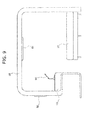
- FIG. 9 is a view showing a state of an apparatus for adjusting the pressure of a mattress which is a third embodiment of the present invention.
- FIG. 10 is a flow chart showing a method for adjusting the pressure of a mattress used for the apparatus shown in FIG. 9 in process sequence.
- An apparatus for adjusting the pressure of a mattress which is a third embodiment of the present invention includes a main body 60 in which a mattress 10 is installed, a display unit 61 installed on a ceiling of the main body 60 so as to enable a user to look at a screen in a state in which the user lies on the mattress 10, an input unit 62 installed at one side of the main body 60 so as to enable the user to input his/her own characteristics (height, age, weight, sex, etc.), a control unit 63 provided at one inner side of the main body 60, and a microphone 64 recognizing a voice signal of the user.
- the display unit 61 may be installed on an inner or outer sidewall of the main body 60 in addition to the ceiling of the main body 60.
- the display unit 61 installed on the inner or outer sidewall may function as a touch pad that is an input means for inputting the physical characteristics of the user in advance.
- a hydraulic pump 40, valves 22, pressure sensors 23, a damper 30, connecting pipes 20, and cells 11 of respective zones constituting the mattress have the same configuration as in the first and second embodiment of the present invention.
- the apparatus for adjusting the pressure of a mattress as configured in this way is an apparatus that can provide a mattress suitable for a user.
- the aforementioned processes i.e. the first process S1, the second process S2, the average pressure adjusting process S3, the partial pressure adjusting process S4, and the feedback pressure adjusting process S5 are performed, and then a bed adjustment completion and bed adjusting value guiding process S6 of completing bed adjustment of the mattress 10 having the bearing pressure per zone suitable for the user, or guiding bed adjusting values is additionally performed.
- the partially adjusted pressures of the head, the shoulders, the waist, the buttocks, the legs, and the feet, which are acquired in the feedback pressure adjusting process S5, are displayed by the display unit 61. This can help the user recognize the pressures to select a bed suitable for him/her.
Landscapes
- Engineering & Computer Science (AREA)
- Mechanical Engineering (AREA)
- Manufacturing & Machinery (AREA)
- Mattresses And Other Support Structures For Chairs And Beds (AREA)
- Invalid Beds And Related Equipment (AREA)
Abstract
Description
- The present invention relates generally to a method and apparatus for adjusting the pressure of a mattress and, more particularly, to a method and apparatus for adjusting the pressure of a mattress, which detect a change in pressure before and after a user lies on the mattress so as to be able to adjust the pressure of the mattress.
- A sleeping apparatus includes all things associated with sleep such as a mattress, a pocket spring, a foundation unit, a bed frame, a pillow, a mattress pad, and linen. That is, the sleeping apparatus generally includes any types of sleeping products having an influence on the sleep of a human being. Such a sleeping apparatus is suitable for some persons but not others. The sleeping apparatus suitable for many persons is dependent on various factors such as physical attributes (weight, height, physique dimensions, and weight distribution), a preferred sleeping pose, and a sleeping habit.
- The factors having a great influence on the sleep of a person are bearing pressure and comfort.
- First, the sleeping apparatus maintains the person in a proper pose so as to support the person, and uniformly distributes the weight of the person throughout a wide range again, thereby relieving interface pressure. For example, the mattress provides a bearing pressure based on a resistance force of an internal spring which resists a force applied downward by the weight of the person.
- Second, the sleeping apparatus is configured so that a soft material is disposed in a region that comes into contact with the body of the person, thereby offering comfort to the body. The sleeping apparatus may be manufactured in such a manner that, for example, a firm pad and a firmer high-density form are placed on the internal spring so as to provide various levels of firmness or hardness to the mattress. Further, the sleeping apparatus may be manufactured in such a manner that a corrugated form or a low-density form, and a tender fabric material such as wool, silk, or cassimere are placed on the internal spring so as to provide various levels of softness or a more comfortable feeling to the mattress.
- Conventionally, in order to allow a user to be satisfied with the aforementioned sleeping apparatus, a method of partly changing the elastic force of the mattress so as to be able to increase the comfort or of using a form for increasing the comfort is used. However, this conventional method has a limit in offering the bearing pressure and the comfort suitable for the user.
- To solve this problem, an air mattress has recently been developed. However, even when the bearing pressure of the air mattress is also partly adjusted, it is difficult to determine which pressure combination of the mattress is suitable for the user.
- Accordingly, the present invention has been made keeping in mind the above problems occurring in the related art, and the present invention is directed to providing a method and apparatus for adjusting the pressure of a mattress, which are capable of adjusting pressure suitable for a user to increase proper bearing force and comfort.
- Further, the present invention is directed to providing a method and apparatus for adjusting the pressure of a mattress, in which cells made up of a plurality of air pockets are adjusted so as to have different pressures for respective zones, thereby allowing a user to increase satisfaction.
- In addition, the present invention is directed to providing a method and apparatus for adjusting the pressure of a mattress, which measure internal pressure before a user lies on the mattress in which closed cells are formed in respective zones and increased internal pressure after the user lies on the mattress, estimate weight of the user based on the measured pressures, and adjust average pressure and partial pressure, thereby allowing the user to increase satisfaction.
- According to an aspect of the present invention, there is provided a method for adjusting the pressure of a mattress which includes a first process of measuring internal pressure before a user lies on the mattress having at least two zones in which cells having a closed inner space filled with fluid are formed, a second process of measuring an increase in the internal pressure of each cell occurring when the user lies on the mattress, and an average pressure adjusting process of adjusting an amount of the fluid introduced into each cell of the mattress based on a pressure variation caused by a difference between the internal pressure measured for each cell in the first process and the internal pressure measured for each cell in the second process.
- Here, the average pressure adjusting process may include obtaining an average pressure variation of the pressure variations generated from the cells in the first process and in the second process, and adjusting the internal pressures of the cells having a structure in which a plurality of closed air pockets communicate with narrow connecting passages.
- Further, the average pressure variation may be calculated by adding a value of the pressure increased in each cell in a closed state after the user lies on the mattress in the second process, and dividing the added pressure value by a number of the zones in which the cells are formed.
- Further, the average pressure variation may be calculated by subtracting a value of the pressure, which is obtained in the first process in which the internal pressure is measured before the user lies with the cells closed, from a value of the pressure measured in the second process in which the internal pressure is measured after the user lies with the cells communicating spatially.
- In addition, the method may further include a partial pressure adjusting process of additionally adjusting the pressure for some of the cells after the average pressure adjusting process.
- Further, after the average pressure variation is calculated by subtracting a value of the pressure, which is obtained in the first process in which the internal pressure is measured before the user lies with the cells closed, from a value of the pressure measured in the second process in which the internal pressure is measured after the user lies with the cells communicating spatially, classes may be divided according to a category in which a numerical value obtained by subtracting the pressure value before the user lies and the average pressure variation from the value of the internal pressure of the cell supporting the buttocks of the user is included, and the buttock partial pressure characteristic value may be determined by the numerical value of the corresponding class.
- The method may further include a feedback pressure adjusting process of additionally adjusting the pressures by request of the user after the partial pressure adjusting process.
- Further, the feedback pressure adjusting process may include adjusting en bloc the pressures of all the cells of the mattress.
- Further, the feedback pressure adjusting process may include adjusting the cells supporting the shoulders and buttocks of the user of the mattress.
- Further, the feedback pressure adjusting process may include detecting a voice signal of the user.
- Moreover, the method may further include a bed adjustment completion and bed adjusting value guiding process of additionally adjusting the pressure to complete bed adjustment of the mattress having bearing pressure per zone suitable for the user based on a value of the pressure or to guide bed adjusting values.
- According to another aspect of the present invention, there is provided an apparatus for adjusting the pressure of a mattress, which includes a mattress having at least two cells, each of which forms a closed space filled with fluid, so as to support shoulders and buttocks of the user, a hydraulic pump supplying the fluid into the cells, a valve controlling the fluid supplied to each cell, and a pressure sensor detecting pressure of the fluid filled in each cell. The pressures before and after the user lies on the mattress are detected by the pressure sensor, and the pressure of the fluid supplied to each cell by the hydraulic pump is adjusted according to a difference between the detected pressures.
- Here, the hydraulic pump and the cells of the mattress may be connected by connecting pipes, and the valve may be connected to the connecting pipes so as to control a flow. A damper may be disposed between the connecting pipes and the hydraulic pump.
- Also, the pressure sensor may be installed in a feed pipe connecting the damper and the hydraulic pump.
- Further, the pressure sensor may be installed in each cell of the mattress.
- The apparatus may further include a controller that receives a value of the pressure measured by the pressure sensor and controls an operation of the hydraulic pump according to the received pressure value.
- The controller may control an operation of the valve.
- Further, the valve may include a solenoid valve that is opened/closed by initial drive voltage and that is kept opened/closed by sustain voltage lower than the initial drive voltage.
- In addition, the apparatus may further include a display unit that causes the pressure of the fluid, which is adjusted for each cell of the mattress so as to be suitable for the user, to be recognized by the user. The display unit may enable the user to select a bed in which the pressure of each cell is adjusted so as to be fitted to physical characteristics of the user.
- According to the method and apparatus for adjusting the pressure of a mattress as described above, internal pressure before a user lies on a mattress having at least two cells, each of which has an inner space filled with fluid and internal pressure after the user lies on the mattress are measured, and partial pressure suitable for the user is determined based on a change in the pressure, so that the user's satisfaction can increase.
- Further, partial pressure suitable for each body part is obtained so as to be suitable for the user, and the user gets some help to select a bed proper to the user based on the partial pressure. As such, the user's satisfaction can increase.
- Further, a feedback pressure adjusting process of additionally adjusting pressure after partial pressure of a mattress which is suitable for the user is adjusted is performed, so that the user's satisfaction can increase.
- In addition, adjusted pressure of each zone of a mattress is adjusted according to characteristics of a pillow top placed on the mattress, so that the user's satisfaction can increase.
-
-
FIG. 1 is a perspective view showing an apparatus for adjusting the pressure of a mattress which is an exemplary embodiment of the present invention. -
FIG. 2 is a schematic view showing a state of an apparatus for adjusting the pressure of a mattress which is a first embodiment of the present invention. -
FIG. 3 is a schematic view showing a state of an apparatus for adjusting the pressure of a mattress which is a second embodiment of the present invention. -
FIG. 4 is a cross-sectional view showing the apparatus for adjusting the pressure of a mattress shown inFIG. 3 . -
FIG. 5 is a view showing a state before a user lies on a mattress. -
FIG. 6 is a view showing a state when the user lies on the mattress. -
FIG. 7 is a graph showing a change in pressure of the mattress. -
FIG. 8 is a flow chart showing a method for adjusting the pressure of a mattress in process sequence. -
FIG. 9 is a view showing a state of a apparatus for adjusting the pressure of a mattress which is a third embodiment of the present invention. -
FIG. 10 is a flow chart showing a method for adjusting the pressure of a mattress used for the apparatus shown inFIG. 9 in process sequence. - Hereinafter, a method and apparatus for adjusting the pressure of a mattress, which are exemplary embodiments of the present invention, will be described in detail with reference to the accompanying drawings.
-
FIG. 1 is a perspective view showing an apparatus for adjusting the pressure of a mattress which is an exemplary embodiment of the present invention.FIG. 2 is a schematic view showing a state of an apparatus for adjusting the pressure of a mattress which is a first embodiment of the present invention.FIG. 3 is a schematic view showing a state of an apparatus for adjusting the pressure of a mattress which is a second embodiment of the present invention.FIG. 4 is a cross-sectional view showing the apparatus shown inFIG. 3 .FIG. 5 is a view showing a state before a user lies on a mattress.FIG. 6 is a view showing a state when the user lies on the mattress.FIG. 7 is a graph showing a change in pressure of the mattress.FIG. 8 is a flow chart showing a method for adjusting the pressure of a mattress in process sequence. As shown, an apparatus for adjusting the pressure of a mattress which is an exemplary embodiment of the present invention includes amattress 10 having at least twocells 11, each of which forms a closed space filled with fluid, ahydraulic pump 40 supplying the fluid to themattress 10, avalve 22 controlling the fluid supplied to eachcell 11, apressure sensor 23 detecting pressure of the fluid filled in eachcell 11, adamper 30 in which the fluid supplied by thehydraulic pump 40 is stored under high pressure, a connectingpipe 20 connecting eachcell 11 and eachvalve 22, and afeed pipe 21 connecting thevalves 22 and thehydraulic pump 40. Thevalves 22 are installed so as to be connected to the connectingpipes 20 connected to thecells 11 installed in zones, respectively. - The
cells 11 are made up of a plurality ofair pockets 11a forming separate closed inner spaces and connectingpassages 11b connecting theair pockets 11a. - The
pressure sensors 23 are connected to thedamper 30. Preferably, thedamper 30 is connected between thevalves 22 and thehydraulic pump 40, and is connected to thepressure sensors 23. Alternatively, thepressure sensors 23 may be configured so as to be mounted in therespective cells 11 without being connected to thedamper 30. Here, eachpressure sensor 23 detects pressure of the fluid filled in eachcell 11. - Further, the apparatus includes a
controller 50 that receives a pressure value measured by eachpressure sensor 23 and controls an operation of thehydraulic pump 40 based on the pressure value. Further, thecontroller 50 controls an operation of eachvalve 22 to adjust an amount of the fluid supplied to eachcell 11. - Each
valve 22 may employ one of flow control valves, each of which controls a flow rate. Eachvalve 22 preferably employs a solenoid valve that can be opened/closed by initial drive voltage and that can be kept opened/closed by sustain voltage lower than the initial drive voltage. - As shown in
FIG. 2 , themattress 10 may include a typical spring mattress or a mattress formed of a cushion material, and have a structure in which thecell 11 is formed in two or more zones thereof. Here, eachcell 11 preferably supports one of the shoulders and buttocks of a user. - As shown in
FIG. 3 , themattress 10 may be formed in a structure in which a plurality ofcells 11 are provided in respective zones (Zone1 to Zone5). The number of zones is not limited to five as shown, but may be at least two according to a taste of the user. - As shown in
FIG. 3 , thecells 11 are arranged such that Zone1 located at one end of the mattress supports the head of the user, Zone1 located at the other end of the mattress supports the feet of the user, Zone2 supports the shoulders of the user, Zone3 supports the waist of the user, Zone4 supports the buttocks of the user, and Zone4 supports the legs of the user. The number ofcells 11 arranged for the zones can be adjusted. - A method for adjusting the pressure of a mattress carried out in the first or second embodiment of the present invention which is configured as described above will be described below.
- As shown in
FIG. 8 , a method for adjusting the pressure of a mattress includes a first process S1, a second process S2, an average pressure adjusting process S3, a partial pressure adjusting process S4, and a feedback pressure adjusting process S5 which are sequentially carried out. - As shown in
FIG. 5 , the first process S1 is a process of measuring internal pressure in a state in which a user does not lie on thecells 11 filled with fluid. Here, all thevalves 22 are kept closed. In a state in which thecells 11 are closed, pressure in eachcell 11 is measured. When thepressure sensors 23 are mounted in therespective cells 11, a method of operating thepressure sensors 23 to measure the pressures in thecells 11 in the state in which thevalves 22 are closed is used. - When the
pressure sensors 23 are only connected to thedamper 30, thevalves 22 are operated to measure the pressures in thecells 11 so that connectingpipes 20 connected to thecells 11 can be sequentially connected to thepressure sensors 23, and then are closed. - The pressures measured for the respective zones in the first process S1 are the same internal pressures as shown in the graph.
- Next, as shown in
FIG. 6 , the second process S2 is a process of measuring the internal pressure of eachcell 11 in a state in which a user lies on themattress 10. Here, thevalves 22 installed on the respective connectingpipes 20 are all kept closed. Further, when thepressure sensors 23 are mounted in therespective cells 11, method of operating thepressure sensors 23 to measure the pressures in thecells 11 in the state in which thevalves 22 are closed is used. When onepressure sensor 23 is installed, thevalves 22 connected to the respective zones are sequentially opened one by one. When pressure of each zone is transmitted to thepressure sensor 23 via thefeed pipe 21 and thedamper 30, the pressure is measured. Then, thevalve 22 of the opened zone is closed, and then thevalve 22 connected to the next zone is opened. In this way, the internal pressures Pz1, Pz2, Pz3, Pz4, and Pz5 of all the zones are measured. - When the internal pressures of the
respective cells 11 are all measured in the state in which the user lies, thevalves 22 are kept closed. - Next, as shown in
FIG. 7 , in the average pressure adjusting process S3, a pressure variation ΔP caused by a difference between the internal pressure measured for eachcell 11 in the first process S1 and the internal pressure measured for eachcell 11 in the second process S2 can be obtained. Two methods of obtaining an average pressure variation ΔPave based on the pressure variation ΔP of each zone are as follows. - In the first method, in a state in which the
cells 11 installed in the respective zones are all closed, the user lies on themattress 10, and the pressures are measured in the zones in which thecells 11 are installed. All the measured pressures areadded, and are divided by the number of zones in which thecells 11 are installed. As shown inFIG. 2 , if the number of zones is two, the sum of pressures is divided by two. As shown inFIG. 3 , if the number of zones is five, the sum of pressures is divided by five. Thereby, the average pressure variation ΔPave is calculated. - In the second method, in a state in which the
cells 11 are closed, internal pressures of thecells 11 before the user lies are measured in the first process S1. In a state in which all thevalves 22 are opened to cause thecells 11 installed in the respective zones to communicate with one another, internal pressures of thecells 11 after the user lies are measured in the second process S2. The sum of the pressures measured in the first process S1 is subtracted from the sum of the pressures measured in the second process S2. Thereby, the average pressure variation ΔPave is calculated. The second method is preferably used. This results from the structure of the mattress in which the plurality ofair pockets 11a for thecells 11 are interconnected by the connectingpassages 11b. Eachair pocket 11a has a repulsive force against pressure applied by weight of a user according to its own elastic force or material characteristics. Further, in the plurality ofair pockets 11a connected by the narrow connectingpassages 11b, there is a possibility of a minute pressure difference occurring between the air pocket that comes into contact with the user and the air pocket that does not come into contact with the user. In consideration of the repulsive force difference and the pressure difference among theair pockets 11a, the overall pressure variations are preferably measured in the state in which all thecells 11 communicate with one another. Further, it can be found from several tests that it is preferable to calculate the average pressure variation ΔPave using the second method in order to calculate an actual weight of the user. - The calculated average pressure variation ΔPave can be obtained from
Equation 1 below.
- This equation is to derive a solution using a program of Cornell University in the United States in which a genetic algorithm is applied to find an optimization function of data. In
Equation 1, A has a value ranging from 1 to 3, B has a value ranging from 300 to 600, C has a value ranging from 1 to 4, D has a value ranging from 400 to 600, and E has a value ranging from 1.00 to 4.00, and preferably A=2, B=500, C=2, D=500, and E=2. - When the weight W of the user is calculated, a firmness level FL is obtained from the weight W. The firmness level FL is a numerical value obtained from the weight of the user, and allows the user to know a pressure value corresponding to his/her own weight.
- The firmness level FL can be obtained from
Equation 2 below.
- Here, F has a value ranging from 0.1 to 1.0, and preferably 0.5. Further, when the weight is less than 40kg, the firmness level FL is limited to 30. When the weight is more than 120kg, the firmness level FL is limited to 70. That is, the weight that can be converted through
Equation 2 ranges from 40 Kg to 120 kg. - As such, the average pressure adjusting process is completed.
- Next, the partial pressure adjusting process S4 begins.
- Adjusted pressure of the
cell 11 supporting the shoulders of the user is obtained by additionally adding a shoulder partial pressure characteristic value ΔPz2 to the value of the firmness level FL. The adjusted pressure of thecell 11 supporting the buttocks of the user is obtained by adding a buttock partial pressure characteristic value ΔPz4 to the value of the firmness level FL. - Here, classes are divided according to a category in which a numerical value obtained by subtracting both the pressure value before the user lies and the average pressure variation ΔPave from the value of the internal pressure Pz2 of the
cell 11 supporting the shoulders of the user is included, and the shoulder partial pressure characteristic value ΔPz2 is determined by the numerical value of the corresponding class. Likewise, classes are divided according to a category in which a numerical value obtained by subtracting both the pressure value before the user lies and the average pressure variation ΔPave from the value of the internal pressure Pz4 of thecell 11 supporting the buttocks of the user is included, and the buttock partial pressure characteristic value ΔPz4 is determined by the numerical value of the corresponding class. - Here, a reference value is obtained by multiplying the numerical value, which is obtained by subtracting both the pressure value before the user lies and the average pressure variation ΔPave from the value of the internal pressure Pz of the
cell 11 supporting the shoulders or the buttocks, by 50. When the reference value is included in a range of 0 to 1.5, the class is expressed as "a." Further, the classes are divided by adding 3 to the reference value. That is, when the reference value is included in a range of 1.5 to 4.5, the class is expressed as "b." When the reference value is included in a range of 4.5 to 7.5, the class is expressed as "c." When the reference value is included in a range of 7.5 to 10.5, the class is expressed as "d." When the reference value is included in a range of 10.5 to 13.5, the class is expressed as "e." - The firmness level FL, the shoulder partial pressure characteristic value ΔPz2, and the buttock partial pressure characteristic value ΔPz4, which are obtained in this process, are sequentially expressed and converted into a code.
- For example, this code may be expressed as "47bc," where "47" indicates the value of the firmness level FL, "b" indicates the shoulder partial pressure characteristic value ΔPz2, and "c" indicates the buttock partial pressure characteristic value ΔPz4.
- As shown in
FIG. 3 , when the zones supporting the head, the waist, the legs, and the feet are added to the zones supporting the shoulders and the buttocks, each zone is adjusted in the following method. The zone supporting the feet is typically set to the same value as the zone supporting the head. - First, a value of adjusted pressure for the waist uses the value of the firmness level FL as it is.
- Next, adjusted pressure for the head or the feet is calculated using
Equation 3 below.
- Next, adjusted pressure for the legs is calculated using
Equation 4 below.
- Here, FL is the value of the firmness level, ΔPz2 is the shoulder partial pressure characteristic value, ΔPz4 is the buttock partial pressure characteristic value, V1 is the internal volume of the cell supporting the head or the feet, and V5 is the internal volume of the cell supporting the legs.
- After the partial pressure adjusting process S4 is completed as described above, the pressure may be additionally adjusted. That is, when a pillow top is placed on the
mattress 10, a numerical value M may be added or subtracted according to characteristics of the placed pillow top. In other words, as a thickness of the pillow top increases, the adjusted pressures for the waist, the head or the feet, and the legs which are set in the partial pressure adjusting process S4 are preferably reduced. - The feedback pressure adjusting process S5 can adjust the pressure in the two methods below.
- In the first method, the overall pressures of the
cells 11 of the zones are adjusted en bloc in the state in which the user lies on themattress 10. That is, if the user wants a slightly softer feeling, the overall pressure of thecells 11 is reduced up to the moment the user feels satisfaction. If the user wants a slightly firmer feeling, the overall pressure of thecells 11 is gradually increased up to the moment the user feels satisfaction. - In the second method, the pressures of the
cells 11 installed in the zones supporting the shoulders and the buttocks of the user are adjusted separately or together in the state in which the user lies on themattress 10. That is, if the user wants a slightly softer feeling, the pressures of thecells 11 are gradually reduced up to the moment the user feels satisfaction. If the user wants a slightly firmer feeling, the pressures of thecells 11 are gradually increased up to the moment the user feels satisfaction. - The feedback pressure adjusting process S5 is preferably performed to recognize a voice signal of the user. That is, the pressure is adjusted in response to the voice signal of the user who says "firm" or "soft" in the state in which the user lies on the
mattress 10. -
FIG. 9 is a view showing a state of an apparatus for adjusting the pressure of a mattress which is a third embodiment of the present invention.FIG. 10 is a flow chart showing a method for adjusting the pressure of a mattress used for the apparatus shown inFIG. 9 in process sequence. An apparatus for adjusting the pressure of a mattress which is a third embodiment of the present invention includes amain body 60 in which amattress 10 is installed, adisplay unit 61 installed on a ceiling of themain body 60 so as to enable a user to look at a screen in a state in which the user lies on themattress 10, aninput unit 62 installed at one side of themain body 60 so as to enable the user to input his/her own characteristics (height, age, weight, sex, etc.), acontrol unit 63 provided at one inner side of themain body 60, and amicrophone 64 recognizing a voice signal of the user. Thedisplay unit 61 may be installed on an inner or outer sidewall of themain body 60 in addition to the ceiling of themain body 60. Thedisplay unit 61 installed on the inner or outer sidewall may function as a touch pad that is an input means for inputting the physical characteristics of the user in advance. - In addition, a
hydraulic pump 40,valves 22,pressure sensors 23, adamper 30, connectingpipes 20, andcells 11 of respective zones constituting the mattress have the same configuration as in the first and second embodiment of the present invention. - The apparatus for adjusting the pressure of a mattress as configured in this way is an apparatus that can provide a mattress suitable for a user. To this end, the aforementioned processes, i.e. the first process S1, the second process S2, the average pressure adjusting process S3, the partial pressure adjusting process S4, and the feedback pressure adjusting process S5 are performed, and then a bed adjustment completion and bed adjusting value guiding process S6 of completing bed adjustment of the
mattress 10 having the bearing pressure per zone suitable for the user, or guiding bed adjusting values is additionally performed. - In the bed adjustment completion and bed adjusting value guiding process S6, the partially adjusted pressures of the head, the shoulders, the waist, the buttocks, the legs, and the feet, which are acquired in the feedback pressure adjusting process S5, are displayed by the
display unit 61. This can help the user recognize the pressures to select a bed suitable for him/her. - While the invention has been shown and described with reference to certain exemplary embodiments thereof, it will be understood by those skilled in the art that various changes in form and details may be made therein without departing from the spirit and scope of the invention as defined by the appended claims.
Claims (19)
- A method for adjusting the pressure of a mattress comprising:a first process (S1) of measuring internal pressure before a user lies on the mattress (10) having at least two zones in which cells (11) having a closed inner space filled with fluid are formed;a second process (S2) of measuring an increase in the internal pressure of each cell (11) occurring when the user lies on the mattress (10);an average pressure adjusting process (S3) of calculating an amount of the fluid introduced into each cell (11) of the mattress (10) based on a pressure variation (ΔP) caused by a difference between the internal pressure measured for each cell (11) in the first process (S1) and the internal pressure measured for each cell (11) in the second process (S2); anda partial pressure adjusting process (S4) of additionally adjusting the pressure for some of the cells (11).
- The method according to claim 1, wherein the average pressure adjusting process (S3) includes obtaining an average pressure variation (ΔPave) of the pressure variations (ΔP) generated from the cells (11) in the first process and in the second process (S2), and adjusting the internal pressures of the cells (11) having a structure in which a plurality of closed air pockets (11a) communicate with connecting passages (11b).
- The method according to claim 2, wherein the average pressure variation (ΔPave) is calculated by adding a value of the pressure increased in each cell (11) in a closed state after the user lies on the mattress (10) in the second process (S2), and dividing the added pressure value by a number of the zones in which the cells (11) are formed.
- The method according to claim 2, wherein the average pressure variation (ΔPave) is calculated by subtracting a value of the pressure, which is obtained in the first process (S1) in which the internal pressure is measured before the user lies with the cells (11) communicating spatially, from a value of the pressure measured in the second process (S2) in which the internal pressure is measured after the user lies with the cells (11) communicating spatially.
- The method according to claim 2, wherein
the average pressure variation (ΔPave) is used to calculate weight (W) of the user using the following equation,
a firmness level (FL) of the user is calculated by the following equation,
- The method according to claim 1, wherein the partial pressure adjusting process (S4) includes obtaining adjusted pressure of the cell (11) supporting shoulders of the user by additionally adding a shoulder partial pressure characteristic value (ΔPz2) to a value of a firmness level (FL), and obtaining adjusted pressure of the cell (11) supporting buttocks of the user by adding a buttock partial pressure characteristic value (ΔPz4) to the value of the firmness level (FL).
- The method according to claim 6, wherein, after the average pressure variation (ΔPave) is calculated by subtracting a value of the pressure, which is obtained in the first process (S1) in which the internal pressure (Pz) is measured before the user lies with the cells (11) communicating spatially, from a value of the pressure measured in the second process (S2) in which the internal pressure is measured after the user lies with the cells (11) communicating spatially,
classes are divided according to a category in which a numerical value obtained by subtracting the pressure value before the user lies and the average pressure variation (ΔPave) from the value of the internal pressure (Pz2) of the cell (11) supporting the shoulders of the user is included, and the shoulder partial pressure characteristic value (ΔPz2) is determined by the numerical value of the corresponding class. - The method according to claim 6, wherein, after the average pressure variation (ΔPave) is calculated by subtracting a value of the pressure, which is obtained in the first process in which the internal pressure (Pz) is measured before the user lies with the cells closed, from a value of the pressure measured in the second process (S2) in which the internal pressure is measured after the user lies with the cells communicating spatially,
classes are divided according to a category in which a numerical value obtained by subtracting the pressure value before the user lies and the average pressure variation (ΔPave) from the value of the internal pressure (Pz4) of the cell (11) supporting the buttocks of the user is included, and the buttock partial pressure characteristic value (ΔPz4) is determined by the numerical value of the corresponding class. - The method according to claim 7 or 8, wherein the classes are divided by adding 3 to a value obtained by multiplying the numerical value, which is obtained by subtracting the pressure value before the user lies and the average pressure variation (ΔPave) from the value of the internal pressure (Pz) of the cell supporting the shoulders or the buttocks, by 50 starting from 1.5 with a range of 0 to 1.5 set to a reference range.
- The method according to claim 9, wherein
weight (W) of the user is calculated by the follow equation,
where ΔPave is the average pressure variation, and
a firmness level (FL) of the user is calculated by the follow equation,
- The method according to claim 10, wherein, when the cells (11) supporting the head, the waist, the legs, and the feet are added, adjusted pressures of the waist, the head or the feet, and the legs are calculated as follows:Adjusted Pressure of Waist = FL,Adjusted Pressure of Head or Feet = FL-(ΔPz2+ΔPz4)*(V1/(V1+V5)),Adjusted Pressure of Legs = FL-(ΔPz2+ΔPz4)*(V5/(V1+V5)),where FL is a value of the firmness level, ΔPz2 is a shoulder partial pressure characteristic value, ΔPz4 is a buttock partial pressure characteristic value, V1 is an internal volume of the cell (11) supporting the head or the feet, and V5 is an internal volume of the cell supporting the legs.
- The method according to claim 1, further comprising a feedback pressure adjusting process (S5) of additionally adjusting the pressures by request of the user after the partial pressure adjusting process (S4).
- The method according to claim 15, wherein the feedback pressure adjusting process includes adjusting the pressures for the respective zones of the cells (11) of the mattress (10).
- The method according to claim 12, wherein the feedback pressure adjusting process includes detecting a voice signal of the user.
- An apparatus for adjusting the pressure of a mattress, which performs the method according to claim 1, comprising:a mattress (10) having at least two cells (11), each of which forms a closed space filled with fluid, so as to support shoulders and buttocks of the user;a hydraulic pump (40) supplying the fluid into the cells (11);a valve (22) controlling the fluid supplied to each cell (11); anda pressure sensor (23) detecting pressure of the fluid filled in each cell (11),wherein the pressures before and after the user lies on the mattress (10) are detected by the pressure sensor (23), and the pressure of the fluid supplied to each cell (11) by the hydraulic pump (40) is adjusted according to a difference between the detected pressures.
- The apparatus according to claim 15, wherein the hydraulic pump (40) and the cells (11) of the mattress (10) are connected by connecting pipes (20), the valve (22) is connected to the connecting pipes (20) so as to control a flow, and a damper (30) is connected to a feed pipe (21) connecting the valve (22) and the hydraulic pump (40).
- The apparatus according to claim 15, further comprising a controller (50) that receives a value of the pressure measured by the pressure sensor (23) and controls an operation of the hydraulic pump (40) according to the received pressure value,
wherein the controller (50) controls an operation of the valve (22). - The apparatus according to claim 15, wherein the valve (22) includes a solenoid valve that is opened/closed by initial drive voltage and that is kept opened/closed by sustain voltage lower than the initial drive voltage.
- The apparatus according to claim 15, further comprising a display unit (61) that causes the pressure of the fluid, which is adjusted for each cell (11) of the mattress (10) so as to be suitable for the user, to be recognized by the user,
wherein the display unit enables the user to select a bed in which the pressure of each cell is adjusted so as to be fitted to physical characteristics of the user.
Applications Claiming Priority (2)
| Application Number | Priority Date | Filing Date | Title |
|---|---|---|---|
| KR1020110129271A KR101213400B1 (en) | 2011-12-05 | 2011-12-05 | Method and apparatus for controlling pressure of mattress |
| PCT/KR2012/010452 WO2013085264A1 (en) | 2011-12-05 | 2012-12-05 | Method and apparatus for adjusting the pressure of a mattress |
Publications (2)
| Publication Number | Publication Date |
|---|---|
| EP2789577A1 true EP2789577A1 (en) | 2014-10-15 |
| EP2789577A4 EP2789577A4 (en) | 2015-07-29 |
Family
ID=47907856
Family Applications (1)
| Application Number | Title | Priority Date | Filing Date |
|---|---|---|---|
| EP12855267.6A Withdrawn EP2789577A4 (en) | 2011-12-05 | 2012-12-05 | Method and apparatus for adjusting the pressure of a mattress |
Country Status (8)
| Country | Link |
|---|---|
| US (1) | US9271578B2 (en) |
| EP (1) | EP2789577A4 (en) |
| JP (1) | JP5906323B2 (en) |
| KR (1) | KR101213400B1 (en) |
| CN (1) | CN103974895B (en) |
| AU (1) | AU2012349135B2 (en) |
| RU (1) | RU2581631C1 (en) |
| WO (1) | WO2013085264A1 (en) |
Cited By (1)
| Publication number | Priority date | Publication date | Assignee | Title |
|---|---|---|---|---|
| WO2025185779A1 (en) * | 2024-03-05 | 2025-09-12 | Linet Spol. S R.O. | A mattress having an automatic pressure adjustment |
Families Citing this family (39)
| Publication number | Priority date | Publication date | Assignee | Title |
|---|---|---|---|---|
| JP5891227B2 (en) * | 2011-07-28 | 2016-03-22 | 住友理工株式会社 | Mattress control method |
| KR101396203B1 (en) * | 2013-03-13 | 2014-05-19 | 한국생산기술연구원 | Apparatus and method for sensing operation of aircusion |
| CN103584572A (en) * | 2013-06-24 | 2014-02-19 | 鲁婷 | Intelligent air bed |
| US10441087B2 (en) * | 2015-02-24 | 2019-10-15 | Sleep Number Corporation | Mattress with adjustable firmness |
| KR101655199B1 (en) * | 2015-02-27 | 2016-09-07 | 현대자동차 주식회사 | Ventilation bed and controling method of a vehicle |
| CN105054667A (en) * | 2015-09-09 | 2015-11-18 | 深圳市福田区青少年科技教育协会 | Automatic induction temperature control mattress |
| JP6557107B2 (en) * | 2015-09-30 | 2019-08-07 | パラマウントベッド株式会社 | Air mat device and air cell internal pressure control method |
| AU2017213658B2 (en) | 2016-02-04 | 2023-01-05 | Roho, Inc. | System and method for cushion inflation |
| CN105877290A (en) * | 2016-04-11 | 2016-08-24 | 浙江大学 | Ceiling type hidden bed |
| CN105852519A (en) * | 2016-04-11 | 2016-08-17 | 浙江大学 | Lifting bed |
| CN105877273A (en) * | 2016-04-11 | 2016-08-24 | 浙江大学 | Ceiling type lifting bed for monitoring sleep state |
| CN106038164A (en) * | 2016-07-01 | 2016-10-26 | 广东正美家具科技有限公司 | Multifunctional device for massage and lying position adjustment |
| CN107788746A (en) * | 2016-09-06 | 2018-03-13 | 晶伟(上海)智能科技有限公司 | A kind of intelligent mattress |
| CN106724358A (en) * | 2016-12-28 | 2017-05-31 | 陈志雄 | A kind of fluid-type automatic lifting regulating system and its mattress of application |
| JP6535356B2 (en) * | 2017-02-06 | 2019-06-26 | パラマウントベッド株式会社 | Body condition determination device, body support device, and body condition determination method |
| CN106963166A (en) * | 2017-03-30 | 2017-07-21 | 南京信息工程大学 | A kind of adaptively changing and the intelligent bed and its method of work of carrier contact portion stress |
| KR102013370B1 (en) * | 2017-09-11 | 2019-08-22 | 주식회사 아이오베드 | Air cell module and air mattress including the same |
| KR102013369B1 (en) * | 2017-09-11 | 2019-08-22 | 주식회사 아이오베드 | Air mattress system and control method the same |
| KR101959033B1 (en) * | 2017-11-28 | 2019-03-18 | 주식회사 아이오베드 | Method for operating a smart mattress system for prevention of snoring |
| CN108260992A (en) * | 2018-01-30 | 2018-07-10 | 上海敏传智能科技有限公司 | The automatic adjusting mechanism and its adjusting method of a kind of seat |
| KR101966875B1 (en) * | 2018-10-25 | 2019-04-08 | 센서클라우드주식회사 | Differential pressure monitoring device and the correcting method thereof |
| KR102096599B1 (en) * | 2018-11-08 | 2020-04-02 | 주식회사 아이오베드 | Smart mattress system |
| JP6804587B2 (en) * | 2019-01-15 | 2020-12-23 | パラマウントベッド株式会社 | Air mattress |
| WO2021046688A1 (en) * | 2019-09-09 | 2021-03-18 | 北京微动数联科技有限公司 | Body part recognition method and apparatus, smart cushion, device and medium |
| TWI741443B (en) * | 2019-12-12 | 2021-10-01 | 美宸科技股份有限公司 | Decompression training device and decompression training system |
| CN111493581A (en) * | 2020-04-11 | 2020-08-07 | 深圳市真元保玖科技有限公司 | Self-adaptive sleep supporting pad and mattress |
| CN111528649A (en) * | 2020-04-27 | 2020-08-14 | 高昌生医股份有限公司 | A chair cushion pressure relief control method that adjusts pressure and controls pressure time according to body weight |
| CN112263107A (en) * | 2020-09-29 | 2021-01-26 | 浙江想能睡眠科技股份有限公司 | Language broadcast intelligent soft and hard controllable mattress |
| KR20220093575A (en) * | 2020-12-28 | 2022-07-05 | (주)인더텍 | User information acquisition apparatus and method |
| KR102830311B1 (en) * | 2022-01-18 | 2025-07-03 | 코웨이 주식회사 | Mattress assembly and furniture including the same |
| KR102425026B1 (en) * | 2022-01-26 | 2022-07-25 | 슬립나이저 주식회사 | A mattress of static pressure sensing type |
| KR102674257B1 (en) * | 2022-03-16 | 2024-06-10 | 슬립나이저 주식회사 | A mattress having a control box built-in |
| CN114557571B (en) * | 2022-03-23 | 2023-11-14 | 慕思健康睡眠股份有限公司 | Intelligent mattress and physiological information detection method |
| KR102635464B1 (en) * | 2022-04-13 | 2024-02-08 | 노태진 | Weighing Air Mat |
| CN115128964B (en) * | 2022-07-15 | 2025-02-18 | 慕思健康睡眠股份有限公司 | A household equipment linkage method based on smart mattress and related products |
| US20240081552A1 (en) * | 2022-08-15 | 2024-03-14 | Aaron Jesse | Automatically Adjusting Sleep System |
| US20240049891A1 (en) * | 2022-08-15 | 2024-02-15 | Aaron Jesse | Air Mattress |
| CN116616581B (en) * | 2023-07-24 | 2023-10-20 | 爱梦睡眠(珠海)智能科技有限公司 | Noise control method, system, equipment and storage medium |
| US20250090399A1 (en) * | 2023-09-18 | 2025-03-20 | Sizewise Rentals, L.L.C. | Alternate pressure mattress system and methods of use |
Family Cites Families (55)
| Publication number | Priority date | Publication date | Assignee | Title |
|---|---|---|---|---|
| US4838309A (en) * | 1985-12-30 | 1989-06-13 | Ssi Medical Services, Inc. | Variable flow gas valve |
| US4852195A (en) * | 1987-10-16 | 1989-08-01 | Schulman David A | Fluid pressurized cushion |
| US5802640A (en) * | 1992-04-03 | 1998-09-08 | Hill-Rom, Inc. | Patient care system |
| US4982466A (en) * | 1988-10-12 | 1991-01-08 | Leggett & Platt, Incorporated | Body support system |
| US5052067A (en) * | 1989-03-09 | 1991-10-01 | Ssi Medical Services, Inc. | Bimodal system for pressurizing a low air loss patient support |
| US5606754A (en) * | 1989-03-09 | 1997-03-04 | Ssi Medical Services, Inc. | Vibratory patient support system |
| US5020176A (en) * | 1989-10-20 | 1991-06-04 | Angel Echevarria Co., Inc. | Control system for fluid-filled beds |
| US5062169A (en) * | 1990-03-09 | 1991-11-05 | Leggett & Platt, Incorporated | Clinical bed |
| JP2902470B2 (en) * | 1990-09-25 | 1999-06-07 | 松下電工株式会社 | Air mat pressure control method |
| JPH06502317A (en) * | 1990-11-06 | 1994-03-17 | バイオ クリニック コーポレイション | liquid-filled flotation mattress |
| US5170364A (en) * | 1990-12-06 | 1992-12-08 | Biomechanics Corporation Of America | Feedback system for load bearing surface |
| US5267364A (en) * | 1992-08-11 | 1993-12-07 | Kinetic Concepts, Inc. | Therapeutic wave mattress |
| JPH06341912A (en) * | 1993-05-31 | 1994-12-13 | Nec San-Ei Instr Co Ltd | Living body pressure distribution measuring device |
| US5586346A (en) * | 1994-02-15 | 1996-12-24 | Support Systems, International | Method and apparatus for supporting and for supplying therapy to a patient |
| US5611096A (en) * | 1994-05-09 | 1997-03-18 | Kinetic Concepts, Inc. | Positional feedback system for medical mattress systems |
| US5666681A (en) * | 1995-01-03 | 1997-09-16 | Hill-Rom, Inc. | Heel pressure management apparatus and method |
| US5685036A (en) * | 1996-02-15 | 1997-11-11 | Geomarine Systems, Inc. | Alternating pressure mattress system and method |
| US5848450A (en) * | 1996-03-05 | 1998-12-15 | L&P Property Management Company | Air bed control |
| US5815864A (en) * | 1996-04-02 | 1998-10-06 | Sytron Corporation | Microprocessor controller and method of initializing and controlling low air loss floatation mattress |
| US5873137A (en) * | 1996-06-17 | 1999-02-23 | Medogar Technologies | Pnuematic mattress systems |
| JPH10313981A (en) * | 1997-05-15 | 1998-12-02 | Aihou:Kk | Air bed |
| US6202672B1 (en) * | 1997-08-25 | 2001-03-20 | Hill-Rom, Inc. | Valve assembly |
| US6212719B1 (en) * | 1997-10-10 | 2001-04-10 | D2Rm Corp. | Air massager cushioning device |
| FR2774573B1 (en) * | 1998-02-09 | 2000-04-28 | Support Systems International | METHOD AND APPARATUS FOR SUPPORTING A SUPPORTING ELEMENT, IN PARTICULAR THE BODY OF A PATIENT, WITH AN INTEGRATED DYNAMIC AND AUTOMATIC PRESSURE BALANCE SYSTEM |
| US6253401B1 (en) * | 1998-07-15 | 2001-07-03 | Dennis Boyd | Air mattress system |
| US6721980B1 (en) * | 1998-10-28 | 2004-04-20 | Hill-Fom Services, Inc. | Force optimization surface apparatus and method |
| US6269505B1 (en) * | 1999-04-20 | 2001-08-07 | M.P.L. Ltd. | Inflatable cushioning device with manifold system |
| US10357114B2 (en) * | 1999-04-20 | 2019-07-23 | Wcw, Inc. | Inflatable cushioning device with manifold system |
| EP1754462B1 (en) * | 1999-12-29 | 2016-07-13 | Hill-Rom Services, Inc. | Patient support with actuator control member |
| GB2369775B (en) * | 2000-12-09 | 2003-05-28 | Huntleigh Technology Plc | Inflatable support |
| TW526056B (en) * | 2001-03-15 | 2003-04-01 | Huntleigh Technology Plc | Inflatable support |
| ATE503404T1 (en) * | 2002-02-28 | 2011-04-15 | Gaymar Ind Inc | SELF-ADJUSTING CUSHIONING DEVICE |
| AU2003300995A1 (en) * | 2002-12-19 | 2004-07-22 | Hill-Rom Services, Inc. | Patient support surface |
| JP4533889B2 (en) * | 2003-03-12 | 2010-09-01 | ジェッタ カンパニー リミテッド | Adjustable mattress and pillow system |
| KR100576109B1 (en) * | 2003-12-22 | 2006-05-03 | 배상법 | Air mattress with adjustable cold and temperature. |
| US7444704B2 (en) * | 2005-02-16 | 2008-11-04 | Kci Licensing, Inc. | System and method for maintaining air inflatable mattress configuration |
| EP2937070B1 (en) * | 2005-07-26 | 2017-02-22 | Hill-Rom Services, Inc. | System and method of controlling an air mattress |
| US20070199154A1 (en) * | 2006-02-24 | 2007-08-30 | Escaross Essam B | System and method for adjusting pressure in pockets or zones |
| CN2922632Y (en) * | 2006-05-19 | 2007-07-18 | 夏从安 | Cooling-heating bed cushion |
| US7520011B1 (en) * | 2007-05-02 | 2009-04-21 | Janusz Liberkowski | Patient bedding system with dense matrix or individually suspended directly body supporting pins |
| WO2008143621A1 (en) * | 2007-05-24 | 2008-11-27 | Select Comfort Corporation | System and method for detecting a leak in an air bed |
| KR101503099B1 (en) | 2007-12-03 | 2015-03-16 | 가부시키가이샤 모루텐 | Air mattress |
| JP5296372B2 (en) * | 2007-12-12 | 2013-09-25 | 株式会社モルテン | Air bed |
| JP4680252B2 (en) * | 2007-12-28 | 2011-05-11 | 株式会社タニタ | Sleep evaluation apparatus and sleep evaluation method |
| CN101499106B (en) * | 2008-01-30 | 2010-11-10 | 蒲卫 | Digitized hospital bed monitoring network system |
| US8533879B1 (en) * | 2008-03-15 | 2013-09-17 | Stryker Corporation | Adaptive cushion method and apparatus for minimizing force concentrations on a human body |
| KR20100074359A (en) * | 2008-12-24 | 2010-07-02 | (주)힐닉스 | Intelligent bedsore prevention control system and the method |
| WO2011006093A1 (en) * | 2009-07-09 | 2011-01-13 | Kreg Medical, Inc. | Adjustable therapeutic mattress |
| KR101161642B1 (en) | 2009-09-21 | 2012-07-02 | 이동철 | Bed Mattress and Mattress Heating System Having The Same |
| US8832883B2 (en) * | 2010-06-12 | 2014-09-16 | American Home Health Care, Inc. | Patient support systems |
| US20140283308A1 (en) * | 2011-11-03 | 2014-09-25 | Shl Group Ab | Mattress System |
| US8973186B2 (en) * | 2011-12-08 | 2015-03-10 | Hill-Rom Services, Inc. | Optimization of the operation of a patient-support apparatus based on patient response |
| JP5534255B2 (en) * | 2011-12-20 | 2014-06-25 | 株式会社タニタ | In-bed determination device and sleep measurement device |
| US9655795B2 (en) * | 2012-04-10 | 2017-05-23 | Hill-Rom Services, Inc. | Occupant support with a migration sensitive bladder and method for migration detection |
| US9047750B2 (en) * | 2013-03-07 | 2015-06-02 | Cellco Partnership | Movement monitoring |
-
2011
- 2011-12-05 KR KR1020110129271A patent/KR101213400B1/en not_active Expired - Fee Related
-
2012
- 2012-12-05 AU AU2012349135A patent/AU2012349135B2/en active Active
- 2012-12-05 RU RU2014127537/12A patent/RU2581631C1/en not_active IP Right Cessation
- 2012-12-05 WO PCT/KR2012/010452 patent/WO2013085264A1/en not_active Ceased
- 2012-12-05 EP EP12855267.6A patent/EP2789577A4/en not_active Withdrawn
- 2012-12-05 JP JP2014545814A patent/JP5906323B2/en active Active
- 2012-12-05 CN CN201280060003.3A patent/CN103974895B/en active Active
-
2013
- 2013-10-23 US US14/061,612 patent/US9271578B2/en active Active
Cited By (1)
| Publication number | Priority date | Publication date | Assignee | Title |
|---|---|---|---|---|
| WO2025185779A1 (en) * | 2024-03-05 | 2025-09-12 | Linet Spol. S R.O. | A mattress having an automatic pressure adjustment |
Also Published As
| Publication number | Publication date |
|---|---|
| CN103974895B (en) | 2016-08-31 |
| KR101213400B1 (en) | 2012-12-21 |
| US20140047645A1 (en) | 2014-02-20 |
| EP2789577A4 (en) | 2015-07-29 |
| RU2581631C1 (en) | 2016-04-20 |
| AU2012349135A1 (en) | 2014-07-03 |
| US9271578B2 (en) | 2016-03-01 |
| JP2015500085A (en) | 2015-01-05 |
| JP5906323B2 (en) | 2016-04-20 |
| AU2012349135B2 (en) | 2015-10-08 |
| WO2013085264A1 (en) | 2013-06-13 |
| CN103974895A (en) | 2014-08-06 |
Similar Documents
| Publication | Publication Date | Title |
|---|---|---|
| AU2012349135B2 (en) | Method and apparatus for adjusting the pressure of a mattress | |
| KR102650512B1 (en) | Sleep management mattress | |
| JP5479370B2 (en) | Apparatus and method for providing variable support and variable comfort control of sleep apparatus, and automatic adjustment thereof | |
| KR101483692B1 (en) | Apparatuses and methods for evaluating a person for a sleep system | |
| EP3718440B1 (en) | Snoring-preventing smart mattress system | |
| JP6557107B2 (en) | Air mat device and air cell internal pressure control method | |
| CN108523524A (en) | A kind of the user's sleep individuation service system and method for the soft or hard adjustable bed mattess of intelligence | |
| KR20140044198A (en) | Mattress and method for controlling pressure of mattress | |
| JP2022066970A (en) | Electrically-driven bedding system, and application software | |
| KR101145647B1 (en) | Apparatus and method for controlling user's posture | |
| JP2009183490A (en) | Mat equipment | |
| JP2012029870A (en) | Air mat device | |
| JP2019103888A (en) | Air mat device and method for controlling inner pressure of air cell | |
| CN109788856B (en) | Method and system for improving sleep quality and mattress containing system | |
| JP2020175208A (en) | Method for controlling internal pressure of air cell | |
| JP2025112594A (en) | Test mattress production equipment | |
| KR20140042400A (en) | Method to restore the pressure of the mattress and device thereof | |
| HK1155922B (en) | Apparatuses and methods providing variable support and variable comfort control of a sleep system and automatic adjustment thereof | |
| HK40003856A (en) | Method and system for improving quality of sleep and mattress comprising the system |
Legal Events
| Date | Code | Title | Description |
|---|---|---|---|
| PUAI | Public reference made under article 153(3) epc to a published international application that has entered the european phase |
Free format text: ORIGINAL CODE: 0009012 |
|
| 17P | Request for examination filed |
Effective date: 20140701 |
|
| AK | Designated contracting states |
Kind code of ref document: A1 Designated state(s): AL AT BE BG CH CY CZ DE DK EE ES FI FR GB GR HR HU IE IS IT LI LT LU LV MC MK MT NL NO PL PT RO RS SE SI SK SM TR |
|
| RIN1 | Information on inventor provided before grant (corrected) |
Inventor name: KIM, DONG JIN Inventor name: KIM, SUNG GON Inventor name: PARK, SEONG CHAN Inventor name: CHOI, JIN YOUNG Inventor name: YU, YOUNG JUN |
|
| DAX | Request for extension of the european patent (deleted) | ||
| RA4 | Supplementary search report drawn up and despatched (corrected) |
Effective date: 20150701 |
|
| RIC1 | Information provided on ipc code assigned before grant |
Ipc: B68G 7/06 20060101AFI20150625BHEP Ipc: A47C 27/10 20060101ALI20150625BHEP Ipc: B60C 29/00 20060101ALI20150625BHEP |
|
| STAA | Information on the status of an ep patent application or granted ep patent |
Free format text: STATUS: THE APPLICATION IS DEEMED TO BE WITHDRAWN |
|
| 18D | Application deemed to be withdrawn |
Effective date: 20160128 |