EP2787513A1 - Electrically insulating resin sheet - Google Patents
Electrically insulating resin sheet Download PDFInfo
- Publication number
- EP2787513A1 EP2787513A1 EP13770376.5A EP13770376A EP2787513A1 EP 2787513 A1 EP2787513 A1 EP 2787513A1 EP 13770376 A EP13770376 A EP 13770376A EP 2787513 A1 EP2787513 A1 EP 2787513A1
- Authority
- EP
- European Patent Office
- Prior art keywords
- electrically insulating
- resin sheet
- insulating resin
- sheet
- thermoplastic resin
- Prior art date
- Legal status (The legal status is an assumption and is not a legal conclusion. Google has not performed a legal analysis and makes no representation as to the accuracy of the status listed.)
- Withdrawn
Links
- 229920005989 resin Polymers 0.000 title claims abstract description 134
- 239000011347 resin Substances 0.000 title claims abstract description 134
- 238000009413 insulation Methods 0.000 claims abstract description 20
- 230000015556 catabolic process Effects 0.000 claims abstract description 17
- 229920005992 thermoplastic resin Polymers 0.000 claims description 80
- 239000004697 Polyetherimide Substances 0.000 claims description 21
- 229920001601 polyetherimide Polymers 0.000 claims description 21
- 239000000463 material Substances 0.000 claims description 16
- 230000009477 glass transition Effects 0.000 claims description 13
- 239000004695 Polyether sulfone Substances 0.000 claims description 8
- 239000000203 mixture Substances 0.000 claims description 8
- 229920006393 polyether sulfone Polymers 0.000 claims description 8
- 239000000615 nonconductor Substances 0.000 claims description 3
- CURLTUGMZLYLDI-UHFFFAOYSA-N Carbon dioxide Chemical compound O=C=O CURLTUGMZLYLDI-UHFFFAOYSA-N 0.000 description 76
- 238000005191 phase separation Methods 0.000 description 41
- 239000003795 chemical substances by application Substances 0.000 description 40
- 229910002092 carbon dioxide Inorganic materials 0.000 description 38
- 239000001569 carbon dioxide Substances 0.000 description 38
- 238000000034 method Methods 0.000 description 37
- 210000004027 cell Anatomy 0.000 description 22
- 239000007789 gas Substances 0.000 description 22
- 239000011342 resin composition Substances 0.000 description 18
- 238000000605 extraction Methods 0.000 description 16
- 230000000052 comparative effect Effects 0.000 description 13
- 238000005187 foaming Methods 0.000 description 13
- 238000010438 heat treatment Methods 0.000 description 13
- SECXISVLQFMRJM-UHFFFAOYSA-N N-Methylpyrrolidone Chemical compound CN1CCCC1=O SECXISVLQFMRJM-UHFFFAOYSA-N 0.000 description 12
- 239000002904 solvent Substances 0.000 description 12
- 239000012212 insulator Substances 0.000 description 11
- 239000003960 organic solvent Substances 0.000 description 11
- 210000003855 cell nucleus Anatomy 0.000 description 10
- 238000005452 bending Methods 0.000 description 9
- 238000005470 impregnation Methods 0.000 description 8
- -1 polyethylene terephthalate Polymers 0.000 description 7
- 229920001451 polypropylene glycol Polymers 0.000 description 7
- LFQSCWFLJHTTHZ-UHFFFAOYSA-N Ethanol Chemical compound CCO LFQSCWFLJHTTHZ-UHFFFAOYSA-N 0.000 description 6
- YXFVVABEGXRONW-UHFFFAOYSA-N Toluene Chemical compound CC1=CC=CC=C1 YXFVVABEGXRONW-UHFFFAOYSA-N 0.000 description 6
- 239000000654 additive Substances 0.000 description 6
- 150000001875 compounds Chemical class 0.000 description 6
- 230000007423 decrease Effects 0.000 description 6
- NIXOWILDQLNWCW-UHFFFAOYSA-M Acrylate Chemical compound [O-]C(=O)C=C NIXOWILDQLNWCW-UHFFFAOYSA-M 0.000 description 5
- IJGRMHOSHXDMSA-UHFFFAOYSA-N Atomic nitrogen Chemical compound N#N IJGRMHOSHXDMSA-UHFFFAOYSA-N 0.000 description 5
- 238000001704 evaporation Methods 0.000 description 5
- 230000008020 evaporation Effects 0.000 description 5
- 229910052751 metal Inorganic materials 0.000 description 5
- 239000002184 metal Substances 0.000 description 5
- 238000000354 decomposition reaction Methods 0.000 description 4
- 230000005484 gravity Effects 0.000 description 4
- 238000003780 insertion Methods 0.000 description 4
- 230000037431 insertion Effects 0.000 description 4
- 229920003023 plastic Polymers 0.000 description 4
- 239000004033 plastic Substances 0.000 description 4
- 229920000139 polyethylene terephthalate Polymers 0.000 description 4
- 239000005020 polyethylene terephthalate Substances 0.000 description 4
- 239000002994 raw material Substances 0.000 description 4
- 230000009467 reduction Effects 0.000 description 4
- ZWEHNKRNPOVVGH-UHFFFAOYSA-N 2-Butanone Chemical compound CCC(C)=O ZWEHNKRNPOVVGH-UHFFFAOYSA-N 0.000 description 3
- XEKOWRVHYACXOJ-UHFFFAOYSA-N Ethyl acetate Chemical compound CCOC(C)=O XEKOWRVHYACXOJ-UHFFFAOYSA-N 0.000 description 3
- JOYRKODLDBILNP-UHFFFAOYSA-N Ethyl urethane Chemical compound CCOC(N)=O JOYRKODLDBILNP-UHFFFAOYSA-N 0.000 description 3
- KFZMGEQAYNKOFK-UHFFFAOYSA-N Isopropanol Chemical compound CC(C)O KFZMGEQAYNKOFK-UHFFFAOYSA-N 0.000 description 3
- OKKJLVBELUTLKV-UHFFFAOYSA-N Methanol Chemical compound OC OKKJLVBELUTLKV-UHFFFAOYSA-N 0.000 description 3
- ZMXDDKWLCZADIW-UHFFFAOYSA-N N,N-Dimethylformamide Chemical compound CN(C)C=O ZMXDDKWLCZADIW-UHFFFAOYSA-N 0.000 description 3
- 239000004696 Poly ether ether ketone Substances 0.000 description 3
- 229920012266 Poly(ether sulfone) PES Polymers 0.000 description 3
- 239000004642 Polyimide Substances 0.000 description 3
- 239000004734 Polyphenylene sulfide Substances 0.000 description 3
- 150000001252 acrylic acid derivatives Chemical class 0.000 description 3
- 239000000853 adhesive Substances 0.000 description 3
- 230000001070 adhesive effect Effects 0.000 description 3
- 230000010261 cell growth Effects 0.000 description 3
- 238000001723 curing Methods 0.000 description 3
- 238000004898 kneading Methods 0.000 description 3
- 229920002492 poly(sulfone) Polymers 0.000 description 3
- 229920002530 polyetherether ketone Polymers 0.000 description 3
- 229920001721 polyimide Polymers 0.000 description 3
- 229920000069 polyphenylene sulfide Polymers 0.000 description 3
- 238000010791 quenching Methods 0.000 description 3
- 230000000171 quenching effect Effects 0.000 description 3
- 230000000630 rising effect Effects 0.000 description 3
- CSCPPACGZOOCGX-UHFFFAOYSA-N Acetone Chemical compound CC(C)=O CSCPPACGZOOCGX-UHFFFAOYSA-N 0.000 description 2
- RTZKZFJDLAIYFH-UHFFFAOYSA-N Diethyl ether Chemical compound CCOCC RTZKZFJDLAIYFH-UHFFFAOYSA-N 0.000 description 2
- LYCAIKOWRPUZTN-UHFFFAOYSA-N Ethylene glycol Chemical compound OCCO LYCAIKOWRPUZTN-UHFFFAOYSA-N 0.000 description 2
- IMNFDUFMRHMDMM-UHFFFAOYSA-N N-Heptane Chemical compound CCCCCCC IMNFDUFMRHMDMM-UHFFFAOYSA-N 0.000 description 2
- 239000004820 Pressure-sensitive adhesive Substances 0.000 description 2
- ATUOYWHBWRKTHZ-UHFFFAOYSA-N Propane Chemical compound CCC ATUOYWHBWRKTHZ-UHFFFAOYSA-N 0.000 description 2
- 230000000996 additive effect Effects 0.000 description 2
- 238000000576 coating method Methods 0.000 description 2
- 239000004020 conductor Substances 0.000 description 2
- 238000003851 corona treatment Methods 0.000 description 2
- 238000005336 cracking Methods 0.000 description 2
- 238000009792 diffusion process Methods 0.000 description 2
- 238000001035 drying Methods 0.000 description 2
- 238000011156 evaluation Methods 0.000 description 2
- 239000011229 interlayer Substances 0.000 description 2
- 239000010410 layer Substances 0.000 description 2
- 238000004519 manufacturing process Methods 0.000 description 2
- 238000005259 measurement Methods 0.000 description 2
- 238000000465 moulding Methods 0.000 description 2
- 229910052757 nitrogen Inorganic materials 0.000 description 2
- 239000004745 nonwoven fabric Substances 0.000 description 2
- 229920001515 polyalkylene glycol Polymers 0.000 description 2
- 238000012545 processing Methods 0.000 description 2
- 125000006850 spacer group Chemical group 0.000 description 2
- 239000000126 substance Substances 0.000 description 2
- 239000000758 substrate Substances 0.000 description 2
- 238000009864 tensile test Methods 0.000 description 2
- XLYOFNOQVPJJNP-UHFFFAOYSA-N water Substances O XLYOFNOQVPJJNP-UHFFFAOYSA-N 0.000 description 2
- WZCQRUWWHSTZEM-UHFFFAOYSA-N 1,3-phenylenediamine Chemical compound NC1=CC=CC(N)=C1 WZCQRUWWHSTZEM-UHFFFAOYSA-N 0.000 description 1
- CBCKQZAAMUWICA-UHFFFAOYSA-N 1,4-phenylenediamine Chemical compound NC1=CC=C(N)C=C1 CBCKQZAAMUWICA-UHFFFAOYSA-N 0.000 description 1
- IBRQUKZZBXZOBA-UHFFFAOYSA-N 1-chloro-3-(3-chlorophenyl)sulfonylbenzene Chemical compound ClC1=CC=CC(S(=O)(=O)C=2C=C(Cl)C=CC=2)=C1 IBRQUKZZBXZOBA-UHFFFAOYSA-N 0.000 description 1
- VOZKAJLKRJDJLL-UHFFFAOYSA-N 2,4-diaminotoluene Chemical compound CC1=CC=C(N)C=C1N VOZKAJLKRJDJLL-UHFFFAOYSA-N 0.000 description 1
- RLYCRLGLCUXUPO-UHFFFAOYSA-N 2,6-diaminotoluene Chemical compound CC1=C(N)C=CC=C1N RLYCRLGLCUXUPO-UHFFFAOYSA-N 0.000 description 1
- TXBCBTDQIULDIA-UHFFFAOYSA-N 2-[[3-hydroxy-2,2-bis(hydroxymethyl)propoxy]methyl]-2-(hydroxymethyl)propane-1,3-diol Chemical compound OCC(CO)(CO)COCC(CO)(CO)CO TXBCBTDQIULDIA-UHFFFAOYSA-N 0.000 description 1
- LJGHYPLBDBRCRZ-UHFFFAOYSA-N 3-(3-aminophenyl)sulfonylaniline Chemical compound NC1=CC=CC(S(=O)(=O)C=2C=C(N)C=CC=2)=C1 LJGHYPLBDBRCRZ-UHFFFAOYSA-N 0.000 description 1
- ZBMISJGHVWNWTE-UHFFFAOYSA-N 3-(4-aminophenoxy)aniline Chemical compound C1=CC(N)=CC=C1OC1=CC=CC(N)=C1 ZBMISJGHVWNWTE-UHFFFAOYSA-N 0.000 description 1
- IFYXKXOINSPAJQ-UHFFFAOYSA-N 4-(4-aminophenyl)-5,5-bis(trifluoromethyl)cyclohexa-1,3-dien-1-amine Chemical group FC(F)(F)C1(C(F)(F)F)CC(N)=CC=C1C1=CC=C(N)C=C1 IFYXKXOINSPAJQ-UHFFFAOYSA-N 0.000 description 1
- ZNDJZRZZTPORNT-UHFFFAOYSA-N 4-(4-aminophenyl)-5,5-dimethylcyclohexa-1,3-dien-1-amine Chemical group CC1(C)CC(N)=CC=C1C1=CC=C(N)C=C1 ZNDJZRZZTPORNT-UHFFFAOYSA-N 0.000 description 1
- HLBLWEWZXPIGSM-UHFFFAOYSA-N 4-Aminophenyl ether Chemical compound C1=CC(N)=CC=C1OC1=CC=C(N)C=C1 HLBLWEWZXPIGSM-UHFFFAOYSA-N 0.000 description 1
- WUPRYUDHUFLKFL-UHFFFAOYSA-N 4-[3-(4-aminophenoxy)phenoxy]aniline Chemical compound C1=CC(N)=CC=C1OC1=CC=CC(OC=2C=CC(N)=CC=2)=C1 WUPRYUDHUFLKFL-UHFFFAOYSA-N 0.000 description 1
- JCRRFJIVUPSNTA-UHFFFAOYSA-N 4-[4-(4-aminophenoxy)phenoxy]aniline Chemical compound C1=CC(N)=CC=C1OC(C=C1)=CC=C1OC1=CC=C(N)C=C1 JCRRFJIVUPSNTA-UHFFFAOYSA-N 0.000 description 1
- 229920002799 BoPET Polymers 0.000 description 1
- RYGMFSIKBFXOCR-UHFFFAOYSA-N Copper Chemical compound [Cu] RYGMFSIKBFXOCR-UHFFFAOYSA-N 0.000 description 1
- MQJKPEGWNLWLTK-UHFFFAOYSA-N Dapsone Chemical compound C1=CC(N)=CC=C1S(=O)(=O)C1=CC=C(N)C=C1 MQJKPEGWNLWLTK-UHFFFAOYSA-N 0.000 description 1
- 239000004593 Epoxy Substances 0.000 description 1
- XEEYBQQBJWHFJM-UHFFFAOYSA-N Iron Chemical group [Fe] XEEYBQQBJWHFJM-UHFFFAOYSA-N 0.000 description 1
- 229920000106 Liquid crystal polymer Polymers 0.000 description 1
- 239000004977 Liquid-crystal polymers (LCPs) Substances 0.000 description 1
- FXHOOIRPVKKKFG-UHFFFAOYSA-N N,N-Dimethylacetamide Chemical compound CN(C)C(C)=O FXHOOIRPVKKKFG-UHFFFAOYSA-N 0.000 description 1
- CTQNGGLPUBDAKN-UHFFFAOYSA-N O-Xylene Chemical compound CC1=CC=CC=C1C CTQNGGLPUBDAKN-UHFFFAOYSA-N 0.000 description 1
- 239000004952 Polyamide Substances 0.000 description 1
- 239000004962 Polyamide-imide Substances 0.000 description 1
- 239000004698 Polyethylene Substances 0.000 description 1
- 239000002202 Polyethylene glycol Substances 0.000 description 1
- 239000004743 Polypropylene Substances 0.000 description 1
- 229920003295 Radel® Polymers 0.000 description 1
- 239000006087 Silane Coupling Agent Substances 0.000 description 1
- ZJCCRDAZUWHFQH-UHFFFAOYSA-N Trimethylolpropane Chemical compound CCC(CO)(CO)CO ZJCCRDAZUWHFQH-UHFFFAOYSA-N 0.000 description 1
- 229920004738 ULTEM® Polymers 0.000 description 1
- 239000006096 absorbing agent Substances 0.000 description 1
- 238000010521 absorption reaction Methods 0.000 description 1
- GTDPSWPPOUPBNX-UHFFFAOYSA-N ac1mqpva Chemical compound CC12C(=O)OC(=O)C1(C)C1(C)C2(C)C(=O)OC1=O GTDPSWPPOUPBNX-UHFFFAOYSA-N 0.000 description 1
- 239000003522 acrylic cement Substances 0.000 description 1
- 239000003570 air Substances 0.000 description 1
- 150000001298 alcohols Chemical class 0.000 description 1
- 229910052782 aluminium Inorganic materials 0.000 description 1
- XAGFODPZIPBFFR-UHFFFAOYSA-N aluminium Chemical compound [Al] XAGFODPZIPBFFR-UHFFFAOYSA-N 0.000 description 1
- 150000001408 amides Chemical class 0.000 description 1
- 150000008064 anhydrides Chemical class 0.000 description 1
- 239000003963 antioxidant agent Substances 0.000 description 1
- 150000004945 aromatic hydrocarbons Chemical class 0.000 description 1
- 125000003118 aryl group Chemical group 0.000 description 1
- 239000012298 atmosphere Substances 0.000 description 1
- 230000008901 benefit Effects 0.000 description 1
- 230000015572 biosynthetic process Effects 0.000 description 1
- 238000009835 boiling Methods 0.000 description 1
- 238000006243 chemical reaction Methods 0.000 description 1
- 239000011248 coating agent Substances 0.000 description 1
- 238000011437 continuous method Methods 0.000 description 1
- 229910052802 copper Inorganic materials 0.000 description 1
- 239000010949 copper Substances 0.000 description 1
- 238000004132 cross linking Methods 0.000 description 1
- 239000003431 cross linking reagent Substances 0.000 description 1
- 239000013078 crystal Substances 0.000 description 1
- 230000006837 decompression Effects 0.000 description 1
- 230000003247 decreasing effect Effects 0.000 description 1
- 230000006735 deficit Effects 0.000 description 1
- 230000032798 delamination Effects 0.000 description 1
- 230000006866 deterioration Effects 0.000 description 1
- 238000011161 development Methods 0.000 description 1
- 229910001873 dinitrogen Inorganic materials 0.000 description 1
- ZZTCPWRAHWXWCH-UHFFFAOYSA-N diphenylmethanediamine Chemical compound C=1C=CC=CC=1C(N)(N)C1=CC=CC=C1 ZZTCPWRAHWXWCH-UHFFFAOYSA-N 0.000 description 1
- 238000007599 discharging Methods 0.000 description 1
- 230000000694 effects Effects 0.000 description 1
- 229920006351 engineering plastic Polymers 0.000 description 1
- 238000005516 engineering process Methods 0.000 description 1
- 229920006332 epoxy adhesive Polymers 0.000 description 1
- 239000003063 flame retardant Substances 0.000 description 1
- 239000004088 foaming agent Substances 0.000 description 1
- 239000011888 foil Substances 0.000 description 1
- 239000011521 glass Substances 0.000 description 1
- 239000012760 heat stabilizer Substances 0.000 description 1
- WGCNASOHLSPBMP-UHFFFAOYSA-N hydroxyacetaldehyde Natural products OCC=O WGCNASOHLSPBMP-UHFFFAOYSA-N 0.000 description 1
- 239000011256 inorganic filler Substances 0.000 description 1
- 229910003475 inorganic filler Inorganic materials 0.000 description 1
- 239000011810 insulating material Substances 0.000 description 1
- 150000002576 ketones Chemical class 0.000 description 1
- 238000007759 kiss coating Methods 0.000 description 1
- 239000004611 light stabiliser Substances 0.000 description 1
- 239000007788 liquid Substances 0.000 description 1
- 239000000314 lubricant Substances 0.000 description 1
- 229940018564 m-phenylenediamine Drugs 0.000 description 1
- 230000007257 malfunction Effects 0.000 description 1
- 238000000691 measurement method Methods 0.000 description 1
- 125000002496 methyl group Chemical group [H]C([H])([H])* 0.000 description 1
- 229920002601 oligoester Polymers 0.000 description 1
- 230000035699 permeability Effects 0.000 description 1
- 239000000049 pigment Substances 0.000 description 1
- 239000002985 plastic film Substances 0.000 description 1
- 229920006255 plastic film Polymers 0.000 description 1
- 239000004014 plasticizer Substances 0.000 description 1
- 229920002647 polyamide Polymers 0.000 description 1
- 229920002312 polyamide-imide Polymers 0.000 description 1
- 229920001230 polyarylate Polymers 0.000 description 1
- 229920001707 polybutylene terephthalate Polymers 0.000 description 1
- 239000004417 polycarbonate Substances 0.000 description 1
- 229920000515 polycarbonate Polymers 0.000 description 1
- 238000006068 polycondensation reaction Methods 0.000 description 1
- 229920001223 polyethylene glycol Polymers 0.000 description 1
- 229920000642 polymer Polymers 0.000 description 1
- 239000011148 porous material Substances 0.000 description 1
- XAEFZNCEHLXOMS-UHFFFAOYSA-M potassium benzoate Chemical compound [K+].[O-]C(=O)C1=CC=CC=C1 XAEFZNCEHLXOMS-UHFFFAOYSA-M 0.000 description 1
- 230000001737 promoting effect Effects 0.000 description 1
- 239000001294 propane Substances 0.000 description 1
- 238000007363 ring formation reaction Methods 0.000 description 1
- 238000005507 spraying Methods 0.000 description 1
- 229910001220 stainless steel Inorganic materials 0.000 description 1
- 239000010935 stainless steel Substances 0.000 description 1
- 238000003756 stirring Methods 0.000 description 1
- 150000003457 sulfones Chemical class 0.000 description 1
- 230000008961 swelling Effects 0.000 description 1
- 238000001029 thermal curing Methods 0.000 description 1
- 238000007740 vapor deposition Methods 0.000 description 1
- 238000004804 winding Methods 0.000 description 1
- 239000008096 xylene Substances 0.000 description 1
- PAPBSGBWRJIAAV-UHFFFAOYSA-N ε-Caprolactone Chemical compound O=C1CCCCCO1 PAPBSGBWRJIAAV-UHFFFAOYSA-N 0.000 description 1
Images
Classifications
-
- C—CHEMISTRY; METALLURGY
- C08—ORGANIC MACROMOLECULAR COMPOUNDS; THEIR PREPARATION OR CHEMICAL WORKING-UP; COMPOSITIONS BASED THEREON
- C08J—WORKING-UP; GENERAL PROCESSES OF COMPOUNDING; AFTER-TREATMENT NOT COVERED BY SUBCLASSES C08B, C08C, C08F, C08G or C08H
- C08J9/00—Working-up of macromolecular substances to porous or cellular articles or materials; After-treatment thereof
- C08J9/28—Working-up of macromolecular substances to porous or cellular articles or materials; After-treatment thereof by elimination of a liquid phase from a macromolecular composition or article, e.g. drying of coagulum
-
- H—ELECTRICITY
- H01—ELECTRIC ELEMENTS
- H01B—CABLES; CONDUCTORS; INSULATORS; SELECTION OF MATERIALS FOR THEIR CONDUCTIVE, INSULATING OR DIELECTRIC PROPERTIES
- H01B17/00—Insulators or insulating bodies characterised by their form
- H01B17/56—Insulating bodies
- H01B17/60—Composite insulating bodies
-
- H—ELECTRICITY
- H02—GENERATION; CONVERSION OR DISTRIBUTION OF ELECTRIC POWER
- H02K—DYNAMO-ELECTRIC MACHINES
- H02K3/00—Details of windings
- H02K3/32—Windings characterised by the shape, form or construction of the insulation
- H02K3/34—Windings characterised by the shape, form or construction of the insulation between conductors or between conductor and core, e.g. slot insulation
-
- B—PERFORMING OPERATIONS; TRANSPORTING
- B23—MACHINE TOOLS; METAL-WORKING NOT OTHERWISE PROVIDED FOR
- B23B—TURNING; BORING
- B23B27/00—Tools for turning or boring machines; Tools of a similar kind in general; Accessories therefor
-
- B—PERFORMING OPERATIONS; TRANSPORTING
- B32—LAYERED PRODUCTS
- B32B—LAYERED PRODUCTS, i.e. PRODUCTS BUILT-UP OF STRATA OF FLAT OR NON-FLAT, e.g. CELLULAR OR HONEYCOMB, FORM
- B32B27/00—Layered products comprising a layer of synthetic resin
- B32B27/06—Layered products comprising a layer of synthetic resin as the main or only constituent of a layer, which is next to another layer of the same or of a different material
- B32B27/065—Layered products comprising a layer of synthetic resin as the main or only constituent of a layer, which is next to another layer of the same or of a different material of foam
-
- B—PERFORMING OPERATIONS; TRANSPORTING
- B32—LAYERED PRODUCTS
- B32B—LAYERED PRODUCTS, i.e. PRODUCTS BUILT-UP OF STRATA OF FLAT OR NON-FLAT, e.g. CELLULAR OR HONEYCOMB, FORM
- B32B5/00—Layered products characterised by the non- homogeneity or physical structure, i.e. comprising a fibrous, filamentary, particulate or foam layer; Layered products characterised by having a layer differing constitutionally or physically in different parts
- B32B5/18—Layered products characterised by the non- homogeneity or physical structure, i.e. comprising a fibrous, filamentary, particulate or foam layer; Layered products characterised by having a layer differing constitutionally or physically in different parts characterised by features of a layer of foamed material
-
- B—PERFORMING OPERATIONS; TRANSPORTING
- B32—LAYERED PRODUCTS
- B32B—LAYERED PRODUCTS, i.e. PRODUCTS BUILT-UP OF STRATA OF FLAT OR NON-FLAT, e.g. CELLULAR OR HONEYCOMB, FORM
- B32B5/00—Layered products characterised by the non- homogeneity or physical structure, i.e. comprising a fibrous, filamentary, particulate or foam layer; Layered products characterised by having a layer differing constitutionally or physically in different parts
- B32B5/22—Layered products characterised by the non- homogeneity or physical structure, i.e. comprising a fibrous, filamentary, particulate or foam layer; Layered products characterised by having a layer differing constitutionally or physically in different parts characterised by the presence of two or more layers which are next to each other and are fibrous, filamentary, formed of particles or foamed
- B32B5/24—Layered products characterised by the non- homogeneity or physical structure, i.e. comprising a fibrous, filamentary, particulate or foam layer; Layered products characterised by having a layer differing constitutionally or physically in different parts characterised by the presence of two or more layers which are next to each other and are fibrous, filamentary, formed of particles or foamed one layer being a fibrous or filamentary layer
-
- C—CHEMISTRY; METALLURGY
- C08—ORGANIC MACROMOLECULAR COMPOUNDS; THEIR PREPARATION OR CHEMICAL WORKING-UP; COMPOSITIONS BASED THEREON
- C08J—WORKING-UP; GENERAL PROCESSES OF COMPOUNDING; AFTER-TREATMENT NOT COVERED BY SUBCLASSES C08B, C08C, C08F, C08G or C08H
- C08J5/00—Manufacture of articles or shaped materials containing macromolecular substances
- C08J5/18—Manufacture of films or sheets
-
- H—ELECTRICITY
- H01—ELECTRIC ELEMENTS
- H01B—CABLES; CONDUCTORS; INSULATORS; SELECTION OF MATERIALS FOR THEIR CONDUCTIVE, INSULATING OR DIELECTRIC PROPERTIES
- H01B3/00—Insulators or insulating bodies characterised by the insulating materials; Selection of materials for their insulating or dielectric properties
- H01B3/18—Insulators or insulating bodies characterised by the insulating materials; Selection of materials for their insulating or dielectric properties mainly consisting of organic substances
- H01B3/30—Insulators or insulating bodies characterised by the insulating materials; Selection of materials for their insulating or dielectric properties mainly consisting of organic substances plastics; resins; waxes
- H01B3/301—Macromolecular compounds obtained by reactions forming a linkage containing sulfur with or without nitrogen, oxygen or carbon in the main chain of the macromolecule, not provided for in group H01B3/302
-
- H—ELECTRICITY
- H01—ELECTRIC ELEMENTS
- H01B—CABLES; CONDUCTORS; INSULATORS; SELECTION OF MATERIALS FOR THEIR CONDUCTIVE, INSULATING OR DIELECTRIC PROPERTIES
- H01B3/00—Insulators or insulating bodies characterised by the insulating materials; Selection of materials for their insulating or dielectric properties
- H01B3/18—Insulators or insulating bodies characterised by the insulating materials; Selection of materials for their insulating or dielectric properties mainly consisting of organic substances
- H01B3/30—Insulators or insulating bodies characterised by the insulating materials; Selection of materials for their insulating or dielectric properties mainly consisting of organic substances plastics; resins; waxes
- H01B3/303—Macromolecular compounds obtained by reactions forming a linkage containing nitrogen with or without oxygen or carbon in the main chain of the macromolecule, not provided for in groups H01B3/38 or H01B3/302
- H01B3/306—Polyimides or polyesterimides
-
- H—ELECTRICITY
- H01—ELECTRIC ELEMENTS
- H01B—CABLES; CONDUCTORS; INSULATORS; SELECTION OF MATERIALS FOR THEIR CONDUCTIVE, INSULATING OR DIELECTRIC PROPERTIES
- H01B3/00—Insulators or insulating bodies characterised by the insulating materials; Selection of materials for their insulating or dielectric properties
- H01B3/18—Insulators or insulating bodies characterised by the insulating materials; Selection of materials for their insulating or dielectric properties mainly consisting of organic substances
- H01B3/30—Insulators or insulating bodies characterised by the insulating materials; Selection of materials for their insulating or dielectric properties mainly consisting of organic substances plastics; resins; waxes
- H01B3/42—Insulators or insulating bodies characterised by the insulating materials; Selection of materials for their insulating or dielectric properties mainly consisting of organic substances plastics; resins; waxes polyesters; polyethers; polyacetals
- H01B3/427—Polyethers
-
- C—CHEMISTRY; METALLURGY
- C08—ORGANIC MACROMOLECULAR COMPOUNDS; THEIR PREPARATION OR CHEMICAL WORKING-UP; COMPOSITIONS BASED THEREON
- C08J—WORKING-UP; GENERAL PROCESSES OF COMPOUNDING; AFTER-TREATMENT NOT COVERED BY SUBCLASSES C08B, C08C, C08F, C08G or C08H
- C08J2201/00—Foams characterised by the foaming process
- C08J2201/04—Foams characterised by the foaming process characterised by the elimination of a liquid or solid component, e.g. precipitation, leaching out, evaporation
- C08J2201/046—Elimination of a polymeric phase
- C08J2201/0464—Elimination of a polymeric phase using water or inorganic fluids
-
- C—CHEMISTRY; METALLURGY
- C08—ORGANIC MACROMOLECULAR COMPOUNDS; THEIR PREPARATION OR CHEMICAL WORKING-UP; COMPOSITIONS BASED THEREON
- C08J—WORKING-UP; GENERAL PROCESSES OF COMPOUNDING; AFTER-TREATMENT NOT COVERED BY SUBCLASSES C08B, C08C, C08F, C08G or C08H
- C08J2205/00—Foams characterised by their properties
- C08J2205/04—Foams characterised by their properties characterised by the foam pores
- C08J2205/044—Micropores, i.e. average diameter being between 0,1 micrometer and 0,1 millimeter
-
- C—CHEMISTRY; METALLURGY
- C08—ORGANIC MACROMOLECULAR COMPOUNDS; THEIR PREPARATION OR CHEMICAL WORKING-UP; COMPOSITIONS BASED THEREON
- C08J—WORKING-UP; GENERAL PROCESSES OF COMPOUNDING; AFTER-TREATMENT NOT COVERED BY SUBCLASSES C08B, C08C, C08F, C08G or C08H
- C08J2207/00—Foams characterised by their intended use
- C08J2207/06—Electrical wire insulation
-
- C—CHEMISTRY; METALLURGY
- C08—ORGANIC MACROMOLECULAR COMPOUNDS; THEIR PREPARATION OR CHEMICAL WORKING-UP; COMPOSITIONS BASED THEREON
- C08J—WORKING-UP; GENERAL PROCESSES OF COMPOUNDING; AFTER-TREATMENT NOT COVERED BY SUBCLASSES C08B, C08C, C08F, C08G or C08H
- C08J2379/00—Characterised by the use of macromolecular compounds obtained by reactions forming in the main chain of the macromolecule a linkage containing nitrogen with or without oxygen, or carbon only, not provided for in groups C08J2361/00 - C08J2377/00
- C08J2379/04—Polycondensates having nitrogen-containing heterocyclic rings in the main chain; Polyhydrazides; Polyamide acids or similar polyimide precursors
- C08J2379/08—Polyimides; Polyester-imides; Polyamide-imides; Polyamide acids or similar polyimide precursors
-
- C—CHEMISTRY; METALLURGY
- C08—ORGANIC MACROMOLECULAR COMPOUNDS; THEIR PREPARATION OR CHEMICAL WORKING-UP; COMPOSITIONS BASED THEREON
- C08J—WORKING-UP; GENERAL PROCESSES OF COMPOUNDING; AFTER-TREATMENT NOT COVERED BY SUBCLASSES C08B, C08C, C08F, C08G or C08H
- C08J2381/00—Characterised by the use of macromolecular compounds obtained by reactions forming in the main chain of the macromolecule a linkage containing sulfur with or without nitrogen, oxygen, or carbon only; Polysulfones; Derivatives of such polymers
- C08J2381/06—Polysulfones; Polyethersulfones
-
- Y—GENERAL TAGGING OF NEW TECHNOLOGICAL DEVELOPMENTS; GENERAL TAGGING OF CROSS-SECTIONAL TECHNOLOGIES SPANNING OVER SEVERAL SECTIONS OF THE IPC; TECHNICAL SUBJECTS COVERED BY FORMER USPC CROSS-REFERENCE ART COLLECTIONS [XRACs] AND DIGESTS
- Y10—TECHNICAL SUBJECTS COVERED BY FORMER USPC
- Y10T—TECHNICAL SUBJECTS COVERED BY FORMER US CLASSIFICATION
- Y10T428/00—Stock material or miscellaneous articles
- Y10T428/249921—Web or sheet containing structurally defined element or component
- Y10T428/249953—Composite having voids in a component [e.g., porous, cellular, etc.]
-
- Y—GENERAL TAGGING OF NEW TECHNOLOGICAL DEVELOPMENTS; GENERAL TAGGING OF CROSS-SECTIONAL TECHNOLOGIES SPANNING OVER SEVERAL SECTIONS OF THE IPC; TECHNICAL SUBJECTS COVERED BY FORMER USPC CROSS-REFERENCE ART COLLECTIONS [XRACs] AND DIGESTS
- Y10—TECHNICAL SUBJECTS COVERED BY FORMER USPC
- Y10T—TECHNICAL SUBJECTS COVERED BY FORMER US CLASSIFICATION
- Y10T428/00—Stock material or miscellaneous articles
- Y10T428/249921—Web or sheet containing structurally defined element or component
- Y10T428/249953—Composite having voids in a component [e.g., porous, cellular, etc.]
- Y10T428/249987—With nonvoid component of specified composition
- Y10T428/249991—Synthetic resin or natural rubbers
Definitions
- the present invention relates to an electrically insulating resin sheet, particularly an electrically insulating resin sheet used as an electrical insulator for motor coils.
- PET films have been most commonly used as insulators such as an insulator to the earth (slot, spacer, wedge, etc.), an interlayer insulator (between coil layers, etc.), and a conductor insulator.
- An electrically insulating resin sheet for motors has been known as an insulator used for achieving the insulation between coil wires or between a coil wire and an iron core in a motor.
- the electrically insulating resin sheet is sometimes used in a state where deformation such as bending is applied in order to adapt it to the shape of an object to be attached.
- Patent Document 1 a technique of providing a cut portion formed perpendicular to a folding line on an end of a folded back insulating film has been proposed in order to reduce the deflection on the end of a folded back insulating film.
- Patent Document 1 JP-A-2003-9447
- the present invention has been made in view of the above problems, and an object of the present invention is to provide an electrically insulating resin sheet which is excellent in heat resistance and insulating properties and is able to maintain a predetermined shape even after applying an external force to the sheet to deform the sheet into a predetermined shape and removing the external force.
- the present invention relates to an electrically insulating resin sheet having a porosity of 10 to 60 %, a stress relaxation ratio of 20 % or more when the sheet is extended by 5 % at 23 °C and maintained for 10 minutes, and an insulation breakdown voltage of 25 kV/mm or more.
- an electrically insulating resin sheet having class H heat resistance it is necessary that the resin (polymer) as a raw material has a high glass transition temperature (Tg) and the main chain skeleton is rigid. Moreover, a certain thickness is required to maintain the insulating properties of the electrically insulating resin sheet. Therefore, a conventional electrically insulating sheet having high heat resistance and high insulating properties is considered to be difficult in bending and easy to return to its original shape even if it is bent.
- the inventors of the present invention have found that an electrically insulating resin sheet which can maintain a predetermined shape even after removing an external force can be obtained, without reducing heat resistance and insulating properties, by adjusting the porosity of the sheet to 10 % to 60 % and further adjusting the stress relaxation ratio to 20 % or more when the sheet is extended by 5 % at 23 °C and maintained for 10 minutes.
- the porosity of the sheet is less than 10 %, the sheet can hardly bend due to its high rigidity and even if the sheet is bent, the sheet is likely to return to its original shape upon removing the external force. Therefore, attachment of the insulating film to an object may become difficult, and the attachment accuracy decreases. In addition, it becomes difficult to lower the relative permittivity.
- the porosity of the sheet exceeds 60 %, there is a possibility that the insulating properties of the sheet are significantly reduced.
- the stress relaxation ratio is less than 20 %, the stress when the sheet is bent is not sufficiently relaxed and thus the sheet can be easily returned to its original shape upon removing the external force. Therefore, attachment of the insulating film to an object may become difficult, and the attachment accuracy decreases.
- the electrically insulating resin sheet has an insulation breakdown voltage of 25 kV/mm or more. If the insulation breakdown voltage of the electrically insulating resin sheet is 25 kV/mm or more, insulation breakdown due to the surge voltage can be prevented effectively at the time of using the sheet as an insulating material for equipments such as motors.
- the electrically insulating resin sheet has preferably a porous structure having an average cell diameter of 10 ⁇ m or less. If the average cell diameter exceeds 10 ⁇ m, there is a possibility that a crack occurs due to a reduction in the strength of the sheet at the time of its bending to result in impairment of insulating property. Further, it becomes difficult to lower a relative permittivity, and mechanical strength tends to decrease.
- the electrically insulating resin sheet has preferably a relative permittivity of 2.5 or less at a frequency of 1 GHz. If the relative permittivity is 2.5 or less, it is possible to effectively prevent the insulation breakdown due to surge voltage when the electrically insulating resin sheet is used as an insulating member for equipments such as motors, because the partial discharge inception voltage that is the initial phenomenon of insulation breakdown can be increased. If the relative permittivity exceeds 2.5, the partial discharge inception voltage cannot be increased sufficiently.
- the electrically insulating resin sheet contains preferably a thermoplastic resin having a glass transition temperature of 150 °C or higher.
- the thermoplastic resin is advantageous for the formation of a porous structure because it has a plasticity.
- the glass transition temperature of the thermoplastic resin is 150 °C or higher, it is possible to obtain an electrically insulating resin sheet having class H heat resistance.
- thermoplastic resin as a raw material for the electrically insulating resin sheet has preferably a tensile stress at break of 50 MPa or more and a tensile modulus of 1000 MPa or more. This makes it possible to prevent cracking at the bending line portion during bending processing.
- thermoplastic resin is preferably polyetherimide, polyethersulfone, or a mixture thereof. These resins have excellent dimensional stability at high temperatures and high durability for a long period of time.
- the electrically insulating resin sheet of the present invention is suitably used as an electrical insulator for motor coils.
- the present invention relates to an electrically insulating laminated sheet comprising the electrically insulating resin sheet and a sheet material laminated on at least one surface of the electrically insulating resin sheet.
- the electrically insulating resin sheet of the present invention not only has excellent heat resistance and insulating properties, but can also maintain a predetermined shape even if an external force is applied to the sheet to deform the sheet into the predetermined shape and then the external force is removed. Therefore, the electrically insulating resin sheet can be deformed (such as bending) so as to correspond to the shape of an object and can maintain its deformed state, so that the electrically insulating resin sheet can be attached easily and accurately to the object without holding the sheet with jigs or the like.
- a resin as a raw material for an electrically insulating resin sheet according to the present invention is not particularly limited, but a thermoplastic resin is preferably used.
- the thermoplastic resin having a glass transition temperature of 150 °C or higher is preferable, and the thermoplastic resin having a glass transition temperature of 180 °C or higher is more preferable from the viewpoint of heat resistance.
- thermoplastic resin examples include polyamide, polycarbonate, polybutylene terephthalate, polyethylene terephthalate, polyphenylene sulfide, polyarylate, polysulfone, polyether sulfone, polyether ether ketone, polyamideimide, polyimide, liquid crystal polymer, polyether imide, and the like.
- polyetherimide polyethersulfone, or a mixture thereof is preferably used because these resins have excellent dimensional stability at high temperatures and high durability for a long period of time.
- the polyetherimide can be obtained by the dehydrative cyclization reaction between a diamino compound and an aromatic bisether anhydride such as 2,2',3,3'-tetracarboxydiphenylene ether dianhydride, but commercially available products, for example, ULTEM resin (manufactured by SABIC) and SUPERIO resin (manufactured by Mitsubishi Plastics, Inc.) may be used.
- ULTEM resin manufactured by SABIC
- SUPERIO resin manufactured by Mitsubishi Plastics, Inc.
- the diamino compound includes, for example, m-phenylenediamine, p-phenylenediamine, 3,4'-diaminodiphenyl ether, 4,4'-diaminodiphenyl ether, 4,4'-diaminodiphenyl sulfone, 3,3'-diaminodiphenyl sulfone, 2,2-bis(4- aminophonoxyphenyl)propane, 2,2-bis(4- aminophenoxypheny)hexafluoropropane, 1,3-bis(4- aminophenoxy)benzene, 1,4-bis(4-aminophenoxy)benzene, 2,4- diaminotoluene, 2,6-diaminotoluene, diaminodiphenylmethane, 4,4'-diamino-2,2-dimethylbiphenyl, 2,2- bis(trifluoromethyl)-4,4'-diaminobiphenyl,
- the polyether sulfone can be obtained by polycondensation reaction of dichlorodiphenyl sulfone with potassium salt of dihydroxydiphenyl sulfone, but commercially available products, e.g., ULTRASONE E series (manufactured by BASF Corp.), RADEL A-series (manufactured by Solvay S.A.) may be used.
- ULTRASONE E series manufactured by BASF Corp.
- RADEL A-series manufactured by Solvay S.A.
- the thermoplastic resin used in the present invention preferably has a tensile stress at break of 50 MPa or more and a tensile modulus of 1000 MPa or more.
- the tensile stress at break is more preferably 80 MPa or more and especially preferably 100 MPa or more (usually 200 MPa or less).
- the tensile modulus is more preferably 2000 MPa or more and especially preferably 3000 MPa or more (usually 5000 MPa or less).
- the electrically insulating resin sheet may contain various additives in addition to the resin.
- the kind of such additives is not particularly limited and includes general additives for plastics, such as tackifying resins, flame retardants, antioxidants, inorganic fillers, foaming nucleators, crystal nucleators, heat stabilizers, light stabilizers, ultraviolet absorbers, plasticizers, lubricants, pigments, crosslinking agents, crosslinking aids, and silane coupling agents.
- plastics such as tackifying resins, flame retardants, antioxidants, inorganic fillers, foaming nucleators, crystal nucleators, heat stabilizers, light stabilizers, ultraviolet absorbers, plasticizers, lubricants, pigments, crosslinking agents, crosslinking aids, and silane coupling agents.
- additives can be used in an amount of, for example, 0.1 to 5 parts by weight per 100 parts by weight of the resin.
- the electrically insulating resin sheet of the present invention can be obtained by converting a resin composition containing the resin and the optional additive into a porous product.
- a method of making a porous product is not particularly limited, and examples thereof include a method for making pores mechanically, a method for decomposing the resin by heat or light, a chemical foaming method, and a physical foaming method.
- the electrically insulating resin sheet of the present invention can be produced, for example, by impregnating a non-reactive gas into a thermoplastic resin composition containing a thermoplastic resin under pressure (gas impregnation step) and foaming the thermoplastic resin composition by reducing the pressure after the gas impregnation step (foaming step).
- non-reactive gas used in the gas impregnation step examples include carbon dioxide, nitrogen gas, and air. These gases may be used alone or may be used as a mixture thereof. Of these, carbon dioxide is preferably used because its impregnation amount into the thermoplastic resin is large and its impregnation rate is fast.
- the temperature and the pressure are usually 20 °C to 230 °C and 7.3 MPa to 100 MPa, preferably 25 °C to 200 °C and 10 MPa to 50 MPa.
- the non-reactive gas is preferably in a supercritical state from the viewpoint of promoting the rate of impregnation of the non-reactive gases into the thermoplastic resin.
- the critical temperature is 31 °C and the critical pressure is 7.4 MPa
- the solubility of carbon dioxide in the thermoplastic resin is significantly increased and carbon dioxide can thereby be incorporated into the thermoplastic resin to a higher concentration.
- thermoplastic resin since the gas concentration in the thermoplastic resin is high when the gas in a supercritical state is impregnated, a larger number of cell nuclei are generated upon abrupt pressure drop and these cell nuclei can be grown up, resulting in higher cell density, thereby to obtain very minute cells.
- the foaming step is a step of foaming a thermoplastic resin composition by reducing the pressure after the gas impregnation step. By reducing the pressure, cell nuclei are generated in a large amount in the thermoplastic resin composition.
- the degree of decrease in the pressure is not particularly limited, but the rate is approximately 5 MPa/sec to 400 MPa/sec.
- the heating temperature is preferably 180 °C or higher and is more preferably 200 °C or higher.
- the heating temperature is lower than 150 °C, it may be difficult to obtain a porous structure having a high porosity. It should be noted that after the heating step, quenching the porous structure may be performed so as to prevent the growth of cells or to secure the cell shape.
- the gas impregnation step and the foaming step may be performed by any of a batch method and a continuous method.
- the electrically insulating resin sheet (the porous structure) may be produced typically in the following manner. That is, a sheet containing a thermoplastic resin as a base resin is formed by extruding a thermoplastic resin composition comprising a thermoplastic resin through an extruder such as a single-screw extruder or twin-screw extruder.
- a sheet containing a thermoplastic resin as a base resin is formed by uniformly kneading a thermoplastic resin composition comprising a thermoplastic resin in a kneading machine equipped with blades typically of roller, cam, kneader, or Banbury type; and press-forming the kneadate into a predetermined thickness using, for example, a hot-plate press.
- the resulting unexpanded sheet is placed in a pressure-tight vessel, into which a non-reactive gas composed of carbon dioxide, nitrogen, air, etc. is injected so that the non-reactive gas is impregnated into the unexpanded sheet.
- the unexpanded sheet is released from the pressure (the pressure is usually lowered to atmospheric pressure) to thereby generate cell nuclei in the base resin. Then, after allowing the cells to grow by heating the cell nuclei, the electrically insulating resin sheet is obtained by quenching with cold water to prevent the growth of cell and fix its shape.
- a non-reactive gas is injected while kneading a thermoplastic resin composition comprising a thermoplastic resin using an extruder such as a single-screw extruder or twin-screw extruder so that the non-reactive gas is sufficiently impregnated into the resin, and the resulting kneadate is extruded to release from the pressure (the pressure is usually lowered to atmospheric pressure), thereby to generate cell nuclei.
- the electrically insulating resin sheet is obtained by quenching with cold water to prevent the growth of cell and fix its shape.
- the electrically insulating resin sheet of the present invention can be produced by, for example, preparing a thermoplastic resin sheet having a microphase-separated structure by applying on a substrate a thermoplastic resin composition containing a thermoplastic resin and a phase separation agent that phase-separates from a cured body of the thermoplastic resin, followed by curing, and removing the phase separation agent from the thermoplastic resin sheet.
- the phase separation agent constituting the discontinuous phase of the microphase-separated structure is compatible with the thermoplastic resin when mixed, and is a compound that phase-separates from a cured body of the thermoplastic resin.
- a compound that phase-separates from the thermoplastic resin such a compound can be used if it is brought to a homogenous state (a homogenous solution) by the addition of a suitable medium (for example, organic solvents) thereto.
- phase separation agent examples include, for example, polyalkylene glycols such as polyethylene glycol and polypropylene glycol; those polyalkylene glycols terminated at one or each end by methyl or terminated at one or each end by (meth)acrylate; urethane prepolymers; and (meth)acrylate- based compounds such as phenoxypolyethylene glycol (meth)acrylate, ⁇ -caprolactone (meth)acrylate, trimethylolpropane tri(meth)acrylate, dipentaerythritol hexa(meth)acrylate, urethane (meth)acrylates, epoxy (meth)acrylates, and oligoester (meth)acrylates.
- phase separation agents can be used alone or in combination of two or more thereof.
- a fine microphase-separated structure can be formed by using the phase separation agent, thus making it possible to adjust the average cell diameter of the electrically insulating resin sheet to 10 ⁇ m or less.
- the molecular weight of the phase separation agent is not particularly limited, but the weight average molecular weight is preferably 100 to 10,000, more preferably 100 to 2,000, from the viewpoint that later removal procedure becomes easy. If the weight average molecular weight is less than 100, phase separation of the phase separation agent from a cured body of the thermoplastic resin becomes difficult, whereas if the weight average molecular weight exceeds 10,000, microphase-separated structure becomes too large and it becomes difficult to remove the phase separation agent from the thermoplastic resin sheet.
- the phase separation agent may be used usually in an amount of preferably 10 to 200 parts by weight, and more preferably 10 to 100 parts by weight, per 100 parts by weight of the thermoplastic resin, in order to achieve a porosity of 10 % to 60 % in the electrically insulating resin sheet.
- the added amount of the phase separation agent is usually preferably 10 to 80 parts by weight, and more preferably 10 to 75 parts by weight, per 100 parts by weight of the thermoplastic resin, in order to achieve an insulation breakdown voltage of 25 kV/mm or more in the electrically insulating resin sheet.
- thermoplastic resin composition containing the thermoplastic resin and the phase separation agent is applied onto a substrate.
- organic solvents such as aromatic hydrocarbons (e.g. toluene and xylene); alcohols (e.g. methanol, ethanol, and isopropyl alcohol); ketones (e.g. methyl ethyl ketone and acetone); and amides (e.g. N-methyl-2-pyrrolidone, dimethylacetamide, and dimethylformamide) may be used.
- aromatic hydrocarbons e.g. toluene and xylene
- alcohols e.g. methanol, ethanol, and isopropyl alcohol
- ketones e.g. methyl ethyl ketone and acetone
- amides e.g. N-methyl-2-pyrrolidone, dimethylacetamide, and dimethylformamide
- the base material is not particularly limited as long as it has a smooth surface, and includes, for example, plastic films, such as PET, PE, and PP; glass plates; and metal foils, such as stainless steel, copper, and aluminum.
- plastic films such as PET, PE, and PP
- glass plates such as glass plates
- metal foils such as stainless steel, copper, and aluminum.
- a belt-like base material may be used.
- the method for applying a thermoplastic resin composition onto a base material is not particularly limited, and a continuous coating method includes, for example, a wire bar method, a kiss coating method, and a gravure method.
- the method of coating in a batch system includes, for example, an applicator method, a wire bar method, and a knife coater method.
- thermoplastic resin sheet wherein a phase separation agent is microphase separated is produced by curing a thermoplastic resin composition coated on a base material.
- the microphase-separated structure usually takes a sea-island structure wherein the resin component is regarded as a sea and the phase separation agent is regarded as an island.
- thermoplastic resin composition does not contain a solvent
- a curing treatment such as a thermal curing treatment is applied to the coated film to cure the thermoplastic resin in the coated film so that the phase separation agent is insolubilized.
- thermoplastic resin composition contains a solvent
- a solvent in the coated film may be evaporated (dried) to form a microphase-separated structure and then the thermoplastic resin component may be cured.
- the solvent may be evaporated (dried) to form a microphase-separated structure.
- the temperature during evaporation (drying) of the solvent is not particularly limited and may be appropriately adjusted depending on the type of solvents used, but it is usually 10°C to 250°C, preferably 60 °C to 200 °C.
- the electrically insulating resin sheet is prepared by removing the phase separation agent that has been microphase-separated from the thermoplastic resin sheet.
- the thermoplastic resin sheet may be previously peeled off from the base material before removing the phase separation agent.
- the method to remove the phase separation agent from the thermoplastic resin sheet is not particularly limited, but includes preferably a method of extracting the phase separation agent with a solvent. It is necessary to use a solvent that is a good solvent for the phase separation agent and does not dissolve the cured body of the thermoplastic resin component, and includes, for example, organic solvents (e.g., toluene, ethanol, ethyl acetate, and heptane), liquefied carbon dioxide, subcritical carbon dioxide, and supercritical carbon dioxide.
- organic solvents e.g., toluene, ethanol, ethyl acetate, and heptane
- the liquefied carbon dioxide, subcritical carbon dioxide, and supercritical carbon dioxide can remove the phase separation agent efficiently because they can easily penetrate into the resin sheet.
- a pressure vessel In the case of using liquefied carbon dioxide, subcritical carbon dioxide, or supercritical carbon dioxide as a solvent, a pressure vessel is usually used.
- the pressure vessel that can be use includes, for example, a batch type pressure vessel and a pressure vessel provided with a pressure-resistant device for feeding and winding a sheet.
- the pressure vessel is usually provided with a carbon dioxide supply means constituted by pump, piping, and valve.
- the temperature and pressure during the extraction of the phase separation agent with liquefied carbon dioxide, subcritical carbon dioxide or supercritical carbon dioxide may be equivalent to or higher than the critical point of carbon dioxide, and are usually 32 °C to 230 °C and 7.3 to 100 MPa, respectively, and preferably 40 °C to 200 °C and 10 to 50 MPa, respectively.
- the extraction may be carried out by feeding/discharging continuously liquefied carbon dioxide, subcritical carbon dioxide or supercritical carbon dioxide into/from a pressure vessel in which the thermoplastic resin sheet is placed, or may be carried out in a pressure vessel in a closed system (in a state where the charged resin sheet, liquefied carbon dioxide, subcritical carbon dioxide, or supercritical carbon dioxide does not move to the outside of the vessel).
- thermoplastic resin sheet In the case of using supercritical carbon dioxide and subcritical carbon dioxide, swelling of the thermoplastic resin sheet is promoted and the diffusion coefficient of the insolubilized phase separation agent is improved, resulting in efficient removal of the phase separation agent from the thermoplastic resin sheet. In the case of using liquefied carbon dioxide, the diffusion coefficient decreases, but the phase separation agent is efficiently removed from the resin sheet because of improved permeability of the liquefied carbon dioxide to the thermoplastic resin sheet.
- the extraction time is usually 1 to 10 hours, preferably 2 to 10 hours.
- the extraction method using an organic solvent includes, for example, a method of immersing a thermoplastic resin sheet in an organic solvent, a method of spraying an organic solvent to a thermoplastic resin sheet, and the like. From the viewpoint of removal efficiency of the phase separation agent, such an immersing method is preferred. In addition, the phase separation agent can be removed efficiently by replacing an organic solvent over a few times or performing the extraction with stirring.
- the porous structure may be subjected to drying treatment and the like after removing the phase separation agent.
- a method of removing a phase separation agent by evaporation or decomposition through heating may be combined prior to the extraction.
- the heating temperature when the phase separation agent is evaporated or decomposed by heating is generally 100 °C or higher, for example, 100 °C to 500 °C, preferably about 250 °C to 450 °C, though it can be appropriately selected depending on the boiling point and decomposition point of the phase separation agent.
- Evaporation and decomposition procedures are preferably performed under reduced pressure (for example, 1 mmHg or lower) in order to increase the removal efficiency of the phase separation agent. Since the evaporation procedure or the decomposition procedure and the extraction procedure are performed in combination, the residue of the additive, which cannot be removed by one procedure, can be completely removed by the other procedure, thereby to obtain a porous structure having a very low relative permittivity.
- the electrically insulating resin sheet of the present invention has a porosity of 10 % to 60 %, a stress relaxation ratio of 20 % or more when the sheet is extended by 5 % at 23 °C and maintained for 10 minutes, and an insulation breakdown voltage of 25 kV/mm or more.
- the porosity is preferably 20 % to 55 %, and more preferably 30 % to 50 %.
- the stress relaxation ratio is preferably 30 % or more (usually 70 % or less, and preferably 50 % or less).
- the stress relaxation ratio can be adjusted to an intended range by appropriately adjusting the resin to be used, the porosity, and the average cell diameter.
- the insulation breakdown voltage is preferably 30 kV/mm or more (usually 100 kV/mm or less, and preferably 60 kV/mm or less).
- the electrically insulating resin sheet of the present invention preferably has an average cell diameter of 10 ⁇ m or less, and more preferably 5 ⁇ m or less.
- the electrically insulating resin sheet of the present invention preferably has a relative permittivity of 2.5 or less, and more preferably 2.0 or less (usually 1.0 or more) at a frequency of 1 GHz. It should be noted that the relative permittivity depends on the relative permittivity peculiar to the raw material resin, but it is possible to lower the permittivity by increasing the porosity.
- the electrically insulating resin sheet of the present invention preferably has a thickness of 60 ⁇ m to 500 ⁇ m, and more preferably 100 ⁇ m to 300 ⁇ m. If the thickness is in the range of 60 ⁇ m to 500 ⁇ m, excellent insulation characteristics can be maintained in an electrically insulating resin sheet for motors. If the thickness is less than 60 ⁇ m, insulation breakdown is likely to occur, and if the thickness exceeds 500 ⁇ m, the motor output tends to decrease due to the reduced number of turns of the coil wire.
- An electrically insulating laminated resin sheet according to the present invention includes the electrically insulating resin sheet and a sheet material laminated on at least one surface of the electrically insulating resin sheet.
- a sheet material laminated on at least one surface of the electrically insulating resin sheet There is no particular limitation to the shape of the electrically insulating laminated resin sheet, and such a sheet may be sheet-shaped or tape-shaped, or may be processed by stamping into an appropriate shape as needed, or may be subjected to a three-dimensional bending processing.
- An arrangement of such a sheet material can impart strength and sliding property to the electrically insulating resin sheet.
- the sheet material examples include a nonwoven fabric, paper, and a film, but in order to further improve heat resistance of the electrically insulating resin sheet, a nonwoven fabric, paper, or a heat-resistant film is preferably used.
- the thickness of the sheet material is not particularly limited, and is usually 5 ⁇ m to 100 ⁇ m, preferably 5 ⁇ m to 50 ⁇ m. If the thickness of the sheet material is less than 5 ⁇ m, it tends to become difficult to impart strength to the electrically insulating resin sheet, and if the thickness of the sheet material exceeds 100 ⁇ m, the thickness as the electrically insulating laminated resin sheet is increased to result in the reduction of number of turns of the coil wire. Thereby it tends to cause malfunctions such as decreased motor output and difficulty in lowering the relative permittivity of the electrically insulating laminated resin sheet.
- an adhesive or a pressure-sensitive adhesive may be used.
- the adhesive or pressure-sensitive adhesive to be used is not particularly limited, and known ones can be used, and examples thereof include an epoxy adhesive, a urethane adhesive, and an acrylic adhesive.
- Corona treatment can be applied to the laminated surface of the sheet material. By performing the corona treatment, delamination between the sheet material and the electrically insulating resin sheet can be suppressed.
- Thermoplastic resin sheets were obtained by molding the thermoplastic resins used in examples and comparative examples into a sheet shape. Then, each of the thermoplastic resin sheet was cut into a sample of 5 mm ⁇ 80 mm. The viscoelasticity of the sample was measured in a tensile mode using a viscoelasticity tester (ARES manufactured by Rheometric Scientific F.E. Ltd.), while applying a tensile strain at a frequency of 1 Hz under the conditions of a temperature range of 70 °C to 230 °C and a temperature rising rate of 5 °C per minute, and the peak-top temperature of tan ⁇ was defined as a glass transition temperature.
- AWS viscoelasticity tester
- Thermoplastic resin sheets were obtained by molding the thermoplastic resins used in examples and comparative examples into a sheet shape. Then, each of the thermoplastic resin sheets was cut into a sample of 25 mm (MD direction) ⁇ 150 mm. Then, in accordance with JIS K 7161, a tensile test was carried out under tensile conditions of a temperature of 23 °C, a tensile speed of 200 mm/minute, and a distance between grips of 50 mm to obtain a stress-strain curve. It should be noted that a slope between stresses 10 MPa and 20 MPa (a value obtained by dividing the difference of stress by the difference of strain) was defined as a tensile modulus (MPa).
- MPa tensile modulus
- the insulation breakdown voltage of the electrically insulating resin sheet prepared was measured under the condition of a pressure rising rate of 1 kV/second.
- the prepared electrically insulating resin sheet was cooled with liquid nitrogen and cut perpendicularly to the sheet surface by using a knife to prepare an evaluation sample.
- the cut surface of the sample is subjected to Au vapor deposition and the cut surface was observed with a scanning electron microscope (SEM) ("S-3400N", manufactured by Hitachi, Ltd.).
- the relative permittivity was determined by measuring a complex permittivity at a frequency of 1 GHz by the cavity resonator perturbation method and defining its real part as the relative permittivity.
- a strip-shaped sample (sample size: 2 mm ⁇ 70 mm length) was used for the measurement with a measurement equipment such as a cylindrical cavity resonator ("Network Analyzer N5230C”, manufactured by Agilent Technologies, Inc.; “Cavity Resonator 1GHz”, manufactured by Kanto Electronic Application and Development Inc.).
- the electrically insulating resin sheet prepared was cut into a sample of 25 mm (MD direction) ⁇ 100.
- the central portion in the TD direction of the sample was pressurized in the thickness direction at 4 MPa for 5 seconds, and the sample was then bent by 180° along a direction orthogonal to the TD direction.
- an opening angle (°) of the sample was measured from the side (a direction orthogonal to the TD direction and the thickness direction) of the sample, using a digital microscope (VHX-100, manufactured by KEYENCE Corporation) at 100 times magnification. It should be noted that if a cracking occurs in the sample during bending, such a sample was evaluated as " ⁇ ".
- the electrically insulating resin sheet prepared was cut into a sample of 25 mm (MD direction) ⁇ 100 mm.
- the central portion in the TD direction of the sample was pressurized in the thickness direction at 4 MPa for 5 seconds, and the sample was then bent by 180° along a direction orthogonal to the TD direction.
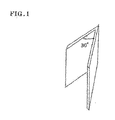
- the sample was inserted from above in a metal plate that was bent by 30° as shown in Fig. 1 (shape that imitates the portion for attaching the electrically insulating resin sheet for motors). Ease of insertion at the time of insertion was evaluated by the following criteria.
- PEI polyetherimide
- phase-separated structure was placed in a 30 L-pressure resistant vessel and carbon dioxide was injected thereto in an atmosphere of 45 °C. After being pressurized to 25 MPa, carbon dioxide was injected at a flow rate of about 1.8 kg/hour while maintaining the pressure, and the remaining solvent and polypropylene glycol were extracted by evacuation.
- the extraction procedure was carried out until the total amount used of carbon dioxide reached 1.8 kg. Then, the atmospheric temperature was set to 85 °C, an amount of 7.2 kg of carbon dioxide was injected while rising the temperature, and the extraction procedure was carried out by evacuation, thereby to obtain an electrically insulating resin sheet made of a porous structure.
- An electrically insulating resin sheet was prepared in the same manner as in Example 1 except that 60 parts by weight of polypropylene glycol having a weight average molecular weight of 400 per 100 parts by weight of the PEI resin was added to the prepared PEI resin solution.
- PES polyethersulfone
- PEI polyetherimide
- a polyethersulfone (PES) resin (manufactured by BASF, E2010, glass transition temperature: 225 °C, tensile stress at break: 68 MPa, tensile modulus: 2282 MPa) was charged into a biaxial kneader (manufactured by TECHNOVEL CORPORATION), melted at 310 °C, and extruded to prepare an electrically insulating resin sheet.
- PES polyethersulfone
- An electrically insulating resin sheet was prepared in the same manner as in Example 1 except that 75 parts by weight of polypropylene glycol having a weight average molecular weight of 400 per 100 parts by weight of the PEI resin was added to the prepared PEI resin solution.
- the electrically insulating resin sheets of Examples 1 to 3 were able to sufficiently maintain the bent shape even if an external force applied was removed. Therefore, such a resin sheet could easily be attached to a bent metal plate.
- the electrically insulating resin sheets of Examples 1 to 3 had a high insulation breakdown voltage and a sufficiently satisfactory insulating property.
- the electrically insulating resin sheets of Comparative Examples 1 and 2 had a non-porous structure and were not able to sufficiently maintain the bent shape when the external force was removed.
- the electrically insulating resin sheet of the present invention is used as an insulator.
- the electrically insulating resin sheet is suitably used as an insulator such as an insulator to the earth (slot, spacer, wedge, etc.) provided on equipments such as motors, generators, and transformers, an interlayer insulator (between coil layers, etc.), or a conductor insulator.
Landscapes
- Chemical & Material Sciences (AREA)
- Spectroscopy & Molecular Physics (AREA)
- Physics & Mathematics (AREA)
- Chemical Kinetics & Catalysis (AREA)
- Engineering & Computer Science (AREA)
- Medicinal Chemistry (AREA)
- Polymers & Plastics (AREA)
- Organic Chemistry (AREA)
- Materials Engineering (AREA)
- Health & Medical Sciences (AREA)
- Manufacturing & Machinery (AREA)
- Power Engineering (AREA)
- Mechanical Engineering (AREA)
- Insulating Bodies (AREA)
- Laminated Bodies (AREA)
- Organic Insulating Materials (AREA)
- Manufacture Of Porous Articles, And Recovery And Treatment Of Waste Products (AREA)
- Compositions Of Macromolecular Compounds (AREA)
Abstract
Description
- The present invention relates to an electrically insulating resin sheet, particularly an electrically insulating resin sheet used as an electrical insulator for motor coils.
- In equipments such as motors, generators, and transformers, polyethylene terephthalate (PET) films have been most commonly used as insulators such as an insulator to the earth (slot, spacer, wedge, etc.), an interlayer insulator (between coil layers, etc.), and a conductor insulator.
- In particular, in equipments such as high voltage AC motors, industrial DC motors, and generators, a demand of heat resistance has been increasing from the trend of high-voltage, large capacity, and reduction in size and weight, and a film made of super engineering plastics such as polyimide (PI), polysulfone (PSF), polyethersulfone (PES), polyetherimide (PEI), polyphenylene sulfide (PPS), and polyether ether ketone (PEEK), all of which are ranked as a class H insulator, has been used.
- An electrically insulating resin sheet for motors has been known as an insulator used for achieving the insulation between coil wires or between a coil wire and an iron core in a motor. The electrically insulating resin sheet is sometimes used in a state where deformation such as bending is applied in order to adapt it to the shape of an object to be attached.
- For example, in Patent Document 1, a technique of providing a cut portion formed perpendicular to a folding line on an end of a folded back insulating film has been proposed in order to reduce the deflection on the end of a folded back insulating film.
- However, in the case of providing a cut portion in the insulating film, an insulation deterioration in the cut portion is concerned.
- Further, even when deformation is caused by applying an external force to a conventional insulating film in a shape corresponding to the shape of an object to be attached, the shape of the insulating film cannot be maintained when removing the external force afterwards. Therefore, when attaching the insulating film so as to correspond to the shape of an object to be attached, it is necessary to first deform the insulating film so as to correspond to the shape of an object and attach the insulating film to the object afterwards while maintaining the deformation state with jigs or the like.
- However, in the case of the attaching method described above, the jigs or the like become a hindrance depending on the shape of the object, and it becomes difficult to attach the insulating film to the object. There is also a problem such that the working efficiency is lowered because a lot of effort is required in the attachment operation. In addition, there is a problem of a reduction in the accuracy of attachment (such as accuracy of attachment position).
- Patent Document 1:
JP-A-2003-9447 - The present invention has been made in view of the above problems, and an object of the present invention is to provide an electrically insulating resin sheet which is excellent in heat resistance and insulating properties and is able to maintain a predetermined shape even after applying an external force to the sheet to deform the sheet into a predetermined shape and removing the external force.
- The present invention relates to an electrically insulating resin sheet having a porosity of 10 to 60 %, a stress relaxation ratio of 20 % or more when the sheet is extended by 5 % at 23 °C and maintained for 10 minutes, and an insulation breakdown voltage of 25 kV/mm or more.
- In order to obtain an electrically insulating resin sheet having class H heat resistance, it is necessary that the resin (polymer) as a raw material has a high glass transition temperature (Tg) and the main chain skeleton is rigid. Moreover, a certain thickness is required to maintain the insulating properties of the electrically insulating resin sheet. Therefore, a conventional electrically insulating sheet having high heat resistance and high insulating properties is considered to be difficult in bending and easy to return to its original shape even if it is bent.
- The inventors of the present invention have found that an electrically insulating resin sheet which can maintain a predetermined shape even after removing an external force can be obtained, without reducing heat resistance and insulating properties, by adjusting the porosity of the sheet to 10 % to 60 % and further adjusting the stress relaxation ratio to 20 % or more when the sheet is extended by 5 % at 23 °C and maintained for 10 minutes.
- If the porosity of the sheet is less than 10 %, the sheet can hardly bend due to its high rigidity and even if the sheet is bent, the sheet is likely to return to its original shape upon removing the external force. Therefore, attachment of the insulating film to an object may become difficult, and the attachment accuracy decreases. In addition, it becomes difficult to lower the relative permittivity. On the other hand, when the porosity of the sheet exceeds 60 %, there is a possibility that the insulating properties of the sheet are significantly reduced.
- Further, if the stress relaxation ratio is less than 20 %, the stress when the sheet is bent is not sufficiently relaxed and thus the sheet can be easily returned to its original shape upon removing the external force. Therefore, attachment of the insulating film to an object may become difficult, and the attachment accuracy decreases.
- Further, it is necessary that the electrically insulating resin sheet has an insulation breakdown voltage of 25 kV/mm or more. If the insulation breakdown voltage of the electrically insulating resin sheet is 25 kV/mm or more, insulation breakdown due to the surge voltage can be prevented effectively at the time of using the sheet as an insulating material for equipments such as motors.
- Further, the electrically insulating resin sheet has preferably a porous structure having an average cell diameter of 10 µm or less. If the average cell diameter exceeds 10 µm, there is a possibility that a crack occurs due to a reduction in the strength of the sheet at the time of its bending to result in impairment of insulating property. Further, it becomes difficult to lower a relative permittivity, and mechanical strength tends to decrease.
- In addition, the electrically insulating resin sheet has preferably a relative permittivity of 2.5 or less at a frequency of 1 GHz. If the relative permittivity is 2.5 or less, it is possible to effectively prevent the insulation breakdown due to surge voltage when the electrically insulating resin sheet is used as an insulating member for equipments such as motors, because the partial discharge inception voltage that is the initial phenomenon of insulation breakdown can be increased. If the relative permittivity exceeds 2.5, the partial discharge inception voltage cannot be increased sufficiently.
- Further, the electrically insulating resin sheet contains preferably a thermoplastic resin having a glass transition temperature of 150 °C or higher. The thermoplastic resin is advantageous for the formation of a porous structure because it has a plasticity. In addition, if the glass transition temperature of the thermoplastic resin is 150 °C or higher, it is possible to obtain an electrically insulating resin sheet having class H heat resistance.
- In addition, the thermoplastic resin as a raw material for the electrically insulating resin sheet has preferably a tensile stress at break of 50 MPa or more and a tensile modulus of 1000 MPa or more. This makes it possible to prevent cracking at the bending line portion during bending processing.
- The thermoplastic resin is preferably polyetherimide, polyethersulfone, or a mixture thereof. These resins have excellent dimensional stability at high temperatures and high durability for a long period of time.
- The electrically insulating resin sheet of the present invention is suitably used as an electrical insulator for motor coils.
- Also, the present invention relates to an electrically insulating laminated sheet comprising the electrically insulating resin sheet and a sheet material laminated on at least one surface of the electrically insulating resin sheet.
- The electrically insulating resin sheet of the present invention not only has excellent heat resistance and insulating properties, but can also maintain a predetermined shape even if an external force is applied to the sheet to deform the sheet into the predetermined shape and then the external force is removed. Therefore, the electrically insulating resin sheet can be deformed (such as bending) so as to correspond to the shape of an object and can maintain its deformed state, so that the electrically insulating resin sheet can be attached easily and accurately to the object without holding the sheet with jigs or the like.
-
- Fig. 1
- is a perspective view of a metal plate that is bent to an angle of 30° (shape imitating a portion for attaching an electrically insulating resin sheet to a motor).
- Embodiments of the present invention will be described below.
- A resin as a raw material for an electrically insulating resin sheet according to the present invention is not particularly limited, but a thermoplastic resin is preferably used. The thermoplastic resin having a glass transition temperature of 150 °C or higher is preferable, and the thermoplastic resin having a glass transition temperature of 180 °C or higher is more preferable from the viewpoint of heat resistance.
- Examples of such a thermoplastic resin include polyamide, polycarbonate, polybutylene terephthalate, polyethylene terephthalate, polyphenylene sulfide, polyarylate, polysulfone, polyether sulfone, polyether ether ketone, polyamideimide, polyimide, liquid crystal polymer, polyether imide, and the like.
- These may be used either alone or in combination with two or more kinds thereof. Of these, polyetherimide, polyethersulfone, or a mixture thereof is preferably used because these resins have excellent dimensional stability at high temperatures and high durability for a long period of time.
- The polyetherimide can be obtained by the dehydrative cyclization reaction between a diamino compound and an aromatic bisether anhydride such as 2,2',3,3'-tetracarboxydiphenylene ether dianhydride, but commercially available products, for example, ULTEM resin (manufactured by SABIC) and SUPERIO resin (manufactured by Mitsubishi Plastics, Inc.) may be used.
- The diamino compound includes, for example, m-phenylenediamine, p-phenylenediamine, 3,4'-diaminodiphenyl ether, 4,4'-diaminodiphenyl ether, 4,4'-diaminodiphenyl sulfone, 3,3'-diaminodiphenyl sulfone, 2,2-bis(4- aminophonoxyphenyl)propane, 2,2-bis(4- aminophenoxypheny)hexafluoropropane, 1,3-bis(4- aminophenoxy)benzene, 1,4-bis(4-aminophenoxy)benzene, 2,4- diaminotoluene, 2,6-diaminotoluene, diaminodiphenylmethane, 4,4'-diamino-2,2-dimethylbiphenyl, 2,2- bis(trifluoromethyl)-4,4'-diaminobiphenyl, and the like. These may be used alone or in combination with two or more kinds thereof.
- The polyether sulfone can be obtained by polycondensation reaction of dichlorodiphenyl sulfone with potassium salt of dihydroxydiphenyl sulfone, but commercially available products, e.g., ULTRASONE E series (manufactured by BASF Corp.), RADEL A-series (manufactured by Solvay S.A.) may be used.
- The thermoplastic resin used in the present invention preferably has a tensile stress at break of 50 MPa or more and a tensile modulus of 1000 MPa or more. The tensile stress at break is more preferably 80 MPa or more and especially preferably 100 MPa or more (usually 200 MPa or less). The tensile modulus is more preferably 2000 MPa or more and especially preferably 3000 MPa or more (usually 5000 MPa or less).
- The electrically insulating resin sheet may contain various additives in addition to the resin. The kind of such additives is not particularly limited and includes general additives for plastics, such as tackifying resins, flame retardants, antioxidants, inorganic fillers, foaming nucleators, crystal nucleators, heat stabilizers, light stabilizers, ultraviolet absorbers, plasticizers, lubricants, pigments, crosslinking agents, crosslinking aids, and silane coupling agents. These additives can be used in an amount of, for example, 0.1 to 5 parts by weight per 100 parts by weight of the resin.
- The electrically insulating resin sheet of the present invention can be obtained by converting a resin composition containing the resin and the optional additive into a porous product. A method of making a porous product is not particularly limited, and examples thereof include a method for making pores mechanically, a method for decomposing the resin by heat or light, a chemical foaming method, and a physical foaming method. In order to obtain an electrically insulating resin sheet having a low relative permittivity, it is necessary to uniformly form micro cells with a high porosity.
- For this purpose, either (1) a method of foaming with use of a non-reactive gas or (2) a method of extracting a phase separation agent that has been phase-separated in a resin is preferable. In these methods, since the reaction residue resulting from the foaming agent used in the case of chemical foaming method does not remain and the bubble becomes an independent cell structure, there is an advantage such that variations in electrical characteristics due to moisture absorption are less likely to occur.
- Hereinafter, the method of foaming with use of a non-reactive gas mentioned above under item (1) will be described.
- The electrically insulating resin sheet of the present invention can be produced, for example, by impregnating a non-reactive gas into a thermoplastic resin composition containing a thermoplastic resin under pressure (gas impregnation step) and foaming the thermoplastic resin composition by reducing the pressure after the gas impregnation step (foaming step).
- Examples of the non-reactive gas used in the gas impregnation step include carbon dioxide, nitrogen gas, and air. These gases may be used alone or may be used as a mixture thereof. Of these, carbon dioxide is preferably used because its impregnation amount into the thermoplastic resin is large and its impregnation rate is fast.
- Depending on the kinds of the non-reactive gases, the kinds of the thermoplastic resins or the thermoplastic resin compositions, the average cell diameter or the porosity of the target electrically insulating resin sheet, it is necessary to appropriately adjust the pressure and temperature at the time of impregnating the non-reactive gas. For example, in the case where carbon dioxide is used as the non-reactive gas and a polyetherimide is used as the thermoplastic resin, the temperature and the pressure are usually 20 °C to 230 °C and 7.3 MPa to 100 MPa, preferably 25 °C to 200 °C and 10 MPa to 50 MPa.
- The non-reactive gas is preferably in a supercritical state from the viewpoint of promoting the rate of impregnation of the non-reactive gases into the thermoplastic resin. For example, in the case of carbon dioxide, the critical temperature is 31 °C and the critical pressure is 7.4 MPa, and when carbon dioxide is brought to a supercritical state wherein the temperature is 31 °C or higher and the pressure is 7.4 MPa or higher, the solubility of carbon dioxide in the thermoplastic resin is significantly increased and carbon dioxide can thereby be incorporated into the thermoplastic resin to a higher concentration.
- Further, since the gas concentration in the thermoplastic resin is high when the gas in a supercritical state is impregnated, a larger number of cell nuclei are generated upon abrupt pressure drop and these cell nuclei can be grown up, resulting in higher cell density, thereby to obtain very minute cells.
- The foaming step is a step of foaming a thermoplastic resin composition by reducing the pressure after the gas impregnation step. By reducing the pressure, cell nuclei are generated in a large amount in the thermoplastic resin composition. The degree of decrease in the pressure (decompression rate) is not particularly limited, but the rate is approximately 5 MPa/sec to 400 MPa/sec.
- There may be provided a heating step of heating a porous structure wherein cell nuclei are formed by a foaming step, at a temperature of 150 °C or higher. By heating the porous structure in which cell nuclei have been formed, cell nuclei grow and cells are formed. The heating temperature is preferably 180 °C or higher and is more preferably 200 °C or higher.
- If the heating temperature is lower than 150 °C, it may be difficult to obtain a porous structure having a high porosity. It should be noted that after the heating step, quenching the porous structure may be performed so as to prevent the growth of cells or to secure the cell shape.
- The gas impregnation step and the foaming step may be performed by any of a batch method and a continuous method.
- According to the batch system, the electrically insulating resin sheet (the porous structure) may be produced typically in the following manner. That is, a sheet containing a thermoplastic resin as a base resin is formed by extruding a thermoplastic resin composition comprising a thermoplastic resin through an extruder such as a single-screw extruder or twin-screw extruder.
- Alternatively, a sheet containing a thermoplastic resin as a base resin is formed by uniformly kneading a thermoplastic resin composition comprising a thermoplastic resin in a kneading machine equipped with blades typically of roller, cam, kneader, or Banbury type; and press-forming the kneadate into a predetermined thickness using, for example, a hot-plate press. The resulting unexpanded sheet is placed in a pressure-tight vessel, into which a non-reactive gas composed of carbon dioxide, nitrogen, air, etc. is injected so that the non-reactive gas is impregnated into the unexpanded sheet.
- At the time when the unexpanded sheet is sufficiently impregnated with the non-reactive gas, the unexpanded sheet is released from the pressure (the pressure is usually lowered to atmospheric pressure) to thereby generate cell nuclei in the base resin. Then, after allowing the cells to grow by heating the cell nuclei, the electrically insulating resin sheet is obtained by quenching with cold water to prevent the growth of cell and fix its shape.
- According to the continuous system, for example, a non-reactive gas is injected while kneading a thermoplastic resin composition comprising a thermoplastic resin using an extruder such as a single-screw extruder or twin-screw extruder so that the non-reactive gas is sufficiently impregnated into the resin, and the resulting kneadate is extruded to release from the pressure (the pressure is usually lowered to atmospheric pressure), thereby to generate cell nuclei. Then, after allowing the cells to grow by heating the cell nuclei, the electrically insulating resin sheet is obtained by quenching with cold water to prevent the growth of cell and fix its shape.
- Hereinafter, the method of extracting a phase separation agent that has been phase-separated in a resin mentioned above under item (2) will be described.
- The electrically insulating resin sheet of the present invention can be produced by, for example, preparing a thermoplastic resin sheet having a microphase-separated structure by applying on a substrate a thermoplastic resin composition containing a thermoplastic resin and a phase separation agent that phase-separates from a cured body of the thermoplastic resin, followed by curing, and removing the phase separation agent from the thermoplastic resin sheet.
- The phase separation agent constituting the discontinuous phase of the microphase-separated structure is compatible with the thermoplastic resin when mixed, and is a compound that phase-separates from a cured body of the thermoplastic resin. However, even in the case of a compound that phase-separates from the thermoplastic resin, such a compound can be used if it is brought to a homogenous state (a homogenous solution) by the addition of a suitable medium (for example, organic solvents) thereto.
- Examples of such a phase separation agent include, for example, polyalkylene glycols such as polyethylene glycol and polypropylene glycol; those polyalkylene glycols terminated at one or each end by methyl or terminated at one or each end by (meth)acrylate; urethane prepolymers; and (meth)acrylate- based compounds such as phenoxypolyethylene glycol (meth)acrylate, ε-caprolactone (meth)acrylate, trimethylolpropane tri(meth)acrylate, dipentaerythritol hexa(meth)acrylate, urethane (meth)acrylates, epoxy (meth)acrylates, and oligoester (meth)acrylates. These phase separation agents can be used alone or in combination of two or more thereof.
- A fine microphase-separated structure can be formed by using the phase separation agent, thus making it possible to adjust the average cell diameter of the electrically insulating resin sheet to 10 µm or less.
- The molecular weight of the phase separation agent is not particularly limited, but the weight average molecular weight is preferably 100 to 10,000, more preferably 100 to 2,000, from the viewpoint that later removal procedure becomes easy. If the weight average molecular weight is less than 100, phase separation of the phase separation agent from a cured body of the thermoplastic resin becomes difficult, whereas if the weight average molecular weight exceeds 10,000, microphase-separated structure becomes too large and it becomes difficult to remove the phase separation agent from the thermoplastic resin sheet.
- It is necessary to appropriately adjust the added amount of the phase separation agent depending on the kind of the thermoplastic resin, but the phase separation agent may be used usually in an amount of preferably 10 to 200 parts by weight, and more preferably 10 to 100 parts by weight, per 100 parts by weight of the thermoplastic resin, in order to achieve a porosity of 10 % to 60 % in the electrically insulating resin sheet.
- In addition, the added amount of the phase separation agent is usually preferably 10 to 80 parts by weight, and more preferably 10 to 75 parts by weight, per 100 parts by weight of the thermoplastic resin, in order to achieve an insulation breakdown voltage of 25 kV/mm or more in the electrically insulating resin sheet.
- A method for producing an electrically insulating resin sheet by using a phase separation agent will be described in detail below.
- First, a thermoplastic resin composition containing the thermoplastic resin and the phase separation agent is applied onto a substrate.
- In order to prepare a uniform thermoplastic resin composition, organic solvents such as aromatic hydrocarbons (e.g. toluene and xylene); alcohols (e.g. methanol, ethanol, and isopropyl alcohol); ketones (e.g. methyl ethyl ketone and acetone); and amides (e.g. N-methyl-2-pyrrolidone, dimethylacetamide, and dimethylformamide) may be used. The amount of the organic solvent used is usually 100 to 500 parts by weight, preferably 200 to 500 parts by weight, per 100 parts by weight of the thermoplastic resin.
- The base material is not particularly limited as long as it has a smooth surface, and includes, for example, plastic films, such as PET, PE, and PP; glass plates; and metal foils, such as stainless steel, copper, and aluminum. In order to produce the electrically insulating resin sheet continuously, a belt-like base material may be used.
- The method for applying a thermoplastic resin composition onto a base material is not particularly limited, and a continuous coating method includes, for example, a wire bar method, a kiss coating method, and a gravure method. The method of coating in a batch system includes, for example, an applicator method, a wire bar method, and a knife coater method.
- Next, a thermoplastic resin sheet wherein a phase separation agent is microphase separated is produced by curing a thermoplastic resin composition coated on a base material. The microphase-separated structure usually takes a sea-island structure wherein the resin component is regarded as a sea and the phase separation agent is regarded as an island.
- When the thermoplastic resin composition does not contain a solvent, a curing treatment such as a thermal curing treatment is applied to the coated film to cure the thermoplastic resin in the coated film so that the phase separation agent is insolubilized.
- When the thermoplastic resin composition contains a solvent, such a solvent in the coated film may be evaporated (dried) to form a microphase-separated structure and then the thermoplastic resin component may be cured. Alternatively, after the thermoplastic resin component is cured, the solvent may be evaporated (dried) to form a microphase-separated structure. The temperature during evaporation (drying) of the solvent is not particularly limited and may be appropriately adjusted depending on the type of solvents used, but it is usually 10°C to 250°C, preferably 60 °C to 200 °C.
- Next, the electrically insulating resin sheet is prepared by removing the phase separation agent that has been microphase-separated from the thermoplastic resin sheet. In addition, the thermoplastic resin sheet may be previously peeled off from the base material before removing the phase separation agent.
- The method to remove the phase separation agent from the thermoplastic resin sheet is not particularly limited, but includes preferably a method of extracting the phase separation agent with a solvent. It is necessary to use a solvent that is a good solvent for the phase separation agent and does not dissolve the cured body of the thermoplastic resin component, and includes, for example, organic solvents (e.g., toluene, ethanol, ethyl acetate, and heptane), liquefied carbon dioxide, subcritical carbon dioxide, and supercritical carbon dioxide. The liquefied carbon dioxide, subcritical carbon dioxide, and supercritical carbon dioxide can remove the phase separation agent efficiently because they can easily penetrate into the resin sheet.
- In the case of using liquefied carbon dioxide, subcritical carbon dioxide, or supercritical carbon dioxide as a solvent, a pressure vessel is usually used. The pressure vessel that can be use includes, for example, a batch type pressure vessel and a pressure vessel provided with a pressure-resistant device for feeding and winding a sheet. The pressure vessel is usually provided with a carbon dioxide supply means constituted by pump, piping, and valve.
- The temperature and pressure during the extraction of the phase separation agent with liquefied carbon dioxide, subcritical carbon dioxide or supercritical carbon dioxide may be equivalent to or higher than the critical point of carbon dioxide, and are usually 32 °C to 230 °C and 7.3 to 100 MPa, respectively, and preferably 40 °C to 200 °C and 10 to 50 MPa, respectively.
- The extraction may be carried out by feeding/discharging continuously liquefied carbon dioxide, subcritical carbon dioxide or supercritical carbon dioxide into/from a pressure vessel in which the thermoplastic resin sheet is placed, or may be carried out in a pressure vessel in a closed system (in a state where the charged resin sheet, liquefied carbon dioxide, subcritical carbon dioxide, or supercritical carbon dioxide does not move to the outside of the vessel).
- In the case of using supercritical carbon dioxide and subcritical carbon dioxide, swelling of the thermoplastic resin sheet is promoted and the diffusion coefficient of the insolubilized phase separation agent is improved, resulting in efficient removal of the phase separation agent from the thermoplastic resin sheet. In the case of using liquefied carbon dioxide, the diffusion coefficient decreases, but the phase separation agent is efficiently removed from the resin sheet because of improved permeability of the liquefied carbon dioxide to the thermoplastic resin sheet.
- It is necessary to appropriately adjust the extraction time, depending on the temperature and pressure during extraction, the added amount of the phase separation agent, and the thickness of the resin sheet, but the extraction time is usually 1 to 10 hours, preferably 2 to 10 hours.
- On the other hand, when extraction is carried out with an organic solvent as a solvent, the deformation of the electrically insulating resin sheet as compared with the case where extraction is performed with liquefied carbon dioxide or supercritical carbon dioxide can be suppressed because the phase separation agent can be removed at atmospheric pressure.
- It is also possible to shorten the extraction time when an organic solvent is used for the extraction. Furthermore, it is possible to continuously perform an extraction treatment of the phase separation agent by passing the thermoplastic resin sheet sequentially in an organic solvent.
- The extraction method using an organic solvent includes, for example, a method of immersing a thermoplastic resin sheet in an organic solvent, a method of spraying an organic solvent to a thermoplastic resin sheet, and the like. From the viewpoint of removal efficiency of the phase separation agent, such an immersing method is preferred. In addition, the phase separation agent can be removed efficiently by replacing an organic solvent over a few times or performing the extraction with stirring.
- The porous structure may be subjected to drying treatment and the like after removing the phase separation agent.
- In the present invention, when a phase separation agent that can be evaporated or decomposed by heating is used, a method of removing a phase separation agent by evaporation or decomposition through heating may be combined prior to the extraction. The heating temperature when the phase separation agent is evaporated or decomposed by heating is generally 100 °C or higher, for example, 100 °C to 500 °C, preferably about 250 °C to 450 °C, though it can be appropriately selected depending on the boiling point and decomposition point of the phase separation agent.
- Evaporation and decomposition procedures are preferably performed under reduced pressure (for example, 1 mmHg or lower) in order to increase the removal efficiency of the phase separation agent. Since the evaporation procedure or the decomposition procedure and the extraction procedure are performed in combination, the residue of the additive, which cannot be removed by one procedure, can be completely removed by the other procedure, thereby to obtain a porous structure having a very low relative permittivity.
- The electrically insulating resin sheet of the present invention has a porosity of 10 % to 60 %, a stress relaxation ratio of 20 % or more when the sheet is extended by 5 % at 23 °C and maintained for 10 minutes, and an insulation breakdown voltage of 25 kV/mm or more. The porosity is preferably 20 % to 55 %, and more preferably 30 % to 50 %. In addition, the stress relaxation ratio is preferably 30 % or more (usually 70 % or less, and preferably 50 % or less).
- It should be noted that the stress relaxation ratio can be adjusted to an intended range by appropriately adjusting the resin to be used, the porosity, and the average cell diameter. Further, the insulation breakdown voltage is preferably 30 kV/mm or more (usually 100 kV/mm or less, and preferably 60 kV/mm or less).
- In addition, the electrically insulating resin sheet of the present invention preferably has an average cell diameter of 10 µm or less, and more preferably 5 µm or less.
- Further, the electrically insulating resin sheet of the present invention preferably has a relative permittivity of 2.5 or less, and more preferably 2.0 or less (usually 1.0 or more) at a frequency of 1 GHz. It should be noted that the relative permittivity depends on the relative permittivity peculiar to the raw material resin, but it is possible to lower the permittivity by increasing the porosity.
- The electrically insulating resin sheet of the present invention preferably has a thickness of 60 µm to 500 µm, and more preferably 100 µm to 300 µm. If the thickness is in the range of 60 µm to 500 µm, excellent insulation characteristics can be maintained in an electrically insulating resin sheet for motors. If the thickness is less than 60 µm, insulation breakdown is likely to occur, and if the thickness exceeds 500 µm, the motor output tends to decrease due to the reduced number of turns of the coil wire.
- An electrically insulating laminated resin sheet according to the present invention includes the electrically insulating resin sheet and a sheet material laminated on at least one surface of the electrically insulating resin sheet. There is no particular limitation to the shape of the electrically insulating laminated resin sheet, and such a sheet may be sheet-shaped or tape-shaped, or may be processed by stamping into an appropriate shape as needed, or may be subjected to a three-dimensional bending processing.
- An arrangement of such a sheet material can impart strength and sliding property to the electrically insulating resin sheet.
- Examples of the sheet material include a nonwoven fabric, paper, and a film, but in order to further improve heat resistance of the electrically insulating resin sheet, a nonwoven fabric, paper, or a heat-resistant film is preferably used.
- The thickness of the sheet material is not particularly limited, and is usually 5 µm to 100 µm, preferably 5 µm to 50 µm. If the thickness of the sheet material is less than 5 µm, it tends to become difficult to impart strength to the electrically insulating resin sheet, and if the thickness of the sheet material exceeds 100 µm, the thickness as the electrically insulating laminated resin sheet is increased to result in the reduction of number of turns of the coil wire. Thereby it tends to cause malfunctions such as decreased motor output and difficulty in lowering the relative permittivity of the electrically insulating laminated resin sheet.
- In order to laminate the sheet material to the electrically insulating resin sheet, an adhesive or a pressure-sensitive adhesive may be used. The adhesive or pressure-sensitive adhesive to be used is not particularly limited, and known ones can be used, and examples thereof include an epoxy adhesive, a urethane adhesive, and an acrylic adhesive.
- Corona treatment can be applied to the laminated surface of the sheet material. By performing the corona treatment, delamination between the sheet material and the electrically insulating resin sheet can be suppressed.
- The present invention will be described below by way of Examples, without intending to limit the present invention thereto in any way.
- Thermoplastic resin sheets were obtained by molding the thermoplastic resins used in examples and comparative examples into a sheet shape. Then, each of the thermoplastic resin sheet was cut into a sample of 5 mm × 80 mm. The viscoelasticity of the sample was measured in a tensile mode using a viscoelasticity tester (ARES manufactured by Rheometric Scientific F.E. Ltd.), while applying a tensile strain at a frequency of 1 Hz under the conditions of a temperature range of 70 °C to 230 °C and a temperature rising rate of 5 °C per minute, and the peak-top temperature of tan δ was defined as a glass transition temperature.
- Thermoplastic resin sheets were obtained by molding the thermoplastic resins used in examples and comparative examples into a sheet shape. Then, each of the thermoplastic resin sheets was cut into a sample of 25 mm (MD direction) × 150 mm. Then, in accordance with JIS K 7161, a tensile test was carried out under tensile conditions of a temperature of 23 °C, a tensile speed of 200 mm/minute, and a distance between grips of 50 mm to obtain a stress-strain curve. It should be noted that a slope between stresses 10 MPa and 20 MPa (a value obtained by dividing the difference of stress by the difference of strain) was defined as a tensile modulus (MPa).
- The specific gravity of a thermoplastic resin composition before foaming and the specific gravity of the prepared electrically insulating resin sheet were measured with a gravimeter ("MD-300S", manufactured by Alfa Mirage Co., Ltd.), and the porosity was calculated from the following equation: Porosity (%) = [1-(Specific gravity of electrically insulating resin sheet /Specific gravity of thermoplastic resin composition)] × 100
- The prepared electrically insulating resin sheet was cut into a sample of 15 mm (TD direction) × 150 mm. Then, in accordance with JIS K 7161, a tensile test was carried out under the following conditions. Specifically, the sample was extended to have a strain of 5 % under tensile conditions of a temperature of 23 °C, a tensile speed of 200 mm/minute, and a gauge line of 100 mm so that the load (initial stress) at that time was measured. The load (stress after relaxation) was also measured when the state was maintained for 10 minutes. The stress relaxation ratio was calculated by substituting the values of the obtained initial stress and stress after relaxation into the following equation:

- In accordance with JIS K 7161, the insulation breakdown voltage of the electrically insulating resin sheet prepared was measured under the condition of a pressure rising rate of 1 kV/second.
- The prepared electrically insulating resin sheet was cooled with liquid nitrogen and cut perpendicularly to the sheet surface by using a knife to prepare an evaluation sample. The cut surface of the sample is subjected to Au vapor deposition and the cut surface was observed with a scanning electron microscope (SEM) ("S-3400N", manufactured by Hitachi, Ltd.).
- Its image was binarized with an image processing software ("WinROOF", manufactured by Mitani Corp.) to separate into the cell portion and the resin portion, and the maximum vertical chord length of the cell was measured. Then, the cell diameters for 50 cells from those having a larger cell diameter were averaged and the average was determined as an average cell diameter.
- The relative permittivity was determined by measuring a complex permittivity at a frequency of 1 GHz by the cavity resonator perturbation method and defining its real part as the relative permittivity. A strip-shaped sample (sample size: 2 mm × 70 mm length) was used for the measurement with a measurement equipment such as a cylindrical cavity resonator ("Network Analyzer N5230C", manufactured by Agilent Technologies, Inc.; "Cavity Resonator 1GHz", manufactured by Kanto Electronic Application and Development Inc.).
- The electrically insulating resin sheet prepared was cut into a sample of 25 mm (MD direction) × 100. The central portion in the TD direction of the sample was pressurized in the thickness direction at 4 MPa for 5 seconds, and the sample was then bent by 180° along a direction orthogonal to the TD direction. After allowing the sample to stand for 3 hours, an opening angle (°) of the sample was measured from the side (a direction orthogonal to the TD direction and the thickness direction) of the sample, using a digital microscope (VHX-100, manufactured by KEYENCE Corporation) at 100 times magnification. It should be noted that if a cracking occurs in the sample during bending, such a sample was evaluated as "×".
- The electrically insulating resin sheet prepared was cut into a sample of 25 mm (MD direction) × 100 mm. The central portion in the TD direction of the sample was pressurized in the thickness direction at 4 MPa for 5 seconds, and the sample was then bent by 180° along a direction orthogonal to the TD direction. After allowing the sample to stand for 3 hours, the sample was inserted from above in a metal plate that was bent by 30° as shown in
Fig. 1 (shape that imitates the portion for attaching the electrically insulating resin sheet for motors). Ease of insertion at the time of insertion was evaluated by the following criteria. - ○: Easy insertion is possible
- ×: Necessary to hold the shape by hand at the time of insertion
- To a 1000 ml four-necked flask was added 667.7 g of N-methyl-2-pyrrolidone (NMP), and the flask was heated to 70 °C. Then, 250 g of a polyetherimide (PEI) resin (manufactured by SABIC Innovative Plastics, UItem 1000, glass transition temperature: 223 °C, tensile stress at break: 117 MPa, tensile modulus: 3138 MPa) was added thereto and the mixture was stirred for 5 hours to obtain a PEI resin solution.
- Thirty parts by weight of polypropylene glycol having a weight average molecular weight of 400 per 100 parts by weight of the PEI resin was added to the prepared PEI resin solution, and the mixture was stirred to obtain a homogeneous clear solution. The homogeneous clear solution was applied onto a PET film by the comma direct manner and then the NMP was removed by evaporation under heating at 130 °C, for 8 minutes to obtain a phase-separated structure.
- The obtained phase-separated structure was placed in a 30 L-pressure resistant vessel and carbon dioxide was injected thereto in an atmosphere of 45 °C. After being pressurized to 25 MPa, carbon dioxide was injected at a flow rate of about 1.8 kg/hour while maintaining the pressure, and the remaining solvent and polypropylene glycol were extracted by evacuation.
- The extraction procedure was carried out until the total amount used of carbon dioxide reached 1.8 kg. Then, the atmospheric temperature was set to 85 °C, an amount of 7.2 kg of carbon dioxide was injected while rising the temperature, and the extraction procedure was carried out by evacuation, thereby to obtain an electrically insulating resin sheet made of a porous structure.
- An electrically insulating resin sheet was prepared in the same manner as in Example 1 except that 60 parts by weight of polypropylene glycol having a weight average molecular weight of 400 per 100 parts by weight of the PEI resin was added to the prepared PEI resin solution.
- To a 1000 ml four-necked flask was added 667.7 g of N-methyl-2-pyrrolidone (NMP), and the flask was heated to 70 °C. Then, 250 g of a polyethersulfone (PES) resin (manufactured by BASF, E2010, glass transition temperature: 225 °C, tensile stress at break: 68 MPa, tensile modulus: 2282 MPa) was added thereto and the mixture was stirred for 5 hours to obtain a PES resin solution.
- Thirty-five parts by weight of polypropylene glycol having a weight average molecular weight of 400 per 100 parts by weight of the PES resin was added to the prepared PES resin solution, and the mixture was stirred to obtain a homogeneous clear solution. Then an electrically insulating resin sheet was prepared in the same manner as in Example 1.
- A polyetherimide (PEI) resin (manufactured by SABIC Innovative Plastics, UItem 1000, glass transition temperature: 223 °C, tensile stress at break: 117 MPa, tensile modulus: 3138 MPa) was charged into a biaxial kneader (manufactured by TECHNOVEL CORPORATION), melted at 35 °C, and extruded to prepare an electrically insulating resin sheet.
- A polyethersulfone (PES) resin (manufactured by BASF, E2010, glass transition temperature: 225 °C, tensile stress at break: 68 MPa, tensile modulus: 2282 MPa) was charged into a biaxial kneader (manufactured by TECHNOVEL CORPORATION), melted at 310 °C, and extruded to prepare an electrically insulating resin sheet.
- An electrically insulating resin sheet was prepared in the same manner as in Example 1 except that 75 parts by weight of polypropylene glycol having a weight average molecular weight of 400 per 100 parts by weight of the PEI resin was added to the prepared PEI resin solution.
- An electrically insulating resin sheet was prepared in the same manner as in Example 1 except that 100 parts by weight of polypropylene glycol having a weight average molecular weight of 400 per 100 parts by weight of the PEI resin was added to the prepared PEI resin solution.
Table 1 Example 1 Example 2 Example 3 Comparative Example 1 Comparative Example 2 Comparative Example 3 Comparative Example 4 Resin Kind PEI PEI PES PEI PES PEI PEI Glass transition temperature (°C) 223 223 225 223 225 223 223 Tensile stress at break (MPa) 117 117 68 117 68 117 117 Tensile modulus (MPa) 3138 3138 2282 3138 2282 3138 3138 Sheet Thickness (µm) 153 191 188 193 186 183 198 Porosity (%) 34 58 40 - - 65 80 Stress relaxation ratio (%) ratio (%) 30 35 37 28 18 35 40 Insulation breakdown voltage (kV/mm) 31 37 34 68 74 23 19 Average cell diameter (µm) 8.8 7.6 8.1 - - 7.5 6.2 Relative permittivity 2.4 1.4 1.7 3.0 3.4 1.3 3 1.2 Opening angle (°) 24.1 20.3 24.7 42.8 39.0 18.2 × Attaching property ○ ○ ○ × × ○ × - The electrically insulating resin sheets of Examples 1 to 3 were able to sufficiently maintain the bent shape even if an external force applied was removed. Therefore, such a resin sheet could easily be attached to a bent metal plate. In addition, the electrically insulating resin sheets of Examples 1 to 3 had a high insulation breakdown voltage and a sufficiently satisfactory insulating property. On the other hand, the electrically insulating resin sheets of Comparative Examples 1 and 2 had a non-porous structure and were not able to sufficiently maintain the bent shape when the external force was removed.
- Therefore, when the resin sheet was attached to the bent metal plate, it was necessary to hold the bent shape by hand. Since the porosity of the electrically insulating resin sheet of Comparative Example 3 was high, the insulating breakdown voltage was low and the insulation property was poor. A crack occurred in the electrically insulating resin sheet of Comparative Example 4 at the time of bending because its porosity was very high.
- The electrically insulating resin sheet of the present invention is used as an insulator. In particular, the electrically insulating resin sheet is suitably used as an insulator such as an insulator to the earth (slot, spacer, wedge, etc.) provided on equipments such as motors, generators, and transformers, an interlayer insulator (between coil layers, etc.), or a conductor insulator.
Claims (8)
- An electrically insulating resin sheet having a porosity of 10 to 60 %, a stress relaxation ratio of 20 % or more when the sheet is extended by 5 % at 23 °C and maintained for 10 minutes, and an insulation breakdown voltage of 25 kV/mm or more.
- The electrically insulating resin sheet according to claim 1, which is a porous structure having an average cell diameter of 10 µm or less.
- The electrically insulating resin sheet according to claim 1 or 2, which has a relative permittivity of 2.5 or less at a frequency of 1 GHz.
- The electrically insulating resin sheet
according to any one of claims 1 to 3,
which includes a thermoplastic resin having a glass transition temperature of 150 °C or higher. - The electrically insulating resin sheet according to claim 4, wherein the thermoplastic resin has a tensile stress at break of 50 MPa or more and a tensile modulus of 1000 MPa or more.
- The electrically insulating resin sheet according to claim 4 or 5, wherein the thermoplastic resin is polyetherimide, polyethersulfone or a mixture thereof.
- The electrically insulating resin sheet
according to any one of claims 1 to 6,
which is used as an electrical insulator for motor coils. - An electrically insulating laminated sheet comprising the electrically insulating resin sheet according to any one of claims 1 to 7 and a sheet material laminated on at least one surface of the electrically insulating resin sheet.
Applications Claiming Priority (2)
| Application Number | Priority Date | Filing Date | Title |
|---|---|---|---|
| JP2012076821A JP5458137B2 (en) | 2012-03-29 | 2012-03-29 | Electrical insulating resin sheet |
| PCT/JP2013/055272 WO2013146053A1 (en) | 2012-03-29 | 2013-02-28 | Electrically insulating resin sheet |
Publications (2)
| Publication Number | Publication Date |
|---|---|
| EP2787513A1 true EP2787513A1 (en) | 2014-10-08 |
| EP2787513A4 EP2787513A4 (en) | 2014-11-19 |
Family
ID=49259328
Family Applications (1)
| Application Number | Title | Priority Date | Filing Date |
|---|---|---|---|
| EP13770376.5A Withdrawn EP2787513A4 (en) | 2012-03-29 | 2013-02-28 | Electrically insulating resin sheet |
Country Status (6)
| Country | Link |
|---|---|
| US (1) | US20140295168A1 (en) |
| EP (1) | EP2787513A4 (en) |
| JP (1) | JP5458137B2 (en) |
| KR (1) | KR101396730B1 (en) |
| CN (1) | CN103503084B (en) |
| WO (1) | WO2013146053A1 (en) |
Cited By (2)
| Publication number | Priority date | Publication date | Assignee | Title |
|---|---|---|---|---|
| EP2933287A4 (en) * | 2012-12-17 | 2016-08-10 | Nitto Denko Corp | Polyetherimide porous body and method for producing same |
| EP4116058A1 (en) * | 2021-07-09 | 2023-01-11 | SHPP Global Technologies B.V. | Foaming and shaping process for a thermoplastic sheet, and associated apparatus and shaped foamed thermoplastic sheet |
Families Citing this family (5)
| Publication number | Priority date | Publication date | Assignee | Title |
|---|---|---|---|---|
| JP2012182116A (en) * | 2011-02-03 | 2012-09-20 | Nitto Denko Corp | Electric insulating resin sheet for motor, and method of manufacturing the same |
| KR101637676B1 (en) | 2014-09-05 | 2016-07-07 | 현대자동차주식회사 | Armature of rotating electric machine with improved wedges |
| JP6369788B2 (en) * | 2014-11-27 | 2018-08-08 | パナソニックIpマネジメント株式会社 | Electronics structure |
| EP3262118B1 (en) * | 2015-02-23 | 2019-05-08 | SABIC Global Technologies B.V. | Electrical tracking resistance compositions, articles formed therefrom, and methods of manufacture thereof |
| KR20210089704A (en) * | 2018-11-08 | 2021-07-16 | 에스에이치피피 글로벌 테크놀러지스 비.브이. | Thermoplastic compositions, electrical wires and articles comprising electrical wires |
Family Cites Families (20)
| Publication number | Priority date | Publication date | Assignee | Title |
|---|---|---|---|---|
| JP4557376B2 (en) * | 2000-06-19 | 2010-10-06 | 日東電工株式会社 | Method for producing porous body and porous body |
| TW200427503A (en) * | 2003-05-27 | 2004-12-16 | Kureha Chemical Ind Co Ltd | Process for producing thermoplastic resin molding |
| CN100415820C (en) * | 2004-06-24 | 2008-09-03 | 上海市塑料研究所 | Preparation method of expanded polytetrafluoroethylene sealing sheet for aerospace vehicle |
| JP2006111708A (en) * | 2004-10-14 | 2006-04-27 | Inoac Corp | Low dielectric constant foam material and method for producing the same |
| JP4875855B2 (en) * | 2005-05-20 | 2012-02-15 | 日東シンコー株式会社 | Laminated sheet |
| US8092626B2 (en) * | 2007-03-12 | 2012-01-10 | University Of Washington | Foaming methods for making cellular thermoplastic materials |
| WO2009036384A2 (en) * | 2007-09-12 | 2009-03-19 | University Of Washington | Microcellular thermoplastic thin films formed by a solid-state foaming process |
| JP5438960B2 (en) * | 2008-12-24 | 2014-03-12 | 日東シンコー株式会社 | Insulating sheet |
| JP5448442B2 (en) | 2008-12-24 | 2014-03-19 | 日東シンコー株式会社 | Insulating sheet |
| JP2011018897A (en) * | 2009-06-11 | 2011-01-27 | Nitto Denko Corp | Porous resin sheet for piezoelectric/pyroelectric element, and process for production thereof |
| JP5603029B2 (en) * | 2009-06-22 | 2014-10-08 | 河村産業株式会社 | Insulating sheet for electric motor and manufacturing method thereof |
| US20130020117A1 (en) * | 2009-12-14 | 2013-01-24 | Daicel Corporation | Laminated body comprising porous layer and functional laminate using same |
| JP2011154936A (en) * | 2010-01-28 | 2011-08-11 | Hitachi Maxell Ltd | Separator for battery and lithium secondary battery |
| JP5483706B2 (en) * | 2010-03-18 | 2014-05-07 | 日立マクセル株式会社 | Lithium ion secondary battery |
| EP2551858B1 (en) * | 2010-03-25 | 2018-08-15 | Furukawa Electric Co., Ltd. | Foamed electrical wire and production method for same |
| JP5449012B2 (en) * | 2010-05-06 | 2014-03-19 | 古河電気工業株式会社 | Insulated wire, electrical equipment, and method of manufacturing insulated wire |
| JP2012077294A (en) * | 2010-09-11 | 2012-04-19 | Nitto Denko Corp | Porous resin sheet and method for producing the same |
| JP2012182116A (en) * | 2011-02-03 | 2012-09-20 | Nitto Denko Corp | Electric insulating resin sheet for motor, and method of manufacturing the same |
| JP5916498B2 (en) * | 2011-06-06 | 2016-05-11 | 日東電工株式会社 | Polyimide porous body and method for producing the same |
| JP2013053269A (en) * | 2011-09-06 | 2013-03-21 | Nitto Denko Corp | Electrical insulation sheet |
-
2012
- 2012-03-29 JP JP2012076821A patent/JP5458137B2/en not_active Expired - Fee Related
-
2013
- 2013-02-28 KR KR1020137025848A patent/KR101396730B1/en not_active Expired - Fee Related
- 2013-02-28 CN CN201380001229.0A patent/CN103503084B/en not_active Expired - Fee Related
- 2013-02-28 EP EP13770376.5A patent/EP2787513A4/en not_active Withdrawn
- 2013-02-28 WO PCT/JP2013/055272 patent/WO2013146053A1/en not_active Ceased
- 2013-02-28 US US14/117,539 patent/US20140295168A1/en not_active Abandoned
Cited By (5)
| Publication number | Priority date | Publication date | Assignee | Title |
|---|---|---|---|---|
| EP2933287A4 (en) * | 2012-12-17 | 2016-08-10 | Nitto Denko Corp | Polyetherimide porous body and method for producing same |
| EP4116058A1 (en) * | 2021-07-09 | 2023-01-11 | SHPP Global Technologies B.V. | Foaming and shaping process for a thermoplastic sheet, and associated apparatus and shaped foamed thermoplastic sheet |
| WO2023281329A1 (en) * | 2021-07-09 | 2023-01-12 | Shpp Global Technologies B.V. | Foaming and shaping process for a thermoplastic sheet, and associated apparatus and shaped foamed thermoplastic sheet |
| KR20240001282A (en) * | 2021-07-09 | 2024-01-03 | 에스에이치피피 글로벌 테크놀러지스 비.브이. | Foaming and molding methods for thermoplastic sheets, and related apparatus and molded foamed thermoplastic sheets |
| US12233579B2 (en) | 2021-07-09 | 2025-02-25 | Shpp Global Technologies B.V. | Foaming and shaping process for a thermoplastic sheet, and associated apparatus and shaped foamed thermoplastic sheet |
Also Published As
| Publication number | Publication date |
|---|---|
| US20140295168A1 (en) | 2014-10-02 |
| KR20130125835A (en) | 2013-11-19 |
| EP2787513A4 (en) | 2014-11-19 |
| CN103503084B (en) | 2015-05-13 |
| KR101396730B1 (en) | 2014-05-19 |
| CN103503084A (en) | 2014-01-08 |
| JP2013206818A (en) | 2013-10-07 |
| WO2013146053A1 (en) | 2013-10-03 |
| JP5458137B2 (en) | 2014-04-02 |
Similar Documents
| Publication | Publication Date | Title |
|---|---|---|
| EP2672614A1 (en) | Electrically insulating resin sheet for motors and process for production thereof | |
| EP2787513A1 (en) | Electrically insulating resin sheet | |
| JP5956314B2 (en) | Electric insulating resin sheet for motor | |
| KR101477875B1 (en) | Insulated electric wire, electric device, and process for production of insulated electric wire | |
| KR101503332B1 (en) | Polyimide film and preparation method thereof | |
| EP3193339B1 (en) | Insulated electric wire, coil, electric/electronic device, and method for manufacturing insulated electric wire | |
| EP3154067A1 (en) | Insulated wire and method for manufacturing same | |
| US20140127494A1 (en) | Polyimide porous body and method for producing same | |
| KR20190027887A (en) | Porous low-dielectric-constant polymer films and films for millipara antennas | |
| EP2544194A1 (en) | Covering material, covered rectangular electric wire and electrical device | |
| KR20190029649A (en) | Film for Millipan Antenna | |
| WO2010143687A1 (en) | Porous resin sheet for piezoelectric/pyroelectric element, and process for production thereof | |
| EP2579279A1 (en) | Flat wire cover material, flat wire covered with flat wire cover material, and electrical equipment using same | |
| CN114341239B (en) | Liquid crystal polymer film, method for producing same, flexible copper-clad laminate, and flexible printed wiring board | |
| EP2544193A2 (en) | Covering material, superconducting electric wire and electrical device | |
| US20130012396A1 (en) | Covering material, superconducting electric wire and electrical device | |
| JP2012224692A (en) | Porous resin laminate | |
| JP7305328B2 (en) | Method for manufacturing porous body | |
| US20150344662A1 (en) | Polyetherimide porous body and method for producing same | |
| CN114709011B (en) | Insulated wire | |
| EP4079790A1 (en) | Porous polyimide film | |
| WO2024224735A1 (en) | Resin composition, insulated wire, and method for producing insulated wire | |
| EP2933287A1 (en) | Polyetherimide porous body and method for producing same | |
| EP4079509A1 (en) | Porous polyimide film | |
| EP4672270A1 (en) | INSULATED WIRE AND MANUFACTURING METHOD FOR IT, WINDING WIRE AND ELECTRICAL DEVICE |
Legal Events
| Date | Code | Title | Description |
|---|---|---|---|
| PUAI | Public reference made under article 153(3) epc to a published international application that has entered the european phase |
Free format text: ORIGINAL CODE: 0009012 |
|
| 17P | Request for examination filed |
Effective date: 20140121 |
|
| AK | Designated contracting states |
Kind code of ref document: A1 Designated state(s): AL AT BE BG CH CY CZ DE DK EE ES FI FR GB GR HR HU IE IS IT LI LT LU LV MC MK MT NL NO PL PT RO RS SE SI SK SM TR |
|
| A4 | Supplementary search report drawn up and despatched |
Effective date: 20141021 |
|
| RIC1 | Information provided on ipc code assigned before grant |
Ipc: B32B 5/18 20060101ALI20141015BHEP Ipc: H01B 3/42 20060101ALI20141015BHEP Ipc: C08J 9/26 20060101ALI20141015BHEP Ipc: C08J 5/18 20060101ALI20141015BHEP Ipc: H01B 17/56 20060101AFI20141015BHEP Ipc: H01B 3/30 20060101ALI20141015BHEP Ipc: H02K 1/04 20060101ALI20141015BHEP Ipc: H01B 17/60 20060101ALI20141015BHEP |
|
| DAX | Request for extension of the european patent (deleted) | ||
| 17Q | First examination report despatched |
Effective date: 20150922 |
|
| STAA | Information on the status of an ep patent application or granted ep patent |
Free format text: STATUS: THE APPLICATION HAS BEEN WITHDRAWN |
|
| 18W | Application withdrawn |
Effective date: 20170125 |