EP2781157A1 - Plant virus infection inhibitor and plant virus infection inhibition method using same - Google Patents
Plant virus infection inhibitor and plant virus infection inhibition method using same Download PDFInfo
- Publication number
- EP2781157A1 EP2781157A1 EP20120846612 EP12846612A EP2781157A1 EP 2781157 A1 EP2781157 A1 EP 2781157A1 EP 20120846612 EP20120846612 EP 20120846612 EP 12846612 A EP12846612 A EP 12846612A EP 2781157 A1 EP2781157 A1 EP 2781157A1
- Authority
- EP
- European Patent Office
- Prior art keywords
- fermentation
- product
- virus
- virus infection
- plant
- Prior art date
- Legal status (The legal status is an assumption and is not a legal conclusion. Google has not performed a legal analysis and makes no representation as to the accuracy of the status listed.)
- Granted
Links
Images



Classifications
-
- A—HUMAN NECESSITIES
- A01—AGRICULTURE; FORESTRY; ANIMAL HUSBANDRY; HUNTING; TRAPPING; FISHING
- A01N—PRESERVATION OF BODIES OF HUMANS OR ANIMALS OR PLANTS OR PARTS THEREOF; BIOCIDES, e.g. AS DISINFECTANTS, AS PESTICIDES OR AS HERBICIDES; PEST REPELLANTS OR ATTRACTANTS; PLANT GROWTH REGULATORS
- A01N37/00—Biocides, pest repellants or attractants, or plant growth regulators containing organic compounds containing a carbon atom having three bonds to hetero atoms with at the most two bonds to halogen, e.g. carboxylic acids
- A01N37/44—Biocides, pest repellants or attractants, or plant growth regulators containing organic compounds containing a carbon atom having three bonds to hetero atoms with at the most two bonds to halogen, e.g. carboxylic acids containing at least one carboxylic group or a thio analogue, or a derivative thereof, and a nitrogen atom attached to the same carbon skeleton by a single or double bond, this nitrogen atom not being a member of a derivative or of a thio analogue of a carboxylic group, e.g. amino-carboxylic acids
-
- A—HUMAN NECESSITIES
- A01—AGRICULTURE; FORESTRY; ANIMAL HUSBANDRY; HUNTING; TRAPPING; FISHING
- A01N—PRESERVATION OF BODIES OF HUMANS OR ANIMALS OR PLANTS OR PARTS THEREOF; BIOCIDES, e.g. AS DISINFECTANTS, AS PESTICIDES OR AS HERBICIDES; PEST REPELLANTS OR ATTRACTANTS; PLANT GROWTH REGULATORS
- A01N37/00—Biocides, pest repellants or attractants, or plant growth regulators containing organic compounds containing a carbon atom having three bonds to hetero atoms with at the most two bonds to halogen, e.g. carboxylic acids
- A01N37/44—Biocides, pest repellants or attractants, or plant growth regulators containing organic compounds containing a carbon atom having three bonds to hetero atoms with at the most two bonds to halogen, e.g. carboxylic acids containing at least one carboxylic group or a thio analogue, or a derivative thereof, and a nitrogen atom attached to the same carbon skeleton by a single or double bond, this nitrogen atom not being a member of a derivative or of a thio analogue of a carboxylic group, e.g. amino-carboxylic acids
- A01N37/46—N-acyl derivatives
-
- A—HUMAN NECESSITIES
- A01—AGRICULTURE; FORESTRY; ANIMAL HUSBANDRY; HUNTING; TRAPPING; FISHING
- A01N—PRESERVATION OF BODIES OF HUMANS OR ANIMALS OR PLANTS OR PARTS THEREOF; BIOCIDES, e.g. AS DISINFECTANTS, AS PESTICIDES OR AS HERBICIDES; PEST REPELLANTS OR ATTRACTANTS; PLANT GROWTH REGULATORS
- A01N63/00—Biocides, pest repellants or attractants, or plant growth regulators containing microorganisms, viruses, microbial fungi, animals or substances produced by, or obtained from, microorganisms, viruses, microbial fungi or animals, e.g. enzymes or fermentates
- A01N63/20—Bacteria; Substances produced thereby or obtained therefrom
Definitions
- the present invention relates to a plant virus infection inhibitor, and a method for inhibiting plant virus infection using the same.
- the present invention is useful in the fields of agriculture, horticulture, and so forth.
- Pathogenic germs that cause plant diseases are roughly divided into three kinds of those, i.e., filamentous fungi (molds), bacteria, and viruses.
- filamentous fungi which are eucaryotes
- filamentous fungi have cell structures, life cycles, etc. significantly different from those of plants and animals, and it is easy to develop agricultural chemicals selectively and highly effective against specific filamentous fungi.
- viral diseases constitute only about 5 to 7% of the causes of the plant diseases
- these pathogens are constituted by nucleic acids and proteins, which are basic substances for life, viruses proliferate by utilizing the replication, transcription and translation mechanisms of host plants, and therefore it is extremely difficult to develop a substance that selectively or specifically inactivates a certain virus.
- classification or identification of pathogenic viruses at genus or species level is extremely important. This is because, for viruses of the same genus or species, analogy of vector or characteristics of the viruses may be contemplated, and thereby it becomes possible to choose a method for controlling viral disease or measures against the disease to a certain extent.
- the interferential action refers to a phenomenon that a plant infected with a certain virus is protected from the secondary infection of the virus.
- Development of attenuated viruses also advances (Patent document 1), and seedlings inoculated with attenuated CMV beforehand are partly commercialized.
- Patent document 1 the serious drawback of this method is that this method is effective only for closely related viruses showing high homology of nucleic acid sequences thereof.
- Patent document 2 proteins derived from Phytolacca americana
- Patent document 3 proteins derived from Phytolacca americana
- Patent document 4 proteins derived from Phytolacca americana
- Patent document 5 high molecular polysaccharides produced in Schizophyllum fungus culture
- Patent document 6 alkyl diethylenetriaminoacetates and salts thereof
- Patent document 7 Camellia sinensis saponin
- Patent document 8 polylysine
- Lentemin (trade name of Noda Shokukin Kogyo Co., Ltd.), is registered as agricultural chemical in Japan (agricultural chemical registration numbers, 15584, 17774, 19439, and 19440), except for attenuated viruses and soil disinfectants.
- the main ingredient of Lentemin is culture medium extraction components of a shiitake mushroom mycelium produced by culturing mycelia of shiitake mushroom on a solid medium, crushing the medium in which the mycelia spreads in the whole medium, and subjecting the whole medium to extraction. Probably for this reason, the price thereof per unit volume is comparatively expensive.
- the recommended dilution rate of the Lentemin solution for controlling viral mosaic disease is as low as 1 to 10 times (Non-patent document 1), and therefore the cost required for spraying it per unit cultivation area is also extremely higher as compared to other common agricultural chemicals.
- a virus infection inhibitor containing a solution obtained by a heat treatment of microbial cells under acidic conditions has been known (Patent document 9), and infection inhibition effect thereof against viruses (wheat and barley dwarf viruses, soybean mosaic virus, alfalfa mosaic virus, potato leaf roll virus) is descried therein.
- viruses wheat and barley dwarf viruses, soybean mosaic virus, alfalfa mosaic virus, potato leaf roll virus
- inhibition of infection of Tobamovirus viruses and Cucumovirus viruses with it is not known.
- Non-patent document 1 Yoneyama et al., Noyaku Binran (Agricultural Chemical Handbook), 10th edition, pp.387-389, Rural Culture Association Japan
- An object of the present invention is to provide an effective and inexpensive virus infection inhibitor for reducing risk of virus diseases of plants, of which control is conventionally difficult.
- the inventors of the present invention conducted various researches in order to develop an effective plant virus infection inhibitor, and surprisingly found that fermentation by-product liquids had a virus infection inhibition effect. Although the application of the fermentation by-product liquids also improved the resistance against viruses in plant tissues to which the liquids were not directly applied, extremely potent virus infection inhibition effects were observed in the regions to which the fermentation by-product liquids were directly applied. That is, the virus infection inhibitor of the present invention can induce disease resistance in plants, and further, by directly applying it onto surfaces of plants, infection with viruses can be reduced. The present invention was accomplished on the basis of these findings.
- the present invention thus relates to the followings.
- the plant virus infection inhibitor of the present invention contains an amino acid fermentation by-product, a nucleic acid fermentation by-product, or both of these.
- “Inhibition of virus infection” means controlling or ameliorating at least a disease of a plant caused by a pathogenic virus, and the action for it is not limited, and may be based on any of suppression of invasion of viruses into plant cells, suppression of proliferation of viruses, and those other than these. Therefore, the "virus infection inhibitor” may be a "virus disease controlling agent”.
- the "method for inhibiting infection of a virus in plant” may be a “method for controlling a plant virus disease”.
- the amino acid fermentation by-product is a generic term for referring to a by-product liquid remaining after removal of amino acid produced by fermentation from fermentation broth (amino acid fermentation by-product liquid), a concentrate or dried solid thereof, a fractionation product thereof, and so forth.
- amino acid fermentation by-product the amino acid and/or a derivative thereof produced by the fermentation remains.
- the nucleic acid fermentation by-product is a generic term for referring to a by-product liquid remaining after removal of nucleic acid produced by fermentation from fermentation broth (nucleic acid fermentation by-product liquid), a concentrate or dried solid thereof, a fractionation product thereof, and so forth.
- nucleic acid fermentation by-product the nucleic acid and/or a derivative thereof produced by the fermentation remains.
- the fermentation by-product liquid may contain an acid or the like added in order to collect the objective substance from the medium, and may be subjected to a heat treatment for disinfection etc.
- the amino acid or nucleic acid contained in the amino acid fermentation by-product or nucleic acid fermentation by-product is not particularly limited, and they contains various amino acids and nucleic acids described later. Furthermore, the amino acid or nucleic acid contained in the fermentation by-product may consist of one or two or more kinds of amino acids or nucleic acids.
- the amino acid fermentation by-product include, for example, a circulating fluid obtained by adjusting pH of a fermentation liquid of a basic or neutral amino acid such as L-lysine and L-glutamine, and passing the liquid through a strongly acidic cationic resin to absorb the amino acid on the resin, and a concentrate thereof, as well as a mother liquid obtained by adjusting pH of a fermentation liquid of an acidic amino acid such as L-glutamic acid to the isoelectric point with a mineral acid, and separating deposited crystals of the amino acid by solid/liquid separation, and a concentrate thereof.
- a circulating fluid obtained by adjusting pH of a fermentation liquid of a basic or neutral amino acid such as L-lysine and L-glutamine, and passing the liquid through a strongly acidic cationic resin to absorb the amino acid on the resin, and a concentrate thereof, as well as a mother liquid obtained by adjusting pH of a fermentation liquid of an acidic amino acid such as L-glutamic acid to the isoelectric point with a mineral acid
- nucleic acid fermentation by-product examples include, for example, a mother liquid obtained by crystallizing a nucleic acid such as inosinic acid and guanylic acid in a fermentation liquid for the nucleic acid by cooling crystallization or concentration crystallization utilizing difference in solubility, and separating precipitated crystals by solid/liquid separation, and a concentrate thereof.
- a mother liquid obtained by crystallizing a nucleic acid such as inosinic acid and guanylic acid in a fermentation liquid for the nucleic acid by cooling crystallization or concentration crystallization utilizing difference in solubility, and separating precipitated crystals by solid/liquid separation, and a concentrate thereof.
- the nucleic acid fermentation by-product liquid is not limited to a by-product liquid obtained from a fermentation liquid in which a nucleic acid such as inosinic acid and guanylic acid is directly generated by fermentation after the objective substance is collected, and it may be a by-product liquid obtained from a fermentation liquid containing a nucleotide obtained by enzymatically or microbiologically phosphorylating a nucleoside such as inosine or guanosine in the fermentation liquid after the target substance is collected.
- Such fermentation by-products usually contain, as solid content, various amino acids (containing 5 to 14% by weight in the case of a 5- to 20-fold concentrate) or various nucleic acids (containing 5 to 15% by weight in the case of a 5- to 20-fold concentrate), as well as a lot of nutrients such as saccharides, fermentation bacterial cells, organic nitrogens, mineral nitrogens, and vitamins (solid content is 30 to 50% by weight).
- the fermentation by-product of an amino acid in a state of a fermentation by-product liquid obtained after separation of the target amino acid and before such an operation as concentration, exsiccation, or fractionation preferably contains 1 mM or more, more preferably 2 mM or more, further preferably 5 mM or more, of the amino acid.
- the fermentation by-product of an amino acid may contain amino acids other than the amino acid as the target substance of the fermentation.
- the fermentation by-product of an amino acid may be a mixture of two or more kinds of fermentation by-products obtained by fermentation production of different amino acids as target substances.
- the fermentation by-product of a nucleic acid in a state of a fermentation by-product liquid obtained after separation of the objective nucleic acid and before such an operation as concentration, exsiccation, or fractionation preferably contains 1 mM or more, more preferably 2 mM or more, further preferably 10 mM or more, of the nucleic acid.
- the fermentation by-product of a nucleic acid may contain nucleic acids other than the nucleic acid as the target substance of the fermentation.
- the fermentation by-product of a nucleic acid may be a mixture of two or more kinds of fermentation by-products obtained by fermentation production of different nucleic acids as target substances.
- amino acid fermentation by-product liquid examples include those obtained by culturing a microorganism belonging to the genus Corynebacterium, Pantoea, or Escherichia in a medium containing a sugar source such as sucrose, starch, sugarcane, corn, sugar beet, cassava, algae such as Euglena, or a carbon source obtained from an oil source such as rapeseed oil, palm oil, olive oil, sunflower oil, soybean oil, rice oil, hemp oil, fish oil, lard, beef tallow, and algae such as raphidophyte algae and Botryococcus algae as the main raw material, and a nitrogen source, as well as nutrients such as inorganic ions and others, lowering pH of the medium after the culture with sulfuric acid or hydrochloric acid, separating the precipitated amino acid, and subjecting the medium to concentration or heat treatment.
- the stock solution of such a fermentation by-product liquid usually contains about 1 to 10% (W/V) of amino acids.
- nucleic acid fermentation by-product liquid examples include those obtained by culturing a microorganism belonging to the genus Bacillus in a medium containing sucrose, starch, sugarcane, corn, or carbon source made from sugar beet or cassava as the main raw material, and a nitrogen source, and optionally containing nutrients such as inorganic ions and others, lowering pH of the medium after the culture with sulfuric acid or hydrochloric acid, separating precipitated inosine and guanosine by crystallization, subjecting the medium to concentration or heat treatment to obtain a fermentation by-product liquid, adding thereto the abovementioned concentrated and heat treated liquid which has been obtained by phosphorylating the inosine and guanosine with a microorganism belonging to the genus Morganella, Serratia, Klebsiella, Enterobacter, Chromobacterium, Cedecea, or Escherichia, and separating the produced inosinic acid or guanylic acid.
- microorganism and medium used for the fermentation include, for example, those described in European Patent Publications EP 0643135 B , EP 0733712 B , EP 1477565 A , EP 0796912 A , EP 0837134 A , EP 1170376 A , International Patent Publications WO01/53459 , WO2005/010175 , WO96/17930 , and so forth.
- the L-glutamic acid fermentation by-product liquid, L-threonine fermentation by-product liquid, and the nucleic acid fermentation by-product liquid (mixture of inosine, guanosine, adenosine, inosinic acid, and guanylic acid fermentation by-product liquids) used in the Example section described later were obtained as described above by using Corynebacterium glutamicum, Escherichia coli, or Bacillus amyloliquefaciens.
- amino acid as the target substance of the fermentation or the amino acid contained in the fermentation by-product examples include basic amino acids such as lysine, ornithine, arginine, histidine, and citrulline, aliphatic amino acids such as isoleucine, alanine, valine, leucine, and glycine, amino acids which are hydroxymonoaminocarboxylic acids such as threonine and serine, cyclic amino acids such as proline, aromatic amino acids such as phenylalanine, tyrosine, and tryptophan, sulfur-containing amino acids such as cysteine, cystine, and methionine, acidic amino acids such as glutamic acid and aspartic acid, and amino acids having an amide group in side chains such as glutamine and asparagine.
- the amino acid may be an amino acid derivative, for example, trimethylglycine, betaine such as carnitine, monomethylglycine, dimethylglycine, or ⁇ -aminobuty
- glutamic acid, lysine, phenylalanine, arginine, alanine, glutamine, aspartic acid, asparagine, glycine, GABA, betaine, dimethylglycine, leucine, methionine, cysteine, tyrosine, proline, citrulline, valine, serine, valine, isoleucine, and tryptophan are preferred, and glutamic acid, lysine, phenylalanine, and arginine are more preferred.
- the amino acid includes free amino acids and/or salts thereof, for example, sulfates, hydrochlorides, carbonates, ammonium salts, sodium salts, and potassium salts. Furthermore, although the amino acid may be an L-amino acid or D-amino acid, it is preferably an L-amino acid.
- nucleic acid examples include a nucleoside, nucleotide, nucleobase, and so forth.
- the nucleobase may be purine or pyrimidine.
- the nucleoside may be a purine nucleoside or a pyrimidine nucleoside
- the nucleotide may be a purine nucleotide or a pyrimidine nucleotide.
- the saccharide constituting the nucleoside and nucleotide may be ribose or deoxyribose, it is preferably ribose.
- nucleobase examples include adenine, guanine, thymine, cytosine, uracil, xanthine, and hypoxanthine.
- nucleoside examples include adenosine, guanosine, thymidine, cytidine, uridine, xanthosine, inosine, and 2'-deoxy compounds of these.
- nucleoside examples include adenylic acid (adenosine-5'-phosphate), guanylic acid (guanosine-5'-phsophate), thymidylic acid (thymidine-5'-phosphate), uridylic acid (uridine-5'-phosphate), xanthylic acid (xanthosine-5'-phosphate), inosinic acid (inosine-5'-phosphate), and 2'-deoxy compounds of these.
- adenylic acid adenosine-5'-phosphate
- guanylic acid guanosine-5'-phsophate
- thymidylic acid thymidine-5'-phosphate
- uridylic acid uridine-5'-phosphate
- xanthylic acid xanthosine-5'-phosphate
- inosinic acid inosine-5'-phosphate
- nucleoside a purine nucleoside is preferred, and inosine and guanosine are more preferred.
- nucleotide As the nucleotide, a purine nucleotide is preferred, and inosinic acid and guanylic acid are more preferred.
- the nucleic acid may be a free compound or may be a salt such as a sodium salt and a potassium salt.
- the aforementioned fermentation by-product of a nucleic acid may further contain a phosphorylated nucleic acid as described above.
- the plant virus infection inhibitor of the present invention contains such an amino acid fermentation by-product or nucleic acid fermentation by-product as mentioned above. Furthermore, the plant virus infection inhibitor may contain both the fermentation by-product of an amino acid and the fermentation by-product of a nucleic acid.
- the agent of the present invention can enhance resistance to a virus also in a plant tissue to which the agent is not directly applied as shown in Example 2 describe below, the method for applying it to a plant is not particularly limited. However, since extremely high virus infection inhibition effect was observed in the regions to which the agent was directly applied, it is particularly preferably sprinkled on a plant body, for example, the whole plant body or leaf surfaces.
- the agent of the present invention is preferably in a form that can be sprinkled, and may be in the form of, for example, any of liquid agent such as emulsion, wettable powder, oil, aerosol, and flowable agent, but it is preferred that it can be uniformly sprinkled on plant surfaces, since the agent show especially high effect in the sprinkled regions.
- the agent may be a powdery agent or solid agent, so long as it can be prepared in a form that enables sprinkling thereof at the time of use.
- the "sprinkling” includes “spraying" as for a liquid agent.
- the content of the amino acid fermentation by-product, nucleic acid fermentation by-product, amino acid, or nucleic acid in the agent is not particularly limited, but can be suitably determined depending on type of plant, application amount of the agent to plants, and so forth.
- the content when the agent is a liquid, or when the agent is a solid but is used as a liquid at the time of use, the content is preferably 0.01% by weight or more, more preferably 0.1 % by weight or more, in terms of the content of the fermentation by-product liquid.
- the maximum content is not particularly limited, the content is preferably 10% by weight or less, more preferably 1% by weight or less, further preferably 0.5% by weight or less.
- the expression "in terms of the content of the fermentation by-product liquid” means that when the fermentation by-product is a concentrate, dried product or the like of a fermentation by-product liquid, the content is represented by weight content of the original fermentation by-product liquid.
- the agent of the present invention has an action of significantly controlling viral infection in a region where the agent is directly applied by sprinkling or coating of the agent, in addition to the action of inducing resistance to a virus.
- the agent is preferably applied 1 to 10 days before the day on which virus infection is expected, it is preferably sprinkled at a frequency as high as possible in view of such maintenance of induced resistance and control of viral infection in a region where the agent is applied as described above, and it is recommendable to sprinkle it at a frequency of once per 3 to 7 days, or at least once per two weeks.
- appropriate concentration of the liquid to be sprinkled is generally 0.1 to 1.0% (v/v) in terms of the fermentation by-product liquid, but if it is sprinkled at a concentration higher than required, phytotoxicity may appear depending on the type of plant, and therefore, strictly speaking, the concentration to be sprinkled differs depending on the type of the agricultural product to be protected.
- it is preferably 0.2 to 2.0% (v/v) in the case of tobacco, and it is preferably 0.05 to 1.0% (v/v) in the case of tomato.
- the sprinkling amount may differ depending on the type of the agricultural product, total area of leaves, and dilution rate of the agent, it is preferably 1 to 100 kg/hectare in terms of the solid content of the fermentation by-product.
- the agent can be used without adding any spreading agent, but in order to more effectively apply the agent on the surfaces of agricultural products, it is recommendable to further add a spreading agent at a final concentration of 0.01 to 0.5% by weight.
- plant viruses of which infection can be inhibited according to the present invention include Tobamovirus viruses such as tobacco mosaic virus, tomato mosaic virus, and pepper mild mottle virus, and Cucumovirus viruses such as cucumber mosaic virus.
- sprinkling of the agent of the present invention to the whole plant body may be combined with blocking the route of infection using a pesticide, removal of a plant suffering from a disease at an early stage of the disease, vaccination with attenuated viruses, and so forth.
- Carborundum Nakalai Tesque
- cucumber mosaic virus CMV Y strain or tobacco mosaic viruse (TMV)
- TMV tobacco mosaic viruse
- activation of the salicylic acid pathway can be mentioned.
- sensitivity to viruses increases in a plant body in which an enzyme that decomposes salicylic acid is overexpressed, and it is considered that the activation of the salicylic acid pathway is one of the resistance mechanisms of plants against viruses.
- salicylic acid is a signal factor of plants, and is a plant hormone that induces systemic resistance induction (systemic acquired resistance).
- systemic acquired resistance systemic acquired resistance
- a 1.0% (v/v) glutamic acid fermentation by-product liquid or sterilized water was applied to a half surface area of a leaf (schematic diagram shown in Fig. 4 ) of a tobacco plant cultivated under the same conditions as those of Example 1, and the plant was further cultivated for two days. Then, CMV or TMV was inoculated on the whole leaf in same manner as that of Example 1, and the inoculated leaf was collected after cultivation for three days. Each leaf sap was transferred to filter paper, and localization of each virus was detected by TPI using an anti-CMV antiserum or an anti-TMV antiserum.
- the number of the infection spots decreased in the half of the leaf surface not directly applied with the fermentation by-product liquid as compared to the leaf treated with sterilized water ( Fig. 4 ). Since it had already been revealed that residue of fermentation bacterial cells contained in a fermentation by-product liquid has an elicitar activity that induces resistance ( WO2009/88074 ), it was considered that the resistance was induced also in the right half not applied with the fermentation by-product liquid, and the virus infection inhibition effect of a certain level was observed as a result.
- Example 5 Inhibition of virus infection with by-product liquid of fermentation for amino acid other than glutamic acid
- Example 5 Inhibition of virus infection with nucleic acid fermentation by-product liquid
- a nucleic acid fermentation by-product liquid (mixture of inosine, guanosine, adenosine, inosinic acid, and guanylic acid fermentation by-product liquids) was sprinkled on leaf surfaces of tobacco plants. Then, in the same manner as that of Example 1, 5 ⁇ g/ml of CMV was inoculated, and after four days, localization of CMV was detected by TPI using an anti-CMV antiserum. As a result, a fermentation by-product liquid concentration-dependent decrease of the number of virus infection spots was observed, as in the case of using the amino acid fermentation by-product liquid ( Fig. 8 ). This result suggests that a nucleic acid fermentation by-product liquid also has an effect of inhibiting virus infection.
- the present invention enables providing an effective plant virus infection inhibitor, and virus diseases in various plants are thereby reduced.
Landscapes
- Life Sciences & Earth Sciences (AREA)
- Engineering & Computer Science (AREA)
- Zoology (AREA)
- General Health & Medical Sciences (AREA)
- Health & Medical Sciences (AREA)
- Wood Science & Technology (AREA)
- Dentistry (AREA)
- Plant Pathology (AREA)
- Pest Control & Pesticides (AREA)
- Agronomy & Crop Science (AREA)
- Environmental Sciences (AREA)
- Biotechnology (AREA)
- Microbiology (AREA)
- Virology (AREA)
- Agricultural Chemicals And Associated Chemicals (AREA)
- Cultivation Of Plants (AREA)
Abstract
Description
- The present invention relates to a plant virus infection inhibitor, and a method for inhibiting plant virus infection using the same. The present invention is useful in the fields of agriculture, horticulture, and so forth.
- Pathogenic germs that cause plant diseases are roughly divided into three kinds of those, i.e., filamentous fungi (molds), bacteria, and viruses.
- The largest part of the types of the plant diseases is constituted by those caused by filamentous fungi, which are eucaryotes, and they constitute 73% of the causes of all the plant diseases. However, filamentous fungi have cell structures, life cycles, etc. significantly different from those of plants and animals, and it is easy to develop agricultural chemicals selectively and highly effective against specific filamentous fungi. In contrast, although viral diseases constitute only about 5 to 7% of the causes of the plant diseases, these pathogens are constituted by nucleic acids and proteins, which are basic substances for life, viruses proliferate by utilizing the replication, transcription and translation mechanisms of host plants, and therefore it is extremely difficult to develop a substance that selectively or specifically inactivates a certain virus. Accordingly, it is considered that it is generally difficult to control viral diseases, and if a viral disease is once developed, it cannot be cured, and if any measures are not taken, it serves as a new source of infection, and causes further spread of the disease. Although there have been a lot of attempts aiming at control of viral diseases, such as blocking the route of infection using a pesticide or the like, removal of a plant suffering from a disease at an early stage of the disease, and breeding of a plant utilizing a resistance gene, RNA interference, or the like (creation of genetic recombinant), control of viral diseases is currently still very difficult in fact.
- For control of plant diseases, classification or identification of pathogenic viruses at genus or species level is extremely important. This is because, for viruses of the same genus or species, analogy of vector or characteristics of the viruses may be contemplated, and thereby it becomes possible to choose a method for controlling viral disease or measures against the disease to a certain extent.
- As one of methods for controlling viral diseases being put into practical use, the method of utilizing the interferential action of viruses can be exemplified. The interferential action refers to a phenomenon that a plant infected with a certain virus is protected from the secondary infection of the virus. Development of attenuated viruses also advances (Patent document 1), and seedlings inoculated with attenuated CMV beforehand are partly commercialized. However, the serious drawback of this method is that this method is effective only for closely related viruses showing high homology of nucleic acid sequences thereof.
- A plurality of substances showing antiviral effect have been reported to date. For example, many substances such as the polysaccharides produced by the Candida famata T1 strain or a mutant thereof (Patent document 2), proteins derived from Phytolacca americana (Patent document 3), acidic high molecular polysaccharides produced by basidiomycetes belonging to the genus Fomes (Patent document 4), high molecular polysaccharides produced in Schizophyllum fungus culture (Patent document 5), alkyl diethylenetriaminoacetates and salts thereof (Patent document 6), Camellia sinensis saponin (Patent document 7), and polylysine (Patent document 8) have been reported, however, they have not widely spread at present.
- At present, only one kind of antiviral agent, Lentemin (trade name of Noda Shokukin Kogyo Co., Ltd.), is registered as agricultural chemical in Japan (agricultural chemical registration numbers, 15584, 17774, 19439, and 19440), except for attenuated viruses and soil disinfectants. The main ingredient of Lentemin is culture medium extraction components of a shiitake mushroom mycelium produced by culturing mycelia of shiitake mushroom on a solid medium, crushing the medium in which the mycelia spreads in the whole medium, and subjecting the whole medium to extraction. Probably for this reason, the price thereof per unit volume is comparatively expensive. Moreover, the recommended dilution rate of the Lentemin solution for controlling viral mosaic disease is as low as 1 to 10 times (Non-patent document 1), and therefore the cost required for spraying it per unit cultivation area is also extremely higher as compared to other common agricultural chemicals.
- A virus infection inhibitor containing a solution obtained by a heat treatment of microbial cells under acidic conditions has been known (Patent document 9), and infection inhibition effect thereof against viruses (wheat and barley dwarf viruses, soybean mosaic virus, alfalfa mosaic virus, potato leaf roll virus) is descried therein. However, inhibition of infection of Tobamovirus viruses and Cucumovirus viruses with it is not known.
- Furthermore, a method of controlling diseases caused by plant pathogenic microbes (pathogenic filamentous fungi) comprising sprinkling an amino acid fermentation liquid, specifically, a proline fermentation liquid, on plants is known (Patent document 10). However, any effect of amino acid fermentation by-produced liquids for controlling viral diseases is not known.
-
- Patent document 1: Japanese Patent Laid-open (Kokai) No.
1-281079 - Patent document 2: Japanese Patent Laid-open No.
2001-72521 - Patent document 3: Japanese Patent Laid-open No.
5-137580 - Patent document 4: Japanese Patent Publication (Kokoku) No.
6-21122 - Patent document 5: Japanese Patent Laid-open No.
1-272509 - Patent document 6: Japanese Patent Laid-open No.
2-121903 - Patent document 7: Japanese Patent Laid-open No.
7-25718 - Patent document 8: Japanese Patent Laid-open No.
63-2901 - Patent document 9: International Patent Publication
WO2009/88074 - Patent document 10: Japanese Patent Laid-open No.
6-80530 - Non-patent document 1: Yoneyama et al., Noyaku Binran (Agricultural Chemical Handbook), 10th edition, pp.387-389, Rural Culture Association Japan
- An object of the present invention is to provide an effective and inexpensive virus infection inhibitor for reducing risk of virus diseases of plants, of which control is conventionally difficult.
- The inventors of the present invention conducted various researches in order to develop an effective plant virus infection inhibitor, and surprisingly found that fermentation by-product liquids had a virus infection inhibition effect. Although the application of the fermentation by-product liquids also improved the resistance against viruses in plant tissues to which the liquids were not directly applied, extremely potent virus infection inhibition effects were observed in the regions to which the fermentation by-product liquids were directly applied. That is, the virus infection inhibitor of the present invention can induce disease resistance in plants, and further, by directly applying it onto surfaces of plants, infection with viruses can be reduced. The present invention was accomplished on the basis of these findings.
- The present invention thus relates to the followings.
- (1) A virus infection inhibitor for inhibiting infection of one or more kinds of viruses selected from a Tobamovirus virus and a Cucumovirus virus in a plant selected from tobacco, tomato, bell pepper, and chili pepper, which comprises a fermentation by-product selected from an amino acid fermentation by-product and a nucleic acid fermentation by-product.
- (2) The virus infection inhibitor as mentioned above, wherein the fermentation by-product is an amino acid fermentation by-product.
- (3) The virus infection inhibitor as mentioned above, wherein the fermentation by-product is a nucleic acid fermentation by-product.
- (4) The virus infection inhibitor as mentioned above, wherein the amino acid fermentation by-product is a fermentation by-product of glutamic acid, lysine, threonine, phenylalanine, or arginine.
- (5) The virus infection inhibitor as mentioned above, wherein the nucleic acid fermentation by-product is a fermentation by-product of inosine, guanosine, adenosine, inosinic acid, xanthylic acid, or guanylic acid.
- (6) The virus infection inhibitor as mentioned above, wherein the Tobamovirus virus is pepper mild mottle virus, tobacco mosaic virus, or tomato mosaic virus, and the Cucumovirus virus is cucumber mosaic virus.
- (7) A method for inhibiting infection of a virus in a plant, which comprises sprinkling the virus infection inhibitor as mentioned above at a concentration of 0.01 to 10% (v/v) in terms of fermentation by-product liquid concentration onto a plant body of a plant selected from tobacco, tomato, bell pepper, and chili pepper.
- (8) The method as mentioned above, wherein the virus infection inhibitor is sprinkled 1 to 10 days before a day on which virus infection is expected.
-
-
Fig. 1 shows effect of sprinkling a glutamic acid fermentation by-product liquid for inhibiting infection of cucumber mosaic virus in tobacco plants (photographs showing plant morphology). The numerical values (0%, 0.1%, 0.5%, 1.0%) shown at the tops of the inoculated leaves and non-inoculated upper leaves indicate concentrations of the amino acid fermentation by-product liquids used for the treatment (dpi: day post-inoculation, number of day after inoculation, the same shall apply to the following drawings). -
Fig. 2 shows effect of sprinkling a glutamic acid fermentation by-product liquid for delaying cucumber mosaic virus disease (photographs showing plant morphology). There are shown tobacco plants about one month after being inoculated with cucumber mosaic virus. -
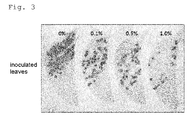
Fig. 3 shows effect of sprinkling a glutamic acid fermentation by-product liquid for inhibiting infection of tobacco mosaic virus in tobacco plants (photographs showing plant morphology). The numerical values shown at the tops of the inoculated leaves indicate concentrations of the amino acid fermentation by-product liquids used for the treatment. -
Fig. 4 shows effect of directly sprinkling a glutamic acid fermentation by-product liquid (photographs showing plant morphology). The treatment scheme using the fermentation by-product liquid is shown with a schematic diagram. Marked virus infection inhibition effect is observed for the regions treated with the fermentation by-product liquid (Mock inoculation means false inoculation). -
Fig. 5 shows inhibition of cucumber mosaic virus infection induced by sprinkling a glutamic acid fermentation by-product liquid on tomato plants (photographs showing plant morphology). The numerical values shown at the tops of the inoculated leaves indicate concentrations of the amino acid fermentation by-product liquids used for the treatment. -
Fig. 6 shows inhibition of cucumber mosaic virus infection induced by sprinkling a glutamic acid fermentation by-product liquid on bell pepper plants (photographs showing plant morphology). The numerical values shown at the tops of the inoculated leaves indicate concentrations of the amino acid fermentation by-product liquids used for the treatment. -
Fig. 7 shows effect of sprinkling a threonine fermentation by-product liquid on leaf surfaces for inhibiting infection of cucumber mosaic virus (photographs showing plant morphology). The numerical values (0%, 0.5%, 1.0%) shown at the tops of the inoculated upper leaves indicate concentrations of the threonine fermentation by-product liquids used for the treatment. -
Fig. 8 shows effect of sprinkling a nucleic acid fermentation by-product liquid (mixture of inosine, guanosine, adenosine, inosinic acid, and guanylic acid fermentation by-product liquids) on leaf surfaces for inhibiting infection of cucumber mosaic virus (photographs showing plant morphology). The numerical values (0%, 0.5%, 1.0%) shown at the tops of the inoculated upper leaves indicate concentrations of the nucleic acid fermentation by-product liquids used for the treatment. - The plant virus infection inhibitor of the present invention (henceforth also referred to as the "agent of the present invention" or simply as the "agent") contains an amino acid fermentation by-product, a nucleic acid fermentation by-product, or both of these. "Inhibition of virus infection" means controlling or ameliorating at least a disease of a plant caused by a pathogenic virus, and the action for it is not limited, and may be based on any of suppression of invasion of viruses into plant cells, suppression of proliferation of viruses, and those other than these. Therefore, the "virus infection inhibitor" may be a "virus disease controlling agent". Moreover, the "method for inhibiting infection of a virus in plant" may be a "method for controlling a plant virus disease".
- In the present invention, the amino acid fermentation by-product is a generic term for referring to a by-product liquid remaining after removal of amino acid produced by fermentation from fermentation broth (amino acid fermentation by-product liquid), a concentrate or dried solid thereof, a fractionation product thereof, and so forth. In this amino acid fermentation by-product, the amino acid and/or a derivative thereof produced by the fermentation remains.
- In the present invention, the nucleic acid fermentation by-product is a generic term for referring to a by-product liquid remaining after removal of nucleic acid produced by fermentation from fermentation broth (nucleic acid fermentation by-product liquid), a concentrate or dried solid thereof, a fractionation product thereof, and so forth. In this nucleic acid fermentation by-product, the nucleic acid and/or a derivative thereof produced by the fermentation remains.
- The fermentation by-product liquid may contain an acid or the like added in order to collect the objective substance from the medium, and may be subjected to a heat treatment for disinfection etc.
- The amino acid or nucleic acid contained in the amino acid fermentation by-product or nucleic acid fermentation by-product is not particularly limited, and they contains various amino acids and nucleic acids described later. Furthermore, the amino acid or nucleic acid contained in the fermentation by-product may consist of one or two or more kinds of amino acids or nucleic acids.
- Specific examples of the amino acid fermentation by-product include, for example, a circulating fluid obtained by adjusting pH of a fermentation liquid of a basic or neutral amino acid such as L-lysine and L-glutamine, and passing the liquid through a strongly acidic cationic resin to absorb the amino acid on the resin, and a concentrate thereof, as well as a mother liquid obtained by adjusting pH of a fermentation liquid of an acidic amino acid such as L-glutamic acid to the isoelectric point with a mineral acid, and separating deposited crystals of the amino acid by solid/liquid separation, and a concentrate thereof.
- Furthermore, specific examples of the nucleic acid fermentation by-product include, for example, a mother liquid obtained by crystallizing a nucleic acid such as inosinic acid and guanylic acid in a fermentation liquid for the nucleic acid by cooling crystallization or concentration crystallization utilizing difference in solubility, and separating precipitated crystals by solid/liquid separation, and a concentrate thereof. Furthermore, the nucleic acid fermentation by-product liquid is not limited to a by-product liquid obtained from a fermentation liquid in which a nucleic acid such as inosinic acid and guanylic acid is directly generated by fermentation after the objective substance is collected, and it may be a by-product liquid obtained from a fermentation liquid containing a nucleotide obtained by enzymatically or microbiologically phosphorylating a nucleoside such as inosine or guanosine in the fermentation liquid after the target substance is collected.
- Such fermentation by-products usually contain, as solid content, various amino acids (containing 5 to 14% by weight in the case of a 5- to 20-fold concentrate) or various nucleic acids (containing 5 to 15% by weight in the case of a 5- to 20-fold concentrate), as well as a lot of nutrients such as saccharides, fermentation bacterial cells, organic nitrogens, mineral nitrogens, and vitamins (solid content is 30 to 50% by weight).
- The fermentation by-product of an amino acid in a state of a fermentation by-product liquid obtained after separation of the target amino acid and before such an operation as concentration, exsiccation, or fractionation preferably contains 1 mM or more, more preferably 2 mM or more, further preferably 5 mM or more, of the amino acid. Furthermore, the fermentation by-product of an amino acid may contain amino acids other than the amino acid as the target substance of the fermentation. Furthermore, the fermentation by-product of an amino acid may be a mixture of two or more kinds of fermentation by-products obtained by fermentation production of different amino acids as target substances.
- The fermentation by-product of a nucleic acid in a state of a fermentation by-product liquid obtained after separation of the objective nucleic acid and before such an operation as concentration, exsiccation, or fractionation preferably contains 1 mM or more, more preferably 2 mM or more, further preferably 10 mM or more, of the nucleic acid. Furthermore, the fermentation by-product of a nucleic acid may contain nucleic acids other than the nucleic acid as the target substance of the fermentation. Furthermore, the fermentation by-product of a nucleic acid may be a mixture of two or more kinds of fermentation by-products obtained by fermentation production of different nucleic acids as target substances.
- Specific examples of the amino acid fermentation by-product liquid include those obtained by culturing a microorganism belonging to the genus Corynebacterium, Pantoea, or Escherichia in a medium containing a sugar source such as sucrose, starch, sugarcane, corn, sugar beet, cassava, algae such as Euglena, or a carbon source obtained from an oil source such as rapeseed oil, palm oil, olive oil, sunflower oil, soybean oil, rice oil, hemp oil, fish oil, lard, beef tallow, and algae such as raphidophyte algae and Botryococcus algae as the main raw material, and a nitrogen source, as well as nutrients such as inorganic ions and others, lowering pH of the medium after the culture with sulfuric acid or hydrochloric acid, separating the precipitated amino acid, and subjecting the medium to concentration or heat treatment. The stock solution of such a fermentation by-product liquid usually contains about 1 to 10% (W/V) of amino acids.
- Furthermore, specific examples of the nucleic acid fermentation by-product liquid include those obtained by culturing a microorganism belonging to the genus Bacillus in a medium containing sucrose, starch, sugarcane, corn, or carbon source made from sugar beet or cassava as the main raw material, and a nitrogen source, and optionally containing nutrients such as inorganic ions and others, lowering pH of the medium after the culture with sulfuric acid or hydrochloric acid, separating precipitated inosine and guanosine by crystallization, subjecting the medium to concentration or heat treatment to obtain a fermentation by-product liquid, adding thereto the abovementioned concentrated and heat treated liquid which has been obtained by phosphorylating the inosine and guanosine with a microorganism belonging to the genus Morganella, Serratia, Klebsiella, Enterobacter, Chromobacterium, Cedecea, or Escherichia, and separating the produced inosinic acid or guanylic acid. The stock solution of such a fermentation by-product liquid usually contains about 1 to 8% (W/V) of inosinic acid and 1 to 6% (W/V) of guanylic acid.
- Examples of the microorganism and medium used for the fermentation include, for example, those described in European Patent Publications
EP 0643135 B ,EP 0733712 B ,EP 1477565 A ,EP 0796912 A ,EP 0837134 A ,EP 1170376 A , International Patent PublicationsWO01/53459 WO2005/010175 ,WO96/17930 - The L-glutamic acid fermentation by-product liquid, L-threonine fermentation by-product liquid, and the nucleic acid fermentation by-product liquid (mixture of inosine, guanosine, adenosine, inosinic acid, and guanylic acid fermentation by-product liquids) used in the Example section described later were obtained as described above by using Corynebacterium glutamicum, Escherichia coli, or Bacillus amyloliquefaciens.
- Examples of the amino acid as the target substance of the fermentation or the amino acid contained in the fermentation by-product include basic amino acids such as lysine, ornithine, arginine, histidine, and citrulline, aliphatic amino acids such as isoleucine, alanine, valine, leucine, and glycine, amino acids which are hydroxymonoaminocarboxylic acids such as threonine and serine, cyclic amino acids such as proline, aromatic amino acids such as phenylalanine, tyrosine, and tryptophan, sulfur-containing amino acids such as cysteine, cystine, and methionine, acidic amino acids such as glutamic acid and aspartic acid, and amino acids having an amide group in side chains such as glutamine and asparagine. Furthermore, the amino acid may be an amino acid derivative, for example, trimethylglycine, betaine such as carnitine, monomethylglycine, dimethylglycine, or γ-aminobutyric acid (GABA).
- Among these, glutamic acid, lysine, phenylalanine, arginine, alanine, glutamine, aspartic acid, asparagine, glycine, GABA, betaine, dimethylglycine, leucine, methionine, cysteine, tyrosine, proline, citrulline, valine, serine, valine, isoleucine, and tryptophan are preferred, and glutamic acid, lysine, phenylalanine, and arginine are more preferred.
- The amino acid includes free amino acids and/or salts thereof, for example, sulfates, hydrochlorides, carbonates, ammonium salts, sodium salts, and potassium salts. Furthermore, although the amino acid may be an L-amino acid or D-amino acid, it is preferably an L-amino acid.
- Examples of the nucleic acid as the target substance of the fermentation or the nucleic acid contained in the fermentation by-product include a nucleoside, nucleotide, nucleobase, and so forth.
- The nucleobase may be purine or pyrimidine. The nucleoside may be a purine nucleoside or a pyrimidine nucleoside, and the nucleotide may be a purine nucleotide or a pyrimidine nucleotide. Furthermore, although the saccharide constituting the nucleoside and nucleotide may be ribose or deoxyribose, it is preferably ribose.
- Examples of the nucleobase include adenine, guanine, thymine, cytosine, uracil, xanthine, and hypoxanthine.
- Examples of the nucleoside include adenosine, guanosine, thymidine, cytidine, uridine, xanthosine, inosine, and 2'-deoxy compounds of these.
- Examples of the nucleoside include adenylic acid (adenosine-5'-phosphate), guanylic acid (guanosine-5'-phsophate), thymidylic acid (thymidine-5'-phosphate), uridylic acid (uridine-5'-phosphate), xanthylic acid (xanthosine-5'-phosphate), inosinic acid (inosine-5'-phosphate), and 2'-deoxy compounds of these.
- As the nucleoside, a purine nucleoside is preferred, and inosine and guanosine are more preferred.
- As the nucleotide, a purine nucleotide is preferred, and inosinic acid and guanylic acid are more preferred.
- The nucleic acid may be a free compound or may be a salt such as a sodium salt and a potassium salt.
- The aforementioned fermentation by-product of a nucleic acid may further contain a phosphorylated nucleic acid as described above.
- The plant virus infection inhibitor of the present invention contains such an amino acid fermentation by-product or nucleic acid fermentation by-product as mentioned above. Furthermore, the plant virus infection inhibitor may contain both the fermentation by-product of an amino acid and the fermentation by-product of a nucleic acid.
- Since the agent of the present invention can enhance resistance to a virus also in a plant tissue to which the agent is not directly applied as shown in Example 2 describe below, the method for applying it to a plant is not particularly limited. However, since extremely high virus infection inhibition effect was observed in the regions to which the agent was directly applied, it is particularly preferably sprinkled on a plant body, for example, the whole plant body or leaf surfaces.
- The agent of the present invention is preferably in a form that can be sprinkled, and may be in the form of, for example, any of liquid agent such as emulsion, wettable powder, oil, aerosol, and flowable agent, but it is preferred that it can be uniformly sprinkled on plant surfaces, since the agent show especially high effect in the sprinkled regions. Furthermore, the agent may be a powdery agent or solid agent, so long as it can be prepared in a form that enables sprinkling thereof at the time of use. The "sprinkling" includes "spraying" as for a liquid agent.
- The content of the amino acid fermentation by-product, nucleic acid fermentation by-product, amino acid, or nucleic acid in the agent is not particularly limited, but can be suitably determined depending on type of plant, application amount of the agent to plants, and so forth. Specifically, as for the amino acid fermentation by-product or nucleic acid fermentation by-product, when the agent is a liquid, or when the agent is a solid but is used as a liquid at the time of use, the content is preferably 0.01% by weight or more, more preferably 0.1 % by weight or more, in terms of the content of the fermentation by-product liquid. Although the maximum content is not particularly limited, the content is preferably 10% by weight or less, more preferably 1% by weight or less, further preferably 0.5% by weight or less. The expression "in terms of the content of the fermentation by-product liquid" means that when the fermentation by-product is a concentrate, dried product or the like of a fermentation by-product liquid, the content is represented by weight content of the original fermentation by-product liquid.
- As described above, the agent of the present invention has an action of significantly controlling viral infection in a region where the agent is directly applied by sprinkling or coating of the agent, in addition to the action of inducing resistance to a virus.
- Although the agent is preferably applied 1 to 10 days before the day on which virus infection is expected, it is preferably sprinkled at a frequency as high as possible in view of such maintenance of induced resistance and control of viral infection in a region where the agent is applied as described above, and it is recommendable to sprinkle it at a frequency of once per 3 to 7 days, or at least once per two weeks. In the case of a liquid agent, appropriate concentration of the liquid to be sprinkled is generally 0.1 to 1.0% (v/v) in terms of the fermentation by-product liquid, but if it is sprinkled at a concentration higher than required, phytotoxicity may appear depending on the type of plant, and therefore, strictly speaking, the concentration to be sprinkled differs depending on the type of the agricultural product to be protected. For example, it is preferably 0.2 to 2.0% (v/v) in the case of tobacco, and it is preferably 0.05 to 1.0% (v/v) in the case of tomato.
- Furthermore, although the sprinkling amount may differ depending on the type of the agricultural product, total area of leaves, and dilution rate of the agent, it is preferably 1 to 100 kg/hectare in terms of the solid content of the fermentation by-product.
- Since an antifoam component usually remains in the fermentation by-product liquid, and this shows spreading effect, the agent can be used without adding any spreading agent, but in order to more effectively apply the agent on the surfaces of agricultural products, it is recommendable to further add a spreading agent at a final concentration of 0.01 to 0.5% by weight.
- Examples of plant viruses of which infection can be inhibited according to the present invention include Tobamovirus viruses such as tobacco mosaic virus, tomato mosaic virus, and pepper mild mottle virus, and Cucumovirus viruses such as cucumber mosaic virus.
- In order to effectively inhibit a viral disease, sprinkling of the agent of the present invention to the whole plant body may be combined with blocking the route of infection using a pesticide, removal of a plant suffering from a disease at an early stage of the disease, vaccination with attenuated viruses, and so forth.
- Hereafter, the present invention will be further specifically explained with reference to examples. However, the present invention is not limited to these examples.
- To the whole bodies of tobacco plants (Nicotiana tabacum cv. Samsun) grown for about five weeks after seeding, L-glutamic acid fermentation by-product liquids diluted to concentrations of 0% (sterilized water), 0.1% (v/v), 0.5% (v/v), and 1.0% (v/v) were sprinkled, and the plants were cultivated for two days. To the whole surface of one lower leaf of an appropriate size, Carborundum (Nakalai Tesque) was thinly sprinkled, and cucumber mosaic virus (CMV) Y strain or tobacco mosaic viruse (TMV) was artificially inoculated by dropping 100 µl per leaf of a 5 µg/ml solution of CMV or a 2.5 µg/ml solution of TMV, and spreading the solution by sweeping the whole surface of the leaf with fingers wearing a rubber glove. The inoculated leaf was collected 5 days after the inoculation, and an upper leaf was collected 9 days after the inoculation. Leaf sap prepared from each leaf was transferred to filter paper, and localization of CMV or TMV was detected by immunostaining (TPI) using an anti-CMV antiserum or an anti-TMV antiserum.
- As a result, there was observed a tendency that the number of infection sites decreased in a manner dependent on the concentration of the fermentation by-product liquid used for the treatment for the inoculated leaves (
Fig. 1 ). Furthermore, inhibition of transfer of CMV to upper leaves was observed for the 0.5 to 1.0% fermentation by-product liquid-treated groups. In this experiment, although CMV may have been observed on the upper leaves, the staining signal tended to become lower in a fermentation by-product liquid concentration-dependent manner. Furthermore, in the treated groups, prolongation of time until symptoms appeared was also observed (Fig. 2 ). The same phenomena as these were confirmed also in the experiment where the plants were infected with TMV (Fig. 3 ). On the basis of these experimental results, it was estimated that the fermentation by-product liquid shows an effect of inhibiting virus infection through sprinkling thereof on leaf surfaces, and invasion amount of virus is reduced as a result to provide retardation of development of systemic infection. - As one of the responses against viral diseases, activation of the salicylic acid pathway can be mentioned. For example, it is widely known that sensitivity to viruses increases in a plant body in which an enzyme that decomposes salicylic acid is overexpressed, and it is considered that the activation of the salicylic acid pathway is one of the resistance mechanisms of plants against viruses. Furthermore, salicylic acid is a signal factor of plants, and is a plant hormone that induces systemic resistance induction (systemic acquired resistance). In order to verify whether the inhibition of virus infection observed with a fermentation by-product liquid is induced through activation of this pathway or not, the following experiment was performed.
- A 1.0% (v/v) glutamic acid fermentation by-product liquid or sterilized water was applied to a half surface area of a leaf (schematic diagram shown in
Fig. 4 ) of a tobacco plant cultivated under the same conditions as those of Example 1, and the plant was further cultivated for two days. Then, CMV or TMV was inoculated on the whole leaf in same manner as that of Example 1, and the inoculated leaf was collected after cultivation for three days. Each leaf sap was transferred to filter paper, and localization of each virus was detected by TPI using an anti-CMV antiserum or an anti-TMV antiserum. - If the biosynthesis of salicylic acid or the systemic acquired resistance causes the inhibition of virus infection, there should be observed a phenomenon that marked infection spots appear also on the half surface of the leaf not directly applied with the fermentation by-product liquid.
- As a result, in the leaves applied with the fermentation by-product liquid, the number of the infection spots decreased in the half of the leaf surface not directly applied with the fermentation by-product liquid as compared to the leaf treated with sterilized water (
Fig. 4 ). Since it had already been revealed that residue of fermentation bacterial cells contained in a fermentation by-product liquid has an elicitar activity that induces resistance (WO2009/88074 - Furthermore, it was unexpectedly observed that the number of infection spots more markedly decreased specifically in a part directly contacting with the fermentation by-product liquid (
Fig. 4 ). On the basis of this result, it was considered that the inhibition of the virus infection observed with the fermentation by-product liquid was caused by a certain reaction or response characteristically taking place in a region where the fermentation by-product liquid was directly applied, in addition to the induction of disease resistance of the plant induced by the elicitar contained in the fermentation by-product liquid. - Two days after sprinkling of a glutamic acid fermentation by-product liquid on leaf surfaces of tomato plants (Solanum lycopersicum, variety: Momotaro Fight), 5 µg/ml of CMV was inoculated in the same manner as that of Example 1. After four days, localization of CMV was detected by TPI using an anti-CMV antiserum. As a result, a fermentation by-product liquid concentration-dependent decrease of the number of virus infection spots was observed (
Fig. 5 ). - Two days after sprinkling of a glutamic acid fermentation by-product liquid on leaf surfaces of bell pepper plants (Capsicum annuum, variety: Shosuke), 5 µg/ml of CMV was inoculated in the same manner as that of Example 1. After four days, localization of CMV was detected by TPI using an anti-CMV antiserum. As a result, a fermentation by-product liquid concentration-dependent decrease of the number of virus infection spots was observed in the bell pepper plants (
Fig. 6 ), as in the cases of tobacco and tomato plants. - In all the experiments described above, by-product liquids of fermentation for glutamic acid were used. Therefore, in order to verify whether a by-product liquid of fermentation for amino acid other than glutamic acid also has the same action, in the same manners as those of Example 1, a fermentation by-product liquid of L-threonine fermentation was applied to tobacco plants, CMV was inoculated, and after 3 days, localization of the virus was detected. As a result, a concentration-dependent decrease of the number of infection spots was observed (
Fig. 7 ), as in the case of using the glutamic acid fermentation by-product liquid. This result suggests that a fermentation by-product liquid for amino acid other than glutamic acid also has an effect of inhibiting virus infection. - In order to verify whether a nucleic acid fermentation by-product liquid also has the effect, a nucleic acid fermentation by-product liquid (mixture of inosine, guanosine, adenosine, inosinic acid, and guanylic acid fermentation by-product liquids) was sprinkled on leaf surfaces of tobacco plants. Then, in the same manner as that of Example 1, 5 µg/ml of CMV was inoculated, and after four days, localization of CMV was detected by TPI using an anti-CMV antiserum. As a result, a fermentation by-product liquid concentration-dependent decrease of the number of virus infection spots was observed, as in the case of using the amino acid fermentation by-product liquid (
Fig. 8 ). This result suggests that a nucleic acid fermentation by-product liquid also has an effect of inhibiting virus infection. - The present invention enables providing an effective plant virus infection inhibitor, and virus diseases in various plants are thereby reduced.
- Since by-product liquids remaining after amino acid fermentation or nucleic acid fermentation can be used for the plant virus infection inhibitor of the present invention, it can be easily obtained at a low cost, and can also be produced in a large scale.
Claims (8)
- A virus infection inhibitor for inhibiting infection of one or more kinds of viruses selected from a Tobamovirus virus and a Cucumovirus virus in a plant selected from tobacco, tomato, bell pepper, and chili pepper, which comprises a fermentation by-product selected from an amino acid fermentation by-product and a nucleic acid fermentation by-product.
- The virus infection inhibitor according to claim 1, wherein the fermentation by-product is an amino acid fermentation by-product.
- The virus infection inhibitor according to claim 1, wherein the fermentation by-product is a nucleic acid fermentation by-product.
- The virus infection inhibitor according to claim 1 or 2, wherein the amino acid fermentation by-product is a fermentation by-product of glutamic acid, lysine, threonine, phenylalanine, or arginine.
- The virus infection inhibitor according to claim 1 or 3, wherein the nucleic acid fermentation by-product is a fermentation by-product of inosine, guanosine, adenosine, inosinic acid, or guanylic acid.
- The virus infection inhibitor according to any one of claims 1 to 5, wherein the Tobamovirus virus is pepper mild mottle virus, tobacco mosaic virus, or tomato mosaic virus, and the Cucumovirus virus is cucumber mosaic virus.
- A method for inhibiting infection of a virus in a plant, which comprises sprinkling the virus infection inhibitor according to any one of claims 1 to 6 at a concentration of 0.01 to 10% (v/v) in terms of fermentation by-product liquid concentration onto a plant body of a plant selected from tobacco, tomato, bell pepper, and chili pepper.
- The method according to claim 7, wherein the virus infection inhibitor is sprinkled 1 to 10 days before a day on which virus infection is expected.
Applications Claiming Priority (2)
| Application Number | Priority Date | Filing Date | Title |
|---|---|---|---|
| JP2011239948A JP2015013812A (en) | 2011-11-01 | 2011-11-01 | Plant virus infection inhibitor and plant virus infection inhibition method therewith |
| PCT/JP2012/075542 WO2013065439A1 (en) | 2011-11-01 | 2012-10-02 | Plant virus infection inhibitor and plant virus infection inhibition method using same |
Publications (3)
| Publication Number | Publication Date |
|---|---|
| EP2781157A1 true EP2781157A1 (en) | 2014-09-24 |
| EP2781157A4 EP2781157A4 (en) | 2015-06-10 |
| EP2781157B1 EP2781157B1 (en) | 2020-03-04 |
Family
ID=48191797
Family Applications (1)
| Application Number | Title | Priority Date | Filing Date |
|---|---|---|---|
| EP12846612.5A Active EP2781157B1 (en) | 2011-11-01 | 2012-10-02 | Plant virus infection inhibition method |
Country Status (5)
| Country | Link |
|---|---|
| US (1) | US10617122B2 (en) |
| EP (1) | EP2781157B1 (en) |
| JP (1) | JP2015013812A (en) |
| ES (1) | ES2782505T3 (en) |
| WO (1) | WO2013065439A1 (en) |
Cited By (1)
| Publication number | Priority date | Publication date | Assignee | Title |
|---|---|---|---|---|
| WO2019162952A1 (en) | 2018-02-26 | 2019-08-29 | The State Of Israel, Ministry Of Agriculture & Rural Development, Agricultural Research Organization (Aro) (Volcani Center) | Method of improving plant performance |
Families Citing this family (6)
| Publication number | Priority date | Publication date | Assignee | Title |
|---|---|---|---|---|
| JP2015013812A (en) | 2011-11-01 | 2015-01-22 | 味の素株式会社 | Plant virus infection inhibitor and plant virus infection inhibition method therewith |
| JP2018197193A (en) * | 2015-10-15 | 2018-12-13 | 味の素株式会社 | Coffee tree disease resistance enhancing agent and disease control method |
| JP6634325B2 (en) * | 2016-03-30 | 2020-01-22 | 岡山県 | Plant virus control agent |
| NL2024170B1 (en) | 2019-11-06 | 2021-07-20 | Hw Innovations B V | Compositions, uses and methods for prevention and treatment of viral plant infections. |
| CN114600897B (en) * | 2022-05-09 | 2022-08-02 | 山东蓬勃生物科技有限公司 | Preparation method and application of 2' -deoxyguanosine, guanosine and composition thereof |
| CN119423108B (en) * | 2025-01-13 | 2025-04-08 | 南京农业大学三亚研究院 | Application of RNase inhibitor guanosine 5' -monophosphate in improving disease resistance of plants |
Family Cites Families (31)
| Publication number | Priority date | Publication date | Assignee | Title |
|---|---|---|---|---|
| JPS604103A (en) * | 1983-06-21 | 1985-01-10 | Daikin Ind Ltd | Antiphage agent |
| JPS62230707A (en) * | 1986-03-31 | 1987-10-09 | Toshio Yamada | Plant activation agent |
| JPS632901A (en) | 1986-06-24 | 1988-01-07 | Chisso Corp | Agent for controlling viral disease of plant |
| JP2514038B2 (en) * | 1987-07-02 | 1996-07-10 | 正一 北野 | Plant treatment |
| JPH0621122B2 (en) | 1988-01-12 | 1994-03-23 | 日本たばこ産業株式会社 | Novel polymeric polysaccharide FB and method for producing the same |
| JPH01272509A (en) | 1988-04-22 | 1989-10-31 | Japan Tobacco Inc | Production of controlling agent of plant virus by micro-organism |
| JPH01281079A (en) | 1988-05-09 | 1989-11-13 | Kirin Brewery Co Ltd | Attenuated strain of plant virus and preparation thereof |
| JPH02121903A (en) | 1988-10-31 | 1990-05-09 | Chisso Corp | Controller against plant viral blight |
| JPH05137580A (en) | 1991-11-20 | 1993-06-01 | Japan Tobacco Inc | New protein and gene capable of coding the same |
| JPH0680530A (en) * | 1992-09-01 | 1994-03-22 | Mitsui Toatsu Chem Inc | Method for controlling disease damage of plant |
| RU2113484C1 (en) | 1992-11-10 | 1998-06-20 | Адзиномото Ко., Инк. | Dna fragment encoding aspartokinase-iii, a method of l-threonine preparing |
| JPH0725718A (en) | 1993-07-07 | 1995-01-27 | Mitsui Norin Kk | Anti plant virus agent |
| RU2182173C2 (en) | 1993-10-28 | 2002-05-10 | Адзиномото Ко., Инк. | Method of production of l-amino acid |
| JPH07155184A (en) | 1993-12-08 | 1995-06-20 | Ajinomoto Co Inc | Fermentation method for producing L-lysine |
| ES2256850T5 (en) | 1994-12-09 | 2013-04-15 | Ajinomoto Co., Inc. | New lysine decarboxylase gene and procedure for the production of L-lysine |
| CN1087903C (en) * | 1996-01-19 | 2002-07-24 | 济南科贝尔生物工程有限公司 | Agricultural chemical for preventing and controlling plant virus prepared by liquid fermentation and its producing technology |
| JP4088982B2 (en) | 1996-10-15 | 2008-05-21 | 味の素株式会社 | Method for producing L-amino acid by fermentation |
| US6331505B1 (en) * | 1998-10-29 | 2001-12-18 | Emerald Bioagriculture Corporation | Method for increasing plant productivity using glutamic acid and glycolic acid |
| JP2001072521A (en) | 1999-09-06 | 2001-03-21 | Tayca Corp | Polysaccharides produced by Candida famata useful as plant virus control agents |
| BRPI0016995B1 (en) | 2000-01-21 | 2016-03-08 | Ajinomoto Kk | genetically modified escherichia coli bacteria, and method for producing l-lysine |
| JP4380029B2 (en) | 2000-07-05 | 2009-12-09 | 味の素株式会社 | Manufacturing method of substances using microorganisms |
| CN100520793C (en) | 2003-07-29 | 2009-07-29 | 味之素株式会社 | Method for determination of metabolic flux affecting production of useful material |
| KR100535912B1 (en) * | 2003-12-17 | 2005-12-09 | 주식회사 케이티앤지 | The novel bacillus amyloliquefaciens ktgb0202 and control method of plant pathogenic fungi using that |
| DE102006032634A1 (en) * | 2006-07-13 | 2008-01-17 | Evonik Degussa Gmbh | Process for the preparation of L-amino acids |
| JP2009007220A (en) * | 2007-06-29 | 2009-01-15 | Yoshihisa Masuda | Anti-virulence and/or insect pest repelling organic fermentative bacterial fertilizer |
| JP2011067095A (en) | 2008-01-10 | 2011-04-07 | Ajinomoto Co Inc | Method for producing target substance by fermentation process |
| ES2485990T3 (en) * | 2008-01-11 | 2014-08-14 | Ajinomoto Co., Inc. | Use of disease resistance enhancer for plants and control procedure of a plant disease using the same |
| JP2010045533A (en) | 2008-08-11 | 2010-02-25 | Fujitsu Ltd | Method for manufacturing elastic wave device |
| JP5314555B2 (en) * | 2009-10-02 | 2013-10-16 | エンザイム株式会社 | Method for producing humus extract |
| CN102190534B (en) * | 2010-03-12 | 2014-04-02 | 中国科学院过程工程研究所 | Method for producing biological medicament fertilizer product through solid state fermentation of biological residue |
| JP2015013812A (en) | 2011-11-01 | 2015-01-22 | 味の素株式会社 | Plant virus infection inhibitor and plant virus infection inhibition method therewith |
-
2011
- 2011-11-01 JP JP2011239948A patent/JP2015013812A/en active Pending
-
2012
- 2012-10-02 WO PCT/JP2012/075542 patent/WO2013065439A1/en not_active Ceased
- 2012-10-02 ES ES12846612T patent/ES2782505T3/en active Active
- 2012-10-02 EP EP12846612.5A patent/EP2781157B1/en active Active
-
2014
- 2014-04-11 US US14/250,515 patent/US10617122B2/en active Active
Cited By (1)
| Publication number | Priority date | Publication date | Assignee | Title |
|---|---|---|---|---|
| WO2019162952A1 (en) | 2018-02-26 | 2019-08-29 | The State Of Israel, Ministry Of Agriculture & Rural Development, Agricultural Research Organization (Aro) (Volcani Center) | Method of improving plant performance |
Also Published As
| Publication number | Publication date |
|---|---|
| JP2015013812A (en) | 2015-01-22 |
| WO2013065439A1 (en) | 2013-05-10 |
| US20140219993A1 (en) | 2014-08-07 |
| EP2781157B1 (en) | 2020-03-04 |
| US10617122B2 (en) | 2020-04-14 |
| EP2781157A4 (en) | 2015-06-10 |
| ES2782505T3 (en) | 2020-09-15 |
Similar Documents
| Publication | Publication Date | Title |
|---|---|---|
| US10617122B2 (en) | Plant virus infection inhibitor and a method for inhibiting plant virus infection using the same | |
| Abbas et al. | Halotolerant PGPR: A hope for cultivation of saline soils | |
| Dong et al. | Transcriptomic analysis of two endophytes involved in enhancing salt stress ability of Arabidopsis thaliana | |
| Selim et al. | Actinobacterium isolated from a semi-arid environment improves the drought tolerance in maize (Zea mays L.) | |
| Sultana et al. | Signaling and defence mechanism of jasmonic and salicylic acid response in pulse crops: role of WRKY transcription factors in stress response | |
| RU2017129695A (en) | COMPOSITIONS AND METHODS FOR FIGHTING FUSARIOSIS | |
| JP5790507B2 (en) | Cucurbitaceae plant disease resistance enhancer and plant disease control method using the same | |
| JP2012010694A (en) | Agent for enhancing allelopathy effect and/or phytoalexin production of plant | |
| Saini et al. | Seed germination in Chenopodium album L: Relationships between nitrate and the effects of plant hormones | |
| CN109221197B (en) | Plant disease-resistant resistance inducer and application thereof | |
| dos Santos Lopes et al. | Effect of Pseudomonas fluorescens and Burkholderia pyrrocinia on the growth improvement and physiological responses in Brachiaria brizantha | |
| JP2014073993A (en) | Improvement agents for the iron utilization ability of plants | |
| JP2014001143A (en) | Rice plant disease-resistant promoter and rice plant disease control method using the same | |
| Singh et al. | Regulation of nucleotide metabolism in response to salt stress | |
| Higgins et al. | The induction of nitrate reductase in mung bean seedlings | |
| Abdelgawad | Improving growth and yield of salt-stressed cowpea plants by exogenous application of ascobin | |
| WO2006059782A1 (en) | Composition for plant tolerance against environmental stress | |
| HUT56694A (en) | Preparations promoting plant growth and resistance to diseases | |
| RU2735624C1 (en) | Method for increasing adaptive potential of grapes to biotic and abiotic stresses | |
| Chaudhry et al. | Changes in foliar glycoalkaloids levels of potato (Solanum tuberosum) triggered by late blight disease severity | |
| Tripathy et al. | Signal transduction in plants under drought and salt stress-an overview | |
| Suman et al. | Exploring the role of biostimulants in sustainable agriculture. | |
| Aldesuquy et al. | Faba bean can adapt to chocolate spot disease by pretreatment with shikimic and salicylic acids through osmotic adjustment, solutes allocation and leaf turgidity | |
| Ramasamy et al. | Seed treatment with benzothiadiazole induces resistance against powdery mildew disease caused by Sphaerotheca fuliginea and increases the activities of pathogenesis-related enzymes in cucumber plants | |
| Sabat et al. | Nutritional factors affecting the antifungal activity of Penicillium steckii of mangrove origin |
Legal Events
| Date | Code | Title | Description |
|---|---|---|---|
| PUAI | Public reference made under article 153(3) epc to a published international application that has entered the european phase |
Free format text: ORIGINAL CODE: 0009012 |
|
| 17P | Request for examination filed |
Effective date: 20140522 |
|
| AK | Designated contracting states |
Kind code of ref document: A1 Designated state(s): AL AT BE BG CH CY CZ DE DK EE ES FI FR GB GR HR HU IE IS IT LI LT LU LV MC MK MT NL NO PL PT RO RS SE SI SK SM TR |
|
| DAX | Request for extension of the european patent (deleted) | ||
| RA4 | Supplementary search report drawn up and despatched (corrected) |
Effective date: 20150511 |
|
| RIC1 | Information provided on ipc code assigned before grant |
Ipc: A01N 37/44 20060101ALI20150505BHEP Ipc: A01N 63/02 20060101AFI20150505BHEP Ipc: A01G 7/00 20060101ALI20150505BHEP Ipc: A01N 37/46 20060101ALI20150505BHEP Ipc: A01P 1/00 20060101ALI20150505BHEP |
|
| STAA | Information on the status of an ep patent application or granted ep patent |
Free format text: STATUS: EXAMINATION IS IN PROGRESS |
|
| 17Q | First examination report despatched |
Effective date: 20171117 |
|
| GRAP | Despatch of communication of intention to grant a patent |
Free format text: ORIGINAL CODE: EPIDOSNIGR1 |
|
| STAA | Information on the status of an ep patent application or granted ep patent |
Free format text: STATUS: GRANT OF PATENT IS INTENDED |
|
| INTG | Intention to grant announced |
Effective date: 20190916 |
|
| GRAS | Grant fee paid |
Free format text: ORIGINAL CODE: EPIDOSNIGR3 |
|
| GRAA | (expected) grant |
Free format text: ORIGINAL CODE: 0009210 |
|
| STAA | Information on the status of an ep patent application or granted ep patent |
Free format text: STATUS: THE PATENT HAS BEEN GRANTED |
|
| AK | Designated contracting states |
Kind code of ref document: B1 Designated state(s): AL AT BE BG CH CY CZ DE DK EE ES FI FR GB GR HR HU IE IS IT LI LT LU LV MC MK MT NL NO PL PT RO RS SE SI SK SM TR |
|
| REG | Reference to a national code |
Ref country code: GB Ref legal event code: FG4D |
|
| REG | Reference to a national code |
Ref country code: CH Ref legal event code: EP |
|
| REG | Reference to a national code |
Ref country code: AT Ref legal event code: REF Ref document number: 1239359 Country of ref document: AT Kind code of ref document: T Effective date: 20200315 |
|
| REG | Reference to a national code |
Ref country code: DE Ref legal event code: R096 Ref document number: 602012068288 Country of ref document: DE |
|
| REG | Reference to a national code |
Ref country code: IE Ref legal event code: FG4D |
|
| REG | Reference to a national code |
Ref country code: DE Ref legal event code: R079 Ref document number: 602012068288 Country of ref document: DE Free format text: PREVIOUS MAIN CLASS: A01N0063020000 Ipc: A01N0063200000 |
|
| PG25 | Lapsed in a contracting state [announced via postgrant information from national office to epo] |
Ref country code: RS Free format text: LAPSE BECAUSE OF FAILURE TO SUBMIT A TRANSLATION OF THE DESCRIPTION OR TO PAY THE FEE WITHIN THE PRESCRIBED TIME-LIMIT Effective date: 20200304 Ref country code: NO Free format text: LAPSE BECAUSE OF FAILURE TO SUBMIT A TRANSLATION OF THE DESCRIPTION OR TO PAY THE FEE WITHIN THE PRESCRIBED TIME-LIMIT Effective date: 20200604 Ref country code: FI Free format text: LAPSE BECAUSE OF FAILURE TO SUBMIT A TRANSLATION OF THE DESCRIPTION OR TO PAY THE FEE WITHIN THE PRESCRIBED TIME-LIMIT Effective date: 20200304 |
|
| REG | Reference to a national code |
Ref country code: NL Ref legal event code: MP Effective date: 20200304 |
|
| PG25 | Lapsed in a contracting state [announced via postgrant information from national office to epo] |
Ref country code: HR Free format text: LAPSE BECAUSE OF FAILURE TO SUBMIT A TRANSLATION OF THE DESCRIPTION OR TO PAY THE FEE WITHIN THE PRESCRIBED TIME-LIMIT Effective date: 20200304 Ref country code: SE Free format text: LAPSE BECAUSE OF FAILURE TO SUBMIT A TRANSLATION OF THE DESCRIPTION OR TO PAY THE FEE WITHIN THE PRESCRIBED TIME-LIMIT Effective date: 20200304 Ref country code: LV Free format text: LAPSE BECAUSE OF FAILURE TO SUBMIT A TRANSLATION OF THE DESCRIPTION OR TO PAY THE FEE WITHIN THE PRESCRIBED TIME-LIMIT Effective date: 20200304 Ref country code: GR Free format text: LAPSE BECAUSE OF FAILURE TO SUBMIT A TRANSLATION OF THE DESCRIPTION OR TO PAY THE FEE WITHIN THE PRESCRIBED TIME-LIMIT Effective date: 20200605 Ref country code: BG Free format text: LAPSE BECAUSE OF FAILURE TO SUBMIT A TRANSLATION OF THE DESCRIPTION OR TO PAY THE FEE WITHIN THE PRESCRIBED TIME-LIMIT Effective date: 20200604 |
|
| REG | Reference to a national code |
Ref country code: LT Ref legal event code: MG4D |
|
| REG | Reference to a national code |
Ref country code: ES Ref legal event code: FG2A Ref document number: 2782505 Country of ref document: ES Kind code of ref document: T3 Effective date: 20200915 |
|
| PG25 | Lapsed in a contracting state [announced via postgrant information from national office to epo] |
Ref country code: NL Free format text: LAPSE BECAUSE OF FAILURE TO SUBMIT A TRANSLATION OF THE DESCRIPTION OR TO PAY THE FEE WITHIN THE PRESCRIBED TIME-LIMIT Effective date: 20200304 |
|
| PG25 | Lapsed in a contracting state [announced via postgrant information from national office to epo] |
Ref country code: SM Free format text: LAPSE BECAUSE OF FAILURE TO SUBMIT A TRANSLATION OF THE DESCRIPTION OR TO PAY THE FEE WITHIN THE PRESCRIBED TIME-LIMIT Effective date: 20200304 Ref country code: EE Free format text: LAPSE BECAUSE OF FAILURE TO SUBMIT A TRANSLATION OF THE DESCRIPTION OR TO PAY THE FEE WITHIN THE PRESCRIBED TIME-LIMIT Effective date: 20200304 Ref country code: SK Free format text: LAPSE BECAUSE OF FAILURE TO SUBMIT A TRANSLATION OF THE DESCRIPTION OR TO PAY THE FEE WITHIN THE PRESCRIBED TIME-LIMIT Effective date: 20200304 Ref country code: RO Free format text: LAPSE BECAUSE OF FAILURE TO SUBMIT A TRANSLATION OF THE DESCRIPTION OR TO PAY THE FEE WITHIN THE PRESCRIBED TIME-LIMIT Effective date: 20200304 Ref country code: CZ Free format text: LAPSE BECAUSE OF FAILURE TO SUBMIT A TRANSLATION OF THE DESCRIPTION OR TO PAY THE FEE WITHIN THE PRESCRIBED TIME-LIMIT Effective date: 20200304 Ref country code: LT Free format text: LAPSE BECAUSE OF FAILURE TO SUBMIT A TRANSLATION OF THE DESCRIPTION OR TO PAY THE FEE WITHIN THE PRESCRIBED TIME-LIMIT Effective date: 20200304 Ref country code: PT Free format text: LAPSE BECAUSE OF FAILURE TO SUBMIT A TRANSLATION OF THE DESCRIPTION OR TO PAY THE FEE WITHIN THE PRESCRIBED TIME-LIMIT Effective date: 20200729 Ref country code: IS Free format text: LAPSE BECAUSE OF FAILURE TO SUBMIT A TRANSLATION OF THE DESCRIPTION OR TO PAY THE FEE WITHIN THE PRESCRIBED TIME-LIMIT Effective date: 20200704 |
|
| REG | Reference to a national code |
Ref country code: AT Ref legal event code: MK05 Ref document number: 1239359 Country of ref document: AT Kind code of ref document: T Effective date: 20200304 |
|
| REG | Reference to a national code |
Ref country code: DE Ref legal event code: R097 Ref document number: 602012068288 Country of ref document: DE |
|
| PLBE | No opposition filed within time limit |
Free format text: ORIGINAL CODE: 0009261 |
|
| STAA | Information on the status of an ep patent application or granted ep patent |
Free format text: STATUS: NO OPPOSITION FILED WITHIN TIME LIMIT |
|
| PG25 | Lapsed in a contracting state [announced via postgrant information from national office to epo] |
Ref country code: DK Free format text: LAPSE BECAUSE OF FAILURE TO SUBMIT A TRANSLATION OF THE DESCRIPTION OR TO PAY THE FEE WITHIN THE PRESCRIBED TIME-LIMIT Effective date: 20200304 Ref country code: AT Free format text: LAPSE BECAUSE OF FAILURE TO SUBMIT A TRANSLATION OF THE DESCRIPTION OR TO PAY THE FEE WITHIN THE PRESCRIBED TIME-LIMIT Effective date: 20200304 |
|
| 26N | No opposition filed |
Effective date: 20201207 |
|
| PG25 | Lapsed in a contracting state [announced via postgrant information from national office to epo] |
Ref country code: SI Free format text: LAPSE BECAUSE OF FAILURE TO SUBMIT A TRANSLATION OF THE DESCRIPTION OR TO PAY THE FEE WITHIN THE PRESCRIBED TIME-LIMIT Effective date: 20200304 Ref country code: PL Free format text: LAPSE BECAUSE OF FAILURE TO SUBMIT A TRANSLATION OF THE DESCRIPTION OR TO PAY THE FEE WITHIN THE PRESCRIBED TIME-LIMIT Effective date: 20200304 |
|
| REG | Reference to a national code |
Ref country code: DE Ref legal event code: R119 Ref document number: 602012068288 Country of ref document: DE |
|
| REG | Reference to a national code |
Ref country code: CH Ref legal event code: PL |
|
| GBPC | Gb: european patent ceased through non-payment of renewal fee |
Effective date: 20201002 |
|
| PG25 | Lapsed in a contracting state [announced via postgrant information from national office to epo] |
Ref country code: MC Free format text: LAPSE BECAUSE OF FAILURE TO SUBMIT A TRANSLATION OF THE DESCRIPTION OR TO PAY THE FEE WITHIN THE PRESCRIBED TIME-LIMIT Effective date: 20200304 Ref country code: LU Free format text: LAPSE BECAUSE OF NON-PAYMENT OF DUE FEES Effective date: 20201002 |
|
| REG | Reference to a national code |
Ref country code: BE Ref legal event code: MM Effective date: 20201031 |
|
| PG25 | Lapsed in a contracting state [announced via postgrant information from national office to epo] |
Ref country code: DE Free format text: LAPSE BECAUSE OF NON-PAYMENT OF DUE FEES Effective date: 20210501 |
|
| PG25 | Lapsed in a contracting state [announced via postgrant information from national office to epo] |
Ref country code: GB Free format text: LAPSE BECAUSE OF NON-PAYMENT OF DUE FEES Effective date: 20201002 Ref country code: LI Free format text: LAPSE BECAUSE OF NON-PAYMENT OF DUE FEES Effective date: 20201031 Ref country code: BE Free format text: LAPSE BECAUSE OF NON-PAYMENT OF DUE FEES Effective date: 20201031 Ref country code: CH Free format text: LAPSE BECAUSE OF NON-PAYMENT OF DUE FEES Effective date: 20201031 |
|
| PG25 | Lapsed in a contracting state [announced via postgrant information from national office to epo] |
Ref country code: IE Free format text: LAPSE BECAUSE OF NON-PAYMENT OF DUE FEES Effective date: 20201002 |
|
| PG25 | Lapsed in a contracting state [announced via postgrant information from national office to epo] |
Ref country code: TR Free format text: LAPSE BECAUSE OF FAILURE TO SUBMIT A TRANSLATION OF THE DESCRIPTION OR TO PAY THE FEE WITHIN THE PRESCRIBED TIME-LIMIT Effective date: 20200304 Ref country code: MT Free format text: LAPSE BECAUSE OF FAILURE TO SUBMIT A TRANSLATION OF THE DESCRIPTION OR TO PAY THE FEE WITHIN THE PRESCRIBED TIME-LIMIT Effective date: 20200304 Ref country code: CY Free format text: LAPSE BECAUSE OF FAILURE TO SUBMIT A TRANSLATION OF THE DESCRIPTION OR TO PAY THE FEE WITHIN THE PRESCRIBED TIME-LIMIT Effective date: 20200304 |
|
| PG25 | Lapsed in a contracting state [announced via postgrant information from national office to epo] |
Ref country code: MK Free format text: LAPSE BECAUSE OF FAILURE TO SUBMIT A TRANSLATION OF THE DESCRIPTION OR TO PAY THE FEE WITHIN THE PRESCRIBED TIME-LIMIT Effective date: 20200304 Ref country code: AL Free format text: LAPSE BECAUSE OF FAILURE TO SUBMIT A TRANSLATION OF THE DESCRIPTION OR TO PAY THE FEE WITHIN THE PRESCRIBED TIME-LIMIT Effective date: 20200304 |
|
| P01 | Opt-out of the competence of the unified patent court (upc) registered |
Effective date: 20230512 |
|
| PGFP | Annual fee paid to national office [announced via postgrant information from national office to epo] |
Ref country code: IT Payment date: 20250922 Year of fee payment: 14 |
|
| PGFP | Annual fee paid to national office [announced via postgrant information from national office to epo] |
Ref country code: FR Payment date: 20250908 Year of fee payment: 14 |
|
| PGFP | Annual fee paid to national office [announced via postgrant information from national office to epo] |
Ref country code: ES Payment date: 20251103 Year of fee payment: 14 |