EP2777029B1 - Synchronisation de motifs d'avertissement sonores temporels - Google Patents
Synchronisation de motifs d'avertissement sonores temporels Download PDFInfo
- Publication number
- EP2777029B1 EP2777029B1 EP12795937.7A EP12795937A EP2777029B1 EP 2777029 B1 EP2777029 B1 EP 2777029B1 EP 12795937 A EP12795937 A EP 12795937A EP 2777029 B1 EP2777029 B1 EP 2777029B1
- Authority
- EP
- European Patent Office
- Prior art keywords
- hazard detection
- bus
- alarm
- output
- input
- Prior art date
- Legal status (The legal status is an assumption and is not a legal conclusion. Google has not performed a legal analysis and makes no representation as to the accuracy of the status listed.)
- Active
Links
Images



Classifications
-
- G—PHYSICS
- G08—SIGNALLING
- G08B—SIGNALLING SYSTEMS, e.g. PERSONAL CALLING SYSTEMS; ORDER TELEGRAPHS; ALARM SYSTEMS
- G08B3/00—Audible signalling systems, e.g. audible personal calling systems
- G08B3/10—Audible signalling systems, e.g. audible personal calling systems using electric transmission; using electromagnetic transmission
-
- G—PHYSICS
- G08—SIGNALLING
- G08B—SIGNALLING SYSTEMS, e.g. PERSONAL CALLING SYSTEMS; ORDER TELEGRAPHS; ALARM SYSTEMS
- G08B7/00—Signalling systems according to two or more of groups G08B3/00 - G08B6/00
- G08B7/06—Signalling systems according to two or more of groups G08B3/00 - G08B6/00 using electric transmission, e.g. involving audible and visible signalling through the use of sound and light sources
Definitions
- the present disclosure relates to hazard detection and alarm signaling devices, and, more particularly, to temporal horn pattern synchronization of the alarm signaling portion of the devices.
- Hazard detection and alarm signaling devices for detecting fire, smoke, carbon monoxide, radon, natural gas, chlorine, water, moisture, etc., are well known in the art. Such devices may be coupled together to form an interconnected system of, for example, independent spatially diverse smoke detectors using an input-output (IO) bus.
- IO input-output
- conventional devices using IO buses are not dynamic and can therefore not accommodate synchronization or accommodate alarm signaling contentions.
- a temporal horn pattern has become a standard evacuation pattern in the smoke detection market.
- the pattern is 0.5 seconds on and 0.5 seconds off for three pulses (cycles) then 1.5 seconds off before starting a new sequence of three pulses, e.g., per the National Fire Protection Association (NFPA) 72: National Fire Alarm and Signaling Code.
- NFPA National Fire Protection Association
- Commercial and industrial hazard detection and alarm annunciation systems use complex and expensive central panel monitoring and alarm annunciation control for synchronization of the temporal horn patterns.
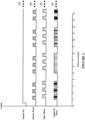
- In a residential spatially diverse multiple detector system there is currently no integrated circuit based device that will synchronize the temporal horn pattern. Without synchronization, the clarity of the temporal horn pattern may be lost, see Figure 2 .
- US Patent Application Publication US 2002/0101344 discloses an apparatus and method for providing alarm synchronization among multiple alarm devices.
- European Patent Application EP 1 426 908 discloses a temporary alarm locate with intermittent warning.
- US Patent Application Publication US 2005/0200472 discloses an apparatus and method for synchronizing visual/audible alarm units in an alarm system.
- a hazard detection and alarm device comprises a hazard detector configured to generate a hazard detection signal;an alarm alert generator; an audible sound reproducer outputting a sounding alarm driven by the alarm alert generator, a digital processor having a first input coupled to the hazard detector for receiving the hazard detection signal and a first output coupled to the alarm alert generator for control thereof; a bus driver having an input coupled to a second output of the digital processor and an output adapted for coupling to an input output bus, wherein the bus driver is configured to generate a low impedance first output state, a low impedance second output state, and a high impedance output state applied to the input output bus , wherein selection of the output states are controlled by the digital processor depending on an operating state of the hazard detection and alarm device; a bus receiver having an input adapted for coupling to the input output bus and an output coupled to a second input of the digital processor ; and a time delay filter having an input coupled to the output of the bus receiver and an output coupled to a third input
- a plurality of hazard alarm devices are in spatially diverse locations and coupled together with an input-output bus.
- An interconnect protocol enables non-originating alarm devices to synchronize their audible alert tone pulses with audible alert tone pulses from an originating alarm device in a local hazard alarm condition. Hence, all audible alert tone pulses start sounding substantially together with allowances for signal contention and arbitration between the spatially diverse alarm devices.
- FIG. 1 depicted is a schematic block diagram of a hazard detection and alarm signaling system having a plurality of hazard detection and alarm signaling devices coupled together with an input-output (IO) bus, according to a specific example embodiment of this disclosure.
- a plurality of hazard detection and alarm signaling devices 102 are located in spatially diverse locations ( e . g ., rooms) 104, and coupled together with an IO bus 118.
- Each of the plurality of hazard detection and alarm signaling devices 102 may comprise a hazard detector 106, an alarm alert generator 108, an audible sound reproducer 110, master/slave/follower processor 112, an IO bus driver 114 and an IO bus receiver 116.
- the hazard detector 106 may detect, for example but is not limited to, smoke, carbon monoxide, radon, gas, chlorine, moisture, etc.
- the audible sound reproducer 110 may be, for example but is not limited to, a speaker, a piezo-electric transducer, a buzzer, a bell, etc.
- the master/slave/follower processor 112 may comprise, but is not limited to, a microcontroller and program memory, a microcomputer and program memory, an application specific integrated circuit (ASIC), a programmable logic array (PLA), etc.
- the interconnection of the plurality of hazard detection and alarm signaling devices 102 with the IO bus 118 may be accomplished by conventional means well know to those skilled in the art of electronics and use industry standard drivers, receivers and bus loading techniques. However since the interconnect protocol described herein is new, novel and non-obvious, other newer and more sophisticated means of interconnection may also be applied with equal or better effectiveness. It is contemplated and within the scope of this disclosure that the IO bus 118 may also be implemented as a wireless data network, e.g ., Bluetooth, Zigbee, WiFi, WLAN, AC line carrier current, etc.
- a wireless data network e.g ., Bluetooth, Zigbee, WiFi, WLAN, AC line carrier current, etc.
- a master device 102 goes into an alarm condition and drives the IO bus 118 high with a master IO signal 218.
- the master device 102 emits audible alert tone pulses 220 at defined time intervals, for example but not limited to, groups of three alert tone pulses at four (4) second cycles per the National Fire Protection Association (NFPA) 72: National Fire Alarm and Signaling Code.
- NFPA National Fire Protection Association
- At least one of the other devices 102 not necessarily in alarm, repeats the three alert tone pulses 222.
- Resulting apparent tone pulses 224 are shown having examples of various off synchronization phasing resulting in a jumble of confusing tones that do not clearly annunciate an alarm condition.
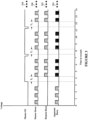
- a master device 102 goes into an alarm condition and drives the IO bus 118 high with a master IO signal 318 starting at time T 0 , and periodically goes low to provide a synchronization signal to all other devices 102 connected to the IO bus 118, as more fully described hereinafter.
- the master device 102 may emit audible alert tone pulses 320 at defined time intervals, for example but not limited to, groups of three alert tone pulses at four (4) second cycles per the National Fire Protection Association (NFPA) 72: National Fire Alarm and Signaling Code.
- NFPA National Fire Protection Association
- the start of a group of three tone pulses 320 may occur after a time, T 1 , from a positive going edge of the master IO signal 318, and thereafter be synchronized thereto.
- At least one of the other devices 102 may repeat with the three alert tone pulses 322 in synchronization with the positive going edges of the master IO signal 318.
- the resulting apparent tone pulses 324 are audibly reinforced from the synchronized tone pulses 320 and 322, thereby clearly annunciating an alarm condition.
- the remote devices 102 may synchronize to the rising edge of the master IO signal 318 with a delay of time T 1 before starting the remote horn alert tone pulses 322.
- the originating device 102 anticipates a delay for the master IO signal 318 such that timing for the originating (master) and remote alarm alert tone pulses 320 and 322 are substantially the same.
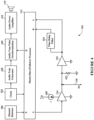
- FIG. 4 depicted is a schematic block diagram of a hazard detection and alarm signaling device shown in Figure 1 , according to a specific example embodiment of this disclosure.
- the hazard detection and alarm signaling device 102 is as described in Figure 1 hereinabove, wherein the IO bus driver 114 may have a constant current output determined by the constant current source 420, and is tri-stated such that its output may be placed in a high impedance state.
- a bus load resistor 422 acts as a soft pull-down when the IO bus driver 114 is in the high impedance output state.
- An output from the IO bus receiver 116 is coupled to a first input of the master/slave/follower processor 112 and a time delayed output from a time delay filter 424 is coupled to a second input of the master/slave/follower processor 112.
- the time delay filter 424 may be configured for, but is not limited to, a delay of 320 milliseconds plus or minus three (3) percent wherein pulses of 300 milliseconds or less are ignored, e.g., no output from the time delay filter 424. These two signals (outputs to B and C) may be used in combination to insure that false triggering of the plurality of hazard detection and alarm signaling devices 102 do not occur.
- the hazard detector 106 is coupled to an input of the master/slave/follower processor 112 and provides an output signal when a hazard is detected.
- the alarm alert generator 108 shown in Figure 1 may comprise a clock 426, audio tone generator 428, an audio tone pulse synchronization circuit 430 and an audio power amplifier 432 for driving the audible sound reproducer 110. Other combinations of circuit functions can be used for the alarm alert generator 108 as would be known to one having ordinary skill in electronic design and the benefit of this disclosure.
- the audio tone pulse synchronization circuit 430 may be controlled by the master/slave/follower processor 112, or may be part of it, to provide audible alert tone pulses 320 if a master device 102 detects an alarm condition, or to provide synchronized tone pulses 322, if a slave or follower device 102, based upon the rising positive edges of the master IO signal 318 (see Figure 3 ).
- the time delay filter 424 may be separate from or part of the master/slave/follower processor 112, and may be accomplished in hardware and/or software as would be known to one having ordinary skill in digital microcontroller design and having the benefit of this disclosure.
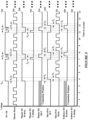
- FIG. 5 depicted are schematic timing diagrams of temporal audible alarm and control signals of the hazard detection and alarm signaling devices shown in Figures 1 and 4 , according to a specific example embodiment of this disclosure.
- a hazard detection and alarm signaling device 102 When a hazard detection and alarm signaling device 102 is first to go into a local alarm, e.g., local hazard detected by the hazard detector 106 of that device 102, it becomes the "master" device 102. Wherein audible alert tone pulses 320 begin issuing therefrom.
- a local alarm e.g., local hazard detected by the hazard detector 106 of that device 102
- audible alert tone pulses 320 begin issuing therefrom.
- the master device 102 After the first set of three pulses 320, the master device 102 asserts a signal 518 at a logic high, e.g., a voltage or current, positive or negative with reference to a zero voltage or current when no other master IO signal 518 has previously been asserted for a certain length of time, e.g ., seven (7) seconds.
- a first assertion of the master IO signal 518 occurs at time T 0 which is after the first set of audible alert tone pulses 320, and continues asserted until after the end of the next set of three audible alert tone pulses 320.
- the start of the next set of three audible alert tone pulses 320 occurs after time T 1 has elapsed.
- the master IO signal 518 is asserted at a logic low on the IO bus 118.
- the logic low thereon discharges any residual voltage or current on the IO bus 118 from the logic high previously thereon.
- a master IO high-drive is shown as signal 530 corresponds to logic highs asserted on the IO bus 118 by the master IO signal 518
- a master IO low dump is shown as signal 532 and corresponds to logic lows asserted on the IO bus 118 by the master IO signal 518 for residual voltage discharge therefrom.
- a master IO high impedance signal 534 is at a logic high which indicates that the IO bus 118 is in a "high impedance" state so that a Follower device 102 in alarm may become a Master if the present Master device 102 is no longer in an alarm condition.
- the master IO high impedance signal 540 represents when contention windows for the IO bus driver 114 of the present Master device 102 briefly goes into an off or high impedance output state for time T 4 .
- another Follower device 102 in alarm can attempt to "grab" the IO bus 118 and become a Master device 102, but only when there is no logic high asserted on the IO bus 118 for a certain time period, e.g., about seven (7) seconds.
- the Follower device 102 also has at least one contention window represented by the follower IO high drive signal 540.
- the follower IO high drive signal 540 also represents when a Follower device 102 is in alarm and tries to become a Master during a portion of the time T 6 .
- the time delay filter 424 is used to prevent unintended alarm actuation of Slave and/or Follower devices 102 from a logic high asserted on the IO bus 118 for less than a desired time period, e.g ., 320 milliseconds +/- three (3) percent, and that the time delay filter 424 will not operate, e.g ., assert a received logic high signal at input B of the processor 112 for an input from the IO bus 108 of less than a certain verification time period, e.g., about 300 milliseconds or less.
- a desired time period e.g 320 milliseconds +/- three (3) percent
- the Slave/Follower audible alert tone pulses 322 begin issuing therefrom after another time period T 3 has elapsed.
- T 1 is defined as being equal to the sum of T 2 and T 3 , even though the time delay filter introduces a delay time, e.g., time period T 2 , the audible alert tone pulses 320 and 322 will be synchronized and acoustically coherent.
- a Master is in local alarm and drive the IO bus 118 to a logic high
- a follower is in local alarm but does not drive the IO bus 118 to a logic high, rather it synchronizes to the positive edges of the signal 518 on the IO bus 118
- a Slave in remote alarm synchronizes to the positive edges of the signal 518 on the IO bus 118. All audible alert tone pulses 320 and 322 are thereby synchronized and acoustically coherent.
- a device is in remote alarm before going into local alarm, this device will now become a Follower instead of a Slave.
- the Master device 102 goes from the Master state to a Follower state.
- the follower state if the device is in the follower state and the IO bus 118 is low for longer than a certain time period, e.g., seven (7) seconds then the Follower becomes the Master of the IO bus 118.
- step 650 the IO bus 118 is monitored by each of the devices 102.
- step 652 determines whether a device 102 is in a local alarm. If not in a local alarm, then in step 664 the device 102 becomes/remains a Slave device. If the device is in a local alarm, then step 654 determines if a positive going logic level, e.g., logic low to logic high, is detected on the IO bus 118 (output of bus receiver 116).
- a positive going logic level e.g., logic low to logic high
- step 656 determines whether the logic high remains asserted on the IO bus 118 for a time T 2 (output of time delay filter 424). If the logic high does not remain asserted on the IO bus 118 for the time T 2 , then in step 660 the device 102 becomes an IO bus Master, and in step 662 the new IO bus Master asserts a logic high onto the IO bus 118. However, if a logic high on the IO bus 118 does remain for time T 2 , then in step 658 the device 102 becomes a Follower device.
- step 764 determines whether during a contention time window there is not a logic high present on the IO bus 108 for a contention window time.
- step 760 a previous Follower device 102 will become the Master device 102, and in step 762 the new Master device 102 will then assert a logic high on the IO bus 108 at the appropriate times for synchronizing the audible alert tone pulses 322 from the other Follower and Slave devices 102, as more fully described hereinabove.
- FIG. 8 depicted is a schematic process flow diagram for synchronizing alert tones from the Follower and Slave devices to the alert tones from the Master device, according to a specific example embodiment of this disclosure.
- the status of each of the devices 102 is determined, i . e ., which one of the devices 102 is the Master, and the other devices 102 are Followers and Slaves depending on whether they are also in local alarm or not, respectively.
- the Master yields to the other device 102 driving the IO bus 118 and assumes Follower status.
- Steps 650, 651 and 652 from Figure 6 are shown again for clarity.
- the logic in each device will wait a time T 3 before starting a three alert tone sequence in step 876.
Landscapes
- Physics & Mathematics (AREA)
- General Physics & Mathematics (AREA)
- Electromagnetism (AREA)
- Alarm Systems (AREA)
Claims (11)
- Dispositif de détection de danger et d'alarme, comprenant :un détecteur de danger (106) configuré pour générer un signal de détection de danger ;un générateur d'alerte d'alarme (108) ;un dispositif de reproduction de son audible (110) délivrant en sortie une alarme sonore commandée par le générateur d'alerte d'alarme (108),un processeur numérique (112) présentant une première entrée couplée au détecteur de danger (106) pour recevoir le signal de détection de danger et une première sortie couplée au générateur d'alerte d'alarme (108) pour la commande de celui-ci ;un pilote de bus (114) présentant une entrée couplée à une seconde sortie du processeur numérique (112) et une sortie adaptée pour être couplée à un bus de sortie d'entrée (118), dans lequel le pilote de bus (114) est configuré pour générer un premier état de sortie à faible impédance, un second état de sortie à faible impédance et un état de sortie à haute impédance appliqués au bus de sortie d'entrée (118), dans lequel la sélection des états de sortie est commandée par le processeur numérique (112) en fonction d'un état de fonctionnement du dispositif de détection de danger et d'alarme ;un récepteur de bus (116) présentant une entrée adaptée pour être couplée au bus de sortie d'entrée (118) et une sortie couplée à une deuxième entrée du processeur numérique (112) ; etun filtre de temporisation (424) présentant une entrée couplée à la sortie du récepteur de bus (116) et une sortie couplée à une troisième entrée du processeur numérique (112), dans lequel le filtre de temporisation (424) est utilisé en combinaison avec le signal reçu au niveau de la deuxième entrée pour ignorer des impulsions sur le bus de sortie d'entrée (118) présentant une longueur inférieure à une période prédéterminée ;dans lequel le processeur numérique détermine à partir du signal de détection de danger et de signaux reçus à partir du bus de sortie d'entrée (118) à travers le récepteur de bus (116) et le filtre de temporisation (424) si le dispositif de détection de danger et d'alarme doit être commuté sur un état maître, suiveur ou asservi,dans lequel le dispositif de détection de danger et d'alarme entre dans un état maître lorsque le processeur numérique (112) reçoit le signal de détection de danger à partir du détecteur de danger (106) mais détecte soit aucun niveau logique de passage positif sur le bus de sortie d'entrée (118), soit l'affirmation qu'un état logique haut reste présent moins que la période de temps du filtre de temporisation (424), dans lequel lorsque le dispositif entre dans un état maître, il affirme un niveau logique haut sur le bus de sortie d'entrée (118), puis génère une série de premières alarmes à travers ledit dispositif de reproduction de son audible (110) et ensuite le dispositif de détection et d'alarme de danger affirme périodiquement une séquence comprenant a) un état de sortie logique haut sur le bus de sortie d'entrée (118) jusqu'à la fin b) d'une série suivante d'impulsions de tonalité d'alerte audible et génère ensuite sur le bus de sortie d'entrée (118) c) une première période prédéterminée (T5) comprenant un état logique bas suivi d'une fenêtre de temps de contention (T4) dudit état de sortie à haute impédance pendant laquelle un dispositif suiveur peut devenir maître si le dispositif de détection et d'alarme de danger n'est plus dans une condition d'alarme ;dans lequel le dispositif de détection et d'alarme de danger devient un dispositif suiveur lorsque le processeur numérique du dispositif de détection et d'alarme de danger détecte un signal de détection de danger local et le dispositif de détection et d'alarme de danger détecte une affirmation d'un état logique haut qui reste présent pendant au moins la période de temps du filtre de temporisation (424) ;dans lequel, dans l'état suiveur, le dispositif détermine si, pendant une fenêtre de contention, il n'y a pas de niveau logique haut présent sur le bus de sortie d'entrée et si aucun niveau logique haut sur le bus de sortie d'entrée n'est présent pendant le temps de fenêtre de contention, le dispositif suiveur qui est encore dans une condition d'alarme locale entre dans l'état maître et prend en charge l'affirmation d'un niveau logique haut sur le bus de sortie d'entrée (118), dans lequel l'état asservi définit un état de fonctionnement du dispositif de détection de danger et d'alarme dans lequel le dispositif de détection de danger et d'alarme ne reçoit pas de signal de détection de danger en provenance du détecteur de danger,dans lequel des impulsions de tonalité d'alerte audible sont émises dans l'état asservi ou suiveur après une seconde période de temps prédéterminée (T3) à partir de la détection de ladite affirmation dudit état logique haut sur le bus de sortie d'entrée (118) et de la période de temps du filtre de temporisation (424) dans lequel la seconde période prédéterminée (T3) présente une longueur prédéterminée pour synchroniser les impulsions de tonalité d'alerte avec un dispositif maître.
- Dispositif de détection de danger et d'alarme selon la revendication 1, dans lequel le générateur d'alerte d'alarme (108) comprend :un générateur de tonalité audio (428) ;un circuit de synchronisation d'impulsions de tonalité audio (430) présentant une entrée couplée au générateur de tonalité audio (428) ; etun amplificateur de puissance audio (432) présentant une entrée couplée à une sortie provenant du circuit de synchronisation d'impulsions de tonalité audio (430) et une sortie couplée au dispositif de reproduction de son audible (110).
- Dispositif de détection de danger et d'alarme selon la revendication 1, dans lequel le pilote de bus (114) présente une sortie de courant constant déterminée par une source de courant constant (420).
- Dispositif de détection et d'alarme de danger selon la revendication 1, comprenant en outre une résistance de charge de bus (422) couplée entre la masse et le bus d'entrée-sortie (118) qui agit comme une résistance de rappel vers le niveau bas douce lorsque le pilote de bus (114) est dans l'état de sortie à haute impédance.
- Dispositif de détection de danger et d'alarme selon la revendication 1, dans lequel le filtre de temporisation (424) est configuré pour un retard de 320 millisecondes plus ou moins trois (3) pourcent, dans lequel des impulsions de 300 millisecondes ne produisent pas de sortie du filtre de temporisation (424).
- Dispositif de détection de danger et d'alarme selon la revendication 1, dans lequel un temps pendant lequel le processeur numérique (112) reçoit le signal de détection de danger provenant du détecteur de danger (106) mais détecte soit aucun niveau logique de passage positif sur le bus de sortie d'entrée (118) soit l'affirmation qu'un état logique haut reste présent moins que la période de temps du filtre de temporisation (424) de sept secondes.
- Dispositif de détection de danger et d'alarme selon la revendication 2, dans lequel le générateur d'alerte d'alarme (108) comprend en outre une horloge (426) couplée au processeur numérique (112) et au générateur de tonalité audio (428).
- Dispositif de détection de danger et d'alarme selon la revendication 2, dans lequel le circuit de synchronisation d'impulsions de tonalité audio (430) fait partie du processeur numérique (112).
- Dispositif de détection de danger et d'alarme selon la revendication 1, dans lequel le filtre de temporisation (424) fait partie du processeur numérique (112).
- Dispositif de détection de danger et d'alarme selon l'une quelconque des revendications précédentes, dans lequel le détecteur de danger (106) est configuré pour détecter de la fumée, du monoxyde de carbone, du radon, du chlore ou de l'humidité.
- Dispositif de détection de danger et d'alarme selon l'une quelconque des revendications précédentes, dans lequel le bus d'entrée-sortie est mis en oeuvre en tant que réseau de données sans fil, Bluetooth, Zigbee, WiFi, WLAN ou courant porteur en ligne CA.
Applications Claiming Priority (3)
| Application Number | Priority Date | Filing Date | Title |
|---|---|---|---|
| US201161558526P | 2011-11-11 | 2011-11-11 | |
| US13/478,486 US8922362B2 (en) | 2011-11-11 | 2012-05-23 | Temporal horn pattern synchronization |
| PCT/US2012/064105 WO2013070883A1 (fr) | 2011-11-11 | 2012-11-08 | Synchronisation de motifs d'avertissement sonores temporels |
Publications (2)
| Publication Number | Publication Date |
|---|---|
| EP2777029A1 EP2777029A1 (fr) | 2014-09-17 |
| EP2777029B1 true EP2777029B1 (fr) | 2025-01-22 |
Family
ID=48280036
Family Applications (1)
| Application Number | Title | Priority Date | Filing Date |
|---|---|---|---|
| EP12795937.7A Active EP2777029B1 (fr) | 2011-11-11 | 2012-11-08 | Synchronisation de motifs d'avertissement sonores temporels |
Country Status (6)
| Country | Link |
|---|---|
| US (1) | US8922362B2 (fr) |
| EP (1) | EP2777029B1 (fr) |
| KR (1) | KR101961878B1 (fr) |
| CN (1) | CN104054113B (fr) |
| TW (1) | TWI584234B (fr) |
| WO (1) | WO2013070883A1 (fr) |
Families Citing this family (11)
| Publication number | Priority date | Publication date | Assignee | Title |
|---|---|---|---|---|
| US12301973B2 (en) * | 2012-09-17 | 2025-05-13 | Gregory Thomas Joao | Apparatus and method for providing a wireless, portable, and/or handheld, device with safety features |
| US9875644B2 (en) | 2014-09-09 | 2018-01-23 | Tyco Fire & Security Gmbh | Master slave wireless fire alarm and mass notification system |
| US12379217B2 (en) | 2014-11-30 | 2025-08-05 | Raymond Anthony Joao | Personal monitoring apparatus and method |
| US20160171858A1 (en) * | 2014-12-10 | 2016-06-16 | Jonas Patrik TRUMPHY | Alarm systems for detecting and communicating anomalous events |
| EP3035311B1 (fr) | 2014-12-19 | 2019-10-09 | Novar GmbH | Dispositif maître de bus pour un système d'avertissement de danger et système d'avertissement de danger utilisant celui-ci |
| EP3539092B1 (fr) * | 2016-11-08 | 2020-08-19 | Johnson Controls Fire Protection LP | Synchronisation de motifs de notification dans des systèmes d'alerte |
| US10078943B2 (en) | 2016-11-08 | 2018-09-18 | Tyco Fire & Security Gmbh | Synchronization of notification patterns in alerting systems |
| CN109215273B (zh) * | 2018-09-06 | 2021-05-11 | 赛特威尔电子股份有限公司 | 一种火灾报警控制系统及方法 |
| US11765547B2 (en) | 2019-07-30 | 2023-09-19 | Raymond Anthony Joao | Personal monitoring apparatus and methods |
| US11775780B2 (en) | 2021-03-01 | 2023-10-03 | Raymond Anthony Joao | Personal monitoring apparatus and methods |
| US12556664B2 (en) | 2021-11-12 | 2026-02-17 | Raymond Anthony Joao | Personal monitoring apparatus and methods |
Citations (1)
| Publication number | Priority date | Publication date | Assignee | Title |
|---|---|---|---|---|
| US20020101344A1 (en) * | 2001-01-30 | 2002-08-01 | Tanguay William Peter | Apparatus and method for providing alarm syncrhonization among multiple alarm devices |
Family Cites Families (11)
| Publication number | Priority date | Publication date | Assignee | Title |
|---|---|---|---|---|
| US5598139A (en) * | 1993-09-30 | 1997-01-28 | Pittway Corporation | Fire detecting system with synchronized strobe lights |
| US6906616B1 (en) | 1995-03-20 | 2005-06-14 | Wheelock, Inc. | Apparatus and method for synchronizing visual/audible alarm units in an alarm system |
| US6897772B1 (en) * | 2000-11-14 | 2005-05-24 | Honeywell International, Inc. | Multi-function control system |
| US7075444B2 (en) | 2002-11-15 | 2006-07-11 | Maple Chase Company | Temporary alarm locate with intermittent warning |
| US7880604B2 (en) * | 2005-09-20 | 2011-02-01 | Selflink, Llc | Self-configuring emergency event alarm system with autonomous output devices |
| CA2655571A1 (fr) * | 2006-06-27 | 2008-01-03 | Sensormatic Electronics Corporation | Fonctionnement synchronise sans fil de systemes de surveillance d'articles electroniques (eas) impulsionnels |
| US7893825B2 (en) | 2007-11-20 | 2011-02-22 | Universal Security Instruments, Inc. | Alarm origination latching system and method |
| KR101187556B1 (ko) | 2007-12-06 | 2012-10-08 | 호치키 가부시키가이샤 | 경보기 및 경보 시스템 |
| CN101488265B (zh) * | 2008-01-14 | 2010-07-28 | 华为技术有限公司 | 语音告警系统及语音告警实现方法 |
| GB2457307A (en) | 2008-02-11 | 2009-08-12 | Apollo Fire Detectors Ltd | Fire alarm signalling with voice modulated HF signal multiplexed on to plateaus of existing lower frequency pulses carried on power cabling |
| TWI393085B (zh) * | 2009-05-22 | 2013-04-11 | Univ Kun Shan | Wireless sensor network system with synchronization warning function |
-
2012
- 2012-05-23 US US13/478,486 patent/US8922362B2/en active Active
- 2012-11-08 WO PCT/US2012/064105 patent/WO2013070883A1/fr not_active Ceased
- 2012-11-08 EP EP12795937.7A patent/EP2777029B1/fr active Active
- 2012-11-08 KR KR1020147015177A patent/KR101961878B1/ko active Active
- 2012-11-08 CN CN201280066369.1A patent/CN104054113B/zh active Active
- 2012-11-09 TW TW101141915A patent/TWI584234B/zh active
Patent Citations (1)
| Publication number | Priority date | Publication date | Assignee | Title |
|---|---|---|---|---|
| US20020101344A1 (en) * | 2001-01-30 | 2002-08-01 | Tanguay William Peter | Apparatus and method for providing alarm syncrhonization among multiple alarm devices |
Also Published As
| Publication number | Publication date |
|---|---|
| CN104054113B (zh) | 2017-03-01 |
| US20130120136A1 (en) | 2013-05-16 |
| EP2777029A1 (fr) | 2014-09-17 |
| TW201333894A (zh) | 2013-08-16 |
| KR20140091037A (ko) | 2014-07-18 |
| CN104054113A (zh) | 2014-09-17 |
| US8922362B2 (en) | 2014-12-30 |
| KR101961878B1 (ko) | 2019-03-26 |
| WO2013070883A1 (fr) | 2013-05-16 |
| TWI584234B (zh) | 2017-05-21 |
Similar Documents
| Publication | Publication Date | Title |
|---|---|---|
| US8922362B2 (en) | Temporal horn pattern synchronization | |
| EP2777030B1 (fr) | Localisation d'alarme sonore d'origine automatique | |
| US20130285805A1 (en) | Supervised interconnect smoke alarm system and method of using same | |
| CN101352051A (zh) | 在安全系统中产生语音警报信号的方法和装置 | |
| JP2008009480A (ja) | 無線により連動警報するワイヤレス型火災警報器、及びワイヤレス型火災警報システム | |
| JP2002074535A (ja) | 火災警報設備およびそれに利用する火災警報器 | |
| EP1356439B1 (fr) | Appareil et procede de synchronisation d'alarmes de multiples dispositifs d'alarme | |
| JP4713854B2 (ja) | 警報器 | |
| JP5122873B2 (ja) | 住宅用火災警報器 | |
| JP3563254B2 (ja) | 火災報知設備および感知器 | |
| JP4710877B2 (ja) | 火災警報システム | |
| JP3957600B2 (ja) | 火災受信機 | |
| KR101683652B1 (ko) | 대형 차량 침입 감지 방법 및 그를 위한 장치 | |
| JPH1039016A (ja) | 超音波センサ | |
| JP5121855B2 (ja) | 警報器 | |
| JPH0135395B2 (fr) | ||
| JP5123957B2 (ja) | 警報器 | |
| JP4873975B2 (ja) | 警報器 | |
| JP2004145464A (ja) | 火災受信機 | |
| JPS60220496A (ja) | 警報システムにおける異常検知方法 | |
| JPH06281746A (ja) | 物体検知システム |
Legal Events
| Date | Code | Title | Description |
|---|---|---|---|
| PUAI | Public reference made under article 153(3) epc to a published international application that has entered the european phase |
Free format text: ORIGINAL CODE: 0009012 |
|
| 17P | Request for examination filed |
Effective date: 20140610 |
|
| AK | Designated contracting states |
Kind code of ref document: A1 Designated state(s): AL AT BE BG CH CY CZ DE DK EE ES FI FR GB GR HR HU IE IS IT LI LT LU LV MC MK MT NL NO PL PT RO RS SE SI SK SM TR |
|
| DAX | Request for extension of the european patent (deleted) | ||
| 17Q | First examination report despatched |
Effective date: 20160406 |
|
| STAA | Information on the status of an ep patent application or granted ep patent |
Free format text: STATUS: EXAMINATION IS IN PROGRESS |
|
| GRAP | Despatch of communication of intention to grant a patent |
Free format text: ORIGINAL CODE: EPIDOSNIGR1 |
|
| STAA | Information on the status of an ep patent application or granted ep patent |
Free format text: STATUS: GRANT OF PATENT IS INTENDED |
|
| INTG | Intention to grant announced |
Effective date: 20240819 |
|
| GRAS | Grant fee paid |
Free format text: ORIGINAL CODE: EPIDOSNIGR3 |
|
| GRAA | (expected) grant |
Free format text: ORIGINAL CODE: 0009210 |
|
| STAA | Information on the status of an ep patent application or granted ep patent |
Free format text: STATUS: THE PATENT HAS BEEN GRANTED |
|
| AK | Designated contracting states |
Kind code of ref document: B1 Designated state(s): AL AT BE BG CH CY CZ DE DK EE ES FI FR GB GR HR HU IE IS IT LI LT LU LV MC MK MT NL NO PL PT RO RS SE SI SK SM TR |
|
| REG | Reference to a national code |
Ref country code: GB Ref legal event code: FG4D |
|
| REG | Reference to a national code |
Ref country code: CH Ref legal event code: EP |
|
| REG | Reference to a national code |
Ref country code: IE Ref legal event code: FG4D |
|
| REG | Reference to a national code |
Ref country code: DE Ref legal event code: R096 Ref document number: 602012081329 Country of ref document: DE |
|
| PG25 | Lapsed in a contracting state [announced via postgrant information from national office to epo] |
Ref country code: NL Free format text: LAPSE BECAUSE OF FAILURE TO SUBMIT A TRANSLATION OF THE DESCRIPTION OR TO PAY THE FEE WITHIN THE PRESCRIBED TIME-LIMIT Effective date: 20250122 |
|
| PG25 | Lapsed in a contracting state [announced via postgrant information from national office to epo] |
Ref country code: RS Free format text: LAPSE BECAUSE OF FAILURE TO SUBMIT A TRANSLATION OF THE DESCRIPTION OR TO PAY THE FEE WITHIN THE PRESCRIBED TIME-LIMIT Effective date: 20250422 |
|
| PG25 | Lapsed in a contracting state [announced via postgrant information from national office to epo] |
Ref country code: FI Free format text: LAPSE BECAUSE OF FAILURE TO SUBMIT A TRANSLATION OF THE DESCRIPTION OR TO PAY THE FEE WITHIN THE PRESCRIBED TIME-LIMIT Effective date: 20250122 |
|
| PG25 | Lapsed in a contracting state [announced via postgrant information from national office to epo] |
Ref country code: PL Free format text: LAPSE BECAUSE OF FAILURE TO SUBMIT A TRANSLATION OF THE DESCRIPTION OR TO PAY THE FEE WITHIN THE PRESCRIBED TIME-LIMIT Effective date: 20250122 |
|
| PG25 | Lapsed in a contracting state [announced via postgrant information from national office to epo] |
Ref country code: ES Free format text: LAPSE BECAUSE OF FAILURE TO SUBMIT A TRANSLATION OF THE DESCRIPTION OR TO PAY THE FEE WITHIN THE PRESCRIBED TIME-LIMIT Effective date: 20250122 |
|
| REG | Reference to a national code |
Ref country code: LT Ref legal event code: MG9D |
|
| PG25 | Lapsed in a contracting state [announced via postgrant information from national office to epo] |
Ref country code: IS Free format text: LAPSE BECAUSE OF FAILURE TO SUBMIT A TRANSLATION OF THE DESCRIPTION OR TO PAY THE FEE WITHIN THE PRESCRIBED TIME-LIMIT Effective date: 20250522 Ref country code: NO Free format text: LAPSE BECAUSE OF FAILURE TO SUBMIT A TRANSLATION OF THE DESCRIPTION OR TO PAY THE FEE WITHIN THE PRESCRIBED TIME-LIMIT Effective date: 20250422 |
|
| REG | Reference to a national code |
Ref country code: AT Ref legal event code: MK05 Ref document number: 1762046 Country of ref document: AT Kind code of ref document: T Effective date: 20250122 |
|
| PG25 | Lapsed in a contracting state [announced via postgrant information from national office to epo] |
Ref country code: HR Free format text: LAPSE BECAUSE OF FAILURE TO SUBMIT A TRANSLATION OF THE DESCRIPTION OR TO PAY THE FEE WITHIN THE PRESCRIBED TIME-LIMIT Effective date: 20250122 |
|
| PG25 | Lapsed in a contracting state [announced via postgrant information from national office to epo] |
Ref country code: LV Free format text: LAPSE BECAUSE OF FAILURE TO SUBMIT A TRANSLATION OF THE DESCRIPTION OR TO PAY THE FEE WITHIN THE PRESCRIBED TIME-LIMIT Effective date: 20250122 Ref country code: PT Free format text: LAPSE BECAUSE OF FAILURE TO SUBMIT A TRANSLATION OF THE DESCRIPTION OR TO PAY THE FEE WITHIN THE PRESCRIBED TIME-LIMIT Effective date: 20250522 |
|
| PG25 | Lapsed in a contracting state [announced via postgrant information from national office to epo] |
Ref country code: GR Free format text: LAPSE BECAUSE OF FAILURE TO SUBMIT A TRANSLATION OF THE DESCRIPTION OR TO PAY THE FEE WITHIN THE PRESCRIBED TIME-LIMIT Effective date: 20250423 Ref country code: BG Free format text: LAPSE BECAUSE OF FAILURE TO SUBMIT A TRANSLATION OF THE DESCRIPTION OR TO PAY THE FEE WITHIN THE PRESCRIBED TIME-LIMIT Effective date: 20250122 |
|
| PG25 | Lapsed in a contracting state [announced via postgrant information from national office to epo] |
Ref country code: AT Free format text: LAPSE BECAUSE OF FAILURE TO SUBMIT A TRANSLATION OF THE DESCRIPTION OR TO PAY THE FEE WITHIN THE PRESCRIBED TIME-LIMIT Effective date: 20250122 |
|
| PG25 | Lapsed in a contracting state [announced via postgrant information from national office to epo] |
Ref country code: SE Free format text: LAPSE BECAUSE OF FAILURE TO SUBMIT A TRANSLATION OF THE DESCRIPTION OR TO PAY THE FEE WITHIN THE PRESCRIBED TIME-LIMIT Effective date: 20250122 |
|
| PG25 | Lapsed in a contracting state [announced via postgrant information from national office to epo] |
Ref country code: SM Free format text: LAPSE BECAUSE OF FAILURE TO SUBMIT A TRANSLATION OF THE DESCRIPTION OR TO PAY THE FEE WITHIN THE PRESCRIBED TIME-LIMIT Effective date: 20250122 |
|
| PG25 | Lapsed in a contracting state [announced via postgrant information from national office to epo] |
Ref country code: DK Free format text: LAPSE BECAUSE OF FAILURE TO SUBMIT A TRANSLATION OF THE DESCRIPTION OR TO PAY THE FEE WITHIN THE PRESCRIBED TIME-LIMIT Effective date: 20250122 |
|
| PG25 | Lapsed in a contracting state [announced via postgrant information from national office to epo] |
Ref country code: IT Free format text: LAPSE BECAUSE OF FAILURE TO SUBMIT A TRANSLATION OF THE DESCRIPTION OR TO PAY THE FEE WITHIN THE PRESCRIBED TIME-LIMIT Effective date: 20250122 |
|
| PG25 | Lapsed in a contracting state [announced via postgrant information from national office to epo] |
Ref country code: EE Free format text: LAPSE BECAUSE OF FAILURE TO SUBMIT A TRANSLATION OF THE DESCRIPTION OR TO PAY THE FEE WITHIN THE PRESCRIBED TIME-LIMIT Effective date: 20250122 Ref country code: CZ Free format text: LAPSE BECAUSE OF FAILURE TO SUBMIT A TRANSLATION OF THE DESCRIPTION OR TO PAY THE FEE WITHIN THE PRESCRIBED TIME-LIMIT Effective date: 20250122 |
|
| REG | Reference to a national code |
Ref country code: DE Ref legal event code: R097 Ref document number: 602012081329 Country of ref document: DE |
|
| PG25 | Lapsed in a contracting state [announced via postgrant information from national office to epo] |
Ref country code: RO Free format text: LAPSE BECAUSE OF FAILURE TO SUBMIT A TRANSLATION OF THE DESCRIPTION OR TO PAY THE FEE WITHIN THE PRESCRIBED TIME-LIMIT Effective date: 20250122 |
|
| PG25 | Lapsed in a contracting state [announced via postgrant information from national office to epo] |
Ref country code: SK Free format text: LAPSE BECAUSE OF FAILURE TO SUBMIT A TRANSLATION OF THE DESCRIPTION OR TO PAY THE FEE WITHIN THE PRESCRIBED TIME-LIMIT Effective date: 20250122 |
|
| PLBE | No opposition filed within time limit |
Free format text: ORIGINAL CODE: 0009261 |
|
| STAA | Information on the status of an ep patent application or granted ep patent |
Free format text: STATUS: NO OPPOSITION FILED WITHIN TIME LIMIT |
|
| REG | Reference to a national code |
Ref country code: CH Ref legal event code: L10 Free format text: ST27 STATUS EVENT CODE: U-0-0-L10-L00 (AS PROVIDED BY THE NATIONAL OFFICE) Effective date: 20251203 |
|
| 26N | No opposition filed |
Effective date: 20251023 |
|
| PGFP | Annual fee paid to national office [announced via postgrant information from national office to epo] |
Ref country code: DE Payment date: 20251022 Year of fee payment: 14 |
|
| REG | Reference to a national code |
Ref country code: CH Ref legal event code: H13 Free format text: ST27 STATUS EVENT CODE: U-0-0-H10-H13 (AS PROVIDED BY THE NATIONAL OFFICE) Effective date: 20260623 |
|
| PG25 | Lapsed in a contracting state [announced via postgrant information from national office to epo] |
Ref country code: LT Free format text: LAPSE BECAUSE OF FAILURE TO SUBMIT A TRANSLATION OF THE DESCRIPTION OR TO PAY THE FEE WITHIN THE PRESCRIBED TIME-LIMIT Effective date: 20250122 |
|
| PG25 | Lapsed in a contracting state [announced via postgrant information from national office to epo] |
Ref country code: MC Free format text: LAPSE BECAUSE OF FAILURE TO SUBMIT A TRANSLATION OF THE DESCRIPTION OR TO PAY THE FEE WITHIN THE PRESCRIBED TIME-LIMIT Effective date: 20250122 |
|
| PG25 | Lapsed in a contracting state [announced via postgrant information from national office to epo] |
Ref country code: LU Free format text: LAPSE BECAUSE OF NON-PAYMENT OF DUE FEES Effective date: 20251108 Ref country code: CH Free format text: LAPSE BECAUSE OF NON-PAYMENT OF DUE FEES Effective date: 20251130 |