EP2757618A1 - Positive electrode active material precursor particles and method for manufacturing same, and method for manufacturing positive electrode active material for lithium secondary cell - Google Patents
Positive electrode active material precursor particles and method for manufacturing same, and method for manufacturing positive electrode active material for lithium secondary cell Download PDFInfo
- Publication number
- EP2757618A1 EP2757618A1 EP12832360.7A EP12832360A EP2757618A1 EP 2757618 A1 EP2757618 A1 EP 2757618A1 EP 12832360 A EP12832360 A EP 12832360A EP 2757618 A1 EP2757618 A1 EP 2757618A1
- Authority
- EP
- European Patent Office
- Prior art keywords
- active material
- cathode active
- material precursor
- precursor particle
- lithium
- Prior art date
- Legal status (The legal status is an assumption and is not a legal conclusion. Google has not performed a legal analysis and makes no representation as to the accuracy of the status listed.)
- Withdrawn
Links
- 239000002245 particle Substances 0.000 title claims abstract description 102
- 229910052744 lithium Inorganic materials 0.000 title claims abstract description 67
- WHXSMMKQMYFTQS-UHFFFAOYSA-N Lithium Chemical compound [Li] WHXSMMKQMYFTQS-UHFFFAOYSA-N 0.000 title claims abstract description 65
- 239000002243 precursor Substances 0.000 title claims abstract description 59
- 238000004519 manufacturing process Methods 0.000 title claims abstract description 34
- 238000000034 method Methods 0.000 title claims description 10
- 239000007774 positive electrode material Substances 0.000 title 2
- 239000006182 cathode active material Substances 0.000 claims abstract description 125
- 239000002131 composite material Substances 0.000 claims abstract description 28
- 238000010348 incorporation Methods 0.000 claims abstract description 12
- 239000000463 material Substances 0.000 claims abstract description 12
- FAPWRFPIFSIZLT-UHFFFAOYSA-M Sodium chloride Chemical group [Na+].[Cl-] FAPWRFPIFSIZLT-UHFFFAOYSA-M 0.000 claims abstract description 10
- 239000008187 granular material Substances 0.000 claims description 28
- 239000000843 powder Substances 0.000 claims description 23
- 229910052723 transition metal Inorganic materials 0.000 claims description 20
- 150000003624 transition metals Chemical class 0.000 claims description 20
- 238000005245 sintering Methods 0.000 claims description 19
- 239000002002 slurry Substances 0.000 claims description 19
- 239000002994 raw material Substances 0.000 claims description 18
- 238000001694 spray drying Methods 0.000 claims description 12
- 238000007669 thermal treatment Methods 0.000 claims description 11
- 238000005469 granulation Methods 0.000 claims description 10
- 230000003179 granulation Effects 0.000 claims description 10
- 238000002156 mixing Methods 0.000 claims description 8
- 238000010298 pulverizing process Methods 0.000 claims description 8
- 229910021503 Cobalt(II) hydroxide Inorganic materials 0.000 claims description 6
- ASKVAEGIVYSGNY-UHFFFAOYSA-L cobalt(ii) hydroxide Chemical compound [OH-].[OH-].[Co+2] ASKVAEGIVYSGNY-UHFFFAOYSA-L 0.000 claims description 5
- BFDHFSHZJLFAMC-UHFFFAOYSA-L nickel(ii) hydroxide Chemical compound [OH-].[OH-].[Ni+2] BFDHFSHZJLFAMC-UHFFFAOYSA-L 0.000 claims description 5
- -1 nickel-cobalt-aluminum Chemical compound 0.000 claims description 3
- 239000011148 porous material Substances 0.000 description 14
- 239000003795 chemical substances by application Substances 0.000 description 13
- 230000000052 comparative effect Effects 0.000 description 11
- 238000012986 modification Methods 0.000 description 10
- 230000004048 modification Effects 0.000 description 10
- 238000001354 calcination Methods 0.000 description 9
- WMFOQBRAJBCJND-UHFFFAOYSA-M Lithium hydroxide Chemical compound [Li+].[OH-] WMFOQBRAJBCJND-UHFFFAOYSA-M 0.000 description 8
- 238000010586 diagram Methods 0.000 description 7
- 238000009826 distribution Methods 0.000 description 7
- 238000011156 evaluation Methods 0.000 description 7
- 150000002642 lithium compounds Chemical class 0.000 description 7
- LFQSCWFLJHTTHZ-UHFFFAOYSA-N Ethanol Chemical compound CCO LFQSCWFLJHTTHZ-UHFFFAOYSA-N 0.000 description 6
- 239000000203 mixture Substances 0.000 description 6
- 239000000126 substance Substances 0.000 description 6
- 239000012530 fluid Substances 0.000 description 5
- PXHVJJICTQNCMI-UHFFFAOYSA-N nickel Substances [Ni] PXHVJJICTQNCMI-UHFFFAOYSA-N 0.000 description 5
- XLYOFNOQVPJJNP-UHFFFAOYSA-N water Chemical compound O XLYOFNOQVPJJNP-UHFFFAOYSA-N 0.000 description 5
- MCMNRKCIXSYSNV-UHFFFAOYSA-N Zirconium dioxide Chemical compound O=[Zr]=O MCMNRKCIXSYSNV-UHFFFAOYSA-N 0.000 description 4
- 239000008151 electrolyte solution Substances 0.000 description 4
- 229910052782 aluminium Inorganic materials 0.000 description 3
- 239000011324 bead Substances 0.000 description 3
- 239000011230 binding agent Substances 0.000 description 3
- BJQHLKABXJIVAM-UHFFFAOYSA-N bis(2-ethylhexyl) phthalate Chemical compound CCCCC(CC)COC(=O)C1=CC=CC=C1C(=O)OCC(CC)CCCC BJQHLKABXJIVAM-UHFFFAOYSA-N 0.000 description 3
- 125000004122 cyclic group Chemical group 0.000 description 3
- 239000006185 dispersion Substances 0.000 description 3
- 239000002612 dispersion medium Substances 0.000 description 3
- KBPLFHHGFOOTCA-UHFFFAOYSA-N 1-Octanol Chemical compound CCCCCCCCO KBPLFHHGFOOTCA-UHFFFAOYSA-N 0.000 description 2
- OIFBSDVPJOWBCH-UHFFFAOYSA-N Diethyl carbonate Chemical compound CCOC(=O)OCC OIFBSDVPJOWBCH-UHFFFAOYSA-N 0.000 description 2
- KMTRUDSVKNLOMY-UHFFFAOYSA-N Ethylene carbonate Chemical compound O=C1OCCO1 KMTRUDSVKNLOMY-UHFFFAOYSA-N 0.000 description 2
- HBBGRARXTFLTSG-UHFFFAOYSA-N Lithium ion Chemical compound [Li+] HBBGRARXTFLTSG-UHFFFAOYSA-N 0.000 description 2
- LRHPLDYGYMQRHN-UHFFFAOYSA-N N-Butanol Chemical compound CCCCO LRHPLDYGYMQRHN-UHFFFAOYSA-N 0.000 description 2
- WNROFYMDJYEPJX-UHFFFAOYSA-K aluminium hydroxide Chemical compound [OH-].[OH-].[OH-].[Al+3] WNROFYMDJYEPJX-UHFFFAOYSA-K 0.000 description 2
- 230000015572 biosynthetic process Effects 0.000 description 2
- 150000001875 compounds Chemical class 0.000 description 2
- 239000013078 crystal Substances 0.000 description 2
- 238000000280 densification Methods 0.000 description 2
- WMWXXXSCZVGQAR-UHFFFAOYSA-N dialuminum;oxygen(2-);hydrate Chemical compound O.[O-2].[O-2].[O-2].[Al+3].[Al+3] WMWXXXSCZVGQAR-UHFFFAOYSA-N 0.000 description 2
- 239000002270 dispersing agent Substances 0.000 description 2
- 238000007606 doctor blade method Methods 0.000 description 2
- 239000003792 electrolyte Substances 0.000 description 2
- 238000005516 engineering process Methods 0.000 description 2
- XLYOFNOQVPJJNP-UHFFFAOYSA-M hydroxide Chemical compound [OH-] XLYOFNOQVPJJNP-UHFFFAOYSA-M 0.000 description 2
- 229910001416 lithium ion Inorganic materials 0.000 description 2
- 229910052759 nickel Inorganic materials 0.000 description 2
- 238000002360 preparation method Methods 0.000 description 2
- 230000008569 process Effects 0.000 description 2
- 235000002639 sodium chloride Nutrition 0.000 description 2
- 239000011780 sodium chloride Substances 0.000 description 2
- 239000007921 spray Substances 0.000 description 2
- 150000003623 transition metal compounds Chemical class 0.000 description 2
- 239000011800 void material Substances 0.000 description 2
- 238000007088 Archimedes method Methods 0.000 description 1
- 229910001290 LiPF6 Inorganic materials 0.000 description 1
- 229910015530 LixMO2 Inorganic materials 0.000 description 1
- CTQNGGLPUBDAKN-UHFFFAOYSA-N O-Xylene Chemical compound CC1=CC=CC=C1C CTQNGGLPUBDAKN-UHFFFAOYSA-N 0.000 description 1
- HFCVPDYCRZVZDF-UHFFFAOYSA-N [Li+].[Co+2].[Ni+2].[O-][Mn]([O-])(=O)=O Chemical compound [Li+].[Co+2].[Ni+2].[O-][Mn]([O-])(=O)=O HFCVPDYCRZVZDF-UHFFFAOYSA-N 0.000 description 1
- 239000011149 active material Substances 0.000 description 1
- XAGFODPZIPBFFR-UHFFFAOYSA-N aluminium Chemical compound [Al] XAGFODPZIPBFFR-UHFFFAOYSA-N 0.000 description 1
- PNEYBMLMFCGWSK-UHFFFAOYSA-N aluminium oxide Inorganic materials [O-2].[O-2].[O-2].[Al+3].[Al+3] PNEYBMLMFCGWSK-UHFFFAOYSA-N 0.000 description 1
- 229910052787 antimony Inorganic materials 0.000 description 1
- QVGXLLKOCUKJST-UHFFFAOYSA-N atomic oxygen Chemical compound [O] QVGXLLKOCUKJST-UHFFFAOYSA-N 0.000 description 1
- 229910052797 bismuth Inorganic materials 0.000 description 1
- 238000009835 boiling Methods 0.000 description 1
- 229910052791 calcium Inorganic materials 0.000 description 1
- 150000004649 carbonic acid derivatives Chemical class 0.000 description 1
- 239000000919 ceramic Substances 0.000 description 1
- 229910052804 chromium Inorganic materials 0.000 description 1
- 238000000975 co-precipitation Methods 0.000 description 1
- 229910017052 cobalt Inorganic materials 0.000 description 1
- 239000010941 cobalt Substances 0.000 description 1
- GUTLYIVDDKVIGB-UHFFFAOYSA-N cobalt atom Chemical compound [Co] GUTLYIVDDKVIGB-UHFFFAOYSA-N 0.000 description 1
- 229910052802 copper Inorganic materials 0.000 description 1
- 229910052593 corundum Inorganic materials 0.000 description 1
- 230000003247 decreasing effect Effects 0.000 description 1
- 239000013530 defoamer Substances 0.000 description 1
- 238000009792 diffusion process Methods 0.000 description 1
- QHGJSLXSVXVKHZ-UHFFFAOYSA-N dilithium;dioxido(dioxo)manganese Chemical compound [Li+].[Li+].[O-][Mn]([O-])(=O)=O QHGJSLXSVXVKHZ-UHFFFAOYSA-N 0.000 description 1
- 239000010419 fine particle Substances 0.000 description 1
- 229910052733 gallium Inorganic materials 0.000 description 1
- 229910052732 germanium Inorganic materials 0.000 description 1
- 239000011521 glass Substances 0.000 description 1
- 150000004679 hydroxides Chemical class 0.000 description 1
- 238000003780 insertion Methods 0.000 description 1
- 230000037431 insertion Effects 0.000 description 1
- 150000002500 ions Chemical class 0.000 description 1
- 229910052742 iron Inorganic materials 0.000 description 1
- 238000007561 laser diffraction method Methods 0.000 description 1
- 239000007788 liquid Substances 0.000 description 1
- 150000002641 lithium Chemical class 0.000 description 1
- OVAQODDUFGFVPR-UHFFFAOYSA-N lithium cobalt(2+) dioxido(dioxo)manganese Chemical compound [Li+].[Mn](=O)(=O)([O-])[O-].[Co+2] OVAQODDUFGFVPR-UHFFFAOYSA-N 0.000 description 1
- BDKWOJYFHXPPPT-UHFFFAOYSA-N lithium dioxido(dioxo)manganese nickel(2+) Chemical compound [Mn](=O)(=O)([O-])[O-].[Ni+2].[Li+] BDKWOJYFHXPPPT-UHFFFAOYSA-N 0.000 description 1
- RSNHXDVSISOZOB-UHFFFAOYSA-N lithium nickel Chemical compound [Li].[Ni] RSNHXDVSISOZOB-UHFFFAOYSA-N 0.000 description 1
- 229910021437 lithium-transition metal oxide Inorganic materials 0.000 description 1
- 230000004807 localization Effects 0.000 description 1
- 229910052749 magnesium Inorganic materials 0.000 description 1
- 238000012423 maintenance Methods 0.000 description 1
- 238000005259 measurement Methods 0.000 description 1
- 239000002905 metal composite material Substances 0.000 description 1
- 229910052750 molybdenum Inorganic materials 0.000 description 1
- 239000004570 mortar (masonry) Substances 0.000 description 1
- 229910021508 nickel(II) hydroxide Inorganic materials 0.000 description 1
- 229910052758 niobium Inorganic materials 0.000 description 1
- 239000003960 organic solvent Substances 0.000 description 1
- 229910052760 oxygen Inorganic materials 0.000 description 1
- 239000001301 oxygen Substances 0.000 description 1
- 239000004014 plasticizer Substances 0.000 description 1
- 229920002037 poly(vinyl butyral) polymer Polymers 0.000 description 1
- 229920000642 polymer Polymers 0.000 description 1
- 229920002451 polyvinyl alcohol Polymers 0.000 description 1
- 239000011164 primary particle Substances 0.000 description 1
- 238000012545 processing Methods 0.000 description 1
- 238000004080 punching Methods 0.000 description 1
- 230000009467 reduction Effects 0.000 description 1
- 229910052710 silicon Inorganic materials 0.000 description 1
- 229910052709 silver Inorganic materials 0.000 description 1
- 229910001251 solid state electrolyte alloy Inorganic materials 0.000 description 1
- 239000002904 solvent Substances 0.000 description 1
- 238000005507 spraying Methods 0.000 description 1
- 229910001220 stainless steel Inorganic materials 0.000 description 1
- 239000010935 stainless steel Substances 0.000 description 1
- 238000003756 stirring Methods 0.000 description 1
- 229910052712 strontium Inorganic materials 0.000 description 1
- 238000003786 synthesis reaction Methods 0.000 description 1
- 238000012360 testing method Methods 0.000 description 1
- 229910052718 tin Inorganic materials 0.000 description 1
- 229910052719 titanium Inorganic materials 0.000 description 1
- 229910001428 transition metal ion Inorganic materials 0.000 description 1
- 229910052720 vanadium Inorganic materials 0.000 description 1
- 230000000007 visual effect Effects 0.000 description 1
- 238000004804 winding Methods 0.000 description 1
- 239000008096 xylene Substances 0.000 description 1
- 229910001845 yogo sapphire Inorganic materials 0.000 description 1
- 229910052727 yttrium Inorganic materials 0.000 description 1
- 229910052725 zinc Inorganic materials 0.000 description 1
- 229910052726 zirconium Inorganic materials 0.000 description 1
- 229910006525 α-NaFeO2 Inorganic materials 0.000 description 1
- 229910006596 α−NaFeO2 Inorganic materials 0.000 description 1
Images



Classifications
-
- C—CHEMISTRY; METALLURGY
- C01—INORGANIC CHEMISTRY
- C01G—COMPOUNDS CONTAINING METALS NOT COVERED BY SUBCLASSES C01D OR C01F
- C01G53/00—Compounds of nickel
- C01G53/80—Compounds containing nickel, with or without oxygen or hydrogen, and containing one or more other elements
- C01G53/82—Compounds containing nickel, with or without oxygen or hydrogen, and containing two or more other elements
-
- C—CHEMISTRY; METALLURGY
- C01—INORGANIC CHEMISTRY
- C01G—COMPOUNDS CONTAINING METALS NOT COVERED BY SUBCLASSES C01D OR C01F
- C01G53/00—Compounds of nickel
- C01G53/40—Complex oxides containing nickel and at least one other metal element
- C01G53/42—Complex oxides containing nickel and at least one other metal element containing alkali metals, e.g. LiNiO2
-
- H—ELECTRICITY
- H01—ELECTRIC ELEMENTS
- H01M—PROCESSES OR MEANS, e.g. BATTERIES, FOR THE DIRECT CONVERSION OF CHEMICAL ENERGY INTO ELECTRICAL ENERGY
- H01M4/00—Electrodes
- H01M4/02—Electrodes composed of, or comprising, active material
- H01M4/36—Selection of substances as active materials, active masses, active liquids
- H01M4/48—Selection of substances as active materials, active masses, active liquids of inorganic oxides or hydroxides
- H01M4/485—Selection of substances as active materials, active masses, active liquids of inorganic oxides or hydroxides of mixed oxides or hydroxides for inserting or intercalating light metals, e.g. LiTi2O4 or LiTi2OxFy
-
- H—ELECTRICITY
- H01—ELECTRIC ELEMENTS
- H01M—PROCESSES OR MEANS, e.g. BATTERIES, FOR THE DIRECT CONVERSION OF CHEMICAL ENERGY INTO ELECTRICAL ENERGY
- H01M4/00—Electrodes
- H01M4/02—Electrodes composed of, or comprising, active material
- H01M4/36—Selection of substances as active materials, active masses, active liquids
- H01M4/48—Selection of substances as active materials, active masses, active liquids of inorganic oxides or hydroxides
- H01M4/52—Selection of substances as active materials, active masses, active liquids of inorganic oxides or hydroxides of nickel, cobalt or iron
- H01M4/525—Selection of substances as active materials, active masses, active liquids of inorganic oxides or hydroxides of nickel, cobalt or iron of mixed oxides or hydroxides containing iron, cobalt or nickel for inserting or intercalating light metals, e.g. LiNiO2, LiCoO2 or LiCoOxFy
-
- C—CHEMISTRY; METALLURGY
- C01—INORGANIC CHEMISTRY
- C01P—INDEXING SCHEME RELATING TO STRUCTURAL AND PHYSICAL ASPECTS OF SOLID INORGANIC COMPOUNDS
- C01P2002/00—Crystal-structural characteristics
- C01P2002/50—Solid solutions
- C01P2002/52—Solid solutions containing elements as dopants
- C01P2002/54—Solid solutions containing elements as dopants one element only
-
- C—CHEMISTRY; METALLURGY
- C01—INORGANIC CHEMISTRY
- C01P—INDEXING SCHEME RELATING TO STRUCTURAL AND PHYSICAL ASPECTS OF SOLID INORGANIC COMPOUNDS
- C01P2004/00—Particle morphology
- C01P2004/51—Particles with a specific particle size distribution
- C01P2004/52—Particles with a specific particle size distribution highly monodisperse size distribution
-
- C—CHEMISTRY; METALLURGY
- C01—INORGANIC CHEMISTRY
- C01P—INDEXING SCHEME RELATING TO STRUCTURAL AND PHYSICAL ASPECTS OF SOLID INORGANIC COMPOUNDS
- C01P2004/00—Particle morphology
- C01P2004/60—Particles characterised by their size
- C01P2004/61—Micrometer sized, i.e. from 1-100 micrometer
-
- C—CHEMISTRY; METALLURGY
- C01—INORGANIC CHEMISTRY
- C01P—INDEXING SCHEME RELATING TO STRUCTURAL AND PHYSICAL ASPECTS OF SOLID INORGANIC COMPOUNDS
- C01P2004/00—Particle morphology
- C01P2004/60—Particles characterised by their size
- C01P2004/62—Submicrometer sized, i.e. from 0.1-1 micrometer
-
- C—CHEMISTRY; METALLURGY
- C01—INORGANIC CHEMISTRY
- C01P—INDEXING SCHEME RELATING TO STRUCTURAL AND PHYSICAL ASPECTS OF SOLID INORGANIC COMPOUNDS
- C01P2006/00—Physical properties of inorganic compounds
- C01P2006/11—Powder tap density
-
- C—CHEMISTRY; METALLURGY
- C01—INORGANIC CHEMISTRY
- C01P—INDEXING SCHEME RELATING TO STRUCTURAL AND PHYSICAL ASPECTS OF SOLID INORGANIC COMPOUNDS
- C01P2006/00—Physical properties of inorganic compounds
- C01P2006/12—Surface area
-
- C—CHEMISTRY; METALLURGY
- C01—INORGANIC CHEMISTRY
- C01P—INDEXING SCHEME RELATING TO STRUCTURAL AND PHYSICAL ASPECTS OF SOLID INORGANIC COMPOUNDS
- C01P2006/00—Physical properties of inorganic compounds
- C01P2006/40—Electric properties
-
- H—ELECTRICITY
- H01—ELECTRIC ELEMENTS
- H01M—PROCESSES OR MEANS, e.g. BATTERIES, FOR THE DIRECT CONVERSION OF CHEMICAL ENERGY INTO ELECTRICAL ENERGY
- H01M4/00—Electrodes
- H01M4/02—Electrodes composed of, or comprising, active material
- H01M2004/021—Physical characteristics, e.g. porosity, surface area
-
- Y—GENERAL TAGGING OF NEW TECHNOLOGICAL DEVELOPMENTS; GENERAL TAGGING OF CROSS-SECTIONAL TECHNOLOGIES SPANNING OVER SEVERAL SECTIONS OF THE IPC; TECHNICAL SUBJECTS COVERED BY FORMER USPC CROSS-REFERENCE ART COLLECTIONS [XRACs] AND DIGESTS
- Y02—TECHNOLOGIES OR APPLICATIONS FOR MITIGATION OR ADAPTATION AGAINST CLIMATE CHANGE
- Y02E—REDUCTION OF GREENHOUSE GAS [GHG] EMISSIONS, RELATED TO ENERGY GENERATION, TRANSMISSION OR DISTRIBUTION
- Y02E60/00—Enabling technologies; Technologies with a potential or indirect contribution to GHG emissions mitigation
- Y02E60/10—Energy storage using batteries
-
- Y—GENERAL TAGGING OF NEW TECHNOLOGICAL DEVELOPMENTS; GENERAL TAGGING OF CROSS-SECTIONAL TECHNOLOGIES SPANNING OVER SEVERAL SECTIONS OF THE IPC; TECHNICAL SUBJECTS COVERED BY FORMER USPC CROSS-REFERENCE ART COLLECTIONS [XRACs] AND DIGESTS
- Y02—TECHNOLOGIES OR APPLICATIONS FOR MITIGATION OR ADAPTATION AGAINST CLIMATE CHANGE
- Y02P—CLIMATE CHANGE MITIGATION TECHNOLOGIES IN THE PRODUCTION OR PROCESSING OF GOODS
- Y02P70/00—Climate change mitigation technologies in the production process for final industrial or consumer products
- Y02P70/50—Manufacturing or production processes characterised by the final manufactured product
Definitions
- the present invention relates to a cathode active material precursor particle, a production method therefor, and a production method for a cathode active material for a lithium secondary battery.
- the "cathode active material precursor” used herein refers to a material capable of forming a cathode active material for a lithium secondary battery through lithium incorporation.
- a cathode active material for a lithium secondary battery there is widely known one using a lithium composite oxide (lithium transition metal oxide) (see, for example, Japanese Patent Application Laid-open No. Hei 05-226004 ). Further, in a cathode active material of this type, there is known one having formed therein voids (also referred to as "pore” or "cavity") for the purpose of improving a rate characteristic and a cycle characteristic (see, for example, Japanese Patent Application Laid-open No. 2002-75365 , Japanese Patent Application Laid-open No. 2004-083388 , and Japanese Patent Application Laid-open No. 2009-117241 ).
- voids also referred to as "pore” or "cavity”
- the cathode active material having formed therein a large number of voids can be formed satisfactorily without using any pore forming agent by forming and sintering of the cathode active material precursor particle having the above-mentioned characteristics.
- a variation in an inner microstructure of the cathode active material is prevented from occurring owing to addition of the pore forming agent. That is, according to the production method of the present invention, such a microstructure in the cathode active material as to provide excellent battery characteristics to be formed satisfactorily (simply and stably) without using any pore forming agent.
- the lithium secondary battery 1 illustrated in FIG. 1A is configured such that a stack of the cathode plates 2, the separators 4, and the anode plates 3, and an electrolytic solution containing a lithium compound as an electrolyte are liquid-tightly sealed in a specific cell casing (not illustrated).
- FIG. 1B is a perspective view of the schematic configuration of another exemplary lithium secondary battery 1 to which one embodiment of the present invention is applied.
- this lithium secondary battery 1 is also a liquid-type battery and includes a cathode plate 2, an anode plate 3, separators 4, cathode tabs 5, anode tabs 6, and a core 7.
- the cathode active material layer 22 is formed as a film or plate of a cathode active material including a lithium composite oxide having a layered rock salt structure.
- the cathode active material particles 22b are formed as plate-like particles of a cathode active material including a lithium composite oxide having a layered rock salt structure.
- FIG. 3 is a diagram illustrating a scheme of such production method.
- FIG. 3 an overview of the production method according to this embodiment is described with reference to FIG. 3 as appropriate. It should be noted that each of parts (i) to (iv) of FIG. 3 is a "conceptual diagram" and does not represent a correct sectional diagram or lateral diagram of an object itself.
- a slurry S is prepared by wet-pulverizing and mixing a raw material powder including a transition metal hydroxide constituting a main raw material for a lithium composite oxide (see part (i) of FIG. 3 ).
- wet-pulverizing and mixing means there may be appropriately used well-known devices (e.g., medium-stirring mills such as a ball mill and a bead mill, and medium-less type devices such as a homogenizer and a Nanomizer (registered trademark)).
- the production method according to this embodiment is the so-called "two-stage sintering" process involving a calcination step as a thermal treatment step of a transition metal compound (hydroxide or oxide) and a sintering step of incorporating lithium by thermally treating a product obtained in such calcination step (typically, transition metal composite oxide: e.g., (Ni, Co, Al)O) together with a lithium compound.
- Plate-like particles 701 of a transition metal hydroxide are dispersed in the prepared slurry S as illustrated in part (i) of FIG. 3 .
- such plate-like particles 701 are suitably pulverized so as to achieve a primary particle level (particle diameter: about 100 nm).
- the granule 702 is thermally treated to form a cathode active material precursor particle 704 which is substantially spherical and has an average particle diameter D50 of 0.5 to 5 ⁇ m, a specific surface area of 3 to 25 m 2 /g, and a relative tap density of 0.25 to 0.4.
- the cathode active material precursor particle 704 includes therein a large number of voids 705 in a substantially uniform manner (see part (iii) of FIG. 3 ).
- the cathode active material precursor particles 704 obtained described above are used to form a film-like or plate-like green product 706 by a well-known forming method.
- Such forming step may be carried out, for example, by forming a slurry to be formed, which has been prepared by dispersing the cathode active material precursor particles 704 in an appropriate dispersion medium, into a green sheet using a doctor blade-type sheet-forming apparatus (doctor blade method), a drum dryer, a disc dryer, a screen printer, or the like. It should be noted that, in the forming, it is necessary to set treatment conditions so as to prevent the cathode active material precursor particles 704 from being crushed.
- the green product 706 is fired to generate a lithium composite oxide.
- a film or plate-like particles of a cathode active material including therein a large number of voids formed in a uniform manner (cathode active material film 22a illustrated in FIG. 2A or cathode active material particles 22b illustrated in FIG. 2B ) can be obtained.
- the lithium compound may be added during forming, or may be added in a period from the end of forming to the beginning of sintering. That is, for example, the lithium compound may be added together with the cathode active material precursor particles 704 to the slurry to be formed during forming.
- a sintering (lithium incorporation) step may be carried out at two stages including calcining the green product 706 free of the lithium compound once (green product calcination) and then sintering a mixture of such calcined green product and the lithium compound (sintering).
- Granules having a variety of sizes may be formed by appropriately adjusting parameters such as spraying pressure, a nozzle diameter, and a circulation air amount of a spray dryer.
- the granule was thermally treated at 1,100°C for 3 hours (air atmosphere) to afford a cathode active material precursor particle as a particle of a composite oxide of nickel, cobalt, and aluminum ((Ni 0.8 , Co 0.15 , Al 0.05 ) O).
- the resultant slurry to be formed was used to form a sheet having a thickness of 50 ⁇ m by a doctor blade method.
- the sheet was dried and then subjected to punching processing to afford a green sheet of 1 mm square.
- the green sheet of 1 mm square obtained as described above was thermally treated in an air atmosphere at 900°C to degrease and calcine the green sheet.
- a temperature for such green sheet calcination is lower than a temperature for the thermal treatment (granule calcination). This is because sintering of particles in the green sheet is suppressed from proceeding during green sheet calcination, which allows lithium to diffuse and react in a uniform manner during the subsequent sintering.
- LiOH ⁇ H 2 O powder (product of Wako Pure Chemical Industries, Ltd.) was pulverized using a jet mill so as to have a particle diameter, which was determined by visual observation with an electron microscope, of 1 to 5 ⁇ m.
- a dispersion obtained by dispersing a powder sample of a cathode active material precursor particle in water as a dispersion medium was charged into a laser diffraction/scattering type particle size distribution measuring device (product of HORIBA, Ltd., Model: "LA-700”) to measure a median diameter (D50).
- a coin cell for evaluation was produced in the following manner.
- FIG. 4 shows a scanning electron microscope photograph of a cross-section of the cathode active material precursor particle in Example 5, and FIG. 5 shows a particle size distribution thereof.
- FIG. 4 in the cathode active material precursor particle of Example, an inner structure in which the cathode active material precursor particle had formed therein voids in a uniform manner was obtained.
- an inner microstructure suitable for a cathode active material for providing excellent battery characteristics is formed satisfactorily without using any pore forming agent by setting the outer shape and inner structure of a cathode active material precursor particle to a predetermined state.
- a variation in an inner microstructure of the cathode active material is satisfactorily prevented from occurring owing to addition of the pore forming agent (e.g., through uneven distribution of such pore forming agent).
- the cathode active material according to this embodiment is not a dense body, and has voids at about 10%. In this regard, however, most of the voids are open pores as described above, and hence it can be said that the cathode active material according to this embodiment (example) does not have a structure expressed as "porous body” but has a structure in which fine open cavities are formed in a substantial dense body.
- two-fluid nozzle type spray drying has a feature in it is easy to form fine particles but a large particle size distribution is obtained.
- a granule obtained by the two-fluid nozzle type spray drying has a small particle diameter and a somewhat broad particle size distribution, and hence is very suitable for forming a cathode active material having the above-mentioned inner structure.
- Comparative Example 1 has a small average particle diameter and a small relative tap density. That is, the ratio of the composite oxide in the green sheet is small. Thus, in Comparative Example 1, it is estimated that sufficient necking did not occur among inner particles during thermal treatment of the green sheet, and as a result, the denseness of the cathode active material after lithium incorporation became insufficient.
- Comparative Example 2 after thermal treatment of the green sheet (i.e., in the cathode active material precursor particle), the number of the voids decreased beyond expectation. This is probably because the ratio of the composite oxide in the green sheet reached a value equal to or more than a proper value. Thus, in Comparative Example 2, it is estimated that densification proceeded even in the cathode active material after lithium incorporation, resulting in a reduction in lithium ion mobility.
- the configuration of a lithium secondary battery 1 to which the present invention is applied is not limited to the above-mentioned configuration.
- the present invention is not limited to the so-called liquid type battery configuration. That is, for example, solid state electrolytes, such as gel, polymer, glass, and ceramics, may be used as the electrolyte.
- the cathode active material which may be utilized in the present invention is not limited to the composition illustrated in the specific example.
- the cathode active material layer 22 may be formed into a seamless plate (self-supported film). Alternatively, the cathode active material layer 22 may be obtained by two-dimensionally disposing or binding a large number of cathode active material plates.
- the present invention is by no means limited to the specific production method described above. That is, for example, a granule of a hydroxide obtained by a co-precipitation method may also be suitably used as the granule. Further, the raw material powder may include a plurality of kinds of transition metal compounds (e.g., oxides, hydroxides, and carbonates). In addition, the forming method is not limited to the above-mentioned method.
Landscapes
- Chemical & Material Sciences (AREA)
- Inorganic Chemistry (AREA)
- Organic Chemistry (AREA)
- Chemical Kinetics & Catalysis (AREA)
- Electrochemistry (AREA)
- General Chemical & Material Sciences (AREA)
- Battery Electrode And Active Subsutance (AREA)
- Inorganic Compounds Of Heavy Metals (AREA)
Abstract
The present invention relates to a cathode active material precursor particle, a method for producing thereof and a method for producing cathode active material for a lithium secondary battery. The cathode active material precursor particle of the present invention is a cathode active material precursor particle which is capable of forming a cathode active material for a lithium secondary battery including a lithium composite oxide having a layered rock salt structure through lithium incorporation. The particles are characterized by the cathode active material precursor particle being formed into a substantially spherical shape and includes therein a large number of voids in a substantially uniform manner; and the cathode active material precursor particle has: an average particle diameter D50 of 0.5 to 5 µm; a specific surface area of 3 to 25 m2/g; and a relative tap density, which is a value obtained by dividing a tap density by a theoretical density of a material constituting the cathode active material precursor particle, of 0.25 to 0.4.
Description
- The present invention relates to a cathode active material precursor particle, a production method therefor, and a production method for a cathode active material for a lithium secondary battery. The "cathode active material precursor" used herein refers to a material capable of forming a cathode active material for a lithium secondary battery through lithium incorporation.
- As a cathode active material for a lithium secondary battery, there is widely known one using a lithium composite oxide (lithium transition metal oxide) (see, for example, Japanese Patent Application Laid-open No.
Hei 05-226004 2002-75365 2004-083388 2009-117241 - However, none of the conventional technologies has yet achieved both of excellent rate characteristic and practically sufficient durability (cycle characteristic). That is, for example, in the technologies described in Japanese Patent Application Laid-open No.
2004-083388 - The present invention is directed to a production method for a cathode active material for a lithium secondary battery, wherein the material including a lithium composite oxide having a layered rock salt structure. The present invention is also directed to a cathode active material precursor particle capable of forming the cathode active material including a lithium composite oxide through lithium incorporation. The present invention is also directed to a production method for the cathode active material precursor particle.
- A "layered rock salt structure" used herein refers to a crystal structure in which lithium layers and layers of a transition metal other than lithium are arranged in alternating layers with an oxygen layer therebetween; i.e., a crystal structure in which transition metal ion layers and lithium layers are arranged in alternating layers via oxide ions (typically, α-NaFeO2 type structure: cubic rock salt type structure in which transition metal and lithium are arrayed orderly in the direction of the [111] axis). Further, the "lithium composite oxide" refers to an oxide represented by LixMO2 (0.05<x<1.10, M represents at least one kind of transition metal).
- As the lithium composite oxides having a layered rock salt structure, there may be used lithium cobaltate, lithium nickelate, lithium manganate, lithium nickel manganate, lithium nickel cobaltate, lithium cobalt nickel manganate, lithium cobalt manganate, or the like. In addition to those materials, one or more elements selected from, Mg, Al, Si, Ca, Ti, V, Cr, Fe, Cu, Zn, Ga, Ge, Sr, Y, Zr, Nb, Mo, Ag, Sn, Sb, Te, Ba, and Bi may be contained therein. That is, for example, the lithium composite oxide may be a nickel-cobalt-aluminum-based composite oxide.
- A feature according to one aspect of the present invention resides in that the cathode active material precursor particle is formed into a substantially spherical shape and includes therein a large number of voids in a substantially uniform manner; and that the cathode active material precursor particle has an average particle diameter D50 of 0.5 to 5 µm; a specific surface area of 3 to 25 m2/g; and a relative tap density, which is a value obtained by dividing a tap density by a theoretical density of a material constituting the cathode active material precursor particle, of 0.25 to 0.4.
- It should be noted that D50 refers to a median diameter measured using a laser diffraction method. Further, the "void" refers to a region or a space substantially free of a material constituting a main raw material for the lithium composite oxide (typically, a compound of a transition metal other than lithium). Accordingly, a solvent and the like may intrude into the "void."
- The cathode active material precursor particle may be formed by: wet-pulverizing and mixing a raw material powder including a transition metal hydroxide constituting a main raw material for the lithium composite oxide to prepare a slurry; spray-drying the slurry to form a granule; and thermally treating the granule.
- A feature according to another aspect of the present invention resides in that the production method for the cathode active material precursor particle includes: a granulation step of forming a granule, which includes a large number of plate-like particles of a transition metal hydroxide constituting a main raw material for the lithium composite oxide and includes therein a large number of voids in a substantially uniform manner; and a thermal treatment step of thermally treating the granule to form the cathode active material precursor particle, which is formed into a substantially spherical shape and includes therein a large number of voids in a substantially uniform manner, and has an average particle diameter D50 of 0.5 to 5 µm, a specific surface area of 3 to 25 m2/g, and a relative tap density, which is a value obtained by dividing a tap density by a theoretical density of a material constituting the granule (cathode active material precursor particle), of 0.25 to 0.4.
- A feature according to still another aspect of the present invention resides in that the production method for the cathode active material includes: the granulation step; the thermal treatment step; a forming step of forming a large number of the cathode active material precursor particles into a predetermined shape to provide a green product; and a sintering step of sintering the green product to generate the lithium composite oxide.
- The granulation step is suitably a step of forming the granule through spray drying of a slurry prepared by wet-pulverizing and mixing a raw material powder including the transition metal hydroxide. In particular, two-fluid nozzle type spray drying may be suitably used.
- The transition metal hydroxide may be nickel hydroxide and cobalt hydroxide. That is, the raw material powder may include nickel hydroxide and cobalt hydroxide. In addition, the raw material powder may include aluminum oxide hydrate or aluminum hydroxide.
- The cathode active material precursor particle of the present invention is formed into a substantially spherical shape and includes therein a large number of voids in a substantially uniform manner so that the cathode active material precursor particle has a predetermined average particle diameter (D50), a predetermined specific surface area, and the relative tap density. Thus, in generating the cathode active material through the subsequent steps, i.e., the forming step and the sintering step (lithium incorporation step), a sintering environment is stabilized and a lithium incorporation (diffusion) state is made uniform, and as a result, an inner microstructure of a sintered body of the cathode active material is made uniform to a possible extent. Further, the shape stability and crystallographic synthesis degree of the cathode active material as a final target become satisfactory.
- According to the production method for a cathode active material precursor particle of the present invention, the cathode active material precursor particle having the above-mentioned feature can be formed satisfactorily without using any pore forming agent by thermally treating the granule which includes a large number of the plate-like particles of the transition metal hydroxide and includes therein a large number of voids in a substantially uniform manner. In particular, the granule having the above-mentioned feature can be formed simply and stably through spray drying of the slurry. Thus, according to the production method of the present invention, a variation in an inner microstructure of the cathode active material precursor particle is prevented from occurring owing to addition of a pore forming agent.
- Further, according to the production method for a cathode active material of the present invention, the cathode active material having formed therein a large number of voids can be formed satisfactorily without using any pore forming agent by forming and sintering of the cathode active material precursor particle having the above-mentioned characteristics. Thus, according to the production method of the present invention, a variation in an inner microstructure of the cathode active material is prevented from occurring owing to addition of the pore forming agent. That is, according to the production method of the present invention, such a microstructure in the cathode active material as to provide excellent battery characteristics to be formed satisfactorily (simply and stably) without using any pore forming agent.
-
- [
FIG. 1A] FIG. 1A is a sectional view of a schematic configuration of an exemplary lithium secondary battery to which one embodiment of the present invention is applied. - [
FIG. 1B] FIG. 1B is a perspective view of a schematic configuration of another exemplary lithium secondary battery to which one embodiment of the present invention is applied. - [
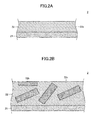
FIG. 2A] FIG. 2A is an enlarged sectional diagram of an exemplary cathode plate illustrated inFIG. 1A and FIG. 1B . - [
FIG. 2B] FIG. 2B is an enlarged sectional diagram of another exemplary cathode plate illustrated inFIG. 1A and FIG. 1 B . - [
FIG. 3] FIG. 3 is a diagram illustrating a scheme of a production method for a cathode active material film illustrated inFIG. 2A or a cathode active material particle illustrated inFIG. 2B . - [
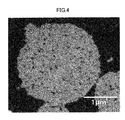
FIG. 4] FIG. 4 is a scanning electron microscope photograph of a cross-section of a cathode active material precursor particle (Example 5) illustrated in part (iii) ofFIG. 3 . - [
FIG. 5] FIG. 5 is a graph showing particle size distribution of the cathode active material precursor particle (Example 5) illustrated in the part (iii) ofFIG. 3 . - Preferred embodiments of the present invention are next described with reference to examples and comparative examples. Note that, the following description of the embodiments is nothing more than the specific description of mere example embodiments of the present invention to the possible extent in order to fulfill description requirements (descriptive requirement and enabling requirement) of specifications required by law.
- Thus, as described later, naturally, the present invention is not limited to the specific configurations of embodiments and examples to be described below. Various variations (modifications) that can be made to the embodiments and examples are collectively described herein at the end to a maximum possible extent, because insertion thereof into the description of the embodiments would disturb understanding of consistent description of the embodiments.
-
FIG. 1A is a sectional view of the schematic configuration of an exemplary lithiumsecondary battery 1 to which one embodiment of the present invention is applied. Referring toFIG. 1A , the lithiumsecondary battery 1 is the so-called liquid-type battery and includescathode plates 2,anode plates 3,separators 4,cathode tabs 5, andanode tabs 6. - The
separator 4 is provided between thecathode plate 2 and theanode plate 3. More specifically, thecathode plate 2, theseparator 4, and theanode plate 3 are stacked in this order. Thecathode tabs 5 are electrically connected to therespective cathode plates 2. Similarly, theanode tabs 6 are electrically connected to therespective anode plates 3. - The lithium
secondary battery 1 illustrated inFIG. 1A is configured such that a stack of thecathode plates 2, theseparators 4, and theanode plates 3, and an electrolytic solution containing a lithium compound as an electrolyte are liquid-tightly sealed in a specific cell casing (not illustrated). -
FIG. 1B is a perspective view of the schematic configuration of another exemplary lithiumsecondary battery 1 to which one embodiment of the present invention is applied. Referring toFIG. 1A , this lithiumsecondary battery 1 is also a liquid-type battery and includes acathode plate 2, ananode plate 3,separators 4,cathode tabs 5,anode tabs 6, and acore 7. - The lithium
secondary battery 1 illustrated inFIG. 1B is configured such that an internal electrode body, which is formed through winding, on thecore 7 as a center, of a stack of thecathode plate 2, theseparators 4, and theanode plate 3, and the above-mentioned electrolytic solution are liquid-tightly sealed in a specific cell casing (not illustrated). -
FIG. 2A and FIG. 2B is each an enlarged sectional view of theexemplary cathode plate 2 illustrated inFIG. 1A and FIG. 1B . Referring toFIG. 2A and FIG. 2B , thecathode plate 2 includes acathode collector 21 and a cathodeactive material layer 22. That is, thecathode plate 2 is formed in a state in which thecathode collector 21 and the cathodeactive material layer 22 are joined to (stacked on) each other. - In
FIG. 2A , the cathodeactive material layer 22 includes a cathodeactive material film 22a, which is a self-supported film formed of a sintered body of a cathode active material. The "self-supported film" as used herein refers to a film that can be handled in itself after formation (typically, after sintering). InFIG. 2B , the cathodeactive material layer 22 includes cathodeactive material particles 22b, which are particles formed of a sintered body of a cathode active material, and abinder 22c, which supports the cathodeactive material particles 22b in a dispersed state and contains a conductive aid. - In this embodiment, the cathode
active material layer 22 is formed as a film or plate of a cathode active material including a lithium composite oxide having a layered rock salt structure. Similarly, the cathodeactive material particles 22b are formed as plate-like particles of a cathode active material including a lithium composite oxide having a layered rock salt structure. - The cathode
active material film 22a illustrated inFIG. 2A and the cathodeactive material particles 22b illustrated inFIG. 2B may be produced by the following production method.FIG. 3 is a diagram illustrating a scheme of such production method. Hereinafter, an overview of the production method according to this embodiment is described with reference toFIG. 3 as appropriate. It should be noted that each of parts (i) to (iv) ofFIG. 3 is a "conceptual diagram" and does not represent a correct sectional diagram or lateral diagram of an object itself. - A slurry S is prepared by wet-pulverizing and mixing a raw material powder including a transition metal hydroxide constituting a main raw material for a lithium composite oxide (see part (i) of
FIG. 3 ). As wet-pulverizing and mixing means, there may be appropriately used well-known devices (e.g., medium-stirring mills such as a ball mill and a bead mill, and medium-less type devices such as a homogenizer and a Nanomizer (registered trademark)). - Here, in the production method according to this embodiment, compounds except a lithium compound (e.g., aluminum oxide hydrate, aluminum hydroxide, nickel hydroxide, and cobalt hydroxide) are used for the raw material powder. More specifically, the production method according to this embodiment is the so-called "two-stage sintering " process involving a calcination step as a thermal treatment step of a transition metal compound (hydroxide or oxide) and a sintering step of incorporating lithium by thermally treating a product obtained in such calcination step (typically, transition metal composite oxide: e.g., (Ni, Co, Al)O) together with a lithium compound. The use of such "two-stage sintering " process realizes satisfactory uniformity of a chemical composition and a microstructure in the cathode
active material film 22a and the cathodeactive material particles 22b, and satisfactory shape stability of the cathodeactive material film 22a and the cathodeactive material particles 22b (satisfactory dimensional accuracy in forming the cathodeactive material film 22a and the cathodeactive material particles 22b having desired outer shapes). - Plate-
like particles 701 of a transition metal hydroxide are dispersed in the prepared slurry S as illustrated in part (i) ofFIG. 3 . Here, such plate-like particles 701 are suitably pulverized so as to achieve a primary particle level (particle diameter: about 100 nm). - The slurry S prepared as described above is used to form a
granule 702 including a large number of plate-like particles 701 of a transition metal hydroxide (see part (ii) ofFIG. 3 ). Thegranule 702 includes therein a large number ofvoids 703 in a substantially uniform manner. In a granulation step, spray drying may be preferably used. The reason why the spray drying (in particular, two-fluid nozzle type) is preferably used is described later. - The
granule 702 is thermally treated to form a cathode activematerial precursor particle 704 which is substantially spherical and has an average particle diameter D50 of 0.5 to 5 µm, a specific surface area of 3 to 25 m2/g, and a relative tap density of 0.25 to 0.4. The cathode activematerial precursor particle 704 includes therein a large number ofvoids 705 in a substantially uniform manner (see part (iii) ofFIG. 3 ). - The cathode active
material precursor particles 704 obtained described above are used to form a film-like or plate-likegreen product 706 by a well-known forming method. Such forming step may be carried out, for example, by forming a slurry to be formed, which has been prepared by dispersing the cathode activematerial precursor particles 704 in an appropriate dispersion medium, into a green sheet using a doctor blade-type sheet-forming apparatus (doctor blade method), a drum dryer, a disc dryer, a screen printer, or the like. It should be noted that, in the forming, it is necessary to set treatment conditions so as to prevent the cathode activematerial precursor particles 704 from being crushed. - The
green product 706 is fired to generate a lithium composite oxide. Thus, a film or plate-like particles of a cathode active material including therein a large number of voids formed in a uniform manner (cathodeactive material film 22a illustrated inFIG. 2A or cathodeactive material particles 22b illustrated inFIG. 2B ) can be obtained. - The lithium compound may be added during forming, or may be added in a period from the end of forming to the beginning of sintering. That is, for example, the lithium compound may be added together with the cathode active
material precursor particles 704 to the slurry to be formed during forming. Alternatively, a sintering (lithium incorporation) step may be carried out at two stages including calcining thegreen product 706 free of the lithium compound once (green product calcination) and then sintering a mixture of such calcined green product and the lithium compound (sintering). - Hereinafter, a specific example of the production method described above is described in detail.
- 81.6 parts by weight of Ni(OH)2 powder (product of Kojundo Chemical Laboratory Co., Ltd.), 15.0 parts by weight of Co(OH)2 powder (product of Wako Pure Chemical Industries, Ltd.), and 3.4 parts by weight of Al2O3.H2O powder (product of SASOL) were weighed. Next, a vehicle formed of 97.3 parts by weight of pure water, 0.4 part by weight of a dispersant (product of NOF CORPORATION: product No. AKM-0521), 0.2 part by weight of 1-octanol (product of KATAYAMA CHEMICAL INDUSTRIES Co., Ltd.) as a defoamer, and 2.0 parts by weight of a binder (product of JAPAN VAM & POVAL CO., LTD.: product No. PV3) were produced.
- Subsequently, such vehicle and a raw material powder (powders weighed above) were wet-mixed and pulverized together to prepare a slurry. The wet-mixing and pulverization were carried out by 24-hour treatment in a ball mill using a zirconia ball having a diameter of 2 mm and the subsequent 40-minute treatment in a bead mill using zirconia beads each having a diameter of 0.1 mm.
- The slurry was charged into a two-fluid nozzle type spray dryer to form a granule. Granules having a variety of sizes may be formed by appropriately adjusting parameters such as spraying pressure, a nozzle diameter, and a circulation air amount of a spray dryer.
- The granule was thermally treated at 1,100°C for 3 hours (air atmosphere) to afford a cathode active material precursor particle as a particle of a composite oxide of nickel, cobalt, and aluminum ((Ni0.8, Co0.15, Al0.05) O).
- 100 parts by weight of the resultant cathode active material precursor particle powder, 50 parts by weight of a dispersion medium (xylene:butanol = 1: 1), 10 parts by weight of polyvinyl butyral (product of Sekisui Chemical Co., Ltd.: product No. BM-2) as a binder, 4.5 parts by weight of di(2-ethylhexyl)phthalate (DOP: product of KUROGANE KASEI Co., Ltd.) as a plasticizer, and 3 parts by weight of a dispersant (product of Kao Corporation, product name: "RHEODOL SPO-30") were weighed, preliminarily kneaded in a mortar, and then kneaded using a triroll, to thereby prepare a slurry to be formed having a viscosity of 2,000 to 3,000 cP (the viscosity was measured using an LVT type viscometer, a product of Brookfield Engineering Laboratories, Inc.).
- The resultant slurry to be formed was used to form a sheet having a thickness of 50 µm by a doctor blade method. The sheet was dried and then subjected to punching processing to afford a green sheet of 1 mm square.
- The green sheet of 1 mm square obtained as described above was thermally treated in an air atmosphere at 900°C to degrease and calcine the green sheet. A temperature for such green sheet calcination is lower than a temperature for the thermal treatment (granule calcination). This is because sintering of particles in the green sheet is suppressed from proceeding during green sheet calcination, which allows lithium to diffuse and react in a uniform manner during the subsequent sintering.
- The resultant calcined green sheet whose both surfaces had been sprayed with a predetermined amount of a dispersion of lithium hydroxide in ethanol with an airbrush was thermally treated at 750°C for 10 hours (air atmosphere) to afford plate-like particles of a cathode active material having a composition of Li(Ni0.8, Co0.15, Al0.05)O2. It should be noted that the dispersion of lithium hydroxide in ethanol was prepared as described below.
- First, LiOH·H2O powder (product of Wako Pure Chemical Industries, Ltd.) was pulverized using a jet mill so as to have a particle diameter, which was determined by visual observation with an electron microscope, of 1 to 5 µm. A mixture obtained by adding the powder at a ratio of 1 part by weight with respect to 100 parts by weight of ethanol (product of KATAYAMA CHEMICAL INDUSTRIES Co., Ltd.) was ultrasonically dispersed until it became impossible to visually observe the powder.
- An evaluation method for the cathode active material produced by the production method according the specific example and the evaluation results are described below.
- The "voidage" refers to a value calculated from a relative density (voidage = 1-relative density). The relative density is a value determined by dividing a bulk density of a sintered body plate, which is determined by an Archimedes method, by a true density determined using a pycnometer. In the measurement of the bulk density, in order to sufficiently remove air present in cavities, a sample was subjected to boiling treatment in water.
- A dispersion obtained by dispersing a powder sample of a cathode active material precursor particle in water as a dispersion medium was charged into a laser diffraction/scattering type particle size distribution measuring device (product of HORIBA, Ltd., Model: "LA-700") to measure a median diameter (D50).
- A graduated cylinder charged with a powder sample of a cathode active material precursor particle was tapped 200 times using a commercially available tap density measuring device. After that, the value of (weight of powder)/(bulk volume of powder) was calculated to determine a tap density. Then, the resultant tap density was divided by a theoretical density of a material constituting the cathode active material precursor particle to calculate a relative tap density [dimensionless value].
- For evaluation of cell characteristics (rate characteristic and cycle characteristic), a coin cell for evaluation was produced in the following manner.
- A cathode active material plate-like body (1 mm square) produced by the production method according the specific example was used as a cathode active material layer, and one surface thereof was sputtered with Au to form a cathode collector (thickness: 500 A), to thereby produce a cathode plate. The thus produced cathode, an anode formed of a lithium metal plate, stainless-steel collector plates, and a separator were arranged in the order of collector plate-cathode-separator-anode-collector plate. The stacked product was filled with an electrolytic solution to produce a coin cell. The electrolytic solution was prepared by dissolving LiPF6 in an equivolume mixture of ethylene carbonate (EC) and diethyl carbonate (DEC) serving as an organic solvent to a concentration of 1 mol/L.
- One cycle consists of the following charge and discharge operations: constant-current charge is carried out at 0.1C rate of current until the cell voltage becomes 4.3 V; subsequently, constant-voltage charge is carried out under a current condition of maintaining the cell voltage at 4.3 V, until the current drops to 1/20, followed by 10 minutes rest; and then, constant-current discharge is carried out at 0.2C rate of current until the cell voltage becomes 2.5 V, followed by 10 minutes rest. A total of two cycles were performed under a condition of 25°C, and the discharge capacity as measured in the second cycle was employed as "discharge capacity at 0.2C rate of current." A discharge capacity at 1C rate was measured by carrying out the same charge and discharge operations except that only the discharge was carried out under the condition of 1C rate of current.
- The fabricated cell was subjected to cyclic charge-discharge at a test temperature of 25°C. The cyclic charge-discharge repeats: (1) charge at 1C rate of constant current and constant voltage until 4.3 V is reached, and (2) discharge at 1C rate of constant current until 2.5 V is reached. A value in terms of percentage obtained by dividing the discharge capacity of the cell as measured after 50 repetitions of cyclic charge-discharge by the initial discharge capacity of the cell was defined as cycle characteristic (percent cycle capacity maintenance).
- Cathode active materials of Comparative Examples 1 to 3 and Examples 1 to 9 were prepared using the production method illustrated in the specific example described above. Table 1 shows the evaluation results
[Table 1] Average particle diameter D50 (µm) Relative tap density Specific surface area (m2/g) Rate characteristic (mAh/g) Cycle characteristic [%] 0.2C 1C Comparative Example 1 0.2 0.2 13 185 160 80 Comparative Example 2 0.5 0.5 8 182 165 90 Example 1 0.5 0.25 3 190 178 90 Example 2 0.5 0.26 10 189 180 90 Example 3 0.5 0.28 25 190 180 93 Example 4 1.5 0.33 15.3 195 182 97 Example 5 2.5 0.35 10 198 183 96 Example 6 3 0.38 9.5 193 180 94 Example 7 5 0.4 7.5 190 180 93 Example 8 5 0.4 3 192 183 92 Example 9 5 0.4 25 189 179 90 Comparative Example 3 7 0.38 0.5 183 170 88 - As apparent from the results of Table 1, a satisfactory rate characteristic and a satisfactory cycle characteristic were obtained in Examples 1 to 9, in each of which the cathode active material precursor particle had an average particle diameter D50 of 0.5 to 5 µm, a specific surface area of 3 to 25 m2/g, and a relative tap density of 0.25 to 0.4. It should be noted that
FIG. 4 shows a scanning electron microscope photograph of a cross-section of the cathode active material precursor particle in Example 5, andFIG. 5 shows a particle size distribution thereof. As shown inFIG. 4 , in the cathode active material precursor particle of Example, an inner structure in which the cathode active material precursor particle had formed therein voids in a uniform manner was obtained. - In particular, in each of Examples 4 to 6, the ratio of the voids was about 10%, and open cavities accounted for 95% of the voids, showing that an inner microstructure suitable for a cathode active material was formed. It is conceivable that such a microstructure provided a balance between an active material density and a lithium ion mobility at a high level, resulting in a high rate characteristic.
- As described above, according to this embodiment (example), an inner microstructure suitable for a cathode active material for providing excellent battery characteristics is formed satisfactorily without using any pore forming agent by setting the outer shape and inner structure of a cathode active material precursor particle to a predetermined state. In particular, a variation in an inner microstructure of the cathode active material is satisfactorily prevented from occurring owing to addition of the pore forming agent (e.g., through uneven distribution of such pore forming agent).
- By the way, the cathode active material according to this embodiment (example) is not a dense body, and has voids at about 10%. In this regard, however, most of the voids are open pores as described above, and hence it can be said that the cathode active material according to this embodiment (example) does not have a structure expressed as "porous body" but has a structure in which fine open cavities are formed in a substantial dense body.
- In this regard, in spray drying, two-fluid nozzle type spray drying has a feature in it is easy to form fine particles but a large particle size distribution is obtained. Thus, a granule obtained by the two-fluid nozzle type spray drying has a small particle diameter and a somewhat broad particle size distribution, and hence is very suitable for forming a cathode active material having the above-mentioned inner structure.
- Meanwhile, Comparative Example 1 has a small average particle diameter and a small relative tap density. That is, the ratio of the composite oxide in the green sheet is small. Thus, in Comparative Example 1, it is estimated that sufficient necking did not occur among inner particles during thermal treatment of the green sheet, and as a result, the denseness of the cathode active material after lithium incorporation became insufficient.
- In contrast, in Comparative Example 2, after thermal treatment of the green sheet (i.e., in the cathode active material precursor particle), the number of the voids decreased beyond expectation. This is probably because the ratio of the composite oxide in the green sheet reached a value equal to or more than a proper value. Thus, in Comparative Example 2, it is estimated that densification proceeded even in the cathode active material after lithium incorporation, resulting in a reduction in lithium ion mobility.
- Further, also in Comparative Example 3, after thermal treatment of the green sheet, the number of the voids was very small. Thus, in Comparative Example 3, it is estimated that densification excessively proceeded in the finally obtained cathode active material, with the result that a desired rate characteristic could not be obtained even at the same relative tap density as in Example 7.
- The above-mentioned embodiment and specific examples are, as described above, mere examples of the best mode of the present invention which the applicant of the present invention contemplated at the time of filing the present application. The above-mentioned embodiment and specific examples should not be construed as limiting the invention. Various modifications to the above-mentioned embodiment and specific examples are possible, so long as the invention is not modified in essence.
- Several modifications are next be exemplified. In the following description of the modifications, component members similar in structure and function to those of the above-mentioned embodiment are denoted by names and reference numerals, which are identical to those of the above-mentioned embodiment. The description of the component members appearing in the above description of the embodiment can be applied as appropriate, so long as no inconsistencies are involved.
- Needless to say, even modifications are not limited to those described below. Limitingly construing the present invention based on the above-mentioned embodiment and the following modifications impairs the interests of an applicant (particularly, an applicant who is motivated to file as quickly as possible under the first-to-file system) while unfairly benefiting imitators, and is thus impermissible.
- The structure of the above-mentioned embodiment and the structures of the modifications to be described below are entirely or partially applicable in appropriate combination, so long as no technical inconsistencies are involved.
- The configuration of a lithium
secondary battery 1 to which the present invention is applied is not limited to the above-mentioned configuration. For example, the present invention is not limited to the so-called liquid type battery configuration. That is, for example, solid state electrolytes, such as gel, polymer, glass, and ceramics, may be used as the electrolyte. Further, the cathode active material which may be utilized in the present invention is not limited to the composition illustrated in the specific example. - Referring to
FIG. 2A , the cathodeactive material layer 22 may be formed into a seamless plate (self-supported film). Alternatively, the cathodeactive material layer 22 may be obtained by two-dimensionally disposing or binding a large number of cathode active material plates. - The present invention is by no means limited to the specific production method described above. That is, for example, a granule of a hydroxide obtained by a co-precipitation method may also be suitably used as the granule. Further, the raw material powder may include a plurality of kinds of transition metal compounds (e.g., oxides, hydroxides, and carbonates). In addition, the forming method is not limited to the above-mentioned method.
- Needless to say, those modifications which are not particularly referred to are also encompassed in the technical scope of the present invention, so long as the invention is not modified in essence.
- Those components which partially constitute means for solving the problems to be solved by the present invention and are illustrated with respect to operations and functions encompass not only the specific structures disclosed above in the description of the above embodiment and modifications but also any other structures that can implement the operations and functions. Further, the contents (including specifications and drawings) of the prior application and publications cited herein can be incorporated herein as appropriate by reference.
Claims (9)
- A cathode active material precursor particle, which is capable of forming a cathode active material for a lithium secondary battery comprising a lithium composite oxide having a layered rock salt structure through lithium incorporation,
wherein:the cathode active material precursor particle is formed into a substantially spherical shape and comprises therein a large number of voids in a substantially uniform manner; andthe cathode active material precursor particle has:an average particle diameter D50 of 0.5 to 5 µm;a specific surface area of 3 to 25 m2/g; anda relative tap density, which is a value obtained by dividing a tap density by a theoretical density of a material constituting the cathode active material precursor particle, of 0.25 to 0.4. - A cathode active material precursor particle according to claim 1,
wherein the lithium composite oxide comprises a nickel-cobalt-aluminum-based composite oxide. - A cathode active material precursor particle according to claim 1 or 2,
wherein the cathode active material precursor particle is formed by: wet-pulverizing and mixing a raw material powder comprising a transition metal hydroxide constituting a main raw material for the lithium composite oxide to prepare a slurry; spray-drying the slurry to form a granule; and thermally treating the granule. - A production method for a cathode active material precursor particle, which is capable of forming a cathode active material for a lithium secondary battery comprising a lithium composite oxide having a layered rock salt structure through lithium incorporation,
the method comprising:a granulation step of forming a granule, which comprises a large number of plate-like particles of a transition metal hydroxide constituting a main raw material for the lithium composite oxide and comprises therein a large number of voids in a substantially uniform manner; anda thermal treatment step of thermally treating the granule to form the cathode active material precursor particle, which is formed into a substantially spherical shape and comprises therein a large number of voids in a substantially uniform manner, and has an average particle diameter D50 of 0.5 to 5 µm, a specific surface area of 3 to 25 m2/g, and a relative tap density, which is a value obtained by dividing a tap density by a theoretical density of a material constituting the granule (cathode active material precursor particle), of 0.25 to 0.4. - A production method for a cathode active material precursor particle according to claim 4,
wherein the granulation step comprises a step of forming the granule through spray drying of a slurry prepared by wet-pulverizing and mixing a raw material powder comprising the transition metal hydroxide. - A production method for a cathode active material precursor particle according to claim 4 or 5,
wherein the transition metal hydroxide comprises nickel hydroxide and cobalt hydroxide. - A production method for a cathode active material for a lithium secondary battery comprising a lithium composite oxide having a layered rock salt structure,
the method comprising:a granulation step of forming a granule, which comprises a large number of plate-like particles of a transition metal hydroxide constituting a main raw material for the lithium composite oxide and comprises therein a large number of voids in a substantially uniform manner; anda thermal treatment step of thermally treating the granule to form a cathode active material precursor particle, which is formed into a substantially spherical shape and comprises therein a large number of voids in a substantially uniform manner, and has an average particle diameter D50 of 0.5 to 5 µm, a specific surface area of 3 to 25 m2/g, and a relative tap density, which is a value obtained by dividing a tap density by a theoretical density of a material constituting the granule (cathode active material precursor particle), of 0.25 to 0.4;a forming step of forming a large number of the cathode active material precursor particles into a predetermined shape to provide a green product; anda sintering step of sintering the green product to generate the lithium composite oxide. - A production method for a cathode active material for a lithium secondary battery according to claim 7,
wherein the granulation step comprises the step of forming the granule through spray drying of a slurry prepared by wet-pulverizing and mixing a raw material powder comprising the transition metal hydroxide. - A production method for a cathode active material for a lithium secondary battery according to claim 7 or 8,
wherein the transition metal hydroxide comprises nickel hydroxide and cobalt hydroxide.
Applications Claiming Priority (3)
| Application Number | Priority Date | Filing Date | Title |
|---|---|---|---|
| US201161535422P | 2011-09-16 | 2011-09-16 | |
| US201261650065P | 2012-05-22 | 2012-05-22 | |
| PCT/JP2012/073424 WO2013039133A1 (en) | 2011-09-16 | 2012-09-13 | Positive electrode active material precursor particles and method for manufacturing same, and method for manufacturing positive electrode active material for lithium secondary cell |
Publications (1)
| Publication Number | Publication Date |
|---|---|
| EP2757618A1 true EP2757618A1 (en) | 2014-07-23 |
Family
ID=47880956
Family Applications (1)
| Application Number | Title | Priority Date | Filing Date |
|---|---|---|---|
| EP12832360.7A Withdrawn EP2757618A1 (en) | 2011-09-16 | 2012-09-13 | Positive electrode active material precursor particles and method for manufacturing same, and method for manufacturing positive electrode active material for lithium secondary cell |
Country Status (5)
| Country | Link |
|---|---|
| US (1) | US9115005B2 (en) |
| EP (1) | EP2757618A1 (en) |
| JP (1) | JP5986573B2 (en) |
| CN (1) | CN103797624A (en) |
| WO (1) | WO2013039133A1 (en) |
Cited By (1)
| Publication number | Priority date | Publication date | Assignee | Title |
|---|---|---|---|---|
| CN109786695A (en) * | 2018-12-29 | 2019-05-21 | 合肥融捷能源材料有限公司 | A kind of high magnification nickel-cobalt lithium manganate cathode material and preparation method thereof |
Families Citing this family (10)
| Publication number | Priority date | Publication date | Assignee | Title |
|---|---|---|---|---|
| JP5807749B2 (en) * | 2011-12-08 | 2015-11-10 | ソニー株式会社 | Positive electrode for non-aqueous electrolyte secondary battery, non-aqueous electrolyte secondary battery, battery pack, electric vehicle, power storage system, electric tool, and electronic device |
| JP6344143B2 (en) * | 2014-08-27 | 2018-06-20 | 日本ゼオン株式会社 | Method for producing composite particle for electrochemical element electrode, method for producing electrochemical element electrode, and method for producing electrochemical element |
| JP6395064B2 (en) * | 2014-09-12 | 2018-09-26 | エルジー・ケム・リミテッド | Method for producing positive electrode material for lithium secondary battery |
| CN105810925B (en) * | 2014-12-31 | 2019-06-14 | 格林美股份有限公司 | A kind of small particle size nickel cobalt aluminum oxide and preparation method thereof |
| WO2017106817A1 (en) | 2015-12-17 | 2017-06-22 | The Regents Of The University Of Michigan | Slurry formulation for the formation of layers for solid batteries |
| KR102387062B1 (en) * | 2017-11-21 | 2022-04-15 | 히타치 긴조쿠 가부시키가이샤 | Manufacturing method and heat treatment apparatus for positive electrode active material for lithium ion secondary battery |
| JP7117226B2 (en) * | 2018-11-12 | 2022-08-12 | 株式会社フジミインコーポレーテッド | Powder material for use in powder additive manufacturing, powder additive manufacturing method using the same, and modeled object |
| JP7201401B2 (en) | 2018-11-12 | 2023-01-10 | 株式会社フジミインコーポレーテッド | Powder material for use in powder additive manufacturing, powder additive manufacturing method using the same, and modeled object |
| JP7230515B2 (en) * | 2019-01-10 | 2023-03-01 | 住友金属鉱山株式会社 | Manufacturing method of positive electrode active material for lithium ion secondary battery, and formed body |
| KR102848074B1 (en) * | 2020-08-21 | 2025-08-19 | 주식회사 엘지에너지솔루션 | Method for predicting the life of a battery cell reflecting the storage characteristics of the positive electrode active material |
Family Cites Families (15)
| Publication number | Priority date | Publication date | Assignee | Title |
|---|---|---|---|---|
| CA2106066C (en) | 1991-09-13 | 1997-08-12 | Akira Yoshino | Secondary battery |
| KR100653170B1 (en) * | 1999-07-07 | 2006-12-04 | 쇼와 덴코 가부시키가이샤 | Positive electrode active material, manufacturing method thereof and secondary battery |
| JP2001076724A (en) * | 1999-09-02 | 2001-03-23 | Sumitomo Metal Ind Ltd | Positive electrode material for lithium battery and method for producing the same |
| JP2002075365A (en) | 2000-08-31 | 2002-03-15 | Matsushita Battery Industrial Co Ltd | Positive electrode active material and lithium secondary battery |
| CN100344543C (en) | 2002-02-21 | 2007-10-24 | 东曹株式会社 | Lithium-manganese composite oxide granular secondary particle, method for production thereof and use thereof |
| JP4254267B2 (en) | 2002-02-21 | 2009-04-15 | 東ソー株式会社 | Lithium manganese composite oxide granule secondary particles, method for producing the same, and use thereof |
| JP2005336004A (en) * | 2004-05-26 | 2005-12-08 | Mitsubishi Chemicals Corp | Nickel manganese cobalt composite oxide, layered lithium nickel manganese cobalt composite oxide, positive electrode material for lithium secondary battery, positive electrode for lithium secondary battery using the same, and lithium secondary battery |
| EP2071650A4 (en) * | 2007-03-30 | 2013-04-03 | Panasonic Corp | ACTIVE MATERIAL FOR NONAQUEOUS ELECTROLYTE BATTERY BATTERIES AND METHOD FOR PRODUCING THE SAME |
| JP5428251B2 (en) * | 2007-09-04 | 2014-02-26 | 三菱化学株式会社 | Lithium transition metal compound powder, positive electrode for lithium secondary battery and lithium secondary battery using the same |
| EP2466671A3 (en) | 2007-09-04 | 2012-08-22 | Mitsubishi Chemical Corporation | Lithium transition metal-based compound powder, method for manufacturing the same, spray-dried substance serving as firing precursor thereof, and lithium secondary battery positive electrode and lithium secondary battery using the same |
| JP2009104974A (en) * | 2007-10-25 | 2009-05-14 | Panasonic Corp | Positive electrode active material for non-aqueous secondary battery, method for producing the same, and non-aqueous secondary battery using the same |
| JP5343347B2 (en) | 2007-11-08 | 2013-11-13 | 三菱化学株式会社 | Positive electrode active material for lithium secondary battery, method for producing the same, positive electrode for lithium secondary battery and lithium secondary battery using the same |
| CN102239588B (en) * | 2008-12-24 | 2014-09-24 | 日本碍子株式会社 | Plate-shaped particles for positive electrode material of lithium secondary batteries, lithium secondary battery positive electrode active material films, manufacturing method therefor, lithium secondary battery positive electrode active material man |
| CA2751819C (en) | 2009-02-20 | 2013-12-10 | Umicore | Non-homogeneous positive electrode materials combining high safety and high power in a li rechargeable battery |
| JP2011105594A (en) * | 2010-12-13 | 2011-06-02 | Mitsubishi Chemicals Corp | Nickel-manganese-cobalt based complex oxide, laminar lithium-nickel-manganese-cobalt based complex oxide, positive electrode material for lithium secondary batteries, positive electrode using the material, and lithium secondary battery |
-
2012
- 2012-09-13 CN CN201280044620.4A patent/CN103797624A/en active Pending
- 2012-09-13 JP JP2013533701A patent/JP5986573B2/en not_active Expired - Fee Related
- 2012-09-13 US US13/613,794 patent/US9115005B2/en active Active
- 2012-09-13 WO PCT/JP2012/073424 patent/WO2013039133A1/en not_active Ceased
- 2012-09-13 EP EP12832360.7A patent/EP2757618A1/en not_active Withdrawn
Cited By (2)
| Publication number | Priority date | Publication date | Assignee | Title |
|---|---|---|---|---|
| CN109786695A (en) * | 2018-12-29 | 2019-05-21 | 合肥融捷能源材料有限公司 | A kind of high magnification nickel-cobalt lithium manganate cathode material and preparation method thereof |
| CN109786695B (en) * | 2018-12-29 | 2022-01-28 | 合肥融捷能源材料有限公司 | High-rate lithium nickel cobalt manganese oxide positive electrode material and preparation method thereof |
Also Published As
| Publication number | Publication date |
|---|---|
| CN103797624A (en) | 2014-05-14 |
| JPWO2013039133A1 (en) | 2015-03-26 |
| US20130071748A1 (en) | 2013-03-21 |
| WO2013039133A1 (en) | 2013-03-21 |
| JP5986573B2 (en) | 2016-09-06 |
| US9115005B2 (en) | 2015-08-25 |
Similar Documents
| Publication | Publication Date | Title |
|---|---|---|
| US9115005B2 (en) | Cathode active material precursor particle, method for producing thereof and method for producing cathode active material for lithium secondary battery | |
| US12224423B2 (en) | Lithium composite oxide sintered body plate | |
| US11387454B2 (en) | Secondary battery | |
| US20120258358A1 (en) | Cathode active material for a lithium ion secondary battery and a lithium ion secondary battery | |
| JP6099407B2 (en) | All-solid-state energy storage device | |
| JP6109672B2 (en) | Ceramic cathode-solid electrolyte composite | |
| JP6018930B2 (en) | Method for producing positive electrode-solid electrolyte composite | |
| WO2012131881A1 (en) | Nickel-manganese composite hydroxide particles, method for producing same, positive electrode active material for nonaqueous electrolyte secondary batteries, method for producing positive electrode active material for nonaqueous electrolyte secondary batteries, and nonaqueous electrolyte secondary battery | |
| KR20200057047A (en) | Secondary battery | |
| JPWO2019150559A1 (en) | Positive electrode for solid-state battery, solid-state battery, and method for manufacturing solid-state battery | |
| US20140087265A1 (en) | Cathode active material for a lithium ion secondary battery and a lithium ion secondary battery | |
| US20190363357A1 (en) | Lithium complex oxide sintered body plate | |
| JP7087381B2 (en) | Transition metal-containing composite hydroxide particles and their production methods, as well as positive electrode active materials for non-aqueous electrolyte secondary batteries and their production methods. | |
| JP7087380B2 (en) | Transition metal-containing composite hydroxide particles and their production methods, as well as positive electrode active materials for non-aqueous electrolyte secondary batteries and their production methods. | |
| JP7006255B2 (en) | Transition metal-containing composite hydroxide particles and their production methods, as well as positive electrode active materials for non-aqueous electrolyte secondary batteries and their production methods. | |
| JP7087379B2 (en) | Transition metal-containing composite hydroxide particles and their production methods, as well as positive electrode active materials for non-aqueous electrolyte secondary batteries and their production methods. | |
| US20190372119A1 (en) | Positive electrode active material for non-aqueous electrolyte secondary battery and non-aqueous electrolyte secondary battery | |
| EP2642562A1 (en) | Positive electrode for lithium secondary battery | |
| US20210336248A1 (en) | Lithium composite oxide sintered body plate | |
| US11329285B2 (en) | Lithium composite oxide sintered body plate and lithium secondary battery | |
| CN110313087A (en) | Sintered lithium complex oxide plate | |
| US11189831B2 (en) | Lithium complex oxide sintered body plate | |
| KR20250094317A (en) | Method for predicting electrochemical property of cathode active material for all solid state battery | |
| KR20250170044A (en) | Lithium metal composite oxide, positive electrode active material for lithium secondary batteries, positive electrode for lithium secondary batteries and lithium secondary batteries | |
| CN120435443A (en) | Lithium metal composite oxide, positive electrode active material for lithium secondary battery, positive electrode for lithium secondary battery, and lithium secondary battery |
Legal Events
| Date | Code | Title | Description |
|---|---|---|---|
| PUAI | Public reference made under article 153(3) epc to a published international application that has entered the european phase |
Free format text: ORIGINAL CODE: 0009012 |
|
| 17P | Request for examination filed |
Effective date: 20140311 |
|
| AK | Designated contracting states |
Kind code of ref document: A1 Designated state(s): AL AT BE BG CH CY CZ DE DK EE ES FI FR GB GR HR HU IE IS IT LI LT LU LV MC MK MT NL NO PL PT RO RS SE SI SK SM TR |
|
| STAA | Information on the status of an ep patent application or granted ep patent |
Free format text: STATUS: THE APPLICATION HAS BEEN WITHDRAWN |
|
| 18W | Application withdrawn |
Effective date: 20140819 |