EP2749692A2 - Zusammensetzung zum Versiegeln einer Farbe auf einer Oberfläche und/oder zum Schutz einer Oberfläche - Google Patents
Zusammensetzung zum Versiegeln einer Farbe auf einer Oberfläche und/oder zum Schutz einer Oberfläche Download PDFInfo
- Publication number
- EP2749692A2 EP2749692A2 EP13187097.4A EP13187097A EP2749692A2 EP 2749692 A2 EP2749692 A2 EP 2749692A2 EP 13187097 A EP13187097 A EP 13187097A EP 2749692 A2 EP2749692 A2 EP 2749692A2
- Authority
- EP
- European Patent Office
- Prior art keywords
- carpet
- composition
- colorant
- cmc
- less
- Prior art date
- Legal status (The legal status is an assumption and is not a legal conclusion. Google has not performed a legal analysis and makes no representation as to the accuracy of the status listed.)
- Withdrawn
Links
Images
Classifications
-
- C—CHEMISTRY; METALLURGY
- C09—DYES; PAINTS; POLISHES; NATURAL RESINS; ADHESIVES; COMPOSITIONS NOT OTHERWISE PROVIDED FOR; APPLICATIONS OF MATERIALS NOT OTHERWISE PROVIDED FOR
- C09D—COATING COMPOSITIONS, e.g. PAINTS, VARNISHES OR LACQUERS; FILLING PASTES; CHEMICAL PAINT OR INK REMOVERS; INKS; CORRECTING FLUIDS; WOODSTAINS; PASTES OR SOLIDS FOR COLOURING OR PRINTING; USE OF MATERIALS THEREFOR
- C09D175/00—Coating compositions based on polyureas or polyurethanes; Coating compositions based on derivatives of such polymers
- C09D175/04—Polyurethanes
- C09D175/08—Polyurethanes from polyethers
-
- C—CHEMISTRY; METALLURGY
- C08—ORGANIC MACROMOLECULAR COMPOUNDS; THEIR PREPARATION OR CHEMICAL WORKING-UP; COMPOSITIONS BASED THEREON
- C08G—MACROMOLECULAR COMPOUNDS OBTAINED OTHERWISE THAN BY REACTIONS ONLY INVOLVING UNSATURATED CARBON-TO-CARBON BONDS
- C08G18/00—Polymeric products of isocyanates or isothiocyanates
- C08G18/06—Polymeric products of isocyanates or isothiocyanates with compounds having active hydrogen
- C08G18/28—Polymeric products of isocyanates or isothiocyanates with compounds having active hydrogen characterised by the compounds used containing active hydrogen
- C08G18/40—High-molecular-weight compounds
- C08G18/48—Polyethers
- C08G18/4887—Polyethers containing carboxylic ester groups derived from carboxylic acids other than acids of higher fatty oils or other than resin acids
-
- C—CHEMISTRY; METALLURGY
- C09—DYES; PAINTS; POLISHES; NATURAL RESINS; ADHESIVES; COMPOSITIONS NOT OTHERWISE PROVIDED FOR; APPLICATIONS OF MATERIALS NOT OTHERWISE PROVIDED FOR
- C09D—COATING COMPOSITIONS, e.g. PAINTS, VARNISHES OR LACQUERS; FILLING PASTES; CHEMICAL PAINT OR INK REMOVERS; INKS; CORRECTING FLUIDS; WOODSTAINS; PASTES OR SOLIDS FOR COLOURING OR PRINTING; USE OF MATERIALS THEREFOR
- C09D5/00—Coating compositions, e.g. paints, varnishes or lacquers, characterised by their physical nature or the effects produced; Filling pastes
-
- D—TEXTILES; PAPER
- D06—TREATMENT OF TEXTILES OR THE LIKE; LAUNDERING; FLEXIBLE MATERIALS NOT OTHERWISE PROVIDED FOR
- D06M—TREATMENT, NOT PROVIDED FOR ELSEWHERE IN CLASS D06, OF FIBRES, THREADS, YARNS, FABRICS, FEATHERS OR FIBROUS GOODS MADE FROM SUCH MATERIALS
- D06M15/00—Treating fibres, threads, yarns, fabrics, or fibrous goods made from such materials, with macromolecular compounds; Such treatment combined with mechanical treatment
-
- D—TEXTILES; PAPER
- D06—TREATMENT OF TEXTILES OR THE LIKE; LAUNDERING; FLEXIBLE MATERIALS NOT OTHERWISE PROVIDED FOR
- D06M—TREATMENT, NOT PROVIDED FOR ELSEWHERE IN CLASS D06, OF FIBRES, THREADS, YARNS, FABRICS, FEATHERS OR FIBROUS GOODS MADE FROM SUCH MATERIALS
- D06M16/00—Biochemical treatment of fibres, threads, yarns, fabrics, or fibrous goods made from such materials, e.g. enzymatic
-
- D—TEXTILES; PAPER
- D06—TREATMENT OF TEXTILES OR THE LIKE; LAUNDERING; FLEXIBLE MATERIALS NOT OTHERWISE PROVIDED FOR
- D06P—DYEING OR PRINTING TEXTILES; DYEING LEATHER, FURS OR SOLID MACROMOLECULAR SUBSTANCES IN ANY FORM
- D06P1/00—General processes of dyeing or printing textiles, or general processes of dyeing leather, furs, or solid macromolecular substances in any form, classified according to the dyes, pigments, or auxiliary substances employed
- D06P1/0004—General aspects of dyeing
- D06P1/0016—Dye baths containing a dyeing agent in a special form such as for instance in melted or solid form, as a floating film or gel, spray or aerosol, or atomised dyes
-
- D—TEXTILES; PAPER
- D06—TREATMENT OF TEXTILES OR THE LIKE; LAUNDERING; FLEXIBLE MATERIALS NOT OTHERWISE PROVIDED FOR
- D06P—DYEING OR PRINTING TEXTILES; DYEING LEATHER, FURS OR SOLID MACROMOLECULAR SUBSTANCES IN ANY FORM
- D06P1/00—General processes of dyeing or printing textiles, or general processes of dyeing leather, furs, or solid macromolecular substances in any form, classified according to the dyes, pigments, or auxiliary substances employed
- D06P1/0036—Dyeing and sizing in one process
-
- D—TEXTILES; PAPER
- D06—TREATMENT OF TEXTILES OR THE LIKE; LAUNDERING; FLEXIBLE MATERIALS NOT OTHERWISE PROVIDED FOR
- D06P—DYEING OR PRINTING TEXTILES; DYEING LEATHER, FURS OR SOLID MACROMOLECULAR SUBSTANCES IN ANY FORM
- D06P1/00—General processes of dyeing or printing textiles, or general processes of dyeing leather, furs, or solid macromolecular substances in any form, classified according to the dyes, pigments, or auxiliary substances employed
- D06P1/44—General processes of dyeing or printing textiles, or general processes of dyeing leather, furs, or solid macromolecular substances in any form, classified according to the dyes, pigments, or auxiliary substances employed using insoluble pigments or auxiliary substances, e.g. binders
- D06P1/52—General processes of dyeing or printing textiles, or general processes of dyeing leather, furs, or solid macromolecular substances in any form, classified according to the dyes, pigments, or auxiliary substances employed using insoluble pigments or auxiliary substances, e.g. binders using compositions containing synthetic macromolecular substances
- D06P1/5264—Macromolecular compounds obtained otherwise than by reactions involving only unsaturated carbon-to-carbon bonds
- D06P1/5285—Polyurethanes; Polyurea; Polyguanides
-
- D—TEXTILES; PAPER
- D06—TREATMENT OF TEXTILES OR THE LIKE; LAUNDERING; FLEXIBLE MATERIALS NOT OTHERWISE PROVIDED FOR
- D06P—DYEING OR PRINTING TEXTILES; DYEING LEATHER, FURS OR SOLID MACROMOLECULAR SUBSTANCES IN ANY FORM
- D06P1/00—General processes of dyeing or printing textiles, or general processes of dyeing leather, furs, or solid macromolecular substances in any form, classified according to the dyes, pigments, or auxiliary substances employed
- D06P1/90—General processes of dyeing or printing textiles, or general processes of dyeing leather, furs, or solid macromolecular substances in any form, classified according to the dyes, pigments, or auxiliary substances employed using dyes dissolved in organic solvents or aqueous emulsions thereof
-
- C—CHEMISTRY; METALLURGY
- C08—ORGANIC MACROMOLECULAR COMPOUNDS; THEIR PREPARATION OR CHEMICAL WORKING-UP; COMPOSITIONS BASED THEREON
- C08G—MACROMOLECULAR COMPOUNDS OBTAINED OTHERWISE THAN BY REACTIONS ONLY INVOLVING UNSATURATED CARBON-TO-CARBON BONDS
- C08G2190/00—Compositions for sealing or packing joints
Definitions
- Our invention relates to a composition and a method of using such a composition. More specifically, our invention relates to a sealant composition that is useful in a process of applying a colorant to a surface, such as carpet, with the composition also being effective to provide protection to the surface and being effective to impart wear resistance to the surface.
- Coloring compositions have been developed to enable consumers to make personalized designs and patterns in carpet. Such carpet coloring compositions, for example, allow consumers to rejuvenate a worn or faded carpet surface with new colors. Thus, carpet coloring compositions present an attractive consumer product. Examples of such carpet coloring compositions are sold by the assignee of the present application under the tradename VECCOTM.
- carpet coloring compositions comprise one or more colorant(s) that include a coloring agent, such as dyes, toners, powder paints, inks, etc. These coloring compositions, by themselves, will not generally adhere or affix to most types of carpet. Therefore, after a coloring composition is applied to a carpet surface, it often necessary to use some process to permanently affix the coloring composition to the carpet. Often, a sealant composition is used, with the sealant composition being applied to the coloring composition so as to affix the coloring composition to the carpet surface. When applied to a carpet surface, however, the sealant composition often has the side effect of attracting dirt or other undesirable matter. Thus, carpet coloring kits often include instructions that indicate that the sealant should only be applied to the portion of the carpet to which the colorant is applied. Further, some carpet coloring kits include templates for a consumer to use in order to prevent the sealant composition from spreading to the portions of the carpet surface that do not receive the colorant.
- a coloring agent such as dyes, toners, powder paints, inks, etc
- compositions that combines the functions of sealant compositions and protective coatings. That is, it would be beneficial to provide a composition that can both seal a colorant that is applied to a carpet surface, and also subsequently protect the carpet by reducing fading of the color over time and preventing resoiling. It would further be beneficial to provide a composition that imparts wear resistance to both colored and non-colored portions of a carpet surface.
- a composition for sealing a colorant that is applied a polyester fiber carpet.
- a composition that prevents color change in a polyester fiber carpet.
- a composition for sealing and protecting a colorant that is applied to a polyester fiber carpet and for protecting the polyester fiber carpet.
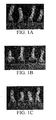
- FIGS. 1A, 1B, and 1C show photographs of carpet fibers as part of a simulated wear test.
- Our invention relates to a protective sealant composition that is useful in a process of applying a colorant to the surface of a substrate, useful in protecting the surface from fading over time, and also useful in imparting a wear resistance to the surface.
- the protective sealant composition will be described in the context of applying a colorant to a carpet.
- the protective sealant may be used with other types of substrates, such as a rug, upholstery, furniture, etc.
- the sealant composition tests were conducted with polyester fiber carpeting.
- the protective sealant composition is not limited to being used with any particular type of carpet, and in fact, can be used with numerous types of carpet.
- a composition that both seals colorants and provides a protective coating for the carpet or other substrate to which the composition is applied, and also provides wear resistance to the surface to which the composition is applied.
- the combination of sealing, protecting, and imparting wear resistance is beneficial for many reasons.
- the dual functionality of a protective sealant composition eliminates at least one application step that is required if separate sealing and protecting compositions are used.
- wear resistance can also be imparted at the same time, thereby eliminating the need for further treatment steps.
- the protective sealant composition described herein can be applied to both a portion of a surface with colorant and a portion of a surface without colorant. It follows that a resulting benefit from the application to portions of the surface without colorant is that the protective portion of the composition prevents resoiling in the non-colored portions of the surface.
- the protective sealant compositions described herein function in a sequential manner so as to first cause colorant particles to coalesce and to flow into a thin film on the surface to which the colorant and protective sealant composition are applied, e.g., carpet fibers. Afterwards, upon evaporation of the evaporative polymer solubilizing material, the remaining protective sealant composition forms a topcoat coating on the surface to which the protective sealant composition is applied.
- the final result is a polymeric material that has been permanently affixed to the surface, with a topcoat being formed on the surface.
- the protective sealant composition described herein is formulated such that the topcoat has both a hard component and a soft component.
- the combination of hard and soft components in the topcoat provides a balance of durability and resoil resistance in the surface to which the composition is applied. More specifically, the soft topcoat component provides durability and resistance to impact, abrasion, and other wear and tear. At the same time, the hard topcoat component provides resistance to resoiling. Still further, the formulation of the composition imparts a certain amount of wear resistance to the surface.
- An example of a protective sealant composition according to the invention may include a first film forming dispersion, a second film forming dispersion, one or more solvents, and one or more surfactants.
- the sealant and protectant composition may include additional components, such as pH buffers, antibacterials, antifungals, free radical scavengers, and UV light absorbers. Each of these constituents of the protective sealant composition will be described in detail below.
- the combination of film forming dispersions of the protectant sealant composition form the above-described topcoat on the surface, upon evaporation of the evaporative solubilizing material in the composition.
- the composition includes first and second film forming polyurethane dispersions.
- One of the polyurethane dispersions functions to form the above-described soft component, while the other of the polyurethane dispersions functions to form the hard component in the topcoat of the applied composition.
- film forming polyurethane dispersions that provide the soft topcoat component include aromatic and aliphatic polyurethane resin solutions and aqueous polyurethane dispersions. More specifically, aliphatic polyester-polyether polyurethane dispersions sold under the tradename IMPRANIL® by Bayer MaterialScience of Leverkusen, Germany can be used as a constituent in the protective sealant composition, such as IMPRANIL® DLU and IMPRANIL® DLC-F. Another nonlimiting example is IMPRANIL® DLP, also by Bayer MaterialScience.
- film forming polyurethane dispersions that provide the hard topcoat component in the topcoat include aliphatic, anionic polyurethane dispersions, such as those sold under the tradename BAYHYDROL® by Bayer MaterialScience, with a specific example being BAYHYDROL® UH 2558.
- BAYHYDROL® UH 2557 Another nonlimiting example includes BAYHYDROL® UH 2557, also by Bayer MaterialScience.
- the protective sealant composition may include one or more surfactants for maintaining the dispersions.
- a surfactant for maintaining the dispersions.
- a sodium lauryl sulfate surfactant may be included in the composition, such as the surfactant sold under the tradename STEPANOL® WA-EXTRA PCK by Stepan Company of Northfield, Illinois.
- the protective sealant composition also includes a solvent for dissolving the colorant particles and/or thermoplastic resin contained in the colorant.
- the dissolved colorant then flows onto and/or into the substrate to which the protective sealant is applied.
- the particles of colorant dissolved in the film may flow into the recesses or crevasses in the carpet fibers, and possibly penetrate into the carpet fibers, thereby forming a thin, even coating on the fibers.
- the solvent is evaporated by drying subsequent to the application of the protective sealant composition.
- solvents that are useful in the protective sealant composition include polar and/or nonpolar solvents, such as those disclosed in the Handbook of Organic Solvent Properties, Smallwood, I. M. 1996, Elsevier .
- solvents include, for example, water, aliphatic hydrocarbons, aromatic hydrocarbons, aliphatic hydrocarbon solvents such as aliphatic alcohols, other alcohols, glycol ethers, pyrrolidone, nitrated and chlorinated solvents such as chlorinated hydrocarbons, ketones, ethers, and esters.
- Other useful solvents include acetone, amines, benzyl acetate, phenols, and the organic sulfone or sulfoxide families including dimethyl sulfoxide.
- any solvent may be selected that is appropriate for the colorant as long as the solvent acts to aid in affixation.
- Illustrative solvents contemplated include, for example, those available from The Dow Chemical Company of Midland, Michigan under the CARBITOL®, CELLOSOLVE®, DOWANOL®, and PROGLYDE® trade names including, for example, diethylene glycol ethyl ether available from Dow Chemical as CARBITOL®, diethylene glycol monobutyl ether available from Dow Chemical as Butyl CARBITOL®, ethylene glycol monohexyl ether, available from Dow Chemical as Hexyl CELLOSOLVE®, ethylene glycol monoethyl ether acetate available from Dow Chemical as Ethyl CELLOSOLVE® Acetate, ethylene glycol n-butyl ether acetate available from Dow Chemical as Butyl CELLOSOLVE®.
- Additional solvents include ethylene glycol diacetate and ethyl lactate available from Purac under the PURASOLV® EL tradename. Still further solvents include diethylene glycol mono propyl ether available from Eastman Chemical Company of Kingsport, Tennessee, under the EASTMAN® DP trade name. Other examples of solvents include ester alcohols, such as 2,2,4-trimethyl pentane 1,3-diol monoisobutyrate sold under the tradename TEXANOLTM by Eastman Chemical Company.
- solvent mixtures useful with the present invention include mixtures of hexyl cellosolve and ethyl lactate, mixtures of butyl carbitol and propylene glycol diacetate, mixtures of hexyl cellosolve, propylene glycol diacetate, and ethyl lactate, mixtures of hexyl cellosolve, propylene glycol diacetate, dipropylene glycol monobutyl ether, and mixtures of propylene glycol diacetate and dipropylene glycol monobutyl ether.
- the mixtures may also include any other solvent or additive that is compatible with affixing the colorant to the surface.
- the protective sealant composition includes the combination of 2,2,4-trimethyl pentane 1,3-diol monoisobutyrate (TEXANOLTM) and dipropylene glycol n-butyl ether (DOWANOL® DPnB glycol ether).
- TEXANOLTM 2,2,4-trimethyl pentane 1,3-diol monoisobutyrate
- DOWANOL® DPnB glycol ether dipropylene glycol n-butyl ether
- setting solutions may act as solubilizing agents or sealants and may incorporate one or more solvent systems, which include one or more glycol solvents capable of solubilizing at least one of a polymer or a resin.
- Solvent systems may further include additional components to facilitate formulation, as well as functional, dispersant, and storage properties of the solvent system or the solubilizing agents or sealants.
- Non-limiting examples of additional components that may be included in contemplated solvent systems include polar and/or nonpolar solvents, water, wax, hydrocarbons, ethanol, phosphorous esters, benzyl alcohol, isopropyl alcohol, diacetone alcohol, ethyl lactate, a nitrated solvent, a chlorinated solvent, a chlorinated hydrocarbon, a ketone, an ester, acetone, an amine, benzyl acetate, a phenol, an organic sulfone, and dimethyl sulfoxide.
- polar and/or nonpolar solvents water, wax, hydrocarbons, ethanol, phosphorous esters, benzyl alcohol, isopropyl alcohol, diacetone alcohol, ethyl lactate, a nitrated solvent, a chlorinated solvent, a chlorinated hydrocarbon, a ketone, an ester, acetone, an amine, benzyl acetate, a phenol, an organic s
- the protective sealant composition may include one or more surfactants to disperse any insoluble solvents in the rest of the composition.
- surfactants include acrylic polymers and copolymers, for example, hydrophobically-modified acrylic copolymers.
- surfactants that may be used include CARBOPOL®-type polymers including PEMULENTM polymers available from Lubrizol Company of Wickliffe, Ohio, such as PEMULENTM 1622 and PEMULENTM TR-2, which are polyacrylic acid/methacrylate block copolymers.
- Additional suitable surfactants include ARISTOFLEX® AVC available from Clariant Company of Charlotte, North Carolina,
- the protective sealant composition may also include corrosion inhibitors such as one or more pH buffers.
- the composition may include pH buffers such as potassium phosphate dibasic and potassium phosphate monobasic.
- pH buffers such as potassium phosphate dibasic and potassium phosphate monobasic.
- the protective sealant composition may further include preservatives such as biocides.
- biocides include antifungals and antibacterials. More specific examples include isothiazolinone-based antifungals, such as 3-iodo-2-propynl butyl carbamate sold under the tradename ACTICIDE® available from Thor Specialties, Inc., of Trumbull, Connecticut, and oxazolidine antibacterials, such as the 4,4-dimethyloxazolidine-based biocide sold under the tradename BIOBANTM CS-1135 by the Dow Chemical Company of Midland, Michigan. Those skilled in the art will recognize the numerous other preservatives that could be included in the protective sealant composition.
- the protective sealant composition may still further include light stabilizing additives to filter harmful UV light and/or act as free radical scavengers.
- light stabilizing additives are sold under the tradename TINUVIN® Ultraviolet Light Absorbers (UVA) and Hindered-Amine Light Stabilizers (HALS) by the BASF Corporation of Ludwigshafen, Germany.
- UVA Ultraviolet Light Absorbers
- HALS Hindered-Amine Light Stabilizers
- TINUVIN® 123-DW bis(1-octyloxy-2,2,6,-tetramethyl-4-piperidyl) sebacate
- TINUVIN® 400-DW aqueous dispersion of a 2-hydroxy-phenyl-s-triazine (HPT)
- fragrances may be added to the composition.
- cross-linking agents silicones (fillers), and the like, or combinations thereof may be added to the composition.
- the protective sealant composition may include a carrier.
- the carrier is water, or more specifically, deionized water.
- water or more specifically, deionized water.
- other carriers with the same properties as water could be used, or still other carriers with different properties could be used with the composition, depending on the particular formulation of the composition.
- the protective sealant composition may be applied via a spray, for example, from an aerosol dispensing device.
- a propellant gas may be added as a constituent to the composition.
- a specific example of a propellant gas is nitrogen.
- other compressed gases may alternatively be used, and further, in other aerosol systems, the composition may be dispensed with a liquefied gas.
- alternative application systems may be used to apply the protective sealant composition, such as a system that sprays the composition without any propellant.
- composition A An exemplary formulation of a composition according to an embodiment of the invention is shown in Table 1.
- This composition will be referred to as Composition A.
- Table 1 - Composition A Constituent Weight Percent Function aliphatic polycarbonateester-polyether polyurethane dispersion (IMPRANIL® DLU) 8.00 film forming polyurethane dispersion for binding colorant to carpet - forms soft topcoat component aliphatic, anionic polyurethane dispersion (BAYHYDROL® UH 2558) 4.00 film forming polyurethane dispersion for binding colorant to carpet - forms hard topcoat component 2,2,4-trimethyl pentane 1,3-diol monoisobutyrate (TEXANOLTM) 4.00 solvent for coalescing and flowing colorant particles into carpet fibers dipropylene glycol n-butyl ether (DowanolTM DPnB glycol ether) 4.00 solvent for coalescing and flowing colorant particles into carpet fibers polyacrylic acid/methacryl
- Composition B A second exemplary formulation of a composition according to an embodiment of the invention is shown in Table 2.
- This composition will be referred to as Composition B.
- Table 2 - Composition B Constituent Weight Percent Function aliphatic polycarbonateester-polyether polyurethane dispersion (IMPRANIL® DLU) 5.00 film forming polyurethane dispersion for binding colorant to carpet - forms soft topcoat component aliphatic, anionic polyurethane dispersion (BAYHYDROL® UH 2558) 5.00 film forming polyurethane dispersion for binding colorant to carpet - forms hard topcoat component 2,2,4-trimethyl pentane 1,3-diol monoisobutyrate (TEXANOLTM) 4.00 solvent for coalescing and flowing colorant particles into carpet fibers dipropylene glycol n-Butyl ether (DowanolTM DPnB glycol ether) 4.00 solvent for coalescing and flowing colorant particles into carpet fibers polyacrylic acid/me
- compositions A and B shown in Tables 1 and 2 could be varied without changing the properties of the composition, and while still obtaining the same results in the tests as described below.
- constituents that provide the same properties as the specifically-named constituents could be substituted without changing the properties of the composition.
- Comparative Composition A was formulated differently from Compositions A and B in that Comparative Composition A did not include a film forming polyurethane dispersion that formed a hard topcoat component in the final sealed product. Additionally, Comparative Example Composition A included a plasticizer that could act to soften the carpet fibers in order to promote adhesion with the colorant particles.
- Comparative Composition A consisted of 81.235 wt.% deionized water, 4 wt.% TEXONALTM, 2 wt.% UNIPLEX 809® (PEG-400 di-2-ethyl-hexoate - the plasticizer) made by Unitex Chemical Corporation of Greensboro, North Carolina, 0.075 wt.% PEMULENTM TR-2, 0.24 wt.% potassium phosphate dibasic, 0.24 wt.% potassium phosphate monobasic, 11 wt.% IMPRANIL® DLU, 1.06 wt.% Eastman AQTM 55S polymer (a water soluble sulfopolyester made by Eastman Chemical Co.), 0.15 wt.% BIOBANTM CS-1135, and 0.547 wt.% nitrogen gas.
- PEG-400 di-2-ethyl-hexoate - the plasticizer made by Unitex Chemical Corporation of Greensboro, North Carolina
- each of Compositions A and B was also compared to the performance of products marketed as carpet protecting sprays.
- One of the products was VECTRA® carpet spray made by Vectra Spray of Atlanta, Georgia, referred to as Comparative Composition B.
- the second product was SCOTCHGARDTM Carpet and Upholstery Protector manufactured by 3M Company of St. Paul, Minnesota, referred to as Comparative Composition C.
- VECCOTM sage-colored carpet colorant manufactured by S.C. Johnson & Son, Inc., of Racine, Wisconsin.
- VECCOTM is a uniform distribution of colorant particles in a resin that is suspended in a liquid. A further description of this and other colorants can be found in U.S. Patent No. 7,727,289 , which is incorporated herein by reference in its entirety.
- a VERICOLOR® Spectro Non-Contact Spectrophotometer manufactured by X-rite, Inc. of Grand Rapids, Michigan was used to quantify the color changes in the carpet samples, along with corresponding Color iQC software provided by the spectrophotometer manufacturer.
- the spectrophotometer readings can be quantified using different standards.
- the spectrophotometer readings were interpreted as CIE L*, a*, b* (CIELAB) color space, where L* represents lightness, and where a* and b* represent color-component dimensions, based on nonlinearly compressed CIE XYZ color space coordinates.
- an increase in L* represented a lightening of the color of the sample
- an increase in a* represented a change in a scale from green to magenta
- an increase in b* represented a change in a scale from blue to yellow.
- an increase in L* would represent the color sample fading
- changes in a* and b* would represent shifts in the color of the sample.
- ⁇ E CMC (which is based on L*, a*, and b* values) represents the total color difference value in a system, with the ⁇ E CMC being an indicator of the difference between a sample and a particular standard.
- ⁇ E CMC represented the overall color difference in the carpet samples after the simulated wearing processes described below, with the standard being the carpet samples before the wearing processes. Note that, for all of the tests herein, a lightness to chroma ratio (l:c) of 2:1 was used for the ⁇ E CMC .
- ⁇ C CMC is one of the variables that is used to calculate the ⁇ E CMC , with the ⁇ C CMC representing a change in the chroma of the sample from a standard.
- the ⁇ C CMC is an indicator of resoiling of the sample, with the negative value of ⁇ C CMC indicating that the color is becoming darker from, for example, dirt or other matter, i.e ., resoiling.
- each spectrophotometer measurement was the average of measurements taken at three positions on each sample, with measurements being taken twice at each location. More specifically, a first measurement was taken at a particular location on a sample, the spectrophotometer was rotated by ninety degrees, and the measurement was taken again. The spectrophotometer was then moved to two other locations on the sample, and two measurements were taken at each of these locations. Thus, the measurements for each sample reflect a well-established average for the sample.
- Test 1 the ability of each of Compositions A and B to provide color durability and to prevent resoiling was determined and compared to the color durability and prevention of resoiling by Comparison Composition A.
- the carpet was a textured cut pile polyester fiber carpet manufactured by Mohawk Industries of Calhoun, Georgia, having a 1/10 gauge, a pile height of 0.596 inches, 8.50 stitches per inch, a certified pile weight of 58.80 ounces, a total weight of 93.23 ounces, and a density of 3552 ounces/cubic yard.
- VECCOTM sage-colored colorant was applied to the carpet samples.
- a procedure was used to ensure that each sample received approximately the same amount of colorant and that the colorant was applied in the same pattern on each sample. More specifically, about 1 g/in 2 of formula (about 0.05 g/in 2 of colorant particle) was applied to each sample. Further, templates were used to ensure that the colorant was applied in the same pattern on the samples.
- compositions to be tested were applied to the colored carpet samples. About 1 g/in 2 of the compositions (about 0.05 g/in 3 of sealant particle) was applied to each sample. A consistent amount of composition was applied to each of the carpet samples through the use of a developed procedure. The sealed samples were left to dry for ten days after application of colorant and sealant, prior to further testing.
- the carpet samples treated with the compositions were then walked on in order to simulate actual wear and tear on the carpet. Specifically, 30,000 footsteps were taken over the prepared samples.
- the 30,000 footstep test was conducted according to protocol developed from ASTM D 6119-D "Standard Practice for Creating Surface Appearance Changes in Pile Yarn Floor Covering from Foot Traffic.” In the tests, carpet tracks with the carpet samples were created, and a motion sensor was used to monitor the progress of walkers stepping on each sample over the course of six days until 30,000 steps were taken on each of the samples.
- the vacuum cleaner was, for example, a HOOVER® WINDTUNNEL® T-SERIESTM Model #UH70120, made by The Hoover Company of Glenwillow, Ohio, or as another example, a POWERFORCE® Turbo Vacuum, Model 6585, made by Bissell, Inc. of Walker, Michigan was used. A procedure was developed so as ensure that consistent vacuum stroking was used on each sample.
- compositions A and B were effective in both sealing the colorant and preventing the resoiling of the samples. More specifically, the ⁇ E CMC after 30,000 steps was 5.44 for Composition A, and 5.41 and 5.80 for Composition B. On the other hand, the ⁇ E CMC of Comparison Composition A was 7.25 after only 15,000 steps. Without wishing to be bound by any theory, we believe that the combination of a hard topcoat and a soft topcoat component provided the combination of sealing and protection that was found in each of Compositions A and B, but was lacking in Comparison Composition A.
- Test 2 Compositions A and B were tested with carpet samples to which no colorant had been applied. More specifically, the ability of Compositions A and B and Comparison Compositions B and C to provide durability of non-colored carpet samples and to prevent resoiling of the non-colored carpet sample was determined. For these tests, the above-described polyester carpet was again used.
- the non-colored carpet samples were prepared in the same manner described above in Test 1, except that no colorant was applied to the samples, and the samples were subjected to the simulated 30,000 footsteps and 600 vacuum strokes in the same manner as the samples of Test 1.
- a non-colored carpet sample was also tested without any composition being applied to the sample.
- the results of Test 2 are shown in Table 4.
- compositions A and B each protected the carpet samples nearly as well as the Comparison Compositions B and C. That is, the relatively comparable ⁇ E CMC of Compositions A and B and Comparison Compositions B and C indicate that Compositions A and B were nearly as effective at preventing the carpet from being discolored by foot traffic. Further, the relatively comparable ⁇ C CMC of Compositions A and B and Comparison Compositions B and C indicates that the Compositions A and B were nearly as effective at preventing resoiling of the carpet. In sum, Compositions A and B protected the carpet samples almost as well as the compositions marketed for the specific purpose of protecting a carpet surface.
- Test 3 was conducted in order to evaluate the ability of each of Compositions A and B to seal a colorant to a carpet as compared to the ability of Comparison Compositions B and C to seal the colorant to a carpet.
- the L*, a*, and b* readings were measured in three locations on the colorant samples using the above-described VERICOLOR® spectrophotometer procedure.
- the carpets were vacuumed for 1 00 strokes, and then the-L*, a*, and b* parameters of the samples were again determined, and the ⁇ E CMC was calculated using the spectrophotometer.
- Test 3 demonstrate that each of Compositions A and B, as well as Comparative Composition A, effectively sealed the colorant on the carpet. That is, there was very little change in the L*, a*, and b* readings, and little change in the ⁇ E CMC value before and after vacuuming of the samples that were treated with Compositions A and B and Comparative Composition A. On the other hand, Comparative Compositions B and C failed to seal the colorant, as the L*, a*, and b* readings and the ⁇ E CMC value for Comparison Compositions B and C changed in the same manner as the sample to which a colorant was applied without any additional composition.
- Tests 2 and 3 collectively indicate that each of Compositions A and B was as effective at protecting the color of a polyester fiber carpet surface and preventing resoiling in the carpet surface as Comparison Compositions B and C, which are marketed as carpet protecting products. Compositions A and B, however, were also effective in sealing the colorant to the carpet, whereas Comparison Compositions B and C were completely ineffective in sealing the colorant.
- the ⁇ E CMC (l:c 2:1 value for the portion of carpet to which no colorant is applied is less than about 3.0 and the ⁇ C CMC value is less than about -2.0 D, and the ⁇ C CMC of the portion of the carpet to which no colorant is applies is less than about 1.55 after the portion of carpet to which the colorant is applied is vacuumed by 100 strokes.
- low-traffic areas of a carpet surface may appear to be different than higher-traffic areas of the carpet.
- Such differences are usually unattractive.
- the visual differences in the low and high traffic areas of carpet may, at least partly, be related to the free ends, i.e., top ends, of the carpet fibers in the low and high traffic areas, having different widths.
- the top ends of the fibers unravel and become more spread out, that is, the widths of the free ends of the carpet fibers increase.
- the carpet fibers in the higher traffic areas will have greater widths at their top ends than the carpet fibers in the lower traffic areas. It follows that the higher traffic areas of the carpet surface will look different than the lower traffic areas of the carpet surface.
- a simulated wear test was conducted to ascertain the ability of Compositions A and B, and Comparison Compositions A, B, and C, to provide wear resistance to carpet in terms of the ability of the respective composition to prevent the widths of the top ends of the fibers from increasing.
- the carpet was the nylon fiber carpet "Sandy Hollow II Mushroom” manufactured by Shaw's Industries, Inc., of Dalton, Georgia. Each sample was 34.5 inches by 11.0 inches, with a 1/10 gauge, a face weight of 48.80 ounces/square yard, a finished pile thickness of 0.56 inches, a total weight of 87.0 ounces/square yard, and a density of 3137 ounces/cubic yard.
- the free ends of the carpet fibers i.e., the ends of the fibers that form the top of the carpet surface, were photographed adjacent to a ruler according to the procedure described below, and the average width of the fibers was found to be about 0.118 inches.
- Compositions A and B, and Comparison Compositions A, B, and C were applied to an area of about 190 cm 2 of the samples. Specifically, an amount of 114.24 grams of Composition A was applied, an amount of 108.80 grams of Composition B was applied, and an amount of 108,83 grams of Comparison Composition A was applied. Note that the result was about 0.6 g/cm 2 for these compositions. In the case of Comparison Composition B, 52.27 grams was applied, and 25.52 grams of Comparison Composition B was applied. The amounts of Comparison Compositions B and C applied were based on the label instructions for these products. The samples were allowed to dry at room temperature for at least ten days. The sixth carpet sample was not treated with any composition.
- the wear on each of the prepared treated carpet samples and untreated sample was simulated by repeatedly contacting the samples with a steel beater bar covered with nylon.
- the steel beater bar was 3.0 inches in diameter and weighed about 22.5 pounds.
- Six rows of 5/8 inch square nylon strips were screwed into the beater bar.
- Each of the samples was laid flat against the inside surface of a cylindrical drum, and the steel beater bar was placed inside the drum.
- the drum was 12.5 inches in height, had a 12 inch inner diameter, and a 12.75 outer diameter.
- the drum was closed and made to rotate at a rate of about thirty-five rotations per minute for about seventy-two hours.
- the carpet samples were removed and allowed to rest face-up on a flat surface for at least twenty-four hours.
- Test 4 demonstrate that Compositions A and B were highly effective at providing a wear resistance to the nylon carpet fibers.
- the width of the free ends of the fibers treated with Compositions A and B increased by less than 10% (about 0.010 inches) as a result of the simulated wear test with the beater bar. More specifically, the free end width of the fibers in the sample treated with Composition B increased by about 7%, and the free end width of the fibers in the sample treated with Composition A increased by only about 3%.
- Comparison Compositions B and C failed to provide any wear resistance, at least in terms of the amount that the widths of the free ends of the fibers increase in the simulated wear test.
- the widths of the free ends of the fibers treated with Comparison Compositions B and C actually increased in the simulated wear test compared to the amount that the widths of the fibers increased in the untreated sample.
- the Comparison Compositions B and C may have caused the free ends of the carpet fibers to be less tightly bound, and as result, subject to more unraveling and increasing width upon being subjected to the wear test with the beater bar.
- compositions A and B are formulated to provide a wear resistance that maintains the appearance of a nylon carpet surface.
- Tests 1, 2, 3, and 4 collectively show that each of Compositions A and B was highly effective in sealing colorant to carpet, highly effective in providing durability to the sealed colorant, highly effective in preventing resoiling of both the colored and non-colored portions of carpet, and highly effective at imparting wear resistance to the carpet in terms of reducing the amount that the widths of the top ends of the carpet fibers increase when the carpet is subjected to wearing.
- the combination of hard and soft topcoat components that are provided with Composition A and B may be responsible for at least some of the functionalities of these compositions.
- the protective sealant compositions disclosed can be used as a process of applying and affixing a colorant to a surface, such as carpeting. By applying, sealing, and protecting such a colorant, the perceived aesthetic quality of the surface is improved and may extend the useful life of the surface before the need for replacement.
Landscapes
- Chemical & Material Sciences (AREA)
- Engineering & Computer Science (AREA)
- Textile Engineering (AREA)
- Chemical Kinetics & Catalysis (AREA)
- Life Sciences & Earth Sciences (AREA)
- Organic Chemistry (AREA)
- Wood Science & Technology (AREA)
- Materials Engineering (AREA)
- Health & Medical Sciences (AREA)
- Medicinal Chemistry (AREA)
- Polymers & Plastics (AREA)
- Microbiology (AREA)
- Dispersion Chemistry (AREA)
- General Chemical & Material Sciences (AREA)
- Biochemistry (AREA)
- Sealing Material Composition (AREA)
- Paints Or Removers (AREA)
- Application Of Or Painting With Fluid Materials (AREA)
Applications Claiming Priority (1)
| Application Number | Priority Date | Filing Date | Title |
|---|---|---|---|
| US13/645,815 US8785549B2 (en) | 2012-10-05 | 2012-10-05 | Composition for sealing a colorant to a surface and/or for protecting a surface |
Publications (1)
| Publication Number | Publication Date |
|---|---|
| EP2749692A2 true EP2749692A2 (de) | 2014-07-02 |
Family
ID=49304744
Family Applications (1)
| Application Number | Title | Priority Date | Filing Date |
|---|---|---|---|
| EP13187097.4A Withdrawn EP2749692A2 (de) | 2012-10-05 | 2013-10-02 | Zusammensetzung zum Versiegeln einer Farbe auf einer Oberfläche und/oder zum Schutz einer Oberfläche |
Country Status (2)
| Country | Link |
|---|---|
| US (4) | US8785549B2 (de) |
| EP (1) | EP2749692A2 (de) |
Families Citing this family (1)
| Publication number | Priority date | Publication date | Assignee | Title |
|---|---|---|---|---|
| KR101573790B1 (ko) * | 2015-07-28 | 2015-12-02 | (주) 더몰론코리아 | 항균기능이 있는 세라믹 프린팅 잉크 조성물 |
Citations (1)
| Publication number | Priority date | Publication date | Assignee | Title |
|---|---|---|---|---|
| US7727289B2 (en) | 2005-06-07 | 2010-06-01 | S.C. Johnson & Son, Inc. | Composition for application to a surface |
Family Cites Families (47)
| Publication number | Priority date | Publication date | Assignee | Title |
|---|---|---|---|---|
| US4096303A (en) | 1974-10-29 | 1978-06-20 | Detroit Gasket And Manufacturing Company | Composite carpet and foam laminate and method |
| DE2644923C2 (de) | 1976-10-05 | 1985-06-05 | Bayer Ag, 5090 Leverkusen | Verfahren zur Beschichtung von textilen Flächengebilden |
| US4620993A (en) | 1984-03-30 | 1986-11-04 | Ppg Industries, Inc. | Color plus clear coating system utilizing organo-modified clay in combination with organic polymer microparticles |
| IT1198254B (it) | 1986-12-24 | 1988-12-21 | Raffineria Olii Lubirificanti | Procedimento per migliorare la tingibilita' di manufatti tessili tessuti o non tessuti |
| US5045375A (en) | 1989-04-07 | 1991-09-03 | Standard Adhesive & Chemical Co., Inc. | Nonskid polyurethane coating |
| US5312863A (en) | 1989-07-05 | 1994-05-17 | Rohm And Haas Company | Cationic latex coatings |
| DE4010176A1 (de) | 1990-03-30 | 1991-10-02 | Basf Lacke & Farben | Verfahren zur herstellung einer mehrschichtigen lackierung und waessriger lack |
| DE69324235T2 (de) | 1992-10-12 | 1999-08-12 | Toray Industries, Inc., Tokio/Tokyo | Wasserdichtes gewebe mit hohem wasserdruckwiderstand und hoher dampfdurchlässigkeit, sowie dessen herstellung |
| US5383959A (en) * | 1993-02-22 | 1995-01-24 | Xytronyx, Inc. | Reversible inks |
| US5330540A (en) | 1993-10-12 | 1994-07-19 | Milliken Research Corporation | Method of dyeing textiles |
| DE4400854C2 (de) | 1994-01-14 | 1996-05-30 | Herberts Gmbh | Verwendung von Polybutenen zur Verbesserung der Verlaufsfähigkeit von Überzugsmitteln |
| US5565243A (en) | 1995-05-01 | 1996-10-15 | Ppg Industries, Inc. | Color-clear composite coatings having improved hardness, acid etch resistance, and mar and abrasion resistance |
| US6194329B1 (en) | 1998-01-21 | 2001-02-27 | Brookwood Companies, Incorporated | Reversible fabric for use in military environments and method of making same |
| US6177496B1 (en) | 1998-01-27 | 2001-01-23 | Charles F Luzon | Process for making organic materials receptive to coloring agents and adhesives |
| US6322851B1 (en) | 1998-06-30 | 2001-11-27 | Kuraray Co., Ltd. | Manufacturing process for leather-like sheet |
| US6379686B1 (en) | 1998-07-17 | 2002-04-30 | Magiseal Corporation | Fabric, carpet and upholstery protectant with biocide and acaricide |
| US6080687A (en) | 1999-03-18 | 2000-06-27 | Zydex Industries | Method of dyeing anionic materials with pigment colors having a net cationic charge using a padding process |
| US6350709B1 (en) | 1999-11-30 | 2002-02-26 | Bradford Industries, Inc. | Heat sealable coated textile fabric for inflatable vehicle restraint systems |
| US6706362B2 (en) | 2002-01-30 | 2004-03-16 | Textile Rubber & Chemical Co., Inc. | Sodium silicate coating process and products incorporating same |
| US6713131B2 (en) | 2002-04-08 | 2004-03-30 | Dow Corning Corporation | Methods of coating fabrics with emulsions of elastomeric polymers and polyurethane dispersions |
| EP1353006B1 (de) | 2002-04-10 | 2009-07-22 | ALCANTARA S.p.A. | Verfahren zur Herstellung eines mikrofasrigen, wildlederähnlichen Vliesstoffes |
| US7485588B2 (en) | 2003-01-10 | 2009-02-03 | Yunzhang Wang | Method for making textile substrates having layered finish structure for improving liquid repellency and stain release |
| DE10330099A1 (de) | 2003-07-03 | 2005-01-27 | Benecke-Kaliko Ag | Verbundmaterial mit Kunststoffverbundmatrix, Verfahren zu deren Herstellung und deren Verwendung |
| DE102005006470B4 (de) | 2005-02-12 | 2013-12-05 | Carl Freudenberg Kg | Textile Flächengebilde mit verbesserter Beschichtung, deren Herstellung und Verwendung |
| US20100154146A1 (en) | 2008-07-02 | 2010-06-24 | S.C. Johnson & Son, Inc. | Carpet decor and setting solution compositions |
| US20070277849A1 (en) | 2006-06-06 | 2007-12-06 | Shah Ketan N | Method of neutralizing a stain on a surface |
| US8557758B2 (en) | 2005-06-07 | 2013-10-15 | S.C. Johnson & Son, Inc. | Devices for applying a colorant to a surface |
| US7776108B2 (en) | 2005-06-07 | 2010-08-17 | S.C. Johnson & Son, Inc. | Composition for application to a surface |
| US20080282642A1 (en) | 2005-06-07 | 2008-11-20 | Shah Ketan N | Method of affixing a design to a surface |
| JP2008545565A (ja) | 2005-06-07 | 2008-12-18 | エス.シー. ジョンソン アンド サン、インコーポレイテッド | 表面にデザインを付与するためのデザイン用具 |
| US8061269B2 (en) | 2008-05-14 | 2011-11-22 | S.C. Johnson & Son, Inc. | Multilayer stencils for applying a design to a surface |
| US8846154B2 (en) * | 2005-06-07 | 2014-09-30 | S.C. Johnson & Son, Inc. | Carpet décor and setting solution compositions |
| US8043713B2 (en) | 2005-12-15 | 2011-10-25 | Dow Global Technologies Llc | Compositions and aqueous dispersions |
| US7347792B2 (en) | 2006-05-22 | 2008-03-25 | Ben Huang | Decorative golf club grip |
| US7871944B2 (en) | 2006-08-08 | 2011-01-18 | United Technologies Corporation | Process for applying interface coatings and manufacturing composite materials using same |
| JP4178170B2 (ja) | 2006-08-17 | 2008-11-12 | 株式会社松井色素化学工業所 | 水性捺染組成物及び水性捺染組成物の連続捺染方法 |
| US7470745B2 (en) | 2006-11-13 | 2008-12-30 | E. I. Du Pont De Nemours And Company | Perfluoroether based polymers |
| TW200825244A (en) | 2006-12-13 | 2008-06-16 | San Fang Chemical Industry Co | Flexible artificial leather and its manufacturing method |
| US9469939B2 (en) | 2007-03-28 | 2016-10-18 | Honeywell International Inc. | Method to create an environmentally resistant soft armor composite |
| KR20100016318A (ko) | 2007-04-10 | 2010-02-12 | 베스테르고르 프란센 에스에이 | 직물 또는 망 또는 다른 종류의 무생물 재료의 살충제 함침을 위한 방법 |
| US7511653B2 (en) | 2007-07-20 | 2009-03-31 | Chang-Sui Yu | Radar wave camouflage structure and method for fabricating the same |
| US8313809B2 (en) | 2007-12-11 | 2012-11-20 | Patrick Ilfrey | Same-day coatings and processes |
| US8087548B2 (en) | 2008-05-14 | 2012-01-03 | S.C. Johnson & Son, Inc. | Spray products with particles and improved valve for inverted dispensing without clogging |
| RU2494151C2 (ru) * | 2008-05-16 | 2013-09-27 | Мидори Хокуйо Ко., Лтд. | Верхнее покрытие |
| US8243062B2 (en) | 2008-07-02 | 2012-08-14 | S.C. Johnson & Son, Inc. | Surface design tools |
| WO2010140201A1 (ja) | 2009-06-01 | 2010-12-09 | 東洋紡スペシャルティズトレーディング株式会社 | 透湿防水性布帛およびその製造方法 |
| USD627224S1 (en) | 2009-10-08 | 2010-11-16 | S.C. Johnson & Son, Inc. | Overcap |
-
2012
- 2012-10-05 US US13/645,815 patent/US8785549B2/en not_active Expired - Fee Related
-
2013
- 2013-02-08 US US13/763,061 patent/US8772404B2/en not_active Expired - Fee Related
- 2013-10-02 EP EP13187097.4A patent/EP2749692A2/de not_active Withdrawn
-
2014
- 2014-06-20 US US14/310,218 patent/US20140303276A1/en not_active Abandoned
- 2014-06-20 US US14/310,186 patent/US20140303307A1/en not_active Abandoned
Patent Citations (1)
| Publication number | Priority date | Publication date | Assignee | Title |
|---|---|---|---|---|
| US7727289B2 (en) | 2005-06-07 | 2010-06-01 | S.C. Johnson & Son, Inc. | Composition for application to a surface |
Non-Patent Citations (1)
| Title |
|---|
| SMALLWOOD, I. M.: "Handbook of Organic Solvent Properties", 1996, ELSEVIER |
Also Published As
| Publication number | Publication date |
|---|---|
| US20140100330A1 (en) | 2014-04-10 |
| US20140303276A1 (en) | 2014-10-09 |
| US20140100329A1 (en) | 2014-04-10 |
| US8785549B2 (en) | 2014-07-22 |
| US20140303307A1 (en) | 2014-10-09 |
| US8772404B2 (en) | 2014-07-08 |
Similar Documents
| Publication | Publication Date | Title |
|---|---|---|
| JP4953355B2 (ja) | 水性塗料組成物 | |
| CN107207739A (zh) | 用于低挥发性化合物水性有机涂料组合物的胺‑亚氨基二醇中和剂及其使用方法 | |
| AU2012253818B2 (en) | Carpet decor and setting solution compositions | |
| CN106928802B (zh) | 一种基于氟硅改性丙烯酸树脂的防腐涂料及其制备 | |
| US20160044916A1 (en) | Alcoholic compositions with improved properties and methods for evaluating interaction of the compositions with surfaces | |
| CN104559717A (zh) | 一种低成本高性能的水性双组分聚氨酯涂料及其制备方法 | |
| US8845443B1 (en) | System and method of forming a golf course sand bunker having improved stability | |
| US10370560B2 (en) | Method of coating a floor with polyurethane floor finishes with hybrid performance | |
| EP2220139B1 (de) | Polymermischung | |
| EP2749692A2 (de) | Zusammensetzung zum Versiegeln einer Farbe auf einer Oberfläche und/oder zum Schutz einer Oberfläche | |
| DE112011103631B4 (de) | Silikon-Schutzmittelzusammensetzungen | |
| EP2749693A2 (de) | Zusammensetzung zur Bereitstellung von einer Oberfläche mit verschleissbeständigen Eigenschaften. | |
| EP2749691A2 (de) | Zusammensetzung zum festmachen einer Farbe auf einer Oberfläche, zum schutzen einer Oberfläche und zur Bereitstellung einer Oberfläche mit verschleissbeständigen Eigenschaften. | |
| CN114621666B (zh) | 双组分聚氨酯涂料组合物、由其形成的涂层和涂布制品 | |
| Chirila et al. | Hydrophobic and oleophobic finishes for textiles | |
| WO2010049480A3 (en) | Cosmetic composition comprising a polyurethane based on dialkyl tartrate diol and uses thereof | |
| WO2024142790A1 (ja) | 撥水撥油剤組成物、並びに撥水撥油性繊維製品及びその製造方法 | |
| WO2015075462A1 (en) | Composition | |
| CN104018351B (zh) | 一种生态环保织物及其制造方法 | |
| US10196541B2 (en) | One-step floor finish | |
| US20230097289A1 (en) | Sensors for antimicrobial biphasic polymers, and systems and methods incorporating the same | |
| JP2020083790A (ja) | 水性美爪料組成物 | |
| CA3097842C (en) | Vehicle interior protective coating | |
| EP3812433A1 (de) | Wässriges beschichtungsmittel | |
| US20230090180A1 (en) | Formulas and methods for making shelf-stable antimicrobial biphasic polymers |
Legal Events
| Date | Code | Title | Description |
|---|---|---|---|
| 17P | Request for examination filed |
Effective date: 20131002 |
|
| AK | Designated contracting states |
Kind code of ref document: A2 Designated state(s): AL AT BE BG CH CY CZ DE DK EE ES FI FR GB GR HR HU IE IS IT LI LT LU LV MC MK MT NL NO PL PT RO RS SE SI SK SM TR |
|
| AX | Request for extension of the european patent |
Extension state: BA ME |
|
| PUAI | Public reference made under article 153(3) epc to a published international application that has entered the european phase |
Free format text: ORIGINAL CODE: 0009012 |
|
| STAA | Information on the status of an ep patent application or granted ep patent |
Free format text: STATUS: THE APPLICATION HAS BEEN WITHDRAWN |
|
| 18W | Application withdrawn |
Effective date: 20150724 |