EP2749651A2 - Fermented vegetable oil and composition including same - Google Patents
Fermented vegetable oil and composition including same Download PDFInfo
- Publication number
- EP2749651A2 EP2749651A2 EP12828232.4A EP12828232A EP2749651A2 EP 2749651 A2 EP2749651 A2 EP 2749651A2 EP 12828232 A EP12828232 A EP 12828232A EP 2749651 A2 EP2749651 A2 EP 2749651A2
- Authority
- EP
- European Patent Office
- Prior art keywords
- fermented
- oil
- vegetable oil
- bacteria
- fatty acid
- Prior art date
- Legal status (The legal status is an assumption and is not a legal conclusion. Google has not performed a legal analysis and makes no representation as to the accuracy of the status listed.)
- Granted
Links
Images





Classifications
-
- A—HUMAN NECESSITIES
- A61—MEDICAL OR VETERINARY SCIENCE; HYGIENE
- A61K—PREPARATIONS FOR MEDICAL, DENTAL OR TOILETRY PURPOSES
- A61K8/00—Cosmetics or similar toiletry preparations
- A61K8/18—Cosmetics or similar toiletry preparations characterised by the composition
- A61K8/92—Oils, fats or waxes; Derivatives thereof, e.g. hydrogenation products thereof
- A61K8/922—Oils, fats or waxes; Derivatives thereof, e.g. hydrogenation products thereof of vegetable origin
-
- A—HUMAN NECESSITIES
- A23—FOODS OR FOODSTUFFS; TREATMENT THEREOF, NOT COVERED BY OTHER CLASSES
- A23D—EDIBLE OILS OR FATS, e.g. MARGARINES, SHORTENINGS OR COOKING OILS
- A23D9/00—Other edible oils or fats, e.g. shortenings or cooking oils
- A23D9/02—Other edible oils or fats, e.g. shortenings or cooking oils characterised by the production or working-up
- A23D9/04—Working-up
-
- A—HUMAN NECESSITIES
- A61—MEDICAL OR VETERINARY SCIENCE; HYGIENE
- A61K—PREPARATIONS FOR MEDICAL, DENTAL OR TOILETRY PURPOSES
- A61K8/00—Cosmetics or similar toiletry preparations
- A61K8/18—Cosmetics or similar toiletry preparations characterised by the composition
- A61K8/30—Cosmetics or similar toiletry preparations characterised by the composition containing organic compounds
- A61K8/33—Cosmetics or similar toiletry preparations characterised by the composition containing organic compounds containing oxygen
- A61K8/36—Carboxylic acids; Salts or anhydrides thereof
-
- A—HUMAN NECESSITIES
- A61—MEDICAL OR VETERINARY SCIENCE; HYGIENE
- A61K—PREPARATIONS FOR MEDICAL, DENTAL OR TOILETRY PURPOSES
- A61K8/00—Cosmetics or similar toiletry preparations
- A61K8/18—Cosmetics or similar toiletry preparations characterised by the composition
- A61K8/30—Cosmetics or similar toiletry preparations characterised by the composition containing organic compounds
- A61K8/33—Cosmetics or similar toiletry preparations characterised by the composition containing organic compounds containing oxygen
- A61K8/36—Carboxylic acids; Salts or anhydrides thereof
- A61K8/361—Carboxylic acids having more than seven carbon atoms in an unbroken chain; Salts or anhydrides thereof
-
- A—HUMAN NECESSITIES
- A61—MEDICAL OR VETERINARY SCIENCE; HYGIENE
- A61Q—SPECIFIC USE OF COSMETICS OR SIMILAR TOILETRY PREPARATIONS
- A61Q19/00—Preparations for care of the skin
-
- A—HUMAN NECESSITIES
- A61—MEDICAL OR VETERINARY SCIENCE; HYGIENE
- A61Q—SPECIFIC USE OF COSMETICS OR SIMILAR TOILETRY PREPARATIONS
- A61Q19/00—Preparations for care of the skin
- A61Q19/08—Anti-ageing preparations
-
- C—CHEMISTRY; METALLURGY
- C12—BIOCHEMISTRY; BEER; SPIRITS; WINE; VINEGAR; MICROBIOLOGY; ENZYMOLOGY; MUTATION OR GENETIC ENGINEERING
- C12P—FERMENTATION OR ENZYME-USING PROCESSES TO SYNTHESISE A DESIRED CHEMICAL COMPOUND OR COMPOSITION OR TO SEPARATE OPTICAL ISOMERS FROM A RACEMIC MIXTURE
- C12P7/00—Preparation of oxygen-containing organic compounds
- C12P7/64—Fats; Fatty oils; Ester-type waxes; Higher fatty acids, i.e. having at least seven carbon atoms in an unbroken chain bound to a carboxyl group; Oxidised oils or fats
-
- C—CHEMISTRY; METALLURGY
- C12—BIOCHEMISTRY; BEER; SPIRITS; WINE; VINEGAR; MICROBIOLOGY; ENZYMOLOGY; MUTATION OR GENETIC ENGINEERING
- C12P—FERMENTATION OR ENZYME-USING PROCESSES TO SYNTHESISE A DESIRED CHEMICAL COMPOUND OR COMPOSITION OR TO SEPARATE OPTICAL ISOMERS FROM A RACEMIC MIXTURE
- C12P7/00—Preparation of oxygen-containing organic compounds
- C12P7/64—Fats; Fatty oils; Ester-type waxes; Higher fatty acids, i.e. having at least seven carbon atoms in an unbroken chain bound to a carboxyl group; Oxidised oils or fats
- C12P7/6409—Fatty acids
-
- C—CHEMISTRY; METALLURGY
- C12—BIOCHEMISTRY; BEER; SPIRITS; WINE; VINEGAR; MICROBIOLOGY; ENZYMOLOGY; MUTATION OR GENETIC ENGINEERING
- C12P—FERMENTATION OR ENZYME-USING PROCESSES TO SYNTHESISE A DESIRED CHEMICAL COMPOUND OR COMPOSITION OR TO SEPARATE OPTICAL ISOMERS FROM A RACEMIC MIXTURE
- C12P7/00—Preparation of oxygen-containing organic compounds
- C12P7/64—Fats; Fatty oils; Ester-type waxes; Higher fatty acids, i.e. having at least seven carbon atoms in an unbroken chain bound to a carboxyl group; Oxidised oils or fats
- C12P7/6409—Fatty acids
- C12P7/6427—Polyunsaturated fatty acids [PUFA], i.e. having two or more double bonds in their backbone
-
- C—CHEMISTRY; METALLURGY
- C12—BIOCHEMISTRY; BEER; SPIRITS; WINE; VINEGAR; MICROBIOLOGY; ENZYMOLOGY; MUTATION OR GENETIC ENGINEERING
- C12P—FERMENTATION OR ENZYME-USING PROCESSES TO SYNTHESISE A DESIRED CHEMICAL COMPOUND OR COMPOSITION OR TO SEPARATE OPTICAL ISOMERS FROM A RACEMIC MIXTURE
- C12P7/00—Preparation of oxygen-containing organic compounds
- C12P7/64—Fats; Fatty oils; Ester-type waxes; Higher fatty acids, i.e. having at least seven carbon atoms in an unbroken chain bound to a carboxyl group; Oxidised oils or fats
- C12P7/6409—Fatty acids
- C12P7/6427—Polyunsaturated fatty acids [PUFA], i.e. having two or more double bonds in their backbone
- C12P7/6431—Linoleic acids [18:2[n-6]]
-
- A—HUMAN NECESSITIES
- A61—MEDICAL OR VETERINARY SCIENCE; HYGIENE
- A61K—PREPARATIONS FOR MEDICAL, DENTAL OR TOILETRY PURPOSES
- A61K2800/00—Properties of cosmetic compositions or active ingredients thereof or formulation aids used therein and process related aspects
- A61K2800/80—Process related aspects concerning the preparation of the cosmetic composition or the storage or application thereof
- A61K2800/85—Products or compounds obtained by fermentation, e.g. yoghurt, beer, wine
Definitions
- the present invention relates to a fermented vegetable oil and a composition including same, and more particularly, and provides a fermented vegetable oil, which has the effects of enhancing emulsion stability due to water retention ability, improving texture and flavor and enhancing moisturization, according to being fermented by bacteria.
- a fermented oil refers to an oil, which is prepared by fermenting oriental medicine such as ginseng, extracting fat-soluble ingredients therefrom and adding thereof to an oil, or which is prepared by adding oriental medicine such as ginseng to an oil followed by maturing thereof.
- an oil which is prepared by fermenting fishes or coconut and extracting fat-soluble ingredients therefrom, or an oil, which is prepared by soaking ⁇ germinating or steaming oil seeds (soy bean, sun flower seed, grape seed, sesame seed and the like) and then extracting an oil therefrom, is also called a fermented oil.
- the present invention provides a fermented vegetable oil, which has the effects of enhancing emulsion stability due to water retention ability, improving texture and flavor, and enhancing moisturizing capacity, according to being fermented by bacteria.
- the present invention provides a method for preparing a fermented vegetable oil, which is fermented by bacteria by a simple method.
- the present invention provides a composition for skin external preparations or cosmetics, which has the effect of enhancing emulsion stability, improving texture and flavor, and enhancing moisturizing capacity, by containing a fermented vegetable oil fermented by bacteria as an active ingredient.
- the fermented vegetable oil of the present invention is characterized by being fermented by bacteria.
- the method for preparing the fermented vegetable oil of the present invention is characterized by comprising: (a) a step of firstly culturing bacteria in a culture solution at an aerobic condition; (b) a step of secondarily culturing after adding a vegetable oil to the culture solution; and (c) a step of collecting the secondarily cultured vegetable oil.
- the composition for skin external preparations or cosmetics of the present invention is characterized by comprising the fermented vegetable oil, which is fermented by bacteria, as an active ingredient.
- the fermented vegetable oil according to the present invention is excellent on emulsion stability due to water retention ability. Accordingly, it is easy to manufacture a toner or essence-type products by applying the oil thereto.
- the fermented vegetable oil according to the present invention has lighter texture and more excellent moisture feeling than before fermentation.
- the fermented vegetable oil according to the present invention has higher stability and usability than a natural oil and a matured oil having similar effects.
- the fermented vegetable oil of the present invention is characterized by being fermented by bacteria.
- the bacteria may be SY16 (KCTC 8950P) of Pseudozima sp., preferably, and the SY16 (KCTC 8950P) of Pseudozima sp. is in the shape of cylinder and grows in polar germination mode, and forms endospores, which differ from hyphae and ascospores.
- the fermented vegetable oil of the present invention is characterized that it is fermented by the above bacteria in a medium containing a vegetable oil having the acid value of 0.100 ⁇ 2.000.
- the vegetable oil fermented in the medium may be any general vegetable oil such as olive oil, soy bean oil, green tea oil and argan oil, and it may be an oil having the acid value of 0.100 ⁇ 2.000, preferably.
- the acid value is preferred to be 0.1 ⁇ 0.5.
- the fermented vegetable oil of the present invention is characterized by having higher essential fatty acid content than before fermentation, by being fermented by the bacteria. At this time, the essential fatty acid content after fermentation is 5.0 ⁇ 140.0 times higher than before fermentation.
- the essential fatty acid is preferred to be linoleic acid.
- the linoleic acid is a key component of the epidermal lipid bilayer, and is contained in ceramides of the epidermal keratin layer. This linoleic acid is effective in skin moisturizing, skin homeostasis maintenance, formation and protection of the skin permeation layer.
- the essential fatty acid contained in the fermented vegetable oil of the present invention may be linoleic acid, preferably.
- the fermented vegetable oil of the present invention is characterized by having higher free fatty acid content than before fermentation, by being fermented by the bacteria. At this time, the free fatty acid content after fermentation is 5.0 ⁇ 140.0 times higher than before fermentation.
- the free fatty acid refers to fatty acid that is in unbound glyceride form.
- texture becomes improved because stickiness is reduced, and it is effective in enhancing oiliness after use. Accordingly, it is preferred that the fermented vegetable oil of the present invention has higher free fatty acid content.
- the method for preparing the fermented vegetable oil of the present invention includes (a) a step of firstly culturing bacteria in a culture solution at an aerobic condition; (b) a step of secondarily culturing after adding a vegetable oil to the culture solution; and (c) a step of collecting the secondarily cultured vegetable oil.
- bacteria are firstly cultured in a culture solution at an aerobic condition.
- the bacteria may be SY16 (KCTC 8950P) of Pseudozima sp., preferably.
- the SY16 (KCTC 8950P) of Pseudozima sp. is in the shape of cylinder and grows in polar germination mode, and forms endospores, which differ from hyphae and ascospores.
- the culture solution does not contain a vegetable oil yet, and it is very important to mix various kinds of culture materials to make the vegetable oil be fermented well.
- the first culture time may be 24 ⁇ 72 hours, and 30-60 hours, preferably because the lipase activity is the highest within the said range.
- the optimized culture condition is determined by the acid value of a vegetable oil.
- the acid value of a vegetable oil may be in the range of 0.100 ⁇ 2.000, preferably, and it may be in the range of 0.1 ⁇ 0.5, more preferably, because the lower acid value makes the higher fermentation efficiency.
- the vegetable oil is added in an amount of 100 parts by weight or less, based on 100 parts by weight of the above culture solution, in which the vegetable oil is not added yet.
- the amount of the vegetable oil added may be properly adjusted according to the desired amount of a fermented vegetable oil, but when the vegetable oil is added in an amount of over 100 parts by weight, based on the 100 parts by weight of the culture solution containing the vegetable oil, it is concerned that the oil may not be fermented enough.
- the second culture time may be 72 ⁇ 120 hours, preferably because the time enough to produce the maximum amount of free fatty acid should be secured as the fermentation, resulting from the secondary culture, goes on. Further, the time may vary depending on the kinds of vegetable oils. Accordingly, the secondary culture may be finished when the amount of the free fatty acid is not increased any more after measuring the amount of the free fatty acid increased with time.
- the collected vegetable oil is a fermented oil, and it can be used as an active ingredient of a composition for skin external preparations or cosmetics.
- the present invention includes a composition, which contains the fermented vegetable oil fermented by bacteria, as an active ingredient, and is used for skin external preparations or cosmetics.
- the inventive fermented vegetable oil which is fermented by bacteria, is suitable for a composition for skin external preparations or cosmetics because it has excellent texture and moisturizing capacity due to its high emulsion activity and emulsion stability, and much higher contents of essential fatty acid and free fatty acid than general oils.
- the amount of the fermented vegetable oil contained in the composition for skin external preparations and cosmetics may be 2-40 wt%, preferably.
- the amount of the fermented vegetable oil is less than 2 wt%, the effect of the product may be meager because the fermented vegetable oil is not contained enough, and if the amount is over 40 wt%, it may be difficult to be formulated.
- compositions for skin external preparations and cosmetics of the present invention may contain general ingredients used for compositions for skin external preparations and cosmetics in addition to the said fermented vegetable oil, for example, general additives such as antioxidant, stabilizer, solubilizer, vitamin, dye and fragrance, and carriers.
- general additives such as antioxidant, stabilizer, solubilizer, vitamin, dye and fragrance, and carriers.
- composition for skin external preparations and cosmetics of the present invention may be formulated in a wide variety of forms commonly used in the art, for example, solution, suspension, emulsion, paste, gel, cream, lotion, powder, soap, surfactant-containing cleanser, oil, powder foundation, emulsion foundation, wax foundation and spray, but not limited thereto.
- the carrier contained in the present composition for skin external preparations and cosmetics may be any carrier commonly used in the art depending on the type of the formulation.
- the carrier ingredient may be animal and vegetable fats, wax, paraffin, starch, tragacanth, cellulose derivatives, polyethylene glycol, silicone, bentonite, silica, talc, zinc oxide and the like.
- the carrier ingredient may be lactose, talc, silica, aluminum hydroxide, calcium silicate or polyamide powder.
- the spray may further comprise propellants such as chlorofluorohydrocarbon, propane/butane or dimethyl ether.
- the carrier ingredient may be solvent, solubilizer and emulsifier.
- it may be water, ethanol, isopropanol, ethyl carbonate, ethyl acetate, benzyl alcohol, benzyl benzoate, propylene glycol, 1,3-butylglycol oil, in particular, cottonseed oil, peanut oil, maize germ oil, olive oil, castor oil and sesame seed oil, glycerol fatty esters, polyethylene glycol and fatty acid esters of sorbitan.
- the carrier ingredient may be liquid diluents, for example, water, ethanol or propylene glycol, suspending agents, for example, ethoxylated isosteary alcohol, polyoxyethylene sorbitol ester and poly oxyethylene sorbitan ester, micocrystalline cellulose, aluminum metahydroxide, bentonite, agar or tragacanth.
- suspending agents for example, ethoxylated isosteary alcohol, polyoxyethylene sorbitol ester and poly oxyethylene sorbitan ester, micocrystalline cellulose, aluminum metahydroxide, bentonite, agar or tragacanth.
- the carrier ingredient may be aliphatic alcohol sulfate, aliphatic alcohol ether sulfate, sulfosuccinic acid monoester, isethionate, imidazolinium derivatives, methyltaurate, sarcosinate, fatty acid amide ether sulfate, alkylamidobetaine, aliphatic alcohol, fatty acid glycerides, fatty acid diethanolamide, vegetable oils, lanolin derivatives or ethoxylated glycerol fatty acid ester.
- the carrier ingredient may be alkali metal salts of fatty acids, salts of fatty acid hemiesters, fatty acid protein hydrolysates, isethionate, lanolin derivatives, aliphatic alcohol, vegetable oil, glycerol, sugars and the like.
- the cosmetic composition of the present invention may include other additives in addition to the carrier, for example, preservative, antioxidant, stabilizer, solubilizer, vitamin, dye and fragrance.
- SY16 [KCTC 8950P] of Pseudozima sp. was inoculated to each 1 L of the following 8 medium compositions, and cultured at 25°C, 300 rpm, under an aerobic condition.
- the bacterial growth was measured by culturing the bacteria at each condition, centrifuging thereof to remove an oil layer, strongly mixing the resulting solution for 20 sec, diluting the mixed solution 10 times with distilled water, and then measuring absorbance (660 nm) of each sample.
- the culture solution was centrifuged at 12,000 rpm for 3 min, the supernatant was used as a crude enzyme solution, and then the lipase activity was measured by microplate analyzing method measuring the amount of p-nitrophenol (pNP) bound to a substrate, which is released by the said enzyme, as the change of absorbance (405 nm).
- the composition 4 showed the highest growth and lipase activity. Accordingly, the composition was used for preparing the next fermented oil.
- the amount that the crude enzyme 100 ⁇ L produces tyrosine 1 ⁇ g for 1 min was used as 1 unit.
- the composition 4 showed the highest growth and lipase activity of the bacteria. Accordingly, the composition 4 was determined as the optimum medium composition for the future fermented oil production by bacteria.
- SY16 [KCTC 8950P] of Pseudozima sp. was inoculated to a culture solution (glucose 10 g/L, olive oil 100 g/L, yeast extract 3 g/L, malt extract 3 g/L, peptone 3 g/L, soya bean meal 3 g/L, (NH 4 ) 2 SO 4 2 g/L, KH 2 PO 4 1 g/L, MgSO 4 0.5 g/L, CaCl 2 0.1 g/L, NaCl 0.1 g/L: the medium of the composition 4) 1 L, and cultured at 25°C, 300 rpm under an aerobic condition.
- a culture solution glucose 10 g/L, olive oil 100 g/L, yeast extract 3 g/L, malt extract 3 g/L, peptone 3 g/L, soya bean meal 3 g/L, (NH 4 ) 2 SO 4 2 g/L, KH 2 PO 4 1 g
- the culture solution 1 ml was collected at each time point (3, 7, 12, 24, 48, 72 and 96 hr), and then the growth and lipase activity of the bacteria were measured at 660 nm by using a spectrophotometer. As the result of measuring the lipase activity, it was found that the first culture time showing the highest lipase activity was 48 hr.
- SY16 [KCTC 8950P] of Pseudozima sp. was inoculated to the culture solution as described above 100 L, and cultured for 48 hours for conducting the first culture. Then, olive oil 100 L was added to the culture solution, and secondarily cultured at 25°C, 500 rpm under an aerobic condition. After the second culture, the culture solution 0.3 - 0.5 L was collected at each time point (3, 7, 12, 24, 48, 72, 96 and 120 hr), and then only oil part was collected. The degree of oil fermentation was checked by measuring the amount of free fatty acid in the collected oil. As the result of measuring the increased amount of the free fatty acid, the amount of the free fatty acid was the highest at the time of 96 hr after adding the oil, but the amount was not increased after that time.
- Emulsion stability means the ability of an emulsifier, which stabilizes emulsion after forming the emulsion or at the condition of mixing, high temperature, centrifugation and the like.
- each 1 ml of an olive oil and a fermented olive oil was dissolved in each 10 ml of buffer solutions depending on pH, and emulsified by completely stirring thereof for 2 min. Then, the resulting solution was kept for 10 min, and then the emulsion activity was measured by measuring absorbance at 620 nm.
- the emulsion stability was obtained as the percentage of the absorbance after 24 hrs to the initial absorbance. At pH 9.0, the absorbance was beyond the maximum absorbance value of the fermented oil, but the value set by a prediction program of the device was recorded.
- the emulsion activities of the olive oil and the fermented olive oil depending on pH were listed in the following Table 2.
- the emulsion activity of the fermented olive oil was rapidly increased from pH 5.0.
- the emulsion activity at pH 9.0 was 50% or higher than at pH 5.0.
- the emulsion activity of the olive oil was increased at pH 9.0, but the emulsion activity at pH 9.0 was below the emulsion activity of the fermented olive oil at pH 5.0.
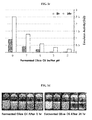
- FIG. 1 The results about the emulsion stability were shown in FIG. 1 .
- FIG. 1a is the result of measuring the emulsion activity of the olive oil
- FIG. 1c is the result of measuring the emulsion activity of the fermented olive oil.
- FIG. 1b is the image about the olive oil
- FIG. 1d is the image about the fermented olive oil.
- the olive oil After 24 hrs, the olive oil showed very little emulsion activity, but the fermented olive oil showed excellent emulsion activity as much as 4 times or more than the olive oil.
- FIG. 1e is the result of measuring the emulsion activities of the fermented oils
- FIG. 1f to FIG. 1m are images about the emulsion activities.
- the fermented oils have improved emulsifying capacity because they showed at least 2 times higher emulsion activities than before fermentation.
- the fermented olive oil had better moisture feeling, lower stickiness and not oiliness, compared with the olive oil. Accordingly, it could be found that the fermented oil of the present invention has excellent skin texture such as moisture feeling, stickiness, oiliness and the like.
- Fatty acid methyl ester was deacylated, the fatty acid, which can be dissolved in hexane, was prepared as boron trifluoride methanol mixture, and then, analyzed by GC analyzer (JMS-SX 102A, JEOL, Tokyo, Japan).
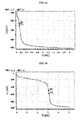
- FIG. 2a is a distribution chart of fatty acid
- FIG. 2b is the result of analyzing fatty acid in the olive oil
- FIG. 2c is the result of analyzing fatty acid in the fermented olive oil
- FIG. 2c is the result of analyzing fatty acid in the green tea oil
- FIG. 2d is the result about the fermented green tea oil.
- the fatty acid composition of the olive oil and the fermented olive oil As the result of comparing the fatty acid composition of the olive oil and the fermented olive oil, it was confirmed that the content of essential fatty acid such as linoleic acid was more increased in the fermented olive oil than in the olive oil. Further, as the result of comparing the fatty acid composition of the green tea oil and the fermented green tea oil, it was confirmed that the essential fatty acid content such as linoleic acid was more increased in the fermented green tea oil than in the green tea oil.
- the fermented oil improved water retention ability and absorbing ability of the skin as the essential fatty acid content was increased. Accordingly, it was confirmed that the fermented oil is effective for improving moisture feeling.
- the acid value is the amount of free fatty acid that is in unbound glyceride form.
- the acid value was measured by using a metrohm titrator.
- a sample was added in an amount to make the estimated consumption of a titrant (KOH 0.05 mol/L) is between 1 ml and 10 ml.
- MET mode of the device was selected, U (voltage) was selected among measuring values, MET U mode was loaded, an electrode and a burette tip were set in a beaker, and then the test was started.
- FIG. 3a is the acid value of the olive oil
- FIG. 3b is the acid value of the fermented olive oil.
- the acid value of the olive oil was 0.1294 mgKOH/g and that of the fermented olive oil was 8.1022 mgKOH/g. Accordingly, it was confirmed that the amount of the free fatty acid of the fermented olive oil was increased 50 times or higher than that of the olive oil.
- the olive oil and the fermented olive oil were treated to the cultured human fibroblast at various concentrations, and then cell viabilities were compared for verifying influence of the fermentation process on the cell growth and toxicity.
- MTT is absorbed into cells, and forms formazan in mitochondria by succinic acid dehydrogenase. Intracellular accumulation of the formazan means the activity of mitochondria, broadly, the cell activity. Accordingly, the cell growth and toxicity can be tested.
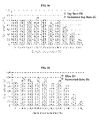
- DMSO-treated group was used as a control group, and the results of tests conducted by adding soy bean oil, green tea oil and argan oil before fermentation, and soy bean oil, green tea oil and argan oil after fermentation were shown in FIG. 4 .
- An olive oil and a fermented olive oil as a sample were diluted to a certain concentration (1/10, 1/5). 2-3 drops of each sample were dropped on Silica TLC, and analyzed at solvent condition having good resolution to find the optimum solvent condition.
- the TLC with the sample was developed with a solvent having good resolution as a developing solvent in a chamber. The developed TLC was picked out and dried. The TLC was dipped in 10% sulfuric acid for 3-4 sec, picked out again, and then dried well. The well dried TLC was heated with a drier or on a hot plate until color was developed.
- An external cream formulation was formulated with the composition of the following Table 8.
- a moisturizer was added to purified water, and the resulting solution was heated and adjusted to 70°C to form aqueous phase.
- a fermented olive oil and other oil ingredients were heated and dissolved, and an emulsifier, a preservative and the like were then added thereto and the temperature was adjusted to 70°C.
- the resulting solution was added to the above aqueous phase and emulsified particles were homogenized with a homomixer, and then deaeration, filtration, and cooling were performed.
- An external lotion formulation was formulated with the composition of the following Table 9.
- a moisturizer was added to purified water, and the resulting solution was heated and adjusted to 70°C to form aqueous phase.
- a fermented olive oil and other oil ingredients were heated and dissolved, and an emulsifier, a preservative and the like were then added thereto and the temperature was adjusted to 70°C.
- the resulting solution was added to the above aqueous phase and homogenized with a homomixer, hyaluronic acid aqueous solution was added thereto and homogeneously mixed with a homomixer, and then deaeration, filtration, and cooling were performed.
Landscapes
- Chemical & Material Sciences (AREA)
- Life Sciences & Earth Sciences (AREA)
- Health & Medical Sciences (AREA)
- Organic Chemistry (AREA)
- Engineering & Computer Science (AREA)
- General Health & Medical Sciences (AREA)
- Wood Science & Technology (AREA)
- Zoology (AREA)
- Oil, Petroleum & Natural Gas (AREA)
- Veterinary Medicine (AREA)
- Public Health (AREA)
- Animal Behavior & Ethology (AREA)
- Microbiology (AREA)
- General Engineering & Computer Science (AREA)
- Biochemistry (AREA)
- Genetics & Genomics (AREA)
- Bioinformatics & Cheminformatics (AREA)
- General Chemical & Material Sciences (AREA)
- Chemical Kinetics & Catalysis (AREA)
- Biotechnology (AREA)
- Epidemiology (AREA)
- Dermatology (AREA)
- Birds (AREA)
- Emergency Medicine (AREA)
- Gerontology & Geriatric Medicine (AREA)
- Food Science & Technology (AREA)
- Polymers & Plastics (AREA)
- Cosmetics (AREA)
- Preparation Of Compounds By Using Micro-Organisms (AREA)
- Edible Oils And Fats (AREA)
Abstract
Description
- The present invention relates to a fermented vegetable oil and a composition including same, and more particularly, and provides a fermented vegetable oil, which has the effects of enhancing emulsion stability due to water retention ability, improving texture and flavor and enhancing moisturization, according to being fermented by bacteria.
- Developing various techniques, which can induce functional change by changing oil composition, is very important to meet industrial needs for developing various products.
- In general, a fermented oil refers to an oil, which is prepared by fermenting oriental medicine such as ginseng, extracting fat-soluble ingredients therefrom and adding thereof to an oil, or which is prepared by adding oriental medicine such as ginseng to an oil followed by maturing thereof.
- Further, an oil, which is prepared by fermenting fishes or coconut and extracting fat-soluble ingredients therefrom, or an oil, which is prepared by soaking·germinating or steaming oil seeds (soy bean, sun flower seed, grape seed, sesame seed and the like) and then extracting an oil therefrom, is also called a fermented oil.
- However, there is no technique, which improves structure, function and flavor by culturing bacteria in a large amount of oil and fermenting thereof.
- The present invention provides a fermented vegetable oil, which has the effects of enhancing emulsion stability due to water retention ability, improving texture and flavor, and enhancing moisturizing capacity, according to being fermented by bacteria.
- Further, the present invention provides a method for preparing a fermented vegetable oil, which is fermented by bacteria by a simple method.
- Further, the present invention provides a composition for skin external preparations or cosmetics, which has the effect of enhancing emulsion stability, improving texture and flavor, and enhancing moisturizing capacity, by containing a fermented vegetable oil fermented by bacteria as an active ingredient.
- In order to accomplish one object of the present invention, the fermented vegetable oil of the present invention is characterized by being fermented by bacteria.
- In order to accomplish another object of the present invention, the method for preparing the fermented vegetable oil of the present invention is characterized by comprising: (a) a step of firstly culturing bacteria in a culture solution at an aerobic condition; (b) a step of secondarily culturing after adding a vegetable oil to the culture solution; and (c) a step of collecting the secondarily cultured vegetable oil.
- In order to accomplish further another object of the present invention, the composition for skin external preparations or cosmetics of the present invention is characterized by comprising the fermented vegetable oil, which is fermented by bacteria, as an active ingredient.
- The fermented vegetable oil according to the present invention is excellent on emulsion stability due to water retention ability. Accordingly, it is easy to manufacture a toner or essence-type products by applying the oil thereto.
- Further, the fermented vegetable oil according to the present invention has lighter texture and more excellent moisture feeling than before fermentation.
- Further, the fermented vegetable oil according to the present invention has higher stability and usability than a natural oil and a matured oil having similar effects.
-
-
FIG. 1 : the analysis result of the emulsion stability, whereinFIG. 1a is the result of measuring the emulsion activity of an olive oil,FIG. 1b is an image of estimating the emulsion stability of an olive oil depending on time,FIG. 1c is the result of measuring the emulsion activity of a fermented olive oil,FIG. 1d is an image of estimating the emulsion stability of a fermented olive oil depending on time,FIG. 1e is the result of comparing the emulsion activities of fermented oils depending on type, andFIG. 1f to FIG. 1m are images of estimating the emulsion activities of fermented oils depending on type. -
FIG. 2 : the result of analyzing fatty acid by gas chromatography, whereinFIG. 2a is a fatty acid distribution chart,FIG. 2b is the result of analyzing fatty acid of an olive oil, andFIG. 2c is the result of analyzing fatty acid of a fermented olive oil. -
FIG. 3 : the result of measuring the acid value, whereinFIG. 3a is the result of measuring the acid value of an olive oil, andFIG. 3b is the result of measuring the acid value of a fermented olive oil. -
FIG. 4 : the result of measuring the influence on the cell growth and toxicity in human fibroblasts, whereinFIG. 4a is the result of the cell viability of a soy bean oil and a fermented soy bean oil,FIG. 4b is the result of the cell viability of an olive oil and a fermented olive oil,FIG. 4c is the result of the cell viability of a green tea oil and a fermented green tea oil, andFIG. 4d is the result of the cell viability of an argan oil and a fermented argan oil. -
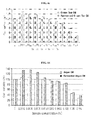
FIG. 5 : the result of analyzing ingredients by using TLC (Thin layer chromatography), whereinFIG. 5a is the result of 2D-TLC of an olive oil, a fermented olive oil, linoleic acid and linolenic acid, andFIG. 5b is the result of 2D-TLC of a soy bean oil, a fermented soy bean oil, a green tea oil, a fermented green tea oil, an argan oil and a fermented argan oil. - The above and other aspects, features, and advantages of the invention will become apparent from the detailed description of the following embodiments in conjunction with the accompanying drawings. It should be understood that the present invention is not limited to the following embodiments and may be embodied in different ways, and that the embodiments are provided for complete disclosure and a thorough understanding of the invention to those skilled in the art.
- Hereinafter, the fermented vegetable oil, the method for preparing the same, and the composition including the same according to exemplary embodiments of the present invention will be described in detail with reference to the accompanying drawings.
- The fermented vegetable oil of the present invention is characterized by being fermented by bacteria.
- Herein, the bacteria may be SY16 (KCTC 8950P) of Pseudozima sp., preferably, and the SY16 (KCTC 8950P) of Pseudozima sp. is in the shape of cylinder and grows in polar germination mode, and forms endospores, which differ from hyphae and ascospores.
- Further, the fermented vegetable oil of the present invention is characterized that it is fermented by the above bacteria in a medium containing a vegetable oil having the acid value of 0.100~2.000.
- Herein, the vegetable oil fermented in the medium may be any general vegetable oil such as olive oil, soy bean oil, green tea oil and argan oil, and it may be an oil having the acid value of 0.100~2.000, preferably. In particular, because the lower acid value makes the higher fermentation efficiency, the acid value is preferred to be 0.1~0.5. There is very little vegetable oil having the acid value of less than 0.100, and the fermentation efficiency may be reduced if the acid value is over 2.000.
- The fermented vegetable oil of the present invention is characterized by having higher essential fatty acid content than before fermentation, by being fermented by the bacteria. At this time, the essential fatty acid content after fermentation is 5.0~140.0 times higher than before fermentation.
- Herein, the essential fatty acid is preferred to be linoleic acid. The linoleic acid is a key component of the epidermal lipid bilayer, and is contained in ceramides of the epidermal keratin layer. This linoleic acid is effective in skin moisturizing, skin homeostasis maintenance, formation and protection of the skin permeation layer. Accordingly, the essential fatty acid contained in the fermented vegetable oil of the present invention may be linoleic acid, preferably.
- Further, the fermented vegetable oil of the present invention is characterized by having higher free fatty acid content than before fermentation, by being fermented by the bacteria. At this time, the free fatty acid content after fermentation is 5.0~140.0 times higher than before fermentation.
- Herein, the free fatty acid refers to fatty acid that is in unbound glyceride form. When the free fatty acid content becomes higher, texture becomes improved because stickiness is reduced, and it is effective in enhancing oiliness after use. Accordingly, it is preferred that the fermented vegetable oil of the present invention has higher free fatty acid content.
- The method for preparing the fermented vegetable oil of the present invention includes (a) a step of firstly culturing bacteria in a culture solution at an aerobic condition; (b) a step of secondarily culturing after adding a vegetable oil to the culture solution; and (c) a step of collecting the secondarily cultured vegetable oil.
- First of all, (a) bacteria are firstly cultured in a culture solution at an aerobic condition.
- Herein, the bacteria may be SY16 (KCTC 8950P) of Pseudozima sp., preferably. The SY16 (KCTC 8950P) of Pseudozima sp. is in the shape of cylinder and grows in polar germination mode, and forms endospores, which differ from hyphae and ascospores.
- Herein, the culture solution does not contain a vegetable oil yet, and it is very important to mix various kinds of culture materials to make the vegetable oil be fermented well. In particular, it is preferred to use at least one selected from the group consisting of glucose, yeast extract, malt extract, peptone, soya bean meal, (NH4)2SO4, KH2PO4, MgSO4, CaCl2 and NaCl.
- The first culture time may be 24~72 hours, and 30-60 hours, preferably because the lipase activity is the highest within the said range.
- Then, (b) a vegetable oil is added to the firstly cultured solution and then the resulting solution is secondarily cultured.
- In order to optimize the fermentation of the vegetable oil in the culture solution, it is preferred to use a vegetable oil having lower acid value. Namely, the optimized culture condition is determined by the acid value of a vegetable oil. Accordingly, the acid value of a vegetable oil may be in the range of 0.100~2.000, preferably, and it may be in the range of 0.1~0.5, more preferably, because the lower acid value makes the higher fermentation efficiency. There is very little vegetable oil having the acid value of less than 0.100, and the fermentation efficiency may be reduced if the acid value is over 2.000.
- Herein, the vegetable oil is added in an amount of 100 parts by weight or less, based on 100 parts by weight of the above culture solution, in which the vegetable oil is not added yet. The amount of the vegetable oil added may be properly adjusted according to the desired amount of a fermented vegetable oil, but when the vegetable oil is added in an amount of over 100 parts by weight, based on the 100 parts by weight of the culture solution containing the vegetable oil, it is worried that the oil may not be fermented enough.
- Herein, the second culture time may be 72~120 hours, preferably because the time enough to produce the maximum amount of free fatty acid should be secured as the fermentation, resulting from the secondary culture, goes on. Further, the time may vary depending on the kinds of vegetable oils. Accordingly, the secondary culture may be finished when the amount of the free fatty acid is not increased any more after measuring the amount of the free fatty acid increased with time.
- Finally, (c) the secondarily cultured vegetable oil is collected.
- There is no limit to the method for collecting. The collected vegetable oil is a fermented oil, and it can be used as an active ingredient of a composition for skin external preparations or cosmetics.
- The present invention includes a composition, which contains the fermented vegetable oil fermented by bacteria, as an active ingredient, and is used for skin external preparations or cosmetics.
- The inventive fermented vegetable oil, which is fermented by bacteria, is suitable for a composition for skin external preparations or cosmetics because it has excellent texture and moisturizing capacity due to its high emulsion activity and emulsion stability, and much higher contents of essential fatty acid and free fatty acid than general oils.
- At this time, the amount of the fermented vegetable oil contained in the composition for skin external preparations and cosmetics may be 2-40 wt%, preferably.
- If the amount of the fermented vegetable oil is less than 2 wt%, the effect of the product may be meager because the fermented vegetable oil is not contained enough, and if the amount is over 40 wt%, it may be difficult to be formulated.
- Ingredients contained in the composition for skin external preparations and cosmetics of the present invention may contain general ingredients used for compositions for skin external preparations and cosmetics in addition to the said fermented vegetable oil, for example, general additives such as antioxidant, stabilizer, solubilizer, vitamin, dye and fragrance, and carriers.
- The composition for skin external preparations and cosmetics of the present invention may be formulated in a wide variety of forms commonly used in the art, for example, solution, suspension, emulsion, paste, gel, cream, lotion, powder, soap, surfactant-containing cleanser, oil, powder foundation, emulsion foundation, wax foundation and spray, but not limited thereto.
- The carrier contained in the present composition for skin external preparations and cosmetics may be any carrier commonly used in the art depending on the type of the formulation.
- In the formulation of ointment, paste, cream or gel, the carrier ingredient may be animal and vegetable fats, wax, paraffin, starch, tragacanth, cellulose derivatives, polyethylene glycol, silicone, bentonite, silica, talc, zinc oxide and the like.
- In the formulation of powder or spray, the carrier ingredient may be lactose, talc, silica, aluminum hydroxide, calcium silicate or polyamide powder. In particular, the spray may further comprise propellants such as chlorofluorohydrocarbon, propane/butane or dimethyl ether.
- In the formulation of solution and emulsion, the carrier ingredient may be solvent, solubilizer and emulsifier. For example, it may be water, ethanol, isopropanol, ethyl carbonate, ethyl acetate, benzyl alcohol, benzyl benzoate, propylene glycol, 1,3-butylglycol oil, in particular, cottonseed oil, peanut oil, maize germ oil, olive oil, castor oil and sesame seed oil, glycerol fatty esters, polyethylene glycol and fatty acid esters of sorbitan.
- In the formulation of suspension, the carrier ingredient may be liquid diluents, for example, water, ethanol or propylene glycol, suspending agents, for example, ethoxylated isosteary alcohol, polyoxyethylene sorbitol ester and poly oxyethylene sorbitan ester, micocrystalline cellulose, aluminum metahydroxide, bentonite, agar or tragacanth.
- In the formulation of a surfactant-containing cleanser, the carrier ingredient may be aliphatic alcohol sulfate, aliphatic alcohol ether sulfate, sulfosuccinic acid monoester, isethionate, imidazolinium derivatives, methyltaurate, sarcosinate, fatty acid amide ether sulfate, alkylamidobetaine, aliphatic alcohol, fatty acid glycerides, fatty acid diethanolamide, vegetable oils, lanolin derivatives or ethoxylated glycerol fatty acid ester.
- In the formulation of soap, the carrier ingredient may be alkali metal salts of fatty acids, salts of fatty acid hemiesters, fatty acid protein hydrolysates, isethionate, lanolin derivatives, aliphatic alcohol, vegetable oil, glycerol, sugars and the like.
- Moreover, the cosmetic composition of the present invention may include other additives in addition to the carrier, for example, preservative, antioxidant, stabilizer, solubilizer, vitamin, dye and fragrance.
- In order to determine medium composition suitable for fermented oil production by bacteria, SY16 [KCTC 8950P] of Pseudozima sp. was inoculated to each 1 L of the following 8 medium compositions, and cultured at 25°C, 300 rpm, under an aerobic condition.
[Table 1] Medium composition for fermented oil production by bacteria oil Composition 1 Composition 2 Composition 3 Composition 4 Glucose 15g/L Sucrose 10g/L Glucose 10 g/L Glucose 10g/L Olive oil 100g/L Olive oil 100g/L Olive oil 100g/L Olive oil 100g/L (NH4)2SO4 1g/L Yeast extract 3g/L Yeast extract 3g/L Yeast extract 3g/L K2HPO4 2.5g/L Skim milk 3g/L Malt extract 3g/L Malt extract 3 g/L MgSO4 0.5g/L Casein 3g/L Peptone 5g/L Peptone 3 g/L CaCl2 0.1g/L Soya bean meal 3g/L Distilled water 879g/L Soya bean meal 3g/L MnSO4 0.02g/L NaH2PO4 0.1g/L NH4NO3 2g/L (NH4)2SO4 2g/L Peptone 1g/L KH2PO4 1g/L KH2PO4 1 g/L Distilled water 879.78g/L MgSO4 0.5g/L MgSO4 0.5g/L CaCl2 0.1g/L CaCl2 0.1g/L NaCl 0.1g/L NaCl 0.1g/L Distilled water 874.3g/L Distilled water 874.3 g/L Composition 5 Composition 6 Composition 7 Composition 8 Glucose 10g/L Glucose 10g/L Glucose 10g/L Glucose 10g/L Argan oil 100g/L Green tea seed oil 100g/L Grape seed oil 100g/L Meadowfoam seed oil 100g/L Yeast extract 3g/L Malt extract 3g/L Yeast extract 3g/L Yeast extract 3g/L Yeast extract 3g/L Peptone 3g/L Malt extract 3g/L Malt extract 3g/L Malt extract 3g/L Soya bean meal 3g/L Peptone 3g/L Peptone 3g/L Peptone 3g/L (NH4)2SO4 2g/L Soya bean meal 3g/L Soya bean meal 3g/L Soya bean meal 3g/L KH2PO4 1g/L (NH4)2SO4 2 g/L (NH4)2SO4 2g/L (NH4)2SO4 2g/L MgSO4 0.5g/L KH2PO4 1 g/L KH2PO4 1 g/L KH2PO4 1 g/L CaCl2 0.1g/L MgSO4 0.5 g/L MgSO4 0.5 g/L MgSO4 0.5 g/L NaCl 0.1g/L CaCl2 0.1 g/L CaCl2 0.1 g/L CaCl2 0.1 g/L Distilled water 874.3 g/L NaCl 0.1 g/L NaCl 0.1 g/L NaCl 0.1 g/L Distilled water 874.3 g/L Distilled water 874.3 g/L Distilled water 874.3 g/L - After 24 hours, 1 ml of each culture solution was collected, and the growth and lipase activity of the bacteria were measured by using a spectrophotometer.
- The bacterial growth was measured by culturing the bacteria at each condition, centrifuging thereof to remove an oil layer, strongly mixing the resulting solution for 20 sec, diluting the mixed solution 10 times with distilled water, and then measuring absorbance (660 nm) of each sample.
- In order to measure the lipase activity of the bacteria, the culture solution was centrifuged at 12,000 rpm for 3 min, the supernatant was used as a crude enzyme solution, and then the lipase activity was measured by microplate analyzing method measuring the amount of p-nitrophenol (pNP) bound to a substrate, which is released by the said enzyme, as the change of absorbance (405 nm). As the result of measuring the growth and lipase activity of the bacteria, the composition 4 showed the highest growth and lipase activity. Accordingly, the composition was used for preparing the next fermented oil. For the lipase activity, the amount that the
crude enzyme 100 µL producestyrosine 1 µg for 1 min was used as 1 unit. - As the result, the composition 4 showed the highest growth and lipase activity of the bacteria. Accordingly, the composition 4 was determined as the optimum medium composition for the future fermented oil production by bacteria.
[Table 2] Bacterial growth and lipase activity according to medium composition Composition 1 2 3 4 5 6 7 8 Absorbance (O.D at 660 nm) 1.006 0.841 1.237 1.803 1.103 1.552 1.391 1.669 Lipase activity (U/mL) 1.9 1.1 2.9 3.4 2.1 2.9 2.6 3.2 - SY16 [KCTC 8950P] of Pseudozima sp. was inoculated to a culture solution (glucose 10 g/L, olive oil 100 g/L, yeast extract 3 g/L, malt extract 3 g/L, peptone 3 g/L, soya bean meal 3 g/L, (NH4)2SO4 2 g/L, KH2PO4 1 g/L, MgSO4 0.5 g/L, CaCl2 0.1 g/L, NaCl 0.1 g/L: the medium of the composition 4) 1 L, and cultured at 25°C, 300 rpm under an aerobic condition.
- After culture, the
culture solution 1 ml was collected at each time point (3, 7, 12, 24, 48, 72 and 96 hr), and then the growth and lipase activity of the bacteria were measured at 660 nm by using a spectrophotometer. As the result of measuring the lipase activity, it was found that the first culture time showing the highest lipase activity was 48 hr. - SY16 [KCTC 8950P] of Pseudozima sp. was inoculated to the culture solution as described above 100 L, and cultured for 48 hours for conducting the first culture. Then, olive oil 100 L was added to the culture solution, and secondarily cultured at 25°C, 500 rpm under an aerobic condition. After the second culture, the culture solution 0.3 - 0.5 L was collected at each time point (3, 7, 12, 24, 48, 72, 96 and 120 hr), and then only oil part was collected. The degree of oil fermentation was checked by measuring the amount of free fatty acid in the collected oil. As the result of measuring the increased amount of the free fatty acid, the amount of the free fatty acid was the highest at the time of 96 hr after adding the oil, but the amount was not increased after that time.
- Emulsion stability means the ability of an emulsifier, which stabilizes emulsion after forming the emulsion or at the condition of mixing, high temperature, centrifugation and the like.
- In order to measure the emulsion activity, each 1 ml of an olive oil and a fermented olive oil was dissolved in each 10 ml of buffer solutions depending on pH, and emulsified by completely stirring thereof for 2 min. Then, the resulting solution was kept for 10 min, and then the emulsion activity was measured by measuring absorbance at 620 nm. The emulsion stability was obtained as the percentage of the absorbance after 24 hrs to the initial absorbance. At pH 9.0, the absorbance was beyond the maximum absorbance value of the fermented oil, but the value set by a prediction program of the device was recorded.
- The emulsion activities of the olive oil and the fermented olive oil depending on pH were listed in the following Table 2. As the result of the test, the emulsion activity of the fermented olive oil was rapidly increased from pH 5.0. In particular, it was confirmed that the emulsion activity at pH 9.0 was 50% or higher than at pH 5.0. On the other hand, the emulsion activity of the olive oil was increased at pH 9.0, but the emulsion activity at pH 9.0 was below the emulsion activity of the fermented olive oil at pH 5.0. As the result of comparing the emulsion activities of the fermented olive oil and the olive oil, the emulsion activity of the fermented olive oil was showed from pH 2.0, and it was confirmed that the emulsion activity of the fermented olive oil at pH 9.0 was 2.5 times or higher than that of the olive oil.
[Table 3] Emulsification activity against pH of olive oil and fermented olive oil Buffer pH Olive oil Fermented olive oil 2.0 0.400 0.820 3.0 0.428 0.972 5.0 0.520 2.633 7.0 0.514 2.800 9.0 1.602 4.215 - The results about the emulsion stability were shown in
FIG. 1 .FIG. 1a is the result of measuring the emulsion activity of the olive oil,FIG. 1c is the result of measuring the emulsion activity of the fermented olive oil. Further, the emulsion stability of each sample was evaluated by taking images after 1 hr and 24 hrs.FIG. 1b is the image about the olive oil, andFIG. 1d is the image about the fermented olive oil. - After 24 hrs, the olive oil showed very little emulsion activity, but the fermented olive oil showed excellent emulsion activity as much as 4 times or more than the olive oil.
- The emulsion activities of the various kinds of oils before and after fermentation were listed in the following Table 4.
[Table 4] Buffer pH 7.0 Before fermentation (O.D) After fermentation (O.D) Soy bean oil 0.514 2.746 Olive oil 0.517 2.800 Green tea oil 0.680 2.729 Argan oil 1.026 2.481 -
FIG. 1e is the result of measuring the emulsion activities of the fermented oils, andFIG. 1f to FIG. 1m are images about the emulsion activities. - As the result of the test, it was confirmed that the fermented oils have improved emulsifying capacity because they showed at least 2 times higher emulsion activities than before fermentation.
- Per each test item about skin feeling (moisture, stickiness, oiliness and the like), 10 professional subjects were prepared, and texture against the olive oil and the fermented oil were evaluated. Evaluation was conducted according to the basic score of the following Table 5, and the scores of the subjects of each item were summed up and listed in the following Table 6.
[Table 5] Classification Basic score Very excellent 5 Excellent 4 Average 3 Poor 2 Very poor 1 [Table 6] Classification Olive oil Fermented olive oil Moisture feeling 20 36 Stickiness 22 41 Oiliness 12 32 - As the result of the test, the fermented olive oil had better moisture feeling, lower stickiness and not oiliness, compared with the olive oil. Accordingly, it could be found that the fermented oil of the present invention has excellent skin texture such as moisture feeling, stickiness, oiliness and the like.
- In order to check the change on the fatty acid composition in the olive oil through the fermentation process, the fatty acid was analyzed by gas chromatography (GC).
- Fatty acid methyl ester was deacylated, the fatty acid, which can be dissolved in hexane, was prepared as boron trifluoride methanol mixture, and then, analyzed by GC analyzer (JMS-SX 102A, JEOL, Tokyo, Japan).
- Oven temperature was raised at the rate of 10°C/min at the section of 70~120°C, and at 5°C/min at the section of 120~250°C. The results were shown in
FIG. 2 .FIG. 2a is a distribution chart of fatty acid,FIG. 2b is the result of analyzing fatty acid in the olive oil,FIG. 2c is the result of analyzing fatty acid in the fermented olive oil,FIG. 2c is the result of analyzing fatty acid in the green tea oil, and FIG. 2d is the result about the fermented green tea oil. - As the result of comparing the fatty acid composition of the olive oil and the fermented olive oil, it was confirmed that the content of essential fatty acid such as linoleic acid was more increased in the fermented olive oil than in the olive oil. Further, as the result of comparing the fatty acid composition of the green tea oil and the fermented green tea oil, it was confirmed that the essential fatty acid content such as linoleic acid was more increased in the fermented green tea oil than in the green tea oil.
- From the above results, the fermented oil improved water retention ability and absorbing ability of the skin as the essential fatty acid content was increased. Accordingly, it was confirmed that the fermented oil is effective for improving moisture feeling.
- The acid value is the amount of free fatty acid that is in unbound glyceride form. In order to check whether the first free fatty acid was changed or not, the acid value was measured by using a metrohm titrator. A sample was added in an amount to make the estimated consumption of a titrant (KOH 0.05 mol/L) is between 1 ml and 10 ml. Property of the sample was homogenized, and then a supplementary solution (methanol : distilled water = 3 : 1) 50 ml was added thereto. MET mode of the device was selected, U (voltage) was selected among measuring values, MET U mode was loaded, an electrode and a burette tip were set in a beaker, and then the test was started. When end point was recognized, the test was finished. The same test was repeated except for not adding a sample, and the measured value was used as a blank value. Secondarily, in order to compare the free fatty acid content of each oil, the acid value was measured by Acid value test method of Food code.
Oil 5~10 g was precisely weighed and added into a flask with stopper, and neutral ethanol-ether mixed solution (1 : 2) 100 mL was added thereto so as to dissolve the oil. The resulting solution was titrated with 0.1 N ethanolic potassium hydroxide solution until pale pink color of phenolphthalein indicator solution is kept for 30 sec.
- S : Sample quantity (g)
- a : Consumption of 0.1 N ethanolic potassium hydroxide solution (mL)
- f : Titers of 0.1 N ethanolic potassium hydroxide solution
- Firstly, the acid value was measured for checking whether the free fatty acid was changed during oil fermentation or not, and the results were shown in
FIG. 3. FIG. 3a is the acid value of the olive oil, andFIG. 3b is the acid value of the fermented olive oil. - As the result of measuring the acid values of the olive oil and the fermented olive oil, the acid value of the olive oil was 0.1294 mgKOH/g and that of the fermented olive oil was 8.1022 mgKOH/g. Accordingly, it was confirmed that the amount of the free fatty acid of the fermented olive oil was increased 50 times or higher than that of the olive oil.
- Secondarily, the acid value was measured for comparing the free fatty acid content of each oil, and the result was listed in the following Table 7.
[Table 7] Before fermentation (mg KOH/g) After fermentation (mg KOH/g) Soy bean oil 0.57 33.51 Olive oil 0.35 39.54 Green tea oil 0.45 35.59 Argan oil 0.36 51.40 - As the result, the contents of free fatty acid in all oils were increased about 50~140 times or more than before fermentation.
- From the above results, the free fatty acid content in a general oil was increased through fermentation in an optimized medium. Accordingly, it was confirmed that texture will be improved due to reduced stickiness, and it will be effective for improving oiliness after use.
- The olive oil and the fermented olive oil were treated to the cultured human fibroblast at various concentrations, and then cell viabilities were compared for verifying influence of the fermentation process on the cell growth and toxicity.
- MTT is absorbed into cells, and forms formazan in mitochondria by succinic acid dehydrogenase. Intracellular accumulation of the formazan means the activity of mitochondria, broadly, the cell activity. Accordingly, the cell growth and toxicity can be tested.
- Olive oil and fermented olive oil were treated to cells cultured in a 96 well plate at the concentration of 0.5%~0.0019%, respectively, and then cultured for 48 hours in a 5% CO2, 37°C incubator. The cells were reacted in MTT solution for 3-4 hours, and then O.D value was measured at 540 nm by ELISA analyzer. The cell viability may be calculated by the following formula.

- DMSO-treated group was used as a control group, and the results of tests conducted by adding soy bean oil, green tea oil and argan oil before fermentation, and soy bean oil, green tea oil and argan oil after fermentation were shown in
FIG. 4 . - As the result, when comparing cell viabilities of the groups treated with fermented oils and the groups treated with oils not fermented, cell viabilities of the group treated with fermented oils were higher. From the above results, it was confirmed that the oils have no influence on the cell growth and toxicity even after fermentation.
- Ingredients contained in an olive oil and a fermented olive oil were analyzed by using TLC (Thin layer chromatography), and whether each ingredient exists or not and the degree of change were checked with the naked eye.
- An olive oil and a fermented olive oil as a sample were diluted to a certain concentration (1/10, 1/5). 2-3 drops of each sample were dropped on Silica TLC, and analyzed at solvent condition having good resolution to find the optimum solvent condition. The TLC with the sample was developed with a solvent having good resolution as a developing solvent in a chamber. The developed TLC was picked out and dried. The TLC was dipped in 10% sulfuric acid for 3-4 sec, picked out again, and then dried well. The well dried TLC was heated with a drier or on a hot plate until color was developed.
- By using TLC, n-hexane : Ethyl acetate = 5 : 1, Chloroform : Methanol = 15 : 1 conditions, which show good resolution for olive oil and fermented olive oil were established. 2D-TLC was conducted by developing the TLC at the first solvent condition, n-hexane : Ethyl acetate = 5 : 1, and at the second solvent condition, Chloroform : Methanol = 15 : 1, and the result was shown in
FIG. 5a . - As the result of analysis, it was confirmed that, unlike in the olive oil, certain spots became noticeably deeper and new spots were formed in the fermented olive oil. And, when comparing certain spots of the fermented olive oil with the 2D-TLCs of linoleic acid and linolenic acid, it was confirmed that the spot at the same position with linoleic acid and linolenic acid became deeper gradually. From the above results, unlike in the olive oil, the amount of very nonpolar oil was reduced, and the amounts of linoleic acid and linolenic acid were increased with time in the fermented olive oil.
- 2D-TLCs of soy bean oil, green tea oil and argan oil before and after fermentation were conducted, and the result was shown in
FIG. 5b . - As the result of analysis, unlike before fermentation, the amount of very nonpolar oil was reduced, and the amounts of linoleic acid and linolenic acid were increased with time also in the fermented soy bean oil, green tea oil and argan oil.
- An external cream formulation was formulated with the composition of the following Table 8. First of all, a moisturizer was added to purified water, and the resulting solution was heated and adjusted to 70°C to form aqueous phase. A fermented olive oil and other oil ingredients were heated and dissolved, and an emulsifier, a preservative and the like were then added thereto and the temperature was adjusted to 70°C. The resulting solution was added to the above aqueous phase and emulsified particles were homogenized with a homomixer, and then deaeration, filtration, and cooling were performed.
[Table 8] Medium scale Small scale Content (%) Oil Cetostearyl alcohol 6.0 Stearic acid 2.0 Fermented olive oil 15.0 Squalane 1.0 Octyldodecanol 3.0 Emulsifier POE(25) cetylalcohol ether 3.0 Glyceryl monostearate 2.0 Moisturizer 1,3-butyleneglycol 3.0 Glycerin 2.0 Preservative 1,2-hexyleneglycol 2.0 Purified water - 61.0 - An external lotion formulation was formulated with the composition of the following Table 9. First of all, a moisturizer was added to purified water, and the resulting solution was heated and adjusted to 70°C to form aqueous phase. A fermented olive oil and other oil ingredients were heated and dissolved, and an emulsifier, a preservative and the like were then added thereto and the temperature was adjusted to 70°C. The resulting solution was added to the above aqueous phase and homogenized with a homomixer, hyaluronic acid aqueous solution was added thereto and homogeneously mixed with a homomixer, and then deaeration, filtration, and cooling were performed.
[Table 9] Medium scale Small scale Content (%) Oil Cetostearyl alcohol 1.0 Fermented olive oil 8.0 Squalane 1.0 Dimethyl polysiloxane 2.0 Emulsifier POE(25) cetylalcohol ether 1.0 Glycerol monostearate ester 1.0 Moisturizer 1,3-butyleneglycol 4.0 Glycerin 4.0 Preservative 1,2-hexyleneglycol 2.0 Purified water - 76.0 - While the invention has been described with respect to the above specific embodiments, it should be recognized that various modifications and changes may be made and also fall within the scope of the invention. Therefore, it should be understood that the scope of the present invention cannot be limited by the above described specific embodimnets in any way.
Claims (16)
- A fermented vegetable oil, which is fermented by Pseudozima sp. bacteria.
- A fermented vegetable oil, which is fermented by Pseudozima sp. bacteria in a medium containing a vegetable oil having the acid value of 0.100~2.000.
- The fermented vegetable oil according to claim 1 or 2, the bacteria is SY16 (KCTC 8950P) of Pseudozima sp..
- The fermented vegetable oil according to claim 1 or 2, which has higher essential fatty acid content than before fermentation.
- The fermented vegetable oil according to claim 1 or 2, which has essential fatty acid content 5~140 times higher than before fermentation.
- The fermented vegetable oil according to claim 1 or 2, which has higher free fatty acid content than before fermentation.
- The fermented vegetable oil according to claim 1 or 2, which has 5~140 times higher free fatty acid content then before fermentation.
- A method for preparing a fermented vegetable oil, which comprises:(a) a step of firstly culturing bacteria in a culture solution at an aerobic condition; (b) a step of secondarily culturing after adding vegetable oil to the culture solution; and (c) a step of collecting the secondarily cultured vegetable oil.
- The method for preparing a fermented vegetable oil according to claim 8, wherein the bacteria is SY16 (KCTC 8950P) of Pseudozima sp..
- The method for preparing a fermented vegetable oil according to claim 8, wherein the acid value of the vegetable oil is 0.100~2.000.
- The method for preparing a fermented vegetable oil according to claim 8, wherein the vegetable oil of in the step (b) is added in an amount of 100 parts by weight or less, based on the culture solution 100 parts by weight.
- The method for preparing a fermented vegetable oil according to claim 8, wherein the first culture is conducted for 36-60 hours.
- A composition for skin external preparations or cosmetics comprises a fermented vegetable oil, which is fermented by bacteria of Pseudozima sp., as an active ingredient.
- A composition for skin external preparations or cosmetics comprises a fermented vegetable oil, which is fermented by bacteria of Pseudozima sp. in a medium containing a vegetable oil having the acid value of 0.100~2.000, as an active ingredient.
- The composition for skin external preparations or cosmetics according to claim 13 or 14, wherein the bacteria is SY16 (KCTC 8950P) of Pseudozima sp..
- The composition for skin external preparations or cosmetics according to claim 13 or 14, wherein the amount of the fermented vegetable oil is 2-40 weight%.
Applications Claiming Priority (2)
| Application Number | Priority Date | Filing Date | Title |
|---|---|---|---|
| KR20110086094 | 2011-08-26 | ||
| PCT/KR2012/006801 WO2013032189A2 (en) | 2011-08-26 | 2012-08-24 | Fermented vegetable oil and composition including same |
Publications (3)
| Publication Number | Publication Date |
|---|---|
| EP2749651A2 true EP2749651A2 (en) | 2014-07-02 |
| EP2749651A4 EP2749651A4 (en) | 2015-02-11 |
| EP2749651B1 EP2749651B1 (en) | 2016-10-12 |
Family
ID=47757032
Family Applications (1)
| Application Number | Title | Priority Date | Filing Date |
|---|---|---|---|
| EP12828232.4A Active EP2749651B1 (en) | 2011-08-26 | 2012-08-24 | Fermented vegetable oil and compositions thereof |
Country Status (5)
| Country | Link |
|---|---|
| US (2) | US20140194513A1 (en) |
| EP (1) | EP2749651B1 (en) |
| JP (1) | JP5974095B2 (en) |
| KR (1) | KR101485315B1 (en) |
| WO (1) | WO2013032189A2 (en) |
Cited By (3)
| Publication number | Priority date | Publication date | Assignee | Title |
|---|---|---|---|---|
| EP4046620A1 (en) * | 2021-02-23 | 2022-08-24 | Beiersdorf AG | Emulsions comprising mannosylerythritol lipid (mel) |
| WO2022218615A1 (en) * | 2021-04-12 | 2022-10-20 | Beiersdorf Ag | Cream-forming skin care oil |
| WO2022238489A1 (en) * | 2021-05-12 | 2022-11-17 | Ab Enzymes Gmbh | Fermented oil preparations |
Families Citing this family (23)
| Publication number | Priority date | Publication date | Assignee | Title |
|---|---|---|---|---|
| WO2015111902A1 (en) * | 2014-01-21 | 2015-07-30 | 주식회사 벤스랩 | Fermented vegetable oil having high content of free essential unsaturated fatty acid and method for preparing same |
| KR101452320B1 (en) * | 2014-03-11 | 2014-10-22 | 주식회사 벤스랩 | Fermented camellia oil for 5-alpha reductase inhibition which improves prostatic hyperplasia and hair loss |
| KR101664355B1 (en) * | 2014-07-24 | 2016-10-11 | 농업회사법인조인주식회사 | Candida antarctica 5k-11 strain increasing omega-3 fatty acid contents in oils and ferment oil produced by using the same |
| KR101715652B1 (en) * | 2014-10-31 | 2017-03-13 | 주식회사 라비오 | Fermented oil comprising nitro fatty acid and producing method thereof |
| KR101716680B1 (en) * | 2015-04-22 | 2017-03-15 | 주식회사 라비오 | Shiunko fermented oil and producing method thereof |
| KR101811587B1 (en) | 2015-09-09 | 2017-12-27 | 주식회사 네록리소스 | Method of manufacturing fermented coconut oil |
| KR101974103B1 (en) * | 2017-08-22 | 2019-04-30 | 주식회사 라비오 | Cosmetic composition comprising fermented horse fat |
| JP6355872B1 (en) * | 2018-04-02 | 2018-07-11 | 株式会社Marvelous | Method for producing functional composition |
| KR102053280B1 (en) * | 2018-06-05 | 2019-12-06 | 주식회사 유나이티드엑티브 | Fermented emulsifier forming reverse micell and composition comprising thereof and preparing method for fermented emulsifier |
| KR102283338B1 (en) * | 2018-10-26 | 2021-07-29 | 주식회사 유나이티드엑티브 | Transepidermal delivery system comprising reverse micell |
| KR102277308B1 (en) * | 2019-06-28 | 2021-07-14 | 주식회사 유나이티드엑티브 | Persimmon leaf extract and vitamin b-encapsulated composition using fermented emulsifier forming reverse micell |
| KR20210044539A (en) | 2019-10-15 | 2021-04-23 | 씨아이에스인터내셔날서비스(주) | Comsmetics with fermented rice bran oil |
| KR102263449B1 (en) * | 2019-11-29 | 2021-06-10 | 주식회사 유나이티드엑티브 | High purity fermented-surfactant and preparation method thereof |
| CN111568814A (en) * | 2020-05-27 | 2020-08-25 | 广州市金因源生物技术有限公司 | Biological fermentation skin care emulsion and preparation method thereof |
| KR102490747B1 (en) * | 2021-01-29 | 2023-01-20 | 주식회사 라비오 | A fermented plant oil for anti-pollution, and a cosmetic composition comprising the same |
| KR102416730B1 (en) * | 2021-11-09 | 2022-07-05 | 주식회사 유나이티드엑티브 | Preparation method of fermented vegetable oil using skin flora and cosmetic composition comprising thereof |
| KR102451466B1 (en) * | 2022-04-19 | 2022-10-07 | 주식회사 라비오 | A fermented plant oil with added paeonia lactiflora for anti-pollution, and a cosmetic composition comprising the same |
| CN116837040B (en) * | 2023-05-25 | 2025-02-07 | 深圳市仙迪化妆品股份有限公司 | Fermented fruit oil and its preparation method and application |
| KR20250137072A (en) | 2024-03-07 | 2025-09-17 | 선진뷰티사이언스(주) | Manufacturing method of vegetable oil hydrolysis mixture using enzymes and cosmetics using the same |
| KR20250152011A (en) | 2024-04-15 | 2025-10-22 | 선진뷰티사이언스(주) | Cosmetics comprising bio-converted plant oils and functional substances |
| KR20260010330A (en) | 2024-07-12 | 2026-01-20 | 선진뷰티사이언스(주) | Cosmetics containing bio-converted vegetable oil and solid powder |
| KR102872334B1 (en) * | 2025-04-01 | 2025-10-17 | 주식회사 라비오 | A method for producing complex fermented vegetable oil with superior skin improvement activity |
| CN120168369B (en) * | 2025-05-14 | 2025-12-16 | 中山中研化妆品有限公司 | A method for producing fermented vegetable oil using a semi-continuous fed-batch fermentation process |
Family Cites Families (15)
| Publication number | Priority date | Publication date | Assignee | Title |
|---|---|---|---|---|
| JP3123789B2 (en) * | 1991-08-02 | 2001-01-15 | 昭和産業株式会社 | Method for producing fats and oils and microorganisms therefor |
| GB0219825D0 (en) * | 2002-08-24 | 2002-10-02 | Cerestar Holding Bv | Process for producing and recovering mannosylerythritol lipidsfrom culture medium containing the same |
| JP4286558B2 (en) * | 2003-02-26 | 2009-07-01 | 広島県 | Method for producing mannosyl erythritol lipid |
| US20100004472A1 (en) * | 2005-11-25 | 2010-01-07 | Toyo Boseki Kabushiki Kaisha | Biosurfactant-containing skin care cosmetic and skin roughness-improving agent |
| JP4735971B2 (en) * | 2006-01-13 | 2011-07-27 | 独立行政法人産業技術総合研究所 | Mannosyl erythritol lipid production method |
| JP4803434B2 (en) | 2006-03-23 | 2011-10-26 | 独立行政法人産業技術総合研究所 | Highly efficient production method of mannosyl erythritol lipid |
| EP2074985B1 (en) * | 2006-08-11 | 2013-07-03 | Toyobo Co., Ltd. | Activator including biosurfactant as active ingredient, mannosyl erythritol lipid, and production method thereof |
| JP5344274B2 (en) * | 2007-11-22 | 2013-11-20 | 東洋紡株式会社 | Novel mannosyl erythritol lipid and method for producing the same |
| JP2009149566A (en) * | 2007-12-21 | 2009-07-09 | Toyobo Co Ltd | Cosmetic composition containing biosurfactant |
| JP2009149567A (en) * | 2007-12-21 | 2009-07-09 | Toyobo Co Ltd | Cosmetic composition containing biosurfactant |
| US8226965B2 (en) * | 2008-04-25 | 2012-07-24 | Nanobio Corporation | Methods of treating fungal, yeast and mold infections |
| JP5091889B2 (en) | 2009-02-27 | 2012-12-05 | 三菱重工業株式会社 | Animal fixing device and animal fixing method |
| US20100255133A1 (en) * | 2009-04-07 | 2010-10-07 | Shodoshima Healthy Land Co., Ltd. | Extracted olive oil and production method thereof |
| TW201044209A (en) * | 2009-06-05 | 2010-12-16 | Giten Energy Mfg Company Ltd | System and method for managing waste oil |
| JP2013521781A (en) * | 2010-03-11 | 2013-06-13 | ディーエスエム アイピー アセッツ ビー.ブイ. | Yeast strains and their use in the production of lipids |
-
2012
- 2012-08-24 EP EP12828232.4A patent/EP2749651B1/en active Active
- 2012-08-24 KR KR20120093218A patent/KR101485315B1/en active Active
- 2012-08-24 WO PCT/KR2012/006801 patent/WO2013032189A2/en not_active Ceased
- 2012-08-24 US US14/241,137 patent/US20140194513A1/en not_active Abandoned
- 2012-08-24 JP JP2014527082A patent/JP5974095B2/en active Active
-
2016
- 2016-05-06 US US15/148,166 patent/US10188594B2/en active Active
Cited By (3)
| Publication number | Priority date | Publication date | Assignee | Title |
|---|---|---|---|---|
| EP4046620A1 (en) * | 2021-02-23 | 2022-08-24 | Beiersdorf AG | Emulsions comprising mannosylerythritol lipid (mel) |
| WO2022218615A1 (en) * | 2021-04-12 | 2022-10-20 | Beiersdorf Ag | Cream-forming skin care oil |
| WO2022238489A1 (en) * | 2021-05-12 | 2022-11-17 | Ab Enzymes Gmbh | Fermented oil preparations |
Also Published As
| Publication number | Publication date |
|---|---|
| WO2013032189A3 (en) | 2013-06-13 |
| EP2749651B1 (en) | 2016-10-12 |
| US20140194513A1 (en) | 2014-07-10 |
| WO2013032189A2 (en) | 2013-03-07 |
| EP2749651A4 (en) | 2015-02-11 |
| US10188594B2 (en) | 2019-01-29 |
| JP2014525245A (en) | 2014-09-29 |
| WO2013032189A9 (en) | 2013-04-25 |
| JP5974095B2 (en) | 2016-08-23 |
| KR20130023162A (en) | 2013-03-07 |
| US20160354301A1 (en) | 2016-12-08 |
| KR101485315B1 (en) | 2015-01-23 |
Similar Documents
| Publication | Publication Date | Title |
|---|---|---|
| EP2749651B1 (en) | Fermented vegetable oil and compositions thereof | |
| KR101768058B1 (en) | Fermentation product of animal oil fermented by candida sp. | |
| KR101615909B1 (en) | Fermentation oil cosmetic composition having anti-oxidant effect. | |
| CN106420404B (en) | Fermented vegetable oil cosmetic composition having antioxidant effect | |
| US20250152500A1 (en) | Method for preparing fermented vegetable oil by means of skin flora, and cosmetic composition comprising same | |
| KR101709734B1 (en) | Skin external composition containing hongguk extract for skin moisturizing | |
| US12576023B2 (en) | Fermented nano-emulsifier composition and preparation method therefor | |
| KR102386957B1 (en) | The complex fermented product of rice wine lees, manufacturing method the same and cosmetic composition using the same | |
| KR102173646B1 (en) | Streptococcus salivarius sbk4 strain isolated from skin and functional cosmetic composition comprising Streptococcus salivarius sbk4 strain | |
| KR102293879B1 (en) | Cosmetic composition comprising mixed fermented products of ester compounds and the method for preparing the same | |
| CN106880561A (en) | The cosmetic composition containing black bamboo extract for adjusting skin temperature | |
| CN111148504A (en) | Skin external preparation composition for skin moisturizing containing 1,2,3,4,6-penta-O-galloyl-β-D-glucose | |
| KR102693965B1 (en) | Composition for Improving Condition of Skin Containing Plant Originated Probiotics Fermentation product of Natural Complex Extract | |
| KR102070662B1 (en) | Skin external composition comprising Lonicera japonica vinegar extract | |
| KR102887822B1 (en) | Preparation method of fermented solid polar lipids composition | |
| KR101878941B1 (en) | Method for producing nanoemulsion containing cultivated wild ginseng fermentate and cosmetic composition for skin whitening comprising the nanoemulsion | |
| KR101974103B1 (en) | Cosmetic composition comprising fermented horse fat | |
| KR102079310B1 (en) | Skin external composition comprising Lonicera japonica vinegar extract | |
| KR102716045B1 (en) | Cosmetic composition using amino acid derivatives | |
| KR102488533B1 (en) | Preparing method of highly functional anti-inflammatory component drived from Glycine max Merr. fermentation extracts and cosmetic composition using the same | |
| KR20240109876A (en) | Culture method of Candida bombicola using coffee waste and culture therefrom | |
| HK40083275A (en) | Fermented nano-emulsifier composition and preparation method therefor | |
| HK40083275B (en) | Fermented nano-emulsifier composition and preparation method therefor | |
| KR20230012076A (en) | Cosmetic composition comprising fermented soymilk and manufacturing method thereof | |
| KR20200050803A (en) | Cosmetic Composition comprising fermented Arabinogalactan |
Legal Events
| Date | Code | Title | Description |
|---|---|---|---|
| PUAI | Public reference made under article 153(3) epc to a published international application that has entered the european phase |
Free format text: ORIGINAL CODE: 0009012 |
|
| 17P | Request for examination filed |
Effective date: 20140321 |
|
| AK | Designated contracting states |
Kind code of ref document: A2 Designated state(s): AL AT BE BG CH CY CZ DE DK EE ES FI FR GB GR HR HU IE IS IT LI LT LU LV MC MK MT NL NO PL PT RO RS SE SI SK SM TR |
|
| RIN1 | Information on inventor provided before grant (corrected) |
Inventor name: YUN, JONG-SEOK Inventor name: KIM, KWANG-NYEON Inventor name: KIM, HEE-SIK Inventor name: SON, JU-HYUN |
|
| DAX | Request for extension of the european patent (deleted) | ||
| A4 | Supplementary search report drawn up and despatched |
Effective date: 20150114 |
|
| RIC1 | Information provided on ipc code assigned before grant |
Ipc: A23L 1/00 20060101ALI20150108BHEP Ipc: A61K 8/99 20060101ALI20150108BHEP Ipc: C12P 7/64 20060101AFI20150108BHEP Ipc: C12N 1/14 20060101ALI20150108BHEP Ipc: A61K 8/92 20060101ALI20150108BHEP |
|
| RIC1 | Information provided on ipc code assigned before grant |
Ipc: C12P 7/64 20060101AFI20151221BHEP Ipc: A23L 1/00 00000000ALI20151221BHEP Ipc: A61Q 19/08 20060101ALI20151221BHEP Ipc: A61K 8/92 20060101ALI20151221BHEP Ipc: C12N 1/14 20060101ALI20151221BHEP Ipc: A61K 8/99 20060101ALI20151221BHEP Ipc: A61Q 19/00 20060101ALI20151221BHEP |
|
| GRAP | Despatch of communication of intention to grant a patent |
Free format text: ORIGINAL CODE: EPIDOSNIGR1 |
|
| INTG | Intention to grant announced |
Effective date: 20160315 |
|
| GRAS | Grant fee paid |
Free format text: ORIGINAL CODE: EPIDOSNIGR3 |
|
| REG | Reference to a national code |
Ref country code: DE Ref legal event code: R079 Ref document number: 602012024164 Country of ref document: DE Free format text: PREVIOUS MAIN CLASS: C12P0007640000 Ipc: A61Q0019000000 |
|
| GRAA | (expected) grant |
Free format text: ORIGINAL CODE: 0009210 |
|
| AK | Designated contracting states |
Kind code of ref document: B1 Designated state(s): AL AT BE BG CH CY CZ DE DK EE ES FI FR GB GR HR HU IE IS IT LI LT LU LV MC MK MT NL NO PL PT RO RS SE SI SK SM TR |
|
| REG | Reference to a national code |
Ref country code: GB Ref legal event code: FG4D |
|
| RIC1 | Information provided on ipc code assigned before grant |
Ipc: A61K 8/36 20060101ALI20160906BHEP Ipc: C12P 7/64 20060101ALI20160906BHEP Ipc: A61K 8/92 20060101ALI20160906BHEP Ipc: A61K 8/99 20060101ALI20160906BHEP Ipc: A61Q 19/08 20060101ALI20160906BHEP Ipc: A23D 9/04 20060101ALI20160906BHEP Ipc: A61Q 19/00 20060101AFI20160906BHEP |
|
| REG | Reference to a national code |
Ref country code: CH Ref legal event code: EP |
|
| REG | Reference to a national code |
Ref country code: AT Ref legal event code: REF Ref document number: 835947 Country of ref document: AT Kind code of ref document: T Effective date: 20161015 |
|
| REG | Reference to a national code |
Ref country code: IE Ref legal event code: FG4D |
|
| REG | Reference to a national code |
Ref country code: DE Ref legal event code: R096 Ref document number: 602012024164 Country of ref document: DE |
|
| REG | Reference to a national code |
Ref country code: LT Ref legal event code: MG4D |
|
| REG | Reference to a national code |
Ref country code: NL Ref legal event code: MP Effective date: 20161012 |
|
| PG25 | Lapsed in a contracting state [announced via postgrant information from national office to epo] |
Ref country code: LV Free format text: LAPSE BECAUSE OF FAILURE TO SUBMIT A TRANSLATION OF THE DESCRIPTION OR TO PAY THE FEE WITHIN THE PRESCRIBED TIME-LIMIT Effective date: 20161012 |
|
| REG | Reference to a national code |
Ref country code: AT Ref legal event code: MK05 Ref document number: 835947 Country of ref document: AT Kind code of ref document: T Effective date: 20161012 |
|
| PG25 | Lapsed in a contracting state [announced via postgrant information from national office to epo] |
Ref country code: NO Free format text: LAPSE BECAUSE OF FAILURE TO SUBMIT A TRANSLATION OF THE DESCRIPTION OR TO PAY THE FEE WITHIN THE PRESCRIBED TIME-LIMIT Effective date: 20170112 Ref country code: GR Free format text: LAPSE BECAUSE OF FAILURE TO SUBMIT A TRANSLATION OF THE DESCRIPTION OR TO PAY THE FEE WITHIN THE PRESCRIBED TIME-LIMIT Effective date: 20170113 Ref country code: SE Free format text: LAPSE BECAUSE OF FAILURE TO SUBMIT A TRANSLATION OF THE DESCRIPTION OR TO PAY THE FEE WITHIN THE PRESCRIBED TIME-LIMIT Effective date: 20161012 Ref country code: LT Free format text: LAPSE BECAUSE OF FAILURE TO SUBMIT A TRANSLATION OF THE DESCRIPTION OR TO PAY THE FEE WITHIN THE PRESCRIBED TIME-LIMIT Effective date: 20161012 |
|
| PG25 | Lapsed in a contracting state [announced via postgrant information from national office to epo] |
Ref country code: HR Free format text: LAPSE BECAUSE OF FAILURE TO SUBMIT A TRANSLATION OF THE DESCRIPTION OR TO PAY THE FEE WITHIN THE PRESCRIBED TIME-LIMIT Effective date: 20161012 Ref country code: PL Free format text: LAPSE BECAUSE OF FAILURE TO SUBMIT A TRANSLATION OF THE DESCRIPTION OR TO PAY THE FEE WITHIN THE PRESCRIBED TIME-LIMIT Effective date: 20161012 Ref country code: BE Free format text: LAPSE BECAUSE OF FAILURE TO SUBMIT A TRANSLATION OF THE DESCRIPTION OR TO PAY THE FEE WITHIN THE PRESCRIBED TIME-LIMIT Effective date: 20161012 Ref country code: FI Free format text: LAPSE BECAUSE OF FAILURE TO SUBMIT A TRANSLATION OF THE DESCRIPTION OR TO PAY THE FEE WITHIN THE PRESCRIBED TIME-LIMIT Effective date: 20161012 Ref country code: PT Free format text: LAPSE BECAUSE OF FAILURE TO SUBMIT A TRANSLATION OF THE DESCRIPTION OR TO PAY THE FEE WITHIN THE PRESCRIBED TIME-LIMIT Effective date: 20170213 Ref country code: NL Free format text: LAPSE BECAUSE OF FAILURE TO SUBMIT A TRANSLATION OF THE DESCRIPTION OR TO PAY THE FEE WITHIN THE PRESCRIBED TIME-LIMIT Effective date: 20161012 Ref country code: IS Free format text: LAPSE BECAUSE OF FAILURE TO SUBMIT A TRANSLATION OF THE DESCRIPTION OR TO PAY THE FEE WITHIN THE PRESCRIBED TIME-LIMIT Effective date: 20170212 Ref country code: RS Free format text: LAPSE BECAUSE OF FAILURE TO SUBMIT A TRANSLATION OF THE DESCRIPTION OR TO PAY THE FEE WITHIN THE PRESCRIBED TIME-LIMIT Effective date: 20161012 Ref country code: ES Free format text: LAPSE BECAUSE OF FAILURE TO SUBMIT A TRANSLATION OF THE DESCRIPTION OR TO PAY THE FEE WITHIN THE PRESCRIBED TIME-LIMIT Effective date: 20161012 Ref country code: AT Free format text: LAPSE BECAUSE OF FAILURE TO SUBMIT A TRANSLATION OF THE DESCRIPTION OR TO PAY THE FEE WITHIN THE PRESCRIBED TIME-LIMIT Effective date: 20161012 |
|
| REG | Reference to a national code |
Ref country code: DE Ref legal event code: R097 Ref document number: 602012024164 Country of ref document: DE |
|
| PG25 | Lapsed in a contracting state [announced via postgrant information from national office to epo] |
Ref country code: SK Free format text: LAPSE BECAUSE OF FAILURE TO SUBMIT A TRANSLATION OF THE DESCRIPTION OR TO PAY THE FEE WITHIN THE PRESCRIBED TIME-LIMIT Effective date: 20161012 Ref country code: DK Free format text: LAPSE BECAUSE OF FAILURE TO SUBMIT A TRANSLATION OF THE DESCRIPTION OR TO PAY THE FEE WITHIN THE PRESCRIBED TIME-LIMIT Effective date: 20161012 Ref country code: EE Free format text: LAPSE BECAUSE OF FAILURE TO SUBMIT A TRANSLATION OF THE DESCRIPTION OR TO PAY THE FEE WITHIN THE PRESCRIBED TIME-LIMIT Effective date: 20161012 Ref country code: RO Free format text: LAPSE BECAUSE OF FAILURE TO SUBMIT A TRANSLATION OF THE DESCRIPTION OR TO PAY THE FEE WITHIN THE PRESCRIBED TIME-LIMIT Effective date: 20161012 Ref country code: CZ Free format text: LAPSE BECAUSE OF FAILURE TO SUBMIT A TRANSLATION OF THE DESCRIPTION OR TO PAY THE FEE WITHIN THE PRESCRIBED TIME-LIMIT Effective date: 20161012 |
|
| PLBE | No opposition filed within time limit |
Free format text: ORIGINAL CODE: 0009261 |
|
| STAA | Information on the status of an ep patent application or granted ep patent |
Free format text: STATUS: NO OPPOSITION FILED WITHIN TIME LIMIT |
|
| REG | Reference to a national code |
Ref country code: FR Ref legal event code: PLFP Year of fee payment: 6 |
|
| PG25 | Lapsed in a contracting state [announced via postgrant information from national office to epo] |
Ref country code: BG Free format text: LAPSE BECAUSE OF FAILURE TO SUBMIT A TRANSLATION OF THE DESCRIPTION OR TO PAY THE FEE WITHIN THE PRESCRIBED TIME-LIMIT Effective date: 20170112 Ref country code: IT Free format text: LAPSE BECAUSE OF FAILURE TO SUBMIT A TRANSLATION OF THE DESCRIPTION OR TO PAY THE FEE WITHIN THE PRESCRIBED TIME-LIMIT Effective date: 20161012 Ref country code: SM Free format text: LAPSE BECAUSE OF FAILURE TO SUBMIT A TRANSLATION OF THE DESCRIPTION OR TO PAY THE FEE WITHIN THE PRESCRIBED TIME-LIMIT Effective date: 20161012 |
|
| 26N | No opposition filed |
Effective date: 20170713 |
|
| PG25 | Lapsed in a contracting state [announced via postgrant information from national office to epo] |
Ref country code: SI Free format text: LAPSE BECAUSE OF FAILURE TO SUBMIT A TRANSLATION OF THE DESCRIPTION OR TO PAY THE FEE WITHIN THE PRESCRIBED TIME-LIMIT Effective date: 20161012 |
|
| REG | Reference to a national code |
Ref country code: DE Ref legal event code: R119 Ref document number: 602012024164 Country of ref document: DE |
|
| REG | Reference to a national code |
Ref country code: CH Ref legal event code: PL |
|
| PG25 | Lapsed in a contracting state [announced via postgrant information from national office to epo] |
Ref country code: MC Free format text: LAPSE BECAUSE OF FAILURE TO SUBMIT A TRANSLATION OF THE DESCRIPTION OR TO PAY THE FEE WITHIN THE PRESCRIBED TIME-LIMIT Effective date: 20161012 |
|
| GBPC | Gb: european patent ceased through non-payment of renewal fee |
Effective date: 20170824 |
|
| PG25 | Lapsed in a contracting state [announced via postgrant information from national office to epo] |
Ref country code: LI Free format text: LAPSE BECAUSE OF NON-PAYMENT OF DUE FEES Effective date: 20170831 Ref country code: CH Free format text: LAPSE BECAUSE OF NON-PAYMENT OF DUE FEES Effective date: 20170831 |
|
| REG | Reference to a national code |
Ref country code: IE Ref legal event code: MM4A |
|
| PG25 | Lapsed in a contracting state [announced via postgrant information from national office to epo] |
Ref country code: LU Free format text: LAPSE BECAUSE OF NON-PAYMENT OF DUE FEES Effective date: 20170824 |
|
| PG25 | Lapsed in a contracting state [announced via postgrant information from national office to epo] |
Ref country code: GB Free format text: LAPSE BECAUSE OF NON-PAYMENT OF DUE FEES Effective date: 20170824 Ref country code: DE Free format text: LAPSE BECAUSE OF NON-PAYMENT OF DUE FEES Effective date: 20180301 Ref country code: IE Free format text: LAPSE BECAUSE OF NON-PAYMENT OF DUE FEES Effective date: 20170824 |
|
| REG | Reference to a national code |
Ref country code: FR Ref legal event code: PLFP Year of fee payment: 7 |
|
| PG25 | Lapsed in a contracting state [announced via postgrant information from national office to epo] |
Ref country code: MT Free format text: LAPSE BECAUSE OF NON-PAYMENT OF DUE FEES Effective date: 20170824 |
|
| PG25 | Lapsed in a contracting state [announced via postgrant information from national office to epo] |
Ref country code: HU Free format text: LAPSE BECAUSE OF FAILURE TO SUBMIT A TRANSLATION OF THE DESCRIPTION OR TO PAY THE FEE WITHIN THE PRESCRIBED TIME-LIMIT; INVALID AB INITIO Effective date: 20120824 |
|
| PG25 | Lapsed in a contracting state [announced via postgrant information from national office to epo] |
Ref country code: CY Free format text: LAPSE BECAUSE OF NON-PAYMENT OF DUE FEES Effective date: 20161012 |
|
| PG25 | Lapsed in a contracting state [announced via postgrant information from national office to epo] |
Ref country code: MK Free format text: LAPSE BECAUSE OF FAILURE TO SUBMIT A TRANSLATION OF THE DESCRIPTION OR TO PAY THE FEE WITHIN THE PRESCRIBED TIME-LIMIT Effective date: 20161012 |
|
| PG25 | Lapsed in a contracting state [announced via postgrant information from national office to epo] |
Ref country code: TR Free format text: LAPSE BECAUSE OF FAILURE TO SUBMIT A TRANSLATION OF THE DESCRIPTION OR TO PAY THE FEE WITHIN THE PRESCRIBED TIME-LIMIT Effective date: 20161012 |
|
| PG25 | Lapsed in a contracting state [announced via postgrant information from national office to epo] |
Ref country code: AL Free format text: LAPSE BECAUSE OF FAILURE TO SUBMIT A TRANSLATION OF THE DESCRIPTION OR TO PAY THE FEE WITHIN THE PRESCRIBED TIME-LIMIT Effective date: 20161012 |
|
| PGFP | Annual fee paid to national office [announced via postgrant information from national office to epo] |
Ref country code: FR Payment date: 20250829 Year of fee payment: 14 |