EP2747187A1 - Lithium ion electroconductive body and method for manufacturing same, all-solid-state lithium secondary cell - Google Patents
Lithium ion electroconductive body and method for manufacturing same, all-solid-state lithium secondary cell Download PDFInfo
- Publication number
- EP2747187A1 EP2747187A1 EP11870992.2A EP11870992A EP2747187A1 EP 2747187 A1 EP2747187 A1 EP 2747187A1 EP 11870992 A EP11870992 A EP 11870992A EP 2747187 A1 EP2747187 A1 EP 2747187A1
- Authority
- EP
- European Patent Office
- Prior art keywords
- lithium
- solid
- boron
- centering
- phosphorus
- Prior art date
- Legal status (The legal status is an assumption and is not a legal conclusion. Google has not performed a legal analysis and makes no representation as to the accuracy of the status listed.)
- Granted
Links
Images







Classifications
-
- H—ELECTRICITY
- H01—ELECTRIC ELEMENTS
- H01M—PROCESSES OR MEANS, e.g. BATTERIES, FOR THE DIRECT CONVERSION OF CHEMICAL ENERGY INTO ELECTRICAL ENERGY
- H01M10/00—Secondary cells; Manufacture thereof
- H01M10/05—Accumulators with non-aqueous electrolyte
- H01M10/056—Accumulators with non-aqueous electrolyte characterised by the materials used as electrolytes, e.g. mixed inorganic/organic electrolytes
- H01M10/0561—Accumulators with non-aqueous electrolyte characterised by the materials used as electrolytes, e.g. mixed inorganic/organic electrolytes the electrolyte being constituted of inorganic materials only
- H01M10/0562—Solid materials
-
- H—ELECTRICITY
- H01—ELECTRIC ELEMENTS
- H01B—CABLES; CONDUCTORS; INSULATORS; SELECTION OF MATERIALS FOR THEIR CONDUCTIVE, INSULATING OR DIELECTRIC PROPERTIES
- H01B1/00—Conductors or conductive bodies characterised by the conductive materials; Selection of materials as conductors
- H01B1/06—Conductors or conductive bodies characterised by the conductive materials; Selection of materials as conductors mainly consisting of other non-metallic substances
-
- H—ELECTRICITY
- H01—ELECTRIC ELEMENTS
- H01B—CABLES; CONDUCTORS; INSULATORS; SELECTION OF MATERIALS FOR THEIR CONDUCTIVE, INSULATING OR DIELECTRIC PROPERTIES
- H01B1/00—Conductors or conductive bodies characterised by the conductive materials; Selection of materials as conductors
- H01B1/06—Conductors or conductive bodies characterised by the conductive materials; Selection of materials as conductors mainly consisting of other non-metallic substances
- H01B1/10—Conductors or conductive bodies characterised by the conductive materials; Selection of materials as conductors mainly consisting of other non-metallic substances sulfides
-
- H—ELECTRICITY
- H01—ELECTRIC ELEMENTS
- H01M—PROCESSES OR MEANS, e.g. BATTERIES, FOR THE DIRECT CONVERSION OF CHEMICAL ENERGY INTO ELECTRICAL ENERGY
- H01M10/00—Secondary cells; Manufacture thereof
- H01M10/05—Accumulators with non-aqueous electrolyte
- H01M10/052—Li-accumulators
-
- H—ELECTRICITY
- H01—ELECTRIC ELEMENTS
- H01M—PROCESSES OR MEANS, e.g. BATTERIES, FOR THE DIRECT CONVERSION OF CHEMICAL ENERGY INTO ELECTRICAL ENERGY
- H01M2220/00—Batteries for particular applications
- H01M2220/20—Batteries in motive systems, e.g. vehicle, ship, plane
-
- H—ELECTRICITY
- H01—ELECTRIC ELEMENTS
- H01M—PROCESSES OR MEANS, e.g. BATTERIES, FOR THE DIRECT CONVERSION OF CHEMICAL ENERGY INTO ELECTRICAL ENERGY
- H01M2300/00—Electrolytes
- H01M2300/0017—Non-aqueous electrolytes
- H01M2300/0065—Solid electrolytes
- H01M2300/0068—Solid electrolytes inorganic
-
- Y—GENERAL TAGGING OF NEW TECHNOLOGICAL DEVELOPMENTS; GENERAL TAGGING OF CROSS-SECTIONAL TECHNOLOGIES SPANNING OVER SEVERAL SECTIONS OF THE IPC; TECHNICAL SUBJECTS COVERED BY FORMER USPC CROSS-REFERENCE ART COLLECTIONS [XRACs] AND DIGESTS
- Y02—TECHNOLOGIES OR APPLICATIONS FOR MITIGATION OR ADAPTATION AGAINST CLIMATE CHANGE
- Y02E—REDUCTION OF GREENHOUSE GAS [GHG] EMISSIONS, RELATED TO ENERGY GENERATION, TRANSMISSION OR DISTRIBUTION
- Y02E60/00—Enabling technologies; Technologies with a potential or indirect contribution to GHG emissions mitigation
- Y02E60/10—Energy storage using batteries
-
- Y—GENERAL TAGGING OF NEW TECHNOLOGICAL DEVELOPMENTS; GENERAL TAGGING OF CROSS-SECTIONAL TECHNOLOGIES SPANNING OVER SEVERAL SECTIONS OF THE IPC; TECHNICAL SUBJECTS COVERED BY FORMER USPC CROSS-REFERENCE ART COLLECTIONS [XRACs] AND DIGESTS
- Y02—TECHNOLOGIES OR APPLICATIONS FOR MITIGATION OR ADAPTATION AGAINST CLIMATE CHANGE
- Y02P—CLIMATE CHANGE MITIGATION TECHNOLOGIES IN THE PRODUCTION OR PROCESSING OF GOODS
- Y02P70/00—Climate change mitigation technologies in the production process for final industrial or consumer products
- Y02P70/50—Manufacturing or production processes characterised by the final manufactured product
-
- Y—GENERAL TAGGING OF NEW TECHNOLOGICAL DEVELOPMENTS; GENERAL TAGGING OF CROSS-SECTIONAL TECHNOLOGIES SPANNING OVER SEVERAL SECTIONS OF THE IPC; TECHNICAL SUBJECTS COVERED BY FORMER USPC CROSS-REFERENCE ART COLLECTIONS [XRACs] AND DIGESTS
- Y02—TECHNOLOGIES OR APPLICATIONS FOR MITIGATION OR ADAPTATION AGAINST CLIMATE CHANGE
- Y02T—CLIMATE CHANGE MITIGATION TECHNOLOGIES RELATED TO TRANSPORTATION
- Y02T10/00—Road transport of goods or passengers
- Y02T10/60—Other road transportation technologies with climate change mitigation effect
- Y02T10/70—Energy storage systems for electromobility, e.g. batteries
Definitions
- the present invention relates to a lithium ionic conductor and a fabrication method therefor, and an all-solid lithium secondary battery.
- a secondary battery that is safe and high in reliability in any terrestrial environment is requested for an environmental power generation technology by which electricity generated from microscopic energy such as sunlight, vibration or body temperature of humans or animals is accumulated and utilized for a sensor or as wireless transmission power.
- a positive electrode active material may degrade to decrease the battery capacity and the organic electrolyte in the battery may be ignited by battery short-circuiting caused by formation of dendrite.
- a secondary battery including a liquid-based electrolyte is poor in reliability and safety where it is intended to use the secondary battery for an environmental power generation device that is expected to be used, for example, for 10 years or more.
- the all-solid lithium secondary battery is free from a risk of liquid leakage, firing or the like and is superior in a cycle characteristic.
- solid electrolytes used for the all-solid lithium secondary battery namely, as lithium ionic conductors, Li 2 S-B 2 S 3 based (Li 3 BS 3 ), Li 2 -P 2 S 5 based (Li 7 P 3 S 11 , Li 3 PS 4 , Li 8 P 2 S 6 and so forth), Li 2 S-P 2 S 5 -X (LiI, B 2 S 3 , AI 2 S 3 , GeS 2 ) based (Li 4-x Ge 1-x P x S 4 ), Li 2 S-B 2 S 3 -LiI based solid electrolytes and so forth are available.
- solid electrolytes having Li and S and having, as occasion demands, an element such as P, B or O (Li 7 P 3 S 11 , Li 2 S, Li 3 PO 4 -Li 2 S-B 2 S 3 based, 80Li 2 S-20P 2 S 5 solid electrolytes and so forth) are available.
- an output characteristic (load characteristic) of an all-solid lithium secondary battery it is desirable to reduce the internal resistance of the same.
- the internal resistance of the all-solid lithium secondary battery depends much upon the ionic conductivity of the solid electrolyte, namely, of the lithium ionic conductor. Therefore, in order to decrease the internal resistance of the all-solid lithium secondary battery to improve the output characteristic of the same, it is desirable to improve the ionic conductivity of the solid electrolyte, namely, of the lithium ionic conductor.
- the crystal structure of the lithium ionic conductor is one of factors that greatly vary the ionic conductivity.
- Li 2 S-P 2 S 5 based conductors conductors of various compositions and various crystal structures such as Li 7 P 3 S 11 , Li 3 PS 4 and Li 8 P 2 S 6 are available.
- Li 3 PS 4 has at least crystal structures of ⁇ and ⁇ and indicates one of the crystal structures in response to a temperature from room temperature (for example, from approximately 25°C) to approximately 700°C of the melting point.
- the crystal structure of Li 3 PS 4 is the ⁇ structure at a temperature from approximately 24 °C to approximately 270°C, and is the ⁇ structure at a temperature from approximately 364°C to approximately 451°C.
- the crystal structure of Li 3 PS 4 changes from the ⁇ structure to the ⁇ structure within the range of temperature from approximately 270°C to approximately 364°C.
- the ⁇ structure and the structure are hereinafter referred to sometimes as ⁇ phase and ⁇ phase, respectively.
- a change of the crystal structure is hereinafter referred to sometimes as phase change or phase transition.
- the ⁇ structure indicates a low ionic conductivity while the ⁇ structure indicates a high ionic conductivity.
- the crystal structure of Li 3 PS 4 is the ⁇ structure having a high ionic conductivity at a temperature from approximately 364°C to approximately 451°C
- the crystal structure is the ⁇ structure having a low ionic conductivity at a temperature from approximately 24°C to approximately 270°C.
- a lithium ionic conductor namely, a solid electrolyte for an all-solid lithium secondary battery, in which the crystal structure of Li 3 PS 4 at room temperature is the ⁇ structure having a high ionic conductivity. Further, it is desired to improve the ionic conductivity at room temperature of the lithium ionic conductor, namely, of the solid electrolyte of the all-solid lithium secondary battery, and reduce the internal resistance of the all-solid lithium secondary battery to improve an output characteristic of the all-solid lithium secondary battery.
- the present lithium ionic conductor contains lithium (Li), phosphorus (P), boron (B) and sulfur (S) as constituent elements and has a crystal structure that boron (B) is substituted for part of phosphorus (P) in a ⁇ structure of Li 3 PS 4 .
- the lithium ionic conductor has a composition represented by Li 3+3/4x B x P 1-3/4x S 4 (0.155 ⁇ x ⁇ 1.300).
- the present all-solid lithium secondary battery includes a positive electrode, a negative electrode, and a solid electrolyte provided between the positive electrode and the negative electrode and containing lithium (Li), phosphorus (P), boron (B) and sulfur (S) as constituent elements, the solid electrolyte having a crystal structure that boron (B) is substituted for part of phosphorus (P) in a ⁇ structure of Li 3 PS 4 .
- the present all-solid lithium secondary battery includes a positive electrode, a negative electrode, and a solid electrolyte provided between the positive electrode and the negative electrode, and having a composition represented by Li 3+3/4x B x P 1-3/4x S 4 (0.155 ⁇ x ⁇ 1.300).
- the present fabrication method for a lithium ionic conductor includes mixing lithium (Li), phosphorus (P), boron (B) and sulfur (S), melting the mixture by heating and then cooling the mixture to form a burned body and reducing the burned body to powder and then burning the powder again at a temperature at which the powder does not melt to fabricate a lithium ionic conductor having a crystal structure that boron (B) is substituted for part of phosphorus (P) in a ⁇ structure of Li 3 PS 4 .
- the present fabrication method for a lithium ionic conductor includes mixing lithium (Li), phosphorus (P), boron (B) and sulfur (S), melting the mixture by heating and then cooling the mixture to form a burned body and reducing the burned body to powder and then burning the powder again at a temperature at which the powder does not melt to fabricate a lithium ionic conductor having a composition represented by Li 3+3/4x B x P 1-3/4x S 4 (0.155 ⁇ x ⁇ 1.300).
- the present lithium ionic conductor and fabrication method therefor and the present all-solid lithium secondary battery are advantageous in that a lithium ionic conductor, namely, a solid electrolyte for an all-solid lithium secondary battery, in which the crystal structure of Li 3 PS 4 at room temperature is the ⁇ structure having a high ionic conductivity, can be implemented, that the ionic conductivity of a lithium ionic conductor, namely, of a solid electrolyte for an all-solid lithium secondary battery, at room temperature can be improved, and that the internal resistance of the all-solid lithium secondary battery can be reduced to improve an output characteristic of the all-solid lithium secondary battery.
- FIGS. 1A to 4 a lithium ionic conductor and a fabrication method therefor as well as an all-solid lithium secondary battery according to an embodiment of the present invention are described with reference to FIGS. 1A to 4 .
- the all-solid lithium secondary battery according to the present embodiment includes a positive electrode 1, a negative electrode 2, a solid electrolyte 3 provided between the positive electrode 1 and the negative electrode 2, and a positive electrode collector 4 and a negative electrode collector 5 provided sandwiching the constituent elements 1 to 3 therebetween.
- a positive electrode collector 4 and a negative electrode collector 5 provided sandwiching the constituent elements 1 to 3 therebetween.
- such an all-solid lithium secondary battery as just described is incorporated, for example, in an environmental power generation apparatus.
- the positive electrode 1 contains a positive electrode active material.
- the positive electrode 1 contains, for example, LiCoO 2 as the positive electrode active material.
- the positive electrode 1 is configured from a material produced by mixing LiCoO 2 and a solid electrolyte material at a ratio of 6:4.
- the negative electrode 2 contains a negative electrode active material.
- the negative electrode 2 contains, for example, Li-Al as the negative electrode active material.
- the negative electrode 2 is configured from a material produced by mixing Li-Al (alloy) and a solid electrolyte material at a ratio of 7:3.
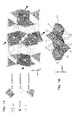
- the solid electrolyte 3 is a lithium ionic conductor and contains lithium (Li), phosphorus (P), boron (B) and sulfur (S) as constituent elements as depicted in FIG. 1A , and has a crystal structure that boron (B) is substituted for part of phosphorus (P) of the ⁇ structure of Li 3 PS 4 .
- the ⁇ structure is hereinafter referred to sometimes as ⁇ phase, ⁇ type crystal structure or ⁇ crystal structure.
- the ⁇ structure of Li 3 PS 4 is a crystal structure in which six-coordinated octahedrons (LiS 6 octahedrons) centering on lithium (Li) are located at a position at which they share an edge 20.
- the ⁇ structure of Li 3 PS 4 is a crystal structure in which the six-coordinated octahedrons centering on lithium (Li) share the edges 20 and the shared edges 20 are juxtaposed in series along a b-axis direction.
- a plurality of LiS 6 octahedrons continue linearly along the b-axis direction of the crystal structure and configure a one-dimensional chain (LiS 6 octahedral complex).
- the shared edges 20 are located on a line along the b-axis direction of the crystal structure and overlap with each other along the b-axis direction. Therefore, as indicated by an arrow mark in FIG. 1A , a one-dimensional conduction path (linear conduction path; ionic conduction path) exists. It is to be noted that, in FIG. 1B , the shared edges 20 to 22 are indicated by thick solid lines and thick broken lines.
- the ⁇ structure of Li 3 PS 4 is a crystal structure in which one half of apexes of a plurality of four-coordinated tetrahedrons (P/BS 4 tetrahedrons) centering on boron (B) or phosphorus (P) face the opposite direction in a unit cell indicated by broken lines in FIG. 1A .
- the ⁇ structure of Li 3 PS 4 is a crystal structure in which the directions of the apexes of the four-coordinated tetrahedrons centering on boron (B) or phosphorus (P) are distributed 1/2 by 1/2 in the opposite directions (here, in the upward and downward directions) in a unit cell.
- the four-coordinated tetrahedrons centering on boron (B) are BS 4 tetrahedrons, namely, four-coordinated tetrahedron borate (BS 4 ) 5-
- the four-coordinated tetrahedrons centering on phosphorus (P) are PS 4 tetrahedrons, namely, four-coordinated tetrahedron sulfate (PS 4 ) 3- .
- the ⁇ structure of Li 3 PS 4 is a crystal structure in which four-coordinated tetrahedrons (P/BS 4 tetrahedrons) centering on boron (B) or phosphorus (P) and six-coordinated octahedrons (LiS 6 octahedrons) centering on lithium (Li) are located at a position at which they share an edge 21. Further, as depicted in FIG.
- the ⁇ structure of Li 3 PS 4 is a crystal structure in which four-coordinated tetrahedrons (LiS 4 tetrahedrons) centering on lithium (Li) and six-coordinated octahedrons (LiS 6 octahedrons) centering on lithium (Li) are located at a position at which they share an edge 22.
- the ⁇ structure of Li 3 PS 4 is a crystal structure in which four-coordinated tetrahedrons (P/BS 4 tetrahedrons) centering on boron (B) or phosphorus (P) and four-coordinated tetrahedrons (LiS 4 tetrahedrons) centering on lithium (Li) are located such that they share an edge. It is to be noted that four-coordinated tetrahedrons (LiS 4 tetrahedrons) centering on lithium (Li) and six-coordinated octahedrons (LiS 6 octahedrons) centering on lithium (Li) share a face.
- the ⁇ structure of Li 3 PS 4 is a crystal structure in which four-coordinated tetrahedrons centering on boron (B) or phosphorus (P) and four-coordinated tetrahedrons centering on lithium (Li), four-coordinated tetrahedrons centering on boron (B) or phosphorus (P) and six-coordinated octahedrons centering on lithium (Li), and four-coordinated tetrahedrons centering on lithium (Li) and six-coordinated tetrahedrons centering on lithium (Li) are located such that they share an edge.
- lithium (Li) and phosphorus (P) that are conductive carriers exist at the position of the center of a tetrahedron, and the tetrahedrons, namely, a PS 4 tetrahedron and an LiS 4 tetrahedron, share an apex.
- all of the apex directions of the tetrahedrons are directions (here, upward direction) same as each other and no edge is shared, and a one-dimensional chain or a planar ionic conduction path does not exist. Therefore, the ionic conductivity is low.
- boron (B) is located at part of P sites in the ⁇ structure of Li 3 PS 4 and the crystal structure is same as that of the ⁇ structure of Li 3 PS 4 .
- the ⁇ structure of Li 3 PS 4 namely, as regards the ⁇ structure of Li 3 PS 4 that boron (B) is not substituted for part of phosphorus (P), for example, Kenji Homma et al., "Crystal structure and phase transitions of the lithium ionic conductor Li3PS4", Solid State Ionics 182 (2011) 53-58 is referred to.
- the solid electrolyte (lithium ionic conductor) 3 having such a crystal structure as described above can be fabricated in the following manner.
- lithium (Li), phosphorus (P), boron (B) and sulfur (S) are first mixed and melted by heating and then cooled to form a burned body.
- the burned body is reduced to powder and then burned at a temperature at which it does not melt thereby to fabricate the solid electrolyte (lithium ionic conductor) 3. It is to be noted that the reason why the heat treatment is performed at a temperature at which the burned body does not melt is that it is intended to stabilize the ⁇ structure.
- the solid electrolyte (lithium ionic conductor) 3 fabricated in this manner has a crystal structure that boron (B) is substituted for part of phosphorus (P) in the ⁇ structure of Li 3 PS 4 as described hereinabove.
- the solid electrolyte (lithium ionic conductor) 3 fabricated in such a manner as described above has, based on powder X-ray diffraction data (refer to FIG. 6 ) in examples hereinafter described, a composition represented by Li 3+3/4x B x P 1-3/4x S 4 (0.2 ⁇ x ⁇ 1.0).
- the crystal structure does not change by a temperature variation as proved by the examples (refer to FIG. 7 ) hereinafter described.
- the ⁇ structure having a high ionic conductivity can exist in stability.
- the solid electrolyte (lithium ionic conductor) 3 that has the ⁇ structure having a high ionic conductivity at room temperature can be implemented.
- the ⁇ structure that is a crystal structure having a low ionic conductivity at room temperature can be changed to the ⁇ structure that indicates a high ionic conductivity. Consequently, the ionic conductivity of the solid electrolyte (lithium ionic conductor) 3 at room temperature can be improved.
- the y structure is hereinafter referred to sometimes as ⁇ phase, ⁇ type crystal structure or ⁇ crystal structure.
- the ⁇ structure indicates different lattice constants between a case in which the crystal structure is the ⁇ structure at room temperature and another case in which the crystal structure is the ⁇ structure at a high temperature.
- the framework structure is ⁇ ;
- the space group is Pnma (62) ;
- the lengths a, b and c of the axes of a unit cell are 12.9326 ⁇ , 8.07024 ⁇ and 6.13951 ⁇ , respectively; all of the angles ⁇ , ⁇ and ⁇ between edges are 90°; and the volume V is 640.77 ⁇ 3 .
- Li 3+3/4x B x P 1-3/4x S 4 (x 0.300) whose crystal structure is the ⁇ structure at room temperature, the framework structure is ⁇ ; the space group is Pnma (62) ; the lengths a, b and c of the axes of a unit cell are 12.9183 ⁇ , 8.06803 ⁇ and 6.13573 ⁇ , respectively; all of the angles ⁇ , ⁇ and ⁇ between edges are 90°; and the volume V is 639.49 ⁇ 3 .
- Li 3+3/4x B x P 1-3/4x S 4 (x 0.400) whose crystal structure is the ⁇ structure at room temperature, the framework structure is ⁇ ; the space group is Pnma(62); the lengths a, b and c of the axes of a unit cell are 12.9160 ⁇ , 8.04948 ⁇ and 6.11202 ⁇ , respectively; all of the angles ⁇ , ⁇ and ⁇ between edges are 90°; and the volume V is 635.44 ⁇ 3 .
- Li 3+3/4x B x P 1-3/4x S 4 (x 0.600) whose crystal structure is the ⁇ structure at room temperature, the framework structure is ⁇ ; the space group is Pnma (62) ; the lengths a, b and c of the axes of a unit cell are 13.1729 ⁇ , 7.93478 ⁇ and 6.12905 ⁇ , respectively; all of the angles ⁇ , ⁇ and ⁇ between edges are 90°; and the volume V is 640.63 ⁇ 3 .
- Li 3+3/4x B x P 1-3/4x S 4 (x 0.800) whose crystal structure is the ⁇ structure at room temperature, the framework structure is ⁇ ; the space group is Pnma (62) ; the lengths a, b and c of the axes of a unit cell are 13.4137 ⁇ , 7.80718 ⁇ and 6.06664 ⁇ , respectively; all of the angles ⁇ , ⁇ and ⁇ between edges are 90°; and the volume V is 635.48 ⁇ 3 .
- Li 3+3/4x B x P 1-3/4x S 4 (x 1.000) whose crystal structure is the ⁇ structure at room temperature, the framework structure is ⁇ ; the space group is Pnma(62); the lengths a, b and c of the axes of a unit cell are 13.7172 ⁇ , 7.79486 ⁇ and 6.12206 ⁇ , respectively; all of the angles ⁇ , ⁇ and ⁇ between edges are 90°; and the volume V is 654.59 ⁇ 3 .
- the framework structure is ⁇ ;
- the space group is Pnma (62) ;
- the lengths a, b and c of the axes of a unit cell are approximately 12.9 to 13.7 ⁇ , approximately 7.8 to 8.0 ⁇ and approximately 6.1 ⁇ , respectively; all of the angles ⁇ , ⁇ and y between edges are 90°; and the volume V is approximately 635 to 655 ⁇ 3 .
- the constituent elements are lithium (Li), phosphorus (P), boron (B) and sulfur (S), and a rare and expensive metalloid element such as, for example, Ge is not used. Therefore, the fabrication cost can be decreased and the solid electrolyte (lithium ionic conductor) 3 can be implemented at a low cost. This is particularly effective for suppression of the fabrication cost of an all-solid lithium secondary battery with upsizing taken into consideration.
- the solid electrolyte (lithium ionic conductor) 3 to which Ge is added using, for example, Li 3 PS 4 as a basic component it has been reported that it indicates an ionic conductivity (bulk impedance) of, for example, approximately 10 -3 S/cm.
- Ge is a rare and expensive metalloid element, this increases the fabrication cost.
- the solid electrolyte (lithium ionic conductor) 3 in order to configure the solid electrolyte (lithium ionic conductor) 3 so as to have, as a mother structure, the ⁇ structure that is one of polymorphic crystal structures of Li 3 PS 4 and indicates a high ionic conductivity and besides to configure the solid electrolyte (lithium ionic conductor) 3 by a light weight at a low cost while the ⁇ structure remains existing in stability, the solid electrolyte (lithium ionic conductor) 3 is configured as a solid solution system in which boron (B) is substituted for part of phosphorus (P) of Li 3 PS 4 .
- the lithium ionic conductor and the fabrication method therefor as well as the all-solid lithium secondary battery according to the present embodiment are advantageous in that the lithium ionic conductor in which the crystal structure of Li 3 PS 4 at room temperature is the ⁇ structure having a high ionic conductivity, namely, the solid electrolyte 3 of the all-solid lithium secondary battery, can be implemented, and that the ionic conductivity at room temperature of the lithium ionic conductor, namely, the ionic conductivity of the solid electrolyte 3 of the all-solid lithium secondary battery, can be improved to reduce the internal resistance of the all-solid lithium secondary battery thereby to improve an output characteristic (load characteristic) of the all-solid lithium secondary battery.
- the solid electrolyte (lithium ionic conductor) 3 having such a crystal structure as described above has a composition represented by Li 3+3/4x B x P 1-3/4x S 4 (0.2 ⁇ x ⁇ 1.0) based on the powder X-ray diffraction data (refer to FIG. 6 ) in the examples hereinafter described, the present invention is not limited to this.
- ionic conductivity data (refer to FIG. 9 ) of the examples hereinafter described indicates that, if the solid electrolyte (lithium ionic conductor) 3 is configured so as to have a composition represented by Li 3+3/4x B x P 1-3/4x S 4 (0.155 ⁇ x ⁇ 1.300), then a high ionic conductivity at room temperature can be implemented and the ionic conductivity at room temperature can be improved to decrease the internal resistance of the all-solid lithium secondary battery thereby to improve an output characteristic.
- a lithium ionic conductor having a composition represented by Li 3+3/4x B x P 1-3/4x S 4 (0.155 ⁇ x ⁇ 1.300) is fabricated by mixing lithium (Li), phosphorus (P), boron (B) and sulfur (S), melting the mixture by heating, cooling the mixture to form a burned body, reducing the burned body to powder and then burning the powder again at a temperature at which the powder does not melt, then the lithium ionic conductor comes to have a high ionic conductivity at room temperature. Consequently, the ionic conductivity of the lithium ionic conductor at room temperature can be improved to reduce the internal resistance of the all-solid lithium secondary battery thereby to improve an output characteristic of the all-solid lithium secondary battery.
- the lithium ionic conductor is configured so as to have a composition represented by Li 3+3/4x B x P 1-3/4x S 4 (0.155 ⁇ x ⁇ 1.000).
- the lithium ionic conductor so as to have a composition represented by Li 3+3/4x B x P 1-3/4x S 4 (0.155 ⁇ x ⁇ 0.800), and, more particularly, the lithium ionic conductor is configured so as to have a composition represented by Li 3+3/4x B x P 1-3/4x S 4 (0.300 ⁇ x ⁇ 0.500).
- lithium sulfide (Li 2 S), phosphorus pentasulfide (P 2 S 5 ), boron (B) and sulfur (S) were mixed using an agate mortar in a glove box to perform pellet molding.
- the mixture produced by the pellet molding was encapsulated under reduced pressure into a quartz tube having an inner face covered with glassy carbon and then heated at approximately 700°C, which is a temperature at which the mixture is melted, and kept at the temperature for approximately four hours. Then, the mixture was naturally cooled to room temperature to obtain a burned body (burned sample).
- the burned body obtained in such a manner as just described was reduced to powder for approximately 90 minutes using a vibrating cup mill, and the power was molded by uniaxial press again. Then, the molded burned body was encapsulated under reduced pressure and then burned for approximately 8 hours at approximately 550 °C that is a temperature at which the burned body does not melt thereby to obtain a solid electrolyte (lithium ionic conductor).
- the solid electrolytes (lithium ionic conductors) of the examples 1 to 7 obtained by the synthesis method described above had the ⁇ structure at room temperature with boron (B) substituted for part of phosphorus (P) in the crystal structure of Li 3 PS 4 .
- the composition of the solid electrolytes (lithium ionic conductors) which indicate the ⁇ structure at room temperature with boron (B) substituted for part of phosphorus (P) in the crystal structure of Li 3 PS 4 is represented by Li 3+3/4x B x P 1-3/4x S 4 (0.2 ⁇ x ⁇ 1.0) based on the powder X-ray diffraction data depicted in FIG. 6 .
- the diffraction diagrams that indicated the ⁇ structure were not different from each other at any temperature and exhibited no phase change by a temperature variation.
- the ⁇ structure existed in stability at all of the low temperature (here, -180°C), the room temperature (here, 27°C) and the high temperature (here, 300°C).
- the evaluation of the ionic conductivity was performed using an alternating current impedance method.
- the solid electrolytes (lithium ionic conductors) of the examples 1 to 7 and the comparative examples 1 to 3 described above were attached to an electrochemical cell having jigs [here, the upper side and the lower side indicate an electrode terminal (+) and an electrode terminal (-), respectively] of 10 mm ⁇ for which an SKD 11 was used as a material.
- the AUTOLAB FRA (frequency response analysis apparatus) of Metrohm Autolab was used as the evaluation apparatus. Then, the impedance was measured by setting the application voltage to 0.1 V, the frequency response region to 1 MHz to 1 Hz and the measurement temperature to 27°C.
- the ionic conductivity is 1.4 ⁇ 10 -6 S/cm
- the ionic conductivity is 9.6 ⁇ 10 -6 S/cm.
- the ionic conductivity varies linearly and can be approximated by a linear line.
- the ionic conductivity varies linearly and can be approximated by a linear line.
- Li 3 PS 4 is included in a case in which x is lower than 0.100, the ionic conductivity at room temperature is lower than 10 -6 S/cm. Further, although Li 3 BS 3 is included in a case in which x is higher than 1.300, no ionic conductivity is indicated at room temperature.
- the composition of the solid electrolyte is represented by Li 3+3/4x B x P 1-3/4x S 4 (0.155 ⁇ x ⁇ 1.300) based on the ionic conductivity data depicted in FIG. 9 .
- the composition of the solid electrolyte (lithium ionic conductor) is set to Li 3+3/4x B x P 1-3/4x S 4 (0.155 ⁇ x ⁇ 1.000).
- the solid electrolyte (lithium ionic conductor) is configured so as to have a composition represented by Li 3+3/4x B x P 1-3/4x S 4 (0.155 ⁇ x ⁇ 0.800). Further, if x is set equal to or higher than 0.300 but equal to or lower than 0.500, then the ionic conductivity at room temperature becomes approximately 10 -4 S/cm and the ionic conductivity is improved.
- the solid electrolyte (lithium ionic conductor) is more preferably configured so as to have a composition represented by Li 3+3/4x B x P 1-3/4x S 4 (0.300 ⁇ x ⁇ 0.500).
- the conductive paths are not uniformly directed in the one axis and lithium ions that pass along conductive paths of the solid electrolyte (lithium ionic conductor) having the ⁇ structure are observed in the directions of the a, b and c axes (namely, isotropically) and, based on the powder X-ray diffraction data (refer to FIG. 6 ) described above, the ionic conductivity is lower than that of a crystal structure having the ⁇ structure.
- the solid electrolyte (lithium ionic conductor) is used actually for the all-solid lithium secondary battery, it is formed as an oriented film such that one-dimensional conductive paths extending only in the direction of the b axis of the crystal structure are uniformly directed in the one axis.
- the ionic conductivity of the solid electrolyte (lithium ionic conductor) having the ⁇ structure formed as an oriented film in this manner improves by approximately 5 times in comparison with that of the ionic conductivity data depicted in FIG. 9 .
- the solid electrolyte (lithium ionic conductor) having the ⁇ structure has no anisotropic conductive path, and therefore, even if it is formed as an oriented film, the ionic conductivity does not improve. Accordingly, even if, in the ionic conductivity data depicted in FIG. 9 , the ionic conductivity of the solid electrolyte (lithium ionic conductor) having the ⁇ structure is lower than that of the solid electrolyte having the ⁇ structure based on the powder X-ray diffraction data (refer to FIG.
- the solid electrolyte (lithium ionic conductor) is used actually for the all-solid lithium secondary battery
- the solid electrolyte (lithium ionic conductor) having the ⁇ structure based on the powder X-ray diffraction data (refer to FIG. 6 ) described above indicates a higher ionic conductivity than that of the solid electrolyte having the ⁇ structure.
- LiCoO 2 and a solid electrolyte material (here, that of the example 3) synthesized in such a manner as described above were mixed at a ratio of 6:4 to produce the positive electrode 1.
- Li-Al and the solid electrolyte material (here, that of the example 3) synthesized in such a manner as described above were mixed at a ratio of 7:3 to produce the negative electrode 2.
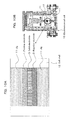
- the negative electrode 2, solid electrolyte (here, that of the example 3) 3 synthesized in such a manner as described above and positive electrode 1 were stacked in order between jigs 11 of 10 mm ⁇ provided in an electrochemical cell 10 and then pressurized to fabricate the all-solid lithium secondary battery.
- reference numeral 12 in FIG. 10A and 10B denotes a cell (cell shell).
- an all-solid lithium secondary battery including a solid electrolyte formed from Li 3 PS 4 or Li 3 BS 3 (comparative example 3) or solid electrolytes (those of the comparative examples 1 and 2) having the ⁇ structure was fabricated and charging and discharging evaluation was performed. According to the evaluation, the all-solid lithium secondary batteries did not operate.
- the all-solid lithium secondary battery including the solid electrolyte formed from Li 3 PS 4 or Li 2 BS 3 (comparative example 3) or the solid electrolyte (that of the comparative example 1 or 2) having the y structure has an excessively high internal resistance and therefore does not operate as a battery, resulting in failure to obtain a discharging curve.
Landscapes
- Chemical & Material Sciences (AREA)
- Engineering & Computer Science (AREA)
- Manufacturing & Machinery (AREA)
- Chemical Kinetics & Catalysis (AREA)
- Electrochemistry (AREA)
- General Chemical & Material Sciences (AREA)
- Physics & Mathematics (AREA)
- Condensed Matter Physics & Semiconductors (AREA)
- General Physics & Mathematics (AREA)
- Inorganic Chemistry (AREA)
- Secondary Cells (AREA)
- Conductive Materials (AREA)
Abstract
Description
- The present invention relates to a lithium ionic conductor and a fabrication method therefor, and an all-solid lithium secondary battery.
- A secondary battery that is safe and high in reliability in any terrestrial environment is requested for an environmental power generation technology by which electricity generated from microscopic energy such as sunlight, vibration or body temperature of humans or animals is accumulated and utilized for a sensor or as wireless transmission power.
- As regards a liquid-based secondary battery used widely at present, it is a concern that, as a cycle of use is repeated, a positive electrode active material may degrade to decrease the battery capacity and the organic electrolyte in the battery may be ignited by battery short-circuiting caused by formation of dendrite.
- Therefore, a secondary battery including a liquid-based electrolyte is poor in reliability and safety where it is intended to use the secondary battery for an environmental power generation device that is expected to be used, for example, for 10 years or more.
- Therefore, attention is paid to an all-solid lithium secondary battery in which all constituent materials are solid. The all-solid lithium secondary battery is free from a risk of liquid leakage, firing or the like and is superior in a cycle characteristic. For example, as solid electrolytes used for the all-solid lithium secondary battery, namely, as lithium ionic conductors, Li2S-B2S3 based (Li3BS3), Li2-P2S5 based (Li7P3S11, Li3PS4, Li8P2S6 and so forth), Li2S-P2S5-X (LiI, B2S3, AI2S3, GeS2) based (Li4-xGe1-xPxS4), Li2S-B2S3-LiI based solid electrolytes and so forth are available. Also solid electrolytes having Li and S and having, as occasion demands, an element such as P, B or O (Li7P3S11, Li2S, Li3PO4-Li2S-B2S3 based, 80Li2S-20P2S5 solid electrolytes and so forth) are available.
-
- PTL 1: Japanese Laid-open Patent Publication No.
2003-22707 - PTL 2: Japanese Laid-open Patent Publication No.
2003-68361 - PTL 3: Japanese Laid-open Patent Publication No.
2009-193803 - NPL 1: Ryoji Kanno et al., "Lithium Ionic Conductor Thio-LISICON", Journal of The Electrochemical Society, 148(7), A742-A746 (2001)
- NPL 2: M. Menetrier et al., "Ionic conduction in B2S3-Li2S-LiIglasses", Solid State Ionics 53-56 (1992) 1208-1213
- NPL 3: Kenji Homma et al., "Crystal structure and phase transitions of the lithium ionic conductor Li3PS4", Solid State Ionics 182 (2011) 53-58
- NPL 4: Kenji Homma et al., "Crystal structure of High-TemperaturePhaseofLithiumlonic Conductor,Li3PS4", J. Phys. Soc. Jpn. 79 (2010) Suppl. A, pp.90-93
- Incidentally, in order to improve an output characteristic (load characteristic) of an all-solid lithium secondary battery, it is desirable to reduce the internal resistance of the same. The internal resistance of the all-solid lithium secondary battery depends much upon the ionic conductivity of the solid electrolyte, namely, of the lithium ionic conductor. Therefore, in order to decrease the internal resistance of the all-solid lithium secondary battery to improve the output characteristic of the same, it is desirable to improve the ionic conductivity of the solid electrolyte, namely, of the lithium ionic conductor.
- Especially, the crystal structure of the lithium ionic conductor is one of factors that greatly vary the ionic conductivity.
- For example, as Li2S-P2S5 based conductors, conductors of various compositions and various crystal structures such as Li7P3S11, Li3PS4 and Li8P2S6 are available.
- Among them, Li3PS4 has at least crystal structures of γ and β and indicates one of the crystal structures in response to a temperature from room temperature (for example, from approximately 25°C) to approximately 700°C of the melting point. For example, the crystal structure of Li3PS4 is the γ structure at a temperature from approximately 24 °C to approximately 270°C, and is the β structure at a temperature from approximately 364°C to approximately 451°C. In other words, the crystal structure of Li3PS4 changes from the γ structure to the β structure within the range of temperature from approximately 270°C to approximately 364°C. It is to be noted that the γ structure and the structure are hereinafter referred to sometimes as γ phase and β phase, respectively. Further, a change of the crystal structure is hereinafter referred to sometimes as phase change or phase transition.
- Here, among three kinds of crystal structure of Li3PS4, the γ structure indicates a low ionic conductivity while the β structure indicates a high ionic conductivity.
- However, as described above, while the crystal structure of Li3PS4 is the β structure having a high ionic conductivity at a temperature from approximately 364°C to approximately 451°C, the crystal structure is the γ structure having a low ionic conductivity at a temperature from approximately 24°C to approximately 270°C.
- In this manner, a lithium ionic conductor in which the crystal structure of Li3PS4 at room temperature is the β structure having a high ionic conductivity cannot be implemented.
- Therefore, it is desired to implement a lithium ionic conductor, namely, a solid electrolyte for an all-solid lithium secondary battery, in which the crystal structure of Li3PS4 at room temperature is the β structure having a high ionic conductivity. Further, it is desired to improve the ionic conductivity at room temperature of the lithium ionic conductor, namely, of the solid electrolyte of the all-solid lithium secondary battery, and reduce the internal resistance of the all-solid lithium secondary battery to improve an output characteristic of the all-solid lithium secondary battery.
- The present lithium ionic conductor contains lithium (Li), phosphorus (P), boron (B) and sulfur (S) as constituent elements and has a crystal structure that boron (B) is substituted for part of phosphorus (P) in a β structure of Li3PS4.
- The lithium ionic conductor has a composition represented by Li3+3/4xBxP1-3/4xS4 (0.155 ≤ x ≤ 1.300).
- The present all-solid lithium secondary battery includes a positive electrode, a negative electrode, and a solid electrolyte provided between the positive electrode and the negative electrode and containing lithium (Li), phosphorus (P), boron (B) and sulfur (S) as constituent elements, the solid electrolyte having a crystal structure that boron (B) is substituted for part of phosphorus (P) in a β structure of Li3PS4.
- The present all-solid lithium secondary battery includes a positive electrode, a negative electrode, and a solid electrolyte provided between the positive electrode and the negative electrode, and having a composition represented by Li3+3/4xBxP1-3/4xS4 (0.155 ≤ x ≤ 1.300).
- The present fabrication method for a lithium ionic conductor includes mixing lithium (Li), phosphorus (P), boron (B) and sulfur (S), melting the mixture by heating and then cooling the mixture to form a burned body and reducing the burned body to powder and then burning the powder again at a temperature at which the powder does not melt to fabricate a lithium ionic conductor having a crystal structure that boron (B) is substituted for part of phosphorus (P) in a β structure of Li3PS4.
- The present fabrication method for a lithium ionic conductor includes mixing lithium (Li), phosphorus (P), boron (B) and sulfur (S), melting the mixture by heating and then cooling the mixture to form a burned body and reducing the burned body to powder and then burning the powder again at a temperature at which the powder does not melt to fabricate a lithium ionic conductor having a composition represented by Li3+3/4xBxP1-3/4xS4 (0.155 ≤ x ≤ 1.300).
- Accordingly, the present lithium ionic conductor and fabrication method therefor and the present all-solid lithium secondary battery are advantageous in that a lithium ionic conductor, namely, a solid electrolyte for an all-solid lithium secondary battery, in which the crystal structure of Li3PS4 at room temperature is the β structure having a high ionic conductivity, can be implemented, that the ionic conductivity of a lithium ionic conductor, namely, of a solid electrolyte for an all-solid lithium secondary battery, at room temperature can be improved, and that the internal resistance of the all-solid lithium secondary battery can be reduced to improve an output characteristic of the all-solid lithium secondary battery.
-
-
FIGS. 1A and 1B are schematic views depicting a configuration of a lithium ionic conductor (solid electrolyte) according to a present embodiment. -
FIG. 2 is a schematic view depicting a crystal structure in which boron (B) is substituted for part of phosphorus (P) in a γ structure of Li3PS4. -
FIG. 3 is a schematic sectional view depicting a configuration of an all-solid lithium secondary battery according to the present embodiment. -
FIGS. 4A and 4B are views illustrating a lattice constant of the lithium ionic conductor (solid electrolyte) according to the present embodiment. -
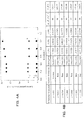
FIG. 5 is a view depicting weighing values of several raw materials where lithium ionic conductors (solid electrolytes) of examples and comparative examples are fabricated. -
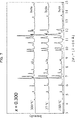
FIG. 6 is a view depicting diffraction patterns obtained by powder X-ray diffraction measurement at room temperature of the lithium ionic conductors (solid electrolytes) of the examples and the comparative examples. -
FIG. 7 is a view depicting diffraction patterns obtained by synchrotron X-ray diffraction measurement for evaluating a temperature dependency of the β structure of the lithium ionic conductor (solid electrolyte) according to the third example. -
FIG. 8 is a view illustrating a calculation method for an ionic conductivity of the lithium ionic conductors (solid electrolytes) of the examples and the comparative examples. -
FIG. 9 is a view depicting an ionic conductivity at room temperature of the lithium ionic conductors (solid electrolytes) of the examples and the comparative examples. -
FIGS. 10A and 10B are views illustrating a fabrication method for the all-solid lithium secondary batteries of the examples. -
FIG. 11 is a view depicting a discharging curve of the all-solid lithium secondary batteries of the examples. - In the following, a lithium ionic conductor and a fabrication method therefor as well as an all-solid lithium secondary battery according to an embodiment of the present invention are described with reference to
FIGS. 1A to 4 . - As depicted in
FIG. 3 , the all-solid lithium secondary battery according to the present embodiment includes apositive electrode 1, anegative electrode 2, asolid electrolyte 3 provided between thepositive electrode 1 and thenegative electrode 2, and apositive electrode collector 4 and anegative electrode collector 5 provided sandwiching theconstituent elements 1 to 3 therebetween. Preferably, such an all-solid lithium secondary battery as just described is incorporated, for example, in an environmental power generation apparatus. - Here, the
positive electrode 1 contains a positive electrode active material. Here, thepositive electrode 1 contains, for example, LiCoO2 as the positive electrode active material. In particular, thepositive electrode 1 is configured from a material produced by mixing LiCoO2 and a solid electrolyte material at a ratio of 6:4. - The
negative electrode 2 contains a negative electrode active material. Here, thenegative electrode 2 contains, for example, Li-Al as the negative electrode active material. In particular, thenegative electrode 2 is configured from a material produced by mixing Li-Al (alloy) and a solid electrolyte material at a ratio of 7:3. - The
solid electrolyte 3 is a lithium ionic conductor and contains lithium (Li), phosphorus (P), boron (B) and sulfur (S) as constituent elements as depicted inFIG. 1A , and has a crystal structure that boron (B) is substituted for part of phosphorus (P) of the β structure of Li3PS4. It is to be noted that the β structure is hereinafter referred to sometimes as β phase, β type crystal structure or β crystal structure. - Here, as depicted in
FIG. 1B , the β structure of Li3PS4 is a crystal structure in which six-coordinated octahedrons (LiS6 octahedrons) centering on lithium (Li) are located at a position at which they share anedge 20. In particular, the β structure of Li3PS4 is a crystal structure in which the six-coordinated octahedrons centering on lithium (Li) share theedges 20 and the sharededges 20 are juxtaposed in series along a b-axis direction. Here, a plurality of LiS6 octahedrons continue linearly along the b-axis direction of the crystal structure and configure a one-dimensional chain (LiS6 octahedral complex). The shared edges 20 are located on a line along the b-axis direction of the crystal structure and overlap with each other along the b-axis direction. Therefore, as indicated by an arrow mark inFIG. 1A , a one-dimensional conduction path (linear conduction path; ionic conduction path) exists. It is to be noted that, inFIG. 1B , the sharededges 20 to 22 are indicated by thick solid lines and thick broken lines. - Further, as depicted in
FIG. 1A , the β structure of Li3PS4 is a crystal structure in which one half of apexes of a plurality of four-coordinated tetrahedrons (P/BS4 tetrahedrons) centering on boron (B) or phosphorus (P) face the opposite direction in a unit cell indicated by broken lines inFIG. 1A . In particular, the β structure of Li3PS4 is a crystal structure in which the directions of the apexes of the four-coordinated tetrahedrons centering on boron (B) or phosphorus (P) are distributed 1/2 by 1/2 in the opposite directions (here, in the upward and downward directions) in a unit cell. It is to be noted that the four-coordinated tetrahedrons centering on boron (B) are BS4 tetrahedrons, namely, four-coordinated tetrahedron borate (BS4)5-, and the four-coordinated tetrahedrons centering on phosphorus (P) are PS4 tetrahedrons, namely, four-coordinated tetrahedron sulfate (PS4)3-. - Further, as depicted in
FIG. 1B , the β structure of Li3PS4 is a crystal structure in which four-coordinated tetrahedrons (P/BS4 tetrahedrons) centering on boron (B) or phosphorus (P) and six-coordinated octahedrons (LiS6 octahedrons) centering on lithium (Li) are located at a position at which they share anedge 21. Further, as depicted inFIG. 1B , the β structure of Li3PS4 is a crystal structure in which four-coordinated tetrahedrons (LiS4 tetrahedrons) centering on lithium (Li) and six-coordinated octahedrons (LiS6 octahedrons) centering on lithium (Li) are located at a position at which they share anedge 22. Further, though not depicted, the β structure of Li3PS4 is a crystal structure in which four-coordinated tetrahedrons (P/BS4 tetrahedrons) centering on boron (B) or phosphorus (P) and four-coordinated tetrahedrons (LiS4 tetrahedrons) centering on lithium (Li) are located such that they share an edge. It is to be noted that four-coordinated tetrahedrons (LiS4 tetrahedrons) centering on lithium (Li) and six-coordinated octahedrons (LiS6 octahedrons) centering on lithium (Li) share a face. Further, since four-coordinated tetrahedrons (LiS4 tetrahedrons) centering on lithium (Li) and six-coordinated octahedrons (LiS6 octahedrons) centering on lithium (Li) share an edge (share a face), there is the possibility that they may function as a conduction path. - In this manner, the β structure of Li3PS4 is a crystal structure in which four-coordinated tetrahedrons centering on boron (B) or phosphorus (P) and four-coordinated tetrahedrons centering on lithium (Li), four-coordinated tetrahedrons centering on boron (B) or phosphorus (P) and six-coordinated octahedrons centering on lithium (Li), and four-coordinated tetrahedrons centering on lithium (Li) and six-coordinated tetrahedrons centering on lithium (Li) are located such that they share an edge.
- In this manner, since, in the crystal structure (polymorphic crystal structure) of Li3PS4, in the β structure, the octahedrons centering on lithium (Li) exist in a state in which they share an edge and a one-dimensional ionic conduction path is constructed, an ionic conductivity higher than that of a γ structure hereinafter described is indicated. On the other hand, as depicted in
FIG. 2 , in the γ structure, lithium (Li) and phosphorus (P) that are conductive carriers exist at the position of the center of a tetrahedron, and the tetrahedrons, namely, a PS4 tetrahedron and an LiS4 tetrahedron, share an apex. Further, in the γ structure, all of the apex directions of the tetrahedrons are directions (here, upward direction) same as each other and no edge is shared, and a one-dimensional chain or a planar ionic conduction path does not exist. Therefore, the ionic conductivity is low. - It is to be noted that, in the β structure of Li3PS4 that boron (B) is substituted for part of phosphorus (P), boron (B) is located at part of P sites in the β structure of Li3PS4 and the crystal structure is same as that of the β structure of Li3PS4. As regards the β structure of Li3PS4, namely, as regards the β structure of Li3PS4 that boron (B) is not substituted for part of phosphorus (P), for example, Kenji Homma et al., "Crystal structure and phase transitions of the lithium ionic conductor Li3PS4", Solid State Ionics 182 (2011) 53-58 is referred to.
- Incidentally, the solid electrolyte (lithium ionic conductor) 3 having such a crystal structure as described above can be fabricated in the following manner.
- In particular, lithium (Li), phosphorus (P), boron (B) and sulfur (S) are first mixed and melted by heating and then cooled to form a burned body.
- Then, the burned body is reduced to powder and then burned at a temperature at which it does not melt thereby to fabricate the solid electrolyte (lithium ionic conductor) 3. It is to be noted that the reason why the heat treatment is performed at a temperature at which the burned body does not melt is that it is intended to stabilize the β structure.
- The solid electrolyte (lithium ionic conductor) 3 fabricated in this manner has a crystal structure that boron (B) is substituted for part of phosphorus (P) in the β structure of Li3PS4 as described hereinabove. In particular, the solid electrolyte (lithium ionic conductor) 3 fabricated in such a manner as described above has, based on powder X-ray diffraction data (refer to
FIG. 6 ) in examples hereinafter described, a composition represented by Li3+3/4xBxP1-3/4xS4 (0.2 ≤ x ≤ 1.0). - In the solid electrolyte (lithium ionic conductor) 3 having such a crystal structure as described above, the crystal structure does not change by a temperature variation as proved by the examples (refer to
FIG. 7 ) hereinafter described. In other words, also at room temperature (for example, around 25°C), the β structure having a high ionic conductivity can exist in stability. - In this manner, the solid electrolyte (lithium ionic conductor) 3 that has the β structure having a high ionic conductivity at room temperature can be implemented. In particular, by substituting boron (B) for part of phosphorus (P) in the crystal structure of Li3PS4, the γ structure that is a crystal structure having a low ionic conductivity at room temperature can be changed to the β structure that indicates a high ionic conductivity. Consequently, the ionic conductivity of the solid electrolyte (lithium ionic conductor) 3 at room temperature can be improved. It is to be noted that the y structure is hereinafter referred to sometimes as γ phase, γ type crystal structure or γ crystal structure.
- It is to be noted that the β structure indicates different lattice constants between a case in which the crystal structure is the β structure at room temperature and another case in which the crystal structure is the β structure at a high temperature.
- For example, as depicted in
FIGS. 4A and 4B , in the case of Li3+3/4xBxP1-3/4xS4 (x=0.200) whose crystal structure is the β structure at room temperature, the framework structure is β; the space group is Pnma (62) ; the lengths a, b and c of the axes of a unit cell are 12.9326 Å, 8.07024 Å and 6.13951 Å, respectively; all of the angles α, β and γ between edges are 90°; and the volume V is 640.77 Å3. - Further, in the case of Li3+3/4xBxP1-3/4xS4 (x = 0.300) whose crystal structure is the β structure at room temperature, the framework structure is β; the space group is Pnma (62) ; the lengths a, b and c of the axes of a unit cell are 12.9183 Å, 8.06803 Å and 6.13573 Å, respectively; all of the angles α, β and γ between edges are 90°; and the volume V is 639.49 Å3.
- Further, in the case of Li3+3/4xBxP1-3/4xS4 (x = 0.400) whose crystal structure is the β structure at room temperature, the framework structure is β; the space group is Pnma(62); the lengths a, b and c of the axes of a unit cell are 12.9160 Å, 8.04948 Å and 6.11202 Å, respectively; all of the angles α, β and γ between edges are 90°; and the volume V is 635.44 Å3.
- Further, in the case of Li3+3/4xBxP1-3/4xS4 (x = 0.600) whose crystal structure is the β structure at room temperature, the framework structure is β; the space group is Pnma (62) ; the lengths a, b and c of the axes of a unit cell are 13.1729 Å, 7.93478 Å and 6.12905 Å, respectively; all of the angles α, β and γ between edges are 90°; and the volume V is 640.63 Å3.
- Further, in the case of Li3+3/4xBxP1-3/4xS4 (x = 0.800) whose crystal structure is the β structure at room temperature, the framework structure is β; the space group is Pnma (62) ; the lengths a, b and c of the axes of a unit cell are 13.4137 Å, 7.80718 Å and 6.06664 Å, respectively; all of the angles α, β and γ between edges are 90°; and the volume V is 635.48 Å3.
- Further, in the case of Li3+3/4xBxP1-3/4xS4 (x = 1.000) whose crystal structure is the β structure at room temperature, the framework structure is β; the space group is Pnma(62); the lengths a, b and c of the axes of a unit cell are 13.7172 Å, 7.79486 Å and 6.12206 Å, respectively; all of the angles α, β and γ between edges are 90°; and the volume V is 654.59 Å3.
- In this manner, in the case of Li3+3/4xBxP1-3/4xS4 (0.2 ≤ x ≤ 1.0) whose crystal structure is the β structure at room temperature, the framework structure is β; the space group is Pnma (62) ; the lengths a, b and c of the axes of a unit cell are approximately 12.9 to 13.7 Å, approximately 7.8 to 8.0 Å and approximately 6.1 Å, respectively; all of the angles α, β and y between edges are 90°; and the volume V is approximately 635 to 655 Å3.
- It is to be noted that, in the case of Li3+3/4xBxP1-3/4xS4 (x = 0.100) whose crystal structure is the γ structure at room temperature, the framework structure is γ; the space group is Pmn21(31); the lengths a, b and c of the axes of a unit cell are 7.74018 Å, 6.054940 Å and 6.10478 Å, respectively; all of the angles α, β and γ between edges are 90°; and the volume V is 309.47 Å3.
- Further, as described above, the constituent elements are lithium (Li), phosphorus (P), boron (B) and sulfur (S), and a rare and expensive metalloid element such as, for example, Ge is not used. Therefore, the fabrication cost can be decreased and the solid electrolyte (lithium ionic conductor) 3 can be implemented at a low cost. This is particularly effective for suppression of the fabrication cost of an all-solid lithium secondary battery with upsizing taken into consideration. On the other hand, in the case of the solid electrolyte (lithium ionic conductor) 3 to which Ge is added using, for example, Li3PS4 as a basic component, it has been reported that it indicates an ionic conductivity (bulk impedance) of, for example, approximately 10-3S/cm. However, since Ge is a rare and expensive metalloid element, this increases the fabrication cost.
- Further, since boron (B) that is a lighter element than phosphorus (P) is substituted for phosphorus (P) as described above, decrease of the weight of the solid electrolyte (lithium ionic conductor) 3 canbe achieved. For example, where a large-sizebattery is incorporated in a moving body such as an electric automobile, it is a significant benefit that the weight of the constituent materials of the battery can be decreased.
- In this manner, in order to configure the solid electrolyte (lithium ionic conductor) 3 so as to have, as a mother structure, the β structure that is one of polymorphic crystal structures of Li3PS4 and indicates a high ionic conductivity and besides to configure the solid electrolyte (lithium ionic conductor) 3 by a light weight at a low cost while the β structure remains existing in stability, the solid electrolyte (lithium ionic conductor) 3 is configured as a solid solution system in which boron (B) is substituted for part of phosphorus (P) of Li3PS4.
- Accordingly, the lithium ionic conductor and the fabrication method therefor as well as the all-solid lithium secondary battery according to the present embodiment are advantageous in that the lithium ionic conductor in which the crystal structure of Li3PS4 at room temperature is the β structure having a high ionic conductivity, namely, the
solid electrolyte 3 of the all-solid lithium secondary battery, can be implemented, and that the ionic conductivity at room temperature of the lithium ionic conductor, namely, the ionic conductivity of thesolid electrolyte 3 of the all-solid lithium secondary battery, can be improved to reduce the internal resistance of the all-solid lithium secondary battery thereby to improve an output characteristic (load characteristic) of the all-solid lithium secondary battery. - It is to be noted that the present invention is not limited to the configuration described in the foregoing description of the embodiment and various modifications can be made without departing from the spirit and scope of the present invention.
- For example, while, in the embodiment described above, the solid electrolyte (lithium ionic conductor) 3 having such a crystal structure as described above has a composition represented by Li3+3/4xBxP1-3/4xS4 (0.2 ≤ x ≤ 1.0) based on the powder X-ray diffraction data (refer to
FIG. 6 ) in the examples hereinafter described, the present invention is not limited to this. - In particular, when the solid electrolyte (lithium ionic conductor) 3 is fabricated by the fabricationmethodof the embodiment described above, ionic conductivity data (refer to
FIG. 9 ) of the examples hereinafter described indicates that, if the solid electrolyte (lithium ionic conductor) 3 is configured so as to have a composition represented by Li3+3/4xBxP1-3/4xS4 (0.155 ≤ x ≤ 1.300), then a high ionic conductivity at room temperature can be implemented and the ionic conductivity at room temperature can be improved to decrease the internal resistance of the all-solid lithium secondary battery thereby to improve an output characteristic. In particular, if a lithium ionic conductor having a composition represented by Li3+3/4xBxP1-3/4xS4 (0.155 ≤ x ≤ 1.300) is fabricated by mixing lithium (Li), phosphorus (P), boron (B) and sulfur (S), melting the mixture by heating, cooling the mixture to form a burned body, reducing the burned body to powder and then burning the powder again at a temperature at which the powder does not melt, then the lithium ionic conductor comes to have a high ionic conductivity at room temperature. Consequently, the ionic conductivity of the lithium ionic conductor at room temperature can be improved to reduce the internal resistance of the all-solid lithium secondary battery thereby to improve an output characteristic of the all-solid lithium secondary battery. Preferably, the lithium ionic conductor is configured so as to have a composition represented by Li3+3/4xBxP1-3/4xS4 (0.155 ≤ x ≤ 1.000). Particularly, based on the ionic conductivity data (refer toFIG. 9 ) of the examples hereinafter described, it is preferable to configure the lithium ionic conductor so as to have a composition represented by Li3+3/4xBxP1-3/4xS4 (0.155 ≤ x ≤ 0.800), and, more particularly, the lithium ionic conductor is configured so as to have a composition represented by Li3+3/4xBxP1-3/4xS4 (0.300 ≤ x ≤ 0.500). - The present invention is described in more detail with regard to the examples thereof. However, the present invention is not limited to the examples described below.
- First, lithium sulfide (Li2S), phosphorus pentasulfide (P2S5), boron (B) and sulfur (S) were mixed using an agate mortar in a glove box to perform pellet molding.
- Then, the mixture produced by the pellet molding was encapsulated under reduced pressure into a quartz tube having an inner face covered with glassy carbon and then heated at approximately 700°C, which is a temperature at which the mixture is melted, and kept at the temperature for approximately four hours. Then, the mixture was naturally cooled to room temperature to obtain a burned body (burned sample).
- Then, the burned body obtained in such a manner as just described was reduced to powder for approximately 90 minutes using a vibrating cup mill, and the power was molded by uniaxial press again. Then, the molded burned body was encapsulated under reduced pressure and then burned for approximately 8 hours at approximately 550 °C that is a temperature at which the burned body does not melt thereby to obtain a solid electrolyte (lithium ionic conductor).
- Based on the composition ratio where x = 0.200 in a Li3+3/4xBxP1-3/4xS4 solid solution system, the weighing values of lithium sulfide (Li2S), phosphorus pentasulfide (P2S5), boron (B) and sulfur (S) were setto 3.2428 g, 4.2309g, 0.0973 g and 0.4309 g, respectively, as depicted in
FIG. 5 , and were mixed. Then, a solid electrolyte (lithium ionic conductor) was obtained by the synthesis method described above. It is to be noted that, since x is a composition ratio of boron (B) and indicates an amount by which boron (B) is substituted for phosphorus (P), x is indicated as B substitution amount inFIG. 5 . - Based on the composition ratio where x = 0.250 in a Li3+3/4xBxP1-3/4xS4 solid solution system, the weighed values of lithium sulfide (Li2S), phosphorus pentasulfide (P2S5), boron (B) and sulfur (S) were set to 3.2857 g, 4.0533g, 0.1217 g and 0.5410 g, respectively, as depicted in
FIG. 5 , and were mixed. Then, a solid electrolyte (lithium ionic conductor) was obtained by the synthesis method described above. - Based on the composition ratio where x = 0.300 in a Li3+3/4xBxP1-3/4xS4 solid solution system, the weighed values of lithium sulfide (Li2S), phosphorus pentasulfide (P2S5), boron (B) and sulfur (S) were set to 3.3330 g, 3.8747g, 0.1481 g and 0.6490 g, respectively, as depicted in
FIG. 5 , and were mixed. Then, a solid electrolyte (lithium ionic conductor) was obtained by the synthesis method described above. - Based on the composition ratio where x = 0.400 in a Li3+3/4xBxP1-3/4xS4 solid solution system, the weighed values of lithium sulfide (Li2S), phosphorus pentasulfide (P2S5), boron (B) and sulfur (S) were set to 3. 4231 g, 3. 5128 g, 0.1953 g and 0.8688 g, respectively, as depicted in
FIG. 5 , and were mixed. Then, a solid electrolyte (lithium ionic conductor) was obtained by the synthesis method described above. - Based on the composition ratio where x = 0.600 in a Li3+3/4xBxP1-3/4xS4 solid solution system, the weighed values of lithium sulfide (Li2S), phosphorus pentasulfide (P2S5), boron (B) and sulfur (S) were set to 3. 6095 g, 2. 7818 g, 0. 2954 g and 1.3138 g, respectively, as depicted in
FIG. 5 , and were mixed. Then, a solid electrolyte (lithium ionic conductor) was obtained by the synthesis method described above. - Based on the composition ratio where x = 0.800 in a Li3+3/4xBxP1-3/4xS4 solid solution system, the weighed values of lithium sulfide (Li2S), phosphorus pentasulfide (P2S5), boron (B) and sulfur (S) were set to 3.7965 g, 2.0424g, 0.3960 g and 1.7660 g, respectively, as depicted in
FIG. 5 , and were mixed. Then, a solid electrolyte (lithium ionic conductor) was obtained by the synthesis method described above. - Based on the composition ratio where x = 1.000 in a Li3+3/4xBxP1-3/4xS4 solid solution system, the weighed values of lithium sulfide (Li2S), phosphorus pentasulfide (P2S5), boron (B) and sulfur (S) were set to 3.9875 g, 1.2864g, 0.5006 g and 2.2268 g, respectively, as depicted in
FIG. 5 , and were mixed. Then, a solid electrolyte (lithium ionic conductor) was obtained by the synthesis method described above. - Based on the composition ratio where x = 0.100 in a Li3+3/4xBxP1-3/4xS4 solid solution system, the weighed values of lithium sulfide (Li2S), phosphorus pentasulfide (P2S5), boron (B) and sulfur (S) were set to 3.1533 g, 4.5868 g, 0.0481 g and 0.2143 g, respectively, as depicted in
FIG. 5 , and were mixed. Then, a solid electrolyte (lithium ionic conductor) was obtained by the synthesis method described above. - Based on the composition ratio where x = 0.150 in a Li3+3/4xBxP1-3/4xS4 solid solution system, the weighed values of lithium sulfide (Li2S), phosphorus pentasulfide (P2S5), boron (B) and sulfur (S) were set to 3. 194 g, 4.4069 g, 0. 0728 g and 0. 3225 g, respectively, as depicted in
FIG. 5 , and were mixed. Then, a solid electrolyte (lithium ionic conductor) was obtained by the synthesis method described above. - Based on the composition ratio where x = 1.333 in a Li3+3/4xBxP1-3/4xS4 solid solution system, the weighed values of lithium sulfide (Li2S), phosphorus pentasulfide (P2S5), boron (B) and sulfur (S) were set to 4.3142 g, 0 g, 0.6774 g and 3.0135 g, respectively, as depicted in
FIG. 5 , and were mixed. Then, a solid electrolyte (lithium ionic conductor) was obtained by the synthesis method described above. - First, powder X-ray diffraction measurement was performed to evaluate the crystal structure of the solid electrolytes (lithium ionic conductors) of the examples 1 to 7 and the comparative examples 1 to 3 obtained in such a manner as described above and evaluate the temperature dependency of the crystal structure (β phase) of the solid electrolyte (lithium ionic conductor) of the example 3.
- Here, as the powder X-ray diffraction measurement, laboratory X-ray diffraction measurement was performed for the solid electrolytes (lithium ionic conductors) of the examples 1 to 7 and the comparative examples 1 to 3 and synchrotron X-ray diffraction measurement was performed for the solid electrolyte (lithium ionic conductor) of the example 3.
- First, in the laboratory X-ray diffraction measurement, a RINT [output voltage (tube voltage) 40 kv, output current (tube current) 30 mA] by Rigaku was used as the apparatus, and the measurement range was set to 10° ≤ 2θ ≤ 60° and the measurement temperature was set to 27°C (room temperature). Then, successive measurement was performed at a scanning speed 1.2°/min. As a result, such a diffraction diagram (data) as depicted in
FIG. 6 was obtained. - Here,
FIG. 6 depicts diffraction diagrams obtained by the laboratory X-ray diffraction measurement at room temperature (here, at approximately 27°C) where x = 0.100, 0.150, 0.200, 0.250, 0.300, 0.400, 0.600, 0.800, 1.000 and 1.333 in the Li3+3/4xBxP1-3/4xS4 solid solution system. - As depicted in
FIG. 6 , where x = 0.100 and 0,150 (comparative examples 1 and 2), the Li3+3/4xBxP1-3/4xS4 solid solution system has the y structure while, where x = 0.200, 0.250, 0.300, 0.400, 0.600, 0.800 and 1.000 (examples 1 to 7), the Li3+3/4xBxP1-3/4xS4 solid solution system has the β structure. Further, where x = 1.333 (comparative example 3), the Li3+3/4xBxP1-3/4xS4 solid solution system has a structure other than the γ structure and the β structure. In other words, the crystal phase changed from the γ phase to the β phase between x = 0.150 and x = 0.200, and the crystal phase changed from the β phase to some different phase between x = 1.000 and x = 1.333. - In this manner, the solid electrolytes (lithium ionic conductors) of the examples 1 to 7 obtained by the synthesis method described above had the β structure at room temperature with boron (B) substituted for part of phosphorus (P) in the crystal structure of Li3PS4. Then, the composition of the solid electrolytes (lithium ionic conductors) which indicate the β structure at room temperature with boron (B) substituted for part of phosphorus (P) in the crystal structure of Li3PS4 is represented by Li3+3/4xBxP1-3/4xS4 (0.2 ≤ x ≤ 1.0) based on the powder X-ray diffraction data depicted in
FIG. 6 . - Then, in the synchrotron X-ray diffraction measurement, radiation light facilities SPring-8 and a beam line BL19B2 were used, and the wavelength was set to 0.6 Å and the measurement temperature range was set to -180°C to 300°C. Then, the measurement was performed, and such diffraction diagrams (diffraction data) as depicted in
FIG. 7 were obtained by the measurement. - Here,
FIG. 7 depicts diffraction diagrams obtained by setting x in the Li3+3/4xBxP1-3/4xS4 solid solution system to x = 0.3 (example 3), changing the temperature (here, to -180°C, 27°C and 300°C) and performing synchrotron X-ray diffraction measurement. - As depicted in
FIG. 7 , the diffraction diagrams that indicated the β structure were not different from each other at any temperature and exhibited no phase change by a temperature variation. In particular, the β structure existed in stability at all of the low temperature (here, -180°C), the room temperature (here, 27°C) and the high temperature (here, 300°C). - Then, ionic conductivity measurement was performed, and the ionic conductivity of the solid electrolytes (lithium ionic conductors) of the examples 1 to 7 and the comparative examples 1 to 3 obtained in such a manner as described above was evaluated.
- The evaluation of the ionic conductivity was performed using an alternating current impedance method.
- In particular, the solid electrolytes (lithium ionic conductors) of the examples 1 to 7 and the comparative examples 1 to 3 described above were attached to an electrochemical cell having jigs [here, the upper side and the lower side indicate an electrode terminal (+) and an electrode terminal (-), respectively] of 10 mm□ for which an
SKD 11 was used as a material. Further, the AUTOLAB FRA (frequency response analysis apparatus) of Metrohm Autolab was used as the evaluation apparatus. Then, the impedance was measured by setting the application voltage to 0.1 V, the frequency response region to 1 MHz to 1 Hz and the measurement temperature to 27°C. - Then, one half arc was extrapolated into the measured data of the impedance as depicted in
FIG. 8 and then the ionic conductivity was calculated using a crossing point of the right end with the Z' axis as a grain boundary resistance. Here, the thickness of the solid electrolyte (lithium ionic conductor) was represented by t (cm); the area of the jig used for the measurement by S (cm2) ; and the resistance value of the grain boundary resistance was by R (Ω). Then, the ionic conductivity σ (S/cm) was calculated in accordance with the following expression:
- Here,
FIG. 9 indicates ionic conductivity data at room temperature (here, at approximately 27°C) where x of the Li3+3/4xBxP1-3/4xS4 solid solution system was set to x = 0.100, 0.150, 0.200, 0.250, 0.300, 0.400, 0.600, 0.800 and 1.000. - As depicted in
FIG. 9 , where x = 0.100 (comparative example 1), the ionic conductivity is 1.4 × 10⁻⁶ S/cm, and where x = 0.150 (comparative example 2), the ionic conductivity is 9.6 × 10⁻⁶ S/cm. Within the range between the specific ionic conductivities, the ionic conductivity varies linearly and can be approximated by a linear line. - Meanwhile, where x = 0.200 (example 1), the ionic conductivity is 2.9 × 10⁻⁵ S/cm and, where x = 0.250 (example 2), the ionic conductivity is 5.1 × 10⁻⁵ S/cm. Where x = 0.300 (example 3), the ionic conductivity is 9.2 × 10⁻⁵ S/cm and, where x = 0.400 (example 4), the ionic conductivity is 1. 5 × 10⁻⁴ S/cm. Where x = 0. 600 (example 5), the ionic conductivity is 7.7 × 10⁻⁵ S/cm and, where x = 0.800 (example 6), the ionic conductivity is 8.8 × 10⁻⁶ S/cm. Within the range defined by the ionic conductivities mentioned, the ionic conductivity varies non-linearly and can be approximated by a curve. The crossing point between the curve and the linear line described above is x = 0.155.
- On the other hand, where x = 0.800 (example 6), the ionic conductivity is 8.8 × 10⁻⁶ S/cm and, where x = 1.000 (example 7), the ionic conductivity is 2.1 × 10⁻⁶ S/cm. Within the range between the ionic conductivities, the ionic conductivity varies linearly and can be approximated by a linear line. The crossing point between the linear line and the transverse axis is x = 1.300. Further, the crossing point between the linear line and the curve described hereinabove is x = 0.800.
- It is to be noted that, actually, where x was set lower than 0.100, since the ionic conductivity was lower than 10-6 S/cm, no data is plotted in
FIG. 9 . Further, where x was set higher than 1. 300, since no ionic conductivity was indicated, no data is plotted inFIG. 9 . - For example, although Li3PS4 is included in a case in which x is lower than 0.100, the ionic conductivity at room temperature is lower than 10-6 S/cm. Further, although Li3BS3 is included in a case in which x is higher than 1.300, no ionic conductivity is indicated at room temperature.
- In this manner, where x is equal to or higher than 0.155 but equal to or lower than 1.300, namely, in the solid electrolytes (lithium ionic conductors) of the examples 1 to 7 obtained by the synthesis method described above, the ionic conductivity at room temperature is high in comparison with those of Li3PS4 or Li3BS3. Therefore, the ionic conductivity is improved. In other words, where x is equal to or higher than 0.155 but equal to or lower than 1.300, namely, in the solid electrolytes (lithium ionic conductors) of the examples 1 to 7 obtained by the synthesis method described above, the crystal structure having a conductive path along which lithium ions are likely to pass in comparison with that of Li3PS4 or Li3BS3 is constructed. Therefore, the ionic conductivity is improved. In this case, the composition of the solid electrolyte (lithium ionic conductor) is represented by Li3+3/4xBxP1-3/4xS4 (0.155 ≤ x ≤ 1.300) based on the ionic conductivity data depicted in
FIG. 9 . Preferably, the composition of the solid electrolyte (lithium ionic conductor) is set to Li3+3/4xBxP1-3/4xS4 (0.155 ≤ x ≤ 1.000). - Especially, if x is set equal to or higher than 0.155 but equal to or lower than 0.800, then the ionic conductivity at room temperature suddenly increases significantly and the ionic conductivity is improved. Therefore, it is preferable to set x equal to or higher than 0.155 but equal to or lower than 0.800. In particular, preferably the solid electrolyte (lithium ionic conductor) is configured so as to have a composition represented by Li3+3/4xBxP1-3/4xS4 (0.155 ≤ x ≤ 0.800). Further, if x is set equal to or higher than 0.300 but equal to or lower than 0.500, then the ionic conductivity at room temperature becomes approximately 10-4 S/cm and the ionic conductivity is improved. Therefore, it is more preferable to set x equal to or higher than 0.300 but equal to or lower than 0.500. In particular, the solid electrolyte (lithium ionic conductor) is more preferably configured so as to have a composition represented by Li3+3/4xBxP1-3/4xS4 (0.300 ≤ x ≤ 0.500).
- It is to be noted that the ionic conductivity of those solid electrolytes (lithium ionic conductors) in which the crystal orientations of the a, b and c axes are not uniformly directed (powder) although, based on the powder X-ray diffraction data (refer to
FIG. 6 ) described above, they have the β structure, namely, they have one-dimensional conductive paths (anisotropic conductive paths) only along the b-axis direction of the crystal structure, was calculated and is depicted inFIG. 9 . Therefore, in some crystal structure, the conductive paths are not uniformly directed in the one axis and lithium ions that pass along conductive paths of the solid electrolyte (lithium ionic conductor) having the β structure are observed in the directions of the a, b and c axes (namely, isotropically) and, based on the powder X-ray diffraction data (refer toFIG. 6 ) described above, the ionic conductivity is lower than that of a crystal structure having the γ structure. However, where the solid electrolyte (lithium ionic conductor) is used actually for the all-solid lithium secondary battery, it is formed as an oriented film such that one-dimensional conductive paths extending only in the direction of the b axis of the crystal structure are uniformly directed in the one axis. The ionic conductivity of the solid electrolyte (lithium ionic conductor) having the β structure formed as an oriented film in this manner improves by approximately 5 times in comparison with that of the ionic conductivity data depicted inFIG. 9 . On the other hand, the solid electrolyte (lithium ionic conductor) having the γ structure has no anisotropic conductive path, and therefore, even if it is formed as an oriented film, the ionic conductivity does not improve. Accordingly, even if, in the ionic conductivity data depicted inFIG. 9 , the ionic conductivity of the solid electrolyte (lithium ionic conductor) having the β structure is lower than that of the solid electrolyte having the γ structure based on the powder X-ray diffraction data (refer toFIG. 6 ) described above, where the solid electrolyte (lithium ionic conductor) is used actually for the all-solid lithium secondary battery, the solid electrolyte (lithium ionic conductor) having the β structure based on the powder X-ray diffraction data (refer toFIG. 6 ) described above indicates a higher ionic conductivity than that of the solid electrolyte having the γ structure. [Fabrication Method for All-Solid Lithium Secondary Battery] - First, LiCoO2 and a solid electrolyte material (here, that of the example 3) synthesized in such a manner as described above were mixed at a ratio of 6:4 to produce the
positive electrode 1. - Further, Li-Al and the solid electrolyte material (here, that of the example 3) synthesized in such a manner as described above were mixed at a ratio of 7:3 to produce the
negative electrode 2. - As depicted in
FIGS. 10A and 10B , thenegative electrode 2, solid electrolyte (here, that of the example 3) 3 synthesized in such a manner as described above andpositive electrode 1 were stacked in order betweenjigs 11 of 10 mm□ provided in anelectrochemical cell 10 and then pressurized to fabricate the all-solid lithium secondary battery. It is to be noted thatreference numeral 12 inFIG. 10A and 10B denotes a cell (cell shell). - Charging and discharging evaluation of the all-solid lithium secondary battery fabricated in such a manner as described above was performed.
- In the all-solid lithium secondary battery fabricated in such a manner as described above, namely, in the all-solid lithium secondary battery including the solid electrolyte (here, that of the example 3) 3 synthesized in such a manner as described above, battery operation can be confirmed at room temperature. Thus, such a discharging curve as depicted in
FIG. 11 was obtained, and a good load characteristic (output characteristic) was obtained. - On the other hand, an all-solid lithium secondary battery including a solid electrolyte formed from Li3PS4 or Li3BS3 (comparative example 3) or solid electrolytes (those of the comparative examples 1 and 2) having the γ structure was fabricated and charging and discharging evaluation was performed. According to the evaluation, the all-solid lithium secondary batteries did not operate. In particular, the all-solid lithium secondary battery including the solid electrolyte formed from Li3PS4 or Li2BS3 (comparative example 3) or the solid electrolyte (that of the comparative example 1 or 2) having the y structure has an excessively high internal resistance and therefore does not operate as a battery, resulting in failure to obtain a discharging curve.
-
- 1
- positive electrode
- 2
- negative electrode
- 3
- solid electrolyte (lithium ionic conductor)
- 4
- positive electrode collector
- 5
- negative electrode collector
- 10
- electrochemical cell
- 11
- jig
- 12
- cell
- 20 to 22
- edge
Claims (14)
- A lithium ionic conductor, comprising lithium (Li), phosphorus (P), boron (B) and sulfur (S) as constituent elements and comprising a crystal structure that boron (B) is substituted for part of phosphorus (P) in a β structure of Li3PS4.
- The lithium ionic conductor according to claim 1, wherein a composition of the lithium ionic conductor is represented by Li3+3/4xBxP1-3/4xS4 (0.2 ≤ x ≤ 1.0).
- The lithium ionic conductor according to claim 1 or 2, wherein the β structure of Li3PS4 is a crystal structure in which six-coordinated octahedrons centering on lithium (Li) are located in such a manner as to share an edge.
- The lithium ionic conductor according to any one of claims 1 to 3, wherein the β structure of Li3PS4 is a crystal structure in which one half of apexes of a plurality of four-coordinated tetrahedrons centering on boron (B) orphosphorus (P) faceanopposite direction in a unit cell.
- The lithium ionic conductor according to any one of claims 1 to 4, wherein the β structure of Li3PS4 is a crystal structure in which a four-coordinated tetrahedron centering on boron (B) or phosphorus (P) and a four-coordinated tetrahedron centering on lithium (Li), a four-coordinated tetrahedron centering on boron (B) or phosphorus (P) and a six-coordinated octahedron centering on lithium (Li), and a four-coordinated tetrahedron centering on lithium (Li) and a six-coordinated octahedron centering on lithium (Li) are located in such a manner as to share an edge.
- A lithium ionic conductor comprising a composition represented by Li3+3/4xBxP1-3/4xS4 (0.155 ≤ x ≤ 1.300).
- An all-solid lithium secondary battery, comprising:a positive electrode;a negative electrode; anda solid electrolyte provided between the positive electrode and the negative electrode, and containing lithium (Li), phosphorus (P), boron (B) and sulfur (S) as constituent elements, the solid electrolyte having a crystal structure that boron (B) is substituted for part of phosphorus (P) in a β structure of Li3PS4.
- The all-solid lithium secondary battery according to claim 7, wherein the solid electrolyte has a composition represented by Li3+3/4xBxP1-3/4xS4 (0.2 ≤ x ≤ 1.0).
- The all-solid lithium secondary battery according to claim 7 or 8, wherein the β structure of Li3PS4 is a crystal structure in which six-coordinated octahedrons centering on lithium (Li) are located in such a manner as to share an edge.
- The all-solid lithium secondary battery according to any one of claims 7 to 9, wherein the β structure of Li3PS4 is a crystal structure in which one half of apexes of a plurality of four-coordinated tetrahedrons centering on boron (B) or phosphorus (P) face an opposite direction in a unit cell.
- The all-solid lithium secondary battery according to any one of claims 7 to 10, wherein the β structure of Li3PS4 is a crystal structure in which a four-coordinated tetrahedron centering on boron (B) or phosphorus (P) and a four-coordinated tetrahedron centering on lithium (Li), a four-coordinated tetrahedron centering on boron (B) or phosphorus (P) and a six-coordinated octahedron centering on lithium (Li), and a four-coordinated tetrahedron centering on lithium (Li) and a six-coordinated octahedron centering on lithium (Li) are located in such a manner as to share an edge.
- An all-solid lithium secondary battery, comprising:a positive electrode;a negative electrode; anda solid electrolyte provided between the positive electrode and the negative electrode, and having a composition represented by Li3+3/4xBxP1-3/4xS4 (0.155 ≤ x ≤ 1.300).
- A fabrication method for a lithium ionic conductor, comprising:mixing lithium (Li), phosphorus (P), boron (B) and sulfur (S), melting the mixture by heating and then cooling the mixture to form a burned body; andreducing the burned body to powder and then burning the powder again at a temperature at which the powder does not melt to fabricate a lithium ionic conductor having a crystal structure that boron (B) is substituted for part of phosphorus (P) in a β structure of Li3PS4.
- A fabrication method for a lithium ionic conductor, comprising:mixing lithium (Li), phosphorus (P), boron (B) and sulfur (S), melting the mixture by heating and then cooling the mixture to form a burned body; andreducing the burned body to powder and then burning the powder again at a temperature at which the powder does not melt to fabricate a lithium ionic conductor having a composition represented by Li3+3/4xBxP1-3/4xS4 (0.155 ≤ x ≤ 1.300).
Applications Claiming Priority (1)
| Application Number | Priority Date | Filing Date | Title |
|---|---|---|---|
| PCT/JP2011/068618 WO2013024537A1 (en) | 2011-08-17 | 2011-08-17 | Lithium ion electroconductive body and method for manufacturing same, all-solid-state lithium secondary cell |
Publications (3)
| Publication Number | Publication Date |
|---|---|
| EP2747187A1 true EP2747187A1 (en) | 2014-06-25 |
| EP2747187A4 EP2747187A4 (en) | 2015-04-15 |
| EP2747187B1 EP2747187B1 (en) | 2018-01-03 |
Family
ID=47714880
Family Applications (1)
| Application Number | Title | Priority Date | Filing Date |
|---|---|---|---|
| EP11870992.2A Not-in-force EP2747187B1 (en) | 2011-08-17 | 2011-08-17 | Lithium ion electroconductive body and method for manufacturing same, all-solid-state lithium secondary cell |
Country Status (5)
| Country | Link |
|---|---|
| US (1) | US9142861B2 (en) |
| EP (1) | EP2747187B1 (en) |
| JP (1) | JP5772961B2 (en) |
| CN (1) | CN103733413B (en) |
| WO (1) | WO2013024537A1 (en) |
Families Citing this family (20)
| Publication number | Priority date | Publication date | Assignee | Title |
|---|---|---|---|---|
| WO2014054165A1 (en) | 2012-10-05 | 2014-04-10 | 富士通株式会社 | Lithium-ion conductor and all-solid lithium-ion secondary cell |
| WO2014125633A1 (en) * | 2013-02-15 | 2014-08-21 | 富士通株式会社 | Lithium ion conductor, method for producing same, and all-solid-state lithium secondary battery |
| JP2014169196A (en) * | 2013-03-01 | 2014-09-18 | Nippon Chem Ind Co Ltd | Method of producing lithium sulfide and method of producing inorganic solid electrolyte |
| JP6162981B2 (en) * | 2013-03-01 | 2017-07-12 | 日本化学工業株式会社 | Method for producing lithium sulfide and method for producing inorganic solid electrolyte |
| US9748602B2 (en) | 2013-04-16 | 2017-08-29 | Toyota Jidosha Kabushiki Kaisha | Sulfide solid electrolyte material, battery, and producing method for sulfide solid electrolyte material |
| JP6221600B2 (en) * | 2013-10-07 | 2017-11-01 | 富士通株式会社 | All-solid secondary battery, all-solid-state secondary battery manufacturing method, and sensor system |
| RU2690293C2 (en) * | 2014-12-22 | 2019-06-03 | Мицубиси Газ Кемикал Компани, Инк. | Ion conductor and method of its production |
| JP6380263B2 (en) * | 2015-06-29 | 2018-08-29 | トヨタ自動車株式会社 | Method for producing sulfide solid electrolyte |
| US10446872B2 (en) | 2015-08-04 | 2019-10-15 | Samsung Electronics Co., Ltd. | Solid electrolyte and lithium battery including the same |
| JP7151701B2 (en) * | 2017-03-30 | 2022-10-12 | Tdk株式会社 | Solid electrolyte and all-solid secondary battery |
| FR3071656B1 (en) * | 2017-09-22 | 2019-10-11 | Universite Paris-Est Creteil Val De Marne (Upec) | SOLID ELECTROLYTE FOR LITHIUM-ION ELECTROCHEMICAL ELEMENT |
| JP2019200851A (en) * | 2018-05-14 | 2019-11-21 | トヨタ自動車株式会社 | Solid electrolyte, all-solid-state battery and method for producing solid electrolyte |
| JP7515114B2 (en) * | 2018-12-28 | 2024-07-12 | パナソニックIpマネジメント株式会社 | Solid electrolyte material and battery using same |
| US11264602B2 (en) | 2019-05-08 | 2022-03-01 | Samsung Electronics Co., Ltd. | Sulfide glass-ceramic lithium-ion solid-state conductor |
| CN112038689B (en) * | 2019-06-04 | 2021-08-10 | 北京卫蓝新能源科技有限公司 | Borate lithium solid electrolyte and application thereof |
| CN112242556B (en) * | 2019-07-16 | 2021-09-28 | 宁德时代新能源科技股份有限公司 | Preparation method of solid electrolyte |
| CN112242555B (en) * | 2019-07-16 | 2021-10-22 | 宁德时代新能源科技股份有限公司 | A kind of sulfide solid electrolyte sheet and preparation method thereof |
| KR20220122603A (en) * | 2019-12-27 | 2022-09-02 | 쇼와 덴코 가부시키가이샤 | Lithium ion conductive oxide sintered compact and uses thereof |
| KR102595966B1 (en) * | 2020-04-14 | 2023-11-01 | 세인트-고바인 세라믹스 앤드 플라스틱스, 인크. | Ion conductive material, electrolyte comprising ion conductive material, and method of forming |
| US12034113B2 (en) | 2020-06-23 | 2024-07-09 | Toyota Motor Engineering & Manufacturing North America, Inc. | LiZnCl4 derivatives in the group of Pmn21 as Li super-ionic conductor, solid electrolyte, and coating layer for Li metal battery and Li-ion battery |
Family Cites Families (8)
| Publication number | Priority date | Publication date | Assignee | Title |
|---|---|---|---|---|
| JP2003022707A (en) | 2001-07-06 | 2003-01-24 | National Institute For Materials Science | Lithium ion conductive molded solid electrolyte and lithium battery using the same |
| JP2003058361A (en) | 2001-08-20 | 2003-02-28 | Oki Electric Ind Co Ltd | Data transfer method and data converter |
| JP4953406B2 (en) | 2001-08-23 | 2012-06-13 | 株式会社Gsユアサ | All-solid lithium secondary battery |
| JP2003208919A (en) | 2002-01-15 | 2003-07-25 | Idemitsu Petrochem Co Ltd | Manufacturing method of lithium ion conductive sulfide glass and glass ceramics as well as all solid-type battery using same glass ceramics |
| US8012631B2 (en) * | 2005-12-09 | 2011-09-06 | Idemitsu Kosan Co., Ltd | Lithium ion conductive sulfide-based solid electrolyte and all-solid lithium battery using same |
| JP4996120B2 (en) * | 2006-03-31 | 2012-08-08 | 出光興産株式会社 | Solid electrolyte, method for producing the same, and all-solid-state secondary battery |
| JP2009193803A (en) | 2008-02-14 | 2009-08-27 | Toyota Motor Corp | All-solid lithium secondary battery |
| JP2013080669A (en) * | 2011-10-05 | 2013-05-02 | Idemitsu Kosan Co Ltd | Lithium-ion battery |
-
2011
- 2011-08-17 JP JP2013528887A patent/JP5772961B2/en not_active Expired - Fee Related
- 2011-08-17 EP EP11870992.2A patent/EP2747187B1/en not_active Not-in-force
- 2011-08-17 WO PCT/JP2011/068618 patent/WO2013024537A1/en not_active Ceased
- 2011-08-17 CN CN201180072855.XA patent/CN103733413B/en not_active Expired - Fee Related
-
2014
- 2014-02-03 US US14/170,860 patent/US9142861B2/en active Active
Also Published As
| Publication number | Publication date |
|---|---|
| JPWO2013024537A1 (en) | 2015-03-05 |
| JP5772961B2 (en) | 2015-09-02 |
| US9142861B2 (en) | 2015-09-22 |
| CN103733413B (en) | 2016-01-27 |
| EP2747187B1 (en) | 2018-01-03 |
| CN103733413A (en) | 2014-04-16 |
| EP2747187A4 (en) | 2015-04-15 |
| WO2013024537A1 (en) | 2013-02-21 |
| US20140147753A1 (en) | 2014-05-29 |
Similar Documents
| Publication | Publication Date | Title |
|---|---|---|
| EP2747187B1 (en) | Lithium ion electroconductive body and method for manufacturing same, all-solid-state lithium secondary cell | |
| Zhang et al. | Enhancing ionic conductivity of solid electrolyte by lithium substitution in halogenated Li-Argyrodite | |
| US12183879B2 (en) | Sulfide solid electrolyte | |
| KR101689492B1 (en) | Solid electrolyte sulfide material, battery, and process for producing solid electrolyte sulfide material | |
| EP3007262B1 (en) | Sulfide solid electrolyte material, cell, and method for producing sulfide solid electrolyte material | |
| EP2712468B1 (en) | Sulfide solid electrolyte material, method for producing the same, and lithium solid-state battery including the same | |
| US6277524B1 (en) | Lithium-ion-conductive solid electrolyte and solid-electrolyte lithium battery | |
| KR101907286B1 (en) | Sulfide solid electrolyte material, battery, and method for producing sulfide solid electrolyte material | |
| Inoue et al. | Synthesis and structure of novel lithium-ion conductor Li7Ge3PS12 | |
| EP2958111B1 (en) | Lithium ion conductor, method for producing same, and all-solid-state lithium secondary battery | |
| EP2905835B1 (en) | Lithium-ion conductor and all-solid lithium-ion secondary cell | |
| Xu et al. | A lithium conductor Li6. 96Sn1. 55Si1. 71P0. 8S12 with a cubic argyrodite-type structure in the Li2S–SnS2–SiS2–P2S5 system: synthesis, structure, and electrochemical properties | |
| JP6926492B2 (en) | Solid electrolyte and its manufacturing method, all-solid secondary battery and its manufacturing method | |
| KR20160018369A (en) | All solid state battery system | |
| JP7677259B2 (en) | Sulfide solid electrolytes and solid-state batteries | |
| WO2025070416A1 (en) | Chalcogenide-containing compound, solid electrolyte, positive electrode material, dielectric, and battery |
Legal Events
| Date | Code | Title | Description |
|---|---|---|---|
| PUAI | Public reference made under article 153(3) epc to a published international application that has entered the european phase |
Free format text: ORIGINAL CODE: 0009012 |
|
| 17P | Request for examination filed |
Effective date: 20140310 |
|
| AK | Designated contracting states |
Kind code of ref document: A1 Designated state(s): AL AT BE BG CH CY CZ DE DK EE ES FI FR GB GR HR HU IE IS IT LI LT LU LV MC MK MT NL NO PL PT RO RS SE SI SK SM TR |
|
| DAX | Request for extension of the european patent (deleted) | ||
| RA4 | Supplementary search report drawn up and despatched (corrected) |
Effective date: 20150317 |
|
| RIC1 | Information provided on ipc code assigned before grant |
Ipc: H01B 1/06 20060101ALI20150311BHEP Ipc: H01M 10/0562 20100101AFI20150311BHEP Ipc: H01M 10/052 20100101ALI20150311BHEP |
|
| STAA | Information on the status of an ep patent application or granted ep patent |
Free format text: STATUS: EXAMINATION IS IN PROGRESS |
|
| 17Q | First examination report despatched |
Effective date: 20161129 |
|
| REG | Reference to a national code |
Ref country code: DE Ref legal event code: R079 Ref document number: 602011044831 Country of ref document: DE Free format text: PREVIOUS MAIN CLASS: H01M0010056200 Ipc: H01B0001100000 |
|
| GRAP | Despatch of communication of intention to grant a patent |
Free format text: ORIGINAL CODE: EPIDOSNIGR1 |
|
| STAA | Information on the status of an ep patent application or granted ep patent |
Free format text: STATUS: GRANT OF PATENT IS INTENDED |
|
| RIC1 | Information provided on ipc code assigned before grant |
Ipc: H01M 10/052 20100101ALI20170616BHEP Ipc: H01B 1/06 20060101ALI20170616BHEP Ipc: H01M 10/0562 20100101ALI20170616BHEP Ipc: H01B 1/10 20060101AFI20170616BHEP |
|
| INTG | Intention to grant announced |
Effective date: 20170726 |
|
| GRAS | Grant fee paid |
Free format text: ORIGINAL CODE: EPIDOSNIGR3 |
|
| GRAA | (expected) grant |
Free format text: ORIGINAL CODE: 0009210 |
|
| STAA | Information on the status of an ep patent application or granted ep patent |
Free format text: STATUS: THE PATENT HAS BEEN GRANTED |
|
| AK | Designated contracting states |
Kind code of ref document: B1 Designated state(s): AL AT BE BG CH CY CZ DE DK EE ES FI FR GB GR HR HU IE IS IT LI LT LU LV MC MK MT NL NO PL PT RO RS SE SI SK SM TR |
|
| REG | Reference to a national code |
Ref country code: GB Ref legal event code: FG4D |
|
| REG | Reference to a national code |
Ref country code: CH Ref legal event code: EP Ref country code: AT Ref legal event code: REF Ref document number: 960969 Country of ref document: AT Kind code of ref document: T Effective date: 20180115 |
|
| REG | Reference to a national code |
Ref country code: IE Ref legal event code: FG4D |
|
| REG | Reference to a national code |
Ref country code: DE Ref legal event code: R096 Ref document number: 602011044831 Country of ref document: DE |
|
| REG | Reference to a national code |
Ref country code: NL Ref legal event code: MP Effective date: 20180103 |
|
| REG | Reference to a national code |
Ref country code: LT Ref legal event code: MG4D |
|
| REG | Reference to a national code |
Ref country code: AT Ref legal event code: MK05 Ref document number: 960969 Country of ref document: AT Kind code of ref document: T Effective date: 20180103 |
|
| REG | Reference to a national code |
Ref country code: FR Ref legal event code: PLFP Year of fee payment: 8 |
|
| PG25 | Lapsed in a contracting state [announced via postgrant information from national office to epo] |
Ref country code: NL Free format text: LAPSE BECAUSE OF FAILURE TO SUBMIT A TRANSLATION OF THE DESCRIPTION OR TO PAY THE FEE WITHIN THE PRESCRIBED TIME-LIMIT Effective date: 20180103 |
|
| PG25 | Lapsed in a contracting state [announced via postgrant information from national office to epo] |
Ref country code: NO Free format text: LAPSE BECAUSE OF FAILURE TO SUBMIT A TRANSLATION OF THE DESCRIPTION OR TO PAY THE FEE WITHIN THE PRESCRIBED TIME-LIMIT Effective date: 20180403 Ref country code: LT Free format text: LAPSE BECAUSE OF FAILURE TO SUBMIT A TRANSLATION OF THE DESCRIPTION OR TO PAY THE FEE WITHIN THE PRESCRIBED TIME-LIMIT Effective date: 20180103 Ref country code: FI Free format text: LAPSE BECAUSE OF FAILURE TO SUBMIT A TRANSLATION OF THE DESCRIPTION OR TO PAY THE FEE WITHIN THE PRESCRIBED TIME-LIMIT Effective date: 20180103 Ref country code: CY Free format text: LAPSE BECAUSE OF FAILURE TO SUBMIT A TRANSLATION OF THE DESCRIPTION OR TO PAY THE FEE WITHIN THE PRESCRIBED TIME-LIMIT Effective date: 20180103 Ref country code: ES Free format text: LAPSE BECAUSE OF FAILURE TO SUBMIT A TRANSLATION OF THE DESCRIPTION OR TO PAY THE FEE WITHIN THE PRESCRIBED TIME-LIMIT Effective date: 20180103 Ref country code: HR Free format text: LAPSE BECAUSE OF FAILURE TO SUBMIT A TRANSLATION OF THE DESCRIPTION OR TO PAY THE FEE WITHIN THE PRESCRIBED TIME-LIMIT Effective date: 20180103 |
|
| PG25 | Lapsed in a contracting state [announced via postgrant information from national office to epo] |
Ref country code: PL Free format text: LAPSE BECAUSE OF FAILURE TO SUBMIT A TRANSLATION OF THE DESCRIPTION OR TO PAY THE FEE WITHIN THE PRESCRIBED TIME-LIMIT Effective date: 20180103 Ref country code: RS Free format text: LAPSE BECAUSE OF FAILURE TO SUBMIT A TRANSLATION OF THE DESCRIPTION OR TO PAY THE FEE WITHIN THE PRESCRIBED TIME-LIMIT Effective date: 20180103 Ref country code: BG Free format text: LAPSE BECAUSE OF FAILURE TO SUBMIT A TRANSLATION OF THE DESCRIPTION OR TO PAY THE FEE WITHIN THE PRESCRIBED TIME-LIMIT Effective date: 20180403 Ref country code: AT Free format text: LAPSE BECAUSE OF FAILURE TO SUBMIT A TRANSLATION OF THE DESCRIPTION OR TO PAY THE FEE WITHIN THE PRESCRIBED TIME-LIMIT Effective date: 20180103 Ref country code: LV Free format text: LAPSE BECAUSE OF FAILURE TO SUBMIT A TRANSLATION OF THE DESCRIPTION OR TO PAY THE FEE WITHIN THE PRESCRIBED TIME-LIMIT Effective date: 20180103 Ref country code: SE Free format text: LAPSE BECAUSE OF FAILURE TO SUBMIT A TRANSLATION OF THE DESCRIPTION OR TO PAY THE FEE WITHIN THE PRESCRIBED TIME-LIMIT Effective date: 20180103 Ref country code: IS Free format text: LAPSE BECAUSE OF FAILURE TO SUBMIT A TRANSLATION OF THE DESCRIPTION OR TO PAY THE FEE WITHIN THE PRESCRIBED TIME-LIMIT Effective date: 20180503 Ref country code: GR Free format text: LAPSE BECAUSE OF FAILURE TO SUBMIT A TRANSLATION OF THE DESCRIPTION OR TO PAY THE FEE WITHIN THE PRESCRIBED TIME-LIMIT Effective date: 20180404 |
|
| REG | Reference to a national code |
Ref country code: DE Ref legal event code: R097 Ref document number: 602011044831 Country of ref document: DE |
|
| PG25 | Lapsed in a contracting state [announced via postgrant information from national office to epo] |
Ref country code: IT Free format text: LAPSE BECAUSE OF FAILURE TO SUBMIT A TRANSLATION OF THE DESCRIPTION OR TO PAY THE FEE WITHIN THE PRESCRIBED TIME-LIMIT Effective date: 20180103 Ref country code: RO Free format text: LAPSE BECAUSE OF FAILURE TO SUBMIT A TRANSLATION OF THE DESCRIPTION OR TO PAY THE FEE WITHIN THE PRESCRIBED TIME-LIMIT Effective date: 20180103 Ref country code: EE Free format text: LAPSE BECAUSE OF FAILURE TO SUBMIT A TRANSLATION OF THE DESCRIPTION OR TO PAY THE FEE WITHIN THE PRESCRIBED TIME-LIMIT Effective date: 20180103 Ref country code: AL Free format text: LAPSE BECAUSE OF FAILURE TO SUBMIT A TRANSLATION OF THE DESCRIPTION OR TO PAY THE FEE WITHIN THE PRESCRIBED TIME-LIMIT Effective date: 20180103 |
|
| PLBE | No opposition filed within time limit |
Free format text: ORIGINAL CODE: 0009261 |
|
| STAA | Information on the status of an ep patent application or granted ep patent |
Free format text: STATUS: NO OPPOSITION FILED WITHIN TIME LIMIT |
|
| PG25 | Lapsed in a contracting state [announced via postgrant information from national office to epo] |
Ref country code: CZ Free format text: LAPSE BECAUSE OF FAILURE TO SUBMIT A TRANSLATION OF THE DESCRIPTION OR TO PAY THE FEE WITHIN THE PRESCRIBED TIME-LIMIT Effective date: 20180103 Ref country code: SK Free format text: LAPSE BECAUSE OF FAILURE TO SUBMIT A TRANSLATION OF THE DESCRIPTION OR TO PAY THE FEE WITHIN THE PRESCRIBED TIME-LIMIT Effective date: 20180103 Ref country code: SM Free format text: LAPSE BECAUSE OF FAILURE TO SUBMIT A TRANSLATION OF THE DESCRIPTION OR TO PAY THE FEE WITHIN THE PRESCRIBED TIME-LIMIT Effective date: 20180103 Ref country code: DK Free format text: LAPSE BECAUSE OF FAILURE TO SUBMIT A TRANSLATION OF THE DESCRIPTION OR TO PAY THE FEE WITHIN THE PRESCRIBED TIME-LIMIT Effective date: 20180103 |
|
| 26N | No opposition filed |
Effective date: 20181005 |
|
| PG25 | Lapsed in a contracting state [announced via postgrant information from national office to epo] |
Ref country code: SI Free format text: LAPSE BECAUSE OF FAILURE TO SUBMIT A TRANSLATION OF THE DESCRIPTION OR TO PAY THE FEE WITHIN THE PRESCRIBED TIME-LIMIT Effective date: 20180103 |
|
| PG25 | Lapsed in a contracting state [announced via postgrant information from national office to epo] |
Ref country code: MC Free format text: LAPSE BECAUSE OF FAILURE TO SUBMIT A TRANSLATION OF THE DESCRIPTION OR TO PAY THE FEE WITHIN THE PRESCRIBED TIME-LIMIT Effective date: 20180103 |
|
| REG | Reference to a national code |
Ref country code: CH Ref legal event code: PL |
|
| PG25 | Lapsed in a contracting state [announced via postgrant information from national office to epo] |
Ref country code: LU Free format text: LAPSE BECAUSE OF NON-PAYMENT OF DUE FEES Effective date: 20180817 Ref country code: LI Free format text: LAPSE BECAUSE OF NON-PAYMENT OF DUE FEES Effective date: 20180831 Ref country code: CH Free format text: LAPSE BECAUSE OF NON-PAYMENT OF DUE FEES Effective date: 20180831 |
|
| REG | Reference to a national code |
Ref country code: BE Ref legal event code: MM Effective date: 20180831 |
|
| REG | Reference to a national code |
Ref country code: IE Ref legal event code: MM4A |
|
| PG25 | Lapsed in a contracting state [announced via postgrant information from national office to epo] |
Ref country code: IE Free format text: LAPSE BECAUSE OF NON-PAYMENT OF DUE FEES Effective date: 20180817 |
|
| PG25 | Lapsed in a contracting state [announced via postgrant information from national office to epo] |
Ref country code: BE Free format text: LAPSE BECAUSE OF NON-PAYMENT OF DUE FEES Effective date: 20180831 |
|
| PG25 | Lapsed in a contracting state [announced via postgrant information from national office to epo] |
Ref country code: MT Free format text: LAPSE BECAUSE OF NON-PAYMENT OF DUE FEES Effective date: 20180817 |
|
| PG25 | Lapsed in a contracting state [announced via postgrant information from national office to epo] |
Ref country code: TR Free format text: LAPSE BECAUSE OF FAILURE TO SUBMIT A TRANSLATION OF THE DESCRIPTION OR TO PAY THE FEE WITHIN THE PRESCRIBED TIME-LIMIT Effective date: 20180103 |
|
| PG25 | Lapsed in a contracting state [announced via postgrant information from national office to epo] |
Ref country code: PT Free format text: LAPSE BECAUSE OF FAILURE TO SUBMIT A TRANSLATION OF THE DESCRIPTION OR TO PAY THE FEE WITHIN THE PRESCRIBED TIME-LIMIT Effective date: 20180103 Ref country code: HU Free format text: LAPSE BECAUSE OF FAILURE TO SUBMIT A TRANSLATION OF THE DESCRIPTION OR TO PAY THE FEE WITHIN THE PRESCRIBED TIME-LIMIT; INVALID AB INITIO Effective date: 20110817 |
|
| PG25 | Lapsed in a contracting state [announced via postgrant information from national office to epo] |
Ref country code: MK Free format text: LAPSE BECAUSE OF NON-PAYMENT OF DUE FEES Effective date: 20180103 |
|
| REG | Reference to a national code |
Ref country code: DE Ref legal event code: R082 Ref document number: 602011044831 Country of ref document: DE Representative=s name: HL KEMPNER PATENTANWAELTE, SOLICITORS (ENGLAND, DE Ref country code: DE Ref legal event code: R082 Ref document number: 602011044831 Country of ref document: DE Representative=s name: HL KEMPNER PATENTANWALT, RECHTSANWALT, SOLICIT, DE |
|
| PGFP | Annual fee paid to national office [announced via postgrant information from national office to epo] |
Ref country code: GB Payment date: 20230629 Year of fee payment: 13 |
|
| PGFP | Annual fee paid to national office [announced via postgrant information from national office to epo] |
Ref country code: FR Payment date: 20230703 Year of fee payment: 13 Ref country code: DE Payment date: 20230627 Year of fee payment: 13 |
|
| REG | Reference to a national code |
Ref country code: DE Ref legal event code: R119 Ref document number: 602011044831 Country of ref document: DE |
|
| GBPC | Gb: european patent ceased through non-payment of renewal fee |
Effective date: 20240817 |
|
| PG25 | Lapsed in a contracting state [announced via postgrant information from national office to epo] |
Ref country code: DE Free format text: LAPSE BECAUSE OF NON-PAYMENT OF DUE FEES Effective date: 20250301 |
|
| PG25 | Lapsed in a contracting state [announced via postgrant information from national office to epo] |
Ref country code: GB Free format text: LAPSE BECAUSE OF NON-PAYMENT OF DUE FEES Effective date: 20240817 |
|
| PG25 | Lapsed in a contracting state [announced via postgrant information from national office to epo] |
Ref country code: FR Free format text: LAPSE BECAUSE OF NON-PAYMENT OF DUE FEES Effective date: 20240831 |