EP2744558B1 - Automatisierte ultraschallvermittelte abgabe - Google Patents
Automatisierte ultraschallvermittelte abgabe Download PDFInfo
- Publication number
- EP2744558B1 EP2744558B1 EP12772484.7A EP12772484A EP2744558B1 EP 2744558 B1 EP2744558 B1 EP 2744558B1 EP 12772484 A EP12772484 A EP 12772484A EP 2744558 B1 EP2744558 B1 EP 2744558B1
- Authority
- EP
- European Patent Office
- Prior art keywords
- treatment
- region
- list
- current
- pass
- Prior art date
- Legal status (The legal status is an assumption and is not a legal conclusion. Google has not performed a legal analysis and makes no representation as to the accuracy of the status listed.)
- Active
Links
Images


Classifications
-
- A—HUMAN NECESSITIES
- A61—MEDICAL OR VETERINARY SCIENCE; HYGIENE
- A61M—DEVICES FOR INTRODUCING MEDIA INTO, OR ONTO, THE BODY; DEVICES FOR TRANSDUCING BODY MEDIA OR FOR TAKING MEDIA FROM THE BODY; DEVICES FOR PRODUCING OR ENDING SLEEP OR STUPOR
- A61M37/00—Other apparatus for introducing media into the body; Percutany, i.e. introducing medicines into the body by diffusion through the skin
- A61M37/0092—Other apparatus for introducing media into the body; Percutany, i.e. introducing medicines into the body by diffusion through the skin using ultrasonic, sonic or infrasonic vibrations, e.g. phonophoresis
-
- A—HUMAN NECESSITIES
- A61—MEDICAL OR VETERINARY SCIENCE; HYGIENE
- A61B—DIAGNOSIS; SURGERY; IDENTIFICATION
- A61B8/00—Diagnosis using ultrasonic, sonic or infrasonic waves
- A61B8/48—Diagnostic techniques
- A61B8/481—Diagnostic techniques involving the use of contrast agents, e.g. microbubbles introduced into the bloodstream
Definitions
- the present invention relates to energizing bubbles and, more particularly, to doing so in response to an amount of bubble presence in a region.
- Ultrasound mediated drug and gene delivery treatment methods using microbubbles are currently being investigated. They have the potential to deliver novel therapeutic agents that have been difficult to deliver in a targeted manner in therapeutically significant doses using conventional techniques. They also offer the potential to treat previously untreatable diseases; reduce side effects, such as toxicity, of current treatments; and reduce dosages of therapeutic agents.
- One important component of the delivery system is the microbubbles. They enable agent extravasation and transfection when subjected to a suitable ultrasound stimuli. Microbubbles have a limited lifespan when injected in the circulatory system and are typically destroyed shortly after the ultrasound stimulus of sufficient magnitude is applied. Thus, for successful agent delivery, a constant and fresh supply of microbubbles is needed throughout the treatment.
- Ultrasound mediated delivery of small molecules, genetic material, and other biologicals (from now on referred to collectively as 'therapeutic agents' or simply 'agents') using ultrasound and microbubbles has been shown in pre-clinical studies to enhance delivery and uptake of these agents. Uptake is by the cell via sonoporation and other mechanisms (most not fully understood).
- USMD treatments are non-invasive, they have the ability to focus energy deep within the body, they have the ability to precisely target within the tissue region of interest while leaving intervening tissues unaffected, and are of a modality that is non-ionizing, allowing repeated applications without limitations imposed by ultrasound dose.
- United States Patent Application US20090221902 discloses a method that comprises administering to a patient a therapeutic agent, transmitting ultrasound and directing the ultrasonic energy at a region of interest of a patient, monitoring cavitation in and around the region of interest in real time, and controlling the ultrasonic transmitting device, based on the monitored cavitation, so that the ultrasonic energy is focused at the region of interest.
- United States Patent US 6740039 discloses a method wherein a therapeutic agent is incorporated into microbubbles of a contrast agent, and the microbubbles containing the therapeutic agent are delivered to a region of interest in a patient.
- An ultrasound image of the region of interest is generated by an ultrasound imaging system, and ultrasound energy for destroying the microbubbles of the contrast agent is transmitted to the region of interest.
- Parameter data that is representative of activation of the therapeutic agent in the region of interest is acquired, and a parameter display is generated.
- One or more parameters of the ultrasound energy applied to the region of interest for activating the therapeutic agent may be adjusted, either manually based on the parameter display or automatically based on acquired parameter data.
- International Patent Application WO201002093 8 discloses a method of delivering cell sized objects to a targeted organ or tissue of interest comprising: introducing the cell sized objects into the bloodstream; introducing microbubbles into the bloodstream; and locally agitating the introduced microbubbles, the agitating being substantially localized to the targeted organ or tissue of interest, the local agitating of the introduced microbubbles enhancing transendothelial migration of the cell sized objects into the targeted organ or tissue of interest.
- Microbubbles and the agent to be delivered should be present in the region where the ultrasound energy is to be applied. Without microbubbles, USMD treatments are generally not successful. Thus, it is prudent to verify, prior to sonication, whether an adequate supply of microbubbles is present in the (target) treatment region.
- ultrasound energy is delivered to the same target volume multiple times over the duration of the treatment, in order to transfect the agent in sufficiently large amounts to be therapeutically significant.
- the agent and microbubbles will arrive at these regions in different numbers and at different rates than other regions. This creates a problem, since it is not known exactly a priori when a sufficiently large number of microbubbles and agent is present in any one region to facilitate ultrasound mediated delivery.
- Perfusion ultrasound imaging with microbubbles has been used for diagnostic purposes to evaluate perfusion rates in different organs, but it is herein proposed to extend this concept, so that it can also be used to tailor and control the ultrasound energy delivery and treatment plan during ultrasound mediated drug and gene delivery treatments.
- ultrasound mediated drug/gene delivery treatments can be specifically tailored to the physiology of the target organ for maximum targeted drug/gene extravasation and transfection using ultrasound and microbubbles.
- an imaging module is configured for monitoring to determine that bubble presence in a region meets a predefined condition.
- a unit is configured for energizing bubbles within the region to deliver a substance.
- the device as a whole, is configured such that the energizing occurs in real time response to the determination that the condition has been met.
- the energizing occurs region-by-region, automatically and without need for user intervention, in a treatment pass over a plurality of regions.
- the plural regions in the pass are subject to respective instances of the energizing without intervening monitoring.
- the plural regions in the pass are respectively subject to both the determining and the responsive energizing.
- the region is a current region
- the determining is subject to, automatically and without need for user intervention, interruption and concurrent switching to a next region.
- the interruption is, automatically and without need for user intervention, concurrent with adding the current region to a list maintained by the device.
- the device is configured for, automatically and without need for user intervention, periodically switching the monitoring from a region not on the list to a region on the list.
- the device is configured for performing the monitoring, by region, in an order that accords priority to regions that, in a prior treatment pass, were on the list.
- the order is an initial order, subject to the interruption and the concurrent switching.
- the device is configured for, automatically and without need for user intervention, based on tissue dynamics derived from a result of monitoring that has occurred in a prior treatment pass, adaptively energizing bubbles within the region.
- the adaptive energizing includes adaptively skipping a region.
- the device is configured for, automatically and without need for user intervention: a) the monitoring in a current treatment pass; b) deriving, from the monitoring in the current treatment pass, a result; and c) based on the result, completing, without need for further monitoring, a treatment plan.
- the result includes a three-dimensional reperfusion map.
- the device is configured for, automatically and without need for user intervention, making, based on a result derived from the monitoring, an estimate of remaining treatment time and for outputting the estimate to a user of said device.
- FIG. 1 depicts graphically average grayscale value 104 observed via ultrasound, over time 108, in a region of interest (ROI) within a kidney.
- the ROI includes, or may be coextensive with, a treatment volume, or "treatment region", that is to be treated with a therapeutic agent, such as a drug or gene.
- Reflection of applied acoustic energy, i.e., ultrasound is detected by a probe such as a handheld probe.
- the ROI tends more to reflect back, rather than absorb, transmit or refract, ultrasound issuing from the probe, the grayscale value of the radiofrequency data acquired is higher.
- bubbles such as microbubbles or nanobubbles, are particularly good reflectors of ultrasound.
- Injected bubbles disseminate throughout the vasculature and are intended to arrive at the ROI, provided sufficient vasculature exists there.
- the higher values 104 in the grayscale graph 112 correspond to times 108 when bubble presence in the ROI is greater.
- the bubbles can be microbubbles or nanobubbles for instance, although microbubbles will be referred to hereinafter.
- An exemplary bubble diameter range is from 100 nanometers (nm) to 50 microns ( ⁇ m).
- the microbubbles are associated with a nearby therapeutic agent such as a drug or gene.
- the agent may be attached to the outside of the microbubble surface, embedded within the surface, carried within the microbubble, or be coinjected with the microbubble.
- the agent By applying ultrasound to energize the microbubbles in the treatment region, the agent is delivered for its therapeutic purpose. This is known as ultrasound mediated delivery (USMD).
- USMD ultrasound mediated delivery
- the energization can involve thermal effects to release the agent; however, for a particular type of USMD proposed herein, the energization instead largely avoids thermal effects.
- the release mechanism operates instead by oscillating and bursting the microbubbles. This is achieved with shorter pulse lengths and higher acoustic pressures than would be used for thermal effects.
- An additional result of the oscillating is that it can cause nearby cell membranes to become porous, temporary porosity allowing the transfection of the agent into the cell.
- the agent is more effectively delivered, or, in some cases, delivery would be incomplete without the sonoporation affording temporary porosity.
- an ultrasound pulse, or series of pulses, of sufficient length and amplitude are delivered to destroy microbubbles in the treatment region.
- the consequent, sharply reduced echogeneity in the ROI causes a precipitous drop in grayscale value.
- a device which may be an ultrasound device such as a scanner with an ultrasound probe.
- a number of treatment passes over an entire treatment area may be required to collectively deliver enough agent to each treatment region; accordingly, logging replenishment durations is useful in predicting subsequent replenishment rates in the respective treatment regions.
- necrotic tumor cores for example, would take significantly longer time to re-perfuse compared to highly vascularized tumors or tissues, or alternatively might never re-perfuse.
- replenishment durations naturally vary from one target tissue to another, due to differences in the local vasculature.
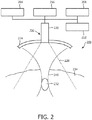
- a device 200 for implementing the technology proposed herein might include, in addition to a medical imaging module 204 and therapy unit 208, an injection apparatus 212 for administering, by injection, microbubbles and agent, and a controller 216 for these components 204, 208, 212.
- the microbubbles and agent may be preconfigured so that the microbubbles carry the agent. Alternatively, the microbubbles and agent are co-injected, with their mixture occurring before administration or internally after administration.
- the microbubbles and agent are injected separately, to avoid adverse chemical interaction as discussed in the commonly-assigned patent application entitled “Assays for Ultrasound Mediated Delivery.”
- the microbubble and agent are administered under manual control by the clinician.
- Both the imaging module 204 and the therapy unit 208 operate or comprise respective ultrasound transducers, or ultrasound transducer arrays, 220, 224.
- the medical imaging in two or three dimensions provides a field of view (FOV) 228 that covers a treatment region 232, which in the case shown is a focal zone or "focal spot" within body tissue 234.
- the imaging may be for example in B-mode, or in contrast mode.
- the contrast mode may include non-linear imaging methods, such as harmonic imaging, pulse inversion imaging, and power modulated pulse inversion imaging.
- MI mechanical-index
- the MI is less than or equal to 0.1.
- the ultrasound treatment beam is focused, weakly focused or unfocused.
- the therapeutic ultrasound can be delivered by a single element, or by a one- or two-dimensional array.
- the imaging transducer 220 and therapy transducer 224 can be part of the same probe 236, and confocal as shown in FIG. 2 .
- a single transducer can operate in a therapy mode and in an imaging mode. It is not expected, and most of the time not possible, to image at the same time that acoustic energy 240 in the form of therapeutic pulses is being delivered. This is because the amplitudes of the therapeutic pulses are larger than those of the imaging pulses, causing interference with the monitoring function. Thus, imaging/monitoring and delivering therapeutic pulses are mutually exclusive events.
- a switch can be added to the device 200 to select between the functionality of the transducer, from an imaging mode used during monitoring to a therapy mode used during energy delivery.
- the device 200 further includes a registration mechanism by which it is assured that the FOV covers the field of action of the therapy transducer 224, and that a one-to-one registration between the coordinate systems of the imaging and therapy transducers 220, 224 is established. Even with the confocal setup in FIG. 2 , an adjustment to axial registration may be appropriate. To fine tune registration, a small amount of microbubbles may be injected at the outset, with imaging and a display screen active. The clinician, or other user of the device 200, can then see if oscillation occurred where expected, and make any needed change to parameters associated with the imaging and/or therapy beams. This can be done by pointing to (with a touch-sensitive screen) or navigating to (as by manipulating a mouse) a corresponding point in the displayed image.
- a treatment plan execution algorithm executed by the controller 216 for example, maximizes the ultrasound mediated transfection and delivery of agents based on real-time feedback obtained from the imaging transducer 220, and an associated imaging analyis function, and a priori information.
- the a priori information includes, but is not limited to: injected microbubble concentration, in vivo microbubble half-life, microbubble oscillation and destruction pressures and treatment repeats needed to achieve a therapeutically significant extravasation and transfection for the target tissue based on clinical trial data and pre-clinical studies, typical tissue attenuation, therapy transducer focal zone size and shape, and therapy transducer focusing capabilities.
- the algorithm can be received by the controller 216 by wire input, or wirelessly via an antenna and from a remote transmitting antenna. In either case, the signal to be transmitted is generated by appropriately varying an electrical current. Other control information, or data, can likewise be embodied within the signal.
- the overall goals of the treatment plan execution algorithm are to: (i) ensure that the therapeutic ultrasound is only applied to the current (target) region 232 when microbubbles are present in the required amount; and (ii) deliver therapeutic ultrasound to the current region in the required dose and in the shortest time feasible.
- an unfocused therapy beam may be applied. It covers a much larger volume than the typical focal region. Thus fewer separate therapy exposures are required in carrying out the overall treatment plan. This saves time, with the additional consequent benefits of fewer chances for error due to patient or clinician movement, and cost savings as a result of the reduced service time.
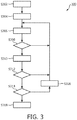
- An exemplary unfocused-therapy-beam procedure 300 in FIG. 3 commences, after the treatment plan is defined (step S302), with infusion of microbubbles and agent to be delivered (step S304).
- readings derived from the imaging for the ROI are taken (step S306).
- the condition to be met can, for example, involve attainment of threshold grayscale value, or mean grayscale value over the ROI.
- the determination as to whether the condition is met might be based on real-time, frequency-specific information derived from imaging of the ROI.
- the information may include the strength of a particular frequency in the echo received from a ROI, the emergence of a certain frequency band, etc., which would be generated by the harmonic echo from the microbubbles once present in the ROI at a sufficiently high concentrations, for example.
- a preestablished therapeutic ultrasound pulse is issued (step S310). This can occur automatically and without the need for user intervention. The pulse oscillates and bursts the microbubbles in the current treatment region 232. This leads to agent extravasation and transfection. Query is then made as to whether a targeted dose for the current treatment region, which is normally the same for each treatment region 232, has been reached.
- Each iteration of energizing the current treatment region 232 may be assumed to release a particular amount of agent for uptake in the region, in which case that amount is multiplied by the number of iterations so far.
- actual bubble presence in the treatment region 232 may be calculated based on the grayscale value acquired just before energization. Each of these bubble presence values can be summed to arrive at an estimate of accumulated dosage. If the total targeted dosage for the current treatment region 232 has not yet been met (step S312), processing returns to step S306, or alternatively to step S302.
- step S312 if the total targeted dosage for the current treatment region 232 is now met (step S312) and a next treatment region remains (step S314), the unfocused transducer is moved to point to that next treatment region (step S316). If the probe 236 is handheld, the clinician makes this move manually. The transducer movement could also be mechanical, or accomplished by switching to a second probe already in place. On the other hand, if there is no next treatment region 232 (step S314), the infusion is halted and the procedure is terminated (step S318).
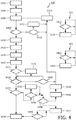
- a focused-or-slightly-focused-therapy-beam procedure 400 represented by FIG. 4 , by way of illustrative and non-limitative example, more precisely delivers the agent to the intended treatment regions 232. This avoids side effects in adjoining tissue and is especially appropriate for an overall small treatment area divisible into separate treatment regions 232.
- the embodiment shown incorporates a number of features for minimizing total treatment time.
- the treatment region 232 typically has a size defined by that of the focal spot of the therapy transducer 224.
- treatment commences, after the treatment plan is defined (step S402), with infusion of microbubbles and agent to be delivered (step S404).
- imaging readings for the ROI are taken (step S406).
- step S410 If the predefined condition is not met, i.e., indicative of insufficient local bubble presence (step S408), query is made as to whether the current treatment region 232 is on a list maintained by the device 100 (step S410).
- the list is made up of treatment regions 232 that have not yet been energized during the current pass, i.e., and consequently remain to be energized. If the current treatment region 232 is not on the list (step S410), it is added to the list (step S412). In either event, the therapy focus shifts to the next treatment region 232 in the current treatment pass (step S414) and processing returns to step S406.
- step S408 guarantees that that next treatment region 232 exists, i.e., some treatment region qualifies as the next treatment region even if only the current region is left and is thus regarded as the "next" treatment region. More generally, whether that next treatment region 232 is picked from the list or from treatment regions not on the list depends on whether list mode is "on.” Initially, that is in steps 402 and 404, list mode is "off', since there is not yet any list (for the current pass). The purpose of the list is to minimize the total time spent in treatment.
- Utilizing the list avoids waiting in the type of loop shown in S306 to S308, unnecessarily for regions to replenish with microbubbles while other regions would already meet this condition and be deemed ready to receive treatment. Yet, the list can be returned to, periodically for instance, for monitoring and result dependent region-energizing. This return and the switch back are automatic and performed without the need for user intervention.
- the treatment plan adapts to local perfusion characteristics of the target tissue. In particular, regions with slower perfusion, and hence slower microbubble reperfusion, will require longer treatment time, i.e., uninterrupted clock time from the start of monitoring for the treatment region 232 until the completion of treatment for the region.
- step S408 If, on the other hand, the predefined condition is met (step S408), the bubble replenishment delay is logged (step S416), a pulse is applied (step S418), oscillating bubbles burst (step S420), and therapeutic agent is delivered to the current treatment region 232 (step S422).
- Query is made as to whether the current treatment region 232 is on the list (step S424). If the current treatment region is on the list (step S424), it is now removed from the list (step S426).
- next treatment region 232 exists in the current pass (step S428), query is made, automatically and without the need for user intervention, as to whether to skip that next treatment region (step S430). If, for example, that next treatment region 232 has been identified based on a previous treatment pass, or a plurality of previous treatment passes, as exhibiting a bubble replenishment duration that is sufficiently short, this could indicate that the treatment region 232 is populated mostly by larger vessels with higher blood flow. Thus, treating this region would not necessarily increase the efficacy of the treatment, and the region can be skipped.
- step S430 If it is here decided that this next treatment region 232 is to be skipped (step S430), processing returns to step S428.
- step S430 processing branches back to step S414 with the therapy focus shifting to this next treatment region.
- the shifting is done by electronic steering automatically and without the need for user intervention. Alternatively, the shifting can be done manually or mechanically.
- stepS428 If, on the other hand, a next treatment region 232 no longer exists in the current treatment pass (stepS428), query is made as to whether the agent- or ultrasound-dose is still incomplete for at least some treatment region (step S432).
- step S432 If the dose is complete for all treatment regions 232 (step S432), the infusion is halted and the procedure is terminated (step S434).
- step S436 If, to the contrary, the dose is incomplete for some treatment region 232 (step S432), query is made as to whether this is the first treatment pass (step S436). If it is not the first treatment pass (step S436), an estimate of remaining treatment time is indicated to a user of the device 100 (step S438).
- the treatment time execution algorithm can make this estimate based on information, e.g., observed values of treatment-region-specific replenishment duration and list processing duration, collected during the first treatment pass. The estimate can also take into account the experience of any previous treatment pass after the first treatment pass.
- Query is then made as to whether a three-dimensional (3D) reperfusion map option was selected by the user (step S440).
- the user selection can be made at this point, or may have been made earlier, such as at the outset of the USMD procedure thereby allowing processing here to proceed automatically and without the need for user intervention.
- the reperfusion map option allows treatment to proceed expeditiously from this point forward. Further bubble presence monitoring is foregone.
- at least the experience of the first treatment pass operates to shorten overall time-wise the remaining part of the treatment. That experience, i.e., the reperfusion map, includes replenishment duration information acquired, treatment region-by-treatment region, during the first treatment pass. Accordingly, the remainder of the treatment proceeds automatically and without the need for user intervention, foregoing the feedback that would otherwise be utilized in closed loop operation.
- step S440 the treatment proceeds to completion based on the reperfusion map and without need for further bubble monitoring (step S442). Once dosage is complete for all treatment regions 232 (step S444), the infusion is halted and the procedure is terminated (step S434).
- the next treatment pass becomes the current treatment pass, i.e., the treatment pass counter is bumped up (step S446).
- each treatment region 232 is assigned an initial priority based on the list in the previous pass (step S448).
- treatment regions 232 that were on the list are, or tend to be, accorded higher priority than treatment regions not on the list. Regions 232 that were on the list will tend to be mutually nearby, all sharing the same or similar local vascularity evidenced by the slow reperfusion. If processing region-to-region proceeds upstream, energizing of one region 232 will not tend to affect replenishment duration for another.
- a list mode process 450 queries as to whether the list mode is to be switched (step S452). When it is ready to be switched (step S452), the switch is made (step S454).
- a region skipping processs 460 queries as to whether the replenishment rate observed in previous treatment pass, or treatment passes, exceeds a pre-specified threshold (step S462). If the threshold is exceeded, skipping is set "on" for the respective treatment region 232 (step S464).
- An alternative treatment plan 500, represented in FIG. 5 , for a focused or weakly focused therapy transducer 224 reduces the amount of region monitoring, but can retain effectiveness in dosage delivery by treating regions in an upstream order with respect to blood flow.
- the first two steps (S502, S504) are analogous to the initial steps S302, S304 in FIG. 3 and the initial steps S402, S404 in FIG. 4 . However, they may be accompanied, in any order, by a blood flow direction determination.
- the probe 236 is manipulated, e.g., manually, angularly and/or laterally, and interactively with a display or audio feedback, using a relatively wide FOV, treatment plan-wise, to detect sufficient Doppler power.
- a directional reading of blood flow is obtained, as by color Doppler.
- the transducer focus is then moved, electronically, to an initial treatment region 232 relatively downstream of the flow, if such a starting point is medically advisable or feasible.
- imaging readings for the ROI are taken (step S506).
- step S508 a pulse is applied (step S510), oscillating bubbles burst (step S512), and therapeutic agent is delivered (step S514).
- step S566 If a next treatment region 232 remains in the current treatment pass (step S516), the therapy focus is moved to that next treatment region (step S518), and processing returns to step S510.
- step S536 query is made as to whether the dosage is complete (step S520).
- step S520 If the dosage is complete (step S520), the infusion is halted and the procedure is terminated (step S522).
- step S520 if dosage is not complete (step S520), the next treatment pass becomes the current treatment pass (step S524), the therapy focus moves to the first treatment region 232 (S526) and processing branches back to step S506.
- Bubble presence within a region is monitored to determine if a predetermined condition is met such as whether the presence is of sufficient magnitude, the bubbles being subject to energizing.
- Ultrasonic methods to determine microbubble presence are known in the art and include B-mode ultrasound imaging, or any of the nonlinear microbubble response based imaging including pulse inversion, power Doppler, and contrast sequence imaging.
- the energizing only occurs when time-wise preceded by the determination.
- the determining can include measuring a grayscale value, or assessing the energy carried by a frequency component of the echo signal, in the region in real time.
- the energizing may occur region-by-region, automatically and without need for user intervention, in a treatment pass over the regions.
- the regions in the pass might be subject to respective instances of the energizing without intervening monitoring, or, in another embodiment, to both the determining and the responsive energizing.
- the determining can be subject to, automatically and without need for user intervention, interruption and concurrent switching to a next region.
- the interruption is, automatically and without need for user intervention, concurrent with adding the current region to a list maintained.
- methodology of the present invention can advantageously be applied in providing USMD for a human or animal subject, the scope of the present invention is not so limited. More broadly, techniques disclosed herein are directed to USMD to body tissue, in vivo, in vitro or ex vivo, and even to non-medical substance delivery technology.
Landscapes
- Health & Medical Sciences (AREA)
- Life Sciences & Earth Sciences (AREA)
- Engineering & Computer Science (AREA)
- General Health & Medical Sciences (AREA)
- Animal Behavior & Ethology (AREA)
- Veterinary Medicine (AREA)
- Public Health (AREA)
- Biomedical Technology (AREA)
- Heart & Thoracic Surgery (AREA)
- Medical Informatics (AREA)
- Hematology (AREA)
- Anesthesiology (AREA)
- Dermatology (AREA)
- Physics & Mathematics (AREA)
- Surgery (AREA)
- Molecular Biology (AREA)
- Biophysics (AREA)
- Radiology & Medical Imaging (AREA)
- Pathology (AREA)
- Nuclear Medicine, Radiotherapy & Molecular Imaging (AREA)
- Surgical Instruments (AREA)
Claims (14)
- Vorrichtung, umfassend:ein Bildgebungsmodul (204), das ausgelegt ist zum Überwachen, um zu bestimmen, dass die Präsenz von Blasen in einer Region eine vorbestimmte Bedingung erfüllt, die einer Fähigkeit entspricht, eine effektive Dosis einer Substanz abzugeben;eine Therapieeinheit (208), die ausgelegt ist zum Erregen von Blasen innerhalb der Region, um die Substanz abzugeben; undeine Steuerung zum Steuern des Bildgebungsmoduls (204) und der Therapieeinheit (208),wobei die Steuerung angepasst ist, um:einen Behandlungsplan umzusetzen, der Abgeben der Substanz in getrennte Behandlungsregionen in einer Anzahl von Behandlungsdurchgängen umfasst; undeine Liste zu führen, die aus Behandlungsregionen besteht, die während eines aktuellen Durchgangs noch nicht erregt wurden, und wobei die Steuerung so angepasst ist, dass:
das Erregen (i) in Echtzeitreaktion auf eine Bestimmung erfolgt, dass die vorbestimmte Bedingung für die aktuelle Behandlungsregion erfüllt ist (S306-S310), und der aktuelle Behandlungsplan aus der Liste entfernt wird, wenn er auf der Liste steht, und (ii) in die nächste Behandlungsregion im aktuellen Durchgang verlagert als Reaktion auf die Bestimmung, dass die vorbestimmte Bedingung nicht erfüllt ist, und die aktuelle Behandlungsregion dann zu der Liste hinzugefügt wird, wenn sie noch nicht auf der Liste steht. - Vorrichtung nach Anspruch 1, wobei das Erregen Region nach Region automatisch und ohne Notwendigkeit eines Eingreifens des Benutzers in einem Behandlungsdurchgang über die Vielzahl von Behandlungsregionen (S316) erfolgt.
- Vorrichtung nach Anspruch 2, wobei die Vielzahl von Behandlungsregionen (232) in dem Behandlungsdurchgang jeweiligen Instanzen des Erregens ohne Eingreifen von Überwachen (S516) unterzogen wird.
- Vorrichtung nach Anspruch 2, wobei die Vielzahl von Behandlungsregionen in dem Behandlungsdurchgang jeweils sowohl dem Bestimmen als auch dem reagierenden Erregen (S306-S316) unterzogen wird.
- Vorrichtung nach Anspruch 4, wobei weiter dem Bestimmen automatisch und ohne Notwendigkeit eines Eingreifens des Benutzers, einer Unterbrechung (S408) und einem gleichzeitigen Umschalten (S410) in eine nächste Behandlungsregion unterzogen wird.
- Vorrichtung nach Anspruch 5, wobei weiter die Unterbrechung automatisch und ohne Notwendigkeit eines Eingreifens des Benutzers, gleichzeitig mit Hinzufügen (S412) der aktuellen Behandlungsregion zur Liste erfolgt.
- Vorrichtung nach Anspruch 6, wobei die Steuerung angepasst ist, um automatisch und ohne Notwendigkeit eines Eingreifens des Benutzers regelmäßig das Überwachen von einer Behandlungsregion, die nicht auf der Liste steht, in eine Behandlungsregion auf der Liste umzuschalten (S452, S454).
- Vorrichtung nach Anspruch 6, wobei weiter das Bildgebungsmodul das Überwachen nach Behandlungsregion in einer Reihenfolge gemäß Priorität (S448) für Regionen ausführt, die in einem vorausgehenden Behandlungsdurchgang auf der Liste standen.
- Vorrichtung nach Anspruch 8, wobei die Reihenfolge eine anfängliche Reihenfolge umfasst, die der Unterbrechung und dem gleichzeitigen Umschalten (S406-S414) unterliegt.
- Vorrichtung nach Anspruch 1, wobei weiter die Therapieeinheit automatisch und ohne Notwendigkeit eines Eingreifens des Benutzers auf der Grundlage von Gewebedynamik, die aus einem Ergebnis des Überwachens, das in einem vorausgehenden Behandlungsdurchgang (S462) erfolgt ist, abgeleitet wird, angepasst ist, um adaptiv Blasen innerhalb der aktuellen Behandlungsregion zu erregen.
- Vorrichtung nach Anspruch 1, wobei die Steuerung angepasst ist, um automatisch und ohne Notwendigkeit eines Eingreifens des Benutzers: a) das Überwachen in einem aktuellen Behandlungsdurchgang zu initiieren; b) aus dem Überwachen in dem aktuellen Behandlungsdurchgang ein Ergebnis abzuleiten; und c) auf der Grundlage dieses Ergebnisses ohne Notwendigkeit von weiterer Überwachen (S442) den Behandlungsplan abzuschließen.
- Vorrichtung nach Anspruch 11, wobei das Ergebnis eine dreidimensionale Reperfusionskarte (S440) umfasst.
- Vorrichtung nach Anspruch 1, wobei die Steuerung angepasst ist, um automatisch und ohne Notwendigkeit eines Eingreifens des Benutzers auf der Grundlage eines aus dem Überwachen abgeleiteten Ergebnisses eine Abschätzung der verbleibenden Behandlungszeit zu erstellen, und um die Abschätzung an einen Benutzer der Vorrichtung (S438) auszugeben.
- Nicht flüchtiges, computerlesbares Medium (216), ausgeführt mit Instruktionen, die von einem Prozessor abgearbeitet werden können, um eine Reihe von Handlungen für eine Substanzabgabevorrichtung vorzunehmen, wobei die Handlungen umfassen:Überwachen, um zu bestimmen, dass die Präsenz von Blasen in einer Region eine vorbestimmte Bedingung erfüllt, die einer Fähigkeit entspricht, eine effektive Dosis einer Substanz abzugeben;Erregen von Blasen innerhalb der Region, um die Substanz abzugeben; undSteuern des Bildgebungsmoduls (204) und der Therapieeinheit (208), um:einen Behandlungsplan umzusetzen, der Abgeben der Substanz in getrennte Behandlungsregionen in einer Anzahl von Behandlungsdurchgängen umfasst; undeine Liste zu führen, die aus Behandlungsregionen besteht, die während eines aktuellen Durchgangs noch nicht erregt wurden, und wobei die Steuerung so angepasst ist, dass:
das Erregen (i) in Echtzeitreaktion auf eine Bestimmung erfolgt, dass die vorbestimmte Bedingung für die aktuelle Behandlungsregion erfüllt ist (S306-S310), und der aktuelle Behandlungsplan aus der Liste entfernt wird, wenn er auf der Liste steht, und (ii) in die nächste Behandlungsregion im aktuellen Durchgang verlagert als Reaktion auf die Bestimmung, dass die vorbestimmte Bedingung nicht erfüllt ist, und die aktuelle Behandlungsregion dann zu der Liste hinzugefügt wird, wenn sie noch nicht auf der Liste steht.
Applications Claiming Priority (2)
| Application Number | Priority Date | Filing Date | Title |
|---|---|---|---|
| US201161540232P | 2011-09-28 | 2011-09-28 | |
| PCT/IB2012/054438 WO2013046076A1 (en) | 2011-09-28 | 2012-08-29 | Automated ultrasound mediated delivery. |
Publications (2)
| Publication Number | Publication Date |
|---|---|
| EP2744558A1 EP2744558A1 (de) | 2014-06-25 |
| EP2744558B1 true EP2744558B1 (de) | 2019-10-30 |
Family
ID=47018327
Family Applications (1)
| Application Number | Title | Priority Date | Filing Date |
|---|---|---|---|
| EP12772484.7A Active EP2744558B1 (de) | 2011-09-28 | 2012-08-29 | Automatisierte ultraschallvermittelte abgabe |
Country Status (5)
| Country | Link |
|---|---|
| US (1) | US9643000B2 (de) |
| EP (1) | EP2744558B1 (de) |
| CN (1) | CN103826692B (de) |
| MX (1) | MX345430B (de) |
| WO (1) | WO2013046076A1 (de) |
Families Citing this family (3)
| Publication number | Priority date | Publication date | Assignee | Title |
|---|---|---|---|---|
| CN105992608B (zh) * | 2013-12-05 | 2019-01-15 | 弗罗桑医疗设备股份公司 | 回声留置导管 |
| CN111655337B (zh) | 2017-12-11 | 2023-06-27 | 医视特有限公司 | 在微泡增强的超声程序中控制治疗剂的递送 |
| JP2026513808A (ja) * | 2023-04-02 | 2026-05-01 | インサイテック リミテッド | マイクロバブル応答を監視することによる超音波処置の制御 |
Family Cites Families (14)
| Publication number | Priority date | Publication date | Assignee | Title |
|---|---|---|---|---|
| US5413550A (en) * | 1993-07-21 | 1995-05-09 | Pti, Inc. | Ultrasound therapy system with automatic dose control |
| GB9610830D0 (en) * | 1996-05-23 | 1996-07-31 | Andaris Ltd | Use of hollow microcapsules |
| US6896659B2 (en) | 1998-02-06 | 2005-05-24 | Point Biomedical Corporation | Method for ultrasound triggered drug delivery using hollow microbubbles with controlled fragility |
| US6740039B1 (en) * | 1999-08-20 | 2004-05-25 | Koninklijke Philips Electronics N.V. | Methods and apparatus for displaying information relating to delivery and activation of a therapeutic agent using ultrasound energy |
| US6716168B2 (en) * | 2002-04-30 | 2004-04-06 | Siemens Medical Solutions Usa, Inc. | Ultrasound drug delivery enhancement and imaging systems and methods |
| WO2006119572A1 (en) * | 2005-05-12 | 2006-11-16 | Compumedics Medical Innovation Pty Ltd | Ultrasound diagnosis and treatment apparatus |
| CA2610561A1 (en) * | 2005-06-02 | 2006-12-07 | Cancercure Technology As | Ultrasound treatment system |
| CN101028524B (zh) * | 2006-03-03 | 2010-10-20 | 重庆融海超声医学工程研究中心有限公司 | 超声微泡靶向定位控释药物/基因装置及靶向转移的方法 |
| JP5689416B2 (ja) * | 2008-07-23 | 2015-03-25 | コーニンクレッカ フィリップス エヌ ヴェ | 超音波仲介による薬送達 |
| WO2010020938A1 (en) * | 2008-08-18 | 2010-02-25 | Koninklijke Philips Electronics, N.V. | Ultrasound enhanced stem cell delivery device and method |
| CN101642607B (zh) * | 2009-09-01 | 2012-11-28 | 西安交通大学 | 基于阵列换能器的低强度聚焦超声药物控释与监控装置 |
| JP5632203B2 (ja) * | 2010-06-08 | 2014-11-26 | 株式会社東芝 | 超音波診断装置、超音波画像処理装置及び超音波画像処理プログラム |
| CN102113898A (zh) * | 2010-12-22 | 2011-07-06 | 西安交通大学 | 载药造影微泡的超声控制释放及其监控成像方法及微泡破坏量评价方法 |
| EP2744559A1 (de) | 2011-10-05 | 2014-06-25 | Koninklijke Philips N.V. | Assays für ultraschall-vermittelte freisetzung |
-
2012
- 2012-08-29 EP EP12772484.7A patent/EP2744558B1/de active Active
- 2012-08-29 WO PCT/IB2012/054438 patent/WO2013046076A1/en not_active Ceased
- 2012-08-29 MX MX2014003592A patent/MX345430B/es active IP Right Grant
- 2012-08-29 US US14/347,904 patent/US9643000B2/en active Active
- 2012-08-29 CN CN201280047546.1A patent/CN103826692B/zh active Active
Non-Patent Citations (1)
| Title |
|---|
| None * |
Also Published As
| Publication number | Publication date |
|---|---|
| EP2744558A1 (de) | 2014-06-25 |
| MX345430B (es) | 2017-01-31 |
| US20140249469A1 (en) | 2014-09-04 |
| CN103826692A (zh) | 2014-05-28 |
| WO2013046076A1 (en) | 2013-04-04 |
| CN103826692B (zh) | 2016-06-22 |
| US9643000B2 (en) | 2017-05-09 |
| MX2014003592A (es) | 2014-04-25 |
Similar Documents
| Publication | Publication Date | Title |
|---|---|---|
| JP5836990B2 (ja) | 音響エネルギーを使用してメディカントを調節するための方法およびシステム | |
| US11369810B2 (en) | Method and apparatus for ultrasonic mediation of drug delivery using microbubbles | |
| JP5670635B2 (ja) | 3d超音波撮像及びセラピーに対する装置 | |
| JP5863654B2 (ja) | 治療および画像処理超音波変換器用のマイクロマニピュレータ制御アーム | |
| US20060079868A1 (en) | Method and system for treatment of blood vessel disorders | |
| US20110144545A1 (en) | Methods And System For Delivering Treatment To A Region Of Interest Using Ultrasound | |
| WO2019116095A1 (en) | Controlling delivery of therapeutic agent in microbubble-enhanced ultrasound procedures | |
| US20040049134A1 (en) | System and methods for treatment of alzheimer's and other deposition-related disorders of the brain | |
| JP2021505293A (ja) | 動的に変化する媒体内での超音波集束 | |
| EP3554382B1 (de) | Adaptives pulsieren für sonothrombolysebehandlung | |
| US6475148B1 (en) | Medical diagnostic ultrasound-aided drug delivery system and method | |
| CN111132732A (zh) | 微泡增强超声治疗中的超声频率和微泡尺寸的优化 | |
| CN101252970B (zh) | 具有治疗换能器放大器的组合成像和治疗换能器 | |
| JP2022551875A (ja) | 集束超音波手技のための事前治療組織増感 | |
| US9643000B2 (en) | Automated ultrasound mediated delivery | |
| US20080319316A1 (en) | Combination Imaging and Therapy Transducer | |
| CN116348173A (zh) | 使用诊断成像阵列用于血脑屏障开放和空化成像的系统和方法 |
Legal Events
| Date | Code | Title | Description |
|---|---|---|---|
| PUAI | Public reference made under article 153(3) epc to a published international application that has entered the european phase |
Free format text: ORIGINAL CODE: 0009012 |
|
| 17P | Request for examination filed |
Effective date: 20140318 |
|
| AK | Designated contracting states |
Kind code of ref document: A1 Designated state(s): AL AT BE BG CH CY CZ DE DK EE ES FI FR GB GR HR HU IE IS IT LI LT LU LV MC MK MT NL NO PL PT RO RS SE SI SK SM TR |
|
| DAX | Request for extension of the european patent (deleted) | ||
| STAA | Information on the status of an ep patent application or granted ep patent |
Free format text: STATUS: EXAMINATION IS IN PROGRESS |
|
| 17Q | First examination report despatched |
Effective date: 20181016 |
|
| GRAP | Despatch of communication of intention to grant a patent |
Free format text: ORIGINAL CODE: EPIDOSNIGR1 |
|
| STAA | Information on the status of an ep patent application or granted ep patent |
Free format text: STATUS: GRANT OF PATENT IS INTENDED |
|
| INTG | Intention to grant announced |
Effective date: 20190527 |
|
| RIN1 | Information on inventor provided before grant (corrected) |
Inventor name: LEYVI, EVGENIY Inventor name: RAJU, BALASUNDAR, IYYAVU Inventor name: SEIP, RALF |
|
| GRAS | Grant fee paid |
Free format text: ORIGINAL CODE: EPIDOSNIGR3 |
|
| GRAA | (expected) grant |
Free format text: ORIGINAL CODE: 0009210 |
|
| STAA | Information on the status of an ep patent application or granted ep patent |
Free format text: STATUS: THE PATENT HAS BEEN GRANTED |
|
| AK | Designated contracting states |
Kind code of ref document: B1 Designated state(s): AL AT BE BG CH CY CZ DE DK EE ES FI FR GB GR HR HU IE IS IT LI LT LU LV MC MK MT NL NO PL PT RO RS SE SI SK SM TR |
|
| REG | Reference to a national code |
Ref country code: GB Ref legal event code: FG4D |
|
| REG | Reference to a national code |
Ref country code: CH Ref legal event code: EP |
|
| REG | Reference to a national code |
Ref country code: AT Ref legal event code: REF Ref document number: 1195504 Country of ref document: AT Kind code of ref document: T Effective date: 20191115 |
|
| REG | Reference to a national code |
Ref country code: DE Ref legal event code: R096 Ref document number: 602012065278 Country of ref document: DE |
|
| REG | Reference to a national code |
Ref country code: IE Ref legal event code: FG4D |
|
| REG | Reference to a national code |
Ref country code: DE Ref legal event code: R084 Ref document number: 602012065278 Country of ref document: DE |
|
| REG | Reference to a national code |
Ref country code: GB Ref legal event code: 746 Effective date: 20200107 |
|
| REG | Reference to a national code |
Ref country code: LT Ref legal event code: MG4D |
|
| RAP2 | Party data changed (patent owner data changed or rights of a patent transferred) |
Owner name: KONINKLIJKE PHILIPS N.V. |
|
| PG25 | Lapsed in a contracting state [announced via postgrant information from national office to epo] |
Ref country code: ES Free format text: LAPSE BECAUSE OF FAILURE TO SUBMIT A TRANSLATION OF THE DESCRIPTION OR TO PAY THE FEE WITHIN THE PRESCRIBED TIME-LIMIT Effective date: 20191030 Ref country code: PL Free format text: LAPSE BECAUSE OF FAILURE TO SUBMIT A TRANSLATION OF THE DESCRIPTION OR TO PAY THE FEE WITHIN THE PRESCRIBED TIME-LIMIT Effective date: 20191030 Ref country code: SE Free format text: LAPSE BECAUSE OF FAILURE TO SUBMIT A TRANSLATION OF THE DESCRIPTION OR TO PAY THE FEE WITHIN THE PRESCRIBED TIME-LIMIT Effective date: 20191030 Ref country code: LV Free format text: LAPSE BECAUSE OF FAILURE TO SUBMIT A TRANSLATION OF THE DESCRIPTION OR TO PAY THE FEE WITHIN THE PRESCRIBED TIME-LIMIT Effective date: 20191030 Ref country code: NO Free format text: LAPSE BECAUSE OF FAILURE TO SUBMIT A TRANSLATION OF THE DESCRIPTION OR TO PAY THE FEE WITHIN THE PRESCRIBED TIME-LIMIT Effective date: 20200130 Ref country code: FI Free format text: LAPSE BECAUSE OF FAILURE TO SUBMIT A TRANSLATION OF THE DESCRIPTION OR TO PAY THE FEE WITHIN THE PRESCRIBED TIME-LIMIT Effective date: 20191030 Ref country code: BG Free format text: LAPSE BECAUSE OF FAILURE TO SUBMIT A TRANSLATION OF THE DESCRIPTION OR TO PAY THE FEE WITHIN THE PRESCRIBED TIME-LIMIT Effective date: 20200130 Ref country code: GR Free format text: LAPSE BECAUSE OF FAILURE TO SUBMIT A TRANSLATION OF THE DESCRIPTION OR TO PAY THE FEE WITHIN THE PRESCRIBED TIME-LIMIT Effective date: 20200131 Ref country code: LT Free format text: LAPSE BECAUSE OF FAILURE TO SUBMIT A TRANSLATION OF THE DESCRIPTION OR TO PAY THE FEE WITHIN THE PRESCRIBED TIME-LIMIT Effective date: 20191030 Ref country code: PT Free format text: LAPSE BECAUSE OF FAILURE TO SUBMIT A TRANSLATION OF THE DESCRIPTION OR TO PAY THE FEE WITHIN THE PRESCRIBED TIME-LIMIT Effective date: 20200302 Ref country code: NL Free format text: LAPSE BECAUSE OF FAILURE TO SUBMIT A TRANSLATION OF THE DESCRIPTION OR TO PAY THE FEE WITHIN THE PRESCRIBED TIME-LIMIT Effective date: 20191030 |
|
| REG | Reference to a national code |
Ref country code: NL Ref legal event code: MP Effective date: 20191030 |
|
| PG25 | Lapsed in a contracting state [announced via postgrant information from national office to epo] |
Ref country code: RS Free format text: LAPSE BECAUSE OF FAILURE TO SUBMIT A TRANSLATION OF THE DESCRIPTION OR TO PAY THE FEE WITHIN THE PRESCRIBED TIME-LIMIT Effective date: 20191030 Ref country code: HR Free format text: LAPSE BECAUSE OF FAILURE TO SUBMIT A TRANSLATION OF THE DESCRIPTION OR TO PAY THE FEE WITHIN THE PRESCRIBED TIME-LIMIT Effective date: 20191030 Ref country code: IS Free format text: LAPSE BECAUSE OF FAILURE TO SUBMIT A TRANSLATION OF THE DESCRIPTION OR TO PAY THE FEE WITHIN THE PRESCRIBED TIME-LIMIT Effective date: 20200229 |
|
| PG25 | Lapsed in a contracting state [announced via postgrant information from national office to epo] |
Ref country code: AL Free format text: LAPSE BECAUSE OF FAILURE TO SUBMIT A TRANSLATION OF THE DESCRIPTION OR TO PAY THE FEE WITHIN THE PRESCRIBED TIME-LIMIT Effective date: 20191030 |
|
| PG25 | Lapsed in a contracting state [announced via postgrant information from national office to epo] |
Ref country code: RO Free format text: LAPSE BECAUSE OF FAILURE TO SUBMIT A TRANSLATION OF THE DESCRIPTION OR TO PAY THE FEE WITHIN THE PRESCRIBED TIME-LIMIT Effective date: 20191030 Ref country code: CZ Free format text: LAPSE BECAUSE OF FAILURE TO SUBMIT A TRANSLATION OF THE DESCRIPTION OR TO PAY THE FEE WITHIN THE PRESCRIBED TIME-LIMIT Effective date: 20191030 Ref country code: EE Free format text: LAPSE BECAUSE OF FAILURE TO SUBMIT A TRANSLATION OF THE DESCRIPTION OR TO PAY THE FEE WITHIN THE PRESCRIBED TIME-LIMIT Effective date: 20191030 Ref country code: DK Free format text: LAPSE BECAUSE OF FAILURE TO SUBMIT A TRANSLATION OF THE DESCRIPTION OR TO PAY THE FEE WITHIN THE PRESCRIBED TIME-LIMIT Effective date: 20191030 |
|
| REG | Reference to a national code |
Ref country code: DE Ref legal event code: R097 Ref document number: 602012065278 Country of ref document: DE |
|
| REG | Reference to a national code |
Ref country code: AT Ref legal event code: MK05 Ref document number: 1195504 Country of ref document: AT Kind code of ref document: T Effective date: 20191030 |
|
| PG25 | Lapsed in a contracting state [announced via postgrant information from national office to epo] |
Ref country code: SK Free format text: LAPSE BECAUSE OF FAILURE TO SUBMIT A TRANSLATION OF THE DESCRIPTION OR TO PAY THE FEE WITHIN THE PRESCRIBED TIME-LIMIT Effective date: 20191030 Ref country code: IT Free format text: LAPSE BECAUSE OF FAILURE TO SUBMIT A TRANSLATION OF THE DESCRIPTION OR TO PAY THE FEE WITHIN THE PRESCRIBED TIME-LIMIT Effective date: 20191030 Ref country code: SM Free format text: LAPSE BECAUSE OF FAILURE TO SUBMIT A TRANSLATION OF THE DESCRIPTION OR TO PAY THE FEE WITHIN THE PRESCRIBED TIME-LIMIT Effective date: 20191030 |
|
| PLBE | No opposition filed within time limit |
Free format text: ORIGINAL CODE: 0009261 |
|
| STAA | Information on the status of an ep patent application or granted ep patent |
Free format text: STATUS: NO OPPOSITION FILED WITHIN TIME LIMIT |
|
| 26N | No opposition filed |
Effective date: 20200731 |
|
| PG25 | Lapsed in a contracting state [announced via postgrant information from national office to epo] |
Ref country code: AT Free format text: LAPSE BECAUSE OF FAILURE TO SUBMIT A TRANSLATION OF THE DESCRIPTION OR TO PAY THE FEE WITHIN THE PRESCRIBED TIME-LIMIT Effective date: 20191030 Ref country code: SI Free format text: LAPSE BECAUSE OF FAILURE TO SUBMIT A TRANSLATION OF THE DESCRIPTION OR TO PAY THE FEE WITHIN THE PRESCRIBED TIME-LIMIT Effective date: 20191030 |
|
| PG25 | Lapsed in a contracting state [announced via postgrant information from national office to epo] |
Ref country code: MC Free format text: LAPSE BECAUSE OF FAILURE TO SUBMIT A TRANSLATION OF THE DESCRIPTION OR TO PAY THE FEE WITHIN THE PRESCRIBED TIME-LIMIT Effective date: 20191030 |
|
| REG | Reference to a national code |
Ref country code: CH Ref legal event code: PL |
|
| PG25 | Lapsed in a contracting state [announced via postgrant information from national office to epo] |
Ref country code: LI Free format text: LAPSE BECAUSE OF NON-PAYMENT OF DUE FEES Effective date: 20200831 Ref country code: CH Free format text: LAPSE BECAUSE OF NON-PAYMENT OF DUE FEES Effective date: 20200831 Ref country code: LU Free format text: LAPSE BECAUSE OF NON-PAYMENT OF DUE FEES Effective date: 20200829 |
|
| REG | Reference to a national code |
Ref country code: BE Ref legal event code: MM Effective date: 20200831 |
|
| PG25 | Lapsed in a contracting state [announced via postgrant information from national office to epo] |
Ref country code: BE Free format text: LAPSE BECAUSE OF NON-PAYMENT OF DUE FEES Effective date: 20200831 Ref country code: IE Free format text: LAPSE BECAUSE OF NON-PAYMENT OF DUE FEES Effective date: 20200829 |
|
| PG25 | Lapsed in a contracting state [announced via postgrant information from national office to epo] |
Ref country code: TR Free format text: LAPSE BECAUSE OF FAILURE TO SUBMIT A TRANSLATION OF THE DESCRIPTION OR TO PAY THE FEE WITHIN THE PRESCRIBED TIME-LIMIT Effective date: 20191030 Ref country code: MT Free format text: LAPSE BECAUSE OF FAILURE TO SUBMIT A TRANSLATION OF THE DESCRIPTION OR TO PAY THE FEE WITHIN THE PRESCRIBED TIME-LIMIT Effective date: 20191030 Ref country code: CY Free format text: LAPSE BECAUSE OF FAILURE TO SUBMIT A TRANSLATION OF THE DESCRIPTION OR TO PAY THE FEE WITHIN THE PRESCRIBED TIME-LIMIT Effective date: 20191030 |
|
| PG25 | Lapsed in a contracting state [announced via postgrant information from national office to epo] |
Ref country code: MK Free format text: LAPSE BECAUSE OF FAILURE TO SUBMIT A TRANSLATION OF THE DESCRIPTION OR TO PAY THE FEE WITHIN THE PRESCRIBED TIME-LIMIT Effective date: 20191030 |
|
| PGFP | Annual fee paid to national office [announced via postgrant information from national office to epo] |
Ref country code: GB Payment date: 20230822 Year of fee payment: 12 |
|
| PGFP | Annual fee paid to national office [announced via postgrant information from national office to epo] |
Ref country code: FR Payment date: 20230824 Year of fee payment: 12 |
|
| GBPC | Gb: european patent ceased through non-payment of renewal fee |
Effective date: 20240829 |
|
| PG25 | Lapsed in a contracting state [announced via postgrant information from national office to epo] |
Ref country code: GB Free format text: LAPSE BECAUSE OF NON-PAYMENT OF DUE FEES Effective date: 20240829 |
|
| PG25 | Lapsed in a contracting state [announced via postgrant information from national office to epo] |
Ref country code: FR Free format text: LAPSE BECAUSE OF NON-PAYMENT OF DUE FEES Effective date: 20240831 |
|
| PGFP | Annual fee paid to national office [announced via postgrant information from national office to epo] |
Ref country code: DE Payment date: 20250827 Year of fee payment: 14 |