EP2730661A1 - Diagnostic and therapeutic targets for leukemia - Google Patents
Diagnostic and therapeutic targets for leukemia Download PDFInfo
- Publication number
- EP2730661A1 EP2730661A1 EP13177872.2A EP13177872A EP2730661A1 EP 2730661 A1 EP2730661 A1 EP 2730661A1 EP 13177872 A EP13177872 A EP 13177872A EP 2730661 A1 EP2730661 A1 EP 2730661A1
- Authority
- EP
- European Patent Office
- Prior art keywords
- calm
- hoxa5
- polypeptide
- leukemia
- cells
- Prior art date
- Legal status (The legal status is an assumption and is not a legal conclusion. Google has not performed a legal analysis and makes no representation as to the accuracy of the status listed.)
- Withdrawn
Links
- 208000032839 leukemia Diseases 0.000 title claims abstract description 85
- 230000001225 therapeutic effect Effects 0.000 title description 3
- 101150003074 hoxa5 gene Proteins 0.000 claims abstract description 211
- 238000011282 treatment Methods 0.000 claims abstract description 62
- 150000007523 nucleic acids Chemical class 0.000 claims description 84
- 102000039446 nucleic acids Human genes 0.000 claims description 80
- 108020004707 nucleic acids Proteins 0.000 claims description 80
- 101000718497 Homo sapiens Protein AF-10 Proteins 0.000 claims description 53
- 102100026286 Protein AF-10 Human genes 0.000 claims description 51
- 208000031261 Acute myeloid leukaemia Diseases 0.000 claims description 29
- 208000033776 Myeloid Acute Leukemia Diseases 0.000 claims description 29
- 208000010581 Acute myeloid leukemia with minimal differentiation Diseases 0.000 claims description 19
- 208000024893 Acute lymphoblastic leukemia Diseases 0.000 claims description 13
- 208000014697 Acute lymphocytic leukaemia Diseases 0.000 claims description 13
- 208000006664 Precursor Cell Lymphoblastic Leukemia-Lymphoma Diseases 0.000 claims description 13
- 210000001744 T-lymphocyte Anatomy 0.000 claims description 13
- 230000002401 inhibitory effect Effects 0.000 claims description 10
- 239000004055 small Interfering RNA Substances 0.000 claims description 6
- 238000011321 prophylaxis Methods 0.000 claims description 3
- 108091027967 Small hairpin RNA Proteins 0.000 claims 5
- 108091028043 Nucleic acid sequence Proteins 0.000 claims 1
- 101710169596 Phosphatidylinositol-binding clathrin assembly protein Proteins 0.000 claims 1
- 238000000034 method Methods 0.000 abstract description 182
- 150000001875 compounds Chemical class 0.000 abstract description 173
- 230000011987 methylation Effects 0.000 abstract description 69
- 238000007069 methylation reaction Methods 0.000 abstract description 69
- 230000000694 effects Effects 0.000 abstract description 60
- 108010033040 Histones Proteins 0.000 abstract description 39
- 238000002405 diagnostic procedure Methods 0.000 abstract description 6
- 102000004196 processed proteins & peptides Human genes 0.000 description 144
- 108090000765 processed proteins & peptides Proteins 0.000 description 144
- 229920001184 polypeptide Polymers 0.000 description 143
- 101000963360 Homo sapiens Histone-lysine N-methyltransferase, H3 lysine-79 specific Proteins 0.000 description 141
- 210000004027 cell Anatomy 0.000 description 116
- 102100039489 Histone-lysine N-methyltransferase, H3 lysine-79 specific Human genes 0.000 description 107
- 238000012360 testing method Methods 0.000 description 100
- 102000037865 fusion proteins Human genes 0.000 description 87
- 108020001507 fusion proteins Proteins 0.000 description 87
- 230000027455 binding Effects 0.000 description 62
- 230000003993 interaction Effects 0.000 description 60
- 230000002265 prevention Effects 0.000 description 53
- 108090000623 proteins and genes Proteins 0.000 description 44
- 230000009466 transformation Effects 0.000 description 40
- 239000012472 biological sample Substances 0.000 description 32
- 230000001404 mediated effect Effects 0.000 description 32
- 150000001413 amino acids Chemical class 0.000 description 29
- 210000002798 bone marrow cell Anatomy 0.000 description 28
- 208000037265 diseases, disorders, signs and symptoms Diseases 0.000 description 28
- 239000012634 fragment Substances 0.000 description 27
- 201000010099 disease Diseases 0.000 description 25
- 102000006947 Histones Human genes 0.000 description 23
- 230000014509 gene expression Effects 0.000 description 23
- 230000003827 upregulation Effects 0.000 description 20
- 241000699666 Mus <mouse, genus> Species 0.000 description 18
- 230000009467 reduction Effects 0.000 description 18
- 238000003556 assay Methods 0.000 description 17
- 102000004169 proteins and genes Human genes 0.000 description 17
- 108700039691 Genetic Promoter Regions Proteins 0.000 description 16
- 230000004071 biological effect Effects 0.000 description 16
- 108010047956 Nucleosomes Proteins 0.000 description 14
- 230000007423 decrease Effects 0.000 description 14
- 210000001623 nucleosome Anatomy 0.000 description 14
- KDXKERNSBIXSRK-UHFFFAOYSA-N Lysine Natural products NCCCCC(N)C(O)=O KDXKERNSBIXSRK-UHFFFAOYSA-N 0.000 description 13
- 241000699670 Mus sp. Species 0.000 description 13
- 108010027263 homeobox protein HOXA9 Proteins 0.000 description 11
- 206010028980 Neoplasm Diseases 0.000 description 10
- -1 Gr1 Proteins 0.000 description 9
- 238000012217 deletion Methods 0.000 description 9
- 230000037430 deletion Effects 0.000 description 9
- 238000004393 prognosis Methods 0.000 description 9
- 239000004472 Lysine Substances 0.000 description 8
- 101100058550 Mus musculus Bmi1 gene Proteins 0.000 description 8
- 210000004369 blood Anatomy 0.000 description 8
- 239000008280 blood Substances 0.000 description 8
- 210000001185 bone marrow Anatomy 0.000 description 8
- 201000011510 cancer Diseases 0.000 description 8
- 238000002487 chromatin immunoprecipitation Methods 0.000 description 8
- 239000002299 complementary DNA Substances 0.000 description 8
- 230000004927 fusion Effects 0.000 description 8
- 230000002122 leukaemogenic effect Effects 0.000 description 8
- 210000004940 nucleus Anatomy 0.000 description 8
- 238000003757 reverse transcription PCR Methods 0.000 description 8
- 239000000523 sample Substances 0.000 description 8
- 102000004190 Enzymes Human genes 0.000 description 7
- 108090000790 Enzymes Proteins 0.000 description 7
- 238000012413 Fluorescence activated cell sorting analysis Methods 0.000 description 7
- 108700008625 Reporter Genes Proteins 0.000 description 7
- 240000004808 Saccharomyces cerevisiae Species 0.000 description 7
- 238000004458 analytical method Methods 0.000 description 7
- 229920000609 methyl cellulose Polymers 0.000 description 7
- 239000001923 methylcellulose Substances 0.000 description 7
- 125000003729 nucleotide group Chemical group 0.000 description 7
- 230000030648 nucleus localization Effects 0.000 description 7
- 230000002018 overexpression Effects 0.000 description 7
- 239000000758 substrate Substances 0.000 description 7
- 238000010361 transduction Methods 0.000 description 7
- 230000026683 transduction Effects 0.000 description 7
- 108091032973 (ribonucleotides)n+m Proteins 0.000 description 6
- 108060004795 Methyltransferase Proteins 0.000 description 6
- 102000016397 Methyltransferase Human genes 0.000 description 6
- 125000003275 alpha amino acid group Chemical group 0.000 description 6
- 238000004422 calculation algorithm Methods 0.000 description 6
- 238000000423 cell based assay Methods 0.000 description 6
- 238000002474 experimental method Methods 0.000 description 6
- 238000001727 in vivo Methods 0.000 description 6
- 239000002773 nucleotide Substances 0.000 description 6
- 238000007747 plating Methods 0.000 description 6
- 210000000952 spleen Anatomy 0.000 description 6
- 238000010561 standard procedure Methods 0.000 description 6
- 238000001890 transfection Methods 0.000 description 6
- 241000283690 Bos taurus Species 0.000 description 5
- 108010077544 Chromatin Proteins 0.000 description 5
- ROHFNLRQFUQHCH-YFKPBYRVSA-N L-leucine Chemical compound CC(C)C[C@H](N)C(O)=O ROHFNLRQFUQHCH-YFKPBYRVSA-N 0.000 description 5
- 108010077850 Nuclear Localization Signals Proteins 0.000 description 5
- 241000700159 Rattus Species 0.000 description 5
- 230000004663 cell proliferation Effects 0.000 description 5
- 210000003483 chromatin Anatomy 0.000 description 5
- 125000000404 glutamine group Chemical group N[C@@H](CCC(N)=O)C(=O)* 0.000 description 5
- 238000000338 in vitro Methods 0.000 description 5
- 238000002360 preparation method Methods 0.000 description 5
- 238000002054 transplantation Methods 0.000 description 5
- 108700024394 Exon Proteins 0.000 description 4
- DHMQDGOQFOQNFH-UHFFFAOYSA-N Glycine Chemical compound NCC(O)=O DHMQDGOQFOQNFH-UHFFFAOYSA-N 0.000 description 4
- 108700029495 HoxA Proteins 0.000 description 4
- 108010014608 Proto-Oncogene Proteins c-kit Proteins 0.000 description 4
- 102000016971 Proto-Oncogene Proteins c-kit Human genes 0.000 description 4
- 238000010240 RT-PCR analysis Methods 0.000 description 4
- 230000004913 activation Effects 0.000 description 4
- 230000003197 catalytic effect Effects 0.000 description 4
- 230000010307 cell transformation Effects 0.000 description 4
- 230000002950 deficient Effects 0.000 description 4
- 238000009826 distribution Methods 0.000 description 4
- 230000006870 function Effects 0.000 description 4
- 238000001114 immunoprecipitation Methods 0.000 description 4
- 230000000670 limiting effect Effects 0.000 description 4
- 239000012139 lysis buffer Substances 0.000 description 4
- 102000034288 naturally occurring fusion proteins Human genes 0.000 description 4
- 108091006048 naturally occurring fusion proteins Proteins 0.000 description 4
- 230000035755 proliferation Effects 0.000 description 4
- 238000012216 screening Methods 0.000 description 4
- 210000001519 tissue Anatomy 0.000 description 4
- FWBHETKCLVMNFS-UHFFFAOYSA-N 4',6-Diamino-2-phenylindol Chemical compound C1=CC(C(=N)N)=CC=C1C1=CC2=CC=C(C(N)=N)C=C2N1 FWBHETKCLVMNFS-UHFFFAOYSA-N 0.000 description 3
- 108091093088 Amplicon Proteins 0.000 description 3
- 102000005853 Clathrin Human genes 0.000 description 3
- 108010019874 Clathrin Proteins 0.000 description 3
- 108091026890 Coding region Proteins 0.000 description 3
- 108020004414 DNA Proteins 0.000 description 3
- 208000034951 Genetic Translocation Diseases 0.000 description 3
- PEDCQBHIVMGVHV-UHFFFAOYSA-N Glycerine Chemical compound OCC(O)CO PEDCQBHIVMGVHV-UHFFFAOYSA-N 0.000 description 3
- 101710203574 Histone-lysine N-methyltransferase, H3 lysine-79 specific Proteins 0.000 description 3
- 102000008394 Immunoglobulin Fragments Human genes 0.000 description 3
- 108010021625 Immunoglobulin Fragments Proteins 0.000 description 3
- 101100178928 Mus musculus Hoxa9 gene Proteins 0.000 description 3
- RWRDLPDLKQPQOW-UHFFFAOYSA-N Pyrrolidine Chemical compound C1CCNC1 RWRDLPDLKQPQOW-UHFFFAOYSA-N 0.000 description 3
- 108091030071 RNAI Proteins 0.000 description 3
- 238000011579 SCID mouse model Methods 0.000 description 3
- 102000051614 SET domains Human genes 0.000 description 3
- 108700039010 SET domains Proteins 0.000 description 3
- 210000003719 b-lymphocyte Anatomy 0.000 description 3
- 239000011324 bead Substances 0.000 description 3
- 230000033228 biological regulation Effects 0.000 description 3
- 210000000349 chromosome Anatomy 0.000 description 3
- 229930193282 clathrin Natural products 0.000 description 3
- 238000000749 co-immunoprecipitation Methods 0.000 description 3
- 230000005757 colony formation Effects 0.000 description 3
- 230000001086 cytosolic effect Effects 0.000 description 3
- 230000001419 dependent effect Effects 0.000 description 3
- 238000010586 diagram Methods 0.000 description 3
- LOKCTEFSRHRXRJ-UHFFFAOYSA-I dipotassium trisodium dihydrogen phosphate hydrogen phosphate dichloride Chemical compound P(=O)(O)(O)[O-].[K+].P(=O)(O)([O-])[O-].[Na+].[Na+].[Cl-].[K+].[Cl-].[Na+] LOKCTEFSRHRXRJ-UHFFFAOYSA-I 0.000 description 3
- 230000009368 gene silencing by RNA Effects 0.000 description 3
- 230000008595 infiltration Effects 0.000 description 3
- 238000001764 infiltration Methods 0.000 description 3
- 230000004807 localization Effects 0.000 description 3
- 238000004519 manufacturing process Methods 0.000 description 3
- 230000004048 modification Effects 0.000 description 3
- 238000012986 modification Methods 0.000 description 3
- 239000002953 phosphate buffered saline Substances 0.000 description 3
- 230000008569 process Effects 0.000 description 3
- 230000000717 retained effect Effects 0.000 description 3
- 238000013518 transcription Methods 0.000 description 3
- 230000035897 transcription Effects 0.000 description 3
- 230000005945 translocation Effects 0.000 description 3
- 102000007469 Actins Human genes 0.000 description 2
- 108010085238 Actins Proteins 0.000 description 2
- 229920000936 Agarose Polymers 0.000 description 2
- 101100004408 Arabidopsis thaliana BIG gene Proteins 0.000 description 2
- 241000271566 Aves Species 0.000 description 2
- 108091003079 Bovine Serum Albumin Proteins 0.000 description 2
- 241000282472 Canis lupus familiaris Species 0.000 description 2
- 241000283707 Capra Species 0.000 description 2
- 101100485279 Drosophila melanogaster emb gene Proteins 0.000 description 2
- 239000006144 Dulbecco’s modified Eagle's medium Substances 0.000 description 2
- 241000283073 Equus caballus Species 0.000 description 2
- 102100029095 Exportin-1 Human genes 0.000 description 2
- 241000282326 Felis catus Species 0.000 description 2
- GHASVSINZRGABV-UHFFFAOYSA-N Fluorouracil Chemical compound FC1=CNC(=O)NC1=O GHASVSINZRGABV-UHFFFAOYSA-N 0.000 description 2
- 102100031181 Glyceraldehyde-3-phosphate dehydrogenase Human genes 0.000 description 2
- 108050001495 Histone H3-K79 methyltransferases Proteins 0.000 description 2
- 108010036115 Histone Methyltransferases Proteins 0.000 description 2
- 102000011787 Histone Methyltransferases Human genes 0.000 description 2
- 108700005087 Homeobox Genes Proteins 0.000 description 2
- 101001046686 Homo sapiens Integrin alpha-M Proteins 0.000 description 2
- 102100022338 Integrin alpha-M Human genes 0.000 description 2
- ROHFNLRQFUQHCH-UHFFFAOYSA-N Leucine Natural products CC(C)CC(N)C(O)=O ROHFNLRQFUQHCH-UHFFFAOYSA-N 0.000 description 2
- TWRXJAOTZQYOKJ-UHFFFAOYSA-L Magnesium chloride Chemical compound [Mg+2].[Cl-].[Cl-] TWRXJAOTZQYOKJ-UHFFFAOYSA-L 0.000 description 2
- 101710175625 Maltose/maltodextrin-binding periplasmic protein Proteins 0.000 description 2
- 101100063942 Neurospora crassa (strain ATCC 24698 / 74-OR23-1A / CBS 708.71 / DSM 1257 / FGSC 987) dot-1 gene Proteins 0.000 description 2
- 108700020796 Oncogene Proteins 0.000 description 2
- 241000283973 Oryctolagus cuniculus Species 0.000 description 2
- 241001494479 Pecora Species 0.000 description 2
- 239000012980 RPMI-1640 medium Substances 0.000 description 2
- 101100485284 Saccharomyces cerevisiae (strain ATCC 204508 / S288c) CRM1 gene Proteins 0.000 description 2
- 108020004459 Small interfering RNA Proteins 0.000 description 2
- 108700019146 Transgenes Proteins 0.000 description 2
- 108010031770 Vesicular Transport Adaptor Proteins Proteins 0.000 description 2
- 102000005456 Vesicular Transport Adaptor Proteins Human genes 0.000 description 2
- 101150094313 XPO1 gene Proteins 0.000 description 2
- 230000021736 acetylation Effects 0.000 description 2
- 238000006640 acetylation reaction Methods 0.000 description 2
- 238000007792 addition Methods 0.000 description 2
- 230000000692 anti-sense effect Effects 0.000 description 2
- 230000008901 benefit Effects 0.000 description 2
- 230000031018 biological processes and functions Effects 0.000 description 2
- 230000001364 causal effect Effects 0.000 description 2
- 230000008859 change Effects 0.000 description 2
- 230000020973 chromatin silencing at telomere Effects 0.000 description 2
- 238000004624 confocal microscopy Methods 0.000 description 2
- 210000004748 cultured cell Anatomy 0.000 description 2
- 210000000805 cytoplasm Anatomy 0.000 description 2
- 229940079593 drug Drugs 0.000 description 2
- 239000003814 drug Substances 0.000 description 2
- 230000001973 epigenetic effect Effects 0.000 description 2
- 108700002148 exportin 1 Proteins 0.000 description 2
- 239000000284 extract Substances 0.000 description 2
- 239000012894 fetal calf serum Substances 0.000 description 2
- 229960002949 fluorouracil Drugs 0.000 description 2
- 108020004445 glyceraldehyde-3-phosphate dehydrogenase Proteins 0.000 description 2
- 230000012010 growth Effects 0.000 description 2
- 230000011132 hemopoiesis Effects 0.000 description 2
- 102000047720 human MLLT10 Human genes 0.000 description 2
- 238000003125 immunofluorescent labeling Methods 0.000 description 2
- 239000012133 immunoprecipitate Substances 0.000 description 2
- 238000012744 immunostaining Methods 0.000 description 2
- 230000006216 lysine-methylation Effects 0.000 description 2
- 238000012423 maintenance Methods 0.000 description 2
- 238000003159 mammalian two-hybrid assay Methods 0.000 description 2
- 239000000203 mixture Substances 0.000 description 2
- 230000009456 molecular mechanism Effects 0.000 description 2
- 238000012758 nuclear staining Methods 0.000 description 2
- 210000000056 organ Anatomy 0.000 description 2
- 150000002894 organic compounds Chemical class 0.000 description 2
- YBYRMVIVWMBXKQ-UHFFFAOYSA-N phenylmethanesulfonyl fluoride Chemical compound FS(=O)(=O)CC1=CC=CC=C1 YBYRMVIVWMBXKQ-UHFFFAOYSA-N 0.000 description 2
- 230000026731 phosphorylation Effects 0.000 description 2
- 238000006366 phosphorylation reaction Methods 0.000 description 2
- BASFCYQUMIYNBI-UHFFFAOYSA-N platinum Chemical compound [Pt] BASFCYQUMIYNBI-UHFFFAOYSA-N 0.000 description 2
- 230000004481 post-translational protein modification Effects 0.000 description 2
- 230000004850 protein–protein interaction Effects 0.000 description 2
- RXWNCPJZOCPEPQ-NVWDDTSBSA-N puromycin Chemical compound C1=CC(OC)=CC=C1C[C@H](N)C(=O)N[C@H]1[C@@H](O)[C@H](N2C3=NC=NC(=C3N=C2)N(C)C)O[C@@H]1CO RXWNCPJZOCPEPQ-NVWDDTSBSA-N 0.000 description 2
- 230000001177 retroviral effect Effects 0.000 description 2
- DAEPDZWVDSPTHF-UHFFFAOYSA-M sodium pyruvate Chemical compound [Na+].CC(=O)C([O-])=O DAEPDZWVDSPTHF-UHFFFAOYSA-M 0.000 description 2
- 239000007858 starting material Substances 0.000 description 2
- 210000000130 stem cell Anatomy 0.000 description 2
- 230000004960 subcellular localization Effects 0.000 description 2
- 239000000126 substance Substances 0.000 description 2
- 229910052717 sulfur Inorganic materials 0.000 description 2
- 230000004083 survival effect Effects 0.000 description 2
- 208000024891 symptom Diseases 0.000 description 2
- 230000034512 ubiquitination Effects 0.000 description 2
- 238000010798 ubiquitination Methods 0.000 description 2
- 241001430294 unidentified retrovirus Species 0.000 description 2
- 238000001262 western blot Methods 0.000 description 2
- 238000003158 yeast two-hybrid assay Methods 0.000 description 2
- DGVVWUTYPXICAM-UHFFFAOYSA-N β‐Mercaptoethanol Chemical compound OCCS DGVVWUTYPXICAM-UHFFFAOYSA-N 0.000 description 2
- SVUOLADPCWQTTE-UHFFFAOYSA-N 1h-1,2-benzodiazepine Chemical compound N1N=CC=CC2=CC=CC=C12 SVUOLADPCWQTTE-UHFFFAOYSA-N 0.000 description 1
- JKMHFZQWWAIEOD-UHFFFAOYSA-N 2-[4-(2-hydroxyethyl)piperazin-1-yl]ethanesulfonic acid Chemical compound OCC[NH+]1CCN(CCS([O-])(=O)=O)CC1 JKMHFZQWWAIEOD-UHFFFAOYSA-N 0.000 description 1
- OLPSAOWBSPXZEA-GCNMQWDSSA-N 7beta-hydroxydehydroepiandrosterone Chemical compound C1[C@@H](O)CC[C@]2(C)[C@H]3CC[C@](C)(C(CC4)=O)[C@@H]4[C@@H]3[C@@H](O)C=C21 OLPSAOWBSPXZEA-GCNMQWDSSA-N 0.000 description 1
- 206010000830 Acute leukaemia Diseases 0.000 description 1
- 241000256182 Anopheles gambiae Species 0.000 description 1
- 108020005544 Antisense RNA Proteins 0.000 description 1
- 108010039627 Aprotinin Proteins 0.000 description 1
- 102100026189 Beta-galactosidase Human genes 0.000 description 1
- 238000011740 C57BL/6 mouse Methods 0.000 description 1
- 241000282465 Canis Species 0.000 description 1
- 108090000994 Catalytic RNA Proteins 0.000 description 1
- 102000053642 Catalytic RNA Human genes 0.000 description 1
- 241000700199 Cavia porcellus Species 0.000 description 1
- 241000282693 Cercopithecidae Species 0.000 description 1
- 102100036444 Clathrin interactor 1 Human genes 0.000 description 1
- 102000007260 Deoxyribonuclease I Human genes 0.000 description 1
- 108010008532 Deoxyribonuclease I Proteins 0.000 description 1
- 241000255581 Drosophila <fruit fly, genus> Species 0.000 description 1
- KCXVZYZYPLLWCC-UHFFFAOYSA-N EDTA Chemical compound OC(=O)CN(CC(O)=O)CCN(CC(O)=O)CC(O)=O KCXVZYZYPLLWCC-UHFFFAOYSA-N 0.000 description 1
- 241000196324 Embryophyta Species 0.000 description 1
- 241000283086 Equidae Species 0.000 description 1
- 241000206602 Eukaryota Species 0.000 description 1
- 241000282324 Felis Species 0.000 description 1
- 230000010682 Fusion Protein Interactions Effects 0.000 description 1
- 108010060309 Glucuronidase Proteins 0.000 description 1
- 102000053187 Glucuronidase Human genes 0.000 description 1
- 102000005720 Glutathione transferase Human genes 0.000 description 1
- 108010070675 Glutathione transferase Proteins 0.000 description 1
- 239000004471 Glycine Substances 0.000 description 1
- 108010043121 Green Fluorescent Proteins Proteins 0.000 description 1
- 102000004144 Green Fluorescent Proteins Human genes 0.000 description 1
- 239000007995 HEPES buffer Substances 0.000 description 1
- 208000002250 Hematologic Neoplasms Diseases 0.000 description 1
- 241000238631 Hexapoda Species 0.000 description 1
- 241000282412 Homo Species 0.000 description 1
- 101100220044 Homo sapiens CD34 gene Proteins 0.000 description 1
- 101000851951 Homo sapiens Clathrin interactor 1 Proteins 0.000 description 1
- 101001045846 Homo sapiens Histone-lysine N-methyltransferase 2A Proteins 0.000 description 1
- 101000882127 Homo sapiens Histone-lysine N-methyltransferase EZH2 Proteins 0.000 description 1
- 101000917826 Homo sapiens Low affinity immunoglobulin gamma Fc region receptor II-a Proteins 0.000 description 1
- 101000917824 Homo sapiens Low affinity immunoglobulin gamma Fc region receptor II-b Proteins 0.000 description 1
- 101000917858 Homo sapiens Low affinity immunoglobulin gamma Fc region receptor III-A Proteins 0.000 description 1
- 101000917839 Homo sapiens Low affinity immunoglobulin gamma Fc region receptor III-B Proteins 0.000 description 1
- 101000583474 Homo sapiens Phosphatidylinositol-binding clathrin assembly protein Proteins 0.000 description 1
- 101000738771 Homo sapiens Receptor-type tyrosine-protein phosphatase C Proteins 0.000 description 1
- 102000001706 Immunoglobulin Fab Fragments Human genes 0.000 description 1
- 108010054477 Immunoglobulin Fab Fragments Proteins 0.000 description 1
- 101150062031 L gene Proteins 0.000 description 1
- QIVBCDIJIAJPQS-VIFPVBQESA-N L-tryptophane Chemical compound C1=CC=C2C(C[C@H](N)C(O)=O)=CNC2=C1 QIVBCDIJIAJPQS-VIFPVBQESA-N 0.000 description 1
- 241000283953 Lagomorpha Species 0.000 description 1
- 206010024305 Leukaemia monocytic Diseases 0.000 description 1
- GDBQQVLCIARPGH-UHFFFAOYSA-N Leupeptin Natural products CC(C)CC(NC(C)=O)C(=O)NC(CC(C)C)C(=O)NC(C=O)CCCN=C(N)N GDBQQVLCIARPGH-UHFFFAOYSA-N 0.000 description 1
- 102100029204 Low affinity immunoglobulin gamma Fc region receptor II-a Human genes 0.000 description 1
- 102100029185 Low affinity immunoglobulin gamma Fc region receptor III-B Human genes 0.000 description 1
- 108060001084 Luciferase Proteins 0.000 description 1
- 239000005089 Luciferase Substances 0.000 description 1
- 206010025323 Lymphomas Diseases 0.000 description 1
- 241001465754 Metazoa Species 0.000 description 1
- 101100341513 Mus musculus Itgam gene Proteins 0.000 description 1
- 125000001429 N-terminal alpha-amino-acid group Chemical group 0.000 description 1
- 241000221961 Neurospora crassa Species 0.000 description 1
- 108010066154 Nuclear Export Signals Proteins 0.000 description 1
- 102000007999 Nuclear Proteins Human genes 0.000 description 1
- 108010089610 Nuclear Proteins Proteins 0.000 description 1
- 108091005461 Nucleic proteins Proteins 0.000 description 1
- 108091034117 Oligonucleotide Proteins 0.000 description 1
- 108010038807 Oligopeptides Proteins 0.000 description 1
- 102000015636 Oligopeptides Human genes 0.000 description 1
- 238000012408 PCR amplification Methods 0.000 description 1
- 229910019142 PO4 Inorganic materials 0.000 description 1
- 229930040373 Paraformaldehyde Natural products 0.000 description 1
- ABLZXFCXXLZCGV-UHFFFAOYSA-N Phosphorous acid Chemical class OP(O)=O ABLZXFCXXLZCGV-UHFFFAOYSA-N 0.000 description 1
- OAICVXFJPJFONN-UHFFFAOYSA-N Phosphorus Chemical compound [P] OAICVXFJPJFONN-UHFFFAOYSA-N 0.000 description 1
- 239000004952 Polyamide Substances 0.000 description 1
- 229920002396 Polyurea Polymers 0.000 description 1
- 206010036790 Productive cough Diseases 0.000 description 1
- 108010029485 Protein Isoforms Proteins 0.000 description 1
- 102000001708 Protein Isoforms Human genes 0.000 description 1
- 102000003708 Protein arginine N-methyltransferase Human genes 0.000 description 1
- 108020000912 Protein arginine N-methyltransferase Proteins 0.000 description 1
- 239000012979 RPMI medium Substances 0.000 description 1
- 102100037422 Receptor-type tyrosine-protein phosphatase C Human genes 0.000 description 1
- 239000006146 Roswell Park Memorial Institute medium Substances 0.000 description 1
- 238000012300 Sequence Analysis Methods 0.000 description 1
- 241000282887 Suidae Species 0.000 description 1
- NINIDFKCEFEMDL-UHFFFAOYSA-N Sulfur Chemical class [S] NINIDFKCEFEMDL-UHFFFAOYSA-N 0.000 description 1
- 241000282898 Sus scrofa Species 0.000 description 1
- 108010006785 Taq Polymerase Proteins 0.000 description 1
- QIVBCDIJIAJPQS-UHFFFAOYSA-N Tryptophan Natural products C1=CC=C2C(CC(N)C(O)=O)=CNC2=C1 QIVBCDIJIAJPQS-UHFFFAOYSA-N 0.000 description 1
- 241000700605 Viruses Species 0.000 description 1
- JLCPHMBAVCMARE-UHFFFAOYSA-N [3-[[3-[[3-[[3-[[3-[[3-[[3-[[3-[[3-[[3-[[3-[[5-(2-amino-6-oxo-1H-purin-9-yl)-3-[[3-[[3-[[3-[[3-[[3-[[5-(2-amino-6-oxo-1H-purin-9-yl)-3-[[5-(2-amino-6-oxo-1H-purin-9-yl)-3-hydroxyoxolan-2-yl]methoxy-hydroxyphosphoryl]oxyoxolan-2-yl]methoxy-hydroxyphosphoryl]oxy-5-(5-methyl-2,4-dioxopyrimidin-1-yl)oxolan-2-yl]methoxy-hydroxyphosphoryl]oxy-5-(6-aminopurin-9-yl)oxolan-2-yl]methoxy-hydroxyphosphoryl]oxy-5-(6-aminopurin-9-yl)oxolan-2-yl]methoxy-hydroxyphosphoryl]oxy-5-(6-aminopurin-9-yl)oxolan-2-yl]methoxy-hydroxyphosphoryl]oxy-5-(6-aminopurin-9-yl)oxolan-2-yl]methoxy-hydroxyphosphoryl]oxyoxolan-2-yl]methoxy-hydroxyphosphoryl]oxy-5-(5-methyl-2,4-dioxopyrimidin-1-yl)oxolan-2-yl]methoxy-hydroxyphosphoryl]oxy-5-(4-amino-2-oxopyrimidin-1-yl)oxolan-2-yl]methoxy-hydroxyphosphoryl]oxy-5-(5-methyl-2,4-dioxopyrimidin-1-yl)oxolan-2-yl]methoxy-hydroxyphosphoryl]oxy-5-(5-methyl-2,4-dioxopyrimidin-1-yl)oxolan-2-yl]methoxy-hydroxyphosphoryl]oxy-5-(6-aminopurin-9-yl)oxolan-2-yl]methoxy-hydroxyphosphoryl]oxy-5-(6-aminopurin-9-yl)oxolan-2-yl]methoxy-hydroxyphosphoryl]oxy-5-(4-amino-2-oxopyrimidin-1-yl)oxolan-2-yl]methoxy-hydroxyphosphoryl]oxy-5-(4-amino-2-oxopyrimidin-1-yl)oxolan-2-yl]methoxy-hydroxyphosphoryl]oxy-5-(4-amino-2-oxopyrimidin-1-yl)oxolan-2-yl]methoxy-hydroxyphosphoryl]oxy-5-(6-aminopurin-9-yl)oxolan-2-yl]methoxy-hydroxyphosphoryl]oxy-5-(4-amino-2-oxopyrimidin-1-yl)oxolan-2-yl]methyl [5-(6-aminopurin-9-yl)-2-(hydroxymethyl)oxolan-3-yl] hydrogen phosphate Polymers Cc1cn(C2CC(OP(O)(=O)OCC3OC(CC3OP(O)(=O)OCC3OC(CC3O)n3cnc4c3nc(N)[nH]c4=O)n3cnc4c3nc(N)[nH]c4=O)C(COP(O)(=O)OC3CC(OC3COP(O)(=O)OC3CC(OC3COP(O)(=O)OC3CC(OC3COP(O)(=O)OC3CC(OC3COP(O)(=O)OC3CC(OC3COP(O)(=O)OC3CC(OC3COP(O)(=O)OC3CC(OC3COP(O)(=O)OC3CC(OC3COP(O)(=O)OC3CC(OC3COP(O)(=O)OC3CC(OC3COP(O)(=O)OC3CC(OC3COP(O)(=O)OC3CC(OC3COP(O)(=O)OC3CC(OC3COP(O)(=O)OC3CC(OC3COP(O)(=O)OC3CC(OC3COP(O)(=O)OC3CC(OC3COP(O)(=O)OC3CC(OC3CO)n3cnc4c(N)ncnc34)n3ccc(N)nc3=O)n3cnc4c(N)ncnc34)n3ccc(N)nc3=O)n3ccc(N)nc3=O)n3ccc(N)nc3=O)n3cnc4c(N)ncnc34)n3cnc4c(N)ncnc34)n3cc(C)c(=O)[nH]c3=O)n3cc(C)c(=O)[nH]c3=O)n3ccc(N)nc3=O)n3cc(C)c(=O)[nH]c3=O)n3cnc4c3nc(N)[nH]c4=O)n3cnc4c(N)ncnc34)n3cnc4c(N)ncnc34)n3cnc4c(N)ncnc34)n3cnc4c(N)ncnc34)O2)c(=O)[nH]c1=O JLCPHMBAVCMARE-UHFFFAOYSA-N 0.000 description 1
- 239000002253 acid Substances 0.000 description 1
- 125000002723 alicyclic group Chemical group 0.000 description 1
- 125000001931 aliphatic group Chemical group 0.000 description 1
- 229930013930 alkaloid Natural products 0.000 description 1
- 108010004469 allophycocyanin Proteins 0.000 description 1
- 230000001668 ameliorated effect Effects 0.000 description 1
- 125000000539 amino acid group Chemical group 0.000 description 1
- 230000003321 amplification Effects 0.000 description 1
- 238000010171 animal model Methods 0.000 description 1
- 239000003242 anti bacterial agent Substances 0.000 description 1
- 229940088710 antibiotic agent Drugs 0.000 description 1
- 239000000427 antigen Substances 0.000 description 1
- 108091007433 antigens Proteins 0.000 description 1
- 102000036639 antigens Human genes 0.000 description 1
- 238000013459 approach Methods 0.000 description 1
- 229960004405 aprotinin Drugs 0.000 description 1
- 229940049706 benzodiazepine Drugs 0.000 description 1
- 108010005774 beta-Galactosidase Proteins 0.000 description 1
- 230000005540 biological transmission Effects 0.000 description 1
- 229930189065 blasticidin Natural products 0.000 description 1
- 210000004899 c-terminal region Anatomy 0.000 description 1
- 238000004364 calculation method Methods 0.000 description 1
- 150000001720 carbohydrates Chemical class 0.000 description 1
- 235000014633 carbohydrates Nutrition 0.000 description 1
- 239000003054 catalyst Substances 0.000 description 1
- 238000004113 cell culture Methods 0.000 description 1
- 230000032823 cell division Effects 0.000 description 1
- 210000004671 cell-free system Anatomy 0.000 description 1
- 238000005119 centrifugation Methods 0.000 description 1
- 238000006243 chemical reaction Methods 0.000 description 1
- 230000004186 co-expression Effects 0.000 description 1
- 239000005515 coenzyme Substances 0.000 description 1
- 230000001332 colony forming effect Effects 0.000 description 1
- 239000003184 complementary RNA Substances 0.000 description 1
- 238000004590 computer program Methods 0.000 description 1
- 238000012790 confirmation Methods 0.000 description 1
- 239000013068 control sample Substances 0.000 description 1
- 238000012258 culturing Methods 0.000 description 1
- 230000003247 decreasing effect Effects 0.000 description 1
- 230000001934 delay Effects 0.000 description 1
- 238000001514 detection method Methods 0.000 description 1
- 238000011161 development Methods 0.000 description 1
- 230000018109 developmental process Effects 0.000 description 1
- 238000003745 diagnosis Methods 0.000 description 1
- 230000004069 differentiation Effects 0.000 description 1
- 238000010790 dilution Methods 0.000 description 1
- 239000012895 dilution Substances 0.000 description 1
- 208000035475 disorder Diseases 0.000 description 1
- 230000002222 downregulating effect Effects 0.000 description 1
- 238000007876 drug discovery Methods 0.000 description 1
- 231100001129 embryonic lethality Toxicity 0.000 description 1
- 230000001159 endocytotic effect Effects 0.000 description 1
- 238000005516 engineering process Methods 0.000 description 1
- 230000002255 enzymatic effect Effects 0.000 description 1
- 239000002532 enzyme inhibitor Substances 0.000 description 1
- 210000003743 erythrocyte Anatomy 0.000 description 1
- 239000003797 essential amino acid Substances 0.000 description 1
- 235000020776 essential amino acid Nutrition 0.000 description 1
- 230000002550 fecal effect Effects 0.000 description 1
- 230000001605 fetal effect Effects 0.000 description 1
- GNBHRKFJIUUOQI-UHFFFAOYSA-N fluorescein Chemical compound O1C(=O)C2=CC=CC=C2C21C1=CC=C(O)C=C1OC1=CC(O)=CC=C21 GNBHRKFJIUUOQI-UHFFFAOYSA-N 0.000 description 1
- 238000001943 fluorescence-activated cell sorting Methods 0.000 description 1
- ZDXPYRJPNDTMRX-UHFFFAOYSA-N glutamine Natural products OC(=O)C(N)CCC(N)=O ZDXPYRJPNDTMRX-UHFFFAOYSA-N 0.000 description 1
- 239000005090 green fluorescent protein Substances 0.000 description 1
- 230000003394 haemopoietic effect Effects 0.000 description 1
- 238000003306 harvesting Methods 0.000 description 1
- 230000036541 health Effects 0.000 description 1
- 201000005787 hematologic cancer Diseases 0.000 description 1
- 208000024200 hematopoietic and lymphoid system neoplasm Diseases 0.000 description 1
- 210000003958 hematopoietic stem cell Anatomy 0.000 description 1
- 238000007490 hematoxylin and eosin (H&E) staining Methods 0.000 description 1
- 125000005842 heteroatom Chemical group 0.000 description 1
- 125000000623 heterocyclic group Chemical group 0.000 description 1
- 238000013427 histology analysis Methods 0.000 description 1
- 229940088597 hormone Drugs 0.000 description 1
- 239000005556 hormone Substances 0.000 description 1
- 210000005260 human cell Anatomy 0.000 description 1
- BHEPBYXIRTUNPN-UHFFFAOYSA-N hydridophosphorus(.) (triplet) Chemical compound [PH] BHEPBYXIRTUNPN-UHFFFAOYSA-N 0.000 description 1
- 229910052739 hydrogen Inorganic materials 0.000 description 1
- 238000013394 immunophenotyping Methods 0.000 description 1
- 238000011534 incubation Methods 0.000 description 1
- 208000015181 infectious disease Diseases 0.000 description 1
- 230000005764 inhibitory process Effects 0.000 description 1
- ZPNFWUPYTFPOJU-LPYSRVMUSA-N iniprol Chemical compound C([C@H]1C(=O)NCC(=O)NCC(=O)N[C@H]2CSSC[C@H]3C(=O)N[C@@H](CCCCN)C(=O)N[C@@H](C)C(=O)N[C@@H](CCCNC(N)=N)C(=O)N[C@H](C(N[C@H](C(=O)N[C@@H](CCCNC(N)=N)C(=O)N[C@@H](CC=4C=CC(O)=CC=4)C(=O)N[C@@H](CC=4C=CC=CC=4)C(=O)N[C@@H](CC=4C=CC(O)=CC=4)C(=O)N[C@@H](CC(N)=O)C(=O)N[C@@H](C)C(=O)N[C@@H](CCCCN)C(=O)N[C@@H](C)C(=O)NCC(=O)N[C@@H](CC(C)C)C(=O)N[C@@H](CSSC[C@H](NC(=O)[C@H](CC(O)=O)NC(=O)[C@H](CCC(O)=O)NC(=O)[C@H](C)NC(=O)[C@H](CO)NC(=O)[C@H](CCCCN)NC(=O)[C@H](CC=4C=CC=CC=4)NC(=O)[C@H](CC(N)=O)NC(=O)[C@H](CC(N)=O)NC(=O)[C@H](CCCNC(N)=N)NC(=O)[C@H](CCCCN)NC(=O)[C@H](C)NC(=O)[C@H](CCCNC(N)=N)NC2=O)C(=O)N[C@@H](CCSC)C(=O)N[C@@H](CCCNC(N)=N)C(=O)N[C@@H]([C@@H](C)O)C(=O)N[C@@H](CSSC[C@H](NC(=O)[C@H](CC=2C=CC=CC=2)NC(=O)[C@H](CC(O)=O)NC(=O)[C@H]2N(CCC2)C(=O)[C@@H](N)CCCNC(N)=N)C(=O)N[C@@H](CC(C)C)C(=O)N[C@@H](CCC(O)=O)C(=O)N2[C@@H](CCC2)C(=O)N2[C@@H](CCC2)C(=O)N[C@@H](CC=2C=CC(O)=CC=2)C(=O)N[C@@H]([C@@H](C)O)C(=O)NCC(=O)N2[C@@H](CCC2)C(=O)N3)C(=O)NCC(=O)NCC(=O)N[C@@H](C)C(O)=O)C(=O)N[C@@H](CCC(N)=O)C(=O)N[C@H](C(=O)N[C@@H](CC=2C=CC=CC=2)C(=O)N[C@H](C(=O)N1)C(C)C)[C@@H](C)O)[C@@H](C)CC)=O)[C@@H](C)CC)C1=CC=C(O)C=C1 ZPNFWUPYTFPOJU-LPYSRVMUSA-N 0.000 description 1
- 238000003780 insertion Methods 0.000 description 1
- 230000037431 insertion Effects 0.000 description 1
- 238000007689 inspection Methods 0.000 description 1
- 238000002955 isolation Methods 0.000 description 1
- GRHBQAYDJPGGLF-UHFFFAOYSA-N isothiocyanic acid Chemical compound N=C=S GRHBQAYDJPGGLF-UHFFFAOYSA-N 0.000 description 1
- 210000003734 kidney Anatomy 0.000 description 1
- 238000011813 knockout mouse model Methods 0.000 description 1
- GDBQQVLCIARPGH-ULQDDVLXSA-N leupeptin Chemical compound CC(C)C[C@H](NC(C)=O)C(=O)N[C@@H](CC(C)C)C(=O)N[C@H](C=O)CCCN=C(N)N GDBQQVLCIARPGH-ULQDDVLXSA-N 0.000 description 1
- 108010052968 leupeptin Proteins 0.000 description 1
- 239000003446 ligand Substances 0.000 description 1
- 150000002632 lipids Chemical class 0.000 description 1
- 239000007788 liquid Substances 0.000 description 1
- 125000003588 lysine group Chemical group [H]N([H])C([H])([H])C([H])([H])C([H])([H])C([H])([H])C([H])(N([H])[H])C(*)=O 0.000 description 1
- 229910001629 magnesium chloride Inorganic materials 0.000 description 1
- 230000007246 mechanism Effects 0.000 description 1
- 230000031355 meiotic cell cycle Effects 0.000 description 1
- 230000013014 meiotic recombination checkpoint Effects 0.000 description 1
- 108020004999 messenger RNA Proteins 0.000 description 1
- 238000002493 microarray Methods 0.000 description 1
- 230000000116 mitigating effect Effects 0.000 description 1
- 238000010369 molecular cloning Methods 0.000 description 1
- 201000006894 monocytic leukemia Diseases 0.000 description 1
- MENOBBYDZHOWLE-UHFFFAOYSA-N morpholine-2,3-dione Chemical compound O=C1NCCOC1=O MENOBBYDZHOWLE-UHFFFAOYSA-N 0.000 description 1
- 210000003097 mucus Anatomy 0.000 description 1
- 208000025113 myeloid leukemia Diseases 0.000 description 1
- 229910052757 nitrogen Inorganic materials 0.000 description 1
- 230000030147 nuclear export Effects 0.000 description 1
- 238000003199 nucleic acid amplification method Methods 0.000 description 1
- 238000003499 nucleic acid array Methods 0.000 description 1
- 229920001542 oligosaccharide Polymers 0.000 description 1
- 150000002482 oligosaccharides Chemical class 0.000 description 1
- 231100000590 oncogenic Toxicity 0.000 description 1
- 230000002246 oncogenic effect Effects 0.000 description 1
- 229940005483 opioid analgesics Drugs 0.000 description 1
- 229910052760 oxygen Inorganic materials 0.000 description 1
- 210000000496 pancreas Anatomy 0.000 description 1
- 229920002866 paraformaldehyde Polymers 0.000 description 1
- 230000001575 pathological effect Effects 0.000 description 1
- 108010091212 pepstatin Proteins 0.000 description 1
- 229950000964 pepstatin Drugs 0.000 description 1
- FAXGPCHRFPCXOO-LXTPJMTPSA-N pepstatin A Chemical compound OC(=O)C[C@H](O)[C@H](CC(C)C)NC(=O)[C@H](C)NC(=O)C[C@H](O)[C@H](CC(C)C)NC(=O)[C@H](C(C)C)NC(=O)[C@H](C(C)C)NC(=O)CC(C)C FAXGPCHRFPCXOO-LXTPJMTPSA-N 0.000 description 1
- 235000021317 phosphate Nutrition 0.000 description 1
- AQSJGOWTSHOLKH-UHFFFAOYSA-N phosphite(3-) Chemical class [O-]P([O-])[O-] AQSJGOWTSHOLKH-UHFFFAOYSA-N 0.000 description 1
- 125000005541 phosphonamide group Chemical group 0.000 description 1
- 150000008039 phosphoramides Chemical class 0.000 description 1
- 150000003013 phosphoric acid derivatives Chemical class 0.000 description 1
- 229910052698 phosphorus Inorganic materials 0.000 description 1
- 239000011574 phosphorus Substances 0.000 description 1
- BXRNXXXXHLBUKK-UHFFFAOYSA-N piperazine-2,5-dione Chemical compound O=C1CNC(=O)CN1 BXRNXXXXHLBUKK-UHFFFAOYSA-N 0.000 description 1
- 210000002381 plasma Anatomy 0.000 description 1
- 239000013612 plasmid Substances 0.000 description 1
- 229910052697 platinum Inorganic materials 0.000 description 1
- 229920002647 polyamide Polymers 0.000 description 1
- 229920000728 polyester Polymers 0.000 description 1
- 229920000570 polyether Polymers 0.000 description 1
- 229920002635 polyurethane Polymers 0.000 description 1
- 239000004814 polyurethane Substances 0.000 description 1
- 150000004032 porphyrins Chemical class 0.000 description 1
- 239000013641 positive control Substances 0.000 description 1
- 239000000047 product Substances 0.000 description 1
- 230000002035 prolonged effect Effects 0.000 description 1
- 230000000069 prophylactic effect Effects 0.000 description 1
- 229950010131 puromycin Drugs 0.000 description 1
- 238000011002 quantification Methods 0.000 description 1
- 238000011536 re-plating Methods 0.000 description 1
- 230000002829 reductive effect Effects 0.000 description 1
- 230000022532 regulation of transcription, DNA-dependent Effects 0.000 description 1
- 238000011160 research Methods 0.000 description 1
- 238000010839 reverse transcription Methods 0.000 description 1
- 108091092562 ribozyme Proteins 0.000 description 1
- 230000035945 sensitivity Effects 0.000 description 1
- 210000002966 serum Anatomy 0.000 description 1
- 229940054269 sodium pyruvate Drugs 0.000 description 1
- 241000894007 species Species 0.000 description 1
- 210000003802 sputum Anatomy 0.000 description 1
- 208000024794 sputum Diseases 0.000 description 1
- 238000010186 staining Methods 0.000 description 1
- 150000003431 steroids Chemical class 0.000 description 1
- LSNNMFCWUKXFEE-UHFFFAOYSA-L sulfite Chemical class [O-]S([O-])=O LSNNMFCWUKXFEE-UHFFFAOYSA-L 0.000 description 1
- 229940124530 sulfonamide Drugs 0.000 description 1
- 150000003456 sulfonamides Chemical class 0.000 description 1
- 150000003871 sulfonates Chemical class 0.000 description 1
- 150000003457 sulfones Chemical class 0.000 description 1
- 150000003463 sulfur Chemical class 0.000 description 1
- 239000011593 sulfur Substances 0.000 description 1
- 239000006228 supernatant Substances 0.000 description 1
- 230000008685 targeting Effects 0.000 description 1
- 150000003505 terpenes Chemical class 0.000 description 1
- 235000007586 terpenes Nutrition 0.000 description 1
- 238000011285 therapeutic regimen Methods 0.000 description 1
- 210000001541 thymus gland Anatomy 0.000 description 1
- 239000003053 toxin Substances 0.000 description 1
- 231100000765 toxin Toxicity 0.000 description 1
- 108700012359 toxins Proteins 0.000 description 1
- 230000009261 transgenic effect Effects 0.000 description 1
- 238000013519 translation Methods 0.000 description 1
- 230000032258 transport Effects 0.000 description 1
- GPRLSGONYQIRFK-MNYXATJNSA-N triton Chemical compound [3H+] GPRLSGONYQIRFK-MNYXATJNSA-N 0.000 description 1
- 210000003954 umbilical cord Anatomy 0.000 description 1
- 210000002700 urine Anatomy 0.000 description 1
- 230000003612 virological effect Effects 0.000 description 1
- 238000001086 yeast two-hybrid system Methods 0.000 description 1
Images







Classifications
-
- G—PHYSICS
- G01—MEASURING; TESTING
- G01N—INVESTIGATING OR ANALYSING MATERIALS BY DETERMINING THEIR CHEMICAL OR PHYSICAL PROPERTIES
- G01N33/00—Investigating or analysing materials by specific methods not covered by groups G01N1/00 - G01N31/00
- G01N33/48—Biological material, e.g. blood, urine; Haemocytometers
- G01N33/50—Chemical analysis of biological material, e.g. blood, urine; Testing involving biospecific ligand binding methods; Immunological testing
- G01N33/5005—Chemical analysis of biological material, e.g. blood, urine; Testing involving biospecific ligand binding methods; Immunological testing involving human or animal cells
- G01N33/5008—Chemical analysis of biological material, e.g. blood, urine; Testing involving biospecific ligand binding methods; Immunological testing involving human or animal cells for testing or evaluating the effect of chemical or biological compounds, e.g. drugs, cosmetics
- G01N33/5011—Chemical analysis of biological material, e.g. blood, urine; Testing involving biospecific ligand binding methods; Immunological testing involving human or animal cells for testing or evaluating the effect of chemical or biological compounds, e.g. drugs, cosmetics for testing antineoplastic activity
-
- C—CHEMISTRY; METALLURGY
- C12—BIOCHEMISTRY; BEER; SPIRITS; WINE; VINEGAR; MICROBIOLOGY; ENZYMOLOGY; MUTATION OR GENETIC ENGINEERING
- C12Q—MEASURING OR TESTING PROCESSES INVOLVING ENZYMES, NUCLEIC ACIDS OR MICROORGANISMS; COMPOSITIONS OR TEST PAPERS THEREFOR; PROCESSES OF PREPARING SUCH COMPOSITIONS; CONDITION-RESPONSIVE CONTROL IN MICROBIOLOGICAL OR ENZYMOLOGICAL PROCESSES
- C12Q1/00—Measuring or testing processes involving enzymes, nucleic acids or microorganisms; Compositions therefor; Processes of preparing such compositions
- C12Q1/68—Measuring or testing processes involving enzymes, nucleic acids or microorganisms; Compositions therefor; Processes of preparing such compositions involving nucleic acids
- C12Q1/6876—Nucleic acid products used in the analysis of nucleic acids, e.g. primers or probes
- C12Q1/6883—Nucleic acid products used in the analysis of nucleic acids, e.g. primers or probes for diseases caused by alterations of genetic material
- C12Q1/6886—Nucleic acid products used in the analysis of nucleic acids, e.g. primers or probes for diseases caused by alterations of genetic material for cancer
-
- C—CHEMISTRY; METALLURGY
- C12—BIOCHEMISTRY; BEER; SPIRITS; WINE; VINEGAR; MICROBIOLOGY; ENZYMOLOGY; MUTATION OR GENETIC ENGINEERING
- C12N—MICROORGANISMS OR ENZYMES; COMPOSITIONS THEREOF; PROPAGATING, PRESERVING, OR MAINTAINING MICROORGANISMS; MUTATION OR GENETIC ENGINEERING; CULTURE MEDIA
- C12N15/00—Mutation or genetic engineering; DNA or RNA concerning genetic engineering, vectors, e.g. plasmids, or their isolation, preparation or purification; Use of hosts therefor
- C12N15/09—Recombinant DNA-technology
- C12N15/11—DNA or RNA fragments; Modified forms thereof; Non-coding nucleic acids having a biological activity
- C12N15/113—Non-coding nucleic acids modulating the expression of genes, e.g. antisense oligonucleotides; Antisense DNA or RNA; Triplex- forming oligonucleotides; Catalytic nucleic acids, e.g. ribozymes; Nucleic acids used in co-suppression or gene silencing
- C12N15/1135—Non-coding nucleic acids modulating the expression of genes, e.g. antisense oligonucleotides; Antisense DNA or RNA; Triplex- forming oligonucleotides; Catalytic nucleic acids, e.g. ribozymes; Nucleic acids used in co-suppression or gene silencing against oncogenes or tumor suppressor genes
-
- C—CHEMISTRY; METALLURGY
- C12—BIOCHEMISTRY; BEER; SPIRITS; WINE; VINEGAR; MICROBIOLOGY; ENZYMOLOGY; MUTATION OR GENETIC ENGINEERING
- C12Q—MEASURING OR TESTING PROCESSES INVOLVING ENZYMES, NUCLEIC ACIDS OR MICROORGANISMS; COMPOSITIONS OR TEST PAPERS THEREFOR; PROCESSES OF PREPARING SUCH COMPOSITIONS; CONDITION-RESPONSIVE CONTROL IN MICROBIOLOGICAL OR ENZYMOLOGICAL PROCESSES
- C12Q1/00—Measuring or testing processes involving enzymes, nucleic acids or microorganisms; Compositions therefor; Processes of preparing such compositions
- C12Q1/68—Measuring or testing processes involving enzymes, nucleic acids or microorganisms; Compositions therefor; Processes of preparing such compositions involving nucleic acids
- C12Q1/6897—Measuring or testing processes involving enzymes, nucleic acids or microorganisms; Compositions therefor; Processes of preparing such compositions involving nucleic acids involving reporter genes operably linked to promoters
-
- C—CHEMISTRY; METALLURGY
- C12—BIOCHEMISTRY; BEER; SPIRITS; WINE; VINEGAR; MICROBIOLOGY; ENZYMOLOGY; MUTATION OR GENETIC ENGINEERING
- C12Q—MEASURING OR TESTING PROCESSES INVOLVING ENZYMES, NUCLEIC ACIDS OR MICROORGANISMS; COMPOSITIONS OR TEST PAPERS THEREFOR; PROCESSES OF PREPARING SUCH COMPOSITIONS; CONDITION-RESPONSIVE CONTROL IN MICROBIOLOGICAL OR ENZYMOLOGICAL PROCESSES
- C12Q2600/00—Oligonucleotides characterized by their use
- C12Q2600/136—Screening for pharmacological compounds
-
- C—CHEMISTRY; METALLURGY
- C12—BIOCHEMISTRY; BEER; SPIRITS; WINE; VINEGAR; MICROBIOLOGY; ENZYMOLOGY; MUTATION OR GENETIC ENGINEERING
- C12Q—MEASURING OR TESTING PROCESSES INVOLVING ENZYMES, NUCLEIC ACIDS OR MICROORGANISMS; COMPOSITIONS OR TEST PAPERS THEREFOR; PROCESSES OF PREPARING SUCH COMPOSITIONS; CONDITION-RESPONSIVE CONTROL IN MICROBIOLOGICAL OR ENZYMOLOGICAL PROCESSES
- C12Q2600/00—Oligonucleotides characterized by their use
- C12Q2600/154—Methylation markers
-
- Y—GENERAL TAGGING OF NEW TECHNOLOGICAL DEVELOPMENTS; GENERAL TAGGING OF CROSS-SECTIONAL TECHNOLOGIES SPANNING OVER SEVERAL SECTIONS OF THE IPC; TECHNICAL SUBJECTS COVERED BY FORMER USPC CROSS-REFERENCE ART COLLECTIONS [XRACs] AND DIGESTS
- Y10—TECHNICAL SUBJECTS COVERED BY FORMER USPC
- Y10T—TECHNICAL SUBJECTS COVERED BY FORMER US CLASSIFICATION
- Y10T436/00—Chemistry: analytical and immunological testing
- Y10T436/14—Heterocyclic carbon compound [i.e., O, S, N, Se, Te, as only ring hetero atom]
- Y10T436/142222—Hetero-O [e.g., ascorbic acid, etc.]
- Y10T436/143333—Saccharide [e.g., DNA, etc.]
Definitions
- the present invention relates to methods of identifying candidate compounds for the treatment of leukemia and diagnostic methods based on histone methylation.
- HMTases histone methyltransferases
- H3-K4 methyltransferase MLL is frequently translocated in leukemia ( Ayton and Cleary (2001) Oncogene 20:5695-5707 ; Milne, et al. (2002) Mol. Cell 10:1107-1117 ; Nakamura, et al. (2002) Mol.
- Dot1 is an evolutionarily conserved protein that was originally identified in S. cerevisiae as a d isruptor o f t elomeric silencing ( Singer, et al. (1998) Genetics 150:613-632 ). It also functions at the pachytene checkpoint during the meiotic cell cycle ( San-Segundo and Roeder (2000) Mol. Biol. Cell. 11:3601-3615 ). Sequence analysis of yeast Dot1 revealed that it possesses certain characteristic SAM binding motifs, similar to the ones in protein arginine methyltransferases ( Dlakic (2001) Trends Biochem. Sci. 26:405-407 ).
- hDOT1L is a histone H3-K79 methyltransferase ( Feng et al., (2002) Curr. Biol. 12:1052-1058 ), and plays an important role in MLL-AF10-mediated leukemogenesis ( Okada et al., (2005) Cell 121:167-78 ). It was shown that mistargeting of hDOT1L to the Hoxa9 gene by MLL-AF10 results in H3-K79 methylation and Hoxa9 upregulation which contributes to leukemic transformation ( Okada et al., (2005) Cell 121:167-78 ).
- hDOT1L and MLL-AF10 interaction involves the OM-LZ (octapeptide motif-leucine zipper) region of AF10, required for MLL-AF10-mediated leukemic transformation ( DiMartino et al., (2002) Blood 99:3780-5 ).
- OM-LZ octapeptide motif-leucine zipper
- CALM-AF10 fusion appears to be both necessary and sufficient to mediate leukemogenesis in vitro and in vivo; (2) that hDOT1L and its H3-K79 methyltransferase activity are implicated in CALM-AF10 mediated leukemic transformation; and (3) that the Hoxa5 gene is involved in CALM-AF10 mediated transformation.
- the inventors also provide an experimental model where hDOT1L retains nuclear localization of CALM-AF10 through protein-protein interaction. CALM-AF10 in association with hDOT1L is then recruited to the Hoxa5 promoter to mediate H3-K79 methylation which in turn leads to Hoxa5 upregulation and leukemogenesis.
- Chromosomal translocation is one of the major causes of human cancer, particularly in acute leukemias.
- a translocation of t(10;11)(p12-13;q14-q23), which generates the chimeric gene CALM-AF10, is observed in various types of leukemias including T-ALL (T cell acute lymphoid leukemia) and AML (acute myeloid leukemia) ( Carlson et al., (2000) Leukemia 14:100-104 ; Dreylng et al., (1998) Blood 91:4662-7 ).
- the AML mediated by CALM-AF10 belongs to the M0/1 subtype, while the AML mediated by MLL-AF10 belongs to the M4/5 subtype ( Dreylng et al., (1998) Blood 91:4662-7 ; Beverloo et al et al., (1995) Cancer Res. 55:4220-4 ).
- MLL mixed lineage leukemia
- the underlying molecular mechanism is just beginning to be elucidated ( Ayton et al., (2001) Oncogene 20:5695-5707 ; Daser et al., (2004) Genes Dev.
- CALM clathrin assembly lymphoid myeloid leukemia
- the present invention provides a method of identifying a candidate compound for the prevention and/or treatment of leukemia, the method comprising:
- the invention further provides a method of identifying a candidate compound for the prevention and/or treatment of leukemia, the method comprising:
- the invention provides a method of identifying a candidate compound for the prevention and/or treatment of leukemia, the method comprising:
- the invention provides a method of identifying a candidate compound for the prevention and/or treatment of leukemia, the method comprising:
- the invention provides a method of identifying a candidate compound for the prevention and/or treatment of leukemia, the method comprising:
- the invention provides a method of identifying a candidate compound for the prevention and/or treatment of leukemia, the method comprising:
- the invention provides a method of identifying a candidate compound for the prevention and/or treatment of T cell acute lymphoid leukemia (T-ALL) or acute myeloid leukemia subtype M0/1 (AML-M0/1):
- the invention provides a method of identifying a candidate compound for the prevention and/or treatment of T-ALL or AML-M0/1:
- the invention also encompasses diagnostic methods.
- the invention provides a method of diagnosing whether a subject has or is at risk for developing leukemia and/or determining the prognosis for the course of the disease, the method comprising:
- the invention provides a method of diagnosing whether a subject has or is at risk for developing leukemia and/or determining the prognosis for the course of the disease, the method comprising determining HoxA5 promoter activity in the subject.
- Chromatin structure is important in gene regulation and epigenetic inherence. It is known that post-translational modifications of histones are involved in the establishment and maintenance of higher-order chromatin structure; further, it has been reported that the tails of certain core histones are modified by acetylation, methylation, phosphorylation, ribosylation and ubiquitination.
- the present invention is based, in part, on the first demonstration that (1) CALM-AF10 fusion appears to be both necessary and sufficient to mediate leukemogenesis in vitro and in vivo; (2) that hDOT1L and its H3-K79 methyltransferase activity are implicated in CALM-AF10 mediated leukemic transformation; and (3) that the Hoxa5 gene is involved in CALM-AF10 mediated transformation. While not wishing to be limited to any theory of the invention, the inventors also provide an experimental model where hDOT1L retains nuclear localization of CALM-AF10 through protein-protein interaction. CALM-AF10 in association with hDOT1 L is then recruited to the Hoxa5 promoter to mediate H3-K79 methylation, which in turn leads to Hoxa5 upregulation and leukemogenesis.
- polypeptide includes both proteins and peptides.
- the polypeptides used in the practice of the present invention are “isolated” polypeptides.
- An “isolated” polypeptide as used herein is a polypeptide that is separated or substantially free from at least some of the other components of the naturally occurring organism or virus, for example, the cell or viral structural components or other polypeptides or nucleic acids commonly found associated with the polypeptide.
- the "isolated” polypeptide is at least about 1%, 5%, 10%, 25%, 50%, 60%, 70%, 75%, 80%, 85%, 90%, 95%, 97%, 98%, 99% or more pure (w/w).
- an "isolated" polypeptide indicates that at least about a 5-fold, 10-fold, 25-fold, 100-fold, 1000-fold, 10,000-fold, or more enrichment of the protein (w/w) is achieved as compared with the starting material.
- the nucleic acids used in the present invention are “isolated” nucleic acids.
- an “isolated” nucleic acid means a nucleic acid separated or substantially free from at least some of the other components of the naturally occurring organism, such as for example, the cell structural components or other polypeptides or nucleic acids commonly found associated with the nucleic acid.
- the "isolated” nucleic acid is at least about 1%, 5%, 10%, 25%, 50%, 60%, 70%, 75%, 80%, 85%, 90%, 95%, 97%, 98%, 99% or more pure (w/w).
- an "isolated" nucleic acid indicates that at least about a 5-fold, 10-fold, 25-fold, 100-fold, 1000-fold, 10,000-fold, 100,000-fold or more enrichment of the nucleic acid (w/w) is achieved as compared with the starting material.
- expression refers to transcription of the nucleic acid and, optionally translation.
- modulate refers to an increase or decrease.
- the term “increase” or “enhance” means an elevation by at least about 25%, 50%, 75%, 2-fold, 3-fold, 5-fold, 10-fold, 15-fold, 20-fold or more.
- the terms “decrease” or “reduce” means a diminishment by at least about 25%, 40%, 50%, 60%, 75%, 80%, 85%, 90%, 95%, 98% or more.
- the indicated activity, substance or other parameter is not detectable.
- treat By the term “treat,” “treating” or “treatment of” (or grammatically equivalent terms) it is meant that the severity of the subject's condition is reduced or at least partially improved or ameliorated and/or that some alleviation, mitigation or decrease in at least one clinical symptom is achieved and/or there is a delay in the progression of the condition and/or prevention or delay of the onset of a disease or disorder.
- the term “treat,” “treats,” “treating,” or “treatment of” and the like also include prophylactic treatment of the subject (e.g., to prevent the onset of infection or cancer).
- the term “prevent,” “prevents,” or “prevention” are not meant to imply complete abolition of disease and encompasses any type of prophylactic treatment that reduces the incidence of the condition, delays the onset and/or progression of the condition, and/or reduces the symptoms associated with the condition.
- the term “treat,” “treating” or “treatment of” refer to both prophylactic and therapeutic regimens.
- a “treatment effective amount” is an amount that is sufficient to treat (as defined herein) the subject.
- a “diagnostic method”, as used herein, refers to a screening procedure that is carried out to identify those subjects that are affected with and/or at risk for a particular disorder.
- a “prognostic method” refers to a method used to help predict, at least in part, the course of a disease (e.g., more aggressive or less aggressive).
- a prognostic method may be used to assess the severity of the disease.
- the screening procedure disclosed herein may be carried out to both identify an affected individual, to evaluate the severity of the disease, and/or to predict the future course of the disease. Such methods may be useful in evaluating the possible benefit of therapeutic treatment, what type of treatment to implement, and the like.
- a prognostic method may be carried out on a subject previously diagnosed with a particular disorder when it is desired to gain greater insight into how the disease will progress for that particular subject (e.g., the likelihood that a particular patient will respond favorably to a particular drug treatment, or when it is desired to classify or separate patients into distinct and different sub-populations for the purpose of conducting a clinical trial thereon).
- the present inventors have determined that interaction of DOT1 L polypeptide with CALM-AF10 fusion protein is implicated in upregulation of HoxA5 and leukemogenesis.
- the present invention provides methods of using the interaction(s) between DOT1 L and/or CALM-AF1 0 and/or HoxA5 as a target for drug discovery.
- DOT1L nucleic acid and polypeptides have previously been described (see, e.g., U.S. Patent Publication No. 2005-0048634 A1 ; Feng et al., (2002) Curr. Biol. 12:1052-1058 ; and Okada et al., (2005) Cell121:167-78 ).
- the yeast homolog of DOT1 was originally identified as a Disruptor Of Telomeric silencing (the protein and nucleic acid sequences of yeast DOT1 can be found at Accession No. NP_010728).
- hDOT1L human DOT1-like protein
- the sequences of the hDOT1L nucleic acid and protein have been deposited under GenBank accession number AF509504. Only the approximately 360 N-terminal amino acids of hDOT1L share significant sequence similarity with the yeast DOT1.
- the inventors have further identified DOT1homologs from C. elegans ( C. elegans, GenBank Accession number NP_510056 and CAA9061 0), Drosophila (GenBank Accession No. CG10272 and AAF54122), mouse (GenBank Accession No.
- XP_125730 Anopheles gambiae (GenBank Accession No. EAA03558), and Neurospora crassa (GenBank Accession No. EAA33634) from sequences in public databases.
- the SAM binding domain among these homologs is conserved (approximately 30-100% amino acid sequence identity and 50-100% amino acid similarity [ i.e., identical or conserved amino acids]).
- the DOT1L polypeptide has H3-K79 specific HMTase activity.
- H3-K79 “specific" HMTase activity it is meant that all, or essentially all, of the HMTase activity is directed to H3-K79 (e.g., using a histone or nucleosome substrate).
- AF10 polypeptides are also known in the art, see, e.g., human AF10 sequence, GenBank Accession No. AY598745; mouse AF10 sequence, GenBank Accession No. 054826.
- the present invention can be practiced with any AF10 polypeptide known now or later determined.
- CALM polypeptide now known in the art or later discovered, see, e.g., GenBank Accession Nos. AAB07762 (human amino acid); U45976 (human mRNA); S36327; CAA48748 and S36326 (rat amino acid); X6877 and NM_031728(rat nucleic acid); M83985, AAA37587 and AAA37586 (mouse amino acid); S27866 (mouse nucleic acid); and XM_595075 and XP_595075 (bovine amino acid); S39150 and XP_595075 (bovine nucleic acid).
- DOT1 L polypeptide encompass functional fragments of the full-length polypeptides and functional equivalents of either of the foregoing that have substantially similar or substantially identical amino acid sequences (at least about 75%, 80%, 85%, 90%, 95% 98% or more amino acid sequence similarity or identity), where the functional fragment or functional equivalent retains one or more of the functional properties of the native polypeptide.
- polypeptide or nucleic acid
- polypeptide has the same or substantially similar activity with respect to one or more of the biological properties of the native polypeptide (or nucleic acid), e.g., at least about 50%, 75%, 85%, 90%, 95% or 98% or more of the activity of the native polypeptide (or nucleic acid).
- a functional DOT1L polypeptide (including functional fragments and functional equivalents as discussed above) has the same or substantially similar H3-K79 HMTase activity, SAM binding activity, histone and/or nucleosome binding activity, AF10 binding activity, CALM-AF10 fusion protein binding activity, leukemogenic activity and/or any other biological activity of interest as compared with a native DOT1 L polypeptide.
- Methods of assessing DOT1 L binding to histones, nucleosomes, nucleic acids or polypeptides can be carried out using standard techniques that will be apparent to those skilled in the art (see the Examples for exemplary methods). Such methods include yeast and mammalian two-hybrid assays and co-immunoprecipitation techniques.
- DOT1L DOT1L
- H3-K79 HMTase and leukemogenic activity can also be evaluated using standard methods known in the art, for example, as described in the Examples below.
- the invention can also be practiced with functional fragments of CALM, AF10, and DOT1L, and functional equivalents thereof.
- functional DOT1L fragments and functional equivalents thereof comprise the catalytic domain comprising the SAM binding domain (optionally comprising adjacent sequences) and nucleic acids encoding the same.
- Functional DOT1 L fragments and functional equivalents comprising the catalytic domain can optionally further comprise the DOT1 L positively charged region.
- the functional DOT1L fragment or functional equivalent comprises the DOT1 L leucine rich interaction domain with AF10.
- the functional DOT1L fragment or functional equivalent can comprise the leucine zipper region and/or the coiled coil region.
- the functional DOT1 L fragment or functional equivalent comprises the nuclear export signal and/or nuclear localization signal.
- the functional DOT1 L fragment or functional equivalent comprises the N-terminal portion of a DOT1 polypeptide, for example, approximately the N-terminal 10, 20, 30, 40, 50, 60, 70, 80, 90 or 100 amino acids.
- the functional fragment is truncated at the N-terminus, e.g., less than about 100, 85, 75, 60, 50, 35, 20, 15, 10 or 5 amino acids are truncated from the N-terminus.
- the functional DOT1L fragment or functional equivalent comprises the N-terminal 10 to 100 amino acids, the N-terminal 10 to 70 amino acids, the N-terminal 20 to 50 amino acids or the N-terminal 20 to 40 amino acids.
- the N-terminal 5 to 100, 10 to 75 or 15 to 50 amino acids are truncated from the N-terminus functional DOT1L fragment or functional equivalent.
- a functional AF10 fragment or functional equivalent has the same or substantially similar DOT1L binding activity, leukemogenic activity and/or any other biological activity of interest as compared with a native AF10 polypeptide.
- the functional AF10 fragment or functional equivalent can comprise the OM-LZ domain, e.g., amino acids 719-800 of AF10 [human AF10 sequence, Accession No. AY598745; mouse AF10 sequence, Accession No. 054826], the PHD sequence, the AT sequence, the C-terminal glutamine-rich region and/or the nuclear localization signal.
- a functional CALM fragment or functional equivalent has the same or substantially similar leukemogenic activity, HoxA5 gene binding activity and/or any other biological activity of interest as compared with a native CALM polypeptide.
- the functional CALM fragment or functional equivalent comprises the putative CRM1-dependent NES (nuclear exporting signal) sequence at its C-terminus, the ENTH domain, the HoxA5 gene binding domain and/or the clathrin-binding domain.
- equivalent refers to an amino acid sequence that is altered by one or more amino acids.
- the equivalent may have “conservative” changes, wherein a substituted amino acid has similar structural or chemical properties.
- such changes can be guided by known similarities between amino acids in physical features such as charge density, hydrophobicity/hydrophilicity, size and configuration, so that amino acids are substituted with other amino acids having essentially the same functional properties.
- Ala may be replaced with Val or Ser; Val may be replaced with Ala, Leu, Met, or Ile, preferably Ala or Leu; Leu may be replaced with Ala, Val or Ile, preferably Val or Ile; Gly may be replaced with Pro or Cys, preferably Pro; Pro may be replaced with Gly, Cys, Ser, or Met, preferably Gly, Cys, or Ser; Cys may be replaced with Gly, Pro, Ser, or Met, preferably Pro or Met; Met may be replaced with Pro or Cys, preferably Cys; His may be replaced with Phe or Gln, preferably Phe; Phe may be replaced with His, Tyr, or Trp, preferably His or Tyr; Tyr may be replaced with His, Phe or Trp, preferably Phe or Trp; Trp may be replaced with Phe or Tyr, preferably Tyr; Asn may be replaced with Gln or Ser, preferably Gln; Gin may be replaced with His, Lys, Glu, Asn, or Ser, preferably Asn or Ser;
- an equivalent may have "nonconservative" changes (e.g., replacement of glycine with tryptophan).
- Analogous minor variations may also include amino acid deletions or insertions, or both. Guidance in determining which amino acid residues may be substituted, inserted, or deleted without abolishing biological activity may be found using computer programs well known in the art, for example, LASERGENETM software.
- Sequence similarity or identity may be determined using standard techniques known in the art, including, but not limited to, the local sequence identity algorithm of Smith & Waterman, Adv. Appl. Math. 2, 482 (1981 ), by the sequence identity alignment algorithm of Needleman & Wunsch, J. Mol. Biol. 48,443 (1970 ), by the search for similarity method of Pearson & Lipman, Proc. Natl. Acad. Sci.
- BLAST BLAST algorithm
- WU-BLAST-2 WU-BLAST-2 uses several search parameters, which are optionally set to the default values. The parameters are dynamic values and are established by the program itself depending upon the composition of the particular sequence and composition of the particular database against which the sequence of interest is being searched; however, the values may be adjusted to increase sensitivity.
- identities are scored positively (+1) and all forms of sequence variation including gaps are assigned a value of "0", which obviates the need for a weighted scale or parameters as described below for sequence similarity calculations.
- Percent sequence identity can be calculated, for example, by dividing the number of matching identical residues by the total number of residues of the "shorter" sequence in the aligned region and multiplying by 100. The "longer" sequence is the one having the most actual residues in the aligned region.
- the length of the polypeptide fragment is not critical.
- Illustrative functional fragments comprise at least about 80, 100, 200, 300, 400, 500, 600, 700, 800, 1000, 1200, 1400 or more amino acids (optionally, contiguous amino acids) of a full-length polypeptide, e.g., about 80 to 1400 amino acids, about 100 to 1000 amino acids, about 100 to 700 amino acids, or about 200 to 600 amino acids (optionally, contiguous amino acids) of a full-length polypeptide.
- the invention also provides nucleic acids encoding the functional fragments.
- Exemplary nucleic acids encoding functional fragments comprise at least about 250, 300, 400, 500, 600, 700, 800, 1000, 1500, 2000, 2500, 3000, 4000 or more nucleotide bases (optionally, contiguous bases) of a nucleic acid encoding a full-length polypeptide, e.g., about 250 to 4000, about 300 to 3000, about 300 to 2000, about 400 to 2000, or about 600 to 1500 nucleotide bases (optionally, contiguous bases).
- the polypeptides can be derived from any species of interest (e.g., mammalian [including but not limited to human, non-human primate such as monkey, mouse, rat, lagomorph, bovine, ovine, caprine, porcine, equine, feline, canine, etc.], insect, yeast, avian, plants, etc.) as well as allelic variations, isoforms, splice variants and the like.
- the amino acid sequences can further be wholly or partially synthetic.
- DOT1L polypeptide encompass fusion proteins (and nucleic acid sequences encoding the same) comprising the polypeptide (including functional fragments).
- the fusion protein is a non-naturally occurring fusion protein and the afore-mentioned terms do not encompass naturally occurring fusion proteins.
- naturally occurring fusion protein includes those associated with pathological states such as MLL-AF10 or CALM-AF10.
- the polypeptide may be useful to express the polypeptide as a fusion protein that can be recognized by a commercially available antibody (e.g., FLAG motifs) or as a fusion protein that can otherwise be more easily purified (e.g., by addition of a poly-His tail).
- fusion proteins that enhance the stability of the protein may be produced, e.g., fusion proteins comprising maltose binding protein (MBP) or glutathione-S-transferase.
- the fusion protein can comprise a reporter molecule.
- a fusion protein can be generated for use in yeast two-hybrid systems (e.g., GAL4-DOT1 L fusions), as known in the art.
- CALM-AF10 fusion protein encompasses naturally and non-naturally occurring fusion proteins between AF10 and CALM as well as functional fragments and functional equivalents thereof which retain at least one biological activity of CALM-AF1 0 such as DOT1 L binding, HoxA5 gene binding, leukemogenesis and/or any other biological activity of interest.
- the AF10 and CALM portions of the fusion protein are as described herein for AF10 and CALM polypeptides.
- a trifusion of DOT1L/CALM-AF10 can be constructed for use in the methods of the invention.
- the present invention can be used in a number of research, diagnostic and/or therapeutic applications.
- the DOT1 L polypeptides, CALM polypeptides, AF10 polypeptides and CALM-AF10 fusion proteins and nucleic acids encoding the same can be used to identify:
- the present invention further encompasses methods of identifying compounds for the treatment and/or prevention of leukemia by identifying compounds that bind to and/or modulate the biological activity of a DOT1 L polypeptide, CALM polypeptide, AF10 polypeptide, CALM-AF10 fusion protein, DOT1L/CALM-AF10 trifusion protein, modulate HoxA5 promoter activity and/or modulate the interaction of DOT1L, CALM, AF10, CALM-AF10 and/or HoxA5.
- the invention provides methods of identifying compounds for the treatment and/or prevention of T cell acute lymphoid leukemia (T-ALL) or acute myeloid leukemia subtype M0/1 (AML-M0/1).
- the invention provides a method of identifying a candidate compound for the prevention and/or treatment of leukemia, the method comprising: contacting a DOT1L polypeptide with a CALM-AF10 fusion protein in the presence of a test compound under conditions sufficient for binding of the DOT1 L polypeptide to the CALM-AF10 fusion protein; and detecting the level of interaction between the DOT1 L polypeptide and the CALM-AF10 fusion protein, wherein a reduction in interaction between the DOT1L polypeptide and the CALM-AF10 fusion protein in the presence of the test compound as compared with the level of interaction in the absence of the test compound indicates that the test compound is a candidate compound for the prevention and/or treatment of leukemia.
- the level of DOT1L polypeptide interaction with the CALM-AF10 fusion protein can be evaluated by any suitable method, for example, by determining binding between the DOT1L polypeptide and CALM-AF10 and/or by determining histone H3-K79 methylation of the HoxA5 gene or portion thereof ( e.g., all or a functional part of the promoter region, exon 1, exon 2 and/or the intron between exon 1 and exon 2) and/or by determining HoxA5 promoter activity (e.g., when the promoter is operatively associated with the native sequence, a cDNA representing the HoxA5 coding sequence or a heterologous sequence such as a reporter gene).
- the level of DOT1L polypeptide interaction with the CALM-AF10 fusion protein can also be evaluated by determining nuclear localization of CALM-AF10.
- Binding between two or more components can be determined directly or indirectly (e.g., by detecting a biological action or consequence that results from binding of the components).
- a reporter gene can encode any suitable reporter molecule known in the art, including polypeptides and nontranslated RNA such as RNAi and antisense RNA that result in a detectable change in a cell or organism.
- the reporter molecule is a polypeptide, such as an enzyme (e.g., Green Fluorescent Protein, ⁇ -glucuronidase, ⁇ -galactosidase, luciferase, etc.).
- the invention also provides a method of identifying a candidate compound for the prevention and/or treatment of leukemia, the method comprising: contacting a CALM polypeptide or CALM-AF10 fusion protein with a test compound under conditions sufficient for binding of the test compound to the CALM polypeptide or CALM-AF10 fusion protein; and detecting the level of binding between the test compound and the CALM polypeptide or CALM-AF10 fusion protein, wherein binding of the test compound to the CALM polypeptide or CALM-AF10 fusion protein indicates that the test compound is a candidate compound for the prevention and/or treatment of leukemia.
- the invention also provides a method of identifying a candidate compound for the prevention and/or treatment of leukemia, the method comprising: contacting a nucleic acid comprising all or a portion of the HoxA5 gene (e.g., comprising all or a functional part of the promoter region, exon 1, exon 2 and/or the intron between exons 1 and 2) with a CALM polypeptide, AF10 polypeptide, DOT1 L polypeptide or CALM-AF10 fusion protein in the presence of a test compound under conditions sufficient for binding of the CALM polypeptide, AF10 polypeptide, DOT1L polypeptide or CALM-AF10 fusion protein to the all or portion of the HoxA5 gene; and detecting the level of interaction of the CALM polypeptide, AF10 polypeptide, DOT1L polypeptide or CALM-AF10 fusion protein with the all or portion of the HoxA5 gene, wherein a reduction in interaction between the CALM polypeptide, AF10
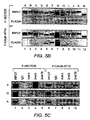
- Exemplary regions of the HoxA5 gene that can interact with DOT1L/CALM-AF10 are shown in Figure 5A .
- Interaction between the CALM polypeptide, AF10 polypeptide, DOT1L polypeptide or CALM-AF10 fusion protein with the HoxA5 gene or portion thereof can be evaluated by any suitable method, including but not limited to determining binding of the CALM polypeptide, AF10 polypeptide, DOT1L polypeptide or CALM-AF10 fusion protein to the HoxA5 gene or portion thereof and/or by determining H3-K79 methylation of the HoxA5 gene or portion thereof (e.g., all or a functional part of the HoxA5 promoter) and/or by determining HoxA5 promoter activity (e.g., when the promoter is operatively associated with the native sequence, a cDNA representing the HoxA5 coding sequence or a heterologous sequence such as a reporter gene).
- any suitable method including but not limited to determining binding of the CALM polypeptide, AF10 polypeptide, DOT1L polypeptide or CALM-AF10 fusion protein to the Hox
- the method is carried out in a cell-based system, wherein the cells comprise a recombinant nucleic acid comprising a HoxA5 promoter operatively associated with a nucleic acid encoding a reporter molecule (e.g., a polypeptide such as an enzyme).
- the cell can be a leukemic cell that comprises a CALM-AF10 fusion protein or, alternatively, can be a cell that has been modified to produce a CALM-AF10 fusion protein.
- One or more candidate compounds can be added to the cell, and binding of CALM-AF1 0 to HoxA5 as indicated by the level of HoxA5 promoter activity can be evaluated by determining the expression of the reporter molecule ( e.g., enzymatic activity).
- the invention also provides a method of identifying a candidate compound for the prevention and/or treatment of leukemia, the method comprising: contacting a nucleic acid comprising all or a portion of the HoxA5 gene (as described above) with a DOT1L polypeptide and a CALM-AF10 fusion protein in the presence of a test compound under conditions sufficient for binding of the DOT1L polypeptide and the CALM-AF10 fusion protein to form a complex and for the complex to bind to the HoxA5 promoter; and detecting the level of interaction of the DOT1L/CALM-AF10 fusion protein complex to the HoxA5 promoter, wherein a reduction in interaction of the DOT1 L/CALM-AF10 fusion protein complex with the HoxA5 promoter in the presence of the test compound as compared with the level of interaction in the absence of the test compound indicates that the test compound is a candidate compound for the prevention and/or treatment of leukemia.
- a DOT1L-CALM-AF10 trifusion protein can be substituted for DOT1L and CALM-AF10 in the foregoing method.
- Interaction between the DOT1L/CALM-AF10 complex and HoxA5 gene or portion thereof can be evaluated by any suitable method, including but not limited to determining binding of the complex to the HoxA5 gene or portion thereof or by determining H3-K79 methylation of the HoxA5 gene or portion thereof (e.g., the HoxA5 promoter) or by determining HoxA5 promoter activity (e.g., when the promoter is operatively associated with the native sequence, a cDNA representing the HoxA5 coding sequence or a heterologous sequence such as a reporter gene).
- any suitable method including but not limited to determining binding of the complex to the HoxA5 gene or portion thereof or by determining H3-K79 methylation of the HoxA5 gene or portion thereof (e.g., the HoxA5 promoter) or by determining HoxA5 promoter activity (e.g., when the promoter is operatively associated with the native sequence, a cDNA representing the HoxA5 coding
- the invention also provides methods of identifying a candidate compound for the prevention and/or treatment of leukemia, the method comprising identifying compounds that bind to and/or modulate HoxA5 promoter activity (e.g., by down-regulating expression of the HoxA5 gene or a chimeric construct comprising a HoxA5 promoter operably associated with a transgene, such as a reporter gene).
- the method comprises: contacting a nucleic acid comprising all or a functional part of the HoxA5 promoter region and/or any other region of the HoxA5 gene (e.g., exon 1, exon 2 or the intron between exon 1 and exon2) with a test compound under conditions sufficient for the test compound to bind to the all or functional part of the HoxA5 promoter region and/or the any other region of the HoxA5 gene that is present in the nucleic acid; and detecting the level of binding between the test compound and the all or a functional part of the HoxA5 promoter and/or the any other region of the HoxA5 gene present in the nucleic acid, wherein binding indicates that the test compound is a candidate compound for the prevention and/or treatment of leukemia.
- a test compound comprising all or a functional part of the HoxA5 promoter region and/or any other region of the HoxA5 gene (e.g., exon 1, exon 2 or the intron between exon 1 and exon2)
- Other representative methods of identifying a candidate compound for the prevention and/or treatment of leukemia comprise: contacting a nucleic acid comprising all or a functional part the HoxA5 promoter region with a test compound under conditions sufficient for HoxA5 promoter activity; and detecting the level of HoxA5 promoter activity, wherein a reduction in HoxA5 promoter activity in the presence of the test compound as compared with the level of HoxA5 promoter activity in the absence of the test compound indicates that the test compound is a candidate compound for the prevention and/or treatment of leukemia.
- the test compound binds to the all or functional part of the HoxA5 promoter and/or any other region of the HoxA5 gene (e.g., exon 1, exon 2 and/or the intron between exons 1 and 2) that is present in the nucleic acid.
- HoxA5 promoter activity can be determined as described herein.
- the present invention further provides methods of identifying compounds for the treatment and/or prevention of T-ALL or AML subtypes M0/1 by identifying compounds that bind to and/or modulate the biological activity of a DOT1 polypeptide and/or interaction of DOT1 L with AF10.
- the invention provides a method of identifying a candidate compound for the prevention and/or treatment of T-ALL or AML subtypes M0/1, the method comprising: contacting a DOT1 L polypeptide with a histone or nucleosome substrate comprising histone H3 in the presence of a test compound; detecting the level of H3-K79 methylation of the substrate under conditions sufficient to provide H3-K79 methylation, wherein an inhibition of H3-K79 methylation in the presence of the test compound as compared with the level of H3-K79 methylation in the absence of the test compound indicates that the test compound is a candidate compound for the prevention and/or treatment of T-ALL or AML subtypes M0/1.
- the invention further provides a method of identifying a candidate compound for the prevention and/or treatment of T-ALL or AML subtypes M0/1, comprising: contacting a DOT1L polypeptide with AF10; detecting the level of binding between the DOT1L polypeptide and AF10 under conditions sufficient for binding therebetween, wherein a reduction in binding between DOT1 L polypeptide and AF10 in the presence of the test compound as compared with the level of binding in the absence of the test compound indicates that the test compound is a candidate compound for the prevention and/or treatment of T-ALL or AML subtypes M0/1.
- Methods of assessing binding to polypeptides and nucleic acids can be carried out using standard techniques that will be apparent to those skilled in the art (see the Examples for exemplary methods). Such methods include yeast and mammalian two-hybrid assays and co-immunoprecipitation techniques.
- H3-K79 HMTase and leukemogenic activity can also be evaluated using standard methods known in the art, for example, as described in the Examples below.
- HoxA5 promoter activity can also be evaluated by any method known in the art, for example, by detecting expression or activity of a reporter gene operably associated with the HoxA5 promoter, by detecting HoxA5 transcripts (e.g., by RT-PCR) and/or the HoxA5 protein product.
- the screening methods of the invention can be carried out in a cell-based or cell-free system.
- the assay can be performed in a whole animal (including transgenic non-human animals).
- the polypeptide(s) can be added directly to the cell or can be produced from a nucleic acid in the cell.
- the nucleic acid can be endogenous to the cell or can be foreign (e.g., a genetically modified cell).
- test compounds include small organic compounds (i.e., non-oligomers), oligomers or combinations thereof, and inorganic molecules.
- Suitable organic molecules can include but are not limited to polypeptides (including enzymes, antibodies and Fab' fragments), carbohydrates, lipids, coenzymes, and nucleic acid molecules (including DNA, RNA and chimerics and analogs thereof) and nucleotides and nucleotide analogs.
- the compound is an antisense nucleic acid, an siRNA or a ribozyme that inhibits production of a target polypeptide.
- Non-oligomers include a wide variety of organic molecules, such as heterocyclics, aromatics, alicyclics, aliphatics and combinations thereof, comprising steroids, antibiotics, enzyme inhibitors, ligands, hormones, drugs, alkaloids, opioids, terpenes, porphyrins, toxins, catalysts, as well as combinations thereof.
- Oligomers include oligopeptides, oligonucleotides, oligosaccharides, polylipids, polyesters, polyamides, polyurethanes, polyureas, polyethers, and poly (phosphorus derivatives), e.g.
- oligomers may be obtained from combinatorial libraries in accordance with known techniques.
- a compound library e.g., a combinatorial chemical compound library (e.g., benzodiazepine libraries as described in U.S. Patent No. 5,288,514 ; phosphonate ester libraries as described in U.S. Patent No. 5,420,328 , pyrrolidine libraries as described in U.S. Patent Nos. 5,525,735 and 5,525,734 , and diketopiperazine and diketomorpholine libraries as described in U.S. Patent No. 5,817,751 ), a polypeptide library, a cDNA library, a library of antisense nucleic acids, and the like, or an arrayed collection of compounds such as polypeptide and nucleic acid arrays.
- a combinatorial chemical compound library e.g., benzodiazepine libraries as described in U.S. Patent No. 5,288,514 ; phosphonate ester libraries as described in U.S. Patent No. 5,420,328 , pyrrolidine libraries
- the invention also encompasses compounds identified by the screening methods described above.
- the invention provides methods of treating a subject afflicted with or at risk for leukemia (e.g., T-ALL or AML subtypes M0/1) by administering a treatment effective amount of an inhibitory nucleic acid (e.g., RNAi such as siRNA) or an antibody (e.g., monoclonal antibody) directed against HoxA5, CALM, AF10, CALM-AF10 and/or DOT1L.
- an inhibitory nucleic acid e.g., RNAi such as siRNA
- an antibody e.g., monoclonal antibody directed against HoxA5, CALM, AF10, CALM-AF10 and/or DOT1L.
- the antibody can be a monoclonal or polyclonal antibody including antibody fragments.
- the antibody and antibody fragment is not limited to any particular form and can be a bispecific, humanized, or chimerized antibody or antibody fragment and can further be a Fab fragment, single chain antibody, and the like.
- Suitable subject for practicing the present invention include avian and mammalian subject, with mammalian subjects including but not limited to humans, non-human primates, mice, rats, sheep, pigs, cattle, goats, rabbits, horses, dogs, cats, and the like.
- the invention encompasses diagnostic methods for assessing whether a subject has or is at risk for leukemia and/or prognostic methods for predicting the future course of leukemia in a subject by assessing H3-K79 histone methylation of HoxA5, wherein an increase in H3-K79 methylation of HoxA5 as compared with a normal (e.g., non-leukemic) subject is diagnostic of leukemia and/or prognostic of the course of the disease.
- a normal e.g., non-leukemic
- the level of H3-K79 methylation and, optionally, the level of H3-K4 methylation of the HoxA5 gene are determined (e.g., the HoxA5 promoter, exon 1, exon 2 and/or the intron between exon 1 and 2), wherein an increase in H3-K79 methylation and, optionally, a reduction in H3-K4 methylation as compared with a normal ( e.g., non-leukemic) subject is diagnostic of leukemia and/or prognostic of the course of the disease.
- the invention further provides a method of diagnosing whether a subject has or is at risk for developing leukemia and/or determining the prognosis for the course of the disease, the method comprising determining HoxA5 promoter activity in the subject, where upregulation (i.e., increased activity) of HoxA5 promoter activity as compared with HoxA5 promoter activity in a control (e.g., healthy) subject indicates that the subject has or is at risk for developing leukemia.
- HoxA5 promoter activity can be determined by any method known in the art.
- the method can further comprise obtaining a biological sample from the subject and determining the HoxA5 promoter activity in the biological sample (e.g., by increased expression of a nucleic acid operatively associated with the HoxA5 promoter, whether native or heterologous).
- One exemplary method of diagnosing whether a subject has or is at risk for developing leukemia and/or determining the prognosis for the course of the disease comprises: obtaining a biological sample comprising the HoxA5 gene from a subject; detecting the level of H3-K79 methylation of the HoxA5 gene in the biological sample; wherein an elevation in H3-K79 methylation of the HoxA5 gene in the biological sample as compared with the level of H3-K79 methylation in a non-leukemic biological sample is diagnostic that the subject has or is at risk of developing leukemia and/or prognostic of the course of the disease in the subject.
- the method can optionally further include determination of the level of H3-K4 methylation of the HoxA5 gene, wherein a decrease in H3-K4 methylation of the HoxA5 gene in the biological sample as compared with a non-leukemic sample is diagnostic that the subject has or is at risk of developing leukemia and/or prognostic of the course of the disease in the subject.
- the foregoing diagnostic methods of the invention are practiced as a diagnostic and/or prognostic method for T-ALL or AML subtypes M0/1.
- One exemplary method of diagnosing whether a subject has or is at risk for developing T-ALL or AML-M0/1 and/or determining the prognosis for the course of the disease comprises: obtaining a biological sample comprising histones (e.g., nucleosomes) from a subject; detecting the level of H3-K79 methylation in the biological sample; wherein an increase in H3-K79 methylation in the biological sample as compared with the level of H3-K79 methylation in a non-leukemic biological sample is diagnostic that the subject has or is at risk of developing T-ALL or AML-M0/1 and/or prognostic of the course of the disease in the subject.
- histones e.g., nucleosomes
- the method can optionally further include determination of the level of H3-K4 methylation, wherein a decrease in H3-K4 methylation in the biological sample as compared with a non-leukemic sample is diagnostic that the subject has or is at risk of developing T-ALL or AML-M0/1 and/or prognostic of the course of the disease in the subject.
- the invention provides a method of diagnosing whether a subject has or is at risk for developing T-ALL or AML-M0/1 and/or determining the prognosis for the course of the disease, the method comprising: obtaining a biological sample comprising histones (e.g., nucleosomes) from a subject; detecting the level of H3-K79 methylation associated with one or more HoxA genes (e.g., the HoxA9 gene) in the biological sample; wherein an increase in HoxA gene-associated H3-K79 methylation ( e.g., associated with the HoxA9 gene) in the biological sample as compared with the level in a non-leukemic biological sample is diagnostic that the subject has or is at risk of developing T-ALL or AML-M0/1 and/or prognostic of the course of the disease in the subject.
- a biological sample comprising histones (e.g., nucleosomes) from a subject; detecting the level of H3-K79
- the method can optionally further include determination of the level of H3-K4 methylation associated with one or more HoxA genes (e.g., the HoxA9 gene), wherein a decrease in HoxA gene associated H3-K4 methylation in the biological sample as compared with a non-leukemic sample is diagnostic that the subject has or is at risk of developing T-ALL or AML-M0/1 and/or prognostic of the course of the disease in the subject.
- HoxA genes e.g., the HoxA9 gene
- Diagnostic and prognostic methods of the invention can be practiced with any mammalian subject including but not limited to human, non-human primate, cattle, sheep, goat, cat, dog, pig, horse, rat, mouse, rabbit or guinea pig subjects.
- the subject has or is believed to be at risk of developing leukemia.
- the subject is an animal model of leukemia.
- diagnostic and prognostic methods of the invention may not be conclusive and may need to be supplemented with other diagnostic and/or prognostic methods to make a final diagnosis or prognosis.
- any suitable biological sample can be used including cell or tissue samples, umbilical cord samples, blood, plasma or serum samples, urine or fecal samples, mucus or sputum samples, and the like.
- the biological sample is a B cell or bone marrow sample.
- the biological sample is a histone or nucleosome preparation comprising histone H3 (e.g., obtained from B cells or bone marrow cells).
- cells or tissue are removed from a subject, cultured and histones or nucleosomes prepared from the cultured cells or tissue.
- non-leukemic biological sample it is meant a suitable control sample that is indicative of a normal subject (i.e., not having or at risk for developing leukemia).
- the sample can be isolated from a normal subject or, in some instances (e.g., a nucleosome preparation), can be isolated from cultured cells.
- CALM-AF10 knockdown in U937 cells and transplantation DNA encoding 21 bp-shRNA (5'- ATC AGG AGC ACA GAG CTG TGA -3'; SEQ ID NO:3) that targets the junction of CALM and AF10 was subcloned into pMSCV-puro with an H1 RNA promoter. Transduced cells were selected by puromycin (0.5 ⁇ g/ml) and cloned by limiting dilution. Knockdown efficiency was evaluated by RT-PCR. Five to ten week old NOD/SCID mice were irradiated (300 rad).
- Wild-type and OM-LZ deletion mutant CALM-AF10 were subcloned into pMSCV-neo in the downstream of a Flag-tag. Retrovirus preparation, transduction, and colony assays were performed as previously described ( Okada et al., (2005) Cell121:167-78 ). In the experiments presented in Fig. 3b , G418 (1mg/ml) was added to the methylcellulose until the 3rd round to prevent the growth of untransduced cells. Colonies on methylcellulose were picked and further cultured in mFTOC (10% FBS in RPMI1640, 1 mM MEM sodium pyruvate, 1% MEM non-essential amino acid, 10mM HEPES, pH.
- mFTOC % FBS in RPMI1640, 1 mM MEM sodium pyruvate, 1% MEM non-essential amino acid, 10mM HEPES, pH.
- U937 cells were maintained in RPMI 1640 supplemented with 10% fetal calf serum.
- 293T or U2OS cell were maintained in Dulbecco's modified Eagle's medium (DMEM) supplemented with 10% fetal calf serum.
- Transfection was performed by using Fugene6 (Roche). Twenty-four hours after transfection, U2OS cells were fixed with 3% paraformaldehyde and permiabilized with 0.1 % Triton X-1 00 for 5 min.
- Flag M2 (Sigma) and hDOT1 L ( Okada et al., (2005) Cell121:167-78 ) antibodies were used as primary antibodies for immunostaining.
- DAPI was used for nuclear staining.
- 293T cells were harvested 36 hours after transfection, and washed with ice-cold phosphate-buffered saline (PBS) before being lysed with lysis buffer (50 mM Hepes-KOH [pH 7.9], 420 mM KCl, 0.1 mM EDTA [pH 8.0], 5 mM MgCl2, 20% glycerol, 1 mM DTT, 1 mM phenylmethylsulfonyl fluoride, 1 ⁇ g of aprotinin/ml, 0.5 ⁇ g of leupeptin/ml, and 0.7 ⁇ g of pepstatin/ml).
- PBS ice-cold phosphate-buffered saline
- FACS analysis Cells harvested from NOD/SCID mice and the mouse bone marrow cells transduced by CALM-AF10 were incubated for 20 min on ice with CD16/CD32 Fc block (BD Pharmingen) and subsequently stained for 30 min on ice with phycoerythrin-, fluorescein isothiocyanate-, and allophycocyanin-conjugated isotype controls and monoclonal antibodies against human CD45, mouse CD11b, Gr-1, c-kit, B220, CD3, and Ter119 (BD Pharmingen). Cells were then washed with 2% FBS-containing PBS and analyzed using a FACSCalibur (BD Pharmingen). Data collected were analyzed with Summit V3.1 (Cytomation Inc., Fort Collins).
- CALM-AF10-F 5'-TATACAGCCAGCCTGTCATG -3' (SEQ ID NO:4)
- CALM-AF10-R 5'- AGTGGCTGCTTTGCTTTCTC -3' (SEQ ID NO:5).
- CALM-AF10 fusion protein is necessary to mediate leukemic transformation.
- hDOT1L a histone H3-K79 methyltransferase ( Feng et al., (2002) Curr. Biol. 12:1052-1058 )
- MLL-AF10-mediated leukemogenesis Okada et al., (2005) Cell121:167-78 .
- mistargeting of hDOT1L to the Hoxa9 gene by MLL-AF10 results in H3-K79 methylation and Hoxa9 upregulation which contributes to leukemic transformation ( Okada et al., (2005) Cell121:167-78 ).
- hDOT1 L and MLL-AF10 interaction involves the OM-LZ motif of AF10, required for MLL-AF10-mediated leukemic transformation ( DiMartino et al., (2002) Blood 99, 3780-5 ).
- the fact that the OM-LZ region is retained in the CALM-AF10 fusion protein raises the possibility that hDOT1L may also play an important role in CALM-AF10-mediated leukemia.
- To address a potential role for hDOT1L in CALM-AF10-mediated leukemia we first attempted to establish a causal-effect relationship between the CALM-AF10 fusion protein and leukemia.
- CALM-AF10-mediated leukemic transformation depends on functional hDOT1 L.
- hDOT1 L a methylcellulose colony serial plating assay was used ( FIG. 2a ).
- hDOT1 L can interact with CALM-AF10 and the interaction is dependent on the OM-LZ region of AF10 ( Fig. 6 ).
- Fig. 6 we performed the colony serial plating assay by transduction of mouse bone marrow cells with wild-type or a deletion CALM-AF10 mutant that lacked the hDOT1 L interaction region OM-LZ.
- RT-PCR analysis confirmed expression of both fusion proteins in cells derived from the second round of colonies ( Fig. 2b , lanes 1 and 2). Although the colony numbers did not increase in the third round of plating when compared with the second round in bone marrow cells expressing CALM-AF10 ( Fig. 2c , middle columns), the cells were able to proliferate continuously in mFTOC (mouse fetal thymus organ culture) media supplemented with mIL-3 for more than 6 months ( Fig. 2d and data not shown).
- mFTOC mouse fetal thymus organ culture
- CALM-AF10 fusion protein is sufficient to transform progenitor bone marrow cells and that the hDOT1L interaction region is required for the transformation capacity of CALM-AF10.
- CALM-AF10-mediated leukemic transformation involves Hoxa5 upregulation. Having established the role of hDOT1 L in CALM-AF10-mediated leukemic transformation, we attempted to identify the relevant target genes. cDNA microarray studies have revealed that overexpression of late Hoxa genes and Bmi-1 is a characteristic of leukemias involving CALM-AF10 and some MLL-fusion proteins ( Dik et al., (2005) Leukemia 19:1948-57 ; Drabkin et al., (2002) Leukemia 16:186-95 ; Souler et al., (2005) Blood 106:274-86 ).
- Hoxa9 has been demonstrated to be crucial for leukemias involving MLL-ENL and MLL-AF10 fusion proteins ( Okada et al., (2005) Cell121:167-78 ) ( Ayton et al., (2004) Genes Dev 17:2298-307 . 24:617-28 ; Zeisig et al., (2004) Mol. Cell. Biol. 24:617-28 ).
- hDOT1 L and H3-K79 methylation contribute to leukemogenesis by CALM-AF10
- CALM-AF10 can transform bone marrow cells derived from the wild-type mice, as evidenced by increased colony numbers in the third round of plating, it fails to transform bone marrow cells deficient for Hoxa5.
- Hoxa5 knockout does not affect the transformation capability of MLL-AF10. Based on these results, we conclude that Hoxa5 upregulation is critical for CALM-AF10 mediated leukemic transformation.
- CALM-AF10 Nuclear localization of CALM-AF10 depends on its ability to interact with hDOT1L.
- CALM is a cytoplasmic protein known to function in clathrin assembly ( Tebar et al., (1999) Mol. Biol. Cell. 10:2687-702 ; Meyrholz et al., (2005) Traffic 6:1225-34 ). It contains a putative CRM1-dependent NES (nuclear exporting signal) sequence at its C-terminus, which is retained in the CALM-AF10 fusion protein ( Vecchi et al., (2001) J. Cell. Biol. 153:1511-7 ). ( Fig. 7 ).
- AF10 is a nuclear protein with its NLS (nuclear localization signal) retained in the CALM-AF10 fusion protein ( Fig. 7 ).
- CALM-AF10 may directly or indirectly contribute to Hoxa5 upregulation.
- To determine the subcellular localization of CALM-AF10 we transfected plasmid DNA that encodes Flag-tagged CALM-AF10 into U2OS cells. In parallel, we also transfected two constructs encoding CALM-AF10 with deletion on the OM-LZ region and Flag-tagged CALM. Immunofluorescent staining revealed that most of the overexpressed CALM-AF10 proteins exhibited cytoplasmic distribution ( Fig. 4a ).
- CALM-AF10 nuclear distribution in wild-type, but not in mutant, CALM-AF10 transfected cells is also noticeable ( Figs. 4a, b ).
- CALM exhibited a mesh-like cytoplasmic distribution ( Fig. 4a ) which is characteristic of clathrin-related proteins ( Tebar et al., (1999) Mol Biol. Cell 10:2687-702 ).
- CALM-AF10 when CALM-AF10 is co-expressed with hDOT1 L, CALM-AF10 becomes localized to the nucleus ( Figs. 4c, 4d , left columns). High resolution analysis of the proteins indicates that they colocalize in the nucleus ( Fig. 4e ).
- Upregulation of Hoxa5 is concomitant with CALM-AF10 binding and H3-K79 methylation.
- CALM-AF10 can localize to the nucleus and interact with hDOT1L raises the possibility that Hoxa5 might be a direct target of CALM-AF10.
- results shown in Fig. 5b demonstrate that the fusion proteins bind to a region covered by amplicons e-g ( Fig. 5b , lanes 5-7). The observed binding is specific, as no signal is observed in a parallel ChIP experiment using cells transduced by an empty vector.
- hDOT1L also contributes to leukemogenesis by MLL-AF10 ( Okada et al., (2005) Cell121:167-78 ).
- leukemogenesis mediated by MLL-AF1 0 and CALM-AF10 both involve hDOT1 L and Hox gene activation, the underlying mechanisms are not the same.
- Hoxa5 does not appear to play a key role in MLL-AF10-mediated leukemic transformation ( Fig. 3b ).
- Hoxa9 up-regulation through hDOT1L-mediated H3-K79 methylation appears to be a key event in MLL-AF10-mediated leukemic transformation ( Okada et al., (2005) Cell121:167-78 ). It worth noting that while Hoxa9 overexpression has been observed in a number of leukemias, its overexpression is not always required for leukemic transformation ( So et al., (2004) Blood 103:3192-9 ). This highlights the importance of distinguishing overexpressed Hoxa genes necessary for leukemic transformation from those not essential for transformation. A second difference lies in their distinct immunophenotypes.
- CALM-AF10 transformed bone marrow cells are mainly lineage-uncommitted progenitors (positive only for c-Kit)
- the cells transformed by MLL-AF10 tend to differentiate into myeloid lineage with expression of lineage markers ( Fig. 2e , Fig. 8 ) ( Okada et al., (2005) Cell121:167-78 ).
- lineage markers Fig. 2e , Fig. 8
- This observation is consistent with the fact that leukemia patients with CALM-AF10 often develop hematologic malignancy of multi-lineages, an indication that the leukemic cells have originated from a very early stage of hematopoietic development ( Kobayashi et al., (1997) Genes Chromosomes Cancer 20:253-9 ).
- Up-regulation of different Hoxa genes might be linked to these phenotypical differences. For example, constitutive expression of Hoxa5 in human CD34 + cells prevents differentiation toward erythrocytes and increases myelopoiesis ( Crooks et al., (1999) Blood 94:519-28 ). Although there is currently no report that overexpression of Hoxa5 in hematopoitic stem cells can directly cause leukemic transformation, many cell lines without MLL-fusion have a higher incidence of overexpressing Hoxa5 than overexpressing Hoxa9 ( Quentmeier et al., (2004) Leuk Lymphoma 45:567-74 , indicating that upregulation of Hoxa5 may not be limited to leukemia mediated by CALM-AF10.
Landscapes
- Health & Medical Sciences (AREA)
- Life Sciences & Earth Sciences (AREA)
- Chemical & Material Sciences (AREA)
- Engineering & Computer Science (AREA)
- Organic Chemistry (AREA)
- Genetics & Genomics (AREA)
- Zoology (AREA)
- Wood Science & Technology (AREA)
- Proteomics, Peptides & Aminoacids (AREA)
- Immunology (AREA)
- Molecular Biology (AREA)
- Bioinformatics & Cheminformatics (AREA)
- Biotechnology (AREA)
- Analytical Chemistry (AREA)
- Biomedical Technology (AREA)
- Microbiology (AREA)
- General Health & Medical Sciences (AREA)
- Biochemistry (AREA)
- Physics & Mathematics (AREA)
- General Engineering & Computer Science (AREA)
- Pathology (AREA)
- Biophysics (AREA)
- Oncology (AREA)
- Urology & Nephrology (AREA)
- Hematology (AREA)
- Hospice & Palliative Care (AREA)
- Tropical Medicine & Parasitology (AREA)
- Cell Biology (AREA)
- Toxicology (AREA)
- Plant Pathology (AREA)
- Food Science & Technology (AREA)
- Medicinal Chemistry (AREA)
- General Physics & Mathematics (AREA)
- Measuring Or Testing Involving Enzymes Or Micro-Organisms (AREA)
- Medicines That Contain Protein Lipid Enzymes And Other Medicines (AREA)
- Investigating Or Analysing Biological Materials (AREA)
- Peptides Or Proteins (AREA)
Applications Claiming Priority (2)
| Application Number | Priority Date | Filing Date | Title |
|---|---|---|---|
| US76070906P | 2006-01-20 | 2006-01-20 | |
| EP06839119A EP1974055A4 (en) | 2006-01-20 | 2006-12-06 | DIAGNOSTIC AND THERAPEUTIC OBJECTIVES AGAINST LEUKEMIA |
Related Parent Applications (1)
| Application Number | Title | Priority Date | Filing Date |
|---|---|---|---|
| EP06839119A Division EP1974055A4 (en) | 2006-01-20 | 2006-12-06 | DIAGNOSTIC AND THERAPEUTIC OBJECTIVES AGAINST LEUKEMIA |
Publications (1)
| Publication Number | Publication Date |
|---|---|
| EP2730661A1 true EP2730661A1 (en) | 2014-05-14 |
Family
ID=38309541
Family Applications (2)
| Application Number | Title | Priority Date | Filing Date |
|---|---|---|---|
| EP13177872.2A Withdrawn EP2730661A1 (en) | 2006-01-20 | 2006-12-06 | Diagnostic and therapeutic targets for leukemia |
| EP06839119A Withdrawn EP1974055A4 (en) | 2006-01-20 | 2006-12-06 | DIAGNOSTIC AND THERAPEUTIC OBJECTIVES AGAINST LEUKEMIA |
Family Applications After (1)
| Application Number | Title | Priority Date | Filing Date |
|---|---|---|---|
| EP06839119A Withdrawn EP1974055A4 (en) | 2006-01-20 | 2006-12-06 | DIAGNOSTIC AND THERAPEUTIC OBJECTIVES AGAINST LEUKEMIA |
Country Status (6)
| Country | Link |
|---|---|
| US (2) | US8524467B2 (https=) |
| EP (2) | EP2730661A1 (https=) |
| JP (1) | JP5167149B2 (https=) |
| AU (1) | AU2006336552B2 (https=) |
| CA (1) | CA2623271A1 (https=) |
| WO (1) | WO2007087015A1 (https=) |
Families Citing this family (10)
| Publication number | Priority date | Publication date | Assignee | Title |
|---|---|---|---|---|
| WO2011160206A1 (en) | 2010-06-23 | 2011-12-29 | Morin Ryan D | Biomarkers for non-hodgkin lymphomas and uses thereof |
| US9175331B2 (en) | 2010-09-10 | 2015-11-03 | Epizyme, Inc. | Inhibitors of human EZH2, and methods of use thereof |
| BR112013005806B1 (pt) | 2010-09-10 | 2022-05-10 | Epizyme, Inc | Métodos para detectar se um indivíduo é um candidato para o tratamento com ou responsivo a um inibidor de ezh2 e usos terapêuticos do dito inibidor de ezh2 |
| TW201733984A (zh) | 2011-04-13 | 2017-10-01 | 雅酶股份有限公司 | 經取代之苯化合物 |
| JO3363B1 (ar) | 2011-04-13 | 2019-03-13 | Epizyme Inc | مركبات بنزين مستبدلة بأريل أو أريل غير متجانس |
| US9394283B2 (en) | 2012-04-13 | 2016-07-19 | Epizyme, Inc. | Salt form of a human histone methyltransferase EZH2 inhibitor |
| PE20150887A1 (es) | 2012-10-15 | 2015-06-04 | Epizyme Inc | Compuestos de benceno sustituidos |
| AU2014295980B2 (en) | 2013-08-02 | 2020-08-27 | Memorial Sloan-Kettering Cancer Center | Methods for the detection and treatment of leukemias that are responsive to DOT1L inhibition |
| KR102142177B1 (ko) | 2013-10-16 | 2020-08-07 | 에피자임, 인코포레이티드 | Ezh2 억제용 하이드로클로라이드 염 형태 |
| CA3126163A1 (en) * | 2019-01-15 | 2020-07-23 | Ptc Therapeutics, Inc. | Method for treating an acute myeloid leukemia |
Citations (6)
| Publication number | Priority date | Publication date | Assignee | Title |
|---|---|---|---|---|
| US5288514A (en) | 1992-09-14 | 1994-02-22 | The Regents Of The University Of California | Solid phase and combinatorial synthesis of benzodiazepine compounds on a solid support |
| US5420328A (en) | 1992-09-11 | 1995-05-30 | Affymax Technologies, N.V. | Methods for the synthesis of phosphonate esters |
| US5525734A (en) | 1994-06-22 | 1996-06-11 | Affymax Technologies N.V. | Methods for synthesizing diverse collections of pyrrolidine compounds |
| US5525735A (en) | 1994-06-22 | 1996-06-11 | Affymax Technologies Nv | Methods for synthesizing diverse collections of pyrrolidine compounds |
| US5817751A (en) | 1994-06-23 | 1998-10-06 | Affymax Technologies N.V. | Method for synthesis of diketopiperazine and diketomorpholine derivatives |
| US20050048634A1 (en) | 2003-06-13 | 2005-03-03 | Yi Zhang | DOT1 histone methyltransferases as a target for identifying therapeutic agents for leukemia |
Family Cites Families (5)
| Publication number | Priority date | Publication date | Assignee | Title |
|---|---|---|---|---|
| US6251594B1 (en) * | 1997-06-09 | 2001-06-26 | Usc/Norris Comprehensive Cancer Ctr. | Cancer diagnostic method based upon DNA methylation differences |
| US6555329B2 (en) * | 2000-06-09 | 2003-04-29 | Boehringer Ingelheim International Gmbh | Method for identifying compounds altering higher-order chromatin-dependent chromosome stability |
| AU2002329784A1 (en) | 2001-08-17 | 2003-03-03 | Incyte Genomics, Inc. | Molecules for disease detection and treatment |
| US7485414B2 (en) * | 2002-08-30 | 2009-02-03 | Rigel Pharmaceuticals, Inc. | Modulators of angiogenesis |
| DK1791973T3 (da) | 2004-08-31 | 2010-01-25 | Univ North Carolina | DOT1-histonmethyltransferaser som et target til at identificere terapeutiske midler mod leukæmi |
-
2006
- 2006-12-06 EP EP13177872.2A patent/EP2730661A1/en not_active Withdrawn
- 2006-12-06 CA CA002623271A patent/CA2623271A1/en not_active Abandoned
- 2006-12-06 US US12/161,482 patent/US8524467B2/en not_active Expired - Fee Related
- 2006-12-06 JP JP2008551261A patent/JP5167149B2/ja not_active Expired - Fee Related
- 2006-12-06 AU AU2006336552A patent/AU2006336552B2/en not_active Ceased
- 2006-12-06 EP EP06839119A patent/EP1974055A4/en not_active Withdrawn
- 2006-12-06 WO PCT/US2006/046612 patent/WO2007087015A1/en not_active Ceased
-
2013
- 2013-07-29 US US13/953,190 patent/US20140044740A1/en not_active Abandoned
Patent Citations (6)
| Publication number | Priority date | Publication date | Assignee | Title |
|---|---|---|---|---|
| US5420328A (en) | 1992-09-11 | 1995-05-30 | Affymax Technologies, N.V. | Methods for the synthesis of phosphonate esters |
| US5288514A (en) | 1992-09-14 | 1994-02-22 | The Regents Of The University Of California | Solid phase and combinatorial synthesis of benzodiazepine compounds on a solid support |
| US5525734A (en) | 1994-06-22 | 1996-06-11 | Affymax Technologies N.V. | Methods for synthesizing diverse collections of pyrrolidine compounds |
| US5525735A (en) | 1994-06-22 | 1996-06-11 | Affymax Technologies Nv | Methods for synthesizing diverse collections of pyrrolidine compounds |
| US5817751A (en) | 1994-06-23 | 1998-10-06 | Affymax Technologies N.V. | Method for synthesis of diketopiperazine and diketomorpholine derivatives |
| US20050048634A1 (en) | 2003-06-13 | 2005-03-03 | Yi Zhang | DOT1 histone methyltransferases as a target for identifying therapeutic agents for leukemia |
Non-Patent Citations (62)
| Title |
|---|
| ALTSCHUL ET AL., J. MOL. BIOL., vol. 215, 1990, pages 403 - 410 |
| ALTSCHUL ET AL., METHODS IN ENZYMOLOGY, vol. 266, 1996, pages 460 - 480 |
| ALTSCHUL ET AL., NUCLEIC ACIDS RES., vol. 25, 1997, pages 3389 - 3402 |
| AYTON ET AL., GENES DEV, vol. 17, 2004, pages 2298 - 307 |
| AYTON ET AL., ONCOGENE, vol. 20, 2001, pages 5695 - 5707 |
| AYTON; CLEARY, ONCOGENE, vol. 20, 2001, pages 5695 - 5707 |
| BEVERLOO ET AL., CANCER RES., vol. 55, 1995, pages 4220 - 4 |
| BRACKEN ET AL., EMBO J., vol. 22, 2003, pages 5323 - 5335 |
| CARLSON ET AL., LEUKEMIA, vol. 14, 2000, pages 100 - 104 |
| CROOKS ET AL., BLOOD, vol. 94, 1999, pages 519 - 28 |
| DASER ET AL., GENES DEV., vol. 18, 2004, pages 965 - 74 |
| DEVEREUX ET AL., NUCL. ACID RES., vol. 12, 1984, pages 387 - 395 |
| DIK ET AL., LEUKEMIA, vol. 19, 2005, pages 1948 - 57 |
| DIMARTINO ET AL., BLOOD, vol. 99, 2002, pages 3780 - 5 |
| DLAKIC, TRENDS BIOCHEM. SCI., vol. 26, 2001, pages 405 - 407 |
| DRABKIN ET AL., LEUKEMIA, vol. 16, 2002, pages 186 - 95 |
| DREYLING ET AL., PROC NATL ACAD SCI, vol. 93, 1996, pages 4804 - 9 |
| DREYLING ET AL., PROC. NATL. ACAD. SCI. USA, vol. 93, 1996, pages 4804 - 9 |
| DREYLNG ET AL., BLOOD, vol. 91, 1998, pages 4662 - 7 |
| F. M. AUSUBEL ET AL.: "CURRENT PROTOCOLS IN MOLECULAR BIOLOGY", GREEN PUBLISHING ASSOCIATES, INC. AND JOHN WILEY & SONS, INC. |
| FENG ET AL., CURR. BIOI., vol. 12, 2002, pages 1052 - 1058 |
| FENG ET AL., CURR. BIOL., vol. 12, 2002, pages 1052 - 1058 |
| GENES DEV, vol. 24, pages 617 - 28 |
| GE-XIU LIU: "Effects of CALM/AF10 antisenses on primary leukemic cells with CALM/AF10 fusion transcripts in vitro", CHINESE JOURNAL OF CANCER RESEARCH, vol. 17, no. 1, 1 March 2005 (2005-03-01), pages 35 - 39, XP055106774, ISSN: 1000-9604, DOI: 10.1007/s11670-005-0007-4 * |
| GREWAL; ELGIN, CURR OPIN. GENET. DEV., vol. 12, 2002, pages 178 - 187 |
| HESS, CRIT. REV. EUKARYOT. GENE EXPR., vol. 14, 2004, pages 235 - 54 |
| JEANNOTTE ET AL., GENES DEV, vol. 7, 1993, pages 2085 - 96 |
| KARLIN ET AL., PROC. NATL. ACAD. SCI. USA, vol. 90, 1993, pages 5873 - 5787 |
| KAWAGOE ET AL: "Targeted down-regulation of MLL-AF9 with antisense oligodeoxyribonucleotide reduces the expression of the HOXA7 and -A10 genes and induces apoptosis in a human leukemia cell line, THP-1.", LEUKEMIA, vol. 15, no. 11, 1 November 2001 (2001-11-01), pages 1743 - 1749, XP055106895, ISSN: 0887-6924 * |
| KLEER ET AL., PROC. NATL. ACAD. SCI. USA, vol. 100, 2003, pages 11606 - 11611 |
| KOBAYASHI ET AL., GENES CHROMOSOMES CANCER, vol. 13, 1995, pages 217 - 8 |
| KOBAYASHI ET AL., GENES CHROMOSOMES CANCER, vol. 20, 1997, pages 253 - 9 |
| LACHNER; JENUWEIN, CURR. OPIN. CELL BIOL., vol. 14, 2002, pages 286 - 298 |
| M H DREYLING ET AL: "The t(10;11)(p13;q14). in the U937 cell line results in the fusion of the AFJO gene and CALM, encoding a new member of the AP-3 clathrin assembly protein family", MEDICAL SCIENCES, 1 January 1996 (1996-01-01), pages 4804 - 4809, XP055106350, Retrieved from the Internet <URL:http://www.pnas.org/content/93/10/4804.full.pdf> [retrieved on 20140310] * |
| MEYRHOLZ ET AL., TRAFFIC, vol. 6, 2005, pages 1225 - 34 |
| MILNE ET AL., MOL. CELL, vol. 10, 2002, pages 1107 - 1117 |
| MIN ET AL., CELL, vol. 112, 2003, pages 711 - 723 |
| NAKAMURA ET AL., MOL. CELL, vol. 10, 2002, pages 1119 - 1128 |
| NEEDLEMAN; WUNSCH, J. MOL. BIOL., vol. 48, 1970, pages 443 |
| OKADA ET AL., CE111, vol. 21, 2005, pages 167 - 78 |
| OKADA ET AL., CEILL, vol. 21, 2005, pages 167 - 78 |
| OKADA ET AL., CELL, vol. 121, 2005, pages 167 - 78 |
| OKADA, CE, vol. 121, 2005, pages 167 - 78 |
| PEARSON; LIPMAN, PROC. NATL. ACAD. SCI. USA, vol. 85, 1988, pages 2444 |
| QUENTMEIER ET AL., LEUK LYMPHOMA, vol. 45, 2004, pages 567 - 74 |
| SAMBROOK ET AL.: "MOLECULAR CLONING: A LABORATORY MANUAL", 1989, COLD SPRING HARBOR |
| SAN-SEGUNDO; ROEDER, MOL. BIOL. CELL, vol. 11, 2000, pages 3601 - 3615 |
| SCHNEIDER ET AL., TRENDS BIOCHEM. SCI., vol. 27, 2002, pages 396 - 402 |
| SINGER ET AL., GENETICS, vol. 150, 1998, pages 613 - 632 |
| SMITH; WATERMAN, ADV. APPL. MATH., vol. 2, 1981, pages 482 |
| SO, BLOOD, vol. 103, 2004, pages 3192 - 9 |
| SOULER ET AL., BLOOD, vol. 106, 2005, pages 274 - 86 |
| STEIN C A ET AL: "A critical assessment of the potential of short interfering RNA therapeutics", DRUG DISCOVERY TODAY: TECHNOLOGIES, ELSEVIER, AMSTERDAM, NL, vol. 2, no. 1, 1 April 2005 (2005-04-01), pages 27 - 31, XP004985725, ISSN: 1740-6749, DOI: 10.1016/J.DDTEC.2005.05.013 * |
| STRAHL; ALLIS, MOL. CELL. BIOL., vol. 22, 2000, pages 1298 - 1306 |
| TEBAR ET AL., MOL BIOL. CELL, vol. 10, 1999, pages 2687 - 702 |
| TEBAR ET AL., MOL. BIOL. CELL, vol. 10, 1999, pages 2687 - 702 |
| TURNER, BIOESSAYS, vol. 22, 2000, pages 836 - 845 |
| VARAMBALLY ET AL., NATURE, vol. 419, 2002, pages 624 - 9 |
| VECCHI ET AL., J. CELL. BIOL., vol. 153, 2001, pages 1511 - 7 |
| WU; GRUNSTEIN, TRENDS BIOCHEM. SCI., vol. 25, 2000, pages 619 - 623 |
| ZEISIG ET AL., MOL. CELL. BIOL., vol. 24, 2004, pages 617 - 28 |
| ZHANG; REINBERG, GENES DEV., vol. 15, 2001, pages 2343 - 2360 |
Also Published As
| Publication number | Publication date |
|---|---|
| JP5167149B2 (ja) | 2013-03-21 |
| AU2006336552B2 (en) | 2012-12-20 |
| AU2006336552A1 (en) | 2007-08-02 |
| US20090061443A1 (en) | 2009-03-05 |
| CA2623271A1 (en) | 2007-08-02 |
| EP1974055A1 (en) | 2008-10-01 |
| WO2007087015A1 (en) | 2007-08-02 |
| US20140044740A1 (en) | 2014-02-13 |
| EP1974055A4 (en) | 2010-01-27 |
| JP2009524051A (ja) | 2009-06-25 |
| US8524467B2 (en) | 2013-09-03 |
Similar Documents
| Publication | Publication Date | Title |
|---|---|---|
| US20140044740A1 (en) | Diagnostic and Therapeutic Targets for Leukemia | |
| US9534259B2 (en) | DOT1 histone methyltransferases as a target for identifying therapeutic agents for leukemia | |
| Gu et al. | The disordered N-terminal domain of DNMT3A recognizes H2AK119ub and is required for postnatal development | |
| Gertler et al. | Metastasis: tumor cells becoming MENAcing | |
| JP2010531662A (ja) | P53のモジュレータ及び癌の標的であるtrim24(tif−1a) | |
| Gracia-Diaz et al. | Gain and loss of function variants in EZH1 disrupt neurogenesis and cause dominant and recessive neurodevelopmental disorders | |
| WO2019050478A1 (en) | BIOMARKERS OF RENAL CELL CARCINOMA WITH CLEAR CELLS | |
| US8298756B2 (en) | Isolation, gene expression, and chemotherapeutic resistance of motile cancer cells | |
| EP1791973B1 (en) | Dot1 histone methyltransferases as a target for identifying therapeutic agents for leukemia | |
| Hutchins et al. | RNA-binding protein Elavl1/HuR is required for maintenance of cranial neural crest specification | |
| US20130225425A1 (en) | Modulation of NR2F6 and methods and uses thereof | |
| WO2010074758A2 (en) | Compositions for promoting epigenetic dna demethylation and methods of use therefore | |
| WO2009045403A2 (en) | MENIN REGULATION OF β-ISLET CELL PROLIFERATION | |
| JP2007282628A (ja) | 抗癌剤のスクリーニング方法 | |
| KR102897614B1 (ko) | 신규한 MFSD7-ATP5l 융합유전자 및 이의 용도 | |
| Wang et al. | Phosphatase PPP1CC Regulates the First Lineage Segregation by GAS5 in Mouse Preimplantation Embryos | |
| KR20140046991A (ko) | 메틸 데그론 펩타이드 및 이를 이용한 단백질 수명 조절 방법 | |
| Nuhu-Soso et al. | Neuronal differentiation and activity drive nucleocytoplasmic shuttling of the intellectual disability kinase TLK2 | |
| Cho et al. | S-nitrosylation-mediated unfolded protein response maintains hematopoietic progenitors | |
| Li | Von Hippel‐Lindau disease: An iPSC based model to identify mechanisms in hereditary cancer | |
| Guan et al. | Kdm4a is an activity downregulated barrier to generate new engram for memory separation | |
| Teo | Netrin Guides Spinal Commissural Axons to the Midline at Long Range Through the Receptors Dcc and Neogenin | |
| Walter | Session 3. Gene Expression Regulations: Epigenetics, and Alternative Splicing | |
| Cui et al. | The Polycomb Protein Bmi1 is a Key Effector of the H3. 3 K27m Oncohistone |
Legal Events
| Date | Code | Title | Description |
|---|---|---|---|
| PUAI | Public reference made under article 153(3) epc to a published international application that has entered the european phase |
Free format text: ORIGINAL CODE: 0009012 |
|
| 17P | Request for examination filed |
Effective date: 20130724 |
|
| AC | Divisional application: reference to earlier application |
Ref document number: 1974055 Country of ref document: EP Kind code of ref document: P |
|
| AK | Designated contracting states |
Kind code of ref document: A1 Designated state(s): AT BE BG CH CY CZ DE DK EE ES FI FR GB GR HU IE IS IT LI LT LU LV MC NL PL PT RO SE SI SK TR |
|
| R17P | Request for examination filed (corrected) |
Effective date: 20141112 |
|
| RBV | Designated contracting states (corrected) |
Designated state(s): AT BE BG CH CY CZ DE DK EE ES FI FR GB GR HU IE IS IT LI LT LU LV MC NL PL PT RO SE SI SK TR |
|
| 17Q | First examination report despatched |
Effective date: 20150611 |
|
| STAA | Information on the status of an ep patent application or granted ep patent |
Free format text: STATUS: THE APPLICATION HAS BEEN WITHDRAWN |
|
| 18W | Application withdrawn |
Effective date: 20160406 |