EP2726418B1 - Vorbehandlung von schlamm - Google Patents
Vorbehandlung von schlamm Download PDFInfo
- Publication number
- EP2726418B1 EP2726418B1 EP12804223.1A EP12804223A EP2726418B1 EP 2726418 B1 EP2726418 B1 EP 2726418B1 EP 12804223 A EP12804223 A EP 12804223A EP 2726418 B1 EP2726418 B1 EP 2726418B1
- Authority
- EP
- European Patent Office
- Prior art keywords
- sludge
- nitrous acid
- free nitrous
- fna
- treatment
- Prior art date
- Legal status (The legal status is an assumption and is not a legal conclusion. Google has not performed a legal analysis and makes no representation as to the accuracy of the status listed.)
- Active
Links
Images



Classifications
-
- C—CHEMISTRY; METALLURGY
- C02—TREATMENT OF WATER, WASTE WATER, SEWAGE, OR SLUDGE
- C02F—TREATMENT OF WATER, WASTE WATER, SEWAGE, OR SLUDGE
- C02F11/00—Treatment of sludge; Devices therefor
- C02F11/02—Biological treatment
-
- C—CHEMISTRY; METALLURGY
- C02—TREATMENT OF WATER, WASTE WATER, SEWAGE, OR SLUDGE
- C02F—TREATMENT OF WATER, WASTE WATER, SEWAGE, OR SLUDGE
- C02F11/00—Treatment of sludge; Devices therefor
-
- C—CHEMISTRY; METALLURGY
- C02—TREATMENT OF WATER, WASTE WATER, SEWAGE, OR SLUDGE
- C02F—TREATMENT OF WATER, WASTE WATER, SEWAGE, OR SLUDGE
- C02F1/00—Treatment of water, waste water, or sewage
- C02F1/72—Treatment of water, waste water, or sewage by oxidation
-
- C—CHEMISTRY; METALLURGY
- C02—TREATMENT OF WATER, WASTE WATER, SEWAGE, OR SLUDGE
- C02F—TREATMENT OF WATER, WASTE WATER, SEWAGE, OR SLUDGE
- C02F1/00—Treatment of water, waste water, or sewage
- C02F1/72—Treatment of water, waste water, or sewage by oxidation
- C02F1/722—Oxidation by peroxides
-
- C—CHEMISTRY; METALLURGY
- C02—TREATMENT OF WATER, WASTE WATER, SEWAGE, OR SLUDGE
- C02F—TREATMENT OF WATER, WASTE WATER, SEWAGE, OR SLUDGE
- C02F1/00—Treatment of water, waste water, or sewage
- C02F1/72—Treatment of water, waste water, or sewage by oxidation
- C02F1/727—Treatment of water, waste water, or sewage by oxidation using pure oxygen or oxygen rich gas
-
- C—CHEMISTRY; METALLURGY
- C02—TREATMENT OF WATER, WASTE WATER, SEWAGE, OR SLUDGE
- C02F—TREATMENT OF WATER, WASTE WATER, SEWAGE, OR SLUDGE
- C02F2303/00—Specific treatment goals
- C02F2303/06—Sludge reduction, e.g. by lysis
-
- C—CHEMISTRY; METALLURGY
- C02—TREATMENT OF WATER, WASTE WATER, SEWAGE, OR SLUDGE
- C02F—TREATMENT OF WATER, WASTE WATER, SEWAGE, OR SLUDGE
- C02F3/00—Biological treatment of water, waste water, or sewage
- C02F3/02—Aerobic processes
- C02F3/12—Activated sludge processes
- C02F3/1205—Particular type of activated sludge processes
- C02F3/1221—Particular type of activated sludge processes comprising treatment of the recirculated sludge
-
- Y—GENERAL TAGGING OF NEW TECHNOLOGICAL DEVELOPMENTS; GENERAL TAGGING OF CROSS-SECTIONAL TECHNOLOGIES SPANNING OVER SEVERAL SECTIONS OF THE IPC; TECHNICAL SUBJECTS COVERED BY FORMER USPC CROSS-REFERENCE ART COLLECTIONS [XRACs] AND DIGESTS
- Y02—TECHNOLOGIES OR APPLICATIONS FOR MITIGATION OR ADAPTATION AGAINST CLIMATE CHANGE
- Y02W—CLIMATE CHANGE MITIGATION TECHNOLOGIES RELATED TO WASTEWATER TREATMENT OR WASTE MANAGEMENT
- Y02W10/00—Technologies for wastewater treatment
- Y02W10/10—Biological treatment of water, waste water, or sewage
Definitions
- the present invention relates to a process for the pre-treatment of sludge prior to it being fed to an anaerobic digester or an aerobic digester.
- the present invention relates to the pre-treatment of a sludge from a bioreactor for treating wastewater/secondary treatment in a wastewater treatment plant, with the treated sludge being fed to an anaerobic digester, an aerobic digester or back to bioreactor for treating wastewater.
- Microbial processes play a central role in wastewater management. In particular, they underpin biological treatment of wastewater, the most cost-effective and environmentally friendly method for wastewater treatment.
- a typical advanced wastewater treatment plant receives wastewater from sewage mains.
- the wastewater is first treated to remove large particulates (by screening, or passing through a primary settler, or both).
- the liquor then passes to bioreactors, where bacteria mineralise organic carbon (often referred to as biological oxygen demand or BOD) to CO2 and convert ammonia to nitrate, and in some cases further to nitrogen gas.
- BOD biological oxygen demand
- Some bioreactors also achieve biological phosphorus removal. This process results in the growth of biomass.
- the biomass is then separated from the liquor, typically in a secondary settler.
- the sludge from the secondary settler (which includes most of the separated biomass) is then treated in an anaerobic digester or an aerobic digester, sometimes together with primary sludge resulting from the settling process in the primary settler.
- anaerobic digester the BOD of the sludge is converted to methane.
- Products from the anaerobic digester also include solids that may be disposed of and a liquid stream.
- part of the organics in the sludge is mineralised thus achieving the stabilisation and a reduction of the sludge to be disposed of.
- Bioreactors used for treating primary effluent can consist of aerobic, anoxic and even anaerobic zones/conditions.
- the term "bioreactor for treating wastewater” is used to refer to any reactor in which microorganisms utilise or catalyse conversion of wastewater stream components into other components.
- the bioreactor may be an aerobic bioreactor, an anaerobic bioreactor or an anoxic bioreactor, or it may be operated under two or more such conditions (typically in sequence, but different zones of a bioreactor may operate under different conditions, for example, a top part of a bioreactor may be operating under aerobic conditions and a bottom part of the bioreactor may be operating under anaerobic conditions.
- the secondary sludge is often supplied to an anaerobic digester in order to convert the BOD of the sludge to biogas containing methane.
- this large stream of secondary sludge although containing large amounts of organic carbon, is poorly biodegradable.
- Pre-treatment of the sludge is required to break up bacterial cell walls to make its carbon more available for the reactions in the anaerobic digester, such as methane production, or in another bioreactor for treating wastewater as an external carbon source for denitrification.
- JP 2010 005544 A describes two separate processes for controlling the oxidation of ammonia, nitrogen with nitrite nitrogen in the nitrification treatment and controlling so that nitrate nitrogen is not produced by the action of nitrite-oxidising bacteria.
- WO 2011/134010 is directed to a method for treating or disrupting a biofilm using FNA.
- WO 2011/134011 discloses a method for producing a liquid containing FNA. A liquid stream containing FNA can be used to increase the amount of FNA in another stream in other parts of the wastewater treatment plant.
- WO 2013/006890 discloses a method for treating membranes used in wastewater treatment plants.
- the subject-matter of the present invention is defined only by the appended claims. All embodiments not falling within the scope of the appended claims are regarded as examples and are not part of the invention.
- the present invention provides a method for treating a secondary sludge to be fed to an anaerobic or an aerobic sludge digester according to claim 1.
- the sludge comprises a sludge from a secondary settler.
- a sludge may comprise, for example, a sludge removed from a bioreactor for treating wastewater.
- the sludge may comprise a sludge removed from a primary settler.
- the sludge may comprise a mixture of a sludge removed from a bioreactor for treating wastewater and a sludge removed from a primary settler.
- the treated sludge is used as a feed to an anaerobic or an aerobic digester. In other embodiments, the treated sludge is used as a feed to a bioreactor for treating wastewater.
- the mixture of secondary sludge and free nitrous acid may have a pH that is less than 6.5, more desirably less than 6.0, even more desirably less than 4, or even less than 2.
- a mixture of secondary sludge and free nitrous acid may have a free nitrous acid content of at least 0.05ppm, preferably at least 0.1 ppm, preferably at least 0.5 ppm, preferably at least 1 ppm, more suitably at least 2 ppm.
- the free nitrous acid may be continuously added to the sludge being treated. In other embodiments, the free nitrous acid may be added to the sludge on an intermittent basis.
- the sludge is contacted with free nitrous acid by contacting the sludge with a liquid stream containing free nitrous acid, such as an aqueous stream containing free nitrous acid.
- the liquid stream containing free nitrous acid or containing nitrite may have a pH that is less than 6.5, more desirably less than 6.0. In some embodiments, the pH of the liquid stream containing free nitrous acid may be less than 4, or even less than 2.
- the liquid stream may comprise a liquid stream containing nitrite and having an acidic pH. It will be appreciated that free nitrous acid is formed when liquid streams containing nitrite have an acidic pH. Generally, a lower pH value for a liquid stream containing nitrite will result in a higher content of free nitrous acid.
- the liquid stream containing free nitrous acid has a free nitrous acid content of at least 1 ppm, more suitably at least 2 ppm.
- the liquid stream containing free nitrous acid may be continuously added to the secondary sludge being treated. In other embodiments, the liquid stream containing free nitrous acid may be added to the secondary sludge on an intermittent basis.
- the secondary sludge and the liquid containing free nitrous acid may be contacted together using any suitable contacting apparatus.
- the sludge and the liquid containing free nitrous acid may be mixed in a stirred tank or in an agitated tank. Any type of agitation known to be suitable to the person skilled in the art, such as stirrers, paddles or draft tubes, may be used.
- the present inventors have found that adding free nitrous acid to the secondary sludge acts to kill much of the bacteria and microorganisms in the sludge. This enhances the biodegradability of the sludge and therefore makes more of the sludge available to the microorganisms in the bioreactor for treating wastewater or in the anaerobic or an aerobic sludge digester. Accordingly, the quality of "feed" for the microorganisms in the bioreactor for treating wastewater or in the anaerobic or an aerobic sludge digester that receives the treated sludge is improved.
- the present inventors also believe that adding free nitrous acid to the sludge causes lysis of the cell membranes of microorganisms in the sludge. This also assists in improving the biodegradability of the sludge.
- the secondary sludge is treated by contacting it with the liquid containing free nitrous acid and subsequently the treated sludge is fed to an anaerobic or an aerobic sludge digester.
- the secondary sludge may undergo further treatment using conventional treatment steps prior to being fed to the digester.
- the conventional treatment steps may take place after treatment of the sludge with free nitrous acid, at the same time as treatment of the sludge with free nitrous acid or before treatment of the sludge with free nitrous acid.
- the present inventors believe that the amount of free nitrous acid added per kilogram of sludge is unlikely to be especially critical. Once a minimum concentration of free nitrous acid is achieved or maintained, the present inventors believe that the advantageous effects of the present invention should be achieved. It is possible that for thicker sludges, the more difficult it may be for the free nitrous acid to diffuse into flocs. Therefore, for thicker sludges, the concentration of free nitrous acid in the liquid phase may need to be higher to be effective. Further, as the free nitrous acid is generated by providing a nitrite containing solution having an acidic pH, some levels of nitrite consumption may take place during treatment and a higher biomass concentration may lead to a higher rate of consumption of nitrite. However, experimental work conducted by the inventors to date has observed little nitrite consumption.
- the treatment of the secondary sludge can be controlled such that nitrogen removal with the sludge can occur via the nitrite pathway, that is, through ammonium oxidation to nitrite and then nitrite reduction to dinitrogen gas.
- This pathway can be schematically described as NH4+ ⁇ NO2- ⁇ N2.
- the operating premise of the method can be controlled such that nitrite oxidising bacteria are largely eliminated from the system whilst ammonium oxidising bacteria remained in the system.
- the concentration of free nitrous acid, the duration of treatment with free nitrous acid and the solids retention time can be controlled such that nitrite oxidising bacteria are largely eliminated from the system whilst ammonium oxidising bacteria remained in the system.
- This process can reduce the oxygen requirement for nitrification by up to 25% and the carbon requirement for denitrification by up to 40%.
- This embodiment of the present invention is based upon the discovery that treatment with FNA results in the reduction of ammonium oxidising bacteria (AOB), nitrite oxidising bacteria (NOB) and other heterotrophic organisms (OHO).
- AOB ammonium oxidising bacteria
- NOB nitrite oxidising bacteria
- OHO heterotrophic organisms
- treatment with FNA results in a significantly greater reduction in NOB and OHO, when compared to the reduction that occurs in AOB.
- AOB oxidise ammonia to nitrite
- NOB oxidise nitrite
- NO3- oxidise nitrite
- the oxidation of nitrite to nitrate consumes 25% of the oxygen required for ammonium oxidation to nitrate.
- nitrate is reduced to nitrite, and nitrite is further reduced to dinitrogen gas via nitric oxide and nitrous oxide.
- This process requires organic carbon as the electron donor.
- the amount of carbon required for nitrate reduction to nitrite represents 40% of that requires for full conversion of nitrate to dinitrogen gas.
- a method for secondary sludge treatment comprises the steps of treating the sludge with free nitrous acid to reduce a level of AOB and to reduce NOB and OHO to a significantly greater level to thereby minimise oxidation of nitrite to nitrate, and subsequently subjecting nitrite produced to a reduction treatment to produce dinitrogen gas.
- the step of treating the sludge with FNA largely eliminates NOB.
- OHO may also be largely reduced in that step, but will not be eliminated due to their faster growth rates compared to AOB and NOB.
- the present invention envisages treating the secondary sludge with other chemicals, as well as with free nitrous acid.
- the other chemicals may be selected from hydrogen peroxide or oxygen. It will be understood that the present invention encompasses the inclusion of free nitrous acid with other chemical treatment agents that may be used in the treatment of sludge.
- the method of the present invention may be conducted at ambient temperature or in the absence of external heating. In other embodiments, the method of the present invention may be conducted at elevated temperatures. For example, the method may be conducted with temperatures in the range of 30 to 60°C. The present invention encompasses operation of the method at any suitable temperature.
- the present invention also encompasses treatment times in the order of from one hour to 1 week, more suitably between six hours and two days.
- the treatment time may be calculated as the average residence time for the sludge in the reactor or in the process vessel.
- the solution containing free nitrous acid may be formed from a nitrite containing solution generated in a water treatment processing plant. In this manner, formation of the solution containing free nitrous acid may occur at relatively low cost. Furthermore, in this embodiment, large quantities of solution containing free nitrous acid can be formed. Formation of the free nitrous acid stream can be achieved using biological processes.
- the nitrite containing solution may be generated in accordance with the process as described in our international patent application number PCT/AU2011/000482 .
- Some wastewater treatment plants have a sludge thickener to obtain a more concentrated sludge for the sludge treatment. If this is the case, the treatment step of the present invention may be placed after the thickener.
- the treatment step of the present invention may be placed after the thickener.
- the treatment step of the present invention could be carried out at a lower pH, as less nitrite will be required to produce the desired level of free nitrous acid. Thickened sludge may also be favoured as this may allow a reduction in the nitrite/sludge mass ratio.
- the liquid containing free nitrous acid may be generated as part of the overall water treatment process.
- the liquid containing free nitrous acid is generated by providing a nitrite containing liquid having an acidic pH.
- This example demonstrates the biocidal effect of FNA on denitrifying biomass.
- a sludge from a denitrifying sequencing batch reactor was grown using a synthetic feed containing methanol and nitrate. Methanol provided the carbon source and nitrate provided the electron acceptor. The following procedure was followed:
- Table 1 shows the activity of the sludges in the control and experimental reactors.
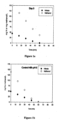
- Figure 1 shows detailed batch test results on Day 0 and Day 2.
- Table 2 shows the percentages of live and dead cells in both reactors 48 hours after the starvation.
- Table 1. Summary of the methanol and nitrate consumption rates during the 48 hour starvation period.
- Day 0 Day 1 Day 2 Control reactor
- Control reactor Control reactor
- Experimental reactor mg N-NO 3 - /gVSS*min 0.524 0.135 0.014 0.54 0.004 mg Methanol/ gVSS*min 1.270 0.330 0.051 1.61 0.0 Table 2.
- Experimental (16 images) Control (21 images) Average (% dead cells) St dev. St. Error Average (%) St dev. St. Error 40.4 12 3.2 7.06 3.6 0.79
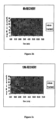
- Table 3 shows the activity recovery of the biomass in the experimental reactor. The detailed experimental results are shown in Figure 2 . Table 3. Activity recovery of the biomass in the experimental reactor (Day 2 is the time when recovery started) Day 2 Day 3 Day 4 Day 7 mg N-NO 3 - /gVSS*min 0.004 0.004 0.022 0.089 mg Methanol/ gVSS*min 0 0.133 0.067 0.235
- FNA free nitrous acid
- embodiments of the present invention can also reduce the amount of sludge that needs disposal. This also adds to the benefits and economics of the present invention.
- the FNA can be generated as part of the overall water treatment process, thereby allowing the FNA to be formed at a low price. Accordingly, the present invention becomes economically favourable.
- the aim of this study is to experimentally evaluate the feasibility of FNA to improve the biodegradability of secondary sludge.
- primary sludge is readily hydrolysable (Mahmood and Elliott, 2006; Foladori et al., 2010).
- this study only focussed on secondary sludge.
- a series of batch tests were conducted through the use of an enriched methonal-utilising denitrifiers culture, which was employed as secondary sludge in this study.
- LIVE/DEAD staining was performed to examine the biocidal effect of FNA by verifying the integrity of cell membrane.
- the deactivation of secondary sludge and the recovery of their activities after FNA treatment were investigated by comparing the nitrate reduction rates of the experimental and control reactors.
- the improvement of biodegradability of secondary sludge was assessed by the measurement of oxygen uptake rates (OURs) and nitrate accumulation.
- OURs oxygen uptake rates
- the LIVE/DEAD ® BacLightTM bacterial viability kits (Moleculer Probes, L-7012) were used to discriminate between viable cells and dead cells ( Ziglio et al., 2002; Invitrogen Molecular Probes, 2003 ).
- the BacLightTM bacterial viability kits contain green-fluorescent nucleic acid stain SYTO ® 9 and red-fluorescent nucleic acid stain Propidium Iodide (PI).
- SYTO ® 9 stain generally labels all bacteria that have both intact membranes and damaged membranes.
- PI stain penetrates only those bacteria with damaged membranes, causing a reduction in the SYTO ® 9 stain fluorescence when both dyes are present. For this reason, bacteria with intact cell membranes (viable cells) stain green fluorescence, whereas bacteria with damaged membranes (dead cells) stain red fluorescence.
- sludge samples (1 ml in each testing) were transferred into 5-ml plastic tubes in conjunction with 1.5 ⁇ l of SYTO ® 9 and 1.5 ⁇ l of PI, and incubated in a dark place for 15 min at the room temperature, making staining reactions complete. Then, slides with stained sludge samples (10 ⁇ l on each slide) were observed and photographed using a confocal laser scanning microscope (Zeiss LSM 510 META), equipped with a Krypton-Argon laser (488 nm) and two He-Ne lasers (543 and 643 nm).
- Zeiss LSM 510 META confocal laser scanning microscope
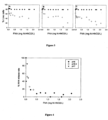
- Figure 3 shows the dependency of viable cell ratios on FNA concentration after the specified exposure times.
- the results presented in Figure 4 show that:
- Figure 4 shows the dependency of ammonium release rate and FNA concentrations during the sludge treatment with FNA. The results in Figure 4 show that:
- Figure 5 shows the recovery of the nitrate reduction rate activity after different periods of sludge treatment with FNA. The results shown in Figure 5 demonstrate that:
- Figure 6 shows nitrate reduction rate from the sludge used (•) and after being exposed 48h at certain pH ( ⁇ ).
- the results of figure 6 show that pH has also a detrimental effect on activity recovery. This negative effect increases when lowering the pH and increasing the exposure time.
- nitrite was added to mimic the concentration of nitrite present in the 1st reactor after the addition of the FNA treated sludge (45 mg N-NO2-/L).
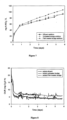
- Figure 8 shows nitrate concentration as a function of the duration of aerobic digestion.
- Table 5 shows measured data for mass balance evaluation.
- Table 5 shows measured data for mass balance evaluation.
- Measured data for mass balance evaluation Reactor MLVSS (mg/L) NO 3 (mg N/L) Averaged OUR (mg O 2 /L.h) initial final initial final Reactor with FNA-treated sludge 3340 2660 4.25 106.4 8.096.55 Reactor with untreated sludge 3340 2840 5.95 94.3 6.614.50 Reactor with effluent 3040 2515 5.81 92.7 6.404.63
- Figure 8 shows the Oxygen Uptake Rate (OUR) as a function of the duration of aerobic digestion. This shows that OUR in reactor with FNA-treated sludge (Reactor 1) was consistently higher than that in the two other reactors (Reactors 2 and 3). This suggests that the sludge biodegradability was improved after FNA treatment.
- OUR Oxygen Uptake Rate
- This example had an objective of evaluating differential killings of AOB (ammonia oxidizing bacteria), NOB (nitrite oxidizing bacteria) and OHOs (ordinary heterotrophic organisms) by FNA.
- AOB ammonia oxidizing bacteria
- NOB nitrite oxidizing bacteria
- OHOs ordinary heterotrophic organisms
- Step 1 Measuring the original activities of AOB, NOB and OHOs (i.e., before FNA treatment):
- Sludge was taken out from the parent reactor (SBR) at the end of an aerobic period and then transferred into a batch reactor. Afterwards, ammonium and nitrite stock solutions were added to the batch reactor, resulting in the ammonium and nitrite concentrations of 25 mg NH4-N/L and 20 mg NO2--N/L, respectively. Air was supplied during the whole experiment period (DO was not limiting, i.e. >3mg/L). pH was controlled in the range of 7.5-8 during the whole experimental period. The activities of AOB and NOB were determined as biomass-specific nitrite+nitrate and nitrate production rates, respectively.
- Step 2 Exposing sludge to various FNA levels for 24 h
- Step 3 Measuring the activities of AOB, NOB and OHOs following FNA treatment and after 2-h recovery, with the procedures described above. The results are shown in Figure 9.
- the above differential killing can be utilized to achieve nitrogen removal via the nitrite pathway, that is, though ammonium oxidation to nitrite and then nitrite reduction to dinitrogen gas (NH4+ ⁇ NO2- ⁇ N2) without going through nitrate.
- This can be achieved through appropriately chosen FNA level and treatment duration, and the solids retention time in the SBR such that NOB are eliminated from the system while AOB are maintained. This process reduces the oxygen requirement for nitrification by 25% and the carbon requirement for denitrification by 40%.
- This example investigates pretreating a sludge in accordance with an embodiment of the present invention in order to demonstrate that the present invention can reduce the amount of sludge that would otherwise be formed.
- a lab-scale sequencing batch reactor (SBR) with a working volume of 8 L was used in this study.
- the SBR was operated with a cycle time of 6-h, consisting of 10 min anoxic feed, 70 min anoxic reaction, 225 min aerobic reaction, 5 min sludge wasting, 45 min settling and 5 min decanting periods.
- FNA free nitrous acid
- a control SBR operating under identical conditions was also fed with the same wastewater, but there was no recycle of any sludge to this reactor.
- Table 7 shows the measured and predicted MLSS (mixed liquor suspended solids) and MI,VSS (mixed liquor volatile suspended solids) data (with standard errors) for this test after the reactors reached steady state.
Landscapes
- Life Sciences & Earth Sciences (AREA)
- Hydrology & Water Resources (AREA)
- Engineering & Computer Science (AREA)
- Environmental & Geological Engineering (AREA)
- Water Supply & Treatment (AREA)
- Chemical & Material Sciences (AREA)
- Organic Chemistry (AREA)
- Health & Medical Sciences (AREA)
- Molecular Biology (AREA)
- Purification Treatments By Anaerobic Or Anaerobic And Aerobic Bacteria Or Animals (AREA)
- Treatment Of Sludge (AREA)
Claims (10)
- Verfahren zur Behandlung eines Sekundärschlamms, der einem anaeroben oder aeroben Schlammfaulbehälter zugeführt werden soll, wobei das Verfahren folgende Schritte umfasst:(a) Inkontaktbringen des Sekundärschlamms mit freier salpetriger Säure durch Inkontaktbringen des Sekundärschlamms mit einem Flüssigkeitsstrom, der freie salpetrige Säure enthält, wobei das Gemisch aus Sekundärschlamm und freier salpetriger Säure einen Gehalt an freier salpetriger Säure von mindestens 0,5 ppm aufweist; und(b) Zuführen der Mischung aus Sekundärschlamm und freier salpetriger Säure aus (a) zu einem anaeroben oder aeroben Schlammfaulbehälter,wobei die Behandlungszeit zwischen sechs Stunden und zwei Tagen beträgt.
- Verfahren nach Anspruch 1, wobei das Gemisch aus Sekundärschlamm und freier salpetriger Säure einen pH-Wert von weniger als 6, vorzugsweise weniger als 4, aufweist.
- Verfahren nach Anspruch 1, wobei das Gemisch aus Sekundärschlamm und freier salpetriger Säure einen pH-Wert von weniger als 2 aufweist.
- Verfahren nach Anspruch 1, wobei das Gemisch aus Sekundärschlamm und freier salpetriger Säure einen Gehalt an freier salpetriger Säure von mindestens 1 ppm aufweist.
- Verfahren nach Anspruch 1, wobei das Gemisch aus Sekundärschlamm und freier salpetriger Säure einen Gehalt an freier salpetriger Säure von mindestens 2 ppm aufweist.
- Verfahren nach Anspruch 1, wobei die freie salpetrige Säure dem zu behandelnden Sekundärschlamm kontinuierlich zugesetzt wird oder die freie salpetrige Säure dem Sekundärschlamm in Intervallen zugesetzt wird.
- Verfahren nach Anspruch 1, wobei der Flüssigkeitsstrom, der freie salpetrige Säure enthält, einen pH-Wert von weniger als 6, vorzugsweise weniger als 4, aufweist.
- Verfahren nach Anspruch 1, wobei der Flüssigkeitsstrom, der freie salpetrige Säure enthält, einen pH-Wert von weniger als 2 aufweist.
- Verfahren nach Anspruch 1, wobei der Flüssigkeitsstrom, der freie salpetrige Säure enthält, einen Gehalt an freier salpetriger Säure von mindestens 1 ppm aufweist.
- Verfahren nach Anspruch 1, wobei der Flüssigkeitsstrom, der frei salpetrige Säure enthält, einen Gehalt an freier salpetriger Säure von mindestens 2 ppm aufweist.
Applications Claiming Priority (2)
| Application Number | Priority Date | Filing Date | Title |
|---|---|---|---|
| AU2011902595A AU2011902595A0 (en) | 2011-06-30 | Pre-Treatment of Sludge | |
| PCT/AU2012/000725 WO2013000010A1 (en) | 2011-06-30 | 2012-06-22 | Pre-treatment of sludge |
Publications (3)
| Publication Number | Publication Date |
|---|---|
| EP2726418A1 EP2726418A1 (de) | 2014-05-07 |
| EP2726418A4 EP2726418A4 (de) | 2015-02-25 |
| EP2726418B1 true EP2726418B1 (de) | 2024-08-21 |
Family
ID=47423279
Family Applications (1)
| Application Number | Title | Priority Date | Filing Date |
|---|---|---|---|
| EP12804223.1A Active EP2726418B1 (de) | 2011-06-30 | 2012-06-22 | Vorbehandlung von schlamm |
Country Status (6)
| Country | Link |
|---|---|
| US (1) | US9242883B2 (de) |
| EP (1) | EP2726418B1 (de) |
| CN (1) | CN103796962B (de) |
| AU (1) | AU2012276269B2 (de) |
| ES (1) | ES2991015T3 (de) |
| WO (1) | WO2013000010A1 (de) |
Families Citing this family (10)
| Publication number | Priority date | Publication date | Assignee | Title |
|---|---|---|---|---|
| CN103332836B (zh) * | 2013-06-09 | 2014-09-24 | 华南农业大学 | 一种基于反硝化除硫的黑臭河道底泥原位氧化技术 |
| IT201600121031A1 (it) * | 2016-11-29 | 2018-05-29 | Newlisi S P A | Processo per la produzione di biogas tramite digestione anaerobica di fanghi di depurazione pretrattati chimicamente. |
| CN106915883B (zh) * | 2017-03-13 | 2019-11-01 | 华南师范大学 | 一种内源fna预处理污泥减量化及资源化工艺 |
| CN106986447B (zh) * | 2017-04-11 | 2019-11-26 | 清华大学 | 一种用于控制管道腐蚀恶臭的处理系统及处理方法 |
| CN108483821B (zh) * | 2018-05-30 | 2020-10-30 | 中国市政工程华北设计研究总院有限公司 | 以亚硝化-厌氧氨氧化为核心的城市污水高效脱氮工艺 |
| WO2020237283A1 (en) * | 2019-05-24 | 2020-12-03 | The University Of Queensland | Method for treating wastewater or sludge |
| CN110550738B (zh) * | 2019-09-09 | 2020-08-21 | 清华大学 | 一种基于侧流膜生物反应器的污水短程硝化方法及装置 |
| CN110902809B (zh) * | 2019-12-02 | 2021-10-26 | 太原学院 | 电化学-生物耦合剩余污泥/消化液闭路处理方法及处理装置 |
| CN114506984A (zh) * | 2022-01-17 | 2022-05-17 | 华南理工大学 | 一种投加h2o2将硝化污泥恢复稳定亚硝化污泥的方法 |
| CN120622786A (zh) * | 2025-08-04 | 2025-09-12 | 湖南人文科技学院 | 一种污泥酸化调理脱水方法 |
Citations (1)
| Publication number | Priority date | Publication date | Assignee | Title |
|---|---|---|---|---|
| US7279099B2 (en) * | 2004-06-01 | 2007-10-09 | Fkos, Llc | Sludge treatment process |
Family Cites Families (17)
| Publication number | Priority date | Publication date | Assignee | Title |
|---|---|---|---|---|
| US4537682A (en) * | 1982-01-29 | 1985-08-27 | Environmental Research & Technology | Activated sludge wastewater treating process |
| US4772396A (en) * | 1986-11-26 | 1988-09-20 | Amoco Corporation | Method for controlling filamentous organisms in wastewater treatment processes |
| US5281341A (en) * | 1991-08-09 | 1994-01-25 | Administrators Of The Tulane Educational Fund | Sludge treatment process |
| US5849192A (en) * | 1996-02-12 | 1998-12-15 | Basf Corporation | Procedure to recover from nitrification upsets |
| US5705072A (en) * | 1997-02-03 | 1998-01-06 | Haase; Richard Alan | Biotreatment of wastewater from hydrocarbon processing units |
| US20040180015A1 (en) * | 2002-01-07 | 2004-09-16 | Kross Robert D. | Long-acting disinfecting nitrous acid compositions and related processes |
| JP4678577B2 (ja) * | 2004-11-05 | 2011-04-27 | 株式会社日立プラントテクノロジー | 廃水処理システム |
| JP5023473B2 (ja) * | 2005-11-15 | 2012-09-12 | 株式会社安川電機 | 汚水処理システム |
| EP1991512A2 (de) | 2006-02-24 | 2008-11-19 | Beesterzwaag Beheer B.V. | Verfahren für die umwandlung von flüssiger abfallbiomasse in ein düngemittelprodukt |
| US7438813B1 (en) * | 2006-04-13 | 2008-10-21 | Pedros Philip B | Ammonia oxidation and pipe denitrification |
| EP2428492A1 (de) * | 2007-05-11 | 2012-03-14 | Kurita Water Industries Ltd. | Anaerobes Behandlungsverfahren und anaerobe Behandlungsvorrichtung |
| CN101284697B (zh) * | 2008-04-02 | 2010-06-02 | 北京城市排水集团有限责任公司 | 通过fa与fna联合控制实现污泥消化液短程硝化的装置与方法 |
| JP2010005544A (ja) | 2008-06-27 | 2010-01-14 | Sat:Kk | インクジェット・ヘッドの洗浄方法および装置 |
| JP4837706B2 (ja) * | 2008-06-27 | 2011-12-14 | 水ing株式会社 | アンモニア性窒素の除去装置 |
| WO2011134011A1 (en) | 2010-04-28 | 2011-11-03 | The University Of Queensland | Production of nitrite |
| BR112012027815A2 (pt) * | 2010-04-28 | 2015-09-08 | Univ Queensland | controle da atividade bacteriana, tal como em esgotos e sistemas de tratamento de águas residuais |
| WO2013006890A1 (en) * | 2011-07-12 | 2013-01-17 | The University Of Queensland | Treatment of membranes used in water treatment |
-
2012
- 2012-06-22 EP EP12804223.1A patent/EP2726418B1/de active Active
- 2012-06-22 AU AU2012276269A patent/AU2012276269B2/en active Active
- 2012-06-22 CN CN201280032743.6A patent/CN103796962B/zh active Active
- 2012-06-22 US US14/130,101 patent/US9242883B2/en active Active
- 2012-06-22 WO PCT/AU2012/000725 patent/WO2013000010A1/en not_active Ceased
- 2012-06-22 ES ES12804223T patent/ES2991015T3/es active Active
Patent Citations (1)
| Publication number | Priority date | Publication date | Assignee | Title |
|---|---|---|---|---|
| US7279099B2 (en) * | 2004-06-01 | 2007-10-09 | Fkos, Llc | Sludge treatment process |
Non-Patent Citations (1)
| Title |
|---|
| YAN ZHOU ET AL: "Free nitrous acid (FNA) inhibition on denitrifying poly-phosphate accumulating organisms (DPAOs)", 29 July 2010, APPLIED MICROBIOLOGY AND BIOTECHNOLOGY, SPRINGER, BERLIN, DE, PAGE(S) 359 - 369, ISSN: 1432-0614, XP019841777 * |
Also Published As
| Publication number | Publication date |
|---|---|
| EP2726418A4 (de) | 2015-02-25 |
| US9242883B2 (en) | 2016-01-26 |
| WO2013000010A1 (en) | 2013-01-03 |
| AU2012276269B2 (en) | 2016-10-20 |
| US20140202956A1 (en) | 2014-07-24 |
| EP2726418A1 (de) | 2014-05-07 |
| AU2012276269A1 (en) | 2014-01-23 |
| CN103796962A (zh) | 2014-05-14 |
| CN103796962B (zh) | 2018-04-27 |
| ES2991015T3 (es) | 2024-12-02 |
Similar Documents
| Publication | Publication Date | Title |
|---|---|---|
| EP2726418B1 (de) | Vorbehandlung von schlamm | |
| Yang et al. | Free ammonia-based sludge treatment reduces sludge production in the wastewater treatment process | |
| Feng et al. | Enhanced nitrogen removal from low COD/TIN mainstream wastewater in a continuous plug-flow reactor via partial nitrification, simultaneous anammox and endogenous denitrification (PN-SAED) process | |
| Anjali et al. | Development of simultaneous partial nitrification, anammox and denitrification (SNAD) in a non-aerated SBR | |
| Liu et al. | Superior nitrogen removal and sludge reduction in a suspended sludge system with in-situ enriching anammox bacteria for real sewage treatment | |
| McAdam et al. | Denitrification from drinking water using a membrane bioreactor: chemical and biochemical feasibility | |
| De Prá et al. | Simultaneous removal of TOC and TSS in swine wastewater using the partial nitritation process | |
| Martins et al. | Assessment of sludge reduction and microbial dynamics in an OSA process with short anaerobic retention time | |
| Kong et al. | Significant in situ sludge yield reduction in an acidic activated sludge system | |
| Hao et al. | Resilience of sulfate-reducing granular sludge against temperature, pH, oxygen, nitrite, and free nitrous acid | |
| Costa et al. | Assessing the performance and microbial community of hybrid moving bed and conventional membrane bioreactors treating municipal wastewater | |
| Zheng et al. | Organic carbon-induced transition from autotrophic to mixotrophic denitrification in H2-driven biofilm systems treating low C/N wastewater | |
| CN116216989B (zh) | 一种粪污废水处理方法及处理系统 | |
| Sun et al. | Achieving nitrogen removal via nitrite pathway from urban landfill leachate using the synergetic inhibition of free ammonia and free nitrous acid on nitrifying bacteria activity | |
| KR20110045812A (ko) | 혐기성 소화 탈리액 질소 제거 장치 및 이를 이용한 혐기성 소화 탈리액의 질소 제거 방법 | |
| US20190202723A1 (en) | Systems and methods for controlling denitrification in a denitrifying biological reactor | |
| KR100578408B1 (ko) | 혐기성 그래뉼 슬러지를 이용한 탈질 방법 | |
| CN116693053B (zh) | 基于污泥旁侧氯化处理实现短程硝化/厌氧氨氧化脱氮同步除磷的装置及方法 | |
| KR20110059692A (ko) | 혐기성 소화 탈리액의 질소 제거 장치 | |
| KR101045975B1 (ko) | 혐기성 소화 탈리액의 질소 제거 방법 | |
| KR100942054B1 (ko) | 회분식 생물반응조에 의한 하폐수 고도처리방법 및 처리장치 | |
| KR100912562B1 (ko) | 회분식 생물반응조에 의한 하폐수 고도처리방법 및 처리장치 | |
| KR100942053B1 (ko) | 회분식 생물반응조에 의한 하폐수 고도처리방법 및 처리장치 | |
| Zhu et al. | Effect of influent C/N ratio on nitrogen removal using PHB as electron donor in a post‐denitritation SBR | |
| Xie et al. | Achieving advanced nitrogen removal with anammox and endogenous partial denitrification driven by efficient hydrolytic fermentation of slowly-biodegradable organic matter |
Legal Events
| Date | Code | Title | Description |
|---|---|---|---|
| PUAI | Public reference made under article 153(3) epc to a published international application that has entered the european phase |
Free format text: ORIGINAL CODE: 0009012 |
|
| 17P | Request for examination filed |
Effective date: 20131230 |
|
| AK | Designated contracting states |
Kind code of ref document: A1 Designated state(s): AL AT BE BG CH CY CZ DE DK EE ES FI FR GB GR HR HU IE IS IT LI LT LU LV MC MK MT NL NO PL PT RO RS SE SI SK SM TR |
|
| DAX | Request for extension of the european patent (deleted) | ||
| A4 | Supplementary search report drawn up and despatched |
Effective date: 20150126 |
|
| RIC1 | Information provided on ipc code assigned before grant |
Ipc: C02F 3/00 20060101ALI20150120BHEP Ipc: C02F 11/00 20060101AFI20150120BHEP |
|
| STAA | Information on the status of an ep patent application or granted ep patent |
Free format text: STATUS: EXAMINATION IS IN PROGRESS |
|
| 17Q | First examination report despatched |
Effective date: 20171205 |
|
| APBK | Appeal reference recorded |
Free format text: ORIGINAL CODE: EPIDOSNREFNE |
|
| APBN | Date of receipt of notice of appeal recorded |
Free format text: ORIGINAL CODE: EPIDOSNNOA2E |
|
| APBR | Date of receipt of statement of grounds of appeal recorded |
Free format text: ORIGINAL CODE: EPIDOSNNOA3E |
|
| APAF | Appeal reference modified |
Free format text: ORIGINAL CODE: EPIDOSCREFNE |
|
| APBT | Appeal procedure closed |
Free format text: ORIGINAL CODE: EPIDOSNNOA9E |
|
| GRAP | Despatch of communication of intention to grant a patent |
Free format text: ORIGINAL CODE: EPIDOSNIGR1 |
|
| STAA | Information on the status of an ep patent application or granted ep patent |
Free format text: STATUS: GRANT OF PATENT IS INTENDED |
|
| INTG | Intention to grant announced |
Effective date: 20240409 |
|
| GRAS | Grant fee paid |
Free format text: ORIGINAL CODE: EPIDOSNIGR3 |
|
| GRAA | (expected) grant |
Free format text: ORIGINAL CODE: 0009210 |
|
| STAA | Information on the status of an ep patent application or granted ep patent |
Free format text: STATUS: THE PATENT HAS BEEN GRANTED |
|
| AK | Designated contracting states |
Kind code of ref document: B1 Designated state(s): AL AT BE BG CH CY CZ DE DK EE ES FI FR GB GR HR HU IE IS IT LI LT LU LV MC MK MT NL NO PL PT RO RS SE SI SK SM TR |
|
| P01 | Opt-out of the competence of the unified patent court (upc) registered |
Free format text: CASE NUMBER: APP_42028/2024 Effective date: 20240716 |
|
| REG | Reference to a national code |
Ref country code: GB Ref legal event code: FG4D |
|
| REG | Reference to a national code |
Ref country code: CH Ref legal event code: EP |
|
| REG | Reference to a national code |
Ref country code: IE Ref legal event code: FG4D |
|
| REG | Reference to a national code |
Ref country code: DE Ref legal event code: R096 Ref document number: 602012081015 Country of ref document: DE |
|
| REG | Reference to a national code |
Ref country code: ES Ref legal event code: FG2A Ref document number: 2991015 Country of ref document: ES Kind code of ref document: T3 Effective date: 20241202 |
|
| REG | Reference to a national code |
Ref country code: LT Ref legal event code: MG9D |
|
| REG | Reference to a national code |
Ref country code: NL Ref legal event code: MP Effective date: 20240821 |
|
| PG25 | Lapsed in a contracting state [announced via postgrant information from national office to epo] |
Ref country code: NO Free format text: LAPSE BECAUSE OF FAILURE TO SUBMIT A TRANSLATION OF THE DESCRIPTION OR TO PAY THE FEE WITHIN THE PRESCRIBED TIME-LIMIT Effective date: 20241121 |
|
| REG | Reference to a national code |
Ref country code: AT Ref legal event code: MK05 Ref document number: 1715366 Country of ref document: AT Kind code of ref document: T Effective date: 20240821 |
|
| PG25 | Lapsed in a contracting state [announced via postgrant information from national office to epo] |
Ref country code: FI Free format text: LAPSE BECAUSE OF FAILURE TO SUBMIT A TRANSLATION OF THE DESCRIPTION OR TO PAY THE FEE WITHIN THE PRESCRIBED TIME-LIMIT Effective date: 20240821 Ref country code: NL Free format text: LAPSE BECAUSE OF FAILURE TO SUBMIT A TRANSLATION OF THE DESCRIPTION OR TO PAY THE FEE WITHIN THE PRESCRIBED TIME-LIMIT Effective date: 20240821 Ref country code: PT Free format text: LAPSE BECAUSE OF FAILURE TO SUBMIT A TRANSLATION OF THE DESCRIPTION OR TO PAY THE FEE WITHIN THE PRESCRIBED TIME-LIMIT Effective date: 20241223 Ref country code: PL Free format text: LAPSE BECAUSE OF FAILURE TO SUBMIT A TRANSLATION OF THE DESCRIPTION OR TO PAY THE FEE WITHIN THE PRESCRIBED TIME-LIMIT Effective date: 20240821 Ref country code: GR Free format text: LAPSE BECAUSE OF FAILURE TO SUBMIT A TRANSLATION OF THE DESCRIPTION OR TO PAY THE FEE WITHIN THE PRESCRIBED TIME-LIMIT Effective date: 20241122 |
|
| PG25 | Lapsed in a contracting state [announced via postgrant information from national office to epo] |
Ref country code: BG Free format text: LAPSE BECAUSE OF FAILURE TO SUBMIT A TRANSLATION OF THE DESCRIPTION OR TO PAY THE FEE WITHIN THE PRESCRIBED TIME-LIMIT Effective date: 20240821 |
|
| PG25 | Lapsed in a contracting state [announced via postgrant information from national office to epo] |
Ref country code: LV Free format text: LAPSE BECAUSE OF FAILURE TO SUBMIT A TRANSLATION OF THE DESCRIPTION OR TO PAY THE FEE WITHIN THE PRESCRIBED TIME-LIMIT Effective date: 20240821 |
|
| PG25 | Lapsed in a contracting state [announced via postgrant information from national office to epo] |
Ref country code: AT Free format text: LAPSE BECAUSE OF FAILURE TO SUBMIT A TRANSLATION OF THE DESCRIPTION OR TO PAY THE FEE WITHIN THE PRESCRIBED TIME-LIMIT Effective date: 20240821 Ref country code: IS Free format text: LAPSE BECAUSE OF FAILURE TO SUBMIT A TRANSLATION OF THE DESCRIPTION OR TO PAY THE FEE WITHIN THE PRESCRIBED TIME-LIMIT Effective date: 20241221 |
|
| PG25 | Lapsed in a contracting state [announced via postgrant information from national office to epo] |
Ref country code: HR Free format text: LAPSE BECAUSE OF FAILURE TO SUBMIT A TRANSLATION OF THE DESCRIPTION OR TO PAY THE FEE WITHIN THE PRESCRIBED TIME-LIMIT Effective date: 20240821 |
|
| PG25 | Lapsed in a contracting state [announced via postgrant information from national office to epo] |
Ref country code: RS Free format text: LAPSE BECAUSE OF FAILURE TO SUBMIT A TRANSLATION OF THE DESCRIPTION OR TO PAY THE FEE WITHIN THE PRESCRIBED TIME-LIMIT Effective date: 20241121 |
|
| PG25 | Lapsed in a contracting state [announced via postgrant information from national office to epo] |
Ref country code: RS Free format text: LAPSE BECAUSE OF FAILURE TO SUBMIT A TRANSLATION OF THE DESCRIPTION OR TO PAY THE FEE WITHIN THE PRESCRIBED TIME-LIMIT Effective date: 20241121 Ref country code: PT Free format text: LAPSE BECAUSE OF FAILURE TO SUBMIT A TRANSLATION OF THE DESCRIPTION OR TO PAY THE FEE WITHIN THE PRESCRIBED TIME-LIMIT Effective date: 20241223 Ref country code: PL Free format text: LAPSE BECAUSE OF FAILURE TO SUBMIT A TRANSLATION OF THE DESCRIPTION OR TO PAY THE FEE WITHIN THE PRESCRIBED TIME-LIMIT Effective date: 20240821 Ref country code: NO Free format text: LAPSE BECAUSE OF FAILURE TO SUBMIT A TRANSLATION OF THE DESCRIPTION OR TO PAY THE FEE WITHIN THE PRESCRIBED TIME-LIMIT Effective date: 20241121 Ref country code: NL Free format text: LAPSE BECAUSE OF FAILURE TO SUBMIT A TRANSLATION OF THE DESCRIPTION OR TO PAY THE FEE WITHIN THE PRESCRIBED TIME-LIMIT Effective date: 20240821 Ref country code: LV Free format text: LAPSE BECAUSE OF FAILURE TO SUBMIT A TRANSLATION OF THE DESCRIPTION OR TO PAY THE FEE WITHIN THE PRESCRIBED TIME-LIMIT Effective date: 20240821 Ref country code: IS Free format text: LAPSE BECAUSE OF FAILURE TO SUBMIT A TRANSLATION OF THE DESCRIPTION OR TO PAY THE FEE WITHIN THE PRESCRIBED TIME-LIMIT Effective date: 20241221 Ref country code: HR Free format text: LAPSE BECAUSE OF FAILURE TO SUBMIT A TRANSLATION OF THE DESCRIPTION OR TO PAY THE FEE WITHIN THE PRESCRIBED TIME-LIMIT Effective date: 20240821 Ref country code: GR Free format text: LAPSE BECAUSE OF FAILURE TO SUBMIT A TRANSLATION OF THE DESCRIPTION OR TO PAY THE FEE WITHIN THE PRESCRIBED TIME-LIMIT Effective date: 20241122 Ref country code: FI Free format text: LAPSE BECAUSE OF FAILURE TO SUBMIT A TRANSLATION OF THE DESCRIPTION OR TO PAY THE FEE WITHIN THE PRESCRIBED TIME-LIMIT Effective date: 20240821 Ref country code: BG Free format text: LAPSE BECAUSE OF FAILURE TO SUBMIT A TRANSLATION OF THE DESCRIPTION OR TO PAY THE FEE WITHIN THE PRESCRIBED TIME-LIMIT Effective date: 20240821 Ref country code: AT Free format text: LAPSE BECAUSE OF FAILURE TO SUBMIT A TRANSLATION OF THE DESCRIPTION OR TO PAY THE FEE WITHIN THE PRESCRIBED TIME-LIMIT Effective date: 20240821 |
|
| PG25 | Lapsed in a contracting state [announced via postgrant information from national office to epo] |
Ref country code: DK Free format text: LAPSE BECAUSE OF FAILURE TO SUBMIT A TRANSLATION OF THE DESCRIPTION OR TO PAY THE FEE WITHIN THE PRESCRIBED TIME-LIMIT Effective date: 20240821 Ref country code: RO Free format text: LAPSE BECAUSE OF FAILURE TO SUBMIT A TRANSLATION OF THE DESCRIPTION OR TO PAY THE FEE WITHIN THE PRESCRIBED TIME-LIMIT Effective date: 20240821 Ref country code: SM Free format text: LAPSE BECAUSE OF FAILURE TO SUBMIT A TRANSLATION OF THE DESCRIPTION OR TO PAY THE FEE WITHIN THE PRESCRIBED TIME-LIMIT Effective date: 20240821 |
|
| PG25 | Lapsed in a contracting state [announced via postgrant information from national office to epo] |
Ref country code: EE Free format text: LAPSE BECAUSE OF FAILURE TO SUBMIT A TRANSLATION OF THE DESCRIPTION OR TO PAY THE FEE WITHIN THE PRESCRIBED TIME-LIMIT Effective date: 20240821 |
|
| PG25 | Lapsed in a contracting state [announced via postgrant information from national office to epo] |
Ref country code: CZ Free format text: LAPSE BECAUSE OF FAILURE TO SUBMIT A TRANSLATION OF THE DESCRIPTION OR TO PAY THE FEE WITHIN THE PRESCRIBED TIME-LIMIT Effective date: 20240821 |
|
| PG25 | Lapsed in a contracting state [announced via postgrant information from national office to epo] |
Ref country code: SK Free format text: LAPSE BECAUSE OF FAILURE TO SUBMIT A TRANSLATION OF THE DESCRIPTION OR TO PAY THE FEE WITHIN THE PRESCRIBED TIME-LIMIT Effective date: 20240821 |
|
| REG | Reference to a national code |
Ref country code: DE Ref legal event code: R097 Ref document number: 602012081015 Country of ref document: DE |
|
| PLBE | No opposition filed within time limit |
Free format text: ORIGINAL CODE: 0009261 |
|
| STAA | Information on the status of an ep patent application or granted ep patent |
Free format text: STATUS: NO OPPOSITION FILED WITHIN TIME LIMIT |
|
| PGFP | Annual fee paid to national office [announced via postgrant information from national office to epo] |
Ref country code: DE Payment date: 20250618 Year of fee payment: 14 |
|
| PGFP | Annual fee paid to national office [announced via postgrant information from national office to epo] |
Ref country code: GB Payment date: 20250618 Year of fee payment: 14 |
|
| PGFP | Annual fee paid to national office [announced via postgrant information from national office to epo] |
Ref country code: FR Payment date: 20250624 Year of fee payment: 14 |
|
| 26N | No opposition filed |
Effective date: 20250522 |
|
| PG25 | Lapsed in a contracting state [announced via postgrant information from national office to epo] |
Ref country code: SE Free format text: LAPSE BECAUSE OF FAILURE TO SUBMIT A TRANSLATION OF THE DESCRIPTION OR TO PAY THE FEE WITHIN THE PRESCRIBED TIME-LIMIT Effective date: 20240821 |
|
| PGFP | Annual fee paid to national office [announced via postgrant information from national office to epo] |
Ref country code: ES Payment date: 20250728 Year of fee payment: 14 |
|
| PGFP | Annual fee paid to national office [announced via postgrant information from national office to epo] |
Ref country code: IT Payment date: 20250624 Year of fee payment: 14 |
|
| REG | Reference to a national code |
Ref country code: CH Ref legal event code: H13 Free format text: ST27 STATUS EVENT CODE: U-0-0-H10-H13 (AS PROVIDED BY THE NATIONAL OFFICE) Effective date: 20260127 |
|
| PG25 | Lapsed in a contracting state [announced via postgrant information from national office to epo] |
Ref country code: MC Free format text: LAPSE BECAUSE OF FAILURE TO SUBMIT A TRANSLATION OF THE DESCRIPTION OR TO PAY THE FEE WITHIN THE PRESCRIBED TIME-LIMIT Effective date: 20240821 |
|
| PG25 | Lapsed in a contracting state [announced via postgrant information from national office to epo] |
Ref country code: LU Free format text: LAPSE BECAUSE OF NON-PAYMENT OF DUE FEES Effective date: 20250622 |
|
| REG | Reference to a national code |
Ref country code: BE Ref legal event code: MM Effective date: 20250630 |
|
| PG25 | Lapsed in a contracting state [announced via postgrant information from national office to epo] |
Ref country code: IE Free format text: LAPSE BECAUSE OF NON-PAYMENT OF DUE FEES Effective date: 20250622 |
|
| PG25 | Lapsed in a contracting state [announced via postgrant information from national office to epo] |
Ref country code: BE Free format text: LAPSE BECAUSE OF NON-PAYMENT OF DUE FEES Effective date: 20250630 |
|
| PG25 | Lapsed in a contracting state [announced via postgrant information from national office to epo] |
Ref country code: CH Free format text: LAPSE BECAUSE OF NON-PAYMENT OF DUE FEES Effective date: 20250630 |