EP2722407A2 - Precipitation hardening martensitic stainless steel and long blade for steam turbine using the same - Google Patents
Precipitation hardening martensitic stainless steel and long blade for steam turbine using the same Download PDFInfo
- Publication number
- EP2722407A2 EP2722407A2 EP13189010.5A EP13189010A EP2722407A2 EP 2722407 A2 EP2722407 A2 EP 2722407A2 EP 13189010 A EP13189010 A EP 13189010A EP 2722407 A2 EP2722407 A2 EP 2722407A2
- Authority
- EP
- European Patent Office
- Prior art keywords
- less
- stainless steel
- steam turbine
- precipitation hardening
- martensitic stainless
- Prior art date
- Legal status (The legal status is an assumption and is not a legal conclusion. Google has not performed a legal analysis and makes no representation as to the accuracy of the status listed.)
- Withdrawn
Links
- 238000004881 precipitation hardening Methods 0.000 title claims abstract description 22
- 229910001105 martensitic stainless steel Inorganic materials 0.000 title claims abstract description 18
- 239000012535 impurity Substances 0.000 claims abstract description 7
- 229910045601 alloy Inorganic materials 0.000 claims description 18
- 239000000956 alloy Substances 0.000 claims description 18
- 238000011282 treatment Methods 0.000 claims description 15
- 230000032683 aging Effects 0.000 claims description 7
- 229910052718 tin Inorganic materials 0.000 claims description 6
- 229910001347 Stellite Inorganic materials 0.000 claims description 5
- 229910052787 antimony Inorganic materials 0.000 claims description 5
- 229910052785 arsenic Inorganic materials 0.000 claims description 5
- AHICWQREWHDHHF-UHFFFAOYSA-N chromium;cobalt;iron;manganese;methane;molybdenum;nickel;silicon;tungsten Chemical compound C.[Si].[Cr].[Mn].[Fe].[Co].[Ni].[Mo].[W] AHICWQREWHDHHF-UHFFFAOYSA-N 0.000 claims description 5
- 229910052750 molybdenum Inorganic materials 0.000 claims description 4
- 229910052758 niobium Inorganic materials 0.000 claims description 4
- 229910052715 tantalum Inorganic materials 0.000 claims description 4
- 229910052721 tungsten Inorganic materials 0.000 claims description 4
- 229910052698 phosphorus Inorganic materials 0.000 claims description 3
- 229910052717 sulfur Inorganic materials 0.000 claims description 3
- 238000005260 corrosion Methods 0.000 abstract description 7
- 230000007797 corrosion Effects 0.000 abstract description 7
- 238000012360 testing method Methods 0.000 description 12
- 239000011651 chromium Substances 0.000 description 11
- 238000010521 absorption reaction Methods 0.000 description 10
- 230000003628 erosive effect Effects 0.000 description 10
- 238000010438 heat treatment Methods 0.000 description 10
- 239000000243 solution Substances 0.000 description 10
- 229910001566 austenite Inorganic materials 0.000 description 9
- 238000001816 cooling Methods 0.000 description 9
- PXHVJJICTQNCMI-UHFFFAOYSA-N nickel Substances [Ni] PXHVJJICTQNCMI-UHFFFAOYSA-N 0.000 description 8
- 239000010955 niobium Substances 0.000 description 8
- 230000000052 comparative effect Effects 0.000 description 7
- 239000011572 manganese Substances 0.000 description 7
- 238000011156 evaluation Methods 0.000 description 6
- 229910000734 martensite Inorganic materials 0.000 description 6
- 229910000859 α-Fe Inorganic materials 0.000 description 6
- 229910003310 Ni-Al Inorganic materials 0.000 description 5
- 229910000831 Steel Inorganic materials 0.000 description 5
- 230000015572 biosynthetic process Effects 0.000 description 5
- 150000001875 compounds Chemical class 0.000 description 5
- 230000000694 effects Effects 0.000 description 5
- 239000010959 steel Substances 0.000 description 5
- 238000000034 method Methods 0.000 description 4
- OKTJSMMVPCPJKN-UHFFFAOYSA-N Carbon Chemical compound [C] OKTJSMMVPCPJKN-UHFFFAOYSA-N 0.000 description 3
- 229910052782 aluminium Inorganic materials 0.000 description 3
- 229910052799 carbon Inorganic materials 0.000 description 3
- 239000003795 chemical substances by application Substances 0.000 description 3
- 238000004519 manufacturing process Methods 0.000 description 3
- 150000001247 metal acetylides Chemical class 0.000 description 3
- 239000000203 mixture Substances 0.000 description 3
- 229910052759 nickel Inorganic materials 0.000 description 3
- 239000002893 slag Substances 0.000 description 3
- 238000003466 welding Methods 0.000 description 3
- IJGRMHOSHXDMSA-UHFFFAOYSA-N Atomic nitrogen Chemical compound N#N IJGRMHOSHXDMSA-UHFFFAOYSA-N 0.000 description 2
- CURLTUGMZLYLDI-UHFFFAOYSA-N Carbon dioxide Chemical compound O=C=O CURLTUGMZLYLDI-UHFFFAOYSA-N 0.000 description 2
- BQCADISMDOOEFD-UHFFFAOYSA-N Silver Chemical compound [Ag] BQCADISMDOOEFD-UHFFFAOYSA-N 0.000 description 2
- FAPWRFPIFSIZLT-UHFFFAOYSA-M Sodium chloride Chemical compound [Na+].[Cl-] FAPWRFPIFSIZLT-UHFFFAOYSA-M 0.000 description 2
- NRTOMJZYCJJWKI-UHFFFAOYSA-N Titanium nitride Chemical compound [Ti]#N NRTOMJZYCJJWKI-UHFFFAOYSA-N 0.000 description 2
- 229910052804 chromium Inorganic materials 0.000 description 2
- 239000011248 coating agent Substances 0.000 description 2
- 238000000576 coating method Methods 0.000 description 2
- 239000000470 constituent Substances 0.000 description 2
- 238000005242 forging Methods 0.000 description 2
- 239000007789 gas Substances 0.000 description 2
- 238000009434 installation Methods 0.000 description 2
- QWTDNUCVQCZILF-UHFFFAOYSA-N isopentane Chemical compound CCC(C)C QWTDNUCVQCZILF-UHFFFAOYSA-N 0.000 description 2
- 238000012423 maintenance Methods 0.000 description 2
- 239000000463 material Substances 0.000 description 2
- 238000005259 measurement Methods 0.000 description 2
- 238000002844 melting Methods 0.000 description 2
- 230000008018 melting Effects 0.000 description 2
- 238000001556 precipitation Methods 0.000 description 2
- 239000000047 product Substances 0.000 description 2
- 239000002994 raw material Substances 0.000 description 2
- 229910052709 silver Inorganic materials 0.000 description 2
- 239000004332 silver Substances 0.000 description 2
- 238000005476 soldering Methods 0.000 description 2
- 229910001220 stainless steel Inorganic materials 0.000 description 2
- 239000010935 stainless steel Substances 0.000 description 2
- 239000007858 starting material Substances 0.000 description 2
- 239000000126 substance Substances 0.000 description 2
- 238000012546 transfer Methods 0.000 description 2
- 230000009466 transformation Effects 0.000 description 2
- XLYOFNOQVPJJNP-UHFFFAOYSA-N water Substances O XLYOFNOQVPJJNP-UHFFFAOYSA-N 0.000 description 2
- 235000004507 Abies alba Nutrition 0.000 description 1
- 241000191291 Abies alba Species 0.000 description 1
- VYZAMTAEIAYCRO-UHFFFAOYSA-N Chromium Chemical compound [Cr] VYZAMTAEIAYCRO-UHFFFAOYSA-N 0.000 description 1
- 229910000846 In alloy Inorganic materials 0.000 description 1
- PWHULOQIROXLJO-UHFFFAOYSA-N Manganese Chemical compound [Mn] PWHULOQIROXLJO-UHFFFAOYSA-N 0.000 description 1
- ZOKXTWBITQBERF-UHFFFAOYSA-N Molybdenum Chemical compound [Mo] ZOKXTWBITQBERF-UHFFFAOYSA-N 0.000 description 1
- XUIMIQQOPSSXEZ-UHFFFAOYSA-N Silicon Chemical compound [Si] XUIMIQQOPSSXEZ-UHFFFAOYSA-N 0.000 description 1
- ATJFFYVFTNAWJD-UHFFFAOYSA-N Tin Chemical compound [Sn] ATJFFYVFTNAWJD-UHFFFAOYSA-N 0.000 description 1
- 238000002441 X-ray diffraction Methods 0.000 description 1
- 230000002411 adverse Effects 0.000 description 1
- XAGFODPZIPBFFR-UHFFFAOYSA-N aluminium Chemical compound [Al] XAGFODPZIPBFFR-UHFFFAOYSA-N 0.000 description 1
- 235000011089 carbon dioxide Nutrition 0.000 description 1
- 238000006243 chemical reaction Methods 0.000 description 1
- 230000001112 coagulating effect Effects 0.000 description 1
- 238000010276 construction Methods 0.000 description 1
- 238000005520 cutting process Methods 0.000 description 1
- 230000003247 decreasing effect Effects 0.000 description 1
- 230000003009 desulfurizing effect Effects 0.000 description 1
- AFABGHUZZDYHJO-UHFFFAOYSA-N dimethyl butane Natural products CCCC(C)C AFABGHUZZDYHJO-UHFFFAOYSA-N 0.000 description 1
- 230000005611 electricity Effects 0.000 description 1
- 239000002803 fossil fuel Substances 0.000 description 1
- 238000009863 impact test Methods 0.000 description 1
- 239000007943 implant Substances 0.000 description 1
- 238000002513 implantation Methods 0.000 description 1
- 239000012212 insulator Substances 0.000 description 1
- 238000003754 machining Methods 0.000 description 1
- 229910052748 manganese Inorganic materials 0.000 description 1
- 239000011159 matrix material Substances 0.000 description 1
- 229910052751 metal Inorganic materials 0.000 description 1
- 239000002184 metal Substances 0.000 description 1
- 238000012986 modification Methods 0.000 description 1
- 230000004048 modification Effects 0.000 description 1
- 239000011733 molybdenum Substances 0.000 description 1
- GUCVJGMIXFAOAE-UHFFFAOYSA-N niobium atom Chemical compound [Nb] GUCVJGMIXFAOAE-UHFFFAOYSA-N 0.000 description 1
- 229910052757 nitrogen Inorganic materials 0.000 description 1
- 239000003960 organic solvent Substances 0.000 description 1
- 239000002244 precipitate Substances 0.000 description 1
- 230000001376 precipitating effect Effects 0.000 description 1
- 238000002360 preparation method Methods 0.000 description 1
- 238000009497 press forging Methods 0.000 description 1
- 230000002265 prevention Effects 0.000 description 1
- 230000003014 reinforcing effect Effects 0.000 description 1
- 230000009291 secondary effect Effects 0.000 description 1
- 238000004904 shortening Methods 0.000 description 1
- 229910052710 silicon Inorganic materials 0.000 description 1
- 239000010703 silicon Substances 0.000 description 1
- 239000011780 sodium chloride Substances 0.000 description 1
- 230000001629 suppression Effects 0.000 description 1
- GUVRBAGPIYLISA-UHFFFAOYSA-N tantalum atom Chemical compound [Ta] GUVRBAGPIYLISA-UHFFFAOYSA-N 0.000 description 1
- 238000009864 tensile test Methods 0.000 description 1
- 238000010998 test method Methods 0.000 description 1
- 239000012085 test solution Substances 0.000 description 1
- WFKWXMTUELFFGS-UHFFFAOYSA-N tungsten Chemical compound [W] WFKWXMTUELFFGS-UHFFFAOYSA-N 0.000 description 1
- 239000010937 tungsten Substances 0.000 description 1
- 238000010313 vacuum arc remelting Methods 0.000 description 1
- 238000010792 warming Methods 0.000 description 1
Images

Classifications
-
- F—MECHANICAL ENGINEERING; LIGHTING; HEATING; WEAPONS; BLASTING
- F01—MACHINES OR ENGINES IN GENERAL; ENGINE PLANTS IN GENERAL; STEAM ENGINES
- F01D—NON-POSITIVE DISPLACEMENT MACHINES OR ENGINES, e.g. STEAM TURBINES
- F01D5/00—Blades; Blade-carrying members; Heating, heat-insulating, cooling or antivibration means on the blades or the members
- F01D5/12—Blades
- F01D5/28—Selecting particular materials; Particular measures relating thereto; Measures against erosion or corrosion
-
- C—CHEMISTRY; METALLURGY
- C21—METALLURGY OF IRON
- C21D—MODIFYING THE PHYSICAL STRUCTURE OF FERROUS METALS; GENERAL DEVICES FOR HEAT TREATMENT OF FERROUS OR NON-FERROUS METALS OR ALLOYS; MAKING METAL MALLEABLE, e.g. BY DECARBURISATION OR TEMPERING
- C21D1/00—General methods or devices for heat treatment, e.g. annealing, hardening, quenching or tempering
- C21D1/18—Hardening; Quenching with or without subsequent tempering
-
- C—CHEMISTRY; METALLURGY
- C21—METALLURGY OF IRON
- C21D—MODIFYING THE PHYSICAL STRUCTURE OF FERROUS METALS; GENERAL DEVICES FOR HEAT TREATMENT OF FERROUS OR NON-FERROUS METALS OR ALLOYS; MAKING METAL MALLEABLE, e.g. BY DECARBURISATION OR TEMPERING
- C21D1/00—General methods or devices for heat treatment, e.g. annealing, hardening, quenching or tempering
- C21D1/26—Methods of annealing
-
- C—CHEMISTRY; METALLURGY
- C21—METALLURGY OF IRON
- C21D—MODIFYING THE PHYSICAL STRUCTURE OF FERROUS METALS; GENERAL DEVICES FOR HEAT TREATMENT OF FERROUS OR NON-FERROUS METALS OR ALLOYS; MAKING METAL MALLEABLE, e.g. BY DECARBURISATION OR TEMPERING
- C21D6/00—Heat treatment of ferrous alloys
- C21D6/004—Heat treatment of ferrous alloys containing Cr and Ni
-
- C—CHEMISTRY; METALLURGY
- C21—METALLURGY OF IRON
- C21D—MODIFYING THE PHYSICAL STRUCTURE OF FERROUS METALS; GENERAL DEVICES FOR HEAT TREATMENT OF FERROUS OR NON-FERROUS METALS OR ALLOYS; MAKING METAL MALLEABLE, e.g. BY DECARBURISATION OR TEMPERING
- C21D9/00—Heat treatment, e.g. annealing, hardening, quenching or tempering, adapted for particular articles; Furnaces therefor
- C21D9/0068—Heat treatment, e.g. annealing, hardening, quenching or tempering, adapted for particular articles; Furnaces therefor for particular articles not mentioned below
-
- C—CHEMISTRY; METALLURGY
- C22—METALLURGY; FERROUS OR NON-FERROUS ALLOYS; TREATMENT OF ALLOYS OR NON-FERROUS METALS
- C22C—ALLOYS
- C22C38/00—Ferrous alloys, e.g. steel alloys
-
- C—CHEMISTRY; METALLURGY
- C22—METALLURGY; FERROUS OR NON-FERROUS ALLOYS; TREATMENT OF ALLOYS OR NON-FERROUS METALS
- C22C—ALLOYS
- C22C38/00—Ferrous alloys, e.g. steel alloys
- C22C38/06—Ferrous alloys, e.g. steel alloys containing aluminium
-
- C—CHEMISTRY; METALLURGY
- C22—METALLURGY; FERROUS OR NON-FERROUS ALLOYS; TREATMENT OF ALLOYS OR NON-FERROUS METALS
- C22C—ALLOYS
- C22C38/00—Ferrous alloys, e.g. steel alloys
- C22C38/18—Ferrous alloys, e.g. steel alloys containing chromium
- C22C38/40—Ferrous alloys, e.g. steel alloys containing chromium with nickel
- C22C38/44—Ferrous alloys, e.g. steel alloys containing chromium with nickel with molybdenum or tungsten
-
- C—CHEMISTRY; METALLURGY
- C21—METALLURGY OF IRON
- C21D—MODIFYING THE PHYSICAL STRUCTURE OF FERROUS METALS; GENERAL DEVICES FOR HEAT TREATMENT OF FERROUS OR NON-FERROUS METALS OR ALLOYS; MAKING METAL MALLEABLE, e.g. BY DECARBURISATION OR TEMPERING
- C21D2211/00—Microstructure comprising significant phases
- C21D2211/004—Dispersions; Precipitations
-
- C—CHEMISTRY; METALLURGY
- C21—METALLURGY OF IRON
- C21D—MODIFYING THE PHYSICAL STRUCTURE OF FERROUS METALS; GENERAL DEVICES FOR HEAT TREATMENT OF FERROUS OR NON-FERROUS METALS OR ALLOYS; MAKING METAL MALLEABLE, e.g. BY DECARBURISATION OR TEMPERING
- C21D2211/00—Microstructure comprising significant phases
- C21D2211/008—Martensite
Definitions
- the present invention relates to a precipitation hardening martensitic stainless steel having excellent texture stability, mechanical properties, and corrosion-resistance; and also a long blade for a steam turbine using the same.
- a long blade material having both excellent mechanical properties and corrosion-resistance is required to improve the reliability of the steam turbine.
- a precipitation hardening martensitic stainless steel has a large amount of Cr and a small amount of C and thus has excellent corrosion-resistance.
- a balance between strength and toughness thereof is poor (refer to, e.g., JP-A-2005-194626 ).
- An object of the invention is to provide precipitation hardening martensitic stainless steel having excellent mechanical properties and corrosion-resistance.
- the precipitation hardening martensitic stainless steel of the present invention contains, by mass, 0.1% or less of C; 0.1% or less of N; 10.0% ⁇ 15.0% of Cr; 10.0% ⁇ 15.0% of Ni; 0.5% ⁇ 2.5% of Mo; 1.0% ⁇ 3.0% of Al, 1.0% or less of Si; 1.0% or less of Mn, and the rest is Fe and inevitable impurities.
- the amount of constituent elements is represented by mass ratio (%).
- Carbon (C) forms a Cr carbide, and there are problems that toughness is reduced due to excessive precipitation of carbides and corrosion resistance deteriorates due to reduction in a Cr concentration near a grain boundary. Further, C remarkably reduces an end point of the martensitic transformation temperature. Consequently, the amount of C needs to be suppressed.
- the amount of C may be preferably 0.1% or less, and more preferably 0.05% or less.
- Nitrogen (N) forms TiN and AlN to reduce fatigue strength, and also adversely affects toughness.
- the amount of N added needs to be suppressed.
- the amount may be preferably 0.1% or less, and more preferably 0.05% or less.
- Chromium (Cr) is an element that forms a passive film on the surface and thus contributes to an improvement in the corrosion-resistance.
- the lower limit of addition is set to 10.0% so that the corrosion resistance may be sufficiently secured.
- the upper limit thereof is set to 15.0%. From above, the amount of Cr added needs to be set to 10.0 to 15.0%.
- the amount may be preferably 11.0 - 14.0%, and particularly preferably 12.0 - 13.0%.
- Nickel (Ni) is an element that suppresses a formation of ⁇ ferrite and also contributes to an improvement in the strength through the precipitation hardening of Ni-Al compounds. Moreover, Ni also improves hardenability and toughness. To sufficiently achieve effects described above, the lower limit of addition needs to be set to 10.0%. On the other hand, when the amount added is more than 15.0%, a harmful phase is precipitated. As a result, an intended mechanical property is not obtained. Judging from the above points, the amount of Ni added needs to be set to 10.0 ⁇ 15.0%. The amount may be more preferably 11.0 ⁇ 14.0%, and particularly preferably 12.0 ⁇ 13.0%.
- Molybdenum (Mo) is an element that improves corrosion resistance. To obtain the intended corrosion resistance, the amount of Mo added of at least 0.5% is needed. On the other hand, when the amount of Mo added is more than 2.5%, a formation of a harmful phase is assisted and conversely the properties deteriorate. Judging from the above points, the amount of Mo added needs to be set to 0.5 - 2.5%. The amount may be more preferably 1.0 ⁇ 2.0%, and particularly preferably 1.25 ⁇ 1.75%.
- Aluminum (Al) is an element that forms a Ni-Al compound and contributes to precipitation hardening.
- the amount of Al added of at least 1.0% or more is needed.
- the amount of Al added is more than 3.0%, the mechanical property is reduced due to the excessive precipitation of the Ni-Al compounds and the formation of harmful phases. Judging from the above points, the amount of Al added needs to be set to 1.0 ⁇ 3.0%.
- the amount may be more preferably 1.5 ⁇ 2.5%, and particularly preferably 1.75 - 2.25%.
- Silicon (Si) is a deoxidizing agent, and the amount of Si added may be preferably set to 1.0% or less. When the amount is more than 1.0%, there arises a problem that ⁇ ferrite is precipitated.
- the amount of Si added may be more preferably 0.5% or less, and may be particularly preferably 0.25% or less. It is possible to omit the addition of Si by applying carbon vacuum deoxidization and electro slag remelting. In that case, no addition of Si is preferable.
- Manganese (Mn) is added as a deoxidizing agent and a desulfurizing agent.
- the amount of Mn added is more than 1.0%, harmful phases are excessively formed and necessary strength is not obtained. Therefore, the amount of Mn added needs to be set to 1.0% or less.
- Mn need not be added.
- the amount of Mn added may be more preferably 0.5% or less, and particularly preferably 0.25% or less.
- tungsten (W) exerts an effect of improving the corrosion resistance as well as Mo. W further improves this effect through the addition in combination with Mo. In this case, to prevent harmful phases from being precipitated, the sum of the amount of Mo and W added needs to be the same as the amount of Mo added alone.
- niobium (Nb) is an element that forms carbides and contributes to an improvement in the strength; however, deteriorates productivity.
- the amount of Nb added needs to be set to 1.0% or less.
- tantalum (Ta) it is possible to substitute tantalum (Ta) for Nb.
- the sum of the amount of Nb and Ta added needs to be the same as the amount of Nb added alone.
- Inevitable impurities in the present invention are components originally contained in the raw materials or incorporated during production and so on, and refer to components that are unintentionally added.
- Inevitable impurities include P, S, Sb, Sn, and As, and at least one of them may be contained in the precipitation hardening martensitic stainless steel of the present invention.
- P is set to be 0.5% or less and S is set to be 0.5% or less. It is particularly preferable that P is set to be 0.1% or less and S is set to be 0.1% or less.
- As, Sb, and Sn make it possible to improve toughness.
- the solution treatment in the present invention refers to a heat treatment for both dissolving components relating to the formation of precipitates such as Al and Ni into the texture and obtaining a martensite texture at the same time.
- the martensite texture is a kind of matrix of steel and is a texture excellent in the balance between strength and toughness.
- the aging treatment of the present invention refers to a heat treatment to obtain excellent strength by finely precipitating Ni-Al compounds and so on in the texture, performed after the solution treatment.
- a sub-zero treatment may be performed.
- the sub-zero treatment it is necessary to keep the residual austenite for at least four hours or more at -70°C or less and raise it up to room temperature in the atmosphere by using organic solvents such as dry ice and isopentane.
- stellite plates of a Co-based alloy may be joined to a front end portion of the blade by TIG welding. This is a measure to protect the steam turbine long blade from erosion damaging the blade by the high-speed collision of condensed steam.
- Other techniques for the installation of stellite plates include silver soldering, plasma transfer arc, and laser build-up welding.
- Other measures to protect the steam turbine long blade from erosion include modification of the surface with a titanium nitride coating, etc.
- Test samples were prepared to evaluate a relationship between the chemical composition of the precipitation hardening martensitic stainless steel of the present invention, tensile strength thereof, 0.02% yield strength, Charpy impact absorption energy, pitting potential, and micro-texture. Table 1 illustrates a chemical composition of each test sample.
- raw materials were melted by using a high-frequency vacuum melting furnace (5.0 ⁇ 10 -3 Pa or less, 1600°C or higher) to obtain compositions listed in Table 1.
- the obtained ingot was hot-forged by using a press forging machine and a hammer forging machine, and formed into a square bar having a width ⁇ thickness ⁇ length of 100 mm ⁇ 30 mm ⁇ 1000 mm.
- the square bar was cut and processed to a width ⁇ thickness ⁇ length of 50 mm ⁇ 30 mm ⁇ 120 mm, thereby giving stainless steel starting materials.
- the stainless steel starting materials were subjected to various heat treatments by using a box electric furnace.
- Alloys 1 to 13 of the invention were maintained at 925°C for 1 hour as a solution heat treatment, followed by rapid water cooling of immersing in room-temperature water.
- the alloys were maintained at an arbitrary temperature of 450 to 650°C for 2 hours as an aging heat treatment, followed by air cooling for removing them to room-temperature air.
- a test piece (distance between evaluation points: 30 mm, outer diameter: 6 mm) was prepared from each of the samples obtained above and subjected to a tensile test at room temperature in accordance with JIS Z 2241.
- the determination criteria of tensile strength and 0.02% yield strength are as follows. A tensile strength and 0.02% yield strength of 1500 MPa or more and 1000 MPa or more, respectively, were rated as "acceptable", while those of less than these values were rated as "unacceptable”. Further, an elongation and drawing of 10% or more and 30% or more, respectively, were rated as "acceptable”, while those of less than these values were rated as "unacceptable”.
- Charpy impact absorption energy For the measurement of Charpy impact absorption energy, a test piece having a 2-mm V notch was prepared from each of the samples obtained above and subjected to a Charpy impact test at room temperature in accordance with JIS Z 2242.
- the determination criteria of Charpy impact absorption energy are as follows. A Charpy impact absorption energy of 20 J or more was rated as “acceptable”, while that of less than this value was rated as "unacceptable”.
- a plate-like test piece (15 mm in length, 15 mm in width, and 3 mm in thickness) was prepared from each of the samples obtained above, and coated with an insulator so that an area of a measurement surface becomes equal to 1.0 cm 2 .
- the evaluation was performed under the following conditions: test solution: 3.0% NaCl solution, temperature of the solution: 30°C, sweep rate: 20 mV/min.
- the determination criteria of pitting potential are as follows. A pitting potential of 150 mV or more was rated as "acceptable", while that of less than this value was rated as "unacceptable.”
- micro-texture The determination criteria of micro-texture are as follows. Those having a martensite texture in which the amounts of ⁇ ferrite and residual austenite precipitated are 1.0% or less and 10% or less in an area ratio, respectively, were rated as "acceptable”. Others were rated as "unacceptable”. The amount of ⁇ ferrite precipitated was measured in accordance with a point counting method described in JIS G 0555. The amount of residual austenite precipitated was measured by X-ray diffraction.
- alloys 1 to 13 of the invention mechanical properties of tensile strength, 0.02% yield strength, elongation, drawing, and impact absorption energy were also rated as "acceptable”. Also for pitting potential, preferable results were obtained. In addition, the ⁇ ferrite phase and residual austenite in the metal texture were within a target range, and they were thus confirmed to have a martensite texture.
- any of the comparative alloys 1 to 12 all aimed values of the respective properties were not satisfied.
- effects on principal components such as Cr, Ni, Mo, and Al were studied.
- the comparative alloy 5 is a sample in which the amount of Al added is high, and in which tensile strength and 0.02% yield strength were high; however, elongation, drawing, and impact absorption energy were remarkably lower than their aimed values. The reason is considered that the amount of a reinforcing phase precipitated is excessive.
- the comparative alloy 6 the amount of Al added is low, and tensile strength and 0.02% yield strength were lower than their aimed values. Further, a large amount of residual austenite was precipitated in the texture.
- the comparative alloy 9 is a sample in which the amount of C added is high, and its tensile strength, 0.02% yield strength, elongation, and impact absorption energy were lower than their aimed values. Further, pitting potential was also lower than its aimed value. The reason is considered that a Cr concentration near a grain boundary is reduced through the formation of Cr carbides and corrosion resistance is deteriorated. In addition, a large amount of residual austenite was precipitated in the texture.
- the comparative alloy 12 is a sample in which the amount of N added is high, and its elongation, drawing, and impact absorption energy were lower than their aimed values. Further, a large amount of residual austenite was precipitated in the texture.
- Electro-slag remelting was thus performed to give a high-grade steel ingot by self-dissolving the electrode bar by Joule heat generated upon the application of current at the time when this electrode bar was immersed in molten slag, and then coagulating it in a water-cooled die.
- the steel ingot was hot-forged, and then press-forged by using a 48-inch blade die.
- the resulting product was heated and maintained at 925°C for 2.0 hours, followed by forced cooling of rapid cooling by using a fan.
- the product was formed into a predetermined shape through a cutting step and then, as an aging treatment, heated and maintained at 525°C for 4.0 hours, followed by air cooling. As the final finishing, the curve was eliminated and the surface was polished, thereby giving a 48-inch long blade.
- Test pieces were collected from the front end, center, and root portions of the steam turbine long blade obtained by the above steps, respectively, and subjected to evaluation tests in the same manner as in Example 1.
- a direction of the collected test pieces is the direction of the length of the blade.
- micro-texture of each portion was a uniform martensite texture. Neither residual austenite nor ⁇ ferrite was observed. In addition, regardless of the positions where the test pieces were collected, aimed values of the desired tensile strength, 0.02% yield strength, impact absorption energy, and pitting potential were achieved.
- the precipitation hardening martensitic stainless steel of the present invention has excellent mechanical properties and corrosion-resistance, and thus can be applied to the steam turbine long blade. In addition, it can also be applied to a blade for a gas turbine compressor, and so on.
Landscapes
- Chemical & Material Sciences (AREA)
- Engineering & Computer Science (AREA)
- Mechanical Engineering (AREA)
- Materials Engineering (AREA)
- Metallurgy (AREA)
- Organic Chemistry (AREA)
- Physics & Mathematics (AREA)
- Thermal Sciences (AREA)
- Crystallography & Structural Chemistry (AREA)
- General Engineering & Computer Science (AREA)
- Turbine Rotor Nozzle Sealing (AREA)
- Heat Treatment Of Articles (AREA)
Abstract
Description
- The present invention relates to a precipitation hardening martensitic stainless steel having excellent texture stability, mechanical properties, and corrosion-resistance; and also a long blade for a steam turbine using the same.
- Recently, in terms of energy saving (e.g., the conservation of fossil fuel) and the prevention of global warming (e.g., the suppression of CO2 gas production), it has been demanded to improve the efficiency of a thermal power plant (e.g., efficiency improvement in a steam turbine). One of the effective measures for improving the efficiency of the steam turbine is to increase the size of a steam turbine long blade. In addition, an increase in the size of the steam turbine long blade is also expected to have secondary effects such as shortening a facility construction period, and reducing the resulting cost by decreasing the number of casings.
- A long blade material having both excellent mechanical properties and corrosion-resistance is required to improve the reliability of the steam turbine. A precipitation hardening martensitic stainless steel has a large amount of Cr and a small amount of C and thus has excellent corrosion-resistance. However, a balance between strength and toughness thereof is poor (refer to, e.g.,
JP-A-2005-194626 - An object of the invention is to provide precipitation hardening martensitic stainless steel having excellent mechanical properties and corrosion-resistance.
- The precipitation hardening martensitic stainless steel of the present invention contains, by mass, 0.1% or less of C; 0.1% or less of N; 10.0% ∼15.0% of Cr; 10.0%∼15.0% of Ni; 0.5%∼ 2.5% of Mo; 1.0%∼3.0% of Al, 1.0% or less of Si; 1.0% or less of Mn, and the rest is Fe and inevitable impurities.
- According to the present invention, it is possible to provide precipitation hardening martensitic stainless steel having excellent texture stability, mechanical properties, and corrosion-resistance.
-
-
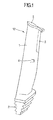
FIG. 1 is a perspective view schematically illustrating an example of a steam turbine long blade of the present invention; -
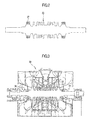
FIG. 2 is a schematic view illustrating an example of a low-pressure stage rotor of the present invention; -
FIG. 3 is a schematic view illustrating an example of a low-pressure stage turbine of the present invention; and -
FIG. 4 is a schematic view illustrating an example of a power plant of the present invention; - Hereinafter, the function and amount of the constituent elements contained in precipitation hardening martensitic stainless steel according to the present invention will be described.
- In the following description, the amount of constituent elements is represented by mass ratio (%).
- Carbon (C) forms a Cr carbide, and there are problems that toughness is reduced due to excessive precipitation of carbides and corrosion resistance deteriorates due to reduction in a Cr concentration near a grain boundary. Further, C remarkably reduces an end point of the martensitic transformation temperature. Consequently, the amount of C needs to be suppressed. The amount of C may be preferably 0.1% or less, and more preferably 0.05% or less.
- Nitrogen (N) forms TiN and AlN to reduce fatigue strength, and also adversely affects toughness. For this purpose, the amount of N added needs to be suppressed. The amount may be preferably 0.1% or less, and more preferably 0.05% or less.
- Chromium (Cr) is an element that forms a passive film on the surface and thus contributes to an improvement in the corrosion-resistance. The lower limit of addition is set to 10.0% so that the corrosion resistance may be sufficiently secured. On the other hand, when Cr is excessively added, a harmful phase is precipitated and the mechanical property remarkably deteriorates, and therefore, the upper limit thereof is set to 15.0%. From above, the amount of Cr added needs to be set to 10.0 to 15.0%. The amount may be preferably 11.0 - 14.0%, and particularly preferably 12.0 - 13.0%.
- Nickel (Ni) is an element that suppresses a formation of δ ferrite and also contributes to an improvement in the strength through the precipitation hardening of Ni-Al compounds. Moreover, Ni also improves hardenability and toughness. To sufficiently achieve effects described above, the lower limit of addition needs to be set to 10.0%. On the other hand, when the amount added is more than 15.0%, a harmful phase is precipitated. As a result, an intended mechanical property is not obtained. Judging from the above points, the amount of Ni added needs to be set to 10.0 ∼ 15.0%. The amount may be more preferably 11.0 ∼ 14.0%, and particularly preferably 12.0 ∼ 13.0%.
- Molybdenum (Mo) is an element that improves corrosion resistance. To obtain the intended corrosion resistance, the amount of Mo added of at least 0.5% is needed. On the other hand, when the amount of Mo added is more than 2.5%, a formation of a harmful phase is assisted and conversely the properties deteriorate. Judging from the above points, the amount of Mo added needs to be set to 0.5 - 2.5%. The amount may be more preferably 1.0 ∼ 2.0%, and particularly preferably 1.25 ∼ 1.75%.
- Aluminum (Al) is an element that forms a Ni-Al compound and contributes to precipitation hardening. To sufficiently exert precipitation hardening, the amount of Al added of at least 1.0% or more is needed. When the amount of Al added is more than 3.0%, the mechanical property is reduced due to the excessive precipitation of the Ni-Al compounds and the formation of harmful phases. Judging from the above points, the amount of Al added needs to be set to 1.0 ∼ 3.0%. The amount may be more preferably 1.5 ∼ 2.5%, and particularly preferably 1.75 - 2.25%.
- Silicon (Si) is a deoxidizing agent, and the amount of Si added may be preferably set to 1.0% or less. When the amount is more than 1.0%, there arises a problem that δ ferrite is precipitated. The amount of Si added may be more preferably 0.5% or less, and may be particularly preferably 0.25% or less. It is possible to omit the addition of Si by applying carbon vacuum deoxidization and electro slag remelting. In that case, no addition of Si is preferable.
- Manganese (Mn) is added as a deoxidizing agent and a desulfurizing agent. When the amount of Mn added is more than 1.0%, harmful phases are excessively formed and necessary strength is not obtained. Therefore, the amount of Mn added needs to be set to 1.0% or less. When a solution is dissolved by using a method of vacuum induced melting or vacuum arc remelting, Mn need not be added. The amount of Mn added may be more preferably 0.5% or less, and particularly preferably 0.25% or less.
- As another element, tungsten (W) exerts an effect of improving the corrosion resistance as well as Mo. W further improves this effect through the addition in combination with Mo. In this case, to prevent harmful phases from being precipitated, the sum of the amount of Mo and W added needs to be the same as the amount of Mo added alone.
- Further, niobium (Nb) is an element that forms carbides and contributes to an improvement in the strength; however, deteriorates productivity. For this purpose, in the case of adding Nb, the amount of Nb added needs to be set to 1.0% or less. Alternatively, it is possible to substitute tantalum (Ta) for Nb. In the case of adding Nb and Ta in combination, the sum of the amount of Nb and Ta added needs to be the same as the amount of Nb added alone. Though addition of these elements is not indispensable, this leads to more significant precipitation hardening.
- Inevitable impurities in the present invention are components originally contained in the raw materials or incorporated during production and so on, and refer to components that are unintentionally added. Inevitable impurities include P, S, Sb, Sn, and As, and at least one of them may be contained in the precipitation hardening martensitic stainless steel of the present invention.
- Since reduction in P and S makes it possible to improve toughness without impairing tensile strength, it is preferable that they are minimized. In terms of improving the toughness, it is preferable that P is set to be 0.5% or less and S is set to be 0.5% or less. It is particularly preferable that P is set to be 0.1% or less and S is set to be 0.1% or less.
- The reduction in As, Sb, and Sn makes it possible to improve toughness. For this purpose, it is preferable that the above elements are minimized, and it is preferable that As, Sb, and Sn are set to be 0.1% or less, respectively. It is particularly preferable that As, Sb, and Sn are set to be 0.05% or less, respectively.
- Next, the heat treatment of the present invention will be described.
- In the present invention, it is necessary to perform a solution treatment in which heating and maintenance at 800 to 1050°C, preferably at 850 to 1000°C are followed by rapid cooling. The solution treatment in the present invention refers to a heat treatment for both dissolving components relating to the formation of precipitates such as Al and Ni into the texture and obtaining a martensite texture at the same time. The martensite texture is a kind of matrix of steel and is a texture excellent in the balance between strength and toughness. After the solution treatment, it is necessary to perform an aging treatment of maintenance of heating at 450 to 650°C and thereby gradual cooling. The aging treatment of the present invention refers to a heat treatment to obtain excellent strength by finely precipitating Ni-Al compounds and so on in the texture, performed after the solution treatment.
- Further, when residual austenite is expected to be reduced, a sub-zero treatment may be performed. In the sub-zero treatment, it is necessary to keep the residual austenite for at least four hours or more at -70°C or less and raise it up to room temperature in the atmosphere by using organic solvents such as dry ice and isopentane.
- The application of the alloy of the present invention to steam turbine long blades will be described. Works such as machining and straightening can be performed after the aging treatment. However, when the above works are performed immediately after the solution treatment in which Ni-Al compounds are not yet precipitated, a high working efficiency is expected because of good workability.
- In the steam turbine long blade to which the alloy of the present invention is applied, stellite plates of a Co-based alloy may be joined to a front end portion of the blade by TIG welding. This is a measure to protect the steam turbine long blade from erosion damaging the blade by the high-speed collision of condensed steam. Other techniques for the installation of stellite plates include silver soldering, plasma transfer arc, and laser build-up welding. Other measures to protect the steam turbine long blade from erosion include modification of the surface with a titanium nitride coating, etc. It is also possible to achieve erosion resistance by repeating more than once heat treatments of heating the surface of the front end portion of the blade to the Ac3 transformation temperature or higher and then cooling it to room temperature by air cooling to a grain size number 6 or finer, followed by the aging treatment of the entire blade to increase only the surface hardness of the front end portion of the blade. Since the alloy of the present invention has a certain degree of erosion resistance, the above measure against erosion may be omitted under conditions that the erosion is not severe.
-
FIG. 1 illustrates the steam turbine long blade (10) to which the alloy of the present invention is applied. The long blade includes a blade profile portion (1) that receives steam, a blade root portion (2) that implants the blade into a rotor, a stub (4) for integrating with an adjacent blade by screwing, and a continuous cover (5). The blade root portion of the steam turbine long blade is an axial entry type having an inverted Christmas-tree shape. The blade joins a stellite plate as an example of an erosion shield (3). Other techniques for the installation of stellite plates include silver soldering, plasma transfer arc, and laser build-up welding. It is also possible to modify the surface with a titanium nitride coating, etc. Since the alloy of the present invention has a certain degree of erosion resistance, the above measure against erosion may be omitted under conditions that the erosion is not severe. -
FIG. 2 illustrates a low-pressure stage rotor (20) to which the long blade of the present invention is applied. This low-pressure stage rotor has a double-flow structure, and long blades are symmetrically placed in a long-blade implantation portion (21) over several stages. The above-described long blade is placed in the final stage. -
FIG. 3 illustrates a low-pressure stage steam turbine (30) to which the low-pressure stage rotor of the present invention is applied. A steam turbine long blade (31) rotates by receiving steam guided by a nozzle (32). The rotor is supported by a bearing (33). -
FIG. 4 illustrates a power plant (40) to which the low-pressure stage steam turbine of the present invention is applied. High-temperature and high-pressure steam produced in a boiler (41) works in a high-pressure stage turbine (42), and is then reheated in the boiler. The reheated steam works in a medium-pressure stage turbine (43) and then works in a low-pressure stage turbine (44). The work produced in the steam turbine is converted into electricity by a power generator (45). The steam coming out from the low-pressure stage turbine is guided to a condenser (46). - Hereinafter, examples will be described.
- Test samples were prepared to evaluate a relationship between the chemical composition of the precipitation hardening martensitic stainless steel of the present invention, tensile strength thereof, 0.02% yield strength, Charpy impact absorption energy, pitting potential, and micro-texture. Table 1 illustrates a chemical composition of each test sample.
- First, raw materials were melted by using a high-frequency vacuum melting furnace (5.0×10⁻³ Pa or less, 1600°C or higher) to obtain compositions listed in Table 1. The obtained ingot was hot-forged by using a press forging machine and a hammer forging machine, and formed into a square bar having a width×thickness×length of 100 mm×30 mm×1000 mm. Next, the square bar was cut and processed to a width×thickness×length of 50 mm×30 mm×120 mm, thereby giving stainless steel starting materials.
- Next, the stainless steel starting materials were subjected to various heat treatments by using a box electric furnace. Alloys 1 to 13 of the invention were maintained at 925°C for 1 hour as a solution heat treatment, followed by rapid water cooling of immersing in room-temperature water. Subsequently, the alloys were maintained at an arbitrary temperature of 450 to 650°C for 2 hours as an aging heat treatment, followed by air cooling for removing them to room-temperature air.
- Evaluation tests for tensile strength, Charpy impact absorption energy, pitting potential, and micro-texture observation were performed to respective samples obtained above. The following summarizes each evaluation test.
- A test piece (distance between evaluation points: 30 mm, outer diameter: 6 mm) was prepared from each of the samples obtained above and subjected to a tensile test at room temperature in accordance with JIS Z 2241. The determination criteria of tensile strength and 0.02% yield strength are as follows. A tensile strength and 0.02% yield strength of 1500 MPa or more and 1000 MPa or more, respectively, were rated as "acceptable", while those of less than these values were rated as "unacceptable". Further, an elongation and drawing of 10% or more and 30% or more, respectively, were rated as "acceptable", while those of less than these values were rated as "unacceptable".
- For the measurement of Charpy impact absorption energy, a test piece having a 2-mm V notch was prepared from each of the samples obtained above and subjected to a Charpy impact test at room temperature in accordance with JIS Z 2242. The determination criteria of Charpy impact absorption energy are as follows. A Charpy impact absorption energy of 20 J or more was rated as "acceptable", while that of less than this value was rated as "unacceptable".
- For the evaluation of pitting potential, a plate-like test piece (15 mm in length, 15 mm in width, and 3 mm in thickness) was prepared from each of the samples obtained above, and coated with an insulator so that an area of a measurement surface becomes equal to 1.0 cm2. The evaluation was performed under the following conditions: test solution: 3.0% NaCl solution, temperature of the solution: 30°C, sweep rate: 20 mV/min. The determination criteria of pitting potential are as follows. A pitting potential of 150 mV or more was rated as "acceptable", while that of less than this value was rated as "unacceptable."
- The determination criteria of micro-texture are as follows. Those having a martensite texture in which the amounts of δ ferrite and residual austenite precipitated are 1.0% or less and 10% or less in an area ratio, respectively, were rated as "acceptable". Others were rated as "unacceptable". The amount of δ ferrite precipitated was measured in accordance with a point counting method described in JIS G 0555. The amount of residual austenite precipitated was measured by X-ray diffraction.
- In alloys 1 to 13 of the invention, mechanical properties of tensile strength, 0.02% yield strength, elongation, drawing, and impact absorption energy were also rated as "acceptable". Also for pitting potential, preferable results were obtained. In addition, the δ ferrite phase and residual austenite in the metal texture were within a target range, and they were thus confirmed to have a martensite texture.
- In any of the comparative alloys 1 to 12, all aimed values of the respective properties were not satisfied. In the comparative alloys 1 to 8, effects on principal components such as Cr, Ni, Mo, and Al were studied. Among them, the
comparative alloy 5 is a sample in which the amount of Al added is high, and in which tensile strength and 0.02% yield strength were high; however, elongation, drawing, and impact absorption energy were remarkably lower than their aimed values. The reason is considered that the amount of a reinforcing phase precipitated is excessive. On the other hand, in the comparative alloy 6, the amount of Al added is low, and tensile strength and 0.02% yield strength were lower than their aimed values. Further, a large amount of residual austenite was precipitated in the texture. Further, in the comparative alloys 9 to 12, effects on impurity elements were studied. The comparative alloy 9 is a sample in which the amount of C added is high, and its tensile strength, 0.02% yield strength, elongation, and impact absorption energy were lower than their aimed values. Further, pitting potential was also lower than its aimed value. The reason is considered that a Cr concentration near a grain boundary is reduced through the formation of Cr carbides and corrosion resistance is deteriorated. In addition, a large amount of residual austenite was precipitated in the texture. The comparative alloy 12 is a sample in which the amount of N added is high, and its elongation, drawing, and impact absorption energy were lower than their aimed values. Further, a large amount of residual austenite was precipitated in the texture.

- The following describes the steam turbine long blade to which the alloy of the present invention is applied. In this embodiment, by using Alloy 1 illustrated in Table 1 of materials of the present invention, an axial-entry-type steam turbine long blade having a blade length of 48 inch was produced. As a method for producing the long blade, vacuum carbon deoxidation was first performed in a high vacuum state of 5.0×10⁻³ Pa or less to deoxidize molten steel by a chemical reaction of C+O→CO. Subsequently, the steel was formed into an electrode bar by extend forging. Electro-slag remelting was thus performed to give a high-grade steel ingot by self-dissolving the electrode bar by Joule heat generated upon the application of current at the time when this electrode bar was immersed in molten slag, and then coagulating it in a water-cooled die. Next, the steel ingot was hot-forged, and then press-forged by using a 48-inch blade die. After that, as a solution treatment, the resulting product was heated and maintained at 925°C for 2.0 hours, followed by forced cooling of rapid cooling by using a fan. Then, the product was formed into a predetermined shape through a cutting step and then, as an aging treatment, heated and maintained at 525°C for 4.0 hours, followed by air cooling. As the final finishing, the curve was eliminated and the surface was polished, thereby giving a 48-inch long blade.
- Test pieces were collected from the front end, center, and root portions of the steam turbine long blade obtained by the above steps, respectively, and subjected to evaluation tests in the same manner as in Example 1. A direction of the collected test pieces is the direction of the length of the blade.
- The micro-texture of each portion was a uniform martensite texture. Neither residual austenite nor δ ferrite was observed. In addition, regardless of the positions where the test pieces were collected, aimed values of the desired tensile strength, 0.02% yield strength, impact absorption energy, and pitting potential were achieved.
- The precipitation hardening martensitic stainless steel of the present invention has excellent mechanical properties and corrosion-resistance, and thus can be applied to the steam turbine long blade. In addition, it can also be applied to a blade for a gas turbine compressor, and so on.
Claims (9)
- A precipitation hardening martensitic stainless steel comprising, by mass, 0.1% or less of C; 0.1% or less of N; 10.0% ∼ 15.0% of Cr; 10.0% ∼ 15.0% of Ni; 0.5% ∼ 2.5% of Mo; 1.0% ∼ 3.0% of Al; 1.0% or less of Si; 1.0% or less of Mn, and the rest is Fe and inevitable impurities.
- The precipitation hardening martensitic stainless steel according to claim 1, further comprising at least one member selected from Nb and Ta in an amount of 1.0% or less by mass.
- The precipitation hardening martensitic stainless steel according to claim 1 or claim 2, further comprising W, a total amount of Mo and W being the same as an amount of Mo added alone.
- The precipitation hardening martensitic stainless steel according to any one of claims 1∼3, wherein the inevitable impurities are at least one member selected from P, S, Sb, Sn, and As.
- The precipitation hardening martensitic stainless steel according to any one of claims 1∼4, wherein a temperature range of a solution treatment is 800 to 1050°C and a temperature range of an aging treatment is 450 to 650°C.
- A steam turbine long blade (10) using the precipitation hardening martensitic stainless steel of any one of claims 1∼5.
- The steam turbine long blade (10) according to claim 6, wherein a stellite plate made of a Co-based alloy is joined to a front end portion of the blade (10).
- A turbine rotor (20) comprising the steam turbine long blade (10) of claim 7.
- A steam turbine (30) comprising the turbine rotor (20) of claim 8.
Applications Claiming Priority (1)
| Application Number | Priority Date | Filing Date | Title |
|---|---|---|---|
| JP2012229408A JP6113456B2 (en) | 2012-10-17 | 2012-10-17 | Precipitation hardened martensitic stainless steel and steam turbine long blades using it |
Publications (2)
| Publication Number | Publication Date |
|---|---|
| EP2722407A2 true EP2722407A2 (en) | 2014-04-23 |
| EP2722407A3 EP2722407A3 (en) | 2017-10-25 |
Family
ID=49447382
Family Applications (1)
| Application Number | Title | Priority Date | Filing Date |
|---|---|---|---|
| EP13189010.5A Withdrawn EP2722407A3 (en) | 2012-10-17 | 2013-10-16 | Precipitation hardening martensitic stainless steel and long blade for steam turbine using the same |
Country Status (4)
| Country | Link |
|---|---|
| US (1) | US20140105753A1 (en) |
| EP (1) | EP2722407A3 (en) |
| JP (1) | JP6113456B2 (en) |
| CN (1) | CN103774048B (en) |
Cited By (3)
| Publication number | Priority date | Publication date | Assignee | Title |
|---|---|---|---|---|
| CN105239021A (en) * | 2014-07-08 | 2016-01-13 | 南京赛达机械制造有限公司 | High-pressure-resistant turbine blade and production process thereof |
| CN106687608A (en) * | 2014-09-29 | 2017-05-17 | 日立金属株式会社 | Method for producing martensitic precipitation-strengthened stainless steel |
| EP3472365A4 (en) * | 2016-06-16 | 2019-05-15 | Uddeholms AB | STEEL APPROPRIATE FOR PLASTIC MOLDING TOOLS |
Families Citing this family (15)
| Publication number | Priority date | Publication date | Assignee | Title |
|---|---|---|---|---|
| CN104033189B (en) * | 2014-06-27 | 2016-01-27 | 南京赛达机械制造有限公司 | A kind of processing technology of turbine blade |
| CN104451453A (en) * | 2014-11-14 | 2015-03-25 | 无锡信大气象传感网科技有限公司 | Wear-resistant alloy steel material for fan blades of wind-driven generator |
| CN105568151B (en) * | 2016-01-29 | 2018-01-02 | 北京科技大学 | A kind of aluminium enhancing Maraging steel and preparation method thereof |
| SE540110C2 (en) | 2016-06-01 | 2018-04-03 | Ovako Sweden Ab | High strength steel, method of manufacturing a part made of steel and use of the steel |
| CN106011684A (en) * | 2016-07-26 | 2016-10-12 | 四川六合锻造股份有限公司 | High-strength and high-toughness stainless steel material and preparation method thereof |
| US20200165998A1 (en) * | 2017-09-12 | 2020-05-28 | Hitachi Automotive Systems, Ltd. | Flow Volume Control Device, and Method for Manufacturing Flow Volume Control Device |
| CN110565028B (en) * | 2019-10-28 | 2021-06-29 | 河南中原特钢装备制造有限公司 | Smelting method of sulfur-containing martensitic precipitation hardening stainless steel |
| JP7615607B2 (en) * | 2020-02-04 | 2025-01-17 | 大同特殊鋼株式会社 | Precipitation hardening martensitic stainless steel |
| CA3106648C (en) | 2020-02-04 | 2022-09-13 | Daido Steel Co., Ltd. | Precipitation hardening martensitic stainless steel |
| CN111705260B (en) * | 2020-04-30 | 2021-10-01 | 马鞍山市中桥金属材料有限公司 | Ultrapure 15-5PH stainless steel electroslag ingot and preparation method thereof |
| CN118103465A (en) | 2021-10-22 | 2024-05-28 | 信越化学工业株式会社 | Coating composition, coated article, and method for forming cured film |
| CN114150233B (en) * | 2021-11-25 | 2022-10-14 | 大连透平机械技术发展有限公司 | Engineering heat treatment method for ultrahigh-strength steel for compressor impeller |
| CN114507817A (en) * | 2022-01-20 | 2022-05-17 | 上海材料研究所 | Ultra-low carbon cobalt-free high-strength corrosion-resistant alloy and preparation method and application thereof |
| JP7845207B2 (en) | 2023-01-30 | 2026-04-14 | 信越化学工業株式会社 | Paint composition, method for manufacturing the same, and coated article |
| JP2024107512A (en) | 2023-01-30 | 2024-08-09 | 信越化学工業株式会社 | Hydroxyl-containing organopolysiloxane, its production method, curable composition containing said organopolysiloxane, coating agent and coated article |
Citations (1)
| Publication number | Priority date | Publication date | Assignee | Title |
|---|---|---|---|---|
| JP2005194626A (en) | 2003-12-08 | 2005-07-21 | Mitsubishi Heavy Ind Ltd | Precipitation hardening martensitic steel, its production method, and turbine moving blade and steam turbine obtained by using the same |
Family Cites Families (15)
| Publication number | Priority date | Publication date | Assignee | Title |
|---|---|---|---|---|
| GB1056561A (en) * | 1962-10-02 | 1967-01-25 | Armco Steel Corp | Chromium-nickel-aluminium steel and method for heat treatment thereof |
| BE651249A (en) * | 1963-08-02 | 1964-11-16 | ||
| SE466265B (en) * | 1990-05-29 | 1992-01-20 | Uddeholm Tooling Ab | EXCELLENT HANDLING TOOL STEEL |
| JPH11209854A (en) * | 1998-01-21 | 1999-08-03 | Daido Steel Co Ltd | Composite magnetic material having both ferromagnetic portion and non-magnetic portion and method of manufacturing the same |
| US6238455B1 (en) * | 1999-10-22 | 2001-05-29 | Crs Holdings, Inc. | High-strength, titanium-bearing, powder metallurgy stainless steel article with enhanced machinability |
| JP2004052673A (en) * | 2002-07-19 | 2004-02-19 | Mitsubishi Heavy Ind Ltd | Erosion shield method for turbine blade, and erosion shielded turbine blade |
| US7901519B2 (en) * | 2003-12-10 | 2011-03-08 | Ati Properties, Inc. | High strength martensitic stainless steel alloys, methods of forming the same, and articles formed therefrom |
| JP3921574B2 (en) * | 2003-04-04 | 2007-05-30 | 株式会社日立製作所 | Heat-resistant steel, gas turbine using the same, and various components |
| US20060118215A1 (en) * | 2004-12-08 | 2006-06-08 | Yuichi Hirakawa | Precipitation hardened martensitic stainless steel, manufacturing method therefor, and turbine moving blade and steam turbine using the same |
| FR2887558B1 (en) * | 2005-06-28 | 2007-08-17 | Aubert & Duval Soc Par Actions | MARTENSITIC STAINLESS STEEL COMPOSITION, PROCESS FOR MANUFACTURING A MECHANICAL PART THEREFROM, AND PIECE THUS OBTAINED |
| KR20100135242A (en) * | 2008-02-29 | 2010-12-24 | 씨알에스 홀딩즈 인코포레이티드 | Manufacturing method of precipitation hardening stainless steel with high strength, high toughness and fatigue resistance |
| JP5528986B2 (en) * | 2010-11-09 | 2014-06-25 | 株式会社日立製作所 | Precipitation hardening type martensitic stainless steel and steam turbine member using the same |
| JP5764503B2 (en) * | 2012-01-19 | 2015-08-19 | 三菱日立パワーシステムズ株式会社 | Precipitation hardening type martensitic stainless steel, steam turbine long blade, turbine rotor and steam turbine using the same |
| JP6317542B2 (en) * | 2012-02-27 | 2018-04-25 | 三菱日立パワーシステムズ株式会社 | Steam turbine rotor |
| JP6111763B2 (en) * | 2012-04-27 | 2017-04-12 | 大同特殊鋼株式会社 | Steam turbine blade steel with excellent strength and toughness |
-
2012
- 2012-10-17 JP JP2012229408A patent/JP6113456B2/en not_active Expired - Fee Related
-
2013
- 2013-10-10 US US14/050,946 patent/US20140105753A1/en not_active Abandoned
- 2013-10-16 EP EP13189010.5A patent/EP2722407A3/en not_active Withdrawn
- 2013-10-17 CN CN201310487289.XA patent/CN103774048B/en not_active Expired - Fee Related
Patent Citations (1)
| Publication number | Priority date | Publication date | Assignee | Title |
|---|---|---|---|---|
| JP2005194626A (en) | 2003-12-08 | 2005-07-21 | Mitsubishi Heavy Ind Ltd | Precipitation hardening martensitic steel, its production method, and turbine moving blade and steam turbine obtained by using the same |
Cited By (6)
| Publication number | Priority date | Publication date | Assignee | Title |
|---|---|---|---|---|
| CN105239021A (en) * | 2014-07-08 | 2016-01-13 | 南京赛达机械制造有限公司 | High-pressure-resistant turbine blade and production process thereof |
| CN106687608A (en) * | 2014-09-29 | 2017-05-17 | 日立金属株式会社 | Method for producing martensitic precipitation-strengthened stainless steel |
| EP3202923A4 (en) * | 2014-09-29 | 2017-10-11 | Hitachi Metals, Ltd. | Method for producing precipitation-strengthening-type martensitic stainless steel |
| US10000830B2 (en) | 2014-09-29 | 2018-06-19 | Hitachi Metals, Ltd. | Method for manufacturing martensite-based precipitation strengthening stainless steel |
| CN106687608B (en) * | 2014-09-29 | 2019-05-07 | 日立金属株式会社 | Manufacturing method of martensitic precipitation-strengthened stainless steel |
| EP3472365A4 (en) * | 2016-06-16 | 2019-05-15 | Uddeholms AB | STEEL APPROPRIATE FOR PLASTIC MOLDING TOOLS |
Also Published As
| Publication number | Publication date |
|---|---|
| JP2014080656A (en) | 2014-05-08 |
| CN103774048A (en) | 2014-05-07 |
| EP2722407A3 (en) | 2017-10-25 |
| CN103774048B (en) | 2017-01-04 |
| JP6113456B2 (en) | 2017-04-12 |
| US20140105753A1 (en) | 2014-04-17 |
Similar Documents
| Publication | Publication Date | Title |
|---|---|---|
| JP5764503B2 (en) | Precipitation hardening type martensitic stainless steel, steam turbine long blade, turbine rotor and steam turbine using the same | |
| US20140105753A1 (en) | Precipitation Hardening Martensitic Stainless Steel and Long Blade for Steam Turbine Using the Same | |
| JP5409708B2 (en) | Precipitation hardening type martensitic stainless steel and steam turbine long blades using the same | |
| EP2455496B1 (en) | Precipitation hardening martensitic stainless steel and steam turbine component made thereof | |
| US9982545B2 (en) | Precipitation hardened martensitic stainless steel, manufacturing method therefor, and turbine moving blade and steam turbine using the same | |
| CN103374687B (en) | Intensity and the Steel for steam turbine blade of tenacity excellent | |
| EP2631432B1 (en) | Steam turbine rotor, corresponding steam turbine and steam turbine power generation plant | |
| US20100239425A1 (en) | Nickel-base alloy for turbine rotor of steam turbine and turbine rotor of steam turbine using the same | |
| EP1770184B1 (en) | High-strength martensite heat resisting cast steel and method of producing the steel | |
| US20100158681A1 (en) | Ni-based alloy for a forged part of a steam turbine with excellent high temperature strength, forgeability and weldability, rotor blade of a steam turbine, stator blade of a steam turbine, screw member for a steam turbine, and pipe for a steam turbine | |
| JP6317566B2 (en) | Precipitation hardening type martensitic stainless steel, turbine member using the stainless steel, and turbine using the turbine member | |
| JP6312367B2 (en) | Precipitation hardening martensitic stainless steel, steam turbine blades and steam turbines | |
| JP2012036485A (en) | Ni-BASED ALLOY FOR FORGED PART IN STEAM-TURBINE AND FORGED PART IN STEAM-TURBINE | |
| JP2007254806A (en) | Turbine casing | |
| JP4702267B2 (en) | Precipitation hardening type martensitic stainless steel |
Legal Events
| Date | Code | Title | Description |
|---|---|---|---|
| PUAI | Public reference made under article 153(3) epc to a published international application that has entered the european phase |
Free format text: ORIGINAL CODE: 0009012 |
|
| AK | Designated contracting states |
Kind code of ref document: A2 Designated state(s): AL AT BE BG CH CY CZ DE DK EE ES FI FR GB GR HR HU IE IS IT LI LT LU LV MC MK MT NL NO PL PT RO RS SE SI SK SM TR |
|
| AX | Request for extension of the european patent |
Extension state: BA ME |
|
| RAP1 | Party data changed (applicant data changed or rights of an application transferred) |
Owner name: MITSUBISHI HITACHI POWER SYSTEMS, LTD. |
|
| RAP1 | Party data changed (applicant data changed or rights of an application transferred) |
Owner name: MITSUBISHI HITACHI POWER SYSTEMS, LTD. |
|
| PUAL | Search report despatched |
Free format text: ORIGINAL CODE: 0009013 |
|
| STAA | Information on the status of an ep patent application or granted ep patent |
Free format text: STATUS: REQUEST FOR EXAMINATION WAS MADE |
|
| AK | Designated contracting states |
Kind code of ref document: A3 Designated state(s): AL AT BE BG CH CY CZ DE DK EE ES FI FR GB GR HR HU IE IS IT LI LT LU LV MC MK MT NL NO PL PT RO RS SE SI SK SM TR |
|
| AX | Request for extension of the european patent |
Extension state: BA ME |
|
| RIC1 | Information provided on ipc code assigned before grant |
Ipc: C22C 38/06 20060101ALI20170919BHEP Ipc: F01D 5/28 20060101ALI20170919BHEP Ipc: C22C 38/44 20060101ALI20170919BHEP Ipc: C21D 6/00 20060101AFI20170919BHEP Ipc: C21D 1/26 20060101ALI20170919BHEP Ipc: C21D 9/00 20060101ALI20170919BHEP Ipc: C21D 1/18 20060101ALI20170919BHEP Ipc: C22C 38/00 20060101ALI20170919BHEP |
|
| 17P | Request for examination filed |
Effective date: 20170927 |
|
| RBV | Designated contracting states (corrected) |
Designated state(s): AL AT BE BG CH CY CZ DE DK EE ES FI FR GB GR HR HU IE IS IT LI LT LU LV MC MK MT NL NO PL PT RO RS SE SI SK SM TR |
|
| STAA | Information on the status of an ep patent application or granted ep patent |
Free format text: STATUS: EXAMINATION IS IN PROGRESS |
|
| 17Q | First examination report despatched |
Effective date: 20180625 |
|
| STAA | Information on the status of an ep patent application or granted ep patent |
Free format text: STATUS: THE APPLICATION IS DEEMED TO BE WITHDRAWN |
|
| 18D | Application deemed to be withdrawn |
Effective date: 20181106 |