EP2719661A1 - Carbon fiber-reinforced silicon carbide composite material and method of preparing the samt - Google Patents
Carbon fiber-reinforced silicon carbide composite material and method of preparing the samt Download PDFInfo
- Publication number
- EP2719661A1 EP2719661A1 EP13187476.0A EP13187476A EP2719661A1 EP 2719661 A1 EP2719661 A1 EP 2719661A1 EP 13187476 A EP13187476 A EP 13187476A EP 2719661 A1 EP2719661 A1 EP 2719661A1
- Authority
- EP
- European Patent Office
- Prior art keywords
- composite material
- carbon fiber
- carbon
- reinforced
- fiber
- Prior art date
- Legal status (The legal status is an assumption and is not a legal conclusion. Google has not performed a legal analysis and makes no representation as to the accuracy of the status listed.)
- Granted
Links
Images


Classifications
-
- C—CHEMISTRY; METALLURGY
- C04—CEMENTS; CONCRETE; ARTIFICIAL STONE; CERAMICS; REFRACTORIES
- C04B—LIME, MAGNESIA; SLAG; CEMENTS; COMPOSITIONS THEREOF, e.g. MORTARS, CONCRETE OR LIKE BUILDING MATERIALS; ARTIFICIAL STONE; CERAMICS; REFRACTORIES; TREATMENT OF NATURAL STONE
- C04B35/00—Shaped ceramic products characterised by their composition; Ceramics compositions; Processing powders of inorganic compounds preparatory to the manufacturing of ceramic products
- C04B35/515—Shaped ceramic products characterised by their composition; Ceramics compositions; Processing powders of inorganic compounds preparatory to the manufacturing of ceramic products based on non-oxide ceramics
- C04B35/56—Shaped ceramic products characterised by their composition; Ceramics compositions; Processing powders of inorganic compounds preparatory to the manufacturing of ceramic products based on non-oxide ceramics based on carbides or oxycarbides
- C04B35/565—Shaped ceramic products characterised by their composition; Ceramics compositions; Processing powders of inorganic compounds preparatory to the manufacturing of ceramic products based on non-oxide ceramics based on carbides or oxycarbides based on silicon carbide
-
- B—PERFORMING OPERATIONS; TRANSPORTING
- B01—PHYSICAL OR CHEMICAL PROCESSES OR APPARATUS IN GENERAL
- B01J—CHEMICAL OR PHYSICAL PROCESSES, e.g. CATALYSIS OR COLLOID CHEMISTRY; THEIR RELEVANT APPARATUS
- B01J21/00—Catalysts comprising the elements, oxides, or hydroxides of magnesium, boron, aluminium, carbon, silicon, titanium, zirconium, or hafnium
- B01J21/18—Carbon
- B01J21/185—Carbon nanotubes
-
- B—PERFORMING OPERATIONS; TRANSPORTING
- B01—PHYSICAL OR CHEMICAL PROCESSES OR APPARATUS IN GENERAL
- B01J—CHEMICAL OR PHYSICAL PROCESSES, e.g. CATALYSIS OR COLLOID CHEMISTRY; THEIR RELEVANT APPARATUS
- B01J23/00—Catalysts comprising metals or metal oxides or hydroxides, not provided for in group B01J21/00
- B01J23/70—Catalysts comprising metals or metal oxides or hydroxides, not provided for in group B01J21/00 of the iron group metals or copper
- B01J23/72—Copper
-
- B—PERFORMING OPERATIONS; TRANSPORTING
- B01—PHYSICAL OR CHEMICAL PROCESSES OR APPARATUS IN GENERAL
- B01J—CHEMICAL OR PHYSICAL PROCESSES, e.g. CATALYSIS OR COLLOID CHEMISTRY; THEIR RELEVANT APPARATUS
- B01J23/00—Catalysts comprising metals or metal oxides or hydroxides, not provided for in group B01J21/00
- B01J23/70—Catalysts comprising metals or metal oxides or hydroxides, not provided for in group B01J21/00 of the iron group metals or copper
- B01J23/74—Iron group metals
- B01J23/755—Nickel
-
- B—PERFORMING OPERATIONS; TRANSPORTING
- B01—PHYSICAL OR CHEMICAL PROCESSES OR APPARATUS IN GENERAL
- B01J—CHEMICAL OR PHYSICAL PROCESSES, e.g. CATALYSIS OR COLLOID CHEMISTRY; THEIR RELEVANT APPARATUS
- B01J27/00—Catalysts comprising the elements or compounds of halogens, sulfur, selenium, tellurium, phosphorus or nitrogen; Catalysts comprising carbon compounds
- B01J27/20—Carbon compounds
- B01J27/22—Carbides
- B01J27/224—Silicon carbide
-
- B—PERFORMING OPERATIONS; TRANSPORTING
- B01—PHYSICAL OR CHEMICAL PROCESSES OR APPARATUS IN GENERAL
- B01J—CHEMICAL OR PHYSICAL PROCESSES, e.g. CATALYSIS OR COLLOID CHEMISTRY; THEIR RELEVANT APPARATUS
- B01J35/00—Catalysts, in general, characterised by their form or physical properties
- B01J35/50—Catalysts, in general, characterised by their form or physical properties characterised by their shape or configuration
- B01J35/58—Fabrics or filaments
-
- B—PERFORMING OPERATIONS; TRANSPORTING
- B01—PHYSICAL OR CHEMICAL PROCESSES OR APPARATUS IN GENERAL
- B01J—CHEMICAL OR PHYSICAL PROCESSES, e.g. CATALYSIS OR COLLOID CHEMISTRY; THEIR RELEVANT APPARATUS
- B01J37/00—Processes, in general, for preparing catalysts; Processes, in general, for activation of catalysts
- B01J37/0081—Preparation by melting
-
- B—PERFORMING OPERATIONS; TRANSPORTING
- B01—PHYSICAL OR CHEMICAL PROCESSES OR APPARATUS IN GENERAL
- B01J—CHEMICAL OR PHYSICAL PROCESSES, e.g. CATALYSIS OR COLLOID CHEMISTRY; THEIR RELEVANT APPARATUS
- B01J37/00—Processes, in general, for preparing catalysts; Processes, in general, for activation of catalysts
- B01J37/08—Heat treatment
-
- B—PERFORMING OPERATIONS; TRANSPORTING
- B01—PHYSICAL OR CHEMICAL PROCESSES OR APPARATUS IN GENERAL
- B01J—CHEMICAL OR PHYSICAL PROCESSES, e.g. CATALYSIS OR COLLOID CHEMISTRY; THEIR RELEVANT APPARATUS
- B01J37/00—Processes, in general, for preparing catalysts; Processes, in general, for activation of catalysts
- B01J37/08—Heat treatment
- B01J37/082—Decomposition and pyrolysis
- B01J37/084—Decomposition of carbon-containing compounds into carbon
-
- B—PERFORMING OPERATIONS; TRANSPORTING
- B82—NANOTECHNOLOGY
- B82Y—SPECIFIC USES OR APPLICATIONS OF NANOSTRUCTURES; MEASUREMENT OR ANALYSIS OF NANOSTRUCTURES; MANUFACTURE OR TREATMENT OF NANOSTRUCTURES
- B82Y30/00—Nanotechnology for materials or surface science, e.g. nanocomposites
-
- B—PERFORMING OPERATIONS; TRANSPORTING
- B82—NANOTECHNOLOGY
- B82Y—SPECIFIC USES OR APPLICATIONS OF NANOSTRUCTURES; MEASUREMENT OR ANALYSIS OF NANOSTRUCTURES; MANUFACTURE OR TREATMENT OF NANOSTRUCTURES
- B82Y40/00—Manufacture or treatment of nanostructures
-
- C—CHEMISTRY; METALLURGY
- C01—INORGANIC CHEMISTRY
- C01B—NON-METALLIC ELEMENTS; COMPOUNDS THEREOF; METALLOIDS OR COMPOUNDS THEREOF NOT COVERED BY SUBCLASS C01C
- C01B32/00—Carbon; Compounds thereof
- C01B32/15—Nano-sized carbon materials
- C01B32/158—Carbon nanotubes
- C01B32/16—Preparation
-
- C—CHEMISTRY; METALLURGY
- C01—INORGANIC CHEMISTRY
- C01B—NON-METALLIC ELEMENTS; COMPOUNDS THEREOF; METALLOIDS OR COMPOUNDS THEREOF NOT COVERED BY SUBCLASS C01C
- C01B32/00—Carbon; Compounds thereof
- C01B32/90—Carbides
- C01B32/914—Carbides of single elements
- C01B32/956—Silicon carbide
- C01B32/963—Preparation from compounds containing silicon
- C01B32/984—Preparation from elemental silicon
-
- C—CHEMISTRY; METALLURGY
- C04—CEMENTS; CONCRETE; ARTIFICIAL STONE; CERAMICS; REFRACTORIES
- C04B—LIME, MAGNESIA; SLAG; CEMENTS; COMPOSITIONS THEREOF, e.g. MORTARS, CONCRETE OR LIKE BUILDING MATERIALS; ARTIFICIAL STONE; CERAMICS; REFRACTORIES; TREATMENT OF NATURAL STONE
- C04B35/00—Shaped ceramic products characterised by their composition; Ceramics compositions; Processing powders of inorganic compounds preparatory to the manufacturing of ceramic products
- C04B35/515—Shaped ceramic products characterised by their composition; Ceramics compositions; Processing powders of inorganic compounds preparatory to the manufacturing of ceramic products based on non-oxide ceramics
- C04B35/56—Shaped ceramic products characterised by their composition; Ceramics compositions; Processing powders of inorganic compounds preparatory to the manufacturing of ceramic products based on non-oxide ceramics based on carbides or oxycarbides
- C04B35/565—Shaped ceramic products characterised by their composition; Ceramics compositions; Processing powders of inorganic compounds preparatory to the manufacturing of ceramic products based on non-oxide ceramics based on carbides or oxycarbides based on silicon carbide
- C04B35/573—Shaped ceramic products characterised by their composition; Ceramics compositions; Processing powders of inorganic compounds preparatory to the manufacturing of ceramic products based on non-oxide ceramics based on carbides or oxycarbides based on silicon carbide obtained by reaction sintering or recrystallisation
-
- C—CHEMISTRY; METALLURGY
- C04—CEMENTS; CONCRETE; ARTIFICIAL STONE; CERAMICS; REFRACTORIES
- C04B—LIME, MAGNESIA; SLAG; CEMENTS; COMPOSITIONS THEREOF, e.g. MORTARS, CONCRETE OR LIKE BUILDING MATERIALS; ARTIFICIAL STONE; CERAMICS; REFRACTORIES; TREATMENT OF NATURAL STONE
- C04B35/00—Shaped ceramic products characterised by their composition; Ceramics compositions; Processing powders of inorganic compounds preparatory to the manufacturing of ceramic products
- C04B35/622—Forming processes; Processing powders of inorganic compounds preparatory to the manufacturing of ceramic products
- C04B35/653—Processes involving a melting step
-
- C—CHEMISTRY; METALLURGY
- C04—CEMENTS; CONCRETE; ARTIFICIAL STONE; CERAMICS; REFRACTORIES
- C04B—LIME, MAGNESIA; SLAG; CEMENTS; COMPOSITIONS THEREOF, e.g. MORTARS, CONCRETE OR LIKE BUILDING MATERIALS; ARTIFICIAL STONE; CERAMICS; REFRACTORIES; TREATMENT OF NATURAL STONE
- C04B35/00—Shaped ceramic products characterised by their composition; Ceramics compositions; Processing powders of inorganic compounds preparatory to the manufacturing of ceramic products
- C04B35/71—Ceramic products containing macroscopic reinforcing agents
- C04B35/74—Ceramic products containing macroscopic reinforcing agents containing shaped metallic materials
- C04B35/76—Fibres, filaments, whiskers, platelets, or the like
-
- C—CHEMISTRY; METALLURGY
- C04—CEMENTS; CONCRETE; ARTIFICIAL STONE; CERAMICS; REFRACTORIES
- C04B—LIME, MAGNESIA; SLAG; CEMENTS; COMPOSITIONS THEREOF, e.g. MORTARS, CONCRETE OR LIKE BUILDING MATERIALS; ARTIFICIAL STONE; CERAMICS; REFRACTORIES; TREATMENT OF NATURAL STONE
- C04B35/00—Shaped ceramic products characterised by their composition; Ceramics compositions; Processing powders of inorganic compounds preparatory to the manufacturing of ceramic products
- C04B35/71—Ceramic products containing macroscopic reinforcing agents
- C04B35/78—Ceramic products containing macroscopic reinforcing agents containing non-metallic materials
- C04B35/80—Fibres, filaments, whiskers, platelets, or the like
-
- B—PERFORMING OPERATIONS; TRANSPORTING
- B01—PHYSICAL OR CHEMICAL PROCESSES OR APPARATUS IN GENERAL
- B01J—CHEMICAL OR PHYSICAL PROCESSES, e.g. CATALYSIS OR COLLOID CHEMISTRY; THEIR RELEVANT APPARATUS
- B01J37/00—Processes, in general, for preparing catalysts; Processes, in general, for activation of catalysts
- B01J37/02—Impregnation, coating or precipitation
- B01J37/0201—Impregnation
- B01J37/0203—Impregnation the impregnation liquid containing organic compounds
-
- B—PERFORMING OPERATIONS; TRANSPORTING
- B01—PHYSICAL OR CHEMICAL PROCESSES OR APPARATUS IN GENERAL
- B01J—CHEMICAL OR PHYSICAL PROCESSES, e.g. CATALYSIS OR COLLOID CHEMISTRY; THEIR RELEVANT APPARATUS
- B01J37/00—Processes, in general, for preparing catalysts; Processes, in general, for activation of catalysts
- B01J37/02—Impregnation, coating or precipitation
- B01J37/0201—Impregnation
- B01J37/0207—Pretreatment of the support
-
- C—CHEMISTRY; METALLURGY
- C04—CEMENTS; CONCRETE; ARTIFICIAL STONE; CERAMICS; REFRACTORIES
- C04B—LIME, MAGNESIA; SLAG; CEMENTS; COMPOSITIONS THEREOF, e.g. MORTARS, CONCRETE OR LIKE BUILDING MATERIALS; ARTIFICIAL STONE; CERAMICS; REFRACTORIES; TREATMENT OF NATURAL STONE
- C04B2235/00—Aspects relating to ceramic starting mixtures or sintered ceramic products
- C04B2235/02—Composition of constituents of the starting material or of secondary phases of the final product
- C04B2235/30—Constituents and secondary phases not being of a fibrous nature
- C04B2235/40—Metallic constituents or additives not added as binding phase
- C04B2235/405—Iron group metals
-
- C—CHEMISTRY; METALLURGY
- C04—CEMENTS; CONCRETE; ARTIFICIAL STONE; CERAMICS; REFRACTORIES
- C04B—LIME, MAGNESIA; SLAG; CEMENTS; COMPOSITIONS THEREOF, e.g. MORTARS, CONCRETE OR LIKE BUILDING MATERIALS; ARTIFICIAL STONE; CERAMICS; REFRACTORIES; TREATMENT OF NATURAL STONE
- C04B2235/00—Aspects relating to ceramic starting mixtures or sintered ceramic products
- C04B2235/02—Composition of constituents of the starting material or of secondary phases of the final product
- C04B2235/30—Constituents and secondary phases not being of a fibrous nature
- C04B2235/42—Non metallic elements added as constituents or additives, e.g. sulfur, phosphor, selenium or tellurium
- C04B2235/428—Silicon
-
- C—CHEMISTRY; METALLURGY
- C04—CEMENTS; CONCRETE; ARTIFICIAL STONE; CERAMICS; REFRACTORIES
- C04B—LIME, MAGNESIA; SLAG; CEMENTS; COMPOSITIONS THEREOF, e.g. MORTARS, CONCRETE OR LIKE BUILDING MATERIALS; ARTIFICIAL STONE; CERAMICS; REFRACTORIES; TREATMENT OF NATURAL STONE
- C04B2235/00—Aspects relating to ceramic starting mixtures or sintered ceramic products
- C04B2235/02—Composition of constituents of the starting material or of secondary phases of the final product
- C04B2235/30—Constituents and secondary phases not being of a fibrous nature
- C04B2235/48—Organic compounds becoming part of a ceramic after heat treatment, e.g. carbonising phenol resins
-
- C—CHEMISTRY; METALLURGY
- C04—CEMENTS; CONCRETE; ARTIFICIAL STONE; CERAMICS; REFRACTORIES
- C04B—LIME, MAGNESIA; SLAG; CEMENTS; COMPOSITIONS THEREOF, e.g. MORTARS, CONCRETE OR LIKE BUILDING MATERIALS; ARTIFICIAL STONE; CERAMICS; REFRACTORIES; TREATMENT OF NATURAL STONE
- C04B2235/00—Aspects relating to ceramic starting mixtures or sintered ceramic products
- C04B2235/02—Composition of constituents of the starting material or of secondary phases of the final product
- C04B2235/50—Constituents or additives of the starting mixture chosen for their shape or used because of their shape or their physical appearance
- C04B2235/52—Constituents or additives characterised by their shapes
- C04B2235/5208—Fibers
- C04B2235/5216—Inorganic
- C04B2235/524—Non-oxidic, e.g. borides, carbides, silicides or nitrides
- C04B2235/5248—Carbon, e.g. graphite
-
- C—CHEMISTRY; METALLURGY
- C04—CEMENTS; CONCRETE; ARTIFICIAL STONE; CERAMICS; REFRACTORIES
- C04B—LIME, MAGNESIA; SLAG; CEMENTS; COMPOSITIONS THEREOF, e.g. MORTARS, CONCRETE OR LIKE BUILDING MATERIALS; ARTIFICIAL STONE; CERAMICS; REFRACTORIES; TREATMENT OF NATURAL STONE
- C04B2235/00—Aspects relating to ceramic starting mixtures or sintered ceramic products
- C04B2235/60—Aspects relating to the preparation, properties or mechanical treatment of green bodies or pre-forms
- C04B2235/616—Liquid infiltration of green bodies or pre-forms
-
- C—CHEMISTRY; METALLURGY
- C04—CEMENTS; CONCRETE; ARTIFICIAL STONE; CERAMICS; REFRACTORIES
- C04B—LIME, MAGNESIA; SLAG; CEMENTS; COMPOSITIONS THEREOF, e.g. MORTARS, CONCRETE OR LIKE BUILDING MATERIALS; ARTIFICIAL STONE; CERAMICS; REFRACTORIES; TREATMENT OF NATURAL STONE
- C04B2235/00—Aspects relating to ceramic starting mixtures or sintered ceramic products
- C04B2235/70—Aspects relating to sintered or melt-casted ceramic products
- C04B2235/96—Properties of ceramic products, e.g. mechanical properties such as strength, toughness, wear resistance
Definitions
- the present invention relates to a carbon fiber-reinforced silicon carbide composite material and a method of preparing the same.
- a melt infiltration (MI) process is one of several methods of preparing a fiber-reinforced silicon carbide composite material, and is characterized in that a product can be very easily produced because of short process time and low production cost.
- a melt infiltration (MI) process includes the steps of: 1) impregnating a fiber with a polymer to form a fiber-reinforced plastic and then curing the fiber-reinforced plastic; 2) carbonizing the cured fiber-reinforced plastic under an inert atmosphere; and 3) melting metal silicon and then infiltrating the molten metal silicon into the carbonized fiber-reinforced plastic to prepare a fiber-reinforced silicon carbide composite material.
- the carbonized fiber-reinforced plastic is a porous fiber-carbon composite material, and the molten metal silicon is infiltrated into the carbonized fiber-reinforced plastic through pores by capillary force.
- a free metal which cannot participate in a reaction, exists between the infiltrated molten metal silicon and the carbon contained therein, and an unreacted metal region (metal river or metal pool) is formed.
- the prepared fiber-reinforced silicon carbide composite material exhibits low strength, and particularly, the strength thereof is rapidly lowered at high temperature, thus deteriorating the high-temperature characteristics thereof.
- Korean Patent Registration No. 10-0689636 discloses a method of preparing a carbon fiber-reinforced silicon carbide composite by uniformly applying thermosetting resin powder and ceramic powder onto a carbon fiber and then performing a metal silicon melt-infiltration process.
- this method is problematic in that a free metal, which cannot participate in a reaction, exists between the infiltrated molten metal silicon and the carbon contained therein, thus deteriorating the strength of the carbon fiber-reinforced silicon carbide composite.
- an object of the present invention is to provide a method of preparing a carbon fiber-reinforced silicon carbide composite material using a melt-infiltration process, by which an unreacted metal region (metal river or metal pool) is not formed in the composite material and the characteristics such as bending strength and the like of the composite material are improved, and provides a carbon fiber-reinforced silicon carbide composite material prepared by the method.
- an aspect of the present invention provides a method of preparing a carbon fiber-reinforced silicon carbide composite material, including the steps of: mixing a polymer resin with a carbon nanotube forming catalyst; impregnating a carbon fiber with the mixture of the polymer resin and the carbon nanotube forming catalyst and then curing the impregnated carbon fiber to prepare a carbon fiber-reinforced polymer composite material; carbonizing the carbon fiber-reinforced polymer composite material to prepare a carbon fiber-reinforced carbon composite material; and melting metal silicon and then infiltrating the molten metal silicon into the carbon fiber-reinforced carbon composite material.
- Another aspect of the present invention provides a method of preparing a carbon fiber-reinforced silicon carbide composite material, including the steps of: impregnating a carbon fiber with a polymer resin to prepare a carbon fiber-reinforced polymer composite material; carbonizing the carbon fiber-reinforced polymer composite material to prepare a carbon fiber-reinforced carbon composite material; dispersing a carbon nanotube forming catalyst in the carbon fiber-reinforced carbon composite material; forming carbon nanotubes in the carbon fiber-reinforced carbon composite material using a gas phase reaction; and melting metal silicon and then infiltrating the molten metal silicon into the carbon nanotube-containing carbon fiber-reinforced carbon composite material.
- Still another aspect of the present invention provides a carbon fiber-reinforced silicon carbide composite material prepared by the method.
- FIG. 1 is a photograph showing the surface of a carbon fiber-reinforced silicon carbide composite material of Example 1;
- FIG. 2 is a photograph showing the surface of a carbon fiber-reinforced silicon carbide composite material of Comparative Example 1;
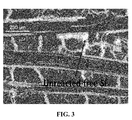
- FIG. 3 is a photograph showing the surface of a carbon fiber-reinforced silicon carbide composite material of Comparative Example 1;
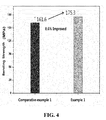
- FIG. 4 is a graph showing the result of analysis of bending strengths of the carbon fiber-reinforced silicon carbide composite materials of Example 1 and Comparative Example 1;
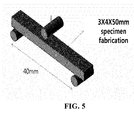
- FIG. 5 is a schematic view showing the evaluation of bending strength of a specimen.
- the present invention provides a method of preparing a carbon fiber-reinforced silicon carbide composite material, including the steps of: 1) mixing a polymer resin with a carbon nanotube forming catalyst; 2) impregnating a carbon fiber with the mixture of the polymer resin and the carbon nanotube forming catalyst and then curing the impregnated carbon fiber to prepare a carbon fiber-reinforced polymer composite material; 3) carbonizing the carbon fiber-reinforced polymer composite material to prepare a carbon fiber-reinforced carbon composite material; and 4) melting metal silicon and then infiltrating the molten metal silicon into the carbon fiber-reinforced carbon composite material.
- a polymer resin is mixed with a carbon nanotube forming catalyst.
- the polymer resin may be at least one selected from the group consisting of phenolic resins and pitches.
- the polymer resin may be a phenolic resin.
- the carbon nanotube forming catalyst may be at least one selected from the group consisting of nickel, copper, aluminum and alloys thereof
- a carbon fiber is impregnated with the mixture of the polymer resin and the carbon nanotube forming catalyst, and is then cured to prepare a carbon fiber-reinforced polymer composite material.
- the carbon fiber-reinforced polymer composite material is carbonized such that a fiber is preserved by heat-treating it under an inert atmosphere and only a carbon component remains by removing organic matter from the cured polymer.
- a carbon source generated during the carbonization of the carbon fiber-reinforced polymer composite material reacts with a catalyst, carbon nanotubes are grown, and thus a carbon fiber-reinforced carbon composite material including carbon nanotubes can be prepared.
- carbon nanotubes when carbon nanotubes are further grown, they can be formed into carbon nanofibers, and thus a carbon fiber-reinforced carbon composite material including both carbon nanotubes and carbon nanofibers can be prepared.
- the step of carbonizing the carbon fiber-reinforced polymer composite material may be conducted at 600 to 2200°C under a nitrogen atmosphere or a vacuum atmosphere (10 -2 torr or more). Meanwhile, when a carbon source is additionally introduced and then reacted with a carbon nanotube forming catalyst, carbon nanotubes can also be grown.
- metal silicon is melted and infiltrated into the carbon fiber-reinforced carbon composite material.
- metal silicon may be melted and infiltrated into the carbon fiber-reinforced carbon composite material by depositing metal silicon in or on the carbon fiber-reinforced carbon composite material and then heat-treating the metal silicon at 1500 to 1700°C under a vacuum atmosphere (10 -1 torr or more), but the present invention is not limited thereto.
- the heat treatment of metal silicon is conducted in the above temperature range of 1500 to 1700°C, the metal silicon is melted without being volatilized, and thus the molten metal silicon can be easily infiltrated into the carbon fiber-reinforced carbon composite material.
- the present invention provides a method of preparing a carbon fiber-reinforced silicon carbide composite material, including the steps of: 1) impregnating a carbon fiber with a polymer resin to prepare a carbon fiber-reinforced polymer composite material; 2) carbonizing the carbon fiber-reinforced polymer composite material to prepare a carbon fiber-reinforced carbon composite material; 3) dispersing a carbon nanotube forming catalyst in the carbon fiber-reinforced carbon composite material; 4) forming carbon nanotubes in the carbon fiber-reinforced carbon composite material using a gas phase reaction; and 5) melting metal silico n and then infiltrating the molten metal silicon into the carbon nanotube-containing carbon fiber-reinforced carbon composite material. That is, this method includes the step of carbonizing a carbon fiber-reinforced polymer composite material and then dispersing a carbon nanotube forming catalyst in the carbonized fiber-reinforced polymer composite material.
- a carbon fiber is impregnated with a polymer resin, and is then cured to prepare a carbon fiber-reinforced polymer composite material.
- the polymer resin may be at least one selected from the group consisting of phenolic resins and pitches.
- the polymer resin may be a phenolic resin.
- the carbon fiber-reinforced polymer composite material is carbonized such that a fiber is preserved by heat-treating it under an inert atmosphere and only a carbon component remains by removing organic matter from the cured polymer, thereby preparing a carbon fiber-reinforced carbon composite material.
- the step of carbonizing the carbon fiber-reinforced polymer composite material may be conducted at 600 to 2200°C under a nitrogen atmosphere or a vacuum atmosphere (10 -2 torr or more).
- a carbon nanotube forming catalyst is dispersed in the carbon fiber-reinforced carbon composite material.
- the carbon nanotube forming catalyst may be at least one selected from the group consisting of nickel, copper, aluminum and alloys thereof.
- a carbon nanotube forming catalyst is dispersed in a solvent, and then the carbon nanotube forming catalyst dispersed in the solvent is injected into the carbon fiber-reinforced carbon composite material in a liquid phase.
- the present invention is not limited thereto.
- carbon nanotubes are formed in the carbon fiber-reinforced carbon composite material by a gas phase reaction.
- carbon nanotubes when carbon nanotubes are further grown, they can be formed into carbon nanofibers, and thus the carbon fiber-reinforced carbon composite material can include both carbon nanotubes and carbon nanofibers.
- reaction gas used in the gas phase reaction may be a liquid or gaseous material containing carbon.
- carbon nanotubes may be grown by introducing C 2 H 2 gas at 750°C.
- metal silicon is melted and infiltrated into the carbon nanotube-containing carbon fiber-reinforced carbon composite material.
- metal silicon may be melted and infiltrated into the carbon nanotube-containing carbon fiber-reinforced carbon composite material by depositing metal silicon in or on the carbon fiber-reinforced carbon composite material and then heat-treating the metal silicon at 1500 to 1700°C under a vacuum atmosphere (10 -1 torr or more), but the present invention is not limited thereto.
- the metal silicon is melted without being volatilized, and thus the molten metal silicon can be easily infiltrated into the carbon nanotube-containing carbon fiber-reinforced carbon composite material.
- the present invention provides a carbon fiber-reinforced silicon carbide composite material prepared by the method.
- This carbon fiber-reinforced silicon carbide composite material is advantageous in that carbon nanotubes formed in the pores thereof react with introduced molten metal silicon to form reticular carbide in the pores thereof, so the amount of unreacted metal is reduced, and the unreacted metal portion thereof is reinforced, thereby improving the characteristics, such as strength and the like, thereof.
- the carbon fiber-reinforced carbon composite material was mixed with nickel as a carbon nanotube forming catalyst to disperse nickel in this composite material.
- carbon nanotubes were formed in the carbon fiber-reinforced carbon composite material by a gas phase reaction, and then metal silicon was melted and infiltrated into this composite material at 1650°C under a vacuum atmosphere to prepare a carbon fiber-reinforced silicon carbide composite material.
- thermosetting phenol resin as a polymer resin, was mixed with nickel as a carbon nanotube forming catalyst to prepare a catalyst-containing liquid polymer resin.
- the carbon fiber-reinforced polymer composite material was carbonized at 1000°C under a vacuum atmosphere to prepare a carbon fiber-reinforced carbon composite material containing carbon nanotubes formed in the pores thereof, and then metal silicon was melted and infiltrated into this composite material at 1650°C under a vacuum atmosphere to prepare a carbon fiber-reinforced silicon carbide composite material.
- a carbon fiber was impregnated with a thermosetting phenol resin as a polymer resin, and was then cured to prepare a carbon fiber-reinforced polymer composite material, and then this carbon fiber-reinforced polymer composite material was carbonized at 1000°C under a vacuum atmosphere to prepare a carbon fiber-reinforced carbon composite material.
- metal silicon was melted and infiltrated into this carbon fiber-reinforced carbon composite material at 1650°C under a vacuum atmosphere to prepare a carbon fiber-reinforced silicon carbide composite material.
- Example 1 The surfaces of the carbon fiber-reinforced silicon carbide composite materials prepared in Example 1 and Comparative Example 1 were observed with an electron microscope.
- the surface of the carbon fiber-reinforced silicon carbide composite material prepared in Example 1 is shown in FIG. 1
- FIGS. 2 and 3 The surface of the carbon fiber-reinforced silicon carbide composite material prepared in Comp arative Example 1 is shown in FIGS. 2 and 3 .
- specimens having a size of 3 x 4 x 50mm were fabricated using the carbon fiber-reinforced silicon carbide composite materials prepared in Examples 1 and 2 and Comparative Example 1, and then the bending strength of each of the specimens was evaluated. The results thereof are shown in FIG. 4 .
- the strength of the carbon fiber-reinforced silicon carbide composite material of the present invention is excellent because of carbide formed therein.
- carbon nanotubes or carbon nanofibers can be formed in pores of the composite material, the pores thereof being able to be formed therein with an unreacted metal region (metal river or metal pool), thus improving the characteristics, such as bending strength and the like, of the composite material.
Landscapes
- Chemical & Material Sciences (AREA)
- Engineering & Computer Science (AREA)
- Materials Engineering (AREA)
- Organic Chemistry (AREA)
- Chemical Kinetics & Catalysis (AREA)
- Ceramic Engineering (AREA)
- Nanotechnology (AREA)
- Manufacturing & Machinery (AREA)
- Physics & Mathematics (AREA)
- Structural Engineering (AREA)
- Inorganic Chemistry (AREA)
- Thermal Sciences (AREA)
- Condensed Matter Physics & Semiconductors (AREA)
- General Physics & Mathematics (AREA)
- Crystallography & Structural Chemistry (AREA)
- Composite Materials (AREA)
- Ceramic Products (AREA)
Abstract
Description
- This application claims the benefit of Korean Patent Application No.
KR 10-2012-0111638, filed on October 09, 2012 - The present invention relates to a carbon fiber-reinforced silicon carbide composite material and a method of preparing the same.
- A melt infiltration (MI) process is one of several methods of preparing a fiber-reinforced silicon carbide composite material, and is characterized in that a product can be very easily produced because of short process time and low production cost.
- Generally, a melt infiltration (MI) process includes the steps of: 1) impregnating a fiber with a polymer to form a fiber-reinforced plastic and then curing the fiber-reinforced plastic; 2) carbonizing the cured fiber-reinforced plastic under an inert atmosphere; and 3) melting metal silicon and then infiltrating the molten metal silicon into the carbonized fiber-reinforced plastic to prepare a fiber-reinforced silicon carbide composite material.
- In this case, the carbonized fiber-reinforced plastic is a porous fiber-carbon composite material, and the molten metal silicon is infiltrated into the carbonized fiber-reinforced plastic through pores by capillary force. However, when the size of pores of the carbonized fiber-reinforced plastic is large, a free metal, which cannot participate in a reaction, exists between the infiltrated molten metal silicon and the carbon contained therein, and an unreacted metal region (metal river or metal pool) is formed.
- Due to such an unreacted metal region, the prepared fiber-reinforced silicon carbide composite material exhibits low strength, and particularly, the strength thereof is rapidly lowered at high temperature, thus deteriorating the high-temperature characteristics thereof.
- Meanwhile, Korean Patent Registration No.
10-0689636 - Accordingly, the present invention has been devised to solve the above-mentioned problems, and an object of the present invention is to provide a method of preparing a carbon fiber-reinforced silicon carbide composite material using a melt-infiltration process, by which an unreacted metal region (metal river or metal pool) is not formed in the composite material and the characteristics such as bending strength and the like of the composite material are improved, and provides a carbon fiber-reinforced silicon carbide composite material prepared by the method.
- In order to accomplish the above object, an aspect of the present invention provides a method of preparing a carbon fiber-reinforced silicon carbide composite material, including the steps of: mixing a polymer resin with a carbon nanotube forming catalyst; impregnating a carbon fiber with the mixture of the polymer resin and the carbon nanotube forming catalyst and then curing the impregnated carbon fiber to prepare a carbon fiber-reinforced polymer composite material; carbonizing the carbon fiber-reinforced polymer composite material to prepare a carbon fiber-reinforced carbon composite material; and melting metal silicon and then infiltrating the molten metal silicon into the carbon fiber-reinforced carbon composite material.
- Another aspect of the present invention provides a method of preparing a carbon fiber-reinforced silicon carbide composite material, including the steps of: impregnating a carbon fiber with a polymer resin to prepare a carbon fiber-reinforced polymer composite material; carbonizing the carbon fiber-reinforced polymer composite material to prepare a carbon fiber-reinforced carbon composite material; dispersing a carbon nanotube forming catalyst in the carbon fiber-reinforced carbon composite material; forming carbon nanotubes in the carbon fiber-reinforced carbon composite material using a gas phase reaction; and melting metal silicon and then infiltrating the molten metal silicon into the carbon nanotube-containing carbon fiber-reinforced carbon composite material.
- Still another aspect of the present invention provides a carbon fiber-reinforced silicon carbide composite material prepared by the method.
- The above and other objects, features and advantages of the present invention will be more clearly understood from the following detailed description taken in conjunction with the accompanying drawings, in which:
-
FIG. 1 is a photograph showing the surface of a carbon fiber-reinforced silicon carbide composite material of Example 1; -
FIG. 2 is a photograph showing the surface of a carbon fiber-reinforced silicon carbide composite material of Comparative Example 1; -
FIG. 3 is a photograph showing the surface of a carbon fiber-reinforced silicon carbide composite material of Comparative Example 1; -
FIG. 4 is a graph showing the result of analysis of bending strengths of the carbon fiber-reinforced silicon carbide composite materials of Example 1 and Comparative Example 1; and -
FIG. 5 is a schematic view showing the evaluation of bending strength of a specimen. - Hereinafter, the present invention will be described in detail.
- The present invention provides a method of preparing a carbon fiber-reinforced silicon carbide composite material, including the steps of: 1) mixing a polymer resin with a carbon nanotube forming catalyst; 2) impregnating a carbon fiber with the mixture of the polymer resin and the carbon nanotube forming catalyst and then curing the impregnated carbon fiber to prepare a carbon fiber-reinforced polymer composite material; 3) carbonizing the carbon fiber-reinforced polymer composite material to prepare a carbon fiber-reinforced carbon composite material; and 4) melting metal silicon and then infiltrating the molten metal silicon into the carbon fiber-reinforced carbon composite material.
- Specifically, first, a polymer resin is mixed with a carbon nanotube forming catalyst. The polymer resin may be at least one selected from the group consisting of phenolic resins and pitches. Preferably, the polymer resin may be a phenolic resin. The carbon nanotube forming catalyst may be at least one selected from the group consisting of nickel, copper, aluminum and alloys thereof
- Subsequently, a carbon fiber is impregnated with the mixture of the polymer resin and the carbon nanotube forming catalyst, and is then cured to prepare a carbon fiber-reinforced polymer composite material.
- Subsequently, the carbon fiber-reinforced polymer composite material is carbonized such that a fiber is preserved by heat-treating it under an inert atmosphere and only a carbon component remains by removing organic matter from the cured polymer. In this case, when a carbon source generated during the carbonization of the carbon fiber-reinforced polymer composite material reacts with a catalyst, carbon nanotubes are grown, and thus a carbon fiber-reinforced carbon composite material including carbon nanotubes can be prepared. In this case, when carbon nanotubes are further grown, they can be formed into carbon nanofibers, and thus a carbon fiber-reinforced carbon composite material including both carbon nanotubes and carbon nanofibers can be prepared. The step of carbonizing the carbon fiber-reinforced polymer composite material may be conducted at 600 to 2200°C under a nitrogen atmosphere or a vacuum atmosphere (10-2 torr or more). Meanwhile, when a carbon source is additionally introduced and then reacted with a carbon nanotube forming catalyst, carbon nanotubes can also be grown.
- Subsequently, metal silicon is melted and infiltrated into the carbon fiber-reinforced carbon composite material. Preferably, metal silicon may be melted and infiltrated into the carbon fiber-reinforced carbon composite material by depositing metal silicon in or on the carbon fiber-reinforced carbon composite material and then heat-treating the metal silicon at 1500 to 1700°C under a vacuum atmosphere (10-1 torr or more), but the present invention is not limited thereto. When the heat treatment of metal silicon is conducted in the above temperature range of 1500 to 1700°C, the metal silicon is melted without being volatilized, and thus the molten metal silicon can be easily infiltrated into the carbon fiber-reinforced carbon composite material.
- Further, the present invention provides a method of preparing a carbon fiber-reinforced silicon carbide composite material, including the steps of: 1) impregnating a carbon fiber with a polymer resin to prepare a carbon fiber-reinforced polymer composite material; 2) carbonizing the carbon fiber-reinforced polymer composite material to prepare a carbon fiber-reinforced carbon composite material; 3) dispersing a carbon nanotube forming catalyst in the carbon fiber-reinforced carbon composite material; 4) forming carbon nanotubes in the carbon fiber-reinforced carbon composite material using a gas phase reaction; and 5) melting metal silico n and then infiltrating the molten metal silicon into the carbon nanotube-containing carbon fiber-reinforced carbon composite material. That is, this method includes the step of carbonizing a carbon fiber-reinforced polymer composite material and then dispersing a carbon nanotube forming catalyst in the carbonized fiber-reinforced polymer composite material.
- Specifically, first, a carbon fiber is impregnated with a polymer resin, and is then cured to prepare a carbon fiber-reinforced polymer composite material. The polymer resin may be at least one selected from the group consisting of phenolic resins and pitches. Preferably, the polymer resin may be a phenolic resin.
- Subsequently, the carbon fiber-reinforced polymer composite material is carbonized such that a fiber is preserved by heat-treating it under an inert atmosphere and only a carbon component remains by removing organic matter from the cured polymer, thereby preparing a carbon fiber-reinforced carbon composite material. In this case, the step of carbonizing the carbon fiber-reinforced polymer composite material may be conducted at 600 to 2200°C under a nitrogen atmosphere or a vacuum atmosphere (10-2 torr or more).
- Subsequently, a carbon nanotube forming catalyst is dispersed in the carbon fiber-reinforced carbon composite material. The carbon nanotube forming catalyst may be at least one selected from the group consisting of nickel, copper, aluminum and alloys thereof. Specifically, a carbon nanotube forming catalyst is dispersed in a solvent, and then the carbon nanotube forming catalyst dispersed in the solvent is injected into the carbon fiber-reinforced carbon composite material in a liquid phase. However, the present invention is not limited thereto.
- Subsequently, carbon nanotubes are formed in the carbon fiber-reinforced carbon composite material by a gas phase reaction. In this case, when carbon nanotubes are further grown, they can be formed into carbon nanofibers, and thus the carbon fiber-reinforced carbon composite material can include both carbon nanotubes and carbon nanofibers.
- In this case, the reaction gas used in the gas phase reaction may be a liquid or gaseous material containing carbon. Preferably, carbon nanotubes may be grown by introducing C2H2 gas at 750°C.
- Subsequently, metal silicon is melted and infiltrated into the carbon nanotube-containing carbon fiber-reinforced carbon composite material. Preferably, metal silicon may be melted and infiltrated into the carbon nanotube-containing carbon fiber-reinforced carbon composite material by depositing metal silicon in or on the carbon fiber-reinforced carbon composite material and then heat-treating the metal silicon at 1500 to 1700°C under a vacuum atmosphere (10-1 torr or more), but the present invention is not limited thereto. When the heat treatment of metal silicon is conducted in the above temperature range of 1500 to 1700°C, the metal silicon is melted without being volatilized, and thus the molten metal silicon can be easily infiltrated into the carbon nanotube-containing carbon fiber-reinforced carbon composite material.
- Further, the present invention provides a carbon fiber-reinforced silicon carbide composite material prepared by the method. This carbon fiber-reinforced silicon carbide composite material is advantageous in that carbon nanotubes formed in the pores thereof react with introduced molten metal silicon to form reticular carbide in the pores thereof, so the amount of unreacted metal is reduced, and the unreacted metal portion thereof is reinforced, thereby improving the characteristics, such as strength and the like, thereof.
- Hereinafter, the present invention will be described in detail with reference to the following Examples. However, these Examples are set forth to illustrate the present invention, and the scope of the present invention is not limited thereto.
- <Example 1>
- A carbon fiber, as a reinforced fiber, was impregnated with a thermosetting phenol resin as a polymer resin, and was then cured to prepare a carbon fiber-reinforced polymer composite material, and then this carbon fiber-reinforced polymer composite material was carbonized at 1000°C under a vacuum atmosphere to prepare a carbon fiber-reinforced carbon composite material.
- Subsequently, the carbon fiber-reinforced carbon composite material was mixed with nickel as a carbon nanotube forming catalyst to disperse nickel in this composite material.
- Subsequently, carbon nanotubes were formed in the carbon fiber-reinforced carbon composite material by a gas phase reaction, and then metal silicon was melted and infiltrated into this composite material at 1650°C under a vacuum atmosphere to prepare a carbon fiber-reinforced silicon carbide composite material.
- <Example 2>
- A thermosetting phenol resin, as a polymer resin, was mixed with nickel as a carbon nanotube forming catalyst to prepare a catalyst-containing liquid polymer resin.
- Subsequently, a carbon fiber, as a reinforced fiber, was impregnated with the catalyst-containing liquid polymer resin, and was then cured to prepare a carbon fiber-reinforced polymer composite material.
- Subsequently, the carbon fiber-reinforced polymer composite material was carbonized at 1000°C under a vacuum atmosphere to prepare a carbon fiber-reinforced carbon composite material containing carbon nanotubes formed in the pores thereof, and then metal silicon was melted and infiltrated into this composite material at 1650°C under a vacuum atmosphere to prepare a carbon fiber-reinforced silicon carbide composite material.
- <Comparative Example 1>
- A carbon fiber was impregnated with a thermosetting phenol resin as a polymer resin, and was then cured to prepare a carbon fiber-reinforced polymer composite material, and then this carbon fiber-reinforced polymer composite material was carbonized at 1000°C under a vacuum atmosphere to prepare a carbon fiber-reinforced carbon composite material.
- Subsequently, metal silicon was melted and infiltrated into this carbon fiber-reinforced carbon composite material at 1650°C under a vacuum atmosphere to prepare a carbon fiber-reinforced silicon carbide composite material.
- <Test Example>
- 1. Observation of surface of composite material
- The surfaces of the carbon fiber-reinforced silicon carbide composite materials prepared in Example 1 and Comparative Example 1 were observed with an electron microscope. The surface of the carbon fiber-reinforced silicon carbide composite material prepared in Example 1 is shown in
FIG. 1 , and the surface of the carbon fiber-reinforced silicon carbide composite material prepared in Comp arative Example 1 is shown inFIGS. 2 and3 . - 2. Specimen fabrication and bending strength evaluation
- As shown in
FIG. 5 , specimens having a size of 3 x 4 x 50mm were fabricated using the carbon fiber-reinforced silicon carbide composite materials prepared in Examples 1 and 2 and Comparative Example 1, and then the bending strength of each of the specimens was evaluated. The results thereof are shown inFIG. 4 . - In the case of the carbon fiber-reinforced silicon carbide composite material of Comparative Example 1, as shown in
FIGS. 2 and3 , it was observed that pores were cracked, and an unreacted metal existed. In contrast, in the case of the carbon fiber-reinforced silicon carbide composite material of Example 1, as shown inFIG. 1 , unlike a conventional carbon fiber-reinforced silicon carbide composite material filled with only an unreacted metal, it was observed that a reticular carbide-reinforced region was formed in the pores thereof. - Further, it is shown in
FIG. 4 that the bending strength of the spec imen fabricated using the carbon fiber-reinforced silicon carbide composite material of Comparative Example 1 is 161.6 MPa, whereas the bending strengths of the specimens fabricated using the carbon fiber-reinforced silicon carbide composite materials of Examples 1 and 2 are 175.3 MPa and 174.8 MPa, respectively. - Consequently, it can be ascertained that the strength of the carbon fiber-reinforced silicon carbide composite material of the present invention is excellent because of carbide formed therein.
- As described above, according to the carbon fiber-reinforced silicon carbide composite material of the present invention and the preparation method thereof, carbon nanotubes or carbon nanofibers can be formed in pores of the composite material, the pores thereof being able to be formed therein with an unreacted metal region (metal river or metal pool), thus improving the characteristics, such as bending strength and the like, of the composite material.
- Although the preferred embodiments of the present invention have been disclosed for illustrative purposes, those skilled in the art will appreciate that various modifications, additions and substitutions are possible, without departing from the scope and spirit of the invention as disclosed in the accompanying claims.
Claims (6)
- A method of preparing a carbon fiber-reinforced silicon carbide composite material, comprising the steps of A or B:Step A1) mixing a polymer resin with a carbon nanotube forming catalyst;2) impregnating a carbon fiber with the mixture of the polymer resin and the carbon nanotube forming catalyst and then curing the impregnated carbon fiber to prepare a carbon fiber-reinforced polymer composite material;3) carbonizing the carbon fiber-reinforced polymer composite material to prepare a carbon fiber-reinforced carbon composite material; and4) melting metal silicon and then infiltrating the molten metal silicon into the carbon fiber-reinforced carbon composite materialStep B1) impregnating a carbon fiber with a polymer resin to prepare a carbon fiber-reinforced polymer composite material;2) carbonizing the carbon fiber-reinforced polymer composite material to prepare a carbon fiber-reinforced carbon composite material3) dispersing a carbon nanotube forming catalyst in the carbon fiber-reinforced carbon composite material;4) forming carbon nanotubes in the carbon fiber-reinforced carbon composite material using a gas phase reaction; and5) melting metal silicon and then infiltrating the molten metal silicon into the carbon nanotube-containing carbon fiber-reinforced carbon composite material.
- The method of claim 1, wherein the polymer resin is at least one selected from the group consisting of phenolic resins and pitches.
- The method of claim 1, wherein the carbon nanotube forming catalyst is at least one selected from the group consisting of nickel, copper, aluminum and alloys thereof.
- The method of claim 1, wherein the step of carbonizing the carbon fiber-reinforced polymer composite material is conducted at 600 to 2200°C.
- The method of claim 1, wherein the step of melting metal silicon and then infiltrating the molten metal silicon into the carbon fiber-reinforced carbon composite material is conducted at 1500 to 1700°C.
- A carbon fiber-reinforced silicon carbide composite material prepared by the method of claim 1.
Applications Claiming Priority (1)
| Application Number | Priority Date | Filing Date | Title |
|---|---|---|---|
| KR1020120111638A KR101334736B1 (en) | 2012-10-09 | 2012-10-09 | Silicon carbide reinforced carbon fiber composite and manufacturing method thereof |
Publications (2)
| Publication Number | Publication Date |
|---|---|
| EP2719661A1 true EP2719661A1 (en) | 2014-04-16 |
| EP2719661B1 EP2719661B1 (en) | 2018-12-05 |
Family
ID=49303831
Family Applications (1)
| Application Number | Title | Priority Date | Filing Date |
|---|---|---|---|
| EP13187476.0A Active EP2719661B1 (en) | 2012-10-09 | 2013-10-07 | Method of preparing a carbon fiber-reinforced silicon carbide composite material |
Country Status (3)
| Country | Link |
|---|---|
| US (1) | US9156741B2 (en) |
| EP (1) | EP2719661B1 (en) |
| KR (1) | KR101334736B1 (en) |
Cited By (1)
| Publication number | Priority date | Publication date | Assignee | Title |
|---|---|---|---|---|
| RU2684538C1 (en) * | 2017-12-28 | 2019-04-09 | Акционерное общество "Научно-исследовательский институт конструкционных материалов на основе графита "НИИграфит" | Carbon-ceramic fiber-reinforced composite material and method for its obtaining |
Families Citing this family (5)
| Publication number | Priority date | Publication date | Assignee | Title |
|---|---|---|---|---|
| JP6651754B2 (en) * | 2014-09-18 | 2020-02-19 | Toto株式会社 | Method for producing reaction sintered silicon carbide member |
| KR101872082B1 (en) | 2015-05-18 | 2018-06-27 | 에스케이씨솔믹스 주식회사 | Method of manufacturing SiC using fabric and SiC manufactured by the method |
| CN111377750B (en) * | 2020-04-15 | 2022-06-24 | 齐荟仟 | Carbon nanotube sponge reinforced silicon carbide ceramic matrix composite and preparation method thereof |
| KR102606184B1 (en) * | 2021-08-18 | 2023-11-29 | 한국원자력연구원 | Reaction bonded silicon carbide and method of preparing the same |
| CN115594513B (en) * | 2022-10-18 | 2023-04-28 | 郑州大学 | A kind of in-situ generation carbon fiber reinforced silicon carbide ceramic matrix composite material and preparation method thereof |
Citations (2)
| Publication number | Priority date | Publication date | Assignee | Title |
|---|---|---|---|---|
| KR100689636B1 (en) | 2005-12-22 | 2007-03-08 | 한국에너지기술연구원 | Method for manufacturing carbon fiber reinforced silicon carbide composite by metal silicon melt penetration process |
| EP2543650A1 (en) * | 2011-07-07 | 2013-01-09 | Korea Institute of Energy Research | Method for manufacturing high-density fiber reinforced ceramic composite materials |
Family Cites Families (6)
| Publication number | Priority date | Publication date | Assignee | Title |
|---|---|---|---|---|
| DE19711829C1 (en) * | 1997-03-21 | 1998-09-03 | Daimler Benz Ag | Process for the production of a fiber-reinforced composite ceramic |
| JP2000036967A (en) * | 1998-07-21 | 2000-02-02 | Sony Corp | Image processing system and camera system |
| KR100400393B1 (en) * | 2001-07-25 | 2003-10-01 | 이재춘 | Electrically heatable porous Si/SiC fiber media and method of making same |
| DE10242566A1 (en) * | 2002-09-13 | 2004-03-25 | Sgl Carbon Ag | Fiber-reinforced composite ceramics and process for their production |
| US20060062985A1 (en) * | 2004-04-26 | 2006-03-23 | Karandikar Prashant G | Nanotube-containing composite bodies, and methods for making same |
| WO2011063422A1 (en) * | 2009-11-23 | 2011-05-26 | Applied Nanostructured Solutions, Llc | Ceramic composite materials containing carbon nanotube-infused fiber materials and methods for production thereof |
-
2012
- 2012-10-09 KR KR1020120111638A patent/KR101334736B1/en not_active Expired - Fee Related
-
2013
- 2013-10-03 US US14/045,723 patent/US9156741B2/en active Active
- 2013-10-07 EP EP13187476.0A patent/EP2719661B1/en active Active
Patent Citations (2)
| Publication number | Priority date | Publication date | Assignee | Title |
|---|---|---|---|---|
| KR100689636B1 (en) | 2005-12-22 | 2007-03-08 | 한국에너지기술연구원 | Method for manufacturing carbon fiber reinforced silicon carbide composite by metal silicon melt penetration process |
| EP2543650A1 (en) * | 2011-07-07 | 2013-01-09 | Korea Institute of Energy Research | Method for manufacturing high-density fiber reinforced ceramic composite materials |
Non-Patent Citations (3)
| Title |
|---|
| ERIK T THOSTENSON ET AL: "Fabrication and characterization of reaction bonded silicon carbide/carbon nanotube composites; Reaction bonded silicon carbide/carbon nanotube composites", JOURNAL OF PHYSICS D. APPLIED PHYSICS, IOP PUBLISHING, BRISTOL, GB, vol. 38, no. 21, 7 November 2005 (2005-11-07), pages 3962 - 3965, XP020083447, ISSN: 0022-3727, DOI: 10.1088/0022-3727/38/21/020 * |
| HAI-ZHE WANG ET AL: "Fabrication of multi-walled carbon nanotube-reinforced carbon fiber/silicon carbide composites by polymer infiltration and pyrolysis process", COMPOSITES SCIENCE AND TECHNOLOGY, ELSEVIER, UK, vol. 72, no. 3, 11 December 2011 (2011-12-11), pages 461 - 466, XP028442958, ISSN: 0266-3538, [retrieved on 20111217], DOI: 10.1016/J.COMPSCITECH.2011.12.009 * |
| ZHANJUN GU ET AL: "Aligned carbon nanotube-reinforced silicon carbide composites produced by chemical vapor infiltration", CARBON, ELSEVIER, OXFORD, GB, vol. 49, no. 7, 8 February 2011 (2011-02-08), pages 2475 - 2482, XP028368377, ISSN: 0008-6223, [retrieved on 20110213], DOI: 10.1016/J.CARBON.2011.02.016 * |
Cited By (1)
| Publication number | Priority date | Publication date | Assignee | Title |
|---|---|---|---|---|
| RU2684538C1 (en) * | 2017-12-28 | 2019-04-09 | Акционерное общество "Научно-исследовательский институт конструкционных материалов на основе графита "НИИграфит" | Carbon-ceramic fiber-reinforced composite material and method for its obtaining |
Also Published As
| Publication number | Publication date |
|---|---|
| US20140100104A1 (en) | 2014-04-10 |
| EP2719661B1 (en) | 2018-12-05 |
| KR101334736B1 (en) | 2013-12-05 |
| US9156741B2 (en) | 2015-10-13 |
Similar Documents
| Publication | Publication Date | Title |
|---|---|---|
| US9156741B2 (en) | Carbon fiber-reinforced silicon carbide composite material and method of preparing the same | |
| EP2543650B1 (en) | Method for manufacturing high-density fiber reinforced ceramic composite materials | |
| RU2084425C1 (en) | Method of manufacturing articles from carbon-silicon carbide composite material and carbon-silicon carbide composite material | |
| CN104909792A (en) | Continuous fiber-reinforced zirconium carbide based composite material and preparation method thereof | |
| JP2009256117A (en) | Carbon fiber carbon composite molded body, carbon fiber-reinforced carbon composite material and its manufacturing method | |
| Safi et al. | MCMB–SiC composites; new class high-temperature structural materials for aerospace applications | |
| CN101818048B (en) | A kind of preparation method of copper-silicon alloy modified carbon/ceramic friction material | |
| JPH08157273A (en) | Unidirectional carbon fiber reinforced carbon composite material and method for producing the same | |
| CN110002890A (en) | A kind of Cf/ HfC-SiC ultra-temperature ceramic-based composite material and preparation method thereof | |
| CN104411631A (en) | Carbon-carbon composites | |
| JP4517334B2 (en) | Composite material and manufacturing method thereof | |
| JP2010070421A (en) | METHOD FOR MANUFACTURING SiC FIBER-REINFORCED SiC COMPOSITE MATERIAL | |
| JP2009227565A (en) | Carbon fiber-reinforced silicon carbide composite and method for producing the same | |
| CN110424068B (en) | SiC fiber prepared by doping ultrahigh-temperature ceramic composite material and method and application thereof | |
| CN109851382A (en) | A kind of method that C/C-TiC ceramic matric composite and in-situ reaction prepare the ceramic matric composite | |
| KR101031689B1 (en) | High Purity Carbon Fiber Reinforced Carbon Composites for Semiconductor Manufacturing Apparatus and Manufacturing Method Thereof | |
| Luo et al. | Influence of phenolic resin impregnation on the properties of reaction‐bonded silicon carbide | |
| US20160376201A1 (en) | Fiber material for reinforcement, production method thereof, and fiber-reinforced ceramic composite material | |
| KR101859862B1 (en) | Method for manufacturing mesophase binder pitches prepared with pyrolysis fuel oil, method for manufacturing carbon/carbon composites using the mesophase binder pitches and the carbon/carbon composites by the same | |
| JP2009274889A (en) | Carbon fiber-reinforced silicon carbide composite material, and method for producing the same | |
| KR100689636B1 (en) | Method for manufacturing carbon fiber reinforced silicon carbide composite by metal silicon melt penetration process | |
| Delport et al. | Production of a self-adhering mesophase powder from anthracene oil for low pressure forming of graphite artefacts | |
| JP2001348288A (en) | Particle-dispersed silicon material and method for producing the same | |
| JPH11292647A (en) | Carbon fiber-reinforced material and its production | |
| RU2460707C1 (en) | Method of making articles from carbon-silicon carbide material |
Legal Events
| Date | Code | Title | Description |
|---|---|---|---|
| PUAI | Public reference made under article 153(3) epc to a published international application that has entered the european phase |
Free format text: ORIGINAL CODE: 0009012 |
|
| AK | Designated contracting states |
Kind code of ref document: A1 Designated state(s): AL AT BE BG CH CY CZ DE DK EE ES FI FR GB GR HR HU IE IS IT LI LT LU LV MC MK MT NL NO PL PT RO RS SE SI SK SM TR |
|
| AX | Request for extension of the european patent |
Extension state: BA ME |
|
| 17P | Request for examination filed |
Effective date: 20140523 |
|
| RBV | Designated contracting states (corrected) |
Designated state(s): AL AT BE BG CH CY CZ DE DK EE ES FI FR GB GR HR HU IE IS IT LI LT LU LV MC MK MT NL NO PL PT RO RS SE SI SK SM TR |
|
| STAA | Information on the status of an ep patent application or granted ep patent |
Free format text: STATUS: EXAMINATION IS IN PROGRESS |
|
| 17Q | First examination report despatched |
Effective date: 20171005 |
|
| REG | Reference to a national code |
Ref country code: DE Ref legal event code: R079 Ref document number: 602013047701 Country of ref document: DE Free format text: PREVIOUS MAIN CLASS: C01B0031020000 Ipc: B01J0037080000 |
|
| GRAP | Despatch of communication of intention to grant a patent |
Free format text: ORIGINAL CODE: EPIDOSNIGR1 |
|
| STAA | Information on the status of an ep patent application or granted ep patent |
Free format text: STATUS: GRANT OF PATENT IS INTENDED |
|
| RIC1 | Information provided on ipc code assigned before grant |
Ipc: B01J 37/08 20060101AFI20180430BHEP Ipc: B82Y 40/00 20110101ALI20180430BHEP Ipc: C04B 35/573 20060101ALI20180430BHEP Ipc: B82Y 30/00 20110101ALI20180430BHEP Ipc: C04B 35/80 20060101ALI20180430BHEP Ipc: C01B 32/956 20170101ALI20180430BHEP Ipc: B01J 37/02 20060101ALI20180430BHEP Ipc: B01J 23/755 20060101ALI20180430BHEP Ipc: B01J 23/72 20060101ALI20180430BHEP Ipc: B01J 37/00 20060101ALI20180430BHEP Ipc: B01J 35/06 20060101ALI20180430BHEP Ipc: B01J 21/18 20060101ALI20180430BHEP Ipc: C01B 32/16 20170101ALI20180430BHEP Ipc: B01J 27/224 20060101ALI20180430BHEP |
|
| INTG | Intention to grant announced |
Effective date: 20180530 |
|
| GRAS | Grant fee paid |
Free format text: ORIGINAL CODE: EPIDOSNIGR3 |
|
| GRAA | (expected) grant |
Free format text: ORIGINAL CODE: 0009210 |
|
| STAA | Information on the status of an ep patent application or granted ep patent |
Free format text: STATUS: THE PATENT HAS BEEN GRANTED |
|
| AK | Designated contracting states |
Kind code of ref document: B1 Designated state(s): AL AT BE BG CH CY CZ DE DK EE ES FI FR GB GR HR HU IE IS IT LI LT LU LV MC MK MT NL NO PL PT RO RS SE SI SK SM TR |
|
| REG | Reference to a national code |
Ref country code: GB Ref legal event code: FG4D |
|
| REG | Reference to a national code |
Ref country code: CH Ref legal event code: EP |
|
| REG | Reference to a national code |
Ref country code: AT Ref legal event code: REF Ref document number: 1072382 Country of ref document: AT Kind code of ref document: T Effective date: 20181215 |
|
| REG | Reference to a national code |
Ref country code: IE Ref legal event code: FG4D |
|
| REG | Reference to a national code |
Ref country code: DE Ref legal event code: R096 Ref document number: 602013047701 Country of ref document: DE |
|
| REG | Reference to a national code |
Ref country code: NL Ref legal event code: MP Effective date: 20181205 |
|
| REG | Reference to a national code |
Ref country code: AT Ref legal event code: MK05 Ref document number: 1072382 Country of ref document: AT Kind code of ref document: T Effective date: 20181205 |
|
| REG | Reference to a national code |
Ref country code: LT Ref legal event code: MG4D |
|
| PG25 | Lapsed in a contracting state [announced via postgrant information from national office to epo] |
Ref country code: FI Free format text: LAPSE BECAUSE OF FAILURE TO SUBMIT A TRANSLATION OF THE DESCRIPTION OR TO PAY THE FEE WITHIN THE PRESCRIBED TIME-LIMIT Effective date: 20181205 Ref country code: AT Free format text: LAPSE BECAUSE OF FAILURE TO SUBMIT A TRANSLATION OF THE DESCRIPTION OR TO PAY THE FEE WITHIN THE PRESCRIBED TIME-LIMIT Effective date: 20181205 Ref country code: LV Free format text: LAPSE BECAUSE OF FAILURE TO SUBMIT A TRANSLATION OF THE DESCRIPTION OR TO PAY THE FEE WITHIN THE PRESCRIBED TIME-LIMIT Effective date: 20181205 Ref country code: HR Free format text: LAPSE BECAUSE OF FAILURE TO SUBMIT A TRANSLATION OF THE DESCRIPTION OR TO PAY THE FEE WITHIN THE PRESCRIBED TIME-LIMIT Effective date: 20181205 Ref country code: NO Free format text: LAPSE BECAUSE OF FAILURE TO SUBMIT A TRANSLATION OF THE DESCRIPTION OR TO PAY THE FEE WITHIN THE PRESCRIBED TIME-LIMIT Effective date: 20190305 Ref country code: BG Free format text: LAPSE BECAUSE OF FAILURE TO SUBMIT A TRANSLATION OF THE DESCRIPTION OR TO PAY THE FEE WITHIN THE PRESCRIBED TIME-LIMIT Effective date: 20190305 Ref country code: ES Free format text: LAPSE BECAUSE OF FAILURE TO SUBMIT A TRANSLATION OF THE DESCRIPTION OR TO PAY THE FEE WITHIN THE PRESCRIBED TIME-LIMIT Effective date: 20181205 Ref country code: LT Free format text: LAPSE BECAUSE OF FAILURE TO SUBMIT A TRANSLATION OF THE DESCRIPTION OR TO PAY THE FEE WITHIN THE PRESCRIBED TIME-LIMIT Effective date: 20181205 |
|
| PG25 | Lapsed in a contracting state [announced via postgrant information from national office to epo] |
Ref country code: AL Free format text: LAPSE BECAUSE OF FAILURE TO SUBMIT A TRANSLATION OF THE DESCRIPTION OR TO PAY THE FEE WITHIN THE PRESCRIBED TIME-LIMIT Effective date: 20181205 Ref country code: GR Free format text: LAPSE BECAUSE OF FAILURE TO SUBMIT A TRANSLATION OF THE DESCRIPTION OR TO PAY THE FEE WITHIN THE PRESCRIBED TIME-LIMIT Effective date: 20190306 Ref country code: SE Free format text: LAPSE BECAUSE OF FAILURE TO SUBMIT A TRANSLATION OF THE DESCRIPTION OR TO PAY THE FEE WITHIN THE PRESCRIBED TIME-LIMIT Effective date: 20181205 Ref country code: RS Free format text: LAPSE BECAUSE OF FAILURE TO SUBMIT A TRANSLATION OF THE DESCRIPTION OR TO PAY THE FEE WITHIN THE PRESCRIBED TIME-LIMIT Effective date: 20181205 |
|
| PG25 | Lapsed in a contracting state [announced via postgrant information from national office to epo] |
Ref country code: NL Free format text: LAPSE BECAUSE OF FAILURE TO SUBMIT A TRANSLATION OF THE DESCRIPTION OR TO PAY THE FEE WITHIN THE PRESCRIBED TIME-LIMIT Effective date: 20181205 |
|
| PG25 | Lapsed in a contracting state [announced via postgrant information from national office to epo] |
Ref country code: CZ Free format text: LAPSE BECAUSE OF FAILURE TO SUBMIT A TRANSLATION OF THE DESCRIPTION OR TO PAY THE FEE WITHIN THE PRESCRIBED TIME-LIMIT Effective date: 20181205 Ref country code: IT Free format text: LAPSE BECAUSE OF FAILURE TO SUBMIT A TRANSLATION OF THE DESCRIPTION OR TO PAY THE FEE WITHIN THE PRESCRIBED TIME-LIMIT Effective date: 20181205 Ref country code: PT Free format text: LAPSE BECAUSE OF FAILURE TO SUBMIT A TRANSLATION OF THE DESCRIPTION OR TO PAY THE FEE WITHIN THE PRESCRIBED TIME-LIMIT Effective date: 20190405 Ref country code: PL Free format text: LAPSE BECAUSE OF FAILURE TO SUBMIT A TRANSLATION OF THE DESCRIPTION OR TO PAY THE FEE WITHIN THE PRESCRIBED TIME-LIMIT Effective date: 20181205 |
|
| PG25 | Lapsed in a contracting state [announced via postgrant information from national office to epo] |
Ref country code: EE Free format text: LAPSE BECAUSE OF FAILURE TO SUBMIT A TRANSLATION OF THE DESCRIPTION OR TO PAY THE FEE WITHIN THE PRESCRIBED TIME-LIMIT Effective date: 20181205 Ref country code: SM Free format text: LAPSE BECAUSE OF FAILURE TO SUBMIT A TRANSLATION OF THE DESCRIPTION OR TO PAY THE FEE WITHIN THE PRESCRIBED TIME-LIMIT Effective date: 20181205 Ref country code: SK Free format text: LAPSE BECAUSE OF FAILURE TO SUBMIT A TRANSLATION OF THE DESCRIPTION OR TO PAY THE FEE WITHIN THE PRESCRIBED TIME-LIMIT Effective date: 20181205 Ref country code: IS Free format text: LAPSE BECAUSE OF FAILURE TO SUBMIT A TRANSLATION OF THE DESCRIPTION OR TO PAY THE FEE WITHIN THE PRESCRIBED TIME-LIMIT Effective date: 20190405 Ref country code: RO Free format text: LAPSE BECAUSE OF FAILURE TO SUBMIT A TRANSLATION OF THE DESCRIPTION OR TO PAY THE FEE WITHIN THE PRESCRIBED TIME-LIMIT Effective date: 20181205 |
|
| REG | Reference to a national code |
Ref country code: DE Ref legal event code: R097 Ref document number: 602013047701 Country of ref document: DE |
|
| PLBE | No opposition filed within time limit |
Free format text: ORIGINAL CODE: 0009261 |
|
| STAA | Information on the status of an ep patent application or granted ep patent |
Free format text: STATUS: NO OPPOSITION FILED WITHIN TIME LIMIT |
|
| PG25 | Lapsed in a contracting state [announced via postgrant information from national office to epo] |
Ref country code: SI Free format text: LAPSE BECAUSE OF FAILURE TO SUBMIT A TRANSLATION OF THE DESCRIPTION OR TO PAY THE FEE WITHIN THE PRESCRIBED TIME-LIMIT Effective date: 20181205 Ref country code: DK Free format text: LAPSE BECAUSE OF FAILURE TO SUBMIT A TRANSLATION OF THE DESCRIPTION OR TO PAY THE FEE WITHIN THE PRESCRIBED TIME-LIMIT Effective date: 20181205 |
|
| 26N | No opposition filed |
Effective date: 20190906 |
|
| PG25 | Lapsed in a contracting state [announced via postgrant information from national office to epo] |
Ref country code: TR Free format text: LAPSE BECAUSE OF FAILURE TO SUBMIT A TRANSLATION OF THE DESCRIPTION OR TO PAY THE FEE WITHIN THE PRESCRIBED TIME-LIMIT Effective date: 20181205 |
|
| PG25 | Lapsed in a contracting state [announced via postgrant information from national office to epo] |
Ref country code: MC Free format text: LAPSE BECAUSE OF FAILURE TO SUBMIT A TRANSLATION OF THE DESCRIPTION OR TO PAY THE FEE WITHIN THE PRESCRIBED TIME-LIMIT Effective date: 20181205 |
|
| REG | Reference to a national code |
Ref country code: CH Ref legal event code: PL |
|
| PG25 | Lapsed in a contracting state [announced via postgrant information from national office to epo] |
Ref country code: CH Free format text: LAPSE BECAUSE OF NON-PAYMENT OF DUE FEES Effective date: 20191031 Ref country code: LI Free format text: LAPSE BECAUSE OF NON-PAYMENT OF DUE FEES Effective date: 20191031 Ref country code: LU Free format text: LAPSE BECAUSE OF NON-PAYMENT OF DUE FEES Effective date: 20191007 |
|
| REG | Reference to a national code |
Ref country code: BE Ref legal event code: MM Effective date: 20191031 |
|
| PG25 | Lapsed in a contracting state [announced via postgrant information from national office to epo] |
Ref country code: BE Free format text: LAPSE BECAUSE OF NON-PAYMENT OF DUE FEES Effective date: 20191031 |
|
| GBPC | Gb: european patent ceased through non-payment of renewal fee |
Effective date: 20191007 |
|
| PG25 | Lapsed in a contracting state [announced via postgrant information from national office to epo] |
Ref country code: GB Free format text: LAPSE BECAUSE OF NON-PAYMENT OF DUE FEES Effective date: 20191007 Ref country code: IE Free format text: LAPSE BECAUSE OF NON-PAYMENT OF DUE FEES Effective date: 20191007 |
|
| PG25 | Lapsed in a contracting state [announced via postgrant information from national office to epo] |
Ref country code: CY Free format text: LAPSE BECAUSE OF FAILURE TO SUBMIT A TRANSLATION OF THE DESCRIPTION OR TO PAY THE FEE WITHIN THE PRESCRIBED TIME-LIMIT Effective date: 20181205 |
|
| PG25 | Lapsed in a contracting state [announced via postgrant information from national office to epo] |
Ref country code: MT Free format text: LAPSE BECAUSE OF FAILURE TO SUBMIT A TRANSLATION OF THE DESCRIPTION OR TO PAY THE FEE WITHIN THE PRESCRIBED TIME-LIMIT Effective date: 20181205 Ref country code: HU Free format text: LAPSE BECAUSE OF FAILURE TO SUBMIT A TRANSLATION OF THE DESCRIPTION OR TO PAY THE FEE WITHIN THE PRESCRIBED TIME-LIMIT; INVALID AB INITIO Effective date: 20131007 |
|
| PG25 | Lapsed in a contracting state [announced via postgrant information from national office to epo] |
Ref country code: MK Free format text: LAPSE BECAUSE OF FAILURE TO SUBMIT A TRANSLATION OF THE DESCRIPTION OR TO PAY THE FEE WITHIN THE PRESCRIBED TIME-LIMIT Effective date: 20181205 |
|
| PGFP | Annual fee paid to national office [announced via postgrant information from national office to epo] |
Ref country code: FR Payment date: 20250908 Year of fee payment: 13 |
|
| PGFP | Annual fee paid to national office [announced via postgrant information from national office to epo] |
Ref country code: DE Payment date: 20250902 Year of fee payment: 13 |