EP2711244A2 - System and method for controlling the operation of automotive lamps - Google Patents
System and method for controlling the operation of automotive lamps Download PDFInfo
- Publication number
- EP2711244A2 EP2711244A2 EP12786770.3A EP12786770A EP2711244A2 EP 2711244 A2 EP2711244 A2 EP 2711244A2 EP 12786770 A EP12786770 A EP 12786770A EP 2711244 A2 EP2711244 A2 EP 2711244A2
- Authority
- EP
- European Patent Office
- Prior art keywords
- driver
- automobile
- search area
- environmental data
- controlling
- Prior art date
- Legal status (The legal status is an assumption and is not a legal conclusion. Google has not performed a legal analysis and makes no representation as to the accuracy of the status listed.)
- Granted
Links
Images
Classifications
-
- B—PERFORMING OPERATIONS; TRANSPORTING
- B60—VEHICLES IN GENERAL
- B60Q—ARRANGEMENT OF SIGNALLING OR LIGHTING DEVICES, THE MOUNTING OR SUPPORTING THEREOF OR CIRCUITS THEREFOR, FOR VEHICLES IN GENERAL
- B60Q1/00—Arrangement of optical signalling or lighting devices, the mounting or supporting thereof or circuits therefor
- B60Q1/02—Arrangement of optical signalling or lighting devices, the mounting or supporting thereof or circuits therefor the devices being primarily intended to illuminate the way ahead or to illuminate other areas of way or environments
- B60Q1/24—Arrangement of optical signalling or lighting devices, the mounting or supporting thereof or circuits therefor the devices being primarily intended to illuminate the way ahead or to illuminate other areas of way or environments for lighting other areas than only the way ahead
- B60Q1/247—Arrangement of optical signalling or lighting devices, the mounting or supporting thereof or circuits therefor the devices being primarily intended to illuminate the way ahead or to illuminate other areas of way or environments for lighting other areas than only the way ahead for illuminating the close surroundings of the vehicle, e.g. to facilitate entry or exit
-
- B—PERFORMING OPERATIONS; TRANSPORTING
- B60—VEHICLES IN GENERAL
- B60R—VEHICLES, VEHICLE FITTINGS, OR VEHICLE PARTS, NOT OTHERWISE PROVIDED FOR
- B60R25/00—Fittings or systems for preventing or indicating unauthorised use or theft of vehicles
- B60R25/30—Detection related to theft or to other events relevant to anti-theft systems
- B60R25/31—Detection related to theft or to other events relevant to anti-theft systems of human presence inside or outside the vehicle
-
- B—PERFORMING OPERATIONS; TRANSPORTING
- B60—VEHICLES IN GENERAL
- B60Q—ARRANGEMENT OF SIGNALLING OR LIGHTING DEVICES, THE MOUNTING OR SUPPORTING THEREOF OR CIRCUITS THEREFOR, FOR VEHICLES IN GENERAL
- B60Q2300/00—Indexing codes for automatically adjustable headlamps or automatically dimmable headlamps
- B60Q2300/20—Indexing codes relating to the driver or the passengers
-
- B—PERFORMING OPERATIONS; TRANSPORTING
- B60—VEHICLES IN GENERAL
- B60Q—ARRANGEMENT OF SIGNALLING OR LIGHTING DEVICES, THE MOUNTING OR SUPPORTING THEREOF OR CIRCUITS THEREFOR, FOR VEHICLES IN GENERAL
- B60Q2300/00—Indexing codes for automatically adjustable headlamps or automatically dimmable headlamps
- B60Q2300/30—Indexing codes relating to the vehicle environment
-
- B—PERFORMING OPERATIONS; TRANSPORTING
- B60—VEHICLES IN GENERAL
- B60Q—ARRANGEMENT OF SIGNALLING OR LIGHTING DEVICES, THE MOUNTING OR SUPPORTING THEREOF OR CIRCUITS THEREFOR, FOR VEHICLES IN GENERAL
- B60Q2400/00—Special features or arrangements of exterior signal lamps for vehicles
- B60Q2400/40—Welcome lights, i.e. specific or existing exterior lamps to assist leaving or approaching the vehicle
-
- G—PHYSICS
- G07—CHECKING-DEVICES
- G07C—TIME OR ATTENDANCE REGISTERS; REGISTERING OR INDICATING THE WORKING OF MACHINES; GENERATING RANDOM NUMBERS; VOTING OR LOTTERY APPARATUS; ARRANGEMENTS, SYSTEMS OR APPARATUS FOR CHECKING NOT PROVIDED FOR ELSEWHERE
- G07C5/00—Registering or indicating the working of vehicles
- G07C5/08—Registering or indicating performance data other than driving, working, idle, or waiting time, with or without registering driving, working, idle or waiting time
- G07C5/0841—Registering performance data
- G07C5/085—Registering performance data using electronic data carriers
- G07C5/0866—Registering performance data using electronic data carriers the electronic data carrier being a digital video recorder in combination with video camera
-
- Y—GENERAL TAGGING OF NEW TECHNOLOGICAL DEVELOPMENTS; GENERAL TAGGING OF CROSS-SECTIONAL TECHNOLOGIES SPANNING OVER SEVERAL SECTIONS OF THE IPC; TECHNICAL SUBJECTS COVERED BY FORMER USPC CROSS-REFERENCE ART COLLECTIONS [XRACs] AND DIGESTS
- Y02—TECHNOLOGIES OR APPLICATIONS FOR MITIGATION OR ADAPTATION AGAINST CLIMATE CHANGE
- Y02B—CLIMATE CHANGE MITIGATION TECHNOLOGIES RELATED TO BUILDINGS, e.g. HOUSING, HOUSE APPLIANCES OR RELATED END-USER APPLICATIONS
- Y02B20/00—Energy efficient lighting technologies, e.g. halogen lamps or gas discharge lamps
-
- Y—GENERAL TAGGING OF NEW TECHNOLOGICAL DEVELOPMENTS; GENERAL TAGGING OF CROSS-SECTIONAL TECHNOLOGIES SPANNING OVER SEVERAL SECTIONS OF THE IPC; TECHNICAL SUBJECTS COVERED BY FORMER USPC CROSS-REFERENCE ART COLLECTIONS [XRACs] AND DIGESTS
- Y02—TECHNOLOGIES OR APPLICATIONS FOR MITIGATION OR ADAPTATION AGAINST CLIMATE CHANGE
- Y02B—CLIMATE CHANGE MITIGATION TECHNOLOGIES RELATED TO BUILDINGS, e.g. HOUSING, HOUSE APPLIANCES OR RELATED END-USER APPLICATIONS
- Y02B20/00—Energy efficient lighting technologies, e.g. halogen lamps or gas discharge lamps
- Y02B20/40—Control techniques providing energy savings, e.g. smart controller or presence detection
Definitions
- the welcome light system When a driver carrying a smart key approaches an automobile after a certain period of leave, the welcome light system will turn on an interior lamp or puddle lamp of the automobile to ensure safe approach of the driver. In addition, when the driver leaves and stays far away from the automobile, the welcome light system turns off the interior lamp or puddle lamp for safe parking.
- the welcome light system controls the low frequency (LF) antenna mounted on the automobile together with a smart key.
- the LF antenna periodically transmits LF signals.
- a smart key transmits a response signal to said LF signals, the welcome light system turns on the lamp.
- the conventional welcome light system periodically senses a preset area regardless of peripheral environments. In other words, even if an automobile parks in a place with a wall on one side, the system will sense the areas on both driver-seat and passenger-seat sides. Sensing of unnecessary external areas will increase power consumption of the automobile.
- the present invention collects peripheral environmental data for the current position of an automobile upon the occurrence of an event and through one or more sensing devices with which the automobile is provided; then, the present invention determines the position of an obstacle adjacent to the automobile on the basis of the peripheral environmental data, designates a driver search area in consideration of the determined position of the obstacle, and senses an approach of a driver by sensing a smart key carried by the driver in the designated driver search area; if an approach of the driver is sensed in the designated driver search area, turns on the automotive lamps.
- a parking environment and obstacles existing near the automobile may be recognized and welcome light searching may be performed in an efficient manner on the basis of such a recognition, thus minimizing the consumption of power caused by a welcome light system of the automobile
- the present invention proposes a system for controlling the operation of automotive lamps, which is characterized in that, said system comprises: a data collection unit, which collects peripheral environmental data for the current position of an automobile upon the occurrence of an event and through one or more sensing devices with which the automobile is provided; a driver-sensing unit which determines the position of an obstacle adjacent to the automobile on the basis of the peripheral environmental data, designates a driver search area in consideration of the determined position of the obstacle, and senses an approach of a driver by sensing a smart key carried by the driver in the designated driver search area; and an automotive lamp control unit which, if an approach of the driver is sensed in the designated driver search area, turns on the automotive lamps.
- Said data collection unit is characterized in that it collects said peripheral environmental data upon the occurrence of an event if no smart key of the driver is sensed in the automobile.
- Said data collection unit is characterized in that at least one sensing device from a parking sensor, camera, ultrasound sensor, or automatic parking device is preferably chosen to collect said peripheral environmental data.
- Said driver-sensing unit is characterized in that it determines whether obstacles exist in more than one preset areas on the basis of said collected peripheral environmental data.
- Said driver-sensing unit is characterized in that it designates the preset area without obstacles as the driver search area.
- Another aspect of the present invention is to propose a method for controlling the operation of automotive lamps, which is characterized in that, said method comprises the following steps: the step at which said peripheral environmental data for the current position of an automobile is collected upon the occurrence of an event and through one or more sensing devices with which the automobile is provided; the step at which the position of an obstacle adjacent to the automobile is determined on the basis of said peripheral environmental data, and a driver search area is designated in consideration of the determined position of the obstacle; the step at which an approach of a driver is sensed by sensing a smart key carried by the driver in the designated driver search area; and the step at which automotive lamps are turned on if an approach of the driver is sensed in said designated driver search area.
- Said data collection step is characterized in that said peripheral environmental data is collected upon the occurrence of said event if no smart key of the driver is sensed in the automobile.
- Said data collection step is characterized in that at least one sensing device from a parking sensor, camera, ultrasound sensor, or automatic parking device is preferably chosen to collect said peripheral environmental data.
- Said driver search area designation step is characterized in that whether obstacles exist in more than one preset areas is determined on the basis of said collected peripheral environmental data.
- Said driver search area designation step is characterized in that an area without obstacles is designated as the driver search area out of said multiple preset areas.
- a parking environment and obstacles existing near the automobile may be recognized and welcome light searching may be performed in an efficient manner on the basis of such a recognition, thus avoiding sensing of unnecessary areas outside an automobile and minimizing the consumption of power caused by a welcome light system of the automobile.
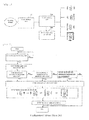
- Fig. 1 is a structural diagram of the system for controlling the operation of automotive lamps related to a preferred embodiment of the present invention.
- said system comprises: a data collection unit (100), which collects peripheral environmental data for the current position of an automobile; a driver-sensing unit (200), which designates a driver search area on the basis of said peripheral environmental data, and senses an approach of a driver in said designated driver search area; and an automotive lamp control unit (300), which turns on the automotive lamps if an approach of the driver is sensed in said designated driver search area.
- Said data collection unit (100) collects peripheral environmental data for the current position of an automobile upon the occurrence of an event and through one or more sensing devices with which the automobile is provided. More specifically, the data collection unit (100) collects peripheral environmental data for the current position of an automobile upon the occurrence of an event in different cycles (1 st stage: perform searching for about 4 days at a cycle of 240 ms; 2 nd stage, perform searching for about 10 days at a cycle of 720 ms) set according to the parking duration of the automobile.
- the data collection unit (100) fails to detect the smart key in the automobile upon the occurrence of an event, it collects peripheral environmental data to identify obstacles near the automobile through the sensing device with which the automobile is provided, which can be a parking sensor, camera, ultrasound sensor, or automatic parking device.
- thedriver-sensingunit (200) senses an approach of the driver in said designated driver search area. More specifically, the driver-sensing unit (200) senses an approach of a driver by sensing a smart key carried by the driver in said designated driver search area. For example, if spaces on the drive-seat side and passenger-seat side of an automobile are open spaces, the driver-sensing unit (200) senses an approach of a driver on both sides. If the driver-seat side is close to a wall which prevents an approach of the driver, the driver-sensing unit senses an approach of the driver on the passenger-seat side and from the behind of an automobile.
- the passenger-seat side of an automobile if it is close to a wall, it senses an approach of the driver on the driver-seat side; if both passenger-seat side and driver-seat side are close to walls while the rear side is open space, it senses an approach of the driver from the behind of an automobile.
- the automotive lamp control unit (300) turns on the automotive lamps if an approach of the driver is sensed in the driver search area. More specifically, the automotive lamp control unit (300) turns on the designated automotive lamp, for example, an interior lamp or the puddle lamp, if the smart key carried by a driver is sensed in the driver search area.
- a parking environment and obstacles existing near the automobile may be recognized and welcome light searching may be performed in an efficient manner on the basis of such a recognition, thus avoiding sensing of unnecessary areas outside an automobile and minimizing the consumption of power caused by a welcome light system of the automobile.
- a driver search area is designated on the basis of said peripheral environmental data and in consideration of the determined positionof the obstacle (S130-S160).
- said driver-sensing unit (200) determines the position of an obstacle adjacent to the automobile on the basis of the peripheral environmental data.
- the driver-sensing unit (200) senses more than one preset areas, such as areas adjacent to the driver-seat side and passenger-seat side and behind an automobile, for obstacles, and designates the area without obstacles as the driver search area.
- thedriver-sensingunit (200) senses an approach of the driver in said designated driver search area (S170).
- the driver-sensing unit (200) senses an approach of a driver by sensing a smart key carried by the driver in said designated driver search area. For example, if spaces on the drive-seat side and passenger-seat side of an automobile are open spaces, the driver-sensing unit (200) senses an approach of a driver on both sides. If the driver-seat side is close to a wall which prevents an approach of the driver, the driver-sensing unit senses an approach of the driver on the passenger-seat side and from the behind of an automobile.
- the passenger-seat side of an automobile if it is close to a wall, it senses an approach of the driver on the driver-seat side; if both passenger-seat side and driver-seat side are close to walls while the rear side is open space, it senses an approach of the driver from the behind of an automobile.
- the automotive lamp control unit turns on the automotive lamps if an approach of a driver is sensed in said designated driver search area (S180).
- the automotive lamp control unit (300) turns on the designated automotive lamp, for example, an interior lamp or the puddle lamp, if the smart key carried by a driver is sensed in the driver search area.
Landscapes
- Engineering & Computer Science (AREA)
- Mechanical Engineering (AREA)
- Multimedia (AREA)
- Physics & Mathematics (AREA)
- General Physics & Mathematics (AREA)
- Lighting Device Outwards From Vehicle And Optical Signal (AREA)
- Traffic Control Systems (AREA)
Abstract
Description
- The present invention relates to a solution to control the operation of automotive lamps, and more specifically to a system and method for controlling the operation of automotive lamps, which recognizes peripheral environment and obstacles near an automobile and performs welcome light searching based on such a recognition, thus minimizing the consumption of power caused by a welcome light system of the automobile.
- With the development of automobile technologies, more and more electronic features such as smart key (including FOB key) are available to deliver more convenient driving experience. Welcome light is one of such features provided for luxury automobiles.
- When a driver carrying a smart key approaches an automobile after a certain period of leave, the welcome light system will turn on an interior lamp or puddle lamp of the automobile to ensure safe approach of the driver. In addition, when the driver leaves and stays far away from the automobile, the welcome light system turns off the interior lamp or puddle lamp for safe parking.
- Under certain conditions, the welcome light system controls the low frequency (LF) antenna mounted on the automobile together with a smart key. The LF antenna periodically transmits LF signals. When a smart key transmits a response signal to said LF signals, the welcome light system turns on the lamp.
- However, the conventional welcome light system periodically senses a preset area regardless of peripheral environments. In other words, even if an automobile parks in a place with a wall on one side, the system will sense the areas on both driver-seat and passenger-seat sides. Sensing of unnecessary external areas will increase power consumption of the automobile.
- To solve the aforesaid problem, the present invention collects peripheral environmental data for the current position of an automobile upon the occurrence of an event and through one or more sensing devices with which the automobile is provided; then, the present invention determines the position of an obstacle adjacent to the automobile on the basis of the peripheral environmental data, designates a driver search area in consideration of the determined position of the obstacle, and senses an approach of a driver by sensing a smart key carried by the driver in the designated driver search area; if an approach of the driver is sensed in the designated driver search area, turns on the automotive lamps. With the system and method of the present invention, a parking environment and obstacles existing near the automobile may be recognized and welcome light searching may be performed in an efficient manner on the basis of such a recognition, thus minimizing the consumption of power caused by a welcome light system of the automobile
- To achieve said purpose, the present invention proposes a system for controlling the operation of automotive lamps, which is characterized in that, said system comprises: a data collection unit, which collects peripheral environmental data for the current position of an automobile upon the occurrence of an event and through one or more sensing devices with which the automobile is provided; a driver-sensing unit which determines the position of an obstacle adjacent to the automobile on the basis of the peripheral environmental data, designates a driver search area in consideration of the determined position of the obstacle, and senses an approach of a driver by sensing a smart key carried by the driver in the designated driver search area; and an automotive lamp control unit which, if an approach of the driver is sensed in the designated driver search area, turns on the automotive lamps.
- Said data collection unit is characterized in that it collects said peripheral environmental data upon the occurrence of an event if no smart key of the driver is sensed in the automobile.
- Said data collection unit is characterized in that at least one sensing device from a parking sensor, camera, ultrasound sensor, or automatic parking device is preferably chosen to collect said peripheral environmental data.
- Said driver-sensing unit is characterized in that it determines whether obstacles exist in more than one preset areas on the basis of said collected peripheral environmental data.
- Said driver-sensing unit is characterized in that it designates the preset area without obstacles as the driver search area.
- Another aspect of the present invention is to propose a method for controlling the operation of automotive lamps, which is characterized in that, said method comprises the following steps: the step at which said peripheral environmental data for the current position of an automobile is collected upon the occurrence of an event and through one or more sensing devices with which the automobile is provided; the step at which the position of an obstacle adjacent to the automobile is determined on the basis of said peripheral environmental data, and a driver search area is designated in consideration of the determined position of the obstacle; the step at which an approach of a driver is sensed by sensing a smart key carried by the driver in the designated driver search area; and the step at which automotive lamps are turned on if an approach of the driver is sensed in said designated driver search area.
- Said data collection step is characterized in that said peripheral environmental data is collected upon the occurrence of said event if no smart key of the driver is sensed in the automobile.
- Said data collection step is characterized in that at least one sensing device from a parking sensor, camera, ultrasound sensor, or automatic parking device is preferably chosen to collect said peripheral environmental data.
- Said driver search area designation step is characterized in that whether obstacles exist in more than one preset areas is determined on the basis of said collected peripheral environmental data.
- Said driver search area designation step is characterized in that an area without obstacles is designated as the driver search area out of said multiple preset areas.
- With the system and method of the present invention, a parking environment and obstacles existing near the automobile may be recognized and welcome light searching may be performed in an efficient manner on the basis of such a recognition, thus avoiding sensing of unnecessary areas outside an automobile and minimizing the consumption of power caused by a welcome light system of the automobile.
- The drawings attached to the specification aim to illustrate the preferred embodiments of the present invention, and help explain technical spirit of the invention together with detailed description of the invention. However, it should be understood that the scope of the present invention is not limited to situations illustrated by such drawings.
-
Fig. 1 is a structural diagram of the system for controlling the operation of automotive lamps related to a preferred embodiment of the present invention. -
Fig. 2 is a simplified flowchart of the method for controlling the operation of automotive lamps related to a preferred embodiment of the present invention. - To fully understand the purpose to be achieved by the implementation of the present invention and the benefits of the present invention, you should refer to the information contained in the drawings and the accompanying drawings which illustrate a preferred embodiment of the present invention.
- A detailed description of the preferred embodiment of the vehicle speed keeping system related to the present invention is given below with reference to the accompanying drawings.
- A description of the preferred embodiment of the present invention is given below with reference to the accompanying drawings.
-
Fig. 1 is a structural diagram of the system for controlling the operation of automotive lamps related to a preferred embodiment of the present invention. - As shown in
Fig. 1 , said system comprises: a data collection unit (100), which collects peripheral environmental data for the current position of an automobile; a driver-sensing unit (200), which designates a driver search area on the basis of said peripheral environmental data, and senses an approach of a driver in said designated driver search area; and an automotive lamp control unit (300), which turns on the automotive lamps if an approach of the driver is sensed in said designated driver search area. - Said data collection unit (100) collects peripheral environmental data for the current position of an automobile upon the occurrence of an event and through one or more sensing devices with which the automobile is provided. More specifically, the data collection unit (100) collects peripheral environmental data for the current position of an automobile upon the occurrence of an event in different cycles (1st stage: perform searching for about 4 days at a cycle of 240 ms; 2nd stage, perform searching for about 10 days at a cycle of 720 ms) set according to the parking duration of the automobile. When the data collection unit (100) fails to detect the smart key in the automobile upon the occurrence of an event, it collects peripheral environmental data to identify obstacles near the automobile through the sensing device with which the automobile is provided, which can be a parking sensor, camera, ultrasound sensor, or automatic parking device.
- Said driver-sensing unit (200) designates a driver search area on the basis of said peripheral environmental data and in consideration of the determined position of the obstacle; more specifically, said driver-sensing unit (200) determines the position of an obstacle adjacent to the automobile on the basis of the peripheral environmental data. At this time, the driver-sensing unit (200) senses more than one preset areas, such as areas adjacent to the driver-seat side and passenger-seat side and behind an automobile, for obstacles, and designates the area without obstacles as the driver search area.
- Then, thedriver-sensingunit (200) senses an approach of the driver in said designated driver search area. More specifically, the driver-sensing unit (200) senses an approach of a driver by sensing a smart key carried by the driver in said designated driver search area. For example, if spaces on the drive-seat side and passenger-seat side of an automobile are open spaces, the driver-sensing unit (200) senses an approach of a driver on both sides. If the driver-seat side is close to a wall which prevents an approach of the driver, the driver-sensing unit senses an approach of the driver on the passenger-seat side and from the behind of an automobile. Likewise, if the passenger-seat side of an automobile is close to a wall, it senses an approach of the driver on the driver-seat side; if both passenger-seat side and driver-seat side are close to walls while the rear side is open space, it senses an approach of the driver from the behind of an automobile.
- The automotive lamp control unit (300) turns on the automotive lamps if an approach of the driver is sensed in the driver search area. More specifically, the automotive lamp control unit (300) turns on the designated automotive lamp, for example, an interior lamp or the puddle lamp, if the smart key carried by a driver is sensed in the driver search area.
- With the system for controlling the operation of automotive lamps as described in the preferred embodiment above, a parking environment and obstacles existing near the automobile may be recognized and welcome light searching may be performed in an efficient manner on the basis of such a recognition, thus avoiding sensing of unnecessary areas outside an automobile and minimizing the consumption of power caused by a welcome light system of the automobile.
- A description of the preferred embodiment of the method for controlling the operation of automotive lamps is given below with reference to
Fig. 2 . For the convenience of description, numbers used inFig. 1 are also adopted to refer to the same parts. - First, upon the occurrence of an event, one or more sensing devices with which the automobile is provided are used to collect the peripheral environmental data for the current position of an automobile (S110-S120). Preferably, the data collection unit (100) collects peripheral environmental data for the current position of an automobile upon the occurrence of an event in different cycles (1st stage: perform searching for about 4 days at a cycle of 240 ms; 2nd stage, perform searching for about 10 days at a cycle of 720 ms) set according to the parking duration of the automobile. When the data collection unit (100) fails to detect the smart key in the automobile upon the occurrence of an event, it collects peripheral environmental data to identify obstacles near the automobile through the sensing device with which the automobile is provided, which can be a parking sensor, camera, ultrasound sensor, or automatic parking device.
- Then, a driver search area is designated on the basis of said peripheral environmental data and in consideration of the determined positionof the obstacle (S130-S160). Preferably, said driver-sensing unit (200) determines the position of an obstacle adjacent to the automobile on the basis of the peripheral environmental data. At this time, the driver-sensing unit (200) senses more than one preset areas, such as areas adjacent to the driver-seat side and passenger-seat side and behind an automobile, for obstacles, and designates the area without obstacles as the driver search area.
- Then, thedriver-sensingunit (200) senses an approach of the driver in said designated driver search area (S170). Preferably, the driver-sensing unit (200) senses an approach of a driver by sensing a smart key carried by the driver in said designated driver search area. For example, if spaces on the drive-seat side and passenger-seat side of an automobile are open spaces, the driver-sensing unit (200) senses an approach of a driver on both sides. If the driver-seat side is close to a wall which prevents an approach of the driver, the driver-sensing unit senses an approach of the driver on the passenger-seat side and from the behind of an automobile. Likewise, if the passenger-seat side of an automobile is close to a wall, it senses an approach of the driver on the driver-seat side; if both passenger-seat side and driver-seat side are close to walls while the rear side is open space, it senses an approach of the driver from the behind of an automobile.
- Then, the automotive lamp control unit turns on the automotive lamps if an approach of a driver is sensed in said designated driver search area (S180). Preferably, the automotive lamp control unit (300) turns on the designated automotive lamp, for example, an interior lamp or the puddle lamp, if the smart key carried by a driver is sensed in the driver search area.
- With the method for controlling the operation of automotive lamps as described in the preferred embodiment above, a parking environment and obstacles existing near the automobile may be recognized and welcome light searching may be performed in an efficient manner on the basis of such a recognition, thus avoiding sensing of unnecessary areas outside an automobile and minimizing the consumption of power caused by a welcome light system of the automobile.
- Although the present invention has been fully described with reference to the preferred embodiment, the present invention is not limited to the aforementioned embodiment. It should be understood that various changes and modifications can be made by those skilled in the art without departing from the scope and spirit of the invention defined in the appended claims.
- The system and method for controlling the operation of automotive lamps described in the present invention can recognize parking environment and obstacles around the automobile and perform effective welcome light searching on the basis of such recognition. The invention has broken the bottleneck of the prior art and is feasible for implementation and marketing. It is an invention of industrial applicability.
Claims (10)
- A system for controlling the operation of automotive lamps, which is characterized in that, said system comprises: a data collection unit, which collects peripheral environmental data for the current position of an automobile upon the occurrence of an event and through one or more sensing devices with which the automobile is provided; a driver-sensing unit which determines the position of an obstacle adjacent to the automobile on the basis of the peripheral environmental data, designates a driver search area in consideration of the determined position of the obstacle, and senses an approach of a driver by sensing a smart key carried by the driver in the designated driver search area; and an automotive lamp control unit which, if an approach of the driver is sensed in the designated driver search area, turns on the automotive lamps.
- The system for controlling the operation of automotive lamps as claimed in claim 1, characterized in that, said data collection unit collects said peripheral environmental data upon the occurrence of an event if no smart key of the driver is sensed in the automobile.
- The system for controlling the operation of automotive lamps as claimed in claim 2, characterized in that, said data collection unit selects at least one sensing device from a parking sensor, camera, ultrasound sensor, or automatic parking device to collect said peripheral environmental data.
- The system for controlling the operation of automotive lamps as claimed in claim 1, characterized in that, said driver-sensing unit determines whether obstacles exist in more than one preset areas on the basis of said collected peripheral environmental data.
- The system for controlling the operation of automotive lamps as claimed in claim 4, characterized in that, said driver-sensing unit designates the preset area without obstacles as the driver search area.
- A method for controlling the operation of automotive lamps, which is characterized in that, said method comprises the following steps: the step at which said peripheral environmental data for the current position of an automobile is collected upon the occurrence of an event and through one or more sensing devices with which the automobile is provided; the step at which the position of an obstacle adjacent to the automobile is determined on the basis of said peripheral environmental data, and a driver search area is designated in consideration of the determined position of the obstacle; the step at which an approach of a driver is sensed by sensing a smart key carried by the driver in the designated driver search area; and the step at which automotive lamps are turned on if an approach of the driver is sensed in said designated driver search area.
- The method for controlling the operation of automotive lamps as claimed in claim 6, characterized in that, at said data collection step, said peripheral environmental data is collected upon the occurrence of said event if no smart key of the driver is sensed in the automobile.
- The method for controlling the operation of automotive lamps as claimed in claim 7, characterized in that, at said data collection step, at least one sensing device from a parking sensor, camera, ultrasound sensor, or automatic parking device is chosen to collect said peripheral environmental data.
- The method for controlling the operation of automotive lamps as claimed in claim 6, characterized in that, at said driver search area designation step, whether obstacles exist in more than one preset areas is determined on the basis of said collected peripheral environmental data.
- The method for controlling the operation of automotive lamps as claimed in claim 9, characterized in that, at said driver search area designation step, an area without obstacles is designated as the driver search area out of saidmultiple preset areas.
Applications Claiming Priority (2)
| Application Number | Priority Date | Filing Date | Title |
|---|---|---|---|
| KR1020110047412A KR101703238B1 (en) | 2011-05-19 | 2011-05-19 | System and method for controlling a vehicle lamp |
| PCT/KR2012/003785 WO2012157934A2 (en) | 2011-05-19 | 2012-05-15 | System and method for controlling the operation of automotive lamps |
Publications (3)
| Publication Number | Publication Date |
|---|---|
| EP2711244A2 true EP2711244A2 (en) | 2014-03-26 |
| EP2711244A4 EP2711244A4 (en) | 2015-01-28 |
| EP2711244B1 EP2711244B1 (en) | 2017-06-21 |
Family
ID=47177470
Family Applications (1)
| Application Number | Title | Priority Date | Filing Date |
|---|---|---|---|
| EP12786770.3A Active EP2711244B1 (en) | 2011-05-19 | 2012-05-15 | System and method for controlling the operation of automotive lamps |
Country Status (3)
| Country | Link |
|---|---|
| EP (1) | EP2711244B1 (en) |
| KR (1) | KR101703238B1 (en) |
| WO (1) | WO2012157934A2 (en) |
Cited By (3)
| Publication number | Priority date | Publication date | Assignee | Title |
|---|---|---|---|---|
| FR3022329A1 (en) * | 2014-06-16 | 2015-12-18 | Valeo Vision | ROTARY LIGHTING AND / OR SIGNALING MODULE |
| EP3090900A1 (en) | 2015-05-07 | 2016-11-09 | Volvo Car Corporation | Method and vehicle illumination system for control of vehicle lights |
| WO2023109312A1 (en) * | 2021-12-17 | 2023-06-22 | 一汽奔腾轿车有限公司 | Vehicle welcome light system based on micro-lens array, and control method therefor |
Families Citing this family (2)
| Publication number | Priority date | Publication date | Assignee | Title |
|---|---|---|---|---|
| US10065555B2 (en) | 2016-09-08 | 2018-09-04 | Ford Global Technologies, Llc | Directional approach lighting |
| US11721144B2 (en) | 2021-08-24 | 2023-08-08 | Ford Global Technologies, Llc | Eliminating unexpected activation of components of a vehicle when parked in a garage |
Family Cites Families (10)
| Publication number | Priority date | Publication date | Assignee | Title |
|---|---|---|---|---|
| JP3533966B2 (en) * | 1998-06-18 | 2004-06-07 | トヨタ自動車株式会社 | Vehicle control system |
| JP4411783B2 (en) * | 2001-01-15 | 2010-02-10 | マツダ株式会社 | Vehicle lighting device |
| JP3900357B2 (en) * | 2003-12-02 | 2007-04-04 | 三菱電機株式会社 | Vehicle perimeter monitoring system |
| JP2007039982A (en) * | 2005-08-03 | 2007-02-15 | Denso Corp | In-vehicle device control system |
| JP2007332738A (en) * | 2006-06-19 | 2007-12-27 | Denso Corp | In-vehicle device remote control system |
| DE102006030298B3 (en) * | 2006-06-30 | 2008-04-10 | Siemens Ag | Method for operating an access arrangement |
| JP4561737B2 (en) * | 2006-12-14 | 2010-10-13 | 株式会社デンソー | Vehicle lighting device |
| JP2009057014A (en) * | 2007-09-03 | 2009-03-19 | Honda Motor Co Ltd | Vehicle lighting device |
| JP2009179998A (en) * | 2008-01-30 | 2009-08-13 | Denso Corp | In-vehicle device control system |
| KR101354422B1 (en) * | 2008-08-20 | 2014-01-23 | 기아자동차주식회사 | Apparatus for controlling a vehicle lamp based on distance between the vehicle and a smart key |
-
2011
- 2011-05-19 KR KR1020110047412A patent/KR101703238B1/en not_active Expired - Fee Related
-
2012
- 2012-05-15 WO PCT/KR2012/003785 patent/WO2012157934A2/en not_active Ceased
- 2012-05-15 EP EP12786770.3A patent/EP2711244B1/en active Active
Cited By (4)
| Publication number | Priority date | Publication date | Assignee | Title |
|---|---|---|---|---|
| FR3022329A1 (en) * | 2014-06-16 | 2015-12-18 | Valeo Vision | ROTARY LIGHTING AND / OR SIGNALING MODULE |
| EP2957463A1 (en) * | 2014-06-16 | 2015-12-23 | Valeo Vision | Rotary lighting and/or signalling module |
| EP3090900A1 (en) | 2015-05-07 | 2016-11-09 | Volvo Car Corporation | Method and vehicle illumination system for control of vehicle lights |
| WO2023109312A1 (en) * | 2021-12-17 | 2023-06-22 | 一汽奔腾轿车有限公司 | Vehicle welcome light system based on micro-lens array, and control method therefor |
Also Published As
| Publication number | Publication date |
|---|---|
| WO2012157934A2 (en) | 2012-11-22 |
| WO2012157934A3 (en) | 2013-01-24 |
| KR20120129261A (en) | 2012-11-28 |
| KR101703238B1 (en) | 2017-02-06 |
| EP2711244A4 (en) | 2015-01-28 |
| EP2711244B1 (en) | 2017-06-21 |
Similar Documents
| Publication | Publication Date | Title |
|---|---|---|
| US10518698B2 (en) | System and method for generating a parking alert | |
| CN108216214B (en) | Automatic parking assistance device and method for assisting parking using the same | |
| US9607454B1 (en) | System for distinguishing between traffic jam and parked vehicles | |
| US9373202B2 (en) | Vehicle information recording apparatus | |
| EP2985200B1 (en) | Traffic lights information processing apparatus, information processing method, and computer program for controlling the electrical power consumption in the vehicle | |
| US20120062394A1 (en) | Parking assistance system for assisting in a parking operation for a plurality of available parking spaces | |
| CN107640148A (en) | The method that remote auto parking support system guides car-parking model | |
| JP6319213B2 (en) | Control device for hybrid vehicle | |
| EP2711244B1 (en) | System and method for controlling the operation of automotive lamps | |
| CN112172792A (en) | Fixed parking space parking method, device, vehicle and storage medium | |
| EP3462269B1 (en) | Vehicle driving control apparatus and vehicle driving method | |
| JP6975765B2 (en) | Parking support device, parking support method and program | |
| US20210122363A1 (en) | Method for Providing a Signal for Actuating an at Least Partially Automated Vehicle | |
| WO2018111258A1 (en) | Drone-based vehicle illumination | |
| CN104653377A (en) | Selective auto start/stop delay during low speed maneuvers based on electric power steering current | |
| CN104424818A (en) | Parking assist apparatus and parking assist method thereof | |
| US20150019114A1 (en) | Method of controlling engine of isg vehicle | |
| JP2015101225A (en) | Vehicle control device | |
| JP2014100958A (en) | Parking support device and control device | |
| CN104417548B (en) | Parking Assist Apparatus for Vehicle and Method Thereof | |
| KR20150047214A (en) | Smart cruise control system and method using camera sensor | |
| JP2012001020A (en) | Vehicle control system | |
| KR101378037B1 (en) | Engine idle control apparatus and method in a vehicle | |
| KR20170070441A (en) | Tailgate Control System and Operational Method Thereof | |
| JP2006044447A (en) | Warning light control device and method |
Legal Events
| Date | Code | Title | Description |
|---|---|---|---|
| PUAI | Public reference made under article 153(3) epc to a published international application that has entered the european phase |
Free format text: ORIGINAL CODE: 0009012 |
|
| 17P | Request for examination filed |
Effective date: 20131219 |
|
| AK | Designated contracting states |
Kind code of ref document: A2 Designated state(s): AL AT BE BG CH CY CZ DE DK EE ES FI FR GB GR HR HU IE IS IT LI LT LU LV MC MK MT NL NO PL PT RO RS SE SI SK SM TR |
|
| DAX | Request for extension of the european patent (deleted) | ||
| REG | Reference to a national code |
Ref country code: DE Ref legal event code: R079 Ref document number: 602012033750 Country of ref document: DE Free format text: PREVIOUS MAIN CLASS: B60Q0011000000 Ipc: B60Q0001240000 |
|
| A4 | Supplementary search report drawn up and despatched |
Effective date: 20150108 |
|
| RIC1 | Information provided on ipc code assigned before grant |
Ipc: B60Q 1/24 20060101AFI20141222BHEP |
|
| GRAP | Despatch of communication of intention to grant a patent |
Free format text: ORIGINAL CODE: EPIDOSNIGR1 |
|
| INTG | Intention to grant announced |
Effective date: 20170214 |
|
| GRAS | Grant fee paid |
Free format text: ORIGINAL CODE: EPIDOSNIGR3 |
|
| GRAA | (expected) grant |
Free format text: ORIGINAL CODE: 0009210 |
|
| AK | Designated contracting states |
Kind code of ref document: B1 Designated state(s): AL AT BE BG CH CY CZ DE DK EE ES FI FR GB GR HR HU IE IS IT LI LT LU LV MC MK MT NL NO PL PT RO RS SE SI SK SM TR |
|
| REG | Reference to a national code |
Ref country code: GB Ref legal event code: FG4D |
|
| REG | Reference to a national code |
Ref country code: CH Ref legal event code: EP |
|
| REG | Reference to a national code |
Ref country code: IE Ref legal event code: FG4D |
|
| REG | Reference to a national code |
Ref country code: AT Ref legal event code: REF Ref document number: 902636 Country of ref document: AT Kind code of ref document: T Effective date: 20170715 |
|
| REG | Reference to a national code |
Ref country code: DE Ref legal event code: R096 Ref document number: 602012033750 Country of ref document: DE |
|
| REG | Reference to a national code |
Ref country code: NL Ref legal event code: MP Effective date: 20170621 |
|
| PG25 | Lapsed in a contracting state [announced via postgrant information from national office to epo] |
Ref country code: GR Free format text: LAPSE BECAUSE OF FAILURE TO SUBMIT A TRANSLATION OF THE DESCRIPTION OR TO PAY THE FEE WITHIN THE PRESCRIBED TIME-LIMIT Effective date: 20170922 Ref country code: HR Free format text: LAPSE BECAUSE OF FAILURE TO SUBMIT A TRANSLATION OF THE DESCRIPTION OR TO PAY THE FEE WITHIN THE PRESCRIBED TIME-LIMIT Effective date: 20170621 Ref country code: LT Free format text: LAPSE BECAUSE OF FAILURE TO SUBMIT A TRANSLATION OF THE DESCRIPTION OR TO PAY THE FEE WITHIN THE PRESCRIBED TIME-LIMIT Effective date: 20170621 Ref country code: FI Free format text: LAPSE BECAUSE OF FAILURE TO SUBMIT A TRANSLATION OF THE DESCRIPTION OR TO PAY THE FEE WITHIN THE PRESCRIBED TIME-LIMIT Effective date: 20170621 Ref country code: NO Free format text: LAPSE BECAUSE OF FAILURE TO SUBMIT A TRANSLATION OF THE DESCRIPTION OR TO PAY THE FEE WITHIN THE PRESCRIBED TIME-LIMIT Effective date: 20170921 |
|
| REG | Reference to a national code |
Ref country code: LT Ref legal event code: MG4D |
|
| REG | Reference to a national code |
Ref country code: AT Ref legal event code: MK05 Ref document number: 902636 Country of ref document: AT Kind code of ref document: T Effective date: 20170621 |
|
| PG25 | Lapsed in a contracting state [announced via postgrant information from national office to epo] |
Ref country code: SE Free format text: LAPSE BECAUSE OF FAILURE TO SUBMIT A TRANSLATION OF THE DESCRIPTION OR TO PAY THE FEE WITHIN THE PRESCRIBED TIME-LIMIT Effective date: 20170621 Ref country code: NL Free format text: LAPSE BECAUSE OF FAILURE TO SUBMIT A TRANSLATION OF THE DESCRIPTION OR TO PAY THE FEE WITHIN THE PRESCRIBED TIME-LIMIT Effective date: 20170621 Ref country code: LV Free format text: LAPSE BECAUSE OF FAILURE TO SUBMIT A TRANSLATION OF THE DESCRIPTION OR TO PAY THE FEE WITHIN THE PRESCRIBED TIME-LIMIT Effective date: 20170621 Ref country code: RS Free format text: LAPSE BECAUSE OF FAILURE TO SUBMIT A TRANSLATION OF THE DESCRIPTION OR TO PAY THE FEE WITHIN THE PRESCRIBED TIME-LIMIT Effective date: 20170621 Ref country code: BG Free format text: LAPSE BECAUSE OF FAILURE TO SUBMIT A TRANSLATION OF THE DESCRIPTION OR TO PAY THE FEE WITHIN THE PRESCRIBED TIME-LIMIT Effective date: 20170921 |
|
| PG25 | Lapsed in a contracting state [announced via postgrant information from national office to epo] |
Ref country code: SK Free format text: LAPSE BECAUSE OF FAILURE TO SUBMIT A TRANSLATION OF THE DESCRIPTION OR TO PAY THE FEE WITHIN THE PRESCRIBED TIME-LIMIT Effective date: 20170621 Ref country code: CZ Free format text: LAPSE BECAUSE OF FAILURE TO SUBMIT A TRANSLATION OF THE DESCRIPTION OR TO PAY THE FEE WITHIN THE PRESCRIBED TIME-LIMIT Effective date: 20170621 Ref country code: AT Free format text: LAPSE BECAUSE OF FAILURE TO SUBMIT A TRANSLATION OF THE DESCRIPTION OR TO PAY THE FEE WITHIN THE PRESCRIBED TIME-LIMIT Effective date: 20170621 Ref country code: EE Free format text: LAPSE BECAUSE OF FAILURE TO SUBMIT A TRANSLATION OF THE DESCRIPTION OR TO PAY THE FEE WITHIN THE PRESCRIBED TIME-LIMIT Effective date: 20170621 Ref country code: RO Free format text: LAPSE BECAUSE OF FAILURE TO SUBMIT A TRANSLATION OF THE DESCRIPTION OR TO PAY THE FEE WITHIN THE PRESCRIBED TIME-LIMIT Effective date: 20170621 |
|
| PG25 | Lapsed in a contracting state [announced via postgrant information from national office to epo] |
Ref country code: SM Free format text: LAPSE BECAUSE OF FAILURE TO SUBMIT A TRANSLATION OF THE DESCRIPTION OR TO PAY THE FEE WITHIN THE PRESCRIBED TIME-LIMIT Effective date: 20170621 Ref country code: ES Free format text: LAPSE BECAUSE OF FAILURE TO SUBMIT A TRANSLATION OF THE DESCRIPTION OR TO PAY THE FEE WITHIN THE PRESCRIBED TIME-LIMIT Effective date: 20170621 Ref country code: IS Free format text: LAPSE BECAUSE OF FAILURE TO SUBMIT A TRANSLATION OF THE DESCRIPTION OR TO PAY THE FEE WITHIN THE PRESCRIBED TIME-LIMIT Effective date: 20171021 Ref country code: IT Free format text: LAPSE BECAUSE OF FAILURE TO SUBMIT A TRANSLATION OF THE DESCRIPTION OR TO PAY THE FEE WITHIN THE PRESCRIBED TIME-LIMIT Effective date: 20170621 Ref country code: PL Free format text: LAPSE BECAUSE OF FAILURE TO SUBMIT A TRANSLATION OF THE DESCRIPTION OR TO PAY THE FEE WITHIN THE PRESCRIBED TIME-LIMIT Effective date: 20170621 |
|
| REG | Reference to a national code |
Ref country code: DE Ref legal event code: R097 Ref document number: 602012033750 Country of ref document: DE |
|
| PLBE | No opposition filed within time limit |
Free format text: ORIGINAL CODE: 0009261 |
|
| STAA | Information on the status of an ep patent application or granted ep patent |
Free format text: STATUS: NO OPPOSITION FILED WITHIN TIME LIMIT |
|
| PG25 | Lapsed in a contracting state [announced via postgrant information from national office to epo] |
Ref country code: DK Free format text: LAPSE BECAUSE OF FAILURE TO SUBMIT A TRANSLATION OF THE DESCRIPTION OR TO PAY THE FEE WITHIN THE PRESCRIBED TIME-LIMIT Effective date: 20170621 |
|
| REG | Reference to a national code |
Ref country code: FR Ref legal event code: PLFP Year of fee payment: 7 |
|
| 26N | No opposition filed |
Effective date: 20180322 |
|
| PG25 | Lapsed in a contracting state [announced via postgrant information from national office to epo] |
Ref country code: SI Free format text: LAPSE BECAUSE OF FAILURE TO SUBMIT A TRANSLATION OF THE DESCRIPTION OR TO PAY THE FEE WITHIN THE PRESCRIBED TIME-LIMIT Effective date: 20170621 |
|
| REG | Reference to a national code |
Ref country code: CH Ref legal event code: PL |
|
| GBPC | Gb: european patent ceased through non-payment of renewal fee |
Effective date: 20180515 |
|
| REG | Reference to a national code |
Ref country code: BE Ref legal event code: MM Effective date: 20180531 |
|
| PG25 | Lapsed in a contracting state [announced via postgrant information from national office to epo] |
Ref country code: MC Free format text: LAPSE BECAUSE OF FAILURE TO SUBMIT A TRANSLATION OF THE DESCRIPTION OR TO PAY THE FEE WITHIN THE PRESCRIBED TIME-LIMIT Effective date: 20170621 |
|
| REG | Reference to a national code |
Ref country code: IE Ref legal event code: MM4A |
|
| PG25 | Lapsed in a contracting state [announced via postgrant information from national office to epo] |
Ref country code: LI Free format text: LAPSE BECAUSE OF NON-PAYMENT OF DUE FEES Effective date: 20180531 Ref country code: CH Free format text: LAPSE BECAUSE OF NON-PAYMENT OF DUE FEES Effective date: 20180531 |
|
| PG25 | Lapsed in a contracting state [announced via postgrant information from national office to epo] |
Ref country code: LU Free format text: LAPSE BECAUSE OF NON-PAYMENT OF DUE FEES Effective date: 20180515 |
|
| PG25 | Lapsed in a contracting state [announced via postgrant information from national office to epo] |
Ref country code: IE Free format text: LAPSE BECAUSE OF NON-PAYMENT OF DUE FEES Effective date: 20180515 Ref country code: GB Free format text: LAPSE BECAUSE OF NON-PAYMENT OF DUE FEES Effective date: 20180515 |
|
| PG25 | Lapsed in a contracting state [announced via postgrant information from national office to epo] |
Ref country code: BE Free format text: LAPSE BECAUSE OF NON-PAYMENT OF DUE FEES Effective date: 20180531 |
|
| PG25 | Lapsed in a contracting state [announced via postgrant information from national office to epo] |
Ref country code: MT Free format text: LAPSE BECAUSE OF NON-PAYMENT OF DUE FEES Effective date: 20180515 |
|
| PG25 | Lapsed in a contracting state [announced via postgrant information from national office to epo] |
Ref country code: TR Free format text: LAPSE BECAUSE OF FAILURE TO SUBMIT A TRANSLATION OF THE DESCRIPTION OR TO PAY THE FEE WITHIN THE PRESCRIBED TIME-LIMIT Effective date: 20170621 |
|
| PG25 | Lapsed in a contracting state [announced via postgrant information from national office to epo] |
Ref country code: HU Free format text: LAPSE BECAUSE OF FAILURE TO SUBMIT A TRANSLATION OF THE DESCRIPTION OR TO PAY THE FEE WITHIN THE PRESCRIBED TIME-LIMIT; INVALID AB INITIO Effective date: 20120515 Ref country code: PT Free format text: LAPSE BECAUSE OF FAILURE TO SUBMIT A TRANSLATION OF THE DESCRIPTION OR TO PAY THE FEE WITHIN THE PRESCRIBED TIME-LIMIT Effective date: 20170621 |
|
| PG25 | Lapsed in a contracting state [announced via postgrant information from national office to epo] |
Ref country code: MK Free format text: LAPSE BECAUSE OF NON-PAYMENT OF DUE FEES Effective date: 20170621 Ref country code: CY Free format text: LAPSE BECAUSE OF FAILURE TO SUBMIT A TRANSLATION OF THE DESCRIPTION OR TO PAY THE FEE WITHIN THE PRESCRIBED TIME-LIMIT Effective date: 20170621 |
|
| PG25 | Lapsed in a contracting state [announced via postgrant information from national office to epo] |
Ref country code: AL Free format text: LAPSE BECAUSE OF FAILURE TO SUBMIT A TRANSLATION OF THE DESCRIPTION OR TO PAY THE FEE WITHIN THE PRESCRIBED TIME-LIMIT Effective date: 20170621 |
|
| REG | Reference to a national code |
Ref country code: DE Ref legal event code: R081 Ref document number: 602012033750 Country of ref document: DE Owner name: CONTINENTAL AUTOMOTIVE TECHNOLOGIES GMBH, DE Free format text: FORMER OWNER: CONTINENTAL AUTOMOTIVE GMBH, 30165 HANNOVER, DE Ref country code: DE Ref legal event code: R081 Ref document number: 602012033750 Country of ref document: DE Owner name: AUMOVIO GERMANY GMBH, DE Free format text: FORMER OWNER: CONTINENTAL AUTOMOTIVE GMBH, 30165 HANNOVER, DE |
|
| REG | Reference to a national code |
Ref country code: DE Ref legal event code: R081 Ref document number: 602012033750 Country of ref document: DE Owner name: CONTINENTAL AUTOMOTIVE TECHNOLOGIES GMBH, DE Free format text: FORMER OWNER: CONTINENTAL AUTOMOTIVE TECHNOLOGIES GMBH, 30165 HANNOVER, DE Ref country code: DE Ref legal event code: R081 Ref document number: 602012033750 Country of ref document: DE Owner name: AUMOVIO GERMANY GMBH, DE Free format text: FORMER OWNER: CONTINENTAL AUTOMOTIVE TECHNOLOGIES GMBH, 30165 HANNOVER, DE |
|
| PGFP | Annual fee paid to national office [announced via postgrant information from national office to epo] |
Ref country code: DE Payment date: 20250531 Year of fee payment: 14 |
|
| PGFP | Annual fee paid to national office [announced via postgrant information from national office to epo] |
Ref country code: FR Payment date: 20250528 Year of fee payment: 14 |
|
| REG | Reference to a national code |
Ref country code: DE Ref legal event code: R081 Ref document number: 602012033750 Country of ref document: DE Owner name: AUMOVIO GERMANY GMBH, DE Free format text: FORMER OWNER: CONTINENTAL AUTOMOTIVE TECHNOLOGIES GMBH, 30175 HANNOVER, DE |