EP2710552B1 - Method for determining markings in relief on the outer surface of the sidewall of a tyre - Google Patents
Method for determining markings in relief on the outer surface of the sidewall of a tyre Download PDFInfo
- Publication number
- EP2710552B1 EP2710552B1 EP12722108.3A EP12722108A EP2710552B1 EP 2710552 B1 EP2710552 B1 EP 2710552B1 EP 12722108 A EP12722108 A EP 12722108A EP 2710552 B1 EP2710552 B1 EP 2710552B1
- Authority
- EP
- European Patent Office
- Prior art keywords
- image
- structuring element
- extraction according
- seg
- aid
- Prior art date
- Legal status (The legal status is an assumption and is not a legal conclusion. Google has not performed a legal analysis and makes no representation as to the accuracy of the status listed.)
- Not-in-force
Links
Images
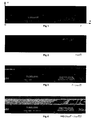


Classifications
-
- G—PHYSICS
- G06—COMPUTING OR CALCULATING; COUNTING
- G06T—IMAGE DATA PROCESSING OR GENERATION, IN GENERAL
- G06T7/00—Image analysis
- G06T7/0002—Inspection of images, e.g. flaw detection
- G06T7/0004—Industrial image inspection
-
- G—PHYSICS
- G06—COMPUTING OR CALCULATING; COUNTING
- G06T—IMAGE DATA PROCESSING OR GENERATION, IN GENERAL
- G06T7/00—Image analysis
- G06T7/10—Segmentation; Edge detection
- G06T7/11—Region-based segmentation
-
- G—PHYSICS
- G06—COMPUTING OR CALCULATING; COUNTING
- G06T—IMAGE DATA PROCESSING OR GENERATION, IN GENERAL
- G06T5/00—Image enhancement or restoration
- G06T5/20—Image enhancement or restoration using local operators
- G06T5/30—Erosion or dilatation, e.g. thinning
-
- G—PHYSICS
- G06—COMPUTING OR CALCULATING; COUNTING
- G06T—IMAGE DATA PROCESSING OR GENERATION, IN GENERAL
- G06T5/00—Image enhancement or restoration
- G06T5/40—Image enhancement or restoration using histogram techniques
-
- G—PHYSICS
- G06—COMPUTING OR CALCULATING; COUNTING
- G06T—IMAGE DATA PROCESSING OR GENERATION, IN GENERAL
- G06T5/00—Image enhancement or restoration
- G06T5/50—Image enhancement or restoration using two or more images, e.g. averaging or subtraction
-
- G—PHYSICS
- G06—COMPUTING OR CALCULATING; COUNTING
- G06T—IMAGE DATA PROCESSING OR GENERATION, IN GENERAL
- G06T7/00—Image analysis
- G06T7/10—Segmentation; Edge detection
- G06T7/155—Segmentation; Edge detection involving morphological operators
-
- G—PHYSICS
- G06—COMPUTING OR CALCULATING; COUNTING
- G06T—IMAGE DATA PROCESSING OR GENERATION, IN GENERAL
- G06T7/00—Image analysis
- G06T7/10—Segmentation; Edge detection
- G06T7/168—Segmentation; Edge detection involving transform domain methods
-
- G—PHYSICS
- G06—COMPUTING OR CALCULATING; COUNTING
- G06T—IMAGE DATA PROCESSING OR GENERATION, IN GENERAL
- G06T7/00—Image analysis
- G06T7/10—Segmentation; Edge detection
- G06T7/174—Segmentation; Edge detection involving the use of two or more images
-
- G—PHYSICS
- G06—COMPUTING OR CALCULATING; COUNTING
- G06T—IMAGE DATA PROCESSING OR GENERATION, IN GENERAL
- G06T2207/00—Indexing scheme for image analysis or image enhancement
- G06T2207/20—Special algorithmic details
- G06T2207/20036—Morphological image processing
-
- G—PHYSICS
- G06—COMPUTING OR CALCULATING; COUNTING
- G06T—IMAGE DATA PROCESSING OR GENERATION, IN GENERAL
- G06T2207/00—Indexing scheme for image analysis or image enhancement
- G06T2207/20—Special algorithmic details
- G06T2207/20212—Image combination
- G06T2207/20224—Image subtraction
-
- G—PHYSICS
- G06—COMPUTING OR CALCULATING; COUNTING
- G06T—IMAGE DATA PROCESSING OR GENERATION, IN GENERAL
- G06T2207/00—Indexing scheme for image analysis or image enhancement
- G06T2207/30—Subject of image; Context of image processing
- G06T2207/30108—Industrial image inspection
Definitions
- the invention relates to the field of the manufacture of tires, and fits more generally in the context of control operations of the external or internal appearance of tires in progress or at the end of the manufacturing process, with the aim of determine their conformity with established control references.
- the automatic industrial control means developed by the tire manufacturers, and intended in particular to assist the operators responsible for visual inspection, make extensive use of image processing techniques.
- the methods used to perform these treatments consist, as a rule, in comparing an image in two or preferably in three dimensions of the surface of the tire to be inspected, with a reference image in two and preferably in three dimensions of the surface of said tire.
- one of the steps of this process consists, in known manner, in acquiring the three-dimensional image of the surface of the tire, using, for example, means based on the principle of optical triangulation, putting for example in a 2D sensor coupled to a laser light source.
- the topographic image of the surface of the tire is generally a two-dimensional, so-called gray-level image, in which, at any point, ie at every pixel (x, y) of the image, is associated a value f ( x, y), called the gray level, and representing the altitude of this point relative to the surface.
- This value of gray level can usefully be coded on 8, or 16 bits even 32 bits for a better dynamics. For 8-bit encoding, the value 255 (white) corresponds to the highest altitude, and the value 0 (black) corresponds to the lowest altitude.
- the further process of analyzing the image obtained consists, among other things, in identifying the reliefs of the surface to be inspected. This step is particularly important in the analysis of the external part of the tire in that the markings carried by the sidewall must be precisely located and identified, so as not to be considered as surface anomalies.
- markings are formed by relief patterns exceeding a few tenths of a millimeter the average surface of the sidewall.
- a first, known method for extracting these patterns in relief consists in determining the average value of the bulge of the sidewall, and to assimilate to etching patterns the difference between the real bulge of the sidewall and the middle bulge.
- the real bulge of the sidewall may have circumferential variations whose amplitude exceeds the elevation of the patterns carried by the sidewall, thereby causing poor pattern detection in the areas considered.
- the method according to the invention aims to provide a solution to the problem.
- This method of extracting the relief marking patterns on the surface of the sidewall of a tire is based on the assimilation of the grayscale image of the reliefs of the marking patterns to a black and white image, on which it becomes possible, in order to extract the information sought, to widely use the properties of morphological operators, after having adapted to the specificities of the tire.
- Morphological operators commonly used are morphological openings and closures, dilations or morphological erosions, using suitable structuring elements.
- a structuring element is a set used to probe the studied image. It can be seen as a tool that would erode (ie remove material) or dilate (ie add matter) to an image.
- the pixels of the sidewall images in the circumferential direction have approximately the same altitude.
- the bump objects having a size larger than the size of the structuring element are removed, which makes it possible, by difference, to successively reveal the patterns of increasing circumferential length while avoiding the curved circumferential flank, here assimilated to the geometry of the flank in a radial plane.
- the size of the structuring elements will be chosen so that the first linear structuring element is formed of a number of pixels corresponding to a length of between 4 and 10 mm, that the second structuring element linear is formed of a number of pixels corresponding to a length of between 15 and 30 mm, and that the third linear structuring element is formed of a number of pixels corresponding to a length of between 200 and 400 mm.
- step C it is advantageous to transform at least one flattened image by performing a morphological opening with the aid of a linear structuring element oriented in the radial direction, and to subtract this image resultant of said flat image.
- the structuring element may advantageously, depending on the definition of the image, be formed of a number of pixels corresponding to a length of between 15 and 30 mm.
- step D On the basis of the variation in height induced by a variation of shade of gray, it is particularly interesting, during step D, to perform a thresholding of the gray level corresponding to a variation in height greater than or equal to 0.15mm. In the case of the tire, this height is less than the average height of the patterns that one seeks to locate.
- a series of morphological openings of the initial image is alternately carried out using linear structuring elements of increasing size and oriented in the circumferential direction, so as to obtain an image the bulge of the surface in which the protruding patterns and the hollow and humped objects are removed.
- the interval of the average of the gray levels may advantageously correspond to a variation in height of between 0.2 mm and 0.3 mm, and the value of the threshold of the standard deviation of the gray levels corresponds to at a variation of height less than or equal to 0,2mm.
- EP 2 077 442 A1 discloses a system for separating tire characteristics using non-morphological filters.
- the image of the figure 1 represents a partial view of the image of the sidewall of a tire. This image is obtained using a means using known technologies in themselves such as laser triangulation.
- T consists of integer values between 0 and 255.
- the gray level value represents the altitude of this point relative to the surface topographic of the tire.
- the image is calibrated so that the variation of a gray level unit corresponds to a height of approximately 0.01 mm.
- the number of pixels of the image naturally depends on the choice of the camera used and the input mode, but it is common to make images comprising 40,000 x 5000 pixels to represent the entire sidewall.
- the polar coordinates of the circular image of the sidewall of the tire are converted into orthogonal coordinates.
- the image of the figure 1 is represented in said orthogonal coordinate system in which the abscissa axis OX represents the circumferential values and the ordinate axis OY represents the radial values.
- the next step of the method according to the invention consists in performing series of morphological openings of the image of the surface with the aid of a structuring element having the shape of a segment oriented in the circumferential direction. ie along the axis OX, to overcome the bulge of the surface of the sidewall, considering that this bulge is substantially the same for a given radial value.
- the structuring element is small in relation to the circumferential variations of said crown, which also makes it possible to overcome the disadvantages mentioned in the introduction concerning the circumferential variation of the crown.
- the size of the structuring elements finally makes it possible to select the raised patterns that are to be detached from the surface of the sidewall.
- a first structuring element comprising a number of pixels corresponding to a length of between 4 mm and 10 mm is successively used; which corresponds to approximately 150 pixels. This size makes it possible to select, as will be seen later, the entries comprising small characters.
- the second structuring element comprises a number of pixels corresponding to a length of between 15 mm and 30 mm, which in the context of the example serving as a support for the present description represents approximately 500 pixels. This size is used to select the larger area patterns corresponding to the letters and ornaments on the sidewall.
- the third structuring element comprises a number of pixels corresponding to a length of between 200 mm and 400 mm, which correspond to approximately 7000 pixels, and which makes it possible to select the decorative elements spreading on the circumference such as strips or series of contiguous character.
- the morphological opening series of the surface f, ⁇ 150 ( f ), ⁇ 500 ( f ), and ⁇ 7000 ( f) are respectively performed.
- the images obtained are reproduced respectively on the figures 2 , 5 and 8 .
- the figure 8 no longer includes any characters or decorative motifs.
- the difference between two images consists, for each of the pixels i, j of the image, to make the difference in gray level. It will be observed that during this operation, the resulting image is a relief image in which the patterns appear on a plane and no longer on a curved surface.
- the calculation is initialized by differentiating between the image obtained by morphological opening of the starting image f with the smaller structuring element ⁇ 150 ( f ), and the initial image f .
- a thresholding of each of these images is performed so as to obtain binary images in which the patterns appear in white and the background in black.
- this threshold In order to avoid false detections, this threshold must correspond to a height just below the minimum height of the patterns, without being too weak, so as to avoid considering relief variations of insignificant heights as relief patterns. For a passenger tire of current size, this threshold is about 0.15 mm, which corresponds to about fifteen units of gray levels.
- the figures 7 and 10 illustrate the binary images seg 2 ( ⁇ 150 ( f ) - ⁇ 500 ( f )) and seg 3 ( ⁇ 500 ( f ) - ⁇ 7000 ( f )), obtained after segmentation of the images laid out flat and illustrated by the figures 6 and 9 .
- These operations consist of making a top-hat of the image laid flat using a linear structuring element oriented in the radial direction.
- the size of this structuring element in the case of a passenger tire of current size, can usefully be between 15 and 30 mm which corresponds in the case of the example serving as a support for the present description to about 500 pixels.
- ⁇ 500 ( f - ⁇ 150 ( f )) ( f - ⁇ 150 ( f )) - ⁇ 500 ( f - ⁇ 150 ( f )) , and appears in its binary form, seg 1 ( ⁇ 500 ( f- ⁇ 150 ( f )), at figure 4 .
- the number of morphological openings, flattened images and binary images is not limited to 3, and that it can be increased or reduced to the choice of the user of the method according to the invention.
- the conduct of the calculation steps remains the same, and the results obtained are of the same nature. It turns out, however, that this limitation to three morphological openings is particularly well suited to the case of tourist tires of current size.
- the increase in the number of steps, which will necessarily be to the detriment of the calculation time, may make it possible to solve the case of larger tires presenting particular graphic ornaments or in which the sizes or the heights of the raised markings vary. strongly.
- the first step of this optional process consists in identifying the patterns appearing in relief on the binary image seg i , which appear in white on the black background of said image. An identification number is assigned to each of these patterns and to each pixel constituting this pattern. It will be ensured that two disjoint motives are not identified by the same number. Disjoints here are understood to mean patterns separated from each other by pixels belonging to the background of the black-colored relief and whose value of gis level is equal to zero, so that it is not possible to move in a continuous manner. from any motive to any other motive without crossing a space of black color.
- the bulge of the flank surface is then determined from the starting surface f.
- a series of morphological openings and closures of the starting surface f are alternately carried out using linear structuring elements oriented in the circumferential direction and whose size is increasing, so as to obtain a surface in which the raised patterns, as well as the hollows abnormalities are eliminated.
- This operation is noted ⁇ es 1 ⁇ ⁇ es 2 ⁇ ⁇ es 3 ⁇ ...... ⁇ esn ( f ), where es 1 ⁇ es 2 ⁇ es 3 ⁇ .... esi ... ⁇ esn .
- the number of opening and closing is not limiting, but it is observed that the result obtained no longer changes significantly beyond a limited number of operations.
- the length of the structuring elements is adapted, as before, to the size of the relief patterns present on the surface of the sidewall.
- the structuring elements are adapted accordingly, and have a size whose number of pixels corresponds to lengths ranging from a few millimeters to a few hundred millimeters.
- This operation amounts to making a flattening of the considered pattern.
- each bounding box contains only one reason.
- said bounding box contains a pattern of a given label and all or part of other different label reasons.
- the following operation consists of calculating the average value and the standard deviation of the values of the gray levels of the pixels of the pattern laid flat or of the FIG. 4 shows a planar layout, and compares these values with ranges of values or with predetermined thresholds representative of the average heights of the patterns that are to be identified on the surface of the sidewall of the tire.
- Patterns whose average values and standard deviations are within the agreed limits are kept in the binary image, and patterns whose average values are not within these limits are extracted from the binary image by returning pixels that form these patterns to the value zero, so that they are confused with the black value of the bottom.
- a corrected binary image is thus obtained, as shown in FIG. figure 15 , where the image seg 2 horn corresponds to the image seg 2 corrected by applying the calculation steps detailed above. It is observed that the bridge between the two platelets has disappeared.
- the example of implementation of the method according to the invention is not limiting and may be adapted according to the indications given to meet the analysis of tires of various sizes and uses taking into account the specific features of the patterns. on the flank.
Landscapes
- Engineering & Computer Science (AREA)
- Physics & Mathematics (AREA)
- General Physics & Mathematics (AREA)
- Theoretical Computer Science (AREA)
- Computer Vision & Pattern Recognition (AREA)
- Quality & Reliability (AREA)
- Image Processing (AREA)
- Image Analysis (AREA)
- Length Measuring Devices By Optical Means (AREA)
Description
L'invention concerne le domaine de la fabrication des pneumatiques, et s'inscrit de manière plus générale dans le cadre des opérations de contrôle de l'aspect extérieur ou intérieur des pneumatiques en cours ou en fin du processus de fabrication, dans le but d'en déterminer la conformité par rapport à des références de contrôle établies.The invention relates to the field of the manufacture of tires, and fits more generally in the context of control operations of the external or internal appearance of tires in progress or at the end of the manufacturing process, with the aim of determine their conformity with established control references.
Les moyens industriels de contrôle automatiques développés parles manufacturiers de pneumatiques, et destinés notamment à assister les opérateurs chargés du contrôle visuel, font largement appel à des techniques de traitement d'image.The automatic industrial control means developed by the tire manufacturers, and intended in particular to assist the operators responsible for visual inspection, make extensive use of image processing techniques.
Les méthodes employées pour effectuer ces traitements consistent, en règle générale, à comparer une image en deux ou préférentiellement en trois dimensions de la surface du pneumatique à inspecter, avec une image de référence en deux et préférentiellement en trois dimensions de la surface dudit pneumatique.The methods used to perform these treatments consist, as a rule, in comparing an image in two or preferably in three dimensions of the surface of the tire to be inspected, with a reference image in two and preferably in three dimensions of the surface of said tire.
Aussi, une des étapes de ce processus consiste, de manière connue, à acquérir l'image en trois dimensions de la surface du pneumatique, à l'aide par exemple, de moyens basés sur le principe de la triangulation optique, mettant par exemple en oeuvre un capteur 2D couplé à une source d'éclairage de type laser.Also, one of the steps of this process consists, in known manner, in acquiring the three-dimensional image of the surface of the tire, using, for example, means based on the principle of optical triangulation, putting for example in a 2D sensor coupled to a laser light source.
L'image topographique de la surface du pneumatique est en règle générale une image bidimensionnelle, dite à niveau de gris, dans laquelle, à tout point, i.e. à tout pixel (x, y) de l'image, est associé une valeur f(x, y), appelée niveau de gris, et représentant l'altitude de ce point par rapport à la surface. Cette valeur de niveau de gris peut utilement être codée sur 8, ou 16 bits voire 32 bits pour une meilleure dynamique. Pour un codage sur 8 bits, la valeur 255 (blanc) correspond à l'altitude la plus haute, et la valeur 0 (noir), correspond à l'altitude la plus basse.The topographic image of the surface of the tire is generally a two-dimensional, so-called gray-level image, in which, at any point, ie at every pixel (x, y) of the image, is associated a value f ( x, y), called the gray level, and representing the altitude of this point relative to the surface. This value of gray level can usefully be coded on 8, or 16 bits even 32 bits for a better dynamics. For 8-bit encoding, the value 255 (white) corresponds to the highest altitude, and the value 0 (black) corresponds to the lowest altitude.
La poursuite du processus d'analyse de l'image obtenue consiste alors, entre autre, à identifier les reliefs de la surface à inspecter. Cette étape est particulièrement importante dans le cadre de l'analyse de la partie externe du pneumatique en ce que les marquages portés par le flanc doivent être précisément localisés et identifiés, afin de ne pas être considérés comme des anomalies de surface.The further process of analyzing the image obtained then consists, among other things, in identifying the reliefs of the surface to be inspected. This step is particularly important in the analysis of the external part of the tire in that the markings carried by the sidewall must be precisely located and identified, so as not to be considered as surface anomalies.
Ces marquages sont formés par des motifs en relief dépassant de quelques dixièmes de millimètre la surface moyenne du flanc.These markings are formed by relief patterns exceeding a few tenths of a millimeter the average surface of the sidewall.
Une première méthode, connue, pour extraire ces motifs en relief, consiste à déterminer la valeur moyenne du bombé du flanc, et à assimiler à des motifs de gravure la différence entre le bombé réel du flanc et le bombé moyen.A first, known method for extracting these patterns in relief, consists in determining the average value of the bulge of the sidewall, and to assimilate to etching patterns the difference between the real bulge of the sidewall and the middle bulge.
On observe toutefois que le bombé réel du flanc peut présenter des variations circonférentielles dont l'amplitude dépasse la surélévation des motifs portés par le flanc, entraînant de ce fait une mauvaise détection des motifs dans les zones considérées.However, it is observed that the real bulge of the sidewall may have circumferential variations whose amplitude exceeds the elevation of the patterns carried by the sidewall, thereby causing poor pattern detection in the areas considered.
La méthode selon l'invention a pour objet d'apporter une solution au problème posé.The method according to the invention aims to provide a solution to the problem.
Cette méthode d'extraction des motifs de marquage en relief figurant sur la surface du flanc d'un pneumatique repose sur l'assimilation de l'image en niveau de gris figurant les reliefs des motifs de marquage à une image en noir et blanc, sur laquelle il devient possible, dans le but d'extraire les informations recherchées, d'utiliser largement les propriétés des opérateurs morphologiques, après les avoir adaptés aux spécificités du pneumatique.This method of extracting the relief marking patterns on the surface of the sidewall of a tire is based on the assimilation of the grayscale image of the reliefs of the marking patterns to a black and white image, on which it becomes possible, in order to extract the information sought, to widely use the properties of morphological operators, after having adapted to the specificities of the tire.
Les opérateurs morphologiques couramment utilisés sont des ouvertures et des fermetures morphologiques, des dilatations ou des érosions morphologiques, utilisant des éléments structurants adaptés.Morphological operators commonly used are morphological openings and closures, dilations or morphological erosions, using suitable structuring elements.
Un élément structurant est un ensemble utilisé pour sonder l'image étudiée. On peut le voir comme un outil qui permettrait d'éroder (i.e. enlever de la matière) ou de dilater (i.e. ajouter de la matière) à une image. Ainsi, la dilatation de la fonction f (i.e. l'image à niveaux de gris) par un élément structurant B, notée δB (f), est la fonction qui donne à tout pixel x ∈ E la valeur maximale de l'image f dans la fenêtre d'observation définie par B, telle que : δB (f)(x) = sup {f(x - y), y ∈ B}.A structuring element is a set used to probe the studied image. It can be seen as a tool that would erode (ie remove material) or dilate (ie add matter) to an image. Thus, the expansion of the function f (ie the gray-scale image) by a structuring element B, denoted δ B ( f ) , is the function that gives to every pixel x ∈ E the maximum value of the image f in the observation window defined by B, such that: δ B ( f) ( x ) = sup { f ( x - y ), y ∈ B }.
De la même manière, l'érosion de la fonction f (i.e. l'image à niveaux de gris) par l'élément structurant B, notée εB (f), est la fonction qui donne à tout pixel x ∈ E la valeur minimale de l'image f dans la fenêtre d'observation définie par B, telle que : εB (f)(x) = inf{f(x - y), y ∈ B}. In the same way, the erosion of the function f (ie the gray-scale image) by the structuring element B, denoted by ε B ( f ) , is the function that gives to every pixel x ∈ E the minimum value of the image f in the observation window defined by B, such that: ε B ( f ) ( x ) = inf { f ( x - y), y ∈ B } .
Une ouverture morphologique par adjonction γB est définie comme la composition d'une érosion εB avec une dilatation δB pour un élément structurant B telle que : γB (f) = δB ∘ εB (f). A l'inverse, une fermeture morphologique φB est définie comme la composition d'une dilatation δB avec une érosion εB pour un élément structurant B telle que : φB (f) = εB ∘ δB (f). A morphological opening by addition γ B is defined as the composition of an erosion ε B with a dilation δ B for a structuring element B such that: γ B ( f ) = δ B ∘ ε B ( f ). Conversely, a morphological closure φ B is defined as the composition of a dilation δ B with erosion ε B for a structuring element B such that: φ B ( f ) = ε B ∘ δ B ( f ) .
L'opération qui consiste à faire la différence entre une image f et la transformée de cette image par ouverture morphologique γB, connue également sous le nom de top-hat, est notée ρB (f) = f - γB (f)The operation which consists in differentiating between an image f and the transform of this image by morphological opening γ B , also known as the top-hat, is denoted ρ B ( f ) = f - γ B ( f )
La méthode selon l'invention prévoit les étapes au cours desquelles :
- A- on capture l'image tridimensionnelle de ladite surface du flanc d'un pneumatique en affectant à chaque pixel de l'image une valeur de niveau de gris proportionnelle à l'élévation de ce point par rapport à ladite surface, pour obtenir une image de départ,
- B- à l'aide d'éléments structurants linéaires de tailles successivement croissante et orientés dans la direction circonférentielle, on réalise une série d'ouvertures morphologiques de l'image de la surface de départ,
- C- on soustrait la valeur d'une image obtenue après ouverture morphologique avec un élément structurant, de la valeur de l'image obtenue après ouverture morphologique à l'aide de l'élément structurant de taille immédiatement inférieure, de manière à obtenir une succession d'images mises à plat par différence, en initialisant la procédure par la soustraction de l'image obtenue à l'aide de l'élément structurant de plus faible taille de l'image de départ,
- D- on réalise un seuillage des images mises à plat par différence, pour obtenir des images binaires,
- E- on fait l'union ensembliste de chacune des images binaires pour obtenir une image binaire finale, dans laquelle seuls les motifs de marquage apparaissent en relief.
- A- the three-dimensional image of said surface of the sidewall of a tire is captured by assigning to each pixel of the image a value of gray level proportional to the elevation of this point with respect to said surface, to obtain an image departure,
- B- using linear structuring elements of successively increasing sizes and oriented in the circumferential direction, a series of morphological openings of the image of the starting surface is carried out,
- C- subtracting the value of an image obtained after morphological opening with a structuring element, from the value of the image obtained after morphological opening with the aid of the immediately smaller structuring element, so as to obtain a succession of images flattened by difference, by initializing the procedure by subtracting the image obtained with the aid of the structuring element of smaller size of the initial image,
- D- we perform a thresholding of images flattened by difference, to obtain binary images,
- E- we make the set union of each of the binary images to obtain a final binary image, in which only the marking patterns appear in relief.
On tire partie du fait que les pixels des images du flanc selon la direction circonférentielle ont approximativement la même altitude. En utilisant des éléments structurants de taille judicieusement choisie, on supprime les objets en bosse ayant une taille supérieure à la taille de l'élément structurant, ce qui permet, par différence, de révéler successivement les motifs de longueur circonférentielle croissante en s'affranchissant du bombé circonférentiel du flanc, assimilé ici à la géométrie du flanc dans un plan radial.It is taken advantage of the fact that the pixels of the sidewall images in the circumferential direction have approximately the same altitude. By using structuring elements of judiciously chosen size, the bump objects having a size larger than the size of the structuring element are removed, which makes it possible, by difference, to successively reveal the patterns of increasing circumferential length while avoiding the curved circumferential flank, here assimilated to the geometry of the flank in a radial plane.
Pour plus de commodité de travail, il est judicieux de dérouler l'image de la surface du flanc dans un repère orthogonal dans lequel l'axe des abscisses représente les valeurs circonférentielle, et l'axe des ordonnées représente les valeurs radiales.For convenience of work, it is advisable to unroll the image of the flank surface in an orthogonal coordinate system in which the x-axis represents the circumferential values, and the y-axis represents the radial values.
De manière avantageuse, dans le cas de l'analyse de la surface d'un pneumatique, trois itérations successives d'ouverture de l'image de la surface à l'aide d'un premier, d'un deuxième et d'un troisième élément structurant, semblent suffisantes pour extraire l'information désirée au cours de l'étape B.Advantageously, in the case of the analysis of the surface of a tire, three successive iterations of opening the image of the surface using a first, a second and a third structuring element, seem sufficient to extract the desired information during step B.
En fonction de la définition de l'image, on choisira alors la taille des éléments structurants de sorte que le premier élément structurant linéaire soit formé d'un nombre de pixels correspondant à une longueur comprise entre 4 et 10 mm, que le deuxième élément structurant linéaire soit formé d'un nombre de pixels correspondant à une longueur comprise entre 15 et 30 mm, et que le troisième élément structurant linéaire soit formé d'un nombre de pixels correspondant à une longueur comprise entre 200 et 400 mm.According to the definition of the image, the size of the structuring elements will be chosen so that the first linear structuring element is formed of a number of pixels corresponding to a length of between 4 and 10 mm, that the second structuring element linear is formed of a number of pixels corresponding to a length of between 15 and 30 mm, and that the third linear structuring element is formed of a number of pixels corresponding to a length of between 200 and 400 mm.
Pour améliorer le filtrage à l'issue de l'étape C, on peut avantageusement transformer au moins une image mise à plat en effectuant une ouverture morphologique à l'aide d'un élément structurant linéaire orienté dans la direction radiale, et soustraire cette image résultante de ladite image mise à plat.To improve the filtering at the end of step C, it is advantageous to transform at least one flattened image by performing a morphological opening with the aid of a linear structuring element oriented in the radial direction, and to subtract this image resultant of said flat image.
Dans ce cas, l'élément structurant pourra avantageusement, en fonction de la définition de l'image, être formé d'un nombre de pixels correspondant à une longueur comprise entre 15 et 30 mm.In this case, the structuring element may advantageously, depending on the definition of the image, be formed of a number of pixels corresponding to a length of between 15 and 30 mm.
En s'appuyant sur la variation de hauteur induite par une variation de nuance de gris, il est particulièrement intéressant, au cours de l'étape D, d'effectuer un seuillage du niveau de gris correspondant à une variation de hauteur supérieure ou égale à 0,15mm. Dans le cas du pneumatique, cette hauteur est inférieure à la hauteur moyenne des motifs que l'on cherche à repérer.On the basis of the variation in height induced by a variation of shade of gray, it is particularly interesting, during step D, to perform a thresholding of the gray level corresponding to a variation in height greater than or equal to 0.15mm. In the case of the tire, this height is less than the average height of the patterns that one seeks to locate.
De manière optionnelle, pour s'affranchir des détections à tort on peut, à l'issue de l'étape D, éliminer de l'image binaire les motifs ne rentrant pas dans les critères de hauteur correspondant usuellement aux motifs graphiques et ornementaux que l'on cherche à sélectionner sur le flanc d'un pneumatique. Pour cela :
- on identifie les motifs disjoints dans l'image binaire de la surface,
- on déterminé l'image du bombé de la surface de départ,
- pour un motif considéré, on soustrait de la valeur de niveau de gris des pixels formant ce motif dans l'image de départ la valeur de niveau de gris des pixels correspondants à ce motif dans l'image du bombé, de manière à obtenir une mise à plat du motif,
- on calcule la valeur moyenne et l'écart type des niveaux de gris dudit motif mis à plat,
- dans l'image binaire, on supprime ce motif lorsque :
- ∘ la valeur moyenne des niveaux de gris n'est pas comprise dans un intervalle donné et
- ∘ l'écart type des niveaux de gris est supérieur à un seuil prédéterminé, de manière à obtenir une image binaire corrigée, dans laquelle les motifs détectés à tort sont supprimés.
- we identify disjoint patterns in the binary image of the surface,
- the image of the bulge of the starting surface is determined,
- for a given pattern, the grayscale value of the pixels forming this pattern in the starting image is subtracted from the gray level value of the pixels corresponding to this pattern in the image of the bulge, so as to obtain a setting of flat pattern,
- the average value and the standard deviation of the gray levels of said pattern set are calculated flat,
- in the binary image, this pattern is deleted when:
- ∘ the average value of the gray levels is not within a given range and
- The standard deviation of the gray levels is greater than a predetermined threshold, so as to obtain a corrected bit image, in which the erroneously detected patterns are deleted.
Pour déterminer le bombé de la surface du flanc, on effectue alternativement une série d'ouvertures morphologiques de l'image de départ à l'aide d'éléments structurants linéaires de taille croissante et orientés dans la direction circonférentielle, de manière à obtenir une image du bombé de la surface dans laquelle les motifs en sailli et les objets en creux et en bosse sont supprimés.In order to determine the bulge of the surface of the sidewall, a series of morphological openings of the initial image is alternately carried out using linear structuring elements of increasing size and oriented in the circumferential direction, so as to obtain an image the bulge of the surface in which the protruding patterns and the hollow and humped objects are removed.
A l'expérience, dans le cas des pneumatiques, on pourra utilement effectuer successivement : une ouverture morphologique de l'image de départ à l'aide d'un élément structurant linéaire comprenant un nombre de pixels correspondant à une longueur comprise entre 4 et 10 mm, une ouverture morphologique de l'image précédente à l'aide d'un élément structurant comprenant un nombre de pixels correspondant à une longueur comprise entre 200 et 400 mm, et une ouverture morphologique de l'image précédente à l'aide d'un élément structurant comprenant un nombre de pixels correspondant à une longueur comprise entre 500 et 800 mm.In the experiment, in the case of tires, it will be useful to perform successively: a morphological opening of the starting image with the aid of a linear structuring element comprising a number of pixels corresponding to a length of between 4 and 10 mm, a morphological opening of the preceding image by means of a structuring element comprising a number of pixels corresponding to a length of between 200 and 400 mm, and a morphological opening of the previous image with the aid of a structuring element comprising a number of pixels corresponding to a length of between 500 and 800 mm.
Pour éliminer les valeurs de niveau de gris anormales on pourra également, avant de soustraire l'image du bombé de l'image de départ, encadrer chacun des motifs considérés par une boite englobante ne contenant que le motif identifié considéré, et réaliser une mise à plat de l'imagette contenant le motif considéré.To eliminate the abnormal gray level values, it is also possible, before subtracting the image from the bulge of the original image, to frame each of the considered motifs by an enclosing box containing only the identified motif considered, and to realize flat of the thumbnail containing the considered motif.
Pour les pneumatiques de dimensions usuelles, l'intervalle de la moyenne des niveaux de gris pourra avantageusement correspondre à une variation de hauteur comprise entre 0,2mm et 0,3mm, et la valeur du seuil de l'écart type des niveaux de gris correspond à une variation de hauteur inférieure ou égale à 0,2mm.For tires of usual dimensions, the interval of the average of the gray levels may advantageously correspond to a variation in height of between 0.2 mm and 0.3 mm, and the value of the threshold of the standard deviation of the gray levels corresponds to at a variation of height less than or equal to 0,2mm.
La description qui suit a pour objet de donner les indications détaillées sur la mise en oeuvre de la méthode basée sur un exemple, et s'appuie sur les
- la
figure 1 représente une image bidimensionnelle à niveau de gris de la surface topographique du flanc d'un pneumatique - la
figure 2 représente la même image après une première ouverture morphologique, - la
figure 3 représente l'image de départ après soustraction de l'image de lafigure 2 , - la
figure 4 représente l'image binaire de l'image de lafigure 3 sur laquelle a été réalisée préalablement un top-hat à l'aide d'un élément structurant radial, - la
figure 5 représente l'image de départ transformée à l'aide d'une deuxième ouverture morphologique, - la
figure 6 représente l'image de lafigure 2 après soustraction de l'image de lafigure 5 , - la
figure 7 représente l'image binaire de l'image de lafigure 6 , - la
figure 8 représente l'image de départ transformée à l'aide d'une troisième ouverture morphologique, - la
figure 9 représente l'image de lafigure 5 après soustraction de l'image de lafigure 8 , - la
figure 10 représente l'image binaire segmentée par seuillage de l'image de lafigure 9 , - l'image de la
figure 11 représente l'union des images desfigures 4 ,7 et10 . - la
figure 12 représente un diagramme fonctionnel du traitement de l'image de départ selon l'invention, - la
figure 13 représente l'image du bombé du flanc, - la
figure 14 représente l'image de lafigure 7 dans laquelle des motifs en relief sont inclus dans des boites englobantes, - la
figure 15 représente l'image de lafigure 13 corrigée, - la
figure 16 représente l'union ensembliste des images binaires corrigées.
- the
figure 1 represents a two-dimensional gray-level image of the topographic surface of the sidewall of a tire - the
figure 2 represents the same image after a first morphological opening, - the
figure 3 represents the starting image after subtracting the image from thefigure 2 , - the
figure 4 represents the binary image of the image of thefigure 3 on which a top hat has been previously made using a radial structuring element, - the
figure 5 represents the transformed start image using a second morphological opening, - the
figure 6 represents the image of thefigure 2 after subtracting the image from thefigure 5 , - the
figure 7 represents the binary image of the image of thefigure 6 , - the
figure 8 represents the transformed start image using a third morphological opening, - the
figure 9 represents the image of thefigure 5 after subtracting the image from thefigure 8 , - the
figure 10 represents the binary image segmented by thresholding the image of thefigure 9 , - the image of the
figure 11 represents the union of images offigures 4 ,7 and10 . - the
figure 12 represents a functional diagram of the processing of the initial image according to the invention, - the
figure 13 represents the image of the bulge of the sidewall, - the
figure 14 represents the image of thefigure 7 in which relief patterns are included in bounding boxes, - the
figure 15 represents the image of thefigure 13 corrected - the
figure 16 represents the set union of the corrected binary images.
L'image de la
En règle générale, l'image bidimensionnelle de la surface d'un pneumatique est une image en niveau de gris, telle que représentée à la
Pour un pneumatique tourisme de dimension standard on calibre l'image de manière à ce que la variation d'une unité de niveau de gris corresponde à une hauteur de 0,01 mm environ.For a standard size passenger tire, the image is calibrated so that the variation of a gray level unit corresponds to a height of approximately 0.01 mm.
Le nombre de pixels de l'image, dépend naturellement du choix de la caméra utilisée et du mode de saisie, mais il est courant de réaliser des images comprenant 40 000 x 5000 pixels pour représenter l'ensemble du flanc.The number of pixels of the image naturally depends on the choice of the camera used and the input mode, but it is common to make images comprising 40,000 x 5000 pixels to represent the entire sidewall.
Pour des raisons de commodité de calcul, on transforme les coordonnées polaires de l'image circulaire du flanc du pneumatique en coordonnées orthogonales. L'image de la
L'étape suivante de la méthode selon l'invention, consiste à effectuer des séries d'ouvertures morphologiques de l'image de la surface à l'aide d'un élément structurant ayant la forme d'un segment orienté dans la direction circonférentielle, i.e. selon l'axe OX, pour s'affranchir du bombé de la surface du flanc, en considérant que ce bombé est sensiblement le même pour une valeur radiale donnée.The next step of the method according to the invention consists in performing series of morphological openings of the image of the surface with the aid of a structuring element having the shape of a segment oriented in the circumferential direction. ie along the axis OX, to overcome the bulge of the surface of the sidewall, considering that this bulge is substantially the same for a given radial value.
L'élément structurant est de petite taille par rapport aux variations circonférentielles dudit bombé, ce qui permet de s'affranchir également des inconvénients cités en introduction concernant la variation circonférentielle du bombé.The structuring element is small in relation to the circumferential variations of said crown, which also makes it possible to overcome the disadvantages mentioned in the introduction concerning the circumferential variation of the crown.
La taille des éléments structurants permet enfin de sélectionner les motifs en relief que l'on veut détacher de la surface du flanc.The size of the structuring elements finally makes it possible to select the raised patterns that are to be detached from the surface of the sidewall.
Ainsi, dans le cadre de la présente description on utilise successivement un premier élément structurant comprenant un nombre de pixels correspond à une longueur comprise entre 4 mm et 10 mm ; ce qui correspond à approximativement 150 pixels. Cette taille permet de sélectionner, comme on le verra par la suite, les écritures comprenant des caractères de petite dimension.Thus, in the context of the present description, a first structuring element comprising a number of pixels corresponding to a length of between 4 mm and 10 mm is successively used; which corresponds to approximately 150 pixels. This size makes it possible to select, as will be seen later, the entries comprising small characters.
Le deuxième élément structurant comprend un nombre de pixel correspondant à une longueur comprise entre 15 mm et 30 mm, ce qui dans le cadre de l'exemple servant de support à la présente description représente environ 500 pixel. Cette taille permet de sélectionner les motifs de plus grande surface correspondant aux lettres et aux ornements figurant sur le flanc.The second structuring element comprises a number of pixels corresponding to a length of between 15 mm and 30 mm, which in the context of the example serving as a support for the present description represents approximately 500 pixels. This size is used to select the larger area patterns corresponding to the letters and ornaments on the sidewall.
Le troisième élément structurant comprend un nombre de pixels correspondant à une longueur comprise entre 200 mm et 400 mm, qui correspondent à environ 7000 pixels, et qui permet de sélectionner les éléments décoratifs s'étalant sur la circonférence tels que des bandeaux ou des séries de caractère jointifs.The third structuring element comprises a number of pixels corresponding to a length of between 200 mm and 400 mm, which correspond to approximately 7000 pixels, and which makes it possible to select the decorative elements spreading on the circumference such as strips or series of contiguous character.
On réalise la série d'ouverture morphologique de la surface f, notées respectivement γ 150(f), γ 500(f), et γ 7000(f). Les images obtenues sont reproduites respectivement sur les
En effectuant la différence entre l'image obtenue par ouverture morphologique à l'aide d'un élément structurant et l'image obtenue après ouverture morphologique à l'aide de l'élément structurant de taille immédiatement supérieure on obtient une succession d'images, mises à plat par différence, dans lesquelles seuls les motifs ayant disparus d'une ouverture à une autre demeurent.By making the difference between the image obtained by morphological opening with the aid of a structuring element and the image obtained after morphological opening with the aid of the immediately larger structuring element, a succession of images is obtained, flattened by difference, in which only the reasons having disappeared from one opening to another remain.
La différence entre deux images consiste, pour chacun des pixels i, j de l'image, à effectuer la différence de niveau de gris. On observera qu'au cours de cette opération, l'image résultante est une image en relief dans laquelle les motifs apparaissent sur un plan et non plus sur une surface bombée.The difference between two images consists, for each of the pixels i, j of the image, to make the difference in gray level. It will be observed that during this operation, the resulting image is a relief image in which the patterns appear on a plane and no longer on a curved surface.
On initialise le calcul en faisant la différence entre l'image obtenue par ouverture morphologique de l'image de départ f à l'aide de l'élément structurant de plus faible taille γ 150 (f), et de l'image de départ f.The calculation is initialized by differentiating between the image obtained by morphological opening of the starting image f with the smaller structuring element γ 150 ( f ), and the initial image f .
Ces mises à plat sont notées respectivement f - γ 150(f), γ150(f)-γ500(f) et γ500(f)-γ7000(f), et sont représentées aux
Pour sélectionner les motifs recherchés, on réalise un seuillage de chacune de ces images de manière à obtenir des images binaires dans lesquelles les motifs apparaissent en blanc et le fond en noir.To select the desired patterns, a thresholding of each of these images is performed so as to obtain binary images in which the patterns appear in white and the background in black.
Cette opération est réalisée en affectant la valeur de niveau de gris la plus élevée (blanc) aux pixels dont le niveau de gris est supérieur à un seuil donné, et la valeur zéro (noir) aux pixels dont la valeur de gris est inférieure à ce seuil.This is accomplished by assigning the highest gray level value (white) to pixels with a gray level greater than a given threshold, and zero (black) to pixels with a gray value below that. threshold.
Pour éviter les détections à tort, ce seuil doit correspondre à une hauteur juste inférieure à la hauteur minimale des motifs, sans être pour autant trop faible, de manière à éviter de considérer comme des motifs en relief des variations de hauteurs insignifiantes. Pour un pneumatique tourisme de dimension courante, ce seuil est d'environ 0,15 mm, ce qui correspond approximativement à une quinzaine d'unité de niveaux de gris.In order to avoid false detections, this threshold must correspond to a height just below the minimum height of the patterns, without being too weak, so as to avoid considering relief variations of insignificant heights as relief patterns. For a passenger tire of current size, this threshold is about 0.15 mm, which corresponds to about fifteen units of gray levels.
Ces images binaires sont notées respectivement seg 1(f-γ150(f)), seg2(γ150(f)-γ 500(f)) et seg 3 (γ500(f)-γ 7000(f)).These binary images are denoted respectively seg 1 ( f -γ 150 ( f )) , seg 2 (γ 150 ( f ) -γ 500 ( f )) and seg 3 (γ 500 ( f ) -γ 7000 ( f )).
Les
De manière à améliorer la détection des motifs, en éliminant les petites anomalies de détection provenant de petites irrégularités circonférentielles telles que des bavures, on peut, de façon optionnelle, réaliser une série d'opérations supplémentaires sur l'image mise à plat.In order to improve pattern detection, by eliminating small detection anomalies from small circumferential irregularities such as burrs, it is optionally possible to perform a series of additional operations on the flattened image.
Ces opérations consistent à réaliser un top-hat de l'image mise à plat à l'aide d'un élément structurant linéaire orienté dans la direction radiale. La taille de cet élément structurant, dans le cas d'un pneumatique tourisme de dimension courante, peut utilement être comprise entre 15 et 30 mm ce qui correspond dans le cas de l'exemple servant de support à la présente description à environ 500 pixels.These operations consist of making a top-hat of the image laid flat using a linear structuring element oriented in the radial direction. The size of this structuring element, in the case of a passenger tire of current size, can usefully be between 15 and 30 mm which corresponds in the case of the example serving as a support for the present description to about 500 pixels.
Cette image résultante, dans le cas de la première image mise à plat, est notée ρ 500(f-γ 150(f)) = (f-γ150(f))-γ500(f-γ 150(f)), et apparaît sous sa forme binaire, seg 1(ρ 500(f-γ 150(f)), à la
Pour obtenir l'image contenant tous les motifs en reliefs recherchés, on fait l'union ensembliste des images binaires. Cette image binaire finale notée seg = seg 1 ∪ seg 2 ∪ seg 3 est illustrée à la
Il convient de remarquer à ce stade de la description d'un mode de réalisation de l'invention, que le nombre d'ouvertures morphologiques, d'images mises à plat et d'images binaires n'est pas limité à 3, et qu'il peut être augmenté ou réduit au choix de l'utilisateur de la méthode selon l'invention. La conduite des étapes de calculs reste la même, et les résultats obtenus sont de même nature. Il s'avère néanmoins que cette limitation à trois ouvertures morphologiques est particulièrement bien adaptée pour le cas des pneumatiques tourismes de dimension courante. L'augmentation du nombre d'étapes, qui se fera nécessairement au détriment du temps de calcul, peut permettre de résoudre le cas des pneumatiques de plus grande dimension présentant des ornements graphiques particuliers ou dans lesquels les tailles ou les hauteurs des marquages en relief varient fortement.It should be noted at this stage of the description of an embodiment of the invention that the number of morphological openings, flattened images and binary images is not limited to 3, and that it can be increased or reduced to the choice of the user of the method according to the invention. The conduct of the calculation steps remains the same, and the results obtained are of the same nature. It turns out, however, that this limitation to three morphological openings is particularly well suited to the case of tourist tires of current size. The increase in the number of steps, which will necessarily be to the detriment of the calculation time, may make it possible to solve the case of larger tires presenting particular graphic ornaments or in which the sizes or the heights of the raised markings vary. strongly.
On observe toutefois sur l'image de la
Il peut être alors utile de faire disparaître de l'image ces éléments anormaux à l'aide d'opérations mettant en oeuvre les opérateurs morphologiques présentés ci-dessus.It may then be useful to remove from the image these abnormal elements using operations using the morphological operators presented above.
Pour atteindre cet objectif, on part de l'observation que les motifs en relief que l'on cherche à conserver, qu'ils soient des motifs décoratifs ou qu'ils soient formés par des séquences de caractères alphanumériques, ont sensiblement une hauteur régulière et identique. Il suffira alors d'éliminer de l'image binaire segi les zones présentant une hauteur anormale ou des variations de hauteur très dispersées, pour obtenir une image binaire corrigée, 
La première étape de ce processus optionnel consiste à identifier les motifs apparaissant en relief sur l'image binaire segi , et qui apparaissent en blanc sur le fond noir de ladite image. On attribue un numéro d'identification à chacun de ces motifs et à chacun des pixels constituant ce motif. On veillera à ce que deux motifs disjoints ne soient pas identifiés par le même numéro. On entend ici par disjoints des motifs séparés entre eux par des pixels appartenant au fond du relief de couleur noire et dont la valeur de niveau de gis est égale à zéro, de sorte qu'il n'est pas possible de se déplacer de manière continue d'un motif quelconque à un autre motif quelconque sans franchir un espace de couleur noire.The first step of this optional process consists in identifying the patterns appearing in relief on the binary image seg i , which appear in white on the black background of said image. An identification number is assigned to each of these patterns and to each pixel constituting this pattern. It will be ensured that two disjoint motives are not identified by the same number. Disjoints here are understood to mean patterns separated from each other by pixels belonging to the background of the black-colored relief and whose value of gis level is equal to zero, so that it is not possible to move in a continuous manner. from any motive to any other motive without crossing a space of black color.
On détermine ensuite le bombé de la surface du flanc à partir de la surface de départ f. Pour ce faire, on procède alternativement à une série d'ouvertures et de fermetures morphologiques de la surface de départ f, à l'aide d'éléments structurants linéaires orientés dans la direction circonférentielle et dont la taille est croissante, de manière à obtenir une surface dans laquelle les motifs en surélévation, ainsi que les creux anormaux sont éliminés. Cette opération est notée φ es1 ∘ γ es2 ∘ φ es3 ∘......∘γ esn (f), dans laquelle es1 ≥ es2 ≥ es3 ≥ ....esi... ≥ esn. The bulge of the flank surface is then determined from the starting surface f. To this end, a series of morphological openings and closures of the starting surface f are alternately carried out using linear structuring elements oriented in the circumferential direction and whose size is increasing, so as to obtain a surface in which the raised patterns, as well as the hollows abnormalities are eliminated. This operation is noted φ es 1 ∘ γ es 2 ∘ φ es 3 ∘ ...... ∘γ esn ( f ), where es 1 ≥ es 2 ≥ es 3 ≥ .... esi ... ≥ esn .
Le nombre d'ouverture et de fermeture n'est pas limitatif, mais on observe que le résultat obtenu ne se modifie plus de manière significative au delà d'un nombre limité d'opérations. La longueur des éléments structurants est adaptée, comme précédemment, à la taille des motifs en relief présents à la surface du flanc.The number of opening and closing is not limiting, but it is observed that the result obtained no longer changes significantly beyond a limited number of operations. The length of the structuring elements is adapted, as before, to the size of the relief patterns present on the surface of the sidewall.
Dans l'exemple qui suit, il est apparu qu'une série comprenant deux ouvertures morphologiques et deux fermetures morphologiques s'avérait suffisante pour obtenir un résultat significatif. Les éléments structurants sont adaptés en conséquence, et ont une taille dont le nombre de pixels correspond à des longueurs variant de quelques millimètres à quelques centaines de millimètres. La
On peut aisément identifier les pixels de l'image de départ et les pixels de l'image du bombé portant le même label que le motif que l'on cherche à examiner.One can easily identify the pixels of the starting image and the pixels of the convex image bearing the same label as the pattern to be examined.
On soustrait alors de la valeur de niveau de gris des pixels constituant ledit motif et appartenant à l'image de départ, la valeur de niveau de gris des pixels du même motif et appartenant à l'image du bombé obtenue précédemment. diffA (f) = A(f)-bombéA (f)Subtracting from the gray level value of the pixels constituting said pattern and belonging to the starting image, the gray level value of the pixels of the same pattern and belonging to the image of the curvature previously obtained. diff A ( f ) = A ( f ) -bombed A ( f )
Cette opération revient à réaliser une mise à plat du motif considéré.This operation amounts to making a flattening of the considered pattern.
De manière optionnelle on peut, préalablement à cette opération de soustraction, réaliser une opération de filtrage supplémentaire, de manière à extraire les valeurs de niveau de gris anormales susceptibles d'apparaître dans l'image du motif.Optionally, it is possible, prior to this subtraction operation, to carry out an additional filtering operation, so as to extract the abnormal gray level values that may appear in the image of the pattern.
Pour ce faire, on encadre le motif considéré A dans une boite englobante de dimension réduite de manière à constituer des imagettes de petite taille contenant ledit motif en relief de couleur blanche, et une partie du fond de couleur noire, comme cela est illustré à la
On veillera, comme précédemment, à ce que chaque boite englobante ne contienne qu'un seul motif. Dans le cas où ladite boite englobante contiendrait un motif d'un label donné et tout ou partie d'autre motifs de label différents, on peut au choix, changer la forme de la boite englobante ou, plus aisément, éliminer les parties de motifs dont le label est différent du label du motif considéré en remplaçant les valeurs de ces motifs par la valeur zéro correspondant à la valeur (noire) du fond.It will be ensured, as before, that each bounding box contains only one reason. In the case where said bounding box contains a pattern of a given label and all or part of other different label reasons, one can choose, change the shape of the bounding box or, more easily, eliminate the parts of patterns whose label is different from the label of the considered pattern by replacing the values of these patterns by the value zero corresponding to the value (black) of the background.
Une fois ces zones sélectionnées, on localise dans l'image de départ f les pixels correspondant à l'imagette considérée A, et on effectue une ouverture morphologique de ladite zone à l'aide d'un élément structurant linéaire orienté dans la direction circonférentielle, noté γ 150,A (f). On choisit un élément structurant de taille réduite dont le nombre de pixels correspond à une longueur de quelques millimètres. Dans le cas de l'exemple servant de support à la présente description, l'élément structurant retenu est de 150 pixels.Once these selected areas, it locates in the original image f the pixels corresponding to the thumbnail considered A, and performs a morphological opening of said area using a linear structuring element oriented in the circumferential direction, denoted γ 150, A ( f ). We choose a structuring element of reduced size whose number of pixels corresponds to a length of a few millimeters. In the case of the example used as a support for the present description, the structuring element retained is 150 pixels.
On effectue alors la soustraction entre l'imagette de la zone A contenue dans la l'image de départ et l'imagette contenue dans l'image du bombé ; diffA (f) = γ A,150(f) - bombéA (f) pour obtenir une imagette du motif mise à platSubtraction is then carried out between the image of the zone A contained in the initial image and the image contained in the image of the bulge; diff A ( f ) = γ A, 150 ( f ) - curved A ( f ) to obtain an image of the flattened pattern
Après avoir réalisé la mise à plat du motif ou de l'imagette contenant ledit motif, l'opération suivante consiste à calculer la valeur moyenne et l'écart type des valeurs des niveaux de gris des pixels du motif mis à plat ou de l'imagette mise à plat, et à comparer ces valeurs à des plages de valeurs ou à des seuils prédéterminées et représentatives des hauteurs moyennes des motifs que l'on cherche à identifier sur la surface du flanc du pneumatique.After performing the flattening of the pattern or the image containing said pattern, the following operation consists of calculating the average value and the standard deviation of the values of the gray levels of the pixels of the pattern laid flat or of the FIG. 4 shows a planar layout, and compares these values with ranges of values or with predetermined thresholds representative of the average heights of the patterns that are to be identified on the surface of the sidewall of the tire.
De manière expérimentale, on considère que l'on obtient de bons résultats en retenant un intervalle correspondant à une variation de hauteur comprise entre 0,2mm et 0,3mm, pour la moyenne des niveaux de gris et un seuil correspondant à une variation de hauteur inférieure ou égale à 0,2mm pour l'écart type des niveaux de gris.Experimentally, we consider that we obtain good results by retaining an interval corresponding to a variation of height between 0.2mm and 0.3mm, for the average of the gray levels and a threshold corresponding to a variation of height less than or equal to 0.2mm for standard deviation of gray levels.
Les motifs dont les valeurs moyennes et les écarts types sont compris dans les limites convenues sont conservés dans l'image binaire, et les motifs dont les valeurs moyennes ne sont pas dans ces limites sont extraits de l'image binaire en ramenant les pixels qui forment ces motifs à la valeur zéro, de sorte qu'ils sont confondus avec la valeur noire du fond.Patterns whose average values and standard deviations are within the agreed limits are kept in the binary image, and patterns whose average values are not within these limits are extracted from the binary image by returning pixels that form these patterns to the value zero, so that they are confused with the black value of the bottom.
On obtient alors une image binaire corrigée, telle que représentée à la 
L'image binaire finale s'obtient en faisant la somme ou encore l'union ensembliste des images binaires, corrigées ou non: 
Il devient alors possible d'extraire les motifs et de procéder aux traitements ultérieurs de l'image en vue de déterminer la conformité du pneumatique.It then becomes possible to extract the patterns and proceed to subsequent image processing to determine the conformity of the tire.
L'exemple de mise en oeuvre de la méthode selon l'invention n'est pas limitatif et pourra être adapté selon les indications données pour répondre à l'analyse des pneumatiques de tailles et d'usage variés en prenant en compte les spécificités des motifs figurant sur le flanc.The example of implementation of the method according to the invention is not limiting and may be adapted according to the indications given to meet the analysis of tires of various sizes and uses taking into account the specific features of the patterns. on the flank.
Claims (15)
- Method of extraction of the relief marking patterns featuring on the surface of the sidewall of a tyre comprising the steps in the course of which:A- the three-dimensional image of the said surface of the sidewall is captured while assigning to each pixel (i, j) of the image a grey level value proportional to the elevation of this point with respect to the said surface, so as to obtain a starting image (f),
characterized in that it comprises the following steps:B- with the aid of linear structuring elements of successively increasing sizes and oriented in the circumferential direction, a series of morphological openings of the image (f) of the starting surface (γ 150(f), γ 500(f), γ7000(f)) is carried out,C- from the value of an image obtained after morphological opening with a structuring element is subtracted the value of the image obtained after morphological opening with the aid of the structuring element of immediately lower size (f-γ 150(f), γ 150(f)-γ500(f), γ 500(f)-γ 7000(f)), so as to obtain a succession of images flattened by differencing, while initializing the procedure by the subtraction of the image obtained with the aid of the structuring element of smaller size from the starting image (f),D- a thresholding of the images flattened by differencing is carried out, so as to obtain binary images (seg 1(f-γ 150(f)), seg 2(γ 150(f)-γ 500(f)), seg 3(γ 500(f)-γ 7000(f))),E- the set-theoretic union of the values of each of the binary images is performed so as to obtain a final binary image, in which only the marking patterns appear in relief (seg = seg 1 ∪ seg 2 ∪ seg 3). - Method of extraction according to Claim 1, in which, prior to step B, the image of the surface of the sidewall is unfolded in an orthogonal reference frame (OXY) in which the abscissa axis (OX) represents the circumferential values, and the ordinate axis (OY) represents the radial values.
- Method of extraction according to one of Claims 1 or 2, in which three successive iterations of morphological openings of the image of the surface are carried out with the aid of a first, of a second and of a third structuring element (γ 150(f), γ 500(f), and γ 7000 (f)).
- Method of extraction according to Claim 3, in which the first structuring element is formed of a number of pixels corresponding to a length lying between 4 and 10 mm.
- Method of extraction according to Claim 3, in which the second structuring element is formed of a number of pixels corresponding to a length lying between 15 and 30 mm.
- Method of extraction according to Claim 3, in which the third structuring element is formed of a number of pixels corresponding to a length lying between 200 and 400 mm.
- Method of extraction according to one of Claims 1 to 6 in which, on completion of step C, at least one flattened image is transformed by performing a morphological opening with the aid of a linear structuring element oriented in the radial direction, and this resulting image is subtracted from the said flattened image (ρ 500(f-γ 150(f)).
- Method of extraction according to Claim 7 in which the structuring element is formed of a number of pixels corresponding to a length lying between 15 and 30 mm.
- Method of extraction according to one of Claims 1 to 8, in which, in the course of step D, a thresholding of the grey level corresponding to a height variation of greater than or equal to 0.15 mm is performed.
- Method of extraction according to one of Claims 1 to 9, in which, on completion of step D- the disjoint patterns (A) in the binary image of the surface are identified,- the image of the camber of the starting surface (camber(f)) is determined,- for a pattern considered, from the grey level value of the pixels forming this pattern in the starting image is subtracted the grey level value of the pixels corresponding to this pattern in the image of the camber ( diffA (f) = γ A150(f)-camberA (f)), so as to obtain a flattening of the pattern,- the mean value and the standard deviation of the grey levels of the said flattened pattern are calculated,- in the binary image (segi ), this pattern is deleted when:o the mean value of the grey levels does not lie in a given interval ando the standard deviation of the grey levels is greater than a predetermined threshold,
so as to obtain a corrected binary image
- Method of extraction according to Claim 10, in which, to determine the camber of the surface of the sidewall (camber(f)), a series of morphological openings of the starting image (f) is performed with the aid of linear structuring elements of increasing size and oriented in the circumferential direction (camber(f) = φ 17000(γ 7000(φ 500(γ 500(f))))) so as to obtain an image of the camber of the surface in which the salient patterns and the sunken and raised objects are deleted.
- Method of extraction according to Claim 11, in which there are performed successively a morphological opening of the starting image with the aid of a linear structuring element formed of a number of pixels corresponding to a length lying between 4 and 10 mm (γ 500(f)), a morphological closing of the previous image with the aid of a structuring element formed of a number of pixels corresponding to a length lying between 4 and 10 mm (φ 500 (γ 500 (f))), a morphological opening of the previous image with the aid of a structuring element formed of a number of pixels corresponding to a length lying between 200 and 400 mm (γ7000(φ 500(γ 500(f)))), and a morphological closing of the previous image (φ 17000(γ7000(φ500(γ500(f))))) with the aid of a structuring element formed of a number of pixels corresponding to a length lying between 500 and 800 mm.
- Method of extraction according to one of Claims 10 to 12, in which, before subtracting the image of the camber from the starting image, each of these patterns is enclosed by an encompassing box forming an imagette containing only the identified pattern considered and the said imagette containing the said pattern is flattened.
- Method of extraction according to one of Claims 10 to 13, in which the interval of the average of the grey levels corresponds to a height variation lying between 0.2 mm and 0.3 mm.
- Method of extraction according to one of Claims 10 to 13, in which the value of the threshold of the standard deviation of the grey levels corresponds to a height variation of less than or equal to 0.2 mm.
Applications Claiming Priority (2)
| Application Number | Priority Date | Filing Date | Title |
|---|---|---|---|
| FR1154348A FR2975524B1 (en) | 2011-05-19 | 2011-05-19 | METHOD OF DETERMINING THE RELIEF MARKINGS PRESENT ON THE OUTER SURFACE OF THE FLANK OF A TIRE |
| PCT/EP2012/058607 WO2012156262A1 (en) | 2011-05-19 | 2012-05-10 | Method for determining markings in relief on the outer surface of the sidewall of a tyre |
Publications (2)
| Publication Number | Publication Date |
|---|---|
| EP2710552A1 EP2710552A1 (en) | 2014-03-26 |
| EP2710552B1 true EP2710552B1 (en) | 2015-09-16 |
Family
ID=46125422
Family Applications (1)
| Application Number | Title | Priority Date | Filing Date |
|---|---|---|---|
| EP12722108.3A Not-in-force EP2710552B1 (en) | 2011-05-19 | 2012-05-10 | Method for determining markings in relief on the outer surface of the sidewall of a tyre |
Country Status (5)
| Country | Link |
|---|---|
| US (1) | US9025853B2 (en) |
| EP (1) | EP2710552B1 (en) |
| CN (1) | CN103649991B (en) |
| FR (1) | FR2975524B1 (en) |
| WO (1) | WO2012156262A1 (en) |
Families Citing this family (12)
| Publication number | Priority date | Publication date | Assignee | Title |
|---|---|---|---|---|
| FR2976386B1 (en) * | 2011-06-09 | 2018-11-09 | Mbda France | METHOD AND DEVICE FOR AUTOMATICALLY DETERMINING THE SURFACE CONTOURS OF THE RELIEF OF A GEOGRAPHICAL AREA. |
| JP5969906B2 (en) * | 2012-11-29 | 2016-08-17 | 株式会社神戸製鋼所 | Measuring method and measuring device |
| FR3007174B1 (en) | 2013-06-13 | 2016-09-09 | Michelin & Cie | METHOD OF PROCESSING THE DIGITAL IMAGE OF THE SURFACE OF A PNEUMATIC TIRE FOR DETECTION OF ANOMALY |
| JP5964788B2 (en) * | 2013-08-07 | 2016-08-03 | 株式会社神戸製鋼所 | Data generation method and data generation apparatus |
| FR3022380A1 (en) * | 2014-06-13 | 2015-12-18 | Michelin & Cie | METHOD FOR PNEUMATIC IMAGE ADJUSTMENT |
| FR3038110B1 (en) * | 2015-06-29 | 2017-08-11 | Michelin & Cie | IMAGE SEGMENTATION METHOD |
| CN105067638B (en) * | 2015-07-22 | 2018-01-09 | 广东工业大学 | Tire fetal membrane face character defect inspection method based on machine vision |
| FR3039684B1 (en) | 2015-07-27 | 2018-08-10 | Compagnie Generale Des Etablissements Michelin | OPTIMIZED METHOD OF ANALYSIS OF THE CONFORMITY OF THE SURFACE OF A TIRE |
| US11614380B2 (en) | 2019-07-02 | 2023-03-28 | Hunter Engineering Company | System and method for acquisition of tire sidewall data from a moving vehicle |
| CN111598851B (en) * | 2020-04-29 | 2023-09-19 | 苏州晟成光伏设备有限公司 | Solar cell broken piece detection method based on morphological image processing |
| DE102020006772A1 (en) | 2020-08-31 | 2022-03-03 | Siemens Aktiengesellschaft | Manufacturing process for counterfeit-proof machine components |
| US12188845B1 (en) | 2020-12-17 | 2025-01-07 | Hunter Engineering Company | System and method for capturing tire sidewall data from a moving vehicle |
Family Cites Families (9)
| Publication number | Priority date | Publication date | Assignee | Title |
|---|---|---|---|---|
| US6591669B1 (en) * | 1999-06-26 | 2003-07-15 | Pirelli Pneumatici S.P.A. | Apparatus for experimentally measuring the interaction between surfaces and rubber specimens |
| US6463175B1 (en) * | 2000-12-15 | 2002-10-08 | Shih-Jong J. Lee | Structure-guided image processing and image feature enhancement |
| CN1275203C (en) * | 2004-03-03 | 2006-09-13 | 北京北大方正电子有限公司 | Method for designing safety anti-forge burelage by three-dimensional relief |
| JP4512578B2 (en) * | 2006-10-27 | 2010-07-28 | 株式会社ブリヂストン | Separation filter determination device and tire inspection device |
| ATE545917T1 (en) * | 2007-12-19 | 2012-03-15 | Michelin Soc Tech | METHOD FOR PROCESSING A THREE-DIMENSIONAL IMAGE OF A TIRE SURFACE FOR ITS USE IN CHECKING SUCH SURFACE |
| FR2966245B1 (en) | 2010-10-19 | 2012-10-19 | Michelin Soc Tech | METHOD OF IDENTIFYING AND LIMITING THE BASIC PATTERNS FORMING THE SCULPTURE OF THE TIRE TREAD OF A TIRE |
| FR2966246B1 (en) | 2010-10-19 | 2012-12-14 | Michelin Soc Tech | METHOD OF IDENTIFYING AND LIMITING THE BASIC PATTERNS FORMING THE SCULPTURE OF THE TIRE TREAD OF A TIRE |
| CN103180874A (en) | 2010-10-27 | 2013-06-26 | 米其林企业总公司 | Method for the pre-processing of a three-dimensional image of the surface of a tyre for use in the inspection of said surface |
| FR2966956B1 (en) | 2010-10-27 | 2012-12-14 | Michelin Soc Tech | METHOD OF PRE-PROCESSING A DIMENSIONAL IMAGE OF THE SURFACE OF A TIRE USING SUCCESSIVE B-SPLINE DEFORMATIONS |
-
2011
- 2011-05-19 FR FR1154348A patent/FR2975524B1/en not_active Expired - Fee Related
-
2012
- 2012-05-10 EP EP12722108.3A patent/EP2710552B1/en not_active Not-in-force
- 2012-05-10 US US14/118,612 patent/US9025853B2/en not_active Expired - Fee Related
- 2012-05-10 WO PCT/EP2012/058607 patent/WO2012156262A1/en not_active Ceased
- 2012-05-10 CN CN201280033424.7A patent/CN103649991B/en not_active Expired - Fee Related
Also Published As
| Publication number | Publication date |
|---|---|
| US20140219541A1 (en) | 2014-08-07 |
| FR2975524A1 (en) | 2012-11-23 |
| FR2975524B1 (en) | 2013-05-17 |
| WO2012156262A1 (en) | 2012-11-22 |
| EP2710552A1 (en) | 2014-03-26 |
| CN103649991B (en) | 2016-05-25 |
| CN103649991A (en) | 2014-03-19 |
| US9025853B2 (en) | 2015-05-05 |
Similar Documents
| Publication | Publication Date | Title |
|---|---|---|
| WO2012156262A1 (en) | Method for determining markings in relief on the outer surface of the sidewall of a tyre | |
| EP2710555B1 (en) | Method for determining elements in relief on the surface of a tyre | |
| EP2235679B1 (en) | Method for processing a three-dimensional image of the surface of a tyre so that it can be used to inspect the said surface | |
| CN103649989B (en) | Analysis of Digital Image of Tire Outer Surface and Processing of Pseudo-measurement Points | |
| FR3039684A1 (en) | OPTIMIZED METHOD OF ANALYSIS OF THE CONFORMITY OF THE SURFACE OF A TIRE | |
| CN105931232A (en) | High-precision sub-pixel extraction method for centers of light bars of structured light | |
| CN105092597B (en) | A kind of crack detecting method on hard plastic material surface | |
| WO2012055752A1 (en) | Method for the pre-processing of a three-dimensional image of the surface of a tyre using successive b-spline deformations | |
| EP3008445B1 (en) | Method for processing a digital image of the surface of a tire in order to detect an anomaly | |
| CN110276279B (en) | A Text Detection Method for Arbitrary Shape Scenes Based on Image Segmentation | |
| CN112561896A (en) | Method, system and device for detecting defects of glass bottle mouth and storage medium | |
| EP2700051A1 (en) | Analysis of the digital image of the surface of a tyre and processing of non-measurement points | |
| WO2013045593A1 (en) | Improved method of checking the appearance of the surface of a tyre | |
| CN114018946A (en) | OpenCV-based high-reflectivity bottle cap defect detection method | |
| FR3109831A1 (en) | Method for verifying a barcode. | |
| CN109472765B (en) | Method and device for detecting quality of code spraying | |
| EP0769760A1 (en) | Method of automatically detecting evaluation zones in images of mechanical parts | |
| EP2700052A1 (en) | Analysis of the digital image of the internal surface of a tyre and processing of false measurement points | |
| CN106372645A (en) | Mobile phone housing complex texture background defect detection method | |
| CN104228049A (en) | Machine vision based online blow molding product measuring method | |
| CN111047574B (en) | Visual inspection defect identification method for cylindrical workpiece | |
| JP7671038B2 (en) | Product Inspection Equipment | |
| Ajith et al. | Height map construction for ancient palm leaf | |
| FR3084651A1 (en) | METHOD FOR SECURING A BOTTLE AND CHECKING THE BOTTLE. | |
| Liang et al. | Design and Recognition of Cigarette Anti-counterfeiting Code Based on OpenCV |
Legal Events
| Date | Code | Title | Description |
|---|---|---|---|
| PUAI | Public reference made under article 153(3) epc to a published international application that has entered the european phase |
Free format text: ORIGINAL CODE: 0009012 |
|
| 17P | Request for examination filed |
Effective date: 20131219 |
|
| AK | Designated contracting states |
Kind code of ref document: A1 Designated state(s): AL AT BE BG CH CY CZ DE DK EE ES FI FR GB GR HR HU IE IS IT LI LT LU LV MC MK MT NL NO PL PT RO RS SE SI SK SM TR |
|
| DAX | Request for extension of the european patent (deleted) | ||
| REG | Reference to a national code |
Ref country code: DE Ref legal event code: R079 Ref document number: 602012010642 Country of ref document: DE Free format text: PREVIOUS MAIN CLASS: G06T0005300000 Ipc: G06T0007000000 |
|
| GRAP | Despatch of communication of intention to grant a patent |
Free format text: ORIGINAL CODE: EPIDOSNIGR1 |
|
| RIC1 | Information provided on ipc code assigned before grant |
Ipc: G06T 7/00 20060101AFI20150409BHEP Ipc: G06T 5/40 20060101ALI20150409BHEP Ipc: G06T 5/30 20060101ALI20150409BHEP Ipc: G06T 5/50 20060101ALI20150409BHEP |
|
| INTG | Intention to grant announced |
Effective date: 20150430 |
|
| GRAS | Grant fee paid |
Free format text: ORIGINAL CODE: EPIDOSNIGR3 |
|
| GRAA | (expected) grant |
Free format text: ORIGINAL CODE: 0009210 |
|
| AK | Designated contracting states |
Kind code of ref document: B1 Designated state(s): AL AT BE BG CH CY CZ DE DK EE ES FI FR GB GR HR HU IE IS IT LI LT LU LV MC MK MT NL NO PL PT RO RS SE SI SK SM TR |
|
| REG | Reference to a national code |
Ref country code: GB Ref legal event code: FG4D Free format text: NOT ENGLISH |
|
| REG | Reference to a national code |
Ref country code: CH Ref legal event code: EP |
|
| REG | Reference to a national code |
Ref country code: IE Ref legal event code: FG4D Free format text: LANGUAGE OF EP DOCUMENT: FRENCH |
|
| REG | Reference to a national code |
Ref country code: AT Ref legal event code: REF Ref document number: 750317 Country of ref document: AT Kind code of ref document: T Effective date: 20151015 |
|
| REG | Reference to a national code |
Ref country code: DE Ref legal event code: R096 Ref document number: 602012010642 Country of ref document: DE |
|
| REG | Reference to a national code |
Ref country code: NL Ref legal event code: MP Effective date: 20150916 |
|
| PG25 | Lapsed in a contracting state [announced via postgrant information from national office to epo] |
Ref country code: LV Free format text: LAPSE BECAUSE OF FAILURE TO SUBMIT A TRANSLATION OF THE DESCRIPTION OR TO PAY THE FEE WITHIN THE PRESCRIBED TIME-LIMIT Effective date: 20150916 Ref country code: LT Free format text: LAPSE BECAUSE OF FAILURE TO SUBMIT A TRANSLATION OF THE DESCRIPTION OR TO PAY THE FEE WITHIN THE PRESCRIBED TIME-LIMIT Effective date: 20150916 Ref country code: NO Free format text: LAPSE BECAUSE OF FAILURE TO SUBMIT A TRANSLATION OF THE DESCRIPTION OR TO PAY THE FEE WITHIN THE PRESCRIBED TIME-LIMIT Effective date: 20151216 Ref country code: GR Free format text: LAPSE BECAUSE OF FAILURE TO SUBMIT A TRANSLATION OF THE DESCRIPTION OR TO PAY THE FEE WITHIN THE PRESCRIBED TIME-LIMIT Effective date: 20151217 Ref country code: FI Free format text: LAPSE BECAUSE OF FAILURE TO SUBMIT A TRANSLATION OF THE DESCRIPTION OR TO PAY THE FEE WITHIN THE PRESCRIBED TIME-LIMIT Effective date: 20150916 |
|
| REG | Reference to a national code |
Ref country code: LT Ref legal event code: MG4D |
|
| REG | Reference to a national code |
Ref country code: AT Ref legal event code: MK05 Ref document number: 750317 Country of ref document: AT Kind code of ref document: T Effective date: 20150916 |
|
| PG25 | Lapsed in a contracting state [announced via postgrant information from national office to epo] |
Ref country code: HR Free format text: LAPSE BECAUSE OF FAILURE TO SUBMIT A TRANSLATION OF THE DESCRIPTION OR TO PAY THE FEE WITHIN THE PRESCRIBED TIME-LIMIT Effective date: 20150916 Ref country code: RS Free format text: LAPSE BECAUSE OF FAILURE TO SUBMIT A TRANSLATION OF THE DESCRIPTION OR TO PAY THE FEE WITHIN THE PRESCRIBED TIME-LIMIT Effective date: 20150916 Ref country code: SE Free format text: LAPSE BECAUSE OF FAILURE TO SUBMIT A TRANSLATION OF THE DESCRIPTION OR TO PAY THE FEE WITHIN THE PRESCRIBED TIME-LIMIT Effective date: 20150916 |
|
| PG25 | Lapsed in a contracting state [announced via postgrant information from national office to epo] |
Ref country code: NL Free format text: LAPSE BECAUSE OF FAILURE TO SUBMIT A TRANSLATION OF THE DESCRIPTION OR TO PAY THE FEE WITHIN THE PRESCRIBED TIME-LIMIT Effective date: 20150916 |
|
| PG25 | Lapsed in a contracting state [announced via postgrant information from national office to epo] |
Ref country code: EE Free format text: LAPSE BECAUSE OF FAILURE TO SUBMIT A TRANSLATION OF THE DESCRIPTION OR TO PAY THE FEE WITHIN THE PRESCRIBED TIME-LIMIT Effective date: 20150916 Ref country code: ES Free format text: LAPSE BECAUSE OF FAILURE TO SUBMIT A TRANSLATION OF THE DESCRIPTION OR TO PAY THE FEE WITHIN THE PRESCRIBED TIME-LIMIT Effective date: 20150916 Ref country code: CZ Free format text: LAPSE BECAUSE OF FAILURE TO SUBMIT A TRANSLATION OF THE DESCRIPTION OR TO PAY THE FEE WITHIN THE PRESCRIBED TIME-LIMIT Effective date: 20150916 Ref country code: IS Free format text: LAPSE BECAUSE OF FAILURE TO SUBMIT A TRANSLATION OF THE DESCRIPTION OR TO PAY THE FEE WITHIN THE PRESCRIBED TIME-LIMIT Effective date: 20160116 Ref country code: SK Free format text: LAPSE BECAUSE OF FAILURE TO SUBMIT A TRANSLATION OF THE DESCRIPTION OR TO PAY THE FEE WITHIN THE PRESCRIBED TIME-LIMIT Effective date: 20150916 |
|
| REG | Reference to a national code |
Ref country code: FR Ref legal event code: PLFP Year of fee payment: 5 |
|
| PG25 | Lapsed in a contracting state [announced via postgrant information from national office to epo] |
Ref country code: RO Free format text: LAPSE BECAUSE OF FAILURE TO SUBMIT A TRANSLATION OF THE DESCRIPTION OR TO PAY THE FEE WITHIN THE PRESCRIBED TIME-LIMIT Effective date: 20150916 Ref country code: PL Free format text: LAPSE BECAUSE OF FAILURE TO SUBMIT A TRANSLATION OF THE DESCRIPTION OR TO PAY THE FEE WITHIN THE PRESCRIBED TIME-LIMIT Effective date: 20150916 Ref country code: AT Free format text: LAPSE BECAUSE OF FAILURE TO SUBMIT A TRANSLATION OF THE DESCRIPTION OR TO PAY THE FEE WITHIN THE PRESCRIBED TIME-LIMIT Effective date: 20150916 Ref country code: PT Free format text: LAPSE BECAUSE OF FAILURE TO SUBMIT A TRANSLATION OF THE DESCRIPTION OR TO PAY THE FEE WITHIN THE PRESCRIBED TIME-LIMIT Effective date: 20160118 |
|
| REG | Reference to a national code |
Ref country code: DE Ref legal event code: R097 Ref document number: 602012010642 Country of ref document: DE |
|
| PLBE | No opposition filed within time limit |
Free format text: ORIGINAL CODE: 0009261 |
|
| STAA | Information on the status of an ep patent application or granted ep patent |
Free format text: STATUS: NO OPPOSITION FILED WITHIN TIME LIMIT |
|
| PGFP | Annual fee paid to national office [announced via postgrant information from national office to epo] |
Ref country code: DE Payment date: 20160520 Year of fee payment: 5 |
|
| 26N | No opposition filed |
Effective date: 20160617 |
|
| PG25 | Lapsed in a contracting state [announced via postgrant information from national office to epo] |
Ref country code: DK Free format text: LAPSE BECAUSE OF FAILURE TO SUBMIT A TRANSLATION OF THE DESCRIPTION OR TO PAY THE FEE WITHIN THE PRESCRIBED TIME-LIMIT Effective date: 20150916 Ref country code: BE Free format text: LAPSE BECAUSE OF NON-PAYMENT OF DUE FEES Effective date: 20160531 |
|
| PGFP | Annual fee paid to national office [announced via postgrant information from national office to epo] |
Ref country code: IT Payment date: 20160524 Year of fee payment: 5 Ref country code: FR Payment date: 20160520 Year of fee payment: 5 |
|
| PG25 | Lapsed in a contracting state [announced via postgrant information from national office to epo] |
Ref country code: SI Free format text: LAPSE BECAUSE OF FAILURE TO SUBMIT A TRANSLATION OF THE DESCRIPTION OR TO PAY THE FEE WITHIN THE PRESCRIBED TIME-LIMIT Effective date: 20150916 |
|
| PG25 | Lapsed in a contracting state [announced via postgrant information from national office to epo] |
Ref country code: LU Free format text: LAPSE BECAUSE OF FAILURE TO SUBMIT A TRANSLATION OF THE DESCRIPTION OR TO PAY THE FEE WITHIN THE PRESCRIBED TIME-LIMIT Effective date: 20160510 |
|
| REG | Reference to a national code |
Ref country code: CH Ref legal event code: PL |
|
| GBPC | Gb: european patent ceased through non-payment of renewal fee |
Effective date: 20160510 |
|
| PG25 | Lapsed in a contracting state [announced via postgrant information from national office to epo] |
Ref country code: CH Free format text: LAPSE BECAUSE OF NON-PAYMENT OF DUE FEES Effective date: 20160531 Ref country code: LI Free format text: LAPSE BECAUSE OF NON-PAYMENT OF DUE FEES Effective date: 20160531 |
|
| REG | Reference to a national code |
Ref country code: IE Ref legal event code: MM4A |
|
| PG25 | Lapsed in a contracting state [announced via postgrant information from national office to epo] |
Ref country code: IE Free format text: LAPSE BECAUSE OF NON-PAYMENT OF DUE FEES Effective date: 20160510 Ref country code: GB Free format text: LAPSE BECAUSE OF NON-PAYMENT OF DUE FEES Effective date: 20160510 |
|
| REG | Reference to a national code |
Ref country code: DE Ref legal event code: R119 Ref document number: 602012010642 Country of ref document: DE |
|
| REG | Reference to a national code |
Ref country code: FR Ref legal event code: ST Effective date: 20180131 |
|
| PG25 | Lapsed in a contracting state [announced via postgrant information from national office to epo] |
Ref country code: DE Free format text: LAPSE BECAUSE OF NON-PAYMENT OF DUE FEES Effective date: 20171201 |
|
| PG25 | Lapsed in a contracting state [announced via postgrant information from national office to epo] |
Ref country code: CY Free format text: LAPSE BECAUSE OF FAILURE TO SUBMIT A TRANSLATION OF THE DESCRIPTION OR TO PAY THE FEE WITHIN THE PRESCRIBED TIME-LIMIT Effective date: 20150916 Ref country code: IT Free format text: LAPSE BECAUSE OF NON-PAYMENT OF DUE FEES Effective date: 20170510 Ref country code: HU Free format text: LAPSE BECAUSE OF FAILURE TO SUBMIT A TRANSLATION OF THE DESCRIPTION OR TO PAY THE FEE WITHIN THE PRESCRIBED TIME-LIMIT; INVALID AB INITIO Effective date: 20120510 Ref country code: FR Free format text: LAPSE BECAUSE OF NON-PAYMENT OF DUE FEES Effective date: 20170531 Ref country code: SM Free format text: LAPSE BECAUSE OF FAILURE TO SUBMIT A TRANSLATION OF THE DESCRIPTION OR TO PAY THE FEE WITHIN THE PRESCRIBED TIME-LIMIT Effective date: 20150916 |
|
| PG25 | Lapsed in a contracting state [announced via postgrant information from national office to epo] |
Ref country code: MK Free format text: LAPSE BECAUSE OF FAILURE TO SUBMIT A TRANSLATION OF THE DESCRIPTION OR TO PAY THE FEE WITHIN THE PRESCRIBED TIME-LIMIT Effective date: 20150916 Ref country code: TR Free format text: LAPSE BECAUSE OF FAILURE TO SUBMIT A TRANSLATION OF THE DESCRIPTION OR TO PAY THE FEE WITHIN THE PRESCRIBED TIME-LIMIT Effective date: 20150916 Ref country code: MT Free format text: LAPSE BECAUSE OF FAILURE TO SUBMIT A TRANSLATION OF THE DESCRIPTION OR TO PAY THE FEE WITHIN THE PRESCRIBED TIME-LIMIT Effective date: 20150916 Ref country code: MC Free format text: LAPSE BECAUSE OF FAILURE TO SUBMIT A TRANSLATION OF THE DESCRIPTION OR TO PAY THE FEE WITHIN THE PRESCRIBED TIME-LIMIT Effective date: 20150916 |
|
| PG25 | Lapsed in a contracting state [announced via postgrant information from national office to epo] |
Ref country code: BG Free format text: LAPSE BECAUSE OF FAILURE TO SUBMIT A TRANSLATION OF THE DESCRIPTION OR TO PAY THE FEE WITHIN THE PRESCRIBED TIME-LIMIT Effective date: 20150916 |
|
| PG25 | Lapsed in a contracting state [announced via postgrant information from national office to epo] |
Ref country code: AL Free format text: LAPSE BECAUSE OF FAILURE TO SUBMIT A TRANSLATION OF THE DESCRIPTION OR TO PAY THE FEE WITHIN THE PRESCRIBED TIME-LIMIT Effective date: 20150916 |