EP2705835A1 - Aqueous gelling compositions of soluble active pharmaceutical peptides providing modified release - Google Patents
Aqueous gelling compositions of soluble active pharmaceutical peptides providing modified release Download PDFInfo
- Publication number
- EP2705835A1 EP2705835A1 EP12290189.5A EP12290189A EP2705835A1 EP 2705835 A1 EP2705835 A1 EP 2705835A1 EP 12290189 A EP12290189 A EP 12290189A EP 2705835 A1 EP2705835 A1 EP 2705835A1
- Authority
- EP
- European Patent Office
- Prior art keywords
- peptide
- alkyl
- composition according
- composition
- substituted
- Prior art date
- Legal status (The legal status is an assumption and is not a legal conclusion. Google has not performed a legal analysis and makes no representation as to the accuracy of the status listed.)
- Withdrawn
Links
Images

Classifications
-
- A—HUMAN NECESSITIES
- A61—MEDICAL OR VETERINARY SCIENCE; HYGIENE
- A61K—PREPARATIONS FOR MEDICAL, DENTAL OR TOILETRY PURPOSES
- A61K47/00—Medicinal preparations characterised by the non-active ingredients used, e.g. carriers or inert additives; Targeting or modifying agents chemically bound to the active ingredient
- A61K47/06—Organic compounds, e.g. natural or synthetic hydrocarbons, polyolefins, mineral oil, petrolatum or ozokerite
- A61K47/08—Organic compounds, e.g. natural or synthetic hydrocarbons, polyolefins, mineral oil, petrolatum or ozokerite containing oxygen, e.g. ethers, acetals, ketones, quinones, aldehydes, peroxides
- A61K47/10—Alcohols; Phenols; Salts thereof, e.g. glycerol; Polyethylene glycols [PEG]; Poloxamers; PEG/POE alkyl ethers
-
- A—HUMAN NECESSITIES
- A61—MEDICAL OR VETERINARY SCIENCE; HYGIENE
- A61K—PREPARATIONS FOR MEDICAL, DENTAL OR TOILETRY PURPOSES
- A61K38/00—Medicinal preparations containing peptides
- A61K38/04—Peptides having up to 20 amino acids in a fully defined sequence; Derivatives thereof
- A61K38/08—Peptides having 5 to 11 amino acids
-
- A—HUMAN NECESSITIES
- A61—MEDICAL OR VETERINARY SCIENCE; HYGIENE
- A61K—PREPARATIONS FOR MEDICAL, DENTAL OR TOILETRY PURPOSES
- A61K38/00—Medicinal preparations containing peptides
- A61K38/04—Peptides having up to 20 amino acids in a fully defined sequence; Derivatives thereof
- A61K38/12—Cyclic peptides, e.g. bacitracins; Polymyxins; Gramicidins S, C; Tyrocidins A, B or C
-
- A—HUMAN NECESSITIES
- A61—MEDICAL OR VETERINARY SCIENCE; HYGIENE
- A61K—PREPARATIONS FOR MEDICAL, DENTAL OR TOILETRY PURPOSES
- A61K38/00—Medicinal preparations containing peptides
- A61K38/16—Peptides having more than 20 amino acids; Gastrins; Somatostatins; Melanotropins; Derivatives thereof
- A61K38/17—Peptides having more than 20 amino acids; Gastrins; Somatostatins; Melanotropins; Derivatives thereof from animals; from humans
- A61K38/33—Peptides having more than 20 amino acids; Gastrins; Somatostatins; Melanotropins; Derivatives thereof from animals; from humans derived from pro-opiomelanocortin, pro-enkephalin or pro-dynorphin
-
- A—HUMAN NECESSITIES
- A61—MEDICAL OR VETERINARY SCIENCE; HYGIENE
- A61K—PREPARATIONS FOR MEDICAL, DENTAL OR TOILETRY PURPOSES
- A61K9/00—Medicinal preparations characterised by special physical form
- A61K9/0012—Galenical forms characterised by the site of application
- A61K9/0019—Injectable compositions; Intramuscular, intravenous, arterial, subcutaneous administration; Compositions to be administered through the skin in an invasive manner
-
- A—HUMAN NECESSITIES
- A61—MEDICAL OR VETERINARY SCIENCE; HYGIENE
- A61K—PREPARATIONS FOR MEDICAL, DENTAL OR TOILETRY PURPOSES
- A61K9/00—Medicinal preparations characterised by special physical form
- A61K9/0012—Galenical forms characterised by the site of application
- A61K9/0019—Injectable compositions; Intramuscular, intravenous, arterial, subcutaneous administration; Compositions to be administered through the skin in an invasive manner
- A61K9/0024—Solid, semi-solid or solidifying implants, which are implanted or injected in body tissue
-
- A—HUMAN NECESSITIES
- A61—MEDICAL OR VETERINARY SCIENCE; HYGIENE
- A61P—SPECIFIC THERAPEUTIC ACTIVITY OF CHEMICAL COMPOUNDS OR MEDICINAL PREPARATIONS
- A61P3/00—Drugs for disorders of the metabolism
- A61P3/04—Anorexiants; Antiobesity agents
-
- A—HUMAN NECESSITIES
- A61—MEDICAL OR VETERINARY SCIENCE; HYGIENE
- A61P—SPECIFIC THERAPEUTIC ACTIVITY OF CHEMICAL COMPOUNDS OR MEDICINAL PREPARATIONS
- A61P43/00—Drugs for specific purposes, not provided for in groups A61P1/00-A61P41/00
-
- C—CHEMISTRY; METALLURGY
- C07—ORGANIC CHEMISTRY
- C07K—PEPTIDES
- C07K14/00—Peptides having more than 20 amino acids; Gastrins; Somatostatins; Melanotropins; Derivatives thereof
- C07K14/435—Peptides having more than 20 amino acids; Gastrins; Somatostatins; Melanotropins; Derivatives thereof from animals; from humans
- C07K14/665—Peptides having more than 20 amino acids; Gastrins; Somatostatins; Melanotropins; Derivatives thereof from animals; from humans derived from pro-opiomelanocortin, pro-enkephalin or pro-dynorphin
- C07K14/68—Melanocyte-stimulating hormone [MSH]
- C07K14/685—Alpha-melanotropin
Definitions
- the present invention relates to an aqueous pharmaceutical composition
- an aqueous pharmaceutical composition comprising one or more water-soluble or water-dispersible gelling agents and a peptide as the active substance, in particular a peptide as melanocortin receptor ligand.
- Melanocortins are a family of regulatory peptides which are formed by post-translational processing of pro-hormone pro-opiomelanocortin. Melanocortins have been found in a wide variety of normal human tissues including the brain, adrenal, skin, testis, spleen, kidney, ovary, lung, thyroid, liver, colon, small intestine and pancreas.
- M-R melanocortin receptors
- MC1-R melanocyte-specific receptor
- M2-R corticoadrenal-specific ACTH receptor
- M3-R melacortin-3
- MC4-R melanocortin-4
- M5-R melanocortin-5 receptor
- melanocortin (MC-R) receptors have been great interest in melanocortin (MC-R) receptors as targets for the design of novel therapeutics to treat disorders of body weight such as obesity and cachexia. Both genetic and pharmacological evidence points toward central MC4-R receptors as the principal target.
- this composition makes it possible to obtain satisfactory physical properties, in particular in terms of solubility and filterability.
- composition according to the invention ensures a peptide chemical stability.
- the treatment using such a composition permits to modify the in vitro peptide release.
- composition according to the present invention allows a sustained-release of the active ingredient over at least 2 hours.
- One subject of the present invention is thus an aqueous pharmaceutical composition
- a peptide as the active substance and one or more water-soluble or water-dispersible gelling agents.
- peptide is understood to mean a peptide containing up to 50 amino acids and /or with a molecular weight up to about 6,000 Da (6,000 ⁇ 200 Da).
- water-soluble gelling agent is understood to mean that the gelling agent used in the composition according to the present invention is soluble in water.
- the gelling agent has solubility in water measured at 25° C higher than 10 mg/mL, and preferably higher than 30 mg/mL.
- water-dispersible gelling agent is understood to mean that the gelling agent used in the composition according to the present invention is miscible or can be dispersed in water at a concentration measured at 25° C higher than 10 mg/mL, and preferably higher than 30 mg/mL.
- gelling agent defines a compound that can be solubilized, dispersed or mixed with the pharmaceutical composition to modify its rheological behaviour, more particularly its viscosity, and can lead to a higher viscosity composition or the formation of a hydrogel.
- gelling agent means a gelling agent or a mixture of gelling agents.
- the active ingredient of the pharmaceutical composition of the present invention is a peptide.
- the peptide is selected from a ligand of one or more of the melanocortin receptors (MC-R).
- the melanocortin receptor may be selected from melanocyte-specific receptor (MC1-R), corticoadrenal-specific ACTH receptor (MC2-R), melacortin-3 (MC3-R), melanocortin-4 (MC4-R) and melanocortin-5 receptor (MC5-R).
- the active ingredient of the drug of the composition of the present invention may be selected from those described in the PCT applications WO 2007/008704 or WO 2008/147556 .
- the peptide is a ligand of melanocortin MC4 receptor.
- the peptide is a compound of formula (I): (R 2 R 3 )-A 1 -c (A 2 -A 3 -A 4 -A 5 -A 6 -A 7 -A 8 -A 9 )-A 10 -R 1 (I) wherein:
- the active substance of the drug composition of the present invention is the peptide of formula: Ac-Arg-c(Cys-D-Ala-His-D-Phe-Arg-Trp-Cys)-NH 2 (peptide 1) or a pharmaceutically acceptable salt thereof.
- the peptide is a compound of formula (II): wherein the hydantoin moiety is formed from fusing the amino group of X 1 , i.e., wherein:
- the active substance of the drug composition of the present invention is the peptide of formula: Hydantoin(Arg-Gly))-cyclo(Cys-Glu-His-D-Phe-Arg-Trp-Cys)-NH 2 (peptide 2) or a pharmaceutically acceptable salt thereof.
- alkyl refers to straight or branched chain hydrocarbon groups having 1 to 12 carbon atoms, preferably 1 to 8 carbon atoms. Lower alkyl groups, that is, alkyl groups of 1 to 4 carbon atoms, are most preferred. When a subscript is used with reference to an alkyl or other group, the subscript refers to the number of carbon atoms that the group may contain.
- the group R d may be selected from the same groups as R a , R b and R c but is not hydrogen. Alternatively, the groups R a and R b may together form a heterocyclo or heteroaryl ring. It should be understood that when a substituted alkyl group is substituted with an aryl, cycloalkyl, heteroaryl, or heterocyclo, such rings are as defined below and thus may have one to three substituents as set forth below in the definitions for these terms. When the term "alkyl” is used as a suffix following another specifically named group, e.g., arylalkyl or heteroarylalkyl, the term defines, with more specificity, at least one of the substituents that the substituted alkyl will contain.
- arylalkyl refers to an aryl bonded through an alkyl, or in other words, a substituted alkyl group having from 1 to 12 carbon atoms and at least one substituent that is aryl (e.g., benzyl or biphenyl).
- “Lower arylalkyl” refers to substituted alkyl groups having 1 to 4 carbon atoms and at least one aryl substituent.
- alkenyl refers to straight or branched chain hydrocarbon groups having 2 to 12 carbon atoms and at least one double bond. Alkenyl groups of 2 to 6 carbon atoms and having one double bond are most preferred.
- alkynyl refers to straight or branched chain hydrocarbon groups having 2 to 12 carbon atoms and at least one triple bond. Alkynyl groups of 2 to 6 carbon atoms and having one triple bond are most preferred. A substituted alkenyl or alkynyl will contain one, two, or three substituents as defined above for alkyl groups.
- alkylene refers to bivalent straight or branched chain hydrocarbon groups having 1 to 12 carbon atoms, preferably 1 to 8 carbon atoms, e.g., ⁇ -CH 2 - ⁇ n , wherein n is 1 to 12, preferably 1 to 8. Lower alkylene groups, that is, alkylene groups of 1 to 4 carbon atoms, are most preferred.
- alkenylene and alkynylene refer to bivalent radicals of alkenyl and alkynyl groups, respectively, as defined above. Substituted alkylene, alkenylene, and alkynylene groups may have substituents as defined above for substituted alkyl groups.
- alkoxy refers to the group OR e wherein R e is alkyl, substituted alkyl, alkenyl, substituted alkenyl, alkynyl, substituted alkynyl, heterocycle, or cycloalkyl.
- R e is alkyl, substituted alkyl, alkenyl, substituted alkenyl, alkynyl, substituted alkynyl, heterocycle, or cycloalkyl.
- an alkoxy includes such groups as methoxy, ethoxy, cyclopropyloxy, pyrrolidinyloxy, and so forth.
- aryloxy refers to the groups O(aryl) or O(heteroaryl), wherein aryl and heteroaryl are as defined below.
- alkylthio refers to an alkyl or substituted alkyl group as defined above bonded through one or more sulfur (-S-) atoms, e.g., -S (alkyl) or -S (alkyl-R a ).
- alkylamino refers to an alkyl or substituted alkyl group as defined above bonded through one or more nitrogen (-NR f -) groups, wherein R f is hydrogen, alkyl, substituted alkyl, or cycloalkyl.
- halo or halogen refers to chloro, bromo, fluoro and iodo. Unless otherwise indicated, any haloalkyl, haloalkoxy or haloalkylthio group contains one or more halo atoms which halo atoms may be the same or different.
- Carboxy when used alone refers to the group CO 2 H.
- Carboxyalkyl refers to the group CO 2 R, wherein R is alkyl or substituted alkyl.
- sulphonyl refers to a sulphoxide group (i.e., -S(O) 1-2 -) linked to an organic radical including an alkyl, alkenyl, alkynyl, substituted alkyl, substituted alkenyl, or substituted alkynyl group, as defined above.
- the organic radical to which the sulphoxide group is attached may be monovalent (e.g., -SO 2 -alkyl), or bivalent (e.g., -SO 2 -alkylene, etc.).
- cycloalkyl refers to substituted and unsubstituted monocyclic or bicyclic hydrocarbon groups of 3 to 9 carbon atoms which are, respectively, fully saturated or partially unsaturated, including a fused aryl ring, for example, an indan.
- substituents selected from alkyl, substituted alkyl, aminoalkyl, halogen, cyano, nitro, trifluoromethyl,
- cycloalkylene refers to a cycloalkyl forming a link or spacer between two other groups, i.e., a cycloalkylene is a cycloalkyl that is bonded to at least two other groups.
- cycloalkyl includes saturated or partially unsaturated carbocyclic rings having a carbon-carbon bridge of three to four carbon atoms or having a benzene ring joined thereto.
- said further ring may have one to two substituents selected from R k , wherein R k is lower alkyl, hydroxy, lower alkoxy, amino, halogen, cyano, trifluoromethyl, trifluoromethoxy, nitro, and lower alkyl substituted with one to two hydroxy, lower alkoxy, amino, halogen, cyano, trifluoromethyl, trifluoromethoxy, and/or nitro.
- aryl refers to substituted and unsubstituted phenyl, 1-naphthyl and 2-naphthyl, with phenyl being preferred.
- arylene refers to an aryl as defined above forming a link or spacer between two other groups, i.e., an arylene is an aryl that is bonded to at least two other groups.
- said further ring may have one to two substituents selected from R k , wherein R k is defined as above.
- heterocyclo or “heterocycle” refers to substituted and unsubstituted non-aromatic 3- to 7-membered monocyclic groups, 7- to 11-membered bicyclic groups, and 10- to 15-membered tricyclic groups which have at least one heteroatom (O, S or N) in at least one of the rings.
- Each ring of the heterocyclo group containing a heteroatom can contain one or two oxygen or sulfur atoms and/or from one to four nitrogen atoms provided that the total number of heteroatoms in each ring is four or less, and further provided that the ring contains at least one carbon atom.
- the fused rings completing the bicyclic and tricyclic groups may contain only carbon atoms and may be saturated, partially saturated, or unsaturated.
- the nitrogen and sulfur atoms may optionally be oxidized and the nitrogen atoms may optionally be quatemized.
- the heterocyclo group may be attached at any available nitrogen or carbon atom.
- said further ring may have one to two substituents selected from R k , wherein R k is defined as above.
- exemplary monocyclic groups include azetidinyl, pyrrolidinyl, oxetanyl, imidazolinyl, oxazolidinyl, isoxazolinyl, thiazolidinyl, isothiazolidinyl, tetrahydrofuranyl, piperidinyl, piperazinyl, 2-oxopiperazinyl, 2-oxopiperidinyl, 2-oxopyrrolodinyl, 2-oxoazepinyl, azepinyl, 4-piperidonyl, tetrahydropyranyl, morpholinyl, thiamorpholinyl, thiamorpholinyl sulfoxide, thiamorpholinyl sulfone, 1,3-dioxolane
- heteroaryl refers to substituted and unsubstituted aromatic 5- or 6-membered monocyclic groups, 9- or 10-membered bicyclic groups, and 11- to 14-membered tricyclic groups which have at least one heteroatom (O, S or N) in at least one of the rings.
- Each ring of the heteroaryl group containing a heteroatom can contain one or two oxygen or sulfur atoms and/or from one to four nitrogen atoms provided that the total number of heteroatoms in each ring is four or less and each ring has at least one carbon atom.
- the fused rings completing the bicyclic and tricyclic groups may contain only carbon atoms and may be saturated, partially saturated, or unsaturated.
- the nitrogen and sulfur atoms may optionally be oxidized and the nitrogen atoms may optionally be quaternized.
- Heteroaryl groups which are bicyclic or tricyclic must include at least one fully aromatic ring but the other fused ring or rings may be aromatic or non-aromatic.
- the heteroaryl group may be attached at any available nitrogen or carbon atom of any ring.
- exemplary monocyclic heteroaryl groups include pyrrolyl, pyrazolyl, pyrazolinyl, imidazolyl, oxazolyl, isoxazolyl, thiazolyl, thiadiazolyl, isothiazolyl, furanyl, thienyl, oxadiazolyl, pyridyl, pyrazinyl, pyrimidinyl, pyridazinyl, triazinyl and the like.
- Exemplary bicyclic heteroaryl groups include indolyl, benzothiazolyl, benzodioxolyl, benzoxaxolyl, benzothienyl, quinolinyl, tetrahydroisoquinolinyl, isoquinolinyl, benzimidazolyl, benzopyranyl, indolizinyl, benzofuranyl, chromonyl, coumarinyl, benzopyranyl, cinnolinyl, quinoxalinyl, indazolyl, pyrrolopyridyl, furopyridinyl, dihydroisoindolyl, tetrahydroquinolinyl and the like.
- Exemplary tricyclic heteroaryl groups include carbazolyl, benzidolyl, phenanthrollinyl, acridinyl, phenanthridinyl, xanthenyl and the like.
- the peptide of the drug composition of the present invention may be in the form of a salt or as a free base.
- the peptide is in a salt form.
- the pharmaceutically acceptable salt of the peptide is acetate or heptanoate.
- the pharmaceutically acceptable salt of the peptide is acetate.
- the peptide or the salt thereof is present in a concentration ranging from 0.1 to 25 % by weight relative to the total weight of the composition. More preferably, the peptide or the salt thereof is present in a concentration ranging from 0.1 to 10 % by weight, even more preferentially from 0.2 to 6 % by weight and even more preferentially still from 0.3 to 2 % by weight relative to the total weight of the composition.
- the pharmaceutical composition comprises a water-soluble or water-dispersible gelling agent.
- the term "gelling agent” means an agent which, when introduced at a concentration between 0.5 and 40 % by weight in an aqueous solution makes it possible to achieve a dynamic viscosity of at least 100 cPs and preferably of at least 500 cPs, at 25° C and at a shear rate between 1 and 10 s -1 .
- This viscosity may be measured using a viscometer, for example a controlled-stress viscometer in cone-plate geometry, for instance a Haake RS1 viscometer from Thermo Electron.
- gelling agents for example, of polyols such as glycerol and propylene glycol, polyethers such as polyethylene glycols, cellulose derivatives such as microcrystalline cellulose, sodium caboxymethyl cellulose, methyl cellulose, ethyl cellulose, hydroxyethyl cellulose, hydroxypropyl cellulose and hydroxypropyl methylcellulose, mono- or polysaccharides such as sodium hyalunorate, chitosan, starch and starch derivatives, polyvinylpyrrolidone, gelatin, zinc acetate, and mixtures thereof.
- polyols such as glycerol and propylene glycol
- polyethers such as polyethylene glycols
- cellulose derivatives such as microcrystalline cellulose, sodium caboxymethyl cellulose, methyl cellulose, ethyl cellulose, hydroxyethyl cellulose, hydroxypropyl cellulose and hydroxypropyl methylcellulose
- mono- or polysaccharides such as sodium
- the gelling agent contains one or more polyethers, one or more polyols and a mixture thereof.
- the gelling agent is chosen from polyethers, polyols and mixtures thereof.
- the gelling agent is chosen from polyethers and polyols.
- the gelling agent is present in a concentration ranging from 0.5 to 70 % by weight relative to the total weight of the composition. More preferably, the gelling agent is present in a concentration ranging from 10 to 50 % by weight, even more preferentially from 15 to 40 % by weight and even more preferentially still from 20 to 40 % by weight relative to the total weight of the composition.
- the gelling agent is a polyether or a mixture of polyethers.
- the gelling agent is a polyether present in a concentration ranging from 10 to 50 % by weight relative to the total weight of the composition. More preferably, the gelling agent is a polyether and present in a concentration ranging from 15 to 40 % by weight relative to the total weight of the composition. Even more preferentially, the gelling agent is a polyether and present in a concentration ranging from 20 to 35 % by weight relative to the total weight of the composition.
- the gelling agent is a polyether chosen from polyethylene glycols. In another preferred embodiment, the gelling agent is the polyether PEG 400.
- the gelling agent is the polyether PEG 400 and is present in a concentration ranging from 15 to 40 % by weight relative to the total weight of the composition. More preferably, the gelling agent is the polyether PEG 400 and is present in a concentration ranging from 20 to 35 % by weight relative to the total weight of the composition.
- the gelling agent is a polyol or a mixture of polyols.
- the gelling agent is a polyol present in a concentration ranging from 10 to 50 % by weight relative to the total weight of the composition. More preferably, the gelling agent is a polyol present in a concentration ranging from 15 to 40 % by weight relative to the total weight of the composition. Even more preferentially, the gelling agent is a polyol and present in a concentration ranging from 25 to 40 % by weight relative to the total weight of the composition.
- the gelling agent is glycerol as polyol.
- the gelling agent is glycerol as polyol and is present in a concentration ranging from 15 to 40 % by weight relative to the total weight of the composition. More preferably, the gelling agent is glycerol as polyol and is present in a concentration ranging from 25 to 40 % by weight relative to the total weight of the composition.
- composition according to the invention may also comprise one or more additives such as surfactants.
- additives include fatty acids and salts thereof, polyols, polyoxyethers, poloxamers, polysorbates and polyoxyethylene fatty acid esters.
- the composition according to the invention comprises only the peptide as active substance and the water-soluble or water-dispersible gelling agent.
- the composition according to the invention comprises only the peptide of formula Ac-Arg-c(Cys-D-Ala-His-D-Phe-Arg-Trp-Cys)-NH 2 or a pharmaceutically acceptable salt thereof and one or more polyols as gelling agent.
- composition according to the invention comprises only the peptide of formula Ac-Arg-c(Cys-D-Ala-His-D-Phe-Arg-Trp-Cys)-NH 2 or a pharmaceutically acceptable salt thereof and glycerol as gelling agent.
- the composition according to the invention comprises only the peptide of formula Ac-Arg-c(Cys-D-Ala-His-D-Phe-Arg-Trp-Cys)-NH 2 or a pharmaceutically acceptable salt thereof in a concentration ranging from 0.1 to 10 % by weight relative to the total weight of the composition and glycerol as gelling agent in a concentration ranging from 15 to 40 % by weight relative to the total weight of the composition.
- the composition according to the invention comprises only the peptide of formula Ac-Arg-c(Cys-D-Ala-His-D-Phe-Arg-Trp-Cys)-NH 2 or a pharmaceutically acceptable salt thereof in a concentration ranging from 0.3 to 2 % by weight relative to the total weight of the composition and glycerol as gelling agent in a concentration ranging from 25 to 40 % by weight relative to the total weight of the composition.
- composition according to the invention comprises only the peptide of formula Ac-Arg-c(Cys-D-Ala-His-D-Phe-Arg-Trp-Cys)-NH 2 or a pharmaceutically acceptable salt thereof and one or more polyethers as gelling agent.
- the composition according to the invention comprises only the peptide of formula Ac-Arg-c(Cys-D-Ala-His-D-Phe-Arg-Trp-Cys)-NH 2 or a pharmaceutically acceptable salt thereof and one or more polyethylene glycols as gelling agent.
- composition according to the invention comprises only the peptide of formula Ac-Arg-c(Cys-D-Ala-His-D-Phe-Arg-Trp-Cys)-NH 2 or a pharmaceutically acceptable salt thereof and PEG 400 as gelling agent.
- the composition according to the invention comprises only the peptide of formula Ac-Arg-c(Cys-D-Ala-His-D-Phe-Arg-Trp-Cys)-NH 2 or a pharmaceutically acceptable salt thereof in a concentration ranging from 0.1 to 10 % by weight relative to the total weight of the composition and PEG 400 as gelling agent in a concentration ranging from 15 to 40 % by weight relative to the total weight of the composition.
- the composition according to the invention comprises only the peptide of formula Ac-Arg-c(Cys-D-Ala-His-D-Phe-Arg-Trp-Cys)-NH 2 or a pharmaceutically acceptable salt thereof in a concentration ranging from 0.3 to 2 % by weight relative to the total weight of the composition and PEG 400 as gelling agent in a concentration ranging from 20 to 35 % by weight relative to the total weight of the composition.
- composition of the present invention may be prepared by mixing the peptide, the water-soluble or water-dispersible gelling agent(s) and the optional additives (if any) in water.
- composition according to the invention is administered by parenteral route.
- composition of the present invention is administered by subcutaneous route, and preferably by a subcutaneous infusion.
- the pharmaceutical composition according to the invention is easily administered by the parenteral route through 27 Gauge (G) needle and more preferably through 29 G needle.
- composition according to the invention is formulated such that the peptide is released within a subject in need thereof for an extended period of time.
- composition according to the invention may be useful for a parenteral administration with a sustained-release of the peptide for at least 2 hours, 3 hours, 4 hours, 5 hours, 6 hours, 8 hours, 10 hours, 12 hours or 24 hours.
- the composition according to the invention allows a sustained release for at least 2 hours. In another preferred embodiment, the composition according to the invention allows a sustained release for at least 3 hours. In another preferred embodiment, the composition according to the invention allows a sustained release for at least 6 hours. In a more preferred embodiment, the composition according to the invention allows a sustained release for at least 8 hours. In another more preferred embodiment, the composition of the present invention allows a sustained release for at least 10 hours and more preferably 12 hours.
- the pharmaceutical composition according to the invention is particularly useful to treat disorders of body weight such as obesity and cachexia.
- compositions according to the present invention are prepared with peptide 1 as active ingredient according to the following process:
- the gelling agent is blended (when miscible) or dissolved (when soluble) in water for injection under magnetic stirring at room temperature for 15 min at least.
- the peptide salt is precisely weighed and dissolved in the previously prepared composition under magnetic stirring until obtaining a clear solution.
- Table 1 Composition # Peptide 1 salt Content of peptide 1 salt
- the content of peptide salt is expressed in weight percentage of product relative to the total weight of the composition.
- the content of gelling agent is expressed in weight percentage of agent relative to the total weight of the composition.
- compositions 1-4 The filterability of compositions 1-4 was evaluated manually using a Millex GV PVDF (low protein binding Durapore ® PolyVinylidene DiFluoride) 0.22 ⁇ m filter equipped with a 1 mL Terumo syringe.
- Millex GV PVDF low protein binding Durapore ® PolyVinylidene DiFluoride
- the peptide salts presented a solubility of at least 4 mg/mL. More precisely, the peptide 1 acetate salt showed a solubility of 100 mg/mL at least, in 32 % PEG 400 and in 38 % glycerol. The peptide 1 heptanoate salt showed a solubility of 28.1 mg/mL in 32 % PEG 400. This means that in all formulations of Table 1, the peptide salt is entirely solubilized.
- compositions 1-4 The injectability of compositions 1-4 was evaluated using a traction/compression machine which measures the injection strength during the simulated injection of the formulation from a 1 mL syringe fitted with a needle.
- the maximal tolerated strength is 15 N and the most suitable needle diameter for a daily subcutaneous injection is not less than 27 Gauge.
- agarose 100 mg was dissolved at 80° C in 5 mL of water under magnetic stirring. After the total agarose dissolution, the solution was cooled at 60° C.
- 200 ⁇ L of the formulation which corresponds to 800 ⁇ g of peptide, were introduced in a vial.
- the formulation was suspended with 300 ⁇ L of the warm agarose solution heated at 60° C.
- the blend was then mixed and cooled at room temperature for 10 min, resulting in the first gel layer.
- the second agarose layer was topped with 3.4 mL of PBS buffer kept at 37° C, as a release medium.
- the vial was stoppered with a stirring rod and put in a horizontally rotating shaker in 200 rpm at 37° C.
- 500 ⁇ L of release medium was withdrawn for UV analysis in the upper part of the vial at the following times after the start of the test: 15 min, 30 min, 1 h, 3 h, 5 h, 9 h, 16 h, 24 h and 30 h.
- the peptide content was measured using the UV spectrophotometer (Perkin Elmer®) at 280 nm. The peptide concentration was calculated at each time point, taking into account each peptide quantity previously withdrawn.
- the concentration of the peptide released in the medium was reported as a function of the time.
- T 50% The time when 50 % of the peptide is released from the formulation to the release medium (T 50% ) was evaluated graphically, and used to compare various formulations.
- formulations 1 and 3 demonstrate a very significant peptide release slowing down.
- the T 50% values are respectively equal to 17.7 h and 19.9 h for formulations 1 and 3, versus the value for the reference in saline which is 7.8 h.
- Formulations manufactured with PEG 400 or glycerol as gelling agent were stored for 3 months at 40° C and 6 months at 5° C and 25° C.
- HPLC analysis was performed at various time points to evaluate the chemical stability of these compounds, using HPLC Methods 1 and 2 described in Table 2.
- the selected formulations were manufactured at the maximal tolerated excipient content and
- Table 3 (formulation A) T0 Temp. T1M ⁇ (%) T2M ⁇ (%) T3M ⁇ (%) T6M ⁇ (%) Estimated Content (mg/mL) 88.1 40° C 73.3 -16.8 67.6 -23.3 25° C 89.7 1.9 89.2 1.3 87.6 -0.5 87.5 -0.6 5°C 89.9 2.0 92.7 5.2 Sum of Total impurities (%) 4.3 40° C 16.0 11.7 21.1 16.8 25° C 4.9 0.6 5.6 1.3 6.1 1.8 7.9 3.6 5° C 5.1 0.8 4.8 0.5 Table 4 (formulation B) T0 Temp.
- Formulation C also presents a moderate increase of the total impurities after 3 months at 25° C which does not exceed 5 %.
- this formulation presents a moderate increase of the total impurities level; this increase of total impurities tends to be quite higher than the one obtained for the previous formulations with acetate salt, but still remains lower than 5 %.
- Table 6 (formulation D) T0 Temp. T1M ⁇ (%) T3M ⁇ (%) Estimated Content (mg/mL) 10.0 40°C 9.9 -0.5 9.1 -9.1 25°C 10.1 1.3 Sum of Total impurities (%) 2.4 40° C 4.7 2.3 6.9 4.5 25° C 3.0 0.6
- Table 7 (formulation E) T0 Temp. T3M ⁇ (%) Estimated Content (mg/mL) 6.3 40°C 5.5 -12.8 25° C 6.3 0.5 Sum of total impurities (%) 7.7 40°C 10.6 2.9 25° C 7.1 0.6
- Example 7 In vivo testing
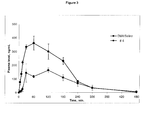
- PK profiles of the formulations according to the invention were evaluated in rats. Eight rats divided in two groups of four were used per formulation. Each animal received a subcutaneous (SC) injection at a dose of 0.5 mg/kg, and then blood sampling was performed via a jugular catheter at different time points alternately on each group. Plasma concentrations were determined by LC-MS analysis. PK parameters were calculated by a WinNonLin analysis.
- PK values were compared to the one obtained after the injection of the peptide in a saline solution under the same conditions.
- PK profile is presented in Figure 2 (PK profiles in rats - 450 nmole/kg, 0.5 mg/kg, SC).
- Table 8 Reference Formulation 2 T max (min) 30 60 C max (ng/ml) 346 164 T 1/2 (min) 49.4 52.4 MRT (min) 74.5 102 AUC (min.ng/ml) 29.6 20.1
- C max maximum plasma concentration of the drug appearing in the PK profile
- AUC Area Under the Curve
- MRT Medium Residence Time
- T max time corresponding to the C max value
- T 1/2 half-life.
- PK profile and parameters of formulation 4 are presented in Figure 3 (PK profiles in rats - 450 nmole/kg, 0.5 mg/kg, SC) and Table 9 (PK parameters of the formulation 4 and DMA/saline reference) respectively.
- Table 9 Reference Formulation 4 T max (min) 60 120 C max (ng/ml) 362 163 T 1/2 (min) 186 189 MRT (min) 145 191 AUC (min.ng/ml) 71.7 35.9
- formulation 4 presents a C max decrease by more than a factor 2 and a T max increase by a factor 2.
Landscapes
- Health & Medical Sciences (AREA)
- Life Sciences & Earth Sciences (AREA)
- Chemical & Material Sciences (AREA)
- General Health & Medical Sciences (AREA)
- Medicinal Chemistry (AREA)
- Pharmacology & Pharmacy (AREA)
- Veterinary Medicine (AREA)
- Public Health (AREA)
- Animal Behavior & Ethology (AREA)
- Epidemiology (AREA)
- Engineering & Computer Science (AREA)
- Bioinformatics & Cheminformatics (AREA)
- Gastroenterology & Hepatology (AREA)
- Proteomics, Peptides & Aminoacids (AREA)
- Immunology (AREA)
- Organic Chemistry (AREA)
- General Chemical & Material Sciences (AREA)
- Chemical Kinetics & Catalysis (AREA)
- Dermatology (AREA)
- Zoology (AREA)
- Oil, Petroleum & Natural Gas (AREA)
- Neurosurgery (AREA)
- Genetics & Genomics (AREA)
- Nuclear Medicine, Radiotherapy & Molecular Imaging (AREA)
- Endocrinology (AREA)
- Toxicology (AREA)
- Biochemistry (AREA)
- Biophysics (AREA)
- Biomedical Technology (AREA)
- Molecular Biology (AREA)
- Child & Adolescent Psychology (AREA)
- Diabetes (AREA)
- Hematology (AREA)
- Obesity (AREA)
- Medicines That Contain Protein Lipid Enzymes And Other Medicines (AREA)
- Peptides Or Proteins (AREA)
- Medicinal Preparation (AREA)
Priority Applications (9)
| Application Number | Priority Date | Filing Date | Title |
|---|---|---|---|
| EP12290189.5A EP2705835A1 (en) | 2012-06-08 | 2012-06-08 | Aqueous gelling compositions of soluble active pharmaceutical peptides providing modified release |
| JP2015515528A JP2015518873A (ja) | 2012-06-08 | 2013-06-06 | 調節された放出をもたらす可溶性の且つ活性の医薬的成分の水性ゲル化組成物 |
| PCT/EP2013/061732 WO2013182653A1 (en) | 2012-06-08 | 2013-06-06 | Aqueous gelling compositions of soluble active pharmaceutical peptides providing modified release |
| EP13727192.0A EP2858626A1 (en) | 2012-06-08 | 2013-06-06 | Aqueous gelling compositions of soluble active pharmaceutical peptides providing modified release |
| HK15108823.9A HK1208171A1 (en) | 2012-06-08 | 2013-06-06 | Aqueous gelling compositions of soluble active pharmaceutical peptides providing modified release |
| CN201380029769.XA CN104487049A (zh) | 2012-06-08 | 2013-06-06 | 提供改良释放的可溶性活性药物肽的水性胶凝组合物 |
| RU2014153760A RU2014153760A (ru) | 2012-06-08 | 2013-06-06 | Водные гелеобразующие композиции растворимых активных фармацевтических пептидов, обеспечивающие модифицированное высвобождение |
| US14/406,287 US20150157719A1 (en) | 2012-06-08 | 2013-06-13 | Aqueous Gelling Compositions of Soluble Active Pharmaceutical Peptides Providing Modified Release |
| US15/272,662 US20170035884A1 (en) | 2012-06-08 | 2016-09-22 | Aqueous gelling compositions of soluble active pharmaceutical peptides providing modified release |
Applications Claiming Priority (1)
| Application Number | Priority Date | Filing Date | Title |
|---|---|---|---|
| EP12290189.5A EP2705835A1 (en) | 2012-06-08 | 2012-06-08 | Aqueous gelling compositions of soluble active pharmaceutical peptides providing modified release |
Publications (1)
| Publication Number | Publication Date |
|---|---|
| EP2705835A1 true EP2705835A1 (en) | 2014-03-12 |
Family
ID=48577065
Family Applications (2)
| Application Number | Title | Priority Date | Filing Date |
|---|---|---|---|
| EP12290189.5A Withdrawn EP2705835A1 (en) | 2012-06-08 | 2012-06-08 | Aqueous gelling compositions of soluble active pharmaceutical peptides providing modified release |
| EP13727192.0A Withdrawn EP2858626A1 (en) | 2012-06-08 | 2013-06-06 | Aqueous gelling compositions of soluble active pharmaceutical peptides providing modified release |
Family Applications After (1)
| Application Number | Title | Priority Date | Filing Date |
|---|---|---|---|
| EP13727192.0A Withdrawn EP2858626A1 (en) | 2012-06-08 | 2013-06-06 | Aqueous gelling compositions of soluble active pharmaceutical peptides providing modified release |
Country Status (7)
| Country | Link |
|---|---|
| US (2) | US20150157719A1 (enExample) |
| EP (2) | EP2705835A1 (enExample) |
| JP (1) | JP2015518873A (enExample) |
| CN (1) | CN104487049A (enExample) |
| HK (1) | HK1208171A1 (enExample) |
| RU (1) | RU2014153760A (enExample) |
| WO (1) | WO2013182653A1 (enExample) |
Families Citing this family (3)
| Publication number | Priority date | Publication date | Assignee | Title |
|---|---|---|---|---|
| SMT202100734T1 (it) | 2011-12-29 | 2022-03-21 | Rhythm Pharmaceuticals Inc | Metodo di trattamento di disturbi associati al recettore di melanocortina 4 in portatori eterozigoti |
| JP6538025B2 (ja) | 2013-03-15 | 2019-07-03 | リズム・ファーマシューティカルズ・インコーポレイテッド | 医薬組成物 |
| JP6622690B2 (ja) | 2013-03-15 | 2019-12-18 | リズム・ファーマシューティカルズ・インコーポレイテッド | ペプチド組成物 |
Citations (4)
| Publication number | Priority date | Publication date | Assignee | Title |
|---|---|---|---|---|
| WO2007008704A2 (en) | 2005-07-08 | 2007-01-18 | Societe De Conseils De Recherches Et D'applications Scientifiques S.A.S. | Melanocortin receptor ligands |
| WO2008147556A2 (en) | 2007-05-25 | 2008-12-04 | Ipsen Pharma S.A.S. | Melanocortin receptor ligands modified with hydantoin |
| WO2009120656A1 (en) * | 2008-03-24 | 2009-10-01 | Palatin Technologies, Inc. | Pharmaceutical for ocular indications |
| WO2011060352A1 (en) * | 2009-11-16 | 2011-05-19 | Ipsen Pharma S.A.S. | Pharmaceutical compositions of melanocortin receptor ligands |
Family Cites Families (4)
| Publication number | Priority date | Publication date | Assignee | Title |
|---|---|---|---|---|
| TWI331922B (en) * | 2002-08-09 | 2010-10-21 | Ipsen Pharma Sas | Growth hormone releasing peptides |
| US20100098735A1 (en) * | 2006-10-05 | 2010-04-22 | Rajesh Jain | Injectable depot compositions and its process of preparation |
| TW200916113A (en) * | 2007-08-08 | 2009-04-16 | Sod Conseils Rech Applic | Method for inhibiting inflammation and pro-inflammatory cytokine/chemokine expression using a ghrelin analogue |
| KR102038677B1 (ko) * | 2011-06-14 | 2019-10-30 | 입센 파마 에스.에이.에스 | 활성 성분으로 멜라노코르틴 수용체 리간드를 함유하는 지속-방출형 조성물 |
-
2012
- 2012-06-08 EP EP12290189.5A patent/EP2705835A1/en not_active Withdrawn
-
2013
- 2013-06-06 WO PCT/EP2013/061732 patent/WO2013182653A1/en not_active Ceased
- 2013-06-06 JP JP2015515528A patent/JP2015518873A/ja not_active Abandoned
- 2013-06-06 HK HK15108823.9A patent/HK1208171A1/xx unknown
- 2013-06-06 CN CN201380029769.XA patent/CN104487049A/zh active Pending
- 2013-06-06 RU RU2014153760A patent/RU2014153760A/ru not_active Application Discontinuation
- 2013-06-06 EP EP13727192.0A patent/EP2858626A1/en not_active Withdrawn
- 2013-06-13 US US14/406,287 patent/US20150157719A1/en not_active Abandoned
-
2016
- 2016-09-22 US US15/272,662 patent/US20170035884A1/en not_active Abandoned
Patent Citations (4)
| Publication number | Priority date | Publication date | Assignee | Title |
|---|---|---|---|---|
| WO2007008704A2 (en) | 2005-07-08 | 2007-01-18 | Societe De Conseils De Recherches Et D'applications Scientifiques S.A.S. | Melanocortin receptor ligands |
| WO2008147556A2 (en) | 2007-05-25 | 2008-12-04 | Ipsen Pharma S.A.S. | Melanocortin receptor ligands modified with hydantoin |
| WO2009120656A1 (en) * | 2008-03-24 | 2009-10-01 | Palatin Technologies, Inc. | Pharmaceutical for ocular indications |
| WO2011060352A1 (en) * | 2009-11-16 | 2011-05-19 | Ipsen Pharma S.A.S. | Pharmaceutical compositions of melanocortin receptor ligands |
Also Published As
| Publication number | Publication date |
|---|---|
| US20150157719A1 (en) | 2015-06-11 |
| HK1208171A1 (en) | 2016-02-26 |
| JP2015518873A (ja) | 2015-07-06 |
| US20170035884A1 (en) | 2017-02-09 |
| RU2014153760A (ru) | 2016-08-10 |
| WO2013182653A1 (en) | 2013-12-12 |
| CN104487049A (zh) | 2015-04-01 |
| EP2858626A1 (en) | 2015-04-15 |
Similar Documents
| Publication | Publication Date | Title |
|---|---|---|
| AU713066B2 (en) | Sustained release of peptides from pharmaceutical compositions | |
| KR101979051B1 (ko) | 강력한 방출-조절된 제형 | |
| EP1480618B1 (en) | Sustained release drug formulations containing a carrier peptide | |
| PT1397155E (pt) | Formulação de libertação sustentada | |
| CA2906782A1 (en) | Pharmaceutical compositions | |
| TWI715520B (zh) | 用於持續釋放蘭瑞肽之醫藥組成物 | |
| AU2012270024B2 (en) | A sustained -release composition containing a melanocortin receptor ligand as the active ingredient | |
| EA033590B1 (ru) | Препараты с контролируемым высвобождением | |
| US20170035884A1 (en) | Aqueous gelling compositions of soluble active pharmaceutical peptides providing modified release | |
| CA2585116C (en) | Sustained release formulation comprising bisphosphonate | |
| CN104487050B (zh) | 促生长素抑制素受体激动剂制剂 | |
| HK1194996B (en) | A sustained -release composition containing a melanocortin receptor ligand as the active ingredient | |
| RU2025100211A (ru) | Способы лечения ожирения агонистом mc4r |
Legal Events
| Date | Code | Title | Description |
|---|---|---|---|
| PUAB | Information related to the publication of an a document modified or deleted |
Free format text: ORIGINAL CODE: 0009199EPPU |
|
| PUAI | Public reference made under article 153(3) epc to a published international application that has entered the european phase |
Free format text: ORIGINAL CODE: 0009012 |
|
| PUAI | Public reference made under article 153(3) epc to a published international application that has entered the european phase |
Free format text: ORIGINAL CODE: 0009012 |
|
| AK | Designated contracting states |
Kind code of ref document: A1 Designated state(s): AL AT BE BG CH CY CZ DE DK EE ES FI FR GB GR HR HU IE IS IT LI LT LU LV MC MK MT NL NO PL PT RO RS SE SI SK SM TR |
|
| AX | Request for extension of the european patent |
Extension state: BA ME |
|
| 17P | Request for examination filed |
Effective date: 20140912 |
|
| RBV | Designated contracting states (corrected) |
Designated state(s): AL AT BE BG CH CY CZ DE DK EE ES FI FR GB GR HR HU IE IS IT LI LT LU LV MC MK MT NL NO PL PT RO RS SE SI SK SM TR |
|
| STAA | Information on the status of an ep patent application or granted ep patent |
Free format text: STATUS: THE APPLICATION IS DEEMED TO BE WITHDRAWN |
|
| 18D | Application deemed to be withdrawn |
Effective date: 20140913 |