EP2694532B1 - Aureobasidin derivatives and methods of synthesis - Google Patents
Aureobasidin derivatives and methods of synthesis Download PDFInfo
- Publication number
- EP2694532B1 EP2694532B1 EP12712195.2A EP12712195A EP2694532B1 EP 2694532 B1 EP2694532 B1 EP 2694532B1 EP 12712195 A EP12712195 A EP 12712195A EP 2694532 B1 EP2694532 B1 EP 2694532B1
- Authority
- EP
- European Patent Office
- Prior art keywords
- diboron
- bis
- compound
- alkyl
- formula
- Prior art date
- Legal status (The legal status is an assumption and is not a legal conclusion. Google has not performed a legal analysis and makes no representation as to the accuracy of the status listed.)
- Active
Links
- 0 CCC(C)C(C(N(C)[C@@](C)C(*(C1CC(C)C)N(C(C(C)(C)O)C(OC([C@](C)CC)C(N(C)CC(NC(Cc2ccccc2)C(N(C)C(Cc2cc(I)ccc2)C=O)=O)=O)=O)=O)C1=O)=O)=O)NC(C(CCCN)C(C)C)=O Chemical compound CCC(C)C(C(N(C)[C@@](C)C(*(C1CC(C)C)N(C(C(C)(C)O)C(OC([C@](C)CC)C(N(C)CC(NC(Cc2ccccc2)C(N(C)C(Cc2cc(I)ccc2)C=O)=O)=O)=O)=O)C1=O)=O)=O)NC(C(CCCN)C(C)C)=O 0.000 description 8
- DFUXQXJTRZGRKL-UHFFFAOYSA-N CC(C)(C(C)(C)O1)OB1I Chemical compound CC(C)(C(C)(C)O1)OB1I DFUXQXJTRZGRKL-UHFFFAOYSA-N 0.000 description 1
- VRXAKSNSFPMVAC-MVCCJRJVSA-N CCC(C)C(C(N(C)C([C@@H](C)CC)C(NC(CC(C)C)C(N(C)C(C(C)(C)O)C(OC(C(C)CC)C(N(C)C([C@@H](C)CC)C(NC(Cc1ccccc1)C(N(C)C(Cc1ccccc1)C(N1C2CCC1)=O)=O)=O)=O)=O)=O)=O)=O)NC2=O Chemical compound CCC(C)C(C(N(C)C([C@@H](C)CC)C(NC(CC(C)C)C(N(C)C(C(C)(C)O)C(OC(C(C)CC)C(N(C)C([C@@H](C)CC)C(NC(Cc1ccccc1)C(N(C)C(Cc1ccccc1)C(N1C2CCC1)=O)=O)=O)=O)=O)=O)=O)=O)NC2=O VRXAKSNSFPMVAC-MVCCJRJVSA-N 0.000 description 1
- GWQOOADXMVQEFT-UHFFFAOYSA-N Cc1ccc(C)[s]1 Chemical compound Cc1ccc(C)[s]1 GWQOOADXMVQEFT-UHFFFAOYSA-N 0.000 description 1
- TWGNOYAGHYUFFR-UHFFFAOYSA-N Cc1cncnc1 Chemical compound Cc1cncnc1 TWGNOYAGHYUFFR-UHFFFAOYSA-N 0.000 description 1
Images


Classifications
-
- C—CHEMISTRY; METALLURGY
- C07—ORGANIC CHEMISTRY
- C07K—PEPTIDES
- C07K1/00—General methods for the preparation of peptides, i.e. processes for the organic chemical preparation of peptides or proteins of any length
- C07K1/107—General methods for the preparation of peptides, i.e. processes for the organic chemical preparation of peptides or proteins of any length by chemical modification of precursor peptides
- C07K1/113—General methods for the preparation of peptides, i.e. processes for the organic chemical preparation of peptides or proteins of any length by chemical modification of precursor peptides without change of the primary structure
-
- C—CHEMISTRY; METALLURGY
- C07—ORGANIC CHEMISTRY
- C07K—PEPTIDES
- C07K11/00—Depsipeptides having up to 20 amino acids in a fully defined sequence; Derivatives thereof
- C07K11/02—Depsipeptides having up to 20 amino acids in a fully defined sequence; Derivatives thereof cyclic, e.g. valinomycins ; Derivatives thereof
-
- A—HUMAN NECESSITIES
- A61—MEDICAL OR VETERINARY SCIENCE; HYGIENE
- A61P—SPECIFIC THERAPEUTIC ACTIVITY OF CHEMICAL COMPOUNDS OR MEDICINAL PREPARATIONS
- A61P31/00—Antiinfectives, i.e. antibiotics, antiseptics, chemotherapeutics
- A61P31/10—Antimycotics
-
- A—HUMAN NECESSITIES
- A61—MEDICAL OR VETERINARY SCIENCE; HYGIENE
- A61P—SPECIFIC THERAPEUTIC ACTIVITY OF CHEMICAL COMPOUNDS OR MEDICINAL PREPARATIONS
- A61P43/00—Drugs for specific purposes, not provided for in groups A61P1/00-A61P41/00
-
- A—HUMAN NECESSITIES
- A61—MEDICAL OR VETERINARY SCIENCE; HYGIENE
- A61K—PREPARATIONS FOR MEDICAL, DENTAL OR TOILETRY PURPOSES
- A61K38/00—Medicinal preparations containing peptides
Definitions
- the present invention provides novel methods for synthesizing broad spectrum antibiotic compounds, e.g., Auroebasidin A derivatives, that are useful for preventing and/or treating infections.
- broad spectrum antibiotic compounds e.g., Auroebasidin A derivatives
- systemic mycoses antibiotics are dominated by just three classes of drugs, polyenes, most notably Amphotericin B and Nystatin; azoles, such as Flucanazole, Itraconazole, Ketoconazole, and Voriconazole; and echinocandins, such as Caspofungin, Micafungin, and Anidulafungin.
- polyenes most notably Amphotericin B and Nystatin
- azoles such as Flucanazole, Itraconazole, Ketoconazole, and Voriconazole
- echinocandins such as Caspofungin, Micafungin, and Anidulafungin.
- Each of these drug classes possess significant limitations in terms of efficacy, toxicity, drug-drug interactions, and the generation of resistant organisms (e.g.
- the Aureobasidium pullulans strain BP-1938 produces a 9-amino acid cyclic peptide, referred to as Aureobasidin A (“AbA”).
- AbA This compound is a potent, fungicidal drug that is very well tolerated in animals and humans (Takesako et al., 1993).
- AbA also has a unique mode of action that targets inositol phosporylceramide (“IPC”) synthase; an enzyme in the fungal sphingolipid biosynthesis pathway. Attempts to develop spontaneous resistance mutants to AbA has, to date, been unsuccessful, suggesting that resistance development in clinical settings with this compound will be very slow.
- IPC inositol phosporylceramide
- Resistance mutants can be generated by chemical mutagenesis; however, the viability of the resulting organism is highly compromised.
- native AbA does not have a perfect target spectrum: it is very efficacious against virtually all Candida species, including C . albicans. It is also efficacious against most Cryptococcus species, including C . neoformans. However, it shows little activity towards most Aspergilli, and most notably A. fumigatus. ( Takesako et al., (1993) J. Antibiot. 46, 1414-1420 ).
- AbA derivatives have been prepared by synthetic chemistry (reviewed in Kurome and Takesako, 2000) and evaluation of these compounds has demonstrated that AbA's pharmacological properties can be altered significantly by modifying and/or exchanging amino acids in the sequence. Most importantly, AbA derivatives have been generated that appear to have similar antifungal activity against A. fumigatus and C . albicans (Kurome and Takesako, 2000). Specifically, substitution of the N-methyl-L-phenylalanine residue at position 4 with a N-methyl-D-alanine or a sarcosine residue results in a compound with significant activity against A.
- EP 0 510 271 A1 describes R106 compounds that are cyclic peptides including some Aba derivatives, which are synthesized using biosynthetic methods.
- EP 0 581 429 A2 describes the total synthesis of cyclic peptides including Aba derivatives employing modified or derivatized amino acids as starting materials prior to the formation of the linear polypeptide and its cyclization.
- PEPTIDE SCIENCE 1999, Vol.36, 197-200 describes a semi-syntetic route for the synthesis of Aba derivatives unsing native Aba as starting material that undergoes ring opening, cleavage of the 3, 4, and/or 5 amino acids, the replacement of cleaved amino acid(s) with a substitute amino acid or methylated derivative, followed by the cyclization of the resulting polypeptide to generate the AbA derivative.
- J. AM. CHEM. SOC. 2007, 129, 15434-15435 describes the preparation of bromoarenes using a combination of iridium-catalyzed borylation of relatively simple monoaryl compounds as substrates followed by the halogenation of the resulting arene boronate esters with copper bromide.
- the invention relates to AbA derivatives according to claim 10 and methods of synthesizing AbA derivatives according to claim 1 or claim 5, which may be useful for treating infection and amenable to further chemical elaboration.
- the novel methods presented herein are scalable for industrial production and employ safer, simpler, and more efficient process conditions.
- the invention provides a method of generating a compound of Formula I wherein one of R 1 , R 2 , R 3 , or R 4 is -X, and the remainder are -H, wherein X is a halogen selected from Cl, Br, or I; comprising reacting a compound of Formula 1 with a halogenating reagent in the presence of a first solvent to form the compound of Formula I wherein one of R 5 , R 6 , R 7 , or R 8 is and the remainder are -H; and each of R A and R B are independently -C 1-4 alkyl, -C 3-6 cycloalkyl; or R A and R B together with the oxygen atoms to which they are attached form a 5-6 membered ring optionally substituted with 1-4 of -C 1-3 alkyl, -C 1-3 alkoxycarbonyl, -C 1-3 alkylaminocarbonyl, or any combination thereof; or R A and R B together with the oxygen atoms to which
- the method further comprises reacting a compound of Formula 2 with a borylating reagent in the presence of a catalyst and a second solvent to generate a compound of Formula 1.
- -X is selected from -Cl, -Br, or -I.
- the halogenating reagent comprises copper(II)halide.
- the borylating reagent comprises 4,4,5,5-tetramethyl-1,3,2-dioxaborolane, catecholborane, bis(neopentyl glycolato)diboron, bis(pinacolato)diboron, bis(hexylene glycolato)diboron, bis(catecholato)diboron, bis[(+)-pinanediolato] diboron, bis [(-)-pinanediolato] diboron, bis(diethyl-D-tartrate glycolato)diboron, bis(diethyl-L-tartrate glycolato)diboron, bis(diisopropyl-D-tartrate glycolato)diboron, bis(diisopropyl-L-tartrateglycolato)diboron, bis(N,N,N',N'-
- Another aspect of the present invention provides a method of generating a compound of Formula Ia wherein one of R 1 or R 2 is, -Cl, -Br or -I, and the remainder is -H, comprising reacting a compound of Formula 1a with a chlorinating reagent, brominating reagent or iodinating reagent in the presence of a first solvent to form a compound of Formula Ia wherein one of R 5 or R 6 is and the remainder is -H; and each of R A and R B are independently -C 1-4 alkyl, -C 3-6 cycloalkyl; or R A and R B together with the oxygen atoms to which they are attached form a 5-6 membered ring optionally substituted with 1-4 of -C 1-3 alkyl, -C 1-3 alkoxycarbonyl, -C 1-3 alkylaminocarbonyl, or any combination thereof; or R A and R B together with the oxygen atoms to which they are attached form a 7-10
- the method further comprises reacting a compound of Formula 2 with a borylating reagent in the presence of a catalyst and a second solvent to generate a compound of Formula 1a.
- the compound of Formula Ia is N-(2-aminoethyl)-2-aminoethyl-N-(2-aminoethyl)-2-aminoethyl-N-(2-aminoethyl)-2-aminoethyl-N-(2-aminoethyl)-2-aminoethyl-N-(2-aminoethyl)-2-aminoethyl
- the brominating reagent comprises copper(II)bromide and the iodinating agent comprises copper(II)iodide.
- the borylating reagent comprises bis(pinacolato)diboron, bis(neopentylglycolato)diboron, 1,3,2-dioxaborolane, 4,5-dimethyl-1,3,2-dioxaborolane, bis(N,N,N',N'-tetramethyl-L-tartaramide glycolato)diboron, bis(diethyl-D-tartrate glycolato)diboron, bis(diethyl-L-tartrate glycolato)diboron, bis(diisopropyl-D-tartrate glycolato)diboron, bis[(+)-pinanediolato]diboron, or any combination thereof.
- the borylating reagent comprises bis(pinacolato)diboron.
- Another aspect of the present invention provides a compound selected from
- the present invention provides novel methods and compounds for preparing Aureobasidin A (“AbA”) derivatives useful for treating infection.
- AbA Aureobasidin A
- protecting group refers to a moiety or functionality that is introduced into a molecule by chemical modification of a functional group in order to obtain chemoselectivity in a subsequent chemical reaction.
- Standard protecting groups are provided in Wuts and Greene: “Greene's Protective Groups in Organic Synthesis” 4th Ed, Wuts, P.G.M. and Greene, T.W., Wiley-Interscience, New York:2006 .
- compounds of the invention may optionally be substituted with one or more substituents, such as are illustrated generally above, or as exemplified by particular classes, subclasses, and species of the invention.
- hydroxyl or "hydroxy” refers to an -OH moiety.
- aliphatic encompasses the terms alkyl, alkenyl, alkynyl, each of which being optionally substituted as set forth below.
- an "alkyl” group refers to a saturated aliphatic hydrocarbon group containing 1-12 (e.g., 1-8, 1-6, or 1-4) carbon atoms.
- An alkyl group can be straight or branched. Examples of alkyl groups include, but are not limited to, methyl, ethyl, propyl, isopropyl, butyl, isobutyl, sec-butyl, tert-butyl, n-pentyl, n-heptyl, or 2-ethylhexyl.
- An alkyl group can be substituted (i.e., optionally substituted) with one or more substituents such as halo, phospho, cycloaliphatic [e.g., cycloalkyl or cycloalkenyl], heterocycloaliphatic [e.g., heterocycloalkyl or heterocycloalkenyl], aryl, heteroaryl, alkoxy, aroyl, heteroaroyl, acyl [e.g., (aliphatic)carbonyl, (cycloaliphatic)carbonyl, or (heterocycloaliphatic)carbonyl], nitro, cyano, amido [e.g., (cycloalkylalkyl)carbonylamino, arylcarbonylamino, aralkylcarbonylamino, (heterocycloalkyl)carbonylamino, (heterocycloalkylalkyl)carbonylamino, heteroarylcarbonylamino, heteroaral
- substituted alkyls include carboxyalkyl (such as HOOC-alkyl, alkoxycarbonylalkyl, and alkylcarbonyloxyalkyl), cyanoalkyl, hydroxyalkyl, alkoxyalkyl, acylalkyl, aralkyl, (alkoxyaryl)alkyl, (sulfonylamino)alkyl (such as (alkyl-SO 2 -amino)alkyl), aminoalkyl, amidoalkyl, (cycloaliphatic)alkyl, or haloalkyl.
- carboxyalkyl such as HOOC-alkyl, alkoxycarbonylalkyl, and alkylcarbonyloxyalkyl
- cyanoalkyl hydroxyalkyl, alkoxyalkyl, acylalkyl, aralkyl, (alkoxyaryl)alkyl, (sulfonylamino)alkyl (such as (alky
- an "alkenyl” group refers to an aliphatic carbon group that contains 2-8 (e.g., 2-12, 2-6, or 2-4) carbon atoms and at least one double bond. Like an alkyl group, an alkenyl group can be straight or branched. Examples of an alkenyl group include, but are not limited to allyl, 1- or 2-isopropenyl, 2-butenyl, and 2-hexenyl.
- An alkenyl group can be optionally substituted with one or more substituents such as halo, phospho, cycloaliphatic [e.g., cycloalkyl or cycloalkenyl], heterocycloaliphatic [e.g., heterocycloalkyl or heterocycloalkenyl], aryl, heteroaryl, alkoxy, aroyl, heteroaroyl, acyl [e.g., (aliphatic)carbonyl, (cycloaliphatic)carbonyl, or (heterocycloaliphatic)carbonyl], nitro, cyano, amido [e.g., (cycloalkylalkyl)carbonylamino, arylcarbonylamino, aralkylcarbonylamino, (heterocycloalkyl)carbonylamino, (heterocycloalkylalkyl)carbonylamino, heteroarylcarbonylamino, heteroaralkylcarbonylamino al
- substituted alkenyls include cyanoalkenyl, alkoxyalkenyl, acylalkenyl, hydroxyalkenyl, aralkenyl, (alkoxyaryl)alkenyl, (sulfonylamino)alkenyl (such as (alkyl-SO 2 -amino)alkenyl), aminoalkenyl, amidoalkenyl, (cycloaliphatic)alkenyl, or haloalkenyl.
- an "alkynyl” group refers to an aliphatic carbon group that contains 2-8 (e.g., 2-12, 2-6, or 2-4) carbon atoms and has at least one triple bond.
- An alkynyl group can be straight or branched. Examples of an alkynyl group include, but are not limited to, propargyl and butynyl.
- An alkynyl group can be optionally substituted with one or more substituents such as aroyl, heteroaroyl, alkoxy, cycloalkyloxy, heterocycloalkyloxy, aryloxy, heteroaryloxy, aralkyloxy, nitro, carboxy, cyano, halo, hydroxy, sulfo, mercapto, sulfanyl [e.g., aliphaticsulfanyl or cycloaliphaticsulfanyl], sulfinyl [e.g., aliphaticsulfinyl or cycloaliphaticsulfinyl], sulfonyl [e.g., aliphatic-SO 2 -, aliphaticamino-SO 2 -, or cycloaliphatic-SO 2 -], amido [e.g., aminocarbonyl, alkylaminocarbonyl, alkylcarbonylamino, cycloalkylaminocarbonyl
- an “amido” encompasses both “aminocarbonyl” and “carbonylamino”. These terms when used alone or in connection with another group refer to an amido group such as -N(R X )-C(O)-R Y or -C(O)-N(R X ) 2 , when used terminally, and -C(O)-N(R X )- or -N(R X )-C(O)- when used internally, wherein R X and R Y can be aliphatic, cycloaliphatic, aryl, araliphatic, heterocycloaliphatic, heteroaryl or heteroaraliphatic.
- amido groups include alkylamido (such as alkylcarbonylamino or alkylaminocarbonyl), (heterocycloaliphatic)amido, (heteroaralkyl)amido, (heteroaryl)amido, (heterocycloalkyl)alkylamido, arylamido, aralkylamido, (cycloalkyl)alkylamido, or cycloalkylamido.
- alkylamido such as alkylcarbonylamino or alkylaminocarbonyl
- heterocycloaliphatic such as alkylcarbonylamino or alkylaminocarbonyl
- heteroaryl heteroaryl
- an "amino" group refers to -NR X R Y wherein each of R X and R Y is independently hydrogen, aliphatic, cycloaliphatic, (cycloaliphatic)aliphatic, aryl, araliphatic, heterocycloaliphatic, (heterocycloaliphatic)aliphatic, heteroaryl, carboxy, sulfanyl, sulfinyl, sulfonyl, (aliphatic)carbonyl, (cycloaliphatic)carbonyl, ((cycloaliphatic)aliphatic)carbonyl, arylcarbonyl, (araliphatic)carbonyl, (heterocycloaliphatic)carbonyl, ((heterocycloaliphatic)aliphatic)carbonyl, (heteroaryl)carbonyl, or (heteroaraliphatic)carbonyl, each of which being defined herein and being optionally substituted.
- amino groups examples include alkylamino, dialkylamino, or arylamino.
- amino is not the terminal group (e.g., alkylcarbonylamino), it is represented by -NR X -, where R X has the same meaning as defined above.
- an "aryl” group used alone or as part of a larger moiety as in “aralkyl”, “aralkoxy”, or “aryloxyalkyl” refers to monocyclic (e.g., phenyl); bicyclic (e.g., indenyl, naphthalenyl, tetrahydronaphthyl, tetrahydroindenyl); and tricyclic (e.g., fluorenyl tetrahydrofluorenyl, or tetrahydroanthracenyl, anthracenyl) ring systems in which the monocyclic ring system is aromatic or at least one of the rings in a bicyclic or tricyclic ring system is aromatic.
- the bicyclic and tricyclic groups include benzofused 2-3 membered carbocyclic rings.
- a benzofused group includes phenyl fused with two or more C 4-8 carbocyclic moieties.
- An aryl is optionally substituted with one or more substituents including aliphatic [e.g., alkyl, alkenyl, or alkynyl]; cycloaliphatic; (cycloaliphatic)aliphatic; heterocycloaliphatic; (heterocycloaliphatic)aliphatic; aryl; heteroaryl; alkoxy; (cycloaliphatic)oxy; (heterocycloaliphatic)oxy; aryloxy; heteroaryloxy; (araliphatic)oxy; (heteroaraliphatic)oxy; aroyl; heteroaroyl; amino; oxo (on a non-aromatic carbocyclic ring of a benzofused bicyclic or tricyclic aryl); nitro; carb
- Non-limiting examples of substituted aryls include haloaryl [e.g., mono-, di (such as p , m -dihaloaryl), and (trihalo)aryl]; (carboxy)aryl [e.g., (alkoxycarbonyl)aryl, ((aralkyl)carbonyloxy)aryl, and (alkoxycarbonyl)aryl]; (amido)aryl [e.g., (aminocarbonyl)aryl, (((alkylamino)alkyl)aminocarbonyl)aryl, (alkylcarbonyl)aminoaryl, (arylaminocarbonyl)aryl, and (((heteroaryl)amino)carbonyl)aryl]; aminoaryl [e.g., ((alkylsulfonyl)amino)aryl or ((dialkyl)amino)aryl]; (cyanoalkyl)aryl;
- an "araliphatic” such as an “aralkyl” group refers to an aliphatic group (e.g., a C 1-4 alkyl group) that is substituted with an aryl group.
- "Aliphatic,” “alkyl,” and “aryl” are defined herein.
- An example of an araliphatic such as an aralkyl group is benzyl.
- an "aralkyl” group refers to an alkyl group (e.g., a C 1-4 alkyl group) that is substituted with an aryl group. Both “alkyl” and “aryl” have been defined above. An example of an aralkyl group is benzyl.
- An aralkyl is optionally substituted with one or more substituents such as aliphatic [e.g., alkyl, alkenyl, or alkynyl, including carboxyalkyl, hydroxyalkyl, or haloalkyl such as trifluoromethyl], cycloaliphatic [e.g., cycloalkyl or cycloalkenyl], (cycloalkyl)alkyl, heterocycloalkyl, (heterocycloalkyl)alkyl, aryl, heteroaryl, alkoxy, cycloalkyloxy, heterocycloalkyloxy, aryloxy, heteroaryloxy, aralkyloxy, heteroaralkyloxy, aroyl, heteroaroyl, nitro, carboxy, alkoxycarbonyl, alkylcarbonyloxy, amido [e.g., aminocarbonyl, alkylcarbonylamino, cycloalkylcarbonylamino, (cycloal
- a "bicyclic ring system” includes 6-12 (e.g., 8-12 or 9, 10, or 11) membered structures that form two rings, wherein the two rings have at least one atom in common (e.g., 2 atoms in common).
- Bicyclic ring systems include bicycloaliphatics (e.g., bicycloalkyl or bicycloalkenyl), bicycloheteroaliphatics, bicyclic aryls, and bicyclic heteroaryls.
- cycloaliphatic encompasses a “cycloalkyl” group and a “cycloalkenyl” group, each of which being optionally substituted as set forth below.
- a "cycloalkyl” group refers to a saturated carbocyclic mono- or bicyclic (fused or bridged) ring of 3-10 (e.g., 5-10) carbon atoms.
- Examples of cycloalkyl groups include cyclopropyl, cyclobutyl, cyclopentyl, cyclohexyl, cycloheptyl, adamantyl, norbornyl, cubyl, octahydro-indenyl, decahydro-naphthyl, bicyclo[3.2.1]octyl, bicyclo[2.2.2]octyl, bicyclo[3.3.1]nonyl, bicyclo[3.3.2.]decyl, bicyclo[2.2.2]octyl, adamantyl, or ((aminocarbonyl)cycloalkyl)cycloalkyl.
- a "cycloalkenyl” group refers to a non-aromatic carbocyclic ring of 3-10 (e.g., 4-8) carbon atoms having one or more double bonds.
- Examples of cycloalkenyl groups include cyclopentenyl, 1,4-cyclohexa-di-enyl, cycloheptenyl, cyclooctenyl, hexahydro-indenyl, octahydro-naphthyl, cyclohexenyl, bicyclo[2.2.2]octenyl, or bicyclo [3.3.1]nonenyl.
- a cycloalkyl or cycloalkenyl group can be optionally substituted with one or more substituents such as phospho, aliphatic [e.g., alkyl, alkenyl, or alkynyl], cycloaliphatic, (cycloaliphatic) aliphatic, heterocycloaliphatic, (heterocycloaliphatic) aliphatic, aryl, heteroaryl, alkoxy, (cycloaliphatic)oxy, (heterocycloaliphatic)oxy, aryloxy, heteroaryloxy, (araliphatic)oxy, (heteroaraliphatic)oxy, aroyl, heteroaroyl, amino, amido [e.g., (aliphatic)carboriylamino, (cycloaliphatic)carbonylamino, ((cycloaliphatic)aliphatic)carbonylamino, (aryl)carbonylamino, (araliphatic)carbonylamino, (heterocyclo
- heterocycloaliphatic encompasses heterocycloalkyl groups and heterocycloalkenyl groups, each of which being optionally substituted as set forth below.
- heterocycloalkyl refers to a 3-10 membered mono- or bicylic (fused or bridged) (e.g., 5- to 10-membered mono- or bicyclic) saturated ring structure, in which one or more of the ring atoms is a heteroatom (e.g., N, O, S, or combinations thereof).
- heterocycloalkyl group examples include piperidyl, piperazyl, tetrahydropyranyl, tetrahydrofuryl, 1,4-dioxolanyl, 1,4-dithianyl, 1,3-dioxolanyl, oxazolidyl, isoxazolidyl, morpholinyl, thiomorpholyl, octahydrobenzofuryl, octahydrochromenyl, octahydrothiochromenyl, octahydroindolyl, octahydropyrindinyl, decahydroquinolinyl, octahydrobenzo[ b ]thiopheneyl, 2-oxa-bicyclo[2.2.2]octyl, 1-aza-bicyclo[2.2.2]octyl, 3-aza-bicyclo[3.2.1]octyl, and 2,6-dio
- heterocycloalkenyl refers to a mono- or bicylic (e.g., 5- to 10-membered mono- or bicyclic) non-aromatic ring structure having one or more double bonds, and wherein one or more of the ring atoms is a heteroatom (e.g., N, O, or S).
- monocyclic and bicyclic heterocycloaliphatics are numbered according to standard chemical nomenclature.
- a heterocycloalkyl or heterocycloalkenyl group can be optionally substituted with one or more substituents such as phospho, aliphatic [e.g., alkyl, alkenyl, or alkynyl], cycloaliphatic, (cycloaliphatic)aliphatic, heterocycloaliphatic, (heterocycloaliphatic)aliphatic, aryl, heteroaryl, alkoxy, (cycloaliphatic)oxy, (heterocycloaliphatic)oxy, aryloxy, heteroaryloxy, (araliphatic)oxy, (heteroaraliphatic)oxy, aroyl, heteroaroyl, amino, amido [e.g., (aliphatic)carbonylamino, (cycloaliphatic)carbonylamino, ((cycloaliphatic) aliphatic)carbonylamino, (aryl)carbonylamino, (araliphatic)carbonylamino, (heterocycloaliphatic
- heteroaryl group refers to a monocyclic, bicyclic, or tricyclic ring system having 4 to 15 ring atoms wherein one or more of the ring atoms is a heteroatom (e.g., N, O, S, or combinations thereof) and in which the monocyclic ring system is aromatic or at least one of the rings in the bicyclic or tricyclic ring systems is aromatic.
- a heteroaryl group includes a benzofused ring system having 2 to 3 rings.
- a benzofused group includes benzo fused with one or two 4 to 8 membered heterocycloaliphatic moieties (e.g., indolizyl, indolyl, isoindolyl, 3H-indolyl, indolinyl, benzo[ b ]furyl, benzo[ b ]thiophene-yl, quinolinyl, or isoquinolinyl).
- heterocycloaliphatic moieties e.g., indolizyl, indolyl, isoindolyl, 3H-indolyl, indolinyl, benzo[ b ]furyl, benzo[ b ]thiophene-yl, quinolinyl, or isoquinolinyl.
- heteroaryl examples include azetidinyl, pyridyl, 1H-indazolyl, furyl, pyrrolyl, thienyl, thiazolyl, oxazolyl, imidazolyl, tetrazolyl, benzofuryl, isoquinolinyl, benzthiazolyl, xanthene, thioxanthene, phenothiazine, dihydroindole, benzo[1,3]dioxole, benzo[b]furyl, benzo[b]thiophenyl, indazolyl, benzimidazolyl, benzthiazolyl, puryl, cinnolyl, quinolyl, quinazolyl,cinnolyl, phthalazyl, quinazolyl, quinoxalyl, isoquinolyl, 4H-quinolizyl, benzo-1,2,5-thiadiazolyl, or 1,
- monocyclic heteroaryls include furyl, thiophene-yl, 2H-pyrrolyl, pyrrolyl, oxazolyl, thazolyl, imidazolyl, pyrazolyl, isoxazolyl, isothiazolyl, 1,3,4-thiadiazolyl, 2H-pyranyl, 4-H-pranyl, pyridyl, pyridazyl, pyrimidyl, pyrazolyl, pyrazyl, or 1,3,5-triazyl.
- Monocyclic heteroaryls are numbered according to standard chemical nomenclature.
- bicyclic heteroaryls include indolizyl, indolyl, isoindolyl, 3H-indolyl, indolinyl, benzo[b]furyl, benzo[ b ]thiophenyl, quinolinyl, isoquinolinyl, indolizyl, isoindolyl, indolyl, benzo[ b ]furyl, bexo[ b ]thiophenyl, indazolyl, benzimidazyl, benzthiazolyl, purinyl, 4H-quinolizyl, quinolyl, isoquinolyl, cinnolyl, phthalazyl, quinazolyl, quinoxalyl, 1,8-naphthyridyl, or pteridyl.
- Bicyclic heteroaryls are numbered according to standard chemical nomenclature.
- a heteroaryl is optionally substituted with one or more substituents such as aliphatic [e.g., alkyl, alkenyl, or alkynyl]; cycloaliphatic; (cycloaliphatic)aliphatic; heterocycloaliphatic; (heterocycloaliphatic)aliphatic; aryl; heteroaryl; alkoxy; (cycloaliphatic)oxy; (heterocycloaliphatic)oxy; aryloxy; heteroaryloxy; (araliphatic)oxy; (heteroaraliphatic)oxy; aroyl; heteroaroyl; amino; oxo (on a non-aromatic carbocyclic or heterocyclic ring of a bicyclic or tricyclic heteroaryl); carboxy; amido; acyl [e.g., aliphaticcarbonyl; (cycloaliphatic)carbonyl; ((cycloaliphatic)aliphatic)carbonyl; (araliphatic)carbonyl;
- Non-limiting examples of substituted heteroaryls include (halo)heteroaryl [e.g., mono- and di-(halo)heteroaryl]; (carboxy)heteroaryl [e.g., (alkoxycarbonyl)heteroaryl]; cyanoheteroaryl; aminoheteroaryl [e.g., ((alkylsulfonyl)amino)heteroaryl and ((dialkyl)amino)heteroaryl]; (amido)heteroaryl [e.g., aminocarbonylheteroaryl, ((alkylcarbonyl)amino)heteroaryl, ((((alkyl)amino)alkyl)aminocarbonyl)heteroaryl, (((heteroaryl)amino)carbonyl)heteroaryl, ((heteroaryl)amino)carbonyl)heteroaryl, (
- heteroaralkyl refers to an aliphatic group (e.g., a C 1-4 alkyl group) that is substituted with a heteroaryl group.
- aliphatic group e.g., a C 1-4 alkyl group
- heteroaryl e.g., a C 1-4 alkyl group
- heteroaryl group refers to an alkyl group (e.g., a C 1-4 alkyl group) that is substituted with a heteroaryl group. Both “alkyl” and “heteroaryl” have been defined above.
- a heteroaralkyl is optionally substituted with one or more substituents such as alkyl (including carboxyalkyl, hydroxyalkyl, and haloalkyl such as trifluoromethyl), alkenyl, alkynyl, cycloalkyl, (cycloalkyl)alkyl, heterocycloalkyl, (heterocycloalkyl)alkyl, aryl, heteroaryl, alkoxy, cycloalkyloxy, heterocycloalkyloxy, aryloxy, heteroaryloxy, aralkyloxy, heteroaralkyloxy, aroyl, heteroaroyl, nitro, carboxy, alkoxycarbonyl, alkylcarbonyloxy, aminocarbonyl, alkylcarbonylamino, cycloalkylcarbonylamino, (cycloalkylalkyl)carbonylamino, arylcarbonylamino, aralkylcarbonylamino, (heterocycloal
- cyclic moiety and “cyclic group” refer to mono-, bi-, and tri-cyclic ring systems including cycloaliphatic, heterocycloaliphatic, aryl, or heteroaryl, each of which has been previously defined.
- bridged bicyclic ring system refers to a bicyclic heterocyclicalipahtic ring system or bicyclic cycloaliphatic ring system in which the rings are bridged.
- bridged bicyclic ring systems include, but are not limited to, adamantanyl, norbornanyl, bicyclo[3.2.1]octyl, bicyclo[2.2.2]octyl, bicyclo[3.3.1]nonyl, bicyclo[3.3.2]decyl, 2-oxabicyclo[2.2.2]octyl, 1-azabicyclo[2.2.2]octyl, 3-azabicyclo[3.2.1]octyl, and 2,6-dioxa-tricyclo[3.3.1.0 3,7 ]nonyl.
- a bridged bicyclic ring system can be optionally substituted with one or more substituents such as alkyl (including carboxyalkyl, hydroxyalkyl, and haloalkyl such as trifluoromethyl), alkenyl, alkynyl, cycloalkyl, (cycloalkyl)alkyl, heterocycloalkyl, (heterocycloalkyl)alkyl, aryl, heteroaryl, alkoxy, cycloalkyloxy, heterocycloalkyloxy, aryloxy, heteroaryloxy, aralkyloxy, heteroaralkyloxy, aroyl, heteroaroyl, nitro, carboxy, alkoxycarbonyl, alkylcarbonyloxy, aminocarbonyl, alkylcarbonylamino, cycloalkylcarbonylamino, (cycloalkylalkyl)carbonylamino, arylcarbonylamino, aralkylcarbonylamino, (heter
- an "acyl” group refers to a formyl group or R X -C(O)- (such as alkyl-C(O)-, also referred to as “alkylcarbonyl”) where R X and "alkyl” have been defined previously.
- Acetyl and pivaloyl are examples of acyl groups.
- an “aroyl” or “heteroaroyl” refers to an aryl-C(O)- or a heteroaryl-C(O)-.
- the aryl and heteroaryl portion of the aroyl or heteroaroyl is optionally substituted as previously defined.
- alkoxy group refers to an alkyl-O- group where “alkyl” has been defined previously.
- a "carbamoyl” group refers to a group having the structure -O-CO-NR X R Y or -NR X -CO-O-R Z , wherein R X and R Y have been defined above and R Z can be aliphatic, aryl, araliphatic, heterocycloaliphatic, heteroaryl, or heteroaraliphatic.
- a "carboxy” group refers to -COOH, -COOR X , -OC(O)H, -OC(O)R X , when used as a terminal group; or -OC(O)- or -C(O)O- when used as an internal group.
- haloaliphatic refers to an aliphatic group substituted with 1-3 halogen.
- haloalkyl includes the group -CF 3 .
- mercapto refers to -SH.
- a "sulfo" group refers to -SO 3 H or -SO 3 R X when used terminally or -S(O) 3 - when used internally.
- a "sulfamide” group refers to the structure -NR X -S(O) 2 -NR Y R Z when used terminally and -NR X -S(O) 2 -NR Y - when used internally, wherein R X , R Y , and R Z have been defined above.
- a "sulfamoyl” group refers to the structure -O-S(O) 2 -NR Y R Z wherein R Y and R Z have been defined above.
- a "sulfonamide” group refers to the structure -S(O) 2 -NR X R Y or -NR X -S(O) 2 -R Z when used terminally; or -S(O) 2 -NR X - or -NR X -S(O) 2 - when used internally, wherein R X , R Y , and R Z are defined above.
- sulfanyl group refers to -S-R X when used terminally and -S-when used internally, wherein R X has been defined above.
- sulfanyls include aliphatic-S-, cycloaliphatic-S-, aryl-S-, or the like.
- sulfinyl refers to -S(O)-R X when used terminally and - S(O)- when used internally, wherein R X has been defined above.
- exemplary sulfinyl groups include aliphatic-S(O)-, aryl-S(O)-, (cycloaliphatic(aliphatic))-S(O)-, cycloalkyl-S(O)-, heterocycloaliphatic-S(O)-, heteroaryl-S(O)-, or the like.
- a "sulfonyl” group refers to-S(O) 2 -R X when used terminally and -S(O) 2 - when used internally, wherein R X has been defined above.
- Exemplary sulfonyl groups include aliphatic-S(O) 2 -, aryl-S(O) 2 -, (cycloaliphatic(aliphatic))-S(O) 2 -, cycloaliphatic-S(O) 2 -, heterocycloaliphatic-S(O) 2 -, heteroaryl-S(O) 2 -, (cycloaliphatic(amido(aliphatic)))-S(O) 2 -or the like.
- a "sulfoxy" group refers to -O-S(O)-R X or -S(O)-O-R X , when used terminally and -O-S(O)- or -S(O)-O- when used internally, where R X has been defined above.
- halogen or halo group refers to fluorine, chlorine, bromine or iodine.
- alkoxycarbonyl which is encompassed by the term carboxy, used alone or in connection with another group refers to a group such as alkyl-O-C(O)-.
- alkoxyalkyl refers to an alkyl group such as alkyl-O-alkyl-, wherein alkyl has been defined above.
- a "carbonyl” refer to -C(O)-.
- phospho refers to phosphinates and phosphonates.
- phosphinates and phosphonates include -P(O)(R P ) 2 , wherein R P is aliphatic, alkoxy, aryloxy, heteroaryloxy, (cycloaliphatic)oxy, (heterocycloaliphatic)oxy aryl, heteroaryl, cycloaliphatic or amino.
- aminoalkyl refers to the structure (R X ) 2 N-alkyl-.
- cyanoalkyl refers to the structure (NC)-alkyl-.
- urea refers to the structure -NR X -CO-NR Y R Z and a "thiourea” group refers to the structure -NR X -CS-NR Y R Z when used terminally and -NR X -CO-NR Y - or -NR X -CS-NR Y - when used internally, wherein R X , R Y , and R Z have been defined above.
- the term "vicinal” refers to the placement of substituents on a group that includes two or more carbon atoms, wherein the substituents are attached to adjacent carbon atoms.
- the term "geminal” refers to the placement of substituents on a group that includes two or more carbon atoms, wherein the substituents are attached to the same carbon atom.
- terminal refers to the location of a group within a substituent.
- a group is terminal when the group is present at the end of the substituent not further bonded to the rest of the chemical structure.
- Carboxyalkyl i.e., R X O(O)C-alkyl is an example of a carboxy group used terminally.
- a group is internal when the group is present in the middle of a substituent of the chemical structure.
- Alkylcarboxy e.g., alkyl-C(O)O- or alkyl-OC(O)-
- alkylcarboxyaryl e.g., alkyl-C(O)O-aryl- or alkyl-O(CO)-aryl-
- an "aliphatic chain” refers to a branched or straight aliphatic group (e.g., alkyl groups, alkenyl groups, or alkynyl groups).
- a straight aliphatic chain has the structure -[CH 2 ] v -, where v is 1-12.
- a branched aliphatic chain is a straight aliphatic chain that is substituted with one or more aliphatic groups.
- a branched aliphatic chain has the structure -[CQQ] v - where Q is independently a hydrogen or an aliphatic group; however, Q shall be an aliphatic group in at least one instance.
- the term aliphatic chain includes alkyl chains, alkenyl chains, and alkynyl chains, where alkyl, alkenyl, and alkynyl are defined above.
- each of the specific groups for the variables R 1 , R 2 , R 3 , R 4 , R 5 , R 6 , R 7 , R 8 , R 9 , R 10 , R 11 , R 12 , R 13 , R 14 , R 15 , R 16 , R 17 , R A , R B , R C , and other variables contained therein can be optionally substituted with one or more substituents described herein.
- Each substituent of a specific group is further optionally substituted with one to three of halo, cyano, oxo, alkoxy, hydroxy, amino, nitro, aryl, cycloaliphatic, heterocycloaliphatic, heteroaryl, haloalkyl, and alkyl.
- an alkyl group can be substituted with alkylsulfanyl and the alkylsulfanyl can be optionally substituted with one to three of halo, cyano, oxo, alkoxy, hydroxy, amino, nitro, aryl, haloalkyl, and alkyl.
- the cycloalkyl portion of a (cycloalkyl)carbonylamino can be optionally substituted with one to three of halo, cyano, alkoxy, hydroxy, nitro, haloalkyl, and alkyl.
- the two alkxoy groups can form a ring together with the atom(s) to which they are bound.
- substituted refers to the replacement of hydrogen atoms in a given structure with the radical of a specified substituent.
- substituents are described above in the definitions and below in the description of compounds and examples thereof.
- an optionally substituted group can have a substituent at each substitutable position of the group, and when more than one position in any given structure can be substituted with more than one substituent selected from a specified group, the substituent can be either the same or different at every position.
- a ring substituent such as a heterocycloalkyl
- substituents envisioned by this invention are those combinations that result in the formation of stable or chemically feasible compounds.
- stable or chemically feasible refers to compounds that are not substantially altered when subjected to conditions to allow for their production, detection, and preferably their recovery, purification, and use for one or more of the purposes disclosed herein.
- a stable compound or chemically feasible compound is one that is not substantially altered when kept at a temperature of 40 °C or less, in the absence of moisture or other chemically reactive conditions, for at least a week.
- an "effective amount” is defined as the amount required to confer a therapeutic effect on the treated patient, and is typically determined based on age, surface area, weight, and condition of the patient. The interrelationship of dosages for animals and humans (based on milligrams per meter squared of body surface) is described by Freireich et al., Cancer Chemother. Rep., 50: 219 (1966 ). Body surface area may be approximately determined from height and weight of the patient. See, e.g., Scientific Tables, Geigy Pharmaceuticals, Ardsley, New York, 537 (1970 ). As used herein, "patient” refers to a mammal, including a human.
- structures depicted herein are also meant to include all isomeric (e.g., enantiomeric, diastereomeric, and geometric (or conformational)) forms of the structure; for example, the R and S configurations for each asymmetric center, (Z) and (E) double bond isomers, and (Z) and (E) conformational isomers. Therefore, single stereochemical isomers as well as enantiomeric, diastereomeric, and geometric (or conformational) mixtures of the present compounds are within the scope of the invention. Unless otherwise stated, all tautomeric forms of the compounds of the invention are within the scope of the invention.
- structures depicted herein are also meant to include compounds that differ only in the presence of one or more isotopically enriched atoms.
- compounds having the present structures except for the replacement of hydrogen by deuterium or tritium, or the replacement of a carbon by a 13 C- or 14 C-enriched carbon are within the scope of this invention.
- Such compounds are useful, for example, as analytical tools or probes in biological assays, or as therapeutic agents.
- One aspect of the present invention provides a novel synthesis for generating AbA derivatives that are useful for the treatment of infections.
- This synthetic process is useful for preparing a compound of Formula I : wherein one of R 1 , R 2 , R 3 , or R 4 is -X, and the remainder are -H, wherein X is a halogen selected from Cl, Br or I; comprising reacting a compound of Formula 1 with a halogenating reagent in the presence of a first solvent, i.e., solvent A, to form a compound of Formula I wherein one of R 5 , R 6 , R 7 , or R 8 is and the remainder are -H; and each of R A and R B are independently -C 1-4 alkyl, -C 3-6 cycloalkyl; or R A and R B together with the oxygen atoms to which they are attached form a 5-6 membered ring optionally substituted with 1-4 of -C 1-3 alkyl, -C 1-3 alkoxy
- the reaction of the compound of Formula 1 with the halogenating reagent to generate a compound of Formula I is referred to as the first reaction.
- a mixture comprising the compound of Formula 1, solvent A, and the halogenating reagent is referred to as the first reaction mixture.
- Halogenating agents useful for this method include those halogenating agents that react with the compound of Formula 1 to substitute the boryl moiety of R 5 , R 6 , R 7 , or R 8 with a halogen selected from -Cl, -Br or -I.
- the halogenating reagent comprises copper(II)halide (e.g., CuBr 2 , CuI 2 , or CuCl 2 ).
- the halogenating reagent comprises copper(II)bromide, i.e., CuBr 2 .
- the halogenating reagent comprises copper(II)iodide, i.e., CuI 2 .
- solvent A Solvents useful for this first reaction are referred to as solvent A.
- solvent A at least partially dissolve borylated organic compounds (e.g., borylated AbA) and halogenating reagents (e.g., copper(II)bromide or copper(II)iodide).
- solvent A comprises a polar solvent.
- solvent A comprises an alcohol.
- the alcohol comprises methanol, ethanol, iso-propanol, tert-butanol, or any combination thereof.
- solvent A further comprises water.
- the first solvent comprises a mixture of two or more polar solvents that are substantially miscible.
- the first solvent comprises a mixture of water and ethanol.
- the first solvent comprises a mixture of water and ethanol in a ratio of about 0.5:1 to about 4:1 by volume of ethanol to water.
- the halogenating reagent is present in the first reaction mixture in an amount of about 1:100 to about 50:1 (e.g., 1:50 to about 5:1, 1:1 to about 5:1 or from about 2.5:1 to about 4:1) by moles of the halogenating reagent to moles of the compound of Formula 1.
- the first reaction is performed under heat (e.g., from about 35 °C to about 100 °C or from about 40 °C to about 80 °C).
- the first reaction is performed at room temperature (e.g., from about 17 °C to about 30 °C).
- the method further comprises reacting a compound of Formula 2 with a borylating reagent in the presence of a catalyst and a second solvent, i.e. solvent B, to generate a compound of Formula 1.
- the reaction of the compound of Formula 2 with the borylating reagent to generate a compound of Formula 1 is referred to as the second reaction.
- a mixture comprising the compound of Formula 2, solvent B, and the borylating reagent is referred to as the second reaction mixture.
- the borylating reagent comprises 4,4,5,5-tetramethyl-1,3,2-dioxaborolane, catecholborane, bis(neopentyl glycolato)diboron, bis(pinacolato)diboron, bis(hexylene glycolato)diboron, bis(catecholato)diboron, bis[(+)-pinanediolato]diboron, bis[(-)-pinanediolato]diboron, bis(diethyl-D-tartrate glycolato)diboron, bis(diethyl-L-tartrate glycolato)diboron, bis(diisopropyl-D-tartrate glycolato)diboron, bis(diisopropyl-L-tartrateglycolato)diboron, bis(N,N,N',N'-tetramethyl-D-tartaramideglycolato)diboron, bis(N,
- the borylating reagent is present in the second reaction mixture with AbA in a ratio of from about 1:20 to about 4:1 (e.g., from about 1:1 to about 4:1 or 1.5:1 to about 2.5:1) moles of borylating reagent to moles of AbA.
- the catalyst is a transition metal catalyst.
- the transition metal catalyst comprises Ir, Re, Rh, Pd, Pt, Ni, or any combination thereof.
- the transition metal catalyst comprises Ir (e.g., di- ⁇ -methoxybis(1,5-cyclooctadiene)diiridium(I), bis(1,5-cyclooctadiene)diiridium(I) dichloride, or any combination thereof).
- the transition metal catalyst comprises Re (e.g., Cp*Re(CO) 3 ).
- the transition metal catalyst comprises Rh (e.g., Cp*Rh( ⁇ 4 -C 6 Me 6 ) or RhCl(P i Pr 3 ) 2 (N 2 )). In other instances, the transition metal catalyst comprises Pd (e.g., 10% Pd/C).
- the catalyst further comprises Ir and a chelating reagent.
- the chelating reagent comprises a bidentate compound.
- the chelating reagent comprises 4,4'-di-tertbutyl-2,2'bipyridine.
- the catalyst comprises di-U-methoxybis(1,5-cyclooetadiene)diiridium(I) and a 4,4'-di-tertbutyl-2,2'bipyridine chelating reagent.
- the catalyst is present in the second reaction mixture with AbA in a ratio of from about 1:7 to about 1:3 (e.g., 1:6 to about 1:4) moles of catalyst to moles of AbA.
- Solvents useful for the second reaction at least partially dissolve the compound of Formula 2 and the borylating reagent.
- the solvent B comprises an aprotic nonpolar solvent.
- solvent B comprises pentane, cyclopentane, hexane, cyclohexane, heptane, diethyl ether, or any combination thereof.
- the second solvent further comprises methyltertbutylether ("MTBE") (e.g., dry MTBE).
- MTBE methyltertbutylether
- the solvent B comprises a mixture of heptane and MTBE.
- the solvent B may be further processed to remove molecular oxygen (O 2 ) from the solvent using any useful method.
- the second solvent is sparged with an inert gas such as argon, nitrogen, xenon, any combination thereof, or another inert gas.
- the second reaction is performed under heat (e.g., from about 35 °C to about 100 °C or from about 40 °C to about 80 °C).
- the second reaction is performed at room temperature.
- the second reaction is performed in an inert environment (e.g., an inert gas (e.g., N2) environment).
- an inert environment e.g., an inert gas (e.g., N2) environment.
- -X is selected from -Cl, -Br or -I.
- Another aspect of the present invention provides a method of generating a compound of Formula Ia wherein one of R 1 or R 2 is -Cl, -Br or -I, and the remainder is -H, comprising:
- Brominating reagents useful for this method include those brominating reagents that react with the compound of Formula 1a to substitute the boryl moiety of R 5 , R 6 , R 7 , or R 8 with -Br.
- the brominating reagent comprises copper(II)bromide.
- Iodinating reagents useful for this method include those iodinating reagents that react with the compound of Formula 1a to substitute the boryl moiety of R 5 , R 6 , R 7 , or R 8 with -I.
- the iodinating reagent comprises copper(II)iodide. Note that iodinating reagents useful for this method may be generated in situ.
- Solvents useful for this reaction include those solvents referred to as solvent A.
- solvent A at least partially dissolve borylated organic compounds (e.g., borylated AbA), brominating reagents (e.g., copper(II)bromide) or iodinating reagents (e.g., copper(II)iodide).
- solvent A comprises a polar solvent.
- solvent A comprises an alcohol.
- the alcohol comprises methanol, ethanol, iso-propanol, tert-butanol, or any combination thereof.
- solvent A further comprises water.
- the first solvent comprises a mixture of two or more polar solvents that are substantially miscible.
- the first solvent comprises a mixture of water and ethanol.
- the first solvent comprises a mixture of water and ethanol in a ratio of about 1:1 to about 4:1 by volume of ethanol to water.
- the brominating reagent is present in a reaction mixture comprising the compound of Formula 1 in a ratio of about 1:1 to about 5:1 (e.g., from about 2.5:1 to about 4:1) by moles of the halogenating reagent to moles of the compound of Formula 1.
- this reaction is performed under heat (e.g., from about 35 °C to about 100 °C or from about 40 °C to about 80 °C).
- this reaction is performed at room temperature (e.g., from about 17 °C to about 30 °C).
- the method further comprises reacting a compound of Formula 2 with a borylating reagent in the presence of a catalyst and a second solvent, i.e., solvent B, to generate a compound of Formula 1a .
- the borylating reagent comprises 4,4,5,5-tetramethyl-1,3,2-dioxaborolane, catecholborane, bis(neopentyl glycolato)diboron, bis(pinacolato)diboron, bis(hexylene glycolato)diboron, bis(catecholato)diboron, bis[(+)-pinanediolato]diboron, bis[(-)-pinanediolato]diboron, bis(diethyl-D-tartrate glycolato)diboron, bis(diethyl-L-tartrate glycolato)diboron, bis(diisopropyl-D-tartrate glycolato)diboron, bis(diisopropyl-L-tartrateglycolato)diboron, bis(N,N,N',N'-tetramethyl-D-tartaramideglycolato)diboron, bis(N,
- the borylating reagent is present in a reaction mixture comprising AbA in a ratio of from about 1:1 to about 4:1 (e.g., 1.5:1 to about 2.5:1) moles of borylating reagent to moles of AbA.
- the catalyst is a transition metal catalyst.
- the transition metal catalyst comprises Ir, Re, Rh, Pd, Pt, Ni, or any combination thereof.
- the transition metal catalyst comprises Ir (e.g., di- ⁇ -methoxybis(1,5-cyclooctadiene)diiridium(I), bis(1,5-cyclooctadiene)diiridium(I) dichloride, or any combination thereof).
- the transition metal catalyst comprises Re (e.g., Cp*Re(CO) 3 ).
- the transition metal catalyst comprises Rh (e.g., Cp*Rh( ⁇ 4 -C 6 Me 6 ) or RhCl(P i Pr 3 ) 2 (N 2 )). In other instances, the transition metal catalyst comprises Pd (e.g., 10% Pd/C).
- the catalyst further comprises Ir and a chelating reagent.
- the chelating reagent comprises a bidentate compound.
- the chelating reagent comprises 4,4'-di-tertbutyl-2,2'bipyridine.
- the catalyst comprises di- ⁇ -methoxybis(1,5-cyclooctadiene)diiridium(I) and a 4,4'-di-tertbutyl-2,2'bipyridine chelating reagent.
- the catalyst is present in the second reaction mixture with AbA in a ratio of from about 1:7 to about 1:3 (e.g., 1:6 to about 1:4) moles of catalyst to moles of AbA.
- Solvents useful for reactions of Aba with a borylating reagent include those solvents referred to as solvent B.
- the solvent B comprises an aprotic nonpolar solvent.
- solvent B comprises pentane, cyclopentane, hexane, cyclohexane, heptane, diethyl ether, or any combination thereof.
- the second solvent further comprises methyltertbutylether ("MTBE") (e.g., dry MTBE).
- MTBE methyltertbutylether
- the solvent B comprises a mixture of heptane and MTBE.
- the solvent B may be further processed to remove molecular oxygen (O 2 ) from the solvent using any useful method.
- the second solvent is sparged with argon, nitrogen, xenon, any combination thereof, or another inert gas.
- this reaction is performed under heat (e.g., from about 35 °C to about 100 °C or from about 40 °C to about 80 °C).
- this reaction is performed at room temperature.
- this reaction is performed in an inert environment (e.g., an inert gas (e.g., N 2 ) environment).
- an inert environment e.g., an inert gas (e.g., N 2 ) environment.
- the compound of Formula Ia is 1.
- the brominating reagent comprises copper(II)bromide(e.g., CuBr 2 ).
- the compound of Formula Ia is N-(2-aminoethyl)-2-aminoethyl-N-(2-aminoethyl)-2-aminoethyl-N-(2-aminoethyl)-2-aminoethyl-N-(2-aminoethyl)-2-aminoethyl-N-(2-aminoethyl)-2-amino
- the iodinating reagent comprises copper(II)iodide (e.g., CuI 2 , or CuI 2 ).
- one of R 5 or R 6 in Formula 1a is and the remainder is -H.
- one or more of the reactions are conducted under heat.
- the reaction mixture e.g., the first reaction mixture, the second reaction mixture, or both
- the reaction mixture is heated to a temperature of more than about 40 °C (e.g., from about 45 °C to about 95 °C).
- the reaction mixture e.g., the first reaction mixture, the second reaction mixture, or both
- the reaction mixture is heated to a temperature of more than about 40 °C (e.g., from about 45 °C to about 95 °C).
- Halogenated AbA is amenable to further elaboration. Examples of methods of elaborating halogenated AbA are provided below.
- R 1 , R 2 , R 3 , or R 4 is -X, and the remainder are -H, wherein X is a halogen, and R 9 is -Si(R 10 ) 3 , wherein each R 10 is independently selected from an unsubstituted linear or branched C 1-5 alkyl; comprising:
- R 9 is -Si(R 10 ) 3 , and each R 10 is independently selected from methyl, ethyl, propyl, isopropyl, butyl, sec -butyl, or tert-butyl.
- solvent C Solvents useful for this reaction are referred to as solvent C.
- solvent C comprises a polar solvent.
- solvent C comprises dimethylformamide, dichloromethane, tetrahydrofuran, ethyl acetate, acetone, acetonitrile, dimethylsulfoxide, or any combination thereof.
- the base comprises a tertiary amine base.
- the amine base comprises imidazole, trimethylamine, triethylamine, or an N-substituted or N,N-substituted piperizine (e.g., N,N-dimethylpiperazine), piperidine (e.g., N-methylpiperidine), pyrrolidine (e.g., N-methylpyrrolidine), or any combination thereof.
- the method further comprises reacting a compound of Formula 1 with a halogenating reagent in the presence of a second solvent, i.e., solvent A, to form a compound of Formula I wherein one of R 5 , R 6 , R 7 , or R 8 is and the remainder are -H; and each of R A and R B are independently -C 1-4 alkyl, -C 3-6 cycloalkyl; or R A and R B together with the oxygen atoms to which they are attached form a 5-6 membered ring optionally substituted with 1-4 of -C 1-3 alkyl, -C 1-3 alkoxycarbonyl, -C 1-3 alkylaminocarbonyl, or any combination thereof; or R A and R B together with the oxygen atoms to which they are attached form a 7-10 membered bicyclic or tricyclic ring optionally substituted with 1-4 of -C 1-3 alkyl, -C 1-3 alkoxycarbonyl, -C
- the method further comprises reacting a compound of Formula 2 with a borylating reagent in the presence of a catalyst and a third solvent, i.e., solvent B, to generate a compound of Formula 1.
- the compound of Formula I is a compound of Formula Ia wherein one of R 1 or R 2 is -X, and the remainder is -H.
- -X is selected from -Cl, -Br, or -I.
- the halogenating reagent is as described above.
- the compound of Formula 1 is a compound of Formula 1a
- one of R 5 or R 6 is and the remainder is -H.
- solvent B comprises a polar solvent, such as any of those described above.
- the borylating reagent is as described above.
- the catalyst is as described above.
- solvent B comprises an aprotic nonpolar solvent such as those described above.
- Compounds of Formula I may be further derivatized via cross-coupling reaction schemes (e.g., Suzuki cross-coupling).
- cross-coupling reaction schemes e.g., Suzuki cross-coupling.
- Also described herein is a method of generating a compound of Formula IV wherein one of R 14 , R 15 , R 16 , or R 17 is optionally substituted aryl or optionally substituted heteroaryl, and the remainder are -H, comprising:
- the compound of Formula IV is and the remainder are -H.
- one of R 14 , R 15 , R 16 , or R 17 is and the remainder is -H.
- one of R 14 or R 15 is and the remainder is -H.
- R 14 is -H.
- the catalyst comprising Pd is selected from Pd(PPh 3 ) 4 , Pd 2 (dba) 3 , or PdCl 2 (dppf).
- Another aspect of the present invention provides a compound selected from
- R A and R B are independently -C 1-4 alkyl, -C 3-6 cycloalkyl; or R A and R B together with the oxygen atoms to which they are attached form a 5-6 membered ring optionally substituted with 1-4 of -C 1-3 alkyl, -C 1-3 alkoxycarbonyl, -C 1-3 alkylaminocarbonyl, or any combination thereof; or R A and R B together with the oxygen atoms to which they are attached form a 7-10 membered bicyclic or tricyclic ring optionally substituted with 1-4 of -C 1-3 alkyl, -C 1-3 alkoxycarbonyl, -C 1-3 alkylaminocarbonyl, or any combination thereof.
- each R C is independently selected from -H, -C 1-3 alkyl, -C 1-3 alkoxycarbonyl, -C 1-3 alkylaminocarbonyl, or any combination thereof, and n is 1-4.
- R 11 and R 12 are -H, and the remainder is -I, -Br, -Cl, -B(OH) 2 , and R 13 is -H or -Si(R 10 ) 3 , wherein each R 10 is independently selected from an unsubstituted linear or branched C 1-6 alkyl.
- R 11 and R 12 are -H, and the remainder is -I, -Cl, -Br, -B(OH) 2 ,
- R 12 is -H.
- composition comprising a compound of Formula III or a pharmaceutically acceptable salt thereof, wherein one of R 11 and R 12 is -H, and the remainder is -I, -I, -Cl, -B(OH) 2 , and R 13 is -H or -Si(R 10 ) 3 , wherein each R 10 is independently selected from an unsubstituted linear or branched C 1-6 alkyl; or pharmaceutically acceptable salt thereof, and a pharmaceutically acceptable vehicle, carrier, or adjuvant.
- R 11 and R 12 are -H, and the remainder is -I, -Cl, -Br, -B(OH) 2 ,
- R 12 is -H.
- composition comprising a compound selected from or a pharmaceutically acceptable salt thereof, and a pharmaceutically acceptable vehicle, carrier, or adjuvant.
- composition comprising a compound selected from pharmaceutically acceptable salt thereof, and a pharmaceutically acceptable vehicle, carrier, or adjuvant.
- the pharmaceutically acceptable compositions described herein additionally comprise a pharmaceutically acceptable carrier, adjuvant, or vehicle, which, as used herein, includes any and all solvents, diluents, or other liquid vehicle, dispersion (e.g., spray dry dispersion) or suspension aids, surface active agents, isotonic agents, thickening or emulsifying agents, preservatives, solid binders, lubricants and the like, as suited to the particular dosage form desired.
- dispersion e.g., spray dry dispersion
- surface active agents e.g., spray dry dispersion
- isotonic agents e.g., thickening or emulsifying agents
- preservatives e.g., solid binders, lubricants and the like
- any conventional carrier medium is incompatible with the compounds described herein, such as by producing any undesirable biological effect or otherwise interacting in a deleterious manner with any other component(s) of the pharmaceutically acceptable composition, its use is contemplated to be within the scope of this invention.
- materials which can serve as pharmaceutically acceptable carriers include, but are not limited to, ion exchangers, alumina, aluminum stearate, lecithin, serum proteins, such as human serum albumin, buffer substances such as phosphates, glycine, sorbic acid, or potassium sorbate, partial glyceride mixtures of saturated vegetable fatty acids, water, salts or electrolytes, such as protamine sulfate, disodium hydrogen phosphate, potassium hydrogen phosphate, sodium chloride, zinc salts, colloidal silica, magnesium trisilicate, polyvinyl pyrrolidone, polyacrylates, waxes, polyethylene-polyoxypropyleneblock polymers, wool fat, sugars such as lactose, glucose and sucrose; starches such as corn starch and potato starch; cellulose and its derivatives such as sodium carboxymethyl cellulose, ethyl cellulose and cellulose acetate; powdered tragacanth; malt; gelatin; talc;
- a method of treating infection comprising administering one or more novel compounds, as described above, or a pharmaceutical composition comprising one or more of these novel compounds, preferably to a mammal, in need thereof.
- an "effective amount" of the compound or pharmaceutically acceptable composition is that amount effective for treating or lessening the severity of infection (e.g., a bacterial or fungal infection).
- compositions, described herein may be administered using any amount and any route of administration effective for treating or lessening the severity of an infection.
- dosage unit form refers to a physically discrete unit of agent appropriate for the patient to be treated. It will be understood, however, that the total daily usage of the compounds and compositions described herein will be decided by the attending physician within the scope of sound medical judgment.
- the specific effective dose level for any particular patient or organism will depend upon a variety of factors including the disorder being treated and the severity of the disorder; the activity of the specific compound employed; the specific composition employed; the age, body weight, general health, sex and diet of the patient; the time of administration, route of administration, and rate of excretion of the specific compound employed; the duration of the treatment; drugs used in combination or coincidental with the specific compound employed, and like factors known in the medical arts.
- patient means an animal, for example, a mammal, and more specifically a human.
- compositions described herein can be administered to humans and other animals orally, rectally, parenterally, intracistemally, intravaginally, intraperitoneally, topically (as by powders, ointments, or drops), bucally, as an oral or nasal spray, or the like, depending on the severity of the infection being treated.
- the compounds of the invention may be administered orally or parenterally at dosage levels of about 0.01 mg/kg to about 50 mg/kg and preferably from about 1 mg/kg to about 25 mg/kg, of subject body weight per day, one or more times a day, to obtain the desired therapeutic effect.
- the compounds of the invention may be administered orally or parenterally at dosage levels of between 10 mg/kg and about 120 mg/kg.
- Liquid dosage forms for oral administration include, but are not limited to, pharmaceutically acceptable emulsions, microemulsions, solutions, suspensions, syrups and elixirs.
- the liquid dosage forms may contain inert diluents commonly used in the art such as, for example, water or other solvents, solubilizing agents and emulsifiers such as ethyl alcohol, isopropyl alcohol, ethyl carbonate, ethyl acetate, benzyl alcohol, benzyl benzoate, propylene glycol, 1,3-butylene glycol, dimethylformamide, oils (in particular, cottonseed, groundnut, corn, germ, olive, castor, and sesame oils), glycerol, tetrahydrofurfuryl alcohol, polyethylene glycols and fatty acid esters of sorbitan, and mixtures thereof.
- the oral compositions can also include adjuvants such as, for example, water or other solvents, solubil
- sterile injectable aqueous or oleaginous suspensions may be formulated according to the known art using suitable dispersing or wetting agents and suspending agents.
- the sterile injectable preparation may also be a sterile injectable solution, suspension or emulsion in a nontoxic parenterally acceptable diluent or solvent, for example, as a solution in 1,3-butanediol.
- acceptable vehicles and solvents that may be employed are water, Ringer's solution, U.S.P. and isotonic sodium chloride solution.
- sterile, fixed oils are conventionally employed as a solvent or suspending medium.
- any bland fixed oil can be employed including synthetic mono- or diglycerides.
- fatty acids such as oleic acid are used in the preparation of injectables.
- the injectable formulations can be sterilized, for example, by filtration through a bacterial-retaining filter, or by incorporating sterilizing agents in the form of sterile solid compositions which can be dissolved or dispersed in sterile water or other sterile injectable medium prior to use.
- the rate of compound release can be controlled.
- biodegradable polymers include poly(orthoesters) and poly(anhydrides).
- Depot injectable formulations are also prepared by entrapping the compound in liposomes or microemulsions that are compatible with body tissues.
- compositions for rectal or vaginal administration are preferably suppositories which can be prepared by mixing the compounds of this invention with suitable non-irritating excipients or carriers such as cocoa butter, polyethylene glycol or a suppository wax which are solid at ambient temperature but liquid at body temperature and therefore melt in the rectum or vaginal cavity and release the active compound.
- suitable non-irritating excipients or carriers such as cocoa butter, polyethylene glycol or a suppository wax which are solid at ambient temperature but liquid at body temperature and therefore melt in the rectum or vaginal cavity and release the active compound.
- Solid dosage forms for oral administration include capsules, tablets, pills, powders, and granules.
- the active compound is mixed with at least one inert, pharmaceutically acceptable excipient or carrier such as sodium citrate or dicalcium phosphate and/or a) fillers or extenders such as starches, lactose, sucrose, glucose, mannitol, and silicic acid, b) binders such as, for example, carboxymethylcellulose, alginates, gelatin, polyvinylpyrrolidinone, sucrose, and acacia, c) humectants such as glycerol, d) disintegrating agents such as agar-agar, calcium carbonate, potato or tapioca starch, alginic acid, certain silicates, and sodium carbonate, e) solution retarding agents such as paraffin, f) absorption accelerators such as quaternary ammonium compounds, g) wetting agents such as, for example, cetyl alcohol and gly
- Solid compositions of a similar type may also be employed as fillers in soft and hard-filled gelatin capsules using such excipients as lactose or milk sugar as well as high molecular weight polyethylene glycols and the like.
- the solid dosage forms of tablets, dragees, capsules, pills, and granules can be prepared with coatings and shells such as enteric coatings and other coatings well known in the pharmaceutical formulating art. They may optionally contain opacifying agents and can also be of a composition that they release the active ingredient(s) only, or preferentially, in a certain part of the intestinal tract, optionally, in a delayed manner.
- embedding compositions examples include polymeric substances and waxes: Solid compositions of a similar type may also be employed as fillers in soft and hard-filled gelatin capsules using such excipients as lactose or milk sugar as well as high molecular weight polyethylene glycols and the like.
- the active compounds can also be in microencapsulated form with one or more excipients as noted above.
- the solid dosage forms of tablets, dragees, capsules, pills, and granules can be prepared with coatings and shells such as enteric coatings, release controlling coatings and other coatings well known in the pharmaceutical formulating art.
- the active compound may be admixed with at least one inert diluent such as sucrose, lactose or starch.
- Such dosage forms may also comprise, as is normal practice, additional substances other than inert diluents, e.g., tableting lubricants and other tableting aids such a magnesium stearate and microcrystalline cellulose.
- the dosage forms may also comprise buffering agents. They may optionally contain opacifying agents and can also be of a composition that they release the active ingredient(s) only, or preferentially, in a certain part of the intestinal tract, optionally, in a delayed manner.
- buffering agents include polymeric substances and waxes.
- Dosage forms for topical or transdermal administration of a compound of this invention include ointments, pastes, creams, lotions, gels, powders, solutions, sprays, inhalants or patches.
- the active component is admixed under sterile conditions with a pharmaceutically acceptable carrier and any needed preservatives or buffers as may be required.
- Ophthalmic formulation, eardrops, and eye drops are also contemplated as being within the scope of this invention.
- transdermal patches which have the added advantage of providing controlled delivery of a compound to the body.
- Such dosage forms are prepared by dissolving or dispensing the compound in the proper medium.
- Absorption enhancers can also be used to increase the flux of the compound across the skin. The rate can be controlled by either providing a rate controlling membrane or by dispersing the compound in a polymer matrix or gel.
- the compounds and pharmaceutically acceptable compositions described herein can be employed in combination therapies, that is, the compounds and pharmaceutically acceptable compositions can be administered concurrently with, prior to, or subsequent to, one or more other desired therapeutics or medical procedures.
- the particular combination of therapies (therapeutics or procedures) to employ in a combination regimen will take into account compatibility of the desired therapeutics and/or procedures and the desired therapeutic effect to be achieved.
- the therapies employed may achieve a desired effect for the same disorder (for example, an inventive compound may be administered concurrently with another agent used to treat the same disorder), or they may achieve different effects (e.g., control of any adverse effects).
- additional therapeutic agents that are normally administered to treat or prevent a particular disease, or condition are known as "appropriate for the disease, or condition, being treated".
- the amount of additional therapeutic agent present in the compositions of this invention will be no more than the amount that would normally be administered in a composition comprising that therapeutic agent as the only active agent.
- the amount of additional therapeutic agent in the presently disclosed compositions will range from about 50% to 100% of the amount normally present in a composition comprising that agent as the only therapeutically active agent.
- compositions for coating an implantable medical device such as prostheses, artificial valves, vascular grafts, stents and catheters.
- an implantable medical device such as prostheses, artificial valves, vascular grafts, stents and catheters.
- a composition for coating an implantable device comprising a compound of the present invention as described generally above, and in classes and subclasses herein, and a carrier suitable for coating said implantable device.
- Aslso described herein is an implantable device coated with a composition comprising a compound of the present invention as described generally above, and in classes and subclasses herein, and a carrier suitable for coating said implantable device.
- Suitable coatings and the general preparation of coated implantable devices are described in US Patents 6,099,562 ; 5,886,026 ; and 5,304,121 .
- the coatings are typically biocompatible polymeric materials such as a hydrogel polymer, polymethyldisiloxane, polycaprolactone, polyethylene glycol, polylactic acid, ethylene vinyl acetate, and mixtures thereof.
- the coatings may optionally be further covered by a suitable topcoat of fluorosilicone, polysaccarides, polyethylene glycol, phospholipids or combinations thereof to impart controlled release characteristics in the composition.
- biological sample includes, without limitation, cell cultures or extracts thereat biopsied material obtained from a mammal or extracts thereof; and blood, saliva, urine, feces, semen, tears, or other body fluids or extracts thereof.
- the compounds of Formula I and Ia may be readily synthesized from commercially available or known starting materials according to exemplary synthetic routes provided in the Schemes below.
- Scheme 3 presents an exemplary synthetic route for further elaborating a halogenated AbA.
- the AbA boronate may also be coupled with a variety of boronic acids to give desired adducts. This method is less considered to be less efficient, because typically an excess of the boronic acid is used in the Suzuki reaction. Therefore, from a material throughput and cost perspective, it is better to convert the boronate to the halide and use an excess of the low cost boronic acids in the coupling reaction.
- Aureobasidin boronate - 4,4'-di-tert-butyl-2,2'-bipyridine (43.7 mg, 0.163 mmol) aureobasidin (0.50 g, 0.45 mmol), bis(pinacolato)diboron (0.181 g, 0.713 mmol) and 6 mL 1:1 mix of dry MTBE and heptane (argon sparged) were added to a dry 50 mL 3-necked flask that had been flushed with argon. The mixture was sparged with argon for 10 min.
- Aureobasidin bromide - Aureobasidin boronate (0.35 g, 0.28 mmol) was dissolved in methanol (6 mL) at room temperature in a 40 mL vial. The mixture was treated with a solution of copper(II) bromide (0.191 g, 0.855 mmol) in water (3 mL) and heated to 70 °C overnight. The pale blue solution was diluted with ethyl acetate (50 mL) and water (10 mL). The layers were separated and washed with brine. The organic layer was dried over anhydrous sodium sulfate, filtered and concentrated.
- Aureobasidin iodide - Aureobasidin MePhe boronate (8.2 g, 3.3 mmol) was dissolved in methanol (35 mL, 880 mmol) and water (3.5 mL, 2.0E2 mmol) at room temperature and treated with copper(I) iodide (1.19 g, 6.26 mmol) and N -iodosuccinimide (1.41 g, 6.26 mmol) and heated to 80 °C for 5 h at which point HPLC shows complete reaction. The heat was turned off and the mixture was filtered through solka floc the next day and the product isolated with MTBE from aqueous sodium bisulfite. The solution was dried over MgSO 4 , filtered and concentrated to a foam. The crude product was used directly in Suzuki reactions described in Example No. 2, below.
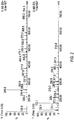
- the mixture was assayed by mass spectroscopy and HPLC. All of the brominated amino acid products were converted to their corresponding acetamides. Referring to Fig. 1 , the HPLC data indicated that the brominated product was a mixture of four compounds.
- the composition of the mixture was 62% N-acetyl-3-bromo-N-methylphenylalanine (13.370 min), 27% N-acetyl-4-bromo-N-methylphenylalanine (14,364 min), 9% N-acetyl-3-bromophenylalanine (7.967 min) and 2% N-acetyl-4-bromophenylalanine (8.492 min). These results were based on synthesized standards and calculation of response factors of a known mixture of the standards.
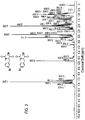
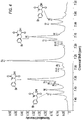
- acetamides of the reaction products underwent 1 H NMR analysis using deuterated chloroform as the solvent.
- Table 2 MICs for AbA-derivatives.
- AbA (native) ⁇ 0.05 >25 Boronate-mPhe 4 -AbA ⁇ 0.5 10 Br-mPhe 4 -AbA 0.031 2.5 MeO- ⁇ -mPhe 4 - AbA 5 N/A B(OH) 2 -mPhe 4 -AbA ⁇ 0.05 >100 Asp 3 -Br-mPhe 4 -AbA 5 10 Br-Phe 3 -Br-mPhe 4 -AbA 5 >100 Asp 3 -mAsp 4 -AbA 10 >100 I-mPhe 4 -AbA 2.5 >5 Phenyl-mPhe 4 -AbA ⁇ 0.05 ⁇ 0.94 5-methyl-furanyl-mPhe 4 -AbA N/A >5 4-N-N-
- Table 3 below, demonstrates the broad-spectrum antifungal activity for the AbA derivative 3-pyridyl-mPhe 4 -AbA, as determined according to the procedures described above. Table 3: Antifungal activity of 3-pyridyl-mPhe 4 -AbA.
- Candida albicans 104 (ATCC90028) 0.015 0.3 0.015 0.6 Candida albicans 633 (ATCC90029) 0.5 0.3 1 0.6 Candida albicans 2000 (ATCC 10231) 1 0.3 1 0.6 Candida albicans 2486 (ATCC204276) 0.03 0.06 0.03 0.06 Candida albicans 2487 (ATCC MYA-2732) 0.3 0.06 0.3 0.06 Candida albicans 4782 (ATCC24433) 0.125 0.3 0.25 0.6
- Candida guilliermondii 628 (ATCC34134) 0.03 0.008 0.03 0.015 Candida krusei 629 (ATCC 14243) 0.06 0.125 0.06 0.125 Candida lusitaniae 631 (ATCC66035) 0.125 0.015 0.25 0.03 Candida parapsilosis 0630 (ATCC90018) 0.03 0.06 0.03 0.125 Candida glabrata 635 (ATCC90030) 0.03 0.03 0.03 0.03 0.03 0.03 0.03 0.03 0.03 0.
- Example 7 Pharmacokinetic Studies of 3-pyridyl-mPhe 4 -AbA.
- mice were administered a single 200 mg/kg bolus dose of 3-pyridyl-mPhe 4 -AbA (diamonds) or AbA (squares), by oral gavage. Blood was collected a timed intervals after administration of the drug and analyzed for compound content by HPLC-MS.
- 3-pyridyl-mPhe 4 -AbA's pharmacokinetic (PK) properties in mice revealed that oral administration of 200 mg/kg of the compound generated significantly higher plasma concentrations than the same dose, also administered orally, in the same vehicle, of native AbA.
- the 3-pyridyl-mPhe 4 -AbA plasma concentration, at the end of the 12 hour experiment appears not to be decreasing as is does for native AbA, but rather to still be increasing. This demonstrates an enhanced bioavailability and/or a slower clearance of 3-pyridyl-mPhe 4 -AbA, as compared to the native drug.
- the experiment also shows that, A. fumigatus therapeutic concentrations, in mice, may be achievable with a considerably smaller dose.
- mice immunosuppressed with cyclophosphamide, were inoculated with 8 log10 CFU Candida albicans SC5413 and dosed (following inoculation) with 3-pyridyl-mPhe 4 -AbA (or a control antibiotic) orally, BID, for four consecutive days. Efficacy was determined by enumerating mortality. The ED50 of native AbA, in this Candidiasis model, was about 25 mg/kg, i.e. almost four times higher that of 3-pyridyl-mPhe 4 -AbA.
Landscapes
- Chemical & Material Sciences (AREA)
- Organic Chemistry (AREA)
- Health & Medical Sciences (AREA)
- Medicinal Chemistry (AREA)
- Life Sciences & Earth Sciences (AREA)
- General Health & Medical Sciences (AREA)
- Biochemistry (AREA)
- Molecular Biology (AREA)
- Proteomics, Peptides & Aminoacids (AREA)
- Genetics & Genomics (AREA)
- Biophysics (AREA)
- Chemical Kinetics & Catalysis (AREA)
- General Chemical & Material Sciences (AREA)
- Nuclear Medicine, Radiotherapy & Molecular Imaging (AREA)
- Pharmacology & Pharmacy (AREA)
- Veterinary Medicine (AREA)
- Public Health (AREA)
- Animal Behavior & Ethology (AREA)
- Analytical Chemistry (AREA)
- Oncology (AREA)
- Bioinformatics & Cheminformatics (AREA)
- Communicable Diseases (AREA)
- Engineering & Computer Science (AREA)
- Medicines That Contain Protein Lipid Enzymes And Other Medicines (AREA)
- Peptides Or Proteins (AREA)
- Low-Molecular Organic Synthesis Reactions Using Catalysts (AREA)
- Pharmaceuticals Containing Other Organic And Inorganic Compounds (AREA)
- Organic Low-Molecular-Weight Compounds And Preparation Thereof (AREA)
Priority Applications (1)
| Application Number | Priority Date | Filing Date | Title |
|---|---|---|---|
| PL12712195T PL2694532T3 (pl) | 2011-04-01 | 2012-03-23 | Pochodne aureobasidin i sposoby syntezy |
Applications Claiming Priority (3)
| Application Number | Priority Date | Filing Date | Title |
|---|---|---|---|
| US201161470750P | 2011-04-01 | 2011-04-01 | |
| US201161535018P | 2011-09-15 | 2011-09-15 | |
| PCT/US2012/030269 WO2012134989A1 (en) | 2011-04-01 | 2012-03-23 | Aureobasidium derivatives and methods of synthesis |
Publications (2)
| Publication Number | Publication Date |
|---|---|
| EP2694532A1 EP2694532A1 (en) | 2014-02-12 |
| EP2694532B1 true EP2694532B1 (en) | 2021-04-21 |
Family
ID=45929626
Family Applications (1)
| Application Number | Title | Priority Date | Filing Date |
|---|---|---|---|
| EP12712195.2A Active EP2694532B1 (en) | 2011-04-01 | 2012-03-23 | Aureobasidin derivatives and methods of synthesis |
Country Status (8)
| Country | Link |
|---|---|
| US (1) | US8906848B2 (cg-RX-API-DMAC7.html) |
| EP (1) | EP2694532B1 (cg-RX-API-DMAC7.html) |
| JP (2) | JP6058625B2 (cg-RX-API-DMAC7.html) |
| AU (1) | AU2012237028C1 (cg-RX-API-DMAC7.html) |
| CA (1) | CA2832041C (cg-RX-API-DMAC7.html) |
| ES (1) | ES2866698T3 (cg-RX-API-DMAC7.html) |
| PL (1) | PL2694532T3 (cg-RX-API-DMAC7.html) |
| WO (1) | WO2012134989A1 (cg-RX-API-DMAC7.html) |
Families Citing this family (6)
| Publication number | Priority date | Publication date | Assignee | Title |
|---|---|---|---|---|
| US10070649B2 (en) | 2013-01-30 | 2018-09-11 | Agrofresh Inc. | Volatile applications against pathogens |
| US11039617B2 (en) | 2013-01-30 | 2021-06-22 | Agrofresh Inc. | Large scale methods of uniformly coating packaging surfaces with a volatile antimicrobial to preserve food freshness |
| RS64770B1 (sr) | 2016-03-07 | 2023-11-30 | Agrofresh Inc | Sinergistički postupci upotrebe jedinjenja benzoksaborola i gasova za prezerviranje kao antimikrobnih agenasa za useve |
| JP2019527709A (ja) * | 2016-08-08 | 2019-10-03 | オーレオジェン バイオサイエンシーズ, インコーポレイテッド | オーレオバシジン誘導体および合成方法 |
| WO2018102345A1 (en) * | 2016-11-30 | 2018-06-07 | Agrobiologics Llc | Use of the antifungal aureobasidin a in agriculture |
| US11643438B2 (en) | 2018-07-20 | 2023-05-09 | The Board Of Regents Of The University Of Oklahoma | Antimicrobial peptides and methods of use |
Family Cites Families (6)
| Publication number | Priority date | Publication date | Assignee | Title |
|---|---|---|---|---|
| JPH0826071B2 (ja) * | 1989-07-11 | 1996-03-13 | 寶酒造株式会社 | 抗真菌抗生物質r106誘導体 |
| US5304121A (en) | 1990-12-28 | 1994-04-19 | Boston Scientific Corporation | Drug delivery system making use of a hydrogel polymer coating |
| JP3480848B2 (ja) * | 1992-06-19 | 2003-12-22 | タカラバイオ株式会社 | 環状ペプチドの合成方法 |
| US5886026A (en) | 1993-07-19 | 1999-03-23 | Angiotech Pharmaceuticals Inc. | Anti-angiogenic compositions and methods of use |
| ATE195951T1 (de) * | 1993-12-27 | 2000-09-15 | Takara Shuzo Co | Aureobasidine |
| US6099562A (en) | 1996-06-13 | 2000-08-08 | Schneider (Usa) Inc. | Drug coating with topcoat |
-
2012
- 2012-03-23 AU AU2012237028A patent/AU2012237028C1/en not_active Ceased
- 2012-03-23 PL PL12712195T patent/PL2694532T3/pl unknown
- 2012-03-23 US US14/006,493 patent/US8906848B2/en active Active
- 2012-03-23 EP EP12712195.2A patent/EP2694532B1/en active Active
- 2012-03-23 JP JP2014502638A patent/JP6058625B2/ja not_active Expired - Fee Related
- 2012-03-23 CA CA2832041A patent/CA2832041C/en active Active
- 2012-03-23 ES ES12712195T patent/ES2866698T3/es active Active
- 2012-03-23 WO PCT/US2012/030269 patent/WO2012134989A1/en not_active Ceased
-
2016
- 2016-06-21 JP JP2016122323A patent/JP6313369B2/ja not_active Expired - Fee Related
Non-Patent Citations (3)
| Title |
|---|
| ANA AFONSO ET AL: "Solid-phase synthesis of biaryl cyclic peptides by borylation and microwave-assisted intramolecular SuzukiMiyaura reaction", TETRAHEDRON, ELSEVIER SCIENCE PUBLISHERS, AMSTERDAM, NL, vol. 67, no. 12, 26 January 2011 (2011-01-26), pages 2238 - 2245, XP028366518, ISSN: 0040-4020, [retrieved on 20110202], DOI: 10.1016/J.TET.2011.01.084 * |
| HAUG ET AL: "Application of the Suzuki-Miyaura cross-coupling to increase antimicrobial potency generates promising novel antibacterials", BIOORGANIC & MEDICINAL CHEMISTRY LETTERS, PERGAMON, AMSTERDAM, NL, vol. 17, no. 8, 30 March 2007 (2007-03-30), pages 2361 - 2364, XP022009266, ISSN: 0960-894X, DOI: 10.1016/J.BMCL.2006.12.049 * |
| JACLYN M MURPHY ET AL: "Meta halogenation of 1,3-disubstituted arenes via iridium-catalyzed arene borylation", JOURNAL OF THE AMERICAN CHEMICAL SOCIETY, AMERICAN CHEMICAL SOCIETY, US, vol. 129, no. 50, 1 January 2007 (2007-01-01), pages 15434 - 15435, XP002657197, ISSN: 0002-7863, [retrieved on 20071121], DOI: 10.1021/JA076498N * |
Also Published As
| Publication number | Publication date |
|---|---|
| ES2866698T3 (es) | 2021-10-19 |
| JP6313369B2 (ja) | 2018-04-18 |
| US20140024578A1 (en) | 2014-01-23 |
| PL2694532T3 (pl) | 2021-08-23 |
| AU2012237028A1 (en) | 2013-10-31 |
| WO2012134989A1 (en) | 2012-10-04 |
| AU2012237028B2 (en) | 2017-04-06 |
| CA2832041A1 (en) | 2012-10-04 |
| JP6058625B2 (ja) | 2017-01-11 |
| AU2012237028C1 (en) | 2017-12-07 |
| JP2014515741A (ja) | 2014-07-03 |
| JP2016196489A (ja) | 2016-11-24 |
| CA2832041C (en) | 2020-12-01 |
| EP2694532A1 (en) | 2014-02-12 |
| US8906848B2 (en) | 2014-12-09 |
Similar Documents
| Publication | Publication Date | Title |
|---|---|---|
| EP4309741A1 (en) | Cyclic compound having inhibitory effect selective for kras but not for hras and nras | |
| EP4512818A1 (en) | Cyclic compound having selective kras inhibitory effect on hras and nras | |
| EP2694532B1 (en) | Aureobasidin derivatives and methods of synthesis | |
| EP3049089B1 (en) | Highly potent glucocorticoids | |
| EP2256113A1 (en) | Inhibitors of serine proteases | |
| EP2902026A1 (en) | Thiazolidinedione analogues for the treatment of metabolic inflammation mediated disease | |
| JP2014515741A5 (cg-RX-API-DMAC7.html) | ||
| EP2576508A2 (en) | Processes and intermediates | |
| WO2011017244A1 (en) | Polymorphs of 5-(4-(2-(5-ethylpyridin-2-yl)-2-oxoethoxy)benzyl)-1,3-thiazolidine-2,4-dione (mitoglitazone) | |
| CA2921198A1 (en) | Isotopically enriched azaindoles | |
| EP3525870B1 (en) | Highly potent glucocorticoids | |
| US11066447B2 (en) | Aureobasidium derivatives and methods of synthesis | |
| EP2707347A1 (en) | Processes and intermediates | |
| HK1201827B (en) | Modulators of atp-binding cassette transporters |
Legal Events
| Date | Code | Title | Description |
|---|---|---|---|
| PUAI | Public reference made under article 153(3) epc to a published international application that has entered the european phase |
Free format text: ORIGINAL CODE: 0009012 |
|
| 17P | Request for examination filed |
Effective date: 20131023 |
|
| AK | Designated contracting states |
Kind code of ref document: A1 Designated state(s): AL AT BE BG CH CY CZ DE DK EE ES FI FR GB GR HR HU IE IS IT LI LT LU LV MC MK MT NL NO PL PT RO RS SE SI SK SM TR |
|
| DAX | Request for extension of the european patent (deleted) | ||
| 17Q | First examination report despatched |
Effective date: 20151019 |
|
| STAA | Information on the status of an ep patent application or granted ep patent |
Free format text: STATUS: EXAMINATION IS IN PROGRESS |
|
| GRAP | Despatch of communication of intention to grant a patent |
Free format text: ORIGINAL CODE: EPIDOSNIGR1 |
|
| STAA | Information on the status of an ep patent application or granted ep patent |
Free format text: STATUS: GRANT OF PATENT IS INTENDED |
|
| INTG | Intention to grant announced |
Effective date: 20201014 |
|
| GRAS | Grant fee paid |
Free format text: ORIGINAL CODE: EPIDOSNIGR3 |
|
| GRAA | (expected) grant |
Free format text: ORIGINAL CODE: 0009210 |
|
| STAA | Information on the status of an ep patent application or granted ep patent |
Free format text: STATUS: THE PATENT HAS BEEN GRANTED |
|
| AK | Designated contracting states |
Kind code of ref document: B1 Designated state(s): AL AT BE BG CH CY CZ DE DK EE ES FI FR GB GR HR HU IE IS IT LI LT LU LV MC MK MT NL NO PL PT RO RS SE SI SK SM TR |
|
| REG | Reference to a national code |
Ref country code: GB Ref legal event code: FG4D |
|
| REG | Reference to a national code |
Ref country code: CH Ref legal event code: EP Ref country code: CH Ref legal event code: NV Representative=s name: SCHMAUDER AND PARTNER AG PATENT- UND MARKENANW, CH |
|
| REG | Reference to a national code |
Ref country code: DE Ref legal event code: R096 Ref document number: 602012075291 Country of ref document: DE Ref country code: IE Ref legal event code: FG4D |
|
| REG | Reference to a national code |
Ref country code: AT Ref legal event code: REF Ref document number: 1384539 Country of ref document: AT Kind code of ref document: T Effective date: 20210515 |
|
| REG | Reference to a national code |
Ref country code: SE Ref legal event code: TRGR |
|
| REG | Reference to a national code |
Ref country code: NL Ref legal event code: FP |
|
| REG | Reference to a national code |
Ref country code: NO Ref legal event code: T2 Effective date: 20210421 |
|
| REG | Reference to a national code |
Ref country code: LT Ref legal event code: MG9D |
|
| REG | Reference to a national code |
Ref country code: ES Ref legal event code: FG2A Ref document number: 2866698 Country of ref document: ES Kind code of ref document: T3 Effective date: 20211019 |
|
| PG25 | Lapsed in a contracting state [announced via postgrant information from national office to epo] |
Ref country code: HR Free format text: LAPSE BECAUSE OF FAILURE TO SUBMIT A TRANSLATION OF THE DESCRIPTION OR TO PAY THE FEE WITHIN THE PRESCRIBED TIME-LIMIT Effective date: 20210421 Ref country code: BG Free format text: LAPSE BECAUSE OF FAILURE TO SUBMIT A TRANSLATION OF THE DESCRIPTION OR TO PAY THE FEE WITHIN THE PRESCRIBED TIME-LIMIT Effective date: 20210721 Ref country code: FI Free format text: LAPSE BECAUSE OF FAILURE TO SUBMIT A TRANSLATION OF THE DESCRIPTION OR TO PAY THE FEE WITHIN THE PRESCRIBED TIME-LIMIT Effective date: 20210421 Ref country code: LT Free format text: LAPSE BECAUSE OF FAILURE TO SUBMIT A TRANSLATION OF THE DESCRIPTION OR TO PAY THE FEE WITHIN THE PRESCRIBED TIME-LIMIT Effective date: 20210421 |
|
| PG25 | Lapsed in a contracting state [announced via postgrant information from national office to epo] |
Ref country code: PT Free format text: LAPSE BECAUSE OF FAILURE TO SUBMIT A TRANSLATION OF THE DESCRIPTION OR TO PAY THE FEE WITHIN THE PRESCRIBED TIME-LIMIT Effective date: 20210823 Ref country code: GR Free format text: LAPSE BECAUSE OF FAILURE TO SUBMIT A TRANSLATION OF THE DESCRIPTION OR TO PAY THE FEE WITHIN THE PRESCRIBED TIME-LIMIT Effective date: 20210722 Ref country code: IS Free format text: LAPSE BECAUSE OF FAILURE TO SUBMIT A TRANSLATION OF THE DESCRIPTION OR TO PAY THE FEE WITHIN THE PRESCRIBED TIME-LIMIT Effective date: 20210821 Ref country code: LV Free format text: LAPSE BECAUSE OF FAILURE TO SUBMIT A TRANSLATION OF THE DESCRIPTION OR TO PAY THE FEE WITHIN THE PRESCRIBED TIME-LIMIT Effective date: 20210421 Ref country code: RS Free format text: LAPSE BECAUSE OF FAILURE TO SUBMIT A TRANSLATION OF THE DESCRIPTION OR TO PAY THE FEE WITHIN THE PRESCRIBED TIME-LIMIT Effective date: 20210421 |
|
| REG | Reference to a national code |
Ref country code: DE Ref legal event code: R097 Ref document number: 602012075291 Country of ref document: DE |
|
| PG25 | Lapsed in a contracting state [announced via postgrant information from national office to epo] |
Ref country code: SM Free format text: LAPSE BECAUSE OF FAILURE TO SUBMIT A TRANSLATION OF THE DESCRIPTION OR TO PAY THE FEE WITHIN THE PRESCRIBED TIME-LIMIT Effective date: 20210421 Ref country code: SK Free format text: LAPSE BECAUSE OF FAILURE TO SUBMIT A TRANSLATION OF THE DESCRIPTION OR TO PAY THE FEE WITHIN THE PRESCRIBED TIME-LIMIT Effective date: 20210421 Ref country code: EE Free format text: LAPSE BECAUSE OF FAILURE TO SUBMIT A TRANSLATION OF THE DESCRIPTION OR TO PAY THE FEE WITHIN THE PRESCRIBED TIME-LIMIT Effective date: 20210421 Ref country code: DK Free format text: LAPSE BECAUSE OF FAILURE TO SUBMIT A TRANSLATION OF THE DESCRIPTION OR TO PAY THE FEE WITHIN THE PRESCRIBED TIME-LIMIT Effective date: 20210421 Ref country code: CZ Free format text: LAPSE BECAUSE OF FAILURE TO SUBMIT A TRANSLATION OF THE DESCRIPTION OR TO PAY THE FEE WITHIN THE PRESCRIBED TIME-LIMIT Effective date: 20210421 Ref country code: RO Free format text: LAPSE BECAUSE OF FAILURE TO SUBMIT A TRANSLATION OF THE DESCRIPTION OR TO PAY THE FEE WITHIN THE PRESCRIBED TIME-LIMIT Effective date: 20210421 |
|
| PLBE | No opposition filed within time limit |
Free format text: ORIGINAL CODE: 0009261 |
|
| STAA | Information on the status of an ep patent application or granted ep patent |
Free format text: STATUS: NO OPPOSITION FILED WITHIN TIME LIMIT |
|
| 26N | No opposition filed |
Effective date: 20220124 |
|
| PGFP | Annual fee paid to national office [announced via postgrant information from national office to epo] |
Ref country code: IE Payment date: 20220110 Year of fee payment: 11 Ref country code: GB Payment date: 20220127 Year of fee payment: 11 Ref country code: DE Payment date: 20220126 Year of fee payment: 11 Ref country code: CH Payment date: 20220114 Year of fee payment: 11 Ref country code: AT Payment date: 20220225 Year of fee payment: 11 |
|
| PG25 | Lapsed in a contracting state [announced via postgrant information from national office to epo] |
Ref country code: IS Free format text: LAPSE BECAUSE OF FAILURE TO SUBMIT A TRANSLATION OF THE DESCRIPTION OR TO PAY THE FEE WITHIN THE PRESCRIBED TIME-LIMIT Effective date: 20210821 Ref country code: AL Free format text: LAPSE BECAUSE OF FAILURE TO SUBMIT A TRANSLATION OF THE DESCRIPTION OR TO PAY THE FEE WITHIN THE PRESCRIBED TIME-LIMIT Effective date: 20210421 |
|
| PGFP | Annual fee paid to national office [announced via postgrant information from national office to epo] |
Ref country code: SE Payment date: 20220110 Year of fee payment: 11 Ref country code: PL Payment date: 20220112 Year of fee payment: 11 Ref country code: NO Payment date: 20220309 Year of fee payment: 11 Ref country code: NL Payment date: 20220215 Year of fee payment: 11 Ref country code: IT Payment date: 20220210 Year of fee payment: 11 Ref country code: FR Payment date: 20220210 Year of fee payment: 11 Ref country code: BE Payment date: 20220221 Year of fee payment: 11 |
|
| PGFP | Annual fee paid to national office [announced via postgrant information from national office to epo] |
Ref country code: ES Payment date: 20220406 Year of fee payment: 11 |
|
| PG25 | Lapsed in a contracting state [announced via postgrant information from national office to epo] |
Ref country code: MC Free format text: LAPSE BECAUSE OF FAILURE TO SUBMIT A TRANSLATION OF THE DESCRIPTION OR TO PAY THE FEE WITHIN THE PRESCRIBED TIME-LIMIT Effective date: 20210421 |
|
| PG25 | Lapsed in a contracting state [announced via postgrant information from national office to epo] |
Ref country code: LU Free format text: LAPSE BECAUSE OF NON-PAYMENT OF DUE FEES Effective date: 20220323 |
|
| REG | Reference to a national code |
Ref country code: DE Ref legal event code: R119 Ref document number: 602012075291 Country of ref document: DE |
|
| REG | Reference to a national code |
Ref country code: NO Ref legal event code: MMEP |
|
| REG | Reference to a national code |
Ref country code: SE Ref legal event code: EUG Ref country code: CH Ref legal event code: PL |
|
| REG | Reference to a national code |
Ref country code: NL Ref legal event code: MM Effective date: 20230401 |
|
| REG | Reference to a national code |
Ref country code: AT Ref legal event code: MM01 Ref document number: 1384539 Country of ref document: AT Kind code of ref document: T Effective date: 20230323 |
|
| GBPC | Gb: european patent ceased through non-payment of renewal fee |
Effective date: 20230323 |
|
| REG | Reference to a national code |
Ref country code: BE Ref legal event code: MM Effective date: 20230331 |
|
| PG25 | Lapsed in a contracting state [announced via postgrant information from national office to epo] |
Ref country code: NL Free format text: LAPSE BECAUSE OF NON-PAYMENT OF DUE FEES Effective date: 20230401 |
|
| REG | Reference to a national code |
Ref country code: IE Ref legal event code: MM4A |
|
| PG25 | Lapsed in a contracting state [announced via postgrant information from national office to epo] |
Ref country code: GB Free format text: LAPSE BECAUSE OF NON-PAYMENT OF DUE FEES Effective date: 20230323 |
|
| PG25 | Lapsed in a contracting state [announced via postgrant information from national office to epo] |
Ref country code: SE Free format text: LAPSE BECAUSE OF NON-PAYMENT OF DUE FEES Effective date: 20230324 Ref country code: NO Free format text: LAPSE BECAUSE OF NON-PAYMENT OF DUE FEES Effective date: 20230331 Ref country code: LI Free format text: LAPSE BECAUSE OF NON-PAYMENT OF DUE FEES Effective date: 20230331 Ref country code: IE Free format text: LAPSE BECAUSE OF NON-PAYMENT OF DUE FEES Effective date: 20230323 Ref country code: GB Free format text: LAPSE BECAUSE OF NON-PAYMENT OF DUE FEES Effective date: 20230323 Ref country code: FR Free format text: LAPSE BECAUSE OF NON-PAYMENT OF DUE FEES Effective date: 20230331 Ref country code: DE Free format text: LAPSE BECAUSE OF NON-PAYMENT OF DUE FEES Effective date: 20231003 Ref country code: CH Free format text: LAPSE BECAUSE OF NON-PAYMENT OF DUE FEES Effective date: 20230331 Ref country code: AT Free format text: LAPSE BECAUSE OF NON-PAYMENT OF DUE FEES Effective date: 20230323 |
|
| PG25 | Lapsed in a contracting state [announced via postgrant information from national office to epo] |
Ref country code: BE Free format text: LAPSE BECAUSE OF NON-PAYMENT OF DUE FEES Effective date: 20230331 |
|
| PG25 | Lapsed in a contracting state [announced via postgrant information from national office to epo] |
Ref country code: HU Free format text: LAPSE BECAUSE OF FAILURE TO SUBMIT A TRANSLATION OF THE DESCRIPTION OR TO PAY THE FEE WITHIN THE PRESCRIBED TIME-LIMIT; INVALID AB INITIO Effective date: 20120323 |
|
| PG25 | Lapsed in a contracting state [announced via postgrant information from national office to epo] |
Ref country code: MK Free format text: LAPSE BECAUSE OF FAILURE TO SUBMIT A TRANSLATION OF THE DESCRIPTION OR TO PAY THE FEE WITHIN THE PRESCRIBED TIME-LIMIT Effective date: 20210421 Ref country code: IT Free format text: LAPSE BECAUSE OF NON-PAYMENT OF DUE FEES Effective date: 20230323 Ref country code: CY Free format text: LAPSE BECAUSE OF FAILURE TO SUBMIT A TRANSLATION OF THE DESCRIPTION OR TO PAY THE FEE WITHIN THE PRESCRIBED TIME-LIMIT Effective date: 20210421 |
|
| REG | Reference to a national code |
Ref country code: ES Ref legal event code: FD2A Effective date: 20240508 |
|
| PG25 | Lapsed in a contracting state [announced via postgrant information from national office to epo] |
Ref country code: TR Free format text: LAPSE BECAUSE OF FAILURE TO SUBMIT A TRANSLATION OF THE DESCRIPTION OR TO PAY THE FEE WITHIN THE PRESCRIBED TIME-LIMIT Effective date: 20210421 |
|
| PG25 | Lapsed in a contracting state [announced via postgrant information from national office to epo] |
Ref country code: ES Free format text: LAPSE BECAUSE OF NON-PAYMENT OF DUE FEES Effective date: 20230324 |
|
| PG25 | Lapsed in a contracting state [announced via postgrant information from national office to epo] |
Ref country code: ES Free format text: LAPSE BECAUSE OF NON-PAYMENT OF DUE FEES Effective date: 20230324 |
|
| PG25 | Lapsed in a contracting state [announced via postgrant information from national office to epo] |
Ref country code: MT Free format text: LAPSE BECAUSE OF FAILURE TO SUBMIT A TRANSLATION OF THE DESCRIPTION OR TO PAY THE FEE WITHIN THE PRESCRIBED TIME-LIMIT Effective date: 20210421 |
|
| PG25 | Lapsed in a contracting state [announced via postgrant information from national office to epo] |
Ref country code: PL Free format text: LAPSE BECAUSE OF NON-PAYMENT OF DUE FEES Effective date: 20230323 |
|
| PG25 | Lapsed in a contracting state [announced via postgrant information from national office to epo] |
Ref country code: PL Free format text: LAPSE BECAUSE OF NON-PAYMENT OF DUE FEES Effective date: 20230323 |
|
| REG | Reference to a national code |
Ref country code: AT Ref legal event code: UEP Ref document number: 1384539 Country of ref document: AT Kind code of ref document: T Effective date: 20210421 |