EP2689941A1 - An anti-skid device for wheels - Google Patents
An anti-skid device for wheels Download PDFInfo
- Publication number
- EP2689941A1 EP2689941A1 EP12178023.3A EP12178023A EP2689941A1 EP 2689941 A1 EP2689941 A1 EP 2689941A1 EP 12178023 A EP12178023 A EP 12178023A EP 2689941 A1 EP2689941 A1 EP 2689941A1
- Authority
- EP
- European Patent Office
- Prior art keywords
- casing
- section
- fastening
- tread
- cable
- Prior art date
- Legal status (The legal status is an assumption and is not a legal conclusion. Google has not performed a legal analysis and makes no representation as to the accuracy of the status listed.)
- Withdrawn
Links
Images



Classifications
-
- B—PERFORMING OPERATIONS; TRANSPORTING
- B60—VEHICLES IN GENERAL
- B60C—VEHICLE TYRES; TYRE INFLATION; TYRE CHANGING; CONNECTING VALVES TO INFLATABLE ELASTIC BODIES IN GENERAL; DEVICES OR ARRANGEMENTS RELATED TO TYRES
- B60C27/00—Non-skid devices temporarily attachable to resilient tyres or resiliently-tyred wheels
- B60C27/06—Non-skid devices temporarily attachable to resilient tyres or resiliently-tyred wheels extending over the complete circumference of the tread, e.g. made of chains or cables
- B60C27/062—Non-skid devices temporarily attachable to resilient tyres or resiliently-tyred wheels extending over the complete circumference of the tread, e.g. made of chains or cables provided with fastening means
- B60C27/066—Non-skid devices temporarily attachable to resilient tyres or resiliently-tyred wheels extending over the complete circumference of the tread, e.g. made of chains or cables provided with fastening means acting on the sidewall of the tyre
-
- B—PERFORMING OPERATIONS; TRANSPORTING
- B60—VEHICLES IN GENERAL
- B60C—VEHICLE TYRES; TYRE INFLATION; TYRE CHANGING; CONNECTING VALVES TO INFLATABLE ELASTIC BODIES IN GENERAL; DEVICES OR ARRANGEMENTS RELATED TO TYRES
- B60C27/00—Non-skid devices temporarily attachable to resilient tyres or resiliently-tyred wheels
- B60C27/06—Non-skid devices temporarily attachable to resilient tyres or resiliently-tyred wheels extending over the complete circumference of the tread, e.g. made of chains or cables
- B60C27/16—Non-skid devices temporarily attachable to resilient tyres or resiliently-tyred wheels extending over the complete circumference of the tread, e.g. made of chains or cables formed of close material, e.g. leather or synthetic mats
- B60C27/18—Non-skid devices temporarily attachable to resilient tyres or resiliently-tyred wheels extending over the complete circumference of the tread, e.g. made of chains or cables formed of close material, e.g. leather or synthetic mats the material being fabric, e.g. woven wire or textile
Definitions
- the subject matter of the present invention is an anti-skid device for wheels.
- the most traditional devices basically consist of a structure made up of sections of chain forming a tread suitable for being positioned on the tread of a wheel.
- Hooking means which may be more or less complex, are predisposed for constraining the anti-skid device to the wheel.
- anti-skid devices without chain sections, and consisting of a casing made of fabric have been made available.
- the casing comprises a tread designed to be positioned in contact with the tread of the wheel, an internal portion and an external portion respectively designed to be positioned in contact with the internal flank and the external flank of the wheel.
- the internal portion of the casing is provided with an annular elastic, which, as it extends, enables the casing to be keyed onto the wheel.
- the anti-skid devices of this more recent type offer the advantage of being markedly simpler to mount with respect to the more traditional chains. In fact, unlike traditional chains, the devices of this type do not require hooking and chain tensioning elements. To mount the device, it is sufficient to key the casing onto the upper part and onto the lateral parts of the wheel.
- the casing arranges itself independently, as a result of the traction exerted by the internal elastic, even on the lower portion of the wheel that was initially in contact with the ground and on which it was evidently not possible to position the casing.
- the anti-skid devices of this second type have some serious drawbacks.
- the tread made of fabric wears down very quickly.
- the tread made of fabric drastically loses adherence.
- An additional serious drawback is represented by the presence of the internal elastic that is required to enable the device to be mounted, but it does not prevent the device from slipping off, as for example in the case of manoeuvres involving sharp steering angles or backing up.
- the aim of the present invention is that of offering an anti-skid device for wheels that makes it possible to overcome the drawbacks of the anti-skid devices of the prior art.
- An advantage of the anti-skid device according to the present invention is that of being very simple to mount.
- Another advantage of the device according to the present invention is provided by the remarkable solidity with which it can be mounted on a wheel, eliminating the risk of the device slipping off the wheel.
- Another advantage of the device according to the present invention is that it is very resistant to wear.
- Figure 6 shows the device appearing in Figure 4 from a substantially opposite viewpoint with respect to that of Figure 4 ;
- Figure 7 is an alternative embodiment of the anti-skid device appearing in Figure 4 .
- the anti-skid device comprises a casing 2, 3, 4, shaped so as to envelop a wheel.
- the casing is made of a flexible material, for example a fabric or netting.
- the casing is provided with a tread 2, an internal portion 3 and an external portion 4.
- the tread 2 is shaped so as to enable it to be arranged around the tread of a wheel; it is thus capable of taking on a substantially cylindrical conformation when the casing 2, 3, 4 is keyed onto a wheel.
- the internal portion 3 is shaped so as to enable it to be arranged in contact with the internal flank of the wheel.
- the external portion 4 is shaped so as to enable it to be arranged in contact with the external flank of the wheel.
- the external portion 4 also has an annular shape, but it could also take on the form of a continuous layer that completely covers the external flank of the wheel.
- the anti-skid device further comprises at least one fastening cable 5, slidably associated with the casing 2, 3, 4.
- the fastening cable 5 is slidable with respect to the casing 2, 3, 4 between at least a mounting position, in which the section of fastening cable 5 interacting with the casing 2, 3, 4 is longer in length, and at least a fastening position, in which the section of fastening cable 5 interacting with the casing 2, 3, 4 is shorter in length.
- the fastening cable 5 is inextensible, for example in the form a sheathed or unsheathed steel cable. The inextensibility of the fastening cable 5 excludes any risk of the casing slipping off the wheel when the cable 5 is in its fastening position.
- the tread 2 and the internal portion 3 are in a relaxed configuration, which enables the casing 2, 3, 4 to be keyed onto a wheel.
- the tread 2 and the internal portion 3 are instead tightened in contact with the wheel in such a manner that the casing 2, 3, 4 cannot slip off the wheel.
- the cable 5 has at least a first section 51 that is associated with the tread 2 of the casing and at least a second section 52 associated with the internal portion 3 of the casing 2, 3, 4.
- the fastening cable 5 is slidable between a mounting position, in which the first and the second section 51, 52 are longer in length so as to enable the casing 2, 3, 4 to be keyed on a wheel, and a fastening position, in which the first and the second section 51, 52 are shorter in length such that the tread 2 tightens on the tread of the wheel and the internal portion 3 of the casing tightens on an internal flank of the wheel.
- the first section 51 is arranged in alternating opposite loops.
- these alternating opposite loops are defined about at least two return elements 511, 512, which are associated with the tread 2 of the casing in positions that are distanced by a predetermined angular step.
- the return elements 511, 512 are separated from one another by a distance that can be measured along a circumference on the tread 2 and concentric to the tread itself.
- the device comprises a plurality of return elements 511, 512 facing each other two by two, as shown in Figure 1 . Two return elements facing each other are separated by a predetermined distance.
- the return elements 511, 512 can be associated with respective supports 501, 502, which are, in turn, associated with the tread 2 of the casing in positions facing each other.
- the shortening of the first section of the fastening cable 5, which slides in contact with the return elements involves the transmission of force on the return elements 511, 512, which tends to bring them closer to one another along a circumference concentric to the tread 2, determining as a result the tightening of the tread 2 of the casing 2, 3, 4 on the tread of the wheel.
- the section of tread 2 comprised between the return elements 511, 512 tends to crease slightly owing to the shortening of the first section 51 of the fastening cable 5 and the resulting circumferential nearing of the return elements 511, 512 with respect to one another.
- the second section 52 of the fastening cable 5 exhibits a progression that is at least partly circular and concentric with respect to the tread 2. This progression is preferably obtained by predisposing a seating 7 of circular development and solidly constrained to the internal portion 3 of the casing 2, 3, 4, in which seating 7 the fastening cable 5 is slidable.
- the shortening of the second section 52 involves compaction of the seating 7 and of the internal portion 3 of the casing 2, 3, 4, which tighten in contact with the internal flank of the wheel.
- the seating 7 and the internal portion 3 of the casing shrinks, creasing and becoming compact upon contact with the wheel.
- the shortening of the second section 52 also involves a reduction in the diameter of the circumference defined by the second section 52, which as a result cannot slip off the wheel.
- the circular progression of the second section 52 allows the tension to which the fastening cable 5 is subjected to be distributed in a uniform manner on the internal portion 3 of the casing 2, 3, 4.
- the anti-skid device further comprises fastening means 6, associated with the casing 2, 3, 4 and predisposed to enable the fixing of the fastening cable 5 in the fastening position thereof.
- fastening means 6 also enables the traction and shortening of the fastening cable 5 with respect to the casing 2, 3, 4.
- the fastening means 6 may consist of a stop device that enables traction of the fastening cable 5 and prevents, unless there is a precise manoeuvre by the user, release sliding of the cable.
- the fastening means 6 may consist of a self-drawing device, for example the device described in the European patent 896 557 .
- a first end portion of the cable 5 can be solidly constrained with respect to the fastening means, whereas the opposite end portion is slidable with respect to the fastening means, which enables it to slide in a traction direction of the cable 5, while preventing it from sliding in the opposite direction, as shown in Figure 1 .
- both end portions of the cable 5 can be slidable and lockable with respect to the fastening means 6, which is solidly constrained to the casing 2, 3, 4.
- the mounting of the anti-skid device takes place according to the following procedure.
- the casing 2, 3, 4 With the fastening cable 5 in the mounting position, the casing 2, 3, 4 can be easily keyed onto the upper part of the wheel and over a good extension of the lateral parts of the wheel, excluding the lower part of the wheel resting on the ground, in that, evidently, it is not possible to pass the casing 2, 3, 4 under the wheel.
- the anti-skid device comprises a first and a second fastening cable 5, 5a.
- the two fastening cables 5, 5a exhibit specular progressions.
- each fastening cable 5, 5a has a first section 51, 51a arranged in alternating loops.
- the loops formed by the first cable 5 are opposite the loops formed by the second cable 5a.
- the alternating loops are defined about at least two return elements 511, 512, which are associated with the tread 2 of the casing in positions that are distanced by a predetermined angular step or by a predetermined distance along a circumference that is concentric with respect to the tread 2 itself.
- the device comprises a plurality of return elements 511, 512 facing each other two by two, as shown in Figure 2 .
- the first cable 5 is arranged about a first element 511, a second element 512 and a third return element 511, whereas the second cable is arranged about a first element 512a, a second return element 511a and a third return element 512a, respectively opposite the return elements 511, 512, 511 of the first fastening cable 5.
- the two fastening cables 5, 5a further comprise second sections 52, 52a associated with the internal portion 3 of the casing 2, 3, 4, said second sections exhibiting specular progressions.
- each second section 52, 52a has a progression that is at least partly semi-circular and concentric with respect to the tread 2. This progression is preferably obtained by predisposing a seating 7 of circular development and solidly constrained to the internal portion 3 of the casing 2, 3, 4, in which seating 7 each fastening cable 5, 5a is slidable specularly with respect to the other.
- the shortening of the second sections 52, 52a of the fastening cables 5, 5a involves compaction of the seating 7 and of the internal portion 3 of the casing 2, 3, 4, which tighten entering into contact with the internal flank of the wheel.
- the shortening of the second sections 52, 52a also involves a reduction in the diameter of the circumference defined overall by the second sections 52, 52a, so that the internal portion 3 of the casing cannot slip off the wheel.
- each cable comprises a third section 53, 53a, arranged in a diametrically opposite position with respect to the first sections 51, 51a, and extending between the internal portion 3 and the external portion 4 of the casing 2, 3, 4.
- a return element 54, 54a associated with the casing 2, 3, 4, and guiding each cable in the transition between the first section 51, 51a and the second section 52, 52a, ensuring that the tension to which each cable 5, 5a is subjected is transmitted to the casing 2, 3, 4 in the most effective manner.
- Similar return elements 55, 55a are interposed, for the same reason, between the second section 52, 52a of each cable and the corresponding third section 53, 53a.
- the return elements 54, 54a, 55, 55a described above divert each cable 5, 5a approximately by a right angle between each second section 52, 52a of circumferential development and, respectively, a section of connection with the first section 51, 51a and a section of connection with the third section 53, 53a.
- the return elements 54, 54a, 55, 55a described above can be structured in the form of shaped inserts, provided with internal channels for guiding the cables 5, 5a and applied in zones diametrically opposite the internal portion 3 of the casing 2, 3, 4.
- the return elements 54, 54a, 55, 55a may consist of pockets sewn on zones diametrically opposite the internal portion 3 of the casing 2, 3, 4, as shown in Figure 7 .
- the two cables 5, 5a may not cross over, as shown in Figures 2 to 6 , or they may cross over as they progress, as shown in Figure 7 .
- the two cables 5, 5a also cross over at the connecting zone between the second section 52, 52a and the third section 53, 53a, as can be seen in Figure 7 .
- the cable itself can be arranged with a progression that does not cross over, as shown in Figure 1 , or with a progression that exhibits a crossover.
- the cable 5 can extend starting from the fastening means 6, passing through the first section 51 and connecting to the second section 52, turning to the same side from which it leaves the first section 51 or turning to the opposite side.
- the cable After completing the second section 52, the cable returns to the first section 51 without crossing over in the zone of the return element 54; in the second case, the cable returns to the first section 51, crossing over in the zone of the return element 54.
- the solution in which the cables do not cross over is preferable from the point of view of the simplicity of execution and assembly.
- the solution in which the two cables 5, 5a cross over is preferable in terms of facilitating greater uniformity in the distribution of tension along the two cables.
- the utilisation of two fastening cables 5, 5a allows for simplification of the realisation of the fastening means 6.
- the first and the second fastening cable 5, 5a at the ends thereof, are associated with two end bodies 8, 9, which are reciprocally nearingly and distancingly mobile.
- a hooking means 10 is predisposed to enable the constraining of the two end bodies to one another in a minimum-distance position.
- This hooking means 10 comprises an elastic 11 that can be removably associated with the end bodies 8, 9.
- the two fastening cables 5, 5a can thus be drawn by means of the end bodies 8, 9, so as to bring about the shortening of the first section 51, 51a and of the second section 52, 52a, and then hooked to one another by means of the elastic 11.
- the elastic 11 is associated in a permanent manner with an end body, while it can be removably constrained to the other end body, for example by means of a hook 11a.
- a hook 11a To permit greater traction of the elastic 11, it is possible to fasten one end of the elastic 11 to a first end body and arrange a return 9a on a second end body 9.
- a plurality of hooking seatings 12 can be associated with the casing 2, 3, 4, particularly with the external portion 4 of the casing, so as to enable a removable fastening of the hook 11a.
- the elastic 11 can be drawn and turned around the return 9a by 180°. The elastic 11 can then be drawn further in the opposite direction and fastened to one of the hooking seatings 12 by means of the hook 11a.
- the mounting of the device in the embodiment with two fastening cables 5, 5a substantially takes place with the same procedure described previously for the embodiment with only one fastening cable 5.
- the traction exerted by the elastic 11 on the fastening cables 5, 5a enables the part of the casing 2, 3, 4 initially positioned in the lower part of the wheel to arrange itself independently on the wheel.
- the casing 2, 3, 4 is preferably provided with one or more adhering elements 21 applied externally to the tread 2 so as to enter into contact with the ground.
- Such one or more adhering elements 21 can be made of a material that offers greater wear resistance with respect to the material with which the casing 2, 3, 4 is made.
- the adhering elements 21 can be made of a material of the type commonly used for the production of tyres.
- the casing 2, 3, 4 is provided with a plurality of adhering elements 21 aligned along the tread 2.
- the adhering elements 21 have the form of rectangular frames provided with intersected diagonal sections, although other embodiments are possible.
- the use of distinct adhering elements 21 makes it possible to protect any possible creases or folds in the tread 2 in the zone of the first section 51 of the fastening cable 5, in that such possible creases or folds would not protrude with respect to the adhering elements 21.
- the casing could also be provided with only one adhering element 21 in the form of a band, shaped in a predetermined manner, applied to the tread 2.
- the adhering elements 21 allow for a marked increase in the grip of the anti-skid device on a snow-covered and/or muddy surface on which the wheel rolls.
Landscapes
- Engineering & Computer Science (AREA)
- Mechanical Engineering (AREA)
- Textile Engineering (AREA)
- Clamps And Clips (AREA)
Abstract
Anti-skid device for wheels, comprising: a casing (2, 3, 4) that comprises a tread (2), an internal portion (3) and an external portion (4); a fastening cable (5), slidably associated with the casing (2,3,4), which is slidable with respect to the casing (2, 3, 4) between at least a mounting position, in which the section of fastening cable (5) interacting with the casing (2, 3, 4) is longer in length and said tread (2) and said internal portion (3) are in a relaxed configuration, which enables the casing (2, 3, 4) to be keyed onto a wheel, and at least a fastening position, in which the section of fastening cable (5) interacting with the casing (2, 3, 4) is shorter in length and said tread (2) and said internal portion (3) are tightened in contact with the wheel.
Description
- The subject matter of the present invention is an anti-skid device for wheels.
- Various anti-skid devices for wheels are currently available. The most traditional devices basically consist of a structure made up of sections of chain forming a tread suitable for being positioned on the tread of a wheel. Hooking means, which may be more or less complex, are predisposed for constraining the anti-skid device to the wheel.
- More recently, anti-skid devices, without chain sections, and consisting of a casing made of fabric have been made available. The casing comprises a tread designed to be positioned in contact with the tread of the wheel, an internal portion and an external portion respectively designed to be positioned in contact with the internal flank and the external flank of the wheel. The internal portion of the casing is provided with an annular elastic, which, as it extends, enables the casing to be keyed onto the wheel. The anti-skid devices of this more recent type offer the advantage of being markedly simpler to mount with respect to the more traditional chains. In fact, unlike traditional chains, the devices of this type do not require hooking and chain tensioning elements. To mount the device, it is sufficient to key the casing onto the upper part and onto the lateral parts of the wheel. When the wheel completes one initial rotation, the casing arranges itself independently, as a result of the traction exerted by the internal elastic, even on the lower portion of the wheel that was initially in contact with the ground and on which it was evidently not possible to position the casing. The anti-skid devices of this second type, however, have some serious drawbacks. First of all, the tread made of fabric wears down very quickly. Moreover, when wet, the tread made of fabric drastically loses adherence. An additional serious drawback is represented by the presence of the internal elastic that is required to enable the device to be mounted, but it does not prevent the device from slipping off, as for example in the case of manoeuvres involving sharp steering angles or backing up.
- The aim of the present invention is that of offering an anti-skid device for wheels that makes it possible to overcome the drawbacks of the anti-skid devices of the prior art.
- An advantage of the anti-skid device according to the present invention is that of being very simple to mount.
- Another advantage of the device according to the present invention is provided by the remarkable solidity with which it can be mounted on a wheel, eliminating the risk of the device slipping off the wheel.
- Another advantage of the device according to the present invention is that it is very resistant to wear.
- Further characteristics and advantages of the anti-skid device according to the present invention will become more apparent from the approximate, and hence non-limiting, description, provided herein below, with reference to the accompanying figures, wherein:
- ∼
Figure 1 is a schematic view of a first embodiment of the anti-skid device according to the present invention, wherein some parts, indicated by a dashed line, are shown transparently in order to highlight others that are hidden from view; - ∼
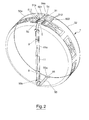
Figure 2 is a schematic view of a second embodiment of the anti-skid device according to the present invention, wherein some parts, indicated by a dashed line, are shown transparently in order to highlight others that are hidden from view; - ∼
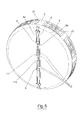
Figure 3 is a second schematic view of the device appearing inFigure 2 , from a substantially opposite viewpoint with respect to that ofFigure 2 ; - ∼
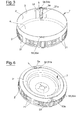
Figure 4 shows the device appearing inFigure 2 in a mounted configuration and gripped on a wheel; - ∼
Figure 5 is an alternative embodiment of some details of the device appearing inFigure 4 ; - ∼
Figure 6 shows the device appearing inFigure 4 from a substantially opposite viewpoint with respect to that ofFigure 4 ; - ∼
Figure 7 , with two enlargements, is an alternative embodiment of the anti-skid device appearing inFigure 4 . - With reference to the figures listed hereinabove, the anti-skid device according to the present invention comprises a
casing tread 2, aninternal portion 3 and anexternal portion 4. Thetread 2 is shaped so as to enable it to be arranged around the tread of a wheel; it is thus capable of taking on a substantially cylindrical conformation when thecasing internal portion 3 is shaped so as to enable it to be arranged in contact with the internal flank of the wheel. For this purpose, it preferably has an annular shape, provided with an edge 3a, which, when the casing is keyed onto the wheel, is arranged approximately concentrically to the wheel. The length of theinternal portion 3 is such as to enable thecasing tread 2 overlaps the tread of the wheel. Theexternal portion 4 is shaped so as to enable it to be arranged in contact with the external flank of the wheel. Preferably, theexternal portion 4 also has an annular shape, but it could also take on the form of a continuous layer that completely covers the external flank of the wheel. - The anti-skid device according to the present invention further comprises at least one
fastening cable 5, slidably associated with thecasing fastening cable 5 is slidable with respect to thecasing fastening cable 5 interacting with thecasing fastening cable 5 interacting with thecasing fastening cable 5 is inextensible, for example in the form a sheathed or unsheathed steel cable. The inextensibility of thefastening cable 5 excludes any risk of the casing slipping off the wheel when thecable 5 is in its fastening position. - In the mounting position of the
cable 5, thetread 2 and theinternal portion 3 are in a relaxed configuration, which enables thecasing cable 5, thetread 2 and theinternal portion 3 are instead tightened in contact with the wheel in such a manner that thecasing - In a preferred embodiment of the device, illustrated in
Figure 1 , thecable 5 has at least afirst section 51 that is associated with thetread 2 of the casing and at least asecond section 52 associated with theinternal portion 3 of thecasing - As mentioned previously, the
fastening cable 5 is slidable between a mounting position, in which the first and thesecond section casing second section tread 2 tightens on the tread of the wheel and theinternal portion 3 of the casing tightens on an internal flank of the wheel. - To obtain the effect of tightening the
tread 2 of the casing on the tread of the wheel, thefirst section 51 is arranged in alternating opposite loops. Preferably, these alternating opposite loops are defined about at least tworeturn elements tread 2 of the casing in positions that are distanced by a predetermined angular step. In other words, thereturn elements tread 2 and concentric to the tread itself. Preferably, the device comprises a plurality ofreturn elements Figure 1 . Two return elements facing each other are separated by a predetermined distance. Thereturn elements respective supports tread 2 of the casing in positions facing each other. - In the case in which there are only two
return elements more return elements fastening cable 5, which slides in contact with the return elements, involves the transmission of force on thereturn elements tread 2, determining as a result the tightening of thetread 2 of thecasing tread 2 comprised between thereturn elements first section 51 of thefastening cable 5 and the resulting circumferential nearing of thereturn elements - The
second section 52 of thefastening cable 5 exhibits a progression that is at least partly circular and concentric with respect to thetread 2. This progression is preferably obtained by predisposing aseating 7 of circular development and solidly constrained to theinternal portion 3 of thecasing seating 7 thefastening cable 5 is slidable. The shortening of thesecond section 52 involves compaction of theseating 7 and of theinternal portion 3 of thecasing seating 7 and theinternal portion 3 of the casing shrinks, creasing and becoming compact upon contact with the wheel. The shortening of thesecond section 52 also involves a reduction in the diameter of the circumference defined by thesecond section 52, which as a result cannot slip off the wheel. The circular progression of thesecond section 52 allows the tension to which thefastening cable 5 is subjected to be distributed in a uniform manner on theinternal portion 3 of thecasing - The anti-skid device according to the present invention further comprises fastening means 6, associated with the
casing fastening cable 5 in the fastening position thereof. In addition to enabling the fixing of the cable in the fastening position, such fastening means 6 also enables the traction and shortening of thefastening cable 5 with respect to thecasing first section 51, to thesecond section 52, and to thefastening cable 5 overall, the traction of thefastening cable 5 with respect to thecasing fastening cable 5 interacting with thecasing casing casing - In a first embodiment, the fastening means 6 may consist of a stop device that enables traction of the
fastening cable 5 and prevents, unless there is a precise manoeuvre by the user, release sliding of the cable. In an alternative embodiment, the fastening means 6 may consist of a self-drawing device, for example the device described in the European patent896 557 cable 5 can be solidly constrained with respect to the fastening means, whereas the opposite end portion is slidable with respect to the fastening means, which enables it to slide in a traction direction of thecable 5, while preventing it from sliding in the opposite direction, as shown inFigure 1 . As an alternative, both end portions of thecable 5 can be slidable and lockable with respect to the fastening means 6, which is solidly constrained to thecasing - The mounting of the anti-skid device takes place according to the following procedure. With the
fastening cable 5 in the mounting position, thecasing casing - It is then possible to activate the fastening means 6, which exerts traction on the
fastening cable 5, shortening it with respect to thecasing cable 5 enables the remaining portion of thecasing first section 51 and of thesecond section 52 of thefastening cable 5, as well as the resulting compaction of thecasing - In a second embodiment, the anti-skid device comprises a first and a
second fastening cable fastening cables - As can be seen in
Figure 2 , eachfastening cable first section first cable 5 are opposite the loops formed by thesecond cable 5a. In this embodiment as well, the alternating loops are defined about at least tworeturn elements tread 2 of the casing in positions that are distanced by a predetermined angular step or by a predetermined distance along a circumference that is concentric with respect to thetread 2 itself. Preferably, the device comprises a plurality ofreturn elements Figure 2 . Thefirst cable 5 is arranged about afirst element 511, asecond element 512 and athird return element 511, whereas the second cable is arranged about a first element 512a, a second return element 511a and a third return element 512a, respectively opposite thereturn elements first fastening cable 5. - The two
fastening cables second sections internal portion 3 of thecasing - In particular, each
second section tread 2. This progression is preferably obtained by predisposing aseating 7 of circular development and solidly constrained to theinternal portion 3 of thecasing seating 7 eachfastening cable second sections fastening cables seating 7 and of theinternal portion 3 of thecasing second sections second sections internal portion 3 of the casing cannot slip off the wheel. - In the embodiment providing for two
fastening cables third section first sections internal portion 3 and theexternal portion 4 of thecasing first section second section return element casing first section second section cable casing Similar return elements second section third section return elements cable second section first section third section return elements cables internal portion 3 of thecasing return elements internal portion 3 of thecasing Figure 7 . - In the connecting zones between the
first section second section cables Figures 2 to 6 , or they may cross over as they progress, as shown inFigure 7 . In this second case, the twocables second section third section Figure 7 . Likewise, in the embodiment with only onefastening cable 5, the cable itself can be arranged with a progression that does not cross over, as shown inFigure 1 , or with a progression that exhibits a crossover. In other words, consideringFigure 1 , thecable 5 can extend starting from the fastening means 6, passing through thefirst section 51 and connecting to thesecond section 52, turning to the same side from which it leaves thefirst section 51 or turning to the opposite side. In the first case, after completing thesecond section 52, the cable returns to thefirst section 51 without crossing over in the zone of thereturn element 54; in the second case, the cable returns to thefirst section 51, crossing over in the zone of thereturn element 54. - The solution in which the cables do not cross over is preferable from the point of view of the simplicity of execution and assembly. The solution in which the two
cables - The utilisation of two
fastening cables Figures 2 and4 , the first and thesecond fastening cable end bodies end bodies fastening cables end bodies first section second section hook 11a. To permit greater traction of the elastic 11, it is possible to fasten one end of the elastic 11 to a first end body and arrange areturn 9a on asecond end body 9. A plurality of hookingseatings 12 can be associated with thecasing external portion 4 of the casing, so as to enable a removable fastening of thehook 11a. In this case, the elastic 11 can be drawn and turned around thereturn 9a by 180°. The elastic 11 can then be drawn further in the opposite direction and fastened to one of the hookingseatings 12 by means of thehook 11a. - The mounting of the device in the embodiment with two
fastening cables fastening cable 5. In this case, after having keyed thecasing seatings 12. The traction exerted by the elastic 11 on thefastening cables casing first section second section fastening cables casing - The
casing elements 21 applied externally to thetread 2 so as to enter into contact with the ground. Such one or more adheringelements 21 can be made of a material that offers greater wear resistance with respect to the material with which thecasing elements 21 can be made of a material of the type commonly used for the production of tyres. - In the examples illustrated, the
casing elements 21 aligned along thetread 2. By way of example only, the adheringelements 21 have the form of rectangular frames provided with intersected diagonal sections, although other embodiments are possible. The use of distinct adheringelements 21 makes it possible to protect any possible creases or folds in thetread 2 in the zone of thefirst section 51 of thefastening cable 5, in that such possible creases or folds would not protrude with respect to the adheringelements 21. The casing could also be provided with only one adheringelement 21 in the form of a band, shaped in a predetermined manner, applied to thetread 2. The adheringelements 21 allow for a marked increase in the grip of the anti-skid device on a snow-covered and/or muddy surface on which the wheel rolls.
Claims (15)
- An anti-skid device for wheels, characterised in that it comprises: a casing (2, 3, 4) which comprises a tread (2), an internal portion (3) and an external portion (4); a fastening cable (5), slidably associated to the casing (2, 3, 4), which is slidable with respect to the casing (2, 3, 4) between at least a mounting position, in which the section of fastening cable (5) interacting with the casing (2, 3, 4) has a greater length and said tread (2) and said internal portion (3) are in a relaxed configuration which enables the casing (2, 3, 4) to be keyed onto a wheel, and at least a fastening position, in which the section of fastening cable (5) interacting with the casing (2, 3, 4) has a smaller length and said tread (2) and said internal portion (3) are tightened in contact with the wheel.
- The anti-skid device according to claim 1, wherein said fastening cable (5) comprises at least a first section (51) associated to the tread (2) of the casing and at least a second section (52) associated to the internal portion (3) of the casing (2, 3, 4); said fastening cable (5) being slidable between a mounting position, in which the first and the second section (51, 52) have a greater length such as to enable the casing (2, 3, 4) to be keyed on a wheel, and a fastening position, in which the first and the second section (51,52) have a smaller length such that the tread (2) tightens on the tread of the wheel and the internal portion (3) of the casing tightens on an internal flank of the wheel.
- The anti-skid device according to claim 2, wherein the first section (51) is arranged in alternating opposite loops.
- The anti-skid device according to claim 3, wherein said alternating opposite loops are defined about at least two return elements (511, 512) associated to the tread (2) of the casing in positions that are distanced by a predetermined angular step.
- The anti-skid device according to one of the preceding claims, wherein the second section (52) of the fastening cable (5) exhibits a progression which is at least partly circular and concentric with respect to the tread (2).
- The device according to one of claims from 2 to 5, wherein, in the connecting zone between the first section (51) and the second section (52), the fastening cable (5) exhibits a non-crossed progression or exhibits a crossed progression.
- The anti-skid device according to one of the preceding claims, comprising fastening means (6), associated to the casing (2, 3, 4), predisposed to enable fixing the fastening cable (5) in the fastening position thereof.
- The anti-skid device of one of the preceding claims, comprising a seating (7) predisposed such as to slidably accommodate the second section (52) of the fastening cable (5).
- The anti-skid device of one of the preceding claims, comprising a first and a second fastening cable (5, 5a).
- The anti-skid device according to claim 9, wherein the two fastening cables (5, 5a) exhibit specular progressions and each fastening cable (5, 5a) comprises: a first section (51, 51a) associated to the tread (2) and arranged in alternating loops opposite to the loops formed by the other fastening cable; a second section (52, 52a) associated to the internal portion (3) of the casing (2, 3, 4).
- The anti-skid device according to claim 10, and one of claims from 8 to 14, wherein, in the connecting zone between the first section (51, 51a) and the second section (52, 52a), the two cables (5, 5a) as they progress can either not cross or can cross..
- The anti-skid device according to one of claims from 9 to 11, wherein the first and the second fastening cables (5, 5a) at ends thereof are associated to two end bodies (8, 9) which are reciprocally nearingly and distancingly mobile, hooking means (10) being predisposed to enable constraining the two end bodies to one another in a minimum-distance position.
- The device according to claim 12, wherein said hooking means (10) comprise an elastic (11) which can be removably associated to said end bodies (8, 9).
- The device according to claim 13, wherein said elastic (11) is solidly constrained, at a first end thereof, to a first end body (8) and said hooking means comprise a return (9a), associated to a second end body (9), and a plurality of hooking seatings (12) predisposed to enable a removable fastening of a hook (11a) associated to a second end of the elastic (11).
- The device according to one of the preceding claims, wherein the casing (2, 3, 4) is preferably provided with one or more adhering elements (21) applied externally to the tread (2) such as to enter into contact with the ground.
Priority Applications (1)
| Application Number | Priority Date | Filing Date | Title |
|---|---|---|---|
| EP12178023.3A EP2689941A1 (en) | 2012-07-26 | 2012-07-26 | An anti-skid device for wheels |
Applications Claiming Priority (1)
| Application Number | Priority Date | Filing Date | Title |
|---|---|---|---|
| EP12178023.3A EP2689941A1 (en) | 2012-07-26 | 2012-07-26 | An anti-skid device for wheels |
Publications (1)
| Publication Number | Publication Date |
|---|---|
| EP2689941A1 true EP2689941A1 (en) | 2014-01-29 |
Family
ID=46969975
Family Applications (1)
| Application Number | Title | Priority Date | Filing Date |
|---|---|---|---|
| EP12178023.3A Withdrawn EP2689941A1 (en) | 2012-07-26 | 2012-07-26 | An anti-skid device for wheels |
Country Status (1)
| Country | Link |
|---|---|
| EP (1) | EP2689941A1 (en) |
Cited By (3)
| Publication number | Priority date | Publication date | Assignee | Title |
|---|---|---|---|---|
| CN104260604A (en) * | 2014-10-22 | 2015-01-07 | 朱景建 | Additional non-skid tire assembly |
| CN104354549A (en) * | 2014-10-22 | 2015-02-18 | 朱景建 | Tire skid prevention method and skid prevention system |
| US20230018076A1 (en) * | 2019-12-30 | 2023-01-19 | Philippe Souyri | Snow cover for tires |
Citations (8)
| Publication number | Priority date | Publication date | Assignee | Title |
|---|---|---|---|---|
| DE2108386A1 (en) * | 1971-01-29 | 1972-08-24 | Doller, Arthur, 7800 Freiburg | Removable cover, in particular for vehicle tires |
| EP0896557A1 (en) | 1997-03-04 | 1999-02-17 | Contiweiss Weissenfels Gmbh & Co. Kg | Tensioning device |
| DE19959381A1 (en) * | 1998-12-11 | 2000-06-21 | Hermann Ramsauer | Ice traction aid for vehicle tires comprises elastomeric strip with stud-like projections wrapped round running surface and joined at ends |
| WO2006129147A1 (en) * | 2005-05-29 | 2006-12-07 | Antonio Masi | Fabric antiskid cover for wheels |
| WO2007066022A1 (en) * | 2005-12-08 | 2007-06-14 | Joubert Productions S.A.S. | Textile chain for improving the adhesion of motor vehicle wheels |
| FR2912686A1 (en) * | 2007-02-19 | 2008-08-22 | Siepa France Soc D Innovation | Anti-sliding envelope for motor vehicle accessories field, has locking units extending from rear side till front portion of cover so as to be gripped by user from front, where rear side is applied on inner flange of wheel |
| WO2009046020A1 (en) * | 2007-10-01 | 2009-04-09 | Signal Ventures, Inc. | Wheel traction cover with traction pads |
| WO2011064679A1 (en) * | 2009-11-24 | 2011-06-03 | C.A. Masi Di Antonio Masi & C. S.A.S. | Antiskid cover for tires |
-
2012
- 2012-07-26 EP EP12178023.3A patent/EP2689941A1/en not_active Withdrawn
Patent Citations (8)
| Publication number | Priority date | Publication date | Assignee | Title |
|---|---|---|---|---|
| DE2108386A1 (en) * | 1971-01-29 | 1972-08-24 | Doller, Arthur, 7800 Freiburg | Removable cover, in particular for vehicle tires |
| EP0896557A1 (en) | 1997-03-04 | 1999-02-17 | Contiweiss Weissenfels Gmbh & Co. Kg | Tensioning device |
| DE19959381A1 (en) * | 1998-12-11 | 2000-06-21 | Hermann Ramsauer | Ice traction aid for vehicle tires comprises elastomeric strip with stud-like projections wrapped round running surface and joined at ends |
| WO2006129147A1 (en) * | 2005-05-29 | 2006-12-07 | Antonio Masi | Fabric antiskid cover for wheels |
| WO2007066022A1 (en) * | 2005-12-08 | 2007-06-14 | Joubert Productions S.A.S. | Textile chain for improving the adhesion of motor vehicle wheels |
| FR2912686A1 (en) * | 2007-02-19 | 2008-08-22 | Siepa France Soc D Innovation | Anti-sliding envelope for motor vehicle accessories field, has locking units extending from rear side till front portion of cover so as to be gripped by user from front, where rear side is applied on inner flange of wheel |
| WO2009046020A1 (en) * | 2007-10-01 | 2009-04-09 | Signal Ventures, Inc. | Wheel traction cover with traction pads |
| WO2011064679A1 (en) * | 2009-11-24 | 2011-06-03 | C.A. Masi Di Antonio Masi & C. S.A.S. | Antiskid cover for tires |
Cited By (4)
| Publication number | Priority date | Publication date | Assignee | Title |
|---|---|---|---|---|
| CN104260604A (en) * | 2014-10-22 | 2015-01-07 | 朱景建 | Additional non-skid tire assembly |
| CN104354549A (en) * | 2014-10-22 | 2015-02-18 | 朱景建 | Tire skid prevention method and skid prevention system |
| US20230018076A1 (en) * | 2019-12-30 | 2023-01-19 | Philippe Souyri | Snow cover for tires |
| US12454157B2 (en) * | 2019-12-30 | 2025-10-28 | Compagnie Generale Des Etablissements Michelin | Snow cover for tires |
Similar Documents
| Publication | Publication Date | Title |
|---|---|---|
| EP0902628B1 (en) | Traction augmentation device | |
| EP2689941A1 (en) | An anti-skid device for wheels | |
| EP1888353B1 (en) | Antiskid device for vehicles | |
| JP2012517930A (en) | Anti-slip device for vehicle wheel tire | |
| WO2011021662A1 (en) | Fabric tire chain | |
| WO2009046020A1 (en) | Wheel traction cover with traction pads | |
| US11465443B2 (en) | Wheel with bead locks | |
| US20140102609A1 (en) | Anti-skid device for wheels | |
| EP1896278B1 (en) | Fabric antiskid cover for wheels | |
| US20020092590A1 (en) | Treaded Traction device | |
| US1346226A (en) | Antiskid-chain | |
| JP2014083872A (en) | Antiskid device for wheel | |
| US5961754A (en) | Slider stopper having suction cups | |
| CA3257155A1 (en) | ANTI-SKID DEVICE | |
| KR20140007677A (en) | Non-slip cover of an automobile tire | |
| US2926717A (en) | Anti-skid tire chain | |
| KR20140000975U (en) | Tire snowy cover for preventing a slip on snow road | |
| ITMO20110083A1 (en) | ANTI-SCRATCH DEVICE FOR WHEELS. | |
| JP6013765B2 (en) | Tire chain with a common covering and retaining member similar to traction means | |
| KR101596468B1 (en) | Adjustable self-adhesive fabric snow chains | |
| JPH0380642B2 (en) | ||
| KR20130004653U (en) | Snow chain | |
| JP2011057109A (en) | Anti-skid device of automobile tire | |
| US2034821A (en) | Nonskid device for wheels | |
| US3006397A (en) | Traction harness |
Legal Events
| Date | Code | Title | Description |
|---|---|---|---|
| PUAI | Public reference made under article 153(3) epc to a published international application that has entered the european phase |
Free format text: ORIGINAL CODE: 0009012 |
|
| AK | Designated contracting states |
Kind code of ref document: A1 Designated state(s): AL AT BE BG CH CY CZ DE DK EE ES FI FR GB GR HR HU IE IS IT LI LT LU LV MC MK MT NL NO PL PT RO RS SE SI SK SM TR |
|
| AX | Request for extension of the european patent |
Extension state: BA ME |
|
| STAA | Information on the status of an ep patent application or granted ep patent |
Free format text: STATUS: THE APPLICATION IS DEEMED TO BE WITHDRAWN |
|
| 18D | Application deemed to be withdrawn |
Effective date: 20140730 |