EP2687794A2 - Refrigeration systems and methods for connection with a vehicle's liquid cooling system - Google Patents
Refrigeration systems and methods for connection with a vehicle's liquid cooling system Download PDFInfo
- Publication number
- EP2687794A2 EP2687794A2 EP13160909.1A EP13160909A EP2687794A2 EP 2687794 A2 EP2687794 A2 EP 2687794A2 EP 13160909 A EP13160909 A EP 13160909A EP 2687794 A2 EP2687794 A2 EP 2687794A2
- Authority
- EP
- European Patent Office
- Prior art keywords
- coolant
- liquid
- compartment
- heat exchanger
- chilled
- Prior art date
- Legal status (The legal status is an assumption and is not a legal conclusion. Google has not performed a legal analysis and makes no representation as to the accuracy of the status listed.)
- Granted
Links
Images





Classifications
-
- B—PERFORMING OPERATIONS; TRANSPORTING
- B60—VEHICLES IN GENERAL
- B60H—ARRANGEMENTS OF HEATING, COOLING, VENTILATING OR OTHER AIR-TREATING DEVICES SPECIALLY ADAPTED FOR PASSENGER OR GOODS SPACES OF VEHICLES
- B60H1/00—Heating, cooling or ventilating devices
- B60H1/00507—Details, e.g. mounting arrangements, desaeration devices
- B60H1/00592—Add-on devices, e.g. heat/cooling boxes, compartment dividers, upgrade sets
-
- F—MECHANICAL ENGINEERING; LIGHTING; HEATING; WEAPONS; BLASTING
- F25—REFRIGERATION OR COOLING; COMBINED HEATING AND REFRIGERATION SYSTEMS; HEAT PUMP SYSTEMS; MANUFACTURE OR STORAGE OF ICE; LIQUEFACTION SOLIDIFICATION OF GASES
- F25B—REFRIGERATION MACHINES, PLANTS OR SYSTEMS; COMBINED HEATING AND REFRIGERATION SYSTEMS; HEAT PUMP SYSTEMS
- F25B7/00—Compression machines, plants or systems, with cascade operation, i.e. with two or more circuits, the heat from the condenser of one circuit being absorbed by the evaporator of the next circuit
-
- F—MECHANICAL ENGINEERING; LIGHTING; HEATING; WEAPONS; BLASTING
- F25—REFRIGERATION OR COOLING; COMBINED HEATING AND REFRIGERATION SYSTEMS; HEAT PUMP SYSTEMS; MANUFACTURE OR STORAGE OF ICE; LIQUEFACTION SOLIDIFICATION OF GASES
- F25D—REFRIGERATORS; COLD ROOMS; ICE-BOXES; COOLING OR FREEZING APPARATUS NOT OTHERWISE PROVIDED FOR
- F25D15/00—Devices not covered by group F25D11/00 or F25D13/00, e.g. non-self-contained movable devices
-
- B—PERFORMING OPERATIONS; TRANSPORTING
- B64—AIRCRAFT; AVIATION; COSMONAUTICS
- B64D—EQUIPMENT FOR FITTING IN OR TO AIRCRAFT; FLIGHT SUITS; PARACHUTES; ARRANGEMENT OR MOUNTING OF POWER PLANTS OR PROPULSION TRANSMISSIONS IN AIRCRAFT
- B64D11/00—Passenger or crew accommodation; Flight-deck installations not otherwise provided for
- B64D11/04—Galleys
-
- B—PERFORMING OPERATIONS; TRANSPORTING
- B64—AIRCRAFT; AVIATION; COSMONAUTICS
- B64D—EQUIPMENT FOR FITTING IN OR TO AIRCRAFT; FLIGHT SUITS; PARACHUTES; ARRANGEMENT OR MOUNTING OF POWER PLANTS OR PROPULSION TRANSMISSIONS IN AIRCRAFT
- B64D13/00—Arrangements or adaptations of air-treatment apparatus for aircraft crew or passengers, or freight space
- B64D13/06—Arrangements or adaptations of air-treatment apparatus for aircraft crew or passengers, or freight space the air being conditioned
- B64D2013/0603—Environmental Control Systems
- B64D2013/0629—Environmental Control Systems with subsystems for cooling food, catering or special loads
-
- F—MECHANICAL ENGINEERING; LIGHTING; HEATING; WEAPONS; BLASTING
- F25—REFRIGERATION OR COOLING; COMBINED HEATING AND REFRIGERATION SYSTEMS; HEAT PUMP SYSTEMS; MANUFACTURE OR STORAGE OF ICE; LIQUEFACTION SOLIDIFICATION OF GASES
- F25B—REFRIGERATION MACHINES, PLANTS OR SYSTEMS; COMBINED HEATING AND REFRIGERATION SYSTEMS; HEAT PUMP SYSTEMS
- F25B21/00—Machines, plants or systems, using electric or magnetic effects
- F25B21/02—Machines, plants or systems, using electric or magnetic effects using Peltier effect; using Nernst-Ettinghausen effect
-
- F—MECHANICAL ENGINEERING; LIGHTING; HEATING; WEAPONS; BLASTING
- F25—REFRIGERATION OR COOLING; COMBINED HEATING AND REFRIGERATION SYSTEMS; HEAT PUMP SYSTEMS; MANUFACTURE OR STORAGE OF ICE; LIQUEFACTION SOLIDIFICATION OF GASES
- F25B—REFRIGERATION MACHINES, PLANTS OR SYSTEMS; COMBINED HEATING AND REFRIGERATION SYSTEMS; HEAT PUMP SYSTEMS
- F25B2321/00—Details of machines, plants or systems, using electric or magnetic effects
- F25B2321/02—Details of machines, plants or systems, using electric or magnetic effects using Peltier effects; using Nernst-Ettinghausen effects
- F25B2321/021—Control thereof
- F25B2321/0212—Control thereof of electric power, current or voltage
-
- F—MECHANICAL ENGINEERING; LIGHTING; HEATING; WEAPONS; BLASTING
- F25—REFRIGERATION OR COOLING; COMBINED HEATING AND REFRIGERATION SYSTEMS; HEAT PUMP SYSTEMS; MANUFACTURE OR STORAGE OF ICE; LIQUEFACTION SOLIDIFICATION OF GASES
- F25B—REFRIGERATION MACHINES, PLANTS OR SYSTEMS; COMBINED HEATING AND REFRIGERATION SYSTEMS; HEAT PUMP SYSTEMS
- F25B2321/00—Details of machines, plants or systems, using electric or magnetic effects
- F25B2321/02—Details of machines, plants or systems, using electric or magnetic effects using Peltier effects; using Nernst-Ettinghausen effects
- F25B2321/025—Removal of heat
-
- F—MECHANICAL ENGINEERING; LIGHTING; HEATING; WEAPONS; BLASTING
- F25—REFRIGERATION OR COOLING; COMBINED HEATING AND REFRIGERATION SYSTEMS; HEAT PUMP SYSTEMS; MANUFACTURE OR STORAGE OF ICE; LIQUEFACTION SOLIDIFICATION OF GASES
- F25B—REFRIGERATION MACHINES, PLANTS OR SYSTEMS; COMBINED HEATING AND REFRIGERATION SYSTEMS; HEAT PUMP SYSTEMS
- F25B2321/00—Details of machines, plants or systems, using electric or magnetic effects
- F25B2321/02—Details of machines, plants or systems, using electric or magnetic effects using Peltier effects; using Nernst-Ettinghausen effects
- F25B2321/025—Removal of heat
- F25B2321/0252—Removal of heat by liquids or two-phase fluids
-
- F—MECHANICAL ENGINEERING; LIGHTING; HEATING; WEAPONS; BLASTING
- F25—REFRIGERATION OR COOLING; COMBINED HEATING AND REFRIGERATION SYSTEMS; HEAT PUMP SYSTEMS; MANUFACTURE OR STORAGE OF ICE; LIQUEFACTION SOLIDIFICATION OF GASES
- F25D—REFRIGERATORS; COLD ROOMS; ICE-BOXES; COOLING OR FREEZING APPARATUS NOT OTHERWISE PROVIDED FOR
- F25D17/00—Arrangements for circulating cooling fluids; Arrangements for circulating gas, e.g. air, within refrigerated spaces
- F25D17/04—Arrangements for circulating cooling fluids; Arrangements for circulating gas, e.g. air, within refrigerated spaces for circulating air, e.g. by convection
- F25D17/06—Arrangements for circulating cooling fluids; Arrangements for circulating gas, e.g. air, within refrigerated spaces for circulating air, e.g. by convection by forced circulation
-
- F—MECHANICAL ENGINEERING; LIGHTING; HEATING; WEAPONS; BLASTING
- F25—REFRIGERATION OR COOLING; COMBINED HEATING AND REFRIGERATION SYSTEMS; HEAT PUMP SYSTEMS; MANUFACTURE OR STORAGE OF ICE; LIQUEFACTION SOLIDIFICATION OF GASES
- F25D—REFRIGERATORS; COLD ROOMS; ICE-BOXES; COOLING OR FREEZING APPARATUS NOT OTHERWISE PROVIDED FOR
- F25D2700/00—Means for sensing or measuring; Sensors therefor
- F25D2700/12—Sensors measuring the inside temperature
Definitions
- the present invention generally relates to refrigerators for use in a galley of a vehicle (e.g., an aircraft) for refrigerating food and beverage products. More specifically, the present invention relates refrigeration systems and methods for connection with a vehicle's liquid cooling system.
- conventional vehicle refrigerators and beverage chillers such as those used in an aircraft galley, include a mechanical refrigeration apparatus that employs a vapor-compression refrigeration process (i.e., a vapor cycle system) to transfer heat from contents of the refrigerator to an environment external to the refrigerator.
- a vapor cycle system i.e., a vapor cycle system
- conventional vapor cycle aircraft galley refrigerators are suitable for their intended purpose, they have several drawbacks.
- One drawback is that the vapor cycle system of conventional refrigerators consume a significant amount of electrical energy.
- the vapor cycle system adds numerous mechanical and electrical parts to a conventional refrigerator, thereby making the refrigerator prone to malfunction.
- vapor cycle systems add significant weight and cause conventional refrigerators to occupy considerable space.
- An exemplary refrigeration system for cooling a removable object may use a liquid cooling system of a vehicle.
- the refrigeration system may include a compartment in which the object may be placed and removed, a chilled liquid coolant system having a connection through which liquid coolant is received from the liquid cooling system of the vehicle, and a heat exchanger operationally coupled with the chilled liquid coolant system and the compartment to transfer heat from the compartment into the liquid coolant.
- the refrigeration system may include a compartment in which the object may be placed and removed.
- the refrigeration system may also include a first chilled liquid coolant system having a connection through which first liquid coolant is received from the liquid cooling system of a vehicle and a first heat exchanger operationally coupled with the first chilled liquid coolant system and the compartment to transfer heat from the compartment into the first liquid coolant.
- the refrigeration system may also include a second chilled coolant system through which a second coolant flows and a second heat exchanger operationally coupled with the second chilled coolant system and the compartment to transfer heat from the compartment.
- a method of cooling a refrigerated compartment using a liquid cooling system of a vehicle may include using reducing a temperature of a refrigerated compartment to a desired temperature using a first chilled liquid coolant system coupled with a liquid cooling system of a vehicle and a second chilled coolant system together as a cascade cooling system.
- the method may also include maintain the temperature of the refrigerated compartment at approximately the desired temperature using the first chilled liquid coolant system coupled with the liquid cooling system of the vehicle without using the second chilled coolant system to when the desired temperature is equal to or greater than approximately 3 degrees C.
- the method may additionally include maintaining the temperature of the refrigerated compartment at approximately the desired temperature using the first chilled liquid coolant system coupled with the liquid cooling system of the vehicle and the second chilled coolant system together as a cascade cooling system when the desired temperature is less than approximately 0 degrees C.
- the method may further include maintaining the temperature of the refrigerated compartment at approximately the desired temperature using the second chilled coolant system without using the first chilled liquid coolant system coupled with the liquid cooling system of the vehicle when the desired temperature is less than approximately 0 degrees C and the second chilled coolant system includes a thermoelectric cooling system which is also coupled with the liquid cooling system of the vehicle.
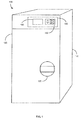
- FIG. 1 illustrates a perspective view of an exemplary aircraft galley refrigerator.
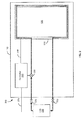
- FIG. 2 illustrates an exemplary aircraft galley refrigerator having a cold wall conduction heat exchanger.
- FIG. 3 illustrates an exemplary construction for the cold wall conduction heat exchanger of FIG. 2 .
- FIG. 4 illustrates an exemplary aircraft galley refrigerator having a liquid-to-air heat exchanger.
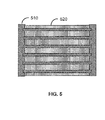
- FIG. 5 illustrates a front view of an exemplary liquid-to-air heat exchanger.
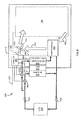
- FIG. 6 illustrates an exemplary aircraft galley refrigerator having a cascade cooling system.
- FIG. 7 illustrates an exemplary aircraft galley refrigerator having a thermoelectric cascade cooling system with a cold side air heat exchanger.
- FIG. 8 illustrates an exemplary aircraft galley refrigerator having a thermoelectric cascade cooling system with a cold side liquid heat exchanger.
- FIG. 9 shows a graph illustrating cooling capacity of an exemplary aircraft galley refrigerator in three operational modes.
- the LCS typically provides a centralized refrigeration system in which chilled coolant is distributed from a central location throughout the aircraft for use in providing cooling to plenums within galleys into which food trolleys/carts are configured, as well as in providing cooling to in-flight entertainment electronics.
- the LCS typically includes a central refrigeration unit, a pump, and a liquid coolant tubing loop for circulating a chilled liquid coolant (e.g., PGW, a solution of 60% propylene glycol and water by volume, or Golden coolant, etc.)
- the chilled liquid coolant may be maintained at a chilled temperature by the LCS, such as -8 degrees C.
- the chilled liquid coolant is typically pumped throughout the aircraft to all galleys and their respective food service trolleys after being chilled by the central refrigeration unit.
- a galley refrigerator that connects to the LCS would be beneficial over galley refrigerators of the prior art.
- Such a new refrigerator may have a lighter weight, have fewer internal parts, use less electrical energy, and be able to hold more contents due to the elimination of the vapor cycle system (or a substantial portion thereof) compared to the prior art.
- the galley refrigerator that connects to the LCS may have higher reliability and a reduced cost of ownership.
- FIG. 1 illustrates a perspective view of an exemplary aircraft galley refrigerator 100.
- the exemplary aircraft galley refrigerator 100 may be a line replaceable unit (LRU), and may provide refrigeration functionality while the aircraft is both on the ground and in flight.
- the refrigeration may be provided using a cooling system that may include a chilled liquid coolant system, a vapor cycle system, and/or a thermoelectric cooling system.
- the refrigerator 100 may be designed according to an ARINC 810 standard.
- the refrigerator 100 may be configured to operate using an electrical power source such as three phase 115 or 200 volts alternating current (VAC) at a frequency of 360 to 900 Hz.
- VAC three phase 115 or 200 volts alternating current
- the refrigerator 100 may employ AC to DC power conversion to provide a predictable and consistent power source to a fan motor and/or valve actuators.
- the refrigerator 100 may also include a polyphase transformer (e.g., a 15-pulse transformer) to reduce current harmonics reflected from the refrigerator 100 back into an airframe
- the refrigerator 100 includes an enclosure 110 (e.g., a chassis) having a door to a refrigerated compartment 120.
- the refrigerated compartment 120 may include an inner liner and thermal insulation.
- the inner liner may be constructed of stainless steel.
- the inner liner and/or the enclosure 110 may be grounded to provide a Faraday shield to help shield the refrigerator 100 from external electromagnetic interference (EMI) influences while containing internally generated high-frequency energy.
- EMI electromagnetic interference
- Various embodiments of the refrigerator 100 may also include an EMI filter to reduce susceptibility to conducted EMI and emissions of SEMI.
- the enclosure 110 may also include mounting rails, a removable air filter, a bezel, and wheels.
- the door to the refrigerated compartment 120 may include a door handle 130 with which the door may be opened or closed.
- the refrigerator 100 may also include a control panel 140 having one or more input devices (e.g., control buttons or switches) 150, and a display panel (e.g., an LCD display or LED's) 160.
- the display panel 160 may provide a user interface display.
- the display panel 160 may be mounted on a grounded backplane to reduce RF emission.
- An Indium Tin Oxide (ITO) on-polyner layer may be employed behind a display glass of the display panel 160 to block or reduce RF energy radiation.
- the refrigerator 100 may also include a controller coupled with the input devices 150 and the display panel 160. The controller may receive input commands from a user via the input devices 150, such as turning the refrigerator on or off, selecting an operation mode, and setting a desired temperature of the refrigerated compartment 120.
- the controller may output information to the user regarding an operational status (e.g., operational mode, activation of a defrost cycle, shut-off due to over-temperature conditions of the refrigerated compartment 120 and/or components of the refrigerator, etc.) of the refrigerator using the display panel 160.
- the controller may be coupled with the input devices 150 and the display panel 160 using shielded and twisted cables, and may communicate with the input devices 150 and/or the display panel 160 using an RS-232 communication protocol due to its electrically robust characteristics.
- the controller may include an electronic circuit, printed circuit board, computing processor, memory comprising computing instructions, and/or data communications circuitry.
- the controller may be configured on or with an aluminum chassis or sheet metal box, which may be grounded and largely opaque to high-frequency energy transmission. Wires which early high voltage and/or high frequency signals into or out of the refrigerator 100 may be twisted and/or shielded to reduce RF radiation, susceptibility, and EMI. Low frequency and low-voltage carrying wires may typically be filtered at the printed circuit board of the controller to bypass any high-frequency noise to ground.
- the controller may be controlled by or communicate with a centralized computing system, such as one onboard an aircraft.
- the controller may implement a compliant ARINC 812 logical communication interface on a compliant ARINC 810 physical interface.
- the controller may communicate via a Galley Data Bus (e.g., galley networked GAN bus), and exchange data with a Galley Network Controller (e.g., Master GAIN Control Unit as described in the ARINC 812 specification).
- the controller may provide network monitoring, power control, remote operation, failure monitoring, and data transfer functions.
- the controller may implement menu definitions requests received from the Galley Network Controller (GNC) for presentation on a GNC Touchpanel display device and process associated button push events to respond appropriately.
- GNC Galley Network Controller
- the controller may provide additional communications using an RS-232 communications interface and/or an infrared data port, such as communications with a personal computer (PC) or a personal digital assistance (PDA).
- additional communications may include real-time monitoring of operations of the refrigerator 100, long-term data retrieval, and control system software upgrades.
- a serial peripheral interface (SPI) bus may be used to communicate between the controller and motor controllers within the refrigerator 100.
- the refrigerator 100 may be configured to refrigerate beverages and/or food products which are placed in the refrigerated compartment 120.
- the refrigerator 100 may operate in one or more of several modes, including refrigeration, beverage chilling, and freezing.
- a user may select a desired temperature for the refrigerated compartment 120 using the control panel 140.
- the controller included with the refrigerator 100 may control a temperature within the refrigerated compartment 120 at a high level of precision according to the desired temperature. Therefore, quality of food stored within the refrigerated compartment 120 may be maintained according to the user-selected operational mode of the refrigerator 100.
- the refrigerator 100 may maintain a temperature inside the refrigerated compartment 120 according to a user-selectable option among several preprogrammed temperatures, or according to a specific user-input temperature.
- a beverage chiller mode may maintain the temperature inside the refrigerated compartment 120 at a user-selectable temperature of approximately 9 degrees C, 12 degrees C, or 16 degrees C.
- the temperature inside the refrigerated compartment 120 may be maintained at a user-selectable temperature of approximately 4 degrees C or 7 degrees C.
- a freezer mode the temperature inside the refrigerated compartment 120 may be maintained at a user-selectable temperature of approximately - 18 degrees C to 0 degrees C.
- the refrigerator 100 may also include a fan assembly, which may have a fan motor, a motor controller, a blower assembly, and an over-temperature thermostat.
- the fan assembly may be operationally coupled with a heat exchanger, evaporator, and/or condenser.
- the refrigerator 100 may also include a plumbing system, which may have a liquid-to-air (e.g., forced convection) heat exchanger or a liquid conduction heat exchanger, a pressure vessel, a temperature control valve, a pressure relief burst disc, a temperature sensor, and one or more quick disconnects.
- the refrigerator 100 may include a power module having one or more printed circuit boards (PCB's), a wire harness, an ARINC connector, and/or a power conversion unit.
- the refrigerator 100 may also include ductwork and air interface components, and condensate drainage components.
- the refrigerator 100 may also include one or more sensors such as temperature sensors and actuators.
- the sensors may be configured for air and refrigerant temperature sensing and pressure sensing, while the actuators may be configured for opening and closing valves.
- an "RT1" evaporator inlet air temperature sensor may measure the temperature of air returning from the refrigerated compartment 120 to an evaporator of a vapor cycle refrigeration system
- an "RT2" evaporator outlet air temperature sensor may measure the temperature of air supplied to the refrigerated compartment 120 from the evaporator
- an "RT3" condenser inlet air or liquid temperature sensor may measure the temperature of ambient air or inlet liquid in the vicinity of the refrigerator 100
- an "RT4" exhaust air or liquid temperature sensor may measure the temperature of air exhausted or liquid outlet from the vapor cycle refrigeration system at a rear panel of the refrigerator 100.
- the controller may use data provided by the sensors to control operation of the refrigerator 100 using the actuators.
- the controller may poll the sensors at a fixed minimum rate such that all data required to control the performance of the refrigerator 100 may be obtained by the controller in time for real-time operation of the one or more cooling systems within the refrigerator 100.
- the polled values may be reported by the controller via the RS-232 or infrared interface to a personal computer or PDA and may be reported over a controller area network (CAN) bus.
- the polled values may also be used in control algorithms by the controller, and may be stored to long-term memory or a data storage medium for later retrieval and analysis.
- the controller may provide a self-protection scheme to protect against damage to the refrigerator 100 and its constituent components due to abnormal external and/or internal events such as over-temperature conditions, over-pressure conditions, over-current conditions, etc. and shut down the refrigerator 100 and/or one or more of its constituent components in accordance with the abnormal event.
- the self-protection scheme may include monitoring critical system sensors and taking appropriate self-protection action when monitored data from the sensors indicate a problem requiring activation of a self-protection action. Such a self-protection action may prevent the refrigerator 100 and/or its constituent components from being damaged or causing an unsafe condition.
- the self-protection action may also provide appropriate notification via the display panel 160 regarding the monitored problem, the self-protection action, and/or any associated maintenance required.
- the controller's self-protection scheme may supplement, rather than replace, mechanical protection devices which may also be deployed within the refrigerator 100.
- the controller may use monitored data from the sensors to intelligently restart the refrigerator 100 and reactivate the desired operational mode after the abnormal event which triggered the self-protection shut-down has terminated or reduced in severity.
- the refrigerator 100 may be configured as a modular unit, and may be plug and pay insert compatible with ARINC size 2 locations within the aircraft.
- the refrigerator 100 may have parts which are commonly shared with other galley inserts (GAINs), such as a refrigerator/oven unit.
- GAINs galley inserts
- the refrigerated compartment 120 may have an approximate interior volume of 40 liters for storing food items, and may be capable of storing 15 wine-bottle sized beverage bottles.
- the refrigerator 100 may weigh approximately 14 kg when empty, and may have external dimensions of approximately 56.1 cm high, 28.5 cm wide, and 56.9 cm deep. Other embodiments may weigh more or less or have different external dimensions, depending on their application.
- FIG. 2 illustrates an exemplary aircraft galley refrigerator 200 having a cold wall conduction heat exchanger 210.
- the cold wall conduction heat exchanger 210 may at least partially surround the refrigerated compartment 120 within the enclosure 110.
- the cold wall conduction heat exchanger 210 may receive cold liquid coolant from an aircraft liquid cooling system (LCS) 220 via a quick disconnect 230, and output warmed liquid coolant to the LCS 220 via another quick disconnect 230 after having absorbed heat from the refrigerated compartment 120 while flowing through the cold wall conduction heat exchanger 210.
- LCS liquid cooling system
- the construction of the cold wall conduction heat exchanger 210 in contact with the liner of the refrigerated compartment 120 may facilitate the conduction of heat from the foodstuffs and beverages within the refrigerated compartment 120 to the liquid coolant flowing through the cold wall conduction heat exchanger. 210.
- the refrigerator may be a LRU
- the quick disconnects 230 may facilitate the refrigerator being connected to and disconnected from the LCS 220 rapidly without spilling liquid coolant, for example during removal and reinstallation of the refrigerator for maintenance..
- a controller 240 may control a coolant control valve (CCV) 250 to regulate a flow of the liquid coolant from the LCS 220 into the cold wall conduction heat exchanger 210 to maintain a precise temperature within the refrigerated compartment 120.
- the controller 240 may monitor air temperature within the refrigerated compartment 120 using one or more temperature sensors via a sensor monitor input 260.
- the controller may output data to and/or receive control commands and data from an external computing system via a data connection 270.
- the CCV 250 may be normally closed and may open in proportion to a magnitude of an electrical signal received from the controller 240.
- the electrical signal may be related to a temperature measured within the refrigerated compartment 120.
- the relationship between the magnitude of the electrical signal and the opening of the CCV 250 may be approximately linear.
- the CCV 250 may be normally closed when the measured temperature within the refrigerated compartment 120 is at or below a desired threshold temperature, and may open to allow liquid coolant from the LCS 220 to flow into the cold wall conduction heat exchanger 210 in proportion to a temperature difference between the measured temperature of the refrigerated compartment 120 and the desired threshold temperature.
- FIG. 3 illustrates an exemplary construction for the cold wall conduction heat exchanger 210 of FIG. 2 .
- the cold wall conduction heat exchanger 210 may include an inner liner 310 constructed of sheet metal on a side facing an interior of the refrigerated compartment 120.
- the cold wall conduction heat exchanger 210 may also include an exterior surface 320 constructed of a material which is a good conductor of heat, such as sheet metal.
- a coolant circuit 330 may be formed between the inner liner 310 and the exterior surface 320.
- the coolant circuit 330 may include channels through which the liquid coolant from the LCS 220 flows. The channels of the coolant circuit 330 may be separated by brazing material 340.
- the coolant circuit 330 may be stamped onto the sheet metal of the inner liner 310 and/or the exterior surface 320 with graphite and may be assembled by a rolling process.
- FIG. 4 illustrates an exemplary aircraft galley refrigerator 400 having a liquid-to-air heat exchanger 410.
- the liquid-to-air heat exchanger 410 may include a forced air convection heat exchanger.
- the first cooling loop comprises the liquid coolant provided to the refrigerator 400 by the LCS 220.
- the second cooling loop comprises circulation of air 420 through the refrigerated compartment 120 and the liquid-to-air heat exchanger 410. Heat from food and/or beverages in the refrigerated compartment 120 may be transferred to the air 420 which circulates therein.
- the liquid-to-air heat exchanger 410 may then transfer the heat from the circulating air 420 to the liquid coolant from the LCS 220.
- a controller 430 may control a coolant control valve (CCV) 440 to regulate a flow of the liquid coolant from the LCS 220 into the liquid-to-air heat exchanger 410 to maintain a precise temperature within the refrigerated compartment 120.
- the controller 430 may function in a manner similar to that described with reference to the controller 240 of FIG. 2 .
- the controller may measure the temperature of the air 420 at one or more places in the second cooling loop, such as where the air 420 enters the liquid-to-air heat exchanger 410, exits the liquid-to-air heat exchanger 410, and/or circulates within the refrigerated compartment 120.
- the controller may directly control the temperature of the air 420 at a location where the air 420 is measured by actuating the CCV 440, and thereby indirectly control a temperature within the refrigerated compartment 120.
- the controller 430 may control a fan 450 to force the circulating air 420 to circulate through the refrigerated compartment 120 and the liquid-to-air heat exchanger 410.
- the controller 430 may cause the fan 450 to rotate faster or slower depending upon a measured temperature within the refrigerated compartment 120, the circulating air 420 before or after passing through the liquid-to-air heat exchanger 410, and/or a state of the CCV 440.
- the controller 430 may coordinate control of the CCV 440 and the fan 450.
- the controller 430 may also monitor a thermal switch of the fan 450 which may indicate when the fan 450 has reached an over temperature condition. When the fan 450 overheats, the fan 450 may stop operating due to its thermal switch. The controller 430 may then adjust operations of the refrigerator 400 accordingly, such as by closing the CCV 440, until the over temperature condition has been corrected and the fan 450 may once again be operated.
- the fan 450 may include a centrifugal type fan.
- a centrifugal fan may provide a higher aerodynamic efficiency than other types of fans at the airflow requirements of the refrigerator 400. Accordingly, a centrifugal fan may therefore minimize any loss of performance due to rejected heat.
- a centrifugal type fan may also minimize space requirements, facilitating a more compact refrigerator enclosure 110.
- Air ducts (not shown) may be installed in the enclosure 110 to direct the circulating air 420 out of the refrigerated compartment 120, through the liquid-to-air heat exchanger 410, through the fan 450, and back into the refrigerated compartment 120.
- the controller 430 may also control a defrost cycle of the refrigerator, and provide a signal that the defrost cycle is in progress.
- the controller 430 may sense ice buildup using a pressure difference device, or the controller 430 may perform the defrost cycle at regular intervals as estimated by an internal timer.
- the defrost cycle may include closing the CCV 440 while operating the fan 450 to circulate the air 420 until all ice is melted. After the defrost cycle is complete, the fan 450 may be shut off for a period of approximately 30 seconds to allow water which may adhere to the heat exchanger 410 to drop off and drain. Throughout the defrost cycle, condensed water may be collected in a bottom tray of the refrigerator 400 for cleaning.
- FIG. 5 illustrates a front view of an exemplary liquid-to-air heat exchanger.
- the exemplary liquid-to-air heat exchanger may include an embodiment of the liquid-to-air heat exchanger 410.
- the liquid-to-air heat exchanger may include a coolant liquid circuit 510 which includes channels through which liquid coolant, such as that provided by the LCS 220 illustrated in FIG. 4 , flows.
- the liquid-to-air heat exchanger may also include a plurality of plates/fins 520 coupled with the coolant liquid circuit 510. Air, such as the circulating air 420, may be blown through the plurality of plates/fins 520 to cool the circulating air 420 using the liquid coolant flowing through the coolant liquid circuit 510.
- the plates/fins 520 may efficiently conduct heat to facilitate the transfer of heat from the air to the liquid coolant.
- the construction of the liquid-to-air heat exchanger including the plates/fins 520 may minimize its size and weight for the required heat exchange performance.
- the liquid-to-air heat exchanger may be constructed of a strong yet lightweight material such as a high strength aluminum alloy.
- the liquid-to-air heat exchanger may also include suitable corrosion protection for both internal passages of the coolant liquid circuit 510 and external surfaces. The corrosion protection may be typical of commercial aircraft applications.
- FIG. 6 illustrates an exemplary aircraft galley refrigerator 600 having a cascade cooling system.
- the refrigerator 600 effectively has three cooling loops provided by two cooling systems.
- a chilled liquid coolant system using liquid coolant provided by the LCS 220 includes a liquid-to-air heat exchanger 610 in the first of the three cooling loops.
- the liquid-to-air heat exchanger 610 may include an embodiment of the liquid-to-air heat exchanger illustrated in FIG. 5 .
- a refrigerant vapor cycle system includes a compressor 620, a condenser 630, and an evaporator 640 in the second of the three cooling loops.
- the third cooling loop includes circulating air 650 which flows through the refrigerated compartment 120, the liquid-to-air heat exchanger 610, and the evaporator 640.
- the chilled liquid coolant system and the refrigerant vapor cycle system may be used to cool the refrigerated compartment 120 via the circulating air 650.
- the liquid-to-air heat exchanger 610 may cool the refrigerated compartment 120 by transferring heat from the circulating air 650 to the liquid coolant provided by the LCS 220 in a manner similar to that explained with reference to FIG. 4
- the evaporator 640 may cool the refrigerated compartment 120 by transferring heat from the circulating air 650 to the refrigerant circulating within the refrigerant vapor cycle system.
- the condenser 630 within the refrigerant vapor cycle system may be liquid cooled using the liquid coolant provided by the LCS 220. Accordingly, heat from the condenser 630, including heat transferred from the refrigerant to the condenser 630 in a condenser refrigerant circuit 630A, may be transferred to the liquid coolant in a condenser secondary coolant circuit 630B prior to returning the liquid coolant to the LCS 220.
- a controller 660 may control the operation of one or both of the refrigerant vapor cycle system and the chilled liquid coolant system to maintain a desired temperature within the refrigerated compartment 120.
- the controller 660 may also control a fan 670 to force the circulating air 650 through the refrigerated compartment 120, the liquid-to-air heat exchanger 610, and the evaporator 640.
- the controller 660 may coordinate control of the fan 670 with control of the one or both of the refrigerant vapor cycle system and the chilled liquid coolant system.
- the controller 660 may control a CCV 680 and a CCV 685 to control the flow of liquid coolant from the LCS 220 into the liquid-to-air heat exchanger 610 and/or the condenser secondary coolant circuit 630B in a manner similar to that described with reference to the controllers 240 and 440 of FIGs. 2 and 4 , respectively.
- the controller 660 may control the CCV 685 to be open and the CCV 680 to be closed such that liquid coolant flows from the LCS 220 through the condenser secondary coolant circuit 630B while no liquid coolant flows through the liquid-to-air heat exchanger 610. Meanwhile, the controller 660 may control a refrigerant expansion valve (REV) 690 to be open such that refrigerant flows through the condenser refrigerant circuit 630A into the evaporator 640.
- REV refrigerant expansion valve
- the controller 660 may control the CCV 685 to be closed and the CCV 680 to be open such that liquid coolant flows from the LCS 220 through the liquid-to-air heat exchanger 610. Meanwhile, the controller 660 may control the REV 690 to be closed such that refrigerant does not flow through the condenser refrigerant circuit 630A or the evaporator 640.
- the controller 660 may cause the CCV 680 to be open such that liquid coolant from the LCS 220 flows through the liquid-to-air heat exchanger 610 and the REV 690 to be open such that refrigerant flows through the condenser refrigerant circuit 630A into the evaporator 640.
- the controller 660 may control the CCV 685 to be closed such that only the liquid coolant from the liquid-to-air heat exchanger 610 flows through the condenser secondary coolant circuit 630B, or to be open such that a mixture of liquid coolant from the liquid-to-air heat exchanger 610 and the LCS 220 directly flow through the condenser secondary coolant circuit 630B.
- the exemplary refrigerator 600 may be configured as a self-contained galley refrigeration insert which may be operated in one of several modes, each of which may cool the refrigerated compartment 120 to a different temperature range.
- a beverage chiller mode may cool the refrigerated compartment 120 to a temperature range of approximately 46 to 61 degrees F (8 to 16 degrees C)
- a refrigerator mode may cool the refrigerated compartment 120 to a temperature range of approximately 39 to 45 degrees F (4 to 7 degrees C)
- a freezer mode may cool the refrigerated compartment 120 to a temperature range of approximately 0 to 10 degrees F (-18 to -12 degrees C) or 16 to 32 degrees F (-3 to 0 degrees C).
- cooling may be provided by the chilled liquid coolant system.
- the refrigerator 600 is operated in the freezer mode, the refrigerant vapor cycle system may be employed in addition to the chilled liquid coolant system, thereby providing a cascade cooling system.
- both the chilled liquid coolant system and the refrigerant vapor cycle system may be operated together as a cascade cooling system.
- warm circulating air 650 from the refrigerated compartment 120 may be circulated through the liquid-to-air heat exchanger 610 and then through the evaporator 640 to be cooled prior to returning to the refrigerated compartment 120.
- operation of the refrigerator 600 may include either or both of the refrigerant vapor cycle system and the chilled liquid coolant system depending upon a temperature of the liquid coolant provided by the LCS 220, an air temperature of the refrigerated compartment 120 and/or the circulating air 650, and the operating mode of the refrigerator 600.
- the chilled liquid coolant system may be turned off while the refrigerant vapor cycle system remains operating (e.g., the CCV 680 may be closed while the CCV 685 and REV 690 are open).
- the refrigerant vapor cycle system may be turned off while the chilled liquid coolant system remains operating (e.g., the REV 690 and CCV 685 may be closed while the CCV 680 is open).
- the refrigerant vapor cycle system may be turned on, either in addition to or in place of the chilled liquid coolant system.
- the chilled liquid coolant system when the liquid coolant provided by the LCS 220 is maintained at a temperature of approximately -8 degrees C, the chilled liquid coolant system may be turned on while the refrigerant vapor cycle system is turned off in both the refrigerator mode and the beverage chiller mode.
- the liquid coolant provided by the LCS 220 when the liquid coolant provided by the LCS 220 is at a temperature higher than approximately 5 degrees C, the refrigerant vapor cycle system may be turned on.
- the refrigerant vapor cycle system and the chilled liquid coolant system may both be turned off for safety purposes.
- FIG. 7 illustrates an exemplary aircraft galley refrigerator 700 having a thermoelectric cascade cooling system with a cold side air heat exchanger 710.
- the exemplary refrigerator 700 may operate as a cascade cooling system employing thermoelectric (TE) cooling using a thermoelectric cooling system (TECS).
- the thermoelectric cooling system may include one or more thermoelectric devices (TED) 720 coupled with the thermoelectric cold side air heat exchanger 710 on one side and a liquid cooled thermoelectric hot side heat sink 730 on the other side.
- the TED 720 may be coupled with the thermoelectric cold side air heat exchanger 710 and/or the liquid cooled thermoelectric hot side heat sink 730 using a thermal interface material.
- the TED 720 may function using principles of the Peltier Effect, in which a voltage or DC current is applied across two dissimilar conductors, thereby creating an electrical circuit which transfers heat in a direction of charge carrier movement. In this manner, the TED 720 may transfer (i.e., pump) heat from the cold side air heat exchanger 710 to the heat sink 730.
- the cold side air heat exchanger 710 may absorb heat from circulating air 740 which circulates through the refrigerated compartment 120, a liquid-to-air heat exchanger 750 which is coupled with the LCS 220, and the cold side air heat exchanger 710.
- the TED 720 may transfer the heat absorbed by the cold side air heat exchanger 710 to the heat sink 730.
- the heat sink 730 may include a liquid-cooled heat sink which transfers the heat received from the TED 720 (i.e., the rejected heat) to the liquid coolant provided by the LCS 220.
- the heat sink 730 may also transfer heat generated by the TED 720 itself to the liquid coolant.
- the TED 720 may be mounted on the enclosure 110 such that heat from within the enclosure 110 is pumped from the cold side air heat exchanger 710 by the TED 720 to the heat sink 730 on the outside of the enclosure 110.
- the cold side air heat exchanger 710 may be mounted on the inward facing side of the TED 720, while the heat sink 730 may be mounted on the outward facing side of the TED 720.
- the cold side air heat exchanger 710 may be cooled by the TED 720 to a temperature below that of air within the enclosure 110 (e.g., circulating air 740), and may absorb heat from the air as the air circulates between fins of the cold side air heat exchanger 710.
- the exemplary refrigerator 700 includes three cooling loops provided by two cooling systems having three heat exchangers.
- a first cooling loop includes a chilled liquid cooling system having the liquid-to-air heat exchanger 750 which is coupled with the LCS 220 to transfer heat from the circulating air 740 to the liquid coolant provided by the LCS 220.
- a second cooling loop includes the thermoelectric cooling system (TECS) having the cold side air heat exchanger 710 which transfer heat from the circulating air 740 through the TED 720 to the heat sink 730, which then transfers the heat to the liquid coolant provided by the LCS 220 as the third heat exchanger of the refrigerator.
- the third cooling loop functions in conjunction with either or both of the cooling systems and includes the circulating air 740 which circulates through the refrigerated compartment 120, the liquid-to-air heat exchanger 750, and the cold side air heat exchanger 710.
- a controller 760 may control the operation of one or both of the TECS and the chilled liquid coolant system to maintain a desired temperature within the refrigerate compartment 120.
- the controller 760 may also control a fan 770 to force the circulating air 740 through the refrigerated compartment 120, the liquid-to-air heat exchanger 750, and the cold side air heat exchanger 710.
- the controller 760 may coordinate control of the fan 770 with control of the one or both of the TECS and the chilled liquid coolant system.
- the controller 760 may control a CCV 780 and a CCV 790 to control the flow of liquid coolant from the LCS 220 into the liquid-to-air heat exchanger 750 and/or the heat sink 730 in a manner similar to that described with reference to the controllers 240, 440, and 660 of FIGs. 2 , 4 , and 6 , respectively.
- the controller 760 may control the CCV 790 to be open and the CCV 780 to be closed such that liquid coolant flows from the LCS 220 through the heat sink 730 while no liquid coolant flows through the liquid-to-air heat exchanger 750. Meanwhile, the controller 760 may control the TED 720 to transfer heat from the cold side air heat exchanger 710 to the heat sink 730.
- the controller 760 may control the CCV 790 to be closed and the CCV 780 to be open such that liquid coolant flows from the LCS 220 through the liquid-to-air heat exchanger 750. Meanwhile, the controller 760 may control the TED 720 to be off such that heat is not actively transferred from the cold side air heat exchanger 710 to the heat sink 730 by the electrical operation of the TED 720.
- the controller 760 may cause the CCV 780 to be open such that liquid coolant from the LCS 220 flows through the liquid-to-air heat exchanger 750 and the CCV 790 to be open such that liquid coolant flows through the heat sink 730 to transfer heat away from the TECS into the liquid coolant which is then returned to the LCS 220.
- the controller 760 may operate the refrigerator 700 in one of three operating modes in a manner similar to that described with reference to the refrigerator 600 of FIG. 6 , except that the TECS of FIG. 7 may be used in place of the refrigerant vapor cycle system of the refrigerator 600.
- the beverage chiller and refrigerator modes may be operated using the chilled liquid coolant system, while the freezer mode may use the TECS.
- the TECS and the chilled liquid coolant system may be operated together as a cascade cooling system. During pull-down, both the TECS and the chilled liquid coolant system may be operated in any or all of the three modes.
- the TECS In the beverage chiller and the refrigerator modes after pull-down, the TECS may be turned off.
- the TECS may be turned on while the chilled liquid coolant system including the liquid-to-air heat exchanger 750 may be turned off by closing CCV 780 and opening CCV 790.
- the controller 760 may operate the TED 720 using a DC power source.
- the cooling capacity of the TED 720 may be controlled by an amount of DC current input to the TED 720.
- the TED 720 may be designed to operate using a wide range of input voltages and current values.
- the TECS provides a number of advantages over refrigerant vapor cycle systems, especially in applications such as onboard aircraft where reliability, size, and weight are important factors to consider.
- the TED 720 is an electrical device which may have a solid state construction that functions with no moving parts. Accordingly, the TED 720 may be virtually maintenance free and highly reliable in comparison with refrigerant vapor cycle systems. For example, a typical TED 720 may have a life expectancy greater than 200,000 hours. In addition, the TED 720 may not exhibit mechanical noise and vibration, or electrical noise, unlike mechanical refrigeration systems. Thus, the TED 720 may be ideal for systems in which sensitive electronic sensors are present or acoustic noise is undesirable.
- a TED 720 may be compact in size, facilitating a more compact and lightweight refrigerator than a comparable mechanical system.
- the TED 720 may be operable in any orientation and even in zero gravity environments.
- the TED 720 may control temperatures very precisely, for example to better than +/- 0.1 degree C when used with an appropriate closed-loop temperature control circuit.
- the TED 720 may be advantageous when precise temperature control is required.
- the TED 720 may not use or generate any gases, unlike a conventional refrigeration system which may require chlorofluorocarbons or other chemicals that may be harmful to the environment.
- a TECS may have a lower coefficient of performance (COP) than a vapor cycle system.
- a TECS may have a COP below 1.
- a typical range of COP for an air conditioning unit is 0.4 to 0.7.
- FIG. 8 illustrates an exemplary aircraft galley refrigerator 800 having a thermoelectric cascade cooling system with a cold side liquid heat exchanger 810.
- the thermoelectric cooling system (TECS) of the exemplary refrigerator 800 may include one or more thermoelectric devices (TED) 820 coupled with a thermoelectric cold side liquid heat exchanger 810 on one side and a liquid cooled thermoelectric hot side heat sink 830 on the other side.
- the exemplary refrigerator 800 is similar to the refrigerator 700 illustrated in FIG. 7 , except that the cold side air heat exchanger 710 of FIG. 7 is replaced with the cold side liquid heat exchanger 810 in FIG. 8 .
- the cold side liquid heat exchanger 810 may be constructed of a lightweight material which conducts heat, such as an aluminum block.
- Liquid coolant provided by the LCS 220 may pass through the cold side liquid heat exchanger 810 before passing through a liquid-to-air heat exchanger 850.
- the cold side liquid heat exchanger 810 may be cooled by the TED 820 to a temperature below that of the liquid coolant provided by the LCS 220.
- the cold side liquid heat exchanger 810 may then cool tho liquid coolant below the temperature at which the liquid coolant is provided by the LCS 220 prior to entering the liquid-to-air heat exchanger 850.
- Circulating air 840 from the refrigerated compartment 120 which passes through the liquid-to-air heat exchanger 850 may then be cooled to a lower temperature than possible if the liquid-to-air heat exchanger 850 received the liquid coolant directly from the LCS 220.
- a controller 860 may control the operation of one or both of the TECS and the chilled liquid coolant system to maintain a desired temperature within the refrigerated compartment 120.
- the controller 860 may also control a fan 870 to force the circulating air 840 through the refrigerated compartment 120 and the liquid-to-air heat exchanger 850.
- the controller 860 may coordinate control of the fan 870 with control of the one or both of the TECS and the chilled liquid coolant system.
- the controller 860 may control a CCV 880 and a CCV 890 to control the flow of liquid coolant from the LCS 220 into the cold side liquid heat exchanger 810, the liquid-to-air heat exchanger 850, and/or the heat sink 830 in a manner similar to that described with reference to the controllers 240, 440, 660, and 760 of FIGs. 2 , 4 , 6 , and 7 respectively.
- the controller 860 may cause the CCV 880 to be open such that liquid coolant from the LCS 220 flows through the cold side liquid heat exchanger 810 as well as the liquid-to-air heat exchanger 850 and the CCV 890 to be open such that liquid coolant flows through the heat sink 830 to transfer heat away from the TECS into the liquid coolant which is then returned to the LCS 220.
- the controller 860 may control the TED 820 to transfer heat from the cold side liquid heat exchanger 810 to the heat sink 830 to cool the liquid coolant in the cold side liquid heat exchanger 810 before entering the liquid-to-air heat exchanger 850.
- the controller 860 may control the CCV 890 to be closed and the CCV 880 to be open such that liquid coolant flows from the LCS 220 through the liquid-to-air heat exchanger 850. Meanwhile, the controller 860 may control the TED 820 to be off such that heat is not actively transferred (i.e., pumped) from the cold side liquid heat exchanger 810 to the heat sink 830 by the electrical operation of the TED 820.
- the controller 860 may operate the refrigerator 800 in one of three operating modes in a manner similar to that described with reference to the refrigerator 700 of FIG. 7 .
- the beverage chiller and refrigerator modes may be operated using the chilled liquid coolant system without using the TECS after pull-down (e.g., by opening CCV 880 and closing CCV 890 while turning off the TED 820), while the freezer mode may use the TECS in addition to the chilled liquid coolant system as a cascade cooling system after pull-down (e.g., by opening both CCV 880 and CCV 890 while turning on the TED 820).
- Both the TECS and the chilled liquid coolant system may be operated as a cascade cooling system during pull-down in any or all of the three modes.
- liquid-to-air heat exchangers illustrated in any of FIGs. 4 , 6 , 7 , and 8 may be partially or fully enclosed within the refrigerated compartment 120. Accordingly, in these embodiments, the associated circulating air, ductwork, and/or fan may be at least partially or fully enclosed within the refrigerated compartment 120. In various embodiments, a plurality of liquid-to-air heat exchangers may be employed where a single liquid-to-air heat exchanger may be illustrated within.
- FIG. 9 shows a graph illustrating cooling capacity of an exemplary aircraft galley refrigerator in three operational modes.
- the cooling capacity is expressed in terms of Q Chiller,w [w] at a range of coolant flow rates in units of liters per minute.
- the exemplary refrigerator may normally operate in an environment with a 29 degree C ambient temperature and 70% relative humidity. As illustrated in the graph, the exemplary refrigerator operates in an "on the ground" condition with a steady-state heat load ranging from 175 to 351 W (600 to 1200 Btu/h). As shown, the freezer mode has the greatest flow rate, while the beverage chiller mode has the lowest flow rate, at each steady state heat load.
- the exemplary refrigerator may operate using a three phase 115 VAC power supply having a frequency ranging from 360 to 900 Hz. The exemplary refrigerator may use approximately 149 VA of apparent power, drawing a current of approximately 0.5 amps.
- the exemplary refrigerator may have an average pull-down time from room temperature in a beverage chiller mode of approximately 40 minutes to pull down the temperature of 12 bottles to 8 degrees C, while the refrigerator may have an average pull-down time from room temperature in a refrigerator mode of approximately 5 minutes to pull down the temperature of an empty refrigeration compartment 120 to 4 degrees C.
- the refrigerator In a freezer mode, the refrigerator may have an average pull-down time of the empty refrigeration compartment 120 from room temperature to -18 degrees C of approximately 15 minutes.
- Functions of the exemplary refrigerators described herein may be controlled by a controller according to instructions of a software program stored on a storage medium which may be read and executed by a processor of the controller.
- the software program may be written in a computer programming language (e.g., C, C++, etc.) and cross-compiled to be executed on the processor of the controller, Examples of the storage medium include magnetic storage media (e.g., floppy disks, hard disks, or magnetic tape), optical recording media (e.g., CD-ROMs or digital versatile disks (DVDs)), and electronic storage media (e.g., integrated circuits (IC's), ROM, RAM, EEPROM, or flash memory).
- the storage medium may also be distributed over network-coupled computer systems so that the program instructions are stored and executed in a distributed fashion.
- the present invention may be described in terms of functional block components and various processing steps. Such functional blocks may be realized by any number of hardware and/or software components configured to perform the specified functions.
- the present invention may employ various integrated circuit components, e.g., memory elements, processing elements, logic elements, look-up tables, and the like, which may carry out a variety of functions under the control of one or more microprocessors or other control devices.
- the elements of the present invention are implemented using software programming or software elements
- the invention may be implemented with any programming or scripting language such as C,C++, Java, assembler, or the like, with the various algorithms being implemented with any combination of data structures, objects, processes, routines or other programming elements.
- the present invention could employ any number of conventional techniques for electronics configuration, signal processing and/or control, data processing and the like.
- the word mechanism is used broadly and is not limited to mechanical or physical embodiments, but can include software routines in conjunction with processors, etc.
Landscapes
- Engineering & Computer Science (AREA)
- Physics & Mathematics (AREA)
- Mechanical Engineering (AREA)
- Thermal Sciences (AREA)
- General Engineering & Computer Science (AREA)
- Chemical & Material Sciences (AREA)
- Combustion & Propulsion (AREA)
- Devices That Are Associated With Refrigeration Equipment (AREA)
Abstract
Description
- This application claims the priority benefit under 35 U.S.C. § 119(e) from
U.S. Provisional Patent Application No. 61/100,170 U.S. Provisional Patent Application No. 61/236,963 - The present invention generally relates to refrigerators for use in a galley of a vehicle (e.g., an aircraft) for refrigerating food and beverage products. More specifically, the present invention relates refrigeration systems and methods for connection with a vehicle's liquid cooling system.
- As known in the art, conventional vehicle refrigerators and beverage chillers, such as those used in an aircraft galley, include a mechanical refrigeration apparatus that employs a vapor-compression refrigeration process (i.e., a vapor cycle system) to transfer heat from contents of the refrigerator to an environment external to the refrigerator. Although conventional vapor cycle aircraft galley refrigerators are suitable for their intended purpose, they have several drawbacks. One drawback is that the vapor cycle system of conventional refrigerators consume a significant amount of electrical energy. In addition, the vapor cycle system adds numerous mechanical and electrical parts to a conventional refrigerator, thereby making the refrigerator prone to malfunction. Furthermore, vapor cycle systems add significant weight and cause conventional refrigerators to occupy considerable space.
- An exemplary refrigeration system for cooling a removable object, such as food or beverages, may use a liquid cooling system of a vehicle. The refrigeration system may include a compartment in which the object may be placed and removed, a chilled liquid coolant system having a connection through which liquid coolant is received from the liquid cooling system of the vehicle, and a heat exchanger operationally coupled with the chilled liquid coolant system and the compartment to transfer heat from the compartment into the liquid coolant.
- Another exemplary refrigeration system for cooling a removable object, such as food or beverages, may use a liquid cooling system of a vehicle. The refrigeration, system may include a compartment in which the object may be placed and removed. The refrigeration system may also include a first chilled liquid coolant system having a connection through which first liquid coolant is received from the liquid cooling system of a vehicle and a first heat exchanger operationally coupled with the first chilled liquid coolant system and the compartment to transfer heat from the compartment into the first liquid coolant. The refrigeration system may also include a second chilled coolant system through which a second coolant flows and a second heat exchanger operationally coupled with the second chilled coolant system and the compartment to transfer heat from the compartment.
- A method of cooling a refrigerated compartment using a liquid cooling system of a vehicle may include using reducing a temperature of a refrigerated compartment to a desired temperature using a first chilled liquid coolant system coupled with a liquid cooling system of a vehicle and a second chilled coolant system together as a cascade cooling system. The method may also include maintain the temperature of the refrigerated compartment at approximately the desired temperature using the first chilled liquid coolant system coupled with the liquid cooling system of the vehicle without using the second chilled coolant system to when the desired temperature is equal to or greater than approximately 3 degrees C. The method may additionally include maintaining the temperature of the refrigerated compartment at approximately the desired temperature using the first chilled liquid coolant system coupled with the liquid cooling system of the vehicle and the second chilled coolant system together as a cascade cooling system when the desired temperature is less than approximately 0 degrees C. The method may further include maintaining the temperature of the refrigerated compartment at approximately the desired temperature using the second chilled coolant system without using the first chilled liquid coolant system coupled with the liquid cooling system of the vehicle when the desired temperature is less than approximately 0 degrees C and the second chilled coolant system includes a thermoelectric cooling system which is also coupled with the liquid cooling system of the vehicle.
-
FIG. 1 illustrates a perspective view of an exemplary aircraft galley refrigerator. -
FIG. 2 illustrates an exemplary aircraft galley refrigerator having a cold wall conduction heat exchanger. -
FIG. 3 illustrates an exemplary construction for the cold wall conduction heat exchanger ofFIG. 2 . -
FIG. 4 illustrates an exemplary aircraft galley refrigerator having a liquid-to-air heat exchanger. -
FIG. 5 illustrates a front view of an exemplary liquid-to-air heat exchanger. -
FIG. 6 illustrates an exemplary aircraft galley refrigerator having a cascade cooling system. -
FIG. 7 illustrates an exemplary aircraft galley refrigerator having a thermoelectric cascade cooling system with a cold side air heat exchanger. -
FIG. 8 illustrates an exemplary aircraft galley refrigerator having a thermoelectric cascade cooling system with a cold side liquid heat exchanger. -
FIG. 9 shows a graph illustrating cooling capacity of an exemplary aircraft galley refrigerator in three operational modes. - Vehicles, such as aircraft, have recently included a liquid cooling system (hereinafter referred to as an LCS). The LCS typically provides a centralized refrigeration system in which chilled coolant is distributed from a central location throughout the aircraft for use in providing cooling to plenums within galleys into which food trolleys/carts are configured, as well as in providing cooling to in-flight entertainment electronics. The LCS typically includes a central refrigeration unit, a pump, and a liquid coolant tubing loop for circulating a chilled liquid coolant (e.g., PGW, a solution of 60% propylene glycol and water by volume, or Golden coolant, etc.) The chilled liquid coolant may be maintained at a chilled temperature by the LCS, such as -8 degrees C. The chilled liquid coolant is typically pumped throughout the aircraft to all galleys and their respective food service trolleys after being chilled by the central refrigeration unit.
- A galley refrigerator that connects to the LCS would be beneficial over galley refrigerators of the prior art. Such a new refrigerator may have a lighter weight, have fewer internal parts, use less electrical energy, and be able to hold more contents due to the elimination of the vapor cycle system (or a substantial portion thereof) compared to the prior art. As a result, the galley refrigerator that connects to the LCS may have higher reliability and a reduced cost of ownership. In such a refrigerator that connects to the LCS and which does not include a self-contained vapor cycle system, there may not be a requirement for air flow around a condenser. Accordingly, air ducts may not be necessary to install in the galley for ejection of heat from the refrigerator.
-
FIG. 1 illustrates a perspective view of an exemplaryaircraft galley refrigerator 100. The exemplaryaircraft galley refrigerator 100 may be a line replaceable unit (LRU), and may provide refrigeration functionality while the aircraft is both on the ground and in flight. The refrigeration may be provided using a cooling system that may include a chilled liquid coolant system, a vapor cycle system, and/or a thermoelectric cooling system. Therefrigerator 100 may be designed according to an ARINC 810 standard. Therefrigerator 100 may be configured to operate using an electrical power source such as threephase 115 or 200 volts alternating current (VAC) at a frequency of 360 to 900 Hz. Therefrigerator 100 may employ AC to DC power conversion to provide a predictable and consistent power source to a fan motor and/or valve actuators. Therefrigerator 100 may also include a polyphase transformer (e.g., a 15-pulse transformer) to reduce current harmonics reflected from therefrigerator 100 back into an airframe power distribution system with which therefrigerator 100 may be coupled. - The
refrigerator 100 includes an enclosure 110 (e.g., a chassis) having a door to a refrigeratedcompartment 120. The refrigeratedcompartment 120 may include an inner liner and thermal insulation. The inner liner may be constructed of stainless steel. The inner liner and/or theenclosure 110 may be grounded to provide a Faraday shield to help shield therefrigerator 100 from external electromagnetic interference (EMI) influences while containing internally generated high-frequency energy. Various embodiments of therefrigerator 100 may also include an EMI filter to reduce susceptibility to conducted EMI and emissions of SEMI. Theenclosure 110 may also include mounting rails, a removable air filter, a bezel, and wheels. The door to the refrigeratedcompartment 120 may include adoor handle 130 with which the door may be opened or closed. - The
refrigerator 100 may also include acontrol panel 140 having one or more input devices (e.g., control buttons or switches) 150, and a display panel (e.g., an LCD display or LED's) 160. Thedisplay panel 160 may provide a user interface display. Thedisplay panel 160 may be mounted on a grounded backplane to reduce RF emission. An Indium Tin Oxide (ITO) on-polyner layer may be employed behind a display glass of thedisplay panel 160 to block or reduce RF energy radiation. Therefrigerator 100 may also include a controller coupled with theinput devices 150 and thedisplay panel 160. The controller may receive input commands from a user via theinput devices 150, such as turning the refrigerator on or off, selecting an operation mode, and setting a desired temperature of the refrigeratedcompartment 120. The controller may output information to the user regarding an operational status (e.g., operational mode, activation of a defrost cycle, shut-off due to over-temperature conditions of the refrigeratedcompartment 120 and/or components of the refrigerator, etc.) of the refrigerator using thedisplay panel 160. The controller may be coupled with theinput devices 150 and thedisplay panel 160 using shielded and twisted cables, and may communicate with theinput devices 150 and/or thedisplay panel 160 using an RS-232 communication protocol due to its electrically robust characteristics. - The controller may include an electronic circuit, printed circuit board, computing processor, memory comprising computing instructions, and/or data communications circuitry. The controller may be configured on or with an aluminum chassis or sheet metal box, which may be grounded and largely opaque to high-frequency energy transmission. Wires which early high voltage and/or high frequency signals into or out of the
refrigerator 100 may be twisted and/or shielded to reduce RF radiation, susceptibility, and EMI. Low frequency and low-voltage carrying wires may typically be filtered at the printed circuit board of the controller to bypass any high-frequency noise to ground. - The controller may be controlled by or communicate with a centralized computing system, such as one onboard an aircraft. The controller may implement a compliant ARINC 812 logical communication interface on a
compliant ARINC 810 physical interface. The controller may communicate via a Galley Data Bus (e.g., galley networked GAN bus), and exchange data with a Galley Network Controller (e.g., Master GAIN Control Unit as described in the ARINC 812 specification). In accordance with the ARINC 812 specification, the controller may provide network monitoring, power control, remote operation, failure monitoring, and data transfer functions. The controller may implement menu definitions requests received from the Galley Network Controller (GNC) for presentation on a GNC Touchpanel display device and process associated button push events to respond appropriately. The controller may provide additional communications using an RS-232 communications interface and/or an infrared data port, such as communications with a personal computer (PC) or a personal digital assistance (PDA). Such additional communications may include real-time monitoring of operations of therefrigerator 100, long-term data retrieval, and control system software upgrades. In addition, a serial peripheral interface (SPI) bus may be used to communicate between the controller and motor controllers within therefrigerator 100. - The
refrigerator 100 may be configured to refrigerate beverages and/or food products which are placed in therefrigerated compartment 120. Therefrigerator 100 may operate in one or more of several modes, including refrigeration, beverage chilling, and freezing. A user may select a desired temperature for therefrigerated compartment 120 using thecontrol panel 140. The controller included with therefrigerator 100 may control a temperature within therefrigerated compartment 120 at a high level of precision according to the desired temperature. Therefore, quality of food stored within therefrigerated compartment 120 may be maintained according to the user-selected operational mode of therefrigerator 100. - In various embodiments, the
refrigerator 100 may maintain a temperature inside therefrigerated compartment 120 according to a user-selectable option among several preprogrammed temperatures, or according to a specific user-input temperature. For example, a beverage chiller mode may maintain the temperature inside therefrigerated compartment 120 at a user-selectable temperature of approximately 9 degrees C, 12 degrees C, or 16 degrees C. In a refrigerator mode, the temperature inside therefrigerated compartment 120 may be maintained at a user-selectable temperature of approximately 4 degrees C or 7 degrees C. In a freezer mode, the temperature inside therefrigerated compartment 120 may be maintained at a user-selectable temperature of approximately - 18 degrees C to 0 degrees C. - In various embodiments, the
refrigerator 100 may also include a fan assembly, which may have a fan motor, a motor controller, a blower assembly, and an over-temperature thermostat. The fan assembly may be operationally coupled with a heat exchanger, evaporator, and/or condenser. Therefrigerator 100 may also include a plumbing system, which may have a liquid-to-air (e.g., forced convection) heat exchanger or a liquid conduction heat exchanger, a pressure vessel, a temperature control valve, a pressure relief burst disc, a temperature sensor, and one or more quick disconnects. In addition, therefrigerator 100 may include a power module having one or more printed circuit boards (PCB's), a wire harness, an ARINC connector, and/or a power conversion unit. Therefrigerator 100 may also include ductwork and air interface components, and condensate drainage components. - The
refrigerator 100 may also include one or more sensors such as temperature sensors and actuators. The sensors may be configured for air and refrigerant temperature sensing and pressure sensing, while the actuators may be configured for opening and closing valves. For example, an "RT1" evaporator inlet air temperature sensor may measure the temperature of air returning from therefrigerated compartment 120 to an evaporator of a vapor cycle refrigeration system, an "RT2" evaporator outlet air temperature sensor may measure the temperature of air supplied to therefrigerated compartment 120 from the evaporator, an "RT3" condenser inlet air or liquid temperature sensor may measure the temperature of ambient air or inlet liquid in the vicinity of therefrigerator 100, and an "RT4" exhaust air or liquid temperature sensor may measure the temperature of air exhausted or liquid outlet from the vapor cycle refrigeration system at a rear panel of therefrigerator 100. The controller may use data provided by the sensors to control operation of therefrigerator 100 using the actuators. - The controller may poll the sensors at a fixed minimum rate such that all data required to control the performance of the
refrigerator 100 may be obtained by the controller in time for real-time operation of the one or more cooling systems within therefrigerator 100. The polled values may be reported by the controller via the RS-232 or infrared interface to a personal computer or PDA and may be reported over a controller area network (CAN) bus. The polled values may also be used in control algorithms by the controller, and may be stored to long-term memory or a data storage medium for later retrieval and analysis. - The controller may provide a self-protection scheme to protect against damage to the
refrigerator 100 and its constituent components due to abnormal external and/or internal events such as over-temperature conditions, over-pressure conditions, over-current conditions, etc. and shut down therefrigerator 100 and/or one or more of its constituent components in accordance with the abnormal event. The self-protection scheme may include monitoring critical system sensors and taking appropriate self-protection action when monitored data from the sensors indicate a problem requiring activation of a self-protection action. Such a self-protection action may prevent therefrigerator 100 and/or its constituent components from being damaged or causing an unsafe condition. The self-protection action may also provide appropriate notification via thedisplay panel 160 regarding the monitored problem, the self-protection action, and/or any associated maintenance required. The controller's self-protection scheme may supplement, rather than replace, mechanical protection devices which may also be deployed within therefrigerator 100. The controller may use monitored data from the sensors to intelligently restart therefrigerator 100 and reactivate the desired operational mode after the abnormal event which triggered the self-protection shut-down has terminated or reduced in severity. - The
refrigerator 100 may be configured as a modular unit, and may be plug and pay insert compatible withARINC size 2 locations within the aircraft. Therefrigerator 100 may have parts which are commonly shared with other galley inserts (GAINs), such as a refrigerator/oven unit. In some embodiments, therefrigerated compartment 120 may have an approximate interior volume of 40 liters for storing food items, and may be capable of storing 15 wine-bottle sized beverage bottles. In an exemplary embodiment, therefrigerator 100 may weigh approximately 14 kg when empty, and may have external dimensions of approximately 56.1 cm high, 28.5 cm wide, and 56.9 cm deep. Other embodiments may weigh more or less or have different external dimensions, depending on their application. -
FIG. 2 illustrates an exemplaryaircraft galley refrigerator 200 having a cold wallconduction heat exchanger 210. The cold wallconduction heat exchanger 210 may at least partially surround therefrigerated compartment 120 within theenclosure 110. The cold wallconduction heat exchanger 210 may receive cold liquid coolant from an aircraft liquid cooling system (LCS) 220 via aquick disconnect 230, and output warmed liquid coolant to theLCS 220 via anotherquick disconnect 230 after having absorbed heat from therefrigerated compartment 120 while flowing through the cold wallconduction heat exchanger 210. The construction of the cold wallconduction heat exchanger 210 in contact with the liner of therefrigerated compartment 120 may facilitate the conduction of heat from the foodstuffs and beverages within therefrigerated compartment 120 to the liquid coolant flowing through the cold wall conduction heat exchanger. 210. Because the refrigerator may be a LRU, thequick disconnects 230 may facilitate the refrigerator being connected to and disconnected from theLCS 220 rapidly without spilling liquid coolant, for example during removal and reinstallation of the refrigerator for maintenance.. - A
controller 240 may control a coolant control valve (CCV) 250 to regulate a flow of the liquid coolant from theLCS 220 into the cold wallconduction heat exchanger 210 to maintain a precise temperature within therefrigerated compartment 120. Thecontroller 240 may monitor air temperature within therefrigerated compartment 120 using one or more temperature sensors via asensor monitor input 260. The controller may output data to and/or receive control commands and data from an external computing system via adata connection 270. In some embodiment, theCCV 250 may be normally closed and may open in proportion to a magnitude of an electrical signal received from thecontroller 240. The electrical signal may be related to a temperature measured within therefrigerated compartment 120. In some embodiments, the relationship between the magnitude of the electrical signal and the opening of theCCV 250 may be approximately linear. For example, theCCV 250 may be normally closed when the measured temperature within therefrigerated compartment 120 is at or below a desired threshold temperature, and may open to allow liquid coolant from theLCS 220 to flow into the cold wallconduction heat exchanger 210 in proportion to a temperature difference between the measured temperature of therefrigerated compartment 120 and the desired threshold temperature. -
FIG. 3 illustrates an exemplary construction for the cold wallconduction heat exchanger 210 ofFIG. 2 . The cold wallconduction heat exchanger 210 may include aninner liner 310 constructed of sheet metal on a side facing an interior of therefrigerated compartment 120. The cold wallconduction heat exchanger 210 may also include anexterior surface 320 constructed of a material which is a good conductor of heat, such as sheet metal. Acoolant circuit 330 may be formed between theinner liner 310 and theexterior surface 320. Thecoolant circuit 330 may include channels through which the liquid coolant from theLCS 220 flows. The channels of thecoolant circuit 330 may be separated by brazingmaterial 340. Thecoolant circuit 330 may be stamped onto the sheet metal of theinner liner 310 and/or theexterior surface 320 with graphite and may be assembled by a rolling process. -
FIG. 4 illustrates an exemplaryaircraft galley refrigerator 400 having a liquid-to-air heat exchanger 410. The liquid-to-air heat exchanger 410 may include a forced air convection heat exchanger. As opposed to therefrigerator 200 illustrated inFIG. 2 which had one cooling loop, therefrigerator 400 effectively has two cooling loops. The first cooling loop comprises the liquid coolant provided to therefrigerator 400 by theLCS 220. The second cooling loop comprises circulation ofair 420 through therefrigerated compartment 120 and the liquid-to-air heat exchanger 410. Heat from food and/or beverages in therefrigerated compartment 120 may be transferred to theair 420 which circulates therein. The liquid-to-air heat exchanger 410 may then transfer the heat from the circulatingair 420 to the liquid coolant from theLCS 220. - A
controller 430 may control a coolant control valve (CCV) 440 to regulate a flow of the liquid coolant from theLCS 220 into the liquid-to-air heat exchanger 410 to maintain a precise temperature within therefrigerated compartment 120. In this respect, thecontroller 430 may function in a manner similar to that described with reference to thecontroller 240 ofFIG. 2 . The controller may measure the temperature of theair 420 at one or more places in the second cooling loop, such as where theair 420 enters the liquid-to-air heat exchanger 410, exits the liquid-to-air heat exchanger 410, and/or circulates within therefrigerated compartment 120. The controller may directly control the temperature of theair 420 at a location where theair 420 is measured by actuating theCCV 440, and thereby indirectly control a temperature within therefrigerated compartment 120. In addition, thecontroller 430 may control afan 450 to force the circulatingair 420 to circulate through therefrigerated compartment 120 and the liquid-to-air heat exchanger 410. Thecontroller 430 may cause thefan 450 to rotate faster or slower depending upon a measured temperature within therefrigerated compartment 120, the circulatingair 420 before or after passing through the liquid-to-air heat exchanger 410, and/or a state of theCCV 440. Thecontroller 430 may coordinate control of theCCV 440 and thefan 450. Thecontroller 430 may also monitor a thermal switch of thefan 450 which may indicate when thefan 450 has reached an over temperature condition. When thefan 450 overheats, thefan 450 may stop operating due to its thermal switch. Thecontroller 430 may then adjust operations of therefrigerator 400 accordingly, such as by closing theCCV 440, until the over temperature condition has been corrected and thefan 450 may once again be operated. - The
fan 450 may include a centrifugal type fan. A centrifugal fan may provide a higher aerodynamic efficiency than other types of fans at the airflow requirements of therefrigerator 400. Accordingly, a centrifugal fan may therefore minimize any loss of performance due to rejected heat. A centrifugal type fan may also minimize space requirements, facilitating a morecompact refrigerator enclosure 110. Air ducts (not shown) may be installed in theenclosure 110 to direct the circulatingair 420 out of therefrigerated compartment 120, through the liquid-to-air heat exchanger 410, through thefan 450, and back into therefrigerated compartment 120. - The
controller 430 may also control a defrost cycle of the refrigerator, and provide a signal that the defrost cycle is in progress. Thecontroller 430 may sense ice buildup using a pressure difference device, or thecontroller 430 may perform the defrost cycle at regular intervals as estimated by an internal timer. The defrost cycle may include closing theCCV 440 while operating thefan 450 to circulate theair 420 until all ice is melted. After the defrost cycle is complete, thefan 450 may be shut off for a period of approximately 30 seconds to allow water which may adhere to theheat exchanger 410 to drop off and drain. Throughout the defrost cycle, condensed water may be collected in a bottom tray of therefrigerator 400 for cleaning. -
FIG. 5 illustrates a front view of an exemplary liquid-to-air heat exchanger. The exemplary liquid-to-air heat exchanger may include an embodiment of the liquid-to-air heat exchanger 410. The liquid-to-air heat exchanger may include acoolant liquid circuit 510 which includes channels through which liquid coolant, such as that provided by theLCS 220 illustrated inFIG. 4 , flows. The liquid-to-air heat exchanger may also include a plurality of plates/fins 520 coupled with thecoolant liquid circuit 510. Air, such as the circulatingair 420, may be blown through the plurality of plates/fins 520 to cool the circulatingair 420 using the liquid coolant flowing through thecoolant liquid circuit 510. The plates/fins 520 may efficiently conduct heat to facilitate the transfer of heat from the air to the liquid coolant. The construction of the liquid-to-air heat exchanger including the plates/fins 520 may minimize its size and weight for the required heat exchange performance. The liquid-to-air heat exchanger may be constructed of a strong yet lightweight material such as a high strength aluminum alloy. The liquid-to-air heat exchanger may also include suitable corrosion protection for both internal passages of thecoolant liquid circuit 510 and external surfaces. The corrosion protection may be typical of commercial aircraft applications. -
FIG. 6 illustrates an exemplaryaircraft galley refrigerator 600 having a cascade cooling system. Therefrigerator 600 effectively has three cooling loops provided by two cooling systems. A chilled liquid coolant system using liquid coolant provided by theLCS 220 includes a liquid-to-air heat exchanger 610 in the first of the three cooling loops. The liquid-to-air heat exchanger 610 may include an embodiment of the liquid-to-air heat exchanger illustrated inFIG. 5 . A refrigerant vapor cycle system includes acompressor 620, acondenser 630, and anevaporator 640 in the second of the three cooling loops. The third cooling loop includes circulatingair 650 which flows through therefrigerated compartment 120, the liquid-to-air heat exchanger 610, and theevaporator 640. At any given time, one or both of the chilled liquid coolant system and the refrigerant vapor cycle system may be used to cool therefrigerated compartment 120 via the circulatingair 650. The liquid-to-air heat exchanger 610 may cool therefrigerated compartment 120 by transferring heat from the circulatingair 650 to the liquid coolant provided by theLCS 220 in a manner similar to that explained with reference toFIG. 4 , Similarly, theevaporator 640 may cool therefrigerated compartment 120 by transferring heat from the circulatingair 650 to the refrigerant circulating within the refrigerant vapor cycle system. - The
condenser 630 within the refrigerant vapor cycle system may be liquid cooled using the liquid coolant provided by theLCS 220. Accordingly, heat from thecondenser 630, including heat transferred from the refrigerant to thecondenser 630 in a condenserrefrigerant circuit 630A, may be transferred to the liquid coolant in a condensersecondary coolant circuit 630B prior to returning the liquid coolant to theLCS 220. - A
controller 660 may control the operation of one or both of the refrigerant vapor cycle system and the chilled liquid coolant system to maintain a desired temperature within therefrigerated compartment 120. Thecontroller 660 may also control afan 670 to force the circulatingair 650 through therefrigerated compartment 120, the liquid-to-air heat exchanger 610, and theevaporator 640. Thecontroller 660 may coordinate control of thefan 670 with control of the one or both of the refrigerant vapor cycle system and the chilled liquid coolant system. - The
controller 660 may control aCCV 680 and aCCV 685 to control the flow of liquid coolant from theLCS 220 into the liquid-to-air heat exchanger 610 and/or the condensersecondary coolant circuit 630B in a manner similar to that described with reference to thecontrollers FIGs. 2 and4 , respectively. For example, when the refrigerant vapor cycle system is being controlled to cool the circulatingair 650 using theevaporator 640 while the liquid-to-heat exchanger 610 of the chilled liquid coolant system is not being used, thecontroller 660 may control theCCV 685 to be open and theCCV 680 to be closed such that liquid coolant flows from theLCS 220 through the condensersecondary coolant circuit 630B while no liquid coolant flows through the liquid-to-air heat exchanger 610. Meanwhile, thecontroller 660 may control a refrigerant expansion valve (REV) 690 to be open such that refrigerant flows through the condenserrefrigerant circuit 630A into theevaporator 640. Alternatively, when the chilled liquid coolant system is being controlled to cool the circulatingair 650 using the liquid-to-heat exchanger 610 while theevaporator 640 of the refrigerant vapor cycle system is not being used, thecontroller 660 may control theCCV 685 to be closed and theCCV 680 to be open such that liquid coolant flows from theLCS 220 through the liquid-to-air heat exchanger 610. Meanwhile, thecontroller 660 may control theREV 690 to be closed such that refrigerant does not flow through the condenserrefrigerant circuit 630A or theevaporator 640. When both the liquid-to-heat exchanger 610 of the chilled liquid coolant system and theevaporator 640 of the refrigerant vapor cycle system are being controlled to cool the circulatingair 650, thecontroller 660 may cause theCCV 680 to be open such that liquid coolant from theLCS 220 flows through the liquid-to-air heat exchanger 610 and theREV 690 to be open such that refrigerant flows through the condenserrefrigerant circuit 630A into theevaporator 640. Thecontroller 660 may control theCCV 685 to be closed such that only the liquid coolant from the liquid-to-air heat exchanger 610 flows through the condensersecondary coolant circuit 630B, or to be open such that a mixture of liquid coolant from the liquid-to-air heat exchanger 610 and theLCS 220 directly flow through the condensersecondary coolant circuit 630B. - The
exemplary refrigerator 600 may be configured as a self-contained galley refrigeration insert which may be operated in one of several modes, each of which may cool therefrigerated compartment 120 to a different temperature range. A beverage chiller mode may cool therefrigerated compartment 120 to a temperature range of approximately 46 to 61 degrees F (8 to 16 degrees C), a refrigerator mode may cool therefrigerated compartment 120 to a temperature range of approximately 39 to 45 degrees F (4 to 7 degrees C), and a freezer mode may cool therefrigerated compartment 120 to a temperature range of approximately 0 to 10 degrees F (-18 to -12 degrees C) or 16 to 32 degrees F (-3 to 0 degrees C). When the refrigerator is operated in the beverage chiller and refrigerator modes, cooling may be provided by the chilled liquid coolant system. When therefrigerator 600 is operated in the freezer mode, the refrigerant vapor cycle system may be employed in addition to the chilled liquid coolant system, thereby providing a cascade cooling system. - When the temperature within the
refrigerated compartment 120 is higher than a desired temperature for an operating mode of therefrigerator 600 and the temperature within therefrigerated compartment 120 is to be pulled down to the desired temperature (e.g., by a pull-down process of therefrigerator 600 in which the cooling effort is maximized to quickly reduce the temperature of therefrigerated compartment 120 to the desired temperature), both the chilled liquid coolant system and the refrigerant vapor cycle system may be operated together as a cascade cooling system. In this mode, warm circulatingair 650 from therefrigerated compartment 120 may be circulated through the liquid-to-air heat exchanger 610 and then through theevaporator 640 to be cooled prior to returning to therefrigerated compartment 120. Once the temperature within therefrigerated compartment 120 is pulled down to a desired temperature, operation of therefrigerator 600 may include either or both of the refrigerant vapor cycle system and the chilled liquid coolant system depending upon a temperature of the liquid coolant provided by theLCS 220, an air temperature of therefrigerated compartment 120 and/or the circulatingair 650, and the operating mode of therefrigerator 600. - For example, when the
refrigerator 600 is operating in freezer mode, and a measured temperature of the circulatingair 650 at theevaporator 640 or the liquid-to-air heat exchanger 610 is less than -6 degrees C, the chilled liquid coolant system may be turned off while the refrigerant vapor cycle system remains operating (e.g., theCCV 680 may be closed while theCCV 685 andREV 690 are open). - As another example, when the refrigerator is operating in beverage chiller mode, and a measured temperature of the circulating
air 650 output from theevaporator 640 or the liquid-to-air heat exchanger 610 is less than 8 degrees C, the refrigerant vapor cycle system may be turned off while the chilled liquid coolant system remains operating (e.g., theREV 690 andCCV 685 may be closed while theCCV 680 is open). However, in this example, when a temperature of the liquid coolant from theLCS 220 is higher than approximately 7 degrees C, the refrigerant vapor cycle system may be turned on, either in addition to or in place of the chilled liquid coolant system. - As yet another example, when the liquid coolant provided by the
LCS 220 is maintained at a temperature of approximately -8 degrees C, the chilled liquid coolant system may be turned on while the refrigerant vapor cycle system is turned off in both the refrigerator mode and the beverage chiller mode. However, when the liquid coolant provided by theLCS 220 is at a temperature higher than approximately 5 degrees C, the refrigerant vapor cycle system may be turned on. When the liquid coolant provided by theLCS 220 is at a temperature higher than approximately 40 degrees C, the refrigerant vapor cycle system and the chilled liquid coolant system may both be turned off for safety purposes. -
FIG. 7 illustrates an exemplaryaircraft galley refrigerator 700 having a thermoelectric cascade cooling system with a cold sideair heat exchanger 710. Theexemplary refrigerator 700 may operate as a cascade cooling system employing thermoelectric (TE) cooling using a thermoelectric cooling system (TECS). The thermoelectric cooling system may include one or more thermoelectric devices (TED) 720 coupled with the thermoelectric cold sideair heat exchanger 710 on one side and a liquid cooled thermoelectric hotside heat sink 730 on the other side. TheTED 720 may be coupled with the thermoelectric cold sideair heat exchanger 710 and/or the liquid cooled thermoelectric hotside heat sink 730 using a thermal interface material. TheTED 720 may function using principles of the Peltier Effect, in which a voltage or DC current is applied across two dissimilar conductors, thereby creating an electrical circuit which transfers heat in a direction of charge carrier movement. In this manner, theTED 720 may transfer (i.e., pump) heat from the cold sideair heat exchanger 710 to theheat sink 730. The cold sideair heat exchanger 710 may absorb heat from circulatingair 740 which circulates through therefrigerated compartment 120, a liquid-to-air heat exchanger 750 which is coupled with theLCS 220, and the cold sideair heat exchanger 710. TheTED 720 may transfer the heat absorbed by the cold sideair heat exchanger 710 to theheat sink 730. Theheat sink 730 may include a liquid-cooled heat sink which transfers the heat received from the TED 720 (i.e., the rejected heat) to the liquid coolant provided by theLCS 220. Theheat sink 730 may also transfer heat generated by theTED 720 itself to the liquid coolant. TheTED 720 may be mounted on theenclosure 110 such that heat from within theenclosure 110 is pumped from the cold sideair heat exchanger 710 by theTED 720 to theheat sink 730 on the outside of theenclosure 110. The cold sideair heat exchanger 710 may be mounted on the inward facing side of theTED 720, while theheat sink 730 may be mounted on the outward facing side of theTED 720. The cold sideair heat exchanger 710 may be cooled by theTED 720 to a temperature below that of air within the enclosure 110 (e.g., circulating air 740), and may absorb heat from the air as the air circulates between fins of the cold sideair heat exchanger 710. - As illustrated and described, the
exemplary refrigerator 700 includes three cooling loops provided by two cooling systems having three heat exchangers. A first cooling loop includes a chilled liquid cooling system having the liquid-to-air heat exchanger 750 which is coupled with theLCS 220 to transfer heat from the circulatingair 740 to the liquid coolant provided by theLCS 220. A second cooling loop includes the thermoelectric cooling system (TECS) having the cold sideair heat exchanger 710 which transfer heat from the circulatingair 740 through theTED 720 to theheat sink 730, which then transfers the heat to the liquid coolant provided by theLCS 220 as the third heat exchanger of the refrigerator. The third cooling loop functions in conjunction with either or both of the cooling systems and includes the circulatingair 740 which circulates through therefrigerated compartment 120, the liquid-to-air heat exchanger 750, and the cold sideair heat exchanger 710. - A
controller 760 may control the operation of one or both of the TECS and the chilled liquid coolant system to maintain a desired temperature within therefrigerate compartment 120. Thecontroller 760 may also control afan 770 to force the circulatingair 740 through therefrigerated compartment 120, the liquid-to-air heat exchanger 750, and the cold sideair heat exchanger 710. Thecontroller 760 may coordinate control of thefan 770 with control of the one or both of the TECS and the chilled liquid coolant system. - The
controller 760 may control aCCV 780 and aCCV 790 to control the flow of liquid coolant from theLCS 220 into the liquid-to-air heat exchanger 750 and/or theheat sink 730 in a manner similar to that described with reference to thecontrollers FIGs. 2 ,4 , and6 , respectively. For example, when the TECHS is being controlled to cool the circulatingair 740 using the cold sideair heat exchanger 710 while the liquid-to-air heat exchanger 750 of the chilled liquid coolant system is not being used, thecontroller 760 may control theCCV 790 to be open and theCCV 780 to be closed such that liquid coolant flows from theLCS 220 through theheat sink 730 while no liquid coolant flows through the liquid-to-air heat exchanger 750. Meanwhile, thecontroller 760 may control theTED 720 to transfer heat from the cold sideair heat exchanger 710 to theheat sink 730. - Alternatively, when the chilled liquid coolant system is being controlled to cool the circulating
air 740 using the liquid-to-air heat exchanger 750 while theTED 720 of the TECS is not being used, thecontroller 760 may control theCCV 790 to be closed and theCCV 780 to be open such that liquid coolant flows from theLCS 220 through the liquid-to-air heat exchanger 750. Meanwhile, thecontroller 760 may control theTED 720 to be off such that heat is not actively transferred from the cold sideair heat exchanger 710 to theheat sink 730 by the electrical operation of theTED 720. When both the liquid-to-air heat exchanger 750 of the chilled liquid coolant system and theTED 720 of the TECS are being controlled to cool the circulatingair 740, thecontroller 760 may cause theCCV 780 to be open such that liquid coolant from theLCS 220 flows through the liquid-to-air heat exchanger 750 and theCCV 790 to be open such that liquid coolant flows through theheat sink 730 to transfer heat away from the TECS into the liquid coolant which is then returned to theLCS 220. - The
controller 760 may operate therefrigerator 700 in one of three operating modes in a manner similar to that described with reference to therefrigerator 600 ofFIG. 6 , except that the TECS ofFIG. 7 may be used in place of the refrigerant vapor cycle system of therefrigerator 600. For example, the beverage chiller and refrigerator modes may be operated using the chilled liquid coolant system, while the freezer mode may use the TECS. The TECS and the chilled liquid coolant system may be operated together as a cascade cooling system. During pull-down, both the TECS and the chilled liquid coolant system may be operated in any or all of the three modes. In the beverage chiller and the refrigerator modes after pull-down, the TECS may be turned off. In the freezer mode after pull-down, the TECS may be turned on while the chilled liquid coolant system including the liquid-to-air heat exchanger 750 may be turned off by closingCCV 780 andopening CCV 790. - The
controller 760 may operate theTED 720 using a DC power source. The cooling capacity of theTED 720 may be controlled by an amount of DC current input to theTED 720. TheTED 720 may be designed to operate using a wide range of input voltages and current values. - The TECS provides a number of advantages over refrigerant vapor cycle systems, especially in applications such as onboard aircraft where reliability, size, and weight are important factors to consider. The
TED 720 is an electrical device which may have a solid state construction that functions with no moving parts. Accordingly, theTED 720 may be virtually maintenance free and highly reliable in comparison with refrigerant vapor cycle systems. For example, atypical TED 720 may have a life expectancy greater than 200,000 hours. In addition, theTED 720 may not exhibit mechanical noise and vibration, or electrical noise, unlike mechanical refrigeration systems. Thus, theTED 720 may be ideal for systems in which sensitive electronic sensors are present or acoustic noise is undesirable. Also, aTED 720 may be compact in size, facilitating a more compact and lightweight refrigerator than a comparable mechanical system. TheTED 720 may be operable in any orientation and even in zero gravity environments. TheTED 720 may control temperatures very precisely, for example to better than +/- 0.1 degree C when used with an appropriate closed-loop temperature control circuit. Thus, theTED 720 may be advantageous when precise temperature control is required. Additionally, theTED 720 may not use or generate any gases, unlike a conventional refrigeration system which may require chlorofluorocarbons or other chemicals that may be harmful to the environment. Also, a TECS may have a lower coefficient of performance (COP) than a vapor cycle system. A TECS may have a COP below 1. As a point of reference, a typical range of COP for an air conditioning unit is 0.4 to 0.7. -
FIG. 8 illustrates an exemplaryaircraft galley refrigerator 800 having a thermoelectric cascade cooling system with a cold sideliquid heat exchanger 810. The thermoelectric cooling system (TECS) of theexemplary refrigerator 800 may include one or more thermoelectric devices (TED) 820 coupled with a thermoelectric cold sideliquid heat exchanger 810 on one side and a liquid cooled thermoelectric hotside heat sink 830 on the other side. Theexemplary refrigerator 800 is similar to therefrigerator 700 illustrated inFIG. 7 , except that the cold sideair heat exchanger 710 ofFIG. 7 is replaced with the cold sideliquid heat exchanger 810 inFIG. 8 . The cold sideliquid heat exchanger 810 may be constructed of a lightweight material which conducts heat, such as an aluminum block. Liquid coolant provided by theLCS 220 may pass through the cold sideliquid heat exchanger 810 before passing through a liquid-to-air heat exchanger 850. The cold sideliquid heat exchanger 810 may be cooled by theTED 820 to a temperature below that of the liquid coolant provided by theLCS 220. The cold sideliquid heat exchanger 810 may then cool tho liquid coolant below the temperature at which the liquid coolant is provided by theLCS 220 prior to entering the liquid-to-air heat exchanger 850. Circulatingair 840 from therefrigerated compartment 120 which passes through the liquid-to-air heat exchanger 850 may then be cooled to a lower temperature than possible if the liquid-to-air heat exchanger 850 received the liquid coolant directly from theLCS 220. - A
controller 860 may control the operation of one or both of the TECS and the chilled liquid coolant system to maintain a desired temperature within therefrigerated compartment 120. Thecontroller 860 may also control afan 870 to force the circulatingair 840 through therefrigerated compartment 120 and the liquid-to-air heat exchanger 850. Thecontroller 860 may coordinate control of thefan 870 with control of the one or both of the TECS and the chilled liquid coolant system. - The
controller 860 may control aCCV 880 and aCCV 890 to control the flow of liquid coolant from theLCS 220 into the cold sideliquid heat exchanger 810, the liquid-to-air heat exchanger 850, and/or theheat sink 830 in a manner similar to that described with reference to thecontrollers FIGs. 2 ,4 ,6 , and7 respectively. For example, when both the liquid-to-air heat exchanger 850 of the chilled liquid coolant system and theTED 820 of the TECS are being controlled to function together to cool the circulatingair 840, thecontroller 860 may cause theCCV 880 to be open such that liquid coolant from theLCS 220 flows through the cold sideliquid heat exchanger 810 as well as the liquid-to-air heat exchanger 850 and theCCV 890 to be open such that liquid coolant flows through theheat sink 830 to transfer heat away from the TECS into the liquid coolant which is then returned to theLCS 220. Meanwhile, thecontroller 860 may control theTED 820 to transfer heat from the cold sideliquid heat exchanger 810 to theheat sink 830 to cool the liquid coolant in the cold sideliquid heat exchanger 810 before entering the liquid-to-air heat exchanger 850. - Alternatively, when the chilled liquid coolant system is being controlled to cool the circulating
air 840 using the liquid-to-air heat exchanger 850 while theTED 820 of then TECS is not being used, thecontroller 860 may control theCCV 890 to be closed and theCCV 880 to be open such that liquid coolant flows from theLCS 220 through the liquid-to-air heat exchanger 850. Meanwhile, thecontroller 860 may control theTED 820 to be off such that heat is not actively transferred (i.e., pumped) from the cold sideliquid heat exchanger 810 to theheat sink 830 by the electrical operation of theTED 820. - The
controller 860 may operate therefrigerator 800 in one of three operating modes in a manner similar to that described with reference to therefrigerator 700 ofFIG. 7 . For example, the beverage chiller and refrigerator modes may be operated using the chilled liquid coolant system without using the TECS after pull-down (e.g., by openingCCV 880 and closingCCV 890 while turning off the TED 820), while the freezer mode may use the TECS in addition to the chilled liquid coolant system as a cascade cooling system after pull-down (e.g., by opening bothCCV 880 andCCV 890 while turning on the TED 820). Both the TECS and the chilled liquid coolant system may be operated as a cascade cooling system during pull-down in any or all of the three modes. - Although illustrated within the
enclosure 110 yet outside therefrigerated compartment 120, in some embodiments, the liquid-to-air heat exchangers illustrated in any ofFIGs. 4 ,6 ,7 , and8 may be partially or fully enclosed within therefrigerated compartment 120. Accordingly, in these embodiments, the associated circulating air, ductwork, and/or fan may be at least partially or fully enclosed within therefrigerated compartment 120. In various embodiments, a plurality of liquid-to-air heat exchangers may be employed where a single liquid-to-air heat exchanger may be illustrated within. -
FIG. 9 shows a graph illustrating cooling capacity of an exemplary aircraft galley refrigerator in three operational modes. The cooling capacity is expressed in terms of QChiller,w [w] at a range of coolant flow rates in units of liters per minute. The exemplary refrigerator may normally operate in an environment with a 29 degree C ambient temperature and 70% relative humidity. As illustrated in the graph, the exemplary refrigerator operates in an "on the ground" condition with a steady-state heat load ranging from 175 to 351 W (600 to 1200 Btu/h). As shown, the freezer mode has the greatest flow rate, while the beverage chiller mode has the lowest flow rate, at each steady state heat load. The exemplary refrigerator may operate using a three phase 115 VAC power supply having a frequency ranging from 360 to 900 Hz. The exemplary refrigerator may use approximately 149 VA of apparent power, drawing a current of approximately 0.5 amps. - The exemplary refrigerator may have an average pull-down time from room temperature in a beverage chiller mode of approximately 40 minutes to pull down the temperature of 12 bottles to 8 degrees C, while the refrigerator may have an average pull-down time from room temperature in a refrigerator mode of approximately 5 minutes to pull down the temperature of an
empty refrigeration compartment 120 to 4 degrees C. In a freezer mode, the refrigerator may have an average pull-down time of theempty refrigeration compartment 120 from room temperature to -18 degrees C of approximately 15 minutes. - Functions of the exemplary refrigerators described herein may be controlled by a controller according to instructions of a software program stored on a storage medium which may be read and executed by a processor of the controller. The software program may be written in a computer programming language (e.g., C, C++, etc.) and cross-compiled to be executed on the processor of the controller, Examples of the storage medium include magnetic storage media (e.g., floppy disks, hard disks, or magnetic tape), optical recording media (e.g., CD-ROMs or digital versatile disks (DVDs)), and electronic storage media (e.g., integrated circuits (IC's), ROM, RAM, EEPROM, or flash memory). The storage medium may also be distributed over network-coupled computer systems so that the program instructions are stored and executed in a distributed fashion.
- The present invention may be described in terms of functional block components and various processing steps. Such functional blocks may be realized by any number of hardware and/or software components configured to perform the specified functions. For example, the present invention may employ various integrated circuit components, e.g., memory elements, processing elements, logic elements, look-up tables, and the like, which may carry out a variety of functions under the control of one or more microprocessors or other control devices. Similarly, where the elements of the present invention are implemented using software programming or software elements, the invention may be implemented with any programming or scripting language such as C,C++, Java, assembler, or the like, with the various algorithms being implemented with any combination of data structures, objects, processes, routines or other programming elements. Furthermore, the present invention could employ any number of conventional techniques for electronics configuration, signal processing and/or control, data processing and the like. The word mechanism is used broadly and is not limited to mechanical or physical embodiments, but can include software routines in conjunction with processors, etc.
- The particular implementations shown and described herein are illustrative examples of the invention and are not intended to otherwise limit the scope of the invention in any way. For the sake of brevity, conventional electronics, control systems, software development and other functional aspects of the systems (and components of the individual operating components of the systems) may not be described in detail. Furthermore, the connecting lines, or connectors shown in the various figures presented are intended to represent exemplary functional relationships and/or physical or logical couplings between the various elements. It should be noted that many alternative or additional functional relationships, physical connections or logical connections may be present in a practical device. The use of any and all exemples, or exemplary language (e.g., "such as") provided herein, is intended merely to better illuminate the invention and does not pose a limitation on the scope of the invention unless otherwise claimed. Moreover, no item or component is essential to the practice of the invention unless the element is specifically described as "essential" or "critical".
- As these embodiments of the present invention are described with reference to illustrations, various modifications or adaptations of the methods and or specific structures described may become apparent to those skilled in the air, All such modifications, adaptations, or variations that rely upon the teachings of the present invention, and through which these teachings have advanced the art, are considered to be within the spirit and scope of the present invention. Hence, these descriptions and drawings should not be considered in a limiting sense, as it is understood that the present invention is in no way limited to only the embodiments illustrated.
- It will be recognized that the terms "comprising," "including," and "having," as used herein, are specifically intended to be read as open-ended terms of art. The use of the terms "a" and "and" and "the" and similar referents in the context of describing the invention (especially in the context of the following claims) are to be construed to cover both the singular and the plural. Furthermore, recitation of ranges of values herein are merely intended to serve as a shorthand method of referring individually to each separate value falling within the range, unless otherwise indicated herein, and each separate value is incorporated into the specification as if it were individually recited herein. Finally, the steps of all methods described herein can be performed in any suitable order unless otherwise indicated herein or otherwise clearly contradicted by context.
Claims (29)
- A refrigeration system using a centralized liquid cooling system of a vehicle to refrigerate or chill a removable object comprising:a compartment (120) in which the object may be placed;a chilled liquid coolant system having a connection through which liquid coolant is received through a coolant path from a centralized liquid cooling system (220) of a vehicle; anda heat exchanger (610) proximate the compartment and operationally coupled with the chilled liquid coolant system along the coolant path to transfer heat from the compartment to the liquid coolant.
- The refrigeration system of claim 1, wherein the heat exchanger comprises a liquid-to-air heat exchanger (410) configured to transfer heat from air in the compartment to the liquid coolant that flows through the coolant path.
- The refrigeration system of claim 2 further comprising a fan to force air (420) to circulate through the compartment (120) and the liquid-to-air heat exchanger (410).
- The refrigeration system of claim 3 further comprising a controller (430) to cause the fan (450) to rotate faster or slower depending upon a measured temperature within the compartment (120).
- The refrigeration system of claim 1, wherein the heat exchanger comprises a cold wall conduction heat exchanger (210) proximate at least one wall of the compartment, the cold wall conduction heat exchanger having a coolant circuit including closed channels through which the liquid coolant circulates to facilitate conduction of heat from the interior region of the compartment into the liquid coolant.
- The refrigeration system of claims 1 - 5 further comprising:a sensor having a sensor data output (260), the sensor positioned to measure a temperature of air from the compartment (120) and output sensor data representative thereof; anda controller (660, 760, 860) configured to couple with the sensor date output (260) and the chilled liquid coolant system, the controller configured to control a temperature of the compartment according to the sensor data by transmitting a control signal to the chilled liquid coolant system.
- The refrigeration system of claims 1 - 5 further comprising:a sensor having a sensor data output (260), the sensor positioned to measure a temperature of air from the compartment (120) and output sensor data representative thereof;a coolant control valve (680, 780, 880) having a control input, the coolant control valve coupled with the chilled liquid coolant system to regulate the flow of liquid coolant into the heat exchange (610) according to the first control input; anda controller (660, 760, 860) coupled with the sensor date output and the control input of the coolant control valve, the controller configured to control a temperature of the compartment according to the sensor data by transmitting a control signal to the control input of the coolant control valve.
- A method of cooling compartment (120) using a centralized liquid cooling system (220) of a vehicle according to claims 1 - 7 comprising:reducing a temperature of a compartment (120) to a desired temperature using a chilled liquid coolant system proximate the refrigerated compartment and coupled with a centralized liquid cooling system (220) of a vehicle; andmaintaining the temperature of the compartment at approximately the desired temperature using the chilled liquid coolant system with the centralized liquid cooling system of the vehicle.
- A refrigeration system for cooling a removable object using a liquid cooling system of a vehicle, the refrigeration system comprising:a compartment in which an object may be placed and removed;a chilled liquid coolant system having a connection through which liquid coolant is received from a liquid cooling system of a vehicle; anda heat exchanger operationally coupled with the chilled liquid coolant system and the compartment to transfer heat from the compartment into the liquid coolant.
- The refrigeration system of claim 9, wherein the heat exchanger includes a cold wall conduction heat exchanger proximate a wall of the compartment.
- The refrigeration system of claim 9, wherein the heat exchanger includes a liquid-to-air heat exchanger configured to transfer heat between air from the compartment to the liquid coolant.
- The refrigeration system of claim 11, further comprising a fan positioned to circulate the air from the compartment through the liquid-to-air heat exchanger.
- The refrigeration system of claim 9, further comprising:a sensor having a sensor data output, the sensor positioned to measure a temperature of air from the compartment and output sensor data representative thereof;a coolant control valve having a control input, the coolant control valve operationally coupled with the chilled liquid coolant system to control a flow of liquid coolant into the heat exchanger according to the control input; anda controller coupled with the sensor data output of the sensor and the control input of the coolant control valve, the controller configured to control a temperature of the compartment according to the sensor data by transmitting a control signal to the control input of the coolant control valve.
- A refrigeration system for cooling a removable object using a liquid cooling system of a vehicle, the refrigeration system comprising:a compartment in which an object may be placed and removed;a first chilled liquid coolant system having a connection through which first liquid coolant is received from a liquid cooling system of a vehicle;a first heat exchanger operationally coupled with the first chilled liquid coolant system and the compartment to transfer heat from the compartment into the first liquid coolant;a second chilled coolant system through which a second coolant flows; anda second heat exchanger operationally coupled with the second chilled coolant system and the compartment to transfer heat from the compartment.
- The refrigeration system of claim 14, wherein the first heat exchanger includes a liquid-to-air heat exchanger configured to transfer heat from air from the compartment into the first liquid coolant.
- The refrigeration system of claim 14, wherein the second heat exchanger includes a thermoelectric device coupled with a liquid cooled thermoelectric hot side heat sink and a thermoelectric cold side heat exchanger, the liquid cooled thermoelectric hot side heat sink coupled with the second chilled coolant system to transfer heat from the compartment via the thermoelectric cold side heat exchanger.
- The refrigeration system of claim 16, wherein the thermoelectric cold side heat exchanger includes a cold side air heat exchanger configured to transfer heat from air from the compartment to the thermoelectric device, the thermoelectric device transferring the heat to the liquid cooled thermoelectric hot side heat sink which subsequently transfers the heat into the second liquid coolant.
- The refrigeration system of claim 16, wherein the thermoelectric cold side heat exchanger includes a cold side liquid heat exchanger configured to transfer heat from the first liquid coolant to the thermoelectric device before the first liquid coolant enters the first heat exchanger, the thermoelectric device transferring the heat to the liquid cooled thermoelectric hot side heat sink which subsequently transfers the heat into the second coolant.
- The refrigeration system of claim 14, wherein the second chilled coolant system includes a vapor cycle system having a compressor and a condenser, the second heat exchanger including an evaporator of the second chilled coolant system.
- The refrigeration system of claim 19, wherein the condenser includes a condenser refrigerant circuit and a condenser secondary coolant circuit by which the condenser transfers heat from the second coolant to the first liquid coolant.
- The refrigeration system of claim 14, further comprising a fan positioned to circulate the air from the compartment through at least one of the first heat exchanger and the second heat exchanger.
- The refrigeration system of claim 14, further comprising:a sensor having a sensor data output, the sensor positioned to measure a temperature of air from the compartment and output sensor data representative thereof; anda controller configured to couple with the sensor data output of the sensor, the first chilled liquid coolant system, and the second chilled coolant system, the controller configured to control a temperature of the compartment according to the sensor data by transmitting a control signal to at least one of the first chilled liquid coolant system and the second chilled coolant system.
- The refrigeration system of claim 22, wherein the second chilled coolant system includes a thermoelectric device, and the controller is further configured to transmit a control signal to control the thermoelectric device.
- The refrigeration system of claim 14, further comprising:a sensor having a sensor data output, the sensor positioned to measure a temperature of air from the compartment and output sensor data representative thereof;a first coolant control valve having a first control input, the first coolant control valve operationally coupled with the first chilled liquid coolant system to control a flow of first liquid coolant into the first heat exchanger according to the first control input;a second coolant control valve having a second control input, the second coolant control valve operationally coupled with the second chilled coolant system to control a flow of second coolant into the second heat exchanger according to the second control input; anda controller coupled with the sensor data output of the sensor, the first control input of the first coolant control valve, and the second control input of the second coolant control valve, the controller configured to control a temperature of the compartment according to the sensor data by transmitting a first control signal to the first control input of the first coolant control valve and a second control signal to the second control input of the second coolant control valve.
- A method of cooling a refrigerated compartment using a liquid cooling system of a vehicle, the method comprising:reducing a temperature of a refrigerated compartment to a desired temperature using a first chilled liquid coolant system coupled with a liquid cooling system of a vehicle and a second chilled coolant system together as a cascade cooling system; andmaintaining the temperature of the refrigerated compartment at approximately the desired temperature using the first chilled liquid coolant system coupled with the liquid cooling system of the vehicle without using the second chilled coolant system when the desired temperature is equal to or greater than approximately 3 degrees C.
- The method of claim 25, further comprising maintaining the temperature of the refrigerated compartment at approximately the desired temperature using the first chilled liquid coolant system coupled with the liquid cooling system of the vehicle and the second chilled coolant system together as a cascade cooling system when the desired temperature is less than approximately 0 degrees C.
- The method of claim 25, further comprising maintaining the temperature of the refrigerated compartment at approximately the desired temperature using the second chilled coolant system without using the first chilled liquid coolant system coupled with the liquid cooling system of the vehicle when the desired temperature is less than approximately 0 degrees C and the second chilled coolant system includes a thermoelectric cooling system which is also coupled with the liquid cooling system of the vehicle.
- The method of claim 25, further comprising cooling refrigerant of a vapor cycle system of the second chilled coolant system using liquid coolant of the first chilled liquid coolant system in a condenser of the vapor cycle system.
- The method of claim 25, further comprising cooling liquid coolant of the first chilled liquid coolant system using a thermoelectric cooling system of the second chilled coolant system which is also coupled with the liquid cooling system of the vehicle.
Applications Claiming Priority (4)
| Application Number | Priority Date | Filing Date | Title |
|---|---|---|---|
| US10017008P | 2008-09-25 | 2008-09-25 | |
| US23696309P | 2009-08-26 | 2009-08-26 | |
| PCT/US2009/058324 WO2010036861A1 (en) | 2008-09-25 | 2009-09-25 | Refrigeration systems and methods for connection with a vehicle's liquid cooling system |
| EP09816888A EP2326894B1 (en) | 2008-09-25 | 2009-09-25 | Refrigeration systems and methods for connection with a vehicle's liquid cooling system |
Related Parent Applications (1)
| Application Number | Title | Priority Date | Filing Date |
|---|---|---|---|
| EP09816888A Division EP2326894B1 (en) | 2008-09-25 | 2009-09-25 | Refrigeration systems and methods for connection with a vehicle's liquid cooling system |
Publications (3)
| Publication Number | Publication Date |
|---|---|
| EP2687794A2 true EP2687794A2 (en) | 2014-01-22 |
| EP2687794A3 EP2687794A3 (en) | 2014-08-20 |
| EP2687794B1 EP2687794B1 (en) | 2020-04-22 |
Family
ID=42036233
Family Applications (2)
| Application Number | Title | Priority Date | Filing Date |
|---|---|---|---|
| EP09816888A Active EP2326894B1 (en) | 2008-09-25 | 2009-09-25 | Refrigeration systems and methods for connection with a vehicle's liquid cooling system |
| EP13160909.1A Active EP2687794B1 (en) | 2008-09-25 | 2009-09-25 | Refrigeration systems and methods for connection with a vehicle's liquid cooling system |
Family Applications Before (1)
| Application Number | Title | Priority Date | Filing Date |
|---|---|---|---|
| EP09816888A Active EP2326894B1 (en) | 2008-09-25 | 2009-09-25 | Refrigeration systems and methods for connection with a vehicle's liquid cooling system |
Country Status (4)
| Country | Link |
|---|---|
| US (1) | US9238398B2 (en) |
| EP (2) | EP2326894B1 (en) |
| JP (2) | JP5248680B2 (en) |
| WO (1) | WO2010036861A1 (en) |
Cited By (1)
| Publication number | Priority date | Publication date | Assignee | Title |
|---|---|---|---|---|
| EP3705402A1 (en) * | 2019-03-08 | 2020-09-09 | B/E Aerospace, Inc. | Divided refrigeration system for aircraft galley cooling |
Families Citing this family (75)
| Publication number | Priority date | Publication date | Assignee | Title |
|---|---|---|---|---|
| DE102010005695A1 (en) * | 2010-01-25 | 2011-07-28 | Airbus Operations GmbH, 21129 | Autarchic monument in the aircraft pressurized cabin with decentralized fuel supply and efficient energy conversion |
| US8880685B2 (en) * | 2010-03-26 | 2014-11-04 | Be Intellectual Property, Inc. | Gain to gain network for aircraft galley system |
| US8516832B2 (en) | 2010-08-30 | 2013-08-27 | B/E Aerospace, Inc. | Control system for a food and beverage compartment thermoelectric cooling system |
| CA2838199C (en) * | 2011-06-07 | 2015-10-13 | B/E Aerospace, Inc. | Thermoelectric cooling system for a food and beverage compartment |
| US9134053B2 (en) * | 2011-08-23 | 2015-09-15 | B/E Aerospace, Inc. | Vehicle refrigerator having a liquid line subcooled vapor cycle system |
| US9188380B2 (en) * | 2011-08-23 | 2015-11-17 | B/E Aerospace, Inc. | Aircraft galley liquid cooling system |
| JP5778870B2 (en) * | 2011-08-30 | 2015-09-16 | ビーイー・エアロスペース・インコーポレーテッド | Reconfigurable cooled air outlet for aircraft galley coolers |
| US20130104585A1 (en) * | 2011-10-26 | 2013-05-02 | Frederic R. Weeth | Portable cooling unit for field-level cooling of product |
| EP2825457B1 (en) * | 2012-03-13 | 2019-10-09 | Safran Cabin Netherlands N.V. | Power management for galley with fuel cell |
| US9862496B2 (en) * | 2012-03-30 | 2018-01-09 | B/E Aerospace, Inc. | Aircraft galley chiller system |
| US9182158B2 (en) * | 2013-03-15 | 2015-11-10 | Whirlpool Corporation | Dual cooling systems to minimize off-cycle migration loss in refrigerators with a vacuum insulated structure |
| US9746842B2 (en) | 2012-05-01 | 2017-08-29 | Duke Manufacturing Co. | CAN bus commercial appliance system and method |
| US20130344789A1 (en) * | 2012-05-03 | 2013-12-26 | Thomas M. Lee | Remote heated and cooled compartments for aircraft galleys |
| EP2844558A1 (en) * | 2012-05-03 | 2015-03-11 | Richards Corporation | Integrated galley with improved heating systems |
| EP2664543B1 (en) * | 2012-05-16 | 2016-03-23 | Airbus Operations GmbH | Method for operating an aircraft cooling system and aircraft cooling system |
| CN103542469B (en) * | 2012-07-12 | 2018-06-15 | 开利公司 | Warm and humid independence control air conditioner system and method |
| CN105247300A (en) * | 2012-11-08 | 2016-01-13 | B/E航空公司 | Thermoelectric device with liquid and air heat exchanger |
| US9434474B2 (en) * | 2012-11-16 | 2016-09-06 | B/E Aerospace, Inc. | Aircraft galley cart door interlock |
| US9587872B2 (en) | 2012-12-03 | 2017-03-07 | Whirlpool Corporation | Refrigerator with thermoelectric device control process for an icemaker |
| US9593870B2 (en) * | 2012-12-03 | 2017-03-14 | Whirlpool Corporation | Refrigerator with thermoelectric device for ice making |
| US9182157B2 (en) | 2012-12-03 | 2015-11-10 | Whirlpool Corporation | On-door ice maker cooling |
| US20140150468A1 (en) * | 2012-12-03 | 2014-06-05 | Whirlpool Corporation | Modular cooling and low energy ice |
| US9714784B2 (en) | 2012-12-03 | 2017-07-25 | Whirlpool Corporation | Refrigerator with icemaker chilled by thermoelectric device cooled by fresh food compartment air |
| EP2738486A3 (en) * | 2012-12-03 | 2017-01-11 | Whirlpool Corporation | Modular cooling and low energy ice |
| US9383128B2 (en) | 2012-12-03 | 2016-07-05 | Whirlpool Corporation | Refrigerator with ice mold chilled by air exchange cooled by fluid from freezer |
| US9863685B2 (en) | 2012-12-03 | 2018-01-09 | Whirlpool Corporation | Modular cooling and low energy ice |
| US9766005B2 (en) | 2012-12-03 | 2017-09-19 | Whirlpool Corporation | Refrigerator with ice mold chilled by fluid exchange from thermoelectric device with cooling from fresh food compartment or freezer compartment |
| US9175888B2 (en) | 2012-12-03 | 2015-11-03 | Whirlpool Corporation | Low energy refrigerator heat source |
| US10160543B2 (en) * | 2013-02-12 | 2018-12-25 | B/E Aerospace, Inc. | Active cooling panel for a vehicle galley |
| US9038945B2 (en) * | 2013-03-15 | 2015-05-26 | B/E Aerospace, Inc. | Integrated aircraft galley system |
| US20140326005A1 (en) * | 2013-05-06 | 2014-11-06 | Hamilton Sundstrand Corporation | Galley Cooling Heat Exchanger Defrost Mechanism |
| US9352837B2 (en) * | 2013-06-18 | 2016-05-31 | B/E Aerospace, Inc. | Aircraft galley with appliance inserts |
| US9676483B2 (en) * | 2013-07-03 | 2017-06-13 | B/E Aerospace, Inc. | Aircraft galley air chiller system |
| US20150089968A1 (en) * | 2013-10-01 | 2015-04-02 | B/E Aerospace, Inc. | Aircraft air chiller with reduced profile |
| KR20150075122A (en) * | 2013-12-18 | 2015-07-03 | 현대자동차주식회사 | Heat exchanger with thermoelectric element |
| EP3123085B1 (en) | 2014-03-24 | 2020-06-17 | B/E Aerospace, Inc. | Vehicle refrigeration equipment having a liquid heat rejection system |
| DE102015102885A1 (en) * | 2015-02-27 | 2016-09-01 | Airbus Operations Gmbh | A system for producing a kitchen arrangement for a cabin of a vehicle with a main module and attachable thereto add-on modules, a kitchen arrangement and an aircraft with such a kitchen arrangement |
| US10207804B1 (en) * | 2015-03-18 | 2019-02-19 | Amazon Technologies, Inc. | Temperature-controlled payload container |
| US10252804B2 (en) * | 2015-05-19 | 2019-04-09 | The Boeing Company | Galley refrigeration system of an aircraft |
| WO2017027406A1 (en) * | 2015-08-07 | 2017-02-16 | B/E Aerospace, Inc. | Vehicle refrigeration system utilizing individually controllable galley cart fans |
| US10295229B2 (en) * | 2015-09-18 | 2019-05-21 | Hamilton Sundstrand Corporation | Thermoelectric cooling system |
| US9920972B2 (en) | 2015-10-12 | 2018-03-20 | Azzopardi Technology Group, Llc | Dual trailer cooling unit |
| EP3436353B1 (en) * | 2016-03-31 | 2021-12-22 | B/E Aerospace, Inc. | Solid-state cooling add-on bar unit for aircraft food service apparatus |
| US10098260B2 (en) | 2016-07-18 | 2018-10-09 | Hamilton Sundstrand Corporation | Thermal management systems for electronics |
| CN108240726A (en) * | 2016-12-25 | 2018-07-03 | 黄邦擎 | A kind of Automobile Parts Inspection fast freezing case |
| KR102658801B1 (en) | 2017-02-02 | 2024-04-19 | 엘지전자 주식회사 | refrigerator for vehicle, and vehicle |
| WO2018183731A1 (en) * | 2017-03-29 | 2018-10-04 | Rockwell Collins, Inc. | Liquid chilled galley bar unit |
| KR102459784B1 (en) | 2017-08-01 | 2022-10-28 | 엘지전자 주식회사 | Vacuum adiabatic body and refrigerator |
| KR102529116B1 (en) | 2017-08-01 | 2023-05-08 | 엘지전자 주식회사 | Vacuum adiabatic body, fabrication method for the vacuum adibatic body, and refrigerating or warming apparatus insulated by the vacuum adiabatic body |
| KR102427466B1 (en) * | 2017-08-01 | 2022-08-01 | 엘지전자 주식회사 | Vehicle, refrigerater for vehicle, and controlling method for refrigerator for vehicle |
| KR102449177B1 (en) | 2017-08-01 | 2022-09-29 | 엘지전자 주식회사 | Vacuum insulator and refrigerator |
| KR102449175B1 (en) | 2017-08-01 | 2022-09-29 | 엘지전자 주식회사 | Vacuum insulator and refrigerator |
| TWI628035B (en) * | 2017-08-09 | 2018-07-01 | 財團法人工業技術研究院 | Control system and method for improving thermal stability |
| KR102459786B1 (en) | 2017-08-16 | 2022-10-28 | 엘지전자 주식회사 | Vacuum adiabatic body and refrigerator |
| CN107356035B (en) * | 2017-08-22 | 2023-08-04 | 合肥天鹅制冷科技有限公司 | Large-scale movable liquid cooling equipment |
| US10330378B2 (en) * | 2017-09-19 | 2019-06-25 | Reflect Scientific Inc. | Freezer with remote management |
| CN107606849A (en) * | 2017-09-27 | 2018-01-19 | 南京师范大学 | One kind may move shared refrigeration system and its operation method |
| GB2571986B (en) * | 2018-03-15 | 2020-09-23 | Ipeco Holdings Ltd | Galley apparatus with status indicator |
| DE102018205291B4 (en) * | 2018-04-09 | 2025-03-27 | Airbus Operations Gmbh | Aircraft cabin control system, data distribution device and aircraft |
| US11124299B2 (en) * | 2018-04-10 | 2021-09-21 | Rockwell Collins, Inc. | Multi-mode transformable monuments for aircraft doorway spaces |
| US11919643B2 (en) * | 2018-04-10 | 2024-03-05 | Rockwell Collins, Inc. | Self-deploying counter for multimode transformable monuments |
| US20190344697A1 (en) * | 2018-05-09 | 2019-11-14 | Cristos Stefos | Beverage warming assembly |
| US11131497B2 (en) * | 2019-06-18 | 2021-09-28 | Honeywell International Inc. | Method and system for controlling the defrost cycle of a vapor compression system for increased energy efficiency |
| US11661196B2 (en) * | 2019-06-25 | 2023-05-30 | B/E Aerospace, Inc. | Optimized electronics grounding path for high-frequency noise |
| US11027846B2 (en) | 2019-08-27 | 2021-06-08 | B/E Aerospace, Inc. | Stowable door folding table |
| WO2021058080A1 (en) * | 2019-09-23 | 2021-04-01 | Safran Cabin Germany Gmbh | Galley module for an aircraft and method for the open-loop and/or closed-loop control of the temperature in a food and/or drinks compartment of a galley module |
| GB201915900D0 (en) * | 2019-11-01 | 2019-12-18 | Fives Landis Ltd | Temperature controls in machine tools |
| EP4081745A1 (en) * | 2019-12-26 | 2022-11-02 | Phononic, Inc. | Thermoelectric refrigerated/frozen product storage and transportation cooler |
| US11828497B2 (en) | 2020-03-10 | 2023-11-28 | B/E Aerospace, Inc. | Chilled liquid recirculation device for galley refrigeration systems |
| DE102020110357B4 (en) | 2020-04-16 | 2024-06-20 | Wolfram Ungermann Systemkälte GmbH & Co. KG | Method for controlling a hybrid cooling system |
| CA3205165A1 (en) | 2021-01-21 | 2022-07-28 | Samuel LESSEINGER | Digital refrigeration controller with integrated module driven electronic expansion valve |
| US20230400250A1 (en) * | 2022-06-08 | 2023-12-14 | B/E Aerospace, Inc. | Roll-bond component forming cart bay walls with liquid circulation and a high efficiency micro-chiller heat sink |
| US12296959B2 (en) | 2022-06-08 | 2025-05-13 | B/E Aerospace, Inc. | In-seat mini-bar features |
| US20240278623A1 (en) * | 2023-02-17 | 2024-08-22 | GM Global Technology Operations LLC | Multimodal cooling systems including integrated cooling devices with refrigerant-to-coolant heat exchangers |
| CN117091347B (en) * | 2023-08-18 | 2026-04-10 | 珠海格力电器股份有限公司 | Refrigerator control method and device, refrigerator and storage medium |
Family Cites Families (182)
| Publication number | Priority date | Publication date | Assignee | Title |
|---|---|---|---|---|
| US2837899A (en) * | 1954-10-13 | 1958-06-10 | Rca Corp | Thermoelectric refrigerator |
| US3040539A (en) * | 1960-04-27 | 1962-06-26 | Gen Motors Corp | Refrigerating apparatus |
| US3052100A (en) * | 1960-08-22 | 1962-09-04 | Gen Electric | Refrigeration system |
| US3088288A (en) * | 1960-12-21 | 1963-05-07 | Thore M Elfving | Thermoelectric refrigeration system |
| US3138934A (en) * | 1962-11-19 | 1964-06-30 | Kysor Industrial Corp | Thermoelectric heating and cooling system for vehicles |
| US3167925A (en) * | 1963-03-14 | 1965-02-02 | Thore M Elfving | Thermoelectric cooling device |
| US3237415A (en) * | 1964-12-31 | 1966-03-01 | Borg Warner | Zone controlled refrigeration system |
| FR1452822A (en) * | 1965-08-03 | 1966-04-15 | Renault | Peltier-effect air conditioning system for motor vehicles or other vehicles and for machinery |
| US3315474A (en) * | 1965-08-23 | 1967-04-25 | Farer Irving | Mobile thermoelectric refrigeration system |
| US3483710A (en) * | 1968-06-13 | 1969-12-16 | Crane Co | Cascade absorption refrigeration system |
| US3498072A (en) * | 1968-08-09 | 1970-03-03 | Rudy C Stiefel | Air conditioning method |
| US3799831A (en) * | 1971-12-01 | 1974-03-26 | Kelvinator Inc | Method for assembly of evaporator tubing to liner |
| US3886346A (en) * | 1973-10-19 | 1975-05-27 | Meyers Systems And Technology | Reheating and reconstitution apparatus |
| US3916638A (en) * | 1974-06-25 | 1975-11-04 | Weil Mclain Company Inc | Air conditioning system |
| US4164253A (en) * | 1975-05-07 | 1979-08-14 | Skala Stephen F | Method for reducing thermal degradation of a heat exchange fluid |
| USRE30630E (en) * | 1976-03-15 | 1981-06-02 | General Atomic Company | Power plant secondary coolant circuit |
| US4144723A (en) * | 1976-03-15 | 1979-03-20 | General Atomic Company | Power plant secondary coolant circuit |
| US4067205A (en) * | 1976-07-08 | 1978-01-10 | Jack Mayhue | Super cooler for an air conditioning system |
| US4103510A (en) * | 1976-12-13 | 1978-08-01 | Hall Roger W | Portable cooling chest operatively attachable to an automobile air conditioning system |
| US4297849A (en) * | 1979-06-22 | 1981-11-03 | Air Industrie | Heat exchangers for thermo-electric installations comprising thermo-elements |
| US4285392A (en) * | 1979-07-27 | 1981-08-25 | Thermocycle, Inc. | Heating and cooling system |
| US4301658A (en) * | 1979-12-11 | 1981-11-24 | Koolatron Industries, Ltd. | Control circuitry for thermoelectric cooler |
| JPS5824685U (en) * | 1981-08-10 | 1983-02-16 | 新日本航空整備株式会社 | Cooling system in aircraft |
| US4406138A (en) * | 1981-11-18 | 1983-09-27 | Honeywell Inc. | Load management control air conditioning system |
| US4505124A (en) * | 1983-09-22 | 1985-03-19 | The United States Of America As Represented By The Secretary Of The Air Force | Heat management system for aircraft |
| US4745768A (en) * | 1987-08-27 | 1988-05-24 | The Brooklyn Union Gas Company | Combustion-powered refrigeration with decreased fuel consumption |
| JPS6470636A (en) * | 1987-09-10 | 1989-03-16 | Toshiba Corp | Air-conditioning machine |
| US5040379A (en) * | 1988-06-21 | 1991-08-20 | Daikin Industries, Ltd. | Temperature controller of liquid cooling system |
| US4873839A (en) * | 1988-10-11 | 1989-10-17 | The Brooklyn Union Gas Company | Combustion-powered compound refrigeration system |
| US5109678A (en) * | 1989-01-03 | 1992-05-05 | General Electric Company | Apparatus for controlling a dual evaporator, dual fan refrigerator with independent temperature controls |
| US5335508A (en) * | 1991-08-19 | 1994-08-09 | Tippmann Edward J | Refrigeration system |
| US5423498A (en) * | 1993-04-27 | 1995-06-13 | E-Systems, Inc. | Modular liquid skin heat exchanger |
| JP3220286B2 (en) * | 1993-05-17 | 2001-10-22 | 高砂熱学工業株式会社 | Operating method of heat source system for environmental test room |
| US5524439A (en) * | 1993-11-22 | 1996-06-11 | Amerigon, Inc. | Variable temperature seat climate control system |
| DE4340317C2 (en) * | 1993-11-26 | 1996-03-21 | Daimler Benz Aerospace Airbus | Cooling system for cooling food in an airplane |
| DE4340316C2 (en) * | 1993-11-26 | 1996-03-21 | Daimler Benz Aerospace Airbus | Arrangement for cooling food in an aircraft |
| US5551241A (en) * | 1994-03-02 | 1996-09-03 | Boeckel; John W. | Thermoelectric cooling centrifuge |
| US5402644A (en) * | 1994-03-16 | 1995-04-04 | O.R. Solutions, Inc. | Method for maintaining sterile slush |
| US5528900A (en) * | 1994-06-01 | 1996-06-25 | Prasad; Mukesh | Instant automobile cooling system |
| US6041613A (en) * | 1994-07-05 | 2000-03-28 | Morse; Cecil O. | Energy conserving heat pump system |
| US5529115A (en) * | 1994-07-14 | 1996-06-25 | At&T Global Information Solutions Company | Integrated circuit cooling device having internal cooling conduit |
| US6059016A (en) * | 1994-08-11 | 2000-05-09 | Store Heat And Produce Energy, Inc. | Thermal energy storage and delivery system |
| US5551248A (en) * | 1995-02-03 | 1996-09-03 | Heatcraft Inc. | Control apparatus for space cooling system |
| US5711155A (en) * | 1995-12-19 | 1998-01-27 | Thermotek, Inc. | Temperature control system with thermal capacitor |
| KR100196528B1 (en) * | 1996-03-14 | 1999-06-15 | 니시무로 타이죠 | Air conditioning equipment |
| US5689966A (en) * | 1996-03-22 | 1997-11-25 | Battelle Memorial Institute | Method and apparatus for desuperheating refrigerant |
| US6205803B1 (en) * | 1996-04-26 | 2001-03-27 | Mainstream Engineering Corporation | Compact avionics-pod-cooling unit thermal control method and apparatus |
| US5687573A (en) * | 1996-06-06 | 1997-11-18 | Shih; Ping-Ho | Thermal control device for cooling or heating parked vehicles |
| US5655375A (en) * | 1996-06-24 | 1997-08-12 | Y.B.S. Enterprises, Inc. | Antenna mast-top mountable thermo-electrically cooled amplifier enclosure system |
| US6058712A (en) * | 1996-07-12 | 2000-05-09 | Thermotek, Inc. | Hybrid air conditioning system and a method therefor |
| US5871041A (en) * | 1996-09-25 | 1999-02-16 | Mid-America Capital Resources, Inc. | Thermal energy storage and delivery apparatus and vehicular systems incorporating same |
| US5768901A (en) * | 1996-12-02 | 1998-06-23 | Carrier Corporation | Refrigerating system employing a compressor for single or multi-stage operation with capacity control |
| US5816063A (en) * | 1996-12-10 | 1998-10-06 | Edward R. Schulak | Energy transfer system for refrigerator/freezer components |
| EP0851187A3 (en) * | 1996-12-27 | 1998-08-19 | Thermovonics Co., Ltd | Storage box apparatus |
| US5867996A (en) * | 1997-02-24 | 1999-02-09 | Denso Corporation | Compressor control device for vehicle air conditioner |
| US5924289A (en) * | 1997-07-01 | 1999-07-20 | Medical Products, Inc. | Controlled temperature cabinet system and method |
| US7147071B2 (en) * | 2004-02-04 | 2006-12-12 | Battelle Energy Alliance, Llc | Thermal management systems and methods |
| DE19813673B4 (en) * | 1998-03-27 | 2004-01-29 | Daimlerchrysler Ag | Method and device for heating and cooling a useful space of a motor vehicle |
| US6148906A (en) * | 1998-04-15 | 2000-11-21 | Scientech Corporation | Flat plate heat pipe cooling system for electronic equipment enclosure |
| US6612116B2 (en) * | 1999-02-26 | 2003-09-02 | Maytag Corporation | Thermoelectric temperature controlled refrigerator food storage compartment |
| US6401461B1 (en) * | 1999-03-10 | 2002-06-11 | Howard R. Harrison | Combination ice-maker and cooler |
| DE60031808T2 (en) * | 1999-07-26 | 2007-09-20 | Denso Corp., Kariya | A refrigeration cycle apparatus |
| US6460355B1 (en) * | 1999-08-31 | 2002-10-08 | Guy T. Trieskey | Environmental test chamber fast cool down and heat up system |
| JP3532801B2 (en) * | 1999-09-30 | 2004-05-31 | 株式会社東芝 | Liquid cooling system |
| US6222113B1 (en) * | 1999-12-09 | 2001-04-24 | International Business Machines Corporation | Electrically-isolated ultra-thin substrates for thermoelectric coolers |
| JP4626000B2 (en) * | 1999-12-14 | 2011-02-02 | ダイキン工業株式会社 | Liquid cooling device temperature control device |
| US6282906B1 (en) * | 2000-03-10 | 2001-09-04 | Tellurex Corporation | Mobile vehicle temperature controlled compartment |
| US6401462B1 (en) * | 2000-03-16 | 2002-06-11 | George Bielinski | Thermoelectric cooling system |
| JP2001263903A (en) * | 2000-03-23 | 2001-09-26 | Shibaura Mechatronics Corp | Peltier cooling system |
| US6272873B1 (en) * | 2000-04-13 | 2001-08-14 | Hi-2 Technology, Inc. | Self powered motor vehicle air conditioner |
| EP1148403A3 (en) * | 2000-04-20 | 2004-11-17 | Oxford Magnet Technology Limited | Improvements in or relating to cooling apparatus |
| US6732534B2 (en) * | 2000-08-03 | 2004-05-11 | Tellurex Corporation | Vehicle temperature-conditioned container with a power control circuit and a defrost circuit |
| US6327865B1 (en) * | 2000-08-25 | 2001-12-11 | Praxair Technology, Inc. | Refrigeration system with coupling fluid stabilizing circuit |
| JP4213465B2 (en) * | 2000-11-02 | 2009-01-21 | テルレックス・コーポレイション | Temperature controlled storage system |
| US20020084061A1 (en) * | 2001-01-03 | 2002-07-04 | Rosenfeld John H. | Chemically compatible, lightweight heat pipe |
| US6539725B2 (en) * | 2001-02-09 | 2003-04-01 | Bsst Llc | Efficiency thermoelectrics utilizing thermal isolation |
| US6530236B2 (en) * | 2001-04-20 | 2003-03-11 | York International Corporation | Method and apparatus for controlling the removal of heat from the condenser in a refrigeration system |
| US6631621B2 (en) * | 2001-07-03 | 2003-10-14 | Thermo King Corporation | Cryogenic temperature control apparatus and method |
| US6880351B2 (en) * | 2001-09-05 | 2005-04-19 | Be Intellectual Property, Inc. | Liquid galley refrigeration system for aircraft |
| US6557369B1 (en) * | 2001-11-26 | 2003-05-06 | Vin Valet, Inc. | Cooling system for wine or champagne preservation and dispensing apparatus |
| FR2833886B1 (en) * | 2001-12-20 | 2008-01-04 | Valeo Climatisation | VEHICLE AIR CONDITIONING INSTALLATION PROVIDED WITH AN ELECTRONIC CONTROL DEVICE |
| US6487865B1 (en) * | 2002-02-25 | 2002-12-03 | Chin-Kuang Luo | Apparatus for conducting thermal energy |
| US6705089B2 (en) * | 2002-04-04 | 2004-03-16 | International Business Machines Corporation | Two stage cooling system employing thermoelectric modules |
| US6595009B1 (en) * | 2002-07-17 | 2003-07-22 | Praxair Technology, Inc. | Method for providing refrigeration using two circuits with differing multicomponent refrigerants |
| US20040025516A1 (en) * | 2002-08-09 | 2004-02-12 | John Van Winkle | Double closed loop thermoelectric heat exchanger |
| US6732533B1 (en) * | 2002-08-23 | 2004-05-11 | John P. Giles | Combined bottle cooling and heating device |
| CN1252435C (en) * | 2002-08-23 | 2006-04-19 | 三星电子株式会社 | Combined refrigerator |
| US6973799B2 (en) * | 2002-08-27 | 2005-12-13 | Whirlpool Corporation | Distributed refrigeration system for a vehicle |
| JP2004144399A (en) * | 2002-10-25 | 2004-05-20 | Matsushita Electric Ind Co Ltd | Refrigeration cycle device |
| US6772603B2 (en) * | 2002-12-20 | 2004-08-10 | Ut-Battelle, Llc | Methods and apparatus for thermal management of vehicle systems and components |
| FR2851329B1 (en) * | 2003-02-17 | 2006-02-03 | Airbus | METHOD OF MAINTAINING COLD FOOD ON AIRCRAFT AND MEANS FOR IMPLEMENTING THE SAME |
| US7007501B2 (en) * | 2003-08-15 | 2006-03-07 | The Boeing Company | System, apparatus, and method for passive and active refrigeration of at least one enclosure |
| JP2004278890A (en) * | 2003-03-14 | 2004-10-07 | Matsushita Electric Ind Co Ltd | Freezer refrigerator |
| US7287385B2 (en) * | 2003-03-25 | 2007-10-30 | Aldrich Charles H | Thermal electric with a carbon monoxide filter |
| CN100366991C (en) * | 2003-03-26 | 2008-02-06 | 学校法人同志社 | cooling device |
| WO2004092662A1 (en) * | 2003-04-17 | 2004-10-28 | Toyota Jidosha Kabushiki Kaisha | Energy recovery system |
| US7096925B2 (en) * | 2003-06-19 | 2006-08-29 | General Motors Corporation | Modular electric HVAC systems for vehicles |
| US7021369B2 (en) * | 2003-07-23 | 2006-04-04 | Cooligy, Inc. | Hermetic closed loop fluid system |
| JP2005064186A (en) * | 2003-08-11 | 2005-03-10 | Hitachi Ltd | Electronic equipment with cooling system |
| US6862892B1 (en) * | 2003-08-19 | 2005-03-08 | Visteon Global Technologies, Inc. | Heat pump and air conditioning system for a vehicle |
| JP2005122503A (en) * | 2003-10-17 | 2005-05-12 | Hitachi Ltd | Cooling device and electronic device incorporating the same |
| KR100717444B1 (en) * | 2003-10-20 | 2007-05-14 | 엘지전자 주식회사 | Multi air conditioner and air conditioner control method |
| US6845627B1 (en) * | 2003-11-10 | 2005-01-25 | Be Intellectual Property, Inc. | Control system for an aircraft galley cooler |
| US20050099775A1 (en) * | 2003-11-12 | 2005-05-12 | Himanshu Pokharna | Pumped liquid cooling for computer systems using liquid metal coolant |
| US6832504B1 (en) * | 2003-11-19 | 2004-12-21 | Be Intellectual Property, Inc. | Liquid sensing system for an aircraft galley cooler using a two phase working fluid |
| US6968709B2 (en) * | 2003-12-01 | 2005-11-29 | International Business Machines Corporation | System and method for cooling multiple logic modules |
| US7073338B2 (en) * | 2003-12-03 | 2006-07-11 | Lear Corporation | Thermally controlled storage space system for an interior cabin of a vehicle |
| CN100529594C (en) * | 2003-12-05 | 2009-08-19 | 力博特公司 | Cooling system for high density heat load |
| KR100562705B1 (en) * | 2003-12-26 | 2006-03-23 | 삼성전자주식회사 | Temperature controller for a semiconductor fabricating tool |
| DE10361645B4 (en) * | 2003-12-30 | 2008-06-26 | Airbus Deutschland Gmbh | Cooling system for cooling heat generating equipment in an aircraft |
| JP2005201574A (en) * | 2004-01-16 | 2005-07-28 | Mitsubishi Electric Building Techno Service Co Ltd | Combination of cooling machine and indoor machine, indoor machine and cooling machine |
| JP4281564B2 (en) * | 2004-02-02 | 2009-06-17 | 株式会社デンソー | Air conditioner for vehicles |
| JP2005228237A (en) * | 2004-02-16 | 2005-08-25 | Hitachi Ltd | Liquid cooling system and electronic apparatus equipped with the same |
| JP2005257172A (en) * | 2004-03-11 | 2005-09-22 | Hoshizaki Electric Co Ltd | Preservation warehouse |
| US7231778B2 (en) * | 2004-03-29 | 2007-06-19 | Be Intellectual Property, Inc. | Cooling system for a commercial aircraft galley |
| US7207183B2 (en) * | 2004-04-12 | 2007-04-24 | York International Corp. | System and method for capacity control in a multiple compressor chiller system |
| US7731279B2 (en) * | 2004-04-28 | 2010-06-08 | Massachusetts Institute Of Technology | Rapid cooling and heating of car seats with massaging effects |
| US7380586B2 (en) * | 2004-05-10 | 2008-06-03 | Bsst Llc | Climate control system for hybrid vehicles using thermoelectric devices |
| US7207184B2 (en) * | 2004-05-12 | 2007-04-24 | Danfoss A/S | Method for regulating a most loaded circuit in a multi-circuit refrigeration system |
| DE202004007836U1 (en) * | 2004-05-14 | 2004-07-15 | Dometic S.A.R.L. | cooling system |
| US20060000228A1 (en) * | 2004-06-30 | 2006-01-05 | Fisher Craig B | Auxiliary air-conditioning apparatuses and methods for vehicles |
| US20060000583A1 (en) * | 2004-07-01 | 2006-01-05 | Great Univer Technology Co., Ltd. | Heat dissipating device |
| US7043931B2 (en) * | 2004-07-27 | 2006-05-16 | Paccar Inc | Method and apparatus for cooling interior spaces of vehicles |
| DE102004037341C5 (en) * | 2004-08-02 | 2008-06-19 | Dionex Softron Gmbh | Apparatus for refrigerated storage and dispensing of samples for an integrated liquid cooling unit |
| JP2006044424A (en) * | 2004-08-03 | 2006-02-16 | Sanden Corp | Vehicular air-conditioner |
| KR100661919B1 (en) * | 2004-08-14 | 2006-12-28 | 엘지전자 주식회사 | Operation control method of unit air conditioner |
| EP1781998B1 (en) * | 2004-08-18 | 2009-06-24 | Arçelik Anonim Sirketi | A cooling device |
| KR100608683B1 (en) * | 2004-08-20 | 2006-08-08 | 엘지전자 주식회사 | Air Conditioner and Power Saving Operation Method |
| JP4465686B2 (en) * | 2004-09-30 | 2010-05-19 | 株式会社前川製作所 | Ammonia / CO2 refrigeration system |
| US7469555B2 (en) * | 2004-11-01 | 2008-12-30 | Carrier Corporation | Multiple condenser reheat system with tandem compressors |
| JP4420807B2 (en) * | 2004-12-14 | 2010-02-24 | 三洋電機株式会社 | Refrigeration equipment |
| US7254953B2 (en) * | 2005-01-06 | 2007-08-14 | Caterpillar Inc | Thermoelectric heat exchange element |
| JP4381998B2 (en) * | 2005-02-24 | 2009-12-09 | 株式会社日立製作所 | Liquid cooling system |
| US7178343B2 (en) * | 2005-03-23 | 2007-02-20 | Innovative Displayworks, Inc. | Compact thermoelectric wine cooler and humidor |
| US7721797B2 (en) * | 2005-04-25 | 2010-05-25 | Be Intellectual Property, Inc. | Refrigerator-oven combination for an aircraft galley food service system |
| TWI262285B (en) * | 2005-06-03 | 2006-09-21 | Foxconn Tech Co Ltd | Loop-type heat exchange apparatus |
| US7308796B1 (en) * | 2005-06-03 | 2007-12-18 | Eager Jacob P | Fruit refrigerator |
| JP2006335317A (en) * | 2005-06-06 | 2006-12-14 | Denso Corp | Seat air conditioner |
| US7274567B2 (en) * | 2005-06-21 | 2007-09-25 | Intel Corporation | Capillary tube bubble containment in liquid cooling systems |
| CN100573416C (en) * | 2005-07-15 | 2009-12-23 | 富准精密工业(深圳)有限公司 | Computer system and its cooling module |
| US8783397B2 (en) * | 2005-07-19 | 2014-07-22 | Bsst Llc | Energy management system for a hybrid-electric vehicle |
| JP4246189B2 (en) * | 2005-09-07 | 2009-04-02 | 株式会社デンソー | Refrigeration cycle equipment |
| US20070076376A1 (en) * | 2005-09-30 | 2007-04-05 | Intel Corporation | Method, apparatus and computer system for providing for the transfer of thermal energy |
| DE102005053083A1 (en) * | 2005-11-04 | 2007-05-10 | Behr Gmbh & Co. Kg | air conditioning |
| US7363766B2 (en) * | 2005-11-08 | 2008-04-29 | Nissan Technical Center North America, Inc. | Vehicle air conditioning system |
| US7310953B2 (en) * | 2005-11-09 | 2007-12-25 | Emerson Climate Technologies, Inc. | Refrigeration system including thermoelectric module |
| JP2007162973A (en) * | 2005-12-09 | 2007-06-28 | Espec Corp | Air conditioner and environment testing device |
| US7380408B2 (en) * | 2005-12-20 | 2008-06-03 | Hamilton Sunstrand Corporation | Integrated control system for combined galley refrigeration unit and cabin air conditioning system |
| KR101319434B1 (en) * | 2005-12-27 | 2013-10-17 | 한라비스테온공조 주식회사 | A cooling and heating cabinet device of rear seat for vehicle using thermoelectric element |
| US7640753B2 (en) * | 2006-01-10 | 2010-01-05 | Delphi Technologies, Inc. | Control method for thermal regulation of a vehicle seat |
| US7832223B2 (en) * | 2006-01-10 | 2010-11-16 | Cnh America Llc | Controller area network based climate control system for a self-propelled work machine and method of operation of the same |
| TWM295424U (en) * | 2006-01-17 | 2006-08-01 | Cooler Master Co Ltd | Water-cooling type heat dissipation system with refrigerating chip |
| US7874166B2 (en) * | 2006-02-14 | 2011-01-25 | Allen-Vanguard Technologies Inc. | Cooling and climate conditioning system for a vehicle |
| JP2007218469A (en) * | 2006-02-15 | 2007-08-30 | Sanden Corp | Cooling system |
| US20070193721A1 (en) * | 2006-02-21 | 2007-08-23 | Tilton Donald E | Automated Venting and Refilling of Multiple Liquid Cooling Systems |
| US20070193300A1 (en) * | 2006-02-21 | 2007-08-23 | Tilton Donald E | Two-phase liquid cooling system with active venting |
| JP2007225169A (en) * | 2006-02-22 | 2007-09-06 | Denso Corp | Air conditioner |
| US8001794B2 (en) * | 2006-02-27 | 2011-08-23 | Action Circuit Productions, Inc. | Thermoelectric fluid heat exchange system |
| TWM297010U (en) * | 2006-03-06 | 2006-09-01 | Channel Well Technology Co Ltd | Double-effect thermoelectric cooling apparatus |
| JP4660412B2 (en) * | 2006-03-30 | 2011-03-30 | 株式会社東芝 | refrigerator |
| US8118257B2 (en) * | 2006-04-28 | 2012-02-21 | Hamilton Sundstrand Corporation | Thermal management system with staged cooling |
| US20070256815A1 (en) * | 2006-05-04 | 2007-11-08 | Cooligy, Inc. | Scalable liquid cooling system with modular radiators |
| US7915516B2 (en) * | 2006-05-10 | 2011-03-29 | The Boeing Company | Thermoelectric power generator with built-in temperature adjustment |
| DE102006026359B4 (en) * | 2006-05-31 | 2010-06-17 | Visteon Global Technologies Inc., Van Buren | Air conditioning for vehicles |
| US8720217B2 (en) * | 2006-07-10 | 2014-05-13 | Mag Aerospace Industries, Inc. | Galley cooling heat sink through water system |
| US7779639B2 (en) * | 2006-08-02 | 2010-08-24 | Bsst Llc | HVAC system for hybrid vehicles using thermoelectric devices |
| DE102006041788B4 (en) * | 2006-09-06 | 2012-06-14 | Airbus Operations Gmbh | An aircraft electronics cooling device for an aircraft with a liquid cooling system |
| JP4945713B2 (en) * | 2006-10-16 | 2012-06-06 | ホシザキ電機株式会社 | Cooling system |
| US8196648B2 (en) * | 2006-12-21 | 2012-06-12 | Denso International America, Inc. | Adjustable container holder operated by HVAC system |
| US8245524B2 (en) * | 2006-12-28 | 2012-08-21 | Whirlpool Corporation | Thermal cascade system for distributed household refrigeration system |
| US20080173023A1 (en) * | 2007-01-23 | 2008-07-24 | Shao-Hung Wu | Refrigerator with thermal-electric semiconductor |
| US8141620B1 (en) * | 2007-02-26 | 2012-03-27 | United States Thermoelectric Consortium (USTC) | Method for conditioning a cooling loop of a heat exchange system |
| US7264046B1 (en) * | 2007-03-13 | 2007-09-04 | Vladlen Futernik | Air-conditioning system |
| DE202007017197U1 (en) | 2007-12-07 | 2008-04-17 | Lenz, Markus | Insulated container with heat exchanger |
| KR101020543B1 (en) * | 2007-12-12 | 2011-03-09 | 현대자동차주식회사 | Thermoelectric Air Conditioning Equipment |
| US8170724B2 (en) * | 2008-02-11 | 2012-05-01 | Cray Inc. | Systems and associated methods for controllably cooling computer components |
| US8297069B2 (en) * | 2009-03-19 | 2012-10-30 | Vette Corporation | Modular scalable coolant distribution unit |
| US8015833B2 (en) * | 2009-05-28 | 2011-09-13 | Ford Global Technologies, Llc | Automotive climate system and method of controlling same |
| US20110056675A1 (en) * | 2009-09-09 | 2011-03-10 | International Business Machines Corporation | Apparatus and method for adjusting coolant flow resistance through liquid-cooled electronics rack(s) |
| JP2012180049A (en) * | 2011-03-02 | 2012-09-20 | Toyota Industries Corp | Air-conditioning system for vehicle |
| US9188380B2 (en) * | 2011-08-23 | 2015-11-17 | B/E Aerospace, Inc. | Aircraft galley liquid cooling system |
| US9801310B2 (en) * | 2013-04-03 | 2017-10-24 | International Business Machines Corporation | Server cooling system without the use of vapor compression refrigeration |
-
2009
- 2009-09-24 US US12/566,024 patent/US9238398B2/en active Active
- 2009-09-25 EP EP09816888A patent/EP2326894B1/en active Active
- 2009-09-25 WO PCT/US2009/058324 patent/WO2010036861A1/en not_active Ceased
- 2009-09-25 EP EP13160909.1A patent/EP2687794B1/en active Active
- 2009-09-25 JP JP2011529244A patent/JP5248680B2/en active Active
-
2013
- 2013-04-10 JP JP2013081906A patent/JP5774630B2/en active Active
Cited By (2)
| Publication number | Priority date | Publication date | Assignee | Title |
|---|---|---|---|---|
| EP3705402A1 (en) * | 2019-03-08 | 2020-09-09 | B/E Aerospace, Inc. | Divided refrigeration system for aircraft galley cooling |
| US11485497B2 (en) | 2019-03-08 | 2022-11-01 | B/E Aerospace, Inc. | Divided refrigeration system for aircraft galley cooling |
Also Published As
| Publication number | Publication date |
|---|---|
| EP2687794B1 (en) | 2020-04-22 |
| JP5774630B2 (en) | 2015-09-09 |
| EP2326894A4 (en) | 2012-03-21 |
| EP2326894B1 (en) | 2013-03-27 |
| EP2687794A3 (en) | 2014-08-20 |
| US9238398B2 (en) | 2016-01-19 |
| JP5248680B2 (en) | 2013-07-31 |
| WO2010036861A1 (en) | 2010-04-01 |
| US20100071384A1 (en) | 2010-03-25 |
| EP2326894A1 (en) | 2011-06-01 |
| JP2013140011A (en) | 2013-07-18 |
| JP2012503757A (en) | 2012-02-09 |
Similar Documents
| Publication | Publication Date | Title |
|---|---|---|
| EP2687794B1 (en) | Refrigeration systems and methods for connection with a vehicle's liquid cooling system | |
| CA2846237C (en) | Aircraft galley liquid cooling system | |
| CN103765128B (en) | Vehicle refrigerator with liquid-line subcooled evaporative loop system | |
| US10488084B2 (en) | Vehicle refrigeration equipment having a vapor cycle system | |
| EP3123085B1 (en) | Vehicle refrigeration equipment having a liquid heat rejection system | |
| US20170038122A1 (en) | Vehicle Refrigeration System Utilizing Individually Controllable Galley Cart Fans |
Legal Events
| Date | Code | Title | Description |
|---|---|---|---|
| PUAI | Public reference made under article 153(3) epc to a published international application that has entered the european phase |
Free format text: ORIGINAL CODE: 0009012 |
|
| AC | Divisional application: reference to earlier application |
Ref document number: 2326894 Country of ref document: EP Kind code of ref document: P |
|
| AK | Designated contracting states |
Kind code of ref document: A2 Designated state(s): AT BE BG CH CY CZ DE DK EE ES FI FR GB GR HR HU IE IS IT LI LT LU LV MC MK MT NL NO PL PT RO SE SI SK SM TR |
|
| PUAL | Search report despatched |
Free format text: ORIGINAL CODE: 0009013 |
|
| AK | Designated contracting states |
Kind code of ref document: A3 Designated state(s): AT BE BG CH CY CZ DE DK EE ES FI FR GB GR HR HU IE IS IT LI LT LU LV MC MK MT NL NO PL PT RO SE SI SK SM TR |
|
| RIC1 | Information provided on ipc code assigned before grant |
Ipc: F25B 21/02 20060101ALI20140711BHEP Ipc: F25D 15/00 20060101ALI20140711BHEP Ipc: B64D 11/04 20060101ALI20140711BHEP Ipc: F25D 11/00 20060101AFI20140711BHEP Ipc: B64D 13/06 20060101ALI20140711BHEP Ipc: B60H 1/00 20060101ALI20140711BHEP Ipc: F25D 17/06 20060101ALI20140711BHEP Ipc: F25B 7/00 20060101ALI20140711BHEP |
|
| 17P | Request for examination filed |
Effective date: 20150218 |
|
| RBV | Designated contracting states (corrected) |
Designated state(s): AT BE BG CH CY CZ DE DK EE ES FI FR GB GR HR HU IE IS IT LI LT LU LV MC MK MT NL NO PL PT RO SE SI SK SM TR |
|
| STAA | Information on the status of an ep patent application or granted ep patent |
Free format text: STATUS: EXAMINATION IS IN PROGRESS |
|
| 17Q | First examination report despatched |
Effective date: 20170919 |
|
| GRAP | Despatch of communication of intention to grant a patent |
Free format text: ORIGINAL CODE: EPIDOSNIGR1 |
|
| STAA | Information on the status of an ep patent application or granted ep patent |
Free format text: STATUS: GRANT OF PATENT IS INTENDED |
|
| INTG | Intention to grant announced |
Effective date: 20191210 |
|
| RIN1 | Information on inventor provided before grant (corrected) |
Inventor name: GODECKER, WILLIAM Inventor name: LU, QIAO |
|
| GRAS | Grant fee paid |
Free format text: ORIGINAL CODE: EPIDOSNIGR3 |
|
| GRAA | (expected) grant |
Free format text: ORIGINAL CODE: 0009210 |
|
| STAA | Information on the status of an ep patent application or granted ep patent |
Free format text: STATUS: THE PATENT HAS BEEN GRANTED |
|
| RAP1 | Party data changed (applicant data changed or rights of an application transferred) |
Owner name: B/E AEROSPACE, INC. |
|
| AC | Divisional application: reference to earlier application |
Ref document number: 2326894 Country of ref document: EP Kind code of ref document: P |
|
| AK | Designated contracting states |
Kind code of ref document: B1 Designated state(s): AT BE BG CH CY CZ DE DK EE ES FI FR GB GR HR HU IE IS IT LI LT LU LV MC MK MT NL NO PL PT RO SE SI SK SM TR |
|
| REG | Reference to a national code |
Ref country code: GB Ref legal event code: FG4D |
|
| REG | Reference to a national code |
Ref country code: NL Ref legal event code: FP |
|
| REG | Reference to a national code |
Ref country code: CH Ref legal event code: EP |
|
| REG | Reference to a national code |
Ref country code: DE Ref legal event code: R096 Ref document number: 602009061842 Country of ref document: DE |
|
| REG | Reference to a national code |
Ref country code: IE Ref legal event code: FG4D |
|
| REG | Reference to a national code |
Ref country code: AT Ref legal event code: REF Ref document number: 1260662 Country of ref document: AT Kind code of ref document: T Effective date: 20200515 |
|
| REG | Reference to a national code |
Ref country code: LT Ref legal event code: MG4D |
|
| PG25 | Lapsed in a contracting state [announced via postgrant information from national office to epo] |
Ref country code: SE Free format text: LAPSE BECAUSE OF FAILURE TO SUBMIT A TRANSLATION OF THE DESCRIPTION OR TO PAY THE FEE WITHIN THE PRESCRIBED TIME-LIMIT Effective date: 20200422 Ref country code: LT Free format text: LAPSE BECAUSE OF FAILURE TO SUBMIT A TRANSLATION OF THE DESCRIPTION OR TO PAY THE FEE WITHIN THE PRESCRIBED TIME-LIMIT Effective date: 20200422 Ref country code: IS Free format text: LAPSE BECAUSE OF FAILURE TO SUBMIT A TRANSLATION OF THE DESCRIPTION OR TO PAY THE FEE WITHIN THE PRESCRIBED TIME-LIMIT Effective date: 20200822 Ref country code: PT Free format text: LAPSE BECAUSE OF FAILURE TO SUBMIT A TRANSLATION OF THE DESCRIPTION OR TO PAY THE FEE WITHIN THE PRESCRIBED TIME-LIMIT Effective date: 20200824 Ref country code: GR Free format text: LAPSE BECAUSE OF FAILURE TO SUBMIT A TRANSLATION OF THE DESCRIPTION OR TO PAY THE FEE WITHIN THE PRESCRIBED TIME-LIMIT Effective date: 20200723 Ref country code: FI Free format text: LAPSE BECAUSE OF FAILURE TO SUBMIT A TRANSLATION OF THE DESCRIPTION OR TO PAY THE FEE WITHIN THE PRESCRIBED TIME-LIMIT Effective date: 20200422 Ref country code: NO Free format text: LAPSE BECAUSE OF FAILURE TO SUBMIT A TRANSLATION OF THE DESCRIPTION OR TO PAY THE FEE WITHIN THE PRESCRIBED TIME-LIMIT Effective date: 20200722 |
|
| REG | Reference to a national code |
Ref country code: AT Ref legal event code: MK05 Ref document number: 1260662 Country of ref document: AT Kind code of ref document: T Effective date: 20200422 |
|
| PG25 | Lapsed in a contracting state [announced via postgrant information from national office to epo] |
Ref country code: BG Free format text: LAPSE BECAUSE OF FAILURE TO SUBMIT A TRANSLATION OF THE DESCRIPTION OR TO PAY THE FEE WITHIN THE PRESCRIBED TIME-LIMIT Effective date: 20200722 Ref country code: HR Free format text: LAPSE BECAUSE OF FAILURE TO SUBMIT A TRANSLATION OF THE DESCRIPTION OR TO PAY THE FEE WITHIN THE PRESCRIBED TIME-LIMIT Effective date: 20200422 Ref country code: LV Free format text: LAPSE BECAUSE OF FAILURE TO SUBMIT A TRANSLATION OF THE DESCRIPTION OR TO PAY THE FEE WITHIN THE PRESCRIBED TIME-LIMIT Effective date: 20200422 |
|
| REG | Reference to a national code |
Ref country code: DE Ref legal event code: R097 Ref document number: 602009061842 Country of ref document: DE |
|
| PG25 | Lapsed in a contracting state [announced via postgrant information from national office to epo] |
Ref country code: AT Free format text: LAPSE BECAUSE OF FAILURE TO SUBMIT A TRANSLATION OF THE DESCRIPTION OR TO PAY THE FEE WITHIN THE PRESCRIBED TIME-LIMIT Effective date: 20200422 Ref country code: SM Free format text: LAPSE BECAUSE OF FAILURE TO SUBMIT A TRANSLATION OF THE DESCRIPTION OR TO PAY THE FEE WITHIN THE PRESCRIBED TIME-LIMIT Effective date: 20200422 Ref country code: IT Free format text: LAPSE BECAUSE OF FAILURE TO SUBMIT A TRANSLATION OF THE DESCRIPTION OR TO PAY THE FEE WITHIN THE PRESCRIBED TIME-LIMIT Effective date: 20200422 Ref country code: EE Free format text: LAPSE BECAUSE OF FAILURE TO SUBMIT A TRANSLATION OF THE DESCRIPTION OR TO PAY THE FEE WITHIN THE PRESCRIBED TIME-LIMIT Effective date: 20200422 Ref country code: DK Free format text: LAPSE BECAUSE OF FAILURE TO SUBMIT A TRANSLATION OF THE DESCRIPTION OR TO PAY THE FEE WITHIN THE PRESCRIBED TIME-LIMIT Effective date: 20200422 Ref country code: RO Free format text: LAPSE BECAUSE OF FAILURE TO SUBMIT A TRANSLATION OF THE DESCRIPTION OR TO PAY THE FEE WITHIN THE PRESCRIBED TIME-LIMIT Effective date: 20200422 Ref country code: CZ Free format text: LAPSE BECAUSE OF FAILURE TO SUBMIT A TRANSLATION OF THE DESCRIPTION OR TO PAY THE FEE WITHIN THE PRESCRIBED TIME-LIMIT Effective date: 20200422 Ref country code: ES Free format text: LAPSE BECAUSE OF FAILURE TO SUBMIT A TRANSLATION OF THE DESCRIPTION OR TO PAY THE FEE WITHIN THE PRESCRIBED TIME-LIMIT Effective date: 20200422 |
|
| PG25 | Lapsed in a contracting state [announced via postgrant information from national office to epo] |
Ref country code: SK Free format text: LAPSE BECAUSE OF FAILURE TO SUBMIT A TRANSLATION OF THE DESCRIPTION OR TO PAY THE FEE WITHIN THE PRESCRIBED TIME-LIMIT Effective date: 20200422 Ref country code: PL Free format text: LAPSE BECAUSE OF FAILURE TO SUBMIT A TRANSLATION OF THE DESCRIPTION OR TO PAY THE FEE WITHIN THE PRESCRIBED TIME-LIMIT Effective date: 20200422 |
|
| PLBE | No opposition filed within time limit |
Free format text: ORIGINAL CODE: 0009261 |
|
| STAA | Information on the status of an ep patent application or granted ep patent |
Free format text: STATUS: NO OPPOSITION FILED WITHIN TIME LIMIT |
|
| 26N | No opposition filed |
Effective date: 20210125 |
|
| PG25 | Lapsed in a contracting state [announced via postgrant information from national office to epo] |
Ref country code: MC Free format text: LAPSE BECAUSE OF FAILURE TO SUBMIT A TRANSLATION OF THE DESCRIPTION OR TO PAY THE FEE WITHIN THE PRESCRIBED TIME-LIMIT Effective date: 20200422 |
|
| REG | Reference to a national code |
Ref country code: CH Ref legal event code: PL |
|
| PG25 | Lapsed in a contracting state [announced via postgrant information from national office to epo] |
Ref country code: SI Free format text: LAPSE BECAUSE OF FAILURE TO SUBMIT A TRANSLATION OF THE DESCRIPTION OR TO PAY THE FEE WITHIN THE PRESCRIBED TIME-LIMIT Effective date: 20200422 |
|
| REG | Reference to a national code |
Ref country code: BE Ref legal event code: MM Effective date: 20200930 |
|
| PG25 | Lapsed in a contracting state [announced via postgrant information from national office to epo] |
Ref country code: LU Free format text: LAPSE BECAUSE OF NON-PAYMENT OF DUE FEES Effective date: 20200925 |
|
| PG25 | Lapsed in a contracting state [announced via postgrant information from national office to epo] |
Ref country code: IE Free format text: LAPSE BECAUSE OF NON-PAYMENT OF DUE FEES Effective date: 20200925 Ref country code: LI Free format text: LAPSE BECAUSE OF NON-PAYMENT OF DUE FEES Effective date: 20200930 Ref country code: BE Free format text: LAPSE BECAUSE OF NON-PAYMENT OF DUE FEES Effective date: 20200930 Ref country code: CH Free format text: LAPSE BECAUSE OF NON-PAYMENT OF DUE FEES Effective date: 20200930 |
|
| PG25 | Lapsed in a contracting state [announced via postgrant information from national office to epo] |
Ref country code: TR Free format text: LAPSE BECAUSE OF FAILURE TO SUBMIT A TRANSLATION OF THE DESCRIPTION OR TO PAY THE FEE WITHIN THE PRESCRIBED TIME-LIMIT Effective date: 20200422 Ref country code: MT Free format text: LAPSE BECAUSE OF FAILURE TO SUBMIT A TRANSLATION OF THE DESCRIPTION OR TO PAY THE FEE WITHIN THE PRESCRIBED TIME-LIMIT Effective date: 20200422 Ref country code: CY Free format text: LAPSE BECAUSE OF FAILURE TO SUBMIT A TRANSLATION OF THE DESCRIPTION OR TO PAY THE FEE WITHIN THE PRESCRIBED TIME-LIMIT Effective date: 20200422 |
|
| PG25 | Lapsed in a contracting state [announced via postgrant information from national office to epo] |
Ref country code: MK Free format text: LAPSE BECAUSE OF FAILURE TO SUBMIT A TRANSLATION OF THE DESCRIPTION OR TO PAY THE FEE WITHIN THE PRESCRIBED TIME-LIMIT Effective date: 20200422 |
|
| REG | Reference to a national code |
Ref country code: DE Ref legal event code: R082 Ref document number: 602009061842 Country of ref document: DE Representative=s name: KRAUS & LEDERER PARTGMBB, DE |
|
| PGFP | Annual fee paid to national office [announced via postgrant information from national office to epo] |
Ref country code: NL Payment date: 20250820 Year of fee payment: 17 |
|
| PGFP | Annual fee paid to national office [announced via postgrant information from national office to epo] |
Ref country code: DE Payment date: 20250820 Year of fee payment: 17 |
|
| PGFP | Annual fee paid to national office [announced via postgrant information from national office to epo] |
Ref country code: GB Payment date: 20250822 Year of fee payment: 17 |
|
| PGFP | Annual fee paid to national office [announced via postgrant information from national office to epo] |
Ref country code: FR Payment date: 20250821 Year of fee payment: 17 |
|
| P01 | Opt-out of the competence of the unified patent court (upc) registered |
Free format text: CASE NUMBER: UPC_APP_0016669_2687794/2025 Effective date: 20251210 |