EP2680749B1 - Skin conductance sensor - Google Patents
Skin conductance sensor Download PDFInfo
- Publication number
- EP2680749B1 EP2680749B1 EP12704328.9A EP12704328A EP2680749B1 EP 2680749 B1 EP2680749 B1 EP 2680749B1 EP 12704328 A EP12704328 A EP 12704328A EP 2680749 B1 EP2680749 B1 EP 2680749B1
- Authority
- EP
- European Patent Office
- Prior art keywords
- skin conductance
- skin
- sensor
- electrode
- conductance sensor
- Prior art date
- Legal status (The legal status is an assumption and is not a legal conclusion. Google has not performed a legal analysis and makes no representation as to the accuracy of the status listed.)
- Active
Links
Images




Classifications
-
- A—HUMAN NECESSITIES
- A61—MEDICAL OR VETERINARY SCIENCE; HYGIENE
- A61B—DIAGNOSIS; SURGERY; IDENTIFICATION
- A61B5/00—Measuring for diagnostic purposes; Identification of persons
- A61B5/05—Detecting, measuring or recording for diagnosis by means of electric currents or magnetic fields; Measuring using microwaves or radio waves
- A61B5/053—Measuring electrical impedance or conductance of a portion of the body
-
- A—HUMAN NECESSITIES
- A61—MEDICAL OR VETERINARY SCIENCE; HYGIENE
- A61B—DIAGNOSIS; SURGERY; IDENTIFICATION
- A61B5/00—Measuring for diagnostic purposes; Identification of persons
- A61B5/05—Detecting, measuring or recording for diagnosis by means of electric currents or magnetic fields; Measuring using microwaves or radio waves
- A61B5/053—Measuring electrical impedance or conductance of a portion of the body
- A61B5/0531—Measuring skin impedance
- A61B5/0533—Measuring galvanic skin response
-
- A—HUMAN NECESSITIES
- A61—MEDICAL OR VETERINARY SCIENCE; HYGIENE
- A61B—DIAGNOSIS; SURGERY; IDENTIFICATION
- A61B5/00—Measuring for diagnostic purposes; Identification of persons
- A61B5/68—Arrangements of detecting, measuring or recording means, e.g. sensors, in relation to patient
- A61B5/6801—Arrangements of detecting, measuring or recording means, e.g. sensors, in relation to patient specially adapted to be attached to or worn on the body surface
- A61B5/6802—Sensor mounted on worn items
- A61B5/681—Wristwatch-type devices
-
- A—HUMAN NECESSITIES
- A61—MEDICAL OR VETERINARY SCIENCE; HYGIENE
- A61B—DIAGNOSIS; SURGERY; IDENTIFICATION
- A61B2562/00—Details of sensors; Constructional details of sensor housings or probes; Accessories for sensors
- A61B2562/12—Manufacturing methods specially adapted for producing sensors for in-vivo measurements
- A61B2562/125—Manufacturing methods specially adapted for producing sensors for in-vivo measurements characterised by the manufacture of electrodes
Definitions
- the present invention relates to a a skin conductance sensor comprising at least two dry electrodes, wherein the sensor is adapted to sense a user's skin conductance between the at least two dry electrodes.
- the present invention also relates to a wristband comprising such a skin conductance sensor and an emotional event detection system comprising such a skin conductance sensor.
- gel electrodes are used for skin conductance sensors. These gel electrodes offer a high signal level. However, prolonged wearing of gel electrodes causes undesirable side effects, such as a white swelling of the skin caused by hydration.
- a skin conductance sensor comprising at least two dry electrodes, that is adapted to sense a user's skin conductance between the at least two dry electrodes, wherein at least one of the electrodes is a dry skin conductance electrode for contacting the skin of a user is presented, the electrode comprising a material made of a noble metal doped with at least one dopant selected from the group consisting of hydrogen, lithium, sodium, potassium, rubidium, caesium and beryllium, wherein the material is located at an outer surface of the electrode for interfacing with the skin.
- a wristband that comprises such a skin conductance sensor.
- the present invention is based on the idea to provide a skin conductance sensor for long-term measurements (for example several hours or days) comprising dry electrodes with a good non-polarizable electronic skin-electrode interface.
- a dry skin conductance electrode is an electrode which does not require the use of a conductance gel for skin conductance measurements, thus also called gel-free skin conductance electrode.
- the dry, gel-free skin conductance electrode makes direct contact with the skin of the user, thus forming a skin-electrode interface.
- the skin-electrode interface is an interface between a medium where the current carriers are predominantly electronic (electrode), and a medium where the current carriers are predominantly ionic (skin).
- a non-polarizable skin-electrode interface is provided when there is charge transfer at the interface.
- a perfectly non-polarizable interface would exhibit no impedance to the charge transfer, which is however not possible in practice.
- ions are injected into the skin from the positive electrode.
- electrons are left in the positive electrode, causing a current flow to take place.
- ions are absorbed from the skin, in particular protons, sodium ions or potassium ions, as the fluid secreted by sweat glands contains mainly hydrogen, sodium and potassium.
- the ions are incorporated into the metal matrix of the negative electrode material as atoms, after the acceptance of an electron.
- the dry skin conductance electrode comprises a noble metal doped with at least one dopant selected from the group consisting of hydrogen, lithium, sodium, potassium, rubidium, caesium and beryllium, the charge transfer process (ionic exchange between the skin and the electrode material) and thus the interface is improved, leading to a good non-polarizable interface. No gel is needed and no skin problems are caused, such as skin coloration due to the injection of silver ions to the skin.
- a dopant is generally a trace impurity element that is inserted into a base material in very low concentrations, for example in order to alter a specific property of the base material.
- a noble metal is used as base material, since these metals are most likely not to take part in the electrochemical reaction with the skin.
- noble metals are the group of ruthenium (Ru), rhodium (Rh), palladium (Pd), silver (Ag), osmium (Os), iridium (Ir), platinum (Pt), and gold (Au).
- the noble metal of the claimed material should not cause dermatological problems to the user.
- the claimed material should be non-toxic, or at a toxic level which is below a value that is harming to the user.
- a toxic level which is below a value that is harming to the user.
- Be beryllium
- it can be used as the dopant, if the concentration of the dopant is below a value that is harming to the user.
- the noble metal is at least one element selected from the group of gold, palladium and platinum. These noble metals are especially suitable in combination with the dopants mentioned above.
- the dopant is lithium, sodium or potassium. These dopants are especially suitable when used in noble metals.
- the atoms of these dopants have a relatively high mobility due to their relatively low atomic radius.
- the dopant is an element from the first group of the periodic table or monovalent. Further, in an embodiment, the dopant is an alkali metal. Alkali metals are generally the group of lithium (Li), sodium (Na), potassium (K), rubidium (Rb), caesium (Cs), and francium (Fr).
- the material is made of gold, palladium or platinum and the dopant is lithium, therefore: gold doped with lithium, palladium doped with lithium or platinum doped with lithium. Since the lithium atoms have a low atomic radius and thus a high mobility, diffusion processes are minimized.
- the material is made of gold and the dopant is lithium, sodium or potassium.
- the difference in ionization potential between the noble metal and the dopant is at or above a level at which the noble metal is prevented from taking part in the electrochemical reaction with the skin.
- the noble metal is prevented that ions of the noble metals are also injected into the skin due to electrochemical reaction.
- the concentration of the dopant is between 0.1 and 5%, in particular between 0.5 and 3%, in particular between 0.7 and 1.3%, in particular about 1% ⁇ 0.2%. It is achieved that the concentration of the dopant is sufficiently high to prevent depletion and sufficiently low not to change the main properties of the noble metal.
- the material is located at an outer surface of the electrode for interfacing the skin. This enables that the claimed material is in direct contact with the skin.
- the electrode comprises an outer layer which is formed of the material.
- the electrode comprises an outer layer which is formed of the material.
- the electrode further comprises an inner layer beneath the outer layer. This can provide more stability to the electrode and can reduce manufacturing costs.
- the inner layer is formed of nickel and/or brass. This reduces manufacturing costs, as these materials are generally cheaper than noble metals.
- the skin conductance sensor comprises a voltage generator for applying a voltage between the at least two dry electrodes, a measuring means for measuring a current between the at least two dry electrodes, and a calculating unit for calculating skin conductance based on the measured current.
- the applied voltage is a constant voltage.
- the two dry electrodes comprise the same material, in particular the claimed material. In an alternative embodiment of the skin conductance sensor, the two dry electrodes comprise different materials. In one embodiment, the positive electrode comprises the claimed material. Alternatively or cumulatively, the negative electrode comprises the claimed material.
- the at least two dry electrodes are arranged for contacting the volar side of the wrist of the user.
- the volar side of the wrist is a region in which the skin conductance is at the same level. Also there is generally no hair, which could influence the measurement, in this region.
- the transmission link is a wireless link between the skin conductance sensor and the processing unit. This enables to provide for a comfortable mobile system.
- the processing unit is adapted to detect a peak having a particular rising slope and/or a particular down slope in the transmitted skin conductance data. Skin conductance is related with the level of arousal of the user. Hence, an easy way of determining emotional events from skin conductance data is provided.
- the system comprise at least one further sensor, such as a heart rate sensor, for example for measuring heart rate variations, a breathing sensor, a blood sensor, a body temperature sensor, a voice sensor, a camera for capturing the face of the user, or the like.
- a heart rate sensor for example for measuring heart rate variations
- a breathing sensor for example for measuring heart rate variations
- a blood sensor for example for measuring heart rate variations
- a body temperature sensor for example for measuring heart rate variations
- a voice sensor for example for measuring heart rate variations
- a camera for capturing the face of the user
- Fig. 1 shows an interface between skin 10 of a user and two dry electrodes 12, 13 according to an embodiment of the present disclosure.
- a skin conductance sensor 20 comprising the two dry electrodes 12, 13, the two dry electrodes 12, 13 are placed on the skin of the user.
- a voltage 11 is applied between the two dry electrodes 12, 13 such that a positive electrode 12 and a negative electrode 13 is provided.
- the positive electrode 12 has an outer surface 15 which interfaces with the skin 10 and the negative electrode 13 has an outer surface 19 which interfaces with the skin 10.
- the skin-electrode interface is an interface between a medium where the current carriers are predominantly electronic (electrodes 12, 13 in Fig. 1 ), and a medium where the current carriers are predominantly ionic (skin 10 in Fig. 1 ). Usually such an interface suffers from a poor charge transfer, leading to the formation of a space charge.
- a non-polarizable skin-electrode interface is provided as there is charge transfer at the interface.
- the dry skin conductance electrodes 12, 13 each comprise a material made of a noble metal, marked with M, doped with at least one dopant, marked with D1, selected from the group consisting of hydrogen, lithium, sodium, potassium, rubidium, caesium and beryllium. Due to an electrochemical reaction, ions of the dopant, marked with D1+, are injected into the skin 10 from the material of the positive electrode 12. Thus, electrons are left in the positive electrode, causing a current flow to take place. At the negative electrode 13, ions, marked with D2+, are absorbed from the skin.
- ions D2+ are in particular hydrogen, sodium or potassium, as the fluid secreted by sweat glands contains mainly hydrogen, sodium and potassium.
- the ions D2+ are incorporated into the metal matrix of the material of the negative electrode 13 as atoms D2, after the acceptance of an electron. Therefore, the charge transfer process and thus the interface is improved, leading to a good non-polarizable interface. The ionic exchange between the skin 10 and the material of the electrode 12, 13 is facilitated.
- the two dry electrodes 12, 13 of the skin conductance sensor comprise different materials at their outer surfaces 15, 19.
- Positive electrode 12 comprises a material made of a noble metal M1 doped with a dopant D1
- negative electrode 13 comprises a material made of a noble metal M2 doped with a dopant D2.
- the two dry electrodes 12, 13 can comprise the same material.
- the material is made of palladium doped with lithium (Pt-Li)
- this material can be used for both electrodes, the positive electrode 12 and the negative electrode 13, as it is optimal for both electrodes.
- the noble metal is gold, palladium or platinum, or any combination, thus any alloy.
- the dopant is lithium, sodium or potassium.
- the dopant is an element from the first group of the periodic table or monovalent, in particular an alkali metal, thus from the group of lithium (Li), sodium (Na), potassium (K), rubidium (Rb), caesium (Cs), and francium (Fr).
- beryllium (Be) even though toxic, can be used as the dopant, if the concentration of the dopant is below a value that is harming to the user.
- the material is made of gold doped with lithium (Au-Li), palladium doped with lithium (Pd-Li) or platinum doped with lithium (Pt-Li).
- the material is made of gold and the dopant is lithium, sodium or potassium, therefore: gold doped with lithium (Au-Li), gold doped with sodium (Au-Na) or gold doped with potassium (Au-K).
- the material is made of gold doped with lithium (Au-Li, for example with a dopant concentration between 0.1 and 5%, in particular between 0.5 and 3%, in particular between 0.7 and 1.3%, in particular 1 % ⁇ 0.2%.
- the difference in ionization potential between the noble metal and the dopant is at or above a level at which the noble metal is prevented from taking part in the electrochemical reaction with the skin 10.
- the noble metal is prevented that ions of the noble metal are also injected into the skin 10 due to electrochemical reaction.
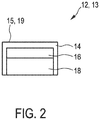
- Fig. 2 shows a cross-section of a skin conductance electrode 12, 13 according to an embodiment.
- the electrode 12, 13 has an outer surface 15, 19 for interfacing with the skin 10.
- the material described above is located at the outer surface 15, 19.
- the electrode 12, 13 comprises an outer layer 14 which is formed of the material.
- the outer layer 14 comprises the outer surface 15 for interfacing with the skin 10.
- the electrode 12, 13 further comprises a first inner layer 16 located beneath the outer layer 14.
- the electrode 12, 13 further comprises a second inner layer, or base layer, 18 located beneath the first inner layer 16.
- the second inner layer, or base layer, 18, is formed of brass
- the first inner layer 16 is a formed of nickel
- the outer layer 14 is formed of a material made of gold doped with monovalent lithium ions (Au-Li)
- the material can be melted, such as in a closed quartz vessel, then cooled, afterwards flattened and the sputter targets, for example of round form, can be cut out.
- the surface of the first inner layer 16 can be cleaned using reactive ion etching in order to improve the bonding between the first inner layer 16 and the outer layer 14.
- An alternative to applying the outer layer 14 by sputtering is the codeposition in vacuum by evaporation and/or e-beam deposition.
- gold can be e-beam deposited and lithium can be deposited in vacuum by evaporation from a heated crucible, due to the low melting point of lithium.
- the thickness of the layer can be monitored so that the deposition speed can be controlled. A good stability of the outer layer 14 can thus be realized throughout the layer.
- the thickness of the outer layer 14 can for example be in the order of microns, in particular less than 1 micron.
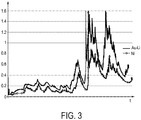
- Fig. 3 shows skin conductance traces.
- the measured skin conductance values over time form a skin conductance trace.
- the x-axis is the time axis, for example measured in minutes (min), and the y-axis is the skin conductance axis, for example measured in microSiemens ( ⁇ S).
- Skin conductance or also called galvanic skin response (GSR), is a measure of the electrical conductance of the skin, which varies with its moisture level, thus the sweat gland activity.
- GSR galvanic skin response
- Fig. 3 shows a first skin conductance trace, sensed by a skin conductance sensor according to an embodiment, namely the most preferred embodiment described above, using a material made of gold doped with lithium at the outer surface of the electrode.
- This first skin conductance trace is illustrated by a plain solid line.
- Fig. 3 also shows a second skin conductance trace, illustrated by the circled solid line, in which a conventional electrode having nickel at the outer surface has been used.
- the improved signal level of the first skin conductance trace (Au-Li) compared to the second skin conductance trace (Ni) can be clearly seen in Fig. 3 .
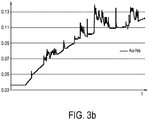
- Fig. 3a shows a skin conductance trace sensed by a skin conductance sensor having a conventional nickel (Ni) electrode and a skin conductance trace sensed by a skin conductance sensor having a gold (Au) electrode.
- potassium radius 138 ⁇ m
- lithium radius: 76 ⁇ m The smaller the ion is, the easier it is to penetrate the skin due to its increased mobility.
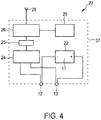
- Fig. 4 shows a schematic block diagram of a skin conductance sensor 20 according to an embodiment.
- the skin conductance sensor 20 comprises two dry electrodes 12, 13.
- the skin conductance sensor 20 further comprises a voltage generator 22 for applying a voltage 11, in particular a constant voltage, between the two electrodes 12, 13. Normally, a small voltage is applied, for example less than 1.2 V. Such a small voltage induces a small current, for example in the order of 1 ⁇ A, through the skin.
- the skin conductance sensor 20 further comprises a measuring unit 24 for measuring a current or voltage drop between the two dry electrodes 12, 13.
- An A/D converter 25 of the skin conductance sensor 20 digitizes the measured current or voltage drop.
- the skin conductance sensor further comprises a calculating unit 26, such as a processor, for calculating a skin conductance based on the measured current or voltage drop. It should be understood, that also the skin resistance can be calculated which is the inverse of the skin conductance.
- the measured skin conductance values, or the skin conductance trace can for example be transmitted by a transmitter 28 over a wireless transmission link. Additionally or alternatively, these measured skin conductance values can be stored in a memory unit 29.
- the skin conductance sensor 20 comprises a casing 27. All or only some of the components described above can be integrated in the casing 27. However, some components may also be separate parts. In particular, the electrodes 12, 13 can be separate parts.
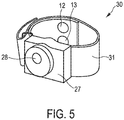
- Fig. 5 shows an illustration of a wristband according to an embodiment.
- the wristband 30 comprises a skin conductance sensor 20 as described above, in particular as illustrated in Fig. 4 .
- the wristband 30 comprises a wristband material part 31, for example made of a textile or plastic, which loops around the wrist of the user. Even though called wristband, the wristband 30 could also be worn around the ankle or other suitable body part.
- the two dry electrodes 12, 13 are integrated into the wristband 30, in particular integrated into the wristband material part 31.
- the two dry electrodes 12, 13 are arranged such that they contact the volar side of the wrist when the wristband 30 is worn by the user.
- the electrodes 12, 13 have a round form in Fig. 5 , however any other suitable electrode form may be used.
- the electrodes 12, 13 in Fig. 5 are in the form of clothing buttons.
- a casing 27 comprises a voltage generator 22, a measuring unit 24, and a calculating unit 26.
- the two electrodes 12, 13 are separate parts and are connected to the casing 27 by means of wires located within the wristband. Alternatively, the two electrodes 12, 13 can also be integrated into the casing 27.
- a transmitter 28 for wirelessly transmitting the measured skin conductance values is integrated into the casing 27.
- Fig. 6 shows an illustration of an emotional event detection system according to an embodiment.
- the emotional event detection system detects an emotional event of a user.
- the system comprises a skin conductance sensor 20, which is integrated into the wristband 30 shown in Fig. 6 .
- the wristband 30 shown in Fig. 6 can for example be the wristband 30 of the embodiment in Fig. 5 .
- the system further comprises a processing unit 34 adapted to process the transmitted data and detect an emotional event in the user based on the transmitted data.
- the processing unit 34 can be a separate part.
- the system also comprises a transmission link 32, between the skin conductance sensor 20 and the processing unit 34, for transmitting data indicative of the sensed skin conductance, for example the measured skin conductance values.
- the transmission link 32 illustrated in Fig. 6 is a wireless link. However, also other transmission links are possible, such as transmission by downloading data from a memory or using a cable.
- the system can comprise at least one further sensor, such as a heart rate sensor, for example for measuring heart rate variations, a breathing sensor, a blood sensor, a body temperature sensor, a voice sensor, a camera for capturing the face of the user, or the like.
- a heart rate sensor for example for measuring heart rate variations, a breathing sensor, a blood sensor, a body temperature sensor, a voice sensor, a camera for capturing the face of the user, or the like.
- Each of these further sensors can be adapted to transmit the sensed data to the processing unit 34.
- the processing unit 34 can then combine the measurements from the skin conductance sensor with measurements of other sensors, in order to improve the accuracy of the emotional event detection.
- Fig. 7 shows a skin conductance trace sensed by a skin conductance sensor according to an embodiment, in particular measured with the skin conductance sensor or wristband as previously described.
- the skin conductance trace shows several hours of measurement.
- the processing unit 34 shown in Fig. 6 is adapted to detect a particular rising slope and/or a particular down slope in the transmitted skin conductance data, in particular detecting peaks with a steeper rising slope and more gentle down slope. In this way, an emotional event can be detected.
- Skin conductance is related with the level of arousal of the user. Everything that emotionally touches the user activates the sweat glands in the skin leading to a better conductor path through the skin. Hence, an easy way of determining emotional events from skin conductance data is provided.
Landscapes
- Health & Medical Sciences (AREA)
- Life Sciences & Earth Sciences (AREA)
- Engineering & Computer Science (AREA)
- Medical Informatics (AREA)
- Physics & Mathematics (AREA)
- Veterinary Medicine (AREA)
- Biophysics (AREA)
- Pathology (AREA)
- Public Health (AREA)
- Biomedical Technology (AREA)
- Heart & Thoracic Surgery (AREA)
- General Health & Medical Sciences (AREA)
- Molecular Biology (AREA)
- Surgery (AREA)
- Animal Behavior & Ethology (AREA)
- Dermatology (AREA)
- Radiology & Medical Imaging (AREA)
- Nuclear Medicine, Radiotherapy & Molecular Imaging (AREA)
- Measurement And Recording Of Electrical Phenomena And Electrical Characteristics Of The Living Body (AREA)
Priority Applications (1)
| Application Number | Priority Date | Filing Date | Title |
|---|---|---|---|
| EP12704328.9A EP2680749B1 (en) | 2011-03-02 | 2012-02-06 | Skin conductance sensor |
Applications Claiming Priority (3)
| Application Number | Priority Date | Filing Date | Title |
|---|---|---|---|
| EP11156641 | 2011-03-02 | ||
| EP12704328.9A EP2680749B1 (en) | 2011-03-02 | 2012-02-06 | Skin conductance sensor |
| PCT/IB2012/050528 WO2012117304A1 (en) | 2011-03-02 | 2012-02-06 | Dry skin conductance electrode |
Publications (2)
| Publication Number | Publication Date |
|---|---|
| EP2680749A1 EP2680749A1 (en) | 2014-01-08 |
| EP2680749B1 true EP2680749B1 (en) | 2017-04-12 |
Family
ID=45607800
Family Applications (1)
| Application Number | Title | Priority Date | Filing Date |
|---|---|---|---|
| EP12704328.9A Active EP2680749B1 (en) | 2011-03-02 | 2012-02-06 | Skin conductance sensor |
Country Status (7)
| Country | Link |
|---|---|
| US (2) | US20130338470A1 (enExample) |
| EP (1) | EP2680749B1 (enExample) |
| JP (1) | JP6159261B2 (enExample) |
| CN (1) | CN103501695B (enExample) |
| BR (1) | BR112013021979B1 (enExample) |
| RU (1) | RU2596011C2 (enExample) |
| WO (1) | WO2012117304A1 (enExample) |
Families Citing this family (17)
| Publication number | Priority date | Publication date | Assignee | Title |
|---|---|---|---|---|
| EP2680749B1 (en) | 2011-03-02 | 2017-04-12 | Koninklijke Philips N.V. | Skin conductance sensor |
| WO2014140960A1 (en) | 2013-03-12 | 2014-09-18 | Koninklijke Philips N.V. | Visit duration control system and method. |
| US20170014043A1 (en) * | 2014-04-30 | 2017-01-19 | Galvanic Limited | Electrodermal Activity Sensor |
| US9833164B2 (en) | 2014-05-30 | 2017-12-05 | Microsoft Technology Licensing, Llc | Ring-shaped skin sensor |
| US10123710B2 (en) | 2014-05-30 | 2018-11-13 | Microsoft Technology Licensing, Llc | Optical pulse-rate sensor pillow assembly |
| US10524727B2 (en) | 2014-06-12 | 2020-01-07 | Koninklijke Philips N.V. | Circadian phase detection system |
| CN104107049B (zh) * | 2014-07-04 | 2016-04-27 | 深圳市宏电技术股份有限公司 | 一种基于皮肤电导率的运动状态监测方法及系统 |
| CN106714679A (zh) * | 2014-09-30 | 2017-05-24 | 皇家飞利浦有限公司 | 用于皮肤电导测量的可穿戴装置 |
| US10076254B2 (en) * | 2014-12-16 | 2018-09-18 | Microsoft Technology Licensing, Llc | Optical communication with optical sensors |
| KR101661902B1 (ko) * | 2015-06-24 | 2016-10-04 | 주식회사 웨이웨어러블 | 휴대용 피부상태 측정장치, 피부상태 분석방법 및 이를 이용한 프로그램 |
| CN108139792A (zh) * | 2016-04-14 | 2018-06-08 | 深圳市汇顶科技股份有限公司 | 一种情绪感知智能终端及其感知方法 |
| JP6946411B2 (ja) * | 2016-07-18 | 2021-10-06 | コーニンクレッカ フィリップス エヌ ヴェKoninklijke Philips N.V. | 精神生理的反応性を評定する装置 |
| US11331019B2 (en) | 2017-08-07 | 2022-05-17 | The Research Foundation For The State University Of New York | Nanoparticle sensor having a nanofibrous membrane scaffold |
| US11502545B2 (en) | 2020-05-29 | 2022-11-15 | Puthalath Koroth Raghuprasad | Watch charging assembly |
| CN112057090B (zh) * | 2020-09-04 | 2021-10-29 | 浙江大学 | 基于体表极低频电势差特征的情绪判断穿戴式设备和方法 |
| RU2763700C1 (ru) * | 2020-10-30 | 2021-12-30 | Самсунг Электроникс Ко., Лтд. | Способ мониторинга гидратации живого организма |
| WO2022092467A1 (en) | 2020-10-30 | 2022-05-05 | Samsung Electronics Co., Ltd. | Method of monitoring the hydration of a living body |
Citations (1)
| Publication number | Priority date | Publication date | Assignee | Title |
|---|---|---|---|---|
| US5003978A (en) * | 1985-08-21 | 1991-04-02 | Technology 21, Inc. | Non-polarizable dry biomedical electrode |
Family Cites Families (32)
| Publication number | Priority date | Publication date | Assignee | Title |
|---|---|---|---|---|
| US3681136A (en) * | 1970-03-02 | 1972-08-01 | Intern Biophysics Corp | Metal-metal salt electrodes and process |
| GB2005142B (en) | 1977-09-08 | 1982-02-10 | Tdk Electronics Co Ltd | Electrodes for living bodies |
| JPH04158835A (ja) * | 1990-10-22 | 1992-06-01 | Matsushita Electric Ind Co Ltd | 発汗センサおよび発汗センシング法 |
| US5415176A (en) | 1991-11-29 | 1995-05-16 | Tanita Corporation | Apparatus for measuring body fat |
| JP2716361B2 (ja) * | 1994-02-16 | 1998-02-18 | 株式会社アドバンス | 生体用プリント電極 |
| JP3734350B2 (ja) * | 1997-10-17 | 2006-01-11 | 株式会社タニタ | 体内脂肪量計および体内脂肪量計付き体重計 |
| US6415176B1 (en) * | 1999-10-18 | 2002-07-02 | Massachusetts Institute Of Technology | Sensing and display of skin conductivity |
| US7261690B2 (en) * | 2000-06-16 | 2007-08-28 | Bodymedia, Inc. | Apparatus for monitoring health, wellness and fitness |
| TW505513B (en) * | 2000-11-30 | 2002-10-11 | Sanyo Electric Co | Massager and electronic machine with controller |
| JP2005500116A (ja) * | 2001-08-24 | 2005-01-06 | グルコセンス、インコーポレイテッド | 生体信号センサと、そのセンサに関連したアプリケーションを組み入れた生体信号を記録するための装置 |
| AU2002347567B2 (en) * | 2001-10-24 | 2008-07-17 | Power Paper Ltd. | Dermal patch |
| US7630759B2 (en) | 2002-05-20 | 2009-12-08 | Epi-Sci, Llc | Method and system for detecting electrophysiological changes in pre-cancerous and cancerous breast tissue and epithelium |
| US7052472B1 (en) * | 2002-12-18 | 2006-05-30 | Dsp Diabetes Sentry Products, Inc. | Systems and methods for detecting symptoms of hypoglycemia |
| US20040158166A1 (en) * | 2003-02-10 | 2004-08-12 | Levengood William C. | Method and apparatus for detecting, recording and analyzing spontaneously generated transient electric charge pulses in living organisms |
| US7479133B2 (en) * | 2003-06-30 | 2009-01-20 | Johnson & Johnson Consumer Companies, Inc. | Methods of treating acne and rosacea with galvanic generated electricity |
| EP1681996B1 (en) * | 2003-11-12 | 2013-03-27 | Covidien LP | Biomedical snap electrode having adhesive conductive tape |
| US20090281475A1 (en) | 2006-06-22 | 2009-11-12 | Koninklijke Philips Electronics N.V. | Iontophoretic electrotransport device |
| US20080091089A1 (en) * | 2006-10-12 | 2008-04-17 | Kenneth Shane Guillory | Single use, self-contained surface physiological monitor |
| EP1964512A3 (en) * | 2007-02-28 | 2008-10-29 | Sysmex Corporation | Method of measuring skin conductance, method of analyzing component concentration, skin conductive measuring apparatus, and component concentration analyzer |
| US20080262376A1 (en) * | 2007-04-17 | 2008-10-23 | Proactive Health Devices, Inc. | Wireless sensor system for monitoring skin condition using the body as communication conduit |
| CN100546538C (zh) * | 2007-06-13 | 2009-10-07 | 中国科学院半导体研究所 | 一种制作皮肤干电极的方法 |
| FR2919923B1 (fr) | 2007-08-08 | 2009-10-30 | Astrium Sas Soc Par Actions Si | Dispositif passif a micro boucle fluide a pompage capillaire |
| CN101848669B (zh) * | 2007-09-07 | 2012-06-13 | 埃姆申塞公司 | 集成传感器头戴装置 |
| US20090069740A1 (en) * | 2007-09-07 | 2009-03-12 | Polyplus Battery Company | Protected donor electrodes for electro-transport drug delivery |
| JP2009174948A (ja) * | 2008-01-23 | 2009-08-06 | National Institute For Environmental Studies | 電気化学測定装置の製造方法 |
| DE102008013731B3 (de) * | 2008-03-11 | 2009-09-17 | Heike Schmidt | Leistungsindikator für Patienten mit ADS-Syndrom |
| US20110028803A1 (en) | 2008-03-31 | 2011-02-03 | Stig Ollmar | Method and device for non-invasive determination of the concentration of a substance in a body fluid |
| US9101734B2 (en) | 2008-09-09 | 2015-08-11 | Biosense Webster, Inc. | Force-sensing catheter with bonded center strut |
| US8140143B2 (en) * | 2009-04-16 | 2012-03-20 | Massachusetts Institute Of Technology | Washable wearable biosensor |
| CA2780537A1 (en) * | 2009-11-13 | 2011-05-19 | Johnson & Johnson Consumer Companies, Inc. | Galvanic skin treatment device |
| TWI392479B (zh) * | 2010-08-20 | 2013-04-11 | 國立交通大學 | 用於生理訊號量測感測器之乾式電極 |
| EP2680749B1 (en) | 2011-03-02 | 2017-04-12 | Koninklijke Philips N.V. | Skin conductance sensor |
-
2012
- 2012-02-06 EP EP12704328.9A patent/EP2680749B1/en active Active
- 2012-02-06 JP JP2013555952A patent/JP6159261B2/ja active Active
- 2012-02-06 BR BR112013021979-3A patent/BR112013021979B1/pt active IP Right Grant
- 2012-02-06 WO PCT/IB2012/050528 patent/WO2012117304A1/en not_active Ceased
- 2012-02-06 CN CN201280011229.4A patent/CN103501695B/zh active Active
- 2012-02-06 RU RU2013144060/14A patent/RU2596011C2/ru active
- 2012-02-06 US US14/002,503 patent/US20130338470A1/en not_active Abandoned
-
2017
- 2017-07-10 US US15/644,894 patent/US10694969B2/en active Active
Patent Citations (1)
| Publication number | Priority date | Publication date | Assignee | Title |
|---|---|---|---|---|
| US5003978A (en) * | 1985-08-21 | 1991-04-02 | Technology 21, Inc. | Non-polarizable dry biomedical electrode |
Also Published As
| Publication number | Publication date |
|---|---|
| WO2012117304A1 (en) | 2012-09-07 |
| JP6159261B2 (ja) | 2017-07-05 |
| RU2013144060A (ru) | 2015-04-10 |
| CN103501695B (zh) | 2016-09-28 |
| BR112013021979A2 (pt) | 2018-06-12 |
| EP2680749A1 (en) | 2014-01-08 |
| US20170303812A1 (en) | 2017-10-26 |
| US20130338470A1 (en) | 2013-12-19 |
| RU2596011C2 (ru) | 2016-08-27 |
| CN103501695A (zh) | 2014-01-08 |
| BR112013021979B1 (pt) | 2021-09-08 |
| US10694969B2 (en) | 2020-06-30 |
| JP2014514002A (ja) | 2014-06-19 |
Similar Documents
| Publication | Publication Date | Title |
|---|---|---|
| US10694969B2 (en) | Dry skin conductance electrode | |
| EP3960068B1 (en) | Ring-shaped biometric signal sensing device | |
| JP4430946B2 (ja) | 突起をもつ電極を有するモニタリングシステム | |
| US3752151A (en) | Disposable medical electrode with laminate contact member | |
| CN103687539B (zh) | 可佩戴设备及其制造方法 | |
| US20200367777A1 (en) | Electrode structure for electrocardiogram (ecg) waveform measurement | |
| CN102469941A (zh) | 分析物监视设备和方法 | |
| CN111837019A (zh) | 生物数据测量装置 | |
| EP4225140A1 (en) | In-vivo glucose specific sensor | |
| Park et al. | Flexible galvanic skin response sensor based on vertically aligned silver nanowires | |
| EP3484360A1 (en) | Device for assessing psychophysiological responsiveness | |
| JP6228086B2 (ja) | 生体信号取得装置および方法 | |
| Brady et al. | Wearable Sensors? What is there to sense? | |
| CN119586985A (zh) | 基于半导体多参数生理信号监测的可穿戴设备及其控制方法 | |
| CN205725733U (zh) | 一种基于智能穿戴的养老t恤及其移动终端 | |
| Seo et al. | Wearable, portable gel sensor for the simultaneous acquisition of heart-related bio-signals at one point and blood pressure estimation | |
| RU2858458C1 (ru) | Носимый на теле сенсорный узел для тестирования изменений психоэмоционального состояния человека | |
| US20090156910A1 (en) | Noninvasive glucose monitor and method | |
| CN118177745B (zh) | 一种自供电全时态周期脉搏异常信号监测可穿戴装置 | |
| KR20220049105A (ko) | 생체용 전극 장치 및 그 제조 방법 | |
| JPH04158835A (ja) | 発汗センサおよび発汗センシング法 | |
| GB2595171A (en) | Ring-shaped biometric signal sensing device | |
| US20250107720A1 (en) | Heart rate variability measurement system and heart rate variability measurement method | |
| US20030055357A1 (en) | Method and apparatus for determining electrical parameters of a body | |
| Wang | Fabric electrode materials for physiological signal monitor-ing |
Legal Events
| Date | Code | Title | Description |
|---|---|---|---|
| PUAI | Public reference made under article 153(3) epc to a published international application that has entered the european phase |
Free format text: ORIGINAL CODE: 0009012 |
|
| 17P | Request for examination filed |
Effective date: 20131002 |
|
| AK | Designated contracting states |
Kind code of ref document: A1 Designated state(s): AL AT BE BG CH CY CZ DE DK EE ES FI FR GB GR HR HU IE IS IT LI LT LU LV MC MK MT NL NO PL PT RO RS SE SI SK SM TR |
|
| DAX | Request for extension of the european patent (deleted) | ||
| 17Q | First examination report despatched |
Effective date: 20140616 |
|
| GRAP | Despatch of communication of intention to grant a patent |
Free format text: ORIGINAL CODE: EPIDOSNIGR1 |
|
| INTG | Intention to grant announced |
Effective date: 20161026 |
|
| GRAS | Grant fee paid |
Free format text: ORIGINAL CODE: EPIDOSNIGR3 |
|
| GRAA | (expected) grant |
Free format text: ORIGINAL CODE: 0009210 |
|
| AK | Designated contracting states |
Kind code of ref document: B1 Designated state(s): AL AT BE BG CH CY CZ DE DK EE ES FI FR GB GR HR HU IE IS IT LI LT LU LV MC MK MT NL NO PL PT RO RS SE SI SK SM TR |
|
| REG | Reference to a national code |
Ref country code: GB Ref legal event code: FG4D |
|
| REG | Reference to a national code |
Ref country code: CH Ref legal event code: EP |
|
| REG | Reference to a national code |
Ref country code: IE Ref legal event code: FG4D |
|
| REG | Reference to a national code |
Ref country code: AT Ref legal event code: REF Ref document number: 883057 Country of ref document: AT Kind code of ref document: T Effective date: 20170515 |
|
| REG | Reference to a national code |
Ref country code: DE Ref legal event code: R096 Ref document number: 602012031017 Country of ref document: DE |
|
| REG | Reference to a national code |
Ref country code: NL Ref legal event code: MP Effective date: 20170412 |
|
| REG | Reference to a national code |
Ref country code: LT Ref legal event code: MG4D |
|
| REG | Reference to a national code |
Ref country code: AT Ref legal event code: MK05 Ref document number: 883057 Country of ref document: AT Kind code of ref document: T Effective date: 20170412 |
|
| PG25 | Lapsed in a contracting state [announced via postgrant information from national office to epo] |
Ref country code: NL Free format text: LAPSE BECAUSE OF FAILURE TO SUBMIT A TRANSLATION OF THE DESCRIPTION OR TO PAY THE FEE WITHIN THE PRESCRIBED TIME-LIMIT Effective date: 20170412 |
|
| PG25 | Lapsed in a contracting state [announced via postgrant information from national office to epo] |
Ref country code: FI Free format text: LAPSE BECAUSE OF FAILURE TO SUBMIT A TRANSLATION OF THE DESCRIPTION OR TO PAY THE FEE WITHIN THE PRESCRIBED TIME-LIMIT Effective date: 20170412 Ref country code: GR Free format text: LAPSE BECAUSE OF FAILURE TO SUBMIT A TRANSLATION OF THE DESCRIPTION OR TO PAY THE FEE WITHIN THE PRESCRIBED TIME-LIMIT Effective date: 20170713 Ref country code: LT Free format text: LAPSE BECAUSE OF FAILURE TO SUBMIT A TRANSLATION OF THE DESCRIPTION OR TO PAY THE FEE WITHIN THE PRESCRIBED TIME-LIMIT Effective date: 20170412 Ref country code: AT Free format text: LAPSE BECAUSE OF FAILURE TO SUBMIT A TRANSLATION OF THE DESCRIPTION OR TO PAY THE FEE WITHIN THE PRESCRIBED TIME-LIMIT Effective date: 20170412 Ref country code: HR Free format text: LAPSE BECAUSE OF FAILURE TO SUBMIT A TRANSLATION OF THE DESCRIPTION OR TO PAY THE FEE WITHIN THE PRESCRIBED TIME-LIMIT Effective date: 20170412 Ref country code: NO Free format text: LAPSE BECAUSE OF FAILURE TO SUBMIT A TRANSLATION OF THE DESCRIPTION OR TO PAY THE FEE WITHIN THE PRESCRIBED TIME-LIMIT Effective date: 20170712 Ref country code: ES Free format text: LAPSE BECAUSE OF FAILURE TO SUBMIT A TRANSLATION OF THE DESCRIPTION OR TO PAY THE FEE WITHIN THE PRESCRIBED TIME-LIMIT Effective date: 20170412 |
|
| PG25 | Lapsed in a contracting state [announced via postgrant information from national office to epo] |
Ref country code: SE Free format text: LAPSE BECAUSE OF FAILURE TO SUBMIT A TRANSLATION OF THE DESCRIPTION OR TO PAY THE FEE WITHIN THE PRESCRIBED TIME-LIMIT Effective date: 20170412 Ref country code: RS Free format text: LAPSE BECAUSE OF FAILURE TO SUBMIT A TRANSLATION OF THE DESCRIPTION OR TO PAY THE FEE WITHIN THE PRESCRIBED TIME-LIMIT Effective date: 20170412 Ref country code: BG Free format text: LAPSE BECAUSE OF FAILURE TO SUBMIT A TRANSLATION OF THE DESCRIPTION OR TO PAY THE FEE WITHIN THE PRESCRIBED TIME-LIMIT Effective date: 20170712 Ref country code: IS Free format text: LAPSE BECAUSE OF FAILURE TO SUBMIT A TRANSLATION OF THE DESCRIPTION OR TO PAY THE FEE WITHIN THE PRESCRIBED TIME-LIMIT Effective date: 20170812 Ref country code: LV Free format text: LAPSE BECAUSE OF FAILURE TO SUBMIT A TRANSLATION OF THE DESCRIPTION OR TO PAY THE FEE WITHIN THE PRESCRIBED TIME-LIMIT Effective date: 20170412 Ref country code: PL Free format text: LAPSE BECAUSE OF FAILURE TO SUBMIT A TRANSLATION OF THE DESCRIPTION OR TO PAY THE FEE WITHIN THE PRESCRIBED TIME-LIMIT Effective date: 20170412 |
|
| REG | Reference to a national code |
Ref country code: DE Ref legal event code: R097 Ref document number: 602012031017 Country of ref document: DE |
|
| PG25 | Lapsed in a contracting state [announced via postgrant information from national office to epo] |
Ref country code: DK Free format text: LAPSE BECAUSE OF FAILURE TO SUBMIT A TRANSLATION OF THE DESCRIPTION OR TO PAY THE FEE WITHIN THE PRESCRIBED TIME-LIMIT Effective date: 20170412 Ref country code: EE Free format text: LAPSE BECAUSE OF FAILURE TO SUBMIT A TRANSLATION OF THE DESCRIPTION OR TO PAY THE FEE WITHIN THE PRESCRIBED TIME-LIMIT Effective date: 20170412 Ref country code: RO Free format text: LAPSE BECAUSE OF FAILURE TO SUBMIT A TRANSLATION OF THE DESCRIPTION OR TO PAY THE FEE WITHIN THE PRESCRIBED TIME-LIMIT Effective date: 20170412 Ref country code: SK Free format text: LAPSE BECAUSE OF FAILURE TO SUBMIT A TRANSLATION OF THE DESCRIPTION OR TO PAY THE FEE WITHIN THE PRESCRIBED TIME-LIMIT Effective date: 20170412 Ref country code: CZ Free format text: LAPSE BECAUSE OF FAILURE TO SUBMIT A TRANSLATION OF THE DESCRIPTION OR TO PAY THE FEE WITHIN THE PRESCRIBED TIME-LIMIT Effective date: 20170412 |
|
| PLBE | No opposition filed within time limit |
Free format text: ORIGINAL CODE: 0009261 |
|
| STAA | Information on the status of an ep patent application or granted ep patent |
Free format text: STATUS: NO OPPOSITION FILED WITHIN TIME LIMIT |
|
| REG | Reference to a national code |
Ref country code: FR Ref legal event code: PLFP Year of fee payment: 7 |
|
| PG25 | Lapsed in a contracting state [announced via postgrant information from national office to epo] |
Ref country code: SM Free format text: LAPSE BECAUSE OF FAILURE TO SUBMIT A TRANSLATION OF THE DESCRIPTION OR TO PAY THE FEE WITHIN THE PRESCRIBED TIME-LIMIT Effective date: 20170412 Ref country code: IT Free format text: LAPSE BECAUSE OF FAILURE TO SUBMIT A TRANSLATION OF THE DESCRIPTION OR TO PAY THE FEE WITHIN THE PRESCRIBED TIME-LIMIT Effective date: 20170412 |
|
| 26N | No opposition filed |
Effective date: 20180115 |
|
| PG25 | Lapsed in a contracting state [announced via postgrant information from national office to epo] |
Ref country code: SI Free format text: LAPSE BECAUSE OF FAILURE TO SUBMIT A TRANSLATION OF THE DESCRIPTION OR TO PAY THE FEE WITHIN THE PRESCRIBED TIME-LIMIT Effective date: 20170412 |
|
| REG | Reference to a national code |
Ref country code: CH Ref legal event code: PL |
|
| PG25 | Lapsed in a contracting state [announced via postgrant information from national office to epo] |
Ref country code: MC Free format text: LAPSE BECAUSE OF FAILURE TO SUBMIT A TRANSLATION OF THE DESCRIPTION OR TO PAY THE FEE WITHIN THE PRESCRIBED TIME-LIMIT Effective date: 20170412 |
|
| REG | Reference to a national code |
Ref country code: IE Ref legal event code: MM4A |
|
| REG | Reference to a national code |
Ref country code: BE Ref legal event code: MM Effective date: 20180228 |
|
| PG25 | Lapsed in a contracting state [announced via postgrant information from national office to epo] |
Ref country code: CH Free format text: LAPSE BECAUSE OF NON-PAYMENT OF DUE FEES Effective date: 20180228 Ref country code: LI Free format text: LAPSE BECAUSE OF NON-PAYMENT OF DUE FEES Effective date: 20180228 Ref country code: LU Free format text: LAPSE BECAUSE OF NON-PAYMENT OF DUE FEES Effective date: 20180206 |
|
| PG25 | Lapsed in a contracting state [announced via postgrant information from national office to epo] |
Ref country code: IE Free format text: LAPSE BECAUSE OF NON-PAYMENT OF DUE FEES Effective date: 20180206 |
|
| PG25 | Lapsed in a contracting state [announced via postgrant information from national office to epo] |
Ref country code: BE Free format text: LAPSE BECAUSE OF NON-PAYMENT OF DUE FEES Effective date: 20180228 |
|
| PG25 | Lapsed in a contracting state [announced via postgrant information from national office to epo] |
Ref country code: MT Free format text: LAPSE BECAUSE OF NON-PAYMENT OF DUE FEES Effective date: 20180206 |
|
| PG25 | Lapsed in a contracting state [announced via postgrant information from national office to epo] |
Ref country code: PT Free format text: LAPSE BECAUSE OF FAILURE TO SUBMIT A TRANSLATION OF THE DESCRIPTION OR TO PAY THE FEE WITHIN THE PRESCRIBED TIME-LIMIT Effective date: 20170412 Ref country code: HU Free format text: LAPSE BECAUSE OF FAILURE TO SUBMIT A TRANSLATION OF THE DESCRIPTION OR TO PAY THE FEE WITHIN THE PRESCRIBED TIME-LIMIT; INVALID AB INITIO Effective date: 20120206 |
|
| PG25 | Lapsed in a contracting state [announced via postgrant information from national office to epo] |
Ref country code: MK Free format text: LAPSE BECAUSE OF NON-PAYMENT OF DUE FEES Effective date: 20170412 Ref country code: CY Free format text: LAPSE BECAUSE OF FAILURE TO SUBMIT A TRANSLATION OF THE DESCRIPTION OR TO PAY THE FEE WITHIN THE PRESCRIBED TIME-LIMIT Effective date: 20170412 |
|
| PG25 | Lapsed in a contracting state [announced via postgrant information from national office to epo] |
Ref country code: AL Free format text: LAPSE BECAUSE OF FAILURE TO SUBMIT A TRANSLATION OF THE DESCRIPTION OR TO PAY THE FEE WITHIN THE PRESCRIBED TIME-LIMIT Effective date: 20170412 |
|
| PGFP | Annual fee paid to national office [announced via postgrant information from national office to epo] |
Ref country code: TR Payment date: 20250127 Year of fee payment: 14 |
|
| PGFP | Annual fee paid to national office [announced via postgrant information from national office to epo] |
Ref country code: GB Payment date: 20260223 Year of fee payment: 15 |
|
| PGFP | Annual fee paid to national office [announced via postgrant information from national office to epo] |
Ref country code: DE Payment date: 20260220 Year of fee payment: 15 |
|
| PGFP | Annual fee paid to national office [announced via postgrant information from national office to epo] |
Ref country code: FR Payment date: 20260224 Year of fee payment: 15 |